The Amazon buyout of MGM is another blow to cinemas

We’ve recently talked about how the pandemic may have a long-term impact on cinema attendance and the box office, with many folks getting used to the convenience and practicality of streaming big blockbusters at home. But it seems cinemas just can’t catch a break, because it was recently announced that Amazon will be buying legendary Hollywood studio MGM.

Make no mistake, this is all about streaming. Amazon Prime Video looks set to benefit greatly from this acquisition, helping the service compete with the likes of Netflix and Paramount+ in terms of films. Though Amazon does have its own film studio, and has had a hand in titles like the Academy Award-winning Manchester By The Sea, most films available to stream via Amazon Prime Video were licensed from other companies. As more and more companies try to launch their own streaming platforms, these licensing deals are increasingly difficult (and expensive) for the likes of Netflix and Amazon, so finding ways to get their own in-house content is hugely important.

Buying MGM will enable Amazon to add a huge library of titles to its Prime Video streaming service.

Netflix has branched out into making more and more of its own original films – for better or worse! But Amazon is one of the world’s largest and most successful companies, having grown massively during the last year, and can throw its money around to buy up studios – and the rights to properties like The Lord of the Rings. We’ve recently seen Microsoft do something similar in the gaming realm, buying up Bethesda and adding that studio’s games to Xbox Game Pass. Amazon is doing the same thing with MGM.

I’ve seen some outlets trying to make the case that this is Amazon further diversifying its business model. What began as an online bookseller in the mid-1990s has grown to sell practically everything and has involvements and holdings in industries as far apart as space technology and baby nappies. But this MGM acquisition is not about diversification. Amazon doesn’t want to break into the film distribution market any more than they’re already involved; they want films, both old and new, to add to Amazon Prime Video for the sole purpose of driving more subscriptions. It’s that simple.

Amazon announced a deal to buy famed American film studio MGM for $8.45 billion.

This is a hammer blow for cinemas and cinema chains already reeling from the pandemic and associated closures and cancellations. We’ve already seen many films that would otherwise have received a theatrical release go direct-to-streaming, and Amazon’s acquisition of MGM comes with the real threat of all future MGM titles following suit. There aren’t many studios the size of MGM, releasing multiple high-budget titles per year, so this is a coup for Amazon.

Upcoming titles like the sequel to Tomb Raider, Legally Blonde III, Soggy Bottom, and House of Gucci would have all been draws at reopened cinemas around the world, but their theatrical releases are now in doubt. And that’s before we even consider one of the biggest upcoming MGM titles (at least from a UK perspective!) No Time To Die, the latest instalment in the James Bond series.
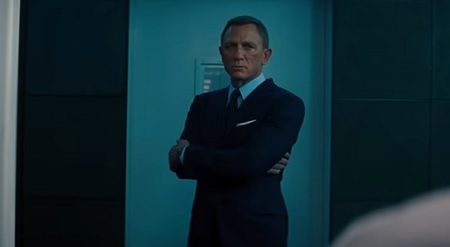
No Time To Die may still manage a theatrical release… or it may not.

It’s not unfair in the slightest to say that British cinemas have been desperately waiting for No Time To Die’s release, as no other upcoming film has quite as much potential to bring audiences back after well over a year of closures, lockdowns, and cancelled titles. Even the mere threat of No Time To Die going direct to streaming is enough to make a lot of people involved in the UK cinema industry very nervous, and I’m not sure we can rely on promises that the film will still meet its planned theatrical release in September – especially if the pandemic causes further disruption in the months ahead.

As I said when Microsoft acquired Bethesda, companies don’t spend these vast sums of money and expect nothing in return. With Amazon making this move to shore up and expand its library of streaming titles, any future MGM release now has the potential to end up on Amazon Prime Video either exclusively or alongside a release in cinemas. Even if imminent titles like No Time To Die meet their theatrical obligations – which will almost certainly be due to pre-existing contracts if it happens – future titles, both announced and unannounced, are almost certain to join Amazon’s streaming line-up. In short, cinemas may get a temporary reprieve from the fallout of this acquisition, but it won’t last much beyond the end of 2021.

Amazon will be expecting a serious return on such an expensive investment – and that’s all focused on streaming.

The way people consume media has been changing for years. The pandemic may have accelerated some of those changes to light-speed, but it isn’t the fundamental cause of a shift in audiences away from cinemas and broadcast television to online on-demand streaming. Just like the pandemic isn’t the root cause of problems with many high street shops, it can’t be blamed for people moving en masse toward an all-digital streaming future. The future of companies like MGM is in the digital space, and unfortunately for cinemas that means fewer films, smaller audiences, and growing irrelevance as bigger titles bypass a theatrical release altogether. Even in the pre-pandemic years, going to the cinema had become, for many folks, an occasional treat rather than a regular outing, and this move is simply a reflection of the changing way in which people choose to watch films.

Amazon’s acquisition of MGM is a big deal, but it’s unlikely to be the last such move as the so-called “streaming wars” look for new battlefields. It isn’t yet clear how many streaming services people are willing to put up with, nor which will ultimately survive, so it seems inevitable that more big studios and distributors will eventually team up with – or be bought out by – other big players in the streaming landscape. None of which is particularly pro-consumer, it has to be said, but then again I’d rather see MGM films go to Amazon Prime Video – a streaming service I already have access to – than wait for MGM to set up their own “MGM Plus” or whatever they would’ve called it!

It’s a serious blow to cinemas in the medium-to-long-term, even if some titles scheduled for this year will still get a full theatrical release. But will audiences really care? As I said last time, the shift away from the cinema had already set in long before the pandemic struck, and with film studios and audiences alike having discovered the many advantages of at-home streaming, it seems like we’ll be seeing a lot more of this type of acquisition or merger in the months and years ahead, with many more films going direct-to-streaming in the very near future. MGM may be one of the biggest so far, but it won’t be the last. Cinema chains and owners are already feeling the effects.

All titles mentioned above are the copyright and/or trademark of their respective owner, studio, company, distributor, etc. This article contains the thoughts and opinions of one person only and is not intended to cause any offence.
Have we seen an unstoppable shift away from the cinema?

One of the consequences of the pandemic has been the long-term closure of many cinemas (movie theaters for my American readers). Aside from a short respite last July and August, most cinemas here in the UK have been shut since March 2020 – for well over a year now. Some, like a local independent cinema near me, have had no choice but to close permanently, even with the end of lockdown seemingly in sight. Even when cinemas are able to reopen, limits on capacity due to social distancing, the general unease among many people about sitting in a room with dozens of strangers with the pandemic still ongoing, and most significantly, the lack of major film releases in the near term will – in my opinion, at least – most likely mean it will be a long time before things are able to get back to normal.

But will things ever get back to normal? That’s the question I want to ask today.

Will empty cinemas be full again one day?

In the early days of the pandemic, most films scheduled for release in spring or summer 2020 were simply postponed; their release dates pushed back by a few months so that they could be released to full crowds when lockdowns were lifted in their key markets. But as the pandemic has dragged on and on, film studios have begun to switch the way they release many big titles – opting to send them to streaming platforms rather than wait.

Without Remorse was originally supposed to get a theatrical release, but premiered on Amazon Prime Video instead. Raya and the Last Dragon went directly to Disney+. Then there are titles like Zack Snyder’s Justice League, Mulan, The Little Things, Godzilla vs. Kong, Bill & Ted Face The Music, News of the World, and Tom & Jerry. Upcoming titles such as Jungle Cruise, Space Jam: A New Legacy, Black Widow, Malignant, and A Quiet Place II are all going to either be released directly on streaming or with a limited theatrical run at the same time as going straight to streaming.

Animated film Raya and the Last Dragon went straight to Disney+ earlier in the year.

Is this a one-time thing, purely caused by the pandemic? And if it is, will audiences be happy to return to cinemas once the pandemic has cleared and they can fully reopen? If you’d asked me in March or April last year, I’d have said yes to both questions without hesitation. But now I’m not so sure.

There are a lot of advantages to streaming compared to going to the cinema, and as more and more people come to see those advantages, the cinema becomes a less-attractive option in contrast. This trend is not new – cinema attendance has declined a lot from where it was a few decades ago, and with the rise of high-quality television series which can rival and even surpass films in many cases, this is a reckoning that cinemas have had coming for a while. The pandemic has accelerated that to light-speed, but the trend has been going in this direction for a while.

Paramount+ is one of many competing streaming platforms that have arguably benefited from the forced closure of cinemas during the pandemic.

So what are the supposed advantages of at-home streaming? The first has to be convenience. Viewers can watch what they want on their own schedule, with the ability to pause a film to take a phone call or go to the bathroom, watching before or after work, or even late at night. It’s possible to watch with subtitles, audio description, director commentaries, and even watch in other languages. Most folks are more comfortable in their own homes than they are in a cinema chair – even the nicest cinema seats aren’t as pleasant as a comfy armchair or couch. There are no distractions from (other people’s) noisy kids, people munching popcorn, or idiots on their phones. You don’t have to sit through half an hour of adverts and trailers to get to the film. If you’re using a phone or tablet it’s possible to watch on the go, or literally anywhere. And some of the things we might’ve considered to be disadvantages a few years ago – such as screen size, resolution, and audio quality – are all easily surmountable even for folks on a limited budget.

Obviously not all of these points apply in every single case, but as a general rule, as screens get bigger and better, the need to watch something in the cinema is dropping. The old adage that a particular film was “better in the cinema” or “made for cinemas” no longer applies in many cases.

Amazon Prime Video have snapped up a number of films that couldn’t get a theatrical release this year – including Without Remorse.

I have a relatively inexpensive 4K television that doesn’t have OLED or HDR or any of those higher-end features, just a bog-standard LED set. But this model, even when I was buying it a few years ago, only started at a 40-inch screen size, with sizes going all the way up to 60″ or 65″. Nowadays, 85″ and 90″ sets are on the market and within reach of many consumers. Sound bars and speakers that put out fantastic quality audio are equally affordable, with prices dropping massively from where they had been when 4K and large screens were new. Even on my cheap and cheerful set, films look great. And if you sit reasonably close, it really does feel akin to being in the cinema – in the comfort of my own home.

It’s difficult, in my opinion, for cinemas to compete on price or quality. Even the more expensive streaming platforms, like Netflix, cost around £10-12 per month. It’s been a while since I was able to go to the cinema – health issues prevent me from doing so – but the last time I was able to go, £10 wouldn’t even stretch to two tickets. For that money you get one month’s worth of access to a massive library of titles – including many brand-new ones and Netflix originals made specially for the platform.

Large, good-quality television screens are increasingly affordable and offer a cinema-like experience at home.

In the late ’40s and ’50s, when my parents were young, going to the cinema was a frequent outing. You’d see an A- and B-movie, as well as perhaps a newsreel or something else, and it would feel like good value. Since the early 20th Century, going to the cinema on at least a weekly basis was a big part of many peoples’ lives – but things have been changing, slowly, for quite a while.

For at least the last couple of decades, going to the cinema is something most folks have viewed as an occasional treat rather than a regular outing. The price and value of a cinema ticket – and the additional extras like drinks and snacks – have shot up in relation to earnings, while at the same time the number of advertisements and trailers have also increased. Though the cinema still has a place in many folks’ lives, that place had been slipping long before the pandemic arrived. In the ’90s and 2000s, the blame for that lay with cable and satellite television channels, including many dedicated film channels. Nowadays, the blame has shifted to streaming.

Netflix has picked up a lot of subscribers in the past year.

Many film studios are keen to play their part in this trend, too. Sharing a big chunk of their profits with cinema chains and operators was never something they were wild about, which is why we’re seeing more and more studios and production companies either partnering with big streaming platforms or else trying to launch their own. Paramount+ exists for this reason, as do Disney+, HBO Max, and many others. These companies don’t care in the slightest about the fate of cinemas – except insofar as they can use them to turn a profit. When the pandemic meant that wasn’t possible, many companies happily jumped ship and released their films digitally instead.

Though I know a lot of people who have told me they’re keen to get back to the cinema as soon as possible, when I probed most of them further and asked how often they would go to the cinema pre-pandemic, or what films they were most excited to see at the cinema next, all of the answers I got back up everything I’ve been saying. Most folks go to the cinema infrequently at best, and while they’ve missed some of the social aspects of the “cinema experience,” they certainly haven’t missed the adverts, loud seat neighbours, and hassle. Streaming, while not as glamorous or exciting in some ways, is a more enjoyable experience in others.

Some people have missed every aspect of being at the cinema… but many haven’t!

I know I have to acknowledge my own bias here. As someone whose disability prevents them going to the cinema, I’d be quite happy if every film I want to watch from now on comes directly to streaming! On a purely selfish level, that’s something I’m fine with. And while I stand by the fact that the trend away from the cinema in a general sense is real and demonstrable, the pandemic probably hasn’t killed the entire concept of the cinema stone-dead. Nor would that be a good thing. Many cinemas offer more than just the latest blockbusters, with classic films, recorded theatre plays and ballet performances, and other such events. In the rural area where I live, the idea of being able to see something like the Royal Ballet is beyond a lot of people due to the distances involved. But local cinemas occasionally show things like ballets, operas, and Shakespeare plays, bringing a different kind of culture and entertainment to the region. Cinemas are also big local employers, and it’s nothing to celebrate when a local business is forced to close.

So most cinemas will eventually re-open. But the question I asked is still pertinent, because I don’t know whether they’ll see pre-pandemic numbers of visitors for a very long time – if at all. The pandemic has forced the hand of film studios and distributors, and the result has been an uptick in the number of subscribers to streaming platforms. Many folks have tried streaming for the first time, and while there will always be holdouts, people who proclaim that it really is “better in the cinema,” I think a lot of people have been surprised at how enjoyable streaming a film at home can be, and how favourably it can compare to the cinema experience.

Many people haven’t missed the “cinema experience” as much as they expected.

A big home theatre setup is no longer necessary. With a relatively inexpensive – but still large – television set and maybe a sound bar or pair of satellite speakers, many people can have a truly cinema-like experience in their own living rooms. And a lot of people who’ve tried it for the first time, prompted by lockdown, may have no plans to return to the cinema any time soon – or if they do, they’ll be making fewer trips.

In my opinion, this is something that has the potential to continue to build over time. As screens continue to improve, and as more people eschew the cinema in favour of staying in, more films will go direct to streaming because companies will see more success and more money in it. Fewer films will end up in cinemas exclusively, so fewer people will go. And the cycle will continue!

Even if I’m wrong on that final point, I do believe that we’ve already seen a slow move away from cinemas in the pre-pandemic years. The pandemic came along and blew the lid off that, and while there will be a return once things settle down, at-home streaming is here to stay. It benefits viewers and companies – the only folks who are going to lose out are the cinema chains themselves. I’m not saying it’s a positive thing necessarily, although it does stand to benefit me in some respects, nor am I advocating for it. But when I look at the way things have been going over the past few years, and add the pandemic’s disruption into the mix, I really do feel that we’re seeing a big move away from the cinema in favour of at-home streaming.

All titles mentioned above are the copyright of their respective studio, distributor, production company, etc. This article contains the thoughts and opinions of one person only and is not intended to cause any offence.