The moment that Star Wars simply can’t live up to

Spoiler Warning: There are spoilers ahead for the entire Star Wars franchise, including The Rise of Skywalker and Knights of the Old Republic.

There’s one very powerful moment in the film most fans agree is the best in Star Wars’ cinematic canon that is both the high point of its success and a weight around its neck. This one moment defines Star Wars’ place in popular culture, and was a twist so unexpected and shocking that it transformed a couple of exciting space fantasy films into a franchise that continues to this day. You know the moment I’m referring to, right?
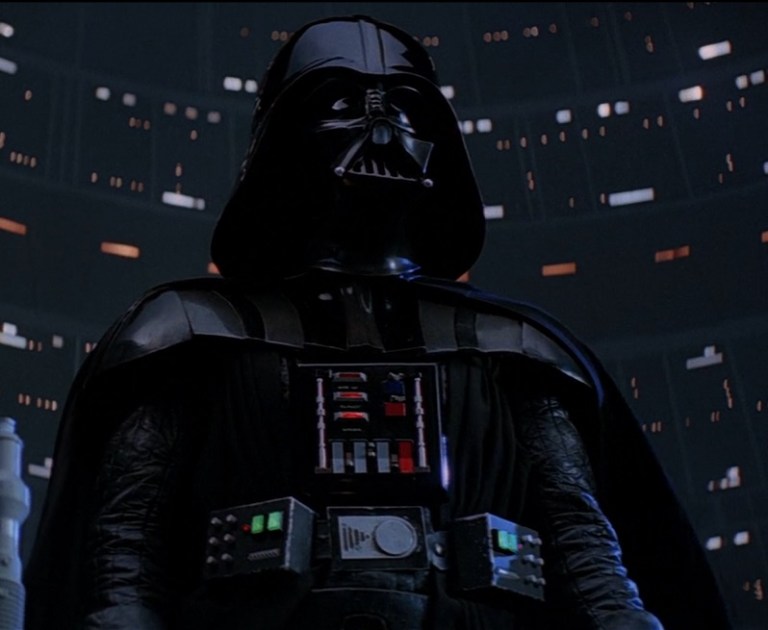
“No, I am your father!”

But this has been a double-edged sword. After the incredible success of The Empire Strikes Back, the next film in the series – which rounded out the Star Wars trilogy and concluded the series for almost two decades – felt, to some fans at least, like a bit of an anticlimax. It’s difficult to remember now, given all of the other controversies Star Wars has endured from the prequels to the sequels and beyond, but for a long time, Return of the Jedi was considered the weak link in the trilogy.

I vividly remember the first time I watched Star Wars – at the behest of a friend who was a pretty big fan – in the early ’90s. He had all three films on video, and as we sat down to watch them, his father, who was also a Star Wars fan and had introduced the films to his son, insisted to us that the first two films were great, but Return of the Jedi was absolute crap! Part of the reason why some fans felt – or still feel – this way is that Return of the Jedi has nothing that comes close to comparing to the “I am your father!” moment. Nor does any other Star Wars film.
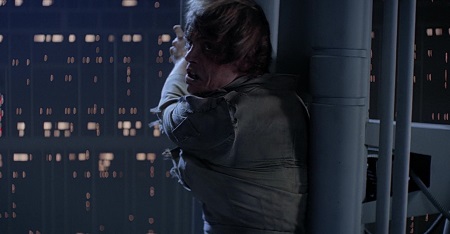
Star Wars has tried – and failed – to come up with something that compares to this moment, even going as far back as Return of the Jedi.

Though the prequel trilogy didn’t try to outright replicate that moment, I think it’s not unfair to say that nothing in those three films compares to the revelation of Vader being Luke’s father – and perhaps that’s because fans already knew the broad strokes of the prequels’ storyline before sitting down to watch any of the films. There were bumps and twists along the way, but we all knew before we sat down to watch The Phantom Menace in 1999 that Anakin would betray the Jedi and become Darth Vader, and that the mild-mannered Palpatine was a Sith in disguise. It’s hard to have a shocking twist under such circumstances!

But the sequel trilogy definitely tried to recapture the magic of the moment between Luke and Vader on Cloud City – not once, but at least three times. In The Force Awakens, Kylo removing his helmet for the first time was an attempt at a shocking surprise. In The Last Jedi we can point to the reveal of Rey’s parents as “nobody,” as well as the death of Snoke, and in The Rise of Skywalker we again have Rey’s parentage but this time Kylo explaining to her that “you are a Palpatine” – one of the worst lines in the trilogy.
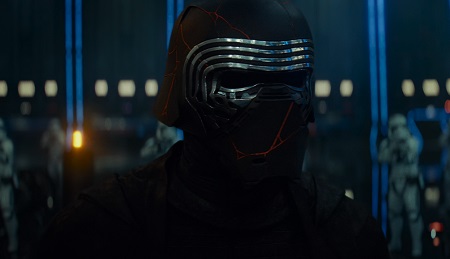
This moment between Kylo Ren and Rey was clearly intended to recreate the magic of the scene between Vader and Luke in The Empire Strikes Back.

None of these moments, and many others in Star Wars, have come close to achieving the success of the Darth Vader line in The Empire Strikes Back, and it feels like the franchise doesn’t really know how to respond to the overwhelming power of that one moment. It wouldn’t be fair to say that Star Wars’ entire success is based on one moment in one film, nor that it’s the franchise’s sole accomplishment. But it’s undeniably one of the high points in the whole franchise, so if Star Wars is to see continued success the creative team in charge need to understand what the moment represents, why it worked, and most importantly they need to understand why recent attempts to replicate it have fallen flat.

For me, the closest Star Wars has ever got to recreating the magic of that Darth Vader reveal came not in a film but in a video game. In Knights of the Old Republic, toward the end of the game it’s revealed that the player character is, in fact, one of the game’s principal villains – a Sith Lord named Darth Revan. Revan had their mind erased after being captured by the Jedi, and was re-trained in order to follow the path of the light side. I remember sitting there with the Xbox control pad in my hand with my mouth hanging open, stunned!
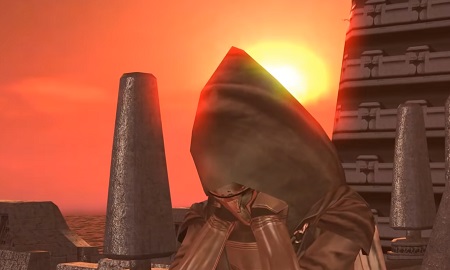
The revelation that the player character is Darth Revan in Knights of the Old Republic was shocking, and about as close as Star Wars has ever managed to get to the Luke-Vader moment.

So why don’t I feel that way when Kylo is revealed to be Ben Solo? Or when Rey is revealed to be a descendant of Palpatine? Figuring this out is important, because I’m not the only one who recognises that Star Wars is trying and failing to live up to this moment.

By the time of The Rise of Skywalker, Rey’s parents had been established, and changing that arbitrarily to follow a fan theory just felt wrong – and more than a little stupid. Not to mention that the execution was clumsy and it came in a film with myriad other problems. But the reveal that Kylo Ren is, in fact, Ben Solo – the son of Han and Leia – should have garnered more of a reaction, surely? After all, this is the son of two of Star Wars’ principal characters and biggest heroes, yet he’s the villain having fallen to the dark side.

The buildup to Kylo Ren’s reveal wasn’t as intense, and by the time it’s finally understood who we’re dealing with, perhaps elements of that had already been teased in such a way as they weren’t as big of a shock. Then there’s the fact that The Force Awakens is where we first met Kylo Ren; he didn’t have an entire film to grow on us as his own character – mere minutes after meeting him for the first time we learn his true identity. Darth Vader had almost two entire films as the “big bad” before it became known to us who he really was – and I think that has a bearing on how we perceive these different moments in the two films.
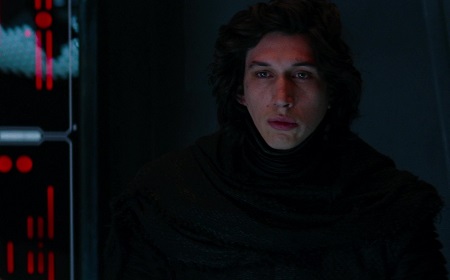
Kylo Ren’s unmasking – and the reveal that he’s Ben Solo – just doesn’t compare to the Luke-Vader moment on Cloud City.

Partly this is a consequence of the way the original trilogy was created. Darth Vader was not Luke’s father in the original film; this is an addition that came later, during the writing of The Empire Strikes Back. There was nothing in the first film to set up or telegraph this moment – because no one, even those involved with the film, knew that the moment was coming. In The Force Awakens or The Rise of Skywalker, the moments which attempt to recreate it were planned, and the films were almost constructed around what the creative team hoped would be the big shocking twist.

Overall, though, I think the fundamental problem is this: The Empire Strikes Back didn’t set out to create a story that all depended on a single moment. The film has many other truly fantastic sequences that would still make it an outstanding film even if the Luke-Vader moment didn’t exist or came in a different film. The creative team behind The Empire Strikes Back weren’t trying to recreate something from a prior story, they were pioneering something new. And while they knew it was going to be a seminal moment in the film, I don’t think anyone involved could have predicted just how important that one moment would turn out to be for the entire Star Wars franchise.
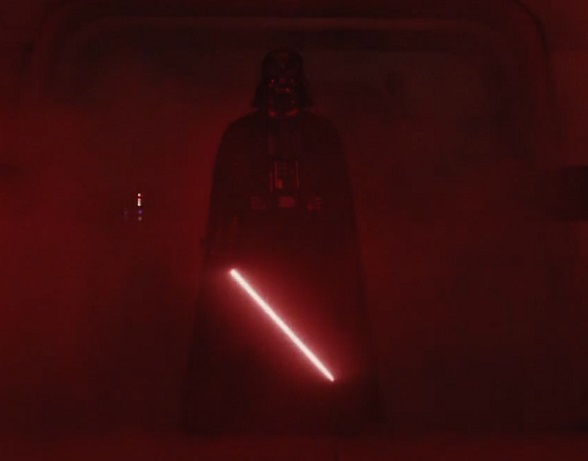
The story of Darth Vader was not known or planned out in the first couple of films – which made the revelation all the more shocking.

But even by the time of Return of the Jedi a couple of years later it was apparent that Star Wars was in danger of feeling like a one-trick pony. A new Death Star had been created to replace the one Luke destroyed in the first film, which is hardly anything original, and after the big twist of the Luke-Vader connection in The Empire Strikes Back, Return of the Jedi made the first attempt to recapture that moment by arbitrarily making Luke and Leia siblings. Neither moment lived up to the comparable moments in previous films, and perhaps that’s a contributing factor to why some fans felt let down. Star Wars had already begun living in its own shadow.

Mimicking or recreating a story or narrative moment almost never results in something better. The most that Star Wars can hope for is to hit the same high notes – but trying to copy something it’s already done won’t ever lead to the franchise exceeding it. The Empire Strikes Back succeeded because it pioneered a storyline that no fan could have expected. Subsequent Star Wars projects – from Return of the Jedi to The Rise of Skywalker – failed to live up to that moment because they didn’t try to create their own unique moments, they tried to copy the successful one from The Empire Strikes Back.
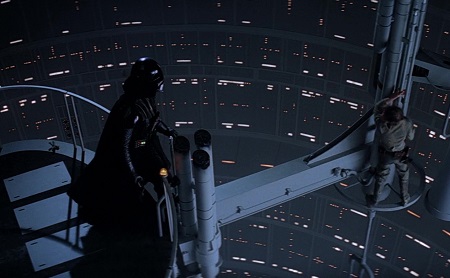
Star Wars won’t ever succeed at recreating this moment – and the sooner the writers and producers realise that, the sooner the franchise can move on!

I’ve spoken on a number of occasions about Star Wars as a franchise being trapped by its own past, unable to move on from the shadow of the original trilogy and tell truly new and different stories. But because the new films rely so heavily on nostalgia for the originals they weren’t allowed to stand on their own two feet – and when The Last Jedi tried in its own way to branch out and do something different, the result was controversy and a divided fanbase. It’s almost unsurprising, in that context, that Star Wars would simply choose to retreat to safer, more comfortable ground – even if that means it won’t ever surpass its original incarnation.

For me the question is this: is that moment in The Empire Strikes Back all Star Wars can ever be? Or will it one day aspire to do something different, maybe even something better? Right now the answer is that Star Wars seems to want to stay firmly in that nostalgic space, chasing the one moment the creative team knows fans adore; the moment on which Star Wars’ modern iterations hang. But for all the films and television shows produced since that moment in 1980, forty-one years ago, the franchise has never succeeded at recreating its magic.

Perhaps it’s time to stop trying to emulate past success, to move on to newer and different things. There are amazing stories in the Star Wars galaxy waiting to be told – but first the creative team in charge of the franchise has to come to terms with the fact that nothing they do will ever match the revelation Darth Vader gives to Luke in The Empire Strikes Back. When they finally realise that, and desist from trying to forcibly make it happen, the franchise can finally start making its own magical moments again.

The Star Wars franchise – including The Empire Strikes Back and all other properties mentioned above – is the copyright of LucasFilm and the Walt Disney Company. This article contains the thoughts and opinions of one person only and is not intended to cause any offence.
Looking back on The Empire Strikes Back on its 40th anniversary

Spoiler Warning: There will be spoilers ahead for The Empire Strikes Back and the rest of the Star Wars franchise.

On the 21st of May 1980, The Empire Strikes Back arrived in cinemas. Its release would set the stage for Star Wars becoming the greatly-expanded franchise we know today, and it remains for many fans – myself included – the high-water mark which subsequent entries have struggled to live up to. The Empire Strikes Back also gave us the first hint of a potential prequel series, as it adopted the moniker “Episode V”, retroactively making 1977’s Star Wars, which had of course been the first film released in the series, the fourth part of a larger story.

It wasn’t at all clear, even in the months leading up to Star Wars’ 1977 release, that the film would be a success. Lucasfilm had created a number of options for a Star Wars sequel depending on what kind of budget might be available – something which was dependant on the scale of the first film’s success. One option was to make a film version of the 1978 novel Splinter of the Mind’s Eye, which had been written as a sequel story to the original film. This story had been written specifically to allow the reuse of many props and sets – which would have allowed a film version to have a relatively low budget. It’s also a story that, if circumstances required it, could have been a conclusive end to the Star Wars story – potentially killing off Darth Vader. However, Star Wars went on to be a greater success than expected, allowing for a different sequel story, one which was far broader in scope than Splinter of the Mind’s Eye.

Early work on the project that would become The Empire Strikes Back – which was then simply titled Star Wars Chapter II – seems to have kicked off while the original film was still in cinemas in the summer of 1977. Emboldened by the success of Star Wars, George Lucas was able to negotiate very favourable terms for a sequel, and though production was hampered by the loss of some special effects people and artists, by 1978 The Empire Strikes Back was taking shape. Sequels were, at the time, relatively uncommon and success was by no means guaranteed. Nevertheless, the original cast returned for the sequel and filming began in 1979.

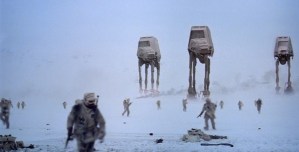
The Battle of Hoth.

The biggest story point that everyone remembers from The Empire Strikes Back is, of course, the revelation that Darth Vader is Luke’s father. This scene has become iconic not just in cinema but in popular culture in general, to such an extent that I’d wager most people, even if they’ve never seen the film – or indeed any film in the Star Wars franchise – could tell you what happened! It’s also one of cinema’s most misquoted scenes: Vader doesn’t say “Luke, I am your father”, as so many people seem to think. Instead, after hearing Luke say he knows that Vader killed his father, he responds with “No, I am your father!”

This moment was incredibly shocking, and I was fortunate enough on first viewing the film as a kid to go into that moment unspoiled and unaware of what was about to unfold. There was no internet in those days, and my friend, whose VHS copy of the film we were watching, was kind enough not to have spoilt it for me! I have an article that I wrote for Star Wars Day earlier this month in which I go into a little more detail of my own early history with the franchise – those of you interested can find it by clicking or tapping here.

One of the most iconic scenes in all of cinema.

I do feel that this moment has its downsides, though. The semantic gymnastics required to get around Obi-Wan’s statement in A New Hope that Darth Vader killed Luke’s father are kind of ridiculous, and before the prequels were released, the line that what he said was true “from a certain point of view” was one of the low points of the entire franchise (along with the Ewoks)! In fact, if you’ll allow me a complete tangent for a moment, with the prequels and sequels attracting negative attention from sections of the fanbase, it’s almost easy to forget that Return of the Jedi was considered Star Wars’ weakest film for a long time. When I first watched the original trilogy with my friend, I remember discussing it afterwards and his father in particular was adamant that Return of the Jedi was atrocious! But we’ve gone way off-topic.

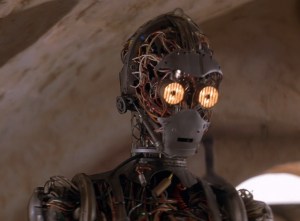
The other major downside from the Vader-Luke revelation is that subsequent entries in the franchise, most egregiously the prequels but also key points in the sequels too, rely on similar familial connections, usually thrown in just for cheap nostalgia. There’s a sense in the Star Wars universe that because Force powers can be inherited that every major character needs to have inherited their powers from someone else in the franchise. Return of the Jedi continued this trend by making Luke and Leia brother and sister – something which similarly came from nowhere. The prequels kicked that into high gear by making practically every character related or connected to someone else, and finally we have the sequel trilogy, which focuses on the son of Han and Leia battling the granddaughter of Palpatine – the latter being either the stupidest or second-stupidest character relationship along with Anakin building C-3PO.

This moment in the prequels? Not good.

By changing Luke’s character from an everyman, someone who showed the audience that anyone from anywhere could step up and play a major role in saving the galaxy, The Empire Strikes Back laid the groundwork for what would become a story about destiny. Luke was the one to take down the Death Star and face Vader and the Emperor because he was destined to play that role. Or even worse, Luke was simply being manipulated the entire time by Palpatine – as every major character seems to have been – robbing him of any agency over his own story. But that latter point in particular would only become apparent later on, and once again I’ve veered off-topic!

None of that means, however, that the revelation was not incredibly powerful and shocking within The Empire Strikes Back itself. There’s a reason why that scene has become so iconic, after all! But there are drawbacks, some of which we’ve really only begun to see with recent Star Wars projects trying desperately to recapture that magical moment.

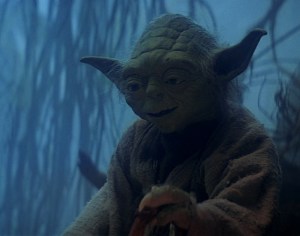
On a more positive note, The Empire Strikes Back introduced Yoda for the first time. When Luke was sent to the Dagobah system to continue his Jedi training, we as the audience – like Luke himself – expected him to meet someone not dissimilar to Ben Kenobi: an older, wiser, stronger man who will help Luke unlock his potential. Yoda is so far removed from what we expected that it could have ended up being comical, yet this is actually a great example of how to properly subvert an audience’s expectations! It also has a simple message, both for Luke and for us: don’t judge a book by its cover.

Yoda debuts in The Empire Strikes Back.

Dagobah is such an atmospheric setting, as indeed most of the locations The Empire Strikes Back visits are. A jungle-swamp shrouded in thick fog feels very eerie, and Yoda being the only sentient creature we meet there adds to the sense of isolation. Hoth is a wonderful setting too – the frozen wasteland is symbolic of the Rebels being on the run and having to hide off the map, so to speak. We often associate frozen, arctic locations with being inaccessible due to the polar regions of Earth being so difficult to get to, so this in particular was a masterstroke in my opinion. Seeing the Rebel base invaded at the beginning of the film also served to show just how powerful the Empire was – they could track the Rebels anywhere, even this remote outpost.

While we’re on the subject of locations, Cloud City is also a really interesting place – the bright, sunlit, futuristic city makes the betrayal that happens there all the more shocking. And the lower reaches of the city, where Vader and Luke have their duel and where Han is frozen, is also absolutely iconic. With the exception of some of the outdoor scenes set on Hoth, which were filmed in Norway, almost every location in The Empire Strikes Back was filmed on indoor sound stages. I’ve been championing this choice for current and upcoming productions recently; one of the (few) disappointments from the first season of Star Trek: Picard is that all of its planets looked samey due to being filmed within a few miles of its Los Angeles base. The Empire Strikes Back makes a great case for using indoor filming locations instead of going on expensive outdoor shoots all the time.

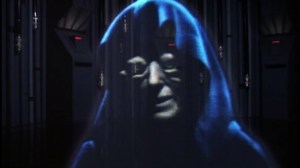
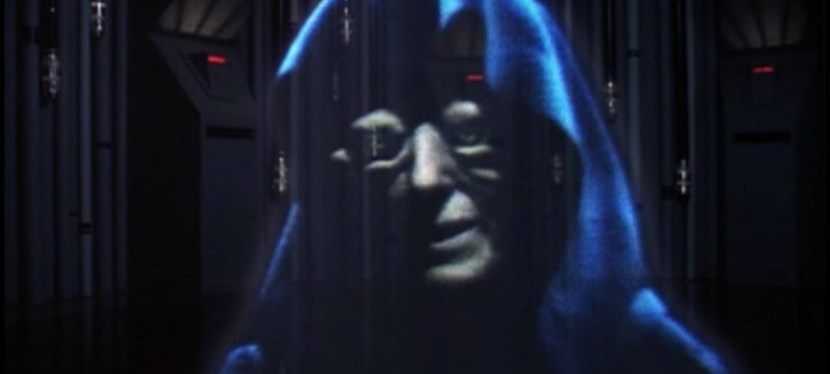
After only being referenced in A New Hope, in The Empire Strikes Back we’re finally introduced to the Emperor (who would remain nameless until the prequels; I never could figure out where the name “Palpatine” came from!) In the original version, the Emperor, who only appears to Darth Vader via hologram, was a composite of actor Clive Revill, painter Marjorie Eaton, and the eyes from a chimpanzee to create a weird, creepy look and sound. The role would, of course, be recast for the Emperor’s expanded role in Return of the Jedi. The scene was rerecorded for the “special editions” of the films in the early 2000s.

Palpatine’s original appearance.

What makes The Empire Strikes Back really stand out, at least for me, is that it’s a film where the heroes lose. A New Hope told the story of a desperate last-ditch effort to transport the stolen Death Star plans and destroy that weapon of war. Aside from Obi-Wan’s death, the heroes come out victorious – and one life is a tiny price to pay compared to destroying a planet-killing superweapon. But The Empire Strikes Back does what its title says – the Empire retaliates for the Rebel victory, destroying their new base, causing friends to turn on them, capturing Han Solo and maiming Luke. By the end of the film, the destruction of the Death Star seems a long time ago, and there’s a mountain to climb if Luke, Leia, and the rest of the Rebels are to ever be victorious.

That’s something that very few stories nowadays would be prepared to risk. There would be a three-year wait before Return of the Jedi picked up the story, and that’s a long time to leave fans hanging, especially as the ending was, in many ways, a real downer. As we’ve seen from the recent Star Wars sequel trilogy, they weren’t bold enough to let either The Force Awakens or The Last Jedi end on such a note. Some television series do have end-of-season cliffhangers, but for these the wait is usually only a few months. In short, they don’t make films like The Empire Strikes Back any more!

However, there’s a valuable lesson in the film’s narrative of successive losses and defeats, and it means that the Rebels’ ultimate victory in Return of the Jedi is even more sweet knowing how close they came to defeat. It demonstrates clearly how powerful the galaxy-spanning Empire truly is. And Luke learns that he needs to train and study if he’s even going to have a chance at standing up to Vader and the Emperor. As the audience, we expect our heroes to prevail. The Empire Strikes Back says that sometimes, merely surviving to fight again another day can be just as important.

At the same time, the film ends with optimism and hope – Luke and Leia are alive, despite everything they’ve been through. And though initially someone who betrayed them, Lando has come around to be a new ally. The Rebellion is also still alive, despite losing its base, and Luke’s lost hand is replaced with a mechanical one. As dark as parts of the film were, and despite the successive defeats, there is still hope for the Rebels in the film’s closing scene.

The heroes look across the galaxy at the end of The Empire Strikes Back.

For me personally, one of the things I remember most from my earliest viewing of The Empire Strikes Back was how genuinely frightening Darth Vader was. The unmoving masked face, the slow, mechanical breathing, and the relentlessness he showed in the duel with Luke combined to make him terrifying – and The Empire Strikes Back is the pinnacle of Vader being an intimidating villain. Sadly, the prequels would go a long way to undermining that, at least in my opinion.

The Empire Strikes Back is still the best Star Wars has to offer, and after forty years and with ten other films and a television show, that’s quite a legacy. Although, perhaps that says more about the decline in quality in subsequent projects than it does about the film itself! Regardless, it’s the high bar that the Star Wars franchise – and many other science fiction and fantasy titles too – aim for. It’s a film which has quite understandably become legendary, but in a time where nostalgia and reboots trump originality, it’s hard to see when another film, either in the Star Wars franchise or not, will come close to matching what The Empire Strikes Back accomplished.

The Empire Strikes Back is available to stream on Disney+. The Star Wars franchise – including The Empire Strikes Back and all other properties mentioned above – is the copyright of Lucasfilm and Disney. This article contains the thoughts and opinions of one person only and is not intended to cause any offence.