In the ’90s and early 2000s, I was a pretty big fan of Buffy the Vampire Slayer. The show felt fresh and different; taking horror villains and tropes but bringing them into a fun, modern setting. There was a great cast of characters, too, that changed and grew over time, and some well-executed longer arcs mixed in with plenty of episodic storytelling. There’s no doubt in my mind: Buffy was a great show.
I haven’t actually re-visited Buffy the Vampire Slayer since it was on terrestrial TV here in the UK. The final episode would’ve aired in late 2003, I guess, meaning I haven’t seen it in more than twenty years! Can I still call myself a fan of something two decades later? I don’t know… but I still consider myself a fan, at any rate.
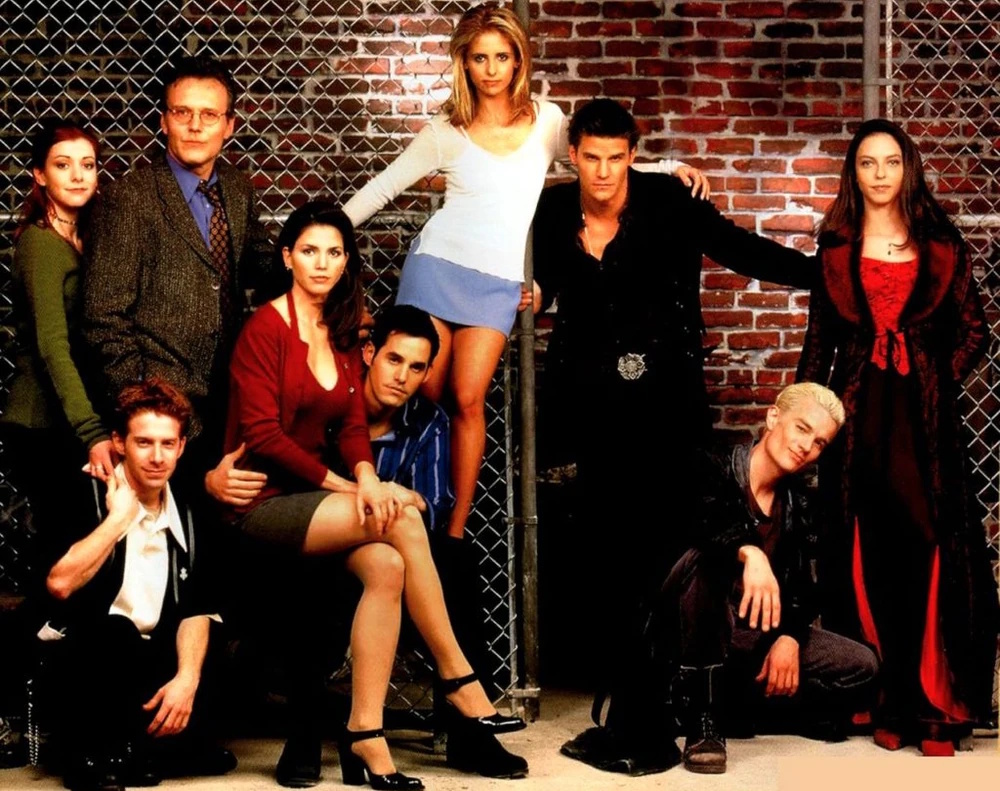
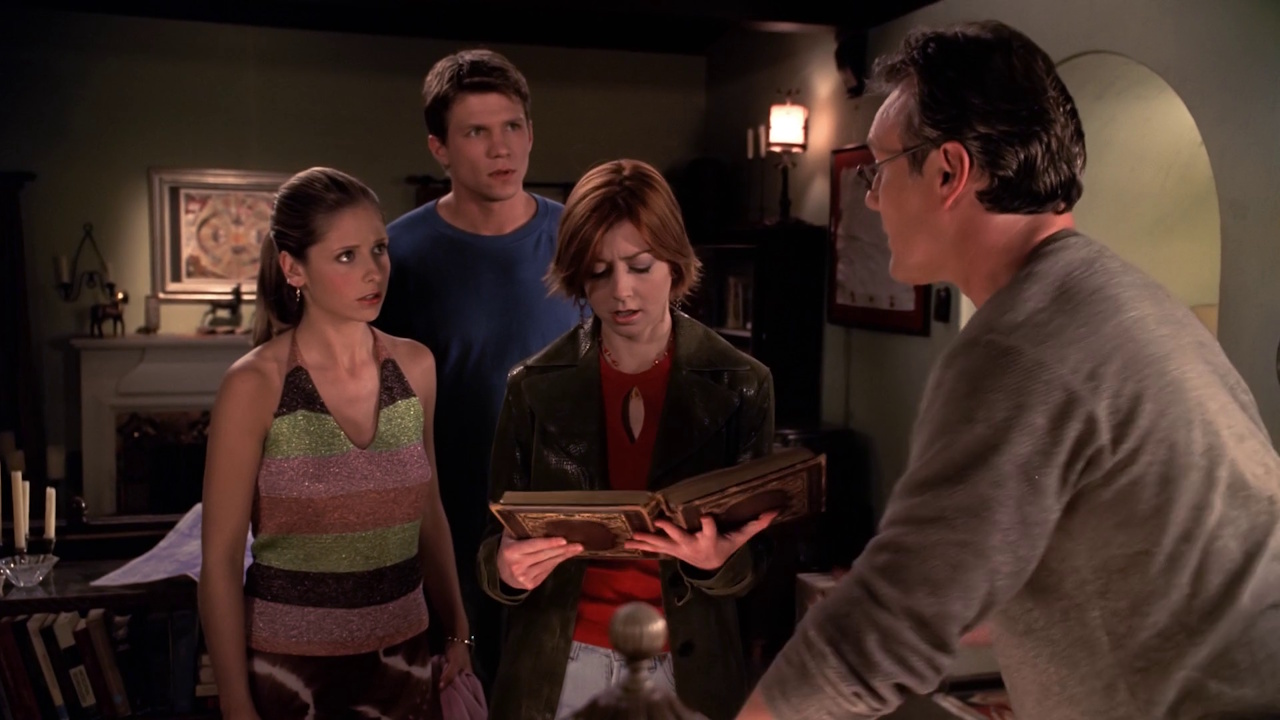
The main cast of Buffy the Vampire Slayer Season 2.
So why are we talking about Buffy today? The answer is simple, unfortunately: Buffy the Vampire Slayer is the latest series to be targeted for a resurrection by its corporate overlords. They’re hoping to add more content to Hulu – an unsuccessful streaming platform. A Buffy reboot is in the offing… and honestly, I think it sounds like a terrible idea.
When interviewed about the reboot – which is still at a very early stage – Sarah Michelle Gellar likened the show’s revival to the likes of Dexter and Sex and the City. Y’know… those notoriously successful reboots that everyone just adores. Given that several members of Buffy the Vampire Slayer’s old cast have retired from acting (or couldn’t be part of a reboot for other reasons), I think a more apt comparison would be something like Frasier. That show, which also had its heyday in the ’90s, was revived with only one of its main characters returning. And, as anyone could’ve predicted, it flopped.
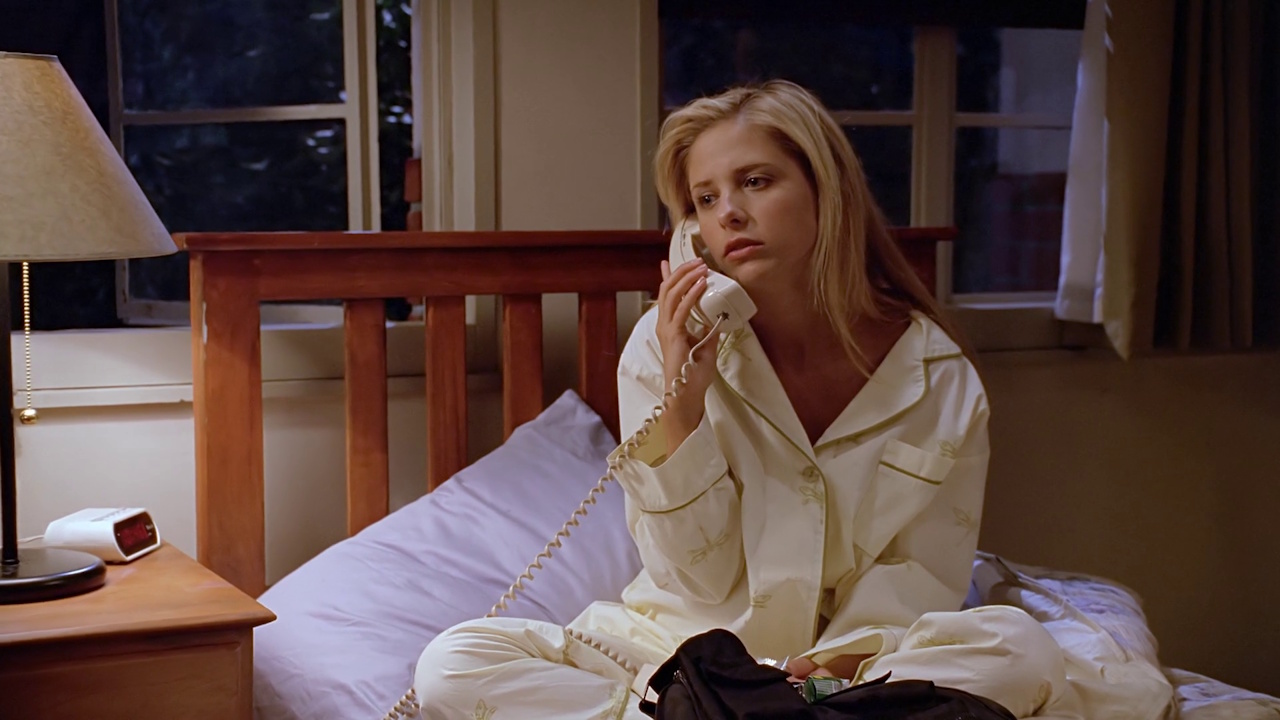
Sarah Michelle Gellar (Buffy Summers) in 2024. Photo Credit: IMDB/Getty
A reboot is not inherently bad in and of itself, but it has to be created for the right reasons. There have to be new stories to tell, something more to say, and a purpose beyond a corporate board and investors looking to make a quick profit. The streaming TV landscape is also oversaturated with attempted revivals of once-popular shows, as well as franchises trying to recapture their glory days. There’s much more limited room for manoeuvre for a Buffy reboot in 2025 than there might’ve been even a few short years ago.
If I recall correctly, Buffy’s seventh and final season came to an explosive end – but left the door ajar for potential future stories. But with many character arcs being complete, and with Buffy herself having literally been to hell and back, what kind of new adventures could she realistically get into? And with several characters dead and other performers no longer available, would fans be interested in half of a reunion? Would brand-new characters – who would need to be added to fill out the lineup – be as interesting or as welcomed by the returning fans that the reboot’s producers hope to entice?
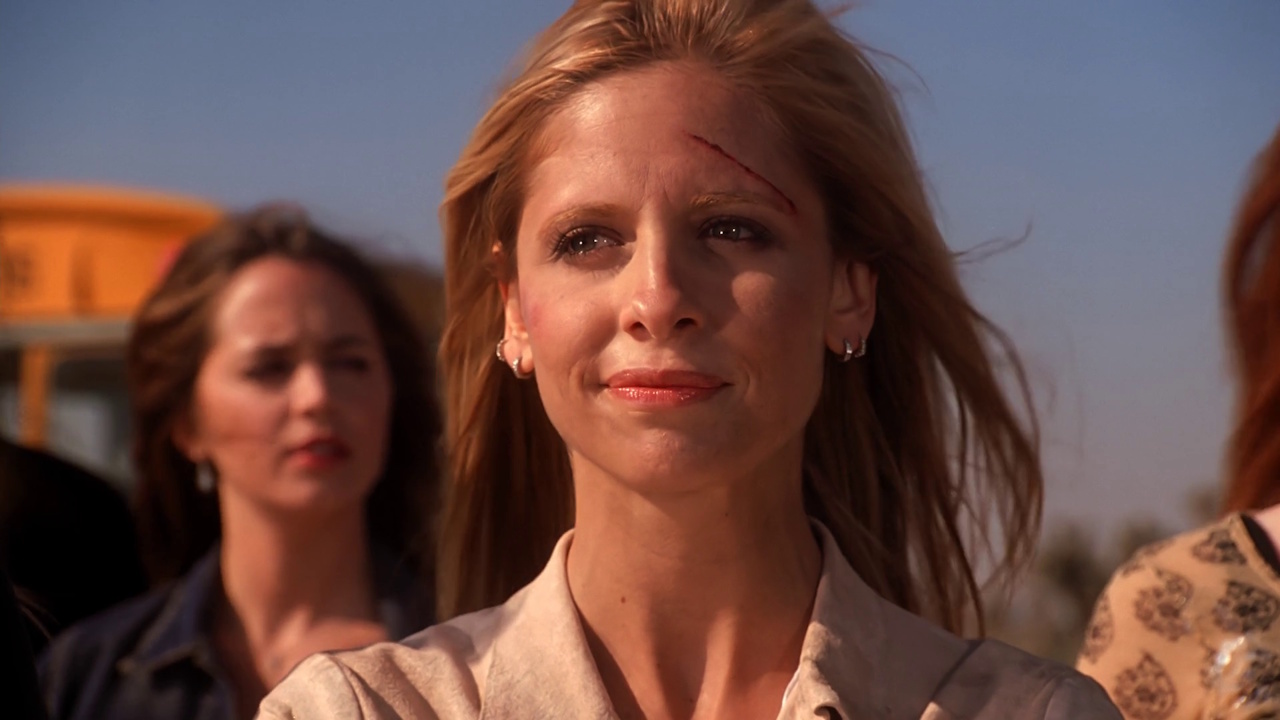
Buffy at the end of the series.
There was a charm to Buffy the Vampire Slayer in its original form. It was something different on TV; soft horror that had a lot of the monsters but without crossing over into anything outright terrifying. It could be light-hearted and funny, but it was also serious enough in the way its characters were handled that moments of drama and tension still worked. The mix of episodic storytelling – a literal “monster of the week” – with ongoing story arcs and character development was also something rare on television at the time.
I don’t know how you replicate that today. With so many other horror shows on the air – from Stranger Things to The Terror and beyond – there’s a risk that Buffy the Vampire Slayer would seem tame or campy in comparison to some of those other offerings. Or, conversely, if Buffy was “updated” to be more violent and terrifying, really leaning into the horror angle, that the show would lose itself. Everything that made it unique would be erased; lost in the slop of big-budget streaming TV.
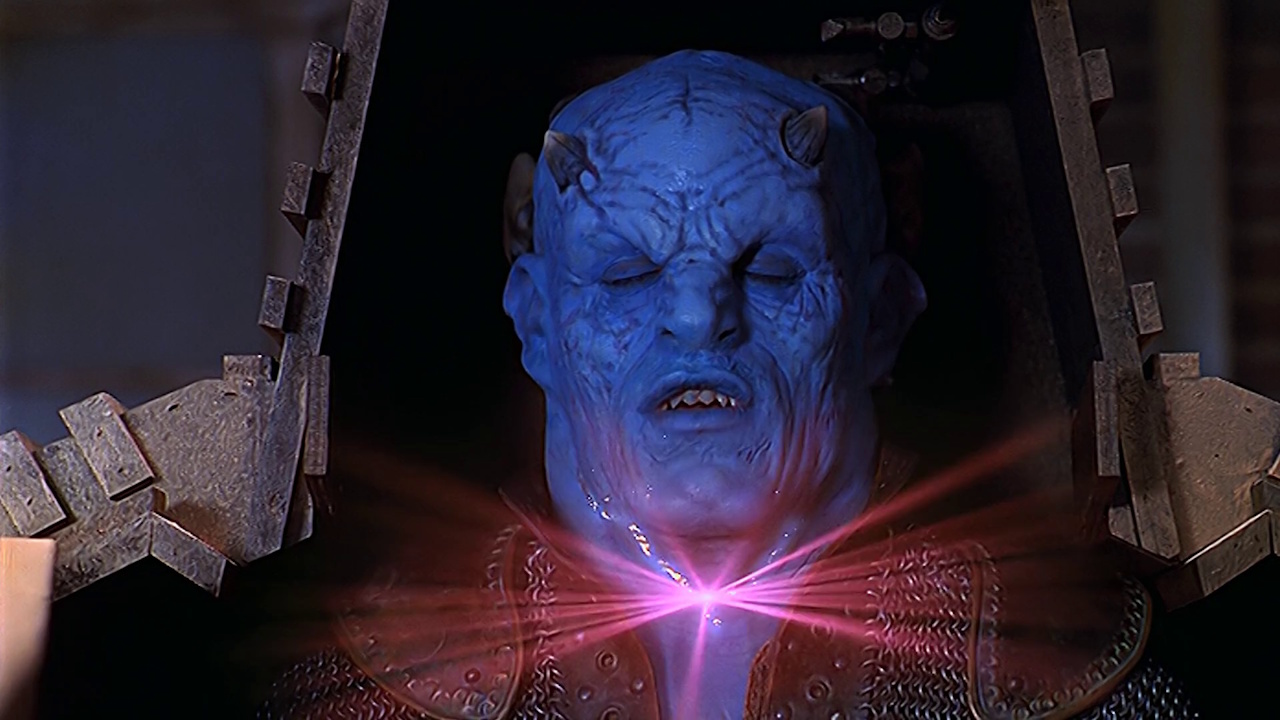
Buffy the Vampire Slayer didn’t need to rely on cheap jump-scares or gore to be entertaining.
Some films and TV shows work in context – but they’re very much anchored to the time and place of their creation. You couldn’t reboot Cheers in the 2020s – not successfully, anyway. It’s an ’80s show with an ’80s theme and tone, and it wouldn’t work if you tried to transpose it to a brand-new decade. I can think of plenty of others, too – from British classics like Fawlty Towers to big-budget American shows like Seinfeld. Some story premises are genuinely timeless… but others aren’t.
Is Buffy the Vampire Slayer in that category? Is it a show so inherently linked to the turn of the millennium that it couldn’t work in the 2020s? I fear it might be – and while I could entertain, perhaps, the idea of a complete reworking of the concept, with a brand-new cast of characters taking on a horror series with episodic elements, I’m not sure bringing back some of the original cast will work, either. Twenty-five years ago, Buffy and her friends were at high school and university. Now… what will they be doing? They’re all going to be in completely different places in life, and that would also take something important away from the series – part of its core identity.
Is Buffy too much of a late ’90s/early 2000s show to work in the 2020s?
I’ve been wrong about these things before, and if this reboot does go ahead, then I’ll probably at least take a look at the trailers to see whether it seems like it has a chance of being any good. But to me, it feels like the kind of utterly soulless project born in a corporate boardroom, not a genuinely organic creation. To bring back a series that already ran to 144 episodes across seven seasons, you need to find a reason for doing so – and some way to tell new stories that weren’t possible last time. I don’t see what those stories could be, and without key characters who were essential to the original show, as well as the school setting which did so much to keep things grounded and relatable… what’s left?
I look at the failure of many recent reboots – Dexter, Frasier, Roseanne, and even, to some extent, the likes of Star Wars – and wonder what fans of Buffy will make of this idea. Returning to the core concept might have some merit to it, though even then I’d probably argue that a new series, with new characters, would be less restricting and a better way to go. But bringing back a handful of characters, now in their forties or older, to revive this high school drama? I mean… doesn’t it seem like a bit of a stretch?
A Buffy reboot without most of its cast will likely go about as well as the Frasier reboot did under similar circumstances.
Having said all of that, I was pretty excited in 2019 and 2020 for Star Trek: Picard – a series which brought back the fan-favourite character from The Next Generation for a new adventure. So perhaps the Buffy die-hards will be just as thrilled at the prospect of her return as I was for Jean-Luc Picard. And maybe, if the reboot is a success, it’ll be more a case of passing the torch from one generation of vampire slayers to another – and those new characters could go on to expand the franchise.
There is room, I would argue, for more episodic television in 2025, and that’s what Buffy used to be. The biggest horror and horror-adjacent streaming shows today are wholly serialised affairs: From, The Walking Dead, The Last Of Us, etc. And there’s room for a show inspired by the success of Buffy the Vampire Slayer to go back to the format’s episodic roots instead of telling one ongoing story. I don’t know whether this planned reboot even intends to do that… but I think there could be space for a series like that. If there’s a gap in the market anywhere, it’s on the episodic side of things.
Buffy the Vampire Slayer may be back on our screens in the years ahead.
So I guess that’s where I’m at when it comes to this idea. Part of me hopes that it won’t go ahead at all; Buffy was such a unique and singular show that tainting its legacy with an uninspired, corporate reboot – which will probably be squashed into eight-episode serialised seasons that don’t suit the format – would be a disappointment. If it does actually enter production, though, my only hope is that the creative team genuinely understand what made Buffy work in the first place and work on the reboot with that in mind.
Will I watch an all-new Buffy the Vampire Slayer if it gets made? I think, at the very least, morbid curiosity will push me to check out the trailers and see how it looks. But I’m not optimistic about a reboot in the current media environment, and it feels like a project that’s been sharted out by a corporate leader in a suit who’s desperate to find “content.” That doesn’t exactly inspire confidence in the potential quality of the revived series! If it looks good and reviews well, though… who knows? Never say never, I guess.
Honestly, though, I think I’d rather leave Buffy in the early 2000s where it belongs.
Buffy the Vampire Slayer (the HD remaster) is available to stream now on Disney+ in the UK, and Hulu in the United States. The series is also available on DVD. Buffy the Vampire Slayer may be the copyright of the Walt Disney Company, Mutant Enemy Productions, and/or 20th Century Fox Television. This article contains the thoughts and opinions of one person only and is not intended to cause any offence.
Here on the website I often talk about potential Star Trek projects, storytelling and narrative choices, and some of the things that I’d like the franchise to do in upcoming series and films. This time I thought it could be interesting to do things a little differently – today we’re going to look at some technical and production-side changes that I think would benefit Star Trek going forward.
The renewed Star Trek franchise hasn’t been shy when it comes to trying new and different things since its return to the small screen in 2017, and while there are some ongoing issues – particularly relating to the way parent company Paramount is handling things – there are still a number of successes that deserve to be commended. This piece isn’t meant to detract from the accomplishments that Star Trek has made in recent years.
There’s a lot to celebrate in modern Star Trek!
But there’s always room for improvement and new ideas! Sometimes that might mean pushing the boat out further and trying genuinely different things – a lesson that another sci-fi franchise could learn from Star Trek, in my opinion! Other times, returning to something that has previously been demonstrated to work well or be popular could be the way to go. There are different ways to approach such a big subject – and naturally, everyone is going to have different perspectives based on their own ideas and preferences.
I’m not an entertainment industry professional. The closest I came to that was working in the video games industry some years ago, and even then I was working in marketing rather than in a creative or technical capacity. So I’m categorically not an expert at how television shows are created and brought to screen! But I know what works for me, what I personally think looks and feels good, and I have some ideas for what I’d like to see from Star Trek in future. That’s what we’re going to talk about today.
My usual caveats apply: I have no “insider information,” nor am I in a position to set policy at Paramount! So it’s quite likely that much of what we talk about today will never make it to screen. This is a wishlist from a long-time fan, and nothing more. It’s also entirely subjective – so if you hate all of my ideas or I don’t include things that seem like common sense to you, that’s okay! We all have different perspectives and points of view; these are mine, and I share them in the spirit of civil and polite discussion about the future of Star Trek.
With all of that out of the way, let’s take a look at ten technical and/or production-side changes that I’d like to see the Star Trek franchise make.
Number 1: 4K and HDR.
4K UHD logo.
If you’re unfamiliar with these terms, “4K” is a screen resolution also known as “ultra-HD.” Whereas a standard HD video image might be 1920 pixels wide by 1080 pixels high, 4K video footage is typically 3840 pixels wide by 2160 pixels high. The increased number of pixels means that image clarity is massively improved, and more detail can be shown with each frame.
“HDR” is an acronym that stands for “high dynamic range,” and in basic terms it makes bright colours brighter and darker colours darker, making for a more true-to-life image on screen. When viewed on an HDR-compatible television or screen, HDR footage looks significantly more real than non-HDR video.
Exaggerated visualisation of the difference between HDR (left) and SDR (right). Image Credit: LG Electronics.
Both 4K and HDR are increasingly common in home entertainment, and streaming platforms like Netflix and Disney+ are offering an increasing amount of their new content in 4K with HDR support. So far, no new Star Trek shows have been created in 4K HDR, despite the technology being available, and Paramount+ doesn’t support it right now. This has got to change – and soon – in order for Paramount+ to offer a comparable service to its competitors, and the Star Trek franchise is a great place to start.
There have been a limited number of 4K re-releases, such as the Director’s Edition of The Motion Picture, but realistically it’s now time for Star Trek to transition to producing its newest content in 4K HDR.
Number 2: Go big for the sixtieth anniversary.
The 60th anniversary is approaching…
At time of writing it’s just over four years to go before the Star Trek franchise will celebrate its sixtieth anniversary. At the time of the fiftieth in 2016, Discovery hadn’t yet premiered and while there was a whole lot of celebrating, it wasn’t possible to do a lot on screen. Star Trek Beyond was the only project to release that year.
But the sixtieth should be different! There are currently five Star Trek projects in production, with at least two others supposedly being worked on behind the scenes. By the time we get to 2026 the franchise should still be going strong, and that raises the possibility of some truly spectacular events to mark the milestone.
Let’s make it a party to remember!
The 30th anniversary of Star Trek in 1996 saw projects like Trials and Tribble-ations and Flashback from Deep Space Nine and Voyager respectively that paid homage to the franchise’s history. Bringing back classic characters, telling fun fan-servicey stories, and more could all be part of a big sixtieth anniversary celebration – but I’d like to see some kind of major crossover event!
Imagine how much fun it could be if a crossover special were created that featured characters from every iteration of Star Trek. Star Trek’s version of The Avengers, where characters from every show and film found themselves – somehow – in the same timeline and era, needing to battle some nefarious villain. It might be terrible, it might be criticised for being too heavy on the fan-service, but as a one-off project there’s nothing I’d like to see more!
Number 3: Make better use of indoor sound stages and the AR wall.
The AR wall during filming for Discovery Season 4.
To be fair, I think the investment that Paramount has made in the AR wall is already beginning to see some results (though I can’t be the only one playing a game of “spot the AR wall,” can I?) But since Star Trek returned to the small screen, it hasn’t been smooth sailing in terms of getting diversity in filming locations.
I felt this most acutely during Season 1 of Star Trek: Picard, and if you’ve been a regular reader since 2020 you may recall that I commented on it in my reviews as the season wore on. In short, every planet that Picard and the crew visited was a barely-disguised southern California, and in a ten-episode season that took them to a new locale almost every week, that became painfully obvious to the point that it detracted from the story in places.
The faraway planet of… southern California.
This has also been something I’ve started to notice with Discovery, too. Certain filming locations (like a disused quarry) crop up multiple times, supposedly representing entirely different planets, and there’s just no need for it. Some of the outdoor shoots that I’ve felt were problematic barely lasted five minutes, so for the sake of a short sequence or a handful of scenes, making use of an indoor sound stage is preferable.
Partly this is because we’ve been spoilt by the likes of Game of Thrones with its multi-national filming locations all across Europe! But partly, it must be said, it’s because Star Trek’s producers have lacked either the budget or the creativity to do something different. The AR wall will be a big help going forward, I have no doubt, but getting diversity in the franchise’s filming locations is a big request of mine. Once you start to notice these things, you can’t un-see them!
Number 4: Make better use of social media.
Some of the most popular social media platforms.
Star Trek’s social media has been atrocious over the past couple of years, and in 2022 there’s no excuse for that. Social media can be a massive asset to any franchise, particularly in the run-up to big releases. But the way Star Trek has handled it has been poor.
Star Trek’s official social media channels – and the rest of Paramount’s, too – need to coordinate better. If a trailer is broadcast for a new or upcoming project, it needs to be available on every platform within minutes. Official Star Trek and Paramount+ YouTube channels don’t do this for some incredibly stupid reason, and it can be hard to find a good-quality copy of the latest trailers sometimes – something that I notice because of trying to get screenshots and still frames to use here on the website.
A regular sight for non-American fans.
Moreover, Star Trek needs to be more conversational and interactive. Social media isn’t just a billboard; an empty advertising space to display posters and teasers and talk about what’s coming up. It’s a place to interact with fans. That means that when fans have questions, someone needs to be there to provide answers. If fans make art or jokes or memes, someone needs to react and respond to those.
In 2022, social media can literally make or break a television series. Projects as diverse as Game of Thrones and Squid Game blew up thanks to social media, and Paramount has continually failed to recognise what an asset social media could be if they used it right. This is one example, in my opinion, of how Paramount’s leadership remains stuck in the past. 20th Century thinking won’t cut it anymore, and wasting money on things like billboards in Times Square or posters on the London Underground won’t bring in viewers. Social media is where it’s at – so a complete overhaul of the way it’s handled is a must.
Number 5: Ditch the cinematic “letterbox.”
The “letterbox” in Short Treks.
I admit that this one is very much a matter of personal taste, but I find that the “cinematic” format used for modern Star Trek episodes is just a bit… gimmicky. Most television shows use a 16:9 or maybe a 16:10 aspect ratio; modern live-action Star Trek episodes have insisted on using a 2.4:1 aspect ratio that’s more commonly seen in films.
If you’re watching a film at the cinema, that’s basically become the industry standard. But most televisions – and even many fancy home theatre setups – still use 16:9 or 16:10 screens, meaning that Star Trek episodes have awkward and ugly black bars above and below the picture. I just feel that this is an unnecessary gimmick, and that I’d prefer to see episodes in a standard widescreen format.
The “letterbox” in Strange New Worlds.
To be fair, this isn’t an issue that’s exclusive to the Star Trek franchise, as it’s been seen in shows like The Mandalorian and Obi-Wan Kenobi over in the Star Wars franchise as well, and seems to be increasingly in vogue for modern television series. But to me it still feels like a gimmick at best, and something that may end up making TV shows of this era feel dated in years to come.
Any time I watch a video with ugly black bars around it, it makes me feel like I’m not seeing the full picture; as if something has been cut off. This applies when watching older shows in 4:3 as well. So if everyone could stick to a standard widescreen format that would be great!
Number 6: A return to more episodic storytelling.
Discovery set the stage for serialised storytelling in modern Star Trek.
To be fair, this has already happened with the likes of Lower Decks and, of course, Strange New Worlds. But it would be great to see more of a focus on episodic, “monster-of-the-week” storytelling from Star Trek going forward. That was where the franchise began, and there are many benefits to this approach.
In the wake of projects like Lost and Game of Thrones we saw a lot of television shows try to take a more serialised approach – with varying results. Some series and franchises can pull it off more successfully than others, but the fundamental weakness in this approach – as Lost, Game of Thrones, and some recent seasons of Star Trek have shown – is that you have to absolutely nail the full story, and particularly have a well-written, thoroughly planned ending.
There’s a reason why no one talks about Game of Thrones anymore.
In short, the weakness in serialised storytelling is that one or two bad episodes, particularly if they come at the end, can sour an entire season or even an entire series. Look at how the two-part finale of Picard Season 1 put a downer on the whole season, or for a more extreme example how Game of Thrones’ eighth season effectively killed off the entire series.
Episodic storytelling is less risky in that regard! One bad episode doesn’t ruin an entire story, and that’s a big point in its favour. But moreover, the Star Trek galaxy is well-suited to these kinds of one-and-done stories. It allows for a lot more freedom and creativity, and would allow us as the audience to take a look and many more aliens, many more planets, and to get a much broader perspective. There’s a place for serialised storytelling within Star Trek – but not in every project.
Number 7: Properly address international distribution issues.
There’s a world beyond America’s borders…
One of the main weights around the neck of the Star Trek franchise right now is the appalling international distribution situation. It really feels like Paramount doesn’t care in the slightest about any non-American fans – and in the globalised, connected marketplace we’re in in 2022, that’s not acceptable.
Star Trek is one of the big selling points for Paramount+… but if the streaming platform isn’t available and there are no concrete plans to make it available in the short-term, Paramount needs to do something else to ensure non-American fans can watch the latest episodes of Star Trek. As I’ve already pointed out, Paramount Global owns or co-owns a massive number of television channels all across the world, and they have the ability to do deals with the likes of Netflix, Google, Amazon, and others.
Paramount’s approach feels very Trumpian.
The lack of international distribution for Lower Decks Season 1, Prodigy, Strange New Worlds, and most egregiously Discovery Season 4 was entirely Paramount’s fault. They chose to broadcast these shows in the United States without getting international broadcasts set up, and they could have either worked harder to get that set up or delayed those shows if they couldn’t.
There are many Trekkies outside of the United States who feel hurt by this – and as I continue to point out, this harms the reputations of Paramount and Star Trek all across the world. Paramount needs to do more – and quickly – to address this situation and ensure that fans all over the world can watch and share in every new episode of Star Trek. If they won’t do that, the Star Trek franchise and Paramount+ will be in serious jeopardy. It’s that simple.
Number 8: More official merchandise.
Playmates is one of the brands that Star Trek has worked with in the past.
As I said last year when Prodigy premiered, it was incredibly poor from Paramount to broadcast a television show aimed at kids while offering no kid-friendly tie-in products like toys, playsets, and dress-up costumes. Merchandise is a money-maker in itself, of course, but it’s also a great way to signal that the Star Trek franchise is back and here to stay.
One of my earliest Star Trek memories isn’t an episode or film, but a product. My uncle showed my a toy phaser that he had when I was very young, and that memory has stuck with me. For kids, toys and games can push them to check out a television show or franchise for the first time, and just by seeing Star Trek-branded products on shelves, more people will be aware of the fact that new shows and films are being made.
A modern action figure of Q.
Star Wars has an excellent approach to merchandise – and that’s always been the case. In the 1990s Star Trek was a close competitor, and I have a number of figures in my collection from that era. Even relatively minor characters like Morn found themselves turned into action figures – and Star Trek needs to get back to doing that. There’s a place for expensive collectables too, but more than anything Star Trek needs the playsets and toys that it used to be so good at creating.
We’re seeing moves in the right direction here, with the likes of Mego and Playmates coming online and starting to produce more toys and products, but Paramount still needs to do more. At this rate, Prodigy’s entire first year will have come and gone without a single toy or tie-in product being created, and to me that just screams “amateurish.”
Number 9: Restart the Short Treks series and create more one-off stories, mini-episodes, and TV movies.
There’s a lot of untapped potential in Short Treks.
There are many Star Trek concepts and ideas that don’t have a place in the wider franchise. Some pitches from well-known actors and writers may not make for a great film or series, but could be adapted to be a one-off, a mini-episode, or even a TV movie. With the investments that have been made in sets, the AR wall, and so on, it’s easier than ever to do this.
These one-shot projects would also be commercially useful for Paramount+, convincing subscribers to remain engaged with the platform in between seasons of Star Trek’s main shows. That was the original purpose behind Short Treks (even if it was never stated up-front!) and it makes a lot of sense.
One Short Treks episode told us more about Saru.
Short Treks as a format could be the gateway to some incredibly diverse and varied stories, potentially revisiting classic characters and episodes in a way that the franchise’s main shows wouldn’t be able to. And aside from the fan-service, one-shot episodes and TV movies could be excellent gateways into the Star Trek franchise for newbies or for viewers who’ve just begun to dip their toes into Star Trek.
By making use of existing sets and props as much as possible, at least some of these projects could be relatively inexpensive to create – another big point in their favour.
Number 10: Use less CGI in favour of more practical effects and props.
A combination of practical and digital effects in Star Trek: Picard.
Some episodes of modern Star Trek are overladen with CGI, including in places where no CGI should really be necessary. CGI is great in some instances, don’t get me wrong, but it doesn’t have to be used in every case for every shot!
Star Wars has found success by returning to physical props and puppets and making use of more practical effects, and those moves have won praise from many fans. Star Trek could absolutely go down the same road, creating more models, physical props, and prosthetics for alien races instead of relying entirely on CGI.
The USS Discovery at warp.
Some older episodes of Star Trek haven’t aged well because of some of their sets and props, but I think that can also apply to CGI. CGI-heavy projects from 10-15 years ago can look pretty amateurish by today’s standards, so we shouldn’t worry too much about how “dated” something may or may not look in the years ahead.
There are some wonderful sets, some amazing prosthetics, and some fantastic props that have been created for modern Star Trek. And as I pointed out above, relying too much on one set or one outdoor location can be detrimental, too! But for my money, Star Trek could absolutely make use of more physical props, puppets, and visual effects.
So that’s it!
The Star Trek Universe logo.
“If I ruled the world…” or in this case, if I were in charge of the Star Trek franchise, those are some of the changes I’d like to make. Some are more important than others, naturally, and none of this is to say that what Star Trek has been doing so far is bad. Just that there are changes that could be made to improve things. In my subjective opinion, of course!
I hope that this was a bit of fun, and you can find longer articles that go into more detail about some of the subjects discussed above right here on the website. If you’re new around here, I write about Star Trek a lot! So stay tuned for more Star Trek content to come.
The Star Trek franchise – including all films and series mentioned above – is the copyright of Paramount Global. This article contains the thoughts and opinions of one person only and is not intended to cause any offence.














 Trekking with Dennis