

Spoiler Warning: There are spoilers ahead for Halo Seasons 1-2, and for the Halo video game series.
In 2022, I was one of the relatively small number of folks who enjoyed the first season of Halo. I didn’t think it was the best thing since sliced bread or anything, but it felt like a decent adaptation of the long-running video game series – albeit one that had been trimmed and cropped to fit a very specific mould used by other serialised streaming shows. Season 1 seemed to be a reasonable foundation upon which the next chapter of Halo could be built, so it was with some degree of anticipation that I awaited Season 2’s arrival.
And before we go any further, let’s acknowledge just how long that wait actually was. Halo Season 1 ran from March to May 2022 – meaning it’s been basically two full years since it went off the air. And as I’ve noted in the past with other made-for-streaming shows like Amazon’s The Wheel of Time, The Witcher on Netflix, or even some of the Star Trek shows on Halo’s platform, Paramount+, there are issues that result from long breaks in between short seasons. I needed a recap before the first episode – and at least in the UK, no such recap was forthcoming on Paramount+. Aside from the Master Chief and Kai, I couldn’t remember who was who nor where exactly the story left off – which wasn’t helped by a time-jump of six months in-universe, in which characters had moved around and at least one major story beat had taken place off-screen.
Although it took me a while to get back into Halo during that first episode, as I was hampered by the lack of a proper recap, I will say that I did find myself engaging with the series as its story got going. Although I had to look up a plot synopsis for Season 1 online – something I really shouldn’t have needed to do – once I’d got myself properly reacquainted with the main players, and recapped the major story beats from the end of Season 1, I found a story that was entertaining enough to justify paying for a month’s worth of Paramount+, and that I didn’t mind following to its conclusion.
That being said, I still don’t feel that Halo has truly excelled – at least, not yet. Season 1 laid a solid foundation, but Season 2 seems to have disregarded parts of it, as well as deviated in a major way from the story that I remember from playing (most of) the main Halo video games. While I’m by no means a “canon purist,” I have to wonder: why go to all the bother of licensing a major entertainment property only to jettison most of its story and some of its characters? The story of the Halo video games – at least the first two or three titles, plus Halo: Reach – would have made for a strong and captivating story in itself, and with only a few tweaks could’ve seen the addition of new characters to join the Master Chief.
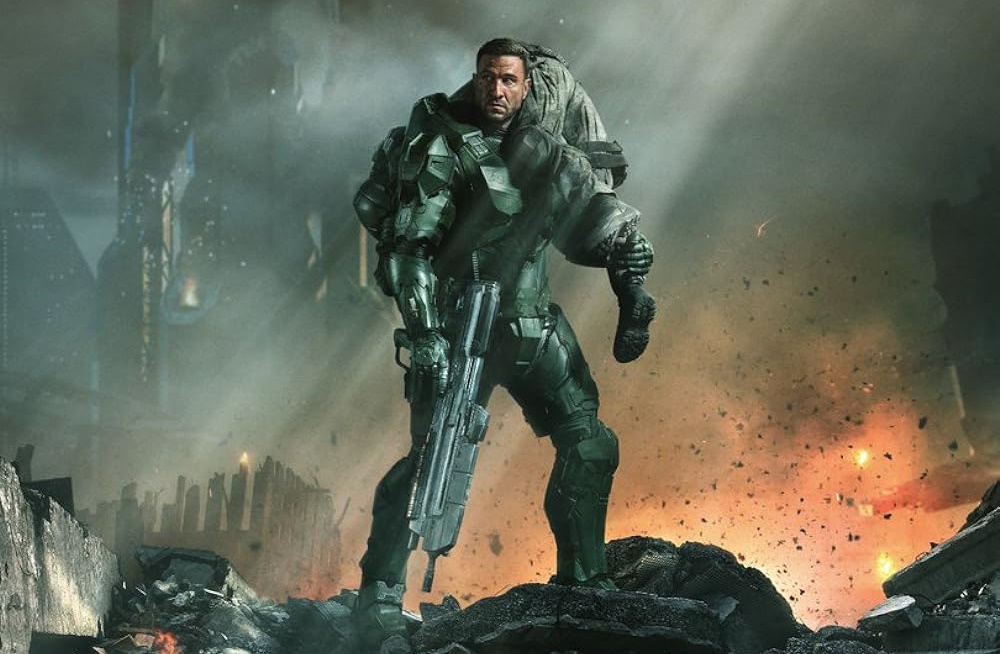
In my review of the show’s first season, I said that re-interpreting and changing the story – and particularly finding a way to humanise the otherwise stoic Master Chief to make him into a sympathetic protagonist – was something I was generally on board with. And I stand by that to a certain extent; I don’t think a faceless, monotone character who’s an unfeeling killing machine would make for a good television protagonist, even if such a character works well in an action-heavy video game. But this time around, the Master Chief’s story felt muddled and seemed to rely on a few too many clichés and contrivances.
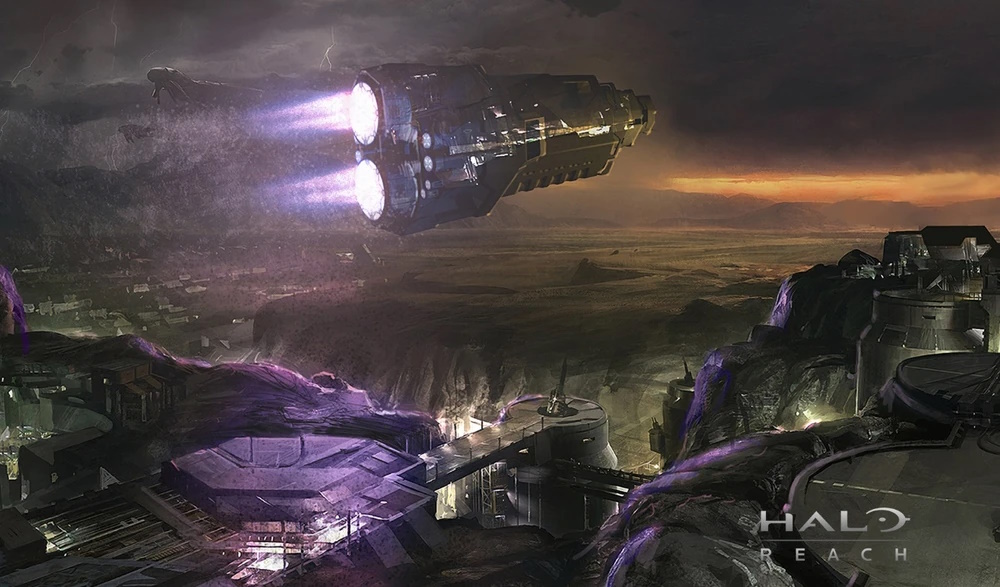
And partly, it must be noted, that’s because Halo’s writers have now taken the story in a significantly different direction to its source material. In Season 1, with the Master Chief getting entangled with a Covenant agent, discovering his humanity, and unlocking the mysteries of a strange alien artefact, there was still the potential to call all of this a preamble; the hitherto-unseen prequel to more familiar events. But in Season 2, with the Fall of Reach being depicted on screen in a radically different way to how it unfolded in the games, and with the story more interested in the intrigue within the UNSC and ONI, that possibility has evaporated. I’m not sure whether the new story that the writers have replaced it with is as compelling or as entertaining as the one that was sitting there, waiting to be adapted.
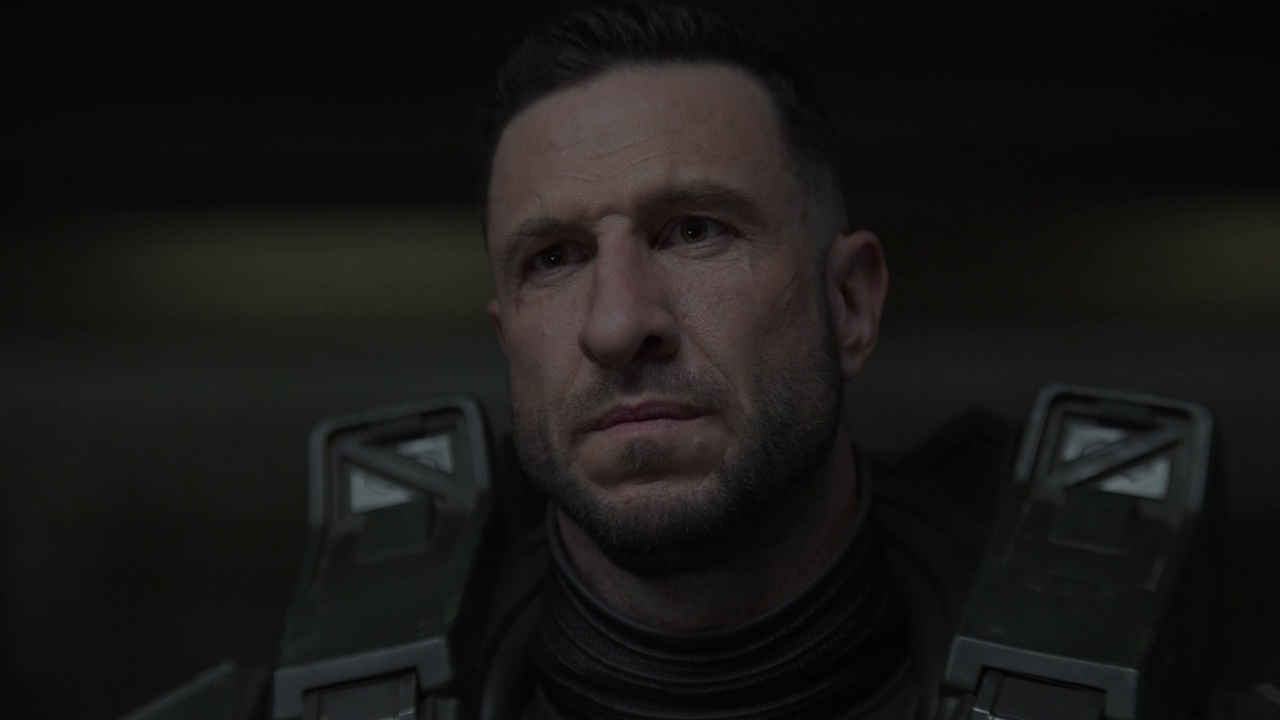
There was clearly an ambition on the part of some of Halo’s writers to use the UNSC, ONI, and the admiralty to look at the politics of war and the calculations that leaders have to make. This concept is sound, but it was let down by poor execution in Halo, unfortunately. In the first season, it felt as if most of the major characters – including Keyes, Halsey, and Parangosky – all had their own agendas. The Master Chief and his squad were caught in the crossfire and let down by the internal workings of the admiralty and leadership.
This message was somewhat streamlined in Season 2… but the way it was done necessitated some major contrivances. Corporal Perez, who Master Chief saved during the first episode of the series, refused to elaborate on what she saw of the Covenant during her debriefing… for seemingly no reason other than “because plot,” and when her words would have corroborated what Master Chief reported, that just doesn’t feel very satisfying. There was potential in Perez’s story to look at trauma and in particular the post-traumatic stress that soldiers can suffer from – but this angle was so undeveloped that I’m loathe to even include it as a plot point. In any case, it went nowhere – and thus doesn’t work as a justification for the narrative contrivance.
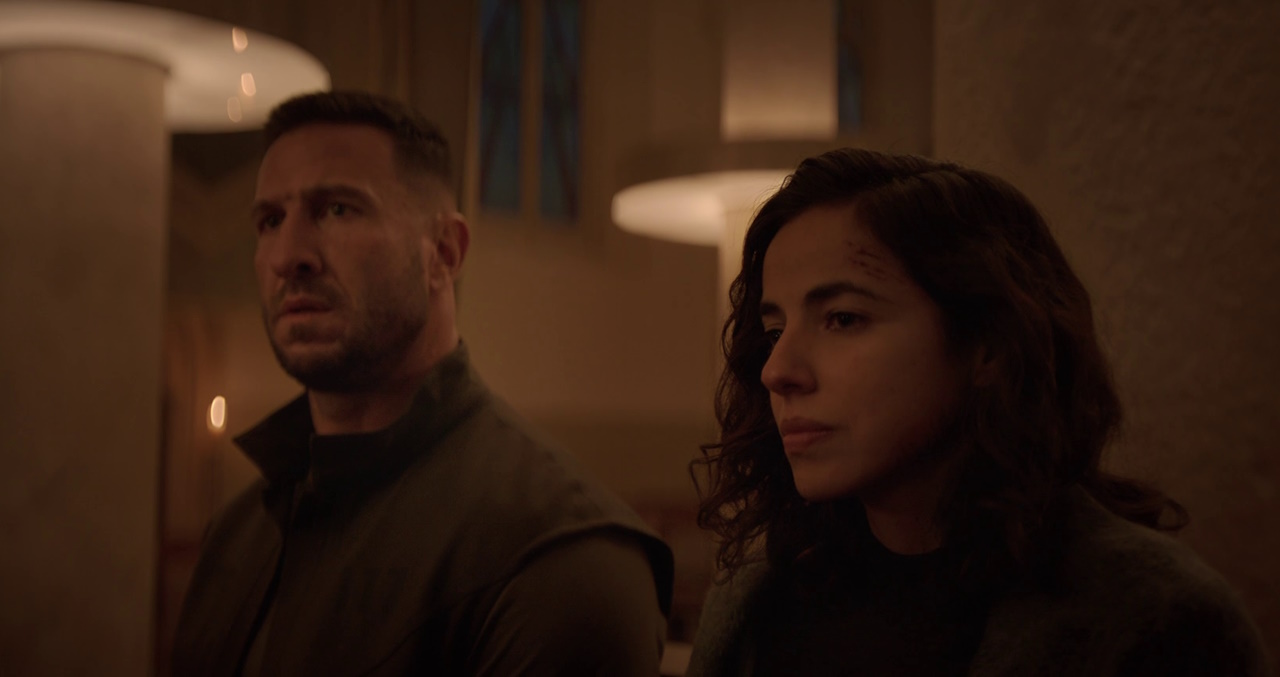
Perhaps this is the armchair general in me speaking… but I have a hard time seeing a character like Ackerson as an out-and-out villain. When confronted with the reality that a Covenant attack was imminent and unstoppable, he and the other admirals took what seems the only rational path open to them: a covert, quiet evacuation of high-ranking personnel and valuable assets in order to establish a new command centre to continue the fight and co-ordinate the defence of other worlds. Reach was, as Cortana explained, already lost before the explosions started – there was no way to prevent it.
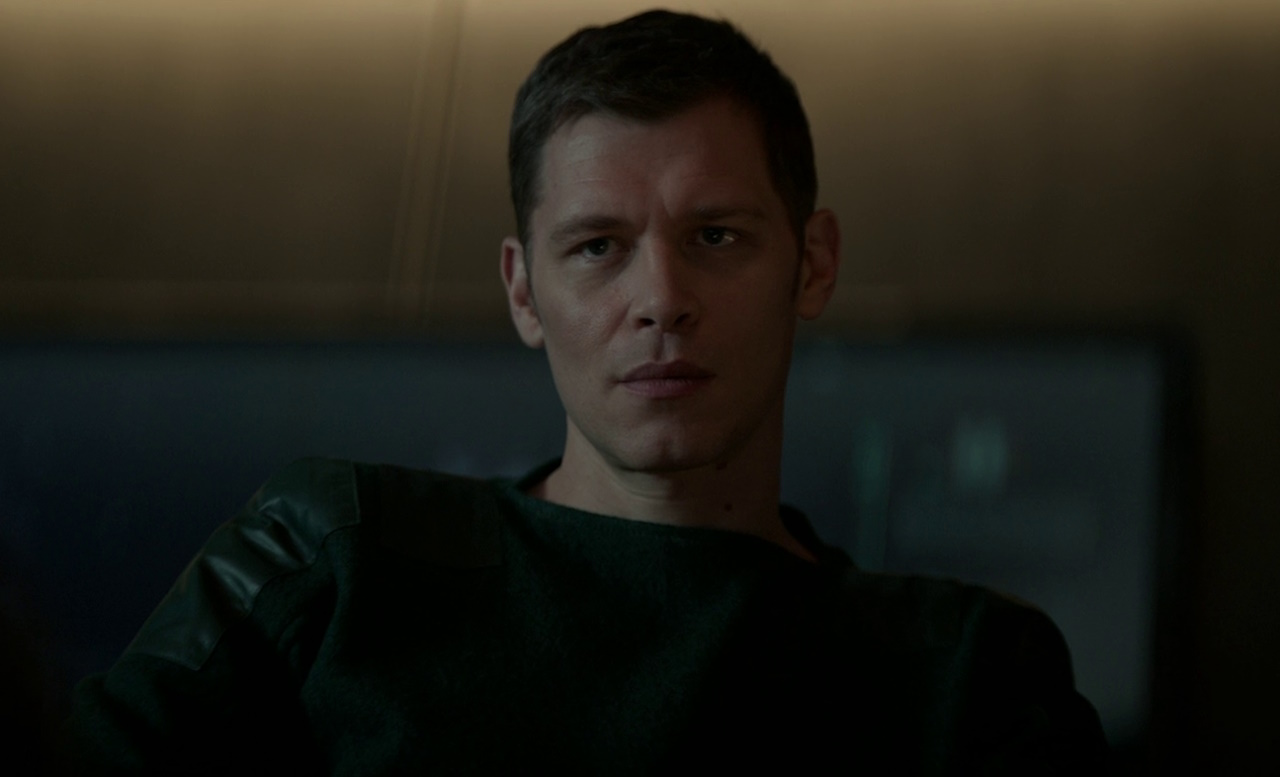
Yet because we’re following the story of Master Chief and his crew, the series paints Ackerson and Parangosky as antagonists – more antagonistic, in some ways, than the Covenant themselves. And while we could entertain a more nuanced discussion of the “calculus of war” and how some leaders might try to use it as a justification to seize power or leave rivals for dead… Halo doesn’t really do any of that. It manoeuvres its characters into place – using more than a couple of contrived moments to get them there – and then… that’s it. Master Chief rages about how “they stole [his] armour” and his identity, but that just felt incidental and not like a driving force behind either the character or the story. The series came close to making a point about politics and war – albeit one that other, stronger narratives have already made – but then baulked on it at the last moment, despite the convoluted setup, in order to tee up the next big action sequence.
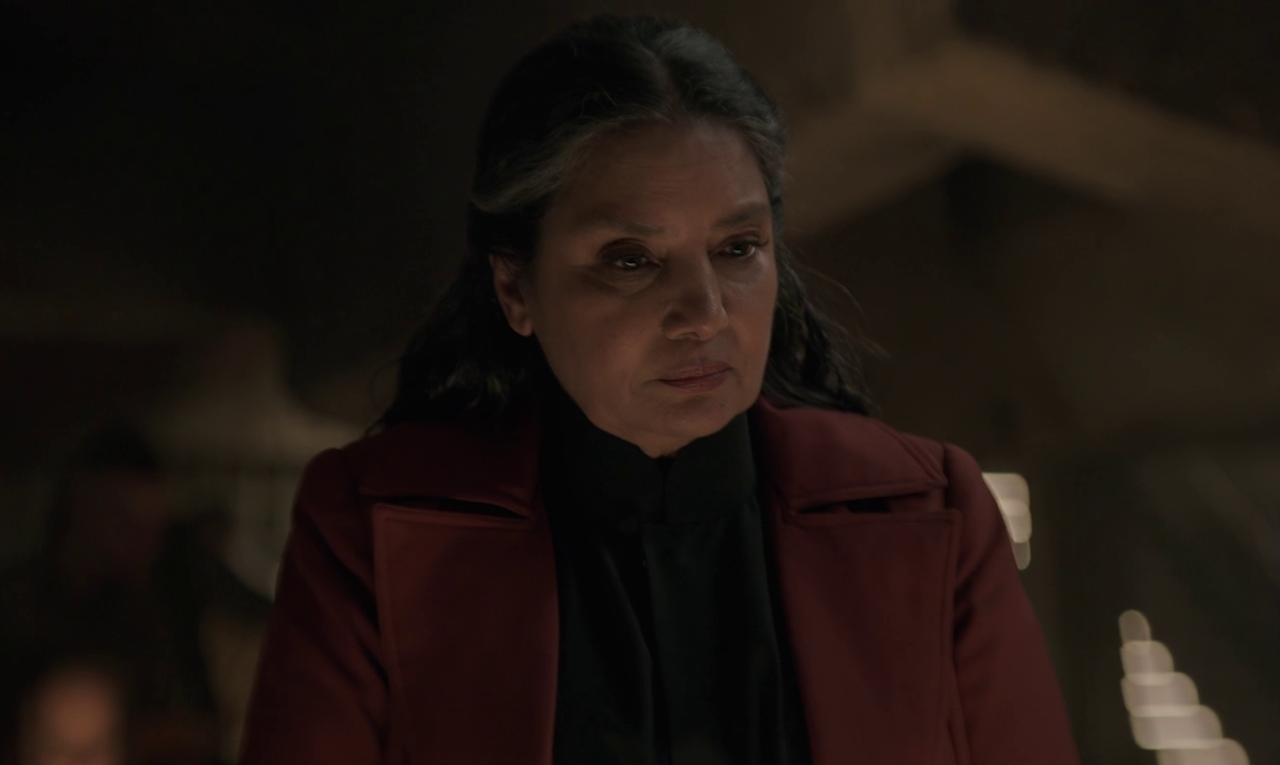
When such a story requires characters to act in a specific way to move things along, it can feel forced. And parts of Halo absolutely fall into this trap. During the climactic fight at Fleetcom, Master Chief and his Spartans are conveniently called away at the last second so they can be in just the right place to encounter Soren and Halsey, then Makee and the Arbiter, and finally to be rescued by Laera and Kwan. Master Chief was conveniently obscured by both fog and a communications blackout when he first encountered the Covenant, and the only other character to witness them refused to admit the truth. Laera was able to track down Soren just in time to save everyone from the attack on Reach. And so on.
Although Ackerson and Parangosky were manipulating the situation and keeping everyone in the dark about what was about to happen, their machinations can’t account for all of this – and the result is that the story is built on weak foundations. There are still successful moments of tension, excitement, and drama, and the deaths of major characters still manage to carry emotional weight. But that comes in spite of – not because of – the way in which the story has been structured. Halo is in real danger of getting in its own way.
In terms of visuals, Halo made a couple of missteps. Physical props used for things like spaceship doors, armour, and other pieces of supposedly “roughed-up” metal could look pretty phony in places, and while it wasn’t enough to take me out of the story entirely, it was definitely something I noticed across multiple episodes. This isn’t something unique to Halo, as I’ve noted it in big-budget productions from Star Wars to the upcoming Fallout series, but that doesn’t excuse it. Set design was generally okay, though, and I liked the interiors of the Covenant ships and the way they were laid out – as well as how the show got creative with re-using certain sets for Makee’s ship, the training simulator, and a real Covenant ship in battle.
Halo had some successes with its CGI – and one pretty epic misfire. The assault on Reach midway through the season, as well as the attack on another planet in the first episode, were fantastic, with explosions and plasma weapons that looked stunning. These were well-blended with physical sets, and the transitions between the two were great. The fleet battle toward the end of the season was likewise solid; a well-animated series of CGI sequences that lived up to the excitement I was hoping for from such a powerful narrative climax.
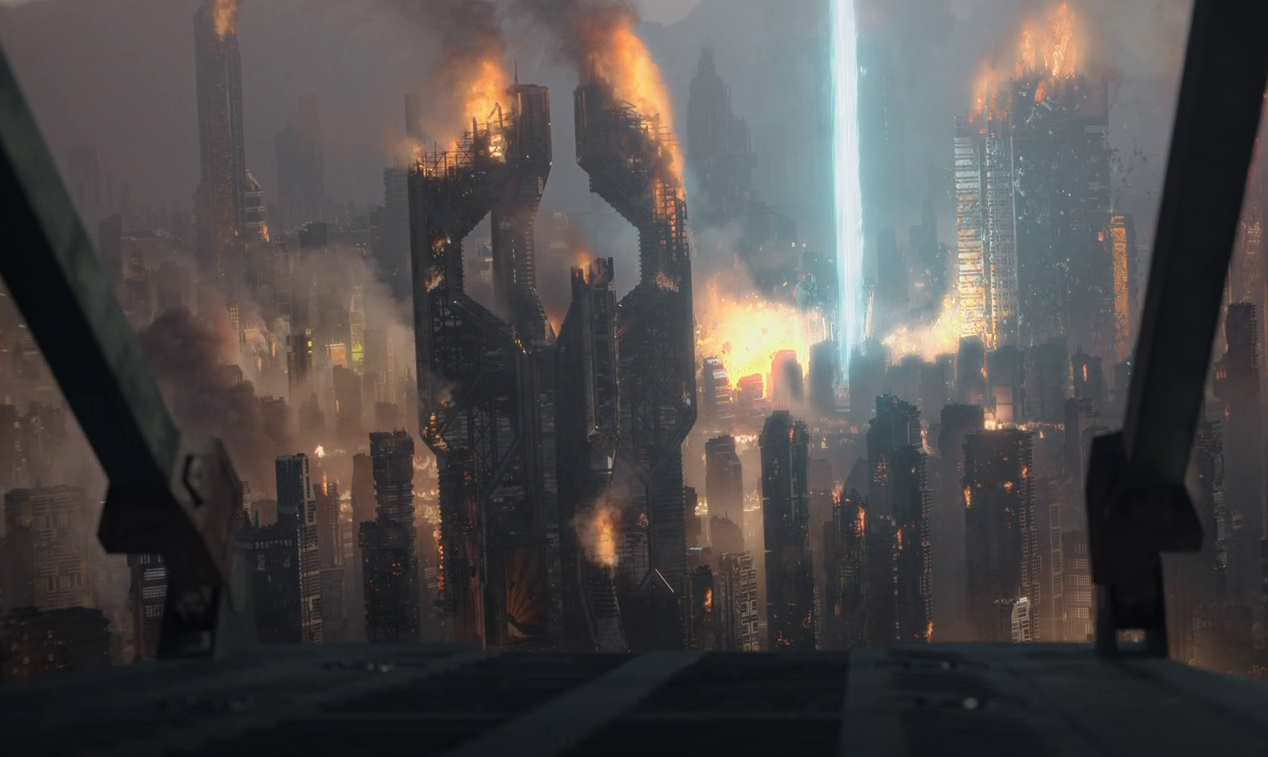
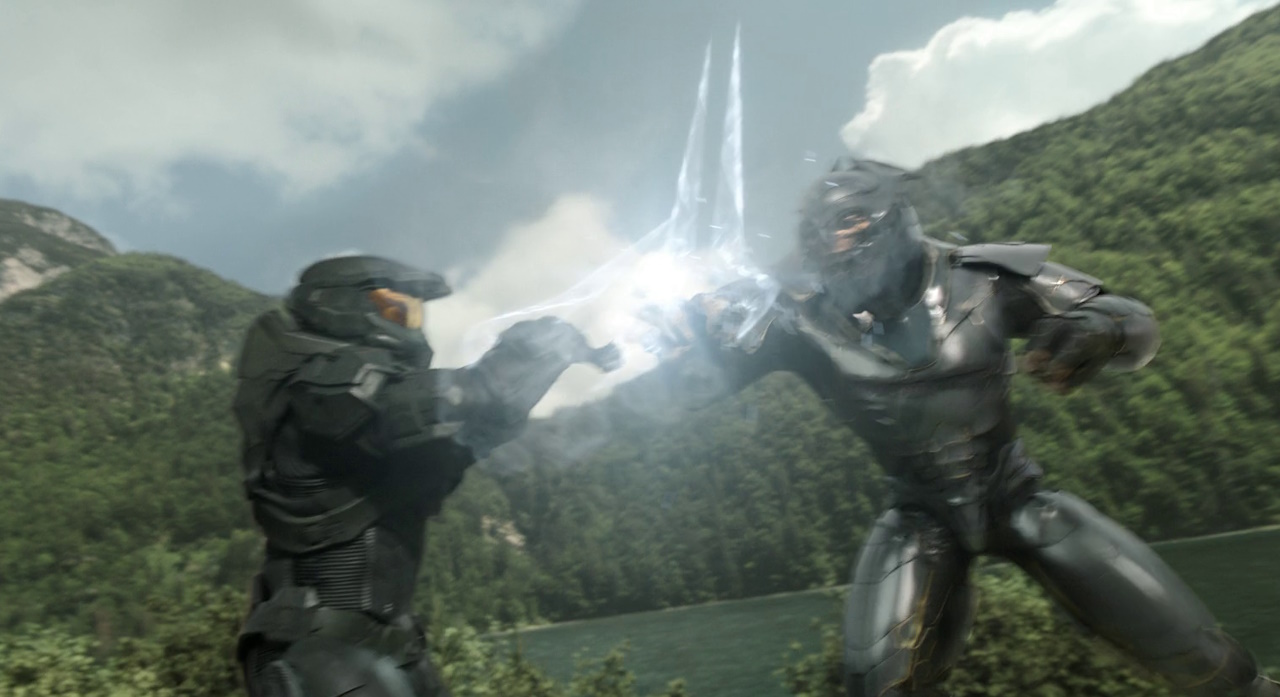
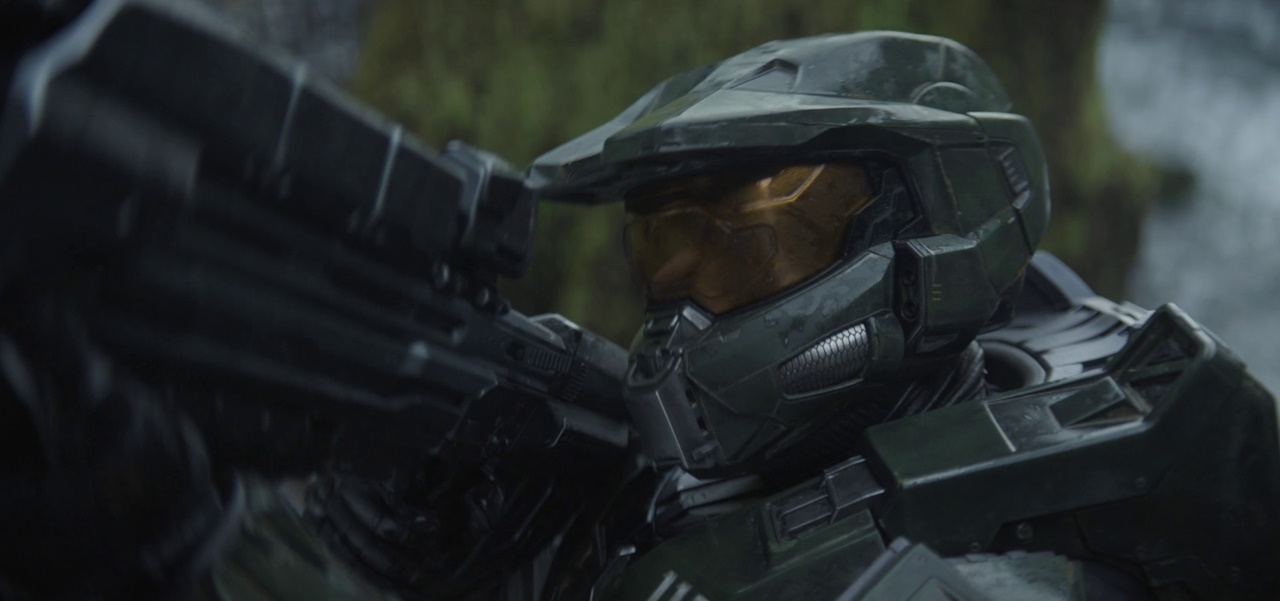
Then we got on the ground and came to the climactic one-on-one duel between Master Chief and his Covenant adversary, the Arbiter. The Arbiter felt vastly under-developed as a character, and while his hatred for the Master Chief was stated in almost every scene in which he appeared, there was no reciprocity there whatsoever, so the conflict itself felt very one-sided. I will say, though, that I liked the concept of this duel, and seeing plasma swords clashing almost like Jedi lightsabers was a fun idea, and a great way to take a rather clumsy weapon from the video game series and improve upon it. So in principle, this duel should have worked reasonably well.
But my god, the animation work here was atrocious. Neither the Master Chief nor the Arbiter looked at all real, with that “too shiny, too smooth, and too airy” CGI feel that I thought we’d left behind a decade ago. Even the shaky camera and fast-moving sequence couldn’t cover up these absolutely glaring flaws in the way these characters looked, and the entire duel – which, thankfully, was pretty short – entirely fell apart for me. There were clearly limitations in Halo’s animation budget that were showing, because the series completely failed to make either character look realistic at this moment. Because the Arbiter is a largely CGI creation to begin with, perhaps the way he looked wasn’t as bad as the Master Chief during the duel – though it was certainly the worst the character had looked all season long. But the Master Chief in particular just looked so hollow and fake, and that really took the shine off what was supposed to be one of the season’s final climactic moments.
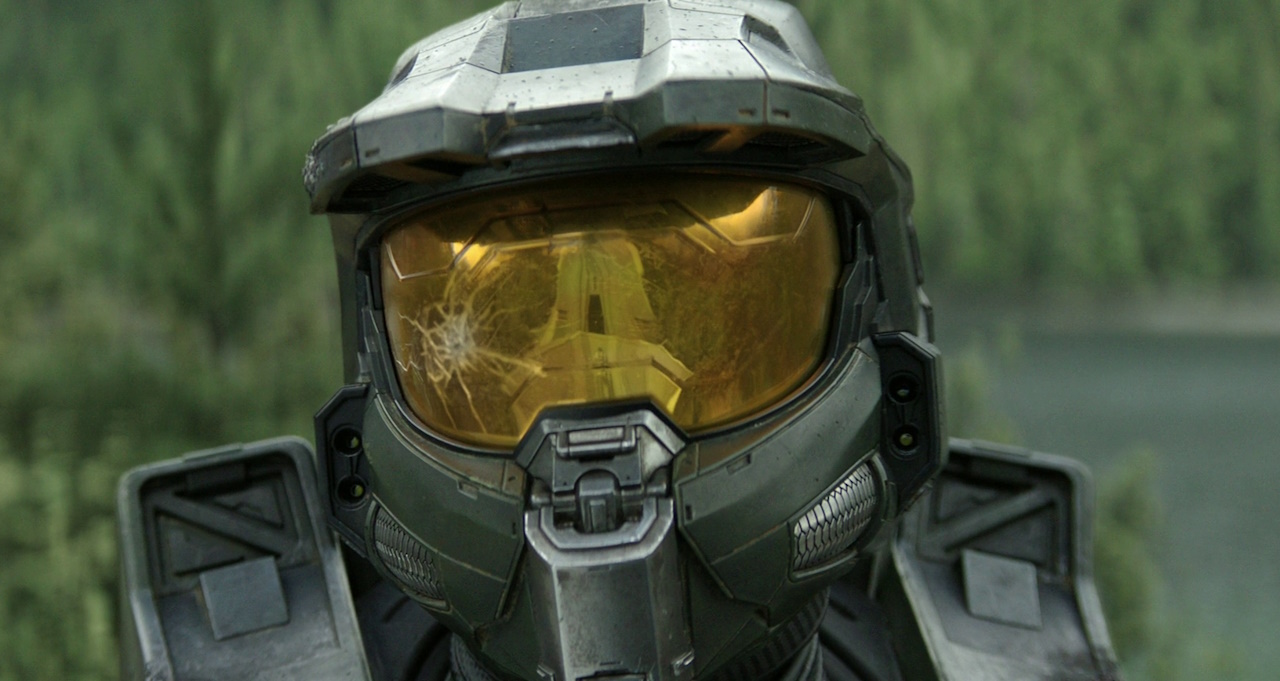
One thing we didn’t see much of this time, unfortunately, was the first-person perspective that I noted in Season 1. Last season, this unusual blend of camera work and CGI was used sparingly, but at a couple of key moments it really worked well. As an homage to Halo’s video game origins, I enjoyed what the first-person viewpoint brought to the series. It’s also something a little different in the action space, at least in the medium of television, and in Season 1 it was used infrequently enough as to not be too obtrusive for folks who didn’t like it. It was a little disappointing to get so little first-person action this time around; there was one scene – or a clip, really, as it was so short – that I noticed… but that was all.
This season, Halo struggled to find a good character to pair with the Master Chief. In Season 1, the Master Chief spent time with Kwan, Kai, Makee, and of course Cortana, as well as butted heads with Dr Halsey and Admiral Keyes. His relationships with Makee and Cortana in particular, as well as the resentment he felt toward Halsey, went a long way to humanising him and turning him from that faceless video game protagonist into a character better-suited to a new medium. But in Season 2, Master Chief didn’t really spend enough time with any single character to have those kinds of moments. He spent much of his time angrily barking out orders and pushing his team beyond their limits, and his relationship with the under-developed character of the Arbiter was so non-existent that their conflict and climactic duel didn’t really work.
There’s something to be said for a storyline that puts its characters through a tough set of challenges, or even one that forces them to confront their own limitations and mistakes. But Halo didn’t really give us any of that, with the series presenting the Master Chief as having been “right all along,” even though he was basically behaving like an irrational dick for several episodes in a row. Combined with the lack of a partner or confidant for most of the season, this meant that the series’ protagonist spent much of his time angry and brooding – and that just never feels particularly fun. Shows like Game of Thrones did wonderful things with an ensemble cast that was broken up into distinct groups, taking literally years in some cases before some of the main characters even met one another. But Halo… I don’t think it has the chops to pull off something like that anywhere near as successfully, so splitting up its few noteworthy characters for so much of the story feels more a weakness than a strength at this point. I’d love to be proven wrong about that – but realistically, the show would need to run to six or seven seasons to develop these characters well enough to pay it off.
So after two seasons of a series called “Halo,” we’ve belatedly arrived at the titular ring-world. By this point, the Halo itself has been mythologised out of all proportion, and again this feels like a weakness when compared with the original story present in the first part of the video game series. Again, I have to point out that I’m not well-versed in the more recent lore of the expanded Halo franchise, and perhaps by this point the Halo ring-worlds are as legendary as the TV show depicts. But there was something to be said for the way in which humanity stumbled upon the first Halo, and how the Covenant were the ones who knew more about them and treated them with reverence. This “race to the Halo” idea that was underpinning the story of this season was just another way in which I felt it had diverged significantly from the story I remember.
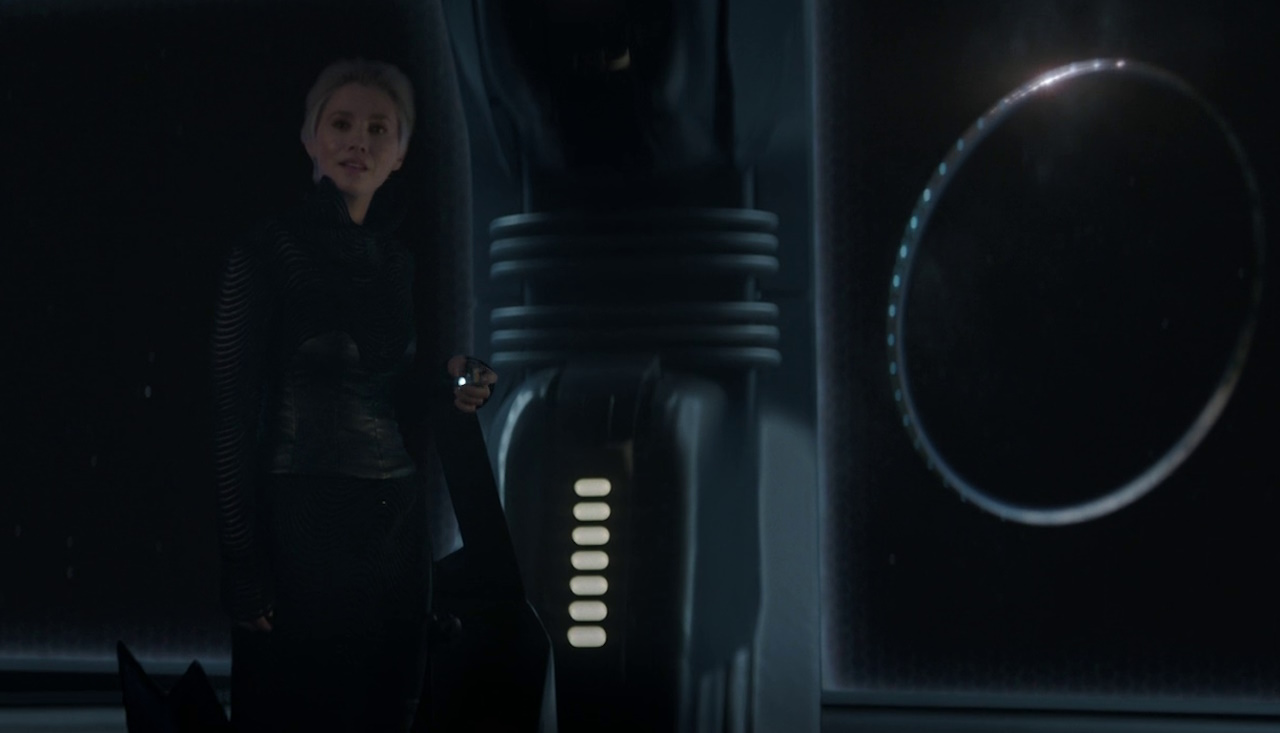
The introduction of the Flood – which unfortunately came pretty late in the season – is at least potentially a point of interest. Presenting the Flood as akin to zombies from the likes of The Walking Dead or 28 Days Later certainly went some way to ramping up the fear factor as Halo came to the end of its final episode – but I can’t help but feel that more could have been made of this storyline if it had emerged earlier in the season and been drawn out for longer. There were a couple of key points at which the story needed to move rapidly thanks to the time constraint of being halfway through the series finale, and that just left things feeling a bit rushed and unsatisfying.
The biggest example of this is Soren and Kwan’s rescue mission. No one stops to ask “hey, what’s going on here?” because the episode just didn’t have time for the diversion, and when Laera revealed her “zombie bite,” it shouldn’t have been at all clear to Soren and the others that a bite wound would lead to infection. There was no time to explain this in-universe to the characters – nor really to us as the audience, either, as elsewhere in the base, infection seemed to spread by way of small spider-like creatures that emerged from the mouths of the infected. Perhaps Season 3 will be able to expand upon this storyline, flesh out its concepts and ideas a bit more. But as far as an introduction goes… it was a bit of a mixed bag.
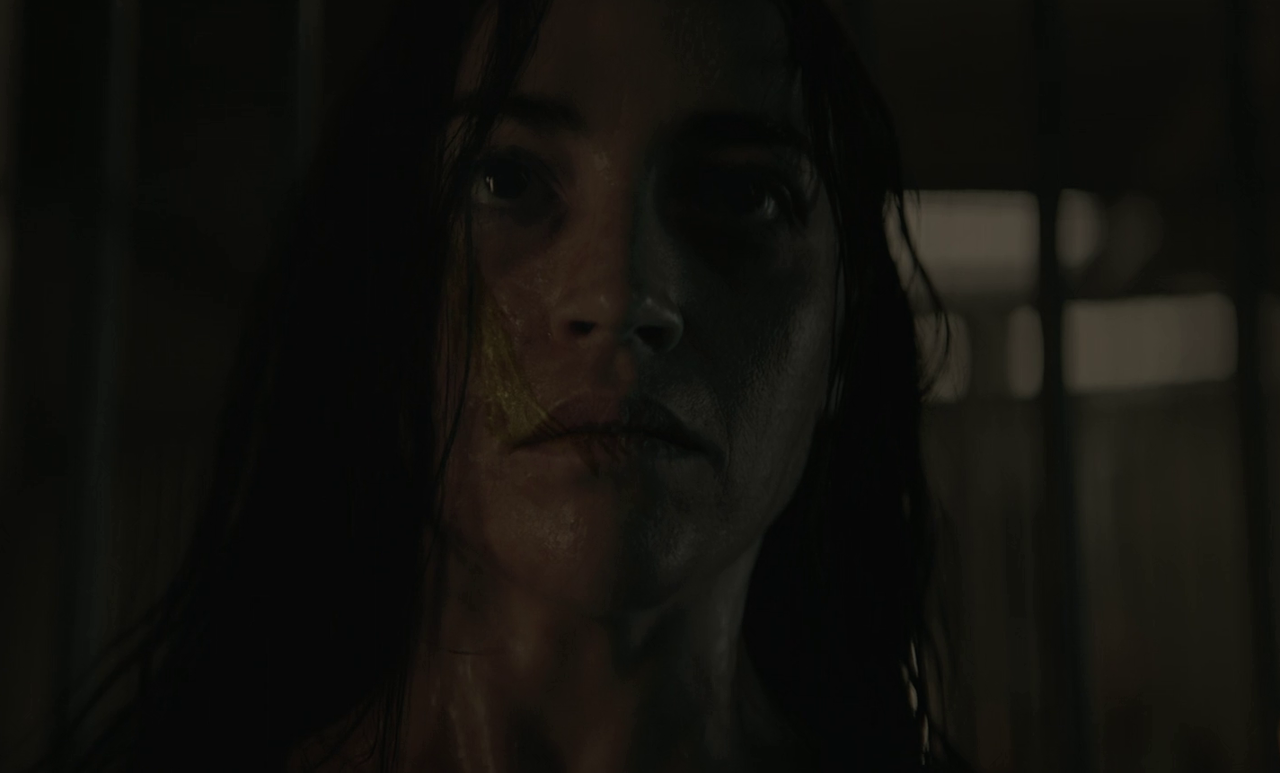
On a more positive note, Halo took strides for representation, and it did so in a way that I’m always going to advocate for. There was a gay couple shown partway through the season; friends of Riz who she turned to for help. The fact that they were gay wasn’t front-and-centre in either of their characterisations, it was simply treated as an entirely unexceptional part of this sci-fi future. Representation can work incredibly well when handled in this way, and I’d point to Halo Season 2 as an example of how to include LGBT+ characters in a series when there isn’t the time or narrative space to include full-blown LGBT+ storylines or themes. Simply seeing a couple like this represented on screen is a positive thing.
As in Season 1, acting performances were solid across the board, and I wouldn’t want to single anyone out for criticism on that front. Halo’s sound design and music were solid; understated, perhaps, but in line with its source material. I heard several sound effects that were lifted directly from the video game series, which was great! With the exception of some unnecessary “shaky cam” sequences that made it difficult to follow the action, cinematography was pretty good, and the series’ use of light and shadow led to some tense moments of mystery and action at various points.
Unlike in 2022, I don’t think I’m going to call Halo one of my favourite TV shows of the year when I dish out my annual awards in December! It was alright; entertaining enough popcorn action fare. But there were significant weaknesses and narrative contrivances this time around that I feel got in the way of the fun, as well as a weak CGI sequence during what was supposed to be a climactic battle. I didn’t hate Halo by any means, but it wasn’t all it could’ve been.
However, now that the action has moved to an actual Halo… maybe there’s hope for Season 3. Although an official renewal hasn’t been announced at time of writing, it’s hard to see how the series could be cancelled at this point, given where it ended. With positive reactions from a number of critics and plenty of social media buzz, a third season feels like a sure thing. If it goes ahead and does actually take place on a Halo ring-world, that could certainly shake things up and perhaps go some way to bringing Halo back to firmer and more familiar ground.
I will be crossing my fingers for Season 3, then – and a story that successfully builds on what Seasons 1 and 2 laid out could go a long way to making some narrative decisions feel better in retrospect. So there are reasons to be positive as Halo continues its run. If for some reason, however, Halo isn’t renewed… I doubt it’ll be remembered particularly fondly, and instead will simply be tossed on the growing heap of video game adaptations that failed to light up the board.
Halo Season 2 is available to stream now on Paramount+ in countries and territories where the platform is available. Season 1 is also available on DVD and Blu-ray. Halo is the copyright of 343 Industries, Microsoft, Showtime Networks, Amblin Television, and Paramount Global. This review contains the thoughts and opinions of one person only and is not intended to cause any offence.



 Trekking with Dennis