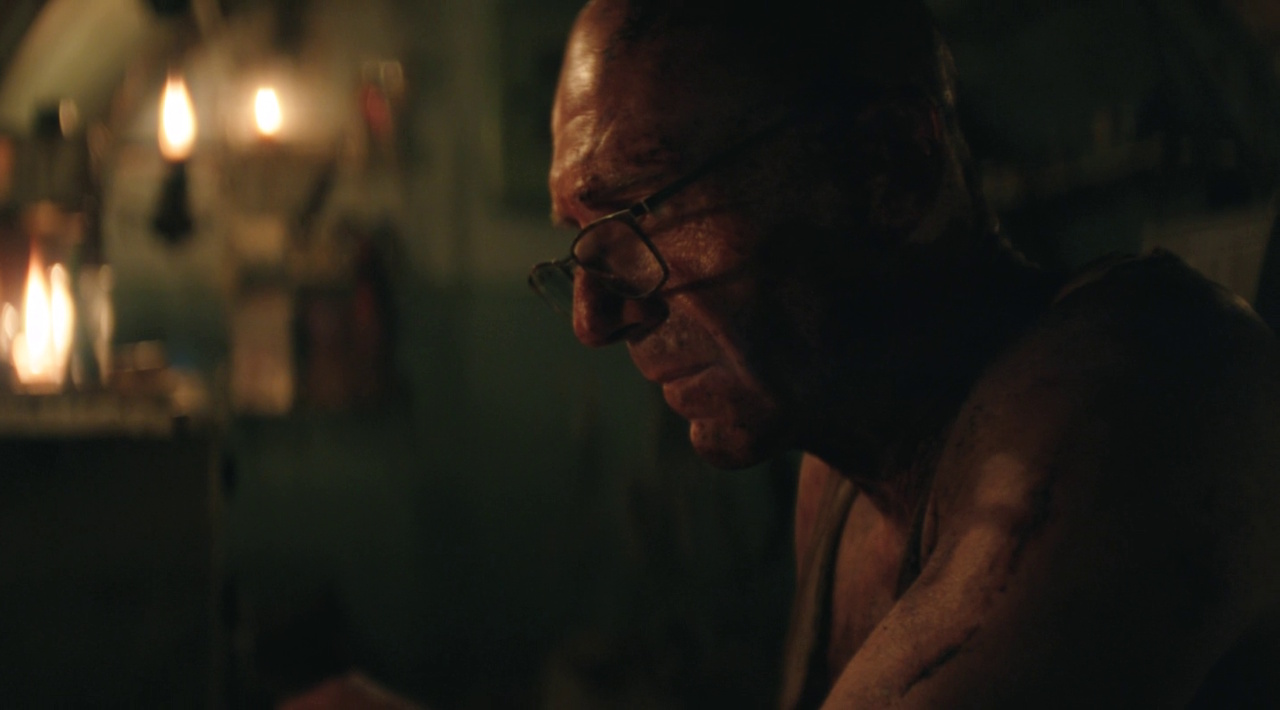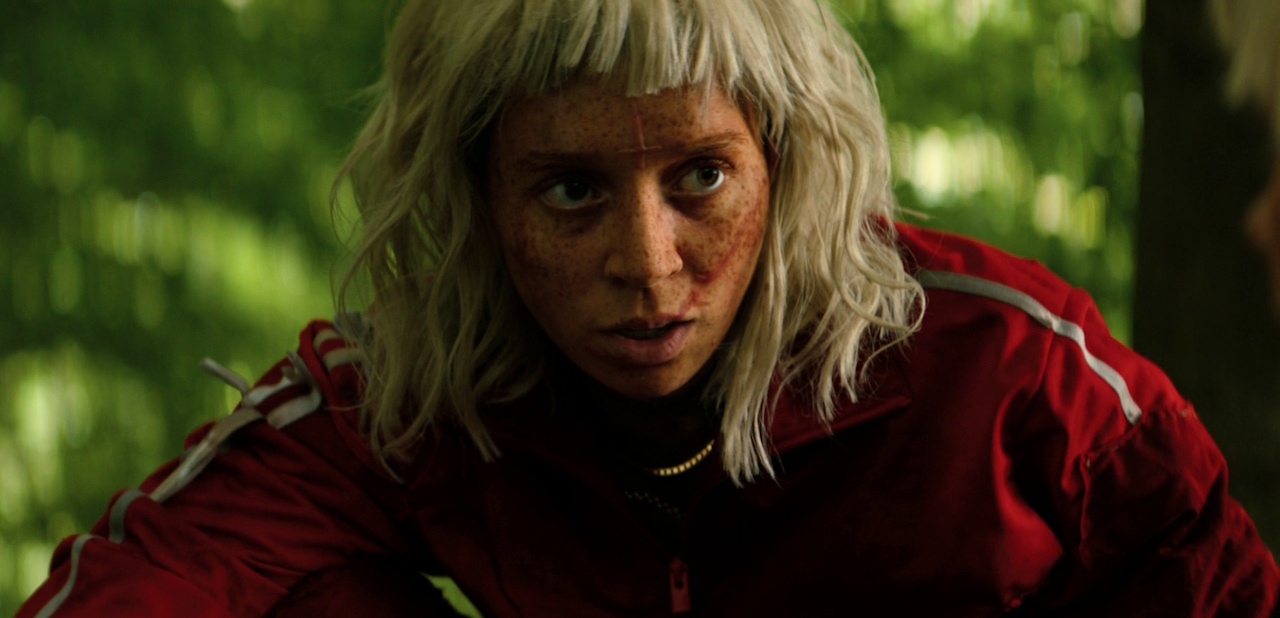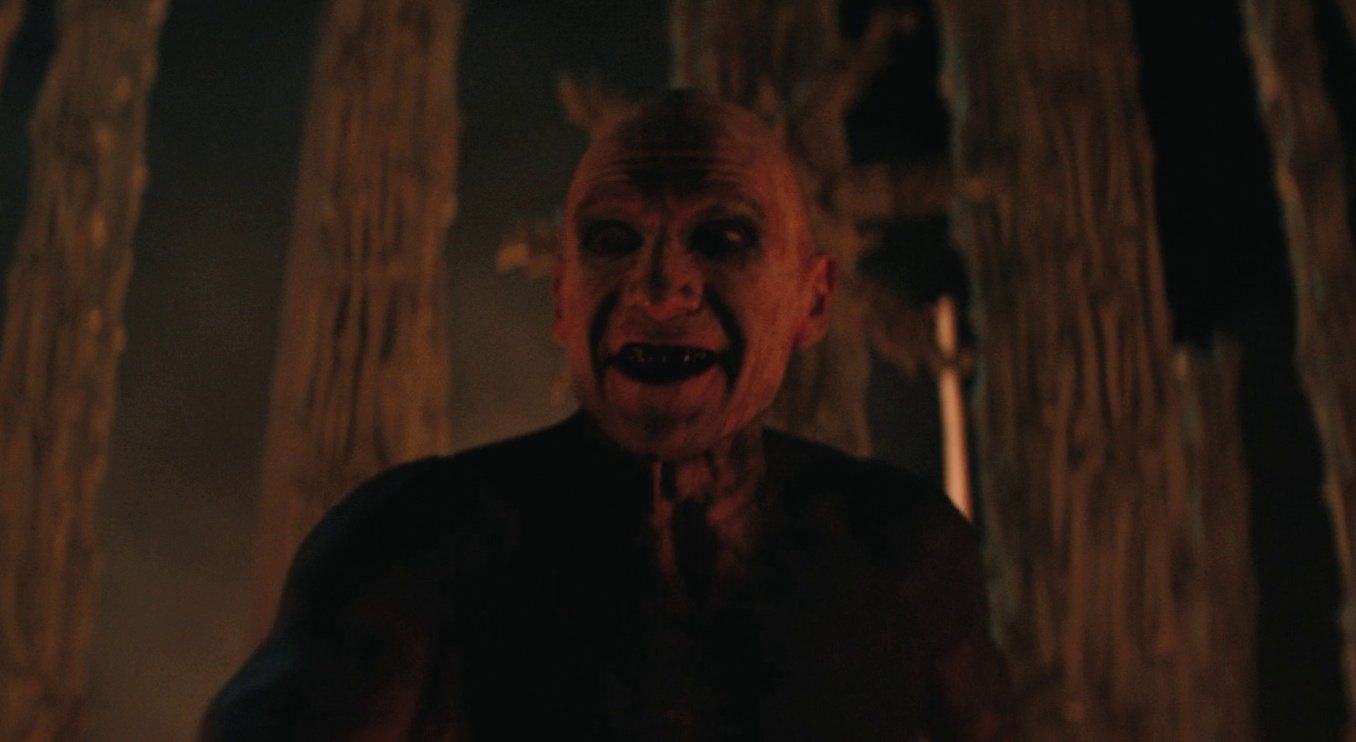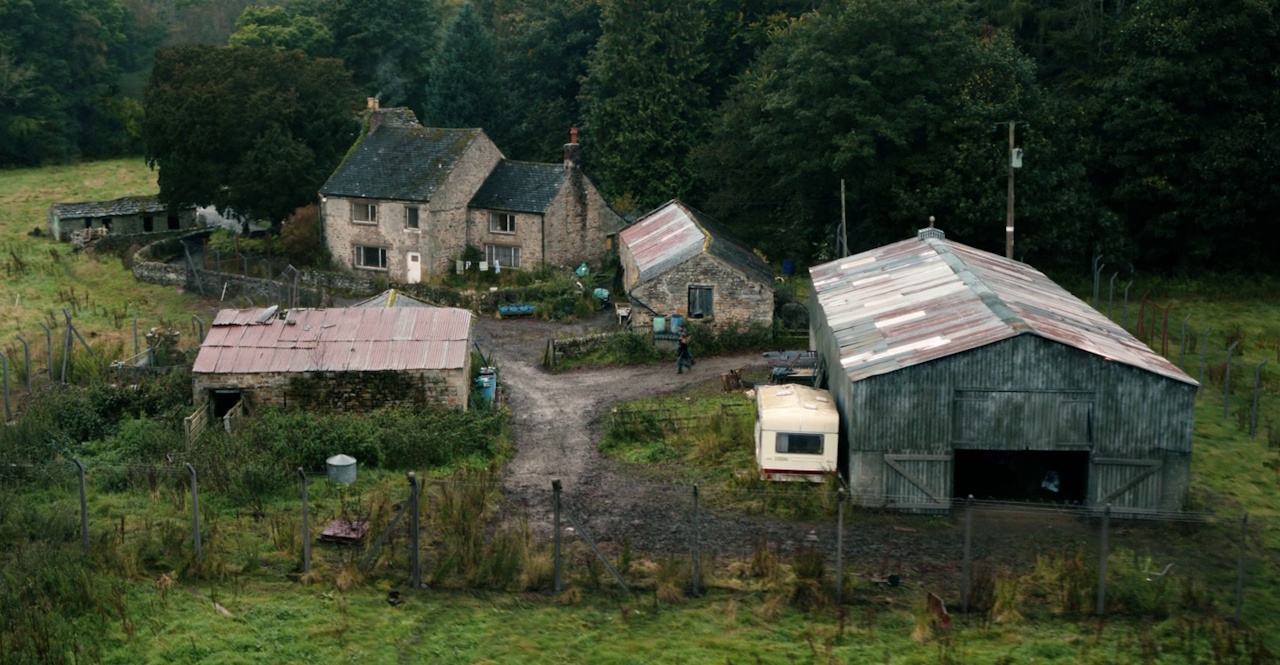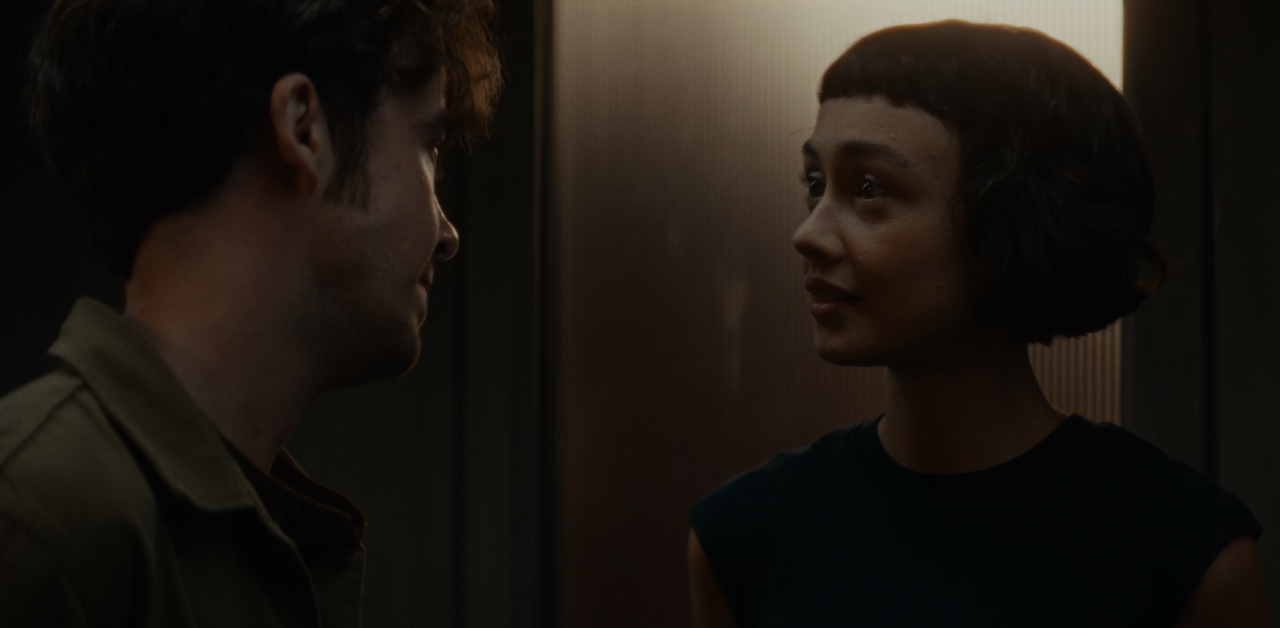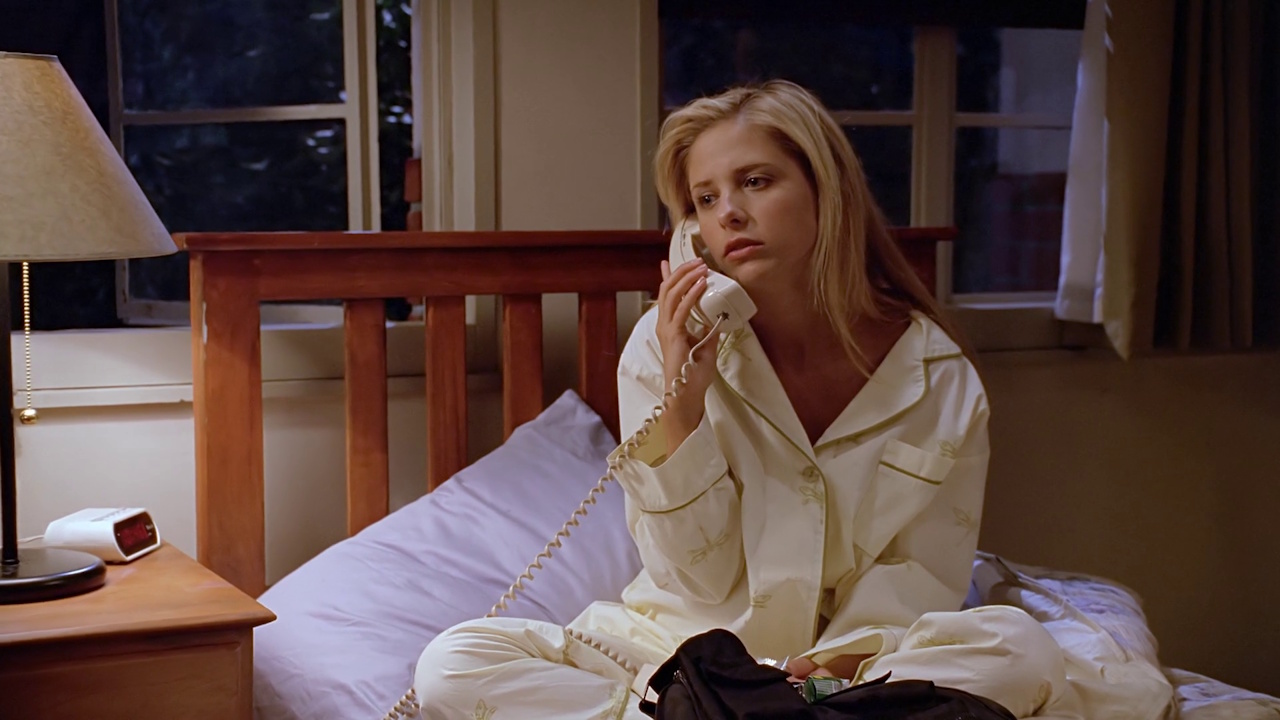
Horror Hypothetical: Where Would You Try To Survive?

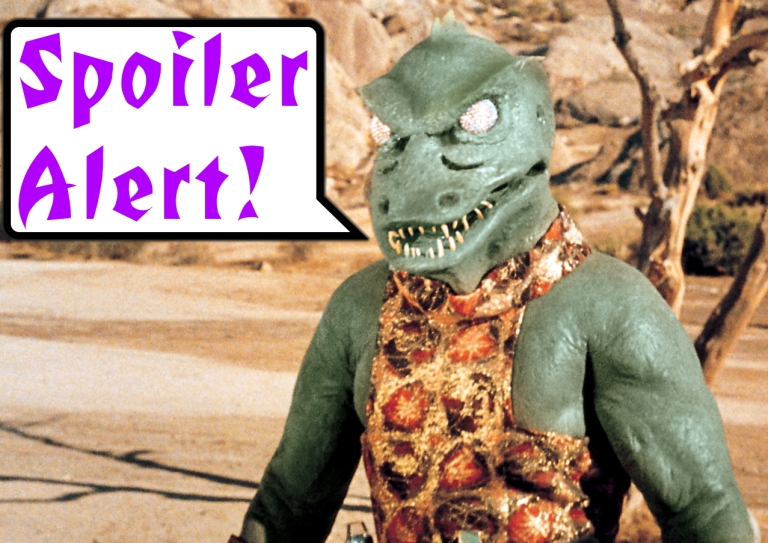
A Star Trek-themed spoiler warning.

Spoiler Warning: Beware of spoilers for the films, games, and TV shows discussed below.

With Halloween rapidly approaching, I thought we could have a bit of fun by playing one of those “hypothetical question” games that you often see doing the rounds on social media. I’m going to choose one with a seasonally-appropriate horror theme, and try to go through a few possible answers, weighing up the pros and cons of each.

So what is this horror hypothetical, you rightly ask?

If you had to spend 72 hours (that’s three days) in one fictional universe from a horror property, which one would you choose? And, perhaps more pertinently: which horror franchise/universe presents the highest chance of survival?

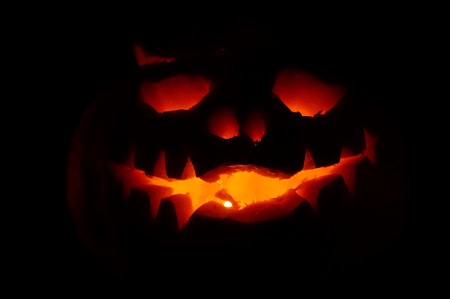
Stock photo of two Jack-o-lanterns.
Happy Halloween!

Let’s lay down some ground rules – because rules are always fun, right?

In this scenario, I’ll have to spend 72 hours in one fictional universe of choice – and it has to come from a recognised horror film, TV series, or video game. Scary episodes or levels of non-horror properties don’t count – so there’s no trying to wriggle out of it by picking something like Star Trek: Deep Space Nine’s Empok Nor. We’re talking full-blown horror only!

Most stories take place in a larger fictional world – but it wouldn’t be *any* fun at all to pick, say, The Texas Chain Saw Massacre and say that I’d avoid it by catching the first bus out of town, or to say that I’d survive in the Alien universe by just never going into outer space. So we’re assuming, for the purposes of the hypothetical, that I’m dropped in the middle of the danger zone. Running away is possible – but only using the equipment and technology that we’ve seen depicted on screen, *and* that I’m reasonably confident I’d be able to use. So… no hijacking a nuclear bomb or anything like that!

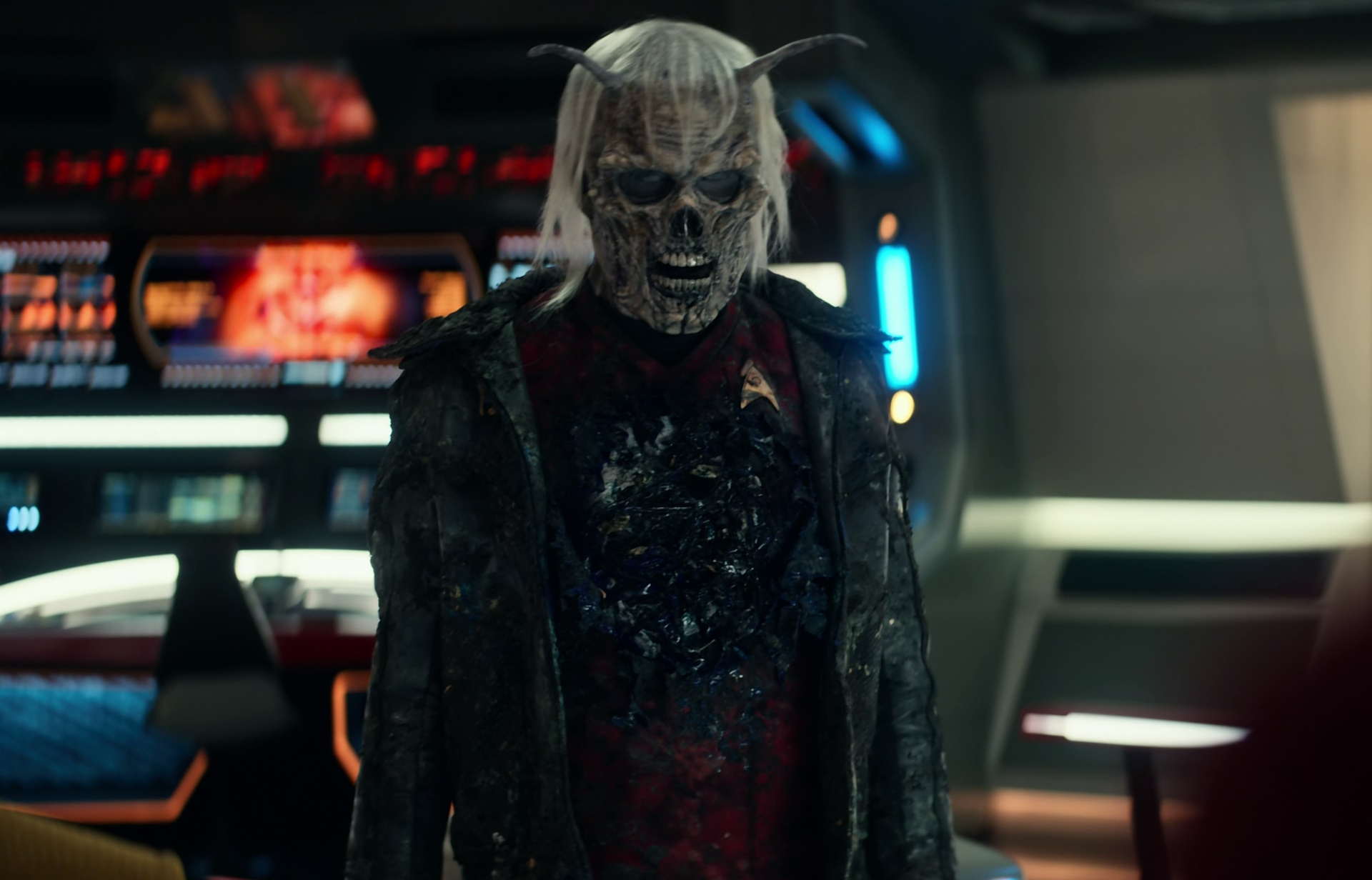
Still frame from Star Trek: Strange New Worlds showing Hemmer as a zombie.
Argh!

I’m also going to assume that I’m in reasonably good health in these hypotheticals – which is categorically *not* the case in real life, unfortunately! But, again, it doesn’t seem like it’d be a lot of fun to have to take into account my limited mobility in every scenario. So, if you’ll indulge me, I’m going to assume I’m in better health than I actually am!

Finally, as I always like to say, everything we’re going to talk about is subjective, not objective. If you hate the horror franchises I’ve chosen, think I’ve totally messed up my survival, or just feel I’ve got the wrong end of the stick somehow… that’s okay! All of this is just a bit of Halloween-themed fun, at the end of the day. And since neither of us are ever going to be actually dropped into a horror franchise (well, fingers crossed), none of this really matters! It’s just for fun – and I share it with the interweb in that spirit.

I’ll talk a little bit about each scenario, then give it a survival chance at the end using a simple 1-10 scale, with one being the lowest chance of survival, and ten being the highest.

So with all of that out of the way, let’s get started.

Option #1:
28 Days Later

Still frame from 28 Weeks Later showing a zombie breaking in through a window.
A zombie.

28 Days Later redefined the zombie genre, and it was genuinely one of the most terrifying depictions of zombies I’d ever seen. Fast “sprinters,” able to infect people with a single drop of blood, and blinded by rage… this is gonna be a tough one!

For the purposes of our 72-hour survival challenge, the best thing to do would be to shelter in place, using whatever resources are available in the immediate surroundings. Venturing outside, especially in a large city the size of London, seems like it would be immediately fatal, so as long as I have some kind of shelter and hopefully some water or something else to drink, I’d try to hunker down, keep quiet, and stay away from any windows!

Still frame from 28 Days Later showing two zombies dying.
Dying zombies.

That being said, we’ve seen how aggressive 28 Days Later’s zombies can be, and how a small flicker of light or a seemingly innocuous sound can attract an entire horde. Assuming we’re in London or a similarly-sized urban area, and all we have for defence is the contents of the average house… I don’t think this is going to end well, to be blunt about it. One loud snore, one step too close to a window, or one candle at night would be all it’d take to send the zombies crashing through the windows and doors.

I deliberately chose 28 Days Later ahead of something like The Walking Dead because of how much more intense and powerful its zombies appear. But that could be what screws us over! If we get lucky and the hordes pass us by, I think sheltering in place for 72 hours is plausible. But if we run out of water and have to venture out, if our base is compromised, or if we make one small mistake… that’s all it’d take.

Survival Chance: 3/10

Option #2:
A Nightmare on Elm Street

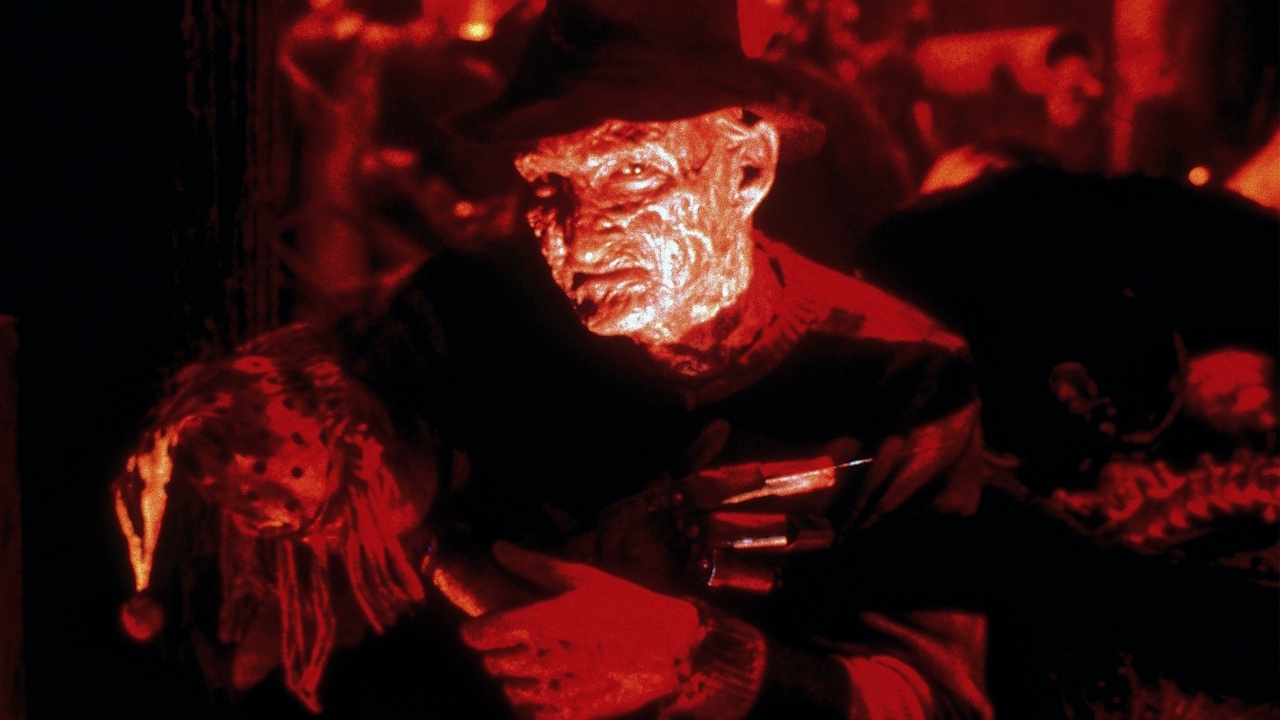
Promo photo for A Nightmare On Elm Street showing Freddy Krueger.
Freddy Krueger.

Freddy Krueger has one major weakness: he can only hurt me in my dreams. If this was a “survive indefinitely” challenge, that would be a problem! But if I have to make it 72 hours… I reckon I could manage to stay awake. A combination of caffeine pills, energy drinks, and coffee should keep the spooky lil’ guy at bay!

But okay, that’s getting dangerously close to cheating territory, I suppose. There have been more Nightmare on Elm Street films and spin-offs than I thought, and it seems as if Krueger’s backstory and the source of his powers have changed since the original. But if we assume that Krueger is fuelled by his victims’ fear, as the first film depicted, then trying to stay calm will be the biggest obstacle. And all that caffeine we just chugged? That probably won’t help with keeping calm!

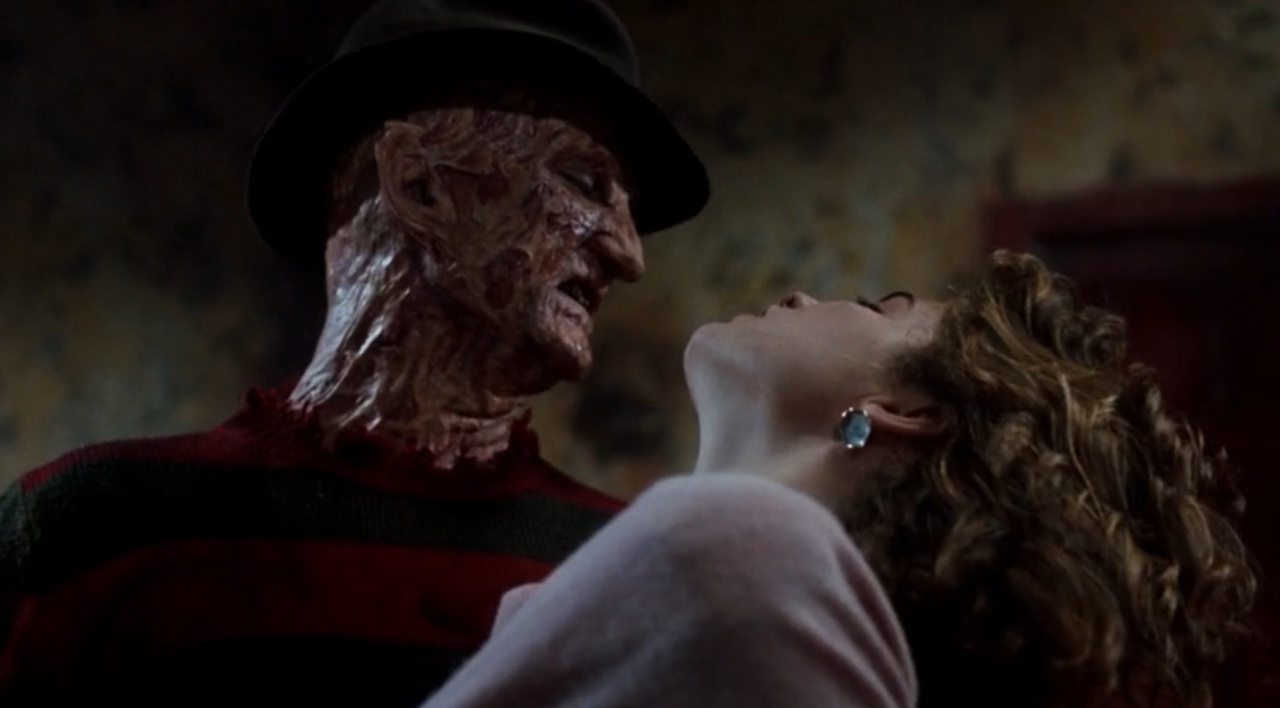
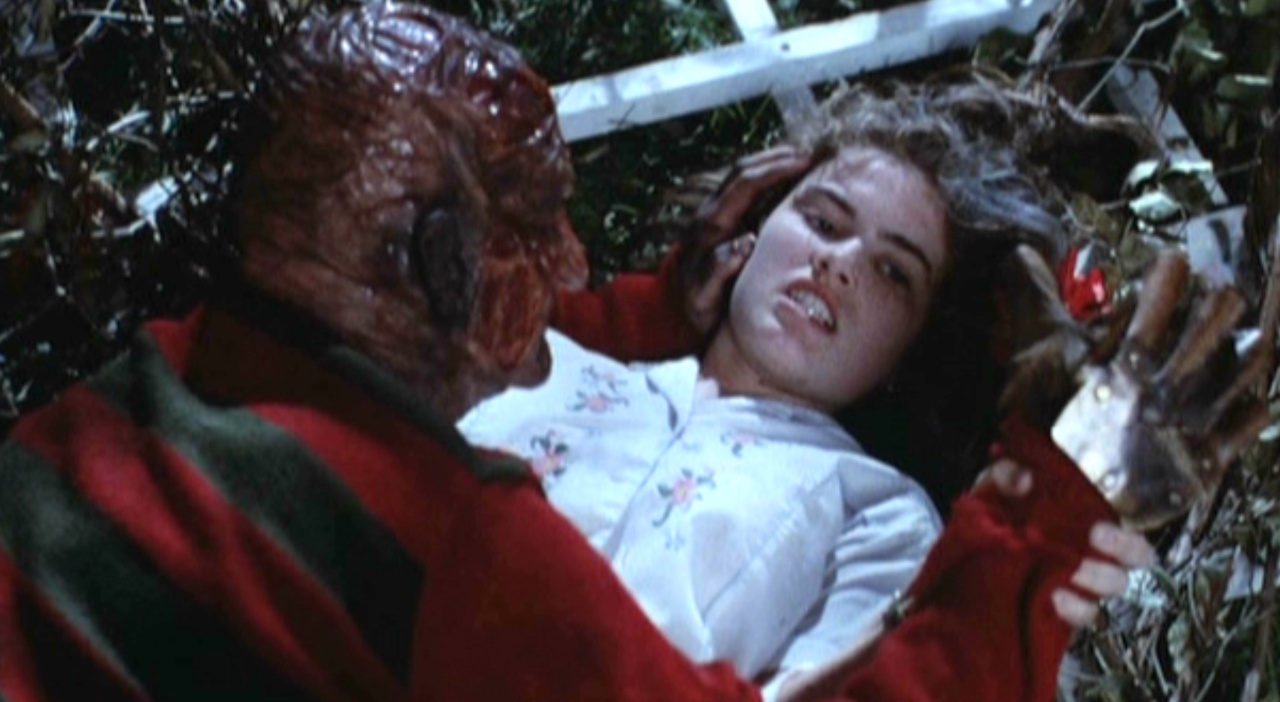
Still frame from A Nightmare On Elm Street 3 showing Freddy and Nancy.
Krueger and Nancy in one of the sequels.

I don’t think I’d be able to figure out all of the other stuff depicted in the sequels: things like purifying Freddy’s bones or staging a group hypnotherapy session in order to enter his world and take the fight to him! So my plan, to be honest, would really be to try to stay awake for as long as possible. 72 hours seems like a stretch – that’s three full days – but if the alternative is a violent and painful death… well, that’s a pretty good motivator.

If possible, I’d try to meet up with anyone else who might be one of Freddy’s targets. Perhaps by working together, we could develop a more solid strategy!

Survival Chance: 6/10

Option #3:
The Last Of Us
(Video game version)

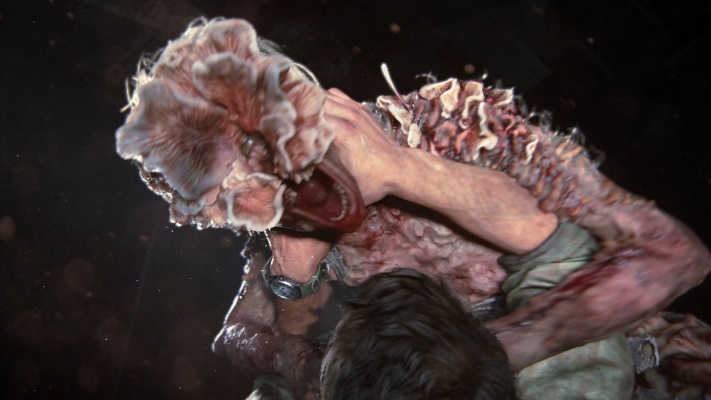
Promo screenshot for The Last Of Us showing Joel fighting a clicker.
Fighting a clicker.

In this scenario, we survived the main event (or we were born after it) and we’re now a couple of decades into the post-apocalypse, as depicted in the main part of the story. For a 72-hour survival challenge, I’m torn between seeking out a safe zone, like Boston, where the first game starts, or simply finding an abandoned property and taking shelter.

In either case, I don’t want to spend much time on the road or travelling, as that seems like the time for the mushroom-zombies to strike! Finding a truly safe space outside of one of the established settlements or safe zones seems like it would be challenging, but trying to enter one of these places would also have its drawbacks. Some guards seem especially trigger-happy, so one wrong move (or sarcastic quip) could lead to a premature demise!

Promo screenshot for The Last Of Us showing a clicker on a red background.
We don’t want to run into any of these…

The video game version of The Last Of Us also showed how deadly fungal spores could be. Without proper protection, spores would quickly infect me and bring my run to an end – and I can’t rely on having access to a proper hazmat suit or gas mask! And knowing me, I’d struggle to get the damn things on in time even if I was lucky enough to have them. This side of things makes venturing anywhere pretty dangerous, not least derelict buildings which could hold clouds of cordyceps spores.

Perhaps the least-bad option would be to just… pitch a tent in a field somewhere and hope that you’re far enough away from the zombies to survive for three days? There are also scavengers and gangs to worry about, though. Being alone in this post-apocalyptic world wouldn’t be a lot of fun, that’s for sure.

Survival Chance: 4/10

Option #4:
The Thing

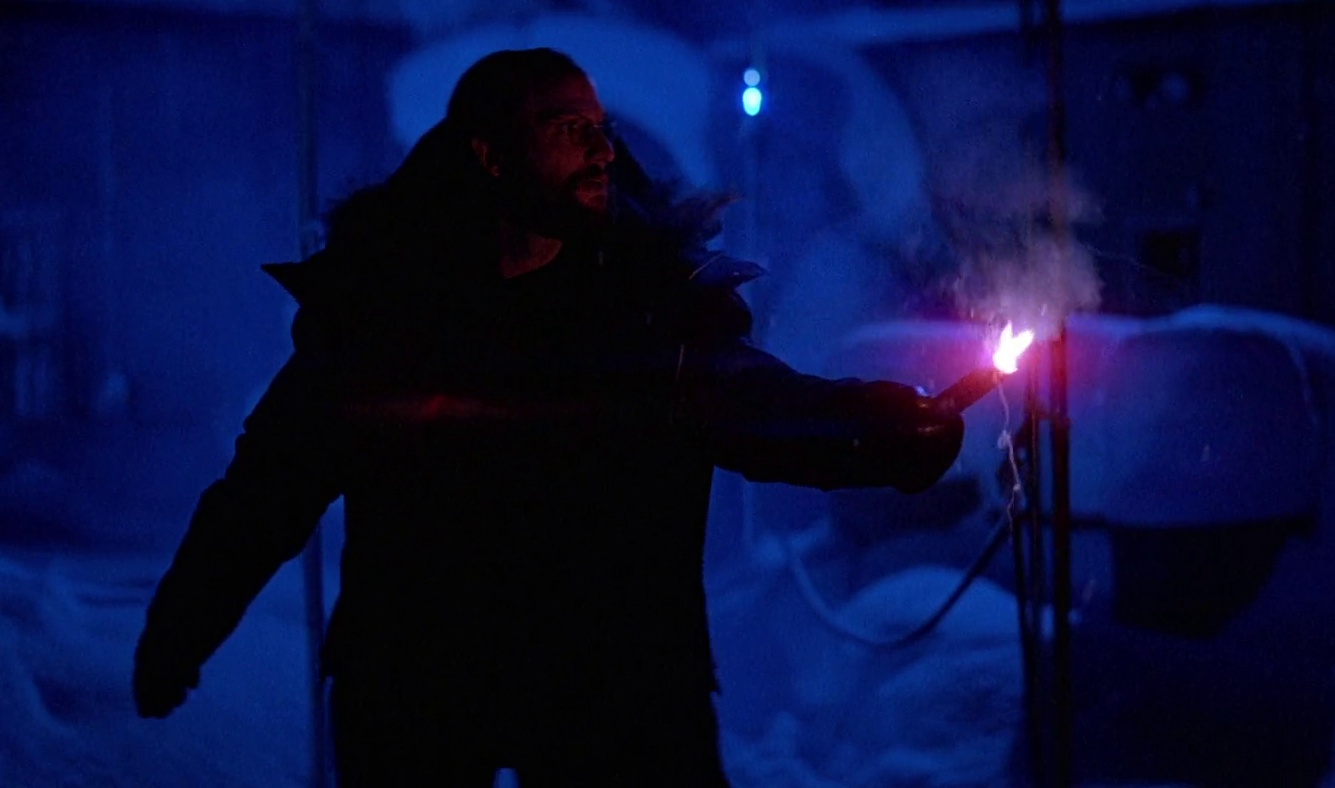
Still frame from The Thing showing a character holding a lit flare.
The Thing.

In The Thing, you’re trapped at an isolated outpost, unable to tell your friends from the creature, and… I think it’s gonna be a bad time! Unlike in other scenarios, going off alone and trying to hunker down won’t work; the Antarctic base is relatively small, and the creature seems to have a pretty good method of navigating it. Leaving the base, even if well-equipped, means facing Antarctica in the dark in the middle of winter… so I’m not making it 72 hours that way!

If possible, I’d try to organise the survivors into one group, occupying a “safe” room with resources, like the cafeteria. Taking shifts, so at least two or three people are awake at a time, I’d try to keep the creature at bay for as long as possible. But I have no doubt that the shape-shifting abilities would be a waking nightmare; not feeling 100% confident in trusting anyone would take a toll.

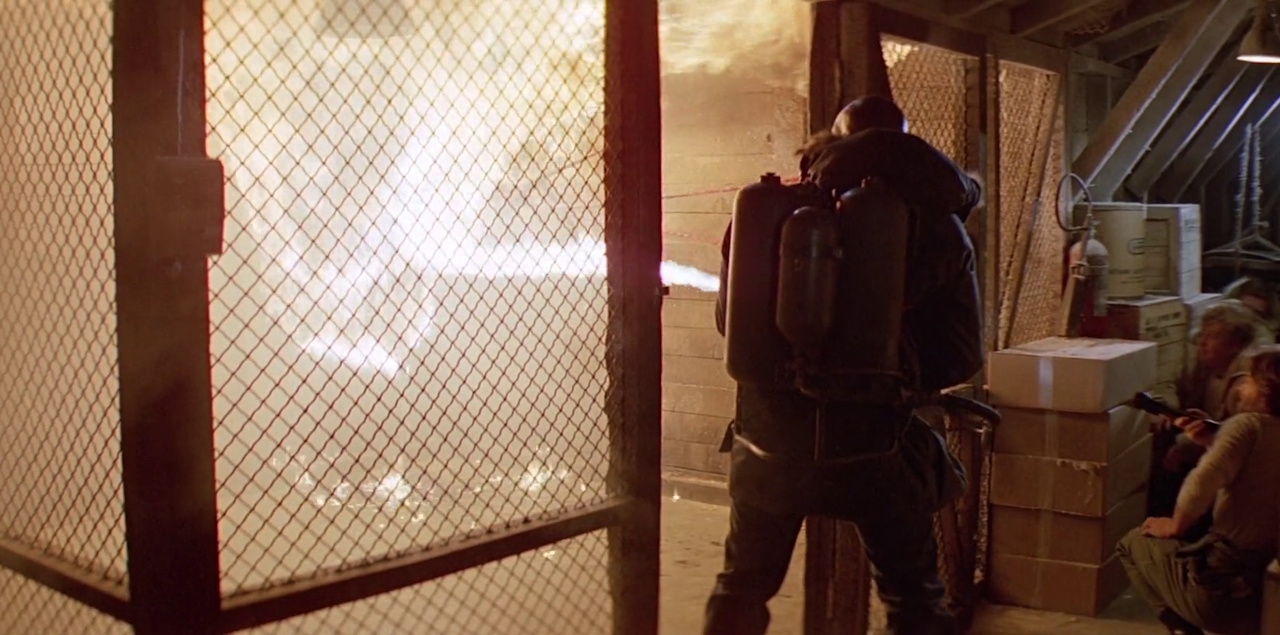
Still frame from The Thing showing a character using a flamethrower.
Kill it with fire!

With nowhere to run, the best way to survive 72 hours in this world would seem to be by befriending everyone at the facility and trying to stick together in one group. That means if there’s something to attend to outside of our safe room, the whole group goes. No one uses the bathroom alone, sleeps alone, or does anything alone. For someone who struggles with human interaction… that might not be the most fun I’ve ever had! But, as above, the fear of a violent death is a pretty good way to keep me motivated!

With all that being said, facing off against an intelligent and efficient predator like this, one with such a perfect ability to mimic animals and people… I don’t think the odds are especially high!

Survival Chance: 2/10

Option #5:
Alien

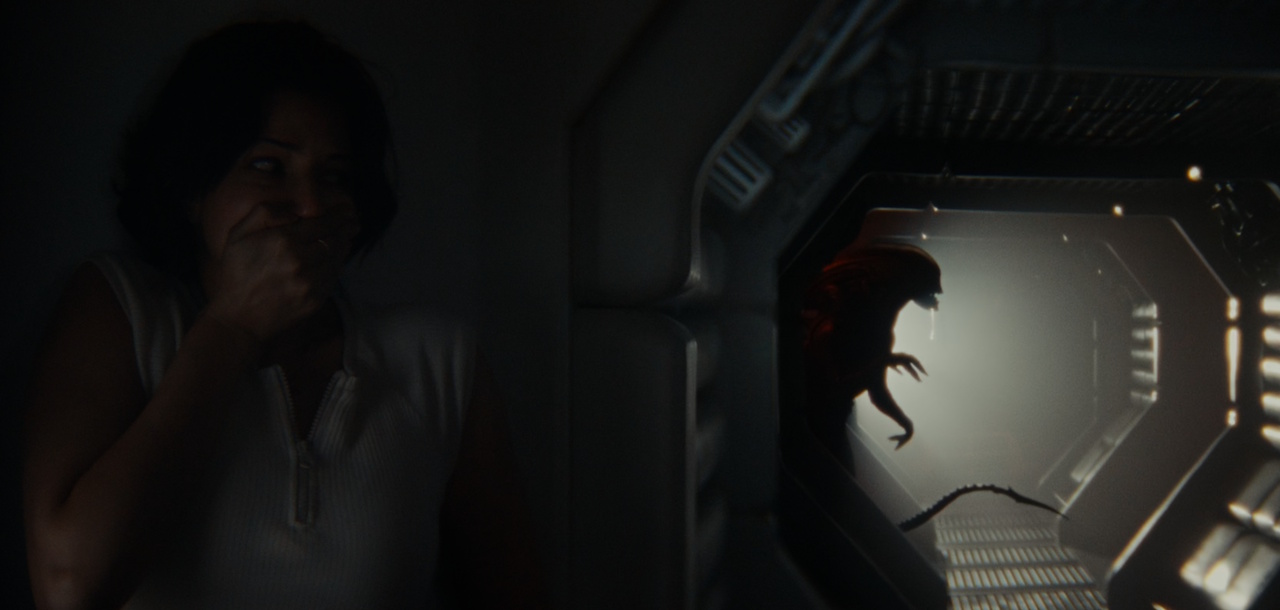
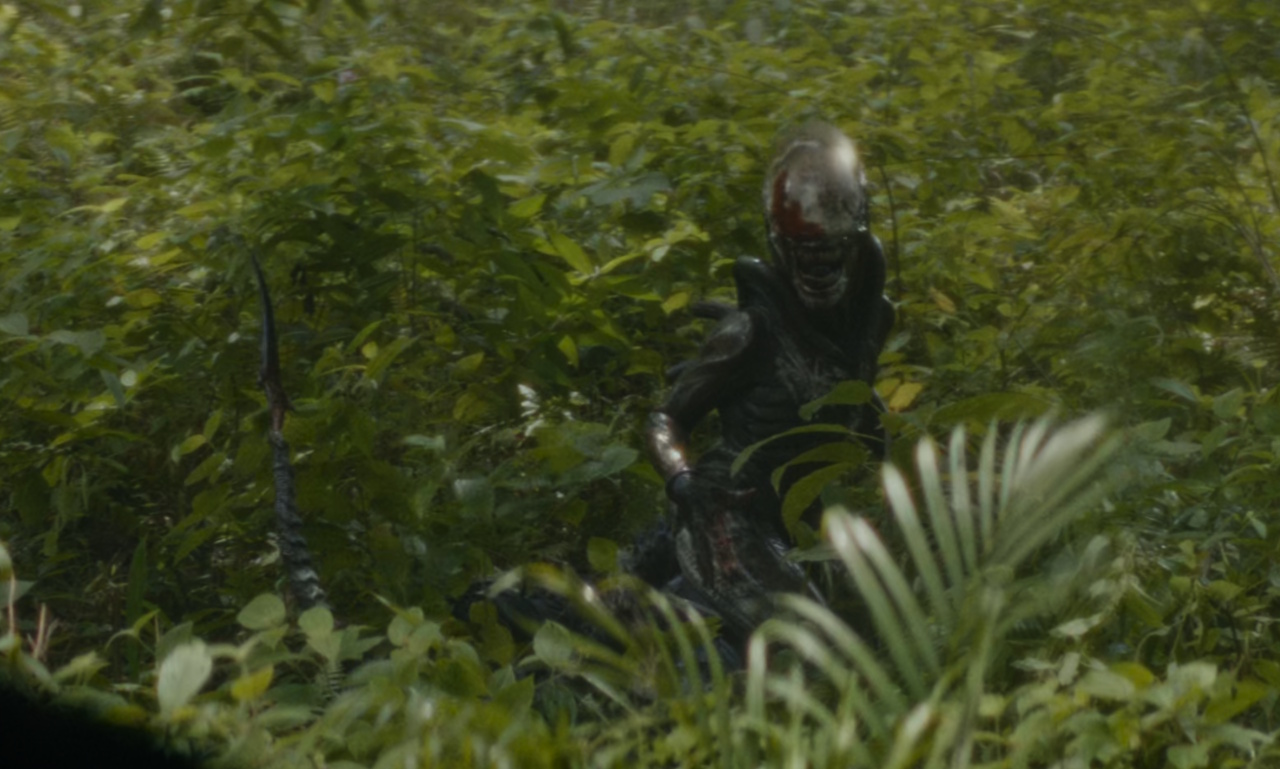
Still frame from Alien: Earth showing someone trying to hide from a Xenomorph.
Hiding from a Xenomorph.

In space, no one can hear you scream… so let’s *try* not to have to scream! I think our survival chances in the world of Alien improve significantly if we’re on the ground – a colony or settlement – rather than aboard a spaceship or space station. But either way, the Xenomorph is coming for us, driven by little more than a desire to feed and breed.

If we have enough room, I’d try to put as much distance between us and the infection site as possible. We could try to commandeer a vehicle – like one of the ground transports seen in Aliens. Or, if trapped aboard a ship, sneakily trying to use an escape pod might be a viable option. Remember, we just have to survive for 72 hours – so getting as far away from the Xenomorph as possible should be top priority!

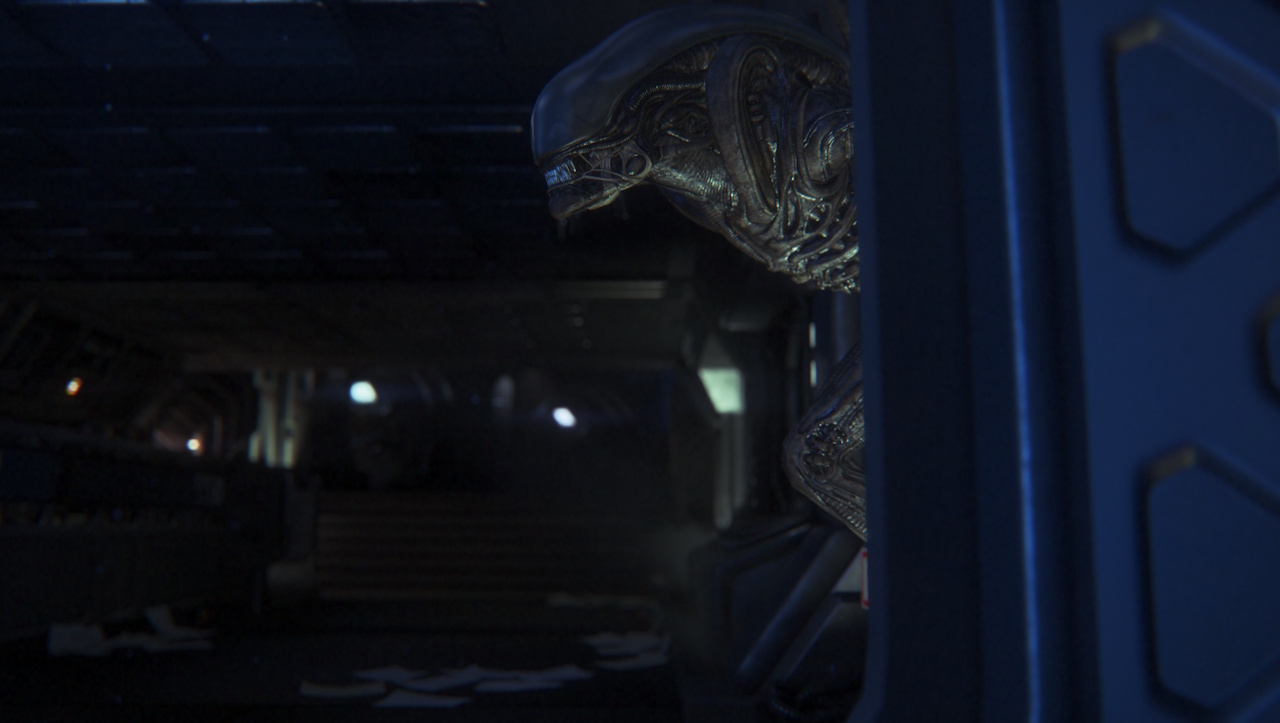
Promo screenshot for Alien: Isolation showing the Xenomorph.
Alien: Isolation.

If escape isn’t an option, though, and we’re in a worst-case scenario aboard a cramped slow-moving spaceship, then I think – as the films and series have repeatedly shown – we’re pretty much screwed! If we catch the infection really early, and can kill the facehugger or infant Xenomorph, maybe things would look a lot brighter. But by the time we’ve passed the chest-burster stage and the little bugger has disappeared, our best bet is honestly to run to the escape pods.

I’ve recently been playing Alien: Isolation, and it’s genuinely one of the scariest games I’ve ever played – and perhaps second only to the original Alien film in terms of how terrifying the Xenomorph feels. Playing it was part of the inspiration behind this piece, as I honestly struggle to survive in the world of Alien – so it made me wonder which other horror properties might be equally as unforgiving!

Survival Chance: 2/10

Option #6:
Buffy the Vampire Slayer

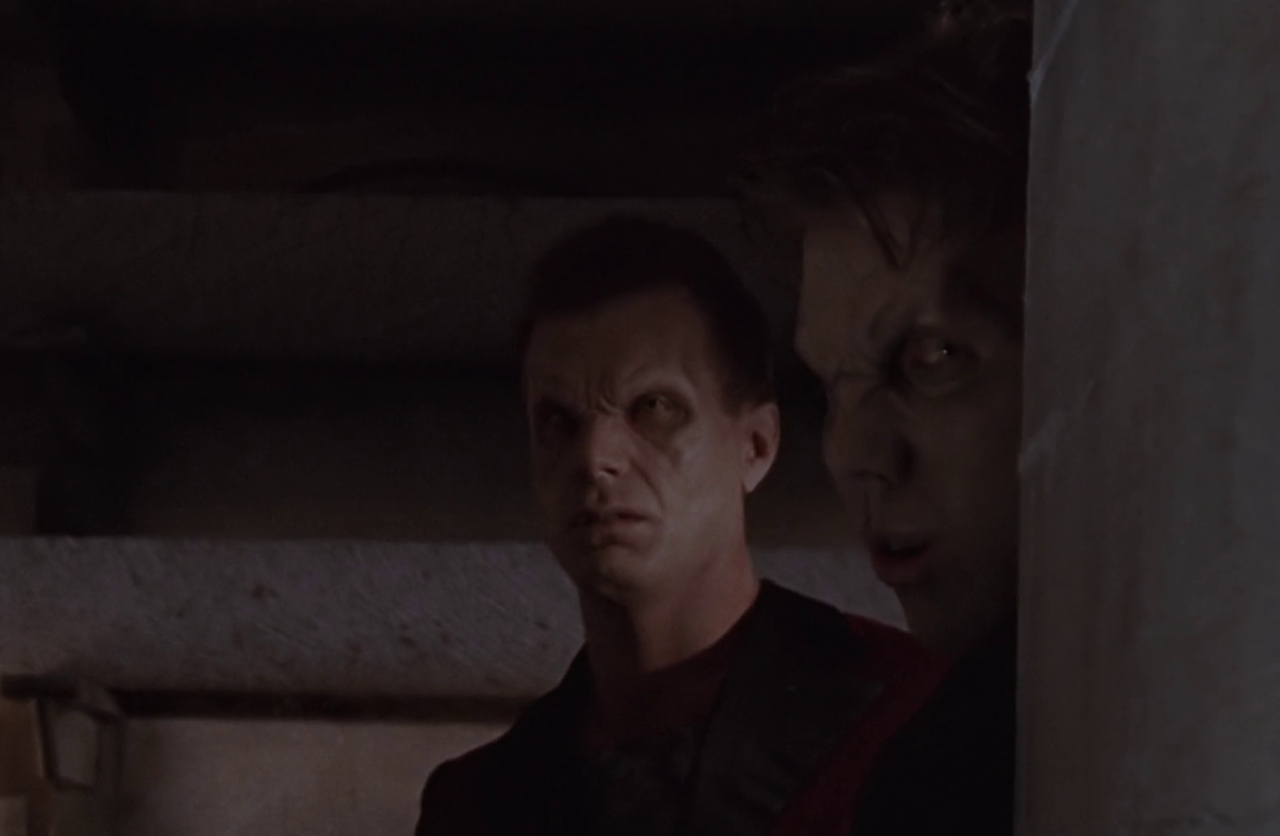
Still frame from Buffy the Vampire Slayer showing two Season 1 vampires.
Vamps!

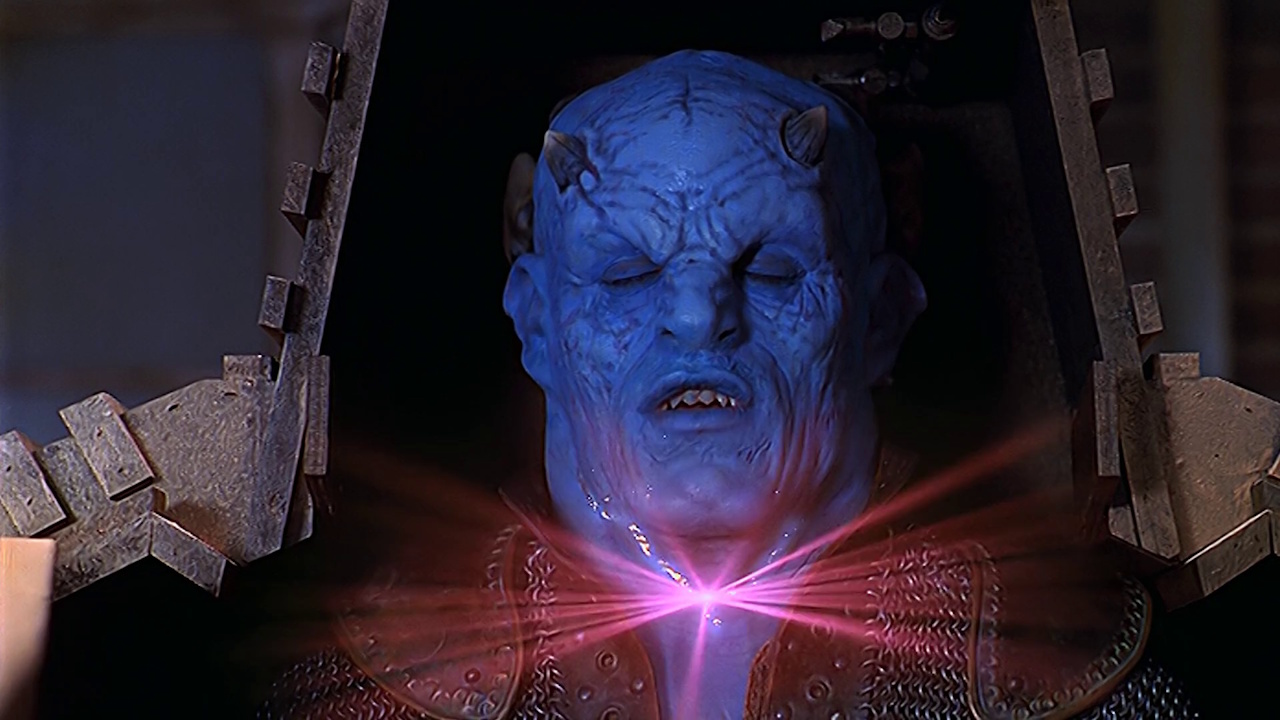
Gosh, where do we start with this one? There’s a lot more to Buffy than just vampires – so you can expect to be contending with werewolves, witches, ancient demons, and many other supernatural baddies! Honestly, just holding your own against vampires for 72 hours would be a stretch, but if other entities also join the hunt? This could be a very short challenge!

The flip side to all of that is, unlike in every other scenario we’ve examined so far, there’s a gang of people dedicated to hunting down and stopping the vampires and other creatures of the night. We wouldn’t even need to meet or befriend Buffy, Giles, Willow, or anyone else – if supernatural shenanigans are going down in Sunnydale, they’re probably already on the case. It might be too late for us if we’re the first victim of a new monster, but what are the odds of that happening in the first 72 hours?

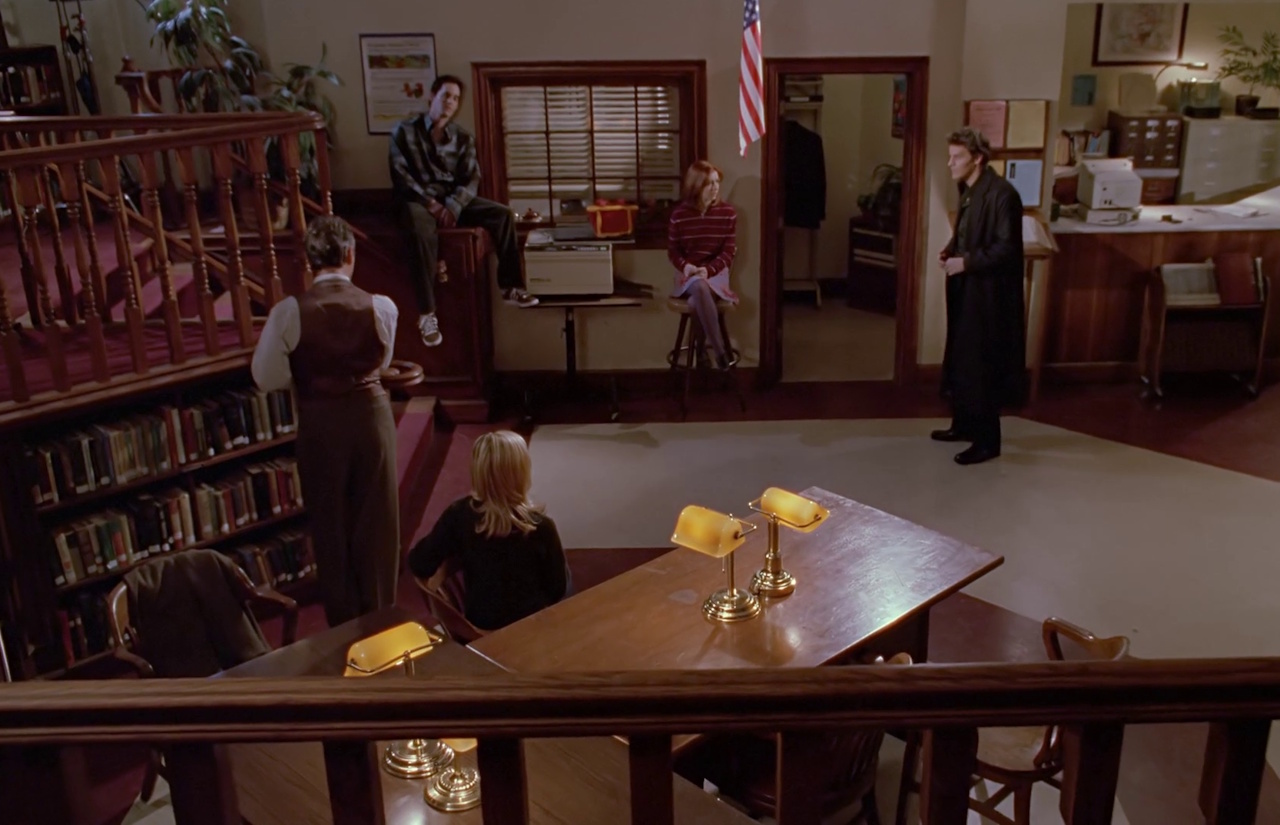
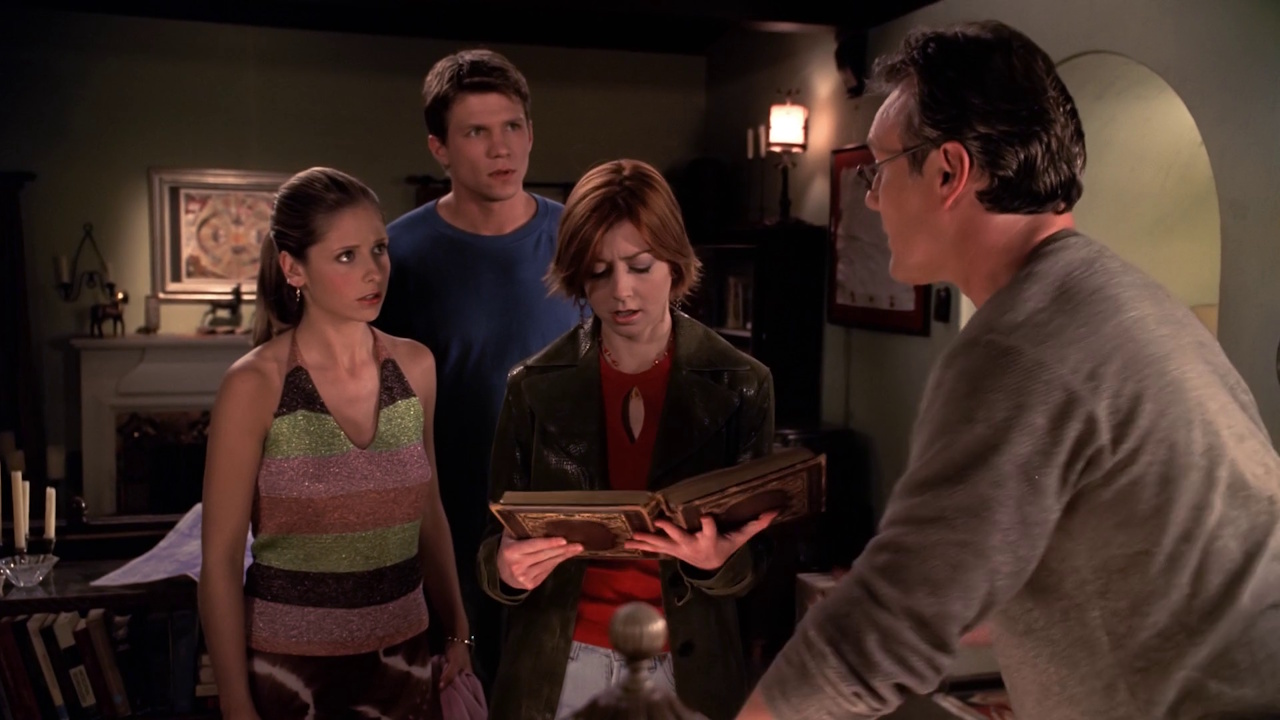
Still frame from Buffy the Vampire Slayer showing the gang in the library.
The Scooby Gang.

Okay, you’re right – I guess seeking shelter at The Magic Box might not be a terrible idea! If we could make it there in the daylight, and explain we’re in danger… all we gotta do is hang out with the gang and wait! But if there’s no slayer, no Magic Box, and just a plethora of vampires and monsters terrorising Sunnydale… I think we’re in a lot of trouble. Stay inside, lock the door, and maybe try to get some kind of really strong UV lamp!

Because Buffy ran for seven seasons, the show sank its teeth into all kinds of monsters, vampires, and ghouls. Sunnydale is a very dangerous place, it would seem. If Buffy and the gang are there and willing to help, this could be a cakewalk. But if we’re unlucky and Buffy’s gone on vacation, we might’ve accidentally stepped into one of the most dangerous, monster-infested settings out there!

Survival Chance: 4/10
(8/10 with Buffy and co., 2/10 without)

So that’s it… for now!

Stock photo of Halloween-themed food.
Halloween snacks!

I hope this has been a bit of Halloween-y fun! I actually really like this “hypothetical question” idea, and it’s one I’d love to revisit in the future – both in horror and non-horror contexts. I’m already brainstorming more questions and scenarios to write about, so if you enjoyed this idea… watch this space!

But I suppose we should pick one of the six options, shouldn’t we, as the answer to the hypothetical posed at the beginning?

I think I’m still leaning towards A Nightmare on Elm Street. I’m confident that I could go 72 hours without sleep, even if it was 1984 and there were no energy drinks or caffeine pills, and all I had was coffee. I know it’s a bit of a sneaky answer, but the objective was to survive 72 hours in a horror setting – not defeat every demon and monster that inhabits it!

Still frame from A Nightmare on Elm Street showing Freddy and Nancy.
I’m choosing A Nightmare On Elm Street for this hypothetical!

So that’s gonna be my pick. Buffy the Vampire Slayer was tempting, but I think it’s only really survivable if you’re able to team up with the Scooby Gang as soon as you arrive. If you get to nightfall in Sunnydale without support – and without a place to hide – you’re toast. So A Nightmare on Elm Street it is.

As I think I said last time, this year, October has turned out to be a stupidly busy month, so I haven’t had time to write all of the horror and Halloween articles and columns that I’d originally planned. Such is life, I suppose! Some will undoubtedly have to go on the back burner until next Halloween. By the way, is that the first time you’ve heard someone talk about Halloween 2026?

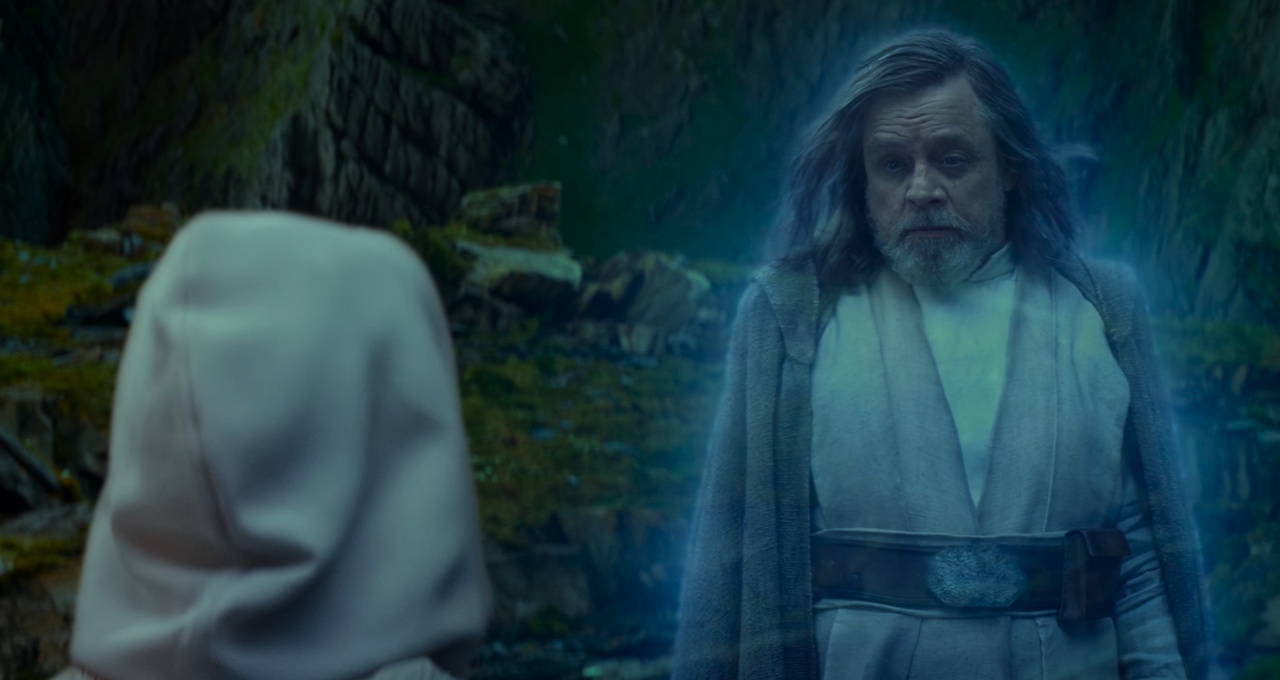
Still frame from The Rise of Skywalker showing Rey and ghost Luke.
A spooky ghost!

As I said above, this piece was partly inspired by the video game Alien: Isolation, which I’ve been slowly working my way through. Trying to survive in that world is genuinely tense and terrifying, and it got me thinking about other horror settings and how long I might last! I think the basic ground rules made for a fun thought experiment, at any rate.

So if I don’t catch you again before the 31st, I hope you have a fun and appropriately spooky Halloween! If you missed it, I wrote up a list of five seasonally-appropriate TV shows that you might want to check out before Spooktober comes to an end – you can find that piece by clicking or tapping here. And if you want a more personal look back at some of my Halloween memories, I wrote about that a couple of years ago – you can find it by clicking or tapping here.

Happy Halloween, everyone!


All films, TV shows, and video games discussed above are the copyrights of their respective studio, broadcaster, distributor, developer, publisher, etc. This article contains the thoughts and opinions of one person only and is not intended to cause any offence.

Five Spooky TV Shows For Spooktober

A horror-themed spoiler warning graphic.

Spoiler Warning: Beware of minor spoilers for some of the entries on this list.

Happy Spooktober, friends!

To celebrate the arrival of the spookiest, scariest, most horrifying month of the year, I thought we could take a look at five horror-themed television shows that could be fun to watch as Halloween gets closer.

If you know me, you’ll know I’m not exactly a horror aficionado! I’m a big softie and a total scaredy-cat, so horror isn’t usually my genre of choice, whether we’re talking about TV shows, films, or video games. But every now and then, a horror title comes along that feels like a must-watch, or where some element of the production appeals to me.

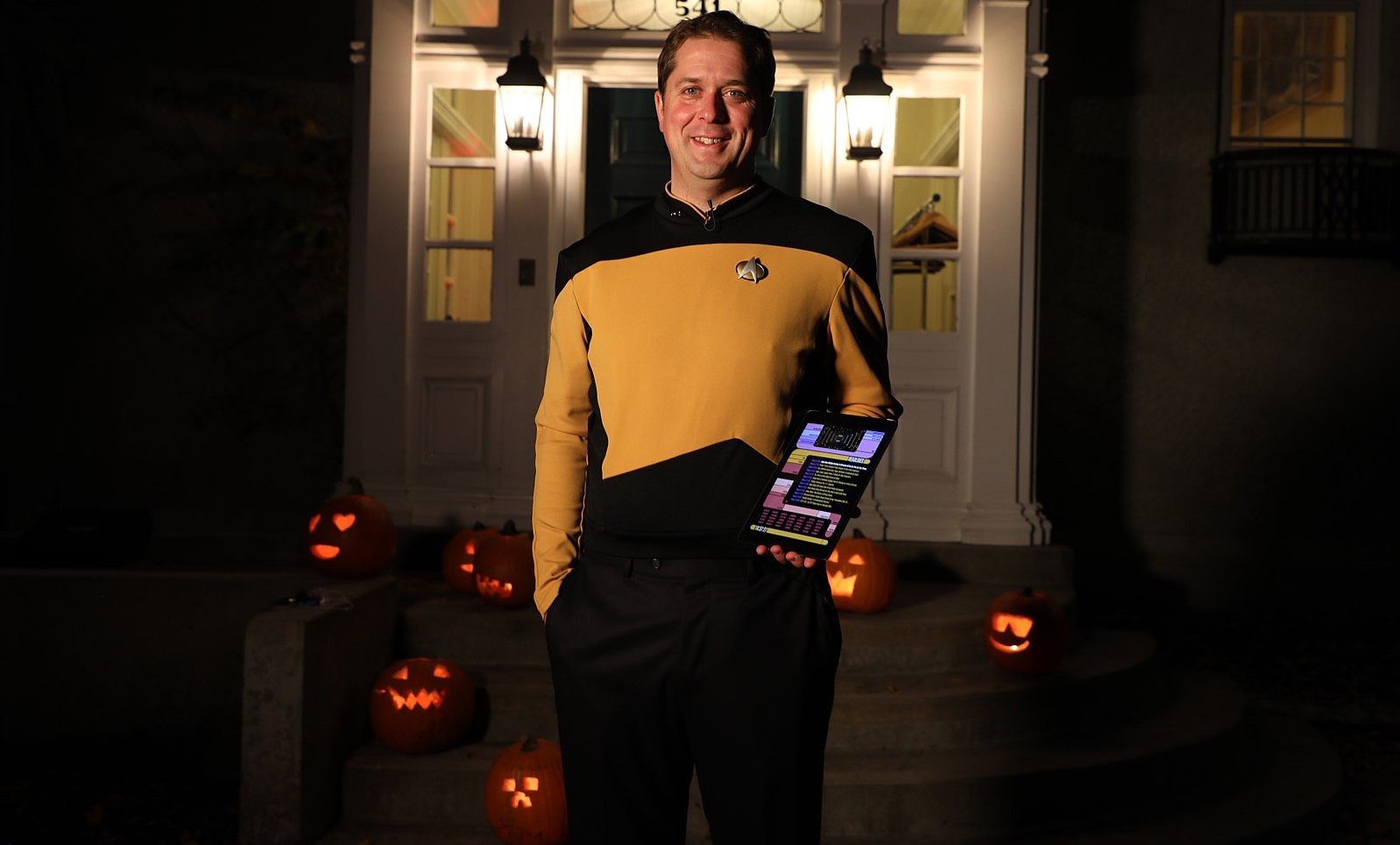
A stock photo of a man wearing a Star Trek costume at Halloween, surrounded by Jack-o-lanterns.
The kind of Halloween costume I can get behind!

Horror is enjoying its time in the spotlight right now. When I was a kid, horror was very much a niche genre at the cinema – and there really weren’t very many television offerings. The only horror or horror-adjacent shows I can really remember from the late ’80s and early ’90s are things like The Addams Family and the Ghostbusters cartoon. When I was a teenager, the nerdy friendship groups I moved in definitely saw horror as somewhat of a rite of passage, so being able to boast about having seen a particularly scary film was definitely enough to score you some bragging rights (even if I watched from behind a pillow half of the time!)

But these days, horror is much more mainstream – and there have been some great television programmes with a horror theme, too. The genre is no longer exclusive to the cinema!

A stock photo of a skull on a dark surface.
It’s about to get spooky…

As always, a couple of caveats. Firstly, it’s been a while since I watched some of these shows! I don’t regularly watch a ton of horror, and some of these programmes I’ve only seen once, during their original run. If that makes my take less valid to you… that’s fine. But I thought I should be up front about it. Secondly, everything we’re going to talk about is the entirely subjective, not objective, opinion of just one person. If you hate all of my picks, disagree with some of what I’ve got to say, or if I miss your favourite horror television show… that’s okay! There are plenty of horror TV shows out there, and a wide range of opinions on which ones are the best.

I’ve picked five horror or horror-adjacent television shows that I enjoyed and I’m happy to recommend. I’ve tried to avoid major narrative spoilers, but minor spoilers may still be present.

With all of that out of the way, let’s take a look at my selections!

TV Show #1:
The Strain (2014)

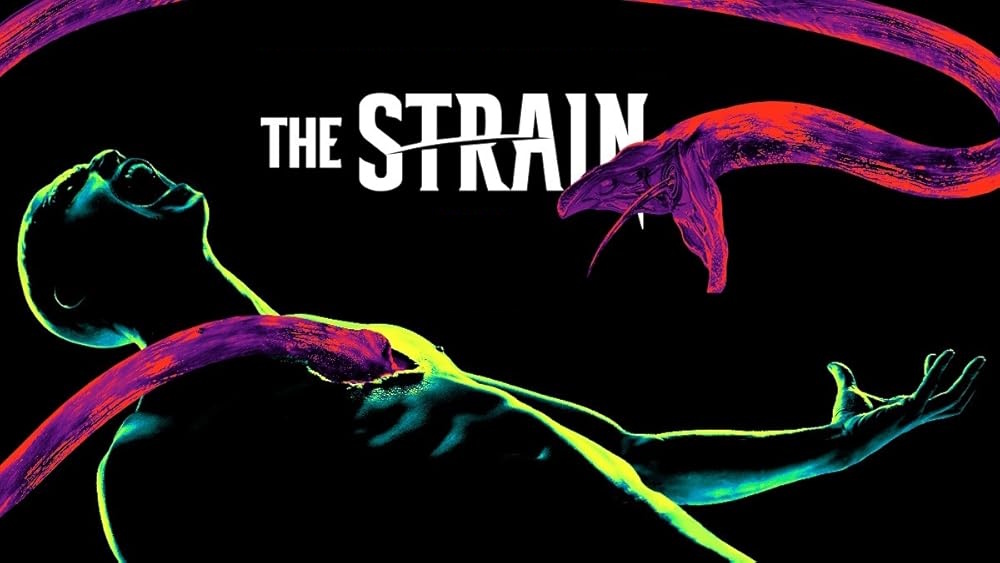
Stylised promotional poster for The Strain.
Promo poster for The Strain.

There have been a lot of shows and movies set during or after a zombie apocalypse, but The Strain is the first series I can remember in which vampires, not zombies, were the main threat. I especially enjoyed the first season of The Strain, which slowly built up to the arrival of an ancient vampire in the United States, and the actions of a team from the Centers for Disease Control (CDC) as they attempted to piece together what was happening – and fight back.

David Bradley (of Game of Thrones and Harry Potter fame) puts in an especially entertaining performance as an elderly vampire hunter, conveying his knowledge of the outbreak to the rest of the characters. And as the vampire disease propagates, there are some genuinely shocking jump-scares, as well as plenty of gut-wrenching moments.

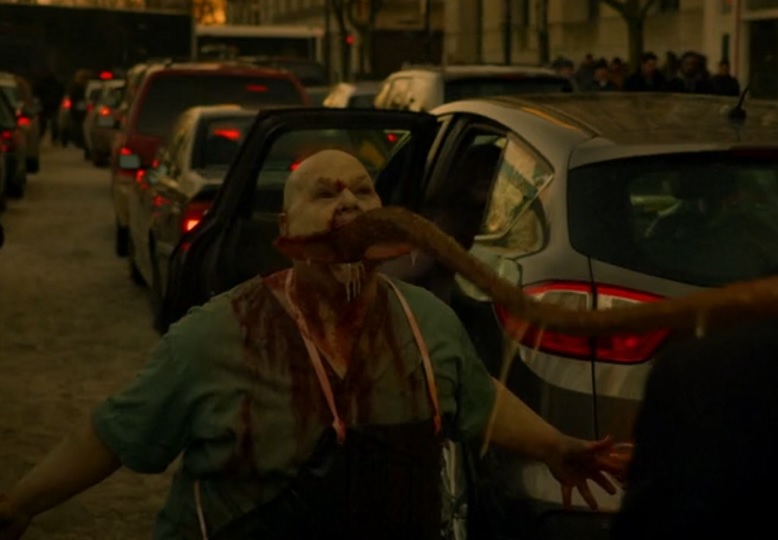
Still frame from The Strain showing a vampire.
Yikes.

The Strain was based on a book by Guillermo del Toro and Chuck Hogan, who also are credited with creating this television adaptation. Del Toro is a master of the horror genre, and his take on vampires – partially inspired by ancient European legends and folklore – really succeeds at making the blood-sucking creatures scary. After the likes of Twilight had done a lot to run vampires’ reputations into the ground, that’s no mean feat!

There are some tense moments, some very claustrophobic scenes set in safehouses, skyscrapers, and the tunnels beneath New York City, and a surprisingly emotional storyline, too, as the vampires try to stake their claim to the new world. If you missed The Strain during its original run, or you’re just looking for a different kind of monster after burning out on the same old zombies, I definitely think it’s worth a watch.

TV Show #2:
Alien: Earth (2025)

Still frame from Alien: Earth showing a woman being stalked by a Xenomorph.
In space, no one can hear you scream…

Alien: Earth premiered just this summer, and I reviewed it here on the website not too long ago. I really enjoyed Alien: Earth, which I think does a fantastic job of expanding the world of Ridley Scott’s Alien beyond just the Xenomorphs. After repeated appearances in multiple films and games, I was beginning to worry that the Xenomorphs were running out of steam. Adding new alien creatures to this world has given it a much-needed boost.

I won’t say too much lest I spoil anything, but one episode of the season in particular stands out to me as recapturing the magic of the original Alien (from 1979) in a way that none of the sequel films or spin-offs ever did. It was a slow burn, building up the tension masterfully, before reaching an explosive conclusion. The rest of the season was solid (well, mostly), but that one episode in particular really excelled.

Still frame from Alien: Earth showing Boy Kavalier.
Alien: Earth expanded the lore and mythos of the franchise.

I’m surprised that, at time of writing, a second season still hasn’t been officially greenlit. It’s my hope, though, that Alien: Earth has been the expansion that the franchise has been needing for a long time, successfully re-establishing the Xenomorph as a terrifying and dangerous threat while also adding new, equally frightening creatures to the world.

Being set on Earth gave Alien: Earth a new frontier to explore. We got to learn a lot about the corporate dystopia that governs this vision of the future, as well as some rather timely commentary on artificial intelligence, too. Definitely not one to miss if you were a fan of the original Alien.

Don’t miss my review of Alien: Earth, which you can find by clicking or tapping here.

TV Show #3:
The Terror, Season 2 (2019)

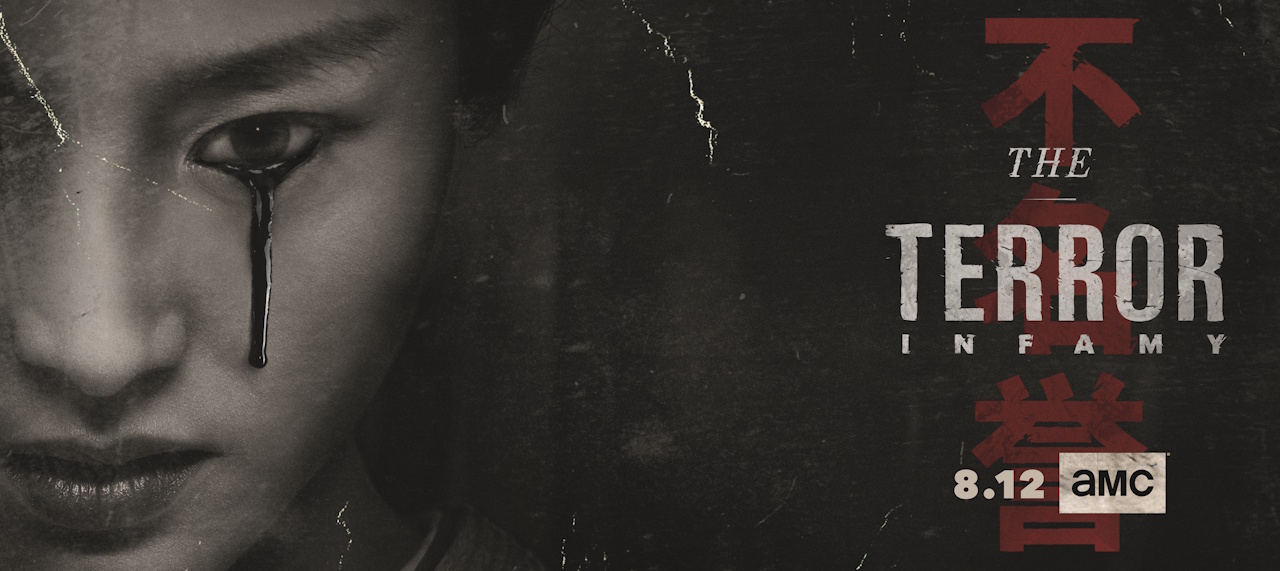
Promo poster/banner for The Terror Season 2.
Promo banner for The Terror’s second season.

The first season of The Terror is fantastic – as I’ve noted more than once here on the website. But Season 2 tends to get overlooked, which I think is a bit of a shame. Season 2 goes for much more of a supernatural “ghost story” angle, and there are a few jump-scares that genuinely caught me off-guard and are still burned into my memory six years later! There’s still the same mystery tone as in the first season, but jumping across to a whole new cast of characters gives it a completely different setup.

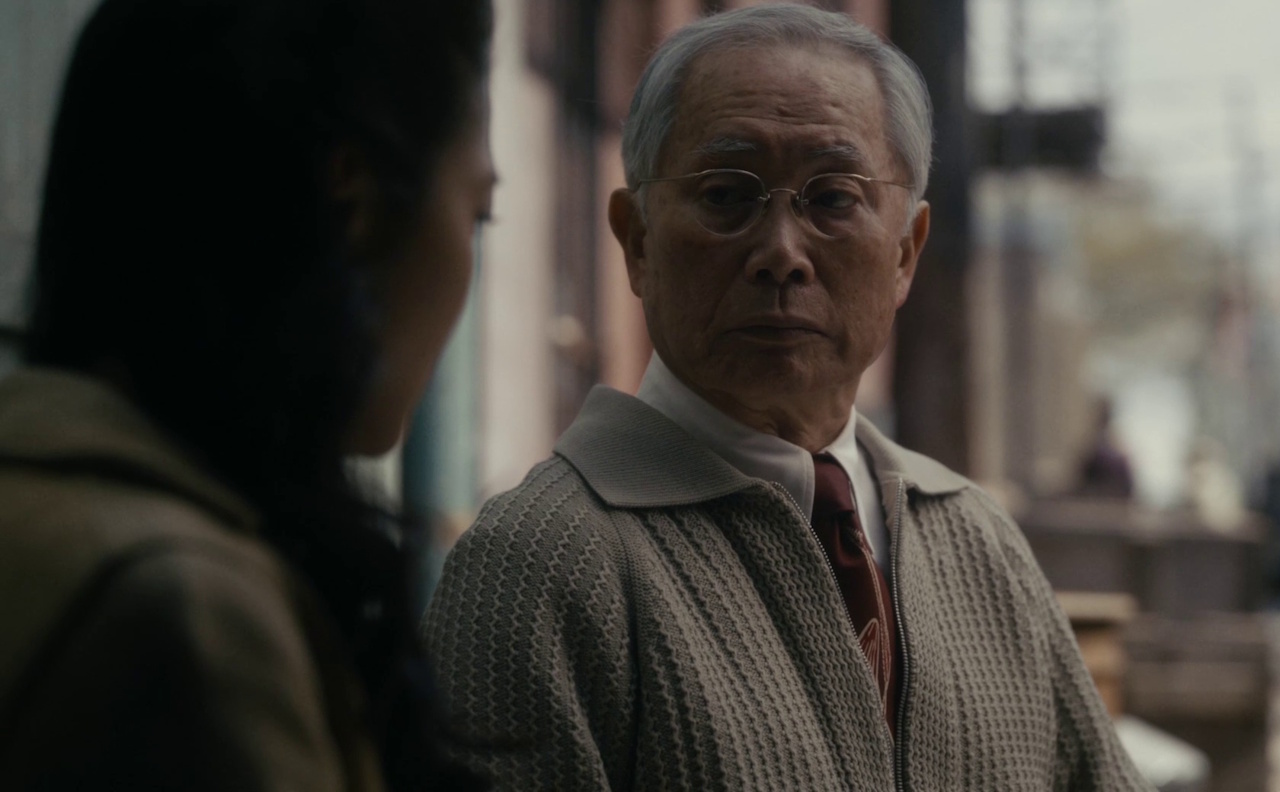
Season 2 of The Terror takes place during the Second World War, and focuses mainly on Japanese-Americans in an internment camp. George Takei, of Star Trek fame, plays a supporting role – and he had actually been interned as a young man in the 1940s. The setting isn’t just a backdrop, though – it’s integral to a story which takes Japanese folklore as a starting point to tell a genuinely unsettling and frightening tale.

Still frame from The Terror Season 2 showing two characters in conversation.
George Takei in The Terror Season 2.

As the mystery at the heart of the story unravels, we get to learn more about the haunting and why it’s affecting the main characters. The war also comes into play in a big way, informing character decisions and motivations, as well as providing a setting that most of the cast are unable to escape from. Although the show’s first season was outstanding, and Season 2 arguably doesn’t quite reach that same high bar, I still found it entertaining and frightening.

A third season of The Terror has belatedly been greenlit. I expected to see it in 2025, but we’re already in October – prime spooky season – and there’s been no word on a release yet. Still, one to keep an eye on. Who knows, maybe it’ll be something to watch next Halloween!

TV Show #4:
The Fall of the House of Usher (2023)

Still frame from The Fall of the House of Usher (2023) showing Bruce Greenwood's character.
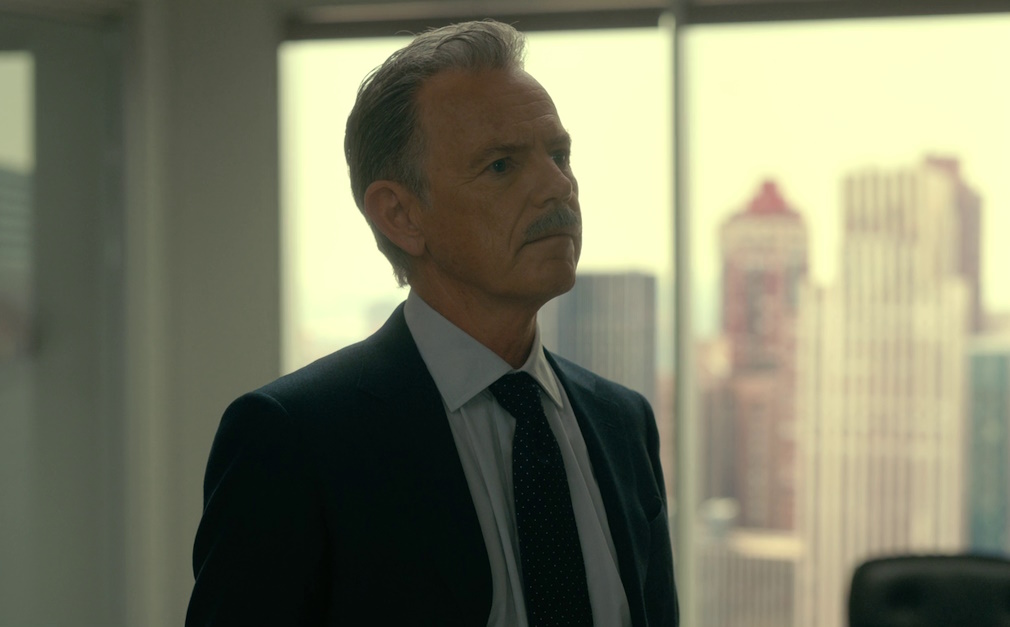
Bruce Greenwood in The Fall of the House of Usher.

This miniseries is a modern-day (and fairly loose) adaptation of the gothic horror stories of Edgar Allan Poe. I found it to be genuinely riveting stuff, and a creative way to weave together a selection of unconnected stories into a single, cohesive narrative. Creator Mike Flanagan did an excellent job of bringing together many of Poe’s best-known works, while giving them a modern twist.

There are a few jump-scares, but what shook me the most with The Fall of the House of Usher were some of the show’s more brutal moments. Some of these weren’t hidden from us as the audience; there was a slow build-up to an inevitably gory or gruesome death or maiming, and that tension was really well-conveyed by the show. There were also some spectacular performances from Bruce Greenwood, Carla Gugino, and an unexpectedly dark and villainous role for Mark Hamill, too.

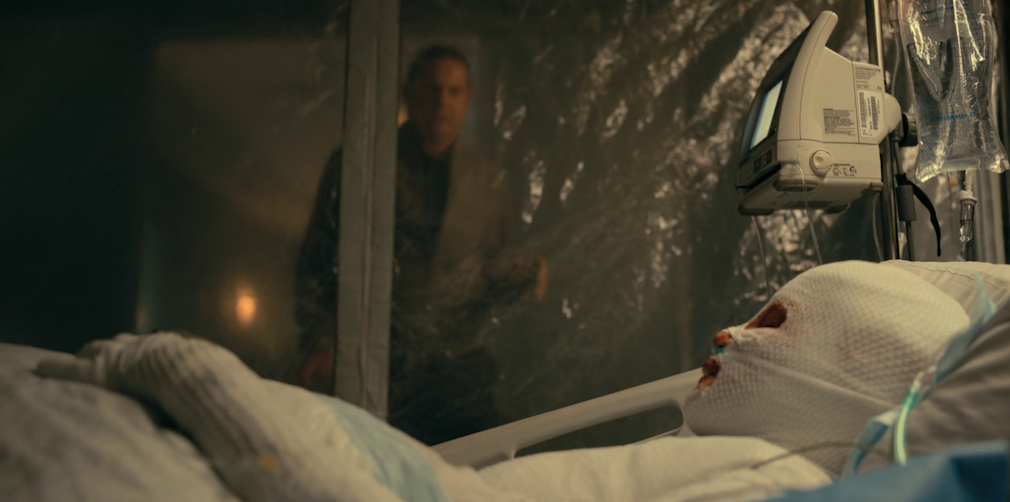
Still frame from The Fall of the House of Usher (2023) showing a woman in a hospital bed, covered in bandages.
That’s gonna leave a mark…

In my review a couple of years ago, I described The Fall of the House of Usher as akin to “Succession meets Final Destination;” effectively a slasher film taking aim at the children of a wealthy and successful business mogul. Edgar Allan Poe was a master of building up tension, and if there’s one thing I can say about The Fall of the House of Usher, it would be that it really succeeds at translating that feeling to the small screen.

With Netflix’s money behind it, The Fall of the House of Usher looks fantastic. Its storyline bounces around, encompassing different moments in the main characters’ lives, with each episode building to a grisly conclusion – and another shocking revelation, too. It’s dark, gothic, and tense – perfect for this time of year!

Be sure to check out my review of The Fall of the House of Usher, which you can find by clicking or tapping here.

TV Show #5:
Fortitude (2015)

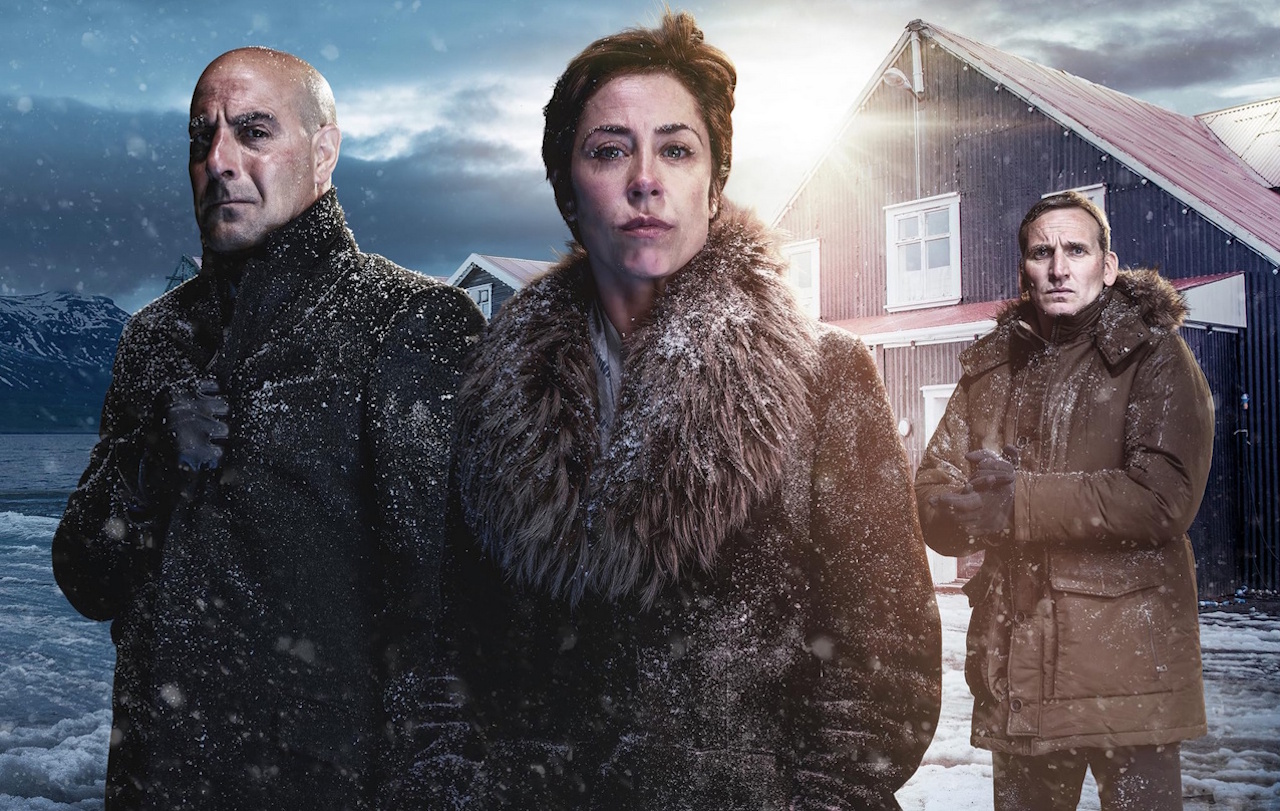
Promo photo for Fortitude.
A promotional still from Fortitude.

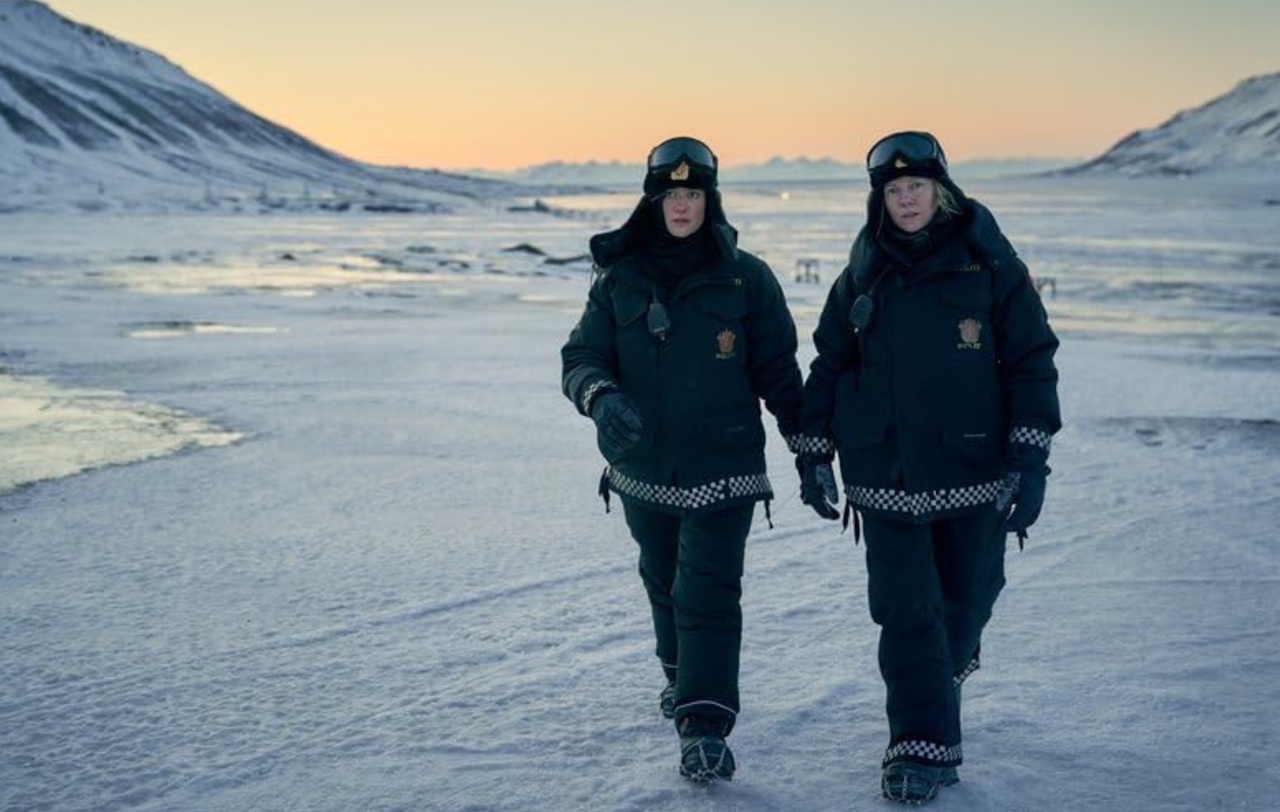
When I first sat down to watch Fortitude, I had absolutely no idea what I was getting into. I genuinely thought it was gonna be another crime/murder mystery type of show – but it goes in a completely different direction, despite having an opening act very similar to other crime dramas that were on TV in the mid-2010s. As the story unfolded, though, it went in much more of a thriller and then horror direction, with the end of the first season really leaning into body horror and creepiness in a big way.

Fortitude stands out for its Arctic setting, which is loosely based on the Norwegian island of Svalbard. Just a normal murder mystery in that setting would’ve been something different (and a ton of fun, probably), but Fortitude managed to have twists and turns in store to keep me on my toes throughout its run.

Still frame from Fortitude (2015) showing two female police officers walking across an icy landscape.
Two police officers.

It’s hard to say too much more about the story without giving away something important, so I’ll just say that Fortitude surprised me in the best way possible. I really didn’t expect the series to go the way it did – but that can be part of the fun, right? It’s not full of jump-scares, so if that’s what you’re on the lookout for, be aware that Fortitude is more mysterious and slow-going. As it builds up, though, it tells a genuinely fascinating – and occasionally gruesome – tale.

I liked the frozen setting, and there were some fantastic performances from big-name stars like Stanley Tucci, Michael Gambon, and Dennis Quaid. If you missed this one when it was new – which was, to my great shock, now a decade ago already – I really hope you’ll give it a try.

So that’s it!

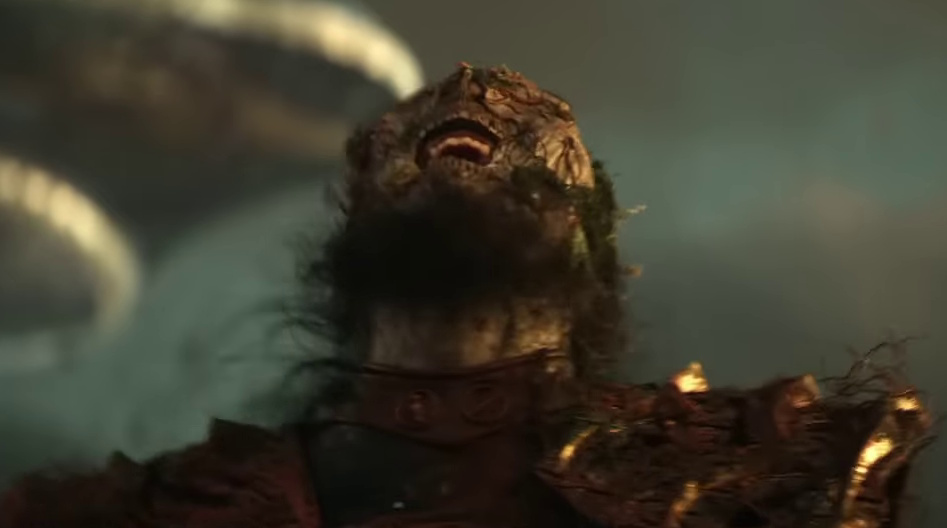
Still frame from Star Trek: Strange New Worlds Season 3 showing a zombie.
Is that… a Klingon zombie?!

We’ve taken a look at five spooky television shows to kick off the spookiest, scariest month of the year! I hope this has been a bit of fun, and that maybe I’ve chosen one or two that you might’ve overlooked when they were new, or just hadn’t considered for your Halloween binge-watching!

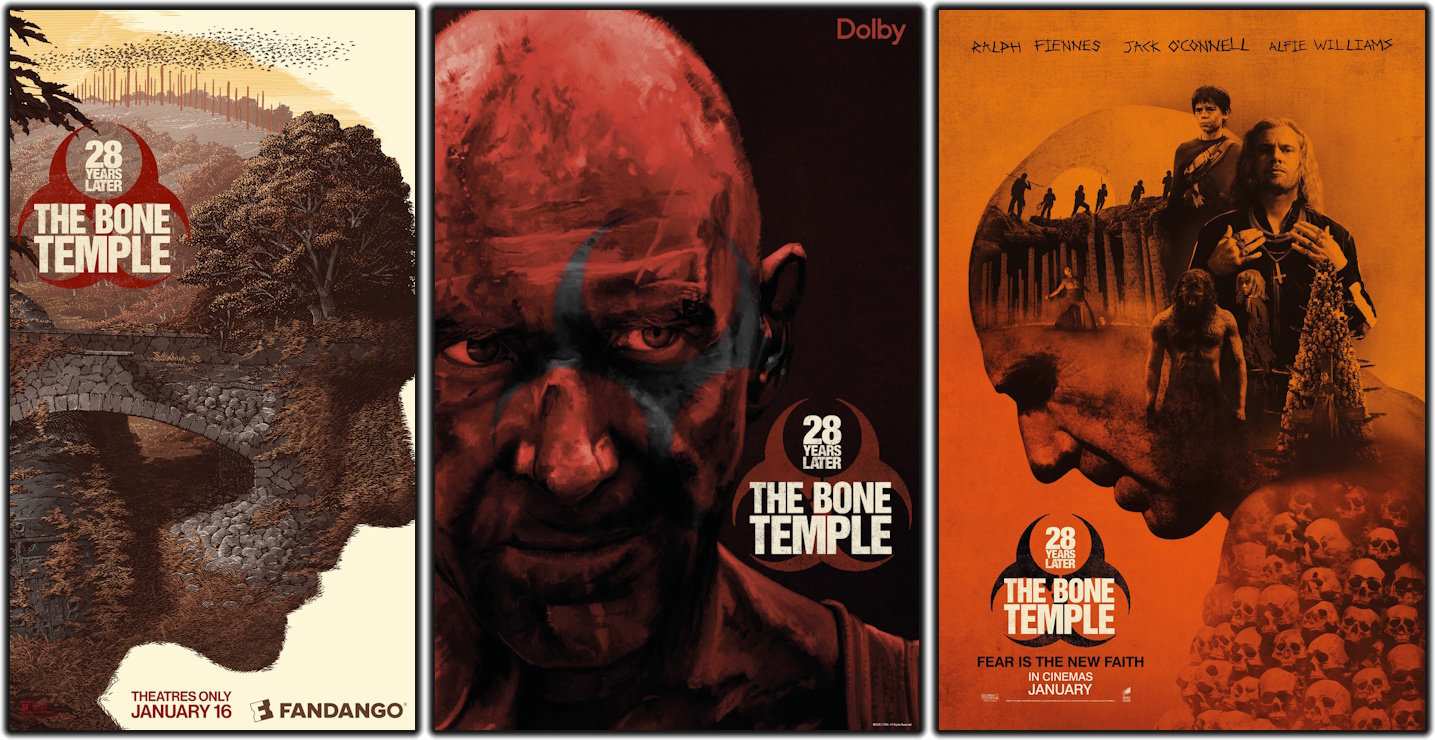
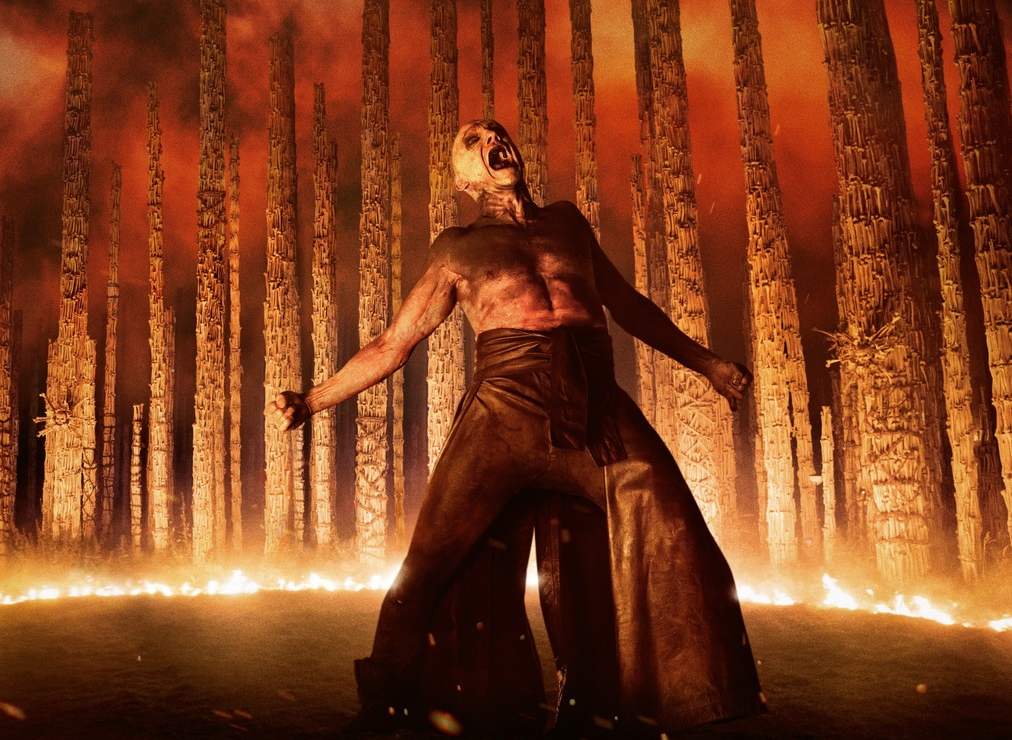
Earlier in 2025, I reviewed the horror film 28 Years Laterclick or tap here to check out my thoughts on that. And between now and Halloween, I have a couple of other ideas for some seasonally-appropriate content. So please check back throughout Spooktober… I’m sure I’ll have plenty more to say!

Until then… don’t have nightmares!


All of the television shows discussed above are the copyright of their respective broadcasters, studios, etc. This article contains the thoughts and opinions of one person only and is not intended to cause any offence.

Alien: Earth – Season 1 Review

An Alien-themed spoiler warning graphic.

Spoiler Warning: Beware spoilers for Alien: Earth and other films in the Alien series.

The original Alien film (the one from 1979) is one of my absolute favourite sci-fi/horror titles. The claustrophobic atmosphere, the masterful way director Ridley Scott built up the danger and tension, and of course, the titular alien itself, were all absolutely incredible. The film is a classic of cinema – but that’s kind of where my attachment to Alien as a franchise ended… until now.

I liked Aliens, but not as much as the first film. And subsequent entries in the franchise – in my subjective opinion, of course – got progressively less interesting. None of them were out-and-out bad – at least, none that I’ve seen – but I really started to get the sense that Alien should’ve been a one-off; the Xenomorph just felt like a one-trick pony. And I was content to leave Alien there, revisiting the first film for occasional viewings every once in a while, but without really broadening my exploration of this world. I haven’t seen Prometheus or Alien: Covenant, and while I’m pretty sure I watched Alien Versus Predator, I genuinely can’t remember a thing about it.

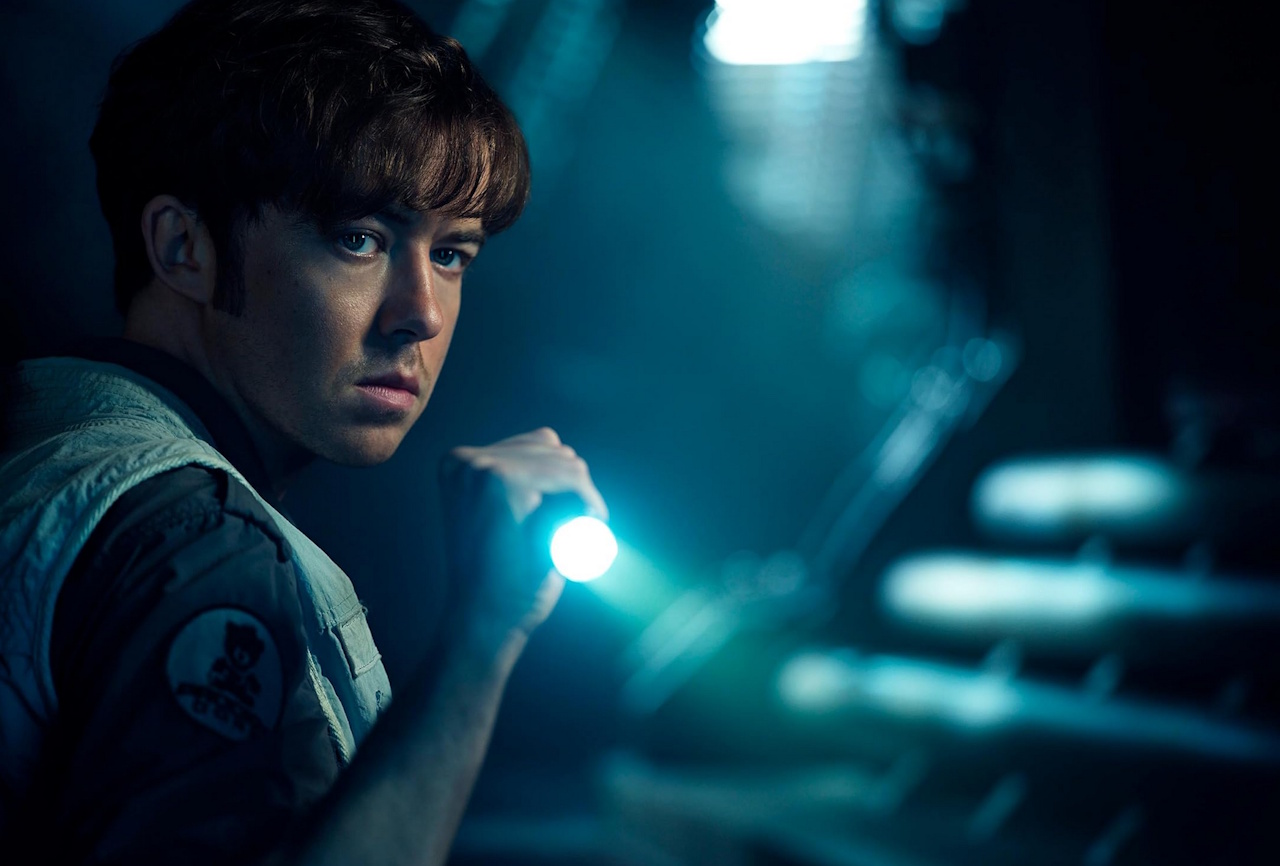
Promo photo for Alien: Earth (2025) showing Joe holding a torch.
Let’s examine Alien: Earth.

So why Alien: Earth, then? And is my take on a series in this franchise even valid? You’ll have to answer that – no hard feelings if a review from an occasional fan isn’t right for you! But I wanted to be up front about my feelings on the Alien franchise as a whole. Alien: Earth appealed to me, to be blunt about it, because it’s a big-budget sci-fi show in a franchise I’m at least partially familiar with. I’m always on the lookout for new and engaging sci-fi to enjoy, and I thought there was a chance, at least, that Alien: Earth might be worth a watch. Here in the UK it’s on Disney Plus, which is a subscription I dip in and out of, and during one of the months I was paying for it I thought I’d check out the series.

Here’s the headline: I thoroughly enjoyed Alien: Earth, and I’d rank it only slightly behind 1979’s Alien if I were to make a “tier list” of everything I’ve seen in the franchise to date. I binged the entire show over a couple of evenings, because I found once I got started I didn’t want to put it down. Alien: Earth managed to thread the needle: growing the world and lore of its franchise while staying true to the original themes and tone. And if I may be so bold… I think it’s set the stage for an expansion of the Alien franchise in a way no entry before it managed to do.

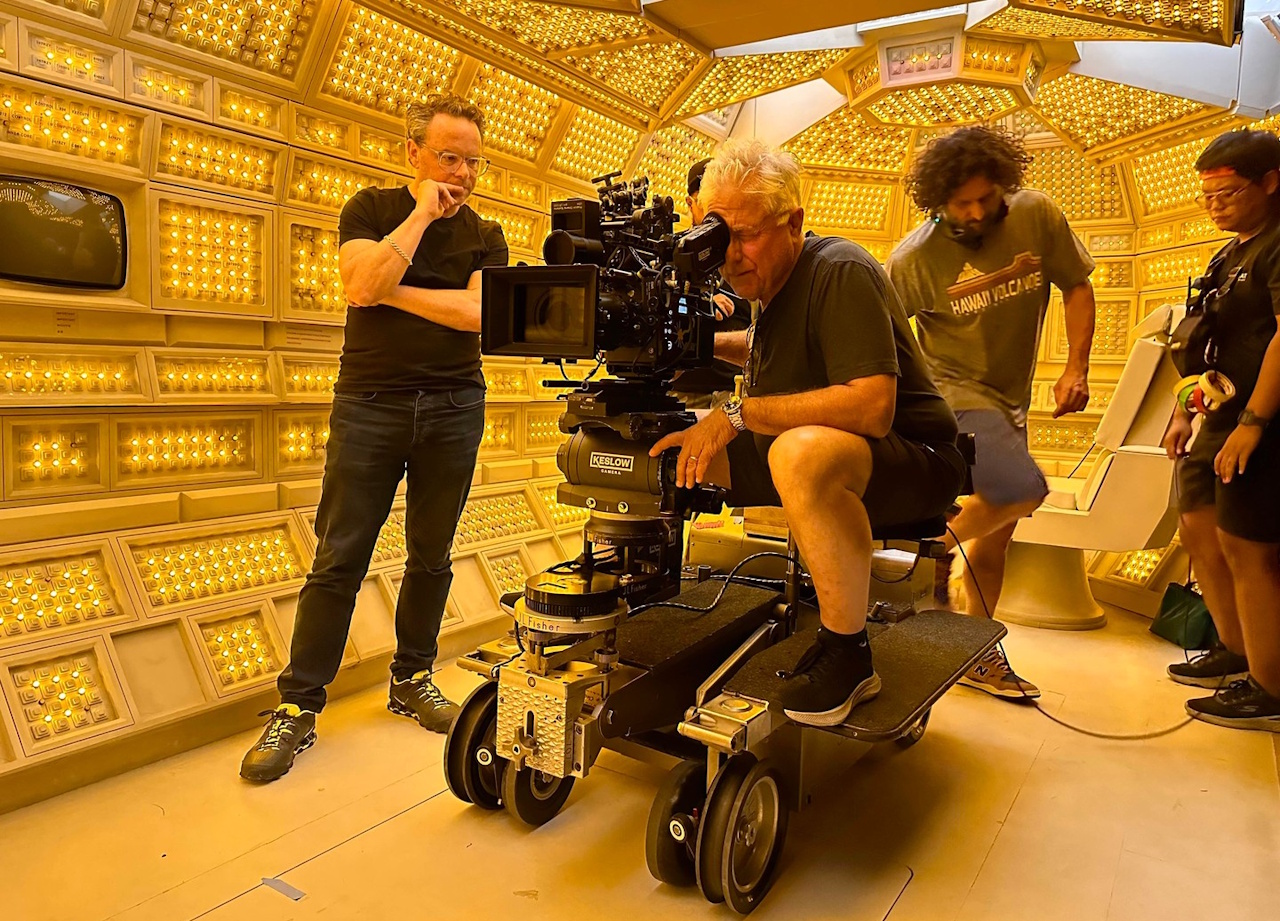
Behind-the-scenes photo from the set of Alien: Earth showing director Noah Hawley on the Maginot set.
Behind the scenes during production.

A couple of years ago, I took a look at the video game Aliens: Fireteam Elite here on the website. And I wrote then that there was “an odd duality” to the Alien franchise, with some films presenting a single Xenomorph as an unstoppable killing machine… while others depicted whole legions of them as being little more than cannon fodder. I wrote then that Alien really only had one alien… and diminishing it too much would risk making future projects feel less frightening and less intense.

Alien: Earth introduces several new alien species to the franchise – and they’re a genuine breath of fresh air. If there are to be more Alien films or TV shows, the franchise will need to expand beyond just the Xenomorphs and fill out its galaxy with more life-forms to terrorise (and occasionally bond with) our protagonists and antagonists. For me, Alien: Earth took a massive and incredibly important step in that direction, creating brand-new creatures – at least one of which was arguably more frightening than the original Xenomorph. If Alien remains in production, we may come to look back at Alien: Earth as a major turning-point, revitalising the franchise and keeping it fresh.

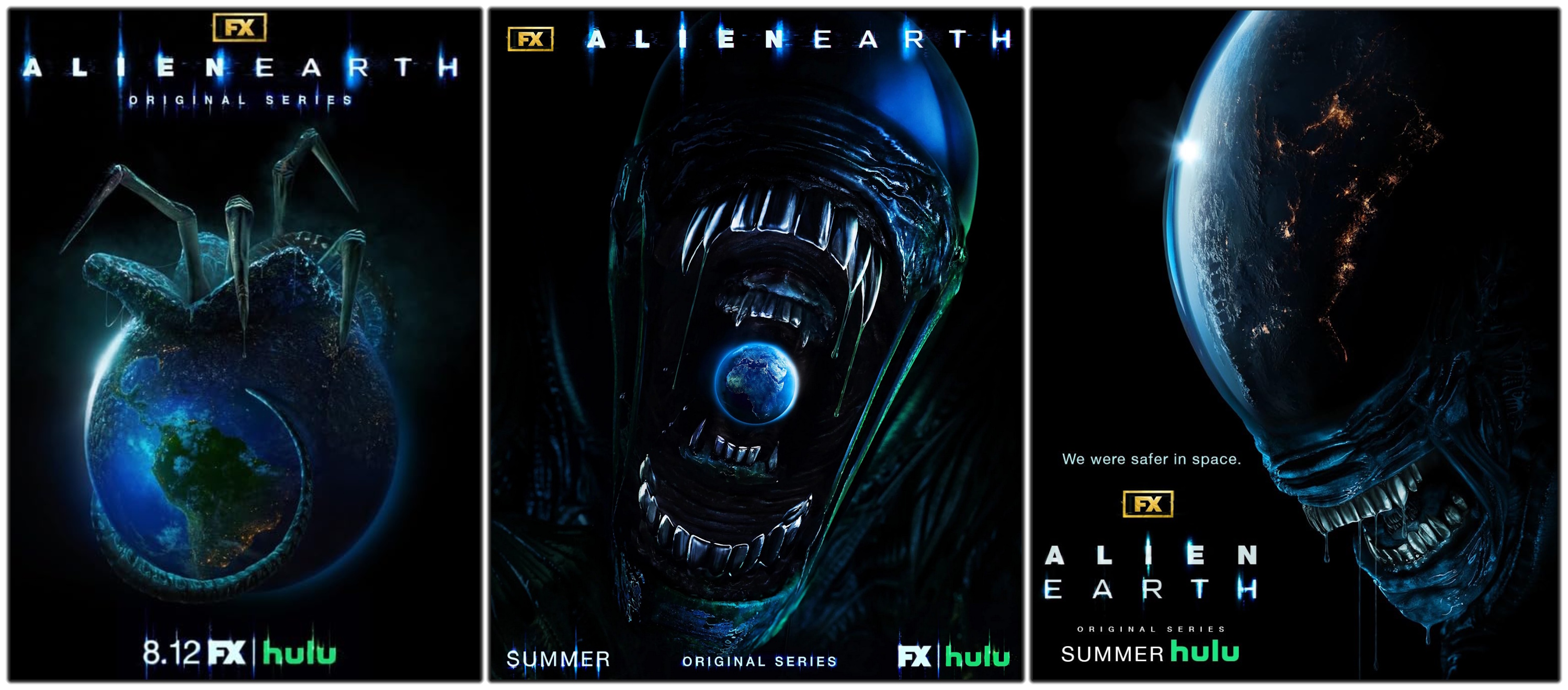
A trio of promotional posters for Alien: Earth.

Alien: Earth depicts a future ruled by corporations. This corporate dystopia has been a theme going all the way back to the original film; Weyland-Yutani’s single-minded desire to capture a Xenomorph was revealed to be the driving force behind that story. Given that Alien: Earth (and the rest of the franchise) is now owned by Disney, one of the biggest corporations on the planet… there’s an irony there which wasn’t lost on me. The anti-corporate tone, criticisms of oligarchy, and the general depictions of both Weyland-Yutani and Prodigy as being horribly corrupt… it doesn’t land quite as hard, perhaps, because of the real-world ownership and money behind it!

However, I found the messaging interesting – once I got past all of that. We spent a lot of time with Prodigy, and its founder, and we got to see more than I think we’ve ever seen before of this vision of humanity’s corporatist future. At one point, Joe explains to the kids how democracy “didn’t work,” so it was overthrown and replaced with the corporatocracy that the series depicts, and the whole thing really was fascinating. Sci-fi is usually as much a commentary on the world today as it is on the future, and there are parallels to the rise of real-world corporations and their power that were intentionally unsettling.

Still frame from Alien: Earth (2025) showing Boy Kavalier.
Boy Kavalier, the owner/founder of Prodigy.

In terms of individual episodes, the fifth episode of the season, In Space, No One… was by far my favourite – and a damn good reimagining of the original 1979 Alien, in my opinion. It was the only episode set entirely in space, aboard the doomed USCSS Maginot, and the story unfolded in such a tense and exciting way. I’m so glad that Alien: Earth introduced new alien life-forms, because along with the Xenomorph, these were all fascinating and frightening in their own ways – and I could see the eyeball alien in particular being an incredibly intense antagonist in a future story.

Everything about this episode just worked. The damage to the ship, the slow reveal of the saboteur, and the sense of impending doom as the crew came to realise they were on a collision course and running out of time. Then, the breaches in the containment labs, with facehuggers, blood-sucking parasites, and the octopus-eyeball… it was just a masterful buildup of horror and tension. As in the original Alien, gore wasn’t the primary focus, and the Xenomorph itself spent most of its time off-screen, leaving the situation and the tension to carry the story. For me, as a fan of the original film, In Space, No One… was far and away the best episode of the season – and a riveting watch in its own right.

Still frame from Alien: Earth (2025) showing Morrow and his assistant aboard the Maginot.
Just a fantastic episode.

I’ve recently been looking into the development of artificial intelligence, and I’ve talked about one A.I. research paper here on the website. Themes connected to the fast-moving world of A.I. were present in Alien: Earth, and I found the show’s approach to be genuinely interesting. Alien: Earth doesn’t launch headfirst into the A.I. apocalypse in the way something like Terminator or Battlestar Galactica have done, but the theme of A.I. outsmarting and outmanoeuvring humans was key to the story. And, as in the 1979 original, the idea of incredibly wealthy and powerful humans programming their A.I. systems to act not in the common good, but to sacrifice lives to achieve objectives… that was here, too.

We saw it in the synthetic characters. We saw it in “Mother,” the A.I. system installed aboard the Maginot. And we saw it with the hybrids, too, and how they changed and developed after they were installed into synthetic bodies. Kavalier, in his quest to develop and launch a revolutionary A.I. product, felt like a stand-in for any number of real-world A.I. evangelists and entrepreneurs, talking up the benefits of his new hybrid model… before getting distracted with the alien specimens he’d commandeered!

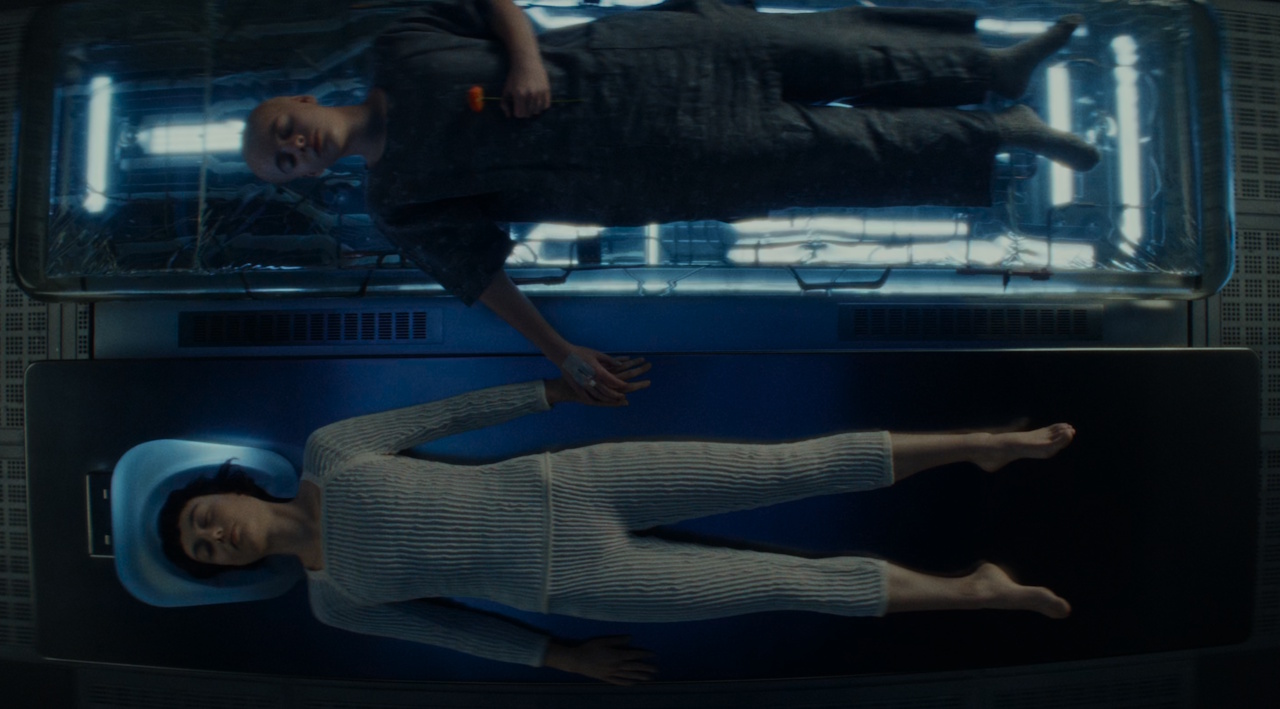
Still frame from Alien: Earth (2025) showing Wendy's creation.
Creating the first hybrid.

Because A.I. is such a big topic right now, I found this aspect of Alien: Earth to be genuinely interesting. The show takes a nuanced approach, depicting A.I. itself as kind of neutral – at least at first – with its “morality,” or lack thereof, contingent on the whims of its creators and owners. Some synths appear to be completely loyal to their masters, but others, like Kirsh, seem to have a lot more freedom to operate independently, even if that meant doing things like lying, concealing the truth, or even getting into dangerous situations.

At first, I thought Alien: Earth was going to come down on the side of the hybrids being fully human, but as the series progressed, it became clear that the hybrids – human “minds” transferred to synthetic bodies – were no longer fully human. We’re a long way away from “mind uploading” here in the real world (at least, I think we are!) but again, the question of where to draw the line between a machine and a person – and whether there even *is* a line, or if it’s more of a gradient – was absolutely riveting stuff.

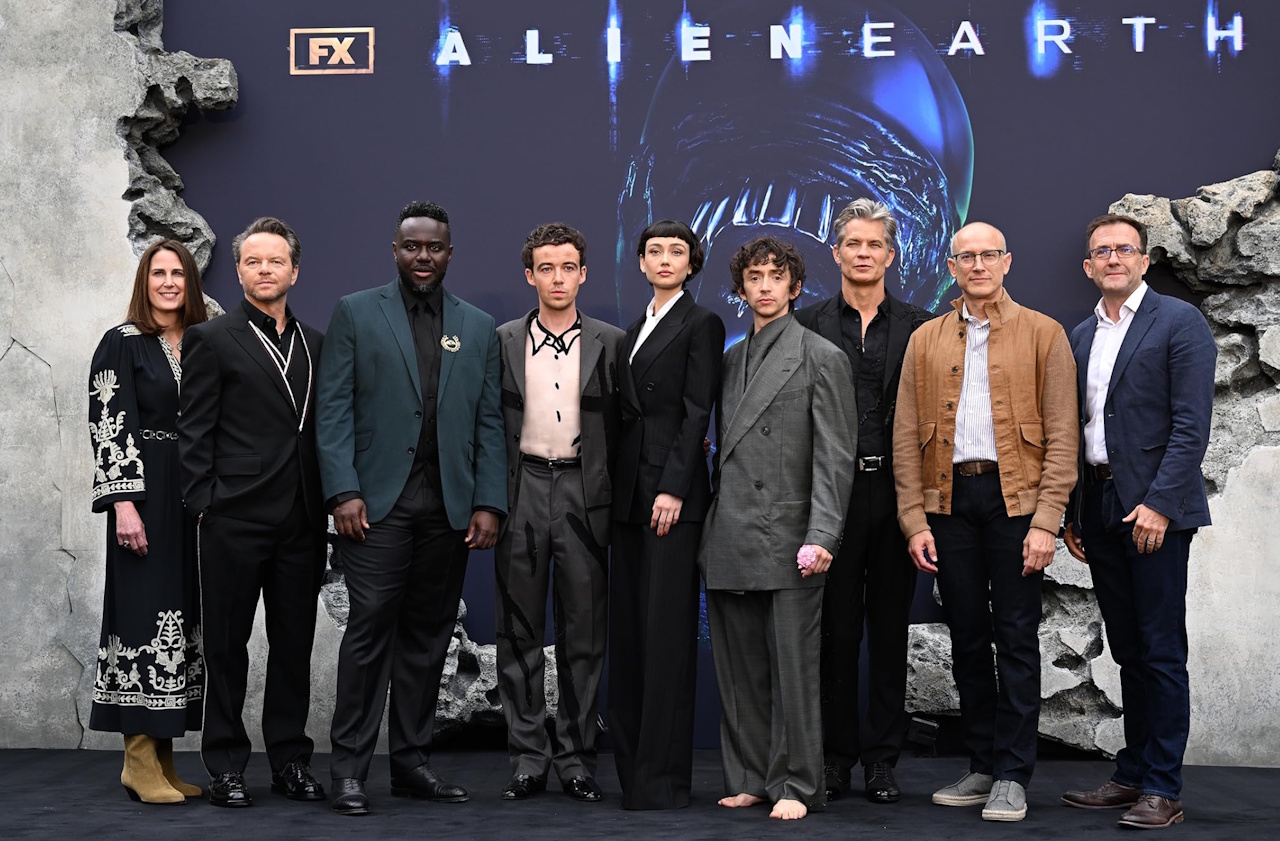
Photo of the Alien: Earth cast at the show's premiere.
Most of the main cast at the Alien: Earth premiere.

Since we’re talking about the hybrids, I thought they were an interesting collection of characters. I’m not sure whether the original intention was for these roles to be taken by actual child actors, which could have been interesting (as well as leaned into the “creepy kids” horror trope), but I found the idea of children in adult bodies to be an interesting one. It was also another commentary on the whole A.I. concept that we were talking about a moment ago. The performances which brought the characters to life were, for me, a bit hit-and-miss – not so much because of the actors, but rather the way some characters were written. Marcy/Wendy, Jane/Curly, and Isaac/Tootles were much less child-like than their peers, at least most of the time, and while that could be okay, it kind of detracted from the idea of these being kids struggling to come to terms with their new minds, bodies, and abilities.

In contrast, Aarush/Slightly, Rose/Nibs, and Christopher/Smee were all very child-like in the way they came across almost all the time – and I think all three performers deserve a ton of credit for bringing that feeling to life. The way they’d stand and sit, swinging their arms, touching leaves or walls, the awkwardness with which they’d move or approach each other… basically the entire range of all three performances really nailed, for me, the feeling that these were still children at heart, even though they were in adult bodies. There was some great directing and acting (and probably some fantastic coaching, too) that brought this feeling to life.

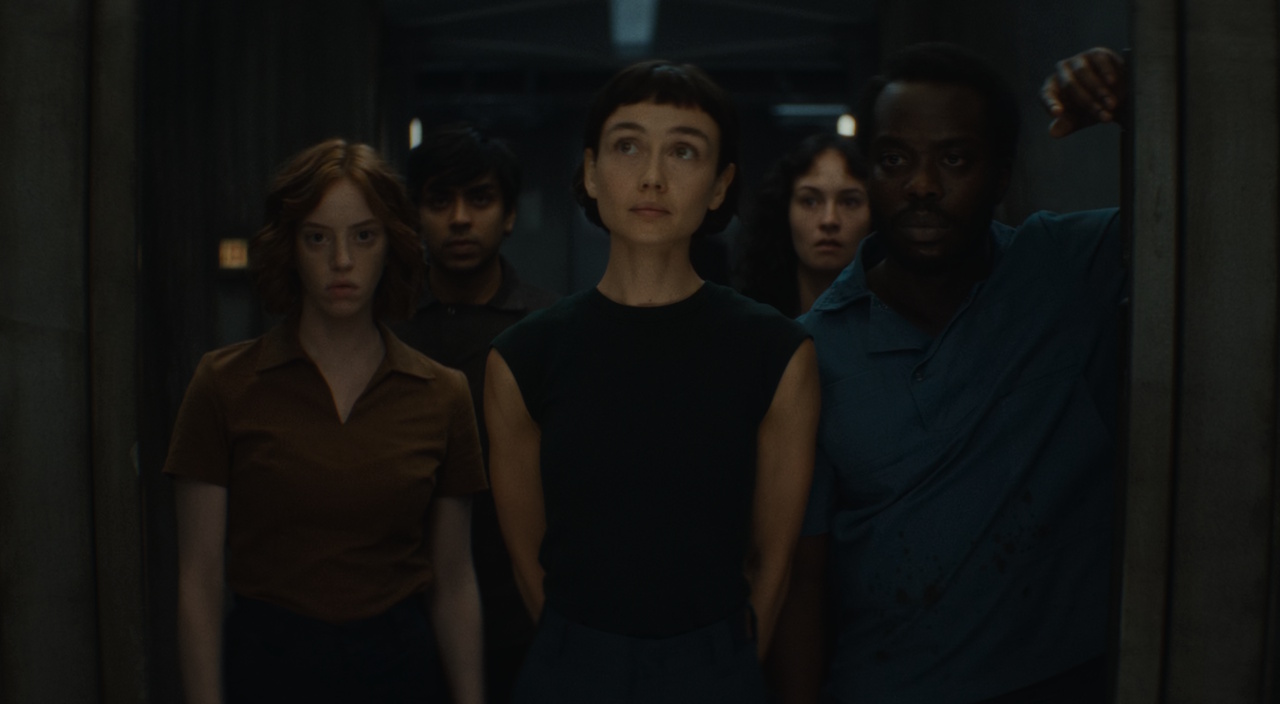
Still frame from Alien: Earth (2025) showing the hybrid kids at the end of the series.
The hybrids.

The others, as mentioned, didn’t lean as much on the child-like side of things, though each of them got some moments of childishness scattered through the story. Jane/Curly had her quest to become Kavalier’s “favourite,” which felt very childish, as did her moment near the end of the season with Dame Sylvia. But then, in between, she’d be a dedicated scientist, as was Isaac/Tootles, and the contrast was kind of obvious. In their cases, the transition from child to adult felt more abrupt, I guess, rather than like a slow burn across the season. That’s not necessarily a criticism, just an observation of the way these characters differed from the other, more child-like hybrids.

As the main protagonist, Marcy/Wendy was in focus much of the time. I think maybe the choice to have her kill an adult Xenomorph came too early in the story; it was at the beginning of the third episode, and showing her raw power and capabilities so early was a risk. However, she was a truly interesting character to get to know, and we saw her coming to terms with her new status as a hybrid in different ways as the story progressed. Her fixation on her brother was observed by the Prodigy team, but they deliberately didn’t interfere, even granting her the wish to chase after him when he was in danger. As a way to communicate that she’d retained her memories and personality after the transfer, I think that worked incredibly well.

Still frame from Alien: Earth (2025) showing Joe and Marcy Hermit.
Joe and Marcy.

Alien: Earth made a concerted effort to lean into the aesthetic of the original film – a visual style that I’d call “very ’70s.” This is still a very late ’70s vision of the future, with plenty of brown and orange tones to the furniture and bold patterns and prints on some shirts and outfits. Whether you like this or not is very much a subjective thing! Where I was less keen was when it came to retro technology – I just have a hard time buying that this is supposed to be “the future” where A.I. exists and there are sentient robots if all computers look like the BBC Micro that I used in my first-ever I.T. lesson back in school!

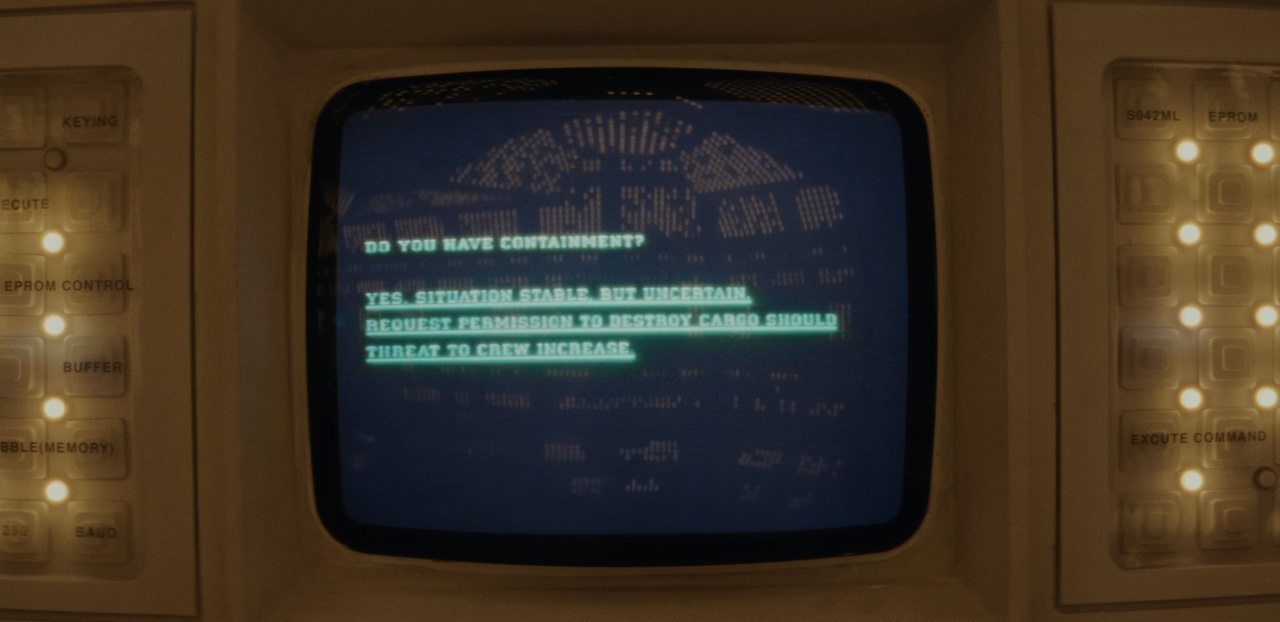
CRT screens and monitors, black-and-white cameras, handheld camcorders, computer systems with text-only interfaces and green-on-black screens, cassette tapes… none of it feels like the future, and I think it’s indicative of a trend in some sci-fi franchises where the desire to perfectly recreate everything that came before overwhelms common sense.

Still frame from Alien: Earth (2025) showing the Mother A.I. interface.
A CRT monitor with an out-of-date interface.

Think about it: why did the original Alien depict computers with text interfaces, CRT monitors, and tapes? Because, in 1979, that was what the future of technology looked like. There are ways to modernise the way technology is represented in a franchise like Alien without sacrificing everything about it – updated screens, faster computers, graphical and visual interfaces can (and I would argue should) be able to exist in this world. It wouldn’t be immersion-breaking, and for me, I think it would be more interesting and a more realistic depiction of a far future setting where the kinds of fantastical technologies depicted in the series exist. You’re telling me the world of Alien invented artificial gravity for spaceships… but not flat-screen displays or a graphical interface?

There could’ve also been an opportunity to show the passage of time and the contrast between the world Morrow and his crew left behind and the one he returns to. Alien: Earth seems to depict a world where technology is stagnant – 65 years ago, when Morrow left, his ship was presumably on the cutting edge, yet by the time he returns, technology looks and feels basically the same. If the USCSS Maginot had had the old-school retro stuff, but the research facility and other Earth locales had had more modern technology, it could’ve done more to hammer home just how long Morrow had been away and how much had changed in that time.

Still frame from Alien: Earth (2025) showing Morrow.
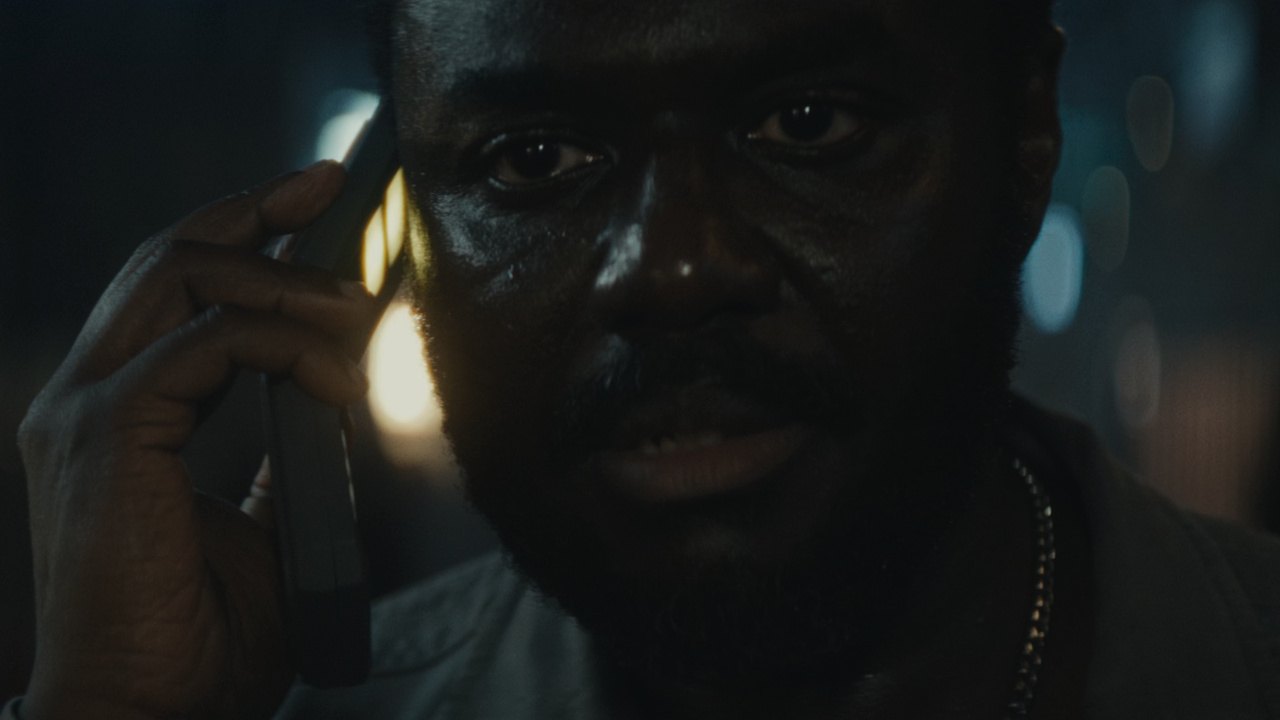
Morrow on the phone.

Morrow was an interesting character, and not the pure antagonist that I expected based on his actions in the premiere. In fact, you could make that case for most of the characters, really – Alien: Earth gave pretty much everyone some moral complexity. For Morrow, the revelation about his daughter’s death was heart-wrenching, and learning about how he came to have his cybernetic arm – and that it basically constituted a “life-debt” to Weyland-Yutani – also did a lot to soften, or at least explain, his characterisation. I can’t be the only one who heard “paging Mr Morrow, Mr Tom Morrow” when I first heard his name, though… can I? (If you’re a Disney World fan, you’ll get the reference!)

That leads me into a point about some of the characters’ names. Mr Morrow is already a bit of a weird one, but then we have Boy Kavalier. Really? On the nose much? Dame Sylvia’s also a bit of an odd choice of name, if you think about it, as are Joe and Marcy Hermit. Maybe I’m misremembering… but weren’t most character names in Alien, Aliens, Alien 3, and so on a bit less… weirdly literal? I mean, you had names like Ripley, Burke, Clemens, Dillon, Dallas, Kane, and Brett. I’m not sure why these unusual names were chosen. For synthetic and hybrid characters, it made sense – and for the hybrids in particular, names were a big narrative point. But for someone to be named (or name themselves) Boy Kavalier… it just felt a bit odd, I guess.

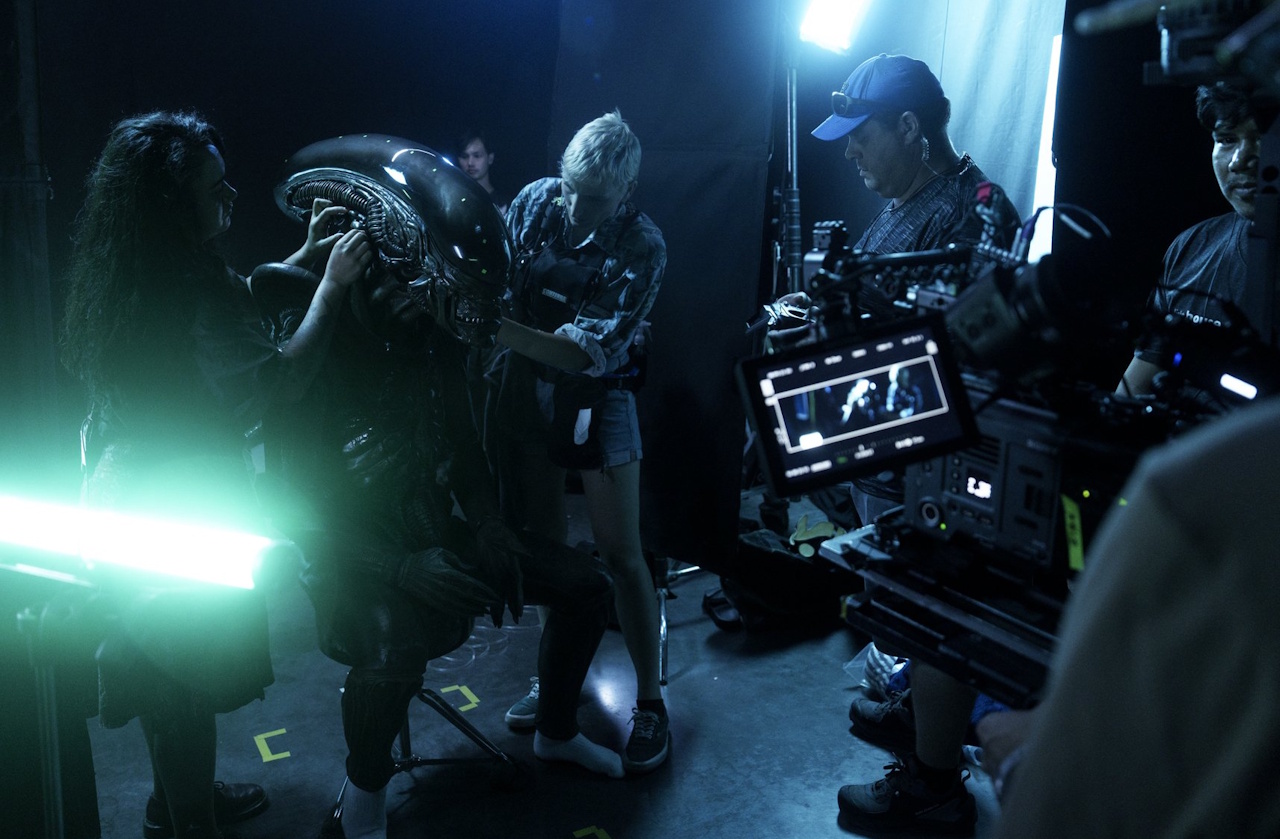
Behind-the-scenes photo from the set of Alien: Earth showing the Xenomorph being adjusted/touched up.
A glimpse behind the scenes.

There were definitely echoes of Jurassic Park in Alien: Earth’s top-secret research facility on a jungle island! The main facility itself, with its lab full of glass and metal cages, reminded me a lot of the labs seen in the Jurassic Park/World franchise, too. Later in the season, when Joe, Marcy/Wendy, and Rose/Nibs were trying to escape, I really got hit with that Jurassic Park vibe. Being stalked through the vegetation, first by the Xenomorph and then by various factions of soldiers, really contributed to that feeling. It wasn’t intentional, I’m sure, just a coincidence! But having seen Jurassic Park back in the day, I was surprised to be reminded of it in a completely different franchise some thirty-plus years later.

If I were to make one criticism of the jungle scenes, though, it would be this: I don’t think Alien’s titular Xenomorph benefits from being shown off in bright sunlight. The creepy monster works best, for me, when it’s obscured in shadow, when it has places to hide, and while the vegetation definitely provided hiding places… seeing the creature so well-lit and from all angles was, in my opinion, somewhat diminishing. There was some creative cinematography here, and the incredibly fast motion of the Xenomorph still makes it feel threatening. But over-exposure can, in some cases, be detrimental to a villain or a monster, and I think that’s true here.

Still frame from Alien: Earth (2025) showing the Xenomorph outside the facility, surrounded by green vegetation.
The Xenomorph in the jungle.

I also worry, at least a little, about the effect of creating a “friendly” Xenomorph. It was never explained how or why Marcy/Wendy could communicate in the Xenomorphs’ language, which is something I’d have liked to get a bit more information about. We saw other characters talking about “learning” languages simply by having them uploaded to their new hybrid brains… but Wendy didn’t get that, did she? And as far as I know, no one in the Alien franchise has ever known the Xenomorphs’ language. In fact, until Alien: Earth, wouldn’t you have said the Xenomorphs are more akin to non-sentient animals than sentient life-forms capable of language? They’re apex predators, sure, but so are lions or sharks – and we can’t just download their “languages” and chat to them.

But to get back on topic, Marcy’s “pet” Xenomorph… how do we feel about that? I’m worried that, if the Alien franchise does this kind of thing, it’s going to diminish that all-important fear factor the next time a writer wants to make a story like In Space, No One… or 1979’s original film. As I said above with some of the video games turning the Xenomorphs into cannon-fodder, when there aren’t a lot of other antagonists or monsters, you have to treat the ones you have with care. And while I’m hopeful for a second season of Alien: Earth that will provide a narrative payoff to Marcy befriending the Xenomorph, I feel a little concerned that having a Xenomorph ally could detract from how frightening the monster should be.

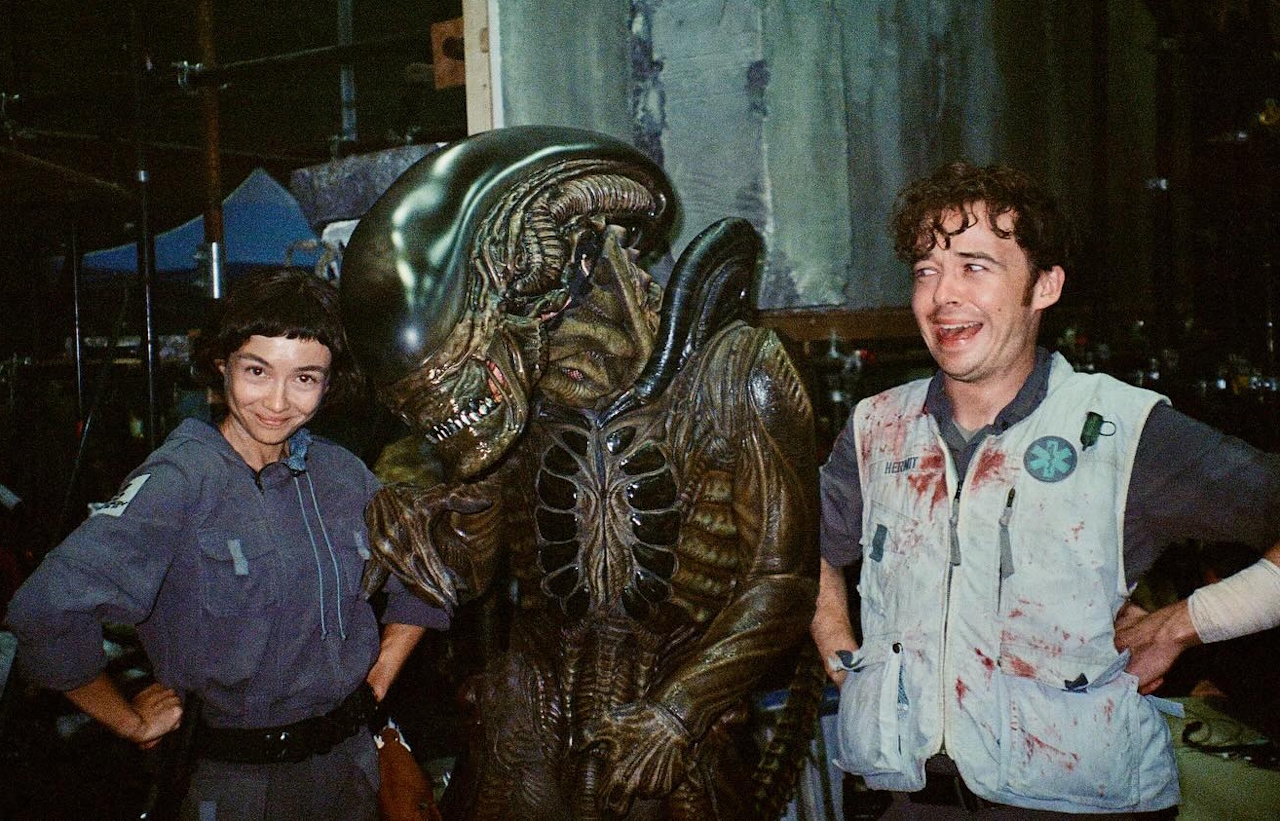
Behind-the-scenes photo from the set of Alien: Earth showing Sydney and Alex posing with the Xenomorph.
Sydney Chandler (Wendy) and Alex Lawler (Joe) posing with the Xenomorph during filming.

Alien: Earth had some wonderful practical effects as well as some spectacular CGI. If you know me, you’ll know I adore physical props, costumes, and puppets in my sci-fi, and for my money, the show excelled in that department. Obviously we have the Xenomorph, recreated for Alien: Earth using a performer in costume, but there were so many other wonderful props that really brought the world of Alien to life. The obligatory chest-buster scene was less shocking, perhaps, because we knew what was coming, but I can’t deny that it looked fantastic. As did the gore used to depict dead (and half-dead) victims of the Xenomorph and other entities.

CGI was also incredible. Shots of the Maginot in space stand out to me as looking better than anything we’ve seen in modern Star Trek, for example, and I think you can really see Alien: Earth’s animation budget being put to good use. Several of the other alien creatures – the blood-suckers, tadpoles, and eyeball-octopus – were also CGI creations, and they also looked fantastic. Seeing the blood-suckers drain a person of life in moments was especially gruesome.

Still frame from Alien: Earth (2025) showing Zoya hiding from the Xenomorph.
Hiding from the Xenomorph…

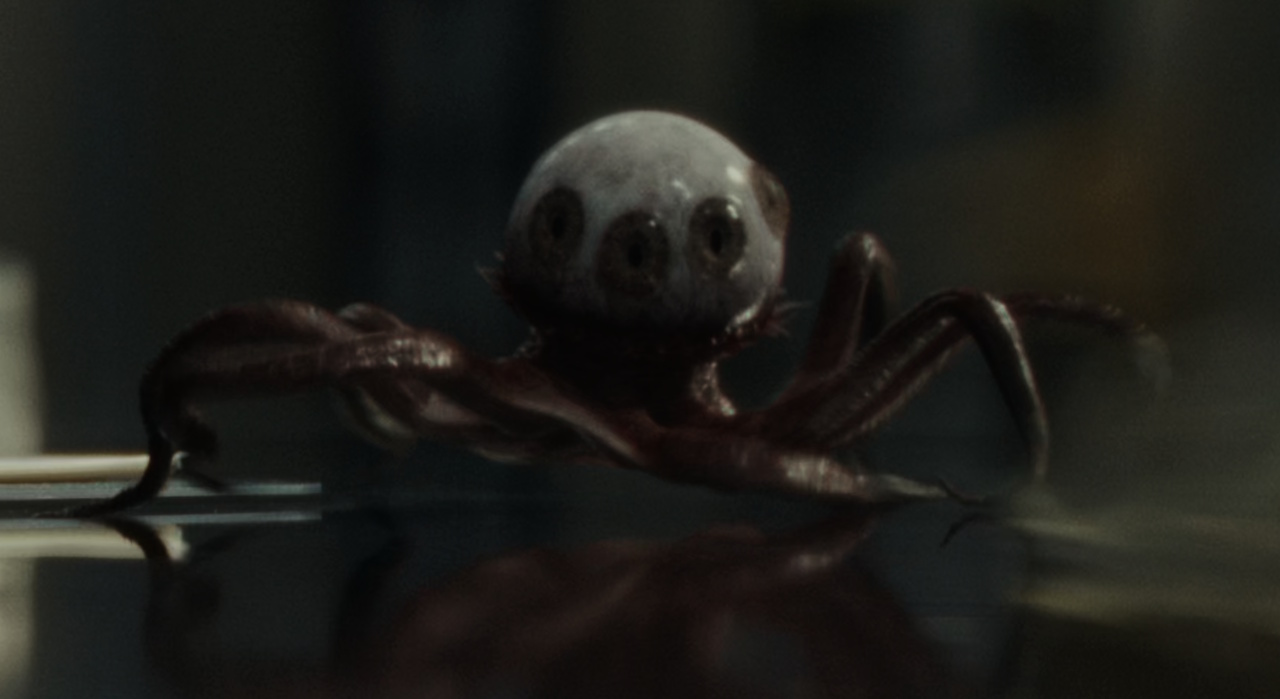
The eyeball creature was, for me, the surprise standout monster in Alien: Earth. Its first appearance – in the eye of a poor kitty cat – was shocking and brutal, and the way it tried to attach itself to Nibs was genuinely frightening, really hammering home how dangerous it could be. But then, as the story progressed, we came to realise that this creature is surprisingly intelligent. As I said above, I could absolutely envision a future film or series in which the eyeball creature serves as a major antagonist.

Because Alien: Earth left things open at the end of the season, with the kids seemingly in control of the facility and the eyeball monster having escaped, possessing the corpse of poor Arthur… maybe that’s what’ll happen next time! I’d certainly be interested to learn more about this creature, its connection to the Xenomorphs, and what – if anything – its objectives or goals might be. The Alien franchise has needed a new creature like this for a long time.

Still frame from Alien: Earth (2025) showing the eyeball alien.
The eyeball creature.

So, after all of that, where do we stand with Alien: Earth?

I had a genuinely wonderful time with this series. It felt closer in tone, most of the time, to 1979’s classic Alien than to any of the lesser spin-offs or sequels that I can remember sitting through, most of the main characters felt complex and compelling, and there were new additions to the franchise which I think have a ton of potential to expand Alien beyond the Xenomorphs – which, for reasons discussed above, is going to be important! My favourite episode was In Space, No One… which was set aboard the claustrophobic USCSS Maginot, and really succeeded at recapturing the feel of Alien for me.

But the rest of the season was interesting and exciting, too. It was fun to get a look at Earth in this vision of the future, and while I’d argue some of the anti-corporate message is blunted when you know who funded production, Alien: Earth’s exploration of a future dominated by mega-corporations felt timely and engrossing.

A trio of promotional posters for Alien: Earth.
Three more promo posters.

I’ve recently started playing Alien: Isolation – the survival/horror game from a few years ago. I’m a big old scaredy-cat, though, so I’m not sure how far into the game I’m gonna get before I have to put it down for a while! So far, it’s been a fun way to continue my exploration of the world of Alien. Stay tuned, because a write-up of that game (or part of it, perhaps) is possible in the weeks ahead.

So that was Alien: Earth. A great show, a fun sci-fi adventure, and a much-needed expansion of the Alien franchise. There were genuinely interesting characters, complex themes touching on prescient real-world issues, and more than a few scares for the horror aficionados out there! I’m happy to recommend Alien: Earth to fans of the original film, sci-fi and horror fans, and really just anyone looking for an engaging and high-tempo adventure.


Alien: Earth is available to stream now on Hulu in the United States and on Disney+ around the world. Alien: Earth will also be released on DVD/Blu-ray in the future. The Alien franchise – including Alien: Earth – is the copyright of 20th Century Studios and the Walt Disney Company. Some promo photos courtesy of IMDB. This review contains the thoughts and opinions of one person only and is not intended to cause any offence.
Do We Really Need A Buffy Reboot?

In the ’90s and early 2000s, I was a pretty big fan of Buffy the Vampire Slayer. The show felt fresh and different; taking horror villains and tropes but bringing them into a fun, modern setting. There was a great cast of characters, too, that changed and grew over time, and some well-executed longer arcs mixed in with plenty of episodic storytelling. There’s no doubt in my mind: Buffy was a great show.

I haven’t actually re-visited Buffy the Vampire Slayer since it was on terrestrial TV here in the UK. The final episode would’ve aired in late 2003, I guess, meaning I haven’t seen it in more than twenty years! Can I still call myself a fan of something two decades later? I don’t know… but I still consider myself a fan, at any rate.

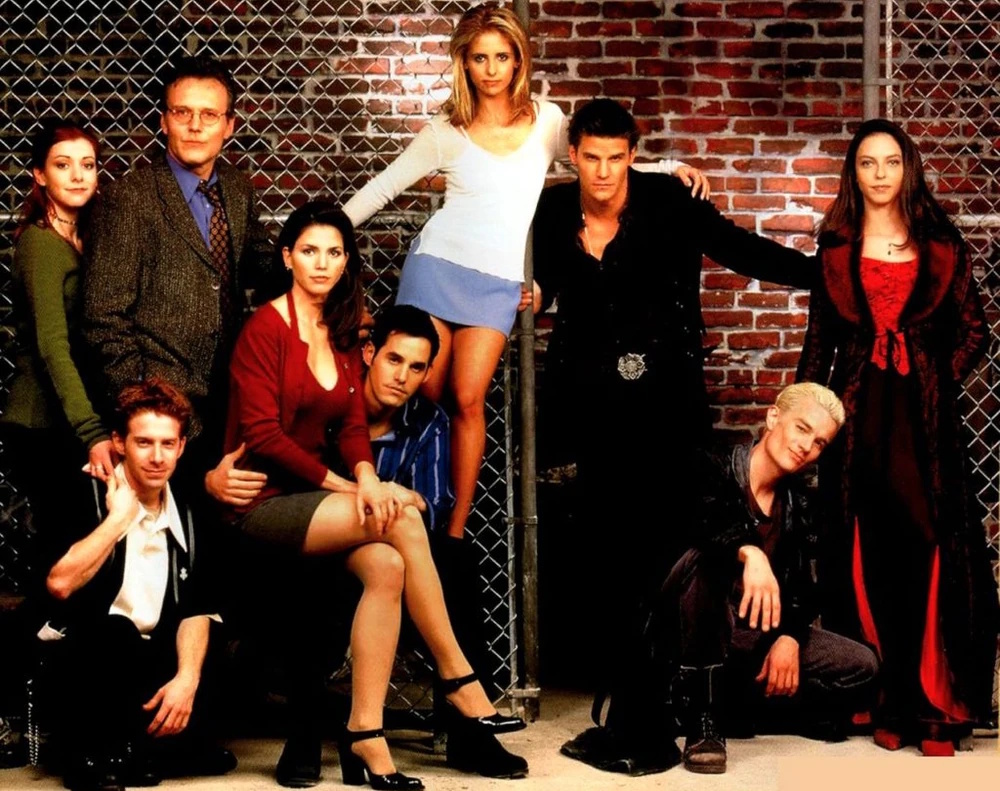
The main cast of Buffy the Vampire Slayer Season 2.

So why are we talking about Buffy today? The answer is simple, unfortunately: Buffy the Vampire Slayer is the latest series to be targeted for a resurrection by its corporate overlords. They’re hoping to add more content to Hulu – an unsuccessful streaming platform. A Buffy reboot is in the offing… and honestly, I think it sounds like a terrible idea.

When interviewed about the reboot – which is still at a very early stage – Sarah Michelle Gellar likened the show’s revival to the likes of Dexter and Sex and the City. Y’know… those notoriously successful reboots that everyone just adores. Given that several members of Buffy the Vampire Slayer’s old cast have retired from acting (or couldn’t be part of a reboot for other reasons), I think a more apt comparison would be something like Frasier. That show, which also had its heyday in the ’90s, was revived with only one of its main characters returning. And, as anyone could’ve predicted, it flopped.

Sarah Michelle Gellar (Buffy Summers) in 2024.
Photo Credit: IMDB/Getty

A reboot is not inherently bad in and of itself, but it has to be created for the right reasons. There have to be new stories to tell, something more to say, and a purpose beyond a corporate board and investors looking to make a quick profit. The streaming TV landscape is also oversaturated with attempted revivals of once-popular shows, as well as franchises trying to recapture their glory days. There’s much more limited room for manoeuvre for a Buffy reboot in 2025 than there might’ve been even a few short years ago.

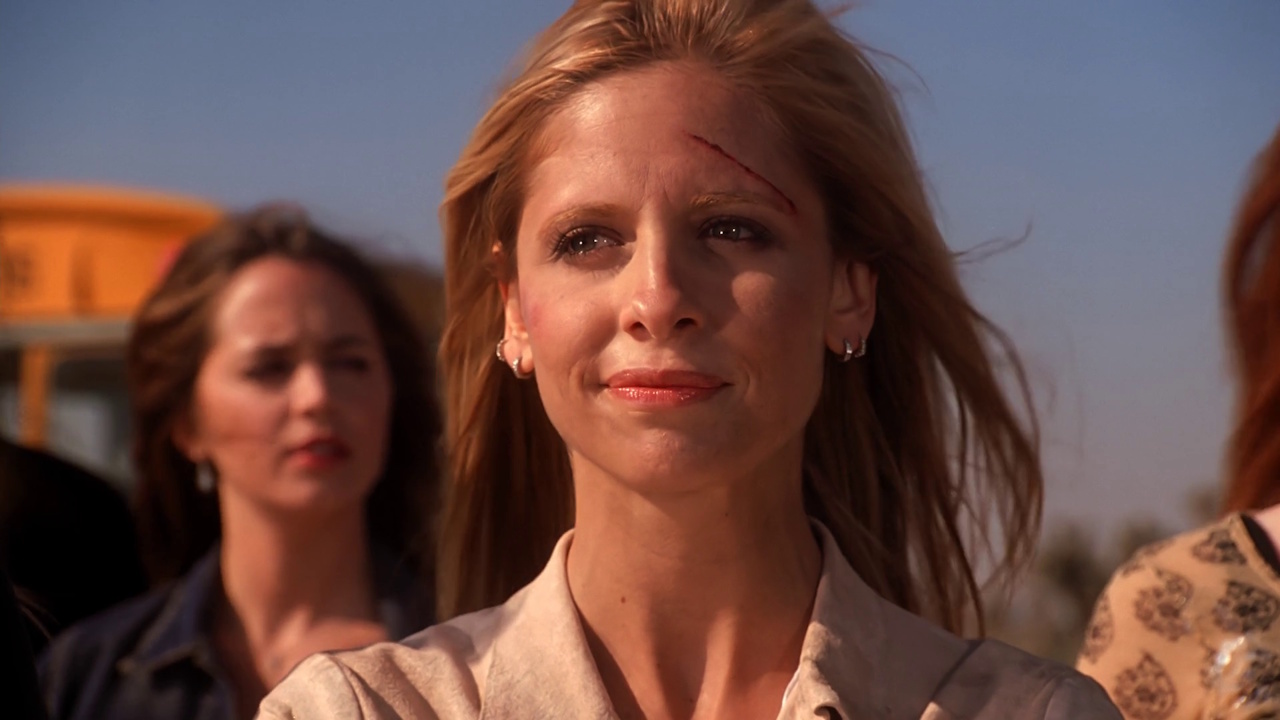
If I recall correctly, Buffy’s seventh and final season came to an explosive end – but left the door ajar for potential future stories. But with many character arcs being complete, and with Buffy herself having literally been to hell and back, what kind of new adventures could she realistically get into? And with several characters dead and other performers no longer available, would fans be interested in half of a reunion? Would brand-new characters – who would need to be added to fill out the lineup – be as interesting or as welcomed by the returning fans that the reboot’s producers hope to entice?

Buffy at the end of the series.

There was a charm to Buffy the Vampire Slayer in its original form. It was something different on TV; soft horror that had a lot of the monsters but without crossing over into anything outright terrifying. It could be light-hearted and funny, but it was also serious enough in the way its characters were handled that moments of drama and tension still worked. The mix of episodic storytelling – a literal “monster of the week” – with ongoing story arcs and character development was also something rare on television at the time.

I don’t know how you replicate that today. With so many other horror shows on the air – from Stranger Things to The Terror and beyond – there’s a risk that Buffy the Vampire Slayer would seem tame or campy in comparison to some of those other offerings. Or, conversely, if Buffy was “updated” to be more violent and terrifying, really leaning into the horror angle, that the show would lose itself. Everything that made it unique would be erased; lost in the slop of big-budget streaming TV.

Buffy the Vampire Slayer didn’t need to rely on cheap jump-scares or gore to be entertaining.

Some films and TV shows work in context – but they’re very much anchored to the time and place of their creation. You couldn’t reboot Cheers in the 2020s – not successfully, anyway. It’s an ’80s show with an ’80s theme and tone, and it wouldn’t work if you tried to transpose it to a brand-new decade. I can think of plenty of others, too – from British classics like Fawlty Towers to big-budget American shows like Seinfeld. Some story premises are genuinely timeless… but others aren’t.

Is Buffy the Vampire Slayer in that category? Is it a show so inherently linked to the turn of the millennium that it couldn’t work in the 2020s? I fear it might be – and while I could entertain, perhaps, the idea of a complete reworking of the concept, with a brand-new cast of characters taking on a horror series with episodic elements, I’m not sure bringing back some of the original cast will work, either. Twenty-five years ago, Buffy and her friends were at high school and university. Now… what will they be doing? They’re all going to be in completely different places in life, and that would also take something important away from the series – part of its core identity.

Is Buffy too much of a late ’90s/early 2000s show to work in the 2020s?

I’ve been wrong about these things before, and if this reboot does go ahead, then I’ll probably at least take a look at the trailers to see whether it seems like it has a chance of being any good. But to me, it feels like the kind of utterly soulless project born in a corporate boardroom, not a genuinely organic creation. To bring back a series that already ran to 144 episodes across seven seasons, you need to find a reason for doing so – and some way to tell new stories that weren’t possible last time. I don’t see what those stories could be, and without key characters who were essential to the original show, as well as the school setting which did so much to keep things grounded and relatable… what’s left?

I look at the failure of many recent reboots – Dexter, Frasier, Roseanne, and even, to some extent, the likes of Star Wars – and wonder what fans of Buffy will make of this idea. Returning to the core concept might have some merit to it, though even then I’d probably argue that a new series, with new characters, would be less restricting and a better way to go. But bringing back a handful of characters, now in their forties or older, to revive this high school drama? I mean… doesn’t it seem like a bit of a stretch?

A Buffy reboot without most of its cast will likely go about as well as the Frasier reboot did under similar circumstances.

Having said all of that, I was pretty excited in 2019 and 2020 for Star Trek: Picard – a series which brought back the fan-favourite character from The Next Generation for a new adventure. So perhaps the Buffy die-hards will be just as thrilled at the prospect of her return as I was for Jean-Luc Picard. And maybe, if the reboot is a success, it’ll be more a case of passing the torch from one generation of vampire slayers to another – and those new characters could go on to expand the franchise.

There is room, I would argue, for more episodic television in 2025, and that’s what Buffy used to be. The biggest horror and horror-adjacent streaming shows today are wholly serialised affairs: From, The Walking Dead, The Last Of Us, etc. And there’s room for a show inspired by the success of Buffy the Vampire Slayer to go back to the format’s episodic roots instead of telling one ongoing story. I don’t know whether this planned reboot even intends to do that… but I think there could be space for a series like that. If there’s a gap in the market anywhere, it’s on the episodic side of things.

Buffy the Vampire Slayer may be back on our screens in the years ahead.

So I guess that’s where I’m at when it comes to this idea. Part of me hopes that it won’t go ahead at all; Buffy was such a unique and singular show that tainting its legacy with an uninspired, corporate reboot – which will probably be squashed into eight-episode serialised seasons that don’t suit the format – would be a disappointment. If it does actually enter production, though, my only hope is that the creative team genuinely understand what made Buffy work in the first place and work on the reboot with that in mind.

Will I watch an all-new Buffy the Vampire Slayer if it gets made? I think, at the very least, morbid curiosity will push me to check out the trailers and see how it looks. But I’m not optimistic about a reboot in the current media environment, and it feels like a project that’s been sharted out by a corporate leader in a suit who’s desperate to find “content.” That doesn’t exactly inspire confidence in the potential quality of the revived series! If it looks good and reviews well, though… who knows? Never say never, I guess.

Honestly, though, I think I’d rather leave Buffy in the early 2000s where it belongs.


Buffy the Vampire Slayer (the HD remaster) is available to stream now on Disney+ in the UK, and Hulu in the United States. The series is also available on DVD. Buffy the Vampire Slayer may be the copyright of the Walt Disney Company, Mutant Enemy Productions, and/or 20th Century Fox Television. This article contains the thoughts and opinions of one person only and is not intended to cause any offence.
Five Spooky Films To Get Spooky With This Spooktober!

A spoiler warning image.

Spoiler Warning: Minor spoilers may be present for some of the titles on this list.

Happy Spooktober!

It’s officially the spookiest, scariest, most horrifying month of the year, and that can only mean one thing: it’s time to watch some horror films! Horror is not my favourite genre most of the time, but when October rolls around I’m happy to dip my toes in the dark waters of the scary side of cinema.

There have been some exceptional horror films made over the years, and the genre is currently in vogue. Some of the biggest films of the last decade have been in the horror genre; titles like Stephen King’s It, A Quiet Place, and The Conjuring all come to mind. These blockbusters broke out of the horror niche to attract huge audiences – and that’s great!

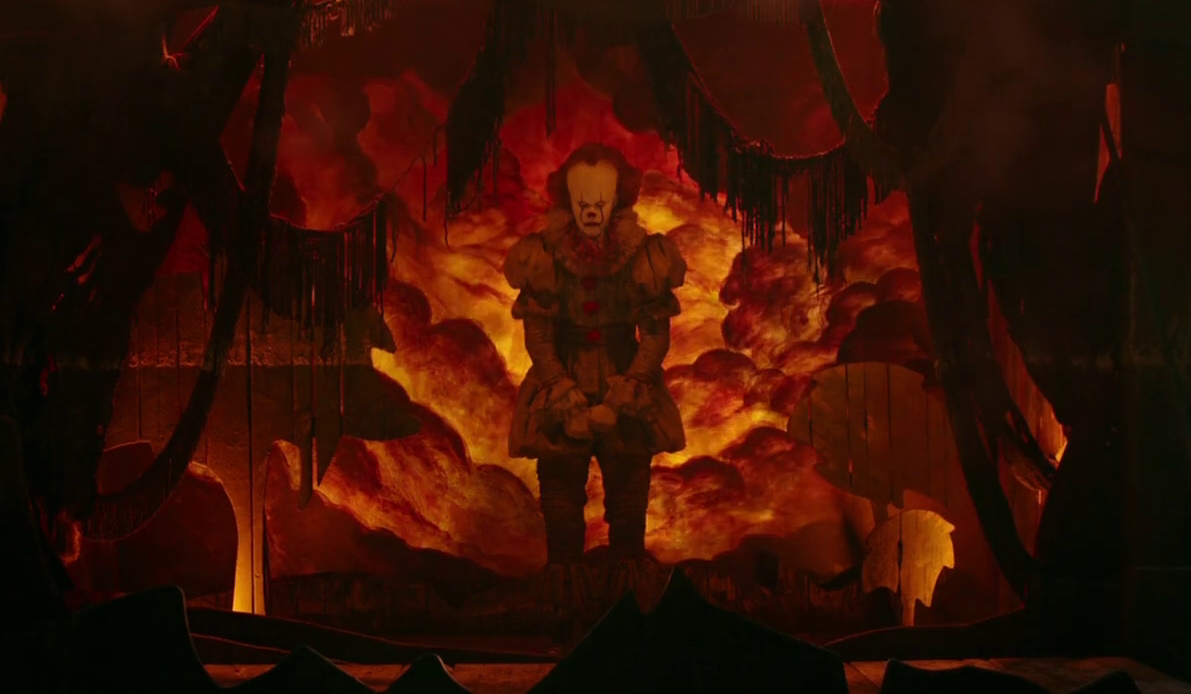
Still frame from It (2017) showing Pennywise.
Pennywise the clown from Stephen King’s It.

When I was a kid, I moved in nerdy friendship groups where watching horror films was almost a rite of passage. Being able to brag that you’d watched a particularly scary film at the cinema (or rented it on VHS from the shop) was a big deal – though I’m sure most of us were just putting on a brave face in those days! As mentioned, though, I’m not the world’s biggest horror fan these days, and when I do choose something spooky for Halloween, it tends to be a lighter, more kid-friendly title! I guess I’m just a big old scaredy-cat.

So to mark the arrival of Spooky Season, let’s pick five horror films that I think are worth watching. I’ve had fun with all of these films over the years, and I recommend each of them.

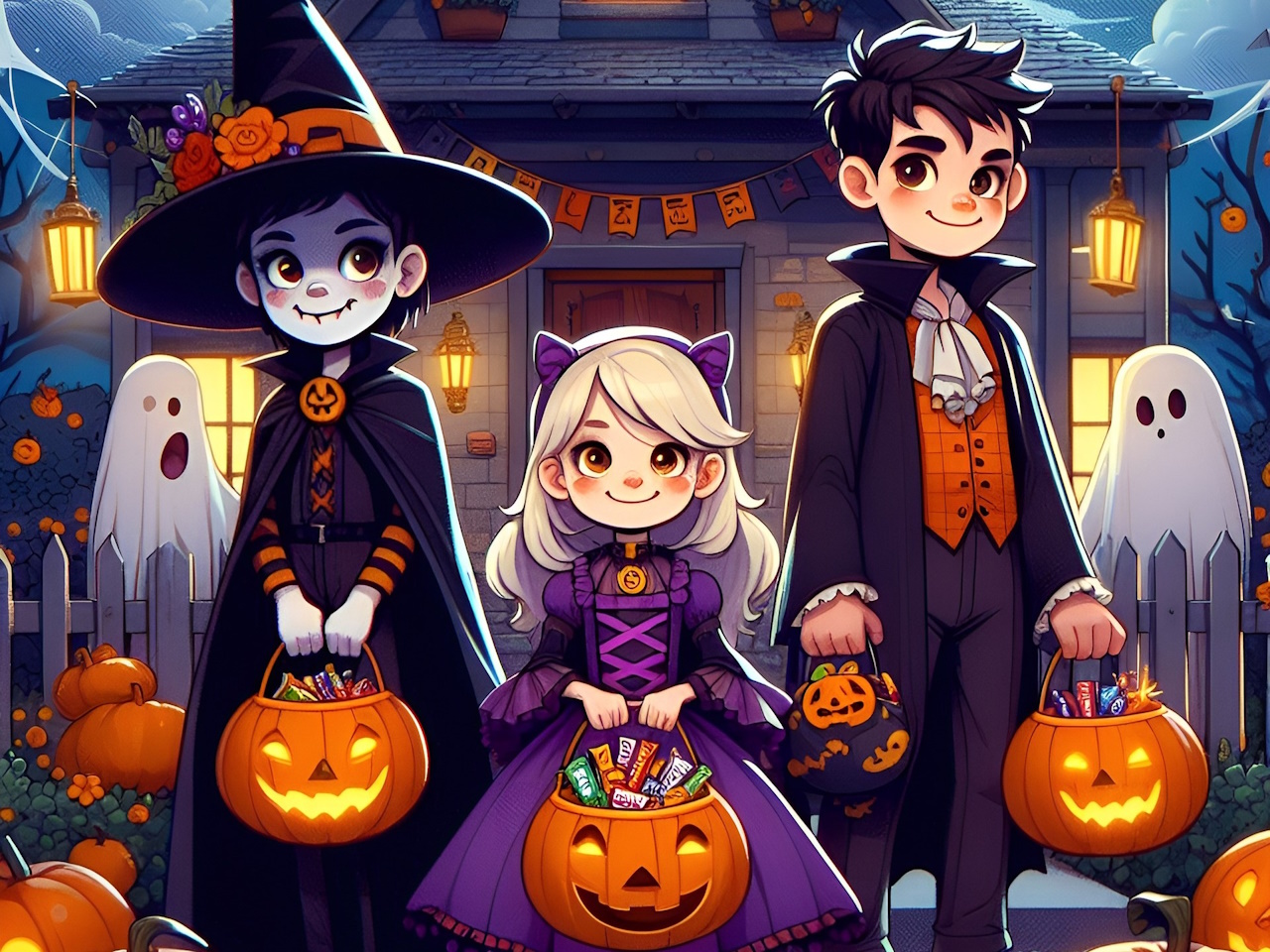
Artwork of three trick-or-treaters at Halloween.
Ready to go trick-or-treating?

As always, my usual caveats apply: this is by no means an exhaustive list! There are literally thousands of horror films out there, and I’m only picking a few on this occasion. And all of this is simply the subjective opinion of one person – a person who isn’t a big horror fan! So if I pick a film you loathe or skip a film you think should be included… that’s okay! There’s plenty of room for differences of opinion when talking about cinema.

With all of that out of the way, let’s jump into the spookiest list I’ve ever put together!

Film #1:
Nosferatu: A Symphony of Horror
1922

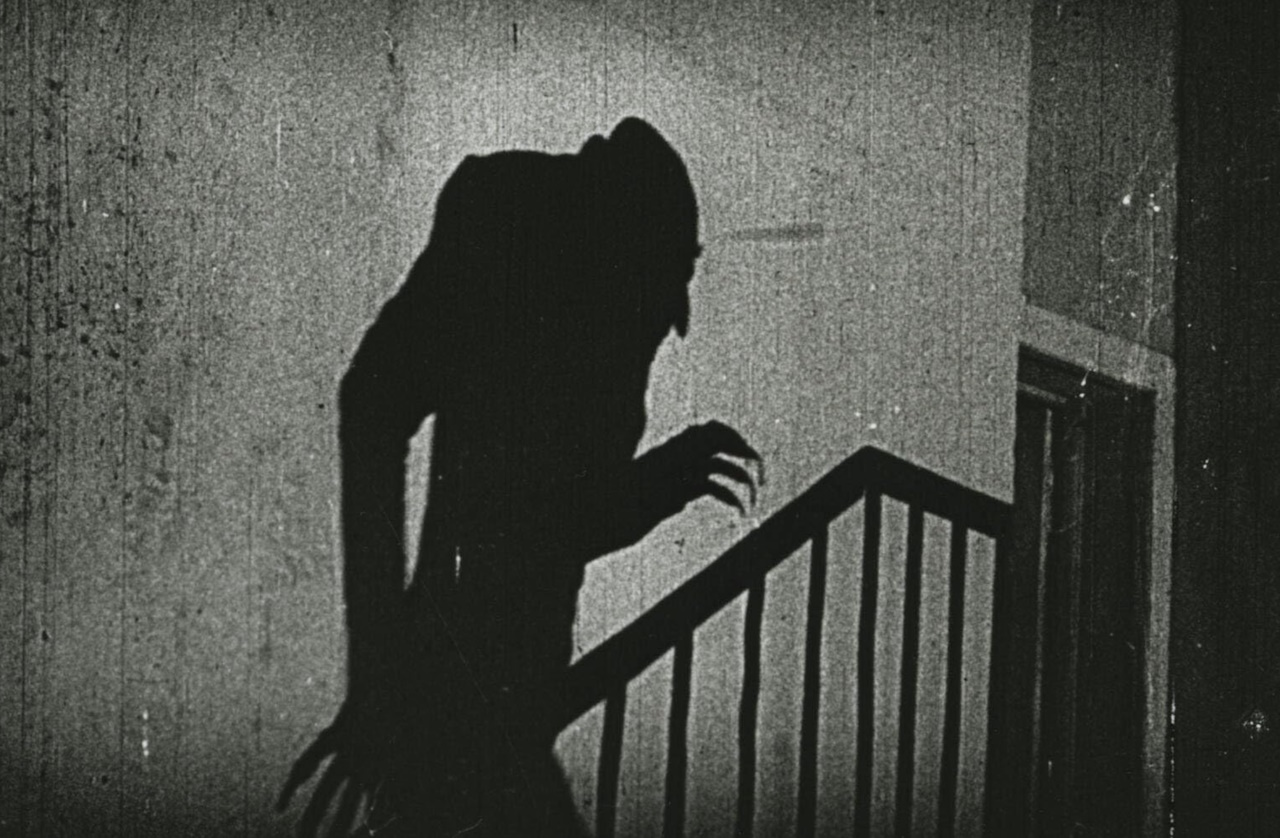
Still frame from Nosferatu (1922) showing Orlok's shadow.

Let’s step back in time to the earliest days of cinema and watch a bona fide classic! I watched Nosferatu for the very first time this year, and while silent films are usually not my thing at all… I have to say that I found a surprisingly coherent film. The story behind Nosferatu is almost as compelling as the film itself: it was produced in Germany just after the end of the First World War, and ended up being sued by the estate of author Bram Stoker as a shameless rip-off of his Dracula novel. The film’s producers lost the case and were ordered to destroy all copies and prints of Nosferatu – but thankfully some survived!

You know the classic vampire story by now: Count Orlok (no, his name isn’t Nosferatu!) lives in a castle in Transylvania, feeding on the blood of innocent humans. He moves to Germany to continue his reign of terror, after enlisting a man to buy a house for him there. But can he be stopped in time? One of the all-time classics of cinema, and a film that did more than most to establish the foundations of the horror genre, Nosferatu is worth a watch for any horror fan. With the film being out of copyright, you can find high-quality copies online with ease.

Film #2:
The Hole
2001

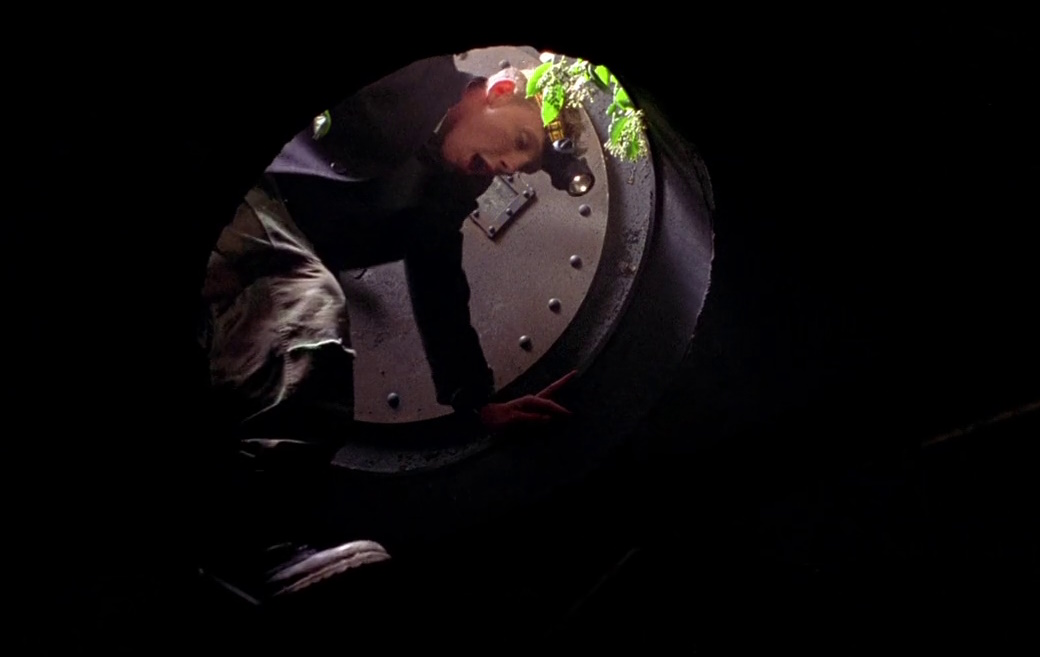
Still frame from The Hole (2001) showing a character entering the bunker.

This film really creeped me out when I first watched it! The Hole recounts the story of a group of teenagers who become trapped in an underground bunker having sneaked inside to throw a party. As the situation becomes increasingly desperate, some of them are killed in pretty gruesome ways. The film documents the descent into madness of its main characters, and touches on some pretty dark themes along the way.

The Hole was an early project for Keira Knightley, who later went on to star in films like Pirates of the Caribbean and 2005’s Pride & Prejudice. Thora Birch takes the lead role, and The Hole tells a really disturbing tale of teenage love gone horribly wrong. There are twists and turns along the way, and I was on the edge of my seat most of the time.

Film #3:
Annihilation
2018

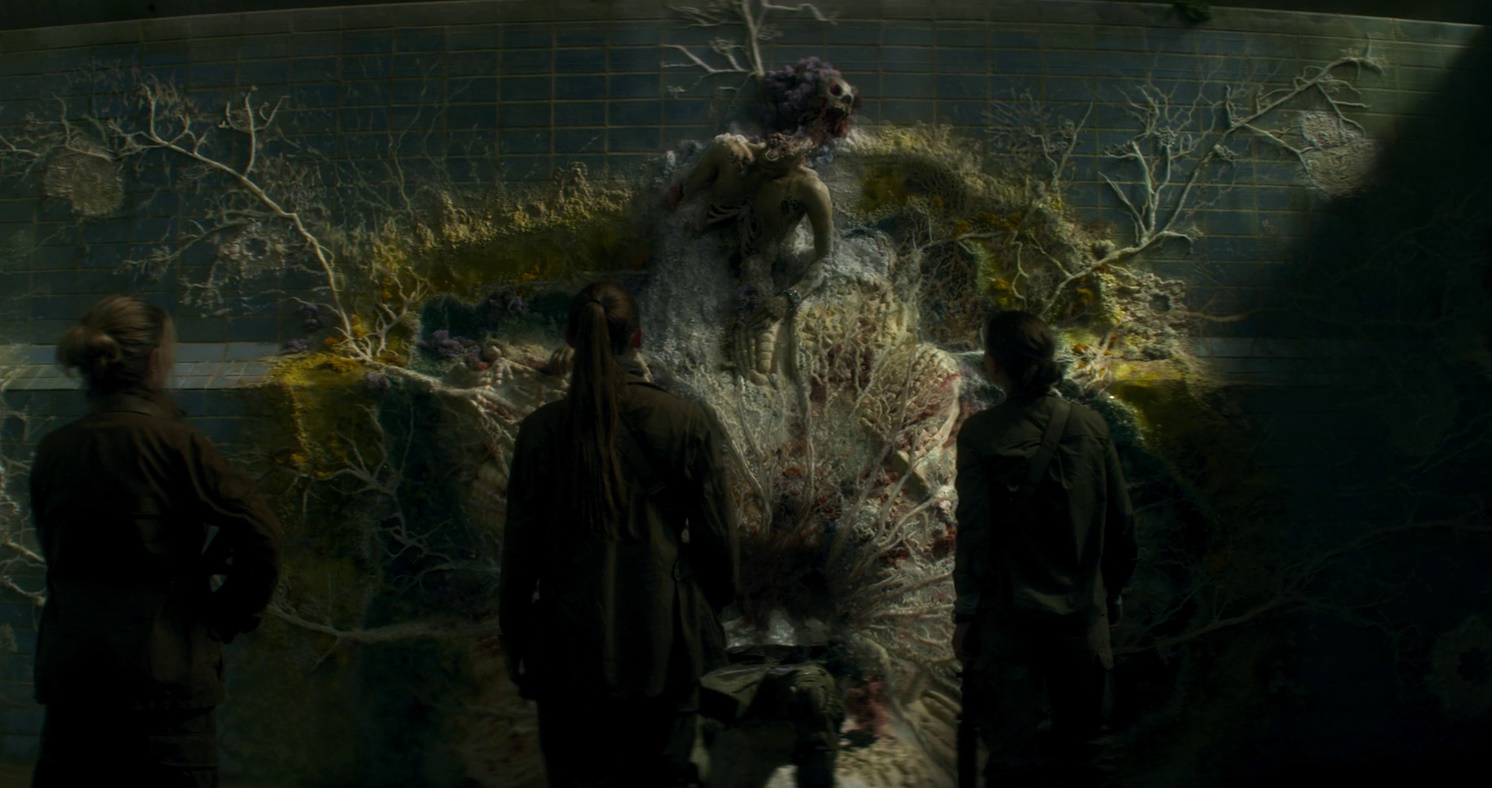
Still frame from Annihilation (2018) showing characters examining a mutated corpse.

Annihilation seems to be overlooked, but it’s a surprisingly strong sci-fi/horror title that’s well worth your time. There are some genuinely shocking “mutated” animals, and moments of body horror as the mysterious Shimmer begins to affect the humans sent to find out what’s happening inside it. There are relatively few out-and-out jump-scares, which is something I appreciated, but there are plenty of moments in the film that linger long after the credits have rolled.

There’s some technobabble about how the alien Shimmer is distorting the DNA of the plants and creatures within its boundary, and the scientific focus of the expedition is something relatively uncommon in the horror field. Alex Garland, who directed Annihilation, also directed 2024’s Civil War – a review of which you can find by clicking or tapping here, if you’re interested.

Film #4:
Pan’s Labyrinth (El Laberinto del Fauno)
2006

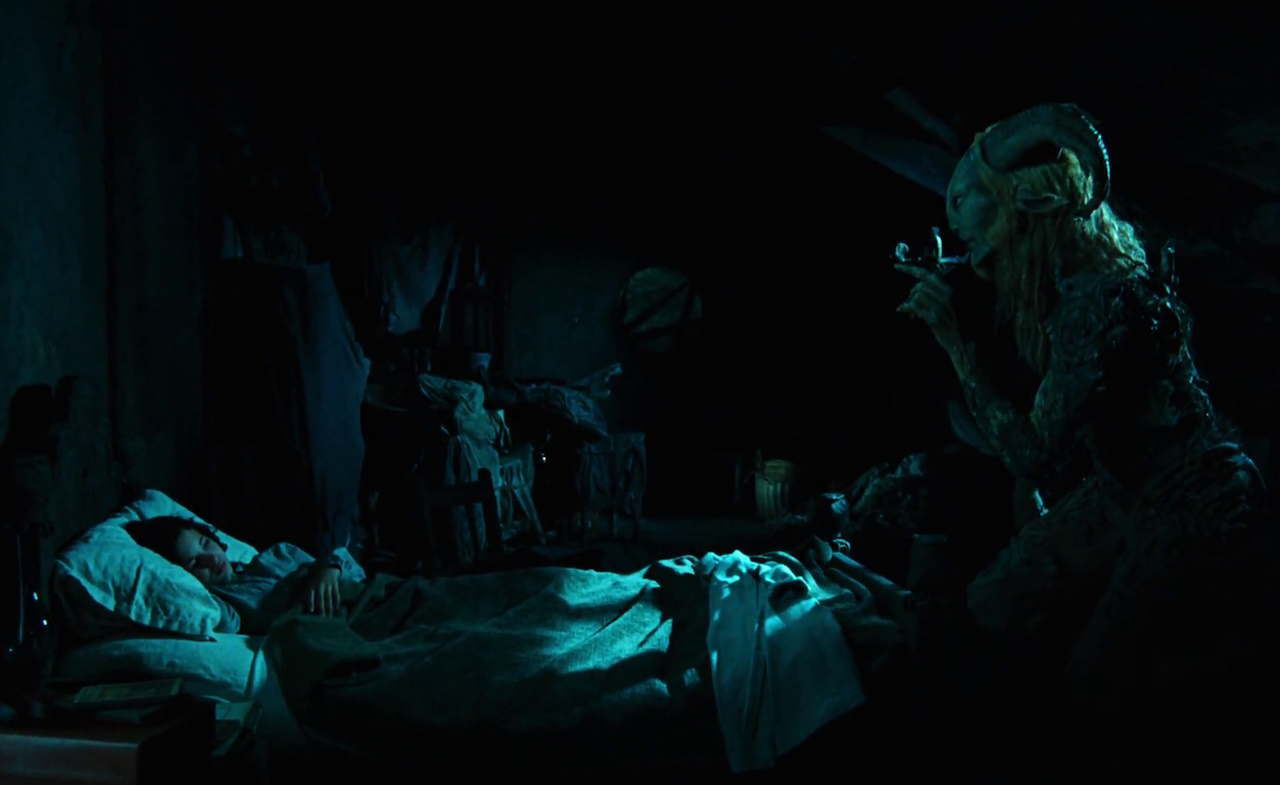
Still frame from Pan's Labyrinth (2006) showing Ofelia in bed and the Faun.

I think there are enough disturbing and scary moments in Guillermo del Toro’s Pan’s Labyrinth to earn it a place on a list like this one! It’s actually been a while since I watched it, but some scenes and moments are still etched in my mind eighteen years later. Young Ofelia is tasked with completing three trials to prove her worth as the reincarnation of a princess from a fairy-tale realm.

Some of the puppets and prosthetics created for Pan’s Labyrinth are truly outstanding – and grotesque. And the film’s twin storylines set in the dark underworld and Francoist Spain are both deeply engaging. The young performer who took on the incredibly challenging role of Ofelia really excelled, and del Toro’s direction is fantastic as well. A disturbing film in many ways… and well worth a watch.

Film #5:
Hotel Transylvania
2012

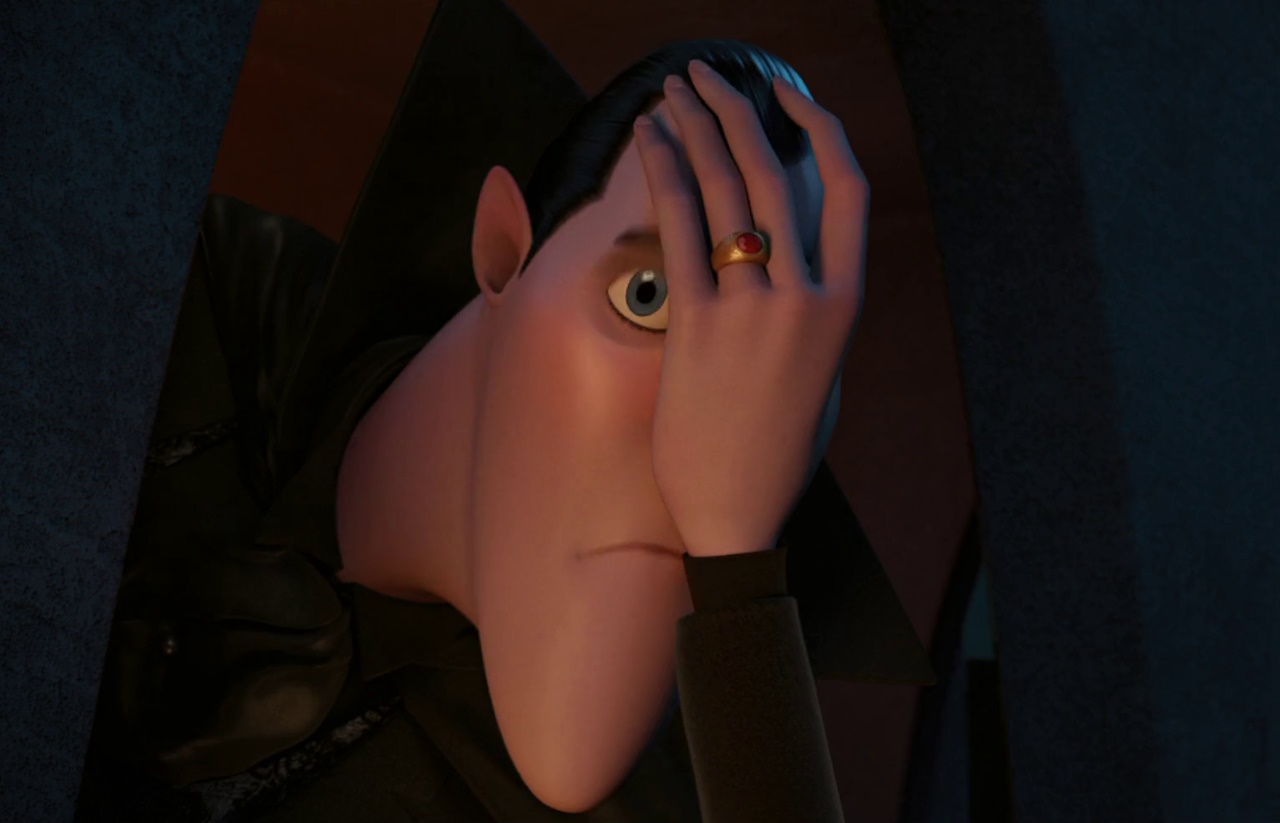
Still frame from Hotel Transylvania (2012) showing Dracula face-palming.

Despite its themes of death and horror, Halloween is still a holiday for the little ones! So I’ve chosen to include a kid-friendly entry on the list, and this year it’s the turn of Hotel Transylvania. The original film was a blast, as an unexpected human guest shows up at Dracula’s hotel – which is supposed to be a refuge for monsters, vampires, ghouls, and other horror movie staples.

What ensues is a classic comedy with a romantic sub-plot, one set against the backdrop of a haunted hotel/castle populated by Dracula and his clan. There’s a ton of fun to be had here, especially at Halloween, and Adam Sandler puts in what might just be my favourite performance of his as this version of Count Dracula. Hotel Transylvania has since been spun into a franchise – because of course it has – but for me, the first film is still the best of the bunch.

Bonus TV Series:
The Terror Season 1
(2018)

Still frame from The Terror Season 1 (2018) showing a sailing ship at sea.

In addition to the films listed above, I thought it could be fun to highlight one of my favourite horror TV shows of the last few years. The Terror takes Franklin’s lost expedition to the Arctic as its starting point, and weaves a tale of explorers trapped on the ice while being hunted by a soul-eating monster. The crew of the expedition grow increasingly desperate as they’re snowbound and trapped in ice, leading to a desperate bid to reach civilisation.

The monster in The Terror is largely unseen (in the style of films like Jaws), and I think it works incredibly well. There are excellent performances from Jared Harris, Tobias Menzies, and Adam Nagaitis, among others, and the world of The Terror’s first season really grabbed me and pulled me into the world of the mid-19th Century. At time of writing, a third season of this anthology series has just been greenlit, so maybe we’ll watch that together next Halloween. Is that the first time you’ve seen someone mention Halloween 2025?

So that’s it!

Stock photo of two jack-o-lanterns.
Happy Spooktober!

We’ve picked five spooky films – and one bonus spooky TV programme – to watch this October.

I hope this has been a bit of fun. I like to branch out and explore some horror films at this time of year – even though I wouldn’t usually devote much time to the genre. There are a couple of films and series on the horizon that I’d like to take a look at this month, too, and I have a couple of other Halloweeny ideas that may (or may not) make their way onto the website before the 31st. So I hope you’ll stay tuned here on Trekking with Dead-nnis… if you dare!

All that’s left is for me to wish you a happy and spooky October. This really is my favourite time of year!


All films and TV shows discussed above are the copyright of their respective studio, broadcaster, distributor, or company. Some stock images courtesy of Unsplash and Pixabay. This article contains the thoughts and opinions of one person only and is not intended to cause any offence.
Five horror films to watch this Halloween

Spoiler Warning: There are minor spoilers ahead for the titles on this list.

With Halloween fast approaching, it seems like a good time to once again dabble in the spookier side of cinema! Horror has never been my favourite genre, but at this time of year I’m not averse to the occasional spooky film.

This short list is a follow-up to a similar list I wrote last Halloween, so if you’d like to see five more horror films that I recommend, you can do so by clicking or tapping here.

It’s about to get spooky!

Horror as a genre can be incredibly varied. From jump-scares to the psychological terror of something unseen, and with such diversity of monsters, ghouls, and creepy critters, there are a lot of different titles that put their own spin on the horror concept. Whether you’re looking for serial killers, vampires, zombies, or demons, chances are you can find an excellent horror film that successfully brings them to screen!

I confess that I’m particularly sensitive to jump-scares, and now that I don’t feel the same kind of pressure to join in with horror titles as I did in my younger years (when watching horror films was almost a rite of passage!) I tend to favour films that don’t go for that style. Despite that, I hope you’ll find a varied mix of titles on this list!

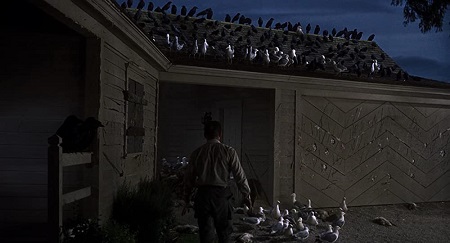
Number 1: The Birds (1963)

Those birds are up to something…

Alfred Hitchcock is still considered one of the greatest directors of the horror and thriller genres, and for good reason. His pioneering style put viewers right at the centre of his stories, and every shot and every sequence was meticulously planned and crafted to maximise suspense and fear. The Birds is one of Hitchcock’s later films, coming toward the end of his career and following on from the likes of Vertigo and, of course, Psycho.

As a kid, I can remember being terrified by The Birds. The slow, tense build-up that Hitchcock’s films are known for is on full display in the title, with every scene and sequence gradually ramping up the threat to a terrifying climax. But more than that, the sheer randomness of birds as the “villain” of the piece is genuinely unsettling.

Birds are generally harmless. The worst a bird might do is steal your chips at the beach, but The Birds asks a question no one ever thought to ask before: what if they were working together to a menacing and aggressive end? It’s this premise – taking something harmless that we generally pay little attention to and making it scary – that makes the film succeed.

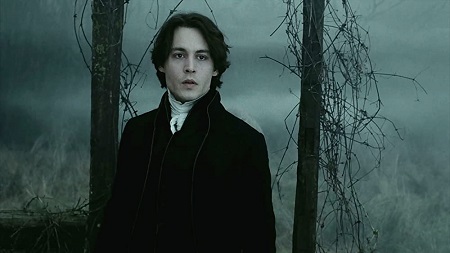
Number 2: Sleepy Hollow (1999)

Johnny Depp as Ichabod Crane in Sleepy Hollow.

Johnny Depp stars in this adaptation of the famous Washington Irving story, and the film brings the Headless Horseman to life in genuinely frightening fashion! The story of Ichabod Crane and the Headless Horseman is an old one, dating back to the early 1800s, and Washington Irving is considered one of the first great American authors.

Unlike the earlier Disney adaptation, Sleepy Hollow takes a distinctly adult horror tone. Director Tim Burton makes a number of changes to the source material, making the film an unpredictable ride even for those familiar with the original short story. Johnny Depp puts in a wonderful dramatic performance as Ichabod, too.

There’s something inherently frightening about the undead, and the first time the Headless Horseman is seen on screen manages to capture that feeling pitch-perfectly. Johnny Depp manages to perfectly convey Ichabod’s fear as well, ramping up the tension and making Sleepy Hollow a truly scary and spooky watch!

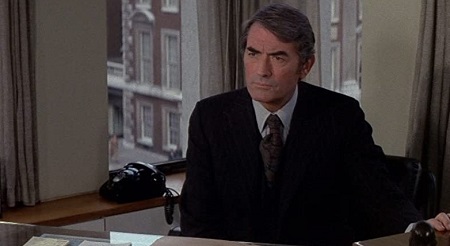
Number 3: The Omen (1976)

Gregory Peck as Robert Thorn in The Omen.

The Omen is an outstanding example of how to build up fear and tension without resorting to too many jump-scares or a lot of gore! It’s also a deeply disturbing film because of the implications of shadowy cults and conspiracies – and that’s before we even get to the birth of the literal anti-Christ!

When I first watched The Omen I was left unsettled for days afterwards. There’s a specific scene that I won’t spoil for you, but the build-up to a particularly shocking reveal in an Italian graveyard – and the implications it had for the film’s protagonist – left me stunned and disturbed! That particular memory is still vivid for me now, decades later.

As a film about demons, Satan, and the anti-Christ, The Omen was designed to be shocking and unsettling, especially to folks with any kind of religious convictions. And it succeeded beyond its wildest ambitions, becoming an absolute classic of the horror genre and spawning a franchise that still gets periodic updates and instalments today. Oh, and if you’re looking for a Star Trek connection, the film’s lead, Gregory Peck, was the grandfather of Ethan Peck – star of Discovery Season 2 and soon to be appearing in Strange New Worlds!

Number 4: 28 Days Later (2002)

The infected are coming!

With 28 Days Later, director Danny Boyle reinvigorated the zombie genre in a new and truly terrifying way! Prior to the film’s 2002 release, most zombies in cinema followed a pattern first popularised by George A. Romero in Night of the Living Dead – slow, shuffling, mindless creatures that were scary en masse but could be outrun by anyone fit enough. 28 Days Later introduced us to the infected – humans who were still alive but infected with a virus that turned them into killing machines… killing machines that could sprint!

Seeing the zombie horde running after the film’s protagonists was a new and incredibly shocking experience in 2002. Though a number of titles have used this more aggressive style of zombie in the years since, for me the portrayal in 28 Days Later remains one of the best and most frightening.

Technically not a “zombie” film as the infected aren’t undead, 28 Days Later nevertheless has a post-apocalyptic feel that is present in a lot of zombie fiction. Anyone who’s seen The Walking Dead (or read the original comic books) should note an eerie similarity in the way 28 Days Later opens… and remember that the film was released before the first issue of the comics!

Number 5: The Shining (1980)

Here’s… a classic horror film!

The Shining is an adaptation of a Stephen King novel, and as such it’s an unpredictable and very disturbing ride. Stanley Kubrick directed one of his last films, and adapted the book in truly inspired style. Some of the best-known moments in The Shining, including the famous line referenced above, weren’t present in the original book, and the film adaptation is arguably a rare example of a film surpassing its source material.

The film features some truly outstanding special effects. The “blood flood” scene has gone on to become iconic, and was shot in miniaturised form using detailed scale models. The practical special effects give the film a unique charm that today’s CGI can’t match, and in some cases the use of incredibly realistic practical effects ramps up the fear factor.

Jack Nicholson gave the world one of cinema’s most iconic scenes. But The Shining is so much more than that, and his character’s slow descent into madness is what makes the film so tense, exciting, and frightening.

So that’s it! Five horror films to get you into the Halloween spirit.

Don’t have nightmares…

Remember to check out last year’s list for five more horror titles you might enjoy – you can find it by clicking or tapping here. And if you’re interested to see my review of last year’s television adaptation of another Stephen King work, The Stand, you can find that by clicking or tapping here.

I tried to put together a collection of films with different themes, styles, and subjects! Horror is an incredibly varied genre, and just in the five films above we have the natural world turned against us, an undead horseman, Satanism, technically-not-zombies, and finally a film with ghosts and a mad man. And we’ve barely scratched the surface!

Halloween is almost upon us, so stay tuned over the next few days – I have a couple more spooky ideas before the main event rolls around!

All titles included on the list above are the copyright of their respective studio, distributor, production company, broadcaster, etc. This article contains the thoughts and opinions of one person only and is not intended to cause any offence.
The Stand – miniseries review

Spoiler Warning: There are spoilers ahead for The Stand.

I’ve been to Stephen King’s house. Not for any function, of course – nor indeed was I invited. But in his hometown of Bangor, Maine, King’s house is a local landmark with ornate gates befitting the preeminent author of pop-horror. I’m categorically not a fan of horror on screen, either television shows or films. Modern horror tends to veer very strongly into jump-scares – which always unnerve me – or just gore for the sake of gore, which I really have little interest in. But Stephen King straddles the line between out-and-out horror with a creepy weirdness that can, under the right circumstances, be absolutely riveting.

The Stand has already been adapted for television, with a miniseries in 1994 starring Gary Sinise. I put that adaptation on a tongue-in-cheek list that I wrote last year, before I became aware of this latest adaptation. Like my last miniseries review – which was for Marvel show The Falcon and the Winter Soldier – this review is also late to the party! The Stand was broadcast on CBS All Access – since rebranded as Paramount+ – late last year. Though I’ve been meaning to watch it ever since – and it even made my list last June of things I was looking forward to in the second half of 2020 – it’s taken me until now to get around to it.

Promotional poster for The Stand.

I feel more than a little sorry for this adaptation of The Stand, which languished in development hell for years before being commissioned in early 2019. The miniseries was filmed in late 2019 and early 2020, before the extend of the coronavirus pandemic became evident, and I think the mere premise of the series was more than enough to put people off given what’s happening in the world. Having invested in the project, it wasn’t practical for ViacomCBS to just sit on it or dump it – so it ended up being broadcast to a world that, quite frankly, was not in the mood for a show about a viral pandemic that killed everyone. That might undersell what The Stand is – or what it aims to be. But it nevertheless goes some way toward explaining its muted reception.

There were some inspired casting choices. James Marsden channels his inner Gary Sinise to put on a performance that lived up to – and in some respects mirrored – Sinise’s own in the 1994 adaptation. Alexander Skarsgård was fantastic as the villainous Dark Man/Randall Flagg. And Owen Teague – who I confess I wasn’t familiar with prior to The Stand – put in a truly inspired performance as the creepy Harold Lauder.

Owen Teague as Harold Lauder.

Stephen King’s novel Rage, about a shooting at a high school, hit a little too close to home even for the author and has been out of print since the early 2000s. In the characterisation of Harold Lauder, one of The Stand’s villains, I note some familiar themes. Lauder is an outcast, an obsessive, a true-to-type “incel” who blames society and the world around him for his own lack of success. Lauder is an interesting villain in some respects – though he has no real nuance, I think a lot of people are familiar with someone like this; someone who’s generally unsuccessful in life and who’s become bitter, jaded, and even creepy. The Stand throws such a person into the apocalypse, and Lauder’s newfound freedom allows him to follow his own destructive course.

The Stand mixes supernatural horror with post-apocalyptic storytelling, which make a natural pair at certain points, yet tug against each other and fail to gel at others. The miniseries contains some genuinely amazing moments and scenes that rival anything else in the entire post-apocalyptic genre. There’s a sweeping shot of New York City in the second episode, showing smoke from numerous small fires drifting over the city and Central Park, and it was incredibly atmospheric. This kind of silent storytelling, using the camera and some minimal visual effects work, did an amazing job at setting up the world that The Stand wanted to transport us to, and there were numerous examples of this across the nine-episode series.

The very atmospheric shot of New York City burning.

One thing I’ve always been interested in when it comes to post-apocalyptic fiction are the character stories – who survives whatever the event is and why? And what sort of person do we find in the aftermath of such events? The Stand gives us plenty of examples of thoroughly unpleasant people: criminals, liars, thieves, and worse. It also shows us examples of better people: heroes and those willing to do what’s right. Unfortunately that comes at the expense of nuance; The Stand basically splits its characters into goodies and baddies with very little going on in between.

We’ve already talked about Lauder and his characterisation as creepy, bitter, and ultimately murderous. But other villains fall into even more obvious stereotypes: Lloyd is a wannabe-gangster, the Trashcan Man is a pyromaniac, Nadine is the girl who made a deal with the “devil.” And speaking of the devil, the Dark Man himself, Randall Flagg, is a Stephen King mainstay and stand-in for the devil.

Randall Flagg – a.k.a. the Dark Man.

In that sense, nothing about The Stand is subtle. Its narrative centres around the battle of “good versus evil,” and that naturally divides its characters into two camps. Those on the side of good are selfless exemplars of virtue, those on the bad side are basically Satanic stereotypes who revel in every sin imaginable. The Stand setting its villain’s headquarters in Las Vegas – Sin City itself – is likewise about as subtle as a brick to the face.

Not every story has to have complexity and nuance; there’s room for a classic “heroes and villains” narrative even in 2021. But something about the way The Stand leaps headfirst into so many patently obvious plotlines and character arcs makes it less than it could’ve been. There are definitely narrative elements that are unpredictable, but most of the mainstays of both the overarching storyline and the individual stories of the characters felt telegraphed in advance, and that robbed the series of a good portion of its impact and drama.

The choice of Las Vegas as the setting for a story about the demerits of sin was… obvious.

In terms of the soundtrack and music, I have to credit The Stand as being truly fantastic. Practically every one of the nine episodes contains moments of extreme tension, and these moments were elevated significantly by some excellent, understated musical scoring. Music sets the stage for many significant scenes and moments, and the difference in tone it sets between the heroes’ home base in Boulder and the devil’s nest in Las Vegas is huge – and a big part of why the contrast between the two settings works so well. Each episode also features at least one popular song, and the choices here were generally good as well. I particularly liked the use of Melanie’s Brand New Key – it’s a great song in its own right, but the way it was used at the end of one of the episodes gave it a strangely creepy, almost otherworldly feel.

Cinematography was likewise pretty good across the board. There were some really excellent artistic shots – I mentioned the New York City one above, but also a shot of Frannie and Harold split through a wall was fascinating, as well as numerous silent (or practically silent) moments featuring Nick, the deaf character, which really added to the sense of immersion. Nick’s scene with the piano, in which we could see the inner workings of the piano but not hear the notes, was inspired, and something I would’ve expected to see in a series like Hannibal – another horror series with a strong artistic slant to its cinematography.

One of the very artistic moments involving Nick and the piano.

The way The Stand uses light was interesting. At first, I felt that the way several different characters seemed to leave lights on and candles burning was just typical post-apocalyptic/horror fare – a cheap way for villains to track or find them. But there’s something more to it than that, and the way the series as a whole used light, and particularly uncovered, obvious light, feels like a metaphor. The Stand is a series flooded with religious imagery, and there’s something almost poetic about seeing many of the heroic characters as representatives of “the light” against the forces of the Dark Man.

There was only one real miss in terms of visual effects, and it came in the final episode. In a sequence that was basically fully-animated, the camera panned over the ruins of Las Vegas to focus on Flagg’s trademark badge, and the whole thing fell into the so-called “uncanny valley,” where the CGI work just wasn’t quite believable enough. It wasn’t awful by any means, and would compare favourably to anything from ten years ago, even in cinema, but in a series that otherwise did its visual effects well, it has to go down as the weakest moment.

The CGI sequence that I felt didn’t quite stick the landing.

I’m not a religious person, and perhaps someone who is would get something more out of The Stand, which relies heavily on Christian apocalypticism for the theme underpinning its main story. At the same time, some of these religious themes work against the narrative – or at least the setting. The Stand wants to be bleaker than it manages to be; a post-apocalyptic tale of desperate people driven to do evil things and kill themselves. Yet the use of Christian imagery, which ramps up to near-continuous after about the halfway point, tugs The Stand in the other direction, softening some of those dark edges. What results is a series that’s confused.

The Stand wants to be two things at once: post-apocalyptic horror and supernatural horror with strong religious themes. As noted above, these two can make a natural pair, but The Stand doesn’t nail the pairing on every occasion, and there are times when the religious themes work against the bleaker, character-centric story about the world after an apocalyptic event. The theme of hope, which is so often present in post-apocalyptic fiction, is undermined by the sense that many of the protagonists have that their quest is anointed by an all-powerful interventionist god.

Mother Abigail’s role as the prophet of a very active and involved god gave hope to many of the characters – and led to a less satisfying narrative as a result.

Hope in post-apocalyptic stories works when it seems like characters have little to no reason to cling to it, yet through sheer force of will and strength of character, they find ways to do so. Some characters may revel in small victories – like the character of Tallahassee in Zombieland who finally gets a Twinkie (a kind of small cake) after craving one for the whole film. Others find meaning in their companions, fellow survivors, or family members – like Viggo Mortensen’s character in The Road, for example. The Stand drops all of its protagonists into a setting where they never genuinely question their status as “god’s chosen” and their hope for a better future stems from that. But that foundation, while somewhat novel, loses something significant as a result – and that something unfortunately happens to be what I personally find one of the most interesting and appealing things about post-apocalyptic stories.

Frannie’s snap decision at the beginning of the final episode to return to Maine felt like it came out of nowhere; an arbitrary character move to give the story a “shock” as it entered its endgame. Though the characters were, as I explained above, pretty standard heroes and villains, they were generally consistent in the way they were written and in their motivations. Frannie left Maine with Harold initially in search of others, and having found them, made friends, and begun to build a new civilisation in Boulder, seems far too quick to throw it away for the sake of what? Homesickness? If she’d mentioned Maine even once or twice in previous episodes it would at least feel like there’d been hints she was feeling this way. Sometimes when a story knows the endgame it wants to reach, some character choices necessary to get there can feel completely arbitrary, and Frannie’s desire to return to Maine – without even really providing a reason why – definitely falls into that category.

I wasn’t sold on Frannie’s out-of-nowhere decision in the final episode.

Though not really overt, there was one significant political theme that I picked up in The Stand. In the character of Flagg we have a dictator – someone who rules through fear, as characters like Glen note. The way Flagg draws his supernatural powers, embodied by his ability to levitate, from the worship and fear of his subjects could be read as a commentary on the way any dictator’s power relies on the people around them continuing to “feed” them with that fear. Or to put it another way: people have the power, even when it seems like a truly evil tyrant is in charge. We see this as Larry, Glen, and Ray’s challenge to his authority quickly inspires others and leaves him significantly weakened.

I’m a big fan of the Star Trek franchise, as you may know if you’re a regular around here. Star Trek: The Next Generation in particular is a favourite series of mine, and Whoopi Goldberg’s role as Mother Abigail had more than a little of her Star Trek character of Guinan in it. Guinan serves as a friend and guide to Captain Picard, and in particular her role in episodes like Q Who and Time’s Arrow, as well as the film Generations lines up perfectly with Mother Abigail’s place in The Stand. Though this isn’t intentional, of course, as a Trekkie I just find it interesting to note when former Star Trek stars take on new roles that are somewhat similar! Goldberg’s performance was excellent, and she brought a real weight or gravitas to the role of Mother Abigail that was much-needed.

Whoopi Goldberg as Mother Abigail.

The Stand attracted some controversy in the months before its broadcast for casting a non-deaf actor in the role of deaf character Nick. Nick’s role in the show does involve some scenes where he can hear and speak, and for that reason creator Josh Boone defended the decision. While I would say that I generally don’t subscribe to the camp that says actors can only play roles if they meet certain criteria, in this case it would have been relatively easy to cut the couple of scenes in which Nick speaks, or to replace them with signed scenes. It would take away a tiny bit of the supernatural aspect of Mother Abigail’s abilities, but there was more than enough of that through the rest of the show that I don’t think it would’ve made a significant difference. With that being the case, a deaf actor could have certainly taken on this role.

As someone who is disabled, I would be quite happy with an able-bodied actor playing a disabled role – so long as it was done tastefully and it doesn’t feel as though anyone has been excluded. Likewise with characters who are asexual or who are in between male and female on the gender spectrum; I think so long as it doesn’t stray into voyeuristic territory, actors can take on a wider variety of roles. There are great actors who are deaf, disabled, and in other categories, and I hope they find opportunities to play characters as well. I don’t want to see anyone’s career options limited, and as mentioned in this case I think the couple of scenes where Nick spoke could have been cut or changed to accommodate a deaf actor. As a general point, though, I’m okay with actors from many different backgrounds being able to take on a variety of roles. Perhaps this is something we should go into more detail in on another occasion, as I feel it could be an entire essay in itself, and I don’t want to spend too much time on just this one point on this occasion.

Another promotional poster for The Stand.

So I think we’re about at the end of my review. The Stand was interesting, and had some genuinely great moments. It was also a flawed production that didn’t get everything right and could feel, at certain moments, that it was trying to be two very different things at the same time. In part that fault lies with the source material – Stephen King’s novel. But it also lies with the adaptation and the way in which the novel was put to screen.

Despite nominally falling into the horror genre, The Stand won’t be giving me nightmares any time soon! It was tense at points, and there was some distinctive Stephen King supernatural weirdness, but nothing that I felt was terrifying or frightening. There was some gory violence and some gratuitous sex scenes that really didn’t add much to the story. But there was also some fantastic musical scoring and cinematography, as well as some great acting performances that elevated the series, making it better than it could’ve been.

I’m in no hurry to re-watch The Stand now that I’ve seen it. And with so many interesting film and television projects on the horizon between now and Christmas, I daresay it will go back on the shelf (or rather, Amazon Video’s shelf) for quite some time. But I’m glad to have finally got around to seeing it more than six months after its debut! Now, what should I watch next?

The Stand is available to stream now on Paramount+ in the United States and on Amazon Video (for a fee) in other countries and territories. The Stand is the copyright of ViacomCBS and/or Vertigo Entertainment. This article contains the thoughts and opinions of one person only and is not intended to cause any offence.
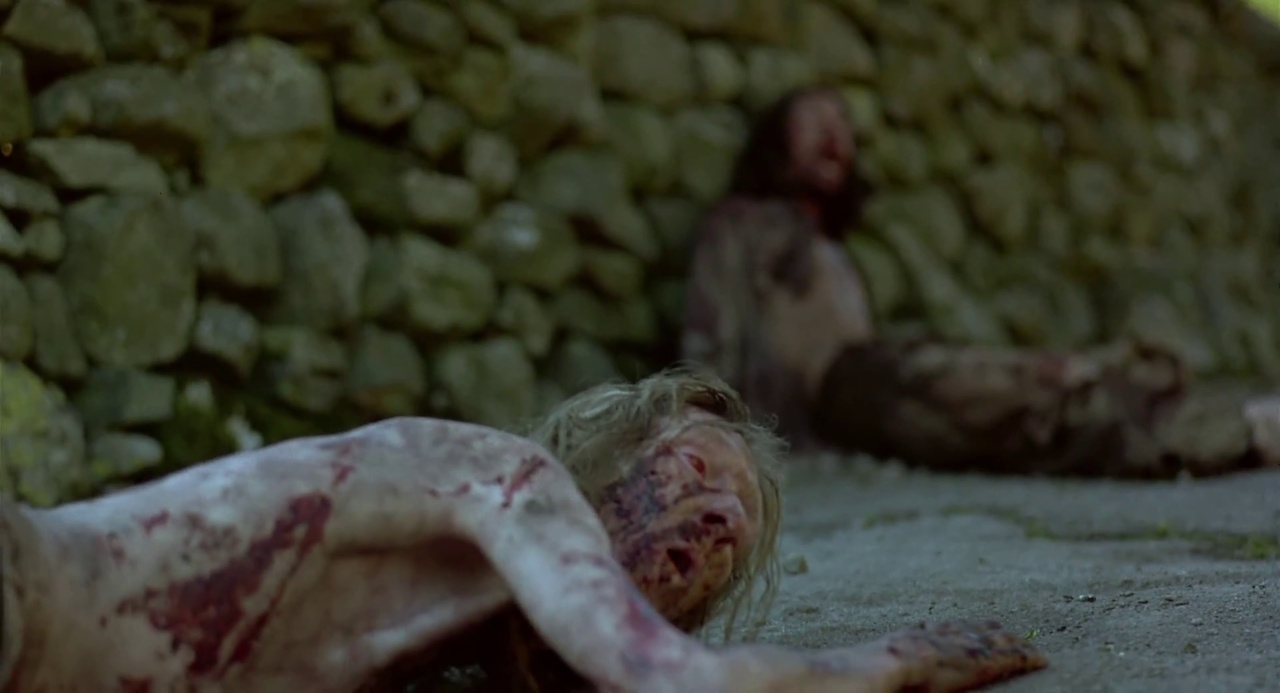
Five horror films to watch this Halloween

Spoiler Warning: There are minor spoilers ahead for the titles on this list.

Horror has never been my favourite genre for a number of reasons. But at this time of year, with Halloween imminent, I don’t mind dabbling in the occasional spooky film or two. There’s been a resurgence of the genre since about the turn of the millennium, and many recent titles have enjoyed big budgets and great visual effects. Gone are the days when horror was a total niche or a spin-off from fantasy and science fiction, and today titles such as It, Bird Box, and the Saw series are positively mainstream.

When I was at school and university, in the nerdy circles I moved in watching horror films was something of a rite of passage! Kids would compete to show how unperturbed they were at jump-scares and gory violence, and the topic of conversation was often “which scary film have you seen lately?” I joined in, of course, for fear of being labelled a “sissy” or a “wuss” for not participating! Nowadays, though, I seldom choose a horror title if I’m looking for something to watch. I readily admit that jump-scares almost always succeed at catching me off-guard, and while gruesomeness, violence, and gore really aren’t terribly offputting, jump-scares can be for me.
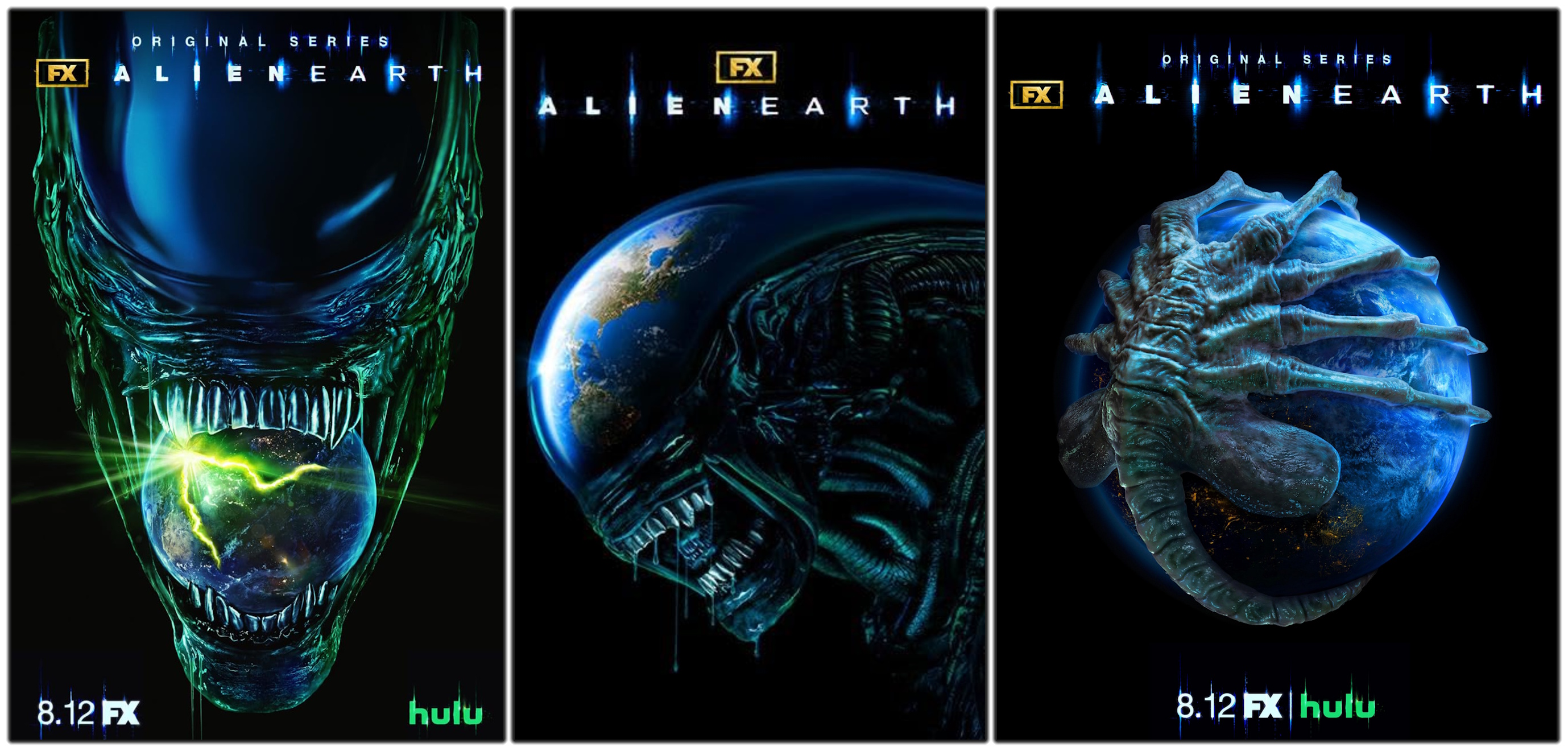
The usual caveat applies – the list is in no particular order, nor am I saying that these are the “all-time top five” horror films; instead these are five examples of horror titles that I think are pretty entertaining – in my subjective opinion!

Number 1: Drag Me To Hell (2009)

Not a blockbuster by any means, Drag Me To Hell is nevertheless a well-made film with an interesting premise and some great performances. Directed by Sam Raimi (of Spider-Man fame) it centres around a gypsy’s curse, and a woman who must find a way to escape the spell before she is – quite literally – dragged into hell by demons.
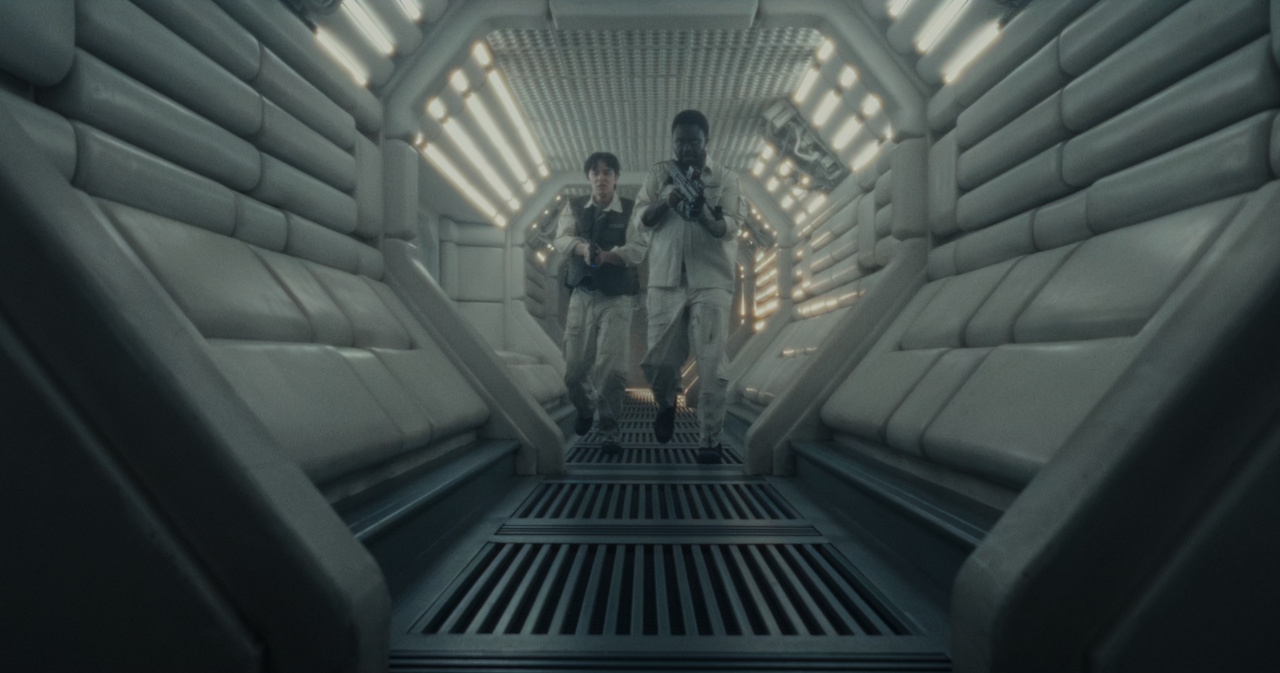
The desperation on the face of lead actress Alison Lohman as she realises what’s happening to her is pitch-perfect acting, and the film is packed with gruesome imagery and some genuinely frightening jump-scares. It’s also perhaps the “most Halloween-y” film on this list, as it deals with the supernatural, demons, and curses.

As the tale of an ordinary person forced into an unsettling and terrifying supernatural world, Drag Me To Hell manages to have a relatable protagonist, someone the audience can root for throughout her ordeal. In a genre overflowing with zombies and vampires, the curse is also something different, which I think makes Drag Me To Hell stand out.

Number 2: The Fly (1986)

David Cronenberg is considered the king of body-horror, and 1986’s The Fly shows why! Starring Jeff Goldblum in one of his most iconic roles, the film sees a scientist create a teleportation machine, only for things to go wrong when he accidentally teleports with a fly – causing their DNA to merge.

The monstrous mutations that Goldblum’s character suffers are truly grotesque, even by today’s standards, and the practical special effects still hold up more than thirty years later. His transformation into the titular fly is horrifying – but at the same time impossible to look away from! The Fly is a disturbing, weird watch, but truly one of the most interesting works of the genre.

Number 3: Alien (1979)

Though many people consider 1986’s Aliens to be superior, for my money you can’t beat the claustrophobic monster-horror feel of the first entry in the Alien saga. The film has rightly become a classic of both the horror and science-fiction genres, with sequels, spin-offs, and video game adaptations still being produced over forty years later. That’s a testament to the quality of Alien.

What makes this film great is that protagonist Ripley (played, of course, by Sigourney Weaver in what remains her best-known role) is facing down a single creature. Future films would show veritable armies of xenomorphs, but here there’s just one. That emphasises how deadly these creatures can be – as well as showing a much darker side to science-fiction than we see in many titles. Ripley is also at her best here, portrayed as much more human before her transformation in subsequent films to an invincible “badass.”

Alien also warns of the dangers of mega-corporations and of single-minded artificial intelligence in ways that other sci-fi titles are only now beginning to pick up on. And, of course, the film contains one of the most iconic scenes in the history of cinema. You know the one I mean! And if you don’t, well… you better watch Alien A.S.A.P!

Number 4: Let The Right One In/Låt den rätte komma in (2008)

This Swedish-language film was one of the most novel and interesting takes on the vampire genre that I’ve ever seen. It’s also a film which focuses primarily on two kids, making for some incredibly uncomfortable and unnerving sequences. I don’t watch a lot of foreign-language cinema, and precisely for that reason Let The Right One In feels even more otherworldly and eerie.

A few years after its 2008 release the film’s reputation led to a Hollywood remake. However, I would recommend watching the original version, as it feels more authentic and interesting.

Unlike some of the titles on this list, Let The Right One In has a slower pace, but that doesn’t make it any less tense – in fact, I’d argue it makes the tension even greater!

Number 5: Train to Busan/부산행 (2016)

The second foreign-language film on this list is a South Korean title. It wasn’t the plan to put two non-English films here, but the horror genre seems especially well-served outside of Hollywood! There are many Asian horror films that are considered among the best in the genre, and Train to Busan must surely be one of them.

I wouldn’t call it a unique or even especially different look at the zombie genre, especially in the aftermath of titles like 28 Days Later – which itself is worth a watch! But Train to Busan takes that premise and uses it expertly, with the titular train being both a sanctuary and an obstacle to the protagonists’ survival.

So that’s it. A few horror films to get you in a Halloween mood! I think we got a good mix of vampires, aliens, demons, mutants, and zombies to make for an interesting selection, though there are of course many more takes on the horror genre out there.

With only a couple of days to go, the big question is this: can I finish my playthrough of the Nintendo Switch game Luigi’s Mansion 3 in time for Halloween?! It’s not looking likely, is it?

All titles listed above are the copyright of their respective company, studio, and/or distributor. This article contains the thoughts and opinions of one person only and is not intended to cause any offence.