Spoiler Warning: There are spoilers ahead for Star Trek: The Next Generation, Star Trek: Discovery, Star Trek Beyond, The Empire Strikes Back, and The Rise of Skywalker.
Where do you stand on questions of “canon” in works of fiction? That’s the thorny issue we’re going to grapple with today!
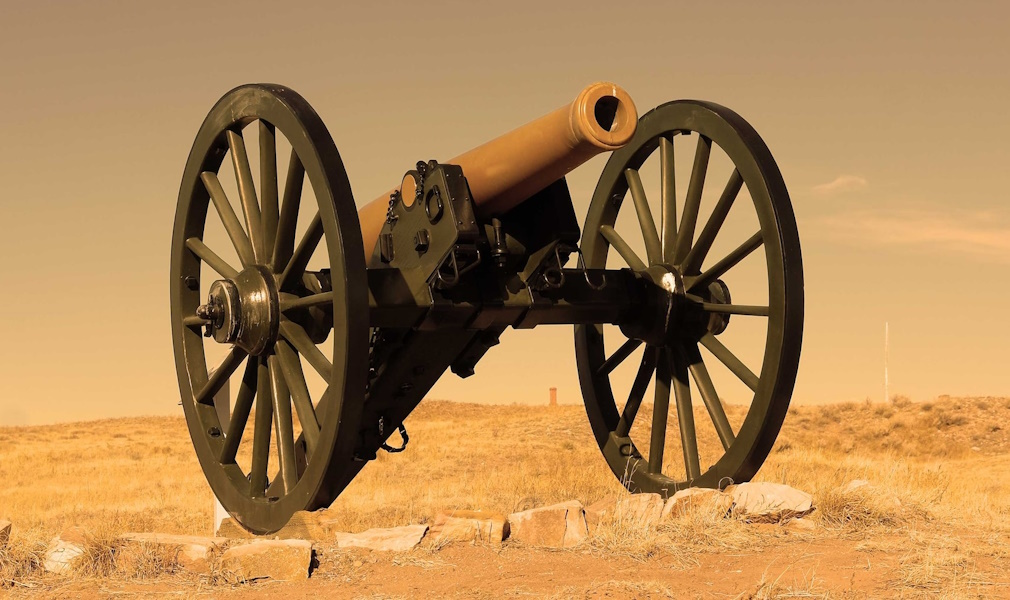
The term “canon” as it’s applied to franchises and fictional universes today comes from the realm of theology, surprisingly enough. The first “canon” referred to the Bible, specifically to which books of the Bible were considered sacred and authentic. It has its roots in Latin, and is etymologically distinct from “cannon” – the large gunpowder weapons that we often associate with pirate ships.
No, not that kind of cannon!
In the context of fictional universes and modern entertainment franchises, the word “canon” has kind of taken on two meanings. Firstly, we have the authoritative list of which stories are the accepted ones in a particular series. And secondly, we have the meaning that we’re looking at in more detail today: how the word “canon” has been applied to individual story threads, narrative elements, and the minutiae of a fictional setting.
As more and more films and television shows have grown and been turned into ongoing franchises by their corporate overlords, the question of canon in its secondary meaning has come to the fore in fan communities. It’s worth noting that some fandoms have been wrangling with questions of canon for longer than others: Star Trek fans, for example, have been caught up in these kinds of debates for literally decades, as have fans of some comic books. Other franchises and fictional settings are new to the debate, prompted by new additions to their series, or in some cases, by corporate decisions that overwrite what had been previously established.
The Star Trek fan community has been caught up in these debates for decades!
Very few people would dispute that a film or television episode produced officially as part of a franchise is “canon.” That’s not really what we’re looking at today – though there are certain exceptions, such as how Star Trek: The Animated Series was “officially” considered to be non-canon for several years. Debates instead tend to focus on smaller story elements – the background of a character, how a fictional technology works, or whether Event A clashes in an irreconcilable way with Event B.
Some television shows – particularly comedy, but not exclusively comedy – tend to play very fast and loose with matters of canon. If a good joke requires a character to act completely differently, or even for an entire setting to be transformed, then these kinds of shows will do it. Why waste a good joke, after all? But other shows and films like to take themselves seriously, presenting their fictional worlds as big, persistent alternate realities in which audiences are invited to lose themselves. It can be jarring for some viewers when a new film or episode comes along that seems to challenge or even “violate” some aspect of what had been accepted as canon.
Questions of canon and consistency matter far less in a comedy series.
In fan communities – or at least, in those of which I’m aware – folks tend to fall into one of two rather rigid and well-defined camps.
On the one side are the “purists.” These people insist that the tiniest minutiae must be respected at all costs, and any perceived violations of canon must be given a satisfactory explanation. Overwriting or undoing an element of a story that had been previously established doesn’t usually sit well with canon purists.
Opposing the purists are the “don’t cares.” As the name suggests, these folks are completely uninterested in whether a story fits with the rules and backstories that have been established; as long as the story itself is entertaining, they’re happy to ignore such criticisms and concerns.
Some characters and storylines attract more criticism than others…
Canon purists will often argue that a story falls apart if the newest chapter doesn’t “respect” or fall in line with everything that has been previously established. On the other side of the debate, the don’t cares will argue that none of that matters and that they’re happy for the writers of a new chapter to take them on a different and unpredictable journey.
So where do *I* sit? What’s my answer to the canon conundrum?
The answer, as you’ve probably guessed, is that it’s a bit more complicated! I don’t buy into the black-or-white nature of this argument, and my position tends to be a bit more nuanced.
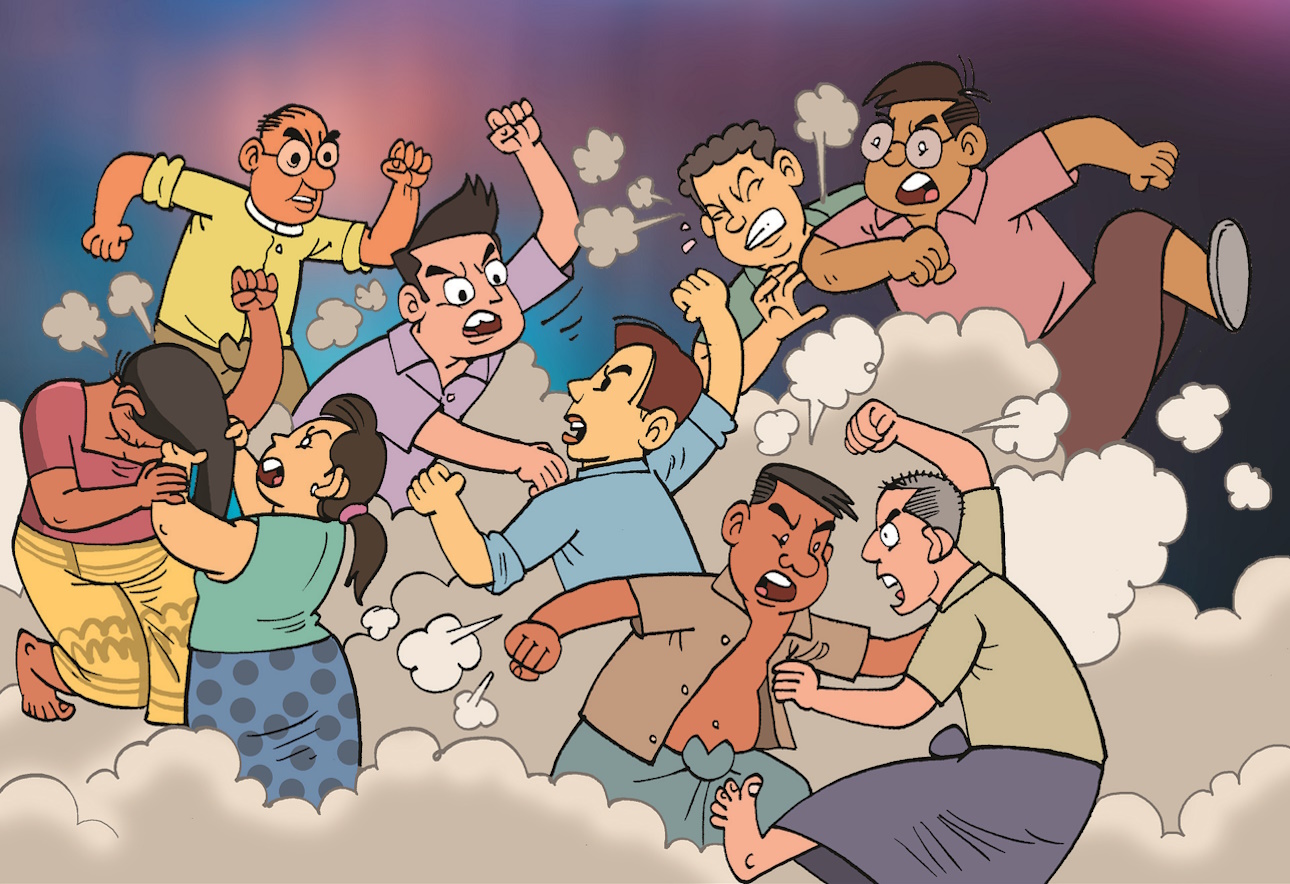
There’s no need to get into a fight…
Let’s define one more term: internal consistency. In the context of works of fiction, internal consistency has a fairly literal meaning: within the confines of a setting or fictional universe, basic rules are established that don’t change, in a fundamental or transformative way, from chapter to chapter or story to story.
Internal consistency is, for me, one of the essential pathways to suspension of disbelief. To give a couple of examples: if a fantasy universe establishes that magic works because magic users are born with innate magical power, the writers can’t arbitrarily change that later on to say that magic is actually something that anyone can learn from spellbooks. In a sci-fi setting, if we establish that a machine can travel backwards in time because it uses black hole technology, that also mustn’t be changed later to say that the time machine works by fusing together time-mushrooms in its engine.
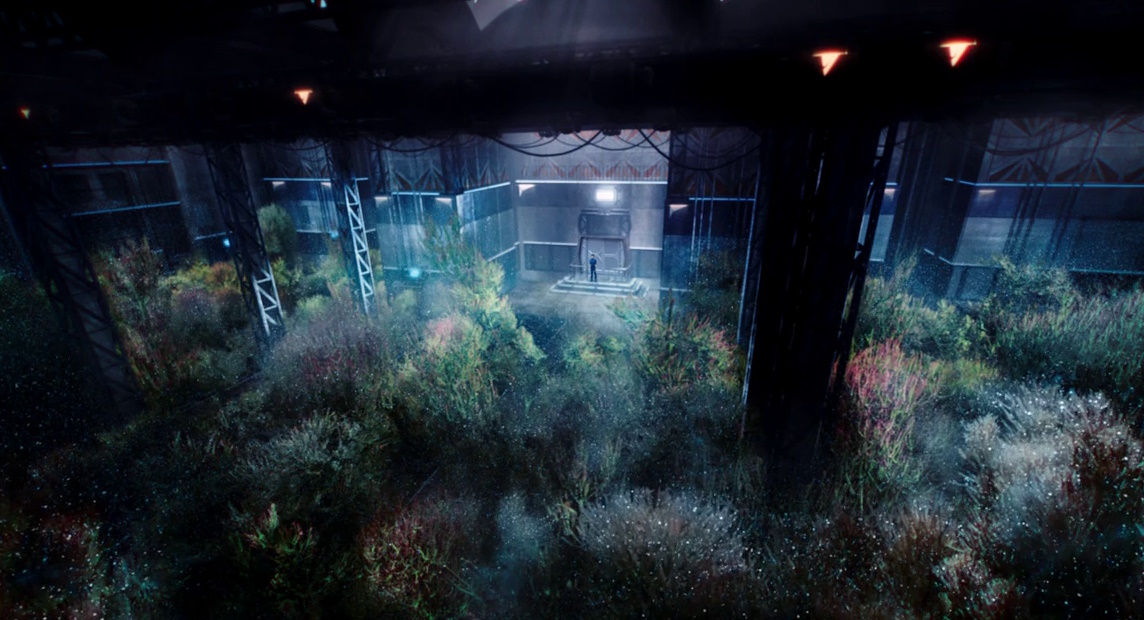
The cultivation bay aboard the USS Discovery.
In short, canon matters because basic internal consistency matters. The fundamental building blocks of any fictional setting or world must remain consistent from one story to the next, and can’t be changed at the whim of the writers simply to force a particular story beat to fit. If that story beat can’t fit with what’s already been established because it clashes in an irreconcilable way with one or more of those building blocks, I believe it should be changed or even abandoned outright.
But that isn’t all there is to say.
When it comes to smaller things, like designs and aesthetics, I’m much more forgiving. If characters in a fictional organisation used to wear blue jackets, but in a new story they’re wearing red jackets… that’s not a “violation” of canon in my book. And that extends to smaller story beats, too. If a couple of lines of dialogue two seasons ago established that an event happened “200 years ago,” but a brand-new flashback shows the event happening 100 years ago – and it fits better with the story – then I’m content to let it slide. There are many, many cases where stories have technically “overwritten” something that had been hinted at or even explicitly stated, but the outcome ends up being positive.
Things like redesigns and visual overhauls don’t phase me.
These debates can often be incredibly subjective. Fans can be willing to overlook a change or disruption to canon if they like the outcome or if it takes place in a story they enjoy, even if they’d otherwise consider themselves to be sticklers for internal consistency. Likewise, fans who might otherwise have a more relaxed approach to canon might find themselves calling out inconsistencies or retcons if the story is unenjoyable to them for some other reason.
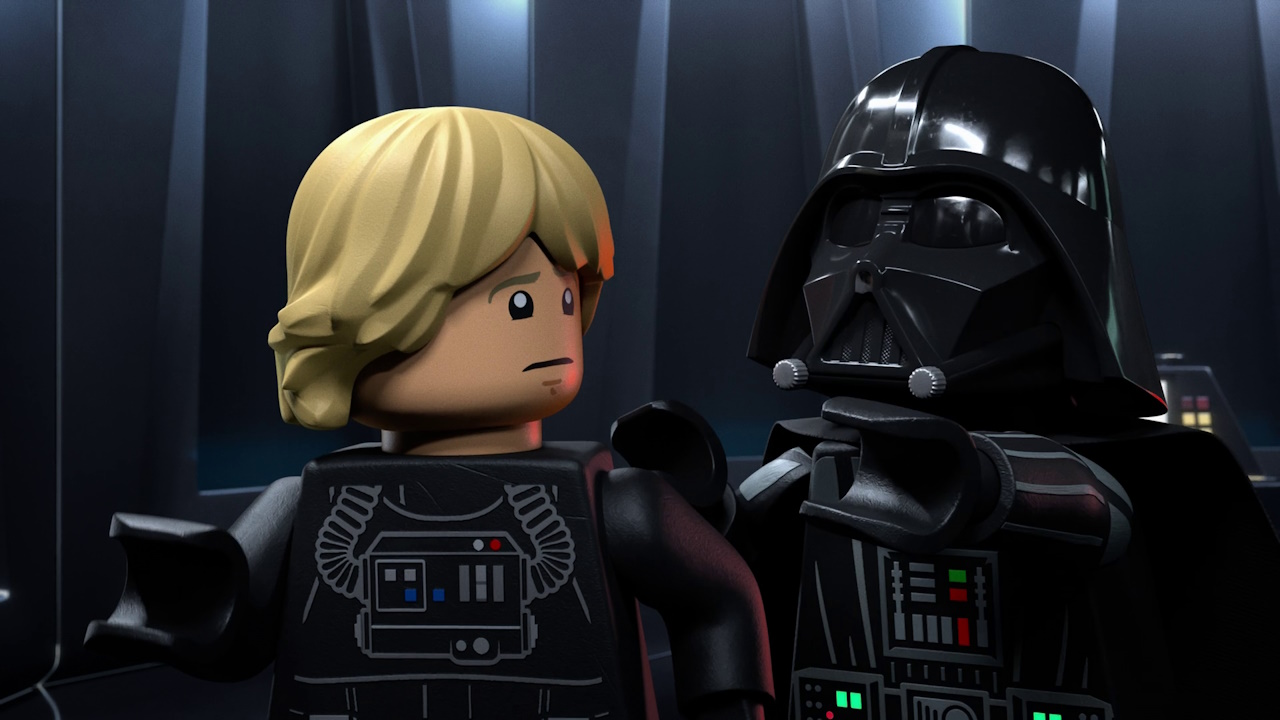
And it’s worth acknowledging that some changes to canon or retcons have just… worked. Although some Star Wars fans didn’t like it at the time, you’d struggle to find many folks in 2024 who are adamant that Darth Vader being retconned to be Luke Skywalker’s father is a bad thing that “ruined” The Empire Strikes Back. Or Trekkies who’d argue that the way the Borg changed in between their first and second appearances was to The Next Generation’s detriment.
Darth Vader’s revelation in The Empire Strikes Back is an example of a popular and well-received retcon.
Time is also a great healer. I wasn’t wild about Enterprise when it premiered, and some episodes in that show tripped over what had been established in Star Trek episodes set further along the timeline. Many Star Wars fans in the late ’90s and early 2000s felt that the prequel films messed up the franchise’s internal consistency… but those arguments have fallen by the wayside in the intervening years. Don’t get me wrong, you can still find fans who are bitter about these things, but the passage of time has paved the way for many folks to accept the changes that were made.
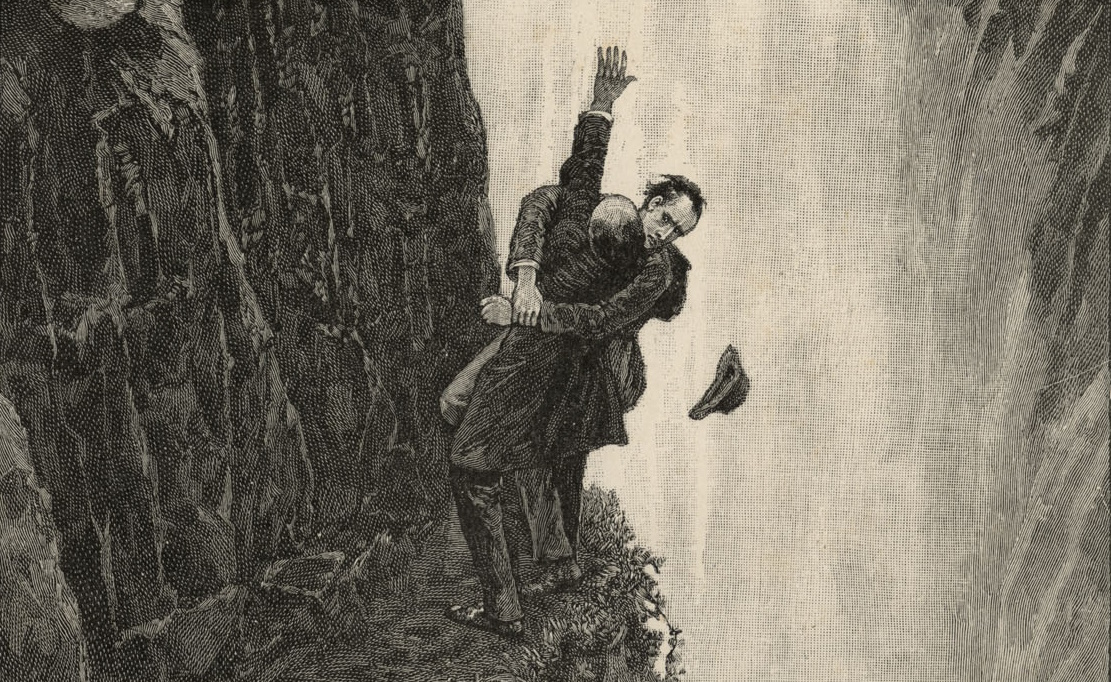
Speaking of the passage of time, it isn’t just modern entertainment franchises that have had to deal with this issue! Going all the way back to the end of the 19th Century, some readers of Arthur Conan Doyle’s Sherlock Holmes stories were mortified when the character was resurrected after his supposed “death” at the Reichenbach Falls. If these arguments have been raging for more than a century, what hope have we of resolving them now?
Sherlock Holmes’ survival proved controversial with fans in the 1890s…
At the end of the day, I’m happy to admit that I fall somewhere in between the “purists” and the “don’t cares.” Canon is important because a fictional setting needs to be basically consistent from one story to the next. Too many overwrites and retcons erode the fundamental building blocks of a world – bringing the whole story crashing down. I also don’t believe that new writers coming in to a long-established setting can or should have totally free rein to do whatever they want; they are, whether they wish to be or not, constrained to an extent by what has already been set up. If they can’t create a story within reasonable limitations… then they aren’t a good fit for that franchise, and their story should probably be discarded.
Having said all of that, though… I’m also not someone who’s a stickler for the minutiae of canon. If a new writer comes in with new ideas for a fictional world, I’m happy to give them the chance to tell their story and add to our understanding of that setting and its lore. Just because a particular character or event hasn’t been mentioned before… that doesn’t mean it didn’t exist, and there are ways to interpret many stories that can include new additions without feeling like something has been entirely cancelled or overwritten. Retcons and changes can also work incredibly well, representing an improvement on the original story or idea in many cases. We don’t have to look far to find great examples of that.
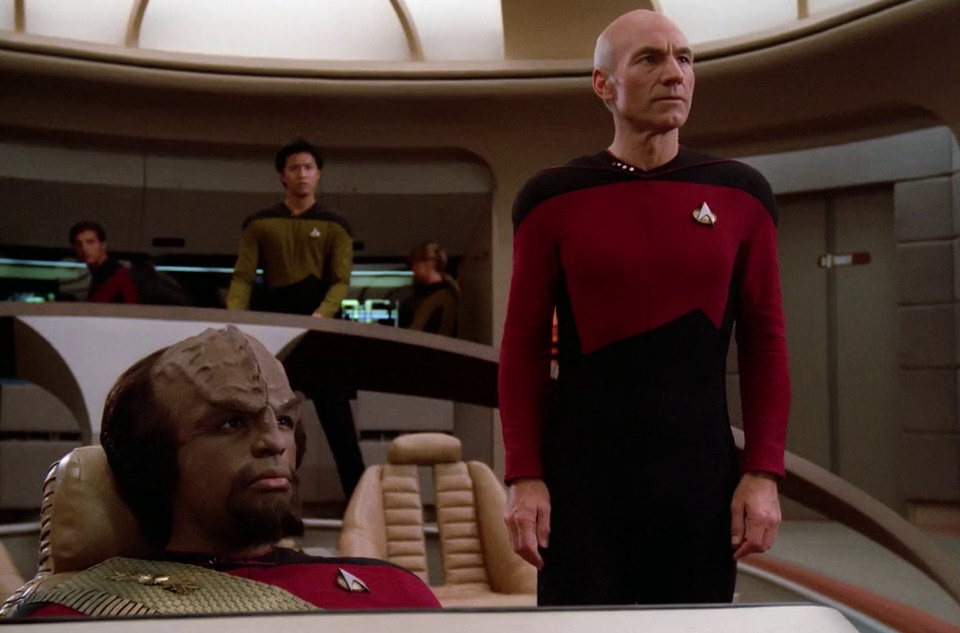
The Star Trek franchise has some great examples of how changing canon can work.
At the end of the day, I want to be entertained. I return to a familiar fictional setting in part because I’ve enjoyed what writers and creatives have built and want to see more of it – so it can be jarring if a new story changes too many things too quickly, or seems to overwrite something I particularly enjoyed. But at the same time, a strong script, fun ideas, and high production values can win me over before too long. A new story that strikes out in an unexpected direction can keep me on my toes, challenge my expectations, and prove incredibly fun and engaging.
There is a time and a place for canon. Basic building blocks that are key to the functionality of a fictional world, or well-established origin stories for major characters are the kind of things that I feel either shouldn’t be challenged or that have a very high bar to overcome. But smaller things involving secondary characters, or the likes of designs and aesthetics, are absolutely fair game in my book.
Canon represents the “building blocks” of a fictional universe.
I hope this has been an interesting look at “canon.” This is a subject that I’ve touched on in other reviews, articles, and essays over the past few years, and it’s one that I’ve been meaning to delve into more deeply for some time. In fact, it’s been in my writing pile since I first set up my website more than four years ago. I’m glad to have finally been able to get around to it and try to explain where I stand!
Hopefully I’ve been able to get my point across as clearly as possible. This is a big topic, one that could easily be a whole series of articles with dozens of examples and anecdotes! I’ve tried to keep such things to a minimum this time, instead taking a “big picture” look at canon as a whole. But there may be time in the weeks and months ahead to dig a little deeper using some specific stories from across the world of entertainment.
And there’s no shortage of examples!
It’s been fun for me to finally put (metaphorical) pen to paper and tackle this question. Canon is a big deal for a lot of folks in fan communities, and I get that. There have been times over the years where I’ve felt that a story could’ve benefitted from staying true to canon a little more… and other times where I’ve felt that a story played it too safe, or that a retcon wouldn’t have gone amiss!
But I confess that I get a little tired of this black-and-white argument, with “purists” and “don’t cares” caught in a seemingly endless back-and-forth argument that never makes progress. We won’t always agree on what makes a good story – nor even on what the basic needs of a story are. That’s okay, and I share this piece with the world in that spirit. This is my subjective opinion on questions of canon – and nothing more. A lot of folks can and will disagree, and I’m totally fine with that. It’s up to all of us as individuals to decide what’s important and how we wish to approach entertainment franchises and fictional worlds.
All properties discussed above are the copyright of their respective company, broadcaster, distributor, or studio. This article contains the thoughts and opinions of one person only and is not intended to cause any offence.
Spoiler Warning: There are spoilers ahead for the following Star Trek productions: Picard Seasons 1-2, Discovery Season 3, Strange New Worlds, the Kelvin timeline films, Deep Space Nine, and The Next Generation.
Today I thought we could have a bit of fun! There are many so-called “hot takes” about the Star Trek franchise flitting about online, and I thought it could be a change of pace to share a few of my own. These are – based on my limited engagement with the wider Star Trek fan community, at least – opinions that aren’t widely held or especially popular. I’ll do my best to explain why I feel the way I do about each of the six subjects we’re going to consider below.
More than ever, I ask you to keep in mind that all of this is subjective, not objective! I’m not saying that these opinions are factual and unquestionable; this is just my singular perspective on a handful of very complex topics. As with everything in media, there are going to be a range of views, and while I’ll try to justify my opinions below, I know that a lot of people can and do disagree. And that’s okay! There’s room in the Star Trek fan community for respectful disagreement about all manner of things.
With all of that out of the way, this is your last chance to jump ship if you aren’t interested in some potentially controversial Star Trek opinions!
“Hot Take” #1: Star Trek: Picard transformed Seven of Nine into an enjoyable character for the first time.
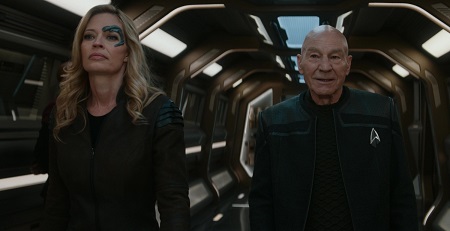
Seven of Nine in Picard Season 2.
Star Trek: Picard hasn’t been perfect across its first two seasons, but one thing that it absolutely got right is Seven of Nine’s characterisation. Seven was an unexpected character for the series to introduce – she’d never interacted with Jean-Luc Picard on screen before, and the pair hadn’t even the barest bones of a relationship to build on. In that sense, I was surprised (and maybe a little concerned) when it was made clear that she’d be featured in a big way in the first season.
Perhaps I should explain myself before we go any further. Seven of Nine was introduced midway through Voyager’s run in the two-part episode Scorpion. At first she seemed to be a character with a lot of potential, and I enjoyed what she brought to the table in early Season 4 episodes such as Scientific Method and The Raven. But Seven very quickly became repetitive. Week after week she’d learn some lesson in “how to be more human” from the Doctor or Captain Janeway, but she’d seem to forget all about it and revert to her semi-Borg self by the next episode. This was exacerbated by the fact that Voyager’s latter seasons seemed to include a lot of Seven-heavy episodes and stories, making her a prominent character.
Publicity photo of Seven of Nine during Voyager’s run.
That’s how episodic television works, and I get that. Most other Star Trek characters up to that point in the franchise’s history also “reset” in between episodes, and we could talk at length about how characters like Miles O’Brien could go through some horrible trauma one week only to be happily playing darts at Quark’s a few days later as if it never happened. But with Seven of Nine, a combination of her prominence and storylines that often revolved around learning and taking to heart some aspect of what it means to be human and exist outside of the Borg Collective meant that her week-to-week resets and lack of significant growth really began to grate. Toward the end of Season 7, Seven was given an arc of sorts that threw her into a relationship with Chakotay – but I’m hardly the only person who feels that didn’t work particularly well!
So by the time Voyager ended, I was burnt out on Seven of Nine. Out of all the main characters from Voyager, she was perhaps the one I was least interested to see picked up for a second bite of the cherry – but I was wrong about that. Where Seven had been static and repetitive in Voyager, Picard gave her that development I’d been longing to see, and it was incredibly cathartic! Even though Seven’s post-Voyager life hadn’t been smooth, it had been human, and seeing her experience genuine emotions like anger, betrayal, and later through her relationship with Raffi, love, was something I didn’t know I wanted. Having seen it now, though, there’s no way I’d want to lose this element of Picard.
Seven with Admiral Picard.
The death of Icheb, which was shown in one of Picard Season 1’s most gory sequences, became a key part of Seven’s character arc. His loss devastated her – and the idea that Seven of Nine could be devastated was already a colossal leap for her character. That it spurred her on to one of the most human of desires – revenge – is even more significant for her. And this growth continued across the rest of Season 1, with Seven coming face-to-face with the Borg and even becoming a leader (of sorts) for the liberated ex-Borg on the Artifact.
Even though Season 2 was a mixed bag (at best) with some lacklustre storylines, Seven of Nine shone once again. Her relationship with Raffi added a whole new dimension to her character, and after seeing her experiencing anger and negative emotions in Season 1, Season 2 gave her a chance at love. Season 2 also saw Seven revelling in a new experience, having hopped across to a new timeline and found herself in a body that had never been assimilated. That set her on an arc to accepting herself for who she is – including her Borg past.
Seven without her trademark Borg implants.
Seven’s journey has been beautiful to see, but also cathartic. To me, her journey in Picard feels like it’s righted a twenty-year wrong, finally giving Seven of Nine genuine development and an arc that stuck. While I’m sure fans can and will debate individual plot points (like Icheb’s death or Seven’s off-screen involvement with the Fenris Rangers), taken as a whole I’ve really enjoyed what Picard did with what had been one of my least-favourite characters of The Next Generation era.
I’m keeping my fingers crossed for more from Seven of Nine – and if you’d told me in 2000-2001 that I’d write those words I wouldn’t have believed you!
“Hot Take” #2: I don’t like The Inner Light.
Picard/Kamin in The Inner Light.
Often held up as an example of The Next Generation at its best, I’ve never enjoyed The Inner Light. It’s an episode I usually skip over without a second thought when re-watching The Next Generation, but I put myself through the chore of viewing it recently; it’s part of what inspired me to put together this list!
The Inner Light steps away from the exciting adventures of the Enterprise-D to show us a pre-warp civilisation living on a random alien backwater planet, and while exploring strange new worlds is part of the gig, the way this episode in particular does that is just not interesting or enjoyable in the slightest. It’s certainly “different” – and I will concede that point. Star Trek has never been shy about experimenting, after all! But this particular experiment didn’t work, which is probably why we haven’t really seen another episode quite like it.
Picard with the Kataan probe.
I don’t like to say that something “doesn’t feel like Star Trek,” not least because that vague and unhelpful phrase has become associated with a subgroup of so-called fans who use it to attack everything the franchise has done since 2009. But to me, The Inner Light feels about as far away from what I want and hope to see from an episode of Star Trek as it’s possible to get.
By spending practically its entire runtime in the past, with Picard taking on the role of an alien blacksmith in a pre-warp society, The Inner Light abandons not only the entire crew of the Enterprise-D, but also many of the fundamental adventurous elements that are what makes Star Trek, well… feel like Star Trek. Its deliberately slow pace doubles-down on this sensation, and The Inner Light seems to drag as a result, coming across as boring.
Picard/Kamin playing the flute.
I’m not particularly bothered by the way the Kataan probe operates – that seems technobabbley enough to get a pass. But after Picard has been hit by the probe and the majority of the episode is then spent on Kataan with Kamin and his family… I’m just not interested. Sir Patrick Stewart is a great actor, and what happened to the Kataan people is both tragic and a timely reminder of our own burgeoning environmental catastrophe (something that we haven’t even tried to fix more than a quarter of a century later). But despite all of the elements being in place, the story just doesn’t grab me like I feel it should. At the end of the day, I can’t find a way to give a shit about Kataan, nor about Kamin or anyone else.
There are many episodes of Star Trek with races and characters who only appear once, and yet very few of them manage to evoke that same “I just don’t care” reaction. Just within Season 5 of The Next Generation we have characters like Hugh the Borg and Nicholas Locarno, or aliens like the Children of Tama and the Ux-Mal, all of which manage to hook me in and get me invested in their storylines. I’d generally consider The Next Generation’s fifth season to be one of its best, with many of my favourite episodes. But The Inner Light isn’t one of them.
Picard/Kamin overlooking the village of Ressik.
There are points to The Inner Light that did work. The Ressikan flute theme, for example, is a beautiful piece of music, and Picard’s flute-playing ability (which he learned during the events of The Inner Light) would become a minor recurring element for his character going forward, notably appearing in episodes like Lessons. And the underlying premise of a probe that transmits a message in this way could have worked; it feels quite Star Trek-y in and of itself.
But for me, The Inner Light just isn’t fun to watch. It’s boring, uninspiring, and I can’t find a way to get invested in the story of Kataan and its people – despite good performances from Sir Patrick Stewart and the other actors present.
“Hot Take” #3: Modern Trek needs to pick a single era (and timeline) and stick to it.
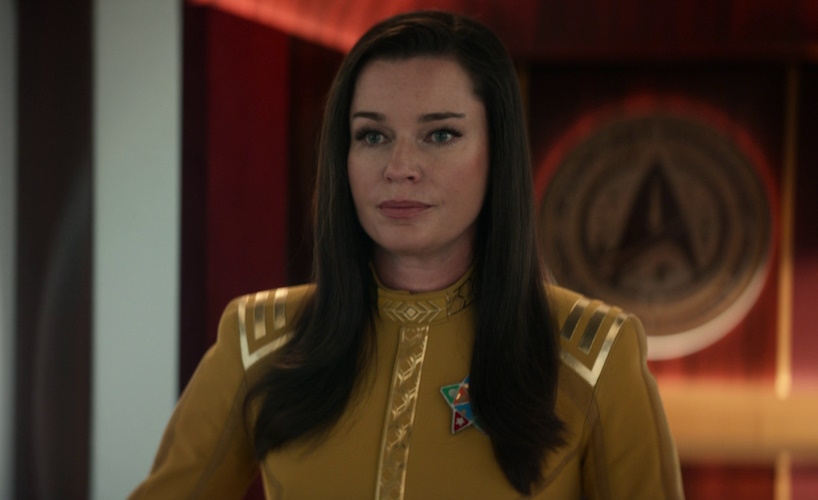
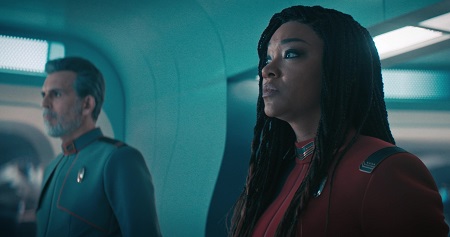
Admiral Vance and Captain Burnham in the 32nd Century.
Star Trek, perhaps more so than any other major entertainment franchise, is convoluted. As Trekkies, we love that! The fact that modern Star Trek can explore different timelines, different eras, and broadcast different shows that are entirely separate from one another makes for a diverse and interesting presentation. It also means that we can simultaneously step back in time to before Captain Kirk’s five-year mission while also seeing what came next for Captain Picard twenty-five years after the events of Nemesis.
But try to look at Star Trek from the point of view of a newcomer. Every single one of the five shows currently in production is set in a different time period and location, and just figuring out where to start with Star Trek – or where to go next for someone who’s enjoyed watching one of the new shows – is the subject of essays, articles, and lists. It’s beginning to remind me of Star Wars’ old Expanded Universe – a combination of games, books, comics, and so on that had become so convoluted and dense after decades in production that it felt offputting.
Cadet Elnor in the 25th Century.
In order for Star Trek to successfully convert viewers of one of its new iterations into fans of the franchise, it needs to simplify its current output. A fan of Strange New Worlds might think that their next port of call should be Picard or Lower Decks – but they’d be completely lost because those shows are set more than a century later.
The lack of a single, unified setting also prevents crossover stories – and these aren’t just fun fan-service for Trekkies like us! Crossovers link up separate Star Trek outings, bringing fans of one show into close contact with another. Just as The Next Generation did with Deep Space Nine (and DS9 did with Voyager), modern Star Trek should make the effort to link up its current shows. There are links between Discovery and Strange New Worlds – but any crossover potential has evaporated due to Discovery shooting forward into the far future.
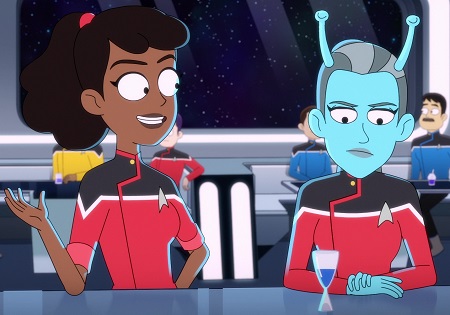
Beckett Mariner and Jennifer the Andorian in the late 24th Century.
This also applies to alternate realities, most significantly the Kelvin timeline which is supposedly being brought back for a fourth film. The Kelvin films served a purpose in the late 2000s and early 2010s, but as I’ve argued in the past, is it really a good idea to bring back that setting – as well as its presentation of characters who have recently been recast for Strange New Worlds – with everything else that Star Trek has going on?
In 2009, it was possible for new fans to jump from the Kelvin films to other iterations of Star Trek and keep up with what’s going on. But we’ve had more than 100 new episodes of Star Trek since then across several different eras, some including recast versions of characters who appeared in the Kelvin timeline films. I’m not so sure that a new Kelvin timeline film serves its intended purpose any more.
Captain Pike in the 23rd Century.
I wouldn’t want to see any of the shows currently in production shut down before their time. We’ve only just got started with Strange New Worlds, for instance, and I’m hopeful that that series will run for at least five seasons (to complete Captain Pike’s five-year mission!) But as the current crop of shows wind down, the producers at Paramount need to consider their next moves very carefully. Where should Star Trek go from here, and where should its focus be?
Discovery’s 32nd Century is certainly a contender, and setting the stage for new adventures years after the stories we know provides a soft reboot for the franchise while also opening up new storytelling possibilities. But it would also be great to see Star Trek return to the late 24th or early 25th Centuries of the Picard era, picking up story threads from The Next Generation era – Star Trek’s real “golden age” in the 1990s. Setting all (or almost all) of its films, shows, miniseries, and one-shot stories in a single, unified timeline has many advantages, and would be to the franchise’s overall benefit.
Stay tuned, because I have a longer article about this in the pipeline!
“Hot Take” #4: Far Beyond The Stars is an unenjoyable episode, albeit one with a very important message.
Benny Russell in Far Beyond The Stars.
This is my way of saying that “I don’t like Far Beyond The Stars” while still giving credit to the moral story at its core. Star Trek has always been a franchise that’s brought moral fables to screen, and Far Beyond The Stars does this in a very intense – and almost brutal – way, shining a light on America’s racist past and present.
But as I’ve already discussed with The Inner Light above, the way in which this story is presented doesn’t really work for me. I find Benny Russell’s story sympathetic… but because what’s happening is so far removed from the events of Deep Space Nine, it’s difficult to turn that investment over the course of a single episode into anything substantial. The “it was all a dream or a vision” explanation also hammers this home; whatever was happening to Captain Sisko was taking place outside of the real world – perhaps inside his head, perhaps as a vision from the Prophets – and thus it doesn’t feel like it matters – in the context of the show – in the same way as other, similar stories.
Julius and Benny.
Far Beyond The Stars is comparable to The Inner Light insofar as it steps out of the Star Trek franchise’s fictional future. In this case, the story returns to our real world a few short years in the past. While there are occasional flashes of Star Trek’s signature optimism, the darker tone of the story combines with its real-world setting to feel different; separate from not only the events of Star Trek, but its entire universe.
“But that’s the whole point!” fans of Far Beyond The Stars are itching to tell me. And I agree! Far Beyond The Stars knows what it’s trying to be and knows the kind of story it wants to tell and goes for it, 100%. I’d even say that it achieves what it set out to. But that doesn’t make it a fun watch, an entertaining story, or an episode I’m keen to revisit. As with The Inner Light, I almost always skip over Far Beyond The Stars when I’m watching Deep Space Nine.
The unnamed preacher.
Perhaps if I were an American, more of Far Beyond The Stars’ real-world elements would hit closer to home. But when I first saw the episode in the late ’90s here in the UK, I confess that at least parts of it went way over my head. That’s perhaps my own bias showing – but the whole point of this exercise is to discuss parts of the Star Trek franchise beginning with my own biases and opinions!
Having re-watched Far Beyond The Stars after spending time living in both the United States and South Africa – two societies which continue to wrangle with legacies of structural and systemic racial discrimination – I definitely felt its hard-hitting message a lot more. In fact, Far Beyond The Stars could be a great episode to use as a starting point for a broader conversation about race and structural racism. But having a moral message – especially a very on-the-nose one – doesn’t always make for the most interesting or enjoyable story.
Sisko sees himself reflected as Benny Russell at the end of the episode.
I don’t find Far Beyond The Stars to be “uncomfortable” to watch. The racial aspects of its story have purpose, and even with the progress that America has made since the turn of the millennium, many of the racial issues that Far Beyond The Stars highlights are just as relevant today as they were twenty-five years ago. But I guess what I’d say about the episode is that it doesn’t deliver what I personally find interesting and enjoyable about an episode of Star Trek.
Taken as a one-off, I can put up with Far Beyond The Stars. It didn’t become a major recurring thing in Deep Space Nine, and while Captain Sisko would recall the events on more than one occasion, it didn’t come to dominate the latter part of Deep Space Nine’s run in any way. So in that sense, I’m content to set Far Beyond The Stars to one side, acknowledging what it brought to the table in terms of allegory and morality while being content to rewatch it infrequently.
“Hot Take” #5: Canon matters – up to a point.
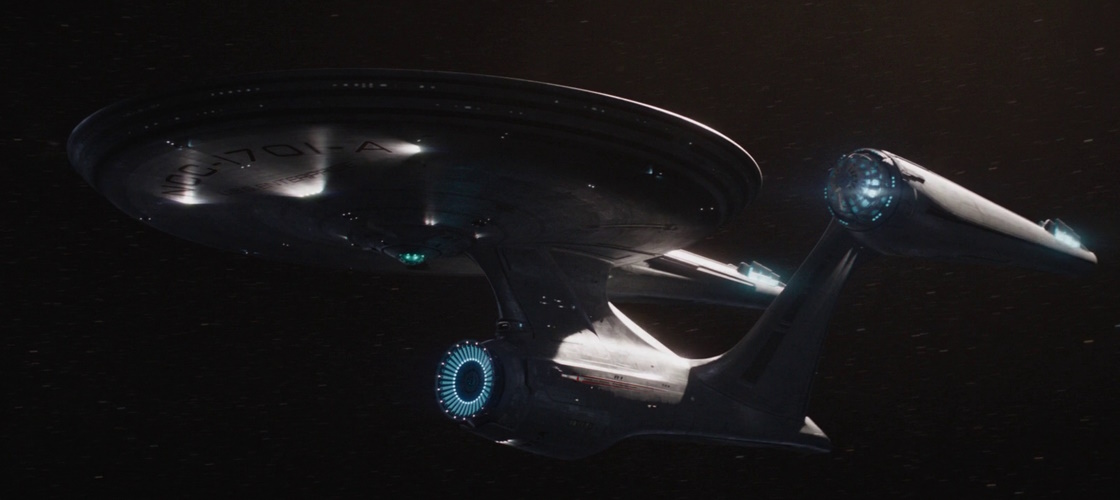
The original USS Enterprise.
There seems to be a black-and-white, either/or debate in the Star Trek fan community when it comes to the franchise’s internal canon. Some folks are adamant that the tiniest minutia of canon must be “respected” at all costs, criticising things like the redesign of uniforms or even the recasting of characters because it doesn’t fit precisely with what came before. Then there are others who say that “it’s all just a story,” and that canon can be entirely ignored if a new writer has an idea for a story. I don’t fall into either camp!
Canon matters because internal consistency matters. Internal consistency is – for me, at least – an absolutely essential part of the pathway to suspension of disbelief. If I’m to believe that transporters and warp cores exist, the way they work and the way they’re presented on screen has to be basically consistent from one Star Trek story to the next.
The USS Discovery at warp.
The same applies to characters. If a character has a background as an assassin and that’s a central part of their characterisation in one story, the next episode can’t arbitrarily change that and make them into a marine biologist because the plot demands it. Characters need to feel like real people, and the world they inhabit needs to operate by its established rules.
Luckily for Star Trek’s writers, there is a lot of flexibility in those rules! Most of the specifics of how individual pieces of technology work have never been delved into in any detail, and there’s a lot we don’t know about even the most basic of things within the Star Trek universe. So new writers find themselves with considerable leeway if they want to make a change or do something differently for the sake of a story.
A combadge from an alternate timeline.
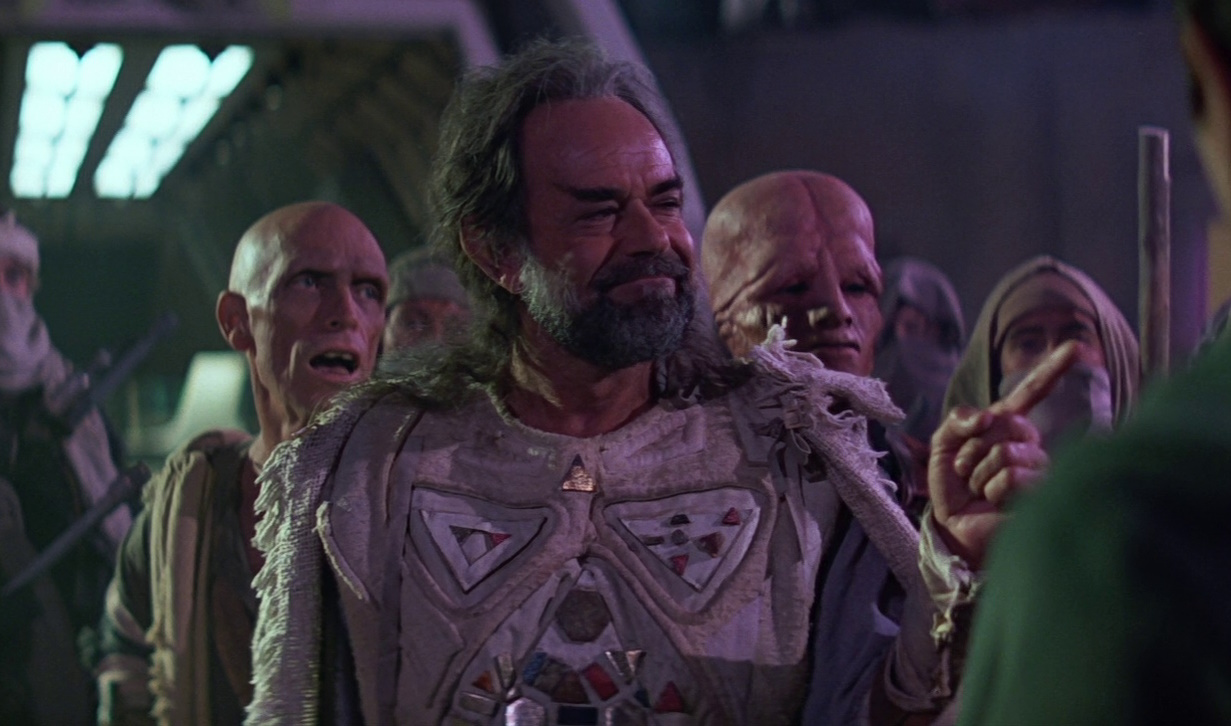
But there is a limit to that – or at least there ought to be. And the Star Trek franchise has tripped up by introducing new elements that seem to tread on the toes of what has already been established, even if they don’t technically overwrite anything. Spock’s family is a case in point. The Final Frontier gave Spock a half-brother who had never been mentioned, and then Discovery came along and gave him an adopted sister as well. Neither of these additions overwrote what we know of Spock’s family history… but they definitely came close.
On the other side of things, I’m quite okay with Star Trek making changes and updates to its visual style. The redesign of the USS Enterprise that debuted in Discovery and has been expanded upon for Strange New Worlds is a great example of one way that the franchise has modernised its look without really “damaging” established canon. All that’s required to get around the apparent visual changes – for anyone who feels it’s necessary – is to say that the Enterprise must’ve undergone some kind of retrofit in between Pike’s command and Kirk’s.
Sarek and Michael Burnham in Discovery’s premiere.
Where canon matters to me is in terms of characterisation and story. If we’ve established, for example, that the Vulcans and Romulans are related to one another, then future stories must remain consistent with that; there can be no “Romulan origin story” that tries to say that they evolved separately, for example. Likewise for characters. We all love a good character arc – but if a character’s personality and background are established, changing those fundamentals in an arbitrary manner should be off the table.
So to the canon purists, my message is going to be “loosen up a little!” And to the canon ignorers, what I’d say is “internal consistency matters.”
“Hot Take” #6: The Kelvin films got a lot right – and could be textbook examples of how to reboot a franchise.
Spock, Kirk, and Dr McCoy in Star Trek Beyond.
Even today, more than a decade after 2009’s Star Trek kicked off the Kelvin timeline, I still have Trekkie friends who have refused to watch them. Other fans who showed up at the cinema were unimpressed with what they saw, and the Kelvin films can feel like a controversial part of the Star Trek franchise sometimes. For my two cents, though, although the Kelvin films were imperfect and certainly different to what had come before, they managed to get a lot of things right. I’d even say that Star Trek and Star Trek Into Darkness could be used as textbook case studies in how to reboot a franchise successfully!
Modern Star Trek – from Discovery to Picard and beyond – would simply not exist without the Kelvin films. When Enterprise was cancelled in 2005, it really did feel as though the Star Trek franchise itself had died and wouldn’t be returning. Even as someone who hadn’t been a regular viewer of Enterprise, that still stung! But if there had been doubts over the Star Trek brand and its ability to reach out to new audiences and bring in huge numbers of viewers, 2009’s Star Trek shattered them.
Transwarp beaming.
Into Darkness eclipsed even the massively high numbers of its predecessor and remains the cinematic franchise’s high-water mark in terms of audience figures and profitability, so it’s not exactly shocking to learn that Paramount hopes to return to the Kelvin cast for a fourth outing next year! These films took what had been a complicated franchise with a reputation for being geeky and nerdy and skimmed off a lot of the fluff. What resulted was a trio of decent sci-fi action films that may just have saved the franchise’s reputation.
The Kelvin films also gave Star Trek a visual overhaul, modernising the franchise’s aesthetic and visual style while still retaining all of the core elements that longstanding fans expected. Transporters were still there – but they looked sleeker and prettier. Warp drive was still present – but a new visual effect was created. Many of these aesthetic elements have remained part of the franchise ever since, appearing in the various productions that we’ve seen since Star Trek returned to the small screen in 2017.
The USS Enterprise.
By establishing an alternate reality, the Kelvin films found scope to take familiar characters to very different places. We got to see how Kirk and Spock met for the first time at Starfleet Academy – a premise that Gene Roddenberry had considered all the way back during The Original Series’ run – but with a twist. Star Trek reintroduced us to classic characters, but put its own spin on them, providing a satisfactory in-universe explanation for why so many things were different.
But at the same time, the inclusion of Leonard Nimoy’s Spock from the prime timeline anchored the Kelvin films, providing a link to what had come before. This reboot wasn’t about erasing anything; it was an expansion of Star Trek into a new timeline, one that had basically unlimited potential to tell some very different stories. The trio of films took advantage of that, and while I would argue that there’s no pressing need to revisit the Kelvin timeline right now, I absolutely do appreciate what they did for Star Trek.
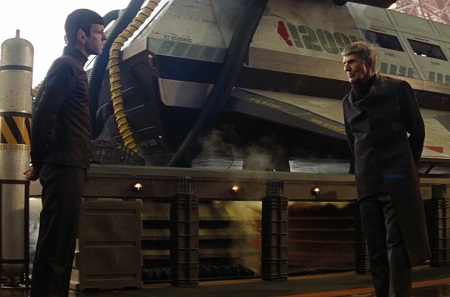
Two Spocks.
As a reboot, the Kelvin films succeeded in their ambition. They reinvented Star Trek just enough for mainstream audiences to discover the franchise – many for the first time. Some of those folks stuck around and have become big Trekkies all off the back of what the Kelvin films did. They updated Star Trek without overwriting anything, and they set the stage for further expansion and growth. By every measure, the Kelvin films were successful.
That isn’t to say they’re my favourite part of the franchise! But as a fan who wants Star Trek to stick around and continue to be successful, projects like the Kelvin films are essential.
So that’s it!
Were those takes as hot as a supernova?
I hope that this was a bit of fun rather than anything to get too seriously upset about. Everyone is entitled to their own opinions about the episodes, films, characters, and storylines that Star Trek creates, and whether I’m thrilled about something, hated it, or have mixed feelings, I will always try to explain myself and provide reasons for why I feel the way that I do. But at the end of the day, all of this is just the subjective opinion of one person!
We’re very lucky to have so much Star Trek content coming our way in the next few years. It seems like the franchise will make it to its sixtieth anniversary in 2026 with new films and episodes still being produced, and there can’t be many entertainment franchises that could make such a claim to longevity!
There are definitely points on the list above that I could expand upon, and I’m sure I could think of a few more “hot takes” if I tried! So stay tuned for more Star Trek content to come here on the website as we move into the summer season.
The Star Trek franchise – including all properties mentioned above – is the copyright of Paramount Global. This article contains the thoughts and opinions of one person only and is not intended to cause any offence.













 Trekking with Dennis