


Spoiler Warning: There are spoilers ahead for Star Wars Jedi: Fallen Order and Star Wars Jedi: Survivor. Minor spoilers may also be present for parts of the Star Wars franchise.
It’s been a while since I shared my first impressions of Jedi: Survivor here on the website. I’ve since returned to the game, despite its performance issues, and beaten the main story, so I’m now in a position where I can put metaphorical pen to paper and share my full thoughts with you. Sorry that it took so long!
For some context, I adored Jedi: Fallen Order. I documented my first playthrough of that game here on the website back in 2020, and I was thrilled to see Lucasfilm and Electronic Arts recognising the strength of feeling in the Star Wars fan community for a linear single-player game. Jedi: Fallen Order had a high budget, but it proved definitively – as if any such proof were really needed – that single-player games can still be profitable, and that players still long for those kinds of experiences. Moreover, at a time when both The Rise of Skywalker and The Mandalorian had been disappointing, Jedi: Fallen Order came along and showed me that I hadn’t entirely fallen out of love with Star Wars.

I was genuinely thrilled at the prospect of a sequel to one of my favourite Star Wars games of all-time, and to see what would come next for Cal Kestis and the crew of the Stinger Mantis – and that was how I felt in the weeks leading up to the launch of Jedi: Survivor. If things went well, I believed that it might’ve been in contention for my “game of the year” award come December.
But things did not go well.
The Jedi: Survivor story is an all-too-familiar one: Electronic Arts forced the game to be released too early, despite knowing that there were serious technical issues. The game is a “release now, fix later” title, replete with bugs, performance issues, and other such problems. Although these issues afflicted the game and harmed players’ enjoyment across all platforms, as is often the case it seems that the PC version of the game was in the worst shape. Unfortunately, as I don’t own a PlayStation 5 or Xbox Series console, PC was where I played Jedi: Survivor.

I actually thought I’d been smart. Having read the reviews of the game when it launched and having seen performance reports from players and professional critics, I shelved my plans to buy Jedi: Survivor. I waited a couple of months and kept my eye on the game as patches were rolled out, and mistakenly believed that six patches later, things would have improved. Spurred on by having inadvertently come across a couple of story spoilers, I picked up the game at the end of June.
Unfortunately, however, the performance issues hadn’t been fixed – and in spite of another patch having been rolled out since then, those issues are still present on PC at time of writing. I described Jedi: Survivor as a “release now, fix later” game… but the fix still hasn’t been made, and the game remains in a poor state even five months after its troubled launch. In fact, having returned to the game to grab a few screenshots, I felt that its performance was worse in September than it had been in June and July.

The blame for this lies with Electronic Arts, and the company has transformed what should have been a guaranteed hit into a game surrounded by controversy thanks to pathetically poor decision-making at the highest levels. Developers Respawn Entertainment were placed in an impossible position, and while I have no doubt that talented, passionate folks did their absolute best to get Jedi: Survivor as ready for launch as possible, they were screwed over by EA. It’s a tale as old as time in the games industry: a greedy publisher shits all over the hard work of talented developers, then seeks to blame them for the game’s poor condition and lower-than-expected sales.
My first few hours with Jedi: Survivor were spent messing about with settings rather than actually playing the game. Every time I thought I’d improved things, the stuttering and frame-drops would inevitably return – and they were far from the only problems. I encountered dozens of bugs across my playthrough, with Cal and other characters getting stuck in the environment or clipping through solid objects, as well as items not rendering properly or even disappearing. These issues didn’t just affect gameplay, but were also prevalent during cut-scenes – something I hadn’t seen in a supposedly “complete” game in a very long time.
And I have no doubt that Jedi: Survivor’s performance problems have tainted my view of the game as a whole.
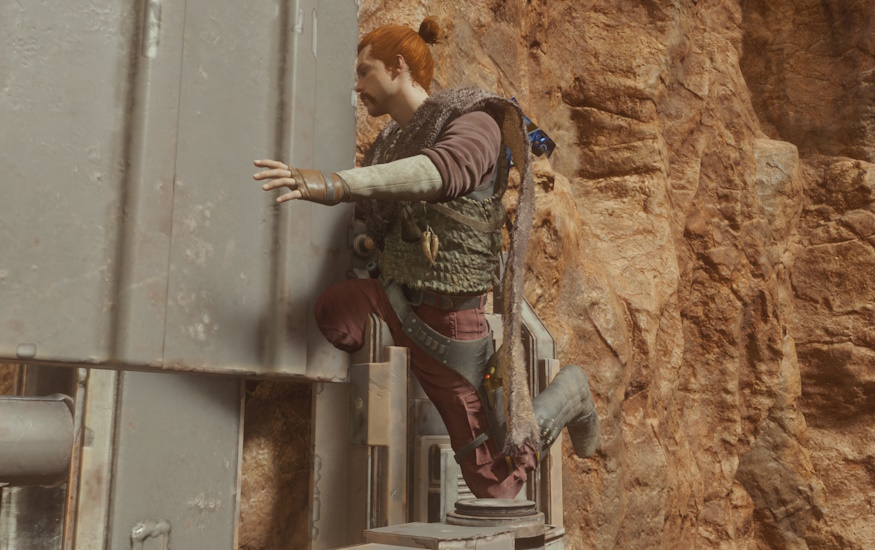
When I sit down to play a game like Jedi: Survivor, it’s because I want to be immersed in a story. I want the game to transport me to a galaxy far, far away, and lose myself for a few hours in the life of a Jedi Knight on the run from the Empire. The occasional bug or glitch would be tolerable, but when a game is in such shockingly poor shape, dogged by performance issues, stuttering, broken animations, and bugs galore… it rips the immersion away. I struggled to really get into Jedi: Survivor and its story, and even its better moments were spoiled or diminished by the unacceptable state that it was released in.
But that’s enough about bugs for now, because there are other issues with the game that we need to talk about.
I have two major gripes with Jedi: Survivor aside from the bugs. One is mechanical; a choice that was made in terms of the way the game was designed and its levels were crafted. And the second is with parts of the story itself, as well as with the way in which certain new and returning characters were handled. We’ll look at each of these points in turn.

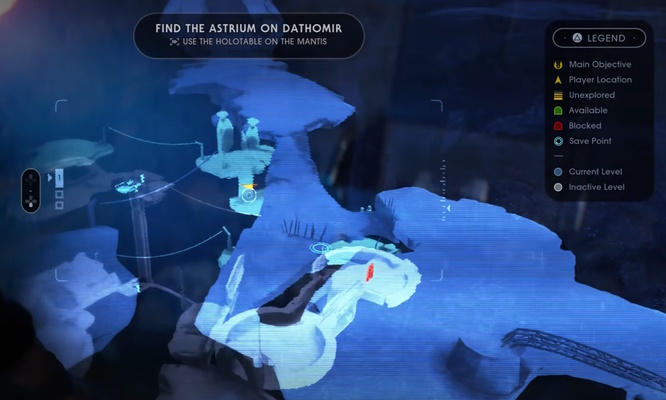
Firstly, an open world (or semi-open world) did not suit Jedi: Survivor. The game’s story was hamstrung by this decision, and crafting a couple of open stages that actually felt condensed and small really damaged that sense of immersion that I was talking about. On the main planet of Koboh, the village of Rambler’s Reach was a few dozen metres away from the base of a massive gang of pirate-raiders and also a few dozen metres away from two Imperial outposts. Hardly the out-of-sight hiding place that it was presented as in-game.
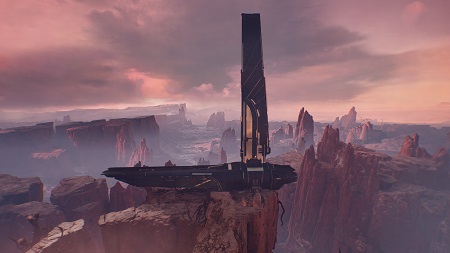
One day we’ll have to talk more about the open-world trend, and how it simply isn’t the right choice for every game. Jedi: Survivor, to me, stands as perhaps one of the best recent examples of that. The design of both Koboh and Jedha was hampered by this attempt to move in an open-world direction, and the game would have benefitted from tighter, more curated levels, as well as areas of the map that had more distance between them. By all means, have raiders and Imperials on Koboh if that’s necessary for the story – but why not have Cal travel to the other side of the planet in a cut-scene before encountering them? The design of those parts of the map could have been similar, but breaking them off from the Rambler’s Reach hub would have improved the game from a narrative and immersion standpoint.

I also felt that the move to broader, more expansive levels should have been accompanied by more cosmetic items and loot. It became frustrating to explore a whole area, climbing onto hidden ledges, wading through rivers, and so on only to find… absolutely fuck all. There are more cosmetics in Jedi: Survivor than there were in Jedi: Fallen Order – and that’s great. I had fun customising Cal and unlocking some of these options. But this was something that felt unbalanced.
I’d explore a whole section of the map, kill dozens of enemies, and find nothing. No in-game currency, no cosmetics, no chest with an item… just nothing at all. And to me, that reinforces what we were talking about with Jedi: Survivor’s open-world style: it just doesn’t fit the game. It didn’t fit the story and it didn’t fit the amount of content that had been created, either. A good game strikes a balance, making exploration feel fun and worthwhile. There were moments of that in Jedi: Survivor, but they were too few and far between.

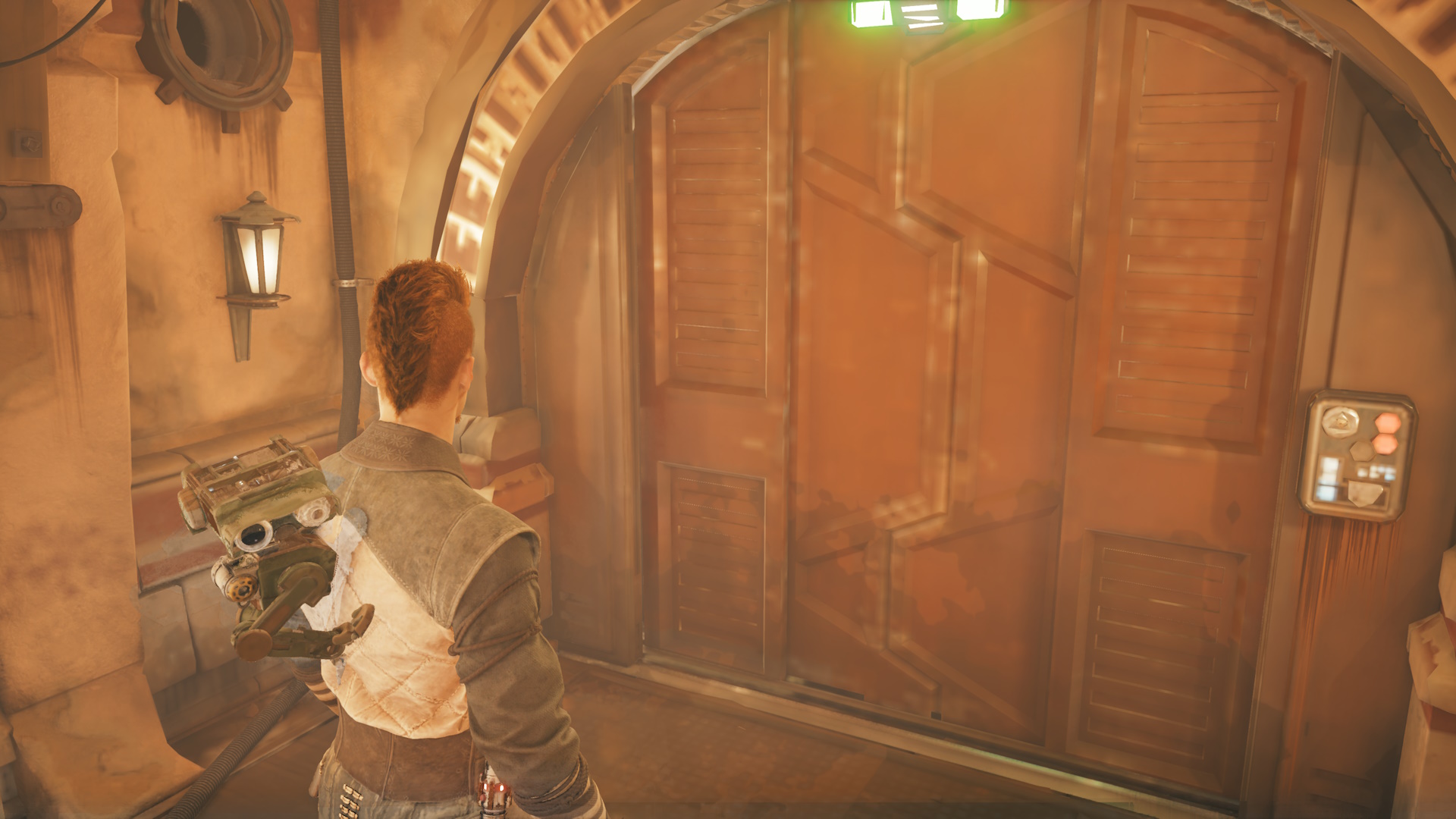
Jedi: Survivor bills itself as a “souls-like” game; i.e. a “difficult-for-the-sake-of-it” title. But to its credit, the game offers an easier mode to play on – something I took full advantage of. However, even on the easiest difficulty there were some particularly finicky and challenging moments. While I found the game’s combat to be okay, there were some moments where Jedi: Survivor required frame-perfect button presses that I found near-impossible. Because I suffer from arthritis that affects my hands and fingers, some rapid button combos are nigh-on impossible for me to perform. At several points in the game, I was almost entirely locked out from progressing because I couldn’t complete a particularly intensive button combo.
On one occasion it took me almost forty tries to navigate just a single section of the map on Jedha – a particularly convoluted wall-run, jump, and swing combination that my hands and fingers just couldn’t manage. The game offered no help with these things, no accessibility options, and no way to skip ahead to bypass these moments. This is poor, and while I will give Jedi: Survivor some well-earned praise for offering a story mode, more accessibility features need to be present, and developers need to be aware that easier combat isn’t the only thing that players are looking for. Many games offer the option to skip ahead if players can’t make it past a certain puzzle or area of the map; these things are not that difficult to implement.

Stories are incredibly subjective. What works for you might not work for me, and vice versa, so everything I’m going to say about Jedi: Survivor’s narrative choices have to be taken in that way. Nothing about this is “objective” at all!
Where I’d felt gripped by Jedi: Fallen Order’s story, Jedi: Survivor came up short. Cal felt listless, rushing from place to place at the behest of the plot but not in a particularly understandable way, and there were moments of sheer randomness in the story – particularly at the beginning – that really detracted from the adventure.

In Jedi: Fallen Order, Cal was being hunted by the Imperial Inquisition after he used his Force powers, but was rescued by Cere. She already had a mission of her own: to open the holocron. Cal slotted into that story perfectly, and at every stage it felt like it unfolded naturally as Cal visited different worlds to unlock the holocron’s mysteries.
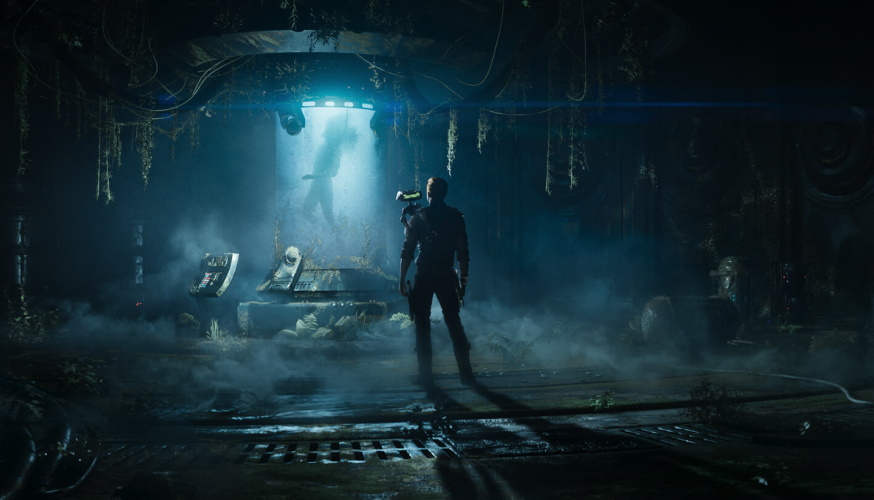
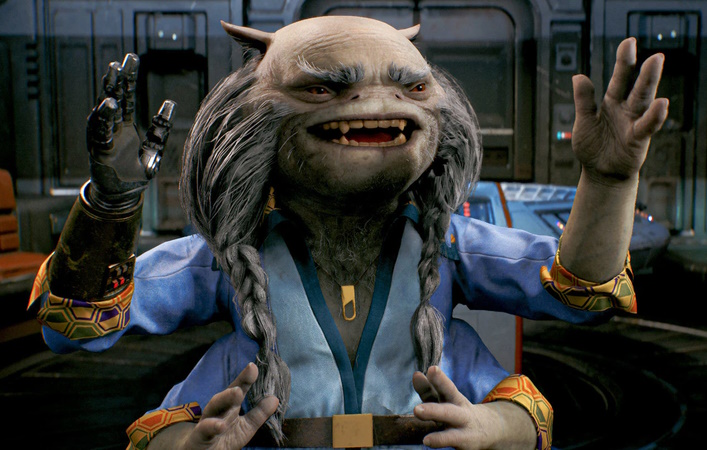
Jedi: Survivor begins with Cal falling into a hole that leads to a random cave – entirely by accident. It just so happened that Greez built his Cantina on top of some ancient Jedi ruins, and Cal stumbled into those ruins completely by mistake. That mistake kicked off a convoluted plot about a planet lost in an impenetrable nebula, a fallen Jedi who’d been sealed in a bacta tank for hundreds of years, and an Imperial spy who was so obvious that he might as well have had the words “secret bad guy” tattooed across his forehead.

I admit that the performance issues and bugs in Jedi: Survivor made it harder to fully get into the story, as did the open-world mechanics described above. And those two things have undoubtedly impacted the way I view certain character decisions and the game’s narrative path. But even keeping that in mind, and doing my best to separate my thoughts about the state of the game and its design choices from its narrative… I still find it to be a weaker and less engaging story than its predecessor.
Any Star Wars story set during the reign of the Empire has a tightrope to walk – and for me, Jedi: Survivor created narrative issues for itself as a result of a couple of key decisions. Bringing back Master Eno Cordova for what was, unfortunately, an underwhelming and unimpressive role seriously challenges the idea of Cal as the game’s protagonist and leading figure in any kind of Jedi restoration. Cere had appointed herself as a kind of librarian or preserver of Jedi knowledge, but Cordova – a Jedi Master, lest we forget – should have been in a strong position to play a leading role in the preservation and restoration of the Jedi Order.

Instead, Cordova’s role was a disappointment. He hand-waved away Cal’s destruction of the holocron that he’d gone to such extreme lengths to protect in the first game, then just stood around doing fuck all. He didn’t help, he didn’t offer guidance, he didn’t do… well, anything. And then he died remarkably easily at the climax of the game’s “twist” – a twist so thoroughly telegraphed that it might as well have been lit up in neon. Ever since the “no, I am your father” moment back in 1980, Star Wars has been obsessed with putting these kinds of twists into its stories. As I said once, recapturing that magic moment isn’t gonna happen, and Jedi: Survivor was made worse by trying to pull off something like this – and doing it so unsuccessfully.
When the dust settled, I also felt that Bode’s reason for his betrayal of Cal was paper-thin and didn’t make a lot of sense. Did Bode really plan to take his child to an uninhabited, uncharted planet and stay there – completely alone? What were they gonna eat? Without access to technology, what were they gonna do? Sure, they’d be “safe” from the Empire, and Bode would be wiped off the Empire’s list, but there doesn’t seem to have been any real planning on his part for the long-term.

In a “linear, story-driven” game – tags that Jedi: Survivor’s publishers love to draw attention to – the story is more important, in many ways, than the gameplay. Jedi: Survivor’s third-person exploration, parkour, and lightsaber combat could be fantastic… but if they’re let down by a poor story or one that feels convoluted, there’s no salvaging the game. And while I wouldn’t say anything in Jedi: Survivor was as bad, narratively speaking, as something like The Rise of Skywalker… that’s an incredibly low bar.
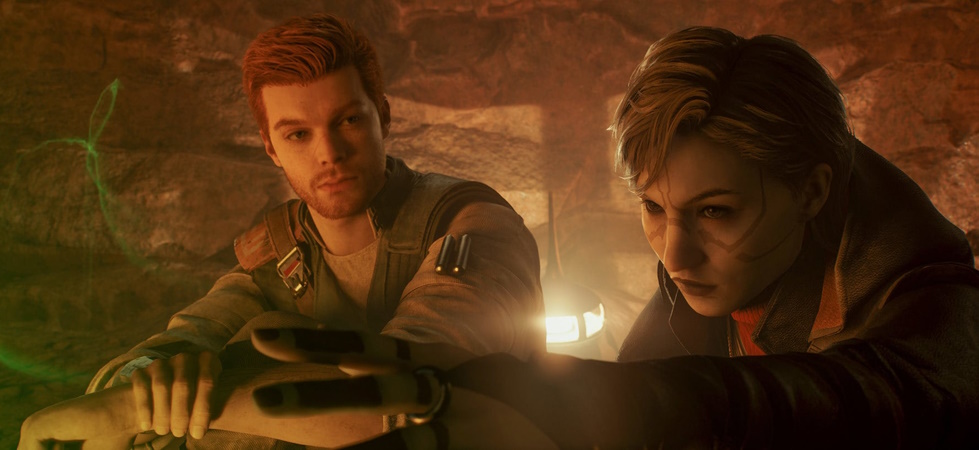
There were some genuinely tense, thrilling, or otherwise fun moments scattered throughout the story, as well as callbacks to the first game and references to other parts of the Star Wars franchise that I appreciated. So it wasn’t a total narrative collapse or anything like that; Cal’s story, while built on weak foundations, was still worth following to its conclusion. Even though I saw Bode’s betrayal coming from a mile away, Cal’s raw emotional reaction to it definitely hit the notes it was aiming for. While Master Cordova’s death felt like a waste, Cere’s demise at the hands of Darth Vader not only took her story full-circle after the events of Jedi: Fallen Order, but it was a heartbreaking moment that was handled well.

The weakest part of the story of Jedi: Fallen Order was one that I hoped its sequel might address. The Haxion Brood storyline – in which Greez and Cal were pursued by a gaggle of unimpressive bounty hunters – was left unresolved by the time the credits rolled on the first game, and I had hoped to see a resolution in Jedi: Survivor. There was a bounty hunter side-story in the game, with several different bounty hunters to defeat that served as kind of mini-bosses. The ending of this questline was neat, but here’s my gripe: it didn’t resolve the Haxion Brood storyline!
As of the end of the game, Cal and Greez are still wanted by the bounty hunters, and the faction’s leader, who we met in the first game and who seemed like the kind of arrogant dick that it would be so satisfying to kill, wasn’t even mentioned this time. Again, this storyline just feels half-baked, and I had hoped that Respawn might’ve taken that feedback on board after the way the bounty hunter story just fizzled out in the first game.

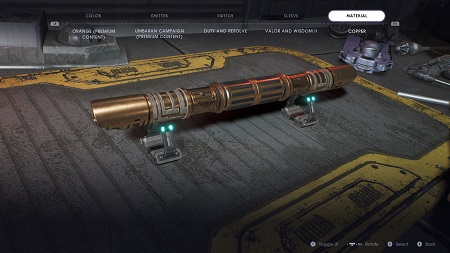
I liked that there were more cosmetic options in Jedi: Survivor, and I had fun playing with Cal’s appearance, BD-1’s appearance, and Cal’s lightsaber. I wasn’t wild about the way these cosmetics were unlocked, however, as I felt the game was particularly stingy with its currencies and lootable containers. That being said, I was able to unlock most of the items that I had my eye on, and by the time I was halfway through the campaign (or thereabouts) I’d got Cal, BD-1, and Cal’s weapons looking the way I wanted them to.
The expansion of lightsaber styles from Jedi: Fallen Order was nice – but these felt a little restrictive. I loved the way the crossguard lightsaber looked, but the incredibly slow and cumbersome fighting style that accompanied it basically rendered it non-viable for me. It would have been nice if there were options to mix and match fighting stances with cosmetics – in my case allowing Cal to use a crossguard lightsaber in a different way, but this could also open up double-bladed and dual-wielding stances to other styles of play.

Jedi: Survivor retains the Dark Souls-inspired “checkpoint” save system, instead of allowing players to freely save. This is a particularly irritating trend that many “souls-like” games (or should that be “souls-wannabes?”) implement, and it just feels annoying and outdated in 2023. Having to re-do chunks of a level because of the lack of a proper save system is just silly, it doesn’t increase the difficulty nor add anything to a game, and with Jedi: Survivor’s meditation spots not exactly being ubiquitous, I felt this choice got in the way of the fun.
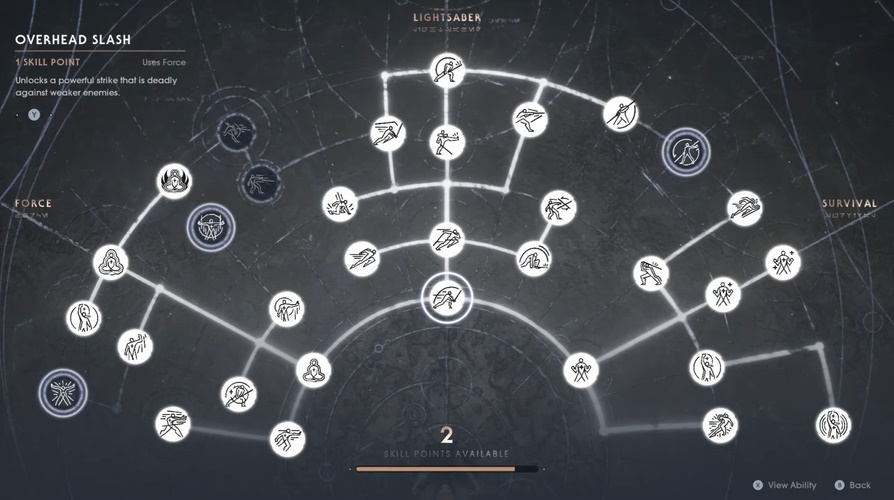
One thing I did appreciate was that Cal’s Force powers carried over from Jedi: Fallen Order. Given the way in which that game weaved Cal’s connection to the Force into its narrative, it would have felt strange if he’d begun the sequel having to re-learn those same skills, and I will give credit to the writers for keeping Cal’s growth going instead of going for the typical video game sequel “reset” of his powers.

I expected better from Jedi: Survivor, at the end of the day. The follow-up to one of my favourite games of the last few years was a title that I genuinely expected to compete for the coveted “game of the year” title come December, but instead it’s going to go down as one of the biggest disappointments of 2023 for me personally. The unacceptably poor state that Jedi: Survivor was in at launch – and remains in more than five months later – is a big part of that. But even if those performance issues and bugs had been kept to a minimum, the game itself feels like a poor relation to its illustrious predecessor.
Narratively, Jedi: Survivor built a weak, convoluted, and random story that split up the first game’s crew and saw Cal team up with an incredibly obvious turncoat. And mechanically, the game was forced into an open-world mould that simply didn’t suit it. It was hard enough to get invested in the story because of the poor shape that the game was in, but every time I got close, either the bland open-world formula would trip it up or I’d find myself annoyed by a story that was so much weaker than that of the first game.
So that was my experience with Jedi: Survivor. It’s hard to recommend it right now, given the performance issues and bugs that remain present. Electronic Arts and Respawn Entertainment have massively slowed the rollout of patches and fixes since the game launched, and I fear that Jedi: Survivor is being quietly abandoned and may never reach the level of basic playability and mechanical competence that should have been present at launch. This is already a huge disappointment and should be enough to put off all but the most ardent Star Wars fans.
Your mileage may vary when it comes to the game’s story, though, and my take is clearly not shared by all players. I’ve seen plenty of comments hailing the story as one of the best that the Star Wars franchise has to offer, and while that’s certainly not my opinion, it’s worth keeping in mind that these things are subjective. As I said earlier, I have no doubt that my overall impressions of Jedi: Survivor have been coloured by its bugs and performance issues.
I have no plans to return to Jedi: Survivor right now, and having stepped back into the game to capture a few screenshots for this piece, I’ll probably be uninstalling it. If a huge patch is released, or the game receives significant DLC that could add to its story, I might consider going around again. But unfortunately I must report that Jedi: Survivor was not the fun and engaging Star Wars adventure that I wanted it to be.
Star Wars Jedi: Survivor is out now for PC, PlayStation 5, and Xbox Series S/X. Jedi: Survivor is the copyright of Electronic Arts, Lucasfilm Games, and Respawn Entertainment. The Star Wars franchise is the copyright of Lucasfilm and The Walt Disney Company. Some promo artwork and images used above courtesy of IGDB. This article contains the thoughts and opinions of one person only and is not intended to cause any offence.





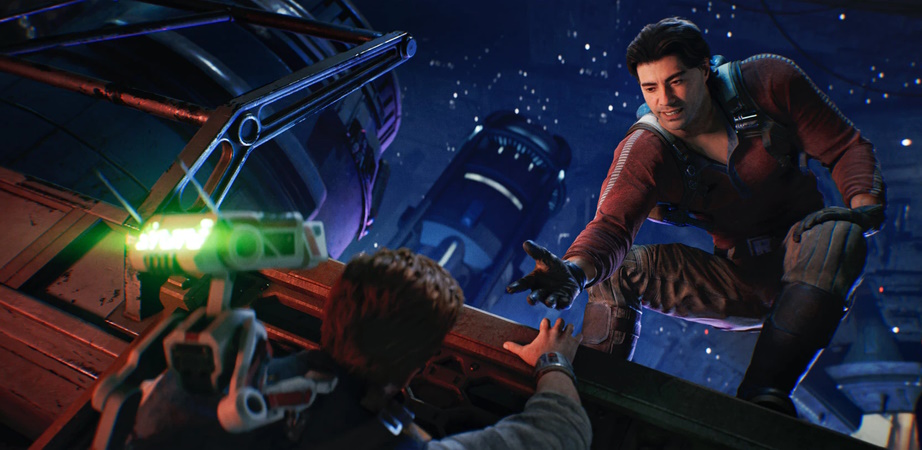
 Trekking with Dennis