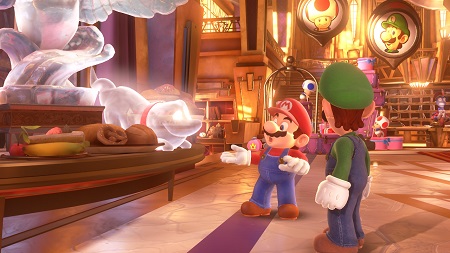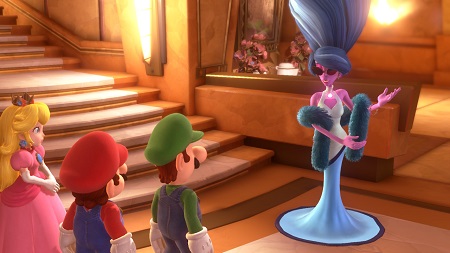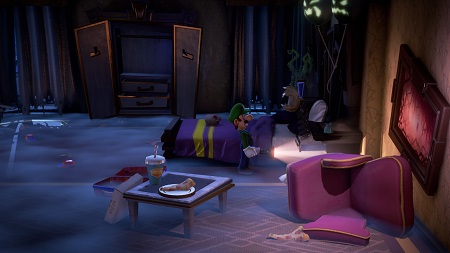

The Super Mario Galaxy Movie: Film Review

The first part of this review is free from major narrative spoilers for The Super Mario Galaxy Movie. The end of the spoiler-free section is clearly marked.

I wasn’t the biggest fan of the Super Mario Galaxy games when they premiered on the Nintendo Wii a few years ago. So when Illumination and Nintendo announced that a sequel to 2023’s Super Mario Bros. Movie would be based on those titles… I was a tad underwhelmed, to be honest. And in 2026, Nintendo – with its price hikes, anti-consumer attitude, and underwhelming new console – isn’t exactly my favourite company in the gaming space, either! So it’s with that background that I belatedly sat down to watch The Super Mario Galaxy Movie.

With all that being said, I had a great time with The Super Mario Bros. Movie in 2023 – I even called it my favourite film of the year. And my feelings about the Mario Galaxy games have more to do with their confusing spherical levels and the Wii remote’s awkward motion controls, rather than any actual narrative gripes. So there were definitely reasons to be optimistic about this return to the Mushroom Kingdom!

If you missed it, please check out my review of The Super Mario Bros. Movie, which I wrote back in 2023. You can find it by clicking or tapping here.
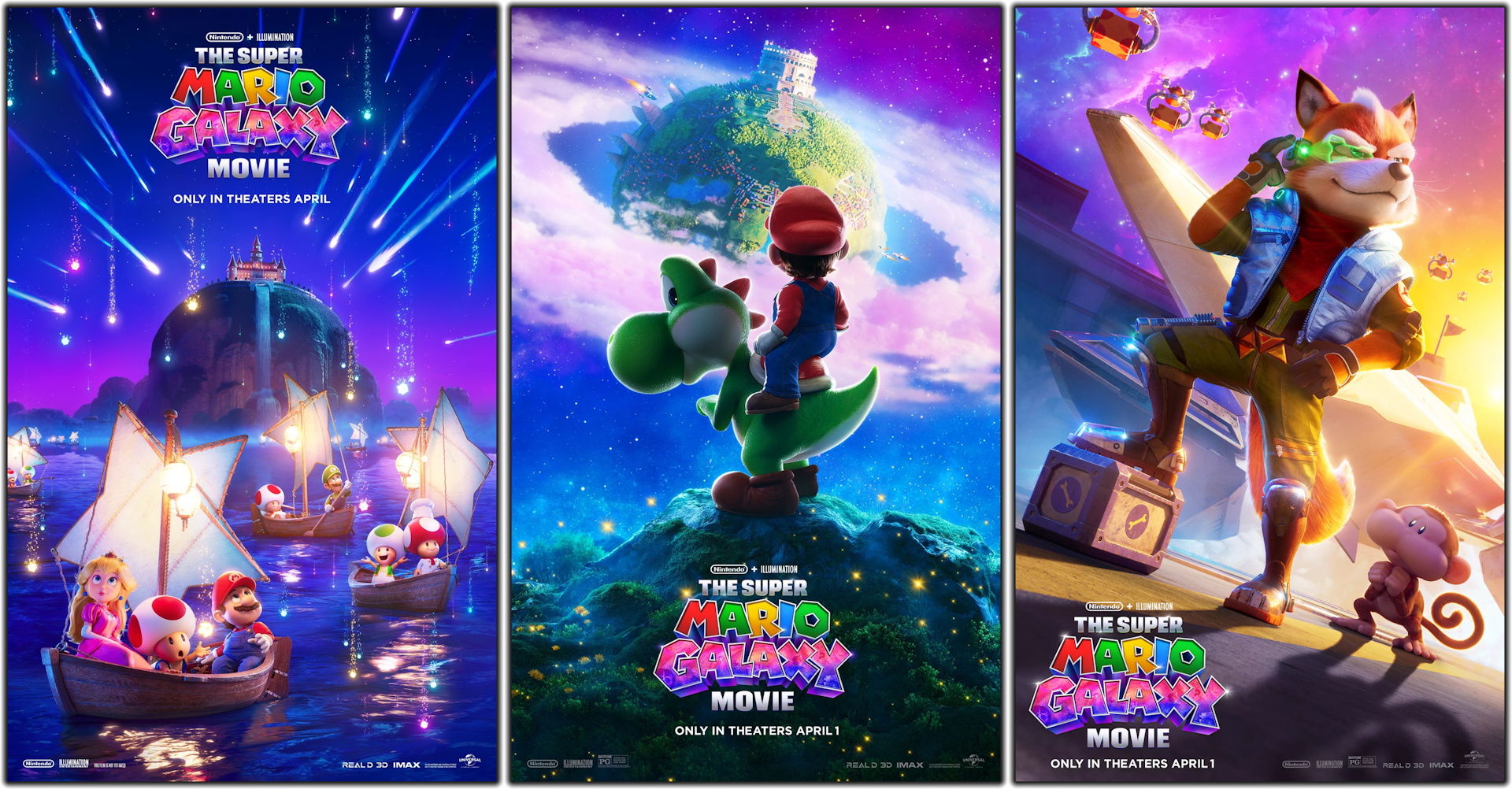
Three promo posters advertising The Super Mario Galaxy Movie (2026)
A trio of promotional posters.

Here’s the one-sentence summary: I liked The Super Mario Galaxy Movie. I don’t think it’s necessarily a “film of the year” contender, as its predecessor had been, but it’s definitely an enjoyable film for folks who’ve liked any of Nintendo’s games, the wider Mario franchise, or just animated films in general. Two main story threads felt connected, not just by characters, but also thematically, thanks to a strong focus on family ties, and the film had plenty of good-natured, kid-friendly humour throughout. Despite how I may have felt about the Mario Galaxy source material, the film wasn’t merely an attempt to re-tell the story of either of those games, and it included plenty of references to basically four decades’ worth of Mario games, from the original 2D platformers of the 1980s through to Odyssey and Wonder.

In terms of animation, I really can’t fault Illumination. I was lucky enough to watch The Super Mario Galaxy Movie in 4K on a pretty decent screen, and it really did look fantastic. Bold, bright colours are the order of the day, and there are plenty of stunning views of outer space, too. A variety of different locales came to life, and my only criticism would be that a couple of them felt a little samey, thanks to re-using the Mario franchise’s “blue sky, green grass, and brown rocks” aesthetic. But character models looked fantastic, there were a great variety of allies and villains for Mario, Peach, and the gang to encounter, and big set-piece moments all looked spectacular.
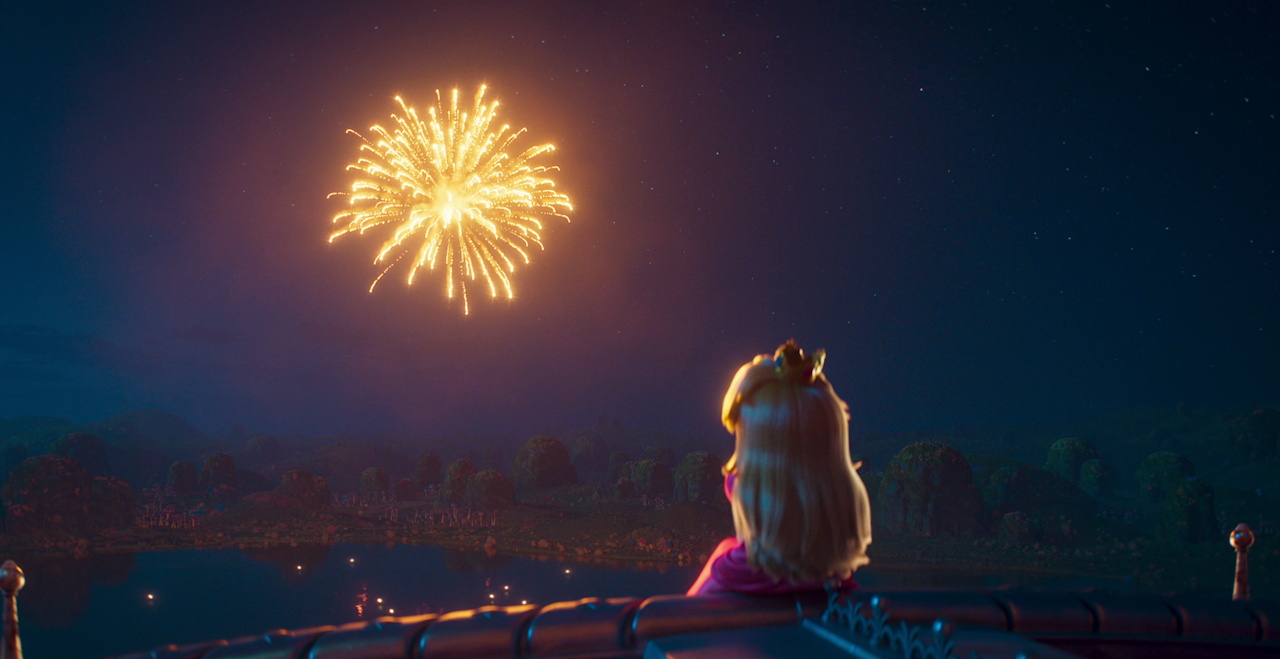
Still frame from The Super Mario Galaxy Movie (2026) showing Peach and a firework
The animation was fantastic.

The film’s score was solid, and it leaned heavily into nostalgia, with classic refrains from the video games being heard at multiple points. That goes for sound effects, too, with many different noises from the games being brought to the big screen. While I wouldn’t say I was “disappointed” that the film didn’t get a big song, like its predecessor… perhaps that’s something which, having sat with the film for a couple of days, I might say was missing. Given how Peaches, Bowser’s song from the first film, went mega-viral, I’m a little surprised to see Nintendo and Illumination not trying to repeat that.

Voice acting was generally pretty good. Brie Larson did well as Rosalina, with the only downside to her ethereal performance being that she wasn’t actually on screen all that much. The controversy of casting Chris Pratt as Mario has subsided since the first film, and again I think he did well in the part. I wanted to highlight the performance of Benny Safdie as Bowser Jr.; he gave so much life and personality to what could’ve been a pretty flat, over-the-top kind of villain. Jack Black as Bowser… I’m actually in two minds, and we’ll have to talk about why in the spoiler-ful part of the review.

The cast of The Super Mario Galaxy Movie (2026) at the premiere
Most of the main cast with Mario creator Shigeru Miyamoto at the film’s premiere in April 2026.

So I think that’s all I can say without really getting into spoiler territory.

Who’s this film for? Nintendo fans, obviously. But also fans of animated films in general, kids, parents of kids, and anyone looking for a fun adventure, really. If you *despise* Mario and all things Nintendo, I doubt this film will be the thing that finally wins you over! But even if you’re just a casual player of a few Nintendo titles every now and then – as I am, really – I still think you’ll find something to enjoy. In many ways, the film is a nostalgia overload; drawing on familiar characters, visuals, sounds, references, and more. But I don’t think that has to be a problem; a film like this, really, is designed from the ground up to be that kind of thing. My concern was whether, beneath all of that, there’d be a story worth following. And there was.

The Super Mario Galaxy Movie was lighthearted and funny in places, intense and action-packed in others, and even managed to hit some emotional beats. It’s a film I’d be happy to recommend to anyone who enjoyed the previous instalment and any fan of Mario or Nintendo games. We’re going to get into the film in a bit more detail now, so if you don’t want to see any spoilers, this is your chance to jump ship!

A Mario-themed spoiler warning graphic

Spoiler Warning: There are spoilers for The Super Mario Galaxy Movie from here on out. Also beware of spoilers for several Super Mario games, and the first Super Mario Bros. Movie.

The Super Mario Galaxy Movie was really about two families – neither of which were Mario’s! Bowser and Bowser Jr., on one side of the film, got a storyline about a deadbeat dad’s reconciliation with a son who adores him. And on the other, Peach yearned to discover her true origin – something she talked to Mario about in the first film – and belatedly discovered Rosalina, her long-lost sister. These stories weren’t symmetrical, but I liked the way that they rhymed, and how both Peach and Bowser Jr. kind of started out with similar motivations.

I love a good villian, so let’s start with Bowser.

The decision to have the pitch of Jack Black’s voice altered for basically half of the film was… well, not my favourite, to be honest. It was one of those things where, when you first hear it, it sounds hilarious; like hearing a friend who’s just inhaled a helium balloon. But for that to take up so much of his performance… I don’t think it landed as well as it should’ve. With Jack Black usually being such a commanding presence in any role, messing with his voice so much didn’t really work. I get where it came from, but for me, Bowser’s best moments came *after* he regrew to normal size and got his voice back.
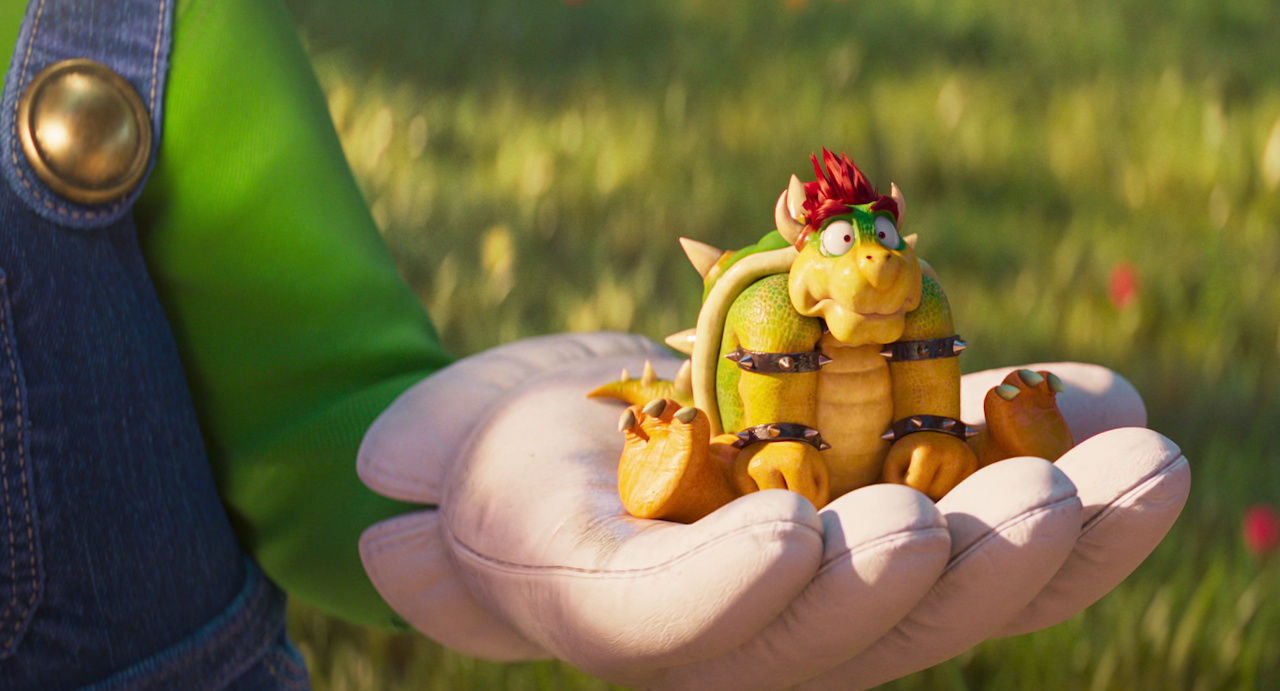
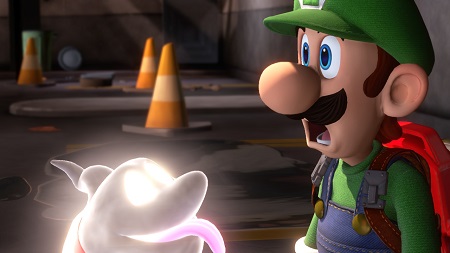
Still frame from The Super Mario Galaxy Movie (2026) showing mini Bowser in Luigi's hand
Miniature Bowser.

Sticking with Bowser, a story about being true to oneself is a good one for a kids’ film. But to frame that story through a villainous lens isn’t necessarily a choice I’d have made. Bowser, though clearly still struggling with his evil side, had made clear and demonstrable progress since the events of the first film, and even seemed to be ready to overcome all of that in a moment of self-sacrifice, willingly going to prison so that Mario, Luigi, and Toad could go free. That’s character growth.

So to take that and then toss it aside so that Bowser could be his “true self”… it sends a bit of a weird message to the film’s intended younger audience, doesn’t it? It’s either saying “rehabilitation doesn’t work; evil people will be evil forever,” or it’s saying “it’s okay to be a bad person if that’s who you are, just be yourself.” I don’t like either of those messages *in a film for kids*, and while I agree with the sentiments that “Bowser should be Bowser,” and that a Mario movie wouldn’t work with Bowser being a reformed ally… it does make me wonder why the writers and producers inserted any of that rehabilitation stuff at all. Was it just to be able to pull a twist later on? Was it to make Bowser’s supposed death hit harder? I don’t know… but I don’t think those justifications are enough, I’m afraid.
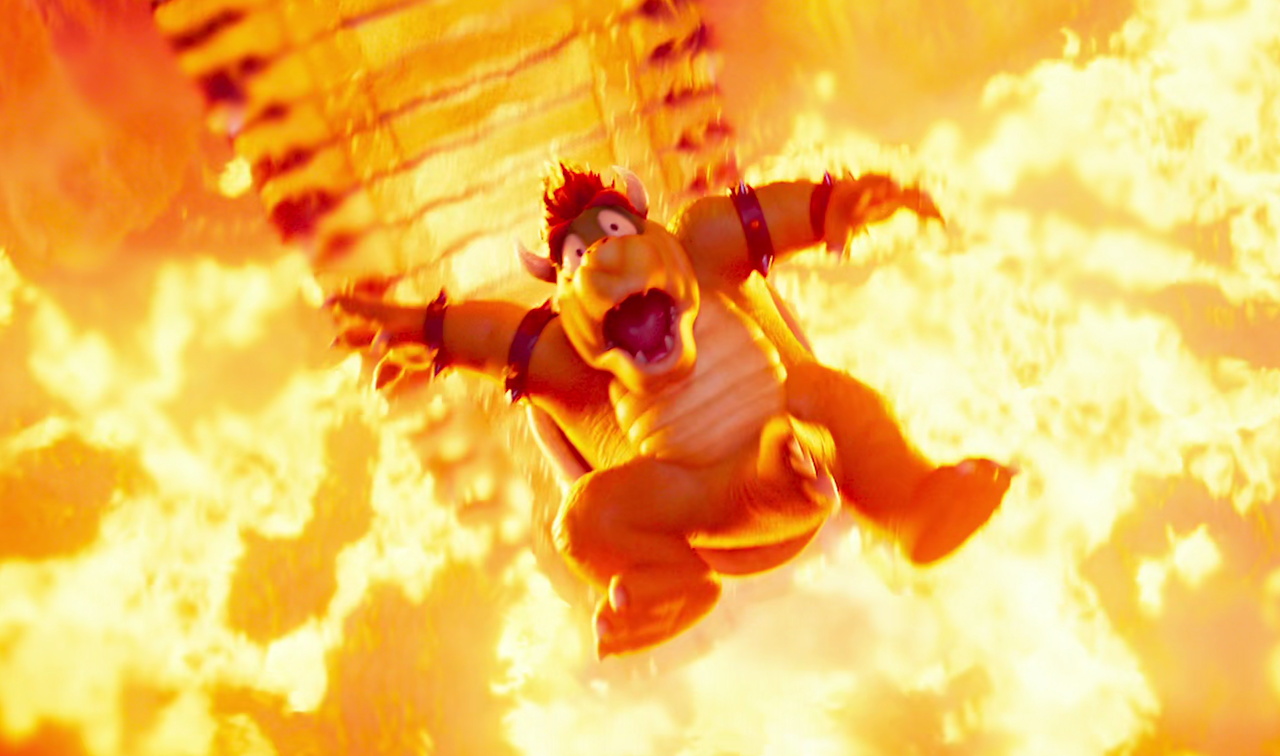
Still frame from The Super Mario Galaxy Movie (2026) showing Bowser's demise
Bowser’s downfall.

That being said, Bowser Jr. made for a strangely relatable character. A kid who just wants to see his father again, who’s willing to do anything to get him back, and who’s taken his father’s lessons to heart – evil though those lessons may have been – is a character I can empathise with to an extent. And far from being a one-dimensional “I’m evil for no reason, mwahaha!” type of villain, it gave both Bowser Jr. and his dad a bit more depth. I don’t think kids’ films should be granted an exception for weak writing, worldbuilding, or character motivations – not in most cases, anyway – so to see Bowser Jr. given a backstory that led directly into his scheme, and a plan to reunite with his dad that I could understand and that made sense? I liked it.

On the other side of things, we have Peach and Rosalina.

For the culmination of Peach’s single biggest desire across both films, my only criticism of the Rosalina connection would be that it felt a bit hollow to just have Peach learn about it from a book, rather than having another character – like one of the Lumas – explaining it to her. It was also, perhaps, a tiny bit rushed; Peach’s memory of being sent away seemed to come rushing back to her very quickly as she read from Rosalina’s storybook.
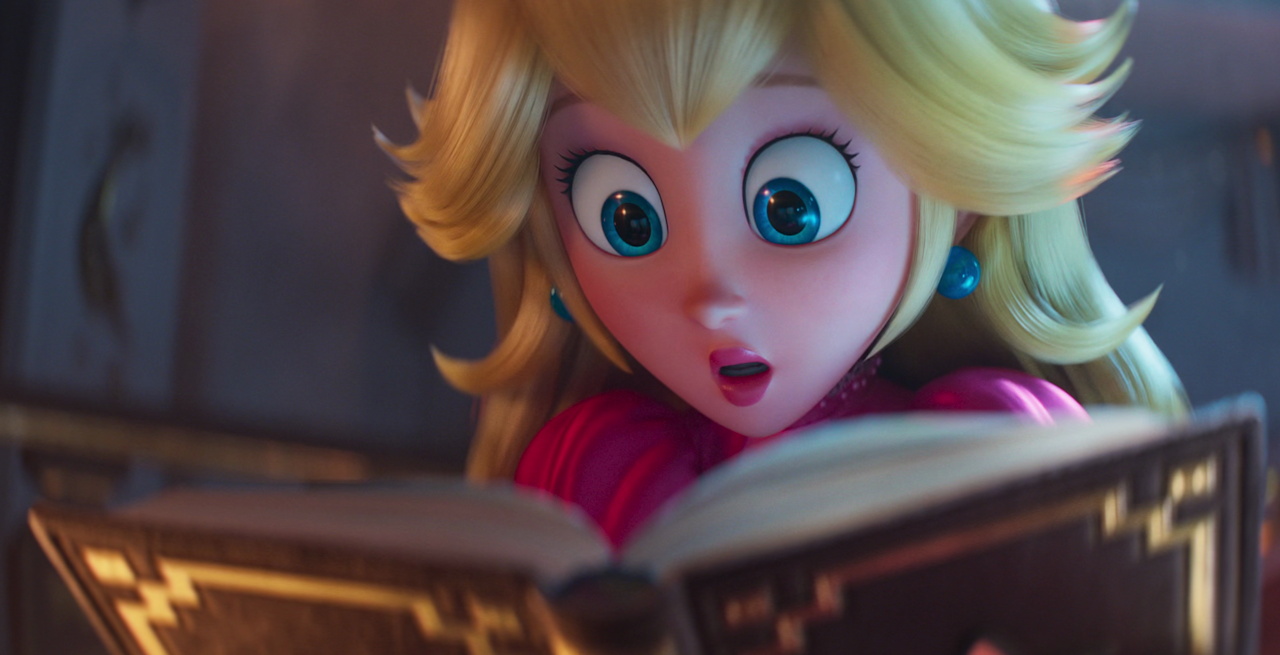
Still frame from The Super Mario Galaxy Movie (2026) showing Peach and Rosalina's book
Peach remembers…

But the sibling connection worked really well. I genuinely couldn’t remember if, in the *very* loose “lore” of the Super Mario games, Rosalina and Peach were already siblings, or otherwise related, but I think the connection works really well in the film. The way it’s set up, with Rosalina as the older sibling, having to send her younger sister away for safety… it made for a decently emotional setup for both of their arcs. I’d have liked to have spent a little more time with Rosalina, and especially with Peach and Rosalina after their reunion, but maybe that’s something we’ll see more of in the inevitable sequel.

One thing I strongly complimented 2023’s Super Mario Bros. Movie for was how it moved away from the tired, played-out (and arguably pretty sexist) “save the damsel in distress” trope. And while The Super Mario Galaxy Movie gets some credit for making Peach the main character invested in saving her sister… the setup, with Rosalina being kidnapped, still felt just a little bit regressive. And certainly less original than the previous instalment’s quest to save Luigi.
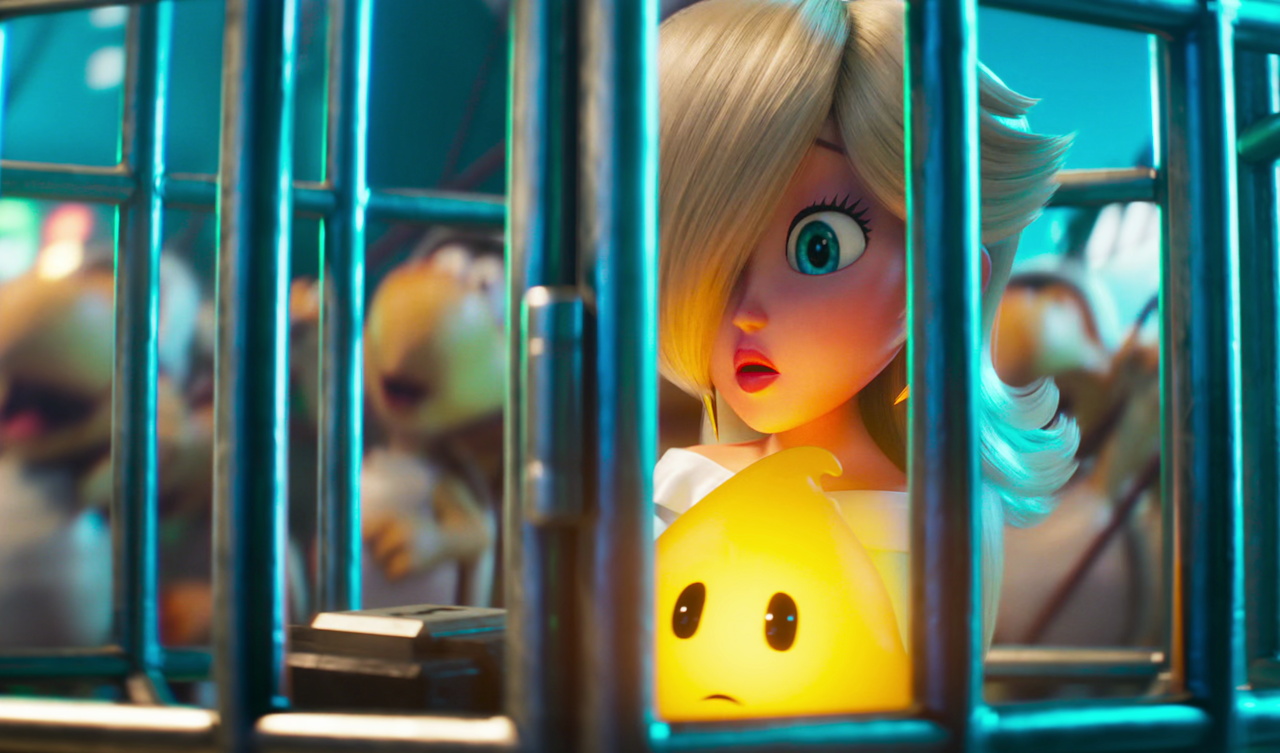
Still frame from The Super Mario Galaxy Movie (2026) showing Rosalina in a cage
Peach and Mario have to save the princess.

Perhaps it’s because I don’t have a lot of close family left, and because I live far enough away from my remaining close relative that I don’t see them as often as I’d like, but both of these storylines – Peach’s quest to help her sister and Bowser Jr.’s mission to save his dad – resonated with me, and I think they hit more of those emotional beats than I’d have expected when I sat down to watch the film. I don’t think The Super Mario Galaxy Movie is a tear-jerker by any stretch, but there are moments between both pairs of characters that hit me quite hard.

Mario’s storyline, such as it was, was definitely less important this time around. His “should I ask out Peach?” mini-arc didn’t really go anywhere, and didn’t get enough time in the spotlight to really build up much dramatic tension. It wasn’t bad, and it gave the character something to do beyond just chasing after Peach and Bowser. But in a film that had its main focus elsewhere, Mario’s hesitancy to ask out Peach, and his self-doubt about his “worthiness” to date a princess just… didn’t do much for me, I guess.
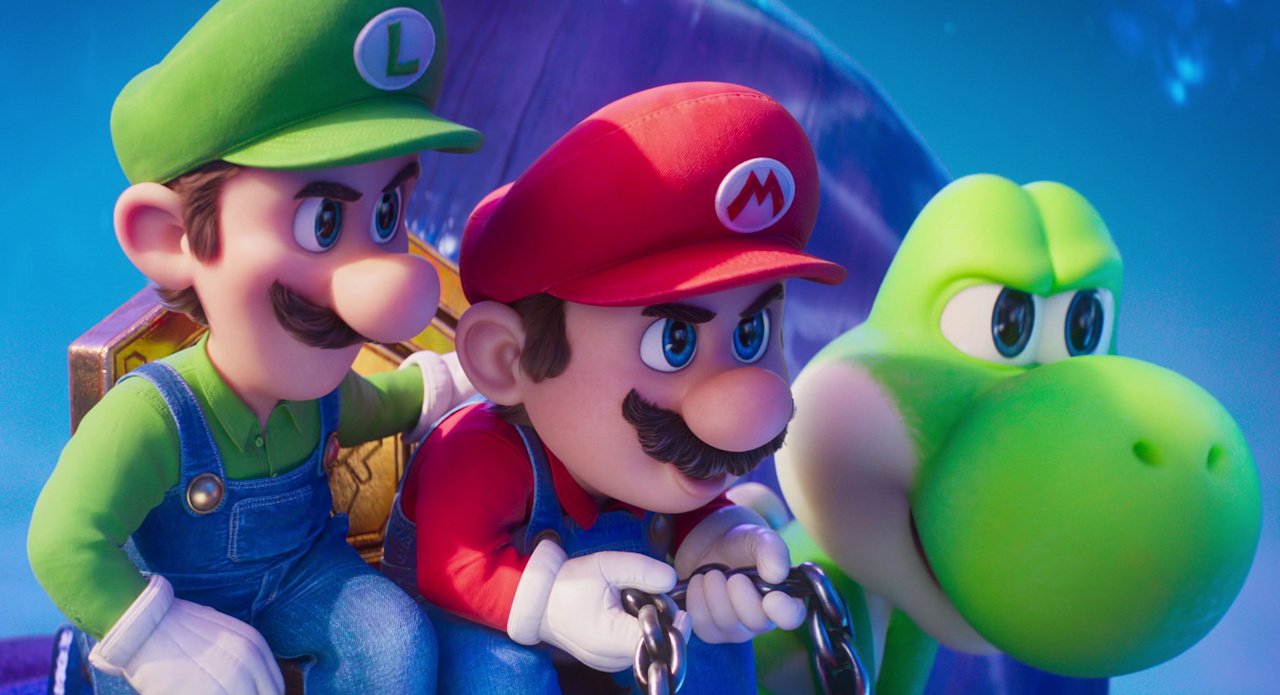
Still frame from The Super Mario Galaxy Movie (2026) showing Luigi, Mario, and Yoshi
Mario with Luigi and Yoshi.

There was potential in Mario and Luigi losing control of the Mushroom Kingdom, perhaps coming to realise that Peach’s job was harder than they realised. But that idea, when it was hinted at at all, likewise didn’t really get much time to shine. Nor did the fact that, on their watch, Peach’s castle was obliterated. In fact, I wish the film had made a tiny bit more of that – either through Mario confessing to Peach what had happened, or through an extended rebuilding sequence at the end. This is, after all, Peach’s home and the seat of authority in her kingdom. She left Mario in charge, yet didn’t so much as bat an eye when he showed up to help. And Mario and Luigi didn’t even have one moment of conflict or anxiety about how to explain to Peach what had happened.

Okay, let’s talk cameos! I don’t think I noticed everything, and The Super Mario Galaxy Movie might be a ton of fun to revisit just to catch more of these little easter eggs that Illumination and Nintendo slipped in! But I loved seeing things like the Nintendo 64 logo in the “seedy underworld” part of the galactic spaceport. Birdo made for a fun mini-villain at one point. R.O.B. (the annoyingly slow information kiosk robot) was a cute callback to the Nintendo product of the same name from the 1980s, Bowser Jr.’s weapon looked like a SNES Super Scope, and there were plenty of others, too. Some of these were deep cuts to a single game – Luigi’s frog suit, for instance, or the Tostarena Kingdom from the beginning of the film. And others were more directly connected to the Mario Galaxy titles, like the Lumas, the star bits, the star cannons, and so on. The baby characters – a callback to Yoshi’s Island – were cute, too.
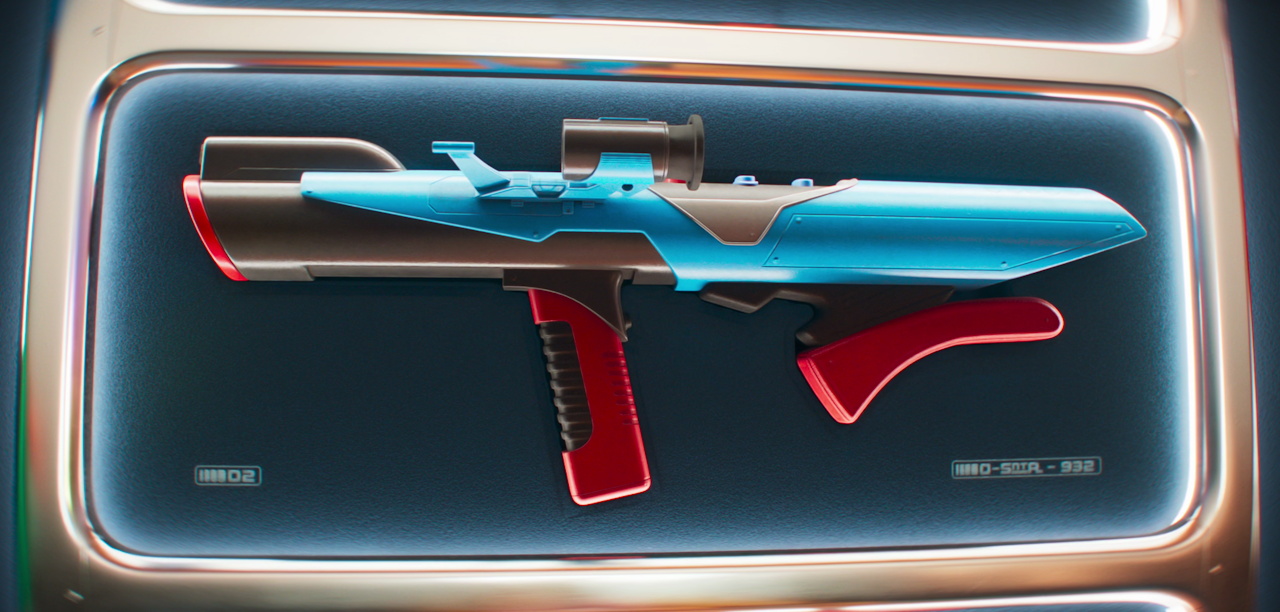
Still frame from The Super Mario Galaxy Movie (2026) showing a Super Scope
Did anyone else have a SNES Super Scope? I loved mine!

Then we have Star Fox! I loved Star Fox on the SNES; it was one of the games that really made me fall in love with that kind of space-shooter. It was a real treat to see Fox McCloud in The Super Mario Galaxy Movie… but I agree with what a lot of other commentators and critics have said: spoiling that reveal ahead of time, in the film’s own marketing material, was a bit of an own goal.

That being said, I loved the way Fox was presented in this story – a kind of Han Solo-esque rogue with a heart of gold. Fox didn’t get a ton of time in the spotlight, but his moments were some of my favourites in the film. And the sequence of him piloting his ship, blasting his laser cannons and taking down Bowser Jr.? That was genuinely a lot of fun – and a sequence, which, quite frankly, eclipses many comparable sequences in “serious” sci-fi films! It was genuinely that good.
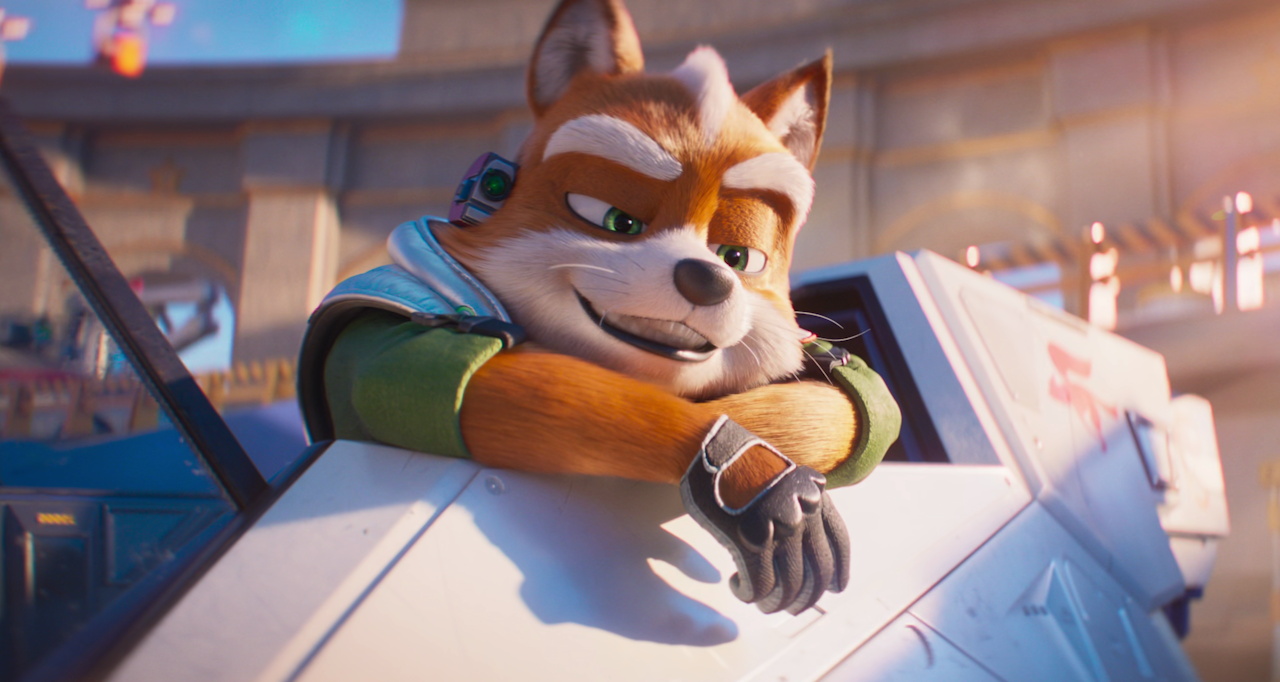
Still frame from The Super Mario Galaxy Movie (2026) showing Fox McCloud
Fox McCloud, from the Star Fox series.

The Super Mario Bros. Movie was a hard act to follow. And I felt some absences this time around: there’s no Donkey Kong, for instance, despite D.K. returning for his first 3D adventure in decades on the Switch 2 just last year. The first film’s Mario Kart sequence is still one of my favourites, and it’s a shame there wasn’t more of that this time around. And, as mentioned, the lack of a big musical number, while not something every animated film *needs*, felt a bit odd in light of what we got last time.

With all that being said, I enjoyed my time with The Super Mario Galaxy Movie. It met my expectations in many ways, exceeded them in a few, and didn’t really let me down at all. It’s unlikely to be a film I revisit a lot; I’m just not *that* big of a Nintendo fan, especially at the moment. But I’m glad to have seen it, I certainly enjoyed my time with it, and it’s the kind of happy, bright, kid-friendly adventure that I think we all need to see, sometimes.

So that’s all for today. If you missed my review of The Super Mario Bros. Movie back in 2023, you can check that out by clicking or tapping here. And I have quite a few articles about the venerable Mario Kart series – click or tap here for more on that! I still don’t own a Nintendo Switch 2, so I’m afraid reviews of any potential upcoming Mario titles will have to wait! But I’m sure I’ll have more to say about Nintendo – and the wider video games industry – before too long, so be sure to check in from time to time if you’ve enjoyed my take. Thanks for reading… and let’s-a go!


The Super Mario Galaxy Movie is available to stream now and will be released on DVD and Blu-ray later in the year. The Super Mario Galaxy Movie is the copyright of Nintendo and Illumination. This review contains the thoughts and opinions of one person only and is not intended to cause any offence.

Luigi’s Mansion 3 – final thoughts

Spoiler Warning: There are spoilers ahead for Luigi’s Mansion 3.

Time flies very quickly, doesn’t it? I think that might be the single spookiest thing about my playthrough of Luigi’s Mansion 3! I started playing last October, with a view to putting out a full “Let’s Play” series of articles in the run-up to Halloween, but once Halloween had passed by I put the game on the back burner for a while.

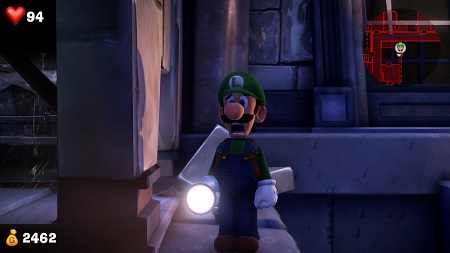
I like Luigi’s Mansion 3. It’s a fun game with some clever mechanics involved, there aren’t any bugs or random spikes in difficulty, and overall it’s the kind of sweet, lightly scary fun that I like to see at this time of year. From my perspective, though, it just didn’t make for a great game to write about in-depth for a full series of articles.

Let’s wrap up Luigi’s Mansion 3.

The reason for that is simple: Luigi’s Mansion 3 has some fantastic gameplay but is relatively light on story. You know the premise: the spooky Hellen Gravely and King Boo have kidnapped Luigi’s friends, and over the course of a dozen or so levels – represented by the floors of the Last Resort hotel – Luigi has to fight various ghosts and spirits to get them back.

In short, the fact that I can summarise the game’s entire story in a couple of sentences encapsulates what made it a struggle to write about in such depth. I could easily write a review of the game – but to give a blow-by-blow account of every interaction on every level, which I tried to do at first, quickly became repetitive. I didn’t think the articles I was putting together were all that interesting to read, let alone entertaining, so I really didn’t know what to do with Luigi’s Mansion 3 for a while.

The game’s title screen.

I kept promising myself that I’d get back to the series once I had a better idea for making the write-ups interesting. But the only thing I could really think of was condensing the articles into fewer instalments, and even then I still didn’t like what I’d produced.

This website has involved a degree of experimentation on my part. Some things developed organically – like the weekly Star Trek theories I write when a new season is running. Others have been attempted, but for various reasons didn’t work as I initially hoped. The Luigi’s Mansion 3 series of articles has been one such disappointment.

Figuring out how to write about Luigi’s Mansion 3 was a challenge.

However, I like to think I’ve learned something worthwhile from the experience! The biggest takeaway for me is that I have more to say and more to talk about when a game has a strong narrative. Once I’d got the prologue out of the way and settled into the Luigi’s Mansion 3 gameplay loop, I found myself running out of things to say. That says something about the way I write as much as it does about games like Luigi’s Mansion 3, and I know that a lot of people have published playthroughs focusing on this game – and many other titles with a comparable style. But this is my website, and I have my own way of writing and of approaching this format!

I would definitely like to do more playthroughs – but as I approach the subject again, I need to consider the choice of games carefully. I chose Luigi’s Mansion 3 last October specifically because it had a spooky theme, but I didn’t really stop to think about how the game works and what I’d be able to write about at the end of each play session. Having learned a thing or two as a result of this experience, I’d like to think any future playthrough series will be a much more interesting read from your point of view – and a much more enjoyable writing experience from mine!

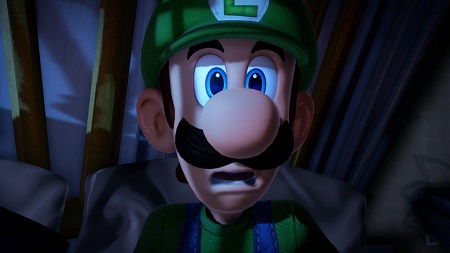
The titular Luigi.

With all of that out of the way, what did I think of Luigi’s Mansion 3? Having never played the first two games in the series, I was coming at the game from a newbie’s point of view. There were a couple of points where having a bit more knowledge of either the greater Mario franchise as a whole or the prior Luigi’s Mansion titles might’ve provided a player with a little more – but this was mostly in the form of “easter eggs” and references; nothing story-wise or gameplay-wise relied on knowledge of other games.

And that’s the way it should be! Luigi’s Mansion 2 came out for the 3DS in 2013, and the original game was a launch title for the GameCube back in 2001, so expecting Switch players in 2019 – when the game was released – to remember everything from the previous two titles would’ve been an impossible ask! I felt Luigi’s Mansion 3 was approachable and newbie-friendly.

The first title in the series was released in 2001 on the GameCube.

Nintendo’s first-party titles are almost always high quality. I didn’t encounter any bugs or glitches, and only a couple of very minor graphical issues. Luigi’s Mansion 3 looked decent even on my 4K television screen, and the Switch’s graphics in general are fantastic considering the console’s size and portability. With a file size of only a little over 6GB, Luigi’s Mansion 3 packs a lot into a small package – making it quick to download and easy to store even on the Switch’s limited internal storage.

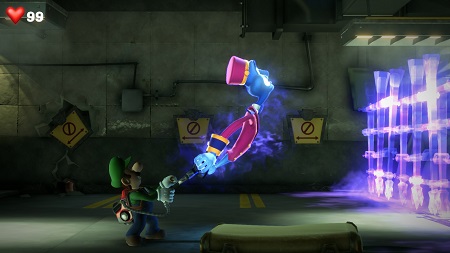
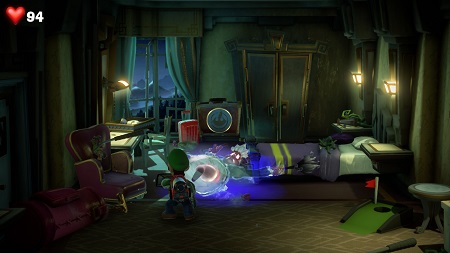
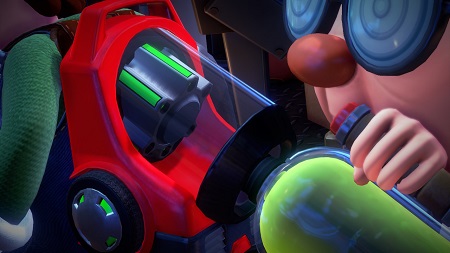
Gameplay was fun, and offered several completely unique elements that I’ve never experienced in other titles. Luigi’s main weapon is his vacuum – the Poltergust G-00 – which makes a return from the two older titles, albeit in an updated form. This fun and unique weapon allows Luigi to tackle ghosts in a variety of ways, including slamming them into the ground, bashing them against each other, and firing a shockwave.

Gameplay was great fun.

The Poltergust can also be used to fire a plunger which can be used to interact with the environment. Though it does have applications in combat, the plunger shot was largely useful for navigating previously-blocked areas of the hotel as well as uncovering secrets and hidden items spread throughout the game world.

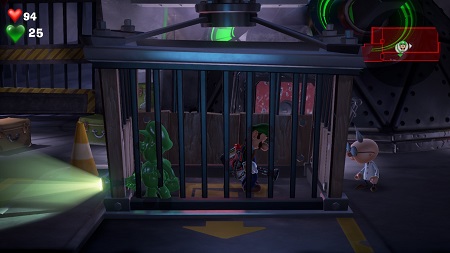
The addition of Gooigi – Luigi’s gooey doppelganger – made navigating levels much more interesting. Areas that Luigi couldn’t access on his own were easy for Gooigi to reach, and this had functionality both to advance the main story and for idle exploration and retrieving hidden gems. Having two playable characters with different abilities isn’t something new in video games, but Gooigi put a unique and fun spin on the concept, and came in handy on many different occasions!

Gooigi and Luigi.

Story-wise, Luigi’s Mansion 3 was pretty basic. That’s to be expected, though, and what story there was was done very well. These kinds of games don’t go all-in on big, believable narratives, and that’s absolutely fine. What mattered in Luigi’s Mansion 3 wasn’t really the story but the gameplay, and in that regard the game was an enjoyable experience.

Hellen Gravely was a King Boo superfan, and kind of a parody of a certain type of obsessive fan that I think we all see from time to time. Otherwise the story was a riff on a very familiar concept in the Super Mario series – a nefarious evil-doer has kidnapped someone special to our hero, and he must fight his way past the baddie’s minions, working his way up to defeating the big bad herself, in order to save them all.

Hellen Gravely, the game’s villain.

Trapping Mario and the others in paintings was itself a riff on the Super Mario 64 idea, at least on a superficial level, so in that sense nothing about the story of Luigi’s Mansion 3 was groundbreaking. What it did was put its own spin on a couple of existing concepts, then execute those ideas very well. As escapist entertainment it was perfectly enjoyable, and there was enough of a story to keep the game’s momentum going.

As someone who isn’t really into horror, what I liked about the setting was that it retained a spooky, creepy aesthetic, but kept things kid-friendly. I would wager that all but the most sensitive of children would be able to play and enjoy Luigi’s Mansion 3, and as a game to play in the run-up to Halloween I can hardly think of a better one! Striking the right balance in a game all about ghosts in a haunted hotel is a tricky task, and it would’ve been easy for the game to slip up and become scarier than intended. Luckily it avoided that particular pitfall.

I had fun with Luigi’s Mansion 3.

So Luigi’s Mansion 3 is an odd one for me. I failed in my mission to write up a full playthrough, but despite that I actually had fun with the game itself. The fact that it didn’t make for a good writing project is more to do with how I like to write and what I look for when it comes to writing up a full playthrough of a game. Luigi’s Mansion 3 is everything you’d want from a title of this nature.

I’ve been meaning to write this conclusion for a little while now, and October seemed like the right month once again! To those of you who tuned in for my Luigi’s Mansion 3 playthrough last year, thank you. I hope you enjoyed the pieces that I was able to write. Stick around, because I’ve got other ideas for playthroughs that – fingers crossed – will be more substantial!

Luigi’s Mansion 3 is out now for Nintendo Switch. The Super Mario franchise – including Luigi’s Mansion 3 and all other titles mentioned above – is the copyright of Nintendo. This article contains the thoughts and opinions of one person only and is not intended to cause any offence.
Let’s-a Play Luigi’s Mansion 3 – Part 2

Spoiler Warning: There are spoilers ahead for Luigi’s Mansion 3.

It’s taken a few days for me to get back to Luigi’s Mansion 3, what with all the theorising and building up to the third season of Star Trek: Discovery. Sorry about that, but we’re finally back with Mario’s scaredy-cat brother as he continues to explore the Last Resort hotel. In the first part, we saw Luigi and the gang check into the hotel, only for the whole thing to be revealed as a trap! Hellen Gravely, the owner, is in cahoots with Luigi’s nemesis King Boo, and the dastardly duo have trapped Mario, Peach, Toad, and Luigi’s professor friend in paintings. Here’s hoping Luigi can get them out!

One thing that makes writing this kind of article a lot easier than in years gone by is the ease of taking and saving screenshots. The Switch pro controller is my gamepad of choice for Nintendo’s console, and it has a screenshot button built right in. Regular readers may recall that I used to work for a large games company, and it wasn’t that long ago that getting a screenshot of a console game was a pain in the bum that required specialist equipment and a decent PC. So here’s to that little innovation!

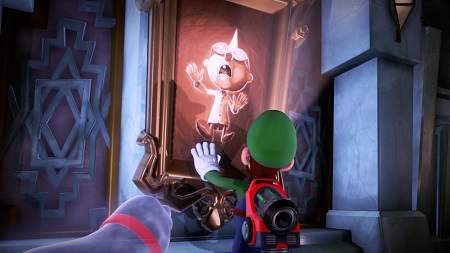
Last time, we left Luigi in a large room which contained a portrait of his professor friend from the first title in the series…

This is as far as we got last time.

This time, we’re going to explore some more of the hotel and even take on the first two boss fights. Let’s get started!

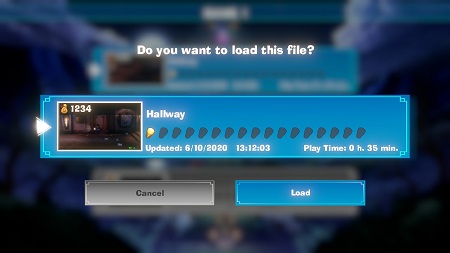
Luigi’s Mansion 3 doesn’t have the kind of “save anywhere” functionality that most modern games have. Instead it relies on an autosave which checkpoints Luigi’s progress every time he opens a doorway into a new room. Luckily this is a hotel, and exploring the hotel is the aim of the game, meaning we’re going in and out of a lot of rooms! The save file seems to keep the most recent three autosaves, meaning if – for whatever reason – one of them was no good, it’s possible to go back and choose a different one. As someone who’s been burned before by corrupted data, accidental deletions, and lost save files… this isn’t great. I like to be in control of my save, and Luigi’s Mansion 3 doesn’t give me that control.

The loading screen.

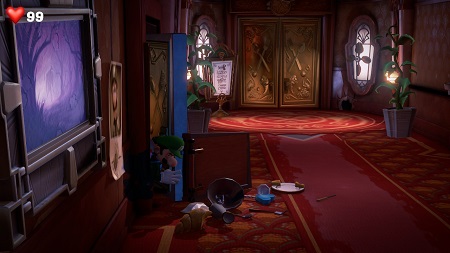
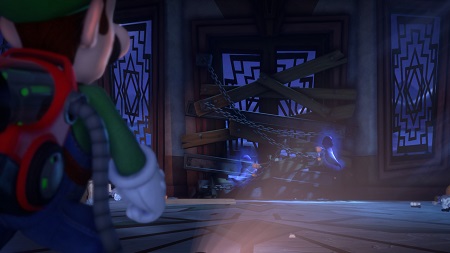
After loading, Luigi was in the hallway behind the room with Professor E. Gadd’s painting. Exploring this hallway led to an impassable doorway (blocked by something behind the door), as well as a metal door that needed a key. There was one other door, which was the only accessible one in this area.

The stuck door.

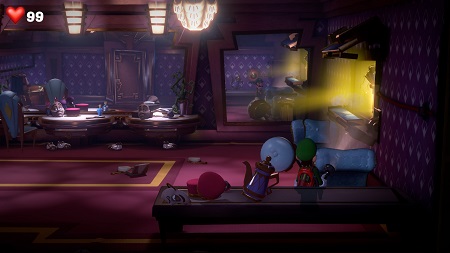
Opening this door led to a weird room that reminded me of a dressing-room for a theatre. There was a large mirror and several chairs facing it, with a table in front. I used to be involved with an amateur dramatics society many years ago, and this looked an awful lot like the backstage setup we had for getting people into their costumes and makeup! Considering that the ghosts who occupy the hotel had to put on a show for Luigi, Mario, Peach, and the Toads when they arrived, it makes sense that they’d have to have a dressing-room of some kind. And this is it!

The dressing-room.

The dressing-room was laid out very cleverly, and made good use of the mirror. Using the Poltergust on a coat hanging on the left of the room gave Luigi access to a safe, inside of which was a green gem. Not sure what purpose these gems serve yet, but we’ll find several more during this section of the playthrough. Another mirror on the right of the room showed a switch on the fourth wall (i.e. the one we can’t see). Activating this switch with the lamp on the Poltergust opened a hiding place behind a painting, giving Luigi the key to the metal door.

The hidden key.

This was a clever puzzle, the kind you might’ve expected to find in an older point-and-click game like Monkey Island, and the combination of the camera and mirror worked well here. It isn’t Nintendo’s first time using a mirror to reveal a hidden secret; Super Mario 64 features a room in the castle where it’s necessary to use a mirror to find the way into one of the painting worlds. After grabbing the key I headed out of the room, and here’s where not playing the game for ten days almost tripped me up! An attack by a couple of ghosts almost led to Luigi’s untimely demise as I struggled to remember how to use the various settings on the Poltergust!

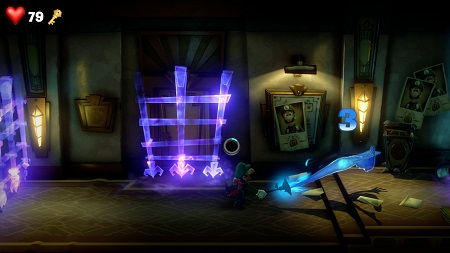
Battling ghosts in the hallway.

I was eventually able to defeat the ghosts, however, and make it back to the metal door. Unlocking it with the key led to a room with a safe. Inside the safe Luigi found a new lightbulb for the Poltergust; this one has the ability to save people trapped in pictures. So far we’ve only found one of Luigi’s friends, so it was back to the room with Professor Gadd’s painting to rescue him!

Professor E. Gadd is saved from his painting prison.

The Professor insists on being taken to his car in the basement – the place where we got the Poltergust earlier on. And here I’m almost embarrassed to say I got stuck! Heading back into the lobby leads the Professor to make a comment about heading down to the basement in the lift. But there didn’t appear to be a way to call or open the lift; the button was blocked by a fallen bin and for the life of me I couldn’t figure out what to do for a solid five minutes or so! Eventually, however, I remembered that pressing both trigger buttons at the same time does a different kind of attack move, and this is the only way to dislodge the wayward bin and access the lift. Phew.

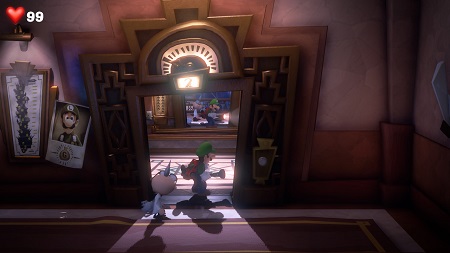
Finally able to enter the lift!

Upon entering the basement garage, Luigi encountered the first boss. I’m not sure what this character is called (or if he even has a name) but he was a ghostly member of the hotel’s staff, and attacked Luigi by throwing suitcases and other items of luggage. It wasn’t a particularly difficult fight all things considered, but it was time-consuming as this ghost had more hit points than any of the others we’ve encountered so far. Luckily the fight earlier on had reminded me of all the different moves at Luigi’s disposal, and while I did take some damage Luigi ultimately prevailed.

Defeating the first boss.

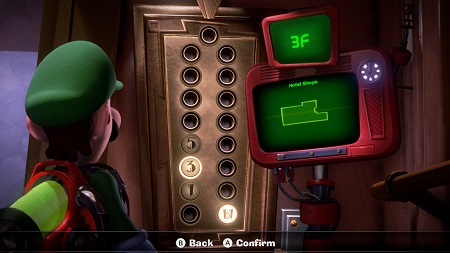
Most of the buttons in the elevator were missing – there was only the basement accessible when Luigi and the Professor rode down a moment earlier. This boss dropped two buttons when he was defeated, and this seems to be a pattern that will be repeated for every boss in the game. Each button allows the lift to travel to a different floor – so defeating a boss opens up a new level. Simple.

Luigi finds one of the buttons.

The Professor heads to his car and retrieves a strange geometric shaped item from the boot. This turns out to be his “mobile lab,” and when unfolded it’s an entire safe room! Setting this up in the basement will allow the Professor to keep tabs on Luigi, as well as being a safe space to return to between levels.

Luigi is shocked as the Professor sets up his lab.

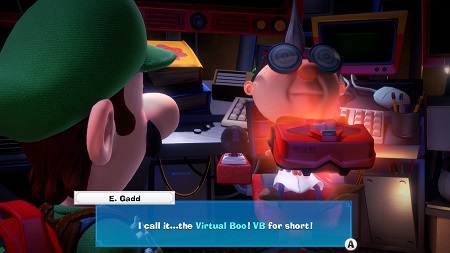
The Professor is kind of funny. A stereotypical “mad scientist” type who’s lost in his work, he’s nevertheless a fun character and I enjoyed the cut-scene with him inside the lab. He gives Luigi a “Virtual Boo” – an obvious clone of Nintendo’s own Virtual Boy console from the 1990s which failed. This was a funny, self-aware joke on Nintendo’s part! In addition to being able to call on the Professor to ask for hints, the VB also contains a map, which will come in handy. And just like the Virtual Boy on which it was based, all the menus, screens, and even the map are projected in shades of red.

Luigi receives the Virtual Boo from the Professor.

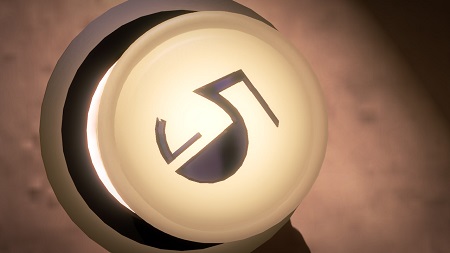
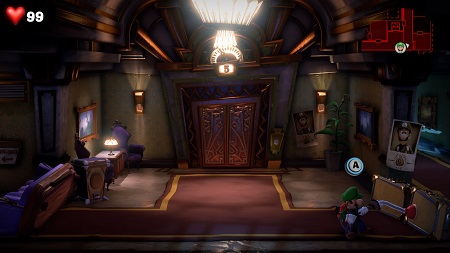
After exiting the lab, Luigi’s first task was to install a machine of the Professor’s inside the lift. This will keep track of the available floors and provide a little information when inside the lift. Entering the lift triggered a cut-scene in which it was set up automatically, so there wasn’t much to do here. The next assignment took Luigi to the fifth floor, which is where the Professor had been staying when he was captured. Luigi is tasked with retrieving an important briefcase…

Next stop, the fifth floor…

The fifth floor branched off in two directions. Both were blocked, one by furniture that was immovable – but may be able to be moved later if Luigi gains access to new moves. The other was blocked by suitcases that Luigi was able to move using his new “plunger shot” skill. The plunger shot is what it sounds like – the Poltergust fires a plunger (the kind used to unclog toilets) with a rope attached. It will stick to certain flat surfaces, and Luigi can then use the Poltergust to suck up the rope, moving whatever object the plunger is stuck to. Got that? It’s harder to explain in words than it is to use!

Using the plunger shot on a suitcase.

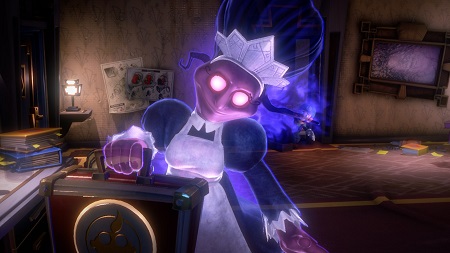
After rounding the corner, a housekeeping cart shoots off seemingly all on its own, giving Luigi a fright. Exploring these rooms yields little, and after a fight against a couple of ghosts, Luigi arrives at Room 508 – which had a giant yellow exclamation-mark on the map. Inside was the next boss: a chambermaid. Room 508 was the Professor’s room, and inside is the briefcase Luigi needed to get. Unfortunately the maid swallows the briefcase, and before I could figure out what to do she made her escape by floating through the wall.

The second boss.

Once I figured out how to use the plunger shot on the briefcase – ghosts are noncorporeal, after all! – the boss fight was another that was relatively easy yet still time-consuming. After a couple of successful attacks the maid will flee if you aren’t quick enough, and after she fled the third time, I wasn’t sure where she’d gone.

The ledge on the fifth floor.

Looking around the entire accessible area – including an outdoor section on a ledge – yielded nothing, but after returning to Room 508 the maid was back where she started, and the boss fight was able to be continued. Defeating her meant Luigi could grab the briefcase, and also scored another elevator button for his trouble.

Defeating the second boss.

The new button is for the third floor – which says it contains a hotel shop, perhaps somewhere for Luigi to spend all of these coins he’s been collecting? Before we can go there, however, the Professor calls to ask for his briefcase. Returning to the lab in the basement, Luigi was rewarded for this outing with yet another new tool – Gooigi! What is Gooigi, I hear you ask? Well it’s a facsimile of Luigi… made entirely out of goo. Gooigi is able to access areas that Luigi can’t, and it’s now possible to switch between controlling Luigi and Gooigi with the push of a button.

It’s like that scene from Terminator 2…

Gooigi’s main feature is being able to squish his way into small spaces – such as in between bars or, perhaps, down grates. We’ve already seen a few rooms that had small, seemingly impassable holes in the wall. Perhaps Gooigi can access those areas. I had wondered if Polterpup (Luigi’s ghostly dog) might be useful there, but it seems like Gooigi might be instead. We’ll see next time we find such a room!

Gooigi is loaded into the Poltergust.

After a short section that served as a tutorial for using and controlling Gooigi, Luigi was once again able to explore the hotel. The third floor had been opened up, and though I couldn’t tell much from the map it didn’t look like a huge level. Also hearing that it was a shop led me to think maybe it would be somewhere to spend some coins, if indeed Luigi’s Mansion 3 has such a facility. So I headed to the third floor!

Heading to the third floor – with the Professor’s special machine in the lift.

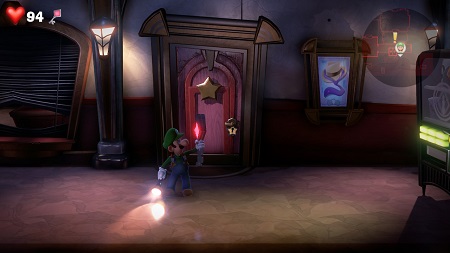
The third floor turned out to be larger than its map led me to believe, and contained who I assume to be the next boss – a security guard ghost. This ghost dropped a large key while patrolling around the shuttered shops and Luigi was able to sneak in and collect it. The next door has another large yellow exclamation-mark on the map… I think that means the boss will be there! But let’s save that for next time, since we’ve done quite a lot of exploring already!

Luigi’s Mansion 3 continues to offer cute spooky fun in the run-up to Halloween, which is all I wanted from it! I hope these write-ups are a bit of fun; Luigi’s Mansion 3 is a very different kind of game from the last one I wrote up, and with less of a story it’s sometimes hard to know what to say. I don’t want to skip over too much gameplay!

Come back next time to see what the giant exclamation-mark on the third floor is all about!

Luigi’s Mansion 3 is out now for Nintendo Switch. The Mario franchise – including the Luigi’s Mansion games – is the copyright of Nintendo. This article contains the thoughts and opinions of one person only and is not intended to cause any offence.
Let’s-a Play Luigi’s Mansion 3 – Part 1

Spoiler Warning: There are spoilers ahead for Luigi’s Manion 3.

It’s October, the spookiest month of the year! As we get nearer to Halloween, I thought it could be fun to play through a truly spooky game: Luigi’s Mansion 3 for Nintendo Switch. Perhaps appropriately, Luigi’s Mansion 3 was released on Halloween last year, but it’s taken me until now to pick up a copy! If you followed my playthrough of Star Wars Jedi: Fallen Order this summer, this series of articles will be in a similar format. I’ll be writing up my time playing the game, illustrating the posts with screenshots, and at the end when I’ve completed it I’ll write a summary and give you my impressions.

Luigi’s Mansion 3 is the first game in the series that I’ve played. The first Luigi’s Mansion debuted on the GameCube in 2001 (or 2002 here in the UK). I didn’t own a GameCube, so it wasn’t a title I got to play at that time, but I’ve heard positive things about the game and its Nintendo 3DS remake. The second instalment in the series, Luigi’s Mansion: Dark Moon, was also a 3DS title, released to coincide with Nintendo’s “Year of Luigi” promotional event in 2013. Interest in that title and the remake of the first entry led to the creation of Luigi’s Mansion 3 a few years later.
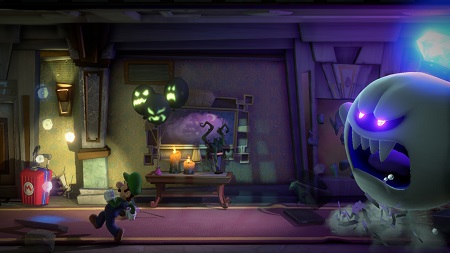
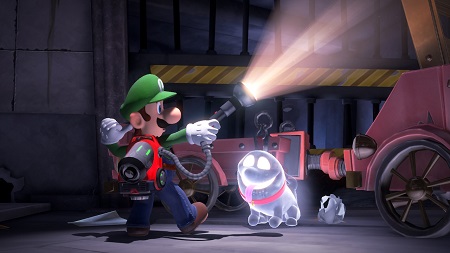
So that’s how the game came to be! Without further ado, let’s get started!

The title screen.

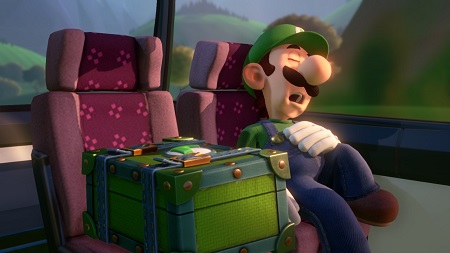
I was positively thrilled that, for the first time in a long time, a game I’d bought didn’t require any updates before I could get started! Instead the game booted straight to the main menu, from where I could select story mode and jump right into playing. A cute opening cinematic depicts Luigi, Mario, Princess Peach, and several Toads on a bus.

Luigi, fast asleep on the bus.

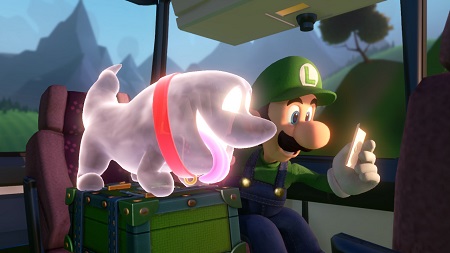
Luigi has a ghost-dog called Polterpup, who may be a returning character from one of the past games. That rounds out the group as they arrive at The Last Resort hotel for a holiday.

Polterpup and Luigi with their mysterious invitation.

Inside the lobby of the hotel I got my first moment of gameplay, as Luigi was able to walk around the lobby and investigate a couple of different things. I liked the old Mario theme that played when Luigi was in the vicinity of Mario. After interacting with everything in the area, Luigi checked into the hotel, at which point another cinematic played.

Mario and Luigi.

It turns out that Luigi had been invited to the hotel – along with his friends – by the owner, Hellen Gravely. She invites them all to check into their rooms, and they ride a lift that reminded me of the Disney World ride The Tower of Terror up to their floor. In fact, the creepy vibe of the hotel as a whole could be said to be reminiscent of that ride.

Hellen Gravely…
…and the Tower of Terror-esque lift.

Everyone retired to their own rooms, leaving Luigi alone with Polterpup. Exploring the room and bathroom yielded nothing significant, so the only thing left to do was go to bed. Luigi was awakened later that night by Princess Peach screaming!

Luigi woke up when he heard Princess Peach screaming.

The room was now shrouded in darkness with a mysterious mist or fog on the floor, and where there had been cute little hotel knick-knacks there was now nothing but spooky décor! Luigi looked in both Mario and Peach’s rooms, but they weren’t there. Both rooms did have signs that they’d recently been there; pizza boxes for Mario, a tea set for Peach.

Mario’s half-finished pizza.

After exiting Peach’s room, Luigi was confronted by Hellen Gravely. It turns out that she had befriended King Boo – who I believe was the main baddie in the earlier games – and he’d captured Peach, Mario, and the Toads. They’d been imprisoned in picture frames, which sounded kind of like the setup to Super Mario 64!

Hellen Gravely in her true form.

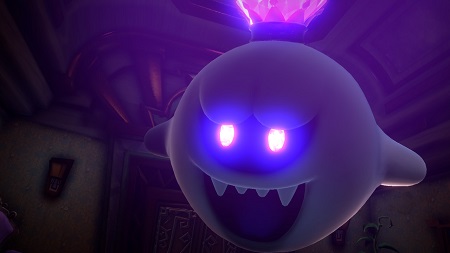
King Boo wanted to trap Luigi too, getting his revenge for being defeated in a past encounter. There was nothing to do but run! The hallway that led to Luigi’s room was the only way to go, and King Boo gave chase.

King Boo!

At the end of the hallway, Luigi had nowhere left to run. A convenient laundry chute offered him a last-ditch escape, and he dived in head first! This marked the end of the prologue, as we got the game’s opening title; the sunlit, appealing hotel changed to look dark and spooky! At the bottom of the laundry chute Polterpup woke up Luigi, and the game’s first level began.

The escape from King Boo.

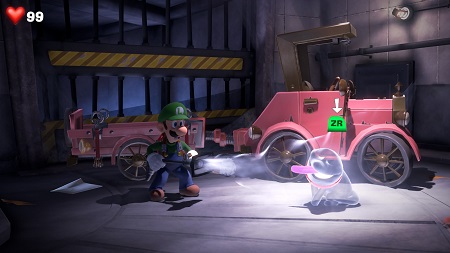
Luigi collected his first coin – though what the coins do is unclear at this point – and followed Polterpup into the hotel’s car park. There he was directed to a parked car containing the Poltergust! This is the vacuum cleaner-weapon that debuted in earlier titles. Luigi will use it to suck up ghosts (I know how it sounds but that’s the best way to explain it!) It also has a powerful light that can paralyse ghosts.

The Poltergust.

Polterpup gave Luigi a quick tutorial on the weapon. It can be used to suck up ghosts, push them away with a “blow” function, shine a bright light, and create a shockwave. After confirming that I was happy with what I’d learnt it was time to press on.

Learning to use the Poltergust.

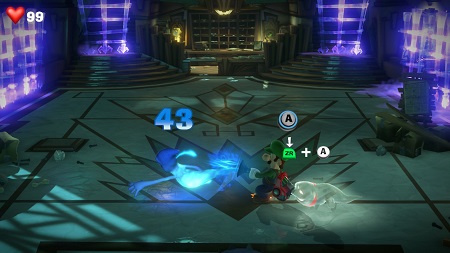
Going upstairs led back to the hotel lobby, and the first battle against spooky spirits! I was a little surprised to see that a single hit from a ghost was enough to lower Luigi’s health by a whopping twenty points! At that rate he’s only good for four or perhaps five hits, after which it’s surely game over. I’ll have to be careful!

Battling gosts in the hotel lobby.

The ghosts have locked Luigi in the hotel – presumably so King Boo can catch him – and after dispatching (or collecting?) them, I was free to explore the lobby once more.

The ghosts have sealed the way out!

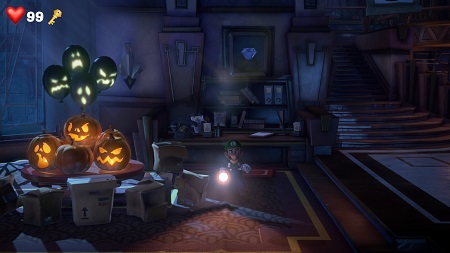
Presumably this is the hotel’s “normal” state, and it was simply redressed to look more appealing to the gang when they arrived. Its current décor is much more ghostly; perfect for Halloween! There are even pumpkins.

Some Halloween decorations!

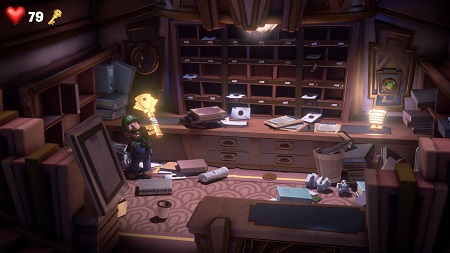
With the few ghosts gone, nobody else was present in the lobby. Luigi was able to get behind the counter and grab a shiny key – surely something that will come in handy in a title like this! There was also a large amount of money behind the counter, and Luigi went from having a handful of coins to over 1,000 in an instant. I wonder what he can spend them on?

Luigi grabs the key.

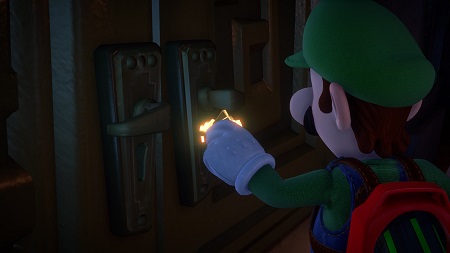
The key was obviously the important thing, as without it the door on the level above would not open. Luigi used the key to open it and unlock the next area.

Opening the door on the upper level.

A room in this area contained a portrait of a character that I vaguely recognised; it turns out this was one of the characters from one of the previous games. The professor who invented Luigi’s vacuum cleaner-weapon is trapped like Mario and co., and it’s up to Luigi to rescue them!

Luigi’s friend is trapped in a picture!

At this point, having completed the prologue, I had to get on with something else so I shut the game off. I think we’re going to have plenty of spooky fun between now and Halloween playing Luigi’s Mansion 3! The controls will take a little getting used to; there’s no direct camera control, and while the camera follows Luigi quite closely for the most part, that’s something I’m not used to in a third-person title. There’s also no jumping in the game, so it doesn’t look like we’re in for much platforming.

Though I could only spend around half an hour with the game on this first occasion, my first impressions of Luigi’s Mansion 3 are very positive, and I’m looking forward to pressing on deeper into The Last Resort hotel and battling spooky ghosts!

Luigi’s Mansion 3 is out now for Nintendo Switch. The Mario franchise – including the Luigi’s Mansion games – is the copyright of Nintendo. This article contains the thoughts and opinions of one person only and is not intended to cause any offence.