Halo (TV Series): Season 2 Review

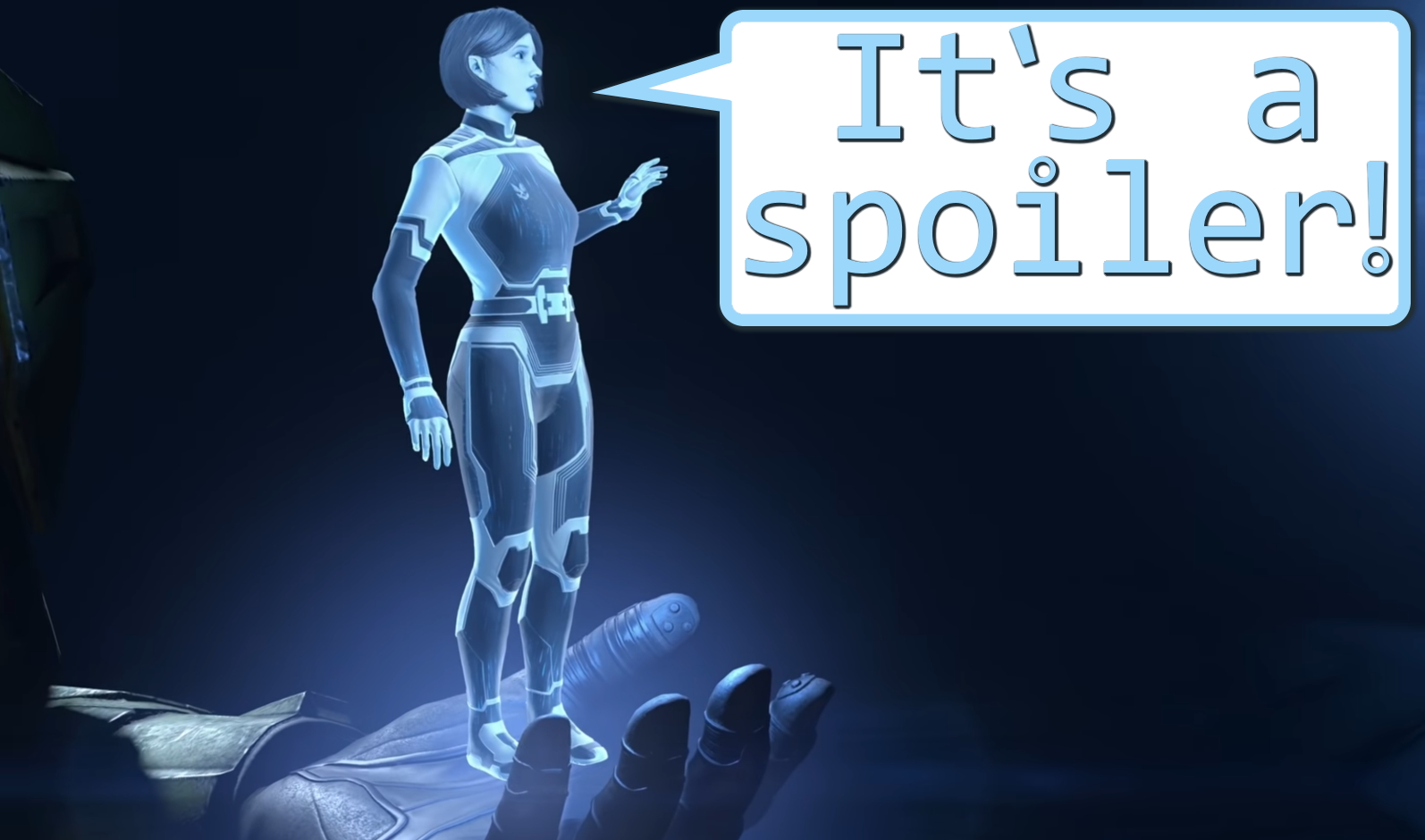
A spoiler warning graphic.

Spoiler Warning: There are spoilers ahead for Halo Seasons 1-2, and for the Halo video game series.

In 2022, I was one of the relatively small number of folks who enjoyed the first season of Halo. I didn’t think it was the best thing since sliced bread or anything, but it felt like a decent adaptation of the long-running video game series – albeit one that had been trimmed and cropped to fit a very specific mould used by other serialised streaming shows. Season 1 seemed to be a reasonable foundation upon which the next chapter of Halo could be built, so it was with some degree of anticipation that I awaited Season 2’s arrival.

And before we go any further, let’s acknowledge just how long that wait actually was. Halo Season 1 ran from March to May 2022 – meaning it’s been basically two full years since it went off the air. And as I’ve noted in the past with other made-for-streaming shows like Amazon’s The Wheel of Time, The Witcher on Netflix, or even some of the Star Trek shows on Halo’s platform, Paramount+, there are issues that result from long breaks in between short seasons. I needed a recap before the first episode – and at least in the UK, no such recap was forthcoming on Paramount+. Aside from the Master Chief and Kai, I couldn’t remember who was who nor where exactly the story left off – which wasn’t helped by a time-jump of six months in-universe, in which characters had moved around and at least one major story beat had taken place off-screen.
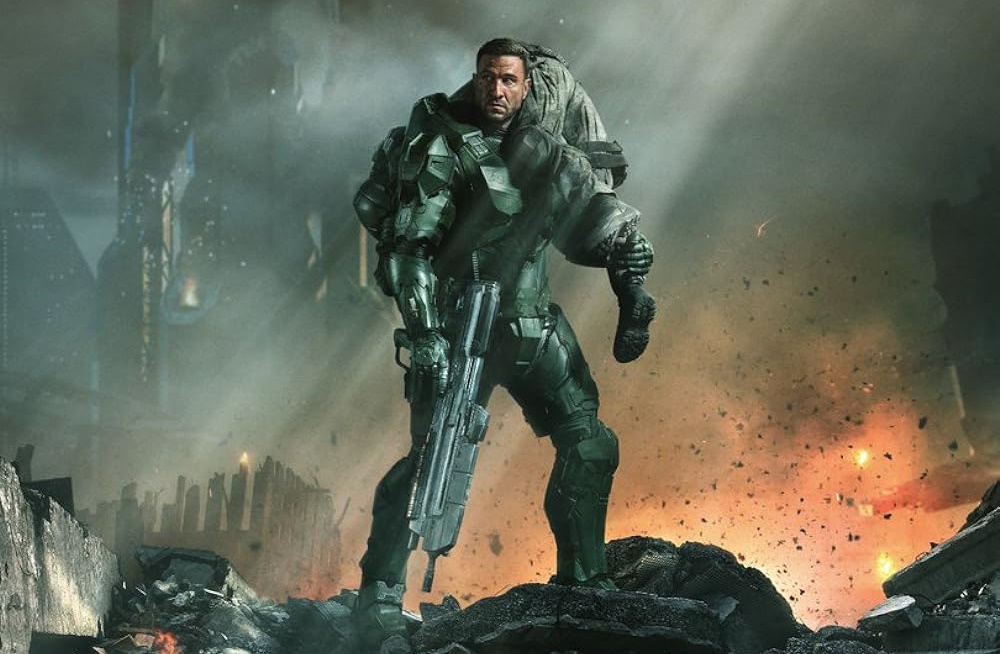
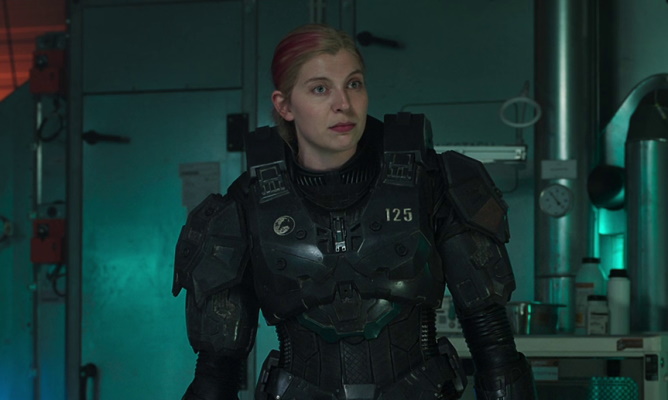
Promo poster for Halo Season 2 (cropped).
Promo poster for the second season of Halo.

Although it took me a while to get back into Halo during that first episode, as I was hampered by the lack of a proper recap, I will say that I did find myself engaging with the series as its story got going. Although I had to look up a plot synopsis for Season 1 online – something I really shouldn’t have needed to do – once I’d got myself properly reacquainted with the main players, and recapped the major story beats from the end of Season 1, I found a story that was entertaining enough to justify paying for a month’s worth of Paramount+, and that I didn’t mind following to its conclusion.

That being said, I still don’t feel that Halo has truly excelled – at least, not yet. Season 1 laid a solid foundation, but Season 2 seems to have disregarded parts of it, as well as deviated in a major way from the story that I remember from playing (most of) the main Halo video games. While I’m by no means a “canon purist,” I have to wonder: why go to all the bother of licensing a major entertainment property only to jettison most of its story and some of its characters? The story of the Halo video games – at least the first two or three titles, plus Halo: Reach – would have made for a strong and captivating story in itself, and with only a few tweaks could’ve seen the addition of new characters to join the Master Chief.
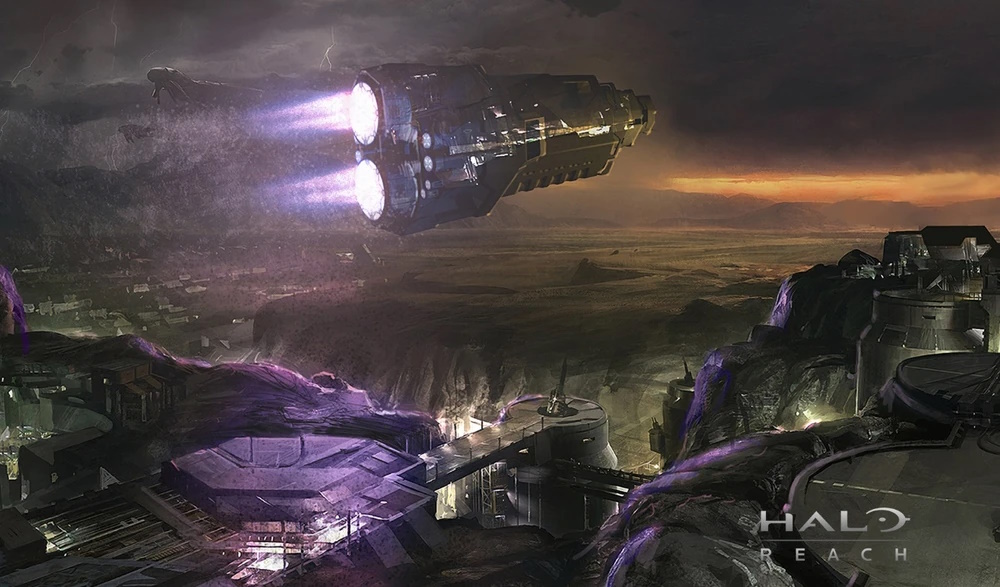
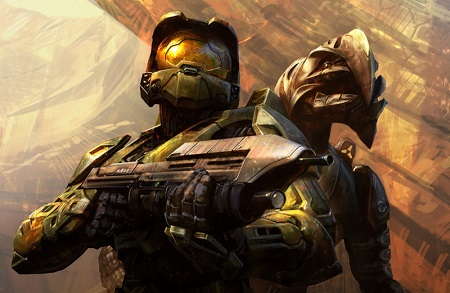
Concept art for 2010's Halo: Reach.
The story of Halo Season 2 was radically different from that of Halo: Reach.

In my review of the show’s first season, I said that re-interpreting and changing the story – and particularly finding a way to humanise the otherwise stoic Master Chief to make him into a sympathetic protagonist – was something I was generally on board with. And I stand by that to a certain extent; I don’t think a faceless, monotone character who’s an unfeeling killing machine would make for a good television protagonist, even if such a character works well in an action-heavy video game. But this time around, the Master Chief’s story felt muddled and seemed to rely on a few too many clichés and contrivances.

And partly, it must be noted, that’s because Halo’s writers have now taken the story in a significantly different direction to its source material. In Season 1, with the Master Chief getting entangled with a Covenant agent, discovering his humanity, and unlocking the mysteries of a strange alien artefact, there was still the potential to call all of this a preamble; the hitherto-unseen prequel to more familiar events. But in Season 2, with the Fall of Reach being depicted on screen in a radically different way to how it unfolded in the games, and with the story more interested in the intrigue within the UNSC and ONI, that possibility has evaporated. I’m not sure whether the new story that the writers have replaced it with is as compelling or as entertaining as the one that was sitting there, waiting to be adapted.
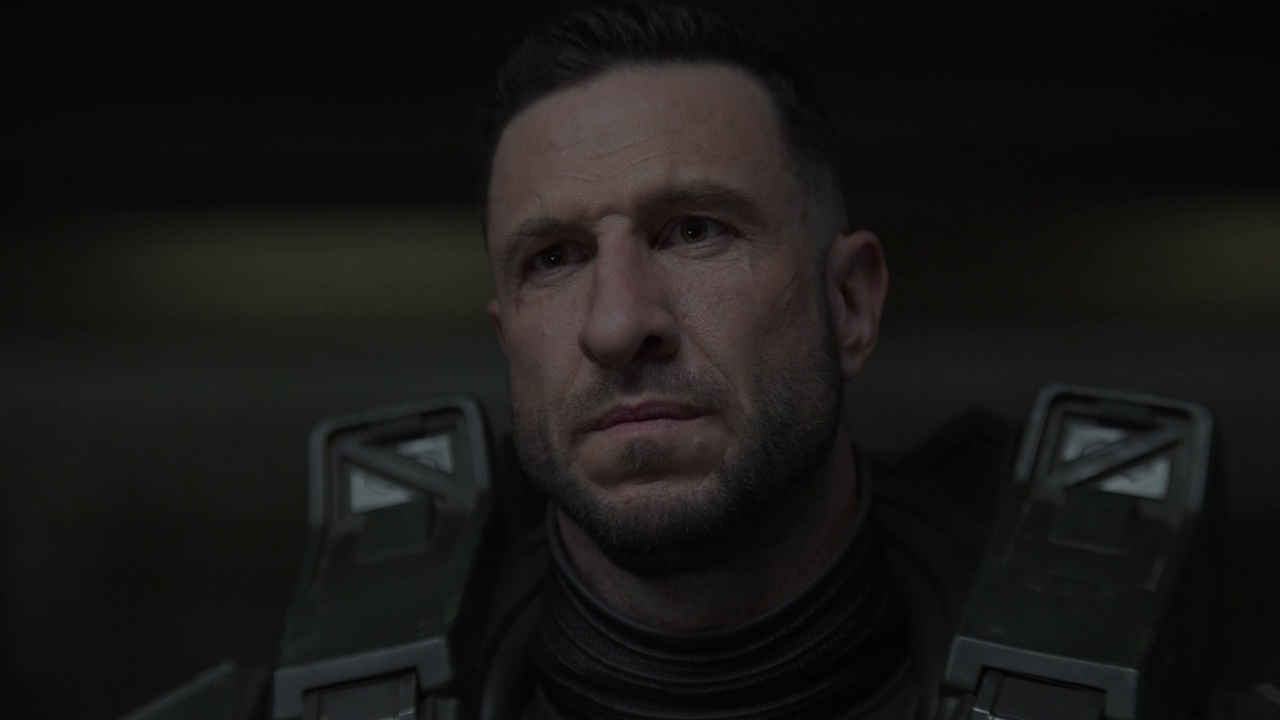
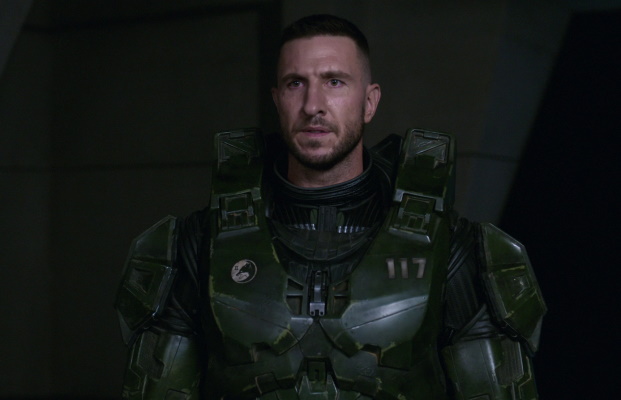
Still frame of Halo Season 2 (2024) showing a close-up of the Master Chief.
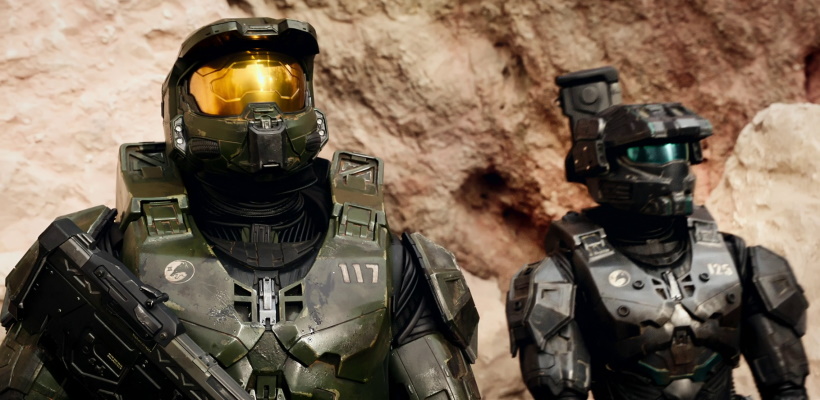
The Master Chief.

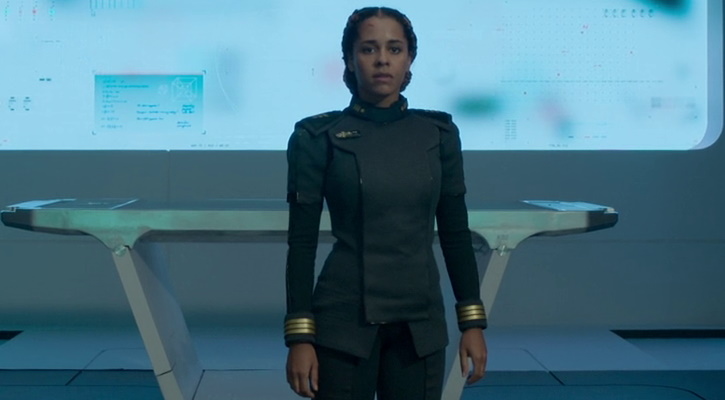
There was clearly an ambition on the part of some of Halo’s writers to use the UNSC, ONI, and the admiralty to look at the politics of war and the calculations that leaders have to make. This concept is sound, but it was let down by poor execution in Halo, unfortunately. In the first season, it felt as if most of the major characters – including Keyes, Halsey, and Parangosky – all had their own agendas. The Master Chief and his squad were caught in the crossfire and let down by the internal workings of the admiralty and leadership.

This message was somewhat streamlined in Season 2… but the way it was done necessitated some major contrivances. Corporal Perez, who Master Chief saved during the first episode of the series, refused to elaborate on what she saw of the Covenant during her debriefing… for seemingly no reason other than “because plot,” and when her words would have corroborated what Master Chief reported, that just doesn’t feel very satisfying. There was potential in Perez’s story to look at trauma and in particular the post-traumatic stress that soldiers can suffer from – but this angle was so undeveloped that I’m loathe to even include it as a plot point. In any case, it went nowhere – and thus doesn’t work as a justification for the narrative contrivance.
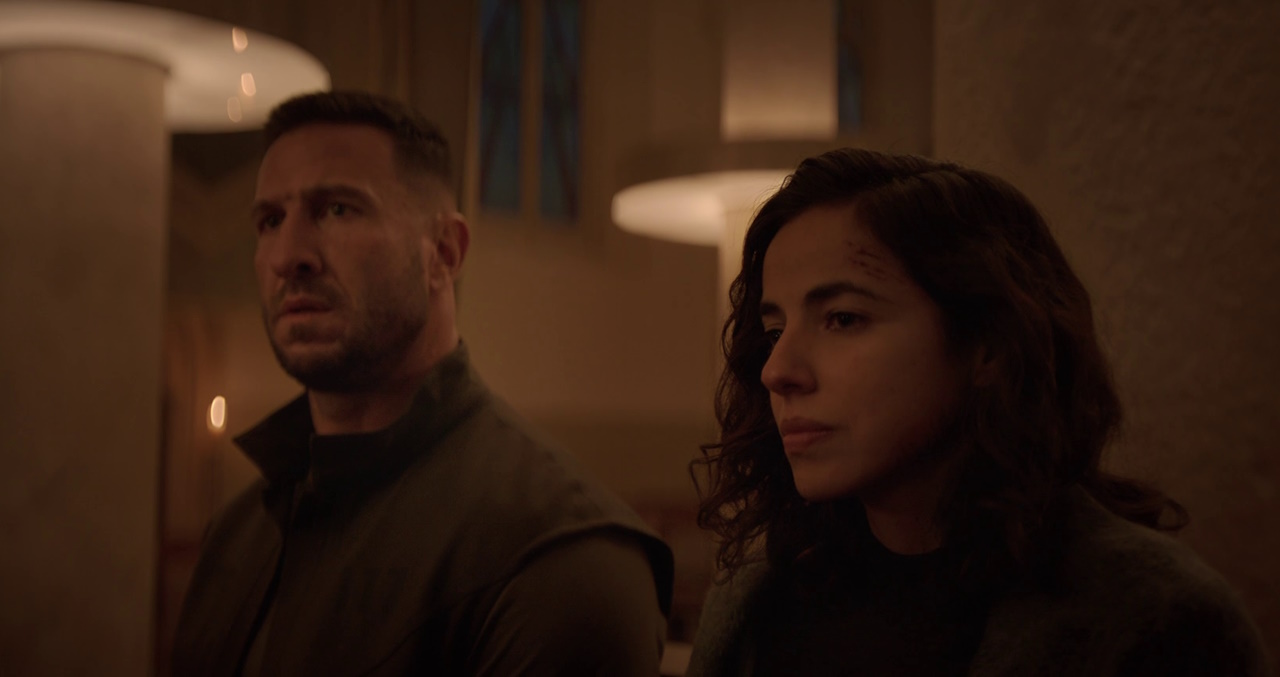
Still frame of Halo Season 2 (2024) showing the Master Chief and Perez in a chapel.
The Master Chief with Corporal Perez.

Perhaps this is the armchair general in me speaking… but I have a hard time seeing a character like Ackerson as an out-and-out villain. When confronted with the reality that a Covenant attack was imminent and unstoppable, he and the other admirals took what seems the only rational path open to them: a covert, quiet evacuation of high-ranking personnel and valuable assets in order to establish a new command centre to continue the fight and co-ordinate the defence of other worlds. Reach was, as Cortana explained, already lost before the explosions started – there was no way to prevent it.

Yet because we’re following the story of Master Chief and his crew, the series paints Ackerson and Parangosky as antagonists – more antagonistic, in some ways, than the Covenant themselves. And while we could entertain a more nuanced discussion of the “calculus of war” and how some leaders might try to use it as a justification to seize power or leave rivals for dead… Halo doesn’t really do any of that. It manoeuvres its characters into place – using more than a couple of contrived moments to get them there – and then… that’s it. Master Chief rages about how “they stole [his] armour” and his identity, but that just felt incidental and not like a driving force behind either the character or the story. The series came close to making a point about politics and war – albeit one that other, stronger narratives have already made – but then baulked on it at the last moment, despite the convoluted setup, in order to tee up the next big action sequence.
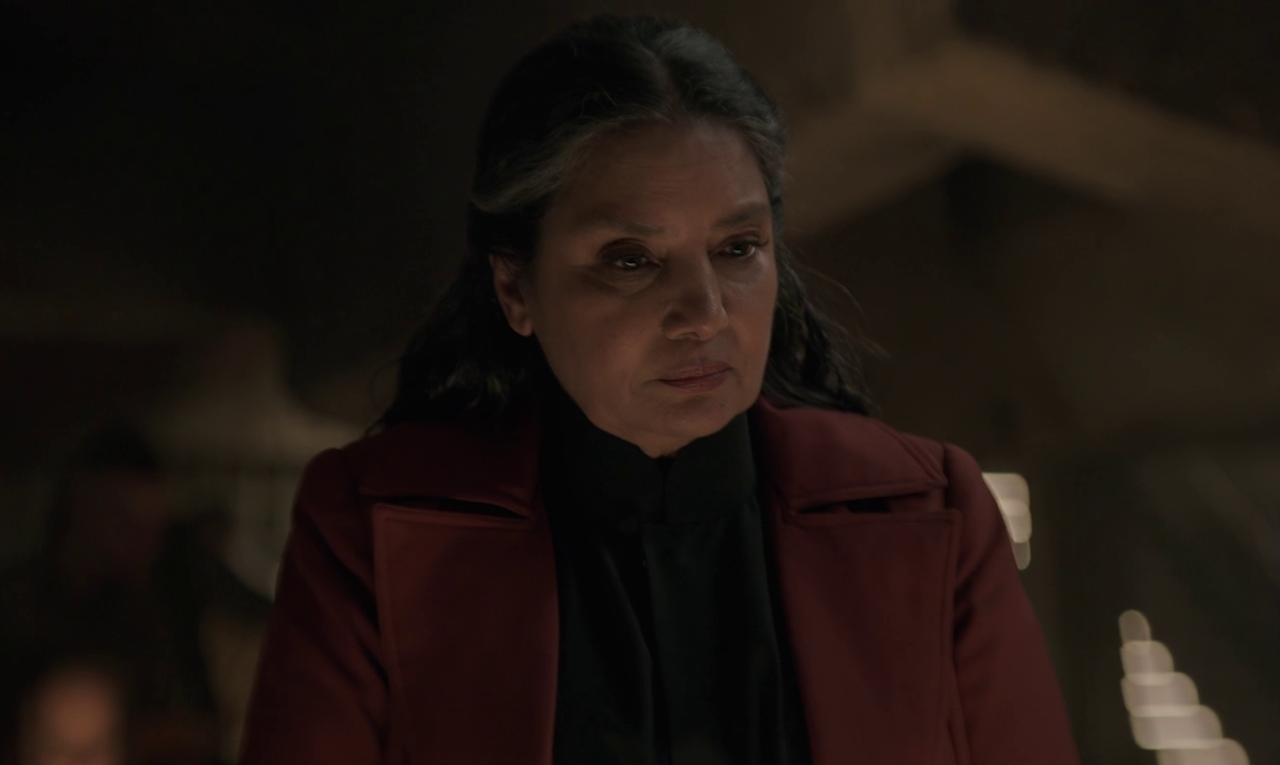
Still frame of Halo Season 2 (2024) showing Admiral Parangosky.
Halo came dangerously close to making a point about the politics of war with the character of Admiral Parangosky.

When such a story requires characters to act in a specific way to move things along, it can feel forced. And parts of Halo absolutely fall into this trap. During the climactic fight at Fleetcom, Master Chief and his Spartans are conveniently called away at the last second so they can be in just the right place to encounter Soren and Halsey, then Makee and the Arbiter, and finally to be rescued by Laera and Kwan. Master Chief was conveniently obscured by both fog and a communications blackout when he first encountered the Covenant, and the only other character to witness them refused to admit the truth. Laera was able to track down Soren just in time to save everyone from the attack on Reach. And so on.

Although Ackerson and Parangosky were manipulating the situation and keeping everyone in the dark about what was about to happen, their machinations can’t account for all of this – and the result is that the story is built on weak foundations. There are still successful moments of tension, excitement, and drama, and the deaths of major characters still manage to carry emotional weight. But that comes in spite of – not because of – the way in which the story has been structured. Halo is in real danger of getting in its own way.
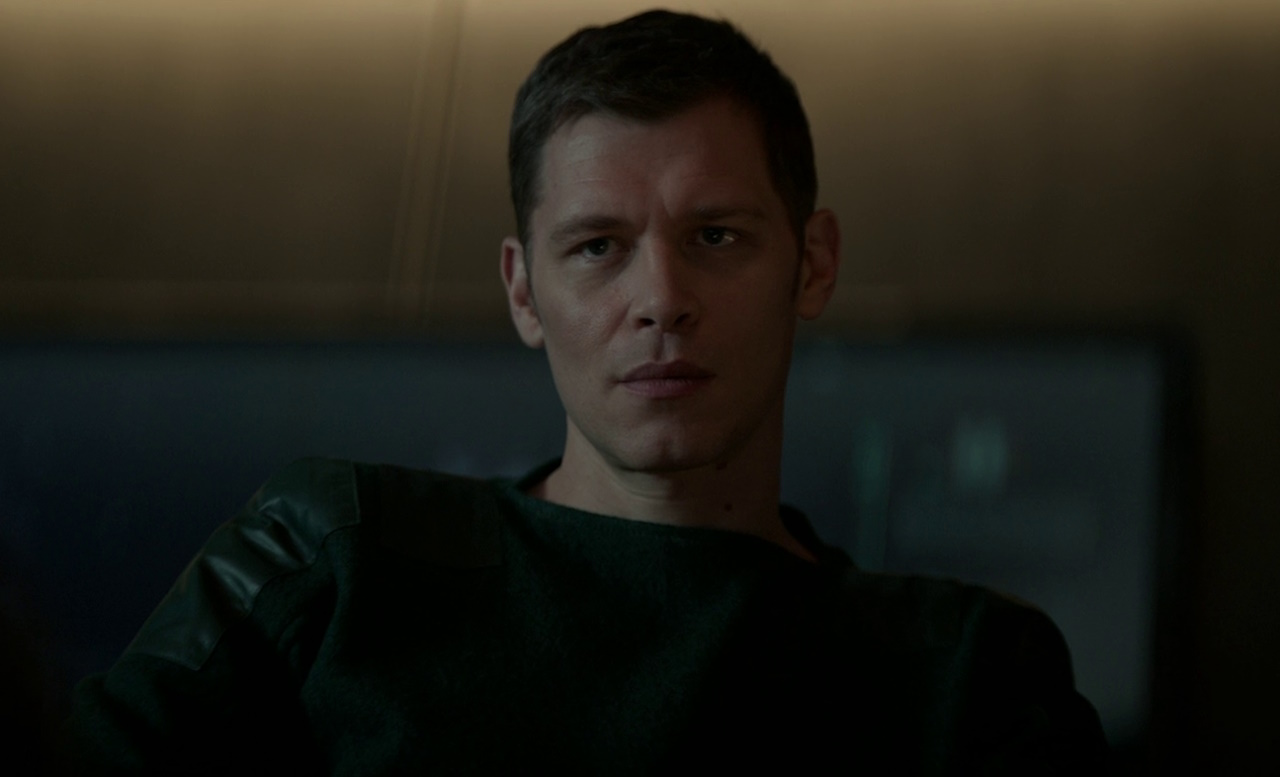
Still frame from Halo Season 2 (2024) showing the character of Ackerson.
Ackerson was presented as an antagonist.

In terms of visuals, Halo made a couple of missteps. Physical props used for things like spaceship doors, armour, and other pieces of supposedly “roughed-up” metal could look pretty phony in places, and while it wasn’t enough to take me out of the story entirely, it was definitely something I noticed across multiple episodes. This isn’t something unique to Halo, as I’ve noted it in big-budget productions from Star Wars to the upcoming Fallout series, but that doesn’t excuse it. Set design was generally okay, though, and I liked the interiors of the Covenant ships and the way they were laid out – as well as how the show got creative with re-using certain sets for Makee’s ship, the training simulator, and a real Covenant ship in battle.

Halo had some successes with its CGI – and one pretty epic misfire. The assault on Reach midway through the season, as well as the attack on another planet in the first episode, were fantastic, with explosions and plasma weapons that looked stunning. These were well-blended with physical sets, and the transitions between the two were great. The fleet battle toward the end of the season was likewise solid; a well-animated series of CGI sequences that lived up to the excitement I was hoping for from such a powerful narrative climax.
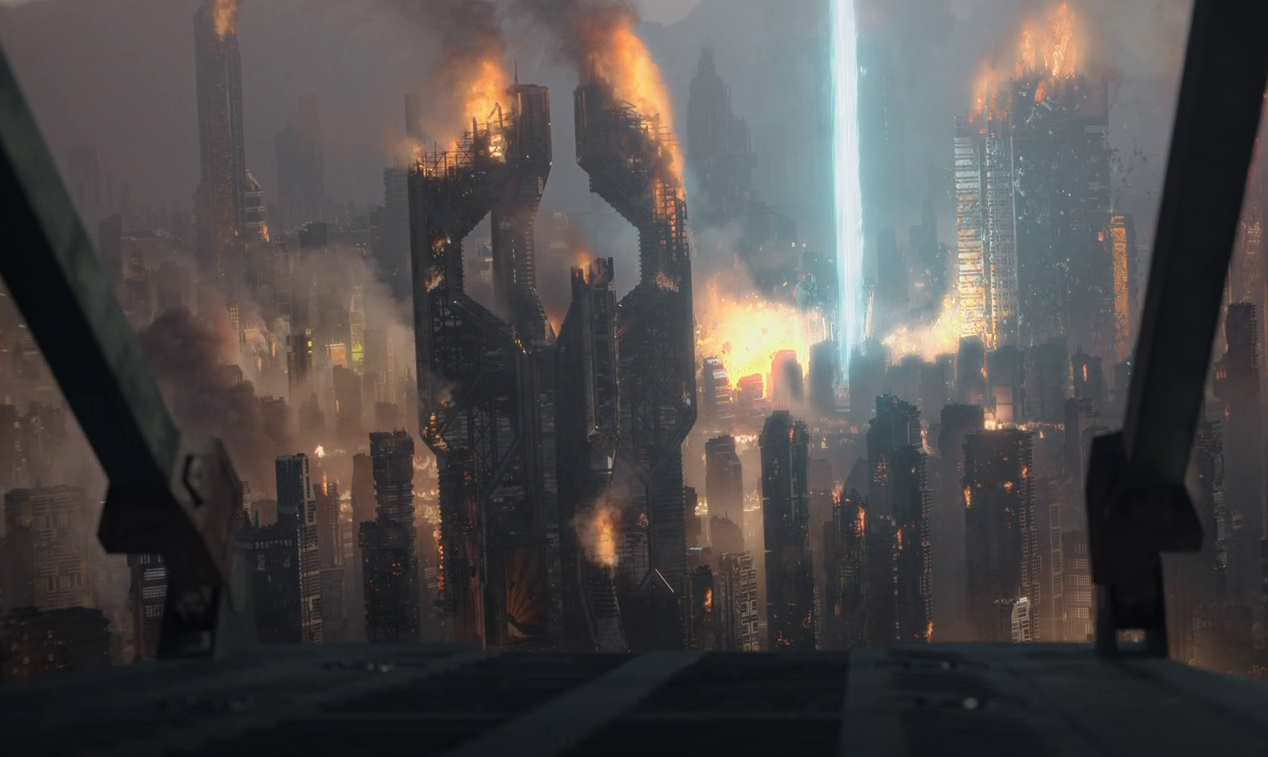
CGI sequence from Halo Season 2 (2024) depicting the Battle of Reach.
The Fall of Reach.

Then we got on the ground and came to the climactic one-on-one duel between Master Chief and his Covenant adversary, the Arbiter. The Arbiter felt vastly under-developed as a character, and while his hatred for the Master Chief was stated in almost every scene in which he appeared, there was no reciprocity there whatsoever, so the conflict itself felt very one-sided. I will say, though, that I liked the concept of this duel, and seeing plasma swords clashing almost like Jedi lightsabers was a fun idea, and a great way to take a rather clumsy weapon from the video game series and improve upon it. So in principle, this duel should have worked reasonably well.

But my god, the animation work here was atrocious. Neither the Master Chief nor the Arbiter looked at all real, with that “too shiny, too smooth, and too airy” CGI feel that I thought we’d left behind a decade ago. Even the shaky camera and fast-moving sequence couldn’t cover up these absolutely glaring flaws in the way these characters looked, and the entire duel – which, thankfully, was pretty short – entirely fell apart for me. There were clearly limitations in Halo’s animation budget that were showing, because the series completely failed to make either character look realistic at this moment. Because the Arbiter is a largely CGI creation to begin with, perhaps the way he looked wasn’t as bad as the Master Chief during the duel – though it was certainly the worst the character had looked all season long. But the Master Chief in particular just looked so hollow and fake, and that really took the shine off what was supposed to be one of the season’s final climactic moments.
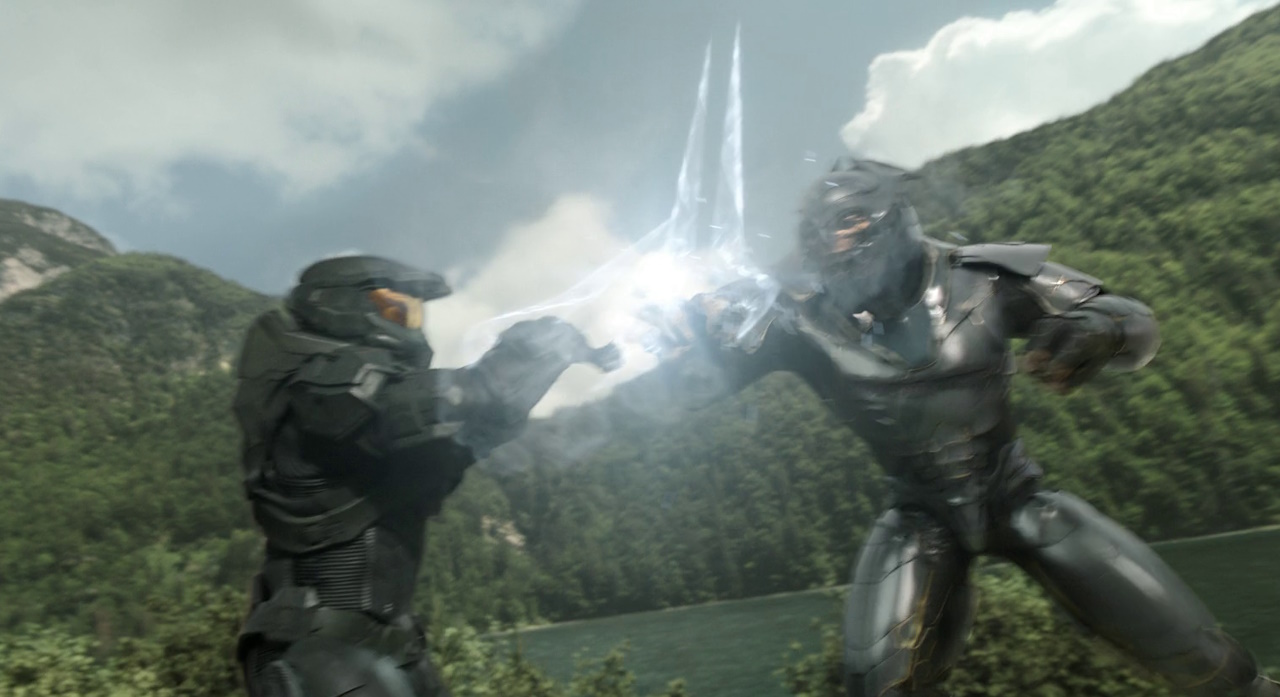
Still frame of Halo Season 2 (2024) showing Master Chief and the Arbiter engaged in a duel.
It’s difficult to convey in a single JPEG just how bad this sequence looked.

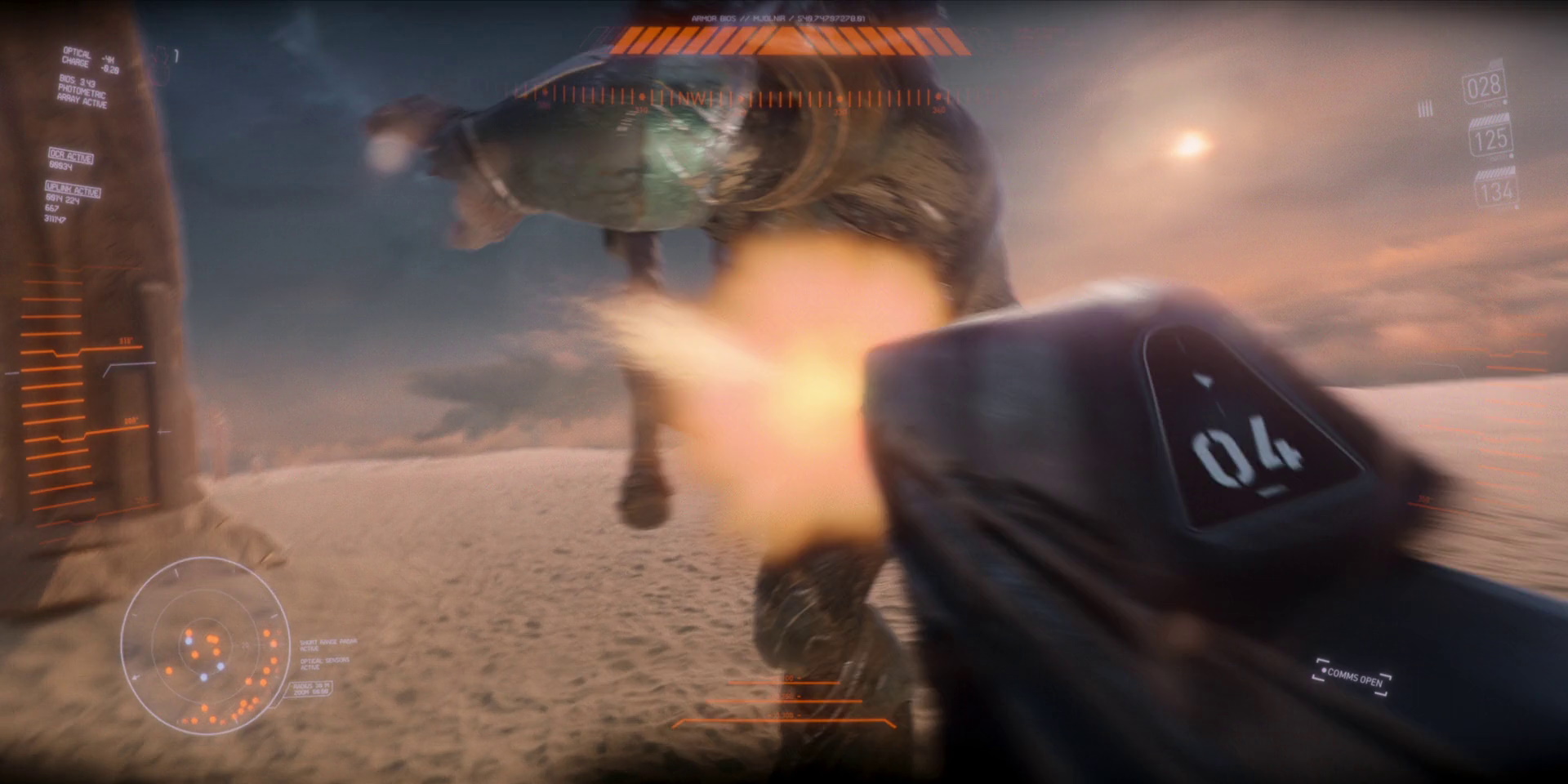
One thing we didn’t see much of this time, unfortunately, was the first-person perspective that I noted in Season 1. Last season, this unusual blend of camera work and CGI was used sparingly, but at a couple of key moments it really worked well. As an homage to Halo’s video game origins, I enjoyed what the first-person viewpoint brought to the series. It’s also something a little different in the action space, at least in the medium of television, and in Season 1 it was used infrequently enough as to not be too obtrusive for folks who didn’t like it. It was a little disappointing to get so little first-person action this time around; there was one scene – or a clip, really, as it was so short – that I noticed… but that was all.

This season, Halo struggled to find a good character to pair with the Master Chief. In Season 1, the Master Chief spent time with Kwan, Kai, Makee, and of course Cortana, as well as butted heads with Dr Halsey and Admiral Keyes. His relationships with Makee and Cortana in particular, as well as the resentment he felt toward Halsey, went a long way to humanising him and turning him from that faceless video game protagonist into a character better-suited to a new medium. But in Season 2, Master Chief didn’t really spend enough time with any single character to have those kinds of moments. He spent much of his time angrily barking out orders and pushing his team beyond their limits, and his relationship with the under-developed character of the Arbiter was so non-existent that their conflict and climactic duel didn’t really work.
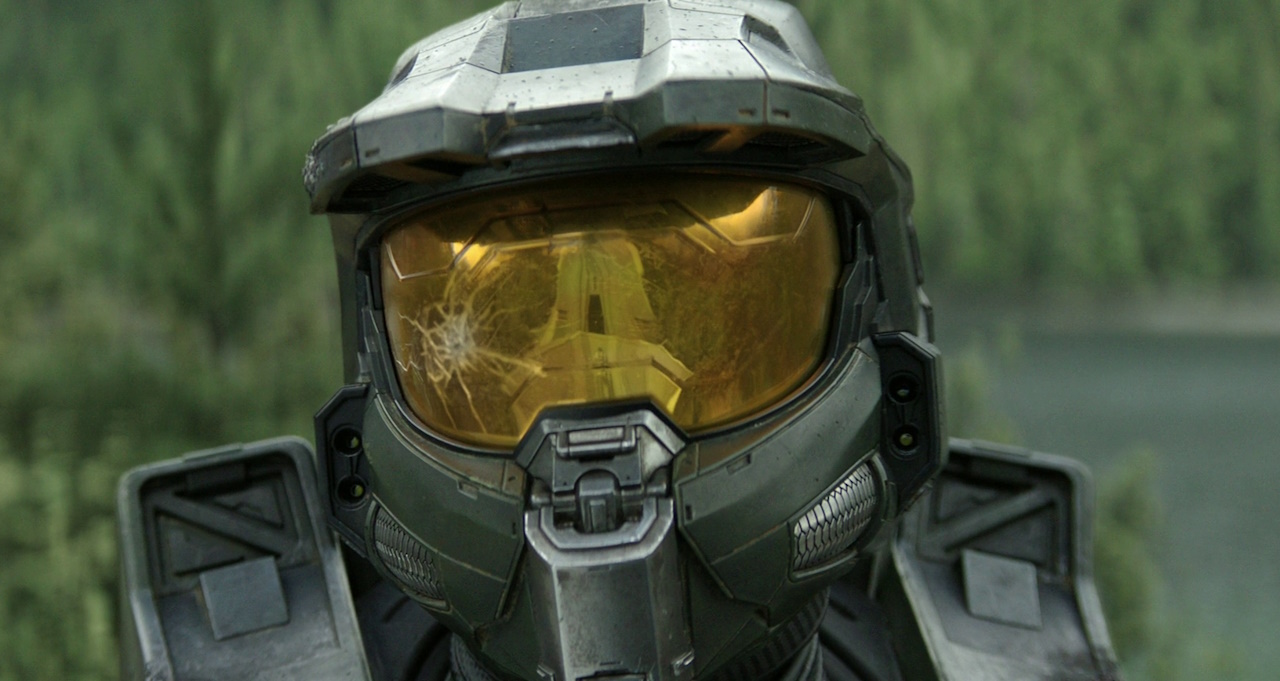
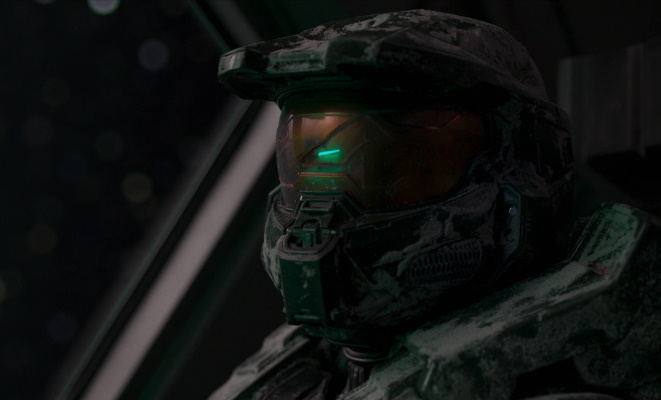
Still frame of Halo Season 2 (2024) showing a close-up of the Master Chief's helmet.
Halo struggled to find another character to pair with the Master Chief this season.

There’s something to be said for a storyline that puts its characters through a tough set of challenges, or even one that forces them to confront their own limitations and mistakes. But Halo didn’t really give us any of that, with the series presenting the Master Chief as having been “right all along,” even though he was basically behaving like an irrational dick for several episodes in a row. Combined with the lack of a partner or confidant for most of the season, this meant that the series’ protagonist spent much of his time angry and brooding – and that just never feels particularly fun. Shows like Game of Thrones did wonderful things with an ensemble cast that was broken up into distinct groups, taking literally years in some cases before some of the main characters even met one another. But Halo… I don’t think it has the chops to pull off something like that anywhere near as successfully, so splitting up its few noteworthy characters for so much of the story feels more a weakness than a strength at this point. I’d love to be proven wrong about that – but realistically, the show would need to run to six or seven seasons to develop these characters well enough to pay it off.

So after two seasons of a series called “Halo,” we’ve belatedly arrived at the titular ring-world. By this point, the Halo itself has been mythologised out of all proportion, and again this feels like a weakness when compared with the original story present in the first part of the video game series. Again, I have to point out that I’m not well-versed in the more recent lore of the expanded Halo franchise, and perhaps by this point the Halo ring-worlds are as legendary as the TV show depicts. But there was something to be said for the way in which humanity stumbled upon the first Halo, and how the Covenant were the ones who knew more about them and treated them with reverence. This “race to the Halo” idea that was underpinning the story of this season was just another way in which I felt it had diverged significantly from the story I remember.
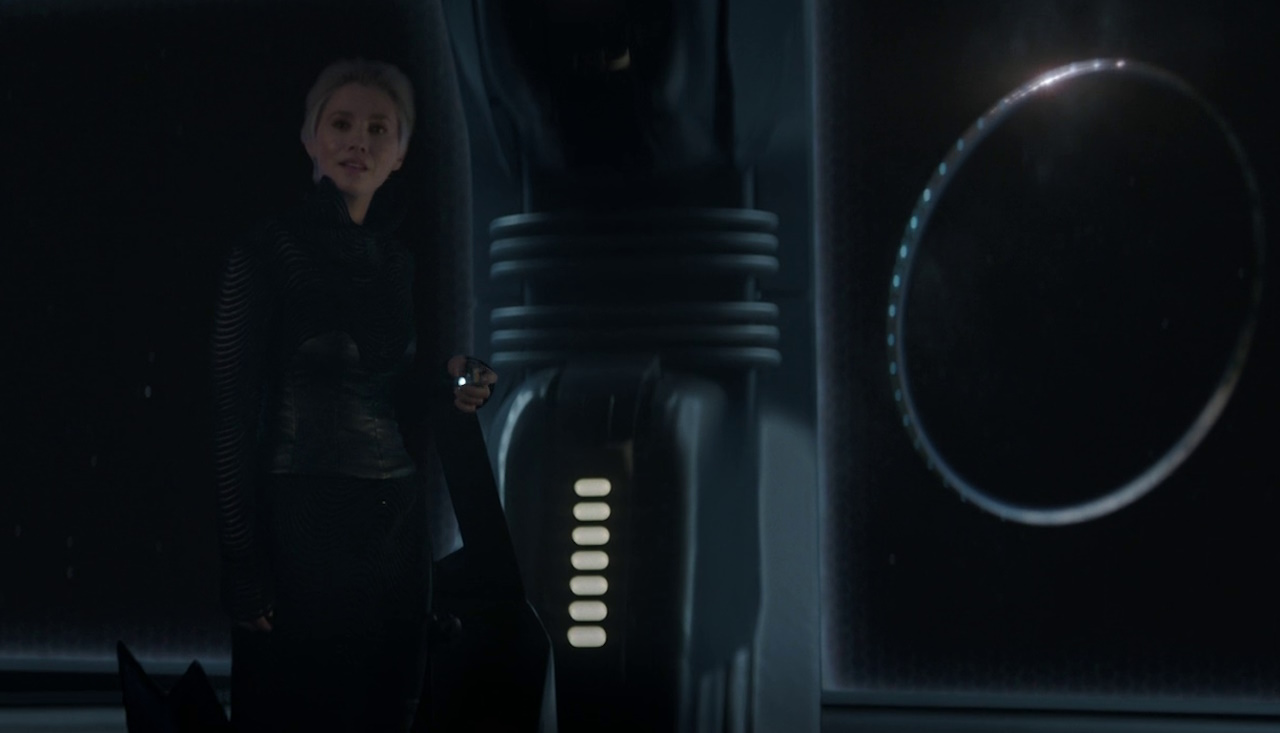
Still frame from Halo Season 2 (2024) showing Makee and the Halo ring-world.
Halo has finally arrived at the titular Halo.

The introduction of the Flood – which unfortunately came pretty late in the season – is at least potentially a point of interest. Presenting the Flood as akin to zombies from the likes of The Walking Dead or 28 Days Later certainly went some way to ramping up the fear factor as Halo came to the end of its final episode – but I can’t help but feel that more could have been made of this storyline if it had emerged earlier in the season and been drawn out for longer. There were a couple of key points at which the story needed to move rapidly thanks to the time constraint of being halfway through the series finale, and that just left things feeling a bit rushed and unsatisfying.

The biggest example of this is Soren and Kwan’s rescue mission. No one stops to ask “hey, what’s going on here?” because the episode just didn’t have time for the diversion, and when Laera revealed her “zombie bite,” it shouldn’t have been at all clear to Soren and the others that a bite wound would lead to infection. There was no time to explain this in-universe to the characters – nor really to us as the audience, either, as elsewhere in the base, infection seemed to spread by way of small spider-like creatures that emerged from the mouths of the infected. Perhaps Season 3 will be able to expand upon this storyline, flesh out its concepts and ideas a bit more. But as far as an introduction goes… it was a bit of a mixed bag.
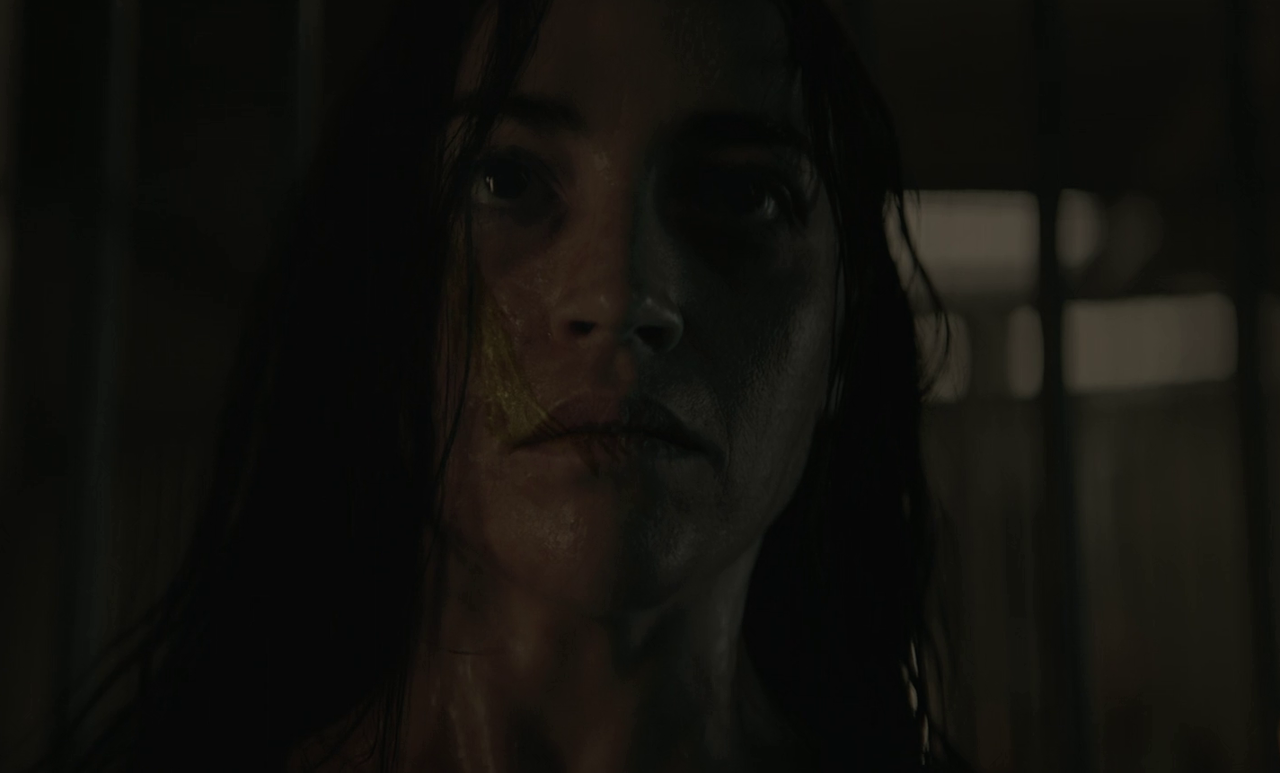
Still frame from Halo Season 2 (2024) showing a character infected by the Flood.
The Flood’s “patient zero” in a holding cell.

On a more positive note, Halo took strides for representation, and it did so in a way that I’m always going to advocate for. There was a gay couple shown partway through the season; friends of Riz who she turned to for help. The fact that they were gay wasn’t front-and-centre in either of their characterisations, it was simply treated as an entirely unexceptional part of this sci-fi future. Representation can work incredibly well when handled in this way, and I’d point to Halo Season 2 as an example of how to include LGBT+ characters in a series when there isn’t the time or narrative space to include full-blown LGBT+ storylines or themes. Simply seeing a couple like this represented on screen is a positive thing.

As in Season 1, acting performances were solid across the board, and I wouldn’t want to single anyone out for criticism on that front. Halo’s sound design and music were solid; understated, perhaps, but in line with its source material. I heard several sound effects that were lifted directly from the video game series, which was great! With the exception of some unnecessary “shaky cam” sequences that made it difficult to follow the action, cinematography was pretty good, and the series’ use of light and shadow led to some tense moments of mystery and action at various points.
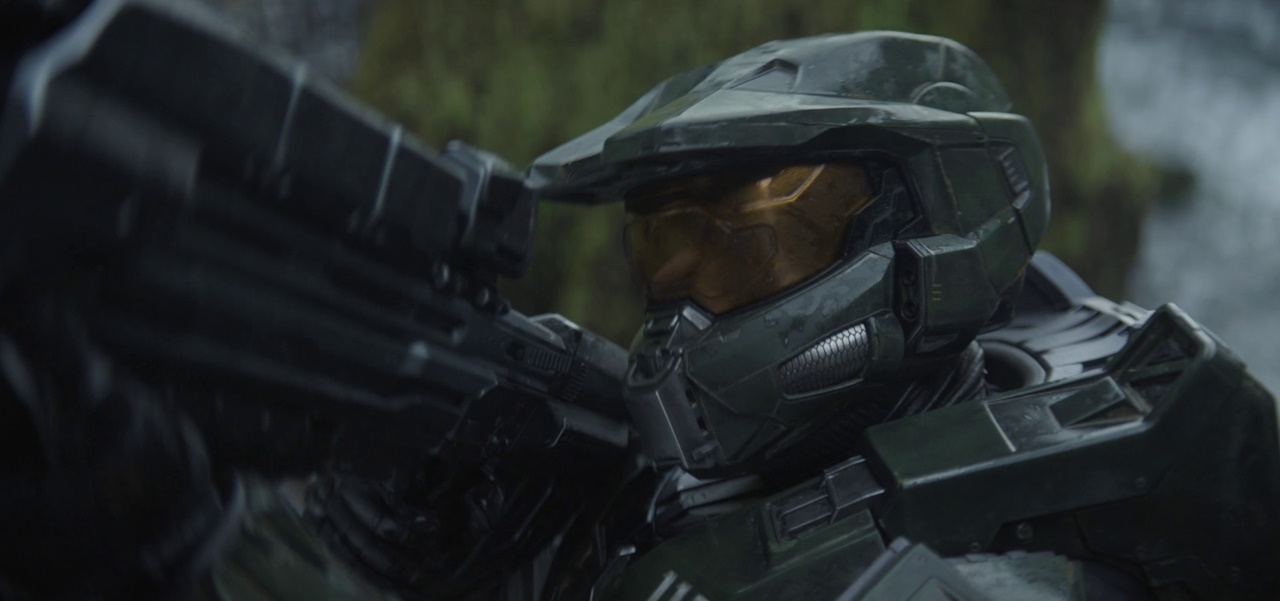
Still frame from Halo Season 2 (2024) showing the Master Chief wielding a rifle.
The Master Chief.

Unlike in 2022, I don’t think I’m going to call Halo one of my favourite TV shows of the year when I dish out my annual awards in December! It was alright; entertaining enough popcorn action fare. But there were significant weaknesses and narrative contrivances this time around that I feel got in the way of the fun, as well as a weak CGI sequence during what was supposed to be a climactic battle. I didn’t hate Halo by any means, but it wasn’t all it could’ve been.

However, now that the action has moved to an actual Halo… maybe there’s hope for Season 3. Although an official renewal hasn’t been announced at time of writing, it’s hard to see how the series could be cancelled at this point, given where it ended. With positive reactions from a number of critics and plenty of social media buzz, a third season feels like a sure thing. If it goes ahead and does actually take place on a Halo ring-world, that could certainly shake things up and perhaps go some way to bringing Halo back to firmer and more familiar ground.

I will be crossing my fingers for Season 3, then – and a story that successfully builds on what Seasons 1 and 2 laid out could go a long way to making some narrative decisions feel better in retrospect. So there are reasons to be positive as Halo continues its run. If for some reason, however, Halo isn’t renewed… I doubt it’ll be remembered particularly fondly, and instead will simply be tossed on the growing heap of video game adaptations that failed to light up the board.

Halo Season 2 is available to stream now on Paramount+ in countries and territories where the platform is available. Season 1 is also available on DVD and Blu-ray. Halo is the copyright of 343 Industries, Microsoft, Showtime Networks, Amblin Television, and Paramount Global. This review contains the thoughts and opinions of one person only and is not intended to cause any offence.
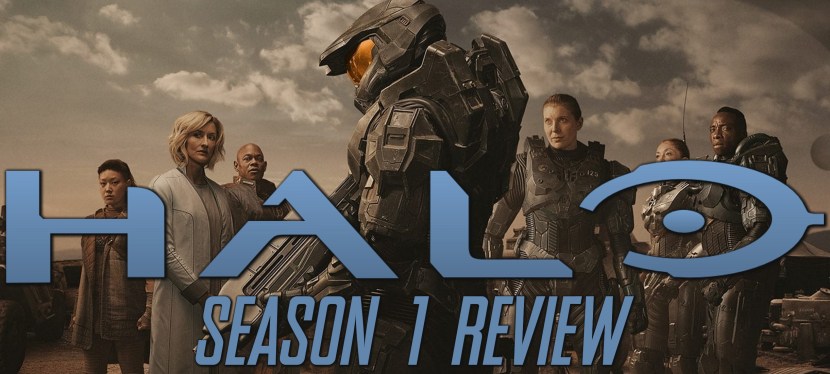
Halo (TV series): Season 1 review

Spoiler Warning: There are spoilers ahead for Halo and several of the Halo video games.

Despite Paramount’s best efforts to keep the first live-action Halo series away from viewers in 95% of the world, I was recently able to binge-watch it. I really wasn’t sure what to expect going in; I knew of only a couple of the performers from their past work, and although there was supposedly a significant budget attached to the series, I can’t recall a single time that a video game has been successfully adapted in this way. And no, the “so-bad-it’s-good” Super Mario Bros. doesn’t count!

Video game adaptations have been notoriously difficult to get right, but I think Halo offers a glimpse at what’s possible. By telling a story spread across nine episodes instead of condensing it to a two-hour film, there was more depth and more time able to be spent bringing the world and the lore of the long-running series into a new format. In that sense, I think we could hold up Halo as an example of why video game adaptations may work better on the small screen – and especially in the current media environment as streaming projects – than as feature films.

The Master Chief with fellow Spartan Kai.

I’m not particularly well-versed in the depths of Halo lore. I played the first game on the original Xbox when it was new, and I’ve played most of the mainline games now thanks to Halo: The Master Chief Collection. But I haven’t played spin-offs like the Halo Wars strategy games, nor read any of the books or comics that have been produced. So as I sat down to watch Halo, I wasn’t particularly worried about things like “canon” or consistency with what’s come before – and that was probably for the best!

Halo seems to exist in its own space; a standalone project, a reinterpretation of the stories shown in the games but without the pretence of being a prequel or direct adaptation. Many of the same elements exist in the world of Halo as did in the show’s source material – the Master Chief, Dr Halsey, the UNSC, the Covenant, and so on – but they’re being reinterpreted and used in different ways.

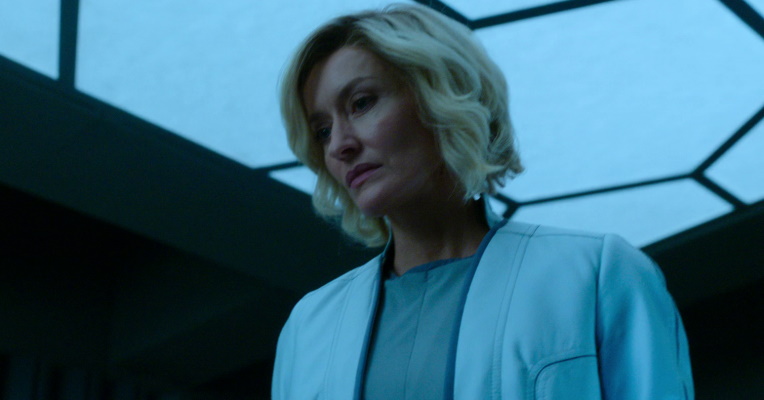
Dr Halsey.

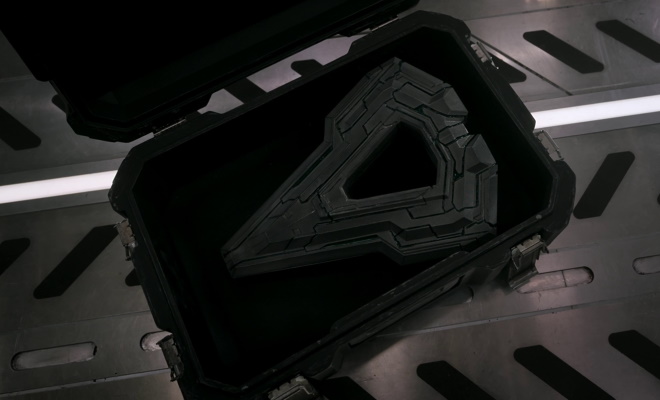
In order to turn the Master Chief from a faceless everyman into a relatable protagonist, that had to happen. The Master Chief in the Halo video games basically exists as an excuse to blast aliens; a television series like this needs to have a fully-rounded character with his own thoughts, motivations, and feelings to guide the plot and to get us as the audience invested in his story. This was accomplished thanks to the help of the “Keystone” – a magical macguffin that began to give the Master Chief access to memories and feelings that he hadn’t had before.

The nature of the Keystone wasn’t readily apparent, and I liked the sense of mystery that brought to the table. Only the Master Chief and his Covenant-raised counterpart Makee were able to interact with the object, and that limitation gave legs to the story. While the Master Chief wanted to learn more about his family and the life he never knew, those around him all wanted – in slightly different ways and with varying degrees of maliciousness – to use him and his connection to it for their own purposes.

The Keystone was at the centre of the season’s storylines.

This was one aspect of Halo that I felt worked well – at least, most of the time. Aside from the Master Chief and, to an extent, his fellow Spartan Kai, everyone else that we met had their own agenda, their own biases, their own prejudices, and their own moral ambiguity. On the “good” side of the conflict we have the UNSC and its leadership – but in order to get ahead, practically all of them became morally compromised along the way. There’s a message there about how the military, politics, and power work that wasn’t lost… but wasn’t exactly subtle, either.

Through the eyes of Miranda Keyes we also got to see the way the UNSC’s power structure and chain-of-command operate. Despite being intelligent and well-qualified, she found herself cut off from information that she could have used to better perform her duties; cut out of the loop not only of the conspiracy involving her parents and the Spartan programme, but also without the necessary clearances and access to information that would have made part of her job – translating the Covenant’s language – much easier.

Miranda Keyes’ story showed us the realities of working with the UNSC.

I expect that some of the show’s mysterious elements – particularly the somewhat-disconnected events of the rebellion and mysterious portal on the planet of Madrigal – may have been quite different from what some fans of the Halo games were expecting from the series. Although Halo started with a bang thanks to a truly excellent battle sequence between the Spartans and a group of Covenant elites, there were definitely moments across the show’s nine-episode run where fast-paced action and combat took a back seat to these unfolding storylines.

As I found myself getting invested in the Master Chief’s story and wanting to learn more about where he came from and what happened, I actually enjoyed this aspect of Halo… but I can understand that it may not have been what everyone expected or wanted from an adaptation like this. What I’d say in defence of Halo is that it’s worth keeping in mind that the games were designed to be interactive and to be played through; the series is designed to be watched. A game needs more combat and action to keep players invested – if the series had been nine episodes of gunfighting and running around it might’ve been truer to its source material but it would almost certainly have been far harder to watch!

Learning about the Master Chief’s family and personal history was a big part of Season 1.

Halo did some interesting things with its battle sequences in terms of cinematography. The first-person perspective that was surprisingly close to how things look in the Halo games is something rarely seen on screen in this way, and it was done much better than it had been in projects such as 2005’s Doom adaptation. Halo integrated things like the Spartans’ heads-up display into its storytelling at key moments, with things like the low shield alarm signalling that a character was in danger. It generally worked well, and as a callback to the games it was something that I appreciated.

Dipping in and out of this first-person perspective was smooth enough for the most part, but there were definitely a handful of moments across the season where combat sequences felt a little jumpy and too quick; I ended up missing things and debating whether or not I should rewind parts of several episodes as a result. I fully agree that it wouldn’t have been desirable to show every battle and combat sequence entirely in first-person, though, and the series balanced this pretty well. The first-person camera could’ve ended up feeling like a complete gimmick; it’s to Halo’s credit that that isn’t the case.

An example of the first-person camera.

I suppose one of the big questions fans will be left wrangling with is whether this approach – the slowly-building character-oriented mystery with action elements – was the right one for Halo. For me, as someone who’s enjoyed this kind of story across multiple genres and in different ways, I found it enjoyable enough. But as I said at the beginning, I’m not any kind of Halo super-fan, and I could certainly entertain the argument that there wasn’t a need to completely rework the story and parts of the lore of the franchise.

It would have been possible, even with the caveat that video games are designed to be played and a television show is designed to be watched, to adapt the story of one or more of the games. A blend of the stories of Halo: Reach leading into the events of Halo: Combat Evolved has potential as an exciting story, but one with scope for at least some of the elements of mystery and characterisation that the series ultimately included. I’m not exactly upset about “what might have been,” but at the same time, I can’t help wondering. The first game in particular, the one that established the Halo universe, the Master Chief, and many other elements that Halo used in its first season, could have been brought to screen with a few tweaks rather than telling a completely new story.

A Covenant Elite.

I was only familiar with a couple of the actors before I sat down to watch Halo – I’d seen Natascha McElhone in Designated Survivor and Burn Gorman in Turn: Washington’s Spies and The Man In The High Castle. Both were fine performers who excelled in their roles in Halo, and it was neat to see them again. Burn Gorman in particular has a menacing style that made him perfect for the role of the villainous Vincher, and his scenes were delicious to watch.

Other standout performances from the cast that I’d highlight include Yerin Ha, who took on the role of young Kwan, and Kate Kennedy, who excelled as Master Chief’s Spartan ally Kai. There was a vulnerability in the way Kennedy portrayed the otherwise-invincible Spartan warrior, and the way Kai began to follow in the footsteps of the Master Chief was an interesting – and occasionally cute – sub-plot that I hope is expanded upon in Season 2.

I enjoyed Kai’s sub-plot.

Both Captain Keyes, played by Danny Sapani, and his daughter Miranda, played by Olive Gray, were fun characters. Sapani brought the right weight or gravitas to the role of the Master Chief’s commanding officer, but as the story unfolded I didn’t really get the sense that Keyes and Master Chief knew each other all that well. There were moments of exposition… but I think seeing some of their past, even if only via a flashback, would’ve done better at building up this relationship.

Of course, all attention was on Pablo Schreiber, who took on the challenging role of this adaptation of the Master Chief. There will always be some long-time fans who have a hard time adapting to a recasting or reinterpretation of a classic character, so right off the bat I have to commend Schreiber for being willing to take on the role! Master Chief has existed for more than twenty years at this point, and this was our first real exploration of his characterisation – and our first time seeing him with his helmet off!

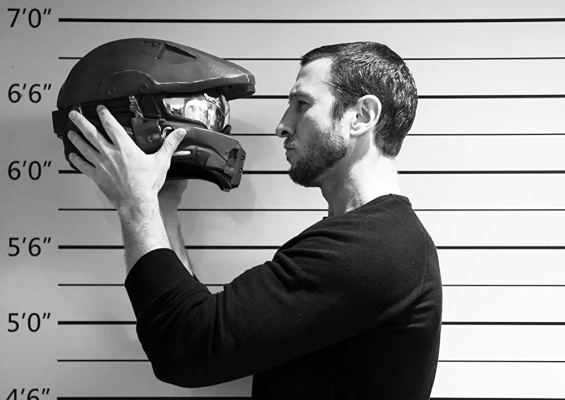
Pablo Schreiber with the iconic Master Chief helmet.

The mysterious elements of Master Chief’s past worked well, and seeing him gradually explore his memories and come to terms with some new feelings and emotions was interesting – but more could have been made of some of those things. Because the Master Chief quite quickly left Kwan with his ex-Spartan friend for protection, one avenue to exploring those new feelings was pretty abruptly brought to an end, and while there were interesting aspects to his relationship with Makee, there were definitely aspects of this storyline left on the table as the curtain fell on the season.

As an acting performance, though, Pablo Schreiber did the best he could with the material that he had, and I found him to be a fun and convincing protagonist for the most part. The Master Chief’s arc across Season 1 has set the stage for a story that could branch off in several different directions as both humanity and the Covenant chase these artefacts and the titular Halo ring-world… so there’s scope, when the series returns, to see more.

The Master Chief as Season 1 drew to a close.

Halo felt like a thoroughly modern serialised made-for-streaming television show. In the wake of projects like Lost and Game of Thrones, studios and entertainment corporations have been looking at their properties for anything that could be adapted into a similar, multi-season epic, and Halo feels like it’s cut from the same cloth as the returning Star Trek franchise, some of the Marvel and Star Wars projects, and shows like The Witcher over on Netflix. In that sense, there’s not a whole lot of originality in the core concept; it’s a familiar framework that has been moulded to fit this particular franchise.

By choosing to riff on the Halo concept rather than remake or directly adapt any of the stories from the games, the sense of anticipation and mystery that was clearly intended to be a big part of the series absolutely stuck the landing, and I’m still curious to learn more about the magical macguffin that was at the heart of the story. However, some storytelling decisions split up key characters perhaps too early in the story, leaving the Master Chief and UNSC characters entirely disconnected from events on Madrigal after Kwan returned there. Of course it’s possible for future seasons to reunite these story threads and connect them – it feels like it’s possible that the same mysterious faction responsible for the Keystones may have created Madrigal’s portal, for example – but as things sit right now, we definitely have a series in two halves.

The main cast of Halo Season 1.

All that being said, Halo got off to a good start and I’m curious to see what will come next. Rumours of a shake-up over at 343 Industries/Paramount may mean that a new showrunner and producers are being brought in for Season 2, which will begin filming imminently at time of writing, so we may see a shift in the way the series is written and structured to take on board feedback from fans and critics from this first outing.

I give credit to Halo for ambitiously trying to bring a long-running franchise into a completely different environment. Adapting video games has never been easy and has rarely been successful, so make no mistake: this was a risk. For my money, it’s a risk that largely paid off, and what resulted was a decent season of television that has set the stage for more adventures in this surprisingly deep fictional universe. Were there elements both narrative and technical that were imperfect? Sure, but that doesn’t ruin what was a decently engaging drama. The mysteries kept me engaged, the performances from both leading and secondary actors were great, and moments of action, while perhaps spread a little thin, made sure that Halo didn’t forget its roots.

Halo Season 1 is available to stream now on Paramount+ in regions where the service is available. The Halo franchise – including the Halo television series – is the copyright of 343 Industries and Microsoft. This article contains the thoughts and opinions of one person only and is not intended to cause any offence.
After years in development hell, will the Halo series deliver?

Plans for a television series based on the Halo video game franchise have been kicked around for well over a decade at this point. One incarnation of the project, which languished in development hell for much of that time, even included famed director Steven Spielberg, and appeared to have a decent budget set by franchise owner Microsoft. That version of Halo never made it to screen, and despite some still images and a web miniseries in 2012, Halo remains firmly a video game franchise.

But according to Paramount+ – which is also the home of Star Trek – all that will change in 2022. As part of the advertising campaign for Paramount+ earlier this year, it was announced that the Halo series, which was originally planned to debut on American television network Showtime, will join the streaming service’s lineup. With a lot of sci-fi already on Paramount+ this seems like a good fit – at least in theory. However, after so long in development, and with production clearly suffering from some setbacks, can Halo live up to the hype that fans of the series have? And perhaps more importantly, will Halo be successful at bringing in a wider audience of viewers who are less familiar with the games?

Halo is based on an acclaimed video game series.

On the first point, production on Halo has not gone smoothly. The series was picked up for a ten-episode order, after years in pre-production, over three years ago. Filming began in 2019 in Canada, and while the pandemic has been a disruptive factor, it doesn’t seem to be the only factor in why Halo is still being worked on today. There have been behind-the-scenes changes including major script rewrites and a mid-production switch to a new showrunner, and while neither of those things necessarily spell disaster for Halo, they are hardly encouraging signs.

Sometimes when a series makes these kinds of changes, what results is better than the original version would’ve been. And we have to hope that will be the case with Halo! Still, talk of reshoots, script revisions, and so on doesn’t exactly inspire confidence, and while I’m hopeful that the series will eventually present a fun and exciting story, at least some of the information coming out of the project is ringing alarm bells.

Teaser image for Halo.

As to Halo’s broader appeal, that’s still an open question. The Halo video games are best-sellers on Xbox consoles, but until last year, when Halo: The Master Chief Collection was ported to PC, that was the only place to play the main series. Though the franchise is well-known to gamers even on other platforms, a lot of folks simply don’t have much experience with Halo, and might not be as interested in the series as a result. That being said, having any kind of pre-built following is generally a net positive for any new film or television series, as at least Paramount+ can be sure that some Halo fans will show up to give the series a try!

Sci-fi is doing well at the moment, though, with shows like The Expanse, The Mandalorian, and the reinvigorated Star Trek franchise all bringing in viewers by the millions – so there’s hope that non-fans and those interested in sci-fi in a more general sense might be tempted to check out a new, high-budget sci-fi series. With a decent marketing push, I’m sure there’ll be some interest beyond Halo’s pre-existing audience.

Halo should be able to bring in a wider audience beyond fans of the video game series.

The story of the series remains unknown beyond a simple tease of its premise, and the question of whether it will be a direct adaptation of the first game – or any other title in the series – remains open. The casting of Natascha McElhone as Dr Halsey – the creator of the Spartan project in Halo: Reach – could imply that the show plans to revisit the events of Reach. This could be a prologue, as Reach was a prequel, or it could be a significant adaptation lasting a full season.

Unlike a lot of shooters, which prioritise action and gameplay over story, the Halo games always managed to strike a good mix and had single-player campaigns that were fun, engaging, and suitably long. I’ve always felt that the Halo series – at least, the first couple of games and Reach – were far better as single-player or co-op experiences than multiplayer ones – but then that could just be my general preference for single-player gaming showing through! Regardless, Halo clearly has a lot of story and material from the games that could be adapted, and I would suggest that there are several seasons’ worth of television if the show plans to follow the story of the mainline games.

Will the new series include parts of the storyline of Halo: Reach?

One thing that will be interesting is how Halo deals with the franchise’s two enemy factions – the Covenant and the Flood. Not because the factions will be difficult to adapt from game to screen from any story point of view, but because video games (or animation in general) are able to make use of far more “alien-looking” aliens. None of Halo’s aliens are humans with a forehead or nose prosthetic – like we see often in Star Trek! They’re different shapes and sizes, and practically all of them are very inhuman. Adapting grunts, brutes, hunters, and the Flood for the screen will be a challenge, particularly if the series doesn’t have a wildly-high CGI budget!

Special effects and CGI are improving all the time, and television shows today can easily be more visually impressive than even films from fifteen or twenty years ago, especially on the CGI front. But if we’re talking about animating several major characters, as well as enemy aliens that could be present in practically every episode… well that would eat up a CGI budget pretty quickly!

The Halo games have some very unusual-looking aliens (pictured: a Grunt)
Picture Credit: Halo Wiki

Though Halo never quite broke into the top tier of sci-fi franchises along with Star Trek, Star Wars, and the like, it’s still a richly detailed setting for any television show, film, or game to explore. The idea of humanity fighting a major war against a superior alien force has been done before in many different ways on screen – the Borg in Star Trek, the alien invasion in Falling Skies, and even aspects of the Marvel cinematic universe all put different spins on the same basic concept. Though Halo doesn’t do anything radically different, it will still be a chance for the franchise to put its own stamp on the “evil aliens” narrative.

Though I do have some concerns based on what I’ve heard about Halo’s rocky development and production, I’m cautiously optimistic for what the series could bring to the table. There’s a lot of lore and story to adapt, and even if the show doesn’t intend to be a direct adaptation of any of the stories seen in the Halo games, the universe that those games created is a potentially very interesting setting for the new show to play with. Hopefully, when it debuts on Paramount+ next year, we’ll be in for at the very least an interesting, engaging, and action-packed show.

A promotional screenshot for 2004’s Halo 2.

Adaptations of video games have generally been poorly-received, but the late 2010s seemed to see an explosion of video game spin-offs. There’s the Uncharted film, a television series based on The Last Of Us, a show based on the Fallout games, and even Minecraft: The Movie. Hopefully some or all of these will be better than the likes of Doom and Super Mario Bros. – though the latter film is one of those “so bad it’s actually good” titles that’s fun to watch for a laugh!

So Halo is in good company at the moment! I’m looking forward to it, and at the very least it’ll be interesting to see the various factions and settings brought out of the video game realm into wholly new territory. Whether it’ll be as enjoyable to watch Halo as it is to play the games… well that’s an open question. But I’m curious to find out.

Halo will be broadcast on Paramount+ in 2022 in the United States, Australia, and other countries and territories where the platform is available. Further international distribution has not yet been announced. The Halo franchise is the copyright of Microsoft and 343 Industries, and Halo (the series) is further the copyright of Amblin Television, Showtime, and ViacomCBS. Some screenshots used above courtesy of IGDB. This article contains the thoughts and opinions of one person only and is not intended to cause any offence.
Ten non-Nintendo characters who (probably won’t) appear in Mario Kart 9!

A few days ago I had a lot of fun putting together a short list of (mostly) Nintendo characters who I think should appear in Mario Kart 9 – whenever that game may come! As a follow-up, I thought it could be interesting to consider a few characters from outside of Nintendo’s walled garden who could also join the fun. If you’d like to check out the original list, you can find it by clicking or tapping here.

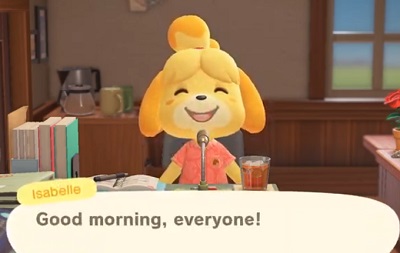
Mario Kart 8 and later Mario Kart 8 Deluxe pushed the boat out as far as the roster of drivers is concerned, including characters from outside of the Super Mario series for the first time, including Link from The Legend of Zelda series, Isabelle from Animal Crossing, and two characters from the Splatoon games. However, it would be a first for the series to include non-Nintendo characters!

Isabelle, from the Animal Crossing series, is a driver in Mario Kart 8 Deluxe.

Although the Mario Kart games haven’t done so yet, Nintendo has proved itself willing to open up to other companies’ franchises and characters in recent years. We’ve seen Minecraft Steve, for example, as well as characters from the Castlevania, Persona, and Dragon Quest series appear in Super Smash Bros. Ultimate on the Switch, so I think that demonstrates a willingness on Nintendo’s part to think outside the box when it comes to characters in popular titles.

Whether it will happen, though, is completely unknown! And to reiterate what I always say: this is pure guesswork and a wishlist from a fan, nothing more. I’m not claiming to know for a fact that any characters listed below will appear in Mario Kart 9 – or even if such a game is currently in development. With the 30th anniversary of the Mario Kart series coming up in 2022 I think it’s possible that we might see a new game, but even that’s just a guess on my part!

With that out of the way, let’s jump into the list!

Number 1: Sonic the Hedgehog (Sega)

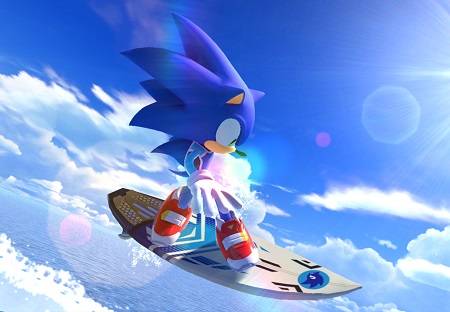
Sonic as he appears in Mario and Sonic at the Olympic Games: Tokyo 2020.

Of all the characters on this list, Sonic is arguably the most likely to crop up in Mario Kart 9. Not only is he a character in Super Smash Bros. Ultimate, but there have been a number of Nintendo games over the last decade or more in which he’s been prominently featured. Mario and Sonic at the Olympic Games in 2007 marked his debut alongside Mario, and since then the duo have appeared together in five more Olympic-themed titles.

It would’ve seemed unthinkable in the ’90s for Mario and Sonic to appear together; they were the mascots of competing companies! It was only when Sega retired from manufacturing their own consoles shortly after the millennium that Sonic appearing on Nintendo hardware was even a possibility, but he’s since become a mainstay. He’d make for a fantastic character, and having already featured in his own kart racer, he definitely knows a thing or two about driving!

Number 2: Pac-Man (Bandai Namco)

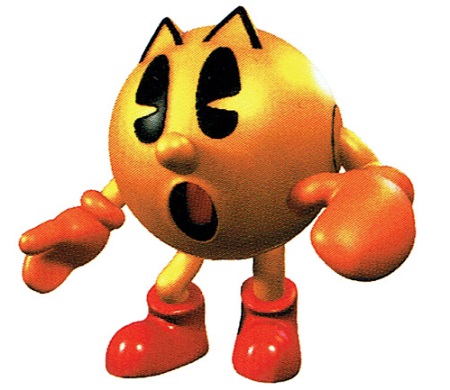
A 3D rendering of Pac-Man from 1999’s Pac-Man World.

Another character who appeared in Super Smash Bros. Ultimate, Pac-Man is a gaming icon from the medium’s early days. Originally an arcade game created in 1980, Pac-Man spawned a whole host of titles in a series that continues to this day. Though the games have no real story or plot, Pac-Man was arguably one of the first video game characters, and was, for a time, symbolic of the games industry as a whole. His simple design became iconic, and even today Pac-Man is instantly recognisable.

As with Sonic above, even a few years ago the idea of a collaboration between Nintendo and Pac-Man (short of licensing one of the games to their consoles) wouldn’t have seemed possible. But as companies continue to pool their resources and work together, it could make a lot of sense for both Nintendo and Bandai Namco (or should that be Bando Namcai?) to bring Pac-Man to Mario Kart 9.

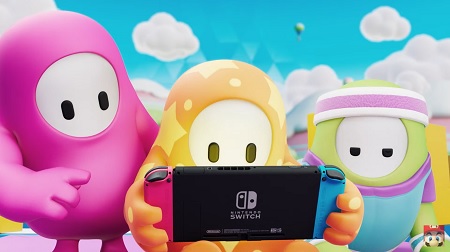
Number 3: Fall Guy (Epic Games/Mediatonic)

Three Fall Guys seen in a recent Nintendo Direct.

If I’d been in charge of the development of cute obstacle course/battle royale title Fall Guys, I would have prioritised a Nintendo Switch release. Regardless, the title is finally going to be released on Nintendo’s console, months after it’s PC and PlayStation 4 debut. The Fall Guys themselves are adorable little jelly bean characters with a huge variety of costumes, and their cartoon aesthetic would fit perfectly with Nintendo’s long-running kart racing series.

The recent Epic Games buyout may complicate matters, but with Fall Guys coming to Switch I really feel it has a shot at being successful on that platform – especially if Mediatonic can get cross-platform play up and running. If the game is a hit, bringing a Fall Guy to Mario Kart 9 would be fantastic, and something Nintendo could absolutely consider doing. It would arguably benefit Fall Guys more, with the character’s inclusion serving almost as advertising, but that should just be an incentive for Epic Games to allow this crossover to go ahead!

Number 4: Master Chief (Microsoft)

The Master Chief in Halo: The Master Chief Collection concept art.

The inclusion of Minecraft Steve in Super Smash Bros. Ultimate shows that Microsoft is quite happy to work with Nintendo, and a number of their recent moves – like their partnership with EA – have opened up the possibility of further collaborations and crossovers with big games companies. With that in mind, could the Halo series’ iconic protagonist end up as a racer?

Halo games, as first-person shooters, are quite violent, so perhaps Nintendo would opt not to include such characters for the sake of keeping the game family-friendly. But Master Chief’s design isn’t aggressive or scary, and I think he could be made to fit. It would be a fun collaboration between two of modern gaming’s big powerhouses.

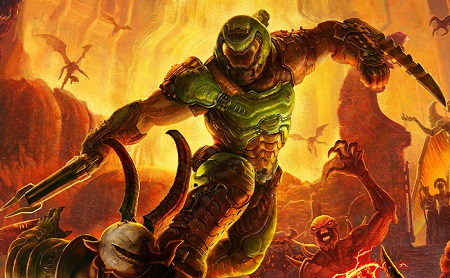
Number 5: Doom Guy (Bethesda/Microsoft)

Doom Eternal promotional artwork featuring the character known as Doom Guy.

Though visually similar in some respects to the Master Chief, Doom Guy has a surprising history with Nintendo. Not only was Doom 64 a Nintendo 64 exclusive in 1997, but last year saw a bizarre yet strangely wholesome internet-inspired team-up with Animal Crossing: New Horizons. In short, Doom Eternal shared a release date with New Horizons, and because of the polar opposite nature of the games, fans began ironically pairing up Doom Guy with Animal Crossing characters – notably Isabelle.

Nintendo could take advantage of the memes and jokes by bringing Doom Guy into Mario Kart 9. On the surface, maybe he isn’t a great fit for the series. But there’s nothing offensive about his character design, and if last year’s fan art showed us one thing, it’s that Doom Guy can be made to look adorable and cartoonified!

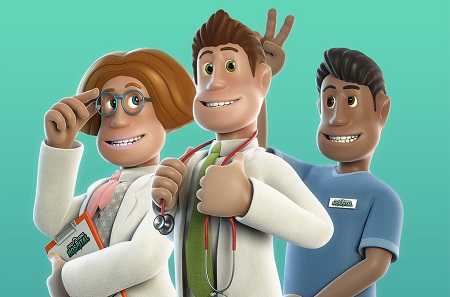
Number 6: Two Point Hospital Doctor or Nurse (Sega)

Two doctors and a nurse.

Two Point Hospital is a spiritual successor to 1997’s Theme Hospital, a classic of the “tycoon” genre. It was ported to the Nintendo Switch last year after releasing for PC in 2018, and has gone on to be a surprising success on the platform. As with many tycoon games there isn’t really one principal character to pick out, but a generic doctor and/or nurse could be a fun addition to Mario Kart 9.

One of the great things about Two Point Hospital is its cartoon aesthetic; a deliberate choice that mimics the title’s origins in tycoon games of the 1990s. That look just happens to be perfect for the Mario Kart series, which means a Two Point Hospital character would be a natural fit.

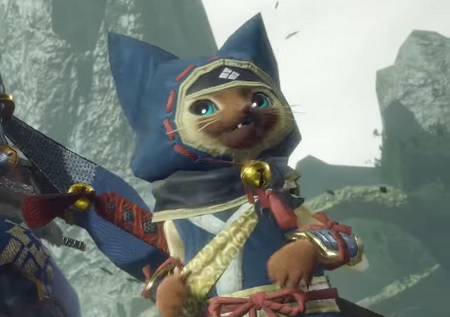
Number 7: A Palico (Capcom)

A Palico as seen in the trailer for Monster Hunter Rise.

I’ll let you in on a secret: the Monster Hunter series has never seemed like my thing. The latest title in the series, Monster Hunter Rise, is available for Nintendo Switch, but despite loving the visual style, the core gameplay of hunting and killing so-called “monsters” – which seem to be docile animals living their own lives not troubling anybody – holds absolutely no appeal to me!

Regardless, the latest title is a big hit on Switch, and Palicoes are cute little felines or cat-like characters that accompany the player character during the game. It seems like this kind of cute critter would be a perfect fit for Mario Kart 9 – even if I don’t personally care for the game they originate from!

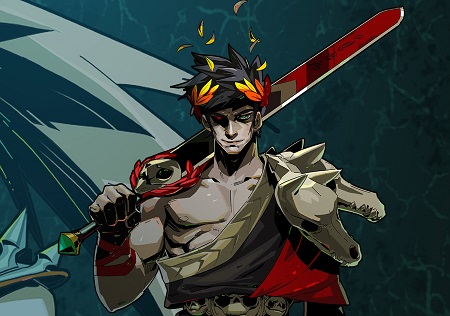
Number 8: Zagreus (Supergiant Games)

Promotional art for Hades featuring Zagreus.

Hades has to be one of the best indie games I’ve played in recent years, and was recently featured in a Nintendo Direct presentation as the game is getting a full physical release (i.e. on a game cartridge) for Switch. It’s an absolute blast, and if you haven’t tried it I can’t recommend it enough – if you’re okay with a game in which you die over and over again!

Zagreus, son of Hades, is the game’s protagonist, adapted from the character present in Ancient Greek mythology. His anime-inspired style is… well let’s just say I’m not an anime fan. But as a character he’s interesting and fun to root for in Hades, and with some minor adaptations I’m sure he could fit in with the rest of the racers!

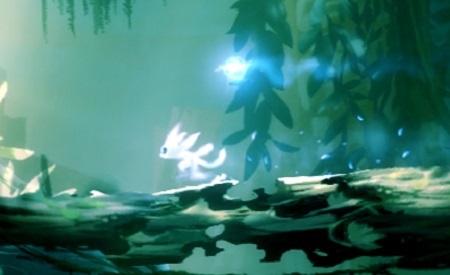
Number 9: Ori and Sein (Microsoft/Moon Studios)

Ori and Sein in Ori and the Blind Forest.

I’d almost forgotten that both Ori and the Blind Forest and Ori and the Will of the Wisps had been ported to the Nintendo Switch, but both games were a good fit for Nintendo’s platform and seem to have sold reasonably well. This entry is technically two characters, but they could be rolled into a single racer as Sein’s design might not lend itself to being an independent driver!

The Ori games are surprisingly sweet but also challenging in places, and Ori would certainly fit right in with the Mario Kart series from an aesthetic point of view. It would be great to see the Ori series, which already has a Switch presence, join up with Nintendo for an additional collaboration!

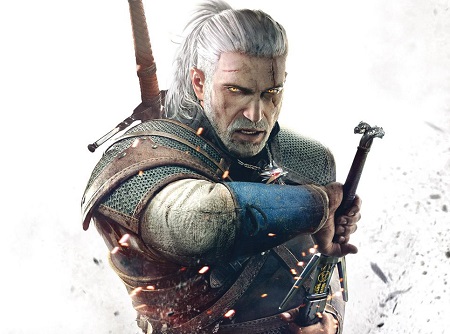
Number 10: Geralt of Rivia (CD Projekt Red)

Geralt as he appears on the box art of The Witcher 3.

Though I still haven’t played The Witcher 3 – or the prior two entries in the series, come to that – it’s held up as one of the best games of the last ten years, and protagonist Geralt of Rivia has since cropped up in a couple of unexpected places! Perhaps his next adventure could be joining Mario and friends for a go-kart race?

The Witcher 3 was one of the most ambitious titles to bring to the Nintendo Switch, considering the size and complexity of the game, but by all accounts it’s a solid port. A lot of folks have been enjoying taking Geralt with them to play on the go, and his recent appearance in Soul Calibur VI shows that CD Projekt Red are clearly amenable to collaborating with other companies. He would be a strange choice, perhaps, but a lot of fun nevertheless!

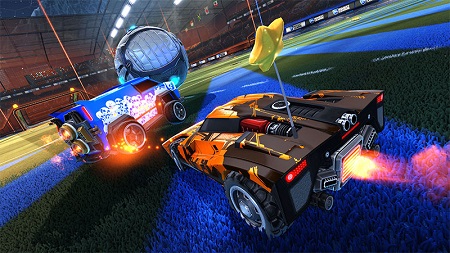
Bonus: Battle-Cars (Epic Games)

Promotional art for Rocket League showing two Battle-Cars.

One of the most surprising things in Mario Kart 8 was the inclusion of Mercedes-Benz car parts, as part of a deal Nintendo struck with the famous car manufacturer! We could absolutely consider other manufacturers or vehicles that would be cute to see in the next Mario Kart game, but for now I thought it could be fun if Nintendo could team up with one of the other top car games out there – Rocket League!

I’m atrocious at Rocket League and have been since the first time I played, but the game is a lot of fun. A buyout by Epic Games saw the title move to a free-to-play model, which has been good in some ways. There are a number of different vehicle styles, and any could be adapted to make a fun kart in Mario Kart 9. Perhaps three or four different styles would be enough so as not to overwhelm the title!

So that’s it. Ten characters – and one bonus set of vehicles – that Mario Kart 9 should – but most likely won’t – include!

Is a new Mario Kart title in the works?

If I’m right that Nintendo plans to do something next year to mark the series’ 30th anniversary, a new game would be top of the list. And in the spirit of celebration, bringing a whole roster of characters from across gaming to join one big Mario Kart party would be a great thing for Nintendo to do. Some characters that Nintendo has worked with in the past, like Sonic the Hedgehog, seem far more likely than others, but it would benefit practically every company involved in the games industry to allow Nintendo to license one or two of their characters. After all, it’s a fantastic advertisement for the game they’re originally from!

I’ve been a huge Mario Kart fan since I first sat down to play Super Mario Kart in 1993 or 1994, back when I owned a SNES. That title only had eight racers to choose from, and the series has come a long way since then – while managing to retain the fun. As games got better and I played the likes of Shenmue and Knights of the Old Republic I began to favour titles with a strong focus on story; there are few titles I considered fun for their gameplay alone. The Mario Kart series has always been one of them! Whatever happens next year, and whenever Mario Kart 9 may come, I hope Nintendo try to bring in some new and different faces.

Mario Kart 8 Deluxe is out now for Nintendo Switch, and is the copyright of Nintendo. All characters mentioned above are the copyright of their respective studio, developer, and/or publisher. Some screenshots and promo art courtesy of IGDB. This article contains the thoughts and opinions of one person only and is not intended to cause any offence.