Spoiler Warning: There are spoilers ahead for A Minecraft Movie.
In mid-2011, I was dating a partner who loved watching YouTube “Let’s Play” videos. One of their favourite games to watch was the as-yet-unreleased Minecraft, and they insisted I download it and give it a try. So while I can brag that I played Minecraft while it was still in beta… I’m sorry to say that I was unimpressed at first! I remember thinking that the game was a scruffy-looking thing all about building mud huts and digging holes in the dirt, but I played it with my partner for their sake more than mine. I eventually got the hang of it, and I remember building a few fun things like a castle with a lava moat and a pyramid made of red bricks that took forever to craft!
If you’d told me then that Minecraft would remain at the top of the charts for the next fifteen years, be worth billions of dollars, and be the subject of a big-budget Hollywood film, I’d have called you out on your bullshit – because there was no way any of that would be possible. Shows what I know, eh? A Minecraft Movie is the latest adaptation or addition to a growing franchise, one which now comprises multiple spin-off games, toys, merchandise, and even books. Minecraft has become a well-established brand in its own right; a household name that even elderly relatives and non-gamers are familiar with!
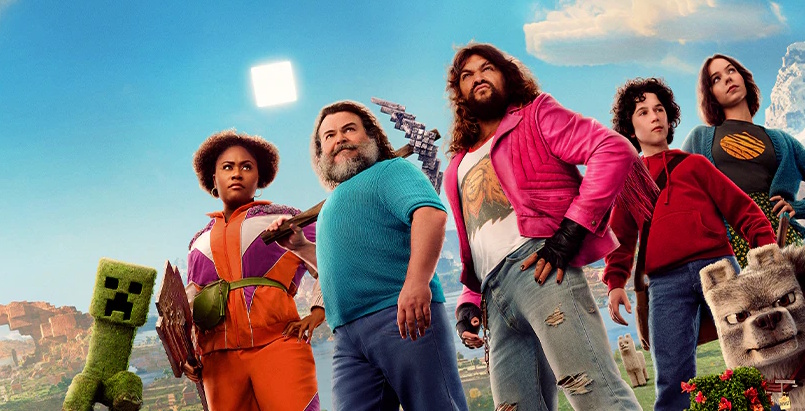
The main characters.
Even having seen Minecraft’s phenomenal growth and success, I still wouldn’t have thought it was a good choice to adapt for a narrative feature film. The main game is all about creativity and making your own fun – something that I felt wouldn’t translate well to a linear narrative on the big screen. But Warner Bros. teamed up with Mojang and owner Microsoft to do just that, bringing in established names like Jack Black and Jason Momoa to lead a star-studded cast. And you know what? I actually really liked A Minecraft Movie.
A Minecraft Movie was an incredibly fun watch. I sat there the whole time with a smile on my face as its fast-paced but easy-to-follow story raced past, and there were plenty of laugh-out-loud moments along the way. I felt the film was self-aware, not taking itself too seriously while staying true to what I remember of its source material. There was nothing ground-breaking here in terms of narrative or filmmaking, but that’s just fine. A Minecraft Movie’s writers, producers, actors, and director knew what kind of film they wanted to make and went all-in. The result was a surprisingly fun time. In fact, A Minecraft Movie is the best thing I’ve seen so far this year. Does that mean I have the emotional intelligence of a twelve-year-old? Let’s talk about that!
Minecraft has gotten its own feature film adaptation.
I chose those words carefully, and I don’t mean it as any kind of insult. A Minecraft Movie is a kids’ film first and foremost, but I’ve always said that the best films made for children have something to offer to adults, too – and A Minecraft Movie is firmly in that camp. While watching it, I felt echoes of being a kid all over again, as if it was a Saturday afternoon and this was the film my friends and I had chosen to watch at our local cinema. I got swept along in the simple good-and-evil story, the emphasis on creativity, and a typical yet incredibly fun and high-energy Jack Black performance… and I genuinely had a whale of a time.
The story that the team created was a good fit. It took elements from Minecraft’s surprisingly deep lore and used them to tell a pretty basic “stop the evil villain from conquering the world” story, one which found time to include most of its main characters and even had a sub-plot about a man missing his dog! I was concerned going into A Minecraft Movie that the story would be too basic; too much of a cookie-cutter storyline. But there was enough of a setup, enough characterisation, and enough of a journey for Henry and Steve in particular to make it absolutely stick the landing.
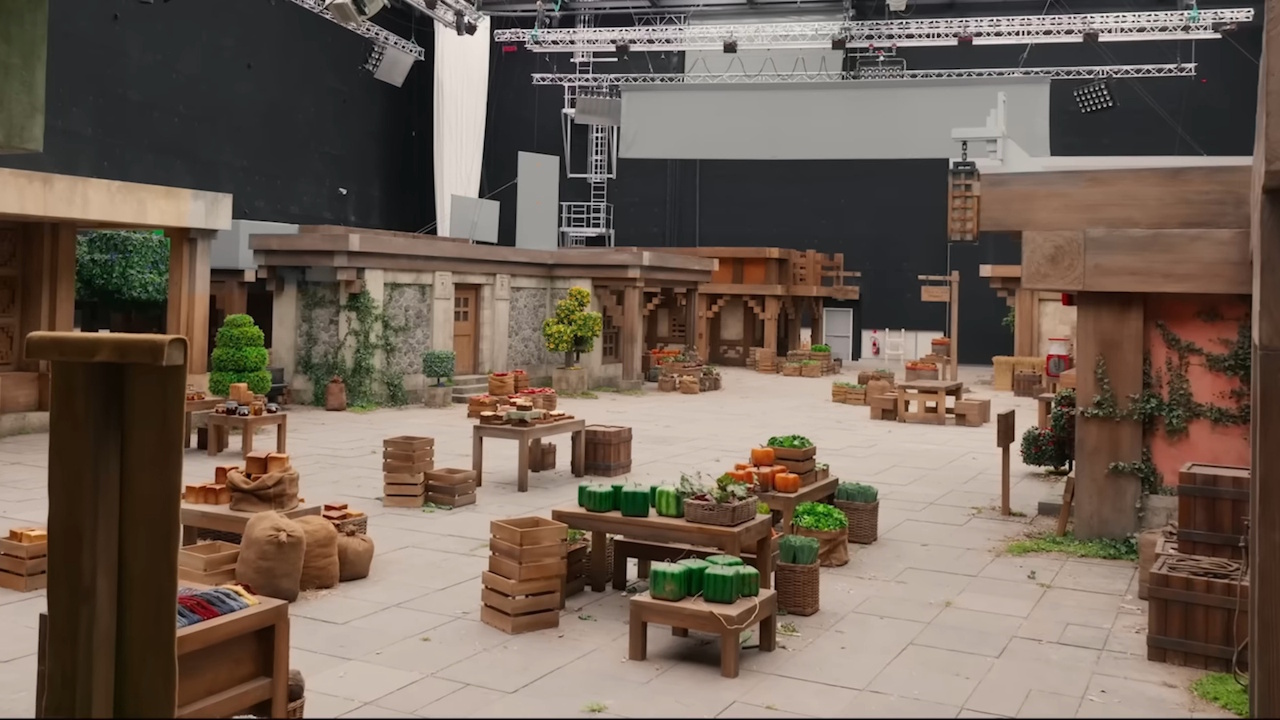
A behind-the-scenes look at one of the sets constructed for the village. Photo Credit: Minecraft Wiki
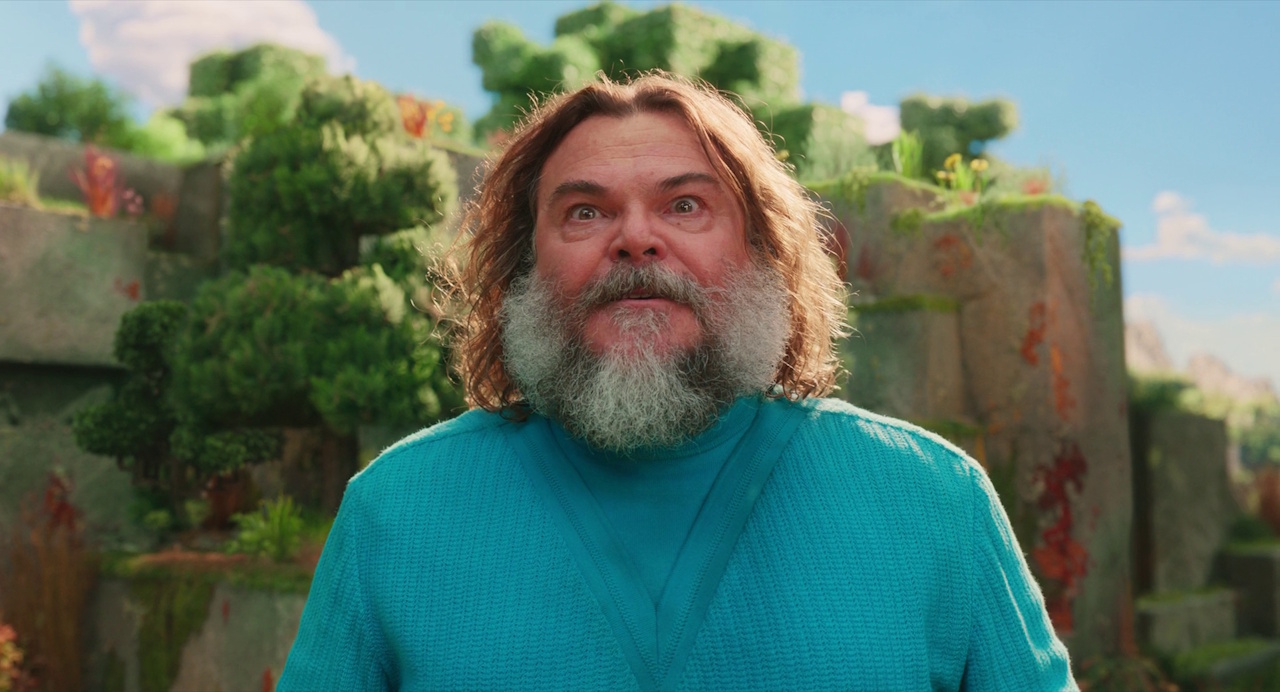
Jack Black is one of those performers who’s instantly recognisable in basically every major role he’s ever played. He brings a ton of energy to his performances – and I think that worked incredibly well here, even though I admit I was sceptical at first! In Minecraft (the main game, at least; I’m less familiar with the spin-offs), Steve is a blank slate for the player to inhabit. A film needs characters with understandable motivations and recognisable personality traits, and there were more than enough of both in this depiction of Steve. In one sense, Steve represents the ultimate escapist fantasy – he quit his mundane and boring life to chase his dreams, and found a whole new world in the process.
The high-octane energy that Jack Black brought to the role was pitch-perfect for the kind of film A Minecraft Movie wanted to be and for the kind of young audience it sought out. It was also a ton of fun to watch, as Jack Black’s performances usually are! Steve’s desire to reunite with his pet dog Dennis (a name I appreciated for obvious reasons!) kept him grounded, and it was a perfectly understandable reason for him to team up with the rest of the main characters.
Steve.
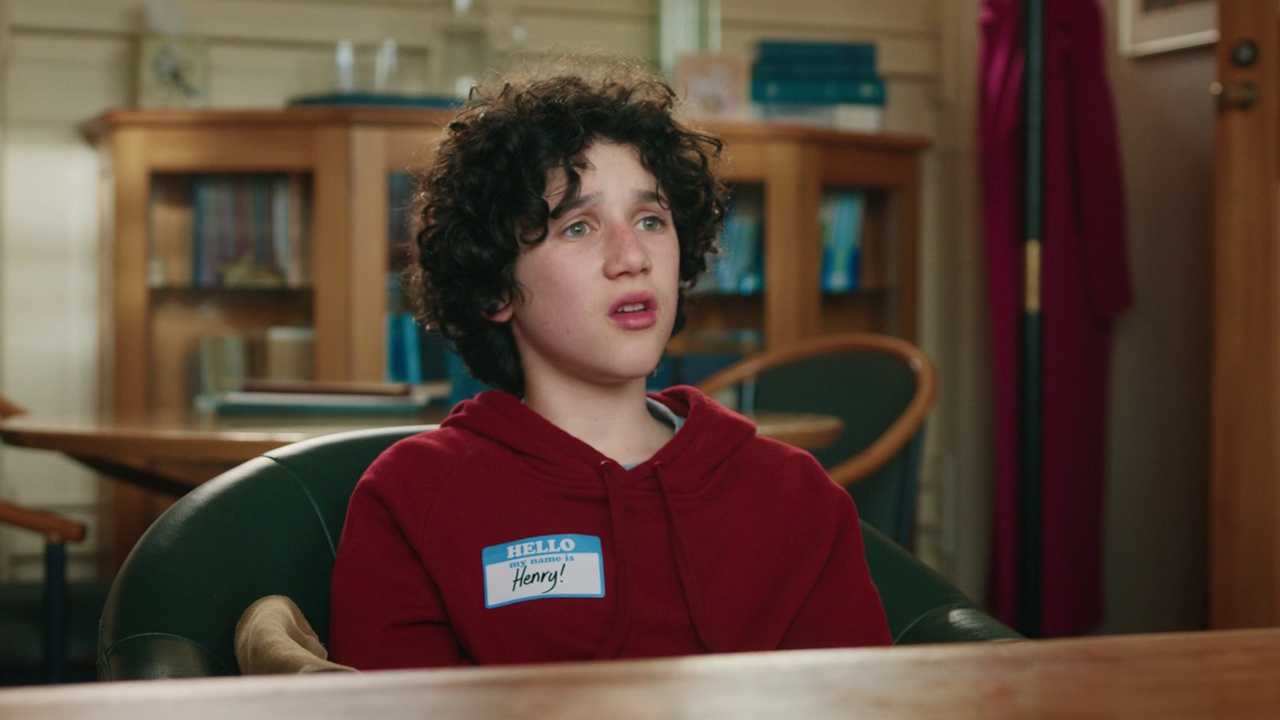
Henry felt like the film’s point-of-view character, at least at the beginning, and I think he worked well in that role. He was the “player character” insofar as he was figuring out the rules of the world before the gang encountered Steve, and I think anyone who’s played Minecraft, especially in the early days, can relate to figuring out how to knock down trees and craft basic structures! As an outcast, someone with few friends, and someone who struggled to fit in, Henry was also someone that I think a lot of the film’s younger audience will be able to relate to – as well as older folks like myself who remember being in a similar position once upon a time.
Continuing the idea of A Minecraft Movie as an escapist fantasy, Henry is kind of in the same category as Steve – looking to get away from a troubled life plagued by bullies in a new school. He’s introduced to a world where his creativity and imagination – two things kids have in droves – are incredibly important, and where he can put his unique skills and talents to use.
Henry escaped to a fantasy world.
Henry’s sister, Natalie, was less keen on hopping over to a new world – but she rose to the occasion! Natalie had struggled with taking care of her brother, but her adventures in the world of Minecraft helped her discover her inner strength and build a stronger bond with him. Though she was in focus less of the time, she still got a satisfying arc.
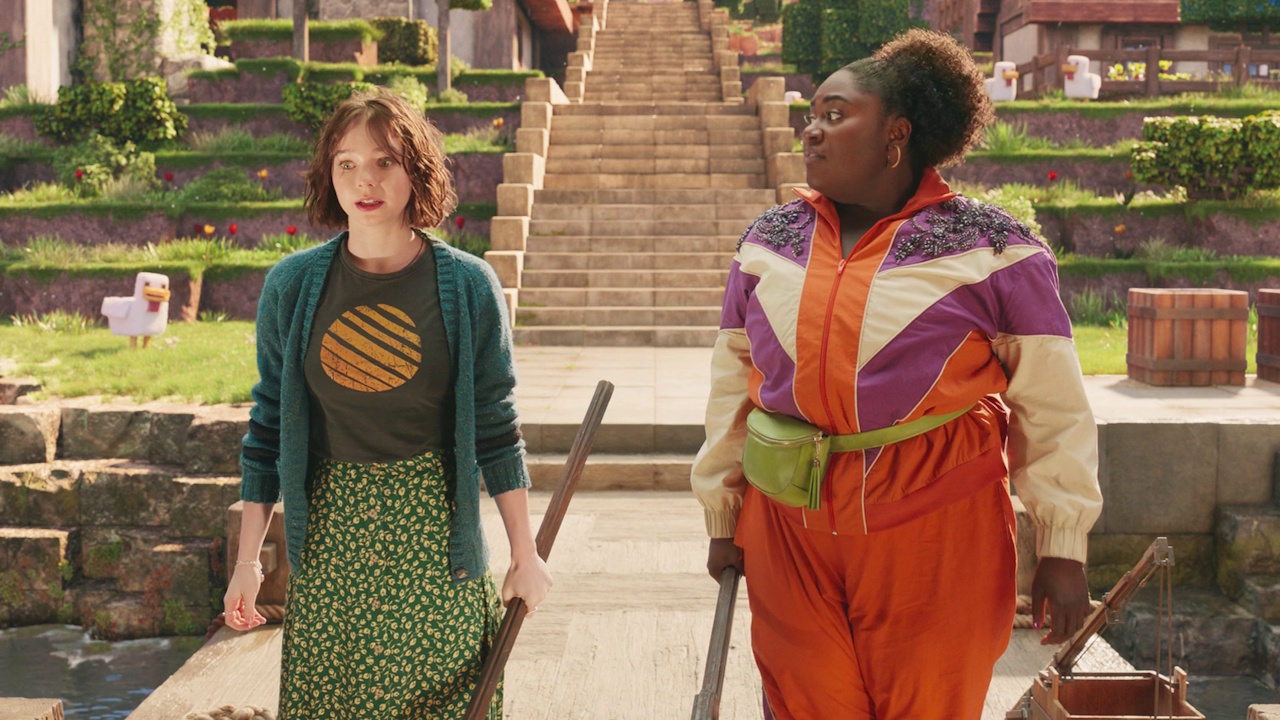
Teaming up with Natalie for parts of the film was Dawn, and though I wouldn’t say she got as much of an “arc” insofar as she began and ended the story in a similar place, her love for animals shone through – and became important as the story reached its climax. She was a fun character, and made a great foil for Garrett and teammate to Natalie throughout the adventure.
Natalie and Dawn.
Garrett was an interesting character. Maybe this is just me, but I felt echoes of a real-life gamer personality called Billy Mitchell in the conceptualisation of Garrett. Mitchell, if you’re unaware, was world champion of the original Donkey Kong arcade game and achieved the highest possible score on Pac-Man, and was the subject of the 2007 documentary The King of Kong.
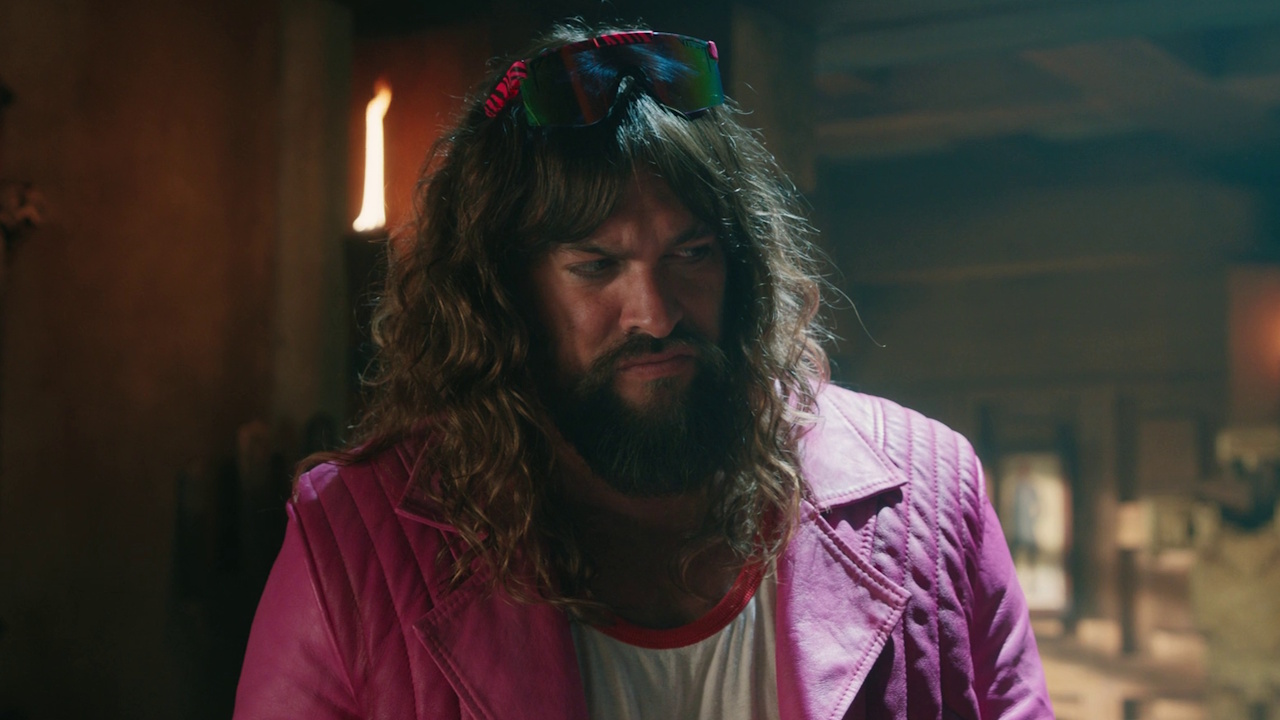
If Henry and Steve represent the escapist fantasy, Garrett was actually the character who felt closest to reality. His financial struggles were relatable, and the facade he put up while dealing with the potential collapse of his business – and his own loneliness and self-esteem issues – is something that hit close to home. In terms of his personality, Garrett was obviously a bit of a clown and someone we aren’t meant to really root for. Someone who presents as arrogant, cocky, and just rude isn’t going to be the easiest character to support. But A Minecraft Movie was surprisingly delicate in its handling of this character, and what we glimpsed beneath the surface was a deeply lonely, sad, and self-pitying man – one who (eventually) stepped up to help his newfound friends.
Garrett had an interesting arc across the film.
A Minecraft Movie felt, in places, like a kids’ film from the ’80s or early ’90s, and perhaps that’s part of why I liked it so much. Seeing Henry struggle as the new kid at school with bullies before running away to a fantasy world… it’s giving me The NeverEnding Story vibes, which is one of my favourite films from when I was a kid! The two are different in tone, style, pacing, effects, and so on… but there are also some similarities in terms of characterisation and story that I think were important for me personally in relating to A Minecraft Movie.
Visual effects in A Minecraft Movie took a bit of getting used to, to be honest. The game’s pixellated art style was completely changed for the film, with semi-realistic textures applied over Minecraft’s trademark cubes and blocks. When it came to things like trees and stones, I was fine with it. When it came to faces and animals… that’s where it took me a minute to adjust! I can see this being a possible point of contention; some game fans might not like the realistic direction, and some folks who are less familiar with the games might struggle with the blockiness of characters and animals in particular. But once I got used to the way the film looked, I didn’t have a problem with it. Some of the landscapes and vistas were genuinely impressive, and the way the film blended CGI with real actors and props was seamless and impressive.
Behind-the-scenes with some of the villagers! Photo Credit: Minecraft Wiki
The soundtrack was fantastic, too. An up-tempo score and high-energy pop and heavy metal songs were pitch-perfect for the film and its fast pace. Battling the bad guys – particularly toward the end of the film – was elevated by the use of music, and the entire soundtrack just made the film so much better. I’d also be remiss not to mention Steve’s Lava Chicken – the song reached number 9 on the UK music charts (and also charted in the United States and elsewhere) becoming the shortest-ever song to crack the top 20 at a mere 34 seconds long!
So that was A Minecraft Movie. It was fun. Simple, child-friendly fun.
I had a way better time with A Minecraft Movie than I could’ve anticipated, to be honest with you. This picture could’ve gone either way – it might’ve been utterly awful; the kind of kids’ film that might make the little ones smile but does absolutely nothing for me. Or it could’ve been “so bad it’s good;” the kind of film that’s worth watching ironically because of how poor the quality is across the board. But instead, A Minecraft Movie was genuinely enjoyable – a fast-paced, modern kids’ film that feels like a throwback to the ’80s and ’90s in the best possible way.
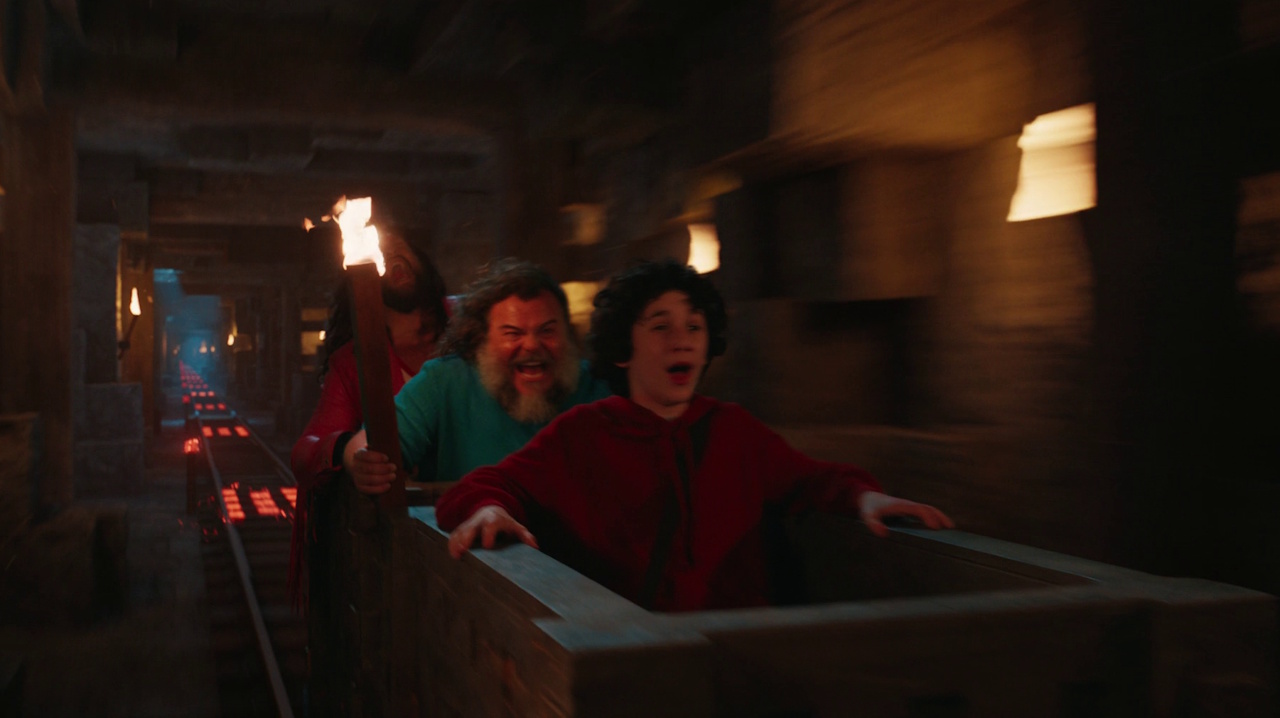
A Minecraft Movie was a fun ride.
A Minecraft Movie is an easy recommendation now that it’s available to watch at home. Whether you have little ones or not, and whether you’re familiar with the video game or not, I think it’s a ton of fun and easy to get stuck into. Having some basic knowledge of Minecraft might help elevate some plot points here or there, but the film is a soft landing for folks who don’t have that background, and I don’t think you’re going to miss much if you’ve never played the game or any of its spin-offs.
I doubt I’ll say that A Minecraft Movie is my favourite film of 2025. There’s still more than half of the year to go and some big blockbusters on the way. But in terms of pure entertainment and laugh-out-loud fun? I had a blast switching off and going on a whirlwind adventure in this strange blocky world! Definitely check out A Minecraft Movie if you haven’t already.
A Minecraft Movie is available to buy or rent now via Amazon Prime, Google Play, and other video-on-demand platforms. A Minecraft Movie will be released on DVD and Blu-ray in June 2025. A Minecraft Movie is the copyright of Warner Bros., Legendary Pictures, Mojang Studios, Vertigo Entertainment, and/or Microsoft. This review contains the thoughts and opinions of one person only and is not intended to cause any offence.
Spoiler Warning: There are minor spoilers ahead for the titles on this list.
The launch of the Xbox Series X earlier today marked the beginning of a new console generation – and thus the end of one too. That generation began in November 2012 with the release of the Wii U, and saw both the Xbox One and PlayStation 4 arrive a year later. I’ve been incredibly fortunate over the last eight years to have played a number of different games across all four major consoles, and while I need to say for the record that there are still plenty of big titles I haven’t got my hands on, there’s certainly enough to put together a list like this.
As we say goodbye to the current generation of consoles and jump headfirst into next-gen, let’s take a few minutes to look back at some of the best gaming experiences of the generation… in my subjective opinion!
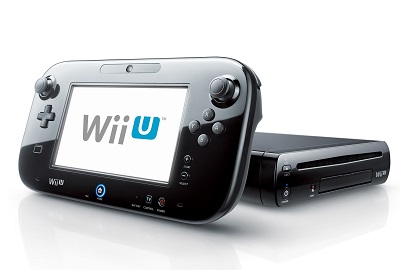
But before we dive into the list, here’s a short recap of each of the major consoles. The Wii U came first, but was blighted by horrible marketing (even months after release, many gamers were confused as to what the Wii U even was, with many believing its clunky plastic controller to be nothing more than an accessory for the Wii). Nintendo began making losses during this period, and even laid off a number of staff. The console saw some very fun games, but I was one of less than fifteen million people who bought the machine – which in 2012 was clearly not good enough to cover Nintendo’s costs – making the console an expensive failure. For the sake of comparison, the original Wii sold over 100 million consoles, and the Switch is currently sitting at over 60 million a mere three years after release.
The Wii U kicked off this generation in November 2012, but was unsuccessful overall.
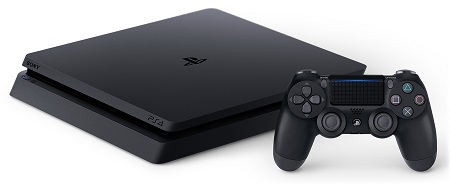
Next came the PlayStation 4. Only a few months earlier I’d bought a PlayStation 3, the first Sony machine I’d ever owned. I’d done so solely to play The Last Of Us, and I wasn’t disappointed! After the Xbox One suffered a rocky run-up to launch (we’ll come to that in a moment) PlayStation seized the chance to convert gamers to their platform after running behind for the entirety of the previous generation. And many folks who had previously been invested in Xbox made the switch – PlayStation 4 has almost certainly sold twice as many units as Xbox One, and that couldn’t have happened without Xbox 360 players jumping ship. PlayStation 4 has also had by far the better crop of exclusive games, and that’s another huge factor in its success this generation.
The PlayStation 4 arrived in November 2013 and has been the generation’s best-seller by far.
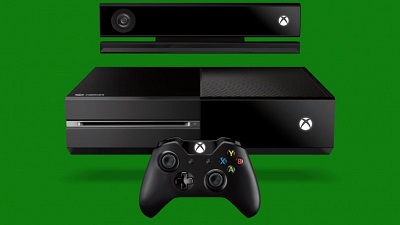
Xbox One arrived only a week after the launch of the PlayStation 4, but it was not a smooth road for Microsoft’s console. From the moment the console was announced it attracted the ire of gamers. First was its complicated always-online nature, which Microsoft had to backtrack on. Next was the issue of trading in games or sharing them with friends, with Xbox initially seeming to “lock” each disc to a specific user account. This was also something Microsoft U-turned on. Those fiascos were bad enough, but next came Kinect. Bundled with the system – and with no way to opt out – Kinect bumped up the price of the Xbox One at launch, making it $100 more than PlayStation 4. Looking back over several console generations, the cheaper machine usually sells better, and so it proved again. Xbox One also struggled with a lack of decent exclusive games to compete with those available on the PlayStation 4. Despite all of that, however, Xbox Game Pass (a paid subscription service which gives players access to over a hundred titles) definitely found a foothold as the generation drew to a close.
The Xbox One launched a week after the PlayStation 4 – for $100 more.
Finally, 2017 saw the launch of the Nintendo Switch. Where the Wii U had been Nintendo’s attempt to recapture the “hardcore gamer” market, the Switch saw Nintendo realise that its success with consoles like the Wii and the handheld DS and 3DS lineup was due to their appeal to casual players. A console deliberately less powerful than its two competitors, the Switch retained the motion controls that had proven popular on the Wii alongside a new gimmick: the console is a hybrid that can either be played as a handheld device or connected to a screen. After the disappointment of the Wii U, the Switch proved a success from day one, and eclipsed the Wii U’s total lifetime sales in a matter of months.
The Nintendo Switch is the newest major console, having been released in 2017.
So those were this generation’s consoles. Now let’s look at some games!
This list is in three parts. The first part consists of titles that I consider to be incredibly important to the overall gaming landscape of the generation, even if they weren’t “my thing” and/or I don’t have much personal experience with them. The second part of the list contains a handful of titles that failed hard, and whose failures had an impact on gaming in some way. And finally the third part of the list is what you’re all here for – my personal top ten games of the generation.
Without any further ado, let’s get started!
Honourable Mentions
As stated above, this section of the list consists of a few titles that, for whatever reason, weren’t necessarily something I enjoyed or bought into, yet were landmarks in gaming this generation. No “games of the generation” list would be complete without their inclusion.
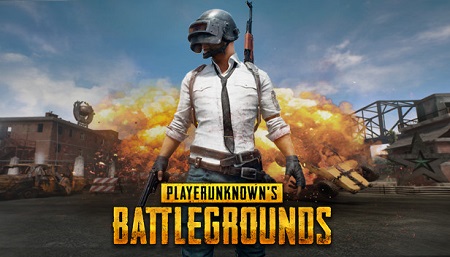
Number 1: PlayerUnknown’s Battlegrounds (2017)
PlayerUnknown’s Battlegrounds – or “Pub-G” as some insist on calling it – was the first truly successful battle royale game. There’s debate over the origins of battle royale, and at one point PlayerUnknown’s Battlegrounds attempted to patent the format, but there can be no denying that this is the game that brought it to mainstream attention. By doing so it revolutionised online multiplayer gaming, and for a while was the most-played game in the world.
Considering how big battle royale titles still are, no end-of-the-generation list would be complete without PlayerUnknown’s Battlegrounds. Though the game is still being played, it has arguably been eclipsed by some other titles in the genre it spawned – most notably Fortnite. In that sense it’s one of the most influential games of the generation… even if it isn’t one that’s enjoyed as much ongoing success.
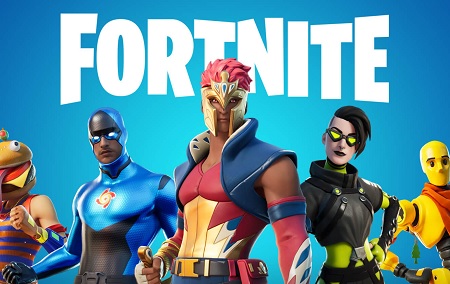
Number 2: Fortnite (2018)
If PlayerUnknown’s Battlegrounds kicked off the battle royale craze, Fortnite took it to the next level. This title became a powerhouse in the gaming world; a phenomenon the industry hadn’t seen since Minecraft. And it’s a free-to-play game. Many of Fortnite’s biggest fans have never paid a penny despite spending hours and hours playing it, yet it’s managed to become one of the biggest and most financially successful titles in gaming. Ever.
Fortnite isn’t innovative with its gameplay, nor is it innovative in being free; mobile games in particular have used a free-to-play model for years. But Fortnite has taken the world by storm by refining those things and putting them with a fun, cartoony aesthetic that has widespread appeal, especially to younger players. For many kids, Fortnite has been their ticket into a brand-new hobby, and the importance of expanding gaming beyond where it was even a few years ago is immeasurable.
As with any successful title, other games have tried to imitate Fortnite’s success, and in some ways we can assign some degree of blame to Fortnite for making lootboxes and microtransactions more acceptable. However, it isn’t only this game’s fault that companies continue to pursue in-game monetisation!
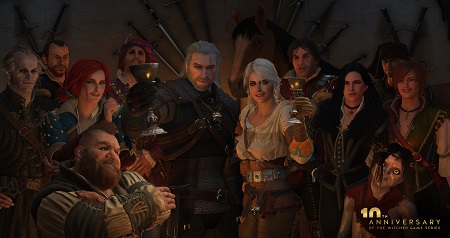
Number 3: The Witcher 3 (2015)
With so much focus on multiplayer this generation, The Witcher 3 really stands out as a comparative rarity. It demonstrated clearly and unequivocally that there is a market for well-made, expansive single-player games at a time when many companies seemed to be abandoning them. It’s widely considered one of the best games of all-time, not just of the generation, and the success of The Witcher 3 did much to demonstrate to the industry that single-player games could still be critically and financially successful.
As I mentioned when I took a look at a few great games that I haven’t played, The Witcher 3 is on my list and I hope to eventually get to it. Single-player fantasy role-playing games are exactly my kind of thing, but I haven’t got around to this one yet! As a standout title that really boosted the medium, though, I can appreciate The Witcher 3′s success from afar.
Number 4: Grand Theft Auto V – online mode (2013)
Grand Theft Auto V has been a juggernaut this generation, having initially been released on the previous generation’s Xbox 360 and PlayStation 3. For the last seven years it has seldom dropped out of the top ten bestselling games, which is an incredible achievement. The success is largely due to its online mode, which has made developers Rockstar an insane amount of money.
Competitive online gaming really isn’t my thing, but no list appreciating the generation’s finest should ignore Grand Theft Auto V’s multiplayer mode. Taking the beautifully-crafted world of Los Santos and opening it up to players for jobs and heists together has been a masterstroke on Rockstar’s part.
I was, however, a little disappointed to see that Rockstar simply plan on porting the game to the Xbox Series X and PlayStation 5. I get that it’s been a phenomenally successful title this generation – but I had hoped for a new entry in the series (or a new title altogether) as the gaming world moves on. They see things differently, however, and given Grand Theft Auto V’s success and bustling online scene, maybe they’re right.
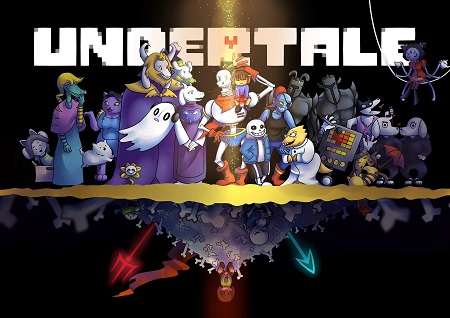
Number 5: Undertale (2015) and the whole indie scene
I chose Undertale as an example because it has been widely praised, but this entry also stands to represent titles like Dead Cells, Cuphead, Untitled Goose Game, Donut County, Shovel Knight, and many more indie titles that have wowed audiences this generation. Making a game as an independent developer is a difficult and often expensive undertaking, yet many of these titles – including Undertale – have been fantastic and received critical acclaim.
There’s a perception that all indie games are pixel-art 2D platformers, and while there certainly are titles which fit that description there’s also much more going on in the indie scene. Some of these games go on to inspire whole sub-genres, and as we go into the new generation its a great thing that there are so many independent, smaller developers out there. It keeps the games scene interesting!
Disappointments and Disasters
This section looks at a handful of controversial, disappointing, or outright bad games which nevertheless impacted the games industry this generation. Not every innovation or change to the way games are made comes from success, and some titles may be better-remembered for serving as bad examples than good games.
Number 1: Star Citizen (Unreleased)
How can a game that hasn’t even been released be one of the biggest disasters of the generation? Simple: it’s become the textbook example of how crowdfunding can go wrong in the gaming realm. StarCitizen’s troubled development began way back in 2012, before any of the current-gen systems launched. And it raked in millions of dollars in crowdfunding from eager gamers – only to miss release window after release window, while continuing to beg and scrounge money out of its remaining loyal fans.
At this point, in late 2020, the team behind Star Citizen have raised – and mostly spent – over $300 million. That’s an utterly insane amount of money for any video game, and if reports and rumours are to be believed, it’s still nowhere near complete. What happened with Star Citizen is basically this: a developer had a decent idea for a game, put together a small team, and began work. But as the crowdfunding campaign took off the developers began to promise more and more features, leading to more development time. More development time in turn meant they needed more money, which meant more crowdfunding, which meant more features were promised, and the whole thing has spiralled out of control to the point where the game is an overhyped undeliverable mess.
Star Citizen isn’t a “scam,” because I firmly believe there were good intentions behind it. But the developers needed someone competent to manage the project before it got unwieldy, and someone in charge to prevent it from ever getting so out of control. The idea of selling in-game content for an unreleased game is already pretty shady, but when some of that content can cost thousands of dollars I think someone has to step in and say that it isn’t acceptable. It’s still possible the game will see a release – one day – but even if it does it’s hard to imagine it will be anything less than underwhelming in the extreme for fans who’ve waited years and hyped it to oblivion.
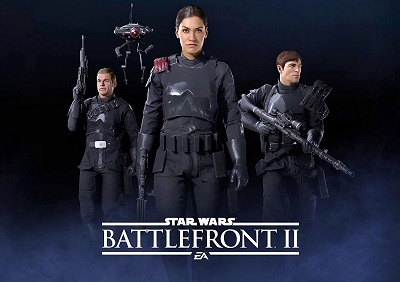
Number 2: Star Wars Battlefront II (2017)
Battlefront II saw the bubbling lootbox controversy boil over. Though it’s been over three years since its 2017 launch, the ramifications of that are still being felt as jurisdictions across the world move to regulate or ban in-game gambling. Electronic Arts has, for years, pushed the envelope for what gamers will tolerate in terms of in-game monetisation. And with Battlefront II they finally pushed too hard and too far.
The game itself is perfectly playable today, but only because EA ripped out as much of the gambling as they could before it hit shelves. Battlefront II also had poor timing, causing controversy in the Star Wars fandom at a time when The Last Jedi was already proving hugely divisive. The combination of the poorly-received game and film meant that Star Wars was in a dark place going into 2018.
Number 3: Mass Effect: Andromeda (2017) and Anthem (2019)
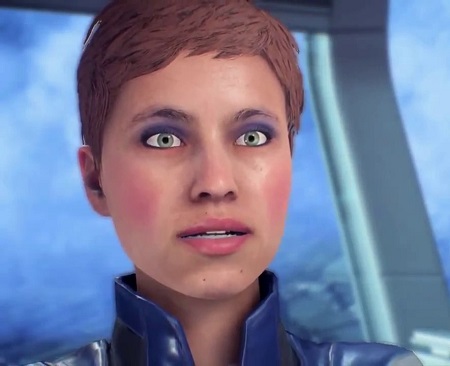
Oh, Bioware. How heroes fall! For a number of reasons that boil down to project mismanagement, both Mass Effect: Andromeda and Anthem were rush jobs, put together in months instead of years. And it showed. Andromeda was memed to death, and even though the worst of its bugs and visual glitches were fixed within days of launch by patches, the damage was done and the game’s reputation never recovered.
Anthem overpromised based on a trailer at E3 that was entirely fake. Players who did buy into the game found a half-finished and underwhelming live service experience, and promises of updates and more content weren’t enough to convince more than a few to stick around. As of late 2020, Anthem’s “roadmap” for further updates has been cancelled, and the game is essentially dead.
For a studio like Bioware, these failures feel so much worse because we know that they’re capable of producing some incredible games. Knights of the Old Republic, Jade Empire, and the first two parts of the Mass Effect trilogy are among my favourite role-playing games of all time, so to see the buggy overblown side-mission that was Andromeda and the live service failure that was Anthem is nothing less than a colossal disappointment. There may be light at the end of the tunnel for this once-great developer, however, with a Mass Effect trilogy remaster having been announced a couple of days ago.
Number 4: Fallout 76 (2018)
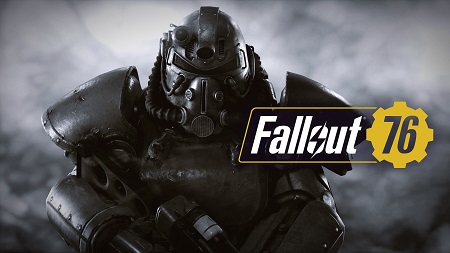
As above, a developer once revered for its amazing experiences churned out a buggy, underwhelming online multiplayer title. Fallout 76 came after years of declining quality of Bethesda’s own titles, which included port after port of Skyrim and little else. I could never get past the fact that this was a Fallout game with absolutely no non-player characters. The heart of any game like this is its story, and a story needs characters. Fallout 76 thus contained little more than a moderately pretty environment – one built on an ageing engine meaning even the game’s visuals were hardly spectacular.
After walking around, checking out the scenery, and battling a few monsters, there was literally nothing to do. The gunplay was also mediocre to poor, something the Fallout series’ VATS system had masked in previous titles built on the same engine. But with multiplayer there was no way to implement VATS properly, meaning the game’s shooting had to stand on its own… and it fell down.
The first of these points – the missing NPCs – was eventually addressed in an update. But Fallout 76 has been own goal after own goal from Bethesda, including crappy product tie-ins that got recalled, a $100 premium membership, and more besides. The game was a bug-riddled disappointment.
Number 5: Shenmue III (2019)
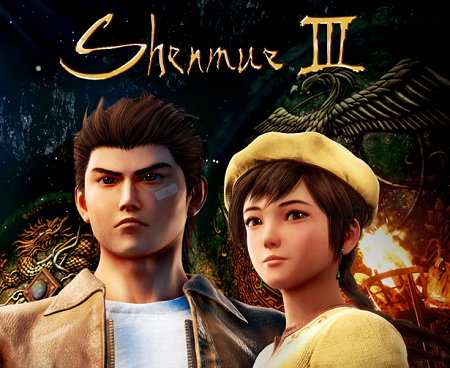
Shenmue III is one of the biggest disappointments to me personally. Other titles in this section have their problems, but when it comes to my most-anticipated games ever, Shenmue III had been at the top of the list since 2001. After a dedicated group of hardcore fans raised an incredible $7 million through a crowdfunding campaign, the only thing I expected from Shenmue III was that it would finally finish Ryo Hazuki’s story.
In 2001, Shenmue II ended on a cliffhanger, with Ryo’s quest for revenge incomplete – and having just taken an interesting turn. But the failure of the Dreamcast – and the game’s lacklustre sales – meant no sequel was forthcoming. Yu Suzuki, the game’s creator, had always said that the Shenmue saga was an ambitious project, and that’s to be commended, but while I can’t claim to speak for every Shenmue fan, really my only expectation going into Shenmue III was that it would bring the story to a conclusion. If there was too much story to tell in a project this size, then someone had to come in and make cuts to all of the unnecessary fluff to make it fit. For some inexplicable reason, that didn’t happen. Fans raised millions of dollars to end on another cliffhanger. Does Yu Suzuki seriously think he’ll raise millions more to make Shenmue IV and Shenmue V to keep telling this story?
And that’s why it’s such a disappointment. It had one objective as far as I was concerned: finish the story. Fans donated their own money to make that dream a reality, but the developers blew it. This was a once-in-a-lifetime chance for a dead, failed series to come back to life and finish its ambitious story. I can’t get over the truly awful decision-making that meant it didn’t happen.
Games of the Generation
Now we come to my personal top ten. I played and loved all of these games this generation, and while there are many more that could have made the list, when I whittled it down these are the titles which made the final cut. These titles are not in any particular order, so this isn’t a ranked list. All ten titles are very different, and thus they’re all my Games of the Generation!
Number 1: Mario Kart 8 (2014)
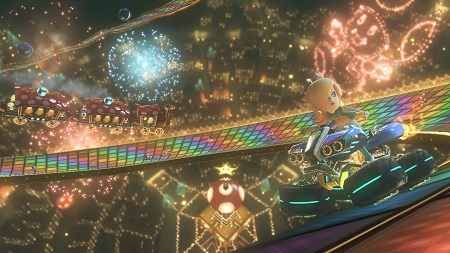
Originally released for the Wii U in 2014, Mario Kart 8 has since reappeared – in “deluxe” form – on the Nintendo Switch. It isn’t particularly ground-breaking, simply refining and polishing the Mario Kart experience for the high-definition screens that became commonplace over the last decade. But that’s absolutely fine, because Mario Kart doesn’t need a radical overhaul; what keeps players coming back for race after race is that it’s pick-up-and-play fun.
The Switch version bundles the original game with its two DLC packs and adds a few new characters to the roster too. And that’s the way most players have experienced Mario Kart 8, since so few people owned a Wii U! It’s a shame that Nintendo chose to paywall its originally-free online multiplayer, and that decision deserves criticism as it’s awful to implement paid online features to a game that once enjoyed those same features for free.
Regardless, Mario Kart 8 is a lot of fun. Some will argue that the fun is best shared with friends, and though you could certainly make that claim I still find myself picking up the game for a quick race or two against the AI.
Number 2: Star Wars Jedi: Fallen Order (2019)
I played through Jedi: Fallen Order earlier this year, and I had a wonderful time. In fact, I’d go so far as to call the game the best Star Wars experience I’ve had in a long time, far surpassing some recent film and television attempts from that franchise! Cal’s journey from the shipbreaking yards of Bracca to, well, spoilers, was truly exciting.
This kind of linear, story-focused game has fallen out of favour with many of the bigger games publishers this generation. The rush to make every game an online experience (with recurring monetisation) has unfortunately seen less of a focus on titles like Jedi: Fallen Order; the Star Wars brand saw only the two Battlefront games in the years before its release. However, the success of this title both critically and commercially has already led to a sequel being developed – and hopefully demonstrated once again that there’s life in these kind of games!
Though I did encounter a few bugs and other issues during my playthrough nothing spoilt the experience. There were some great voice acting performances, interesting and varied planets to visit, a couple of neat cameos by characters from the films, and truly beautiful visuals that really brought the setting to life and truly immersed me in a galaxy far, far away.
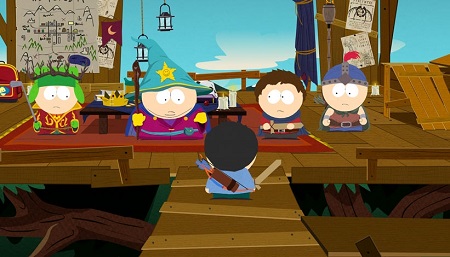
Number 3: South Park: The Stick of Truth (2014)
I’m not the world’s biggest fan of South Park. Its social commentary can be biting and funny, but sometimes it goes over-the-top to say the least! However, while I haven’t been a regular viewer of the series since I lived in the United States in the mid-2000s, the game South Park: The Stick of Truth managed to catch my attention early in the generation. I gave it a shot, and I’m glad I did!
The game’s visual style is practically identical to the television series, and that alone makes it interesting. Animated shows have been adapted as games many times, but rarely is the appearance so remarkably similar. I think that’s what first captured my attention, but what I found when I played the game for myself was a surprisingly fun role-playing experience.
Not every joke landed, and a few moments in The Stick of Truth were just plain silly. But as an authentic South Park experience that really feels like playing through an extended episode of the television series it’s something unique – or it was until a sequel, South Park: The Fractured But Whole, was released in 2017.
Number 4: Ori and the Blind Forest (2015)
Ori and the Blind Forest never pretends to be a AAA blockbuster. It’s relatively short, with an average playthough lasting around eight hours, but those hours are spent in a beautiful, artistic world. The levels are diverse, and are interesting and challenging in equal measure as protagonists Ori and Sein bid to save their forest home.
Words like “masterpiece” and “beautiful” are thrown around all too easily these days, but I genuinely feel that both apply to Ori and the Blind Forest. For a game about spirits and sprites it’s surprisingly emotional too.
In a generation where Microsoft and Xbox lagged well behind Sony in terms of the quality of their exclusive games, Ori and the Blind Forest was a rare win. It’s since been followed up by Ori and the Will of the Wisps, a sequel which builds on everything the first game got right. Both titles are available on Xbox Game Pass, and are well worth a play for anyone who likes 2D platformers.
Number 5: Uncharted 4: A Thief’s End (2016)
As with Jedi: Fallen Order above, Uncharted 4 is a linear, story-focused game. This generation has been dominated by sequels, and Uncharted 4 brings to a close the tale of Nathan Drake which began on the PlayStation 3 in 2007. What I love about the series is that it feels like a combination of Tomb Raider and Indiana Jones, setting up a mythical-historical mystery for Drake and his comrades to uncover.
The first three games in the series were fantastic, but Uncharted 4 was a step up. Truly stunning visuals that pushed the PlayStation 4 to its limit really helped with immersion, and the swashbuckling story was perfectly-paced and well executed. Naughty Dog is a fine studio, and they refined this style of gameplay to perfection by the time of Uncharted 4‘s release.
The PlayStation 4 has had some amazing exclusive games this generation. Whether Uncharted 4 is the best of them will always be a matter of debate, but for me it has to be at or near the top of any such list.
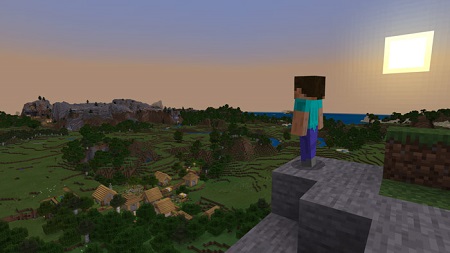
Number 6: Minecraft (2011)
This one is a total cheat since Minecraft was released a full two years before any of the current-gen consoles. But it isn’t unfair to say that the game has enjoyed continued success this generation, which culminated in parent company Mojang being acquired by Microsoft in a deal reportedly worth $2.5 billion. That’s a lot of money for a game I initially dismissed as a scruffy-looking pixel graphics mud hut-builder!
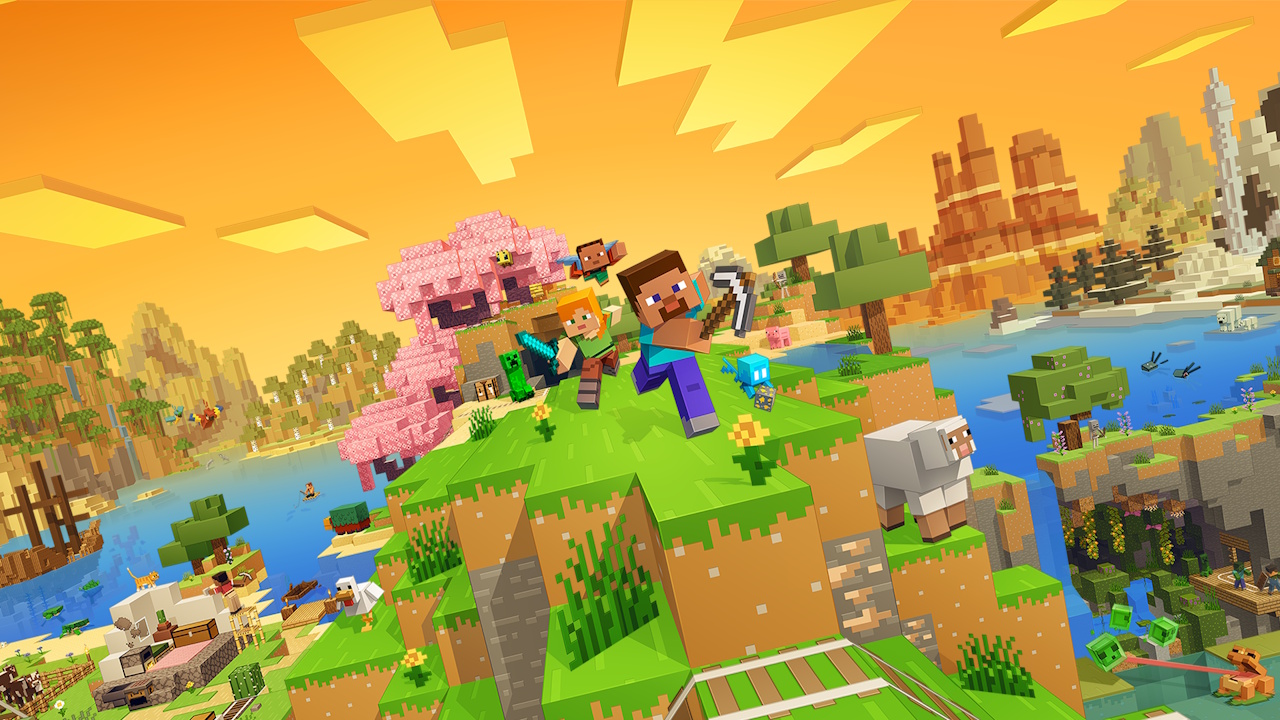
Minecraft became the best-selling game of all-time, and a phenomenon that took the world by storm. It introduced the gaming hobby to millions of new players, including many children, and its ubiquity on practically every platform helped that immeasurably. Even nine years after its initial release the game is still being played and replayed over and over. The Minecraft brand has also been expanded upon, with titles like Minecraft: Story Mode and Minecraft Dungeons set in the same fictional world.
Where I had the most fun with Minecraft is in multiplayer with friends, starting from scratch and building whatever we wanted. I wouldn’t like to guess how many hours were lost digging tunnels, mining resources, and planning how to build a castle with a lava moat or a city in the sky.
Number 7: Middle-Earth: Shadow of Mordor (2014)
The world of Middle-Earth has been ripe for video game adaptations ever since The Lord of the Rings trilogy hit cinemas in the early 2000s, and Middle-Earth: Shadow of Mordor follows some truly outstanding games from years past. It took a step back from the books’ familiar characters, introducing players to Talion, an Aragorn-esque Ranger, as he takes the fight to Sauron.
What made Shadow of Mordor stand out mechanically as a video game was its revolutionary “nemesis” system. The game’s AI would track which Uruk commanders that Talion battled – and there were many! Those Uruk could not only become more powerful by killing the player, but defeating them was a key part of the gameplay experience. Orcs and Uruk could be promoted within Sauron’s army, and the aim of the game was to encounter and defeat them. Even now this gameplay mechanic is innovative, and it makes Shadow of Mordor a game with plenty of replay value.
Unfortunately the series was tainted somewhat by the in-game monetisation forced into its sequel, Middle-Earth: Shadow of War. While most of that has since been removed, the reputation of both games suffered. It’s a shame, because Shadow of Mordor is one of the best and most immersive experiences set in Tolkien’s world, and is still worth playing today.
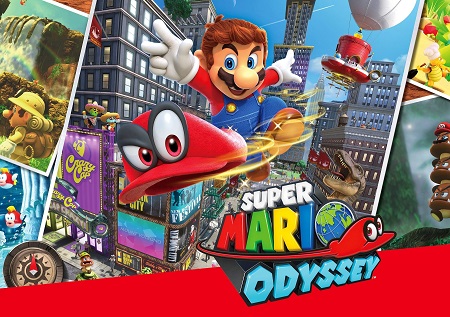
Number 8: Super Mario Odyssey (2017)
Super Mario Odyssey took everything that had been great about 3D Mario games and condensed it into one phenomenal title. It dropped gimmicks from Mario Sunshine and Mario Galaxy and returned the series to a style much closer to the beloved Super Mario 64, which remains to this day one of my favourite games of all-time.
The level design was brilliant and incredibly varied, with water levels, desert levels, and even a voyage to the moon all on Mario’s agenda as he races to – once again – save Princess Peach from the clutches of Bowser. Hardly an innovative premise, you may say, but the fun of Super Mario Odyssey is in the gameplay rather than the story. There are very, very few titles about which I’d say something like that – so that should show you just how outstanding this game really is.
Despite being brand-new, Super Mario Odyssey gave me a hit of nostalgia and took me back to the mid-1990s when I played Super Mario 64 for the first time. It really does feel like an updated version of that classic game.
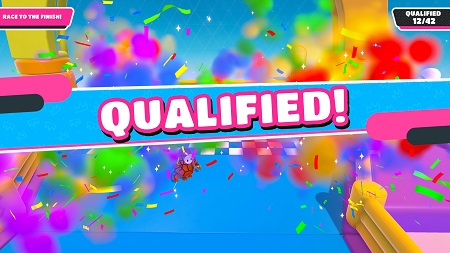
Number 9: Fall Guys (2020)
Fall Guys came out of nowhere this summer and surprised me! From the moment I heard the concept – jelly bean-like characters running obstacle courses in a video game homage to the likes of Total Wipeout – I knew I had to give it a try. And despite my general dislike of online multiplayer titles, what I found was a truly fun experience.
Fall Guys makes it easy to jump into game after game, and because each round is so short, even losing doesn’t feel that bad. The different ways in which people play makes every round unique, and while it certainly has its frustrating moments the core gameplay is plenty of fun. A cheating problem plagued the PC version for a while, but an update brought in anti-cheat software and that issue has now all but died out, restoring the fun!
If you’d asked me at the start of the year – or even in June – what my top ten games of the generation were likely to be, Fall Guys wouldn’t have even been on my radar. And when I was putting this list together I was wondering if including it would seem like recency bias; ignoring older games in favour of one I picked up just a few weeks ago. But looking at it on merit, I had a lot of fun with Fall Guys, and I’m happy to include this fun, casual title as one of my top games of this generation.
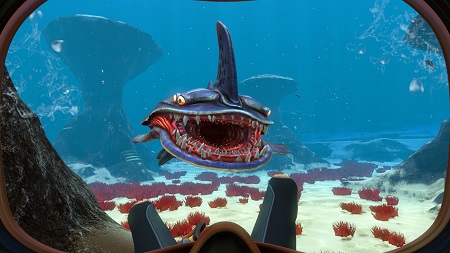
Number 10: Subnautica (2018)
In the wake of Minecraft’s success many games attempted to recreate its survival and building/crafting features. Many of these so-called “Minecraft clones” were crap, but one survival game that took the genre to wholly new places was Subnautica. The game has an interesting story as players find themselves crash-landing on a watery planet and must explore, collect resources, and build their way to freedom.
Subnautica is one of the few games even in modern times to really get its underwater world feeling right. Many games are notorious for bad underwater sections or levels, and when the whole game is based around swimming and moving underwater, this was something Subnautica couldn’t afford to screw up! The skill and attention to detail that went into this aspect of the game really is incredible.
The underwater setting also made the game feel like something genuinely different in a survival genre that was full of samey titles. Subnautica managed to be something unique as well as plenty of fun, and that combination is greatly appreciated.
So that’s it. A few of the best games of the generation – in my opinion, at least. There are many, many titles that could have made this list, including games I’ve played but forgotten all about, and games that I didn’t get around to yet.
This generation has offered up some truly amazing experiences, and even as we begin the transition to new consoles, there will be more to come. Cyberpunk 2077 and Halo Infinite are both due in the next few months, and there will be a number of other titles released before production fully shifts to the new machines over the next couple of years.
On a personal note, this has been a generation where, for a number of reasons, I found myself playing fewer games than I had in the past. A combination of health, ageing, work, and other factors are to blame – if indeed blame needs to be assigned. Despite that, I had fun with all four of this generation’s major home consoles, something I can say for the first time as a generation comes to a close!
I have no immediate plans to purchase an Xbox Series X or PlayStation 5, so there won’t be new console reviews coming on the website any time soon. But I can save you the trouble: both machines will be iterative improvements on their predecessors, offering things like faster load times, better controller battery life, and so on. It will be several years before we see any significant improvement in game design or graphics, simply because most upcoming titles are cross-generation and will continue to be limited by the requirements of this generation’s hardware.
Hopefully this has been a fun and interesting look back at some of the highs (and lows) of this generation on the day we mark the official beginning of the next one.
All titles listed above are the copyright of their respective studios, developers, and/or publishers. Some screenshots and promotional artwork courtesy of IGDB. This article contains the thoughts and opinions of one person only and is not intended to cause any offence.










 Trekking with Dennis