Mixtape: Video Game Review

The first part of this review is free from major story spoilers for Mixtape. The end of the spoiler-free section is clearly marked.

I’d really been looking forward to Mixtape. The game’s trailer looked great, I liked the art style, and I’m generally a fan of narrative adventure titles. But what appealed to me the most about Mixtape was the game’s ’90s setting and its promise of an eclectic soundtrack featuring some of my favourite bands and some of the era’s best-remembered hits. I was ready for a nostalgic punch to the gut, and Mixtape delivered.

I always try to approach any title that I’m reviewing without having read or listened to any other critics’ opinions – I fear that doing so risks colouring how I approach any piece of media. But the maelstrom that Mixtape got caught up in a couple of months back proved inescapable, and some of the criticism of the game’s perceived “lack of interactivity” and status as a so-called “walking simulator” did cut through.

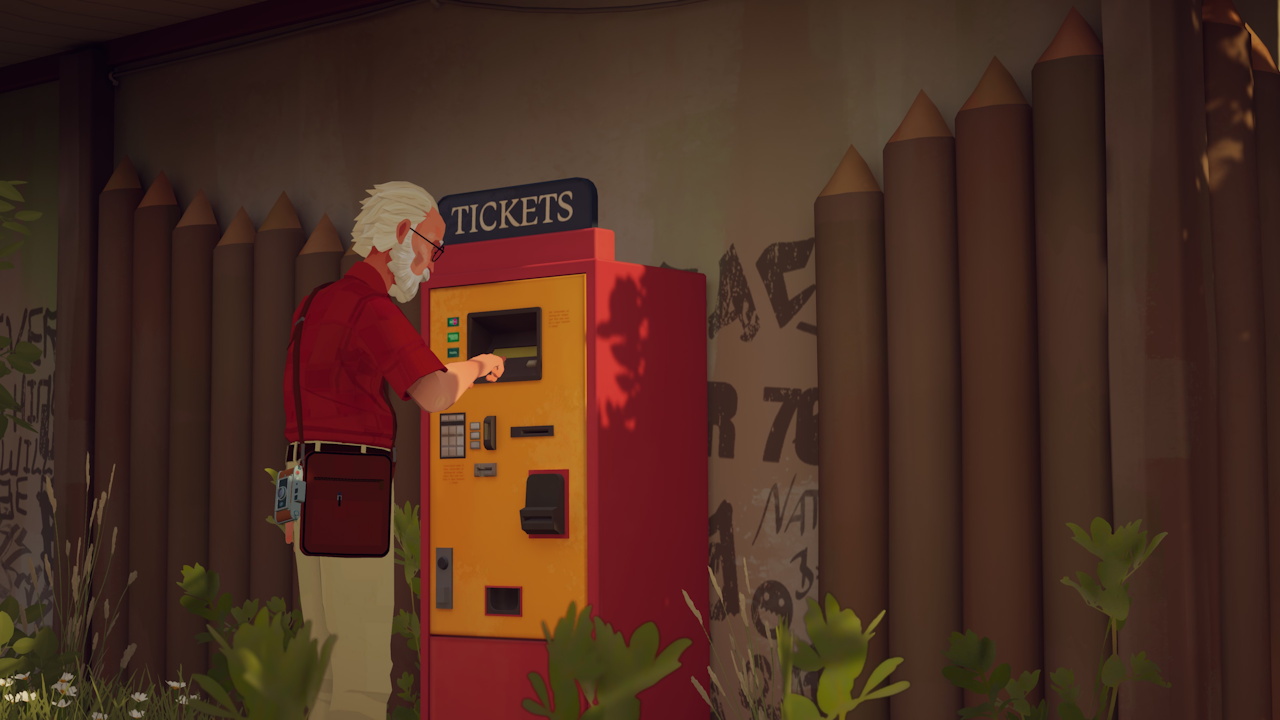
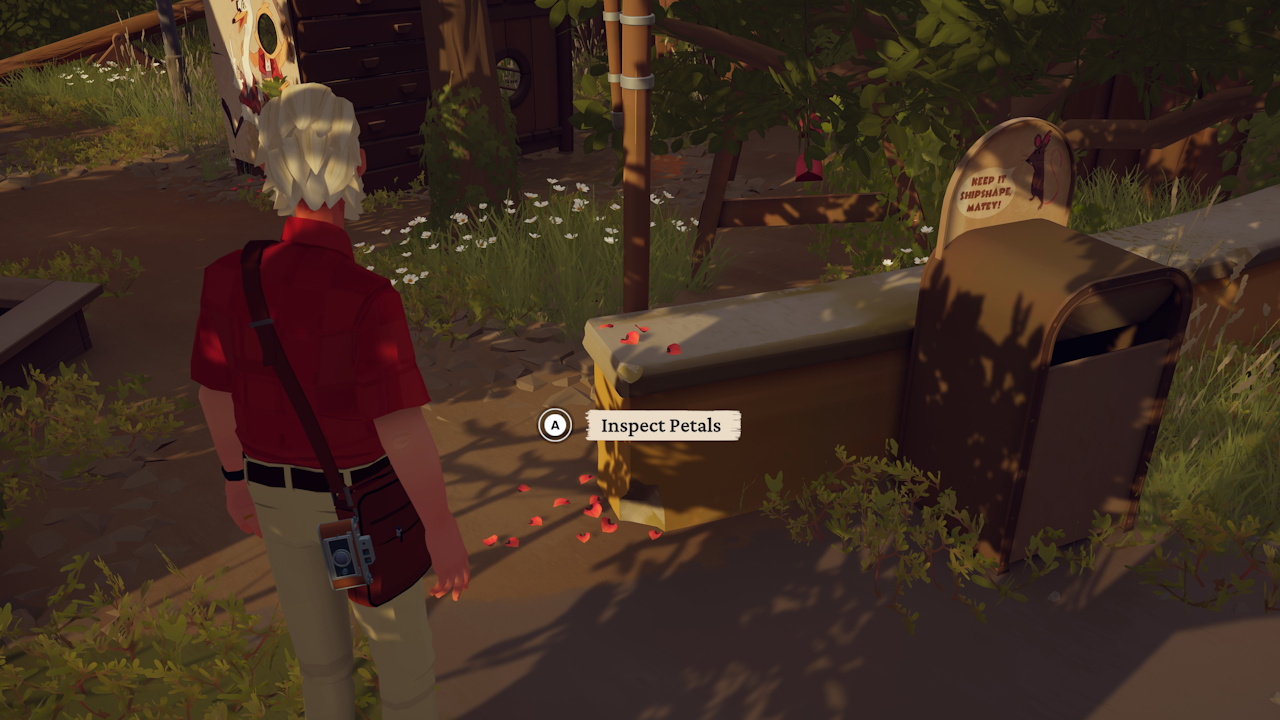
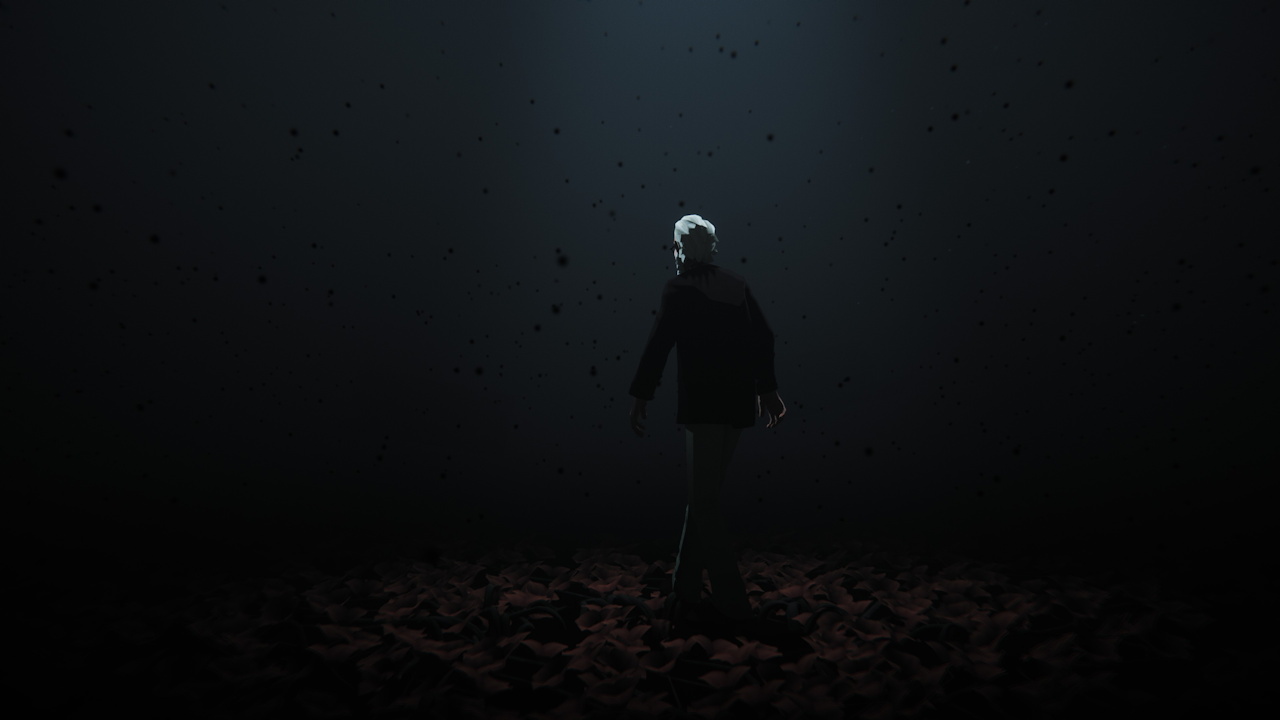
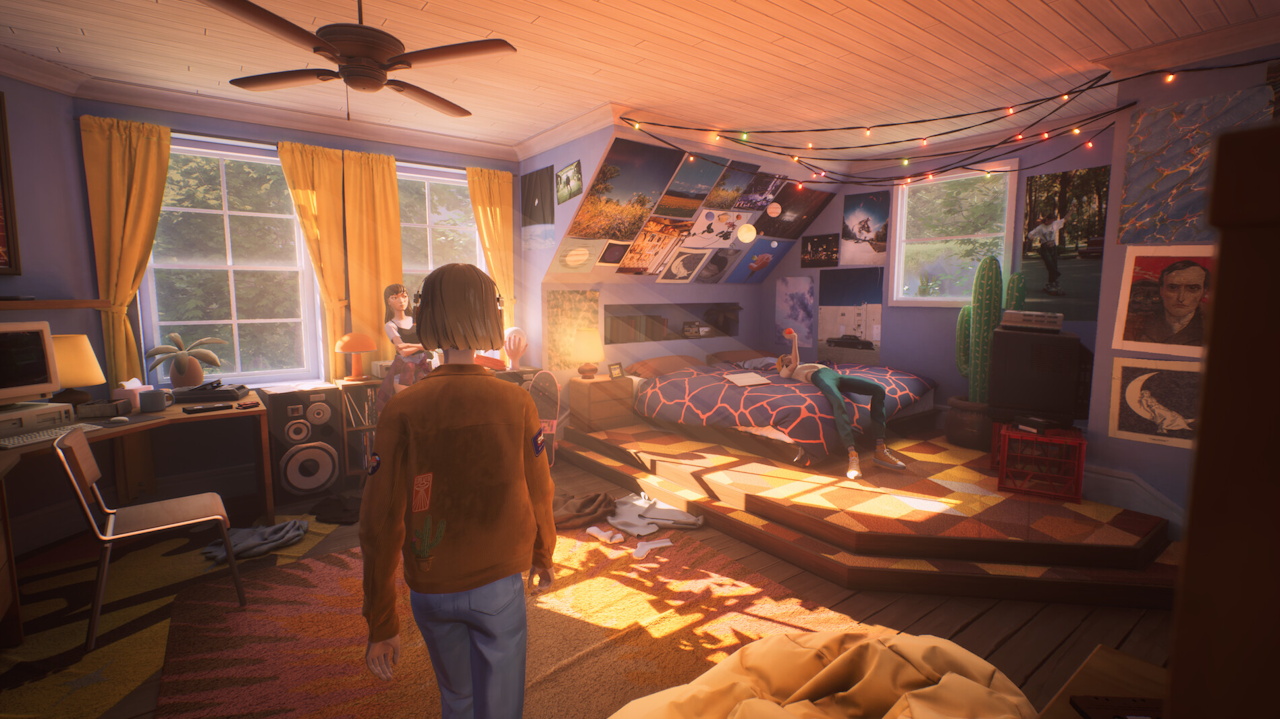
Promo screenshot for Mixtape (2026)
Mixtape.

I’ll level with you: that line of criticism is valid – but only if you think that a game *needs* non-stop button-pressing and complicated combos to be fun. Mixtape is a game I would categorise as a “narrative adventure;” as the player, you follow a very linear story featuring three main characters, and you play through a series of connected levels, quick-time events, and mini-games – the interactivity levels of which do vary. If you’re a player who wants to be constantly challenged by difficult gameplay, and your reason for picking up a control pad is to “git gud” at a complex title that requires a lot of either button-mashing or complicated combos… perhaps you’ll bounce off Mixtape quite early on. Even if the story might be something you’d vibe with, I’d understand if the gameplay – or, let’s be blunt, the *lack* of gameplay – would turn you off.

However, that wasn’t my take on Mixtape, and I had a genuinely fantastic time with this game.

I’ve said this before here on the website when discussing other titles, but I’m someone who’ll happily play through basic, bog-standard gameplay if I’m caught up in a story. Not only does Mixtape have a truly compelling narrative, but I also really liked its animated, almost stop-motion art style; I found its main characters incredibly relatable, and gosh, does the game have a *fantastic* soundtrack!

Still frame from the music video "Since You've Been Gone" by Rainbow/Ritchie Blackmore's Rainbow
The game features around two dozen songs from the likes of Rainbow (pictured).

So there’s that important caveat: if you hate “interactive movies” or “walking simulators,” and you want a game that offers more interactivity than mini-games, QTEs, and a bit of environmental exploration, Mixtape might not be for you. It might still be for you, though, if you’re after a game with great characters, a relatable narrative, an incredible soundtrack, and a nostalgia overload for players of a certain age – or players who *wish* they lived through that mid-90s era. This game isn’t going to be for everyone, I suspect, which is probably why opinions are split! But if you’re the kind of person with whom the story connects, and if this slower-paced narrative adventure is your style of game? I think there’s a *lot* to love in Mixtape.

I’d go so far as to put Mixtape on my list of contenders for the coveted “Game of the Year” title at the annual Trekking with Dennis End-of-Year Awards!

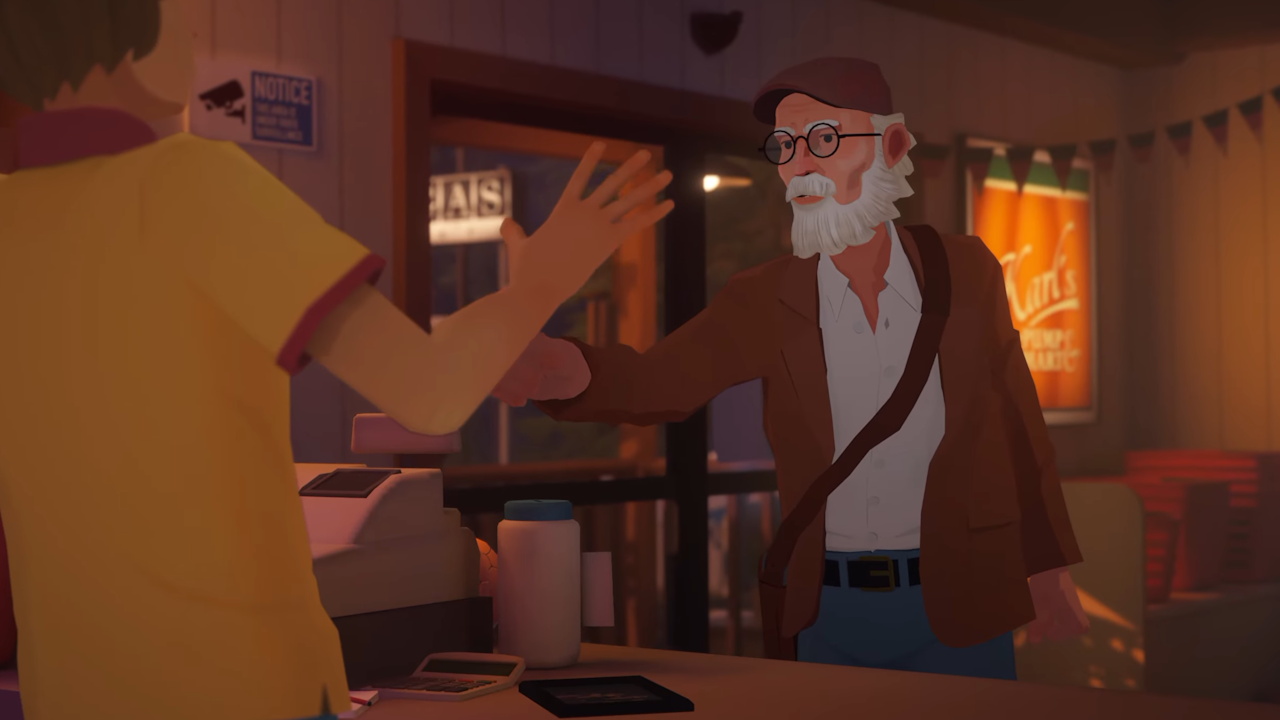
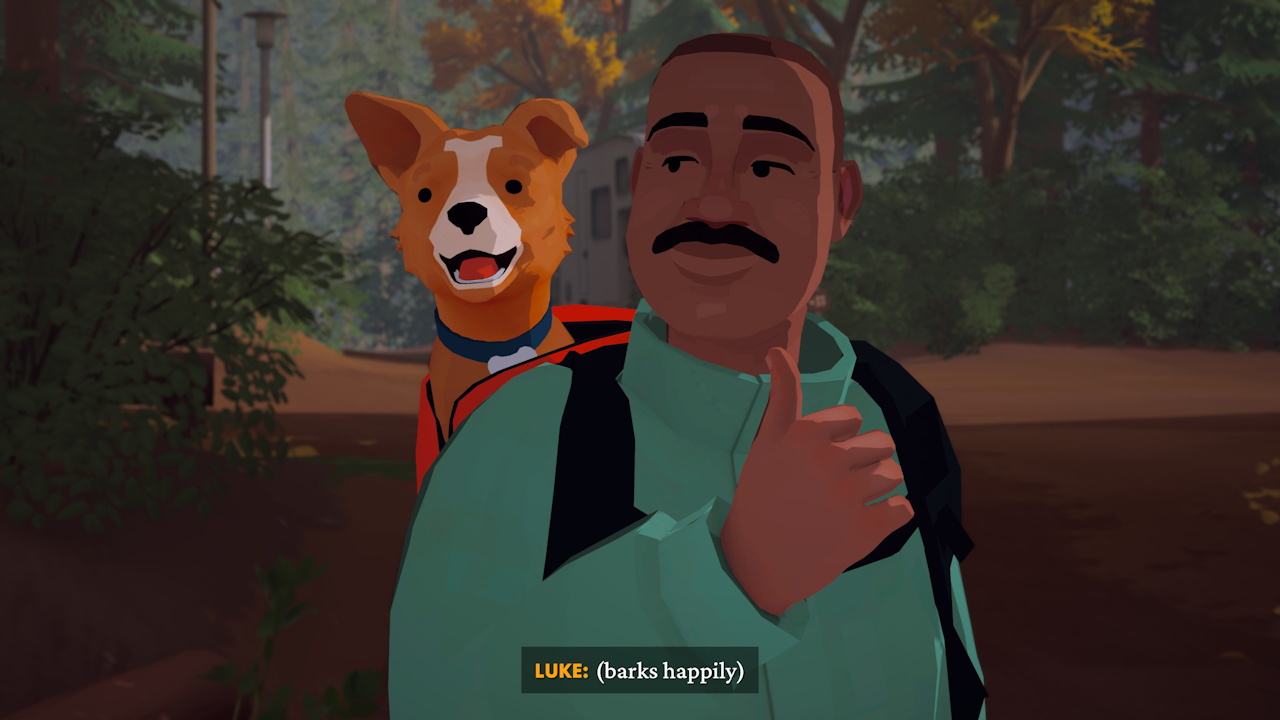
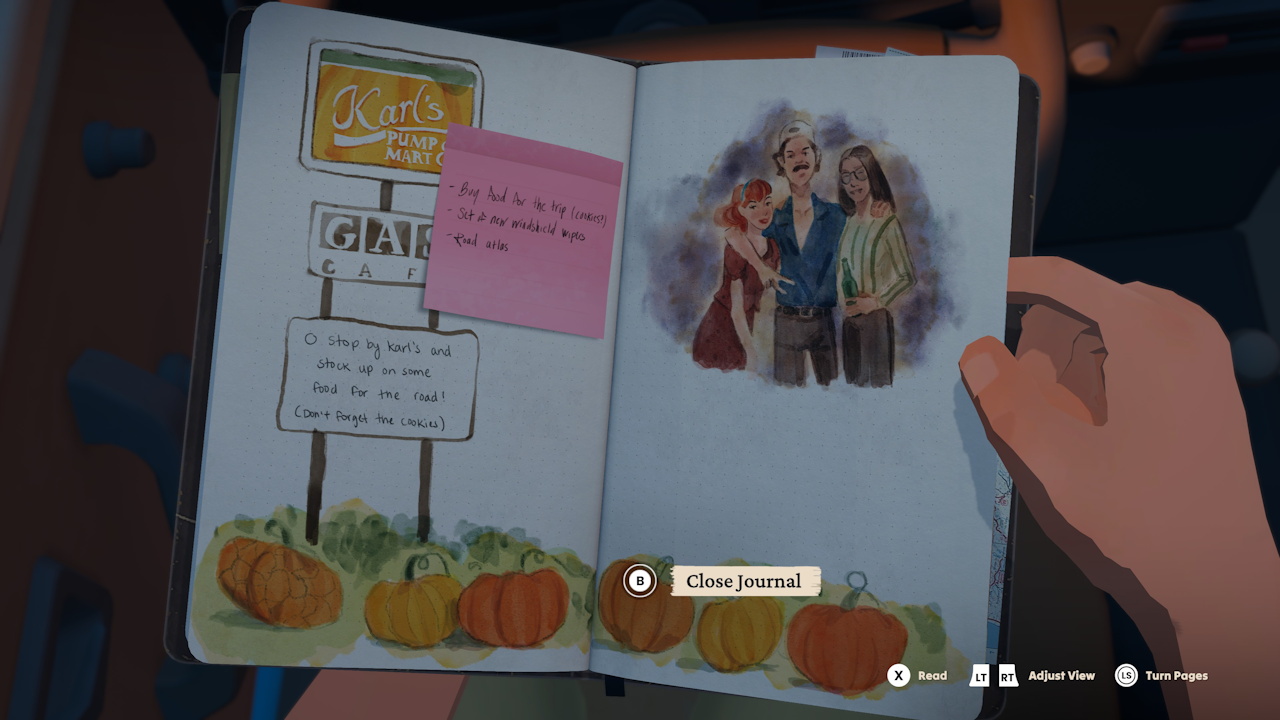
Promo screenshot for Mixtape (2026)
Could Mixtape be a “Game of the Year” contender? Come back just before New Year to find out!

I would give one caveat, though, about the story Mixtape tells. This is a story about teenage characters having “one last hurrah” before finishing school and going their separate ways. It leans into tropes of the genre that you’ll have seen in dozens of films, not only from the ’80s and ’90s, but really in any coming-of-age title from the last forty-some years. When you stack up an objectively low-stakes story with some melodramatic teenagers… well, you’ll either feel that whack of nostalgia and remember your own schooldays – as I did – or maybe you’ll cringe!

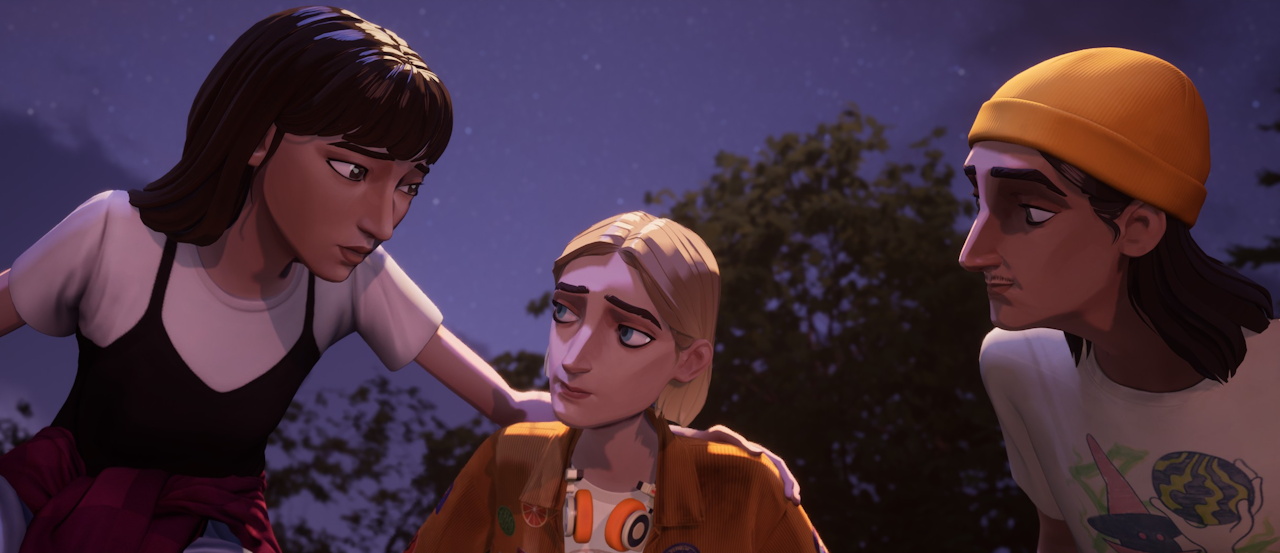
For me, these characters and their stories genuinely hit close to home. We’ll get into more detail about that if you stick with me to the spoiler-ific part of the review, but suffice to say that I think each of them represents not only a character archetype from this kind of coming-of-age story, but a truly relatable part of a teenage experience that a lot of us will share. There were moments in Mixtape that, I’m sure, are curiously American – and as a Brit, I wouldn’t get all of that. But there were plenty of things that reminded me very strongly of my own youth, my own schooldays, and my own “last hurrah” with friends as we parted ways, knowing it would be for the last time.

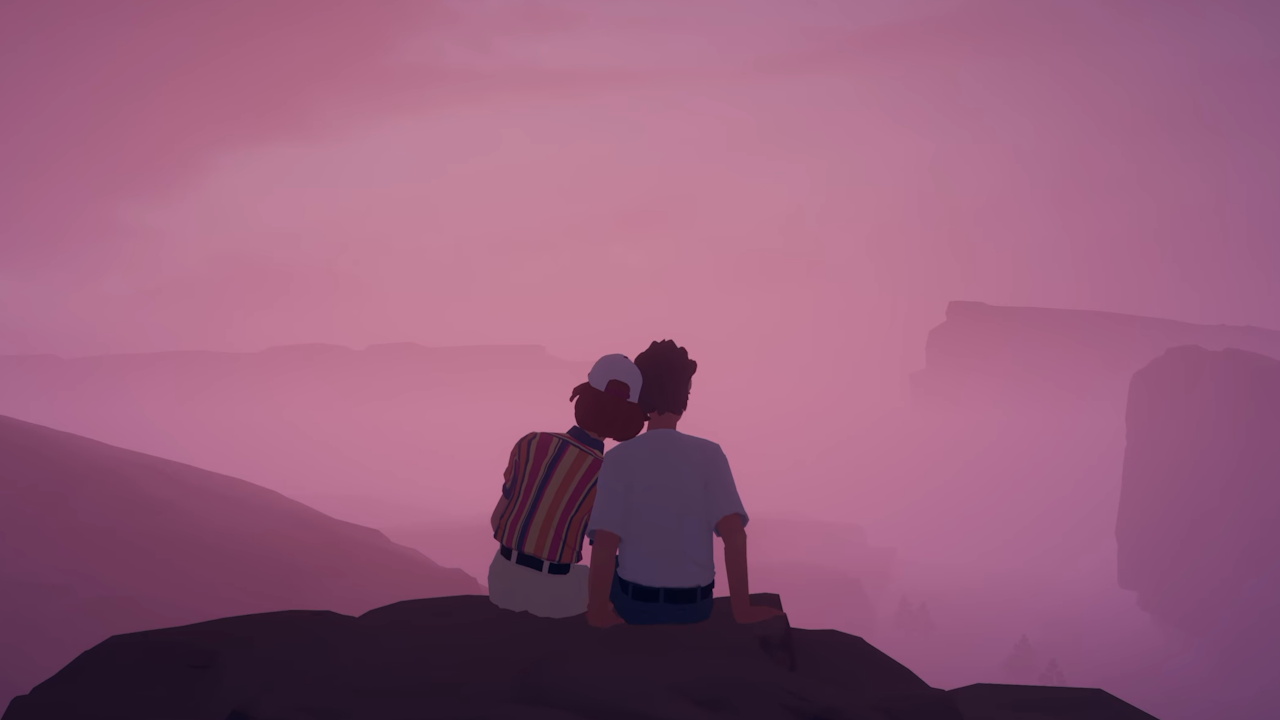
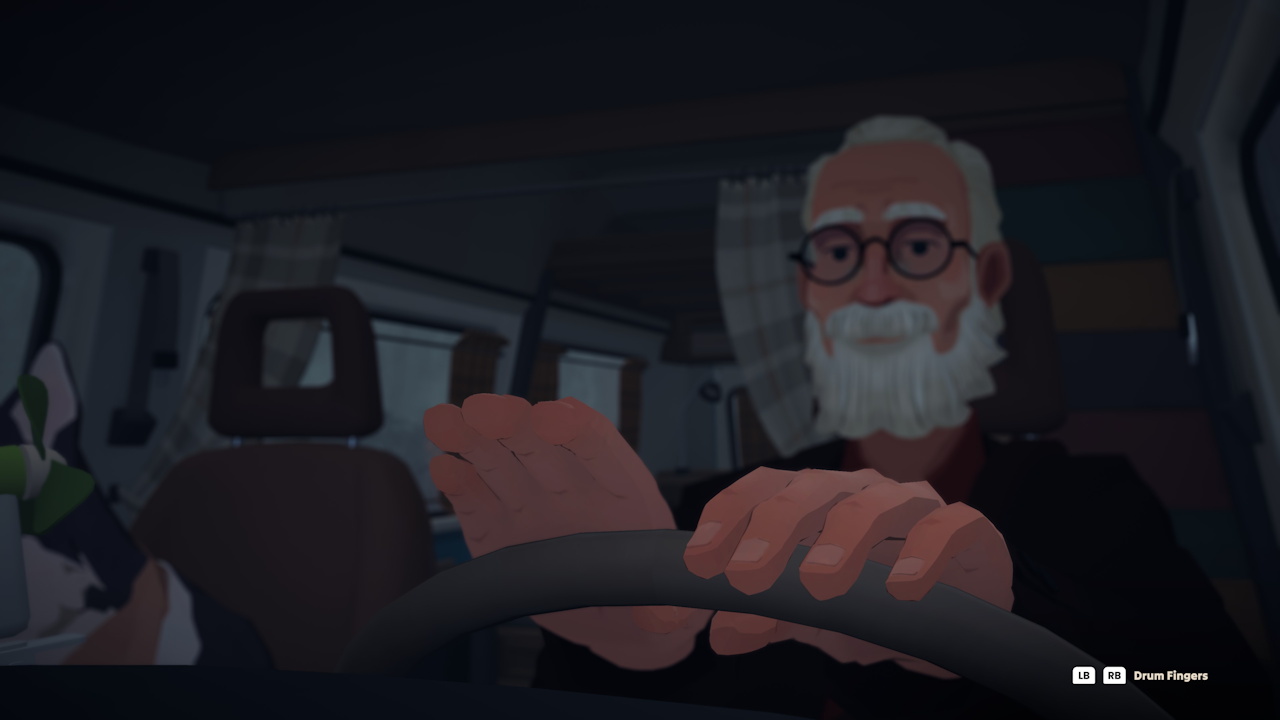
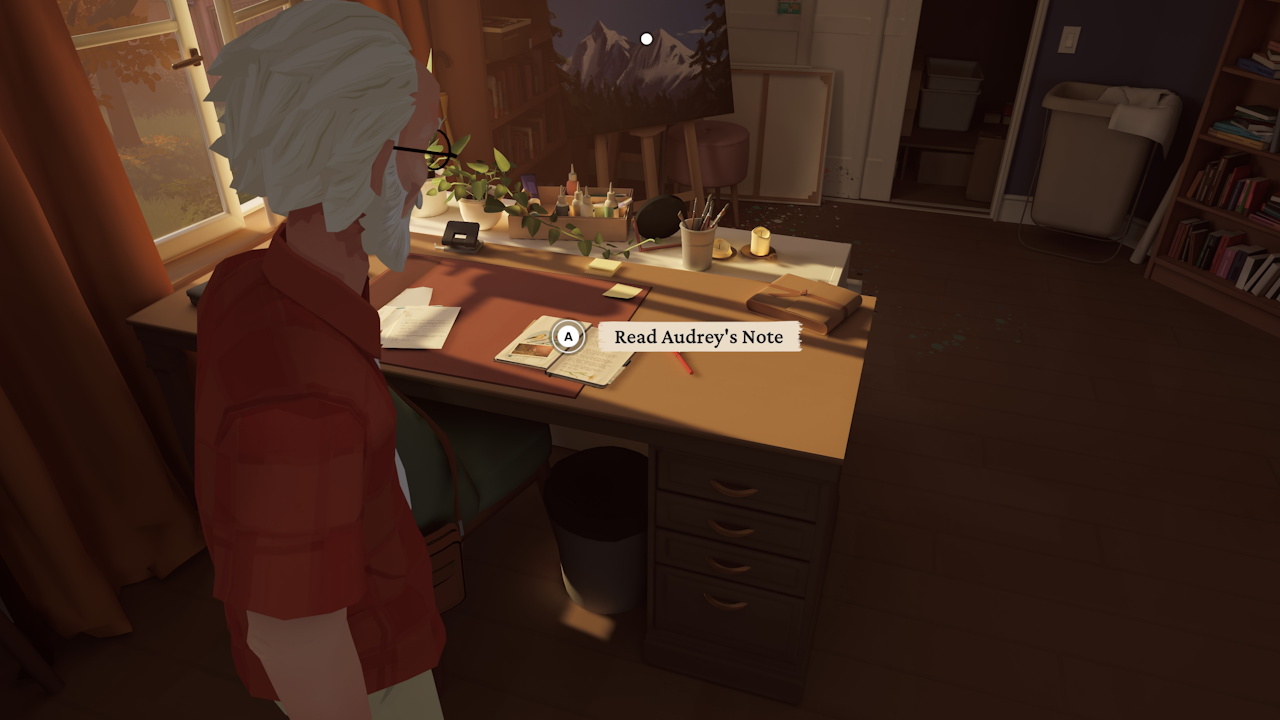
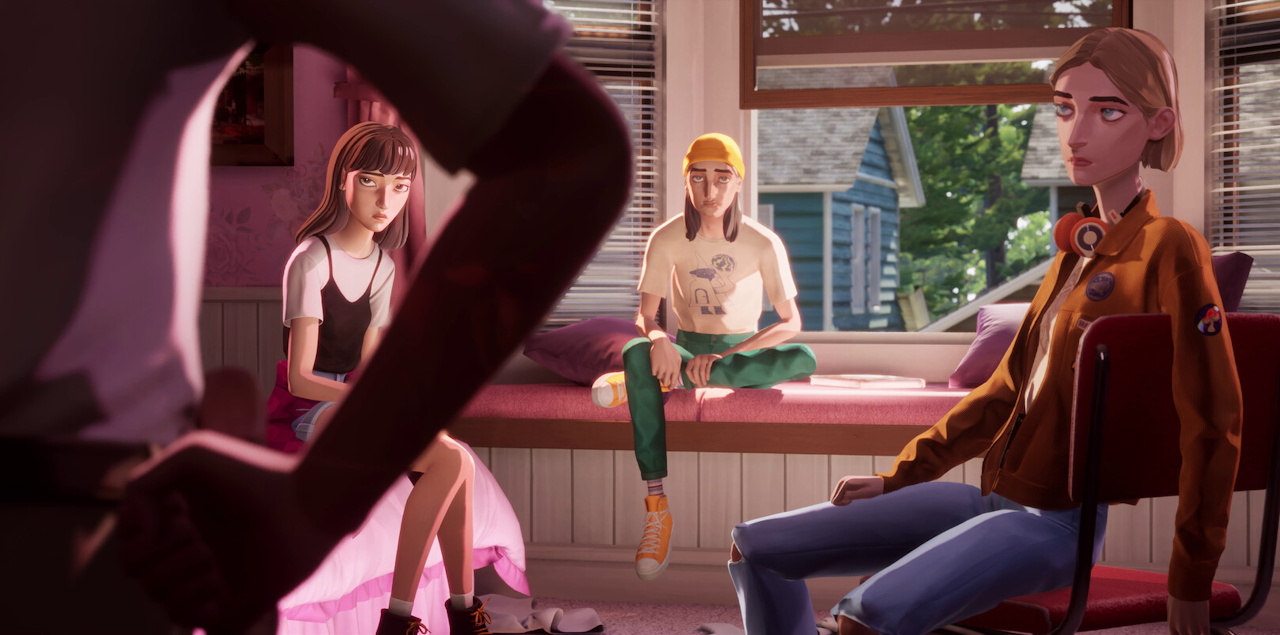
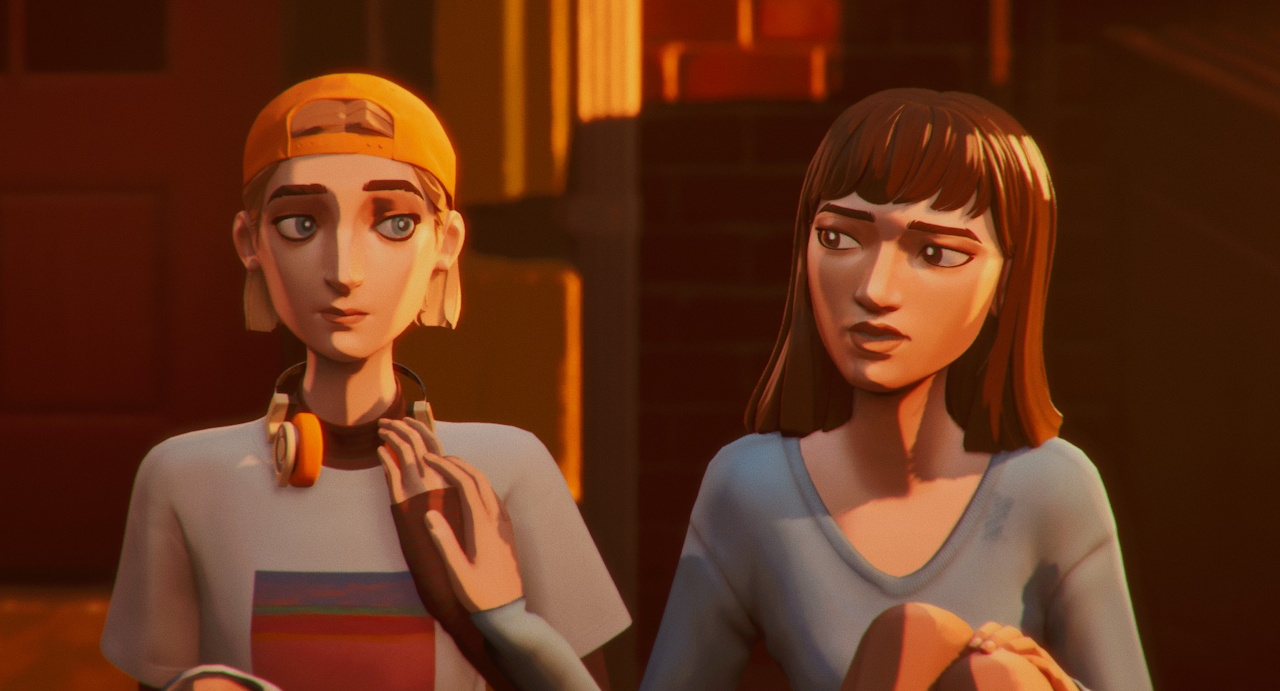
Promo screenshot for Mixtape (2026)
The game’s trio of main characters.

In that sense, Mixtape really did hit all of those nostalgic notes; its story is genuinely bittersweet. I don’t think I was quite expecting it to resonate with me quite so strongly or quite so emotionally, especially for such a short experience. But it did. Mixtape isn’t a game I’m going to rush to replay; it’s linear, and once you’ve tried the mini-games, explored the levels, and experienced the story, the only reason to go back is to go through it all again. But like any good coming-of-age movie – St. Elmo’s Fire, The Breakfast Club, The Graduate, or even Bend It Like Beckham – it *is* a story I’m going to want to revisit one day. I can already feel that.

And there are some songs, too, that I think I’m going to forever associate with moments, levels, or characters from Mixtape.

Mixtape is a relatively short experience. My playthrough clocked in at just shy of three-and-a-half hours – but I think that Mixtape, at £16/$20, is priced fairly for such a short title. The game ran well, without any crashes, bugs, or framerate issues on my PC, and I didn’t have any trouble with adjusting the settings to my liking. In terms of difficulty, I managed the game in one hit, despite having arthritis which affects my hands and fingers, and while I wasn’t perfect at every mini-game or QTE, the game was more than forgiving enough to let me progress.

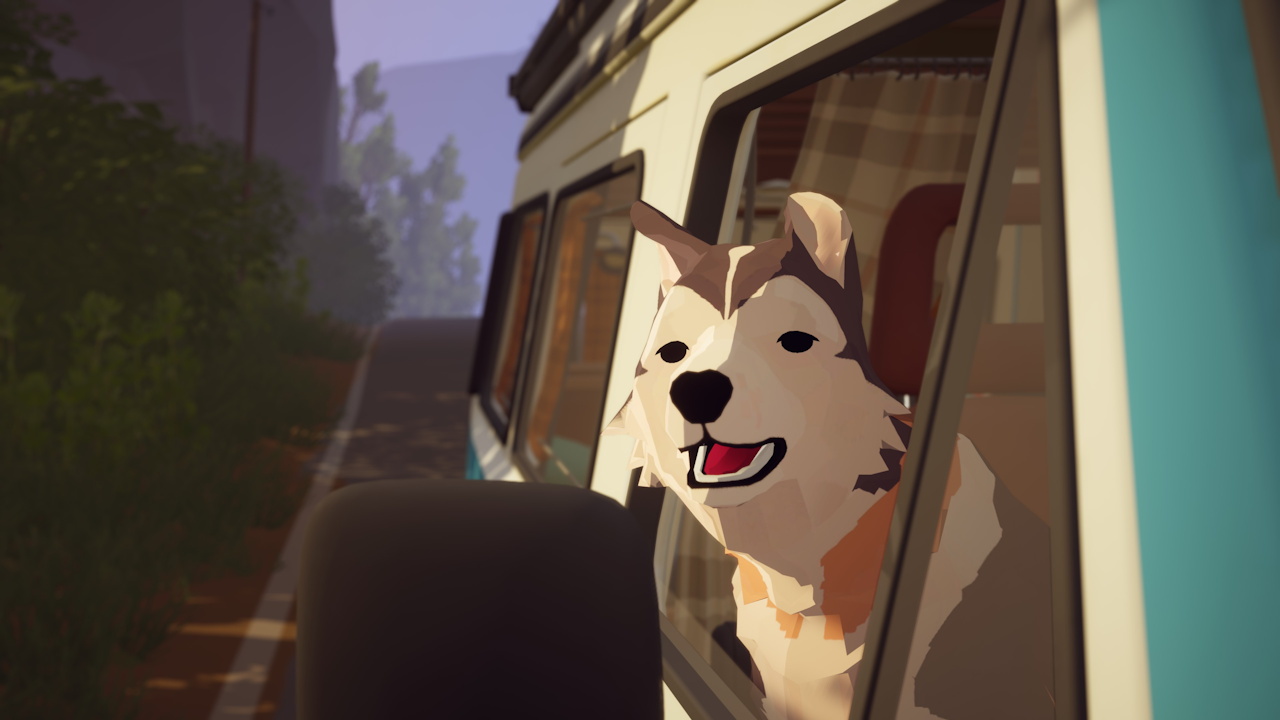
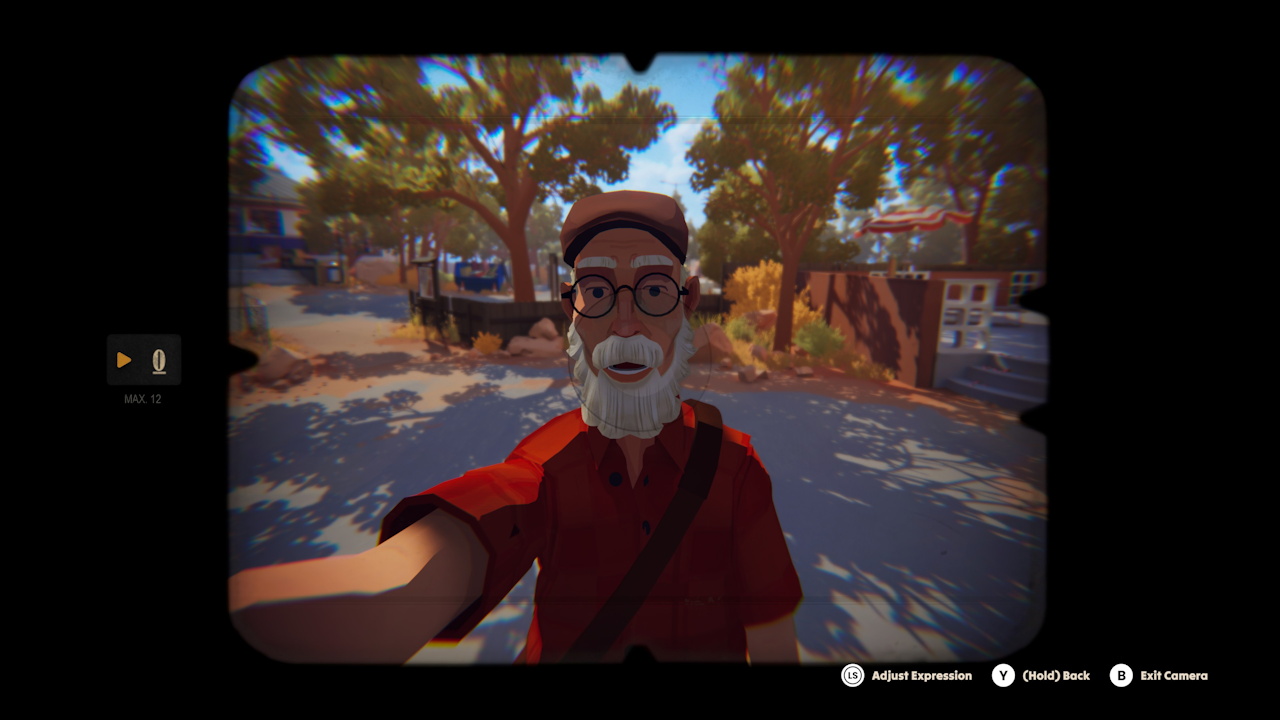
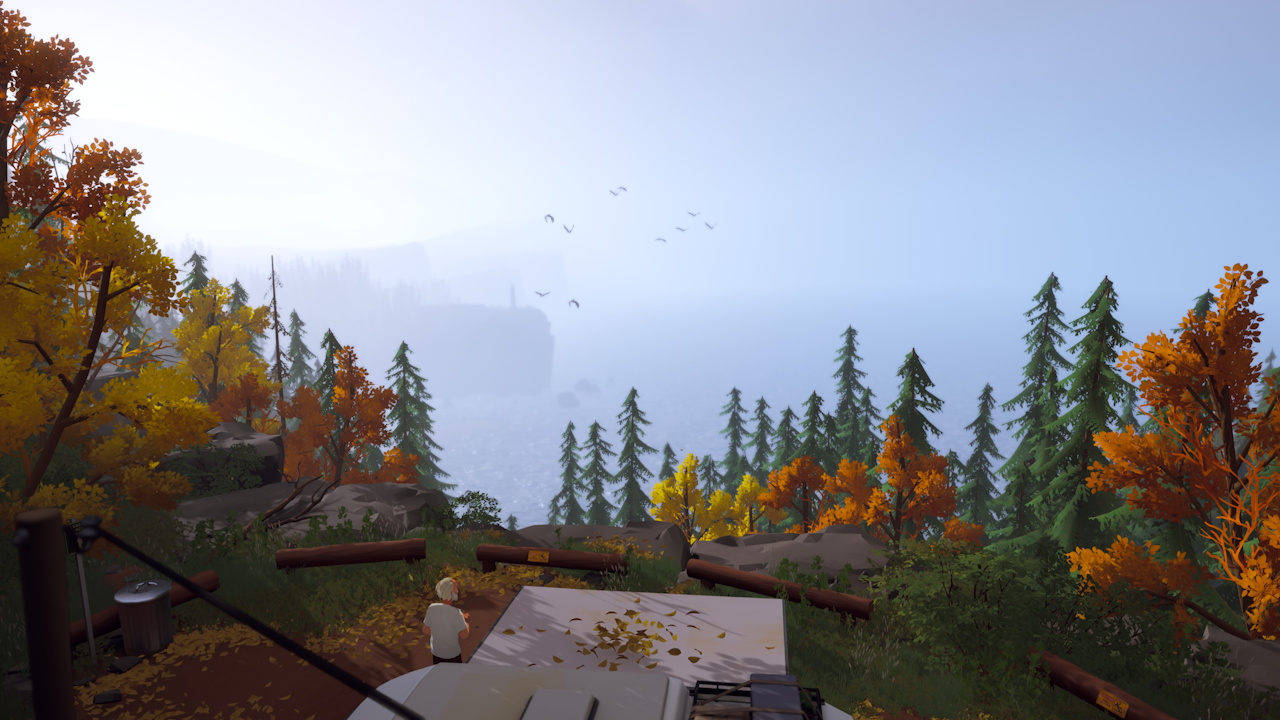
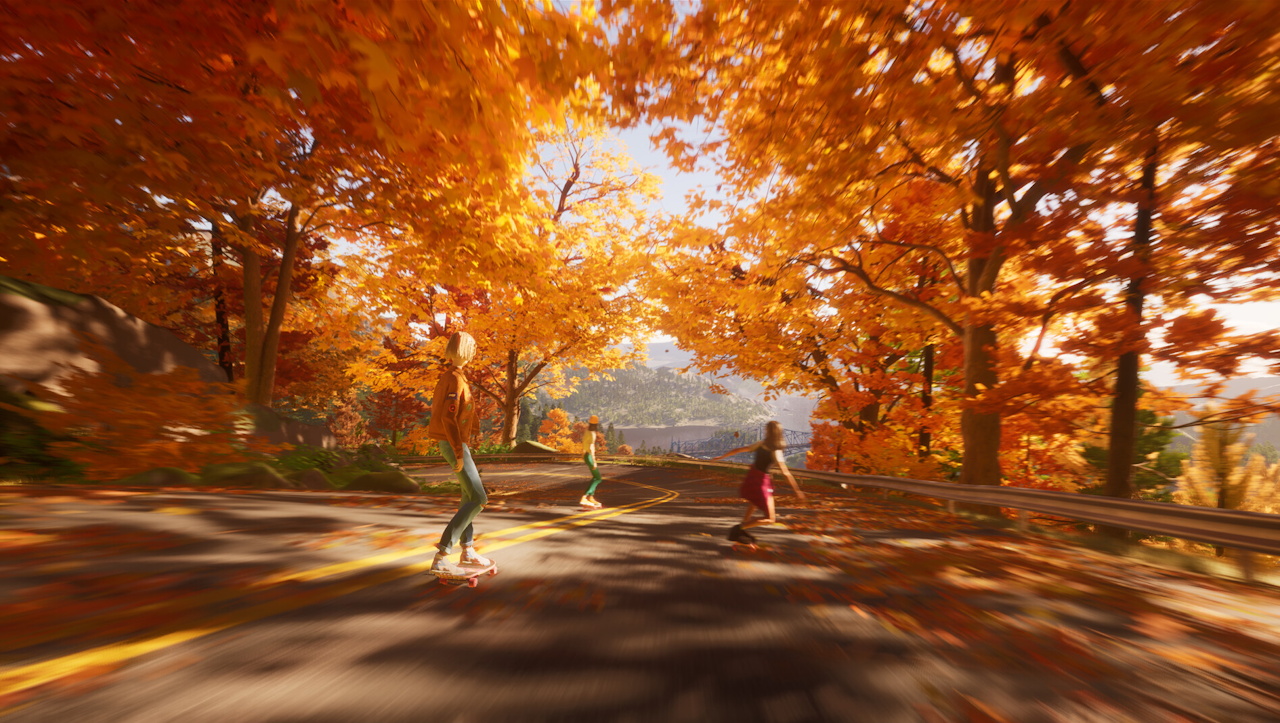
Promo screenshot for Mixtape (2026)
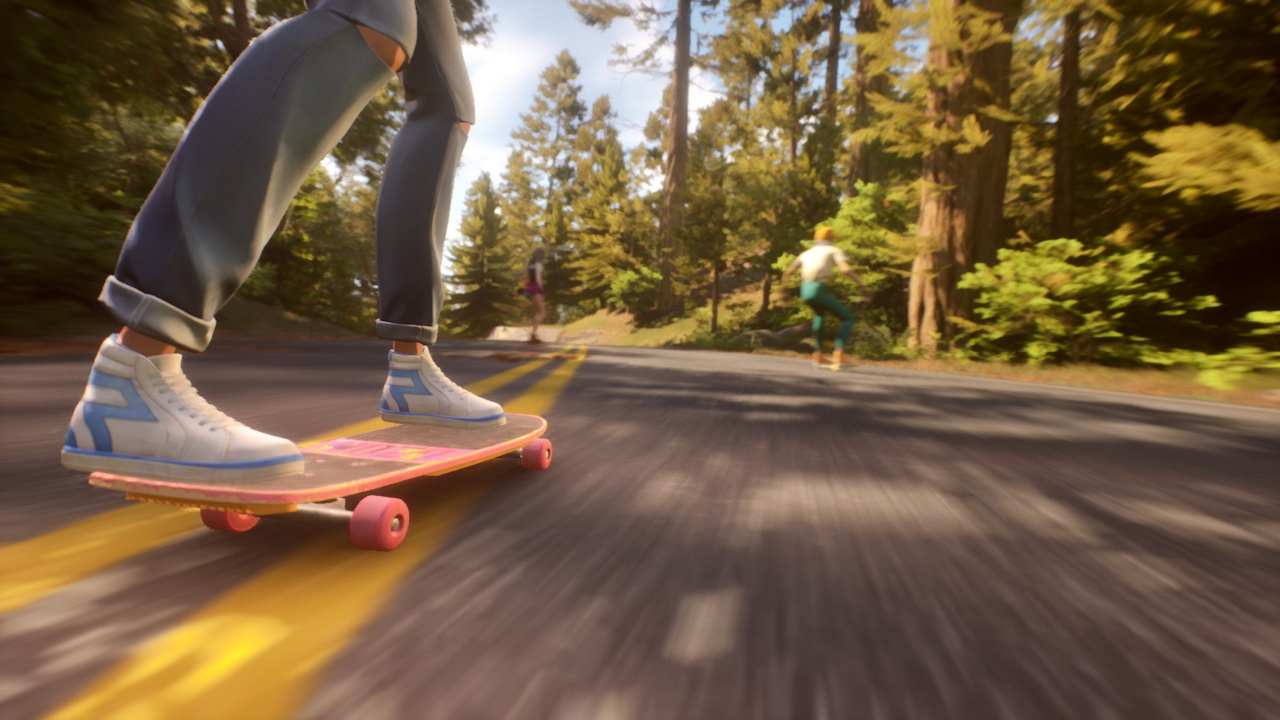
Skateboarding.

I think I’ve said all I can without getting into narrative spoiler territory. If you want to know if I recommend Mixtape, the answer is a categorical and definitive “it depends!” If you like narrative adventure titles, ’90s nostalgia, and great music, it’s an enthusiastic “yes.” If you want games with a great deal of interactivity, and story matters less to you than engaging gameplay, perhaps it won’t be your thing. If you think of Mixtape as a three-hour movie with some interactive sections… well, you can answer the question of whether you think that sounds like something you’d enjoy. But I reiterate what I said a moment ago: this game won’t be right for everyone.


An anime-themed spoiler warning.

Spoiler Warning: This is the end of the spoiler-free section. There are narrative spoilers for Mixtape – including the game’s ending – from here on out.

I’m the wrong side of forty years old, suffering from arthritis and other health issues that make me feel even more decrepit, and my schooldays are so far behind me by now that I can’t even glimpse them over the horizon any more! So why, then, did Mixtape make me feel like a teenager again for those three-and-a-bit hours? Am I just a pathetic middle-aged person, desperately trying to reclaim any semblance of youth? And did Mixtape offer me that escapist fantasy for a short time? Or is there something deeper… does this game truly embody what it means to *feel* young?

I’d love to offer Mixtape to younger players – folks in and around the age group of the game’s protagonists – and see what they think. To them, Mixtape might feel like an old person’s idea of what “being young” is, or its ’90s setting might make them feel like I do when watching films from, say, the ’60s or ’70s. Maybe Mixtape feels the way it does to me because this was my coming-of-age moment, too.

Screenshot of Mixtape (2026) showing Slater, Stacey, and Cassandra in the intro
I wonder what younger folks will make of Mixtape; is it just a game for people my age, or is its story timeless?

I’ve written about this here on the website before, but 1999 and Y2K were “my years;” that was the end of my schooldays, the beginning of “adulthood,” both in a legal and, I suppose, a practical sense, and the ’90s as a whole were my adolescence and teenage years. Mixtape doesn’t tie itself to one specific year, but I get an early-to-mid ’90s vibe from the game. I think a ticket stub was dated 1993 at one point, so it might be set a year or two after that. I guess that makes me a bit younger than the game’s protagonists – but I lived those years, you know? I… I *feel* the era that Mixtape is bringing back to life. And because it coincides with a similar period of my own life… the game brought back all kinds of memories that I just wasn’t expecting.

And I feel… well, I feel a lot of things, to be honest. Partly I feel old: knowing that that part of my life is so long gone as to be someone’s idea of a “cool vintage setting” for a story! Partly I feel kind of pathetic: I’m this old dinosaur pretending to be young and hip again by going through this story. Partly I feel like these characters, relatable and fun as they were, just aren’t me anymore: I’m looking in from the outside at teenagers doing teenage things, and I just don’t fit in with that age group. And partly I feel like I’m seventeen again: like someone’s dad banning them from a party, or not being able to scrounge up enough pennies to buy a few beers are the biggest – and only – problems in the world. That carefree moment of youth when teachers and parents are the obstacles to fun, and nothing else matters but your friends. That’s Mixtape in a nutshell.

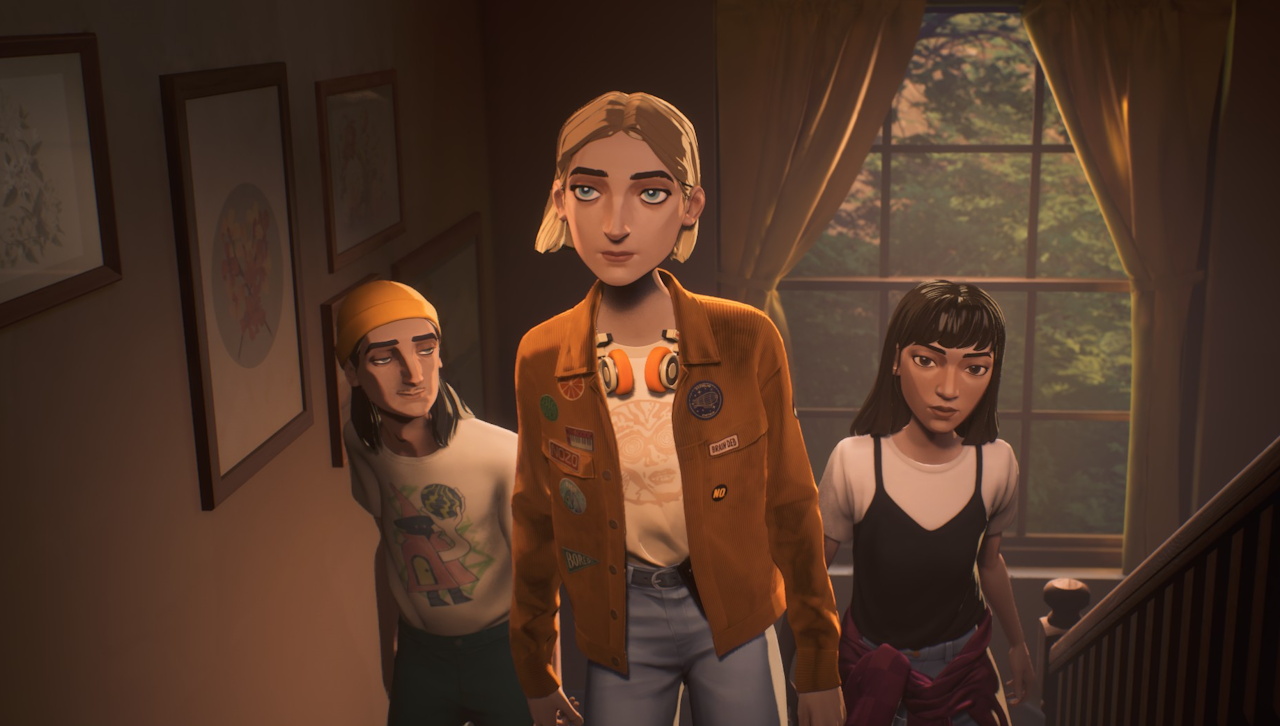
Screenshot of Mixtape (2026) showing the main characters on the stairs
Mixtape made me feel 17 again.

And that sensation… I don’t think I was prepared for just how well Mixtape captured it, bottled it, and then smashed me in the face with it over and over again!

I remember what it felt like to be a teenager, desperate to go to some big party. In the rural area where I grew up, there were so many farmers’ kids at school that there’d always be someone willing to volunteer a field for us to throw a party – and we’d set up a boom box, play tunes, drink way too much, smoke cannabis, and just… be free. That feeling… I mean, I haven’t felt it in a long time. A long time. Until I played Mixtape, and all those memories and feelings came flooding back.

That’s testament to the power of media, and to interactive media in particular. I stand by what I said above: Mixtape is not the most interactive game out there. But the interactive elements that it brings to the table are a huge part of what makes it work and what makes those feelings hit so hard; I don’t think you’d get it in the same way if you watched a video of someone else playing the game, or a compilation of cut-scenes. The interactivity – actually taking part in the kids’ journey – is what makes it work and what makes it hit as hard as it does.

Screenshot of Mixtape (2026) showing the slushie mini-game
The slushie-making mini-game.

Let’s talk characters!

Cassandra is probably the character who came closest to my own teenage experience: her overbearing parents seemed to be trying too hard to keep up appearances and cut her off from her friends and the things that she enjoyed. It was an exaggerated portrayal, and far from my own in some respects, but I felt her sense of entrapment; that she didn’t have the freedom to do what she wanted, that her parents wanted her to follow a path they’d chosen. And that sense of rebellion, of wanting to do the opposite of what’s expected of you – a typical teenage thing, I guess!

Cassandra’s arc was genuinely fun to watch unfold. Flashbacks showed her meeting her friends for the first time, her genuine wish to branch out and find her own path, free from the demands and expectations of her parents… and she got arguably the most complete story of all three characters, as her arc with her father actually ended with at least the beginnings of an understanding between them, and she also resolved her conflict with Stacey.

Screenshot of Mixtape (2026) showing Cassandra with a bat
Cassandra got arguably the most complete arc.

Slater reminded me *so much* of several people I knew when I was in school – the typical directionless, unbothered, seemingly “chill” guy who considered himself to be deep and thoughtful. Maybe that’s harsh, sorry! But I’m looking at these characters now with the (questionable) benefit of decades of life experience, so some of the things they come out with – Slater especially – just feel so… naïve and childish. The words make sense, and I can absolutely tell that they’re serious and sincere. But when they’re said in relation to something so small in scale and so fundamentally meaningless as a teenage party… the philosophy definitely wears off!

And I think – I *hope* – that Mixtape is self-aware when it brings these characters to life. Yes, there’s an earnestness to Slater and his philosophising about friendship and life… but there’s also an awareness from the developers, I think, that this is a teenager, right at the start of his journey, who isn’t gonna feel that way forever and who might look back on saying things like this and, well… cringe a little! I know I do when I think back not only to the people Slater reminds me of, but to my own words and actions in those days – words and actions not unlike Slater’s, in some cases.

Screenshot of Mixtape (2026) showing Slater's 'stache
Slater’s ‘stache.

That brings us to Stacey, the game’s main protagonist and the character you spent 95% of your time playing as. I thought, for much of the game, that Stacey’s arc was going to involve realising that her dream – to go to New York and become a professional mixtape-maker – wasn’t practical, and that there was value in sticking with her friends, even just for a little while longer. That seemed to be her trajectory, at least for parts of the game. So it was a surprise, I admit, that the game ended the way it did.

The ending didn’t “rob” Stacey of her arc, nor deprive her character of something big and meaningful – and there’s something positive, in a way, about seeing a young person pursue their passions and their dreams with that almost naïve optimism that you only have when you’re seventeen! But it does mean that Stacey kind of begins and ends the story in the same place – her last night in town, bidding everyone goodbye, ready to strike out on her big adventure.

I’ve been there – I’ve been Stacey in that moment. And I’ve also been the friend left behind when others are moving on and going their own way.

Screenshot of Mixtape (2026) showing Stacey
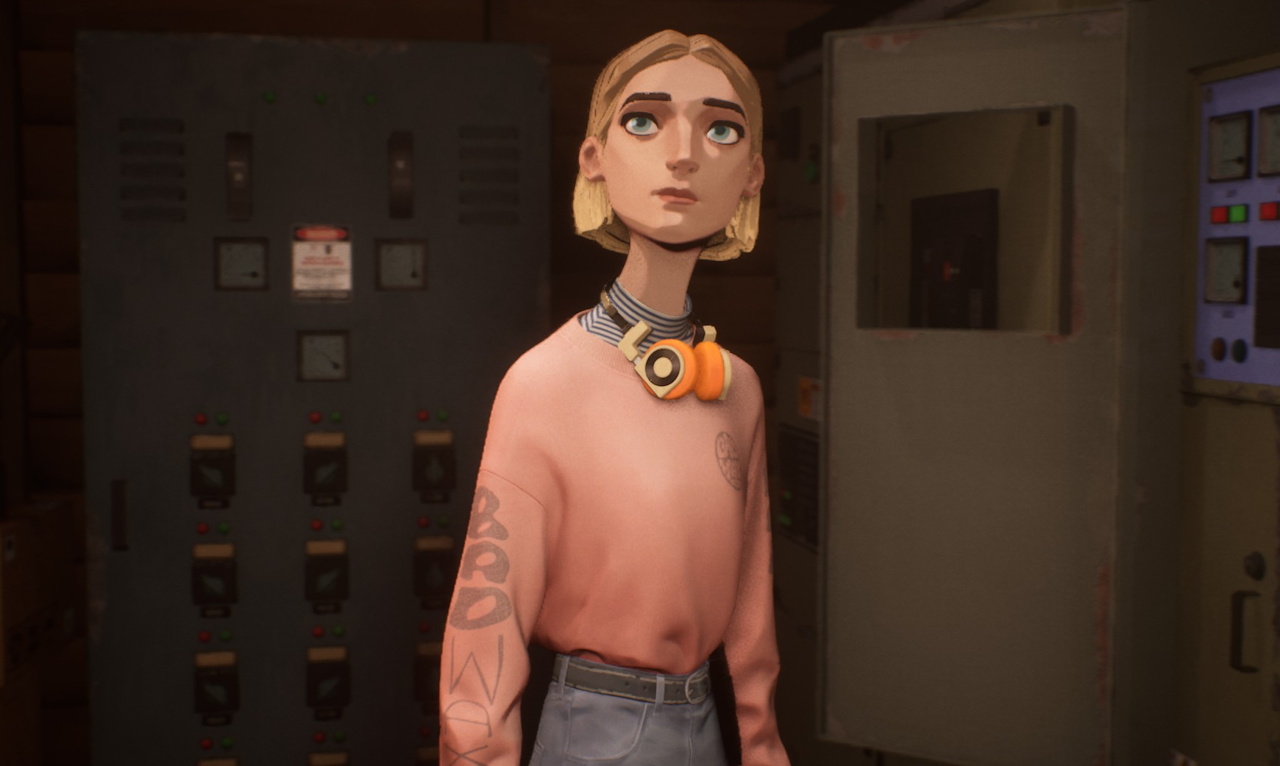
Stacey – a.k.a. Rockford.

This was another thing that punched me in the gut with “the feels.” That sense of a chapter of your life coming to a close – and not only that, but the *first* chapter, your schooldays, the only kind of life you’ve ever really known… it’s a truly strange sensation that I think only hits a person once in their life. And Mixtape made a creditable recreation of how that moment, that “one last night together,” really feels. We approach that feeling from Stacey’s side, but as the story unfolds, we also get it from Cassandra and Slater, to varying degrees.

I liked Stacey’s repeated fourth-wall breaks, and how she’d directly address the camera when introducing and explaining the various songs on the game’s soundtrack. Combined with some of Mixtape’s other fantastical elements – soaring through the sky, watching a baseball stadium appear out of nowhere, and so on – I think it worked exceptionally well, and it added to the sense that, despite the very real feelings the game brought up, it’s a fantasy as much as anything else.

Screenshot of Mixtape (2026) showing Stacey's fourth-wall break
Stacey regularly broke the fourth wall.

Mixtape also has something to say about the reliability of memory. Dreams, memories, and power fantasies all seemed to merge together – not only in flashback sequences, but even in levels and story moments set in the present day. We see characters soar through the sky, ride on the back of a dinosaur, make fireworks explode in time with the music, or float through a series of disconnected video clips. And none of this is presented as weird or unusual in the context of what was otherwise a very simple and grounded real-world narrative – which means Mixtape is deliberately leaning into the way we – especially as younger people – process thoughts, memories, dreams, and fantasies.

In a worse game or a worse story, it would feel jarring to go from a grounded, normal story about three teenagers about to graduate from school to Harry Potter-style flying cars, or floating through a void of images and video clips. But Mixtape makes that weirdness… work. I don’t want to say that it “shouldn’t” work, because a good enough story clearly *can* bring together the ordinary and extraordinary in a cohesive way. But the way Mixtape makes it feel so natural and so effortless… it’s really something to see. I really, truly adored this way of experiencing the story. It reminded me, again, of being a kid or a younger person, looking out of the window of the car and imagining flying through the air or sprinting along at high speed.

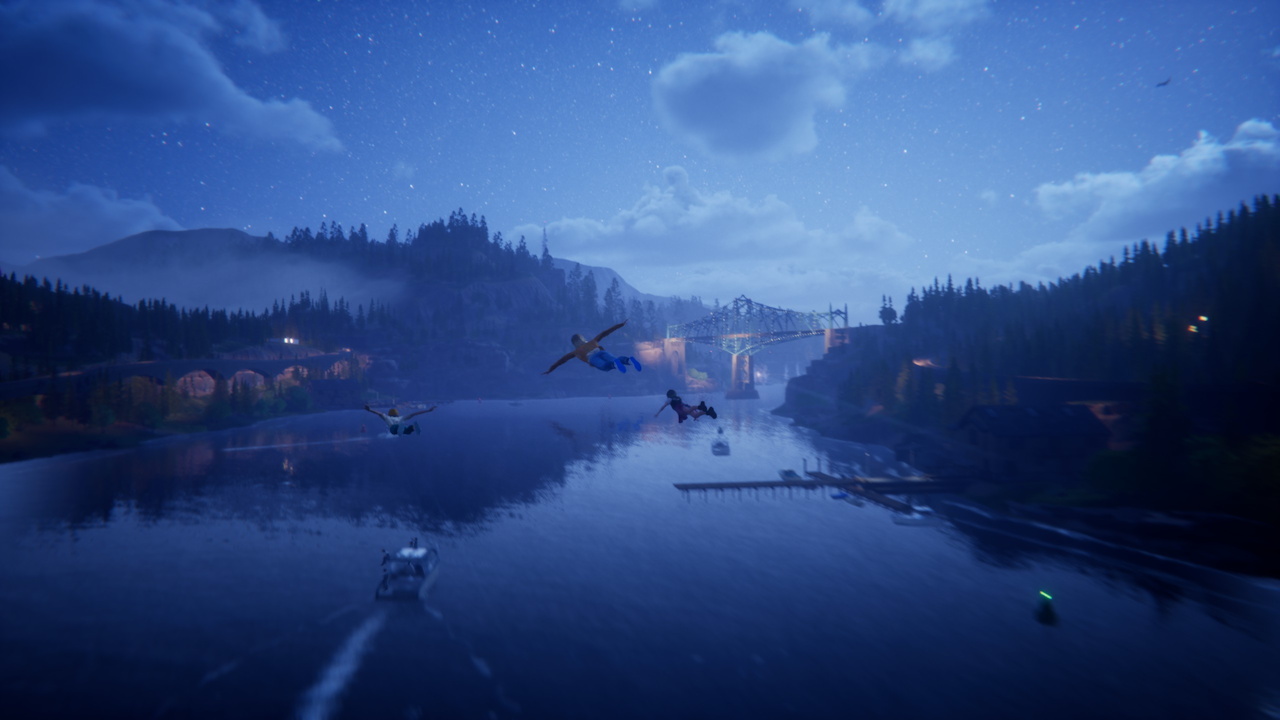
Screenshot of Mixtape (2026) showing the main characters in flight
Flying home…

I am not the best gamer in the world – I wasn’t when I was younger, and I’m definitely not now that arthritis is afflicting my hands and joints! So I appreciate that Mixtape isn’t a game with stupid difficulty spikes, or that punishes anything but frame-perfect button-presses in quick-time events. There were a couple of places where I didn’t get everything right – Cassandra’s softball game, for instance, and it took me a few tries to hit all of the targets in the rock-skimming game, too. But even then, Mixtape didn’t punish failure, nor send me back to the start of a level as I feared it might. Instead, I could progress through the story at my own pace, enjoying the moments and the narrative without really needing to worry too much about making mistakes or missing essential button-presses.

That style of gameplay – let’s call it “casual,” for the sake of simplicity – is not everyone’s cup of tea, and I totally get that. I could see people wanting the game to implement a more difficult mode where timings matter more and where mistakes are costly. Maybe, if you ask nicely, developers Beethoven & Dinosaur will consider it in a patch or update! But speaking for myself, I’m just not that kind of player, and I found Mixtape‘s difficulty, accessibility, and forgiving gameplay to be just my speed. I came for the story, not to punish myself trying to “git gud” at frame-perfect button-presses.

Screenshot of Mixtape (2026) showing Stacey and Cassandra
Stacey with Cassandra.

Mixtape’s explorable environments weren’t huge, but they were beautifully designed and well laid-out. They also had just the right amount of content for their size; they felt neither overstuffed nor too spread out and sparse, making walking around and examining things feel worthwhile. In terms of visuals, all three characters’ rooms looked… well, like typical teenagers’ rooms from that era. Like my old bedroom, or bedrooms of my friends – only a little larger, I guess, since this is set in America! Slater’s loft, in particular, reminded me of the attic bedroom of a friend of mine; a hangout spot that was conveniently located five minutes’ walk from our school, and where we spent a ton of time playing games and kicking back.

I liked the way the game indicated which interactions would advance the story and which would expand it – that kind of thing gives players the choice to dive deeply and explore a game’s world or to push through. Personally, because I was getting so into the story, I was happy to explore every nook and cranny, and I enjoyed practically all of the flashbacks, vignettes, and even just lines of dialogue from Stacey upon encountering an item in the level. These things added a ton of detail to the world and the backstories of the main characters.

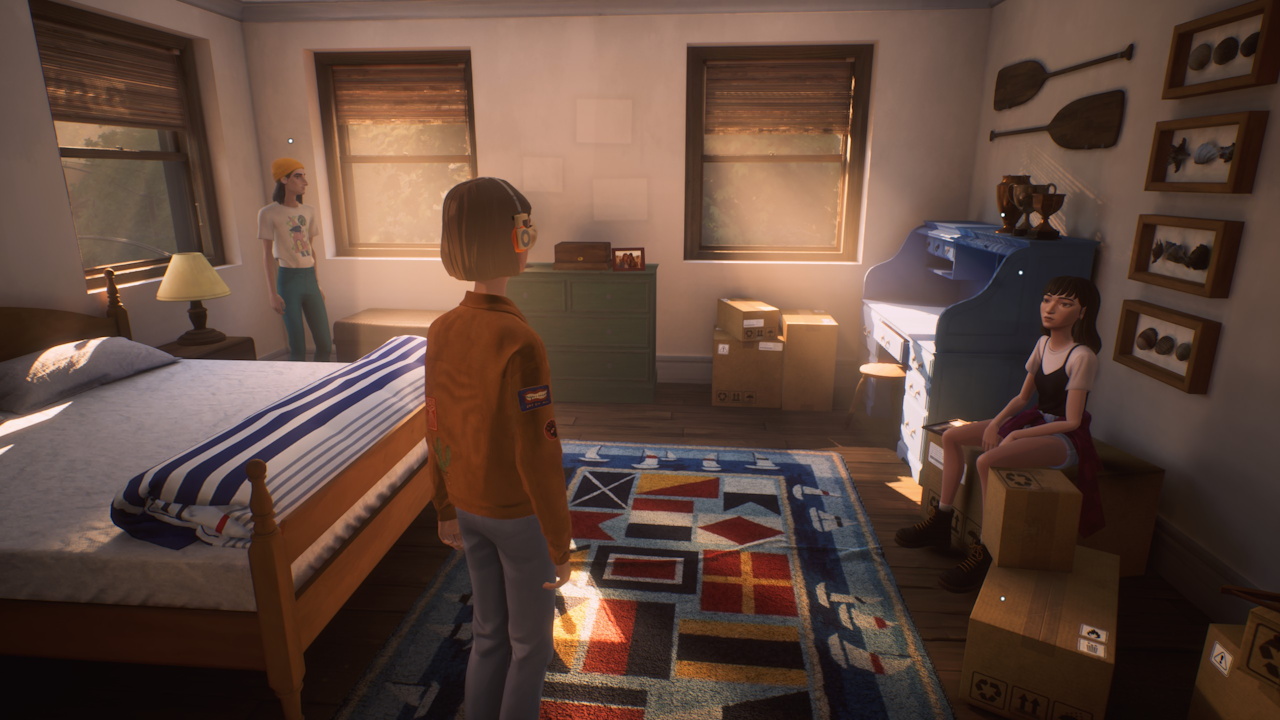
Screenshot of Mixtape (2026) showing the main characters in Debbie's room
The white markers indicate optional interactions.

And on the subject of voice acting, Mixtape once again excels. Bella DeLong was fantastic in the lead role as Stacey, incredibly convincing as that kind of teenage character. Max Korman, Jessica Ma, Monique Thomas, and JB Tandena round out the major voice roles, and all of them did a great job at bringing their characters to life in a realistic, believable way. Given the game’s subject matter and art style, it might’ve been tempting to go over-the-top with some of the voice direction; I’m glad that Mixtape stayed on the right side of that line.

These were all compelling and interesting characters in their own ways, and voices that matched the tone that the game was going for was always going to be vitally important. In a narrative adventure like this, the story lives or dies on the strength of its characters, and a big part of getting me invested in these characters is the voice acting. I’m pleased to say it was excellent across the board.

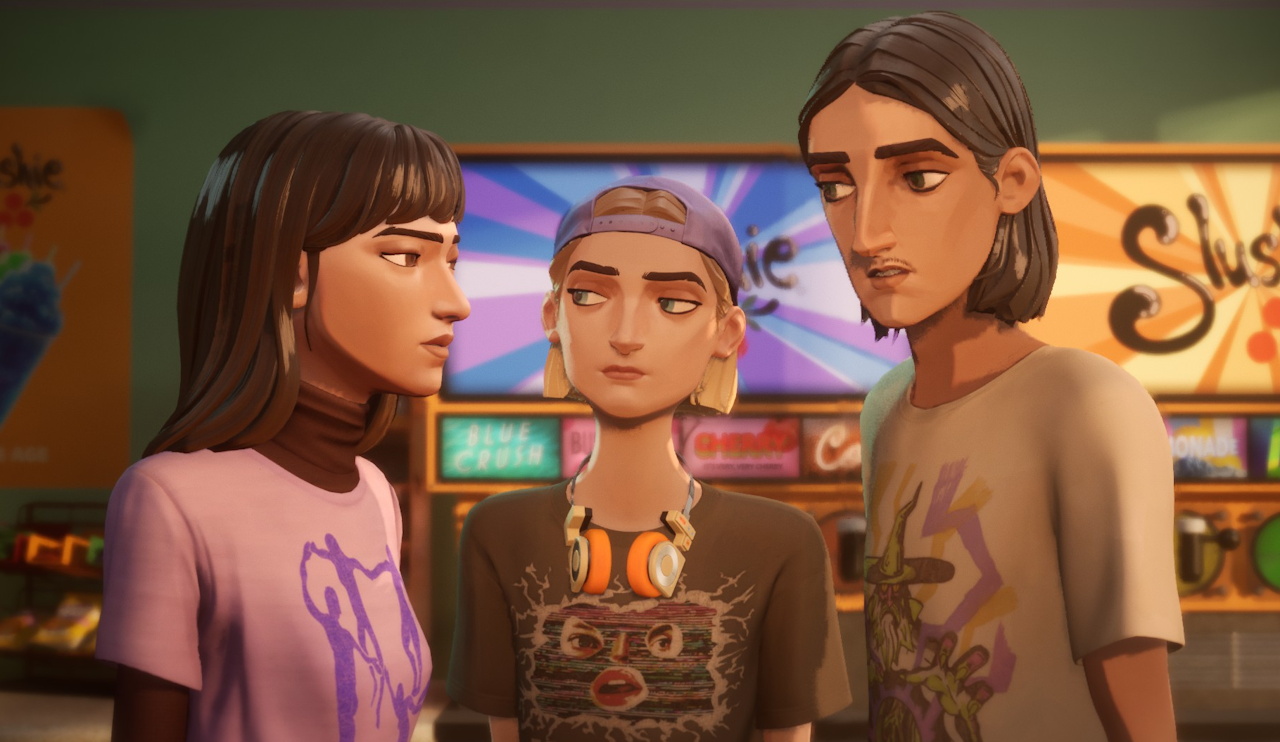
Screenshot of Mixtape (2026) showing Cassandra, Stacey, and Slater by the slushie machine
The main characters.

I suppose, for a game called “Mixtape”, we should actually talk about the soundtrack, eh?

It’s not a new thing for games to use popular songs in their soundtracks. Nor is it unique to Mixtape for a game to set a level or an action sequence to music. A memorable example for me would be Control – if you’ve played that game, you’ll know the level I’m referring to! But it is pretty unusual for a game to lean so heavily on its soundtrack, making the songs integral to the narrative itself, and incredibly important to the main character in particular.

Stacey is set up from the start as being incredibly passionate about music, and this extends to the way she introduces all of the songs in the game. Not only does she turn to the camera, breaking the fourth wall – as we discussed – but she explains why a song is relevant to the passage of gameplay or the narrative moment that we’re seeing or playing through. It heightens and elevates the soundtrack to draw attention to it in this way. And it goes without saying that the song choices were pitch-perfect.

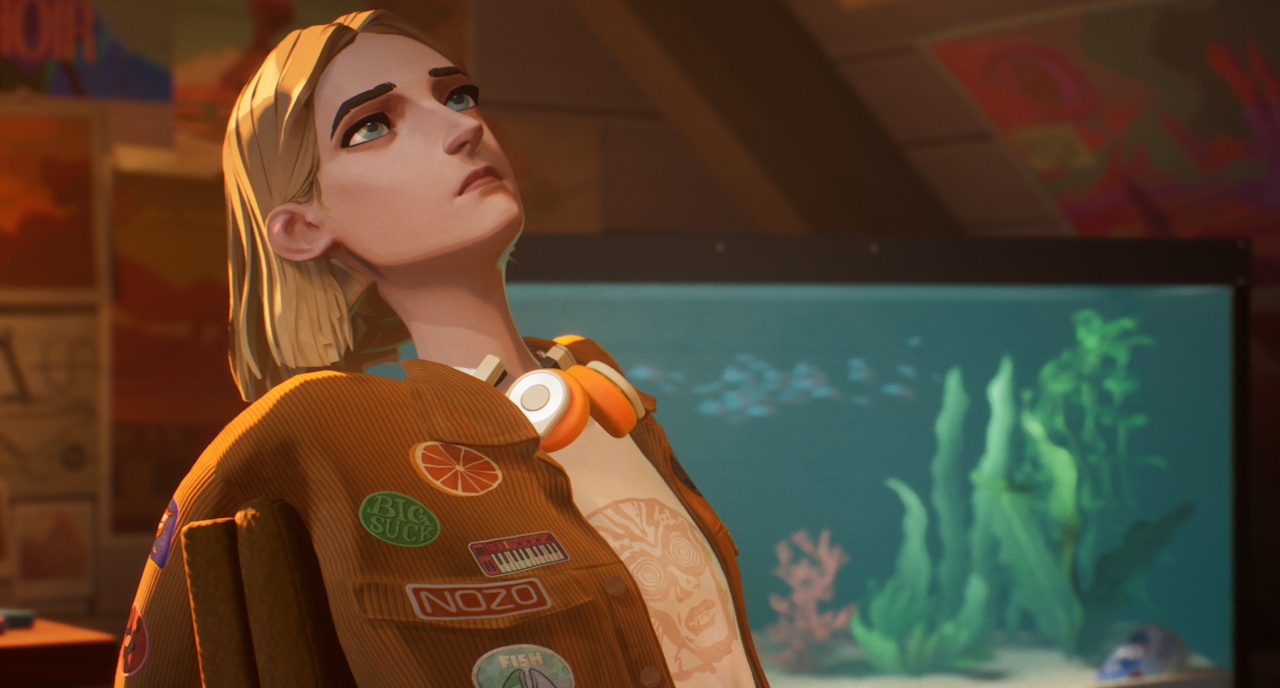
Screenshot of Mixtape (2026) showing Stacey by the fishtank
Stacey lives for music.

Mixtape was more eclectic with its music than I thought it might’ve been, so if you were worried that you won’t enjoy the game because you don’t like ’90s pop/rock songs… don’t be! There’s way more to it than that, and even tracks that I’d probably skip if they came up in a playlist worked well or at least felt in keeping with the narrative moment that they were part of. And really, there weren’t any songs on the game’s soundtrack that I actively disliked. There were a few forgettable numbers, sure; songs I’d never intentionally seek out or choose to listen to. But there were – to use some popular slang – plenty of bangers, too.

Two sequences really stand out to me – probably because they paired two songs I genuinely adore with two fun gameplay sequences.

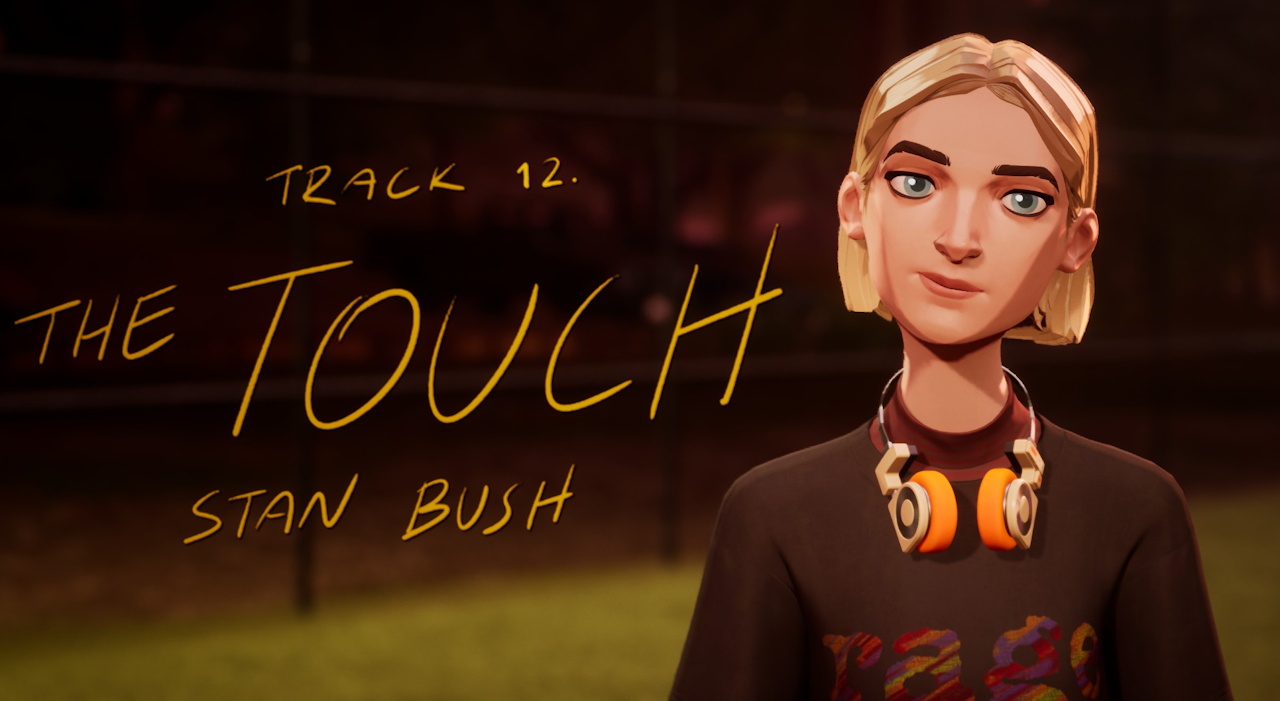
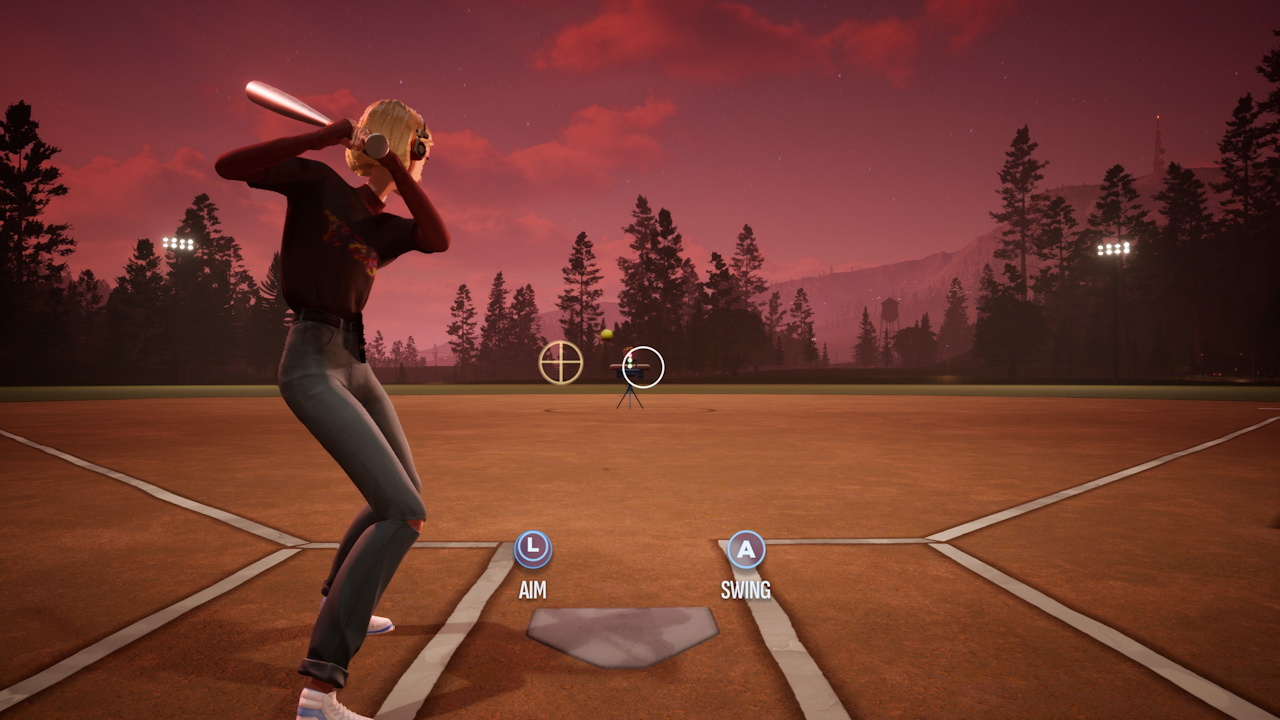
The first is the softball one: Stacey introduces Stan Bush’s The Touch as being the only sports-themed song she knows, but it really was just pitch-perfect for that moment. The QTEs were hard, sure, and I struggled with the analogue stick-and-button combo a lot of the time! But the soundtrack was great, and managing to land the perfect hit, then seeing a piece of the baseball stadium rising from the ground? It was magical.

Screenshot of Mixtape (2026) showing the softball mini-game
The softball mini-game. I sucked at it!

Then there’s the desperate race to get to Cassandra before her dad finds her. Set to John Paul Young’s Yesterday’s Hero, this entire sequence – which was perfectly timed to coincide with the song, by the way – felt like it came straight from the kind of coming-of-age movies that inspired Mixtape. I think that song is now gonna be forever tied to that video game sequence – running, jumping, and sliding with Stacey as she battled to make it in time to save Cassandra from her dad’s wrath. It was… beautiful. Touching. And just fantastic all around.

Aside from the sequences and levels we’ve already discussed, Mixtape had some other fun games and mini-games. The skateboarding mechanic, while not exactly as in-depth as something like Tony Hawk’s Pro Skater, was a lot of fun – and, again, another nostalgia blast. The skateboarding sequence with the explosions was incredibly fun and memorable, too! And what other game could make painting a door so… fun? I loved that you could stylise the door and then have it show up in future vignettes and chapters of the story, too.

Screenshot of Mixtape (2026) showing the painted door
The painted door… or at least my effort at it!

The drunken stumble through the video store was hilarious, and I felt Mixtape captured a character’s inebriated state in a way few games ever really manage to! Then there was slingshot shooting, rock-skimming, and even moving a couch that were all a ton of fun, creative, and just neat little mini-games. They aren’t necessarily things you could build an entire game around, but they work well as pieces of a larger whole. Not so keen on the kissing mini-game, though – but that’s just me!

I particularly enjoyed the slushie machine mini-game, and how the exact combo of slushie flavours would then show up in the subsequent cut-scene. I know it’s such a small thing, but it really was fun to mess around and experiment with different colours, seeing how the cup came together.

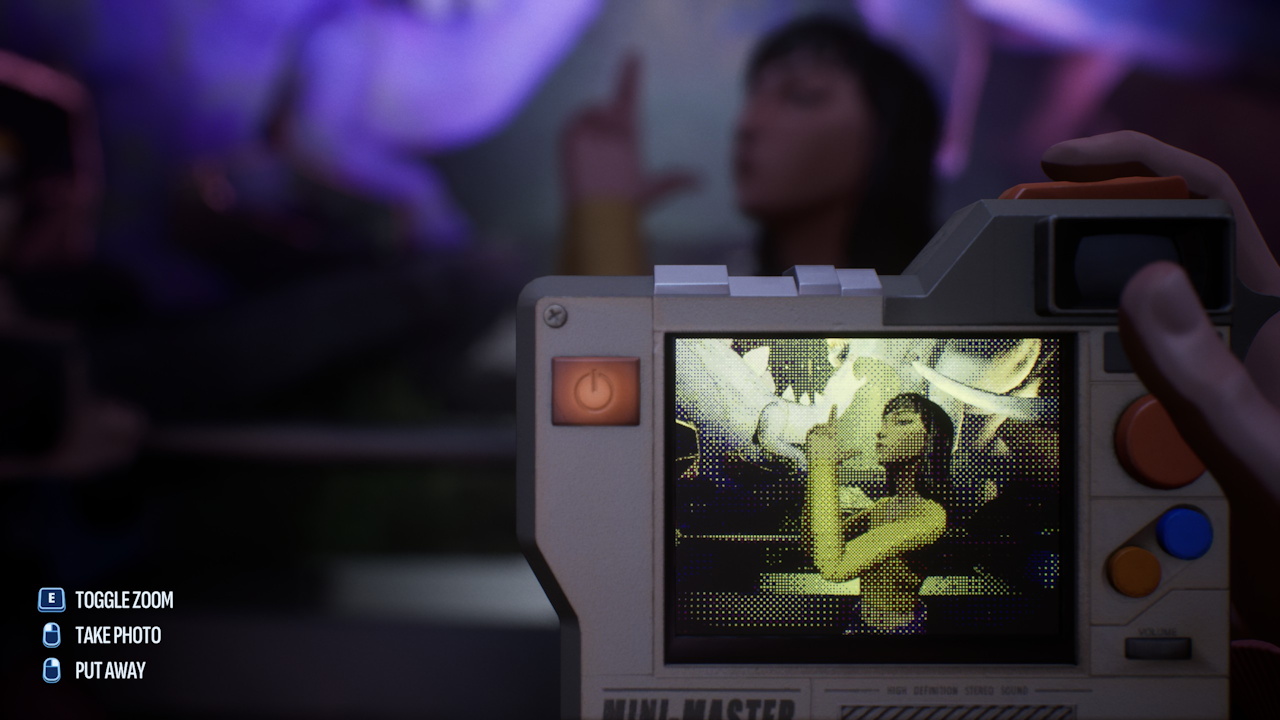
Screenshot of Mixtape (2026) showing the digital camera mini-game
Taking a photo of Cassandra.

And, of course, we have to mention the dinosaur theme park experience! One of the kids’ fondest memories involved sneaking into this abandoned Jurassic Park-inspired theme park, and messing around. The ride was the highlight, but I also enjoyed the camera mini-game, and how you could actually get some pretty creative shots, despite the limitations of the ’90s digital camera. The camcorder mini-game, in the final act, was in a similar vein, and I liked how you could film different partygoers and make these little vignettes.

So I think that’s everything I wanted to say.

Mixtape isn’t gonna be the right game for every player. But it’s confident in knowing what kind of game it wants to be – a narrative adventure. It’s bold with some of its storytelling choices and character beats. And it leans heavily into nostalgia and that sense of being a teenager again, going through that final goodbye before everything changes. And it absolutely *nails* that feeling in a way I just wasn’t expecting.

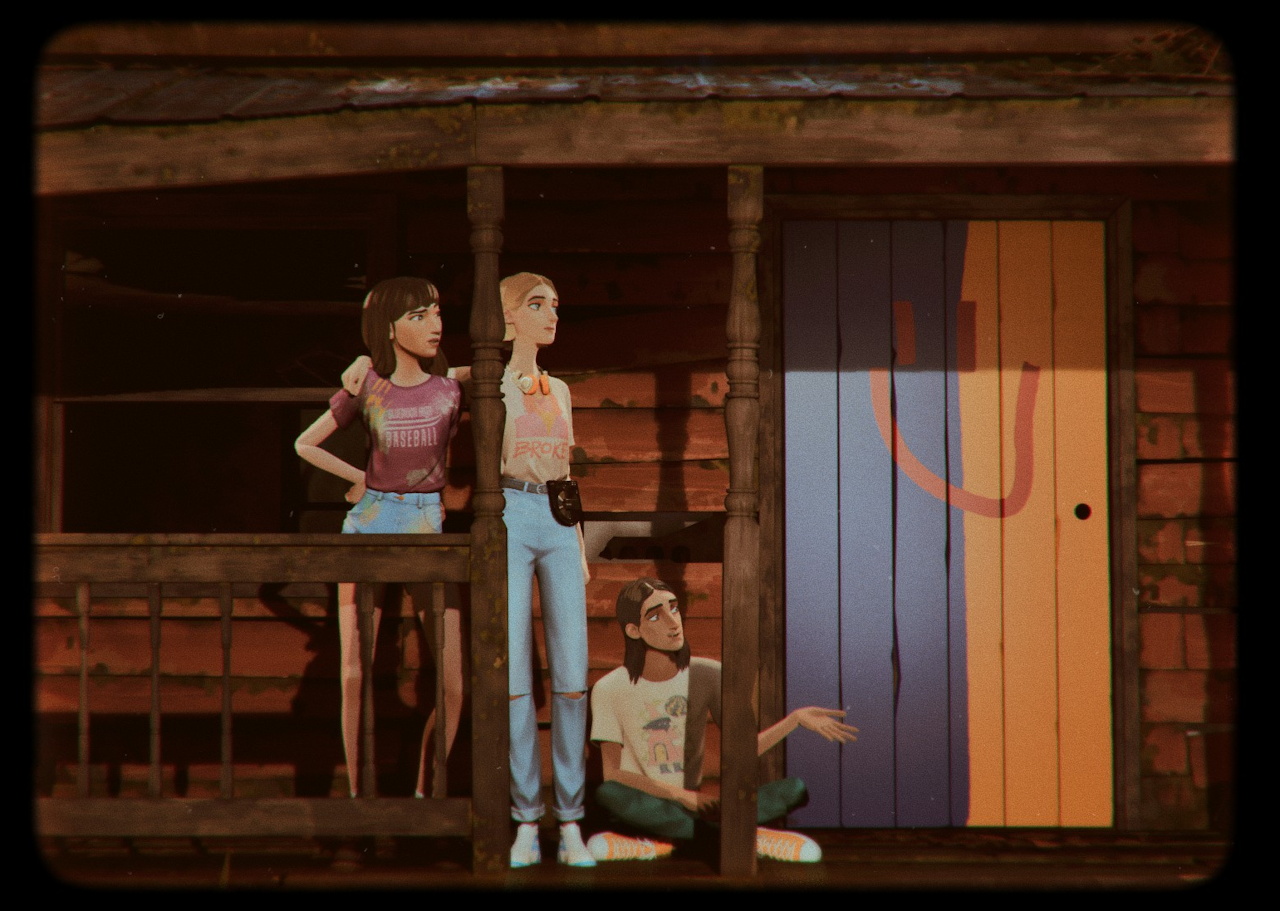
Screenshot of Mixtape (2026) showing Cassandra, Stacey, and Slater
I thoroughly enjoyed Mixtape.

I had a great time with Mixtape, and it’s a game I’ll be happy to recommend – to a certain kind of player! And speaking for myself, it’s a game I can already tell I’m going to want to return to every once in a while. It’s like a good film, in that sense – I don’t want to watch The Breakfast Club or St. Elmo’s Fire every day, but sometimes, when I’m in that nostalgic mood… I really enjoy them. And Mixtape is the interactive version of that kind of story.

Earlier this year, I reviewed Pragmata and Star Trek: Voyager – Across the Unknown. But if you want to check out titles a bit more similar to Mixtape – at least in some ways – I hope you’ll consider taking a look at my reviews of Indika and South of Midnight. If you liked Mixtape and you’re on the hunt for something to play next, I think either of those could be good choices. Click or tap the links to read my reviews of any of those titles.

And I still have several games in my pile that I hope to get around to in the next few weeks! If you’re interested in reviews of the likes of inKonbini: One Store, Many Stories, Mouse: P.I. For Hire, or Kioku: Last Summer, I hope you’ll stay tuned. I can’t *promise* reviews of all of them imminently, but they’re on my list, so to speak. Thanks for reading, and I hope this review has been useful, interesting and/or enjoyable for you! Happy gaming!


Mixtape is out now for PC, PlayStation 5, Nintendo Switch 2, and Xbox Series S/X consoles. Mixtape is the copyright of Beethoven & Dinosaur and/or Annapurna Interactive. Some promotional screenshots courtesy of Beethoven & Dinosaur/Annapurna Interactive. This review contains the thoughts and opinions of one person only and is not intended to cause any offence.
Iron Lung: Film Review

A spoiler warning graphic

Spoiler Warning: There are spoilers ahead for Iron Lung.

After reviewing one video game adaptation – The Super Mario Galaxy Movie – just the other day, I’m back to check out another game-turned-into-a-film! But I think it’s fair to say that this one’s a little different.

I haven’t played Iron Lung, the game upon which this film is based. If you think my unfamiliarity with its source material makes my take somehow less valid… well, no hard feelings! But I wanted to be up front about that before we got started. I also want to add that I’m not a viewer of the video game YouTuber Markiplier, as Iron Lung is a film he wrote, directed, produced, edited and starred in. Note that I *didn’t* say that I dislike Markeplier, merely that his channel isn’t one I’m familiar with, as that kind of “gamer” content isn’t something I watch. Again, if you think my unfamiliarity with the film’s lead invalidates this review, that’s okay. These things are all subjective, at the end of the day.

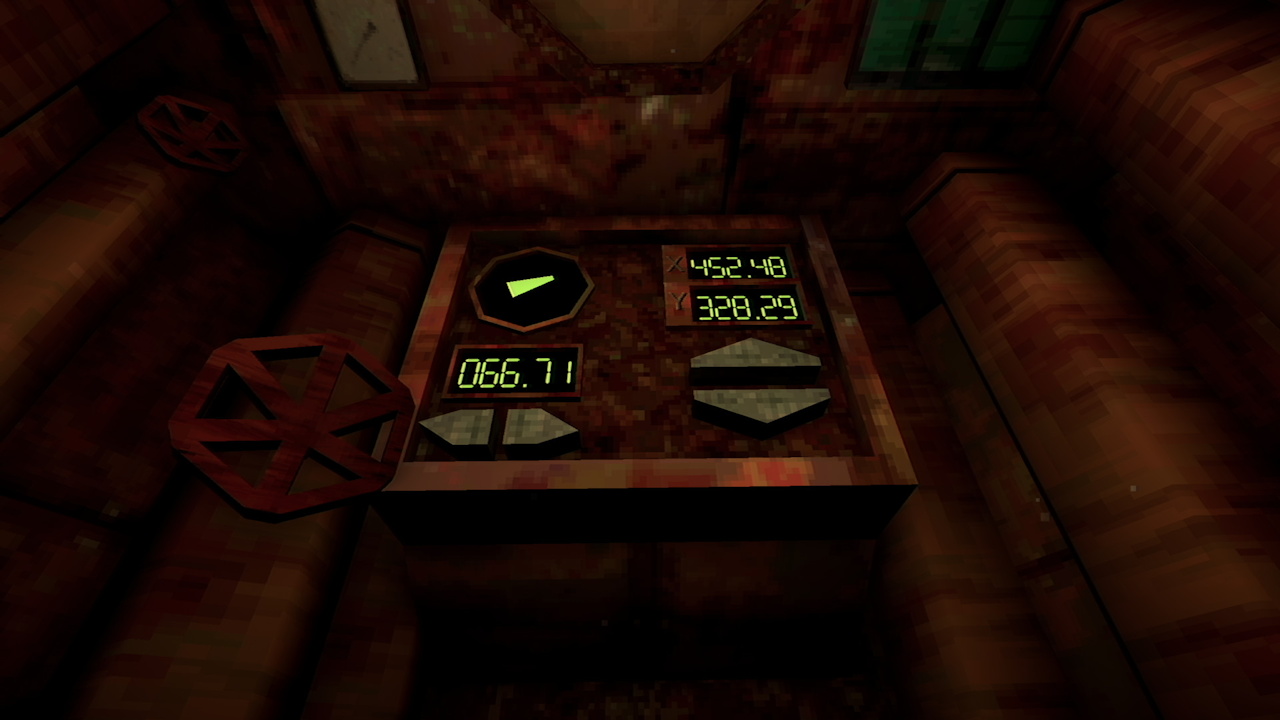
Promo screenshot of the video game Iron Lung
Iron Lung is based on the video game of the same name.

I love to hear that someone is *passionate* about a story – even more so in the overly-commercialised film and entertainment landscape we inhabit in the 2020s. So I’m always willing to give passion projects like Iron Lung an opportunity to impress me, and perhaps a bit of a pass if things don’t quite measure up to other titles in the same space. The story behind the cinematic adaptation of Iron Lung is genuinely pleasing, even to an old cynic like me, and knowing that a video game could compel someone to use their money, fame, and connections to put together an entire film… that counts for something.

But let’s be honest: not all passion projects are any good, right? John Travolta’s Battlefield Earth, for instance, or last year’s Megalopolis, which I also reviewed; that film being the longstanding passion project of legendary director Francis Ford Coppola. Being truly excited about something – and exercising full creative control over the subsequent project – does not always make for a compelling or enjoyable movie. And, to be blunt, it’s in that category that I would place Iron Lung: a well-intentioned film, clearly created by someone truly passionate about its story… but that just didn’t come together to make something I enjoyed watching.

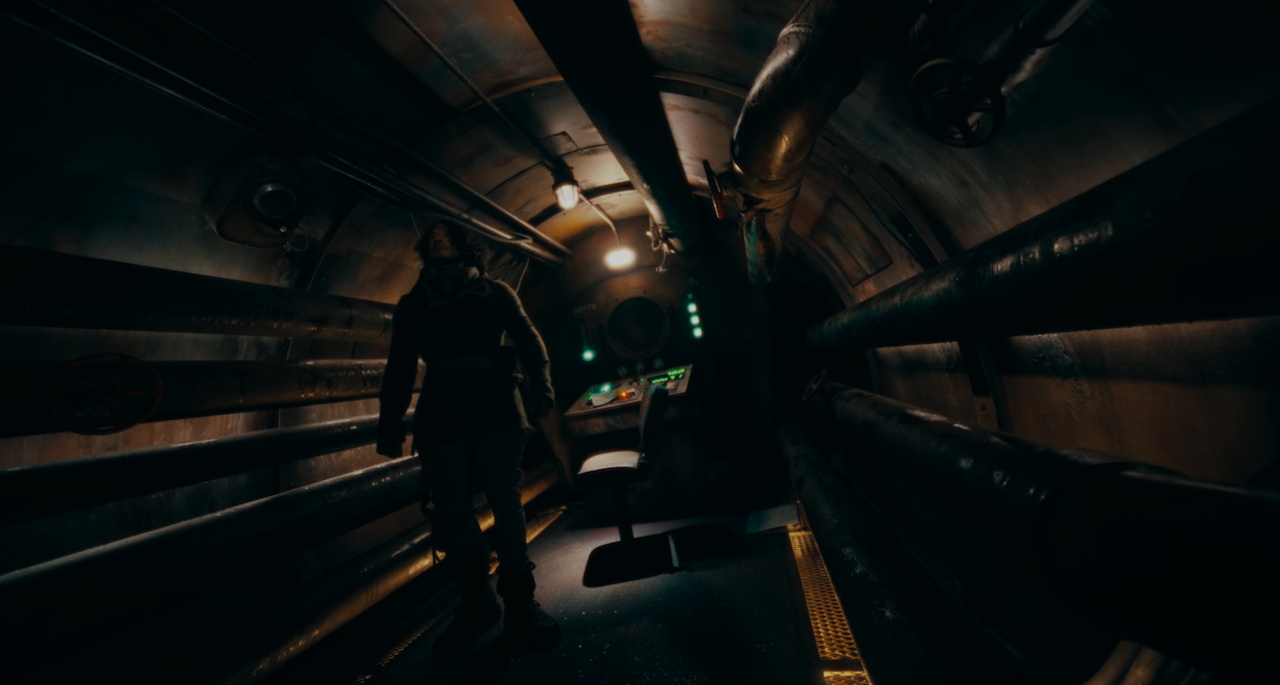
Still frame from Iron Lung (2026) showing Simon on the sub
Simon (the protagonist) aboard his submarine.

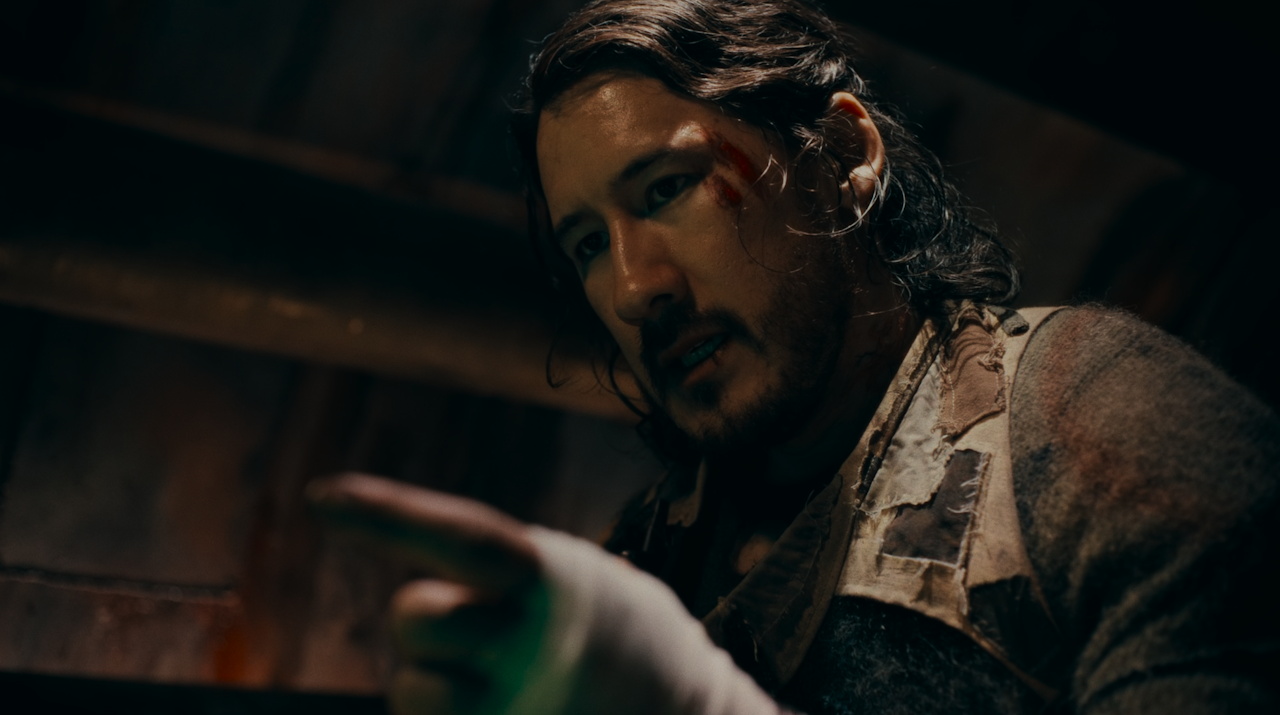
Let’s start with the film’s central – and, for almost its entire runtime, *only* – on-screen performance. Being the only character on screen almost all of the time, having to react and emote and talk to oneself… these are acting challenges that would trip up even a seasoned Hollywood veteran. And, as I said a moment ago, I don’t doubt the passion behind the performance, nor that Mark Fischbach (a.k.a. Markiplier) truly gave the role everything he had. But there were moments in his performance which, to be blunt, were so bad that they veered into being unintentionally funny. There weren’t enough of those, sadly, to turn Iron Lung into a “so-bad-it’s-good” title that I could ironically enjoy. But the performance of the film’s lead, especially as the story progressed and Simon began to hallucinate and spiral… it was too over-the-top, too unbelievable, and just wasn’t good enough to carry the film.

When the staging is so minimalist, and the story is so muddled, a film like Iron Lung needs that sole acting role, that central performance, to step up and carry it over the line. And for me, it absolutely couldn’t do that. Perhaps Fischbach would’ve been better served by hiring a professional actor to take on the lead role instead of trying to do it himself – even if that might’ve taken some of the fun out of the production for him.

Still frame from Iron Lung (2026) showing Simon
Simon was the only character on screen almost all of the time.

I called the story “muddled,” so let’s talk about that.

At key moments in the film, and especially from the halfway point onwards, I struggled to follow what was going on. The script didn’t make clear why Simon was doing some of the things he was doing or what his goals may have been. From the first moment we meet him, Simon’s main objective appears to be to survive the expedition and win his freedom. Great, got that. That explains why he’s mapping the cave, why he’s trying to find his way back, and why he seems, at points, to be pretty desperate and despondent.

But we don’t get enough of an explanation, either through monologue/dialogue, or even just from staging, camera work, and environmental storytelling, to explain some of the things that are going on. There’s deliberate ambiguity in some cases – like his hallucinations, the question of radiation exposure, and so on. But others – like the attack on the second submarine, and Simon sabotaging his own sub at the film’s climax – that really needed some more explanation. If Simon was going to go out in a blaze of glory; a heroic act of self-sacrifice to try to preserve the unseen and unexplained data… why was that not made clearer? I just didn’t get it… and it took looking up a plot summary after the credits had rolled for me to finally go “oh, so he deliberately rigged his own sub to explode.” Still not clear on the “why,” but at least I get what he was trying to do now.

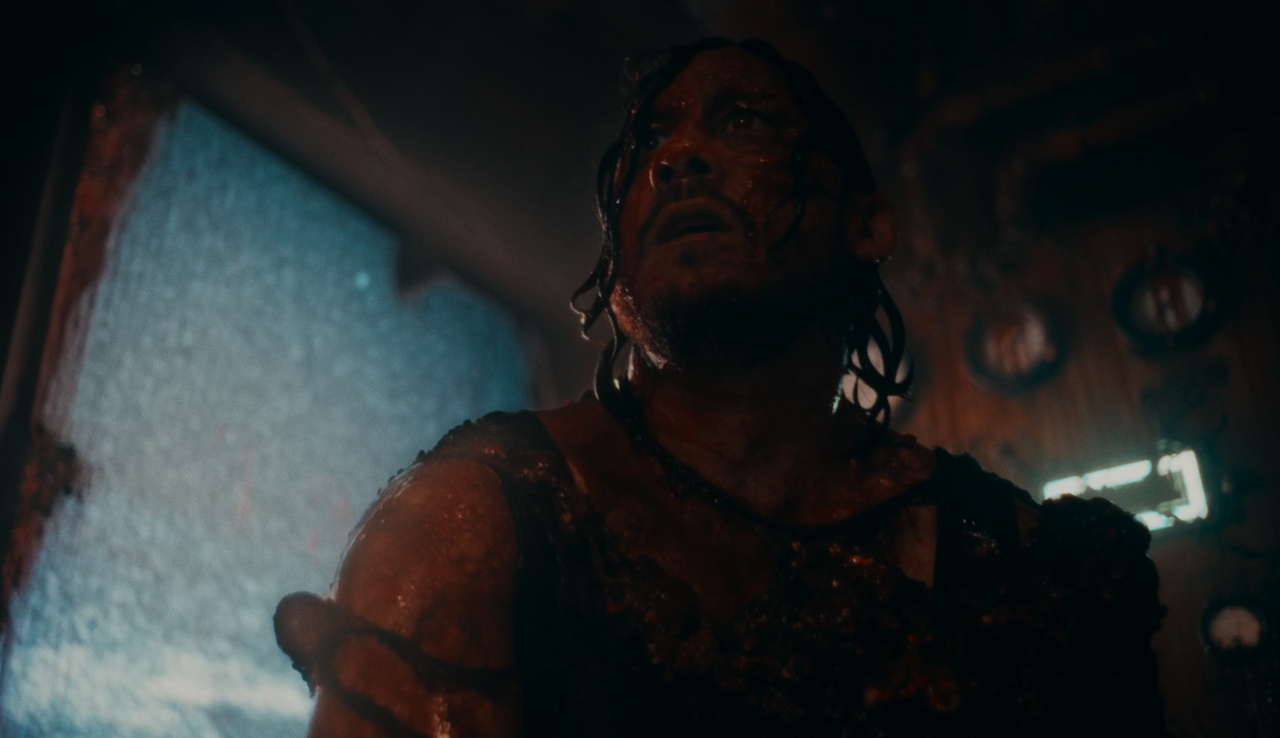
Still frame from Iron Lung (2026) showing Simon covered in blood
The story felt muddled and confusing, especially towards the end of the film.

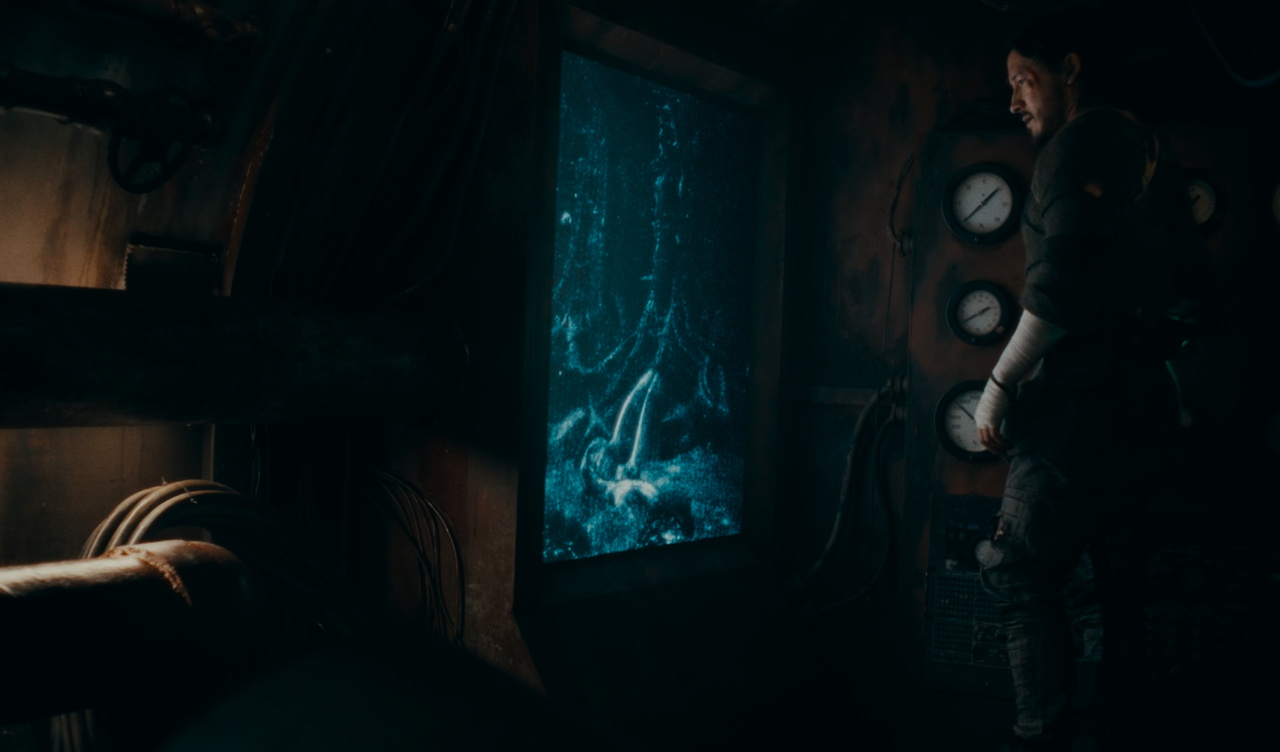
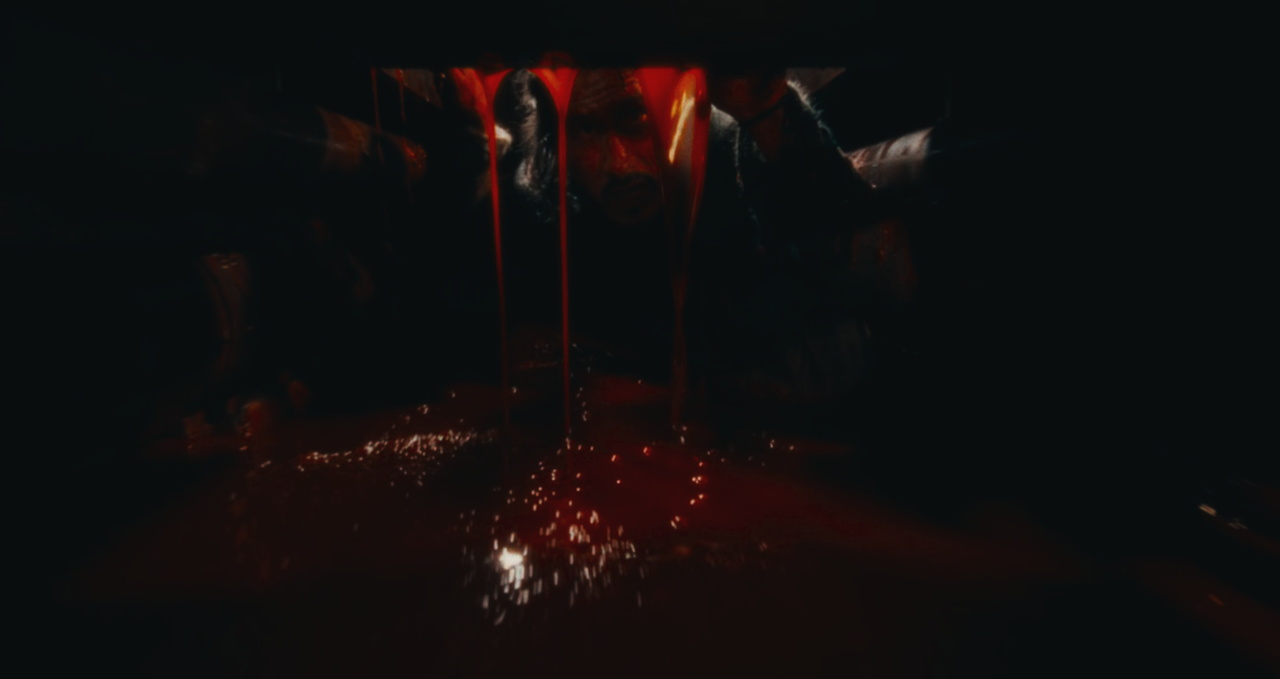
I will credit Iron Lung for its practical effects and its visual style. The submarine’s X-ray camera, set back from the minimalist pilot’s station, was genuinely well done, and it made for a tense voyage of exploration when Simon couldn’t see, in real-time, anything that was in front of him. Having to constantly stop and check the camera upped the tension, and the large rectangular button, with its slightly ominous green light, was a huge part of that. The grainy black-and-white X-ray images that the camera produced also added to this effect, and it was a lot better doing it this way than, for example, trying to have a bunch of CGI shots of the outside of the submarine.

The submarine set – which is more or less directly copied from the video game, as far as I can tell – was minimalist, but it was still an atmospheric space. The rusted, corroded metal, all of which felt old and decrepit, the clunky physical buttons and switches, the gauges and valves, they all evoked old World War II submarine films, and the claustrophobia that classic titles of the genre could create. Sealing the only porthole on the sub, too, added to that sense of being trapped; that this submarine was really just an over-engineered tomb from the very first moment Simon was sealed inside.

Still frame from Iron Lung (2026) showing Simon and the camera
Simon at the camera station.

Fake blood, especially in lower-budget titles, doesn’t always look great – but Iron Lung did a pretty good job with it. Especially later in the film, the blood became incredibly important, and the viscosity of the liquid actually looked about right, as did the colour. There were a couple of moments where I felt maybe it wasn’t *perfect*, but I’m content to let such things slide for the most part. What Iron Lung desperately needed to avoid was using something too thick – and looking like ketchup – or too thin and watery. I think, on balance, this exceptionally important aspect of the film landed about right.

I’m also pleased to see, in 2026, a film that doesn’t over-use CGI and digital animation. There’s something just… neat about old-school physical sets and props, and while there was CGI in the film, it didn’t swamp the production or feel overdone. And again, for a film on a shoestring budget compared to a lot of Hollywood titles, the CGI that was present actually looked pretty darn good.

Still frame from Iron Lung (2026) showing fake blood
An example of the film’s use of blood.

Although Mark Fischbach’s performance was more miss than hit, the voice roles of some of the other members of the cast were a lot better. Captain Ava stuck the landing, really nailing the feel of being a post-apocalyptic captain, barely keeping her ship and crew together. I was still confused why she was so willing to risk her own life at the end to rescue the data… but that’s a script issue rather than a performance issue. And the other voices we heard – the male engineer during Simon’s second dive, or the crew of the doomed SM-8 (and their hallucinatory forms) – were likewise well acted and well performed.

Iron Lung is, in a way, a bit of a tough one to review. I didn’t really like the film as it was presented, and ultimately… you can be as excited about a subject as you like, but if the way you bring it to life isn’t up to scratch, that’s what I’m gonna remember. But at the same time, it’s the kind of project I want to see more of and I want to be supportive of – not because I support this particular YouTuber; I’m not a viewer of his channel or familiar with any of his other work – but because I think the world needs more independent films, and films that don’t easily fall into the typical Hollywood mould.

Mark Fischbach (Markiplier) at an Iron Lung (2026) promo
Writer, director, and star Mark Fischbach at a promo event for Iron Lung.

I will say that I’m glad to have been able to watch Iron Lung, and for the money I spent on it (about tree-fiddy on YouTube at time of writing (£3.50 in the UK)) I wasn’t exactly furious that I didn’t like it! It’s my hope that Mark Fischbach, and the team he put together, will continue to make films, and will continue to find projects that excite them and that they *want* to adapt for the big screen. And, like any actor, Fischbach has room to grow. A less challenging role, or even a lead role as part of a bigger cast, where he has other actors to bounce off of and work with, may well suit him better.

Perhaps Iron Lung was never gonna be “my thing.” I’m not a big horror aficionado, I’ve never played the game it’s based on, and I’m not a viewer of Markiplier’s YouTube show. But… the point of adapting a story is to bring it to new eyes, and I like to think I gave the film a fair shake. I wouldn’t have paid to watch it if I didn’t think it had potential, and I certainly didn’t sit down to view it wanting or hoping to have a bad time. It just… didn’t do it for me, I’m afraid.

Thanks for reading. There are a couple of other horror and horror-adjacent films that I’d like to check out later this year, such as The End of Oak Street and Disclosure Day, so I hope you’ll stay tuned for that. And I’ve also recently reviewed both 28 Years Later and its sequel, 28 Years Later: The Bone Temple, so follow those links if you want to get my take on those titles.


Iron Lung is available to stream now (for a fee) on YouTube. Iron Lung is the copyright of Markiplier Studios and/or Iron Lung Productions. Two images used above courtesy of IGDB and IMDB. This review contains the thoughts and opinions of one person only and is not intended to cause any offence.
Indika: Video Game Review

A spoiler warning graphic.

Spoiler Warning: Beware minor spoilers for Indika’s story – and major spoilers for the game’s world and mechanics.

I love seeking out games that feel unique – and if there’s one word I’d use to describe Indika, that would be it. This game is a mix of third-person puzzling, some platforming elements, a “walking simulator,” and some fun 2D platforming levels inspired by titles from years gone by. It’s a short but eclectic experience; a memorable game that I thoroughly enjoyed.

I beat Indika in a single play session – something I don’t think I’ve done with a game for quite a long time! So this is not an epic experience that’s going to last dozens upon dozens of hours… and that’s something to be aware of heading into it. However, unlike some recent titles, Indika is priced fairly. At £20 here in the UK (though I got it at a slight discount via the Epic Games Store) its price feels more than fair for the runtime it provides, and I will always credit publishers for recognising this!

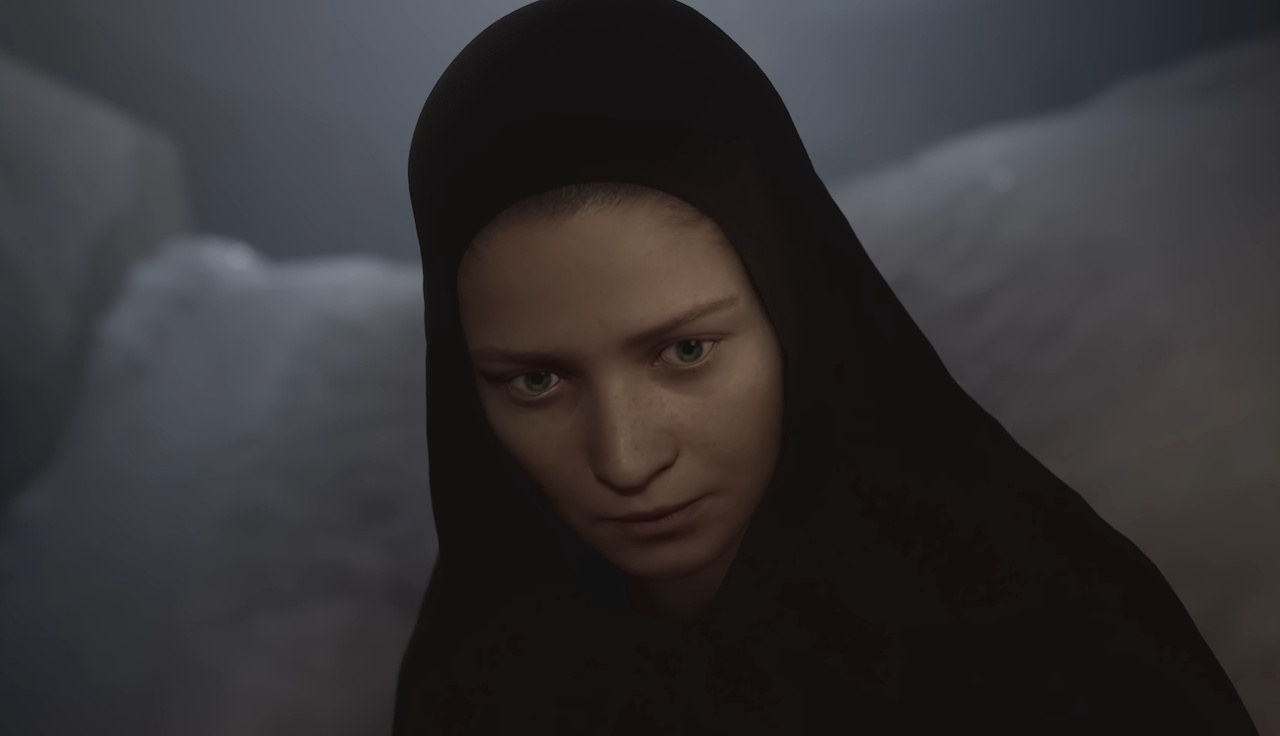
Screenshot of Indika (2024) showing Indika.
The title character.

During my playthrough I did encounter a bug – just one, though. At one point, Indika got stuck in the environment partway through climbing onto a platform, and the only way around it was to restart the level. This highlighted something I don’t really appreciate: the lack of a free save system. Indika is generous with its checkpoints, sure, and the only other time I died I didn’t have to go all the way back to the beginning or anything. But… being able to freely save is a pretty basic feature, and even in a game as short as Indika there’s really no reason not to incorporate it.

But that’s basically all of the negatives out of the way!

Indika is a narrative experience as much as a “game” – there are entire sections where the only thing you’re required to do is walk from point to point. There are side-rooms to explore and a few collectables to pick up – which are worth finding, if for no other reason than to appreciate the design work that went into making them – but much of the game unfolds like this. I can see some people finding that “boring,” and while such things are subjective, for me I enjoyed this slower pace.

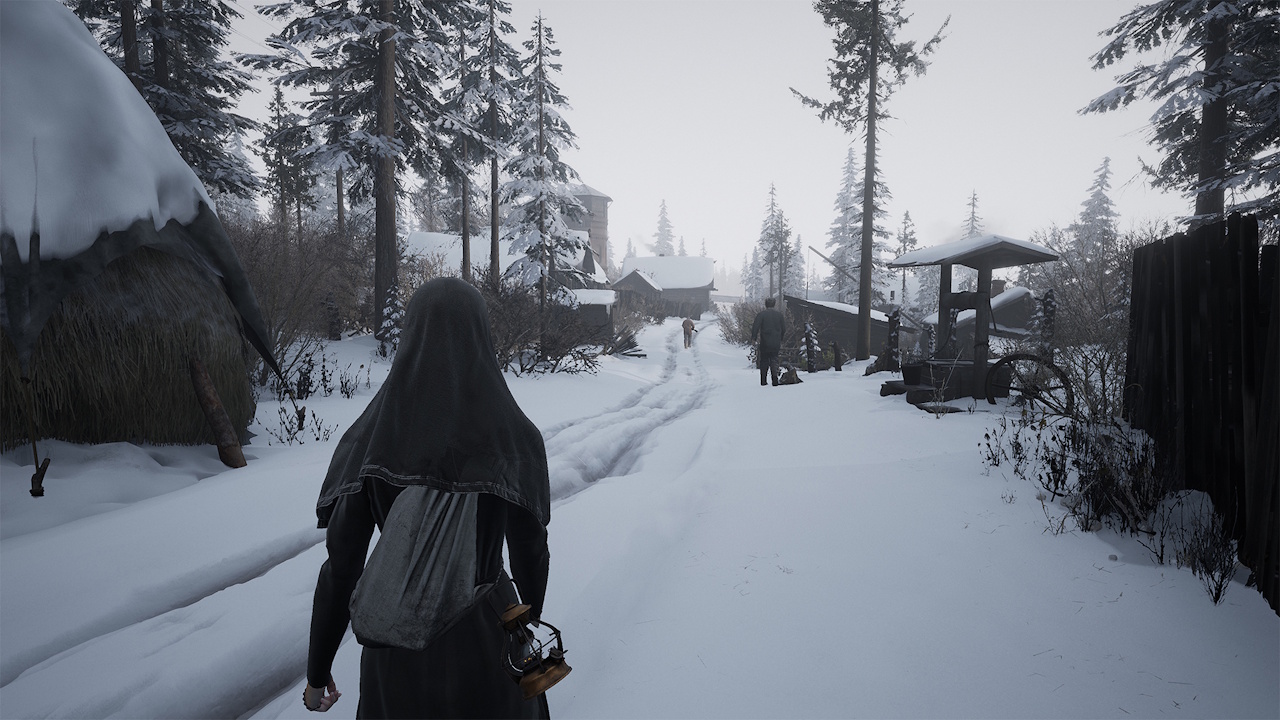
Promotional screenshot of Indika (2024) showing Indika walking on a snowy path.
There’s quite a bit of walking in this game.

Despite the way the game seems to present itself at first, this isn’t a “horror” title – not by my definition, at any rate. There are some creepy and unsettling elements for sure; a game where the player character speaks to a demonic entity is gonna have that! But in terms of frightening moments or jump-scares… there really weren’t any. And that’s coming from a total scaredy-cat who’s easily frightened!

What you get with Indika’s narrative is a lot of philosophy – the age-old debate about God’s existence. And maybe you’ll say I’m projecting my own biases here, but I felt Indika came down firmly on the side of atheism. Despite being a nun, the protagonist is clearly struggling with questions of faith, and her mental illness – which is how I’d interpret her hallucinations – is preventing her from fitting in with her fellow nuns at the convent. Having encountered a runaway convict, Indika bounces her ideas about God and the problems of omnipotence and evil off of him. These conversations were genuinely interesting.

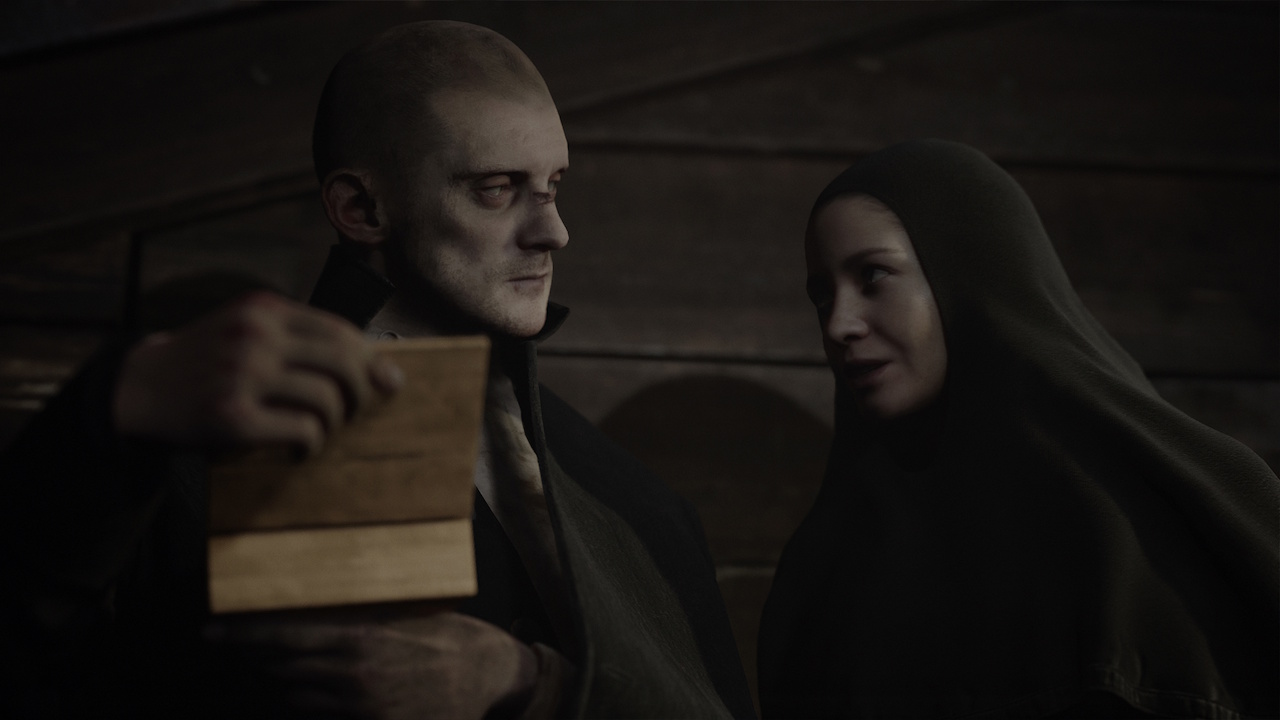
Promotional screenshot of Indika (2024) showing Ilya and Indika.
Ilya and Indika had some interesting philosophical conversations.

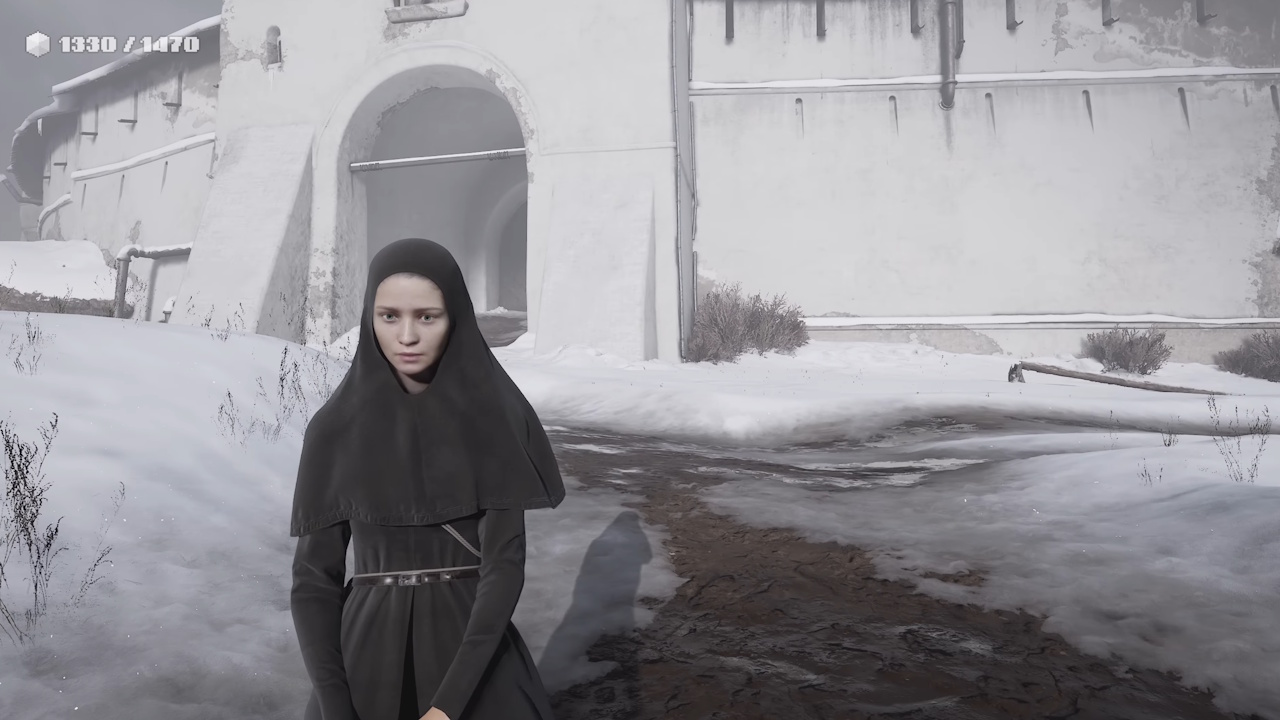
Both of the main characters – and Indika’s companion, too – felt fleshed-out, and they seemed to fit the world they inhabited. We got to see really interesting glimpses of pre-First World War Russia, a country struggling with industrialisation and the challenges that it brought. Indika’s convent felt like a place unchanged by the passage of time, but the world she stepped into was one of steam trains, factories, and industrial danger. The world could feel bleak – its wintery setting definitely adding to that tone – but never empty. I loved crunching through the snow during the outdoor sections!

There’s something about snow in video games that I just really enjoy. Seeing Indika and Ilya leave footprints was a nice touch, too. While the snow isn’t at the same level as a title like Red Dead Redemption II, it isn’t a million miles away. And considering this game was made by a much smaller team with a lower budget… I think it’s pretty fantastic the way it’s turned out. In the west, we tend to associate Russia with freezing winter conditions – even though, of course, the country has three other seasons – so in that sense, the snow also felt on theme!

Screenshot of Indika (2024) showing the title character.
Indika outside of the convent.

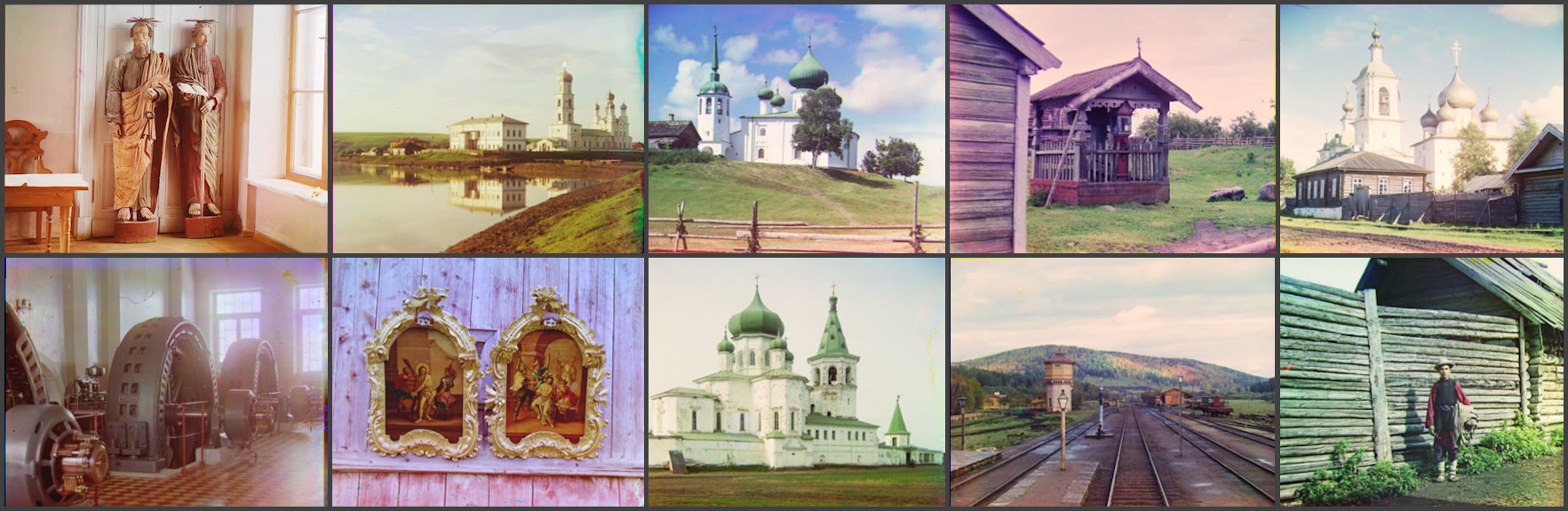
One of the projects I chose when I was studying history at university was the history of colour photography. Among the earliest surviving colour photographs were taken in the late 1900s and 1910s by Sergey Prokudin-Gorskii – a Russian photographer who was commissioned by the Tsar to take colour photographs across Russia. I immersed myself in Prokudin-Gorskii’s photographs while working on my project, and I was fascinated by this glimpse into pre-Communist Russia. I know folks say black-and-white photographs feel atmospheric, but there’s something about colour that’s just so much more real!

I bring this up because I felt echoes of Prokudin-Gorskii’s photographs in Indika. The convent, some of the wooden houses and buildings, the dirt roads… I remember seeing all of those things in those photographs. The juxtaposition between massive imposing religious buildings made of stone and adorned with gold and bright colours with small, wooden houses in which everyone else lived… it’s striking. And you can see why, in years gone by, people would be drawn to churches and cathedrals. For my money, developers Odd-Meter did a great job recreating this bygone era in video game form, and it brought back memories for me of working on that university project and exploring the forgotten world depicted in those photographs.

Collage of ten Prokudin-Gorskii colour photographs, depicting a variety of scenes in Russia in the 1910s.
A selection of Prokudin-Gorskii’s photographs of Russia, circa 1909-1915.

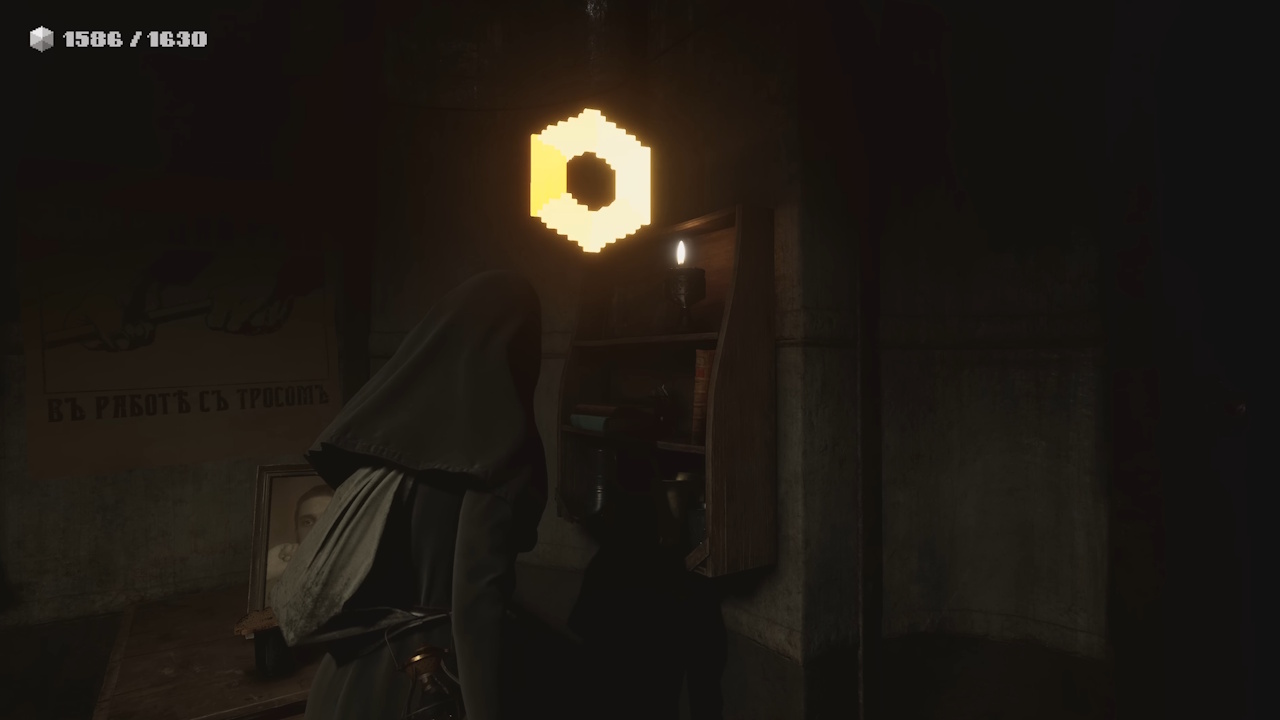
For a game that was – mostly – an intense, philosophical narrative experience set in a realistic historical setting… Indika blended in some very “video-gamey” elements! Its pixel art font – used in menus and the levelling screen – was a real throwback, as were the way points were collected in-game. Points appear in front of Indika when collecting items in the game world or lighting candles – but they appear as big, glowing, pixellated blocks. They reminded me of something out of the 8-bit era, and that was clearly a deliberate choice. It added to the surreal nature of the game, and I think it worked exceptionally well.

Then there’s the game’s soundtrack and… well, sound-scape might be a better term. There were some beautiful and haunting melodies created for Indika, but there were also some retro throwbacks that felt like something you’d have heard on an arcade machine in the ’80s! Again, it’s the surreal blending of the game’s detailed world with these modern/retro game elements that just… worked. It shouldn’t, and I think in a worse game it wouldn’t have worked. But here, the total clash between the world around Indika and these retro gaming visuals and sounds actually felt great. If the story is partially about Indika’s mental health, I kind of read the gaming elements as part of that. Part of her hallucinations – both visual and auditory.

Screenshot of Indika (2024) showing Indika recieving points.
Receiving points.

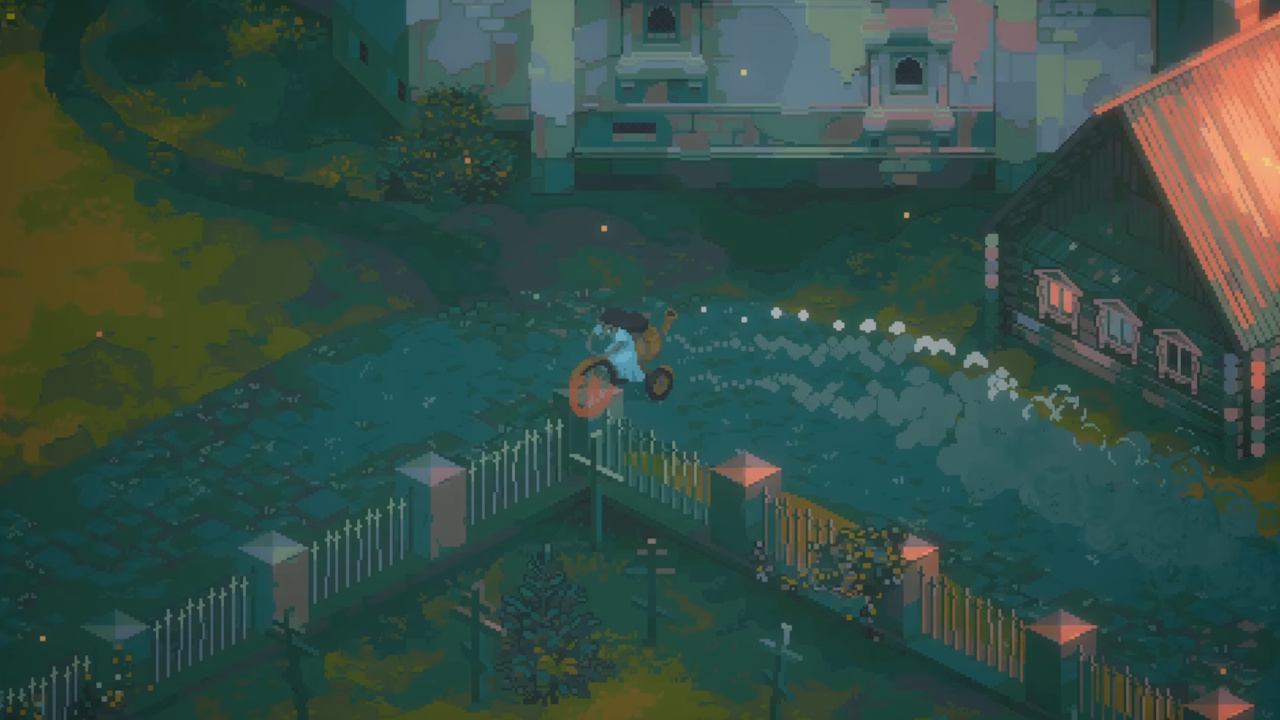
These tied in with some wonderful 2D platforming sections. Indika presented its flashback sequences in this retro pixel art style, which is something I found incredibly creative. It felt kind of like if a film or TV show depicted its flashbacks in black-and-white or sepia. It’s the game saying “these events happened in the past.” And what better way for a video game to depict the past than with older visual and gameplay styles?

These sections also provided a clear boundary between the present and the flashbacks, making them feel completely distinct. Although I described them as “2D platformers,” there was more to it than that. We got a Pac-Man-inspired section, running around a maze-like level, a multi-lap bike race, and two very different platforming sections. These all felt unique, with no single play style being repeated throughout the flashbacks. They were also some of the most technically challenging parts of the game – or perhaps my 2D gaming skills are just rusty! My arthritic hands don’t help, either, with sections requiring near-perfect timing of jumps! But I struggled through and got there in the end.

Screenshot of Indika (2024) showing the flashback bike race.
One of Indika’s 2D levels.

Depicting such intense sequences in this way was kind of an odd choice. Indika’s flashbacks tell a tale of the protagonist’s first romantic encounter – with a boy from a different culture, and it doesn’t end well. There were some light-hearted moments in these 2D levels, particularly near the beginning, but the story took a dark turn later on. And the pixel art, upbeat 8-bit music, and fun retro level design… it clashed with that. But as above, I think the clash is the point.

The 2D levels weren’t the only creative ones, though. Indika did some clever things with some of its 3D environments, too – including a series of rooms which rotated, having you walking on walls and having to move objects ways that don’t conform to the laws of physics! Some games have tried to show mental illness and fractured minds before, but there’s something so unsettling about walking into a room with absolutely no explanation, and no expectation that it’s going to be something different… only to realise it’s upside down, walking on walls… and with some kind of strange multi-limbed demon just out of sight.

Screenshot of Indika (2024) showing a 3D level.
This level felt especially creative.

Other 3D puzzles were more basic, akin to something you’d see in games like Uncharted. “Basic” is not a synonym for “bad,” and these puzzles – involving things like moving objects on a crane or using a ladder to bypass a locked door – were entertaining enough. None of them were especially difficult to solve, though I would point out that the game doesn’t hold your hand and just kind of drops you in the puzzles, leaving you to figure it out. As another hallmark of what we might call “old-school” game design – in a modern gaming landscape dominated by in-depth tutorials and the dreaded quest marker – I think I like this even more!

Then there were sections of levels that used different or interesting mechanics. Repeatedly rotating the control stick to wind a winch was interesting – and reminded me of some Nintendo 64 titles from back when the analogue stick was a brand-new invention! Then there was a moment where Indika had to balance on a narrow beam that gave me flashbacks to Shenmue II! If you remember that level… does it haunt you, too? Indika also gives you control over a couple of different vehicles, as well as some pieces of machinery, and there’s a couple of tense chase sequences, too. There’s a surprising diversity of gameplay styles on show given the game’s runtime.

Screenshot of Indika (2024) showing Indika balancing on a board.
Reminds me of Shenmue II

I’d also be remiss not to mention Indika’s incredibly creative use of the protagonist’s hallucinations. Without giving too much away, at a couple of points in the game, Indika experiences a vivid hallucination, but can keep it at bay through prayer. Alternating between the hallucination and the “real” state of the world changes the level, and opens up different pathways to get from one end to the other. It’s a really creative mechanic that wasn’t over-used, and it worked exceptionally well.

So Indika was not the kind of game I would’ve ordinarily chosen. It’s a short experience (my playthrough clocked in at just under four-and-a-half hours, including the credits, a couple of deaths, and one 2D level that took a few attempts). But it was really interesting – a philosophical video game with a message about faith, God, and the way the world works. It was wrapped up in an interesting narrative about a renegade nun with a mental illness, and touched on how mentally ill folks can be treated and shunned by society. As someone with a mental health condition myself, I appreciated the message, the depiction, and how the game handled that side of things.

Screenshot of Indika (2024) showing one of Indika's hallucinations.
One of Indika’s hallucinations.

Russian developers Odd-Meter actually left the country during work on Indika due to the political situation there. But almost the whole team is Russian – there are Russian-language voice options available if you want to get more of an immersive experience.

I would absolutely recommend Indika. I had a blast with it, and I really can’t think of another game quite like it. As I said at the beginning, this was a completely unique experience, both narratively and mechanically. Maybe you think four-plus hours is “too short,” but again I would point to the game being – in my view, at least – fairly-priced for its runtime. We aren’t talking about a £75 title, here.

Promotional screenshot of Indika (2024) showing Indika in a factory.
Indika is a game I’ll happily recommend.

So I hope this has been interesting! I thought Indika had only just been released, but it actually came out over a year ago. I guess I’m a bit late to the party, but never mind! The game was on sale recently, at least on PC if you use the Epic Games Store. It could also be one to wishlist ahead of the big Christmas sales, because it might drop in price again.

This could’ve absolutely not been my cup of tea! The idea of a mentally ill protagonist with a horrifying demon whispering in their ear, a clash of visual and musical styles, the philosophical conversations, lack of combat, and short runtime… they could all be offputting, I guess. But I really liked this game. It’s the kind of title I think we can point to when highlighting the work of smaller, independent development teams, and it’s also a fine example of video games as a narrative art form.


Indika is out now for PC, PlayStation 5, and Xbox Series S/X. Indika is the copyright of Odd-Meter and/or 11 Bit Studios. This review contains the thoughts and opinions of one person only and is not intended to cause any offence.
A Minecraft Movie: Film Review

A spoiler warning graphic.

Spoiler Warning: There are spoilers ahead for A Minecraft Movie.

In mid-2011, I was dating a partner who loved watching YouTube “Let’s Play” videos. One of their favourite games to watch was the as-yet-unreleased Minecraft, and they insisted I download it and give it a try. So while I can brag that I played Minecraft while it was still in beta… I’m sorry to say that I was unimpressed at first! I remember thinking that the game was a scruffy-looking thing all about building mud huts and digging holes in the dirt, but I played it with my partner for their sake more than mine. I eventually got the hang of it, and I remember building a few fun things like a castle with a lava moat and a pyramid made of red bricks that took forever to craft!

If you’d told me then that Minecraft would remain at the top of the charts for the next fifteen years, be worth billions of dollars, and be the subject of a big-budget Hollywood film, I’d have called you out on your bullshit – because there was no way any of that would be possible. Shows what I know, eh? A Minecraft Movie is the latest adaptation or addition to a growing franchise, one which now comprises multiple spin-off games, toys, merchandise, and even books. Minecraft has become a well-established brand in its own right; a household name that even elderly relatives and non-gamers are familiar with!

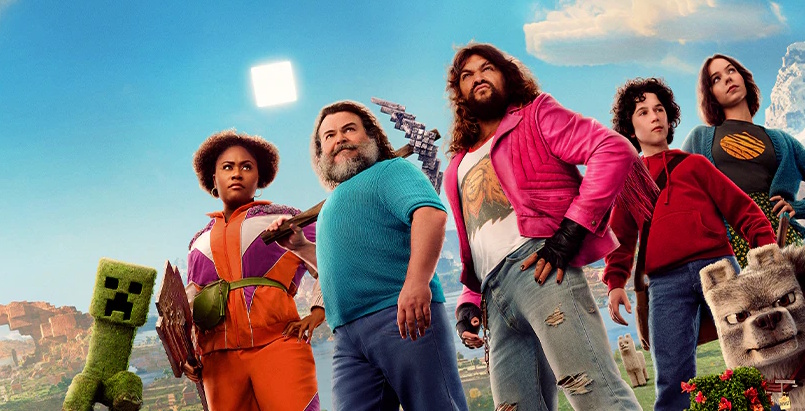
Cropped promo poster for A Minecraft Movie (2025) showing the main characters.
The main characters.

Even having seen Minecraft’s phenomenal growth and success, I still wouldn’t have thought it was a good choice to adapt for a narrative feature film. The main game is all about creativity and making your own fun – something that I felt wouldn’t translate well to a linear narrative on the big screen. But Warner Bros. teamed up with Mojang and owner Microsoft to do just that, bringing in established names like Jack Black and Jason Momoa to lead a star-studded cast. And you know what? I actually really liked A Minecraft Movie.

A Minecraft Movie was an incredibly fun watch. I sat there the whole time with a smile on my face as its fast-paced but easy-to-follow story raced past, and there were plenty of laugh-out-loud moments along the way. I felt the film was self-aware, not taking itself too seriously while staying true to what I remember of its source material. There was nothing ground-breaking here in terms of narrative or filmmaking, but that’s just fine. A Minecraft Movie’s writers, producers, actors, and director knew what kind of film they wanted to make and went all-in. The result was a surprisingly fun time. In fact, A Minecraft Movie is the best thing I’ve seen so far this year. Does that mean I have the emotional intelligence of a twelve-year-old? Let’s talk about that!

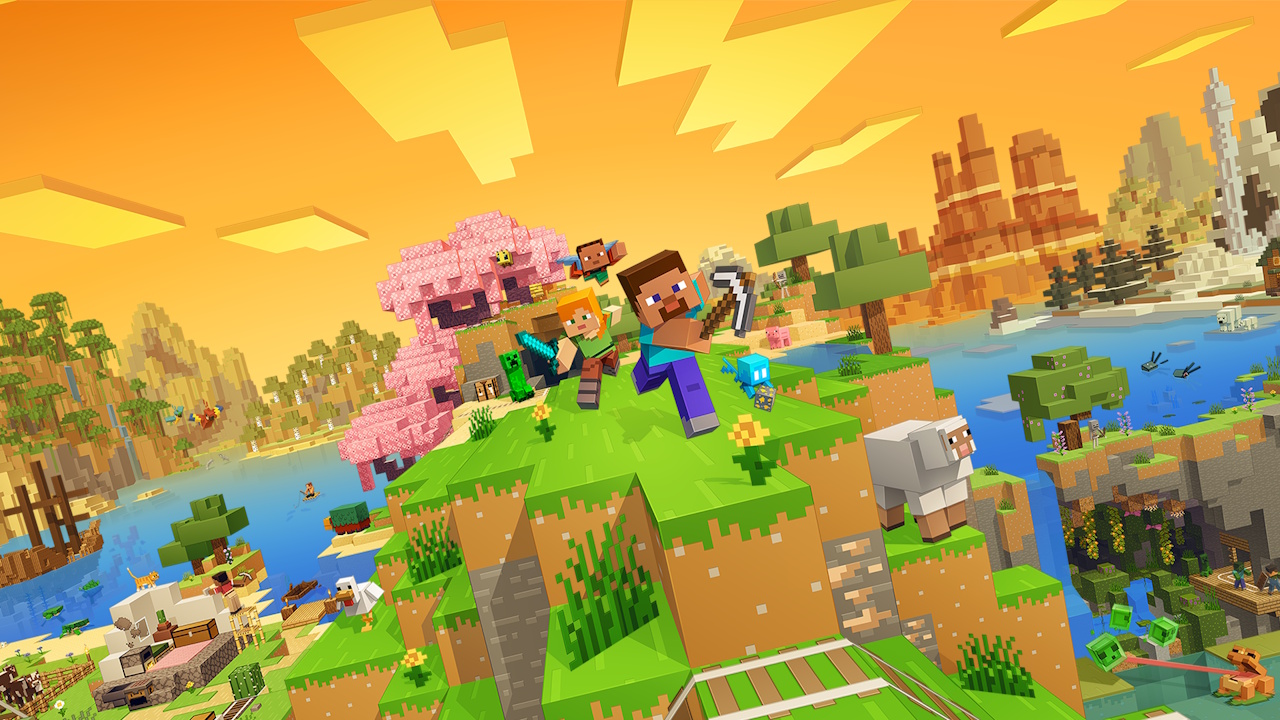
Promo art for Minecraft or the Minecraft franchise showing characters and animals at sunset.
Minecraft has gotten its own feature film adaptation.

I chose those words carefully, and I don’t mean it as any kind of insult. A Minecraft Movie is a kids’ film first and foremost, but I’ve always said that the best films made for children have something to offer to adults, too – and A Minecraft Movie is firmly in that camp. While watching it, I felt echoes of being a kid all over again, as if it was a Saturday afternoon and this was the film my friends and I had chosen to watch at our local cinema. I got swept along in the simple good-and-evil story, the emphasis on creativity, and a typical yet incredibly fun and high-energy Jack Black performance… and I genuinely had a whale of a time.

The story that the team created was a good fit. It took elements from Minecraft’s surprisingly deep lore and used them to tell a pretty basic “stop the evil villain from conquering the world” story, one which found time to include most of its main characters and even had a sub-plot about a man missing his dog! I was concerned going into A Minecraft Movie that the story would be too basic; too much of a cookie-cutter storyline. But there was enough of a setup, enough characterisation, and enough of a journey for Henry and Steve in particular to make it absolutely stick the landing.

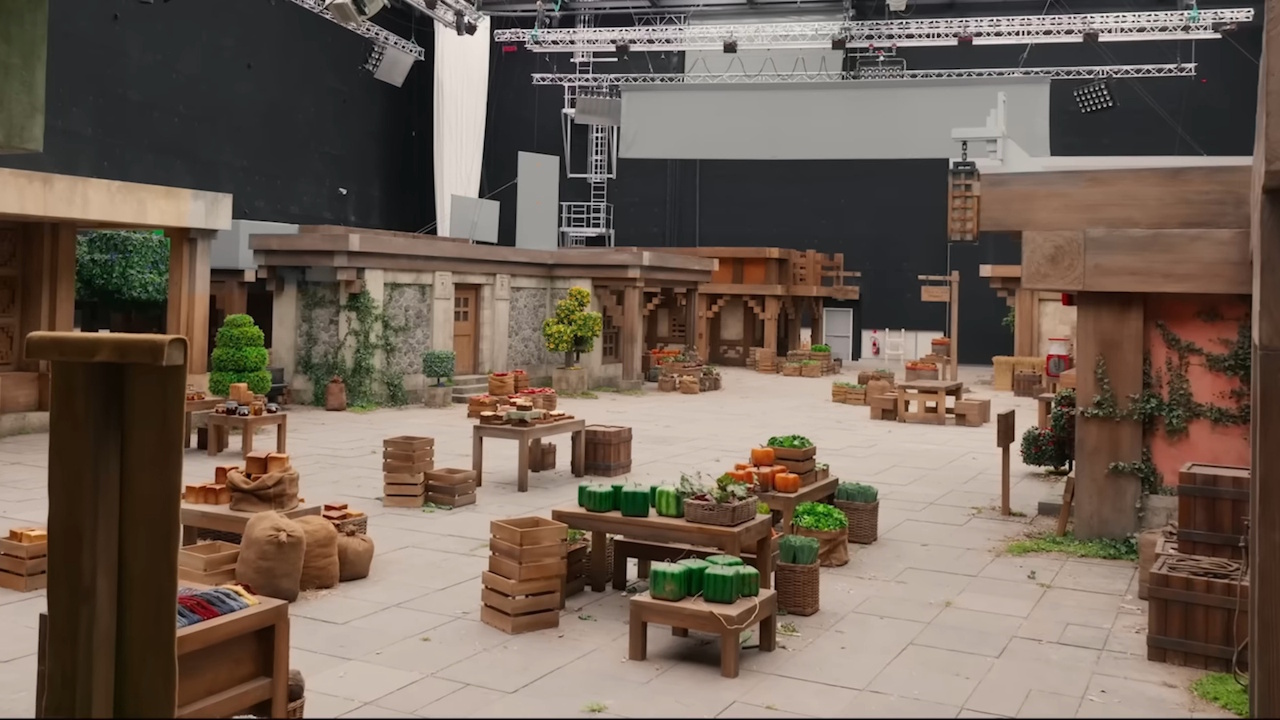
Behind-the-scenes photo from the set of A Minecraft Movie showing a marketplace.
A behind-the-scenes look at one of the sets constructed for the village.
Photo Credit: Minecraft Wiki

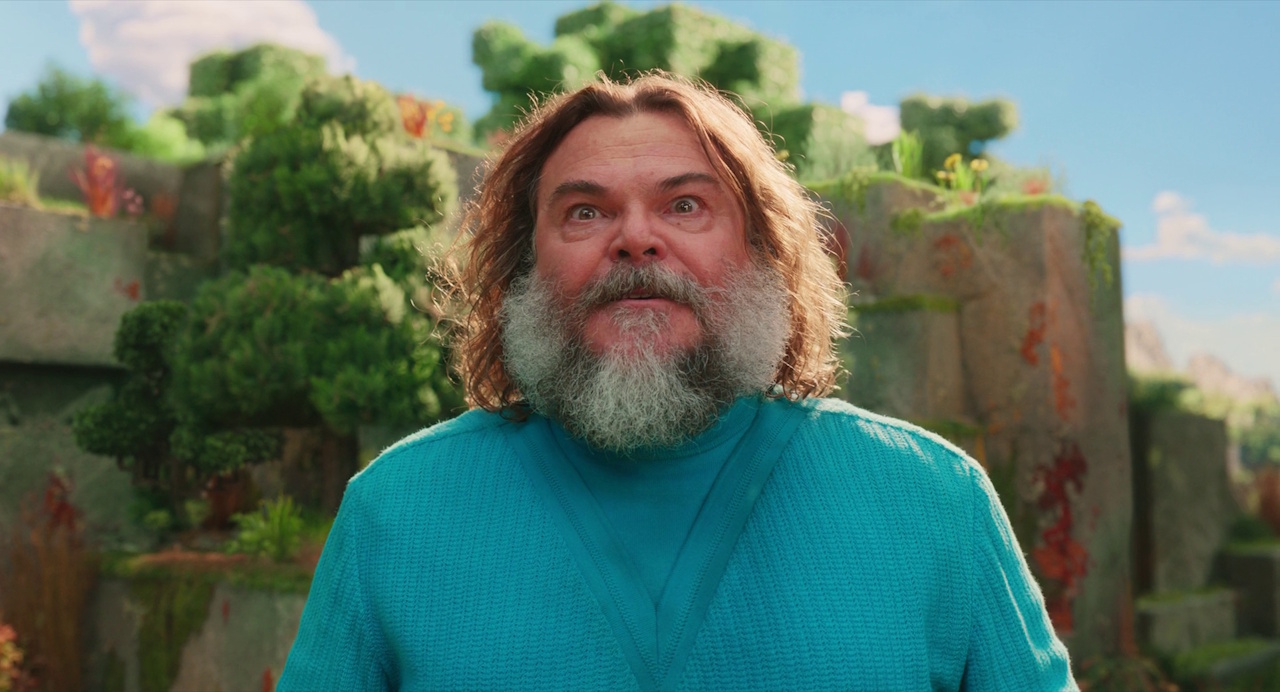
Jack Black is one of those performers who’s instantly recognisable in basically every major role he’s ever played. He brings a ton of energy to his performances – and I think that worked incredibly well here, even though I admit I was sceptical at first! In Minecraft (the main game, at least; I’m less familiar with the spin-offs), Steve is a blank slate for the player to inhabit. A film needs characters with understandable motivations and recognisable personality traits, and there were more than enough of both in this depiction of Steve. In one sense, Steve represents the ultimate escapist fantasy – he quit his mundane and boring life to chase his dreams, and found a whole new world in the process.

The high-octane energy that Jack Black brought to the role was pitch-perfect for the kind of film A Minecraft Movie wanted to be and for the kind of young audience it sought out. It was also a ton of fun to watch, as Jack Black’s performances usually are! Steve’s desire to reunite with his pet dog Dennis (a name I appreciated for obvious reasons!) kept him grounded, and it was a perfectly understandable reason for him to team up with the rest of the main characters.

Still frame from A Minecraft Movie showing Steve in the Overworld.
Steve.

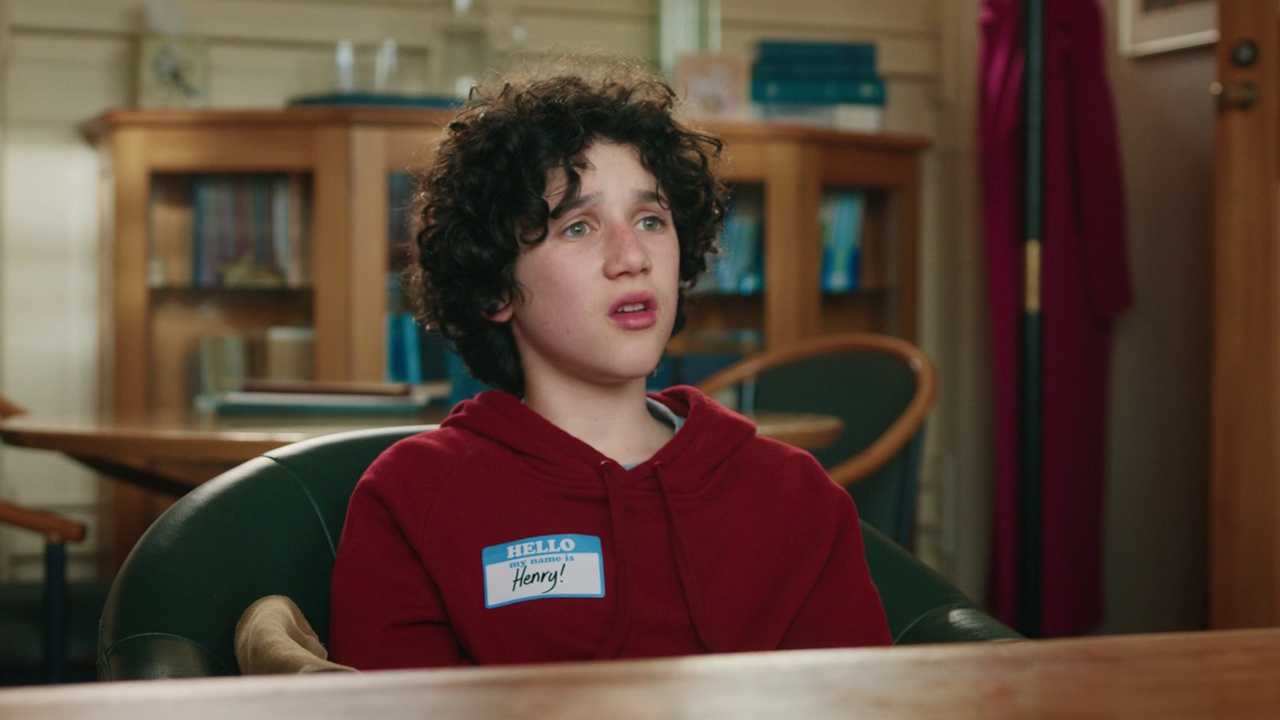
Henry felt like the film’s point-of-view character, at least at the beginning, and I think he worked well in that role. He was the “player character” insofar as he was figuring out the rules of the world before the gang encountered Steve, and I think anyone who’s played Minecraft, especially in the early days, can relate to figuring out how to knock down trees and craft basic structures! As an outcast, someone with few friends, and someone who struggled to fit in, Henry was also someone that I think a lot of the film’s younger audience will be able to relate to – as well as older folks like myself who remember being in a similar position once upon a time.

Continuing the idea of A Minecraft Movie as an escapist fantasy, Henry is kind of in the same category as Steve – looking to get away from a troubled life plagued by bullies in a new school. He’s introduced to a world where his creativity and imagination – two things kids have in droves – are incredibly important, and where he can put his unique skills and talents to use.

Still frame from A Minecraft Movie showing Henry in the principal's office.
Henry escaped to a fantasy world.

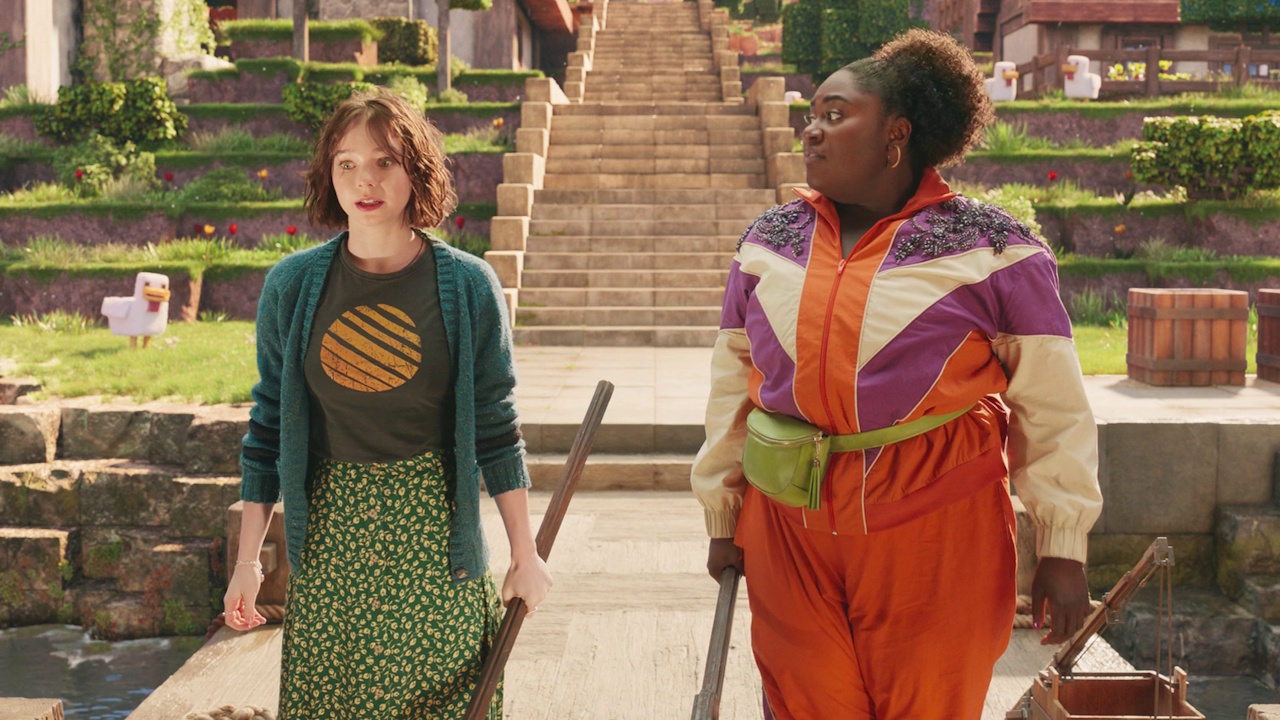
Henry’s sister, Natalie, was less keen on hopping over to a new world – but she rose to the occasion! Natalie had struggled with taking care of her brother, but her adventures in the world of Minecraft helped her discover her inner strength and build a stronger bond with him. Though she was in focus less of the time, she still got a satisfying arc.

Teaming up with Natalie for parts of the film was Dawn, and though I wouldn’t say she got as much of an “arc” insofar as she began and ended the story in a similar place, her love for animals shone through – and became important as the story reached its climax. She was a fun character, and made a great foil for Garrett and teammate to Natalie throughout the adventure.

Still frame from A Minecraft Movie showing Natalie and Dawn.
Natalie and Dawn.

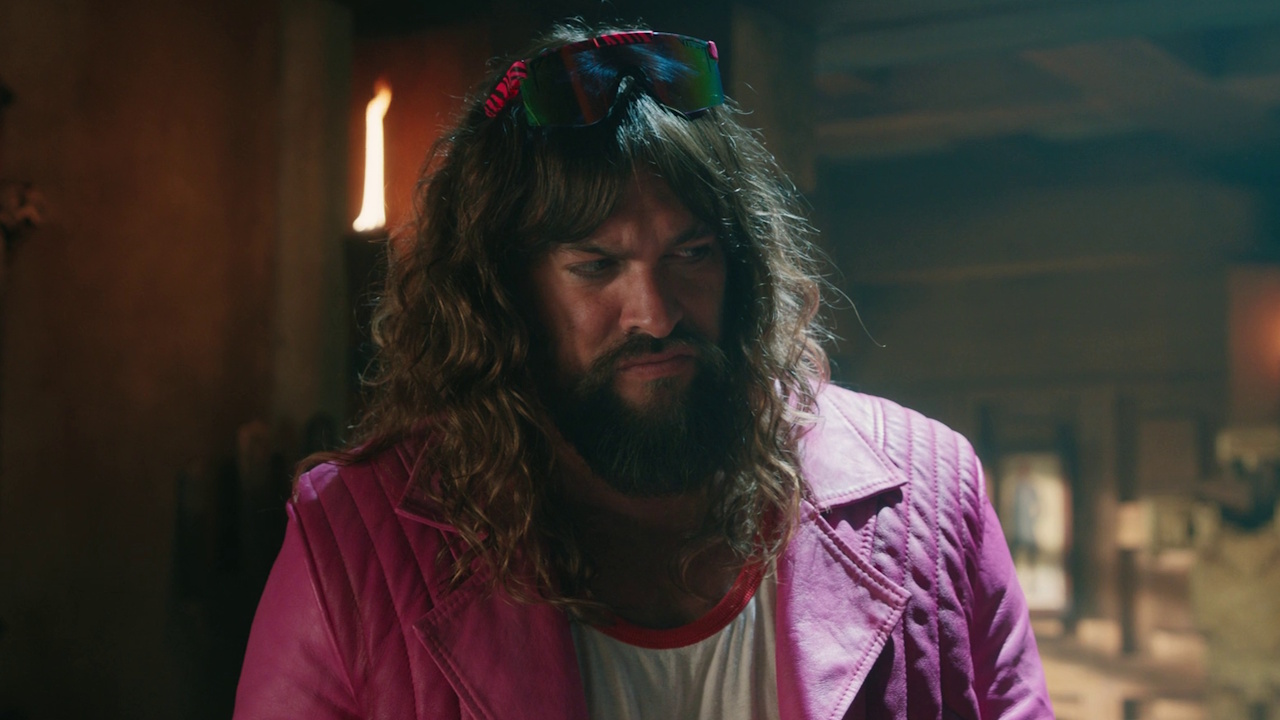
Garrett was an interesting character. Maybe this is just me, but I felt echoes of a real-life gamer personality called Billy Mitchell in the conceptualisation of Garrett. Mitchell, if you’re unaware, was world champion of the original Donkey Kong arcade game and achieved the highest possible score on Pac-Man, and was the subject of the 2007 documentary The King of Kong.

If Henry and Steve represent the escapist fantasy, Garrett was actually the character who felt closest to reality. His financial struggles were relatable, and the facade he put up while dealing with the potential collapse of his business – and his own loneliness and self-esteem issues – is something that hit close to home. In terms of his personality, Garrett was obviously a bit of a clown and someone we aren’t meant to really root for. Someone who presents as arrogant, cocky, and just rude isn’t going to be the easiest character to support. But A Minecraft Movie was surprisingly delicate in its handling of this character, and what we glimpsed beneath the surface was a deeply lonely, sad, and self-pitying man – one who (eventually) stepped up to help his newfound friends.

Still frame from A Minecraft Movie showing Garrett.
Garrett had an interesting arc across the film.

A Minecraft Movie felt, in places, like a kids’ film from the ’80s or early ’90s, and perhaps that’s part of why I liked it so much. Seeing Henry struggle as the new kid at school with bullies before running away to a fantasy world… it’s giving me The NeverEnding Story vibes, which is one of my favourite films from when I was a kid! The two are different in tone, style, pacing, effects, and so on… but there are also some similarities in terms of characterisation and story that I think were important for me personally in relating to A Minecraft Movie.

Visual effects in A Minecraft Movie took a bit of getting used to, to be honest. The game’s pixellated art style was completely changed for the film, with semi-realistic textures applied over Minecraft’s trademark cubes and blocks. When it came to things like trees and stones, I was fine with it. When it came to faces and animals… that’s where it took me a minute to adjust! I can see this being a possible point of contention; some game fans might not like the realistic direction, and some folks who are less familiar with the games might struggle with the blockiness of characters and animals in particular. But once I got used to the way the film looked, I didn’t have a problem with it. Some of the landscapes and vistas were genuinely impressive, and the way the film blended CGI with real actors and props was seamless and impressive.

Behind-the-scenes photo from the set of A Minecraft Movie showing several of the villagers in their costumes.
Behind-the-scenes with some of the villagers!
Photo Credit: Minecraft Wiki

The soundtrack was fantastic, too. An up-tempo score and high-energy pop and heavy metal songs were pitch-perfect for the film and its fast pace. Battling the bad guys – particularly toward the end of the film – was elevated by the use of music, and the entire soundtrack just made the film so much better. I’d also be remiss not to mention Steve’s Lava Chicken – the song reached number 9 on the UK music charts (and also charted in the United States and elsewhere) becoming the shortest-ever song to crack the top 20 at a mere 34 seconds long!

So that was A Minecraft Movie. It was fun. Simple, child-friendly fun.

I had a way better time with A Minecraft Movie than I could’ve anticipated, to be honest with you. This picture could’ve gone either way – it might’ve been utterly awful; the kind of kids’ film that might make the little ones smile but does absolutely nothing for me. Or it could’ve been “so bad it’s good;” the kind of film that’s worth watching ironically because of how poor the quality is across the board. But instead, A Minecraft Movie was genuinely enjoyable – a fast-paced, modern kids’ film that feels like a throwback to the ’80s and ’90s in the best possible way.

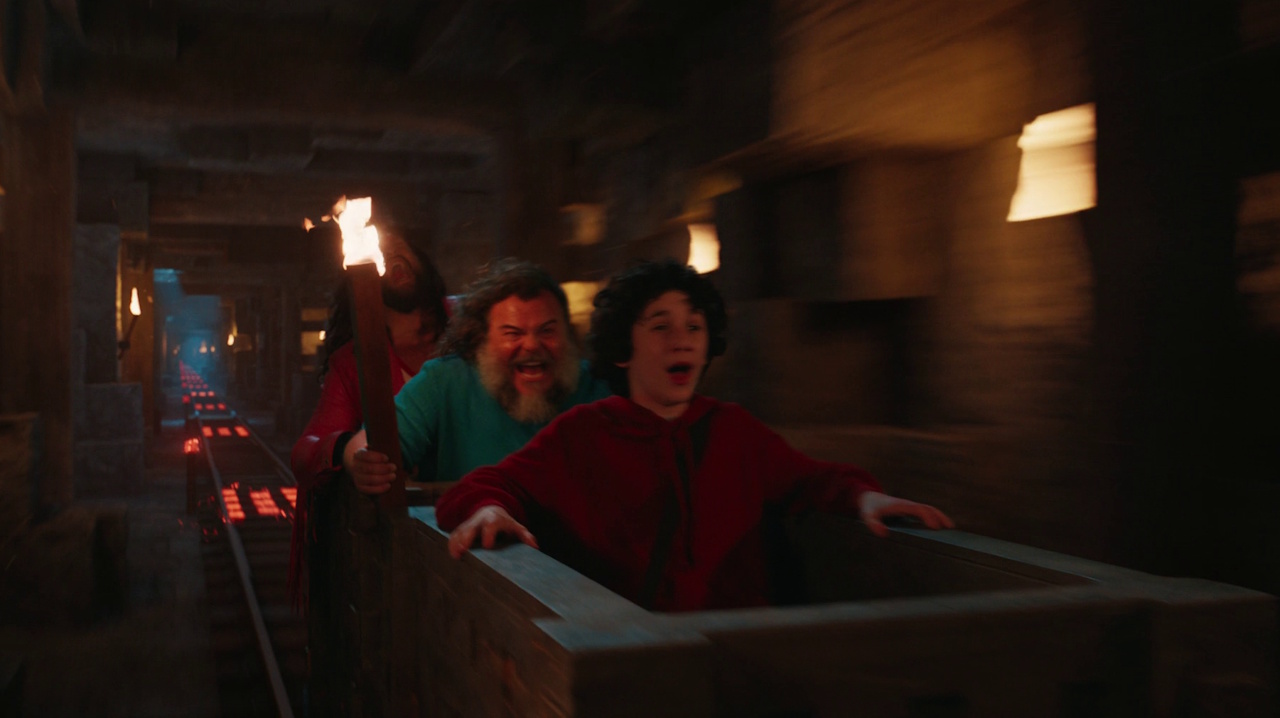
Still frame from A Minecraft Movie showing Henry, Steve, and Garrett in a runaway mine cart.
A Minecraft Movie was a fun ride.

A Minecraft Movie is an easy recommendation now that it’s available to watch at home. Whether you have little ones or not, and whether you’re familiar with the video game or not, I think it’s a ton of fun and easy to get stuck into. Having some basic knowledge of Minecraft might help elevate some plot points here or there, but the film is a soft landing for folks who don’t have that background, and I don’t think you’re going to miss much if you’ve never played the game or any of its spin-offs.

I doubt I’ll say that A Minecraft Movie is my favourite film of 2025. There’s still more than half of the year to go and some big blockbusters on the way. But in terms of pure entertainment and laugh-out-loud fun? I had a blast switching off and going on a whirlwind adventure in this strange blocky world! Definitely check out A Minecraft Movie if you haven’t already.


A Minecraft Movie is available to buy or rent now via Amazon Prime, Google Play, and other video-on-demand platforms. A Minecraft Movie will be released on DVD and Blu-ray in June 2025. A Minecraft Movie is the copyright of Warner Bros., Legendary Pictures, Mojang Studios, Vertigo Entertainment, and/or Microsoft. This review contains the thoughts and opinions of one person only and is not intended to cause any offence.
Let’s Watch Conclave (For Obvious Reasons…)

A spoiler warning graphic.

Spoiler Warning: There are spoilers ahead for Conclave.

The Catholic Church elicits a huge amount of curiosity from the faithful and non-faithful alike. Just look at the rumours of what might be contained in the secretive Vatican Archives – everything from Jesus’ hidden love child to proof of UFOs, depending on who you ask! Any organisation that has sustained itself for close to two millennia would, naturally, evoke such feelings, and the recent death of Pope Francis has shone a spotlight on the church and its peculiar processes. It’s with this mindset that we come to last year’s film Conclave.

According to CNN, streams of Conclave have skyrocketed by over 3000% since the Pope’s death – with viewers eager to catch a glimpse of what goes on inside the walls of the Sistene Chapel. I would caution anyone that Conclave is surely an exaggerated and dramatised take on these events; the real meeting to choose Francis’ successor is highly unlikely to involve conspiracies to buy votes, breaking and entering into the Pope’s private chambers, or a nun who conceived a secret child! But the church’s secrecy – and its difficult history – quite frankly lend themselves to this kind of dramatic presentation. In some respects, Conclave is arguably less bonkers with some of its storylines than the real history of the papacy!

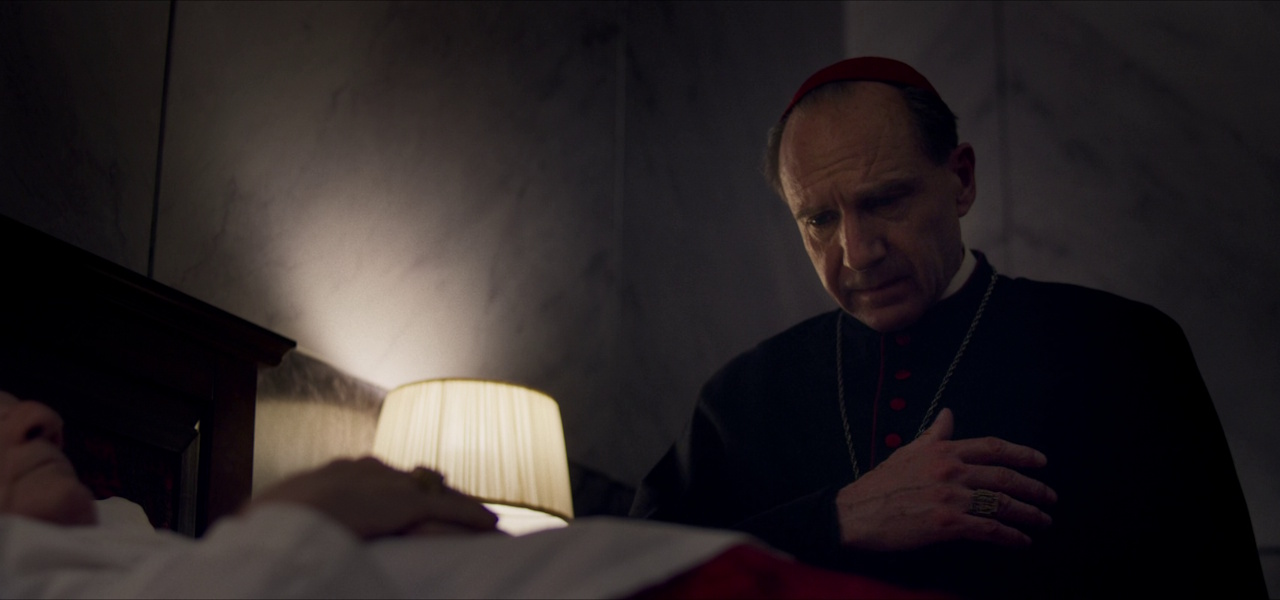
Still frame from Conclave (2024) showing Cardinal Lawrence praying over the body of the dead pope.
Cardinal Lawrence with the deceased pope.

Conclave had been on my radar since it premiered last year, and I daresay I’d have gotten around to checking it out eventually. But like thousands of other viewers, it was real-world events which prompted me to fire up the film at this particular moment. I’m not a Catholic – nor even a Christian at all – but the timely nature of the film made it seem like an interesting thing to watch in April 2025. I was dimly aware that Conclave was based on a novel by British author Robert Harris – who also wrote Munich, which was the basis for another film I reviewed a few years ago – but that was the extent of my knowledge of the film before I sat down to watch it.

I particularly enjoyed Conclave’s cinematography. I’d like to highlight the way scenes and characters were framed, directing our focus to specific cardinals and other characters at key moments. The use of focus was also particularly clever; certain documents or screens were deliberately left out of focus to heighten the tension. The camera work could feel claustrophobic at points, successfully conveying the feeling of being isolated from the world outside the walls of the sequestered meeting. At others, wide, expansive shots gave a sense that characters were trying to remain secretive, keeping important conversations private.

Behind-the-scenes photo from the set of Conclave (2024) showing the director, Edward Berger, and star Ralph Fiennes.
Director Edward Berger with Ralph Fiennes on the set of Conclave.

The film’s score was also excellent. Several big, dramatic musical stings punctuated key moments in the story, underlining how characters were feeling or what had just happened to them. The use of silence, too, came into play, and had a similarly dramatic effect. As the conclave descended into bitter in-fighting, the score did an excellent job of conveying how serious things were and how characters were reacting.

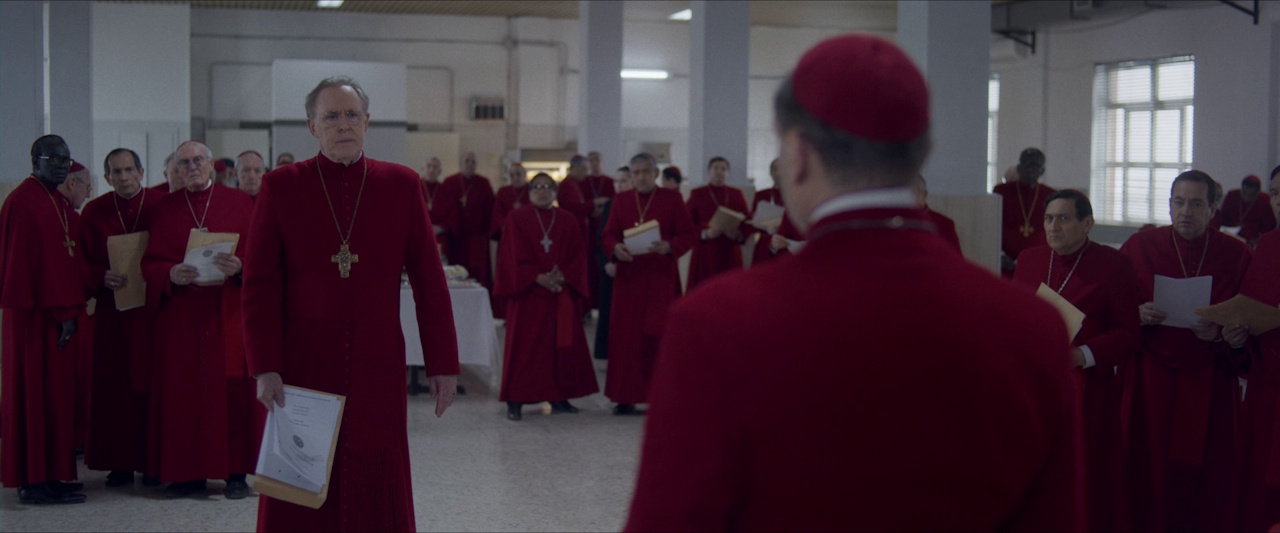
Let’s talk about that in-fighting a bit more, because it’s basically the main focus of Conclave’s story for much of the film. Officially, cardinals are supposed to elect the best and most qualified person to the papacy – with the guidance of God and prayer, naturally. But in the real world, I daresay it’s never quite worked out that way! Politicking in the Vatican – and amongst the cardinals specifically – is not as overt as it is in most legislatures around the world, but it’s present nonetheless, with all the same factionalism and pettiness as you’d see anywhere else. In some ways, Conclave made the college of cardinals feel like an office or a group project – complete with spitefulness, attempts to sabotage competitors, backhanded compliments, and more. Anyone who’s ever sat on a committee, taken part in a meeting, or been forced to work on a project as part of a group would recognise some of these things in Conclave’s depiction of the cardinals! And I would imagine that side of the film isn’t particularly inaccurate.

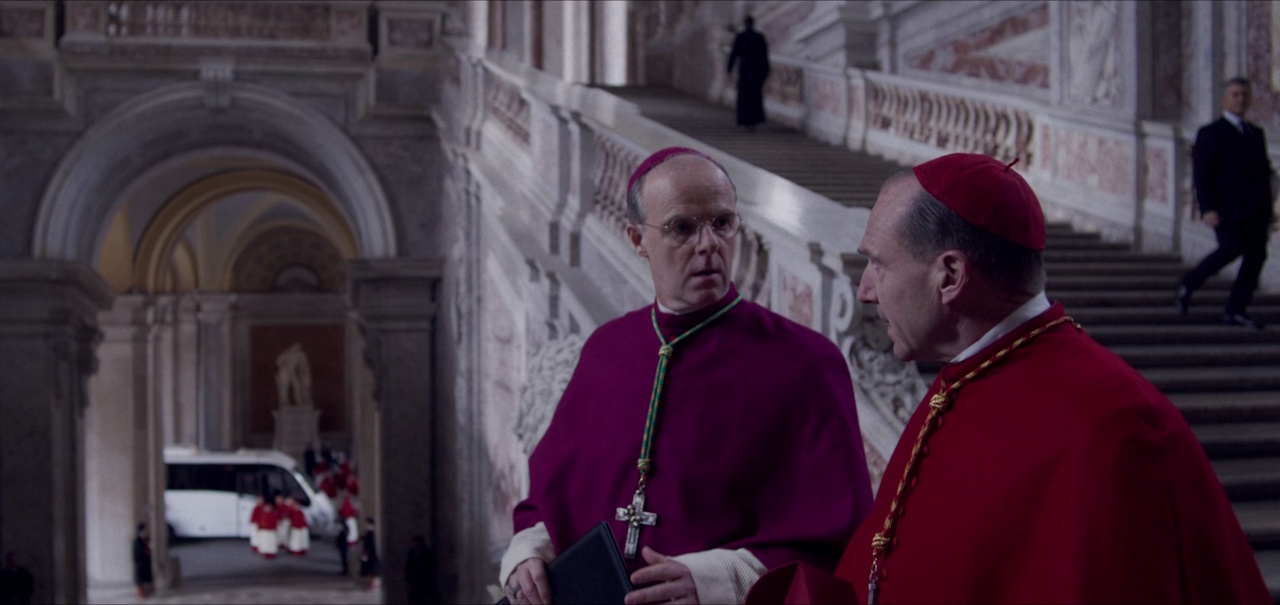
Still frame from Conclave (2024) showing Cardinal Tremblay being confronted by the other cardinals.
The cardinals bickered and fought.

Conclave’s designers did a great job recreating the look and feel of the Vatican. The Sistene Chapel, where a good portion of the action takes place, is a very famous location and was obviously the most important to get right, but I felt all of the locations and sets were appropriate. The cardinals’ private rooms felt almost like a prison, adding to that sense of isolation that we talked about earlier, and that was a creative choice which worked well. There was also a kind of gentle decay to some of the buildings, reflecting both Rome’s ancient origins and, perhaps, the church’s age and vulnerabilities. Having spent time in Italy myself, the sets and buildings all felt like they could be real – even those which weren’t directly copied from real life.

One of the things Vatican-watchers often say is that a papal conclave is unpredictable. Pope Francis’ election in 2013 is just one example of an “unexpected” candidate winning the election – though I doubt his election was as dramatic as the one depicted in the film! But it just goes to show how a papal conclave can take unexpected turns; in the film’s case, a terrorist attack takes place partway through the election, unnerving the cardinals and setting the stage for an unexpected character to take centre-stage.

Still frame from Conclave (2024) showing Cardinal Benitez after his election to the papacy.
The new Pope Innocent.

But was Cardinal Bentiez genuinely an unexpected candidate? His surprise arrival toward the beginning of the film – cloaked in typical Vatican secrecy – seemed to be setting him up to play an important role, even while the film appeared to linger on other characters. In that sense, I wouldn’t say I was stunned by this “big shocking twist,” but it was interesting nevertheless. With the film being told largely from the perspective of Cardianal Lawrence, I would’ve liked to have seen a bit more of his reaction to Benitez’s election – after a slow buildup, he seemed to be readying himself to accept that he was best-placed to take the reins of the church, only to lose out in dramatic fashion thanks to the bombing. Having spent so much time with him prior to that moment, and with the big revelation about Cardinal Benitez, the film then ended quite abruptly.

Perhaps Robert Harris’ novel, on which Conclave was based, spends more time with Cardinal Lawrence – not just at the end, but really throughout the story. There were places in the film where Lawrence was in focus, but with no dialogue to go on, it was left to Ralph Fiennes’ facial expressions to convey what he may have been thinking. There may be a degree of interpretation as a result.

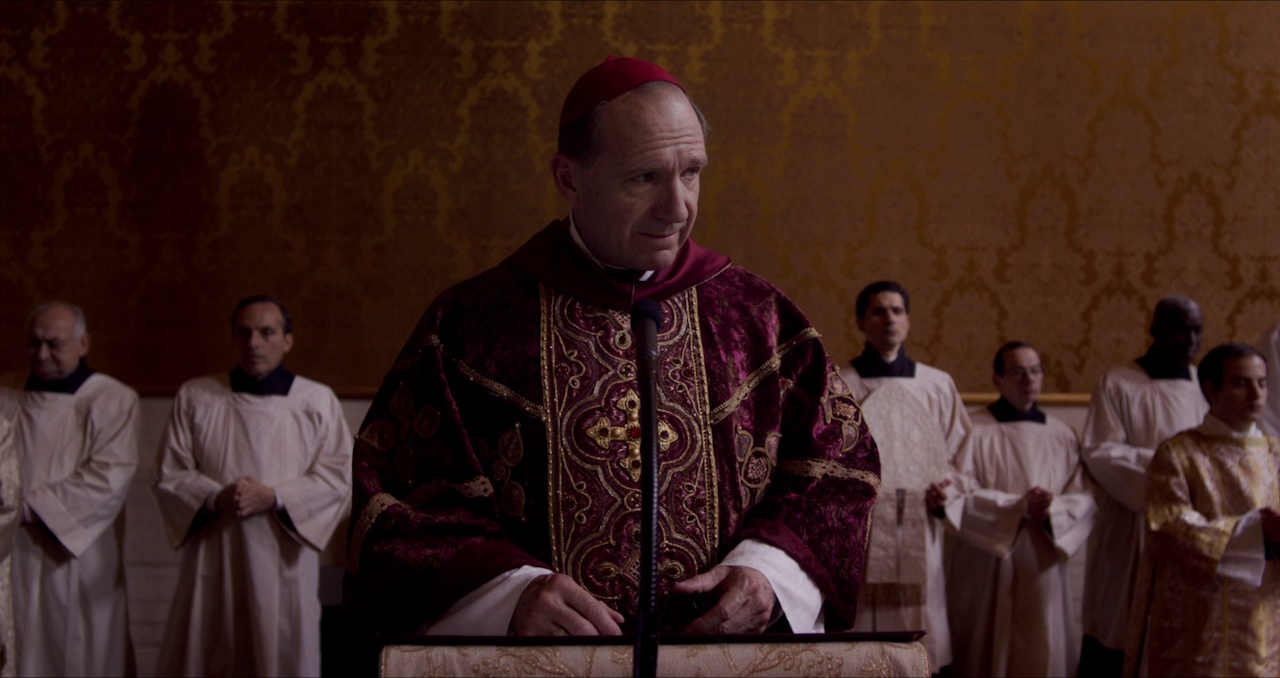
Still frame from Conclave (2024) showing Cardinal Lawrence delivering his homily.
Cardinal Lawrence was the film’s point-of-view character.

Conclave was told primarily from Lawrence’s perspective, though it wasn’t always immediately clear why certain cardinals were favoured or opposed. Cardinal Tremblay, for instance, was depicted as a rival to Lawrence and someone whose papacy he wouldn’t favour, yet they didn’t seem to be particularly ideologically opposed. Before the revelations about Tremblay were shown, all we as the audience had to go on was suspicion – Lawrence’s suspicion. Perhaps that says something about the way cardinals operate during a conclave, and how rumour or even “bad vibes” can influence the way a cardinal may be inclined to vote.

The same is true of the revelations about Cardinal Adeyemi; only Lawrence discovered the full truth, and refused to reveal it to the rest of the conclave. The other cardinals, fearful of scandal, abandoned his candidacy amidst rumour and speculation that wasn’t even seen on screen. It makes you wonder, perhaps, how easily one might derail a cardinal’s potential path to the papacy!

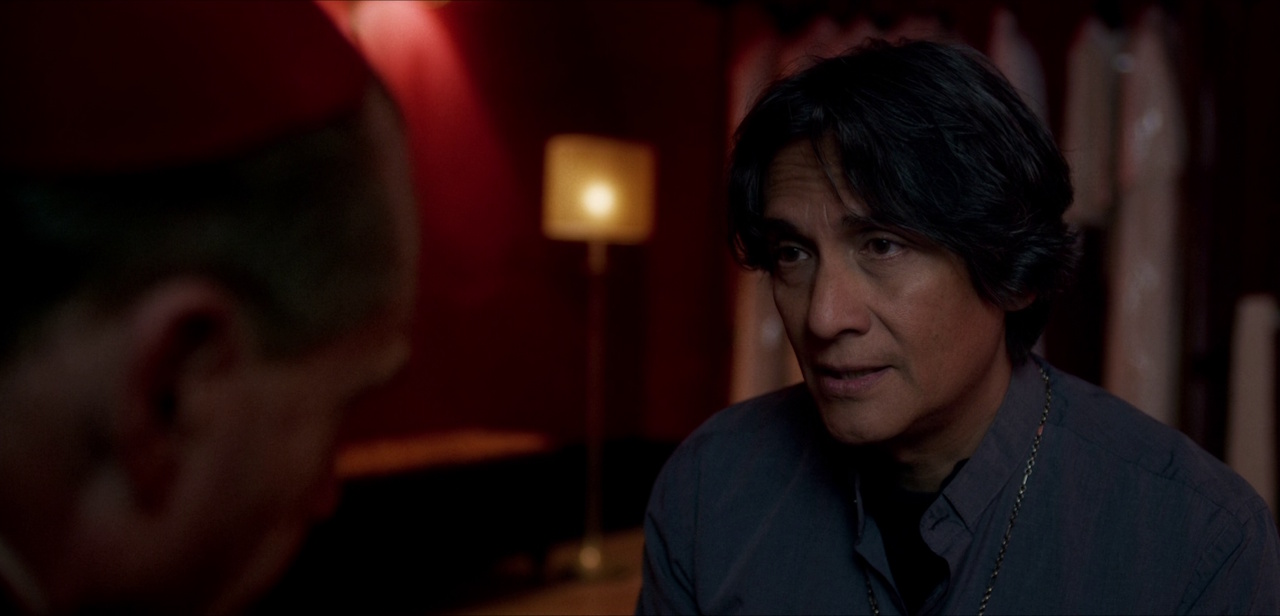
Still frame from Conclave (2024) showing Cardinal Lawrence and Monsignor O'Malley in conversation.
Scheming and digging into cardinals’ backgrounds was a big part of Conclave.

Given current events, Conclave was an interesting watch. And it really is impossible for me, at the current moment, to separate the film from what’s happening in the real world. There have only been two papal conclaves in my lifetime – in 2005 and 2013 – and given the secrecy and relative rarity of these events, it’s natural to be curious and to want to peek behind the curtain! Conclave felt like a somewhat realistic depiction, even though some elements of its story strayed into exaggeration and even fantasy.

So that was Conclave. It was an interesting watch, particularly at the current moment, and I’d happily recommend the film to anyone with even a passing interest in the church and/or what’s currently going on. The real-world conclave is scheduled to start in just over a week (at time of writing) and who knows? It could be just as dramatic and interesting as the one depicted in the film. We’ll never know!


Conclave is available to stream now on-demand on platforms like Amazon Video. The film is also available on DVD and Blu-ray. Conclave is the copyright of FilmNation, Indian Paintbrush, Focus Features, and/or Black Bear UK. This review contains the thoughts and opinions of one person only and is not intended to cause any offence.
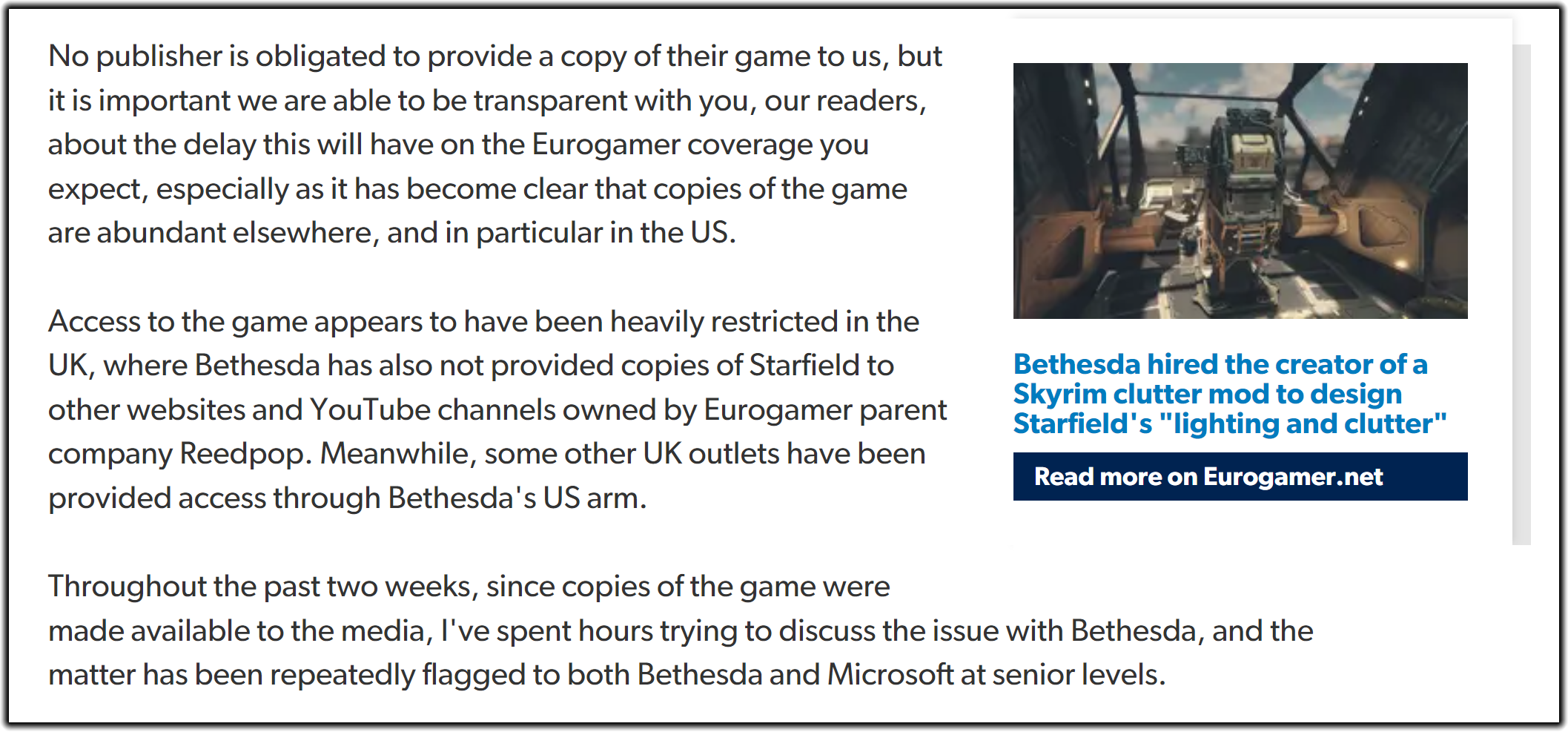
No one’s “entitled” to pre-release review access. Right?

It probably won’t shock you to learn that I wasn’t given a pre-release review copy of Starfield by Bethesda. Unlike some of the bigger Star Trek fan sites, I’ve also never been given pre-broadcast access to any episode or film by Paramount Global. I wonder why? But just because I like to style myself as “an independent media critic,” I have no entitlement to that access. Would it be nice? Sure! I’d appreciate it, I’d do my best to make good use of it, and I’d try to create a review or preview that my audience would find informative and useful. But I have no expectation of access – I’m one person running a tiny website on a small corner of the internet (and I don’t always review things in a timely manner), so who am I to demand access to any game, film, or television show?

Some outlets, however, seem to have an air of entitlement to pre-release access. When that presumed access is not granted, and review copies aren’t sent out, they proceed to get upset and write rather passive-aggressive articles and social media posts.

Some reviewers whine and sulk when they don’t get what they feel entitled to.

If you’ve been following the latest updates about Starfield, you’ll know which publication I’m referring to – but this article isn’t really about one game or one publication. The discussion around Eurogamer, Bethesda, and Starfield is just an opportunity to look at this interesting topic – and the answer isn’t as black-or-white as some folks seem to think.

To get this out of the way up-front: I used to know one of the editors at Eurogamer. We haven’t spoken in over a decade now, but we were on friendly terms once upon a time. It shouldn’t be relevant to the discussion, but because Eurogamer’s rather sour and sulky article prompted this piece, I thought it was important to let you know that I once had that friendship.

An excerpt from Eurogamer’s piece that prompted this article.

Onwards, then, to the minefield that is early access for critics and reviewers!

On the one hand, it’s entirely within a company’s purview to decide which publications are granted early access. Early access is not a right, it’s a privilege that a company chooses to bestow – and they can choose whether to share their content with massive publications like the New York Times, small-time YouTube channels with a few hundred followers, or anyone in between. They’re even welcome to send a review copy to Trekking with Dennis!

If a company doesn’t feel a publication’s review is worth their time, that’s up to them. They don’t have to share their content, whether we’re talking about films, games or television shows. And some publications, having gotten used to privileged access that the rest of us plebs don’t get, seem to have developed an attitude of entitlement. What makes a Eurogamer review “better” or more useful than a review published elsewhere? Absolutely fucking nothing. As the internet and social media have democratised media criticism, the importance of big publications – be they legacy media like newspapers or websites like Eurogamer that were once considered upstarts – is decreasing by the hour.

Remember when websites like Eurogamer were the young upstarts, challenging the “media establishment?”

But that’s obviously not all there is to say.

While a company isn’t obligated, either legally or ethically speaking, to provide pre-release access to critics, journalists, and publications… why wouldn’t they? If a company has confidence in its product, surely they’d want to ensure it received as many positive reviews as possible across as broad an array of publications as possible; doing so should mean that as many consumers as possible would see the positive buzz. Trying to conceal any product from reviewers is a bad look, and doing so makes it feel like the company lacks confidence in their game, film, or series.

Trying to prevent critics and reviewers from accessing a piece of media prior to release has been a fairly common scheme across the world of entertainment, and it’s usually meant only one thing: the work in question is not going to be held in high esteem. If a company feels that its product is going to receive negative reviews, ensuring as few people as possible see that feedback before making a purchase decision has a kind of unethical logic to it. In cases such as these, denying any kind of pre-release access is a way for companies to shield their product from criticism long enough to inflate sales numbers or viewing figures. It’s shady, it’s immoral, and it shouldn’t happen… but it happens all the time.

Corporations are going to look after their interests… by whatever means necessary.

To be honest, I don’t mind one bit when I see a smug publication or critic knocked down a rung or two by being denied pre-release access. As I said, there are some publications, websites, and social media “influencers” who have become arrogant, assuming that their relatively small audience means they’re entitled to receive things early, and that their review should be the gold standard. In a bloody-minded sort of way, it’s satisfying to see someone’s ego punctured as they realise they’re not entitled to any kind of special treatment.

But that’s a raw emotional response to the situation – one that I guess all of us should try to rise above! I haven’t, as you can tell, but maybe you can do better than me in that regard! Trying to reframe things and think less emotionally and more rationally, though, leads us back to the same conclusion: trying to shield a product from criticism, regardless of who the critic may be and whether or not they “deserve” to be taken down a peg, feels shady and even unethical. When a company knowingly and wilfully makes that decision, they’re making the assumption that the potential bad PR from shunning a publication or critic is worth the hit – presumably because they’ve pre-judged that their product will be torn to shreds in any review.

Denying pre-release review access can be a way for a corporation/publisher to shield a broken game from criticism until it’s too late.
Pictured: Star Wars Jedi: Survivor (2023)

This is one of those cases where it feels like corporations are skirting the spirit of the rules and getting away with it on a technicality. Yes, technically no games publisher, broadcaster, or film studio is obligated to submit their work to critics and reviewers prior to release. There’s no legal requirement and no way to force them to comply. And in an age of democratised criticism online and on social media, there’s an unanswerable question about where the “cut-off point” should be. Who counts as a “critic” when any old idiot can set up a website or a social media account devoted to talking about media? If companies were obligated to send out pre-release copies to everyone in that category… well, there’d be no one left!

But at the same time, deliberately denying access to certain critics and reviewers feels wrong, and hand-picking who is “allowed” to review something and who isn’t… that raises some pretty big ethical questions. Any company that has confidence in its product should be willing to subject it to review, and to ensure that reviews are available prior to release. The only way to make that happen is to provide critics with access and give them enough time to work.

Reviewers and critics need time to work.

In the case of video games, and especially large open-world video games, this realistically means that critics and reviewers need access several weeks ahead of time. A critic can watch a film in a couple of hours and make enough notes from two or three viewings to piece something together – but a video game can take a hundred hours or more just to play through once. If critics are to have any chance of publishing a review before launch day, that early access is essential.
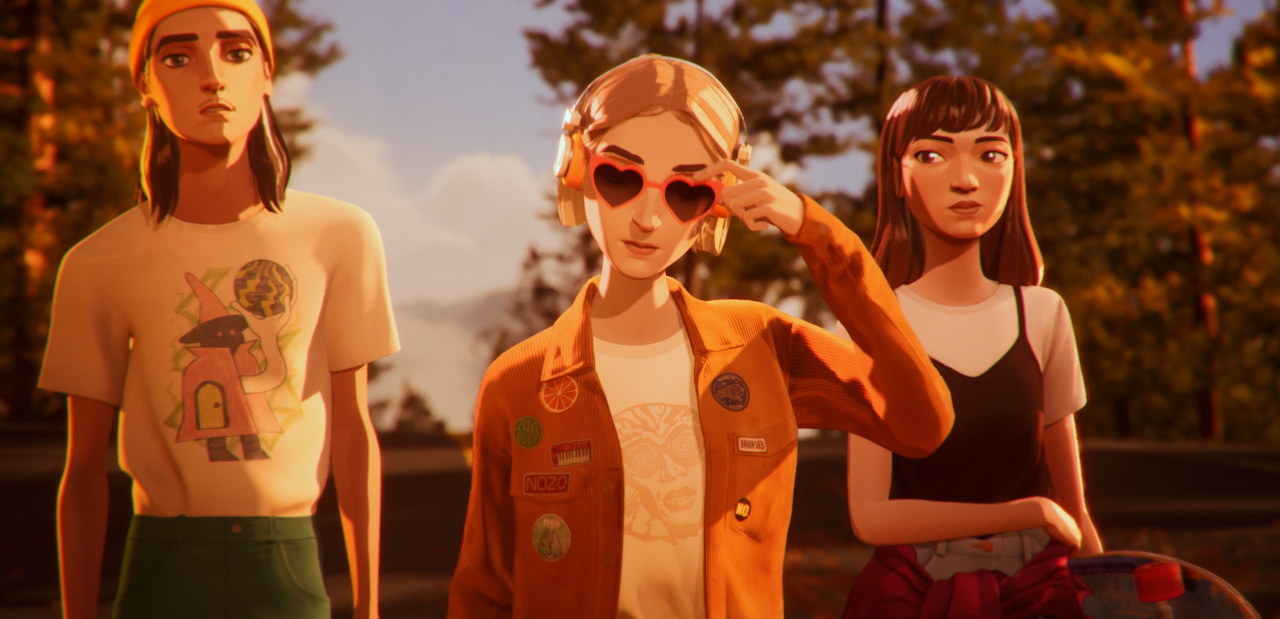
There are too many instances of “big” publications in the video games realm working closely with publishers. And in recent years I’ve found that reviews from smaller outlets and individuals – as well as the general consensus from review aggregators like Metacritic – are far more valuable than anything churned out by a big publication. The relationships these publications develop with certain companies and publishers renders too many reviews impotent and unhelpful.

Metacritic’s page for Gran Turismo 7.

So this is a huge topic, one that we’ve really only scratched the surface of today. And while I absolutely come down on the side that says “companies need to provide more pre-release review access,” I won’t lie: there’s a part of me that loves to see big publications and arrogant, cocky “influencers” taken down a peg. No single publication or reviewer is that important, at the end of the day!

But as someone who dips their toes in the world of online media criticism, I think it’s important to talk about these issues as openly and honestly as possible. I’d rather see a hundred reviews and decide for myself which ones are worth my time instead of seeing ten curated reviews that a company or publisher hand-picked. If pre-release review access is only given to selected publications and critics, it raises a very important question: why were they chosen ahead of everyone else? What did the company hope to gain by choosing those critics and ignoring others? The answer, I fear, is simple: positive, glowing reviews.
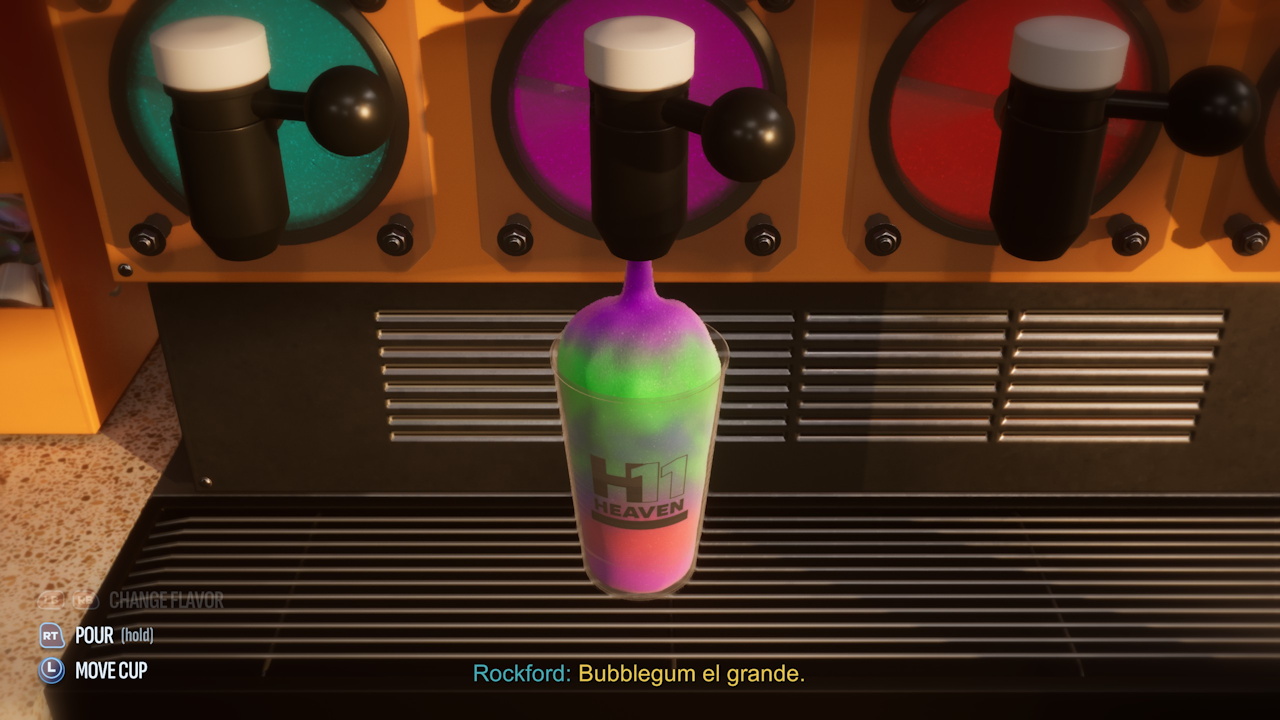
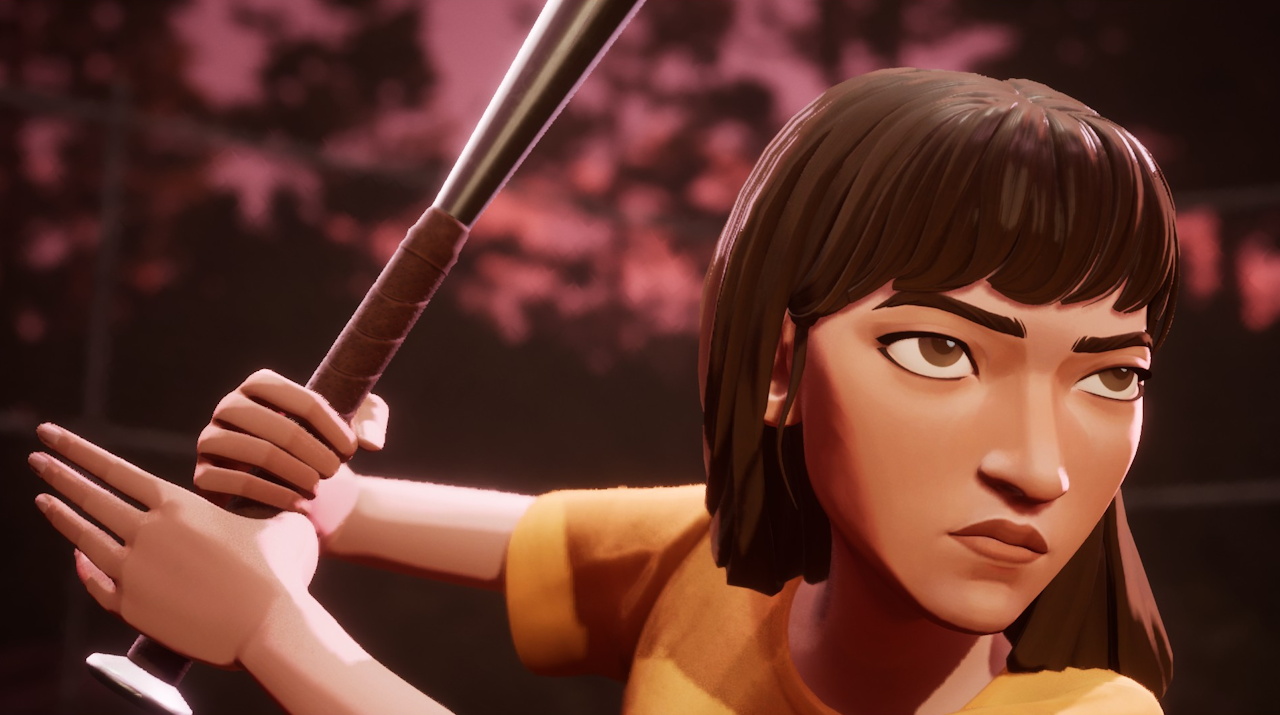
This article contains the thoughts and opinions of one person only and is not intended to cause any offence.