


Spoiler Warning: There are spoilers ahead for the Star Wars franchise, including Return of the Jedi, The Last Jedi, The Mandalorian, The Book of Boba Fett, and the video game Jedi: Survivor.
A couple of years ago, I shared six of my “hot takes” about Star Wars. But it’s always fun to stir the pot, so I’ve come up with six more! These are all controversial takes that I have on Star Wars; opinions that seem to be a minority position based on my limited engagement with the fan community. I thought it could be entertaining and interesting to share some more of these with you today!
This is just for fun, and while I do genuinely hold all of these opinions – I’m not just making up stuff for the sake of clickbait – there’s no need to get into a big argument! Everything we’re going to talk about here is subjective, not objective, and I’m keenly aware that I’m in the minority. They’re called “hot takes” for a reason, so feel free to disagree with me vehemently on any or all of the points I raise!
If you want to check out my first set of “hot takes,” you can find them by clicking or tapping here. Otherwise, this is your last chance to nope out if you don’t want to read some potentially controversial Star Wars opinions!
“Hot Take” #1:
The Book of Boba Fett is probably the best Disney+ Star Wars series so far.

I went into The Book of Boba Fett with low expectations. I’ve never been wild about The Mandalorian, thanks in no small part to its decision to bring the Force and Luke Skywalker into a story that was originally pitched as “the adventures of a gunslinger beyond the reach of the New Republic.” Boba Fett has always felt like a non-character to me ever since I first watched the original trilogy in the early ’90s. Add into the mix Disney and Lucasfilm grossly overplaying the nostalgia card in the sequel trilogy, and I truly did not expect to get anything out of The Book of Boba Fett whatsoever.
But I was surprised to find an exciting and interesting story that was just plain fun. It was a nostalgia overload for sure, but it managed to keep me entertained regardless – and by the time Boba and his friends were fighting for their very lives on the streets of Mos Eisley, I was gripped. Maybe it’s because of those low expectations that I had such a good time with it… but whatever the reason may be, I thoroughly enjoyed the series.

When I compare it to the other Star Wars offerings that I’ve seen on Disney+, it tops the charts easily. The Mandalorian isn’t great, in my opinion, and I find the show’s protagonist difficult to root for because of how utterly monotone he is. I once described Din Djarin as an “unemotional helmet-wearing slab of nothing;” a character who seems to act at the behest of a room full of TV writers, and not because of any motivation or character trait that I can detect.
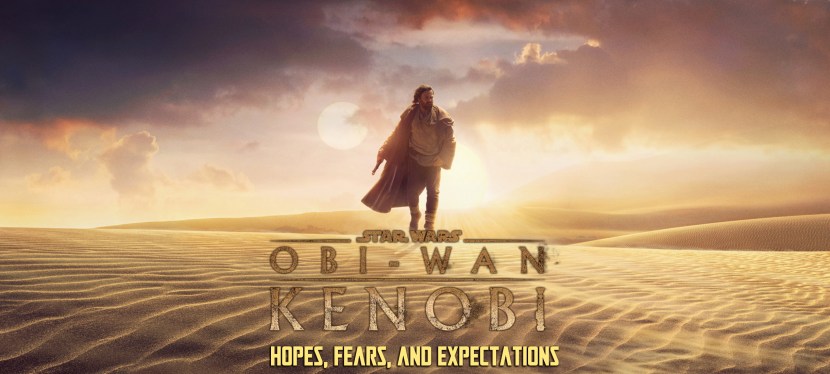
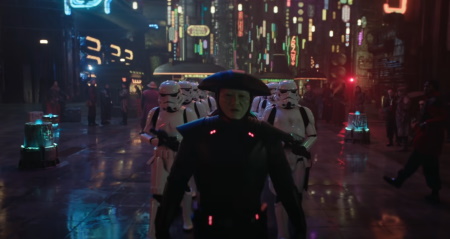
Obi-Wan Kenobi was a show so utterly dire that it put me off Star Wars for months afterwards! Trying to write a review of that appalling mess was likewise so unpleasant that I ended up taking a break from writing anything at all here on the website – and I still haven’t finished that review! The mere thought of going back to Obi-Wan Kenobi just leaves a bad taste in my mouth.

I haven’t seen Andor yet – thanks, in no small part, to Obi-Wan Kenobi causing me to turn away from the Star Wars franchise for a while! But I suppose when I get around to watching it it could dethrone The Book of Boba Fett. As could The Acolyte – a project I’m definitely looking forward to as it promises to step back in time to a wholly different era of the Star Wars galaxy.
But The Book of Boba Fett isn’t just my favourite Disney+ Star Wars show by default. The others have their problems, sure… but The Book of Boba Fett could’ve been just as bad. I was surprised at just how entertaining it was, and how a character I had no interest in was able to be transformed into a genuinely fun protagonist. There were themes of loss and revenge as Boba navigated Tatooine’s criminal underworld, but my biggest takeaway was how positive, fun, and light-hearted the show could be. I admit that I’m surprised to see that it wasn’t received more positively by other Star Wars fans.
“Hot Take” #2:
“From a certain point of view” is patent nonsense and always has been, and Star Wars is made worse by continually trying to justify it.

Are you old enough to remember when Return of the Jedi was regarded as the weakest Star Wars film? Before the prequels came out, that was the general consensus! When I first watched the Star Wars trilogy it was at the insistence of a friend, and his father was adamant that Return of the Jedi was an awful film and a poor way for the story to conclude. So it seems that divisiveness in the fan community is nothing new – but more on that later!
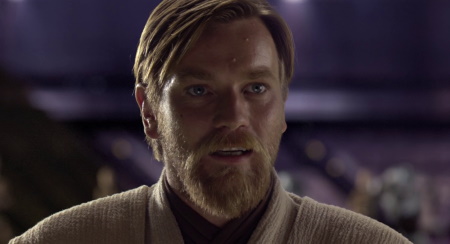
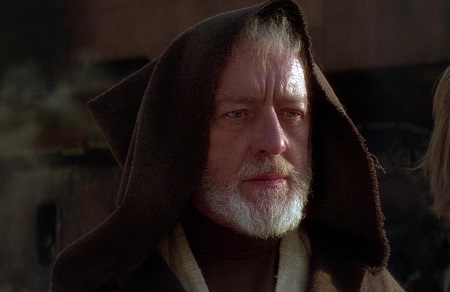
One of the reasons for Return of the Jedi being held in lower esteem than its two predecessors is the clumsy and just plain stupid line from Obi-Wan Kenobi to Luke Skywalker that coined the phrase “from a certain point of view.” I’ve always considered this explanation to be absolute dog shite, making no sense whatsoever. And Star Wars has since doubled- and tripled-down on this idea… when it really should be ignored and pushed aside.

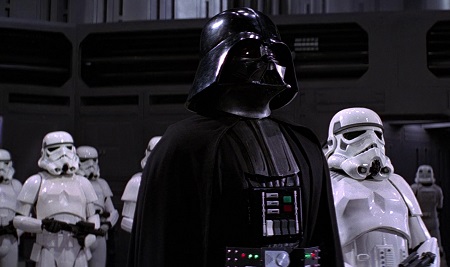
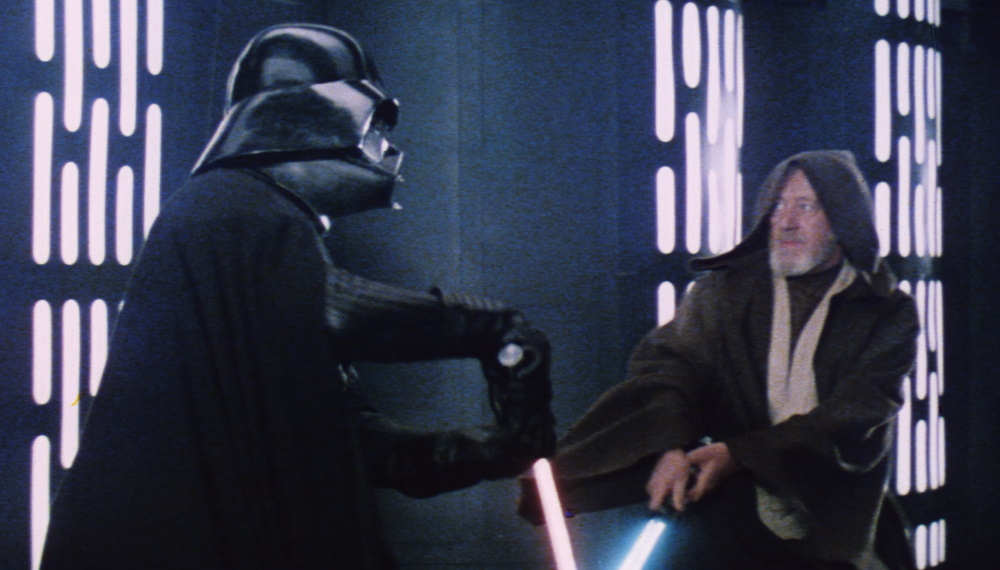
Let’s step back and set the scene. In Star Wars (a.k.a. A New Hope, the first film in the series), Obi-Wan Kenobi explained to Luke Skywalker that Darth Vader “betrayed and murdered” his father. That line was unambiguous and not subject to interpretation! But by the time The Empire Strikes Back rolled around, the decision had been taken to retcon the relationship between Vader and Luke, transforming them into father and son – leading to one of the most iconic scenes in all of cinema.
As with many other things in Star Wars, though, something that should’ve been left alone… wasn’t. We could’ve ignored what Obi-Wan said in that first encounter, accepting that the retcon overwrote it. It would’ve been an inconsistency, sure… but it would have been one that the story could’ve survived. There are also legitimate in-universe reasons for Obi-Wan not wanting to tell Luke the truth; he could’ve apologised or explained his reasoning and left it at that.

But instead we got this ridiculously convoluted work of semantic gymnastics, with Obi-Wan justifying his lie – and it was made into a lie by the retcon in Empire – by trying to claim that, somehow, Anakin Skywalker and Darth Vader aren’t the same person. Even though they’re literally the same person, with the same body, “soul” or essence, Force abilities, and so on. Anakin made a decision to defect from the Jedi to the Sith… but it doesn’t mean he stopped being Anakin. Even thinking about it in the most abstract and poetic terms… he’s still the same person.
Since this line was uttered, Star Wars has continually stumbled by trying to justify it and make the concept stick. The prequel trilogy made a big deal about Palpatine granting Anakin his “new” Sith identity, and the aforementioned Obi-Wan Kenobi series also tried to double-down on this idea, with Obi-Wan saying that the man he knew “is truly dead.” But… he isn’t. He’s different, sure. But he isn’t dead. This whole “from a certain point of view” idea just doesn’t work for me. It didn’t when I first saw it in Return of the Jedi thirty-plus years ago, and every attempt that the franchise has made to lean into it hasn’t helped. I wish Star Wars would quietly drop this idea and move on!
“Hot Take” #3:
Franchise fatigue is beginning to set in.

Though not as oversaturated as Star Trek has been in recent years, I’d argue that Star Wars is very much in danger of running too hot. Too many shows and films in too short a span of time is going to lead to franchise fatigue – and while there will always be fans who will turn up for every new project, the more casual audience that any series relies on will begin to drift away.
I think we’re already seeing this, at least to a limited extent. Solo: A Star Wars Story was the first film in the franchise to make a loss at the box office, and it was released only a few months after The Last Jedi. On Disney+, too, it seems that more recent shows and seasons have attracted less attention and excitement. Fewer people turned up for Obi-Wan Kenobi or The Book of Boba Fett than had for the first season of The Mandalorian, for instance.

Since the Disney acquisition of Lucasfilm went through more than a decade ago, Star Wars has hardly been off our screens. The sequel trilogy came along in the back half of the 2010s, with Rogue One and Solo in cinemas as well. And since the launch of Disney+, there have been new live-action and animated shows every year. With several of these projects overlapping each other or being spin-offs that rely on older films or shows to set them up, keeping up with Star Wars and knowing what’s what and who’s who can feel like a full-time job!
With Disney+ in poor shape financially, the corporation is relying heavily on its biggest brands to bring in and retain subscribers. But the likes of Star Wars and even Marvel are in danger of burning out; turning away audiences due to convoluted interconnected storylines or just because there’s a desire to look for something new and different. A few years ago, a massive audience would’ve been hyped for a live-action Star Wars series. But now? I can almost hear the collective sigh as yet another season gets sharted out onto Disney+.

I genuinely don’t know what the solution is here. The truly hard-core Star Wars fans will, of course, keep showing up for any and every new project. But how long can the franchise rely on those folks if a wider audience of more casual viewers can’t keep up or loses interest? As Disney recently found out to its cost with the Galactic Starcruiser hotel at Disney World… there are only so many of those hard-core fans.
Maybe you don’t feel a sense of franchise fatigue just yet – and that’s okay. If you don’t, I’m genuinely happy for you! But with so much Star Wars content on the horizon, with new series, films, and video games coming every few weeks… how long can that last? How long will it be before you say, “eh, I think I’ll skip this one and watch something else?” In my opinion, no franchise can keep up this frenetic pace for very long. Star Wars has already been pushing it for several years, and I wonder when it will have to slow down.
“Hot Take” #4:
Jedi: Survivor was crap.

I absolutely adored Jedi: Fallen Order when I played it. Going on that adventure with Cal Kestis and the crew of the Stinger Mantis was fantastic, so I was incredibly excited for the game’s sequel in 2023. But as you’ll know if you read my review of the game… I really didn’t like it. Mechanically and narratively, the game failed – and that’s before we get into the bugs and glitches that have come to define its poor launch.
An open-world design is not something that suits every game, and Jedi: Survivor was made significantly worse than its predecessor by attempting to go down this route. The clumsily-designed maps, particularly on the main planet of Koboh, really got in the way of the story and immersion. It made no sense to me that Cal and his friends would hide out in a “quiet, out-of-the-way” settlement like Ramblers Reach… when that settlement was a stone’s throw from both a massive pirate base and two Imperial outposts.

In terms of story, I found Jedi: Survivor to be an unimpressive relation to its illustrious predecessor. Cal was teamed up with a character who was obviously, from almost his first second on screen, a “secret bad guy in disguise.” This plot point was so flagrantly telegraphed that it might as well have been lit up in neon. And the return of Master Cordova, a character who played a huge role in the story of the first game, was handled incredibly poorly.
There were some narrative highlights: Cere’s story took her full-circle, for instance, and while I could see Bode’s betrayal coming from a mile away, Cal’s reaction to it was genuinely emotional. But the foundations of this story felt weak and almost random, with Cal stumbling into a random cave, Greez accidentally building his cantina atop ancient Jedi ruins… and a convoluted plot involving an ancient Jedi sealed in a bacta tank and a “lost” planet that no one knew how to reach. Compared to the story of Fallen Order, Jedi: Survivor came up short.

Obviously we can’t discuss Jedi: Survivor without commenting on the game’s shockingly poor condition. I’ve uninstalled it now and haven’t touched it since September, so I can’t comment on its current state. But I saw the reviews Jedi: Survivor received upon launch and chose to wait several months before jumping in – only to find that it was still in an absolutely appalling state, with bugs, glitches, frame-rate problems, stuttering, and low-res textures all getting in the way of the experience. The fault for this lies with publisher Electronic Arts, who chose to force Jedi: Survivor to be released before it was ready.
At the beginning of 2023, I genuinely expected Jedi: Survivor to be in contention for my “game of the year” award. Instead, for a variety of reasons it ended up as one of the biggest disappointments of the year. A sequel is in the works, and while I’m going to be much more sceptical this time around… I have to at least cross my fingers and hope for something better.
“Hot Take” #5:
The sequel trilogy won’t ever be retconned out of existence.

I’m not sure how hot of a take this really is, because I think most folks understand that Disney and Lucasfilm aren’t going to turn around one day and announce that the sequel trilogy is suddenly non-canon! But in some corners of the Star Wars fan community, this fantastical notion has taken root. I’ve heard some big-time fan blogs and channels with sizeable audiences pushing the idea that some or all of the sequel trilogy – and The Last Jedi in particular – are about to be “erased” from canon or overwritten.
Like any franchise, Star Wars has grown and evolved over the years. Stories, characters, and themes that may have been controversial or hated at first tend to be more accepted with the passage of time, as we’ve seen with both Return of the Jedi and the prequel trilogy. The same is sure to happen for the sequels, given enough time. Fifteen years from now, they’ll just be part of the furniture; inseparable from the rest of Star Wars.
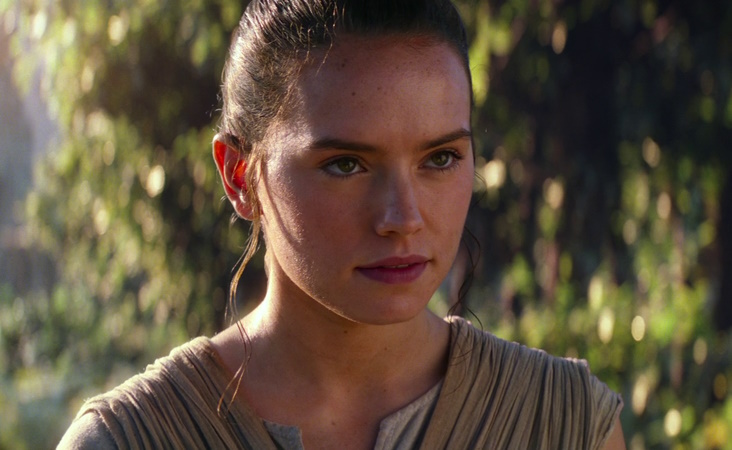
In 1999, I really didn’t like The Phantom Menace. In fact, the only part of the prequel trilogy that I even considered to be passable was Revenge of the Sith – and that dim praise comes with multiple caveats! But as time has passed, the prequels have been folded into the broader lore and canon of Star Wars quite effectively – to the point that I’d never even consider the idea of overwriting them at this stage.
Many of the fans who seem to be arguing most passionately in favour of the sequel trilogy being scrubbed are – somewhat ironically, perhaps – younger folks who first came to Star Wars when the prequels were in cinemas. The prequel trilogy was their way into the Star Wars fan community, so the idea that those films could’ve been disliked or hated as much as the sequels are today doesn’t seem to register for a lot of folks. But they were… and the fan community was able to recover!

I don’t know what the future holds for Star Wars. Maybe it will go on for years and years, producing new content all the while. Or maybe it’ll take another decades-long break before triumphantly returning, as it has in the past. But either way, the sequel trilogy will remain part of that story. It may not be beneficial to Disney and Lucasfilm to put it front-and-centre right now, particularly as fans seem to long for more stories set during the prequel era or the time of the original trilogy. But the sequel era is developing stories, spin-offs, and a lore all of its own – and building on that will be a key part of Star Wars’ future.
The idea that a billion-dollar trilogy of films, complete with spin-offs, merchandise, and more would ever be dumped or retconned out of existence is nothing more than a juvenile fantasy; the ultimate “cope” from folks who can’t stand those films. And look… I agree that the world would be a much better place if The Rise of Skywalker had never existed. That film was an absolute catastrophe! But it won’t ever be erased or overwritten – and I’m okay with that. I’m still content to give Star Wars a chance to impress me with what comes next.
“Hot Take” #6:
Writing a sequel to Return of the Jedi that didn’t feel like tacked-on fan fiction was probably impossible.

Stories end. Every story eventually comes to an end, with its character arcs, sub-plots, and main narrative threads all being drawn to a close. And for better or worse, Return of the Jedi was the end of Star Wars; the final, climactic battle of the Palpatine-versus-Skywalker saga. The Emperor was dead, Imperial forces were implied to be in disarray, the threat of the Death Star had been removed, and it seemed as if the Rebel Alliance had won the day. After three films – or six, if we include the prequel trilogy – the story had come to an end.
And what an end it was! Saving the galaxy, destroying both Sith Lords, restoring the Jedi Order, and setting the stage for a return to freedom and democracy after two decades of oppressive autocracy is a great place for the curtain to fall and the credits to roll. And having seen both the impotent fan fiction of the old Expanded Universe and Disney’s sequel trilogy, one thing seems abundantly clear to me: that should have been the end. There just wasn’t space to add a new story after the events of Return of the Jedi.

It’s ironic that Disney is the company that purchased the Star Wars brand, because the sequel trilogy is a great example of what I like to call the “Disney sequel problem.” Every Disney film – of the classic and renaissance eras, at any rate – ended with a “happily ever after” moment, with the heroes celebrating a hard-fought victory and the baddies vanquished. It proved impossible to make a sequel to those kinds of stories that didn’t feel either tacked-on or derivative.
And both of those labels apply to the Expanded Universe and the Disney-created sequel trilogy. The First Order basically picked up where the Empire left off, and the revelation that Palpatine had been secretly pulling the strings the whole time completely undermined whole narrative arcs from the original and prequel films. The Force Awakens was basically a carbon copy of A New Hope, and The Rise of Skywalker tried its best to be Return of the Jedi. No part of the story was original, and as I wrote once, the entire sequel trilogy feels like a bait-and-switch. Instead of answering questions about the Star Wars galaxy that fans had been asking for years, the films simply re-told the same story with a different coat of paint.

And I don’t see how it could’ve been different. After killing the Emperor and Darth Vader, there was no “big bad” left to defeat. Mopping up the leaderless remnants of the Empire would’ve felt anticlimactic, and replacing the Emperor with Snoke and Vader with Kylo Ren was just cheap and derivative. The same feelings would have arisen if a new Emperor had emerged, a new Sith Lord had been discovered, or the First Order had been given a different name to match one of the silly Expanded Universe stories.
Unfortunately, modern entertainment franchises can’t be allowed to come to a dignified end. They must be resurrected and kept on life-support at all costs, with new stories being churned out to suit the needs of corporate shareholders who are too cowardly to invest in new stories and characters. After saving the galaxy and defeating the Sith, Return of the Jedi left Star Wars with nowhere to go narratively – but Disney and Lucasfilm went there anyway.
So that’s it!

I hope I didn’t upset too many people with this list!
There’s still plenty to enjoy with Star Wars, even if I’ve found a few things to pick on this time. In 2024, I’m looking forward to The Acolyte on Disney+ and to getting my hands on the remastered Dark Forces video game – so I’m still engaged with the franchise. I also like to keep up to date with big developments, and I’m sure that I’ll eventually get around to watching most of the live-action series and seasons that I’ve missed.
I hope this has been a bit of fun, and perhaps thought-provoking in places. Although these are “hot takes,” it wasn’t my intention to upset anyone or cause anger and division. The Star Wars fan community has more than enough of that! At the end of the day, we all have things we like and things we dislike in our favourite films and franchises.
Until next time… and may the Force be with you!
The Star Wars franchise – including all films, games, and other properties discussed above – is the copyright of Lucasfilm and The Walt Disney Company. This article contains the thoughts and opinions of one person only and is not intended to cause any offence.

 Trekking with Dennis