Star Trek: Discovery Season 3 wishlist: a follow-up

Spoiler Warning: There are spoilers ahead for Star Trek: Discovery Seasons 1-3, Star Trek: Lower Decks, Star Trek: Picard, and for other iterations of the franchise.

At the end of September, with Season 3 of Star Trek: Discovery looming on the horizon, I published my “wishlist” of things I hoped to see in the upcoming season. Now that we’ve seen the entirety of Season 3 I thought it would be fun to go back to that wishlist and see whether my wishes came true – and, on reflection, whether I was being reasonable!

I had eight items on my original wishlist, but I’m also going to talk about a couple of other points that came up either before or during the season that I didn’t include.

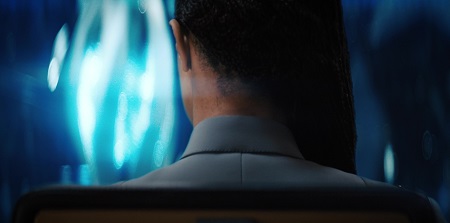
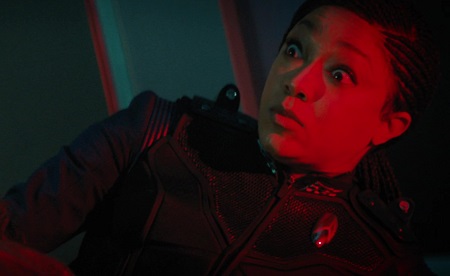
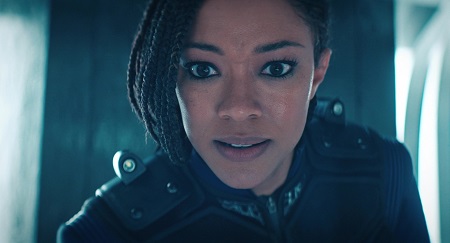
Michael Burnham on the USS Discovery’s viewscreen.

Though not everything I hoped to see came to pass in Season 3, I had a good time with it overall. Whether we’re discussing Star Trek or any other fictional franchise, success is not always about meeting specific expectations or confirming fan theories, and the writers and producers need to have the freedom to tell the stories that they want to tell. Star Trek has gone in directions I wouldn’t necessarily have chosen, but that’s true of every iteration from The Original Series to Picard, and it doesn’t mean that what made it to screen was bad. Like a lot of viewers, I like to be surprised – even if I spend a lot of time talking about theories!

All of this is to say that Discovery Season 3 met my expectations in some ways, challenged those expectations in others, and told some different but enjoyable stories. Though I enjoyed some points more than others, taken as a whole the season was solid, and a worthy successor to Season 2, which had been my favourite. Taking the show – and the franchise – forward in time was always going to be a challenge, but Discovery rose to meet it.

Let’s jump into my pre-season wishlist and see what became of it.

Number 1: Some kind of tie-in with Star Trek: Picard.
Wish: Granted

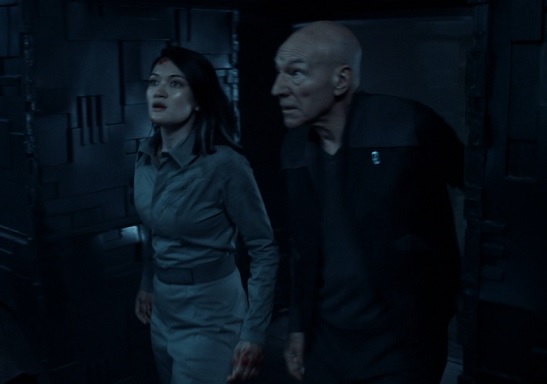
Soji and Picard in the episode The Impossible Box.

This was perhaps the point I was most curious about. Because of its place in the Star Trek timeline, Discovery in its first two seasons had been unable to include significant references to anything other than Enterprise and The Original Series. We saw precious little from Enterprise, but from the first episode we had some major crossovers from The Original Series by way of Sarek, and later Spock and Pike.

But The Original Series, despite its importance within Star Trek, ended decades ago. While it was possible to recast classic characters, there wasn’t as much to be gained by doing so – and it proved divisive within some areas of the fandom. Picard, by contrast, is in production at the same time as Discovery, and Season 3’s leap forward in time allowed it to connect to its sister show in ways that no Star Trek production has been able to do for a long time.
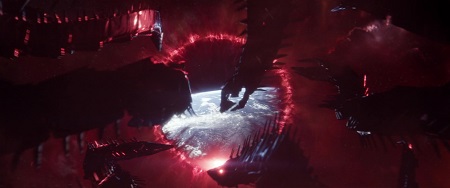
The super-synths.

I had two very early theories for how this could have worked. The first, which had been debunked even before it was written, was that Discovery would – thanks to time travel shenanigans – end up in the same era as Picard; the ship and crew being unable to complete their 930-year time jump. The second would have been for the super-synths from the Picard Season 1 finale to have been involved with the Burn.

Neither of those ideas came to pass, and I’m not disappointed – though I do maintain that the USS Discovery arriving in the Picard era would have been a fun way to go! Instead what we saw was a direct reference to Admiral Picard’s archive – which we saw in the Picard Season 1 premiere – and the return of the Qowat Milat. I didn’t expect the Qowat Milat to be the way the shows would connect, but it worked very well. It managed to be unobtrusive – nothing in Unification III made Picard Season 1 mandatory viewing – yet at the same time there was a very definite nod by Discovery to its sister show.

Dr Gabrielle Burnham joined the Qowat Milat.

The only downside was that the Picard crossover was limited really to a single episode. There wasn’t room within the Ni’Var storyline for anything further, and while the united Romulans and Vulcans were seen briefly in the season finale, we didn’t see the return of the Qowat Milat or Dr Burnham. However, her presence within that convent means we could potentially see her in Season 4, and if there is some significant advancement of the Qowat Milat storyline in Picard Season 2 that could be referenced then – or vice versa.

Placing Dr Burnham in the Qowat Milat was a very random choice in many ways, and while it succeeded from a shock value point of view perhaps we could argue that it’s not a very logical outcome for her character. But I wished for a tie-in with Star Trek: Picard, and there’s no denying that Discovery delivered!

Number 2: A reference, callback, or hint to something from Star Trek: Lower Decks.
Wish: Denied 🚫

Ensigns Tendi and Rutherford from Lower Decks.

The original plan for 2020 – before the pandemic disrupted things – was for Discovery Season 3 to be released before Lower Decks, so perhaps with that in mind it makes sense that there wasn’t so much as a reference to the animated show. However, as I said above, finding ways to tie together the Star Trek projects which are currently in production is to the benefit of the franchise overall – even if the projects are as radically different as Lower Decks and Discovery.

There was the potential for something as small as the name of a planet or faction to crop up in both shows; what would have seemed like a throwaway line of dialogue could have actually been a subtle nod to the existence of Lower Decks within Discovery, even if a more significant crossover was never on the table. Perhaps this is something that could happen in Season 4, though, so I’ll keep my fingers crossed!

Number 3: A storyline that doesn’t make Michael Burnham the “chosen one.”
Wish: Granted

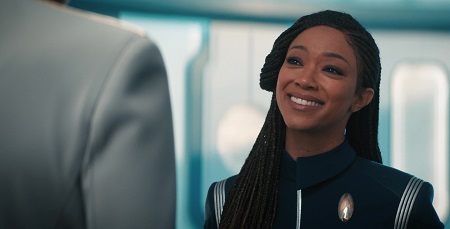
Captain Burnham.

Seasons 1 and 2 of Discovery put Burnham front-and-centre, making her the focal point of their main storylines. In both cases, Burnham alone was responsible for driving the plot forward, and it could often feel as though other characters weren’t permitted to do anything significant. Season 3 came close to falling into that same trap, especially early on, but by the final part of the season had stepped back. Other characters, including Tilly and Saru, were given significant roles to play, and the show was much better for it.

Burnham wasn’t even really involved with the season’s main storyline after the halfway point. Though she was instrumental in getting background information regarding the Burn, after Unification III it was Tilly, Stamets, Adira, Saru, and Dr Culber who took the lead on that side of the story. The final pair of episodes, in which Su’Kal was saved and a reoccurrence of the Burn prevented, had Burnham involved in a completely different storyline.
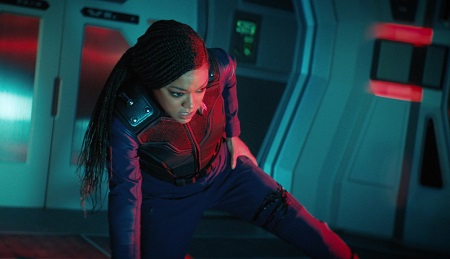
Burnham was part of the season finale, but not in a way connected to the Burn.

There were all sorts of ways that Discovery’s writers and producers could have tried to push Burnham once again as the “chosen one,” not least by having her involved with the Burn in some way. Until the final few episodes this seemed to be a possibility, and I’m so glad that it didn’t happen. The revelation that Burnham and her mother were two different Red Angels was not really the best part of Season 2, and I was concerned that Discovery might try to pull off something similar with the Burn.

Though Burnham had some issues this season – notably in the episode Scavengers – which amplified some of her least-attractive character traits, the second half of the season worked very hard to get her to a point where her ascent to the captaincy of Discovery felt earned and genuinely great. By putting her in a series of stories that didn’t put her at the centre of the universe, and by allowing other characters to have agency over those stories as well, Discovery broke away from its Burnham obsession just enough to finally allow the character to shine.

Number 4: A proper explanation for “the Burn.”
Wish: Granted

A holo-recording of the moment Su’Kal caused the Burn.

At some point in the future we’ll take a look at the Burn, debating the implications and how well the storyline worked. For now, suffice to say that I was concerned that Discovery might try to get away with never revealing the Burn’s origins. Sometimes this is the way stories unfold when an apocalyptic event or disaster takes place decades before the main storyline. However, as I wrote in my original wishlist:

“There’s a curiosity at the core of Star Trek. Seeking out strange, new worlds has been the franchise’s heart since The Original Series, and that spirit of exploration and thirst for knowledge extends to fans as well. We want to know what’s going on in the galaxy, and it wouldn’t be good enough to say ‘well something bad happened, but don’t worry about what it was or what caused it.’ In some stories, an unknown, mysterious event could work. But not here.”
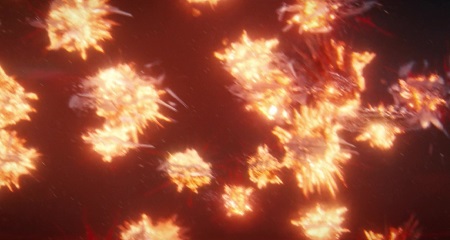
The Burn.

It took a long time to figure out the Burn, and along the way Burnham and the crew had different adventures that either advanced that narrative in a minimal way or didn’t advance it at all. Again, this is something we can debate – given the Burn’s ultimate reveal it’s certainly arguable that dragging it out for the whole season wasn’t the best idea.

But at the end of the day, whether you liked the reveal of the Burn’s origin or not, its origin was revealed. And it wasn’t something obvious, nor some sci-fi trope that could’ve been part of any other franchise. There’s a weirdness to the Burn’s telepathic origin that could really only be part of Star Trek, and despite my criticisms of the storyline overall, I like that. The fact that it wasn’t predictable was fun, and for such an important event it needed an explanation. I’m glad it got one – even if it wasn’t one I’d necessarily have chosen.

Number 5: No main villain.
Wish: Denied 🚫
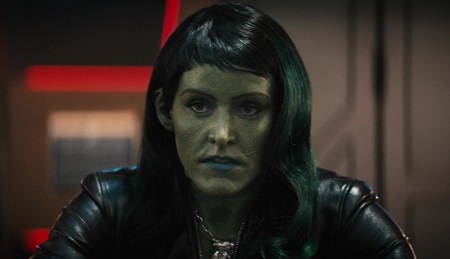
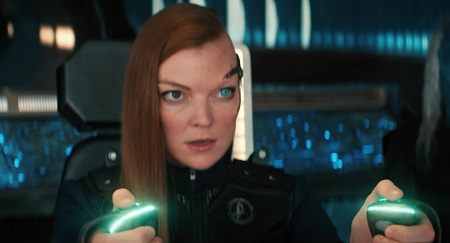
The villainous Osyraa.

Though Osyraa and the Emerald Chain were not connected to the Burn, she acted as the main villain in the latter part of the season. After Control had been such a big presence in Season 2, I felt that breaking away from having one main villain in favour of scientific mysteries and perhaps a couple of single-episode antagonists would have been preferable.

Though Osyraa did see some interesting development in There Is A Tide, that development was never really expanded upon. The revelation in the season’s epilogue that the Emerald Chain had “fractured” without her strong leadership makes all of that meaningless anyway; Osyraa ended up being nothing more than a forgettable adversary who was a significant hurdle for a couple of episodes, but little more.
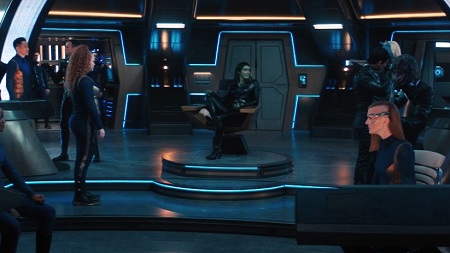
Osyraa in command of Discovery.

The most significant storyline she was part of also happens to be one of my least-favourite action tropes. When Osyraa and the Emerald Chain captured the USS Discovery at the end of Su’Kal, it was obviously only a matter of time until the ship was retaken, and so it proved. Burnham and Osyraa got a climactic hero-versus-villain fight in the season finale, and it was decently exciting from that point of view, but there was nothing particularly new or inventive about Osyraa herself.

In light of the Emerald Chain seemingly disbanding, any ongoing impact Osyraa could’ve had on the show is nullified, and perhaps that’s for the best. I stand by what I said before the season premiered: some stories don’t need a “big bad” in order to work well. The Burn was a scientific mystery to unravel, and rebuilding the Federation was something to be accomplished diplomatically. Osyraa and the Emerald Chain were, at best, a minor hurdle to achieving those goals, but nothing more. That said, the action scenes in the final two episodes were very exciting, and I’m glad we got to see that side of Discovery this season – something that couldn’t have happened without Osyraa.

Number 6: Proper development of some secondary characters.
Wish: Granted

Lieutenant Detmer got her own mini-story this season.

After two full seasons, there were still a lot of secondary characters on Discovery’s crew that we barely knew. Though Season 3 didn’t have time to focus on everyone – and I wouldn’t have expected it to – we did finally get to spend more time with some of these officers. In addition we got the new character of Adira and their phantom partner Gray to further pad out the cast. And who could forget Grudge, the adorable fluffball kitty of Book’s?

In Season 2, Ariam got one episode of character development before being unceremoniously killed off, and I was a little concerned that Season 3 might take the same approach – turning some of the secondary characters into glorified redshirts. When helm officer Detmer was the focus of part of the episode Far From Home I felt sure she was next on the chopping block – but it didn’t happen!
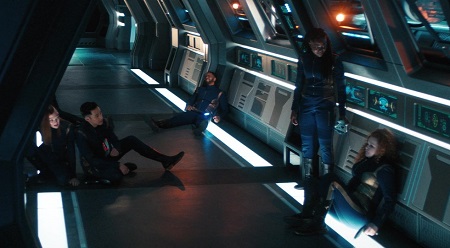
Several secondary characters – plus Tilly – played an important role in the season finale.

Detmer and Owosekun saw some decent development this season, and we spent a little time with Rhys, Bryce, and Nilsson as well. And of course we got the aforementioned Gray and Adira. Nhan actress Rachael Ancheril was promoted to the regular cast, but seemingly left the series in Die Trying shortly thereafter. There was a lot of potential in her character, which could have seen future episodes looking at the Barzans, for example. I’m hopeful Nhan can return – even if it doesn’t look like it right now.

Among the regular cast, almost everyone had a significant arc or a lot of screen time this season. Only Stamets felt under-used, as major roles were given to Saru, Tilly, Dr Culber, and Georgiou at various points. Most characters now have a solid base or framework to build upon in future seasons and stories, and I hope that Discovery will continue to work with a broader cast going forward.

Number 7: Fix the Stamets-Culber relationship.
Wish: Granted

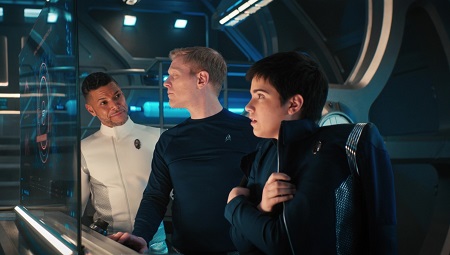
Culber and Stamets with Adira.

Discovery’s emotional core is provided by Dr Culber and Stamets. Where Burnham’s romantic life has been a rollercoaster ride, Stamets and Culber offered stability. Anthony Rapp and Wilson Cruz have wonderful on-screen chemistry which makes their characters such a cute couple, and it was sad to see them having troubles after Culber’s stint lost in the mycelial network.

I was hopeful that Season 3 would bring them back together in a big way, and it happened within minutes of their arrival in the future. Dr Culber helped Stamets in sickbay after the latter had been injured, and the “relationship on the rocks” storyline was dropped. Discovery never looked back after that, and while abandoned storylines can be an issue, this one never really worked so I’m happy to see the back of it.
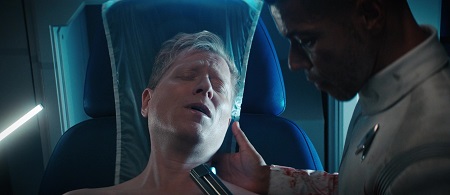
Stamets and Culber in Far From Home.

As a show with plenty of drama and tension, Discovery didn’t really need to throw its only solid couple into difficulties as an additional source of drama. There was just no need for it, and doing so risked taking away something incredibly significant in the process. LGBT+ representation has come a long way, so keeping Star Trek’s first gay couple together is also something I’m happy to see. Discovery has never gone out of its way to use LGBT+ themes; Stamets and Culber’s relationship isn’t treated as anything different or special because of their genders, and I love that. The future should be a place where all couples can be accepted without so much as a second thought.

The addition of Adira was an unexpected joy. We knew Adira was coming in the months leading up to the season’s premiere, but I wasn’t necessarily expecting that they would become so close to Stamets in particular. The paternal relationship he developed toward Adira was so sweet, and when Stamets made the point to them that he and Culber came together as a “package deal” that was just pitch-perfect.

Number 8: A satisfying explanation for how the Burn surprised Starfleet.
Wish: Denied 🚫
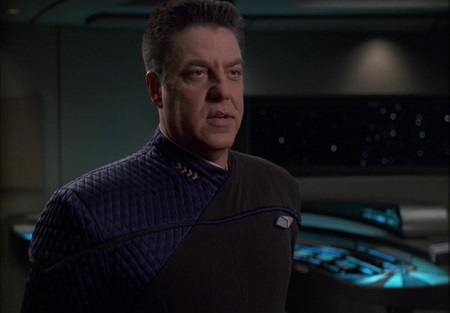
Captain Braxton of the time-ship Relativity.

In the run-up to the season, one of the burning questions that I had was this: if time travel existed in the centuries before the Burn happened, how could it possibly have surprised Starfleet?

Star Trek has never been consistent in its depiction of time travel, and that’s at least in part because time travel stories can get convoluted and messy. They’ve never been my favourite – either inside or outside of the franchise – but having firmly established that the Federation by at least the 28th or 29th Centuries through to the 31st used time travel routinely, we needed more of an explanation for how the Burn could have taken them by surprise.

Nothing in any time travel story I’m aware of says that time travel into the future is any more difficult that travelling to the past, and in both Voyager and Enterprise Starfleet was depicted as an organisation dedicated to maintaining the “correct” timeline. To make a long complaint short: even if time travel was not being actively used by natives of the 32nd Century, it seems improbable at best that Starfleet would have been unaware of the impending Burn if they had access to time travel technology for centuries before the event occurred.

The Enterprise-E travelled back in time in First Contact.

The idea of a ban on time travel is potentially interesting – and could, in theory, offer a way out of this issue. But it wasn’t explained in any detail, and I think in order to be plausible we need to know how the ban works, how it’s being enforced, and if it’s possible to travel through time as depicted in The Original Series and Star Trek IV: The Voyage Home for example, how is it possible to prevent anyone from doing that?

Part of this stems from the aforementioned inconsistency; time travel post-The Next Generation seems to have been more difficult, requiring the use of specialist technology, whereas in The Original Series and The Voyage Home it was possible just by travelling at high speed and slingshotting around a star. However, even if we disregard that method of time travel, we still need an explanation for how the technology was destroyed, what’s preventing anyone from recreating it, and so on.

HMS Bounty travelled through time in The Voyage Home.

As I wrote in my theories during the season: it isn’t possible to un-invent an incredibly powerful technology that can be used as a weapon. Even if the idealistic Federation is content to abide by the ban, despite its own collapse and how crappy the post-Burn 32nd Century is, how are we meant to believe that everyone else is? Just from what we saw on screen, are we meant to buy into the Emerald Chain not being interested in pursuing time travel?

Then there are other factions from past iterations of Star Trek: the Borg, the Dominion, Section 31, and others. Any one of those factions could be tempted by time travel, and would surely not be willing to abide by any ban. So how is it enforced? How does it work? Even a few technobabble lines would’ve been enough for me… but we didn’t get any real explanation.

Number 9: A character crossover from a past iteration of Star Trek.
Wish: Denied 🚫
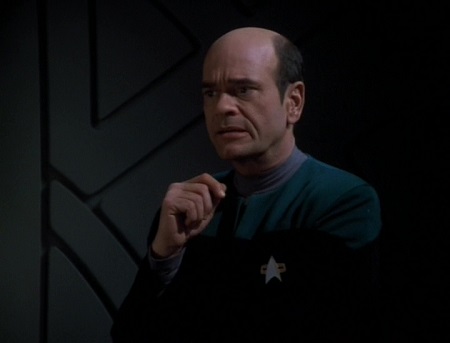
The Doctor from Star Trek: Voyager did not appear.

Okay, so technically we got to see the Guardian of Forever as well as archive footage of Leonard Nimoy’s Spock. But I wouldn’t consider either to be a significant character crossover, and while the Guardian of Forever had an impact on one of the season’s side-missions it didn’t effect the main story.

I speculated about a few characters who could still theoretically be alive in the 32nd Century, including: a backup copy of Voyager’s Doctor as seen in the Season 4 episode Living Witness, Crewman Daniels from Enterprise, Soji from Picard, the Dax symbiont, and even Deep Space Nine’s Captain Sisko. Some of those may be less likely than others, but I was at least a little hopeful that the leap forward in time could have led to a major character’s inclusion.

Captain Sisko.

Seeing the Guardian of Forever was neat, and I don’t want to detract from that. But the Guardian was from The Original Series – and with Discovery finally able to move beyond the confines of the 23rd Century there was scope to link back to The Next Generation’s era. Unification III did so, and so did the inclusion of the Trill. But no characters crossed over, despite the potential existing for something to happen.

It wouldn’t be particularly difficult for practically any character from a past Star Trek show to crop up. Scotty appeared in Relics in The Next Generation’s sixth season, and if a similar technobabble explanation could be found for how a character was in stasis or travelled through time, almost anyone could be included. Since that didn’t happen this time… maybe we could get a major character in Season 4?

Number 10: A resolution to the story of the Short Treks episode Calypso.
Wish: Denied 🚫
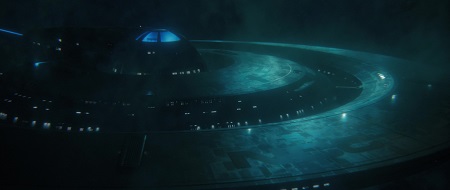
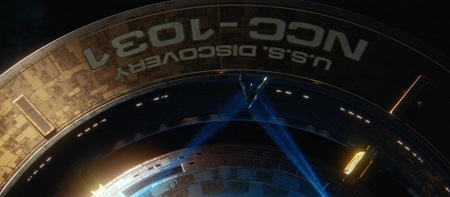
The USS Discovery in Calypso.

Ah, Calypso. Is the short episode destined to remain an outlier in the Star Trek canon forever, seemingly tied to a vision of Season 2 or 3 that never made it to screen? Or dare we hope that the writers and producers actually have a plan for how the loose ends from this Short Treks episode will be tied up?

We seemed to see movement toward this goal in Season 3 – though not named, the Zora AI was clearly created (the same voice actress from Calypso even reprised her role) and the use of the word “V’draysh” to refer to the Federation was heard a couple of times. But there was also some noteworthy movement away from Calypso too. The USS Discovery’s refit means that the ship is no longer in the same configuration it was in during the Short Treks story.
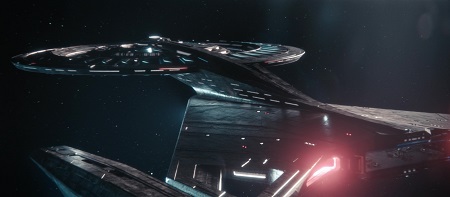
The refitted USS Discovery no longer matches the ship seen in Calypso.

At this stage, it feels as though resolving Calypso would require a story built for that purpose. The refit of the ship would need to be undone. A reason would need to be concocted why the ship needed to be abandoned. If the ship was to be sent back in time, a reason would be needed for why that was necessary too. And so on.

Perhaps the ultimate resolution to Calypso will simply be to say that the episode took place in an alternate timeline, one in which the Discovery crew hid the ship in a nebula to keep it safe from Control.

So that’s it. Those were my big pre-season wishes, and while not all of them were granted by Season 3, some were.

I had a great time with Discovery’s third season, and while there are some nitpicks and gripes it was a generally fun ride. It feels as though the Star Trek franchise now has a solid foundation if the decision should be made to create more shows set in or around the 32nd Century, and that’s a big compliment! As much as I enjoyed Picard bringing us back to the 24th Century last year, I’m just as interested to see what else the 32nd Century may hold, and hopefully Discovery won’t be the last Star Trek project to explore that setting.

Some of my pre-season wishes may have been a little optimistic, or even just unrealistic! But I had fun thinking about what Discovery could look like, and perhaps this is something I’ll indulge in again in the run-up to Season 4!

Star Trek: Discovery Seasons 1-3 are available to stream now on CBS All Access in the United States and on Netflix in the rest of the world. The Star Trek franchise – including Lower DecksDiscovery, and all other properties mentioned above – is the copyright of ViacomCBS. This article contains the thoughts and opinions of one person only and is not intended to cause any offence.
Star Trek: Discovery review – Season 3, Episode 13: That Hope Is You, Part 2

Spoiler Warning: There are spoilers ahead for Star Trek: Discovery Seasons 1-3, Star Trek: Picard, and other iterations of the franchise.

Thirteen weeks have just flown by, haven’t they? Star Trek: Discovery Season 3 premiered in the middle of October – right after Season 1 of Star Trek: Lower Decks came to an end – and now, just after New Year, it’s over. I have to say that I miss the twenty-plus episode seasons we used to get! But that’s just one way that television shows have changed since the 1990s, I suppose.

For the third week in a row, the title of the episode was changed from what had been previously announced. That Hope Is You, Part 2 was previously known as Outside, but immediately after There Is A Tide aired last week, the title was changed. That Hope Is You, Part 1 was the title of the season premiere, and while it seems odd on the surface to call the season finale the second part – especially considering the entire season has been one continuous story – it works well and bookends the season. As an interesting aside, we saw two different numbering styles used for the multi-part episodes this season. Terra Firma and Unification III both used Roman numerals to denote their parts, whereas That Hope Is You uses Arabic numerals. I wonder why that is?

Burnham in That Hope Is You, Part 2.

There Is A Tide was phenomenal last week, and I was hoping for more of the same from That Hope Is You, Part 2. My only real criticism last time was that there seemed to be an awful lot of story left for the finale to get through, and I speculated then that the season may end on a cliffhanger – but that wasn’t the case. The episode was the longest of the season by far, clocking in at almost an hour, and while I would say one of its two storylines probably could’ve used more screen time, That Hope Is You, Part 2 did a reasonably good job at wrapping everything up. It certainly exceeded Star Trek: Picard’s finale in that regard!

I had a great time with That Hope Is You, Part 2… well, for about three-quarters of it. The sequences aboard Discovery that focused on Book, Burnham, Tilly, and other crew members were action-packed and exciting, equalling the heights Discovery reached last week. But the sequences with Saru, Adira, Culber, and Su’Kal didn’t reach that level. This storyline was not my favourite part of either the episode or the season.

Culber, Su’Kal, Saru, and Adira aboard the Kelpien ship Khi’eth.

And we do have to consider the role That Hope Is You, Part 2 has as the season finale. As mentioned, my theory that the season may end on a cliffhanger did not come to pass, so every story thread we saw across the season that hadn’t already been completely tied up was supposed to find a resolution here. The Emerald Chain storyline, which had been teased as early as the premiere and more firmly established by the halfway point of the season, certainly was concluded. And though perhaps it needed more screen time, or needed its sequences spread out over three or four episodes instead of two, Su’Kal’s story was concluded too.

In both of these, though, as well as in the very short, almost blink-and-you’ll-miss-it scenes showing Ni’Var and Trill, we come to what is perhaps the episode’s big weakness. After the main stories – both of them – were more-or-less over, we got an epilogue of sorts that was about six minutes long. This epilogue told us about some incredibly important events, and as you may have heard me say before, it needed to show not tell. In a rapidly edited sequence, part of which was narrated by Burnham in voiceover, we saw or heard that: Trill had rejoined the Federation, Ni’Var was on the brink of doing so, the Emerald Chain has “fractured,” Saru is taking a sabbatical – if he hasn’t outright left Starfleet, Mr Sahil has become a Starfleet officer, Aurellio has maybe joined up with the Federation – but maybe not, Stamets was reunited with Adira and Culber, the Sphere data is safe, and finally, Burnham was promoted and has become Discovery’s new captain.

Burnham was promoted at the end of the episode.

None of these points are problematic at all – in fact, I adore all of them, and the sequence itself had me feeling genuinely emotional. But there was a lot of important story crammed into those final minutes, some of which I really wish had been expanded upon and given their own moment in the spotlight instead of just being briefly mentioned in this epilogue.

Also, this epilogue was the moment where other characters and stories from earlier in the season should have been included, surely? What about the denizens of the Colony from Far From Home, the humans in the Sol system from People of Earth, Nhan, who had been left alone aboard the USS Tikhov in Die Trying, or the people of Kwejian from The Sanctuary? I’m not saying the sequence needed more jammed into its six minutes, but it feels like this was the moment to at least acknowledge the stories that happened across the rest of the season considering That Hope Is You, Part 2 had already tipped its hat to the others mentioned above.

Nhan was absent from the episode and its epilogue – as were several other characters and factions from earlier in the season.

So we seem to have started at the end, which is a little strange! But never mind. Let’s look next at Su’Kal and the Burn. Discovery Season 3 did a lot of things right, and my initial concerns about a “post-apocalyptic” Star Trek series turned out to be largely unfounded. The sense of optimism and hope that are – in my opinion – fundamental parts of the franchise were missing from the bleak, post-Burn 32nd Century – but they were present in Burnham, Saru, the crew of Discovery, Admiral Vance, Booker, Sahil, and many other characters across the season. In that sense the story of the Burn was a success.

The event itself, however, and the resolution to it that we saw in Su’Kal and That Hope Is You, Part 2 just doesn’t sit right.

We’ll come to narrative in a moment, because my primary concern right now is the Burn’s real-world messaging. We have Su’Kal, a man with mental health problems and/or a learning disability, as the unintentional cause of the Burn. There is a sizeable stigma around mental health and learning disabilities here in the real world, and I just feel that Su’Kal being presented as the man who accidentally ruined much of the galaxy plays into some harmful stereotyping. Su’Kal comes across similar to Lenny, the rabbit-loving man from John Steinbeck’s novel Of Mice And Men. It’s implied that Su’Kal is the way he is because of the environment he’s spent his life in, but even so, there’s an obvious literary parallel. Lenny ends up accidentally killing someone in that novel, because he doesn’t know his own strength and he doesn’t realise what he’s doing. Su’Kal has done the same basic thing, only on a much bigger scale.

Su’Kal causing the Burn is not devoid of real-world meaning.

The message this seems to send is what I find at least a little upsetting in 2021. Though Su’Kal is portrayed sympathetically – and I would credit Bill Irwin with a wonderful performance – the sympathy he elicits is more like pity. We look down at Su’Kal as a pitiable idiot, someone too dumb to know what power he had and what it could do. We look at him like we look at Lenny.

People with mental health conditions – a category into which I fall – don’t want pity, nor do people with learning disabilities. Yet Discovery is playing into century-old stereotyping that we really should be trying to move beyond. This season has seen some wonderful storylines that deal with complex issues, but its two attempts to depict mental health – with Su’Kal and Lieutenant Detmer in earlier episodes – just didn’t work. Detmer’s story got so little time that it was basically meaningless, despite being well-intentioned, and Su’Kal’s story just rubs me the wrong way. I feel that the decision to make the Burn the fault of someone in his position was the wrong one, and the message it sends is one I’m not comfortable with.

Su’Kal with Saru.

Su’Kal himself is one aspect of the Burn that I feel didn’t come across well, and I hope my explanation and reasoning make sense to you. But narratively too, the resolution to the Burn feels anticlimactic. There’s a disparity between the epic nature and scale of the Burn and the man who we now know is the cause of it. It feels like a non sequitur; that the Burn cannot logically follow from Su’Kal getting upset – or screaming, as Culber and Adira would explain.

As I said in my review of Su’Kal a couple of weeks ago, there is something uniquely “Star Trek” about this resolution to the Burn’s story. And from that point of view, as a storyline which is perhaps closer to fantasy than sci-fi, it doesn’t feel out of place in this fictional universe, not when you stand it up alongside the storylines of episodes from past iterations of Star Trek such as A Piece of the Action, Masks, Facets, or The Gift. There’s a weirdness to the Burn being a telepathic child’s scream that is, in a peculiar way, something you wouldn’t see outside of Star Trek. I count myself among many Trekkies for whom this weirdness is precisely what was appealing about Star Trek when I first saw it.

Su’Kal’s home for many years – the Kih’eth.

So in a sense, the story of these final few episodes as far as the Burn is concerned fits right in within a franchise that can give us the episodes mentioned above. The Gift, from Voyager’s fourth season, is actually a pretty good frame of reference, as it’s a story which shows Kes’ mental abilities. She’s able to propel a starship thousands of light-years with the power of her mind, and that’s not a million miles away from Su’Kal’s connection to dilithium.

But the Burn was not a single-episode story, nor the kind of one-off story fit for episodic television. Not only did it impact the entire season, but it will continue to have ramifications for Discovery’s fourth season, and for any future Star Trek series or films set in or around this time period. Furthermore, it was a mystery that had been teased for over a year, since the first trailer for Season 3 was shown in late 2019. Expectations had been built up over thirteen episodes, and arguably for more than a year before the season premiered. As much as I can respect the Burn and Su’Kal and their place in the greater Star Trek canon, unfortunately those expectations were not met – at least not for me.

The Burn was set up as a huge and apocalyptic mystery.

The disconnect between the devastating Burn and the small Su’Kal is just too big a gap to bridge at the end of a season that has been so dominated by this one event. It makes sense, and I get it – it’s not that the Burn’s explanation is somehow incomprehensible – and I’m incredibly pleased that the writers chose to make sure the Burn did receive an explanation instead of trying to brush it aside and say it doesn’t matter. But the explanation that we got is one that I feel was weak.

The story of Su’Kal being trapped alone in a disintegrating holo-world, and Saru coming to his rescue is one that could have worked as another of Season 3’s semi-standalone stories, like Georgiou’s illness and trip to the Mirror Universe. It didn’t need to be connected in any way to the Burn in order to be emotional and significant; it was a good story all on its own. By tying it to the Burn and by saying that this is the cause of the Star Trek galaxy’s biggest and worst catastrophe, the overarching story of the season has unfortunately come to an underwhelming end.

The holo-world with its monstrous inhabitant was a very “Star Trek” story in many ways.

It almost feels like the writers and producers came up with the effects of the Burn and how the galaxy would look in its aftermath, and only then tried to come up with a cause. In the best post-apocalyptic stories and the best mystery stories aren’t written that way; Agatha Christie didn’t start by writing the murder and decide on a murderer later, and the Burn should have worked the same way. I’m not saying I know for a fact that they did it this way, but it certainly has that feel. The sheer randomness of the Burn may have been intended to be a shock or a surprise, and the disconnect between the scale of the event and the single individual who caused it may likewise be intentional – but it wasn’t successful.

Because the Burn is really quite unlike any other storyline in Star Trek, it arguably needed a better and more substantial payoff. I’m not saying that it needed to have one of the causes that I speculated about before the season began, nor am I saying that my disappointment and sense of being underwhelmed comes from a fan theory not being met. Instead what I’m saying is that the ultimate explanation needed to be something more than the scream of an upset child.

A recording of the moment the Burn occurred.

Finally on the Burn, its cause was only really explained in a handful of technobabble-heavy lines of dialogue. In Su’Kal, Burnham and Dr Culber had a couple of lines each, and this week Culber and Adira likewise had a scant handful of lines in which they tried to explain what happened. None of these lines of dialogue were bad – though a couple were perhaps heavy on exposition – but combined with the already-underwhelming narrative, the fact that the season’s biggest mystery was resolved with such little discussion again makes it feel as if it were an afterthought instead of the most significant storyline we’ve been watching.

There were some things to like, though. Guest star Bill Irwin put in a wonderfully complex performance as Su’Kal, showing a range of emotions as he wrangled with the idea that his entire life was changing. Despite my criticisms of the mental health aspects of Su’Kal’s story, one thing the writers managed to convey very well was the sense of isolation and loneliness that many people with mental health issues feel. I’ve been in Su’Kal’s shoes, feeling trapped and fearful, and from that point of view the depiction was something understandable and that did a good job conveying its message. Though the current state of the world wasn’t known at the time Season 3 was being written and filmed, there’s also a strong metaphor in someone who feels trapped, isolated, and disconnected, stuck in an artificial world. Many people watching in 2021 can sympathise with Su’Kal far more than they would’ve been able to a year ago.

Many people in 2021 feel trapped and isolated, making this a timely metaphor.

Saru and Dr Culber were both highlights of this storyline too. Both got the chance to show off their sympathetic sides, and while Saru was the focus, as he was someone who had more of a connection to Su’Kal, Dr Culber contributed too. Su’Kal’s ability at the end of the story to push through his fears and to understand what had happened was a result of both of their efforts. Adira didn’t interact much with Su’Kal himself, but it was an inspired choice to put them in this side of the story. I feared that Adira may have been shuffled away to the dilithium planet simply to give Stamets more of an intense emotional reaction, but they contributed to the story both by bringing the lifesaving medication and by helping the others work through some of the puzzles.

Gray becoming corporeal for the first time was also a fun part of the story on the dilithium planet. Having been a phantom presence all season, it was great to see Gray finally able to interact not only with the “real world” but also with other characters. Gray’s presence has yet to be explained – and it was left completely unclear as of the end of the episode whether Gray has been given a new holo-body or if he has returned to being someone only Adira can see. But Gray, despite really only participating in one sequence, did well in That Hope Is You, Part 2, and I hope his status is clarified so he can have a role in Season 4.

Gray and Adira.

So the Burn and the action on the dilithium planet was the side of That Hope Is You, Part 2 that I felt was weakest. Now we come to the bulk of the episode, and I’m happy to say that I had a whale of a time with Burnham, Book, Tilly, Admiral Vance, and everyone else.

Scenes aboard Discovery played out like an action film for the second week in a row. There were some clichés, a couple of confusing moments, and one rather awkward line, but even so it was action-packed fun. Star Trek can do action very well, and it surprises me in some ways to see Trekkies criticising Discovery or the Kelvin timeline films for being “brainless action,” then turning around to heap praise on The Wrath of Khan or First Contact. That Hope Is You, Part 2 was up there with those films and other action-heavy stories in the franchise, and it’s one of the better examples of how Star Trek can be an action-sci fi franchise when it chooses to be.

What was great about this part of the episode’s story, considering how much of a Burnham-cenrtic show Discovery can be, is that other characters got to take turns being the action hero. We certainly got to see Burnham in that role, and perhaps if she’d been alone it would’ve continued the trend of making her, and her alone, the show’s focus. But Tilly and Book in particular got big moments that not only put them at the centre of the action, but gave them genuine agency over the story, driving it forward. Burnham played one role in a larger story as the crew struggled to regain control of the ship – and that’s something the show needs to do more of!

Tilly in command of the bridge crew.

Burnham’s mission to the data core would have been useless had Tilly and the bridge officers not been able to force the ship out of warp, and if Book hadn’t been able to defeat Zareh she would have had a much harder time. So both of them got significant roles to play – even if we could argue that, narratively speaking, it would have been nice to see Tilly be the one to kill Zareh.

I just can’t bring myself to criticise Zareh’s death, though! Book has a loving attachment to Grudge, the beautiful cat who we’ve seen as a constant presence aboard his ship this season. And when Zareh threatened Grudge I got genuinely angry with him, so to see Book use that moment to regain his strength and send Zareh falling to his doom was incredibly satisfying and more than a little emotional. I have several cats, and they’re incredibly sweet animals. No one should threaten a kitty, so Zareh got exactly what was coming to him. And Book’s action hero quip as Zareh fell from the turbolift capped the sequence off perfectly. I honestly can’t fault it. Book got his heroic moment, the creepy, evil Zareh got a fitting end, and Grudge is safe! What more could you want?

“She’s a queen!”

The second action hero quip was Burnham’s, and it just didn’t quite stick the landing in the same way! As Osyraa pushed Burnham into a wall of programmable matter in the data core, she said that she “already tried that [negotiating] with Vance. I won’t make that mistake again!” and then, moments later when Burnham shot and killed her, she responded by saying “Yeah, well… unlike you… I never quit.” And I honestly burst out laughing, because the response to Osyraa was just so unrelated to what she’d said a moment earlier. It feels like it was written in response to a totally different line, and it doesn’t seem to make sense in context of what Osyraa said. Osyraa never mentioned quitting, she never said that Burnham should quit, or that she had quit doing something… so it just doesn’t follow. It’s a non sequitur. The writers wanted to give Burnham an action hero line, but unlike Book’s, which is almost his catchphrase any time someone talks about Grudge, Burnham’s just didn’t make sense.

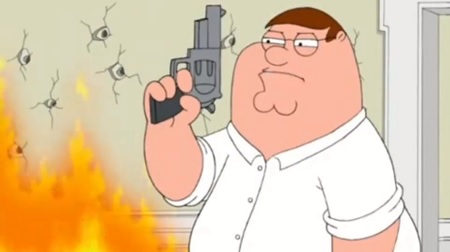
In fact it reminded me of that moment in Family Guy where they make a big joke about action movie lines. Peter Griffin uses the famous line from Lethal Weapon 2: “it’s just been revoked,” but does so in completely the wrong context. And that’s kind of how Burnham’s line felt here. That might be due to script rewrites and revisions but even so, more attention should have been paid to this line. If we’re comparing That Hope Is You, Part 2 to an action film, this was the climax of the hero-versus-villain story, and if they wanted to give Burnham a hero quip to round it off… it needed to at least make sense in context. And I know that picking on one line is a minor thing. Compared to how well the storyline as a whole worked it’s incidental, but I wanted to highlight it as it made me laugh in the moment.

“It’s just been revoked!”

There are a couple of points from this side of the story that I feel may be prone to criticism, and I want to look at each in turn. First is the sequence in the turboshafts – or rather, in the large empty space beyond the corridors on some of Discovery’s decks. This is new to Star Trek, and while there are spacious areas inside some starships that we’ve seen – particularly in engineering sections – I can foresee that some fans may feel that this huge area isn’t what they expected the inside of the ship to look like. While I don’t personally have an issue with it, and I would suggest it may be connected to engineering, the Spore Drive, or programmable matter as explanations for the large spacious area, I didn’t want to ignore this point, as it does represent a change to how starships in general – and the USS Discovery in particular – have usually been shown.

The second point is Book’s ability to fly the ship. I would argue that Aurellio, Tilly, and Stamets have all set up this moment at points throughout the season, hinting at ways to expand the Spore Drive beyond Stamets, so I don’t think it came from nowhere. I do think, however, that we could have seen a little more of Aurellio talking about or even just mentioning the possibility for empaths to connect to the mycelial network. There was an opportunity for him to have done so last week when he and Stamets talked for some time about Spore Drive options – this would certainly have better set up what was to come. As a story point, though, I don’t dislike it, and perhaps a second Spore Drive can be created for another Starfleet vessel as a result. Other members of Book’s tribe or race may even be able to join up with Starfleet to serve as Spore Drive operators, and even if only Book and Stamets can use it, well at least Discovery now has a backup!

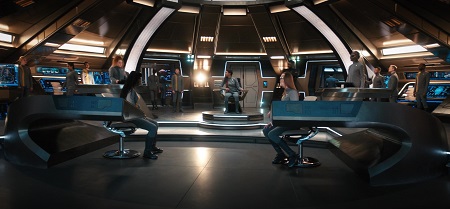
The interior of the USS Discovery.

Osyraa fell into the Bond villain trap of leaving the crew to be killed slowly and then rushing off to do something else. While Tilly, Owosekun, Detmer, Bryce, Rhys, and random dark-haired bridge officer (what happened to Nilsson?) were slowly suffocating, they managed to come up with a plan to regain control of the ship. Burnham gave Tilly an instruction via the intercom and Tilly rallied the crew to set off a bomb in one of the nacelles – knocking Discovery out of warp.

I’ll forgive the minor contrivance of Osyraa leaving them to suffocate. It’s the kind of thing I could imagine her doing, and again if we’re using the action film analogy, it’s something we see often enough. Tilly remained in control of her officers, and handled herself well in what were undeniably difficult circumstances. Her line to them that they didn’t need to join her on what looked to be a suicide mission was very much something we could imagine other Star Trek captains saying – and indeed we have seen other captains in the past telling their senior officers that a mission is voluntary. Despite losing the ship to Osyraa, Tilly stepped up and was a big factor in being able to regain control of it.

Osyraa in command of Discovery.

My only criticism of this side of the story is that the stakes were lowered significantly when no one was killed. Even when it seemed as if Owosekun wouldn’t survive the explosion, a last-second intervention by the Sphere data in one of the remaining DOT 23 robots saved her life. Since returning to the small screen in 2017, Star Trek has not been shy to follow the trail blazed by some other big television projects – like The Walking Dead or Game of Thrones – and kill of major and secondary characters. Star Trek: Picard Season 1 had a pretty big death toll of both new and legacy characters – yet no one at all died in this storyline, despite the superficial dangers posed to the crew. In fact, Ryn was the only casualty on the heroes’ side all season.

Killing a character for shock value or just for the sake of it is not what I’m advocating. But over the last decade or so, the well-executed death of a major or secondary character can add to the stakes of a storyline, making it clear that there is significant danger and emphasising to the audience that quite literally anything could happen. In Star Trek: Discovery, being a major character seems to provide a degree of plot armour, and that risks dropping the tension at some of these key moments.

It seemed for a moment as if Owosekun wouldn’t survive, but she did. And so did every other hero character.

I was pleased to see that Aurellio – the scientist working for Osyraa – wasn’t on board with her methods. But this was one point where perhaps an extra minute or two was needed to show him firmly break away from her and the Emerald Chain and join up with Burnham and the crew. After making his protest and being rendered unconscious, Aurellio didn’t really have much of an opportunity to do or say anything else. We saw him briefly on the bridge later on, but that was it. This character had been set up so well last week that his significantly reduced role this time was just a little disappointing. Hopefully we can see more of Aurellio in Season 4 and beyond.

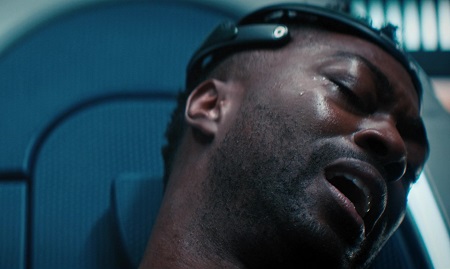
That Hope Is You, Part 2 went out of its way to show Osyraa at her worst, in order to make her irredeemable and justify Burnham killing her later on. Torturing Book was a big part of that, and the sequence in which she and Zareh used the mind control device first introduced a couple of weeks ago as an implement of torture was truly gruelling to watch – in the best possible way! Both David Ajala and Sonequa Martin-Green put in outstanding performances, and I wanted to highlight how well they played their roles. It’s easy to either under- or over-sell such an extreme moment – both in terms of the pain experienced by the victim and the emotional turmoil their partner is going through when forced to watch – but both actors hit the sweet spot and were pitch-perfect.

Book was tortured in That Hope Is You, Part 2.

Admiral Vance, Lieutenant Willa, and Kovich had some short but interesting moments at Federation HQ as they organised the defence of their base against the Emerald Chain. I was concerned for Vance in particular – if no one aboard Discovery were to be killed, I thought he was probably the writers’ main target! There was organised chaos at Federation HQ as Discovery, under Osyraa’s command, ran amok inside. It was really neat to see the ships battling within this confined space at the beginning of the episode, as well as seeing Osyraa know just where to hit the base to take down its shield wall.

The arrival of the fleet from Ni’Var was one of those stirring emotional moments up there with the arrival of the Kelpiens and Klingons in the Season 2 finale, Riker showing up in the Picard Season 1 finale, or the Enterprise-E sweeping in to battle the Borg in First Contact. I adored this moment, and it felt like the beginning of the Federation coming back together – a payoff to Burnham and Saru’s diplomatic efforts throughout thr season. It was a little early in the story, perhaps, but there’s no taking away from the fantastic way it felt when the fleet arrived.

Admiral Vance watches as the N’Var fleet arrives.

A couple of weeks ago, I said that the end of the season seemed formulaic and obvious – save or neutralise Su’Kal to prevent a second Burn, retake Discovery from Osyraa, and use the dilithium in the Verubin Nebula to power and reunite the Federation. And although I didn’t predict how exciting and action-packed that storyline would be, I was right. The end of the season was mapped out in Su’Kal, and Discovery stuck to the path. Not every show has to have twists and turns and shockingly unexpected moments, but I was still hopeful, even as That Hope Is You, Part 2 entered its final moments, that something different may have come along to shake things up.

For all the reasons given above, the Burn is the least interesting and most underwhelming part of both the season and its finale. However, despite that, I had a truly great time with That Hope Is You, Part 2. It’s true that the story unfolded exactly how I would have expected it to for the last two weeks, and it’s also the case that there were some tropes and clichés along the way. But there’s a reason why these action-oriented stories work, and That Hope Is You, Part 2 hit all the right notes in that regard. It was a solid, incredibly fun, action-packed episode of Star Trek.

Burnham assuming command of Discovery has been a goal that the series has been trying to reach since Season 1. Shuffling Saru off to Kaminar with only a brief explanation would not have been my first choice for getting there, because I feel his character deserved more respect than that. But that’s where we are – Captain Burnham. Her stupid disobeying of orders in the episode Scavengers and her struggle to come to terms with that in Unification III do undeniably undermine her ascent to the captaincy. And perhaps we need to step back when the dust settles and look at Burnham across all three seasons to see whether she really meets the criteria. Right now though, as of the time I’m writing this, her becoming captain not only works well, but it feels great too.

Starfleet has always been willing to bend the rules to accommodate talent; it’s a meritocratic organisation. Admiral Vance made his reasoning plain: Burnham may not always follow the exact letter of the rules, but she follows their spirit. She’s willing to make changes and sacrifices to adapt to the moment she’s in, and those are certainly strong qualifications for becoming a captain. Captains Kirk and Janeway in particular bent or broke the rules numerous times, and Picard, Archer, and Sisko were not immune to that either. Knowing how and when to work around the rules is part of what has always made for a great Starfleet captain. Burnham has that ability – and we’ve seen across all three seasons that she’s a natural leader, too.

“Let’s fly!”

The crew want to follow Burnham. They respected Saru, of course, but they love Burnham and they’re willing to follow her literally anywhere – or to any time. There are lingering issues which I hope will be picked up in Season 4 – notably with Stamets, who still seems unhappy with Burnham after she kicked him off the ship last week. But everyone else is fully on board with Captain Burnham, ready for her to lead them on to new adventures.

Where I criticised her earlier in the season for her lack of commitment to Starfleet, that has been resolved too. She felt that she might no longer fit in within the rigid confines of a Starfleet rulebook and uniform, but it turns out that she has at least some freedom to bend those rules to achieve important goals. And that does not come from nowhere. She earned that right across all three seasons of the show. She can be selfish, and she can be overly emotional, and as we saw in the Season 1 premiere she can be a complete idiot. But with a crew around her to support and advise her, with Book by her side as an emotional foundation, and having settled into her position in Starfleet, I can’t fault Admiral Vance – or Star Trek: Discovery – for putting her in the captain’s chair.

Burnham takes her seat in the captain’s chair for the first time.

If you’d told me three or four weeks ago that I was going to say that, I would never have believed it! But that is the strength of the second half of the season. Beginning really with The Sanctuary and running through to the season finale this week, Burnham has grown in leaps and bounds and the series has put in the work to make it feel that she earned her promotion. Where I called her arrogant and selfish I can now see a character with strength and commitment, and that’s not only because she has seen this character development, it’s also because Discovery took at least some of the focus away from her and allowed other characters to shine.

Discovery isn’t an ensemble show, but giving some significant plot threads to characters other than Burnham and spending time with them instead of largely with her has contributed to getting her to where she is at the end of the season finale. There was a sense in some earlier episodes that no other character would be allowed to do anything other than ride on Burnham’s coattails, and I was pleading with the series to allow someone else to do something of consequence… and then it happened. And not only was the show itself better for it, but so was Burnham. Freed from being the “chosen one” who was somehow destined to play the only significant role, her victories truly feel like her own. She accomplished a lot, not just this week but across the latter part of the season, and the work put into developing her character, stabilising her, and getting her ready for a leadership role ultimately paid off.

Burnham and the crew are ready for their next adventure.

There are, as noted, open questions at the end of That Hope Is You, Part 2. Saru’s status is perhaps the biggest, but I’d also like to know what became of Nhan and whether Earth has been in touch with the Federation. But those questions will have to be left for Season 4 to answer – whenever that may come.

So that was That Hope Is You, Part 2. And that was Star Trek: Discovery Season 3. For the first time in almost six months, there’s no new Star Trek to talk about! But don’t despair, because I still have to bring my Season 3 theories to a close. In addition, over the next few weeks I’ll take a look at the season as a whole, the Burn, Burnham herself, and other things we learned over the last few weeks.

There is more Star Trek just over the horizon – Lower Decks Season 2 may be coming out this year, and will finally get its international broadcast in just a couple of weeks’ time. We also have Prodigy to look forward to this year all being well. And you can bet that there’ll be news about Picard, the Section 31 series, Strange New Worlds, and other Star Trek projects coming before too long. It’s a wonderful time to be a Star Trek fan! Despite some gripes with part of its story, That Hope Is You, Part 2 was a great way to bring to an end this season and to the 23 weeks of Star Trek we’ve been lucky to enjoy.

Star Trek: Discovery is available to stream on CBS All Access in the United States, and on Netflix in the United Kingdom and elsewhere. The Star Trek franchise – including Discovery and all other properties mentioned above – is the copyright of ViacomCBS. This article contains the thoughts and opinions of one person only and is not intended to cause any offence.
Star Trek: Discovery theories – week 12

Spoiler Warning: There are spoilers ahead for Star Trek: Discovery Seasons 1-3, Star Trek: Picard, and for other iterations of the franchise.

I had a wonderful time with There Is A Tide this week. It was a fantastic episode jam-packed with action and excitement. But when it was over, I couldn’t help feeling that there was a lot left to do in terms of story! It’s possible, as I suggested in my review, that Season 3 will end on a cliffhanger with key storylines deliberately unresolved. If that isn’t the case, however, the upcoming season finale has an awful lot of story left to wade through – and I’m concerned that it may not be possible to give everything a satisfactory resolution.

We’ll have to wait to see what the season finale brings. Until then, we have a few more theories to discuss! This week we have two confirmations and not a lot else. Let’s look at those first before we dive into the main theory list.

Confirmed theory #1: Zareh returned.

Zareh was a character we met at the beginning of the season.

Though his return was spoilt a little by the recap that played before the episode began, I was pleased to see Zareh return. He was a glorified bully when we met him in Far From Home, and despite his defeat by Saru and Georgiou, appears to have been promoted within the Emerald Chain. I felt certain that he would be back considering we didn’t see him killed on screen, and I was right.

Zareh bookends the story of the season in a way – he was the first adversary the crew faced after arriving in the 32nd Century, and he is now a significant opponent as the season draws to a close. I don’t expect him to survive the season finale, but if Osyraa is killed off he may be kept alive to assume command of the Emerald Chain. In the event that the season finale leaves big questions open, we could head into Season 4 with Zareh as a major antagonist – but we’ll have to wait and see!

Confirmed theory #2: Zora (a.k.a. the Sphere data) will help the crew retake the ship.

Awwwwww!

Though we had to wait for the closing scene of the episode to see this theory come true, the Sphere data has allied itself with Tilly and the remaining bridge crew as they hope to retake Discovery.

The Sphere data was seen protecting itself in Season 2 – refusing to allow itself to be destroyed even when Control was coming for it. This season, it stepped in on at least two occasions to help out the crew, and it seemed certain that the Sphere data would not allow itself to be commandeered by Osyraa and the Emerald Chain. It has transferred itself into three DOT robots – which are absolutely adorable – and will help Tilly fight back against Osyraa.

So those theories were confirmed in this week’s episode. Now we come to the main theory list.

Number 1: Aurellio is married to Osyraa.

Are Aurellio and Osyraa an item?

The first of two Aurellio theories is a pretty short and simple one. Stamets noted that Aurellio’s partner is Orion. Osyraa, as far as we can tell, is an Orion. Aurellio and Osyraa speak highly of each other. So it’s at least possible that they are a couple.

This feels almost too obvious – so perhaps it won’t come to pass! There was also a suggestion that Osyraa is much older than Aurellio, which may count against this theory. However, they clearly have a connection, and unless Osyraa is on such friendly terms with all of her scientists, perhaps there’s more going on than just a professional relationship.

Number 2: Aurellio will stand up to Osyraa.

Aurellio.

In my review of There Is A Tide I compared Aurellio to Albert Speer – the Nazi German architect and minister. In the years after 1945, Speer would claim that he knew nothing of the Nazi regime’s crimes, that he was absorbed in his work, and that the atrocities happened without his knowledge. Aurellio, in his conversation with Stamets, seemed to demonstrate a comparable lack of awareness about the Emerald Chain and Osyraa.

However, there were hints through Kenneth Mitchell’s amazing performance that Aurellio is beginning to realise that he’s working for the “bad guys.” Having seen Osyraa murder Ryn in cold blood, as well as threaten Zareh, his loyalty to her and the Emerald Chain may be wavering.

Given that he’s clearly an incredibly clever scientist, he could be very useful to the Federation. If part of the plan for Season 4 involves replicating the Spore Drive so that it can be used to power the Federation, I can see Aurellio having a major role in that story. Or in any other story Season 4 may wish to tell. But first he needs to break free from Osyraa – and I have a suspicion that he will!

Number 3: One of the officers with Tilly will be killed.

Tilly is ready to retake the ship.

When Tilly told the officers with her that they would keep going to the bridge no matter what, was she foreshadowing someone’s demise? With her, as far as I could see, are Detmer, Owosekun, Bryce, Rhys, and at least one other character. Killing any of them would be impactful, as they’ve all been part of the series since the beginning.

Detmer had her own (underdeveloped) storyline this season, and was someone I speculated may be killed off. For several weeks I theorised that she’d meet her end – could this be the moment it happens?

Tilly and the officers with her are about to take on a very difficult and dangerous task. I doubt we’ll see Tilly killed, but any of the others who are accompanying her are perhaps about to meet their end.

Number 4: The Federation’s allies will arrive to help them battle the Emerald Chain.

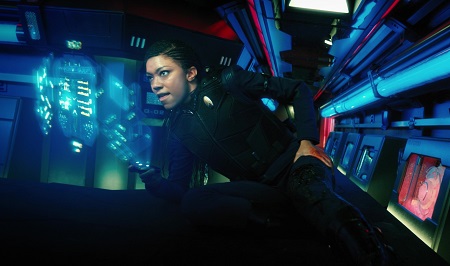
Burnham in a Jeffries tube.

Before continuing her Die Hard-inspired fight to reclaim Discovery, Burnham sent an emergency transmission to her mother. Assuming this transmission was received, Dr Burnham may begin rallying the people of Ni’Var to aid Discovery and the Federation.

Across the season, Saru and the crew made many friends. Former Federation members like Trill, Earth, and Ni’Var, as well as worlds like Kwejian were all aided by Discovery, something which greatly impressed their respective leaders. Faced with an attack on the Federation, could some or all of these once-united factions rally to Starfleet’s aid?

We saw something similar at the climax of Season 2, with Kelpiens and Klingons arriving at the last moment to help Pike and Saru as they battled Control, so it would not be without precedent. At the very least, I expect Burnham’s mother – who is now a Qowat Milat nun – will want to do something to help, especially given the desperate-sounding tone of the message she received.

Number 5: The Burn will receive a different explanation.

Did Su’kal really cause the Burn?

At the very least, the explanation for the Burn needs to be expanded upon. A couple of throwaway lines, heavy on technobabble, are not adequate to explain the season’s biggest mystery. If it’s true that Su’kal’s telepathic connection to dilithium is what caused the Burn, we need to know more about how and why that was able to happen.

It’s at least possible, given that There Is A Tide sidestepped the Burn altogether this week, that the season finale has a big surprise in store for this storyline. Perhaps Su’kal is not responsible for the Burn after all, or if he is, it’s because he was either genetically modified or otherwise coerced into it by someone else.

This is perhaps more of a hope than anything, because I feel that the Burn’s explanation was poor. I’d like to do a retrospective on the Burn at some point when the season is over, but suffice to say that this mystery had been set up as early as the first Season 3 trailer more than a year ago, and the Burn itself was named in the second trailer before the season premiered. We’ve been wrangling with this colossal event and its mysterious origin ever since, and its explanation – the way things sit right now, at least – is horribly anticlimactic. Su’kal’s story might’ve worked were it a single one-off episode, but not as the resolution to a season-long arc. There’s also, as mentioned, the disturbing implication of a man with severe mental disabilities causing such a disaster, even accidentally.

Number 6: The Burn is the result of a superweapon – perhaps one the Federation or Section 31 built.

The Burn.

Connected to the theory above, perhaps Su’kal either did not cause the Burn at all, or was forced into doing so as the culmination of some kind of superweapon project.

We’ve seen in past Star Trek shows stories about genetic enhancements and shadowy organisations exploiting and weaponising the unique abilities of people. Could there be another dimension to Su’kal? Perhaps he quite literally is a weapon, one designed for this very purpose – to attack the Federation’s enemies (or the Federation) through a coordinated attack on dilithium.

Though it seems like Su’kal is indeed the source of the Burn, another source may be revealed, absolving him of blame. I noted that his “scream” did not actually cause a second Burn – even though characters feared it came close – so perhaps there’s something else at play here that we don’t yet know. That other factor could be this superweapon – and it may be designed to target the Federation’s enemies, like the Borg.

Number 7: There will be a resolution to the story of Calypso (the Short Treks episode).

The USS Discovery as seen in Calypso.

The main point from Calypso which is still unresolved is how Discovery ended up in a nebula abandoned. And if, as has been hinted through the use of the term V’draysh, Calypso takes place sometime around the 32nd Century, how did the ship end up back in time?

The Verubin Nebula initially seemed to offer a partial explanation, but not only was Discovery not present there, the nebula itself is very different to the one inhabited by Zora, so that option seems to be off the table.

I have no clue how this circle will be squared – but it’s still possible that it will be, especially given how much progress we’ve seen toward unpicking the mysteries of Calypso this season.

Number 8: The Spore Drive will become Starfleet’s new method of faster-than-light propulsion.

Discovery makes a Spore Drive jump.

Though we don’t know how Osyraa came to know about the Spore Drive, figuring out a way to roll it out to vessels other than Discovery was a major theme in There Is A Tide. Both Aurellio and Tilly have proposed theories for how the use of the Spore Drive could be expanded, so we have to consider this a possibility.

If the dilithium in the Verubin Nebula is not able to be used to power the Emerald Chain, Starfleet, and other factions, the problem of how to travel faster-than-light still remains. And right now, the Spore Drive is really the only way I can see to allow any of the galaxy’s factions to do so. That’s why Osyraa wants Discovery so badly – not just to use the ship, but to copy its technology.

If, as predicted above, Aurellio turns on Osyraa, he could become instrumental in figuring out how to reverse-engineer the Spore Drive and the tardigrade’s DNA in order to make this a viable option. This could be part of the storyline for Season 4, so if there’s no resolution next week, this theory may simply roll over.

Number 9: A character from a past iteration of Star Trek – such as the Doctor from Star Trek: Voyager – will make an appearance.

I’ve been advocating this theory in some form since before the season premiered. Though we have had some tie-ins with past iterations of the Star Trek franchise – and even seen a familiar entity return depending on how you categorise the Guardian of Forever – it would still be nice to get a major character back in some form.

There were hints this week about the Federation President – a role we’ve seen in past iterations of the franchise – so perhaps we could see a returning character occupy this position. That said, the references to the Federation President served only to allow the familiar character of Vance to conduct negotiations with Osyraa, so that may be a non-starter.

As I said last time, maybe the only way this theory could come true is as a kind of epilogue or coda after the main storylines have concluded; perhaps even as a tease to the events of Season 4. It would certainly be difficult – but not impossible – to bring back a major character from Star Trek’s past at this juncture, given the complicated nature of the story overall. Given that there’s also no clear way that a returning character could have an impact on the story without that impact seeming to come from nowhere, perhaps we won’t see any significant character crossovers this season.

Number 10: The Dax symbiont is still alive.

The Dax symbiont.

This one is looking increasingly unlikely, because the two locations where Dax could have appeared have both seemingly come and gone without them: most notably the Trill homeworld in Forget Me Not, but also Federation HQ in Die Trying. However, there are hints at a lifespan for Trill symbionts that may be exceptionally long, in which case Dax could very well still be alive in the 32nd Century.

Obviously we won’t see Ezri Dax (barring some bizarre time travel/stasis storyline) but the symbiont itself could have lived this long. When Adira “met” the Tal symbiont’s former hosts in Forget Me Not, one was wearing a Star Trek: Picard-era uniform, hinting that Tal may have lived 700+ years. There are production-side explanations for this Easter egg, and as stated the fact that two of the best opportunities so far to meet Dax have come and gone most likely means it won’t happen this season. But I’m sticking to my guns on this one: Dax is alive!

Number 11: Kovich is an agent of Section 31.

Kovich in Terra Firma, Part I.

Kovich was presented as one of Starfleet Intelligence or Security’s senior people – perhaps someone brought in to deal with particularly complicated or dangerous situations. Thus it was a bit of a surprise not to see him this week when Osyraa arrived. His mysterious nature has led me to think he could be an agent of Section 31.

He knew a lot about the Terran Empire, and had access to classified files. He also seems to know more about certain events than he lets on; he allowed Georgiou’s health condition to manifest itself rather than warning anyone, for example, which would seem to be a pretty immoral thing to do!

The main way Kovich could have been revealed as a Section 31 operative would be if the secretive organisation had something to do with the Burn. As noted above, there is still that possibility in some form, but it feels remote. We don’t know if Kovich will be back before the end of the season, especially given how much story the season finale seems to have to get through. If we don’t see him, though, perhaps this theory will roll over to next season!

Number 12: The ban on time travel is being flouted – possibly by secretive elements within the Federation.

The USS Enterprise travelled back in time in The Original Series.

Admiral Vance clearly believes that the ban on time travel is intact and being followed. Kovich indicated that he does too – but I’m not sure how far I trust him. Is he an agent of Section 31?

It’s impossible to un-invent a powerful, useful, weaponisable technology, no matter how hard you try. Considering how crappy the 32nd Century seems to be, are we convinced that nobody at all is using time travel to try to give themselves an advantage? Not the Dominion? Not the Borg? Not Section 31? Seems unlikely to me, though for production-side reasons of wanting to keep the timeline intact and to avoid overcomplicating the plot we might be told this is true.

It’s possible that this theory will roll over to Season 4 if, as seems likely, the Burn is unconnected to time travel.

Number 13: Discovery Season 3 is taking place in an alternate timeline or parallel universe.

The Enterprise-C in Yesterday’s Enterprise.

After the Guardian of Forever’s definitive statement on the issue in Terra Firma, it now seems all but certain that Discovery Season 3 is in the Prime universe – the same one as every Star Trek production from Enterprise to Picard. However, it’s still at least possible that, due to time travel or for some other reason, the Burn was not “supposed” to happen.

Thus the ultimate solution to the Burn and the storyline of the season may be to go back to before Su’kal’s ship entered the Verubin Nebula and prevent that from ever happening, wiping this timeline from existence and restoring the “true” timeline.

I don’t believe this would be a good way to go. As a one-off story, an episode set in a timeline that is ultimately overwritten can work. We can look at episodes like Timeless from Voyager or Yesterday’s Enterprise from The Next Generation. But to wipe away the vast majority of an entire season, including presumably characters like Book and Vance, just feels like too much. It would render much of what the crew did – like helping the peoples of Earth, Trill, and Ni’Var – meaningless, and while it would set up another “blank slate” in time for Season 4, I’d rather see Discovery build on this season’s successes. Even if Discovery and her crew remembered what happened, wiping it all out feels like a bad way to go – but one that’s still possible.

Number 14: The ships at Federation HQ represent the majority of Starfleet’s remaining vessels. And they’re all 120+ years old.

A couple of Starfleet ships move to intercept the USS Discovery.

We didn’t get to see any kind of major space battle between Osyraa’s forces and Starfleet in There Is A Tide, so the status of the Federation’s remaining ships is not really clear. As I’ve been saying for weeks, though, it seems at least plausible that the rump Federation may only have a handful of ships available – with scarce dilithium for fuel, there is no way to maintain a huge armada, even if the ships were undamaged. It also seems reasonable to assume that Starfleet’s shipbuilding facilites were damaged or destroyed in the Burn, and that building new ships has been difficult – if not impossible for the fractured organisation – ever since.

Are there more ships beyond those few docked at HQ (and the two Mr Sahil noted)? And those ships may very well be old – they seemed new and futuristic to Discovery’s crew, but that could all be pre-Burn technology, meaning that Osyraa has the upper hand if the Emerald Chain has developed new weapons and technologies. We saw in People of Earth that quantum torpedoes were still in use, for example.

If there is to be a climactic battle between Starfleet and the Emerald Chain, perhaps we’ll learn more about the remaining Starfleet vessels at that time. If not, well it still seems like a theory that has merit!

Number 15: Saru is going to die.

Saru in his human guise.

There Is A Tide ignored Saru, Su’kal, Culber, and Adira, who were all left behind in the Verubin Nebula. Though they were mentioned – most significantly by Stamets as he pleaded to go to rescue them – the story focused on the battle to retake Discovery and on Vance’s negotiations with Osyraa. Thus this theory was not really advanced in any way.

We don’t know how much time There Is A Tide is supposed to have covered – it could easily be several hours, though, and Dr Culber told Burnham that if more than a day were to pass, there would be “no point” in staging a rescue as they would all be dead. I don’t expect this will be the way Saru would be killed off, but it’s a possibility.

Saru is torn between a desire to help Su’kal and his duty to Discovery. Given that he’s not thinking clearly, perhaps he will make a mistake or take a risk that results in his death. He may sacrifice himself to help Su’kal in some way, or to buy time for Culber and Adira to escape. There are many ways this could play out, but it’s at least a possibility that Saru will not survive the season.

Number 15A: Burnham will assume the captaincy of Discovery.

Burnham in temporary command of Discovery earlier in the season.

If Saru is killed – however that may come to pass – there will once again be a vacancy in the captain’s chair. Tilly as first officer always felt like a temporary thing, as indeed Saru himself explained when he offered her the role, and after losing the ship to Osyraa so easily there’s absolutely no way she could retain the captaincy – or even the XO position.

That would leave the captain’s chair empty with no obvious replacement. Senior officers such as Stamets or bridge crew like Nilsson or Bryce don’t seem plausible for story reasons, and with Discovery being such a Burnham-centric series, she feels like the only option. Well, unless the plan is to bring in yet another new character!

Number 16: Admiral Vance is going to be killed.

Admiral Vance.

Despite standing face-to-face with Osyraa this week, Admiral Vance survived. However, there may be a battle still to come, and it’s at least possible that he – as the man leading the fight – won’t survive the onslaught from Osyraa’s forces.

If the writers wanted to kill of a character we’ve spent a lot of time with this season – but not one of Discovery’s crew – Vance is pretty much the only option. His death could make the conflict with the Emerald Chain feel more impactful, and while I would be sad to see him go as I think he’s been a great character, it would open up the story to go in different directions in Season 4.

Number 16A: Saru will become an Admiral, and Burnham will become captain of Discovery.

Burnham and Saru with Admiral Vance.

Although Su’kal took Saru off the rails, showing us that he isn’t always calm and level-headed, his earlier time in the captain’s chair this season went remarkably well. His diplomatic efforts in particular may yet pay off – bringing former Federation members back into the fold. If that were to happen, perhaps he will be promoted, becoming an Admiral and even assuming the position of Commander-in-Chief of Starfleet if Vance is killed.

If he departs Discovery to head up Starfleet, the captaincy of the ship is once again open. And for the reasons listed above, Burnham seems to be the only real candidate.

As I’ve said in the past, Burnham assuming command feels like a goal Discovery has been trying to reach since Season 1. Perhaps this could be the moment it gets there.

Number 17: Tilly will resign as first officer and Burnham will return to the position.

Tilly sits in the captain’s chair in Su’kal.

Tilly did well in There Is A Tide, and doesn’t seem to have let the capture of Discovery completely ruin her confidence. She led the remaining bridge officers out of captivity and seems well-placed to lead an insurgency to retake the ship.

Despite that, however, she did lose the ship to begin with – and Osyraa captured Discovery from her with ease. It seems unlikely she could retain her position as First Officer, and while I doubt it will be stripped from her, she may very well choose to resign the position. It feels as though her arc over these few episodes will be to recognise her own lack of experience and unsuitability for command. She may grow into that role in the future – and perhaps Captain Tilly will be a Star Trek series in a few years’ time! But right now she clearly isn’t the right fit.

If Saru survives and remains in command – which he very well may, it has to be said – that would open up the first officer’s position. Burnham is again the logical candidate, despite the broken trust between her and Saru. She advised him to remain with Su’kal, speaking honestly to him in that moment, and perhaps he will recognise that and reward her for it. Now that she seems to have put her doubts about her role in Starfleet aside, she would be a good first officer.

Number 18: Saru, Burnham, or somebody else will use the Guardian of Forever to send the USS Discovery back in time.

The Guardian of Forever in Terra Firma, Part II.

Assuming that the Red Angel suit is truly gone, and that no one is violating the ban on time travel, the Guardian of Forever is the only way to travel through time that we know of in the 32nd Century. While I can see no pressing need to send Discovery back in time at this juncture, if such a need arose, the Guardian of Forever is about the only option for doing so.

I wrote in my review of Su’kal that the route to the end of the season feels “formulaic” – defeat the Emerald Chain, save or neutralise Su’kal to prevent a reoccurrence of the Burn, and use the dilithium planet in the Verubin Nebula to power the Federation, giving it the (literal and figurative) fuel to bring wayward planets back into the fold. There Is A Tide began the process of retaking the ship but didn’t complete that story, so the end of the season is still up in the air.

Even though I can’t foresee a reason why, it’s possible Discovery will need to go back in time, and the Guardian of Forever could help with that.

Number 19: Dr Issa is a descendant of Saru’s sister Siranna.

Saru regards the hologram of Dr Issa.

The actress who played Dr Issa, Hannah Spear, also played Saru’s sister Siranna in Short Treks and in Season 2. Why bring her back to play a different Kelpien – especially considering they look identical? My guess is that there is a familial connection there – Dr Issa may be a distant descendant of Siranna.

Though Saru was – for some reason – reluctant to share this information, the glowing patches seen on Dr Issa indicated pregnancy. Is this a trait all Kelpiens have? If so, why cover it up from the crew? Perhaps the answer is that the glowing patches are something only some Kelpiens have – such as those in Saru’s family. That could be how he knew what the glowing spots meant, and why he didn’t volunteer that information sooner.

I should note that it remains a distant possibility that Dr Issa and Siranna are meant to literally be the same character; that somehow, post vahar’ai Kelpiens live very long, or for some other as-yet-unknown reason. But I think a family connection is more likely.

Number 20: The dilithium planet will be destroyed.

The dilithium planet.

The dilithium planet reminded me at least a little of the Genesis planet in Star Trek III: The Search for Spock. That planet was similarly dangerous and unstable, and was ultimately destroyed. Could the dilithium planet in the Verubin Nebula share its fate?

The main reason why I consider this theory at least plausible is that it would be a major twist on the expected end to the season. Rather than the ridiculous amount of dilithium being used to restore the Federation, it would instead be destroyed, leaving the post-Burn galaxy still with limited travel options.

This in turn could set the stage for Discovery’s Spore Drive being duplicated and rolled out across the fleet – as we discussed above.

Number 21: The “monster” is the real Su’kal.

The “monster” which inhabits Su’kal’s holographic world.

The “monster” which inhabits Su’kal’s holo-world is interesting. Why would his mother or the other Kelpiens programme such a creature? Yes it’s a legend from Kaminar, but to create a holographic monster in a programme designed for a child? They may not have had long to build the programme – which explains the basic nature of some of the other holograms – so why go to all the trouble of creating this one? And why doesn’t it flicker or glow in the same manner as the others, nor seem to have degraded over time?

My theory is that the so-called “monster” – which has a Kelpien appearance – is the real Su’kal; old, decrepit, and badly mutated by a lifetime of radiation exposure that can supposedly kill within hours. The “monster” did not behave like a hologram, did not appear like the other holograms, and when Burnham encountered it it seemed to regard her with an almost-human curiousity.

Add into the mix that Su’kal appears to be far too young to have been present when the Burn occurred – 120-125 years earlier – and I think we have a solid theory.

Number 22: The “monster” is Dr Issa.

Could the “monster” be Su’kal or his mother?

Another possibility for the true identity of the “monster” is Dr Issa, Su’kal’s mother. Though age is again a problem, if Kelpiens post-vahar’ai are especially long-lived she may have survived this long, but without the same level of protection from the radiation she may have mutated and been burned by it. The question of Dr Issa is interesting – was she just a basic plot device; a lure to drag Saru to the nebula? Or is there more to this character than a fraction of a distress call and her son?

The “monster” is one of the most interesting elements to come out of Su’kal, in my opinion, and there seem to be clues that all may not be as it seems. Obviously this theory and the one above can’t both be right – but even if neither are true, there could be more to the “monster” than we expect.

So that’s it. My final batch of theories as we approach the season finale. This won’t be my final theory post; next week after the finale has aired I’ll be back to check out any confirmations or debunkings, and perhaps to set the stage for any Season 4 or spin-off theories that I have. Then, later in the year, I may revisit some of my theories from this season to assess what I got right and got wrong! I did something similar for Star Trek: Picard a few months ago, and it was fun to go back to some of my theories knowing how the story of the season played out. So stay tuned for that!

There’s only one remaining episode before 23 weeks of Star Trek comes to an end. All being well there will be more Star Trek to come this year – both the second season of Lower Decks and the first season of the kid-friendly show Prodigy are, as far as we know, targeting a 2021 broadcast. Discovery Season 4 has entered pre-production, and depending how things go for all sorts of reasons, it’s possible we could see it before the end of the year. But that’s by no means certain!

Vance, Eli, and Osyraa during their negotiations.

Last week I felt that the road to the end of the season was obvious: save or neutralise Su’kal to prevent a second Burn, retake Discovery from Osyraa, and then use the dilithium planet in the Verubin Nebula to rebuild Starfleet and the Federation. There Is A Tide really only focused on one part of that – the battle over Discovery – and even then left it unresolved. As long as Osyraa remains in charge there seems no hope of a Federation-Emerald Chain treaty, and since we saw nothing from Saru and Su’kal this week I have to say it doesn’t feel like much has changed on that front. The only thing I would say that has changed my mind on how “formulaic” the end of the season risked feeling is that we may very well not see a resolution to the story, and we may instead be heading for a cliffhanger. We’ll have to see!

Please remember that these theories are just a bit of fun. Some may seem plausible – or even highly likely – but that doesn’t mean that this is the way the story will unfold. I’m just a guy with a website, I’m not claiming to have any “insider information,” nor am I saying that the theories postulated above will come true. No fan theory is worth getting so invested in that the actual story becomes disappointing or upsetting. Personally, as much as I love feeling like I predicted something that later appeared on screen, I also truly love being surprised by Star Trek and other franchises. That doesn’t mean writers should make silly or arbitrary decisions purely for shock value, but it does mean that when a theory of mine falls flat on its face, far from getting upset I revel in that. If we could all remember to take fan theories with a healthy pinch of salt, maybe there’d be a little less toxicity in certain areas of the fandom.

Star Trek: Discovery is available to stream on CBS All Access in the United States, and on Netflix in the United Kingdom and elsewhere. The Star Trek franchise – including Discovery and all other properties mentioned above – is the copyright of ViacomCBS. This article contains the thoughts and opinions of one person only and is not intended to cause any offence.
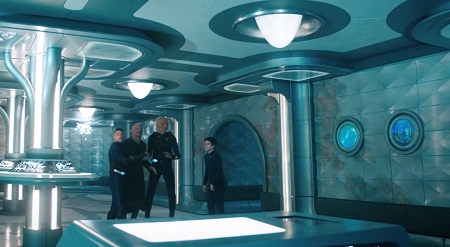
Star Trek: Discovery review – Season 3, Episode 12: There Is A Tide…

Spoiler Warning: There are spoilers ahead for Star Trek: Discovery Seasons 1-3, Star Trek: Picard, and for other iterations of the franchise.

For the second week in a row, there was a last-minute change in the title of an episode. Previously known as The Good of the People, this week’s episode was retitled There Is A Tide… which is a line from Shakespeare. It’s been a long time since I studied the great bard, but this line is taken from a longer passage in Julius Caesar in which the character Brutus speaks of missed opportunities and the need to seize the “high tide” of life; acting when the moment presents itself or missing out and never achieving greatness. Epic stuff, right?

Last week Su’kal left me with mixed feelings, and I said that we needed to see its storylines play out to their conclusion before delivering final judgement. Despite that, I was critical of the technobabble explanation given for the Burn, as well as how easily Discovery was captured by Osyraa. I felt the final act of the season risked becoming formulaic, and its storyline may have been telegraphed ahead of time.

I wasn’t completely sold on Su’kal last week.

There Is A Tide was an action-packed thrill ride from start to finish, with some gut-wrenching choices for Burnham and Book as well as some desperately-needed development for the villainous Osyraa. I’m not 100% sure all of it made perfect in-universe sense; why, after all, would Osyraa take hostages if she sought an armistice? But aside from that, it was a thoroughly enjoyable episode.

What it lacked, though, was any advancement of last week’s primary story: Su’kal, the Burn, and those left behind in the nebula. With only one episode left, we need to have those storylines wrapped up in addition to the Emerald Chain-Federation conflict as well as seeing our crew retake the ship. Or do we? Could Discovery be setting up a big season-ending cliffhanger? Right now that feels like a real possibility. Beginning with The Next Generation’s Season 3 finale, The Best of Both Worlds, Star Trek has seen fourteen seasons end in such fashion – including Season 2 of Discovery.

Aurellio and Osyraa.

As great as There Is A Tide was, it’s worth acknowledging the absence of any advancement of the Su’kal-Saru-Verubin Nebula story. It absolutely could be because there’s a feature-length episode or cliffhanger to come next week, but if that doesn’t happen I’m concerned that There Is A Tide has left the season finale with a huge amount of narrative to get through. I criticised the two-part finale of Star Trek: Picard for rushing too much and skipping over potentially interesting story threads, and I really hope Discovery won’t have the same issue.

There Is A Tide sidesteps the Burn altogether. While the event was discussed – notably by Osyraa and Admiral Vance – the Burn once again was not centre-stage. If there is to be any hope of a proper resolution to what has been the biggest mystery of the season beyond the couple of lines of technobabble we got last week, next week’s episode has a lot of work to do. And that really summarises my concern: taken as a standalone piece, There Is A Tide was non-stop excitement, action-packed, and fantastic… but by the end of its forty-six minutes, there remains a lot of work to do in terms of narrative.

Burnham led an action-packed story in There Is A Tide

So that’s enough about what may or may not happen in terms of the narrative structure next week. Let’s get into what There Is A Tide did right. First up, Osyraa. In her two appearances thus far, Osyraa has been flat, one-dimensional, and boring. Worse, she appeared to go from an easily-defeated cardboard cut-out adversary to a completely overpowered supervillain in between her two appearances. I didn’t find her compelling or even interesting; with no motivation beyond “I’m evil and I like it” she was just as bad as – if not worse than – Mirror Georgiou.

There Is A Tide changed that. Though some issues with Osyraa remain, the episode expanded on her character in a huge way, giving her a lot to do and showing off some genuine complexity and nuance. I’m not fully sold on her plan – which seems to have been to capture Discovery and use the ship and crew as leverage to force the Federation into… an alliance? But the way she went about it, both on the ship and at Federation HQ in her meeting with Vance provided some sorely-needed interest to her character.

Osyraa finally got some character development.

We knew from Ryn a few episodes back that the Emerald Chain was running out of dilithium, and it’s this shortage that forced Osyraa to the negotiating table. While we don’t see the precise nature of her proposals, Admiral Vance considered it impressive that she was willing to offer such terms. Her motivation for doing so is, as the episode’s original title suggests, “for the good of the people.” Osyraa’s plan seemed to offer a trading arrangement and non-aggression pact with the Federation, and she made reference to one former Federation outpost that has already been trading with the Emerald Chain.

There are a couple of points from Admiral Vance’s response to consider, and both have to do with putting principles ahead of being practical. Burnham, as we’ve seen through her actions this season, is very much someone who will work around regulations and rules where necessary to get the right outcome – the ends justify the means. Vance, on the other hand, keeps his principles even if it means problems for himself and the Federation. Firstly he scuppers the deal by adding a requirement he knew Osyraa could not agree to – her standing trial for what he regards as her crimes. But secondly, and perhaps most interestingly, he allowed Osyraa to leave.

Admiral Vance rejected Osyraa’s proposal.

Organisations like the Emerald Chain – at least, the way it has been presented thus far – are often cults of personality, where a strong leader has all the power and influence. As we have seen many times both in history and fiction, the removal, arrest, or even embarrassment of such a leader can bring down their entire organisation. And so it is with Osyraa. If Vance had arrested her, detained her aboard Federation HQ, her underlings wouldn’t know what to do. It would have given him leverage to negotiate the release of Discovery and the crew, and it wouldn’t have done any harm to Federation-Chain relations given that the treaty was already a non-starter.

But I’m not criticising his decision as a narrative point. I think what we have with Vance is a contrast, not only to Burnham but to the way Saru was acting last time – both are impulsive, emotional, and bending the rules. Vance is steadfast – the Federation’s ideals and principles are not to be compromised, even if that means making life harder for himself and the Federation. While Burnham’s storyline in There Is A Tide is far more exciting, I would argue that Admiral Vance is the one who best embodies what Starfleet and the Federation are all about.

The negotiations were short.

At the end of the day, isn’t that what the story of Season 3 has tried to be about? Rediscovering Starfleet’s values and placing them front-and-centre. That’s what Saru has tried to do with Earth, Trill, Ni’Var, Kweijan and so on. It seems at least plausible that these forces may come to the Federation’s aid if there’s a battle or war – like the Kelpiens and Klingons did against Control at the climactic fight in Season 2. If they do show up, it will be because they were inspired by Saru, Vance, and the principles they stick to.

On the other hand, as Burnham and other main characters have shown throughout Discovery’s run, rigid adherence to rules and principles isn’t always the right way to go. Compromise is sometimes needed – and Vance bottled a chance to do so. There’s a real-world message here, one which is a little odd given the polarising times we live through: moral absolutism is okay. Recent political events have reminded us of the need for compromise and to find ways to bridge the gap, yet Discovery seems to be saying that it’s fine to stick to idealism even if that means division and fighting continue.

Vance offered Osyraa terms that he knew she could never agree to.

Perhaps that’s enough politics for now! One character I loved in There Is A Tide was Aurellio, a man with a fittingly Shakespearean name! When it was announced before the beginning of the season that Kenneth Mitchell, who had played Kol in Season 1, Tenavik in Season 2, and a couple of other characters both in Discovery and Lower Decks, would be returning, I wasn’t sure how it would work. Mitchell has recently been diagnosed with ALS (motor neurone disease). There was no way for the series to ignore that – Mitchell uses a wheelchair now – but I was hopeful to see a character and storyline that treated disability respectfully. As you may recall if you’re a regular reader, I’m disabled myself.

I adored Aurellio, and Mitchell’s performance in the role. The way the series incorporated his standing-wheelchair was tasteful and sweet, and Aurellio being disabled was neither ignored nor tokenistic. The fact that Aurellio has – as he puts it – “a genetic defect” was not the only aspect to his character, who comes across as a scientist or technocrat who is unaware of the extent of the criminality and depravity of the organisation he works for. Shielded from the day-to-day running of the Emerald Chain, Aurellio is – perhaps wilfully but perhaps not – able to concentrate solely on his work.

Aurellio was a wonderful new character and a great addition to the season’s story.

Though this will not sound like a compliment, I regard Aurellio as being Albert Speer – or at least, the public persona claimed by Speer after 1945. There are people like Aurellio even in the worst organisations and regimes – blind to the worst aspects, focused only on their own small work. Often in these stories, a character like this will step up once their eyes are opened to what’s going on beyond the confines of their laboratory – and perhaps that’s something we’ll see next time or in a future story. I’ll save discussions of Aurellio’s possible future for my theory post.

Aurellio was tasked with working on the Spore Drive – though it remains unclear how the Emerald Chain came to know as much about it as they do. To that end he was teamed up with Stamets, and their tête-à-tête in Engineering was fascinating to watch; both Mitchell and Anthony Rapp put in outstanding performances during this sequence.
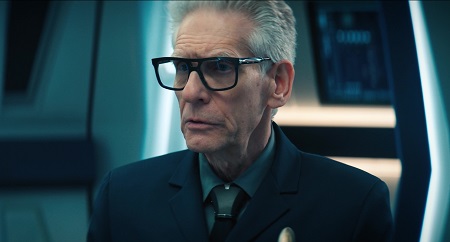
The conversation Stamets and Aurellio had was riveting to watch.

The plan Aurellio had to try to recreate the DNA of the tardigrade seems to have merit – or at least no less merit than any other technobabble in Star Trek. Perhaps with Stamets’ support it could be taken more seriously both by Starfleet and the Emerald Chain. Stamets objected, saying he believes it is not possible and that the tardigrades are extinct – but neither of those claims are supported by on-screen evidence. We’ve seen tardigrades referenced as recently as December 2019 in the Short Treks episode Ephraim and Dot. The nature of that story’s relationship to canon is not clear – but tardigrades are still alive and kicking within the Star Trek mythos, at least.

Earlier in the season Tilly was said to be working on a plan for a non-human navigator to replace Stamets; this is something that, while never followed up on, would have allowed the Spore Drive to perhaps be rolled out to other vessels. It’s understandable why Stamets wouldn’t want to discuss any of this with Aurellio – but we’ve seen in the past that he’s very happy to talk about his creation with other scientists.

Will Aurellio’s plan work?

Besides the plot-heavy conversation about the Spore Drive, two things stuck with me from the Aurellio-Stamets conversation. First was that Aurellio mentioned several times that he’s in a relationship and has children. Stamets figures out he’s in a relationship with “an Orion” – it’s not unreasonable to assume that this person could be Osyraa herself, but we’ll save that for my theory post! Next was that Stamets claimed to have a child of his own. Since, as far as we know, Stamets and Culber do not have any children, this appears to be a reference to Adira, which was incredibly sweet. There has been a parental vibe between Stamets and Adira for much of the season, so for Stamets to say it aloud here was wonderful.

This would go on to be at the heart of the Stamets-Burnham argument later on, with Stamets arguing for a return to the Verubin Nebula to save Culber and Adira, but Burnham insisting he needs to get off the ship to prevent Osyraa using him to take Discovery away from Federation HQ. Rapp put in his best performance of the season so far in There Is A Tide, especially as he desperately argued with Burnham to remain aboard the ship.

Burnham ejected Stamets from Discovery.

That scene was truly heartbreaking. Of all the moments in There Is A Tide, the sequence between Burnham and Stamets was perhaps the shortest, which is a shame; it could certainly have been expanded by a couple of minutes. But a lot was packed into their time together, as Burnham rendered Aurellio and a guard unconscious in order to get Stamets off the ship. She knew that by doing so she was endangering Saru, Culber, and Adira, but when faced with the prospect of Osyraa and the Emerald Chain keeping control of the ship she evidently deemed the sacrifice worth it.

Stamets’ protests as Burnham prepared to eject him from the ship grew more and more desperate, until in his final moments he seemed resigned; cursing her for what she was doing. Anthony Rapp ran the gauntlet of emotions in his scenes this week, and after Stamets hasn’t has that much to do across the season, it was wonderful to see him put in such an outstanding performance.

Stamets argued with Burnham about rescuing Culber and Adira.

So we come to Burnham. This review is surely not going to be the first time you’ve heard this, but her story this week was basically Star Trek’s answer to ’80s action film (whose Christmassy status is debated) Die Hard! Crawling around in the Jeffries tubes and conversing with Zareh on the radio was clearly inspired by Bruce Willis’ character of John McClane, who spends much of Die Hard similarly sneaking around and conversing with his adversary by walkie-talkie. The Star Trek franchise has had many action-packed stories and moments over the years, but Burnham’s entire storyline this week has to be one of the best.

As I’d been predicting since his first appearance, Zareh was back. His return makes it feel as though the story of the season is beginning to come full-circle: we started with the revelation of the Burn and the initial conflicts with Emerald Chain couriers, and we’re ending with the Chain and the resolution to the Burn. Zareh bookends the season in a way, and I like that. It gives something more to the story than in Burnham was just facing off against a new unknown goon. The only drawback is that Zareh didn’t get to see Georgiou or Saru – the two characters who wronged him worse than Tilly.

Zareh made his return in There Is A Tide.

At the beginning of Burnham’s story we saw her and Book navigating a “transwarp tunnel.” Whether this is part of the Borg network or not is unclear – as is the fate of the Borg, come to that. It was convenient that this network leads right to Federation HQ, but I suppose we can forgive such contrivances within the story! Book’s ship crash-landing was a more explosive and dramatic version of the shuttle crash in Star Trek V: The Final Frontier. There was also a callback to Voyager, where Borg drones were ejected into space in a manner similar to Burnham kicking one of Zareh’s henchmen out into the vacuum of space. I appreciate that there are these little thematic, visual, or narrative nods within Discovery, even when the show isn’t overtly trying to relive Star Trek’s greatest hits.

It was horribly unfortunate for Burnham that, in her first encounter with one of Zareh’s men, she got stabbed. And my gosh that stab was absolutely brutal! Discovery has been much more gory and visceral with some of its depictions of injuries when compared with past iterations of Star Trek, and this was certainly one of the most visually brutal. The camera work and direction showed just how painful Burnham’s wound must’ve been for her, and the follow-up as she cauterised the wound with a phaser was equally gruesome. Wonder why she didn’t use a medical kit? Compared with the dodgy CGI involved in Mirror Burnham’s death a couple of episodes back, this injury was so much better from a visual standpoint, and worked perfectly within the story.

Burnham suffered a major injury while battling the Emerald Chain.

The injury likewise harkens back to Die Hard, as John McClane suffers injuries to his feet from walking on broken glass in that film. Both characters – Burnham and McClane – were left hobbling by their respective wounds, trailing blood as they crawled and snuck around. I have to assume these Die Hard throwbacks were deliberate on the part of director and Star Trek legend Jonathan Frakes. It’s by no means a carbon copy of that film, but anyone who’d seen Die Hard would struggle to miss the similarities!

Burnham succeeds in her initial objective – to free Stamets and smuggle him off the ship. However, the task of retaking the ship and defeating Osyraa and Zareh is pushed back to next week. Burnham got the bulk of the action this week, but she wasn’t the only one who got exciting scenes. Tilly and the secondary characters from the bridge managed to escape their confinement and defeat their guards, and the morse code tapping was another reference to The Final Frontier – and not to mention a very clever way to outwit the henchmen guarding them!

Burnham in a Jeffries tube.

Ryn, who was initially with the group of bridge officers, lost his life by Osyraa’s hand. This might be the moment that pushes Aurellio to potentially switch sides, or at least to stand up to Osyraa – but we’ll save that for my theory post! I was genuinely shocked by his death, and for a split-second it seemed as if Book, who was also present, was going to be the one Osyraa killed. After he and Burnham confessed their love for one another earlier in the episode, it would have been a tragic end to their relationship. I’m hopeful that Book will survive the season, giving Burnham some stability and emotional guidance going forward.

The final revelation of the episode was the Sphere data had transferred itself into at least three DOT robots. These cute little droids had been part of the show all season long, seen in the background or making repairs to the ship, and I’m glad they get a moment to be front-and-centre. I absolutely need a plush DOT though, so Star Trek merchandising team take note!

The DOT 23s are adorable and I love them.

Tilly didn’t allow the loss of the ship while under her care to compromise her, and she led the remaining crew in a creditable fashion as they escaped and linked up with the DOTs. I felt sure that the Sphere data would find a way to help, and this seems to be the method it has chosen. Seeing the cute little robots address Tilly as “captain” was a strangely emotional moment, and came just after Detmer, Rhys, Bryce, and Owosekun had all pledged to follow her. The crew sticking together – joined by the DOTs – was a hopeful note to end the episode on.

So that was There Is A Tide… which is the penultimate episode of the season. It was absolutely fantastic, with complex themes, great performances, and plenty of action as the season approaches its climax. My only real points of criticism come from what wasn’t present – most notably the action in the Verubin Nebula – and whether there might be a little too much left to get through if the season finale is to wrap everything up neatly. Beyond that, however, I can hardly find a single fault.

Tilly is ready to retake the ship!

Osyraa got the expansion her character has needed since she was introduced, which was fantastic. Vance got to show off his negotiating skills. Tilly remained steadfast in command despite her “bruised ego” after losing the ship. Aurellio was a wonderful new character with depth. Anthony Rapp put in the performance of the season as the emotionally crippled Stamets. And Burnham got her very own Die Hard story, an action-packed adventure as she tried to save the ship from Osyraa and Zareh. There was so much going on in There Is A Tide, and all of it was wonderful.

This episode may be the high point of the season so far – an award I would have previously given to Far From Home. Jonathan Frakes never fails to deliver when he’s in the director’s chair, and this was a fantastic, well-written episode that allowed him to shine. There are a lot of open questions as of the end of the episode; hopefully the season finale can either provide satisfactory answers or set up Season 4 to bring about a resolution. I cannot wait for the end of the season – but it will be a bittersweet moment as it will bring an end to 23 straight weeks of Star Trek which began back in August!

I hope you had as much of an enjoyable time with There Is A Tide as I did! Come back next week for my breakdown of the season finale, and stay tuned for much more Star Trek here on the website as we head into 2021.

Star Trek: Discovery is available to stream on CBS All Access in the United States, and on Netflix in the United Kingdom and elsewhere. The Star Trek franchise – including Discovery and all other properties mentioned above – is the copyright of ViacomCBS. This article contains the thoughts and opinions of one person only and is not intended to cause any offence.