Spoiler Warning: There are spoilers ahead for the Star Wars sequel trilogy.
Y’know, the more I think about it, the more convinced I become that this particular article would’ve been a better fit for April Fool’s Day rather than Star Wars Day. But I’m committed now… so here we go!
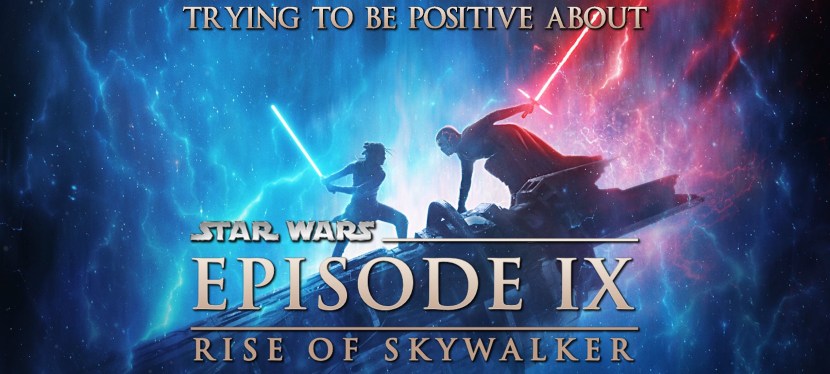
Happy Star Wars Day, friends! May the Fourth be with you… and all that. This year, I thought it could be a bit of fun to mark the occasion by revisiting one of my least-favourite Star Wars films – and probably one of the worst films I’ve ever seen – 2019’s The Rise of Skywalker.
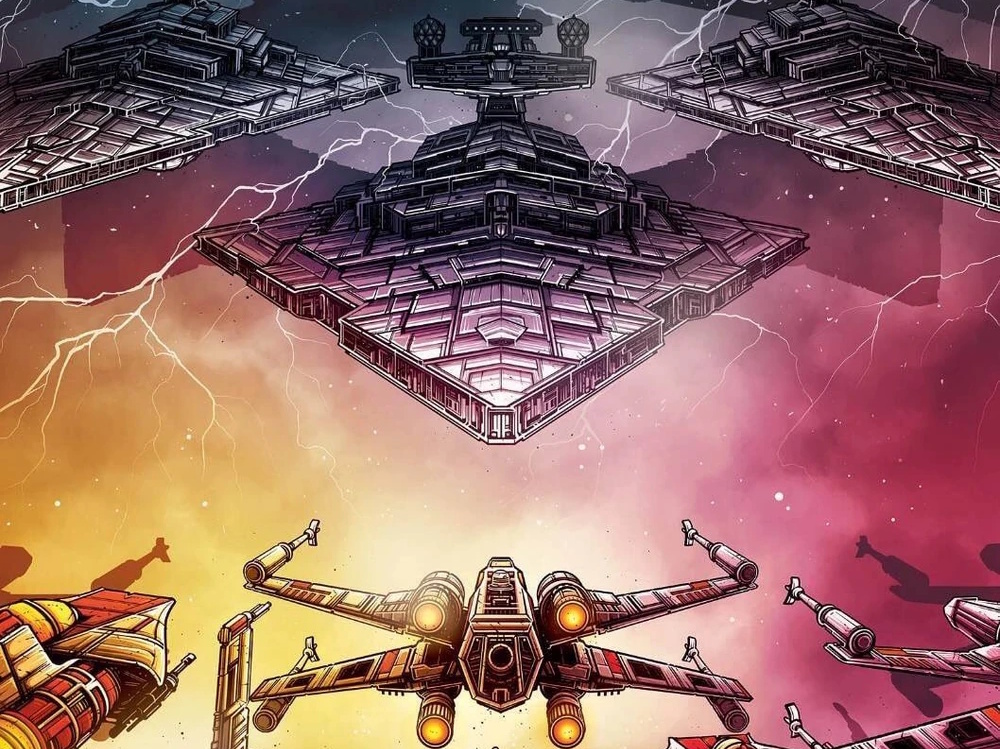
X-Wings and Star Destroyers on a promotional poster.
It was in late 2019 that I embarked on the project that eventually became this website, and for a sometime Star Wars fan, that was a bit of a strange period. The Last Jedi had proven to be massively controversial within the fan community, and the discourse around that film had become incredibly toxic. Solo: A Star Wars Story had flopped, I really wasn’t keen on the first season of The Mandalorian, and it seemed as if the only bright spark in the franchise was Jedi: Fallen Order. I desperately hoped that The Rise of Skywalker could do the impossible by bringing the fan community back together and ending the sequel trilogy on a high.
Though I consider the Obi-Wan Kenobi miniseries to be the worst piece of Star Wars media that I’ve seen, The Rise of Skywalker isn’t far behind. It was an atrocious film, one that I’d seriously consider putting on a list of “the worst films I’ve ever seen.” But re-hashing what I didn’t enjoy about the film isn’t the purpose of today’s exercise!
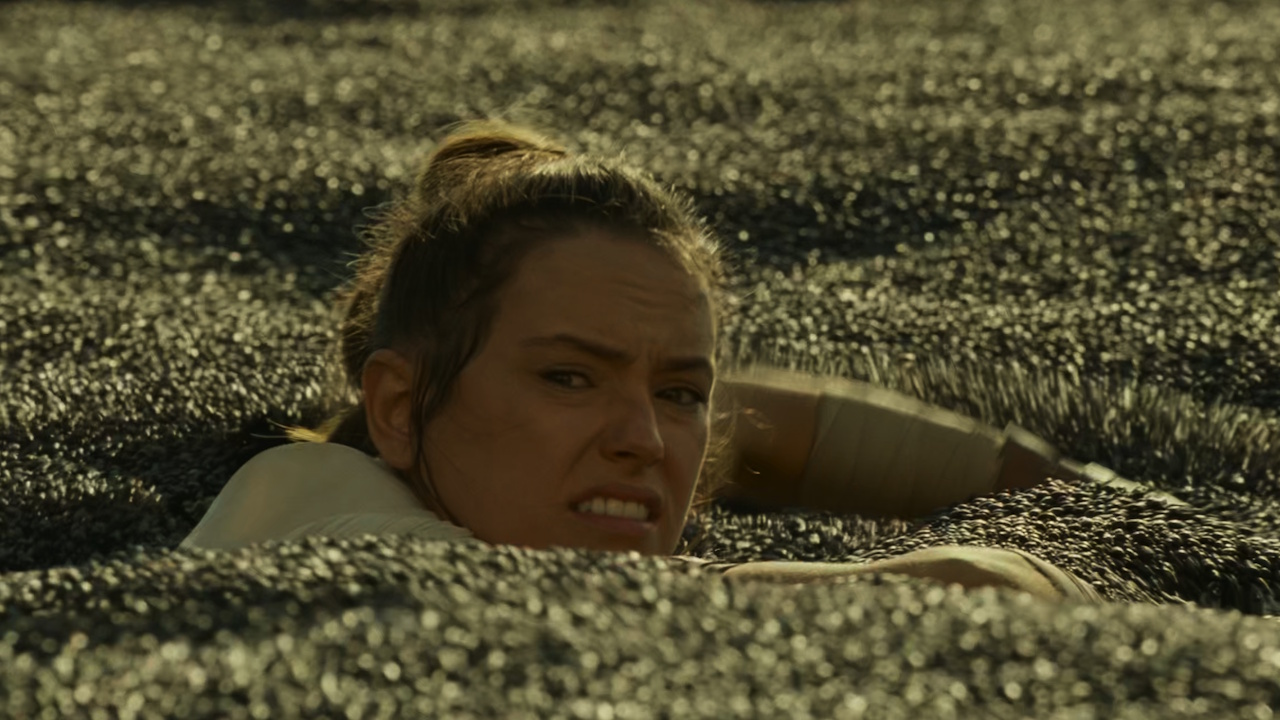
Surely this can’t be a visual metaphor…
Because it’s Star Wars Day, and in the spirit of positivity, I want to talk about some of the things The Rise of Skywalker got right – or at least got less wrong. Despite my overall feelings about the film, its story, the thought process that went into creating it, and more… there are some highlights worth mentioning. You might remember some of these if you read my two separate articles about the film in 2020 and 2021, but I’ve also added a couple of points that I didn’t mention in those earlier pieces.
In my essay titled In Defence of Luke Skywalker, I talked about how the depiction of Luke’s depression in The Last Jedi was generally well-written and conveyed an important message. It may not have been what fans wanted or expected from Luke Skywalker – particularly folks who’d bought into the old Expanded Universe stories, which depicted him as a flawless all-conquering superhero – but it was powerful and it resonated with me. The idea that anyone, even someone heroic, can fall victim to the “black dog” of depression is an important message, and it was well-told in The Last Jedi.
Luke’s depiction and death were controversial aspects of The Last Jedi.
The Rise of Skywalker undid most of that, unfortunately. But it couldn’t entirely erase what had come before. If you take Luke’s story across the sequel trilogy, you can read it as recovering from depression – and that is a positive, hopeful, and uplifting message. The Force Awakens and The Last Jedi show Luke at his lowest: suffering a catastrophic defeat, almost giving in to a dark impulse, grieving the loss of his students, failing at his life’s mission to restore the Jedi Order, and succumbing to depression. He retreated to Ahch-To to die.
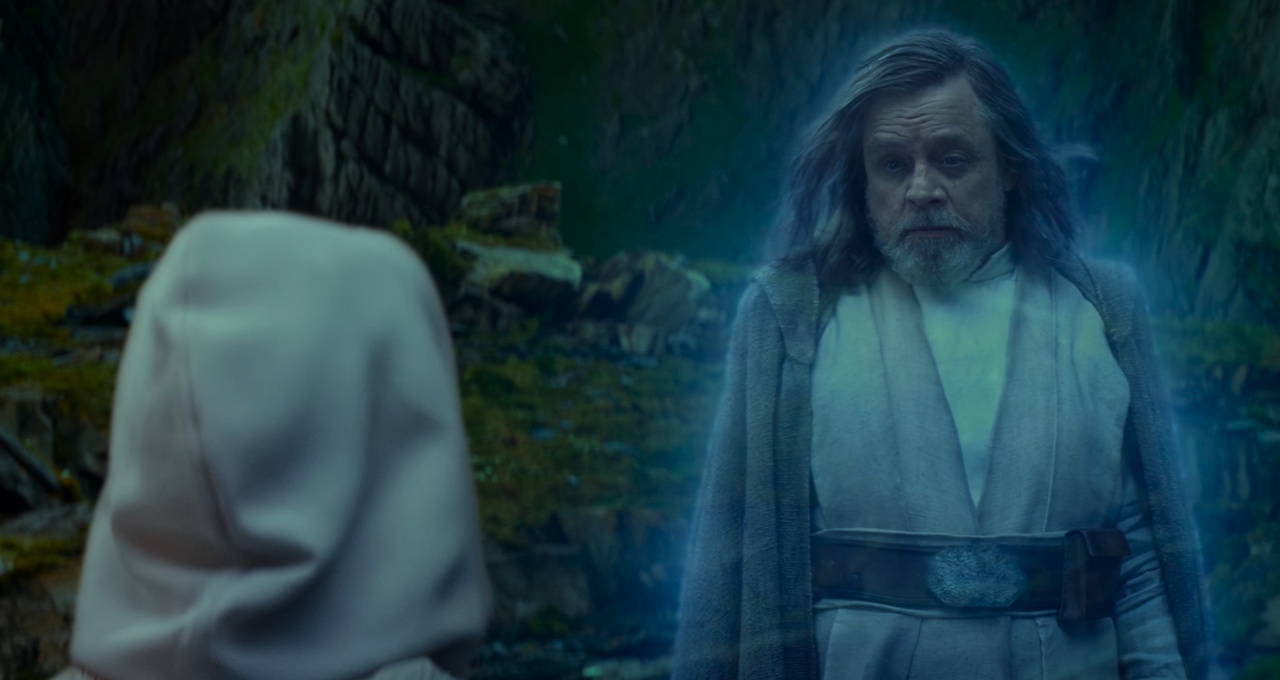
But after the events of The Last Jedi, Luke found a reason to believe again. And The Rise of Skywalker takes that concept and expands upon it, showing us Luke – in ghostly form – happier, more connected to the Force, and more willing to lend a hand when the galaxy needed him. To drag out the depression metaphor from The Last Jedi, this is the recovery phase. Not everyone who suffers with depression gets to that point, but seeing it depicted on screen like this can give hope and inspiration to people in that situation.
Rey with Luke’s ghost.
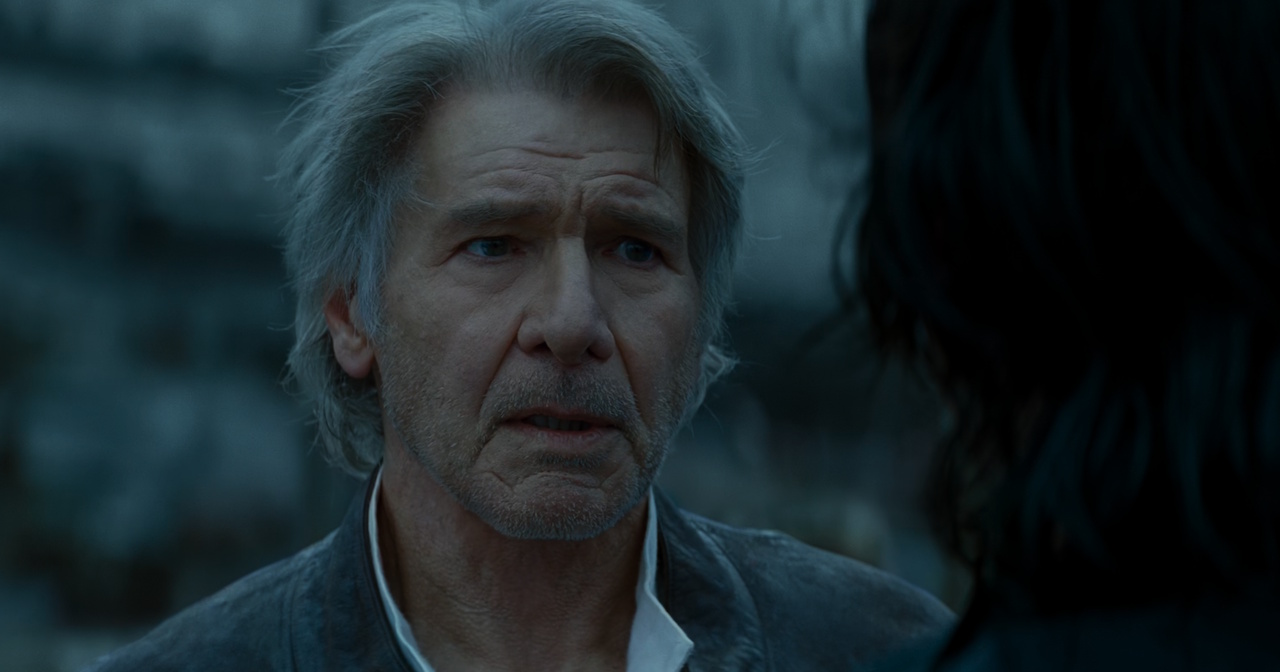
Sticking with deceased characters, Han Solo got more of a send-off in The Rise of Skywalker than he did in The Force Awakens. Han’s death was shocking in that film, but its suddenness was immediately followed up by action set-pieces and the “trench run” over Starkiller Base – meaning we didn’t get to sit with the impact of it for very long. Bringing Han back – albeit for a role that was clearly intended for Leia – was somewhat cathartic, and getting to spend a little more time with him was a net positive for the film.
Because this sequence was told from Kylo’s perspective, we got to experience some of the feelings of grief, loss, and regret that he felt at killing his father. We can debate whether such an action is ever forgivable or redeemable, but The Rise of Skywalker wanted to give Kylo a redemption arc akin to that of Darth Vader in Return of the Jedi. Seeing this vision of Han Solo helped with that, or at least didn’t detract from it. And Adam Driver put in a stellar performance in these sequences – as he did across the entire film, really.
The Rise of Skywalker gave us a bit more closure on Han’s death.
I know we’re trying to be positive about The Rise of Skywalker and this next point is very much a backhanded compliment (at best), but it’s my article so I’m gonna include it! The line “somehow Palpatine returned” has become one of those “so bad it’s good” moments for me. It wasn’t when I first watched the film, but the more I’ve sat with that line the funnier I find it to be. I still think everyone involved with writing, approving, and directing this line should be blacklisted from the entertainment industry for life… but on days when I don’t want to take Star Wars too seriously, or where I’m so depressed I need a good laugh, “somehow Palpatine returned” is there for me.
The line has also become one of my go-to examples of poorly-written dialogue, as well as an example of Star Wars’ overreliance on other works of media to set up important narrative beats in mainline films. Not only that, I think there’s something encouraging and even inspirational about this line. “Somehow Palpatine returned” reminds me that I’d have to do an exceptionally poor job to write something worse, and that there’s apparently a very low bar for pitching scripts for big-budget films. So maybe my Hollywood dreams haven’t entirely evaporated, eh? Jokes aside, this line is awful, and it’s become emblematic of the failures of The Rise of Skywalker and the sequel trilogy as a whole. But it’s also unintentionally hilarious as the film’s writers and Disney’s executives tell on themselves; no one could be bothered to write an explanation for Palpatine’s stupid resurrection, and this storyline was set up as part of a merchandising tie-in deal with the video game Fortnite. For all those reasons and more, it’s an excellent example of what not to do in filmmaking.
“Somehow Palpatine returned.”
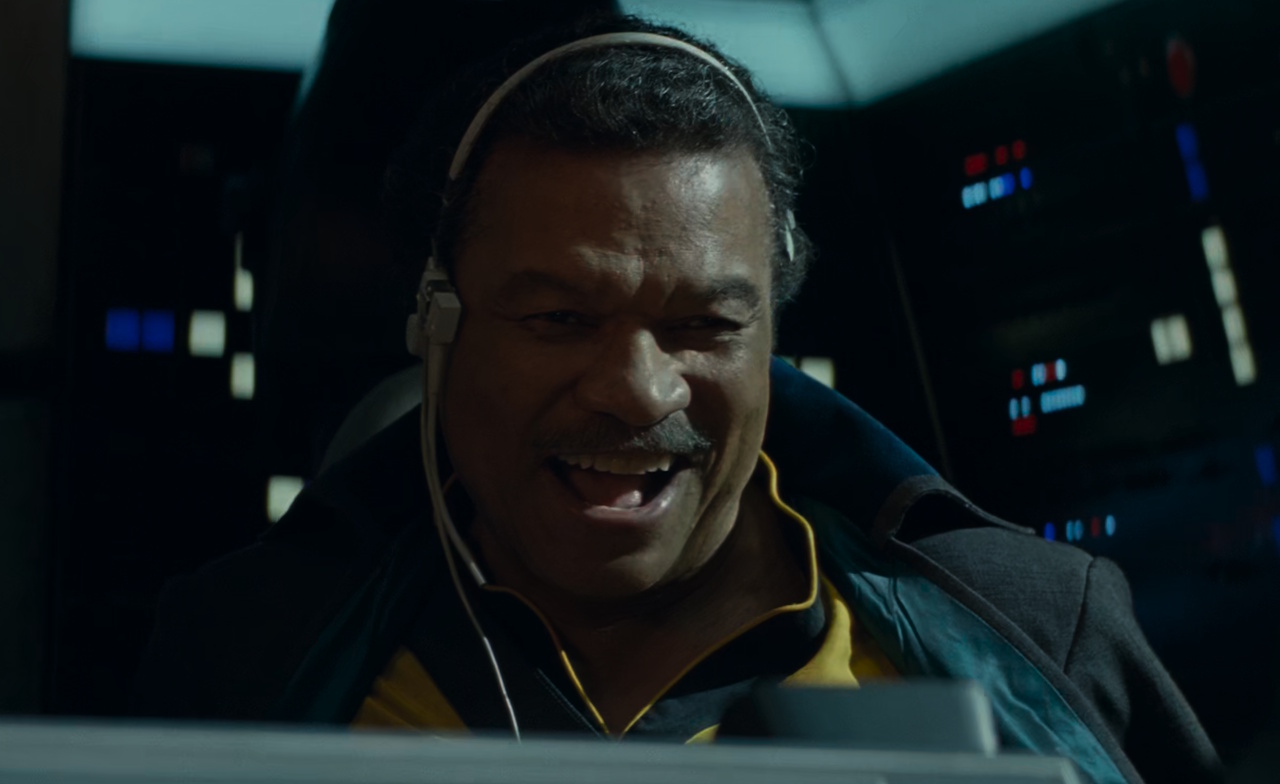
To get back to something a bit more genuinely positive and inspiring, I’d like to highlight Lando Calrissian’s role in The Rise of Skywalker. I don’t know why Lando was absent in The Force Awakens and The Last Jedi, but Billy Dee Williams made the most of his return to the role in the third instalment of the sequel trilogy! In fact, I could’ve happily spent a lot more time with Lando; watching him heading out across the galaxy, rallying the citizens to the cause would’ve been quite something to see.
Lando’s last-second arrival at the head of a massive fleet was pretty much the only moment in The Rise of Skywalker where I felt a twinge of emotion. I’m a sucker for a “desperate last stand” kind of story, and seeing the ordinary citizens of the galaxy rising up in unison against Palpatine and the Sith felt good in the moment. As Poe, Finn, and the rest of the Resistance seemed to be on the cusp of defeat, Lando raced in to save the day, leading the galaxy in a unified last stand against autocracy and fascism. The scene where he and his fleet dropped out of hyperspace was powerful, and was probably one of the best individual moments in The Rise of Skywalker.
Lando arrives to save the day!
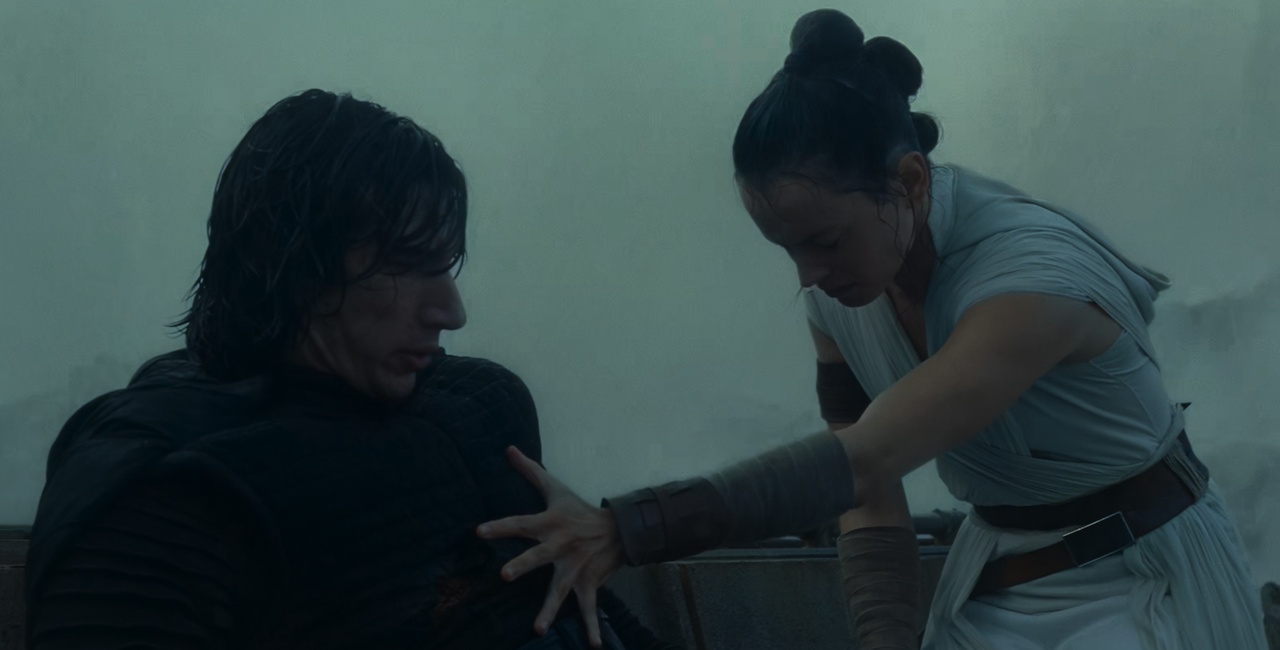
Although I wish the sequel trilogy as a whole had done more with the idea of a Force dyad, some of the moments between Rey and Kylo were at least interesting. There was also some creative cinematography employed as Rey and Kylo had visions of one another despite being far apart. The scene where Rey was in Kylo’s room was one such moment, and I think the way the film transitioned between two different locations was creative.
I would’ve liked to have gotten more of an explanation of the Force dyad; how it came to be and what else Rey and Kylo could’ve done with it would have been fun to see. The idea of two characters with totally opposing points of view and objectives having this unintended bond – one they couldn’t rid themselves of – was also an interesting concept in theory, and I think we saw at least some of that potential in The Rise of Skywalker.
Kylo and Rey formed a rare Force dyad.
Finn’s story was not great in The Rise of Skywalker – or really across the sequel trilogy as a whole. But as a concept, the idea of a rogue stormtrooper breaking free of his indoctrination was interesting. And The Rise of Skywalker made at least a bit of an effort to expand upon that with the new character of Jannah – another defector that Finn encountered during the mission to Endor.
If Luke Skywalker’s story was an analogy for depression and mental health, Finn and Jannah’s can be seen as deprogramming from a cult or escaping an autocratic society. There are real-world parallels that are interesting – and open to interpretation. I don’t think The Rise of Skywalker was perfect in its execution of this idea, but I will give the film credit for trying, and for expanding our knowledge of ex-stormtroopers and the reasons why some might defect or abandon their posts.
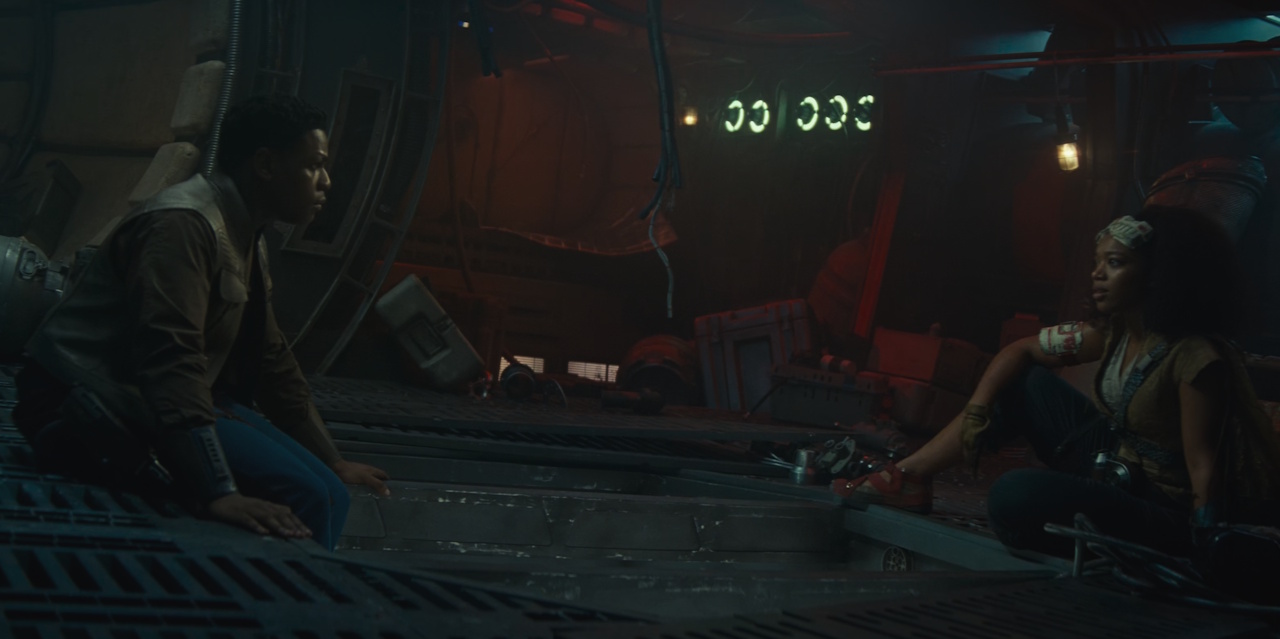
Finn with fellow ex-stormtrooper Jannah.
Sticking with Finn, his “bromance” with Poe was certainly an enjoyable part of his story and characterisation, and one which was in focus in The Rise of Skywalker more than it had been in The Last Jedi. The two worked well together, and although I felt Oscar Isaac was rather phoning it in with his performance, the same can’t be said of John Boyega. Boyega did his best to carry this character relationship, and I could’ve happily spent longer with Finn and Poe.
There are a few other acting performances that stand out to me. I think being able to separate one’s thoughts about a performance from how we might feel about the script or narrative decisions is important – so it’s worth crediting actors and actresses who give it their all, even when they’re part of a train wreck! I mentioned Adam Driver above, and he’s literally never been anything less than outstanding in any film I’ve seen him in. One day he’s going to win one of the big awards – mark my words.
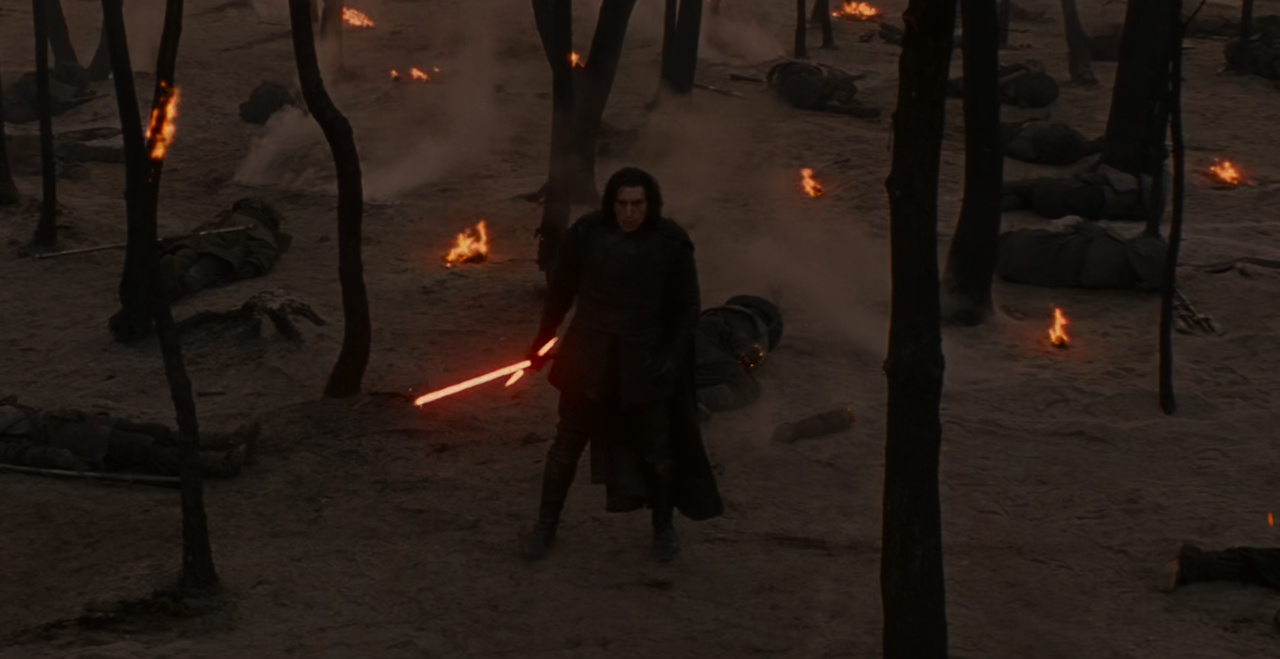
Kylo on the battlefield.
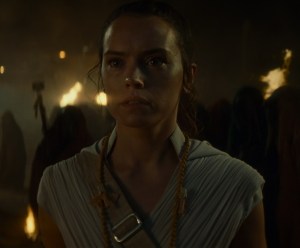
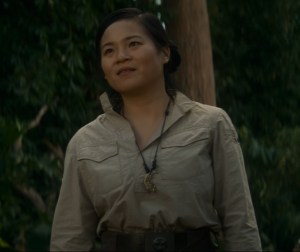
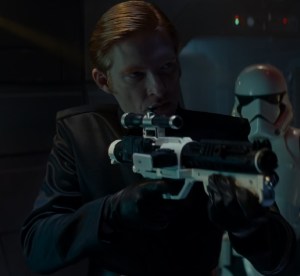
Though the sequel trilogy was never meant to be Palpatine’s story, Ian McDiarmid clearly relished reprising his role, and threw himself into it. Palpatine dripped with malice every time he appeared on screen. I may loathe what the film did with General Hux, but I’d be remiss not to include Domhnall Gleeson’s performance as being praise-worthy. Hux’s pure hatred for Kylo really came through thanks to Gleeson’s work, and even though the storyline was a tough sell, he clearly gave it his all. Kelly Marie Tran, though only on screen for a couple of minutes, did well with the material she had, and I think it’s a shame we didn’t get to spend more time with Rose.
So I think that’s about it.
I wish I could tell you that it was fun to revisit The Rise of Skywalker. But at the very least, I think we managed to find a few notes of optimism amidst the wreckage; small things here and there that achieved some measure of success, struck the right emotional or narrative chord, or just didn’t fail as comprehensively as the film around them. Maybe you enjoyed The Rise of Skywalker more than I did – and that’s great. The Star Wars franchise should be big and diverse, and there’s plenty of room for differences of opinion when it comes to the best and worst parts. Nothing about this is “objective,” at the end of the day!
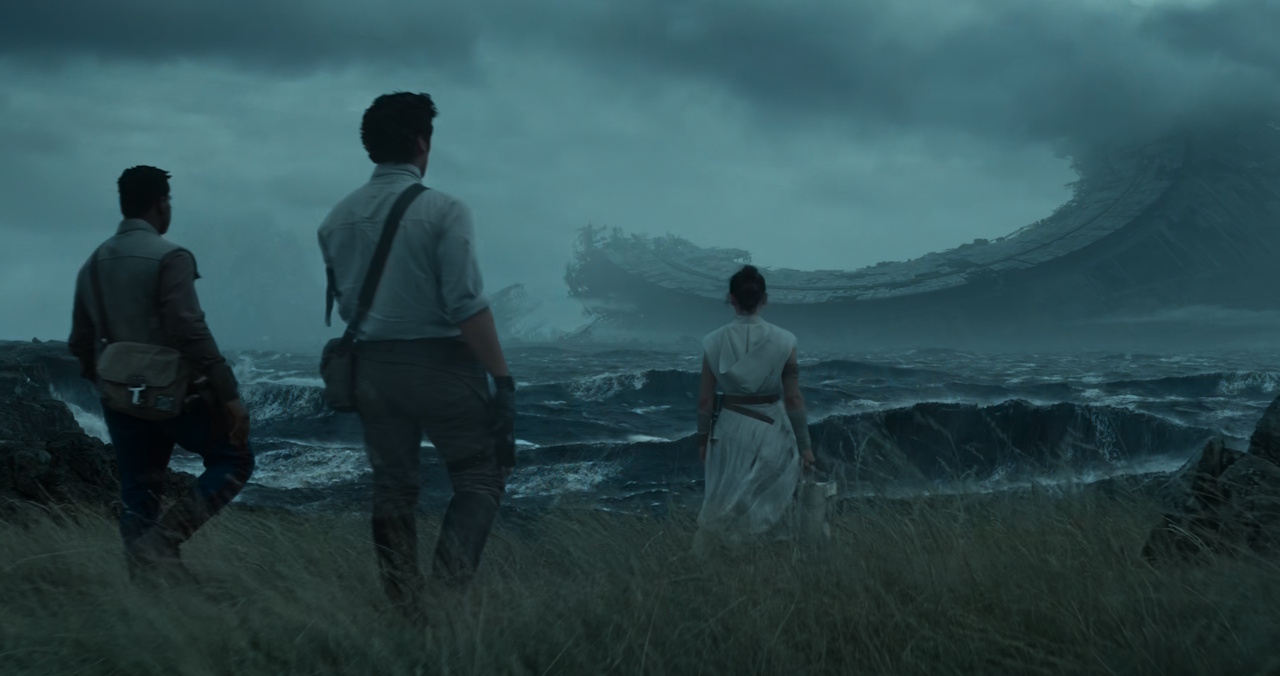
Looking at a wreck. Seems fitting, eh?
There’s more Star Wars to come – which is genuinely good news! Andor’s second season is currently airing, a second season of Ahsoka is planned, and there are several upcoming films on the schedule, too. Upcoming films include pictures based on Rey and Lando, a spin-off from The Mandalorian, a new trilogy, and the intriguing-sounding Star Wars: Starfighter. So despite the controversial reception the film got, The Rise of Skywalker didn’t doom Star Wars’ future prospects!
I hope this has been a bit of fun to mark Star Wars Day – or at least something a little different. I wanted to try to take one of the worst films in the franchise and talk about some of its better aspects, partly as a challenge to myself and partly because it’s Star Wars Day. Thanks for reading, and May The Force Be With You!
Star Wars Episode IX: The Rise of Skywalker is available to stream now on Disney+ and is also available on DVD and Blu-ray. The Star Wars franchise – including The Rise of Skywalker and all other films and properties discussed above – is the copyright of Lucasfilm and The Walt Disney Company. This article contains the thoughts and opinions of one person only and is not intended to cause any offence.
Spoiler Warning: There are spoilers ahead for Star Wars Episode IX: The Rise of Skywalker and for other films in the Star Wars franchise.
Health problems make it impossible for me to get to the cinema these days, and as a result it usually isn’t until films are released on home video or streaming services that I’m able to see them. In some cases, such as with the Star Wars franchise, the prevalence of online spoilers means I know the premise and plot before I’ve seen the film. With The Rise of Skywalker I was not impressed with what I’d read, and I adjusted my expectations accordingly. Something similar happened a couple of years ago with The Last Jedi, and despite expecting to be let down by that film, I came out of it feeling pleasantly surprised – so there was a glimmer of hope!
Sadly, it was not to be. The Rise of Skywalker is saved from being my least-favourite Star Wars film simply by the existence of The Phantom Menace – and at times, it’s a toss-up as to which film was worse. At one point while I was sitting down to watch The Rise of Skywalker, one of my cats sat in front of the television and proceeded to lick her arsehole… it was by far the most entertainment I got in the entire two-and-a-half hours.
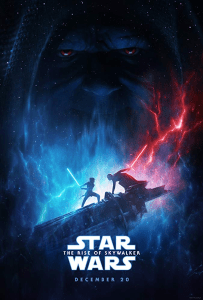
The first teaser poster for The Rise of Skywalker (2019).
Let’s start with what I did like. There are some points in The Rise of Skywalker worth praising, despite my overall feelings. Firstly, most of the visual effects, especially the CGI and digital artwork, were outstanding. There’s no denying that The Rise of Skywalker is a visually impressive film; from its space scenes to the various settings on the surface of planets, many of the visual effects and set dressings were good. Compared to the incredibly rough late-90s/early-2000s CGI present in the prequel films and the updated original trilogy, digital effects have come a long way – The Rise of Skywalker thus stands up alongside the other two films in the sequel trilogy, as well as Rogue One and Solo, as being good-looking. There were some individual visual elements and props that I felt didn’t hit the mark, but we’ll deal with those later.
Next, there were a couple of genuinely funny moments where The Rise of Skywalker’s humour hit the mark. The scene in the serpent’s den where Rey ignites her lightsaber only for Poe to turn on a flashlight was quite amusing, and did win a chuckle.
I’ve always been a sucker for heroic stories about last stands – so despite the various plot complaints that I’ll come to in a moment, the desperate last-ditch effort by Poe and Finn’s rebel forces did manage to elicit some of the feelings it was clearly aiming for. And the scene where Lando arrived with a last-minute rag-tag collaboration of ships and people from across the galaxy did feel good in that moment. This kind of story – a heroic, seemingly doomed last stand where the day is saved at the eleventh hour – is one of my favourites, and even though it’s been told numerous times across different types of media through the years, it still has the potential to be exciting and emotional.
Adam Driver is a phenomenal actor, someone who I’m sure will win one of the top awards one day. The Star Wars franchise really lucked out to land someone of his calibre to play Kylo Ren, and he didn’t disappoint in The Rise of Skywalker in terms of his performance. Sometimes it can be difficult to separate the performance from the character, especially if the plot is a mess, but despite my misgivings about Kylo Ren’s storyline, Driver gave it his all and the film was significantly better for his presence in it.
Adam Driver has been outstanding as Kylo Ren across all three films.
Despite his limited screen time, I also enjoyed Richard E Grant’s performance as General Pryde. He is the kind of steadfastly loyal member of the “old guard” who I wish we’d seen more of in the previous two films. The First Order was, in some ways, presented as a youth-led rebirth of the ideology behind the Empire, but it was clear even in The Force Awakens that there needed to be more people than just Snoke who had lived through the Empire’s reign and wanted to reinstate it. The First Order could really only have come to exist because of people like General Pryde, so an acknowledgement of that was definitely worthwhile.
Finally, I appreciated the fact that, in a film that was otherwise completely overwhelmed by attempted nostalgia, there were new locations to visit instead of having the characters always retreading old ground. The planets of Pasaana, Kijimi, and of course Exegol are all new to the franchise, and the first two in particular were interesting locations.
Now let’s get to what I disliked – which, unfortunately, is the majority of the film and its story.
Palpatine has returned… somehow. That’s all the explanation he gets, yet his return presents a massive issue not just for this film, not even for this trilogy of films, but for the entire “Skywalker Saga”. I’ve written about this previously, but the inclusion of Palpatine, and the revelation that he’s been the driving force behind the entire plot of the sequel trilogy, means that the Skywalkers aren’t the focus of their own story. Anakin Skywalker, Luke Skywalker, and now Rey Skywalker (she adopted the name at the end of the film in a widely-mocked scene) aren’t really protagonists any more thanks to the return of Palpatine. They have no agency over their own stories, because it turns out that Palpatine was behind the scenes manipulating everything and everyone – the three main characters of the three Star Wars trilogies were just along for the ride; their stories were something that happened to them as opposed to something that they actually did. As I wrote previously, the “Skywalker Saga” should really be titled the “Palpatine Saga”, since all of the stories are his and he’s the only character who actually acts of his own volition.
Star Wars ceased to be Anakin, Luke, and Rey’s story and became Palpatine’s over the course of a tedious two-and-a-half hours, transforming the story at a fundamental level. And for what? What purpose did the return of Palpatine actually serve? The biggest factor in play is nostalgia, something which The Rise of Skywalker absolutely drowned in. The only other reason he was drafted back in was because JJ Abrams and the rest of the creative team couldn’t think of another villain.
There was clearly a desperate desire on the part of JJ Abrams for Kylo Ren to be redeemed – following the path of Darth Vader in Return of the Jedi, which The Rise of Skywalker was trying so hard to emulate. But even more so that Darth Vader, Kylo was irredeemable. He’d made his choice in The Last Jedi to commit to the dark path and claim the mantle of Supreme Leader for himself, and there was no going back for him. This is, after all, the character who murdered Han Solo in cold blood – are we supposed to forget about that?
Snoke’s death in The Last Jedi – which was Kylo’s moment of clarity and final commitment to the dark side – created a huge problem for JJ Abrams, who was evidently wedded to the idea of Kylo’s redemption. This concept, that Kylo could be redeemed and come back to the light, is part of a broader problem with the two JJ Abrams-led Star Wars films: they’re copying their predecessors. The Force Awakens crossed that invisible line between paying homage to A New Hope and outright ripping it off, and when it comes to many elements in The Rise of Skywalker, Kylo’s redemption included, it’s crossing that same line with Return of the Jedi.
The Rise of Skywalker shoehorned Palpatine into a story that was never meant to be his.
Kylo didn’t need to be redeemed. His storyline took him from wavering dark side devotee, desperately living in his grandfather’s shadow, right up to being Supreme Leader – something even Darth Vader never managed. He overthrew his master and claimed all of that power for himself, and in that moment he committed to the dark path. There should have been no going back from that, and the turnaround makes almost as little sense as General Hux’s betrayal of the First Order. Adam Driver plays Kylo perfectly as angry and entitled. He wouldn’t be a good leader; he lacks all the characteristics. But that didn’t stop him craving the position, and when he saw a chance to turn on Snoke he did; Snoke was little more than a foil for Kylo’s rise. His turnaround in a film which already suffers greatly from pacing issues feels like it comes from nowhere; there’s simply no time for exploration or development of that moment. One second he’s evil dark side “I’ll turn you evil too just you wait and see” Kylo, the next minute he’s back in the light as Ben Solo. There’s no process, no nuance. It’s black-or-white, with the flick-of-a-switch to change sides. Apparently that’s how the Force works: you’re on one side or the other, and switching is easy as pie. That’s despite the originals, prequels, and the first two sequels showing that to absolutely not be the case.
As you know if you’re a regular reader, I like to nitpick. And the biggest nitpick I have regarding the Palpatine plot is this: how the heck did he survive the Death Star blowing up? He was thrown down a deep shaft in the Death Star right before it exploded – and depending on what you read and where, that may have led directly to the station’s main reactor core. But let’s say that he did survive the destruction of the station somehow – why did he wait over thirty years to re-emerge? Why not simply hop on the nearest Star Destroyer, fly back to his palace on Coruscant, and continue to reign as Emperor? Even in Star Wars’ new canon, it took well over a year from the destruction of the Death Star for the Empire’s forces to be finally defeated – ample time for Palpatine to re-emerge and provide the fracturing Imperial forces with much-needed leadership. It would be much easier for Palpatine to have retained control of much of the galaxy and rebuilt his Empire by defeating the rebels than to have to re-conquer the entire galaxy all over again with the First Order.
Staying with Return of the Jedi, are we supposed to believe that this was Palpatine’s “grand plan”? To govern as Emperor for twenty years, get thrown down a reactor shaft, be blown up, wait thirty years while Emperor of nothing, and then return to re-conquer the galaxy with a new fleet? That reads like awful fan-fiction, not to mention that it’s incredibly convoluted, even by the standards of the old Star Wars Expanded Universe – which has thankfully been overwritten.
Palpatine’s survival and re-emergence also deprives Darth Vader of his redemption and makes his sacrifice far less meaningful. At the climax of Return of the Jedi, Darth Vader’s dedication to the Sith and the dark side is finally overcome – the love he has for his son brings him back to the light for the final time, and by killing Palpatine he not only saves his son, but sets the stage for bringing peace and freedom to the galaxy. That’s a heck of a legacy, though it doesn’t negate two decades’ worth of dark side evil. However, The Rise of Skywalker undoes that incredibly powerful ending to Darth Vader’s story. His one great act of redemption now marks little more than the halfway point in Palpatine’s rule instead of its end, and the sacrifice he made turns out to be meaningless in the overall story of the franchise. At best, Vader set back Palpatine’s plans by a few years. At worst, he contributed to making them happen by being – as all the main characters seem to have been – an easily-led pawn in Palpatine’s evil schemes.
Palpatine manipulated the entire story of Star Wars to get to this climax, even growing Snoke in a tank… apparently.
I don’t believe for a moment the argument coming from JJ Abrams and others that Palpatine’s return was “always the plan”. There’s simply no evidence to support this claim in the two previous films. Snoke was the First Order’s Supreme Leader, and there was no indication that he was anything other than the person in charge. Especially in his second appearance in The Last Jedi, Snoke was this trilogy’s version of Palpatine – continuing the theme of JJ Abrams essentially copying characters and story points from the originals. Neither Abrams nor Rian Johnson acknowledged in any way the possibility that Snoke was merely a pawn, a clone, or someone who lacked volition.
The insertion of Palpatine is a classic example of a deus ex machina. JJ Abrams had a problem when he commenced work on The Rise of Skywalker. He needed Kylo Ren to follow Darth Vader’s model and be redeemed, but with Kylo being the Supreme Leader, and with no other villains in the story, the only way to get to that specific endgame was some kind of deus ex machina – dumping a bigger, badder, evil-er villain into the story at the last minute. Even within that unnecessarily limited framework, however, there were other options. Just off the top of my head here are three: Snoke returns in some form (ghost, cloned body, etc), an ancient Sith emerges in some far-flung part of the galaxy, or General Hux stages a First Order coup and claims the title of Supreme Leader for himself.
Palpatine’s return is really the major point that ruined the film. There were plenty of other areas where things went wrong – and don’t worry, we’ll look at all of them – but the fundamental flaw in the story was Palpatine being desperately shoehorned in by a writer/director who had no idea what to do or where to take the story. Even if all of the other issues with The Rise of Skywalker disappeared, Palpatine would still loom over the plot, stinking it up.
So I think we’ve covered in sufficient detail why Palpatine’s return failed so hard. But this wasn’t the only point where the name “Palpatine” caused a problem, as The Rise of Skywalker changes Rey’s past to make her his granddaughter.
The Last Jedi firmly established that Rey didn’t have a lineage and wasn’t descended from one of Star Wars’ established families or characters. There had been internet speculation for two years leading up to The Last Jedi that she would be related to someone – Han Solo, Luke Skywalker, Palpatine, Obi-Wan Kenobi, Jabba the Hutt, etc. – but The Last Jedi made it crystal clear that she wasn’t. This became one of the points of criticism of that film, and one part of the reason for the backlash and division it caused, but overall I actually liked that story point. Like other Star Wars fans, I’d been happy to speculate after 2015’s The Force Awakens who Rey might be related to. But I also had the ability to recognise that these fan theories – convincing though they may be – were just that: fan theories. And the likelihood of any of them being true was pretty low. As a result, when we got the answer to Rey’s family in The Last Jedi I was satisfied – and more than that, I felt it was a good idea.
I know not everyone liked the idea of Rey being unrelated to anyone in Star Wars, so let me just explain briefly why I felt this worked so well. One of Kylo Ren’s most significant points is his background. He sees his lineage as both something he’s desperate to live up to, and something he’s embarrassed about. He wants to be Darth Vader, but he’s living with a weight on his back as the son of Han and Leia – two of the most significant leaders in the Rebellion. He also feels that he has a birthright, that his ancestry being so powerful in the Force gives him some kind of right to rule. By contrast, Rey has none of that. Her baggage stems from not knowing her family, barely remembering them, and being abandoned and alone. There’s an immediate contrast between Rey and Kylo that works incredibly well.
Rey’s lineage – or lack thereof – as established in The Last Jedi is overwritten by The Rise of Skywalker.
Secondly, Rey’s origin in The Last Jedi had a very powerful message – heroes can come from anywhere. Destiny and ancestry don’t matter, what matters is a person’s own character and how they behave. No one has a birthright to anything, least of all power – whether that means power in the sense of ruling or magical power like the use of the Force. Of all of the points in The Last Jedi, this was the one worth keeping. Not only does undoing that require the use of stupidly complicated semantic gymnastics that make Return of the Jedi’s “from a certain point of view” actually seem to make perfect sense, but it undermines the one established fact about Rey’s character and weakens the overall story of Star Wars. Force powers can be inherited, that’s something we already knew going back to the revelation of Darth Vader being Luke’s dad. But JJ Abrams seems to think that means that all Force-sensitive characters – main characters, at least – need to have inherited their powers from another main character. The idea that Rian Johnson had, which was not just present in Rey but also in “broom boy” at the end of The Last Jedi, is that Force sensitivity can manifest in anyone.
The final answer to the question of “is Rey a Mary-Sue character?” seems to be that actually, yeah, she kind of is. I stuck up for Rey for a long time in discussions like that, and especially after The Last Jedi I pointed to her origin as an argument in her favour. I felt that we needed to see her story in full before rushing to judgement, that there would be a valid reason for her innate Force abilities. This reason was at least hinted at in The Last Jedi, with the line: “darkness rises, and light to meet it”, implying that Kylo and Rey’s status as a Force duo was somehow connected to her power. But nope, it turns out it was destiny. Destiny and ancestry. I find the “destiny” excuse to be such an overused trope in fantasy, and it’s disappointing that Star Wars would send its protagonist down that path.
Many people in Star Wars, including Rey actress Daisy Ridley and Lucasfilm head Kathleen Kennedy, like to talk about Rey being a “strong female character” and use that to make some kind of pseudo-feminist point. But by saying the sole reason for her power is that she’s descended from someone powerful – a powerful man, in this case – she stops being the “anyone” character that young girls can look up to and feel inspired by. It’s no longer the case that any girl can grow up to be as powerful as Rey; she’s the galactic equivalent of a Disney Princess, whose power and authority comes from nothing more than her birthright. The Force is a great metaphor for aristocracy, apparently.
In a way, we can argue that this is a wider issue in Star Wars. The revelation of Vader being Luke’s dad was shocking and truly unexpected in The Empire Strikes Back, but the drawback to that big shocking moment was that Luke’s character changed from being a nobody from a backwater planet who happened to be in the right place at the right time to change the galaxy to someone who was fated and destined to play that role. The Star Wars franchise has leaned excessively into this trope, making practically every character somehow related or tied to every other character – something that happened a lot in the prequels in particular.
The final issue I have with Rey being a descendent of Palpatine is this – it’s fanservice. It’s as if JJ Abrams had read through a bunch of fan theories about Rey and said “hey, this one is popular so let’s use it”. It’s not so much that it’s nonsensical, but that it overwrites a major point from the last instalment. It’s a story beat that was clumsily dumped into the film for the sole purpose of pleasing the vocal minority of Star Wars fans who hated The Last Jedi. It’s corporate revisionism to attempt to placate upset fans, not an organic and natural story point. In fact that sentence could summarise basically the whole plot of The Rise of Skywalker – it’s corporate-mandated cowardice, caving to the angry reaction some fans had to the last film.
How else do we explain the greatly diminished role offered to the one significant character The Last Jedi introduced – Rose Tico? Kelly Marie Tran played the character well in both of her appearances, and in the aftermath of The Last Jedi found herself subjected to a campaign of online hate by the film’s detractors who, being brain-dead morons, could not separate the actress from the character. Some of this hate spilled over into racism and sexism, and Tran has been vocal about how the attacks affected her. For JJ Abrams, Disney, and the Star Wars brand to treat her with such blatant disrespect by writing such a minor blink-and-you’ll-miss-it role for her character is a disgrace. It was an attempt to appease that same group of angry fans by simply giving them what they wanted – the removal of a non-white female character. That was not the initial reason they may have had for disliking Rose Tico in The Last Jedi, but over the course of more than a year of aggressive attacks on the actress through 2018, while The Rise of Skywalker was in development, it became about more than just a character and the way she was written – and that’s something the Star Wars brand should have taken a stand on. Rian Johnson himself had been supportive of Kelly Marie Tran since her appearance in The Last Jedi, but I heard next to nothing from anyone else associated with Star Wars in support of her, even from Lucasfilm head Kathleen Kennedy, who likes to talk big about being a “feminist”. It seems that the higher-ups at Disney were content to throw the actress under the bus in an attempt to placate fans who were responsible for some truly vile sexist and racist statements. I guess sexists and racists still buy tickets and merchandise if you give them what they want.
Rose Tico was little more than an extra in The Rise of Skywalker, despite playing a large role in The Last Jedi.
On a somewhat-related note, I’m disappointed that Star Wars missed the opportunity for one of Poe or Finn to be gay. This is less about them being a couple; their bromance is a fun dynamic and I don’t think it needed to “evolve”. But I think we saw enough hints from the time they spent together in The Force Awakens that either of them could have been gay. Rose Tico complicates that particular plot point for Finn, but in The Rise of Skywalker, Poe is reunited with an old flame – and this new character was the perfect opportunity, as making them male instead of female would have changed nothing in the story. I don’t like to be all about “identity politics”, but it feels as though the franchise missed an open goal. Representation of LGBT+ people in all forms of media and entertainment is streets ahead of where it used to be. In Star Trek: Discovery, for example, we have a gay couple in Stamets and Culber. I don’t think it’s “absolutely necessary” for Star Wars to follow suit, but I’m left wondering why they didn’t. Was it another attempt to placate sections of the audience, particularly in less-tolerant parts of the world? We already know that one minuscule section of the film showing a same-sex kiss was censored in some markets. Did JJ Abrams and/or Disney want to make Poe gay but backed down in the face of opposition and lost revenue? I can’t help but wonder.
Let’s move on and look at a couple of the visual effects and aesthetic choices I felt didn’t work. Modern Star Wars films have, generally speaking, enjoyed great visuals, and as I mentioned already, those in The Rise of Skywalker were good on the whole. But there were some missteps. Firstly, the decision for Palpatine’s face to be illuminated by the flickering of lightning worked well in his first appearance to keep his face hidden until the right moment. Lightning for a villain is clichéd, but that doesn’t even matter when compared to the failure of the Palpatine plot overall. But the overuse of this lightning effect for practically all of Palpatine’s scenes rendered any impact it could’ve had completely impotent, and detracted from the look. In short, it was a cliché idea to begin with and it was thoroughly done to death.
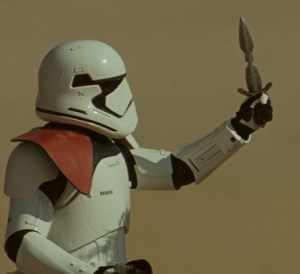
Next, the Sith assassin’s dagger. For such an important macguffin, one that the characters spent a lot of time searching for then examining, it looked crap. It was made of foam-rubber or some other non-metal material, and that fact was painfully obvious on screen. Rather than looking like a dangerous fantasy-inspired weapon it looked like a cheap child’s toy. For one of The Rise of Skywalker’s main props that simply shouldn’t have happened, and if it looked that bad on camera then some digital effects should have been applied in post-production to improve its look.
A Stormtrooper holding the Sith Dagger macguffin.
We also need to talk about the scenes involving Carrie Fisher’s Princess Leia. Fisher passed away in 2016 – a year before The Last Jedi was released – and her role in this film was always going to be a hurdle for JJ Abrams to overcome. Tying into the theme of the trilogy overall lacking any sense of leadership and direction – which I discussed in more detail in a previous article that you can find by clicking or tapping here – Leia’s role needed to be addressed. There was a year in which to adjust, in a relatively minor way, The Last Jedi in order to bring her role in the franchise to a different end. Instead, Kennedy and Johnson opted to leave her role untouched in that film, despite the opportunity for a more heroic death presenting itself and despite the fact that there was scant leftover footage for The Rise of Skywalker to incorporate. As a result, the scenes with Leia are clumsy at best, nonsensical at worst, and the fact that they’re lifted from a different film is painfully obvious. While having Leia die off-screen would have been difficult too, starting the film with her funeral and with every character talking about her could have been an option and I’m sure a suitably heroic tale of how she came to pass away could have been written. Look at how Star Trek Beyond paid homage to Leonard Nimoy’s character of Spock for a smaller-scale version of the kind of thing I mean.
Leia’s actual death in the film was a poor shadow of Luke’s in The Last Jedi. Luke appeared to Kylo in a vision, standing up to the First Order to buy time for the Resistance to escape. Leia simply called his name – once – didn’t appear in any kind of visual form, didn’t say anything other than his name, and then died. Compared to other options for Leia’s death, this was a let-down. My first choice would have been to rework The Last Jedi to see Leia killed off during the space battle. There was a pitch-perfect scene included in that film which would have allowed her a death that was dramatic, impactful, and that mattered. The second-best option would have been for Leia to have died off-screen and for her brief role as Rey’s Jedi trainer to have fallen to Luke – perhaps with the explanation that Leia had trained Rey in the intervening years off-screen. And if JJ Abrams was wedded to the idea of Leia reaching out to Kylo, that could have been included early in the film, or in flashback form.
While I understand that there was a desire on the filmmakers’ part to treat Leia and Carrie Fisher with respect, they had ample time from her death in 2016 to find a way to rework the story to get around it. Luke’s death in The Last Jedi could have been cut with minimal effort so that Leia died and Luke survived to train Rey. Or if Luke had to die in The Last Jedi his inevitable Force ghost could have been introduced far earlier in The Rise of Skywalker to allow for Leia to die off-screen and be commemorated with enough time left over for Luke to fill her shoes as Rey’s trainer.
There’s no escaping the awkwardness of Leia’s scenes in The Rise of Skywalker, unfortunately. In 2019 and 2020 we might forgive that as the memory of Fisher’s passing is still recent. But The Rise of Skywalker will not age well, and these scenes will look even worse in the years to come – not that I’m in any hurry to rewatch the film, of course.
General Hux’s role in The Rise of Skywalker goes completely against his character as established in the previous two films. Hux was one of two surviving named villains as of the end of The Last Jedi. Captain Phasma had been thoroughly wasted in both of her appearances, of course, and with Snoke dead only Kylo and Hux remained. Domnhall Gleeson played the role perfectly, as he had done in both previous entries, but the decision for Hux to turn on Kylo and spy for the rebels wasn’t a clever subversion, it was ham-fisted and indicative of the fact that the plot couldn’t be made to work with the available characters. JJ Abrams needed a spy in the First Order for story reasons, and with no one else available, it had to be Hux.
Hux’s decision to switch sides made no sense.
Hux had the potential to be a far more interesting villain. I already proposed the idea that he could have staged a coup against Kylo, thanks to the loyalty he commanded from his forces. That was one option. But Hux was a dyed-in-the-wool First Order zealot, so the idea that he, of all people, would change sides simply because he doesn’t like Kylo is just stupid. Illogical and stupid.
The climactic battle between Palpatine’s Sith armada and the rebels doesn’t make sense, and the story behind it doesn’t survive even a brief first glance, let alone a deeper examination. While some of these points stray into nitpicky territory, taken as a whole the entire sequence is one big failure.
I can believe, in the context of a fictional universe, that certain starships may be built that require an external guidance system. It’s stupid, and no other ship in Star Wars to date has had that limitation, but as a basic concept it’s not wholly unbelievable. But given that no other ship in Star Wars has been so limited, why would Palpatine make that decision? Giving the entire battlefleet a crippling limitation is stupid, and while it may be something that could happen, it’s not a mistake someone like Palpatine would be likely to make. The line that the ships “can’t tell which way is up” is similarly ridiculous, because all they’d have to do is go up… the opposite direction to the planet’s surface. They could figure that out by looking out a window if they had to.
This dumb storyline was included to allow Palpatine’s fleet to look large and thus visually impressive, especially in the trailers and other pre-release marketing, but without making it too powerful. Giving the ships an artificial and unnecessary limitation opened the window for the rebels to defeat them, allowing JJ Abrams to write scenes for Poe, Finn, and others that harkened back to A New Hope and Return of the Jedi. If the fleet were utterly invincible, then of course the story would not have been able to come to a happy ending. But good stories find ways for their protagonists to prevail without making stupid choices and putting them up against cardboard cut-out opposition.
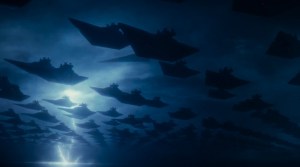
The huge Star Destroyer fleet looked impressive, but made no sense and was easily defeated.
Next, we have the decision to have Finn and his group of rebels land on the outer hull of one of the ships. This was included solely for the purpose of looking visually “cool”, and for someone solely interested in brainless action I guess it did for a few seconds. But thinking about it, even for just a brief moment, it becomes obvious that all the starship would have to do to to get rid of them is… move. The smallest move in almost any direction would have sent them tumbling, and rolling or rotating the ship would have meant they’d have all fallen to their deaths. The fact that no one on the bridge of the ship considered that option is not credible.
Equipping all of the ships with Death Star cannons makes a degree of sense, and as an in-universe concept the idea that the technology could be manufactured on that scale isn’t stupid. But again, as with the number of ships this is something which seems impressive for all of ten seconds, but quickly fizzles out without the weapons causing major damage or having much of an impact on the plot. Everything about the fleet, from the scale of it to the weaponry it’s equipped with is impressive-looking but ultimately lacking in depth. It’s shallow and show-offy but without anything substantial to back it up.
One thing from the battle that I would have wanted to see is how Lando managed to rally people from across the galaxy to the rebels’ cause – especially considering Leia’s failure to do so at the end of The Last Jedi. Was it Lando’s winning personality that convinced everyone? Was it the threat of Palpatine? How did he bring together so many people in such a short span of time, starting from nowhere? How did he even know he needed to, or where to send them? This could be a whole film in itself – and would be far more interesting than The Rise of Skywalker.
Finally, and this ties into Palpatine’s role in the film in general, is why Palpatine broadcast his intentions to the galaxy before his fleet was ready or even in position to be ready. All that did was allow his enemies the opportunity to organise – which is what we see them do for the entire film. As I’ve already noted, this robs the characters of agency in the story as all they do for the entire film is scramble to respond to Palpatine’s threat. But why make the threat now? Why not wait 24 hours until his fleet had got into position – especially considering the inbuilt weakness in the fleet that made them vulnerable at their home base? It’s a storyline written to look tense and dramatic on the surface, but without any depth to it to pay off the tension and drama. It was designed in such a way as to look like a desperate last stand, but with an obvious path to victory for the rebels.
The “Rey Skywalker” scene at the end of the film was widely mocked online and became a meme.
One of the few original elements present in The Rise of Skywalker was the concept of using the Force to heal wounds and even revive someone who had died or was close to death. This power has been present in some Star Wars video games – where it makes a certain kind of sense as an in-game mechanic – but was new to the films. And it opens a lot of plot holes for other films in the series. If the Force can be used to heal and even revive the dead, how do we account for the death of characters like Qui-Gon Jinn, or even Darth Vader? And why would Anakin have been so terrified of his wife suffering complications in childbirth if the ability to heal even life-ending injuries was possible through the Force? If The Rise of Skywalker were a new and original film it would have worked, but as the ninth part of a series it didn’t.
The Last Jedi shook up the story of the sequel trilogy, and whether we like that or not – and I respect that there are strong feelings on both sides – it narrowed down the choices for where The Rise of Skywalker could go. However, JJ Abrams decided not only to ignore large parts of the second film in the trilogy, he set out to actively overwrite them. Whether this is because of the reaction to The Last Jedi or because Abrams couldn’t detach himself from his own version of the story isn’t clear – perhaps a combination of the two things.
Where The Last Jedi tried to take Star Wars in a different thematic direction, The Rise of Skywalker drags it back, kicking and screaming, and tries to remake Return of the Jedi using story threads that are no longer suited for that purpose. Unfortunately the story JJ Abrams wanted to tell couldn’t be crammed into that mould, and what results is a horrible mess. The clumsy and stupid insertion of Palpatine into a story that was never his ruins the entire film, and that’s without accounting for the many other storytelling failures. Furthermore, Abrams’ need for The Rise of Skywalker to overwrite parts of The Last Jedi with his own ideas about what could’ve happened to the characters and story in the previous entry means that The Rise of Skywalker feels like two films condensed into one – it’s trying to tell parts two and three of the sequel trilogy, but in the runtime of a single film. As a result, it feels rushed and incredibly poorly-paced. This is not helped by the action supposedly taking place over a single 24-hour period for the most part.
Someone far wittier than I wrote in a review of The Rise of Skywalker when it was still in cinemas that it feels less like a feature film than a collection of Vines or TikTok videos set in the Star Wars universe, and that for a younger generation, raised on six-second video clips, maybe the manic pace and choppy editing will just seem natural. I can’t say I disagree when it comes to the pacing and editing. The film rushes from point to point and from character to character with no time for the audience to digest anything that happens. It also suffers from the longstanding Star Wars problem of needing new characters and character variants to turn into merchandise. The inclusion of some of these characters complicates and confuses the plot, and pads out a story that needed no padding whatsoever in light of the decision to overwrite parts of The Last Jedi. But how else do we explain “Sith Troopers”? They’re just red Stormtroopers. Or Poe’s girlfriend? Two words: action figures.
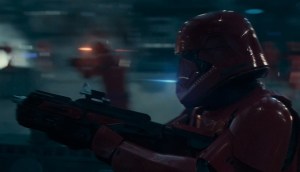
Sith Troopers were in The Rise of Skywalker to sell action figures.
When the reaction to The Last Jedi was so mixed and some people were angry and upset, I was glad that I hadn’t fallen out of love with the rejuvenated Star Wars. I hoped that The Rise of Skywalker would bring most of those people back into the fold and that with The Mandalorian coming on Disney+, there would be great Star Wars content to come for a long time. I was wrong, and I now have a not dissimilar reaction to that felt by many fans two years ago. However, one bad film does not ruin a franchise, and as much as I dislike The Rise of Skywalker (and was bored to tears by the snore-fest that was The Mandalorian) I remain hopeful of better projects to come. Rogue One was one of my favourite films of all-time, and I even picked it for my top film of the 2010s when I put together a list back in December – you can find that list by clicking or tapping here, by the way. So there is still hope within the franchise and the brand – Star Wars can be good. But The Rise of Skywalker is not good. It is not good at all.
I wrote parts of this article a few weeks ago, the same day I watched the film. But because it was something I genuinely did not enjoy I found writing this review to be hard-going, and as a result it slipped to the bottom of my writing pile and it’s taken several attempts to get it finished. I don’t like tearing down a film like this, especially in a franchise like Star Wars that I do generally enjoy. But honestly, not since I watched The Phantom Menace have I come away from a Star Wars film so deeply disappointed. I’m surprised that a big-budget film could be this bad – and that the trilogy it wraps up could have been constructed so poorly by a major corporation and a group of accomplished filmmakers. It beggars belief that they messed up this badly.
All that being said, I will happily trek back to Star Wars when the next big release is ready, hopeful to see something better and more exciting than The Rise of Skywalker. And I’m happy to rewatch The Last Jedi time and again, as I feel that film really goes above and beyond to show what Star Wars can be when it’s not bogged down in overused tropes and sad clichés.
Star Wars Episode IX: The Rise of Skywalker is out now on DVD and Blu-ray and may be available to stream on Disney+ (if not it will be soon, I didn’t bother to check). The Star Wars brand – including The Rise of Skywalker and all other titles mentioned above – is the copyright of Lucasfilm and Disney. This article contains the thoughts and opinions of one person only and is not intended to cause any offence.





 Trekking with Dennis