So, About That Star Trek Comedy Series…

We’ve had Comic-Con, where Star Trek made a splash with news about Starfleet Academy, Khan, and a pitch for a Strange New Worlds successor series. And now it’s Star Trek Las Vegas – a huge Star Trek convention with many of the franchise’s biggest stars in attendance. In between, there was a tiny little tidbit of news you may have missed – Paramount Global and Skydance Media finally completed their expensive and much-delayed corporate merger.

Last year, Tawny Newsome, Alex Kurtzman, and Paramount surprised a lot of us by announcing a brand-new Star Trek series – a “workplace comedy” which Newsome and Justin Simien were working on together. I noted at the time that the announcement seemed pretty threadbare, as if it had been thrown together at the last minute, and we didn’t really get a lot of details about it beyond who was writing it and that it might be set outside of Starfleet.

Justin Simien (left) and Tawny Newsome were working on this series.

Star Trek and comedy go well together, and they have done since the franchise’s inception. I made this argument when Lower Decks was in the offing and some fans were upset about it, because comedy has always been a part of Star Trek and will always have a place in Star Trek. Given the other options for new Star Trek shows and films, I don’t think I’d have necessarily chosen Newsome’s comedy pitch myself, but that’s beside the point. I’d have happily tuned in and I’d have wanted the new series to do well.

Note the past tense.

In the aftermath of Paramount’s merger, Newsome appeared at a panel at Star Trek Las Vegas. And she said something telling about her comedy series: “we’re waiting to hear” – i.e. from Skydance and Star Trek’s new corporate leadership about the show’s future – which she followed up with: “not to sound bleak, but nothing’s guaranteed.”
Star Trek’s new corporate overlords.

So… the comedy series ain’t happening, then. I mean, it’s not happening, is it? I would be astonished at this stage if it goes ahead; of all the proposals on the table for expanding the Star Trek franchise, it’s gotta be way down the list for the new team coming in. And I don’t think this is a huge shock – obviously Skydance plans to continue with Strange New Worlds’ final two seasons, and the two seasons of Starfleet Academy, one of which is complete and the other of which is already in production. But beyond that, there’s no new Star Trek being commissioned, and Skydance doesn’t seem to be obliged to fulfil Paramount’s past announcements – including Newsome’s comedy series.

Skydance CEO David Ellison seems much more interested in films than television shows. If Star Trek has a future in this new era, I would suggest at this early stage that it’ll be in feature films rather than made-for-streaming TV, based on what we can see from Skydance and Ellison at this early stage.
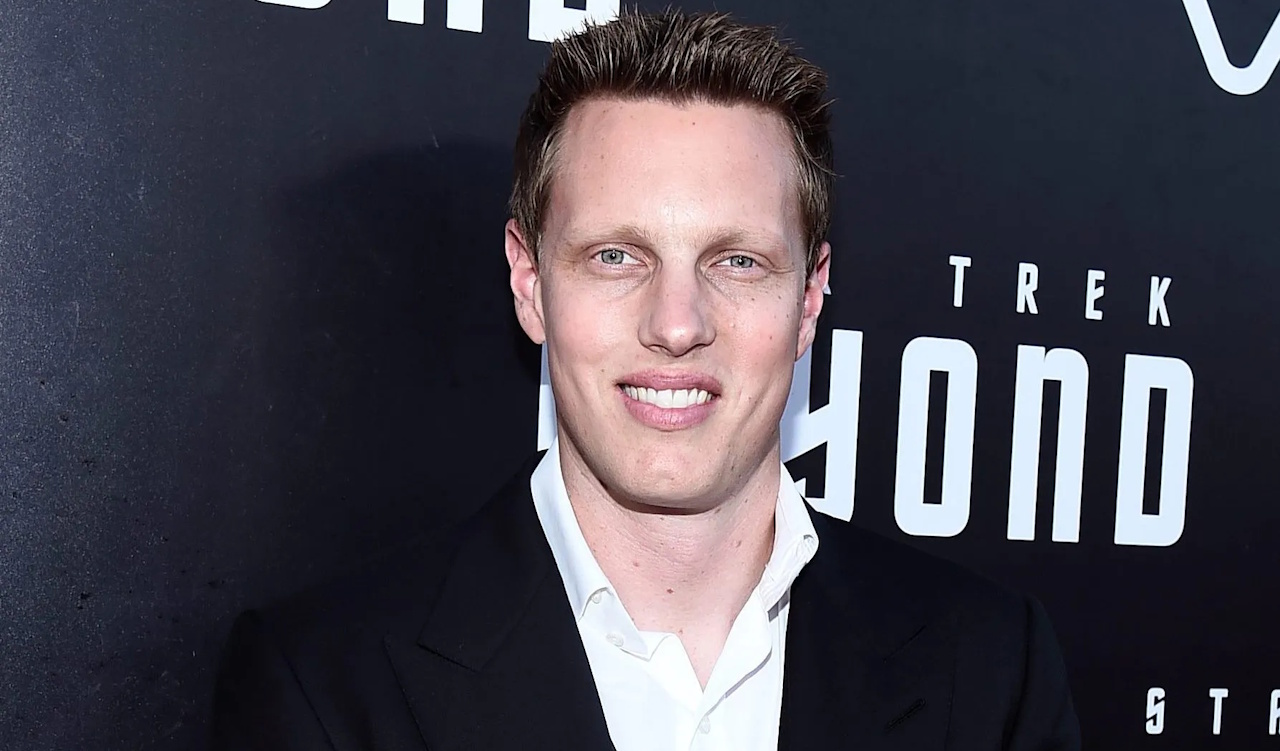
Skydance CEO David Ellison.

I don’t think it’s a coincidence that Discovery, Lower Decks, and Strange New Worlds all had their cancellations announced after Skydance and Paramount began working on their merger, with Strange New Worlds’ cancellation being announced years ahead of time while the merger was still being completed. It seems to me that Skydance wanted to come in with a clean slate, not having commitments to make any new Star Trek series whatsoever. And the comedy series? It may have been announced already, and at least some work has taken place on writing scripts, creating characters, and so on… but it was too late to the party.

If the comedy series had already entered full production, it would be safe for at least a season. But it hasn’t – and now the new team is taking over, they evidently have no obligation to pick it up. As far as we know, no casting decisions were taken, no contracts were signed, no sets have been constructed… the only thing we can be sure of is that a pitch and some scripts exist. And it’s very easy to put those in the old circular filing cabinet.
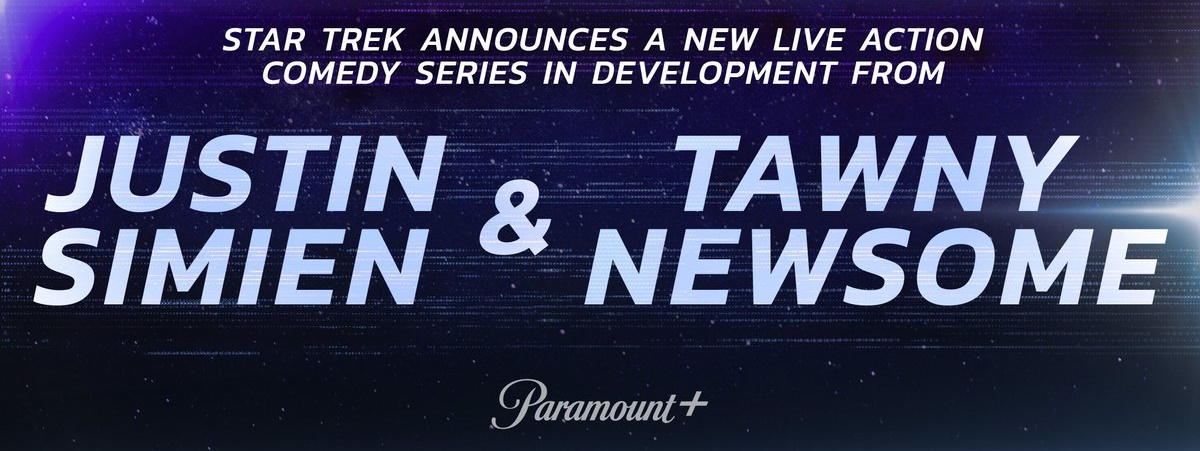
The announcement from last year’s Comic-Con.

What we heard from Tawny Newsome in Las Vegas feels more like Michael Dorn’s “Captain Worf” idea from a few years ago, or when Robert Duncan McNeill pitched a “Captain Proton” series to ViacomCBS. These are ideas that some fans might’ve liked, others might not have been into… but they never got off the ground despite clearly having a lot of thought and work put into them. I don’t believe that Goldsman and Meyers will succeed with their “Year One” pitch, and based on what we’ve just heard, I doubt that Newsome and Simien’s comedy series will go ahead, either.

And that’s a shame. As a Star Trek fan, I’d rather see the franchise in production than not – even if the kinds of shows being made wouldn’t have been my first choice. Obviously I’d be really keen on an idea like Legacy, or any kind of Strange New Worlds-inspired episodic series set somewhere after Picard. But if that’s not an option, I’d happily accept Year One or the comedy series. There’s potential in both, and I’m sure Skydance would make money on them.

Whether it’s a Strange New Worlds sequel, a comedy series, or something else… I just want more Star Trek!

But the direction of travel has changed. We’ve seen that with the cancellations. This current era of streaming Star Trek is, in my view, coming to an end in the next few years – possibly as early as 2028 or 2029 when the final episodes of Strange New Worlds and Starfleet Academy will air. Skydance’s new team might be interested in commissioning a feature film – and as luck would have it, there are several scripts being worked on – but I don’t think they’re interested in taking Star Trek forward on streaming at the moment. That might change, depending on all kinds of factors, and the more noise we can make as fans, and the more attention we can draw to Star Trek the better the franchise’s prospects will be! But for Ellison and Skydance, I just don’t believe they see much value in the Star Trek brand right now.

And that’s probably what’s done it for the comedy series. It’s a shame, because even though this wouldn’t have been my first choice for a new Star Trek production, there was still potential. And anything set after the Picard era is going to be of interest, even if it wasn’t the kind of exploration-focused episodic series that I’d have preferred. Maybe Skydance can be convinced to make a show like that… but I’m not holding my breath.
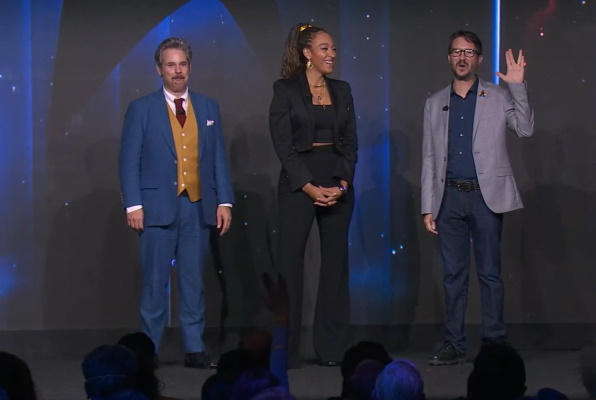
Tawny Newsome (c) with Paul Tompkins (l) and Wil Wheaton in 2022.

As we talked about when Strange New Worlds was cancelled… the blunt fact of the matter is that I don’t expect to see much more Star Trek beyond about 2028. When the shows that are currently in production make it to air and then conclude their runs, I really get the sense that that’ll be it – at least on the small screen. A fourth Kelvin film, or possibly some other cinematic adaptation, could still be possible in the years ahead, but for me, Star Trek has always been better-suited to television than the cinema.

I think in the weeks or months ahead we’ll have to lay out what’s gone wrong for Star Trek in this era of streaming television – and how Paramount’s outgoing executives took what could’ve been a golden opportunity and ended up pissing all over it. Star Trek could have been well-positioned as a big-budget, flagship franchise – but so many things went wrong, from the rollout of Paramount+ to Paramount’s inability to bring younger fans on board in significant numbers. But that’ll have to be the subject of a longer piece.

So long, Paramount. We won’t miss you.

For now, it seems to me as if Newsome’s comedy show is dead – albeit unofficially at this stage. And while you may not be terribly disappointed about that on an individual level (as I’m not, to be honest with you), I think it says a lot about the Skydance merger and Star Trek’s future under this new corporation. And that does genuinely have me worried, because it feels like we’ve only just got Star Trek back after more than a decade in the wilderness. To think it could be shutting down again so soon – and with so much potential left behind – is a bitter pill to swallow.

But hey, maybe I’m wrong. Maybe Skydance will announce their commitment to this project – and to many more Star Trek shows, films, and video games! We can cross our fingers and hope, right?


The Star Trek franchise – including all films and series discussed above – is the copyright of the new Paramount-Skydance Corporation. Credit to TrekMovie.com for the initial reporting on Tawny Newsome’s comments. This article contains the thoughts and opinions of one person only and is not intended to cause any offence.
Bad News For Strange New Worlds…

A Star Trek spoiler warning graphic.

Spoiler Warning: Beware of very minor spoilers for Strange New Worlds Seasons 1 and 2, Discovery Seasons 1 and 2, and Picard.

If you follow Star Trek on social media, or really any of the big Star Trek fansites or channels, you’ve probably already heard the news that Strange New Worlds is to be cancelled after a truncated fifth season. I find this to be an especially disappointing blow, as Strange New Worlds has been the best show – and by far the best live-action show – since Star Trek’s small-screen resurrection back in 2017. Captain Pike has been telling us in voiceover form that the Enterprise is on a “five-year mission,” of course, but I’m not gonna lie: a big part of me was hoping that this show would continue to go from strength to strength, pushing past that five-year mark.

This decision is quite clearly coming from the corporate side. Paramount’s finances have been bad for a long time, Paramount+ is on shaky ground as very much a second-tier streaming service, and the ongoing Skydance merger seems to be pretty convoluted, even by industry standards. So I’m not stunned at this news – just as Discovery’s cancellation, Lower Decks’ cancellation, and the lack of interest in Star Trek: Legacy didn’t shock me too much, either. But that doesn’t make it any more pleasant or easy to digest.

Logo of Skydance - the corporation soon to merge with Paramount.
Skydance and Paramount are involved in a messy buyout/merger.

It seems odd to announce the cancellation at this stage: a few weeks before Season 3’s premiere, and potentially two, three, or even four years before the show’s fifth and final season will be broadcast. Is it not at least possible that high viewership and a strong fan reaction to Seasons 3, 4, and 5 could make the show a more intriguing business proposition? With the Skydance merger still ongoing and a new leadership team potentially coming in, mightn’t they be interested in the flagship series for one of Paramount’s biggest franchises? Or conversely, did Skydance insist on cancelling Strange New Worlds – and perhaps other Star Trek projects, too – ahead of the merger?

We may never learn exactly what happened or what the ins and outs of it all were. But it’s disappointing in more ways than one to learn that Strange New Worlds isn’t being given more of a chance. I don’t know what the show’s viewership has been like, but I would remind everyone that Season 1 wasn’t available internationally at first, so there’s only really been one full season that was available around the world on Paramount+ on broadcast day. It feels premature to cancel the show when you bear that fact in mind. And that’s not to mention that, historically speaking, Star Trek shows tend to improve as they go along, picking up more support and viewers from their second seasons onwards.

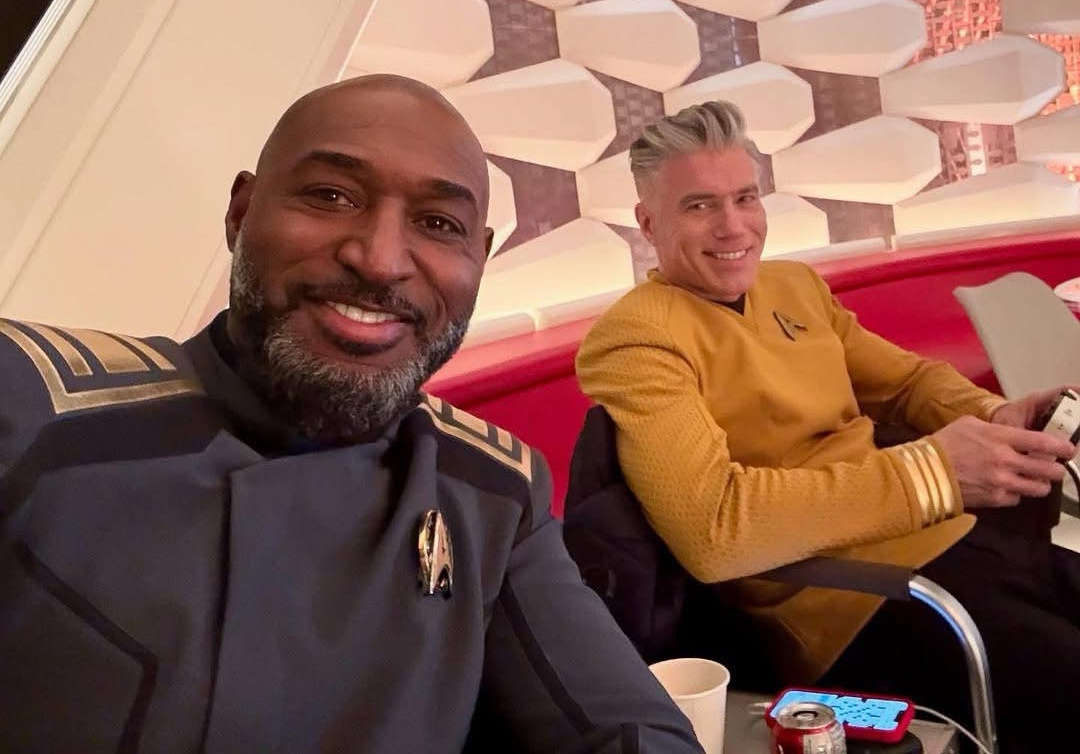
Behind-the-scenes photo from the set of Strange New Worlds Season 4 showing Adrian Holmes and Anson Mount in costume.
Adrian Holmes (Admiral April) with Anson Mount (Captain Pike) on the set of Strange New Worlds Season 4.

Then there’s the shortened fifth season. Season 5 will run to a mere six episodes instead of the usual ten. What, were those extra four episodes really fucking up the budget that badly? Is Paramount so broke that the corporation can’t stump up a few extra dollars for four episodes of a series that’s already in production, where the majority of its sets are already built, and the main roles are already cast? C’mon… that’s just pathetic.

Strange New Worlds has been the high-water mark of modern Star Trek. But, as with almost everything Paramount’s executive fuckwits have touched over the past decade, some appalling decision-making at the highest levels has worked against the show and its prospects. Oversaturation of the Star Trek brand is a major contributing factor, with Strange New Worlds having to compete for attention against four other Star Trek shows at various points, including episodes of Picard which were literally broadcast on the exact same day. Then there was the piss-poor decision to cut off the series from anyone outside of the United States during its critical first season. And even when Strange New Worlds was available and wasn’t being trodden all over by other Star Trek shows… it didn’t get much of a marketing budget, hardly any tie-in merchandise, and Paramount always seemed to treat the show as secondary to Discovery and Picard. Even as those shows came to the end of their runs, there wasn’t as much love for Strange New Worlds as there should’ve been.

Still frame from Strange New Worlds Season 1 showing Captain Pike on horseback.
Captain Pike in the series premiere.

I heaped praise on Paramount back in 2020 for commissioning Strange New Worlds. The show wouldn’t have come to exist without the incredibly positive reaction fans had to Pike and Spock’s roles in Discovery Season 2, and I think it’s worth acknowledging how at least some folks at Paramount had the basic business acumen to recognise that. Strange New Worlds was prioritised ahead of Section 31, arguably contributing to that series being put on hold and eventually re-worked into the TV movie we got earlier this year. And I stand by what I’ve said multiple times: that was the right decision. Fans were clamouring for more adventures with these versions of Pike and Spock, as well as for an episodic series that returned Star Trek to its roots. It’s no exaggeration to say that Strange New Worlds is the Star Trek show that I and many other Trekkies had been waiting for for a very long time.

There’ll be time in the months and years ahead to give Strange New Worlds a proper autopsy, discussing what went wrong, what went right, and what lessons the newly-formed Skydance-Paramount corporation can learn for Star Trek’s future… if Star Trek has a future beyond the next few years. But for now… I just feel like wallowing, to be honest with you. The timing of the news caught me off-guard, with Season 3’s marketing campaign ramping up, and while a five-season run is in keeping with modern Star Trek and with Pike’s “five-year mission,” I’m still disappointed to learn that the end is nigh for Strange New Worlds.

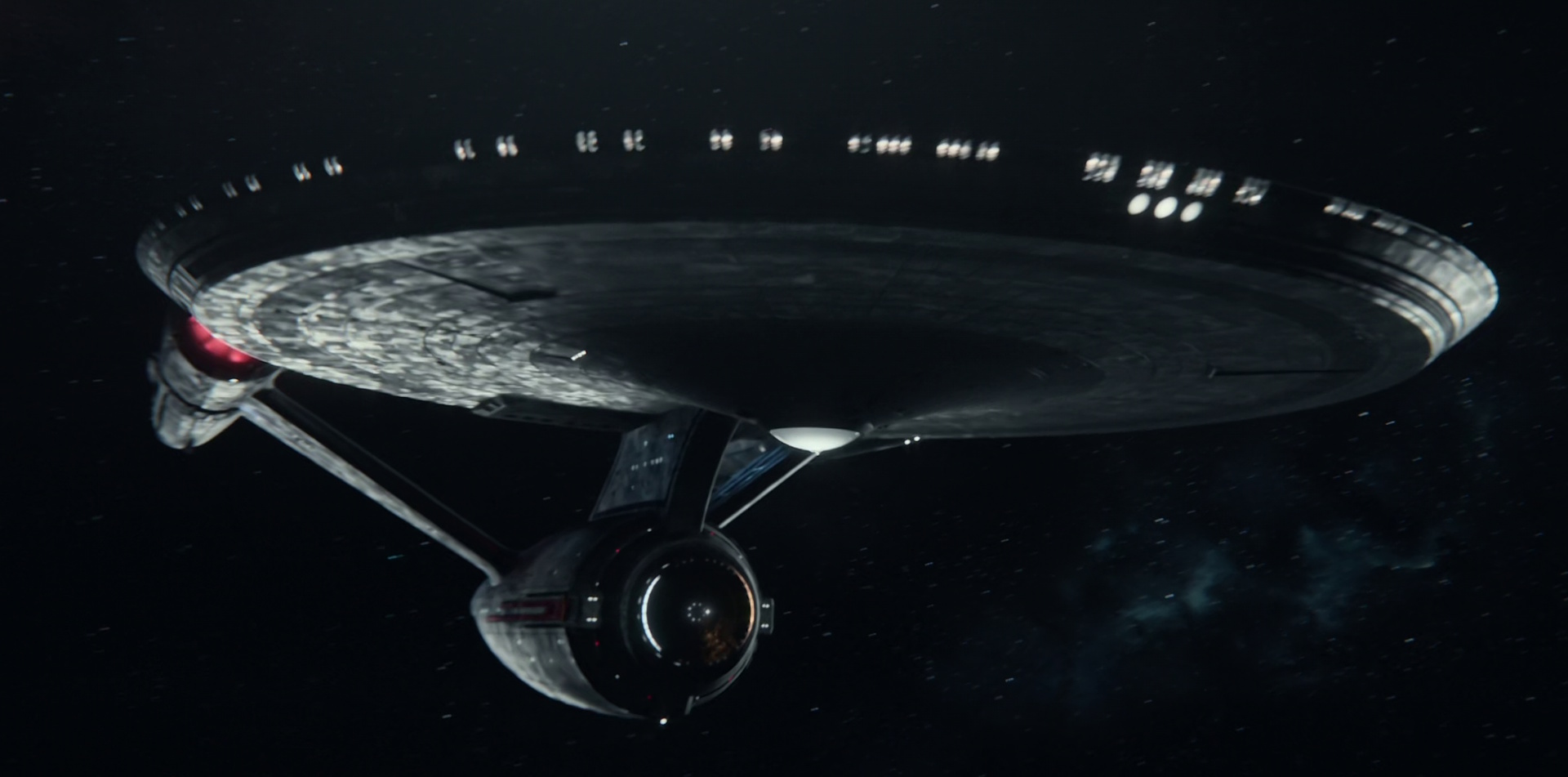
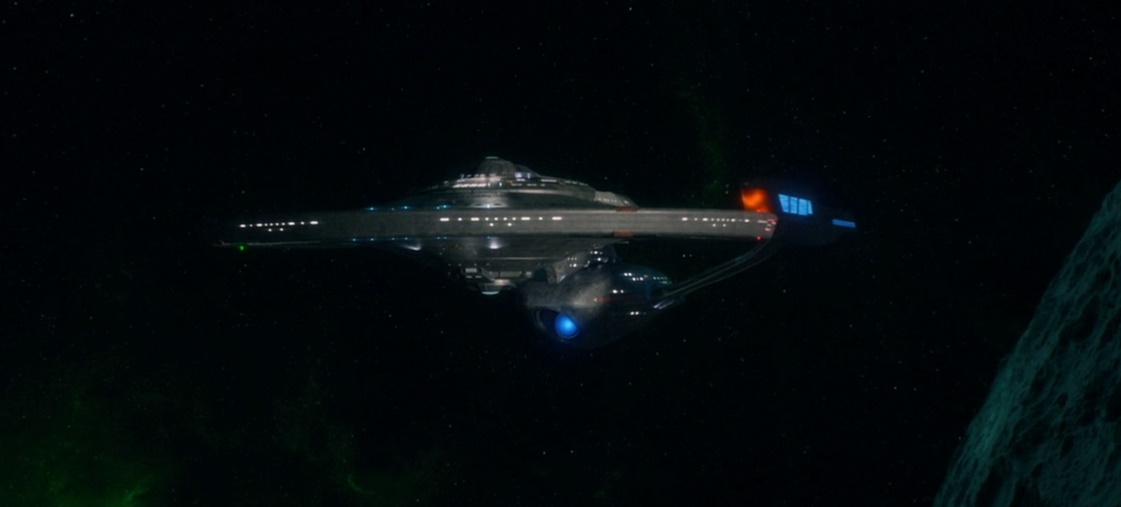
Still frame from Strange New Worlds Season 2 showing the USS Enterprise.
The USS Enterprise.

Let’s talk a little about the timing, because this really is a bit of an oddity, isn’t it?

We’re weeks away from Season 3’s premiere. A new trailer was released just a few days ago. The cast are soon gonna be out and about on the interview circuit. This is categorically not the time to announce that the show is being cancelled! It risks overshadowing the marketing push for Season 3, and it risks turning away potential viewers. What’s the point, after all, in tuning in for Season 3 if the show’s about to be canned? A lot of people won’t read the whole press release; they’ll hear “Strange New Worlds is being cancelled” and push the series out of their minds. Paramount has always struggled with timing – and with plenty of other incredibly basic things that practically every other entertainment corporation handles better – but even by their standards this is pretty bad.

The only thing I can think of to justify the announcement is this: the news was about to be leaked. Someone at Paramount got wind of an imminent leak and jumped in first, trying to head it off. Maybe that’s what happened… I don’t know. It seems to me to be the only logical justification for the timing of this announcement.

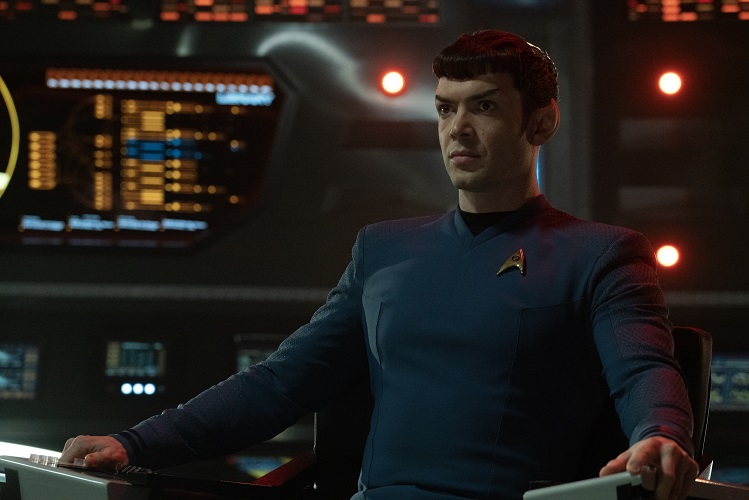
Promo photo from Strange New Worlds Season 2 showing Spock.
Spock.

So what does all of this mean for Star Trek’s future?

This might have to be the subject of a longer piece in the weeks ahead (when I’ve had more time to process things and get my thoughts in order) but I have a couple of things to say at this stage.

Firstly, I sincerely hope Strange New Worlds can be Star Trek’s last prequel series – at least for a good long while. There were fun moments in Enterprise, Discovery’s first couple of seasons, and the Kelvin films… but for a franchise that’s always been about looking to the future, prequels have never felt right to me. Strange New Worlds has, in my view, been outstanding… but if there is to be more Star Trek on our screens in the years ahead, let’s move the timeline along instead of re-treading old ground. Many Strange New Worlds episodes would’ve worked just as well – if not better – had they been set in the Picard era. A few small tweaks here and there and you’d be all set!

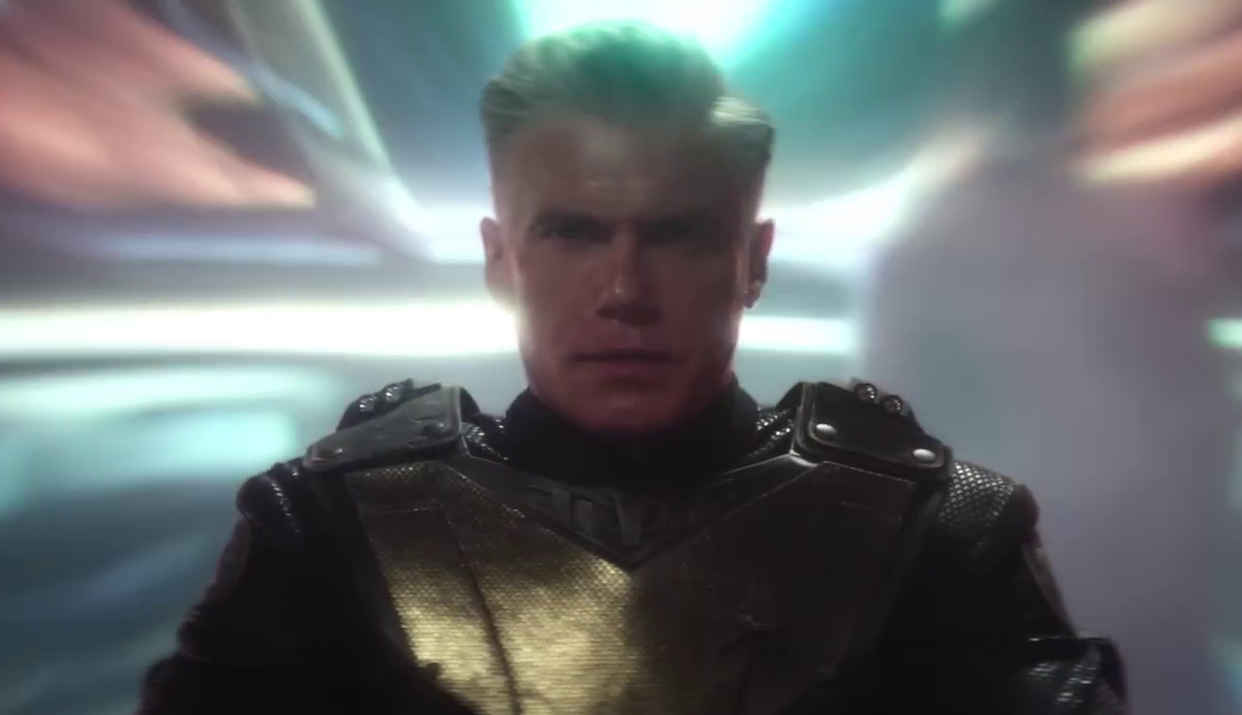
Still frame from the Strange New Worlds Season 3 teaser showing Captain Pike.
Star Trek doesn’t need another prequel series.

Secondly, I feel increasingly certain that, by the time we get to 2028 or 2029, Star Trek as a whole will cease production.

There are other projects in production right now: two seasons of Starfleet Academy and potentially at least one season of Tawny Newsome’s “workplace comedy” show. To me, a reasonably plausible timeline might see us get Starfleet Academy next year, Strange New Worlds Season 4 in 2027, Starfleet Academy and/or the comedy show in 2028, and Strange New Worlds’ finale in 2028 or 2029. But after that? Paramount’s merger will have fully concluded, and it’ll be up to the new executives to decide what – if anything – they want to do with Star Trek.

When Paramount+ was beginning its painfully slow rollout a few years ago, I said that I wouldn’t be surprised if the streaming platform doesn’t make it to the end of the decade. And despite talks of a potential merger of Paramount+ with another platform, I feel like that looks more and more likely, too. The future of streaming feels like it’s going to consolidate around a few large, profitable platforms, meaning second-tier, unprofitable ones like Paramount+ are on the way out. I don’t see the merger changing that, either.

The logo of Paramount+ on a blue background.
Will Paramount+ survive the decade?

What that means for Star Trek is that, if the franchise survives, it’ll likely be licesned out to someone like Netflix or Amazon in the future, rather than being made for Paramount’s own platform. Even in the Paramount+ era we’ve seen this; Prodigy was recently licensed to Netflix, though that deal is shortly coming to an end. With Netflix having been burned before, though, with both Discovery and Prodigy… will they want to make another investment in this beleaguered brand? If Star Trek kind of fizzles out in the second half of the 2020s, will it be an appealing prospect to any big streaming platform in the future?

Maybe we’re getting ahead of ourselves. It’s still possible that the remaining seasons of Strange New Worlds or Starfleet Academy will bring in new viewers, attracting new eyes to Star Trek at just the right time to greenlight more from the franchise! Maybe that’s a little too optimistic for this moment, but my point is that you never know. Strange New Worlds is fantastic with its episodic storytelling, and Starfleet Academy has the potential, at least, to appeal to younger folks. There are a couple of glimmers of hope there, I feel.

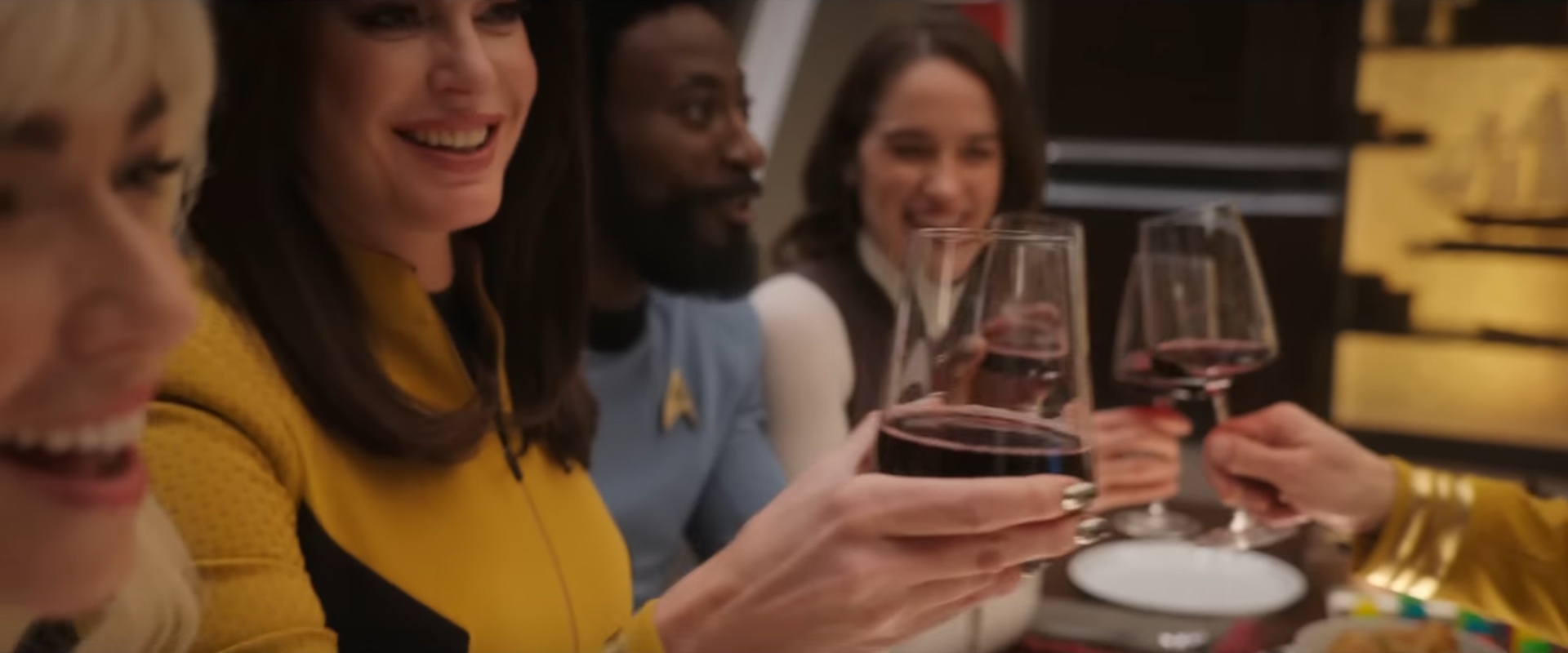
Still frame from the Strange New Worlds Season 3 trailer showing multiple main characters with wine glasses.
Here’s to Strange New Worlds

But none of that can hide the disappointment of today. Strange New Worlds – the show spawned by a fan campaign and which quickly became the best thing Star Trek has done in years – is cancelled. And Season 5 won’t even manage a measly ten episodes.

I’m glad that Star Trek was resurrected in 2017, and there have been some fantastic, hilarious, and emotional episodes produced over the past eight years. But we’re seeing the effect of Paramount’s epic mismanagement now; shows failing to find an audience, being either cut off from the world or squashed up too tightly together, and ultimately the result is premature cancellation. I don’t know what the future might hold for Star Trek beyond Strange New Worlds’ finale… but I hope whoever’s in charge of the franchise by that point does a better job than the current crop of executive morons.

Despite this disappointing news, I still hope to watch and review Strange New Worlds Season 3 later this summer, so be sure to check back for that. Until then… well, I don’t really have any encouraging or optimistic words to end on, I’m afraid.


Star Trek: Strange New Worlds Seasons 1 and 2 are available to stream now on Paramount+ and are also available on DVD and Blu-ray. Season 3 will premiere on the 17th of July. The Star Trek franchise – including Strange New Worlds and all other properties discussed above – remains the copyright of Paramount Global. This article contains the thoughts and opinions of one person only and is not intended to cause any offence.
Introducing MountCock+

Ladies and gentlemen, boys and girls, roll up and be the first to subscribe to the greatest streaming service of all time: the brand-new MountCock+!

Made-up logo of fictional streaming service "MountCock+".
If only it was real…

If you haven’t heard, Paramount Global – the company behind Paramount+, the Star Trek franchise, and others – is in a pretty bad place financially. That isn’t “breaking news;” it’s been the case for quite some time. As Paramount has continued to lose money, its executives have put a lot of faith in streaming to swoop in as some kind of saviour – but they’ve learned, belatedly, that streaming is a difficult market to crack at the best of times. And these are not the best of times!

Here’s what I think happened a few years ago. An elderly executive or investor – who knows nothing about the internet, data, streaming, or any of the complex technologies required to make it work – saw the success of Netflix, looked at CBS/Paramount’s own back catalogue and library of content and said to some poor, overworked employee “make me my own Netflix.” In the mid-2010s, Netflix was the hottest up-and-coming property in the entertainment world, and Paramount wanted a piece of that action. But rather than work with Netflix, Paramount wanted to be a competitor – despite having none of the outside investment, financial support, development knowledge, or technological know-how.

Logo of Paramount Global.

I really wish that I’d been faster at getting to work on this story, because “MountCock+” would’ve been a great April Fools’ gag if I’d made it a week ago! Oh well, lesson learned.

The title of this piece – which, in case it really needs saying, is facetious and won’t really be the name of a potential newly-merged streaming service – comes from news that new Paramount investor and potential new owner, SkyDance Media, is considering rolling Paramount+ and the Peacock streaming service together into one single entity. This would give subscribers to either platform access to a lot more films and TV shows, and the hope is that rolling two unprofitable streamers together will help the restructured Paramount/Paradance/Dancemount (or whatever the new company might be called) edge its way closer to profitable territory.

Logo of Skydance Media.
Paramount Global and Skydance Media may be in talks about a merger or sale.

Let’s get one thing straight right off the bat: small, specialised streaming platforms that only offer relatively few shows and films within a single niche have always been a bad idea. It was a bad idea when DC Comics tried it, it was a bad idea when CNN tried it, and the fact that DC Universe and CNN+ no longer exist as independent platforms is all the proof you’ll ever need. Netflix succeeded in the 2010s because it was a comparatively cheap and convenient way to access a huge library of content. Yes, there were whole genres on Netflix that you’d never even touch because they were of no interest to you. But there was so much other stuff that was appealing that it made a Netflix subscription worthwhile.

That was what convinced me to cut the cord – or rather, the wire to my satellite dish! In the late 2000s I got Sky – a satellite TV provider here in the UK. Getting Sky in the first place had been one of my ambitions for a long time; ever since it launched in the ’90s, the idea of hundreds of channels had been massively appealing! But by the late 2010s, the media landscape was changing. When Star Trek: Discovery was only going to be available on Netflix, I signed up so I could watch it. And I found streaming to be so convenient and at such a good price point that I very quickly dropped Sky altogether.

Stock photo of a satellite TV dish.
You can still see a satellite dish on many houses here in the UK.

The reasons for Netflix’s success were its convenience, low price point, and huge library of content. Take away one of those factors and it wouldn’t have become the phenomenon that it did – and as the so-called “streaming wars” rage in the 2020s, it’s a combination of those same factors in reverse that account for the failure or underperformance of other, newer streaming platforms. Less content for a higher price turns people away – even big fans of some franchises. I’m a Trekkie, but in 2024 I’ve only paid for a single month of Paramount+ so far; the streaming platform just doesn’t feel worth it most of the time.

Roll Paramount+ content in with another streaming service, though, and suddenly it becomes a more enticing proposition. As long as the price stays low as the library of content grows, there would be much more of an incentive to sign up for MountCock+ than there is for either Paramount+ or Peacock individually. Continuing as competitors will, in all likelihood, lead to the failure of both platforms, but if they join forces they might stand a chance. Even though Skydance doesn’t own Peacock and thus profits will have to be split, it still feels like a good idea.

Stock photo of streaming apps on a TV screen.
There are currently too many streaming services. Some will never be profitable for their parent companies.

Almost every time Star Trek’s parent company has been shaken up, there have been changes for the franchise. And not all of these changes have been positive. We have to keep in mind that it’s possible that a Skydance/hedge fund-owned corporation would have less of an interest in Star Trek, especially if the franchise seems to be underperforming, not bringing in or retaining subscribers, or even running too hot. While I don’t expect to see imminent cancellations, it’s something to be aware of as it’s happened before. It’s also possible that new corporate leadership might be keener on feature films with cinematic releases than on making more made-for-streaming series.

On the other hand, Paramount has been slow and even reluctant to listen to Trekkies sometimes. There’s been a significant fan campaign to create a sequel/successor show to Star Trek: Picard – but after more than a year, it hasn’t garnered a response from those at the top of the corporation. So perhaps new faces in the boardroom would be better at reading the room and understanding where the fan community is and what kind of projects we’d like to see. This is an area where Paramount has needed to improve for a long time, so again there’s the potential to see some positive changes.

Still frame from Star Trek: Picard Season 3.
Trekkies have been clamouring for another Picard-era series.

Business and finance is not my strong suit nor my area of expertise – and I don’t blame you if the details are boring or difficult to grasp. I’m pretty sure I’m oversimplifying it because I don’t fully understand it either; when you’re looking at corporations that routinely deal in the hundreds of millions or billions of dollars… it can be hard to really comprehend the kinds of decisions that they take. But as fans, and as consumers of media in a competitive marketplace, we need to know a little about what’s happening behind-the-scenes. The future of Paramount Global will have an impact on future Star Trek productions, on the corporation’s other streaming projects, and even on its cinematic output and television channels.

For my two cents, I can see why amalgamating Paramount+ and Peacock – or Paramount+ with some other streaming platform, if the Peacock deal falls through – would make sense. After several years of streaming becoming an increasingly balkanised and fractured marketplace, bringing different platforms together just makes sense. There’s a general unwillingness on the part of audiences to pay for more than two or three different streaming services, and smaller, second-tier platforms will struggle in such a challenging environment. I’m a Trekkie – albeit one who’s been feeling a bit burned out of late – but even I have never paid for a full year’s worth of Paramount+; it’s a service I pick up for a month or two at a time to watch a couple of shows. On a related note: have you checked out my review of Halo Season 2 yet?

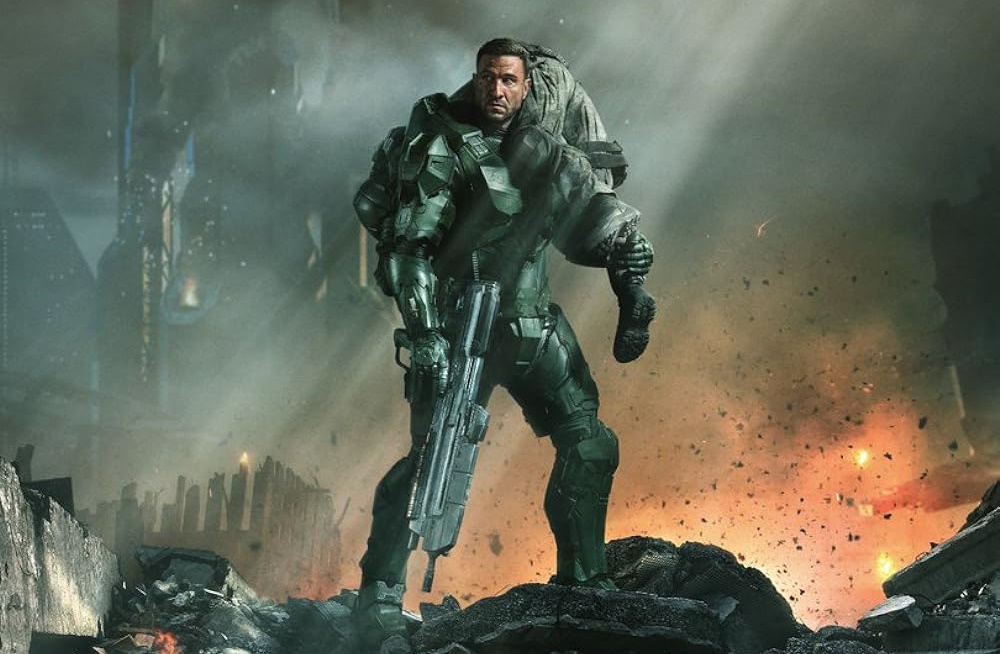
Promo poster for Halo Season 2.
It’s the Master Chief!

So could the hypothetical MountCock+ turn things around? I think it has to have a better chance of turning a profit than either Paramount+ or Peacock do individually – though it will perhaps need a better name than I’ve given it! But in theory, a bigger streaming platform with more original and legacy content, backed up by a corporate merger that brings more film franchises and television shows under its umbrella is a good thing. We don’t want any one corporation to have a monopoly in this marketplace, of course, but creating platforms that are more consumer-friendly and don’t see small bundles of content paywalled off at every turn is a good thing and a positive development.

“Watch this space” is probably the soundest advice right now! Paramount has been in talks for a while about possible mergers, sales, or splitting off different parts of its business, so nothing is set in stone and this latest Skydance/Peacock proposal is unofficial at best. It could happen – or Paramount could end up going in a very different direction. Still, corporate changes are afoot – and I feel increasingly confident of major news breaking before the year is over.


All properties discussed above remain the copyright of their respective broadcaster, distributor, studio, etc. This article is not financial or investment advice. This article contains the thoughts and opinions of one person only and is not intended to cause any offence.