Ten of my favourite Disney World rides and attractions

It’s been a long time since I visited a Disney theme park, but with the re-opening of Disneyland in California recently hitting the headlines, I’ve been thinking about past visits. I’ve been very lucky to have visited three of the six Disney parks in my life, and though California’s Disneyland is the original and thus a classic, for my money you can’t beat Walt Disney World in Florida. There’s just so much more going on and so much more to do!

The last time I visited Walt Disney World was in 2006, and there have been many changes to the resort and its four constituent parks since then. This list won’t reflect those changes, so don’t expect to see me talk about Galaxy’s Edge and Rise of the Resistance. I would love to try that ride for myself one day, but my health prevents me from travelling (even if there weren’t a pandemic going on) so I doubt I’ll ever get to experience it for myself.

Cinderella’s Castle is the centrepiece and icon of Walt Disney World.

Luckily, though, I had several wonderful Disney experiences earlier in my life while I was able, and I’ve visited the parks both with family and with friends. Disney World – and the other parks – are presented as family-oriented attractions, but even as an adult you’ll find plenty going on and lots of things to have fun with.

So let’s celebrate all things Disney by picking out ten of my favourite rides and attractions! For the record, because I know people like to argue: I’m not saying these are objectively the best things to do at Disney World. These are simply ten rides and attractions that I enjoyed at the park on my earlier visits. If you have your own favourites and don’t like these ones, that’s okay! There’s a broad range of things to do at Disney World, with rides and attractions to cater to many different folks and the things they enjoy. We don’t all have to like the same things!

With that out of the way, let’s take a look at my list.

Number 1: The Tomorrowland Transit Authority/PeopleMover
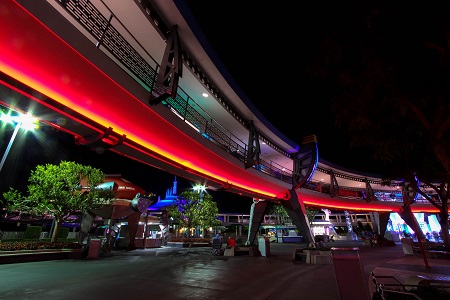
The Tomorrowland Transit Authority/PeopleMover track.

I said at the beginning that this isn’t a top ten list of my absolute favourite rides. But if it were, the Tomorrowland Transit Authority would be my number one! It’s almost certainly my favourite ride at the Magic Kingdom and the whole of Disney World, which might come as a surprise considering it’s very tame. Unlike other slow rides at Disney, the Tomorrowland Transit Authority doesn’t really have its own theme, instead making a loop of Tomorrowland – one part of the Magic Kingdom – from about one storey up.

The Tomorrowland Transit Authority is fun and interesting, passing through several rides in Tomorrowland and a shop, giving you a birds-eye view over much of the future-themed area of the park. It’s gentle, so it’s perfect for young kids and others who don’t enjoy fast-moving rides, and unlike many of Disney’s other slow rides it isn’t in the dark, which again makes it great for kids who might not be so happy in the dark.

There usually isn’t a horribly long queue for the Tomorrowland Transit Authority (or at least, not as far as I remember from past visits) which, combined with its gentle nature, means it’s something relatively easy to do in between “bigger” attractions. Riding the Tomorrowland Transit Authority can nicely punctuate a visit to the Magic Kingdom, providing a way to slow down while still enjoying a ride. But it’s absolutely great fun on its own merit, and well worth a visit. If I ever go back to Walt Disney World, I’m making a beeline for the Tomorrowland Transit Authority as soon as I walk through the gate!

Number 2: El Rio del Tiempo (Mexico Pavilion at Epcot)
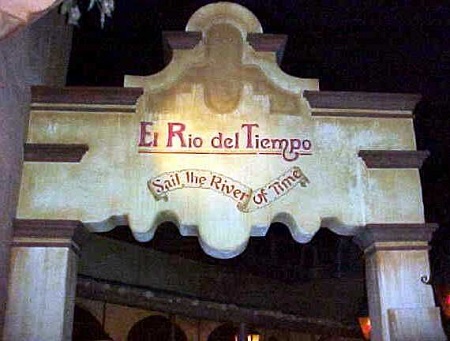
The entrance to El Rio del Tiempo.
Photo Credit: Disney Wiki

Sadly, El Rio del Tiempo has been re-themed since I last visited the parks, with the dark ride now taking on a theme based loosely on The Three Caballeros, a 1944 film featuring Disney mainstay Donald Duck. I believe the ride layout remains the same, though, despite the re-theming, so I imagine the gentle pace of the attraction has been retained.

Epcot’s World Showcase is an eclectic mix of different countries, with themed areas representing different parts of the world. There are points of interest and lots of places to eat, but what World Showcase doesn’t have in abundance are rides. The Mexico Pavilion contained my favourite, which is/was a dark ride set inside the attraction’s Mayan pyramid. The version of the ride I remember was a gentle boat ride, with no big drops or splashes, and after trailing around World Showcase in the Florida heat, it was great to take a break and sit down in the shade – and air conditioning!

A lot of theme parks (especially here in the UK) go all-in on thrill rides, trying to outdo each other with bigger and faster rollercoasters. Walt Disney World has always been great at having slower, gentler attractions that aren’t just rides for kids, and El Rio del Tiempo was a great example of an adult-oriented dark ride, one which paid homage to Mexico and Mexican history in a respectful way. I haven’t ridden the updated Donald Duck version, but I hope it managed to keep some of what made the original attraction so pleasurable.

Number 3: The Great Movie Ride
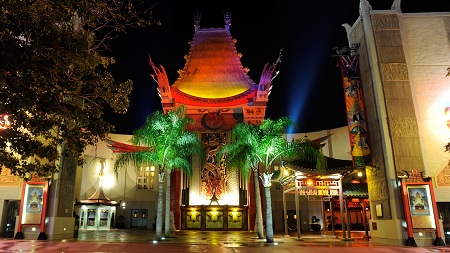
A recreation of Hollywood’s famous Chinese Theater served as the building for The Great Movie Ride.
Photo Credit: The Walt Disney Company

Another attraction that, sadly, can no longer be ridden, The Great Movie Ride was one of the original rides and showpieces of Disney’s MGM Studios/Hollywood Studios. It closed in 2017, being replaced by Mickey and Minnie’s Runaway Railway. As with El Rio del Tiempo above, this reflects a move on Disney’s part to introduce its own characters and brands into all of the rides at Disney parks.

What I loved most about The Great Movie Ride was that a cast member (i.e. a real person) was present throughout, serving as a guide as the ride took you through clever recreations of scenes from famous films like Casablanca, The Wizard of Oz, Raiders of the Lost Ark, and even Alien. There was an incredible diversity of films on display, and having a live performer along with the wonderful animatronics brought the world of Hollywood to life in a way I’d never really experienced before.

The Great Movie Ride was a love letter not just to the “Golden Age” of Hollywood, but to cinema in general. The queue area contained actual props from more than a dozen films – including the famous ruby slippers from The Wizard of Oz and a dress worn by Kate Winslet in Titanic. While it makes sense in some ways for Disney to want to stick to its own brands, I think something significant was lost with the closure of The Great Movie Ride that took away from Hollywood Studios’ premise as a park.

Number 4: Star Tours
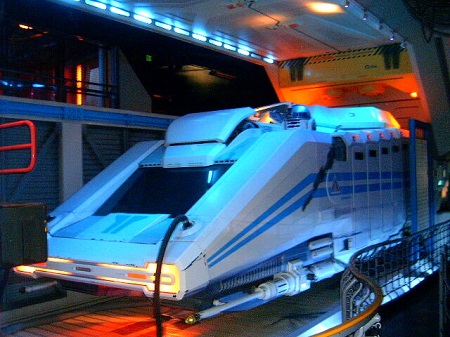
The StarSpeeder 3000!
Photo Credit: Disney Wiki

Galaxy’s Edge was not the first Star Wars-themed attraction at Disney World. Not by a long shot! Star Tours opened in 1989, and is still open today – albeit having been given a makeover! Unlike most attractions at Disney World, Star Tours is a simulator, meaning that it stays in one place and doesn’t follow a track.

I can still remember the thrill of boarding Star Tours in the early 1990s, not too long after having seen the Star Wars trilogy for the first time. Actually boarding a starship, complete with a droid pilot, and going on my own Star Wars adventure was a geeky kid’s absolute dream, and the sense of wonder I had as the doors to the simulator opened that first time is a memory that has stuck with me for decades.

The simulator itself was clever, and the ride managed to really give you the sensation of being a spaceship passenger, lurching from side to side and up and down as the ship tried to escape Imperial attacks! The “story” of the ride was, of course, a bit silly, but the experience of being part of Star Wars – even just for a few minutes – is something I’ve never forgotten. I haven’t been able to ride the updated version of Star Tours, but I’m sure it’s just as much fun, and that there are young Star Wars fans today about to have that same kind of experience!

Number 5: Pirates of the Caribbean
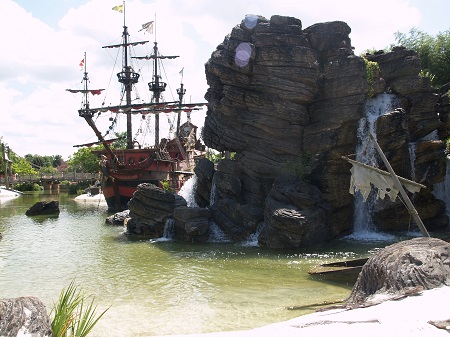
Pirates of the Caribbean exterior (at Disneyland Paris).
Photo Credit: Trekking with Dennis

Pirates of the Caribbean was a ride long before anyone conceived of Jack Sparrow or the film franchise! And it’s a fun pirate-themed boat ride perfect for Adventureland. It wasn’t the first ride to be given the feature film treatment – that dubious honour goes to Hollywood Studios’ Tower of Terror, which saw a truly mediocre adaptation in 1997 – but it’s not unfair to say it’s been the most successful to date.

The ride itself – at least the classic version, prior to being updated with characters from the films – didn’t have a strong story, instead comprising little more than a set of pirate-themed scenes loosely bound together. Thus there wasn’t much to “adapt” to bring it to screen, just a theme and a song.

Though the ride has now been updated to reflect the popularity of the films, which makes sense, the original version was plenty of fun. The ride is a step in between something like El Rio del Tiempo and more thrilling, faster-paced rides, containing several short drops and faster sections rather than simply being a slow boat tour in the dark. Pirates of the Caribbean is a Disney classic, and one that nobody should miss when visiting!

Number 6: The Monorail
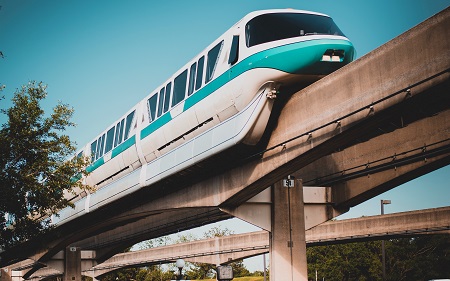
A Walt Disney World Monorail train.

Though you aren’t technically supposed to… this is the only ride on this list you can ride for free! Because the Monorail runs outside of Disney World itself, connecting the theme parks to several resort hotels and the main entrance, it’s possible to hop aboard even if you don’t have a ticket for the theme park – or at least, it used to be!

The Monorail is a lot of fun to ride, and offers great views of both the Magic Kingdom and Epcot. As a kid, I was seriously impressed with the way the Monorail glides through the inside of the Contemporary Resort – one of the hotels near the Magic Kingdom. The idea of a train going inside of a hotel blew my mind!

It’s designed to be a practical method of transportation, providing guests with an easy connection between their hotels or the car park and the theme parks. But the Monorail is so lovingly designed and well maintained that it’s a fun ride in itself. It also bookends a day at the parks – and even a whole Disney trip – perfectly, by beginning and ending with a ride.

Number 7: Spaceship Earth
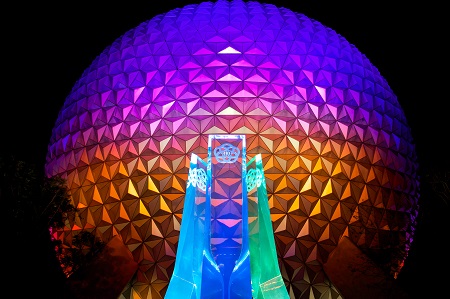
Spaceship Earth is symbolic of Epcot.

Epcot’s talisman is a perfect representation of the concept behind the Epcot theme park. It’s a dark ride that goes through a summarised version of history, specifically the history of communication, with great animatronics and excellent narration. Epcot was originally intended as a park with a greater emphasis on imagination and education, showing off a particular vision for a possible future. Spaceship Earth is one of the few remaining elements of that original vision, with others having been closed or Disney-fied.

Spaceship Earth is the first thing you seen upon entering Epcot, and the huge geodesic sphere can be seen from all over the park. Its futuristic design still looks great as the park approaches its fortieth anniversary, and it’s become absolutely iconic. I hope that a planned renovation of the ride, which was due to start last year before the pandemic delayed things, doesn’t take away its educational charm.

Because Spaceship Earth is the first attraction inside the gate, it’s easy to make it your first port of call in Epcot. In my recollection, the queue wasn’t especially long on any of the occasions I wanted to ride, and inside a combination of moving walkways and continuously-moving ride vehicles seem to provide a smooth experience. The final part of the ride, which takes you through a field of stars “into the future” always feels moving and beautiful, and the ride ends on a very optimistic and hopeful note.

Number 8: Kilimanjaro Safaris
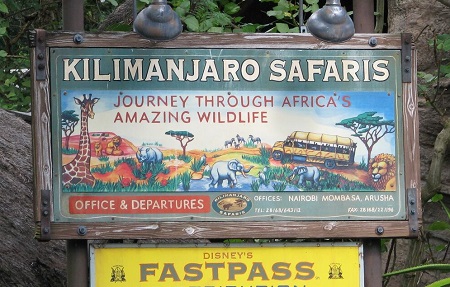
The sign welcoming guests to Kilimanjaro Safaris.

In 1998 my family and I were fortunate to be among the first guests ever welcomed into Disney’s Animal Kingdom. The new theme park was fantastic, and coming a few short years after The Lion King had been in cinemas, it was wonderful to see Disney really embracing the animal theme. Kilimanjaro Safaris is, as you might expect from the name, a safari ride.

Growing up, my family visited South Africa on a few occasions to visit an aunt who had moved there, and I lived in South Africa for a time shortly after graduating from university, so I’ve been lucky to have been on a real safari on a number of occasions. And I have to say, Kilimanjaro Safaris compares positively to the real thing! Because the ride is relatively compact, it’s possible to see many different animals – real animals, not animatronics – during the course of your expedition, which is fantastic.

There is a story to the ride, and like The Great Movie Ride above, Kilimanjaro Safaris has a cast member driving the ride vehicle to serve as your guide, adding a whole extra level of immersion. The animals at Animal Kingdom are well cared-for, and while it is still a “zoo” of sorts, knowing that the animals have space to roam and aren’t confined to small cages is nice to know. Getting up close and personal with some of these wild animals might otherwise be impossible, so Kilimanjaro Safaris offers a unique experience that really can’t be found elsewhere.

Number 9: Splash Mountain
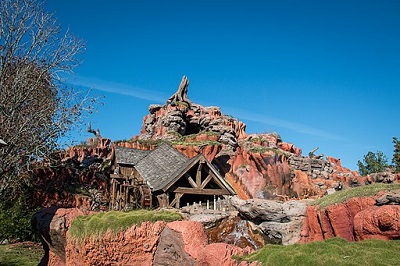
Splash Mountain looms large over Frontierland!

After putting so many slower rides on the list, I suppose we need at least one “thrill ride” before we wrap things up! Splash Mountain is a log flume with a slow and tense build-up to a long drop, and it’s very easy to get absolutely soaked while riding! The ride is being re-themed at some point in the near future, following criticism of its present theme, which includes elements from the controversial film Song of the South. The new theme will draw on The Princess and the Frog, and based on concept art looks fantastic.

Splash Mountain slowly builds up a sense of tension. A couple of smaller drops get you riled up for the big one, and the slightly creepy vibe present in some of the animatronic scenes really ramps things up as you… go up the ramp! By the time the big drop is imminent, the ride has done its job of building anticipation!

I’ve always enjoyed Splash Mountain, and though I don’t expect to be able to see the re-themed version any time soon, it sounds like it’s in good hands. It’s one of the main attractions in Frontierland, and one of the “three mountains of the Magic Kingdom” along with Space Mountain and Big Thunder Mountain. Doing all three in a day makes for an amazing and thrilling time!

Number 10: Peter Pan’s Flight
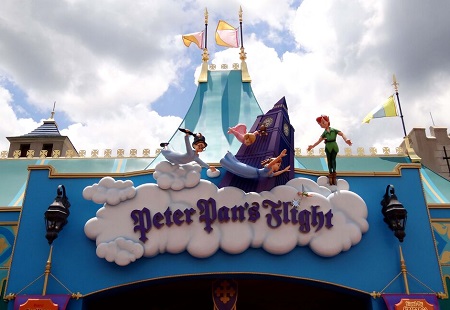
Entry to Peter Pan’s Flight.
Photo Credit: Disney Wiki

Peter Pan’s Flight is a dark ride that vaguely follows the story of the 1953 film, taking you on a journey to Neverland with Peter and the Darlings. The gentle ride is great for young kids, and the adventure of following Peter Pan as he flies above London and battles Captain Hook is rendered beautifully with Disney’s animatronics.

Clever use of forced perspective really does give you the sensation of flight – being high above London and Neverland, looking down. It’s a very well-designed ride to get that sense of scale, and I’ve always appreciated that about Peter Pan’s Flight. Most of the characters from the film are present, including Tinker Bell and Captain Hook, and it’s just a cute, fun ride.

Given the recent controversy surrounding the way Native Americans were depicted, and Peter Pan’s restricted access on Disney+ that has resulted, I wouldn’t be surprised if Peter Pan’s Flight is reworked or even closed and entirely re-themed at some point in the near future. So this might be one to ride while you can!

Bonus: Fireworks displays
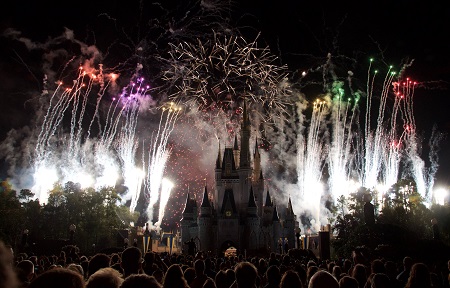
Fireworks in the Magic Kingdom.

Few places in the world do fireworks displays as well as Walt Disney World. Even though I’m not the world’s biggest fan of fireworks, which I feel can be a tad boring, the displays Disney World puts on at the Magic Kingdom and Epcot in particular are absolutely fantastic, and well worth sticking around for after dark.

Seeing the fireworks pop over Cinderella’s Castle, while also watching performers in costume as Mickey, Minnie, the Princesses, and other Disney favourites is one of the must-do experiences while in Disney World, especially if you’re visiting with kids. Not only is it a quintessential Disney World experience in itself, it’s also one of the best fireworks shows you’re ever likely to see!

Most places around the world are only treated to fireworks once or twice a year, so seeing a live display – especially a professional one on a large scale – does still present a sense of wonder and excitement, even to an old cynic like me! It’s a great way to end a day at the parks.

So that’s it. Ten of my favourite attractions at Walt Disney World.
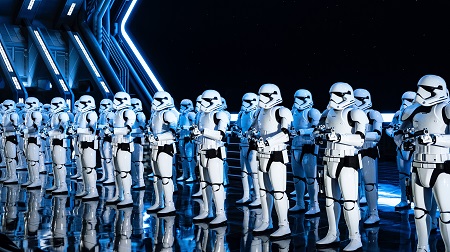
No Rise of the Resistance for me… yet!

Did your favourite(s) make the list? If not, I hope you’ll stay tuned. This is a subject I’m sure I’ll revisit at some point in future, as there are at least ten more rides and attractions I can think of that didn’t make this first list! Disney World really has something for everyone, in my opinion. Whether you want the thrill of a fast rollercoaster, an immersive story-based ride, something gentle to do with young kids, or a show to sit down and watch, there’s so much going on that kids and adults of all ages should be able to find something to enjoy. I greatly enjoyed my visits to the park, and I’m glad to have been able to attend while I was capable of doing so.

The great thing about Walt Disney World is – as Walt Disney himself said – that the parks are “never finished.” There will always be changes, additions, and updates to keep things fresh and interesting, and while the trend in recent years has been for including more of Disney’s own characters and intellectual properties, that may not always be the case, and we could see more changes in future that bring back ideas like The Great Movie Ride or Epcot’s Innoventions.

Regardless, I hope this list was a bit of fun, and maybe a trip down memory lane for those of you who, like me, haven’t been able to visit the parks in a number of years.

All rides and attractions listed above are the copyright of and owned by Disney Parks and/or The Walt Disney Company. Some images courtesy of the Disney Wiki and Unsplash. This article contains the thoughts and opinions of one person only and is not intended to cause any offence.
Ten of my favourite Disney films

Spoiler Warning: There will be spoilers for the Disney films on this list.

Disney+ finally reached the UK in March, several months after its US release. I was actually already a subscriber to a different Disney streaming service, Disney Life, and had been for a while, but Disney+ is better-organised, sharper, and does offer more content. Given that you may find yourself with some time on your hands at the moment, it could be a good moment to check out this streaming platform – and I believe it’s free to try for seven days.

I don’t intend for this to be a review of Disney+, but just to discuss it in a little more detail, the service delivers what it promises. Disney’s library of films – including from brands now under the Disney umbrella like Marvel and Star Wars – and Disney Channel original television shows. There’s also a limited amount of content from National Geographic, including some documentaries made specifically for Disney+. I hope to see them add more to this in future, as I love a good documentary. There are also a couple of original shows, including the first live-action Star Wars show, The Mandalorian. But save yourself time on that one because I’ve honestly not seen such a boring series in a long time.

As a childless adult fast approaching middle-age, I admit I still feel a certain embarrassment at admitting I’m a huge Disney fan. Perhaps that’s a product of the time and place I grew up, as nowadays it seems far more acceptable! Disney has created some of the best animated feature films of all time, and even today, almost a century on from when Walt and Roy founded the company, Disney sets the bar that other animation studios wish they could reach. In the last couple of decades, the company has greatly expanded both its content and the brands it owns, growing to become one of the biggest and most powerful entertainment companies in the world.

For this list, I’ll be picking ten of my favourite Disney animated films. This isn’t a “Top Ten” ranked list; instead these are just ten films I really enjoy and I’ll be listing them in order of release. All of them are available to watch on Disney+ if you’re lucky enough to live in a part of the world where the service is already live. If not, I daresay you can find copies on DVD, Blu-ray, or by, shall we say, other means… matey.

So without further ado, let’s jump into the list. Please be aware that spoilers may be present, and that a couple of the entries on this list may have scenes that are outdated and/or insensitive.

Number 1: Peter Pan (1953)

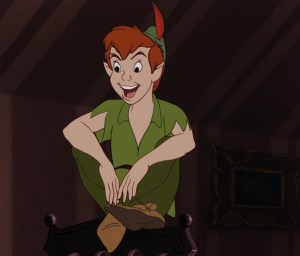
The titular Peter Pan.

There’s a ride at Disney World – and I believe at other Disney parks too – based on 1953’s Peter Pan called Peter Pan’s Flight. If you ever find yourself at the Magic Kingdom I highly recommend it; it’s one of my favourite rides there.

By 1953 Disney was already well-established as the best studio in town for animation. Peter Pan retells – faithfully, at least by Disney standards – the JM Barrie story, which had been a play in 1904 and a novel in 1911. You know the story, of course: Peter Pan lives in Neverland, a place where children never grow up, and has adventures with the Lost Boys while trying to stay one step ahead of his pirate nemesis, Captain Hook. It’s a story which has become a classic, in fact it already was a classic when it was given the Disney treatment. Disney films have been incredibly successful using this formula – taking a classic story and presenting it in a child-friendly manner. In 1953 that explanation described a good portion of Disney’s back catalogue, as indeed it still does today.

Peter Pan introduces a number of characters who would become Disney favourites, including Captain Hook, who is, in some respects, the archetypal film pirate even today (though the “pirate accent” is based on another film of the 1950s, Treasure Island). Tinker Bell, Peter’s fairy friend whose magical dust allows him and the children to fly, also debuts here. Tinker Bell has become a legend in her own right in the wider Disney universe, and is the subject of numerous spin-offs including her own film series.

One thing that always surprises me about older Disney films is how good the animation is – even rendered in full HD on a big-screen television. I was downright shocked to learn, in my youth, that Snow White and the Seven Dwarfs was as old as it was; it still holds up today. As does Peter Pan – the animation, which was all hand-drawn and hand-painted, looks amazing and hasn’t aged a day. Unlike some computer-animated titles, Peter Pan and other hand-drawn films are timeless.

The story is a pure-hearted swashbuckling adventure, as Peter and Wendy lead the Lost Boys to victory against the nefarious Captain Hook. Some of the scenes and references are undeniably dated by today’s standards – I’m thinking in particular of the way Wendy’s leadership is only seen as something maternal, and of course the now-infamous portrayal of Tiger Lily and the Native American tribe. I don’t believe, however, that either of those things are reason to hide Peter Pan or try to pretend it doesn’t exist.

Number 2: The Aristocats (1970)

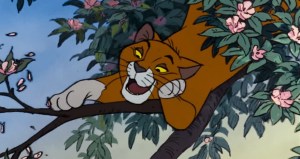
Abraham de Lacey Giuseppe Casey Thomas O’Malley… O’Malley the Alley Cat!

Often overlooked, as it came out only three years after the incredibly-successful The Jungle Book, The Aristocats is nevertheless a brilliant and fun film with some great musical numbers. Production began shortly before Walt’s death in 1966, and thus The Aristocats is the last film he actively worked on and approved before passing away.

1961’s 101 Dalmations had proven a great success as an adventure story with animal protagonists and human villains, and that basic formula was reused for The Aristocats too. When a rich older lady decides to leave her fortune to her cats – instead of to her butler – he schemes to get rid of them to get his hands on her money. Taking the cats far away from their home, they meet a fun and eclectic cast of characters on their journey home.

As someone with several cats of my own, I do enjoy a good cat-themed story! And while The Aristocats doesn’t do anything radically different or new in terms of its animation style or story – both of which are comparable to Disney’s earlier output – it’s a sweet film that’s greatly enjoyable. Its music celebrates the jazz era of its 1910s-20s setting, and there’s a distinctly old-fashioned feel throughout – but not in a negative way.

There are some great musical numbers, all of which fit into that jazz/swing theme, as the cats make their way home. Marie, one of the kittens, has become a permanent fixture on Disney merchandise, though many of the younger people picking up those items haven’t seen The Aristocats in full! If that applies to you or your little ones, I definitely recommend sitting down to watch the film.

Number 3: Robin Hood (1973)

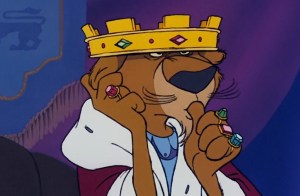
The Lion King! Oh wait, wrong film.

I mentioned at the beginning that this list doesn’t rank the films in order of how much I like them, but if it did, Robin Hood would be the undisputed number one. It’s my all-time favourite Disney film. Purely from a subjective point of view, of course!

Disney’s output between the “classic” era of the 1930s-50s and the “Renaissance” of the late 1980s-90s that we’ll look at in a moment is often ignored by fans today, and I think that’s a great shame. Perhaps it’s because I grew up on titles like Robin Hood, but I think that it has a lot to offer.

The hand-drawn animation retains much of the Disney charm of years gone by, and though it doesn’t necessarily bring anything new to the table compared to earlier titles, it still looks fantastic today – and don’t let anyone tell you otherwise! There was some recycling present in the film’s animation – most notably in the character of Little John, which is a copy of Baloo, the bear from 1967’s The Jungle Book. In fact, both characters are actually voiced by the same actor – Phil Harris, who also voiced Thomas O’Malley in The Aristocats – which further drives home the point. Even this recycling was actually Disney being cutting-edge; the process used to make exact copies of drawings was an early precursor to photocopying.

Robin Hood is a classic story, an old-world legend of a bandit who steals only to turn around and give away his money to the poor people in the community. In Disney’s adaptation, all of the characters are anthropomorphic animals, but otherwise the story doesn’t really stray too far from the confines of its source material. The inept Prince John – represented by a cowardly thumb-sucking lion, which as a kid I found to be absolutely hilarious – and his evil cohort are outsmarted by Robin and his brave Merry Men. Disney has always been great at using animals perfectly – portraying the Prince’s adviser as a sneaky snake, and the Sheriff’s men as wolves and vultures is definitely a great example of that!

The opening of Robin Hood introduces one of my favourite Disney songs, too – the beautiful Oo-De-Lally.

Number 4: Beauty and the Beast (1991)

The Beast!

After The Little Mermaid revived both the fortunes and reputation of Disney animation in 1989, a period known as the “Disney Renaissance” kicked off, in which the studio churned out a series of films which were both critical and commercial hits. Beauty and the Beast is the second of these films, and it’s amazing.

One of the first animated feature films to use CGI, Beauty and the Beast is groundbreaking in that regard, and the lessons Disney learned about computer animation would bear fruit later in the decade with releases like Toy Story. In that sense, Beauty and the Beast is a very important moment in the history not just of Disney, but of animated films and indeed all of cinema – as CGI has gone on to be massively important in all kinds of titles.

Beauty and the Beast managed to tell an engrossing story that was tense and dramatic, as a cursed prince learns to love for the first time. After a spell was put on him, a prince and his household staff (which seems a tad unfair to them!) were cursed to live as non-human objects, with the prince himself turned into a monster. Belle, a social outcast in her village, falls for him while in captivity.

By making Belle the protagonist, Disney has changed up its traditional princess formula. Belle is a “commoner”; a girl from the village as opposed to aristocratic or royal by birth. She’s disliked and gossiped about for enjoying reading and being intelligent, and with these points Beauty and the Beast says that it’s okay to be smart, and that any girl can be a princess – being a princess is less about where you come from than about being a good person, a theme which has carried through other Disney titles in some ways.

Number 5: Aladdin (1992)

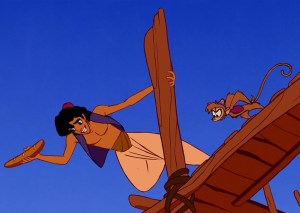
Aladdin and Abu.

Aladdin marked Disney’s first real attempt to make a major film based on a non-European or American legend. It’s a title which marked a change in the way Disney operated, and a risk which could have backfired. It’s a title which is now famous for the Genie – voiced by Robin Williams close to the peak of his career – who has gone on to be a major character in Disney’s merchandise empire.

The story of Aladdin was perhaps uniquely suited to get the Disney treatment as a non-European legend, as it was quite well-known even in Europe and North America, and had been for many years. I remember, as a child, seeing a pantomime version of Aladdin before the film came out. It was probably one of the very few stories from “elsewhere” that Disney could have readily adapted, at least at the time. Nowadays, with the exception of those people who want to screech “cultural appropriation!” at everything, making stories from all across the world into Disney films is something we’ve come to expect and would be fine with; in 1992 it was something different and its success was less than certain. In that sense, Aladdin paved the way for future titles – like Mulan and Moana.

Following The Little Mermaid and Beauty and the Beast, Aladdin kept the “Renaissance” going, winning critical and commercial acclaim for its fun characters, great musical numbers, and exciting storyline. The Genie was, of course, the breakout star – though apparently Williams and Disney didn’t see eye-to-eye on a lot of things during the film’s production and marketing. It would also win two Oscars, and became the highest-earning film of 1992.

There would be two direct-to-video sequels to Aladdin – the first of which, The Return of Jafar, is a rare example of one of these Disney sequels being a success (at least in my opinion!) The film would be remade in 2019 in a live-action format, and while it lacks much of the character of the original, it remains probably the most watchable of the live-action remakes.

Number 6: The Lion King (1994)

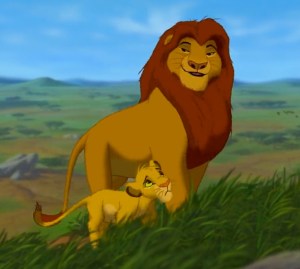
Simba and Mufasa in The Lion King.

For many people, The Lion King’s 1994 release was the high-water mark of the Disney Renaissance, and while there will always be a debate on that front, what shouldn’t be contentious is that this film is fantastic. A star-studded cast, including James Earl Jones, bring the characters to life, and Elton John provided an incredible soundtrack, resulting in The Lion King being spun-off to create a long-running West End and Broadway musical.

There was, at the time, some degree of controversy regarding how similar The Lion King was to a Japanese series called Kimba the White Lion, with some fans of the manga/anime franchise going so far as to accuse Disney of ripping off a significant amount of material. Whether you believe this was intentional or not, it’s worth noting that there are similarities in terms of plot and certain characters – I’ll leave the final judgement on that up to you.

The Lion King billed itself as the first ever Disney film to be a wholly original story. Setting aside the Kimba controversy, this marked a change in the way Disney would approach writing stories for its major motion pictures, and while the studio would return many times to legends, history, and existing works of fiction, The Lion King laid the groundwork for future original stories.

The cast included Jeremy Irons, Rowan Atkinson, and Whoopi Goldberg among other stars, and while The Lion King is Simba’s story, the whole main cast gets a turn in the spotlight, including being able to sing. Many of the film’s songs have become well-known classics, often heard on playlists and CDs representing the best of Disney music.

Number 7: Pocahontas (1995)

Colors of the Wind is the best-remembered song from Pocahontas.

Pocahontas remains an outlier in the Disney canon. Other films are based on folklore, legends, and other published works, but the characters in Pocahontas were all real people – people whose lives are surprisingly well-documented. As you may know if you’re a regular, I’m somewhat of a history buff, and the early 1600s – the period in which Pocahontas is set – is really when record-keeping in England had begun to vastly improve in quality. Records of England’s first colony in mainland North America were meticulous, and while some information has been lost over time, for the most part we know a lot about John Smith, Pocahontas, and others who lived at the time.

The film takes a lot of liberties with the real-life story, which is always a contentious topic in historical fiction. But if we can set that argument aside, what Disney created is a film that tries very hard to celebrate Native American culture, recognising that they were the victims in Europe’s rush to colonise North America.

Compared to earlier depictions of Native Americans – like the one we talked about in Peter Pan a moment ago – Pocahontas represents them in a much fairer and less stereotypical manner. There is definitely a case of the “noble savage” – the presentation of Native Americans (and other indigenous peoples in other works) as being “better off” without contact, living peaceful, natural lives that were disrupted. Stereotypes like this aren’t always true, and while the song Savages in particular has sometimes been criticised for portraying the conflict between English settlers and Native Americans as if both were equally in the wrong, it’s worth recognising that Native American tribes, like all groups of people everywhere for all of history, could be violent. I feel like I have to justify some of these aspects of Pocahontas, as the film has recently come in for criticism, so I apologise for going off on a tangent.

Following up The Lion King was always going to be tough, and I think for that reason some of the things Pocahontas did very well, in terms of its animation and music to name but two examples, were overshadowed, especially at the time it was released.

Number 8: Lilo and Stitch (2002)

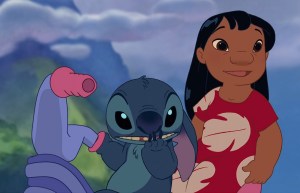
The titular characters.

After seeing Lilo and Stitch in 2002, it was one of the first films I ever bought on DVD. I was so keen to be able to rewatch it that I even bought a DVD-player kit for my Xbox (it was cheaper than buying an actual DVD player at the time) to be able to watch it! I would go on to collect many other DVDs – before the rise of HD and streaming made the whole collection redundant.

The widely-accepted definition of the Disney Renaissance I mentioned earlier puts 1999’s Tarzan as the final film, but I’d absolutely include Lilo and Stitch alongside titles of that era. Unlike the other films of the Renaissance, Lilo and Stitch tells a wholly original story and introduces new characters to the Disney canon. Release of the film was delayed due to the 11th of September attacks in the United States in 2001, with one section of the film’s climax being reworked to avoid comparisons to that atrocity.

Lilo and Stitch steers away from the often-sanitised world of prior Disney titles, showing Lilo and her sister Nani as a dysfunctional family, with Lilo on the cusp of being taken into care by the state. By Disney standards, this was something radical and different, taking a look at the “real” world in a way no prior film really had. This is complemented by the film’s present-day setting. Lilo herself is a misfit – but someone who refuses to change or conform to fit in. The message she sends is that it’s okay for kids to be themselves, and even that it’s okay to be weird – something I wholly embrace!

Stitch is adorable, but also naughty in a way that undoubtedly appeals to kids. As the film progresses, he has a chance to show his good nature and big heart, in a story that tells the audience that genetics and how you’re born doesn’t matter – what matters is being a good person and making the choice to do the right thing. Stitch overcomes his innate badness – the desire to misbehave instilled in him by his creator – thanks to the time he spends with Lilo and her family, choosing at the end to remain with her on Earth.

The film’s soundtrack definitely deserves a mention. While there are a couple of great original songs inspired by the music of Hawaii (where Lilo and Stitch is set), the soundtrack also features several of Elvis Presley’s greatest hits, including greats like Devil in Disguise and Burning Love. As an Elvis fan, I couldn’t be happier about this, and introducing more than one new generation of kids to the music of the King is definitely something great that Lilo and Stitch has done.

Number 9: Frozen (2013)

Anna and her friends meet Olaf for the first time.

When Frozen was released in 2013 I was living overseas for work. While browsing local cinema listings for English-language titles, I spotted Frozen, and it was the first I’d heard of it! Having missed all of the marketing I had no idea what to expect – and I was absolutely blown away.

I’m a big Christmas fan, and being released a few weeks before Christmas and with such a wintry setting, Frozen was absolutely perfect for that time of year. It was the first Disney film I’d seen in years that I felt was on par with some of the studio’s offerings in the 1990s – the height of the “Renaisannce” we’ve already mentioned.

Focusing on two sisters instead of the traditional prince and princess, Frozen shakes up the traditional Disney fairytale formula while keeping things royal for the sake of its Disney Princess brand. It was a change that absolutely worked, and the film’s “one true act of love” being sisterly love instead of romantic love was beautiful.

The big twist that Anna’s beloved Hans is in fact a villain and not the heroic prince charming she thought he was was shocking – and I can still remember the audible gasp from the audience at the cinema at that moment! By Disney standards, this was absolutely stunning, and tied in perfectly to the level-headed reasoning Elsa had shown earlier in the film when she forbade Anna to marry him. Indeed in many ways, Frozen is a film of its time, just as earlier titles were films of theirs. Acutely aware of the fact that its princesses are often seen as role models by young girls, the need to be socially responsible within the story definitely led to some of these decisions.

Frozen also has the best soundtrack of any modern Disney title – with several memorable songs like Do You Want to Build a Snowman, Love is an Open Door, Fixer Upper, and of course Let It Go, which remains an amazing song despite how frequently it was heard for at least a year afterwards… but perhaps parents of young girls would disagree on that point!

I picked Frozen for one of my top ten films of the 2010s when I made a list back in December – you can find the full list by clicking or tapping here.

Number 10: Moana (2016)

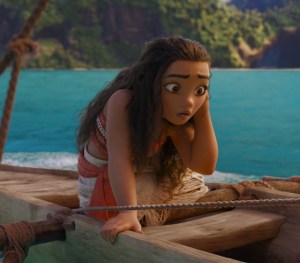
Moana aboard her canoe.

In 2016, when it was released, at least some of the hype surrounding Moana was lost due to the release six months earlier of Zootopia – which was retitled, for some stupid and inexplicable reason, Zootropolis in the UK. We’d been used to only seeing one Disney film a year, at most, so this meant that some of the pre-release marketing surrounding Moana didn’t get as much attention as it otherwise might’ve. Zootopia was a big hit, but of the two films released in 2016, Moana was by far the more enjoyable title.

Disney had begun to diversify away from Old-World European fairytales and folklore for its inspiration as far back as Aladdin and Mulan, and had brought in other non-European protagonists and princesses in films like The Princess and the Frog and even Pocahontas, but Moana was the first foray into a lesser-known culture – lesser-known, that is, from the point of view of Disney’s western audience.

The history of Polynesian peoples is long, diverse, and fascinating, with a blurred line between history and legend due to stories being passed down orally. It’s also something most people in the west have never encountered; scattered across small and remote Pacific islands, most Polynesian legends stayed within their own communities or were recorded by academics and anthropologists and never made it into the cultural mainstream. Moana looks at one of these legends and spins it into a Disney tale for the modern age.

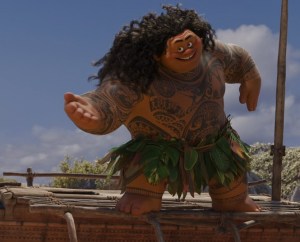
Moana is adamant that she isn’t a princess, even reacting angrily when Māui says she is. Where Frozen had finally told a Disney Princess story in which the princesses are the heroines and have genuine agency as characters, Moana amplifies that trend by having just a single protagonist. Her bravery and determination to overcome the obstacles in front of her drives the story forward, and eventually her courage leads her to stand up in the face of a terrifying foe. Moana had help, but ultimately she had to make those decisions and fight those battles – thus out of all the princesses in Disney’s canon, Moana is the bravest and most determined, which is a great message for the film to have.

The film also has a great soundtrack, with several hit tunes such as You’re Welcome going on to be played time and again.

So that’s it. The list doesn’t include live-action Disney films like the Pirates of the Caribbean series, so perhaps we’ll have to come to live-action Disney films on another occasion. However, several of the titles on this list have had live-action remakes – and in my opinion at least, not one of them has managed to live up to the original work. A couple of them are well worth a watch – Aladdin, in particular, was at least a decent film – but none of them come close to recapturing the Disney animation magic, at least not for me.

There are more films on the horizon, with Raya and the Last Dragon being the only one with a title so far, scheduled for release in 2021. Disney+ has, in some respects, changed the way Disney approaches its films and back catalogue. Gone are the days of the “Disney vault”, with titles given only limited home video releases. Instead, the company plans to leave all of its films available all the time, and in some cases will even be experimenting with simultaneous releases in cinemas and on streaming. That has the potential to really shake up the way films are released. From a selfish point of view, as someone who can’t go to the cinema in person any more, I think it’s a positive change. But whether it will work as intended is anyone’s guess.

Several generations of people have now grown up with Disney films – even my parents’ generation, people born in the 1940s and who are now well into their 70s, remember with fondness the Disney films of their childhoods. Which titles someone may prefer is probably, at least in part, dependent on when they grew up and which ones they saw at that time. But each “era” of titles, whether we’re talking about those made before Walt Disney’s death, the “Renaissance” of the 1990s, or the modern films like Frozen all have merit, and while the way they’re made may have changed through the years, the effort and attention to detail has not. Disney remains the market leader in animation because each film is meticulously created. There may be some flops and failures, but broadly speaking, the studio’s output has been phenomenal. The fact that they’re still around and still making films after such a long time is testament to that.

It was great fun making this list, and if it helped you decide what to watch on Disney+, then as Māui said… you’re welcome!

What can I say except “you’re welcome!”