Ten things that the Star Wars prequels got right

Spoiler Warning: There are spoilers ahead for the Star Wars prequel trilogy (The Phantom Menace, Attack of the Clones, and Revenge of the Sith). In addition, spoilers are present for the sequel trilogy, including The Rise of Skywalker, and for Knights of the Old Republic.

Happy Star Wars Day! In celebration of today’s event, I thought we could take a look back at the Star Wars prequel trilogy. Though this isn’t my favourite part of the franchise by any means, today is a day for positivity within the Star Wars fandom, and despite my overall feelings, the prequels did get some things right. It’s easy to criticise and complain, but no film is 100% awful. Not even The Rise of Skywalker.

I became a Star Wars fan in the early ’90s, having watched the original trilogy at the prompting of a friend. It was thus a very exciting time when the prequel trilogy was announced, and even though I wasn’t particularly thrilled with the first two films in particular, Revenge of the Sith managed to churn out an adequate end to the trilogy and set up the original films.
Trekking with Dennis talking positively about the Star Wars prequels?!
“A surprise, to be sure, but a welcome one!”

For a decade after the prequels concluded, Star Wars was said to be complete. Six films, and that’s it. Of course we now have sequels and spin-offs, with many more in the works, and it looks like the Star Wars franchise will continue to roll on and bring in money for parent company Disney. Though no major plans are afoot to revisit the prequel era right now, the Obi-Wan Kenobi series will bring back at least two prominent characters from the trilogy and serve as a continuation of sorts.

As always, this list is just my personal opinion. The prequel trilogy is going through somewhat of a renaissance in the minds of some Star Wars fans – particularly those who grew up with the films. If you adore the prequels, that’s okay. We all have preferences; things we like and dislike, even within a single fandom. There’s no need for discussions about Star Wars to descend into arguments!

With that out of the way, let’s jump into my list of things the prequels got right.

Number 1: Showing the Jedi Order at full strength.
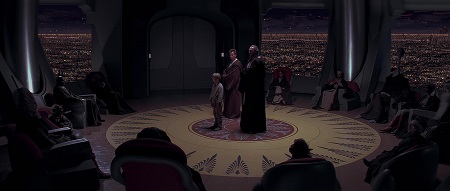
Anakin Skywalker, Obi-Wan Kenobi, and Qui-Gon Jinn meeting with the Jedi Council in The Phantom Menace.

At the time The Phantom Menace premiered, Star Wars’ cinematic canon had only ever shown five Force users – only one of whom could reasonably be said to still be “a Jedi” when he appeared on screen. Though Luke Skywalker appeared to take on the mantle of Jedi Master by the end of Return of the Jedi, we were still curious to see how the Order appeared in its original form.

All three films spent a decent amount of time with the Jedi Order, showing the organisation if not at its peak then certainly in far better shape than we’d ever seen it before. The Jedi maintained a huge temple as their headquarters and base of operations, and hundreds of Jedi Knights and Jedi Masters were seen on screen, taking on various roles across the three films.
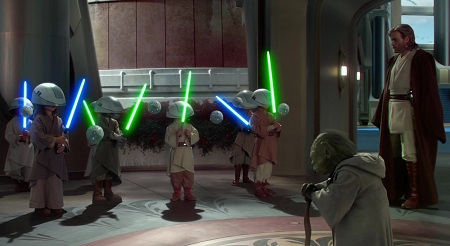
Young Jedi train while Yoda and Obi-Wan Kenobi observe.

Prior to this, all we really had to go on was hearsay. Ben Kenobi and Yoda had told Luke Skywalker a little about the former Jedi Order across the original films, but there’s a big difference between hearing a character explain something and actually seeing it firsthand. The legend of the Jedi Order made it to screen in a big way, and told us a lot about the history of the Star Wars galaxy as well.

We also got to know several key members of the Jedi Order in this era, and see the Jedi take on leadership roles to try to bring about peace and stave off the separatists. We arguably learned more about the minutiae of the Jedi in the prequel trilogy than in the originals, sequels, and spin-offs combined, and while it wasn’t all perfect – the Jedi robes being just one example of that – the prequels undeniably expanded the lore of Star Wars in this regard.

Number 2: Starship designs.
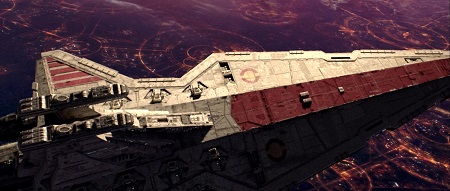
A Republic starship during the Battle over Coruscant.

Many of the starship designs used during the prequel trilogy were cleverly designed with the original trilogy in mind. It’s not an easy task to take an existing design and try to work backwards from it, creating a new design that’s supposed to look like a realistic predecessor to something that was supposedly built later. But the prequel trilogy does a creditable job in this regard, especially insofar as starships are concerned.

There were two issues that the prequels faced: on the production side, technology had changed a lot regarding how special effects were made, meaning some of the original films’ starships looked very much “of their time.” And secondly, the Imperial ships seen in the original trilogy were designed to look villainous and menacing as the Empire was the antagonist faction in those films. Thus the designers had to create something that looked like a reasonable precursor to the Empire without looking too “evil” and also without looking like it came straight from the 1970s!
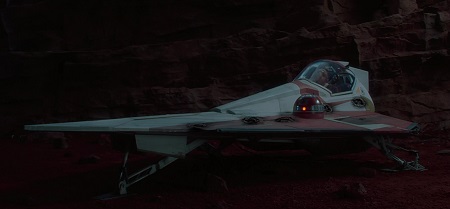
Obi-Wan Kenobi’s Jedi starfighter has elements of both X-Wings and TIE Fighters in its design.

This is a design challenge unlike many others in cinema, and the prequels got it largely right. The Republic’s ships, both large capital ships and smaller starfighters, retained enough design elements from the original trilogy to look like plausible ancestors of things like TIE Fighters and Star Destroyers, but the brighter colours and softened edges made them look at least a little friendlier.

In any fantasy film, things like design and aesthetic world-building are easy to overlook, but they’re absolutely essential to the sense of immersion that viewers need. The best films work hard to ensure their designs are iconic, and while perhaps very few things in the prequels are as iconic as designs from the original trilogy, the designs blend together well. Nothing was outright copied, and nothing was overwritten.

Number 3: The musical score.
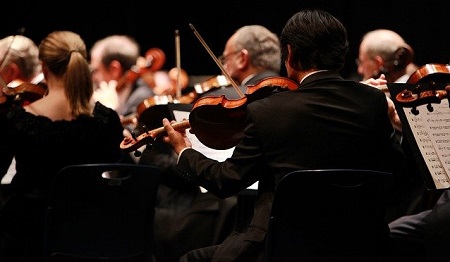
The prequel trilogy had a great soundtrack.

John Williams, who had composed and conducted the music for the original trilogy, returned to Star Wars for the prequels, and his music has to be considered one of the high points of all three films by anyone’s standards. Pieces like Duel of the Fates have become iconic and emblematic of the whole franchise, and it’s impossible to imagine Star Wars without Williams’ compositions.

Considering the budget and creative freedom George Lucas had when making the prequels, he could’ve chosen to approach any composer to create the film’s score. He didn’t have to go back to John Williams if he felt he wanted someone else, but he did. And the films are undeniably better for the inclusion of Williams’ compositions.

Number 4: Palpatine’s scheming.

The story of Palpatine’s rise was interesting.

Though I have argued that seeing the rise and fall of Anakin Skywalker was ultimately unnecessary to explain anything from the original films, one thing that absolutely was interesting was seeing how Palpatine schemed and manipulated events to allow himself to rise to the position of Supreme Chancellor – and ultimately Emperor.

I’m having a hard time, in light of The Rise of Skywalker, truly appreciating this aspect of the prequels, because Palpatine’s clumsy insertion into that film has done a heck of a lot to detract from his characterisation. But if we set that aside as best we can for a moment, one of the prequel trilogy’s themes – and best-executed narrative elements – was Palpatine’s rise. Though he was treated as a secondary character when compared to the likes of Anakin and Obi-Wan, I would suggest that his story was actually handled better than almost everyone else’s.
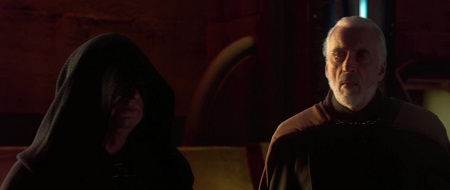
Palpatine meeting with Count Dooku, the separatist leader. He played both sides during the Clone Wars, having planned everything to allow a smooth rise to power.

Say what you will about George Lucas and his storytelling, but when it came to Palpatine in the prequels, there was a meticulous and detailed plan from day one – and it actually made sense. Taking inspiration from the rise of Julius Caesar, who transformed Rome from a Republic into a dictatorial Empire, Palpatine’s scheme was cleverly written, with just enough shown on screen to leave an air of mystery – that the character knew more than he was letting on.

Considering that the prequels overall, and The Phantom Menace in particular, had a kid-friendly tone and plenty of action going on, this kind of political manipulation is a very adult theme, and in other films or series, the juxtaposition of politicking and scheming with space wizards and magic would have fallen completely flat. It succeeded here, in part due to being set up well and planned from the beginning, and in part thanks to Ian McDiarmid’s stellar performance.

Number 5: The Knights of the Old Republic games.
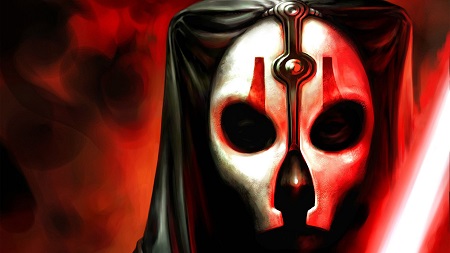
Promo art for Knights of the Old Republic II.

This one is a bit of a cheat since the games were not related to the films, but they were released around the same time (2003-04) and made use of a number of aesthetic elements and settings that had been established in The Phantom Menace and Attack of the Clones. I’ve said before on a number of occasions that the Knights of the Old Republic games aren’t just among my favourite video games, they’re two of the best stories ever told in the Star Wars universe.

Though distinct from the prequels, it’s hard to imagine either game being made were it not for the renewed interest in Star Wars that the prequel films generated. The use of things like Jedi robes and a Jedi Council were borrowed from the prequel trilogy as well, and Knights of the Old Republic leaned into the notion of the Jedi Order remaining a constant part of the galaxy, barely changing over millennia. This was a big part of the mythos of Star Wars at the time – the idea that the Republic had existed for thousands of years until the Empire overtook it.

The Knights of the Old Republic games were fantastic.

The big twist in the first Knights of the Old Republic was one of the few moments where I was genuinely blown away by a storyline in a video game, and I remember sitting there with the control pad in my hands just in shock! It was a fantastically-executed narrative point, and while it isn’t really taken from the prequels, it mirrors in some respects the idea of Anakin Skywalker being a Jedi, then falling to the dark side, before ultimately being redeemed – which was, of course, a major theme in the prequel trilogy.

A third Knights of the Old Republic title was rumoured to be in production earlier in the year, so perhaps we’ll finally get a sequel! Even if that isn’t the case, or turns out to be unconnected to the original duology, they’re two of the best games I’ve ever played.

Number 6: Better lightsaber fights.
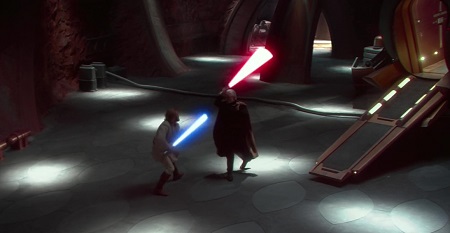
Obi-Wan Kenobi duelling Count Dooku.

The original trilogy had a couple of solid lightsaber duels, both between Luke and Darth Vader. But the prequel trilogy in general has more exciting lightsaber combat. Not only the duels between Sith and Jedi, but also seeing Jedi in combat against non-Jedi opponents was generally done better – in my subjective opinion, at least – in the prequel films.

In terms of specific lightsaber duels, I’d point to the fight between Qui-Gon and Obi-Wan against Darth Maul in The Phantom Menace, and Obi-Wan, Anakin, and Yoda duelling Count Dooku in Attack of the Clones as two of the better ones put to screen in the franchise.
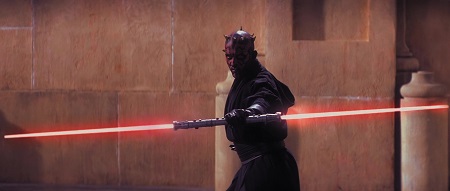
The moment Darth Maul ignited his lightsaber’s second blade was jaw-dropping for many fans in 1999!

The prequels changed the way we imagine lightsaber combat, expanding the idea of duelling to encompass different styles and “forms” of wielding the weapon. This has been picked up in video games, films, and television shows produced in the wake of the prequel trilogy, and has gone on to be a defining part of the way lightsaber combat looks on screen.

We also got to see different designs of lightsaber hilt, and a new purple colour for Mace Windu. All of these things made a difference to the way the franchise as a whole handles its signature weapon, and a good deal of what we know about lightsabers and lightsaber duelling comes from the prequel trilogy.

Number 7: Solid acting performances.
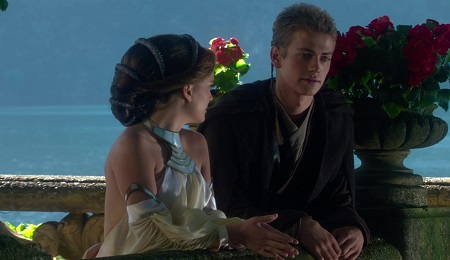
Natalie Portman as Padmé and Hayden Christensen as Anakin in Attack of the Clones.

One area of criticism of the prequel films that I fundamentally do not agree with is that the acting performances were somehow stilted or poor quality. Practically every actor involved did the best with the material they had, and some of the harshest criticism levelled at people like Hayden Christensen (Anakin Skywalker) or Ahmed Best (Jar Jar Binks) should really be aimed at George Lucas for his writing and direction.

Not only would I say that much of the criticism of the acting is unfair and overly harsh on the performers, but there are some genuinely outstanding performances in the prequel films. Ian McDiarmid’s performance as Palpatine, as we noted above, is stellar, but I’d also point to Ewan McGregor’s stint as Obi-Wan Kenobi, in particular the incredibly pained emotional moments he shares with Anakin on Mustafar.

Number 8: A planned story.
The prequel films had a narrative that was planned from day one.

This is one which has come into sharper focus given the complete lack of overall direction afforded to the sequel trilogy. As I’ve said before, the sequel trilogy having its own narrative issues does not magically make the prequels any better, but it is worth acknowledging that the prequels had a planned story from the beginning.

Not only that, but the prequel trilogy does a creditable job of executing that story in an understandable manner. There aren’t many moments where viewers are left thinking “who’s that character?” or “what’s going on?” The narrative runs as smoothly as possible from point to point, and main characters like Anakin, Palpatine, and Obi-Wan had their arcs pre-planned.
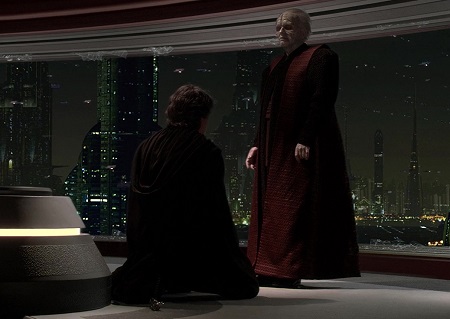
The prequel trilogy had a story planned from the ground up to reach this moment.

Partly, it has to be said, this is because the films are prequels – they have a definite end point that they absolutely must reach. But there were many different ways to tell the rise and fall of Anakin Skywalker, Palpatine’s ascent to the Imperial throne, and so on. There is no denying that Lucas and others planned the story, knew where they wanted it to go, and put that to screen about as well as possible.

Whatever you may think of the story itself, this is the way filmmaking – and any storytelling, come to that – is supposed to work. If you’re going to create a trilogy of films with a view to focusing on the adventures of a few characters, planning out where the narrative and character arcs are going to go is essential.

Number 9: Tense and exciting action sequences.
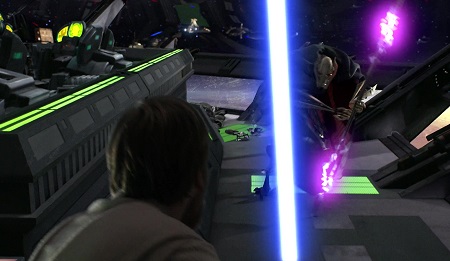
There were some well-executed moments of action in the prequel trilogy.

Though not every action set piece worked perfectly, the Star Wars prequels do have several exciting and tense sequences. The starship crash-landing early in Revenge of the Sith is a great example of a sequence that didn’t drag on too long and kept the excitement going practically the whole time.

Parts of the Battle of Geonosis in Attack of the Clones – though a CGI mess at points – managed to be stirring and exciting too, with the last-minute arrival of a Jedi “Strike Team” to save Anakin, Obi-Wan, and Padmé achieving at least some of the feelings it was going for. Star Wars can do battles and action very well, and the prequels have some sequences that demonstrate that.

Number 10: Reinvigorated Star Wars for a new generation of fans.

A lot of kids who saw the prequels are big Star Wars fans today – and big defenders of those films!

I’m not surprised to see many Star Wars fans in their teens and twenties defending the prequels with such vigour. These films are theirs – perhaps the first Star Wars films they ever saw, and they’re films which, for many younger fans, started a lifelong love of a galaxy far, far away. Without the prequel trilogy, it’s likely Star Wars would be nowhere near as big as it is today. It would be a well-remembered trilogy of films from the late ’70s with a bunch of spin-off fan-fiction.

The prequels proved that there was more to Star Wars than just the original films, even though they relied heavily on those films in large part. From a business point of view, all three films were massively profitable, with the films themselves and, crucially, their merchandise bringing in literally billions of dollars. The Walt Disney Company would never have been interested in Star Wars and Lucasfilm had the prequels not demonstrated beyond any doubt that the Star Wars franchise could be more than its original trilogy.

Moments of humour, comical characters, and fun designs in the prequels all appealed to kids.

Whatever you may think of the films Disney has made over the last few years, there’s more to come from Star Wars. I personally loved Rogue One, and I’m interested to see what some of the upcoming television series have to offer. Without the prequels, we’d never have seen Rogue One, the sequel trilogy, or The Mandalorian – or at least, they’d have taken a very different form.

Any successful franchise builds on the accomplishments of its earlier iterations, and we can see attempts for Star Wars to do so too. Those attempts aren’t always successful, but the legacy of the prequel trilogy is that Star Wars still exists and is expanding to become bigger than anyone expected it could be twenty years ago. The success of current and future projects is, to a greater or lesser extent, built on what the prequel trilogy achieved. Though I may not be wild about these three films on their own merits, the prequels’ biggest achievement may be in rejuvenating Star Wars for a new generation of fans, pushing the franchise forward.

So that’s it.

I wanted to try something positive for Star Wars to mark today, and I thought revisiting the prequel trilogy would be a good place to start.
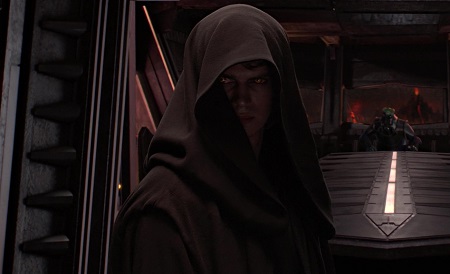
Anakin Skywalker – a.k.a. Darth Vader.

Star Wars is in a strange place right now, in some ways. The sequel trilogy has wrapped up, but it ended in a pretty ambiguous way, and we’re still not sure exactly what will happen to the galaxy after the “final” defeat of Palpatine. Disney has shifted its focus back to the original trilogy era with most of its upcoming projects, and depending on the success of shows like Obi-Wan Kenobi, perhaps a more serious attempt will be made soon to revisit the prequel era. Time will tell!

Regardless, having watched The Phantom Menace a few days ago I thought I’d also go back and re-watch Attack of the Clones and Revenge of the Sith to complete the set, and that led to this article in celebration of Star Wars day. It’s possible that Disney (or other companies affiliated with Star Wars, like EA) might use today to make announcements of upcoming projects, so if there’s significant news I hope you’ll check back as I daresay I’ll try to break it down.

Now, where’s my review of The Mandalorian Season 2? It’s been six months… better get cracking on that!

The Star Wars franchise – including The Phantom Menace, Attack of the Clones, Revenge of the Sith, and all other titles mentioned above – is the copyright of The Walt Disney Company and Lucasfilm. The prequel trilogy can be streamed now on Disney+ and is also available on DVD and Blu-ray. This article contains the thoughts and opinions of one person only and is not intended to cause any offence.

Looking back at the Star Wars prequel trilogy

Spoiler Warning: Beware spoilers for the Star Wars prequels.

I’m not a prequels fan. I wasn’t when they came out and I’m not today. For all of the missteps made since Disney acquired Star Wars, the films that have been made since 2015 are superior in practically every way to the prequels. So if you’re here expecting me to say that the prequels were great, you’ve come to the wrong place.

Nor am I going to say that the sequel trilogy having problems – and it undeniably does – somehow makes the prequels better. That’s probably one of the more idiotic arguments people have put forward – “this is bad, therefore this thing that’s also bad is now good!” It doesn’t work that way.

Of course films are subjective – a film that works for one person doesn’t work for another, and that’s okay. We don’t all enjoy the same things and that’s fine. I’m not for a moment trying to argue that the prequel trilogy is objectively bad, just that it failed to win me over. In my subjective opinion. One of the biggest annoyances in the aftermath of The Last Jedi was the insistence by some fans that it was an “objectively” bad film. It wasn’t; they just didn’t like it. And that feeling is the same for me with the prequels.

Theatrical release poster for The Phantom Menace in 1999.

Nostalgia is a funny concept, and one that can be difficult for all of us, let alone big companies, to come to terms with. If someone (like myself) watched the original Star Wars films years before the prequel trilogy was even conceived, there’s a higher than average chance they’d be disappointed in the prequels when they came out. If someone’s first encounter with the Star Wars universe was the prequels, or they were very young when they first saw those films, chances are they enjoyed them much more. Particularly as kids, a lot of the finer points of cinematography and filmmaking go completely over our heads. That’s why a film like The Emoji Movie found an audience – it’s made for kids. And those kids who saw it and loved it at age six or eight will grow up regarding it as a piece of their childhood.

In that sense, we tend to put childhood memories on a pedestal. It’s just a natural way that human beings are, and it means that some legitimately bad stories we encountered before the age of, say, twelve or thirteen are forever cemented in our brains as a positive experience. This applies to films, books, television series, and even songs, and it’s related to the idea that we’re all defined to an extent by the era we grew up in and the trends that were evident at that time. There are many examples from my own childhood; silly little cartoon shows of the 1980s which I remember with incredible fondness. British children’s television shows in that era were – when looking at them with a critical eye – awful. Animation for cartoons was dire, with whole scenes often comprised of a single static image. Stories were simplistic, there was often only a single voice actor who would make no effort to differentiate characters, but because these are some of my earliest memories of watching television I hold such programmes as Mr Benn or The Adventures of Rupert Bear in high regard. Not for their actual value, but for what they represent to me as an individual. Their flaws, while I can spot them with a critical eye, melt away. And all that remains is the positive nostalgic feelings.

For many people, the same is true of the Star Wars prequels. They were young enough when first viewing them that the flaws in the films don’t register – only the positive feelings do. And when it comes to looking back and being objective, they’re incapable of doing so. Particularly in the wake of the disappointment many fans felt at the sequels – The Last Jedi in particular – they’re clamouring for more films like the prequels, and for the figurehead of their hate, Lucasfilm president Kathleen Kennedy, to be replaced by Star Wars creator George Lucas.

But Lucas wasn’t a particularly good director or writer, especially when given the kind of leeway he got when making the prequels. His status as a legend in both the franchise and wider filmmaking industry scored him essentially free reign to do whatever he wanted when he started to make the prequel trilogy. This wasn’t the case when making the originals, and a group of incredibly talented creative people, including John Williams the composer, as well as editors, directors, script doctors, and so on all contributed massively to those films’ success. Lucas may have come up with this kernel of an idea, but to say he alone was responsible for Star Wars as we know it simply isn’t true. And when given free reign to tell his own story in the universe, he came up with a series of three films which undermined Star Wars’ classic villain, Darth Vader.

When we encountered Vader in 1977’s Star Wars (later retitled Episode IV: A New Hope) we knew all we needed to know. He was “more machine now than man”, he had a very powerful command of the Force, and he was ruthless. Seeing nine-year-old Ani, and trying to frame at least the first two films of the prequel trilogy to make him the protagonist detracted from that, in practically the same way as Hannibal Rising detracts from the character of Hannibal Lecter, or the 2005 remake of Charlie and the Chocolate Factory overexplains Willy Wonka. Some characters work because they’re mysterious. We didn’t need to know that Willy Wonka runs a sweets factory because his dad was a miserly old dentist. And we didn’t need to see Hannibal Lecter as a scared orphan – it took something important away from the character. And the same applies to Darth Vader. Seeing him as a bright-eyed child, with much of the film shot to make him as sympathetic as possible, robs Darth Vader of much of his imposing fear factor.

To explain why, let’s hop from one franchise to another and look at Star Trek: The Next Generation, and in particular the two-part episode Chain of Command. Capt. Picard has been captured by the Cardassians, who are trying to get him to reveal sensitive tactical information – using torture. It’s one of TNG‘s finest stories, but one moment in it is interesting, and it shows why too much backstory ruins a threat. At one point, days or weeks into his captivity, Picard is sat down with his torturer, Gul Madred (played expertly by David Warner). Madred tells Picard a little of his life growing up alone and in poverty on Cardassia, and Picard seizes upon it, proclaiming: “Whenever I look at you now, I won’t see a powerful Cardassian warrior. I will see a six-year-old boy who is powerless to protect himself. In spite of all you have done to me, I find you a pitiable man.” The circumstances are not the same – we’re the audience looking in, Picard is a character in the middle of it. But the effect is the same. Too much information detracts from a villain.

The creative decision to allow us, the audience, to see Darth Vader as a child, to tell his story as a young man, robs the character of a significant part of his imposing nature. He could still tear us apart with his lightsaber or choke us to death while not even being on the same starship, but all the while we’re still able to pity him, not be afraid of him. Lucas allowed the most significant element of his story’s most important character to be lost through this decision. Instead of wondering what horrors lay beneath the mask, or what twisted reasons Vader had for giving himself mechanical parts, we now know not only that he was a slave, that he grew up in poverty and cried for his mommy, but that underneath that scary suit is a burnt-out husk, and without the suit he’ll just suffocate and die. As he ultimately does.

The reveal of Vader in Return of the Jedi as a mere man, a fragile, badly wounded man kept alive by this suit we’d come to fear over three films, is robbed of all dramatic effect too. In Return of the Jedi, this powerful scene is rendered almost meaningless, because we’ve already seen what he looks like under there in Revenge of the Sith – which showed us more than we needed to see of his injuries. Vader’s transformation from imposing and frightening villain, redeemed through his one good deed, is complete. It began with seeing him as a child, it ran through his stint as protagonist, and finally seeing the painful, life-limiting injuries he had to live with, as well as the mental anguish he went through after the loss of his wife, change fundamentally how we see him. And it’s not a change for the better. Sometimes, less is more. The original film gave us everything we needed to know about Vader. The prequels told us too much.

While for me, the fact that the prequels seriously undermine Vader as a redeemable villain is their most unforgivable error, the prequel trilogy also throws up a huge number of other issues, some minor and some more major. Many of these are present simply as a result of the nature of prequel stories, and others are just a consequence of bad and/or lazy writing.

One of the biggest criticisms I’d have of the sequel trilogy is that it was split up. There wasn’t any attempt made to tell one single story over three films, instead the writing was split up between different writers and directors, with each given free rein to tell whatever story they wanted. The result is a jarring tonal mess. The prequels don’t have that issue, because generally George Lucas knew what story he wanted to tell. There were tweaks, certainly – Jar Jar Binks’ role was scaled back after the response to The Phantom Menace, for example. But overall, he knew what story he wanted to tell and he made three films to tell it. Problem is, the story was crap.

Politics can be exciting, and political dramas can be thrilling. At a fundamental level, the rise of Palpatine from being a senator from a backwater planet to Supreme Chancellor and then Emperor is the same as the rise of the scheming Frank Underwood in House of Cards – and watching how he manipulated circumstances to become Vice President and then President was both fascinating and exciting. So I disagree with those who say that all of the politics behind Palpatine’s rise is a fundamental flaw; if handled differently it could’ve been okay – though it’s not necessarily what fans wanted or expected from a Star Wars film.

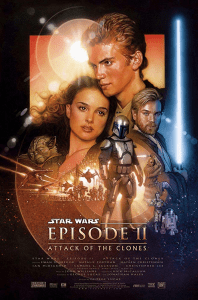
Theatrical release poster for 2002’s Attack of the Clones.

The prequels didn’t fall flat for any one reason, though Vader’s characterisation is a significant issue all by itself. There were dozens of smaller problems that they created. Jar Jar Binks is mentioned frequently by detractors of the films, though he was really only a significant stumbling block in The Phantom Menace, being largely absent from the two other titles in the series. It’s understandable to see why he was disliked though: in a film that a lot of people had been waiting almost twenty years to see, there was this oafish character with a hammy performance that seemed to be aimed at children under five. Many of those kids, by the way, are the prequel films’ defenders today as mentioned above. Reaction to Jar Jar was so extreme that some fans even went so far as to edit him out of the film, cutting his scenes entirely in a reworked fan-edit of The Phantom Menace. But Jar Jar was there to give the film extra appeal to children, because Star Wars has always been – despite what many hard-core fans want to think – a family franchise. I wouldn’t go so far as to say they’re kids’ films, but they’re films which have always appealed to children and though there’s nothing wrong with adults enjoying them too, Star Wars wants to keep that child-friendly atmosphere. After all, it’s mostly kids who buy toys and other merchandise.

And that’s another big point. The original films had made a lot of money from merchandise, so when the prequels rolled around the expectation was that they’d do the same. Some creative decisions can be linked to this, such as the decision to have “Jedi robes” mimic Alec Guiness’ costume from the original film. That costume was clearly something fit for wearing in a desert environment, and wasn’t originally supposed to represent the robes of the lost Jedi order. If it was, why would Obi-Wan be so blasé about wearing it everywhere he went? If the Jedi are being actively hunted, any surviving Jedi would be taking steps to ensure no one knew of his or her identity. The fact that this doesn’t happen is an example of a prequel-created plot hole.

By going back in time to before the original films, the Star Wars prequels create a number of inconsistencies and issues for the franchise. This isn’t something unique to the prequels – the reveal that Darth Vader is Luke’s father in The Empire Strikes Back, and the semantic gymnastics required to get around that in Return of the Jedi (remember “from a certain point of view”?) was the first and biggest example. But the fact is that that reveal worked – it was dramatic, shocking, and for the vast majority of the audience who didn’t remember Ben Kenobi’s one line in the previous film about Luke’s dad, wasn’t in any way contradictory.

But it’s stated several times that Yoda is the Jedi who trained Obi-Wan. Yet in The Phantom Menace, we’re introduced to Obi-Wan Kenobi as a padawan apprentice – whose master is in fact Qui-Gon Jinn. Liam Neeson’s performance as Qui-Gon is one of the few high points of that film, so I’m not trying to detract from the character altogether. But it’s yet another example of the prequels taking what was already established and ignoring it. It would have been perfectly feasible to have Kenobi and Jinn as partners, teamed up in much the same way, and still establish firmly that Yoda was Obi-Wan’s master. Same story, no contradiction. One or two lines of dialogue and/or an extra scene would’ve established this and it would fit right in with canon.

Then there’s the inclusion of C-3PO and R2-D2. Obi-Wan spent a lot of time in the prequels with R2-D2 in particular, yet in A New Hope claims to have never seen the droid. That must’ve been depressing for poor R2. Not to mention that Anakin build C-3PO as a child. Okay, this one isn’t so much a plot hole as it is stupid.

Speaking of stupid – Anakin was conceived with “no father”, implying a Jesus-esque immaculate conception via the Force. This was vaguely tied into the “prophecy of the chosen one”, which is referenced several times across the three films, but ultimately serves very little purpose. Star Wars has, and continues to have, problems with the idea that people – good and bad – can come from ordinary beginnings. Anakin had to be a Force baby. Rey had to be a… well, spoiler alert for The Rise of Skywalker. Luke couldn’t just be a great Jedi, he had to be Vader’s son. And so on. Because both the immaculate conception and chosen one concepts were handled so poorly, it wasn’t even obvious that this was Lucas’ intention. The famous opera scene, where Palpatine tells Anakin the “story of Darth Plagueis the Wise” is supposed to imply that Plagueis created Anakin by “manipulating midi-cholorions to create life”. Except, we never met Plagueis, we never saw any of this happen, and no timeframe is hinted at by Palpatine in the scene. As far as I knew on watching the films, the Plagueis legend took place centuries earlier, and was just another way Palpatine could get his hook into Anakin to sway him. It was also never expressed that Palpatine was the one giving Anakin the visions of Padmé’s death – though again we’re supposed to have implied this somehow. Even though the film is shot in such a way that we don’t.

Some of these ideas actually have merit – particularly the concept that Palpatine was both giving Anakin the visions of his wife dying while at the same time hinting he knew enough about the Dark Side that he could save her. That shows Palpatine at his devious best, except it never fully made it to screen. It instead stumbled halfway onto the screen, then fell flat. And that’s a shame, because it’s one of the few good story points the prequels had.

A little while ago, I read an article where someone had suggested that the prequels would have been made significantly better if Revenge of the Sith had been all three films, and The Phantom Menace and Attack of the Clones were never made. This might actually be a decent idea, because it would have allowed some of the themes and concepts in Revenge of the Sith more screen time to be properly explored, instead of merely mentioned in passing or hinted at.

So those are some of the story threads that failed in the prequels. And by far, story and characterisation is where the prequels failed hardest for me. But on the production and filmmaking side, there are major issues too.

The late 1990s and early 2000s were when CGI was really becoming a big deal in filmmaking. But the CGI in those days was pretty rough, meaning a lot of films produced in that era that rely heavily on those kind of effects have aged very poorly – and didn’t even look great at the time.

This is arguably at its worst in Attack of the Clones, where legions of clone troopers are seen, rendered in CGI. And it looks like a mid-2000s video game. The CGI is unrealistic, far too “shiny”, and not at all lifelike. The fact that these films were largely shot on green screens with few practical effects has dated them horribly, and the aesthetic they present is poor by anyone’s standards. CGI today is still an impefect medium, but back then it was far worse.

Where the original films have a late-70s, early-80s aesthetic, complimented by some wonderful puppets and practical effects giving them a unique charm, the prequels just look like a low-budget fan film of the kind you’d find on YouTube by comparison. Even in The Last Jedi a little over two years ago, director Rian Johnson opted to use a puppet to represent the spirit of Yoda, believing CGI would look worse. And he was right – CGI would’ve looked worse that a physical puppet. In 2017. So you can imagine how much worse it would’ve looked in 2002 – but you don’t have to, just take a look at Yoda in Attack of the Clones.

2005’s Revenge of the Sith theatrical release poster.

One thing that the visuals of the prequels did get right, and I’m happy to give credit where it’s due, is in how the Republic ships, troops, and overall aesthetic is clearly linked to the later Imperial aesthetic that we know from the originals. The Republic had its own look, but it was clearly a predecessor to how Imperial things looked, and the attention to detail to get that right is impressive.

And there were some decent performances from the cast. All of the main cast, really. Part of the reason fans are excited for the Obi-Wan Kenobi spin-off television series is because Ewan McGregor was fantastic in that role. I’d argue he gave a great performance from three poor scripts, as did other actors like Liam Neeson, Christopher Lee, and even Hayden Christiansen, but the fact is that as acting performances they’re all decent. I don’t believe for a moment the prequels flopped on account of bad acting. Some of it was “hammy”, certainly, but that’s how the films were written.

Again, it’s worth crediting Lucasfilm in the prequel era with crafting and telling a single story. That’s absolutely how filmmaking should work, and the idea that writers/directors can “pass the baton” from one to another without even having the barest bones of a story structure to work from has meant that the sequel trilogy has not been the success it should’ve. The fact that I personally dislike the story of the prequels, and the plot issues it creates, as well as the overreliance on bad CGI, doesn’t mean I don’t appreciate that it was planned and told as one story – the fall of Anakin Skywalker.

I’d just argue that we didn’t really need to see his fall to know he’d fallen, nor to understand how he came to be redeemed in Return of the Jedi. Once it had been established that Luke was Vader’s son, his path to redemption existed and seeing how he came to be Vader rather than Anakin was an unnecessary addendum. It isn’t in any way necessary to watch the prequels, or even read a plot synopsis, to understand how anything in the original trilogy came to unfold. In fact, in many ways it detracts from that experience, particularly if someone new to the franchise were to choose to watch the prequels first. But again, that’s my opinion, and all of this is subjective.

At the end of the day, it’s easy enough to ignore or not watch the prequels and still enjoy Star Wars for what it is and what it represents. To me that’s a positive thing, because I’m not arguing that the prequels somehow “ruin” Star Wars. But it’s also a fairly damning indictment – three films telling the rise and fall of a main character are ultimately wholly unnecessary and contribute nothing to the story except exposition and background.

Star Wars was, for me, Luke’s story, not Vader’s. And overexplaining his origins, from his “virgin birth” and awkward childhood through his spell as the series’ protagonist, ultimately did more to detract from his character as an imposing but ultimately redeemable villain. By turning Vader into an object of pity, the prequels ultimate sin was in robbing Star Wars of its best villain and most mysterious Sith Lord.

The Star Wars prequel trilogy is available to stream now on Disney+, and may also be available on DVD and Blu-Ray. The Star Wars franchise – including The Phantom Menace, Attack of the Clones, and Revenge of the Sith – is the copyright of Lucasfilm and Disney. This article contains the thoughts and opinions of one person only and is not intended to cause any offence.