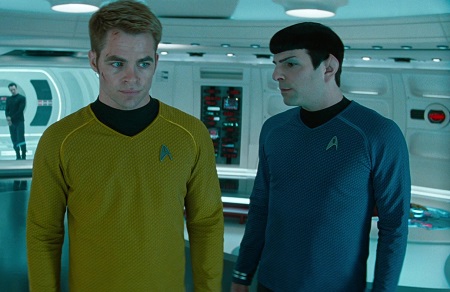
Tarantino Trek: A missed opportunity?

Spoiler Warning: There are minor spoilers ahead for the Star Trek franchise.

Quite a lot of very famous, very successful people are fans of Star Trek. The franchise has an incredible reach, and has inspired the likes of scientists, engineers, politicians – and many people in the world of entertainment, too. One such Star Trek fan is famed director Quentin Tarantino, who directed such films as Reservoir Dogs, Pulp Fiction, and Kill Bill. A few years ago it was reported that Tarantino had pitched his own Star Trek film, with the aim of it becoming his next project after work on Once Upon a Time in Hollywood wrapped.

That film is now not going ahead, with the cinematic Star Trek franchise seemingly planning a return to the Kelvin timeline – although that announcement, it seems, may have been premature, as some of the 2009 cast were said to have been taken by surprise. But that’s a conversation for another time! On this occasion I wanted to consider Tarantino’s pitch for a Star Trek film, what it might have been, and what it could have meant for the franchise. Will we come to lament the cancellation of this project? Will we look back and say it was a missed opportunity? Or is it better for both Star Trek and Quentin Tarantino to stay in their lanes?

Is it better for Star Trek to return to the relative safety of the Kelvin timeline?

Quentin Tarantino can be a controversial individual, and not just for the violence depicted in his films. He’s been accused of pushing actors to do stunts that they didn’t feel able to do, of gratuitously using certain racial slurs, and of making controversial statements on sex abusers such as Roman Polanski and Harvey Weinstein. Some actors have claimed Tarantino is difficult to work with, and there’s certainly an argument to be made that any long-running franchise might want to think twice about an association with someone like that.

Tarantino also has very limited experience working within the framework of a larger franchise. With the exceptions of a single episode each of ER and CSI: Crime Scene Investigation that he directed, all of Tarantino’s projects have been standalone works, usually that he’s both written and directed, taking charge of every aspect of the story and production. With his most recent directing credit outside of his own projects being more than fifteen years ago, there are definitely questions as to how well Tarantino’s story would fit in with the broader Star Trek franchise, and how well he would be able to work with the creative team at Paramount Global who are in overall control.
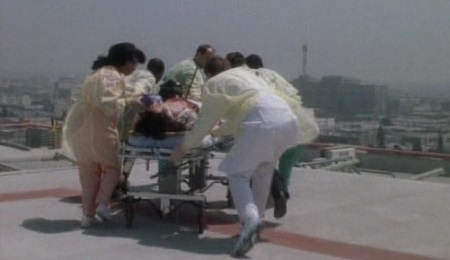
Quentin Tarantino directed a single episode of ER’s first season. I bet you didn’t know that!

I confess that I rarely seek out Tarantino’s films, speaking for myself. His violent style and, in some cases, deliberate decisions to ignore real history can make them uncomfortable and difficult to watch, and at the end of the day I guess that kind of film just isn’t usually “my thing.” We all have different tastes and preferences, and having seen most of his films by now I feel comfortable enough to make that kind of subjective judgement.

Given everything I just said, you might assume that I’m happily celebrating the news that Quentin Tarantino’s Star Trek project isn’t going ahead – something that many Trekkies I’ve spoken with or seen on social media seem to be doing. But I’m not – and I really do wonder if we’re going to look back on this decision in the future as being a mistake, perhaps even one that did untold damage to the Star Trek franchise as a whole.

Could cancelling this project be a mistake?

Right now, Star Trek’s short-term future seems assured. There will be new seasons of all the shows currently in production taking us to at least the early part of 2024, at least one and possibly two films in early production, and perhaps as many as three upcoming series (and/or miniseries) that are also being worked on behind-the-scenes. Official announcements for some of these projects may be coming as early as this year.

So Star Trek is busier than ever, which is great news! But things aren’t perfect by any means, and there are problems just below the surface that could prove damaging to the franchise’s longer-term success. The constipated international rollout of Paramount+ continues to be a huge weight around the neck of the franchise, cutting off millions of Trekkies from shows like Prodigy. Paramount Global’s “America First” attitude means that even fans outside the United States who are lucky enough to get Paramount+ still can’t watch all of the latest episodes at the same time as American viewers. Star Trek’s social media, merchandising, and marketing is all ridiculously sub-par, and while there are signs of improvement, there’s still a long way to go.

Star Trek’s social media marketing just plain sucks.

There are relatively few directors with the name recognition of Quentin Tarantino. He directs one film every few years, they usually receive critical acclaim and become wildly successful at the box office, and anything he creates draws a lot of attention and huge audiences. If someone of that stature were to be involved with Star Trek and direct a Star Trek film, we’d quite likely see audience numbers that eclipse even Star Trek Into Darkness – the franchise’s current high-water mark at the box office.

We’d also get huge numbers of people checking out the Star Trek franchise for the first time, and as always happens with every new Star Trek project, some of those people would go on to join the fan community and become huge Trekkies. There are millions of people who are only vaguely aware of Star Trek or who have dismissed it out of hand; someone like Tarantino has the rare ability to reach out to those people and convince them to give it a try. That’s not to say everyone who sat down to watch Tarantino’s Trek would immediately be transformed into Trekkies – but some of them would, and the fanbase could grow much larger off the back of one single film than it’s been able to in years.
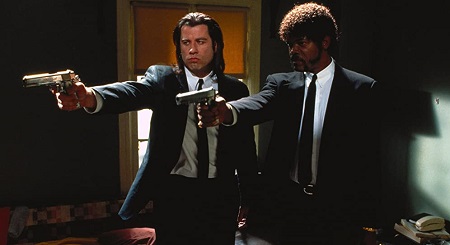
Quentin Tarantino directed the critically-acclaimed Pulp Fiction.

That’s the real reason why a project of this nature is worth investing in. It won’t be every day that Paramount Global gets a pitch from someone as undeniably talented and well-known as Quentin Tarantino, so even if he doesn’t seem like a natural fit for the current direction of the franchise, any project with his name attached should be worth considering very seriously. The benefits of bringing fresh eyes to Star Trek and reaching audiences that no other Star Trek film could even contemplate could pay dividends for the franchise in the medium-to-long term. Aside from making a single successful film – which any Tarantino work almost certainly would be – and turning a profit, a Tarantino Star Trek film could potentially expand the Star Trek fanbase in a huge way.

In order for Star Trek to remain successful, there has to be a near-continuous level of growth in audience numbers and in terms of the money it brings in for parent company Paramount Global. If the franchise stagnates and starts to decline, we’ll be back in the position we were in in 2005, with cancellation looming and the franchise potentially disappearing altogether. Projects like Lower Decks and Prodigy have already demonstrated that Star Trek can reach out beyond its usual niche and appeal to new demographics – although the decision to withhold both shows from international broadcast hurt them immeasurably.
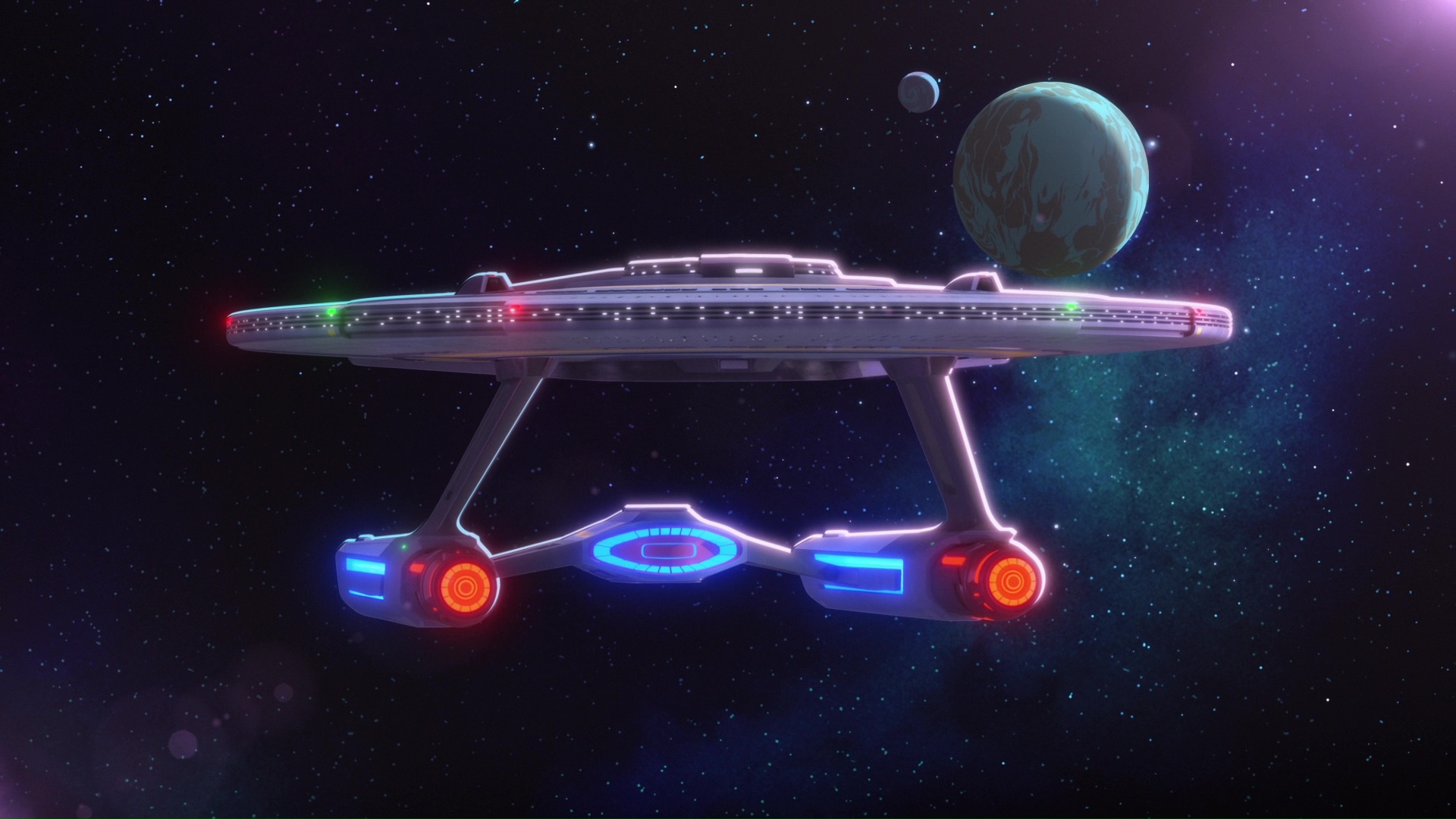
Lower Decks is a Star Trek project that hasn’t been afraid to try new things.

So Paramount Global is willing to try new things, which is great. And right now, Star Trek is more diverse than it has ever been – and I don’t just mean in terms of its on-screen faces. Different series are reaching out to completely different target audiences, whether it’s younger kids, comedy fans, or fans of serialised drama. Not every project will hold an appeal to every existing fan, but I think most Trekkies are still willing to give them a try.

That diversity could have been a point in favour of Tarantino’s Star Trek film. If I were in charge of greenlighting these things for Paramount Global, I wouldn’t have necessarily chosen Tarantino Trek instead of other projects. But if I knew the Star Trek franchise was already doing a number of very different things already, I think I’d have taken that risk and found a place for it. Worst case scenario, you get a mediocre film that almost certainly still turns a profit. But in the best case, the Star Trek fanbase grows significantly, and with the renewed attention such a project would bring, more people would be inclined to try out other recent offerings. Combine the release of Tarantino Trek with a decent marketing campaign highlighting Paramount+ as the home of Picard, Lower Decks, Strange New Worlds, and so on, and I think all of the pieces are there for the film to be a launchpad for unprecedented subscriber growth and more new eyes on the franchise than we’ve seen in a long time.

The film could have provided Paramount+ with a nice boost.

This is the same fundamental reason why I supported the Kelvin films when they kicked off in 2009. I have friends who still to this day refuse to watch the Kelvin films because they hated the decision to re-cast The Original Series characters, they didn’t like the aesthetic of the films, and they felt they would be too action-oriented, taking Star Trek away from its roots. I obviously don’t agree with those criticisms, though I can understand where they came from to a degree. But even though the Kelvin films weren’t my all-time favourites in the franchise, they succeeded at rebooting Star Trek.

Star Trek 2009 could be a textbook case study in rebooting a franchise. It got so many things right – and it was rewarded for that with what was, at the time, the highest audience numbers and best box office returns for any film in the entire franchise. It shot past The Wrath of Khan and First Contact, easily overtaking both even when accounting for inflation. And for the casual audience that the Star Trek franchise had been losing by the millions from the late 1990s through to the early 2000s, the 2009 reboot demonstrated that there was still life in the franchise. New fans joined the fan community having seen the Kelvin films, and have since gone back to watch and enjoy older series and films. Tarantino’s film had the potential to do what Star Trek 2009 did – but at a completely different order of magnitude because of the huge name attached to it.
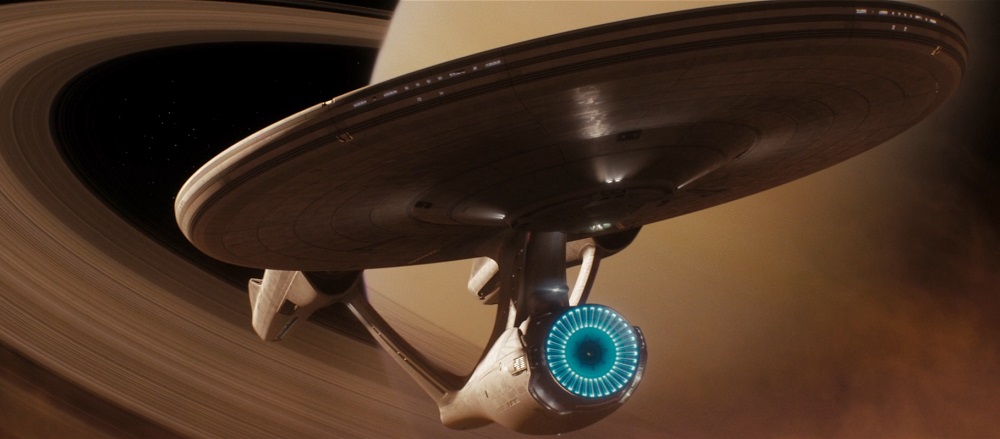
Love it or hate it, Star Trek 2009 reinvigorated the franchise.

I might not have enjoyed Tarantino’s film. But I recognise that he’s a talented filmmaker, storyteller, and director – and someone with undeniable talents in those fields should be the kind of person that Paramount Global seeks to attract to the Star Trek franchise. This isn’t to put down or belittle anyone currently or recently involved with Star Trek – there are some fantastic creative people who’ve told some wonderful stories that deserve more praise than they get, sometimes. Comparing and saying “who’s better” is always going to be a subjective thing with no real answer, but for my money, if the option to have both is on the table – Tarantino and the current crop of Star Trek creatives – then I’d happily find a way to include him.

I confess that I was a little surprised by the reaction to the news that this film isn’t going ahead. There were quite a lot of Trekkies who seemed to be celebrating its demise – and while I can understand some folks may find Tarantino an unlikeable person or might disagree with some of the things he’s said and done, I can’t help but feel that this schadenfreude may be misplaced. In time, we may look back at this project’s cancellation and wonder what might have been if it had gone ahead.

Quentin Tarantino.
Photo credit: Georges Biard via Wikimedia Commons.

For all the time that we’ve spent discussing the potential in Tarantino’s film, we haven’t actually talked about what the film itself was supposed to be! All of this has to be taken with a grain of salt, based on interviews and gossip, but it seems as though Tarantino was interested in taking another look at The Original Series classic episode A Piece of the Action. That episode was set on a planet whose inhabitants revered the mob lifestyle of Chicago in the 1920s, and saw Captain Kirk and Spock become “gangsters” – of a sort.

I’ve always found A Piece of the Action to have a campy charm as it mimics, in its own way, the gangster movies of a generation earlier; Hollywood films of the 1930s. The original Scarface, The Roaring Twenties, and G Men are all the kind of titles that A Piece of the Action drew its inspiration from, and while those films are less well-known in 2022, when A Piece of the Action premiered, they were only between 30-35 years old – akin to a viewer today recalling a film from the late 1980s or early 1990s.

Spock and Dr McCoy in A Piece of the Action.

Gangster films have done well in recent years, too. Films like The Irishman, The Highwaymen, and TV shows like Peaky Blinders have all put their own spins on the genre since 2010, showing that there’s plenty of interest even today in this kind of period gangster flick. Tarantino’s film could have easily been on par with any of those, blending humour, drama, and action together while appealing to a segment of the audience that past Star Trek films have failed to reach.

A Piece of the Action might not be my choice to return to, but again that’s thinking about it in isolation. I can happily agree with anyone who says that A Piece of the Action isn’t the best part of Star Trek and isn’t the one thing they want to see more of! But in the context of an expanding, broader franchise, with different projects going in wildly different directions, I think I could find a place for it.

Captain Kirk in A Piece of the Action.

And that basically encapsulates how I feel. On its own, if there was no room for other Star Trek to be made, or if greenlighting Tarantino’s film would mean cancelling something like Discovery or Prodigy, then I’d shoot it down in flames. But as one part of a franchise that has a lot of different projects on the go and that hopes to target different audiences? I really do believe that it could have been made to work. Maybe not every Trekkie would have liked it. But again, if it were a one-off project with a new cast of characters, that’s almost incidental. What would matter far more, in my view, are the new fans it could create, the new eyes it would bring to Star Trek for the very first time, and the potential it could have to repeat and even eclipse the success of the Kelvin films at growing the fanbase. This would, in turn, have the effect of shoring up support for the franchise at a time when the “streaming wars” and the missteps made by Paramount+ have placed Star Trek’s longer-term future in doubt.

There are a number of Star Trek films that never got off the ground for one reason or another, just as there are series concepts and episodes that were likewise never made. Perhaps in future, Tarantino’s project will be just one of many such entries on a list, and it won’t matter that it didn’t happen. If shows like Prodigy and Strange New Worlds succeed at keeping the franchise feeling fresh, I think we stand a good chance of reaching the sixtieth anniversary in 2026 with new films and shows still on the air. But beyond that… it gets harder to predict. I’d hate to be looking back a few years from now, with Star Trek off the air once more, wondering what could have been if Tarantino’s film had gone ahead.

The Star Trek franchise – including all episodes and films mentioned above – is the copyright of Paramount Global. This article contains the thoughts and opinions of one person only and is not intended to cause any offence.

The pros and cons of a fourth Kelvin timeline film

Spoiler Warning: There are spoilers ahead for the three Kelvin timeline films and for other iterations of the Star Trek franchise.

A couple of weeks ago it was reported that a fourth Kelvin timeline film, which has supposedly been worked on since at least 2019, was “paused”. That’s usually Hollywood-speak for “cancelled” and “never going to happen”, but there are other potential Star Trek film projects in the works, so the Kelvin timeline may yet be granted a reprieve. While rumours can be all over the place when looking at the production side of Star Trek, two things came up often in discussions around the potential film: the return of Chris Hemsworth’s character of George Kirk being a story point, and the salaries of some of the main cast – including Kirk actor Chris Pine – being a stumbling block. I have no idea whether there’s even a grain of truth to any of these rumours, but the potential for a fourth Kelvin timeline film got me thinking.

What would be the pros and cons of a new film in the alternate reality – especially now that we have prime timeline Star Trek back on the small screen? It’s a big question, and I’ve broken it down into a short list of points for and against making a new film in this series. Let’s look at them in turn.

Pro:
Star Trek Beyond clearly teased a sequel.

The Enterprise-A was seen at the end of Star Trek Beyond.

The Kelvin timeline story hasn’t ended. The crew are back together, and despite the loss of the original USS Enterprise, at the end of Beyond we saw the christening of a new Enterprise-A – the clear implication being that Kirk would assume command and bring his crew with him.

Something similar happened in the prime timeline at the end of Star Trek IV: The Voyage Home. In 1986, when that film premiered, Star Trek: The Next Generation was in early production, and some may have argued that Star Trek was moving on and didn’t need another Kirk-led film. While the next film in the series, The Final Frontier, was hardly a great success, The Undiscovered Country was – and it was a far better send-off for the original crew. If the Star Trek films had ended with The Voyage Home we’d have missed out on a great story and a more fitting end to Kirk and the crew’s adventures.

If the film series were to end now, it would arguably feel incomplete. The tease at the end of Beyond would still be there, taunting fans with a never-realised continuation to the story.

Con:
And which fans are those?

Look, it’s all of the Kelvin timeline’s hardcore fans.

Despite their popularity with a wider audience – something which we’ll look at in a moment – I’ve never really found that the Kelvin timeline films had much of a following of their own. They’re summer blockbusters in the vein of something like the Transformers series; popcorn flicks that people will happily watch – and then immediately forget about.

Within the Star Trek fan community, the Kelvin timeline films haven’t picked up a following of their own. I’m not even counting the many Trekkies who didn’t see the films because they didn’t like the premise; the Kelvin timeline just doesn’t have its own fandom. People have other iterations of the franchise that they prefer – the Kelvin timeline films are, at best, someone’s second choice.

There are sub-groups of Trekkies – some may like The Original Series, others favour The Next Generation or Deep Space Nine, etc. And the new Star Trek shows since 2017 have fans of their own too. But the Kelvin timeline films don’t seem to have that kind of following; there’s no group of dedicated Trekkies who favour them above everything else in the franchise. People I’ve spoken with are in two camps: they either detest the Kelvin timeline films or they think they’re just okay.

With all that in mind – who would a fourth film even be made for?

Pro:
The films brought in huge numbers of non-Trekkies.

The Kelvin timeline films appealed to a wider audience than any prior Star Trek production.

Though they may lack a hardcore following, the Kelvin timeline films succeeded beyond any other Star Trek project at bringing in huge audiences. 2009’s Star Trek was an overwhelming box office success, bringing in more than double the money of any other film in the series – and Into Darkness did even better, becoming the high-water mark of the entire Star Trek film franchise’s financial success. Beyond was considered a “disappointment” – but it still raked in over $340 million on a $180 million budget, making it hugely profitable for Paramount Pictures. 2009’s Star Trek also won an Academy Award – the only Star Trek film to ever achieve that feat.

So there’s clearly an audience for another film set in the Kelvin timeline, and any such project should be a guaranteed money-maker for Paramount and ViacomCBS. Bringing the crew back together and putting a seasoned director in charge – as they did in 2009 – would generate plenty of buzz, and the aforementioned wider audience that saw and enjoyed the first three films will surely show up for the next entry.

Star Trek isn’t made for Trekkies. That may sound odd, but it’s true. Hardcore fans will only ever be a small portion of any franchise’s audience, and I’ve said countless times that the Star Trek franchise needs to reach out far beyond this small pond if it’s to survive long-term. The new animated series Star Trek: Lower Decks has potential to help in that regard, but so does a new Kelvin timeline film.

Con:
The unique premise of the films no longer exists.

Cadet Kirk.

In 2008-09, during the buildup to the release of Star Trek, one angle that was really interesting was the idea that the films would show “young” Kirk and Spock in their Starfleet Academy years. We’d get to see how all of the characters came to meet one another, and although the films would be recasting the classic characters, we’d see them in their younger days, before Kirk assumed command of the Enterprise and set out on his five-year mission.

That premise no longer exists. The end of Star Trek saw the characters graduate from the Academy, and Beyond explained that Kirk and his crew were engaged in their five-year mission of exploration. That premise is exactly the same as The Original Series, and the unique aspect of the films is gone, replaced by a copy of what came before.

With Strange New Worlds looking to pick up the exploration angle of Star Trek, do we really need a Kelvin timeline film to do the same thing? It’s certainly arguable that we don’t.

Pro:
There’s the possibility for crossovers.

A Pike-Pike story? Heck yes, sign me up!

I mentioned this as one concept that could be fun to see in Strange New Worlds – but how about a crossover? Pike and Spock from the Kelvin timeline and Pike and Spock from the prime timeline working together to achieve some goal or defeat a nefarious villain could be a fascinating story and a great piece of cinema or television.

This concept doesn’t just have to be limited to Pike and Spock either; we could see crossovers with literally any group of characters. The idea of a ship and crew from one side of the divide between parallel realities having to work with others to make it home again is something that could be really fun to watch.

Con:
The Kelvin timeline will be retreading too much ground.

Spock, Kirk, and McCoy during their five-year mission.

Pike and Spock are the leads in their own upcoming series – Strange New Worlds. Do we really need two “young Spocks” in Star Trek? There’s a risk that the two productions will trip over one another, and that the Kelvin timeline film will do nothing for Spock’s character in particular that hasn’t been done in Discovery or Strange New Worlds.

That’s in addition to the point mentioned above – that we’ll be seeing Kirk, Spock, McCoy, and the rest of the crew undertaking the same five-year mission that was depicted in The Original Series. Some fans have argued for a return to Star Trek’s spirit of exploration, but with at least one television show focusing on precisely that, where would a Kelvin timeline film fit in?

Fundamentally this comes down to a couple of characters – most notably Spock. Ethan Peck’s version of the character has gone down very well with fans of Discovery, and I’m just not convinced the franchise has room for two identical characters. If I had to choose only one… I’m sorry to Zachary Quinto but I’d rather keep Ethan Peck’s take on the character.

Pro:
Quentin Tarantino may be working on a script.

Renowned director Quentin Tarantino has supposedly pitched a Star Trek film.
Photo credit: Georges Biard via Wikimedia Commons

Quentin Tarantino has written and directed some of cinema’s recent classics. Titles like Reservoir Dogs, Pulp Fiction, the Kill Bill duology, Inglorious Basterds, and Once Upon A Time In Hollywood are all hailed as phenomenal works of cinema. His violent style can be controversial – and some may argue a bad fit for Star Trek – but he’s an incredibly talented filmmaker, one that any franchise would love to bring on board.

It’s worth pointing out that there’s no guarantee his pitch – if it even exists and is still being considered – would involve the Kelvin timeline crew. But the timing of the rumour coincided with the Kelvin timeline’s production, so it’s at least a possibility.

I know some people dislike Tarantino’s style. But even they would have to admit that he does what he does very well, and any film that has his name attached draws a lot of attention – which translates into big numbers at the box office.

An R-rated Star Trek film just for the sake of it wouldn’t be my first choice. But if the story works well, I’m not opposed to it either. Recent Star Trek projects have not been shy about trying new things, so Tarantino could be a good fit for an expanded franchise.

Con:
Anton Yelchin’s tragic death means that a major character will be absent.

Anton Yelchin in 2015.
Photo credit: GabboT on Flickr via Wikimedia Commons
Image used under the Creative Commons Attribution-ShareAlike 2.0 license.

Anton Yelchin died tragically in 2016, shortly before the premiere of Star Trek Beyond. This is a sensitive topic, and I thought long and hard about including it here, but I think it’s important because it’s hard to imagine another film without him.

Yelchin had taken over the role of Pavel Chekov in 2009’s Star Trek, and while Chekov is arguably less of a “main” character than Kirk, Spock, or McCoy, he was still a big part of all three of the Kelvin timeline films. In 2016, the producers of Star Trek Beyond stated that the role would not be recast for any future films, and it would be very difficult for a new creative team to go back on that promise without the support of Yelchin’s family, the other cast members, and the wider fan community.

Chekov’s absence would be hugely significant and very noticeable; a hole at the heart of the crew. While it’s possible to work around that, as other films have done under similar circumstances, I’m not sure how well it would succeed. Chekov filled a unique role in the crew as its youngest member, and without his occasionally comedic presence, there will be a key element missing from any future story.

Pro:
The alternate reality setting allows for a huge amount of creative license.

Could we see Kirk face off against the Borg? Maybe… but only in the Kelvin timeline.

Now we come to perhaps the biggest point in favour of the alternate reality: nothing after Enterprise happened. Canon is nonexistent – aside from that established by the first three films – so writers and producers have a blank slate to tell any kind of story they want without worrying about treading on the toes of established canon.

Have you always wanted to know how Kirk would fare against the Borg? The Kelvin timeline could do that, as bringing the Borg into a story doesn’t affect prime canon. How about the Dominion War breaking out more than a century earlier? The Kelvin timeline could do that too. Or what if William Shater finally got his wish to reprise the role of Kirk? He mentioned it as recently as a few weeks ago, and the best way to bring back Shatner’s Kirk – who of course died in the prime timeline – could be in the alternate reality.

When considering 2009’s Star Trek as a reboot, one of the best things it did was use an alternate reality setting, because that has opened up endless possibilities for the film franchise going forward. The examples above are just a few options off the top of my head, but there are so many more, including stories that could never work in the prime timeline.

Con:
The Star Trek franchise will be more convoluted than it already is.

The official Star Trek website posted this guide to the franchise’s timeline(s) a few months ago.

It’s only fair to follow the biggest pro with the biggest con, and in my opinion the biggest drawback to continuing the Kelvin timeline films now is that the Star Trek universe is already incredibly complicated. It’s difficult for casual viewers to get the hang of which show is taking place in which time period, but if you throw an alternate reality into the mix as well, the whole thing just becomes convoluted.

Bringing in and retaining new fans is the key challenge for the Star Trek franchise going forward, and one thing that has to be avoided is putting people off. Star Trek has been running for so long and has so many different iterations that it can already feel overwhelming for newcomers; the Kelvin timeline films may draw large crowds, but if those crowds don’t stick around and jump over to other parts of the franchise because it’s too complicated, it’s almost not worth the trouble.

So that’s it.

Some of the pros and cons of making a fourth Kelvin timeline film. As always, the caveat applies that this is just my opinion; I don’t know whether a film will be made or is even under consideration.

Kirk and Spock (with John Harrison in the background) in Star Trek Into Darkness.

If it were left up to me, I think what I’d say is that the Kelvin timeline films have run their course. They achieved what they set out to: rebooting a Star Trek franchise which had become stale after decades in production, and set the stage for a resurgence in the franchise’s wider popularity, which culminated in Discovery, Picard, and Star Trek’s return to the small screen.

While there is certainly scope to use the alternate reality setting to tell more stories, I don’t feel that it’s necessary right now. There are so many other Star Trek projects in various stages of production that the franchise is hardly going to be lacking in content at least through the first half of the 2020s. A Kelvin timeline film would be a complete outlier when compared to the rest of the franchise, simply because of its setting. That’s not to say that there’s no place for a new film and never will be, just that it would be superfluous at the moment.

The Enterprise goes to warp.

Hopefully the Star Trek franchise, having found a new home on CBS All Access, will remain in production for a long time to come. Branching out into different genres, and telling stories in a more modern way has certainly helped build a foundation for future success. I’ll always be grateful for what the Kelvin timeline films did. They took Star Trek from a run-down franchise that was losing fans and viewership and turned it around. Not only that, they modernised the franchise and proved that it still had a huge potential audience. Star Trek’s current success is built on the shoulders of what these three films did. But despite that, I don’t think there’s a need to return to the same setting and the same cast to make another film.

One thing we’ve seen Star Trek attempt to do with Short Treks is tell one-off stories. Take a one-off story and make it last two-and-a-half hours and you’ve got a feature film – and there are so many possibilities within the franchise to tell such stories. With CBS All Access being Star Trek’s new home, the franchise could even experiment with direct-to-streaming films (something that may have to happen if this pandemic drags on), and there are countless possibilities for what kind of films could be made and what kind of stories could be told. There’s no reason why a Kelvin timeline film can’t be part of that… but there’s also no compelling reason that I can see why it needs to be either.

The Star Trek film franchise – including all titles mentioned above – is the copyright of Paramount Pictures and ViacomCBS. Photos and stock images courtesy of Unsplash and Wikimedia Commons. This article contains the thoughts and opinions of one person only and is not intended to cause any offence.