


Spoiler Warning: There are spoilers ahead for Conclave.
The Catholic Church elicits a huge amount of curiosity from the faithful and non-faithful alike. Just look at the rumours of what might be contained in the secretive Vatican Archives – everything from Jesus’ hidden love child to proof of UFOs, depending on who you ask! Any organisation that has sustained itself for close to two millennia would, naturally, evoke such feelings, and the recent death of Pope Francis has shone a spotlight on the church and its peculiar processes. It’s with this mindset that we come to last year’s film Conclave.
According to CNN, streams of Conclave have skyrocketed by over 3000% since the Pope’s death – with viewers eager to catch a glimpse of what goes on inside the walls of the Sistene Chapel. I would caution anyone that Conclave is surely an exaggerated and dramatised take on these events; the real meeting to choose Francis’ successor is highly unlikely to involve conspiracies to buy votes, breaking and entering into the Pope’s private chambers, or a nun who conceived a secret child! But the church’s secrecy – and its difficult history – quite frankly lend themselves to this kind of dramatic presentation. In some respects, Conclave is arguably less bonkers with some of its storylines than the real history of the papacy!
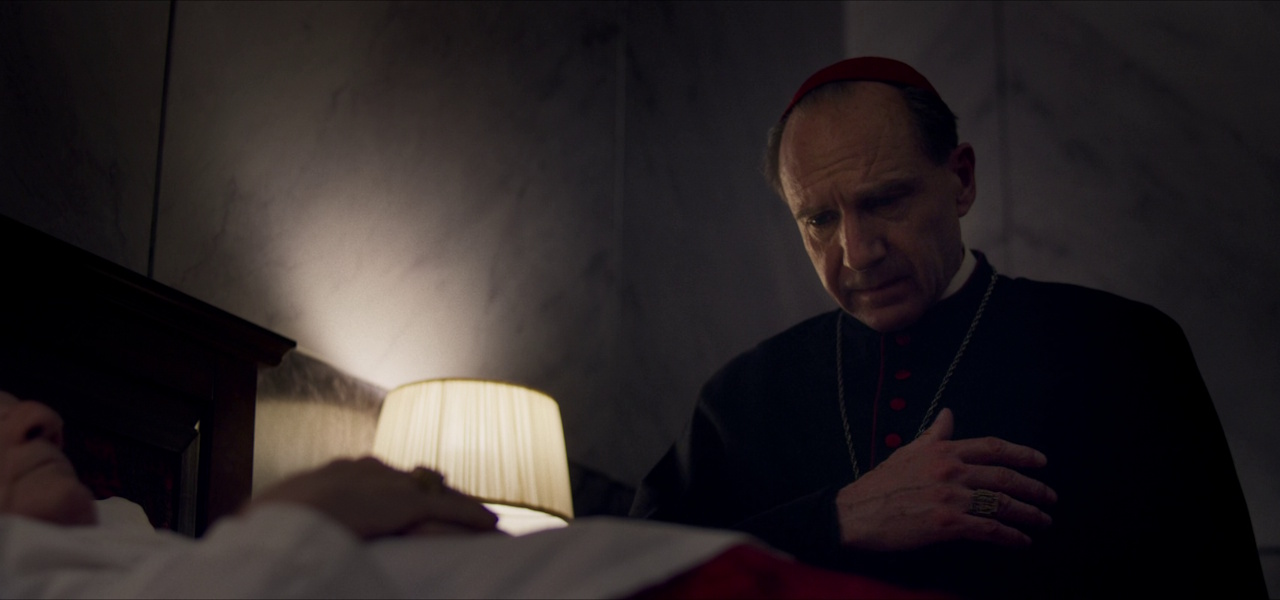
Conclave had been on my radar since it premiered last year, and I daresay I’d have gotten around to checking it out eventually. But like thousands of other viewers, it was real-world events which prompted me to fire up the film at this particular moment. I’m not a Catholic – nor even a Christian at all – but the timely nature of the film made it seem like an interesting thing to watch in April 2025. I was dimly aware that Conclave was based on a novel by British author Robert Harris – who also wrote Munich, which was the basis for another film I reviewed a few years ago – but that was the extent of my knowledge of the film before I sat down to watch it.
I particularly enjoyed Conclave’s cinematography. I’d like to highlight the way scenes and characters were framed, directing our focus to specific cardinals and other characters at key moments. The use of focus was also particularly clever; certain documents or screens were deliberately left out of focus to heighten the tension. The camera work could feel claustrophobic at points, successfully conveying the feeling of being isolated from the world outside the walls of the sequestered meeting. At others, wide, expansive shots gave a sense that characters were trying to remain secretive, keeping important conversations private.

The film’s score was also excellent. Several big, dramatic musical stings punctuated key moments in the story, underlining how characters were feeling or what had just happened to them. The use of silence, too, came into play, and had a similarly dramatic effect. As the conclave descended into bitter in-fighting, the score did an excellent job of conveying how serious things were and how characters were reacting.
Let’s talk about that in-fighting a bit more, because it’s basically the main focus of Conclave’s story for much of the film. Officially, cardinals are supposed to elect the best and most qualified person to the papacy – with the guidance of God and prayer, naturally. But in the real world, I daresay it’s never quite worked out that way! Politicking in the Vatican – and amongst the cardinals specifically – is not as overt as it is in most legislatures around the world, but it’s present nonetheless, with all the same factionalism and pettiness as you’d see anywhere else. In some ways, Conclave made the college of cardinals feel like an office or a group project – complete with spitefulness, attempts to sabotage competitors, backhanded compliments, and more. Anyone who’s ever sat on a committee, taken part in a meeting, or been forced to work on a project as part of a group would recognise some of these things in Conclave’s depiction of the cardinals! And I would imagine that side of the film isn’t particularly inaccurate.
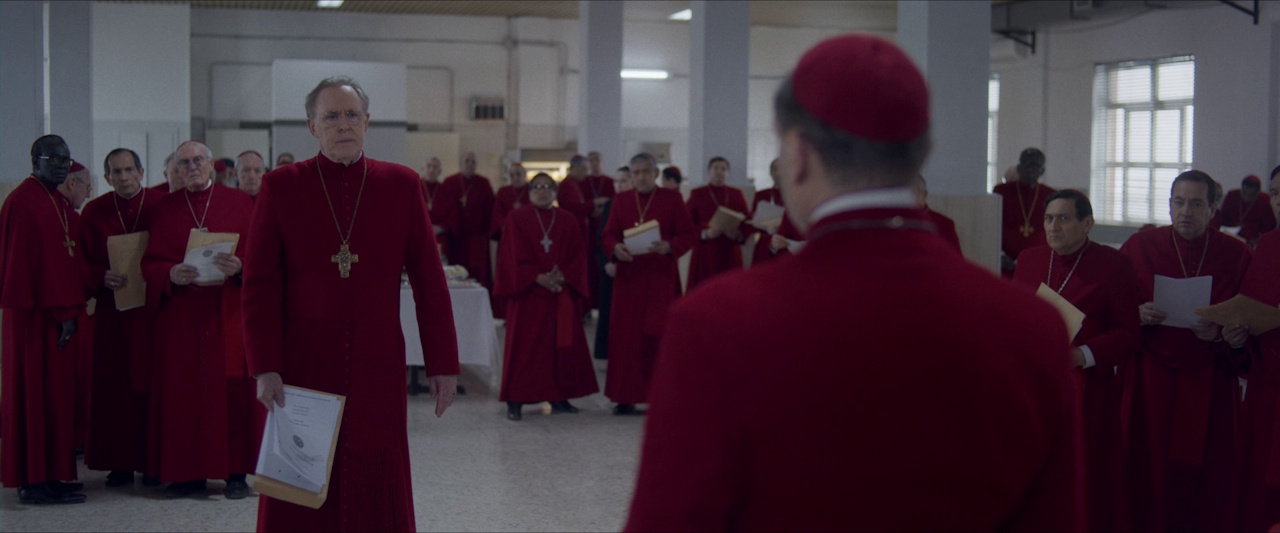
Conclave’s designers did a great job recreating the look and feel of the Vatican. The Sistene Chapel, where a good portion of the action takes place, is a very famous location and was obviously the most important to get right, but I felt all of the locations and sets were appropriate. The cardinals’ private rooms felt almost like a prison, adding to that sense of isolation that we talked about earlier, and that was a creative choice which worked well. There was also a kind of gentle decay to some of the buildings, reflecting both Rome’s ancient origins and, perhaps, the church’s age and vulnerabilities. Having spent time in Italy myself, the sets and buildings all felt like they could be real – even those which weren’t directly copied from real life.
One of the things Vatican-watchers often say is that a papal conclave is unpredictable. Pope Francis’ election in 2013 is just one example of an “unexpected” candidate winning the election – though I doubt his election was as dramatic as the one depicted in the film! But it just goes to show how a papal conclave can take unexpected turns; in the film’s case, a terrorist attack takes place partway through the election, unnerving the cardinals and setting the stage for an unexpected character to take centre-stage.
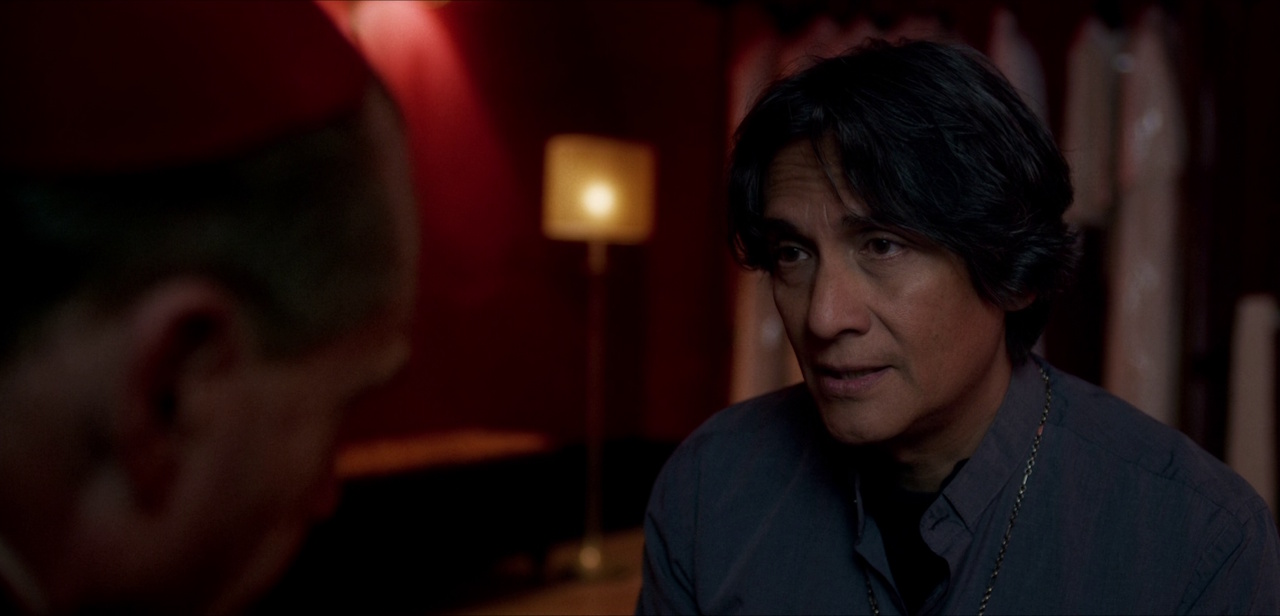
But was Cardinal Bentiez genuinely an unexpected candidate? His surprise arrival toward the beginning of the film – cloaked in typical Vatican secrecy – seemed to be setting him up to play an important role, even while the film appeared to linger on other characters. In that sense, I wouldn’t say I was stunned by this “big shocking twist,” but it was interesting nevertheless. With the film being told largely from the perspective of Cardianal Lawrence, I would’ve liked to have seen a bit more of his reaction to Benitez’s election – after a slow buildup, he seemed to be readying himself to accept that he was best-placed to take the reins of the church, only to lose out in dramatic fashion thanks to the bombing. Having spent so much time with him prior to that moment, and with the big revelation about Cardinal Benitez, the film then ended quite abruptly.
Perhaps Robert Harris’ novel, on which Conclave was based, spends more time with Cardinal Lawrence – not just at the end, but really throughout the story. There were places in the film where Lawrence was in focus, but with no dialogue to go on, it was left to Ralph Fiennes’ facial expressions to convey what he may have been thinking. There may be a degree of interpretation as a result.
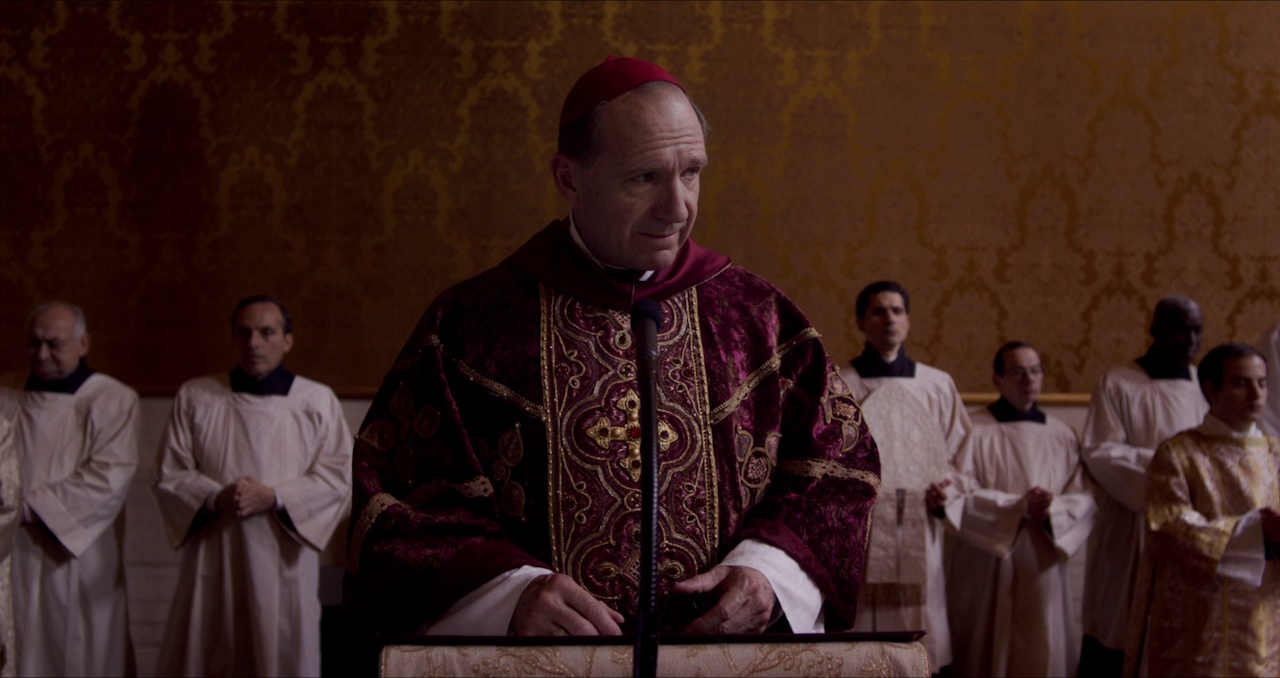
Conclave was told primarily from Lawrence’s perspective, though it wasn’t always immediately clear why certain cardinals were favoured or opposed. Cardinal Tremblay, for instance, was depicted as a rival to Lawrence and someone whose papacy he wouldn’t favour, yet they didn’t seem to be particularly ideologically opposed. Before the revelations about Tremblay were shown, all we as the audience had to go on was suspicion – Lawrence’s suspicion. Perhaps that says something about the way cardinals operate during a conclave, and how rumour or even “bad vibes” can influence the way a cardinal may be inclined to vote.
The same is true of the revelations about Cardinal Adeyemi; only Lawrence discovered the full truth, and refused to reveal it to the rest of the conclave. The other cardinals, fearful of scandal, abandoned his candidacy amidst rumour and speculation that wasn’t even seen on screen. It makes you wonder, perhaps, how easily one might derail a cardinal’s potential path to the papacy!
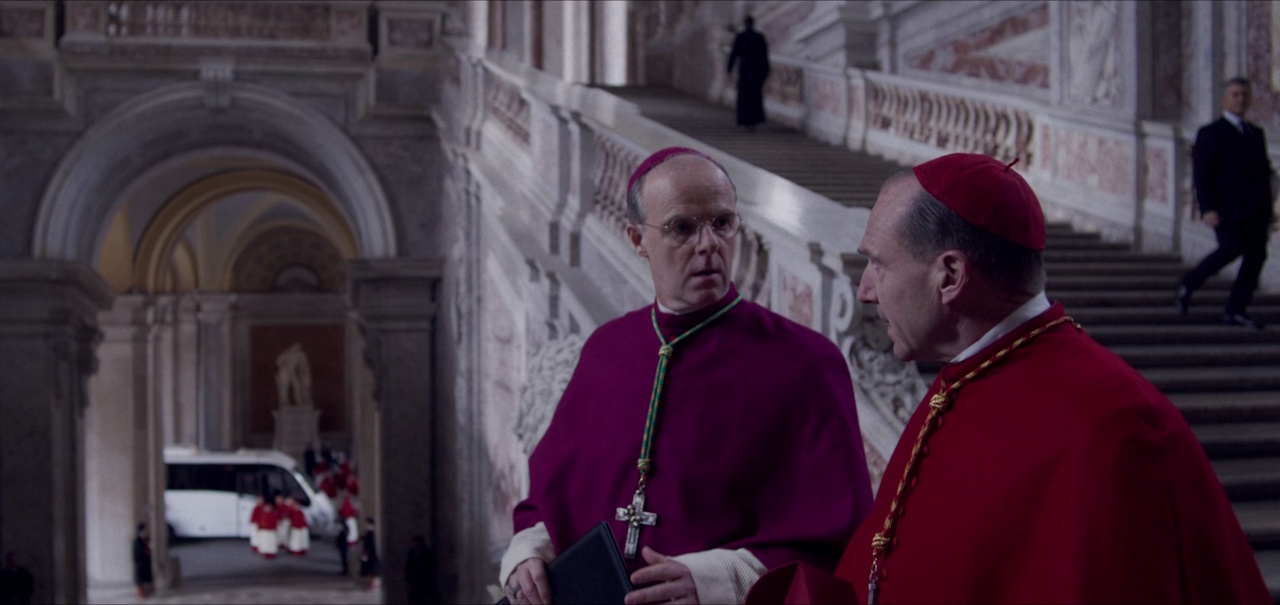
Given current events, Conclave was an interesting watch. And it really is impossible for me, at the current moment, to separate the film from what’s happening in the real world. There have only been two papal conclaves in my lifetime – in 2005 and 2013 – and given the secrecy and relative rarity of these events, it’s natural to be curious and to want to peek behind the curtain! Conclave felt like a somewhat realistic depiction, even though some elements of its story strayed into exaggeration and even fantasy.
So that was Conclave. It was an interesting watch, particularly at the current moment, and I’d happily recommend the film to anyone with even a passing interest in the church and/or what’s currently going on. The real-world conclave is scheduled to start in just over a week (at time of writing) and who knows? It could be just as dramatic and interesting as the one depicted in the film. We’ll never know!
Conclave is available to stream now on-demand on platforms like Amazon Video. The film is also available on DVD and Blu-ray. Conclave is the copyright of FilmNation, Indian Paintbrush, Focus Features, and/or Black Bear UK. This review contains the thoughts and opinions of one person only and is not intended to cause any offence.
 Trekking with Dennis