Star Trek: Voyager – Across The Unknown: Final Thoughts

A Star Trek spoiler warning.

Spoiler Warning: There are spoilers ahead for Star Trek: Voyager – Across The Unknown and for Star Trek: Voyager.

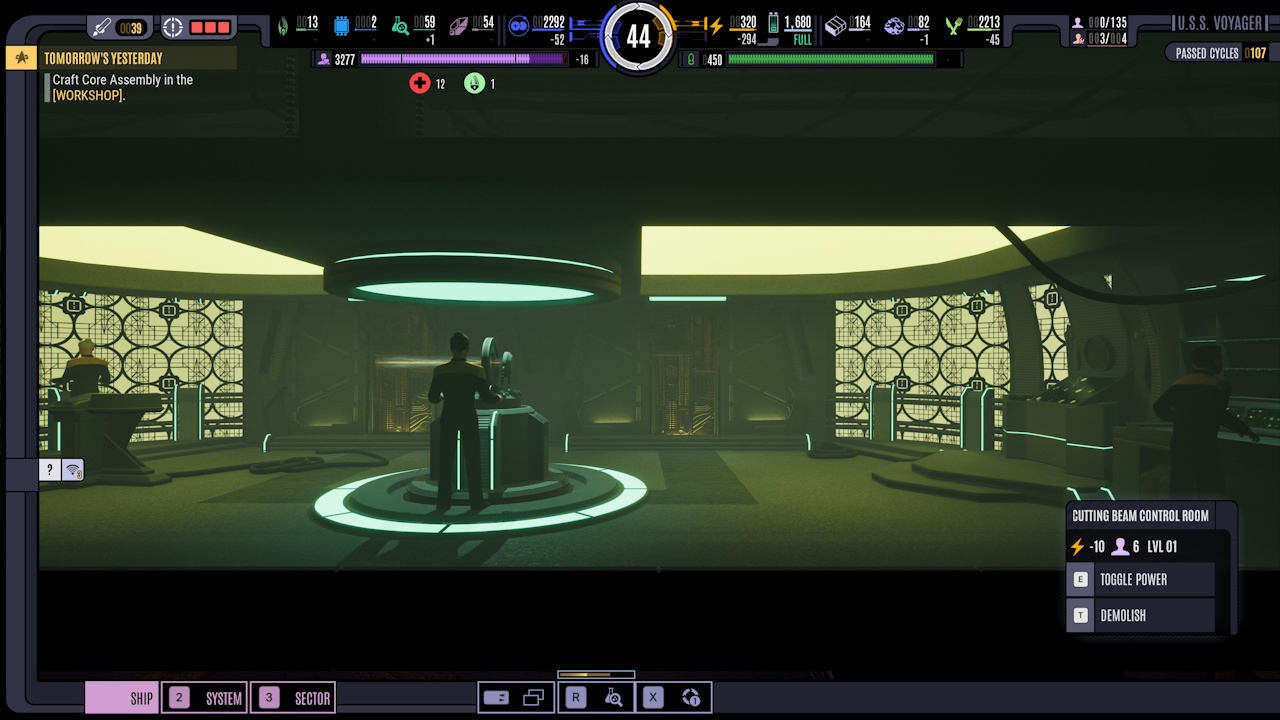
After I wrapped up my review of Star Trek: Voyager – Across The Unknown (which you can find by clicking or tapping here; don’t miss it!) I went back to the game for another run! That’s something I almost never do; re-playing a game so soon after finishing it usually doesn’t hold much appeal. But I think that alone is testament to how enjoyable Across The Unknown was for this old fan of Voyager.

That second run unfolded quite differently, as I made some deliberate choices that I hoped would lead to completely different outcomes. I ended my first run through the game without having unlocked some optional hero characters; I went out of my way to grab some more of them this time. And I tried to set up the USS Voyager differently, too – different rooms, different weapons arrays, and so on, having run through the tech tree in a different order.
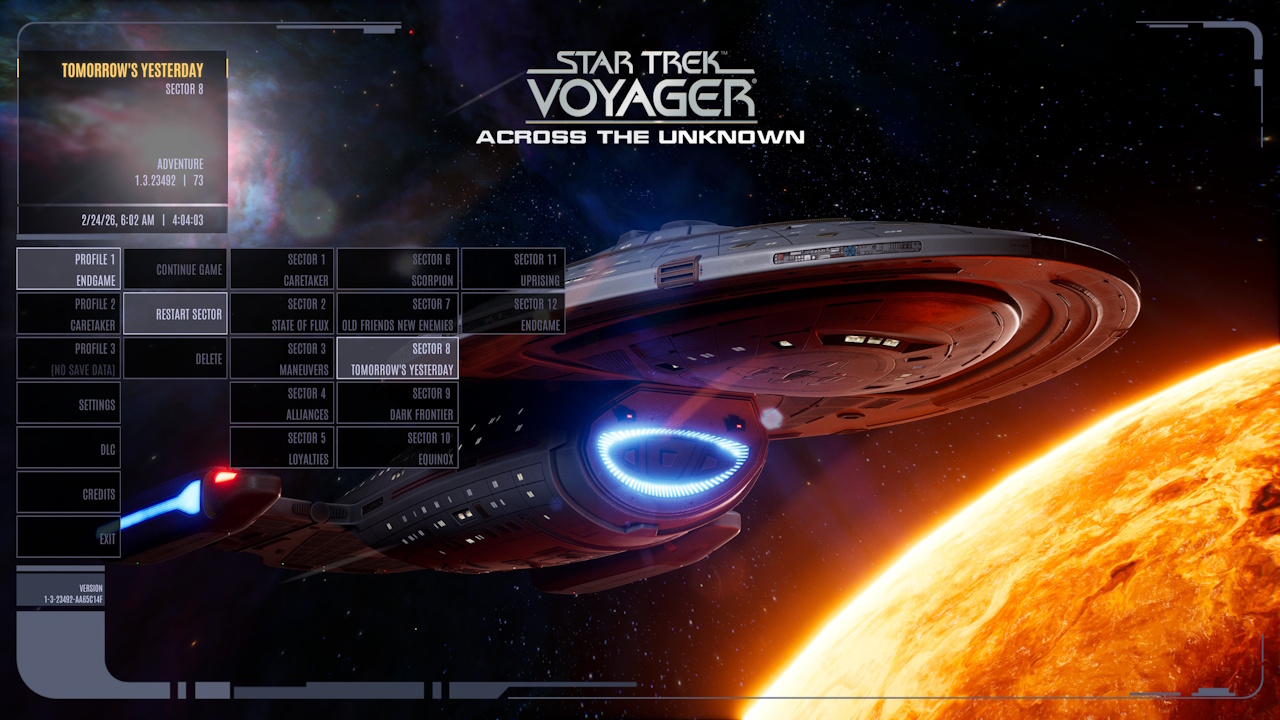
Screenshot of Across The Unknown showing the main menu with sectors
I’m back for round two!

And that’s really my first point about the game: it genuinely plays very differently depending on how you set up the ship and which heroes you have at your disposal. In my first run, I found myself struggling with crew morale quite a lot, so this time, I went out of my way to try to unlock more morale-boosting options. I subbed out emergency quarters for officers’ quarters, upgraded the holodeck, built an observation lounge, and upgraded the quality of meals in the Mess Hall. My morale was hampered this time because I chose to keep Tuvix – meaning I lost Neelix – but those other upgrades and unlocks were fun. Though I had to swap most of the officers’ quarters for standard crew quarters and Borg alcoves later in the game!

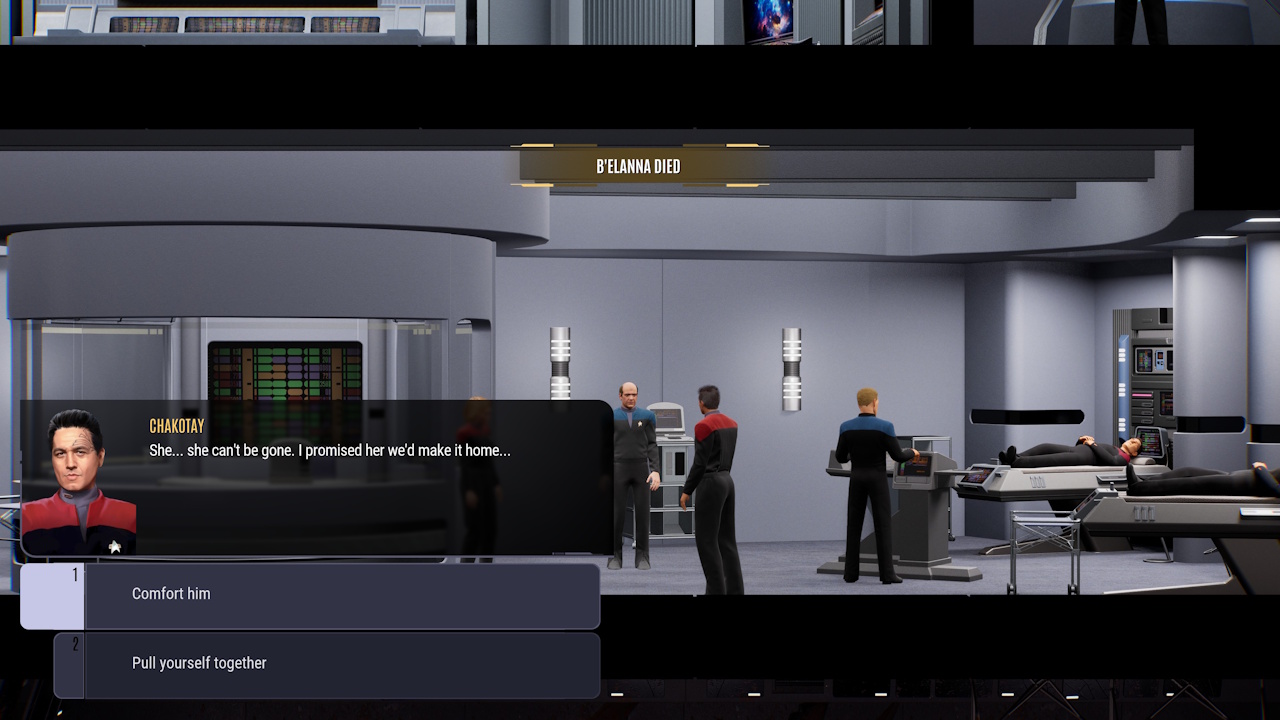
Unlocking different heroes was fun, too. I noted in my original review that some decisions – like keeping Tuvix instead of restoring Neelix and Tuvok – lead to “worse” outcomes, and I stand by that to an extent. But, having deliberately tried to unlock more heroes this time around than I did in my first run, I think at least *some* of that can be offset. For example, my first run through the game utilised Tuvok in almost every combat encounter for his unique ability; I found that Tuvix, while weaker, was an okay substitute, especially when teamed up with other heroes. And although I managed to save B’Elanna this time, her unique combat ability (recharging shields) could be replaced in a way by one of a couple of other heroes who also have defensive powers.

Not a retraction, then, but an amendment!
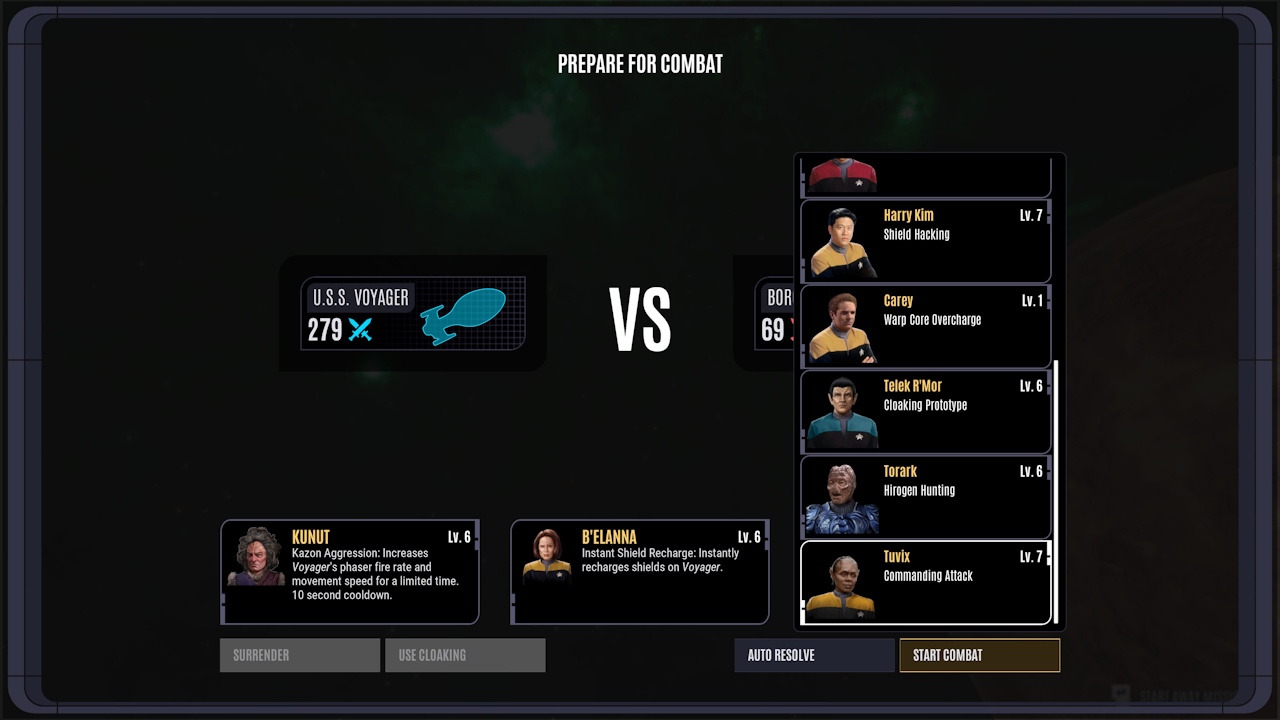
Screenshot of Across The Unknown showing prepare for combat screen
Selecting a hero for a combat encounter.

I encountered a bug this time that forced me to re-play part of a side-mission. The mission based on the episode Child’s Play, which can result in Icheb being unlocked as a hero character, bugged out in its final act. After racing back to the Borg Cube to rescue the away team, I managed to convince Icheb to stand down, allowing me to beam everyone out. But rather than getting the final cut-scene in sickbay, after the dialogue box popped up telling me what was happening, I was back to the system screen with the Borg Cube still intact. I had to re-play that final section of the mission, complete with random rolls of the digital dice, and at the second time of asking, it was fully completed. I don’t know if that’s a common bug, but I hope it can be fixed.

Let’s stick with the digital dice for now – also known as “random number generation,” or RNG for short.

On one occasion, I think it was in Sector 6 or 7, I was soft-locked and unable to progress any further because of a roll of the digital dice. In short, in order to complete the main mission of that sector – which is essential for moving on to the next one – I needed about ten dilithium crystals (one of several in-game resources that you can spend on ship upgrades, tech unlocks, and so on). I didn’t have enough dilithium to unlock the required technology or build… whatever it was that I needed to build. But, as luck would have it, there was *one* remaining planet in the entire sector that contained dilithium. So I warped over to it, chose the option that has the largest chance of a positive outcome… and got fucked over by the digital dice.
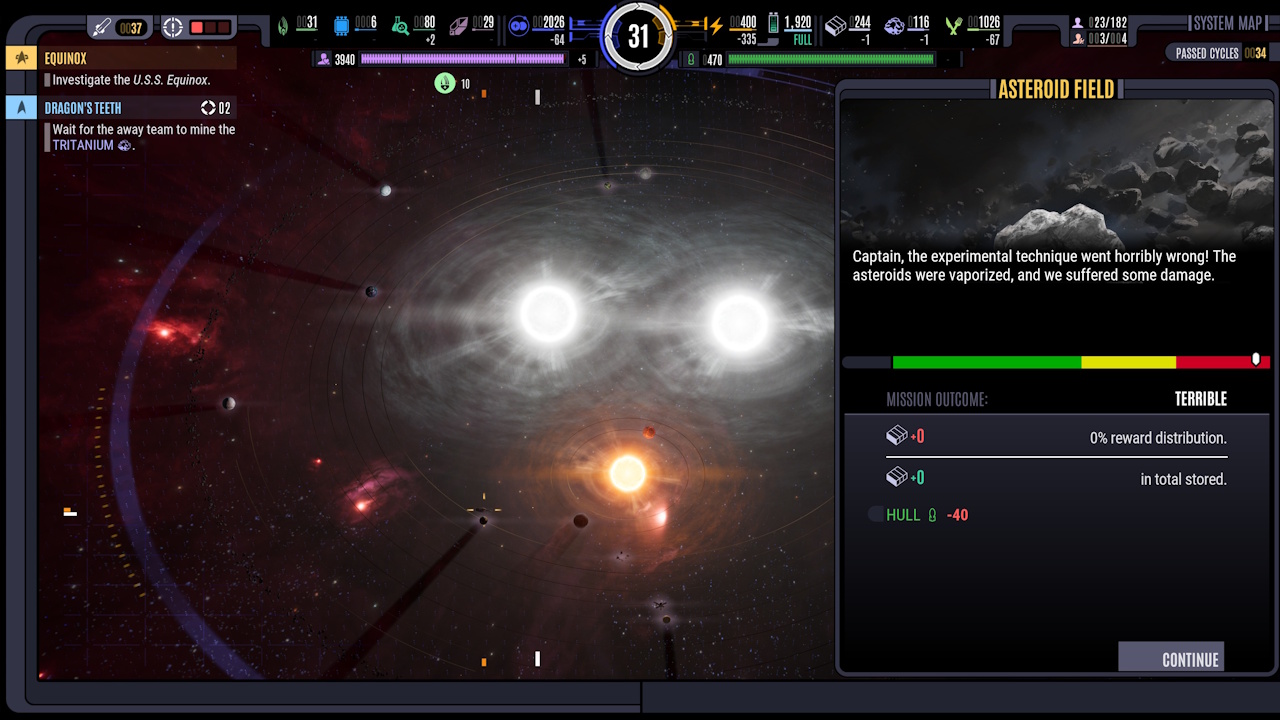
Screenshot of Across The Unknown showing a terrible outcome
RNG can really mess things up, sometimes…

In a game about balancing and managing your resources, you have to keep on top of things to make sure you have enough of everything, that you aren’t wasting resources, and so on. I get that that’s how the game is designed. But mission-critical technologies and unlocks shouldn’t depend on resources – especially not rare ones like dilithium, which only have a few available points of interest per sector. Something like this is inevitable in that case.

This example hammered home how reliant the game is on RNG because of how annoying it was to get to this point of interest and come away with zero dilithium when I needed it to progress. But really, this kind of thing could happen at any point in that sector’s main mission. Suppose I’d decided I wanted to unlock the next tier of the combat tech tree, which requires dilithium, or that I’d wanted to upgrade main engineering, which also requires dilithium. I could’ve used up my available supply well before I even knew I’d need that resource to progress the main story, and I could end up ruining my playthrough of that entire sector completely by accident. Even if these mission-critical technologies or builds normally require certain resources to progress, I really think there should be a way around this for players who literally cannot get those resources. Otherwise the game is effectively soft-lockable every time this arises. And to add insult to injury, Across The Unknown autosaved as soon as the digital dice failed to deliver my dilithium – meaning my *only* choice was to re-play that entire sector.
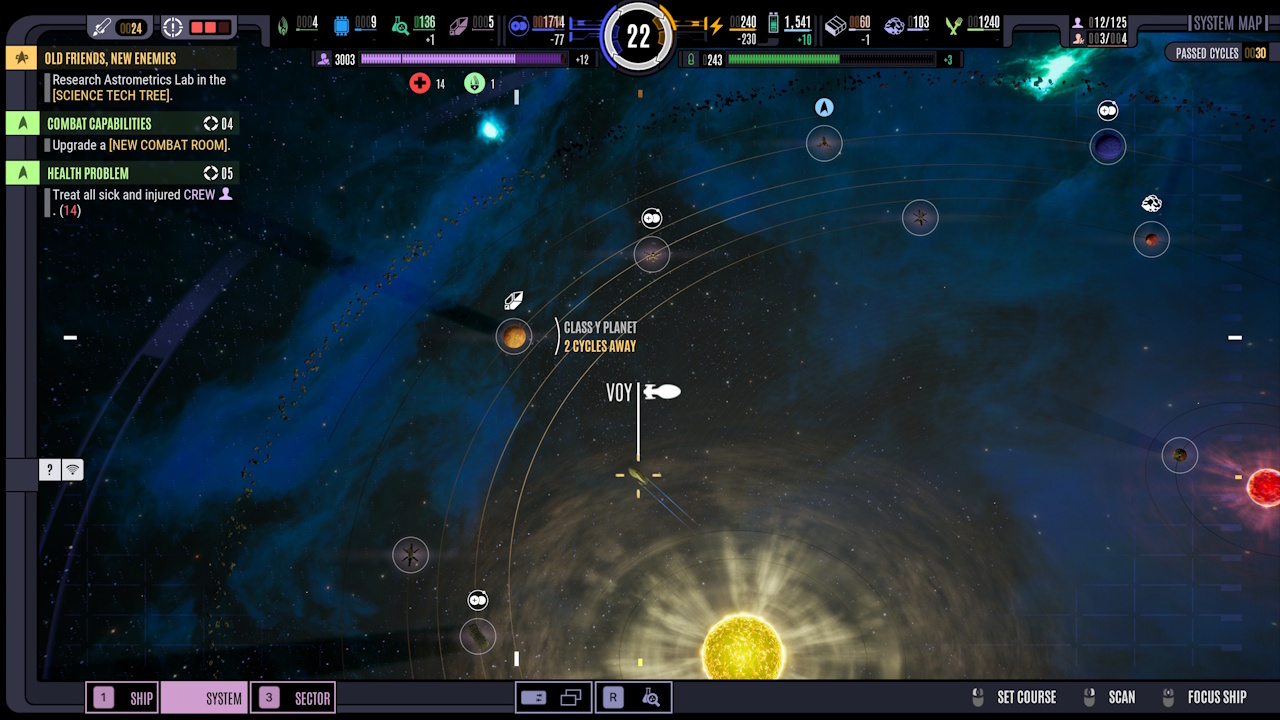
Screenshot of Across The Unknown showing a Class Y planet
The system view.

RNG also plays a role in away missions – and again, this can lead to some pretty silly outcomes. In the mission based on Dark Frontier, which is another main quest, I ended up at the Borg Queen’s unicomplex to rescue Seven of Nine. I chose three heroes for the away team based on what the game suggested I needed: a pilot, most notably, and then someone with engineering skills. I made it to the final dice-roll screen, and I had what looked like a relatively good two-thirds chance of success. But, of course, RNG did its thing and that final dice roll ended up as a failure.

That’s fine, you might say, that’s how it goes. But this particular dice roll leads to an instant game over if you fail it.

In this case, I’d manually saved right before the trip to the Borg base, so I could re-load and try again. But it really didn’t feel good, or like the game was reacting in any way to my choices or the way I’d set things up, by randomly deciding that I’d failed that final hurdle and that that was going to be fatal to *the entire ship and everyone aboard*. If I’d been defeated in a real-time combat event, then sure. Or if I’d had some other way to feel like I was in control of events. But because it was literally just a roll of the digital dice – a roll that had a relatively high chance of success, too – it just felt wrong that it should lead to an instant game over.
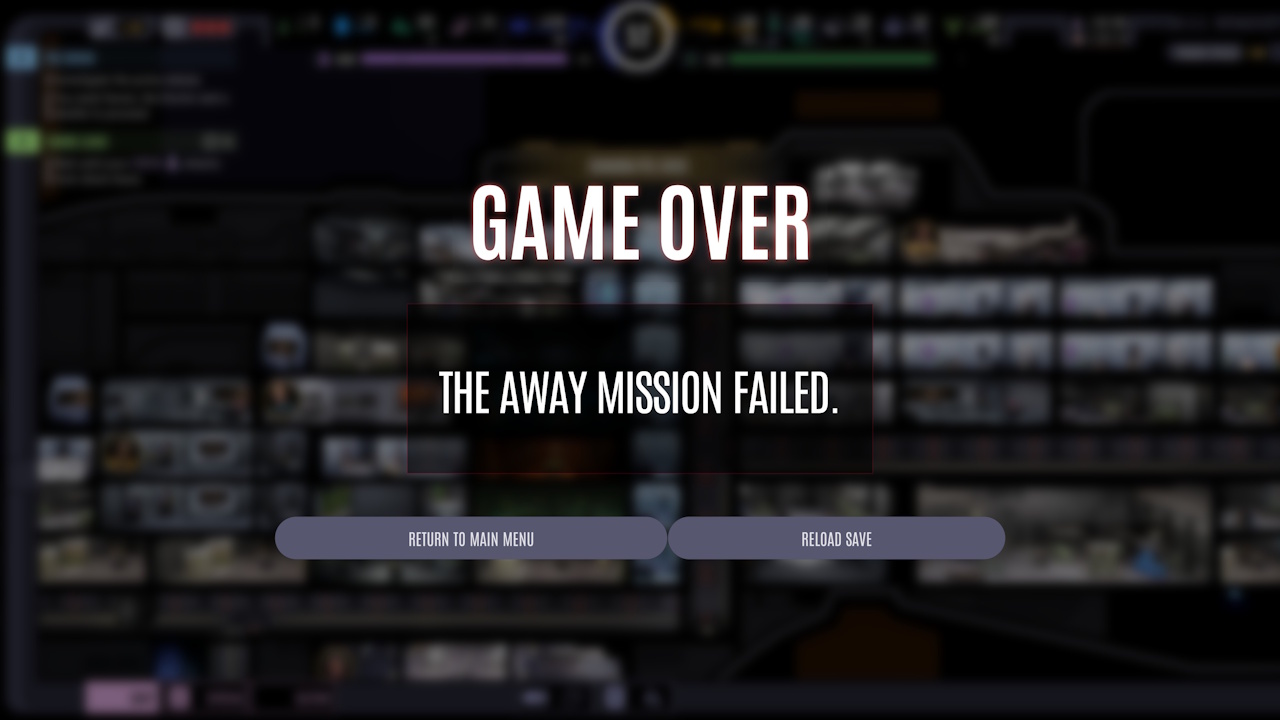
Screenshot of Across The Unknown showing game over screen
It’s annoying to lose because of an unlucky roll of the dice.

I noted earlier that, on this run, I was deliberately making different choices to try to see some different results. Many of these were fun, but one… well, it really wasn’t. And I think it makes the story significantly worse and less comprehensible, especially for anyone new to Voyager or who doesn’t remember the episode in question. The mission based on the episode Equinox – which is a main mission and must be played – can go one of two ways: either Janeway and the crew are able to uncover what happened aboard the Equinox, revealing the truth behind why Captain Ransom and his crew are under attack by aliens from another realm, or… they just never find out anything at all.

Ransom’s actions in the second case make absolutely no sense. You make one choice, relatively early into the mission, and begin working on defensive measures to protect against the aliens. Then, for no reason at all – not just a reason that doesn’t make narrative sense, but literally no reason whatsoever – Ransom’s crew attack Voyager, steal the technology, and warp away. The rest of the mission plays out similarly – you face off against the Equinox in combat, beat them, and then you can either try to save some of their crew or not. But there’s still no explanation at all for what happened… and it just felt pretty unsatisfying, and like a way, way worse version of the story of that episode.
Screenshot of Across The Unknown showing a cut-scene
The Equinox.

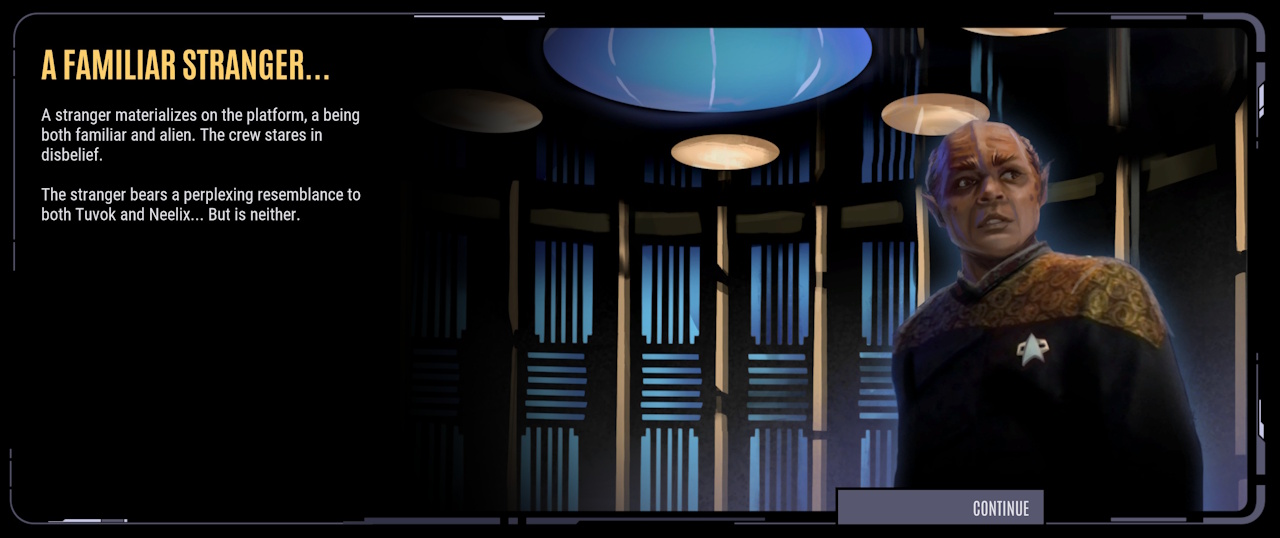
I think, in this case, a combination of factors came into play. Firstly, I didn’t have the Doctor’s mobile emitter for away missions, so he couldn’t go to Equinox’s lab (I think). Then, I didn’t have Tuvok to lead an investigation, as I had Tuvix instead. And finally, I made a different choice at the beginning of the mission, which set me on that path.

I’m really in favour of the game plotting out different outcomes to key events in Voyager’s story – that’s the whole point, and I think it’s pretty fun. But when one of the main stories you get to experience has one canon outcome that makes sense and a non-canon one that’s just incredibly random… it makes it less fun and less interesting. It would be neat, for example, if you uncovered the truth, arrested Ransom, made peace with the aliens, and got to keep the Equinox as an allied ship to join you in combat. Or if you never uncovered the truth, you’d maybe have to sacrifice the Equinox but unlock Ransom as a hero character. Just a couple of examples of how this mission could unfold differently from how it did in the show, but in ways that would make narrative sense based on choices which players can make.
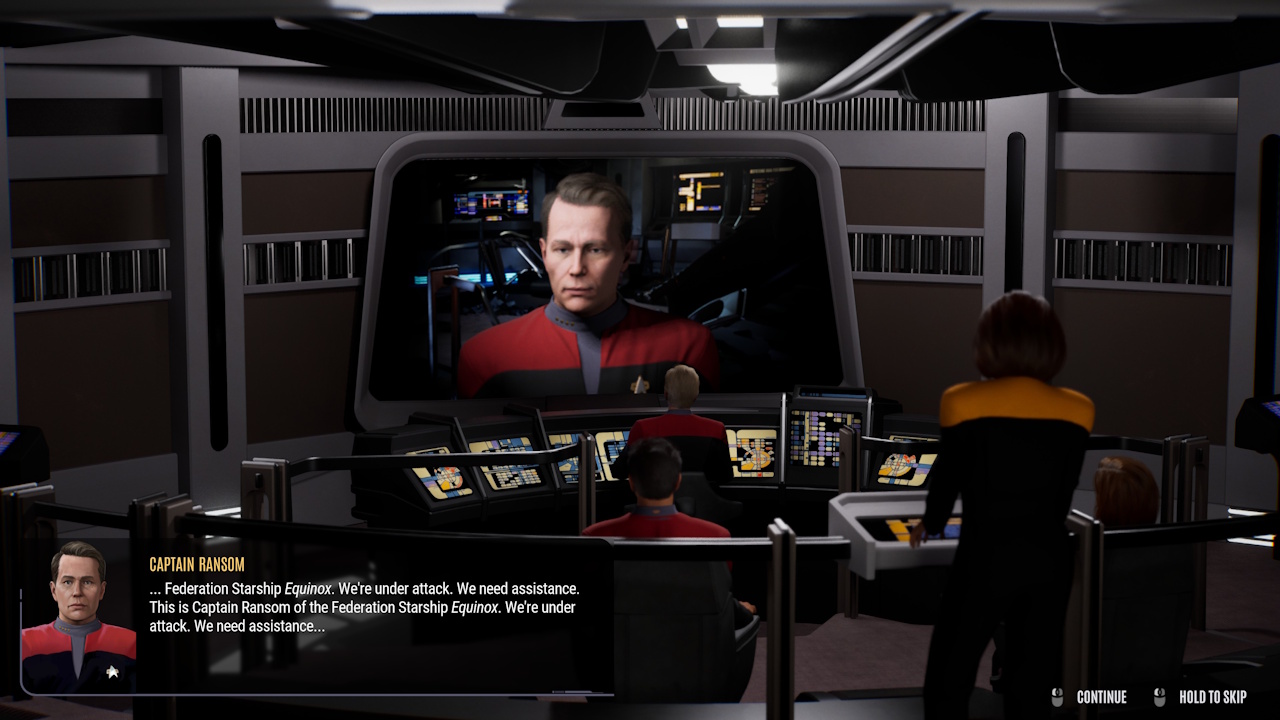
Screenshot of Across The Unknown showing Capt Ransom
Encountering Captain Ransom.

Next, I’d like to talk about a few absences that I felt more strongly this time around.

It’s odd that Janeway can *never* go on away missions. Even away missions that, canonically in the show, Janeway did take part in, she can’t go on in Across The Unknown. I’m sure there’d be a way to make this happen – maybe Janeway cannot die no matter what, if that’s important to the way the game works. Or maybe if she does die, Chakotay steps up to be captain with Tuvok as second-in-command? I’d love to have the freedom to pick Janeway for *all* away missions, but I understand if that’s difficult for some reason. Still, I think making her available for *some* specific away missions, those we know she canonically went on, would be a huge improvement.

Secondly… where’s the Delta Flyer? I thought I’d just missed this, or not unlocked it, on my first playthrough, because I wasn’t using the shuttlebay very much. But this time, I went out of my way to keep the shuttlebay functional all the time, and unlocking upgrades and everything. But… no Delta Flyer.
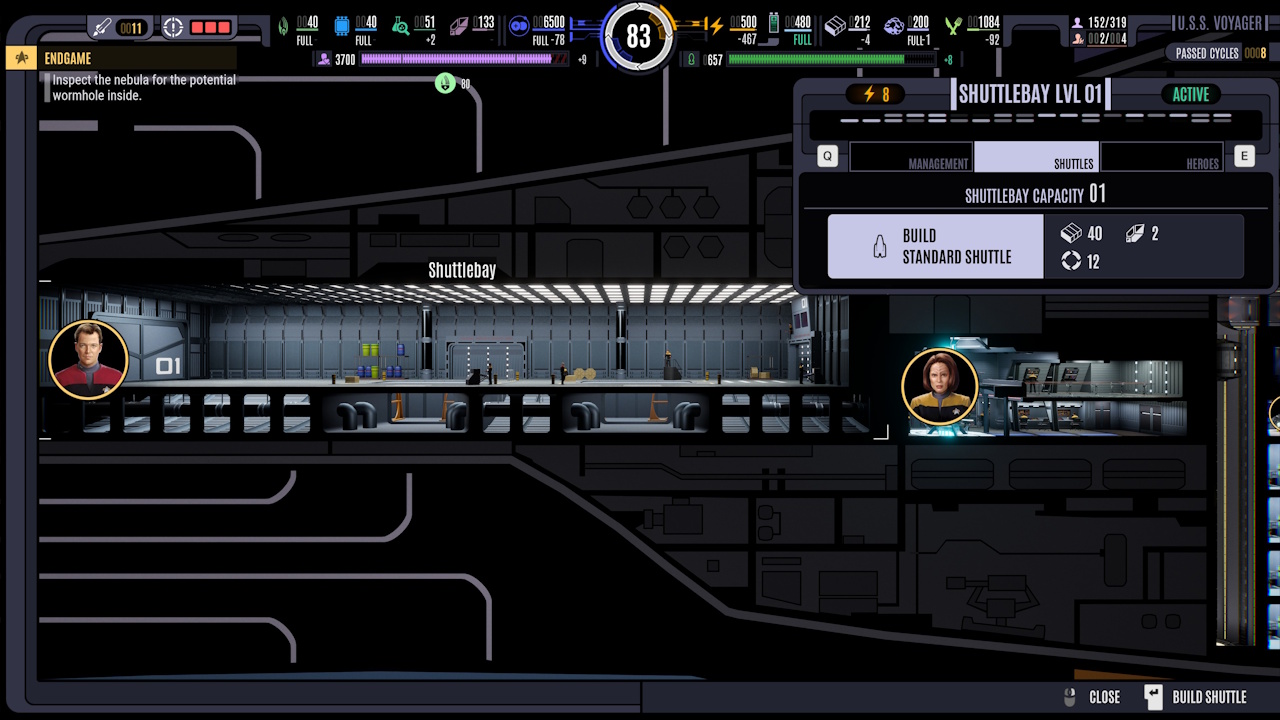
Screenshot of Across The Unknown showing the shuttlebay
The shuttlebay… with no Delta Flyer option.

A game like Across The Unknown, where you have a tech tree, upgrades, resources, and literally already have buildable shuttles, would’ve been *perfect* for including the Delta Flyer! I just cannot fathom why it wasn’t included, especially given its prominence in later seasons of the show. The Delta Flyer appeared in 29 Voyager episodes from Season 5 onwards, and I just find it very strange that it’s not part of the game at all.

As an example of how it could work, the Delta Flyer could either function like an upgrade to the standard shuttle, increasing the chances of successful outcomes for shuttle-based missions/points of interest. Or it could be its own thing entirely, unlocking different pathways to progress through certain missions – like the way the Vidiian Surgical Device or Pralor Shield Technology can be used to bypass certain checkpoints in some missions, or grant 100% successful outcomes. It could be a fun thing to unlock, too, requiring its own side-mission and a lot of resources to construct. Just… an odd omission. And no, I don’t think the trading-only aeroshuttle makes up for it in any way.
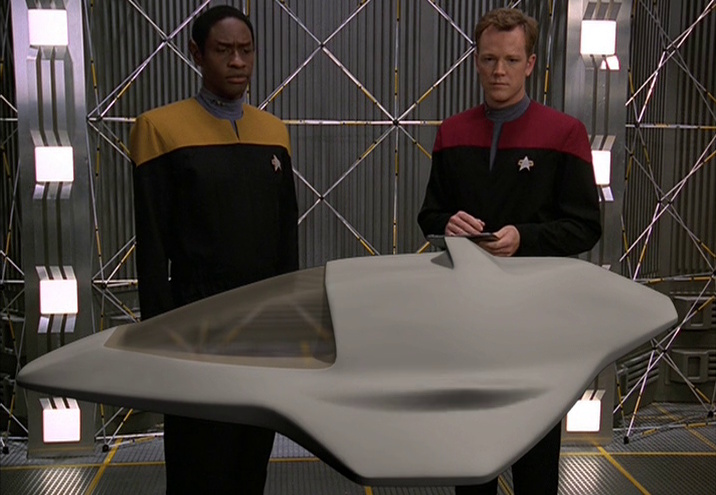
Still frame from Star Trek: Voyager Extreme Risk showing Tuvok Paris and the Delta Flyer
Tuvok and Paris designing the Delta Flyer.

I mentioned this in my review, but the game’s finale still feels pretty underwhelming. You get a text-only log, told from Janeway’s perspective, as the ship is seen cruising towards Earth… and then that’s it. In Endgame, the final shot showed Voyager being escorted by several other Starfleet vessels as she finally made it home – that would be a huge improvement. And I’d love – *love* – to see the ship swooping over the Golden Gate Bridge. That would really be a perfect way to end the game.

It would be great if that final log entry could be fully-voiced, too. I know that the developers went out of their way to recruit Robert Duncan McNeill and Tim Russ to reprise their roles and record log entries, and those logs have been a ton of fun. I don’t know whether getting Kate Mulgrew is in any way realistic – especially if it’s only for one scene. So maybe Tuvok and Paris could narrate that final scene between them? I don’t think it would be so glaring or so notable if we hadn’t had those logs from Paris and Tuvok throughout the game, but I think it does feel like something is missing from those final moments. At the very least, I’d like to see updated cut-scenes depicting Voyager, accompanied by more Starfleet ships, and ideally, that shot of the Golden Gate Bridge, too.
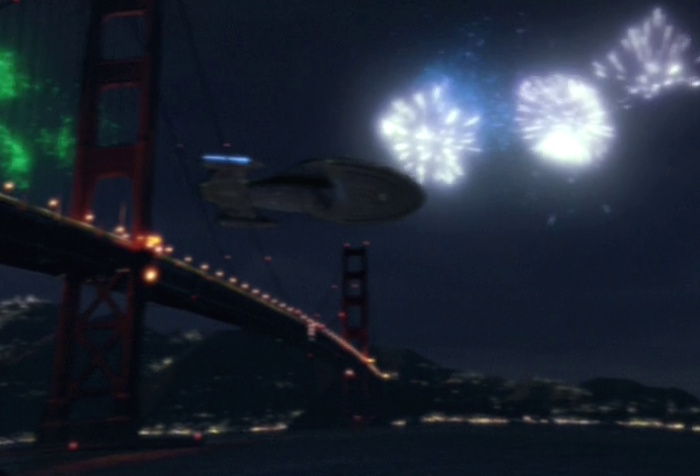
Still frame from Star Trek: Voyager Endgame showing USS Voyager coming home
How incredible would it have been to get this scene as the final ending?

There are a few memorable episodes from the show that I feel would’ve made for fun inclusions. I know that, with 168 episodes, Across The Unknown couldn’t possibly adapt all of them! That’s fine – some episodes wouldn’t really suit a game like this, anyway. But some genuinely would, and while I’m not surprised that they’re missing, I think adding them in would be a great way to improve the game.

Let’s start with Year of Hell. This would, in my view, work best as a new main mission with a whole sector entirely built around Voyager’s conflict with the Krenim. Imagine slowly having to deactivate entire decks, seeing heroes die, rooms destroyed, and eventually having to make a final, consequential choice: sacrifice this version of the ship and this version of Janeway, who you’ve spent the whole sector with, to potentially restore an earlier version of the ship and the timeline, or try to escape the Krenim having basically lost everything. Making the canon choice would reset Voyager back to the way it was before the sector began – all your unlocks and collected resources would be gone, but the ship and any dead heroes would be restored. Alternatively, trying to press on could mean the ship is permanently crippled – unable to increase the warp core cap, or perhaps with entire decks permanently destroyed and unusable. It could be an *incredible* inclusion if handled well.
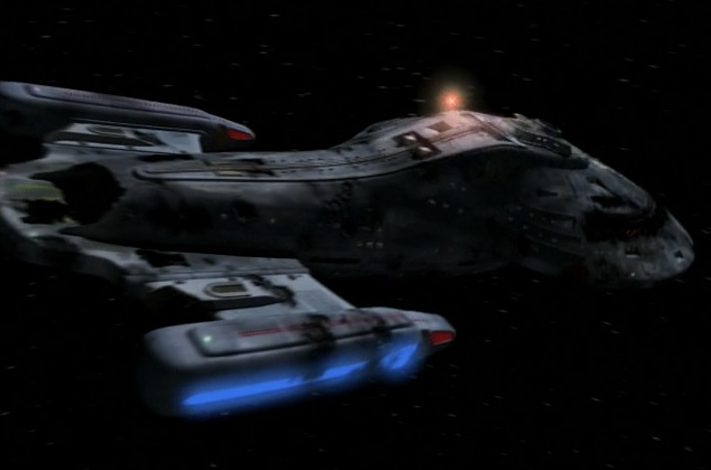
Still frame from Star Trek: Voyager Year of Hell showing the USS Voyager
The badly-damaged ship in Year of Hell.

The 37’s could see you gain Amelia Earhart as a hero – or else lose half the crew to staying behind on the colony, if you don’t play your cards right. Dreadnought could put B’Elanna at risk, but could unlock torpedo upgrades, perhaps. False Profits could unlock a Ferengi hero. Future’s End would be a fun blast of ’90s nostalgia with an away mission to Earth! The Omega Directive could be another, like Juggernaut, that has potentially run-ending consequences, but which could unlock a powerful new technology or something of that ilk. Relativity would send Seven to the future, building on the events of Future’s End, and could unlock Ducane as a hero. Pathfinder could unlock Barclay as a hero, and that would be a lot of fun. The Haunting of Deck Twelve would be a fun, spooky nebula story that could unlock a new tech to help make navigating nebulae easier. Prophecy could net you a classic Klingon D7 Battlecruiser as a combat ally. And so on – I’m sure you have your own examples.

Maybe, given the game’s success, some of these ideas will be considered for free updates or even as paid DLC. I’ve had a blast with Across The Unknown so far… and I genuinely wouldn’t mind paying for DLC if it expanded the game significantly. I said in my review that the “deluxe edition” felt a bit steep for what it was, but an expansion which would add one main story mission in Year of Hell, half a dozen side-missions as suggested above, a few new characters, a couple of new techs, and more… I mean, I’d buy that.
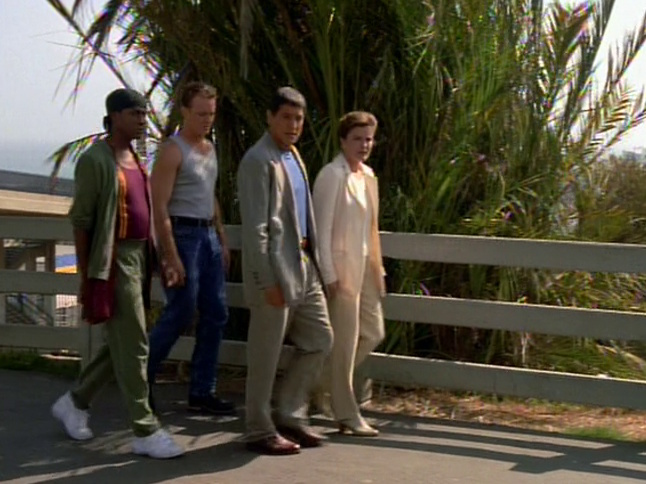
Still frame from Future's End showing the away team in the 90s
Imagine getting a mission based on Future’s End with all its ’90s nostalgia!

I’d like to see some potential late-game upgrades to both the transporter and the ship’s combat abilities. In short, I think it would be a lot of fun if you could work your way up to being able to have *four* heroes, instead of three, for both away missions and combat. There are a few heroes who I didn’t really get to use very much, and I just think it would be fun to add that in as an option.

Sometimes in games like this, I scout out the tech tree and decide which prizes are worth racing to get! And in Across The Unknown, it could be worth speed-running something like a transporter upgrade if it meant you could send four people on away missions, increasing both your chances of success *and* the XP those characters would gain. It would need to be balanced carefully, so that other aspects of the game don’t end up feeling too easy, but I think it’s achievable. And, again, it would be an improvement – as well as something for players to work towards.
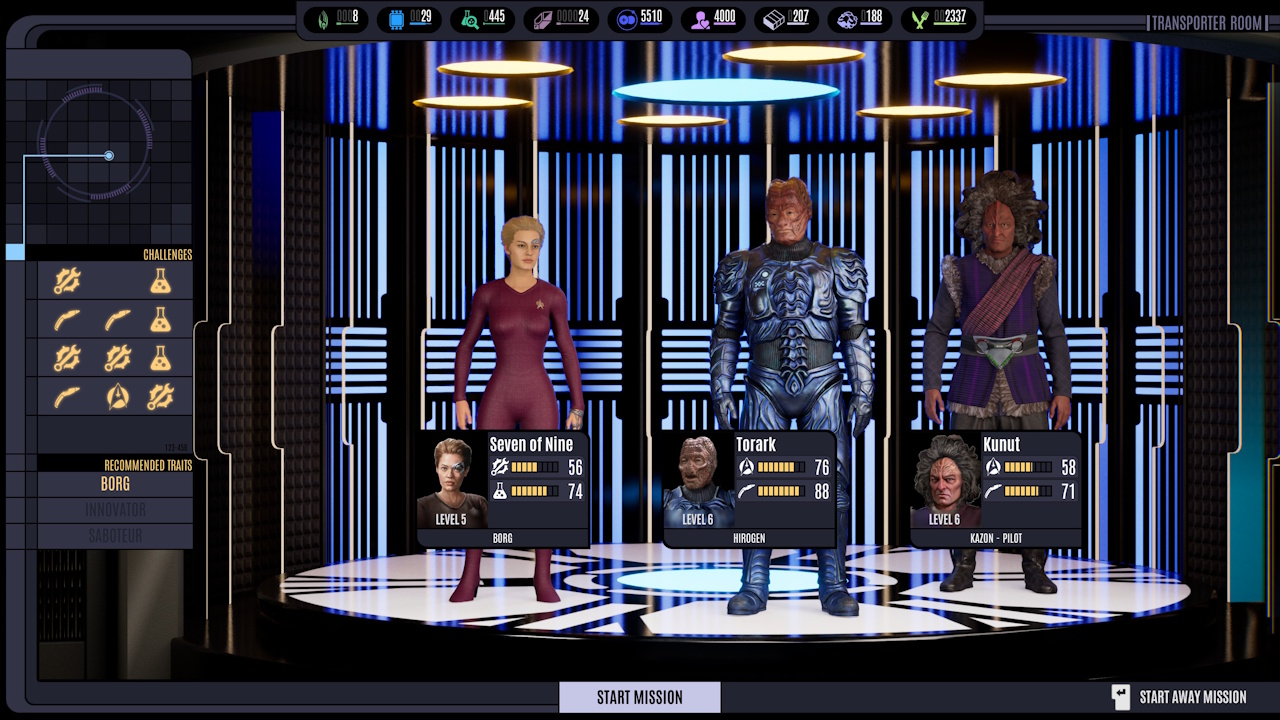
Screenshot of Across The Unknown showing an away mission
Three heroes on the transporter pad.

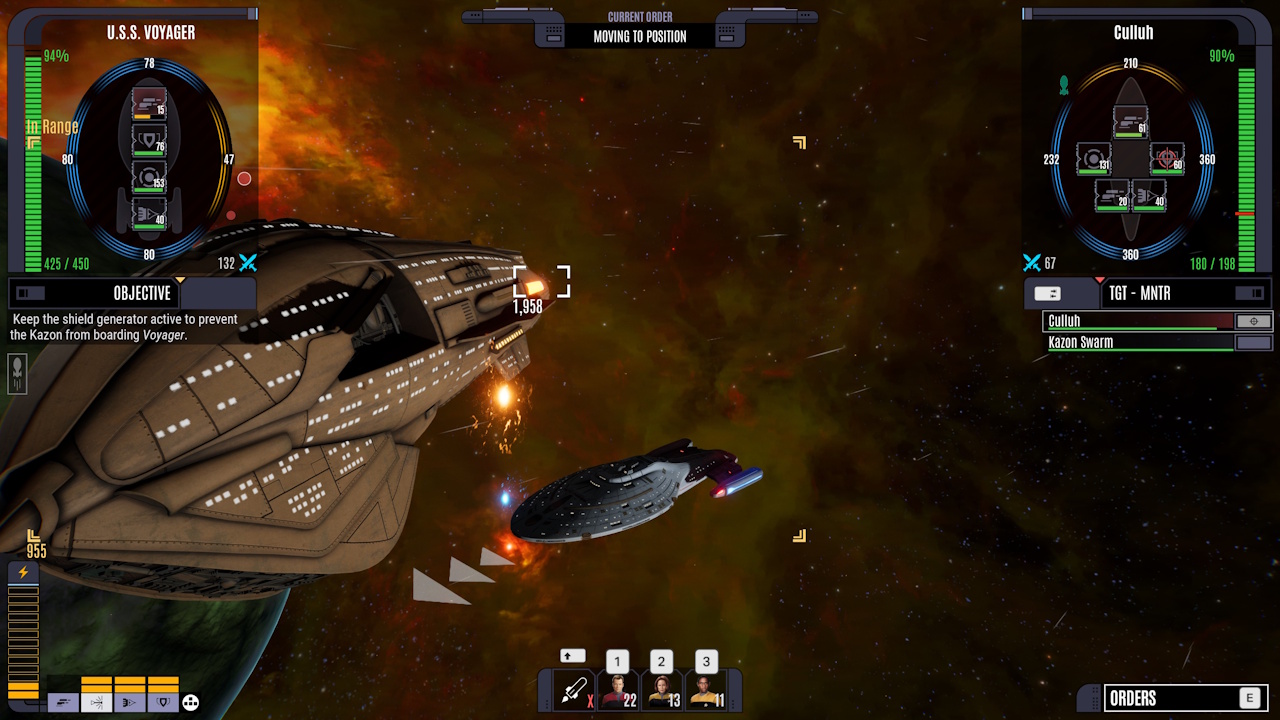
Something I didn’t mention in my review, but really should have, pertains to balancing. In short… I kind of feel like Across The Unknown is a game divided into two halves. You have the early missions, leading up to the conflict with Seska and Culluh, and then after that… you have the rest of the game. The early game is much, much harder, and I would personally rate the fight against Culluh as the toughest boss battle in Across The Unknown. That entire sector beats you up, with random Kazon encounters a near-constant threat, and it comes at a point when you won’t have had time to either properly build up the ship or unlock all of your capabilities.

But after beating Culluh (which took me two attempts even on my second run), the game kind of eases off – or at least, it feels like it does. The result of this is that you kind of have a game of two halves: before and after the Culluh fight. A tougher early game culminates in a very tricky boss fight, but then things seem to let up and you get what feels like an easier ride through the remainder of the game. I don’t think that’s a criticism, necessarily – more of an observation. But if you’ve been struggling, wondering if it’s worth sticking with the game because of how difficult it feels at first… definitely persevere. Once you’re past Culluh, I found it got a lot easier (and more fun!)
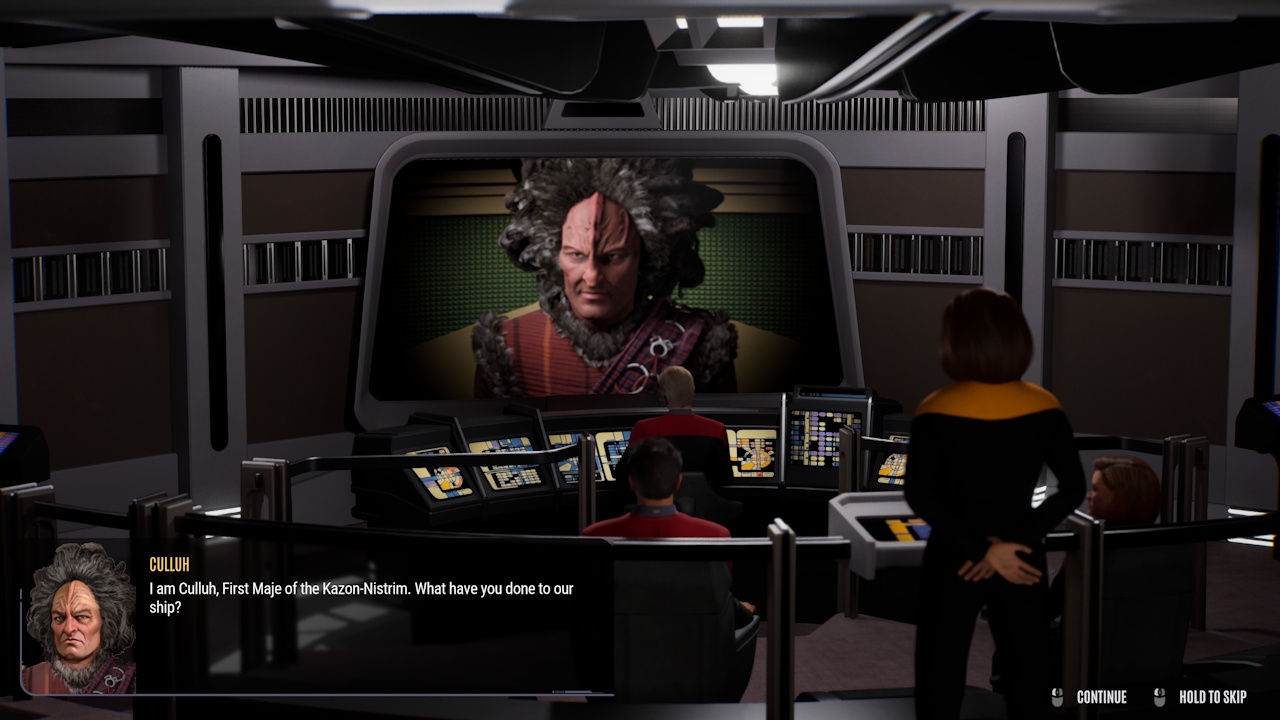
Screenshot of Across The Unknown showing Culluh and the viewscreen
The game gets easier once you get past Culluh and Seska.

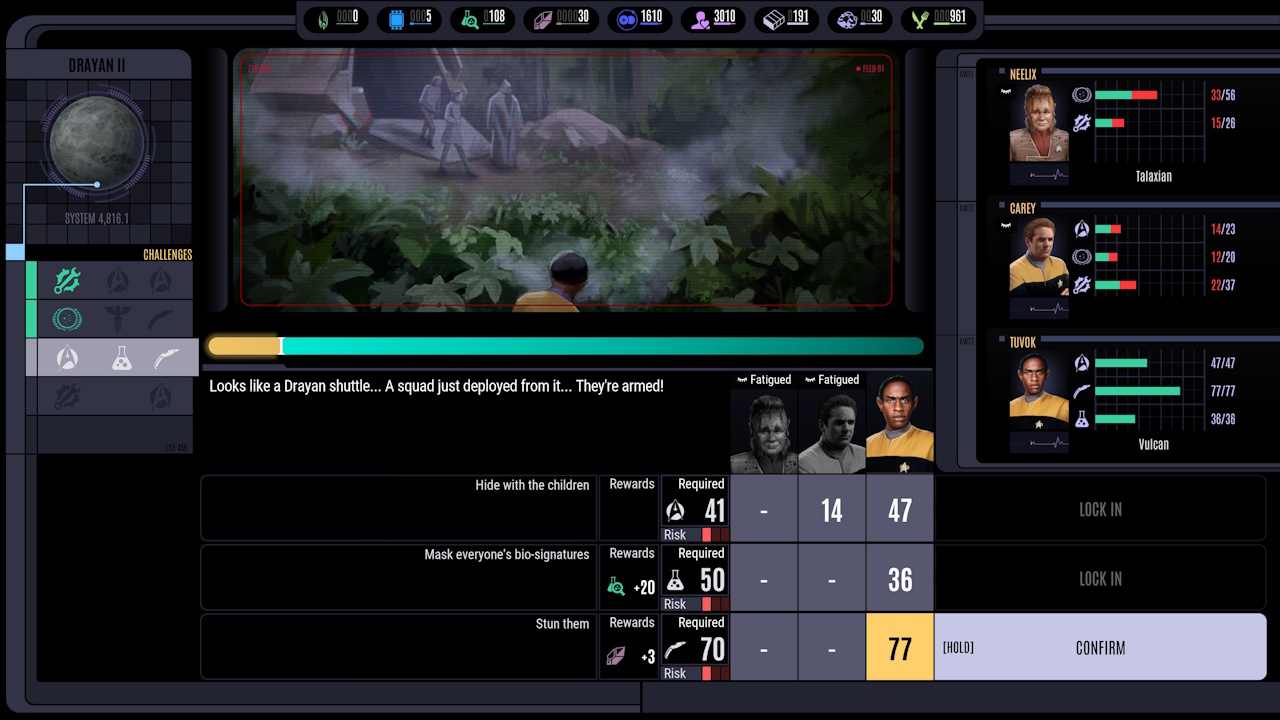
I really like the artwork used to depict away missions. I like the “painted” style, and how these images give each away mission a unique flavour. But if I could make one request, it would be this: please make new art assets that depict a variety of different heroes taking part in these missions! It feels a bit immersion-breaking, sometimes, to have sent Chakotay, Tom Paris, and Harry Kim on an assignment… only for all of the art to depict Seven of Nine and B’Elanna. These are static images, and I’m sure it’s possible to make more of them to depict different heroes in different missions. I’m no graphic design expert (clearly), but I’m sure that, with a combination of transparent layers and such, the same character models could even be re-used.

I just think it would be more fun and more immersive if away missions genuinely reflected the characters I’d assigned to them. Not *every* scene needs to be remade from scratch – there are plenty of moments where artwork depicts a villain, a landscape, or a hero who is mandatory for the assignment in question. But it’s a bit disappointing, sometimes, to see the “wrong” characters depicted in the artwork, especially when, sometimes, the characters who *are* shown aren’t even the recommended ones for the mission in question.
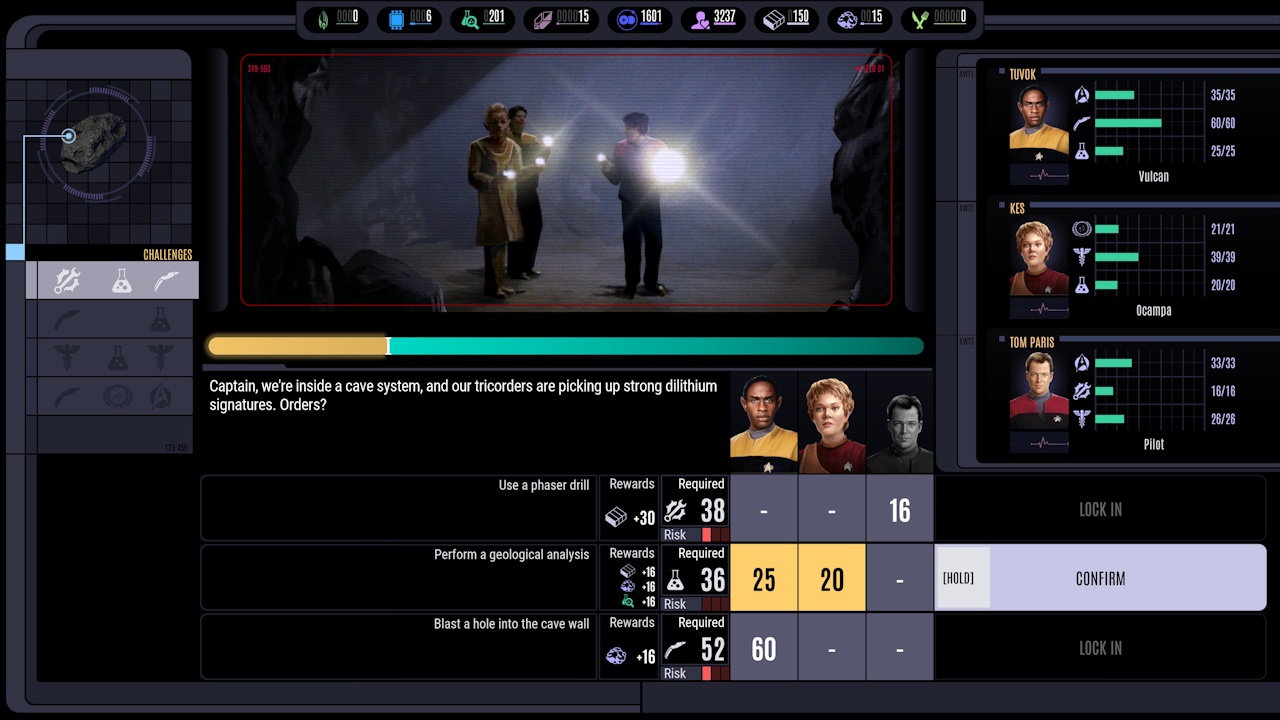
Screenshot of Across The Unknown showing an away mission
This screenshot shows Neelix and Harry Kim in the artwork even though neither character was present on the mission.

So that’s it.

I think I’ve *finally* said everything I wanted to say about Across The Unknown!

If it’s not clear from my review and this piece… I really love this game. It’s 100% a “game of the year” contender for me, as it brings one of my favourite parts of the Star Trek franchise to life in a new and unexpected way. I had a blast playing – and re-playing – Across The Unknown, and I may very well jump back in for a third run later in the year. If you’ve been on the fence about the game at all… I really think it’s worth trying out.
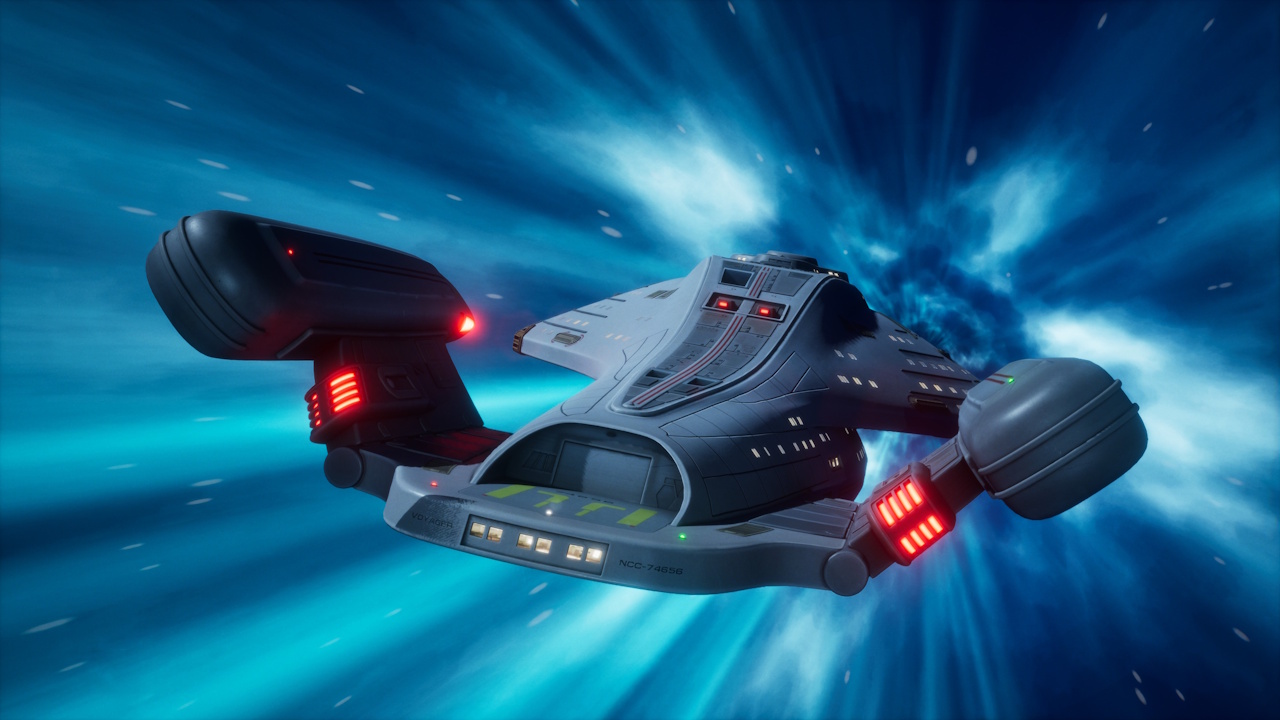
Screenshot of Across The Unknown showing a cut-scene
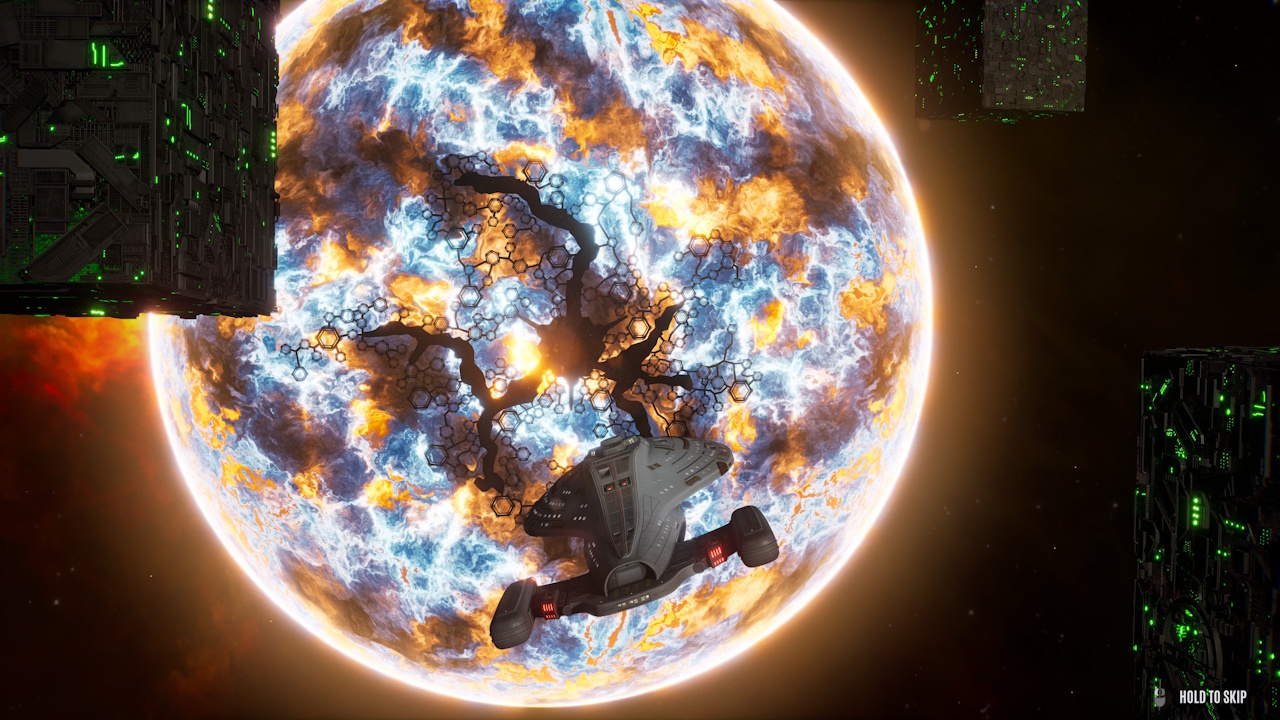
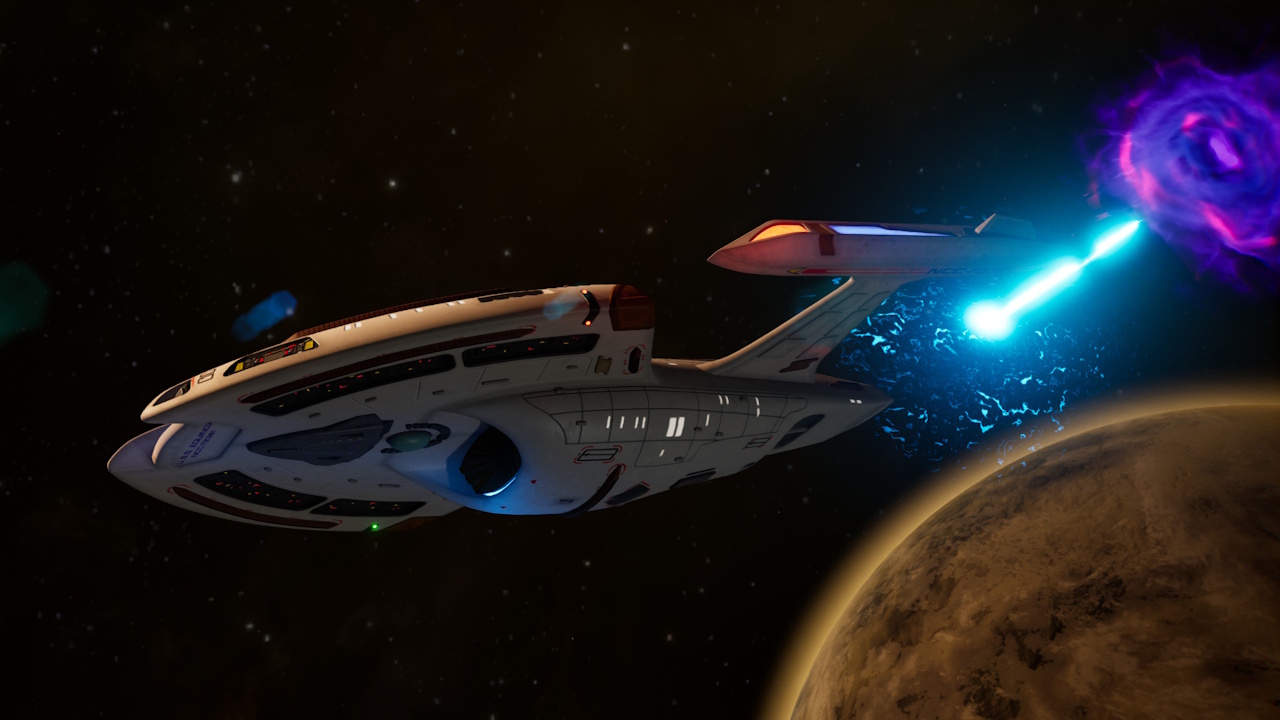
The USS Voyager.

When making suggestions for improvements or potential DLC, I tried to be realistic. I don’t think the game needs to be fully-voiced by the entire main cast, nor do I think that would be a realistic request. I don’t think the game needs first-person, Doom-inspired away missions… nor is that a realistic ask, at this stage! But I think there are a few things that need to be tweaked, a few ways the game could be improved, and some additions that could make for an incredible DLC bundle, if developers GameXcite are interested in going down that road. Across The Unknown seems to have sold really well, which is great news. So maybe DLC is a possibility.

Thanks for reading, and I hope you’ve enjoyed my coverage of Star Trek: Voyager – Across The Unknown. If you missed my original review, you can find it by clicking or tapping here. And I also have a gallery containing more than 180 screenshots from the game, which you’re free to use in your own reviews or other projects. You can find that by clicking or tapping here.

As Star Trek’s landmark 60th anniversary year rolls on, I’ve got plenty of other things planned right here on the website! There’ll be a review of Starfleet Academy Season 1 later in the month, episode re-watches, and more. So stay tuned. And… Live Long and Prosper!


Star Trek: Voyager – Across The Unknown is out now for Nintendo Switch 2, PC, PlayStation 5, and Xbox Series consoles. Across The Unknown was developed by GameXcite and published by Daedalic Entertainment. Star Trek: Voyager remains the copyright of the Skydance/Paramount corporation. This review contains the thoughts and opinions of one person only and is not intended to cause any offence.
Star Trek: Voyager – Across The Unknown: Video Game Review

A Star Trek-themed spoiler warning.

Spoiler Warning: Beware spoilers for Star Trek: Voyager – Across The Unknown and for Star Trek: Voyager.

I’ve been getting acquainted with the brand-new Star Trek: Voyager – Across The Unknown over the last few days. Last year marked Voyager’s 30th anniversary – which is insane to think about, by the way, and makes me feel oh so very old! But it also made it the perfect time for a new Voyager game’s announcement, and with Across The Unknown looking like my kinda thing, I was excited to give it a try. I picked up the “deluxe edition” of the game as soon as it became available, and I’m ready to share my thoughts with you today.

Firstly, though, a couple of important caveats.

Everything we’re going to get into today is the entirely *subjective, not objective* opinion of just one person. If you have a different perspective on Across The Unknown or Voyager in general… that’s okay. I offer my take to the Trekkie community based on how I experienced the game. And in addition, Across The Unknown is a deceptively big game, with some procedurally-generated elements, luck-based mechanics that play a role in determining outcomes, and multiple pathways and even multiple endings. I have not experienced all that the game has to offer, and I’m basing this review on one “run” through the game, plus one abortive “half-run” that ended too soon.

Screenshot of Across The Unknown showing Voyager
Ready to get lost in the Delta Quadrant?

So let’s talk Across The Unknown – or, as I keep mistakenly calling it, Into The Unknown. Remember that song? The one from Frozen II? It’s stuck in my head now.

Big-picture talk: I like Across The Unknown. I think it’s a game designed from the ground up by Trekkies, with Trekkies in mind, and it really leans into all aspects of Voyager, coming across as a true celebration of the series. Gameplay-wise, though? There are some flaws and deficiencies which hold it back a little as things stand. I’m buoyed by developer GameXcite’s commitment to acting on feedback, but there is one basic missing feature that even a first-time amateur developer should’ve known fans would want to see included, and it’s a shame it’s absent from Across The Unknown at launch.

There are also a handful of bugs that impacted my experience, including one that stopped me from navigating between the game’s three main menus, effectively soft-locking me out and forcing me to reload my most recent autosave. Again, GameXcite seem willing to continue to work on the game post-launch, with a couple of patches having been rolled out for the PC version already. Hopefully, these issues (and any others I may not have encountered) will be resolved – but it’s something to keep in mind if you’re sitting on the fence about the game right now. Perhaps waiting as little as a couple of weeks will mean the version you download and install will be a tad smoother and better across the board.

Screenshot of Across The Unknown showing a minor bug
An example of a minor text bug.

Across The Unknown is missing an incredibly basic function of video games that I almost can’t believe wasn’t included at launch: a proper save system. The game relies on an autosave, with the intention of playing like a “rogue-like” experience, complete with permanent, run-impacting choices.

The problem with that is the sheer *randomness* to too many of the outcomes. To give one example from my first run, I encountered a mission based on the episode Faces, which involved the Vidiians splitting B’Elanna into two separate people. This mission, despite me having an upgraded sickbay, the Doctor being present, being fully-equipped with resources, and – for want of a better term – doing everything “the right way,” resulted in B’Elanna’s death. This came in my first run through the game, at a relatively early stage, leaving me without one of Voyager’s main characters. I’d have wanted to go back and undo that, but doing so meant either restarting the entire sector or starting again from scratch.

Screenshot of Across The Unknown showing B'Elanna dying
Some outcomes feel very luck-dependent.

I admire the intention to go for an “old-school” style of gameplay. But I’m someone who believes games should give players options. I’m on the record supporting the practice of “save-scumming,” at least in single-player experiences like Across The Unknown. A game like this, which demands hours of your time, should be customisable to an extent, and should be able to be tailored to the way you want to play. By all means, do what Baldur’s Gate 3 does and have a mode where save-scumming is disabled and players have to rely on one single autosave only. But for folks who either don’t have a lot of time to play, or who want a more relaxed approach to the game? A proper free save system is *essential*, and I find it hard to believe that no one at GameXcite didn’t raise this as an issue before launch.

Responding to this exact line of criticism, GameXcite has pledged to “find a solution that brings you there,” to quote one of their recent updates. I don’t know what the time-frame might be on something like that, but it will be a *major* improvement to the game, assuming the developers can find a way to get it over the line. I sympathise, to an extent, because this is clearly not the way the game was envisioned or originally designed. But the ability to freely save – or at least to have multiple autosaves to choose from, perhaps – is something so incredibly basic, something that has been part of video games for decades… the fact it’s missing is a glaring omission. The sooner this is fixed, the better Across The Unknown will be.

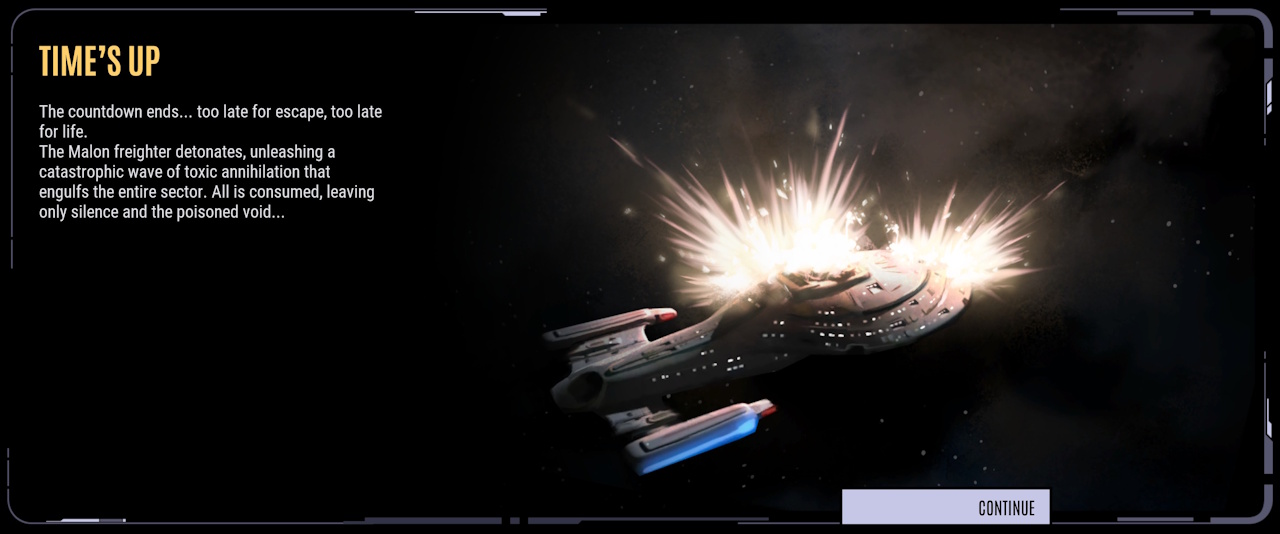
Screenshot of Across The Unknown showing a bad ending
Having to re-play whole sectors because you got a bad outcome (that was impossible to predict)? Not a lot of fun for me!

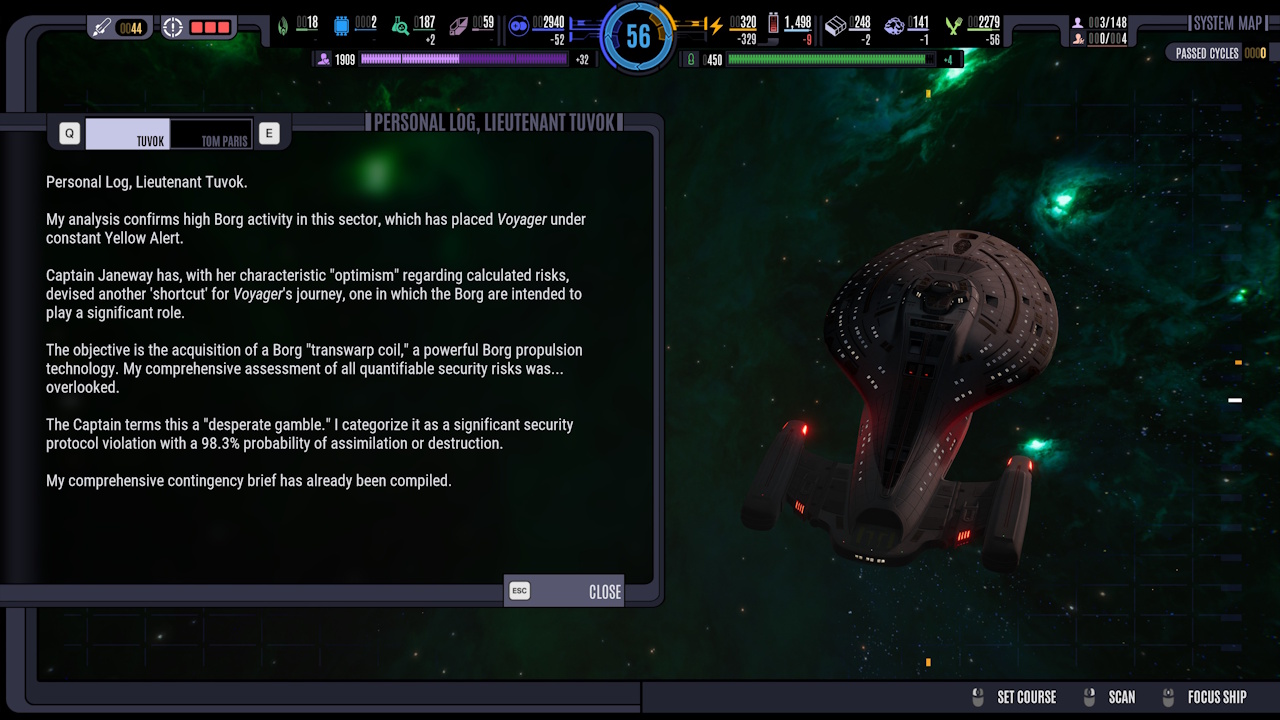
In my playthrough of the game’s demo version last year, I made note of the lack of voice acting, and how it was text-only. I didn’t mean that as a criticism, really, but I wanted folks to be aware of the kind of title Across The Unknown was before jumping in. Since then, however, GameXcite managed to recruit two of Voyager’s original cast members – Tim Russ and Robert Duncan McNeill – to reprise their roles and record a series of logs. These logs are played at the beginning of each new sector (assuming the characters are both alive and part of the crew), and it’s a nice addition.

Unlike a proper save system, I don’t think Across The Unknown would’ve felt incomplete without these logs, but it’s an example of GameXcite responding to the feedback they picked up from the demo version of the game, and it’s nice that they chose to expand the title to include this extra feature. The logs are a lot of fun, they’re very “Star Trekky,” and it’s always great when a project like this can bring back members of the original cast in some form.

Screenshot of Across The Unknown showing a log
One of Tuvok’s logs.

In addition to the soft-locking bug I mentioned above, I encountered another, comparatively minor bug. At one point, my ship was afflicted by a “deuterium infestation,” which gradually depleted my deuterium stockpile over time. Despite taking the appropriate actions to fix this problem, the pop-up notification (which is on the left-hand side of the screen) never disappeared for the remainder of that run. I don’t know why it didn’t, and after a while, I just sort of tuned it out. But I’m pretty sure this *is* a bug, and the notification should’ve been removed after the issue was resolved.

A more serious bug soon followed. In short, if you’ve had to re-play a section of the game, or if you’ve been defeated in combat and need to re-load the sector, you have the option to choose to skip chunks of dialogue. That’s fine – good, even, because there’s nothing more frustrating, sometimes, than having to sit through an inspiring speech or villain’s monologue that you’ve heard a dozen times! But choosing to skip dialogue *after* locking in an optional choice seemed to mean that the desired outcome didn’t happen – even if it literally had a 100% chance of happening.

Screenshot of Across The Unknown showing the main screen
The system view. You’ll spend a lot of time here.

This next part is spoiler-y, so skip this paragraph if you really want to avoid that.

After playing through the Kazon-Nistrim/Seska storyline (which is mandatory), and arriving at the final combat encounter, Harry Kim has the idea to use holographic projections to make it seem as if Voyager has allied vessels fighting alongside her. If you succeed in this check, which, in my run, had something like a 90% chance of success, it removed two of the Kazon vessels from the subsequent fight. But if you skip the remainder of the conversation *after* choosing this option, even if the game told you you’d succeeded, the enemy ships would be present. An annoying bug, if a specific one.

There were no hard crashes during my playthrough, and compared to the demo version (which seemed to be putting a lot of strain on my CPU for some reason, making the fans work overtime to keep things cool), I’d say Across The Unknown ran pretty well on my PC. This shouldn’t be a massively demanding game; it’s less than 9GB in total, and there aren’t a ton of models or animations. But there are still characters to animate, as well as real-time ship battles. It’s nice to see a game that runs well out of the gate – not something that’s always guaranteed any more, sadly, in this age of “release now, fix later” titles and endless patches.

Screenshot of Across The Unknown showing a boss battle
The climactic battle against Seska and Culluh.

Let’s talk about the “deluxe edition.”

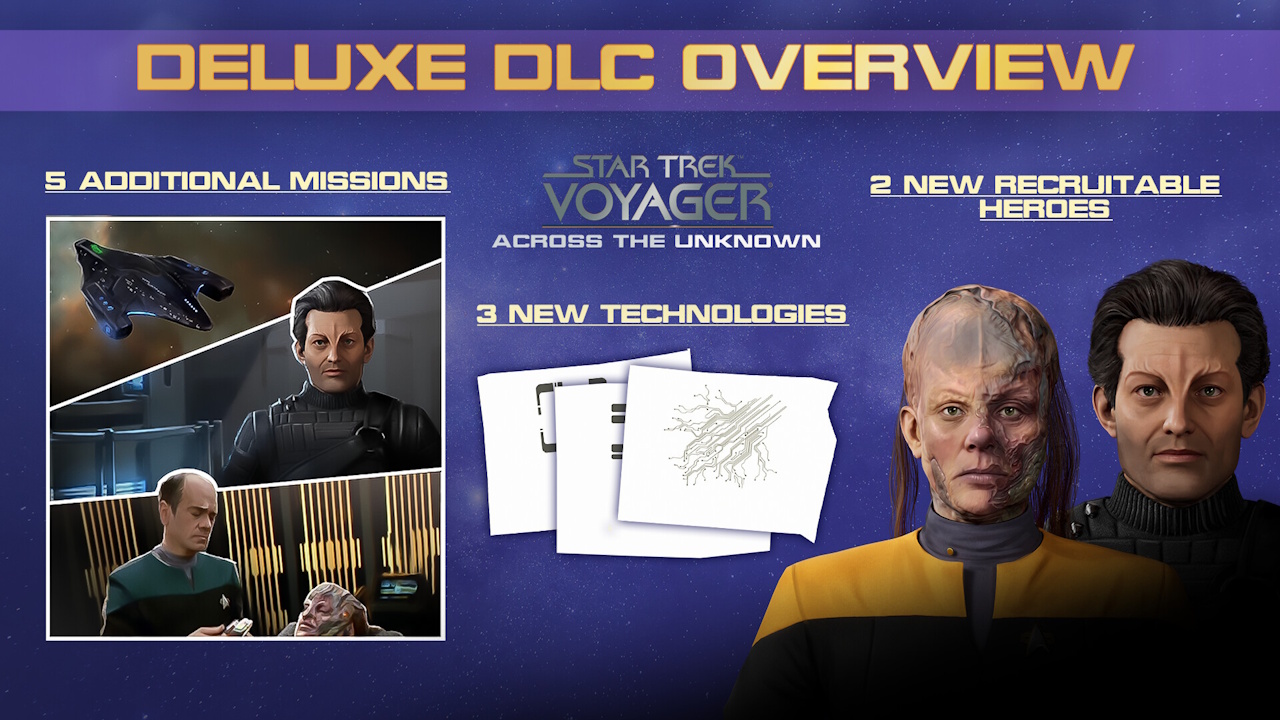
I usually don’t go in for day-one DLC, but I violated that rule for Across The Unknown. I did so primarily as a show of support for the development team, but I think it’s worth saying that this additional content… didn’t really add a lot. The deluxe edition content adds three technologies and five side-missions (all of which are based on episodes from Voyager). I didn’t get to play all of them, but the ones I saw were fun. The DLC also adds two “heroes;” named NPC characters who can be assigned to a variety of different roles. Neither are what you’d call a major character on the show, though.

I’m in two minds about this, really. I don’t really think it’s asking too much for games to be released in a complete state, and day-one DLC – i.e. content that was developed alongside the main game and fully-integrated into it – has never sat right with me. Not every game needs a “deluxe edition,” and when you compare the price of the base game (RRP £29.99 in the UK) to the price of the “deluxe edition” (£37.99 in the UK), I’m not sure the extra content is really worth it. I hope that, *if* any future DLC is planned, it will either be significantly better value, or else have something totally different to offer besides new random characters and a few basic missions. This isn’t to say the content is *bad*; it’s not. But your mileage may vary when it comes to determining the value, and if price is a concern, I don’t think you’re missing out by not paying the extra money on this occasion.

Promo graphic of Across The Unknown Deluxe Edition
The “deluxe edition” content.

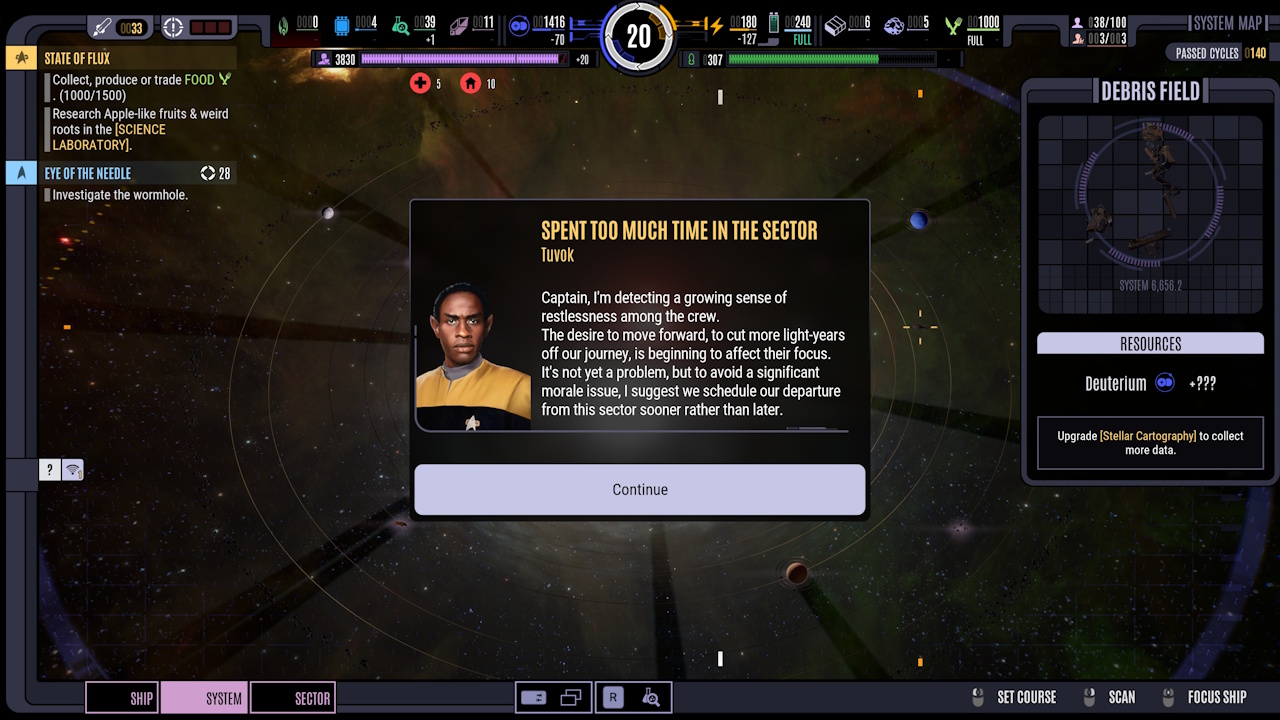
Something that came to irk me, a little, was how the game became quite pushy at insisting I advance the story and move on, leaving a sector before fully exploring and encountering everything. As above with saving, the intention behind this may be admirable, in some ways; Across The Unknown’s developers want you to feel the pressure of Voyager’s long journey home, and want you to have to make choices between exploring every corner of a sector and maintaining crew morale.

I get it.

But when, in every single sector, you’re getting pop-up after pop-up telling you that the crew are getting angsty and want you to move on… it becomes more of an irritation than anything else.

Screenshot of Across The Unknown showing a pop-up warning
Piss off, Tuvok…

This can happen even *before* completing the main objective in a sector, meaning that you can be feeling the pressure to move on when you literally cannot move on, as that option is still locked. And you can argue that I should’ve gotten a move on and prioritised the main story! Fair point. But isn’t the point of a game about commanding a starship that you have *some* freedom to explore? In most games, I’ll try to do side-quests first, then the main mission, and go through each level that way to maximise the amount of stuff I get to explore. Across The Unknown wants to limit this… and I don’t think the way it’s implemented is quite working right.

As with free saving, I’d be fine if this was a toggleable option – if you had the ability to turn this feature on or off. But if I may propose a compromise: why not limit this so it only happens after the main mission in a sector is complete? That would still keep the pressure on, but it would give players a bit more freedom to play the game in different ways.

Screenshot of Across The Unknown showing engineering
Main engineering.

Speaking of freedom, one thing I was concerned about before Across The Unknown launched was the extent of player freedom when it comes to making key narrative decisions. This is absolutely *crucial* to the game’s potential replayability, and any narrative adventure – even a rogue-like experience – needs to make decisions feel impactful. Moreover, a game based on an existing story that aims to give players the ability to deviate from that story needs to find a way to balance different outcomes.

There were several places where, to be blunt about it, I felt like the game was very much on rails. These two examples are spoiler-ific, so feel free to skip a couple of paragraphs if you want.

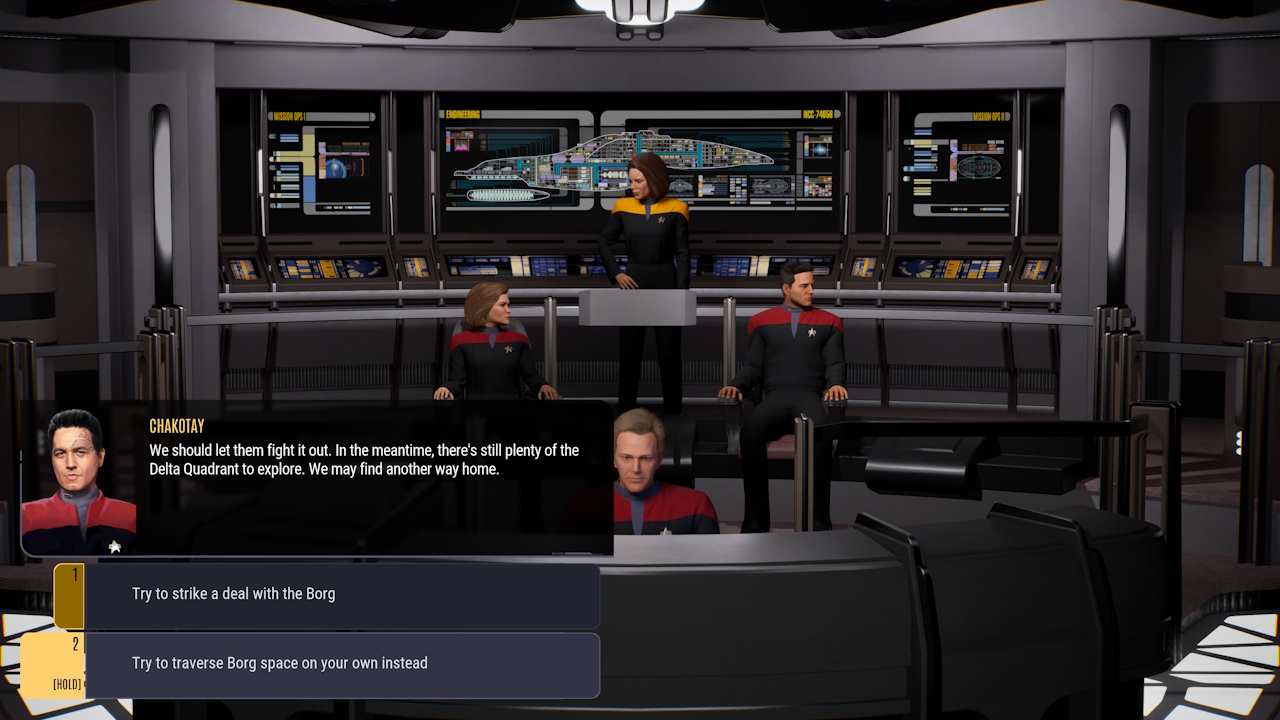
At the end of two sectors in the first part of the game – the battle against Culluh and Seska and the Borg/Species 8472 conflict specifically – I felt like the game almost railroaded me into getting a specific outcome. In the case of the Kazon, no matter who I chose to accuse, whether I chose to pursue or let Seska escape, and whatever other choices I had… it still culminated in a conflict and a battle I had to win. And with the Borg, even choosing not to engage and trying to seek an alternate route eventually led to the events of Scorpion unfolding exactly as they did in the show. There are *smaller* differences along the way – it’s possible to recruit Seska after the Kazon war, Kes can survive the events of Gift, and Seven can die, preventing her from joining the crew, to give three examples.

Screenshot of Across The Unknown showing a choice
This “deal or no deal” moment felt like a false choice.

The real issue, when you boil it down, is that these outcomes *still* feel pretty random. Seska’s choice to join or not join the crew was basically a 50/50. Seven’s survival odds were pretty good, if you’d completed most of the required upgrades, but it still depended on the roll of a digital dice. These storylines were mandatory, which I get, in a game like this; there are limits on how far the game could diverge from Voyager’s actual adventure, after all! But in a way, that makes offering alternate pathways and different endings even *more* important. If, for instance, Seven could refuse to join the crew if you hadn’t done something, or if she could be replaced by a Klingon or Romulan ex-Borg, for instance, there’d be a bit more interest, a reason to do things a certain way, and consequences or rewards that made a run through the game feel a bit more tailored and personal. As it is, the game pushes you down certain paths to outcomes that feel either guaranteed or totally random and disconnected from your choices, neither of which is especially compelling.

Okay, the worst of the spoilers are over for now.

Because the game does have a risk-reward system in place, practically any main character can die during a run. As I noted, B’Elanna died during my first abortive run, and I also did the “meme” thing of keeping Tuvix rather than forcing him to be separated back into Neelix and Tuvok. Both of those events unquestionably shook things up.

Screenshot of Across The Unknown showing Tuvix
Tuvix.

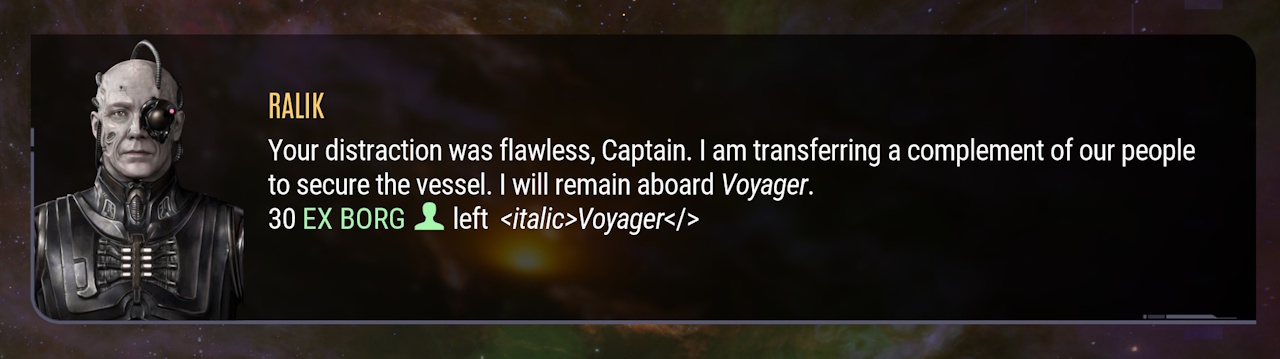
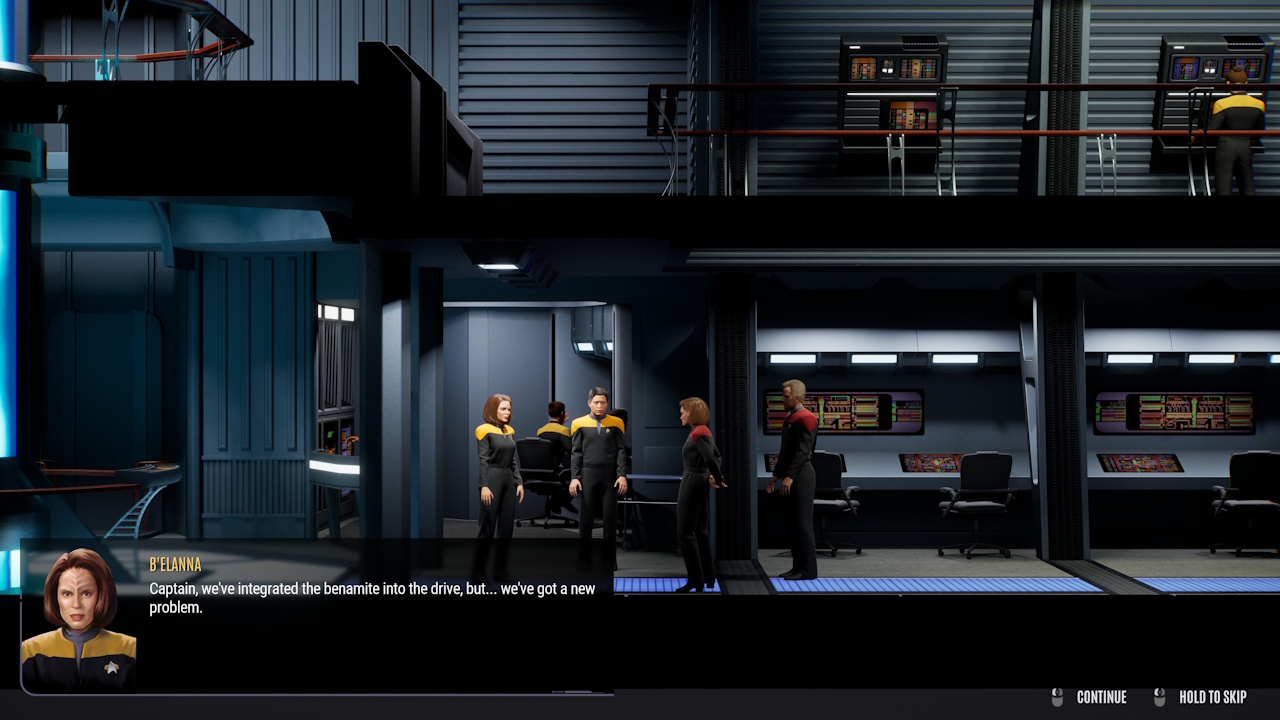
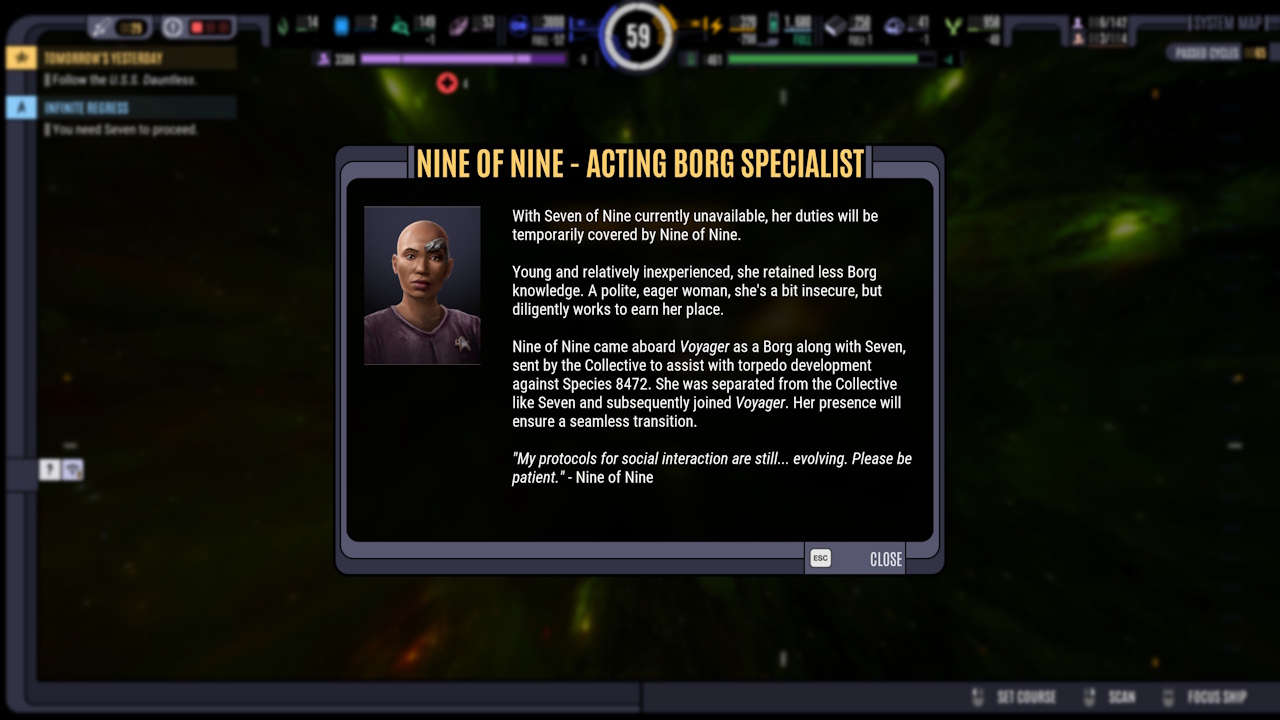
But… here’s the next issue. Each hero character has a backup. Lose Tuvok, you get Nunez, whose dialogue looks to be word-for-word identical. Lose Neelix, and you get a “wish.com” generic Talaxian. Lose Seven? You get her slightly less useful twin: Nine of Nine. All of these characters are functionally the same as the heroes they stand in for, but slightly worse or less effective in their roles.

This has a double-whammy of an impact: there’s really only *one* ideal set of characters, heroes that have the best skills and the best chance of surviving away missions and combat encounters. And if you lose them, you don’t even get any kind of different dialogue or new storylines involving their replacements. Voyager didn’t have the same kind of expansive secondary cast as, say, DS9 did, but there *are* secondary characters or even one-off guest stars who could and should be able to fill some of these roles – and crucially, do something a little different with them.

Screenshot of Across The Unknown showing Nine of Nine
“We’ve got Seven of Nine at home.”

Suppose you choose to keep Tuvix, permanently losing Neelix and Tuvok in the process. Tuvix has some skills, sure, but he’s neither the combat expert Tuvok was nor the morale officer Neelix was – he’s demonstrably worse in both roles, *and* there’s only one of him. So, yes, you have the “moral conundrum” of killing Tuvix, as Janeway did in the story… but you can also totally ignore this side-mission, as I found myself consciously doing in my second run through the game. There were basically zero narrative or gameplay consequences to doing so, and I got an outcome that is almost “objectively” better.

And this is true with all of the heroes – at least, all of the ones I encountered during my playthrough.

This leaves the game feeling… well, tense, sometimes, if you’re worried about a hero on an away mission or during a side-mission. But also, more importantly, it feels like there’s really only “one” right way to approach the game: Janeway’s way, the way she did things in the show. This was another thing I was concerned about before launch, and it’s disappointing to see it pan out.

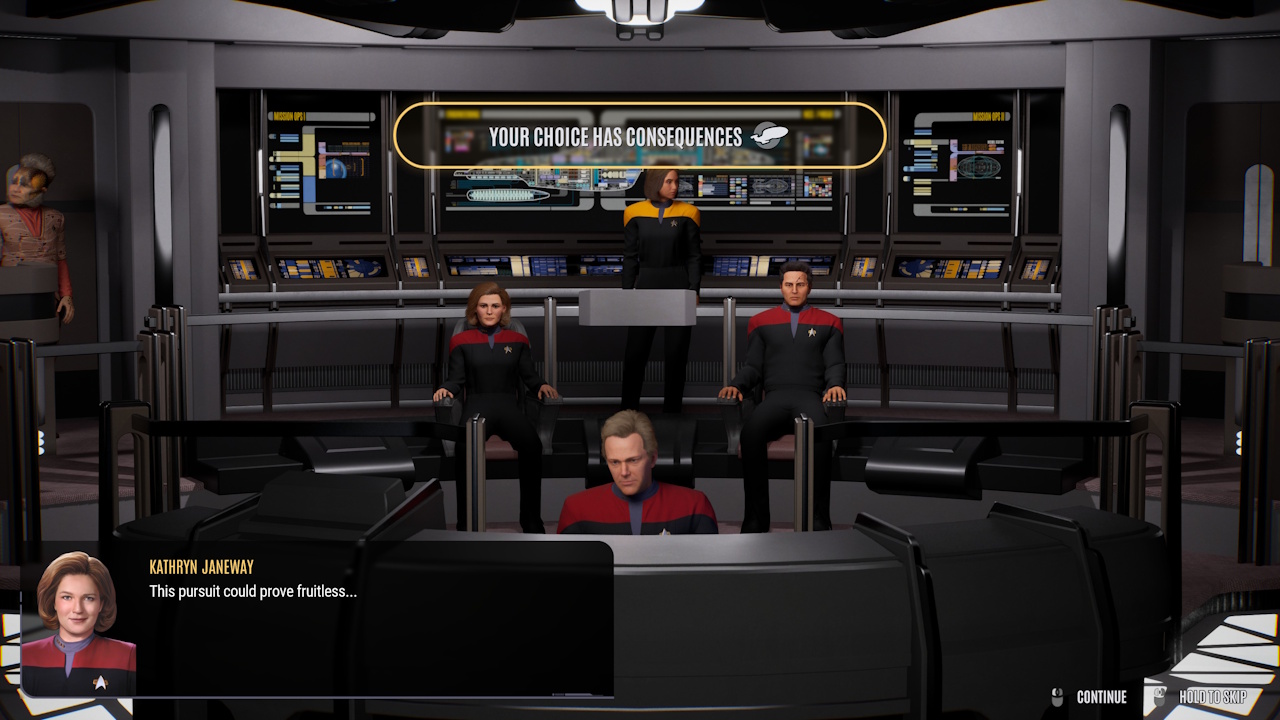
Screenshot of Across The Unknown showing the bridge/choices
Your choice has consequences…

A game like Across The Unknown absolutely *should* have storylines and side-quests where the TV show outcome is the best one, and there should be irreplaceable characters, whose loss impacts the remainder of a playthrough. But… is it too much to ask that some of these potentially different outcomes are better? Or at least, that their impacts are neutral, with losses somewhere being offset by gains elsewhere? Because right now, Across The Unknown is great if you want to faithfully replicate Voyager’s journey as seen on TV. It’s less interesting if you feel like you could’ve done better, or that there might’ve been other approaches to certain storylines that might’ve led to verifiably better outcomes.

Because of this kind of dual impact of hero losses having a gameplay downside while also being narratively irrelevant… I found it made many side-missions unappealing. We talked about Faces and Tuvix above, where B’Elanna, Tuvok, and Neelix can all be removed from your run through the game. But those are far from the only instances where this happened, and it feels like something that’s just… built into the game at a fundamental level.

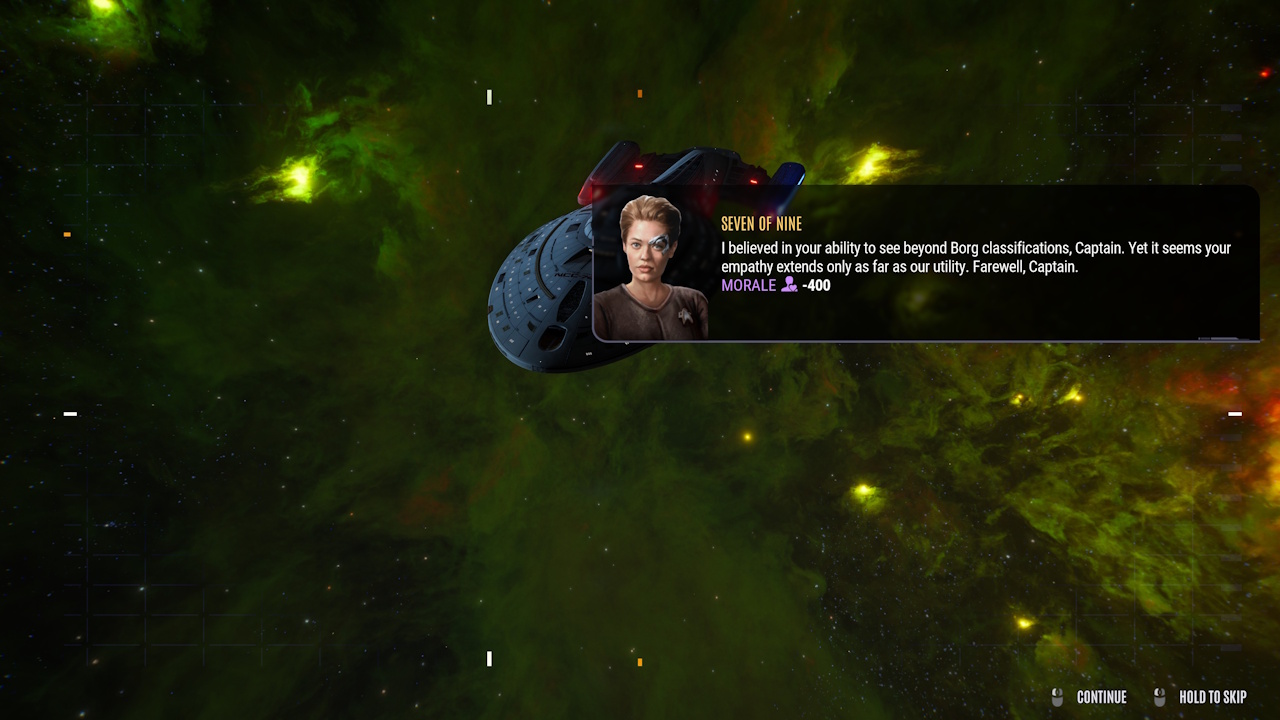
Screenshot of Across The Unknown showing Seven's farewell
Some characters can choose to leave, too.

In any game with both random elements and characters with different stats, there are always going to be more optimal configurations and less optimal ones – that’s unavoidable, and not really the point of this line of criticism. My point is that, for a game that bills itself on putting you in “the captain’s chair,” it then really goes out of its way to push you down one narrative path, to take exactly the same decisions as in the TV show, and just generally feels unwilling or unable to open things up to potentially different and better outcomes.

This is not a fatal flaw. And I still found Across The Unknown fun to play. But I would argue that it impacts the game’s longer-term replayability; unless you want to go back and have basically the same narrative experience again, just with a few resources, planets, and nebulae in different configurations, then you’re kind of out of luck. The relatively minor, roll-of-the-dice outcomes – like a secondary character joining the crew, for instance – don’t make up for the fact that these storylines and practically all of their content unfold the same way each time.

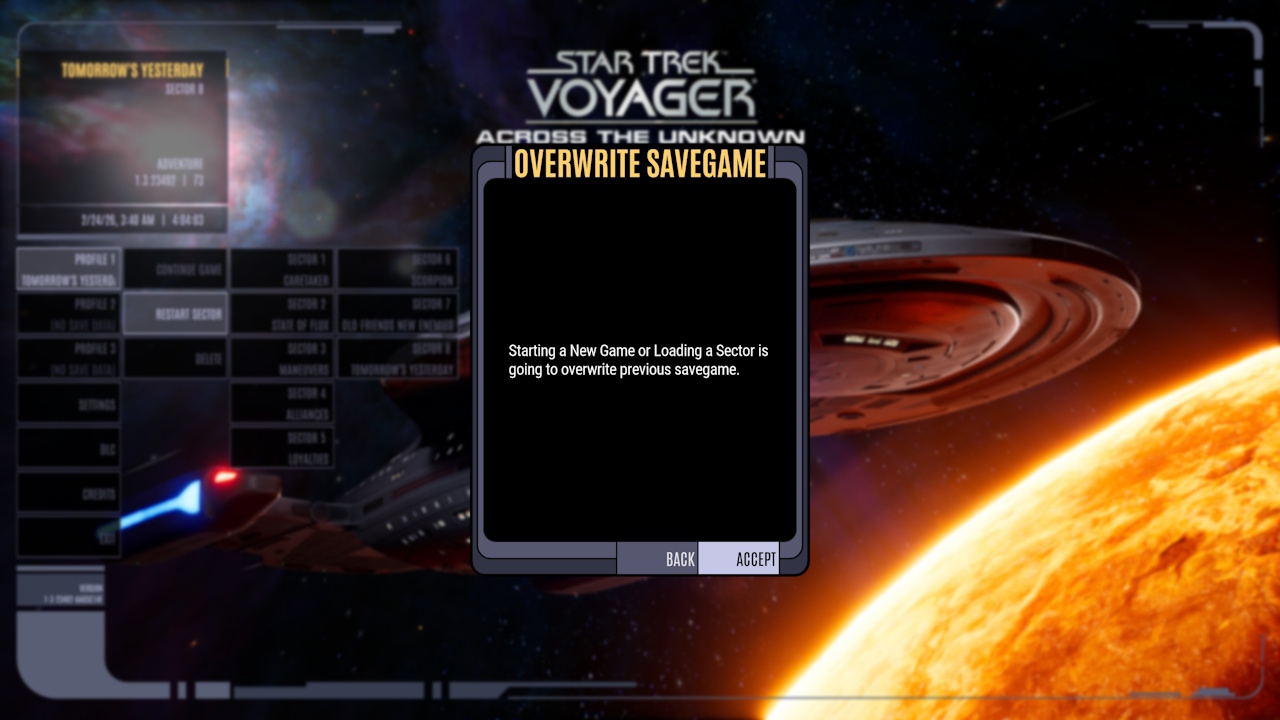
Screenshot of Across The Unknown showing the main menu
You can choose to re-play sectors if you get a bad outcome.

Sticking with hero characters, I like how the system works at its core – but it is pretty limited. For instance, Janeway isn’t a “hero,” and can’t take part in any away missions. And while you do get some choice during away missions about which characters to use and in what configurations, there isn’t a ton of variety to this. Unless you’re deliberately trying to punish yourself, sending an away team you *know* will struggle to complete a task or mission… the worst you’re gonna get, unless you get unlucky with the digital dice, is a temporary injury to a hero.

Even then, the game pushes certain crew members into away missions, sometimes. Again, there’s that sense of being railroaded; forced by the developers to go down a specific path, even if you might’ve wanted to try something a little different. It doesn’t happen all the time, fortunately, but it happens enough to be noticeable. As above with storylines, there’s a balance to strike between allowing Voyager’s journey home to unfold the way it did on TV and giving players the freedom to explore. Sometimes, that balance has been struck reasonably well. But at other times… I felt it wasn’t.

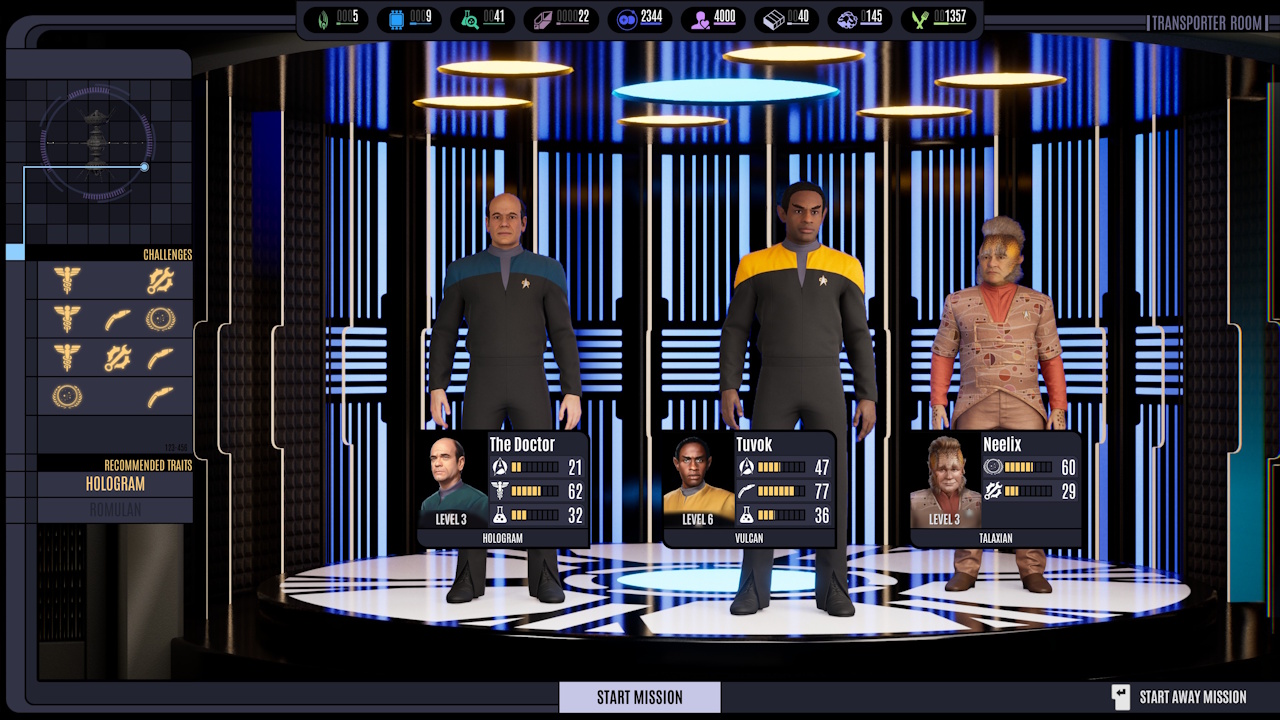
Screenshot of Across The Unknown showing the transporter
Preparing for an away mission.

One final point of criticism relates to the final act of the game – so skip ahead a couple of paragraphs if spoilers are a concern.

Upon returning to Earth – in two of the game’s multiple endings that I saw, at any rate – we’re treating to a (text-only) log from Admiral Janeway. And for me… this scene just felt a tiny bit underwhelming. We see Voyager *approach* Earth, but that’s it. Janeway’s log mentions Voyager being escorted home, flying to San Francisco… and I just can’t help but feel I’d have liked to see that. A short, sixty- or ninety-second cut-scene depicting other starships alongside Voyager, and/or the Golden Gate Bridge flyover, would’ve done *wonders* for making the end of the game feel just that bit more special.

I like that there are multiple endings; a game like this needs that kind of diversity to reflect player choice. But as we said above… there’s kind of one “good one,” i.e. the canon ending from the show, and at least two lesser ones. Maybe I didn’t see them all, and maybe there are other ways to make it home ahead of schedule, or with even better outcomes; I’m admittedly not the best player, even on Across The Unknown’s easy mode! But for the endings to Endgame, the ones I saw were either the canon ending, or a much, much darker one.

Screenshot of Across The Unknown showing the transwarp hub
Voyager approaches the transwarp hub.

With all of that being said, recreating Voyager’s journey home – and tweaking it sometimes, as well as experiencing it in a new medium – was a really enjoyable experience. Saving Seven of Nine from the Borg Queen and Voyager finally seeing Earth for the first time – I won’t lie, I felt myself getting a little teary-eyed, just as I did some twenty-five years ago, when I saw Endgame for the very first time. Although the game was an imperfect experience… I enjoyed it for what it was.

I also adore Across The Unknown’s sense of humour. The game really leaned into some of the jokes and even the memes that Voyager has spawned within the Trekkie community: Paris becoming a “lizard,” in his words, Harry Kim’s lack of a promotion, and yes, of course, Tuvix, too. These little in-jokes didn’t go too far, nor did they feel like they were laughing *at* the show and the Trekkie community – at least, not for me. Instead, these light-hearted moments really hammered home how this is a game made by fans, for fans.

Screenshot of Across The Unknown showing a joke
Across The Unknown has a sense of humour.

And that feeling extended far beyond humour. There were deep cuts to episodes across all seven seasons of the show, with outcomes that felt logically consistent with Voyager, even as the game deviated or made things up. Narratively speaking, it really was a fun time, in spite of some of the negative points mentioned above.

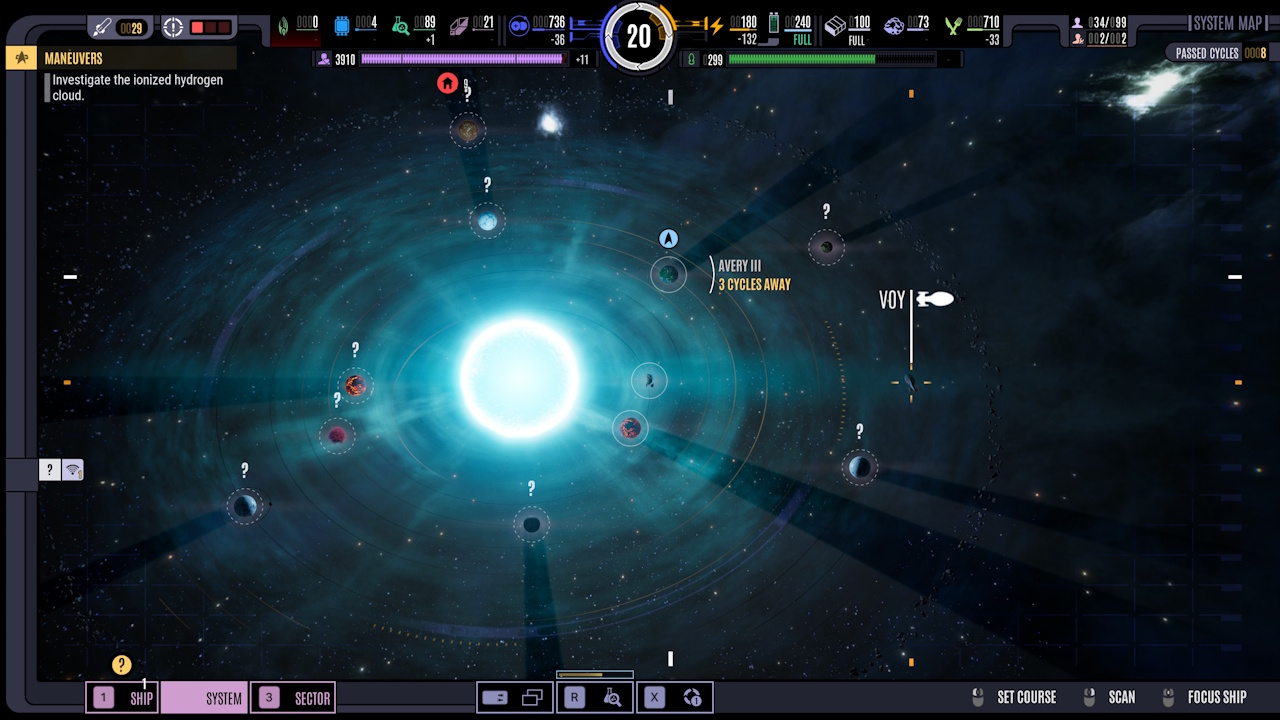
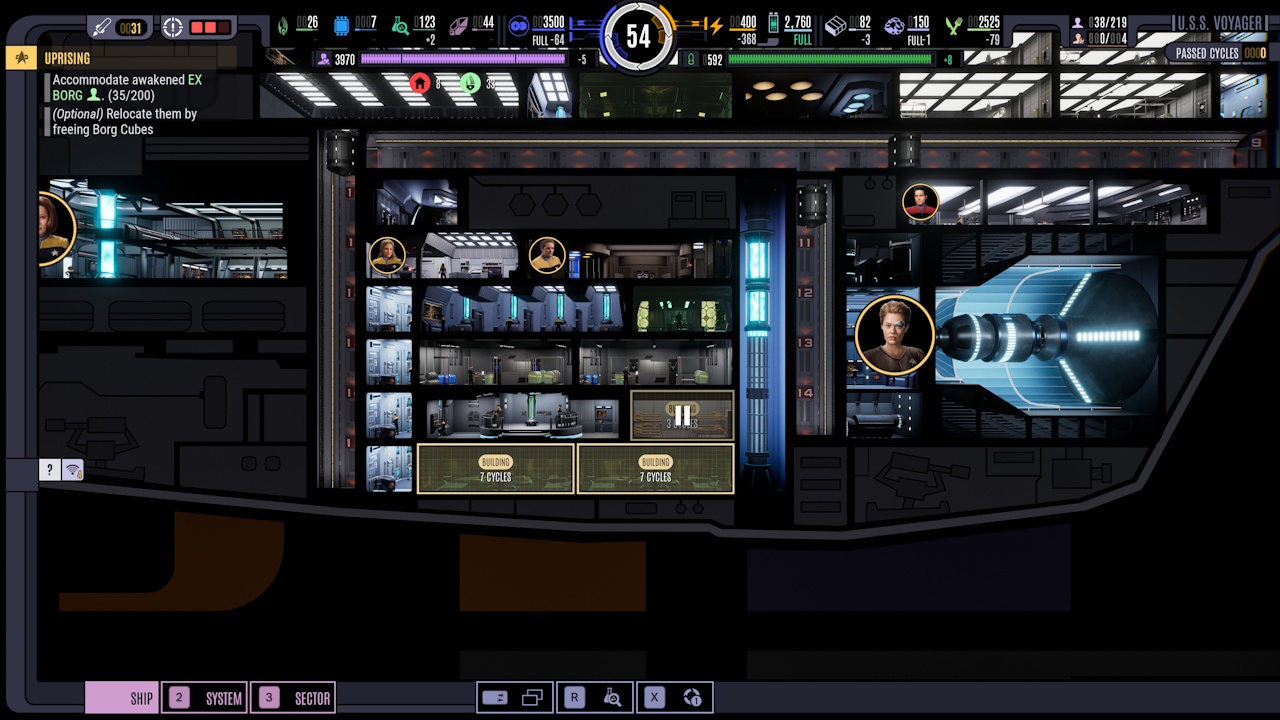
I suppose we should talk about *gameplay* since this is a video game! Across The Unknown has two main gameplay modes: managing the ship and guiding away missions. There are a lot of stats and numbers to keep track of – miss something, and you might have to wait longer to unlock a technology, or even miss out on one of the many missions with a time limit. It can seem overwhelming, especially at first, but in-game tutorials certainly helped.

Screenshot of Across The Unknown showing resource yields/stats
An example of the game’s HUD, showing resources and yields.

Building rooms and getting Voyager exactly how I wanted it made for a fun challenge – even on easy mode!

Getting the right balance between tactical, scientific, and crew-focused rooms and systems isn’t easy, and one wrong move can lead to morale dropping, the ship being unprepared for combat, or that certain upgrades can’t be unlocked. There are various resources you have to keep on top of, which operate similarly to other resource-management titles, only… Star Trek-themed! You have to keep on top of things like the ship’s power level, battery banks, and even the number of crew members, too – all of these affect gameplay in a big way. At one point in my run, I found myself taking a diversion to any planet or point of interest that had a chance of giving me new crew members! That was a resource I seemed to run out of, especially as crew can be killed, or take long periods of shore leave.

It was really only when I got into the final act of the game that I felt I’d got the ship exactly the way I wanted it. I was generating just enough food from hydroponics bays to keep on top of the food supply, I had two science labs on the go for researching upgrades and unlocking new technologies, and enough quarters and cargo bays to store everything and accommodate everyone. Earlier acts of the game saw me turning off even some important rooms and systems just to keep the ship flying. You may be better at that kind of micromanagement than I am, but for me, it was part of the fun.

Screenshot of Across The Unknown showing the MSD
Voyager’s star-drive section.

Both random exploration and progressing through missions unlocked combat encounters and away missions, and both of these were fun. Occasionally, I think only really in one sector, I found frequent, repetitive combat encounters that started to get stale, but for the most part, I enjoyed tweaking Voyager’s systems and trying to get the best possible balance of shields and weapons. I installed disruptors and a Borg cutting beam on my version of Voyager – and these powerful weapons made short work of even the Borg, later on in the game!

Away missions were fun, and I especially liked the “hand-drawn” art style that the game employed for these moments. Across The Unknown makes recommendations and occasionally pushes key crew members into away missions, but there’s a decent amount of freedom there, too. Missing a crew member with specific skills can make things harder, but even on easy mode, I never felt that away missions were too easy. That randomness I mentioned? That’s a big part of why, I suppose!

Screenshot of Across The Unknown showing an away mission
An away mission.

Unlocking new heroes gives you more freedom when it comes to away missions, and heroes can also be assigned to various rooms aboard Voyager, increasing yields and outputs. This was a fun aspect of the game, and I found myself trying to balance which heroes I took on away missions – because that’s how to level them up, further increasing their skills and bonuses. All in all, a fun element of the game.

The key to a game like this is to set your expectations appropriately. This isn’t a big-budget title with the greatest graphics, and there’s a lot of text-based conversations and clicking through menus. But for a Trekkie, and for a fan of Voyager in particular, it’s hard *not* to recommend the title, even with the caveat that updates are coming which should improve the gameplay experience somewhat.

Screenshot of Across The Unknown showing a closeup room
A close-up look at a Borg-ified room.

I was thrilled to see a positive reaction to Across The Unknown’s launch. GameXcite said it exceeded their wildest expectations, and if recent reporting is accurate, the game sold more than 100,000 copies within its first few days on sale. That’s absolutely fantastic news, and kinda crazy, if you think about it! A game based on a TV series which has been off the air for a quarter of a century doing numbers like that? I guess Paramount was wrong: fans *do* want more from Voyager. Something like, oh, I don’t know… a remaster of the series?! The game’s success is, at the very least, proof positive that there’s still an audience for that incredible TV show.

I spent just over thirteen hours with the game – and in that time, as mentioned, I aborted one run after the third sector, I think, and then completed one full run. In my full run, I went back to replay the ending once, to see if I could get a different outcome. So I reckon there’s a solid eleven or twelve hours’ worth of content per run, at the very least – perhaps more, if you do more side-missions and spend more time in each sector harvesting resources and building upgrades. The length of time a game lasts can be important, and for me at least, Across The Unknown lands in that sweet spot of feeling like good value for money.

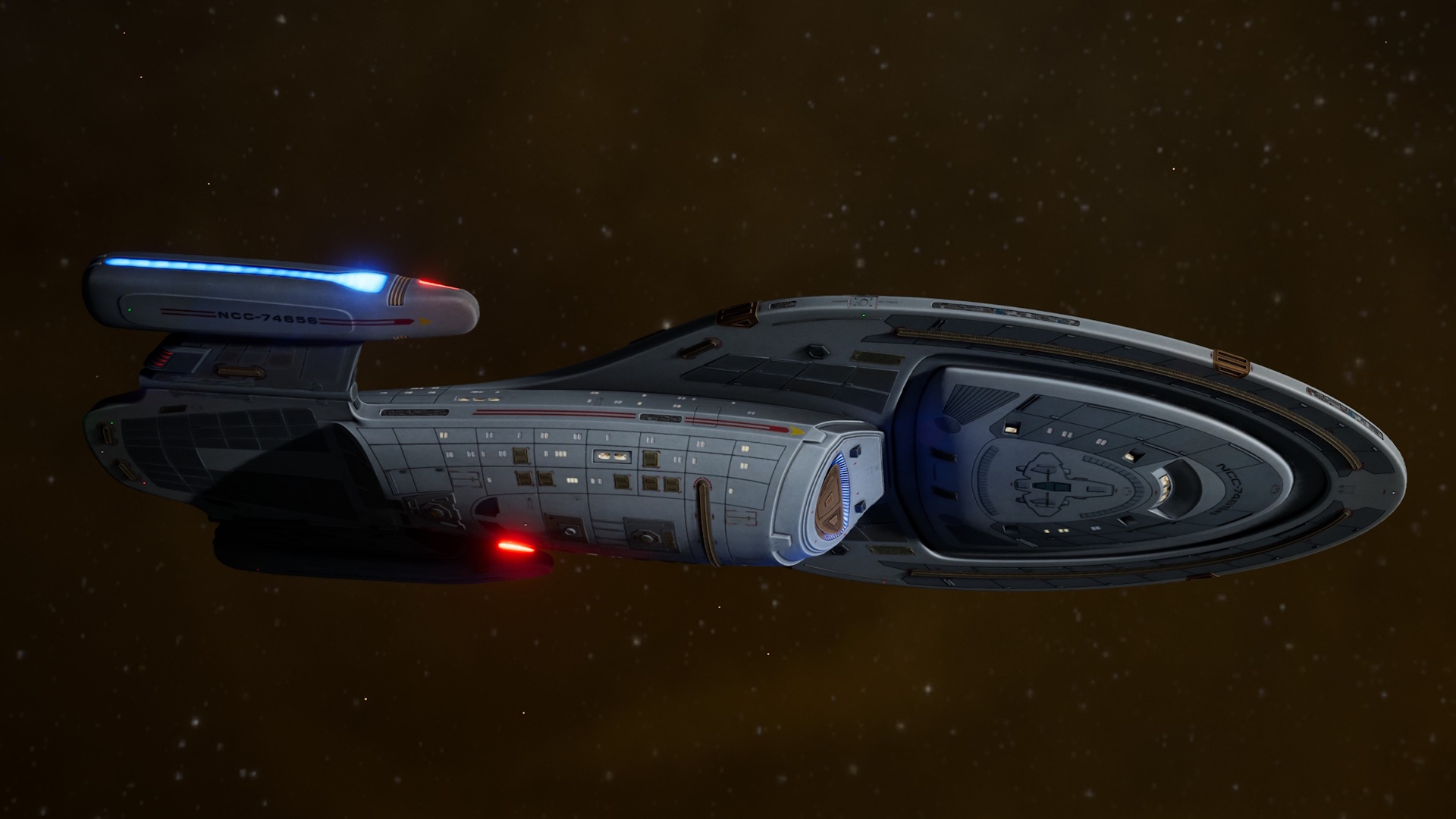
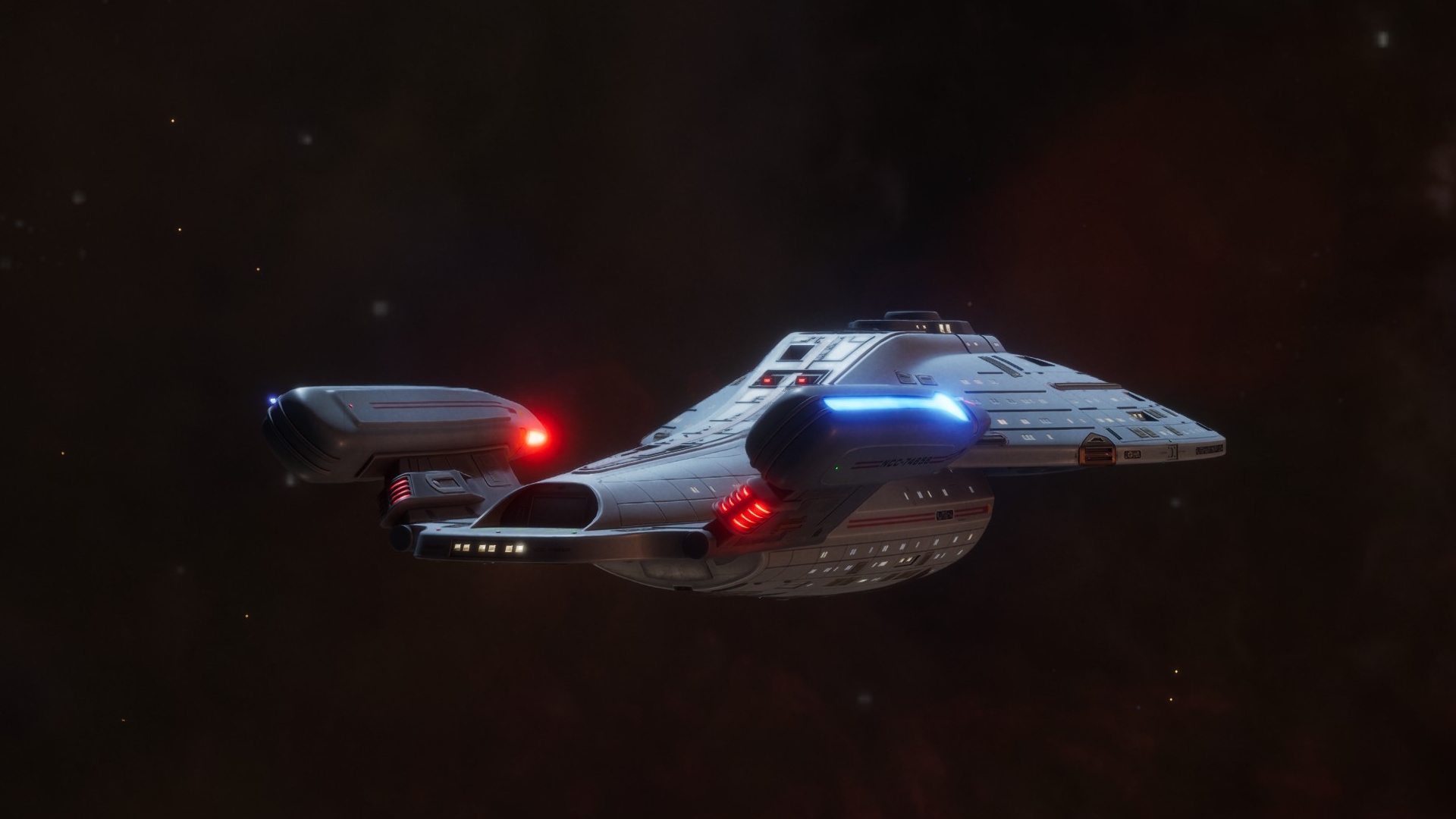
The gorgeous USS Voyager. What a ship!

Most of my criticisms of the game – with the exception of the missing save system – arguably fall closer to nitpicks than anything else. And I always knew, going into Across The Unknown, that there’d be limitations to exploration and that the game couldn’t possibly be all things to all players. I tried to keep that in mind as I bumped up against these limits, and I hope I didn’t sound too harsh. Perhaps, if GameXcite is listening to feedback – and my points of criticism are shared more widely among players – future patches or updates can tweak the experience, at least a little.

I’m glad GameXcite managed to license the official Voyager theme music. When that announcement was made late last year, I kind of rolled my eyes; it didn’t feel like a glaring omission from the demo version, and I felt the developers could’ve spent that time and especially that money elsewhere. But you know what? I was wrong – having the proper theme music, and being careful to use it sparingly, genuinely elevated Across The Unknown in a way I didn’t anticipate, and made some of those emotional moments – Captain Ransom’s sacrifice, Seven’s rescue, and the ship making it home – feel so much more impactful.

Modified screenshot of charts for Across The Unknown
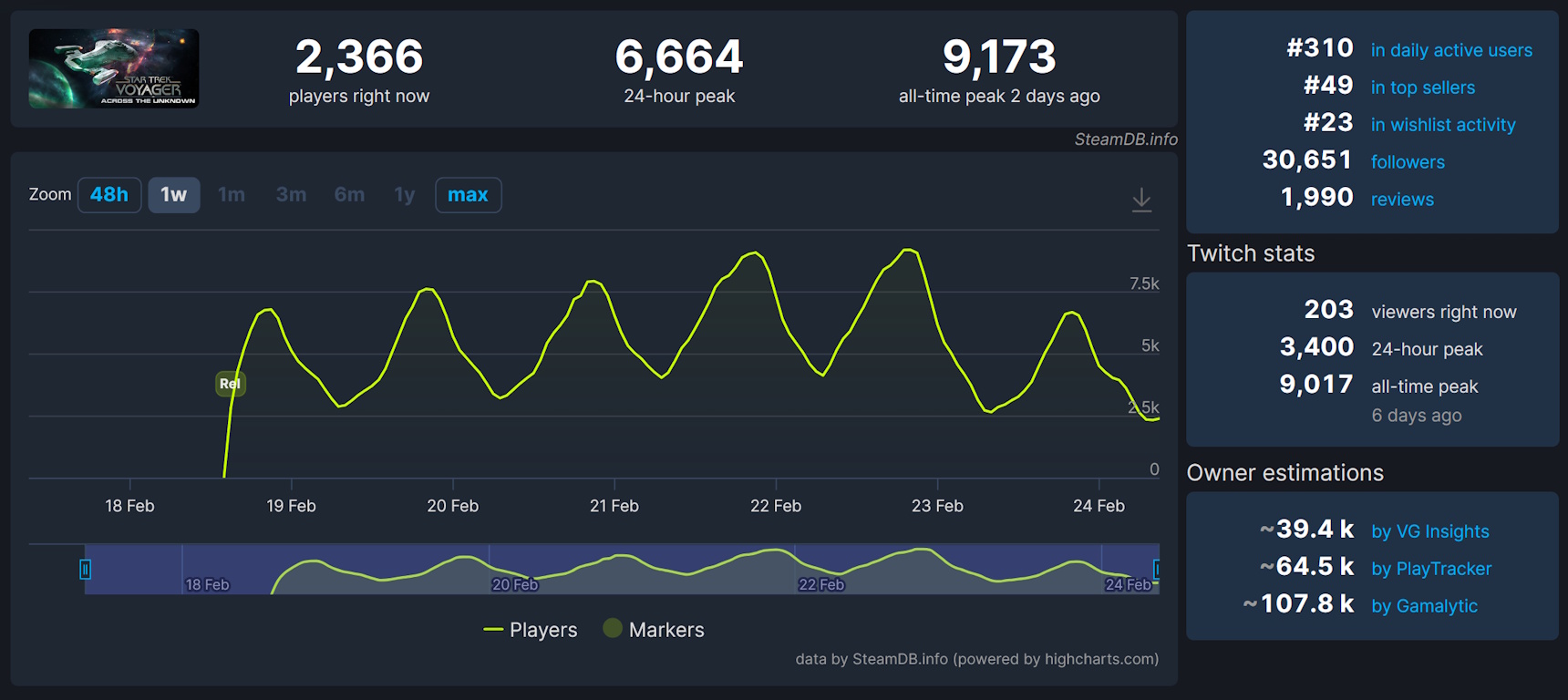
The game has sold well.

At time of writing (less than a week after launch), Across The Unknown has had almost 10,000 concurrent players on Steam, and was number 49 in the sales charts and number 23 for most-wishlisted. Those are great numbers, and with the game also being available on PS5, Switch 2, and Xbox, that won’t be the sum total of its success. I’m really glad that the Trekkie community showed up for Across The Unknown in such a massive way. This game really does deserve all of its success.

It was a blast to return to Voyager, and to experience the long journey home in a totally new way. I loved Voyager when it was on the air, and I’ve pretty much worn out my old DVDs with how often I’ve re-watched the series over the years! I also had a lot of fun with Elite Force, back in the day, so this isn’t my first time playing a game based on this wonderful series. I really did have a good time with Across The Unknown, in spite of a few drawbacks and downsides. And it’s an easy recommendation to anyone who loves Voyager even half as much as I do.

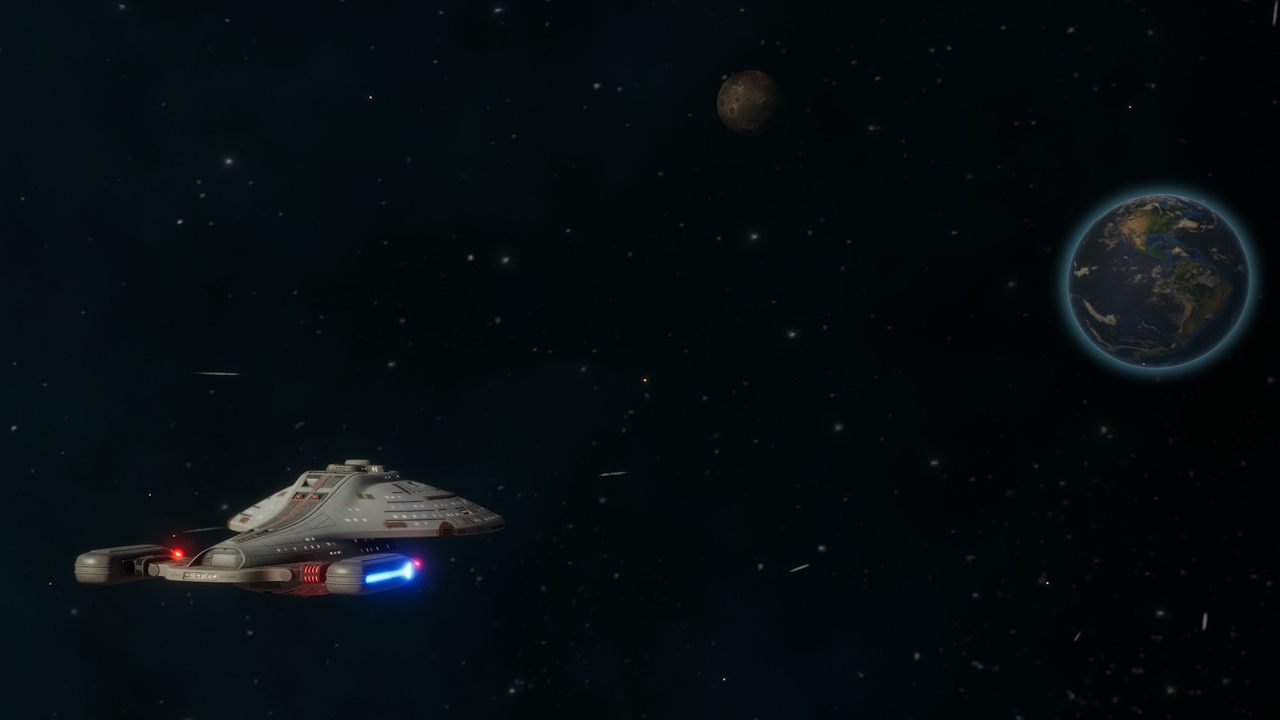
Screenshot from Across The Unknown showing Voyager and Earth
Can you make it home to Earth?

Having completed Across The Unknown, I’m actually contemplating a second run sometime soon – there are side-missions I didn’t explore, several characters I didn’t get to unlock, and more. I’ll keep my ear to the ground about upcoming updates, and I’m not going to *immediately* dive straight back in! But I think it’s testament to the game’s success that I’m willing to go back for that second run so soon after the first.

If you made it this far, thank you so much for reading. I hope it’s clear that, despite some nitpicks and criticisms, I genuinely enjoyed Across The Unknown and recommend it to Trekkies. I’m not so sure that folks unfamiliar with Star Trek will have as much of a fun time as I did; perhaps management/base-building fanatics will find things to enjoy, though. But some games can and should be made by fans, for fans. And to me, that’s exactly how Across The Unknown felt.

Stay safe in the Delta Quadrant, friends… and Live Long and Prosper!


Star Trek: Voyager – Across The Unknown is out now for Nintendo Switch 2, PC, PlayStation 5, and Xbox Series consoles. Across The Unknown was developed by GameXcite and published by Daedalic Entertainment. Star Trek: Voyager remains the copyright of the Skydance/Paramount corporation. This review contains the thoughts and opinions of one person only and is not intended to cause any offence.
Star Trek: Voyager – Thirty Years Later

A spoiler warning graphic - featuring Neelix.

Spoiler Warning: There are spoilers ahead for Star Trek: Voyager and Star Trek: Prodigy.

In 1996, the Star Trek: Voyager episode Flashback was broadcast as part of the Star Trek franchise’s thirtieth anniversary celebrations. Today – and I can scarcely believe I’m writing these words – we’re marking Voyager’s own thirtieth anniversary!

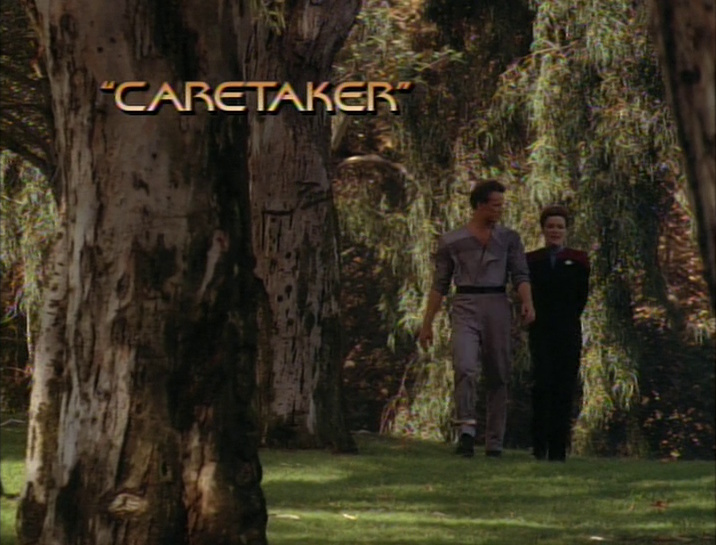
That’s right: it was on the 16th of January 1995 that Caretaker, the premiere episode of Star Trek: Voyager, debuted in the United States. I thought it could be worth taking a few minutes to look back at not only the premiere, but Voyager as a whole – and try to assess its legacy and its place in the history of Star Trek. That’s what we’re going to talk about today, so I hope you’ll join me on a rose-tinted look back at Star Trek’s fourth live-action series!

Still frame from Star Trek: Voyager showing the title "Caretaker" with Captain Janeway and Tom Paris.
Caretaker premiered on this day in 1995.

When Voyager premiered in 1995, the Star Trek franchise was arguably at the absolute peak of its “golden age.” The Next Generation cast had started making feature films, Deep Space Nine was well into its third season, and it felt like Star Trek had well and truly made it; a franchise that was dominating the sci-fi world. I remember at the time hearing some criticism of launching another series, but with The Next Generation having explored strange new worlds in the Alpha and Beta Quadrants, and Deep Space Nine tackling the Gamma Quadrant… I gotta admit that I was excited to see Voyager head to the unexplored and mysterious Delta Quadrant!

Having read a preview of the series (I think in the Radio Times; a UK TV magazine) I was also intrigued by this “one ship, two crews” idea that Voyager seemed to be promoting. Seeing Starfleet officers having to work hand-in-hand with the Maquis seemed like a really interesting concept, and one that could’ve given Voyager a unique selling point and a way to stand out from the pack as Star Trek continued its growth and expansion. I don’t think Voyager’s writers ever really made good on that promise – but more on that in a moment!

An early mock-up of the Star Trek: Voyager logo before the show premiered.
An early placeholder logo for the show circa 1994.

Stories about long journeys, people from different backgrounds having to work together in common cause, and having a small “island of safety” in a dangerous and unexplored environment are all things I absolutely adore in fiction – so Voyager seemed to be bringing together a bundle of elements that might as well have been tailor-made for me! And across its seven-season run, all of those things came to the fore in different ways. Voyager was a fun series.

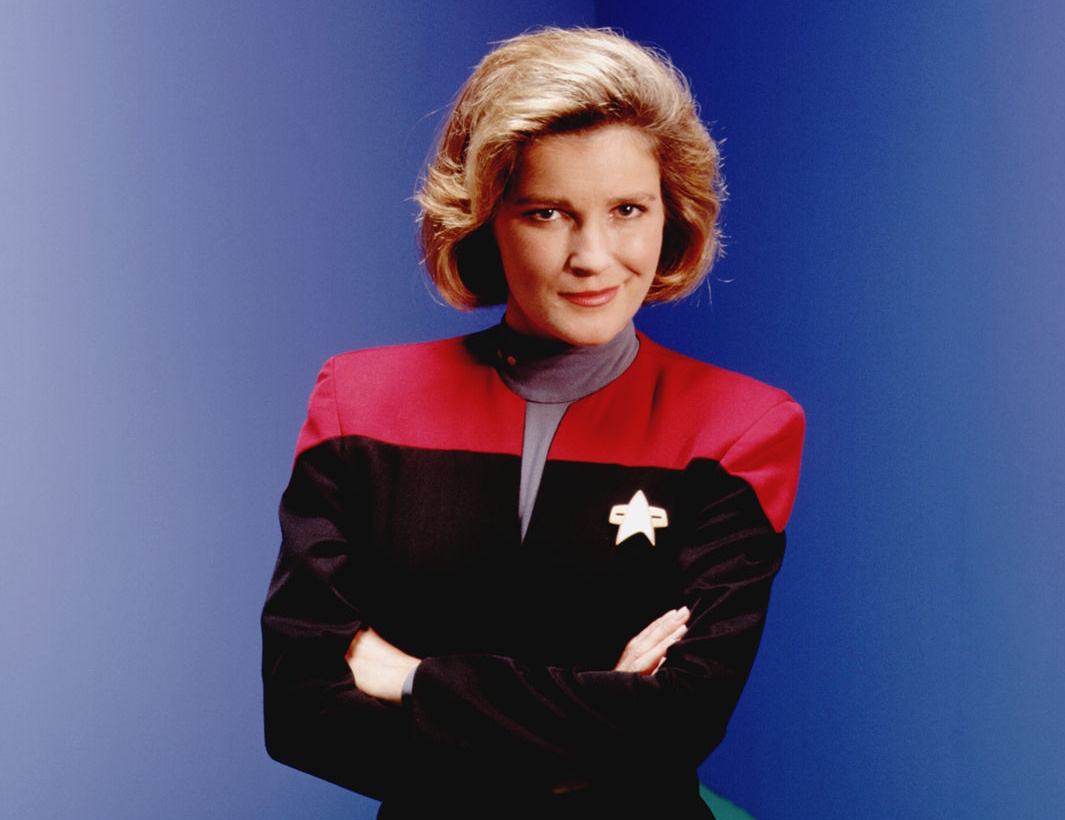
Of course, one of the most-discussed things leading up to Voyager’s premiere was the show’s new captain: Kathryn Janeway, played by Kate Mulgrew, became Star Trek’s first woman captain. I remember this news being received positively at the time, at least in the Star Trek fan groups I was aware of. No one in 1995 knew what the word “woke” would come to mean, so Janeway’s announcement didn’t get the same kind of negative reaction and whining as we might expect in 2025! That’s not to say there wasn’t some degree of pushback, of course. There have always been toxic individuals within the fan community.

Promotional photo of Kate Mulgrew as Captain Janeway.
Captain Kathryn Janeway.

I remember the days leading up to Voyager’s premiere being ones of positivity and anticipation. I was absolutely thrilled at the prospect of Star Trek’s expansion, at getting a new exploration-focused series after The Next Generation’s finale, and at meeting a whole new crew and cast of characters. There was a lot to be excited about as Voyager’s premiere got closer!

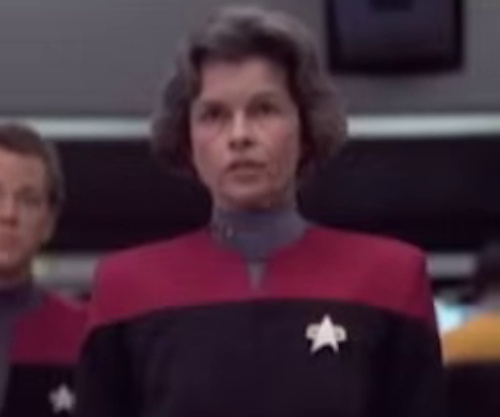
Star Trek: Voyager was almost a very different show, though, and I think it’s worth taking a diversion to acknowledge that. As work began on the series, the question of who should sit in the captain’s chair was perhaps the biggest individual casting decision that befell casting directors Nan Dutton and Kathryn Eisenstein… and they fucked it up. Kate Mulgrew was considered for the role of Janeway, along with several others, but the role was given to Oscar-nominated actress Geneviève Bujold instead.

Still frame from the Star Trek: Voyager DVD special features showing Geneviève Bujold as Nicole Janeway.
What might’ve been…

Bujold was a terrible fit for the role of Janeway – as evidenced by the scenes she shot for Caretaker, which were included as a bonus in Voyager’s DVD box set – and seriously struggled with working on the show. Thankfully, Winrich Kolbe – who directed Caretaker – and executive producer Rick Berman recognised this before it was too late, and Bujold was replaced with Kate Mulgrew after only a couple of days. Still, this near-miss could’ve derailed Voyager before the show had a chance to get started.

As an aside, I don’t think Geneviève Bujold is in any way a bad actress or performer. But the idea to cast a character closer in style and tone to Jean-Luc Picard would’ve been wrong for Voyager, and that’s how I interpret her performance in those few scenes that have been revealed. Voyager needed a dynamic, energetic captain – someone who could make incredibly tough decisions under pressure while retaining the support of her crew. I didn’t see any of that in Bujold’s performance, so replacing her was unquestionably the right call.

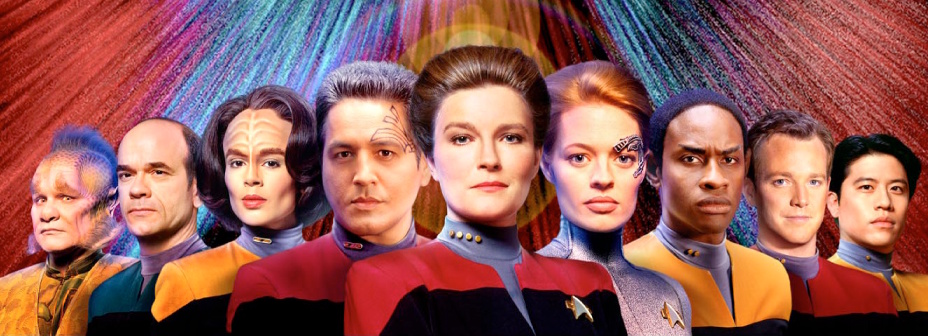
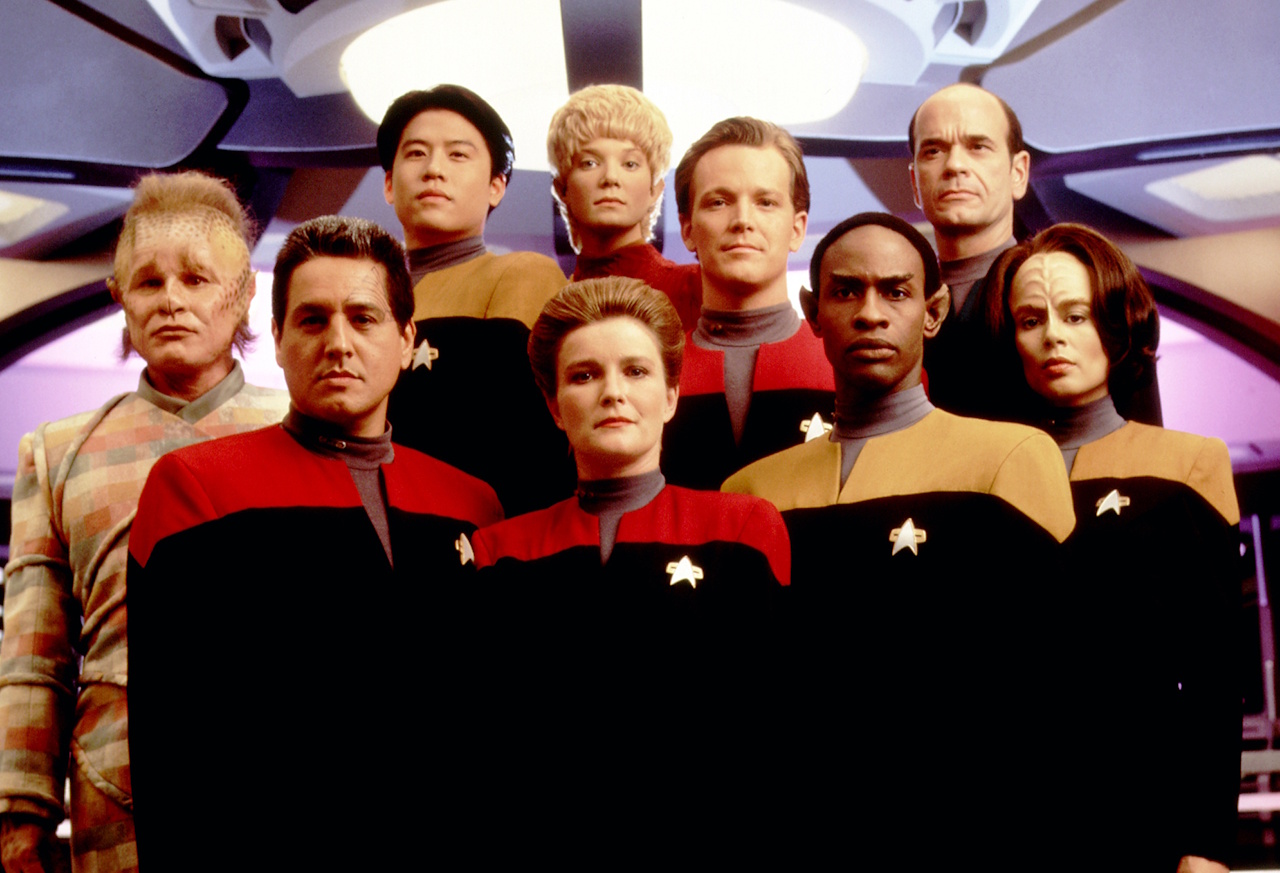
Promo photo showing the main cast of Star Trek: Voyager Season 1.
The main cast in Season 1.

Having to re-cast your lead role after filming has already started isn’t a great look for any television series, but Voyager was able to recover. Caretaker kicked off the show in style – and put a very interesting twist on a story premise that we’ve seen before in other episodes of Star Trek.

Several times in The Original Series, The Next Generation, and Deep Space Nine, our crews found themselves apparently stranded – perhaps on an alien planet, or else far away from Federation space. But in all of these, they found their way home again by the time the credits rolled. To me, Voyager always felt like it was taking one of those episodes and asking the obvious question: what if there wasn’t an instant way home? I really loved that idea, even in 1995 it felt subversive and creative; a unique and different take on a Star Trek story concept that we’d seen before.

Still frame from Star Trek: Voyager showing the USS Voyager and the Maquis raider Val Jean in orbit of a planet.
The USS Voyager (and Chakotay’s ship) in orbit of the Ocampa homeworld.

Caretaker was also a fantastic crossover episode, bringing in characters and locations from Deep Space Nine. A couple of years earlier, the two-part episode Birthright had brought The Next Generation to DS9, too – so launching the show in this way felt like a real thread of continuity between all three extant Star Trek projects. Star Trek was doing the whole “shared universe” thing decades before the likes of Marvel!

Quark, Morn, and Gul Evek returned from past iterations of Star Trek, further tying Voyager into the franchise before striking out on its own. These three characters – along with Q – are the only ones to have appeared in all three of The Next Generation-era Star Trek shows, which is a fun little bit of trivia for your next Star Trek quiz night! Having that connection to the rest of the franchise was important, though, and it continued the trend of characters from Star Trek’s past appearing in the premiere of a new series.

Still frame from Star Trek: Voyager showing Morn at Quark's bar.
Morn in Caretaker.

Caretaker gave Captain Janeway a moral dilemma, one that tied into the idea of the Prime Directive and Starfleet’s core mission of peaceful exploration. Janeway ultimately decided to intervene, destroying the Caretaker’s array to prevent it from falling into the hands of the aggressive Kazon – but stranding her ship and crew in the Delta Quadrant in the process. This kicked off a story that would run for seven seasons, blending Star Trek’s normal episodic format with an underlying quest: Voyager’s journey home.

Harry Kim made a fine addition to the crew, and also filled an important role for Voyager in a narrative sense. Kim was always the first character to jump on the idea of finding a shortcut home, and the most eager (of the main characters, at least) to make it back to the Alpha Quadrant. I wouldn’t say it was his sole defining character trait, but it was an important one. Voyager needed at least one character like this to keep the voyage home at the top of the agenda.

Promotional photo of Garrett Wang as Ensign Harry Kim.
Garrett Wang portrayed Harry Kim in all seven seasons.

More recently, Kim has become best-remembered in the fan community for never receiving a promotion! And I can kind of understand that; particularly as the show wore on and Kim gained more experience, it began to stretch belief to think that he’d remain a mere ensign. Again, though, Voyager was a semi-episodic show, and a show that needed at least one “young and eager” junior officer to fulfil that narrative role and occupy that space.

I was a big fan of Kes in Voyager’s early days; her gentle bedside manner and strong sense of empathy stood in contrast to the brash and often impolite Doctor in scenes set in sickbay. The idea of a short-lived species (Ocampa typically had a lifespan of around nine years) was also a unique one at this point in Star Trek’s history. Kes had close relationships with Neelix, Tom Paris, and of course the Doctor, too, all of which gave her plenty to do.

Promotional photo of Jennifier Lien as Kes.
A promotional photo of Kes.

I was disappointed when I learned that Kes was going to be dropped from Voyager heading into the show’s fourth season, particularly as she’d just begun developing her telepathic powers under the tutelage of Tuvok. I felt there was still more to explore with her character, and it was a shame that she was booted off the show before this potential could really be reached… especially because of who replaced her.

I know I’m in the minority here… but during the back half of Voyager’s run, I came to really dislike Seven of Nine. This character felt so boring and repetitive, but due to her popularity with at least a portion of the show’s audience she was prominently featured in many different episodes from Season 4 onwards. Seven always seemed to learn some lesson in “how to be human” in an episode… only to forget it all a week later and have to re-learn the same stuff over and over again. I really burned out on her character pretty quickly.

Still frame from Star Trek: Voyager showing Seven of Nine (looking surprised).
Seven of Nine wasn’t my favourite character.

But there’s no denying that Star Trek’s first ex-Borg main character (not counting Picard, of course) shook up Voyager and added something new to the show. Seven’s introduction also kicked off a succession of Borg-centric episodes… which, I’m afraid, were more miss than hit in my opinion, and went a long way to damaging the fear factor that a villain like the Borg needs to have. However, recent Seven of Nine appearances in Star Trek: Picard rehabilitated the character for me, resolved many of the issues I had with her, and generally left me with a much more positive view of Seven as a whole. Here’s hoping she might return one day!

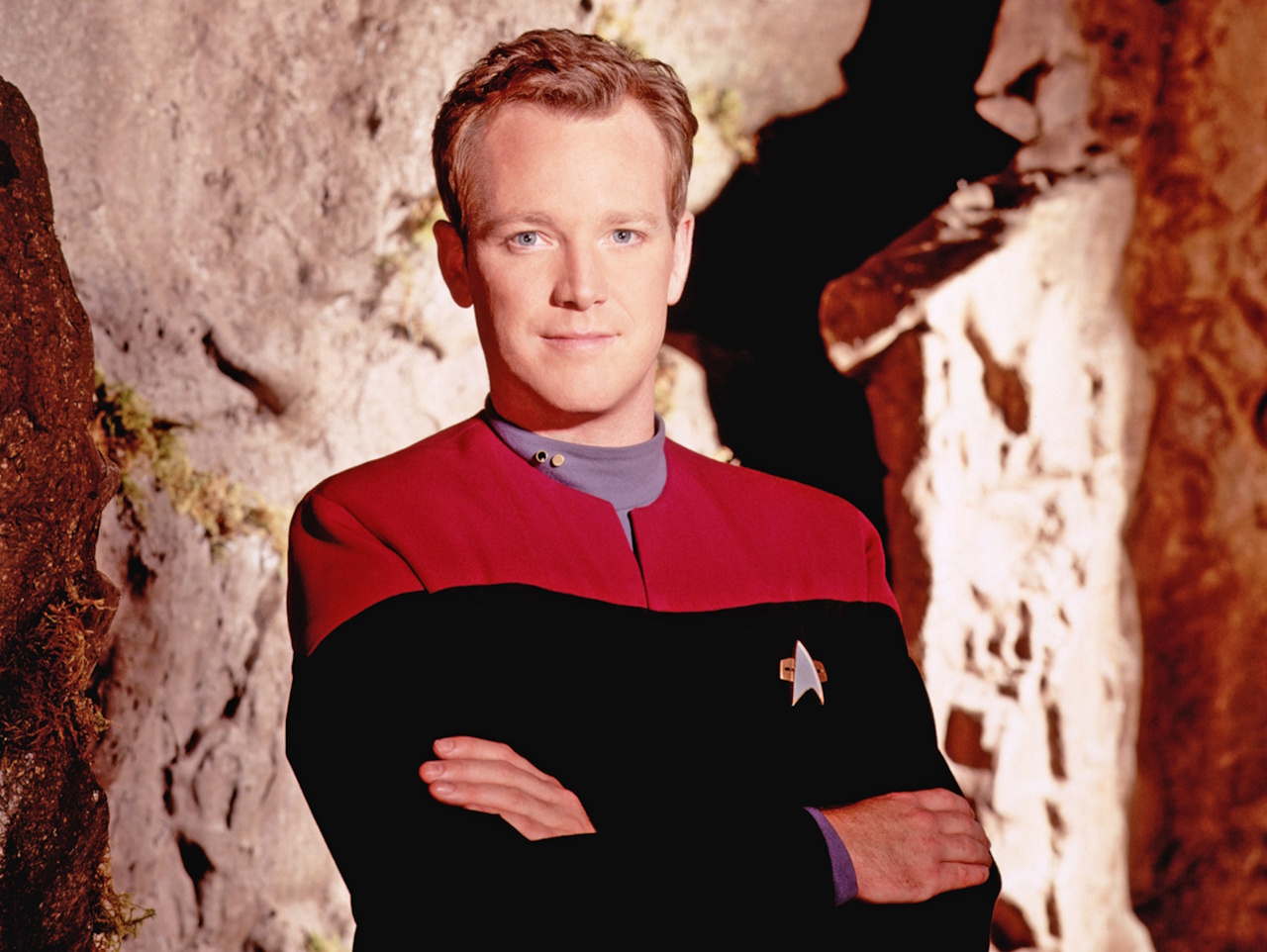
I’ve said this before, but Tom Paris was the Star Trek franchise’s first proper pilot – the first helmsman to really seem like he loved being in the chair. Paris was a fun character – an ex-Maquis and ex-Starfleet officer who seemed to attract the ire of both halves of the combined crew, but came to be seen as a dependable fixture on Voyager’s bridge. Paris’ arc took him from a failure and a criminal to a rehabilitated Starfleet officer and family man, and it was great to see it play out.

Promotional Photo of Robert Duncan McNeill as Tom Paris.
Tom Paris had a great character arc across Voyager’s run.

Paris’ love for the holodeck also led to some fun diversions across Voyager’s run. I was less enthusiastic about the likes of Captain Proton – though it could be fun for an episode or two – but his creations of Sandrine’s bar, the town of Fair Haven, and the Maquis insurrection holo-programmes all led to fun and exciting stories.

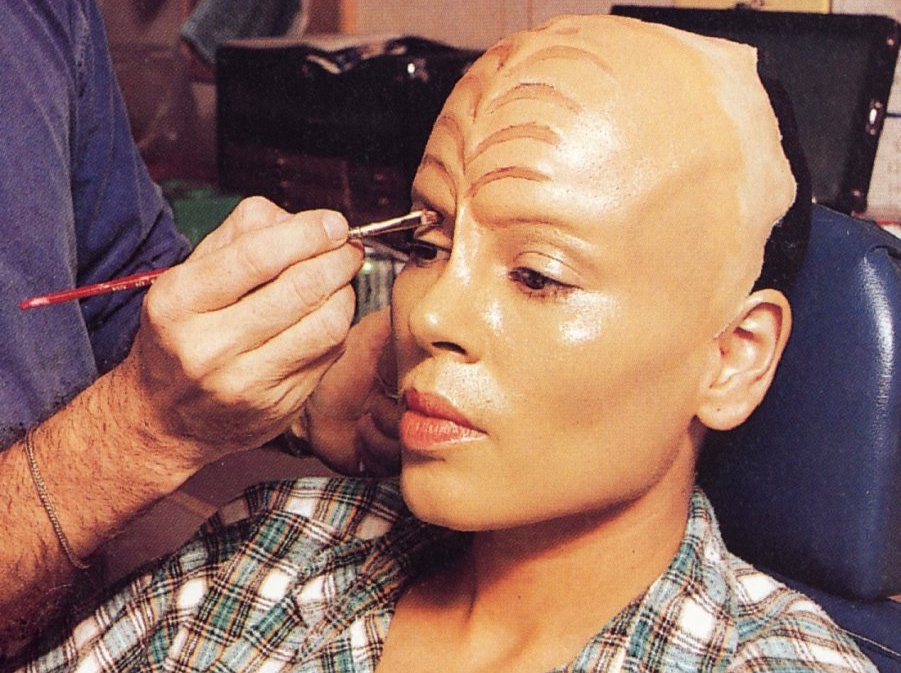
How can we talk about Tom Paris without mentioning B’Elanna Torres? Torres became – at Chakotay’s insistence – Voyager’s chief engineer, and had the challenge of standing out as both the second Maquis main character and (after Worf in The Next Generation) the second character with Klingon heritage. Voyager didn’t always know how to define and handle Torres, with some early episodes presenting her as angry and belligerent… but she soon settled into the role of chief engineer.

Behind-the-scenes photo from Star Trek: Voyager showing Roxann Dawson having her prosthetic makeup applied.
Roxann Dawson in the makeup chair.

B’Elanna, for me, is defined by two key relationships that would develop later in Voyager’s run: her antagonistic stance against Seven of Nine and her relationship and later marriage to Tom Paris. B’Elanna often stood as the voice of reason against Seven’s “Borg-ification” of parts of the ship, but her relationship with Tom went a long way to settling both characters down and giving them purpose. We’d also see several episodes featuring B’Elanna’s Klingon side – and these could be fun changes of direction for a show set thousands of light-years away from Klingon space.

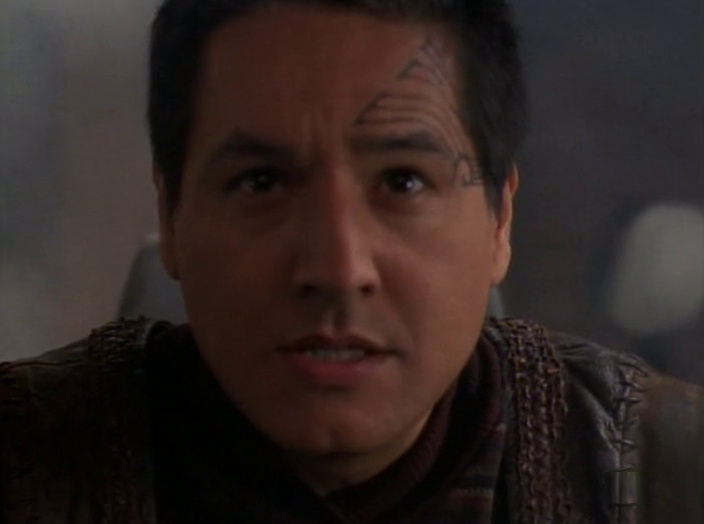
Chakotay feels like the embodiment of Voyager’s missed opportunities. Voyager’s writers never made good on the “one ship, two crews” idea, meaning Chakotay basically became a Starfleet officer and Janeway’s confidante within a couple of episodes, robbing him of more than one potential character arc. His relationships with most of the crew besides Janeway and B’Elanna were never really explored in much depth, and he just feels like… a presence. Chakotay was on the bridge the whole time, but can you think of many episodes where he drove the plot or was otherwise in focus? Because I can’t!
Still frame from Star Trek: Voyager showing Chakotay - the first shot of the series.
Chakotay was the first character we saw at the very beginning of Star Trek: Voyager.

I must get caught up with Prodigy, because Chakotay may get the kind of cathartic redemption arc that we were discussing with Seven of Nine, and that’s something I need to see! And across the show’s seven years, Chakotay did get a few spotlight episodes and storylines – notably exploring his Native American heritage and his relationship with Seska. I just feel there was more that Voyager could have done with this character – he was the first officer, after all, and it would be weird if the likes of Spock, Riker, or Major Kira had been similarly sidelined in their respective shows.

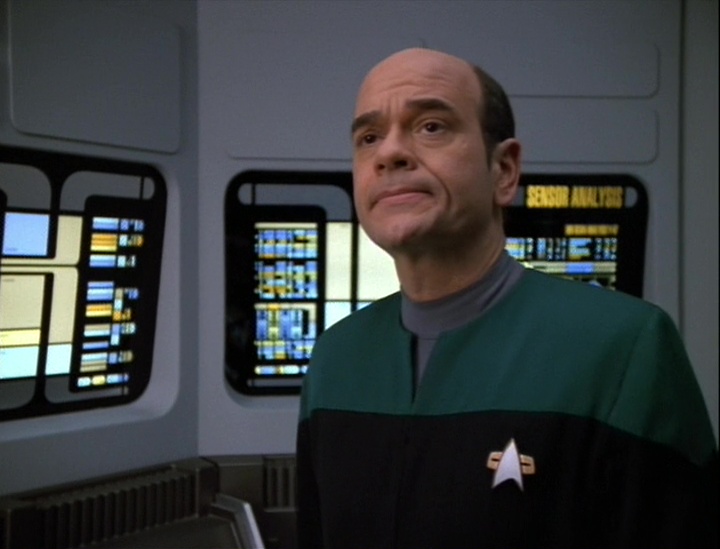
I remember feeling confused on learning that Voyager’s doctor was going to be a hologram! “How could that work?” I remember thinking to myself. “Exceptionally well” seems to be the answer, because Voyager’s Doctor was an incredibly fun character – and one who experienced growth over the course of the series. Starting out as a holo-programme with relatively little personality and no interests, the Doctor changed and evolved over the course of the show, taking on new challenges and new interests, and that was a really fun thing to see play out.

Still frame from Star Trek: Voyager showing the Doctor in sickbay.
The Doctor – the first holographic main character in Star Trek.

When the Doctor got his mobile emitter – a piece of 29th Century technology – in the third season, I was sceptical. But allowing him to leave the confines of sickbay and the holodeck turned out to be a great decision, leading to more involvement from this fun and enjoyable character across the second half of the show’s run. The Doctor could be great comic relief, and actor Robert Picardo has excellent comedic timing, but there’s much more to the character than that. We got some great emotional moments with him, too, such as losing his holographic family or sitting in court arguing for his rights as a sentient life-form.

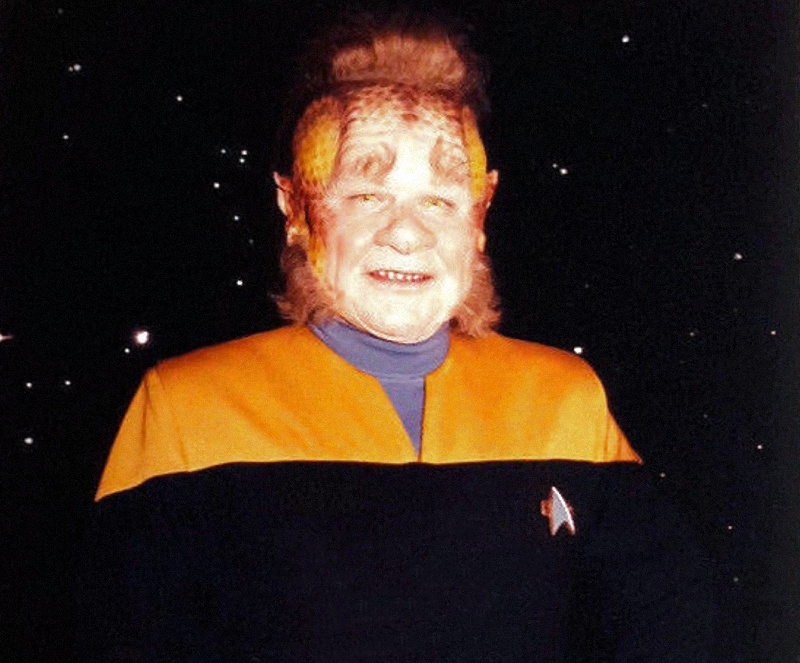
Speaking of comic relief, we have Neelix! Star Trek shows had had barkeeps before – Guinan in The Next Generation and Quark in Deep Space Nine – but never a cook. Neelix took broad liberties with that role, serving first as a guide to the area around Ocampa, then as a “morale officer” for the ship – while cooking up a selection of interesting dishes to feed a hungry crew! I bought a copy of Ethan Phillips’ Star Trek Cookbook and even tried a few of them for myself… with terrestrial ingredients, of course.

Promotional photo of Ethan Phillips as Neelix (in a Starfleet uniform for some reason).
A promo photo of Neelix… in a Starfleet uniform.

Neelix’s relationship with Kes could feel a little uncomfortable, but fortunately it wasn’t in focus all that much outside of a few early episodes. As Neelix settled in aboard the ship, he became an important character – and would often serve as a bridge between characters who didn’t always get much interaction. His largely one-sided friendship with Tuvok – though often played for laughs – was great to see, too, and showed Neelix’s way of accepting people different from him.

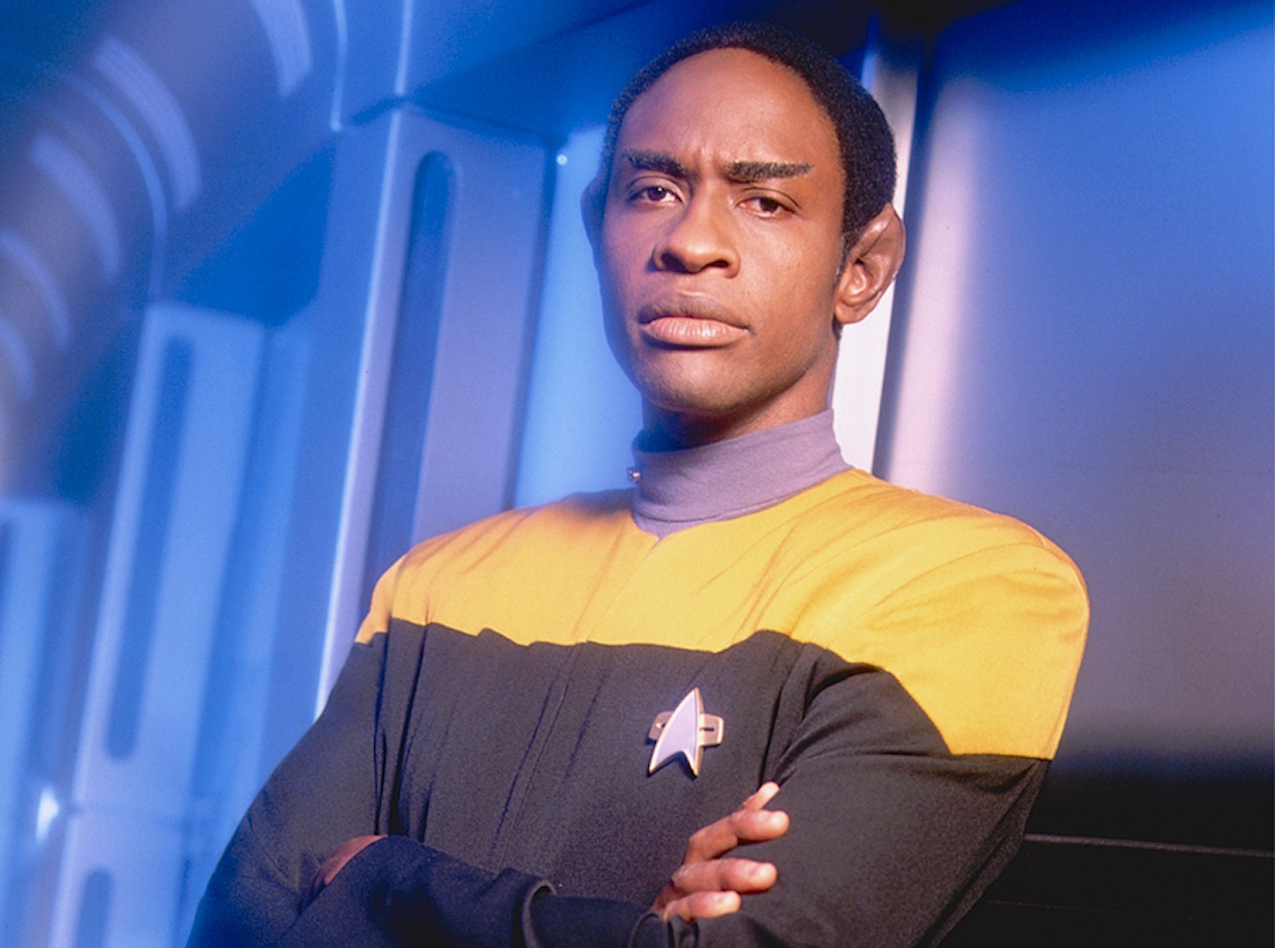
And speaking of Tuvok, Star Trek’s second Vulcan main character made quite an impact! Spock was always going to be a hard act to follow, but taking the calm and logical Tuvok as far away from science and exploration as possible was undeniably the right call. A Vulcan security and tactical officer makes a lot of sense when you stop to think about it – and Tuvok demonstrates exactly why. Calm and stoic under pressure is just what that job requires!

Promotional photo of Tim Russ as Tuvok.
Tuvok.

Tuvok also served as Janeway’s friend and confidante – arguably treading on the toes of the traditional first officer role, in that sense. I wish we’d gotten more of an examination of his relationship with Chakotay, though that’s more from Chakotay’s side, as mentioned above. Tuvok also bridged the gap between The Original Series era and Voyager in the most unexpected of ways – check out the episode Flashback, that I mentioned at the beginning, for more on that!

So that leaves us with Captain Janeway. Janeway was the captain that Voyager needed on a quest like this, and she had the strength to guide her crew home. She also had some fun character quirks, like her love of coffee, that kept her feeling grounded and real. The first woman to sit in the captain’s chair for a Star Trek series embodied elements of all three of her predecessors: Kirk’s toughness, Picard’s diplomacy and tact, and Sisko’s dedication to doing the right thing. But she was always her own woman, never feeling overshadowed by any of the captains that had come before.

Still frame from Star Trek: Voyager showing Captain Janeway at the penal colony in the premiere.
Captain Janeway in Caretaker.

As mentioned above, Kate Mulgrew was the perfect choice for this role, and she delivered a masterful performance across all seven seasons of the show. Voyager’s journey home wouldn’t have been the same without her, in fact, and across the show’s run we got several great episodes that shone a spotlight on the captain. Stories pitted her against villains like the Krenim and the Borg Queen, and Janeway always found a way to come out on top!

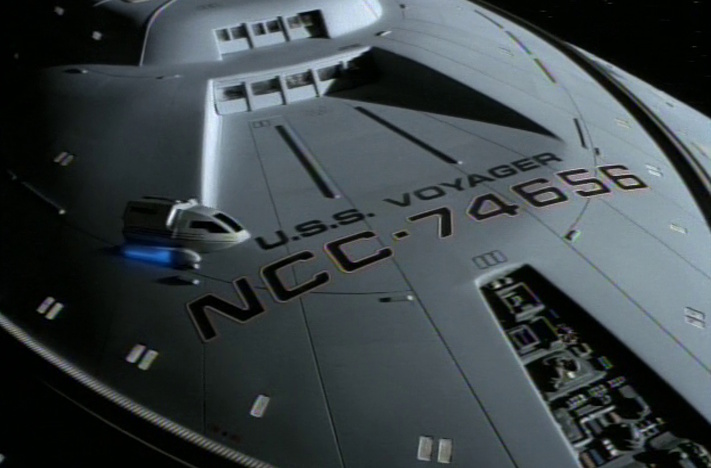
The USS Voyager still feels like a futuristic design to me even thirty years on from its debut! Something about the more angled saucer section makes it feel more modern than the circular hull of Kirk’s Enterprise and the Enterprise-D, and the sleeker lines also scream “speed!” Voyager was a long-range tactical ship made for exploration and combat, and the ship’s design philosophy reflects that. I will never tire of the sequence in Caretaker of Paris being flown in by shuttlecraft, seeing Voyager for the first time.

Still frame from Star Trek: Voyager showing a shuttlecraft flying over Voyager's saucer section.
Our first introduction to this wonderful starship.

On the inside, we got a continuation of the Starfleet aesthetic that debuted in The Motion Picture and has been a mainstay in the franchise since. Voyager’s bridge is larger and wider, though – or at least it feels larger and wider – than anything we’d seen before. This expansive space was the perfect stage for interactions between all of our favourite crew members! Again, the bridge felt more modern than that of the Enterprise-D, while at the same time continuing the design trends that we saw in The Next Generation.
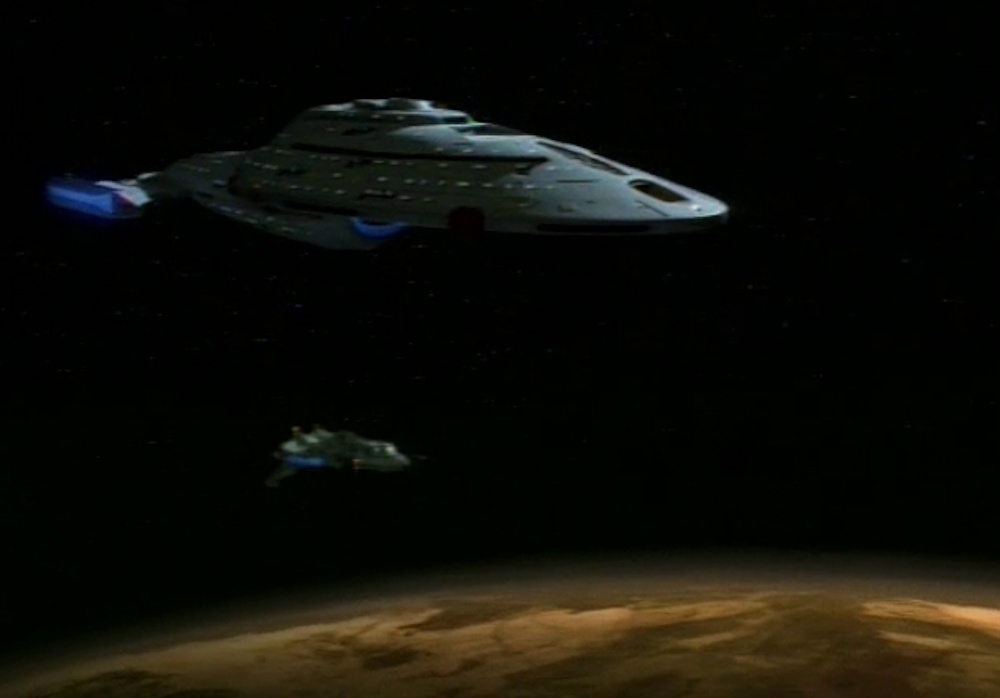
Janeway’s ready-room was an interesting area, giving her a large desk but also a couch that could act as a social space. Engineering had a really neat effect for its warp core, and the expansive entryway was often where intense conversations played out. The Doctor had sickbay as his domain, but he also got an office and a small lab off to one side that were fun inclusions. Voyager also had a shuttlebay, holodecks, crew quarters, corridors, and the mess hall – all of which would get moments where they were in focus!
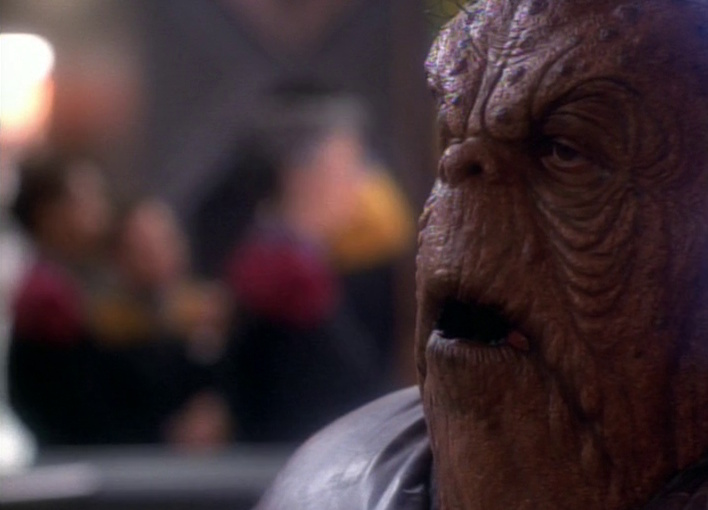
Behind-the-scenes photo from Star Trek: Voyager showing the bridge set under construction.
Voyager’s bridge set under construction circa 1994.
Image Credit: Forgotten Treks/TrekDocs

As an aside, being able to virtually explore Voyager in the game Elite Force was one of my absolute favourite things about that game! In 2000, being able to wander through the bridge, sickbay, and some of the ship’s corridors felt absolutely magical as a Star Trek fan, and while Elite Force wasn’t the only game to offer that experience (the adaptation of Generations had a mission set on the Enterprise-D, and there were probably others around the same time), it was certainly one of the most memorable for me personally.

One thing Voyager didn’t really have was an expansive secondary cast. Deep Space Nine gradually gave more time and attention to characters like Rom and Martok, but Voyager, by and large, kept its focus on its main cast of characters. The Borg children – and Icheb in particular – were really the only ones to break through in more than a handful of episodes, though some, like Seska and The Next Generation’s Reg Barclay, would go on to make multiple appearances. Deep Space Nine showed what Star Trek could do with a wider and more expansive cast… and it’s something the franchise has yet to return to. Voyager had the opportunity to build out some of its secondary characters, but never really went there. I think that’s a bit of a shame – but it is what it is!

Behind-the-scenes photo from Star Trek: Voyager showing Jennifer Lien reading her script while sat on the floor.

Jennifer Lien (Kes) reading her script on the set of Caretaker.

For a variety of reasons, Voyager never really made good on its “one ship, two crews” idea, and by about halfway through Season 1, the main Maquis characters were basically entirely integrated with the Starfleet crew. With the exception of plot-relevant moments, such as stories involving Seska, the fact that almost one-third of Voyager’s complement were Maquis never really came to the fore in a big way, and I think that’s a bit of a missed opportunity.

Don’t get me wrong, a story about people from different backgrounds finding a way to work together for the common good is something I absolutely adore, and there were times where Voyager absolutely nailed that feeling. I guess I’ve just always felt that I would’ve liked to see more tension, scepticism, and disagreement as the two crews began the process of integrating. I never really felt as much of that as I would’ve liked – and that’s perhaps Voyager’s biggest sore spot for me, thirty years on.

Still frame from Star Trek: Voyager showing a Maquis rebellion (on the holodeck!)
Voyager struggled to make good on its “one ship, two crews” premise.

That being said, Voyager was a great show all around, and a welcome addition to Star Trek. With The Next Generation’s crew off making feature films and Deep Space Nine occupying a space station, there was plenty of room for a new series set aboard a starship. Voyager embodied Star Trek’s ethos of peaceful exploration… but set that exploration against a new backdrop of trying, against the odds, to make it home. It was both familiar and different at the same time; a really interesting blend of storytelling styles.

Voyager was also a much more episodic series than Deep Space Nine – despite its voyage home story being omnipresent and frequently referred to. There were plenty of one-off stories featuring a wide range of alien races, factions, and wacky premises. It was a Star Trek series through and through, one that brought a fantastic cast of characters to the table and threw them into plenty of fun, exciting, and occasionally emotional situations.

Promotional image of the Star Trek: Voyager cast.
The cast on a promotional poster.

The excitement I felt thirty years ago was more than rewarded! Voyager was an outstanding show, and I got thoroughly invested in the crew and their quest to return to the Alpha Quadrant. There were some episodes that were wide of the mark – as there are bound to be in any show that runs to 168 episodes across seven seasons! But even at its worst, there were things to enjoy, fun lines of dialogue, entertaining character moments, or creative decisions that made Voyager well worth watching for any Trekkie or fan of sci-fi in general.

As the final show of what I consider to be Star Trek’s “golden age,” I’ve long had a soft spot for Voyager. Of course I watched every single episode during the show’s run – I would tune in when they made their debut on terrestrial TV here in the UK, and I very rarely missed a week. I later bought all seven seasons when they were released on DVD and enjoyed the series all over again.

Still frame from Star Trek: Voyager showing the USS Voyager preparing to jump to warp.
The USS Voyager set course for the Alpha Quadrant thirty years ago today.

So I hope this has been an interesting look back! I wanted to do something to acknowledge Voyager’s milestone anniversary, but it’s hard to summarise my thoughts on 168 episodes and seven years’ worth of television in a single article! Stay tuned, though, because I’ll be writing up my thoughts on some of my favourite episodes in the days ahead as we continue to celebrate Voyager’s thirtieth anniversary.

I hope that Paramount and the folks in charge of Star Trek plan to do something to mark this momentous occasion, so I’ll definitely be checking out the official Star Trek website and social media pages over the next couple of days. With Seven of Nine, Janeway, Chakotay, and others all having returned to the Star Trek franchise in the last few years, Voyager’s legacy is very much alive. The documentary To The Journey: Looking Back at Star Trek: Voyager has had its official premieres, too, though I don’t think it’s available to stream just yet. Still, another thing to keep an eye on.

All that remains to say is this: happy thirtieth anniversary, Star Trek: Voyager! Thanks for all the memories.


Star Trek: Voyager is available to stream now on Paramount+ in countries and territories where the platform is available. The series is also available on DVD. The Star Trek franchise – including Voyager and all other properties discussed above – is the copyright of Paramount Global. Some images courtesy of TrekCore and Paramount. This article contains the thoughts and opinions of one person only and is not intended to cause any offence.