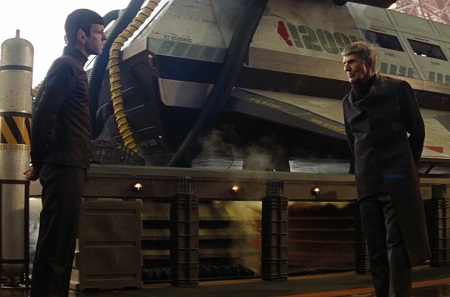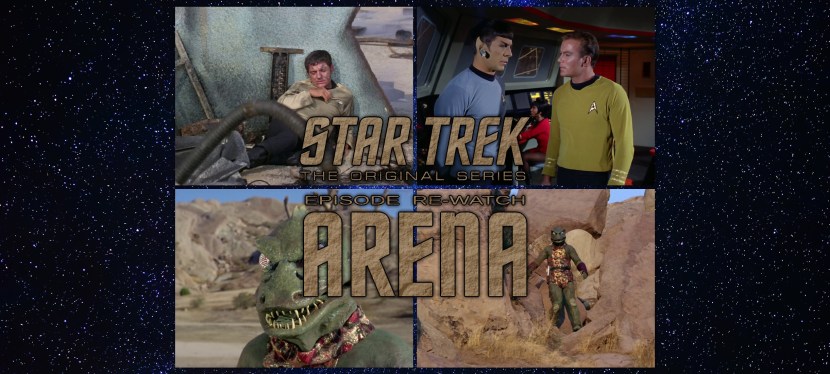
Star Trek: The Original Series Episode Re-Watch: Season 1, Episode 18: Arena

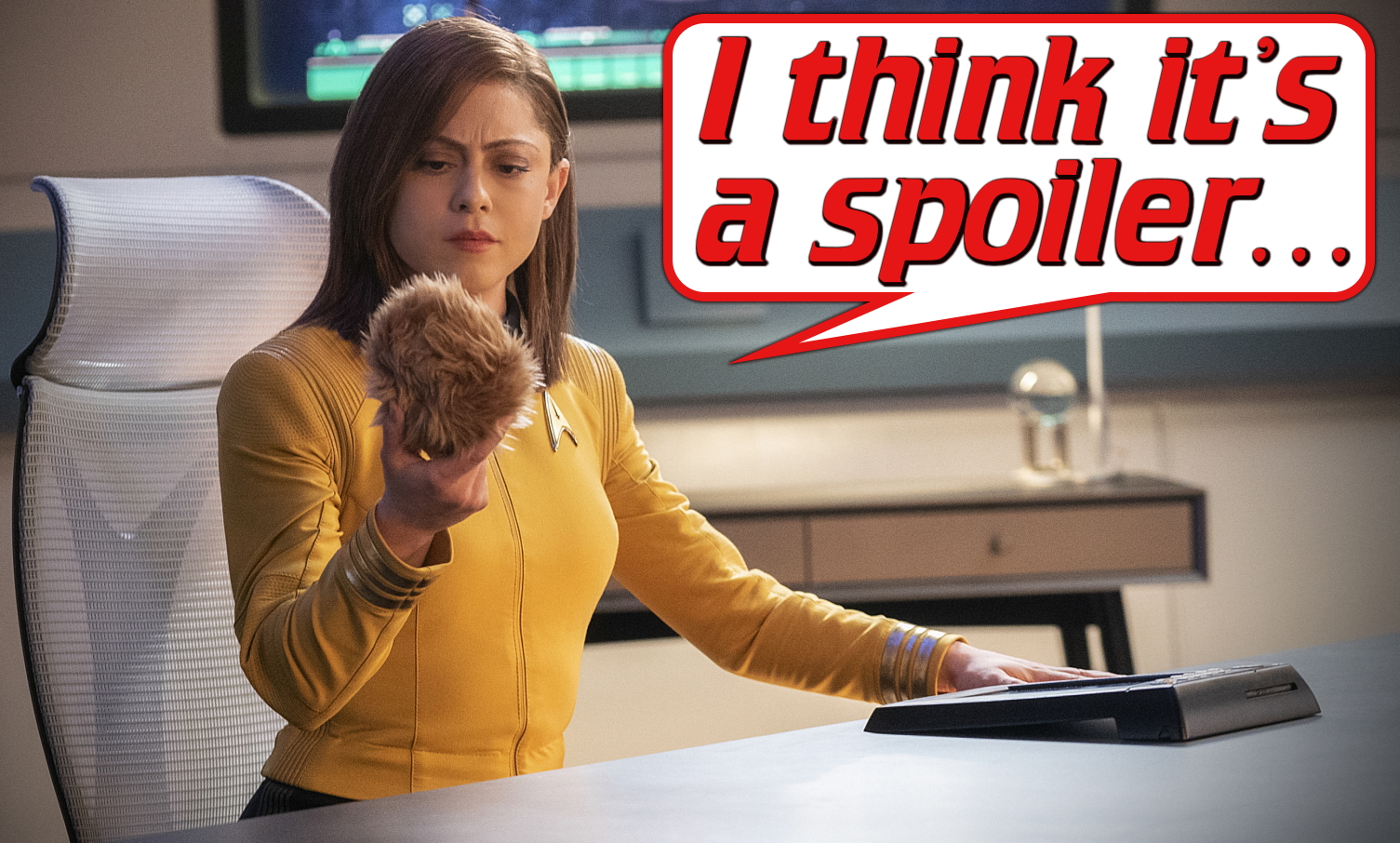
A Star Trek-themed spoiler warning.

Spoiler Warning: There are spoilers ahead for Star Trek: Strange New Worlds Seasons 1, 2, and 3, Star Trek: Enterprise Season 4, and Star Trek: The Original Series Season 1.

It’s been more than five years since I set up this website. In that time, I’ve written hundreds – literally hundreds – of articles, essays, and reviews all about Star Trek. But this’ll be the first time I’ve written up a full re-watch of an episode of The Original Series. I must be the first Trekkie in history to write up a re-watch of an episode of The Animated Series before The Original Series! But this catastrophic failure of Trekkie-dom comes to an end today, as we sit down together to watch the classic first season episode Arena.

I’m going to split this article into two parts. We’ll talk about Arena on its face, including some of the episode’s production history – and the reason why the creator of the iconic Gorn costume went uncredited and unknown for almost a decade after the episode aired – and then we’ll talk about the Gorn themselves in a bit more detail. Spoiler alert if you haven’t watched Strange New Worlds and still plan to, but the Gorn appear prominently in that show. That’s actually part of the reason why I wanted to re-visit Arena ahead of the third season premiere!
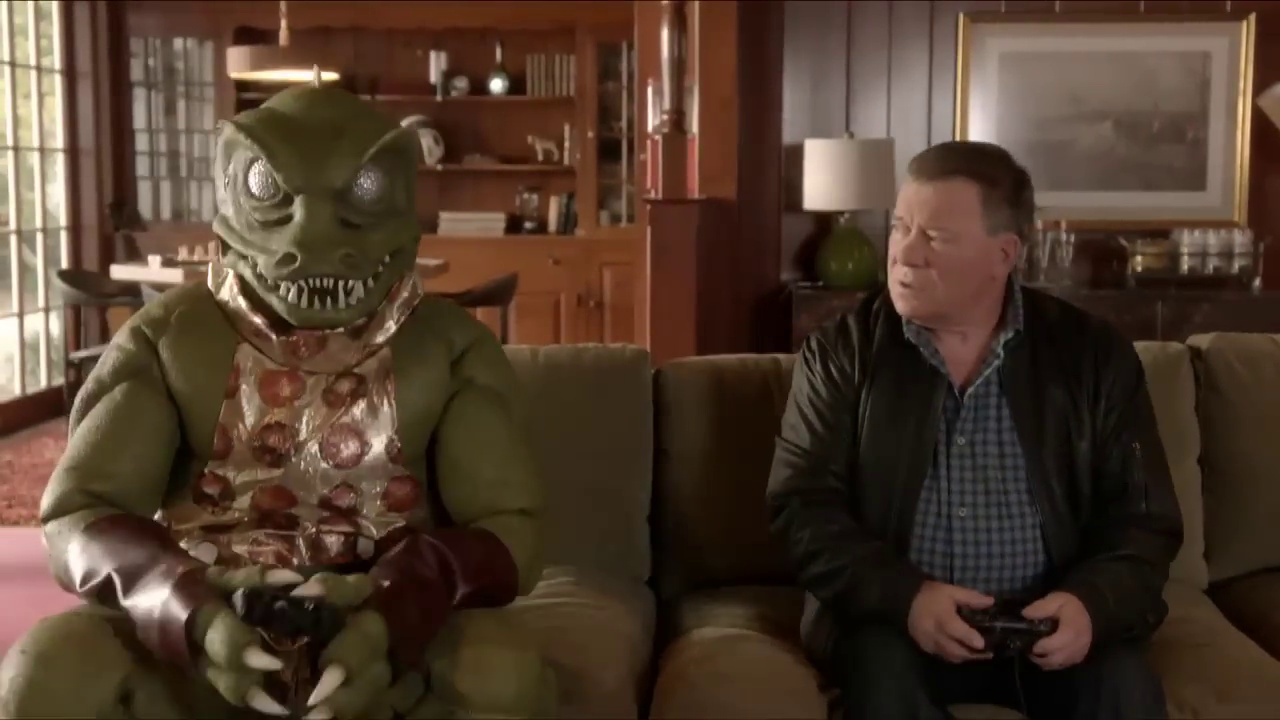
Still frame from a TV advert for the Star Trek video game circa 2013 showing William Shatner and someone in a Gorn costume.
The Gorn and Captain Kirk…

Arena is an iconic episode – and the Gorn captain has to be one of The Original Series’ most recognisable villains. In fact, I was a little surprised not to see Arena on the list when I did my recent recap of IMDB’s top-rated Star Trek episodes – according to that site’s users, Arena ranks a measly 19th out of The Original Series’ 79 episodes! I think I’d have put it a fair bit higher than that; it’s gotta be a top ten episode, at the very least! It has a strong story, expanding our understanding of the Federation, while also containing enough of that esoteric sci-fi “weirdness” that makes Star Trek the franchise we know and love.

It’s also best-known, of course, as “the Gorn episode,” introducing the famous reptillian species to the franchise. But Arena is as much about another alien race – the Metrons – as it is about the Gorn. The Metrons feel, with the benefit of decades of hindsight now, almost like a prototype of what would become the Q Continuum – millennia ahead of the Federation, considering themselves to be enlightened, but not above a bit of interference in galactic affairs. The Metrons have never returned to Star Trek, though, and I can kind of understand why: for a “morality play” like Arena, they work well as a somewhat neutral arbiter. But as the franchise has expanded, we’ve seen fewer of these kinds of stories. Modern Star Trek in particular lends itself much more to the inclusion of the Gorn than it does the Metrons!
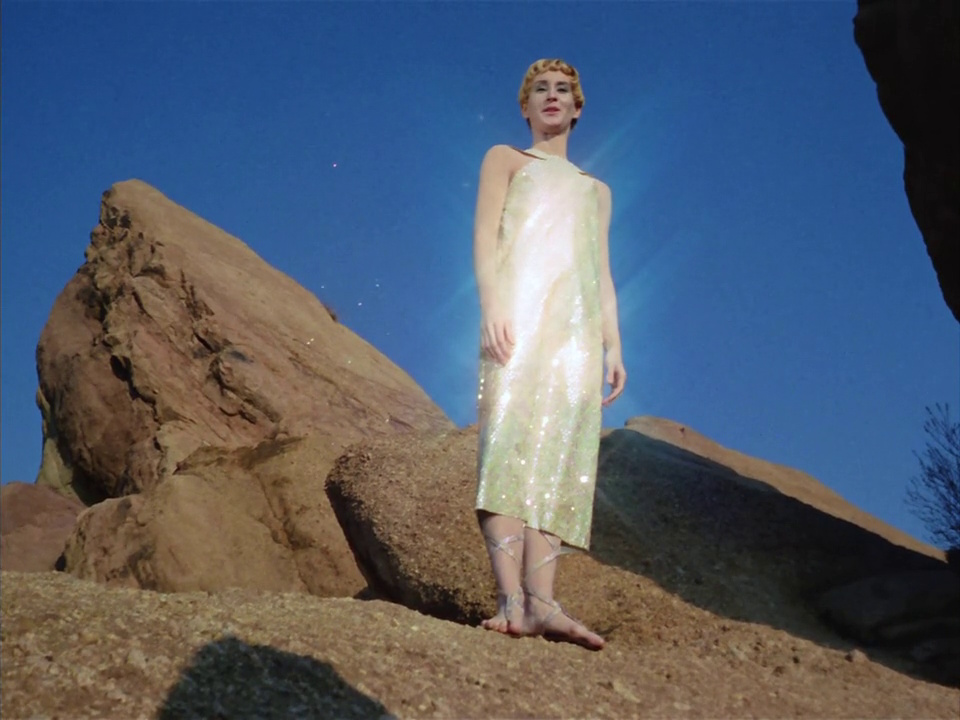
Still frame from Star Trek: The Original Series Season 1 episode Arena, showing a Metron.
An unnamed Metron from the end of the episode.

Because the battle at Vasquez Rocks is so well-remembered, it can be easy to overlook the first part of Arena – but the away mission to Cestus III is one of the first season’s most tense combat sequences. Drawing on war films for inspiration, with an unseen enemy and whistling noises reminiscent of World War II-era mortars, the entire away mission to the destroyed outpost is – for the time, anyway – really exciting stuff. This is also one of the first away missions to be shot on location – i.e. not on a sound stage or backlot. Following the previous episode, Shore Leave, which was also shot in the Los Angeles area, Arena took the cast and crew to a set near Vasquez Rocks which had been built a few years earlier for a different television series.

I think I’m right in saying that it’s this away mission sequence in Arena, which used several pyrotechnic explosions to create the effect of the Gorn attack, that led to both William Shatner and Leonard Nimoy suffering from tinnitus – a condition that causes ringing in the ears and can be painful. The Original Series used pyrotechics throughout its run, but this battle sequence pushed the performers to act in close proximity to these explosive devices. Knowing the impact the sequence had on the actors, that does taint how we view it. Because as exciting and intense as the Cestus III mission was, no television scene is worth suffering from life-long after-effects.
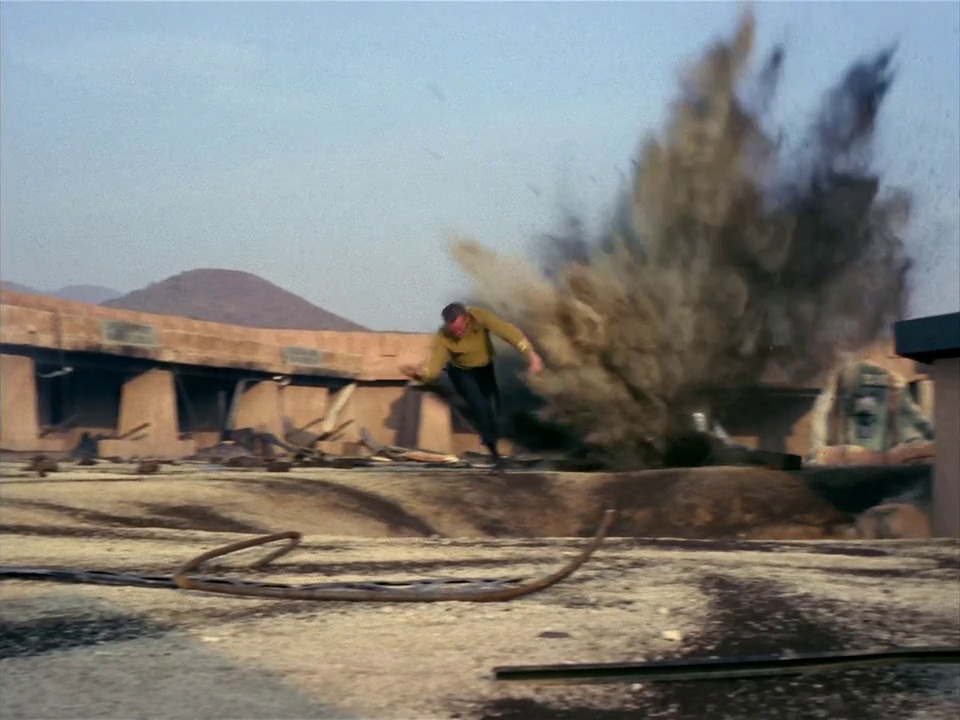
Still frame from Star Trek: The Original Series Season 1 episode Arena, showing Kirk being flung into the air by an explosion.
One of the explosions on Cestus III.

The first part of Arena, it could be argued, plays out similarly to Balance of Terror, which would’ve premiered just a month or so earlier. The attack on a Federation outpost, pursuing a powerful but unseen enemy… it starts the story in a familiar way. But the episode soon takes a completely different turn with the intervention of the Metrons. What begins with a deadly raid and an attack on the away team seems to be building up to another starship battle – but just as the Enterprise seems to be catching up to the Gorn vessel, the Metrons rebuke both ships and crews for their violent nature.

The Metrons are an interesting addition to the story. Rather than just another enemy encounter or a straightforward action story, their intervention puts a different spin on things. Kirk, who seemed hell-bent on revenge at first, is forced to confront the way he handled the interaction, and this idea of revenge at any cost – mutually assured destruction, perhaps – is thrust into the spotlight in an uncomfortable way.
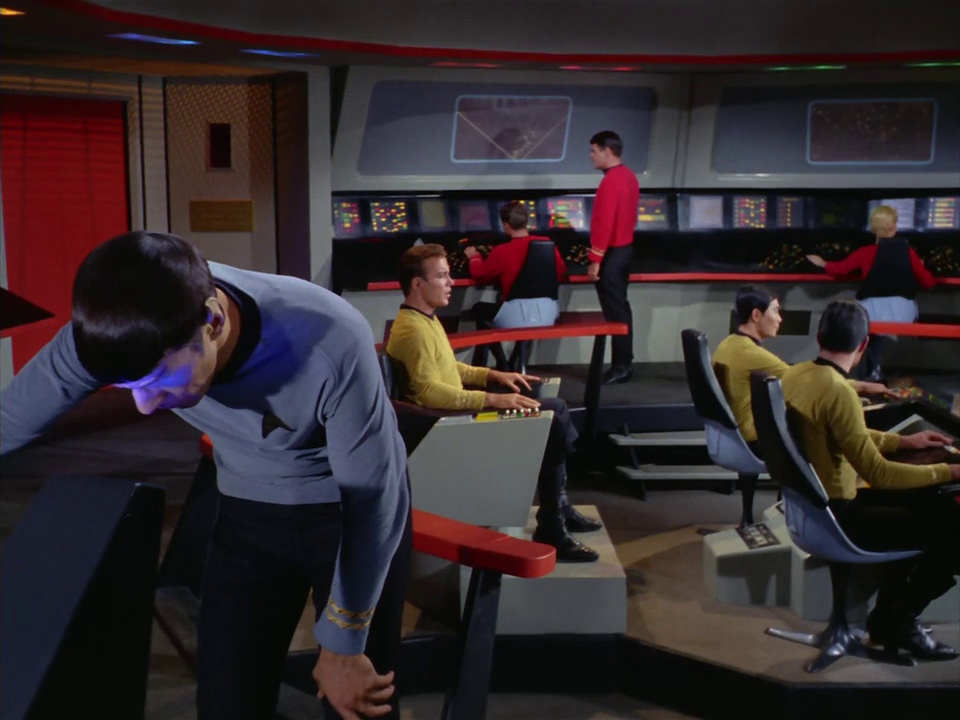
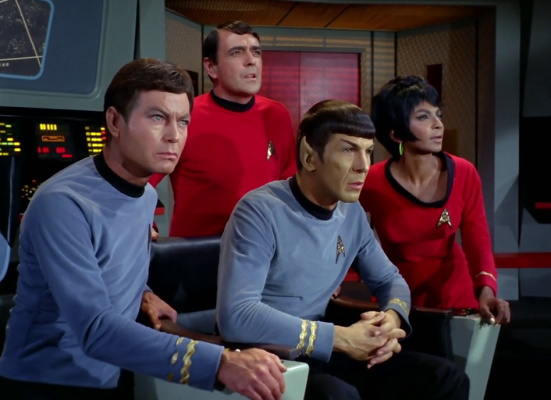
Still frame from Star Trek: The Original Series Season 1 episode Arena, showing the crew on the bridge.
Spock, Kirk, and the crew on the bridge while the chase unfolded.

That’s part of the context behind Arena, this idea that seeking revenge isn’t healthy and is, in itself, a violent urge. But there’s more to it than that. The revelation that the Gorn considered Cestus III to be one of their planets, and that’s why they attacked the outpost, reframes things for Kirk, Bones, and the rest of the crew. The Federation may not have been aware of the Gorn claim, but either way, they settled an outpost on a planet that someone else considered to be their territory. There’s another analogy here that I think is particularly interesting.

The Original Series draws inspiration from the western genre. The idea of space as a new “frontier” conjures images of the wild west, and in Arena itself, Kirk refers to himself and the Enterprise as the only lawmen in this region of the galaxy. The Gorn, therefore, are this story’s metaphorical Native Americans, having a pre-existing claim to the land and attacking the Federation settlers who’d moved in on their territory. Maybe that wasn’t exactly how the story was written, but I think that reading is there, just beneath the surface. And for the 1960s – when the western genre was still riding high at the box office, with films like El Dorado, Ride in the Whirlwind, and The Good, the Bad, and the Ugly – that’s kind of a progressive idea. To make the point that, in this case, the Federation may have been in the wrong… that’s a pretty neat inversion of the typical western-inspired frontier story.
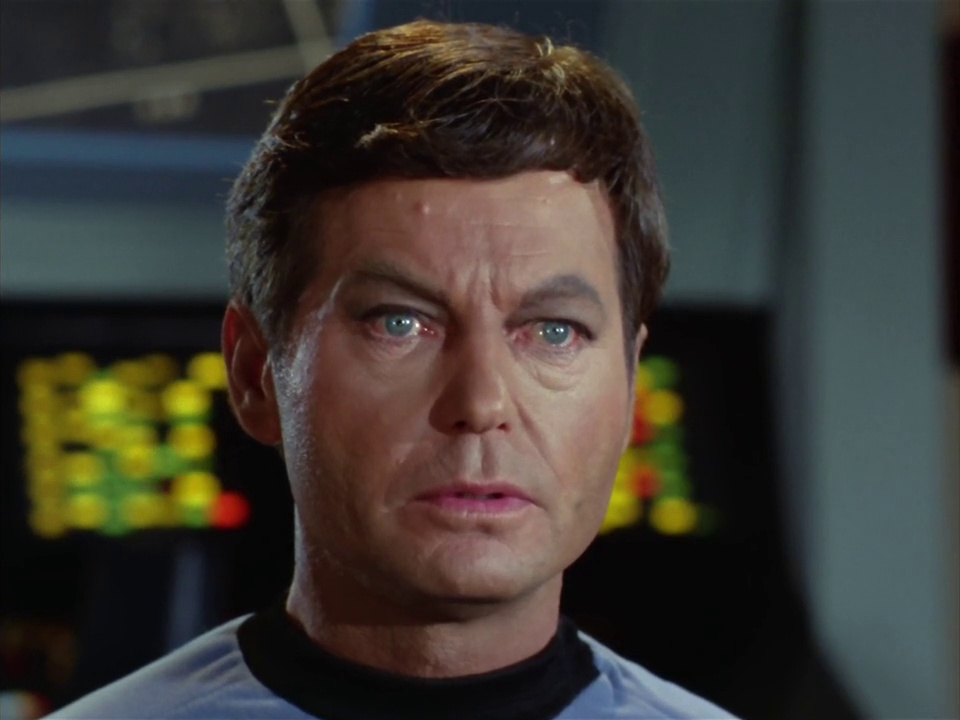
Still frame from Star Trek: The Original Series Season 1 episode Arena, showing Dr McCoy.
Dr McCoy put it best: “we could be in the wrong.”

Vasquez Rocks has become an iconic location within the Star Trek franchise, and that really began here in Arena. The filming location, which is just inside the famous “thirty-mile zone” around the film studios in Los Angeles, has appeared in The Next Generation, Voyager, Enterprise, Picard, and two of the Kelvin films as well as The Original Series and The Voyage Home. It was a great choice for Kirk’s battle against the Gorn commander, and even though I’ve criticised some modern Star Trek productions for re-using the same filming locations too often, I think Vasquez Rocks is such an iconic spot that it gets a pass!

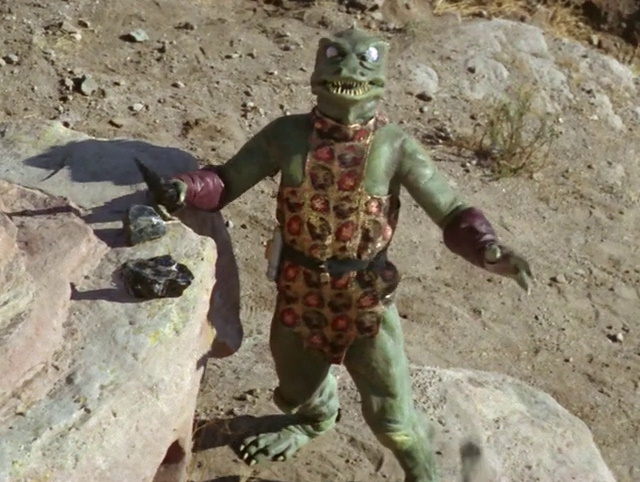
I absolutely love the original Gorn design, and even though it might not be as “realistic” as the updated variant seen in Strange New Worlds… I think there’s something special about the original costume. I always compared the Gorn to a Tyrannosaurus Rex – but that’s because I first watched Arena after having seen Jurassic Park in the mid 1990s! The design draws inspiration from real-world reptiles like the komodo dragon, using reflective, almost insect-like eyes and needle-sharp teeth to complement the monstrous design.
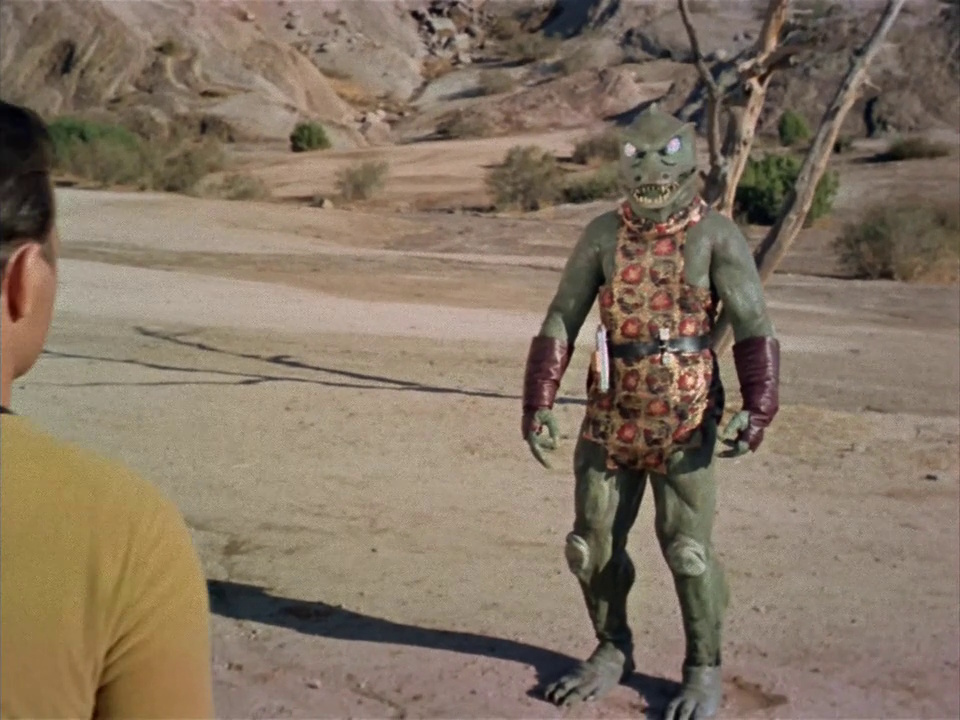
Still frame from Star Trek: The Original Series Season 1 episode Arena, showing Kirk and the Gorn captain's first encounter.
I just love this costume.

Wah Chang designed the Gorn costume as well as many other iconic Star Trek props. The tricorder, the flip-open communicator, and tribbles were all his creations – but he went uncredited for all of it, and was unknown until members of the Star Trek fan community uncovered his role in the 1970s. Chang seems to have been commissioned by Desilu – Star Trek’s production company – in a weird legal grey area; director and producer Bob Justman wanted to use Chang’s work, but Chang wasn’t a member of the prop-makers union. In a kind of workaround, Desilu would “purchase” items from Chang, but he was never credited on screen for any of his creations.

This is another great example of the early Star Trek fan community pulling together! Chang’s role was eventually uncovered in the 1970s by Trekkies, who were keen to find out more about some of the show’s iconic props and designs. It’s one of those fun little stories that, were it not for the dedication of fans, would’ve simply never come to light. Chang’s contributions to Star Trek – not only the episode Arena, but really across the entire first season – helped to define the look and feel of this vision of the 23rd Century. Who knows where Star Trek would’ve been without him?
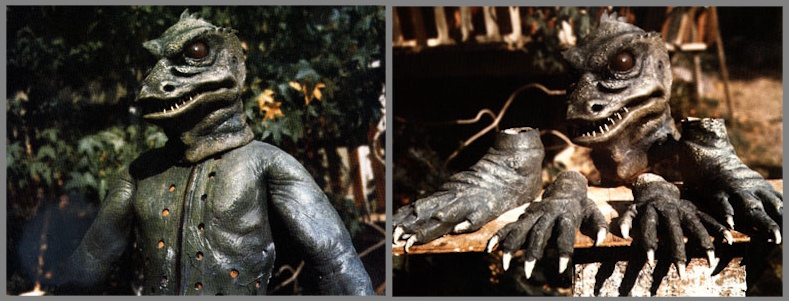
Two set photos from Star Trek: The Original Series showing the Gorn costume.
The original Gorn costume.

There are some great moments between Kirk and Spock in Arena, as they wrangle with the aftermath of the Gorn attack on Cestus III and what it could mean. In the context of Arena itself, disregarding any other Gorn stories, we can see both points of view. Kirk argues that the attack – which seems, at first, to be completely unprovoked – could be the precursor to a wider invasion, and as the only ship in the area, it falls to the Enterprise to prevent that. But Spock is also correct – without more information about what happened, who perpetrated the attack, and why… Kirk is kind of jumping to conclusions. His line about seeking revenge hits particularly hard.

We’ll get into this more in a moment when we discuss the Gorn, but this is one area where more recent Star Trek productions – and Strange New Worlds in particular – arguably re-frame this conversation. As a veteran of conflicts against the Gorn while serving under Pike’s command, Spock is acutely aware of how bloodthirsty and vicious the Gorn can be, and how single-minded they are when staking their claims to planets that the Federation already occupies. There is wiggle-room here, and nothing in Strange New Worlds explicitly contradicts Arena (at least as of the end of Season 2). But it does change how we perceive these conversations – which, it shouldn’t need to be said, supposedly take place a decade or so after the events of that show.
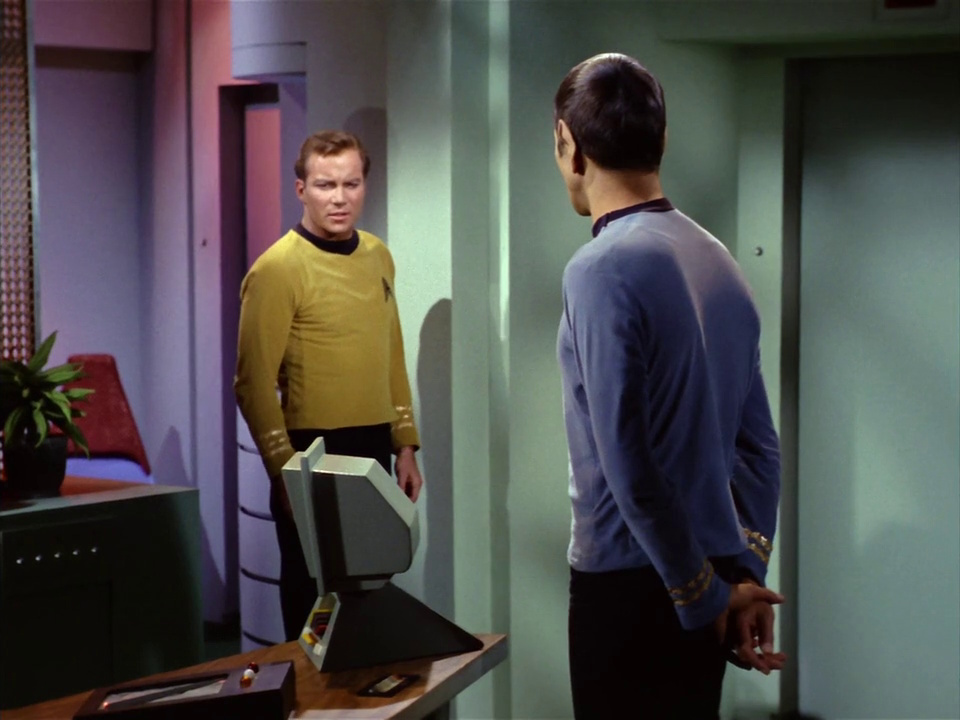
Still frame from Star Trek: The Original Series Season 1 episode Arena, showing Kirk and Spock in Kirk's cabin.
The conversation in Kirk’s cabin.

Kirk’s hand-to-hand battle with the Gorn captain is a ton of fun. The lumbering monster reminds me of the titular Creature from the Black Lagoon with its heavy rubber suit and somewhat clumsy movements, and I just really love that kind of old-school style of creature design. The rubber suit may be old-fashioned compared to, say, the new dinosaur-inspired Gorn depiction from Strange New Worlds… but I think it’s light-years ahead of the awful CGI rendition that we got in Enterprise! The very “sixties” fabric used for the Gorn captain’s uniform just adds to the charm.

The fight has its tense and serious moments. Kirk’s two-handed attack, which we’ve seen him use to great effect across the show’s first season, has absolutely no impact on the powerful and muscular Gorn, which was interesting. We also see the Gorn’s own ingenuity as he devises a trap – Kirk ends up injured and seemingly about to be impaled… just in time for the ad break! But the fight also has moments that, almost sixty years later, seem almost cartoonish or campy. The obviously polystyrene rocks – which look even less convincing in HD on a large television set – are part of that.
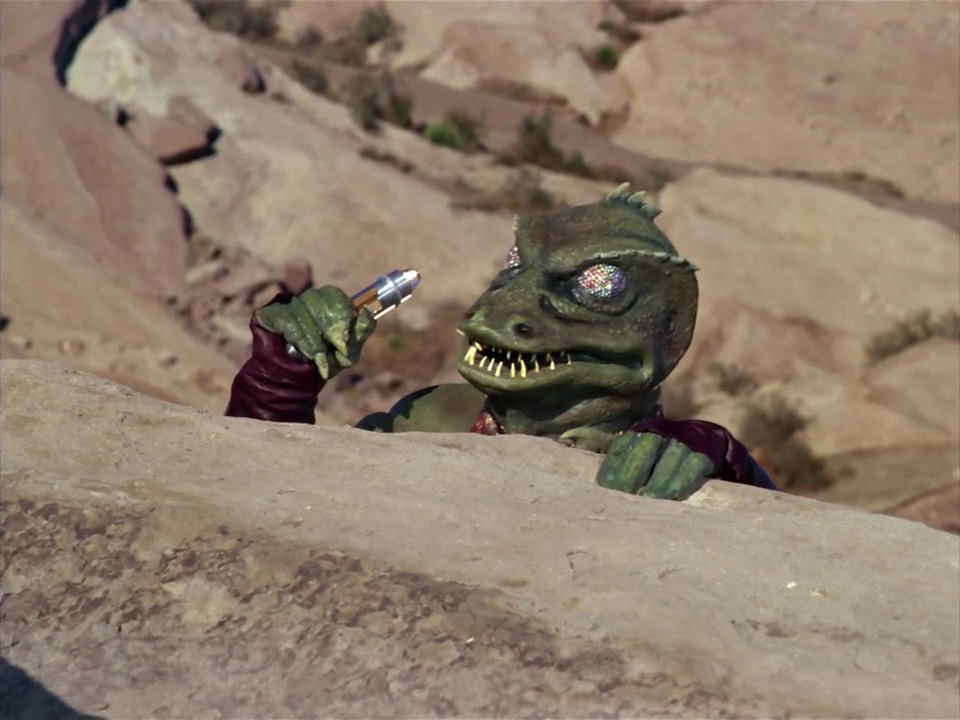
Still frame from Star Trek: The Original Series Season 1 episode Arena, showing the Gorn captain using a communicator.
The Gorn captain.

Then there’s Kirk’s “Wile E. Coyote” moment! Sneaking up on the Gorn captain from atop Vasquez Rocks, Kirk plans to drop a very large boulder on his opponent. And look, I get it: it’s a smart move given the circumstances. But the way this sequence is framed and shot makes it look like something straight out of the old Road Runner cartoon. It’s a ton of fun, but perhaps less tense or serious to a modern audience than it was intended to be in 1966!

The fight ends with Kirk choosing to show mercy to his defeated and injured opponent, impressing the Metrons and showing that, despite his earlier feelings about the attack on Cestus III, Kirk has learned something from the experience. His final conversation with Spock suggests that Federation diplomats might be able to contact the Gorn and peacefully resolve the Cestus III dispute. This resolution was clearly successful, because according to Deep Space Nine, Cestus III had a Federation colony again in the 24th Century… though we never saw this on screen for ourselves!
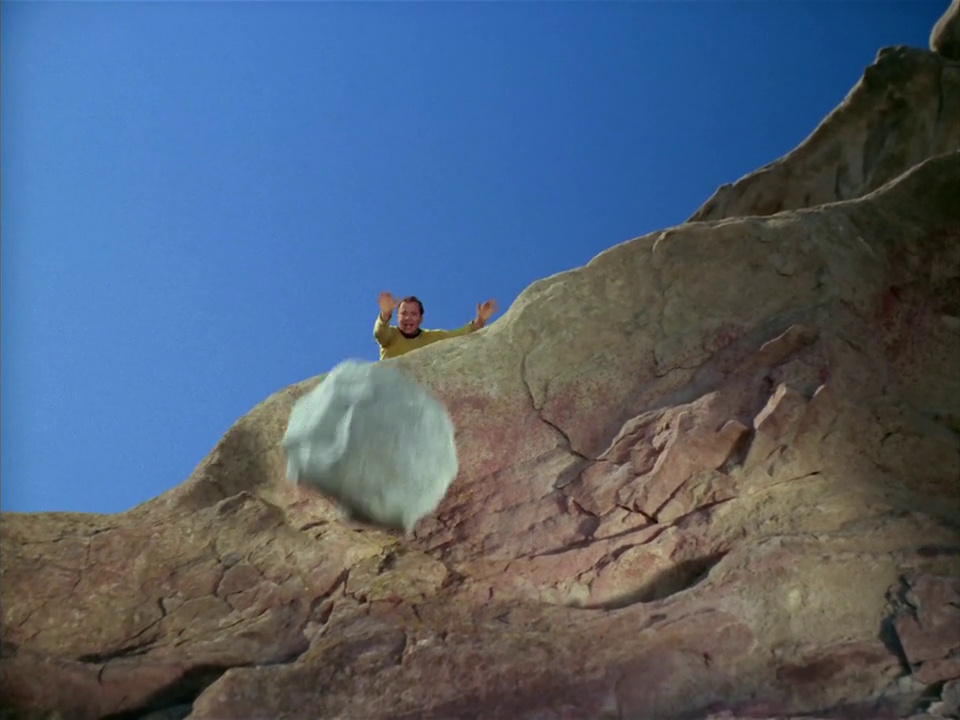
Still frame from Star Trek: The Original Series Season 1 episode Arena, showing Kirk and a boulder.
Captain Kirk’s plan was clearly inspired by the great tactician Wile E. Coyote.

With Strange New Worlds’ third season coming up, I want to talk a little bit more about the Gorn, and how Arena still has relevance to Star Trek today.

The Gorn have become Strange New Worlds’ most important villain, filling a role that the Klingons arguably did in The Original Series, the Borg did in The Next Generation, or the Cardassians and Dominion did in Deep Space Nine. Gorn stories have had profound impacts on Pike and the crew, from La’an’s tragic backstory, through Hemmer’s untimely death, and ultimately leading to the attack on Parnassus Beta, the infection of Captain Batel, and the abduction of Ortegas and many surviving colonists.

Strange New Worlds took the barest of outlines of the Gorn – a race who, since Arena, had only made a couple of other appearances in Star Trek – and changed them into a genuinely intimidating and threatening villain. Strange New Worlds’ depiction of the Gorn blends together the likes of Jurassic Park’s velociraptors with Alien’s iconic Xenomorphs. The new series takes the foundation established by Arena – that the Gorn are kind of monstrous reptillians – but pads it out with newer inspirations from the horror and sci-fi genres.
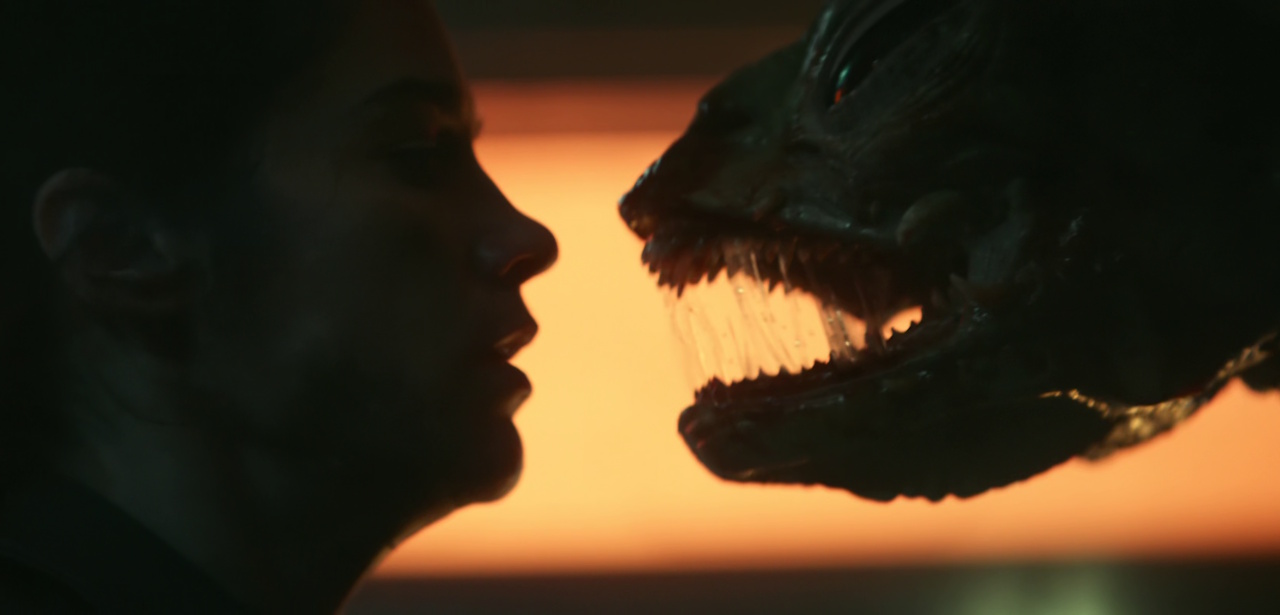
Still frame from Star Trek: Strange New Worlds Season 2 episode Hegemony showing Captain Batel and a Gorn.
An updated depiction of the Gorn from Strange New Worlds.

If you take a straight reading of Star Trek as a whole, from the point of view of a “canon purist,” then I guess I can understand why this change might not work. It *is* a change, at the end of the day, and with Strange New Worlds being a prequel, the fact that a major conflict against the Gorn happened just a few years earlier – involving several of the same characters – arguably gets close to treading on Arena’s toes. I’m not a “canon purist,” though, and I’m perfectly happy to enjoy both of these different depictions of the Gorn on their own terms.

I wish I had the photoshop skills to bring Arena’s Gorn captain into Strange New Worlds! I think that would be a really funny visual, and would make a great little Star Trek meme. Highlighting the differences in these depictions would be fun, and much of that would come from how different they appear to be – even though, I would argue, in terms of how they’re depicted, the Gorn aren’t actually all that inconsistent.
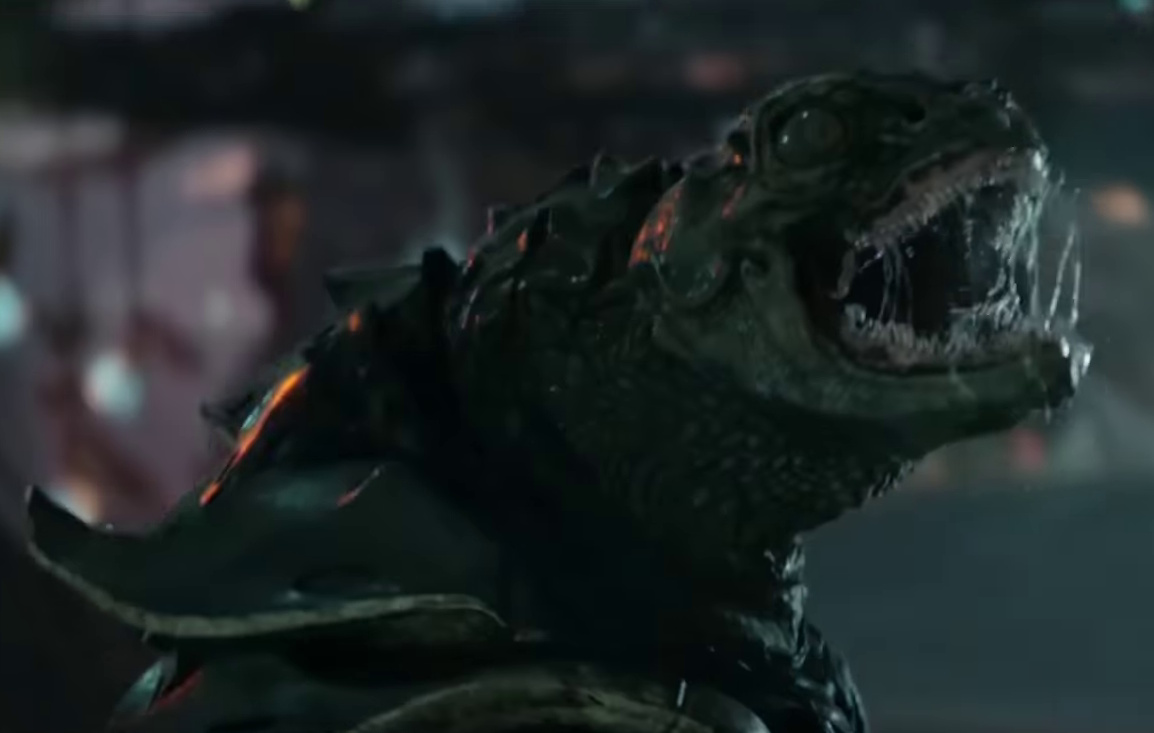
Still frame from the Star Trek: Strange New Worlds Season 3 trailer showing a Gorn.
A Gorn from the Strange New World Season 3 trailer.

Think about it: the attack on Cestus III and the total destruction the Gorn wrought isn’t far off what we see on Parnassus Beta in Strange New Worlds. The Gorn captain still makes the same kinds of horror-inspired “monster” noises, emphasising how different this life-form is to our familiar characters. The differences are really twofold: the limitations of the visual effects of the time compared to a more modern production with a higher budget, and perhaps more importantly, the limitations imposed on broadcast television at the time in terms of how graphic and horrifying visuals could be. For the mid-1960s, the Gorn captain is pure horror – and I think we can forget that because of how much time has elapsed and the kinds of things television shows today can do that they couldn’t do back then.

All that being said, I still adore the original Gorn design. I think it was incredibly creative, and Arena is just a fantastic episode all around, really. I think the parts we tend to overlook – the mission to Cestus III, the spaceship chase, and the involvement of the Metrons – are arguably the story’s most interesting parts, and to reduce Arena to Kirk and the Gorn squabbling in the desert is incredibly reductive and does Arena a huge disservice.
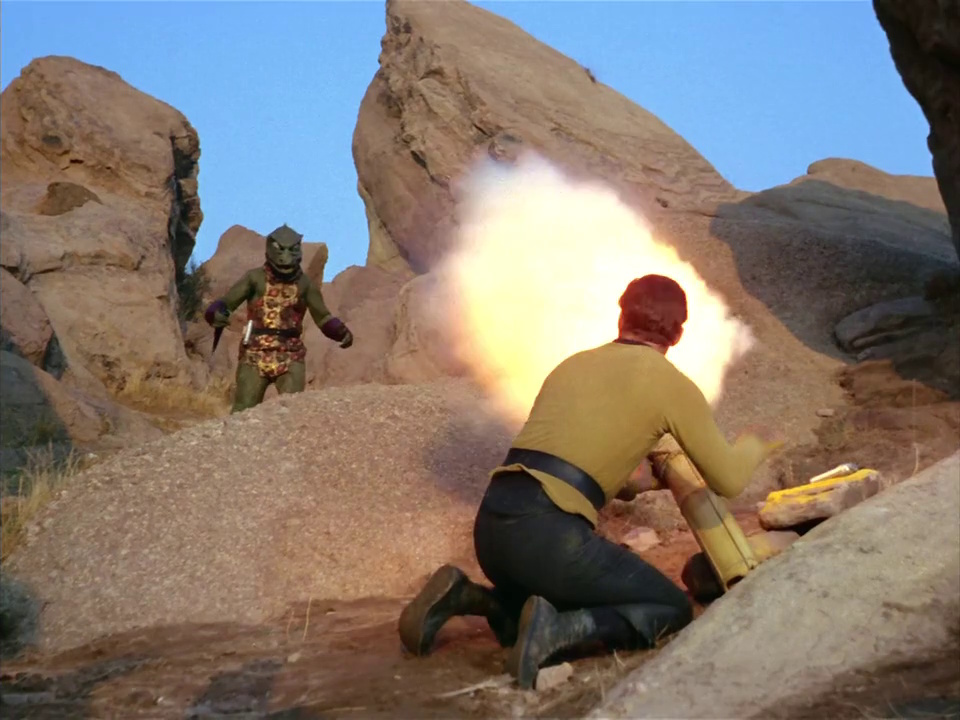
Still frame from Star Trek: The Original Series Season 1 episode Arena, showing Kirk firing his cannon at the Gorn captain.
Captain Kirk fires his makeshift cannon.

So that’s it for now. The Gorn are coming back, though… and soon! Strange New Worlds’ third season is just a couple of weeks away at time of writing, and I’m really looking forward to the resolution of the cliffhanger from Hegemony last season. I’ll do my best to write up reviews of Hegemony, Part II and the rest of the episodes in a more timely fashion this time around!

I hope this has been a bit of fun. I’ve been wanting to do a full write-up of an Original Series episode for ages, but I kept putting it on the back burner for one reason or another. Stay tuned, though, because I’ll definitely return to Star Trek’s roots before too long! I’d love to tackle one of my favourite episodes next: The Doomsday Machine! I have no idea when that’ll be… but one of these days, for sure.

Live Long and Prosper!


Star Trek: The Original Series (a.k.a. Star Trek) is available to stream now on Paramount+ in countries and territories where the platform is available. The series is also available on DVD and Blu-ray. The Star Trek franchise – including The Original Series, Strange New Worlds, and all other properties discussed above – is the copyright of Paramount Global. This article contains the thoughts and opinions of one person only and is not intended to cause any offence.
Ten Star Trek episodes to watch before Strange New Worlds Season 1

Spoiler Warning: Although there are no major plot spoilers for Strange New Worlds Season 1, the inclusion of particular episodes on this list may hint at certain themes, characters, storylines, etc. There are also spoilers below for the episodes and stories on this list.

I haven’t been able to talk about Strange New Worlds as much as I would’ve liked thanks to Paramount taking an “America First” approach to the series, the Star Trek franchise, and pretty much everything else on Paramount+. However, with Paramount+ having now arrived here in the UK, I hope to slowly begin to rectify that situation and make up for lost time. On this occasion, I’ve put together a list of ten episodes that I think make great background viewing for Strange New Worlds Season 1.

You can absolutely watch these Star Trek stories before diving into the show’s first season, but if – like me – you’ve already watched Strange New Worlds Season 1, there’s still value in going back to some of them to expand on what the new show’s first season delivered. Ordinarily I’d have written a list like this before the season aired, but having already seen Strange New Worlds that’s allowed me to adapt the list and include a couple of episodes that I would have never considered!

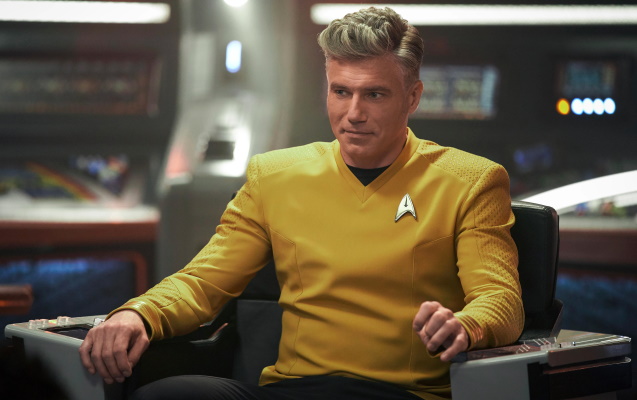
The long-awaited Captain Pike series is finally here!

Strange New Worlds was absolutely fantastic in its first season – and it has me lamenting the truncated ten-episode seasons of modern Star Trek as I could’ve happily enjoyed at least ten more! If you missed it, I’ve already written up my spoiler-free thoughts on the show’s first season, and you can find that piece by clicking or tapping here. At the risk of repeating myself, Strange New Worlds hit ten for ten in its first season – ten outstanding episodes that I thoroughly enjoyed.

I can’t recommend Strange New Worlds highly enough both to fans of Star Trek and to newcomers to the franchise. If you’re new, or if it’s been a while since you last saw some of these episodes, watching them will provide some additional background and backstory heading into Strange New Worlds – or will expand somewhat on some of the stories, factions, and characters if you’ve already watched Season 1. However, nothing below makes for essential or unmissable viewing; Strange New Worlds is a very accessible series that newcomers to Star Trek shouldn’t feel intimidated by!

Who could this be? Watch Strange New Worlds to find out!

As always, please keep in mind that all of this is just the subjective opinion of one person. I’ve chosen episodes that I generally enjoy and that I feel connect in significant ways to Strange New Worlds Season 1. If you don’t like my picks or I miss something you would’ve included, that’s okay! There’s always room in the Star Trek fan community for discussion and polite disagreement.

I’ve tried hard to avoid major plot spoilers for Strange New Worlds Season 1, but the inclusion of certain episodes here may hint at the inclusion of factions, aliens, characters, and storylines. If you don’t want to risk any of that, this is your last chance to nope out!

With all of that out of the way let’s take a look at the episodes I’ve chosen, which are listed below in no particular order.

Episode #1:
The Menagerie, Parts I-II
The Original Series Season 1

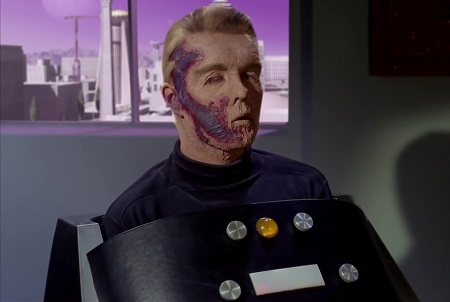
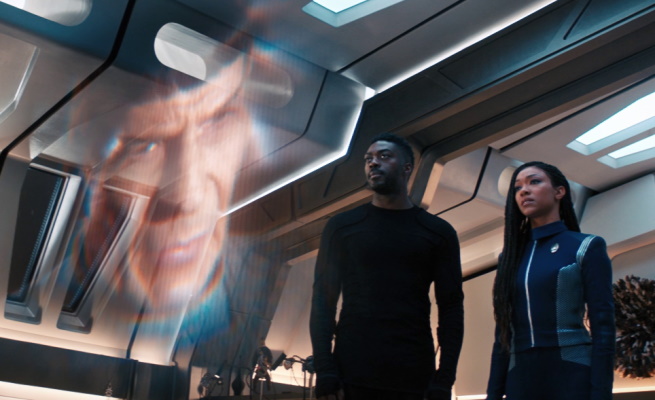
Captain Pike as he appeared in The Menagerie.

Technically speaking, The Menagerie was Captain Pike’s first Star Trek appearance. The episode incorporates most of the footage left over from The Original Series’ unsuccessful first pilot, The Cage, but uses a frame narrative to include Captain Kirk and Spock as they look back on the events of Captain Pike’s mission to the planet Talos IV.

After network NBC had spent a significant amount of money on The Cage, one of the conditions attached to The Original Series’ first season was that Gene Roddenberry and his team find a way to use the footage left over from the original pilot. It was either impossible or prohibitively expensive to bring back The Cage star and original Captain Pike actor Jeffrey Hunter for the role, and the recasting of the character is part of the reason for Pike’s severe disfigurement and disability.

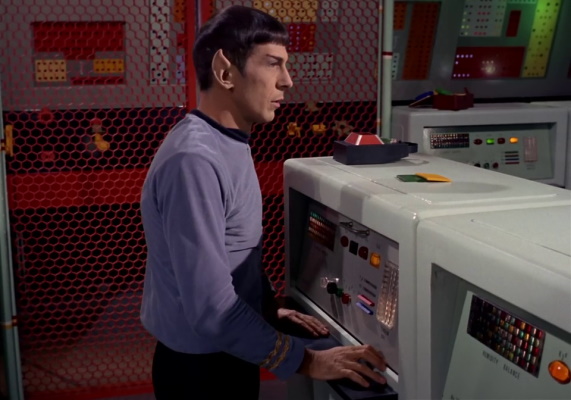
What could Spock be doing in engineering?

We could do an entire article on the production history of The Cage and The Menagerie – and maybe one day we should! – but for now, the important thing to keep in mind is that this is Captain Pike’s ultimate destination. The Menagerie exists as a reminder of where Captain Pike’s arc will ultimately lead him, but it’s also an interesting episode in its own right.

The Original Series was beginning to find its feet by this point in its first season, and a two-parter like The Menagerie could’ve blown it off-course. However, the way The Cage was incorporated into the story made for a fascinating and somewhat mysterious presentation, and Spock’s characterisation and his dedication to his former captain in particular are noteworthy. It’s a fascinating episode that managed to be so much more than just a recycling of a failed pitch and that found a unique and innovative way to accomplish what could have been a difficult and annoying task.

Episode #2:
Trials and Tribble-ations
Deep Space Nine Season 5

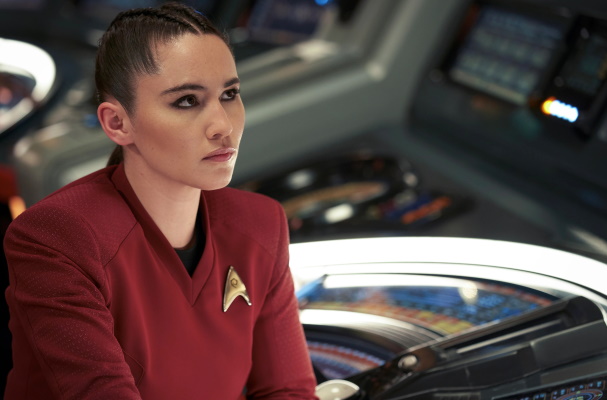
Can you spot who might be out-of-place?

Trials and Tribble-ations was created for the Star Trek’s thirtieth anniversary in 1996, and it was a fun celebration of the franchise’s roots. The crew of the USS Defiant – led by Captain Sisko – find themselves displaced in time, arriving during the events of The Original Series episode The Trouble With Tribbles.

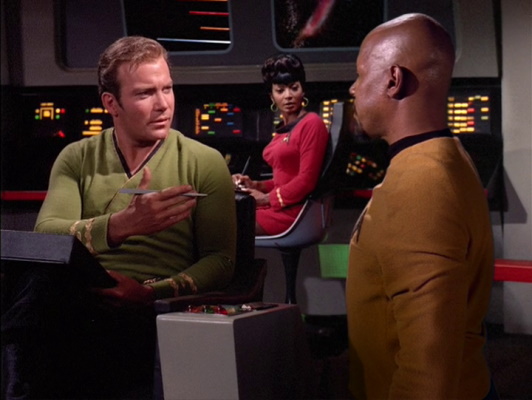
Sisko and his crew have to preserve the timeline – a nefarious villain is attempting to use a Bajoran Orb to alter the past to his advantage. What results is a genuinely fun romp, and seeing the two crews from two different eras coming together was quite something. I’ve always held Trials and Tribble-ations in high esteem ever since I first watched it!

Two legendary captains meet.

On the technical side of things, Trials and Tribble-ations was incredibly ambitious for its time. Using the same technology that had been used to place Tom Hanks alongside real-world historical figures for the film Forrest Gump – which had been released only a couple of years earlier – the creative team managed to seamlessly blend the Deep Space Nine characters into The Original Series. Some excellent work with costumes and sets – including a recreation of the original USS Enterprise’s bridge – really sold the illusion.

The only character from Trials and Tribble-ations to appear in Strange New Worlds is Spock, with the episode taking place after Pike’s tenure in the captain’s chair. But as a celebration of all things Star Trek, and one of the few stories to bring together the 23rd and 24th Centuries, it’s one you shouldn’t miss! There are also some interesting time travel and timeline-integrity angles to the story’s frame narrative that may just prove interesting to viewers who pay attention.

Episode #3:
Q & A
Short Treks Season 2

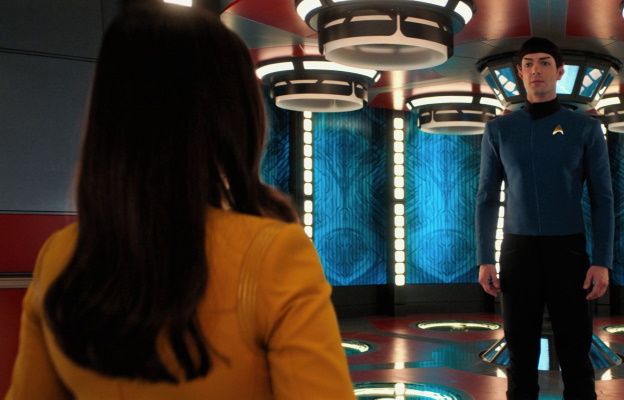
Who’s this promising young ensign?

Q & A steps back in time to before the events of Strange New Worlds and Discovery Season 2 to show us Spock’s arrival aboard the USS Enterprise while still an ensign. It’s a cute short story that shows off a younger Spock while also introducing us to Una – a.k.a. Number One. Una had far less screen time than Spock or Pike in Discovery’s second season, so Q & A was one of the first stories to feature her in a big way.

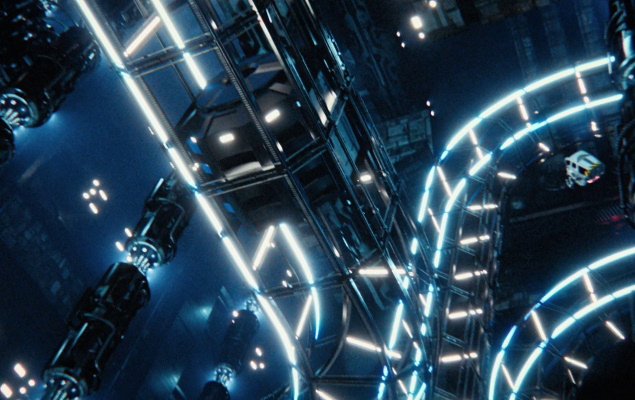
There are some great shots of the internal workings of the USS Enterprise’s turbolifts – something that a geek like me is always going to be interested in! In fact, Q & A must be one of the very few episodes, along with parts of The Next Generation’s fifth season episode Disaster, to make a turbolift its primary setting. That format could feel restrictive, but Q & A makes it shine through some excellent character work and occasionally hilarious writing.

One of the Enterprise’s many turboshafts.

Q & A was one of three episodes of Short Treks to bring back Pike, Spock, and Una – and these short stories began to expand upon their roles and set the stage for Strange New Worlds. They were also experimental; teases to fans that also served to see whether the much-requested “Captain Pike show” was a viable concept. Short Treks did some genuinely interesting things in its second season – which is why I’ve argued that the concept should absolutely be revived!

Captain Pike is less of a presence in Q & A than he would be in Ask Not, but that’s no bad thing. We got to spend more time with Una, and seeing her in her role as first officer – in part through the eyes of a young Spock, fresh out of Starfleet Academy – was fascinating!

Episode #4:
Unification, Parts I-II
The Next Generation Season 5

An older Ambassador Spock in the 24th Century.

We just talked about how interesting it was to see young Spock when he was first assigned to the Enterprise – so now let’s jump forward in time by more than a century to see a much older Spock in a completely different chapter of his life! The two-part episode Unification brought Spock into The Next Generation in a truly interesting story that built upon the Vulcan-Romulan connection that had been introduced in The Original Series.

I adore crossovers, and aside from a brief cameo in the premiere of The Next Generation, this was the first crossover involving main characters that the franchise had attempted. Its success laid the groundwork for the likes of Relics, Flashback, Defiant, Caretaker, These Are The Voyages, and many more.

Spock and Data.

Unification found a way to give Spock genuine development to reflect decades of his life that we hadn’t seen on screen. It was great to see him alongside not only Captain Picard but also Data – the two characters share many characteristics and filled similar roles in their respective series. The mystery at the heart of the episode and subsequent revelations about Spock’s work and the Romulans’ schemes made for a story that was tense, dramatic, and exciting.

Strange New Worlds isn’t all about Spock, but seeing what his life would be like decades after the events of the series is worthwhile. It puts into context not only the stories that unfold around Spock, but his own actions, behaviours, and thoughts. The Spock we meet in Unification is different from the Spock of Strange New Worlds – but not unrecognisable.

Bonus Episode #4½:
Unification III
Discovery Season 3

Cleveland Booker and Michael Burnham watch a recording of Spock.

The two-parter became a three-parter when Discovery added to the legacy of Unification in its third season. Taking Spock’s work with the Romulans as a starting point, Unification III shows us how subsequent generations of Romulans and Vulcans looked to Spock as an inspiration. His legacy is all over this story – and it would carry through into future episodes of Discovery in its third and fourth seasons.

Spock would go on to be an important part of Vulcan history, remembered fondly even centuries after his death for the process that he started. Seeing Michael Burnham react to that was sweet, and knowing that Spock has a legacy within the Star Trek timeline that extends far beyond his own lifespan is something incredibly meaningful.

Episode #5:
Arena
The Original Series Season 1

The Gorn captain.

An absoloute classic of The Original Series, Arena features Captain Kirk’s iconic battle against an unnamed Gorn captain – the first Gorn encountered in Star Trek. I might be in the minority here, but I absolutely adore the way the rubber-suited Gorn looks. There’s something menacing about its tyrannosaurus rex-like head, its silvery, almost insectoid eyes, and its sharp crocodilian teeth. But at the same time, there’s a light-hearted campiness to the way the Gorn comes across on screen thanks in part to the limitations of 1960s special effects – and perhaps also due to the bold pattern on his (or her?) costume!

There’s more to Arena than just the scuffle at Vasquez Rocks, though! There’s a more philosophical side to the story, one that shows how far humanity has come by the 23rd Century – and how far there is still to go to make progress. Despite the conflict, both Spock and Kirk demonstrate a willingness to try diplomacy and show mercy – something that impresses the highly-advanced Metrons.

The Enterprise crew watch helplessly as Captain Kirk battles against the Gorn.

The way in which Captain Kirk was able to outsmart and defeat the Gorn captain shows his ingenuity at its best – and presents a contrast between “brains” and “brawn” that made it clear how even a strong and physically imposing enemy can be defeated. There’s a great metaphor there for dealing with bullies!

Arena is one of those episodes that I believe every Trekkie – even those who aren’t fans of The Original Series – needs to see at least once. Despite the Gorn not becoming a recurring villain in The Original Series or even during The Next Generation era, the original design of these reptilian aliens has become iconic, and as a story that fully encapsulates the Star Trek franchise’s approach to science-fiction, Arena has it all.

Episode #6:
Damage
Enterprise Season 3

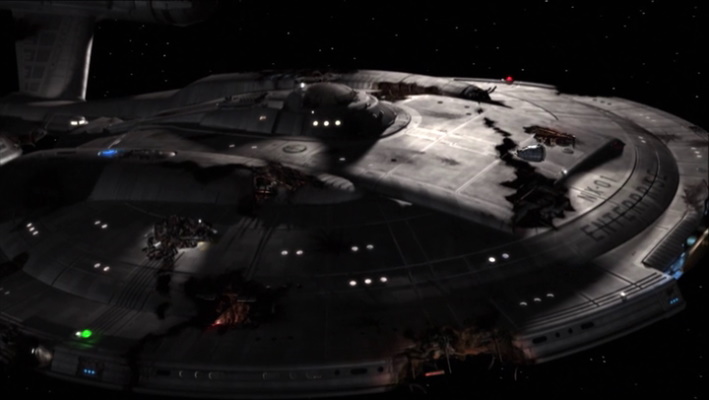
Enterprise has seen better days…

Damage comes quite late in the fully-serialised story of Enterprise’s third season, but it’s worth a watch regardless. At this point in the story, Captain Archer and his crew are running out of time to prevent the Xindi from launching a super-weapon against Earth, and Archer’s desperation to do anything to complete his mission forces him down a very dark moral path.

In essence, Captain Archer must choose between failure – which will almost certainly lead to the total annihilation of Earth itself – and his morality, leading to him basically turning to theft and piracy in order to survive in the harsh Delphic Expanse. It’s a fascinating story that features a brand-new alien race, but also one that’s an introspective character piece focusing on Archer’s decisions.

Captain Archer is forced to confront an impossible decision.

There are other story threads in play in Damage, including T’Pol’s exposure to Trellium-D – a compound toxic to Vulcans that caused her to begin to lose control over her emotions. The way in which Vulcans suppress their emotions in favour of logic is something that Enterprise explored in depth, and it’s a fascinating part of Vulcan culture that subsequent Star Trek projects have also touched upon.

Enterprise’s third season was a tense and exciting one overall – and Damage is one of the highlights for its strong character work and examination of how Starfleet’s enlightened morality can end up falling by the wayside when the going gets tough. Captain Archer is pained by the decision he makes – but that doesn’t stop him from making it.

Episode #7:
Through the Valley of Shadows
Discovery Season 2

Visiting the Klingon monastery on Boreth.

Although I’d encourage you to watch Discovery Season 2 in its entirety, I felt that Through the Valley of Shadows was really the only episode that had a significant impact on Strange New Worlds. It’s here where Captain Pike has to make a decision about his fate and his future that sets him on a particular path – one that will culminate in devastating disability.

Although Pike was willing, in the moment, to make the sacrifice in order to obtain the time crystal, the decision he made has a huge impact on him. With only a couple of episodes left in Season 2, Discovery didn’t have a lot of time to address how this would affect him – but Strange New Worlds certainly does, and this is really the starting point for Pike’s season-long arc.

Captain Pike comes face-to-face with his own future.

Discovery’s second season was a big improvement on its first, and I think it’s fair to say that bringing Captain Pike and Spock into the show in a big way was a masterstroke! Through the Valley of Shadows reframes Pike’s accident and disability in an entirely different way, and while there are sci-fi trappings of time-travel macguffins and talk of fate and destiny, what lies just under the surface is a story that I find incredibly relatable.

I’ve been Captain Pike at this moment. Sitting down with a doctor, hearing bad news about my health, knowing that things won’t get better but will get worse, that my ability to do basic things like walking will become increasingly difficult… these are all experiences that I’ve personally had and that I saw reflected in Captain Pike. Whether intentional or not, the decision to have him become aware of his future – and choose to embrace it for the greater good – kicked off a story about disability and declining health that really resonated with me. Its approach to this complex topic was sensitive, understandable, and darkly beautiful.

Episode #8:
Prime Factors
Voyager Season 1

Harry Kim and Eduana using a Sikarian spatial trajector.

Prime Factors flips Starfleet’s Prime Directive on its head. The Prime Directive is Starfleet’s most important standing order, and it states that “no starship may interfere with the normal development of any alien life or society.” We’ve seen the Prime Directive – and the principles upon which it is based – play a huge role in episodes of practically every Star Trek series, with captains having to decide whether to interfere, how to interfere, and what the consequences may be.

Prime Factors takes the opposite approach, and asks how it would feel to our heroes if they were on the other side of this kind of policy. How would Starfleet react to being denied a request for help or trade because it conflicted with an alien society’s principles? The resultant episode was absolutely fascinating.

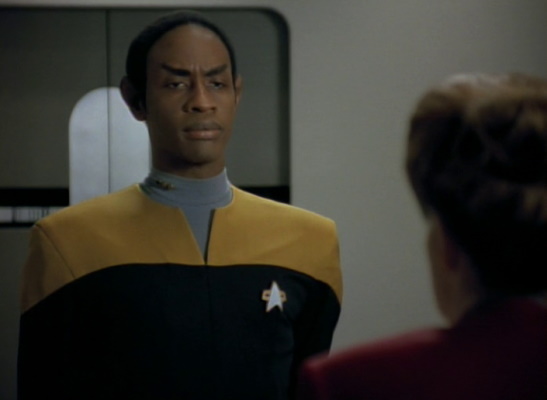
Tuvok and Captain Janeway.

At this relatively early point in Voyager’s run, the fact that Captain Janeway and her crew really are stranded on the far side of the galaxy with no way to get home is beginning to sink in. Prime Factors is one of several episodes that teased the crew with a potential way to complete part of that journey – before yanking it away again.

The episode is also an interesting one for Harry Kim, who we get to see at his most eager to get home, and for the relationship between Captain Janeway and Tuvok. Although Chakotay would really take over the role of “trusted advisor” as Voyager got settled, initially it was Tuvok who was being established as Captain Janeway’s closest confidante and most reliable friend.

Episode #9:
Balance of Terror
The Original Series Season 1

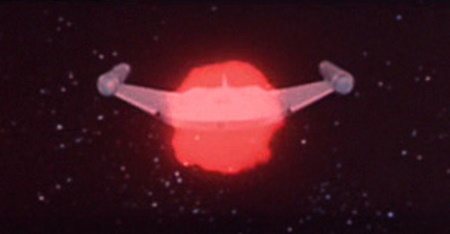
A Romulan warbird firing its plasma torpedo.

Balance of Terror is the episode that first introduced the iconic Romulans to Star Trek – as well as revealing their connection with the Vulcans that we talked about in Unification above. Inspired by war films – particularly naval war films and those set aboard submarines – from a generation earlier, there’s a really tense, claustrophobic feel to the conflict between the Enterprise and this new, terrifying threat.

Balance of Terror expertly sets up the background of Federation-Romulan relations and uses that to create tension and conflict on the bridge of the Enterprise when a surprising connection between the Romulans and Spock’s own Vulcan people is revealed. The episode also raises the stakes by giving the Romulans not one but two super-weapons: the devastating plasma torpedo and a cloaking device. This was the first on-screen appearance of a cloaking device in Star Trek.

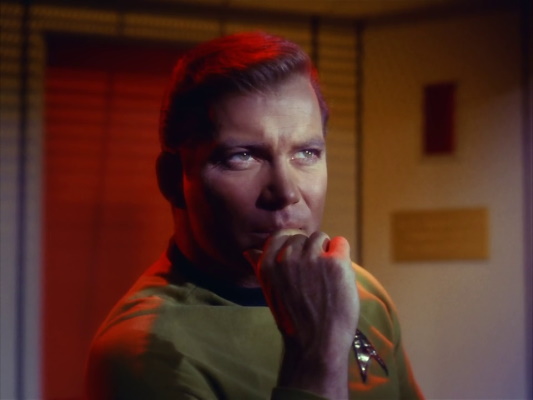
Captain Kirk in Balance of Terror.

Of particular note here is Captain Kirk’s approach to the conflict. After discovering the Romulan vessel and its technology, Kirk decides to pursue it, hoping to intercept it before it can cross back into Romulan space. Was this uncompromising approach the right call?

Balance of Terror is a fascinating episode for its tone, for its approach to bigotry and prejudice in the enlightened future Star Trek presents, and for its introduction of a faction that would go on to play a major role in the Star Trek franchise. It’s another episode of The Original Series that I consider to be a must-watch for all Trekkies.

Episode #10:
Star Trek 2009
Kelvin Timeline film

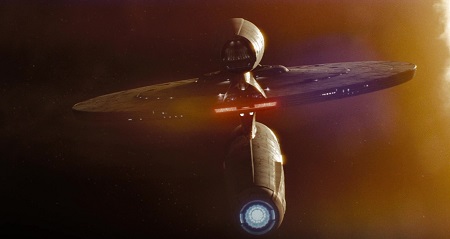
The USS Kelvin, namesake of the Kelvin Timeline.

Technically a film rather than an episode, 2009’s Star Trek kicked off the Kelvin timeline with a soft reboot of the franchise. It’s a textbook example of how to write a successful reboot, and after the Star Trek franchise had begun to fade and lose viewership toward the latter part of Enterprise’s run, the 2009 reboot came along and definitively proved that there was still plenty of life in it yet! We wouldn’t have Discovery, Strange New Worlds, and the rest of modern Star Trek without this film and its two sequels.

For our purposes today, though, 2009’s Star Trek shows us a different timeline with alternate versions of Captain Pike – who plays a prominent role in the story – as well as Spock and Uhura. Seeing these versions of the characters and noting their differences and similarities to their prime timeline counterparts could be worthwhile going into Strange New Worlds.

Spock, meet Spock!

Star Trek 2009 also chronicles the next chapter of Spock’s life after the events of Unification (which we took a look at above). Spock’s relationship with the Romulans and his plan to help them avert a catastrophe are what led to him being dragged into the alternate reality, and the meeting between the older and younger versions of the character is a powerful moment.

Seeing Kirk, Spock, McCoy, and others in their Starfleet Academy days was a concept that Gene Roddenberry had toyed with even as far back as The Original Series in the 1960s. 2009’s Star Trek took that concept and put a spin on it, updating the franchise for the 21st Century and introducing it to legions of new Trekkies. It’s a good film in its own right, and one whose legacy is the rejuvenated Star Trek franchise that we’re continuing to enjoy today.

So that’s it!

Promotional poster for Strange New Worlds.

Those are my picks for ten episodes to watch before Strange New Worlds to prepare for what the series will bring – or afterwards, if you prefer, to lend some context to some of the character arcs and storylines.

There are at least ten more episodes and films that I could’ve chosen; it wasn’t easy to whittle down the list to the ten picks above. Having already seen Strange New Worlds Season 1, I confess that I picked several different episodes that I might not have chosen otherwise. But that’s the benefit of hindsight!

As I said in my spoiler-free review of the first season, Strange New Worlds is utterly fantastic and well worth a watch for Trekkies and newcomers to the franchise alike. I can’t praise it highly enough – and I can’t wait for Season 2!

Star Trek: Strange New Worlds is available to stream now on Paramount+ in countries and territories where the service is available. New episodes are being released weekly on Paramount+ in the United Kingdom. Further international distribution has not been announced at time of writing. The Star Trek franchise – including Strange New Worlds and all other episodes, films, and shows discussed above – is the copyright of Paramount Global. This article contains the thoughts and opinions of one person only and is not intended to cause any offence.