Paramount has tried and failed multiple times to get a sequel to 2016’s Star Trek Beyond into production… so it was a surprise to learn that the corporation has tapped yet another writer and director to work on a script. I’m beginning to lose count, but if we don’t include the Section 31 TV movie and disregard – for now – Sir Patrick Stewart’s Picard movie concept/pitch that I talked about the other day… is this the fifth time Paramount has announced a new Star Trek film in just the last couple of years? Or is it the sixth?
At this point, I’m a die-hard sceptic, unfortunately. There have been so many false starts, premature announcements, and just straight-up failures with this project that even when I’m halfway through watching the film I’ll still be doubting its existence! Paramount’s commitment to making a new Star Trek film may be rock solid, but the corporation’s basic competence is in serious question. So I guess what I’ll say is this: I’ll believe it when I see it!
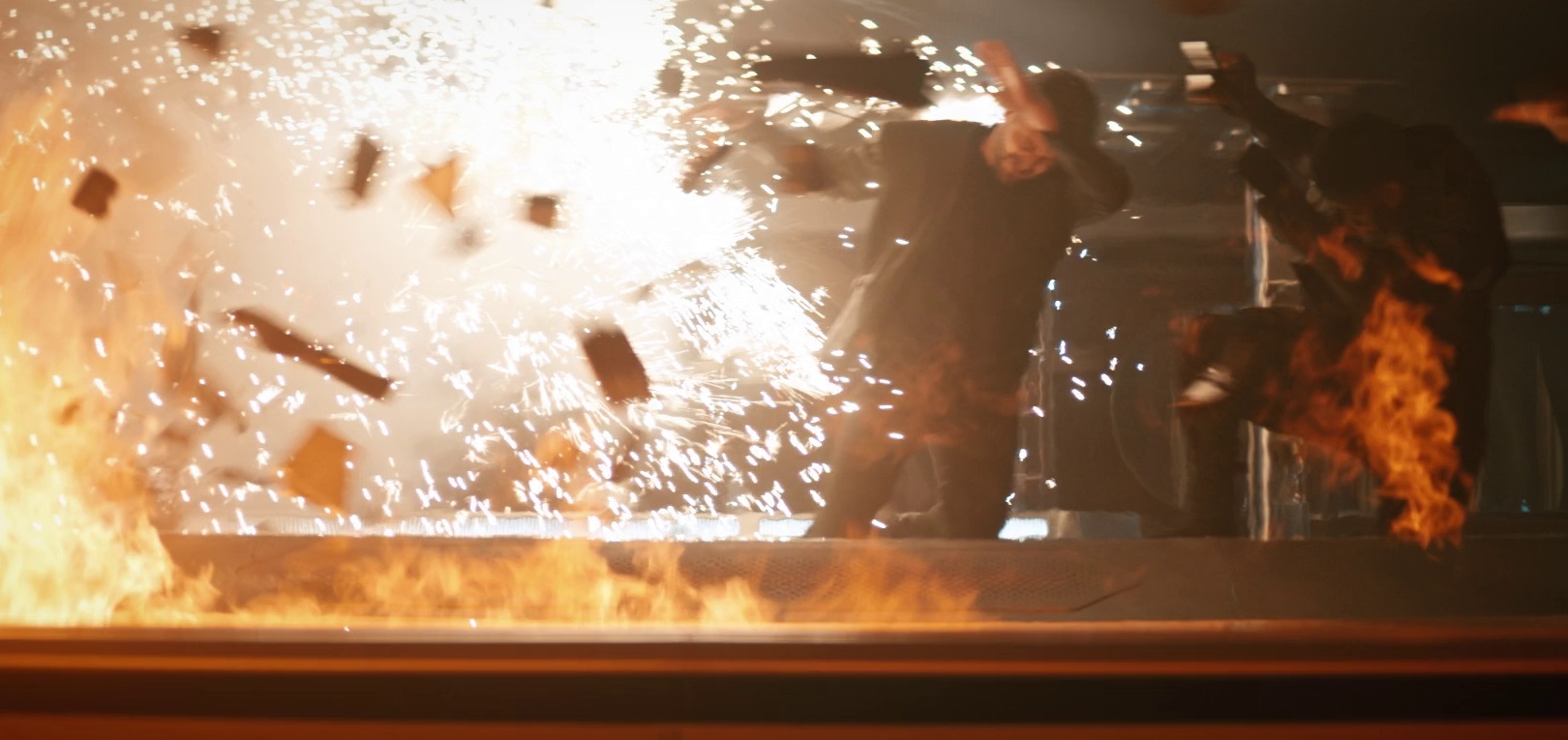
An explosive moment during filming on Star Trek Into Darkness.
It feels odd to be covering two separate Star Trek films just days apart. I’m loathe to call Sir Patrick Stewart’s comments about a hypothetical Picard film an “announcement,” because the more I’ve watched his interview, the less convinced I am that the script he was hyping up is anything more than a speculative pitch. But even so, 2024 has been kick-started with some interesting Star Trek news!
One thing that seems clear from Paramount is that neither of the two Star Trek films currently in development are connected to Picard. One is the repeatedly-failed Beyond sequel, and the latest announcement sounds like it could be a prequel – or perhaps a film set in between Enterprise and 2009’s Star Trek whose place in the timeline will undoubtedly prove controversial! But are either of those concepts worth pursuing? And with Paramount’s dire financial situation and a potential takeover of the company happening later this year… will any of these hypothetical films ever make it to screen?
Director JJ Abrams and Kirk actor Chris Pine during work on 2009’s Star Trek.
The last time we talked about a potential Beyond sequel, I had this to say:
“I don’t think we still need the Kelvin timeline. And if I were in the room, I’d argue that there are better ways for Paramount to spend money on Star Trek than greenlighting a new film starring this cast…”
That was almost a year ago… and honestly, I don’t think much has changed since then – at least not in terms of my attitude to a new Kelvin timeline film, be it a sequel or prequel.
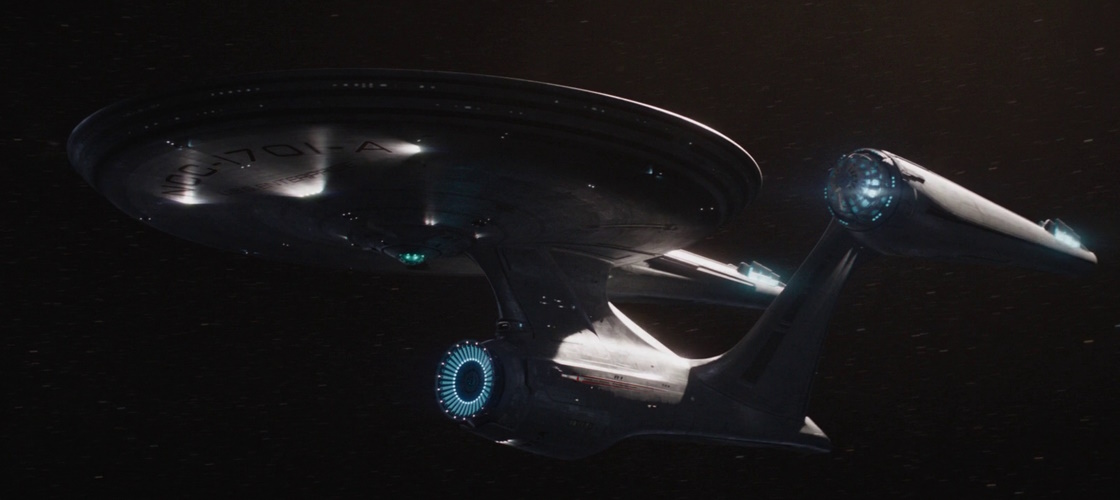
Concept art of the Kelvin timeline’s USS Enterprise.
Midway through 2023 I began to feel burned out on Star Trek. Part of the reason for that is the complicated, downright convoluted nature of the franchise, with different shows all being set in different periods along the timeline. There has been a lot of Star Trek over the past couple of years, and franchise fatigue is definitely in danger of setting in. Given all of that, there’s even less space for another new film with new characters – or different variants of current characters – than there was before.
What Star Trek needs more than anything else is space to cool off. The past few years have been frenzied, with Paramount seemingly greenlighting any idea that came along with little regard for how oversaturated the franchise has gotten, nor for how well the different shows work together. If Star Trek is to survive much longer, then producing fewer shows and films – perhaps with a tighter focus on a single setting and time period – is what’s needed. This scattershot approach of different parallel realities and eras just adds to the confusion of Star Trek as a whole and makes it difficult – if not impossible – to bring new fans on board. And as I’ve said countless times before: that’s vital to the franchise’s future prospects.
Paramount has arguably mishandled Star Trek over the past few years.
The Kelvin timeline served a purpose in the late 2000s and early 2010s. Star Trek and Into Darkness proved definitively that audiences hadn’t entirely fallen out of love with Star Trek – and that the franchise could still do new things even after decades in production. Without the Kelvin timeline films it’s hard to see how Discovery and the rest of modern Star Trek would have been possible. So I don’t want to diminish or disregard the Kelvin films and their place in the history of Star Trek.
However, that’s not the question before us right now. Instead, we need to seriously evaluate whether or not there’s a place for a new Kelvin film in 2024. When considering everything that Star Trek has done since 2016 – which is almost 200 episodes of television across five-and-a-half different shows, lest we forget – what role could a new Kelvin film play? I’m not sure there’s a place for one film in that timeline, let alone two.
The Kelvin timeline is named for the USS Kelvin.
The Kelvin timeline’s big selling point – from a corporate point of view, at least – is its profitability. Although Beyond was considered a disappointment, it still brought in money at the box office, and Into Darkness is the Star Trek franchise’s highest-grossing film. If Paramount is worried about Star Trek paying its way, I can see the appeal a new Kelvin film might have to a faceless suit in a boardroom.
As well-received as Strange New Worlds and Picard have been, they haven’t been able to drag Paramount Plus across the line and into profitable territory. A lot of Trekkies and viewers liked what they saw, but that hasn’t translated into Paramount Plus becoming a must-have subscription. If a new film were to prove successful and bring in millions at the box office, it could shore up Paramount’s finances in the short-term… as well as the corporation’s commitment to Star Trek. That might be the single biggest point in its favour from my point of view!
Strange New Worlds has been well-received by many Star Trek fans.
But when I think about what I’d like to see most of all from Star Trek, a new Kelvin film doesn’t even break into the top ten… or top twenty. There have been some interesting pitches and ideas over the past few years, from Discovery spin-offs to animated shorts. Right now, I’m more interested to see Star Trek explore more of the Picard era – the early 25th Century. That feels like something that has huge potential and could really drive the franchise forward – comparable, in some respects, to what The Next Generation and the other Star Trek shows of the ’90s did.
With the fan campaign for Legacy still doing the rounds and still being talked about almost a year after Picard ended, that’s where I’d choose to focus my energy if I had a foot in the door of the Paramount boardroom! But even if Legacy couldn’t go ahead as currently envisioned, the Picard era is still ripe for further exploration and feels like the right setting for future Star Trek projects.
A new series or TV movie set in the Picard era is very appealing.
So I guess that’s where I’m at. In a perfect world – one where the Star Trek franchise had limitless budgets and creative freedom – I’d say go for it. But when budgets are constrained and there isn’t the time or money to do everything, priorities have to be set – and speaking for myself, as a Trekkie, the Kelvin timeline just doesn’t feel necessary. There’s no compelling reason to return there, and with several prominent characters also taking part in Strange New Worlds – a series that I sincerely hope will continue beyond its third season for several more years – there’s also a narrative risk. Competing versions of the same character could trip over one another, or come across as repetitive and having nothing new to say.
On the practical side of things, after so many false starts and cock-ups I have absolutely no faith in Paramount any more. The corporation has screwed up these announcements multiple times, including in 2022 when a humiliating un-announcement had to be made just days after one of the aborted Beyond sequel ideas had been officially put on the schedule. I’m not convinced at this stage that either of the two films allegedly in development will see a release – or even start filming.
Fool me once, shame on you. Fool me six times in a row with the same announcement? I’m not even sure there’s an expression for that!
Spock and Kirk in a promo photo for 2009’s Star Trek.
If you want to get excited and hyped at the idea of Star Trek returning to the big screen after the longest-ever gap in between films, I feel ya. I’d love to be able to jump on board the hype train and ride it all the way to Starfleet Headquarters! But Paramount has sapped my faith over the past couple of years, and I’m at a point where I don’t have any confidence in the corporation or any announcements it makes. I genuinely don’t know whether this latest Star Trek film will even come close to entering production.
Despite my reservations about both Paramount as a whole and a Beyond sequel or prequel as narrative concepts, I will do my best to talk about them here on the website. If there’s big news, casting details, or a trailer, I hope you’ll join me for my thoughts and analysis. Just because a new film set in the Kelvin timeline wouldn’t be my first choice doesn’t mean I won’t treat it fairly and give it a chance to impress me.
Still crossing my fingers for that Legacy announcement, though!
The Star Trek films should be available to stream on Paramount+ in countries and territories where the service is available, and are also available on DVD and Blu-ray. The Star Trek franchise – including all films and properties discussed above – is the copyright of Paramount Global. This article contains the thoughts and opinions of one person only and is not intended to cause any offence.
If you’re a regular reader, you might’ve noticed that my reviews for Star Trek: Strange New Worlds Season 2 came to an abrupt halt this summer. Truth be told, I haven’t even finished watching the season – a season of television that I was pretty excited for earlier in the year. That’s not because Strange New Worlds was in any way bad or unenjoyable; Season 1 was fantastic and the first half of Season 2 definitely had some fun and interesting stories in the mix. But honestly… I just feel burned out on the franchise as a whole right now.
When Star Trek was on the air in the 1990s and early 2000s, we’d regularly get two episodes a week here in the UK for much of the year. When brand-new episodes weren’t airing, there’d often be re-runs of older ones in the same timeslot. I missed a few episodes when they were new in the ’90s and early 2000s – but not that many. And I re-watched a bunch of episodes on VHS before later buying the entire Star Trek franchise on DVD. I don’t recall feeling burned out on Star Trek in the way I do now, even though there were several shows and films running for basically an entire decade.
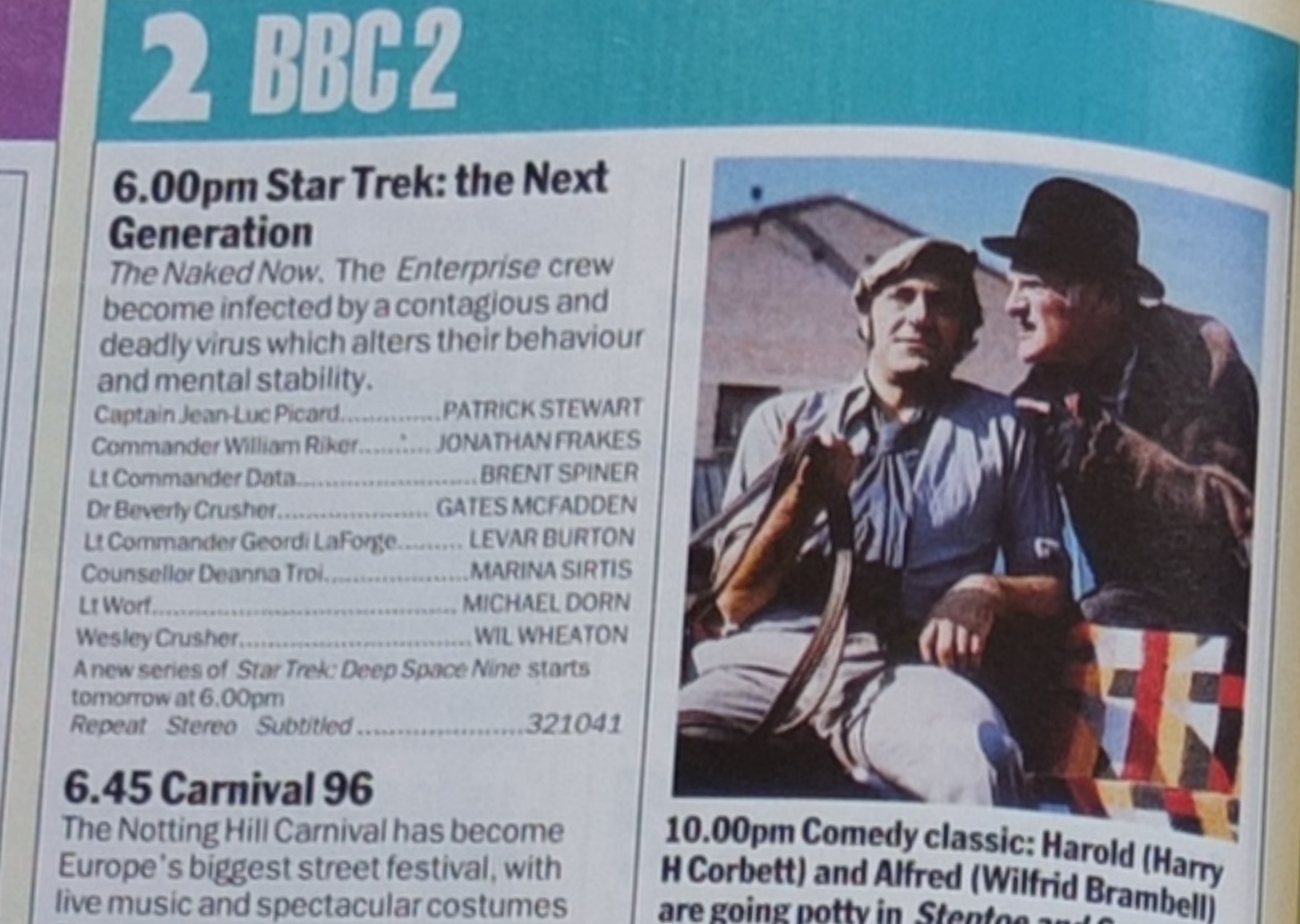
A Radio Times listing for Star Trek: The Next Generation in 1996.
It was only in 2001, when Enterprise premiered, that I took a step back. And that wasn’t burnout as such – I just wasn’t particularly interested in Enterprise’s premise and 22nd Century setting. I’ve said this before and I’ll say it again: I was wrong about that! Enterprise is a great show and a welcome addition to the Star Trek franchise, something I wish I’d realised at the time. But again, even as I stepped away from what was Star Trek’s newest incarnation, I still considered myself a fan. In the mid-2000s I must’ve watched my Star Trek DVDs dozens of times.
So why can’t I muster up the enthusiasm or effort to watch the rest of Strange New Worlds right now? Or even start Lower Decks’ fourth season?
It’s not that I don’t think I’d enjoy them. With the possible exception of Strange New Worlds’ musical episode (as I’m not a big fan of non-animated musicals) I’m sure I’d enjoy at least some of what’s on offer. But whenever I think about sitting down to watch the next episode… I just feel like I’ve lost interest.
Subspace Rhapsody is a musical episode.
I run a Star Trek fansite. Sure, I talk about other topics, but the Star Trek franchise accounts for around two-thirds of the articles, reviews, and columns that I’ve written here over the past few years. “Trek” is literally in the website’s name! I’m no hater of “nu-Trek,” either, and even though I haven’t been wild about every storytelling decision in Picard or Discovery, for example, I still consider myself a fan and supporter of those shows. When I’ve been critical of Star Trek – and of the corporation that owns and manages it, Paramount Global – that criticism is intended to be constructive and comes from a place of love.
So why do I find myself so uninterested in Star Trek right now?
I’ve been wrestling with this question for months. At first I thought I could write it off as simply being distracted. I played through video games like Star Wars Jedi: Survivor and Baldur’s Gate 3, and I was eagerly awaiting Starfield. I watched a couple of other shows, like Silo on Apple TV+, and films like The Last Voyage of the Demeter. But I wasn’t avoiding Star Trek because I was too busy. That might’ve felt like a convenient excuse in the moment, but it isn’t the real answer.
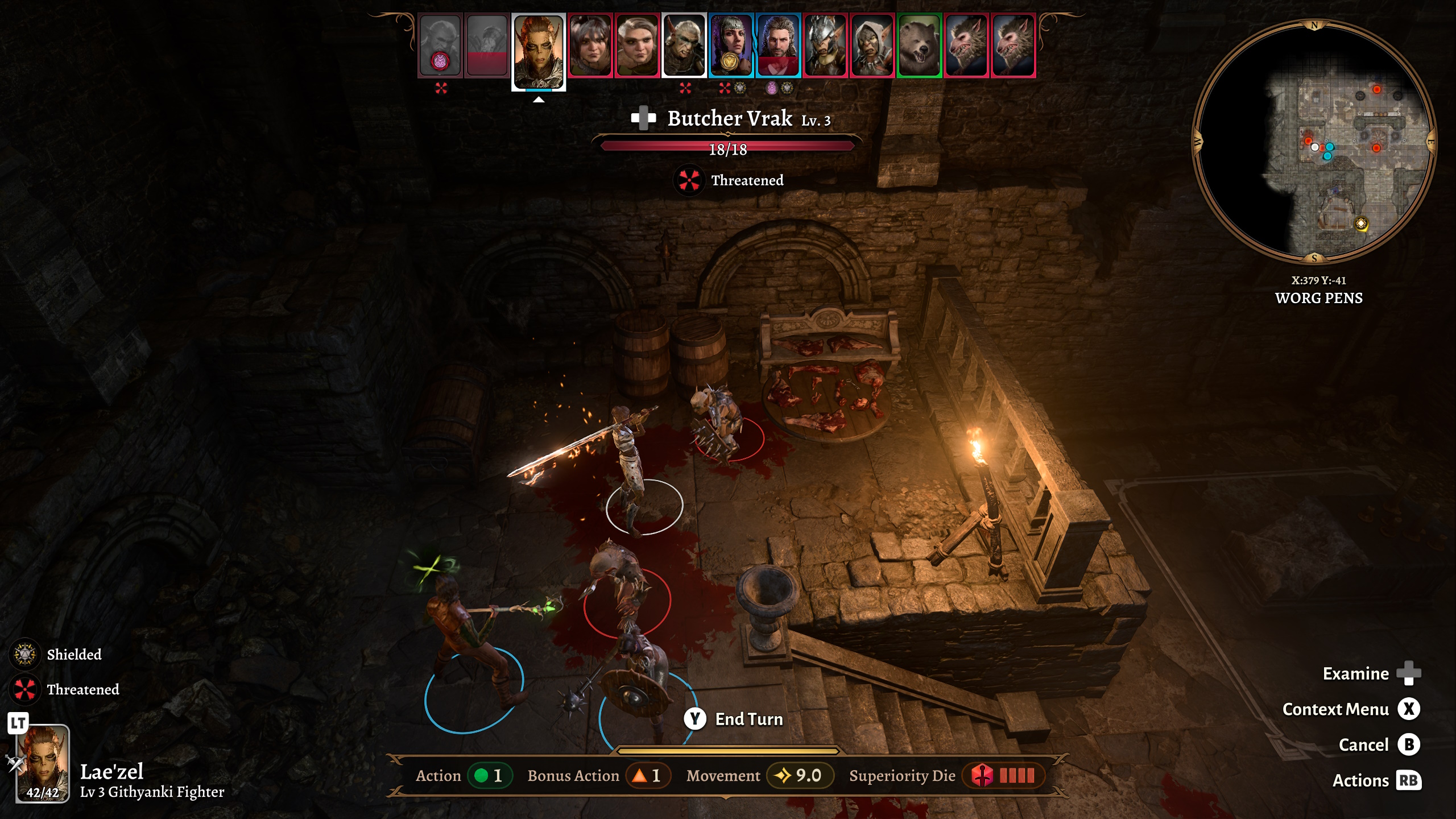
Have you read my review of Baldur’s Gate 3 yet?
The simple truth is that I feel burned out on Star Trek. The franchise’s return to the small screen has snowballed over the past couple of years, going from a single show to five shows – all of which have been on the air in the past eighteen months or so with very few breaks. That should be great, and it should feel like a return to form for a franchise that aired The Next Generation, Deep Space Nine, and Voyager alongside one another for much of the ’90s. But somehow… it doesn’t.
I warned about the dangers of “franchise fatigue” and burnout just after New Year when I took a look at Star Trek’s highs and lows of 2022. I said then that running five different shows might just be too much to keep up with – and I meant it. I could feel the early stages of burnout beginning even last year, and that’s partly why I stopped reviewing episodes of Lower Decks and ended up taking a break from writing anything here on the website at all.
Mining the Mind’s Mines was the last Lower Decks episode that I reviewed.
A lot has changed since Star Trek’s ’90s heyday. To fit in with modern trends, most stories are serialised and seasons now run to ten episodes instead of twenty-two or more. The franchise’s shows all occupy different time periods instead of sticking to a single, unified setting. And the five different shows that have been on the air of late are all dabbling in very different genres and styles. Where it felt relatively smooth and easy to hop from an episode of The Next Generation to Deep Space Nine or from DS9 to Voyager, it’s less easy to jump from Lower Decks to Picard or Discovery to Prodigy. Perhaps that’s part of it.
But there’s another factor here: me. When I was enjoying those early episodes of The Next Generation in 1991, I was a kid. Star Trek was a big deal for me as a lonely, awkward adolescent trying to navigate school and social life in the ’90s… but maybe I overestimated how big of a deal it still is for me thirty years later. I’ve changed since then, too… so I can’t place all of the blame on Star Trek.
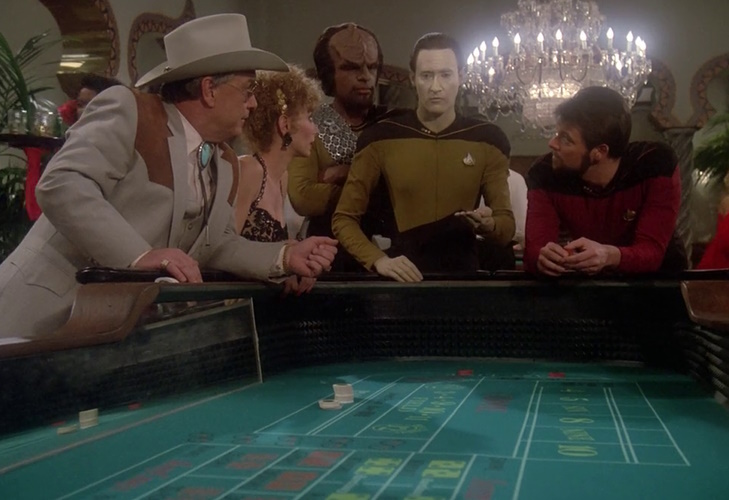
The Royale, from Season 2 of The Next Generation, is the earliest Star Trek episode that I can remember watching.
I’ve spoken before about building this website, and how I hoped to create for myself a space where I could talk about the subjects that interest me at my own pace. I wanted a little piece of the internet where I could write without fear of word limits, and without being reduced to a mere comment on someone else’s work. Moreover, I wanted the freedom to talk about what interests me – whether that’s Star Trek or some other film, game, or series. Or even topics unrelated to entertainment.
But as the website has developed, I found myself writing Star Trek theories, Star Trek episode reviews, and much more about the franchise. As several of those pieces seemed to pick up a lot of interest and attention, being clicked on tens of thousands of times in some cases, I felt a kind of pressure to keep up. Last year, I said I felt I’d been writing reviews of Lower Decks less out of enjoyment than a sense of obligation… and this summer I started to feel the same way about Strange New Worlds. While I still enjoy the process of writing here on the website, I felt trapped in a sense by having made a commitment to review all of these episodes within a couple of days of their broadcast.
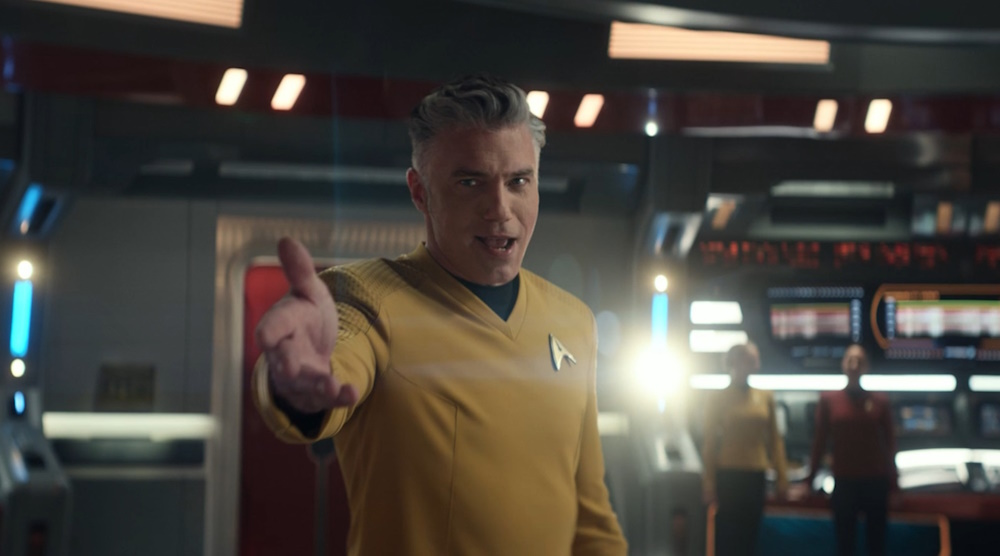
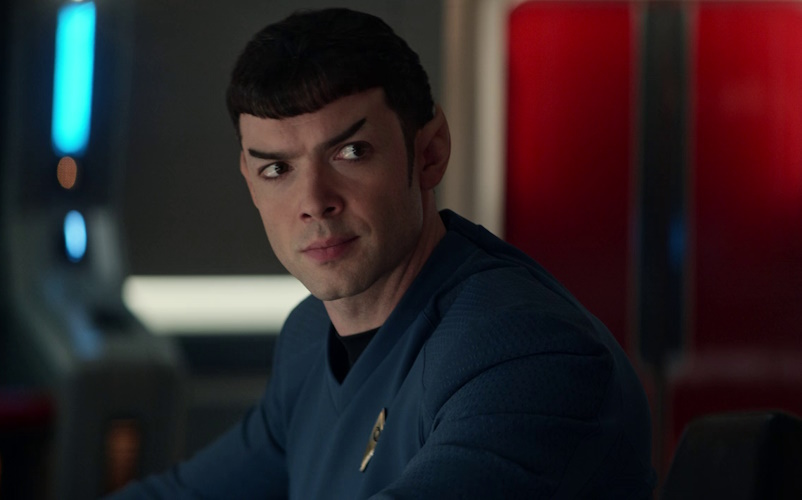
Spock in Strange New Worlds Season 2.
So perhaps, somewhat ironically given my intentions, writing here on the website has become another factor. If I sit down to watch the next episode of Strange New Worlds I’ll feel guilty if I don’t take notes for my review, capture still frames to use, and write something that runs to at least a couple of thousand words – if not more. So is the burnout I feel less to do with Star Trek and more to do with writing?
That doesn’t seem right, either; this isn’t a case of writer’s block. I recently reviewed Baldur’s Gate 3 – a title that I adored and would recommend to any fan of role-playing games. And I’ve talked a lot about Starfield over the past couple of months, too… so when I find a subject that interests me and where I feel I have something to say I can still get the words to flow. But for Star Trek? The interest has faded, at least temporarily.
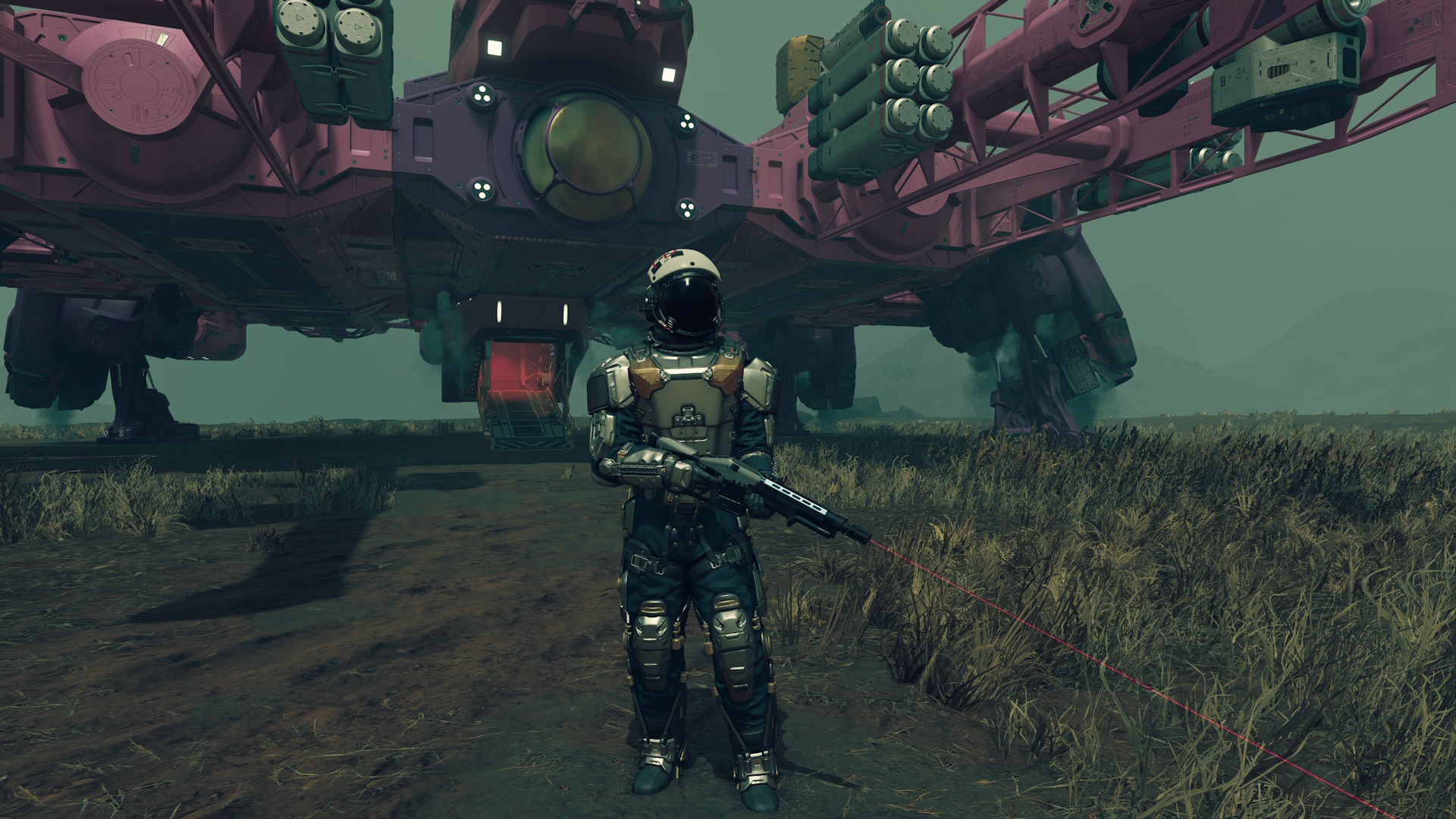
I’ve found a lot to say about Starfield over the past couple of months.
And it probably is temporary. I’ve taken breaks from Star Trek before; there might’ve been a year or more where I didn’t watch a single episode or film in the 2000s and/or the 2010s. I’ve never been someone who can settle on just one “thing;” I tend to dabble in different hobbies and experiences – or in this case, entertainment properties. Sometimes I’ll be fixated on one thing for a time before moving on and leaving it behind entirely.
But that’s always been the case, and even when I found myself taking breaks from Star Trek unintentionally, I wouldn’t have described myself as feeling burned out. So we still haven’t zeroed in on what’s changed.
Even though I wasn’t wild about Enterprise during its original run, I didn’t feel the same kind of burnout as I do today.
With Star Trek feeling like its on decidedly shaky ground amidst strikes, the “streaming wars,” and Paramount’s failing leadership, I feel a strong sense of obligation to support the franchise. I don’t want to see Star Trek disappear again – and in the current media landscape, who knows when or even if another revival would be possible if that were to happen? But at the same time, there’s no fun or enjoyment in writing out of obligation. I might as well go back to my old job working in marketing; writing meaningless, uninspired fluff to meet arbitrary deadlines.
Perhaps the answer is a combination of factors, as is often the case. Paramount has hit the accelerator too hard and Star Trek has become oversaturated. Franchise fatigue has begun to set in, and hopefully the lesson the corporation will learn before it’s too late is that it needs to slow down and refocus. At the same time, I’ve changed over the years, and Star Trek no longer occupies the same place in my life as it did during my adolescence. Having this website as a project has been great for me – but it’s also created made-up obligations that are teaming up with my anxiety. Retreating from Star Trek is the way my brain has responded to that sense of being overwhelmed, and once I “missed” a deadline or two, re-starting feels all the more difficult.
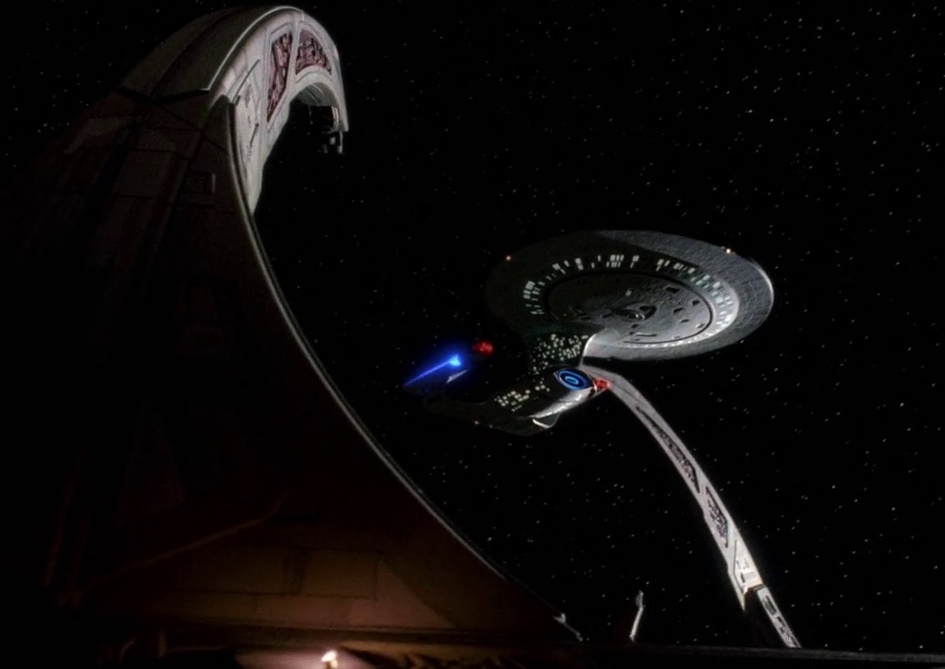
The Enterprise-D at DS9.
Although this has been a rather introspective look at things, I’m absolutely certain that I won’t be the only one feeling a sense of burnout. Trying to create a broad and varied franchise is an admirable goal, and pitching different shows at different audiences and demographics is, in theory, not a bad idea. But Paramount’s execution of this has been poor, and the corporation needs to wake up to a simple reality: there are limits to how far a single franchise can be pushed. Star Trek can’t bear the weight of carrying Paramount Plus on its own, and audiences have their limits.
But it would be remiss to ignore my personal circumstances, as this sense of burnout isn’t entirely the fault of franchise fatigue and oversaturation. I have to find a way to rediscover my passion for Star Trek – but I also have to acknowledge that I’m not a kid or a teenager any more, and that my relationship with the franchise has evolved over the years. Even as Paramount tries desperately to play the nostalgia card, what existed back then can never truly be recreated.
I’ll get back to watching and reviewing Star Trek sooner or later. Just don’t ask me when, because I honestly couldn’t tell you right now.
The Star Trek franchise – including all properties discussed above – is the copyright of Paramount Global. Most Star Trek films and shows can be streamed on Paramount Plus in countries and territories where the platform is available. This article contains the thoughts and opinions of one person only and is not intended to cause any offence.
Spoiler Warning: There are spoilers ahead for the Kelvin timeline films: Star Trek, Star Trek Into Darkness, and Star Trek Beyond. Spoilers are also present for Star Trek: Strange New Worlds.
One of the worst things to happen to the Star Trek franchise last year was the disastrous announcement and rapid un-announcement of a sequel to 2016’s Star Trek Beyond. The film quickly fell apart as it became clear that Paramount had done nothing to secure the main cast, director, or even schedule filming dates and plan location shoots.
But it wasn’t bad for the Star Trek franchise because I desperately wanted to see a new Kelvin timeline film. In fact, I don’t know of any Trekkies in my immediate circle who would say that they’re desperate to get back to the Kelvin timeline! The reason why it was such a disaster is how damaging a mess like this is for Star Trek as a brand.
Promo art for 2009’s Star Trek.
From the point of view of fans and the franchise’s broader audience, this kind of situation might not seem like a big deal, and I get that. But for folks who work in the entertainment industry, seeing how poorly Paramount handled this is going to have longer-term implications.
A sequel to Star Trek Beyond has failed to get off the ground for basically seven years at this point. More than one script that would have brought back the Kelvin crew has been considered, and pre-production has begun at least twice, yet the film hasn’t materialised. The chaos last year, with the film being pulled from schedules just a few weeks after its announcement, is just the latest in a long line of blunders from Paramount – and anyone working in Hollywood, whether they’re a lowly production assistant or a talented, well-known director, is now going to be thinking twice about attaching themselves to a disorganised corporation that’s repeatedly failed to make this film.
Paramount really screwed this up.
Matt Shakman, who had previously worked on WandaVision for Marvel and has also directed episodes of Game of Thrones, had been tapped by Paramount to sit in the director’s chair, but he exited the project when things fell apart last year. Recent comments that Shakman made have seemed to suggest that a Star Trek Beyond sequel may still be in the works, and several outlets have seized upon this news to begin speculating about what may or may not be happening behind the scenes.
But as you might’ve guessed from the title of this article, I’m not convinced that there’s a place for the Kelvin timeline any more. Maybe it’s time to leave it behind, and put the considerable money that would’ve been thrown its way into other projects.
Is it time to bid farewell to these versions of the characters?
More Star Trek is always a good thing, and that’s the caveat I will always give whenever we have discussions like this! If there is to be a new Kelvin film, I’ll definitely tune in when it comes to streaming or Blu-ray (my health prevents me from taking trips to the cinema any more, regrettably). It’s also worth noting that when Star Trek goes to the cinema it tends to pick up a much bigger audience than it does on television or streaming – and reaching out beyond the existing fandom and viewer base has to be considered a priority for Paramount in the months and years ahead.
With those points in mind, though, if I were in charge of the franchise for Paramount, a fourth Kelvin timeline film is categorically not the project I would choose to give the green light to.
Sorry, captain.
Since Beyond premiered in 2016, we’ve had 144 episodes of Star Trek across six different productions – if you count Short Treks, that is. The Star Trek universe has massively expanded to include a huge variety of new shows set in different eras, appealing to diverse audiences, and with varying styles. I’m just not sure where the Kelvin timeline fits in with everything else Star Trek is currently doing – and in addition, adding an alternate timeline into the mix when the franchise is already playing in so many different time periods risks making Star Trek look even more complicated and convoluted than it already does.
Strange New Worlds has picked up several characters who are also present in the Kelvin timeline, and there’s a real risk that these two projects would trip over one another – or at least tread on each other’s toes. If I had to choose only one set of these recast or reimagined characters to stick with, I’d definitely choose the Strange New Worlds versions; Season 1 was absolutely outstanding, and seeing where Captain Pike and the crew will go next is one of my most-anticipated entertainment experiences of the year.
Strange New Worlds is a fantastic series; the high-water mark of modern Star Trek.
The Kelvin timeline served a purpose in 2009 when its first instalment premiered. It rebooted things, reimagined Star Trek for a new century, and stripped away some of the more niche and convoluted aspects of a more than forty-year-old franchise to ensure it would appeal to the widest possible audience. And it succeeded in that regard, with all three films turning a healthy profit and proving definitively that there was still life in a franchise that many had written off.
Without the Kelvin timeline, it’s hard to see how we’d have gotten Discovery, Picard, and the modern Star Trek productions that we’re continuing to enjoy, so we absolutely owe it a debt of gratitude for what it accomplished. But its original purpose has long since evaporated, with the idea of seeing “young” Kirk and Spock in their Academy days having been replaced by taking a look at their five-year mission. With Strange New Worlds also including Spock, Uhura, and even Kirk himself in some capacity, I just don’t see where their Kelvin counterparts fit any more.
Seeing Kirk and co. at the Academy was one of the original concepts present in the Kelvin timeline.
As we can infer from Paramount’s failure to negotiate contracts with the Kelvin stars, several of them are probably beyond the reach of the corporation’s current budget. Zoë Saldaña has found fame in Avatar and the Marvel Cinematic Universe, Chris Pine has been in Wonder Woman for DC, among other roles, and Karl Urban has received praise for his role in The Boys on Amazon Prime Video. While these people weren’t “unknowns” in 2009 by any means, their star power has risen, and with it, the money they’d expect to receive for a film like this has also increased.
A new Kelvin timeline film would be an expensive undertaking – far more expensive even than Into Darkness, which holds the franchise record with an approximate $190 million budget.
The Kelvin cast with JJ Abrams at the Star Trek Beyond premiere in 2016. Image Credit: StarTrek.com
As a comparison, Season 3 of Picard is estimated to have cost Paramount somewhere in the region of $9 million per episode, and Discovery is also somewhere in the $8-9 million per episode range. Some quick maths tells us that, even if the new Kelvin timeline film were to cost the same as Into Darkness and not a penny more, it would still be more expensive than producing two ten-episode seasons of modern Star Trek shows.
Paramount does not have unlimited funds! And even when compared to the likes of Disney, Amazon, and Netflix, Paramount has to be a lot more careful with where it spends its money. I’d very much rather have two seasons of modern Star Trek than one new Kelvin timeline film – especially if those seasons are going to be anywhere near as good as Strange New Worlds Season 1 was!
Paramount doesn’t have money to burn…
It feels like the abandoned film helmed by Matt Shakman was the Kelvin timeline’s last realistic chance at a revival. Its collapse has caused all sorts of problems for the Star Trek franchise, especially with ambitions to return to the cinema still being held by Paramount, and those issues shouldn’t be overlooked. But it may be for the best in the long run.
It’s true that Beyond teased a sequel in its final moments, with Kirk and his crew looking out as the Enterprise-A was being constructed. There will be some fans who truly wanted to see where those versions of the characters might go next. But with Star Trek seemingly finding its feet again on the small screen, and having firmly returned to the prime timeline, I just don’t think there’s a place for it any more.
Beyond definitely teased a continuation of the Kelvin story.
When the Beyond sequel was announced last year, it didn’t exactly light up the board, even within the Star Trek fan community. There was chatter and interest, of course, but there wasn’t the kind of hype bubble that there was in 2007-08, for example, when the first film was in production. Partly that’s because Star Trek as a whole is right on the cusp of oversaturation and franchise fatigue, with 51 episodes being broadcast in 2022 alone. But partly, it must be said, it’s because there was just never a whole lot of excitement for the Kelvin timeline to begin with.
I’d watch a new Kelvin timeline film… but I wouldn’t be wildly excited about in the way I am for Strange New Worlds Season 2, for example. And even if the film managed to pull in a decent audience at the box office, these versions of the characters are tried and tested by now. The chances of Star Trek 4 bringing in scores of new viewers to the franchise for the first time is slim.
What kind of audience numbers would a new Kelvin film bring in?
The Kelvin timeline served a purpose in the 2000s and 2010s. The trilogy did a lot of good, and paved the way for the success Star Trek is currently enjoying. But it’s also difficult to see how to integrate it into the franchise as it currently exists – it’s off to one side in its own little narrative box. And because several of its characters are now part of Strange New Worlds, there’s even a danger that it could feel repetitive to bring back the likes of Spock and Uhura.
So to answer the question I posed at the beginning: no. I don’t think we still need the Kelvin timeline. And if I were in the room, I’d argue that there are better ways for Paramount to spend money on Star Trek than greenlighting a new film starring this cast – whether that means new seasons of television or alternative pitches for feature films.
The crew in Beyond.
The damage done to Star Trek as a whole by the film’s collapse last year can’t be overstated, and may take time to fully appear. Paramount needs to get a grip, because mistakes like that can’t afford to happen again. But maybe it will be for the best. The money that could have been spent on a sequel to Beyond can be reallocated… and with no new live-action Star Trek projects currently announced, that could mean that the likes of Discovery and Strange New Worlds will be able to continue for an extra season apiece.
There are reportedly other feature film pitches that Paramount is working on, and the Beyond sequel was one of two that were supposedly announced over the last couple of years. Whether the other film, written by Discovery and Short Treks writer and producer Kalinda Vazquez, is still going ahead… who can say? Paramount’s disorganisation and chaos is boundless, it seems!
Regardless, if there’s news about a Beyond sequel or any other Star Trek feature films in the months ahead, I’ll be sure to take a look at it here on the website. So I hope you’ll stay tuned!
The Star Trek films should be available to stream on Paramount+ in countries and territories where the service is available, and are also available on DVD and Blu-ray. The Star Trek franchise – including all films and properties discussed above – is the copyright of Paramount Global. This article contains the thoughts and opinions of one person only and is not intended to cause any offence.
Spoiler Warning: There are spoilers ahead for the entire Star Trek franchise, including the most recent seasons of Discovery, Picard, and Strange New Worlds. There are also spoilers for upcoming and unreleased Star Trek projects.
By almost every conceivable measure, 2022 has been a fantastic year for the Star Trek franchise. We’ve seen new projects become successful, ongoing series really hitting their stride, and more seasons and individual episodes of Star Trek than at any time in the past. Barely a week has gone by without a brand-new episode to get stuck into – and with different shows targeting wildly different audiences, it really feels like Star Trek in 2022 has had something to offer to practically everyone.
But that isn’t the whole story, and unfortunately it feels as though 2022 has also been a pretty dark year for Star Trek – one in which major mistakes have been made that could very easily lead to serious consequences in the medium-to-long term, and perhaps even premature cancellations for some or all of the shows currently in production.
Let’s look at the high and low points for the Star Trek universe over the past twelve months.
On this occasion, I want to look back at 2022 from the perspective of a Star Trek fan, and draw attention to both the highs and lows of a rollercoaster year for the franchise. And there’s quite a lot to say, so make sure you’re sitting comfortably!
My usual caveat applies: everything we’re going to talk about today is the subjective opinion of one person. There are a lot of reasons to think positively and optimistically about Star Trek, and the fact that I have some negative or uncomfortable points to raise shouldn’t be interpreted as me being some kind of “hater” of new Star Trek. I love the franchise, I want to see it succeed, and I raise these issues not out of spite but out of genuine concern. If you don’t agree with me, that’s okay. There’s room within the Star Trek fan community for polite discussions and civil disagreements!
Now that that’s out of the way, we can begin.
The Great:
A Starfleet armada as seen in Picard Season 2.
It seems only fair to allow the Star Trek franchise to put its best foot forward, so we’ll start with what went well in 2022. And there are several incredible highlights, any one of which alone would ordinarily mean we’d consider 2022 to have been a huge success for Star Trek.
Some of the best entertainment experiences that I had all year came from the Star Trek franchise, and those incredible episodes and stories weren’t limited to a single season or a single show. In fact, it wouldn’t be unfair to say that all five of 2022’s Star Trek productions had some fantastic high points; episodes or at least moments within episodes that had me on the edge of my seat, jumping for joy, or in tears.
Strange New Worlds Season 1 was fantastic:
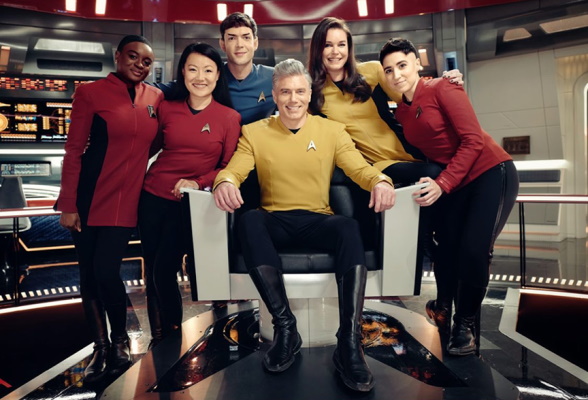
Several of the main cast members of Strange New Worlds in a behind-the-scenes photo.
The first season of Strange New Worlds was, without a doubt, the best that modern Star Trek has had to offer – and one of the finest seasons in the entire fifty-six-year history of the franchise. A triumphant return to an older, more episodic style of storytelling that still retained many modern serialised elements represents a model that I genuinely believe every other current and upcoming project in the franchise needs to seriously consider adopting. The diversity of stories on display in Strange New Worlds Season 1 was unprecedented in the franchise’s modern era.
Strange New Worlds’ premiere was also the culmination of a fan campaign to get Anson Mount and Ethan Peck to reprise their popular and incredibly successful roles from Discovery’s second season. The show’s very existence is testament to Paramount’s willingness to take on board feedback from Star Trek fans and a wider audience, and the fact that the corporation backed up this relative gamble by awarding the series a decently high budget should be acknowledged. Paramount didn’t have to make Strange New Worlds – plans were afoot for other Star Trek shows and spin-offs, but the corporation reacted positively to feedback from fans and viewers, and the result was an absolutely outstanding season of television that has hopefully laid the groundwork for one of the best Star Trek series of the current era – if not of all-time.
The USS Enterprise.
It really is hard to overstate just how incredible Strange New Worlds’ first season really was. In my spoiler-free review I talked about how the show enthusiastically tried out different genres, managing to thread the needle of staying close to Star Trek’s roots while still feeling like a thoroughly modern production. There were ten fantastic episodes – and while I had a few story nitpicks, overall the season has to be considered the best since Star Trek returned to the small screen in 2017.
So Strange New Worlds is definitely one of the highlights of 2022 – not just for the Star Trek franchise, but in the entertainment space in general. It’s a show that should be accessible to new and old fans alike, with the potential to expand the Star Trek fandom beyond its current niche.
The Strange New Worlds-Lower Decks crossover announcement:
The announcement’s official graphic.
This is something that I genuinely was not expecting – but it’s a fantastic idea! Star Trek did a fair few crossover episodes in its heyday, and while I guess we can consider parts of Discovery and Strange New Worlds to have crossed over with The Original Series, it isn’t the same as bringing together two shows that are currently in production. With five shows occupying five different time periods and regions of the galaxy, a proper crossover felt like a remote possibility – until this announcement came along at Comic-Con in July.
I mentioned the diversity of genres that Strange New Worlds dabbled in in its first season – well, one of those was comedy! We had two episodes that had overtly comedic premises, and many other moments of humour throughout much of the season. A crossover with Lower Decks – an animated comedy series – is thus not as far-fetched as we might think!
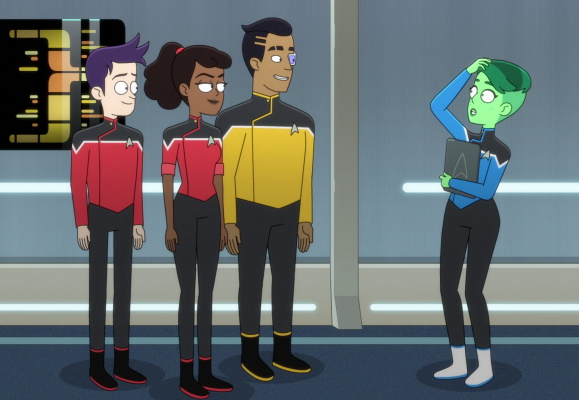
Boimler and Mariner will soon be visiting Strange New Worlds…
As always in Star Trek, technobabble can account for most things! The crew of the Cerritos could find themselves in the 23rd Century thanks to all manner of phenomena, so there’s no real barrier to bringing the two shows together. With some creative scriptwriting, a solid foundation should be able to bring Boimler, Mariner, and perhaps other members of the Cerritos’ crew aboard Captain Pike’s ship.
This announcement has got a lot of Trekkies very excited, and that’s a great thing. Paramount needs to make moves like these to keep the fan community engaged, and while a crossover may feel very much like fan-service, there’s also a huge potential benefit to bringing together two different parts of the Star Trek franchise. Fans of Lower Decks may check out Strange New Worlds for the first time – and vice-versa. Crossover stories have the potential to benefit both shows and increase viewership, potentially turning casual viewers into fans of the franchise as a whole. If Star Trek is to survive long-term, we need to see more moves like this.
Visual effects and CGI:
A digitally de-aged John de Lancie as Q.
Although Discovery’s first season felt like it brought to the table some excellent visual effects, there were some definite disappointments thereafter. The Romulan and Federation fleets seen in the finale of Picard Season 1, for example, were pretty lacklustre; copy-and-paste starships that all looked the same and, in the case of the Starfleet vessels, didn’t even have names and NCC numbers. There were also some pretty sloppy CGI moments in Discovery’s third season – one example that comes to mind is a digital sword that supposedly stabbed a character, but just looked awful.
But in 2022, all that changed. We had a big, beautiful Starfleet armada in Picard’s season premiere and season finale. We had other CGI moments in the Confederation timeline that looked spectacular. Strange New Worlds did some incredible things with practical puppets in conjunction with CGI and visual effects to create some wonderful moments. And Discovery brought to screen one of the most “alien-looking” alien races ever seen in the franchise: Species 10-C.
Unknown Species 10-C looked fantastic.
Both Discovery and Strange New Worlds made excellent use of Paramount’s fancy new AR wall, too. When the AR wall first debuted, I felt there were definitely a few moments where its use was noticeable. But by the time we got to 2022’s Star Trek productions, the creative team and effects artists had clearly grown in both confidence and ability, taking advantage of the AR wall to craft some wonderful environments.
Finally, I’d be remiss not to mention the digital de-ageing of John de Lancie in his initial appearance as Q. That moment, which came at the end of the Picard Season 2 premiere, was absolutely fantastic!
Some of these technologies are very expensive, and Paramount doesn’t have the same resources as the likes of Disney or Netflix, so I can understand why they’re used sparingly in some cases. But overall, I’d give Star Trek’s visual effects and CGI work an A grade for 2022.
Discovery Season 4 ended on a spectacular high:
The Presidents of Earth and the Federation meet.
Although Discovery’s fourth season seemed to drag in places, there’s no denying that the way the season ended was pitch-perfect and went at least some way to making up for earlier narrative missteps. Coming Home (the season finale) was an incredible episode: deeply emotional, visually stunning, and tied up all of the season’s loose ends.
The way in which Season 4 ended showed off the Federation at its very best, racing in to help a planet that had left the organisation simply because they needed assistance and it was the right thing to do. I still get chills just thinking about it, and the way Admiral Vance led the charge, bringing Federation HQ to Earth in its hour of need… it’s one of the best story beats in the season.
The arrival of the USS Mitchell at Earth.
After the drama with Unknown Species 10-C was resolved, an epilogue saw Earth coming back into the fold, rejoining the Federation, and this has set the stage for what promises to be a different kind of story in the show’s upcoming fifth season. I would challenge any Discovery-avoider to watch Coming Home and not feel that the show has grown spectacularly since its premiere almost six years ago.
By expanding its cast with some genuinely interesting secondary characters, Discovery is starting down the Deep Space Nine road, where characters outside of the main headliners could be just as important to stories. Although it’s still “the Burnham show” in some ways, there’s movement away from a laser-focus on one character, with others being given moments in the spotlight. That’s all to the good – and as Season 5 approaches, there are plenty of reasons to be optimistic.
So that’s what Star Trek got right.
Spock, Pike, and Sam Kirk on the bridge of the Enterprise.
There are some really amazing highlights, and were it not for some of the things we’re about to discuss, they’d have meant that the year 2022 would’ve gone down in history as one of Star Trek’s finest; the beginning of a new “golden age” that would rival the franchise’s 1990s heyday. Strange New Worlds truly excelled, Discovery did some bold and interesting things, and Picard put together a Starfleet armada that was big, diverse, and beautiful. And that’s not even mentioning solid seasons from both Lower Decks and Prodigy that continue to branch out in very different directions.
But that isn’t all there is to say, and now I’m afraid we have to consider some of the ways in which Star Trek went wrong in 2022.
The Terrible:
It must be some kind of visual metaphor…
Paramount did serious, almost catastrophic harm to Star Trek in 2022, and I genuinely fear for the franchise’s longer-term prospects. I had felt all but certain that we’d make it to the 60th anniversary in 2026 with new seasons and perhaps even new films being created… but that goal feels pretty far away right now, even with the promise of unannounced projects being worked on behind the scenes.
The simple truth is this: I have no confidence in the leadership team at Paramount. It seems as if they don’t know what they’re doing; they leap from disaster to disaster, damaging trust and confidence in the Star Trek brand, harming the Star Trek fan community, and above all, it feels as if 20th Century thinking is trying – and desperately failing – to lead Paramount into the 21st Century. Without a major change in direction at the top and a serious rethink of the corporation’s attitude and approach, Star Trek will not succeed and will not survive.
The international rollout of Paramount+:
The Paramount+ logo.
If you’ve been a regular reader here on the website, you may remember that I’ve had a lot to say on this subject. The fact that Paramount was unable to speed up the painfully constipated rollout of its streaming platform – and crucially, the corporation’s unwillingness to broadcast Star Trek on other channels or streaming platforms in countries and territories where Paramount+ isn’t available – has been a dead weight around the neck of the Star Trek franchise, pushing Trekkies away… or into the arms of piracy.
Paramount sits atop a global media empire, and owns television channels in dozens of countries around the world. If the rollout of Paramount+ was so slow, the corporation had months or years in which to make other arrangements to broadcast Star Trek. Prodigy, for instance, is produced in part under Paramount’s Nickelodeon brand – and there are Nickelodeon channels available in more than 100 countries around the world. Why was Prodigy not broadcast on any of them until months after its first season had gotten underway? And why was Strange New Worlds not made available here in the UK on one of the dozen or so channels that Paramount already owns?
The real Paramount+ tagline, apparently.
These decisions hit the Star Trek fan community hard. But more than that, they greatly harmed Strange New Worlds and Prodigy in particular. In a 21st Century media landscape, word-of-mouth on social media makes all the difference – and Paramount has consistently failed to learn that cutting off a huge portion of the potential audience for its shows means that posts get fewer likes, hashtags don’t trend, and the resulting lack of online chatter harms these shows in the United States as well. The blinkered, short-sighted “America First” approach that the corporation has adopted may have worked fine in the 1980s… but it isn’t the ’80s any more. The internet is one single worldwide audience, and by denying a huge portion of that audience access to Paramount+ and the Star Trek franchise, Paramount has done immeasurable harm to Lower Decks, Strange New Worlds, Prodigy, and the entire franchise.
At time of writing, Paramount+ doesn’t even have the faintest idea about a launch in countries like Japan or South Korea, and even in western Europe, coverage is spotty. And you can forget about the hugely growing markets in places like China or Africa – Paramount doesn’t even acknowledge their existence. If there were plans afoot to get Star Trek shown on other networks in those regions – whether Paramount-owned or not – at least that would be something. But no such plans have been forthcoming, so the option Trekkies have in much of the world is to either pirate Star Trek or miss out. There’s no prospect of bringing on board new fans as long as this attitude persists.
Scheduling problems:
Why did Picard Season 2 premiere before Discovery Season 4 had ended?
Why did Discovery Season 4 overlap Picard Season 2 by three weeks in the spring of 2022? And why was the Picard finale shown the same day (the same minute, in fact) as Strange New Worlds’ premiere? Paramount’s scheduling decisions were pathetic in 2022, as there was simply no need for the shows to overlap like this.
Had Picard Season 2 been delayed and not run alongside Discovery, and Strange New Worlds also been delayed a mere four or five weeks so as not to overlap Picard, that would have lined up almost perfectly with Paramount+ launching here in the UK. There would have been the option for Trekkies in the UK to join in with fans in the USA, watching Strange New Worlds together. This bizarre rush saw several weeks with two different shows on at the same time, and while that did also happen during The Next Generation era, in an age of ten-episode seasons and on-demand streaming… it just shouldn’t be happening any more.
…and why did Strange New Worlds premiere before Picard Season 2 had ended?
You don’t see Disney+ having The Mandalorian and Andor overlapping one another – Disney makes sure that the Star Wars shows have room to breathe. I genuinely don’t understand how a decision was taken to have these shows clash. At the very least it should have been possible to spread out the release of episodes so that they weren’t on the same day, but Paramount even failed to consider that possibility, apparently.
Were it not for the rushed scheduling meaning that Strange New Worlds debuted in the USA weeks before Paramount+ arrived in the UK, I’d still find the whole thing pretty stupid. But when a slightly more spread out schedule could have allowed Paramount+ to land in the UK the same week as Strange New Worlds premiered… I honestly can’t forgive it. Whichever idiot at Paramount (and there’s no shortage of those, clearly) signed off the scheduling decisions for 2022 needs to be fired.
A premature announcement:
It turns out we aren’t going back to the Kelvin timeline after all…
One of the most basic, entry-level rules of the entertainment industry is this: you don’t officially announce anything until all of the pieces are in place. Paramount became a laughing stock in 2022 by announcing a sequel to 2016’s Star Trek Beyond… before trying to quietly un-announce it only a few weeks later.
Whatever you may think of the merits of a new Kelvin timeline film, it should be patently obvious that this was not the way to handle it. It seems as if no main cast members had been so much as offered a contract, let alone been in a position to sign one and start work on a film that had a very ambitious release date of July and then December 2023. Paramount’s failure in this regard was spectacular, and practically unheard of for a big corporation in the modern entertainment industry.
This was a catastrophic failure from Paramount.
Whether a new Star Trek film gets underway in the months ahead or not, this total own-goal from Paramount’s team of corporate morons has already damaged the film – and arguably the wider franchise, too. To make an official announcement, put a film on the schedule with an expected release date, and then have to walk it all back and try to quietly brush it aside is a bad look. It makes Paramount and the Star Trek franchise look disorganised, unprofessional, and chaotic. Who’d want to go to work for a corporation like that the next time they’re hiring?
I can’t even believe we have to say this, but here we go: if you don’t have all the contracts signed, don’t announce your film. If the executives at Paramount don’t understand that, then they need to be removed immediately.
Star Trek Day:
Nicholas Meyer at Star Trek Day.
Oh, I feel bad about putting this on the list – but I’m afraid we must. Star Trek Day was hyped up as a celebration of all things Trek… but it was a spectacular let-down. Despite promises of “announcements and reveals throughout,” nothing major was actually announced at Star Trek Day… unless we count a scripted podcast. Which we don’t.
The live broadcast was also pretty amateurish, with hosts who seemed unprepared, guests who couldn’t answer the most basic of questions about their shows, and panels that were either cut too short or that went totally off the rails and fell apart. There were a couple of teaser trailers, but even then, Paramount seems to have been saving the biggest and boldest of those for Comic-Con a couple of months later.
The less said about the Lower Decks panel the better…
By some accounts, Star Trek Day didn’t bring in much of an audience, which is a shame in a way. But if Paramount isn’t going to make this kind of celebration of the franchise and its fans a big blow-out, perhaps it’s better just to skip it next year – or at least make sure that expectations are properly set in advance.
I hoped for better things from Star Trek Day, and while I don’t want to be too critical of the main figures involved, it was a pretty big disappointment.
Social media failures:
A selection of social media apps.
We’ve already touched on this in a couple of places, but Paramount and the Star Trek franchise really need to get a better handle on social media. The way in which they used social media in 2022 was poor, and we need to see Star Trek becoming much more engaging and interactive with fans and viewers. Social media isn’t merely a billboard on which to paste an advertisement or show off a teaser trailer; Paramount needs to start treating social media platforms as spaces to engage with fans.
To just give a couple of examples, Star Trek’s social media pages could showcase fan art, highlighting the real passion that many Trekkies have for the franchise. And they could run competitions, with giveaways of merchandise or Paramount+ subscriptions as rewards. Take a look around at other big corporations and see what they’re doing; social media is a gateway that Paramount could open, giving new, especially younger fans a first look at Star Trek.
Star Trek and Paramount are not adept at using social media.
At the very least, Paramount and Star Trek need to be more active on social media. They need to respond to genuine questions from fans as much as possible, especially concerning things like release dates and availability. Frankly they also ought to curate their social media posts better, deleting hateful comments about some of the new Star Trek shows and especially about some of the actors. LGBT+ actors and actors from ethnic minority backgrounds are particular targets, and it’s a bad look when a post has comments of that nature.
Look at television shows as diverse as Game of Thrones, Tiger King, and Squid Game. What helped them blow up and break out of their original niches to attract massive audiences? Social media! Well-timed promotions and social media teams that actively leaned into the discussion, the jokes, the memes, and everything else helped those shows – and many more. Star Trek could have that too – if only Paramount could get someone competent to manage its social media operation.
Quentin Tarantino:
Quentin Tarantino. Photo credit: Georges Biard via Wikimedia Commons.
When a director with the undeniable talent of Quentin Tarantino says that he wants to make a film for you, serious consideration of the proposal is warranted. For whatever reason, higher-ups at Paramount decided not to go ahead with a film that had been pitched by the famed director of Reservoir Dogs, Pulp Fiction, and Kill Bill. No explanation has been given – and I really do fear that this could be a huge missed opportunity.
Here’s the short version: you may not like Tarantino personally or his filmmaking style. That’s okay. Maybe you’d hate his take on Star Trek. That’s okay too. Because what someone like Tarantino has that no one else who’s come anywhere close to Star Trek has is star power and pull. Tarantino’s films are on a different order of magnitude to anything else that Star Trek has ever done, and what that would have meant for the franchise is millions of new viewers turning up for the very first time. At least some of those folks would have stuck around, gone back to watch other Star Trek films and shows, and the fan community would have grown.
Tarantino’s pitch reportedly involved a return to the episode A Piece of the Action.
The very worst possible outcome for a collaboration with Tarantino would have been a mediocre film that made a decent profit. But beyond that, the potential for legions of viewers taking a first look at Star Trek – or a second look from folks who’ve not seen it in a while – is immense. To squander such an opportunity when it was seemingly presented on a silver platter may turn out to be an unforgivable mistake.
A standalone Tarantino film need not have impacted any ongoing series or project. It could have been a one-and-done thing occupying its own little piece of the Star Trek universe, inoffensively ignoring everything else in the franchise and doing no harm. Sure, there are potential pitfalls to working with someone like Tarantino… but the gains Star Trek could have made were massive.
Where are the Prodigy toys?
Playmates toys have started beaming down… but none for Prodigy yet.
It’s been well over a year since Prodigy premiered, but there are still no toys, no dolls, no dress-up costumes, no replica phasers or combadges, no teddies… nothing. Prodigy must be the only kids’ show in the world to have zero tie-in products even after its entire first season has come and gone.
There’s more to merchandise than just raw sales and profit. The way children engage with a franchise like Star Trek, especially in the moments where they aren’t sitting down to watch the latest episode, is all about play. Seeing exciting toys on shelves will literally get kids to check out the show for the first time, and seeing their friends dressed up for Halloween or playing with Star Trek dolls has the potential to expand the show’s audience.
The first batch of Prodigy toys are still not available at time of writing… even though the show’s entire first season has come and gone.
The Star Trek franchise may be new to making a kids’ show, but Paramount isn’t. Paramount owns Nickelodeon, and has made many other films and TV series for children in the past – and knows how to make toys and merch for them. Moreover, the Star Trek franchise used to be much better at this, even giving Star Wars a run for its money in the ’90s with figures of practically every guest character, costumes for dressing up, prop replicas, and much more.
I waited and waited for Paramount to address this as Prodigy’s first season went on, then took an extended break. I hoped that we’d have gotten something before the first season finale aired… but it didn’t happen.
Most of Picard Season 2:
Picard visited modern-day Los Angeles in Season 2.
Now we’re getting into narrative decisions, which I admit is something quite subjective – but I’m certainly not alone in considering most of Picard’s second season to have been a disappointment. After a truly spectacular premiere (that I gushed over in my review, calling it “one of the best episodes of live-action Star Trek that I’ve seen in a long time”) the second season took a nose-dive, spending eight-and-a-half episodes wandering aimlessly in a modern-day setting that didn’t feel inspiring, exciting, or even interesting much of the time.
There were some highlights, and by the time the action returned to the 25th Century in the second half of the finale, things did improve. But by then it was almost too late; the damage was done. This was an experimental season, and it’s to the Star Trek franchise’s credit that the creative team are given leeway to try out different ideas. But this one didn’t work, and considering it was one of only three seasons that Picard is going to get, its failure feels all the more egregious and disappointing.
Raffi and Rios.
Picard Season 2 felt muddled, bloated, and unnecessarily long. Yet by the time it ended, there were still huge unanswered questions about key storylines and characters, questions that I feel all but certain the series has no answers to and no plans to even pay lip-service to in Season 3. A meandering, confused batch of episodes gave way to a rushed finale that didn’t have time to bring everything to a satisfactory conclusion.
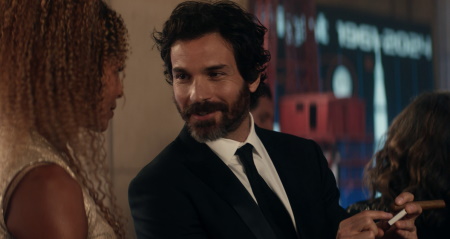
Some storylines in Season 2 just felt confused, as if there were two writers working against one another. Rios’ story, for example, saw him experience the worst of the 21st Century, being incarcerated and deported. But a couple of episodes later, Rios was raving about how much he loves the 21st Century for the cigars and the food on offer at a fancy party. There were clearly ideas on the table that, had they been executed better, were potentially interesting. But the way the season as a whole came to screen was poor – and it’s a concept that I hope won’t be repeated any time soon.
Prodigy isn’t gaining much traction:
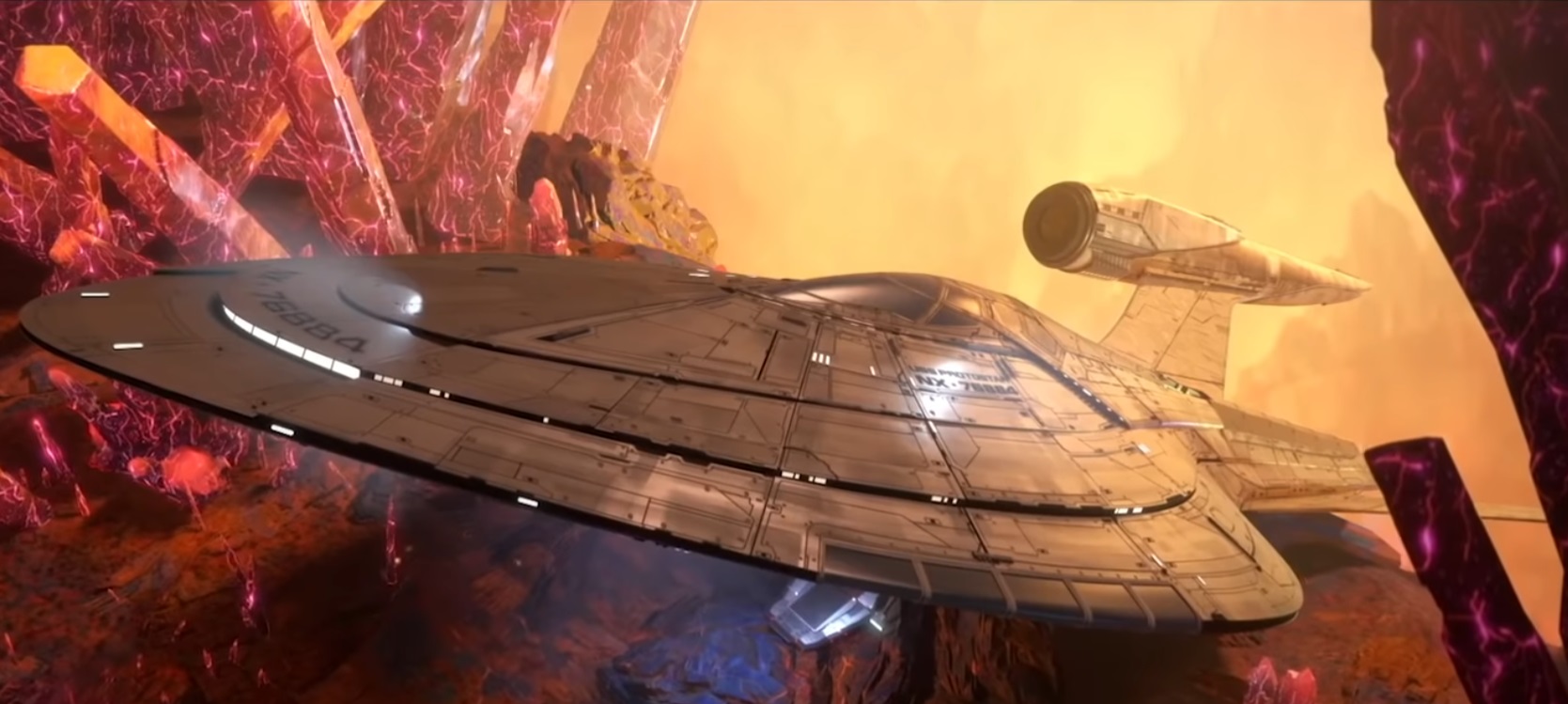
The wrecked Protostar…
Right now, Prodigy is being watched mostly by existing Trekkies and some of their kids. It doesn’t appear to be finding much of an audience of its own, and there are a few reasons why that may be the case. The situation with toys and merch that we just talked about is definitely harming the show’s prospects, preventing it from reaching out beyond existing Trekkies for the reasons laid out above. But there’s more to say.
Prodigy hasn’t been marketed particularly well, with relatively few ads for the show cropping up online. Kids shows need to advertise where kids are – on apps like TikTok, for instance. Also, the show remained a Paramount+ exclusive until very recently, when a belated broadcast on Nickelodeon was announced. While I understand that Prodigy was made as a Paramount+ show, the platform itself is mostly being marketed at an adult audience.
The crew of the Protostar don’t seem happy…
Unlike something like Disney+, which clearly has a lot of content made for kids, Paramount+ just doesn’t have that reputation yet. As a result, I doubt most kids even know that Prodigy exists a full year and a full season later.
The question is this: who is Prodigy really made for? Is it for Trekkies who want to see more Captain Janeway and Chakotay? Is it for children of Trekkies as a way for their parents to get them into the franchise? Or does it have the ambition to bring in completely new viewers? The answer should be “all of the above,” but the way the show has been handled from its marketing and scheduling to its place in the wider franchise, it feels like a show that won’t succeed at growing Star Trek’s audience much beyond its current fans and viewers.
The Picard cast being unceremoniously dumped:
The cast of Picard Season 1.
It was profoundly disappointing to me to learn that all but one of the new characters who had been introduced in Picard would not be returning for the show’s third season. That disappointment was compounded because most of them didn’t even get an ending to their character arcs/stories in Season 2.
There were some really interesting characters in the mix when Picard debuted, and over the course of two full seasons I feel that we didn’t really get to know all of them very well; after twenty episodes we’d barely spent any time with Elnor, for example, and Soji was absent for all of Season 2 bar a tiny cameo in the premiere. There was vast potential in these characters – but it’s potential that the show has now thoroughly wasted.
The crew of La Sirena at the end of Season 1.
If the Star Trek franchise is to survive long-term, fans and viewers need to be given the opportunity to fall in love with a new generation of characters, because it’s these people who will drive the franchise forward in the years ahead. As much fun as I hope it will be to go on one last adventure with the crew from The Next Generation, it will be their final mission. That show is now more than thirty-five years in the past, and while there’s definitely still ways to bring back legacy characters, it isn’t exactly indicative of a franchise trying to move forwards.
It was my hope when Picard premiered that a new generation of fans would be just as excited in thirty years’ time to see Elnor or Rios make a return to the Star Trek franchise as we had been to see Picard come back. These new characters could and should have picked up the torch, taking Star Trek into the 2020s and beyond. Although I adore The Next Generation and will be happy to see its main characters make a return, it’s a bittersweet moment because of who had to be booted off the show to make it happen. And it’s a decision to double-down on nostalgia that I fear could have long-term ramifications for the entire franchise.
Paramount+ lost the Star Trek films. Twice:
The search for the Star Trek films is ongoing…
On two separate occasions in 2022, all or most of the Star Trek films disappeared from Paramount+. Let’s restate that: Paramount lost most of the Star Trek films from its own streaming platform, sending them to Hulu or Peacock or one of those other second-tier streaming services for a number of months. Then, after getting them back, it happened again!
From the point of view of a Trekkie, we’re told that Paramount+ is going to be the place to get all things Star Trek. But that’s demonstrably not true, as some of the best stories in the franchise – and the projects which had the highest production values – have arbitrarily disappeared. If I’d been a paying subscriber to Paramount+ at that time I’d have been livid.
It seems as if the Kelvin films are still available.
But it’s not just about Star Trek. It’s about Paramount as a whole, and what these mistakes say about the corporation and the platform it hopes to convince folks to sign up for. Losing parts of Paramount’s own back catalogue is something that simply should not be allowed to happen. It makes Paramount+ look inconsistent, cheap, and like a bad deal. The lack of communication about this – the announcement of the recent loss of the Star Trek films was made with just days to spare – also makes Paramount look chaotic, and Paramount+ look like a very poor relation indeed to the likes of Disney+ and Netflix.
Can you imagine logging into Disney+ and seeing a message that Beauty and the Beast, The Aristocats, Snow White, and more would no longer be available? Can you imagine Disney leasing the exclusive rights to those films to any other streaming platform? Of course not, because it undermines the entire concept of owning a streaming platform. Paramount+ is already on very shaky ground as a second-tier streaming platform in a massively competitive market. Mistakes like this cannot be repeated.
Was it simply too much?
Was there simply too much Star Trek in 2022?
2022 was a bumper year for Star Trek. In fact, the franchise barely had so much as a week’s break all year long – and as already noted, some weeks had two episodes at once. There were ten episodes each of Lower Decks, Picard, and Strange New Worlds, six episodes of Discovery, and fifteen episodes of Prodigy taking the total number for 2022 to a whopping fifty-one episodes of Star Trek. Is that too much for one franchise in a single calendar year?
There’s a danger, I fear, of “franchise fatigue” beginning to set in. Even the most ardent Star Trek fan would struggle to keep up with all the different productions, and I think there’s a case to be made that Paramount needs to take a foot off the accelerator and slow things down. The last thing we need is for fans and viewers to get burned out on Star Trek – or for the franchise to begin to look too complicated and too difficult to keep up with.
We should have an honest, difficult conversation about this…
There is a balance somewhere that Paramount needs to find. After years in the wilderness with no Star Trek at all it may seem odd to be complaining about there being too much, but it feels as though the pendulum has swung too far in the opposite direction. It’s good and healthy for franchises to take breaks and not to be constantly on the air, and for both the creative teams and fans, I don’t think the level of Star Trek we saw in 2022 can be maintained.
And that’s a worry because if burnout sets in, it could prove fatal to the entire franchise. Take a deep breath, slow things down, and try to spread out some of these shows a little more. Taking breaks of a few weeks in between each series would be a good start – and this really ties in with what we said about scheduling. Paramount blitzed through fifty-one episodes of Star Trek in 2022… but there’s now nothing for at least six weeks. Had things been better spread out, we could have had short, consistent breaks in between each show that would have meant the entire franchise would be more balanced.
So that’s what went wrong.
I know it’s a lot…
In 2022, Star Trek premiered more episodes than at any other point in its history… but the franchise was massively harmed by decisions on the corporate side that prevented millions of fans from even being able to watch any of it. The glut of episodes was arguably too much, and poor scheduling decisions saw shows overlapping one another, and too many episodes arriving all at once.
Paramount’s failures behind the scenes have seen Strange New Worlds denied to most of the world, massively harming the show’s reputation and killing much of the online chatter. On social media, Star Trek not only ignored fans, but in some cases actively attacked them, using outdated copyright laws to get fan accounts suspended. The lack of toys for Star Trek’s first kids’ show more than a year after its launch and after its entire first season has finished its run is pretty pathetic – and is just another way that Paramount has harmed its prospects.
Conclusion:
What lessons should Paramount and Star Trek learn?
2022 was, as the title of this piece states, a great and terrible year for Star Trek.
I can’t overstate how much I enjoyed Strange New Worlds, and how that show’s first season has to be one of the strongest debuts in the entire history of the franchise. After three seasons that were of varying quality, Discovery finally seems to be hitting its stride, too. Season 4 wasn’t perfect, but it was the best the show has had to offer so far. Lower Decks continues to do its thing and do it well, though it isn’t really reaching out beyond the existing Star Trek fan community in a big way. Prodigy is also a fun series, continuing to build up its characters. Even in Picard Season 2 there were fun moments; highlights in practically every episode even if the overall story itself wasn’t stellar.
But I can’t shake the feeling that 2022 could be both the zenith and a turning point for modern Star Trek. The sheer number of episodes and the way in which they were scheduled was enough to start the process of burnout, and one of the key lessons for Paramount has to be to better schedule the Star Trek franchise and spread it out more.
Are viewers going to get burned out on the Star Trek franchise?
Moreover, on the production side of things, Paramount had an absolutely atrocious year. Failing to bring Paramount+ to fans around the world is a weight around the neck of the Star Trek franchise and will continue to be for years to come. The lack of communication with fans, and Paramount’s piss-poor “America First” corporate attitude is also doing considerable harm to the Star Trek fan community and the wider brand.
In a difficult economic climate, it’s hard to see Paramount+ breaking into the top tier of streaming platforms, and on current form I would be surprised if it survives the decade. When Disney+ and Netflix – platforms with many more subscribers backed up by far bigger and more successful corporations – are struggling to turn a profit, one can only imagine how much money Paramount+ is losing and will continue to lose. If Paramount+ fails, will it drag Star Trek down with it?
I have significant worries about Star Trek’s future after 2022.
Pull back the curtain and I’m afraid it was a tough year for Star Trek. I don’t see anything changing in the immediate term, either, as Paramount looks set to keep doing what it’s been doing for the past few years. No major changes seem to be coming on the horizon, and teases of unannounced projects came and went in 2022 with no major announcements for new shows. And of course the Beyond sequel had to be rapidly un-announced as it became clear that Paramount had completely screwed things up.
If you enjoyed having fifty-one Star Trek episodes in a single year, I guess what I’d say is this: don’t get used to it. For all manner of reasons, I doubt we’ll see another year quite like 2022. And maybe that’s for the best.
The Star Trek franchise – including all films and television series discussed above – is the copyright of Paramount Global. This article contains the thoughts and opinions of one person only and is not intended to cause any offence.
I’ve written longer articles and columns about several of the subjects discussed above, and you can find links to them here:






















 Trekking with Dennis