

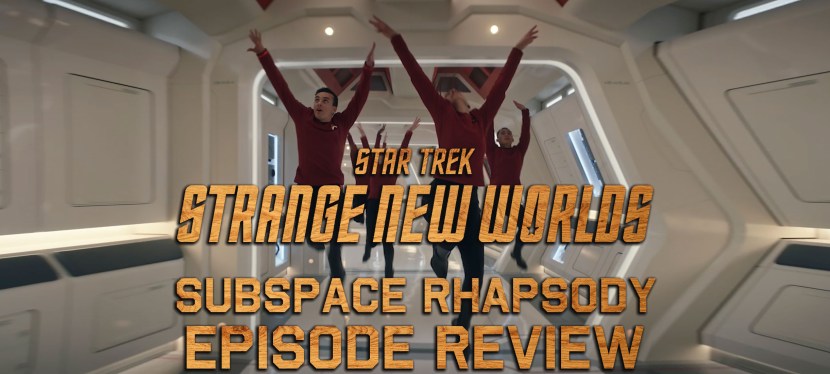
Spoiler Warning: There are spoilers ahead for Strange New Worlds Seasons 1-2.
I’ve been putting off this review.
After I re-started my Strange New Worlds Season 2 episode reviews in the autumn, this episode stood out as one that I just wasn’t looking forward to or was even interested in, so when it was the next one in the lineup I found myself procrastinating.
I will tell you up-front that I’m generally not a fan of non-animated musicals. I adore musicals in the theatre; seeing Wicked shortly after its West End debut is genuinely one of my favourite memories. And I like Disney-style animated musical films, too. But live-action musical films have never been my cup of tea.
Worse, musical episodes in shows that are otherwise not musicals have been – in my subjective opinion, naturally – universally terrible. Whether it was in Supernatural, Buffy the Vampire Slayer, or even Scrubs… I really didn’t like what was on offer. I’m a fan of the camp and kitsch as much as the next person, but musical episodes have always been a bridge too far. They feel offputting, immersion-breaking, silly, and even fan-servicey sometimes.
So it’s with that background that I approach Subspace Rhapsody.
I’m gonna do something a little different for this review. Rather than waste your time and mine with a two thousand-word explanation of why I’ve never liked musical episodes, I want to try to stay positive and focus on some of the things I liked or appreciated about Subspace Rhapsody. Because I’m not gonna lie to you: I would rather hammer a rusty nail into my scrotum than watch this episode again. It was so far beyond cringeworthy that I barely got through it once.
First of all, let’s talk choreography and songwriting.
Creating a musical – any musical, really – is a lot of work. Trust me, I know: I used to do amateur dramatics, and we’d always have songs and performances in our shows! Rehearsing Subspace Rhapsody must’ve been a challenge, and for choreographers and vocal coaches, having to work with actors who are not natural singers nor particularly practised in musical theatre will have been an additional challenge. A lot of work went into writing songs, working with the actors to get the best possible take when recording the songs, and especially choreographing some of the bigger dance routines. Getting multiple performers to dance and sing in unison is a creative and technical feat. The fact that I didn’t enjoy the result doesn’t mean I can’t appreciate the skill that went into it!
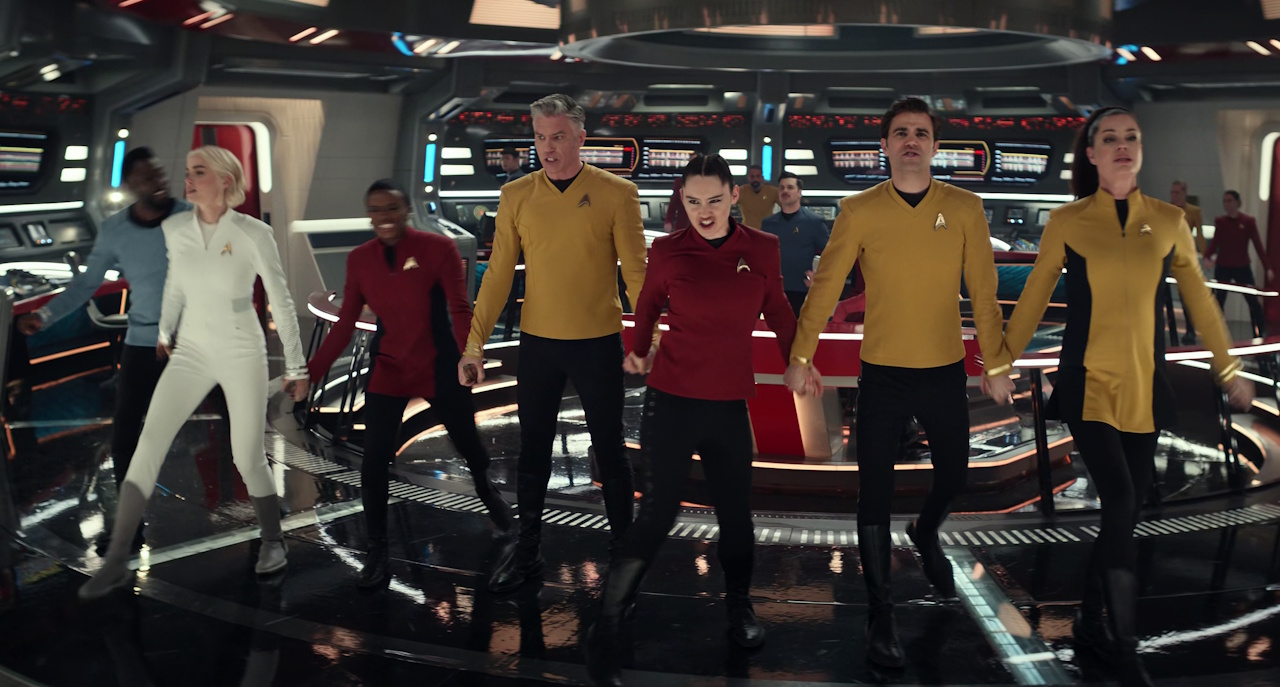
Redoing the Strange New Worlds opening theme as an a capella piece was creative, too. I actually didn’t mind the result – it was different from the usual theme (which happens to be one of my favourites in the entire franchise) while being familiar enough to still fit the opening titles. It was the right choice for this episode, and whoever came up with the idea deserves praise! As do the performers who vocalised the theme and the sound mixers who brought it together.
Secondly, the premise of the episode – a random space phenomenon causing chaos on the Enterprise – feels like something straight out of The Original Series or really any pre-Enterprise show. Subspace Rhapsody, in concept, wasn’t a million miles away from episodes like The Naked Time, If Wishes Were Horses, or Masks, which I mean as a compliment. Star Trek has always been ethereal and, for want of a better term, “weird” in its take on sci-fi, particularly in The Original Series and the early part of The Next Generation. It’s hard not to look at Subspace Rhapsody’s core concept through that lens, and stepping back to that style of storytelling after the intensely dramatic Discovery and Picard is a welcome change.
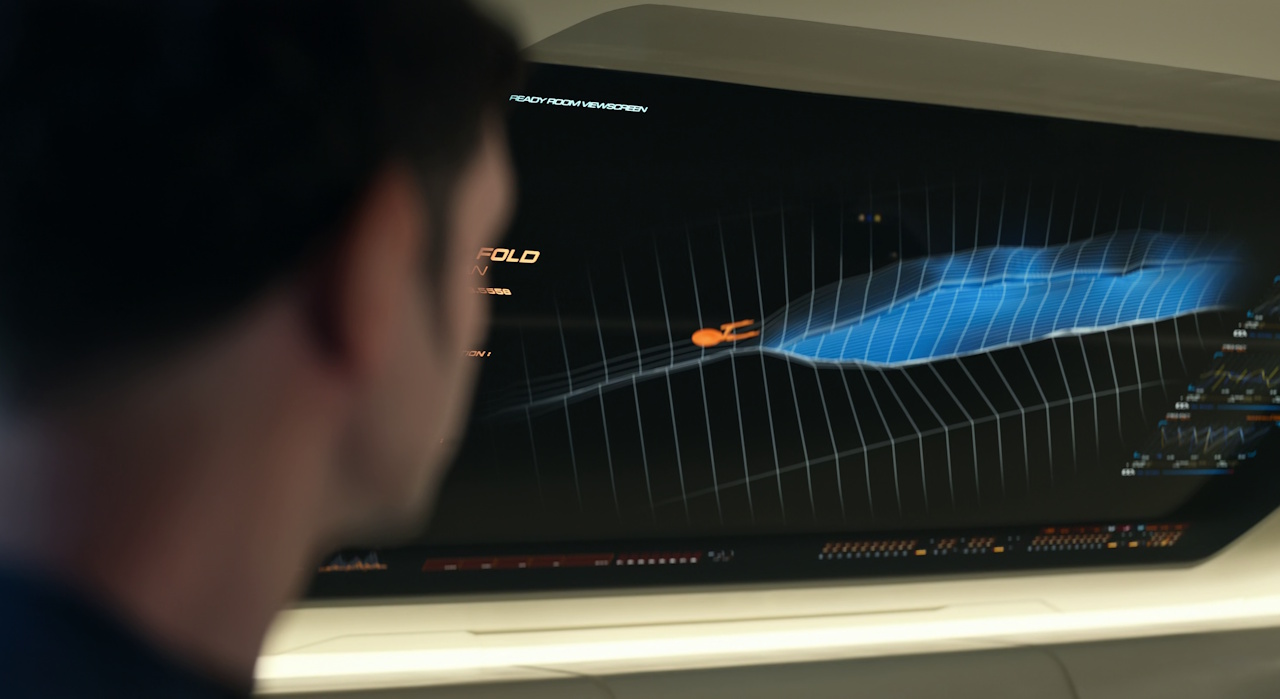
The quantum uncertainty field – or improbability field – felt so familiar, in fact, that I could’ve sworn it had been used somewhere else in Star Trek before! Not for musical reasons, it just seemed like a very familiar term. I was wrong about that, it was actually new for Subspace Rhapsody, but the concept felt very “Star Trek.” We’ve seen space phenomena lowering peoples’ inhibitions, making dreams come alive, or turning the Enterprise into a stone pyramid, so why couldn’t there be something out there forcing people to sing? It’s not so outlandish that it couldn’t be part of Star Trek’s occasionally wacky galaxy!
The one side of this that I felt didn’t work as well as intended was the danger posed by both the field itself and the Klingons’ response to it. At no point did I feel the crew of the Enterprise – or the wider Federation, come to that – were in any real danger. And I know in Star Trek stories the heroes always find a way to save the day… but that isn’t what I mean. Plenty of episodes and films can still feel tense, even though at the back of our minds we know there’s going to be a solution. But Subspace Rhapsody didn’t convey that feeling well enough for me, even when the Klingon ships were bearing down on the Enterprise.
I was, I must admit, pleasantly surprised with the quality of the singing in Subspace Rhapsody. Often, when non-singers are pressed to take on musical roles… it’s kind of obvious, and all the auto-tune in the world can’t hide a lack of talent and training. To my surprise, most of the cast did well – even though it could be obvious that the singing was pre-recorded and everyone was just miming along. Still, I’ll take reasonably good lip-syncing over bad singing any day of the week!
Sticking with the songs, there are a couple more positives. I appreciate that the songs were all original – this wasn’t a “jukebox musical,” trying to recycle out-of-copyright songs from years gone by. Having the crew sing about their feelings and what was going on around them was silly, yes, but better than if they’d burst into a rendition of something like Button Up Your Overcoat or Embraceable You. Songwriting takes talent, and putting together original songs inspired by classic musicals on a budget is no mean feat.

There must’ve been a temptation to try to emulate the style of composers like Lin-Manuel Miranda, creating pieces of music with a much more modern style. For my money – which, admittedly, doesn’t go very far in an episode like this one – Subspace Rhapsody was better-served by generally sticking with a more trad-pop style. The episode’s final musical number (its grand finale) was a bit of a departure from that, but trying to do the whole episode in that style, or with a mix of genres like disco or hip-hop, wouldn’t have been a positive.
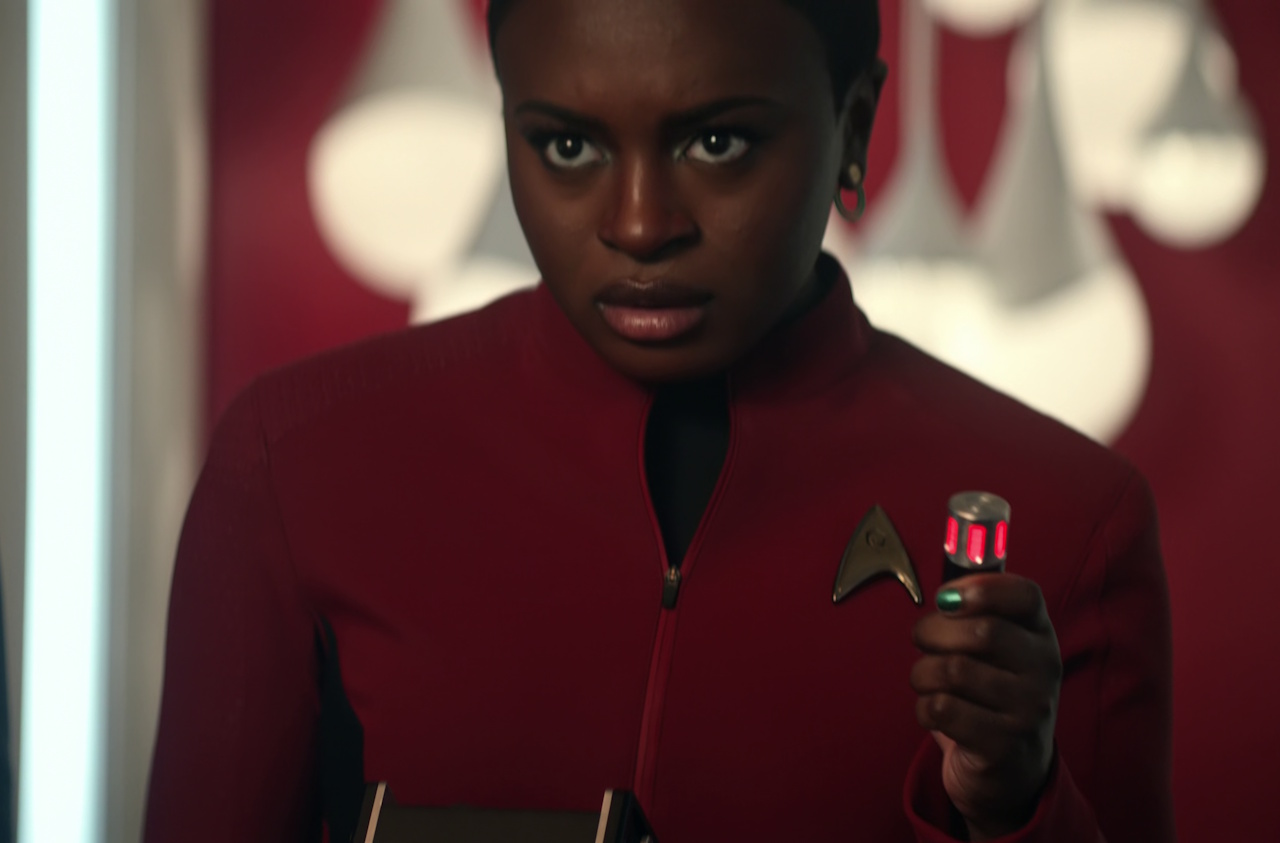
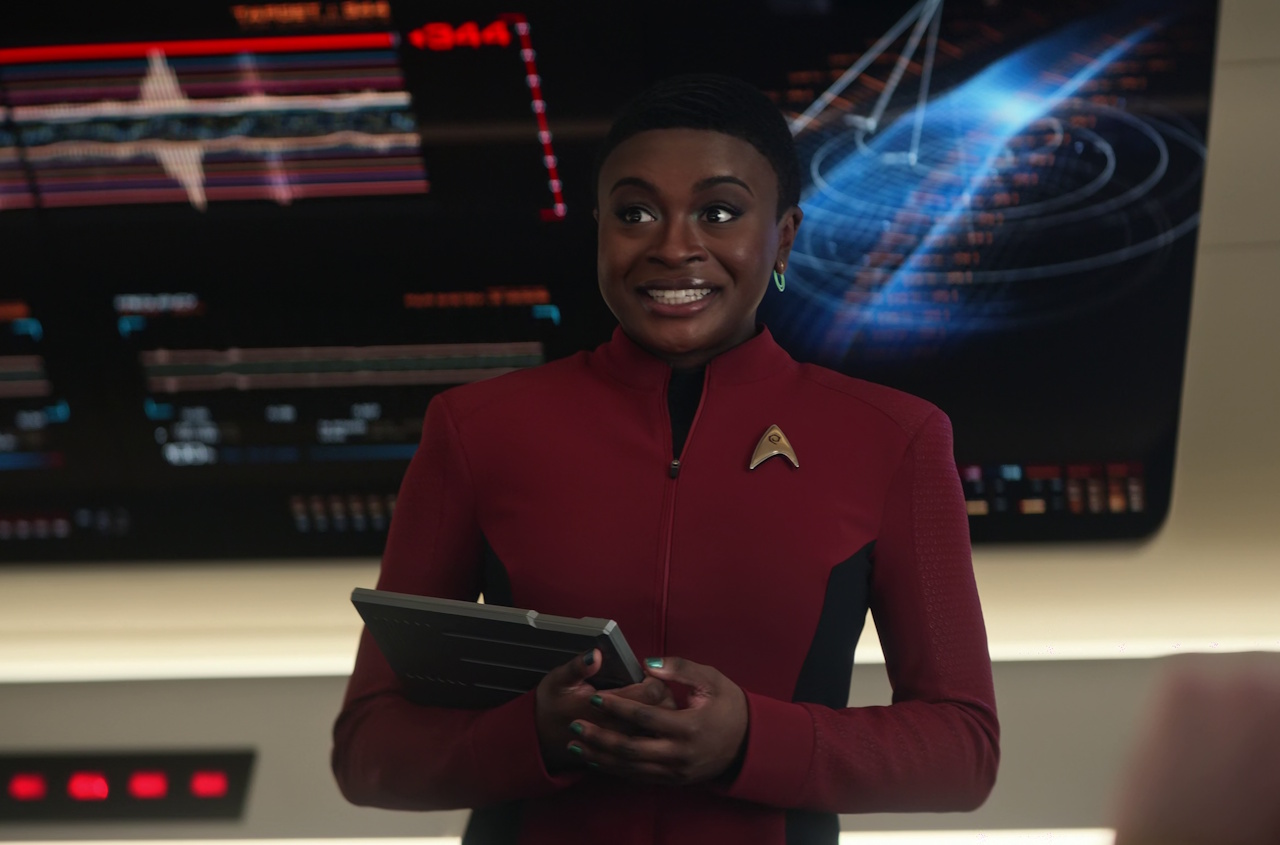
Obviously Subspace Rhapsody was a great episode for Uhura, picking up her character arc from Season 1 and referencing how Hemmer had inspired her. Her growth as an officer, and finding her place both in Starfleet and aboard the Enterprise, were also instrumental to her role in the story, helping her discover a solution to the improbability field. We didn’t get to learn a lot about Uhura this time, nor did she really change over the course of the story, but her role in Subspace Rhapsody felt like the culmination of her arc across the show’s first two seasons. It was nice to see.
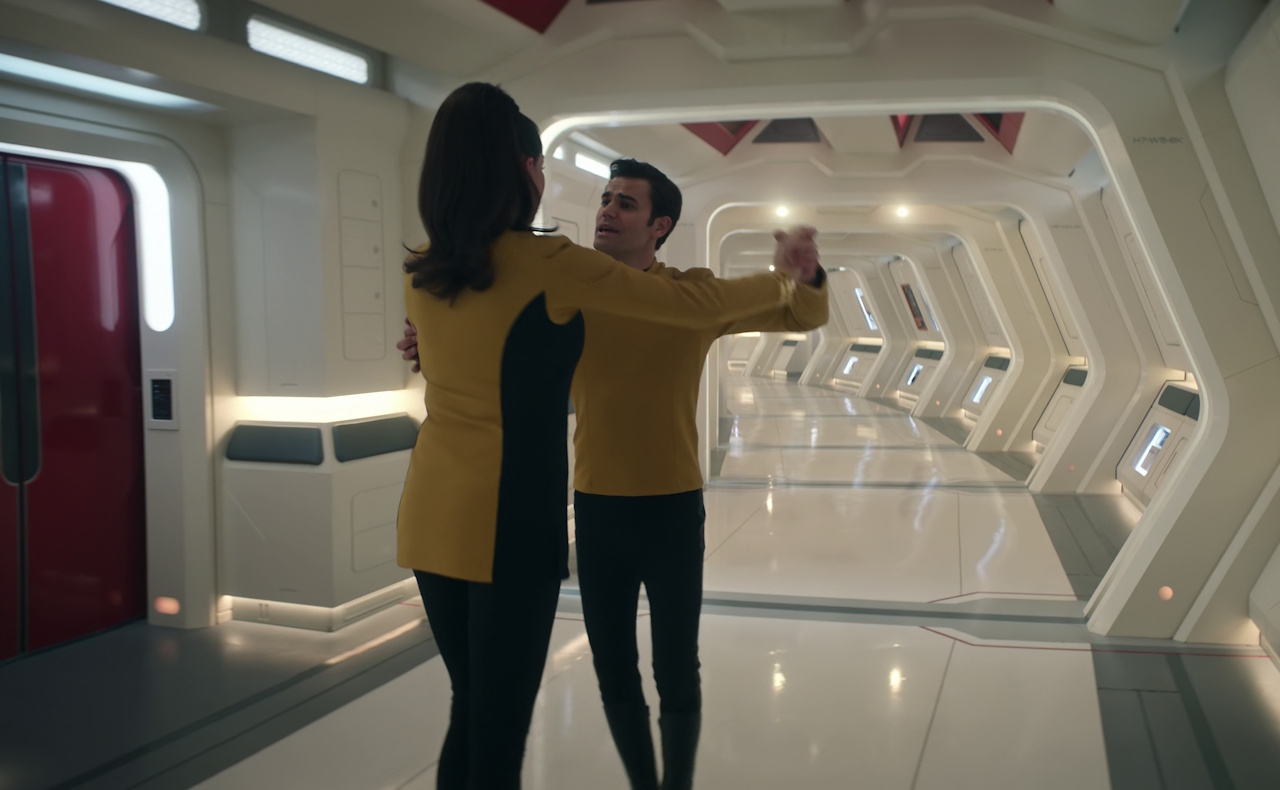
Subspace Rhapsody was also a great episode for La’an – particularly her relationships with Kirk and Una. La’an lanced the boil of her feelings for this reality’s version of Kirk, and while it didn’t go the way she might’ve wanted, there’s something cathartic in the act of confession. Hopefully it’ll settle those feelings for her going forward. This felt like a pretty relatable moment; who among us hasn’t had feelings for someone and tried, awkwardly, to talk to them? I know I’ve been in the position of feeling conflicted about whether to confess how I feel and how to go about it! It’s part of the human condition.
La’an and Una make a fun pair; there’s a kind of big sister/little sister relationship between them, sometimes. For Una to be the one La’an turned to when she was struggling with what to do about Kirk felt natural in the context of their relationship across the series so far, and deepening their bond was something I appreciated this time.
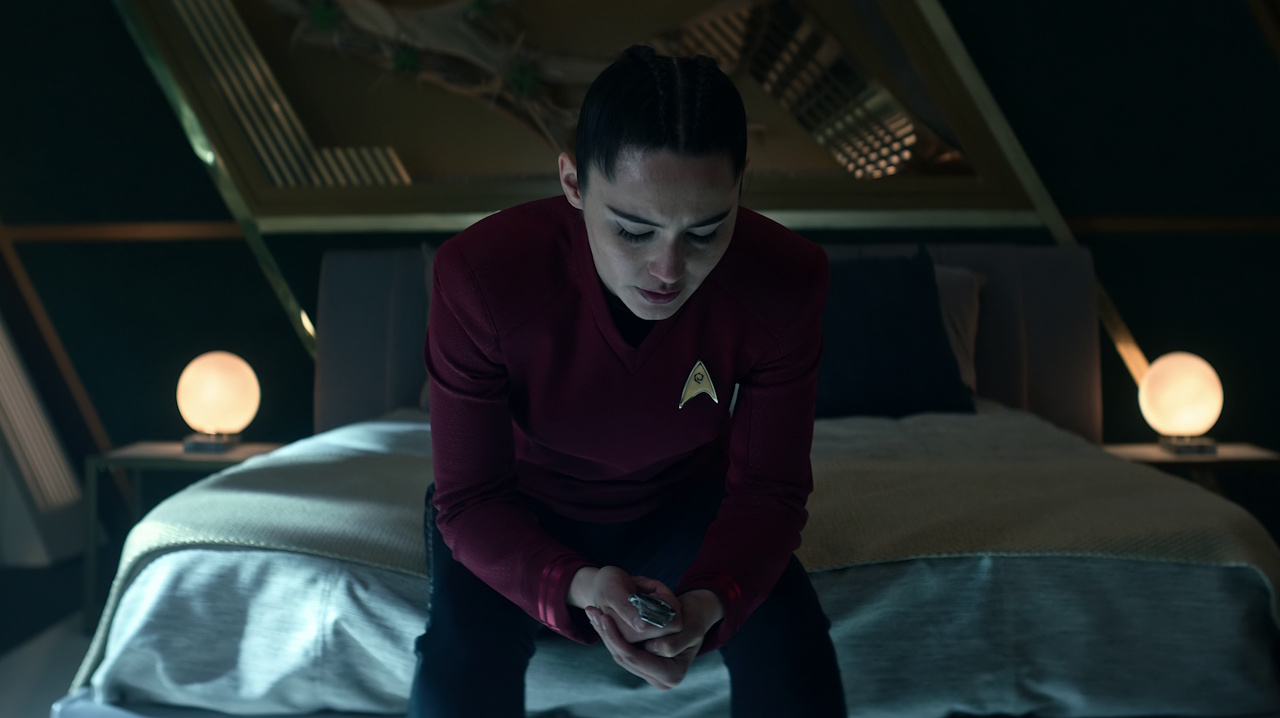
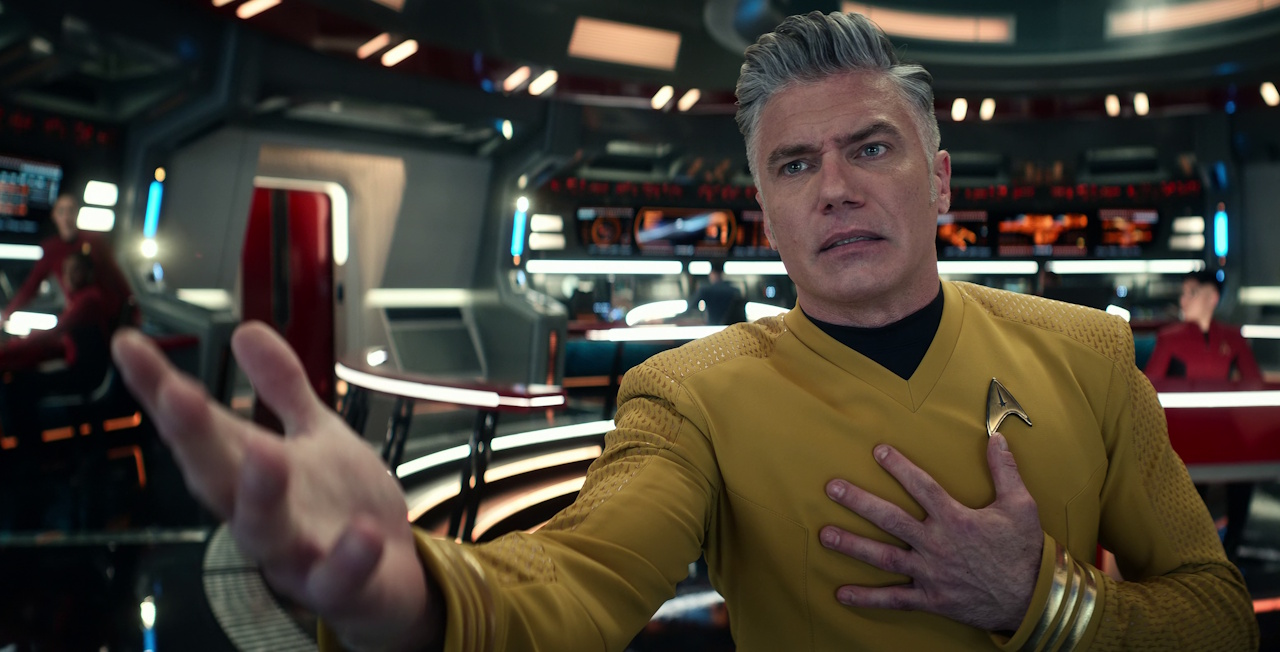
The one character I’d argue that Subspace Rhapsody didn’t handle well was actually Captain Pike. Firstly, Pike seemed to trip over a pretty basic relationship hurdle in a way that didn’t feel right for his character. The “issue” in his relationship with Captain Batel was so incredibly simple that it didn’t make a lot of sense to me that he wouldn’t simply propose a different kind of vacation or try to find a compromise. Allowing something so small to eat away at him and potentially damage their relationship just doesn’t feel like something Pike would do – even though, again, it was kind of a relatable moment. Sometimes in relationships something small can seem intimidating, and maybe the story wanted to get at Pike being inexperienced with this kind of thing. It was still wide of the mark, but at least I get what the story wanted to say.
Secondly, Pike is known for his inspiring speeches and his ability to motivate his crew. For him to delegate that task at the episode’s climax – with potentially huge stakes and the survival of Starfleet on the line – didn’t seem right. Uhura was well-positioned to speak to the crew, sure, but no one does inspiration quite like a ship’s captain. We’ve seen Pike take on that role several times already in both Strange New Worlds and Discovery, and while I get this was Uhura’s moment… the way the script brushed Pike aside to get there didn’t sit right with me.
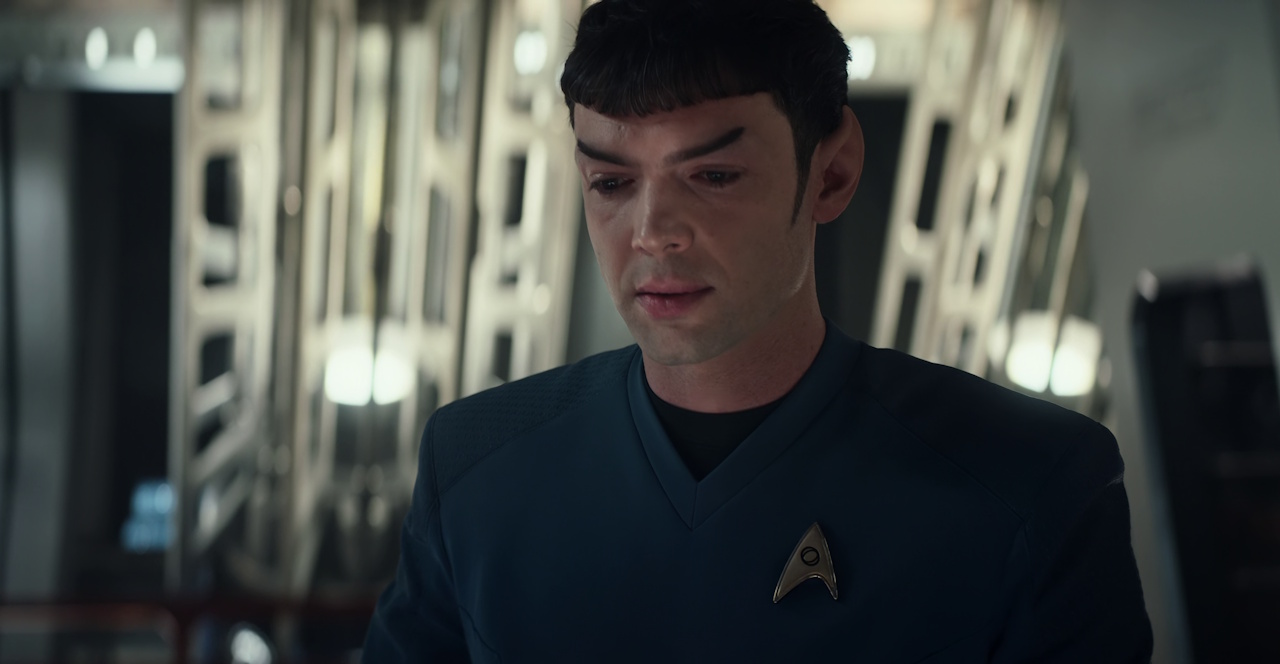
We should also talk about Spock and Chapel, who seem to have come to the end of their brief relationship. I liked the callback to The Original Series on this side of the story – Roger Korby was a character from the Season 1 episode What Are Little Girls Made Of, and having him name-dropped here was interesting. I wonder if Korby will be mentioned – or even seen on screen – in Season 3.
I found both Spock and Chapel to be relatable on this side of the story… because I’ve been both of them at different points in my life. Leaving someone behind to take advantage of a once-in-a-lifetime opportunity is hard, and being the one left behind as a partner goes somewhere you can’t follow… that’s probably even more difficult. Spock’s intense feeling of rejection really hit me in a way I wasn’t expecting, and I think it also shows how far Spock still has to go in order to become the stoic Vulcan we’re familiar with from The Original Series. This younger version of the character is still carrying more of his emotional human side – and it came through in that moment.
There were several creative camera shots in Subspace Rhapsody, as well as some great special effects and animated moments. La’an gazing out of the window during her solo song, complete with a zoom out to the Enterprise, was great – and it’s a pretty uncommon shot in Star Trek, when you think about it. Una and La’an floating with the artificial gravity having been deactivated was also a neat effect, and another rarity!
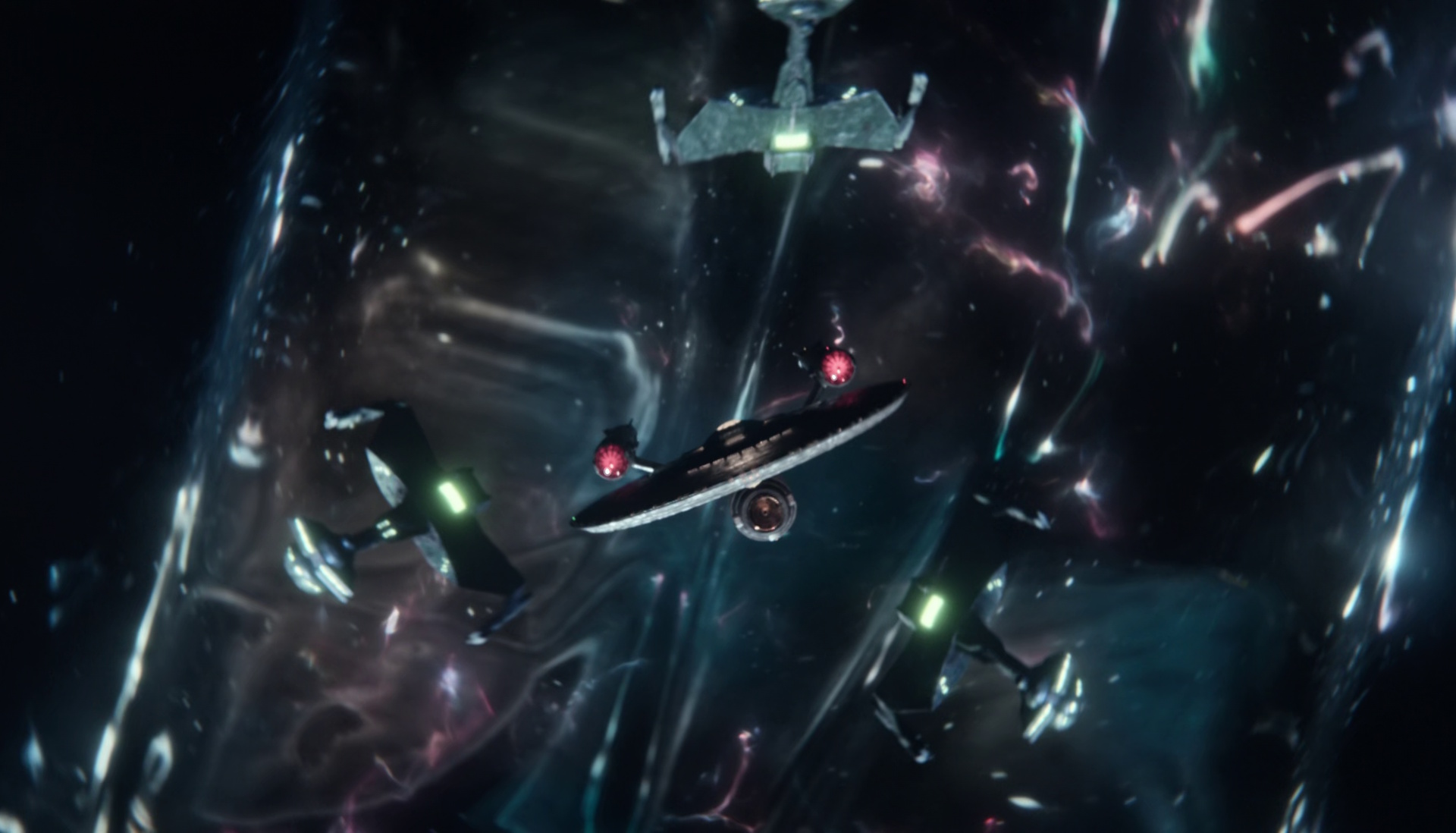
The Enterprise and three Klingon ships performing a kind of ballet in space was exceptionally creative, too, and tied into the theme of the episode really well. It was well-animated, and I liked seeing the D7 class (referred to as a K’t’inga class in the episode) back on screen once more. I also liked the classic warp effect that was used near the end of the episode as the Enterprise headed on to her next adventure.
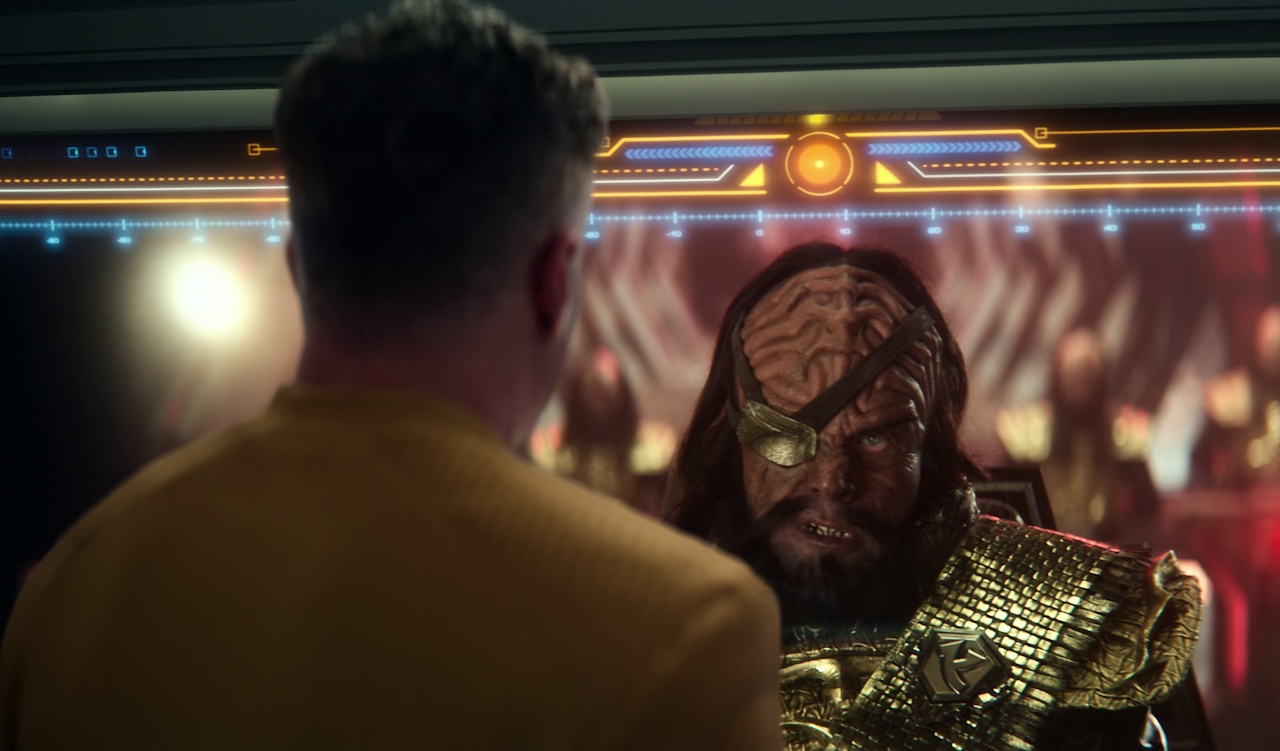
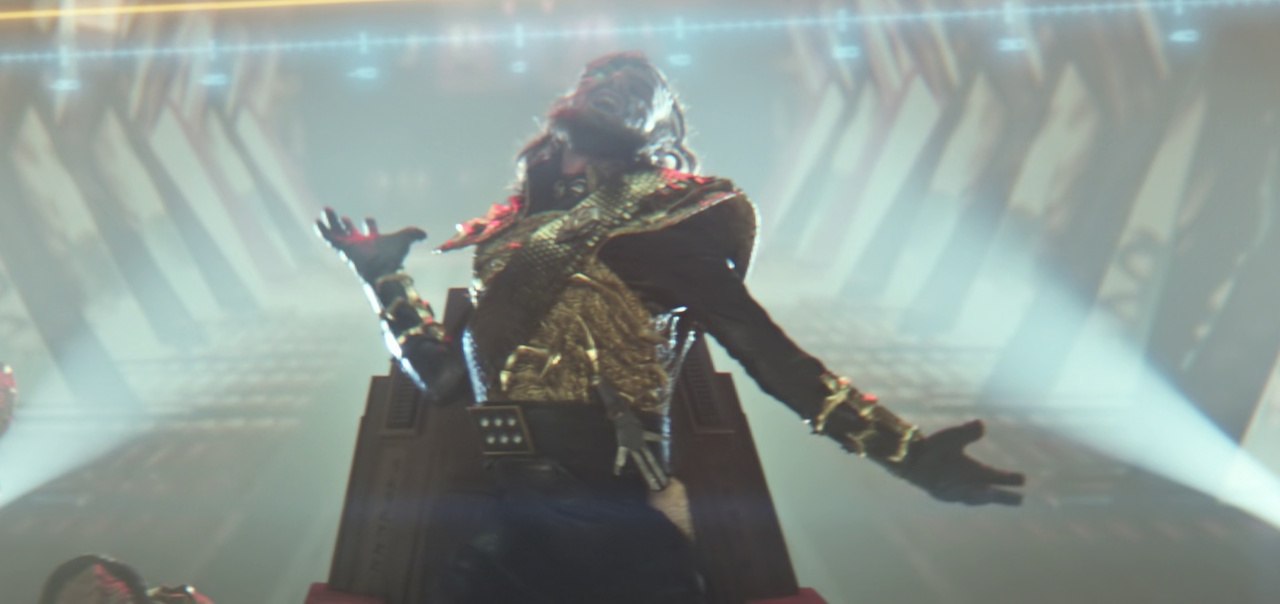
Speaking of the Klingons, I felt more than a little of Deep Space Nine’s General Martok in Bruce Horak’s Garkog. Not only do the two characters each have a missing eye, but Horak seemed to be channelling J G Hertzler in his performance, particularly in his first scene. Garkog was a pretty minor character in the grand scheme of things, but it was sweet to welcome back Bruce Horak for the second time this season. I still think it was a mistake to kill off Hemmer so early, by the way!
I could’ve spent another scene or two with the Klingons. We got to see their musical “dishonour” on screen, but I would’ve been interested to get a different perspective on the improbability field phenomenon. Maybe we could’ve seen Garkog and his crew trying to find a solution before their encounter with Pike and the Enterprise.
There were a couple of funny lines in Subspace Rhapsody that successfully won a smile. Pelia’s line in the briefing room about using the “zipper” was one, and Kirk’s a moment later about how he “almost understood” what Spock was saying was also a bit of fun. I would say that Kirk’s unspecified “commission review” felt like a bit of a clumsy way to shoehorn him into the story, but once he was aboard the Enterprise I enjoyed having him around.
So I think that’s everything I had in my notes this time.
Subspace Rhapsody was borderline unwatchable for me, and unless someone duct-tapes me to a chair and holds my eyes open, A Clockwork Orange-style, I will never watch it again. It was categorically not “my thing,” and I’m okay with that. Star Trek is an experimental franchise, and I welcome the creative team striking out in new directions, trying different things, and keeping Strange New Worlds a largely episodic project. As long as they don’t try to make a fully-musical series, I think I can cope with Subspace Rhapsody as a one-off.
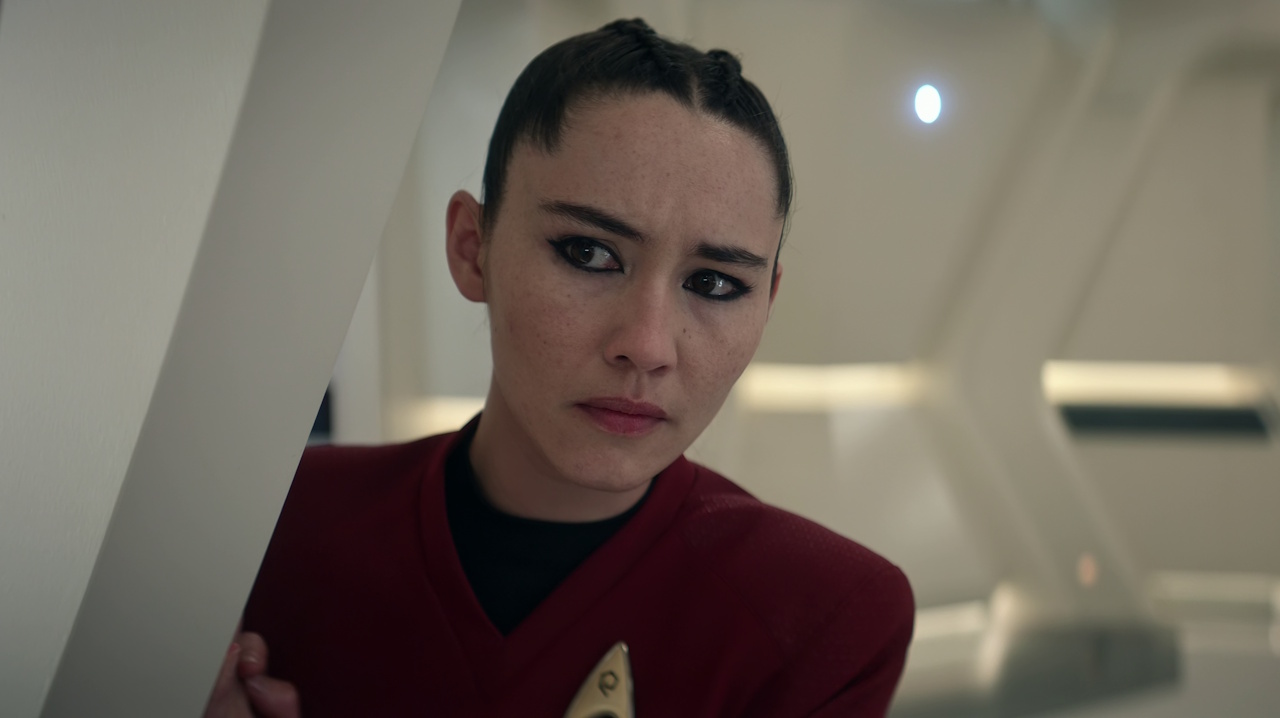
There were positives in the mix. Uhura and La’an got great moments of characterisation, Spock was particularly relatable, and it was fun to welcome back Paul Wesley as Kirk. His take on the character is fantastic, and I’m genuinely looking forward to spending more time with him in future. There was also some excellent cinematography and visual effects work.
On the musical side of things, here’s what I’ll say. There are some styles of storytelling, movie making, and entertainment in general that I personally don’t like or aren’t “my thing.” But I can still appreciate the skill, effort, and work that went into their creation, and I can acknowledge that they are exemplars of their genres. I don’t like opera, for instance, but I can still appreciate the years of training needed to sing that way, or the months of work and rehearsing that go into the staging of an opera.
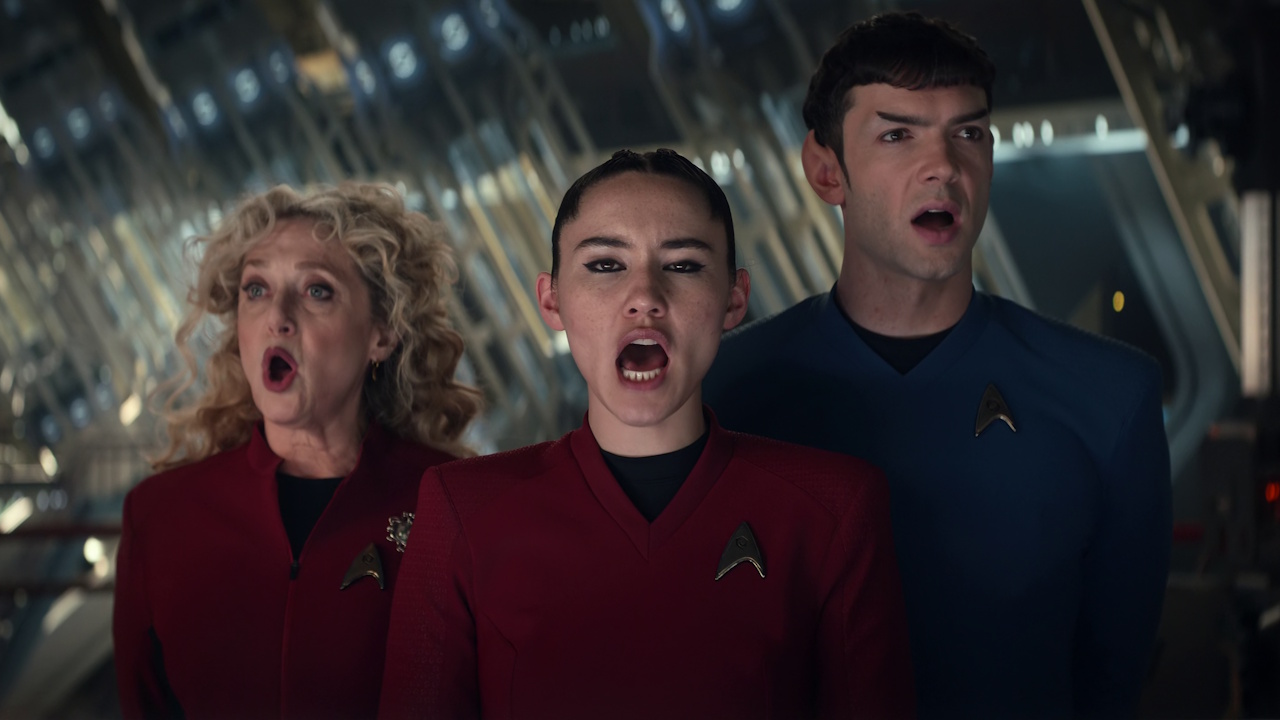
And that’s how I feel about Subspace Rhapsody, at the end of the day. I didn’t enjoy it – and I knew I wouldn’t before I watched it, hence all the procrastination – but I can tell that the cast, crew, and production team had a ton of fun with it. A lot of effort and practise went into some of the more involved musical numbers, and there was some genuinely great choreography – at least from my perspective as a layman. And as a Trekkie, I can appreciate other parts of the story even if the musical side of things really didn’t do it for me.
I hope this didn’t feel like too much of an attack on Subspace Rhapsody. If you liked it, or if you’re more a fan of musicals than I am, that’s great. And I will say that it looked like it would’ve been a lot of fun to work on as a dancer or background performer! It just wasn’t for me. I promised myself I wouldn’t watch Hegemony until I’d seen Subspace Rhapsody, so I really needed to get this out of the way to get to the end of the season! I’m ready to jump into that episode now… so stay tuned for what will hopefully be a more positive review sometime soon.
Star Trek: Strange New Worlds Seasons 1-2 are available to stream now on Paramount Plus in countries and territories where the service is available. The Star Trek franchise – including Strange New Worlds – is the copyright of Paramount Global. This article contains the thoughts and opinions of one person only and is not intended to cause any offence.


 Trekking with Dennis