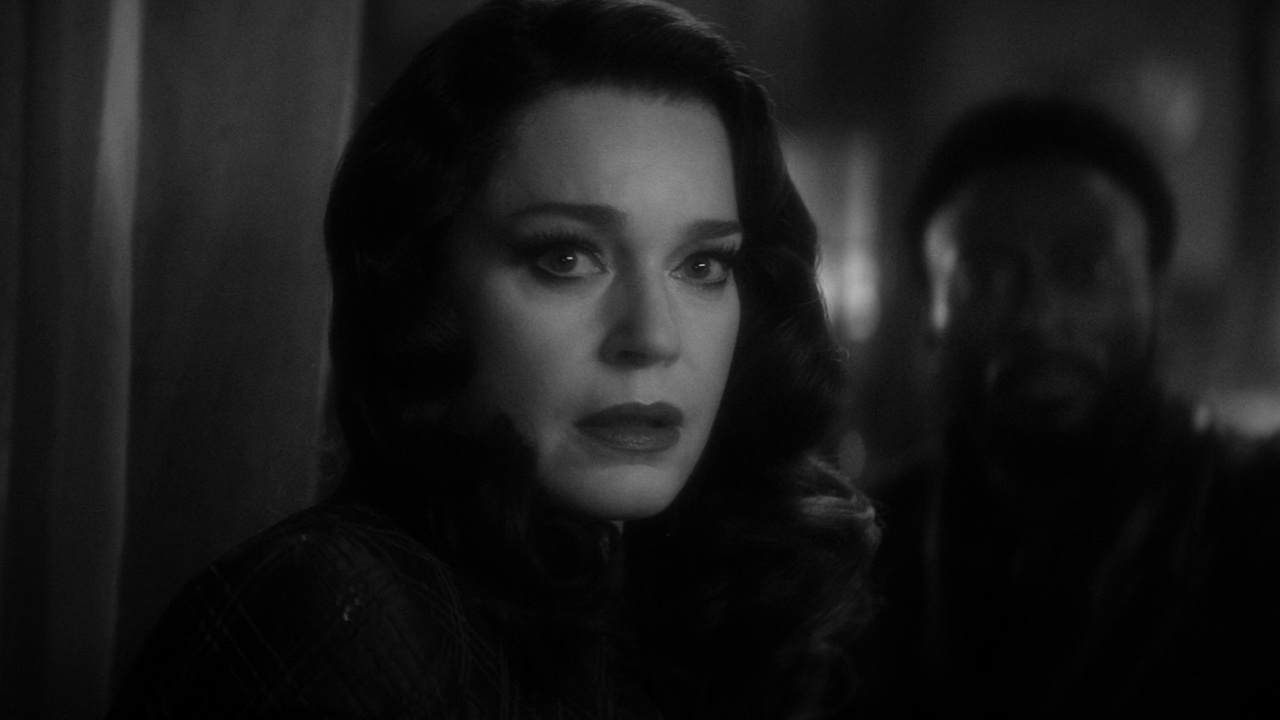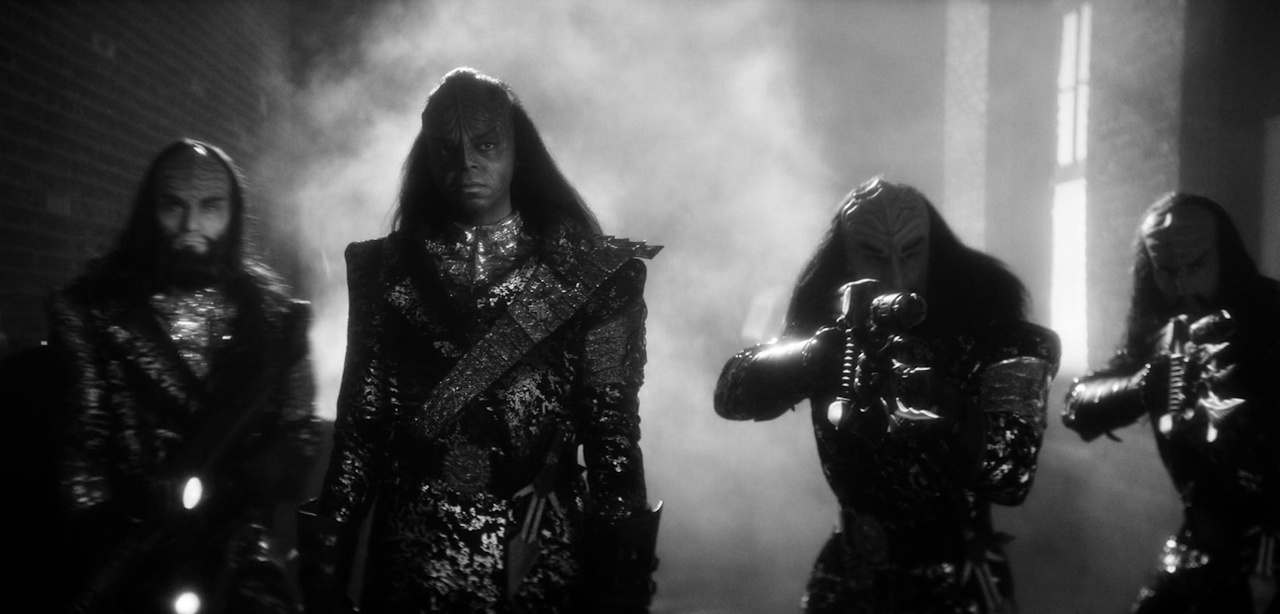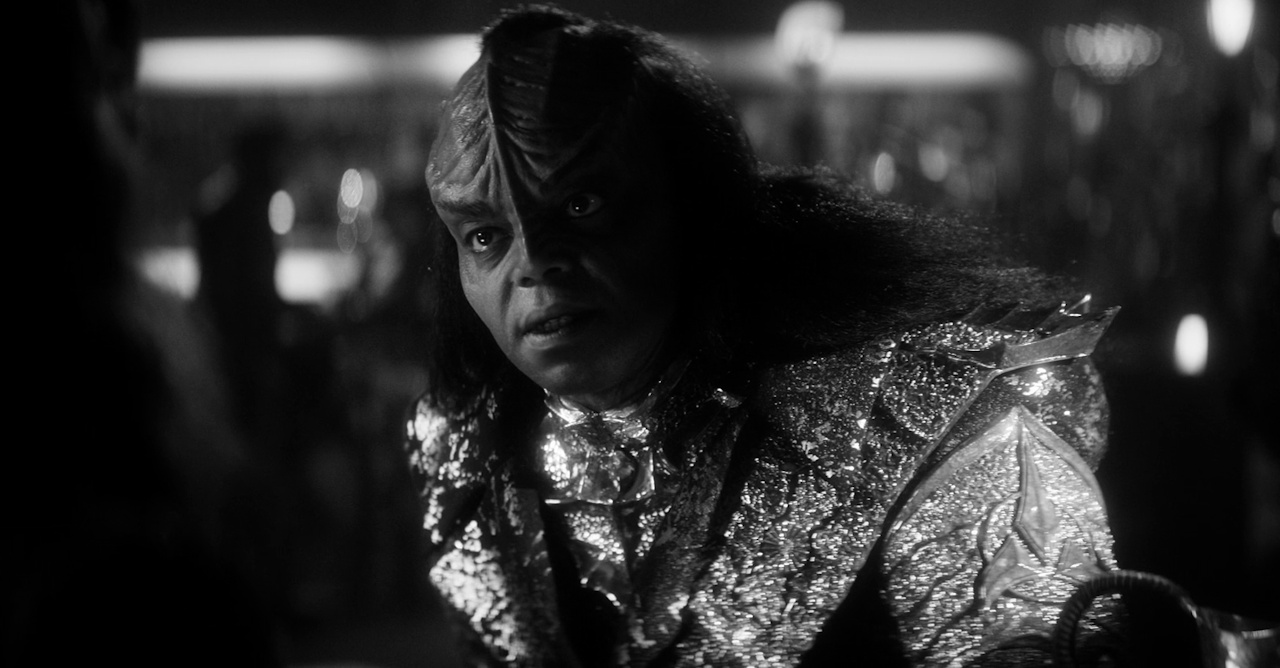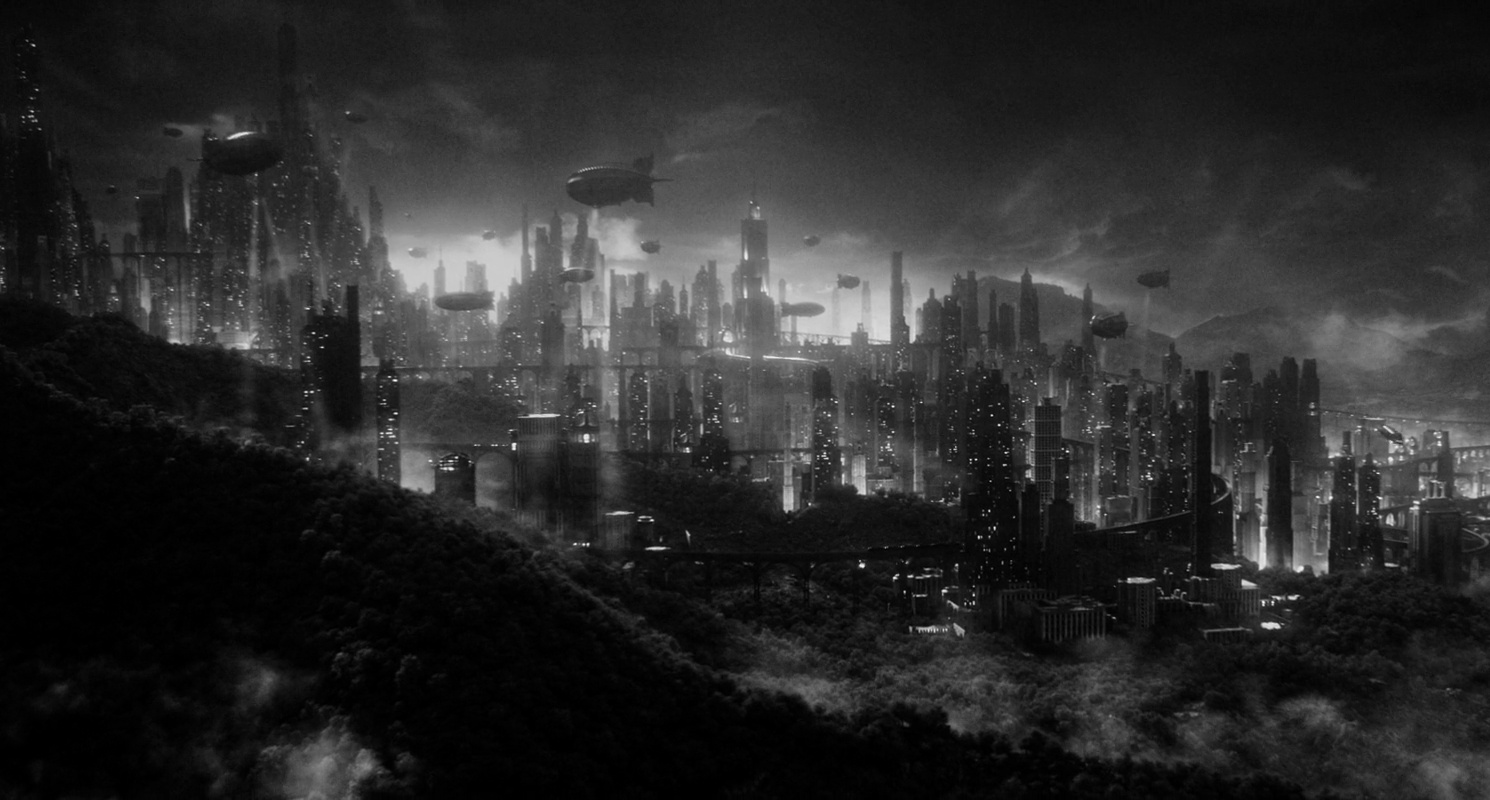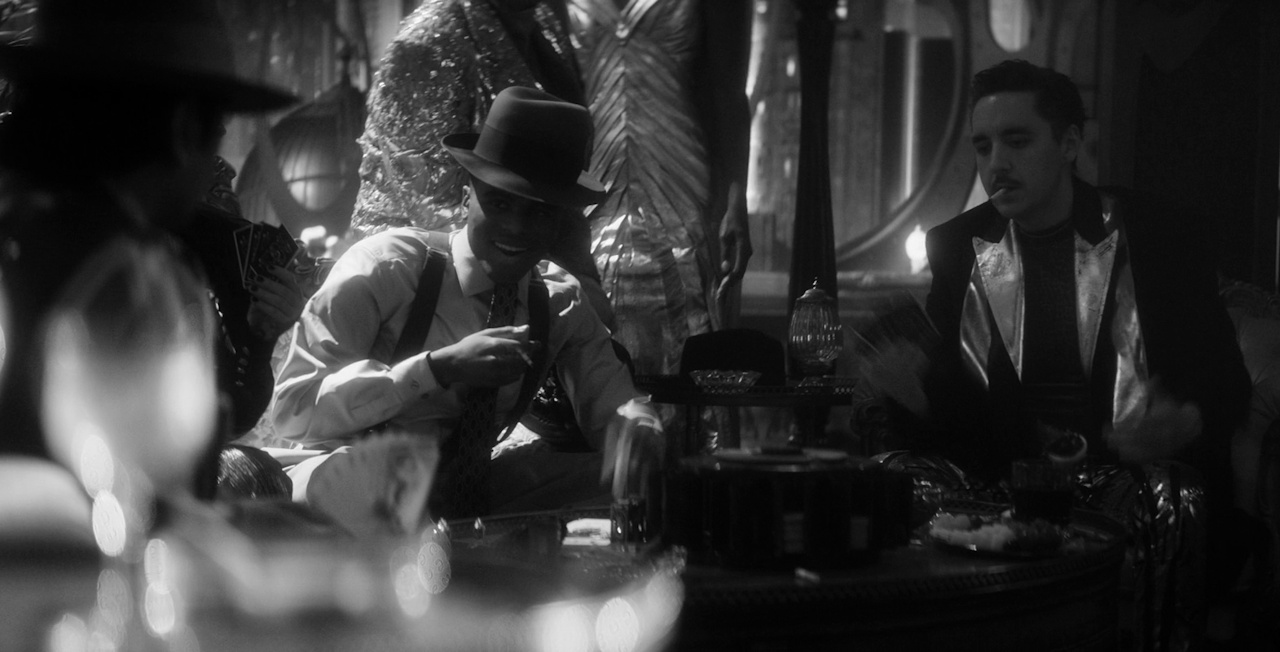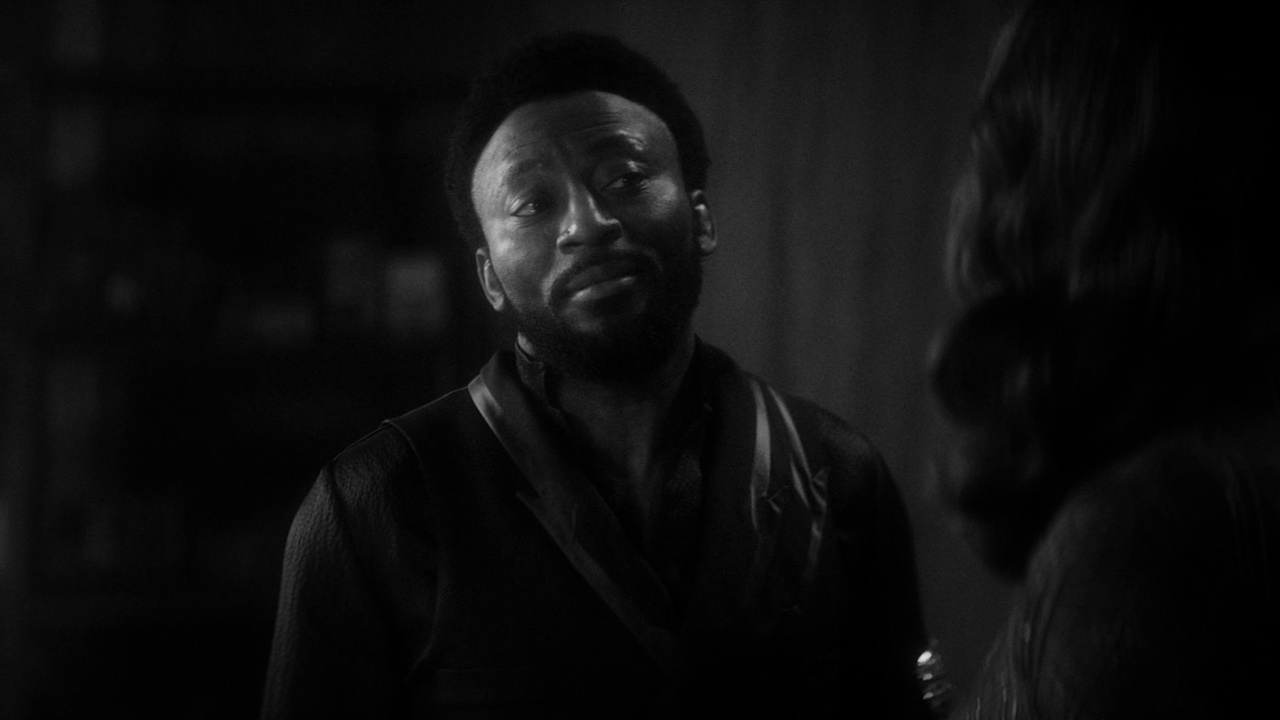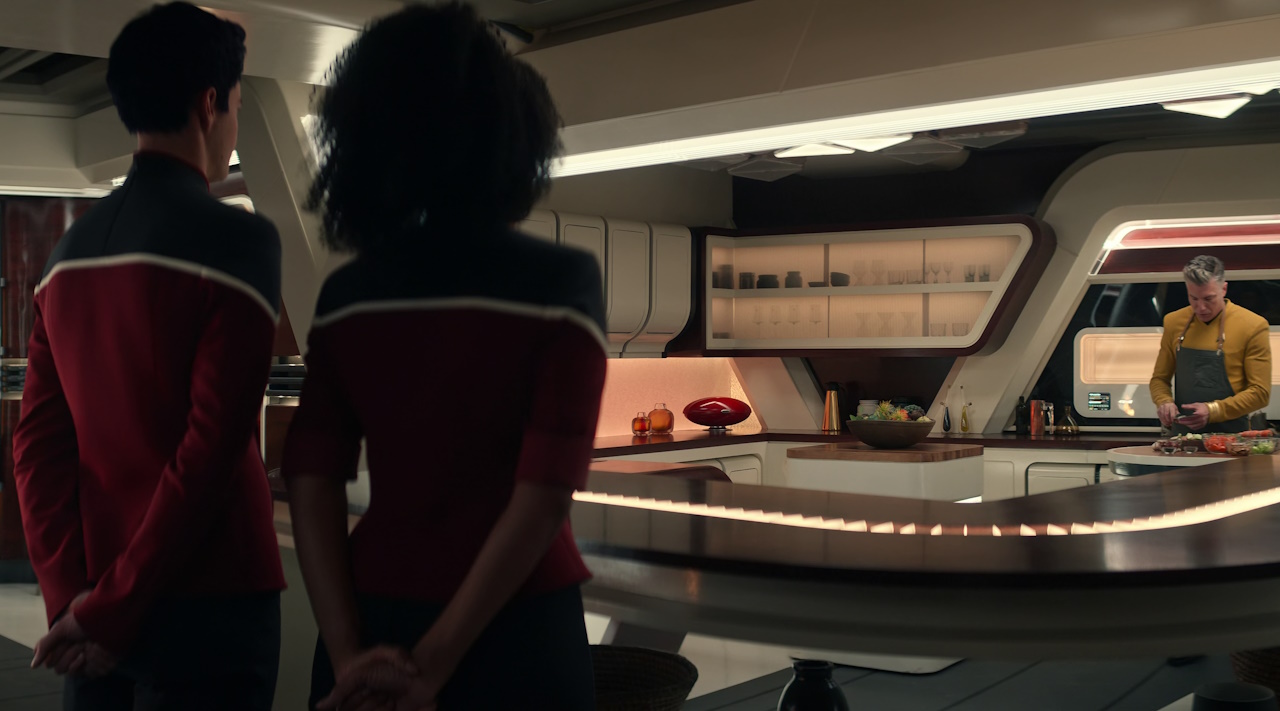
Star Trek: Strange New Worlds Episode Review – Season 4, Episode 1: Valles Marineris

A Star Trek-themed spoiler warning.

Spoiler Warning: There are spoilers ahead for Star Trek: Strange New Worlds Seasons 1-4. Spoilers are also present for the following Star Trek productions: The Next Generation, Voyager, Generations, Discovery, and Starfleet Academy.

And we are back! Strange New Worlds’ fourth season has officially landed on Paramount+, so it’s time for a review of the season premiere. Unlike last time, Season 4 didn’t begin with a double-header, so there’s only one episode to get things started. I think I prefer it this way; Star Trek can be a binge-worthy franchise, but I personally prefer to give new episodes a bit of room to breathe.

As I did for Seasons 2 and 3, I’ll be following along with Strange New Worlds for weekly episode reviews, so I hope you’ll join me over the next couple of months.

As always, an important caveat before we get into the meat of the review! Everything we’re going to talk about today is the *subjective, not objective* opinion of just one old Trekkie. If you hate my take, think I’ve missed something important, or don’t share my opinion of either Valles Marineris or Strange New Worlds as a whole… that’s okay. There’s enough room in the Star Trek fan community for differences of opinion and polite disagreement.

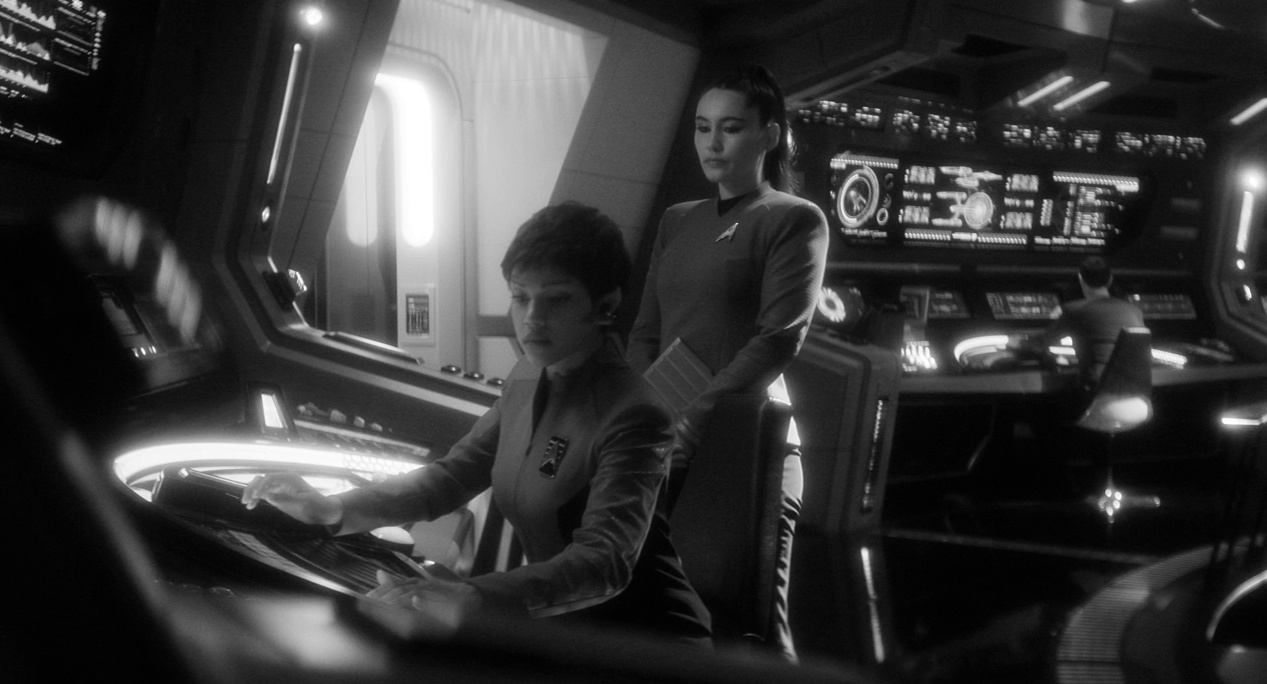
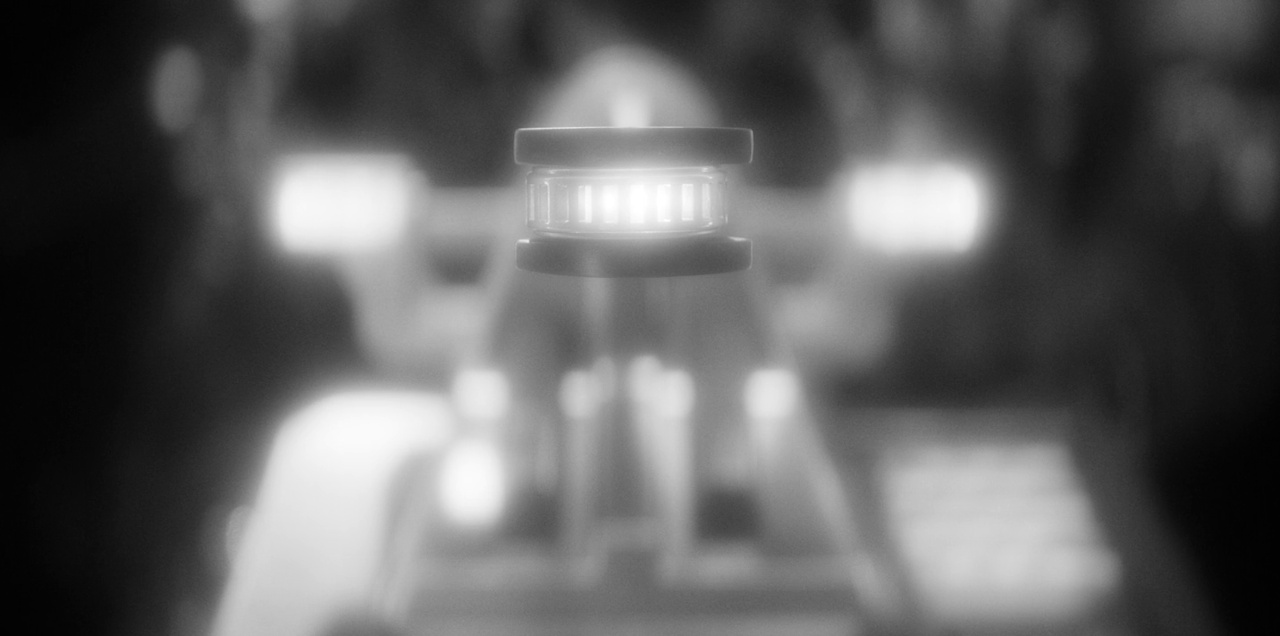
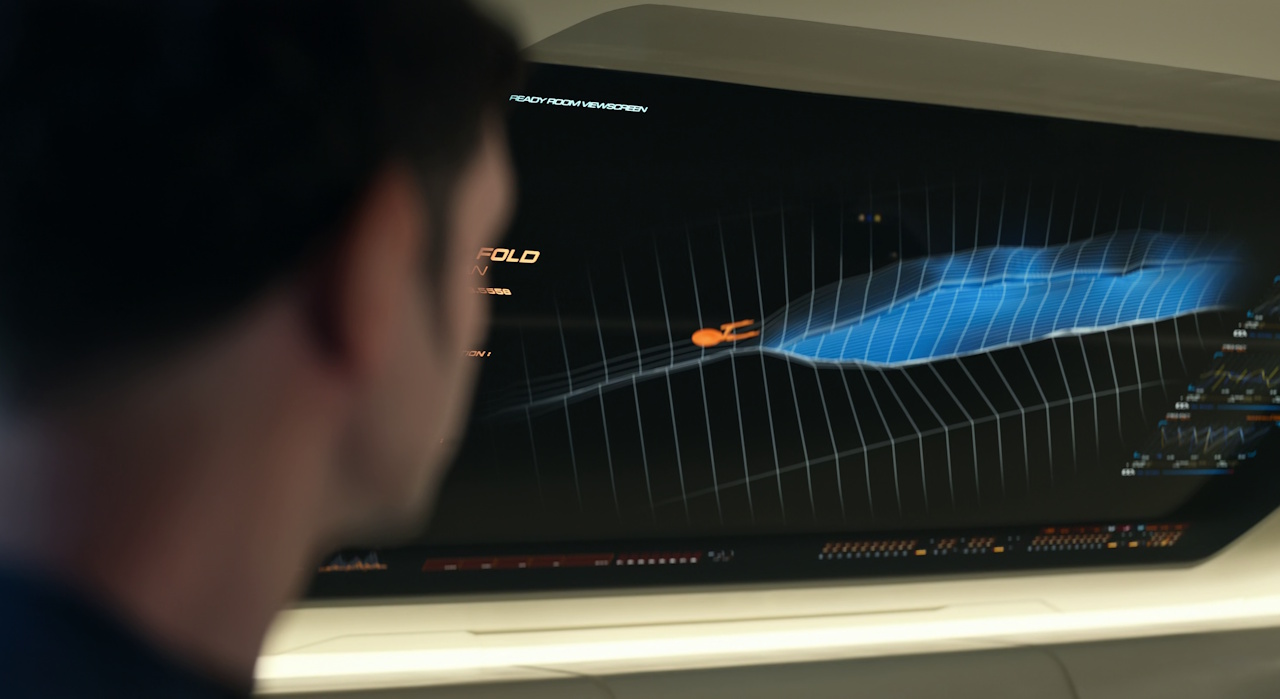
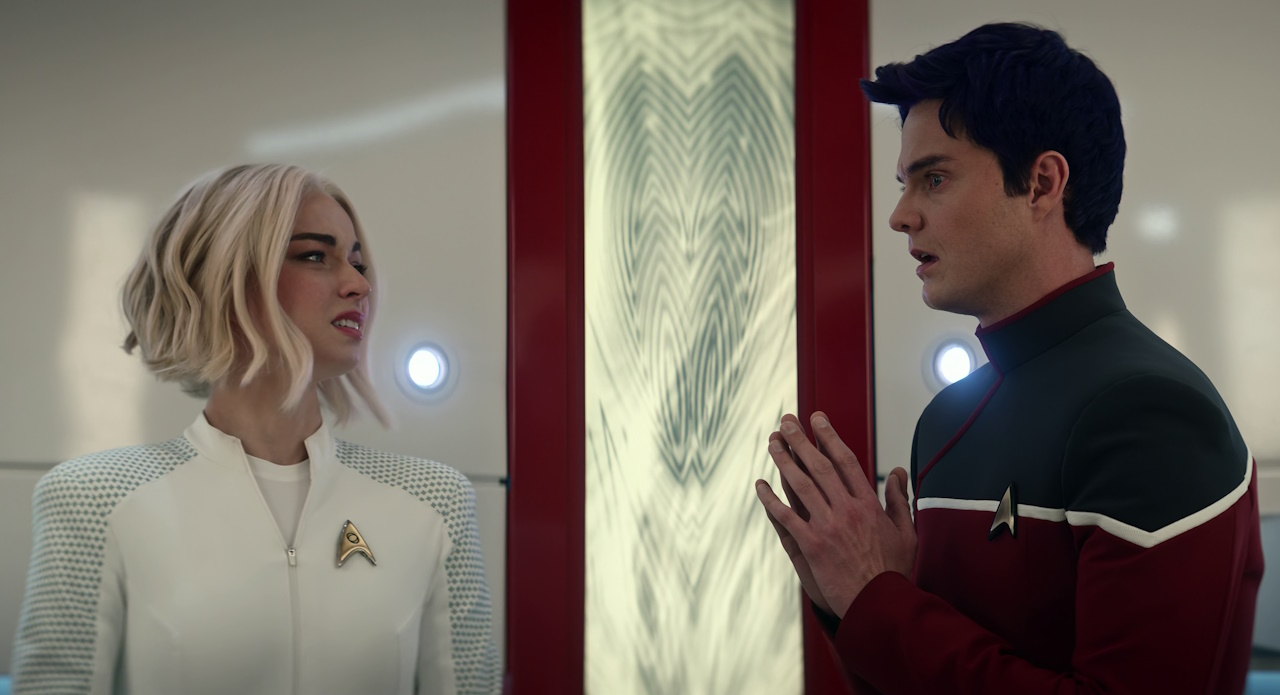
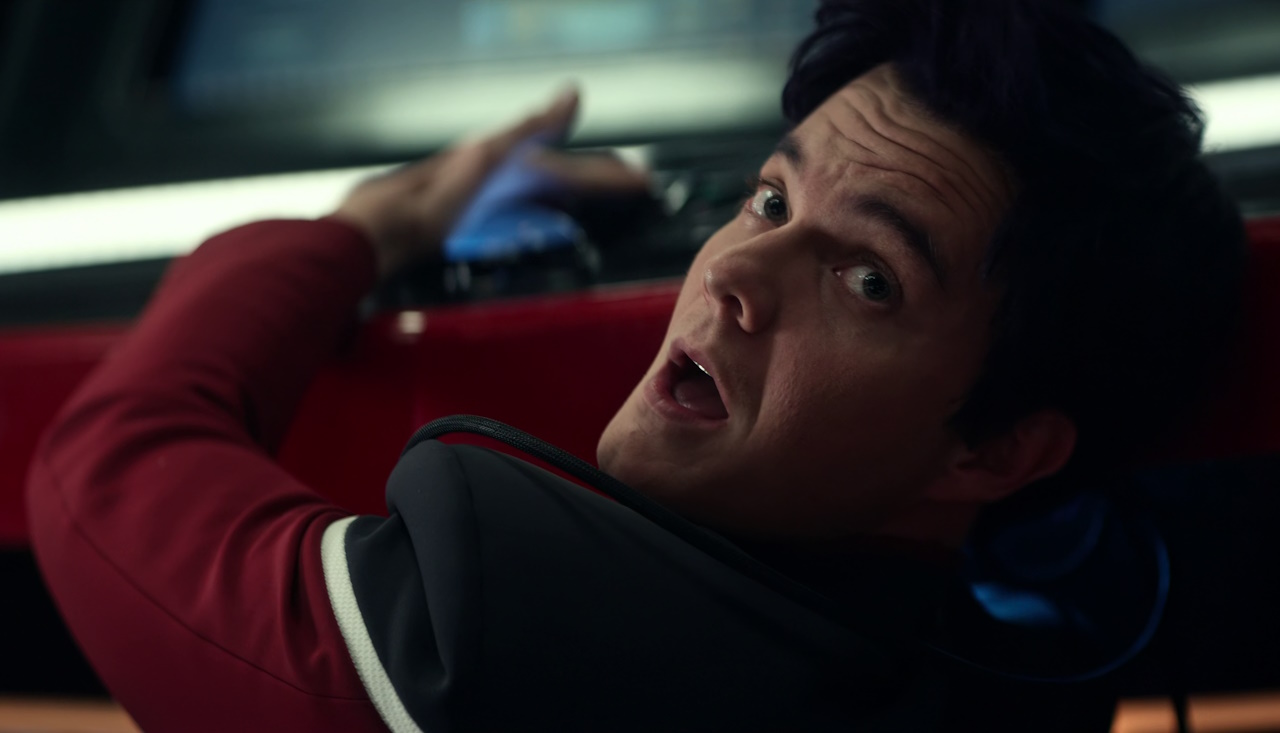
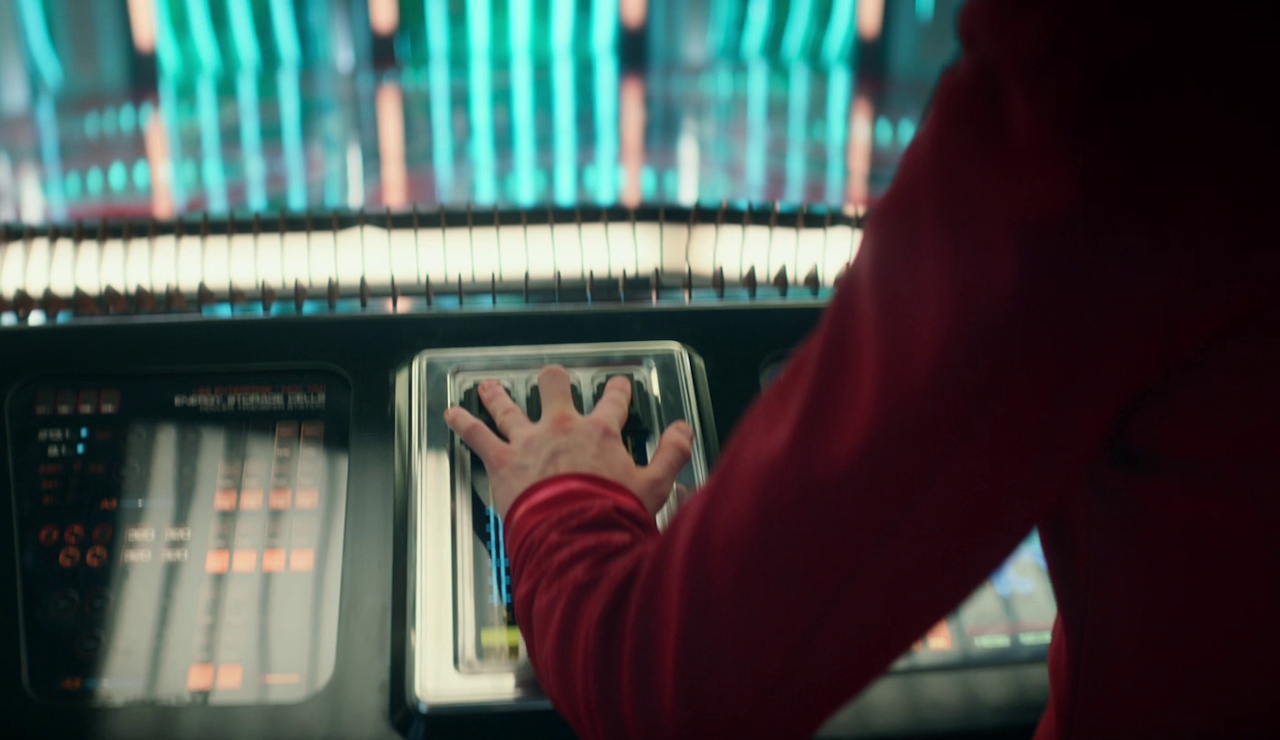
Still frame from Strange New Worlds 4x01 showing a transporter control panel
A new season of Star Trek is beaming in…

The start of a new Star Trek season always feels like a cause for celebration, and there are definitely aspects of Valles Marineris that I can say that I enjoyed. But I’m afraid that I didn’t really think that this episode was an especially strong one, narratively speaking, and that’s really for one main reason: there were too many ideas, too many characters, too many storylines, and too much going on at once. The episode simply didn’t have enough runtime to do justice to, frankly, *any* of the main things it brought to the table. And that’s a pretty big disappointment.

I’ve said this before in several of my Star Trek episode reviews, so I’m sorry for repeating myself! But the disappointing thing about Valles Marineris isn’t that the ideas, concepts, storylines, or character moments were bad… it’s just that none of them really got an adequate amount of time on screen to be fully explored. As a result, we got an episode of Star Trek which felt bitty and scattered, and which left way too many things unsaid or on the cutting-room floor. There were several genuinely fascinating ideas in the mix, but because the writers threw *all* of them into this one single episode, none of them had enough time to shine. And the result? Well… a bit of a mess. A disappointment. An underwhelming start to the season. Take your pick.

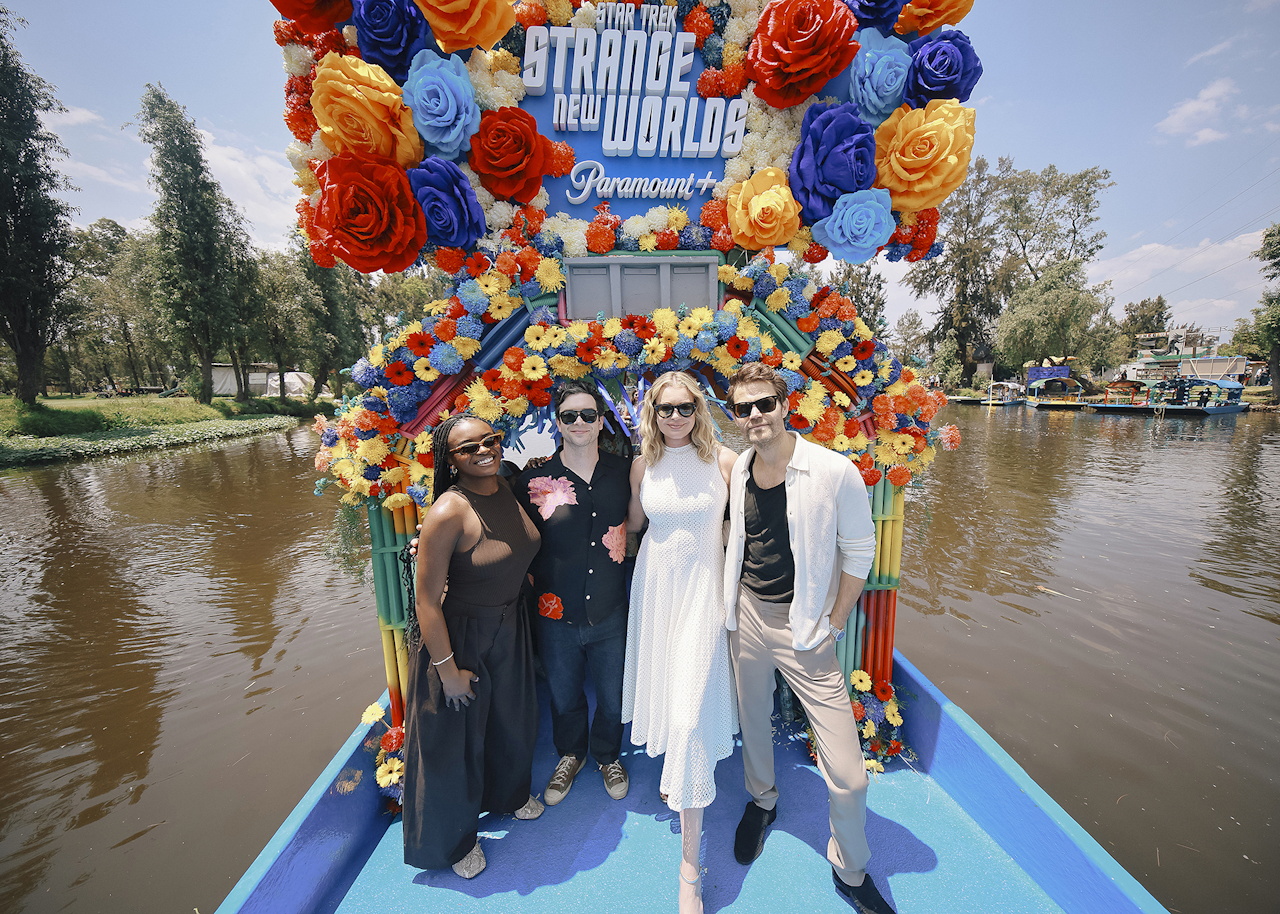
Photo of some of the Strange New Worlds cast on a barge at a Star Trek promo event
L-R: Celia Rose Gooding, Ethan Peck, Rebecca Romijn, and Paul Wesley on a barge at a Star Trek promo event in January 2026.
Photo: Paramount

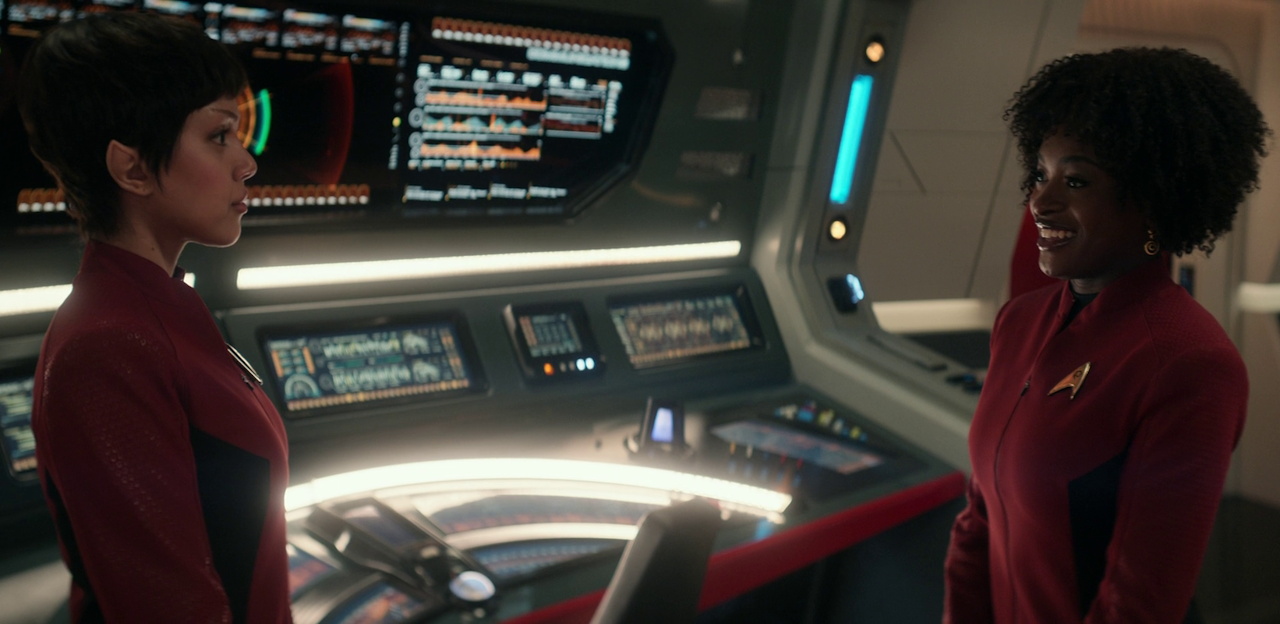
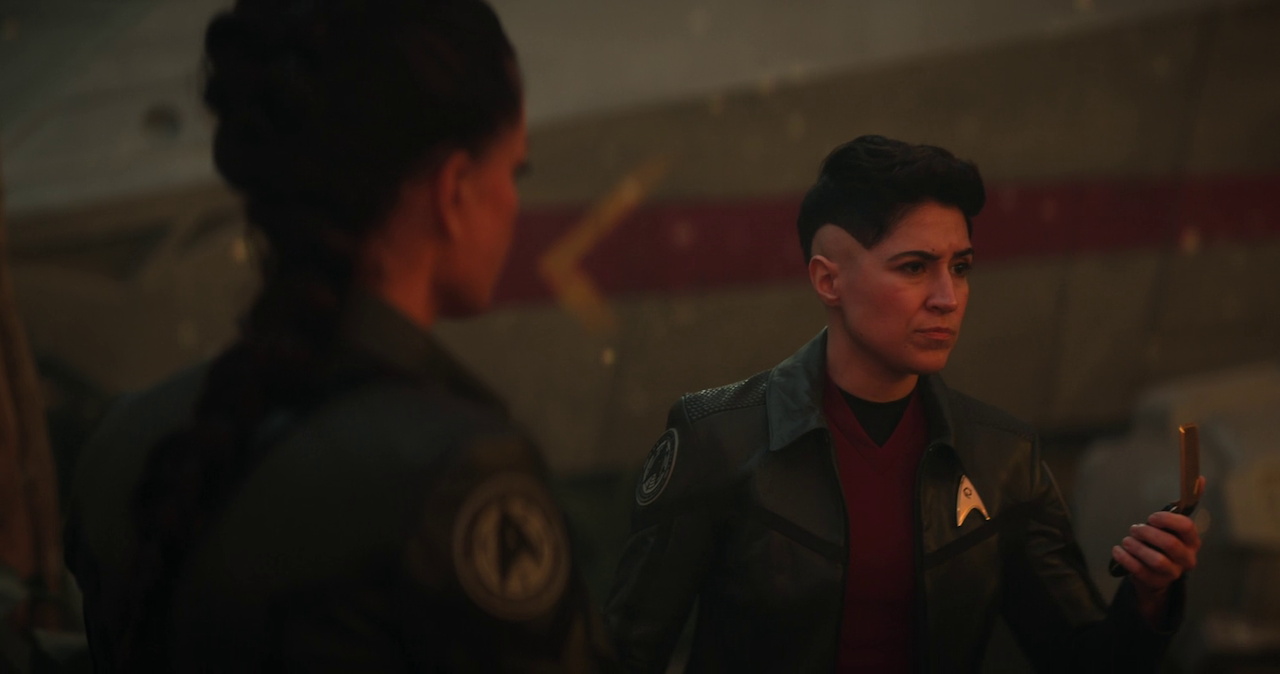
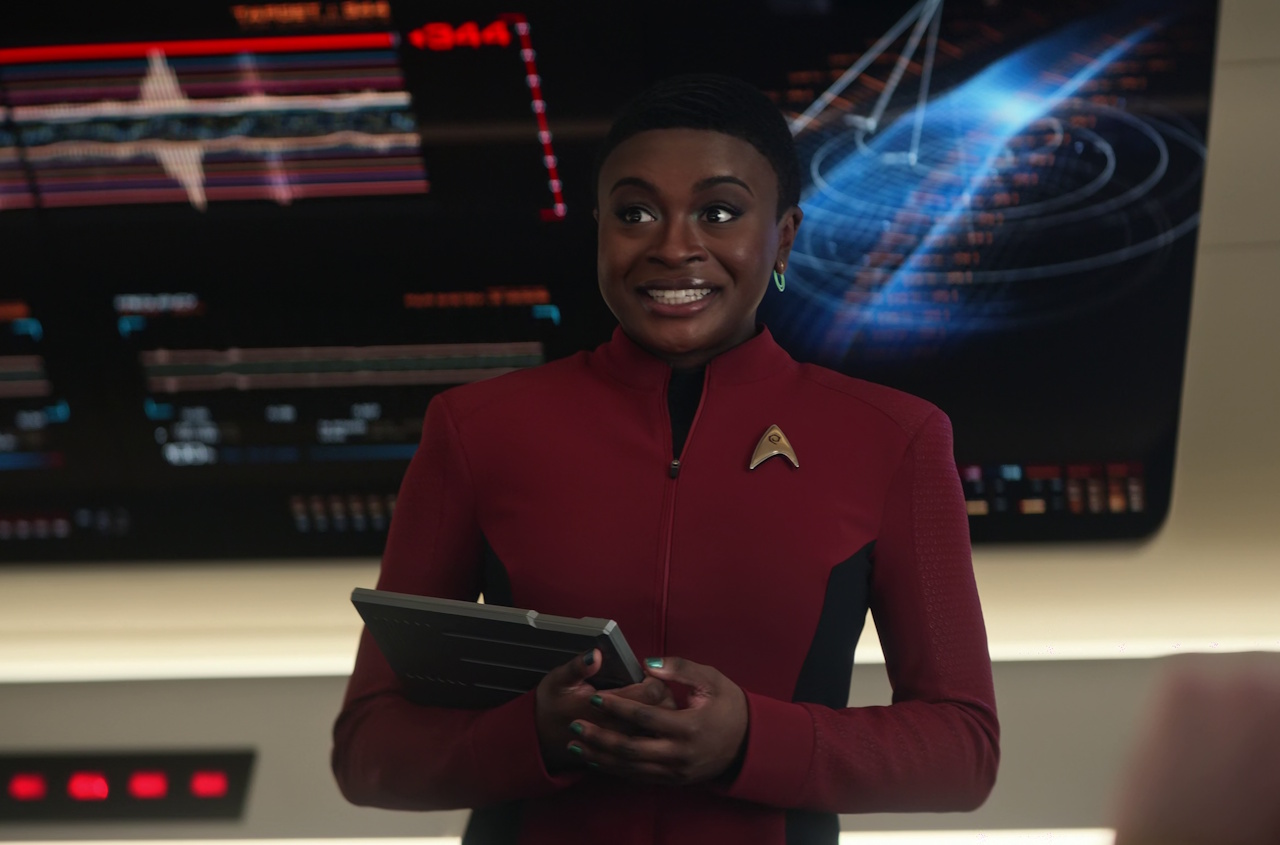
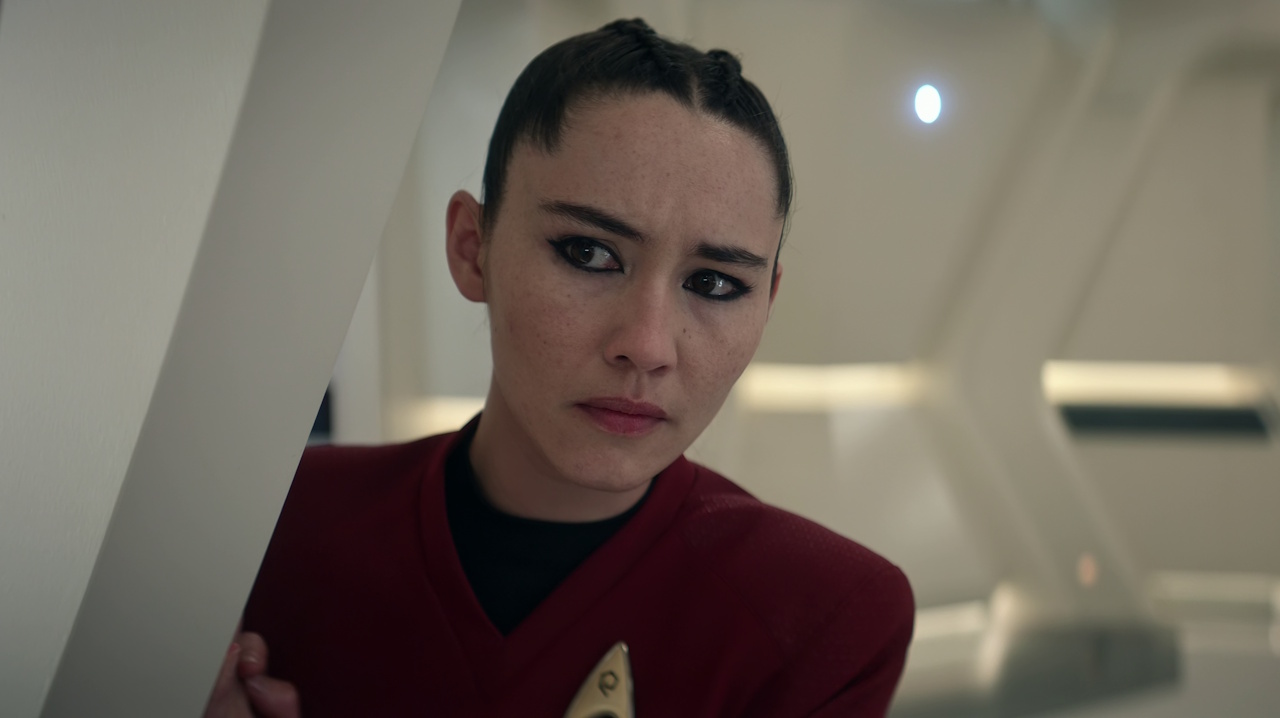
Let’s start with Uhura and her new Vulcan cadet. I’m sure this character (whose name I don’t think we even learned in the episode) will be back in subesequent episodes, and we’ll get to spend a bit more time with them then. That’s at least potentially interesting – and as I said in one of my Season 4 previews, I like the idea of Uhura getting this kind of character arc across the series as a whole – growing from the unsure cadet we met in Season 1 to a teacher and a mentor by Season 4. That’s a positive thing, and I’m happy to see it… at least, in theory.

But because this standoffish Vulcan cadet, and Uhura’s reaction to them, was such a nothing-burger in Valles Marineris, I can’t help but feel like this entire storyline could and should have been moved. Perhaps introducing this cadet next week, or in another episode where they’ll be more plot-relevant, would’ve been the better decision. It could’ve freed up a few absolutely vital minutes of screen time this week that other storylines were desperately lacking.

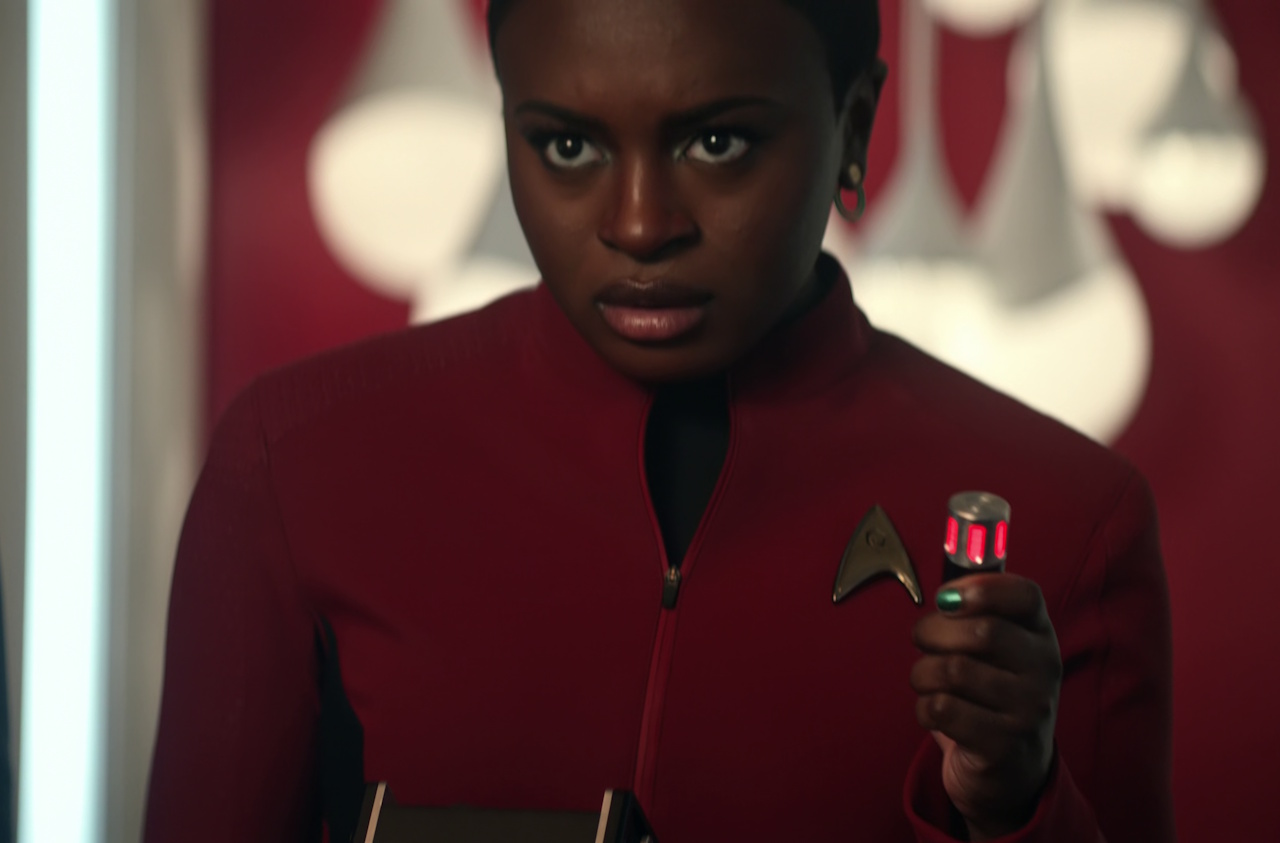
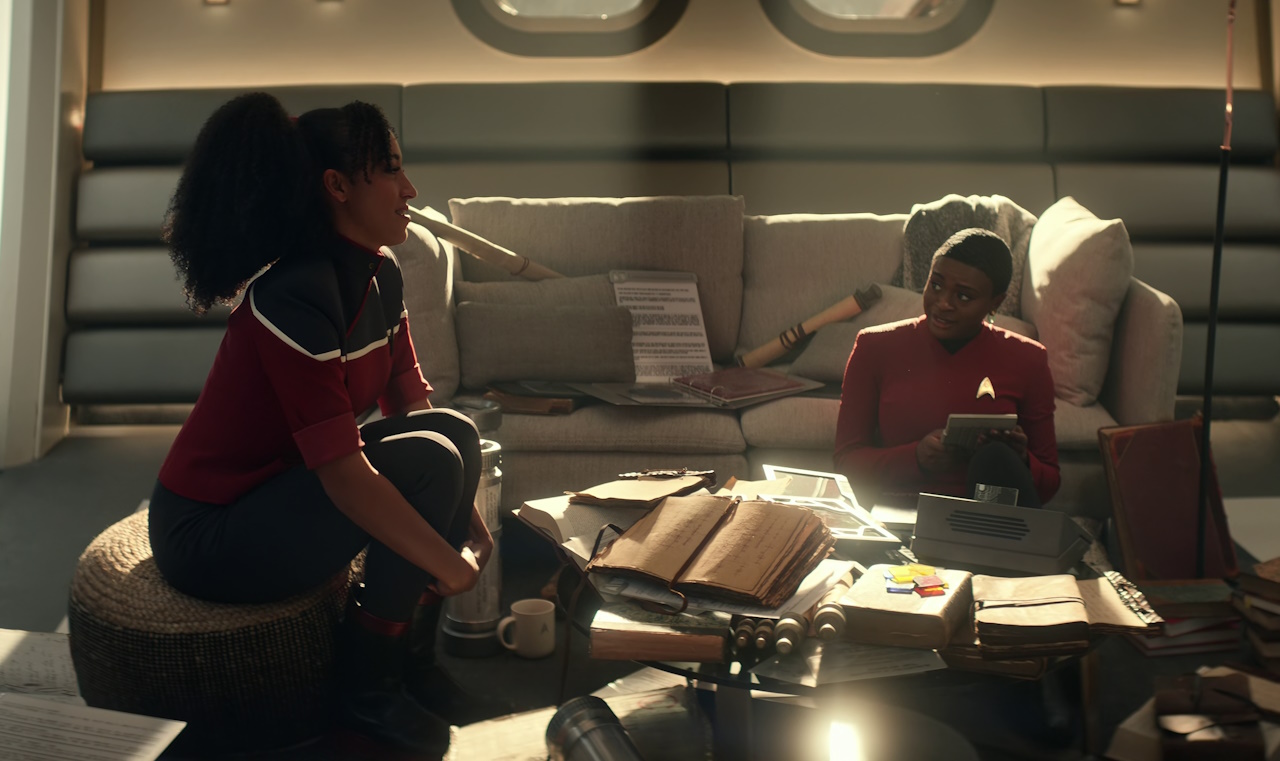
Still frame from Strange New Worlds 4x01 showing Uhura and a cadet
Uhura with the cadet.

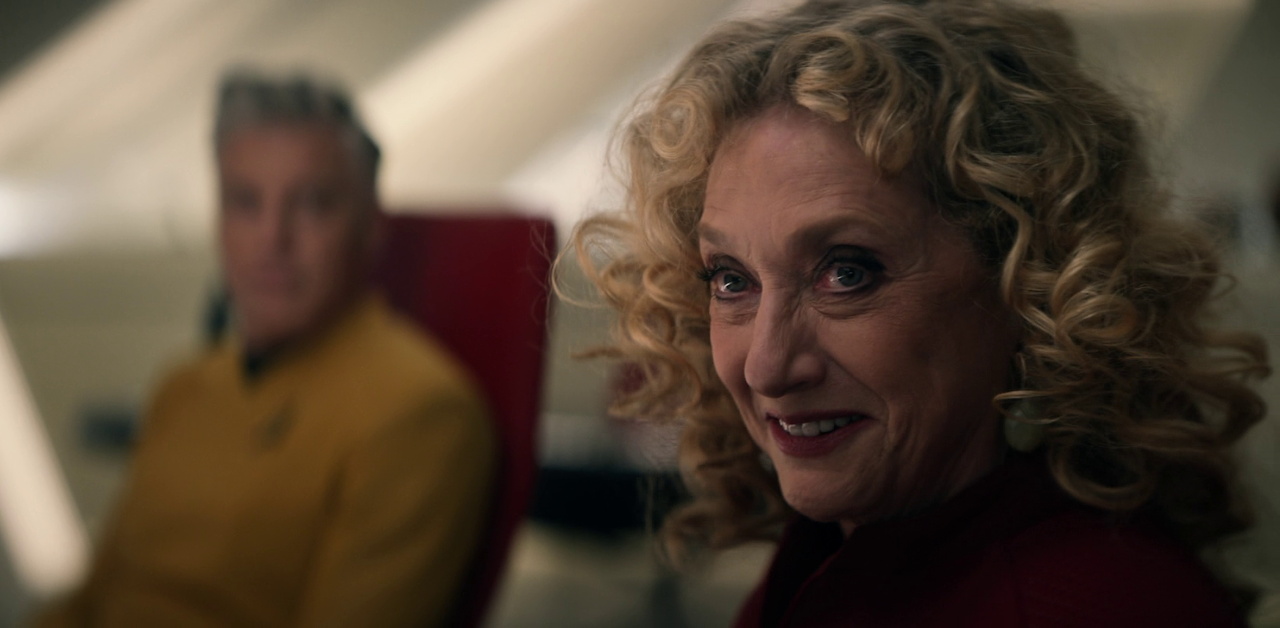
Again, for the sake of clarity: this storyline isn’t bad – or, at least, it isn’t off to a bad start. It’s just that this episode in particular already had so many other things going on that these moments between Uhura and the nameless cadet would’ve been better spent elsewhere. I have to assume that the cadet is going to be part of at least one significant storyline later in the season – and even if not, I like that their presence adds flavour and depth to the wider Star Trek universe. Seeing cadets on assignment like this is like seeing a random Andorian or Caitian in the background; it reminds us that Starfleet is bigger than just our main hero characters. And that’s a positive thing because it helps the Star Trek universe feel lived-in and real.

But on this occasion, Valles Marineris wanted to have storylines about time travel, dinosaurs, the concept of cosmic fate and destiny, Pike coming to terms with what happened to Captain Batel last time, Pike’s promotion, some kind of burgeoning conflict-slash-inevitable romance between Ortegas and Scotty, and brand-new additions to the history of Star Trek’s galaxy. There wasn’t time for everything… not at all. And I’m afraid that, in order for the episode to get across the *main* themes and story ideas that the writers wanted to convey, something should’ve been cut or adjusted. And if I had to pick one place to start cutting? It would be the scenes with Uhura and the cadet, as they were totally disconnected from everything else.

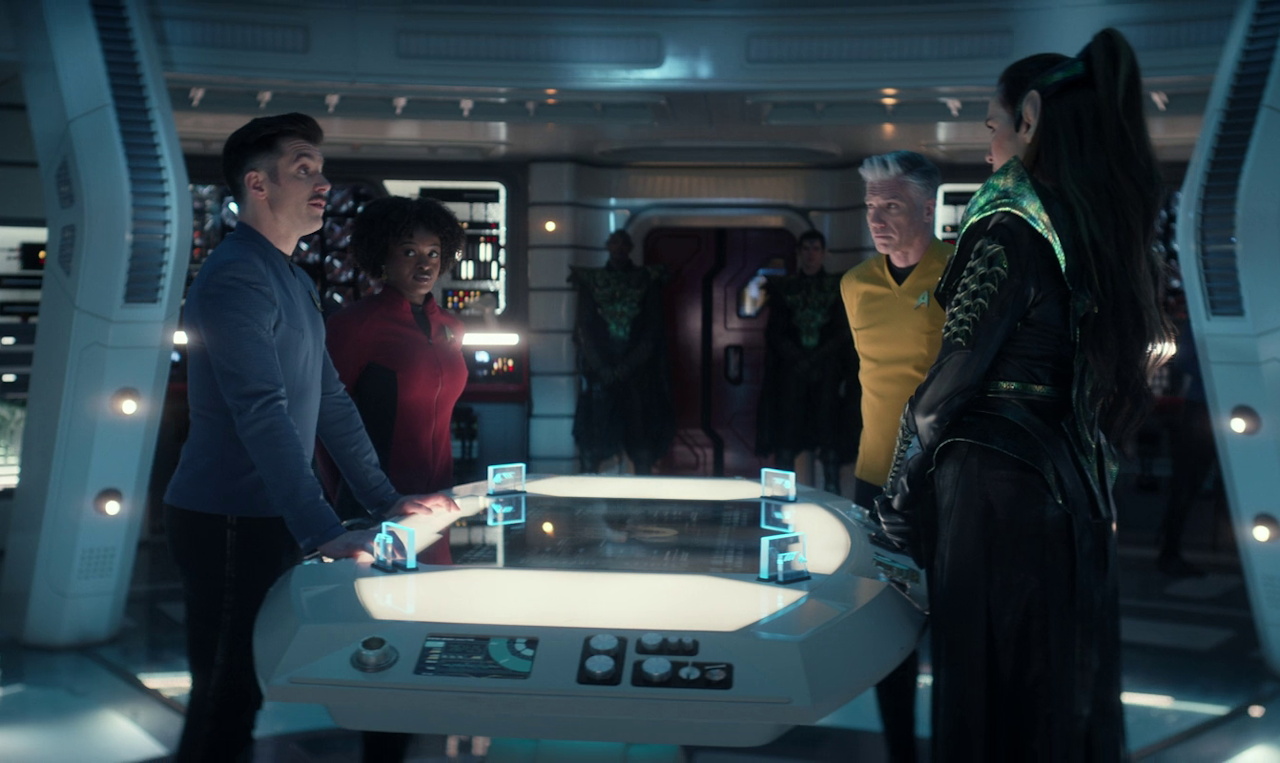
Still frame from Strange New Worlds 4x01 showing Pike, Sam, Uhura, and Cassell
This was a busy episode with a lot going on.

There were two big ideas on the go in Valles Marineris, and while they could – and arguably *should* – have been able to work together… they didn’t. The first was something that we saw teased in pre-season marketing material: Star Trek’s first-ever “dinosaur episode.” And the second was a time travel story about fate, destiny, and the need to allow a horrible catastrophe or crime to take place in order to secure the “correct” version of the present day.

Going back to dinosaur times to set up this kind of story was a creative idea. But the way it was handled in Valles Marineris meant that we neither spent much time with the dinos, having a fun Jurassic Park-inspired adventure, nor was there sufficient time to consider the real ramifications of everything on Pike’s side of the story. We learned, in brief, that: Pike and the Enterprise are literally responsible for the asteroid wiping out the dinosaurs, and by extension, humanity’s existence, that there used to be two other sentient alien races (besides the precursors to the Voth) in the Sol system, that some kind of “fate” or “destiny” exists in Star Trek at the macro level, not just for individuals like Pike, and that a race of humanoid Martians from millions of years ago had some kind of role in seeding the galaxy with their DNA. That’s *a lot* for any story to incorporate, so it’s no wonder that basically none of these points got time to be sufficiently explored.

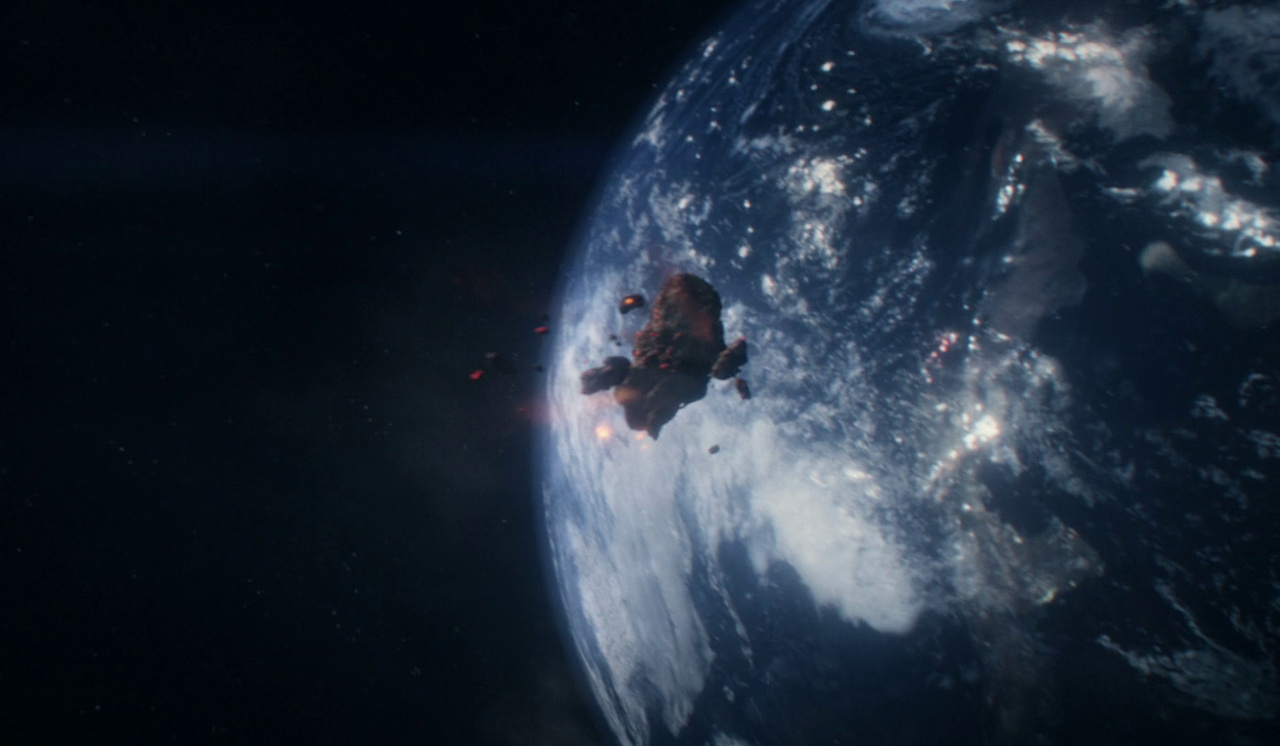
Still frame from Strange New Worlds 4x01 showing an asteroid approaching a planet
So, uh, Pike (indirectly, I guess) wiped out the dinosaurs.

If you’ve read my review of Discovery’s fifth season, you might remember me saying something similar, but I don’t really like when Star Trek gets into the weeds with massive questions like “where did we come from?” or “who created the races in the galaxy?” because I think it robs the setting – and, by extension, us as the audience – of one of the franchise’s most fundamental building-blocks. We *don’t* always know why certain things happened – like the asteroid that caused the extinction of the dinosaurs – and we don’t *need* to know. There doesn’t have to be a single in-universe reason for why humanity evolved… and it certainly doesn’t need to be tied to some of our hero characters. Those kinds of things are best left unexplained.

This was, in a nutshell, the Discovery Season 5 problem. By going all-in on the Progenitors, the seeding of the galaxy, and so on… the show tried to answer questions that never needed to be asked, let alone given an in-universe explanation. And this side of Valles Marineris suffered the exact same fate. What do we, as the audience, gain by learning that the Enterprise caused the extinction of the dinosaurs? That was never the point of Star Trek; it was never a story that set out to ask the question “where did we come from and why?”, and because Strange New Worlds is still a semi-episodic project, the massive in-universe implications – for humanity at large and for our characters on the show – almost certainly won’t be addressed in a big way.

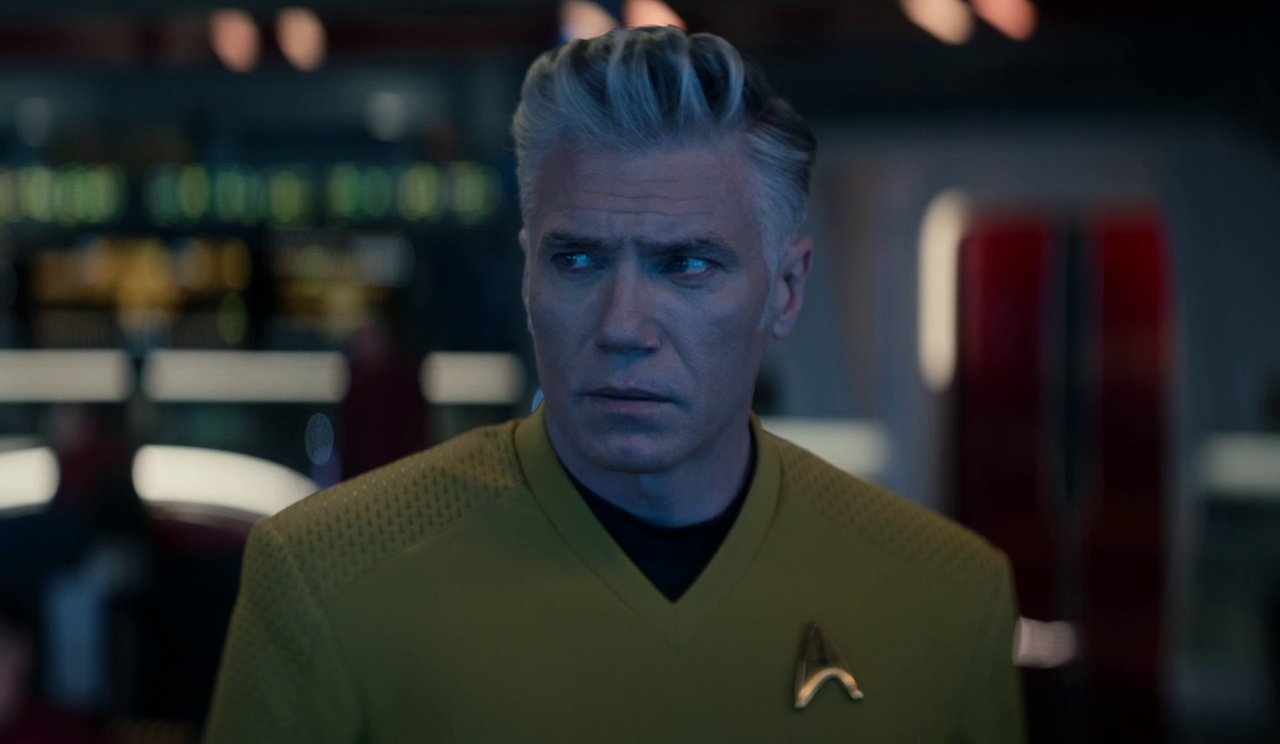
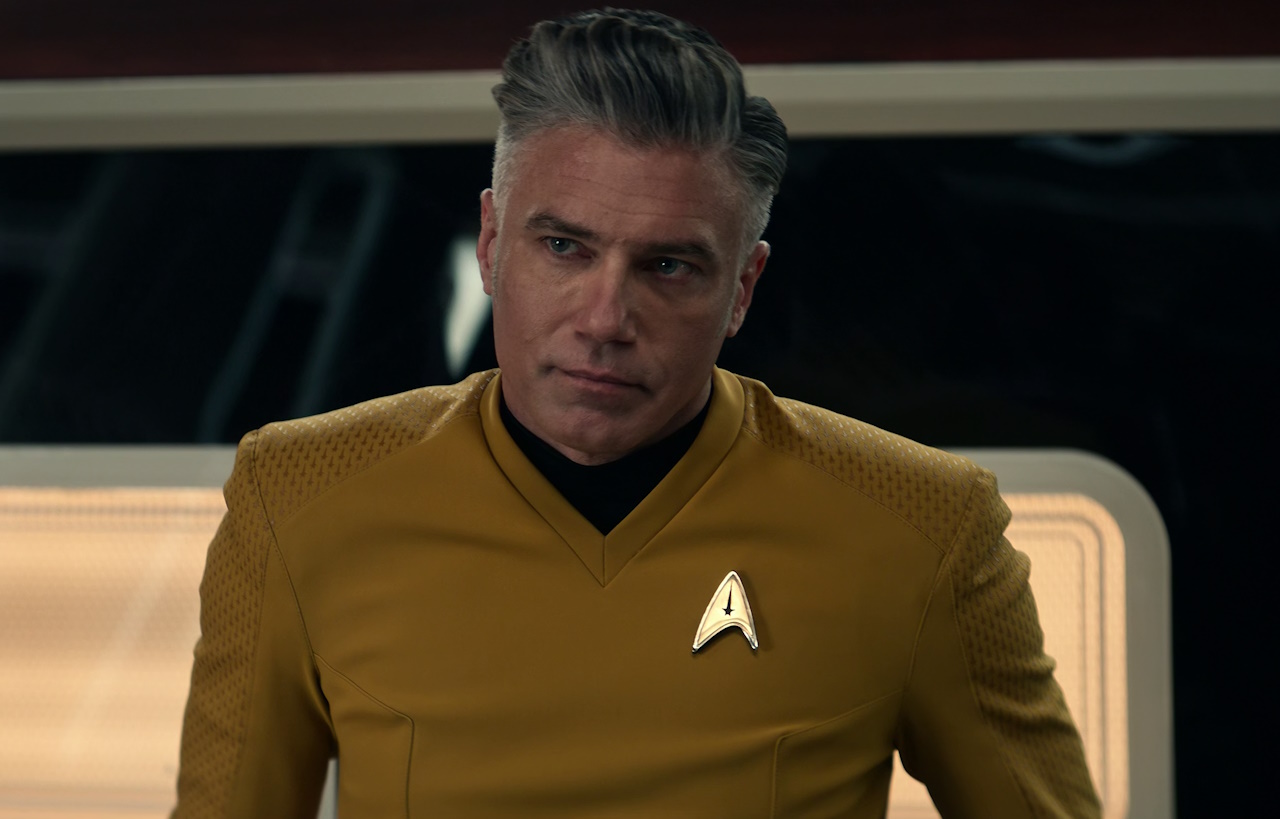
Still frame from Strange New Worlds 4x01 showing Pike
Captain Pike.

The appeal of Star Trek, to me, is that the Enterprise encounters different aliens, different planets, and goes on different adventures every week. There’s plenty of room in that framework for things like time travel, and even for encountering humanoid races in the distant past. I think both of those concepts could have been made to work. But by doing the Discovery-esque thing of making it this massive, fundamental, history-altering thing – let alone a time-loop paradox that’s hand-waved away with the old “destiny” excuse – I’m afraid that Valles Marineris didn’t stick the landing.

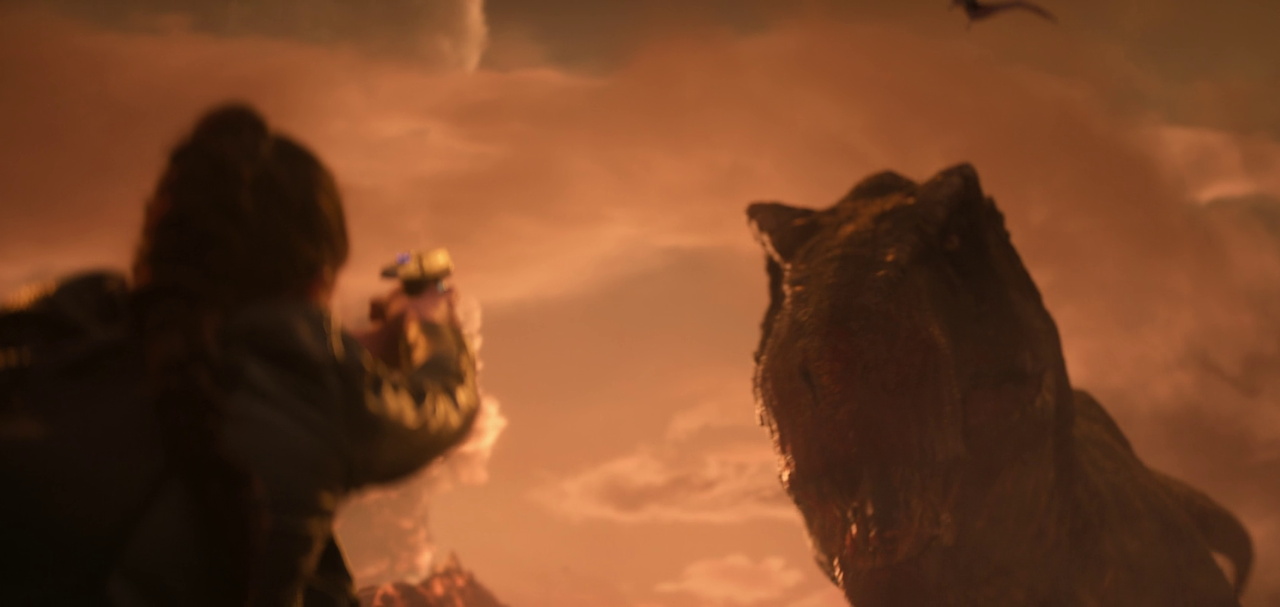
Going all the way back to The Lost World (not the Jurassic Park sequel; Arthur Conan Doyle’s 1912 novel), dinosaur stories have been all about adventure. Conan Doyle imagined a remote plateau in South America where dinosaurs still walked the Earth, Jurassic Park depicted mad scientists bringing the long-extinct creatures back to life to turn a profit… but there’s always been that adventurous tone. Valles Marineris offered the opportunity for Star Trek to have its very own dinosaur adventure… but an overladen episode didn’t have the time for that. The moments we got with the away team were fun – almost certainly the most fun I had with the entire episode. But they were so painfully short that the idea of “Star Trek meets the dinosaurs” fell pretty flat.

Still frame from Strange New Worlds 4x01 showing Una and a T Rex
I had high hopes when I saw the trailers…

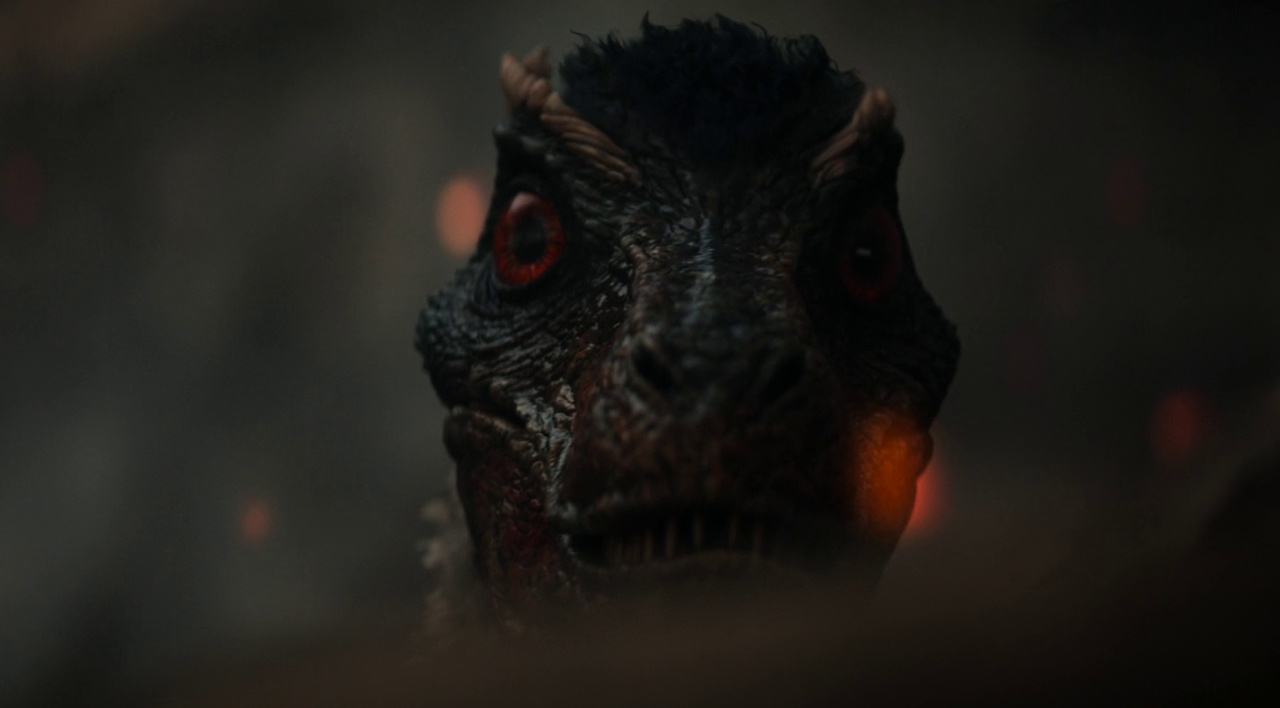
Perhaps it’s because “the dinosaur episode” had been so prominent in Season 4’s marketing material and promos, but I really feel this promised episode didn’t live up to expectations. I liked the idea of seeing, for example, Spock using his tricorder and meticulously scanning and categorising different dinosaurs. But, of course, Spock didn’t even join the away mission. The away team encountered precisely *two* dinosaurs: a T. Rex, which they shot and stunned, and some kind of feathered velociraptor, which La’an punched. That’s it. Two dinosaurs. In the dinosaur episode.

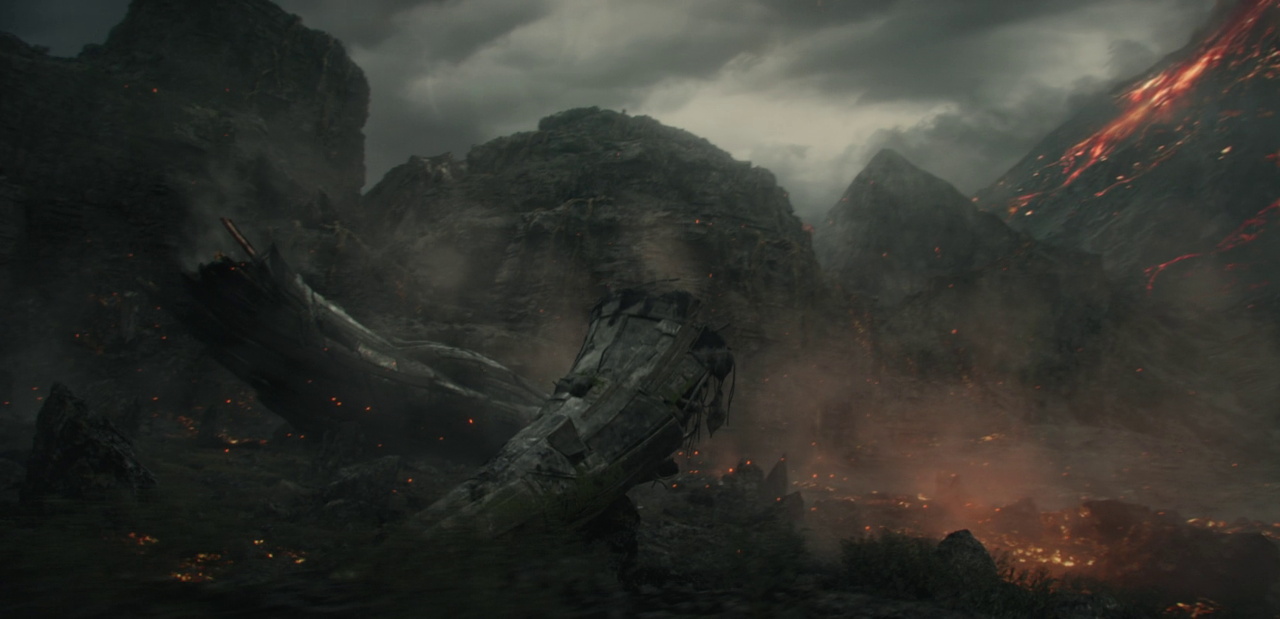
There were the beginnings of a fun story here. I like the idea, for instance, of an alien shipwreck on Earth in this era, and a stronger story could’ve considered what that might’ve meant for the history of life on Earth. And I liked the idea of the crew landing on a strange M-class world, without understanding where or when they are because of technobabble. Concealing the truth like that… it could have been a creative way to introduce this story and set up the kind of dino adventure I was hoping to see. But it turned out to be a disappointment, because the episode had too much to do elsewhere.

Still frame from Strange New Worlds 4x01 showing a shipwreck
A wrecked spaceship on the surface of prehistoric Earth.

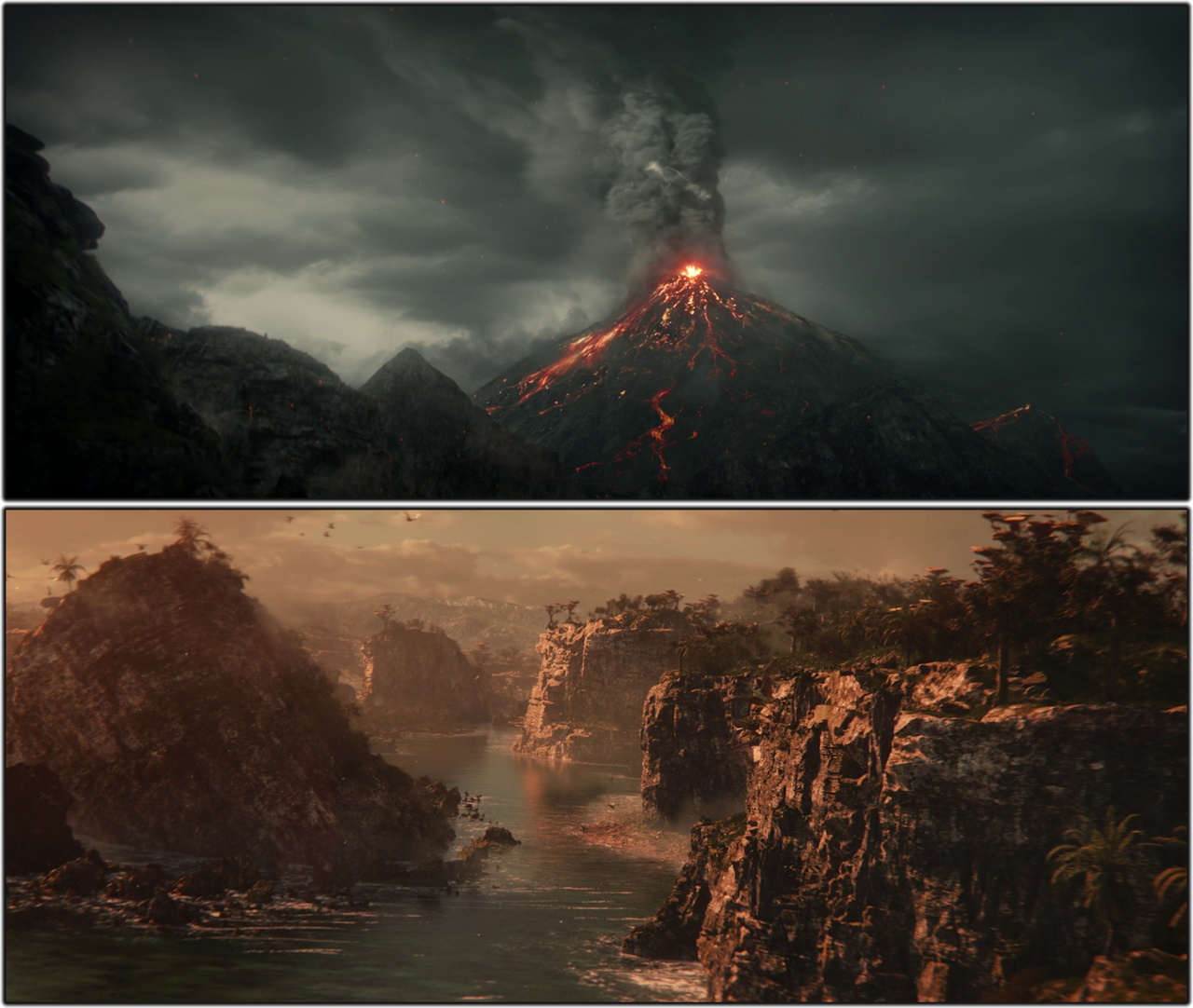
I will say, on a more positive note, that I liked the way the dinosaurs looked. It was nice to see a feathered dinosaur; since Jurassic Park’s premiere some thirty-odd years ago, palaeontologists have discovered that a lot more dinosaurs had feathers, and I’m glad the designers were able to incorporate that. The T. Rex, too, felt like it could’ve walked straight out of Jurassic Park! And even the plants and trees of prehistoric Earth looked pretty great.

Star Trek’s creative team have clearly gotten a lot more comfortable with the AR wall since its introduction. There are still some occasional misfires; the hideous CGI whale in Starfleet Academy’s premiere, for instance. But for the most part, sets built around the AR wall have looked pretty good, and I think the recreation of prehistoric Earth looked great here. There was some fantastic CGI and animation work to bring this place to life. I just wish we’d had the chance to spend a bit more time hacking through jungles, climbing volcanoes, and dodging dinos with the away team.

Pair of still frames from Strange New Worlds 4x01 showing animated scenery
Two of the CGI shots of prehistoric Earth.

This next part is going to seem a bit nitpicky, so feel free to disregard it if you think it doesn’t matter!

Voyager’s third season episode Distant Origin introduced us to the Voth – the descendants of a race of sentient dinosaurs who left Earth millions of years ago and eventually settled in the Delta Quadrant. The latest DLC pack for the video game Star Trek: Voyager – Across The Unknown even features this race and a mission based on the episode, which is why it’s so fresh in my mind right now! The Voth were believed to have descended from hadrosaurs – a real-life dino species which existed in the Cretaceous period. So… where were the Voth, or proto-Voth?

When we saw an alien spaceship attaching itself to the Enterprise, I felt certain that we were about to encounter the Voth! That could’ve been a fun way to tie in this adventure to dinosaur times with an existing piece of Star Trek lore. Instead, we were introduced to a race of sentient Martians, and their enemies on another M-class planet in the Sol system. And while I don’t dislike that necessarily (at least, not in isolation), it does make me wonder why the Voth weren’t chosen instead. Was it the prosthetic makeup? I note that the Martians were pretty basic in their design, whereas the Voth’s reptillian makeup would’ve been more complicated (and expensive) to replicate.

Still frame from Strange New Worlds 4x01 showing a dinosaur
A dinosaur.

I don’t wanna spend too much time on this, and I think there’s enough wiggle-room based on dialogue in Distant Origin to argue that the Voth (or their ancestors) might not have evolved into a sentient species by this point in time, let alone have been a technological or spacefaring people. But it would’ve been a fun callback to Voyager if we’d encountered the Voth or proto-Voth in this episode.

I mentioned above that I don’t dislike the introduction of the Martians or the Dol’drm *in isolation*, so let’s expand on that a little.

The history of Star Trek’s galaxy is already… well, let’s just call it “unnecessarily complicated.” There are the Progenitors, who apparently seeded half of the galaxy with genetic material. There’s the Q Continuum, with all of their time travel shenanigans. Then we have all of the time travel episodes to various periods in Earth’s past (or the past relative to the 23rd and 24th Centuries), which often saw various characters getting a little *too* involved in history!

Still frame from Strange New Worlds 4x01 showing Una and Erica
Una and Ortegas on Earth.

In short, if this was the first Star Trek episode to visit the past, or even to touch on events in this exact era, I think I’d be okay with the Martians and the Dol’drm. Their existence adds to our understanding of the Star Trek galaxy. But because Star Trek is some six decades old, closing in on its 1,000th story, and because we’ve had plenty of episodes and storylines dealing with Earth, Mars, human history, pre-human history, and so on… it feels like an unnecessary addition. It complicates elements of the Star Trek galaxy’s fictional history rather than explains storylines that needed to be expanded upon… and I can’t help but feel that the dangling narrative threads that this episode leaves behind will never be addressed.

How, for instance, did the pre-warp Martians manage to travel the galaxy and leave their genetic material in dozens of races? Isn’t that what the Progenitors did in The Next Generation and Discovery, so doesn’t it tread on the toes of that story? And where were the Voth, or the ancestors of the Voth, in an era where we should’ve seen some evidence of them? Star Trek had never before teased the idea of a prehistoric Martian race, nor of a destroyed planet in the Sol system, and while these ideas can be made to work… they’d have worked a lot better if they were painted on a blank canvas instead of having to be shoehorned in between existing pieces of lore from across sixty years of the franchise’s history.

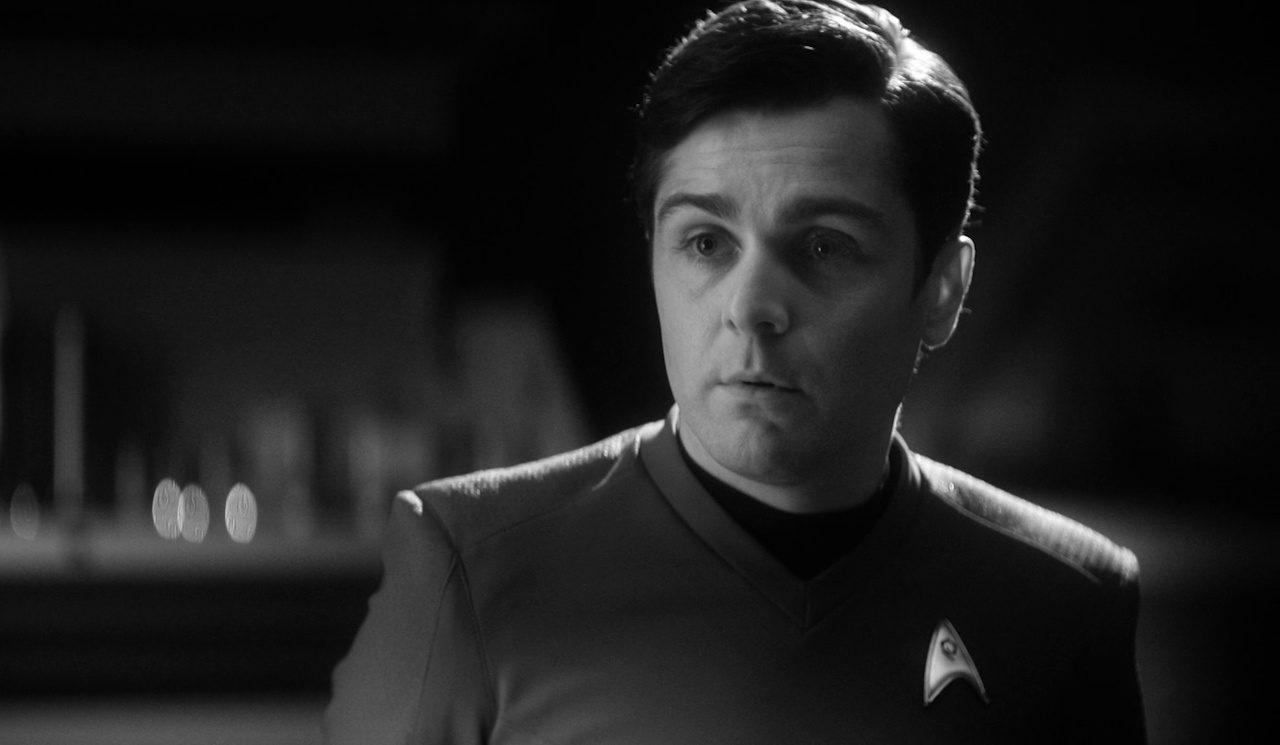
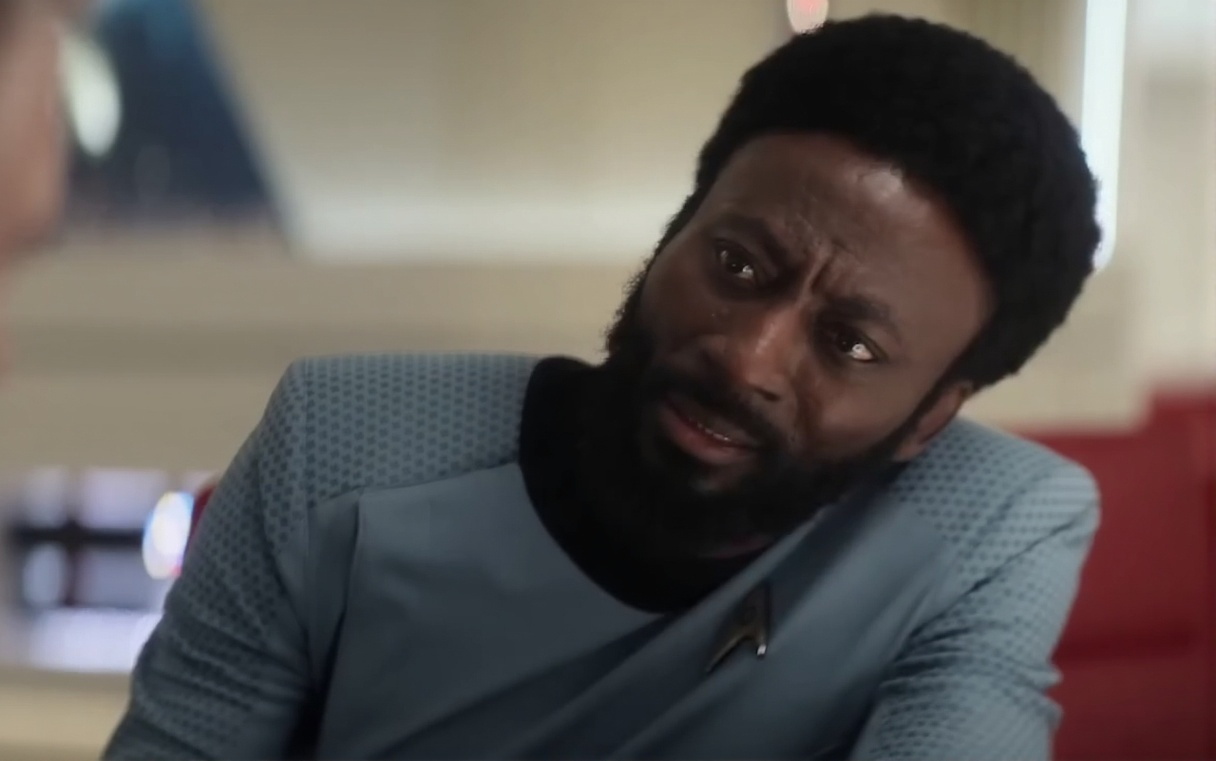
Still frame from the Star Trek SNW S4 trailer showing M'Benga
Dr M’Benga explained that the Martians’ DNA somehow made its way all over the galaxy.

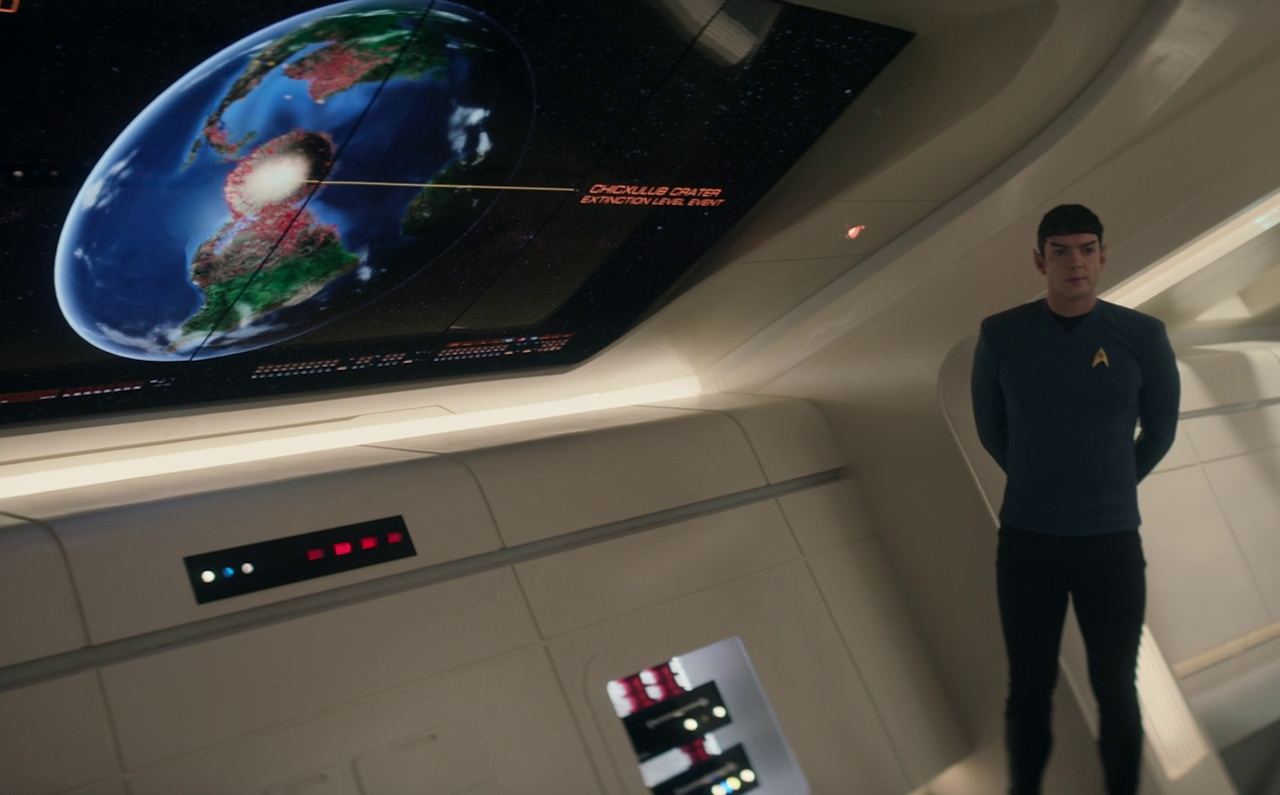
Time travel is not easy to get right. It doesn’t always work well in Star Trek, and even in dedicated films or books where time travel is a major plot point, it’s all too easy for writers to tie their stories in knots with paradoxes, time-loops, and so on. And Valles Marineris falls victim to this. The Enterprise’s direct involvement in the destruction of the Dol’drm homeworld and the Chicxulub asteroid impact is a predestination paradox; a particularly annoying kind of time travel plot hole that the episode tries to just hand-wave away right at the end. Why was the Enterprise there? Because *it was always supposed to be there*, duh. That’s it. That’s all the explanation we’re gonna get.

Even if this was for something small, it would still be infuriating! But the Enterprise is responsible for *literally all of humanity ever existing*, and it’s a fucking paradox! And all the explanation we’re offered is “well, that was supposed to happen. Now shut up and don’t tell anyone, ever.” Doesn’t that piss you off? Because it pisses me off! Throwing out “fate” and “destiny” as ways to get out of a time travel paradox is just so exceptionally lazy. Worse, it’s a massively overused trope; a cliché of time travel stories that’s been seen way too often. Star Trek has done this before, of course, but that doesn’t make it any better. And in a Discovery-inspired “the entire fate of all of history depends on this” storyline? It’s absolutely atrocious, to be blunt about it.

Still frame from Strange New Worlds 4x01 showing Spock at a viewscreen
Spock explaining the origin of the Chicxulub meteor.

I want to talk about the Martians.

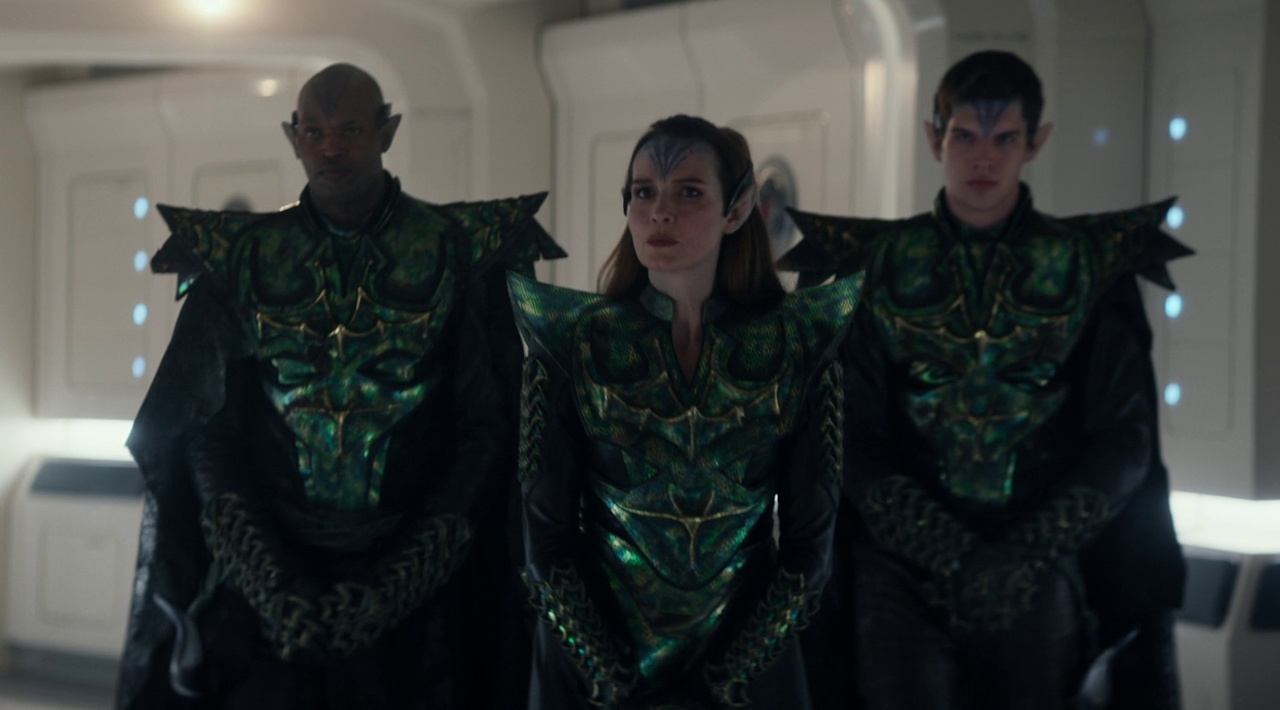
I was underwhelmed, to be honest, by the Martians’ visual presentation. The “humans with painted foreheads” thing really didn’t do it for me; they felt neither sufficiently ancient nor adequately alien, and their design didn’t even do what the Progenitors’ did back in The Next Generation, feeling like it could conceivably be a precursor to humans and other humanoid races. Costuming was also pretty uninspired; the Martians’ costumes looked like they might’ve originally been intended for the Romulans to wear.

Then there’s the question of technology. The Martian ship was easily able to pick up the damaged Enterprise, yet it was immediately assumed by Pike and co. that the Martians must be a pre-warp civilisation. Their visually impressive spacecraft apparently possessed no antimatter, because a single antimatter fuel cell from the Enterprise was able to be turned into a powerful weapon. Given that the Martians seemed to possess technology superior to Starfleet’s in some ways – like phasing through walls or language translation – I had a hard time buying that they were a pre-warp, pre-antimatter society. Heck, we can create actual antimatter here on Earth, today, in the real world. So how could the Martians not have that technology given the power of their spaceship, phasing, and so on? It just felt quite jarring to go from “oh no, this incredibly powerful warship has captured us!” to “the Prime Directive applies to these pre-warp simpletons” without sufficient explanation. “Show, don’t tell” – the old adage from Creative Writing 101 – should’ve been applied here, and if we’d seen for ourselves the limitations of the Martians’ technology, the episode would have avoided this. But, as we’ve already discussed, Valles Marineris was already overstuffed with storylines and content.

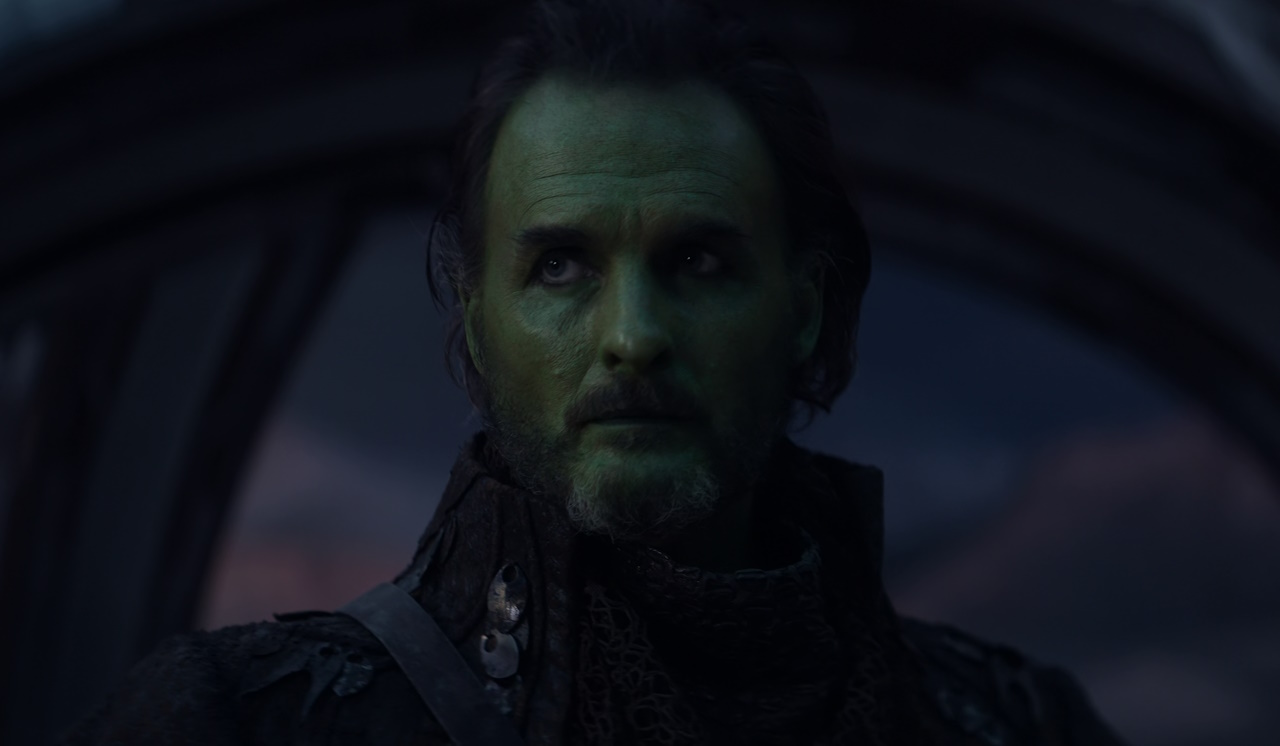
Still frame from Strange New Worlds 4x01 showing Cassell and two guards
The Martians.

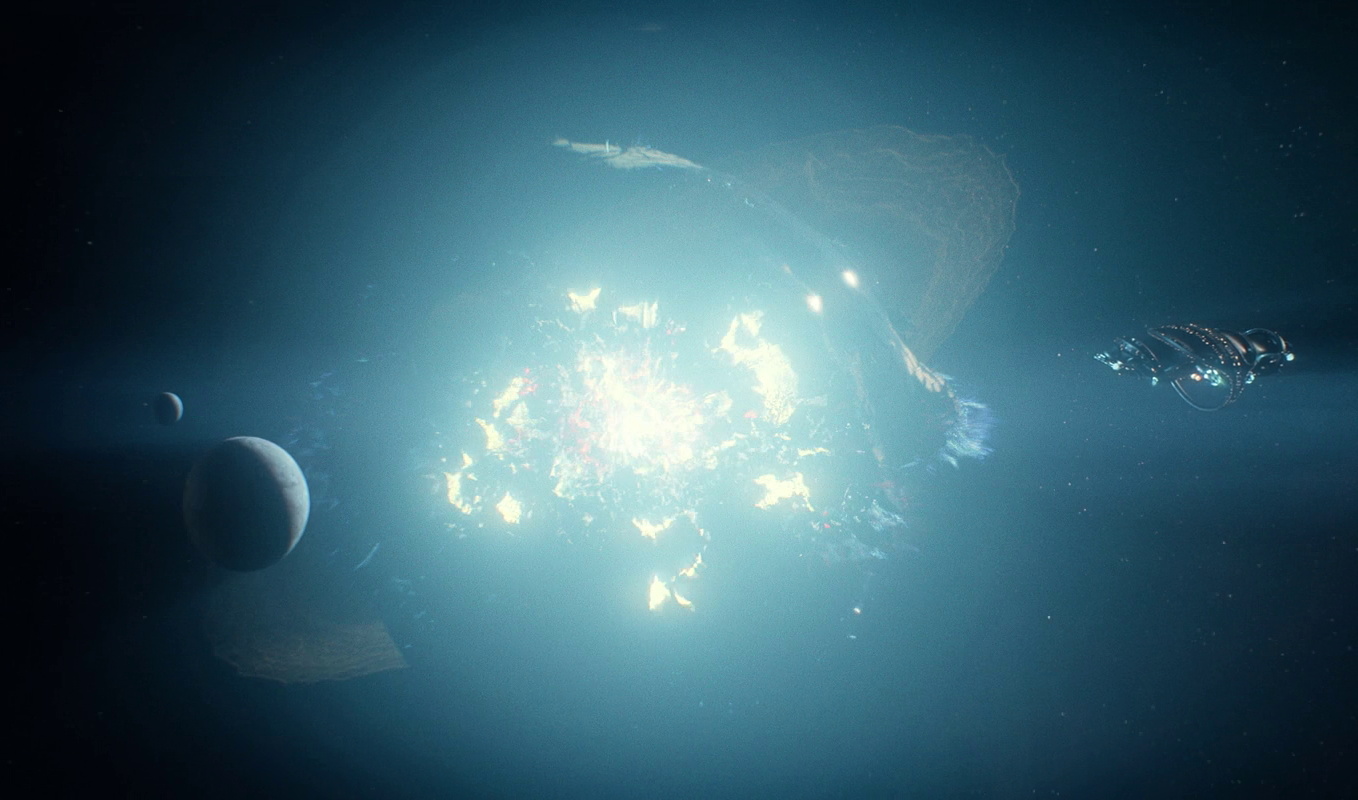
If I might nitpick (again), what do we make of a single starship fuel cell being used to destroy an entire planet? I know that antimatter is powerful – both in the real world and in Star Trek’s technobabble. Photon torpedoes use antimatter in some form, for instance, so we know it can be weaponised. But it seemed a bit of a stretch, to me, that an entire *planet* could be destroyed so casually with something that the Enterprise – and, by extension, every warp-capable ship in the galaxy – just uses for fuel. Why are *all* weapons not antimatter? Could a single torpedo blow up a planet?

In this instance, I get the sense that the writers just didn’t have the attention to detail or level of care that a story set in a long-running fictional universe needs. If a single fuel cell, small and light enough to be carried by a couple of people, can be used to blow up an entire planet… I mean, how are *any* planets left standing in the Star Trek galaxy? Surely the likes of the Klingons, the Cardassians, or the Borg would’ve weaponised antimatter in that way centuries or millennia ago. In other Star Trek stories, planet-killing superweapons – such as the unmanned vessel from The Doomsday Machine, or Red Matter from Star Trek ’09 – were assumed to be rare. They’re analogous to nuclear weapons: exceptionally powerful and dangerous, but very uncommon and difficult to create. Valles Marineris is apparently saying that every ship in the fleet is cutting about with dozens or even hundreds of potentially planet-killing superweapons that they do nothing with except use for fuel. And the only reason no one’s out there blowing up planets all willy-nilly is… just because?

Still frame from Strange New Worlds 4x01 showing the destruction of a planet
The Dol’drm homeworld is destroyed.

In the run-up to Season 3, we learned that Strange New Worlds has been cancelled. And a big part of the marketing material for Season 4 has been this idea that the stories this time will take us “one step closer to where [Star Trek] all began” – i.e. The Original Series. As part of that, I have to imagine that we’re going to learn the eventual fates of several of Strange New Worlds’ original characters, the ones who weren’t part of The Original Series: La’an Noonien-Singh, Erica Ortegas, and Pelia, as well as Una Chin-Riley, who was absent after The Cage. I think Valles Marineris started at least one story arc which could tie into that.

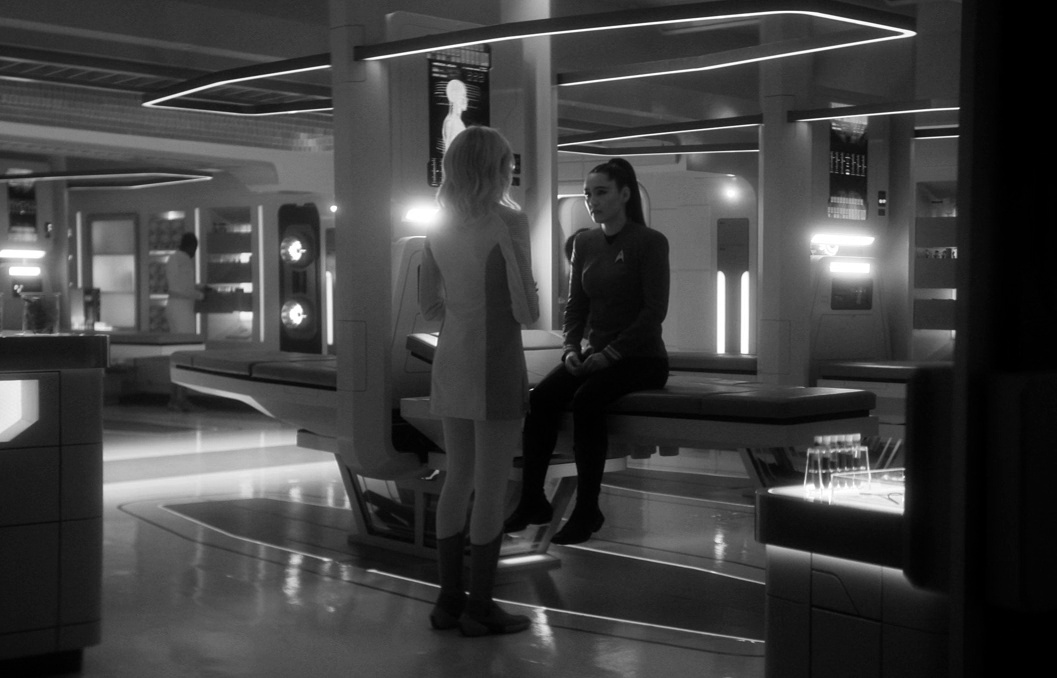
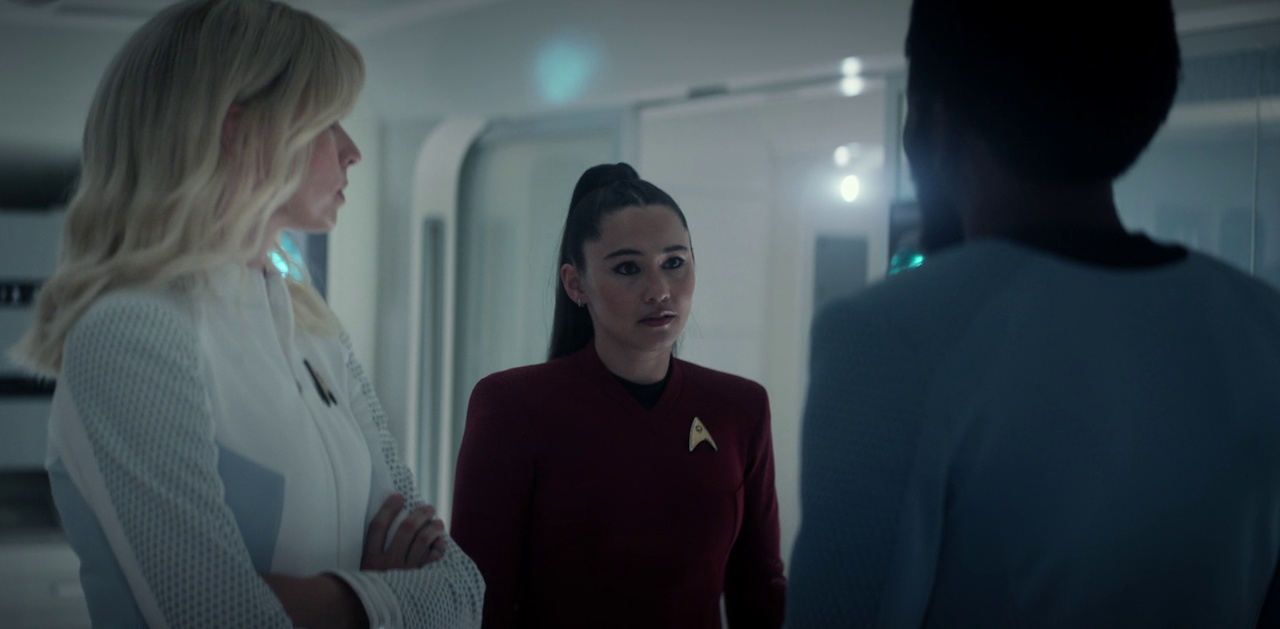
Though, once again, it didn’t get enough time on screen or a sufficient explanation, La’an suffered an injury to her hand in Valles Marineris. The conversation she had with Dr M’Benga and Nurse Chapel made reference to her (in)famous ancestry and her “recessive” augment DNA, though it was a massive dump of exposition and a clumsily-worded scene that was probably the worst in the episode. Given that we know La’an had left the Enterprise before TOS, and that modern Star Trek writers have a penchant for taking things to the extreme… I think it’s fair to say that *at least* one of SNW’s original characters is going to be killed off before the end of the series, right? And what we saw this week with La’an could have set the stage for that. Perhaps she’ll go rogue if her augment DNA activates, and someone will have to stop her. Or maybe, as we saw last time with Captain Batel and the Gorn, something’s going on inside her with this DNA that’s going to accelerate the end of her life. In any case… it was a very barebones foundation, but perhaps it’s something to build on.

Still frame from Strange New Worlds 4x01 showing La'an with Chapel and M'Benga
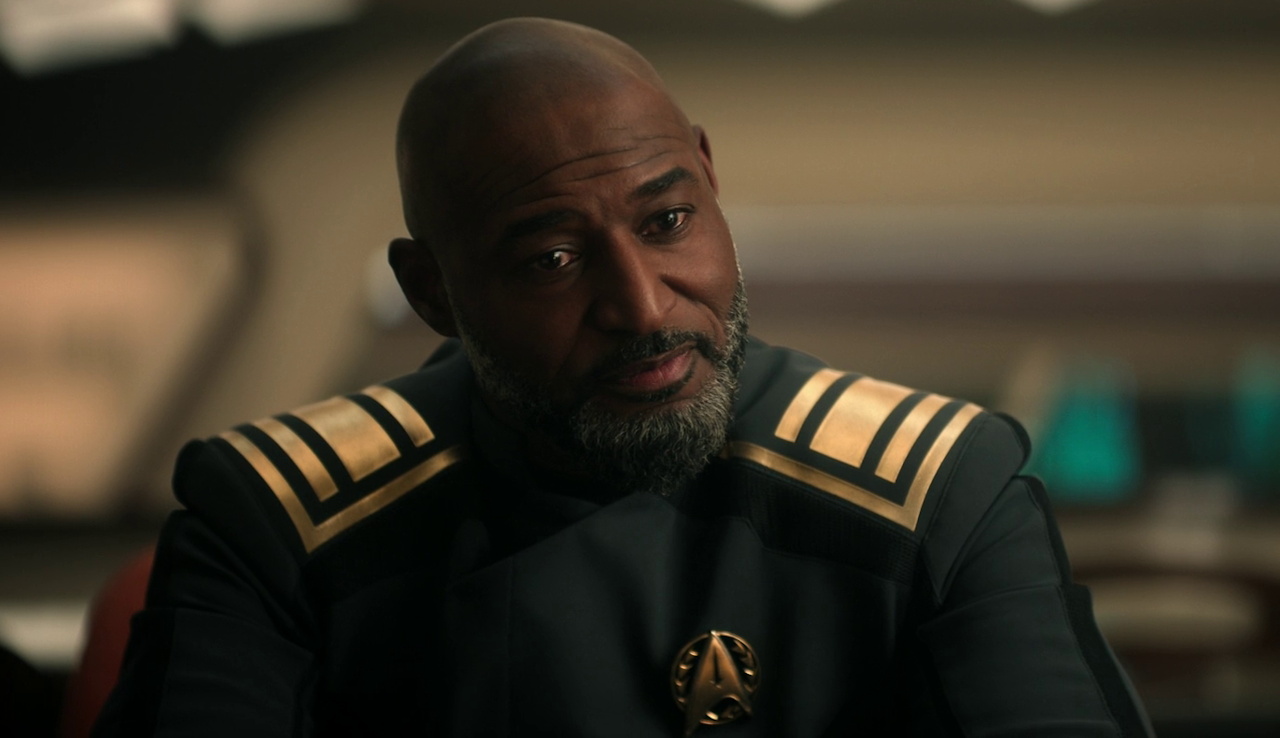
Goodbye La’an?

In Season 3, Captain Pike got a complex and deeply emotional story with Captain Batel – their relationship expanded and deepened before her untimely sacrifice. I said after the Season 3 finale that I’d have liked to spend a bit more time with Pike to consider the ramifications of what he went through; he seemed to experience an entire lifetime with her before her sacrifice, and then saw that “perfect” life ripped away. It was not only a life he got to lead with someone he loved, someone he had a family with… but it was also a lifetime in which his debilitating accident never occurred. There was scope, I felt, to consider an age-old question: is getting a taste of paradise, for just a moment, worse than never experiencing it at all?

This time, the Martian commander picked up on Pike’s loss, and snippets of conversations with Admiral April and Number One both hinted at or referenced what happened with Captain Batel. But I don’t think we’ve fully explored this idea just yet, and I’ll be curious to see how much further Strange New Worlds takes Pike’s emotional journey in the aftermath of Captain Batel’s loss. As above with La’an, there’s an interesting framework to build upon, and I’m glad that Season 4 didn’t just try to drop it and move on – something modern Star Trek has done with too many storylines, to be honest! But there’s more to do with Pike and his emotional state, I feel.

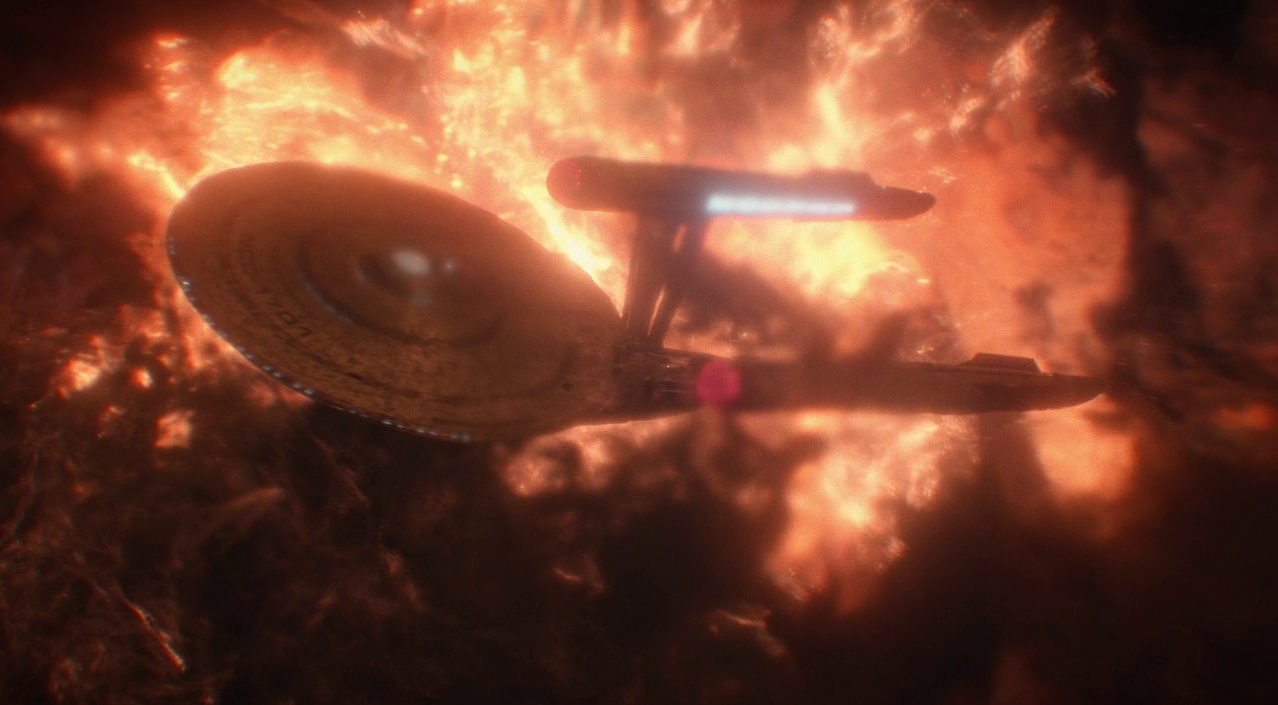
Still frame from Strange New Worlds 4x01 showing the USS Enterprise caught in a solar storm
The Enterprise.

Then we have Pike’s promotion. This storyline reminded me a little of what we saw with Picard and Kirk in Generations – Kirk advises Picard to stay on the bridge of his ship, and not to accept a promotion to Admiral. Admiral April offers Pike the role of Commodore – a half-step to becoming a full Admiral, and role he may one day accept (depending on how we interpret Kirk’s line about Pike becoming a “Fleet Captain” by the time of The Menagerie), but on this occasion, Pike turns him down – though Una does receive a promotion of her own at the end of the episode, which was nice to see.

I think we’re going to see Pike’s promotion at the very end of the series, with him accepting this new role and having to transfer command of the Enterprise to Kirk as a result. But, again, this feels like Strange New Worlds laying the groundwork for that. Starfleet is sufficiently impressed with Pike as to offer him a promotion, and we know that, sooner or later, he *will* take a promotion ahead of his debilitating accident.

Still frame from Strange New Worlds 4x01 showing April
Pike turned down April’s promotion offer… for now.

Before we wrap things up, a few final thoughts.

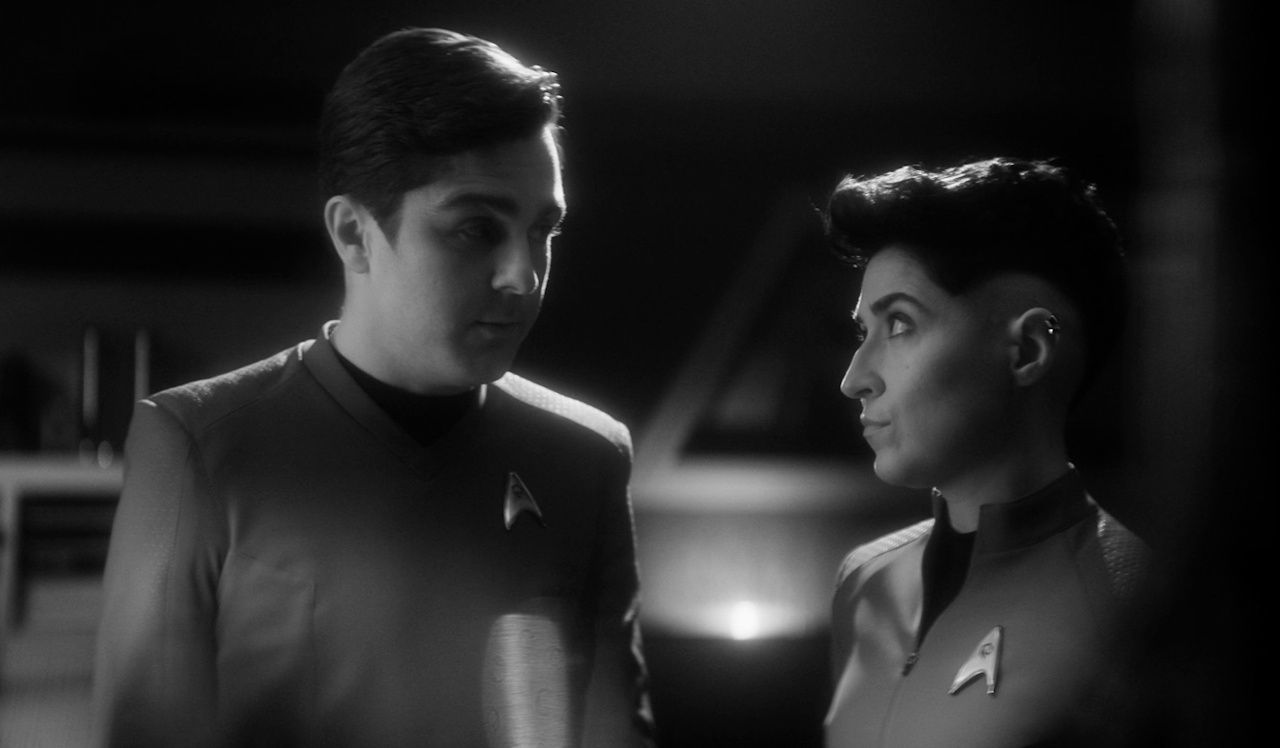
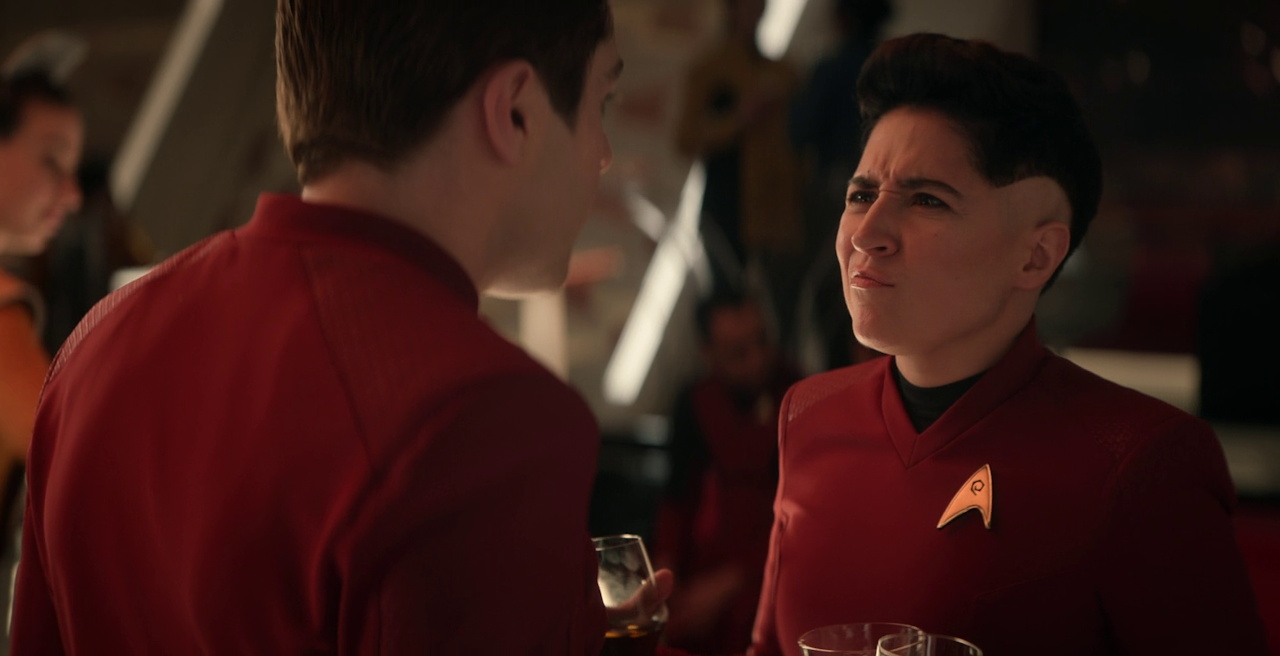
Is Strange New Worlds setting up a sitcom-y “frenemies to lovers” storyline with Scotty and Ortegas? I don’t remember much interaction between them in Season 3, after Martin Quinn joined the cast, but there was definitely something between them this week. Ortegas complained about Scotty’s safety features and mocked his accent, and the two developed some kind of rivalry between the pilot who flies the ship and the engineer who keeps it flying. Could this arc – if indeed it exists – be tied to Ortegas’ exit from the Enterprise bridge ahead of the season finale? We know, thanks to Paramount’s casting announcement, that Sulu will have some role to play in Season 5… and Sulu will be the Enterprise’s helmsman under Kirk’s command. So where does that leave Ortegas?

Pelia seemed to make a reference to long-running sci-fi series Doctor Who, claiming to have seen one of these solar storms before, while aboard “a phone box.” This is a fun little Easter Egg, of course, but it also ties into something that showrunner Akiva Goldsman has said: a crossover with Doctor Who was actively considered by both the Star Trek team and the Doctor Who team, and that it came relatively close to happening. In Goldsman’s words: “Pelia travelled in the TARDIS. Why not?” I don’t mean to say that this reference was intended to tie in with a specific crossover story idea, but it furthers something we saw in Season 3, and it’s another fun little connection between these two legendary sci-fi properties.

Still frame from Strange New Worlds 4x01 showing Pelia with Pike behind her
It was nice to see Pelia this week.

So that was Valles Marineris. It didn’t wow me, to be blunt about it. And I think, on balance, it’s the weakest of Strange New Worlds’ season premieres, which is a bit of a shame.

However, Strange New Worlds remains a mostly episodic show, and while there are storylines that kicked off this week that will be continued across the rest of the season, there will be a new adventure for Pike and the crew next time – hopefully a stronger, more enjoyable one. I had high hopes for a fun dinosaur-themed adventure when I saw them in the trailers and teasers, but unfortunately, the finished product was a muddled, overstuffed time travel episode with a glaring, overdone paradox at its heart, and an episode that didn’t really have enough time to spend on any of its potentially interesting and fun ideas.

Given that Seasons 4 and 5 were written with the knowledge of the show’s cancellation and ending in mind, I hope this week’s overladen, disjointed episode isn’t a harbinger of things to come. If the writers and creative team have more ideas for stories than there are available episodes… well, we could see more episodes that end up trying to cram in too much content. For me, that would really soil the remaining season-and-a-half, so I’m crossing my fingers that Valles Marineris is a one-off blip rather than an indication of what the rest of Seasons 4 and 5 will look like.

Still frame from Strange New Worlds 4x01 showing Scotty and Ortegas
Scotty and Ortegas… Strange New Worlds’ next couple?

Thanks for joining me for this review. If you missed them, I have reviews of every Strange New Worlds Season 2 and 3 episode here on the website – you can find them by clicking or tapping here. And as this season rolls out, I’ll be following along with weekly episode reviews, so I hope you’ll stay tuned for some of that! In this big sixtieth anniversary year, I’ve also been writing a few pieces celebrating the Star Trek franchise, and I’ve reviewed Season 1 of Starfleet Academy and the video game Across The Unknown, too. I hope you’ll check out some of those articles and reviews if you have the time.

So Strange New Worlds Season 4 has landed… but not with as strong an episode as I’d have hoped to see. However, there’s still plenty of time for things to turn around, and every season of Star Trek, frankly, has these duds or less-interesting stories. As long as it’s a one-off, I think we can survive episodes like Valles Marineris. And hey, if you enjoyed it more than I did… then that’s great! The Star Trek fan community should be a big tent, and there’s always going to be a range of different opinions on which episodes and films are the best.

See you next week for a review of The Griffin Incident, and until then… Live Long and Prosper, friends!


Star Trek: Strange New Worlds Seasons 1-4 are available to stream now on Paramount+ in countries and territories where the platform is available. The first three seasons are also available on DVD and/or Blu-ray. The Star Trek franchise – including Strange New Worlds and all other properties discussed above – is the copyright of the Skydance-Paramount corporation. This review contains the thoughts and opinions of one person only and is not intended to cause any offence.
Star Trek: Strange New Worlds Episode Review – Season 2, Episode 9: Subspace Rhapsody

A spoiler warning graphic.

Spoiler Warning: There are spoilers ahead for Strange New Worlds Seasons 1-2.

I’ve been putting off this review.

After I re-started my Strange New Worlds Season 2 episode reviews in the autumn, this episode stood out as one that I just wasn’t looking forward to or was even interested in, so when it was the next one in the lineup I found myself procrastinating.

I will tell you up-front that I’m generally not a fan of non-animated musicals. I adore musicals in the theatre; seeing Wicked shortly after its West End debut is genuinely one of my favourite memories. And I like Disney-style animated musical films, too. But live-action musical films have never been my cup of tea.

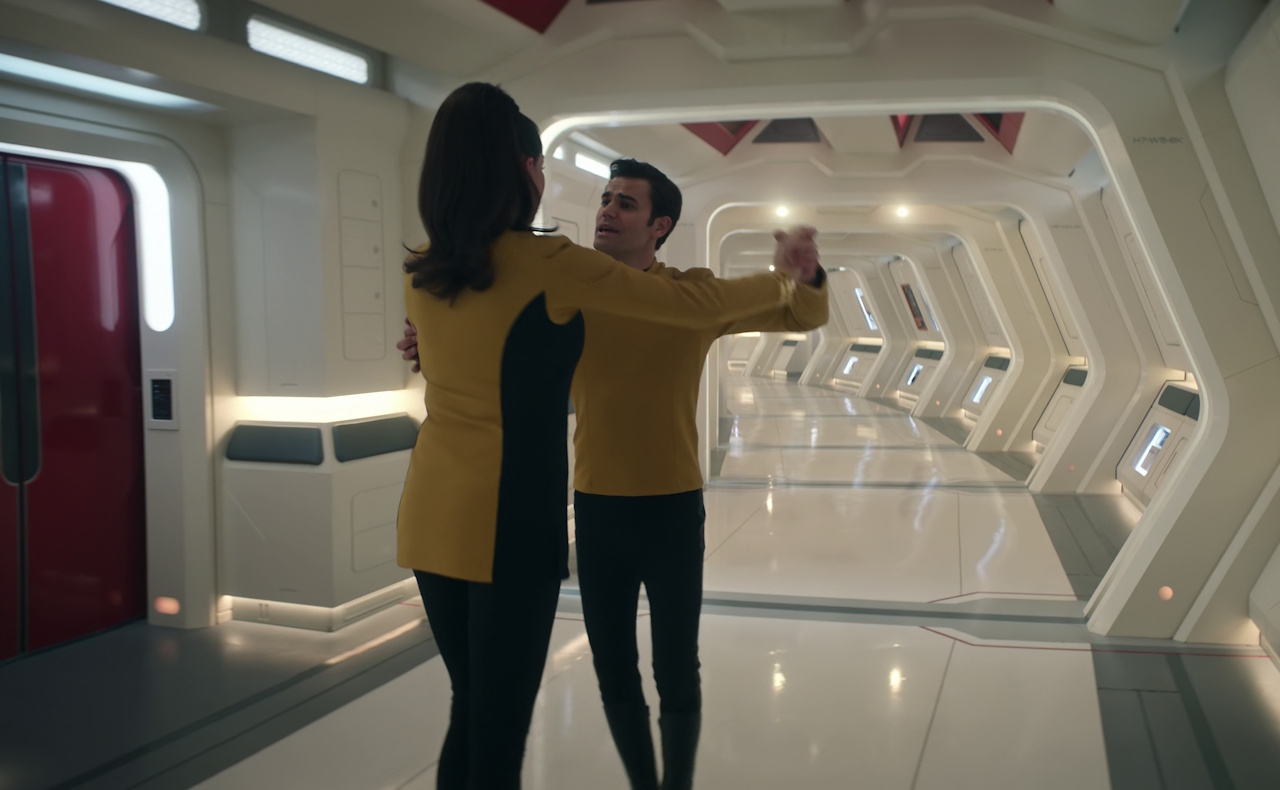
Still frame from Star Trek: Strange New Worlds Season 2 (2023) showing Kirk and Una dancing.
Una and Kirk dancing aboard the Enterprise.

Worse, musical episodes in shows that are otherwise not musicals have been – in my subjective opinion, naturally – universally terrible. Whether it was in Supernatural, Buffy the Vampire Slayer, or even Scrubs… I really didn’t like what was on offer. I’m a fan of the camp and kitsch as much as the next person, but musical episodes have always been a bridge too far. They feel offputting, immersion-breaking, silly, and even fan-servicey sometimes.

So it’s with that background that I approach Subspace Rhapsody.

Still frame from Star Trek: Strange New Worlds Season 2 (2023) showing Uhura holding a tricorder.
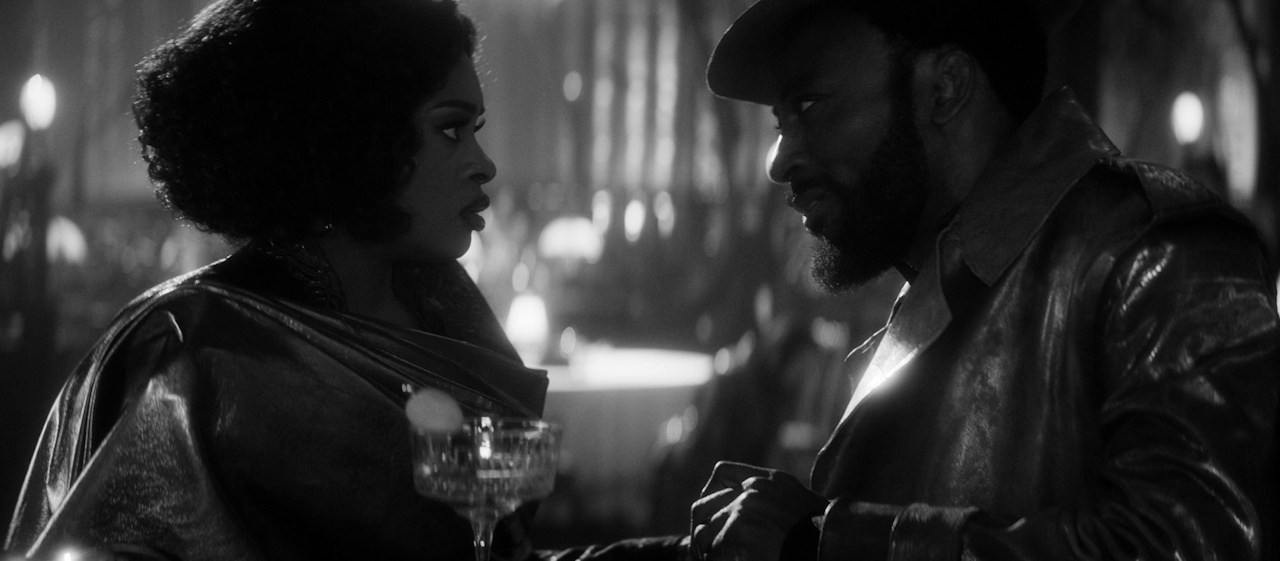
Let’s analyse and dissect Subspace Rhapsody.

I’m gonna do something a little different for this review. Rather than waste your time and mine with a two thousand-word explanation of why I’ve never liked musical episodes, I want to try to stay positive and focus on some of the things I liked or appreciated about Subspace Rhapsody. Because I’m not gonna lie to you: I would rather hammer a rusty nail into my scrotum than watch this episode again. It was so far beyond cringeworthy that I barely got through it once.

First of all, let’s talk choreography and songwriting.

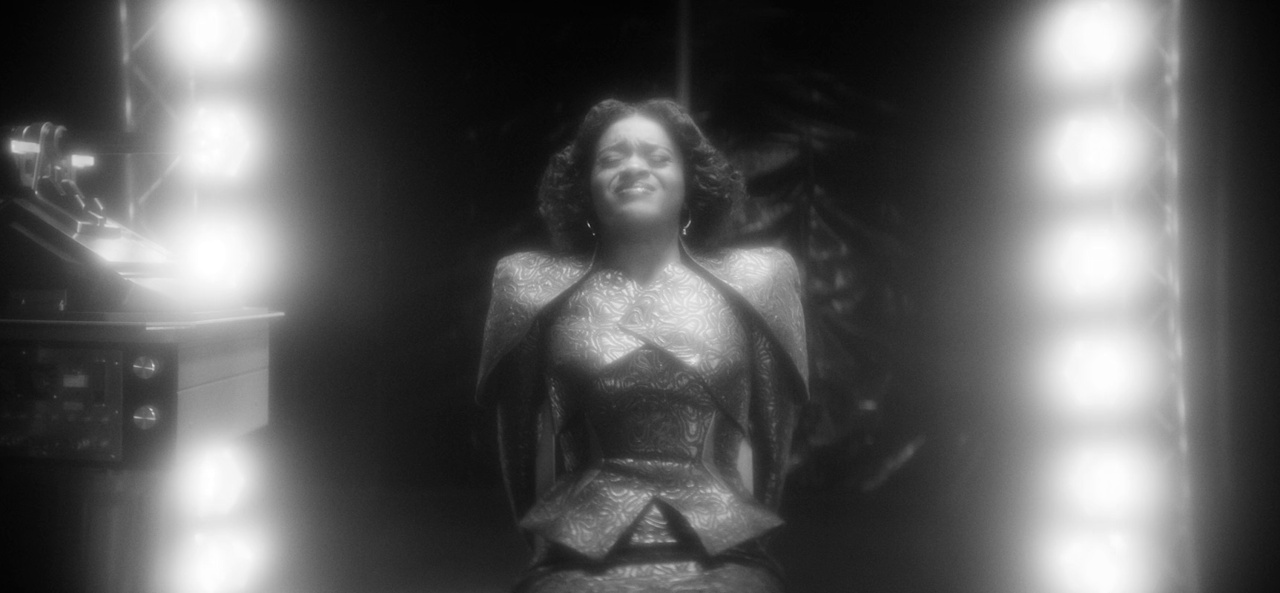
Creating a musical – any musical, really – is a lot of work. Trust me, I know: I used to do amateur dramatics, and we’d always have songs and performances in our shows! Rehearsing Subspace Rhapsody must’ve been a challenge, and for choreographers and vocal coaches, having to work with actors who are not natural singers nor particularly practised in musical theatre will have been an additional challenge. A lot of work went into writing songs, working with the actors to get the best possible take when recording the songs, and especially choreographing some of the bigger dance routines. Getting multiple performers to dance and sing in unison is a creative and technical feat. The fact that I didn’t enjoy the result doesn’t mean I can’t appreciate the skill that went into it!

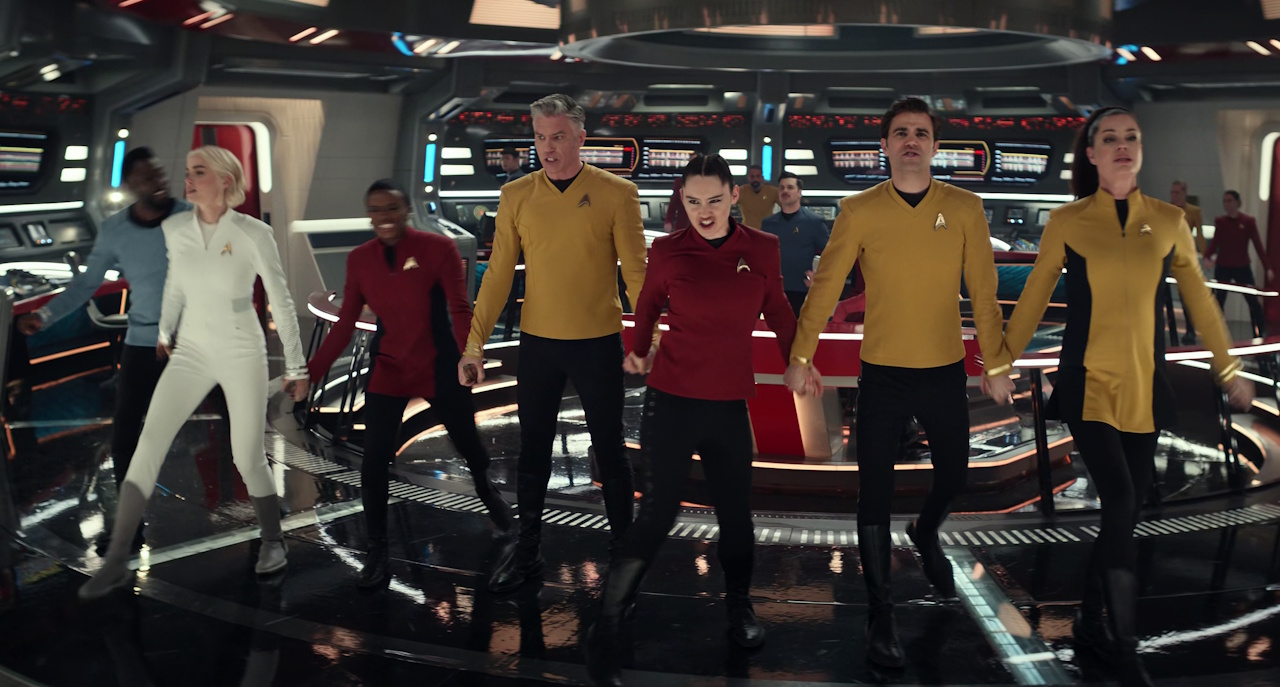
Still frame from Star Trek: Strange New Worlds Season 2 (2023) showing the main cast singing the final song of the episode.
Singing and dancing at the episode’s climax.

Redoing the Strange New Worlds opening theme as an a capella piece was creative, too. I actually didn’t mind the result – it was different from the usual theme (which happens to be one of my favourites in the entire franchise) while being familiar enough to still fit the opening titles. It was the right choice for this episode, and whoever came up with the idea deserves praise! As do the performers who vocalised the theme and the sound mixers who brought it together.

Secondly, the premise of the episode – a random space phenomenon causing chaos on the Enterprise – feels like something straight out of The Original Series or really any pre-Enterprise show. Subspace Rhapsody, in concept, wasn’t a million miles away from episodes like The Naked Time, If Wishes Were Horses, or Masks, which I mean as a compliment. Star Trek has always been ethereal and, for want of a better term, “weird” in its take on sci-fi, particularly in The Original Series and the early part of The Next Generation. It’s hard not to look at Subspace Rhapsody’s core concept through that lens, and stepping back to that style of storytelling after the intensely dramatic Discovery and Picard is a welcome change.

Still frame from Star Trek: Strange New Worlds Season 2 (2023) showing Spock and the improbability field.
The improbability field felt like something right out of classic Star Trek.

The quantum uncertainty field – or improbability field – felt so familiar, in fact, that I could’ve sworn it had been used somewhere else in Star Trek before! Not for musical reasons, it just seemed like a very familiar term. I was wrong about that, it was actually new for Subspace Rhapsody, but the concept felt very “Star Trek.” We’ve seen space phenomena lowering peoples’ inhibitions, making dreams come alive, or turning the Enterprise into a stone pyramid, so why couldn’t there be something out there forcing people to sing? It’s not so outlandish that it couldn’t be part of Star Trek’s occasionally wacky galaxy!

The one side of this that I felt didn’t work as well as intended was the danger posed by both the field itself and the Klingons’ response to it. At no point did I feel the crew of the Enterprise – or the wider Federation, come to that – were in any real danger. And I know in Star Trek stories the heroes always find a way to save the day… but that isn’t what I mean. Plenty of episodes and films can still feel tense, even though at the back of our minds we know there’s going to be a solution. But Subspace Rhapsody didn’t convey that feeling well enough for me, even when the Klingon ships were bearing down on the Enterprise.

Still frame from Star Trek: Strange New Worlds Season 2 (2023) showing Captain Pike communicating with the Klingons.
The Klingons were partial antagonists in Subspace Rhapsody.

I was, I must admit, pleasantly surprised with the quality of the singing in Subspace Rhapsody. Often, when non-singers are pressed to take on musical roles… it’s kind of obvious, and all the auto-tune in the world can’t hide a lack of talent and training. To my surprise, most of the cast did well – even though it could be obvious that the singing was pre-recorded and everyone was just miming along. Still, I’ll take reasonably good lip-syncing over bad singing any day of the week!

Sticking with the songs, there are a couple more positives. I appreciate that the songs were all original – this wasn’t a “jukebox musical,” trying to recycle out-of-copyright songs from years gone by. Having the crew sing about their feelings and what was going on around them was silly, yes, but better than if they’d burst into a rendition of something like Button Up Your Overcoat or Embraceable You. Songwriting takes talent, and putting together original songs inspired by classic musicals on a budget is no mean feat.

Still frame from Star Trek: Strange New Worlds Season 2 (2023) showing Chapel singing.
All of the songs were original.

There must’ve been a temptation to try to emulate the style of composers like Lin-Manuel Miranda, creating pieces of music with a much more modern style. For my money – which, admittedly, doesn’t go very far in an episode like this one – Subspace Rhapsody was better-served by generally sticking with a more trad-pop style. The episode’s final musical number (its grand finale) was a bit of a departure from that, but trying to do the whole episode in that style, or with a mix of genres like disco or hip-hop, wouldn’t have been a positive.

Obviously Subspace Rhapsody was a great episode for Uhura, picking up her character arc from Season 1 and referencing how Hemmer had inspired her. Her growth as an officer, and finding her place both in Starfleet and aboard the Enterprise, were also instrumental to her role in the story, helping her discover a solution to the improbability field. We didn’t get to learn a lot about Uhura this time, nor did she really change over the course of the story, but her role in Subspace Rhapsody felt like the culmination of her arc across the show’s first two seasons. It was nice to see.

Still frame from Star Trek: Strange New Worlds Season 2 (2023) showing Uhura holding a padd.
Subspace Rhapsody was a big episode for Uhura.

Subspace Rhapsody was also a great episode for La’an – particularly her relationships with Kirk and Una. La’an lanced the boil of her feelings for this reality’s version of Kirk, and while it didn’t go the way she might’ve wanted, there’s something cathartic in the act of confession. Hopefully it’ll settle those feelings for her going forward. This felt like a pretty relatable moment; who among us hasn’t had feelings for someone and tried, awkwardly, to talk to them? I know I’ve been in the position of feeling conflicted about whether to confess how I feel and how to go about it! It’s part of the human condition.

La’an and Una make a fun pair; there’s a kind of big sister/little sister relationship between them, sometimes. For Una to be the one La’an turned to when she was struggling with what to do about Kirk felt natural in the context of their relationship across the series so far, and deepening their bond was something I appreciated this time.

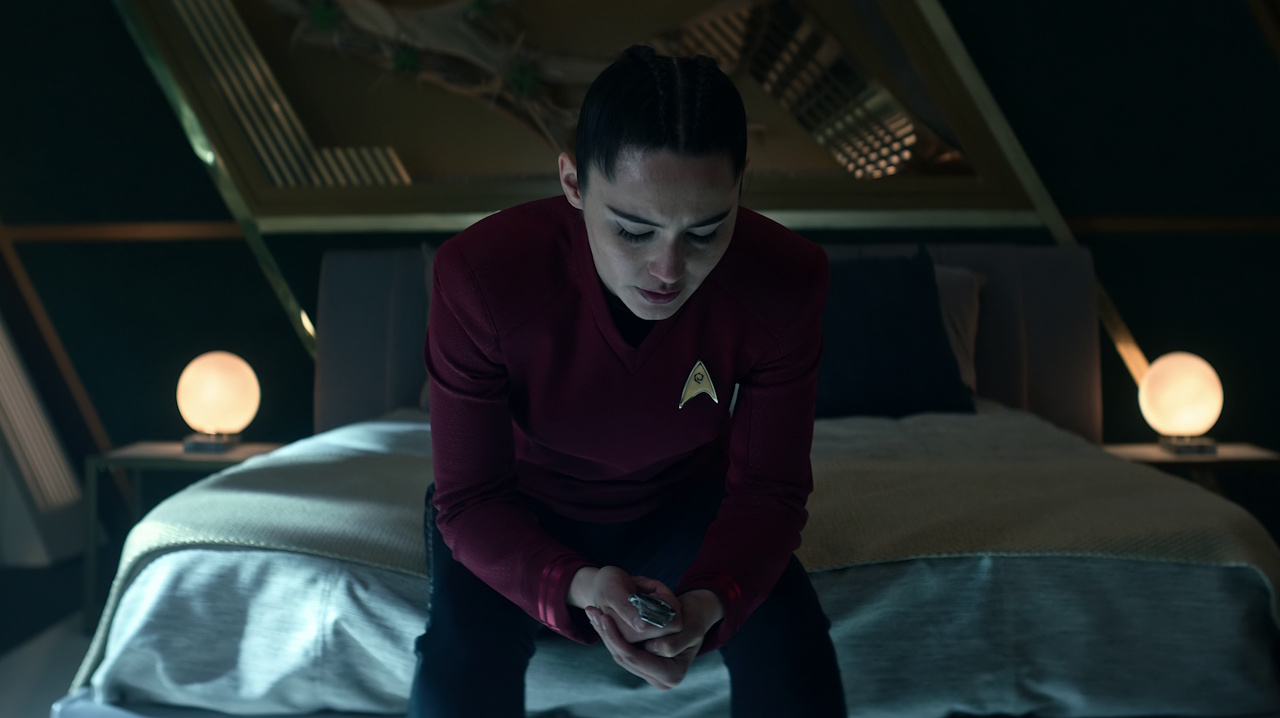
Still frame from Star Trek: Strange New Worlds Season 2 (2023) showing La'an sitting on her bed.
La’an evolved her relationships with Kirk and Una this time.

The one character I’d argue that Subspace Rhapsody didn’t handle well was actually Captain Pike. Firstly, Pike seemed to trip over a pretty basic relationship hurdle in a way that didn’t feel right for his character. The “issue” in his relationship with Captain Batel was so incredibly simple that it didn’t make a lot of sense to me that he wouldn’t simply propose a different kind of vacation or try to find a compromise. Allowing something so small to eat away at him and potentially damage their relationship just doesn’t feel like something Pike would do – even though, again, it was kind of a relatable moment. Sometimes in relationships something small can seem intimidating, and maybe the story wanted to get at Pike being inexperienced with this kind of thing. It was still wide of the mark, but at least I get what the story wanted to say.

Secondly, Pike is known for his inspiring speeches and his ability to motivate his crew. For him to delegate that task at the episode’s climax – with potentially huge stakes and the survival of Starfleet on the line – didn’t seem right. Uhura was well-positioned to speak to the crew, sure, but no one does inspiration quite like a ship’s captain. We’ve seen Pike take on that role several times already in both Strange New Worlds and Discovery, and while I get this was Uhura’s moment… the way the script brushed Pike aside to get there didn’t sit right with me.

Still frame from Star Trek: Strange New Worlds Season 2 (2023) showing Captain Pike with his hand outstretched.
This wasn’t Captain Pike’s strongest episode.

We should also talk about Spock and Chapel, who seem to have come to the end of their brief relationship. I liked the callback to The Original Series on this side of the story – Roger Korby was a character from the Season 1 episode What Are Little Girls Made Of, and having him name-dropped here was interesting. I wonder if Korby will be mentioned – or even seen on screen – in Season 3.

I found both Spock and Chapel to be relatable on this side of the story… because I’ve been both of them at different points in my life. Leaving someone behind to take advantage of a once-in-a-lifetime opportunity is hard, and being the one left behind as a partner goes somewhere you can’t follow… that’s probably even more difficult. Spock’s intense feeling of rejection really hit me in a way I wasn’t expecting, and I think it also shows how far Spock still has to go in order to become the stoic Vulcan we’re familiar with from The Original Series. This younger version of the character is still carrying more of his emotional human side – and it came through in that moment.

Still frame from Star Trek: Strange New Worlds Season 2 (2023) showing Spock.
Spock is still – on occasion – an emotional character.

There were several creative camera shots in Subspace Rhapsody, as well as some great special effects and animated moments. La’an gazing out of the window during her solo song, complete with a zoom out to the Enterprise, was great – and it’s a pretty uncommon shot in Star Trek, when you think about it. Una and La’an floating with the artificial gravity having been deactivated was also a neat effect, and another rarity!

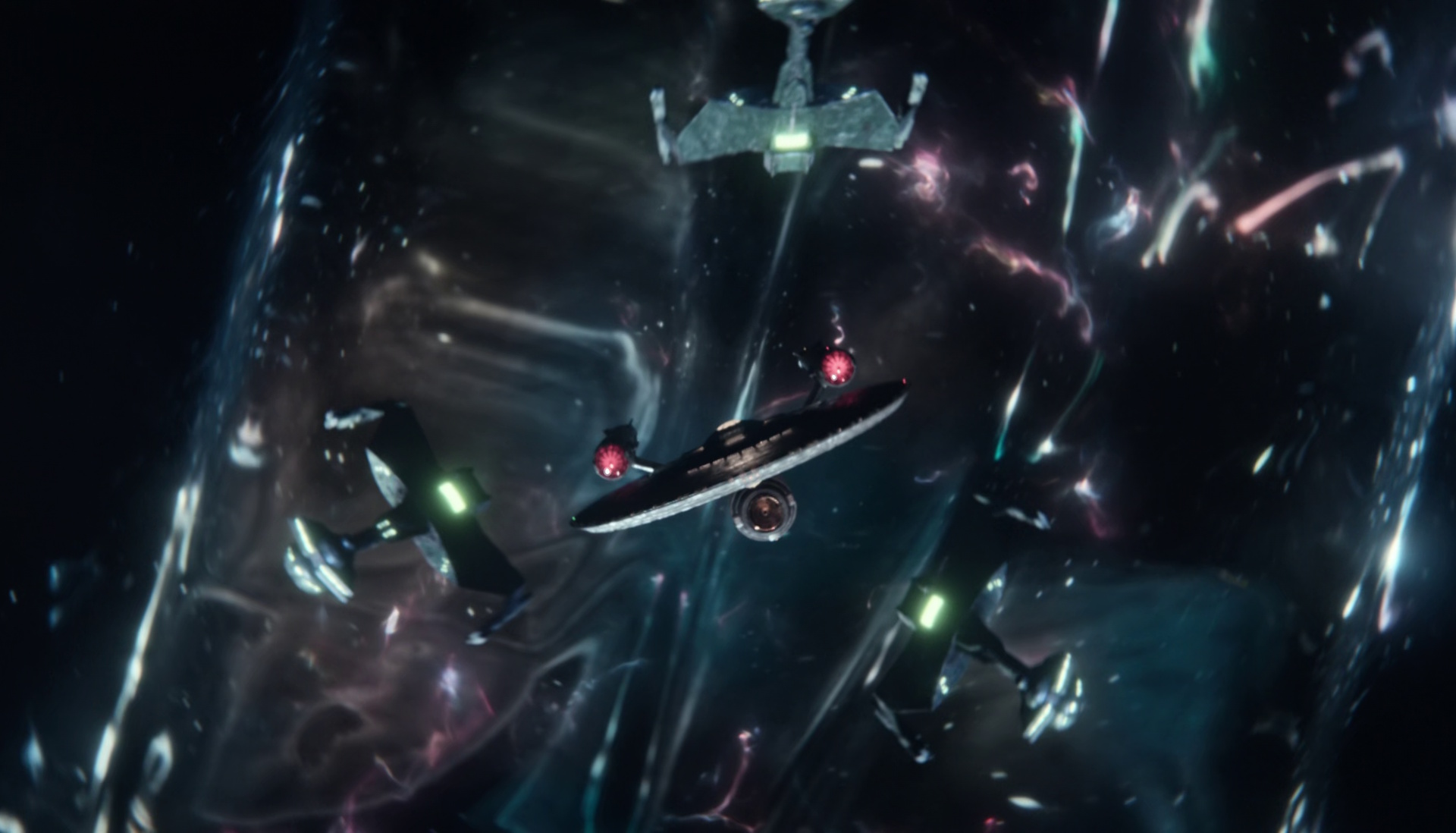
The Enterprise and three Klingon ships performing a kind of ballet in space was exceptionally creative, too, and tied into the theme of the episode really well. It was well-animated, and I liked seeing the D7 class (referred to as a K’t’inga class in the episode) back on screen once more. I also liked the classic warp effect that was used near the end of the episode as the Enterprise headed on to her next adventure.

Still frame from Star Trek: Strange New Worlds Season 2 (2023) showing the USS Enterprise and three Klingon ships.
Even the Enterprise and the Klingon ships couldn’t resist dancing.

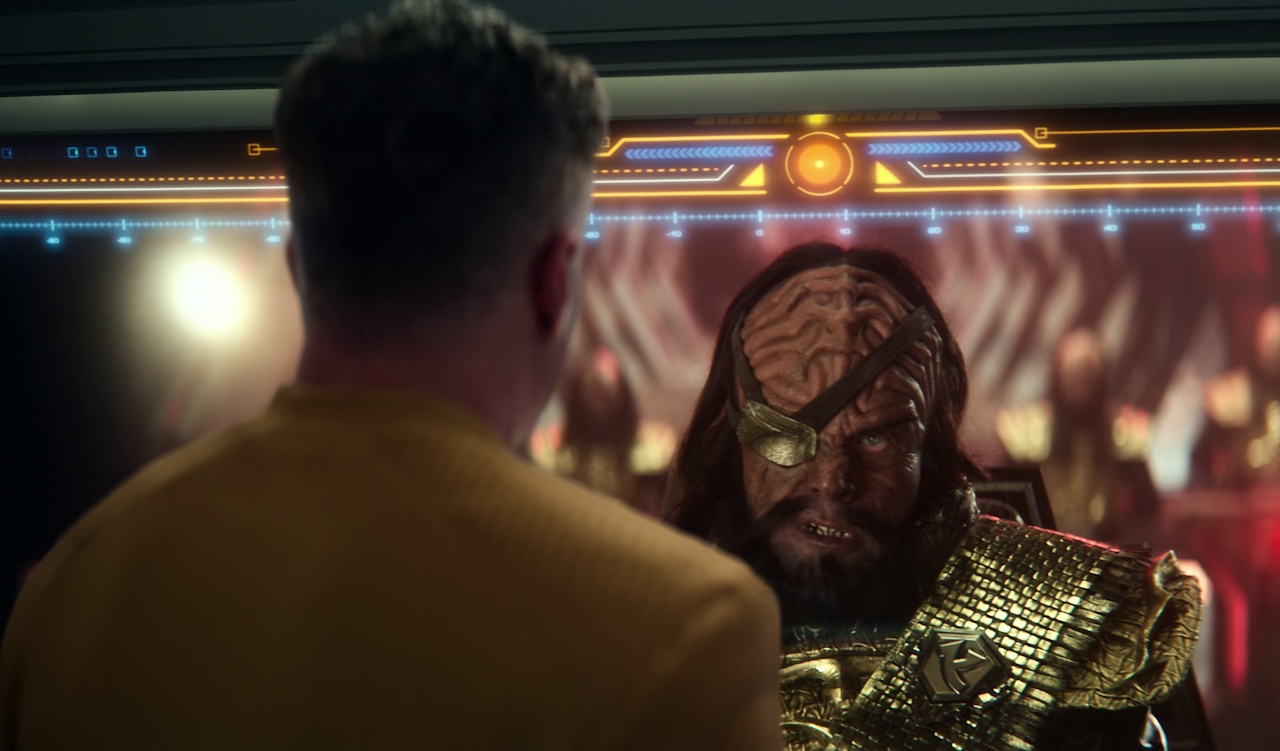
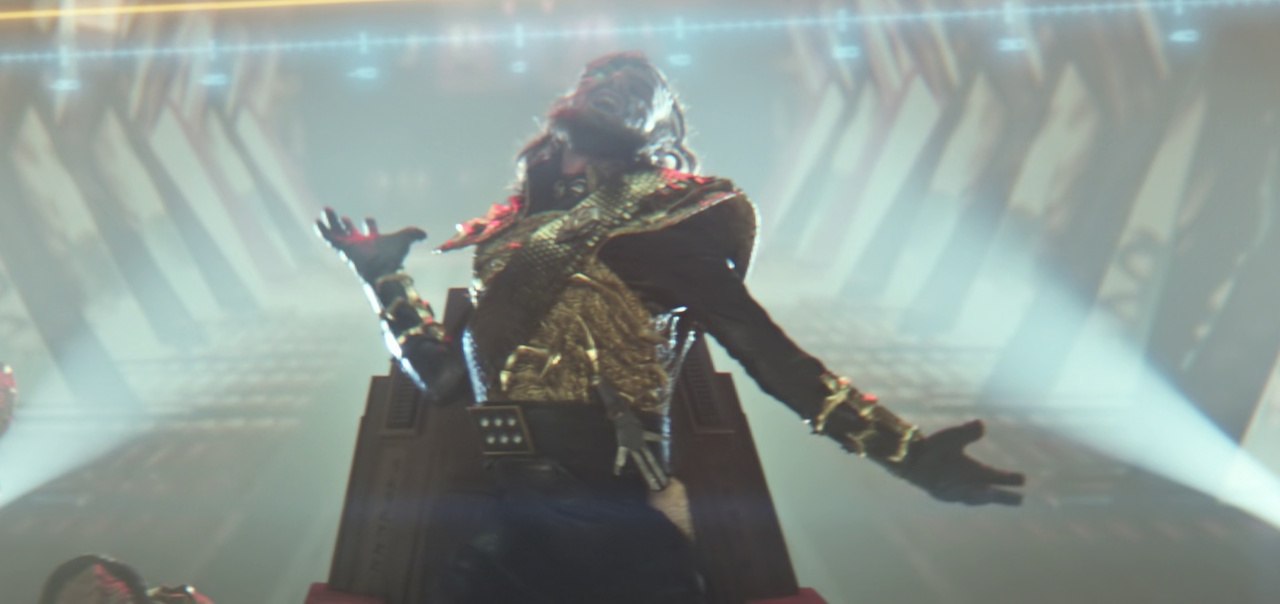
Speaking of the Klingons, I felt more than a little of Deep Space Nine’s General Martok in Bruce Horak’s Garkog. Not only do the two characters each have a missing eye, but Horak seemed to be channelling J G Hertzler in his performance, particularly in his first scene. Garkog was a pretty minor character in the grand scheme of things, but it was sweet to welcome back Bruce Horak for the second time this season. I still think it was a mistake to kill off Hemmer so early, by the way!

I could’ve spent another scene or two with the Klingons. We got to see their musical “dishonour” on screen, but I would’ve been interested to get a different perspective on the improbability field phenomenon. Maybe we could’ve seen Garkog and his crew trying to find a solution before their encounter with Pike and the Enterprise.

Still frame from Star Trek: Strange New Worlds Season 2 (2023) showing Klingon General Garkog mid-song.
General Garkog.

There were a couple of funny lines in Subspace Rhapsody that successfully won a smile. Pelia’s line in the briefing room about using the “zipper” was one, and Kirk’s a moment later about how he “almost understood” what Spock was saying was also a bit of fun. I would say that Kirk’s unspecified “commission review” felt like a bit of a clumsy way to shoehorn him into the story, but once he was aboard the Enterprise I enjoyed having him around.

So I think that’s everything I had in my notes this time.

Subspace Rhapsody was borderline unwatchable for me, and unless someone duct-tapes me to a chair and holds my eyes open, A Clockwork Orange-style, I will never watch it again. It was categorically not “my thing,” and I’m okay with that. Star Trek is an experimental franchise, and I welcome the creative team striking out in new directions, trying different things, and keeping Strange New Worlds a largely episodic project. As long as they don’t try to make a fully-musical series, I think I can cope with Subspace Rhapsody as a one-off.

Still frame from Star Trek: Strange New Worlds Season 2 (2023) showing La'an peeking out from behind a wall.
La’an is spying on someone…

There were positives in the mix. Uhura and La’an got great moments of characterisation, Spock was particularly relatable, and it was fun to welcome back Paul Wesley as Kirk. His take on the character is fantastic, and I’m genuinely looking forward to spending more time with him in future. There was also some excellent cinematography and visual effects work.

On the musical side of things, here’s what I’ll say. There are some styles of storytelling, movie making, and entertainment in general that I personally don’t like or aren’t “my thing.” But I can still appreciate the skill, effort, and work that went into their creation, and I can acknowledge that they are exemplars of their genres. I don’t like opera, for instance, but I can still appreciate the years of training needed to sing that way, or the months of work and rehearsing that go into the staging of an opera.

Still frame from Star Trek: Strange New Worlds Season 2 (2023) showing Pelia, La'an, and Spock singing.
Pelia, La’an, and Spock.

And that’s how I feel about Subspace Rhapsody, at the end of the day. I didn’t enjoy it – and I knew I wouldn’t before I watched it, hence all the procrastination – but I can tell that the cast, crew, and production team had a ton of fun with it. A lot of effort and practise went into some of the more involved musical numbers, and there was some genuinely great choreography – at least from my perspective as a layman. And as a Trekkie, I can appreciate other parts of the story even if the musical side of things really didn’t do it for me.

I hope this didn’t feel like too much of an attack on Subspace Rhapsody. If you liked it, or if you’re more a fan of musicals than I am, that’s great. And I will say that it looked like it would’ve been a lot of fun to work on as a dancer or background performer! It just wasn’t for me. I promised myself I wouldn’t watch Hegemony until I’d seen Subspace Rhapsody, so I really needed to get this out of the way to get to the end of the season! I’m ready to jump into that episode now… so stay tuned for what will hopefully be a more positive review sometime soon.


Star Trek: Strange New Worlds Seasons 1-2 are available to stream now on Paramount Plus in countries and territories where the service is available. The Star Trek franchise – including Strange New Worlds – is the copyright of Paramount Global. This article contains the thoughts and opinions of one person only and is not intended to cause any offence.
Star Trek: Strange New Worlds Episode Review – Season 2, Episode 7: Those Old Scientists

A spoiler warning graphic.

Spoiler Warning: There are spoilers ahead for Star Trek: Strange New Worlds Seasons 1-2 and Star Trek: Lower Decks.

Before Season 2 aired, we got an announcement at one of the Comic-Cons, Star Trek Days, or other such live event about a crossover episode – and I was pretty excited! Not excited enough to push through my Star Trek burnout to watch it last year, but we’ve been over that so let’s not get back into it. Suffice to say that Those Old Scientists captured my attention long before I sat down to watch it… and I had pretty high hopes that the episode would be fun, if nothing else.
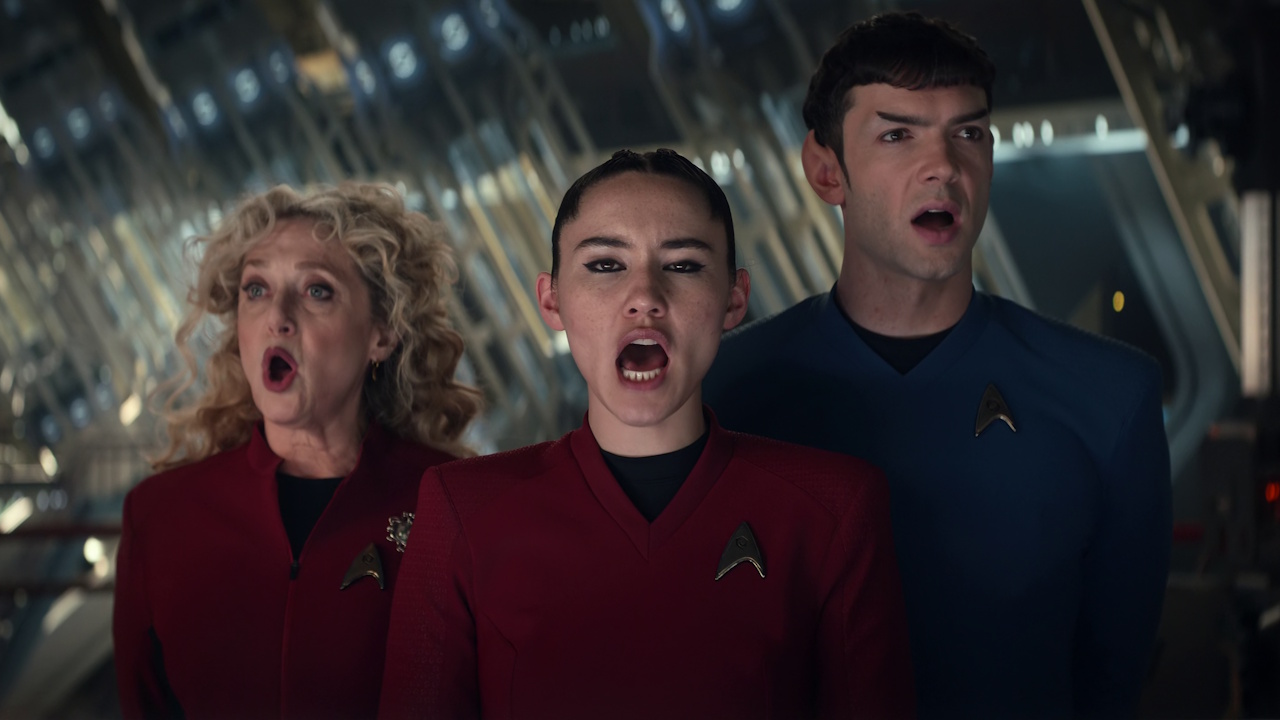
Star Trek doesn’t do full-blown crossovers like this very often, looking back. If we don’t count re-cast characters in shows like Discovery or the return of “legacy” characters from shows that are no longer airing, then the last time there was a fully-fledged crossover episode was quite a long time ago. Back then, characters like Troi and Barclay cropped up in a couple of Voyager episodes, and the Enterprise-D even paid a visit to DS9. There was also These Are The Voyages – the finale of Enterprise – but maybe the less said about that last example the better!
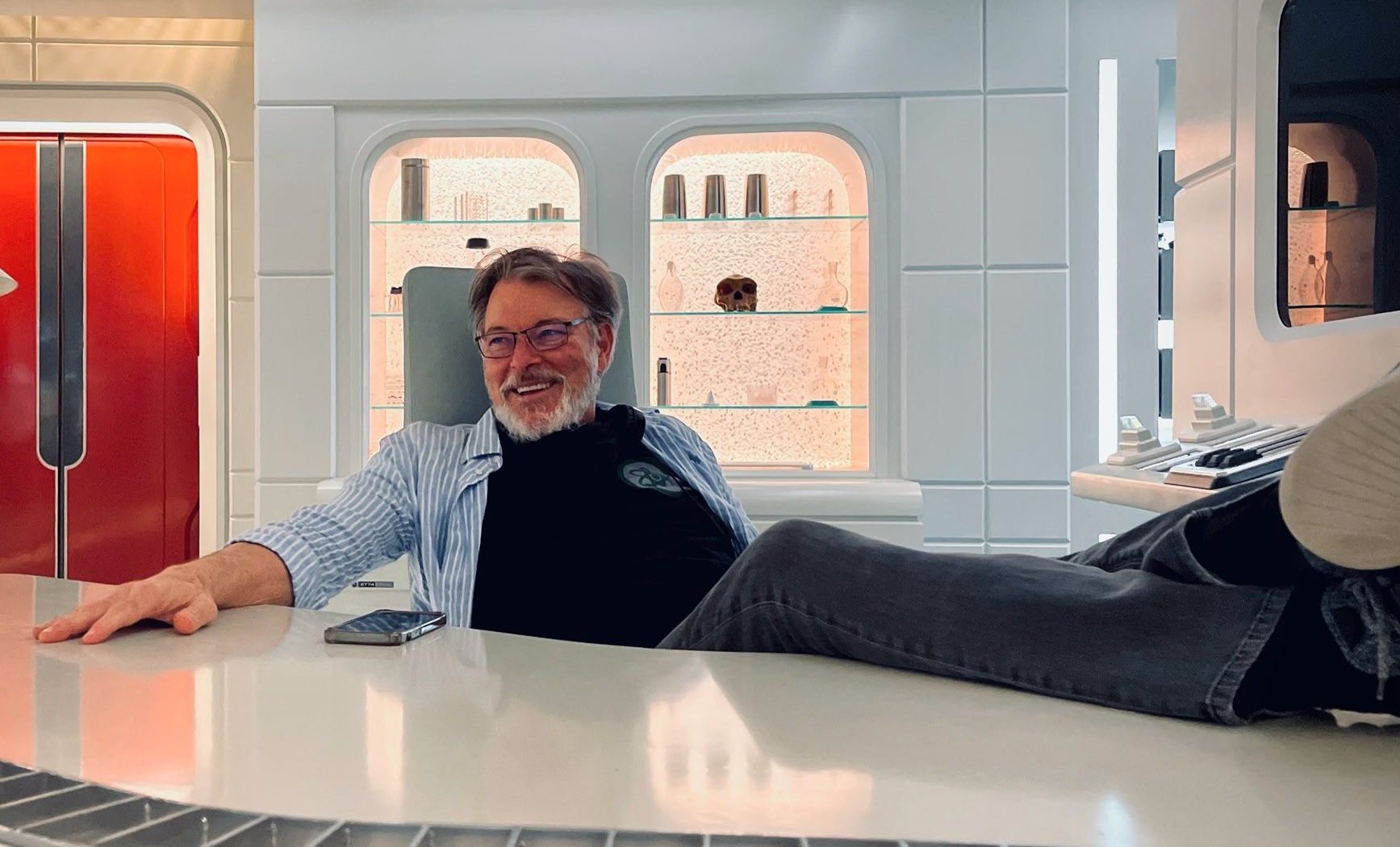
Behind-the-scenes photo from Those Old Scientists showing director Jonathan Frakes.
Director Jonathan Frakes in a behind-the-scenes photo.

Those Old Scientists brought characters from Lower Decks into Strange New Worlds, and it promised a degree of light-heartedness imported from Star Trek’s first foray into the world of animated comedy. Add into the mix Star Trek legend Jonathan Frakes as director, and the stage was set for a truly outstanding episode.

I had a blast with Those Old Scientists – the title of which, in case you missed it, is a pun on the initials T. O. S.; a joke that first appeared in Lower Decks and that makes reference to the way Trekkies have referred to The Original Series for decades. Now that I think of it, Those Old Scientists could be the first self-referential Star Trek episode title, and the first to be named for a pun!

Still frame from Star Trek: Strange New Worlds Season 2 (2023) showing Boimler on the bridge.
Ensign Boimler as you’ve never seen him before!

But I don’t think Those Old Scientists was entirely perfect or free from narrative flaws. While I had a ton of fun watching Boimler and Mariner stumbling their way through the 23rd Century, there are a couple of weaknesses in the way the episode was scripted and structured that took away from the more emotional and entertaining moments. That isn’t to say the episode was “bad” by any stretch, and I love that Paramount greenlit a crossover like this. But I would be remiss not to point out some of the moments that didn’t work – especially because there’s a recurring theme that has also taken the shine off of other Star Trek projects in recent years.

In short, Those Old Scientists tried to cram in too many character interactions and sub-plots, and these came at the expense of what should have been the episode’s more powerful emotional moments. Too many scenes and meetings between 23rd and 24th Century characters felt rushed… and when several of these could have been so much more interesting, entertaining, and/or emotional with just a couple of extra minutes awarded them, I just think that’s a bit of a shame.

Still frame from Star Trek: Strange New Worlds Season 2 (2023) showing M'Benga and Boimler.
Dr M’Benga with Boimler.

This is something that modern Star Trek has done in other ways in other episodes and shows, and I find myself making some variation of the same remark over and over again: if there isn’t enough time to do justice to a storyline or to make a scene work, then put it back on the shelf. That doesn’t mean “never do this, it’s a terrible idea,” but rather that every episode and every story has to prioritise; an episode can’t possibly cram everything in. And in several places, Those Old Scientists felt… crammed.

I would have loved to have seen more of four character interactions and storylines that should’ve been key to the episode’s success. Firstly, the Orion captain and his apparent desire not to be considered a pirate. Secondly, Mariner’s conversation with Uhura and how Mariner – potentially – may have been the one to push Uhura to realise that taking breaks from work is important. Third, Boimler’s conversation with Nurse Chapel about Spock, and the possible ramifications on the Chapel-Spock relationship. And finally, the ensigns’ conversation with Captain Pike, in which he seemed to allude to his impending accident and disability.

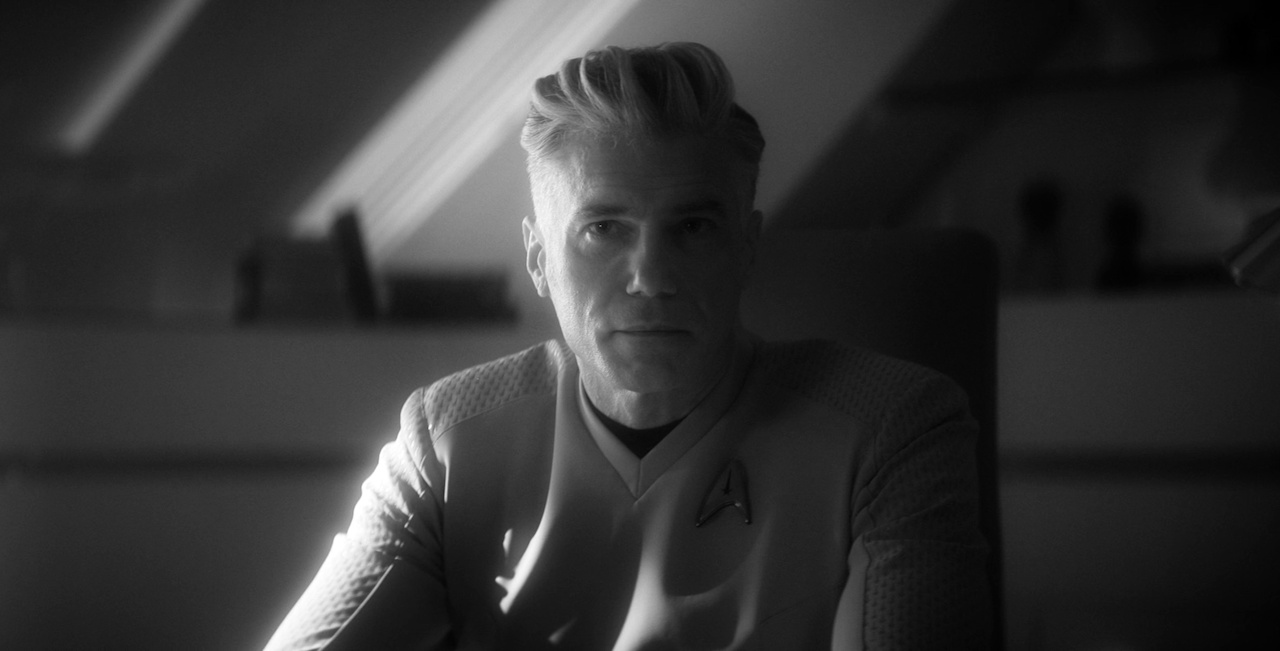
Still frame from Star Trek: Strange New Worlds Season 2 (2023) showing Captain Pike.
Captain Pike toward the end of the story.

Those moments felt like the core of the episode – but a desire on the part of the writers and director to have Mariner and Boimler meet everyone and go all over the ship cut into those moments. An episode like Those Old Scientists needed to prioritise what was important so those aspects could really shine through… and I can’t help but feel that the right balance wasn’t struck this time.

When what we ultimately got were a handful of moments with other main characters, I can’t help but feel I’d have traded most or even all of those for a few more minutes on those bigger, more impactful storylines. Boimler’s moment with Dr M’Benga or when he visited the bridge, as well as some of Ortegas’ lines when she was with Mariner and Uhura… these were fun but ultimately felt like fluff in an episode where other storylines could and should have taken priority. As fun as some of these moments were, perhaps the real issue is that there were just too many of them in an episode that didn’t have time for it. If Those Old Scientists had been structured completely differently from day one, with a focus on entertainment and comedy without a more serious side… maybe it would’ve been okay. But then I can see the potential pitfalls with that idea, too.

Still frame from Star Trek: Strange New Worlds Season 2 (2023) showing Nurse Chapel and Boimler.
I would’ve liked the story to have spent longer on a handful of key moments.

The Orion captain felt so underdeveloped that I don’t even remember his name. I liked the idea of a member of a race known for one overwhelmingly negative stereotype wishing to be seen on his own terms. In that sense, the Orion captain was not unlike the Ferengi scientist from The Next Generation Season 6 episode Suspicions. That idea can work well, and a story that touches on harmful stereotypes and building bridges between the Federation and other factions is something I’d be supportive of.

But this character and his ship needed way more time on screen to to justice to something with such a heavy theme, and the result of the short runtime dedicated to this idea meant it was underwhelming – especially at the end. Captain Pike promises the Orion captain that his people will be known as the scientists who discovered the time-portal (apparently he didn’t make good on that promise, but that’s a whole other tangent), and the Orion captain basically says “oh, neat,” and then toddles off stage. There was no depth to a character who felt like he should’ve been way more developed – and I lament the missed opportunity to tell a more complex story with this “not all Orions are pirates” idea.

Still frame from Star Trek: Strange New Worlds Season 2 (2023) showing the Orion captain.
The Orion captain felt pretty one-dimensional.

Mariner’s time with Uhura and Boimler’s conversation with Chapel both needed a bit more time – but these moments still managed to convey at least the majority of what they were supposed to. If the only criticism I really have of these is “I wish we got more time with some interesting and unconventional character pairings,” then that isn’t really a terrible thing. Again, I just feel like opportunities were missed to give a bit more depth to these moments.

Perhaps, though, this is something Strange New Worlds will pick up in a future episode or season. Chapel’s relationship with Spock was always destined to burn out, but maybe both of them will think on what Boimler said and that could lead to drama or interesting conversations in the future. Likewise with Uhura, perhaps her conversation with Mariner will help her change and grow – though in that case I’d argue we’ve already seen some of that growth over the past season-and-a-half.

Still frame from Star Trek: Strange New Worlds Season 2 (2023) showing Mariner and Uhura in the latter's quarters.
Ensigns Mariner and Uhura.

The final place where I felt Those Old Scientists needed to have spent more time was the conversation between the two ensigns and Captain Pike. After they were caught trying to contact the Orions, both ensigns were in trouble – but Pike also hinted to them that he knew what lay in store for himself in the future. This should’ve been a huge revelation to Boimler in particular, and maybe Pike would’ve wanted to push these two future-dwellers to see what they knew – or at least share something with them that he can’t with anyone else except for Una and Spock. There was potential here.

Instead, Pike launched head-first into a “traumatic backstory” about his father and his birthday that wouldn’t have felt out-of-place in Discovery… and no, I don’t mean that as a compliment. This moment just wasn’t set up very well, and the idea that Pike would simply dump this exposition onto two people he doesn’t know (and who he clearly shouldn’t feel are trustworthy) just missed the mark for me. It’s something that could’ve worked if we’d had more time for this scene and maybe had another moment or two between this trio of characters earlier on.

Still frame from Star Trek: Strange New Worlds Season 2 (2023) showing Boimler, Mariner, and Captain Pike.
Boimler and Mariner in Pike’s quarters.

Okay, that’s basically all of my criticisms out of the way! So now we’re free to talk about what I liked… which is basically everything else in Those Old Scientists.

First of all, the time-portal. This is exactly the kind of randomly weird artefact that Kirk, Picard, and Janeway seemed to stumble upon almost every week. An ancient relic of a long-lost civilisation powered by a magical macguffin… everything about it, including its design, felt wonderfully old-school Star Trek, and I’m 100% there for that!

This is what Strange New Worlds has been so good at, in my opinion: recapturing the feel of “classic” Star Trek in a way that other modern productions haven’t always managed to do. There was something really fun about Pike and the crew finding this time-portal that harkened back to the days of The Next Generation and The Original Series, and it would’ve made for a fantastic self-contained story even without the Lower Decks crossover.

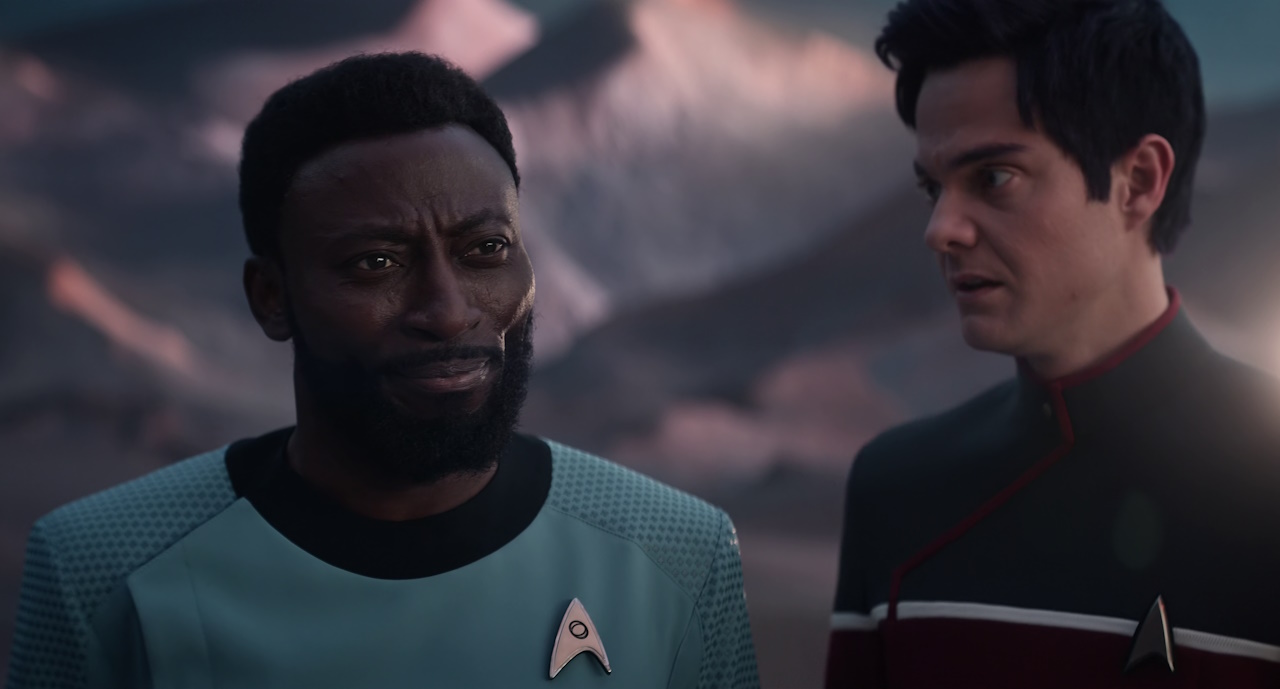
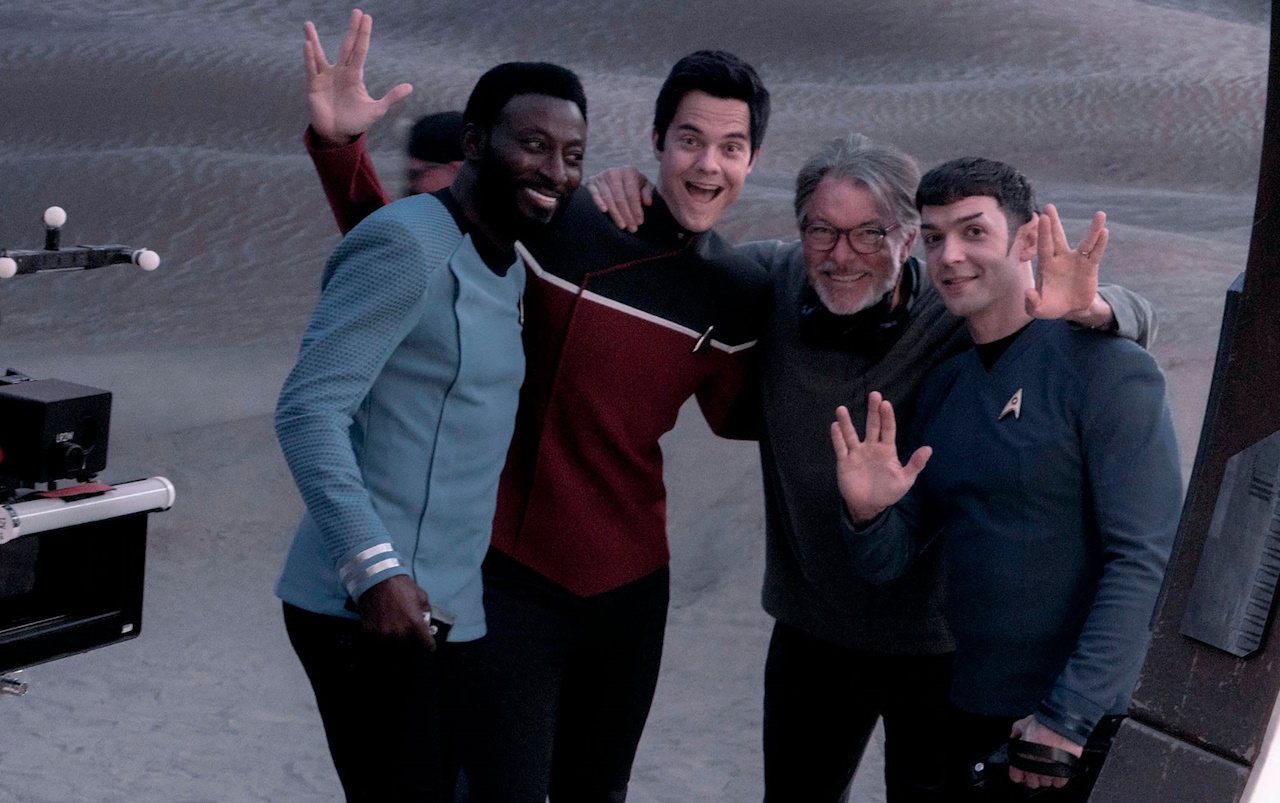
Behind-the-scenes photo from the set of Those Old Scientists with Jonathan Frakes and three actors.
Director Jonathan Frakes with Babs Olusanmokun, Jack Quaid, and Ethan Peck on the set of Those Old Scientists.

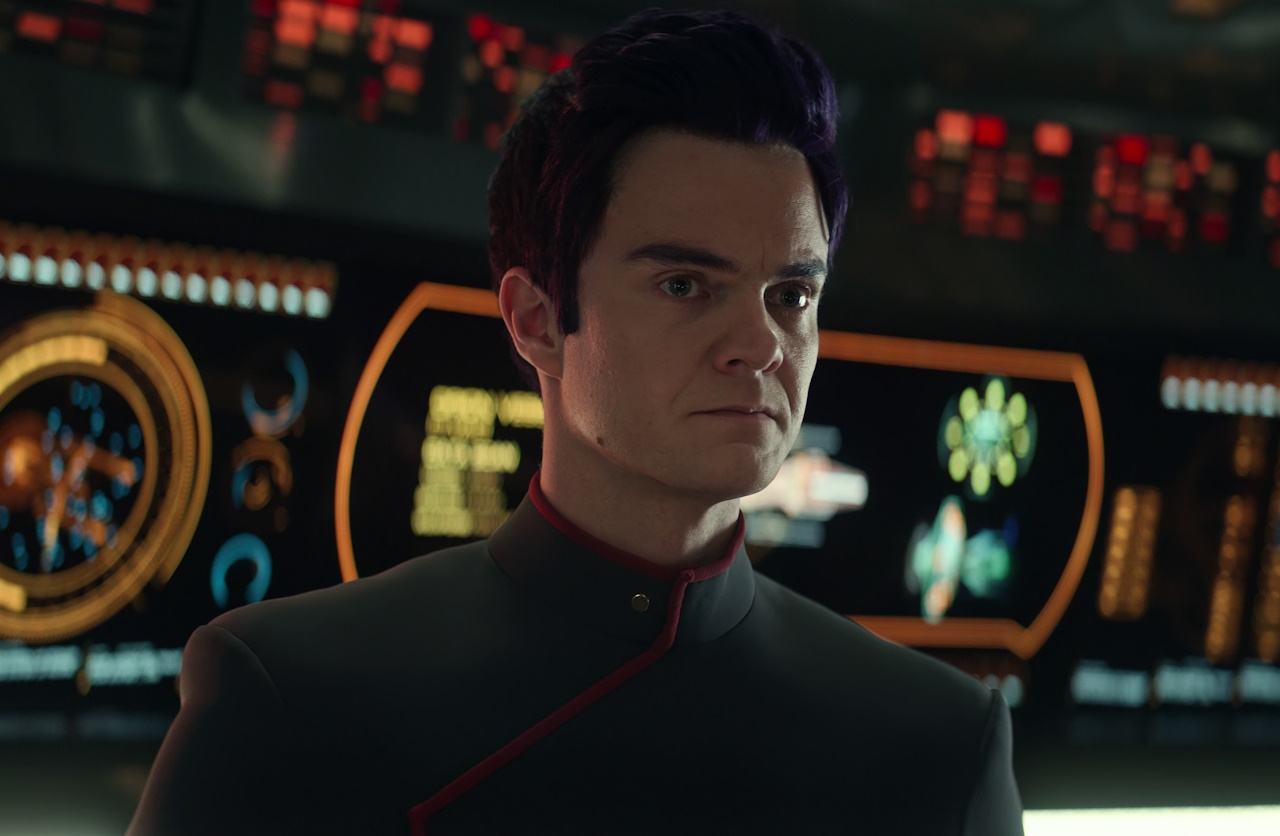
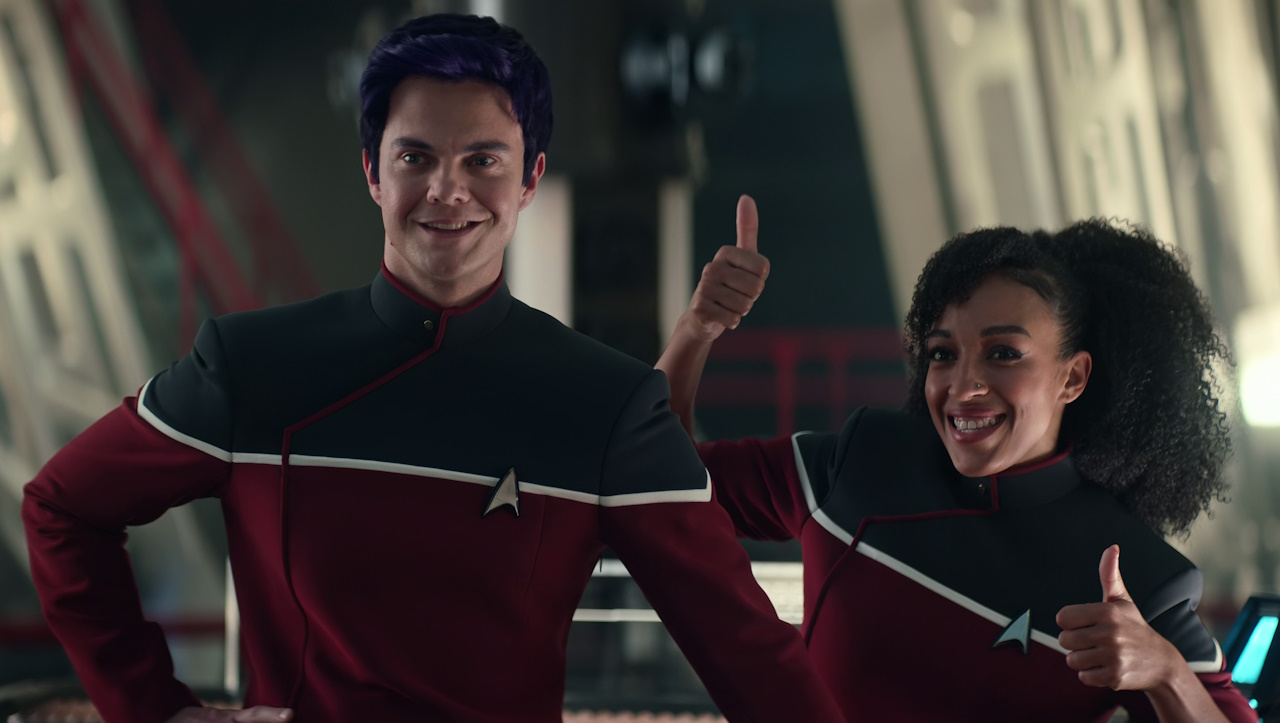
We should also talk about how good Boimler and Mariner looked when they crossed over into live-action. Jack Quaid and Tawny Newsome resemble their 2D characters – so that’s a good start – but the costume design for their uniforms, the prop work for their combadges, and particularly the hairstyling to bring Boimler’s iconic purple quiff and Mariner’s bushy ponytail to life were all fantastic.

There are some animated characters for whom this crossover idea just wouldn’t work – for a number of reasons. Not every voice actor can be as good at live-action work; the two skills are not the same. Not every actor bears even a vague resemblance to their animated counterpart. And so on. On this front, Those Old Scientists succeeded – and it was so much better to reimagine Boimler and Mariner in live action than to try to have Pike and the crew awkwardly interacting with animated/CGI avatars. That would have been a travesty!

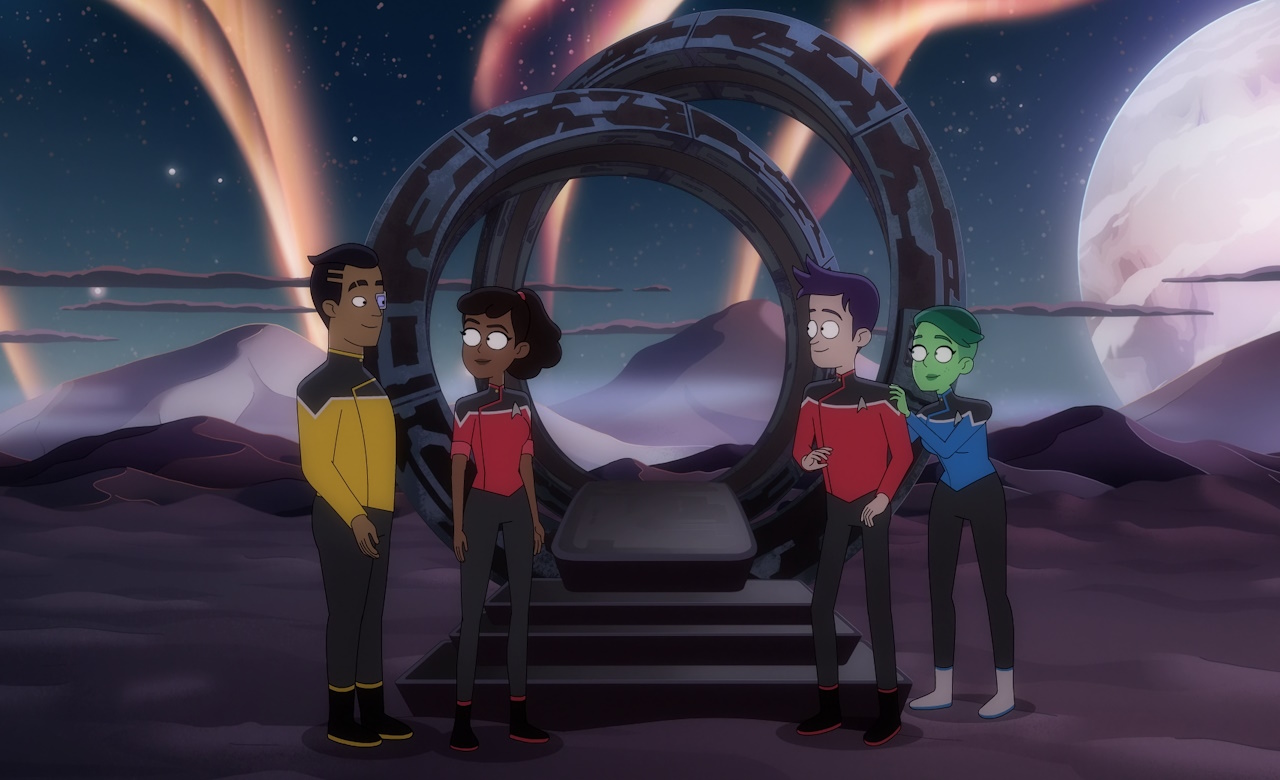
Still frame from Star Trek: Strange New Worlds Season 2 (2023) showing the animated Lower Decks characters.
The animated main characters of Lower Decks.

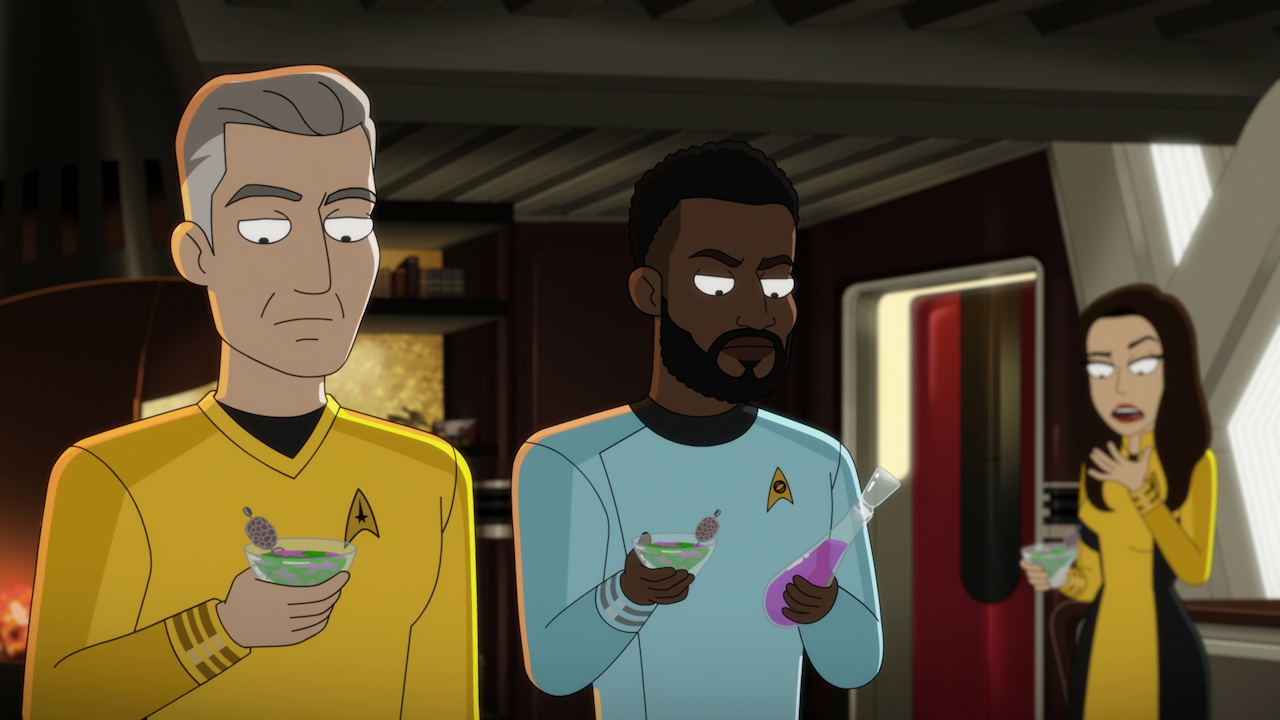
And since we’re talking about animation: I loved that we got an animated epilogue with Pike and the Strange New Worlds crew drawn in Lower Decks’ distinctive style. It was a blast to see our favourite characters reimagined in this way, and the “weird alien drink” angle even gave it an in-universe explanation for why the characters might see themselves in that kind of distorted way.

With Paramount continuing to struggle financially, with the matter of a sale and long-term ownership still unresolved, and with the likes of Discovery and Picard coming to an end… I can’t help but wonder if there might’ve been a sort of “backdoor pilot” angle to this epilogue. You know, Paramount just testing the waters to see if an animated Strange New Worlds might be viable. I could be completely wrong about that – and the show has been renewed for a fourth season already that (presumably, at least) will continue to be live-action! But like The Original Series before it all those years ago, I can’t help but wonder if an animated continuation might be on the cards one day. Obviously I’d rather have more live-action, but if the choice is animation or cancellation… I think Those Old Scientists has opened a door, at least.

Still frame from Star Trek: Strange New Worlds Season 2 (2023) showing three animated characters.
Could more animated Star Trek be on the agenda?

One final point on animation in Those Old Scientists: the animated opening title sequence was amazing! Seeing the whole thing recreated – with a couple of inclusions from Lower Decks for good measure – was just incredibly cute and not at all what I was expecting. The Enterprise looked great in that style – similar, in some ways, to how it appeared a few years ago in the Short Treks episode Ephraim and Dot. After the opening aboard the Cerritos, this was a great way to mix things up heading into the main part of the episode.

I think I’m inclined to give Those Old Scientists a bit of a pass on the whole “contaminating the timeline” thing. Star Trek has occasionally stumbled over time travel stories – and I’ve said more than once that time travel isn’t usually my favourite story premise in the franchise – but because this episode had a less serious tone for the most part, I think we can overlook most of that. Boimler and Mariner undeniably messed with the timeline – but no more so than other characters elsewhere in the franchise going all the way back to Kirk’s crew and their early adventures with time travel.

Still frame from Star Trek: Strange New Worlds Season 2 (2023) showing Boimler on the bridge.
Boimler and Mariner definitely contaminated the timeline!

As a Trekkie, it’s been a lot of fun to watch a character like Boimler on Lower Decks and how he geeks out at things that you or I would get just as excited about – and that theme continued in Those Old Scientists. Set aside Boimler’s excitement to meet his heroes like Pike, Spock, and Una – his enthusiasm for small things like computer panels or a tricorder really elevated the episode and made it a lot more fun. It reminded me of visiting Star Trek: The Exhibition in the mid-1990s, or more recently the 50th Anniversary exhibit in Blackpool here in the UK. I was fascinated and excited to see some of the props from Star Trek… and Boimler was, too. That point of connection felt great as a long-term fan.

But it wasn’t only Boimler who got excited. Mariner also met one of her heroes: Uhura. The scenes between the two of them were great, particularly as Mariner came to realise that this younger version of the person she had learned about and looked up to was somewhat different to what she’d expected!

Still frame from Star Trek: Strange New Worlds Season 2 (2023) showing live-action Boimler and Mariner.
Boimler and Mariner in engineering.

There were plenty of funny and cute moments throughout the episode as Boimler and Mariner stumbled their way through the 23rd Century, and I had a smile on my face much of the time. There were a couple of missed opportunities, though; character moments and storylines that really needed a bit longer in the spotlight to truly shine. As much as I enjoyed this crossover and feel like it was truly “made for the fans,” I can’t help but feel that Those Old Scientists tried to cram too much into its runtime.

I don’t want to be too negative, though. By far my biggest takeaway from the episode is how fun it was to get a crossover like this – and if we’re fortunate enough to see Star Trek remain in production over the next few years, I hope Those Old Scientists won’t be the last crossover episode. With the franchise’s 60th anniversary only a couple of years away, that could be a great opportunity to do something like this, bringing together characters from different parts of Star Trek for one spectacular story!

Another thing I’m reminded of is that I need to finish catching up on Lower Decks! Season 5 is right around the corner, and I’d love to get back up to speed with the series before it goes off the air. This was an enjoyable, entertaining crossover – and I’m glad to have belatedly seen it.


Star Trek: Strange New Worlds Seasons 1 and 2 are available to stream now on Paramount+ in countries and territories where the platform is available. The series is also available on DVD and Blu-ray. The Star Trek franchise – including Strange New Worlds and all other properties discussed above – is the copyright of Paramount Global. This review contains the thoughts and opinions of one person only and is not intended to cause any offence.