Xbox & Bethesda Probably Have One Chance To Save Starfield…

Spoiler Warning: There are spoilers ahead for several main story missions in Starfield.

I was excited about Starfield last year. By the time the game’s big showcase had wrapped up in June, Starfield had rocket-boosted its way to the very top of my most-anticipated games list, and it held onto that position even as Baldur’s Gate 3 diverted my attention. But despite doing my best to give the title a fair shake, sinking more than twenty-five hours into it, and really wanting to love it… I didn’t. Starfield just didn’t have that “Bethesda magic;” the “je ne sais quoi” that has made some of the studio’s previous games into all-time classics.

And I’m far from the only person who feels that way. Despite launching to generally positive reviews from both players and professional critics, the longer folks have spent with Starfield, the further the game’s ratings have slipped. Although there are multiple areas of criticism from writing and dialogue through to the game’s outdated underlying technology, the general consensus is that Starfield is disappointing, shallow, and lacking in the replayability that Bethesda desperately tried to build into it.
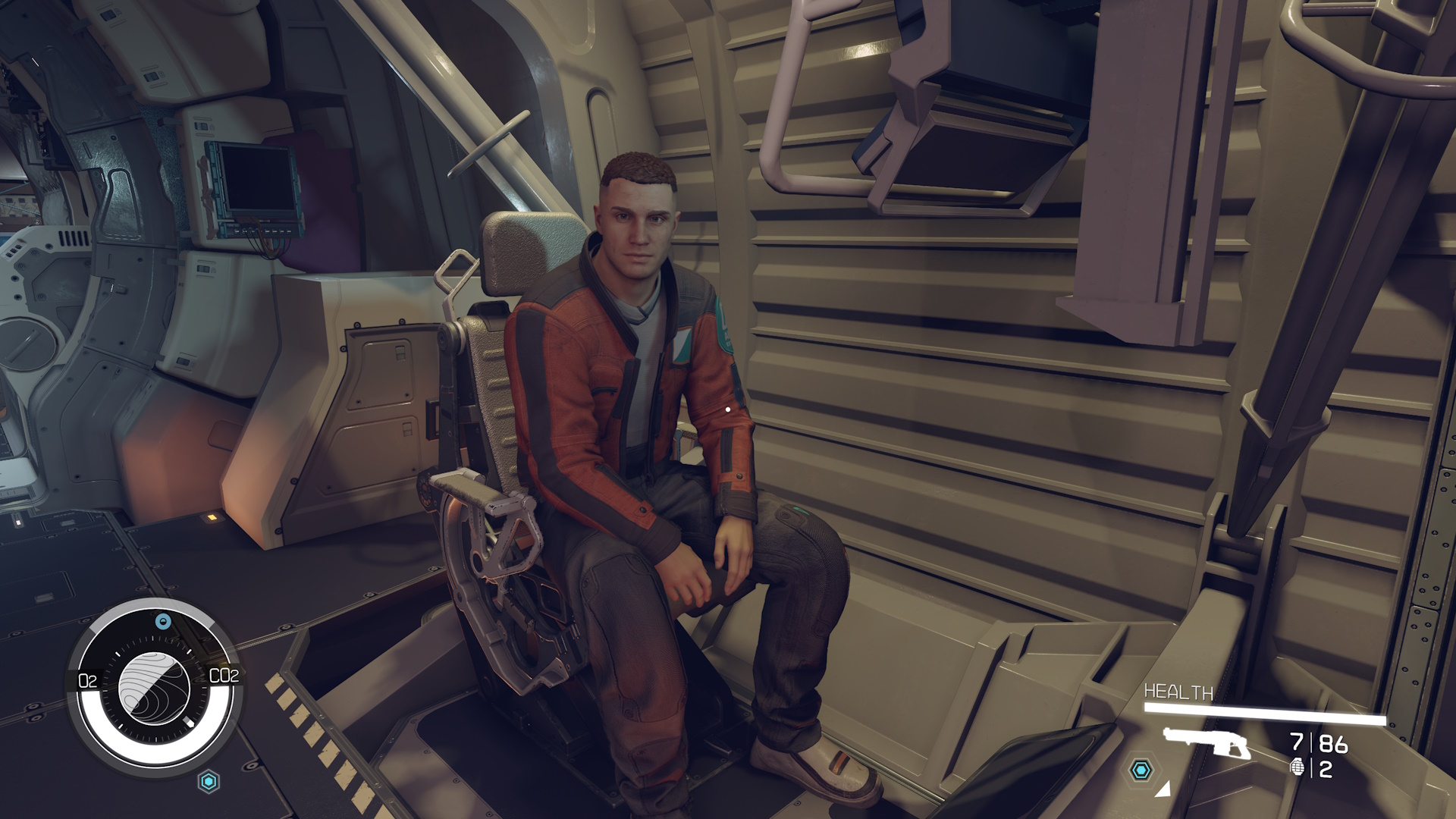
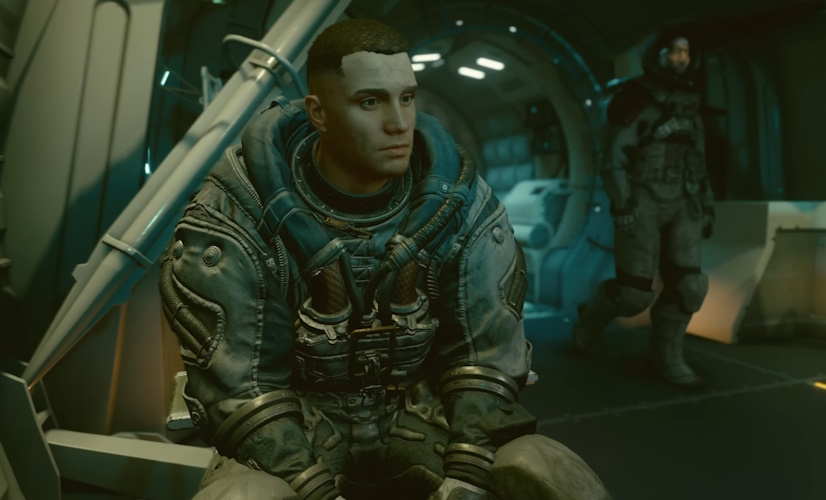
Screenshot from Starfield (2023) showing a character sitting in a chair aboard a spaceship.
An NPC aboard a spaceship in Starfield.

But it’s 2024, and if there’s one thing the games industry knows it’s this: you can launch half a game today and promise to patch out all of its issues later! The dreaded business model that I’ve dubbed “release now, fix later” has firmly embedded itself in the games industry – and Bethesda is no stranger to utilising it. The company’s most recent title before StarfieldFallout 76 – has received years’ worth of patches and updates, and even though it endured an appalling launch, it’s in a much better state today than it was five years ago. In fact, Fallout 76 is now sitting just ahead of Starfield in terms of average reviews on Steam.

There are some areas of Starfield that patches, updates, and DLC have the potential to improve or fix. In a game all about exploration, being forced to re-play the same handful of copy-and-paste structures filled with nameless, mindless enemies got old fast – so how about quadrupling the number of these structures, creating some unique ones that only appear once per playthrough, and adding new and different types of enemies and loot to fill them. Or how about making at least some of the game’s 1,000 planets genuinely empty, with no pre-built structures at all. That sense of exploration, of being the first person to set foot in a “strange, new world” is what I wanted from a game like Starfield… and it seems like something that could be implemented into the game without too much effort.
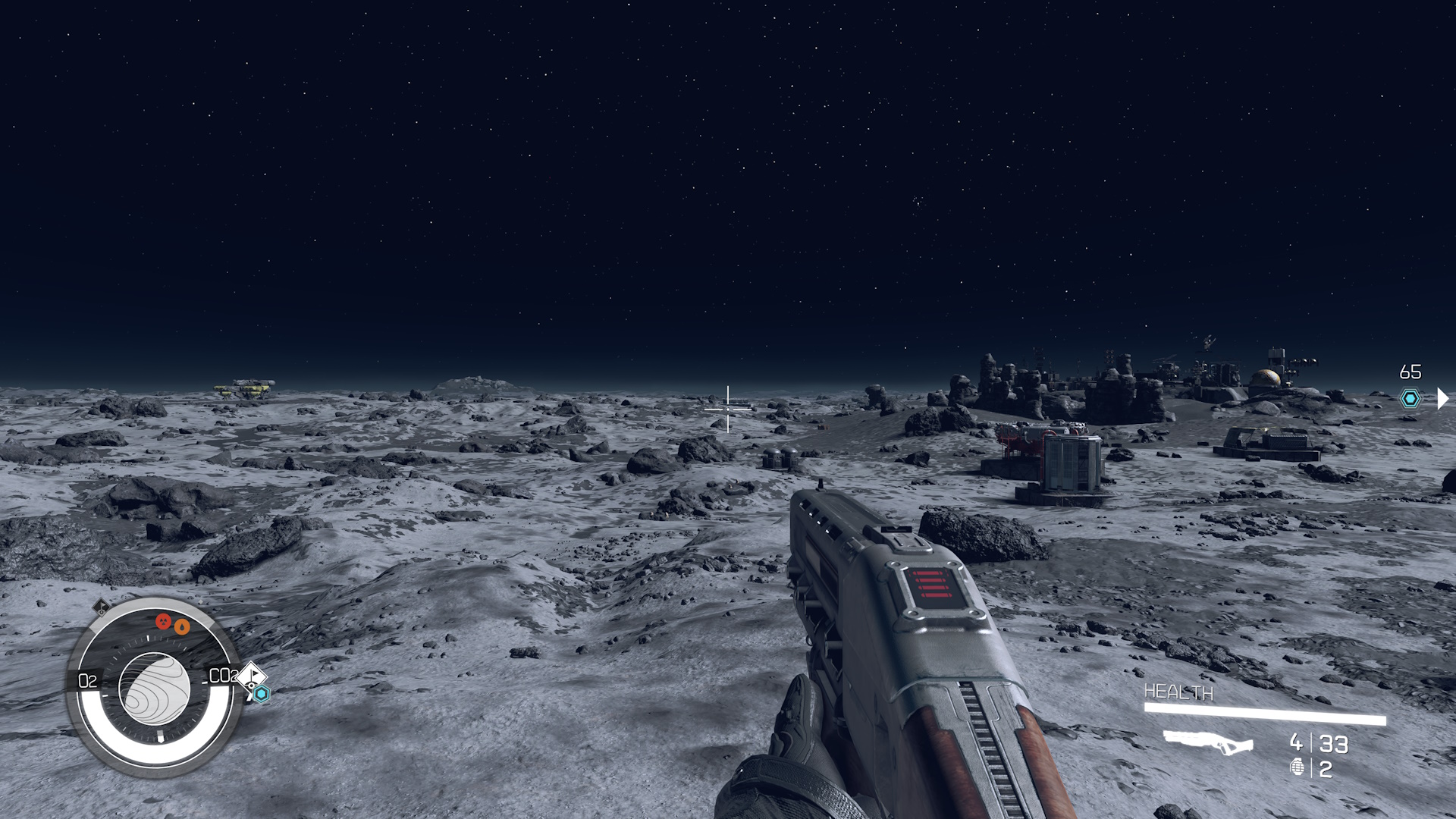
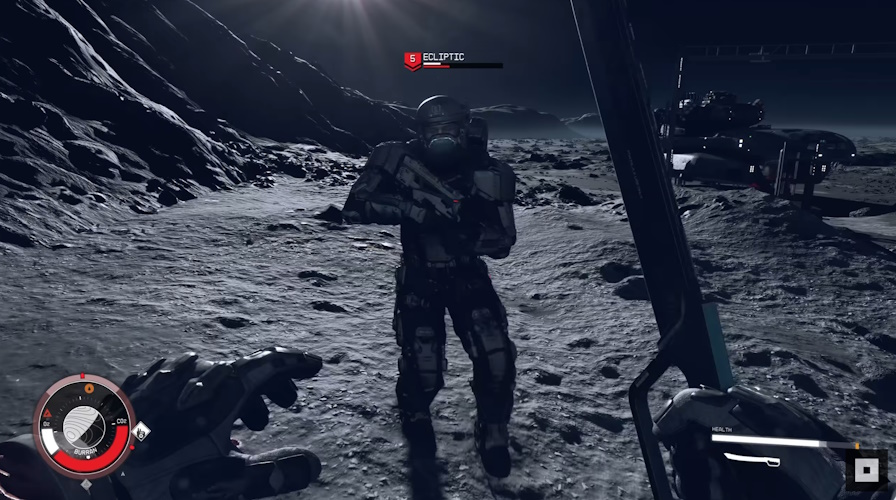
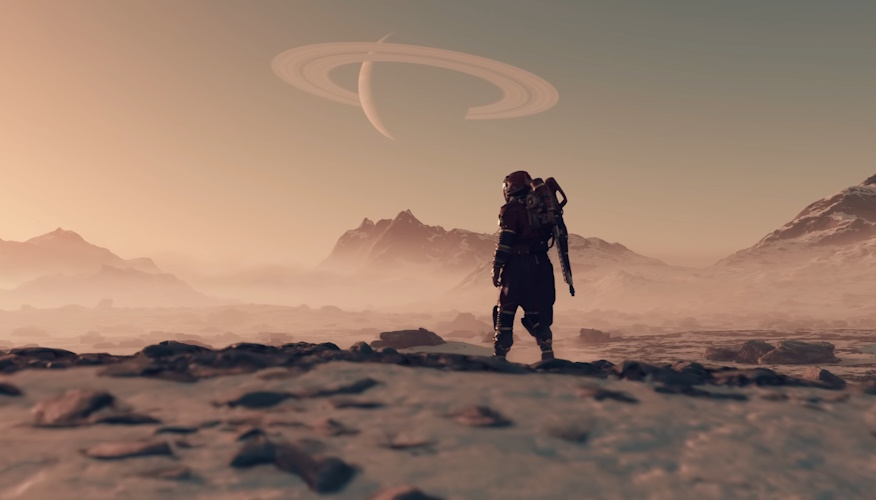
Screenshot from Starfield (2023) showing a first-person view over a procedurally-generated landscape.
It’s hard to convey how disappointing it was to land on a “deserted planet” only to find buildings and bases full of nameless, meaningless NPCs.

Then there’s the game’s main story. It was left deliberately open-ended to push players into New Game Plus – and I firmly believe this was one of the first and most important ideas conceived for Starfield during its creation – but it’s led to a fundamentally unsatisfying end to the game’s main quest. So Bethesda could write a better ending – and a more conclusive one. Who created the artefacts? What was their intention? Could the player character interact with these “Creators” somehow? Again, that seems like something that should be achievable.

Adding in new and varied paths through certain quests is also something that should be doable. A notorious mission in the main quest sees the player character travel to the “pleasure city” of Neon to acquire another artefact, but this quest is about as on-rails as it’s possible to be. No matter what choices the player makes, there’s only one way to get the artefact and complete the mission. It should be possible to tackle a quest like this in more than one way – and adding that in wouldn’t break the rest of the story or other parts of the game. For example, being able to kill the character who has the artefact, or finding another way to escape Neon after the deal goes down are things that would only impact that one quest – and being forced to play it in one specific way isn’t what a lot of folks wanted or expected from a game like Starfield.
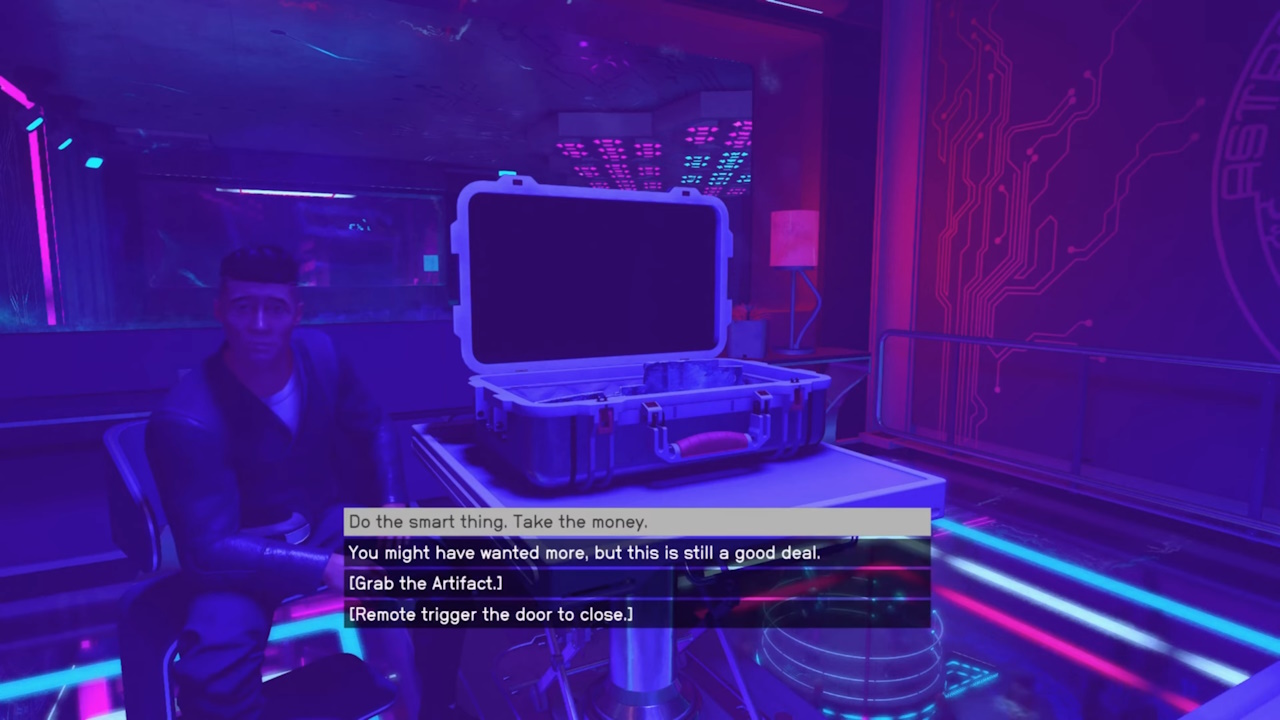
Screenshot from Starfield (2023) showing a conversation and dialogue options during a mission.
This mission offers the illusion of choice, but ultimately forces players down one very specific route.

There are, of course, some things that can’t be fixed in Starfield, no matter how much of an annoyance they seem to be! I wasn’t personally all that bothered by the game’s loading screens when opening an airlock or entering a building – but I know that the loading screens have been an area of complaint for a lot of folks. Starfield is built on the creaking, zombified remains of a twenty-five-year-old game engine, though… so I don’t see a way to remove them. Nor could the game’s fundamental spaceflight problem be fixed; Starfield is built on the player and their ship fast-travelling between locations, so any opportunity for actual piloting or flying is basically gone at this point.

So we need to be realistic about what we could reasonably see from updates and future DLC; Starfield won’t change fundamentally in terms of either gameplay mechanics or narrative. But that doesn’t mean there can’t be significant improvements that could mean the game will be worth re-installing and giving a second chance. And yes, in case you were wondering: I’ve already uninstalled Starfield.
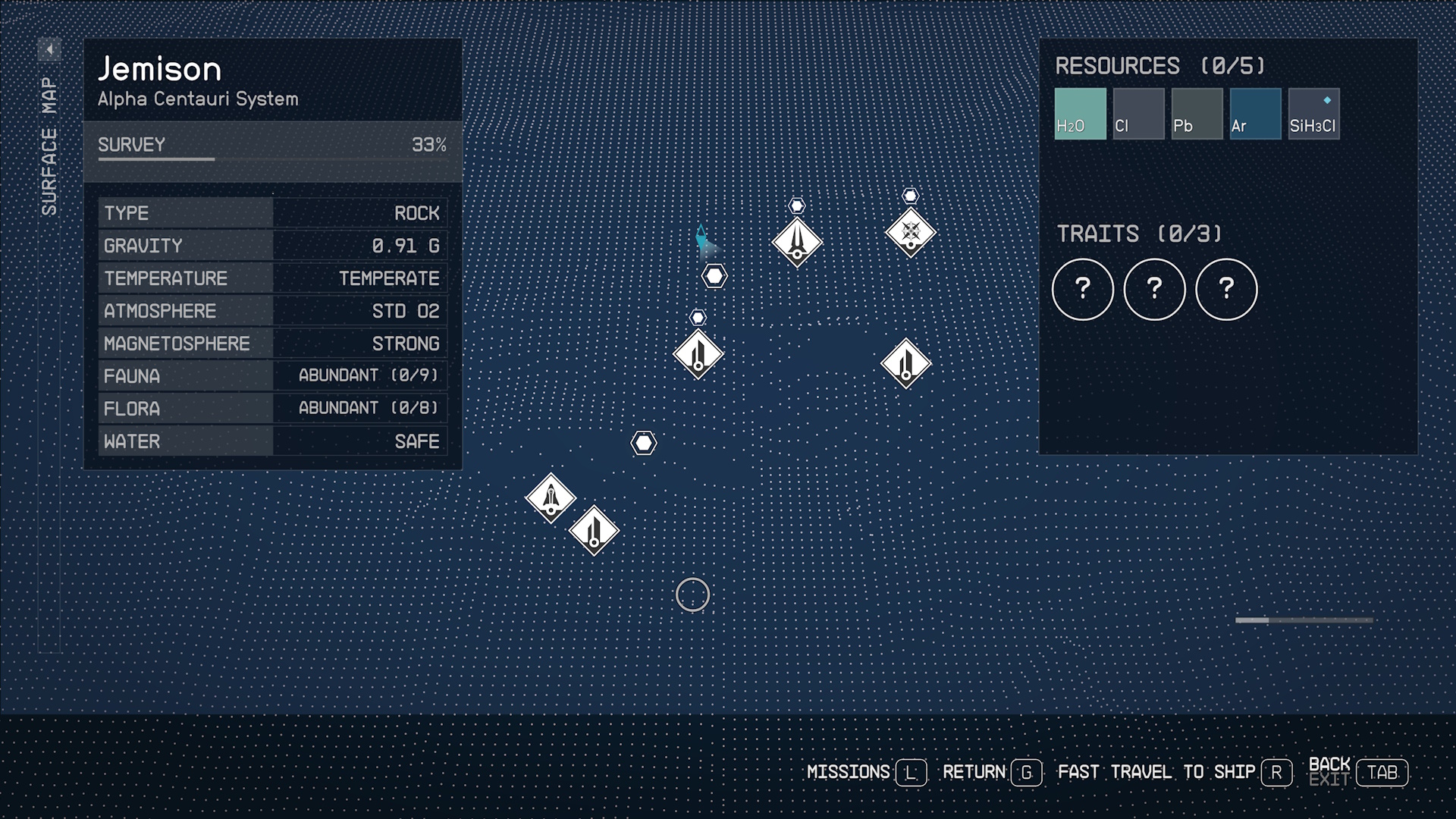
Screenshot of Starfield (2023) showing the in-game map.
Things like adding better in-game maps for towns and other locations should be achievable.

But here’s the thing: Bethesda basically has one chance to do this.

Many players who tried out Starfield are already moving on. Games like Baldur’s Gate 3 and Cyberpunk 2077′s Phantom Liberty DLC emerged around the same time and have, by comparison, highlighted many of the fundamental weaknesses in Starfield – as well as how far behind Bethesda has fallen in terms of game design and development. Bringing back players like myself who tried and gave up on Starfield – or convincing sceptics to try it for the first time in light of mediocre reviews – is not an easy task.

Phantom Liberty has done the impossible for Cyberpunk 2077, completely changing the way whole mechanics work, adding a massive new area of the map, new missions, and much more. Starfield needs its first piece of DLC to be at least as substantial and as transformative as Phantom Liberty given its shortcomings, and it needs this DLC to be well-received. If not… a lot of those players we’ve been talking about will be forever lost, with Starfield being brushed aside in favour of newer, better gaming experiences.
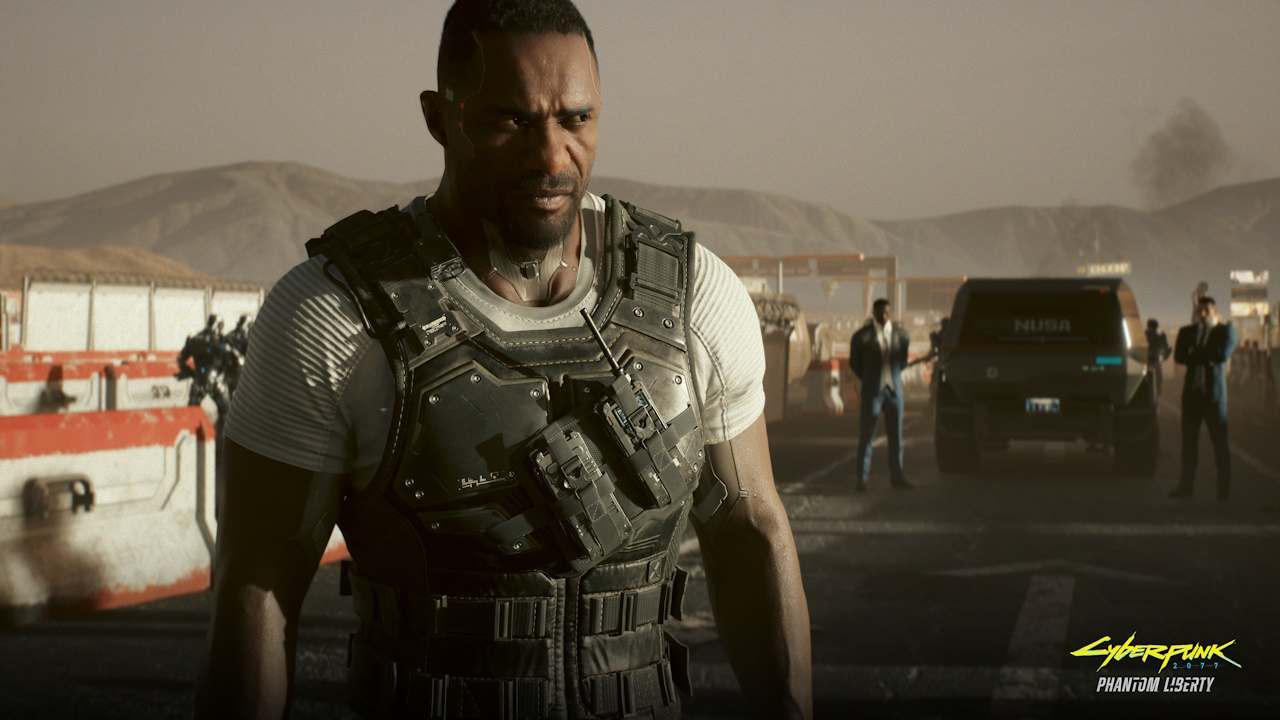
Promotional screenshot of the Phantom Liberty DLC for Cyberpunk 2077 (2020).
Phantom Liberty quite literally transformed Cyberpunk 2077.

Starfield is basically a “single-player live service” game. That’s the model Bethesda and Xbox chose to adopt, and we can see inside Starfield just where the paid skins and cosmetic items will appear when they’re ready to be pushed out. But like any live service, Starfield has to be basically good enough to build up a playerbase before anyone should be thinking about microtransactions, cosmetic loot, or paid mods. If Starfield’s first big expansion isn’t good enough, I don’t see the game retaining enough players to make that kind of “ten-year experience” anywhere close to viable.

Look at other games in the live-service space. Whether it’s Anthem, Marvel’s Avengers, or Ghost Recon: Breakpoint, it’s incredibly easy for even massive publishers with huge brands to fail. And there are relatively few titles that launch to such a mixed reception that go on to make a recovery. The jury’s still out on the likes of Halo Infinite and Suicide Squad: Kill the Justice League, but to say they’re limping along wouldn’t be unfair. Asking for a single patch or update to transform the fortunes of titles like that seems like a big ask… but it’s where they’re at. Just like Starfield, they’re in the last chance saloon.

Promo graphic showing future content for the video game Suicide Squad: Kill the Justice League (2024).
We’ll see how much of this promised content for Suicide Squad: Kill the Justice League actually gets released…

Gaming is a marketplace – and a very competitive one at that. New titles are being released all the time, and while once-in-a-generation masterpieces like Red Dead Redemption II or Baldur’s Gate 3 are comparatively rare, there are enough good games out there – even in the single-player and role-playing spaces – for players to very quickly move on from a disappointing or underwhelming experience. Most games don’t even get a second chance; by the time developers have been able to address issues and roll out updates, the damage has been done and players have left, never to return.

Starfield is lucky in that Bethesda’s pedigree and Xbox’s sky-high marketing budget will almost certainly grant it a second chance and a second look from a decent number of players. But that second look had better be substantially different and a massive improvement – with changes and fixes across the board. Because there damn well won’t be a third.
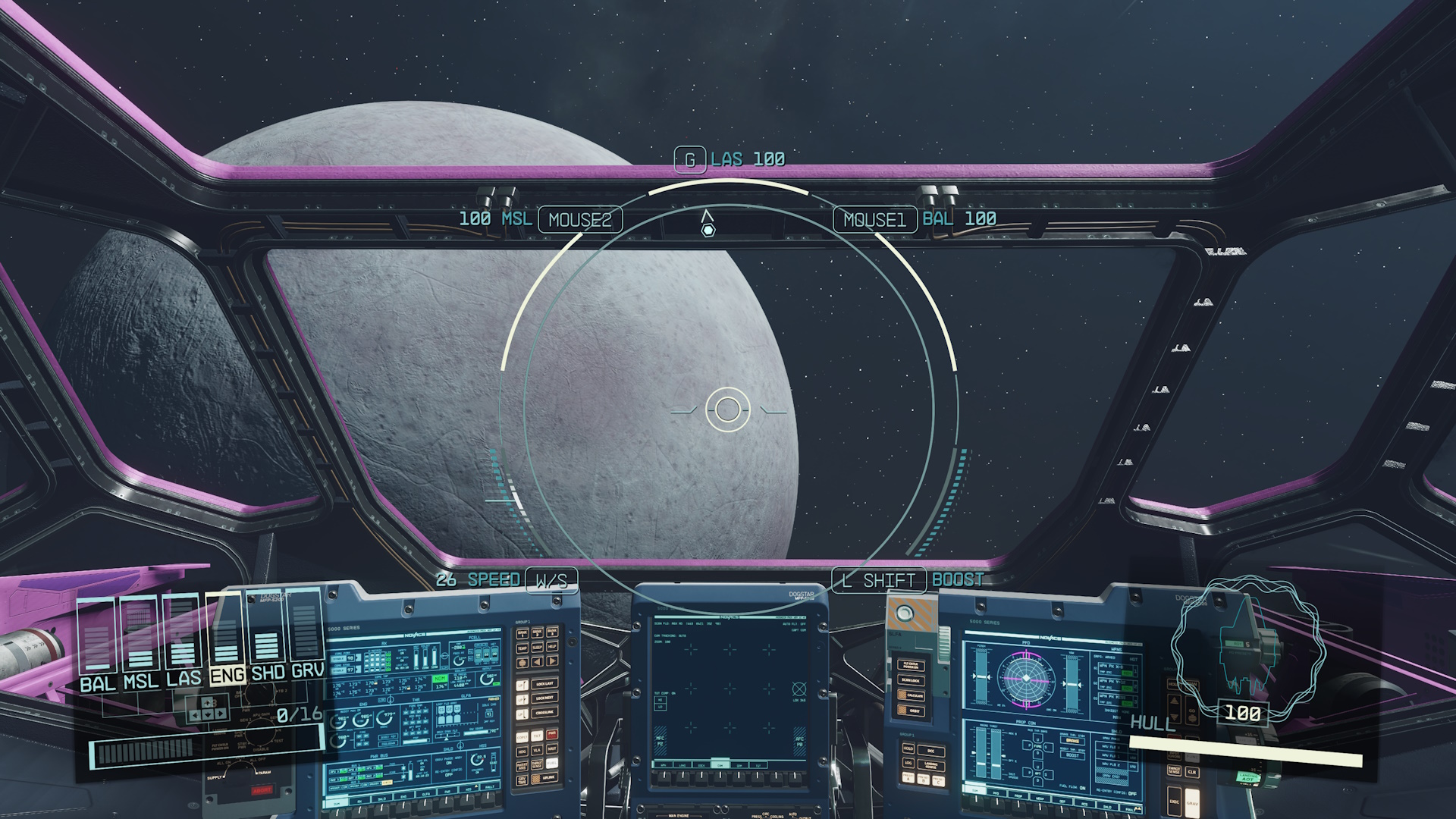
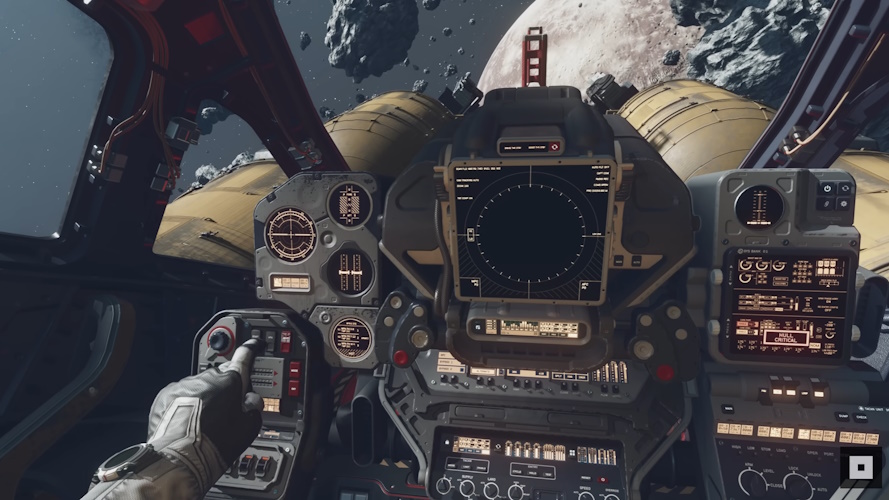
Screenshot of Starfield (2023) showing a first-person view of a spaceship cockpit and a planet in the distance.
Starfield has already had a chance to impress me.

Xbox won’t willingly burn money on Starfield if things don’t improve, just like Electronic Arts didn’t with Anthem or Square Enix didn’t with Marvel’s Avengers. Publishers pretty quickly hit their limit when it comes to supporting a failing game – so Starfield’s life-support can’t last forever. The game sold a decent number of copies at launch, and drove at least some new subscribers to Game Pass, so it’s probably bought Bethesda some time. But that time is finite, and if, at the end of it, the DLC or update isn’t good enough… I can see that being the end of the road for Starfield.

One interesting example here is No Man’s Sky. After that game was poorly-received by a lot of players upon release, Hello Games knuckled down and got back to work. Over the span of years, No Man’s Sky received dozens of updates that brought it much closer to its original vision. But those updates were all free, and players who stuck with the game were rewarded for their support and patience. Hello Games didn’t have the audacity to charge extra for completing the work that should have been done ahead of release… so perhaps there’s a lesson there for Bethesda and Xbox, too.
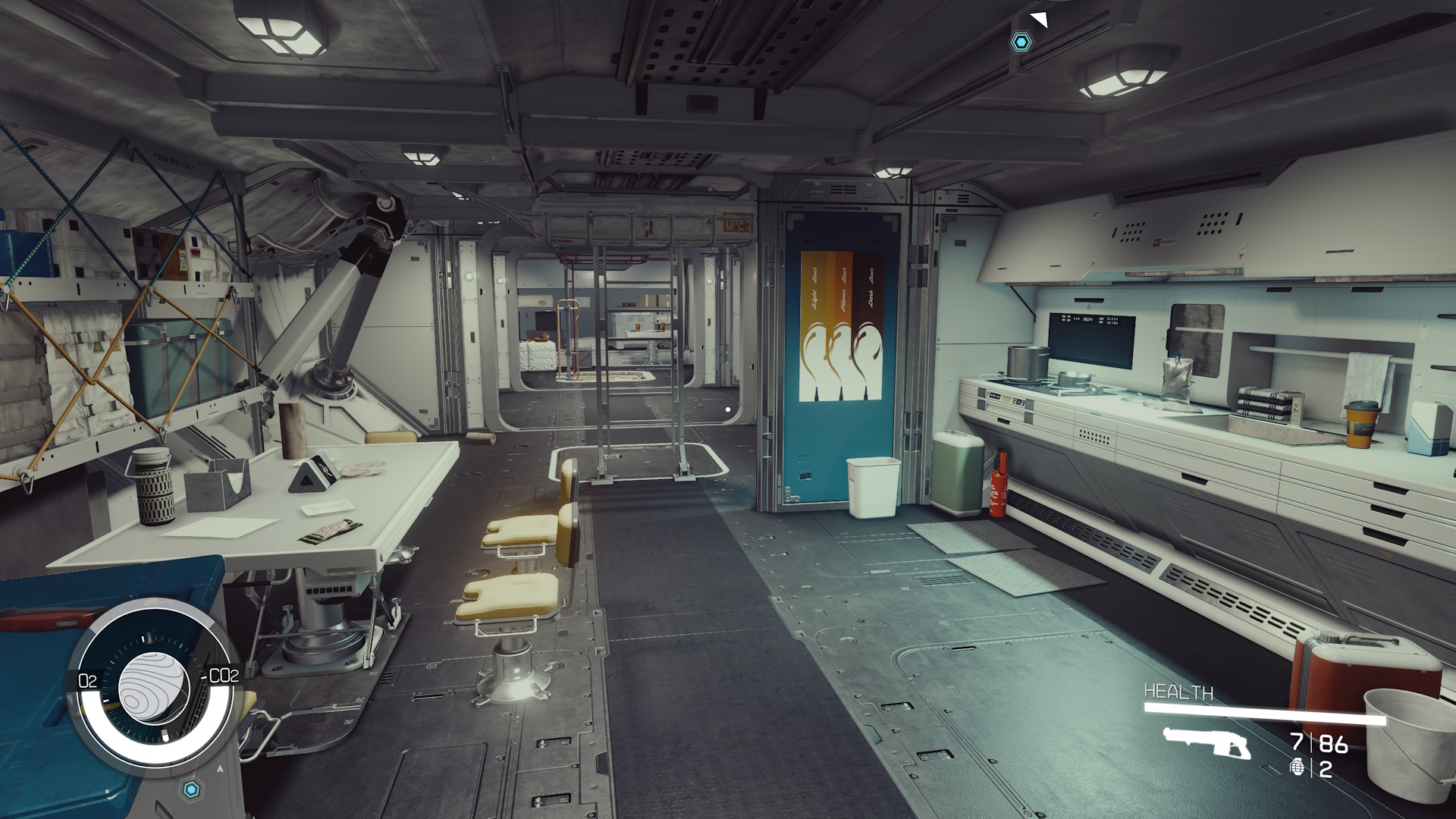
Screenshot of Starfield (2023) showing the interior of a custom spaceship.
Some big free updates wouldn’t go amiss!

At the end of the day, despite whatever positive spin the PR departments at Microsoft and Bethesda might try to put on it, Starfield is in trouble. I gave up on the game after giving it more than enough time to impress me, but what should be even more concerning for Bethesda are the reports from folks who stuck with the game to the end – only to say it isn’t worth re-playing. The game’s launch did not go to plan, and the purported “ten-year experience” seems to be disintegrating before our very eyes.

We can discuss how all of this happened, where Bethesda went wrong, or what the worst aspects of the game are. There are already plenty of articles and essays about all of those subjects – and many different answers to those questions. But there is still a glimmer of hope for Starfield, that updates and improvements could bring it closer to the game we were all hoping for. But time’s a-ticking, and there’s one last chance to get it right.

Let’s cross our fingers and hope that Xbox and Bethesda seize the opportunity.

Starfield is out now for Xbox Series S and X consoles and PC, and is also available on Game Pass. Starfield is the copyright of Bethesda Game Studios, ZeniMax Media, Xbox Game Studios, and Microsoft. This article contains the thoughts and opinions of one person only and is not intended to cause any offence.
Starfield: my biggest concerns

Spoiler Warning: Although there are no major story spoilers for Starfield, minor spoilers may be present. This article also uses screenshots and promotional artwork of the game.

I touched on this subject when I gave my thoughts on the recent Starfield showcase, but I wanted to expand on some of my concerns about Bethesda’s upcoming sci-fi role-playing game. For context, Starfield is absolutely my most-anticipated game right now, and it’s one I’m very excited about! The hype train has definitely left the station, and I’m going to be riding it until September!

But that doesn’t mean that there aren’t concerns to be addressed. Some of these are things we can’t know or won’t get to see until Starfield is released, but others are things that Bethesda can – and really ought to – begin to address right away, before things get out of hand. We saw with Cyberpunk 2077 how dangerous an ever-growing hype bubble can be, and it doesn’t serve any game if players are allowed free rein to speculate and build up an inaccurate and even impossible picture of what it could be.

An unknown character seen in the recent Starfield showcase.

That’s perhaps my single greatest concern: that Bethesda and Microsoft aren’t doing enough to step in when speculation gets wild. I’ve seen commentators and critics propose entirely unannounced features that are almost certainly not going to be included in Starfield, dedicating entire forum threads or YouTube videos to discussing them. Theorising can be fun, but there’s a line somewhere that falls in between speculating about what might be present and convincing oneself (and others) that an exciting-sounding feature is certain to be included.

This is where a good marketing department is essential! There are ways to let players down gently, or to redirect the conversation to other areas of the game, without deflating the hype bubble or crushing players’ expectations. It’s infinitely better to do so at this stage, months before the game is launched, rather than attempting to clean up ambiguous statements and explain the lack of features fans felt certain they’d get to see after a rocky release.

Todd Howard, executive producer at Bethesda and director of Starfield.

In different ways, this is basically what tripped up Cyberpunk 2077 and No Man’s Sky. Both games were subject to intense criticism and even hate upon release, and while Cyberpunk 2077 in particular suffered from being in an incomplete state, both games had been over-sold. In both cases, marketing departments seemed incapable of saying “no,” promising players a genre-busting, once-in-a-lifetime experience that no game could ever hope to live up to. When it turned out that No Man’s Sky was pretty barebones and barren, and that Cyberpunk 2077 was so unfinished that many folks found it to be unplayable, the dejection that players felt as they fell back to Earth was unparalleled. They’d been promised something special, but all they found when the dust had settled was a sense of crushing disappointment.

Starfield is absolutely in danger of doing this. There are going to be limitations within the game: limited NPC numbers, limited character traits and skills to choose from, limits to customisation for spaceships and the player character, limits on exploration, and limits to the role-playing experience. It’s essential that Bethesda and Microsoft use the next few months wisely, setting appropriate expectations and not allowing players to build up an image of Starfield in their heads that the game could never live up to.

Spaceship customisation is sure to have its limits.

Let’s talk about the size of Starfield itself. With 1,000 explorable planets being promised, I can’t be the only one who thinks that Bethesda might’ve made the game too big… can I? Don’t get me wrong, it’s essential that Starfield’s galaxy feels expansive, and if exploration, mining, and resource collection are going to be key parts of gameplay, it’s important to ensure there’s enough space to do all of those things. But 1,000 planets seems like a lot – arguably too many for any one player to even visit, let alone explore thoroughly in a single playthrough.

With the way Starfield’s procedural generation has been described, there’s a risk that players will miss things, too. If some characters, locations, and even missions are randomly assigned to planets, there’s only a one-in-one-thousand chance of finding a particular mission on a particular world. That potentially means that Starfield will be awkward to replay, or that it will be difficult for players to try out a mission that they’ve seen or to share something exciting with their friends.

A close-up scan of a planet.

In Fallout 4 or Skyrim, every single player could go to the same point on the map and encounter the same NPC or start the same quest. But that won’t be possible in Starfield – which is fun in some ways, but could become frustrating. If players find a fun quest or a useful item on one playthrough, locating it again on another save file could be like trying to find a needle in a haystack. That can be fun in some cases… but it will definitely be frustrating in others.

Some of the planets shown off in the Starfield showcase also looked pretty flat and barren. One of the key marketing lines is “if you can see it you can go there,” with words to that effect being used in reference to a moon in orbit of a planet. But here’s the thing: if that moon or planet has nothing of note except, perhaps, for some crafting resources to collect… going there won’t actually be a lot of fun.

Some of these planets look lifeless and barren.

For all the talk of Starfield having 1,000 planets, only a handful of those – perhaps a dozen at most – are going to have a significant amount of content. Whether we’re talking about small settlements, villains’ lairs, shipwrecks to scavenge, random character encounters, ruins, or other hallmarks of exploration in a Bethesda game… there’s only going to be so many of those. My fear here is that 1,000 planets might spread this content too thin, leaving swathes of the galaxy feeling empty.

There was also talk of planets consisting of “puzzle pieces” – i.e. hand-made pieces of content stitched together at random. That seems to solve one problem, but might it create another? Unless Bethesda has created enough of these puzzle pieces to make each planet totally unique, at some point is there not a danger that they’ll have to be recycled? It would be immersion-breaking to land on a planet and see the exact same mountain or ruin as we’d just been exploring somewhere else.

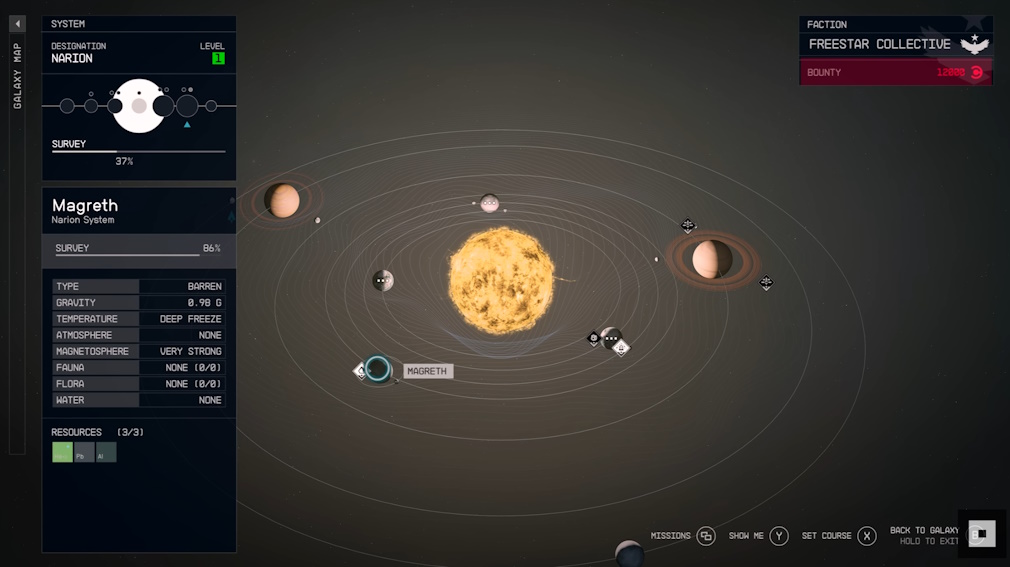
The map, focusing on a single solar system.

I don’t think that Bethesda has done enough to allay some of these concerns about the scale of the map and the amount of content it may contain. One of the criticisms of No Man’s Sky when that game launched was that its planets felt empty – and outside of some of the main settlements and story locations, I’m just not sure how Bethesda will get around this.

Starfield will be Bethesda’s biggest game to date, with some reports suggesting it may have twice as much recorded dialogue as Fallout 4. Fallout 4 had close to 700 non-player characters, but even if we generously assume that Starfield might have as many as 2,000, that still spreads them out very thinly. Even more so if we assume that the three major settlements we know of will congregate a lot of NPCs in one place.

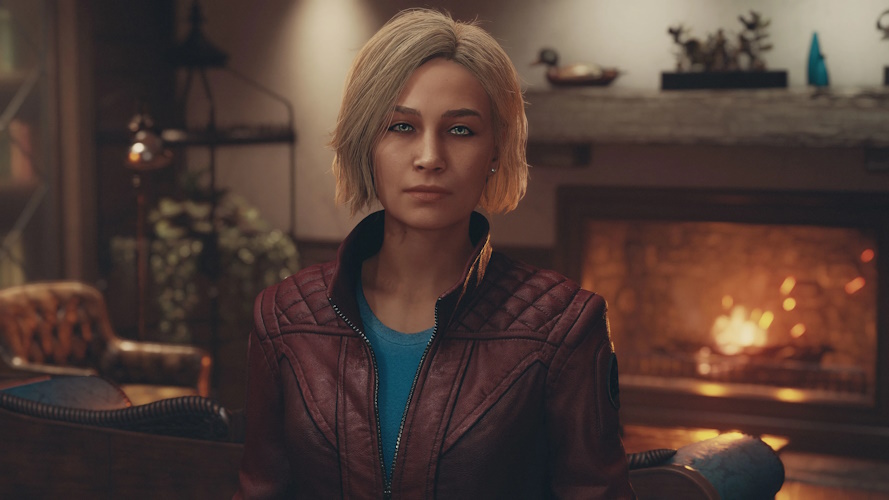
Sarah Morgan, one of the game’s important non-player characters.

Complaining that a space game is “too big” seems silly – and I freely admit that. But my concern is less to do with the size of the map itself and more with the amount of content relative to the size of the map. One of my main complaints about Fallout 76 was that its open world felt utterly lifeless due to the complete lack of non-player characters to engage with… and outside of settlements and space stations, I just fear that parts of Starfield’s galaxy could fall into the same trap.

The game is going to clock in at a whopping 125GB – at least on PC. That sounds huge, but when you compare it to other modern games, it actually isn’t. Star Wars Jedi: Survivor is comparable in size, for example, as is Red Dead Redemption II. Now don’t get me wrong, I adore Red Dead Redemption II’s open world – but is its patch of the wild west in the 19th Century a fair comparison with Starfield’s 1,000 planets? Again, my concern is really the amount of enjoyable content relative to the size of the map.

Starfield’s system requirements.
Image Credit: Steam/ZeniMax

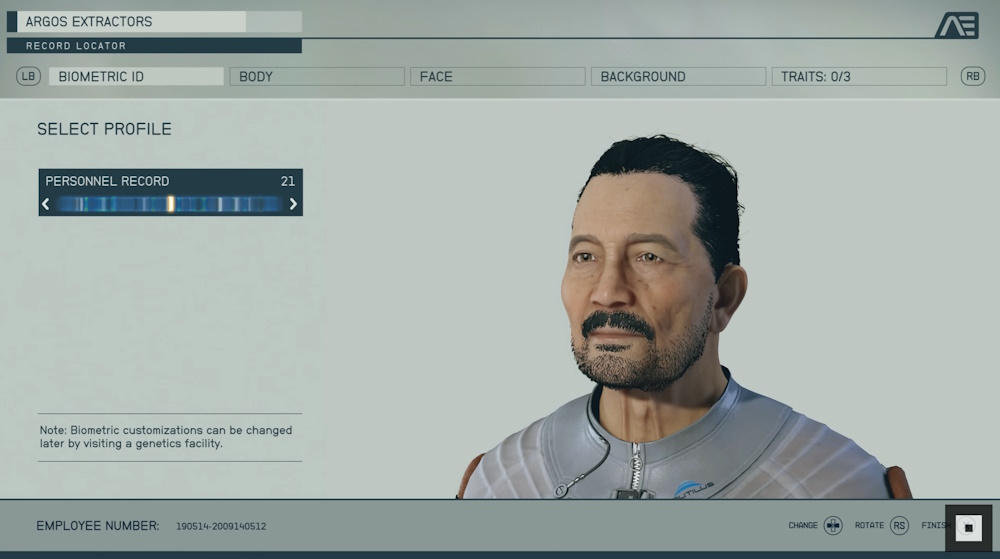
Let’s hop over to the character creator now. This might seem like a nitpick, and as facial hair is something I seldom use on custom characters, it isn’t something that will affect my own playthrough. But the facial hair in Starfield’s character creator… well, it just looks a bit shit, doesn’t it? I’m not the only one who thinks so, surely. In fact, I’d go so far as to call facial hair the worst-looking part of Starfield that we’ve been shown so far, and on some character models it seriously detracted from the way they looked, dropping the realism down several notches.

Hair and hairstyles looked pretty good, with a variety of hair types and styles that should allow players to create a diverse array of characters. That’s fabulous – but it raises the question of why facial hair is struggling to hit that same level of quality. This is something past Bethesda games have struggled with, too – Oblivion most notably, but also Skyrim and the Fallouts to a lesser extent.

Facial hair does not look great in Starfield.

I fear that facial hair may be the first outward sign of another of my big worries: Starfield’s game engine. Bethesda has insisted on using their proprietary Creation Engine 2 for Starfield – but the underlying technology here is more than twenty years old. The core technology of Creation Engine 2 is Morrowind’s Gamebryo, a piece of kit that Bethesda has literally been using since the late ’90s when that game first entered development. Changes and additions have been made, but this technology has its limits. The facial hair problem, which is a hallmark of prior Bethesda titles, could be the canary in the coal mine here.

There are advantages to working with a familiar toolkit. If Starfield had been built on, say, Unreal Engine 4 or 5, it would have required a completely different development cycle, with a different team who were familiar with how that technology worked. I’m not saying that would have been better, and I’m not arguing in favour of any one of the well-known game engines that other modern titles use. There are drawbacks and disadvantages to working with practically all of them.

Starfield’s game engine uses the same core technology that Bethesda has relied on since Morrowind.

But what I am saying is that Bethesda’s technology is at best untested on a title this massive. Some of the in-game features and mechanics promised for Starfield, such as spaceflight and ship-to-ship combat, have never been done before in any form of Gamebryo or the Creation Engine. That’s one concern.

Then there are things that have been done before – but haven’t always been done particularly well. I noted in my piece on the Starfield showcase how impressed I was with the gunplay. Partly that’s because gunplay in Bethesda’s Fallout duology was pretty poor without those games’ signature VATS system covering for it. An update to the engine should allow for significant improvements in that area, but again this is something that’s untested, and something like shooting can be difficult to judge from compressed YouTube video footage – especially carefully-edited marketing bumf. Any developer worth their salt can make even the most lacklustre game look fast-paced, fluid, and exciting in their own marketing material.

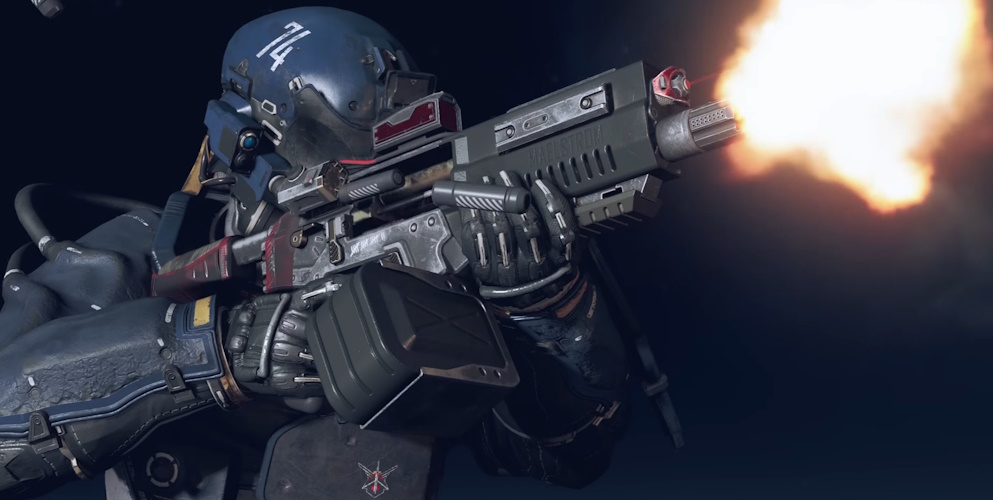
Gunplay looked great in the showcase.

Bethesda has earned itself a reputation among players for releasing games bedevilled by glitches and bugs. The company wouldn’t be the first to release a broken, buggy game in 2023 – but that’s no excuse! I’ve already said that Starfield is a game that I’ll be waiting to see reviews and tech breakdowns of before I commit myself, and that’s because Bethesda has done so much to warrant such a cautious approach.

Look back to trailers and marketing material shown off for Cyberpunk 2077 in 2020. Or Redfall earlier this year. It’s easy for a clever publisher to compile footage – even in-game footage – that looks great, and to show off a “vision” for how the game could look under the right circumstances. Trailers, teasers, and gameplay reveals often turn out to be inaccurate, and the version of a game that arrives on launch day – or during a pre-order exclusive access window – can be a million miles away from how it was promised or presented. Bethesda has done this too, with Fallout 4 and especially Fallout 76 receiving well-deserved criticism for bugs and glitches when they were released.

Fallout 76 at launch had, uh, a few issues…

There’s a specific story concern that I have – one that hadn’t even entered my mind until someone commented on it somewhere online. I can’t remember where I first saw this idea or theory posited, so I apologise to its original creator for that! But several people have suggested that Starfield could be some kind of sequel to the Fallout series – noting in particular that Earth looks barren, devastated, and uninhabitable in teases we’ve been shown… not unlike Fallout’s nuclear wasteland.

To be clear, there’s no indication whatsoever that this will be the case. Bethesda hasn’t denied it outright, but they haven’t actually commented on it at all as far as I can tell.

For my money, this would be an atrocious idea. Even if this was a secret that was kept, with the player character not finding out until well into the main story… it just wouldn’t work. It would make Starfield feel diminished, living in the shadow of another game – and it just isn’t necessary. Starfield can and should stand on its own two feet, doing its own thing, and not needing to be constrained by other games in a different fictional universe.

This is one rumour I hope proves to be false.

After Starfield is launched, a lot of attention will be paid to how well the game sells. But as I’ve said before, in an era where Game Pass has tens of millions of paid subscribers, sales numbers no longer tell the full story. I fully expect the PlayStation fanboys to jump all over Starfield – as they are already for any point of criticism they can find – and if the game seems to be selling fewer copies than other Bethesda games or than comparable PlayStation 5 games, you can bet they’ll take that and run with it. There’s sure to be content proclaiming Starfield a “failure” no matter what happens!

But it isn’t fair to judge Starfield – nor any Microsoft or Xbox game – purely on sales numbers any more. Game Pass is a game changer; it’s quite literally changing the way many of us play games. The way players on Xbox and PC engage with Bethesda titles and other Microsoft-owned games and studios is changing rapidly, with more and more subscribers joining Game Pass every day. Starfield’s release is sure to see a spike in Game Pass numbers, too – because it makes a lot of sense from a player’s perspective! I’ll be playing Starfield on Game Pass, and several people I know will be doing the same thing. Each Game Pass player represents a sale not made – so look to Microsoft and Bethesda for player numbers rather than raw sales data.

Starfield is a big deal for Game Pass.

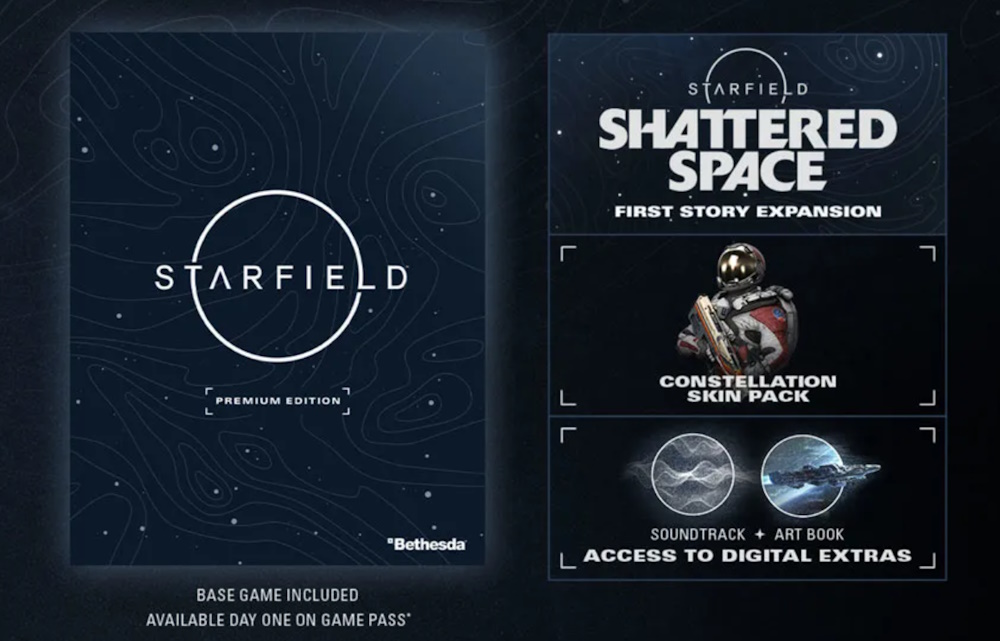
Speaking of sales and money, another area of concern is that Starfield seems to be quite aggressively chasing some recent cash-grabbing trends that have blighted the modern games industry. It was a given that Starfield would have a collector’s edition and a special edition at launch – such things are so commonplace nowadays that they don’t even raise an eyebrow. But I admit that I was a little surprised at how steep the price was and what kind of content was on offer.

Firstly, for an additional £25 – on top of Starfield’s £60 (US$70) price tag – players get a couple of skins, a digital soundtrack, an “art book,” which will be a collection of JPEG images of the game’s concept art, and access to the first piece of planned DLC. We’ll get to DLC in a moment, but there’s one more thing that pre-ordering this expensive special edition gets players: five days of early access to the game.

Starfield has a special edition – because of course it does.

Let’s look at this another way: Starfield’s release date isn’t the 6th of September, it’s the 1st of September – but only for players who splurge some extra cash. The rest of us plebs will have to wait five days, close to a week, in order to play the game. I find these kinds of paid access periods to be a particularly revolting way of monetising a game, and I’m disappointed that Microsoft and Bethesda would stoop so low in order to manipulate players into pre-ordering Starfield.

Then we have these character costumes. I hope I’m wrong about this, but I fear these paid outfits are a harbinger of some aggressive in-game monetisation. This might be something that’s already present in Starfield, or it might be something Bethesda plans to implement after the game’s release – but either way, it doesn’t bode well. A fully-priced game shouldn’t be selling costumes like it’s some free-to-play MMO, but the games industry has been getting away with more and more of this kind of aggressive in-game thievery. And Bethesda is one of the pioneers of this nonsense, with Oblivion’s infamous “horse armour” DLC.

Yup.

If I’m paying £60 – or £85 – for a game, I should expect to be able to equip my character with all of the costumes that the game has to offer. This isn’t Roblox or Fortnite; free-to-play titles that use in-game purchases and subscriptions to turn a profit. For the money Bethesda and Microsoft are demanding, it’s positively disgusting to think that some character outfits – and possibly other pieces of content too – have been cut out to be sold separately.

I mentioned the first expansion pack there, too, and this is another thing that’s ringing alarm bells. Starfield is still almost three months away from release – this is not the time to be talking publicly about expansion packs and DLC. It worries me that attention and development resources may be diverted away from what should be Bethesda’s top priority: getting the game ready for launch. DLC is great – and if Starfield is as amazing an experience as we’re all hoping for, I’ll definitely be picking up every major expansion pack that gets released! But now is not the moment to be advertising it.

Let’s get the game launched before we talk about DLC.

I do have one final point of concern before we wrap things up. Since the Starfield showcase was broadcast, hype for the game has gone way up. Players like myself who had been on the fence about Starfield or who were tentatively looking forward to it have now well and truly boarded the hype train – and that brings with it a degree of expectation. Microsoft and Bethesda have promised a release date of the 6th of September (or the 1st for people who pay up). There’s now more pressure than ever to meet that deadline.

That means two things. First of all, crunch. Having once worked in the games industry, I’ve seen crunch first-hand, and I know the toll it can take on developers and everyone working at a games company. Crunch is something that should be avoided at all costs – but rigid deadlines make it far more likely.

It’s on Bethesda (and Microsoft) to avoid a difficult crunch period.

Secondly, Microsoft and Bethesda are now far less likely to delay Starfield. The game has already been delayed twice officially – or four times unofficially, if you believe certain reports. If Starfield isn’t ready in time for September, there’s going to be a lot of pressure for the game to be pushed out anyway – and that could be disastrous. Look at Cyberpunk 2077, a game which, despite pulling off an admirable recovery, will be forever tainted in the minds of players by an atrocious launch. Likewise No Man’s Sky. And for every game like those that manage to recover, there are dozens of titles like Anthem, Babylon’s Fall, or 2013’s Star Trek that never do. Bethesda has some experience in this field, both with Fallout 76 and as the publisher responsible for this year’s Redfall.

I praised Starfield last year for being delayed. I stand by what I said then: it’s never fun when a game I’m excited for gets delayed, but more and more players have the maturity to understand that it can be necessary. Practically everyone would rather play a good game a few months later than a bad, broken, or unfinished game a few months earlier. But with so much hype building up and a release date seemingly set in stone, a further delay at this stage might be something that Microsoft and Bethesda are unwilling to consider. I hope that, if Starfield needs a few more weeks or even a few more months, that they will ultimately be willing to take that tough decision.

A spaceship!

So I think that’s all I have to say for now. I know it’s a lot – and if you feel like I just took a big stinking dump all over your excitement for Starfield, well… sorry!

Despite everything we’ve discussed today, I’m still incredibly excited for Starfield. I’m trying to restrain myself and not get overly hyped up – and that’s partly why I decided to put metaphorical pen to paper and write out all of my concerns and issues with the game. But the truth is that in spite of some worries and fears, I’m still really looking forward to this game. In fact, I can’t think of any other title since Bethesda’s own Morrowind more than two decades ago that I’ve been this excited to play for myself.

I’m keeping my fingers crossed, and I truly hope that all of the points I’ve raised today will turn out to be misplaced fears. In three months’ time, feel free to come back and have a good laugh at my expense if Starfield really does live up to our expectations! I know that’s what I’ll do… if I’m not too busy playing Starfield, of course.

Starfield will be released on the 6th of September 2023 for PC and Xbox Series S/X consoles. Starfield is the copyright of Bethesda Game Studios, Bethesda Softworks, Xbox Game Studios, and/or Microsoft. Some promo images and screenshots used above courtesy of Bethesda and IGDB. This article contains the thoughts and opinions of one person only and is not intended to cause any offence.
Thoughts on the Starfield showcase

Spoiler Warning: Although there are no major spoilers for Starfield’s main story, minor spoilers may be present – and this article includes screenshots and images of the game.

As part of Xbox’s big summer event – or rather, as a standalone addendum to it – Bethesda recently showed off the first proper deep dive into its upcoming role-playing shooter Starfield. The game is due for release in September, barring any further delays, and today I wanted to share my thoughts on how Starfield looks to be shaping up!

It’s been a while since we last took a look at Starfield here on the website. In fact, it’s been over a year since I last commented on the game at length – a piece that was prompted by news that it had been delayed. A single teaser trailer had been released since that announcement, but this showcase offers a much deeper and more expansive look at the game.

The game’s director and Bethesda executive producer Todd Howard spoke at the Starfield showcase.

I would be lying if I said I wasn’t excited for Starfield – even more so knowing that it will come to Game Pass on day one. The game that Bethesda showed off and talked about looks fantastic, with a multitude of complex systems and mechanics to get stuck into, and an engaging retro-sci-fi story that I can’t wait to follow.

But at the same time, hype isn’t always a positive thing – and I’ve already seen players and commentators starting to speculate about unannounced features in the game, potentially setting themselves up for disappointment. I’m trying to restrain myself from doing the exact same thing; building up an image in my head of the “perfect” role-playing game that Starfield – and indeed no game – could ever possibly live up to.

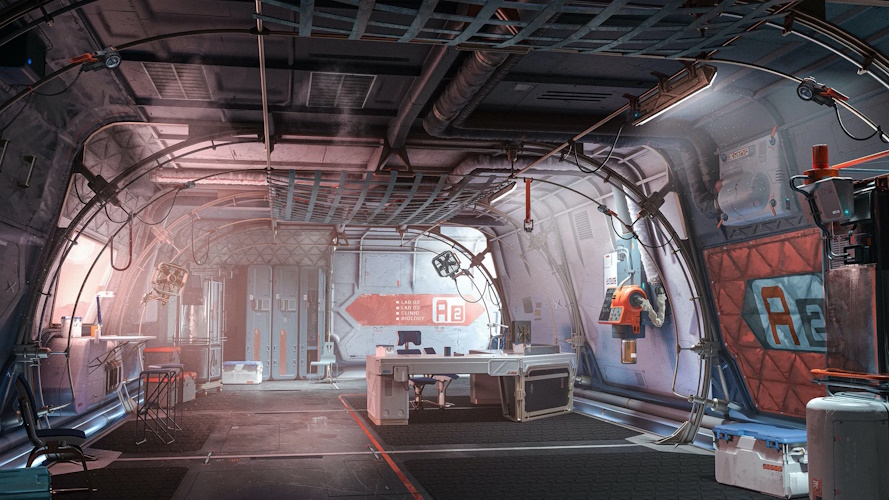
Concept art for Starfield.

Bethesda’s games are fantastic. Morrowind in particular will be a permanent fixture on my “favourite games of all-time” list, and I’ve also enjoyed Bethesda’s other modern titles like Skyrim and their Fallout duology. But the company has a reputation, and mistakes have been made over the past few years that are absolutely worth bearing in mind before the Starfield hype train accelerates too much.

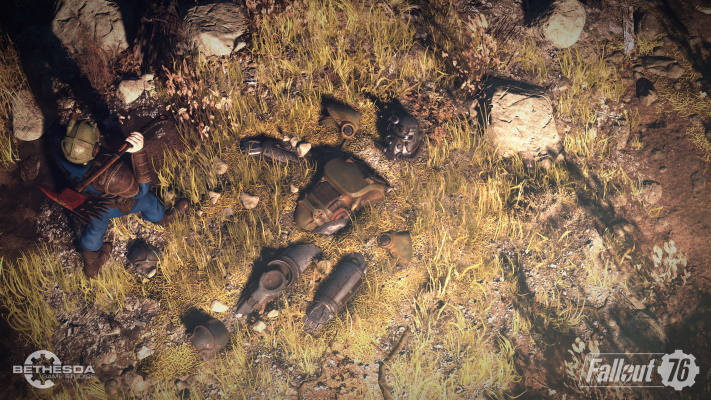
Fallout 76 was, for me at least, utterly unplayable. Forget the bugs, the glitches, and the crappy marketing – it was a role-playing game with no characters in it. To Bethesda’s credit they’ve been continuing to work on Fallout 76, but it was a mistake to launch the game in such an unfinished state. Fallout 4 also had its issues – particularly with bland and repetitive side-quests and open-world busywork. And we’d be remiss not to mention the fact that Bethesda’s publishing arm is responsible for such recent abominations as Redfall.

Fallout 76 was a big, empty game that had a very difficult launch.

Even Bethesda’s better titles have a reputation for being buggy at launch – and with Starfield being the company’s biggest release to date, the potential for bugs and glitches to sneak through quality control is off the charts! The game has been delayed from an initial November 2022 release, first to “the first half of 2023,” and then again to September. Delays are almost always good news – but there can be pressure to meet a deadline, especially one that’s been pushed back more than once.

I’d absolutely encourage Bethesda, Microsoft, and anyone who’ll listen to consider delaying Starfield again if the game needs it. The gameplay we got to see in the showcase looked smooth, fun, and bug-free – but any developer worth their salt can create a “vertical slice” of gameplay for a presentation like this. Until the game is actually in the hands of independent reviewers, analysts, and of course players, we won’t be able to say with certainty that it’s in a good enough state.

A mining laser as seen in the Starfield showcase.

There are other concerns I have, too. Bethesda has insisted on re-using their creaking, ageing game engine for Starfield. Creation Engine 2 is a modified, updated version of Bethesda’s old Creation Engine, itself a modified version of Gamebryo. In some form, Bethesda has been using this same technology since the Morrowind days, and I fear that we’ve already seen some of the limitations of Creation Engine 2 in the showcase itself. Look, for example, at the low-quality facial hair and beards present on some characters – this is a hallmark of Gamebryo/Creation Engine, as we’ve seen similar shortcomings in other Bethesda titles.

The Creation Engine was originally designed for role-playing games – not space combat or colony-building, two elements of Starfield that have been teased. Fallout 4′s settlement-building was good – but it had its limitations and could be clunky to work with, especially for new players. Spaceflight and ship-to-ship combat are entirely new for Bethesda in this context, and again there’s a concern about how well Starfield’s underlying technology can deal with that.

It’s an open question as to how well the Creation Engine can handle all of these new gameplay mechanics.

Then there’s the idea of procedurally-generated planets. Procedural generation will allow Starfield to be far larger than any hand-crafted game could ever be… but it has its limits. No Man’s Sky is the title many folks will call to mind when thinking of procedural generation in a space-adventure title, and while that game has pulled off an amazing recovery following a rocky launch… it’s not exactly a comparison that Bethesda would be thrilled to see.

There were a few moments in the showcase where I felt that player characters were gazing out over pretty barren, uninteresting landscapes and vistas. For all the proclamations of “if you can see it, you can go there,” if “there” is an empty wasteland, a barren patch of dirt, or a procedurally-generated mountain with nothing at all to see or do… then I’m sure I won’t be alone in saying I don’t think I’ll bother!

A beautifully-rendered but barren-looking planet.

This is perhaps another case of expectations being raised that can’t be met. Starfield may indeed have 1,000 planets to visit – but only a handful are going to be worth visiting, with solid missions, story content, non-player characters, and hand-crafted locales to explore. Maybe I’m wrong, and maybe Bethesda has found a way to take procedural generation to another level. I hope so! But I’m not convinced of that yet.

I was also not thrilled to see two things as the showcase drew to a close: a timed early-access release for players who pay an extra £25/$30, and talk of a “story expansion” already. Bethesda has created some wonderful expansions and pieces of DLC in the past for all of its games… but it’s premature to be talking about that at this juncture. Let’s worry about getting the game released first!

Starfield has a “digital premium edition” with extra content and early access.

There were also some pre-order exclusive costumes and outfits, and I sincerely hope that won’t be a trend that Starfield aggressively pursues. We’ve seen too many single-player, fully-priced games trying to sell microtransactions and cosmetic items via an in-game marketplace, and to me that kind of thing crosses a line. In a free-to-play title, sure. Go for it. But let’s not have that nonsense in Starfield.

So those are my negative takeaways from the showcase, and I wanted to get them out of the way up front! There are concerns about Starfield, and as excited as I am for the game, it’s another one that has firmly earned its place in the “wait for the reviews” column!

But there’s a lot more to say about Starfield, and I have some very positive impressions and takeaways from the showcase that I’d like to share now.

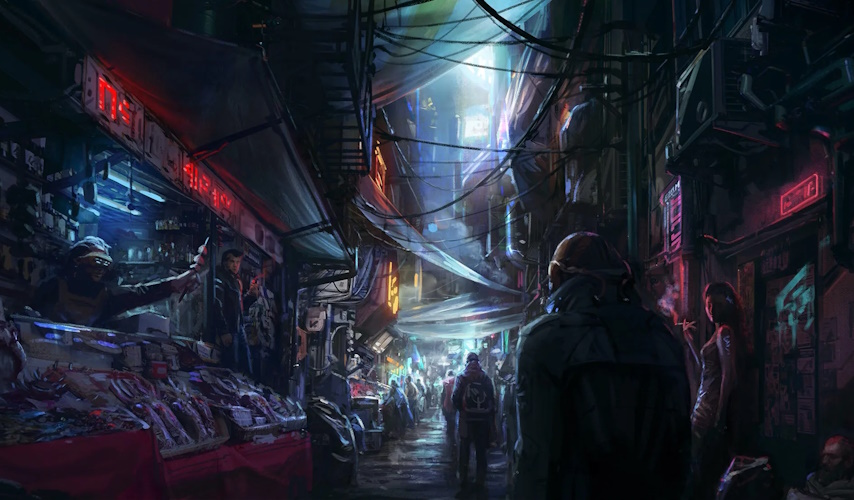
Concept art of a neon marketplace.

First of all, this game is giving me a “Star Trek-meets-Disney World-meets-old-school sci-fi” vibe! The positivity of Star Trek’s exploration-focused future seemed to be present, and as a massive Trekkie I’m all there for that! Bethesda once had the license to make Star Trek games, and I can’t help but feel that in another world we might be looking at Starfield Trek… or should that be Star Trekfield? Maybe one day Paramount will license a game like that! A fan can dream, eh?

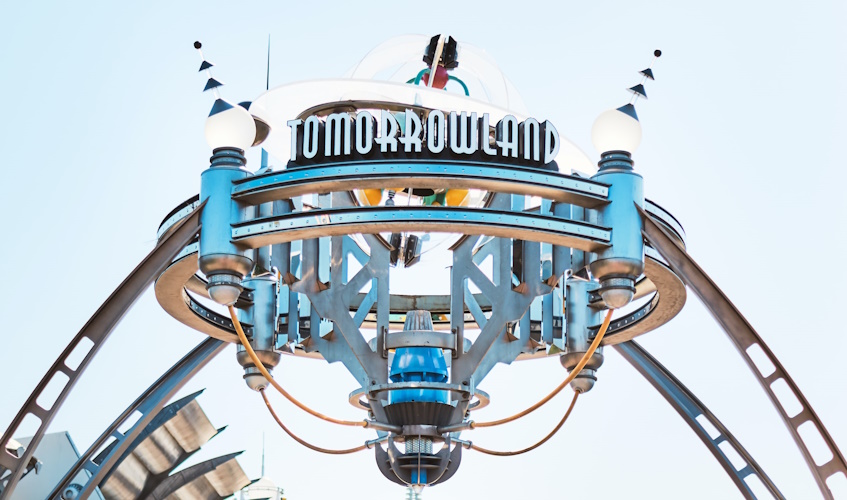
If you’ve ever been to Disney World and ridden the likes of Spaceship Earth or visited Tomorrowland, maybe you’ll also pick up on the same feeling that I did. Perhaps it’s because of the aesthetic, perhaps it was the talk of humanity expanding into the stars, but something in the showcase absolutely harkened back to those Disney experiences for me – and I absolutely mean that as a positive thing.

Paging Mr Morrow…

Finally we have Starfield’s deliberately retro look and feel. Described by Bethesda as “NASA-punk,” this visual style takes NASA’s technology as a starting point and looks to a future inspired by those machines and devices – and their aesthetic – in much the same way as the Fallout games take the early ’50s as inspiration. I adore this look, and while there’s more to Starfield’s galaxy than just one visual style, it seems to fit perfectly with the game’s theme of exploration.

Each faction, locale, and/or area of the galaxy looks to have its own distinct aesthetic, too, which is fantastic. In Morrowind, and to an extent in Oblivion as well, different regions of the map and factions were distinct from one another with radically different styles of dress and architecture. This was far less visible in Skyrim, and while there were distinctive looks in Bethesda’s Fallout games too, by and large those titles had their own post-apocalyptic thing going on that tamped down at least some of the potential for creativity and diversity in terms of style. Starfield doesn’t have that – and it was fantastic to see different cities, different factions, and different characters with pretty diverse styles that complimented or clashed with the “NASA-punk” look of the main character and spaceship.

Starfield has a visual style that Bethesda calls “NASA-punk.”

Let’s talk a bit more about spaceships – because this is one area where I’m beyond excited. With the caveat above about the game’s engine being relatively untested in this area, the idea of building, customising, living aboard, and finding a crew for my very own starship is something I literally cannot wait to get stuck into. Starfield is making my knickers moist with anticipation; this is something I’ve been looking for in a game of this type for a long time.

I adore customisation options in practically any game, and there have been some fun games with base-building elements. Going way back, there are even games like Star Trek: Starship Creator, which, while limited by the technology of the time, were an absolute blast to get stuck into. But being able to build and customise a ship, recruit a crew, and then take that ship on untold adventures in a Bethesda sandbox… I can hardly think of anything more appealing in any video game that has ever been announced in the history of ever!

Spaceship!

At first it seemed as if this feature might be akin to Fallout 4′s settlement-building in the sense that it would feel tacked-on, and like a part of gameplay that could be sidelined or even ignored. And I suppose some players will choose to do the bare minimum when it comes to spaceship customisation, putting their focus into the story or into side-missions. But from what we saw in the showcase – and again, with the caveat that all of this is heavily-edited marketing bumf – it looks like the player’s ship is going to be an integral part of the game. Maintaining it, upgrading it, and finding a good crew will all have tangible effects on gameplay – making space battles easier to win and potentially even unlocking new areas of the galaxy and new planets to explore.

It seems as though there will be a choice of crewmates; this isn’t a Mass Effect situation where there are only handful of characters who could join the squad. Bethesda games have had companions in the past, but I usually found them to be quite limited in what they could do. If each member of the crew brings skills with them when they join up, that completely reframes the entire concept of companions – and makes it way more interesting. That at least some of these people can be found randomly out in the wild is even more enticing!

Ship customisation looks amazing.

My excitement about building my own starship extends to the colony/base-building feature, too. Again, this looks like a ton of fun, and provided that there are enough customisation options – and that things like colours can be changed inside as well as out – it will be an absolute blast to get stuck into. Being able to set up a base on a random planet or moon… again, I feel like this is as close as I’m ever going to get to living out my Star Trek/Disney/retro-sci-fi fantasy!

The game’s character customiser looked good – but as I said above, facial hair seems not to be as well-done in Starfield as we’ve seen it in other modern titles. That’s unlikely to affect my own custom character, but it’s worth noting regardless. I don’t think the character creator will quite match the likes of Cyberpunk 2077, which probably has the best on the market right now, but it should be a solid next-gen improvement over even Fallout 4, which had been Bethesda’s best to date. As long as I have a decent range of options to pick from, I daresay I’ll be satisfied!

The character creator. Note the low-quality facial hair.

Starfield will have two different kinds of combat: ship-to-ship in space and first/third-person on the ground. It can be difficult to tell from compressed video how well these will work, but the signs from the showcase were positive – at least as far as I can tell. Some of Starfield’s combat looked positively Doom-like – thanks, no doubt, to support from Doom developer (and fellow ZeniMax studio) id Software. Gunplay looked fast-paced and fluid, and I even caught a glimpse of some melee weapons in the mix, too.

Combat – and especially firearm combat – had been a bit of a concern. In the Fallout series, the VATS system, which essentially paused gameplay to allow for targeting, went a long way to covering up some decidedly average or even sub-par gunplay. This came to the fore with Fallout 76, which as an online multiplayer title couldn’t implement VATS in the same way. Gunplay in Starfield looks a million miles away from the lacklustre shooting seen in Fallout 76, which is fantastic.

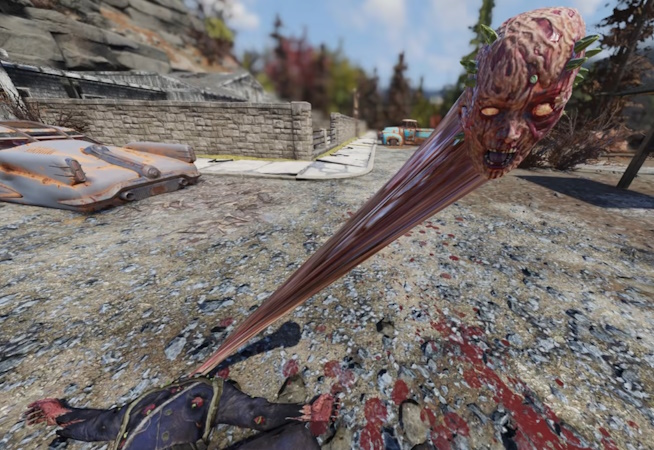
Melee weapons are present in Starfield.

Ship-to-ship space combat reminded me of Everspace 2 and even No Man’s Sky in the way it appeared at the showcase. That’s a compliment – as both games are easy to get to grips with! For players who want to focus less on spaceship battles and more on piloting and exploration, or who see going to space as merely a way to travel to the next destination, ensuring that these combat sequences don’t feel awkward and annoying is a must. I can think of a fair few titles where these kinds of sequences could feel like they got in the way – and I hope Starfield won’t be one of them!

Having gone to all of the trouble of customising and stocking up my ship, it’ll be a treat to see it zooming around in space! If the ship-to-ship combat is as fun and fluid as the first-person shooting looks set to be, then I think this aspect of the game will be fantastic, too. Again, diversity and player choice are on full display here: piracy is an option, raiding other ships. Trading and even smuggling are available, too. And of course, exploration! It sounds like there will be a ton of different ways to use these ships – and yes, that’s ships plural, as it was confirmed that players can acquire more than one vessel.

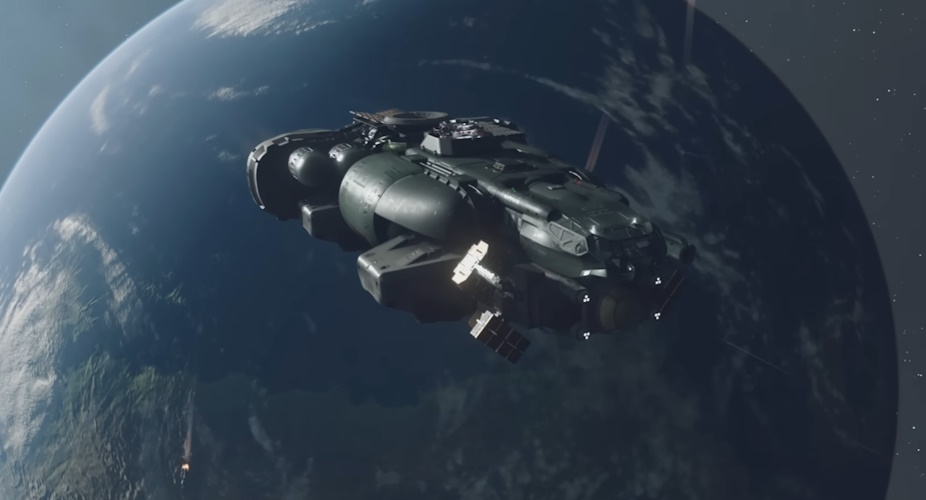
A spaceship in orbit of a planet.

After the disappointment of Fallout 76′s big, empty world, it was phenomenal to see so many non-player characters milling around. Several of the locales shown off in the showcase look like big, bustling cities, filled to the brim with people. Smaller settlements also seemed to be populated, and as mentioned above, some of these characters can be recruited to join the crew. I don’t know how many potential crewmates there are, but it was implied to be a decent number.

Characters are at the heart of any story, and Bethesda has created some incredibly fun and memorable characters over the years. I’m genuinely looking forward to seeing what they’ve done in the sci-fi space, and all the different kinds of people we might meet. We’ve already seen some of the members of the Constellation organisation – but in a galaxy filled with corporations, pirates, colonists, independent worlds, and so on… there should be a lot of people to meet!

Sarah Morgan is one of the members of the Constellation organisation.

Starfield’s main storyline is still under wraps, but we got a few tidbits of information at the showcase. The Constellation organisation appears to be in decline, and the player character had a unique connection with an artefact of unknown origin – possibly created by ancient aliens. This idea seems like something that has the potential to be fun and engaging! But as with other Bethesda games, the main quest is sure to be only a small part of what Starfield has to offer.

I first played Morrowind more than twenty years ago, shortly after it was released here in the UK. In that time I’ve returned to the game on multiple occasions – but I still to this day haven’t seen everything or beaten every side-quest. That’s the kind of scope we’re talking about here, and with Starfield promising to be Bethesda’s biggest game ever, there are bound to be factions to join, side-missions to complete, and entire quest lines that are of comparable length to the game’s main story. For many folks – myself included – this is the appeal of Bethesda titles, and thus is the true appeal of Starfield.

Who’s this and what’s his story?

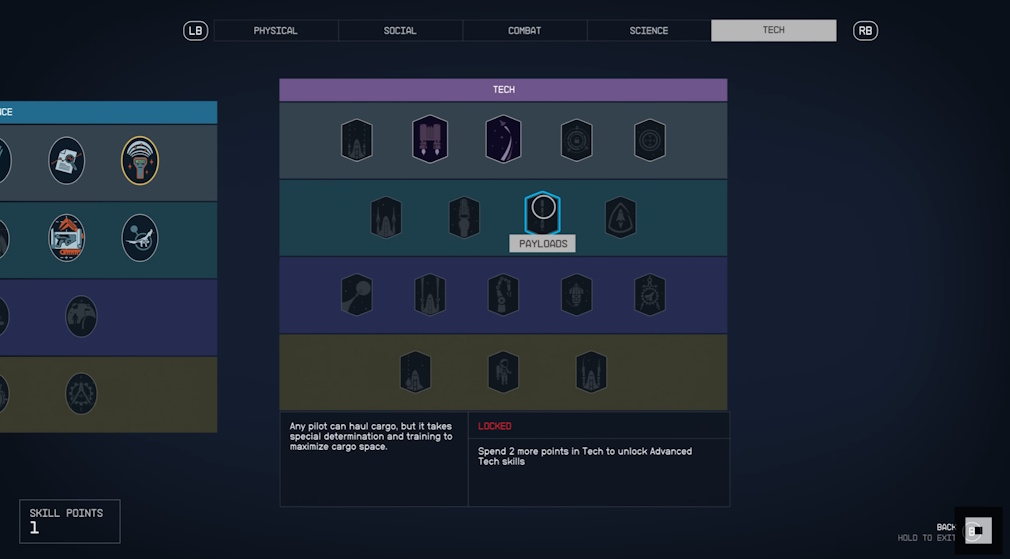
All of the usual Bethesda skills and perks looked to be present in Starfield – along with plenty of new ones, too. Character customisation goes way beyond appearance, and from what we saw in the showcase, players are going to be able to really decide what kind of person they want to be in this sci-fi world – and what kind of gameplay they want to have! I noted options that build up stealth, physical attributes, weapons, engineering, piloting, charisma, and more. And as in any RPG, choosing one set of skills or perks will mean others aren’t available – making Starfield a game with huge replayability potential.

I like tinkering with stats in a good role-playing game, and I hope that Starfield’s skills and perks will be both fun to use and will have a meaningful impact on the game. Some games rightly attract criticism for skills and stats having little functional effect on gameplay – though Bethesda has usually managed to get this right. There were some interesting and unique-sounding skills and perks in the mix, too, including some that seemed to unlock potential characters, dialogue options, and story elements.

Part of the skills menu.

So we’ll have to wrap things up, because this is already running long!

I’m trying hard to suppress as much of my hype and excitement for Starfield as possible. Not only are there concerns about the game engine, Bethesda’s reputation for bugs and glitches, pre-order and monetisation shenanigans, and other things on the technical side, but there’s a very real danger that Bethesda is overplaying its hand. Starfield is being pitched as a kind of genre-busting, once-in-a-lifetime experience… and many players may find themselves falling back to Earth with a thud if the game can’t live up to those impossible expectations.

There are going to be limits to customisation, procedurally-generated locations that may be barren, bland, and less exciting than we’d hoped for, and constraints on what’s possible in terms of both gameplay and story. Both Bethesda and Xbox have track records of poor launches, with Fallout 76 being an unparalleled disaster in 2018, and Redfall being a total mess earlier this year. So there are solid reasons to place Starfield in the “wait for the reviews” category!

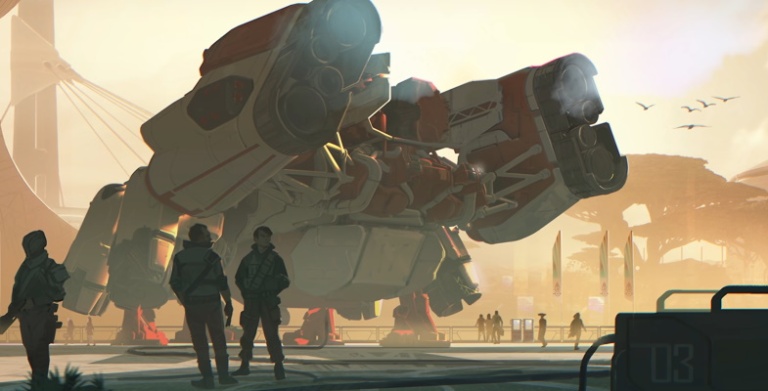
Concept art of an outpost or spaceship.

But at the same time, I can’t help myself. A friend of mine recently suggested that Starfield might just be “the best video game that either of us will ever play,” and I can’t argue with their assessment. If Starfield lives up to the hype and the expectations that Microsoft and Bethesda are setting, then it almost certainly will be one of my favourite gaming experiences of the last few years – if not of all-time. I’ve been waiting for a game like this; one that promises to be multiple games with multiple gameplay mechanics all rolled into one.

The showcase did its job, in my view. It succeeded at getting me incredibly excited for Starfield, a title that was already close to the top of my most-anticipated games list. Part of me is saying “please delay it if it needs it!” But another huge part of me wants nothing more than to get my hands on Starfield right now! I don’t think I’ve been this excited about an upcoming game since Morrowind.

Starfield will be released on the 6th of September 2023 for PC and Xbox Series S/X consoles. Starfield is the copyright of Bethesda Game Studios, Bethesda Softworks, Xbox Game Studios, and/or Microsoft. Some promo images and screenshots used above courtesy of Bethesda and IGDB. This article contains the thoughts and opinions of one person only and is not intended to cause any offence.

Why “announce” Fallout 5?

Xbox recently hosted its Games Showcase event – an addendum to Summer Games Fest, which has effectively replaced this year’s E3 industry event. The Showcase was generally pretty decent, with a focus being on games that will be released over the next twelve months. Some big games like Valheim and Redfall took centre stage, and there was news or updates about the likes of Grounded, Microsoft Flight Simulator, and even Fall Guys – the latter of which is belatedly launching on Xbox (and Nintendo Switch) in just a few days’ time.
Having recently been gobbled up by Microsoft’s expanding gaming division, Bethesda had a lot to say about Starfield. Though the game has recently been delayed until the first half of 2023, the Xbox Games Showcase event provided a massive update on the game and showed players a first look at gameplay. That’s what we should be talking about; that should be the headline for Bethesda coming out of their big summer presentation. But it isn’t, at least not in a lot of publications.
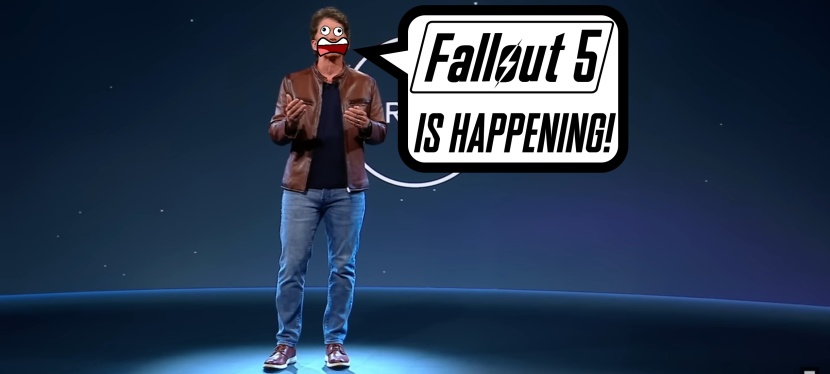
Bethesda chief Todd Howard chose to drop the “announcement” – if we can even call it that – that Fallout 5 will be the studio’s next-but-one big project, and that news has grabbed headlines and stolen attention away from Starfield right at the moment when you’d think its marketing campaign should be beginning in earnest. I just don’t really understand why it was necessary to make this so-called “announcement” and confirm what most players and fans had already been assuming.

Firstly, if Starfield brings in rave reviews, massive player numbers, and goes on to be the success that Bethesda and Microsoft must be hoping for, then surely a sequel should enter the conversation. By stating now, before Starfield has even launched, that Fallout 5 will follow The Elder Scrolls VI as Bethesda’s next-but-one project, that seems to push any kind of Starfield sequel even further away. If decisions need to be made in future to change that around for whatever reason, some people are going to be left upset. There’s literally no upside to talking about Fallout 5 at this juncture.

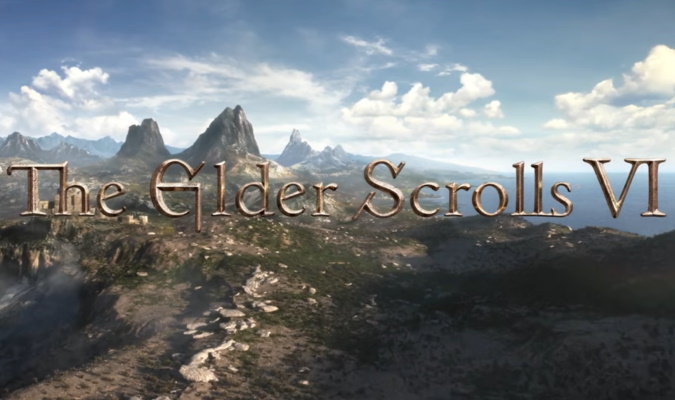
The same could have been said, arguably, about The Elder Scrolls VI when that was similarly “announced” at E3 in 2018. With the game so far off, talking about it so soon seemed premature at best. In that case, though, there was a case to be made that the constant stream of re-releases for Skyrim, the fact that there had never been such a long gap in between Elder Scrolls games, the releases of not one but two Fallout titles, and Starfield being in active development all combined to make it worthwhile to make a commitment to Elder Scrolls fans that their series hadn’t been forgotten.

With Fallout, there just isn’t any need. Fallout 4 was released in November 2015, and that was followed up by the (disastrous and unplayable) Fallout 76 just three years later. Fallout 76 continues to receive attention and updates, some of which have been pretty substantial, so there isn’t that same feeling of abandonment that some Elder Scrolls fans had been feeling in the wake of a lack of follow-up to Skyrim. Though I’d still suggest that announcing The Elder Scrolls VI in 2018 was premature, at least there was a kind of logic to it – a logic that this “announcement” of Fallout 5 lacks.

The Elder Scrolls VI was also announced with a slick teaser – obviously no gameplay, but at least a look at a pretty landscape and a logo. Fallout 5 got no such fanfare, with the news of its planned existence seemingly being an off-the-cuff remark dropped haphazardly in an interview with IGN. Perhaps someone at Microsoft or Bethesda needs to help Todd Howard with his interviews so this kind of thing doesn’t happen again!

Starfield has been Bethesda’s biggest and longest project to date, having been worked on for at least a decade. Production officially began following the release of Fallout 4 in 2015 and ramped up in the wake of Fallout 76′s launch in 2018, so this has been a massive undertaking. The Elder Scrolls VI will be comparable in scale, and if it follows a similar timeline to Starfield it may not be ready until 2027 or 2028. If Fallout 5 likewise takes five-plus years in active development, we’re potentially talking about a release window sometime in the early/mid-2030s. So why on earth should we be talking about this game now?!

One of the reasons why video game corporations like sequels is that there’s a built-in fanbase. Fans of Fallout 3 turned up for Fallout 4; fans of Oblivion turned up for Skyrim… and so on. Starfield represents much more of a risk compared with the likes of a new Elder Scrolls or Fallout title, and as a result it needs to be handled carefully, marketed cleverly, and not overshadowed by the bigger and more illustrious franchises that its parent company owns.

The mere act of mentioning Fallout 5 – which had not been discussed by anyone senior at Bethesda or Microsoft prior to this – has completely stolen Starfield’s thunder coming out of the Xbox Games Showcase, and that shouldn’t have been allowed to happen. Bethesda’s mistakes and stumbles – some of which go back several years – have already meant that there’s a bit of a caveat in the minds of some players when they think about Starfield, so the game needs every boost it can possibly get. Being overshadowed by a new title, especially one that’s probably ten years away from being released, doesn’t help and has actually hurt Starfield at the moment players should be beginning to pay attention and, from Bethesda’s point of view at least, get excited for its launch next year.

Maybe this was just a mistake; a throwaway remark that Todd Howard didn’t really intend to make. If so, I guess it’s fair to say that we all make mistakes, these things happen, and to try to move on from it and refocus on Starfield. But it won’t be easy to do. There are already a ton of articles about Fallout 5 being “announced,” and that will lead to questions from fans and the gaming press drawing attention away from Starfield at what was supposed to be its first moment in the spotlight.

We could have spent today talking about the gameplay that was shown off, how things like jumping and jetpacking look like fun, and how incredibly excited I am to design and build my own spaceship! But instead we’re talking about a marketing screw-up and a game that, to be blunt, I’m not sure I’m going to live long enough to see! It was a mistake to even mention Fallout 5 this early, and if Starfield exceeds expectations and becomes Bethesda and Microsoft’s “next big thing,” I wouldn’t be at all surprised to see a sequel planned sooner than expected. That could push back work on Fallout 5, upsetting fans. There was literally no upside to this at all, and the resultant reaction to Todd Howard’s statement has drawn attention away from Starfield at the precise moment when fans should have been excitedly talking about its gameplay reveal, new features, and the scale of the galaxy that Bethesda has created. What a mess!

Starfield will be released in the first half of 2023 for Xbox Series S/X and PC and will also be available via Xbox Game Pass. Fallout 5 has no release date scheduled. Starfield, the Fallout franchise, the Elder Scrolls franchise, and other titles and properties mentioned above are the copyright of Microsoft and Bethesda Softworks. Some promotional images courtesy of IGDB. This article contains the thoughts and opinions of one person only and is not intended to cause any offence.