Star Trek: Discovery theories – week 13

Spoiler Warning: There are spoilers ahead for Star Trek: Discovery Seasons 1-3, Star Trek: Picard, and other iterations of the franchise.

Star Trek: Discovery Season 3 came to an end this week. That Hope Is You, Part 2 was a solid episode with plenty of action, and despite the underwhelming nature of one of its plotlines, I think it did a good job wrapping things up.

Speaking of wrapping things up, that’s what we’re going to do today! We had twenty-two theories going into the finale, and while a handful live on and may return in Season 4 depending on the way things go, most were either outright debunked or the story went in such a direction as to leave them looking very unlikely. We did, however, get three confirmations (or at least partial confirmations) so we’ll look at those first!

Confirmed theory: Aurellio stood up to Osyraa.

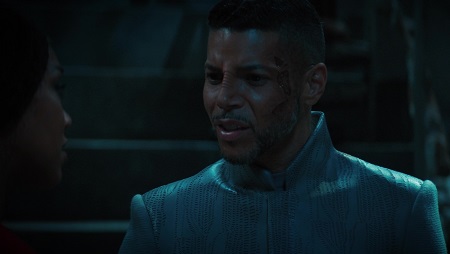
Aurellio and Osyraa.

Although Aurellio didn’t get as much screen time as I’d have liked to see, he did break away from Osyraa and the Emerald Chain. Aurellio had a mini character arc that ran over the final two episodes of the season in which his eyes were opened to Osyraa’s villainous nature, and allowed him his moment of opposition to her when he refused to allow his technology to be used to torture Book.

I stand by my previous comparison in which I said that Aurellio fills a role claimed by the likes of Albert Speer and others who worked for the Nazis during the 1930s and 1940s. Aurellio seems to have spent a lot of time focusing on his work in his lab, reaping the rewards of helping the Emerald Chain but without really allowing himself to see what the organisation and its leader were doing. His conversation with Stamets opened his eyes to this, and we saw that theme come to a head in the scene in sickbay.

Though Aurellio did briefly help out later on, giving Book the idea that he could use his empathic abilities to use the Spore Drive, Aurellio feels like an underused character, and I hope to see him return in Season 4. He could have joined up with the Federation, or even serve aboard Discovery.

Part-confirmed theory #1: Burnham became captain.

I successfully predicted that Burnham would become captain… but not how it would happen! So I’m calling this one part-confirmed instead of fully confirmed!

I had speculated that Burnham could assume the captaincy either because Saru would be killed, or because Saru would be promoted and become an Admiral if Admiral Vance were killed. Neither of these scenarios came to pass, and Saru was rather unceremoniously shuffled off the ship during the epilogue without getting so much as an opportunity to say goodbye to the crew. That was poor, and Saru deserved to be treated with more respect.

However, it allowed Burnham to get her promotion, something that Star Trek: Discovery has been aiming for since Season 1. Some of the issues with Burnham, both this season and in the past, stem from her insubordination. Now that she’s in command, that should no longer be anywhere near as big an issue, and as captain she should have a lot more freedom to approach problems and adventures her way – within the spirit of the rules, if not following them to the exact letter!

Part-confirmed theory#2: The Federation’s allies arrived to help fight the Emerald Chain.
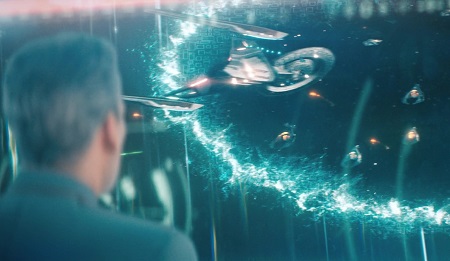
The arrival of Ni’Var’s fleet.

I’m calling this one part-confirmed because only Ni’Var arrived to help the Federation when the Emerald Chain attacked. I had half-expected a bigger fleet, perhaps comprised of the Earth Defence Force, the raiders from Titan, the Trill, people from the Colony, people from Kwejian, and Nhan aboard the USS Tikhov. However, only Ni’Var made it to the party!

We don’t know what became of most of the others; Trill rejoined the Federation, but the rest weren’t even mentioned in the finale. The arrival of the Ni’Var fleet felt great – up there with other big last-minute arrivals in other battles in the franchise for sure. But by the end of the episode I did feel that the absence of some of the other friends and allies that Burnham and the crew had made was noticeable… and perhaps even a little sad.

So those theories were confirmed or partially-confirmed. Up next we have a handful of theories whose status was left unclear as of the end of That Hope Is You, Part 2. It’s possible some of these will return in Season 4, but it depends how the story of that season shapes up. If Season 4 goes in a completely different direction, perhaps some or all of these theories will simply fall by the wayside. We most likely won’t know for a while!

Status: Unknown #1: The Spore Drive will become Starfleet’s new method of faster-than-light propulsion.

Discovery makes a Spore Drive jump.

The revelation that Book could use his empathic abilities to use the Spore Drive has, in theory, opened up the technology to being deployed across other Starfleet vessels. Early in Season 1 Stamets seemed to suggest that mycelial spores were not easy to acquire, so that may yet prove to be a limiting factor, but if that could be overcome there’s no real reason why the Spore Drive couldn’t be rolled out.

If empathic species like the natives of Kwejian can use the Spore Drive, it opens up even more possibilities. Betazoids spring to mind as an empathic species; perhaps they could become navigators too.

As this moment came in the final act of the season finale it didn’t get a chance to be paid off, so we won’t know the status of the Spore Drive until next season at the earliest. When Burnham was in command of the ship right at the end of the episode, her orders were to deliver dilithium to other planets, so perhaps we can infer from that that not every vessel will have its own Spore Drive. Regardless, the expansion of this technology would not only allow Discovery to have new and different adventures, but would also make it so other Star Trek series set in or after this time period could do so too.

Status: Unknown #2: The Dax symbiont is still alive.
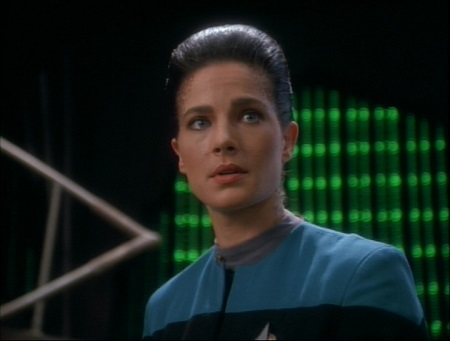
Jadzia Dax.

On reflection, this theory should have been put on hiatus as soon as Discovery departed the Trill homeworld in Forget Me Not. But I stand by the reasoning behind it – Trill symbionts can be very long-lived, and we got at least a hint at Tal having been alive in the 25th Century via the appearance of a Picard-era uniform. Though Dax had already had several hosts by the time of Deep Space Nine, nothing in-universe would prevent their reappearance.

However, with the Trill having rejoined the Federation, perhaps there will be an opportunity to see or hear about Dax in Season 4.

Status: Unknown #3: Kovich is an agent of Section 31.
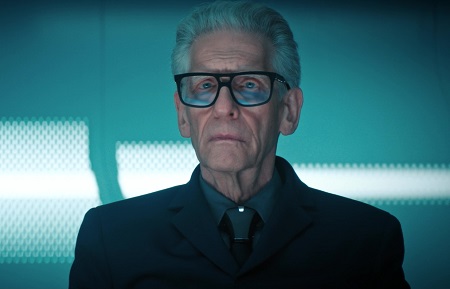
Who is Kovich?

Kovich made only a very brief appearance in That Hope Is You, Part 2, so we didn’t get an opportunity to learn anything more about him. It was implied that he has a role in Starfleet security and/or intelligence based on his debrief of Georgiou and ability to access classified files. Combined with his morally ambiguous personality – which we see on full display when he doesn’t tell anyone about Georgiou’s impending health emergency – it doesn’t seem unreasonable to assume he could be an agent of Section 31… or even its leader.

Given Georgiou’s connection to the upcoming Section 31 series, and the time travel plot to get her there, perhaps the reason Kovich didn’t say anything is because he knew exactly what role he needed to play. Georgiou, as a leader in Section 31 centuries earlier, may have sent him a message through the organisation, telling him exactly what to do when she arrived. That would be a time-loop story that we could see in Season 4!

We know Kovich will be back, so perhaps we’ll learn more about him when he returns. I’ve heard other Trekkies speculating that he could be the Federation President – that would be an interesting revelation too.

Status: Unknown #4: The ban on time travel is being flouted – possibly by secretive elements within the Federation.

The USS Enterprise travelled through time in Assignment: Earth.

It was stated multiple times in Season 3 that there is a galaxy-wide ban on time travel, a ban which was brought in in the aftermath of the Temporal Wars. However, this never sat right with me for one simple reason. As I’ve said several times over the last few weeks: it’s not possible to un-invent an incredibly powerful, weaponisable technology.

Even if the ban on time travel had been adhered to prior to the Burn, it seems completely implausible that absolutely nobody would seek to revive time travel technology in the century that followed. The Emerald Chain are the main villainous faction we met in Season 3, and Osyraa seems like she would have put people like Aurellio to work on re-inventing the necessary technology. But even if the Emerald Chain were unable to use time travel, what about other factions like the Borg or the Dominion? And what about Starfleet itself, and Section 31?

Finally, assuming all of the factions mentioned have agreed to adhere to the ban, who’s enforcing it to make sure they all stick to their commitments? Communication across the galaxy is incredibly difficult, so how can any of the main factions be sure that their adversaries – or even rogue elements from within – aren’t trying to use time travel?

I find the whole idea of the ban impractical unless it can be properly explained how time travel was banned and how the ban is enforced. So I maintain that, despite what we saw all season long, there may be elements within the Federation working on covert time travel projects.

Status: Unknown #5: The ships at Federation HQ represent the majority of Starfleet’s remaining vessels. And they’re all 120+ years old.
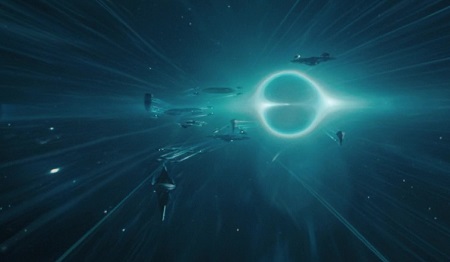
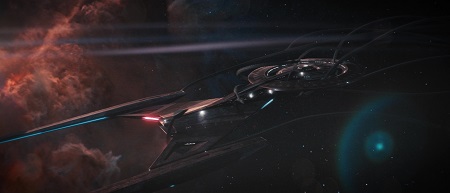
Federation and Ni’Var ships at warp.

When Discovery first arrived at Federation HQ in Die Trying, I theorised that the ships we saw might be all that remain of the once-mighty Starfleet. In addition, the devastating nature of the Burn may well have meant that building new ships would be difficult – and with very little dilithium to power them anyway, Starfleet may be forced to rely on a fleet of ageing vessels.

We saw no confirmation of this – and to Discovery’s crew, all the ships look futuristic and new! But we saw nothing to debunk it either, and while I don’t think we’ll see this point explicitly addressed any time soon, we may learn in Season 4 that the fleet is being rebuilt and expanded.

Status: Unknown #6: Tilly’s role as first officer.
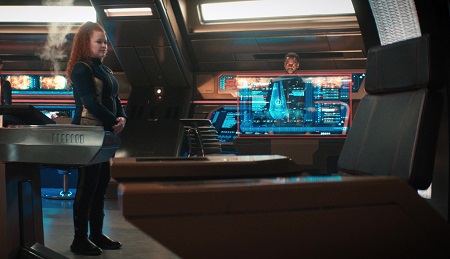
Tilly eyes the captain’s chair.

I had theorised that Tilly would resign as first officer in the aftermath of the ship being captured. However, as of the end of the season it was left ambiguous as to what happened. Did Captain Burnham keep her on, or will she choose a new XO?

Tilly becoming first officer was a contentious point for some fans, and while I do understand why, I wasn’t upset by it personally. I’d be happy to see her remain in her post if that’s what the writers and producers have in mind, but equally I’d be happy to see a different character take on the role. Perhaps someone like Bryce, Rhys, or Nilsson could be promoted – and join the regular cast?

So those theories’ fates remain unknown. Will they be confirmed or debunked next season, or in some other future Star Trek story? It’s possible, but it’s equally possible that some of them will simply be ignored and their status never addressed.

Next we’ll look at a couple of theories which, while not explicitly debunked, are now certainly dead as the storylines they were part of have concluded.

Dead theory #1: Dr Issa is a descendant of Saru’s sister Siranna.
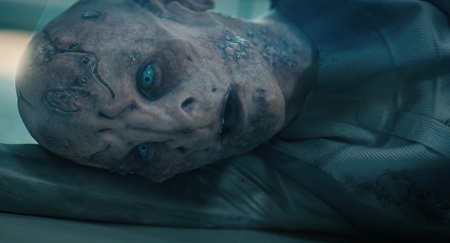
Just like this theory, Dr Issa is dead.

Dr Issa’s potential family connection to Saru was not addressed, and I think it’s highly unlikely it will be mentioned in Season 4. The reason for this theory was primarily production side, as the same actress (Hannah Spear) played the role of both Siranna in Season 2 and Dr Issa in Season 3. As interesting as it would have been for there to be a deeper connection between Saru, Dr Issa, and Su’Kal, the explanation for this may also be on the production side of things – it may have been easier to bring back an actress who was already fitted for the complicated Kelpien prosthetic makeup rather than casting someone wholly new.

Dead theory #2: Aurellio is married to Osyraa.
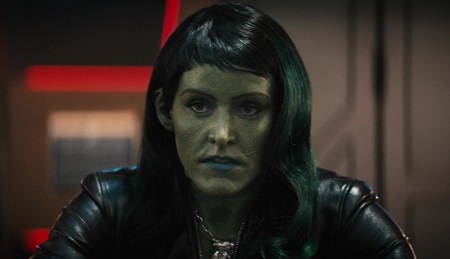
Was Aurellio meant to be married to Osyraa?

There seemed to be a hint that Aurellio was married to or in a relationship with Osyraa. Stamets noted that his partner, with whom he is said to have children, is Orion – and Osyraa seems to be Orion too. They also had a familiarity that seemed to go beyond employer and employee, as well as a history that Aurellio hinted at in his conversation with Stamets.

Osyraa attacked him in That Hope Is You, Part 2, but despite threatening to kill him, took no further aggressive action. However, now that she’s dead and the Emerald Chain has “fractured,” I doubt we’ll hear much at all about Osyraa in Season 4 even if Aurellio does return (as I hope he will).

So those two theories seem certain to be dead and not coming back, even though they were not out-and-out debunked.

Finally we come to the debunkings!

Debunked theory #1: One of the officers with Tilly will be killed.
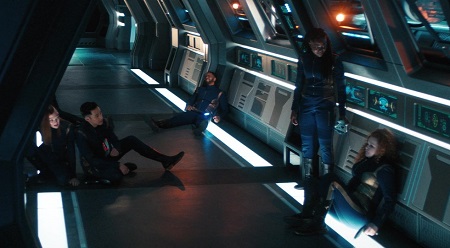
Things looked grim for a moment, but everyone ultimately survived.

At the end of There Is A Tide, Tilly gave the ominous order to her team that if anyone should be killed, the rest would keep going until they reached the bridge. Then in That Hope Is You, Part 2, the whole group were suffering from oxygen depletion as Osyraa tried to slowly suffocate them.

Owosekun was perhaps in greatest danger as she took their makeshift bomb to the nacelle, but she was saved at the last minute by a DOT 23 – who was in turn saved by Owosekun and Reno in the epilogue.

Ryn was the only major character on the heroes’ side who died across the whole season, and we can argue whether or not that’s a good thing at a later date. But in the context of this theory, everyone survived so the theory is debunked!

Debunked theory #2: The Burn will receive a different explanation.

The moment the Burn occurred was captured in this holo-recording.

At some point in the next few weeks or months I will take an in-depth look at the Burn – Season 3’s most controversial storyline. For now, however, suffice to say that this point was more a last-ditch hope than a theory, as I felt certain that if the Burn remained solely the fault of Su’Kal it would be underwhelming.

That explanation, which was first communicated in Su’Kal a couple of weeks ago, ended up being accurate. There was no deus ex machina in the season finale to re-explain what the Burn was and how it happened – and that’s probably a good thing overall. Though the Burn was – in my subjective opinion – a narrative that didn’t come to a satisfactory end, and one that has issues, a last-second deus ex machina would have been even worse!

Debunked theory #3: The Burn was the result of a superweapon.
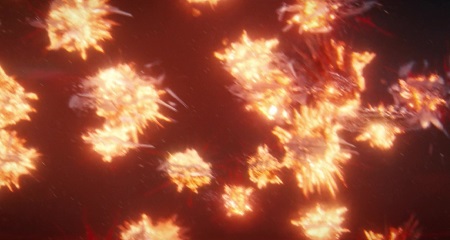
The Burn.

After the rest of my pre-season theories about the Burn fell by the wayside, this was the final one that I considered to be even slightly possible. Going into the finale, the way it could’ve worked would either be that the Kih’eth (Su’Kal’s ship) was carrying a superweapon, or that Su’Kal himself had been modified somehow to become a superweapon. How or why this would’ve happened is not even relevant; it was just a way to explain the Burn beyond Su’Kal.

As mentioned above, though, the Burn turned out to be caused by Su’Kal and his connection to dilithium. In the context of the last few episodes this was a good thing, as a last-second turnaround would have been very difficult to pull off.

Debunked theory #4: There will be a resolution to the story of Calypso (the Short Treks episode).
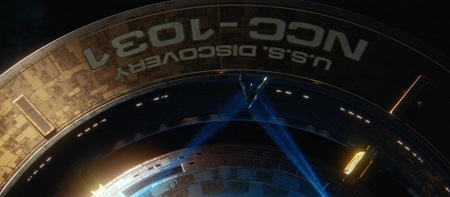
The USS Discovery as seen in Calypso.

Season 3 spent some of its runtime firmly establishing that the Short Treks episode Calypso hasn’t been forgotten and remains very much in play in the overall storyline of Discovery. However, despite several teases and moments that seemed to inch us closer to resolving the mysterious outlying episode, there was no resolution.

We have seen the creation of Zora – a merger of the Sphere data with Discovery’s own computer. We heard that some denizens of the galaxy call the Federation the “V’draysh,” which was the name Craft used in Calypso. The main unresolved point is how the USS Discovery came to be abandoned, and why, if it was abandoned, it was reset to its pre-refit configuration beforehand.

With Zora being intact thanks to Reno and Owosekun, we have all of the threads present in Calypso – but I can’t see how they’ll tie together just yet. Maybe Calypso is set in the far future – the 42nd Century not the 32nd. Maybe Discovery will travel back in time in Season 4 or Season 5 for some reason. Maybe Calypso will never be fully explained and will remain an outlier in the Star Trek canon; an episode connected to a storyline for Season 2 or Season 3 that simply never came to pass.

Debunked theory #5: A character from a past iteration of Star Trek – such as the Doctor from Star Trek: Voyager – will make an appearance.

The Doctor didn’t make an appearance.

This was my other big pre-season theory that remained in place for the duration. Though it did come true somewhat thanks to the return of the Guardian of Forever, we didn’t see any of the characters I theorised about – including Voyager’s Doctor – make a return.

However, although it was debunked in Season 3, this one will almost certainly be back for Season 4! When Star Trek: Picard brought back legacy characters, we knew in advance which main actors would be returning, and their presence became a big part of that show’s marketing push. Other legacy characters were recast and their presence was kept more of a secret. In short, what I’m saying is that if we are to see the return of the Doctor or some other past Star Trek character, perhaps their return will be signalled ahead of time in Season 4’s pre-release marketing. We’ll have to wait and see!

Debunked theory #6: Discovery Season 3 is taking place in an alternate timeline or parallel universe.

The USS Voyager in Year of Hell.

The Guardian of Forever confirmed back in Terra Firma, Part II that Burnham and the crew were in the Prime timeline – i.e. the main Star Trek timeline which runs from Enterprise to Picard. However, this theory also proposed that the season may be taking place in a timeline that was manipulated by time travel; that the Burn was not “meant” to happen.

Had time travel been involved, the resolution to the Burn and the season’s story may have been to go back in time – perhaps even using the Guardian of Forever – and stop Su’Kal from ever entering the Verubin Nebula, thus preventing the Burn entirely.

I don’t think this would have been a good storyline, as it would have essentially wiped out everything that happened in the season. A one-off episode like Yesterday’s Enterprise from The Next Generation or Voyager’s Year of Hell can get away with doing something like this, but a whole season being erased due to time travel would have felt hollow – even if Discovery’s crew remembered what happened.

Debunked theory #7: Saru is going to die.

Saru survived the season.

Despite being in danger for much of the episode, Saru survived… only to be unceremoniously dumped in voiceover during the epilogue. It has been confirmed that Saru will be back for Season 4; what role he will play, and whether he will even be a major character are unknown.

Saru is a very interesting character. He was, for a time, Star Trek’s first alien captain, and I wish we’d seen more of what that meant. Saru is similar to Picard in many ways – he’s diplomatic, calm, and generally not one to break the rules and rush into a situation guns blazing. Burnham, in contrast, is much closer to Kirk or Janeway – more emotional, impulsive, and quicker to bend the rules.

Both types of captain can work very well, so that isn’t a criticism! If I had one wish from the season finale, it would have been to see Saru receive a proper goodbye from his shipmates.

Debunked theory #8: Admiral Vance is going to die.

Admiral Vance lives to lead Starfleet in Season 4.

When considering characters who could’ve been killed off, aside from the main crew of Discovery few deaths would have been as impactful as Vance’s. I didn’t want to see him killed, of course, because he’s been one of Star Trek’s most interesting flag officers. The role of Admiral has often been used within the franchise to set up an antagonist for our hero captains to rebel against. Vance is one of the good ones, and I’m glad he survived.

Hopefully he will continue in this role in Season 4, because there’s a lot of potential for some fun character moments.

Debunked theory #9: Saru, Burnham, or somebody else will use the Guardian of Forever to send the USS Discovery back in time.

The Guardian of Forever.

This was primarily connected to my theory about a resolution to Calypso – which seems to require the USS Discovery being sent back in time. If the ban on time travel discussed above is truly in effect, the Guardian of Forever is the only way we know of to travel back in time, and having gone to the trouble of bringing the Guardian back, I wondered if it might serve more of a purpose than just sending Georgiou back in time.

It turned out that this was not the case, though I hope the Guardian of Forever will be visited again in some future episode or story.

Debunked theory #10: The dilithium planet will be destroyed.
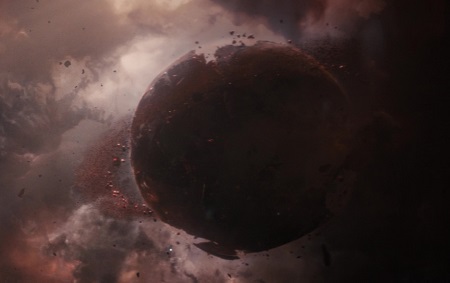
The dilithium planet.

This theory came about as a way that the “formulaic” end to the story could be subverted. Rather than the dilithium planet being a resource for the Federation to use to re-establish itself, its destruction would mean that the Burn’s impact would continue to be felt, and that the task of coming back together would be more difficult.

It would have also connected to my theory that the Spore Drive would be rolled out to more starships, becoming Starfleet’s new method of propulsion. The lack of dilithium would make that almost a necessity! I theorised that Su’Kal might’ve destroyed the dilithium planet via his telepathic abilities, but it could also have been destroyed by Osyraa or even by the Federation to prevent Osyraa from using it.

None of that came to pass, however, and the dilithium on the planet is being mined by the Federation and distributed to their worlds, colonies, and allies across the galaxy – a task that Burnham and the ship are assigned to in the final moments of That Hope Is You, Part 2.

Debunked theory #11: The “monster” is the real Su’kal.
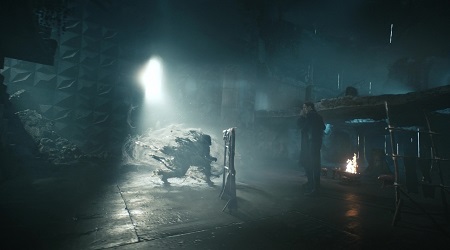
Su’Kal and Saru confront the “monster.”

The “monster’s” presence within Su’Kal’s holo-programme was not really given an explanation beyond it being part of an old Kelpien legend. Why his mother would have chosen to include a lifelike recreation of the “monster” within the programme is anyone’s guess!

I theorised that the character we met may not have been the real Su’Kal, and that the “monster” may have instead been Su’Kal, who had been badly mutated and burned by radiation. When Burnham briefly interacted with it, the “monster” seemed to behave in an almost-human way, and that was another reason I considered this a possibility.

Debunked theory #12: The “monster” is Dr Issa.
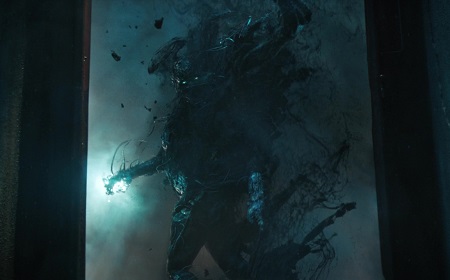
The “monster” was not Dr Issa.

As above, I speculated that the “monster” may in fact be a real person – this time Su’Kal’s mother, Dr Issa.

In the end, it seems that the “monster” was simply a part of the programme. It provided a great reason within the story for Su’Kal and Saru to bond, as well as a way to give Su’Kal an arc of his own, overcoming his fears – represented by the “monster” – to break free of the programme. I’m not sure how much sense it makes for the “monster” to have been programmed when considering it from an in-universe point of view… but that’s more of a nitpick than anything.

So that’s it. A few theories remain unanswered, and may roll over to Season 4 – but it depends on what route the next season’s story will take. We won’t have any indication of that until we see a trailer or receive a significant announcement, but I’ll be keeping my ear to the ground to see what happens over the coming weeks and months.

When might we see Season 4? That’s perhaps the biggest question on the minds of Trekkies and Discovery fans! We know that pre-production began weeks ago, and that filming of some scenes has already commenced in Canada. Because the pandemic remains a significant disruptive force, it’s possible that filming will proceed at a slower pace than usual. June 2021 seems to be the target date for filming to finish, and if that happens then post-production work will begin in earnest this summer. Based on how long post-production took for Season 3, it seems incredibly unlikely that we’ll see the show before next year, and I would say that spring 2022 seems a reasonable guesstimate at this juncture.
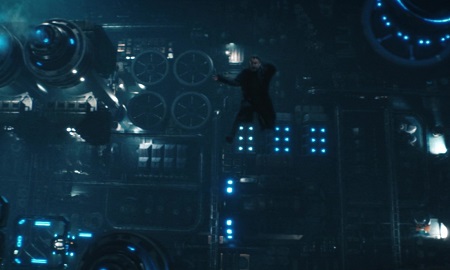
Whenever Season 4 arrives, Zareh won’t be coming back.

With other live-action Star Trek projects similarly impacted, it doesn’t seem likely that we’ll see Picard, Strange New Worlds, or the Section 31 series this year either – but there’s hope for Lower Decks Season 2 and Prodigy to be broadcast before Christmas; both of those animated shows are already in production.

Stay tuned, because if and when we hear news of Season 4 or get a trailer I’ll be sure to break it down and perhaps see if any theories can be conjured up! I’ll also be doing a look back at some of my hits and misses from a theory point of view later this year, and a retrospective of the season overall sometime soon too. There will be plenty more Star Trek content to come on the website this year, so I hope you’ll come back to see some of that. Finally, I hope that you enjoyed following my theories and predictions this season. I had a lot of fun spending time in the Star Trek universe, diving deeply into some weird and wonderful ideas!

As I always say, these are just theories. I don’t have any “insider information” and I don’t pretend that any theory I postulate is going to come true. For me this has just been a bit of fun; a chance to take a deeper dive into some elements of Discovery and the Star Trek universe. I hope you haven’t taken any of my theories across Season 3 too seriously – no fan theory, no matter how plausible it seems, is worth getting upset, angry, or disappointed over. If we could all remember to take theories with a pinch of salt, perhaps there’d be a little less toxicity within certain fan communities.

Star Trek: Discovery is available to stream on CBS All Access in the United States, and on Netflix in the United Kingdom and elsewhere. The Star Trek franchise – including Discovery and all other properties mentioned above – is the copyright of ViacomCBS. This article contains the thoughts and opinions of one person only and is not intended to cause any offence.
Star Trek: Discovery review – Season 3, Episode 13: That Hope Is You, Part 2

Spoiler Warning: There are spoilers ahead for Star Trek: Discovery Seasons 1-3, Star Trek: Picard, and other iterations of the franchise.

Thirteen weeks have just flown by, haven’t they? Star Trek: Discovery Season 3 premiered in the middle of October – right after Season 1 of Star Trek: Lower Decks came to an end – and now, just after New Year, it’s over. I have to say that I miss the twenty-plus episode seasons we used to get! But that’s just one way that television shows have changed since the 1990s, I suppose.

For the third week in a row, the title of the episode was changed from what had been previously announced. That Hope Is You, Part 2 was previously known as Outside, but immediately after There Is A Tide aired last week, the title was changed. That Hope Is You, Part 1 was the title of the season premiere, and while it seems odd on the surface to call the season finale the second part – especially considering the entire season has been one continuous story – it works well and bookends the season. As an interesting aside, we saw two different numbering styles used for the multi-part episodes this season. Terra Firma and Unification III both used Roman numerals to denote their parts, whereas That Hope Is You uses Arabic numerals. I wonder why that is?

Burnham in That Hope Is You, Part 2.

There Is A Tide was phenomenal last week, and I was hoping for more of the same from That Hope Is You, Part 2. My only real criticism last time was that there seemed to be an awful lot of story left for the finale to get through, and I speculated then that the season may end on a cliffhanger – but that wasn’t the case. The episode was the longest of the season by far, clocking in at almost an hour, and while I would say one of its two storylines probably could’ve used more screen time, That Hope Is You, Part 2 did a reasonably good job at wrapping everything up. It certainly exceeded Star Trek: Picard’s finale in that regard!

I had a great time with That Hope Is You, Part 2… well, for about three-quarters of it. The sequences aboard Discovery that focused on Book, Burnham, Tilly, and other crew members were action-packed and exciting, equalling the heights Discovery reached last week. But the sequences with Saru, Adira, Culber, and Su’Kal didn’t reach that level. This storyline was not my favourite part of either the episode or the season.

Culber, Su’Kal, Saru, and Adira aboard the Kelpien ship Khi’eth.

And we do have to consider the role That Hope Is You, Part 2 has as the season finale. As mentioned, my theory that the season may end on a cliffhanger did not come to pass, so every story thread we saw across the season that hadn’t already been completely tied up was supposed to find a resolution here. The Emerald Chain storyline, which had been teased as early as the premiere and more firmly established by the halfway point of the season, certainly was concluded. And though perhaps it needed more screen time, or needed its sequences spread out over three or four episodes instead of two, Su’Kal’s story was concluded too.

In both of these, though, as well as in the very short, almost blink-and-you’ll-miss-it scenes showing Ni’Var and Trill, we come to what is perhaps the episode’s big weakness. After the main stories – both of them – were more-or-less over, we got an epilogue of sorts that was about six minutes long. This epilogue told us about some incredibly important events, and as you may have heard me say before, it needed to show not tell. In a rapidly edited sequence, part of which was narrated by Burnham in voiceover, we saw or heard that: Trill had rejoined the Federation, Ni’Var was on the brink of doing so, the Emerald Chain has “fractured,” Saru is taking a sabbatical – if he hasn’t outright left Starfleet, Mr Sahil has become a Starfleet officer, Aurellio has maybe joined up with the Federation – but maybe not, Stamets was reunited with Adira and Culber, the Sphere data is safe, and finally, Burnham was promoted and has become Discovery’s new captain.

Burnham was promoted at the end of the episode.

None of these points are problematic at all – in fact, I adore all of them, and the sequence itself had me feeling genuinely emotional. But there was a lot of important story crammed into those final minutes, some of which I really wish had been expanded upon and given their own moment in the spotlight instead of just being briefly mentioned in this epilogue.

Also, this epilogue was the moment where other characters and stories from earlier in the season should have been included, surely? What about the denizens of the Colony from Far From Home, the humans in the Sol system from People of Earth, Nhan, who had been left alone aboard the USS Tikhov in Die Trying, or the people of Kwejian from The Sanctuary? I’m not saying the sequence needed more jammed into its six minutes, but it feels like this was the moment to at least acknowledge the stories that happened across the rest of the season considering That Hope Is You, Part 2 had already tipped its hat to the others mentioned above.

Nhan was absent from the episode and its epilogue – as were several other characters and factions from earlier in the season.

So we seem to have started at the end, which is a little strange! But never mind. Let’s look next at Su’Kal and the Burn. Discovery Season 3 did a lot of things right, and my initial concerns about a “post-apocalyptic” Star Trek series turned out to be largely unfounded. The sense of optimism and hope that are – in my opinion – fundamental parts of the franchise were missing from the bleak, post-Burn 32nd Century – but they were present in Burnham, Saru, the crew of Discovery, Admiral Vance, Booker, Sahil, and many other characters across the season. In that sense the story of the Burn was a success.

The event itself, however, and the resolution to it that we saw in Su’Kal and That Hope Is You, Part 2 just doesn’t sit right.

We’ll come to narrative in a moment, because my primary concern right now is the Burn’s real-world messaging. We have Su’Kal, a man with mental health problems and/or a learning disability, as the unintentional cause of the Burn. There is a sizeable stigma around mental health and learning disabilities here in the real world, and I just feel that Su’Kal being presented as the man who accidentally ruined much of the galaxy plays into some harmful stereotyping. Su’Kal comes across similar to Lenny, the rabbit-loving man from John Steinbeck’s novel Of Mice And Men. It’s implied that Su’Kal is the way he is because of the environment he’s spent his life in, but even so, there’s an obvious literary parallel. Lenny ends up accidentally killing someone in that novel, because he doesn’t know his own strength and he doesn’t realise what he’s doing. Su’Kal has done the same basic thing, only on a much bigger scale.

Su’Kal causing the Burn is not devoid of real-world meaning.

The message this seems to send is what I find at least a little upsetting in 2021. Though Su’Kal is portrayed sympathetically – and I would credit Bill Irwin with a wonderful performance – the sympathy he elicits is more like pity. We look down at Su’Kal as a pitiable idiot, someone too dumb to know what power he had and what it could do. We look at him like we look at Lenny.

People with mental health conditions – a category into which I fall – don’t want pity, nor do people with learning disabilities. Yet Discovery is playing into century-old stereotyping that we really should be trying to move beyond. This season has seen some wonderful storylines that deal with complex issues, but its two attempts to depict mental health – with Su’Kal and Lieutenant Detmer in earlier episodes – just didn’t work. Detmer’s story got so little time that it was basically meaningless, despite being well-intentioned, and Su’Kal’s story just rubs me the wrong way. I feel that the decision to make the Burn the fault of someone in his position was the wrong one, and the message it sends is one I’m not comfortable with.

Su’Kal with Saru.

Su’Kal himself is one aspect of the Burn that I feel didn’t come across well, and I hope my explanation and reasoning make sense to you. But narratively too, the resolution to the Burn feels anticlimactic. There’s a disparity between the epic nature and scale of the Burn and the man who we now know is the cause of it. It feels like a non sequitur; that the Burn cannot logically follow from Su’Kal getting upset – or screaming, as Culber and Adira would explain.

As I said in my review of Su’Kal a couple of weeks ago, there is something uniquely “Star Trek” about this resolution to the Burn’s story. And from that point of view, as a storyline which is perhaps closer to fantasy than sci-fi, it doesn’t feel out of place in this fictional universe, not when you stand it up alongside the storylines of episodes from past iterations of Star Trek such as A Piece of the Action, Masks, Facets, or The Gift. There’s a weirdness to the Burn being a telepathic child’s scream that is, in a peculiar way, something you wouldn’t see outside of Star Trek. I count myself among many Trekkies for whom this weirdness is precisely what was appealing about Star Trek when I first saw it.

Su’Kal’s home for many years – the Kih’eth.

So in a sense, the story of these final few episodes as far as the Burn is concerned fits right in within a franchise that can give us the episodes mentioned above. The Gift, from Voyager’s fourth season, is actually a pretty good frame of reference, as it’s a story which shows Kes’ mental abilities. She’s able to propel a starship thousands of light-years with the power of her mind, and that’s not a million miles away from Su’Kal’s connection to dilithium.

But the Burn was not a single-episode story, nor the kind of one-off story fit for episodic television. Not only did it impact the entire season, but it will continue to have ramifications for Discovery’s fourth season, and for any future Star Trek series or films set in or around this time period. Furthermore, it was a mystery that had been teased for over a year, since the first trailer for Season 3 was shown in late 2019. Expectations had been built up over thirteen episodes, and arguably for more than a year before the season premiered. As much as I can respect the Burn and Su’Kal and their place in the greater Star Trek canon, unfortunately those expectations were not met – at least not for me.

The Burn was set up as a huge and apocalyptic mystery.

The disconnect between the devastating Burn and the small Su’Kal is just too big a gap to bridge at the end of a season that has been so dominated by this one event. It makes sense, and I get it – it’s not that the Burn’s explanation is somehow incomprehensible – and I’m incredibly pleased that the writers chose to make sure the Burn did receive an explanation instead of trying to brush it aside and say it doesn’t matter. But the explanation that we got is one that I feel was weak.

The story of Su’Kal being trapped alone in a disintegrating holo-world, and Saru coming to his rescue is one that could have worked as another of Season 3’s semi-standalone stories, like Georgiou’s illness and trip to the Mirror Universe. It didn’t need to be connected in any way to the Burn in order to be emotional and significant; it was a good story all on its own. By tying it to the Burn and by saying that this is the cause of the Star Trek galaxy’s biggest and worst catastrophe, the overarching story of the season has unfortunately come to an underwhelming end.

The holo-world with its monstrous inhabitant was a very “Star Trek” story in many ways.

It almost feels like the writers and producers came up with the effects of the Burn and how the galaxy would look in its aftermath, and only then tried to come up with a cause. In the best post-apocalyptic stories and the best mystery stories aren’t written that way; Agatha Christie didn’t start by writing the murder and decide on a murderer later, and the Burn should have worked the same way. I’m not saying I know for a fact that they did it this way, but it certainly has that feel. The sheer randomness of the Burn may have been intended to be a shock or a surprise, and the disconnect between the scale of the event and the single individual who caused it may likewise be intentional – but it wasn’t successful.

Because the Burn is really quite unlike any other storyline in Star Trek, it arguably needed a better and more substantial payoff. I’m not saying that it needed to have one of the causes that I speculated about before the season began, nor am I saying that my disappointment and sense of being underwhelmed comes from a fan theory not being met. Instead what I’m saying is that the ultimate explanation needed to be something more than the scream of an upset child.

A recording of the moment the Burn occurred.

Finally on the Burn, its cause was only really explained in a handful of technobabble-heavy lines of dialogue. In Su’Kal, Burnham and Dr Culber had a couple of lines each, and this week Culber and Adira likewise had a scant handful of lines in which they tried to explain what happened. None of these lines of dialogue were bad – though a couple were perhaps heavy on exposition – but combined with the already-underwhelming narrative, the fact that the season’s biggest mystery was resolved with such little discussion again makes it feel as if it were an afterthought instead of the most significant storyline we’ve been watching.

There were some things to like, though. Guest star Bill Irwin put in a wonderfully complex performance as Su’Kal, showing a range of emotions as he wrangled with the idea that his entire life was changing. Despite my criticisms of the mental health aspects of Su’Kal’s story, one thing the writers managed to convey very well was the sense of isolation and loneliness that many people with mental health issues feel. I’ve been in Su’Kal’s shoes, feeling trapped and fearful, and from that point of view the depiction was something understandable and that did a good job conveying its message. Though the current state of the world wasn’t known at the time Season 3 was being written and filmed, there’s also a strong metaphor in someone who feels trapped, isolated, and disconnected, stuck in an artificial world. Many people watching in 2021 can sympathise with Su’Kal far more than they would’ve been able to a year ago.

Many people in 2021 feel trapped and isolated, making this a timely metaphor.

Saru and Dr Culber were both highlights of this storyline too. Both got the chance to show off their sympathetic sides, and while Saru was the focus, as he was someone who had more of a connection to Su’Kal, Dr Culber contributed too. Su’Kal’s ability at the end of the story to push through his fears and to understand what had happened was a result of both of their efforts. Adira didn’t interact much with Su’Kal himself, but it was an inspired choice to put them in this side of the story. I feared that Adira may have been shuffled away to the dilithium planet simply to give Stamets more of an intense emotional reaction, but they contributed to the story both by bringing the lifesaving medication and by helping the others work through some of the puzzles.

Gray becoming corporeal for the first time was also a fun part of the story on the dilithium planet. Having been a phantom presence all season, it was great to see Gray finally able to interact not only with the “real world” but also with other characters. Gray’s presence has yet to be explained – and it was left completely unclear as of the end of the episode whether Gray has been given a new holo-body or if he has returned to being someone only Adira can see. But Gray, despite really only participating in one sequence, did well in That Hope Is You, Part 2, and I hope his status is clarified so he can have a role in Season 4.

Gray and Adira.

So the Burn and the action on the dilithium planet was the side of That Hope Is You, Part 2 that I felt was weakest. Now we come to the bulk of the episode, and I’m happy to say that I had a whale of a time with Burnham, Book, Tilly, Admiral Vance, and everyone else.

Scenes aboard Discovery played out like an action film for the second week in a row. There were some clichés, a couple of confusing moments, and one rather awkward line, but even so it was action-packed fun. Star Trek can do action very well, and it surprises me in some ways to see Trekkies criticising Discovery or the Kelvin timeline films for being “brainless action,” then turning around to heap praise on The Wrath of Khan or First Contact. That Hope Is You, Part 2 was up there with those films and other action-heavy stories in the franchise, and it’s one of the better examples of how Star Trek can be an action-sci fi franchise when it chooses to be.

What was great about this part of the episode’s story, considering how much of a Burnham-cenrtic show Discovery can be, is that other characters got to take turns being the action hero. We certainly got to see Burnham in that role, and perhaps if she’d been alone it would’ve continued the trend of making her, and her alone, the show’s focus. But Tilly and Book in particular got big moments that not only put them at the centre of the action, but gave them genuine agency over the story, driving it forward. Burnham played one role in a larger story as the crew struggled to regain control of the ship – and that’s something the show needs to do more of!

Tilly in command of the bridge crew.

Burnham’s mission to the data core would have been useless had Tilly and the bridge officers not been able to force the ship out of warp, and if Book hadn’t been able to defeat Zareh she would have had a much harder time. So both of them got significant roles to play – even if we could argue that, narratively speaking, it would have been nice to see Tilly be the one to kill Zareh.

I just can’t bring myself to criticise Zareh’s death, though! Book has a loving attachment to Grudge, the beautiful cat who we’ve seen as a constant presence aboard his ship this season. And when Zareh threatened Grudge I got genuinely angry with him, so to see Book use that moment to regain his strength and send Zareh falling to his doom was incredibly satisfying and more than a little emotional. I have several cats, and they’re incredibly sweet animals. No one should threaten a kitty, so Zareh got exactly what was coming to him. And Book’s action hero quip as Zareh fell from the turbolift capped the sequence off perfectly. I honestly can’t fault it. Book got his heroic moment, the creepy, evil Zareh got a fitting end, and Grudge is safe! What more could you want?

“She’s a queen!”

The second action hero quip was Burnham’s, and it just didn’t quite stick the landing in the same way! As Osyraa pushed Burnham into a wall of programmable matter in the data core, she said that she “already tried that [negotiating] with Vance. I won’t make that mistake again!” and then, moments later when Burnham shot and killed her, she responded by saying “Yeah, well… unlike you… I never quit.” And I honestly burst out laughing, because the response to Osyraa was just so unrelated to what she’d said a moment earlier. It feels like it was written in response to a totally different line, and it doesn’t seem to make sense in context of what Osyraa said. Osyraa never mentioned quitting, she never said that Burnham should quit, or that she had quit doing something… so it just doesn’t follow. It’s a non sequitur. The writers wanted to give Burnham an action hero line, but unlike Book’s, which is almost his catchphrase any time someone talks about Grudge, Burnham’s just didn’t make sense.

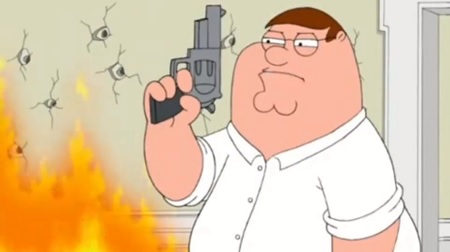
In fact it reminded me of that moment in Family Guy where they make a big joke about action movie lines. Peter Griffin uses the famous line from Lethal Weapon 2: “it’s just been revoked,” but does so in completely the wrong context. And that’s kind of how Burnham’s line felt here. That might be due to script rewrites and revisions but even so, more attention should have been paid to this line. If we’re comparing That Hope Is You, Part 2 to an action film, this was the climax of the hero-versus-villain story, and if they wanted to give Burnham a hero quip to round it off… it needed to at least make sense in context. And I know that picking on one line is a minor thing. Compared to how well the storyline as a whole worked it’s incidental, but I wanted to highlight it as it made me laugh in the moment.

“It’s just been revoked!”

There are a couple of points from this side of the story that I feel may be prone to criticism, and I want to look at each in turn. First is the sequence in the turboshafts – or rather, in the large empty space beyond the corridors on some of Discovery’s decks. This is new to Star Trek, and while there are spacious areas inside some starships that we’ve seen – particularly in engineering sections – I can foresee that some fans may feel that this huge area isn’t what they expected the inside of the ship to look like. While I don’t personally have an issue with it, and I would suggest it may be connected to engineering, the Spore Drive, or programmable matter as explanations for the large spacious area, I didn’t want to ignore this point, as it does represent a change to how starships in general – and the USS Discovery in particular – have usually been shown.

The second point is Book’s ability to fly the ship. I would argue that Aurellio, Tilly, and Stamets have all set up this moment at points throughout the season, hinting at ways to expand the Spore Drive beyond Stamets, so I don’t think it came from nowhere. I do think, however, that we could have seen a little more of Aurellio talking about or even just mentioning the possibility for empaths to connect to the mycelial network. There was an opportunity for him to have done so last week when he and Stamets talked for some time about Spore Drive options – this would certainly have better set up what was to come. As a story point, though, I don’t dislike it, and perhaps a second Spore Drive can be created for another Starfleet vessel as a result. Other members of Book’s tribe or race may even be able to join up with Starfleet to serve as Spore Drive operators, and even if only Book and Stamets can use it, well at least Discovery now has a backup!

The interior of the USS Discovery.

Osyraa fell into the Bond villain trap of leaving the crew to be killed slowly and then rushing off to do something else. While Tilly, Owosekun, Detmer, Bryce, Rhys, and random dark-haired bridge officer (what happened to Nilsson?) were slowly suffocating, they managed to come up with a plan to regain control of the ship. Burnham gave Tilly an instruction via the intercom and Tilly rallied the crew to set off a bomb in one of the nacelles – knocking Discovery out of warp.

I’ll forgive the minor contrivance of Osyraa leaving them to suffocate. It’s the kind of thing I could imagine her doing, and again if we’re using the action film analogy, it’s something we see often enough. Tilly remained in control of her officers, and handled herself well in what were undeniably difficult circumstances. Her line to them that they didn’t need to join her on what looked to be a suicide mission was very much something we could imagine other Star Trek captains saying – and indeed we have seen other captains in the past telling their senior officers that a mission is voluntary. Despite losing the ship to Osyraa, Tilly stepped up and was a big factor in being able to regain control of it.

Osyraa in command of Discovery.

My only criticism of this side of the story is that the stakes were lowered significantly when no one was killed. Even when it seemed as if Owosekun wouldn’t survive the explosion, a last-second intervention by the Sphere data in one of the remaining DOT 23 robots saved her life. Since returning to the small screen in 2017, Star Trek has not been shy to follow the trail blazed by some other big television projects – like The Walking Dead or Game of Thrones – and kill of major and secondary characters. Star Trek: Picard Season 1 had a pretty big death toll of both new and legacy characters – yet no one at all died in this storyline, despite the superficial dangers posed to the crew. In fact, Ryn was the only casualty on the heroes’ side all season.

Killing a character for shock value or just for the sake of it is not what I’m advocating. But over the last decade or so, the well-executed death of a major or secondary character can add to the stakes of a storyline, making it clear that there is significant danger and emphasising to the audience that quite literally anything could happen. In Star Trek: Discovery, being a major character seems to provide a degree of plot armour, and that risks dropping the tension at some of these key moments.

It seemed for a moment as if Owosekun wouldn’t survive, but she did. And so did every other hero character.

I was pleased to see that Aurellio – the scientist working for Osyraa – wasn’t on board with her methods. But this was one point where perhaps an extra minute or two was needed to show him firmly break away from her and the Emerald Chain and join up with Burnham and the crew. After making his protest and being rendered unconscious, Aurellio didn’t really have much of an opportunity to do or say anything else. We saw him briefly on the bridge later on, but that was it. This character had been set up so well last week that his significantly reduced role this time was just a little disappointing. Hopefully we can see more of Aurellio in Season 4 and beyond.

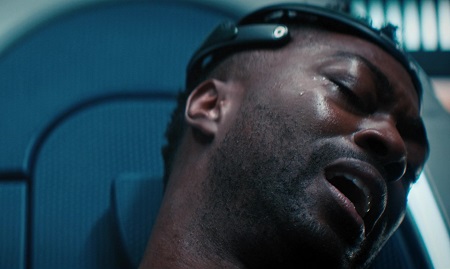
That Hope Is You, Part 2 went out of its way to show Osyraa at her worst, in order to make her irredeemable and justify Burnham killing her later on. Torturing Book was a big part of that, and the sequence in which she and Zareh used the mind control device first introduced a couple of weeks ago as an implement of torture was truly gruelling to watch – in the best possible way! Both David Ajala and Sonequa Martin-Green put in outstanding performances, and I wanted to highlight how well they played their roles. It’s easy to either under- or over-sell such an extreme moment – both in terms of the pain experienced by the victim and the emotional turmoil their partner is going through when forced to watch – but both actors hit the sweet spot and were pitch-perfect.

Book was tortured in That Hope Is You, Part 2.

Admiral Vance, Lieutenant Willa, and Kovich had some short but interesting moments at Federation HQ as they organised the defence of their base against the Emerald Chain. I was concerned for Vance in particular – if no one aboard Discovery were to be killed, I thought he was probably the writers’ main target! There was organised chaos at Federation HQ as Discovery, under Osyraa’s command, ran amok inside. It was really neat to see the ships battling within this confined space at the beginning of the episode, as well as seeing Osyraa know just where to hit the base to take down its shield wall.

The arrival of the fleet from Ni’Var was one of those stirring emotional moments up there with the arrival of the Kelpiens and Klingons in the Season 2 finale, Riker showing up in the Picard Season 1 finale, or the Enterprise-E sweeping in to battle the Borg in First Contact. I adored this moment, and it felt like the beginning of the Federation coming back together – a payoff to Burnham and Saru’s diplomatic efforts throughout thr season. It was a little early in the story, perhaps, but there’s no taking away from the fantastic way it felt when the fleet arrived.

Admiral Vance watches as the N’Var fleet arrives.

A couple of weeks ago, I said that the end of the season seemed formulaic and obvious – save or neutralise Su’Kal to prevent a second Burn, retake Discovery from Osyraa, and use the dilithium in the Verubin Nebula to power and reunite the Federation. And although I didn’t predict how exciting and action-packed that storyline would be, I was right. The end of the season was mapped out in Su’Kal, and Discovery stuck to the path. Not every show has to have twists and turns and shockingly unexpected moments, but I was still hopeful, even as That Hope Is You, Part 2 entered its final moments, that something different may have come along to shake things up.

For all the reasons given above, the Burn is the least interesting and most underwhelming part of both the season and its finale. However, despite that, I had a truly great time with That Hope Is You, Part 2. It’s true that the story unfolded exactly how I would have expected it to for the last two weeks, and it’s also the case that there were some tropes and clichés along the way. But there’s a reason why these action-oriented stories work, and That Hope Is You, Part 2 hit all the right notes in that regard. It was a solid, incredibly fun, action-packed episode of Star Trek.

Burnham assuming command of Discovery has been a goal that the series has been trying to reach since Season 1. Shuffling Saru off to Kaminar with only a brief explanation would not have been my first choice for getting there, because I feel his character deserved more respect than that. But that’s where we are – Captain Burnham. Her stupid disobeying of orders in the episode Scavengers and her struggle to come to terms with that in Unification III do undeniably undermine her ascent to the captaincy. And perhaps we need to step back when the dust settles and look at Burnham across all three seasons to see whether she really meets the criteria. Right now though, as of the time I’m writing this, her becoming captain not only works well, but it feels great too.

Starfleet has always been willing to bend the rules to accommodate talent; it’s a meritocratic organisation. Admiral Vance made his reasoning plain: Burnham may not always follow the exact letter of the rules, but she follows their spirit. She’s willing to make changes and sacrifices to adapt to the moment she’s in, and those are certainly strong qualifications for becoming a captain. Captains Kirk and Janeway in particular bent or broke the rules numerous times, and Picard, Archer, and Sisko were not immune to that either. Knowing how and when to work around the rules is part of what has always made for a great Starfleet captain. Burnham has that ability – and we’ve seen across all three seasons that she’s a natural leader, too.

“Let’s fly!”

The crew want to follow Burnham. They respected Saru, of course, but they love Burnham and they’re willing to follow her literally anywhere – or to any time. There are lingering issues which I hope will be picked up in Season 4 – notably with Stamets, who still seems unhappy with Burnham after she kicked him off the ship last week. But everyone else is fully on board with Captain Burnham, ready for her to lead them on to new adventures.

Where I criticised her earlier in the season for her lack of commitment to Starfleet, that has been resolved too. She felt that she might no longer fit in within the rigid confines of a Starfleet rulebook and uniform, but it turns out that she has at least some freedom to bend those rules to achieve important goals. And that does not come from nowhere. She earned that right across all three seasons of the show. She can be selfish, and she can be overly emotional, and as we saw in the Season 1 premiere she can be a complete idiot. But with a crew around her to support and advise her, with Book by her side as an emotional foundation, and having settled into her position in Starfleet, I can’t fault Admiral Vance – or Star Trek: Discovery – for putting her in the captain’s chair.

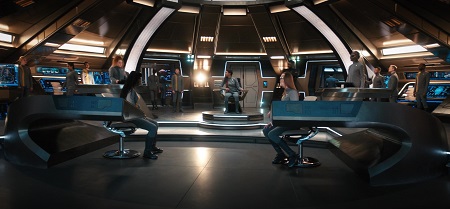
Burnham takes her seat in the captain’s chair for the first time.

If you’d told me three or four weeks ago that I was going to say that, I would never have believed it! But that is the strength of the second half of the season. Beginning really with The Sanctuary and running through to the season finale this week, Burnham has grown in leaps and bounds and the series has put in the work to make it feel that she earned her promotion. Where I called her arrogant and selfish I can now see a character with strength and commitment, and that’s not only because she has seen this character development, it’s also because Discovery took at least some of the focus away from her and allowed other characters to shine.

Discovery isn’t an ensemble show, but giving some significant plot threads to characters other than Burnham and spending time with them instead of largely with her has contributed to getting her to where she is at the end of the season finale. There was a sense in some earlier episodes that no other character would be allowed to do anything other than ride on Burnham’s coattails, and I was pleading with the series to allow someone else to do something of consequence… and then it happened. And not only was the show itself better for it, but so was Burnham. Freed from being the “chosen one” who was somehow destined to play the only significant role, her victories truly feel like her own. She accomplished a lot, not just this week but across the latter part of the season, and the work put into developing her character, stabilising her, and getting her ready for a leadership role ultimately paid off.

Burnham and the crew are ready for their next adventure.

There are, as noted, open questions at the end of That Hope Is You, Part 2. Saru’s status is perhaps the biggest, but I’d also like to know what became of Nhan and whether Earth has been in touch with the Federation. But those questions will have to be left for Season 4 to answer – whenever that may come.

So that was That Hope Is You, Part 2. And that was Star Trek: Discovery Season 3. For the first time in almost six months, there’s no new Star Trek to talk about! But don’t despair, because I still have to bring my Season 3 theories to a close. In addition, over the next few weeks I’ll take a look at the season as a whole, the Burn, Burnham herself, and other things we learned over the last few weeks.

There is more Star Trek just over the horizon – Lower Decks Season 2 may be coming out this year, and will finally get its international broadcast in just a couple of weeks’ time. We also have Prodigy to look forward to this year all being well. And you can bet that there’ll be news about Picard, the Section 31 series, Strange New Worlds, and other Star Trek projects coming before too long. It’s a wonderful time to be a Star Trek fan! Despite some gripes with part of its story, That Hope Is You, Part 2 was a great way to bring to an end this season and to the 23 weeks of Star Trek we’ve been lucky to enjoy.

Star Trek: Discovery is available to stream on CBS All Access in the United States, and on Netflix in the United Kingdom and elsewhere. The Star Trek franchise – including Discovery and all other properties mentioned above – is the copyright of ViacomCBS. This article contains the thoughts and opinions of one person only and is not intended to cause any offence.
Star Trek: Discovery review – Season 3, Episode 11: Su’kal

Spoiler Warning: There are spoilers ahead for Star Trek: Discovery Seasons 1-3, Star Trek: Picard, and for other iterations of the franchise.

Until three days before its broadcast, Su’kal went by the title The Citadel. It wasn’t immediately obvious why the name was changed – or why the producers at ViacomCBS felt a need to conceal that fact. After all, they let us know every other episode title before the season premiered, even spoiler-ish ones like Unification III. So it was a bit of a surprise to learn that we’d be watching Su’kal this week!

The two-part episode Terra Firma largely took us away from progressing the overall story of the season and focused on the departure of Mirror Georgiou to a still-unknown destination. With only three episodes left before the season is over, Discovery really needed to begin bringing its storylines together and wrapping them up, lest it repeat the mistake made by Star Trek: Picard earlier in the year and rush through a lot of potentially interesting plots. This was the moment where the season needed to enter its endgame, and for better or worse it seems to have done so.

Discovery finally took us to the Verubin Nebula after a few episodes of doing other things.

My first thought when the credits rolled was “hmm.” What had we all just watched? The two major storylines both had ups and downs, and we’ll have to deal with them in turn. I liked the idea of the holographic world. Both as an interesting setting and as a metaphor for isolation – something many people dealing with mental health issues will experience – it worked very well. Tilly sitting in the captain’s chair for the first time was great to see, and we can see why she was chosen ahead of, for example, Stamets to serve as first officer given that the conflict with Osyraa needed someone less experienced at the conn. I also liked the standoff between Discovery and Osyraa’s ship; it had a familar feel that anyone who’s seen the Battle of the Mutara Nebula in The Wrath of Khan can appreciate.

Now let’s get into the big disappointments. Discovery being captured so easily by Osyraa, whose ship had been simple to defeat a couple of episodes ago, was poor. Yes, it showed how Tilly’s inexperience at the conn was an issue, but even then it felt too easy. Osyraa’s ship, with its ability to transport huge numbers of troops and its weird grappling arms, just felt overpowered. Next – and I will admit this is perhaps more of a personal pet peeve – the cliched story of “the heroes’ ship/base is captured” just doesn’t really work for me. It’s annoying more than anything, and since we know Tilly, Burnham, and the crew will retake the ship it just feels like forced tension.

Discovery was very easily captured by Osyraa.

Now we come to the point of the season, and the main storyline which underpins all of the others: the Burn. If Burnham and Culber are correct in their assessment of Su’kal, he caused the Burn telepathically when his fears destabilised dilithium across the known galaxy. Though my initial reaction to that was some form of “what the actual fuck,” I’m prepared to wait and see what the next two episodes have in store, and whether they can better explain how this happened. Burnham and Culber’s analysis of the situation was short, and if all the explanation we’re going to get is some technobabble about dilithium and DNA cells in an unborn child, I think that’s poor.

But I’m hopeful that won’t be the entirety of the explanation that we get! The Burn had been set up across the season (and even before if you count the trailers) as a huge mystery, something galactic in scale. Perhaps the reason this answer feels like such a non sequitur – aside from the fact that it only consisted of a couple of lines from Burnham and Culber in the midst of a bigger crisis – is that the explanation for this colossal apocalyptic event being a mentally ill man with the mind of a child is some combination of anticlimactic and small.

A blink-and-you’ll-miss-it line from Dr Culber surely cannot be all the explanation we get for how Su’kal caused the Burn.

Huge events in fiction typically need causes that are comparable in scale, and there’s a disparity between the truly epic, cataclysmic nature of the Burn and Su’kal, a mentally challenged man who’s led a horrible life trapped in a weird educational holoprogramme. That’s before we get into the frankly upsetting real-world implications of this metaphor: a mentally ill person ruining the galaxy.

When dealing with significant events, we can typically point to powerful characters or forces of nature setting those events in motion. We can point to Sauron in The Lord of the Rings, for example, or Emperor Palpatine in Star Wars. Or we could look at the zombie virus in The Walking Dead as a force of nature – a powerful, planet-wide force. Su’kal doesn’t fit the bill, and while the idea of the Burn being something accidental rather than something intentional like a weapon may indeed be a good one – and one I’d support – this particular way of explaining it feels like an anticlimax right now.

Su’kal – the cause of the Burn?

On the other hand, if this is the explanation for the Burn, it would be in line with certain other Star Trek stories. The V’ger probe in The Motion Picture was similarly described as “a child” as it caused chaos en route to Earth. The Star Trek franchise has always been about exploring the unknown and offering help – and Su’kal clearly needs the Federation’s help.

Any time a mystery is created in an ongoing story, there’s a risk of the explanation jarring with what some members of the audience expected. I’m not criticising Su’kal from that point of view, though – or at least I’m consciously trying not to. I’m not saying that the Burn needs to have some other explanation, like one of the ones I postulated before the season began. What I am saying, though, is that if this is all the explanation we’re going to get – that Su’kal’s body somehow adapted, connecting him on a quantum level to dilithium, and that he accidentally caused the Burn as a child while upset – it feels anticlimactic.

We’re being asked to buy into a story that says one mentally ill person caused all of this destruction.

The discovery of the Verubin Nebula and its dilithium planet is likewise a little odd. This is perhaps more of a nitpick, but in the 32nd Century, when the Federation and other spacefaring cultures have had a millennium to explore and chart the galaxy, how could they have been unaware of this dilithium nursery/dilithium planet? A few weeks ago I wrote that the discovery of a huge cache of dilithium at the end of the season, allowing the Federation to get back on its feet and rebuild, could feel like a deus ex machina – and that’s kind of how this planet feels right now. The story from here seems predictable: save or neutralise Su’kal to prevent another Burn, use the dilithium planet to power the Federation and Starfleet, and retake Discovery from Osyraa.

There may be twists and turns along the way, but that seems to be the direction of travel. Simplifying a story as it approaches its end is inevitable, perhaps, but coupled with what I have to call an unsatisfying explanation for the Burn, it risks the end of the season feeling formulaic. Having made those criticisms, two caveats: there are still two episodes to go in which the Burn’s explanation can be padded out or even changed entirely, and if this is the real explanation for what happened, it avoids many of the pitfalls I feared a 32nd Century post-apocalyptic story would. It isn’t as epic in scope as perhaps I was hoping, nor does it seem to connect to other iterations of the franchise. But it is a very “Star Trek” way for an apocalyptic event to play out.

The titular Su’kal seems to have caused the Burn.

By that I mean it’s closer to some stories from The Original Series or even The Animated Series in terms of pure science-fantasy. Su’kal being the cause of the Burn because he has some kind of telepathic link to dilithium is a weird story, and that weirdness and quirkiness is what made many fans – myself included – fall in love with Star Trek to begin with. So I’m hot and cold on the Burn right now, as you can tell. I’m not 100% convinced that it’s the right way for this story to conclude, given that it’s taken us eleven weeks to get here and the Burn has been presented as this epic cataclysm with mysterious origins. But as a pure Star Trek story, I can’t deny that it works.

If you’re a regular around here, perhaps you’ve read my methodology. If not, you can find it via the menu at the top (top-right on mobiles). To make a long story short, I never read other reviews before writing my own, and I do my best to avoid any and all critical opinion and even responses by people involved with whatever I’m reviewing until I’ve got my own piece published. So I have no idea if I’m alone in my feelings about Su’kal offering an unsatisfying end to the season’s biggest mystery or not.

Is this how the Burn happened?

I feel like I’ve deconstructed the titular Su’kal and his relationship with the Burn as much as I’m able to at this stage. Like several ongoing storylines that saw major developments in Su’kal, my thoughts on this point can and likely will shift depending on the way that the remainder of the story progresses. So let’s look at a few other points from the episode.

Tilly becoming first officer was a point of contention in earlier episodes, and I do understand that. While I defended Saru’s reasoning at the time, as he felt Tilly had adapted best to the future which was a significant consideration in his XO search, what I’d say now is that that storyline feels as if it was constructed deliberately to reach a specific goal. The first part of that goal is, as we saw this week, the capture of Discovery by Osyraa, which we’re to understand came about in part through Tilly’s inexperience. But there may be a further plan for this storyline – effectively cornering Saru and forcing him to reinstate Burnham as first officer.
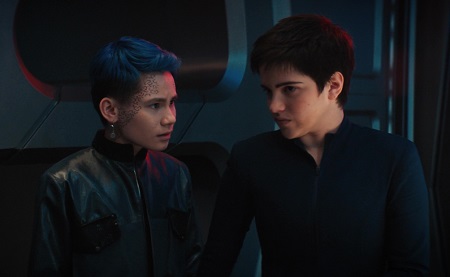
Tilly in command.

So what we got with Tilly this week was a deeply emotional and very touching scene between her and Burnham. As Saru prepared to lead the away team, it was her turn in the big chair for the first time, and she was nervous. Burnham tried to comfort her, and in this moment she was back to the older, more nervous character from earlier episodes. A lot of us have been nervous or anxious about taking on a big task, and Tilly’s reaction to what was going on was very human.

Likewise, the scene where she took the captain’s chair for the first time was also very well done. Though clearly still nervous she sat down for the first time with determination – and with a plan for what to say and do. She handled herself well, and she clearly had the respect of the other officers on the bridge. But there was a different kind of respect that they showed Tilly compared to Saru, or past commanding officers like Pike. Tilly was almost being treated as a child, judging by some of their expressions: “aww, it’s so sweet they’re letting her have a go in the big chair,” some of their faces seemed to say. While the crew followed their orders, there was a sense among some on the bridge – at least in the moment Tilly assumed command – that they didn’t hold her to the same standards as Saru or Pike.

Tilly regards the captain’s chair.

When confronted by Osyraa, Tilly played a role comparable to Sulu in Star Trek Into Darkness – sitting in the big chair for the first time talking to an enemy. In Sulu’s case he was broadcasting a message to someone rather than having a two-way conversation, but like many things in modern Star Trek I appreciate the symmetry that exists between wholly different stories.

As I said, though, the ultimate payoff to this storyline was Osyraa’s incredibly easy capture of the ship. We can argue that Su’kal’s telepathic tantrum damaged all the ship’s systems and thus probably knocked the shields down, which is how Osyraa’s goons could so easily beam over. But as a point of drama, the standoff between the ships was far too short before we got to this point. When Detmer took Book’s ship and completely disabled Osyraa’s flagship a couple of weeks ago, Osyraa’s flagship was shown to be big but flawed, and Osyraa herself made no moves against Discovery. This time, she was able to defeat Discovery in seconds using powers we’d never seen her vessel have before. There were low stakes at the beginning of the engagement – because Detmer had so easily beaten her using Book’s ship a few weeks ago – and thus Osyraa’s victory seems to come from nowhere.

Osyraa’s flagship proved a very difficult opponent… this time.

If we had seen some more of her ship before Su’kal to know what its capabilities were, that feeling would not persist. But despite its vaguely menacing appearance, the only time we encountered Osyraa before this episode showed her ship to be vulnerable even to Book’s glorified shuttlecraft. The turnaround was only explained by a single line from Osyraa, as she claimed to have fixed the vulnerability Detmer had exploited – but that just wasn’t good enough, in my opinion.

There’s also the big question of how Osyraa came to know about the Spore Drive. This seems to have happened entirely off screen, and while it may be shown in a flashback later on, it’s something we as the audience needed to know. What is Osyraa’s plan now she has control of Discovery? What will she use the Spore Drive for? Who told her about it/how did she find out? None of these points were touched on, and while we can construct theories based on Book’s macguffin from last week that concerned Admiral Vance, nothing was explained on screen in a satisfactory way.

Discovery jumped to the Verubin Nebula with its Spore Drive.

As this is an ongoing story, these points may be addressed, and if so I will gladly withdraw my criticisms. But right now it feels like Osyraa knew about the Spore Drive almost by magic – she even knew its name, despite having never heard of it the last time we met her. She also managed to turn her ship from an easily-beaten wreck into an invincible powerhouse and defeat Discovery with a snap of her fingers. And after all that, we don’t know her intentions. There are too many unknowns for the stakes to feel particularly high.

I mentioned at the start that this storyline – the heroes’ ship being captured – has never been one I enjoyed, and that’s a factor in how I feel about Su’kal too. I tend to feel that any time a story goes down this route the ending is usually known, and as a result the drama and tension just feel forced. Whereas we could see any one of a hundred different endings to Su’kal’s story or even Georgiou’s Mirror Universe story over the last couple of weeks, it’s obvious that Burnham and Book will retake the ship from Osyraa, just as it’s obvious in any comparable story that the heroes will reclaim their starship or base. It’s not exactly a cliché, but it’s a basic narrative that I’ve seen play out dozens of times at this point – including within Star Trek.

These stories have never been a favourite of mine.

Enough about Tilly, Discovery, and Osyraa for now. The sequences set in Su’kal’s home were interesting. The setting itself was reminiscent of the castle Captain Pike encountered on Rigel VII – as seen in Star Trek’s original pilot, The Cage. Castles and Star Trek have an association going back a very long time, and the dark, abandoned castle – with a monster to boot – gave the sequences set there a very creepy, almost horror vibe.

The cinematography for some of these scenes was outstanding, too, and shots of the fortress and its surrounding landscape were beautiful and immersive. There were some amazing overhead angles that gave the stepped structure a deeply confusing feeling, one which helped us get into the mindset of Burnham, Culber, and Saru.

Some of the shots here were beautiful. The set design and animation work were absolutely outstanding.

Speaking of the away team, the choice of makeup was interesting. Having Burnham and Culber be a Trill and Bajoran respectively really didn’t do much, and in a lot of scenes where they were seen from a distance the makeup wasn’t even noticeable. Saru being portrayed as human, however, was far more visually interesting, and the reveal of Doug Jones without makeup was perhaps the biggest shock moment of the whole episode. Everything about that moment was perfectly set up, from Burnham and Culber noting their appearances first to build up the mystery to Saru’s voice being heard before the camera panned to him. It was a very well-constructed moment.

Within the story, though, I’m sorry to say it makes no sense. Saru is a Kelpien; a species Su’kal is obviously familiar with as he has at least one Kelpien hologram – the Elder. Likewise we saw human holos within the programme, and since Burnham and Culber’s physical appearances were not changed to copy pre-existing holograms, I don’t know what reason there is for changing their appearances in this minimal way. Nor do I understand why – aside from reasons of dramatic effect – the away team’s radiation burns were visible on their holographic bodies.

It feels like the choice of making Saru human was just there for surprise value.

If the roles of Burnham, Culber, and Saru were to be played by three different actors for this story, actors who also took on the roles of three holograms within Su’kal’s programme, I could understand it more. It wouldn’t be good to have this crucial moment acted out by different folks, but it would make sense in-universe, because the programmer of Su’kal’s world would have intended his rescuers to assume a familiar form. But the way it was done here was just odd, and I can only assume it was done for the sake of that one shocking moment – revealing Saru in his human guise. Constructing a story point off of one moment seldom works, and while it was interesting (at least, at first) to see these three characters in different makeup, as a story point I don’t get why it had to happen.

It also arguably detracts from Saru’s storyline, which seems to be building to an emotional climax. This is the first Kelpien he’s met since he left the 23rd Century, and there’s also the open question of a possible familial connection via Dr Issa. Saru being distracted by all things Kelpien is affecting his judgement, and this is a storyline worth pursuing. However, having Doug Jones essentially be out of costume is detracting from that. While it was visually interesting at first, it risks getting in the way of the story as it comes to a head. It’s possible that there may be a moment where Saru snaps out of the way he’s feeling due to being in this human guise, which if well-written could work and would be a payoff of sorts. Discovery tends not to do things randomly – somehow there may well be a reason why the away team ended up in these bodies. It’s just difficult to see right now, and the question of whether it will work as intended is up in the air.

Saru in his human disguise.

Burnham’s work with Su’kal was sweet, and she seemed to be beginning to find a way to get through to him. Saru asked her to remain because of her training in xenoanthropology, but just as she accused him of being distracted by Su’kal, I would argue that she is equally distracted from the mission by Book – she wanted to get back to him, because within the nebula he is in danger. She did seem to make some progress with Su’kal before he cut her off – but is that the real Su’kal?

I’ll save the bulk of this discussion for my theory post, but here goes: the “monster” that inhabits the holodeck is vaguely Kelpien in appearance, and also looks older. Its decayed body could be a result of radiation exposure, and when the monster met Burnham, it seemed to react to her in an almost-human manner – by which I mean, not like a programmed machine. The character we’re calling Su’kal is far too young to be 125 years old – or at least appears to be too young – and no suitable explanation has been given for this. So my pet theory right now is that the “monster” is the real life sign that Burnham and the crew identified before beaming down.

Is this a holographic monster… or Su’kal?

I don’t know for sure if that will pan out, or how it could be made to fit, but it seems interesting so I’ll go into more detail next time. There were a few other little moments in Su’kal that I thought were worth pointing out, such as the little robots being identified as “DOTs” for the first time outside of the Short Treks episode Ephraim and Dot. That was a sweet little inclusion. I also liked seeing Adira and Gray back together, as well as Gray giving Adira the confidence boost they needed to make their first big independent move since joining the crew.

Speaking of Adira, Stamets’ line to them at the beginning about he and Culber coming as a “package deal” was cute, and ties in with the parental theme going on with the three of them. Stamets has gone out of his way to help Adira since they joined the crew, even talking to the unseen Gray – whenever he does that I’m reminded of a parent talking to their child’s imaginary friend. Stamets feels protective of Adira, and helping them settle in has been an unexpectedly sweet turn for his character.

Gray and Adira in Su’kal.

So there we are. That was Su’kal, an episode which will have to be revisited in context once we know the overall outcome of the season’s big storylines. It can be difficult to fairly judge one section from the middle of a story – it’s like trying to review chapter ten of a thirteen-chapter novel – because Su’kal cannot be taken as a standalone piece of television. That said, it’s an episode which made significant developments and perhaps set up one or two more mysteries.

I’m troubled by the fault for the Burn lying with a mentally disabled man. Mental health and learning disabilities are already the subject of considerable stigma in our society today, and while on some fronts that is improving, we still have a long way to go. The episode The End is the Beginning from Star Trek: Picard showed a very crude stereotype of “mentally ill people” earlier in the year, and laying the fault of the Burn at Su’kal’s feet seems to continue an unfortunate theme in this year’s Star Trek productions. It almost feels as though the writers have picked on an easy target in Su’kal.

As mentioned, there are different ways the story could pan out from here. I briefly explained one theory I have about Su’kal, but there are different paths the story could take over the next couple of weeks before the season ends. I’m cautiously interested to see more; I do want a resolution to the Burn, but it needs to be a satisfying one – and ideally one that doesn’t stigmatise people.

Star Trek: Discovery is available to stream on CBS All Access in the United States, and on Netflix in the United Kingdom and elsewhere. The Star Trek franchise – including Discovery and all other properties mentioned above – is the copyright of ViacomCBS. This article contains the thoughts and opinions of one person only and is not intended to cause any offence.