Spoiler Warning: There are spoilers ahead for Star Trek: Discovery Seasons 1-3, Star Trek: Picard Season 1, and for other iterations of the franchise.
At the end of Star Trek: Discovery Season 2, Mirror Georgiou surprised me – and a lot of other viewers as well – by remaining aboard the USS Discovery as it headed into the future. Michelle Yeoh, who plays the character, had been announced as the lead in a new spin-off series based on the shadowy organisation Section 31 in the run-up to Season 2’s broadcast, and it was assumed that the new series would take place in the 23rd Century. Georgiou’s departure into the future seemed to complicate that!
Part of that story has since been resolved, and we now know that Georgiou will not be remaining in the 32nd Century with Burnham and the rest of Discovery’s crew. The Guardian of Forever sent Georgiou to an unknown destination in the episode Terra Firma, Part 2. Georgiou’s destination was left ambiguous, deliberately so. And in my Discovery Season 3 theories post after Terra Firma, Part 2 was broadcast I speculated about a few possible time periods that she could find herself in on the other side of the Guardian’s portal. This time I’m going to expand on that a little, looking at the possibilities of different time periods, as well as the possible pros and cons of each from both an in-universe and production perspective.
Mirror Georgiou – played by Michelle Yeoh – is set to headline the upcoming Section 31 series.
Before we get into the different time periods, it’s worth considering the Section 31 show’s status. Despite being announced in early 2019, before Discovery Season 2 was broadcast, the show has yet to enter production. Comments from Alex Kurtzman and particularly the two lead writers/producers (Bo Yeon Kim and Erika Lippoldt) seem to suggest that the show’s fate is not certain, and recent news about Star Trek projects through at least the first half of 2022 explicitly excluded the Section 31 series. It seems as though it won’t be entering production any time soon, perhaps not until Discovery, Picard, or Strange New Worlds have concluded their runs.
I must admit that this news doesn’t leave me feeling great. The Section 31 series already took a back seat to Strange New Worlds – fans were clamouring for more of Anson Mount and Ethan Peck as Pike and Spock after Discovery Season 2, and that definitely stole the Section 31 show’s thunder. Fans just weren’t as excited about Mirror Georgiou and Section 31 as they were for Pike, and as a result we’ve seen Strange New Worlds greenlit and enter production before Section 31, even though it was announced later.
Strange New Worlds is already in production, despite being announced after the Section 31 show.
I was one of the fans who wasn’t particularly excited for Section 31 during Discovery Season 2. But I have since come around to the idea of this show, and I feel that – if properly executed – it could be a truly interesting and different part of a growing Star Trek franchise. A James Bond-esque spy thriller, which is what the series seems to want to be, holds a lot of appeal, and may even succeed at bringing in new viewers beyond Star Trek’s usual crowd. That’s all to the good!
So despite my initial reaction, I’m now firmly in the camp that’s looking forward to Section 31 – and I hope it does manage to enter production before too long! With that out of the way, let’s start to consider just when in the Star Trek timeline the series could be taking place. My usual caveat applies: I have no “insider information.” This is guesswork from a fan, and a chance to spend a bit more time with Star Trek. Nothing more.
A black Section 31 combadge, as seen in Discovery Season 2.
To briefly recap, Discovery Season 3 took the crew – including Mirror Georgiou – to the 32nd Century. For technobabble reasons, crossing over from a parallel universe and travelling forward in time caused Georgiou to become terminally ill, suffering as a result of her molecules being pulled in two directions. In order to save her life, Burnham and the AI aboard Discovery took Georgiou to an isolated planet in the Gamma Quadrant, which was later revealed to be the new home of the Guardian of Forever. After putting Georgiou through a test in which she appeared to revisit the Mirror Universe, the Guardian allowed her to use the portal to travel backwards through time.
The one thing we need to pay closest attention to is what the Guardian said of Georgiou’s destination. He didn’t specify in any real way where or when he was sending her, instead opting to ambiguously tell her that he was sending her “to a time when the Mirror Universe and the Prime Universe were still aligned.” That does not necessarily mean the 23rd Century, and it’s largely because of this line that we can theorise about Georgiou’s destination!
Without further ado, let’s look at my list of possible destinations for Georgiou, and thus the possible settings for the Section 31 series.
Number 1: The 23rd Century
Despite everything else I’m going to say on this list, the 23rd Century has to be the most likely destination for Georgiou. From the production side of things, this is what we were told when the show was announced, and it would allow for possible crossovers with Strange New Worlds and any future series or films set in this time period. And from an in-universe point of view, the only way to cure Georgiou’s technobabble illness was either to return her to her own time period – the 23rd Century – or to the Mirror Universe. None of the other time periods on this list would, as far as we know, cure her condition.
However, the Guardian of Forever’s statement, quoted above, seems to rule out the 23rd Century. As we’ve seen in both The Original Series and Discovery, by the 23rd Century the two universes were very much not in alignment. The Federation and the Terran Empire are about as far apart as it’s possible to be, and Discovery even implied that there are genetic differences between Terrans and humans.
Kovich, the Federation official who conducted Georgiou’s debriefing in the 32nd Century.
Returning to the 23rd Century could see Georgiou reunite with Ash Tyler, the head of Section 31 as of the end of Discovery Season 2. Tyler could have an interesting role to play in the new series, and the clash of personalities between him and Georgiou – as well as a potential for them to bond over their mutual love for Burnham – could see some truly interesting and perhaps even emotional character moments.
If Georgiou does arrive in the 23rd Century, one of the big storylines would surely be the disappearance of Section 31, explaining how it went from being an open secret in Discovery’s era to something entirely underground by the time of Deep Space Nine 120 years later. Ash Tyler may have started that process – and it could even be something we see hinted at in Strange New Worlds if he makes an appearance there – but Georgiou could be the driving force behind cloaking Section 31 in secrecy – and may even kill off Starfleet officers who are aware of the organisation’s existence.
Section 31 was hidden and its existence unknown to most Starfleet officers by the mid-24th Century.
The Guardian of Forever’s line may count against it, but I believe that the 23rd Century remains Georgiou’s most likely destination. She may arrive within days, or even hours, of her departure, or she may not arrive until several years later. The latter may be more likely, but either way the potential for crossovers with Strange New Worlds exists and is enticing.
In addition to seeing the organisation disappear and move into the shadows, Section 31 stories set in the 23rd Century could bring back races and factions we got to know in Discovery and The Original Series. We could explore in more detail the relationship between the Federation and the Romulans in this era, for example, which would tie in with Star Trek: Picard‘s Romulan focus. Or we could see how Section 31 reacted to Pike and Kirk’s missions of exploration.
Number 2: The Mirror Universe
As noted above, there are two known ways to cure Georgiou’s technobabble illness: return her to her own time period, or return her to her native universe. Perhaps the Guardian of Forever was so impressed by Georgiou’s attempts to reform the Terran Empire (depicted in Terra Firma, Part 1 and Terra Firma, Part 2) that he chose to send her back there to continue that work – even though he said he wouldn’t!
This raises its own question of when Georgiou will arrive – will it be in the Mirror Universe’s 23rd Century, or will she arrive at some other time? If the Section 31 show goes down the Mirror Universe route it would already be a pretty significant curveball, so I would assume she would return to the 23rd Century rather than complicating matters further by having her arrive in a different time period.
Georgiou with her honour guard in Terra Firma, Part 1.
So let’s assume this theory is right and Georgiou arrives back “home” in the Mirror Universe. What would that mean for the show – it’s supposed to be based on Section 31, not the Mirror Universe! There could be a Mirror version of Section 31, perhaps one which acts in a different way to the Section 31 of the Prime Timeline. Georgiou may even establish such an organisation to further her attempts at reforming the Terran Empire.
In the timeline of the Mirror Universe shown in Deep Space Nine, reforms put in place by Spock led to the collapse of the Terran Empire, and the Mirror Universe by the 24th Century came to be dominated by a Klingon-Cardassian alliance. Perhaps the tragedy of the Section 31 series will be that the reforms Georgiou tries to put into place will ultimately lead to Terrans being enslaved and subjugated.
Terrans like Mirror O’Brien were conquered and enslaved by the 24th Century.
I’m not sure that this would be the best way to go, even though on the surface it appears to be something different. The Mirror Universe, as I’ve said on more than one occasion, can be okay to visit for one-off stories, but the over-the-top violent nature of the setting tends to mean Mirror Universe characters are boring and pretty one-dimensional, all enjoying gratuitous violence for its own sake. The Mirror Universe also descends far too easily into pantomime, with hammy, over-the-top performances even from otherwise good actors.
The role of Section 31 in the Mirror Universe is not clear either, and it doesn’t seem like something the Terran Empire would necessarily need. If they’re already successful as a dominant, authoritarian state with a huge military, an organisation like Section 31 just seems like overkill! Not to mention that, thanks to Terran morality, there’d be no reason for such an organisation to be clandestine. It could be out in the open, just another branch of the Terran military. In short, while a Mirror Universe series may seem interesting to some fans, I don’t think this would be the right way to do it. It would be too much of a twist on the series we’re expecting to see, and it would be limited in its scope.
Number 3: The 25th Century
Specifically I’m thinking that Georgiou could arrive at the very beginning of the 25th Century. Why? Well, basically the entire reason for this hangs on the production side of things! The dawn of the 25th Century is when Star Trek: Picard is set. Having Georgiou arrive at this time would potentially allow for the Section 31 show to cross over with Picard. Even if that didn’t happen, it would expand the 25th Century setting, perhaps laying the groundwork for more shows and films in this era.
Out of all of the possible destinations for Georgiou, this one has the least going for it from an in-universe point of view. There’s nothing we know of to suggest that the Mirror and Prime Universes are in some kind of alignment by this time, nor would sending her here cure her technobabble condition. In fact, if she did arrive here she should arguably still be suffering from it. It would be a contrivance, one set up specifically to allow Georgiou to cross over and appear in Picard – or other future Star Trek projects which also occupy this place in the timeline.
Picard and the crew of La Sirena.
I mentioned Deep Space Nine’s Mirror Universe episodes above, and in theory we could see a connection to those episodes if the dawn of the 25th Century is when the Section 31 show is set. If the Terran Rebellion depicted in Deep Space Nine was a success, the Terrans we met in that show seemed far less aggressive and domineering than their 23rd Century counterparts. Perhaps we could learn that they didn’t simply re-establish the Terran Empire and created a more enlightened democratic society in its place.
However, there are two issues with this. The first is that in Discovery Season 3, Kovich at least implied that some form of Terran Empire or Terran-centric society existed after the 24th Century. Kovich appeared to be an expert on Terrans, and while he did say that the Terran Empire had collapsed “centuries” before the 32nd Century, he didn’t say exactly how long ago that happened. The second point comes from the production side of things: how many viewers will be familiar with those five episodes of Deep Space Nine? Us Trekkies will be, of course, but most casual viewers of the series won’t remember them, and thus there isn’t any real benefit to tying Georgiou and the Section 31 show to Deep Space Nine in a big way.
Number 4: The 21st Century
Could the Section 31 series be the first ever Star Trek show to be set in the present day?! Well, no. But maybe!
Here’s why I think it could at least be possible that a mid-to-late 21st Century setting is on the cards. The Guardian of Forever’s statement, quoted above, says that Georgiou is being sent to a time when the Mirror and Prime Universes were aligned. In Star Trek’s timeline, the earliest point of divergence that we know of came in the year 2063, during first contact between humans and Vulcans.
In the Prime Timeline, first contact went smoothly and led to an alliance between Earth and Vulcan that eventually evolved into the Federation. In the Mirror Universe, Zefram Cochrane led a mob that massacred the arriving Vulcans. In fairly short order, Terra had conquered Vulcan and the Terran Empire was born. We can’t be certain that this is absolutely the earliest point of divergence, but it’s the earliest we can be sure of.
The Guardian of Forever in the guise of “Carl.”
Using this logic, the 21st Century is the best fit for the Guardian’s statement, as it can be argued that prior to first contact, the Mirror and Prime Universes were in total alignment. Sending Georgiou to the mid-21st Century – perhaps the 2050s or 2060s – would thus cure her of her technobabble illness, which was the whole point of sending her back in time.
While this is certainly a good fit (we can argue about “best fit” till we’re blue in the face!) for the Guardian of Forever’s statement, what would it mean for the Section 31 show? If Georgiou arrived in the 2050s or 2060s, she’d be on Earth either during or shortly after the Third World War. This event has been referenced a few times in Star Trek but never really explored, and we could learn more about the factions involved, as well as more about the impact first contact had on humanity.
Might Georgiou arrive some time before the events of Star Trek: First Contact?
However, for a Star Trek show, I think a 21st Century, pre-first contact setting would be a severe limitation. Instead of Georgiou trekking across the galaxy kicking butt, she’d be limited to Earth and the solar system, with adversaries being humans and perhaps the occasional Vulcan. That limitation would be difficult, and as we’ve never seen a Star Trek show set so early in the timeline, there would be unique challenges to overcome.
However, on the flip side it could be interesting to learn that Georgiou – the former Terran Empress – was instrumental in the creation of the Federation. By laying the groundwork for Section 31, perhaps even creating the organisation itself, Georgiou could keep humanity safe in its crucial early days as a spacefaring people. Georgiou could be seen not just as the leader of Section 31, but as its first ever leader, laying down the ground rules for how Section 31 will operate, and its objective of defending the Federation at all costs.
Number 5: The 27th Century
In the Discovery Season 3 episode Die Trying, Kovich gave us a bit more information about the Mirror Universe. Specifically, he explained that the “distance” between the two parallel realities had been slowly growing, meaning that by the 32nd Century it was no longer possible to cross between them as it had once been. The last crossover before the 32nd Century came “five hundred years” earlier – which would put it sometime in the 27th Century.
Does this mean that it fits with the Guardian of Forever’s statement about the two universes being “aligned?” I don’t think so, and it’s a stretch to make that argument. However, as the 27th Century was (indirectly) referenced only a few episodes before Georgiou’s departure, I think we have to consider it as a possibility for her ultimate destination. If it wasn’t in play at all, why bring it up? Maybe it’s just a red herring; a throwaway line I’m too focused on! But maybe there’s more to it than that.
Burnham and Georgiou chat with the Guardian of Forever.
What do we know about the 27th Century? The answer is “very little.” It was referenced in The Next Generation Season 3 episode Captain’s Holiday, when a powerful weapon created in this period was sent back in time. Time travel had been definitively invented by this time, and the Federation used it in some capacity. Otherwise, all we can be sure of is that the Federation existed in this era.
Having an almost-blank slate like this is what a lot of creators and producers want! So in that sense, it would be a great setting for a new Star Trek series, just as the 32nd Century was for Discovery Season 3. However, unless there’s a bigger plan to bring more Star Trek projects to this time period, it would isolate the Section 31 show, separating it by hundreds of years in both directions from everything else in the franchise. I’m not sure that would be a positive thing.
So that’s it. We’ve looked at five possibilities for the Section 31 show’s setting, largely based on a single ambiguous line from Terra Firma, Part 2!
At this stage, if I had to place a bet with my own money I’d have to say that the 23rd Century is most likely to be the right choice. The others all have drawbacks, and while all five have the potential to tell different and interesting stories, the plan all along seems to have been for the Section 31 series to use a 23rd Century setting. The reason for all of this speculation, of course, is that we didn’t see for ourselves where – or when – Georgiou ended up after she stepped through the Guardian of Forever’s portal!
This is the last we saw of Georgiou. Her destination? Unknown.
I’m still hopeful that the positive reception received by Star Trek: Picard will lead to more projects occupying its 25th Century setting in future, and if that’s the case then bringing the Section 31 series to that time period would make a lot of sense. As I’ve said on a number of occasions, when Star Trek was at the pinnacle of its success in the 1990s, the shows and films being produced all shared the same setting and time period, something which modern Star Trek has opted to disregard. From the point of view of casual fans and viewers, this unquestionably makes the Star Trek franchise harder to follow, so consolidating as many projects as possible into a single time period makes a lot of sense.
However, if Strange New Worlds proves to be the success that ViacomCBS – and many fans – are hoping for, returning to the 23rd Century with the Section 31 series would still accomplish that goal. There could be crossover episodes between the two series, and future projects – like the potential Ceti Alpha V miniseries – could also be incorporated into a broad, interconnected set of shows.
Georgiou just before leaving the 32nd Century.
I remain hopeful that the Section 31 series will make it. Though it seems as if production may be months or even years away right now, the show remains in contention over at ViacomCBS, and would certainly take Star Trek to different thematic places. As I said when I wrote up a wishlist of things I’d like to see included, a spy thriller has the potential to tell some fascinating stories, and perhaps some that are morally ambiguous. I see the future cast of Section 31 – including Georgiou – as antiheroes; a team kind of like the DC Comics villains in the film Suicide Squad, doing bad things to bad people in the name of keeping others safe.
I hope you’ll stay tuned for any and all future Section 31 news! If we hear any major announcements, casting information, or see a trailer, I’ll do my best to cover it here on the website. There’s a huge amount of Star Trek on the horizon, and Section 31 could be a significant part of that. Time will tell what will ultimately happen, but I’ll be keeping my fingers crossed!
Stay up to date with my Section 31 articles on my dedicated Section 31 page. The untitled Section 31 series currently has no broadcast date scheduled. However, it will almost certainly premiere on Paramount+ in the United States, Australia, and other countries and territories where the service is available. Further international distribution has not been announced. The Star Trek franchise – including the Section 31 series, Discovery, and all other titles mentioned above – is the copyright of ViacomCBS. Some stock photos courtesy of pixabay. This article contains the thoughts and opinions of one person only and is not intended to cause any offence.
Spoiler Warning: There are spoilers ahead for Star Trek: Discovery Season 3, as well as for Star Trek: Picard and other iterations of the franchise.
The two halves of Terra Firma gave us quite a lot to work with, but with only three episodes left before Season 3 is over, Discovery has a lot of work left to do to resolve major ongoing storylines. I’m ever so slightly concerned that we’re going to end up with a rushed conclusion, repeating the mistake Star Trek: Picard Season 1 made earlier in the year. Hopefully that won’t be the case and there will be enough time for every extant story thread to either reach a conclusion or set up the events of Season 4 – whenever that may come!
By the end of Terra Firma, Part II we’d seen two confirmations and three debunkings, so let’s look at those first.
Confirmed theory #1: Carl is the Guardian of Forever.
The Guardian of Forever’s portal.
I got goosebumps when Carl announced who he really was – complete with the Guardian’s voiceover from The Original Series. Though the revelation may have been less interesting to new fans who aren’t familiar with The Original Series, I adored this moment and sat with a big dumb grin on my face for much of the rest of Terra Firma, Part II.
Though we could kind of argue that the inclusion of Sarek, Pike, and Una/Number One accomplished something similar in Season 2, the mystery of Carl’s powers and identity that we all had to sit with for a week is part of what made the ultimate reveal so exciting. I’ll always love when Discovery ties itself into past iterations of Star Trek, and this was perhaps my favourite connection of the season so far.
Confirmed theory #2: Georgiou will travel back in time.
Georgiou checks her holo-padd.
Where did Georgiou go for the three months she spent seemingly in the Mirror Universe? Well, Carl seemed to suggest he sent her to some kind of parallel universe, but perhaps not the Mirror Universe she came from.
Regardless, Georgiou has now definitely gone back in time – perhaps to the 23rd Century, or perhaps to another time period as we’ll discuss in a moment. We don’t know where or when she’ll emerge, and given how final her exit from Discovery felt, I doubt very much we’ll learn anything about her destination until the Section 31 series is ready to go.
My earlier theory had been that Georgiou may have travelled back in time along with the USS Discovery, perhaps in a tie-in with the Calypso story that saw the ship abandoned. This now can’t happen, of course, and while I wasn’t correct about how and why Georgiou travelled back in time, I did get the overall point right!
So those theories were confirmedin Terra Firma, Part II. Next we have three debunkings, all related to Georgiou.
Debunked theory #1: Georgiou will accidentally change the future.
Georgiou prepares to execute Mirror Burnham.
Although I wasn’t convinced that Georgiou had truly travelled back in time, one issue that time travel stories can encounter is a paradox. When Georgiou began making changes to the 23rd Century Mirror Universe, I wondered if we might’ve seen some ramifications for the future, perhaps something she and Burnham would then have to fix by restoring the true timeline.
When it seemed as though the Mirror Universe that Georgiou was seeing was different to how we saw it in Season 1 – with key players like Stamets and Burnham arriving at altogether different fates – it seemed at least a possibility. However, for Guardian of Forever-related reasons, nothing Georgiou did appears to have altered the 32nd Century, and as of the moment she left, everything was exactly where it should be.
Debunked theory #2: Georgiou didn’t travel back in time or to the Mirror Universe.
Georgiou with Burnham and her honour guard.
As discussed above, it wasn’t 100% clear where and when Georgiou spent her time over the last two episodes. But she did, according to Carl, travel back in time and to a different universe – whether or not it’s the Mirror Universe is up for debate.
I postulated this theory because of the major narrative differences between the setting Georgiou occupied and what we know of the history of the Mirror Universe and some familiar characters from Season 1. I doubt the series will revisit any of these points in future, and it seems as though the ultimate explanation for why things are different is because she was in a different universe either created or accessed by the Guardian of Forever. I’m okay with that, as it doesn’t create any major inconsistencies.
Debunked theory #3: Georgiou had been tampered with by the Federation (or Section 31).
Georgiou first became ill after a meeting with Kovich.
Despite being in the 32nd Century for at least a few weeks before Discovery found Federation HQ, Georgiou’s technobabble health problems did not emerge until immediately after her meeting with the mysterious Kovich. This led me to theorise that he could be a Section 31 operative and may be responsible for the sudden decline in her wellbeing.
However, it seems that this was a deliberate false lead, as Kovich not only was not implicated in making Georgiou ill, he actively consulted with Dr Culber and offered his expertise when asked. He knew more than he let on, both to Georgiou and Starfleet, but he was not responsible for harming her.
So those theories were debunked. Now let’s dive into the main list, beginning with a special bonus theory!
Bonus theory: Four ideas for Georgiou’s destination.
Georgiou’s destination, both in space and time, was left deliberately unanswered in Terra Firma, Part II. Carl told us he was sending her “to a time when the Mirror Universe and the Prime Universe were still aligned.” That’s an interesting statement, and could be interpreted in a lot of ways. We are very unlikely to know for sure where and when Georgiou ends up until she returns to our screens in the upcoming Section 31 series – but naturally, I have a few ideas.
The 21st Century
The reason why this one seems unlikely right now is because a Star Trek show set even earlier in the timeline than Enterprise would be difficult to produce. Enterprise depicted Earth’s first voyage of exploration, and while there were humans in space before Archer’s big mission, they were limited in speed and in the areas they covered. Thus, from the point of view of a Star Trek show, what is there to do?
On the flip side, the 21st Century is arguably the best fit for Carl’s ambiguous explanation of where Georgiou is going. We don’t know anything about the early history of the Mirror Universe, but if it’s true that it and the Prime Universe were once “aligned,” as Carl explained, the earliest known point of divergence between the two timelines is 2063 and first contact between Earth and Vulcan. In the Mirror Universe, after Cochrane’s warp flight he and his followers massacred the Vulcans who arrived on Earth, before humanity conquered their homeworld and founded the Terran Empire.
If this is truly the point of divergence, sending Georgiou to the 21st Century could fit with what Carl said. It could also mean that the Section 31 series depicts the creation of the organisation, and we could learn that Georgiou was its first leader.
The 23rd Century
The most likely destination based simply on what we know of the Section 31 series. It would also return Georgiou to her own time, thus curing her technobabble ailment. A return to the 23rd Century would allow for the return of characters like Ash Tyler, and we could even see a crossover with Strange New Worlds reuniting Georgiou with Captain Pike.
A series set in this era would depict Section 31 going underground, transforming itself into the clandestine outfit we first encountered in Deep Space Nine. However, the Mirror and Prime Universes are certainly not “aligned,” as Carl put it, in the 23rd Century, so could that be a hint that Georgiou is headed elsewhere? If not, how will that be explained?
The dawn of the 25th Century
The Mirror Universe episodes from Deep Space Nine showed a far less “Terran” group of Terrans fighting for their freedom against a Klingon-Cardassian alliance. Perhaps this change in the Terrans continued, leaving the Prime and Mirror Universes in something close to alignment by the late 24th Century.
This would have the benefit of connecting the Section 31 series with Star Trek: Picard – and any future shows or films set in that same era. There could be crossovers with Picard, and we could see major connections between Star Trek’s different ongoing timelines. Is it likely? Well, I’m not so sure. I think you have to squeeze the semantics of Carl’s statement a little too much, plus it connects only to a handful of Deep Space Nine episodes that most audiences wouldn’t be familiar with. But it’s not impossible.
The 27th Century
Kovich told us in Die Trying that there hadn’t been a crossover between the two universes in “five hundred years,” which would mean the last time it was possible would have been in or around the 27th Century. Does that mean the two universes were “aligned” at that point? Well no, but it could be argued that they were.
The drawback to this idea, like with the 21st Century above, is that it would isolate the Section 31 series in yet another time period, splitting up the ongoing Star Trek projects. There’s also no compelling reason to visit the 27th Century – very few of characters from other Star Trek shows could be alive, and nothing major seems to have happened in this era, which takes place after everything else in Star Trek yet before the Temporal Wars and the Burn brought the Federation to the brink.
So those are four ideas for where (and when) Georgiou might be headed. Now let’s get into the main theory list.
Number 1: Saru, Burnham, or somebody else will use the Guardian of Forever to send the USS Discovery back in time.
Carl – a.k.a. the Guardian of Forever.
The Red Angel suit may have been the last remaining piece of technology capable of time-travel – if we’re to believe the Federation’s claims that nobody violates the ban! But now that the Guardian of Forever has been rediscovered, the potential for travel through time is once again on the agenda. Whether Burnham explained exactly what happened to Saru, and if she did, whether he will explain it to Starfleet is not clear, but even if they’re the only ones who know about the Guardian, they may have need of its services.
When considering the story of Calypso, particularly how the USS Discovery came to be abandoned in a nebula, the big question is “why.” Why would Saru, Vance, or Burnham feel a need to take the ship back in time and hide it? There is no obvious reason right now, and with only three episodes to go if a major new problem were to emerge it could end up feeling rushed or like a deus ex machina.
Regardless, it’s at least possible that Discovery will travel back in time. And right now, one of the only ways that could happen would be to make use of the Guardian of Forever.
Number 2: The Emerald Chain will attempt to steal the USS Discovery and/or the Spore Drive.
The USS Discovery.
Admiral Vance was incredibly worried about Book’s use of an Emerald Chain signal booster on board Discovery, fearing that the untested technology could cause problems. It seems this macguffin could be a “backdoor” into Discovery’s systems, or perhaps some kind of tracking device that could allow the Emerald Chain to find the ship – and its Spore Drive. Spoiler warning for anyone who missed the promo for episode 11, but it seems that at least one Emerald Chain ship will show up.
Additionally, in The Sanctuary Ryn confided in Tilly that the reason Osyraa – the Emerald Chain’s leader – is so keen to recover him is because he knows their biggest secret: the Emerald Chain is running out of dilithium. This will undoubtedly make the faction more aggressive as it looks to shore up its position, but now that they’ve seen Discovery able to jump to Kwejian, perhaps Osyraa and her people will begin to suspect that the ship has a powerful new method of propulsion.
Admiral Vance told Starfleet’s senior officers about the Spore Drive in Scavengers, and I picked up at least a hint that not everyone was happy about this disruption to the established hierarchy of Starfleet. Could someone within Starfleet – such as Lieutenant Willa – have passed along to the Emerald Chain details of the USS Discovery?
Number 3: The Emerald Chain will attack Federation HQ.
Discovery at Federation HQ.
Obviously this theory and the one above can’t both be true! But if the Emerald Chain is moving, Federation HQ seems a logical target. The Emerald Chain is planning “military exercises,” according to Starfleet. Both Starfleet and Book’s courier friends believe this is code for some kind of larger-scale military engagement.
Clearly the Emerald Chain story thread needs to be wrapped up somehow – by defeating them militarily or coming to a negotiated settlement – so perhaps this is the moment they make their move.
Right now it seems as though the Emerald Chain will go after Discovery, but it’s possible that’s a deliberate misdirect, or that they’re able to wield a large enough force to attack both targets at once.
Number 4: Admiral Vance is going to be killed.
Admiral Vance.
If the Emerald Chain does make a significant move against Starfleet, I wonder if this could see Admiral Vance killed off. Though he returned (in holo-form) in Terra Firma, Part II, his line to Saru in Part I that he and Starfleet would “handle the Chain” in Discovery’s absence feels like something that could come back to haunt him. There was an air of finality to that scene.
We also know that Discovery looks set not to return to the fleet this week, pursuing its investigation of the Burn to the Verubin Nebula. If the Emerald Chain attacks in Discovery’s absence, Admiral Vance may not survive the fight. This could set up an interesting story – let’s look at that now!
Number 4A: Saru will become an admiral, and Burnham will assume command of Discovery.
Burnham & Saru.
As Georgiou prepared to step into the Guardian of Forever’s portal, she told Burnham that Saru is “not the only one suited for the captain’s chair.” Though this is the opinion of one character within the story, it was also very deliberately shown to us as the audience. Perhaps it’s simply to mirror what Prime Georgiou said to Burnham in Season 1 about setting her up for her own command, but there could be more to it than that.
If Admiral Vance and/or other senior Starfleet commanders were killed, as I speculated could happen, perhaps Saru would be offered the opportunity to become an Admiral. His different approach to command that we’ve seen this season could benefit Starfleet, and even if Vance survives, he may ask Saru to join him at the head of Starfleet. Saru, as someone from a different era and as a Kelpien, brings a unique perspective that Starfleet Command would certainly benefit from if they move to begin rebuilding the Federation.
Saru’s promotion would leave yet another vacancy in the captain’s chair of Discovery. Tilly had been appointed acting first officer a few episodes ago, but there’s no way she could assume command of the ship on a permanent basis. Given that this is Star Trek: Discovery, and Burnham has such a prominent role in the series, she is the only candidate.
In my opinion, after Burnham’s awful character regression midway through the season, Discovery will have to work incredibly hard over these final three episodes to make such an appointment feel plausible. However, it can be done, and we’ve seen Burnham do a lot better over the last couple of weeks. Burnham assuming command always felt like a destination the series was trying to reach – could this be the moment it gets there?
Number 5: Dr Issa is a descendant of Saru’s sister Siranna.
Saru with the hologram of Dr Issa.
The revelation that a Kelpien ship was responsible for at least part of the Federation distress signal in the Verubin Nebula was interesting, and had a great effect on Captain Saru. It was the first he’d seen of his people since arriving in the 32nd Century. When Dr Issa – the Kelpien scientist who sent the distress signal – first appeared, I genuinely thought we were seeing Siranna, Saru’s sister who was introduced in the Short Treks episode The Brightest Star and who reappeared in Season 2 of Discovery last year.
The reason for this is that Siranna and Dr Issa are both portrayed by the same actress (Hannah Spear) and thus look very similar. It remains a (remote) possibility that the two characters could be one and the same – either through time-travel shenanigans or perhaps because post-vahar’ai Kelpiens are especially long-lived, but what I think is more likely is that a familial connection will be revealed – Dr Issa will be a distant relation to Saru through his sister.
The reason for this is primarily production-side: why bring back the same actress to portray a Kelpien, and have the characters look practically identical, if there isn’t meant to be a connection? From a story point of view it could give Saru a dilemma – saving the Kelpien ship versus aiding Starfleet, for example – or it could give him a deeper emotional connection to the stranded ship than he would otherwise have.
Number 6: A time-travelling (or parallel universe) USS Discovery is at the centre of the nebula – and may be responsible for the Burn.
The USS Discovery was in an unnamed nebula in Calypso.
Should these next three theories about the Verubin Nebula that I posited a couple of weeks ago be considered debunked? After all, we have the revelation of the Kelpien ship being in the nebula to contend with now, and that could be the beginning of the end for the Burn mystery.
I’m not convinced, though, at least not yet, that there isn’t more going on in the Verubin Nebula. We don’t know anything about the nebula or what’s inside it, and the existence of a Kelpien ship doesn’t rule out the possible existence of the USS Discovery or any other vessel. We know, in fact, that a Starfleet ship was en route to the Verubin Nebula to assist Dr Issa, so there may be at least one more ship in there, and we don’t know the nature of the “dilithium nursery” the Kelpiens were investigating or what became of it.
In the Short Treks episode Calypso, the USS Discovery was found abandoned in an unnamed nebula by Craft. Craft was a soldier in a war against the V’draysh; an alternate name for the Federation in the 32nd Century. Zora, an AI present aboard the USS Discovery, told Craft the ship had been abandoned for almost a thousand years, and not only have we seen the potential creation of Zora earlier this season (from a merger of Discovery’s computer and the Sphere data) but in addition, Season 3 takes place 930 years in the future from Discovery’s original 23rd Century setting. If Discovery had been abandoned at that time, things begin to fall into place.
There are two possibilities for how it could be the USS Discovery – which, of course, has not been abandoned – in that nebula: the ship will be sent back in time, or it has crossed over from an alternate timeline or parallel universe.
Number 7: A familiar starship is at the centre of the nebula – and may be responsible for the Burn.
Is Star Trek: Picard’s La Sirena in the Verubin Nebula?
If not the USS Discovery, then who could it be at the centre of the Verubin Nebula? How about one of the hero ships from a past iteration of Star Trek? We could encounter the USS Defiant, the Enterprise-E, Riker’s USS Titan, or Star Trek: Picard’s La Sirena among many others. If such a vessel were caught in a temporal anomaly, that would explain their presence in the 32nd Century – and if time travel is involved, from their point of view the Burn may have only just happened, instead of happening 120 years ago.
It’s more likely, though, that any ship Saru and the crew find in the nebula would be deserted so long after the Burn – either abandoned by its crew or having become their tomb. If it is a familiar ship, we could thus see the ultimate end of a significant character (or multiple characters) from a past iteration of Star Trek.
The one exception to this could be La Sirena. This would be totally out of left-field for the Star Trek franchise, and keeping a lid on a secret this big would be difficult. But it would finally accomplish something I’ve been arguing for for a while: simplifying the Star Trek franchise. If La Sirena were discovered, along with Picard and his crew, Picard Season 2 could join Discovery in the 32nd Century. I don’t consider this likely, but it would be a fascinating way for the Star Trek franchise to go!
Number 8: The Red Angel suit is at the centre of the nebula – and may be responsible for the Burn.
Burnham in the Red Angel suit at the end of Season 2.
Burnham’s Red Angel suit was last seen on Hima when she sent it back in time. She ordered the suit to self-destruct, but as we never saw the destruction on screen, what became of the suit after it sent the final Red Burst is unknown. Was it captured, intercepted, or damaged? Could someone have stolen it with a view to weaponising it? It’s at least a possibility.
The Red Angel suit was known to be incredibly powerful, and in an age where time travel has been outlawed, it may be one of the only ways to travel through time that still exists – making it a lucrative target for all sorts of factions.
If Discovery wants to present the Burn as an accident or disaster rather than a deliberate act, having the Red Angel suit malfunction could be one way of doing that. Rather than requiring a villain, the story of the season could instead see the crew unravelling a scientific puzzle, one which points to Discovery and her crew as the origin of the Burn, but in such a way that they themselves are blameless.
So it’s clear that all three of these Verubin Nebula theories can’t be true. And now that we’ve seen the Kelpien ship, it’s possible that none are true and there won’t be anything else to find if and when Discovery heads to the nebula. I’m not convinced of that yet; the Verubin Nebula and the Burn have been presented as complex puzzles, and I’m sure there will be more twists, turns, and revelations before we uncover the truth about what’s really going on.
Number 8A: The name “Burn” is derived from the name Burnham.
Burnham in Die Trying.
Connected to the theory above, if indeed the Red Angel suit is the source of the Burn, perhaps the name of the event is derived from the name of the wearer of the Red Angel suit – either Michael or Gabrielle Burnham.
The music within the signal emanating from the Verubin Nebula has – somehow – subconsciously embedded itself in people all across the galaxy. We didn’t hear everything Dr Issa had to say – her message was tantalisingly cut short as a result of decades of radiation and decay. If, somehow, Dr Issa was trying to contact Burnham, or was trying to report on her discovery of the Red Angel suit within the nebula, perhaps that could be how the names are related.
I speculated way back when I looked at possible Burn origins before the season premiered that it was, at the very least, an odd coincidence that in a show all about Michael Burnham there’s a disastrous event called “the Burn.” Could these two seemingly unconnected things actually be related?
I stand by what I said a few weeks ago: if it is somehow Burnham’s fault, calling the event “the Burn” sounds way better than calling it “the Ham!”
Number 9:Discovery Season 3 is taking place in an alternate timeline or parallel universe.
The two-part Voyager episode Year of Hell took place in an alternate timeline caused by time-travel meddling.
I’m tempted to retire this theory, especially after the Guardian of Forever referred to Burnham and Discovery as being in the “prime universe” this week. But even if this is the Prime timeline – the one which goes from Enterprise to Picard – it’s still possible that, with the involvement of time travel, this particular version of it has unfolded differently from the way it was supposed to.
If the Burn was caused – intentionally or accidentally – by time travel, surely from the point of view of the Federation, they would want to undo it to restore the “true” timeline. If that’s the case, most of the events of Discovery Season 3 could be wiped from existence – in the same way that the timelines in Yesterday’s Enterprise and Year of Hell were in past iterations of Star Trek.
Whether this would be a good way to go is up for debate. As a one-off story like those mentioned above, an alternate timeline can be fun to explore. But having seen Saru and the crew put in a huge amount of effort over the season so far to build bridges and begin to reunite the fractured Federation, undoing all of that and saying it never happened – or that no one besides Discovery’s crew will remember it – risks making these stories feel hollow and devoid of meaning.
I’m pretty much convinced that Discovery is in the Prime universe. Whether the alternate timeline stuff will pan out is still a possibility, though.
Number 10: The Burn was a superweapon – perhaps one the Federation or Section 31 built.
The Burn.
The discovery of a Kelpien science vessel at the centre of the Verubin Nebula is interesting, but it seems unlikely that such a craft would be carrying a superweapon – if one even existed! However, as discussed, Dr Issa’s craft may not be the only one within the nebula.
The Burn could be a superweapon – one developed by Starfleet or Section 31, perhaps designed to counter a galactic-scale threat like the Borg or the super-synths from Star Trek: Picard.
Both Admiral Vance and Kovich have stated that they don’t know what caused the Burn, and they don’t consider any of the many theories more or less likely than others. Kovich could be lying, but Admiral Vance certainly seemed genuine. However, given how long ago the Burn was, it’s possible the knowledge of what caused it has been lost or deliberately concealed, either by Starfleet, Section 31, or whichever faction was responsible.
It could also have been a revenge attack; some kind of galactic-scale mutually-assured destruction. If the Federation, Section 31, or some other organisation launched an attack against someone, the Burn may be that faction’s retaliation. That would explain the lack of an invader: they were already dead.
We’re edging closer to learning the true nature of the Burn. A superweapon remains on the table as one possibility – but the question it raises is this: were Starfleet and the Federation the target of the Burn, or its perpetrator?
Number 11: There will be a resolution to the story of Calypso (the Short Treks episode).
Craft, the protagonist of Calypso.
We got further confirmation last week that Zora – the AI encountered in Calypso – has been created. Kovich referred to it as “an AI,” and though unnamed right now, Zora herself became involved in the story. It was her intervention that sent Discovery to Dannus V in search of help for Georgiou – having pieced together the Guardian of Forever’s location from a combination of the Sphere data and 32nd Century Federation computer systems.
One thing that’s definitely interesting right now is that the USS Discovery as it appeared in Calypso no longer exists. The ship was retrofitted in Scavengers, and in addition to features like programmable matter interfaces and detachable nacelles, now sports the designation NCC 1031-A.
My theory is that, if indeed Discovery somehow travels backwards in time this season, the crew will very deliberately un-retrofit the ship first, removing any 32nd Century features to avoid polluting the timeline in case of accidental discovery. Discovery was in a nebula in Calypso – could that be the Verubin Nebula?
Calypso has been an outlier in Discovery’s story since it was broadcast in between Seasons 1 and 2. Having seen some elements from that episode cross over, all that remains is for the mystery at its core – Discovery being abandoned in a nebula – to be resolved. No small task, perhaps, but if this entire storyline from Calypso to Control to the time-wormhole to the Burn has been planned out properly, there’s no reason why we won’t see everything tied up by the end of the season.
Number 12: Tilly is going to go rogue.
Saru and Tilly in Far From Home.
One line which stuck with me from Unification III was when Tilly asked Saru if he chose her to be his first officer because he believed her to be “compliant.” He ducked the question, but it was at least hinted that he does indeed see her as someone who will do as she’s told. Having experienced the Burnham problem, perhaps that’s a knee-jerk reaction from Saru, and one which, if true, would make me question his judgement. But the line carried with it a potentially serious implication – Tilly may choose, at a certain moment, not to comply.
She may do so to assist Burnham in some way, and if Tilly were to disobey orders – as she stated she would in Scavengers when talking with Saru – I would assume it would be for this reason. But there may be something else that causes her to go rogue, following in Burnham’s footsteps. I can’t say exactly what it could be if not Burnham, but we’ve had two lines that can certainly be interpreted to say that Tilly may be less “compliant” than Saru hopes.
Over the few episodes since she accepted the role, we have seen Tilly begin to grow into it. This is undoubtedly a change to her character, but not necessarily a bad one. I still think, however, that there is scope for her to do something significant when faced with a difficult situation, even if that means going against orders.
Number 13: The Spore Drive will become Starfleet’s new method of faster-than-light propulsion.
Discovery makes a Spore Drive jump.
SB-19, whether it caused the Burn or not, was an imperfect way to travel when compared to the Spore Drive. At present, only Discovery is capable of using the mycelial network, but that could change. What the implications of that would be on races like the JahSepp, who are native to the mycelial network, is not clear, but assuming it would be safe to use the network to travel, Spore Drives may yet be installed on all of Starfleet’s ships.
At the moment Discovery relies on Stamets as navigator; without him, accessing the mycelial network is not possible. But if, as was hinted at in Forget Me Not, it’s possible to create a non-human navigator, a major obstacle to other vessels using the Spore Drive melts away.
This theory would allow the resolution to the Burn to keep the current timeline intact – there would be no need to go back in time and undo anything, nor would there be a deus ex machina of a sudden discovery of a huge cache of dilithium. Instead, Starfleet could get back on its feet using the Spore Drive – finally finding a proper use for Discovery’s most controversial piece of technology!
Number 14: A character from a past iteration of Star Trek – such as the Doctor from Star Trek: Voyager – will make an appearance.
The Doctor.
Technically this theory was proven in Terra Firma, as the Guardian of Forever returned from The Original Series! But the Guardian of Forever/Carl’s identity had its own entry on the theory list, so we can’t really call this one confirmed. Besides, there are still three episodes left for another character to appear!
Before Season 3 premiered I made the case for Voyager’s Doctor – or rather, a backup copy of him seen in the Season 4 episode Living Witness – being a prime candidate for inclusion. Aside from him, other characters I suggested included Soji (or a synth who looks like her), Lore, Captain Sisko, and Enterprise’s Crewman Daniels – the latter of whom was a 30th/31st Century temporal agent. Any of these could reasonably be alive in the 32nd Century, and characters who have long lifespans or are known to have spent time in the far future are perhaps more likely to appear.
If a starship from a past iteration of Star Trek is somehow within the Verubin Nebula, perhaps that could be how a crossover character is introduced. With time travel, temporal anomalies, and technobabble at their disposal, the writers could find an excuse to bring back practically anybody!
Having seen a tie-in with Picard via the appearance of the Qowat Milat, and the aforementioned Guardian of Forever return from The Original Series, it gives me hope that Discovery will find more ways to tie itself to the wider Star Trek franchise. A character crossover is a spectacular way of doing that, and as The Next Generation showed with episodes like Relics, the passage of centuries is no barrier to such a crossover in a sci-fi world. Until the credits roll on the season finale, I’ll keep advocating this theory!
Number 15: The ships at Federation HQ represent the majority of Starfleet’s remaining vessels. And they’re all 120+ years old.
Discovery and a couple of other starships at Federation HQ.
How many ships were present as Discovery arrived at Federation HQ? Ten? Twelve? It wasn’t much more than that, that’s for sure. In a post-Burn environment, one where the Federation has shrunk considerably and where dilithium is in short supply, it’s possible that these ships are all that remain of the once-mighty Starfleet.
In That Hope Is You, Mr Sahil noted two Federation ships in flight, so perhaps we can say from his comment that there are at least two more! But I wouldn’t be surprised to learn that we’ve seen the bulk of Starfleet. Certainly the Federation seems incapable of either building any more ships nor fielding a large armada right now, which is perhaps one of the reasons why they need to keep their base cloaked.
Because of the catastrophic nature of the Burn, it also seems highly likely that shipbuilding facilities would have been damaged, destroyed, or would be inaccessible. That may mean that the Federation’s fleet entirely consists of ageing vessels, each one over 120 years old and probably not designed for being in service this long. In addition, without fuel what would be the point of expending a lot of resources building a new ship?
If the Emerald Chain really is on the warpath, the Federation may find itself outnumbered if these ships really do comprise the entire fleet.
Number 16: Burnham’s Red Angel suit has been stolen.
Burnham’s Red Angel suit – this was the last we saw of it.
As mentioned above, the Red Angel suit – and possibly Burnham or her mother – could be responsible for the Burn, and could be waiting for Discovery at the centre of the Verubin Nebula through parallel universe or time travel shenanigans!
This has been a theory I’ve been pushing since Burnham sent her Red Angel suit back into the wormhole in That Hope Is You right at the beginning of the season. I was struck by a line in Die Trying: Admiral Vance described the Red Angel suit as being “inaccessible.”
Burnham goes on to say she set the suit to self-destruct, but all this did for me is reinforce the fact that we didn’t see the suit’s destruction with our own eyes. The finale of Season 2 confirmed that Pike and Spock received the final red burst in the 23rd Century, but beyond that we simply do not know what became of the suit.
Number 17: The Dax symbiont is still alive.
Ezri Dax.
This one is looking increasingly unlikely, because the two locations where Dax could have appeared have both seemingly come and gone without them: most notably the Trill homeworld in Forget Me Not, but also Federation HQ in Die Trying. However, there are hints at a lifespan for Trill symbionts that may be exceptionally long, in which case Dax could very well still be alive in the 32nd Century.
Obviously we won’t see Ezri Dax (barring some bizarre time travel/stasis storyline) but the symbiont itself could have lived this long. When Adira “met” the Tal symbiont’s former hosts in Forget Me Not, one was wearing a Star Trek: Picard-era uniform, hinting that Tal may have lived 700+ years. There are production-side explanations for this Easter egg, and as stated the fact that two of the best opportunities so far to meet Dax have come and gone most likely means it won’t happen this season. But I’m sticking to my guns on this one: Dax is alive!
Number 18: The ban on time travel is being flouted – possibly by secretive elements within the Federation.
The USS Enterprise travelled back in time in The Original Series second season episode Assignment: Earth.
Admiral Vance clearly believes that the ban on time travel is intact and being followed. Kovich indicated that he does too – but I’m not sure how far I trust him. Is he an agent of Section 31?
Even if the ban had been obediently followed thus far, the arrival of Discovery – and more importantly, the Red Angel suit – could have changed that if someone were able to get their hands on it. We know from what Zareh said in Far From Home that Discovery’s arrival in the future did not go unnoticed, and that anyone with a decent sensor array would have been able to detect time travel. Could someone – possibly even someone within the Federation – have tracked down the Red Angel suit or entered the time-wormhole before it closed?
It’s impossible to un-invent a powerful, useful, weaponisable technology, no matter how hard you try. Considering how crappy the 32nd Century seems to be, are we convinced that nobody at all is using time travel to try to give themselves an advantage? Not the Dominion? Not the Borg? Not Section 31? Seems unlikely to me, though for production-side reasons of wanting to keep the timeline intact and to avoid overcomplicating the plot we might be told this is true!
The reappearance of the Guardian of Forever – although it remains a secret only Burnham knows for now – could mean that future time travel stories are on the agenda, even if this theory isn’t correct.
Number 19: Kovich is an agent of Section 31.
Kovich.
Who is Kovich? He doesn’t wear a normal Starfleet uniform, and doesn’t appear to hold a Starfleet rank. Yet he wears a Starfleet combadge and is clearly a high-ranking intelligence officer as he undertook Georgiou’s debriefing and has access to classified files that pertain to time travel and parallel universes.
It is at least possible – if not outright likely – that this mysterious character works for Section 31. Since we now know he hasn’t just disappeared and may well be coming back, perhaps we’ll learn more about him. We know he has an interest in the Mirror Universe and Terran society, expressing almost an admiration for Georgiou and her way of doing things.
Though his two appearances so far have both been connected to Georgiou, David Cronenberg has stated that Kovich may return in Season 4, and it’s possible we’ll see more of him before the end of this season too. It’s a shame we won’t get to see him and Georgiou have another conversation, because the way they talked around each other was truly fascinating. But there are many other ways Kovich could contribute to the story – or any future story. If, as speculated above, the Burn is somehow connected to Section 31, perhaps he could play a role in the way that mystery is resolved.
Number 20: We haven’t seen the last of Zareh.
Zareh.
Despite being quite content to kill all of Zareh’s goons, Saru balked at the idea of killing the man himself in Far From Home. Instead, he and Georgiou let him go, sending him out into the wilds of the Colony – despite being told by the locals that that’s a death sentence. However, we didn’t see Zareh die. And in stories like these, characters like Zareh tend to pop back up looking for revenge. His association with the Emerald Chain could bring him back into the story if they plan to make a move against Starfleet and/or the USS Discovery.
So that’s it. We’ve reduced the number of theories from last week ever so slightly! As we head into the final three episodes that was bound to happen, and with the Georgiou storyline now resolved, Discovery has three episodes remaining to either resolve the mystery of the Burn or set up a cliffhanger on that subject! Just because the first two seasons saw relatively self-contained stories that doesn’t necessarily mean the same will be true this time too, and if the Burn is as complex as has been suggested, perhaps three episodes – which also have to deal with the Emerald Chain – won’t be enough time to fully explore it. A season-ending cliffhanger is thus a real possibility!
Ever since we learned about the Verubin Nebula I’ve been itching for Saru and Discovery to get there. It looks like we’re finally about to see that happen, and I cannot wait! If you’re in the United States you’ll be able to see episode 11 in a matter of hours; those of us in the rest of the world have to wait a little longer!
Please remember that these theories are just a bit of fun. Some may seem plausible – or even highly likely – but that doesn’t mean that this is the way the story will unfold. I’m just a guy with a website, I’m not claiming to have any “insider information,” nor am I saying that the theories postulated above will come true. No fan theory is worth getting so invested in that the actual story becomes disappointing or upsetting. Personally, as much as I love feeling like I predicted something that later appeared on screen, I also truly love being surprised by Star Trek and other franchises. That doesn’t mean writers should make silly or arbitrary decisions purely for shock value, but it does mean that when a theory of mine falls flat on its face, far from getting upset I revel in that. If we could all remember to take fan theories with a healthy pinch of salt, maybe there’d be a little less toxicity in certain areas of the fandom.
Star Trek: Discovery is available to stream on CBS All Access in the United States, and on Netflix in the United Kingdom and elsewhere. The Star Trek franchise – including Discovery and all other properties mentioned above – is the copyright of ViacomCBS. This article contains the thoughts and opinions of one person only and is not intended to cause any offence.
Spoiler Warning: There are spoilers ahead for Star Trek: Discovery Seasons 1-3, Star Trek: Picard, and for other iterations of the Star Trek franchise.
Terra Firma, Part I told one of the most interesting Mirror Universe stories I’d seen in a long time. Though the setting can feel one-dimensional, with acting performances that cross over into hammy pantomime, the first half of this story focused on Georgiou. It showed how she’d changed, how there was nuance and different factors to her character that had never really come to the fore. Though there were still many of the familiar Mirror Universe tropes – including some pretty dire acting performances – it was a solid setup to an interesting story. I was hopeful for more of the same this week.
Sometimes two-part episodes are best watched back-to-back. The Best of Both Worlds is a prime example, as is Voyager’s Equinox. I was genuinely annoyed when Equinox ended on a cliffhanger when it was first broadcast! But we’re off-topic. There was no way I was waiting a whole week to watch Terra Firma, Part I! But I did re-watch it before sitting down to Terra Firma, Part II – and I stand by what I said last time: it’s a great episode.
Mirror Burnham and Georgiou in Terra Firma, Part II.
When taking the two parts of Terra Firma together, I’m in two minds. On the one hand, the scenes in the Mirror Universe could have been a single episode of their own, capped off with Georgiou’s departure. But on the other hand, given the passage of time Georgiou experienced after crossing through the doorway, we could have had three episodes or even more expanding on her story and showing even more of how she’s changed since crossing into the Prime universe.
The passage of time was not especially well-conveyed in Terra Firma, Part II. Because the entire Mirror Universe section of the story was shown as one long unbroken sequence, with no scenes set aboard Discovery or back on Dannus V, it felt as though everything Georgiou was experiencing was happening in close to real-time; a decision compounded by having her remain aboard Mirror Tilly’s ISS Discovery instead of going to the ISS Charon or really anywhere else. When it was noted that time had passed, the dialogue choices felt like bare exposition, dumped into the episode solely to tell us time had passed. Because of this, there’s at least part of me that feels Georgiou’s time in the Mirror Universe was rushed.
Mirror Saru had a single line referring to the passage of time, but this was little more than exposition.
That’s not to say we needed to spend much more time in the Mirror Universe, but rather the way these sequences were conveyed, both this week and last week, needed to be structured better to show us how long she had been there. The Mirror Universe, as I said last week, is not my favourite Star Trek setting. For a one-off visit it’s okay, but spend too long there or with Terran characters and its limitations become apparent. We came close to – but didn’t quite hit – the limit of what the Mirror Universe is capable of over this two-part story.
Aside from Georgiou, who continued her theme from last week of having significantly changed as a character, everyone else in the Mirror Universe felt flat. Sonequa Martin-Green was clearly having a whale of a time as Mirror Burnham, but her performance was atrocious. The character is little more than a caricature; a pantomime villain. We spent a lot of time with her over these two episodes – because Discovery can’t ditch Burnham for more than a few minutes! – and unfortunately the character and the performance grated on me practically the whole time.
Mirror Burnham was little more than a pantomime villain, both in terms of scripting and performance.
Mirror Saru and Mirror Tilly got a little more screen time this week, and both had some points of interest. Tilly appeared torn between loyalty to the Emperor and her belief in the Terran way of doing things, questioning Georgiou’s decisions on several occasions. Saru was more nuanced, and apparently whatever differences exist between the Mirror and Prime Universes do not extend to Kelpiens, because aside from being more subservient – the result of a life of slavery, no doubt – he was more or less his Season 1, pre-vahar’ai self.
There’s no easy way to say this, but the Mirror Universe’s tight-fitting black-and-gold uniforms were not flattering; several characters looked out-of-shape in their Mirror Universe costumes, and it’s a shame. I’m not picking on someone for their weight or body type; I’m not exactly slim myself so that would be completely hypocritical. But as a point of costuming I think some of the Terran uniforms have to go down as a miss.
Mirror Tilly during one of the fight sequences.
As mentioned, the bulk of Terra Firma, Part II continued Georgiou’s story from last week. She remained in the Mirror Universe and made some genuine attempts to reform the Terran Empire. This was kind of the core of the Mirror Universe storyline – along with her interactions with Mirror Saru and Mirror Burnham – but I feel we needed more screen time to see her efforts unfold. As with the passage of time, it seems many of Georgiou’s moves to reform the Terran Empire took place off-screen. We were treated to some interesting character moments, but missed the crux of the story that the characters were involved in.
For example, at one point Georgiou is made aware of an impending coalition of several races under Imperial jurisdiction. Burnham wants her to attack and destroy them militarily, but Georgiou found a peaceful solution instead. None of that was shown on screen, however, and aside from a couple of lines referencing what she’d supposedly done, there was nothing to that storyline. It could have been cut entirely, and the story refocused onto Georgiou and the coup being planned by Lorca. Though Carl did reference Georgiou’s actions later in the story, this element didn’t feel well-developed in the moment; almost a “blink and you’ll miss it” affair.
Many of Georgiou’s potentially interesting accomplishments happened off screen.
You know I like to nitpick, so let’s do that. In Discovery Season 1, Georgiou’s base of operations was the ISS Charon. That was her “palace,” as Burnham referred to it. Yet in this two-part story, Georgiou remains aboard the ISS Discovery despite the Charon supposedly being made ready for her. Obviously the team behind Discovery wanted to re-use existing sets instead of rebuilding the Charon’s interior, and that’s understandable. But if that’s the case, why bother referencing the Charon at all last week? Why not simply say that Georgiou arrived weeks or months before her new flagship was commissioned? Given that both parts of Terra Firma clash with the events depicted in Season 1’s Mirror Universe story arc, that wouldn’t have been any more of a consistency issue than the one which already exists.
I’ve re-watched Terra Firma, Part II, but I’m still not clear about what happened to Georgiou. She experienced three months’ worth of the passage of time, and Carl seemed to suggest that she was indeed in a parallel universe. But whether it was the same one she originated from is not clear. Logically you’d think it would be, but there are two points that run counter. Firstly, Georgiou’s technobabble ailment could be cured in two ways, according to Kovich and Carl – returning to her own universe or to her own time period. And secondly, some of the events depicted in both parts of Terra Firma clash with the events of Season 1.
Georgiou learns that she really did spend three months in a different universe.
This poses two problems. Firstly, if Georgiou was genuinely re-living her time in the Mirror Universe, we’ve created major inconsistencies within Discovery’s own internal timeline. And secondly, even if we can ignore or excuse things like Stamets’ death and Burnham’s supposed execution, if Georgiou was genuinely sent back to the Mirror Universe, she made major changes to that timeline, including getting herself killed. How would that impact the way Season 1 would have unfolded?
This is why time travel is so difficult to get right, not only in Star Trek but in fiction in general. It’s too easy to stray off the beaten path and end up creating a time-loop or a paradox; in this case, Georgiou and Burnham’s deaths occurring before the arrival of the Prime version of Discovery under Lorca’s command.
The aftermath of Georgiou’s climactic fight against Mirror Burnham.
Speaking of Lorca, I deliberately kept him out of my theories this week because I didn’t expect to see him return. However, for a two-part episode that didn’t include the man himself, his name was brought up a lot. A reference or two to his coup would have sufficed, yet the storyline of both parts of Terra Firma was largely structured around this character. For Lorca to then be wholly absent was odd, and the lack of a resolution to his coup leaves at least part of the story feeling unfinished.
Because, as mentioned, the storyline of Georgiou’s Mirror Universe experience diverges wildly from what we saw in Discovery Season 1, we can’t assume that Lorca’s absence is because he’s in the Prime universe or that he’ll arrive shortly after her death. It’s just a void in Terra Firma’s story; an entirely unseen antagonist for Georgiou.
Despite being continually talked about, Mirror Lorca was absent from the story.
After spending some time trying to push for reforms to the Terran Empire – and having seemingly accepted her return to her own time and place – Georgiou tries to work on Mirror Burnham, torturing her and trying to bring her to heel. It seemed obvious that a betrayal was coming; both versions of Burnham are stubborn and single-minded, and despite the torture of the agoniser booth, when she pledged herself to Georgiou something definitely seemed amiss – and so it proved.
I did like Burnham’s betrayal of Detmer. Having “killed” several other leaders of the coup, Mirror Detmer was one of the few remaining. We got a flash of the old Georgiou as she ordered her protégée to kill her with only a single word. One character that I thought the episode was setting up for a bigger role was Mirror Owosekun. At several points in both halves of the story she seemed concerned about Georgiou’s newfound softness, and as the camera lingered on her as the head of the honour guard it seemed like she might join with Burnham or even land a blow on Georgiou herself. It was a bit of an anticlimax when that didn’t happen.
Mirror Burnham betrayed her comrade Detmer.
The climactic moment between Mirror Burnham and Georgiou ends with them stabbing one another after a fight. Unfortunately this moment, which was the finale of the Mirror Universe part of the story, was let down by some poor CGI work. Georgiou’s sword as she stabbed Burnham looked just awful, and in addition appeared to wobble unnaturally as it was stuck in her abdomen. The sword had no weight to it; it looked like a hollow CGI shell as it was supposedly being plunged into Mirror Burnham, and for such an important moment, more care needed to be taken.
Discovery’s CGI work has been generally of very high quality, and I don’t like to bash the animators and artists, especially given the difficulties they had working on Season 3 during the pandemic. But this moment was one of the most important in the episode, and when all of our focus was drawn to the sword, it needed to look better. As it is it looks like a video game item that clips through Burnham’s body rather than any kind of solid, substantial weapon causing her an injury. Despite this CGI effect taking up no more than two or three seconds of screen time, it was distracting and didn’t work as intended.
Though it’s difficult to show in a single still frame, the CGI work at this crucial moment was a bit of a let-down.
So the culmination of Georgiou’s return to the Mirror Universe was one of failure, at least in terms of her ambitions. But what it showed to us – and to her – is how much she has changed, even if the Mirror Universe hasn’t or can’t. The time she’d spent away from the Terran Empire had shifted her perspective, softened her, and changed the way she wanted to govern. All of that is incredibly positive and makes her a far more nuanced and interesting character.
I just wish we’d seen even the tiniest hint at this change before Terra Firma, Part I. In every appearance since leaving the Mirror Universe toward the end of Season 1, Georgiou has been a flat, one-dimensional character with little going on besides a devious nature and inclination toward violence. The only time I can recall her being anything other than that Terran stereotype was in Season 2’s worst episode: The Red Angel. And then her actions, particularly towards Burnham, just seemed out-of-character. So while I love that this storyline showed Georgiou how much she’s changed as a result of her time with Starfleet and the Federation, and that it ties into the theme of the season of showing how much good the Federation can do, it feels like it comes from nowhere, and her transformation from the woman who stomped Leland’s corpse to a bloody pulp a few episodes ago to a character Mirror Saru says can’t possibly be Terran is extreme and seems to happen quickly.
Georgiou with her honour guard.
Had we seen, over Georgiou’s recent appearances, a growing tolerance and appreciation for Saru, even a line or two of dialogue or a wordless expression of gratitude or concern, we could say that there had been evidence of this transformation building across the season. But there wasn’t. And that’s a double-edged sword, because while it makes the two parts of Terra Firma absolutely fascinating and shows Georgiou at her best, it doesn’t feel particularly well set-up, and when you’re going to make such a major change to an established character, some kind of prior setup is essential.
In Season 2, Saru fell victim to basically the same thing. This is speculation on my part, but I feel that vahar’ai – the process by which Kelpiens lose their threat-sensing, fearful nature and become bolder and braver – was a response to criticism of Saru’s cowardly nature in Season 1, and an attempt by the writers and producers to get rid of that element of criticism in the most extreme way possible. I’d also make that same argument, by the way, for Discovery’s departure from the 23rd Century, but that’s a topic for another time! Whatever the reason was, Saru’s transformation from cowardice to bravery was extreme and out of the blue in Season 2 – and I’d argue that Georgiou’s transformation here is similar.
Georgiou tried to reform Burnham and the Terran Empire, but failed.
Despite that, however, I liked the change in Georgiou that we saw over this two-part story. Now that we have seen what appears to be her final end as a Discovery character, setting up perhaps the beginning of the upcoming Section 31 series, she’s a far more interesting and complex protagonist for that show. Given that the premiere of the Section 31 show could very well be Georgiou’s next appearance within Star Trek, Terra Firma sent her out on a high.
It also left the Section 31 series with many different options – including where in the timeline it could be taking place. We’ll come to that in my theory post in the next few days, but suffice to say that Carl left Georgiou’s destination ambiguous.
The mysterious Carl.
So we come to Carl! I guessed in my last theory post that Carl could be the Guardian of Forever, and so it proved in Terra Firma, Part II. That revelation was spectacular, and connected Discovery and The Original Series once again. I had a huge smile on my face when Carl revealed his true identity – not just because I’d theorised who he could be ahead of time! Carl and the mysterious door – which was revealed to be the familiar portal – were presented in Terra Firma, Part I as the kind of weird, Roddenberry-esque sci-fi creation that we could’ve seen Kirk and his crew encounter in The Original Series. It turns out that was literally true!
Discovery has paid homage to The Original Series more than any other Star Trek show, and while Season 3 has allowed for more references to The Next Generation and subsequent Star Trek productions, I’m glad that we still got this big tie-in with The Original Series. Carl could have, for example, turned out to be a Q, and that would have changed very little in Georgiou’s story. But the Guardian of Forever is such an iconic part of the Star Trek franchise, with The City on the Edge of Forever often called The Original Series’ finest episode, so this particular tie-in just seems to work beautifully.
The Guardian of Forever’s portal.
It also manages to tie up one possible loophole in the whole “time travel has been outlawed” storyline, as the Guardian of Forever moved to a different location to avoid the portal being used in the Temporal Wars. Though there are still problems with the idea of an outright ban on time travel which every faction from the Borg to the Dominion are supposedly following, the decision to have the Guardian of Forever essentially be in hiding means that at least one of those has been resolved!
The choice of character actor Paul Guilfoyle for the role of Carl was inspired. Though he didn’t spend a lot of time on screen in either half of the story, the moments we got with him were outstanding. His performance as Carl embodied the “weirder” side of Star Trek that was present much more prominently in the Roddenberry era but has fallen out of favour. Even in a season which has primarily dealt with things like the Burn and the collapse of the Federation, I appreciate that the writers took some time to include the Guardian of Forever.
Burnham and Georgiou with Carl – a.k.a. the Guardian of Forever.
I wonder if we’ve seen the last of the Guardian of Forever this season. I’ve talked for weeks about how there have been connections to the Short Treks episode Calypso, and wondered in particular how the USS Discovery could find itself abandoned in a nebula only to be discovered by Craft – who appears to be a human from around this time period. With Georgiou having seemingly departed the series altogether, my theory that she would be the one to take the ship back in time looks dead. But with the rediscovery of the Guardian of Forever, if there was a need for Discovery to travel back in time – and there isn’t right now, but such a need could arise – perhaps this is how it happens.
Carl explained to Georgiou that her time in whatever variant of the Mirror Universe she was sent to was a “test” to see how far she’d come and how much she’d changed. Despite being unsuccessful in her ambitions, the mere act of having the ambition to change the way the Terran Empire was governed demonstrated to Carl that she deserved a second chance. And she got one – being sent through the Guardian of Forever’s portal to an unknown time and place.
Georgiou departs the 32nd Century – and Star Trek: Discovery.
Georgiou’s departure was emotional, and her scene with Burnham as she readied herself to step through the portal genuinely packed a punch. Both actresses put in fantastic performances, and the agony they felt at parting was beautifully expressed on screen. Although Burnham succeeded in her mission to save Georgiou’s life, she still lost her – and that makes for a bittersweet ending to a storyline set up in Die Trying, when Georgiou’s condition first manifested itself. For Burnham, this is the second time she’s lost Georgiou following the death of her Prime counterpart in Battle at the Binary Stars – but this time she got to say goodbye, and could accept the parting.
One thing I’m not clear on is why Discovery set up a little deception regarding Georgiou’s condition. After arriving in the future she was absolutely fine, but only after meeting the mysterious Kovich at Federation HQ did her health worsen. There was thus an implied connection between the two events, one which the writers deliberately set up as a misdirect. I’m fine with stories being unpredictable, and with “obvious” solutions not panning out; those can feel like well-executed twists. But in this case it does feel deceptive to imply a link between Kovich and Georgiou’s condition only for that to have been pure coincidence.
Burnham and Georgiou part ways.
Speaking of Kovich, given that the character seems to be coming back, perhaps even in Season 4 as well, it’s a shame that he and Georgiou won’t get any more opportunities to spend time together. The way Cronenberg and Yeoh talked around one another in Die Trying was riveting to watch, and it’s sad that we won’t get any more of that. Kovich absolutely can contribute to the story in other ways – he’s far from a one-trick pony – but he was certainly at his best when dealing one-on-one with Georgiou.
Finally we come to the remainder of the episode aboard Discovery. Burnham doesn’t explicitly tell Saru what happened to Georgiou – for some reason – but he understands that she survived. However, the two of them don’t explain this to the crew, or at least don’t seem to, and I’m not really clear on why that was. Would it not have been better for the crew to understand that their mission to Dannus V was a success? Admiral Vance made clear to Saru that his crew would “never look at [him] the same way” if he didn’t go above and beyond for her, and while he did take her to Dannus V in search of help, surely the outcome for crew morale would have been better if Burnham and Saru explained what actually happened.
Captain Saru learns Georgiou’s fate… kind of.
The crew hold a wake for Georgiou in which several characters get a turn to speak. Tilly, who hasn’t had very much to do since becoming acting XO, stepped up and delivered a sweet line in honour of her fallen crewmate, as did Saru. Burnham stole the show, of course, with a longer speech about how much Georgiou had meant to her. And again, this was a deeply emotional moment. It was also very well acted by Sonequa Martin-Green – in stark contrast to her hammy, over-the-top performance as Mirror Burnham earlier in the episode.
After last week saw the revelation of a Kelpien vessel in the Verubin Nebula – which is believed to be the Burn’s point of origin – we got a little more information this time. With everything in the Mirror Universe to wrap up, as well as Georgiou’s departure and the fallout from that, I was certain there was no way we’d see Discovery travelling to the Verubin Nebula this week, and so it proved.
Dr Culber leads a toast to Georgiou at her wake.
We did get some minor moves toward that destination, though, as well as further hinting at the Emerald Chain possibly making a move against Discovery rather than against Federation HQ. While attempting to access the sensors of the derelict Kelpien ship, Book installed a piece of Emerald Chain technology – a signal booster – in Discovery’s main engineering. Admiral Vance was especially concerned about that when he found out, and I suspect his concerns will be valid – there could be a way for the Emerald Chain to track Discovery using a “backdoor.”
We did get to see Reno return briefly, and I always enjoy Tig Notaro’s performance. There was a little bit of technobabble about upgrades to the ship from Reno – this could prove important later on, or it could simply be a throwaway line, I can’t tell. Regardless, it was great to see her back. After confirming that they had indeed hacked into the ship, we didn’t actually get to see any of the results of that hack – though I’m sure we will next time. The dynamic between Stamets, Reno, and Adira is interesting, and the addition of Book to that scene in engineering was fun. We haven’t really got to see Book spend much time away from Burnham, so it was nice to see him getting a chance to interact with other characters. As we saw with Narek in Star Trek: Picard, when you only allow a character one or two options for who to spend time with, it can make them less interesting in some respects.
Reno returned briefly, as did Book.
So that was Terra Firma, Part II. There was a lot going on for Georgiou, for the franchise overall, and for Burnham. There was less going on for the other ongoing storylines of the season, but that’s okay. Sometimes it’s nice to step back from the big continuing storylines and have more of a standalone story. Past Star Trek shows were largely episodic, after all!
I enjoyed seeing the transformation in Georgiou’s character, and it’s provided a far better setup to the upcoming Section 31 series than I had expected. I’m now genuinely curious to see where and when Georgiou will end up – and how that will connect to Section 31. I have some ideas about that – as I’m sure a lot of fans do! – so stay tuned for those theories.
Mirror Georgiou in Terra Firma, Part II.
Despite falling victim to some of the same Mirror Universe tropes that have plagued episodes in that setting, the two parts of Terra Firma have to go down as among the best Mirror Universe stories in the whole Star Trek franchise. The contrast of the changed Georgiou with the unchanged setting was genuinely fascinating to see, and her desire to reform it and bring in changes was interesting – and heartbreaking when she couldn’t manage it.
There was a lot to love about Terra Firma, Part II. I was thrilled to see the Guardian of Forever – and hear its original voice which had been lifted from The Original Series. Georgiou’s arc across the two parts – while it could have been built up to more in previous episodes – was emotional and made for some of the best character work of the season so far.
With this semi-standalone story now wrapped up, Discovery should be setting off to the Verubin Nebula to chase down the next lead on the Burn. What will happen when they arrive there? I can hardly wait to find out!
Star Trek: Discovery is available to stream on CBS All Access in the United States, and on Netflix in the United Kingdom and elsewhere. The Star Trek franchise – including Discovery and all other properties mentioned above – is the copyright of ViacomCBS. This article contains the thoughts and opinions of one person only and is not intended to cause any offence.
Spoiler Warning: There are spoilers ahead for Star Trek: Discovery Seasons 1-3, Star Trek: Picard, and other iterations of the Star Trek franchise.
I was very impressed with The Sanctuary last week. It was the kind of solid mid-season episode that helped move key story threads along while also telling a semi-standalone story of its own. Following up that success was the goal of Terra Firma, Part I.
The episode synopsis, released a couple of days before it was broadcast, seemed to suggest that visiting the Verubin Nebula – believed to be the source of the Burn – would have to take a back seat to Georgiou’s health, and so it proved. We saw a little movement toward figuring out more about the Burn, including the unexpected reappearance of the Kelpiens, but much of the story focused on Burnham and Georgiou – and it took a surprising turn.
Georgiou and Burnham on the snowy surface of Dannus V.
I’m going to go out on a limb and say that, as a Star Trek fan, stories set in the Mirror Universe have never been my favourites. As a one-off in The Original Series, the Mirror Universe was okay; a puzzle-of-the-week for the crew to figure out an escape from. But when the Mirror Universe, or Terran characters like Georgiou, are seen for any length of time, their narrative weaknesses become apparent. The Mirror Universe is fundamentally one-dimensional. Terran characters are villain caricatures, embodying all the lazy tropes of low-budget B-movies. They like power for power’s sake, violence for the sake of being violent, and the entire universe seems to consist of a single personality type that’s ham-fistedly forced into every character. Such characters are ripe for over-the-top acting performances which can leave Mirror Universe episodes feeling almost like pantomime. This is, at least in part, why Discovery Season 1 wasn’t my favourite, and why I’ve never really warmed to Mirror Georgiou since she became a semi-permanent fixture on the series.
However, despite the way I feel about both Georgiou and the setting overall, scenes set in the Mirror Universe toward the end of Terra Firma, Part I were among the most interesting for her character and for the setting. Georgiou appears to have changed far more as a result of her time away from the Mirror Universe than we’ve seen on screen. She has generally remained the flat villain stereotype she’s always been, but when returning to her home setting, cracks in that exterior were evident. Her nuanced performance was, to my surprise, the highlight of the episode.
Mirror Owosekun leads an honour guard.
Though Georgiou’s story is off to one side, unconnected to the Burn, thematically we see it link up with the rest of Season 3 – or at least begin to. Humans on Earth, the Trill, the Romulans and Vulcans on Ni’Var, and even Booker have all come to see the Federation and Starfleet as a force for good over the course of the season so far. Captain Saru very pointedly told the crew that their objective was to “make the future bright.” Admiral Vance gave Saru and Discovery a chance. Clearly all of this has rubbed off on Georgiou – far more than we’d realised.
In fact I’d argue that Terra Firma, Part I was Georgiou at the best and most interesting she’s ever been. There was nuance to her character and a depth that has never really been allowed to come to the surface before as she struggled with returning home. For a long time she’d wanted to get out of the Prime universe, but her homecoming appears to have shown her – and us – just how much she’s changed as a result of her experiences. Perhaps, despite what Kovich argued, Terrans and humans aren’t so very different after all.
Georgiou was at her most nuanced and interesting in Terra Firma, Part I.
Speaking of Kovich, he was back this week. I’m not entirely convinced that he and Section 31 aren’t in some way responsible for what happened to Georgiou – either by inflicting it or accelerating it – but he’s an interesting character and I was glad to see him make a return. Because Kovich is played by David Cronenberg I had wondered if his appearance in Die Trying would have been a one-off; it’s great that that wasn’t the case, as I think the character has more to offer. Despite my assumption that he’s part of the secretive Section 31 we’ve seen no on-screen confirmation of that, and exploring more of who he is and what his role is within Starfleet is something I’d be curious to see.
Kovich explains to Dr Culber that Georgiou’s condition is caused by having travelled through time and from a parallel universe. Doing one or the other is fine, apparently, but doing both causes a technobabble condition. As a premise I think there’s something very “Star Trek” to it, and I’m reminded of medical-themed episodes from past iterations of Star Trek, such as Deep Space Nine’s The Quickening and Enterprise’s Observer Effect. We got a reference to the Kelvin timeline as Kovich presented the only other known case of Georgiou’s condition – a soldier in the Temporal Wars who seems to have crossed over from the Kelvin timeline.
Kovich was back in Terra Firma, Part I.
Speaking of references, there’s one from last week that I forgot to mention that was included in the recap at the beginning of Terra Firma, Part I. When telling Burnham he plans to remain aboard Discovery, Book jokingly says “aye aye,” before Burnham corrects him, saying in Starfleet it’s just “one aye.” This was something we first saw in Lower Decks – no, not the new series, but the episode from The Next Generation Season 7. Whether this was intended as an oblique reference to the animated show, a callback to The Next Generation, or neither is unclear, but I forgot to mention it last week!
Kovich believes that there’s no way to help Georgiou, and that she’ll become increasingly dangerous as her condition worsens. Discovery’s computer, however, offers an alternative solution. We saw in Forget Me Not the merging of Discovery’s computer with the Sphere data, and though that particular story thread doesn’t feel particularly well-developed or explained right now, this was a continuation of that. The AI makes a recommendation that Georgiou be taken to a planet called Dannus V – described as being near the “galactic rim,” which is a term I’ve only heard in Star Wars!
Destination: Dannus V.
Kovich is sceptical of Discovery’s computer and the way it merged with the Sphere data, and Saru is initially reluctant to go. Starfleet is currently on alert due to the Emerald Chain planning military exercises, but Admiral Vance intervenes. This was perhaps the best scene we’ve had with the Admiral since his introduction in Die Trying, as he really took on the role of leader and mentor.
Vance considered the available options and ultimately sanctioned the mission, despite the low chance of success. As he counselled Saru he appeared to hint at having made mistakes in the past, perhaps mistakes which led to deaths. The line that the crew would “never look at you the same way” if he didn’t try to help Georgiou and simply let her die was outstanding, and actor Oded Fehr has been phenomenal in the role so far. We seemed to get some hinting that perhaps Admiral Vance may not survive his encounter with the Emerald Chain – there was an air of finality to his moment with Saru. I hope that isn’t going to be the case, even though the Emerald Chain’s attack is clearly being set up as a bigger event than Starfleet realises. I’ll go into this in more detail when I write up my theories, so stay tuned for that in the coming days.
Admiral Vance sanctioned the mission… but will he survive the Emerald Chain?
With the mission greenlit, Discovery jumps to Dannus V. Georgiou and Burnham head down to the planet, but not before a touching sequence as Saru and Tilly say their goodbyes to Georgiou. There’s a mutual respect – albeit grudgingly – between Saru and Georgiou. While they approach leadership in very different ways, as Saru says he has learned from her. And as we’ll see when Georgiou re-enters the Mirror Universe, she’s clearly learned from him and Tilly. The hug from Tilly was sweet, and this was perhaps the first moment where Goergiou seemed to be different. She was touched by the kindness shown to her, even if it wasn’t what she would have wanted for herself.
Burnham accompanies her to the planet – because of course she does! – which is a snow-covered plain near a forest. This was a fun sequence, and perhaps it’s because we’re so close to Christmas, but I started to feel a little bit of a holiday vibe from the location. Burnham and Georgiou are on a quest to get help – a theme not uncommon in Christmas films – and the snowcapped landscape fed into that.
Saru and Tilly part ways with Georgiou and Burnham.
If I thought the snow made for a Christmassy feel, I was in for a surprise! Burnham and Georgiou arrive at the place where the Sphere data indicated they should go, and out of nowhere a strange man appears along with a doorway. If we continue our Christmas theme, he’s the “Ghost of Christmas Past” offering Georgiou a chance to change her ways! Despite some back-and-forth with this mysterious character – who seems to know who Georgiou is and why she’s there – Georgiou readies herself and steps through the doorway. The mysterious guardian gave his name only as “Carl,” and he was played by Paul Guilfoyle, who’s an established actor perhaps best known for CSI: Crime Scene Investigation, but who’s had many roles on film and television over the years. After David Cronenberg’s appearance, Discovery is doing great for guest stars this season!
I loved this weird sequence. In addition to its Christmassy tone, there was also a distinct sense that this is something Kirk, Spock, and McCoy could have encountered in The Original Series. They always seemed to be stumbling on things like that! The weird randomness of encountering a man in 20th Century dress in the middle of nowhere with a mysterious door is the kind of slightly wacky mid-century sci-fi that The Original Series brought to the table. It’s a far cry from Deep Space Nine’s Dominion War or Picard’s Zhat Vash conspiracy; tonally it’s much more in line with older Star Trek and classic sci-fi. Having spent much of the last two seasons of Discovery dealing with some dark, complex themes, it was an interesting break; a moment of lightness that brought Star Trek back to its roots.
The mysterious Carl.
Before we look at what happened to Georgiou on the other side of the mysterious door, we need to look at the only movement we saw regarding the Burn. After another sweet scene between Stamets and Adira, they manage to decode the distress signal emanating from the Verubin Nebula. To everyone’s surprise, the distress signal was being sent by a Kelpien scientist whose ship had crashed (or become stranded) shortly before the Burn occurred.
Saru is obviously affected by this revelation; it’s the first he’s seen of his people since arriving in the 32nd Century, and while he’d heard that they had joined the Federation at some point, this is the first he’s seen of Kelpiens reaching out into space. The fact that the Kelpien – Dr Issa – was portrayed by the same actress who had previously played Saru’s sister Siranna can’t be a coincidence; they looked identical. In fact at first I thought Dr Issa was Siranna somehow and that’s why Saru was reacting the way he was. Perhaps we’ll learn that this character is a distant descendant of Saru’s family.
Saru with the hologram of Dr Issa.
Regardless, it doesn’t seem as though this Kelpien ship is responsible for the Burn. They crashed or became stranded in the nebula while looking for a “dilithium nursery,” but beyond that we don’t know. A Starfleet vessel was mentioned as being en route to rescue them, but we don’t know what happened after that. Stamets seems to think that Discovery could hack into the Kelpien ship’s internal sensors to see what’s happening on board – but we didn’t see that this week.
Finally we come to Book. He talks to Saru about the Emerald Chain’s “training” perhaps being cover for something more aggressive, and I think this is Discovery building up to a major conflict or attack on the Federation. The Emerald Chain may even attack Federation HQ. Saru was a little too dismissive for my liking, telling Book that he needs to follow protocol when his courier sources seem like they could be incredibly useful. All Saru had to say here was “good job, let me know if you discover anything else.” But instead he turned it into a weird lecture about the need to fit in and find a role, and under the circumstances it just seems that Book’s contacts could be more useful to Saru than if Book himself were to read the Starfleet training manual. Perhaps this is setting up for Book to formally join Starfleet and the crew, and that’s all well and good I suppose. But from an in-universe point of view, making use of his connections and his intel should have been Saru’s priority here. It’s not like we’ve never seen Starfleet captains talk to third parties when looking for information; there are whole episodes based around that very premise, such as The Gambit from The Next Generation’s seventh season.
Saru seemed unwilling to take Book’s help, even though it was offered and could have proven valuable.
Having covered the non-Georgiou elements of the story, we now come to the Mirror Universe. It seemed obvious that the doorway would lead her there, somehow, and she emerges having travelled back in time to the day the ISS Charon – the Terran flagship seen in Discovery’s first season – was officially launched.
So let’s talk about canon and internal consistency. Discovery has been criticised by some in the fandom for its attitude to canon. Things like holo-communicators, the Klingon redesign, Burnham’s relationship to Spock, and so on are all cited as examples of how the show has ignored or overwritten established canon. I’ve never really had a problem with that side of things, though I understand the arguments on that side. One thing we’ve always been able to say, though, is that Discovery is internally consistent – i.e. events within Discovery itself are treated with respect and not messed with or overwritten.
Mirror Stamets was alive in Season 1… so how was he killed here?
Georgiou’s scenes in the Mirror Universe challenge that. She arrives on the day the ISS Charon is being officially commissioned, meaning this takes place before Discovery – under Lorca’s command – crosses over from the Prime universe. Yet we see events depicted here that go against what we saw in Discovery Season 1, such as the death of Stamets – who wasn’t dead in Season 1 – and the betrayal of Burnham, something which happened very differently in that season.
It isn’t clear where Georgiou is, and that may have an impact on what she’s seeing. It could be taking place in her head, in a different timeline, in a “pocket” universe, or in the actual Mirror Universe. Because we don’t know, some of these issues of internal consistency get a pass. But I’m not convinced that they all should. In Season 1, we learn that Mirror Burnham is presumed dead after trying to help Mirror Lorca stage a coup. Georgiou has put the death penalty on her, but did not execute her personally. The only way the storyline of Season 1 was able to unfold in the Mirror Universe was because Prime Burnham was able to convince Georgiou that she was her Mirror counterpart – something which could not have happened if, as Georgiou suggests, she executed Michael for treason days or weeks earlier.
If Mirror Burnham was executed by Georgiou’s own hand days or weeks before the events of Season 1, that storyline could not have unfolded the way it did.
We’re seeing events from Georgiou’s perspective, and I think it’s unlikely that she’s fully travelled back in time and across the divide between universes, so we may be seeing events unfold differently because of that. And if that’s how this storyline will be resolved then that’s all well and good. I just hope they don’t leave it unexplained or imply that Georgiou saw everything exactly as it happened, because that would open up a hole in Discovery’s overall storyline, with two different versions of events in the Mirror Universe. The show has always remained internally consistent, and I hope it does so again here.
Aside from Georgiou herself, who has changed as we’ve already discussed, the rest of the Mirror Universe characters played into the trope of being pantomime villains. We got to spend time mostly with Mirror Tilly and Mirror Burnham, but Stamets and a few others were also present at the dedicating ceremony for the ISS Charon. One of the defences people often trot out for episodes like this – which see the regular cast get to play different versions of their characters – is that the actors “had a lot of fun” doing it. I have no doubt that’s true – Sonequa Martin-Green in particular seemed to be relishing her portrayal of Mirror Burnham. But that doesn’t mean it’s particularly interesting or entertaining viewing, and these characters fit the Mirror Universe stereotype of being evil-for-the-sake-of-it villains with no real motivation, backstory, or points of interest. Martin-Green’s performance as Mirror Burnham in particular was incredibly over-the-top, hammy, and ridiculous. It was, at points, like watching a production put on by schoolchildren doing their best to seem villainous and menacing.
Mirror Burnham is little more than a pantomime villain.
The exception was Georgiou, who was the Mirror Universe’s saving grace in Terra Firma, Part I. At several moments in the story she reacted as if she were her Prime universe counterpart: firstly during her conversation with Tilly, then when she interrupted to save Saru’s life, and finally when she declined to execute Burnham. I don’t want to attribute her changed behaviour to some kind of psychological condition; that would be a pretty cheap way for the storyline to conclude. I hope what we’re seeing is Georgiou realising, having spent time in the Prime universe, that there is merit in some of the Federation’s ideals. It wouldn’t be the first time a denizen of the Mirror Universe came to that conclusion: Spock also felt that way, as we saw in Mirror, Mirror.
She’s clearly not going to have a complete turnaround and become a cuddly, kind-hearted person with nothing but nice things to say to everyone. But if this change sticks around beyond Terra Firma, Part II next week, we could begin to see Georgiou as something other than flat and one-dimensional, and that would be to the benefit not just of Discovery but also the upcoming Section 31 series.
Georgiou no longer feels at home in the Mirror Universe.
If we continue our Christmas analogy from earlier, Terra Firma, Part I unfolded in some respects like the classic Dickens novel A Christmas Carol. Carl, who guarded the door, is the “Ghost of Christmas Past,” Georgiou is Scrooge, and spending time away from her reality has shown her the error of her ways. She’s learned basically the same lesson Scrooge learned – to be nicer.
The play that Stamets and the crew put on for Emperor Georgiou was interesting and certainly something different for a Mirror Universe episode. It was fun to see how people in that universe – who seem to be all about violence all the time – make time for leisure activities that aren’t just blood sports. I wonder how a Mirror Universe actor or acrobat makes a living? Do they assassinate each other – as members of Mirror Starfleet to – in order to get ahead? In a way it would be interesting to see Terran society away from Starfleet; is it as violent and brutal as we think, or is there room for other activities? Terra Firma, Part I has me thinking about all the “normal” day-to-day activities we do, and how they could be similar or different in the Mirror Universe!
The play put on for Georgiou’s entertainment.
Terra Firma, Part I ends on a cliffhanger – Georgiou opts not to execute Mirror Burnham, thus changing the timeline as she sees it. As discussed, whether this is in fact the way things unfolded or this is Georgiou’s interpretation is unclear, as is the exact nature of what we’re seeing. It could be literal time travel meaning everything is literally happening, or it could be all in her head, a holodeck simulation, a vision from a noncorporeal race like the Prophets, or anything else. For my money, I don’t think she’s been able to travel back in time and across the boundary between universes simply by walking through a door on a random planet – so we’ll have to wait and see what is really going on.
I enjoyed Terra Firma, Part I. I liked its Christmas theme, the brief moment of furthering the main story, and for the first time in a long time, I enjoyed scenes set in the Mirror Universe. Georgiou has become a far more nuanced character, and while she’s hard to fully root for, especially if she wants to reclaim her throne, she’s become kind of an anti-hero. We’re seeing the Mirror Universe from her perspective, a Terran perspective, which is rare. The last episode to do that was In A Mirror, Darkly from the fourth season of Star Trek: Enterprise.
While Carl and Burnham look on, Georgiou opens the mysterious door.
I’m looking forward to seeing what will happen in Terra Firma, Part II next week. This first half of the story has given it a solid foundation to build upon, and there are many different ways it could go. It doesn’t feel like a predictable story right now, and that’s always something I like!
Stay tuned in the next couple of days for my updated theories. There was a lot to get stuck into from this episode, so it may take a little time to get everything written out.
Star Trek: Discovery is available to stream on CBS All Access in the United States, and on Netflix in the United Kingdom and elsewhere. The Star Trek franchise – including Discovery and all other properties mentioned above – is the copyright of ViacomCBS. This article contains the thoughts and opinions of one person only and is not intended to cause any offence.
Spoiler Warning: There are spoilers ahead for Seasons 1-2 of Star Trek: Discovery, as well as the trailers for Season 3. There are also spoilers for Star Trek: Picard Season 1. Further spoilers may be present for other iterations of the Star Trek franchise.
I was reluctant to cover this when I first saw it a few days ago. The only sources I could find for what people claimed were the “real Discovery Season 3 episode titles” were unofficial at best – and with all the made-up “rumours” that float around the online Star Trek and anti-Star Trek communities I wanted to wait for something more official before I commented! It took a little while, but there has been confirmation that these titles and synopses are legitimate, so I finally feel able to write about them.
Unlike with Picard and Lower Decks, Discovery has given us every episode’s title ahead of the season premiere, including the title of the finale. The first four episodes even have a little synopsis to go with them, so we’ll take a look at all of that in this piece and see what of consequence – if anything – we can determine!
Discovery’s third season is doing something quite unusual for a prime-time show: it’s premiering episodes on Christmas Eve and New Year’s Eve. Because of the (roughly) twenty-four hour delay in bringing the show to the rest of the world on Netflix, this means here in the UK we’re going to get episodes on Christmas Day and New Year’s Day! How’s that for a Christmas present? In a way this shows the advantages of streaming – the reason shows would often take a Christmas break from their regular schedule was so folks who were busy with the holidays wouldn’t miss anything; in 2020 with streaming services like CBS All Access and Netflix that’s no longer a concern. Even the busiest Trekkie in the world will be able to find time to watch Discovery sometime during Christmas week!
Star Trek: Discovery will air an episode on Christmas Eve!
Depending on how you count the various episodes and films, Discovery Season 3 will contain the 800th Star Trek story. If we count each of the Short Treks, as well as episodes of The Animated Series, and all of the films, we’ll make it to 800 on New Year’s Eve when the twelfth episode of the season premieres. That’s an outstanding accomplishment for the Star Trek franchise! The 700th episode was The Forgotten from Season 3 of Enterprise in 2004, so it’s been a long road… getting from there to here. Sorry, couldn’t resist!
So let’s go through these episode titles and synopses!
The season premiere is titled That Hope Is You, which may sound familiar to you! It was a line spoken by the Federation official (or rather, who I assume to be a Federation official) in the first Season 3 trailer. The full line is: “I watched this office every day, believing that my hope was not in vain. And that hope is you, Commander Burnham.” I didn’t really like the way this line sounded when I first saw the trailer. In short, Discovery has never been at its best when it made Burnham the “chosen one” or the only character who actually does anything of consequence. This line could be interpreted as the beginning of another story where Burnham alone is capable of saving the galaxy… and honestly, I’m not thrilled about that. However, conversely the line could be about the arrival of the USS Discovery, or about some as-yet-unknown event.
The assumed Federation official.
The synopsis for the episode only mentions Burnham, saying that she’s looking for the USS Discovery and its crew. To me, the first two synopses imply that the season premiere may not include Saru or any of the rest of the crew in any meaningful way; it may simply focus on Burnham as she arrives in the future. I’m okay with that; Picard earlier in the year worked very well by building up slowly and not introducing too many characters and plot threads all at once, and if that’s the route Discovery will go too then I’m all for it.
Based on the title alone I’m fairly sure we’ll meet the Federation official from the first trailer in this episode. It should also mark the introduction of Booker.
Episode 2 is titled Far From Home – a title it coincidentally shares with the most recent Spider-Man film! The synopsis mentions the USS Discovery being repaired after crash-landing. Assuming that the crash is a result of arriving in the future via the time-wormhole, this seems to suggest the episode will mark the first appearance of Saru and the rest of the familiar crew. The crash sequence (or a large part of it) was shown in the second trailer. It looked fantastic, and reminded me a little of the USS Voyager crashing in the episode Timeless. The shot of Discovery after it crashed, however, was a rare example of a miss in terms of CGI, and I hope this is rectified by the time the episode airs!
This shot looked crap in the trailer.
The synopsis also mentions that Saru and Tilly will search for Burnham – presumably while the rest of the crew work to repair the ship. We haven’t seen too much interaction between these two characters, and as they’re very different from one another I think there’s scope for a sequence where they’re teamed up to be quite a lot of fun. There was a moment in the first trailer where Saru and Tilly appeared to don some kind of hooded garment, perhaps that’s taken from this episode.
People of Earth is the title of episode 3, and confirms that Burnham and the rest of the crew will definitely get back together. We saw glimpses of this reunion in both of the trailers, and I assume it may happen toward the end of episode 2 or perhaps at the beginning of episode 3. Interestingly, this episode will see the ship and crew travel to Earth, and this could be where we learn more about the Burn and the history of the galaxy in the years between Picard and Discovery. Of all the episodes so far, this seems the most likely to contain easter eggs and references!
There was a scene shown in the second trailer where the crew visit a large tree and appear to have a strong emotional reaction. I theorised that this tree could be a memorial to the USS Discovery, or perhaps to a character they knew such as Captain Pike. That could explain the strong reaction. As this episode takes place on Earth, it’s my guess for where this scene or sequence may appear.
The crew by the old tree.
Episode 4 is titled Forget Me Not, and this will be where we visit the Trill homeworld for the first time since Deep Space Nine. Will we see Dax return, perhaps? The synopsis doesn’t hint at that, but the title might. Forget Me Not is evocative; it could be referring to us – the fans – not forgetting about the character of Dax and the events of past Star Trek shows. Or that could be me clutching at straws!
The other part of the synopsis talks about Saru helping the crew to “reconnect.” I take that to mean they need to reconnect to each other, and forming a close-knit group will be important for the crew in a new and difficult time period. It could also mean that the crew needs to better connect with the world beyond their ship, to reconnect with the galaxy in this new era. Either way, the synopsis says this will lead to “a surprise,” and I have genuinely no idea what that could be, or even if it will be a pleasant or unpleasant surprise!
Now we’ve run out of synopses, but there are still titles for the remaining episodes of the season. I wonder if that means something very significant will happen in episode 4; something so big that it wasn’t possible to summarise the following episodes without spoiling a major plot point or storyline? Time will tell on that one!
Episode 4 will see Burnham visit the Trill homeworld.
Die Trying is the title of episode 5, and the obvious thing to pull from this is the first word. Will a major character die? Or is the title simply saying that someone (or the whole crew) will put their absolute all into some task – to either accomplish it or die trying? The latter seems more likely; I would be surprised if Discovery (or any major series) would telegraph the death of a character in such an obvious way. However, we saw in Picard that some plot points were spoilt ahead of time, particularly by announcing actors in the opening titles. So anything’s possible!
This leads us to episode 6, Scavengers. The second trailer showed two sequences this could refer to – one with a faction leader or warlord who Mirror Georgiou attacks, and another that seemed to be set in a post-apocalyptic markeplace or refugee camp that Burnham visits. Either of these could be the home of a gang of scavengers, and if the Burn is as bad as we assume it is, scavenging could be one way the survivors make a living without the help and protection of the Federation and advanced technology.
Episode 7 is perhaps the most interesting title – at least on the surface. Unification III sounds like it will follow on from The Next Generation’s two-part episode of the same name, which saw Captain Picard team up with Spock on the Romulan homeworld. Spock had been pursuing a potential Vulcan-Romulan reunification, and arguably laid the groundwork for improved Federation-Romulan relations in the 24th Century. Sela attempted to hijack Spock’s mission and conquer Vulcan by force, but was defeated by Picard and co.
Spock in The Next Generation two-part episode Unification.
So the big question is: what happened next? We saw in 2009’s Star Trek and in Picard that the Romulan homeworld was destroyed by a supernova. Relations between the Federation and Romulans initially seemed to improve; the two powers worked together in the Dominion War and began working together to evacuate Romulus prior to the attack on Mars by the rogue synths. Following the revelation at the end of Picard Season 1 that the Romulans were responsible for that attack – one which killed over 90,000 people and left Mars uninhabitable – we don’t yet know what happened. The path to reconciliation seems impossible as of the end of Picard, let alone full-scale reunification! But the episode title is tantalising, and surely must involve the Romulans in some capacity. My guess is that full reunification didn’t happen, but that perhaps the Vulcans and Romulans are cooperating and working together more regularly, particularly in the face of the Burn. Spock, of course, is Burnham’s adoptive brother, so she may learn more about his life in this episode; it could be a “unification” between the two of them.
As we get into December we have an episode titled The Sanctuary. This may refer to the futuristic space station, spacecraft, or facility glimpsed in the second trailer, which may be a Starfleet base. There was a black-uniformed woman who may be a Starfleet officer, and this could be her base of operations. Of all the locations we saw across the two trailers, this is the only one I’d describe as anything close to a “sanctuary” from the chaos in the galaxy. But it’s a vague title and I could be way off-base!
This black-uniformed woman may be a Starfleet officer.
Next up is a two-parter: Terra Firma. This could refer to Earth, but as the ship and crew have already visited in episode 3 I’m not so sure. “Terra firma” is Latin, and basically means “solid ground.” That could be a metaphor; it’s a fairly common expression that travellers use upon reaching a destination, particularly after a long voyage at sea. Could the crew of the USS Discovery have been on a very long voyage and finally arrived back? That’s one possibility. It could also be a metaphor for stability; perhaps the crew have been able to partially restore the Federation by this point, and Starfleet is finally on solid ground.
The second trailer also hinted at coronal mass ejections – which are one possible explanation for the Burn. If CMEs are going to be a big part of the story, perhaps evading one and reaching a safe place is going to be a storyline seen in these two episodes. There’s one other possibility: that there’s some connection to the human-supremacist group Terra Prime, who were seen in the fourth season of Enterprise. Catastrophic situations have historically given rise to extremist groups, and if the Burn is as bad as we assume it is, part of the fractured Federation could have turned to a human-centric group in search of strength and stability.
The frame from the trailer that mentioned CMEs. Screenshot mirrored and cropped for clarity.
Christmas Eve will bring us an episode titled The Citadel. Like The Sanctuary, this could refer to the possible Starfleet base. “The Citadel” could be the new name given to Starfleet HQ or to a major Starbase, and this could be a story set there. A citadel is also a kind of castle or strong fortification, so this could be a metaphor for hunkering down and preparing for something.
As mentioned, New Year’s Eve will bring us the 800th Star Trek story: an episode titled The Good of the People. There are a couple of ways to read into this – the first is that Burnham and the crew will do something big or perhaps make a sacrifice believing what they’re doing will benefit the people of the Federation and/or the galaxy. The second is that the title refers to good people among a wider population; perhaps people who rise up against a dictator or who fight for a righteous cause.
The season finale, airing in the first week of 2021, is titled Outside. This is a very simple title, and one which could be read into in many ways. Perhaps Burnham or someone else in the crew finds themselves in the minority; their idea or opinion on where to go next is not accepted, leaving them on “the outside.” Perhaps the crew, having successfully restored the Federation, now consider themselves outsiders in a new world.
Burnham is an “outsider” in this new century… but is that what the title refers to?
If the ultimate reason for the Burn turns out to be connected to time travel, perhaps the season will end with Burnham and the crew undoing it, effectively wiping out this timeline in the process. If that happens, Burnham and/or the crew may exist “outside” of normal spacetime during the episode.
So those are my thoughts on the episode titles and synopses that we got. I have no doubt I’m utterly wrong in many cases, but for me, speculating and theory-crafting is all part of the fun.
Now that Lower Decks has concluded (my review of the season finale is coming soon, don’t worry!) we’re less than a week out from Discovery’s return. It’s been eighteen months since Season 2 ended, so if you need a refresh, I recommend my article titled The Road to Season 3, which you can find by clicking or tapping here. There I give a synopsis of the first two seasons from both the production and in-universe sides. You can find the rest of my Star Trek: Discovery articles on my dedicated Discovery page, which you can find by clicking or tapping here, or by using the menu above. I hope you’ll join me when the season debuts for reviews, theories, and more.
Star Trek: Discovery Season 3 will premiere on the 15th of October on CBS All Access in the United States, and on the 16th of October on Netflix in the United Kingdom and around the world. The Star Trek franchise – including Star Trek: Discovery – is the copyright of ViacomCBS. Stock images courtesy of Unsplash. This article contains the thoughts and opinions of one person only and is not intended to cause any offence.


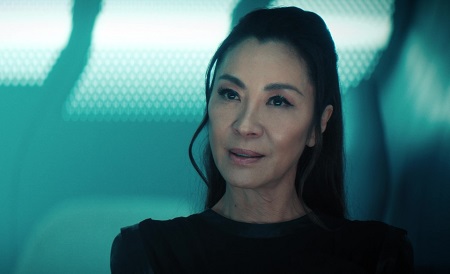
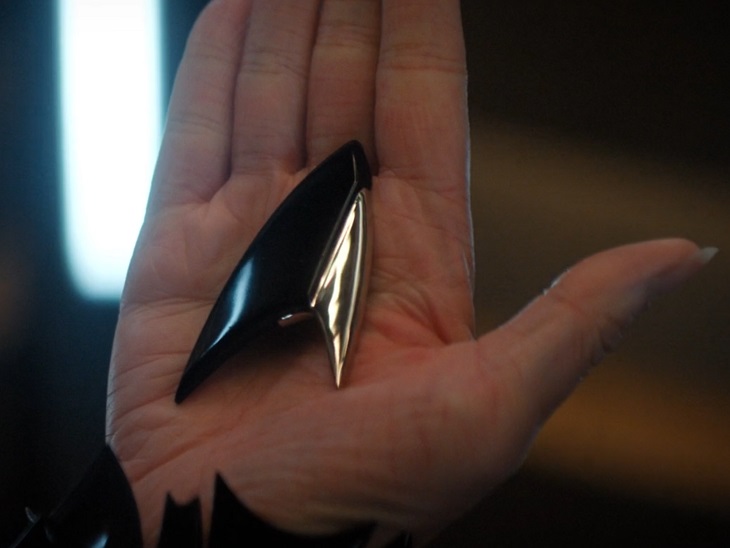

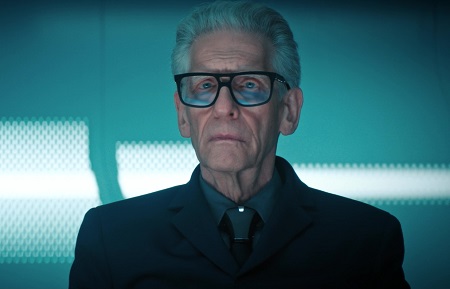


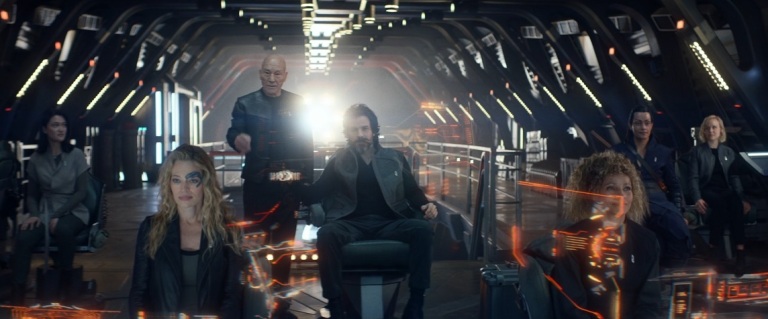


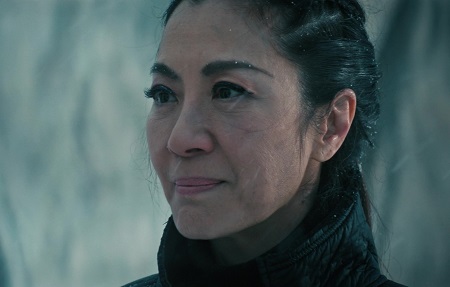













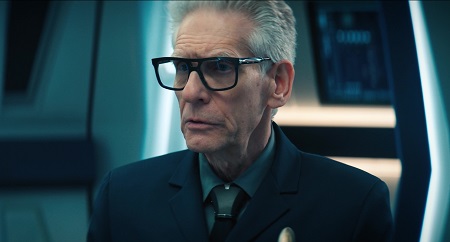

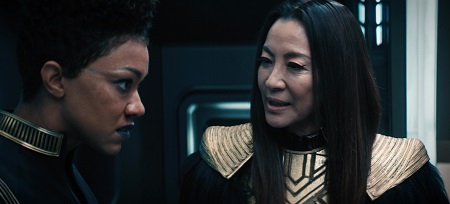
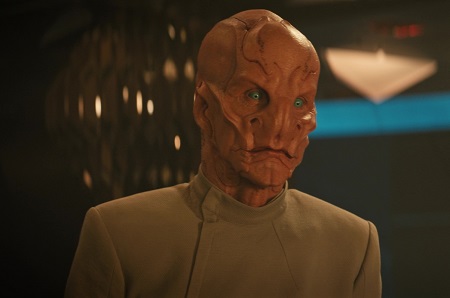
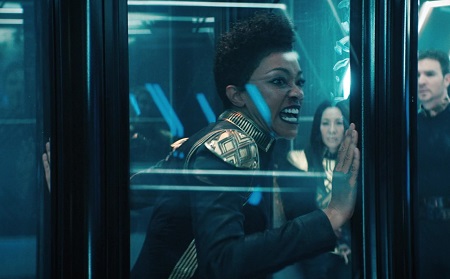
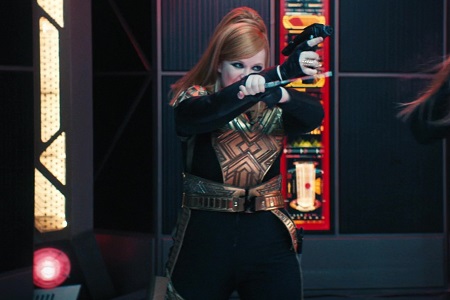
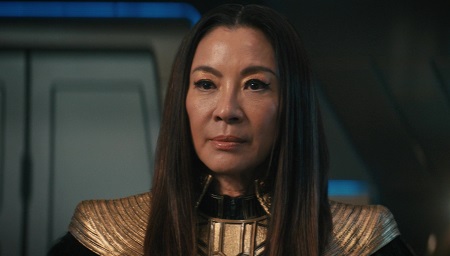


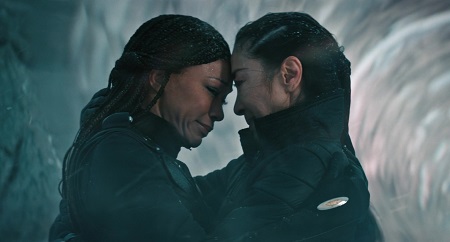

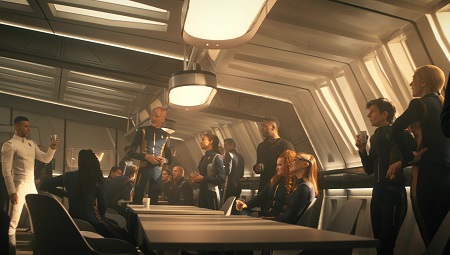
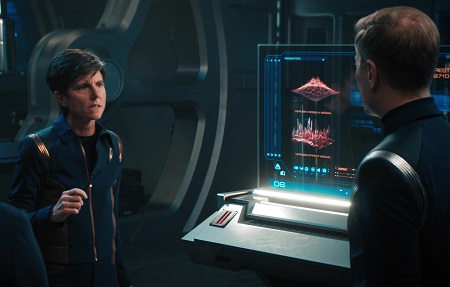


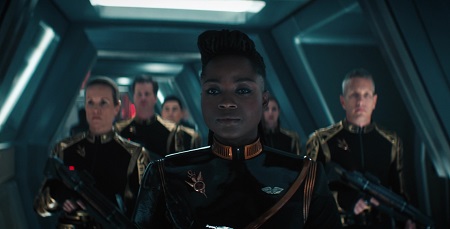
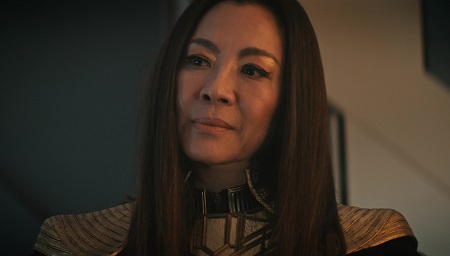
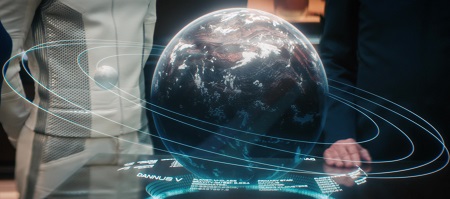
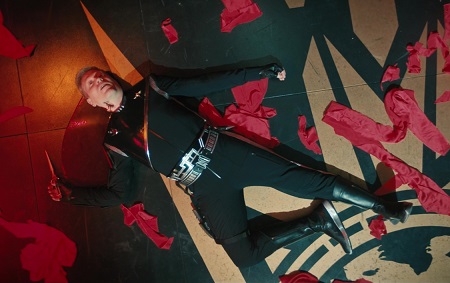
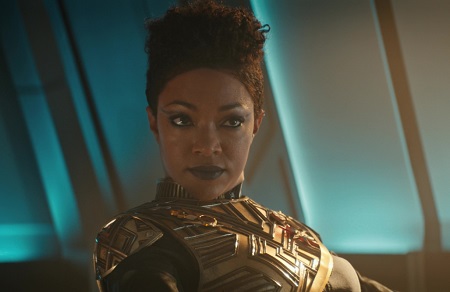
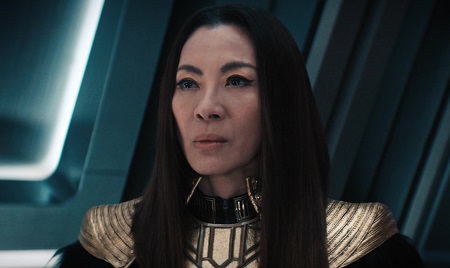



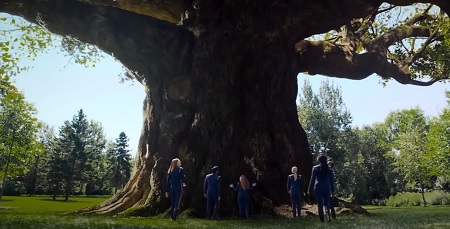

 Trekking with Dennis