


Spoiler Warning: Beware of spoilers for the following Star Trek productions: The Next Generation Seasons 1-3, Voyager Seasons 4-7, First Contact, Enterprise Season 2, Prodigy Season 1, and Picard Seasons 1-3.
Let’s talk about everyone’s favourite Star Trek villain: the Borg Collective!
Okay, maybe that’s a tiny bit of an exaggeration! But the Borg are certainly up there as one of the Star Trek franchise’s most iconic and frightening villainous factions, and there’s no shortage of theories and speculation in the Star Trek fan community about how the Borg operate and what their methods and overall goals are. I thought we could touch on one aspect of that today.
I briefly outlined what I’m calling the “Borg Teasing Theory” in a post here on the website a couple of days ago. That piece was all about some of my personal head canon explanations of unseen, unexplained, contradictory, or vague things from across the Star Trek franchise – but I thought this particular theory warranted its own full article! Click or tap here to check out the rest of my head canon, if you’re interested in my take on the likes of warp factors and cloaking devices.
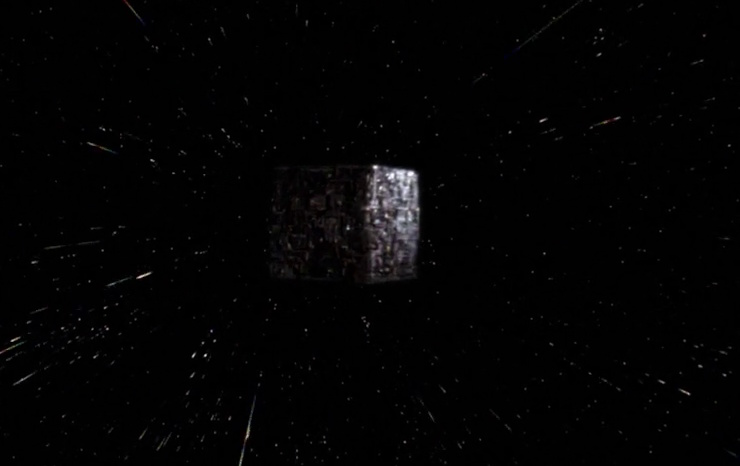
So what’s the tl;dr of this theory? In brief: the two major Borg attacks on Earth during The Next Generation era – as depicted in The Best of Both Worlds and First Contact – weren’t 100% serious attempts to assimilate the entire planet or the Federation. They were, in a word, teases. The Borg Collective hoped to push Starfleet and humanity to develop new weapons, shields, scanners, and medical technology in the years after their incursions – which they would then be able to assimilate when they launched a full-scale invasion at some point in the future. In short: the attacks were not attempts at total conquest and were not intended to fully succeed at assimilating Earth.
We’ll get into detail in just a second, but before we go any further, I have a couple of important caveats. Firstly, all of this is the entirely subjective take of just one old Trekkie. If you hate this theory, think I’ve got it completely wrong, or feel I’ve misunderstood some key part of Star Trek that would invalidate it… that’s okay. None of this is canon or likely to ever be confirmed on screen anyway! Secondly, I’m not claiming to be the sole inventor of this theory. Other Trekkies may very well have come up with similar ideas independently, and I’m not taking credit for anyone else’s work or theories.
Finally, a word about fan theories. I like writing and I like Star Trek, so writing about Star Trek is a fun way for me to spend a little more time in this world. But no fan theory – not even one that seems totally plausible – is worth getting upset or worked up over. As I said a moment ago, none of this is canon and may very well be totally debunked in the future. Given the status of the Borg Collective after Picard Season 3 (and Paramount’s shaky finances), we may never get another Borg story anyway. But this is supposed to be a fun exploration of a theory I’ve had kicking around in my mind for decades, not something to take too seriously.
Phew, that was a lot! But with the caveats out of the way, it’s time to jump into the theory!
Let’s start by explaining what this “tease” is. As I outlined briefly above, I believe that the Borg were not fully serious or committed in their two attacks on Earth. My evidence for this is simple: on both occasions, the Borg sent only one single ship to Earth. A Borg cube can contain, depending on which episode we use as a source, up to 100,000 drones. Given the size of Starfleet, the number of ships at the Federation’s disposal, and even just the population of Earth itself (which could be somewhere in the region of 9-10 billion in the 24th Century) one ship and 100,000 drones doesn’t seem like a large enough invasion force.

Assuming the Borg cube from either Wolf-359 or the Battle of Sector 001 managed to defeat Starfleet’s armada and Earth’s planetary defences, and was able to successfully transport down all of its drones, the logistics of assimilating such a large population don’t track. If Earth’s population is 10 billion and there are 100,000 Borg, that’s a ratio of 100,000-to-one – meaning each Borg drone would need to have a hand in the assimilation of 100,000 humans. With only a single ship, any ground invasion would be vulnerable to Starfleet regrouping and returning; the destruction of the cube would cut off Borg forces on the ground.
Despite jokes I’ve made before about Earth being undefended, it’s still the headquarters of the Federation, with Starfleet Academy and Starfleet HQ on the planet, too. There are going to be thousands of armed Starfleet security personnel, Federation HQ guards, Section 31 operatives, and others on the planet. Even if resistance was scattered at first, and the Borg were able to shut down Starfleet communications, resistance on Earth would be ferocious. To jump over to a different franchise for a point of comparison: look at the Reaper war in the Mass Effect series. The Reaper invasion of Earth was hampered at every turn by resistance fighters from all walks of life, led by the remnants of the Alliance military. There’s no reason to think a Borg attack on Earth wouldn’t lead to a similar resistance movement springing up, with armed civilians led by Starfleet personnel.
With the Borg preoccupied with a war of attrition on the ground, their sole vessel in space would be vulnerable. The cube might’ve been able to beat off Starfleet’s initial armada, but that was a hastily thrown together gaggle of whatever ships were on hand when the Federation realised what was coming. Ships were brought out of mothballs and unqualified officers were tapped to take command. With Starfleet being better-prepared and having time to regroup – while also calling on allies like the Klingons – round two against the cube would go a lot better!
So even if the initial attack was successful and the Borg managed to defeat a defence force and land drones on Earth, it would be a matter of time – days or perhaps a couple of weeks – before Starfleet would be back with a much larger fleet. The Borg cube may have beaten the Federation’s hastily-arranged defence ships, but the full might of Starfleet, combined with Klingons and other allies and backed up by tactical data gained from the earlier battle, would – in my opinion – have a strong chance of destroying the Borg’s only vessel in the system. After that, it’s just a case of landing as many troops with modulated phasers (and Klingon bat’leths) and mopping up the remaining drones.

To me, this is the most likely outcome for both the Battle of Wolf-359 and the Battle of Sector 001. And the Borg, having studied humanity and the Alpha Quadrant, are undoubtedly aware of this. One ship, even maxed out with as many drones as possible, simply can’t assimilate Earth on its own – let alone expand the fight to the rest of the Federation and its allies.
But why do I think the Borg Collective has the resources to launch a bigger attack? Simple: take a look at the Collective in its Delta Quadrant home in Voyager. The Borg’s Unicomplex alone contained more than a trillion drones, with the entire Collective perhaps comprising quadrillions of Borg. There may be tens or hundreds of thousands of Borg cubes – not to mention other Borg outposts, space structures, and assimilated planets. The sheer scale of the Borg Collective is what makes it so powerful, so frightening, and such a dangerous opponent. So why would the Borg choose to attack Earth in such a small-scale way?
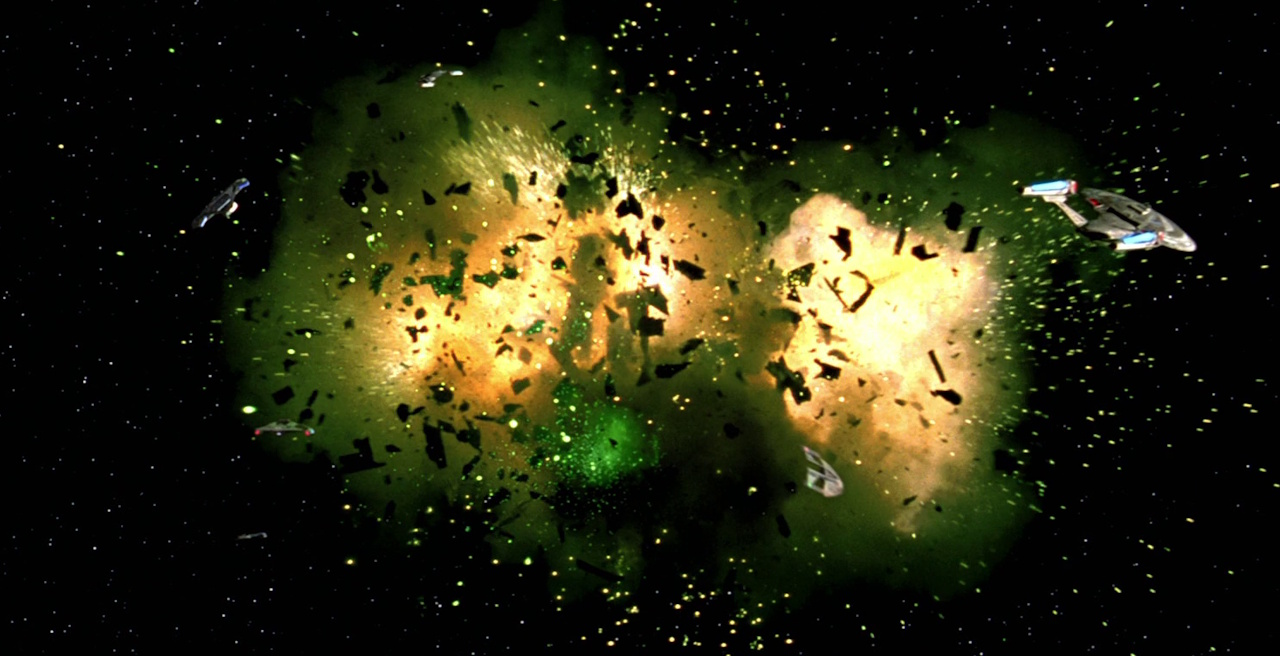
Given how powerful a single cube could be, a fleet of perhaps a dozen would make light work of anything Starfleet and its allies could muster. And with two million drones instead of just 100,000, the Borg’s ground offensive would be much quicker and would be more easily able to overcome any resistance. The assimilation of Earth could proceed much more smoothly – with only a minimal amount of extra investment from the Collective. For a faction with 10,000 ships, using twelve on this one task is barely a drop in the ocean. We’ve seen the Borg assimilate other Delta Quadrant races, like Arturis’ species from the episode Hope and Fear, using “overwhelming force.” One single cube is not, I would argue, the kind of overwhelming force needed to conquer Earth and the Federation.
So to be clear: this part of the theory states that the Borg have the means to easily overpower and outgun the Federation and its allies and achieve the task of assimilating Earth. They have no reason not to go all-in and fully commit to this invasion; they aren’t worried about loss of life, there’s no Borg economy to be damaged by building extra ships, and if their target is to fully conquer Earth and the Federation, they could do so with ease. But they don’t do that. Instead, on two separate occasions they’ve sent a single cube. Why?
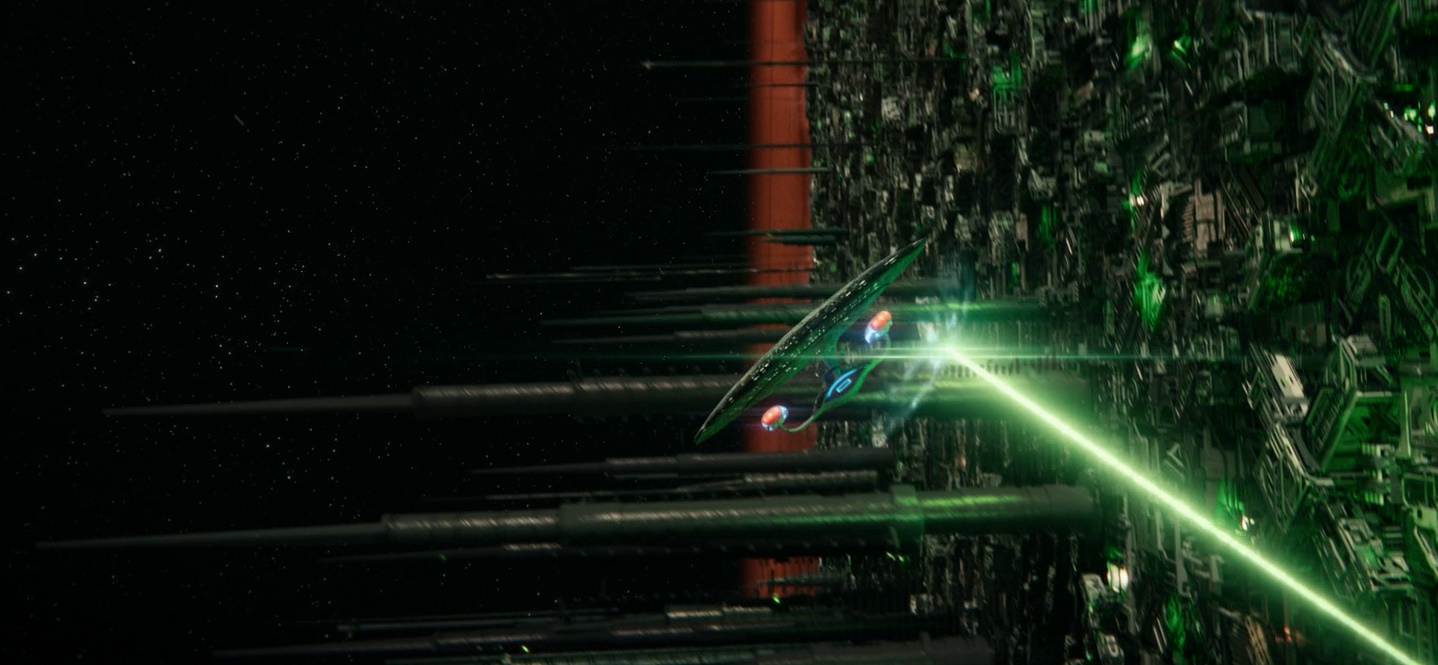
To answer that, we first have to consider what the Borg are and how they operate. The Borg are a hive mind, operating as one. They have assimilated – according to their own sources – at least 10,000 species across the thousands of centuries that they’ve existed. But because they’re one hive mind, they lack creativity. They lack inventiveness – and with that, we can infer that they don’t have the ability to create brand-new technologies any more.
The hive mind is adaptable, and having been introduced to something – say, a particular phaser modulation – the Borg can adapt. Adaptations are rolled out at transwarp speeds across the entire Collective, meaning that any Borg encountering that specific phaser modulation in future will be protected. But adapting to something isn’t the same as inventing – and this lack of creativity and inventiveness could be a problem for the Collective.
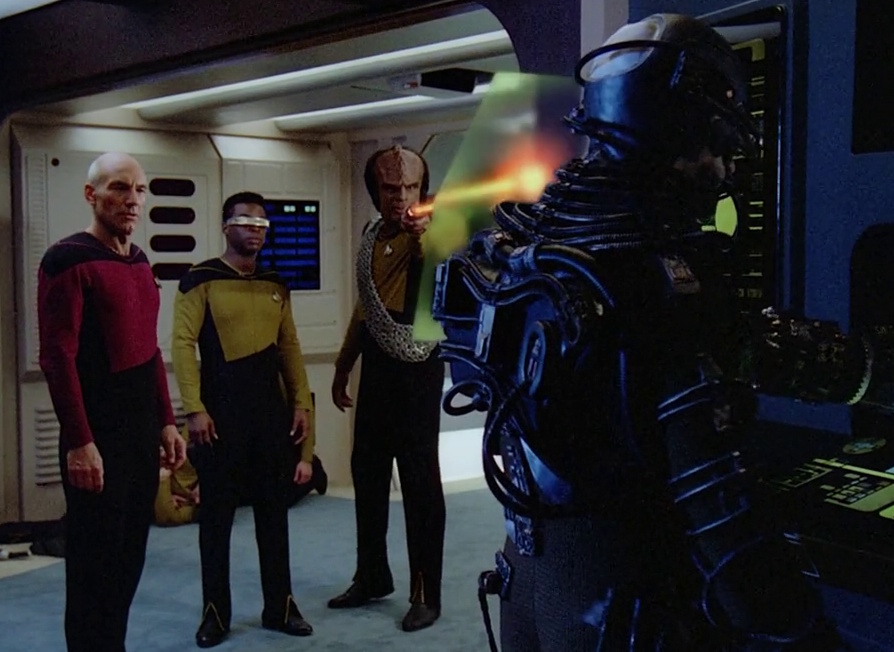
So how does the Collective acquire new technology, then? If they don’t develop things themselves they must get them from somewhere, right? I mean, the Borg are more technologically advanced than the Federation and that didn’t happen by accident! The answer is simple: the Borg acquire everything from information to technology through assimilation.
This was their weakness when confronted with Species 8472. They couldn’t assimilate a single member of the species or one of their ships, so they were left blind and helpless. And this, I would posit, is the fundamental reason why they “tease” certain species – like humanity. We probably aren’t a unique case; I believe this is a tactic that the Borg will have deployed on countless other occasions against similarly creative and adaptable species. But it’s a tactic that the Collective knows can work to its advantage.
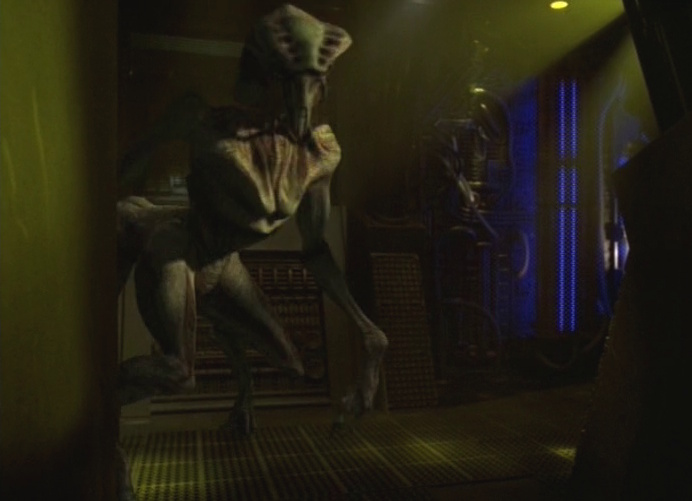
The objective is simple: by making a relatively small demonstration of their power, the Borg incite fear in their targets. This fear leads to huge investments in weapons, shields, starships, and the like… all of which the Borg want. On one hand, the Borg want to see if their target can find a weakness in the Collective and its technology so they can prevent anyone else from exploiting it in the future – basically rolling out a Collective-wide “patch” to fix any weaknesses or vulnerabilities that the target species may have identified. And on the other hand, the Borg want any species they target to have achieved their full potential – giving the Collective the best, newest technologies that the target could create. This is how the Borg – at least in my opinion – are able to acquire new technologies.
And this is what they’re doing to Earth, humanity, and the Federation at large. By launching these attacks, the Borg are pushing the Federation and Starfleet to develop new technologies, whether that’s weapons, ships, medical supplies, transporters, shields… the list goes on. Perhaps the second incursion was intended to see how far Starfleet’s new inventions had come, or maybe it was just a second “tease” to force Starfleet to keep working and keep inventing. Either way… it worked.
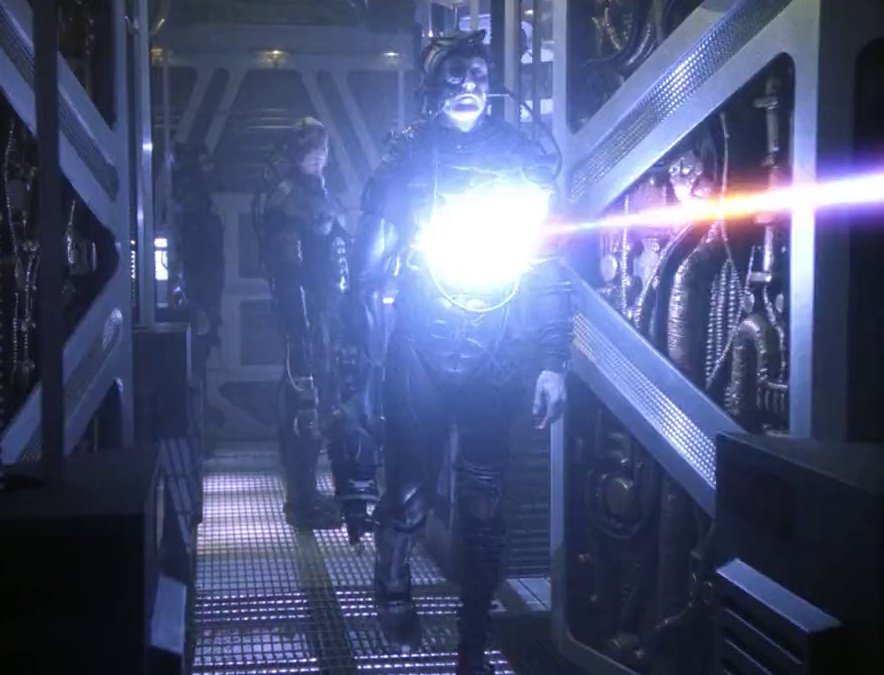
Why would the Borg target Earth, though? It’s not like they need Earth specifically for its location or resources, and Earth isn’t even close to the Borg’s native territory. The Borg are mostly in the far-off Delta Quadrant, though they may have colonies or outposts somewhat nearer to the Federation, such as on the El-Aurian homeworld. So the question remains: why Earth? When there are so many other planets and species in between the Borg’s home territory and the Federation, why jump halfway across the galaxy for an invasion?
We already know that the Borg don’t assimilate everyone they come across. In fact, the Borg can be downright picky – opting to ignore the Kazon, for instance, as they were deemed “unworthy” of being assimilated as they’d somehow detract from the Borg concept of perfection. It stands to reason that some species may be of more interest to the Borg – even those in a faraway part of the galaxy. I think the El-Aurians are a prime example: their homeworld, while nowhere near Earth, seems not to have been on the very borders of Borg space, either. Yet the El-Aurians were targeted – perhaps for their telepathic powers, or perhaps because the Borg considered them a threat. This is a species, lest we forget, that has tangled with the Q Continuum and forced them to the negotiating table. The same basic reasoning may apply to humanity.
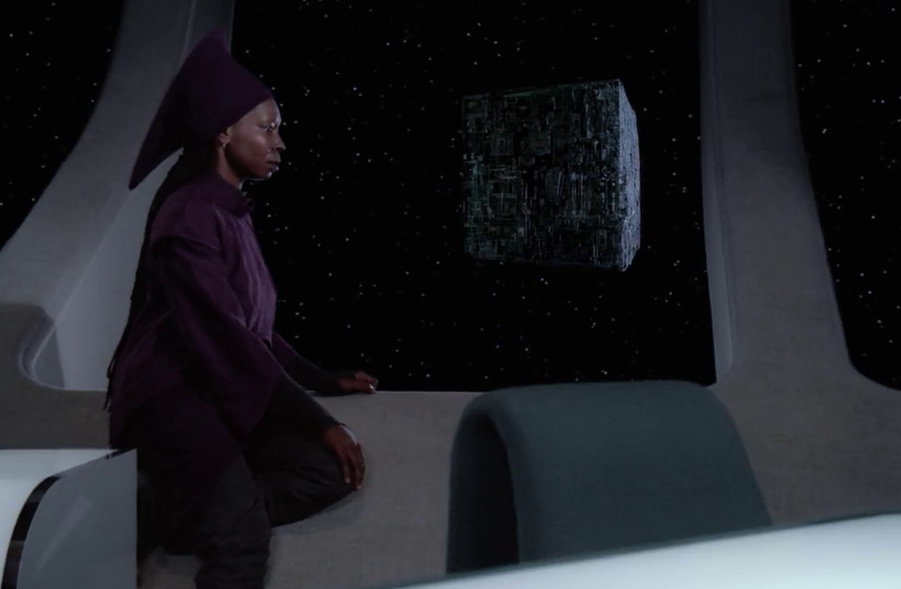
Humanity has to be one of the most resilient and creative species that the Borg have ever encountered. Humans were able to track a Borg vessel and develop technologies to keep themselves hidden from the Collective while studying them – this is what Seven of Nine’s parents, the Hansens, did in the 2340s. This may have been the Borg’s first encounter with a human… and their curiosity was piqued!
Then, not long after the assimilation of the Hansens, the Borg received a strange message. Originating two centuries ago in a far-flung part of the galaxy, it told the tale of a time-traveling sphere, a planet of spacefaring people, and a climactic battle. The Borg who survived the Battle of Sector 001 had crash-landed on Earth in the past, only to be awakened by humanity in the 22nd Century. Captain Archer and his crew were able to stop them – but not before they sent a message to the Collective in the Delta Quadrant. Between the message from the past and the assimilation of the Hansens, the Borg must’ve realised how significant Earth and humanity could be for the Collective.
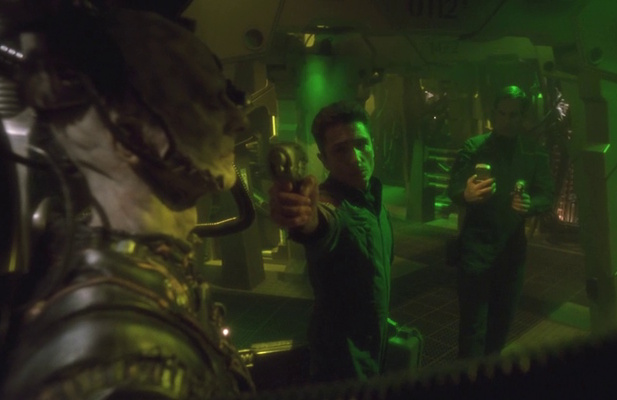
After receiving this “blast from the past” transmission, assimilating the Hansens, or both, the Borg had humanity and Earth in their sights. But rather than launch a full-scale invasion in 2350 – years before the Enterprise-D’s encounter with a cube – the Borg took a more subtle approach. Firstly, they may not have been entirely certain of Earth’s location, instead sending ships to scout the Alpha and Beta Quadrants for signs of humanity and the Federation. Then, rather than attack straight away, the Collective bided its time, launching small-scale attacks on outlying colonies along the Neutral Zone to see what would happen.
By attacking both Federation and Romulan outposts (as seen in the Season 1 finale of The Next Generation), the Borg may have hoped to trigger a conflict between the two powers – before swooping in later to attack both of them. Or, perhaps more likely, this was the Borg’s first attempt to assimilate humans en masse to see if they were worth bothering with – and picking outlying colonies makes a lot more sense than rushing to Earth straight away. The Romulans may have been collateral damage, in that case.
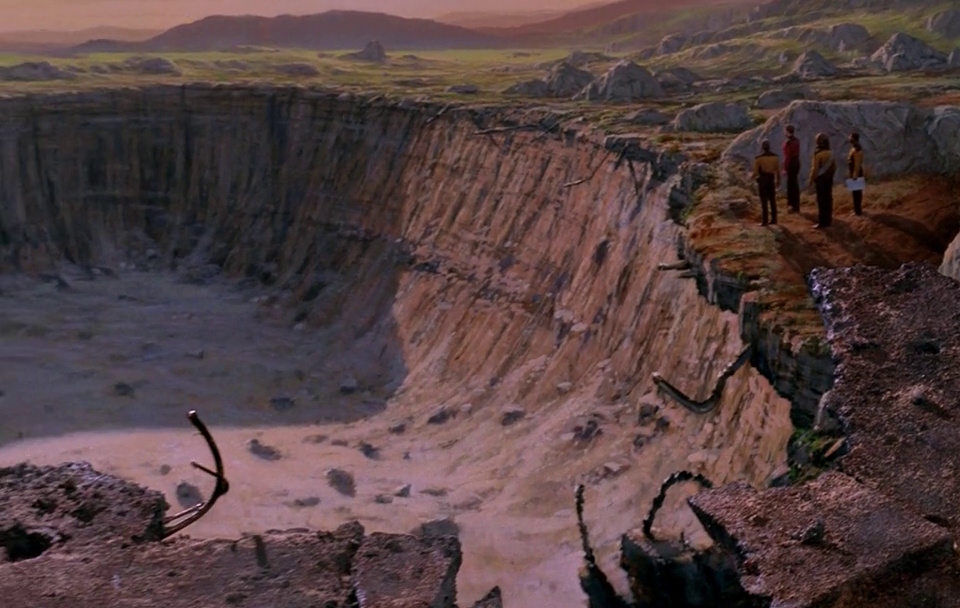
In any case, the Borg determined that humanity was a worthwhile target – something that was only further confirmed by their encounter with the Enterprise-D a few months later. As an aside: Q may very well have saved humanity by his intervention in Q Who! I have a longer piece on this subject – which you can find by clicking or tapping here – but here’s the short version: the Borg knew about humanity and Earth years before Starfleet knew about them. By hurling the Enterprise-D into the path of a Borg vessel, Q gave Picard and the Federation valuable insight into the Collective, forewarning them of the attacks to come.
With the Borg determined to assimilate humanity, decisions had to be made about how to do so. The hive mind, operating as one, makes such decisions at light-speed, and after confirming humanity was a suitable target for assimilation, the Borg decided to “tease” the Federation, pushing them to design new weapons, shields, starships, medical devices, and so on… all so that the Collective could assimilate it later, adding to their perfection. This is how the Borg operate, and it’s why they chose to launch small-scale attacks against Earth instead of simply arriving en masse with overwhelming force.
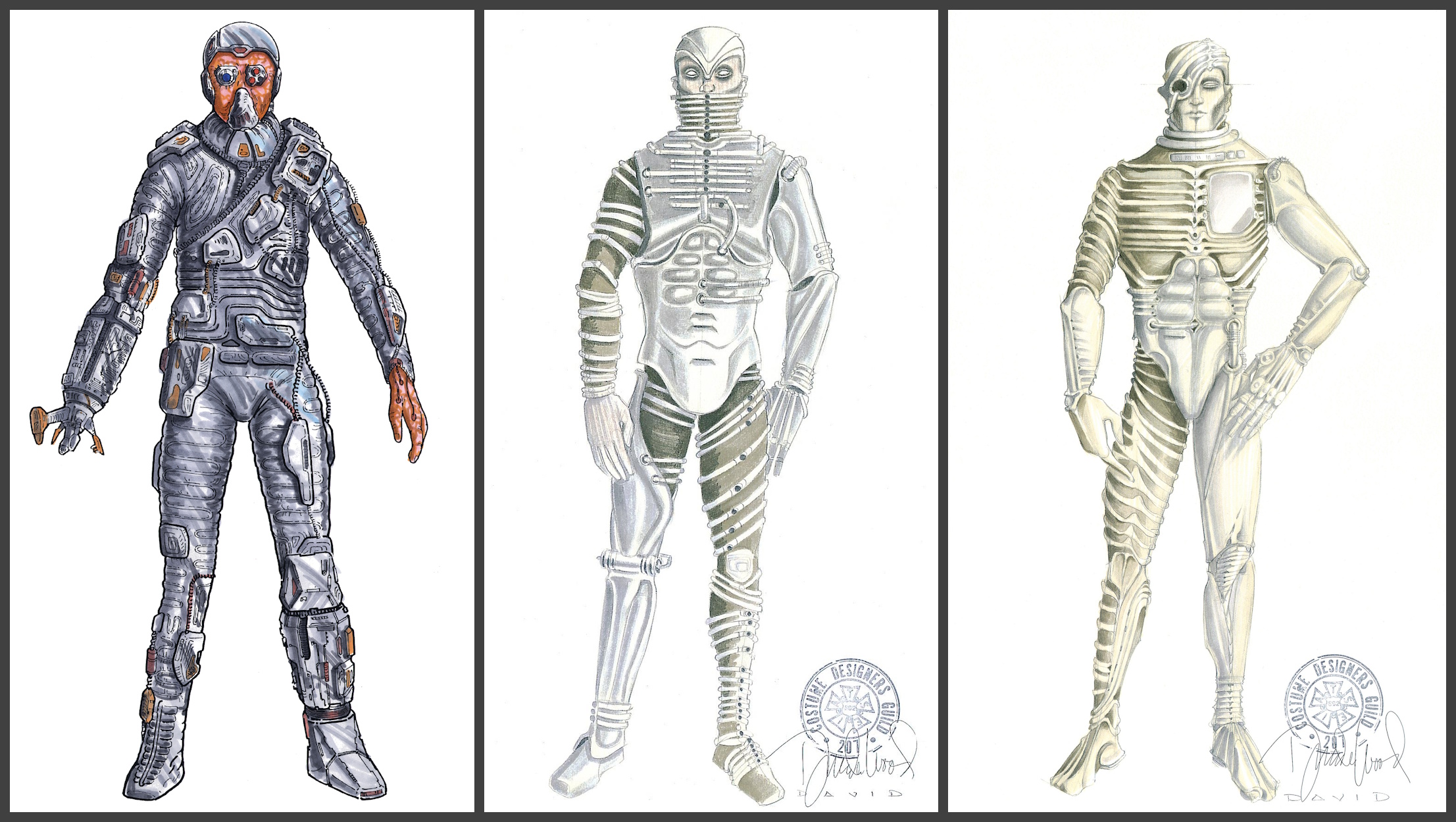
Image Credit: Frogland Archive/Forgotten Trek
From the Borg’s perspective, this approach is a win-win. Either their attack succeeds in full, with humanity and Earth being assimilated over a period of weeks or months, giving the Borg control of the planet and a staging-post for a larger-scale invasion of the Federation. Or it “fails” to achieve that objective, but in doing so provides the Collective with incredibly valuable tactical data on Starfleet, Earth’s defences, and so on, while also pushing the Federation to develop new technologies. The Borg want these technologies – either to “patch” vulnerabilities and weaknesses they may not be aware of or to add to their perfection.
There are real-world parallels. The Second World War led to the creation of modern-day computer technology, rocketry, and atomic power. The First World War led to huge advancements in flight, artillery, and motor vehicles. These are just a couple of examples from our own history of how war and devastation can lead to technological change. The Borg, I would argue, seek to artificially inflate the pace of technological advancement by baring their teeth and showing their target a tiny fraction of their power. In desperation, Starfleet and the Federation began working at pace to develop everything from phasers to starships – all ripe for assimilation by the Collective.
So that’s the theory.
The Borg were not fully invested in assimilating Earth either in 2367 or 2373 – their only two direct attacks on Earth. These incursions had a different goal: pushing humanity and the Federation to develop new technologies that the Borg could assimilate later, when the time was right. By revealing themselves and showing Starfleet a glimpse of their power, the Borg believed their new target would, in effect, work for them, designing and building new weapons, ships, and other devices that the Collective no longer had the creativity to invent for itself.
To me, this theory made sense even as far back as when I watched First Contact in the cinema in 1996! Developments in Voyager, Enterprise, and more recently in Picard, too, have only added to this theory, expanding it and deepening my belief that the Borg really weren’t serious about conquering Earth. To them, the attacks served a different purpose. It took almost everything Starfleet had to beat the Borg, but given the sheer size and scale of the Collective, we know they had the resources to commit more ships and more drones to an attempted invasion of Earth. There has to be some reason why they didn’t send two or three cubes instead of just one – and to me at least, this idea makes the most sense and squares that circle.

I hope this has been interesting! I doubt that this theory will ever be confirmed – and it may even be actively debunked one day, if we ever get another Borg story. Some of you might think that the Borg’s time travel in First Contact (or some other plot point from a Borg episode) already negates or invalidates this theory… and that’s okay! As I said at the beginning, this is just a fan theory or head canon, and it’s all subjective at the end of the day. I share this theory with the Star Trek fan community in that spirit.
Speaking of Borg stories… will we see another one in Star Trek anytime soon? After Picard did three separate Borg or Borg-adjacent stories in its three seasons, and with the Collective having appeared in Prodigy and Lower Decks in recent years… I think it might be a while before the Collective makes another appearance. I certainly think it should be a while; I can’t be the only one who feels a little burned out on the faction, especially after their omnipresence in Picard. If and when the Borg return, I hope it’s in a big way. I’ve been kicking around the idea of a “Borg invasion” series for a while – and that could be a really interesting way for Star Trek to go one day in the future. If a fourth Kelvin timeline film ever gets off the ground, I don’t think it’s impossible to think we could see the Borg there, too.
But unless and until any of that happens… this is my theory! I hope you enjoyed this write-up and found it interesting.
The Star Trek franchise – including most episodes and films cited above – can be streamed now on Paramount+ in countries and territories where the service is available. The Star Trek franchise is the copyright of Paramount Global. Header font/text courtesy of textstudio.com. This article contains the thoughts and opinions of one person only and is not intended to cause any offence.
 Trekking with Dennis