Star Trek: Starfleet Academy – Series Premiere Review

A Star Trek-themed spoiler warning.

Spoiler Warning: There are spoilers ahead for Star Trek: Starfleet Academy. Spoilers are also present for the following Star Trek productions: Voyager, Discovery, Picard, Prodigy, and Strange New Worlds.

There was a time when the premiere of a brand-new Star Trek series would have been the most exciting thing I could’ve imagined. You don’t have to go back very far to see it, either: Strange New Worlds, which debuted in 2022, was somewhat soiled by the lack of an official broadcast here in the UK, but it was still an exciting moment. The same for Lower Decks in 2020. Picard, which premiered a few months before that, was probably my most-anticipated TV programme in years. Starfleet Academy, though… it wasn’t doing it for me.

The truth is that I arrived at the Starfleet Academy premiere with pretty low expectations. The show’s marketing campaign has been, in a word, lacklustre. A “teen drama” isn’t really my thing, with my teen years being so far behind me now that I can barely even see them over the horizon. And, after season upon season of modern Star Trek doing the whole serialised storytelling thing, I just feel pretty burned out on that. Some of that isn’t Starfleet Academy’s fault on its own… but it’s part of the conversation as we welcome the debut of the franchise’s eleventh show overall and ninth live-action series.

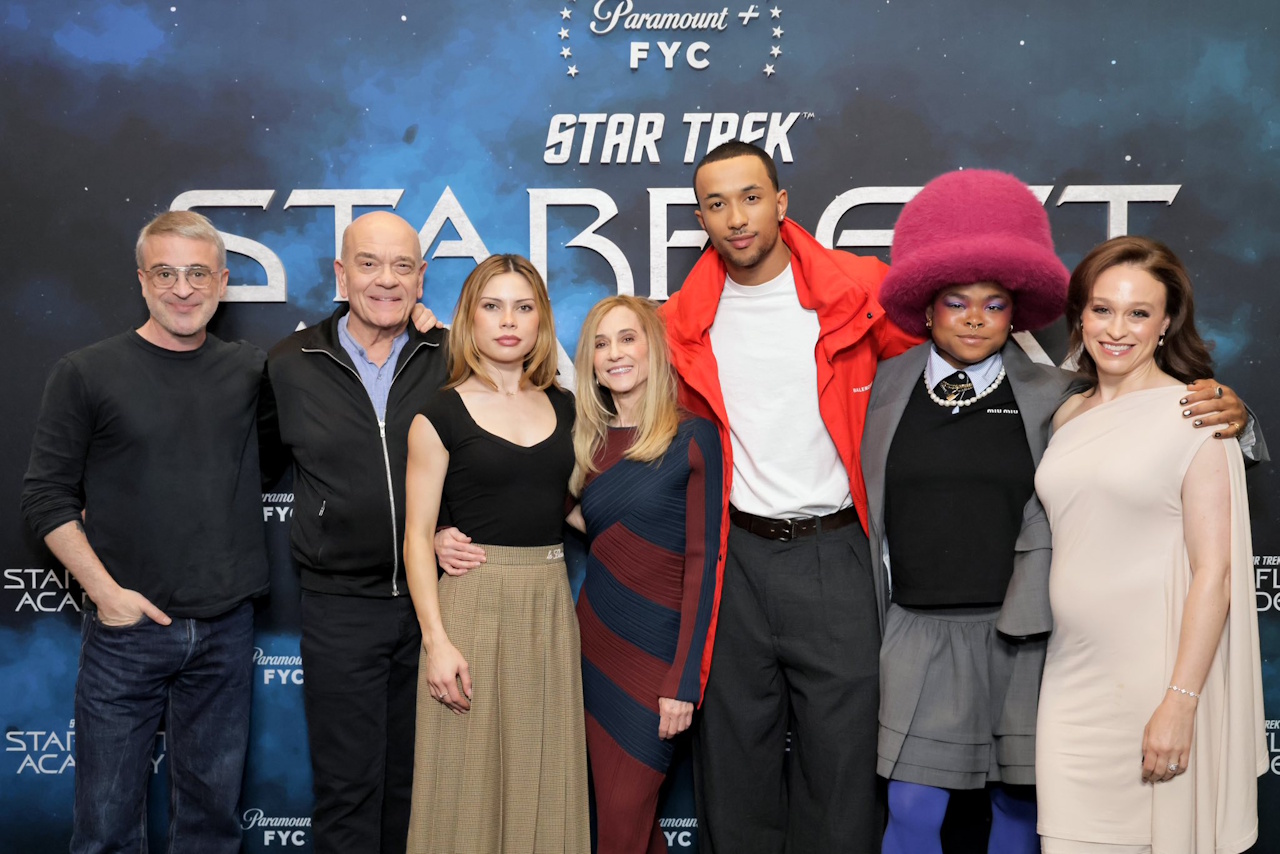
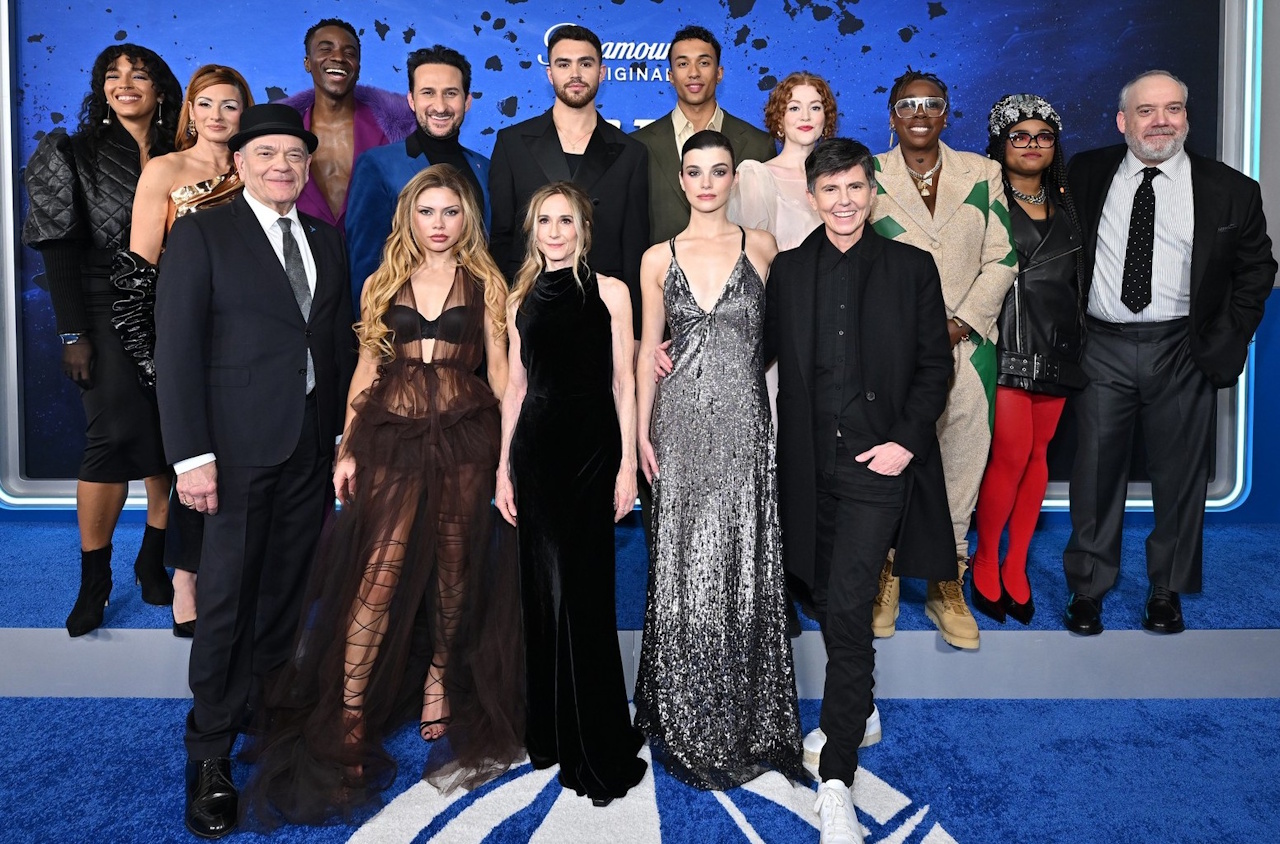
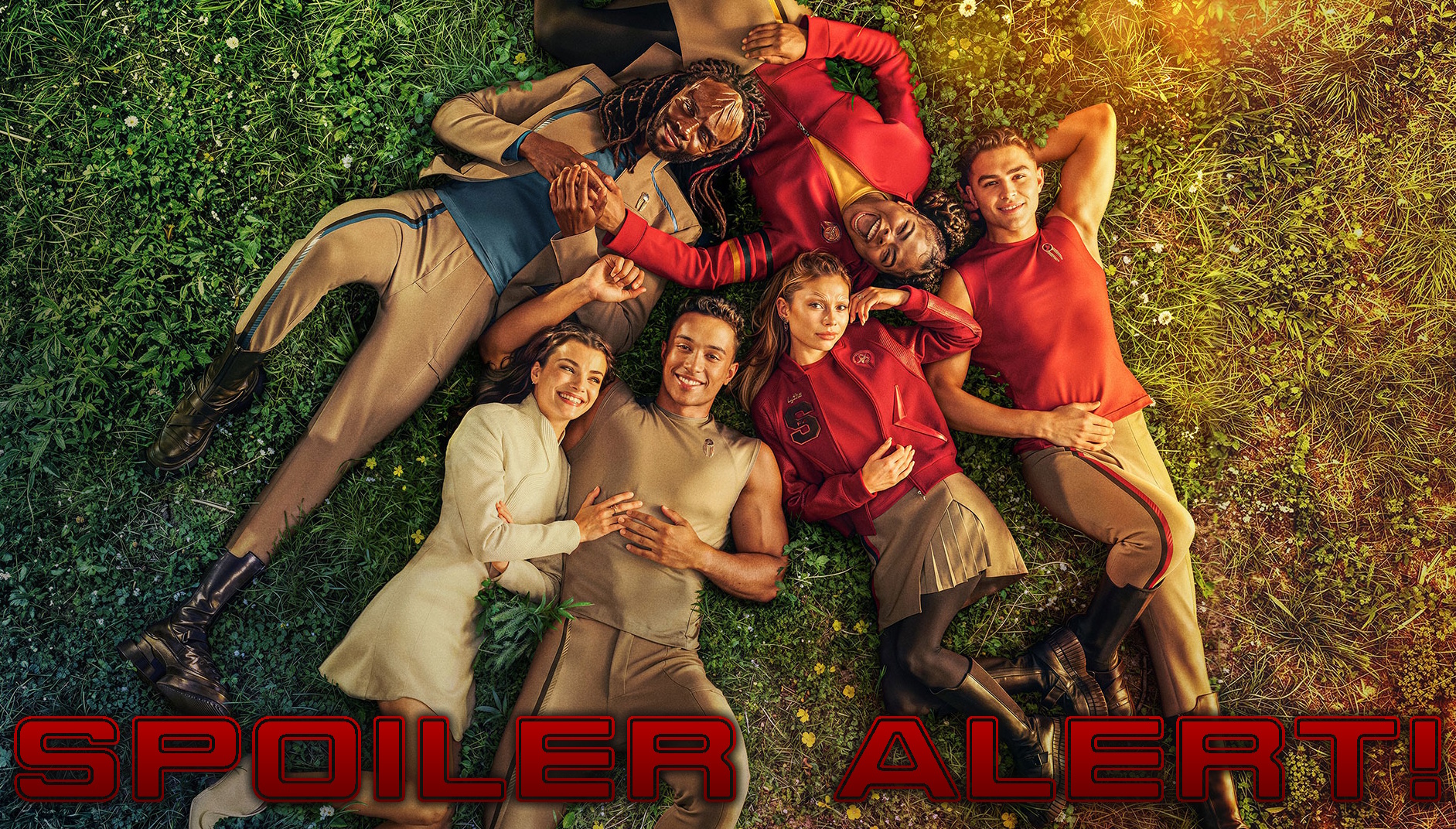
Photo from the Star Trek: Starfleet Academy premiere showing the main cast.
The main cast at the show’s premiere in January 2026.

I don’t sit down to watch *any* television show hoping to have a bad time. I genuinely want to give Starfleet Academy a chance to blow those low expectations out of the water, hook me in, and convince me that this has a shot at eclipsing Strange New Worlds to be the best thing the franchise has done in a long time. And I tried to go into the two-part premiere with an open mind – or as open a mind as possible, under the circumstances.

The long and short of it is that there are things Starfleet Academy did well, some areas where it was less competent, and a whole bunch of “teen drama” that I already knew I wouldn’t enjoy. I will go through the key points, but I don’t want to dwell for too long on the negatives, because I think there are moments that Trekkies will be able to enjoy – even if those moments are wrapped up in a narrative framework that isn’t necessarily going to be to everyone’s taste. I’m still hopeful that Starfleet Academy will be able to reach a younger audience; folks who might be more interested in the angst, crushes, petty rivalries, and schoolkid drama than you or I. The only way for Star Trek to survive is if the franchise can grow beyond its existing niche, and I really do want to see more Star Trek on our screens in the years to come. Starfleet Academy is intended to be a stepping-stone – an easy gateway for new, younger viewers to get started with what can be a dense, convoluted, and offputting franchise. There are tentative signs that Starfleet Academy may be able to achieve that objective, and I will certainly be crossing my fingers and hoping for its success.

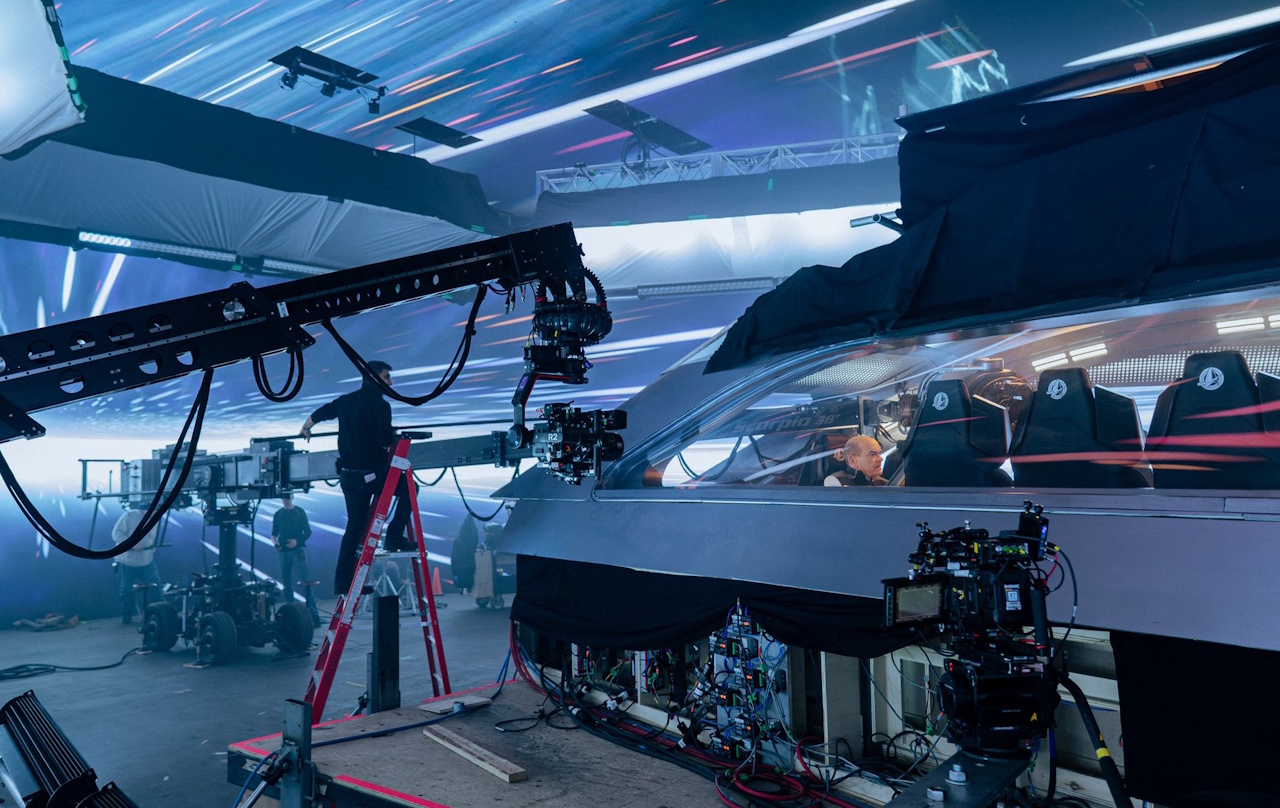
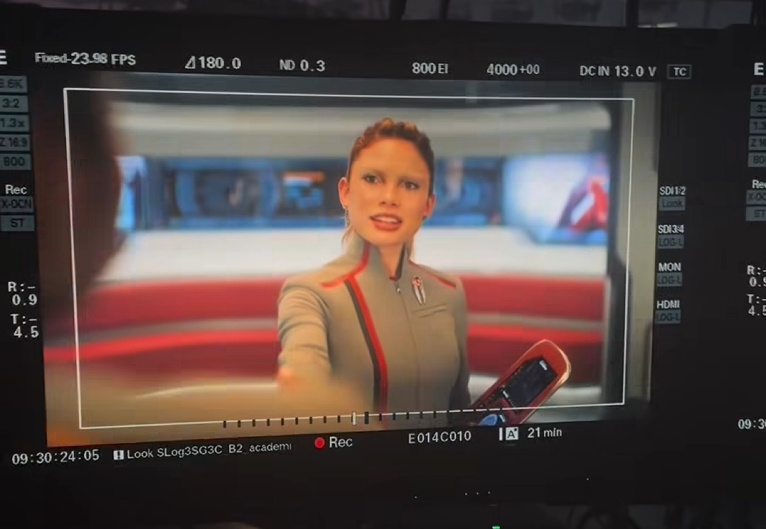
Behind-the-scenes image from Star Trek: Starfleet Academy Season 1 showing Genesis (on a production monitor).
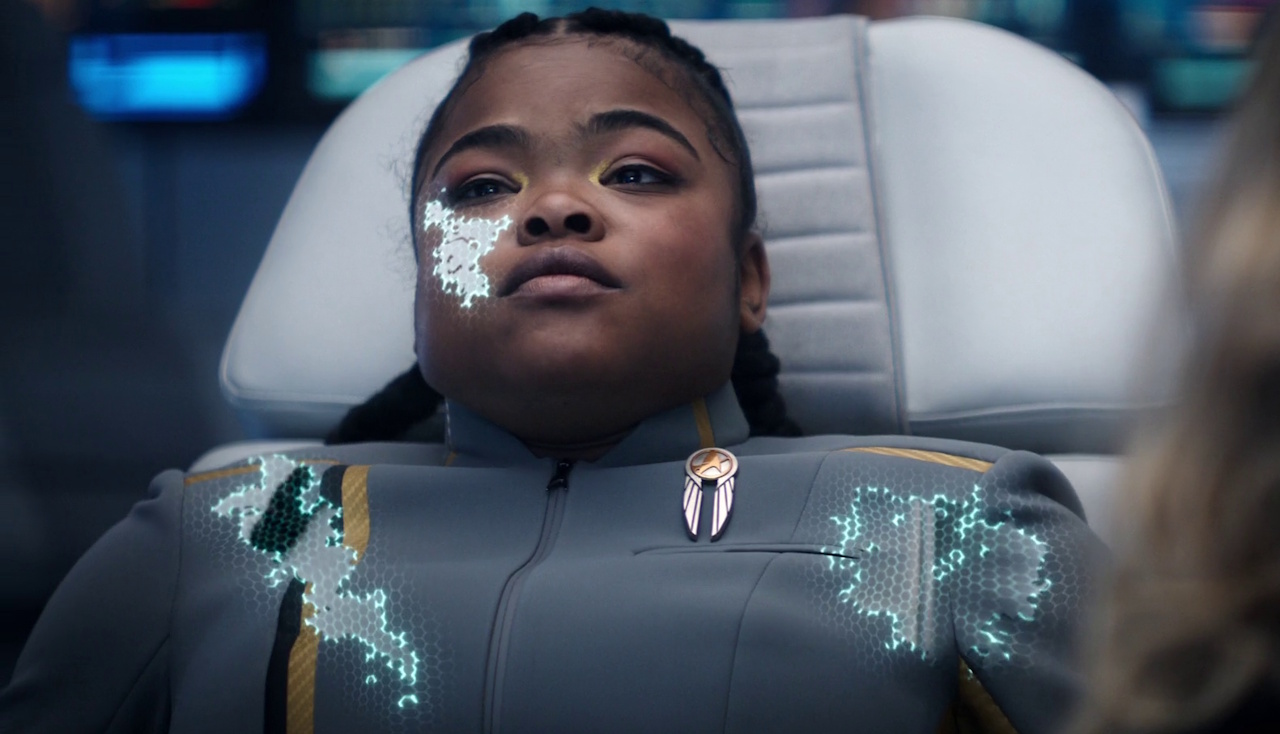
Behind-the-scenes shot of Bella Shepard as Genesis.

One thing I will compliment the writers, directors, and producers for is the length of the opening pair of episodes. I don’t know if this will be compensated for later in the season with shorter ones – and I hope not – but there’s no denying that Starfleet Academy got a meaty premiere. The two episodes together clocked in at almost two hours and ten minutes (sans credits), with the first part well over an hour long. That’s a decent length for a premiere, especially amongst today’s streaming TV shows with cut-down seasons and shortened episodes. There was enough time for the series to set up its main characters, introduce us to the cadets, instructors, and the season’s overarching antagonist, as well as set up two pretty different adventures for Caleb, Captain Ake, and the rest.

One thing I criticised Discovery for, after the show jumped forwards to this 32nd Century time period, was how it never really spent a lot of time considering the Burn – the massive, galaxy-changing event that led to the Federation’s ruin and the overall “post-apocalyptic” state of the galaxy. In just two episodes, I felt Starfleet Academy did at least as much as Discovery had done in three seasons with that premise, and the theme of rebuilding after a traumatic event was front-and-centre in a way it never was in that earlier show. Given the impact of the pandemic, wars, and other major events out here in the real world, there’s the potential for Starfleet Academy to do what Star Trek has always sought to do: examine real-world issues through the lens of science-fiction. The premiere made a start on that; time will tell if the rest of the season will continue those themes.

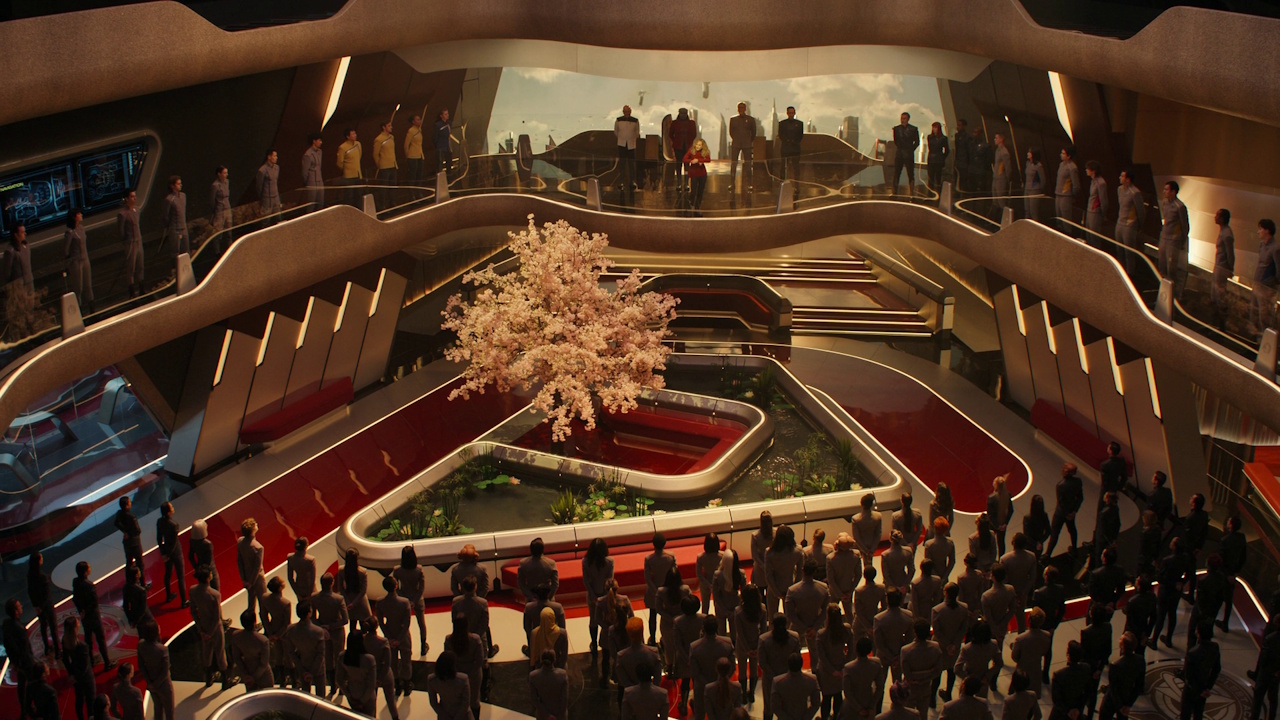
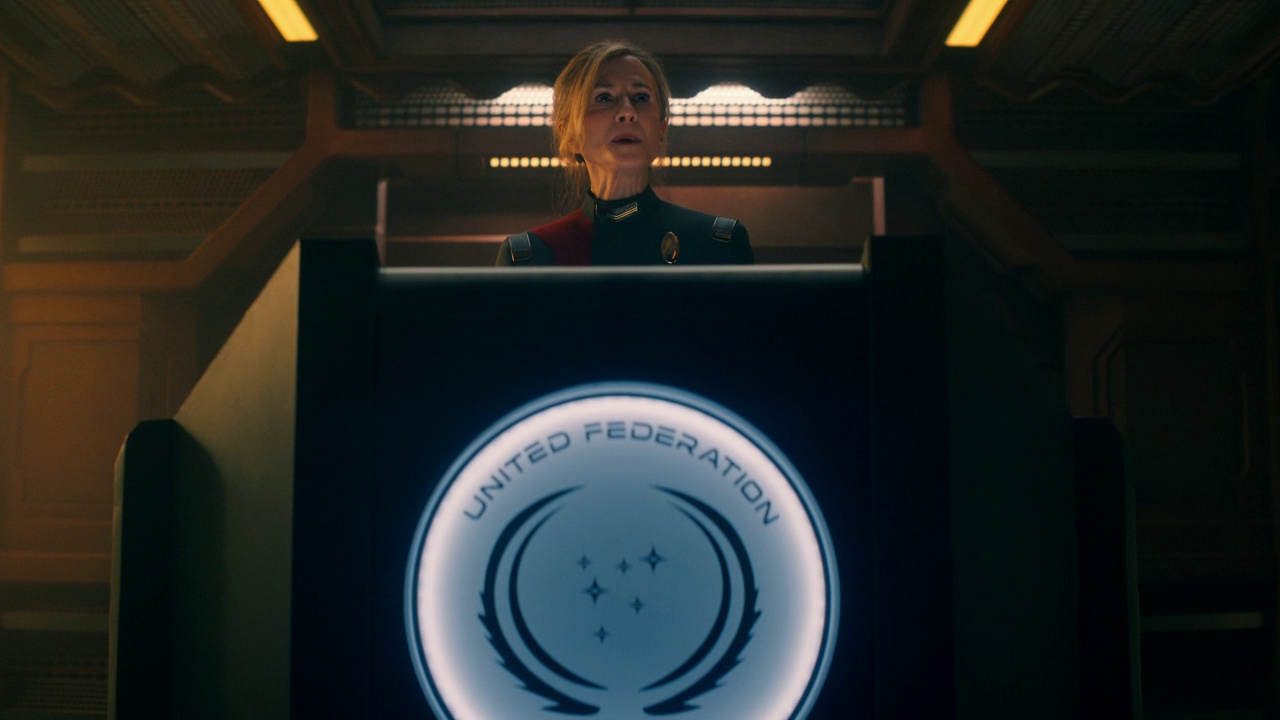
Still frame from Star Trek: Starfleet Academy Season 1 showing the Chancellor giving a speech to the cadets.
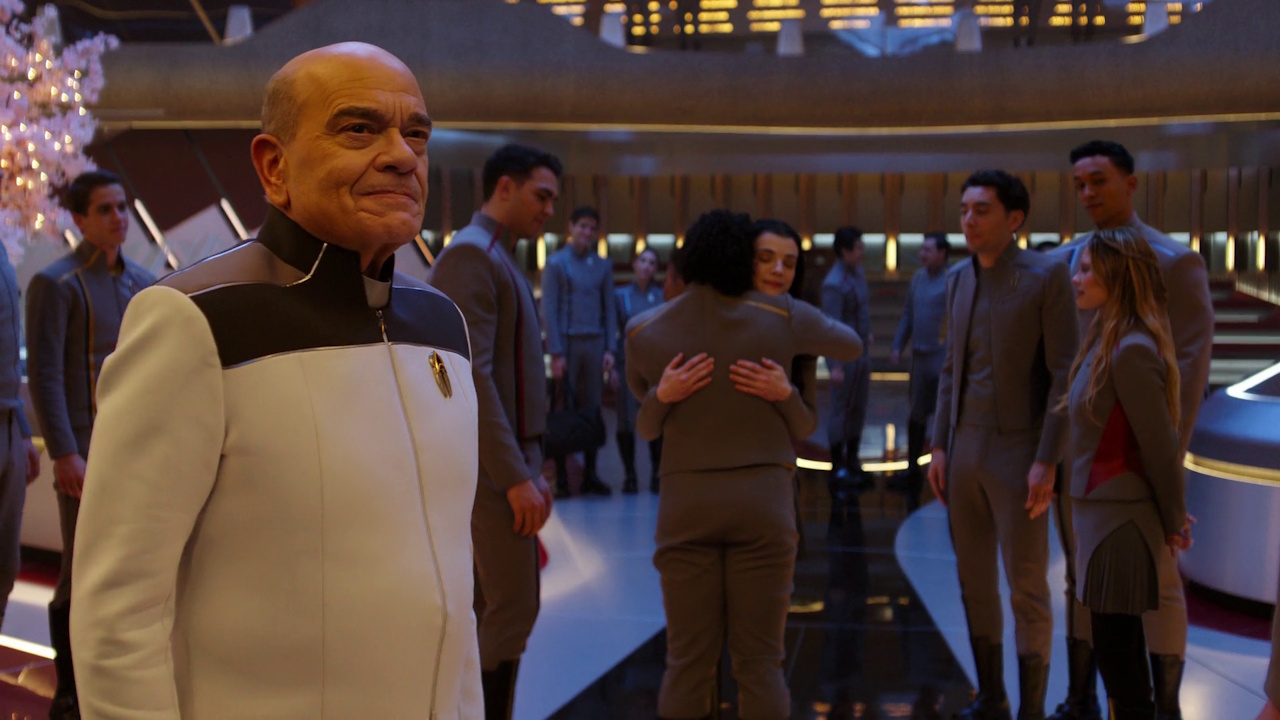
The re-opening of Starfleet Academy after the Burn.

The first two episodes of the season weren’t *as* heavily-serialised as I expected them to be, which is also a trend I’d very much like to see continue. We jumped from a story about Caleb, Captain Ake, and the villainous Nus Braka to one which focused on the Betazoids and their possible re-entry into the Federation. That change took us from an action-packed story to one that was much more focused on the subtleties of diplomacy. Both episodes kept plenty of “teen drama,” but they had different kinds of storylines at their core for those dramatic character moments to play out in front of. In that sense, I was quite pleased to see at least some effort to give the series a chance to explore different kinds of stories, different alien factions, and different characters.

That’s not to say that the show is as episodic as I’d have wanted it to be. Starfleet Academy has a pair of co-protagonists, really, in Captain Ake and Caleb, and the second episode of the season, in part, advanced their stories and the search for Caleb’s missing mother. In that sense, it’s not a “one-and-done” story that you could just pick up and watch without the context of the preceding episode – and I can only assume this trend will continue across much of the season.

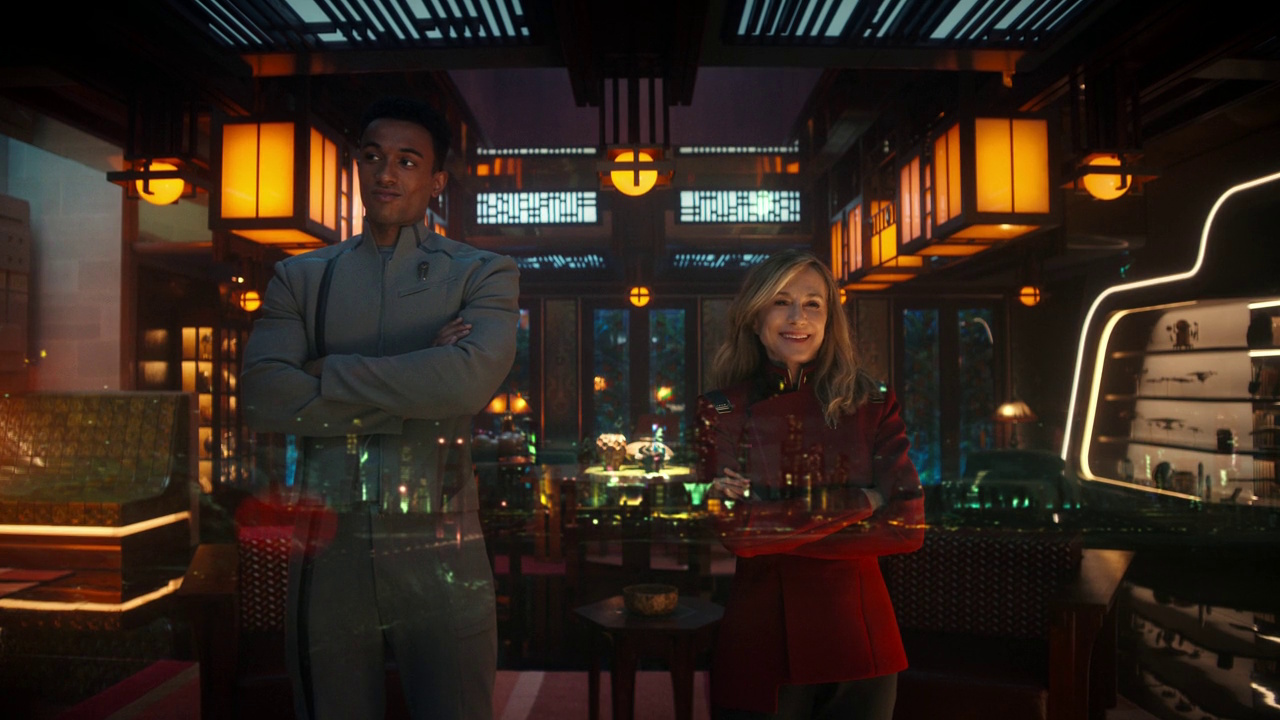
Still frame from Star Trek: Starfleet Academy Season 1 showing Caleb and Captain Ake at the window.
Caleb and Captain Ake.

Star Trek, as a franchise with a focus on exploration, works better – in my opinion – when it has the freedom to explore new aliens, new locales, and new themes basically every week, and when a rotating cast of main characters each get turns in the spotlight. But I fully accept that that format *also* worked best when TV shows had the freedom to run to twenty-plus episodes per season instead of eight or ten. However, Strange New Worlds has managed to strike a pretty good balance, even if the show’s writers have a preference for certain characters over others, sometimes. A mix of episodic storytelling with ongoing themes and character arcs works so well in that show, and I’d have ideally liked Starfleet Academy to adopt a similar approach.

A show like Starfleet Academy would’ve been perfect for this episodic-plus-character-arcs style, too. Think about what the Academy is: it’s a school. The cadets are going to be attending a variety of classes with totally different focuses, and there can be field trips, missions, and more. And, in addition, to make the show accessible to newbies, an episodic style is the perfect introduction to Star Trek: an episodic show could give new viewers and younger folks an overview of Starfleet and Star Trek without delving too deeply into any one faction, alien race, or character. And from the 32nd Century, it would even be possible to look backwards at basically everything Star Trek has ever done – the perfect thing for this big anniversary year, too.

Still frame from Star Trek: Starfleet Academy Season 1 showing the 60th Anniversary logo.
2026 is Star Trek’s 60th anniversary year.

Speaking of Star Trek’s 60th anniversary, I liked the new introduction/logo that we got to see at the start of both episodes. Seeing the various hero ships from elsewhere in the franchise was cute, and it was a nice, subtle way to acknowledge this milestone year. It didn’t add a lot to Starfleet Academy in and of itself, but it didn’t go unnoticed or unappreciated by this old Trekkie.

The title sequence and theme music reminded me a lot of Picard, and perhaps Discovery to a lesser extent. I never thought I’d hear myself say this, but if *any* Star Trek show might’ve been able to get away with an Enterprise-style modern pop song for its opening credits… it would probably be Starfleet Academy! I’m not familiar enough with a lot of big-budget shows aimed at this demographic, but I wonder how the opening titles compare to something like Wednesday or Stranger Things. For my money, as a Trekkie, the opening theme felt fine. Perhaps a bit understated, but I didn’t dislike it. I’m also not sure if the title sequence is going to change every time, or whether the two different sequences we saw are just a result of one episode being the show’s overall premiere. In any case, I didn’t mind the change.

Still frame from Star Trek: Starfleet Academy Season 1 showing the opening title card.
The opening title card from Kids These Days.

Alright, let’s get into the weeds with both of the opening episodes.

A story about someone making a mistake, or being caught up in an institution that makes a mistake, and later seeking to atone for it can work pretty well. So as the setup for Captain Ake and Caleb’s stories, the whole “crime and punishment” thing that we got in the beginning had potential. But the way it was executed left a lot to be desired. First of all: “show, don’t tell.” Let us, as the audience, see Nus Braka and Caleb’s mother doing *something* together, even if it was just scavenging supplies from the crashed Federation ship. It would’ve been so much more impactful if we’d seen what these characters did first-hand instead of having it read out to us, dryly, in a pretty poor courtroom scene.

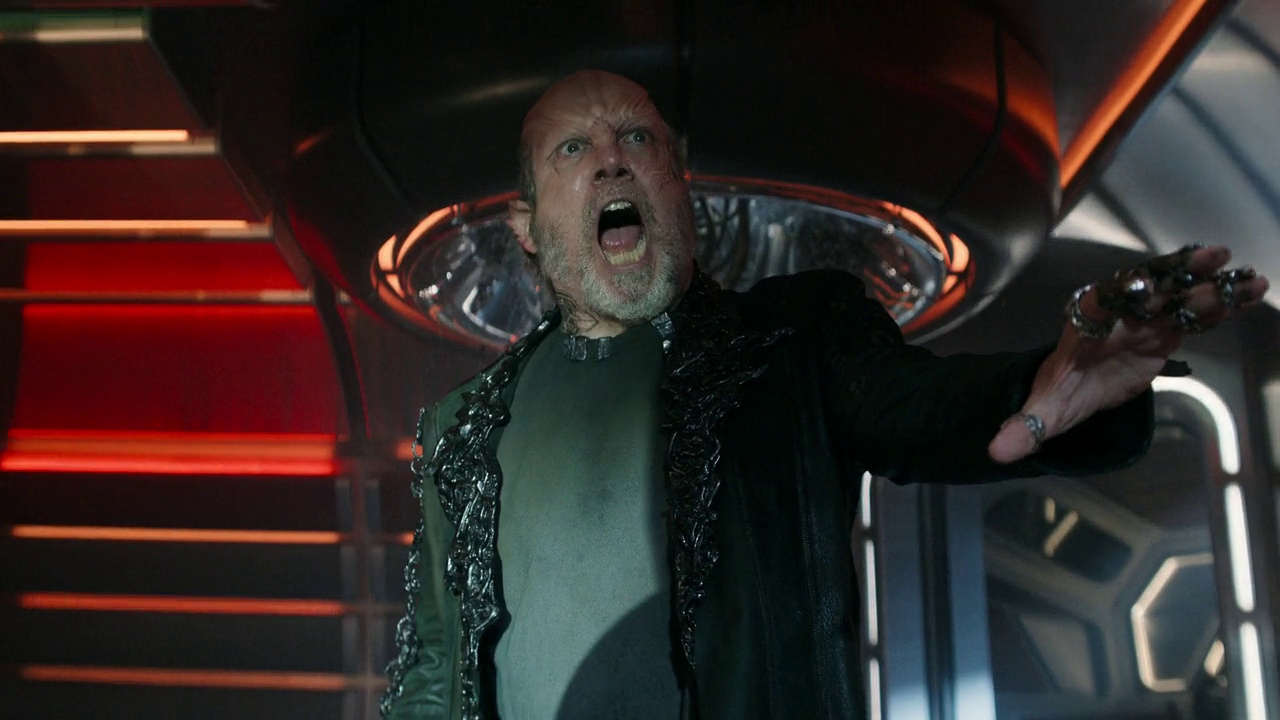
Then we have the length of this sequence. Putting Nus Braka and Caleb’s mother “on trial” together, when one is the instigator and one an unwilling accomplice, felt… rushed. As if the episode didn’t have time to give us two separate moments with these characters facing their punishments. I like the idea of this decrepit rump Federation resorting to excessively harsh punishments; it feels like a good way to indicate how far it had fallen and how tough the post-Burn era was. But the way we arrived at that moment wasn’t great, and it was utterly *dominated* by Paul Giamatti’s incredibly hammy over-the-top performance.

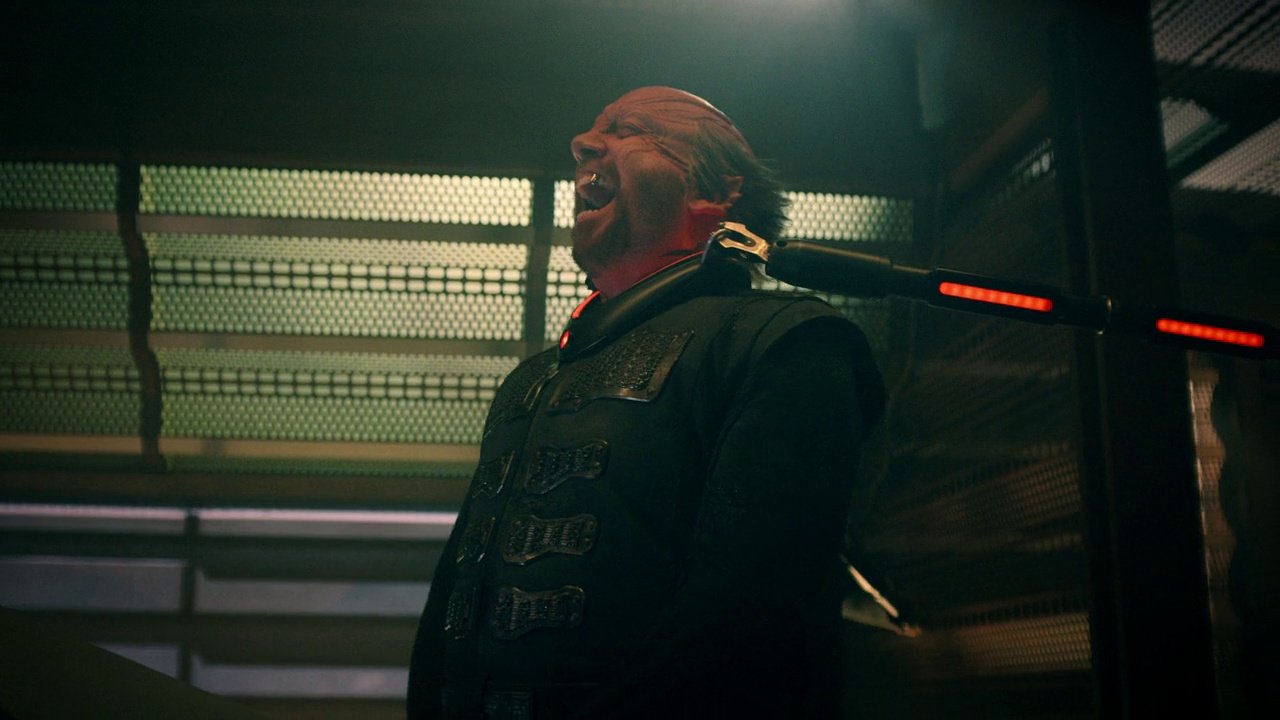
Still frame from Star Trek: Starfleet Academy Season 1 showing Nus Braka on trial.
Nus Braka at his trial.

Paul Giamatti’s casting was one of the main reasons why I felt there was even a scintilla of a chance for Starfleet Academy to be a decent series. I adored his performance in the John Adams miniseries a few years ago, and he’s been in a ton of wonderful films, including Saving Private Ryan and 12 Years A Slave, as well as TV shows like Billions. He’s an incredible actor, which is reflected in his many awards and nominations.

So it takes a perverse kind of “skill” on the part of writers, producers, and directors to get someone so great to turn in such a shockingly poor performance.

Nus Braka is everything I feared he’d be when I saw him in pre-release promos and marketing material. He’s a one-dimensional villain stereotype; a direct-to-video kids’ movie antagonist who wants to bulldoze the neighbourhood playground to build a car park. He’s so comically over-the-top that it ceases to be entertaining in its own right and just becomes ridiculous. And I absolutely despise that the modern Star Trek franchise can attract a performer of such genuine talent and calibre and reduce them to this… puddle of cold vomit.

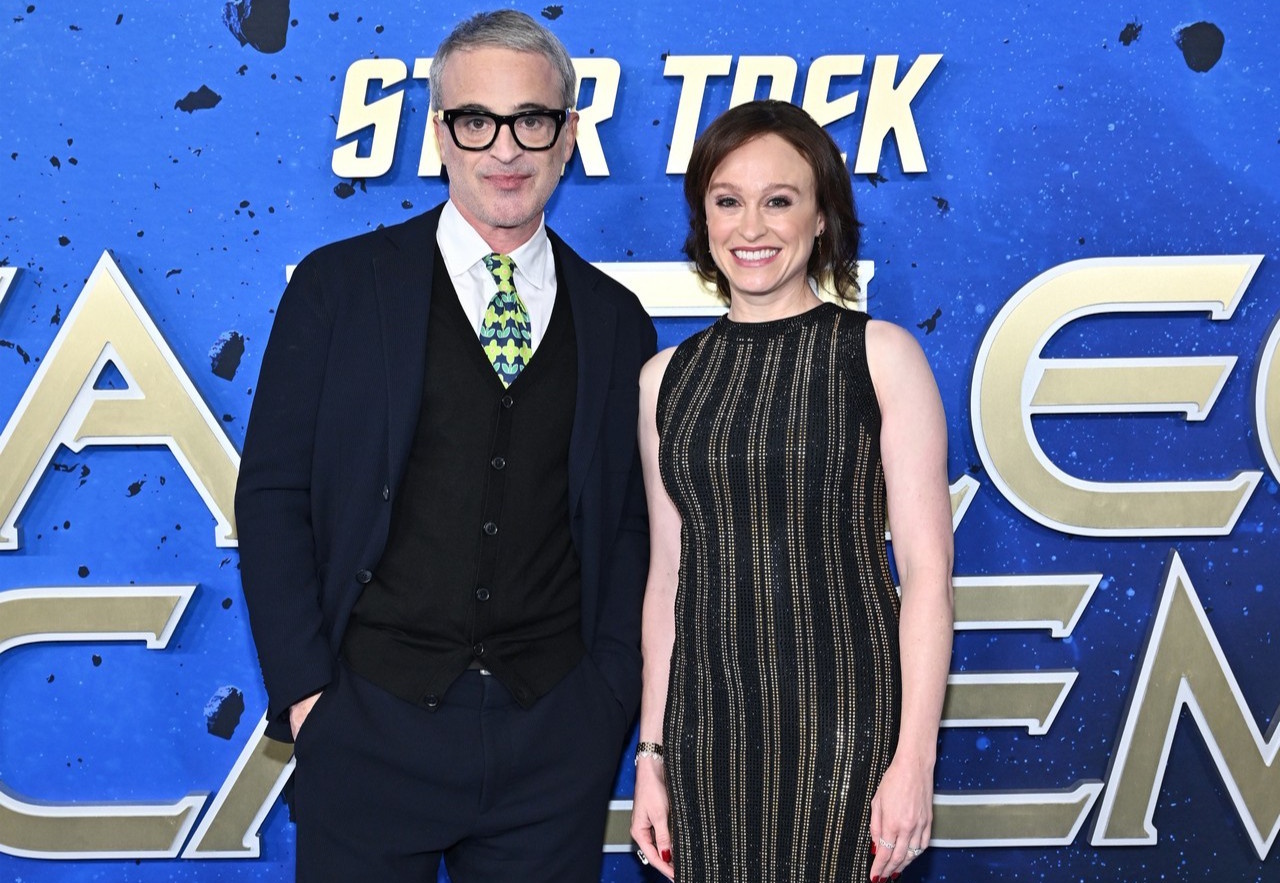
Photo of Alex Kurtzman and Noga Landau at the Star Trek: Starfleet Academy premiere.
Co-showrunners and executive producers Alex Kurtzman and Noga Landau at the show’s premiere. Kurtzman also directed the opening two episodes.

While we’re on the subject of Nus Braka, Starfleet Academy broke a cardinal rule of storytelling that I fear will come back to haunt the series: don’t let your young, untrained heroes – before even *starting* their character arcs – defeat the villain in the first act. Sure, Nus Braka lives to fight another day… but only because Captain Ake inexplicably didn’t immediately recover (or just destroy) his escape pod. But when he inevitably returns to taunt Caleb and his friends again… we’ve already seen how easily he goes down. Caleb went toe-to-toe with him in a fight, and the cadets – who hadn’t even attended a single class, got to know each other’s strengths and weaknesses, or anything – were able to outsmart and outmanoeuvre his entire band of pirates.

Where are the stakes meant to come from when this season-long overarching antagonist comes back?

A couple of minor changes in the premiere episode could’ve seen Nus Braka departing the Athena, having dealt a blow to Caleb’s pride and the cadets’ morale – setting him up as a much more significant foe when he makes a return. Instead of having Caleb go toe-to-toe with him in a fight, we’d see Nus Braka get the upper hand, only to be forced into a retreat when Starfleet security is on the way. Instead of having the cadets work together to outsmart him, defeat his technology, and destroy his ship, keep the cadets working on smaller, but no less impactful problems, like the injury to Lura Thok. Have Braka and Captain Ake effectively come to a stalemate, with only the arrival of Starfleet reinforcements causing Braka and his pirates to withdraw. Starfleet reinforcements were discussed in the episode – why not make better use of them? It was far more important in this story, at this moment, to establish Nus Braka as a competent villain than to show Starfleet as weak.

Still frame from Star Trek: Starfleet Academy Season 1 showing Nus Braka's defeat.
“Nooooo!”

That kind of setup still gives Braka a pathway to feeling aggrieved by Caleb and the others, but it leaves him intact as a potentially intelligent, powerful, and dangerous foe. We’ve already seen his neck – how easy he is to beat, how he runs away when cornered, how he can be duped by something as basic as a fake alarm, and how he can be outsmarted by a group of untrained kids. How are we to take him seriously next time? A point made worse by the hammy, scenery-chewing performance.

I get that Starfleet Academy wanted to throw the kids into a difficult situation, but still give them a win – showing how they can come together and put their skills to good use when it matters. But again… this is our *first* introduction to these characters. They haven’t gone through anything, they barely know each other’s names… a victory like this needs to feel earned, and this one didn’t. Not to mention that all of the cadets were supposed to be in lockdown in their cabins, and that the Athena is a starship with its own crew. Where was the Doctor when Lura was injured? Where were… any crew members at all, come to that?

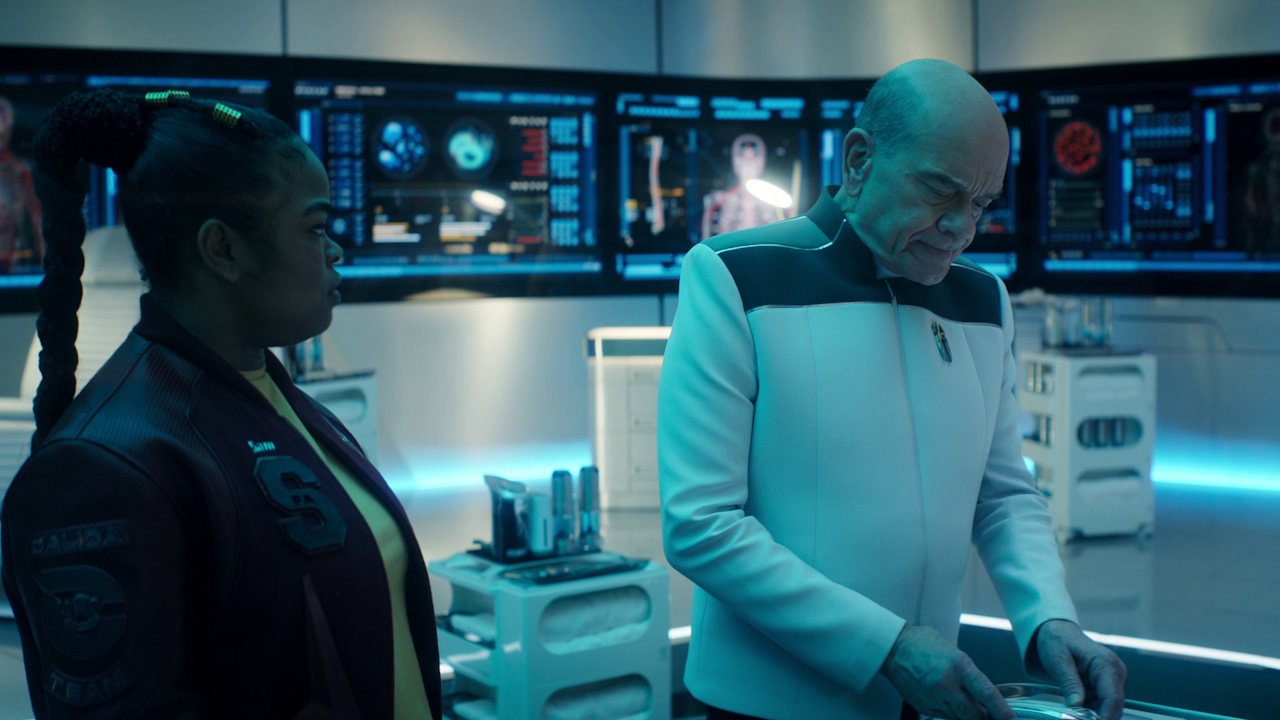
Still frame from Star Trek: Starfleet Academy Season 1 showing Lura Thok and Sam.
Lura’s injury gave the cadets an opportunity to work together on a smaller-scale problem.

The kind of story we got in the premiere shouldn’t have come until at least halfway into the season. And if the producers and writers wanted an explosive beginning to the season, which tied into Caleb and Captain Ake’s stories, there were ways to set that up without giving the kids a win that felt… scripted. If everyone comes across as being too perfect on day one, able to solve the most complex of problems and defeat who we assume is still going to be the season’s main villain… where does the show go from there? How do you give characters an arc when they start from such a high point? It’s a challenge that the rest of the season will now have to overcome – and it didn’t need to be.

This highlights a trend that a lot of media made for kids can fall victim to: in order for the young’ins to be able to save the day, the adults around them – who are, in this case, in loco parentis – have to be shockingly incompetent. The bridge crew did basically nothing, save for triggering a pre-made training programme. It fell to Caleb and the other cadets to stop Braka and save the ship. And, in the next episode, it fell to Caleb again to provide all of the answers to solving the diplomatic crisis between Betazed and the Federation. The adults at Starfleet Academy just… aren’t up to the task, apparently.

Still frame from Star Trek: Starfleet Academy Season 1 showing the bridge.
Captain Ake arrives on the bridge.

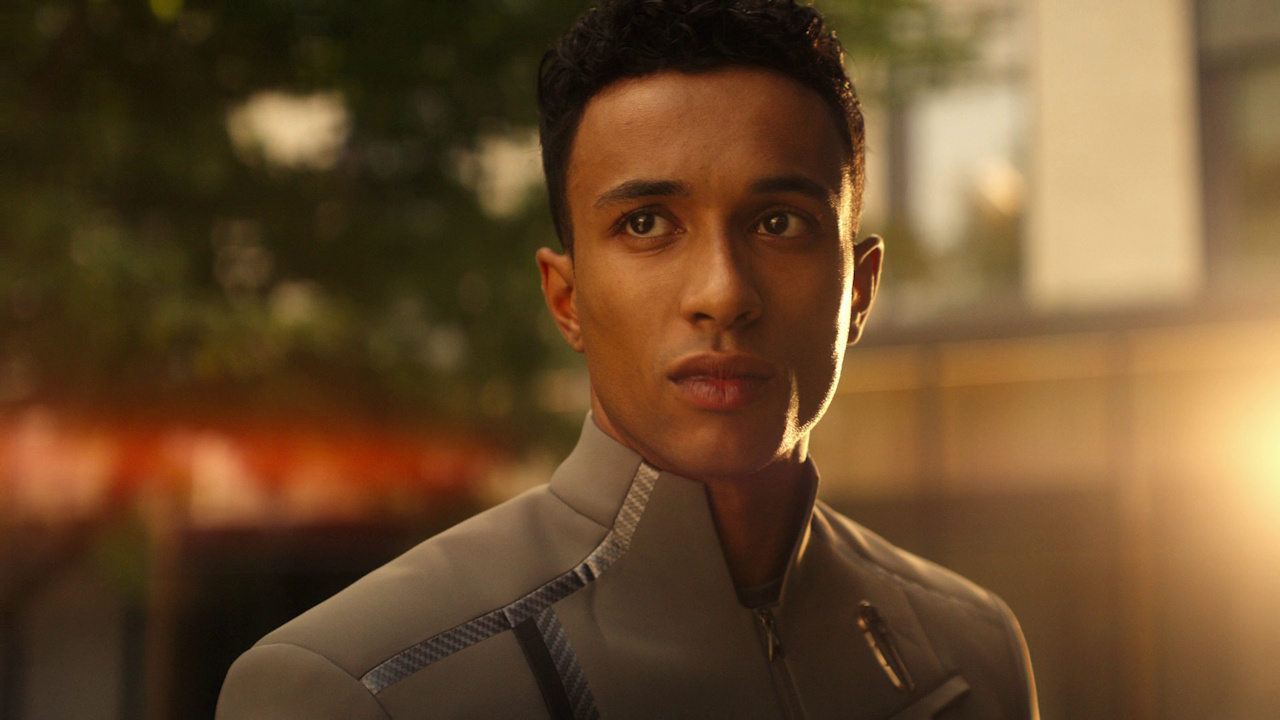
There are a plethora of ways to show that a younger character is competent and able without having them save the day over and over again. We’re only two episodes in, and thanks to Captain Ake telling us over and over again how special and wonderful and magical Caleb is, and the demonstrable proof of that through Caleb’s technical skills, his engineering skills, his combat skills, and even his diplomatic skills… well, I’m getting “Wesley Crusher” vibes. Which, unfortunately, I can’t say I intend to be a compliment.

I would’ve liked to see a more nuanced take on Caleb. Instead of being able to hack computers with ease, fight off the season’s main villain, and save the day at the drop of a hat, I’d like to see the *potential* for him to one day be able to do those things – but to see that raw talent as rough and unguided. This would give the likes of Captain Ake a way in – a way to assume the role of mentor or teacher. Why does Caleb need a teacher? What can the Academy teach him that he doesn’t already know how to do? He’s willing to stay – for now – because Starfleet seems useful to him, and he can hack their computers from the comfort of his dorm room. But when a character starts the story at the level of an expert, it doesn’t leave a lot of room for growth.

Still frame from Star Trek: Starfleet Academy Season 1 showing Caleb.
There’s a risk in making a protagonist too perfect from the very start.

One area where we could potentially see more from Caleb – to give him more of a genuine arc beyond “find my mother” – is in making friends. Realising that he can work as part of a team, and then later, that he can work *better* as part of a team, is basically the only growth potential a character like Caleb can have, at this point. And I hope that the remainder of the season can show him working with the other cadets, as well as Tarima, Captain Ake, and others at the Academy, to undergo some kind of arc beyond the main narrative.

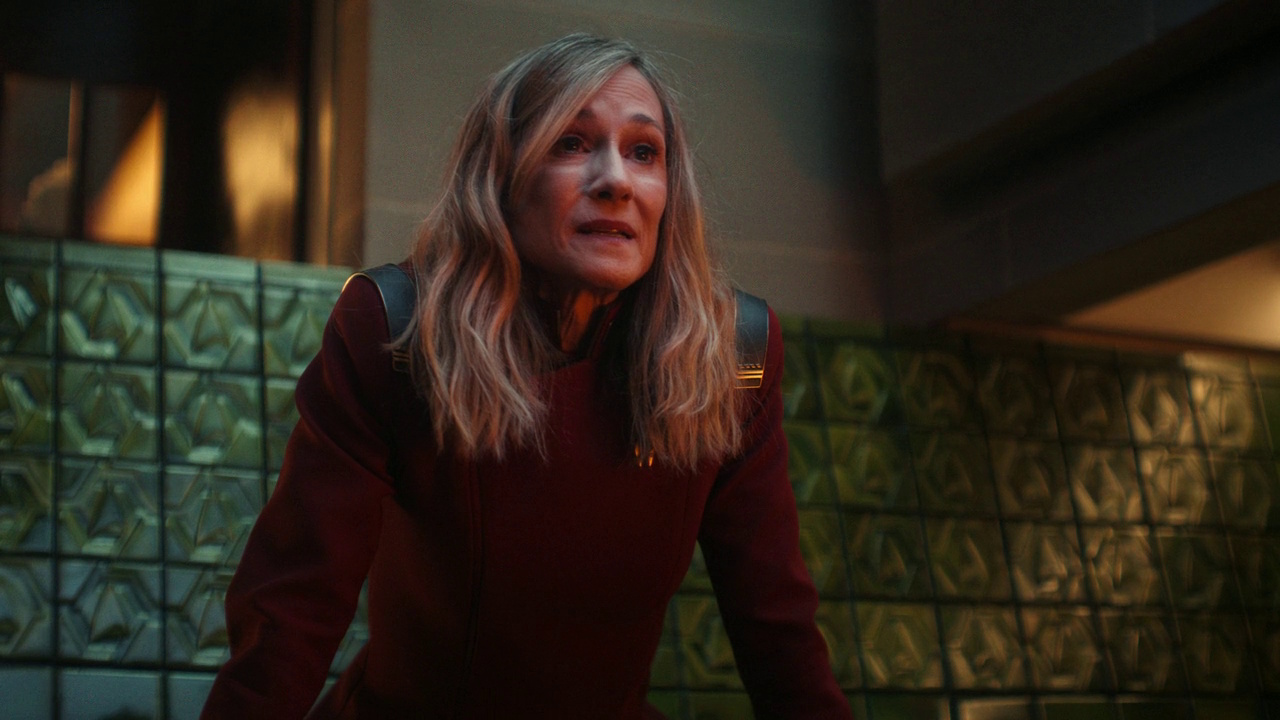
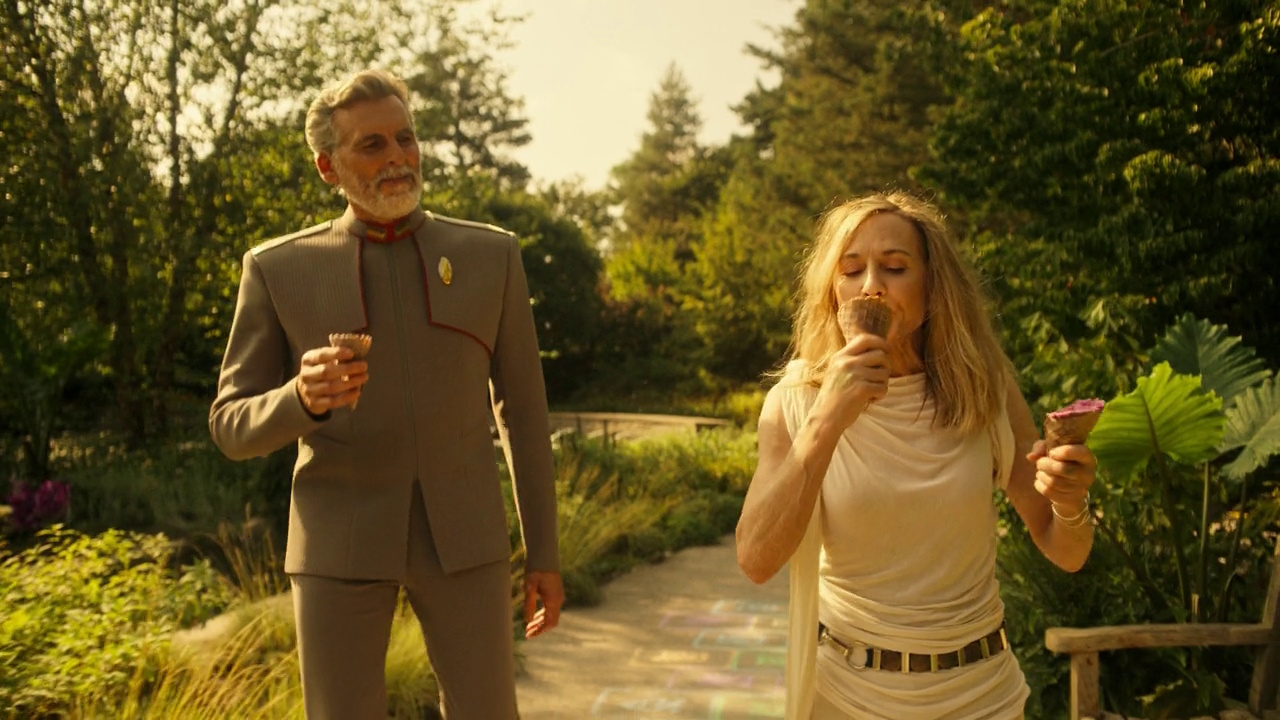
To return to Captain Ake, I have to repeat something I said a moment ago: “show, don’t tell.” Captain Ake repeatedly tells Caleb that she hasn’t stopped looking for him for fifteen years, but we saw absolutely none of that on screen. In fact, when we saw Captain Ake for ourselves, she seemed pretty settled on Bajor, playing with kids and enjoying an ice cream. Not exactly the desperate search that she swore up and down she’d never stopped nor given up on. It wasn’t the worst scene in the world, and I did like how it harkened back to Archer recruiting Hoshi in Enterprise, Janeway seeking Tom Paris’ help in Voyager, and other, similar moments.

Still frame from Star Trek: Starfleet Academy Season 1 showing Captain Ake at the end of the episode.
Captain Ake.

But at the same time, we’re following *this* story – the search for Caleb, Caleb’s mother, and Nus Braka. And Captain Ake tells Caleb – and by extension, us as the audience – repeatedly that she’s been searching for him ever since he ran away. But… the only scene we get of her in between Caleb’s escape and her accepting the role of Chancellor shows her with a bunch of children licking an ice cream cone. It’s just tonally jarring in a way that it didn’t need to be.

Let’s reimagine this moment.

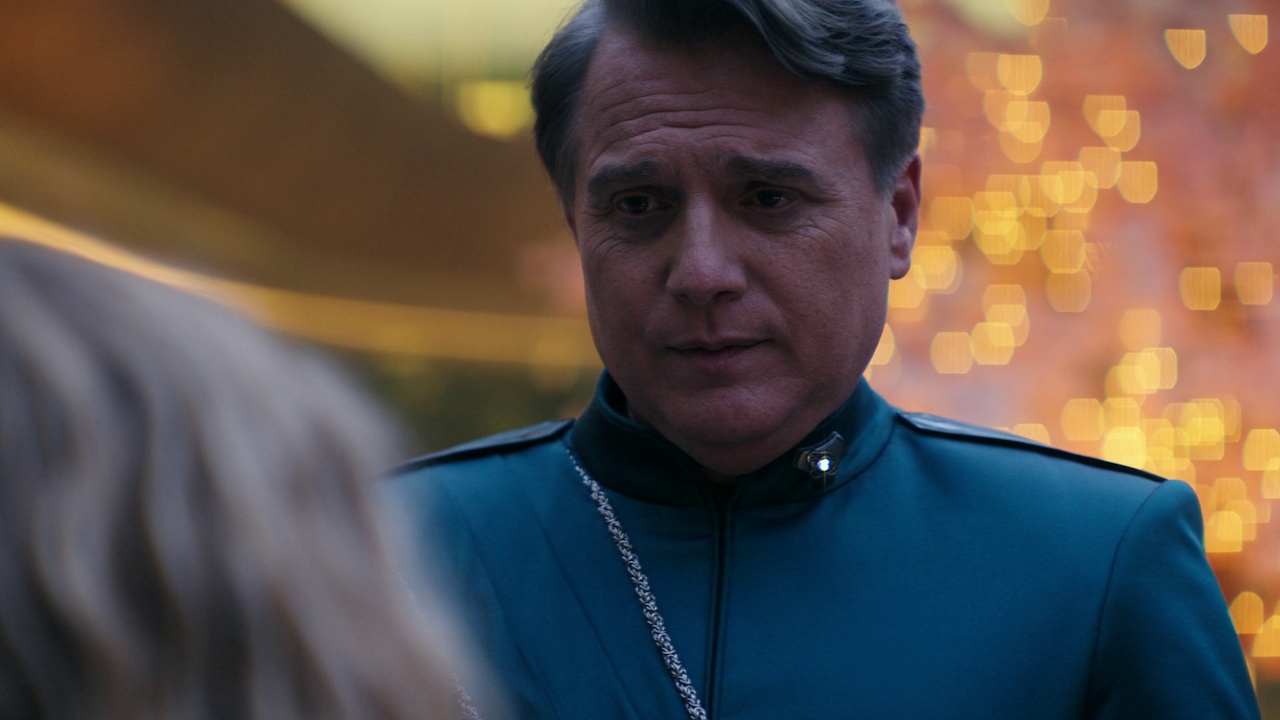
One of the key themes that Starfleet Academy seems to be going for is that we’re all “better off together;” that one of the biggest strengths Starfleet and the Federation can offer is teamwork. So, instead of Admiral Vance finding Captain Ake chilling out with an ice cream, how about he finds her in some seedy bar on a dangerous Orion Syndicate planet, desperately chasing a long-dead lead. Vance could tell her that *Starfleet* found and rescued Caleb, demonstrating the show’s point about working as part of a diverse team, and a well-managed organisation having strengths and abilities that a “lone wolf” doesn’t. We get to the same place, but without the weird jump in tone and the kind-of-a-lie Captain Ake would later tell.

Still frame from Star Trek: Starfleet Academy Season 1 showing Admiral Vance and Captain Ake having ice cream.
Does this look like a woman consumed by her search for a missing kid?

See how we get to basically the same destination, but via a route more in keeping with the story?

Let’s stick with Captain Ake for now. I like the idea of using her run-in with Caleb and his mother to highlight the state of the galaxy after the Burn – and how the Federation in that era could do the wrong thing. There were pretty obvious parallels to the issue of family separation in the United States, where migrant parents and children have been separated, and where parents have been deported, leaving children who were citizens behind.

As I said above, using a sci-fi lens to examine this complex issue is a great idea, and that’s something Star Trek has always done – from the anti-nuclear message of The Doomsday Machine to the criticism of the way homelessness and mental health issues are handled in Past Tense. Captain Ake was put into an impossible position by Starfleet – though I wish we’d gotten to see a little more of that. She stated that she was the senior officer in charge of prosecuting Nus Braka, yet when she spoke to Caleb’s mother, she implied that her hands were tied when it came to enforcing the law and dishing out punishments. But… who tied her hands? Did she get orders from someone else in Starfleet? Seeing that moment for ourselves, and perhaps seeing her at least trying to argue back, recognising how wrong that decision felt to her, would have done a lot to inform her characterisation at this crucial moment.

Still frame from Star Trek: Starfleet Academy Season 1 showing Captain Ake in a flashback.
Why did Captain Ake feel she had no choice but to separate Caleb from his mother?

So far, I don’t think the show has made much of Captain Ake’s age or the fact that she’s a Lanthanite. We’ve met one other Lanthanite in Star Trek recently: Pelia, from Strange New Worlds. There’s plenty of time for the rest of the season to do more with the idea of Captain Ake being several hundred years old, and I hope it’ll come into play a bit more and have more of an impact on both the story and her characterisation. So far, I don’t really feel a lot of “ancient and wise” from her – though I would note that there are more than a few similarities with Pelia, which I did appreciate.

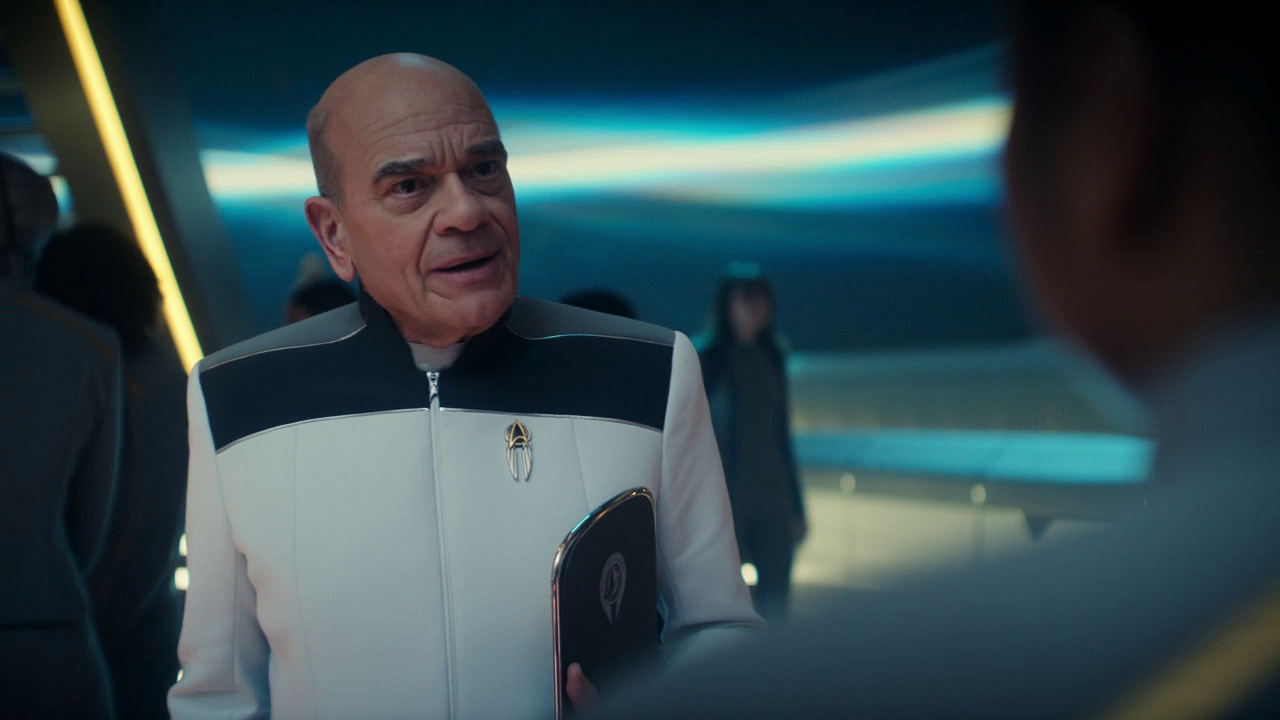
Whether Starfleet Academy does or doesn’t make more of Captain Ake’s age, though, it does call one thing into question for me: why have both an ancient Lanthanite captain *and* an ancient holographic Doctor in the same show? Don’t these two characters kind of occupy similar narrative spaces? Do we need two “Yoda” type characters in Starfleet Academy for the kids to turn to? I guess I’m just a little worried about one overwhelming the other, or how they’ll really distinguish themselves if they’re both gunning for that “wise mentor” space.

Still frame from Star Trek: Starfleet Academy Season 1 showing Captain Ake and the Doctor.
These two characters are both ancient and long-lived.

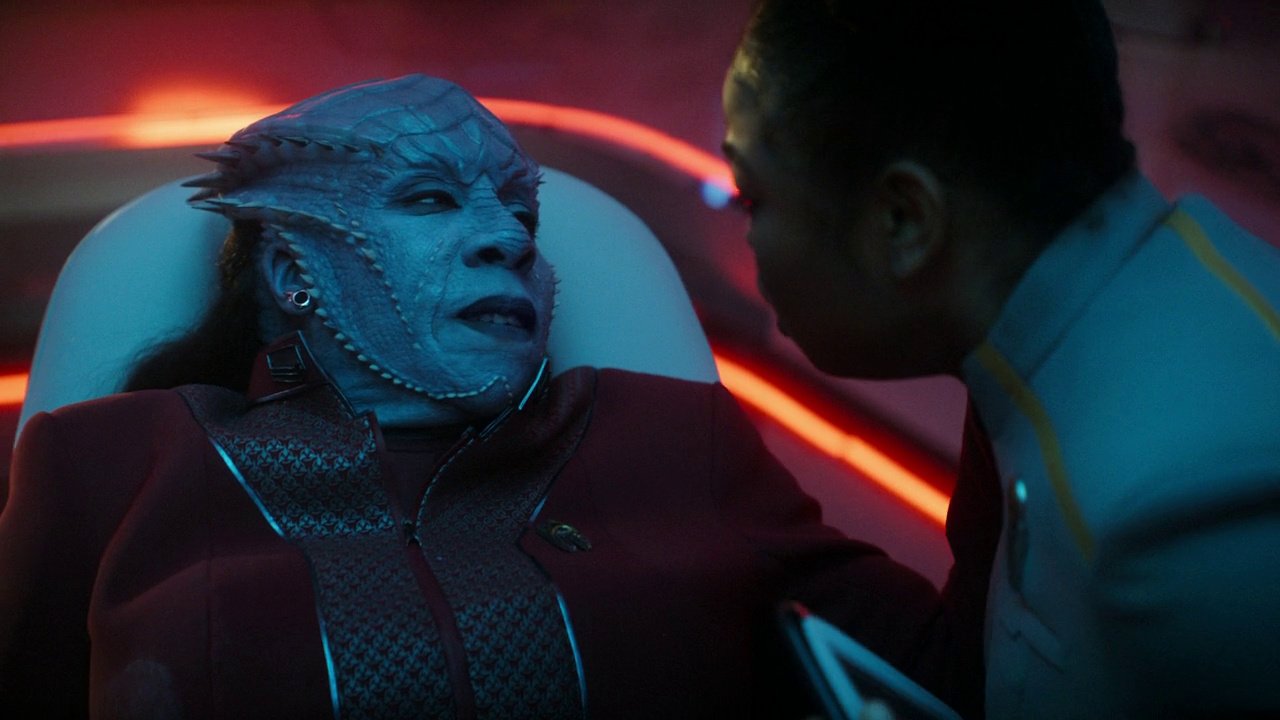
In my preview of Starfleet Academy, which I wrote based on the teaser trailers and clips that had been shown off last year, I said that Gina Yashere’s performance was of particular concern; I just wasn’t at all convinced by her acting from what I’d seen. Yashere had her moments as Lura Thok – the half-Jem’Hadar, half-Klingon XO and cadet master – in the two-part premiere, but she was far from perfect much of the time. Ironically, I felt her best performances came in what was probably one of the tougher acting challenges she had: when Thok was injured and being attended by the cadets, I felt the character was far more believable than at basically any other moment in the double-header.

I hope that Lura Thok will grow on me, and that my familiarity with the performer (and perhaps the accent, too) are part of what’s been throwing me off. I find the idea of a half-Jem’Hadar interesting, and there’s potential, perhaps, to catch up with the Dominion and see what came of Odo’s peace initiative. At the very least, I hope that Lura Thok isn’t just going to be a sidelined character, whose history and traits are played up for dramatic effect. Starfleet can have this kind of “drill sergeant” without them needing to be from such a background – and really, as Trekkies, don’t we want to know more about how a half-Klingon, half-Jem’Hadar came to be? Jem’Hadar were all artificially created in Deep Space Nine; I’d love to know more about them and what kind of culture they may have developed independently from their Founders. And how did someone who’s half-Jem’Hadar make their way to Starfleet? I have more questions than answers… and despite a shaky and inconsistent performance, I’m still keen to learn more about this character. As a DS9 fan, I really want to like Lura Thok!

Still frame from Star Trek: Starfleet Academy Season 1 showing Lura Thok.
Lura Thok.

From one Klingon to another! Jay-Den Kraag is a genuinely interesting character, and I really enjoyed what he brought to the first episode in particular. There’s always going to be something interesting about a character who is – for want of a better term – “rebelling” against social expectations, so a Klingon doctor (or med student, technically) is a really fun idea. He reminds me a little of Dr Reyga – the Ferengi scientist from The Next Generation Season 6 episode Suspicions; a character who was defined by his desire to show that his people could be more than money-obsessed merchants.

As above with Lura Thok, I’m hopeful that Jay-Den can be a gateway to us learning more about his people in this era – something Discovery failed to show us. Some have speculated that the Klingons may have joined the Federation by this time; Jay-Den’s interactions with his fellow cadets and Lura Thok seem to suggest that there’s still a strong warrior culture amongst many Klingons. Those two things aren’t necessarily mutually-exclusive, of course, but if the Klingons aren’t Federation members, it raises the question of why (and how) Jay-Den is attending Starfleet Academy. I hope that’s something we’ll get to learn more about. His introduction was surprisingly cute; I liked his reluctant admission that he enjoys birdwatching, and again, the idea of a “softer” Klingon character has a ton of potential.

Still frame from Star Trek: Starfleet Academy Season 1 showing Jay-Den in uniform.
Jay-Den, the Klingon med student.

Darem is a potentially interesting character, as he introduces us to a brand-new alien race. But his introduction as an antagonist… it left a lot to be desired, quite honestly, and the whole “stuck-up rich kid who’s also a bully” character is a pretty tired cliché, even for a show set at a school. The upside to Darem’s poor introduction is that it does leave him with genuine space to grow – something I talked a lot about earlier. And we perhaps saw a few baby steps in that direction, with Darem risking his life for his shipmates.

There’s also potential in the “two kids who hate each other have to be roommates” trope, though we didn’t get much of that in the first couple of episodes. I’d like to think we’ll get some more one-on-one time with Darem and Caleb, though the introduction of a third roommate for them could complicate that a bit. Darem was the character I was least sure about going into the premiere; he seemed like he could be totally superfluous, seeming to share some aspects of his character bio with other cadets. But he emerged as a unique character in the series – even if his “rich kid bully” archetype is pretty tired when considering other “teen drama” type shows. I like the idea of a shape-shifting alien, and I wonder if we’ll learn more about these abilities in the future.

Still frame from Star Trek: Starfleet Academy Season 1 showing Caleb and Darem squaring up.
Squaring up for a fight.

We’ll pick up with the remaining cadets and crew in a moment, but I want to take a diversion to talk about CGI and animation.

In modern Star Trek, CGI has generally been pretty solid. There have been a few notable misfires, like the copy-and-paste fleets in Picard’s first season finale, and a digital sword in the third season of Discovery that looked weightless and fake, but I couldn’t call to mind many other examples of genuinely poor-looking CGI.

Until now.

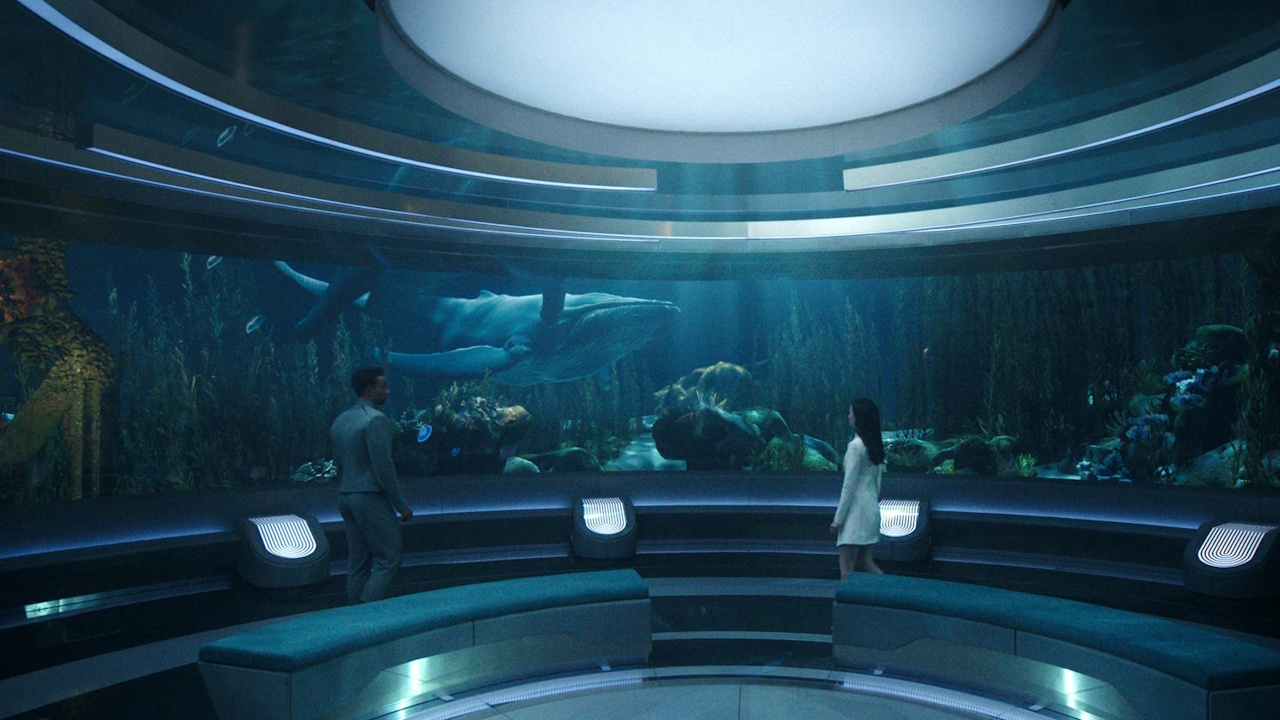
Still frame from Star Trek: Starfleet Academy Season 1 showing Caleb, Tarima, and the whale.
Yikes.

The whale in the aquarium in Beta Test looked just *atrocious*. It looked like it was from a 2005-era video game, totally unrealistic, and genuinely detracted from that entire sequence. Other CGI in Starfleet Academy’s opening two episodes looked fine – establishing shots of the Academy, the USS Athena, the battle with Nus Braka’s ship, holograms and programmable matter interfaces… they all looked good enough. But that whale… Jesus Christ. I thought Paramount’s artists had begun to get better at using the AR wall, but I don’t think the wall itself was the issue. The model used for the whale was just too low resolution or low-poly to be at all realistic.

And I genuinely don’t understand how that could’ve happened. Not only was this a callback to The Voyage Home, but it was a pivotal moment in the episode, with Caleb showing Tarima something meaningful, reaching out to her, and showing us as the audience how the pair are potentially developing feelings for one another. The whale was a vital part of the scene, so for it to look so cheap, so outdated, so far behind the times, so low-res… it was utterly awful, and by far the worst-looking moment in the entire pair of episodes – and one of the worst-looking moments in Star Trek as a whole since Enterprise.

Still frame from Star Trek: Starfleet Academy Season 1 showing the whale.
Are those pixellated blobs meant to be… *bubbles*?

While other CGI in Starfleet Academy was pretty good, the 32nd Century’s overabundance of holographic displays can be a tad offputting, sometimes. And it probably isn’t easy for a performer to have to act on a blank stage, only for all of the holographic stuff to be added in post-production. Sometimes, parts of the Academy could just feel a little… cluttered, thanks to there being so many holographic signs and floating displays.

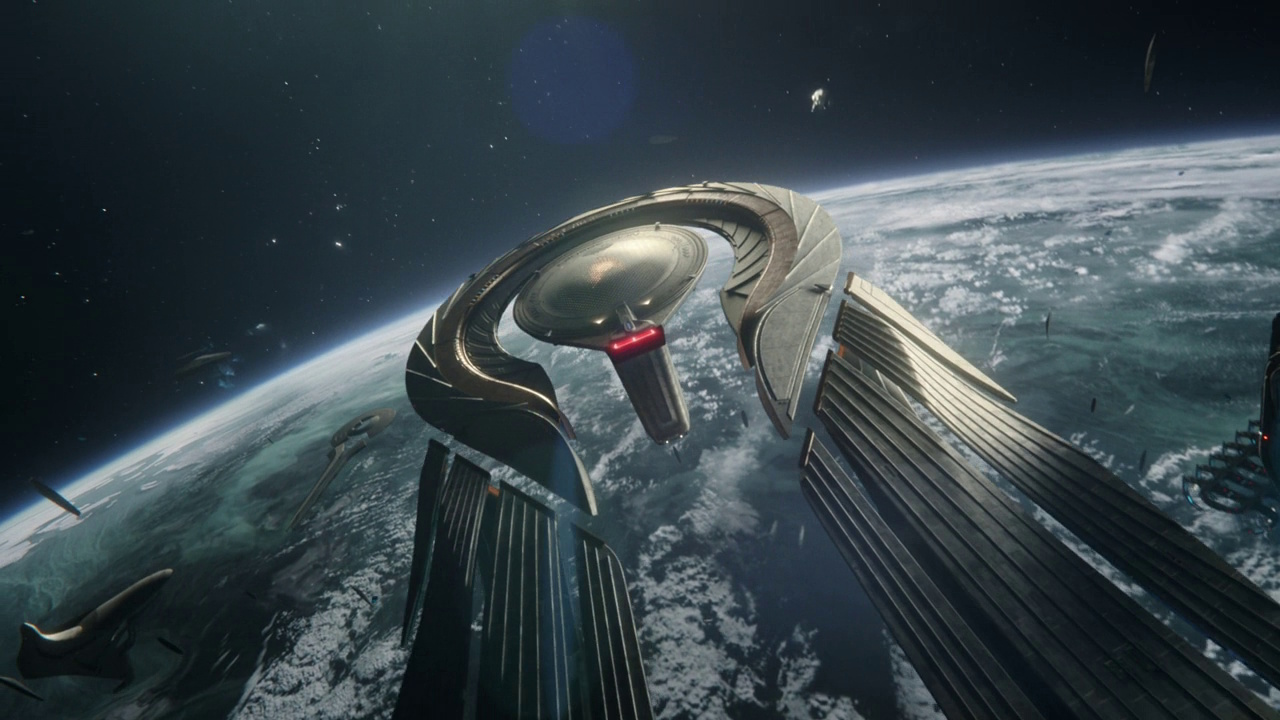
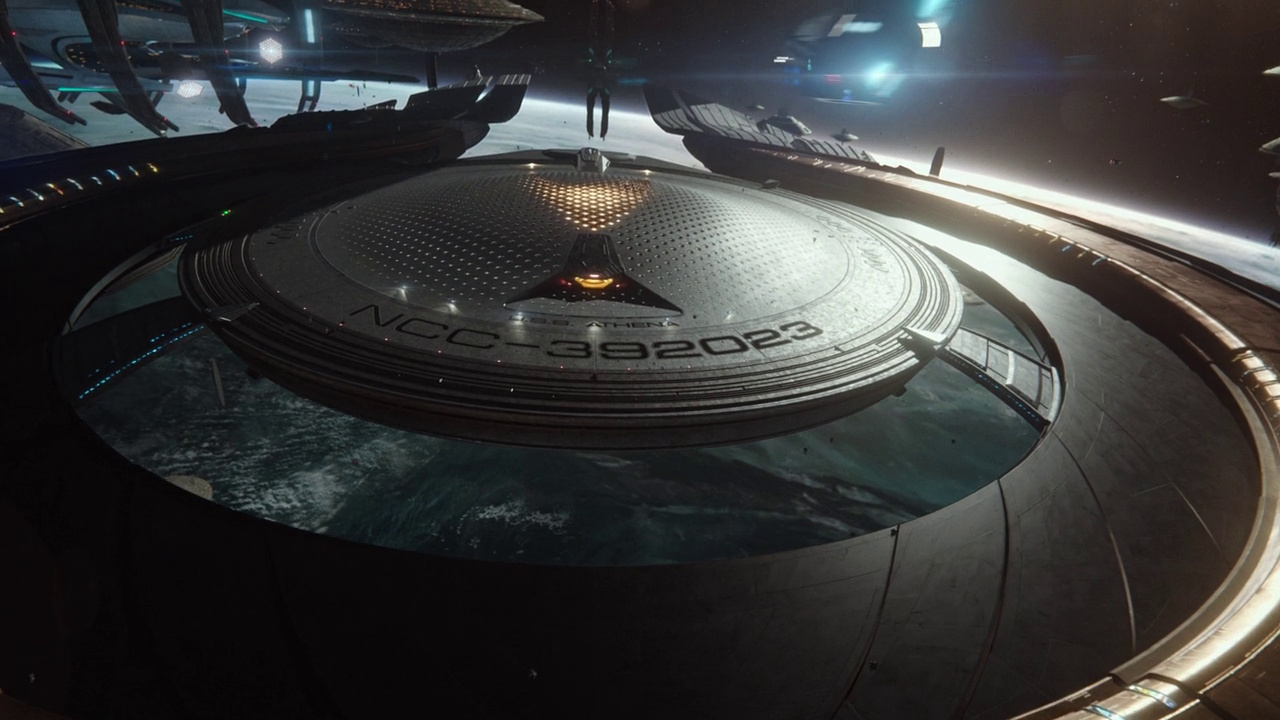
The design of the USS Athena… it’s something that I hope will grow on me as the show continues its run. It’s interesting that the ship’s basic layout is reflected in the kids’ combadges, and that feels like a cute little addition. And in principle, the idea of a ship that can be both a ground-based campus *and* take off and go to space is really neat. The opening two episodes showed us one space mission and one on Earth, and I hope we continue to get a good mix of both kinds of stories going forward.

Still frame from Star Trek: Starfleet Academy Season 1 showing the USS Athena.
The USS Athena.

The Athena continues a trend from Discovery of starships having a lot more diversity in their designs when compared to earlier iterations of Star Trek. I don’t hate that in principle, but we have to remember that one of the tasks Starfleet Academy has is to bring new, younger eyes to Star Trek for the first time. Establishing a firm visual identity for the franchise – ensuring that viewers can *immediately* tell that they’re watching Star Trek – is important, so I think I’d have picked a design for the Athena that was a little more… traditional.

The Athena’s introduction was – unlike the aforementioned whale – a very competently-constructed CGI sequence. But I’m afraid it was spoiled, at least for me, by being too cluttered. The Athena was shown off while surrounded by other starships and space stations, and it wasn’t easy to tell at a glance – or if you’re new to the franchise, perhaps – which parts were the Athena and which were something else. Compare the introduction of the Athena, or the Athena preparing to go to warp, with similar moments in The Motion Picture, The Next Generation, or Voyager to see what I mean. Those sequences did a much better job of highlighting the “hero” ship, and while modern CGI might’ve allowed artists to construct spacedocks that they felt looked larger and more believable… that realism actually detracted from the entire point of the sequence. Scenes like these need to highlight and show off the main starship, and all of the background clutter made that harder, not easier. It was a bit of an unnecessary own goal.

Still frame from Star Trek: Starfleet Academy Season 1 showing the USS Athena.
The Athena’s introduction was somewhat drowned out by background clutter.

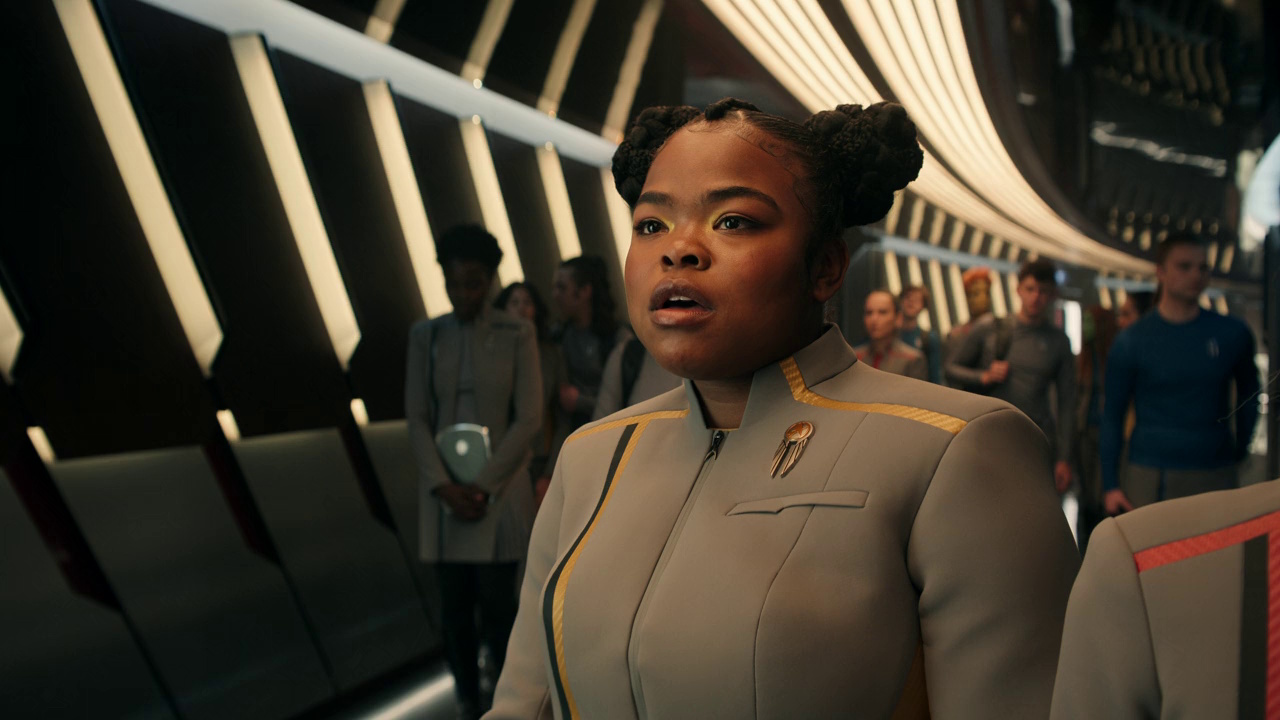
Tarima could make for an interesting character, and I’ll be curious to see how she progresses. The idea of a Betazoid with some kind of medical condition that means their empathic abilities have to be dampened is potentially interesting, as long as the resolution to that mini-mystery is solid. Though I suspect it’ll turn out that she has some kind of “superpower” that the cadets will be able to use further along in the story to defeat a baddie or solve a problem. I’m also interested to learn more about this War College, and its seeming rivalry with the Academy – Tarima, as a War College enrollee, could be our point-of-view character for some of that.

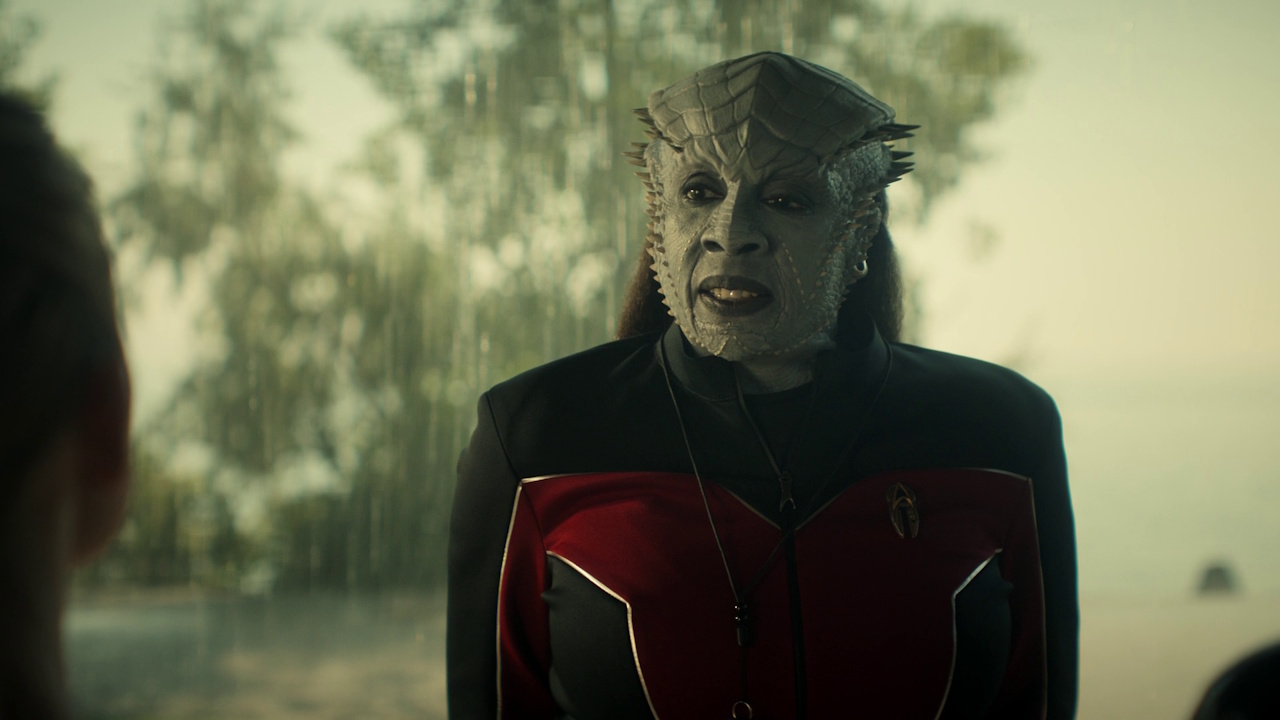
The Betazoids made for a welcome addition to Starfleet Academy, though, and I did enjoy the presentation of the Betazoid leader, who communicated through sign language and telepathy, converted to speech via a translator. I think this is something we’ve seen hinted at before – that Betazoids, among themselves, prefer communicating telepathically. It makes sense to me at least that, after a century-plus of isolation, some Betazoids may have almost never spoken aloud, and may not possess the ability to do so. Plus, it’s always nice to see a bit of disability representation in Star Trek, with the franchise again showing it through a sci-fi lens. The same is true of the Betazoids and their “wall;” the theme of bringing down the wall and opening up to integration was another way Starfleet Academy passed comment on real-world events.

Still frame from Star Trek: Starfleet Academy Season 1 showing the president of Betazed.
The President of Betazed.

So far, I’m not feeling a ton of personality from Genesis. She seemed to have moments of politeness and friendliness – like her interactions with Sam and Jay-Den in the premiere – and moments where she might be either a bit more calculated or perhaps a bit jovial – as we saw when she caught Caleb sending his message. The daughter of an Admiral, who’s been training her whole life for the moment she could join Starfleet, could give her a bit more to say, and I hope we’ll get an episode where she’s more in focus. As it is, the opening pair of episodes have left her quite open, and there are many possible directions for her character across the season.

The same is true of Sam (or SAM? I’m going to write it in lowercase for now). The one thing I’d really like to learn from Sam is why her photonic civilisation felt the need to create a child and send her to school. And if they wanted to create a holographic child, why not start from a newborn age, or a toddler? Why create a 17-year-old and send her to school? Sam also opens up a pathway for us as the audience to connect with the Doctor in a new way, something we kind of glimpsed in the premiere, and she brings a bit of light-heartedness to various conversations and character groups with her wide-eyed “everything is so new and I’m fascinated by it” energy.

Still frame from Star Trek: Starfleet Academy Season 1 showing Sam.
Sam.

I’m glad that the Doctor didn’t overwhelm Starfleet Academy, as I’ve come to feel that an overreliance on legacy characters hasn’t been great for the franchise overall. Fans like you and I might be approaching this show as a sequel – the eleventh show in a line stretching back six decades. But for newcomers – the younger audience Starfleet Academy is meant to be reaching out to – a focus on returning characters and a massive dump of lore just… would be too much, I suspect. For me, the Doctor’s role in the show so far stuck more or less the right balance – more than a cameo, but not so much as to be overwhelming.

I was interested by the Doctor’s reaction to Sam, and particularly how he seemed reluctant to discuss the crews of Voyager and the Protostar (the latter being from Prodigy, which I still need to finish watching!) Perhaps the Doctor just didn’t want to talk about something like that with someone he’s just met, though I suspect there’s more to it. Could we learn that living such a long life, and seeing so many generations of organic friends live and die, takes a toll on an artificial life-form? That could be an interesting angle, and a way for the Doctor to get a more personal storyline.

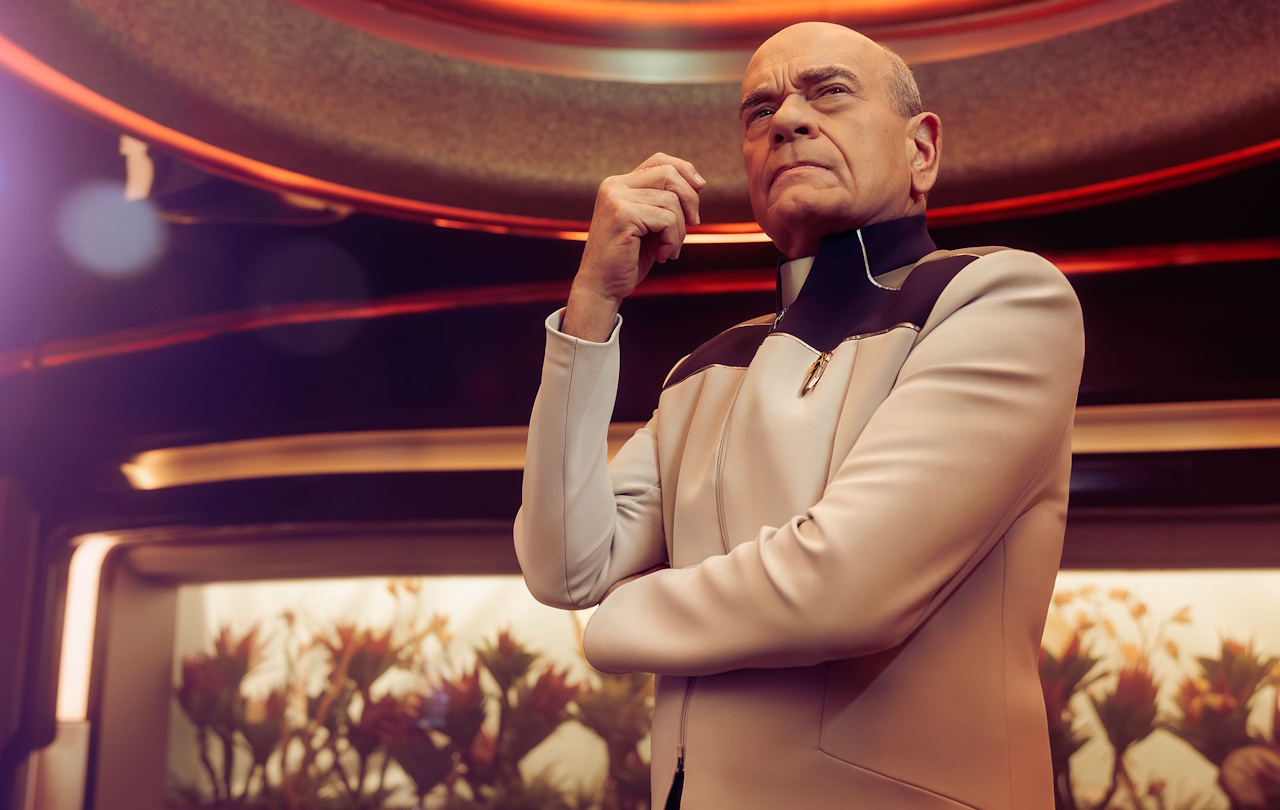
Still frame from Star Trek: Starfleet Academy Season 1 showing the Doctor.
The Doctor.

This review is already running long, so let’s start to wrap things up.

Starfleet Academy is a show that I almost certainly wouldn’t have sat down to watch were it not for the “Star Trek” label. This style of show just isn’t my thing, and I knew that before a single frame had aired. But, for Trekkies, I think there are some green shoots and some reasons to be optimistic. I like how the series has taken Discovery’s post-Burn setting and done a lot more with it, I like at least some of the main characters, or at least I can see their potential. And I’m still hopeful that a show deliberately targeting a younger audience will help the fan community grow.

I will continue to watch the series, but I won’t be doing weekly episode reviews this year. Instead, I’ll write up my thoughts on the season as a whole when it’s over – which will be in mid-March. I may talk about the show in between now and then, for example if I have a theory to craft or if I have something to say about a character or plotline that just can’t wait! Such things have been known to happen around here!

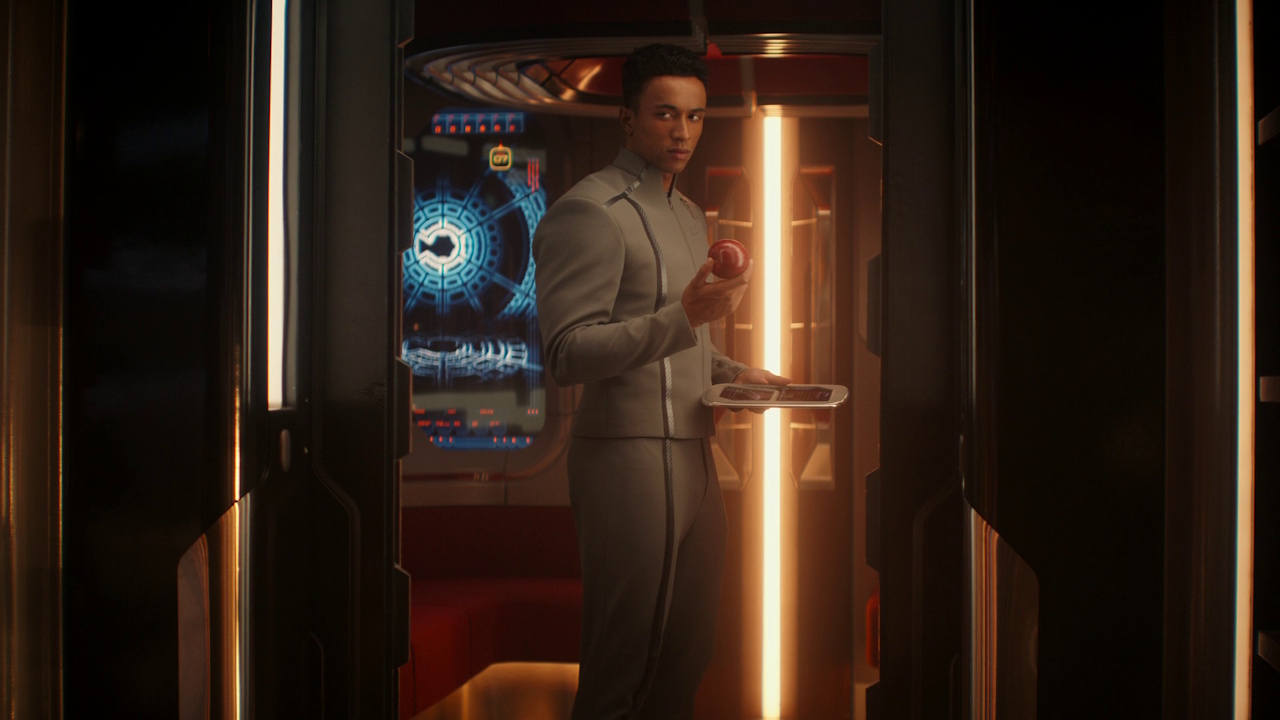
Still frame from Star Trek: Starfleet Academy Season 1 showing Caleb with an apple.
Caleb at the end of the two-parter.

I stand by what I’ve been saying over the past year or so: Starfleet Academy feels like it’s going to be the final Star Trek show to premiere for the foreseeable future. And unless it really does blow up and do exceptional numbers for Paramount+, I doubt it’ll continue beyond its already-produced second season. I really want the show to be enjoyable on a personal level, of course, but I think what’s even more important is that it reaches its intended audience – younger folks in the under-20 bracket, people who’ve enjoyed the likes of Wednesday and Stranger Things on Netflix, and fans of these kinds of high school/university dramas in general.

So that was Starfleet Academy’s premiere. I haven’t read any other reviews yet, so I don’t know if my thoughts on the show are the same as other fans and critics. But I hope that Trekkies and new viewers alike are finding their way to Starfleet Academy and giving it a fair shake.

Be sure to check back after the season finale in March to get my review of Season 1 as a whole. And in this big 60th anniversary year, I’m sure I’ll have more to say about this wonderful franchise! Live Long and Prosper, friends.


Star Trek: Starfleet Academy is available to stream now on Paramount+ in countries and territories where the service is available. The Star Trek franchise – including Starfleet Academy and everything else discussed above – remains the copyright of Paramount/Skydance. This review contains the thoughts and opinions of one person only and is not intended to cause any offence.
Star Trek at Comic-Con

Spoiler Warning: There are spoilers ahead for upcoming and recent seasons of Star Trek: Prodigy, Star Trek: Strange New Worlds, Star Trek: Starfleet Academy, Star Trek: Lower Decks, and Star Trek: Section 31. Minor spoilers may also be present for other parts of the Star Trek franchise.

The Star Trek franchise recently made a splash at San Diego Comic-Con – one of the biggest such events in the world. With a couple of new trailers and several interesting announcements, I thought it could be a bit of fun to talk about what was discussed and shown off at the event. I’ll try to cover all of the biggest pieces of news as well as share my thoughts on what we learned and saw.

First of all, a couple of caveats. I’ve been feeling unenthusiastic and pretty burned out on Star Trek lately, and I still have some catching-up to do on some of the franchise’s recent outings. That doesn’t mean I’m not still a Trekkie or that I’m not still interested in these latest announcements; far from it. But as Star Trek has added more and more series and films to its lineup, I admit that I’ve struggled to keep up. Secondly, and perhaps most importantly, everything we’re going to talk about today is the subjective opinion of one person only! If I’m excited about something that sounds awful to you, or sceptical about something you couldn’t be happier about… that’s okay! There should be enough room in the Star Trek fan community for polite discussion and disagreement.

With that out of the way, let’s take a look at what’s been going on at Comic-Con!

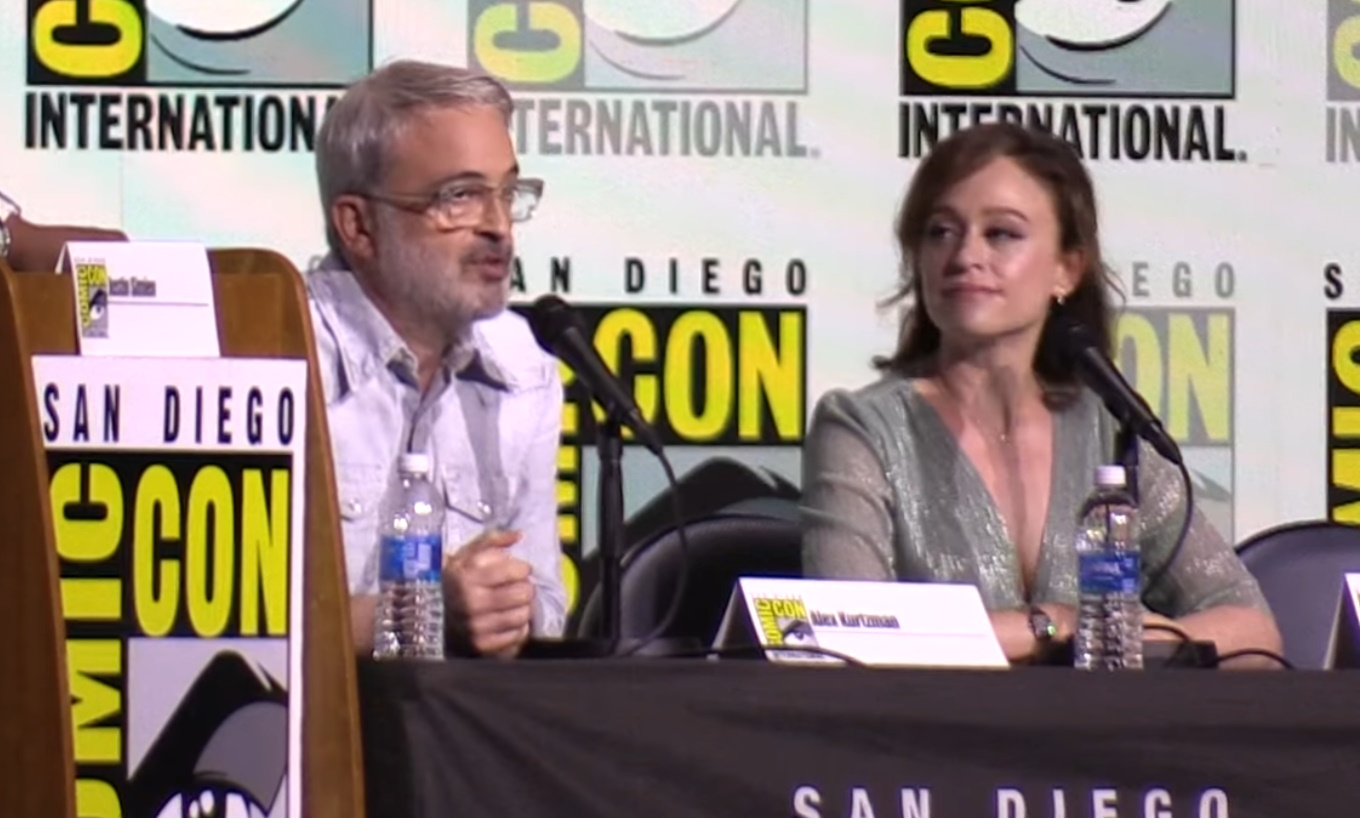
Alex Kurtzman and writer Noga Landau at the Starfleet Academy panel at Comic-Con 2024.

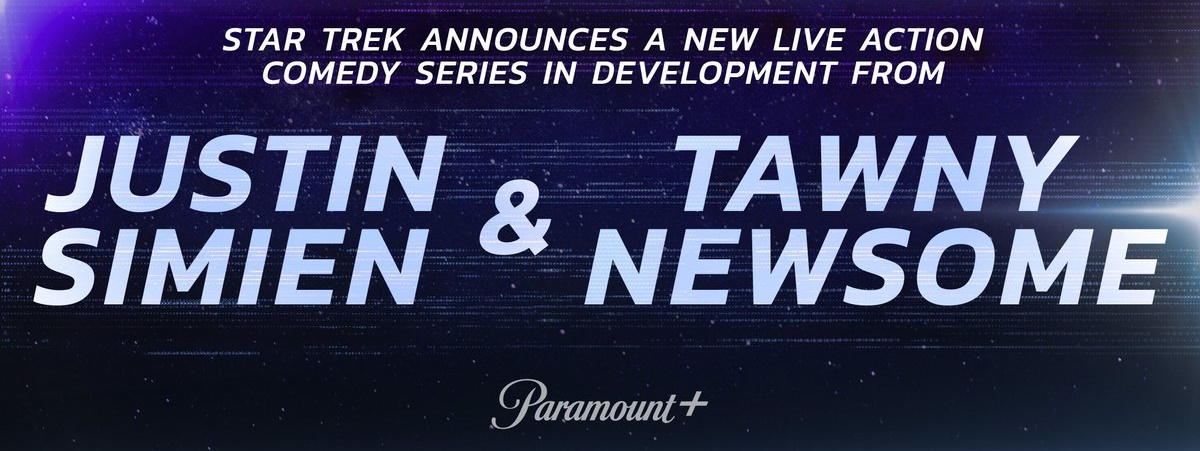
The biggest announcement is one that took me by surprise: a new Star Trek series is in development. Though its announcement was haphazard during one of the panels, it has subsequently been confirmed by Paramount (and franchise head Alex Kurtzman) that it is officially in development. With Tawny Newsome (Beckett Mariner in Lower Decks and one of the writers attached to Starfleet Academy) taking a leading role in its creation, the series has been described as Star Trek’s “first live-action comedy series.”

Paramount later released the show’s one-sentence pitch: “Federation outsiders serving a gleaming resort planet find out their day-to-day exploits are being broadcast to the entire quadrant.”

I’ve long argued that Star Trek and comedy go hand-in-hand, with humour having been a big part of the franchise going all the way back to The Original Series. Not everyone was sold on Lower Decks at first, but I think over time the general consensus is that it’s a solid addition to the franchise, and one that didn’t sacrifice its sense of “Star Trek-ness” at the altar of comedy. That was certainly my takeaway from its first couple of seasons.

This announcement was brief and short on detail!

Paramount’s pitch does leave me a little confused, though. Are we going to be getting something like The Truman Show, with hidden holo-cameras on this resort planet? I can see the idea working well as a one-off story; an individual episode in a longer season. But it feels like a premise that might have its limits, especially when the main characters realise that they’re being recorded. Look at the Futurama episode Fry and Leela’s Big Fling as an example, perhaps.

That being said, it’s nice to hear that Paramount hasn’t given up on Star Trek, despite financial issues. The corporation is soon to merge with Skydance, and that could lead to a shake-up in the longer term, including a proposal that would see Paramount+ and fellow streaming service Peacock join forces. It’s good to see that Paramount – at least in its current form – remains committed to making more Star Trek. Would I have rather seen an announcement for Legacy, or another Picard-era series? Well… sure. But that’s no reason to be negative about this comedy series! With it still untitled and clearly very early in its development, I doubt we’ll see it on our screens before 2027.

Co-creators of the new untitled Star Trek series Justin Simien and Tawny Newsome.

There have been a couple of announcements of cast members joining Starfleet Academy over the last few months. The most interesting prior to Comic-Con had been the inclusion of Paul Giamatti, Emmy and Golden Globe winner and multiple Academy Award nominee. Giamatti will play the season’s villain – a concept I’m still not sold on, for reasons I’ve already discussed – but Paramount could hardly have selected a better, more seasoned actor for the part. At Comic-Con we learned that Oded Fehr and Mary Wiseman will join the series, reprising their roles as Admiral Vance and Tilly respectively on a recurring basis. This was something that, at least as of Season 4 of Discovery, made a lot of sense, as both characters were strongly linked to Federation HQ and Starfleet Academy. Tig Notaro will also join the series, reprising her role as Jett Reno from Discovery.

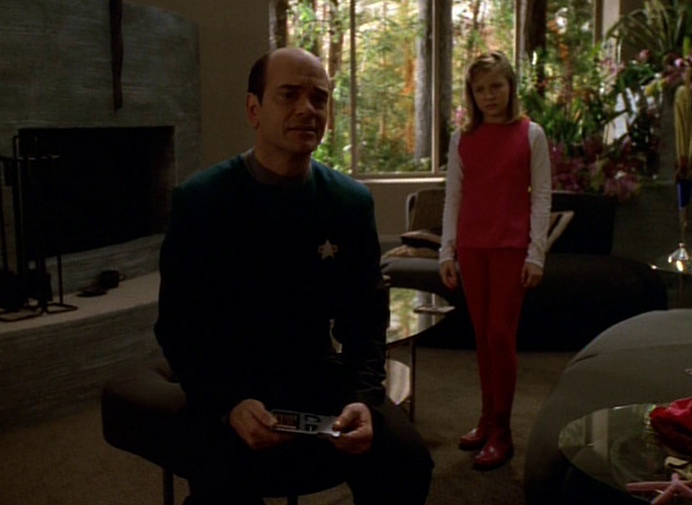
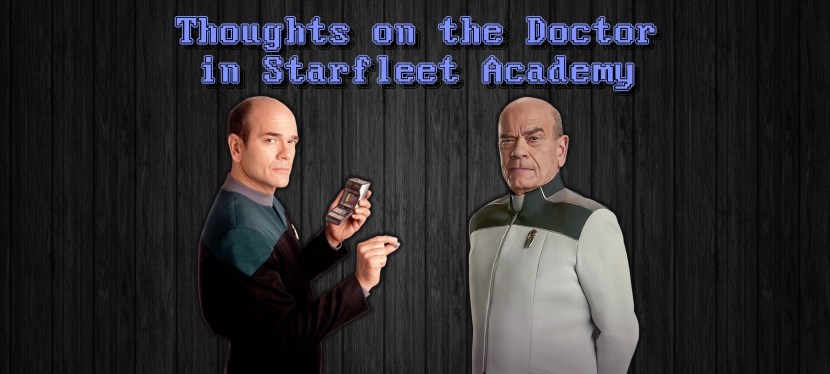
The most surprising announcement for Starfleet Academy, though, has to be Robert Picardo returning to Star Trek as the Doctor! I talked about this years ago, prior to Discovery’s third season, and how the Doctor (or at least a version of him) could still be active in the 32nd Century. It seems that idea was valid after all, and the Doctor will have a role to play in Starfleet Academy. Whether this will be the original version of the character or a future version seen in the Voyager episode Living Witness isn’t clear – I’d guess the former, but modern Star Trek hasn’t been afraid to make deeper cuts to individual episodes, so we’ll have to see! It’s worth noting that the Doctor has recently appeared in Prodigy, so his return in Starfleet Academy doesn’t come entirely out of nowhere.

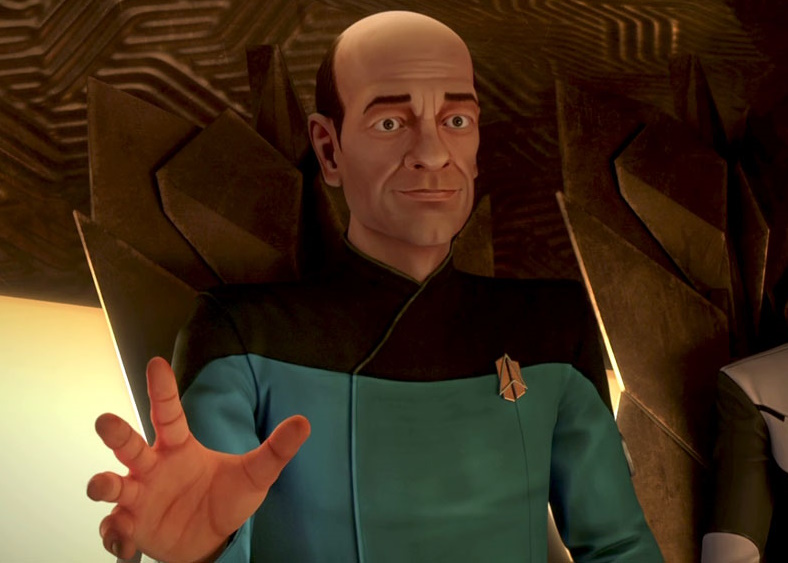
The Doctor in Prodigy’s second season.

So Starfleet Academy really sounds like it’s taking shape, with its main characters having seemingly been cast and its first season’s story written. There are some interesting announcements and ideas in the mix, though I confess I remain unconvinced at the series’ apparent direction of having an overarching villain and a serialised main story. For me, a series like Starfleet Academy felt like it could’ve been perfect for a return to a more episodic format, akin to what Strange New Worlds has been doing, with different planets to visit week-to-week. Still, the inclusion of the Doctor and the return of characters from Discovery is good news in my book!

Starfleet Academy has also seemingly gotten its official logo/typeface, which you can see below.

The Starfleet Academy logo.

Though I could be reading too much into this, I feel like the font used is a slightly softer, more child-friendly version of the Original Series film-era typeface that we’d often see on starships. The refit USS Enterprise, the Excelsior, and other ships in those films and through the early part of The Next Generation era used a similar font. This seems to carry the same outline, but in a slightly softer and more rounded form, and with a curve to the text that wouldn’t seem out-of-place on a university/college sweatshirt. First impressions are positive, at any rate!

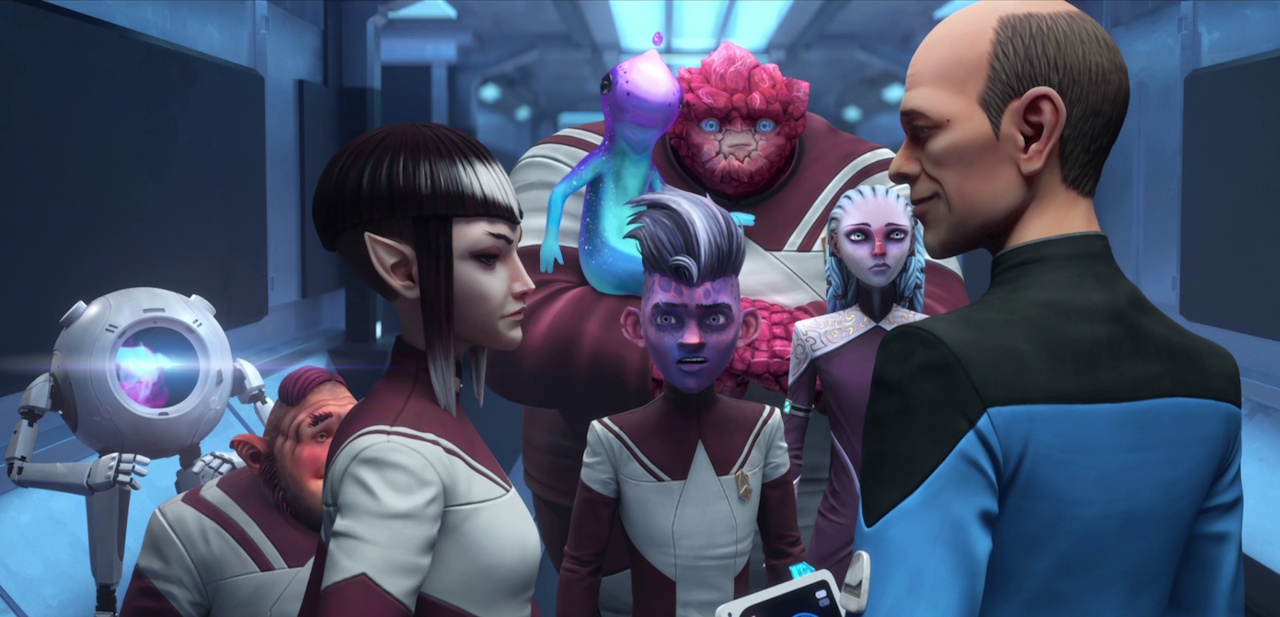
Just prior to Comic-Con there were comments from Prodigy’s co-creators and some of the voice actors about a potential third season for the show. Since we’re doing Star Trek news I’ll share my thoughts on that, and in a word I’d say a third season of Prodigy feels unlikely. It’s clear that the series didn’t do much for Paramount or Paramount+, hence its cancellation and sale to Netflix and other broadcasters. Re-starting production at this stage would be complicated, with question-marks over the rights to the show and how proceeds would be divided. As nice as it would be to think a third season is possible… my gut feeling is that it won’t happen, despite some enthusiasm for the series since it landed on a more accessible, kid-friendly streaming platform.

Prodigy’s second season found a new home on Netflix.

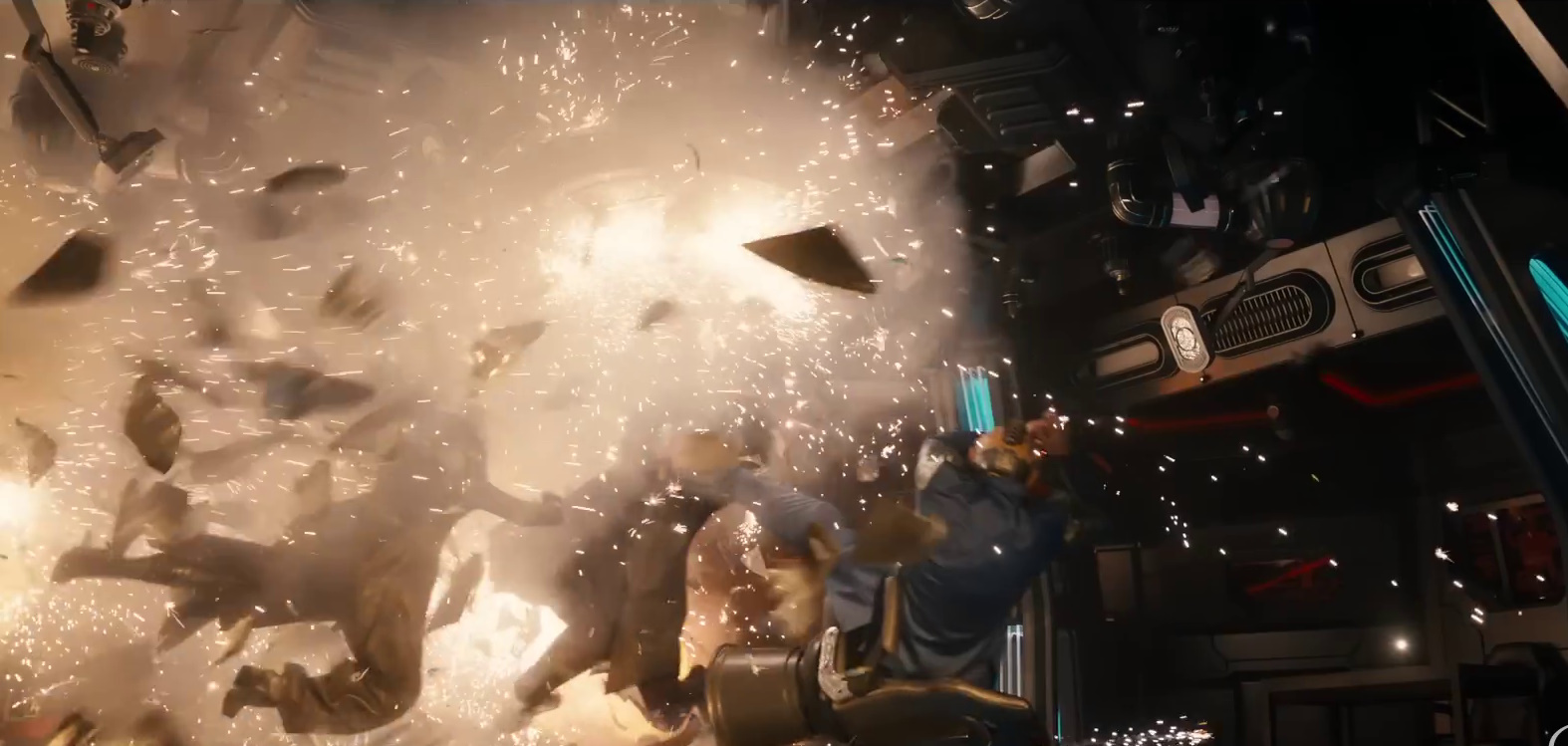
Returning to Comic-Con, we got our first trailer for Section 31. In terms of style, the trailer was undoubtedly the most energetic and modern that the Star Trek franchise has done in a long time; it wouldn’t have felt out-of-place at the cinema in between trailers for big-budget superhero films and summer blockbusters. As a piece of marketing material, I think it was excellent. It had a great soundtrack, clips that looked exciting and entertaining without giving too much away, and it genuinely felt like a project that could open up Star Trek to new fans and especially younger fans. All of that is positive!

However, I do have a couple of notes that are a tad more negative. Firstly, in just the few clips in the Section 31 trailer, I saw several barely-redressed sets from Discovery. I would have hoped that a project like Section 31 would’ve had new sets built, or at least that redresses would have been less obvious. Maybe there are in-universe reasons for that – such as Georgiou and her crew commandeering another Crossfield-class ship, perhaps. But I wasn’t blown away by seeing the same sets and, at one point, the same special effect as I’ve already seen elsewhere in Star Trek.

Section 31 looks explosive… and maybe a little familiar.

Secondly, although the tone of the trailer was positive and modern, I didn’t get a real sense of “Star Trek” from what we saw. The nature of Section 31 as a black ops division always meant that this story would have more freedom to step away from typical Starfleet officers and missions, and that’s something I’m generally supportive of. And as mentioned, I feel that Section 31 having a more modern identity could entice new viewers to the franchise – something that Star Trek needs if it is to survive.

But there should be a balance between telling this kind of one-off story with Star Trek’s core identity. The Kelvin films went in a more action-heavy direction but still managed to retain at least some of what made Star Trek feel like Star Trek, as have other productions post-2017. I don’t want to pre-judge Section 31 based on a few carefully-edited clips, but if one character hadn’t mentioned Starfleet during the trailer, there really wouldn’t have been much else in there to tie in with the wider franchise.

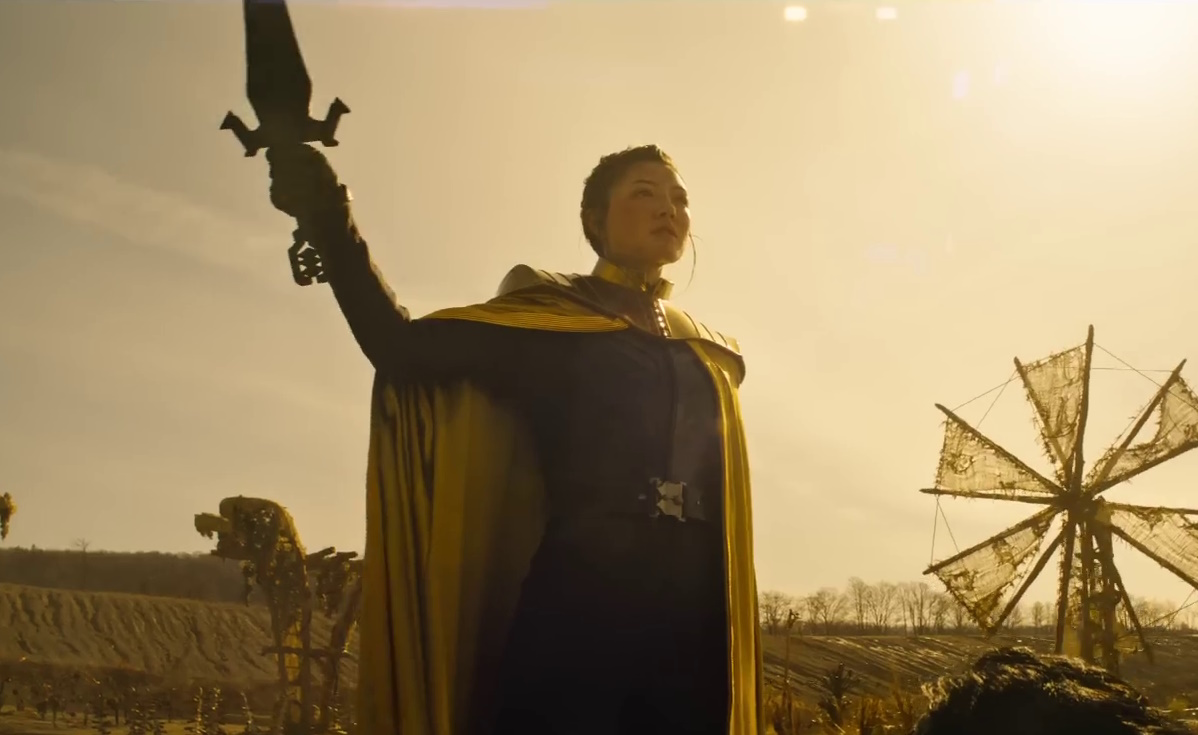
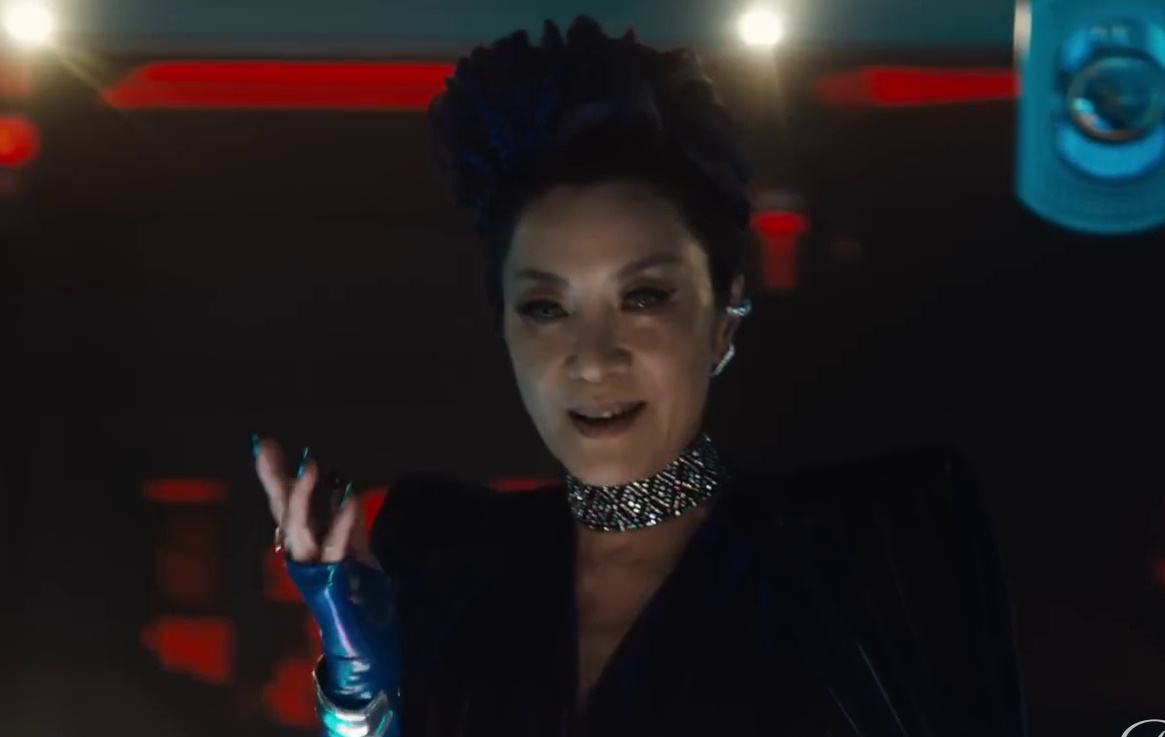
Michelle Yeoh is reprising her role as Empress Georgiou.

I like the idea of exploring more of Georgiou’s background… up to a point. As I’ve said before, prior to discovering her humanity in Discovery’s third season, Georgiou could feel quite one-dimensional. In the trailer, she seemed at her most interesting, I would argue, in what must be a flashback to her ascent to the Terran throne in the Mirror Universe; present-day Georgiou seemed to be back to her old tricks. This leaves me conflicted. I don’t think Section 31 would benefit from being “Star Trek does Suicide Squad,” where a gang of criminals and murderers without much nuance are the only main characters. That would conflict a little too much with what we know of Section 31 from its earlier appearances.

But at the same time, pushing the boat out and doing new things with Star Trek is a good thing. Reintroducing Georgiou to a more casual audience is also going to be necessary, given that it will have been five years since her last appearance by the time Section 31 lands on our screens next year. Flashing back to her time as Empress could be a great way to set up the character – as well as show how much she’s grown.

Is this the moment Georgiou assumed control of the Terran Empire?

The trailer didn’t tell us much about the plot or who the central villain(s) might be – and again, I think that’s probably a smart move. There was enough action and excitement to tease fans and get us invested without revealing too much or spoiling big story beats ahead of time. I’m sure we’ll get to see more in a second trailer before Section 31 arrives – and that trailer could introduce the main villain or show us a glimpse of what Georgiou and her crew are up against.

I will say that I’m a little disappointed that Ash Tyler, played by Shazad Latif in Discovery’s first two seasons, isn’t going to be part of Section 31. Tyler was an interesting character, and he could have been a moderating influence on Georgiou’s more violent methods. We didn’t get to see much of the new characters, but one is reportedly a chameloid – the shape-shifting species introduced in The Undiscovered Country. That could be a fun inclusion, and actor Sam Richardson is a fine addition to the cast. We’ll also get to know a younger Rachel Garrett – the captain of the Enterprise-C who we met in The Next Generation third season episode Yesterday’s Enterprise. There’s definitely a lot going on in Section 31!

Section 31 is scheduled to arrive next year.

There were also trailers for the third season of Strange New Worlds and the fifth and final season of Lower Decks. Despite not being fully up to speed on either series yet, I braced myself for spoilers and decided to take a look! Generally, I liked what I saw from the trailers, and while we didn’t get any massive news about either series, it seems like their upcoming seasons are in good hands. As with Discovery, I’m a little concerned that cancellation came too late for Lower Decks’ writers and producers to have written a conclusive ending to the series… but that may be a blessing in disguise if a revival could be on the cards one day! Perhaps that’s clutching at straws… but you never know. These things happen in animation – just ask Futurama!

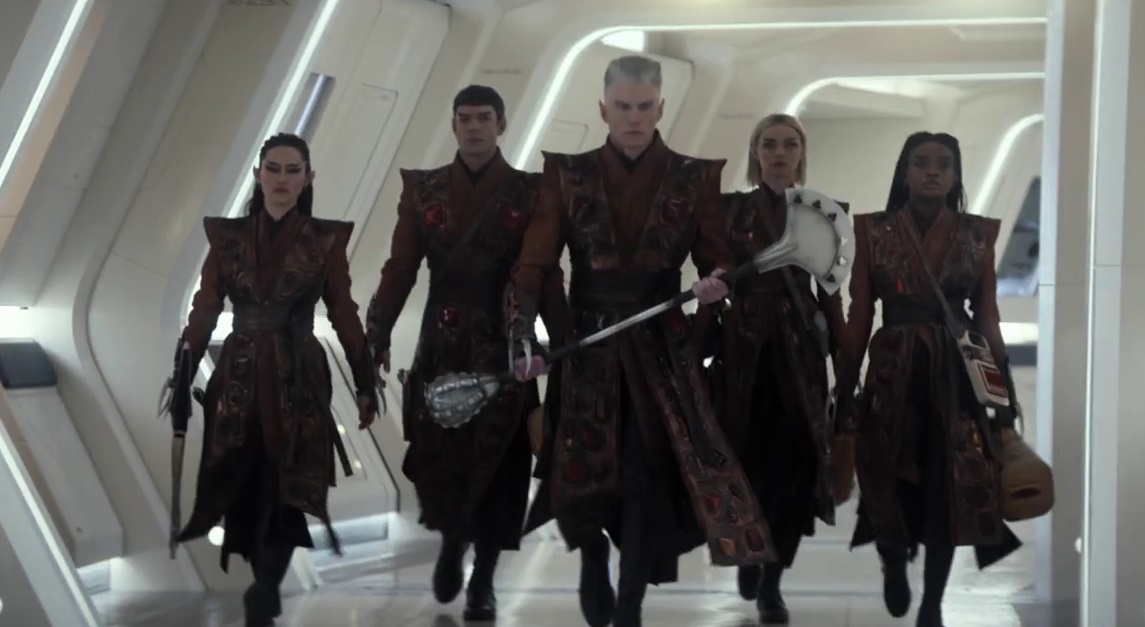
The Strange New Worlds teaser was really an extended scene from one of the upcoming Season 3 episodes, and it was genuinely hilarious. We talked before about comedy in Star Trek… well, look no further! The crew are turned into Vulcans for reasons unknown, and the entire sequence was just a ton of fun. There were callbacks to events in The Original Series, as well as to Spock’s half-human heritage. Seeing several main characters dressed up as – and acting like – Vulcans was a blast. I hope the rest of the episode can live up to the scene we just got to see!

Captain Pike and his crew are transformed into Vulcans!

The Lower Decks trailer emulated a commercial that I vaguely remember from the ’90s or early 2000s promoting one or other of the Star Trek films. I wish I could remember which one – but clearly the Lower Decks crew are geekier than I am. It was a neat callback, at any rate, and one that definitely plucked a nostalgic note for this old Trekkie!

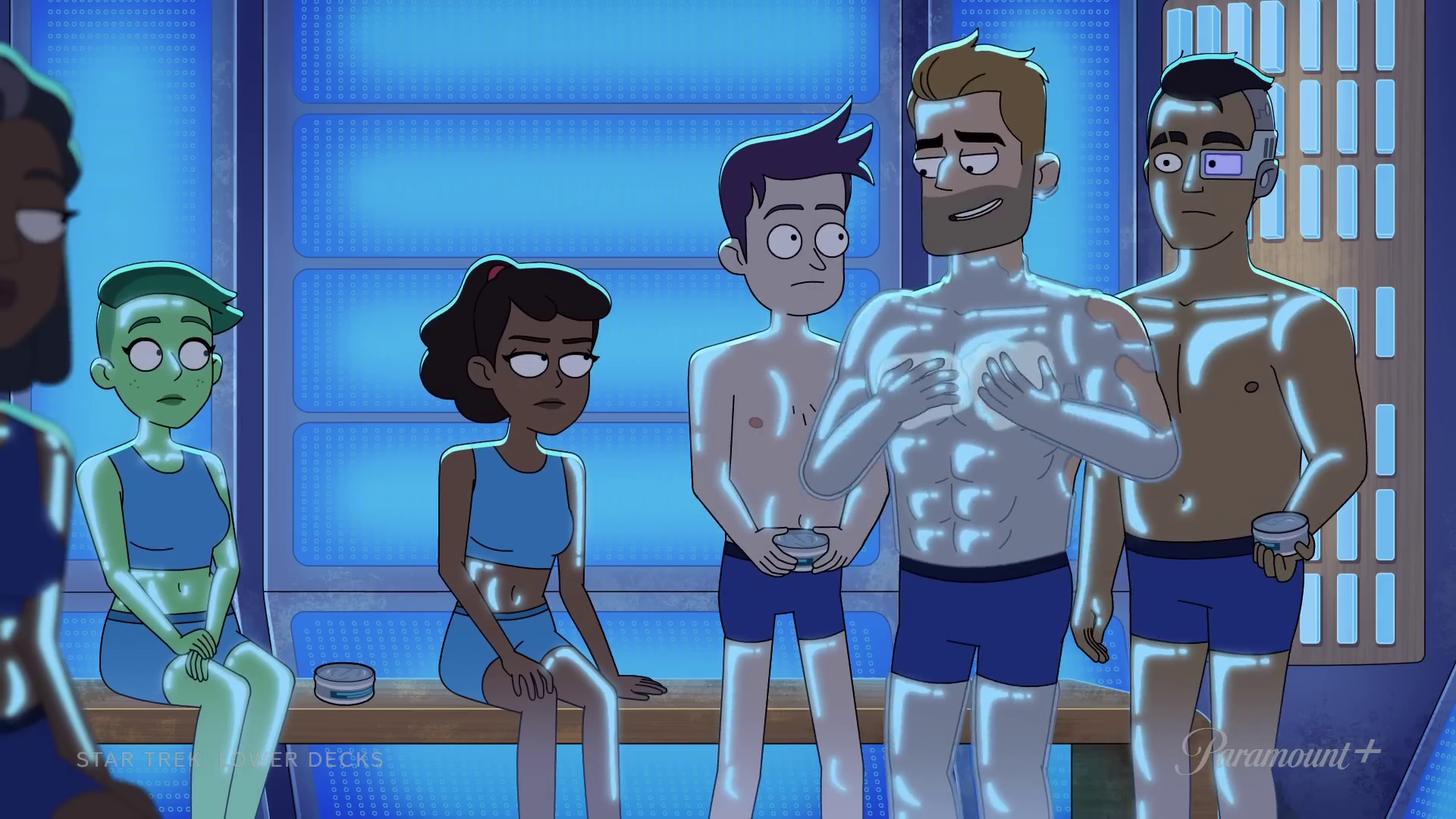
We got to see a few clips from the upcoming season, including one that seems to feature a crossover with an alternate USS Cerritos from another timeline. That could be fun, and exploring alternate versions of our favourite characters is something that Lower Decks’ comedic style could be perfect for. There were also scenes showing Klingons, an undercover mission, a decontamination chamber, and more. Though I still need to fully catch up with Lower Decks, I liked what I saw and it seems like the show’s final outing will be a blast.

Getting sticky in a decon chamber!

So to recap: we got big news about returning characters in Strange New Worlds, and I’m especially keen to catch up with the Doctor almost a millennium after we last saw him! A new live-action series is in early development, and it has a comedic focus. Section 31 looks like it’s going to take Star Trek in a different direction. And Strange New Worlds and Lower Decks will be returning in style.

All in all, I’d say that Star Trek had a pretty successful outing at Comic-Con this year. There were enough teases and trailers to keep fans engaged, but nothing went overboard. Maybe the untitled series’ announcement was a tad premature, as we really don’t have much to go on, but given the recent cancellations and the confusion over Paramount’s merger, taking the time to confirm that more Star Trek will be produced after Section 31 and Starfleet Academy is a good thing – it’s reassuring to both fans and investors that the brand isn’t going anywhere until at least 2027 or 2028!

Robert Picardo will be returning to live-action Star Trek.

I think my favourite announcement was the return of the Doctor. Ever since Discovery headed into the far future at the end of Season 2 back in 2019 – more than five years ago now – I’ve wondered whether the Doctor could still be around in that time period and if he might make an appearance. Although technobabble magic could have, in theory, brought back any character, as a hologram the Doctor had an easier explanation than most for his survival into the far future. I’ll be interested to see what role he might have in Starfleet Academy… as well as whether he might have some connection to the villain of the season!
So I hope this has been a fun look ahead. Some of the teases and announcements seem all but certain to keep Star Trek in production and on our screens for several years to come, and at a time when Paramount has been struggling and its flagship streaming platform has seemed to be in trouble, that’s good news in my book. Now all I have to do is catch up on the episodes and seasons I’ve missed before all of this new stuff arrives!

The Star Trek franchise – including all films, series, and properties discussed above – is the copyright of Paramount Global. Lower Decks Season 5 will be broadcast on Paramount+ in October 2024, Section 31 and Strange New Worlds Season 3 are scheduled to be broadcast on Paramount+ in 2025, and Starfleet Academy may follow in 2026. The untitled live-action series has no release date on the schedule. All broadcast dates are tentative and subject to change. This article contains the thoughts and opinions of one person only and is not intended to cause any offence.