Ten More Things That Have Always Bugged Me In Star Trek

A Star Trek-themed spoiler warning graphic.

Spoiler Warning: There are spoilers ahead for the following Star Trek productions: The Original Series Seasons 1 & 3, The Wrath of Khan, The Next Generation Season 1, The Undiscovered Country, Enterprise Seasons 2 & 3, Star Trek 2009, Discovery Seasons 2 & 4, Strange New Worlds Season 1, and Section 31.

Last year, I wrote up a tongue-in-cheek list of some of the little things that have always bugged me in Star Trek! Today, I thought we could have a little bit more fun at the franchise’s expense by talking about a few more. These are incredibly small things that don’t even rise to the level of “nitpicks,” but every time I see or hear them in their respective stories, they bug me! I know none of them will ever be explained in canon – nor do they really need to be – but I hope you’ll forgive an old Trekkie for airing their thoughts!

Star Trek fans have a bit of a reputation – especially on fan sites like this one – for nitpicking and being sticklers for canon and internal consistency, and I’m acutely aware that that’s how this list could come across. For me, this is written with tongue firmly embedded in cheek – it’s not meant to be taken completely seriously. While I do concede that all of these things “bug me,” as the title says, none of them ruined my enjoyment of any film or episode. These are minor things that aren’t worth arguing about or getting upset over – and I share this piece with the fan community in that spirit.

Promotional photo of several main characters from Star Trek: Enterprise, circa 2001.
Several main characters from Star Trek: Enterprise.

A couple of important caveats before we go any further. All of this is the entirely subjective opinion of a single Star Trek fan. If I raise points you vehemently disagree with, if none of these things bothered you, if you think I’ve misunderstood something, or if you feel I’m overreacting… that’s okay! There’s room enough in the Star Trek fandom for polite discussion and differences of opinion. And as I said above, none of this really matters anyway as these are all exceptionally minor points.

Finally, I’m not counting out-of-universe explanations. “It’s just a story,” or “because the writer/director wanted to do things that way” do not count! Sometimes, in order to tell a more entertaining story, the minutiae of canon or some element of internal consistency has to get pushed aside – that’s the way it goes in the world of entertainment. But that’s not what we’re here to talk about on this occasion.

Phew. With all of that out of the way, let’s jump into the list.

Number 1:
Why did Khan have a Motion Picture/Wrath of Khan-era Starfleet badge? Where did he even get it?
Star Trek II: The Wrath of Khan
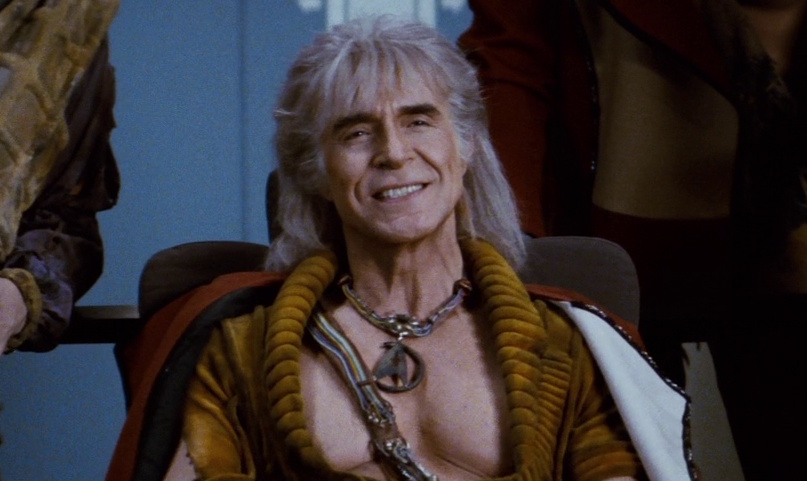
Still frame from Star Trek II: The Wrath of Khan showing a close-up of Khan aboard the USS Reliant.
Khan sporting his famous necklace.

Look at Khan’s outfit when Chekov and Captain Terrell encounter him and his surviving crewmates on Ceti Alpha V. After he takes off his overcoat, Khan is wearing a necklace which appears to be made from a damaged Motion Picture-era Starfleet badge – or a monster maroon belt buckle, perhaps. But how did he acquire this item? Khan and his people have been marooned on the planet since the time of The Original Series – years before either of those uniform styles were in use.

If Khan was wearing a piece of a Starfleet uniform, surely he should be wearing one of the gold, red, or blue shirts that we’re familiar with from The Original Series – or perhaps a pair of Starfleet boots from that era! It’s always stood out to me as a bit of an oddity of apparel; when you look at his necklace more closely, it’s clearly worn and weathered indicating it’s something he’s kept for years – perhaps as a symbol of his quest for vengeance against Kirk and Starfleet. But given that no Starfleet ships visited the Ceti Alpha system in between the events of Space Seed and The Wrath of Khan, it’s an item he simply shouldn’t have had access to.
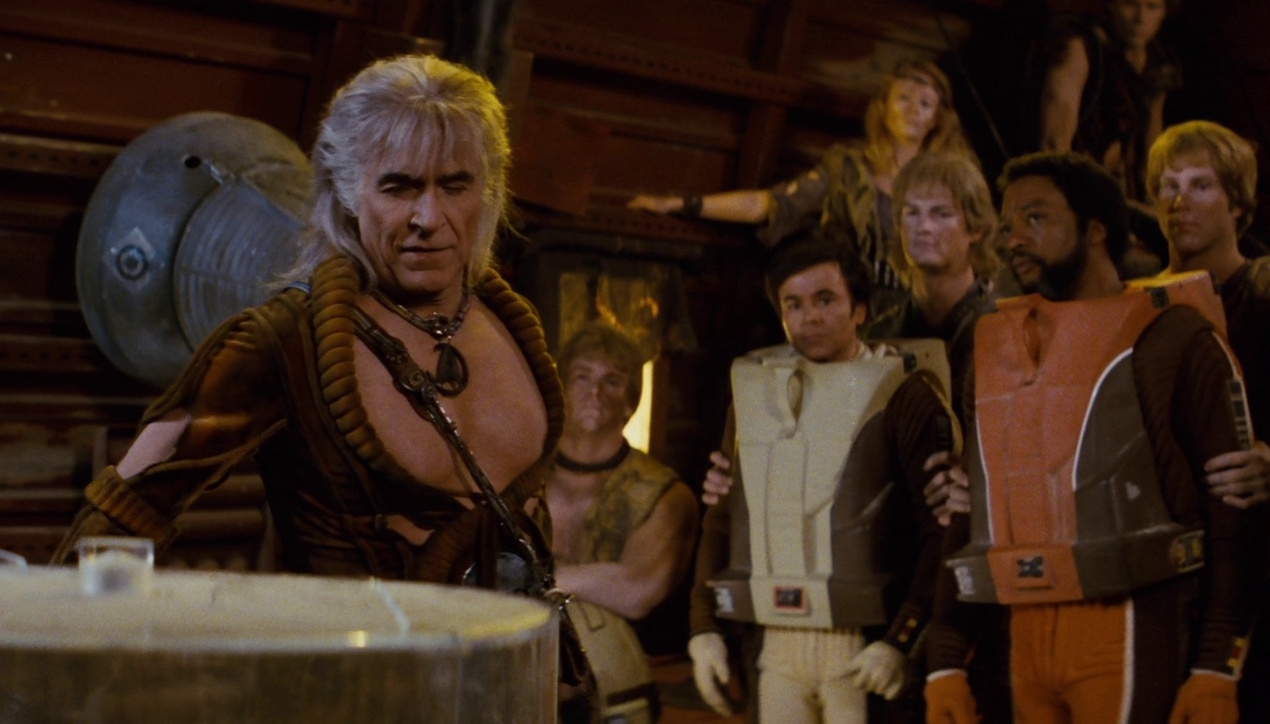
Still frame from Star Trek II: The Wrath of Khan showing Khan, Chekov, Captain Terrell, and several augments aboard the derelict Botany Bay.
Khan was already wearing the necklace when Chekov and Terrell arrived.

If Khan started wearing the necklace after his encounter with Chekov, I’d say that he took the piece from him or from someone else on Reliant’s crew. But he clearly converted part of a Starfleet uniform into this necklace during his time on the planet, before his meeting with the crew of the Reliant – so that explanation doesn’t work.

There’s no getting around the simple fact that Khan shouldn’t have this badge or belt buckle. Nothing like it was seen in The Original Series, and even if we extend our search to other 23rd Century shows like Discovery or Strange New Worlds, very generously assuming that another Starfleet vessel visited Ceti Alpha V before the destruction of Ceti Alpha VI, there are still no comparable badges, buckles, or anything with a Starfleet delta of the right shape and size for Khan to convert into a necklace. Unless he used his people’s very limited resources to smelt a perfect Starfleet delta the exact same shape and size… I don’t know where he got it from!

Number 2:
Aren’t the Cherons (or Cheronians) extinct?
Star Trek: Section 31
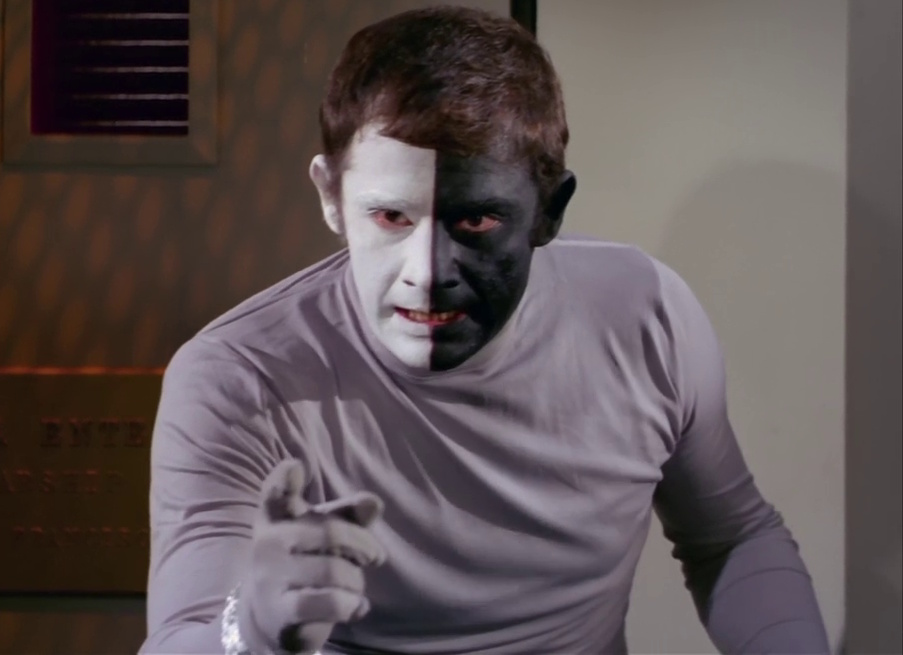
Still frame from Star Trek: The Original Series Season 3 showing Lokai, a black-and-white alien from the planet Cheron.
Lokai, one of the last surviving members of his race.

In the recent Section 31 TV movie (which you can read a review of by clicking or tapping here) we meet a character aboard Georgiou’s space station who looks very similar to a Cheron/Cheronian. The Cherons were encountered in the iconic episode Let That Be Your Last Battlefield – where the final two members of the species met Kirk and the crew of the Enterprise.

I like Let That Be Your Last Battlefield, and it’s an episode with a disappointingly timeless message about how racism and division will eventually lead to conflict, war, and extinction. The entire point of the story was that the Cherons wiped themselves out because they couldn’t get over their hatred of one another – even though, to us, they appeared to be the same species. It’s a message that was poignant at the time it was written – with the American civil rights movement ongoing – and has remained so to this day.

Still frame from Star Trek: Section 31 showing the character of Virgil.
Is Virgil from Section 31 meant to be a Cheron?

Section 31 confused me with its Stardate and therefore its place in the timeline – but no matter whether it was meant to be set in the mid-23rd Century or the early 24th Century, there simply shouldn’t be any surviving Cherons left. If Section 31 takes place before Let That Be Your Last Battlefield, then I guess technically two members of the species remain. But if, as the producers have told us, the film takes place in between The Undiscovered Country and The Next Generation, then the entire species is extinct – wiped out because they couldn’t overcome their hatred for one another.

Of all the things modern Star Trek could’ve chosen to retcon… the survival of the Cherons isn’t one I’d have wanted to see. It serves no purpose to bring in a character like that as a one-off campy joke, and furthermore, it undermines the powerful message of a classic story. My personal head-canon (which I really should write up one day) is that this character at Georgiou’s bar wasn’t actually a real Cheron, but someone basically cosplaying as one. I think that’s actually the least-bad spin I can put on the matter!

Number 3:
Does the Enterprise-D’s saucer section have warp drive or not?
Star Trek: The Next Generation
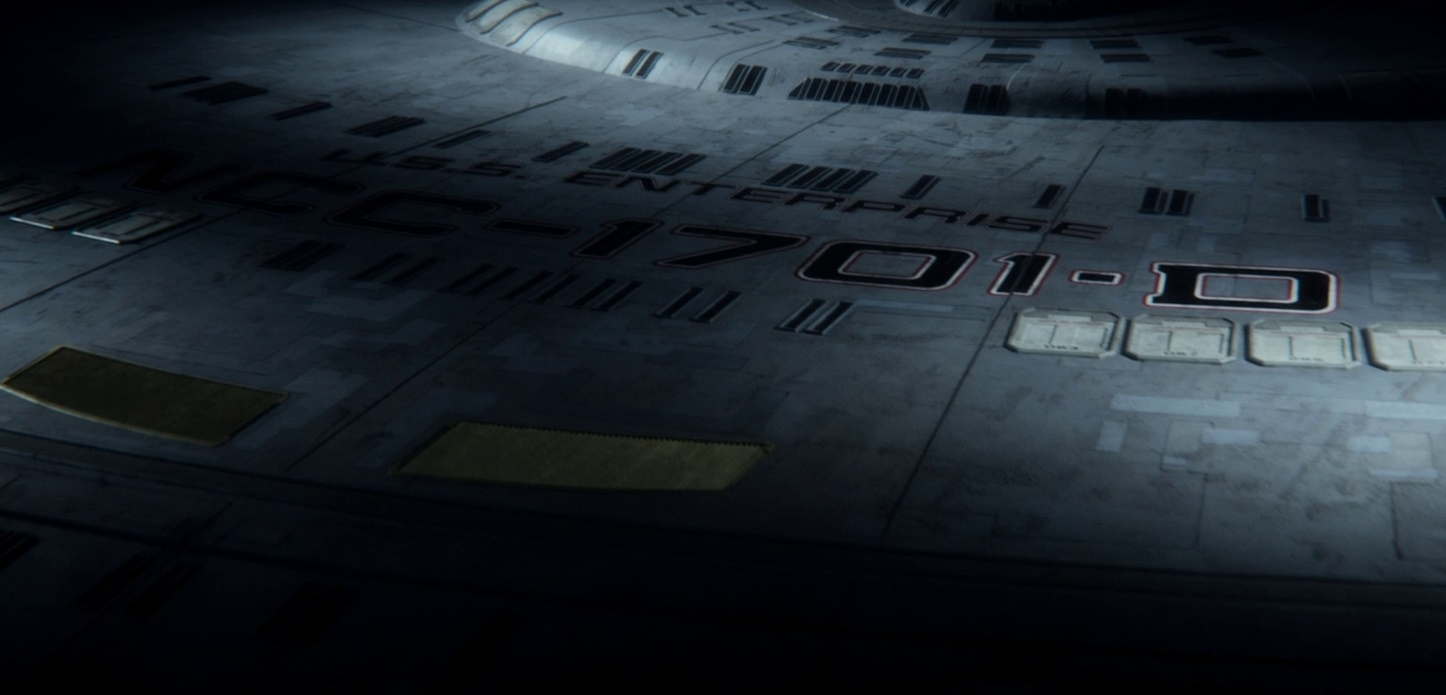
Still frame from Star Trek: Picard Season 3 showing a close-up of the Enterprise-D's saucer.
Close-up of the Enterprise-D’s saucer section.

According to most sources I can find – including in episodes where saucer separation occurs or is mentioned – the Enterprise-D’s saucer section has impulse engines only. Impulse engines allow for travel at speeds below warp one – i.e. below the speed of light. But this seems to contradict not only what we see on screen in episodes like Encounter at Farpoint… but the entire point of saucer separation as it’s explained in the show.

Except for situations like a warp core breach, where the destruction of the ship is imminent, what’s the main purpose of saucer separation? As stated in Encounter at Farpoint, The Best of Both Worlds, and other episodes, the star-drive section is where most of the Enterprise-D’s heavy armaments are – so the point of saucer separation is to evacuate civilians, scientists, and other non-combatants. The saucer section can be commanded by a junior officer with orders to set course for the nearest safe system or starbase, getting families and scientists out of the danger zone or battlefield. The star-drive section is then free to engage the enemy.
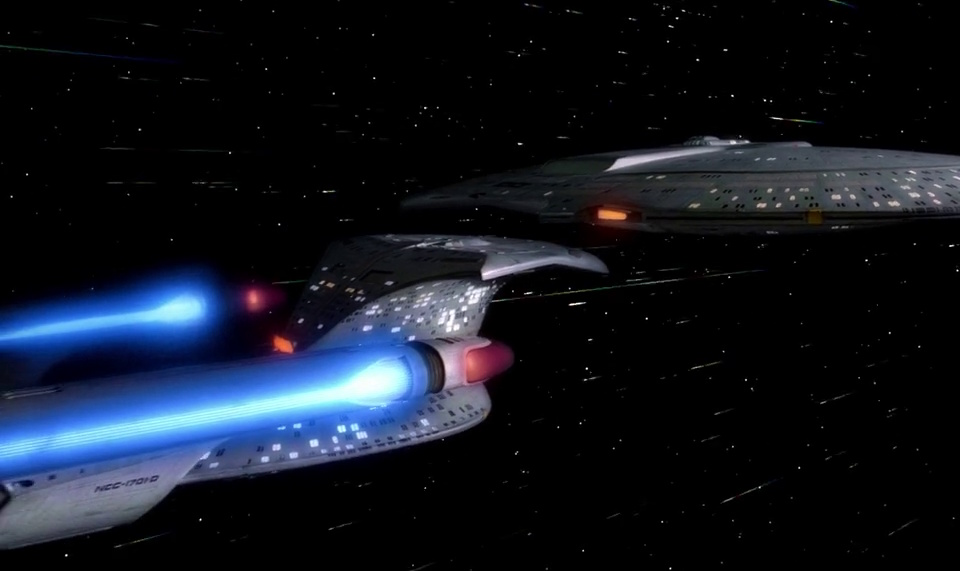
Still frame from Star Trek: The Next Generation Season 1 showing the Enterprise-D initiating a saucer separation.
Saucer separation in progress.

But at sub-light speeds, this won’t work. Any enemy ship could easily catch up to and overtake a fleeing saucer section travelling at impulse, or hit it with a torpedo or disruptor blast while it’s still in range. And at impulse speeds the saucer section would be decades away from help even if it was relatively close to a friendly base or star system. That’s not to mention that, in Encounter at Farpoint, the saucer section travels an apparently sizeable distance under its own power to reach Deneb IV after the encounter with Q. The Enterprise-D was at warp – apparently not in the Deneb system – yet the saucer was able to travel all that way, either at warp or at faster-than-light speeds, which seems to contradict what we know of the Enterprise-D and its capabilities.

So does the saucer section have warp engines? Or if saucer separation happens at warp, can the saucer cruise at warp for a while before slowing down? I think that contradicts what we know of how warp drive works and how warp bubbles are generated and sustained by warp cores… but there’s at least a degree of ambiguity there, I guess. What still doesn’t make sense, though, is how launching the saucer section at sub-light speeds is supposed to help the ship’s civilian crew escape from danger in a galaxy populated by warp-capable villains.

Number 4:
Why can’t the crew of the USS Reliant count to six?
Star Trek II: The Wrath of Khan
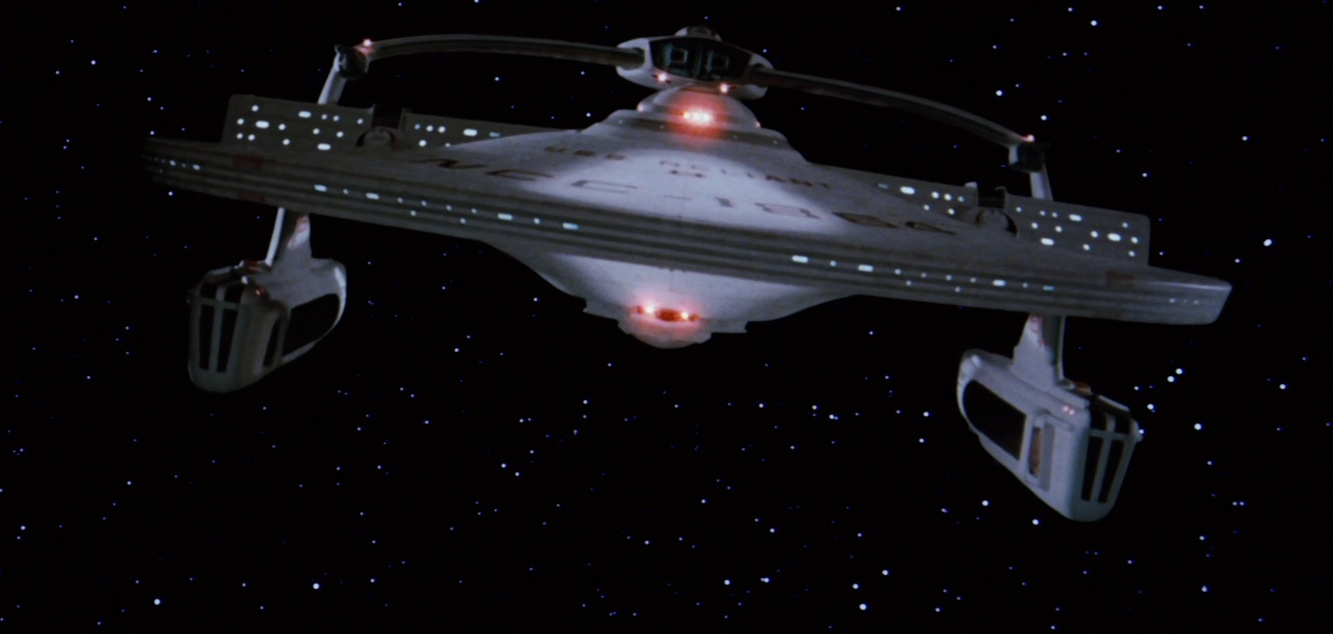
Still frame from Star Trek II: The Wrath of Khan showing the USS Reliant head-on.
The Miranda-class USS Reliant.

I know, I know: we’ve done The Wrath of Khan already! But this one really is dumb if you stop to think about it, so it’s definitely making the list. When the USS Reliant was scouting for planets as part of the Genesis project, it entered the Ceti Alpha system – a system that Starfleet has visited at least once before. The crew knew that there were supposed to be six planets… but no-one aboard can count, apparently.

Somehow – and I have no idea how this could’ve happened in the 23rd Century with all the technology aboard the USS Reliant – the crew mistook Ceti Alpha V for the destroyed Ceti Alpha VI, leading to them running into Khan and his band of augments. But there’s no way a mistake this glaringly obvious should’ve been able to happen at all.
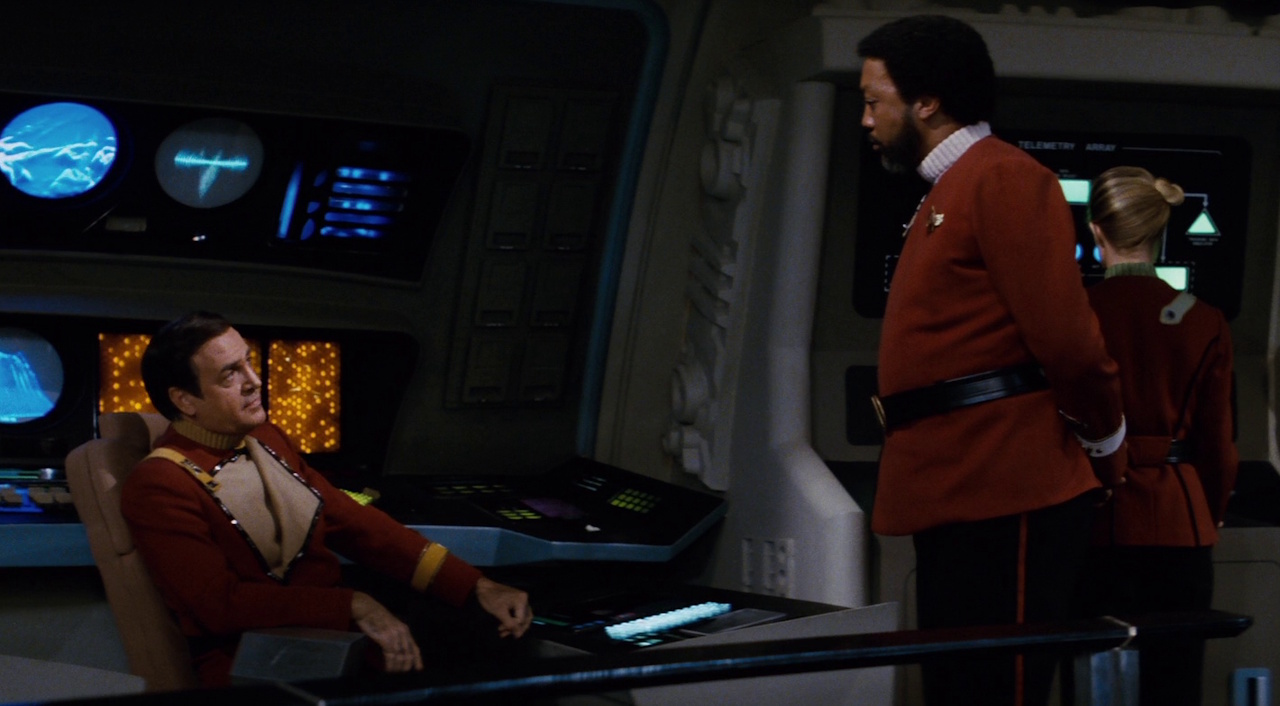
Still frame from Star Trek II: The Wrath of Khan showing Captain Terrell, Commander Beach, and another officer on the bridge of the USS Reliant.
Three senior officers on the bridge of the USS Reliant.

Upon entering the system – or hours ahead of arriving, using long-range sensors – Reliant’s crew should’ve noticed that, y’know, an entire planet is missing. If nothing else, the debris or dust cloud left behind by the explosion of Ceti Alpha VI – which is unlikely to have dissipated fully in a few short years – should’ve been a dead giveaway. But even if some kind of solar wind blew all the dust and rocks far outside the system, there were still only five planets where there should’ve been six! You’d think someone would’ve noticed this and at least mentioned it to the captain.

That’s to say nothing of Starfleet’s apparent lack of record-keeping. The Ceti Alpha system should’ve been flagged up as containing a dangerous colony of criminals: the augments. We know, thanks to the likes of Strange New Worlds, that Khan and his people were still notorious centuries after they tried to rule all of Earth, so surely Starfleet would want to prevent unwitting starships from stumbling upon their colony. The Talos system is restricted by Starfleet for much the same reason, as we saw in The Cage. But even if Kirk conveniently forgot to record that mission or tell Starfleet what became of Khan… why couldn’t anyone on the USS Reliant count to six?!

Number 5:
Can’t ships just fly over or under the Galactic Barrier?
Star Trek: The Original Series, Star Trek: Discovery
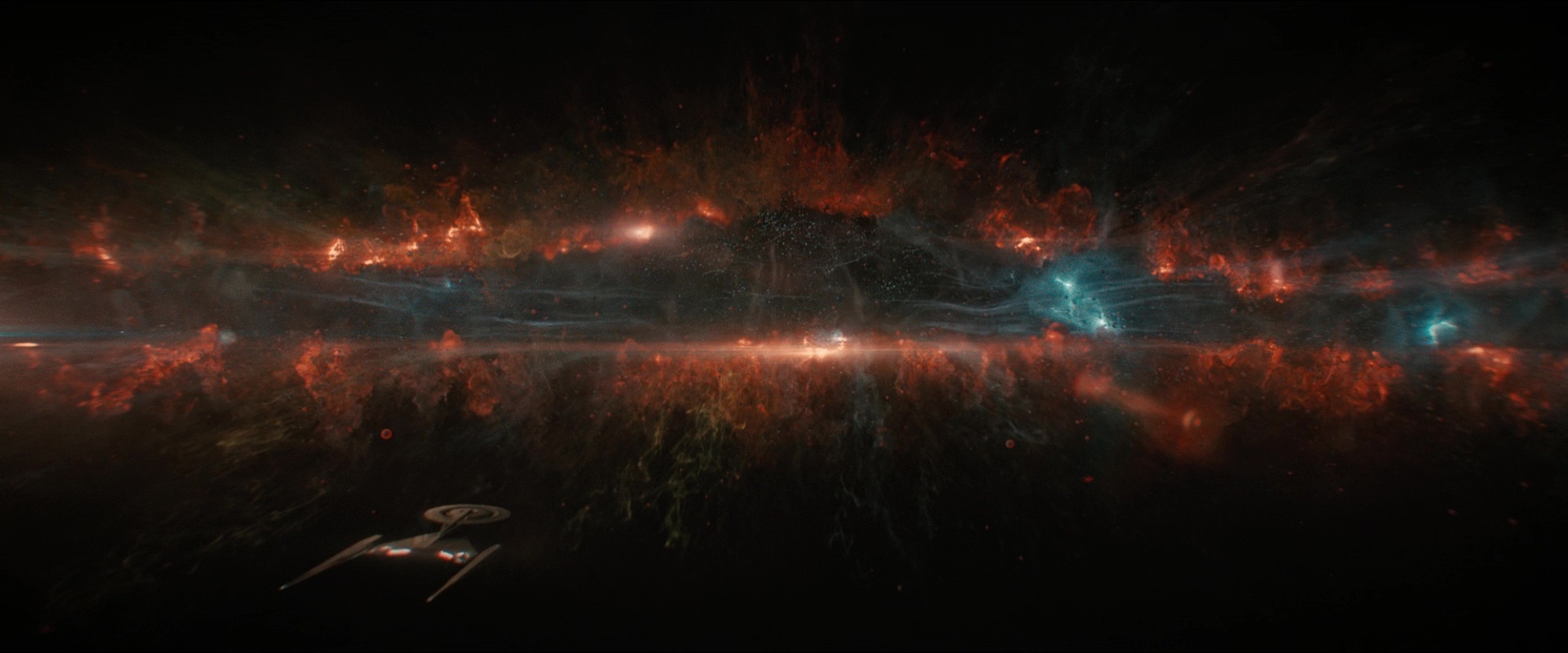
Still frame from Star Trek: Discovery Season 4 showing the USS Discovery at the Galactic Barrier.
The Barrier at it appeared in Discovery.

Star Trek has, on occasion, exhibited what Mr Spock might call “two-dimensional thinking.” By that I mean that many ships and objects in space appear as if they’re on a perfectly flat plane – but space is three-dimensional. One example of this appears to be the Galactic Barrier – the forcefield-like object that apparently surrounds the edge of the galaxy, preventing spacecraft from leaving.

Even in Discovery, though, which is the Galactic Barrier’s most significant appearance to date, the phenomenon (which doesn’t exist in real life) appears to be a mostly two-dimensional ring around the edge of the galaxy rather than a three-dimensional bubble. Which raises a simple question: why not simply fly over or under it? Starships are obviously capable of manoeuvring in three dimensions, so why fly through something you could easily fly around?
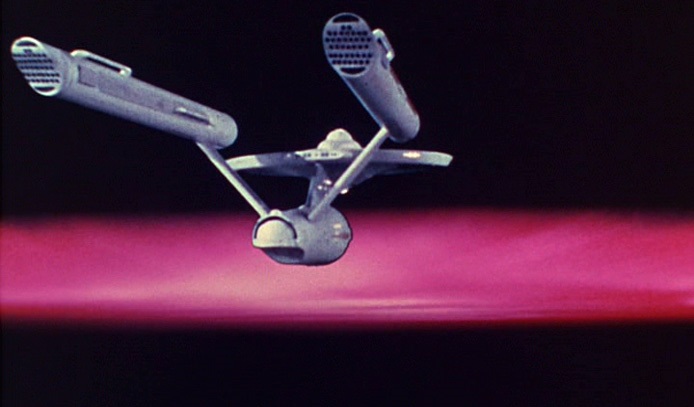
Still frame from Star Trek: The Original Series Season 1 showing the USS Enterprise approaching the Galactic Barrier.
The USS Enterprise approaches the Galactic Barrier.

Unless the Barrier is meant to surround the entire galaxy from all possible angles, there’s not really a good explanation for this. The way it’s been depicted on screen makes it seem like it’s something any starship could easily get around, even if doing so would take a bit longer. If this was a one-off visual effect from The Original Series I might be tempted to let it lie, but Discovery brought back the Galactic Barrier in its fourth season, presenting it as a pretty significant hurdle for Captain Burnham and the crew to overcome.

As an aside, I’m not sure that was a great idea! There are some elements of The Original Series, The Animated Series, and even from early in The Next Generation that just about work in context… but wouldn’t really translate well to a story made today. For me, as I think I said at the time of Discovery’s fourth season, the Galactic Barrier is one of them. And the way it’s presented and visualised on screen just kind of hammers home how two-dimensional some of the franchise’s space sequences can feel.

Number 6:
Why is artificial gravity always the last system to fail when a ship is damaged?
Star Trek VI: The Undiscovered Country et al.
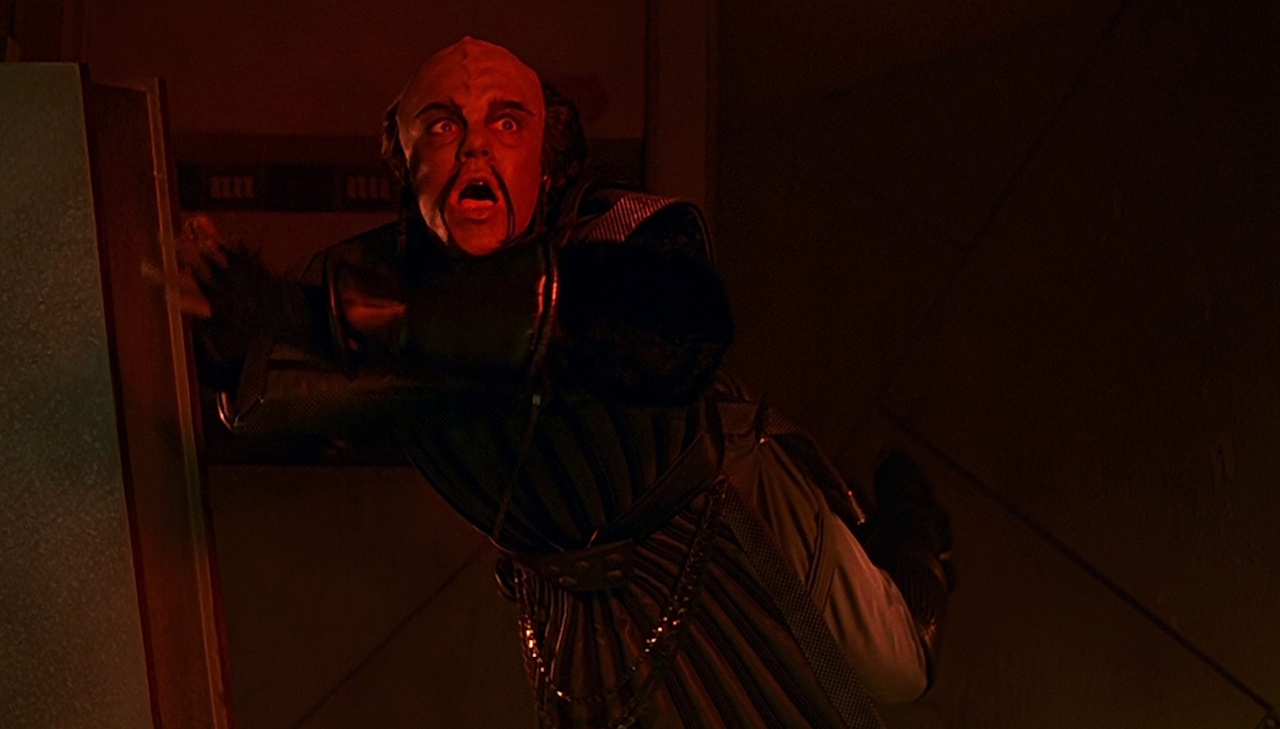
Still frame from Star Trek VI: The Undiscovered Country showing a Klingon floating helplessly.
A Klingon officer floating after his ship’s artificial gravity was knocked offline.

I think I can count on one hand the number of times a starship’s artificial gravity has been damaged in Star Trek. The only time it was plot-relevant was in The Undiscovered Country, where the damage to the artificial gravity on the Klingon ship Kronos One was instrumental to the plot to assassinate Chancellor Gorkon. But aside from that… can you think of a single time in the franchise’s 950 episodes and films where a ship has lost gravity?

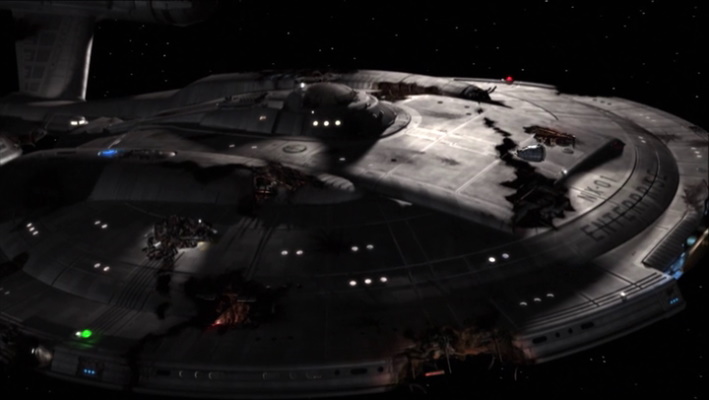
We’ve seen starships take a real beating sometimes: the Enterprise in The Wrath of Khan, Voyager in Year of Hell, the NX-01 in Damage, and even non-Starfleet ships like the Cardassian vessel in The Wounded, or the Romulan warbird in Balance of Terror, but none of them ever lost their artificial gravity. This system appears to be more robust even than life-support, which we’ve seen fail on a number of occasions while artificial gravity was still operational.
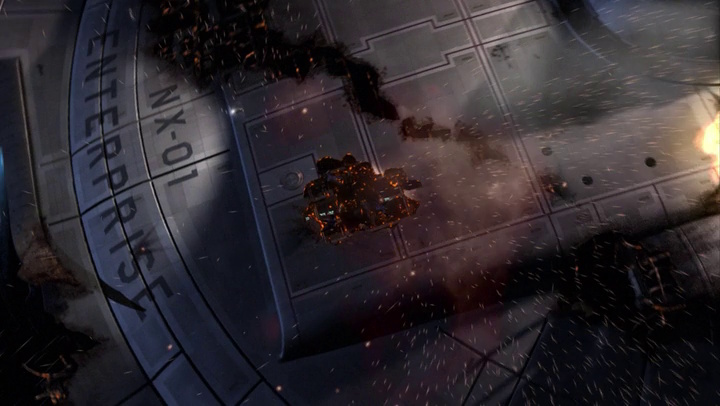
Still frame from Star Trek: Enterprise Season 3 showing the NX-01 Enterprise heavily damaged.
Even serious damage, such as to the NX-01 Enterprise pictured here, doesn’t usually stop artificial gravity from functioning.

You’d think prioritising something like breathable air and a survivable temperature would take precedence over artificial gravity, with ships being designed in such a way that life-support would be the most resilient and sturdy system. I know there’s some ambiguity in the way these technologies work in Star Trek, but artificial gravity must require some amount of power to function – and even if it’s powered by a wholly separate system, anything that disables the entire ship should deactivate artificial gravity. It would also make a logical target during ship-to-ship combat, as knocking out an opponent’s gravity would cripple their ability to operate the ship.

There are even times where disabling artificial gravity would be to the advantage of a crew trying to defend their ship. Perhaps the best example of this is the Borg attack on the Enterprise-E in First Contact, but there are other times where a boarding party, raiders, or pirates could have been at least slowed down and hampered if the crew deactivated artificial gravity on one or two decks. I suppose it’s good for Star Trek that the way artificial gravity works is deliberately vague, and it’s one of those “you’ve just gotta suspend your disbelief” things. But from an in-universe point of view, the apparently indestructible nature of this system, and the overlooked tactical advantages of trying to disable an adversary’s artificial gravity, don’t make a lot of sense.

Number 7:
Shouldn’t Starfleet have persevered with the Spore Drive?
Star Trek: Discovery
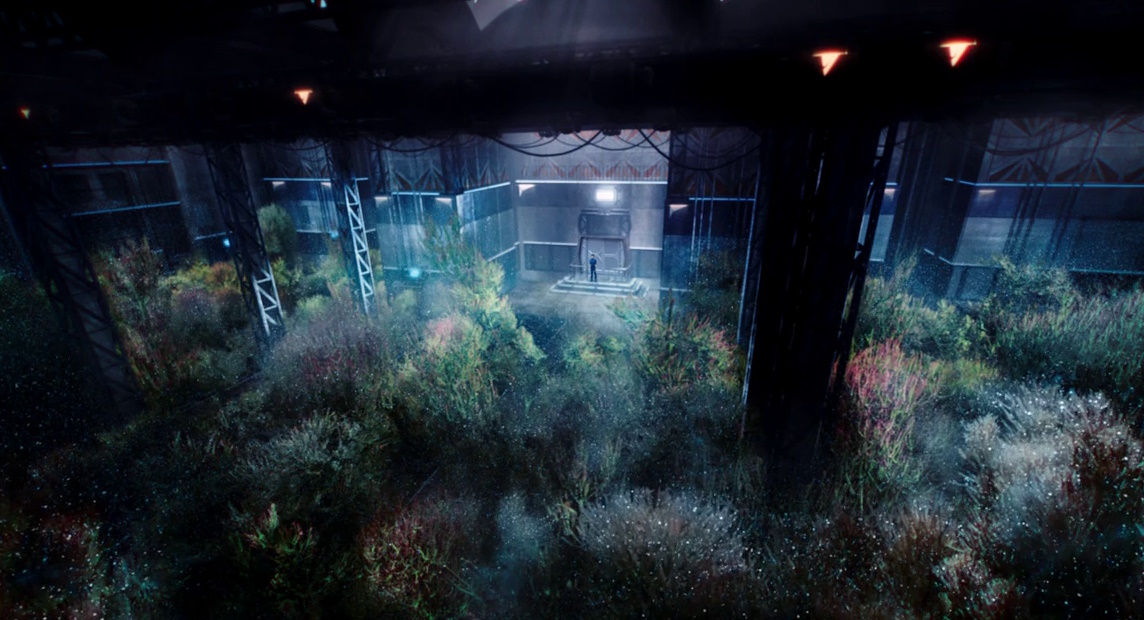
Still frame from Star Trek: Discovery Season 1 showing the mushroom cultivation area aboard the ship.
The cultivation bay aboard the USS Discovery.

After the loss of the USS Glenn and the apparent destruction of the USS Discovery, we’re led to believe that Starfleet abandoned its Spore Drive programme – even though the technology was proven to work and would be beyond useful to the organisation. For Starfleet, with its dual military and scientific missions, the Spore Drive was a phenomenal leap forward with so many applications. I genuinely cannot believe that they’d just abandon it after a few setbacks – especially after the Klingon Empire had come to learn of its existence.

We would later see, in Discovery’s third season, that basically any empathic race could – in theory – interface with the Spore Drive. That doesn’t seem like such a huge leap that Starfleet couldn’t have figured it out over time, especially with races like the Betazoids and Vulcans on hand. But even if using an empath as a navigator wasn’t possible, it still seems like such a ridiculously overpowered and useful piece of kit that Starfleet – and Section 31 in particular – would want to continue to develop it.
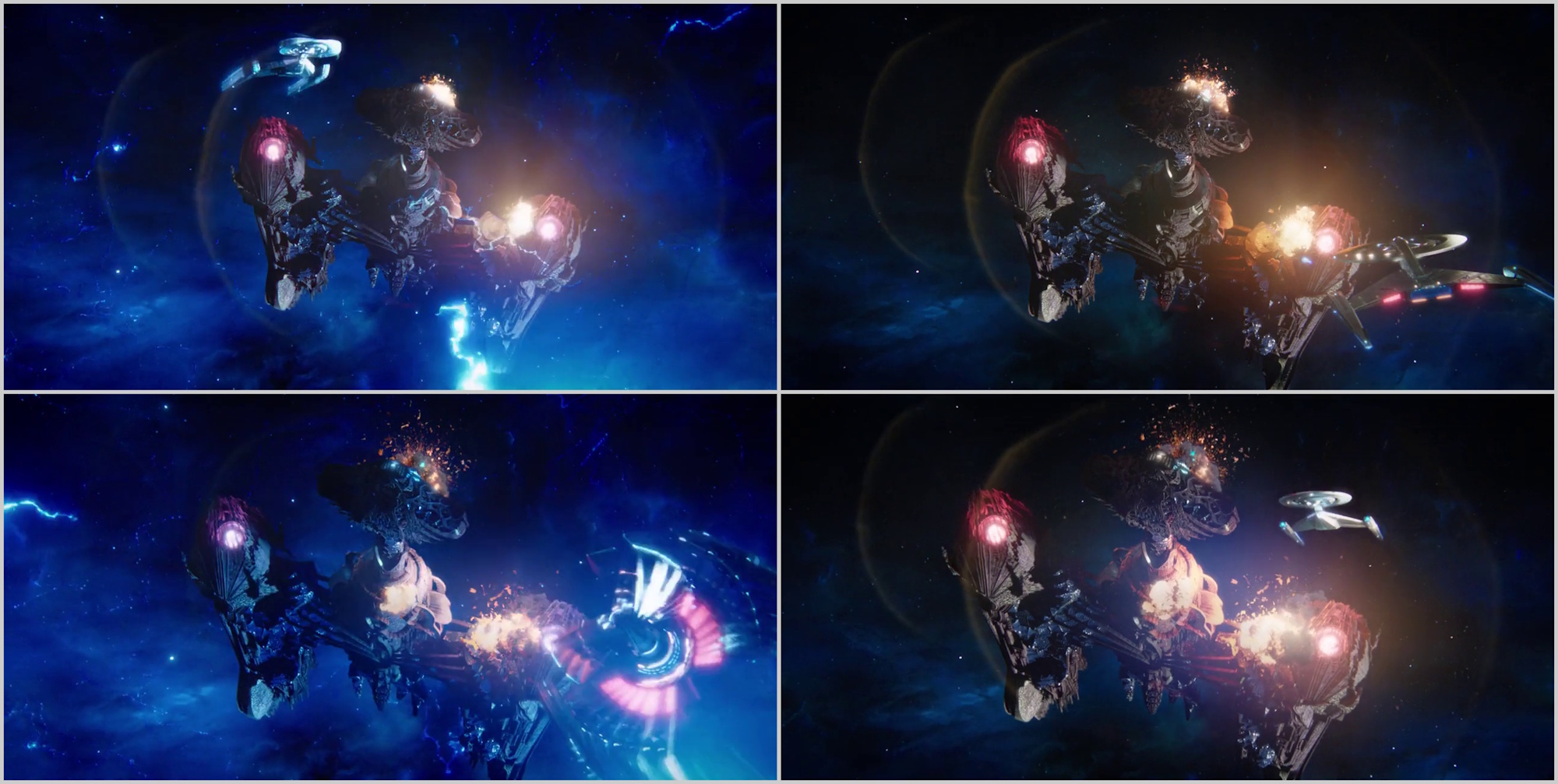
Four still frames from Star Trek: Discovery Season 1 depicting the USS Discovery at the Battle of Pahvo.
The Battle of Pahvo (pictured) proved the Spore Drive’s worth as a military tool.

Look at the Spore Drive’s capabilities. Two of its biggest achievements were cracking the Klingons’ cloaking device – becoming basically invulnerable to attacks in the process – and leaping tens of thousands of light-years across the galaxy to the planet Terralysium. For Starfleet’s military, the Spore Drive’s ability to jump so fast that attacks from disruptors and torpedos are ineffective is huge – it could redefine starship combat in the Alpha Quadrant. And for the organisation’s mission of exploration, being able to jump to literally anywhere in the galaxy renders warp drive obsolete and would mean Starfleet can investigate any interesting-looking phenomena with ease – while still being back home in time for tea.

The Spore Drive is an example of a “prequel problem;” if Discovery had been set years or decades after Nemesis – in the same period as Picard, for example – then it wouldn’t be an issue. We could simply say that the Spore Drive would become Starfleet’s new method of travel. But because Discovery was set before The Original Series, I don’t think there’s any way to create a satisfactory explanation for why Starfleet, Section 31, or other factions didn’t continue to develop and refine it.

Number 8:
Why would the Xindi fire a small weapon at Earth months ahead of their main attack?
Star Trek: Enterprise
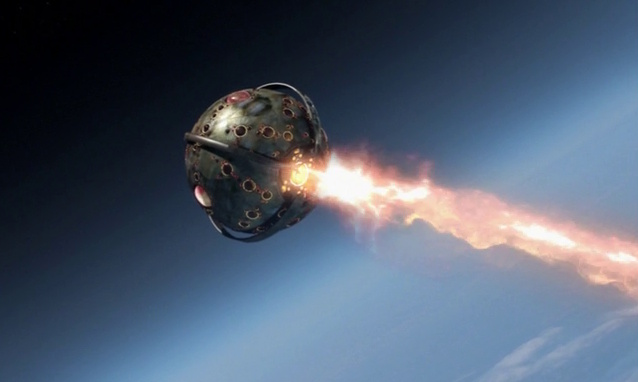
Still frame from Star Trek: Enterprise Season 2 showing a small spherical Xindi weapon firing.
The Xindi’s first weapon.

Sun Tzu, the legendary Chinese general, wrote two-and-a-half thousand years ago that a good commander should “always mystify, mislead, and surprise the enemy if possible.” And throughout history – from the ancient world to the Second World War and beyond – surprise attacks and misdirection have been incredibly powerful tools that successful generals and strategists have employed. So why would the Xindi – backed up by a faction from the far future, no less – launch a minor attack that alerted Earth and humanity to their much larger upcoming attack?

If the Xindi needed to test the range and abilities of their weapon, they could pick another target in a different system. This target would be a comparable distance away from where they planned to launch their weapon, and could also be a planet of roughly the same size and mass as Earth. This would give their scientists and engineers the data they needed without compromising the secrecy of their operation. All they achieved by targeting Earth with their initial, much smaller weapon was alerting humanity and Starfleet to their existence – which ultimately set the stage for their defeat.
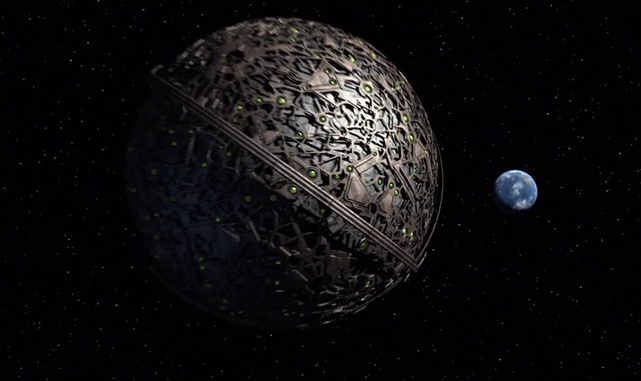
Still frame from Star Trek: Enterprise Season 3 showing the Xindi weapon arriving at Earth.
The much larger second Xindi weapon approaches Earth.

This is a military blunder so exceptionally basic that, if I were the Sphere-Builders, I’d have cut all contact with the Xindi and written off the entire operation. The miniature version of the weapon wasn’t designed to deal the kind of damage that the larger version was, but it was still damaging enough to put all of humanity and Starfleet on full alert – kick-starting a chain of events that led to Captain Archer confronting and stopping the Xindi and their Sphere-Builder allies.

All the Xindi would’ve had to do was pick a different target for their weapons testing. A planet the same size as Earth in a system roughly the same distance away would be ideal – or an unarmed probe sent to Earth if scouting that route was deemed necessary. Even if the Xindi and Sphere-Builders were so cocky and arrogant that they considered themselves to be unstoppable, it was still a catastrophic, primary school-level mistake to send the small weapon directly to Earth months before the larger weapon was ready.

Number 9:
How did Nero’s trip back in time create an alternate reality instead of changing the prime timeline?
Star Trek (2009)
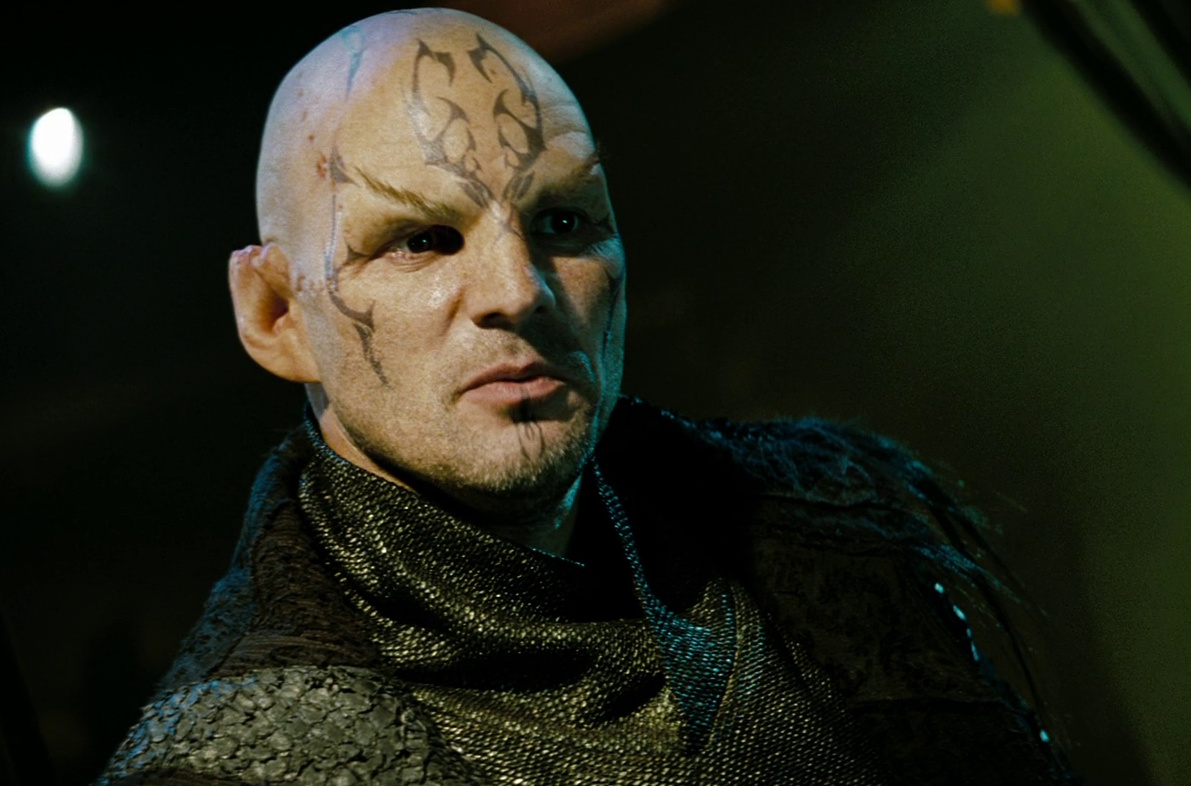
Still frame from Star Trek (2009) showing a close-up of Nero.
Nero.

The way it’s explained on screen in Star Trek, Nero travelled back in time from 2387 to 2233 via an artificial black hole created by Red Matter. Somehow, though, the changes Nero and later Spock would go on to make to the past didn’t overwrite the events of the prime timeline, but exist in their own separate universe. This doesn’t seem to gel with what we know of time travel and temporal paradoxes in Star Trek.

Starfleet vessels have encountered all kinds of temporal phenomena over the years, none of which led to the creation of a parallel universe. Even in cases where ships got caught up in time-travel shenanigans, the end result was either a permanently altered timeline – as in stories like The Voyage Home or Past Tense – or overwritten events that no-one remembered – as in stories like Cause and Effect or Year of Hell. None of these led to the creation of a permanent alternate reality that persisted after the phenomenon that created it had been dealt with – so why did the Red Matter black hole do so?

Still frame from Star Trek (2009) showing the Narada emerging from a black hole.
Nero’s ship, the Narada, arrives in the 23rd Century.

The best explanation I can come up with is this: Star Trek exists in a multiverse. Along with to the prime timeline, the Mirror Universe, and others that we’ve seen, there must be multiple additional parallel universes – some of which are identical to or indistinguishable from the prime timeline. Somehow, Red Matter creates a portal between universes, allowing for travel from one to another. Nero and Spock entered a parallel universe identical to the prime timeline – but it’s a parallel universe that already existed before they arrived.

That’s a pretty convoluted explanation, and it isn’t explained that way on screen. Instead, the alterations to the timeline that Nero perpetrated – from the destruction of the USS Kelvin to the attack on Vulcan and beyond – should have permanently altered the prime timeline based on what the characters told us and what we already know from other iterations of Star Trek.

Number 10:
Couldn’t Captain Pike just retire and live as a hermit?
Star Trek: Strange New Worlds
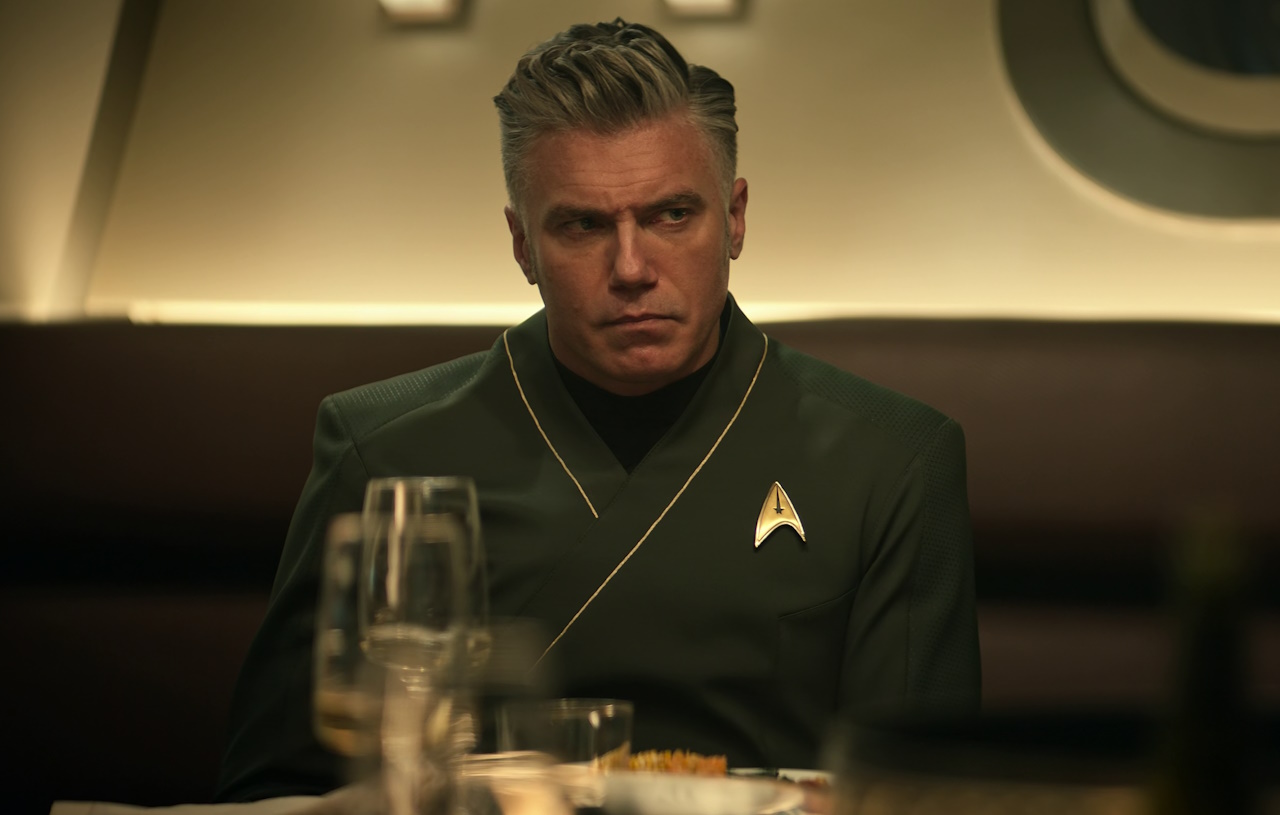
Still frame from Star Trek: Strange New Worlds Season 2 showing Captain Pike at a diplomatic dinner.
Captain Christopher Pike.

I found Pike’s arc in Discovery and the first season of Strange New Worlds to be interesting and relatable. I’ve been in a similar position to Captain Pike: being told that my health was going to get dramatically worse and knowing that it’s inevitable. It made Pike an incredibly sympathetic character, and one whose story brought a tear to my eye more than once. But… is Pike’s devastating accident and disability genuinely unavoidable?

The more Pike comes to learn about the future, the more he seems to uncover ways to avoid his supposedly-inevitable fate. In the fantastic Season 1 episode A Quality of Mercy, Pike learned – thanks to a time-travelling version of himself – that if he avoided his fate but remained in Starfleet, he’d accidentally trigger a chain of events that led to a devastating war between the Federation and Romulans. This conflict was something only Kirk and Spock could prevent, but Pike’s place on the bridge and Spock’s serious injury would keep the war going and prevent any hope for peace in the future. This seemed to strengthen Pike’s resolve and set him back on course for the accident that would leave him disabled.
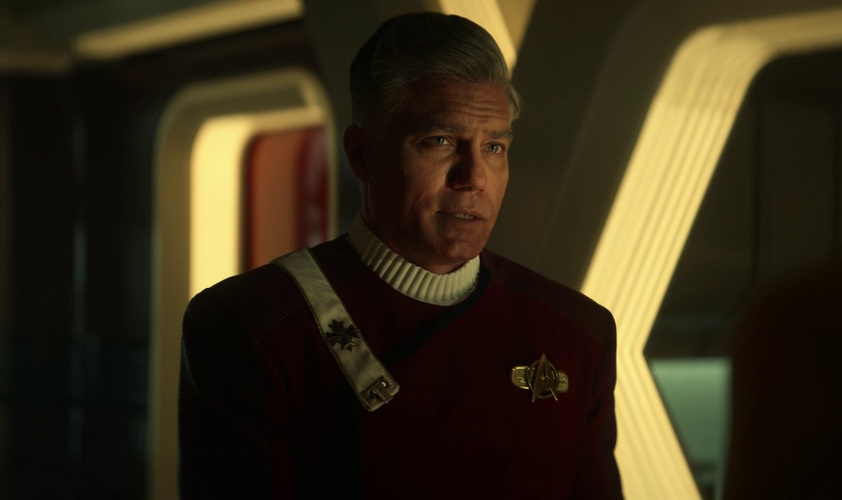
Still frame from Star Trek: Strange New Worlds Season 1 showing a future Captain Pike in a 'monster maroon' uniform.
Pike in an alternate future.

But… couldn’t he choose a radically different path? Sure, remaining in Starfleet after he was supposed to suffer the accident led to a horrible alternate future. But if Pike resigned his commission the day before the accident and went to live in a cave somewhere, what would change? Nothing, right? Pike could remain alive and relatively healthy, enjoying a well-earned retirement without the need for Talosian mind-games, and the rest of the galaxy could continue unaffected.

Maybe we’ll find out, in Seasons 3, 4, or beyond, why that kind of scenario couldn’t work. But it seems to me that, as long as Pike kept his head down and stayed away from Starfleet and galactic affairs, there wouldn’t be any harmful side-effects. Furthermore, knowing what he knew of the Romulan incursion, he could’ve even reacted differently in that situation to prevent the conflict from escalating. I guess the point of A Quality of Mercy was to hammer home that there’s no way to predict how any changes to the timeline could affect the Federation – and that’s a fair point, I suppose. But on a personal level, I could forgive Pike for trying to wrest back control of his destiny from the Klingon time crystal that doomed him.

So that’s it… for now!
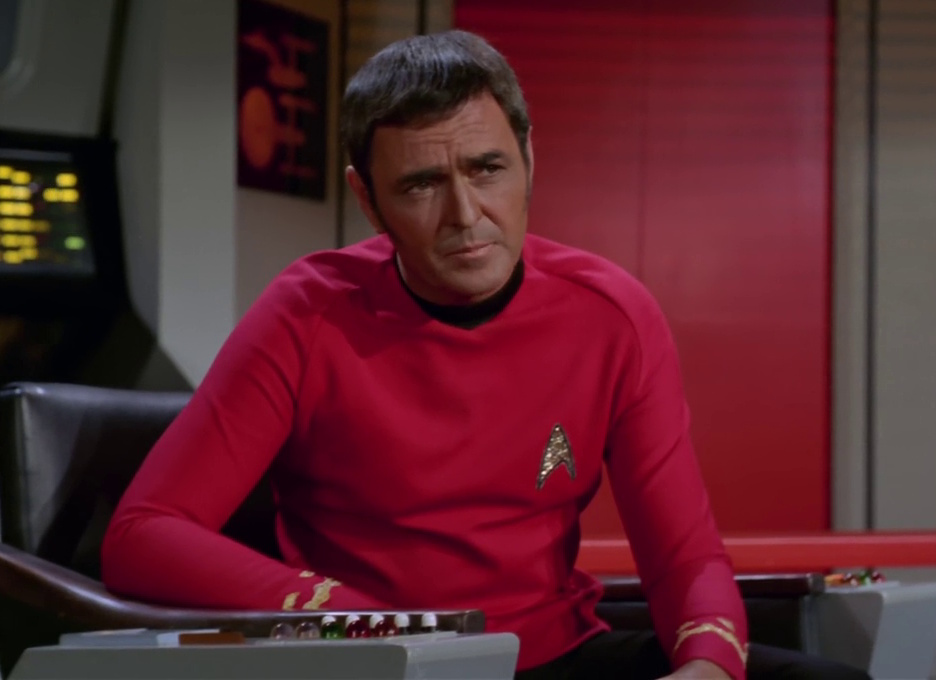
Still frame from Star Trek: The Original Series Season 3 showing Commander Scott in the captain's chair of the Enterprise.
It’s Scotty!

I hope this has been a bit of fun! Some of these things are more irritating than others, but to be honest with you, none of them are really that big of a deal. They only matter to folks like you and I – people who spend a bit too long thinking about Star Trek!

This might be a subject I’ll revisit in the future, so if your favourite little inconsistency or goof didn’t make the list this time, it’s possible I’ll get to it on another occasion. And if you want to check out my earlier list to read about ten other little things that bug me in Star Trek, you can find it by clicking or tapping here.
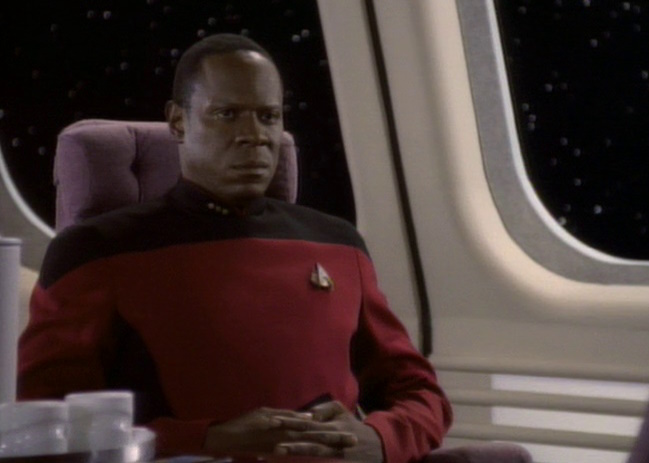
Still frame from Star Trek: Deep Space Nine Season 1 showing Commander Sisko aboard the Enterprise-D.
Commander Sisko looks rather grumpy…

Stay tuned, because there’s more Star Trek content to come here on the website as 2025 gets underway. Later this year we’ve got a new season of Strange New Worlds to look forward to, and if you missed my review of Section 31 you can find it by clicking or tapping here. I also wrote up my recollections of Voyager to mark the series’ thirtieth anniversary, and you can find that by clicking or tapping here.

Until next time… see you out there!


Most of the Star Trek shows, films, and episodes referenced above can be streamed now on Paramount+ in countries and territories where the platform is available, and may also be available on DVD and/or Blu-ray. The Star Trek franchise – including all shows, films, episodes, characters, and other properties discussed above – is the copyright of Paramount Global. This article contains the thoughts and opinions of one person only and is not intended to cause any offence.
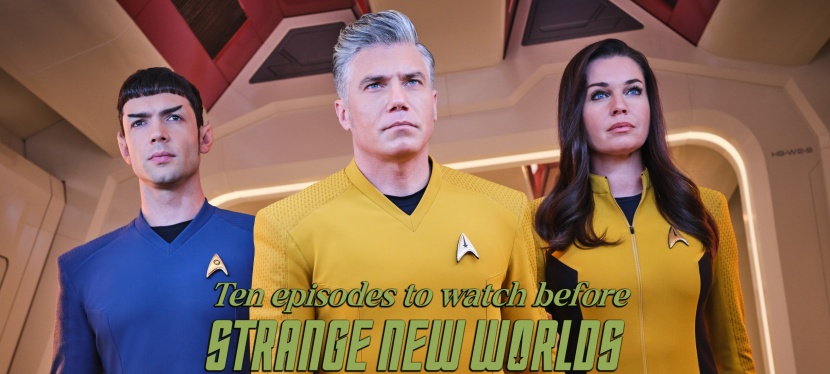
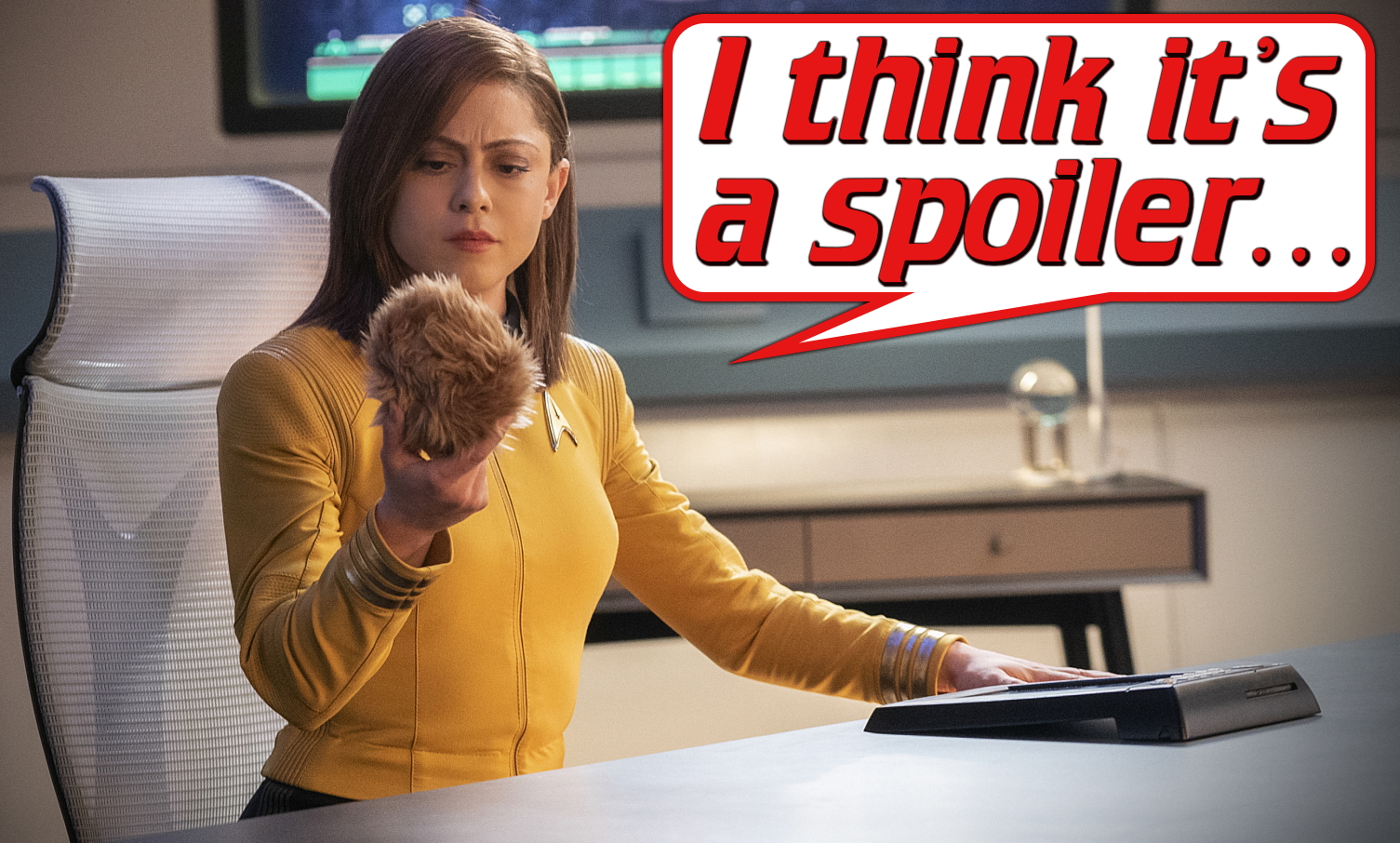
Ten Star Trek episodes to watch before Strange New Worlds Season 1

Spoiler Warning: Although there are no major plot spoilers for Strange New Worlds Season 1, the inclusion of particular episodes on this list may hint at certain themes, characters, storylines, etc. There are also spoilers below for the episodes and stories on this list.

I haven’t been able to talk about Strange New Worlds as much as I would’ve liked thanks to Paramount taking an “America First” approach to the series, the Star Trek franchise, and pretty much everything else on Paramount+. However, with Paramount+ having now arrived here in the UK, I hope to slowly begin to rectify that situation and make up for lost time. On this occasion, I’ve put together a list of ten episodes that I think make great background viewing for Strange New Worlds Season 1.

You can absolutely watch these Star Trek stories before diving into the show’s first season, but if – like me – you’ve already watched Strange New Worlds Season 1, there’s still value in going back to some of them to expand on what the new show’s first season delivered. Ordinarily I’d have written a list like this before the season aired, but having already seen Strange New Worlds that’s allowed me to adapt the list and include a couple of episodes that I would have never considered!

The long-awaited Captain Pike series is finally here!

Strange New Worlds was absolutely fantastic in its first season – and it has me lamenting the truncated ten-episode seasons of modern Star Trek as I could’ve happily enjoyed at least ten more! If you missed it, I’ve already written up my spoiler-free thoughts on the show’s first season, and you can find that piece by clicking or tapping here. At the risk of repeating myself, Strange New Worlds hit ten for ten in its first season – ten outstanding episodes that I thoroughly enjoyed.

I can’t recommend Strange New Worlds highly enough both to fans of Star Trek and to newcomers to the franchise. If you’re new, or if it’s been a while since you last saw some of these episodes, watching them will provide some additional background and backstory heading into Strange New Worlds – or will expand somewhat on some of the stories, factions, and characters if you’ve already watched Season 1. However, nothing below makes for essential or unmissable viewing; Strange New Worlds is a very accessible series that newcomers to Star Trek shouldn’t feel intimidated by!

Who could this be? Watch Strange New Worlds to find out!

As always, please keep in mind that all of this is just the subjective opinion of one person. I’ve chosen episodes that I generally enjoy and that I feel connect in significant ways to Strange New Worlds Season 1. If you don’t like my picks or I miss something you would’ve included, that’s okay! There’s always room in the Star Trek fan community for discussion and polite disagreement.

I’ve tried hard to avoid major plot spoilers for Strange New Worlds Season 1, but the inclusion of certain episodes here may hint at the inclusion of factions, aliens, characters, and storylines. If you don’t want to risk any of that, this is your last chance to nope out!

With all of that out of the way let’s take a look at the episodes I’ve chosen, which are listed below in no particular order.

Episode #1:
The Menagerie, Parts I-II
The Original Series Season 1

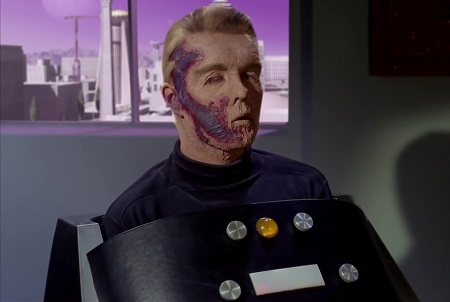
Captain Pike as he appeared in The Menagerie.

Technically speaking, The Menagerie was Captain Pike’s first Star Trek appearance. The episode incorporates most of the footage left over from The Original Series’ unsuccessful first pilot, The Cage, but uses a frame narrative to include Captain Kirk and Spock as they look back on the events of Captain Pike’s mission to the planet Talos IV.

After network NBC had spent a significant amount of money on The Cage, one of the conditions attached to The Original Series’ first season was that Gene Roddenberry and his team find a way to use the footage left over from the original pilot. It was either impossible or prohibitively expensive to bring back The Cage star and original Captain Pike actor Jeffrey Hunter for the role, and the recasting of the character is part of the reason for Pike’s severe disfigurement and disability.

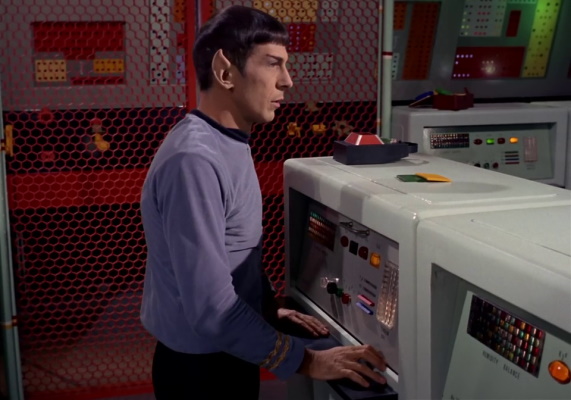
What could Spock be doing in engineering?

We could do an entire article on the production history of The Cage and The Menagerie – and maybe one day we should! – but for now, the important thing to keep in mind is that this is Captain Pike’s ultimate destination. The Menagerie exists as a reminder of where Captain Pike’s arc will ultimately lead him, but it’s also an interesting episode in its own right.

The Original Series was beginning to find its feet by this point in its first season, and a two-parter like The Menagerie could’ve blown it off-course. However, the way The Cage was incorporated into the story made for a fascinating and somewhat mysterious presentation, and Spock’s characterisation and his dedication to his former captain in particular are noteworthy. It’s a fascinating episode that managed to be so much more than just a recycling of a failed pitch and that found a unique and innovative way to accomplish what could have been a difficult and annoying task.

Episode #2:
Trials and Tribble-ations
Deep Space Nine Season 5

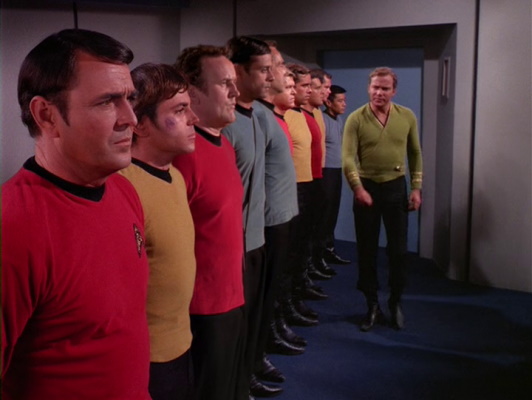
Can you spot who might be out-of-place?

Trials and Tribble-ations was created for the Star Trek’s thirtieth anniversary in 1996, and it was a fun celebration of the franchise’s roots. The crew of the USS Defiant – led by Captain Sisko – find themselves displaced in time, arriving during the events of The Original Series episode The Trouble With Tribbles.

Sisko and his crew have to preserve the timeline – a nefarious villain is attempting to use a Bajoran Orb to alter the past to his advantage. What results is a genuinely fun romp, and seeing the two crews from two different eras coming together was quite something. I’ve always held Trials and Tribble-ations in high esteem ever since I first watched it!

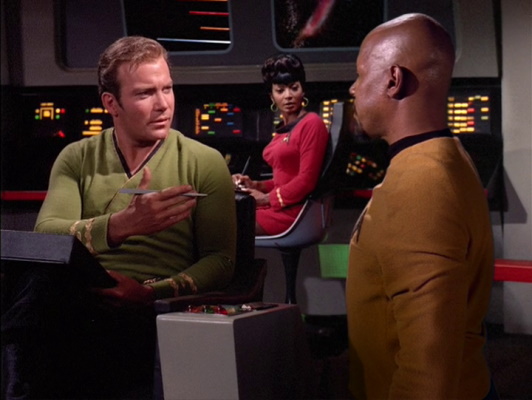
Two legendary captains meet.

On the technical side of things, Trials and Tribble-ations was incredibly ambitious for its time. Using the same technology that had been used to place Tom Hanks alongside real-world historical figures for the film Forrest Gump – which had been released only a couple of years earlier – the creative team managed to seamlessly blend the Deep Space Nine characters into The Original Series. Some excellent work with costumes and sets – including a recreation of the original USS Enterprise’s bridge – really sold the illusion.

The only character from Trials and Tribble-ations to appear in Strange New Worlds is Spock, with the episode taking place after Pike’s tenure in the captain’s chair. But as a celebration of all things Star Trek, and one of the few stories to bring together the 23rd and 24th Centuries, it’s one you shouldn’t miss! There are also some interesting time travel and timeline-integrity angles to the story’s frame narrative that may just prove interesting to viewers who pay attention.

Episode #3:
Q & A
Short Treks Season 2

Who’s this promising young ensign?

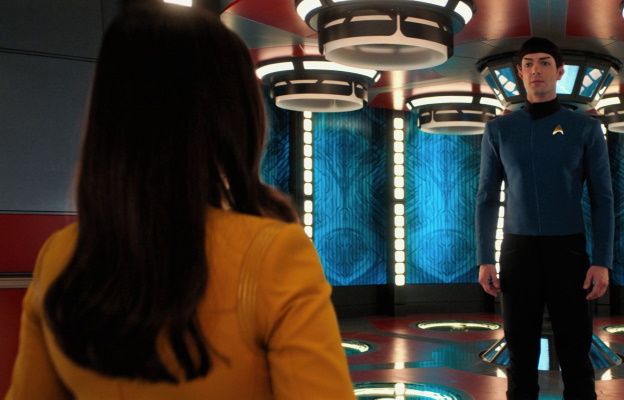
Q & A steps back in time to before the events of Strange New Worlds and Discovery Season 2 to show us Spock’s arrival aboard the USS Enterprise while still an ensign. It’s a cute short story that shows off a younger Spock while also introducing us to Una – a.k.a. Number One. Una had far less screen time than Spock or Pike in Discovery’s second season, so Q & A was one of the first stories to feature her in a big way.

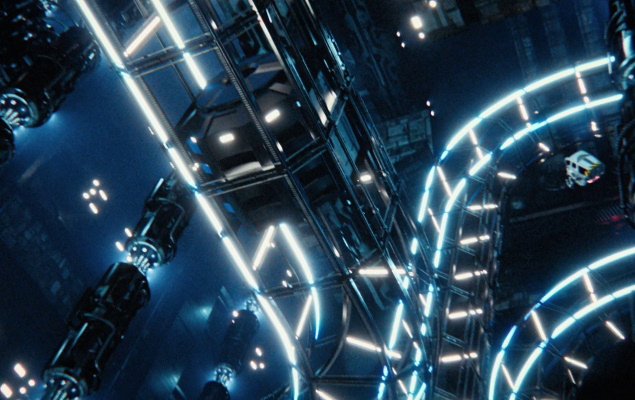
There are some great shots of the internal workings of the USS Enterprise’s turbolifts – something that a geek like me is always going to be interested in! In fact, Q & A must be one of the very few episodes, along with parts of The Next Generation’s fifth season episode Disaster, to make a turbolift its primary setting. That format could feel restrictive, but Q & A makes it shine through some excellent character work and occasionally hilarious writing.

One of the Enterprise’s many turboshafts.

Q & A was one of three episodes of Short Treks to bring back Pike, Spock, and Una – and these short stories began to expand upon their roles and set the stage for Strange New Worlds. They were also experimental; teases to fans that also served to see whether the much-requested “Captain Pike show” was a viable concept. Short Treks did some genuinely interesting things in its second season – which is why I’ve argued that the concept should absolutely be revived!

Captain Pike is less of a presence in Q & A than he would be in Ask Not, but that’s no bad thing. We got to spend more time with Una, and seeing her in her role as first officer – in part through the eyes of a young Spock, fresh out of Starfleet Academy – was fascinating!

Episode #4:
Unification, Parts I-II
The Next Generation Season 5

An older Ambassador Spock in the 24th Century.

We just talked about how interesting it was to see young Spock when he was first assigned to the Enterprise – so now let’s jump forward in time by more than a century to see a much older Spock in a completely different chapter of his life! The two-part episode Unification brought Spock into The Next Generation in a truly interesting story that built upon the Vulcan-Romulan connection that had been introduced in The Original Series.

I adore crossovers, and aside from a brief cameo in the premiere of The Next Generation, this was the first crossover involving main characters that the franchise had attempted. Its success laid the groundwork for the likes of Relics, Flashback, Defiant, Caretaker, These Are The Voyages, and many more.

Spock and Data.

Unification found a way to give Spock genuine development to reflect decades of his life that we hadn’t seen on screen. It was great to see him alongside not only Captain Picard but also Data – the two characters share many characteristics and filled similar roles in their respective series. The mystery at the heart of the episode and subsequent revelations about Spock’s work and the Romulans’ schemes made for a story that was tense, dramatic, and exciting.

Strange New Worlds isn’t all about Spock, but seeing what his life would be like decades after the events of the series is worthwhile. It puts into context not only the stories that unfold around Spock, but his own actions, behaviours, and thoughts. The Spock we meet in Unification is different from the Spock of Strange New Worlds – but not unrecognisable.

Bonus Episode #4½:
Unification III
Discovery Season 3

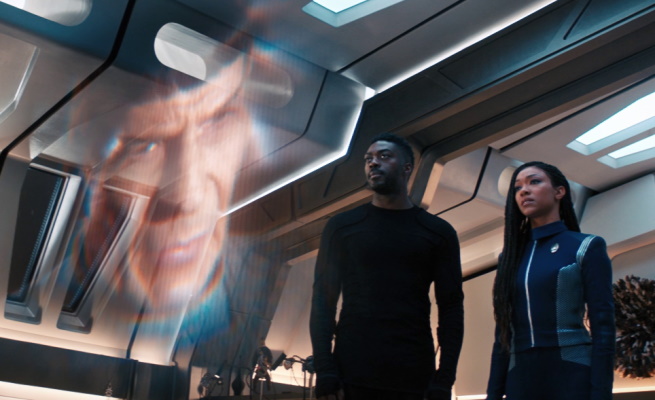
Cleveland Booker and Michael Burnham watch a recording of Spock.

The two-parter became a three-parter when Discovery added to the legacy of Unification in its third season. Taking Spock’s work with the Romulans as a starting point, Unification III shows us how subsequent generations of Romulans and Vulcans looked to Spock as an inspiration. His legacy is all over this story – and it would carry through into future episodes of Discovery in its third and fourth seasons.

Spock would go on to be an important part of Vulcan history, remembered fondly even centuries after his death for the process that he started. Seeing Michael Burnham react to that was sweet, and knowing that Spock has a legacy within the Star Trek timeline that extends far beyond his own lifespan is something incredibly meaningful.

Episode #5:
Arena
The Original Series Season 1

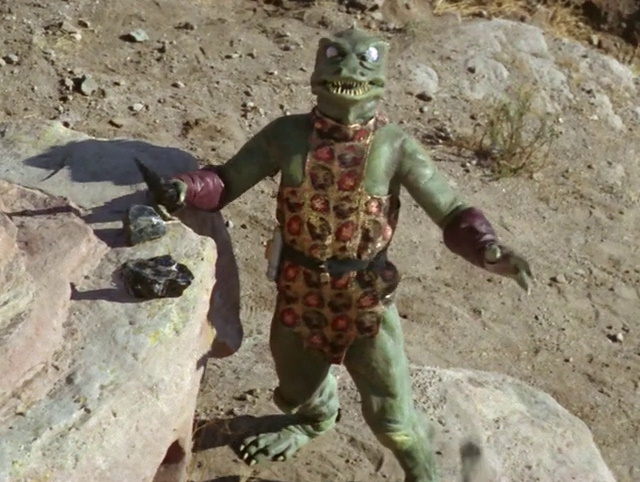
The Gorn captain.

An absoloute classic of The Original Series, Arena features Captain Kirk’s iconic battle against an unnamed Gorn captain – the first Gorn encountered in Star Trek. I might be in the minority here, but I absolutely adore the way the rubber-suited Gorn looks. There’s something menacing about its tyrannosaurus rex-like head, its silvery, almost insectoid eyes, and its sharp crocodilian teeth. But at the same time, there’s a light-hearted campiness to the way the Gorn comes across on screen thanks in part to the limitations of 1960s special effects – and perhaps also due to the bold pattern on his (or her?) costume!

There’s more to Arena than just the scuffle at Vasquez Rocks, though! There’s a more philosophical side to the story, one that shows how far humanity has come by the 23rd Century – and how far there is still to go to make progress. Despite the conflict, both Spock and Kirk demonstrate a willingness to try diplomacy and show mercy – something that impresses the highly-advanced Metrons.

The Enterprise crew watch helplessly as Captain Kirk battles against the Gorn.

The way in which Captain Kirk was able to outsmart and defeat the Gorn captain shows his ingenuity at its best – and presents a contrast between “brains” and “brawn” that made it clear how even a strong and physically imposing enemy can be defeated. There’s a great metaphor there for dealing with bullies!

Arena is one of those episodes that I believe every Trekkie – even those who aren’t fans of The Original Series – needs to see at least once. Despite the Gorn not becoming a recurring villain in The Original Series or even during The Next Generation era, the original design of these reptilian aliens has become iconic, and as a story that fully encapsulates the Star Trek franchise’s approach to science-fiction, Arena has it all.

Episode #6:
Damage
Enterprise Season 3

Enterprise has seen better days…

Damage comes quite late in the fully-serialised story of Enterprise’s third season, but it’s worth a watch regardless. At this point in the story, Captain Archer and his crew are running out of time to prevent the Xindi from launching a super-weapon against Earth, and Archer’s desperation to do anything to complete his mission forces him down a very dark moral path.

In essence, Captain Archer must choose between failure – which will almost certainly lead to the total annihilation of Earth itself – and his morality, leading to him basically turning to theft and piracy in order to survive in the harsh Delphic Expanse. It’s a fascinating story that features a brand-new alien race, but also one that’s an introspective character piece focusing on Archer’s decisions.

Captain Archer is forced to confront an impossible decision.

There are other story threads in play in Damage, including T’Pol’s exposure to Trellium-D – a compound toxic to Vulcans that caused her to begin to lose control over her emotions. The way in which Vulcans suppress their emotions in favour of logic is something that Enterprise explored in depth, and it’s a fascinating part of Vulcan culture that subsequent Star Trek projects have also touched upon.

Enterprise’s third season was a tense and exciting one overall – and Damage is one of the highlights for its strong character work and examination of how Starfleet’s enlightened morality can end up falling by the wayside when the going gets tough. Captain Archer is pained by the decision he makes – but that doesn’t stop him from making it.

Episode #7:
Through the Valley of Shadows
Discovery Season 2

Visiting the Klingon monastery on Boreth.

Although I’d encourage you to watch Discovery Season 2 in its entirety, I felt that Through the Valley of Shadows was really the only episode that had a significant impact on Strange New Worlds. It’s here where Captain Pike has to make a decision about his fate and his future that sets him on a particular path – one that will culminate in devastating disability.

Although Pike was willing, in the moment, to make the sacrifice in order to obtain the time crystal, the decision he made has a huge impact on him. With only a couple of episodes left in Season 2, Discovery didn’t have a lot of time to address how this would affect him – but Strange New Worlds certainly does, and this is really the starting point for Pike’s season-long arc.

Captain Pike comes face-to-face with his own future.

Discovery’s second season was a big improvement on its first, and I think it’s fair to say that bringing Captain Pike and Spock into the show in a big way was a masterstroke! Through the Valley of Shadows reframes Pike’s accident and disability in an entirely different way, and while there are sci-fi trappings of time-travel macguffins and talk of fate and destiny, what lies just under the surface is a story that I find incredibly relatable.

I’ve been Captain Pike at this moment. Sitting down with a doctor, hearing bad news about my health, knowing that things won’t get better but will get worse, that my ability to do basic things like walking will become increasingly difficult… these are all experiences that I’ve personally had and that I saw reflected in Captain Pike. Whether intentional or not, the decision to have him become aware of his future – and choose to embrace it for the greater good – kicked off a story about disability and declining health that really resonated with me. Its approach to this complex topic was sensitive, understandable, and darkly beautiful.

Episode #8:
Prime Factors
Voyager Season 1

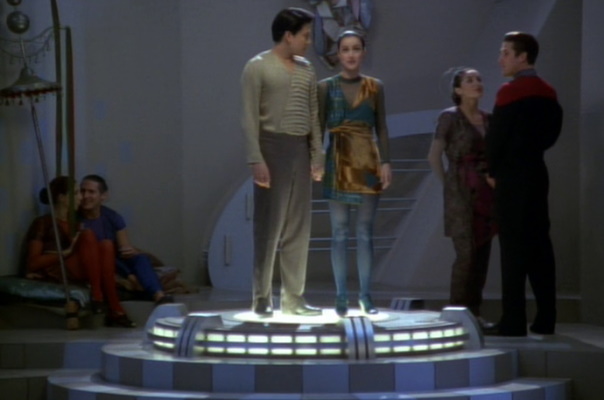
Harry Kim and Eduana using a Sikarian spatial trajector.

Prime Factors flips Starfleet’s Prime Directive on its head. The Prime Directive is Starfleet’s most important standing order, and it states that “no starship may interfere with the normal development of any alien life or society.” We’ve seen the Prime Directive – and the principles upon which it is based – play a huge role in episodes of practically every Star Trek series, with captains having to decide whether to interfere, how to interfere, and what the consequences may be.

Prime Factors takes the opposite approach, and asks how it would feel to our heroes if they were on the other side of this kind of policy. How would Starfleet react to being denied a request for help or trade because it conflicted with an alien society’s principles? The resultant episode was absolutely fascinating.

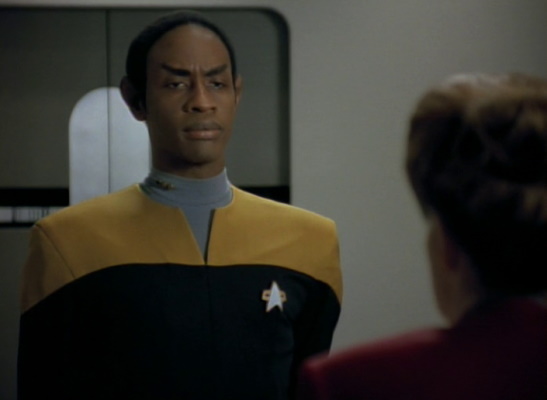
Tuvok and Captain Janeway.

At this relatively early point in Voyager’s run, the fact that Captain Janeway and her crew really are stranded on the far side of the galaxy with no way to get home is beginning to sink in. Prime Factors is one of several episodes that teased the crew with a potential way to complete part of that journey – before yanking it away again.

The episode is also an interesting one for Harry Kim, who we get to see at his most eager to get home, and for the relationship between Captain Janeway and Tuvok. Although Chakotay would really take over the role of “trusted advisor” as Voyager got settled, initially it was Tuvok who was being established as Captain Janeway’s closest confidante and most reliable friend.

Episode #9:
Balance of Terror
The Original Series Season 1

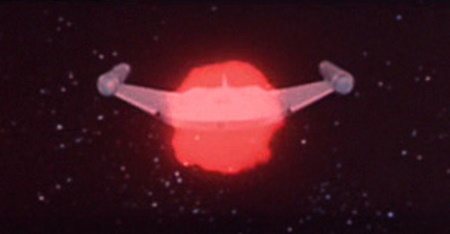
A Romulan warbird firing its plasma torpedo.

Balance of Terror is the episode that first introduced the iconic Romulans to Star Trek – as well as revealing their connection with the Vulcans that we talked about in Unification above. Inspired by war films – particularly naval war films and those set aboard submarines – from a generation earlier, there’s a really tense, claustrophobic feel to the conflict between the Enterprise and this new, terrifying threat.

Balance of Terror expertly sets up the background of Federation-Romulan relations and uses that to create tension and conflict on the bridge of the Enterprise when a surprising connection between the Romulans and Spock’s own Vulcan people is revealed. The episode also raises the stakes by giving the Romulans not one but two super-weapons: the devastating plasma torpedo and a cloaking device. This was the first on-screen appearance of a cloaking device in Star Trek.

Captain Kirk in Balance of Terror.

Of particular note here is Captain Kirk’s approach to the conflict. After discovering the Romulan vessel and its technology, Kirk decides to pursue it, hoping to intercept it before it can cross back into Romulan space. Was this uncompromising approach the right call?

Balance of Terror is a fascinating episode for its tone, for its approach to bigotry and prejudice in the enlightened future Star Trek presents, and for its introduction of a faction that would go on to play a major role in the Star Trek franchise. It’s another episode of The Original Series that I consider to be a must-watch for all Trekkies.

Episode #10:
Star Trek 2009
Kelvin Timeline film

The USS Kelvin, namesake of the Kelvin Timeline.

Technically a film rather than an episode, 2009’s Star Trek kicked off the Kelvin timeline with a soft reboot of the franchise. It’s a textbook example of how to write a successful reboot, and after the Star Trek franchise had begun to fade and lose viewership toward the latter part of Enterprise’s run, the 2009 reboot came along and definitively proved that there was still plenty of life in it yet! We wouldn’t have Discovery, Strange New Worlds, and the rest of modern Star Trek without this film and its two sequels.

For our purposes today, though, 2009’s Star Trek shows us a different timeline with alternate versions of Captain Pike – who plays a prominent role in the story – as well as Spock and Uhura. Seeing these versions of the characters and noting their differences and similarities to their prime timeline counterparts could be worthwhile going into Strange New Worlds.

Spock, meet Spock!

Star Trek 2009 also chronicles the next chapter of Spock’s life after the events of Unification (which we took a look at above). Spock’s relationship with the Romulans and his plan to help them avert a catastrophe are what led to him being dragged into the alternate reality, and the meeting between the older and younger versions of the character is a powerful moment.

Seeing Kirk, Spock, McCoy, and others in their Starfleet Academy days was a concept that Gene Roddenberry had toyed with even as far back as The Original Series in the 1960s. 2009’s Star Trek took that concept and put a spin on it, updating the franchise for the 21st Century and introducing it to legions of new Trekkies. It’s a good film in its own right, and one whose legacy is the rejuvenated Star Trek franchise that we’re continuing to enjoy today.

So that’s it!

Promotional poster for Strange New Worlds.

Those are my picks for ten episodes to watch before Strange New Worlds to prepare for what the series will bring – or afterwards, if you prefer, to lend some context to some of the character arcs and storylines.

There are at least ten more episodes and films that I could’ve chosen; it wasn’t easy to whittle down the list to the ten picks above. Having already seen Strange New Worlds Season 1, I confess that I picked several different episodes that I might not have chosen otherwise. But that’s the benefit of hindsight!

As I said in my spoiler-free review of the first season, Strange New Worlds is utterly fantastic and well worth a watch for Trekkies and newcomers to the franchise alike. I can’t praise it highly enough – and I can’t wait for Season 2!

Star Trek: Strange New Worlds is available to stream now on Paramount+ in countries and territories where the service is available. New episodes are being released weekly on Paramount+ in the United Kingdom. Further international distribution has not been announced at time of writing. The Star Trek franchise – including Strange New Worlds and all other episodes, films, and shows discussed above – is the copyright of Paramount Global. This article contains the thoughts and opinions of one person only and is not intended to cause any offence.