Whoopi’s “whoopsie” – what might it mean for Star Trek: Picard?

This article deals with the subjects of the Holocaust and racism and may be uncomfortable for some readers.

It goes without saying that the Holocaust is an incredibly sensitive and delicate subject. Even titling this article Whoopi’s “whoopsie” might be enough to seem flippant or even offensive to some folks – but I just couldn’t resist the pun. If you haven’t heard about this controversy, I’ll briefly recap what happened before we get into some analysis and a consideration of what – if anything – it could mean for Star Trek: Picard Season 2.

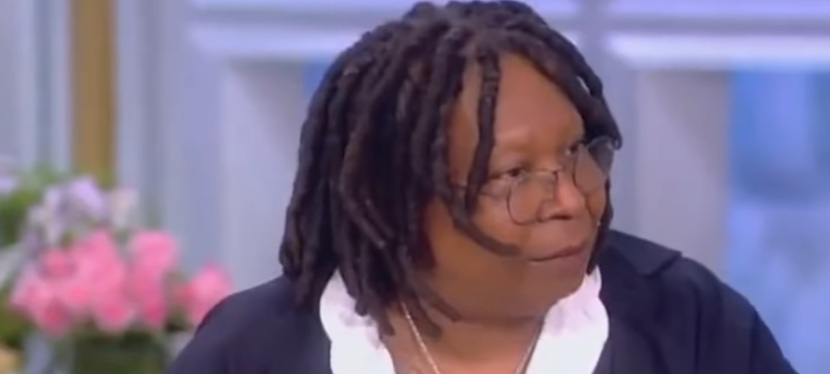
Whoopi Goldberg, who plays the role of Guinan in the Star Trek franchise, is the co-host of The View, an American daytime television talk show. She’s known in that context for being bold and outspoken, particularly on issues of race in the United States. On a recent episode of The View, Goldberg made controversial remarks about the Holocaust, claiming that the event “isn’t about race” because it concerned “two white groups of people.” I encourage you to view the full exchange in context (you can find it on YouTube) but suffice to say that controversy soon ensued – and the condemnation of Goldberg’s comments even reached mainstream news outlets on this side of the Atlantic.
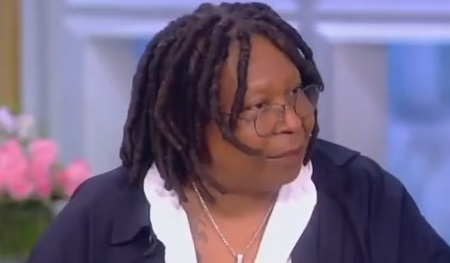
Whoopi Goldberg on a recent episode of The View.

Goldberg has offered her apology for the remarks she made, and it’s worth pointing that out before we go any further. She apologised for “the hurt [she] caused” and reiterated her support for Jewish people and Jewish communities around the world. It’s not for me to decide whether her apology is up to code, and again I encourage you to read it in full. I felt it important to point out that she has issued an apology before proceeding any further.

The Holocaust is such a unique event in the history of our world that it almost beggars belief that a 66-year-old woman, who otherwise seems to be well-informed and whose job it is to discuss current events, could be so profoundly ignorant or misinformed about what it is. Holocaust education, at least here in the UK, has been a big part of the history curriculum in schools for at least fifty years – if not longer – and there are many institutions around the world dedicated to preserving the memory of Holocaust victims and promoting education about the Holocaust. Less than a week ago, on the 27th of January, we marked Holocaust Memorial Day, a worldwide event held on the anniversary of the liberation of the Auschwitz concentration camp.

A photograph of the iconic entrance to Auschwitz concentration camp.

On a school trip to Germany almost thirty years ago I visited Sachsenhausen concentration camp and saw firsthand the kind of facilities that the Nazis used to keep political prisoners, Romani, Jews, and everyone else that they deemed “sub-human” or “undesirable.” Seeing the camp is something that has stuck with me for decades, and the sombre lessons that my class had about the Holocaust and the extermination of Jews are likewise seared in my memory.

British-made documentary series The World At War has one of the best educational pieces about the Holocaust that I’ve ever seen in its episode Genocide, and if you can find a copy I can’t recommend it highly enough. It’s a harrowing watch, but for anyone who wants to learn more about this defining moment in history, and the events that led to it, The World At War presents the history of the Holocaust about as well as possible, and includes interviews with survivors.
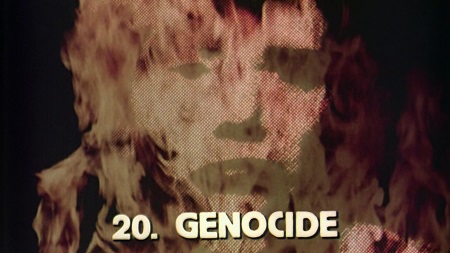
Title card for The World At War episode Genocide; recommended viewing for anyone wishing to learn more about the Holocaust.

Outside of conversations and discussions about Nazi Germany and the Holocaust itself, it’s almost never a good idea to bring up the Holocaust. Politicians, commentators, directors, and even journalists have all found themselves in trouble for saying something stupid or ill-informed, or for using the Holocaust as an unfair comparison to something else happening in the world. And when making unprepared, unscripted remarks – as Whoopi Goldberg appears to have been – misspeaking is all the easier.

I can’t defend what Whoopi Goldberg said. It was so ignorant and stupid that she deserves all of the backlash she receives. It’s also indicative, at least to me as a non-American, of America’s continuing obsession with black-and-white race issues that completely ignore every other marginalised group. Almost sixty years after Martin Luther King dreamed of a country where everyone would be judged by the “content of their character,” America seems more race-obsessed than ever – and that obsession with black-versus-white racism comes at the cost of marginalising or completely ignoring practically every other group.
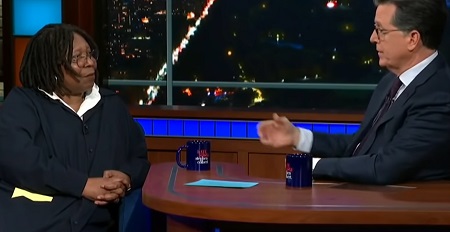
Whoopi Goldberg with Stephen Colbert.

Part of Whoopi Goldberg’s defence of her original remarks, made during an appearance on The Late Show With Stephen Colbert, drew on her own understanding of race and racism as an African-American, and appear to me to reinforce the idea that too many Americans have a strange, warped misunderstanding of what race even is – as well as who can and can’t be racist and how racism itself works. To me, that’s indicative of a fundamental failure of the American education system and of the way racial issues in America are discussed and debated.

So that’s my read on what happened. Given the outrage that Whoopi Goldberg’s comments understandably generated, I wanted to step back and consider what impact, if any, the controversy now engulfing her may have on Star Trek: Picard Season 2, which is scheduled to premiere in just over four weeks from today. Goldberg is set to reprise her role of Guinan, bringing the character back to our screens for the first time since 1994’s Star Trek: Generations, and she was recently featured in a big way in the latest trailer.
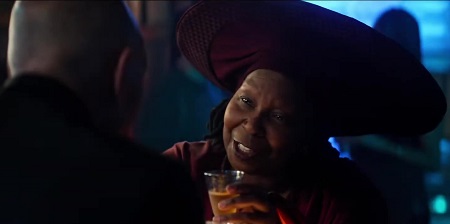
Admiral Picard with Guinan in the Picard Season 2 trailer.

At time of writing, no one involved with Star Trek: Picard Season 2 has made a public statement on the Whoopi Goldberg controversy, but I don’t see how that can be sustainable, especially when the cast and crew get on the publicity circuit and start giving interviews in the run-up to the season premiere. Whoopi Goldberg, having just made her first big appearance in the new season’s marketing, may have been slated to make appearances or give interviews about the show – but I’m not sure whether that will happen at all now, or whether her role may be scaled back.

Sometimes they say that “there’s no such thing as bad publicity,” but take it from someone who used to work in marketing: this is about as bad as it gets in terms of publicity! The last thing anyone involved in Star Trek: Picard needs is for Whoopi Goldberg’s comments to overshadow the show’s return, so in my opinion the producers and actors need to get together and put out a statement relatively quickly, and certainly before they get out on the publicity circuit. That way they’ll be able to refer to their statement when the inevitable questions are asked.
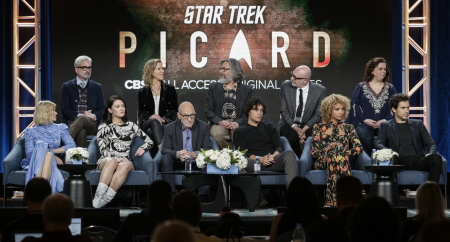
A publicity event in the run-up to Picard Season 1 in 2020.

I’ve heard from several people who say that they’re either not going to watch Picard Season 2, or that they’re far less enthusiastic about supporting the upcoming season in light of Whoopi Goldberg’s comments. There’s a danger for ViacomCBS that this will snowball if they don’t handle it well, perhaps leading to an unofficial boycott or significantly fewer viewers tuning in, so the corporation and its marketing team really need to get out in front of this as quickly as possible.

There’s a theory from the world of literary criticism that I think is worth discussing: “death of the author.” Originally proposed in 1967 by French critic Roland Barthes, death of the author basically argues that we should consider a work of literature on its own merits, separating the writing from the writer. Death of the author has since been applied to other forms of media, including television and film, and in this context we’re looking at whether it might be possible to separate the performance from the actor – to enjoy Guinan without celebrating Whoopi Goldberg.
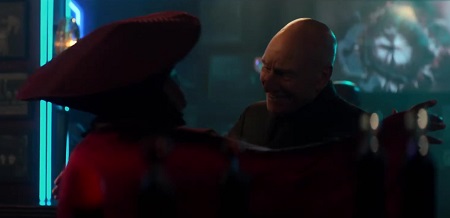
Guinan and Admiral Picard embracing in the Picard Season 2 trailer.

The two sides to this never-ending discussion are as follows: either it’s possible and desirable to separate the art from the artist, considering the merits of a piece without any consideration for who the author or artist was, or it isn’t possible or desirable to do so, and that the context of who the creator was matters in a fundamental way to the work in question. With actors this is, perhaps, more readily apparent because we can see and hear them; it’s far more difficult to put an actor out of our mind while watching and listening to them in real-time.

My take on death of the author varies somewhat. If an artist, author, or performer is long-dead, it’s much easier in my view to analyse their work, and even enjoy their work, without paying too much attention to who they were. The performance has outlived the performer, so to speak. But when dealing with living people, I find this far more difficult to do. I understand Barthes’ arguments about objectivity and judging a work on its own merits, but when people hold outspoken or particularly harmful points of view, I find it much more difficult to set that aside for the sake of art or entertainment.
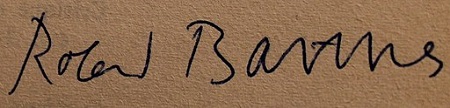
Signature of Roland Barthes, who first espoused the theory known as “death of the author.”
Image Credit: Wandrg, CC BY-SA 4.0 https://creativecommons.org/licenses/by-sa/4.0, via Wikimedia Commons

J.K. Rowling is perhaps the best example of this, in my opinion. Her blatantly transphobic statements and support for “gender critical” groups and causes has made it significantly harder for me to enjoy the Harry Potter series for which she’s best-known. I find it difficult to separate Harry Potter, either in book or film form, from J.K. Rowling in light of her offensive statements and the positions that she’s known to hold.

So when I hear Trekkies say that they can no longer support Star Trek: Picard in light of Whoopi Goldberg’s comments, I fully understand. I can empathise with that position because it’s very similar to how I see the Harry Potter series, and I wouldn’t want to tell anyone that they should feel differently. It can be difficult to set aside the artist and just focus on the art, especially when dealing with an actor who we have to see and listen to.

Harry Potter author J.K. Rowling.

I would say, though, that Whoopi Goldberg is nowhere near as important to Star Trek: Picard as someone like J.K. Rowling is to Harry Potter. She may only appear in one or two episodes, and as recently as last month it wasn’t even certain that she’d be appearing at all; her appearance in the trailer confirmed it. Had remarks like these been made by someone like Sir Patrick Stewart or one of the show’s senior producers, Star Trek: Picard would be in a lot more trouble. In my view, it’s probable that the show will be able to weather this storm, even if it loses some viewers in the process.

Whoopi Goldberg has offered an apology, and in the coming days I would expect to hear something from the Picard Season 2 cast and crew, disavowing her comments and perhaps dropping her from the publicity circuit or reducing her importance to the show’s marketing campaign. That will most likely allow Picard Season 2 to get through the next few weeks in the run-up to the show’s broadcast.
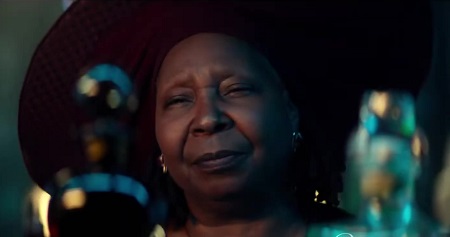
Whoopi Goldberg as Guinan in the Picard Season 2 trailer.

In a way, this couldn’t have come at a worse time. With the new season premiering in just over four weeks from now, this is the moment for the marketing campaign to truly gear up and start promoting the show’s return. It’s been two years since Picard Season 1 went off the air, so for casual viewers and for fans who aren’t keeping up-to-date with the ins and outs of Star Trek, simply getting the message out about Picard’s return has to be top priority. There’s no doubt in my mind that this controversy will be a distraction, one that the show absolutely does not need.

But I don’t believe it will be a fatal distraction, at least not as things stand. Whoopi Goldberg isn’t likely to be cut or edited out of Picard Season 2, and even seems likely to retain her job on The View, despite her remarks. There’s enough time over the next month for the marketing team to move past this controversy, which, like so many others, will have a relatively short shelf-life on social media before fading away.

I’m disappointed with Whoopi Goldberg. Her character of Guinan is so calm, ethereal, and wise that it can be jarring, as a Trekkie, to see Whoopi Goldberg talking up a storm on The View at the best of times, and this controversy is an even more extreme example. However, I note that she has at least made an attempt to apologise – and seems to be sincere. And on the positive side, her initial ignorance of the Holocaust may have shone a light on a far broader lack of understanding and proper education about the event in the United States, potentially exposing more people to the reality of what happened, thereby preventing this kind of blinkered, ignorant point of view from being espoused in future. Better education and a better understanding of the Holocaust are badly needed, it seems, and Whoopi Goldberg may have inadvertently aided that cause.

Star Trek: Picard Season 2 will premiere on the 3rd of March 2022 on Paramount+ in the United States, and on the 4th of March on Amazon Prime Video in the United Kingdom and around the world. The Star Trek franchise – including Picard and all other properties mentioned above – is the copyright of ViacomCBS. This article contains the thoughts and opinions of one person only and is not intended to cause any offence.
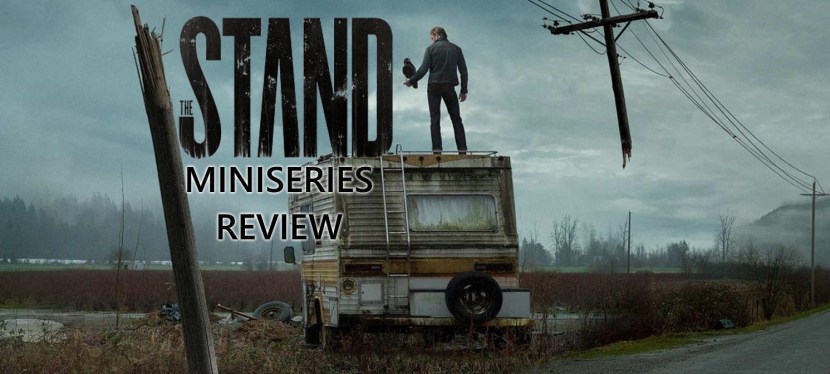
The Stand – miniseries review

Spoiler Warning: There are spoilers ahead for The Stand.

I’ve been to Stephen King’s house. Not for any function, of course – nor indeed was I invited. But in his hometown of Bangor, Maine, King’s house is a local landmark with ornate gates befitting the preeminent author of pop-horror. I’m categorically not a fan of horror on screen, either television shows or films. Modern horror tends to veer very strongly into jump-scares – which always unnerve me – or just gore for the sake of gore, which I really have little interest in. But Stephen King straddles the line between out-and-out horror with a creepy weirdness that can, under the right circumstances, be absolutely riveting.

The Stand has already been adapted for television, with a miniseries in 1994 starring Gary Sinise. I put that adaptation on a tongue-in-cheek list that I wrote last year, before I became aware of this latest adaptation. Like my last miniseries review – which was for Marvel show The Falcon and the Winter Soldier – this review is also late to the party! The Stand was broadcast on CBS All Access – since rebranded as Paramount+ – late last year. Though I’ve been meaning to watch it ever since – and it even made my list last June of things I was looking forward to in the second half of 2020 – it’s taken me until now to get around to it.

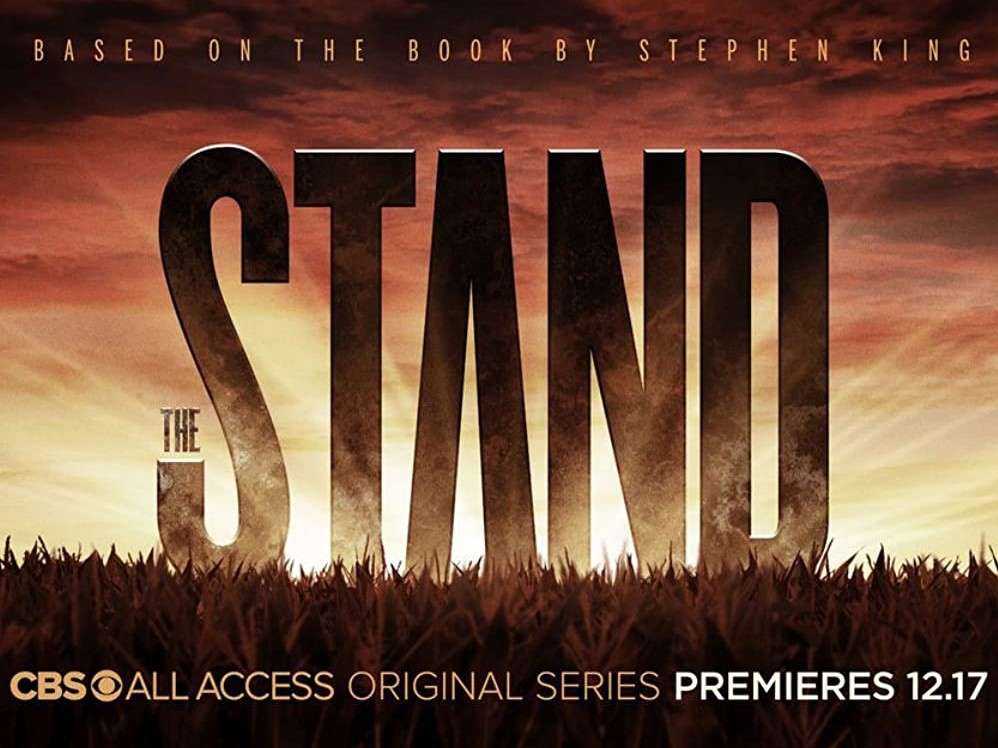
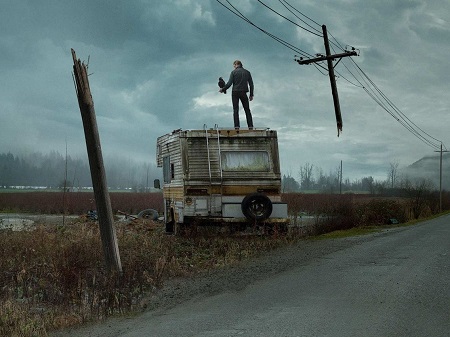
Promotional poster for The Stand.

I feel more than a little sorry for this adaptation of The Stand, which languished in development hell for years before being commissioned in early 2019. The miniseries was filmed in late 2019 and early 2020, before the extend of the coronavirus pandemic became evident, and I think the mere premise of the series was more than enough to put people off given what’s happening in the world. Having invested in the project, it wasn’t practical for ViacomCBS to just sit on it or dump it – so it ended up being broadcast to a world that, quite frankly, was not in the mood for a show about a viral pandemic that killed everyone. That might undersell what The Stand is – or what it aims to be. But it nevertheless goes some way toward explaining its muted reception.

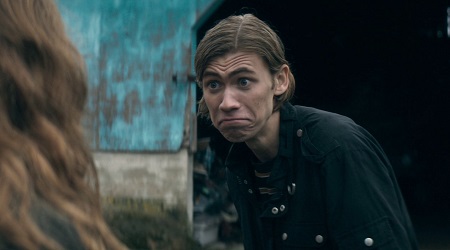
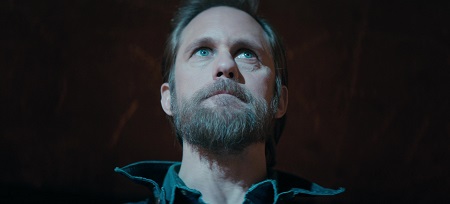
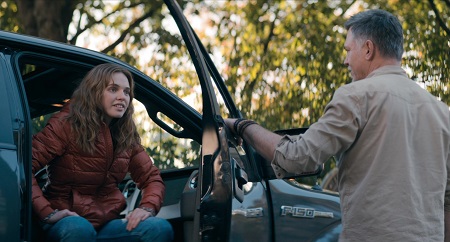
There were some inspired casting choices. James Marsden channels his inner Gary Sinise to put on a performance that lived up to – and in some respects mirrored – Sinise’s own in the 1994 adaptation. Alexander Skarsgård was fantastic as the villainous Dark Man/Randall Flagg. And Owen Teague – who I confess I wasn’t familiar with prior to The Stand – put in a truly inspired performance as the creepy Harold Lauder.

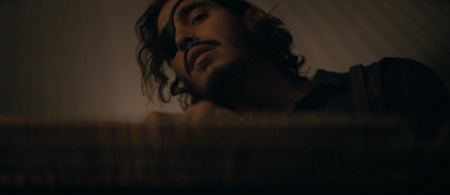
Owen Teague as Harold Lauder.

Stephen King’s novel Rage, about a shooting at a high school, hit a little too close to home even for the author and has been out of print since the early 2000s. In the characterisation of Harold Lauder, one of The Stand’s villains, I note some familiar themes. Lauder is an outcast, an obsessive, a true-to-type “incel” who blames society and the world around him for his own lack of success. Lauder is an interesting villain in some respects – though he has no real nuance, I think a lot of people are familiar with someone like this; someone who’s generally unsuccessful in life and who’s become bitter, jaded, and even creepy. The Stand throws such a person into the apocalypse, and Lauder’s newfound freedom allows him to follow his own destructive course.

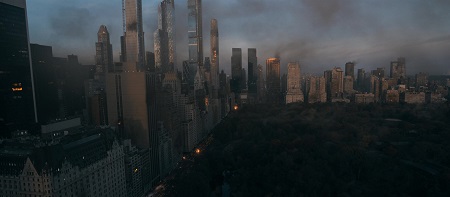
The Stand mixes supernatural horror with post-apocalyptic storytelling, which make a natural pair at certain points, yet tug against each other and fail to gel at others. The miniseries contains some genuinely amazing moments and scenes that rival anything else in the entire post-apocalyptic genre. There’s a sweeping shot of New York City in the second episode, showing smoke from numerous small fires drifting over the city and Central Park, and it was incredibly atmospheric. This kind of silent storytelling, using the camera and some minimal visual effects work, did an amazing job at setting up the world that The Stand wanted to transport us to, and there were numerous examples of this across the nine-episode series.

The very atmospheric shot of New York City burning.

One thing I’ve always been interested in when it comes to post-apocalyptic fiction are the character stories – who survives whatever the event is and why? And what sort of person do we find in the aftermath of such events? The Stand gives us plenty of examples of thoroughly unpleasant people: criminals, liars, thieves, and worse. It also shows us examples of better people: heroes and those willing to do what’s right. Unfortunately that comes at the expense of nuance; The Stand basically splits its characters into goodies and baddies with very little going on in between.

We’ve already talked about Lauder and his characterisation as creepy, bitter, and ultimately murderous. But other villains fall into even more obvious stereotypes: Lloyd is a wannabe-gangster, the Trashcan Man is a pyromaniac, Nadine is the girl who made a deal with the “devil.” And speaking of the devil, the Dark Man himself, Randall Flagg, is a Stephen King mainstay and stand-in for the devil.

Randall Flagg – a.k.a. the Dark Man.

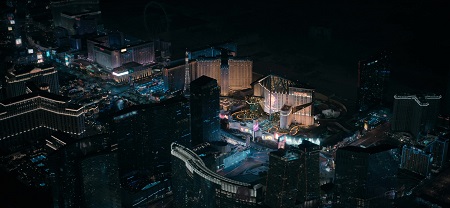
In that sense, nothing about The Stand is subtle. Its narrative centres around the battle of “good versus evil,” and that naturally divides its characters into two camps. Those on the side of good are selfless exemplars of virtue, those on the bad side are basically Satanic stereotypes who revel in every sin imaginable. The Stand setting its villain’s headquarters in Las Vegas – Sin City itself – is likewise about as subtle as a brick to the face.

Not every story has to have complexity and nuance; there’s room for a classic “heroes and villains” narrative even in 2021. But something about the way The Stand leaps headfirst into so many patently obvious plotlines and character arcs makes it less than it could’ve been. There are definitely narrative elements that are unpredictable, but most of the mainstays of both the overarching storyline and the individual stories of the characters felt telegraphed in advance, and that robbed the series of a good portion of its impact and drama.

The choice of Las Vegas as the setting for a story about the demerits of sin was… obvious.

In terms of the soundtrack and music, I have to credit The Stand as being truly fantastic. Practically every one of the nine episodes contains moments of extreme tension, and these moments were elevated significantly by some excellent, understated musical scoring. Music sets the stage for many significant scenes and moments, and the difference in tone it sets between the heroes’ home base in Boulder and the devil’s nest in Las Vegas is huge – and a big part of why the contrast between the two settings works so well. Each episode also features at least one popular song, and the choices here were generally good as well. I particularly liked the use of Melanie’s Brand New Key – it’s a great song in its own right, but the way it was used at the end of one of the episodes gave it a strangely creepy, almost otherworldly feel.

Cinematography was likewise pretty good across the board. There were some really excellent artistic shots – I mentioned the New York City one above, but also a shot of Frannie and Harold split through a wall was fascinating, as well as numerous silent (or practically silent) moments featuring Nick, the deaf character, which really added to the sense of immersion. Nick’s scene with the piano, in which we could see the inner workings of the piano but not hear the notes, was inspired, and something I would’ve expected to see in a series like Hannibal – another horror series with a strong artistic slant to its cinematography.

One of the very artistic moments involving Nick and the piano.

The way The Stand uses light was interesting. At first, I felt that the way several different characters seemed to leave lights on and candles burning was just typical post-apocalyptic/horror fare – a cheap way for villains to track or find them. But there’s something more to it than that, and the way the series as a whole used light, and particularly uncovered, obvious light, feels like a metaphor. The Stand is a series flooded with religious imagery, and there’s something almost poetic about seeing many of the heroic characters as representatives of “the light” against the forces of the Dark Man.

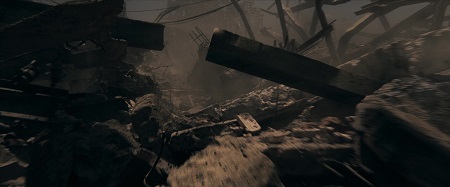
There was only one real miss in terms of visual effects, and it came in the final episode. In a sequence that was basically fully-animated, the camera panned over the ruins of Las Vegas to focus on Flagg’s trademark badge, and the whole thing fell into the so-called “uncanny valley,” where the CGI work just wasn’t quite believable enough. It wasn’t awful by any means, and would compare favourably to anything from ten years ago, even in cinema, but in a series that otherwise did its visual effects well, it has to go down as the weakest moment.

The CGI sequence that I felt didn’t quite stick the landing.

I’m not a religious person, and perhaps someone who is would get something more out of The Stand, which relies heavily on Christian apocalypticism for the theme underpinning its main story. At the same time, some of these religious themes work against the narrative – or at least the setting. The Stand wants to be bleaker than it manages to be; a post-apocalyptic tale of desperate people driven to do evil things and kill themselves. Yet the use of Christian imagery, which ramps up to near-continuous after about the halfway point, tugs The Stand in the other direction, softening some of those dark edges. What results is a series that’s confused.

The Stand wants to be two things at once: post-apocalyptic horror and supernatural horror with strong religious themes. As noted above, these two can make a natural pair, but The Stand doesn’t nail the pairing on every occasion, and there are times when the religious themes work against the bleaker, character-centric story about the world after an apocalyptic event. The theme of hope, which is so often present in post-apocalyptic fiction, is undermined by the sense that many of the protagonists have that their quest is anointed by an all-powerful interventionist god.

Mother Abigail’s role as the prophet of a very active and involved god gave hope to many of the characters – and led to a less satisfying narrative as a result.

Hope in post-apocalyptic stories works when it seems like characters have little to no reason to cling to it, yet through sheer force of will and strength of character, they find ways to do so. Some characters may revel in small victories – like the character of Tallahassee in Zombieland who finally gets a Twinkie (a kind of small cake) after craving one for the whole film. Others find meaning in their companions, fellow survivors, or family members – like Viggo Mortensen’s character in The Road, for example. The Stand drops all of its protagonists into a setting where they never genuinely question their status as “god’s chosen” and their hope for a better future stems from that. But that foundation, while somewhat novel, loses something significant as a result – and that something unfortunately happens to be what I personally find one of the most interesting and appealing things about post-apocalyptic stories.

Frannie’s snap decision at the beginning of the final episode to return to Maine felt like it came out of nowhere; an arbitrary character move to give the story a “shock” as it entered its endgame. Though the characters were, as I explained above, pretty standard heroes and villains, they were generally consistent in the way they were written and in their motivations. Frannie left Maine with Harold initially in search of others, and having found them, made friends, and begun to build a new civilisation in Boulder, seems far too quick to throw it away for the sake of what? Homesickness? If she’d mentioned Maine even once or twice in previous episodes it would at least feel like there’d been hints she was feeling this way. Sometimes when a story knows the endgame it wants to reach, some character choices necessary to get there can feel completely arbitrary, and Frannie’s desire to return to Maine – without even really providing a reason why – definitely falls into that category.

I wasn’t sold on Frannie’s out-of-nowhere decision in the final episode.

Though not really overt, there was one significant political theme that I picked up in The Stand. In the character of Flagg we have a dictator – someone who rules through fear, as characters like Glen note. The way Flagg draws his supernatural powers, embodied by his ability to levitate, from the worship and fear of his subjects could be read as a commentary on the way any dictator’s power relies on the people around them continuing to “feed” them with that fear. Or to put it another way: people have the power, even when it seems like a truly evil tyrant is in charge. We see this as Larry, Glen, and Ray’s challenge to his authority quickly inspires others and leaves him significantly weakened.

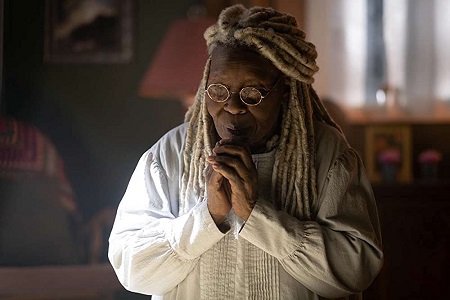
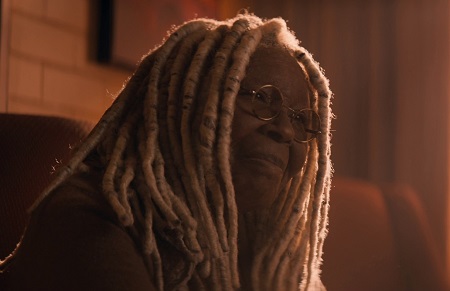
I’m a big fan of the Star Trek franchise, as you may know if you’re a regular around here. Star Trek: The Next Generation in particular is a favourite series of mine, and Whoopi Goldberg’s role as Mother Abigail had more than a little of her Star Trek character of Guinan in it. Guinan serves as a friend and guide to Captain Picard, and in particular her role in episodes like Q Who and Time’s Arrow, as well as the film Generations lines up perfectly with Mother Abigail’s place in The Stand. Though this isn’t intentional, of course, as a Trekkie I just find it interesting to note when former Star Trek stars take on new roles that are somewhat similar! Goldberg’s performance was excellent, and she brought a real weight or gravitas to the role of Mother Abigail that was much-needed.

Whoopi Goldberg as Mother Abigail.

The Stand attracted some controversy in the months before its broadcast for casting a non-deaf actor in the role of deaf character Nick. Nick’s role in the show does involve some scenes where he can hear and speak, and for that reason creator Josh Boone defended the decision. While I would say that I generally don’t subscribe to the camp that says actors can only play roles if they meet certain criteria, in this case it would have been relatively easy to cut the couple of scenes in which Nick speaks, or to replace them with signed scenes. It would take away a tiny bit of the supernatural aspect of Mother Abigail’s abilities, but there was more than enough of that through the rest of the show that I don’t think it would’ve made a significant difference. With that being the case, a deaf actor could have certainly taken on this role.

As someone who is disabled, I would be quite happy with an able-bodied actor playing a disabled role – so long as it was done tastefully and it doesn’t feel as though anyone has been excluded. Likewise with characters who are asexual or who are in between male and female on the gender spectrum; I think so long as it doesn’t stray into voyeuristic territory, actors can take on a wider variety of roles. There are great actors who are deaf, disabled, and in other categories, and I hope they find opportunities to play characters as well. I don’t want to see anyone’s career options limited, and as mentioned in this case I think the couple of scenes where Nick spoke could have been cut or changed to accommodate a deaf actor. As a general point, though, I’m okay with actors from many different backgrounds being able to take on a variety of roles. Perhaps this is something we should go into more detail in on another occasion, as I feel it could be an entire essay in itself, and I don’t want to spend too much time on just this one point on this occasion.

Another promotional poster for The Stand.

So I think we’re about at the end of my review. The Stand was interesting, and had some genuinely great moments. It was also a flawed production that didn’t get everything right and could feel, at certain moments, that it was trying to be two very different things at the same time. In part that fault lies with the source material – Stephen King’s novel. But it also lies with the adaptation and the way in which the novel was put to screen.

Despite nominally falling into the horror genre, The Stand won’t be giving me nightmares any time soon! It was tense at points, and there was some distinctive Stephen King supernatural weirdness, but nothing that I felt was terrifying or frightening. There was some gory violence and some gratuitous sex scenes that really didn’t add much to the story. But there was also some fantastic musical scoring and cinematography, as well as some great acting performances that elevated the series, making it better than it could’ve been.

I’m in no hurry to re-watch The Stand now that I’ve seen it. And with so many interesting film and television projects on the horizon between now and Christmas, I daresay it will go back on the shelf (or rather, Amazon Video’s shelf) for quite some time. But I’m glad to have finally got around to seeing it more than six months after its debut! Now, what should I watch next?

The Stand is available to stream now on Paramount+ in the United States and on Amazon Video (for a fee) in other countries and territories. The Stand is the copyright of ViacomCBS and/or Vertigo Entertainment. This article contains the thoughts and opinions of one person only and is not intended to cause any offence.