I’m Cancelling Game Pass…

I’ve been a pretty big supporter of Xbox Game Pass (and PC Game Pass) since the service launched a few years ago, and I’ve been a subscriber to the PC version from almost the first moment it became available. I love the idea: a huge library of games, all available for one monthly price. As someone on a low income (and as someone who remembers what it was like to be a kid with only a few pennies to spend on gaming), Game Pass has been genuinely great value; an easy route into current-gen gaming for players on a budget.

What’s more, I’ve discovered games that I’d never have thought to buy or try for myself, thanks entirely to Game Pass. Some of those games – like Little Kitty, Big City last year and South of Midnight just a couple of months ago – are genuinely among the best titles I’ve played in the 2020s, and it’s only because of Game Pass that I was able to try them and enjoy them.

But unless Microsoft changes course, it’s time to cancel Game Pass.

Promo image for Xbox Game Pass.
It’s time to cancel Game Pass, unfortunately.

I play on PC, not console. The PC version of Game Pass, just over a year ago, went up in price from £7.99 here in the UK to £9.99 – a hike of 25%. That already felt a bit steep, but since I don’t have many other subscriptions, I begrudgingly accepted it. £10 a month still felt like reasonably good value for what I was getting from Game Pass; play two full-priced games a year, or four £30, double-A games, and it’s paid for itself. Right?

If you weren’t already aware, Microsoft has come back, not twelve months after the last price hike, and they’re doing it again. The PC version of Game Pass is rising from £9.99 to £13.49: a 35% increase on top of last year’s 25% increase. And that isn’t even the worst or most egregious price rise: the “Ultimate” Game Pass plan is rising by more than 50%, from £14.99 to a whopping £22.99 a month. At these prices… Game Pass no longer feels like a good value offer, unfortunately.
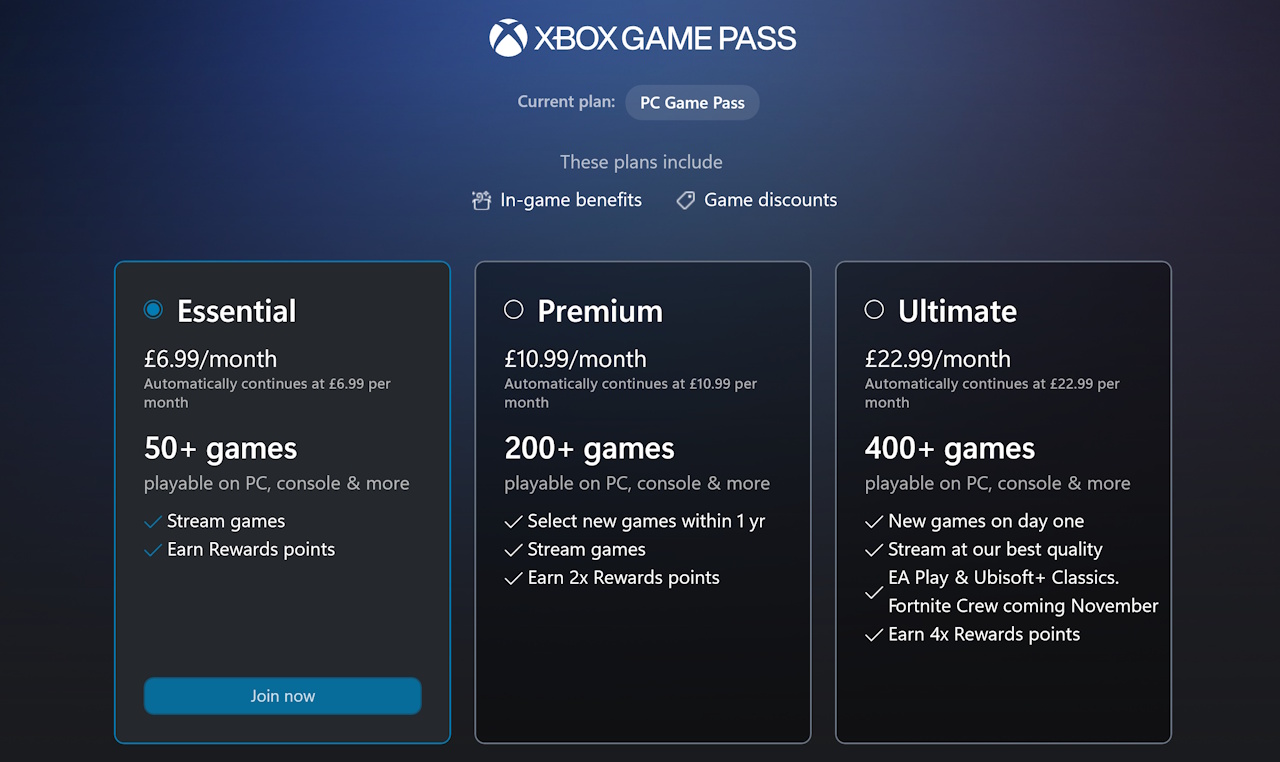
Three Xbox Game Pass tiers and their new prices.
Game Pass prices are rising… by a lot.

And I really do say this with regret. Not only has Game Pass felt like a good value prospect until now, but it’s introduced me to some genuinely wonderful gaming experiences that I wouldn’t have had otherwise. Being able to log into the app, scroll through a huge list of titles, and see what leaps out at me has felt fantastic, and as I’ve said more than once: Game Pass has opened up a huge library of titles; more games than I’d ever be able to afford. When it was £7.99 – and even after last year’s significant rise to £9.99 – it felt like a good deal.

But I can’t accept the price of a single subscription rising by almost 70% in just thirteen months. And at £13.49 a month – or £162 a year – it’s become impossible to justify. There just aren’t that many games on the service that I’d want to play – and some, like RoadCraft, aren’t available on the PC version of Game Pass, for some reason. So… I think I’m done with Game Pass for now, unless Microsoft apologises and reverses this price hike.

Stock photo of a hand holding a stack of $100 bills.
How Microsoft imagines its customers…

I’ve believed for a long time that the subscription model would be the future of gaming. Just like Netflix did for films and TV programmes, and Spotify and others have done for music, something like Game Pass should be able to do for video games. Gaming is basically all-digital these days anyway, and the audience skews younger and more tech-savvy. A reasonably-priced subscription service – like Game Pass used to be – represents a genuinely good value proposition, an easy route into gaming, and should be the wave of the future. Compared to buying individual titles outright, either physically or digitally, a subscription which opens up a library of hundreds of titles should seem like good value.

But Microsoft is fucking it up.

Not only are the prices going up, but on the lower “tiers,” Microsoft is making Game Pass worse. No longer will all Xbox-published games join the service on day one. If you’re on an Xbox console, the only way you’ll get that particular perk is if you pay for Game Pass Ultimate, and if you’re on PC, the only way to get it is through the PC-only tier, for £13.49 a month. If you pay less, you don’t get those brand-new titles on day one, but “within a year.” That’s already a massive downgrade. Oh, and the venerable Call of Duty series? Those games aren’t included on day one any more.
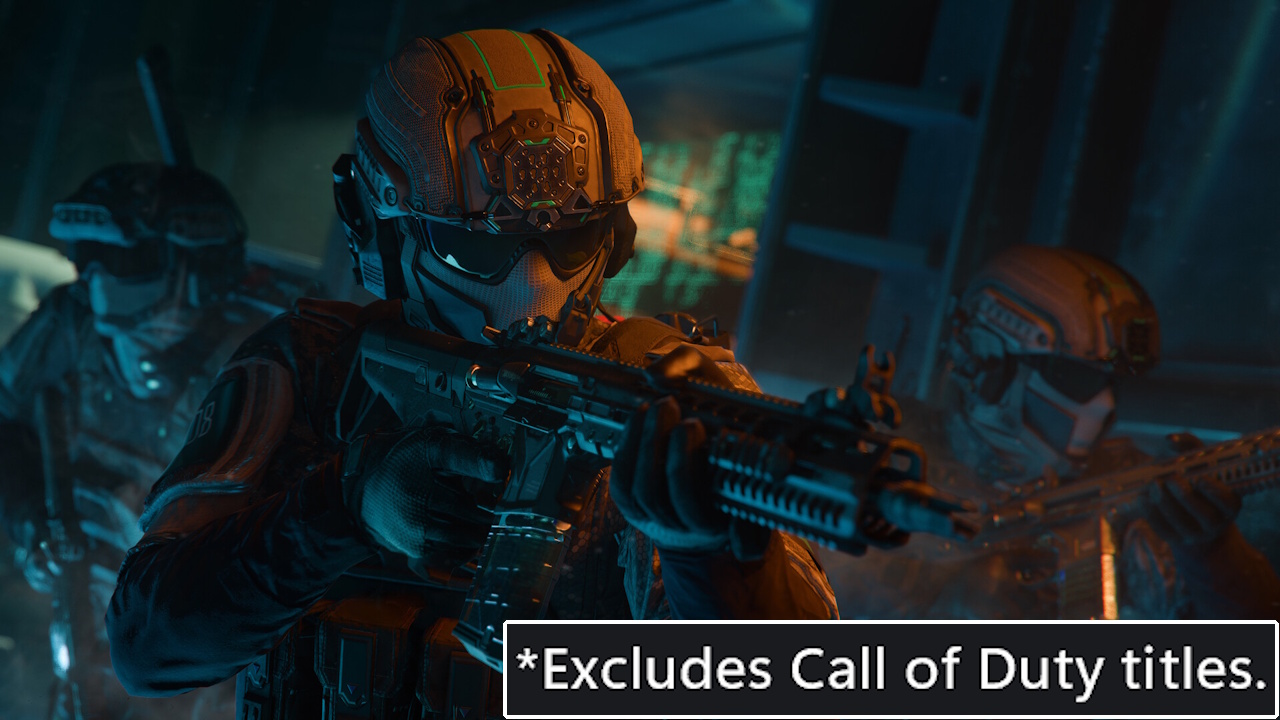
Promo image for Call of Duty: Black Ops 7, with the text "*Excludes Call of Duty titles." taken from the Xbox app.
That little asterisk could be important if you’re a lover of first-person shooters…

So… the price is going up. Unless you pay for the top-tier plan, you won’t get new games on day one. And the most popular series that Microsoft currently owns may not be part of Game Pass on day one even if you do pay the premium price. So… what’s the point of Game Pass, then?

Microsoft, like all big corporations, has to disclose its financial records. And in the twelve months leading up to June 2025 (the most recent data at time of writing), Microsoft made US$193 billion in profit. That represented a 14% increase over the previous twelve months. Compared with quite a few other big companies in the gaming space, whose profits have been relatively static since the end of lockdown, Microsoft has been doing phenomenally well. And the Xbox brand is a big part of that.
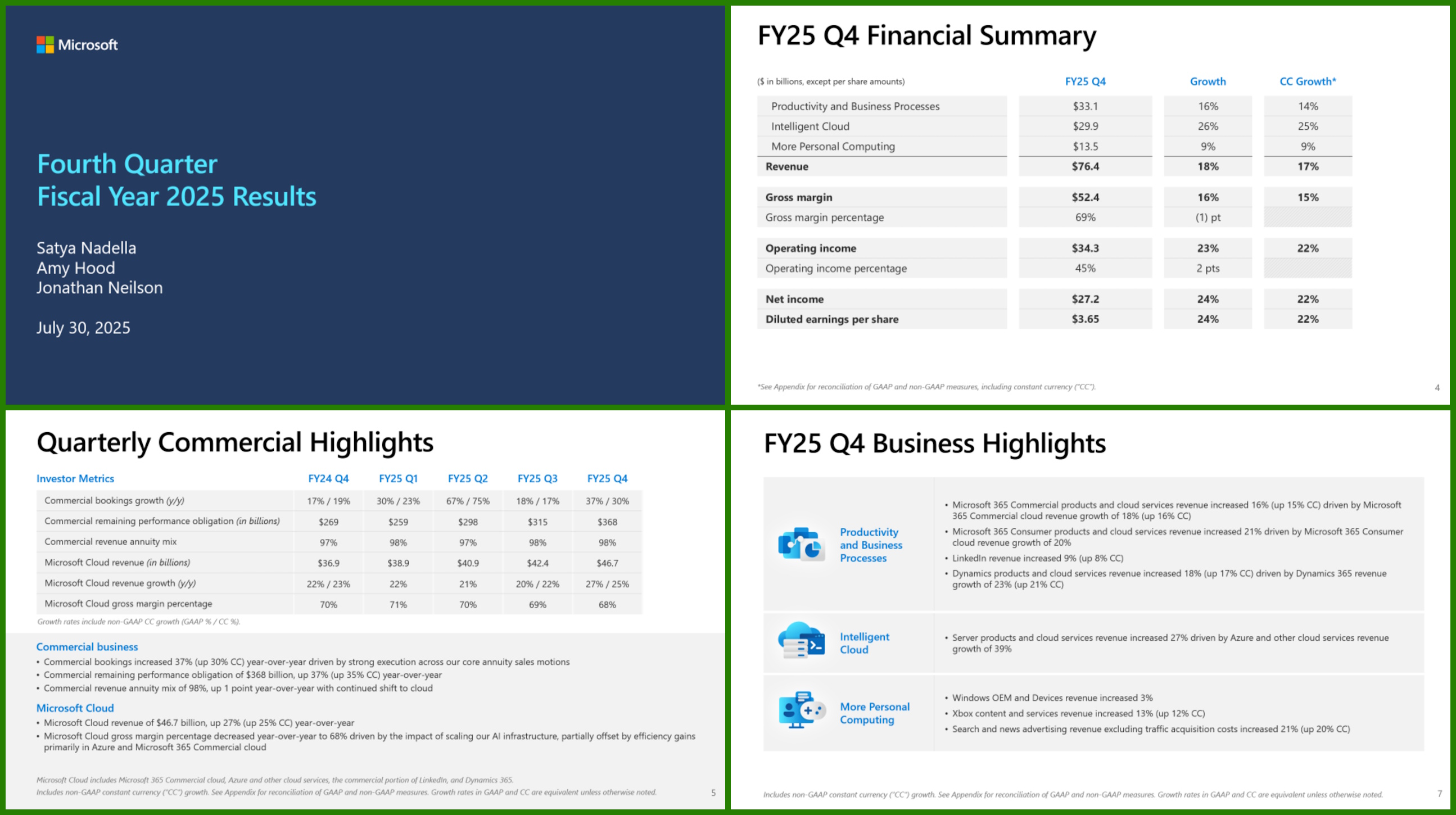
Four slides from Microsoft's July 2025 earnings call.
Microsoft has literally never been more profitable.
Slides: Microsoft’s July 2025 Earnings Call.

Microsoft made more money last year than it has ever made before in its entire corporate existence. For the corporation to then turn around and announce price hikes of 50% – or, really, what is effectively 70% on PC – is just sickening. It’s beyond greedy, and even if a thousand new games were being added to the Game Pass library… it still wouldn’t be right. But Game Pass, as far as I can tell, is not actually getting a major expansion or much additional content that could even come close to justifying a price hike of this nature.

So… I’m gonna cancel. And I would encourage other folks in the same boat as me to do the same.

If Microsoft is willing to walk this back – and apologise – then maybe I’ll reconsider, because I have genuinely enjoyed having Game Pass over the last few years. But at this new price, it’s not worth it for me, and I could use my £162 a year in other ways – like buying games when they go on sale on Steam or Epic Games, for instance. I really did think that subscriptions are the direction of travel for gaming… but not like this.

Screenshot of the Xbox Game Pass "trending" page.
A selection of Game Pass titles.

This is a catastrophic own goal from Microsoft that the corporation simply did not need to make. Game Pass has been profitable for a while, and even as the Xbox brand has struggled over the last couple of console generations, the growth in PC gaming, coupled with Game Pass, has seen Microsoft’s gaming division land on its feet. But increasing the price of a subscription by 70% in thirteen months is not something any consumer can or should accept – not when the corporation behind the price hike is making hundreds of billions of dollars a year – and still laying off boatloads of workers and closing game studios.

Maybe Microsoft wants to get out of the gaming market, and these moves are designed to push people away. Or maybe they really think they can just get away with it and that folks will brush off these inexplicably large price hikes. Maybe some people will – but if it’s true, as has been reported, that so many people are rushing to cancel their subscriptions that the Game Pass website crashed… I suspect a re-think of this price structure may be in order.

In any case, I’m cancelling this month, and unless Microsoft apologises and changes course, I won’t be rejoining Game Pass any time soon. I’m genuinely disappointed about that, because the subscription has been great until now (even though the Xbox app on PC isn’t spectacular). But this price hike is too much, so I’m going to do the only thing I can do as a consumer in this marketplace: vote with my wallet.


The Game Pass subscription service is available now for players on PC and Xbox game consoles. All titles discussed above are the copyright of their respective developer, publisher, and/or studio. This article contains the thoughts and opinions of one person only and is not intended to cause any offence.
Xbox Game Pass: The DLC Problem

If you’re a regular reader, you might know that I’m an Xbox Game Pass subscriber. I play on PC, not on an Xbox console, but Microsoft’s “Netflix of games” has felt like a good value proposition to me over the past couple of years. I’ve been able to play several big games without having to buy them outright, and in addition Game Pass has introduced me to several titles that I’d never have thought to try for myself. Even though I’m not someone who plays video games every day, I still feel that I get good value for money from Game Pass.

You know there’s a “but” coming, though.

But Game Pass has a problem, and it’s one that might prove tricky to unstick. Although the service includes a good range of titles across different genres, and many brand-new ones join the Game Pass lineup on release day, a lot of these games are incomplete. To use a games industry euphemism: these versions are the “base game” – without any DLC being included.

Game Pass includes a lot of games – but many are incomplete.

There are exceptions to this, such as “game of the year” bundles of titles like Skyrim and Fallout 3 that come packaged with their DLC – but these games, when they exist, tend to be older titles, not brand-new ones. And in the case of Skyrim, while the Game Pass version does include DLC, it’s not the most recent “anniversary edition” that comes with additional content and visual improvements. Figuring out which version of a game is which and what add-ons and DLC come with which one can feel like navigating a maze at times!

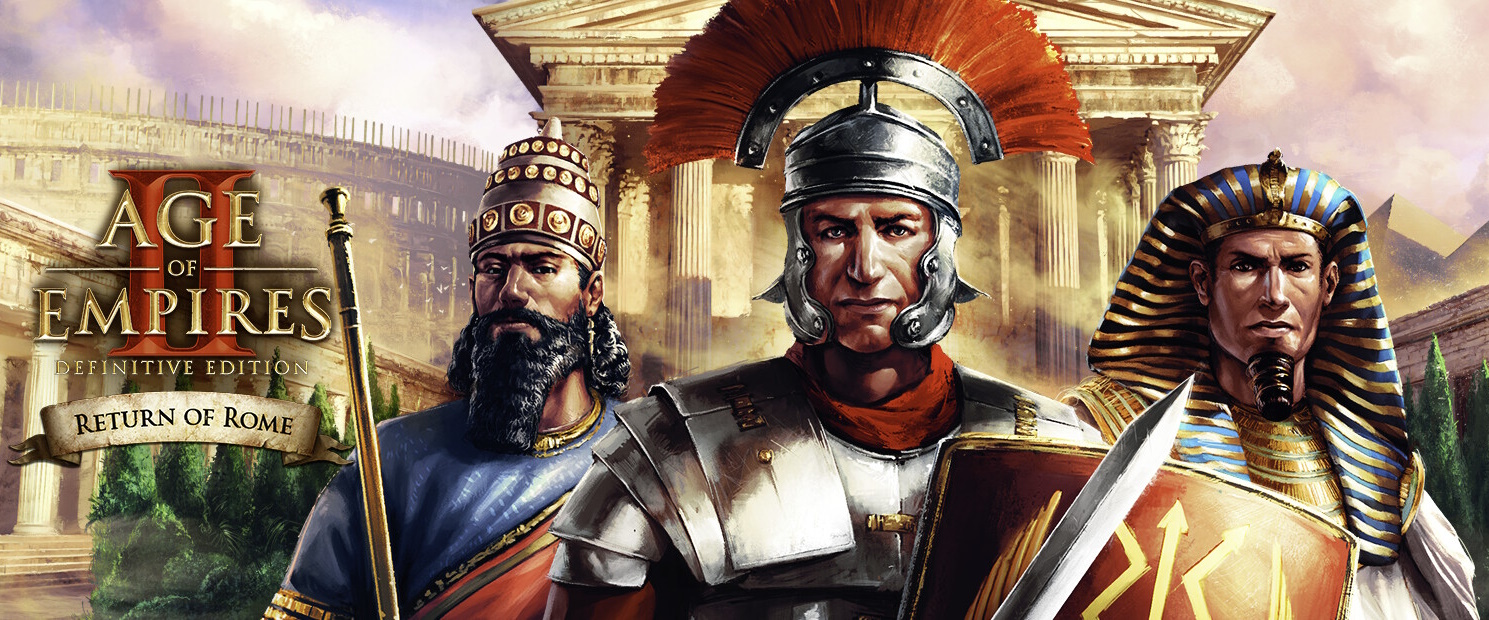
This recently came up for me with two games: Starfield and Age of Empires II. I was a huge Age of Empires II fan around the turn of the millennium, and I’ve been thrilled with the Definitive Edition remake that was released a couple of years ago. When developers Forgotten Empires and Xbox Game Studios announced that there was going to be a new piece of DLC for Age of Empires II – one that would bring the original civilisations from the first Age of Empires into the new game – I thought it was something worth checking out.

Promo banner for the Return of Rome DLC.

But on Game Pass, the Return of Rome DLC isn’t included along with Age of Empires II. The only way to play it is to buy it – for the not-so-low price of £10. Even with a Game Pass subscription, it would cost a whopping £80 to buy the Age of Empires Collection – a bundle that includes all four games plus their various DLC packs. If I’m paying a subscription fee every month to access this service and these first-party games, that seems ridiculous and excessive.

Starfield, too, has irked me when it comes to DLC on Game Pass. Bethesda’s space-RPG launched on Game Pass not on “day one,” as was promised, but five days later – with those first five days gated off behind a paywall. Five days of so-called “early” access was only available to players who forked over an additional £35 – and I don’t think that should be acceptable. Too many companies have started charging extra to play their games as soon as they become available, using shady manipulative tricks to convince folks to cough up even more money. But paid “early” access will have to be the subject of a longer article in future.

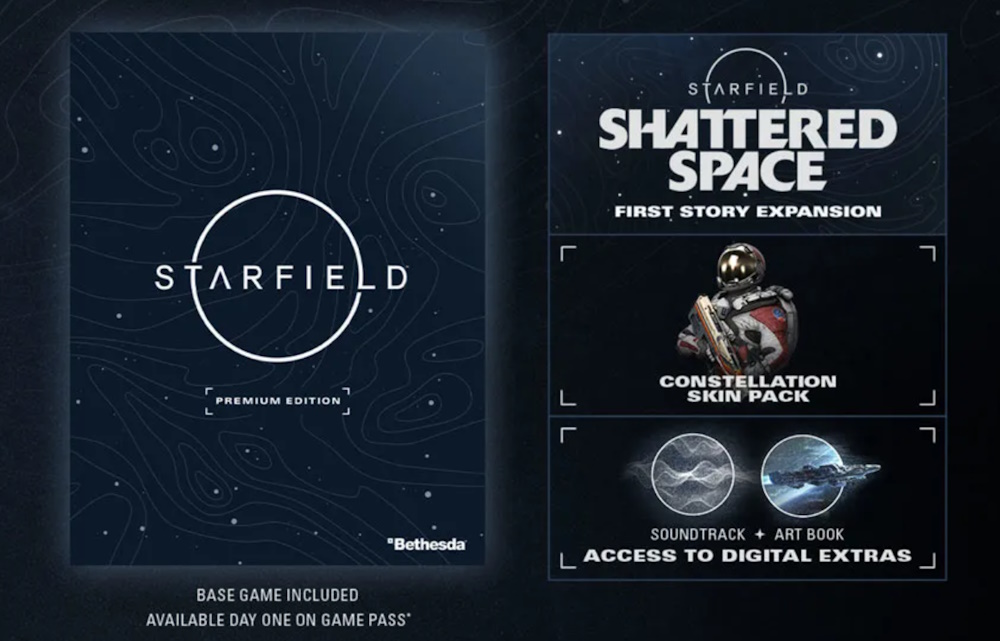
The only way to get access to Starfield’s “story expansion” on Game Pass is to pay extra.

Also included in Starfield’s expensive £35 add-on on Game Pass was the first piece of planned DLC: Shattered Space. This DLC pack isn’t out yet and most likely won’t arrive until sometime next year, but even for Game Pass subscribers, the only way to get it will be to pay up. Shattered Space is described as a “story expansion” for Starfield; a piece of DLC that will add to the story present in the “base” version of the game. I’m beginning to get tired of this – being charged extra on top of a subscription.

The basic problem is this: we all know that most games in 2023 aren’t complete experiences. With a few exceptions, like Baldur’s Gate 3, most games nowadays are deliberately constructed to be incomplete, and to require DLC and “content packs” to make up for these inbuilt, deliberate deficiencies. When Game Pass only allows players access to the “base game,” what that really means is that it’s a service made up entirely of incomplete experiences.

Baldur’s Gate 3 feels like a rare gem in 2023: a game that’s actually complete without expensive add-ons.

Baldur’s Gate 3 is a great game, and I firmly believe it would still be lauded and held in high esteem even if the games industry wasn’t plagued with these problems. But one factor among many in its success, and one of the reasons why it’s being celebrated by players, is that it’s so rare nowadays to see a fully-complete game that doesn’t require expensive DLC or that doesn’t come bundled with an in-game shop and microtransactions. In a broken, greedy, money-grubbing marketplace, games like that stand out.

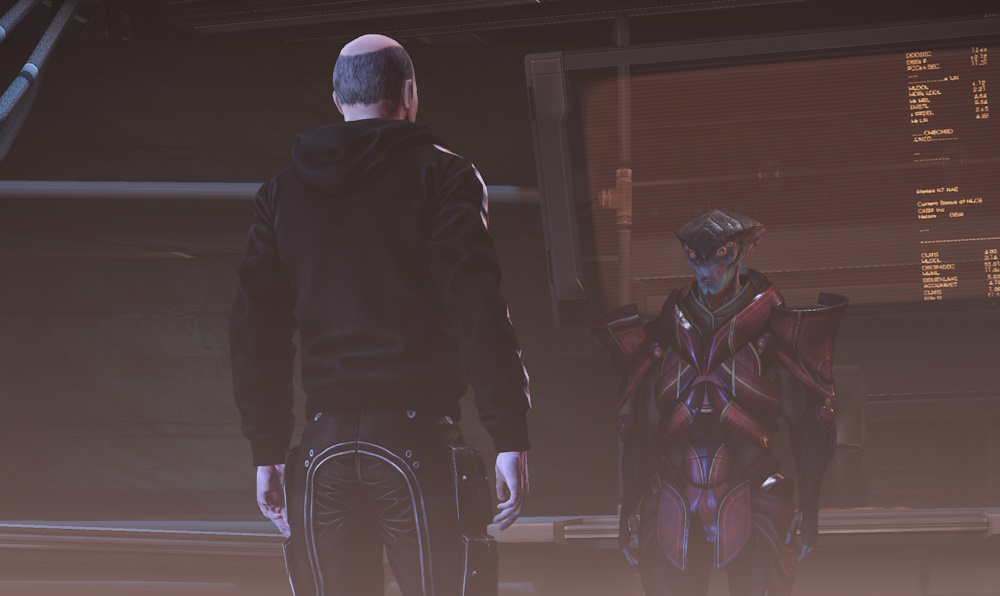
Incomplete games have become normalised, and that’s been the case for at least a decade. In 2012, Mass Effect 3 was released – and the “base game” had a whole chunk carved out that was sold as day-one DLC: From Ashes. This content, which was developed alongside the “base game” and perfectly integrated into it, was sold separately by EA for an additional fee. Although it remains a particularly egregious example of this phenomenon, it’s far from the only one. Day-one DLC and cut content are everywhere nowadays.

Mass Effect 3 was a pioneer of cutting out content to sell as DLC.

So if it’s increasingly rare that a “base game” can be considered anywhere close to a complete, well-rounded experience, what does that say about a service like Game Pass? To me, Game Pass feels increasingly like those demo discs that used to come stuck to the front of magazines or in cereal boxes in the ’90s. There’s some great stuff there – but if you want to play more than just the “base” version, you’d better be prepared to fork over some additional cash. Maybe £10 for Age of Empires II DLC seems reasonable to you, but £35 for Starfield DLC that might not be released for another twelve months feels like highway robbery.

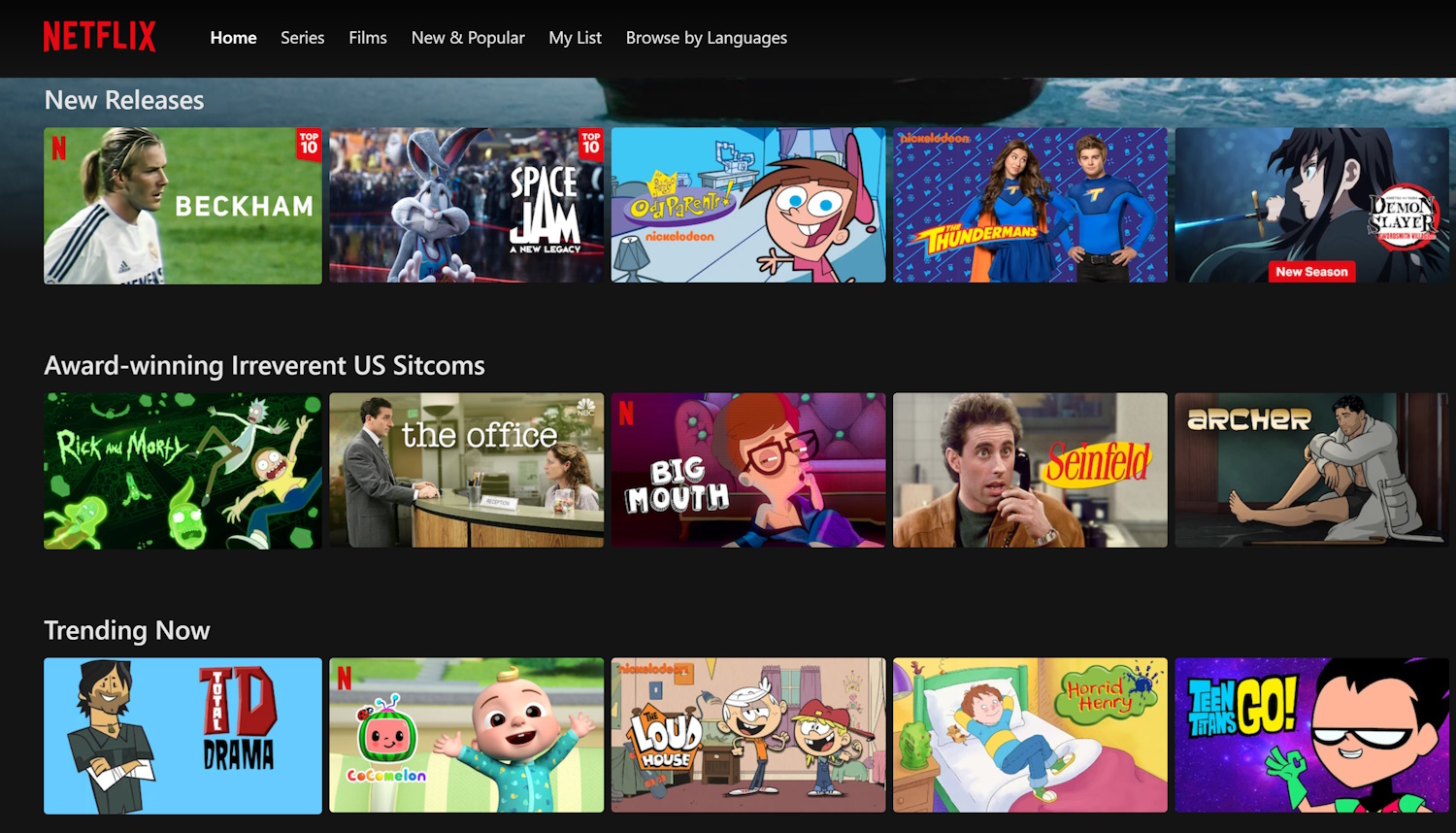
Microsoft wants Game Pass to be “the Netflix of games,” and to transform the way players engage with playing games on its platforms. So let’s take the Netflix analogy as a starting point and consider this question: does Netflix charge extra for additional content?

Microsoft wants to make Game Pass the “Netflix of video games.”

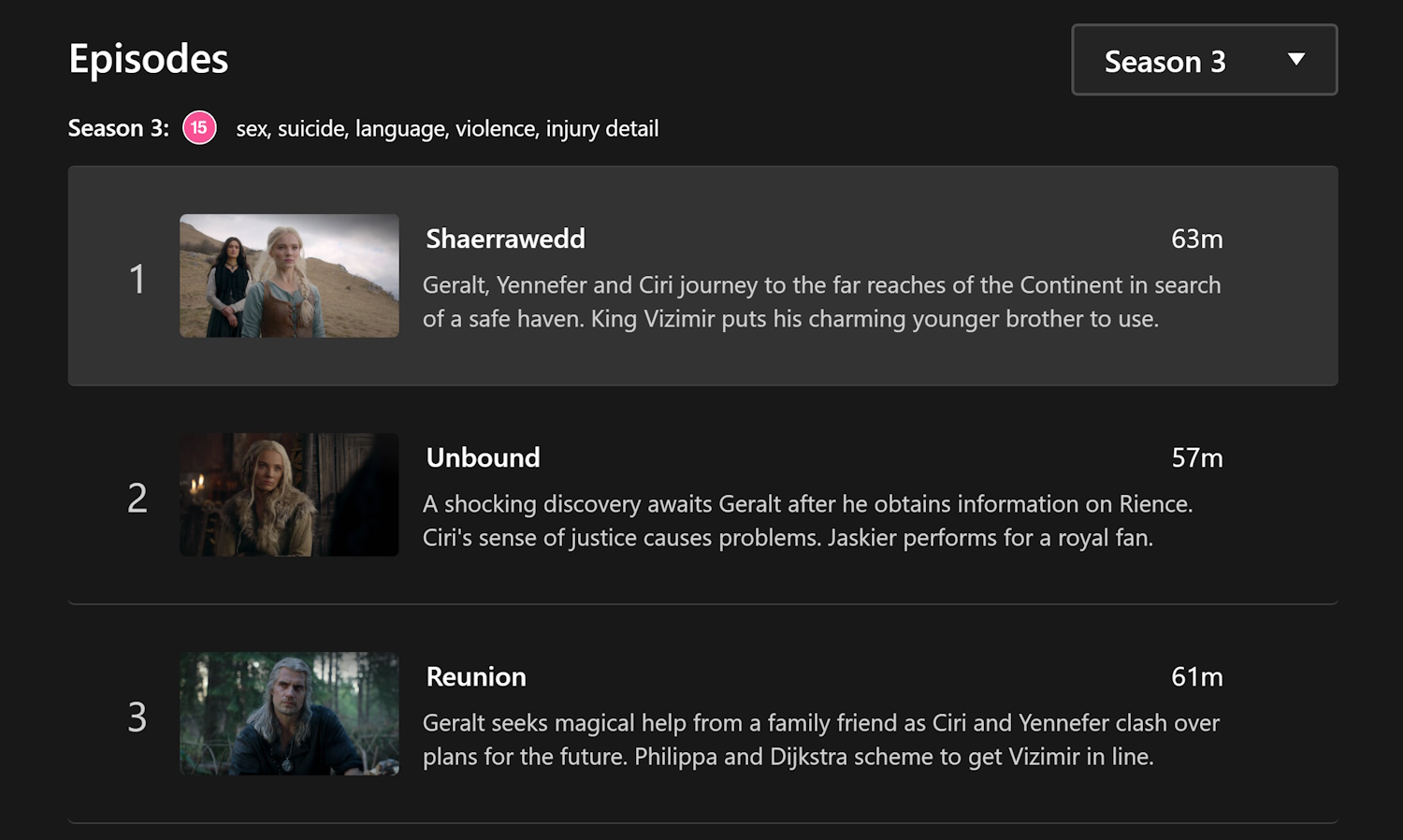
Can you imagine logging into Netflix, excited to watch the second season of your favourite show, only to be told that you need to pay an additional fee? For many games, DLC is the equivalent of “Season 2,” continuing the story, rounding out the experience, and even patching out issues with the game in some cases. No video streaming service could get away with only making Season 1 of a TV series or the first film in a trilogy available to watch, with the rest only accessible for an extra fee. That would be ridiculous.

Having said that, I hope I haven’t given the penny-pinchers at Netflix any ideas!

But you see my point, right? It wouldn’t be possible for a video streaming service to only include some films and episodes in its “base version” and expect to get away with charging extra fees to watch the rest. Customers wouldn’t stand for that – so why does Microsoft think it can get away with doing that on Game Pass?

Imagine if Netflix tried to get away with charging extra to watch the second or third season of a series.

I suppose we should make a distinction between different kinds of DLC, in the interest of fairness. Single-use items in online games, in-game currencies, and maybe even some cosmetic items are the kind of things that could still be charged for separately. I’m not suggesting that Game Pass players should get infinite amounts of these things, especially in competitive online multiplayer games.

But for titles like Starfield with its single-player DLC, and even for Age of Empires II with its new story campaign and factions, I really do believe that these should be included in the cost of Game Pass. What are we paying Microsoft for if all we’re getting are incomplete experiences; games that will become less and less complete over time? The price of Game Pass should go toward the cost of developing DLC for these titles, especially since it’s taken as a monthly charge. There’s no better definition of a “recurring revenue stream” than that.

This is all about money, at the end of the day.

So this was a bit of a rant, but it’s something I’ve been meaning to bring up for some time now. While I don’t think it’s fair to ask for every single title to include all purchasable items as part of Game Pass, I absolutely believe that single-player titles and big expansion packs should be covered. The “base game” hasn’t felt like a full or complete experience for a long time, so when Game Pass only offers that, it feels less like a subscription service and more like an expensive demo disc.

At the very least, I’d like to see Microsoft’s first-party releases bring their major expansion packs and DLC to Game Pass. If I were to fantasize, I’d say that cosmetic items in single-player games, small content packs like cars in racing games or new guns in shooters should also be included as well.

This is something Microsoft will have to deal with sooner or later, because players aren’t going to be pleased if they have to keep forking over additional fees on top of their Game Pass subscription. If I have to pay £35 to get Starfield’s unreleased DLC, why even bother subscribing at that point? I might as well buy the “base game” right now and wait for the DLC to go on sale.

The Game Pass subscription service is available now for players on PC and Xbox game consoles. All titles discussed above are the copyright of their respective developer, publisher, and/or studio. This article contains the thoughts and opinions of one person only and is not intended to cause any offence.
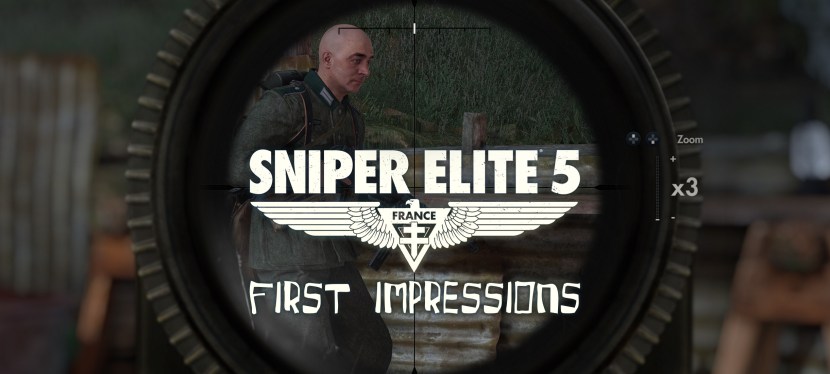
Sniper Elite 5: First impressions

I’m a total newbie to the Sniper Elite series, but I found myself swept up in the hype for the latest entry. With Sniper Elite 5 being available on Xbox Game Pass on release day, there was no reason not to give it a shot! The game was even available to pre-load (i.e. to download ahead of its actual launch) which is a time-saver on my slow internet connection. Although this isn’t a review of Xbox Game Pass, Microsoft once again gets high marks from me for their subscription service!

First up, Sniper Elite 5 on PC seems to have a bug related to its anti-cheat software. This bug prevented me from launching the game after it had been installed, but luckily there was a simple workaround: right-click and then choose “run as administrator” in order to make it work. An easy fix, but unfortunately for Sniper Elite 5 it didn’t exactly get off to a spectacular start as a result.

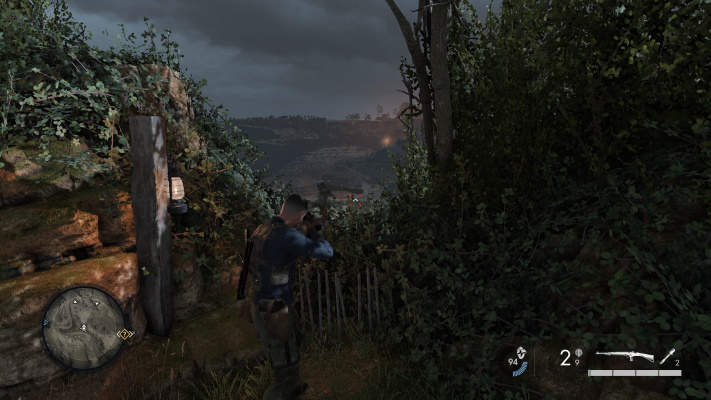
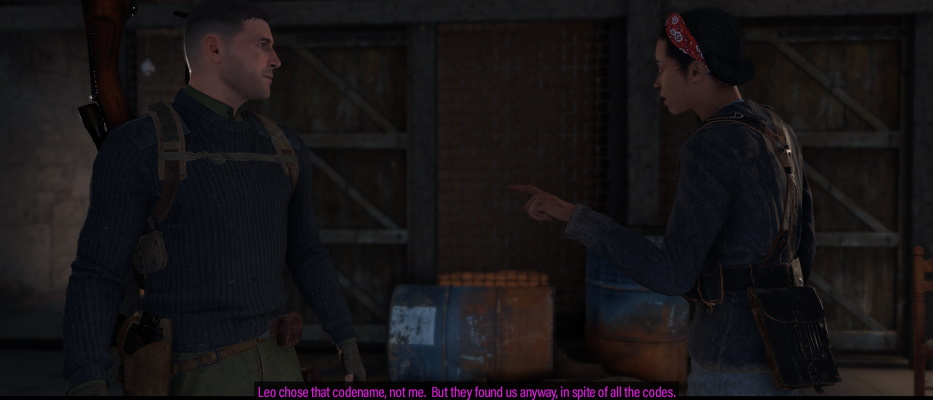
Lining up a shot in Sniper Elite 5.

However, the game itself seems to be well-polished. I didn’t encounter any major bugs and only one visual glitch in the couple of hours that I’ve spent with Sniper Elite 5 so far. Considering that recent years have seen too many games rushed out the door to meet arbitrary release windows, the fact that Sniper Elite 5 at least on PC seems to be in a decent, playable state is good news. It shouldn’t need to be good news, but that’s a reflection of where the video games industry as a whole is right now.

I’d been dimly aware of the Sniper Elite series, but I’d never given it serious consideration until now. I’d seen pictures and clips online from time to time – especially of the franchise’s signature X-ray kill cams – but beyond that I kind of dismissed it. In shooter games I rarely choose to play as a sniper if I have a choice, and stealth missions have never been my favourites in any action or adventure titles. So for those reasons and more, past games in the Sniper Elite franchise just never seemed like “my thing.” I’m not sure what it was that Sniper Elite 5 did with its marketing to change my mind and convince me to give it a shot this time around; perhaps it’s simply the relative lack of big new games as a result of pandemic-enforced delays.

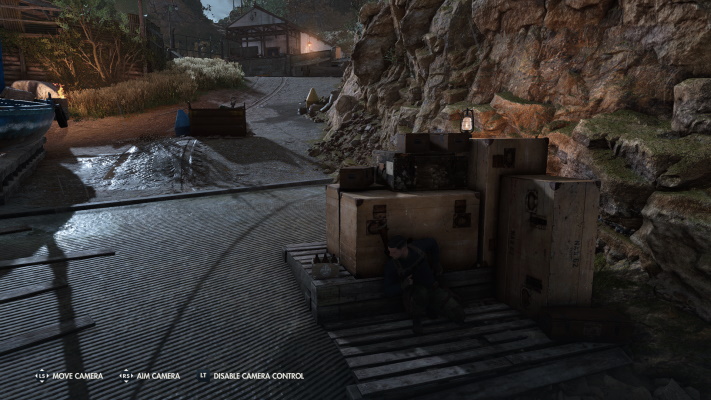
Taking cover.

Regardless, I was curious enough to give Sniper Elite 5 a go, and I’ve been having fun. For some reason I had it in my head that this would be a first-person game; perhaps the screenshots and clips I’d seen in the past left that impression, as first-person mode is basically required for sniping. But when not using binoculars or the sniper scope, the rest of the game takes place from a third-person perspective. That was unexpected for someone who (clearly) had no idea what they were letting themselves in for! I like the mix that this provides; third-person gameplay for stealth and action combines well with looking down the sniper scope from a first-person perspective.

Gameplay itself is polished, and both major sides of the game – sniping and third-person stealth/action – work well. Sniper Elite 5 has some neat level design with expansive open areas and isolated, hidden spots that are perfect for spying or lining up the perfect shot. So far I’ve only participated in a couple of missions, but I like what I’ve seen.

Whee!

In terms of graphics and visuals, Sniper Elite 5 looks decent. I wouldn’t describe any of it as being stunning or beautiful; for my money there are more visually spectacular titles. The use of a lot of green, khaki, and brown tones is period-accurate for World War II France, but perhaps that kind of colour palette doesn’t lend itself to being described in those terms. Graphically, Sniper Elite 5 could go toe-to-toe with many games of the Xbox One/PlayStation 4 generation, but at least on my PC I didn’t feel it could offer much more than that.

This is a broader point that we should probably talk about in more detail some time, but the lack of availability for the Xbox Series S/X and PlayStation 5 has meant that many games are still being developed with the previous console generation – and its limitations – in mind. Sniper Elite 5 is playable on hardware that’s almost a decade old at this point, and that’s naturally going to hold it back. Every new console generation brings with it cross-gen titles like this, but the unique difficulties faced by new machines seems to have dragged out this period. By this point in the Xbox Series S/X and PlayStation 5’s lifecycles, I’d expect to see more titles like Sniper Elite 5 ditching last-gen consoles in favour of new hardware.

Sniper Elite 5 looks okay… but visually it’s nothing to write home about.

Voice acting in Sniper Elite 5 isn’t spectacular. It has a stilted, almost wooden quality that reminds me a little too much of amateur dramatics clubs and drama classes at school! Ten years ago I wouldn’t have found that to be worth remarking on, but a lot of modern titles have put way more effort into their voice acting and scriptwriting. Even games that don’t rely on big-name actors or celebrities to bring their characters to life have still managed to sound pretty great and realistic; I find that the writing and voice acting in Sniper Elite 5 kind of snaps me out of the moment.

The saving grace here is that cut-scenes seem to be relatively few and far between, with long sections of uninterrupted gameplay in between. German characters all speak German (with English subtitles) at least by default, which I will admit is a nice feature and adds something to the realism of the World War II setting.

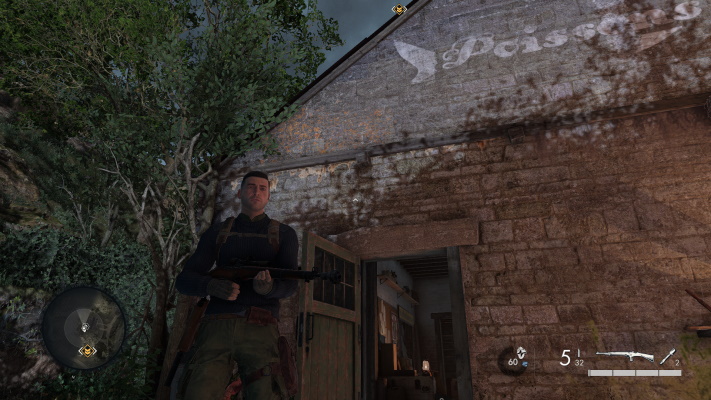
I’m not wild about the voice acting or scriptwriting.

If you’ve ever played a third-person stealth game, you’ll be familiar with the way gameplay works in Sniper Elite 5. There’s a well-implemented cover system, the player character can conceal himself by ducking down, lying prone, or hiding in bushes or long grass. Enemies have line-of-sight that must be avoided, enemies can become alerted to the player’s presence and raise alarms, and making noise or firing weapons can draw attention. Nothing on this side of the game felt particularly groundbreaking, but all of it felt polished and well-constructed. Even as someone brand-new to the series, playing Sniper Elite 5 felt natural and intuitive, and I didn’t have to scrounge around to figure out the controls or how to interact with the environment.

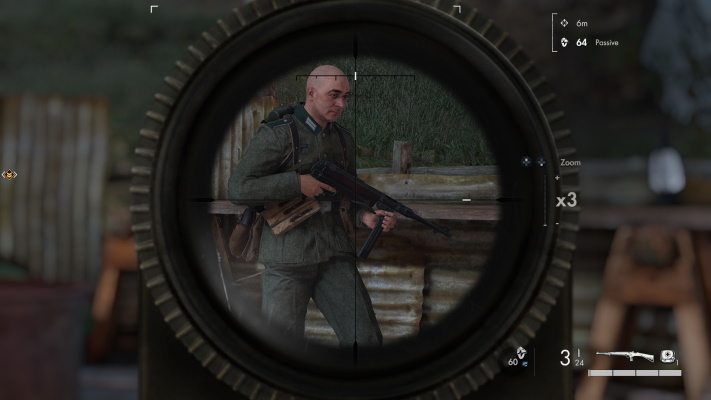
Sniping works basically the same way it does in any first-person shooter, but with a few added extras that some faster-paced titles overlook. Most sniper rifles (as well as binoculars) have different zoom levels, the player character’s breathing can be controlled to steady the scope, and different body parts on enemy targets – including internal organs – can be targetted to get different results. Each shot feels unique, and I would wager that the game offers a decent amount of replayability; going back and redoing a mission will almost certainly lead to different ways to take down targets.

The view down the sniper scope.

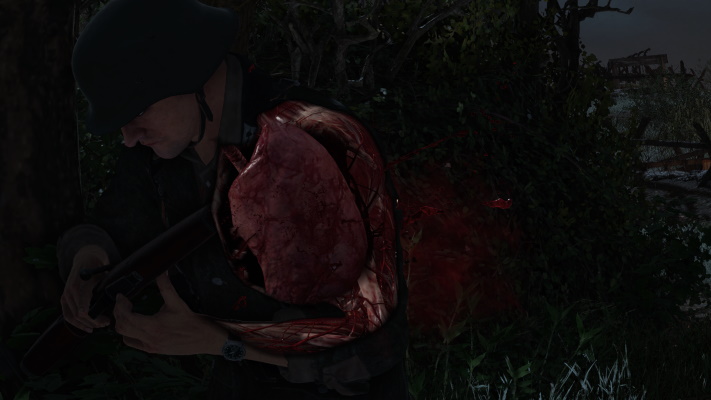
This brings us to one of the Sniper Elite series’ signatures: kill cams, and particularly X-ray kill cams that show the damage inflicted inside of a target’s body. These things are pretty gory – even by the standards of a World War II video game – but they can be turned off in the menu if players aren’t interested in that level of brutality. For me, I’m pretty desensitised to that kind of thing, but I can understand if the raw, visceral nature of these slow-motion sequences is offputting to some folks.

As a technical feat, I think the inclusion of these X-ray cams is quite clever. Not only does the game have to detect where a bullet hit an enemy and whether they’re wounded, killed, etc., but it has to show a ballistic path from the barrel of the gun all the way to the target’s body. Then it has to calculate precisely where in the body the bullet would enter, which internal organs would be damaged, and what that would look like, then render it on screen in slow-motion but without stopping or interrupting the main cycle of gameplay. Regardless of whether it’s “your thing” or not, as a feat of game design I find it to be very impressive!

An example of the game’s X-ray kill cam.

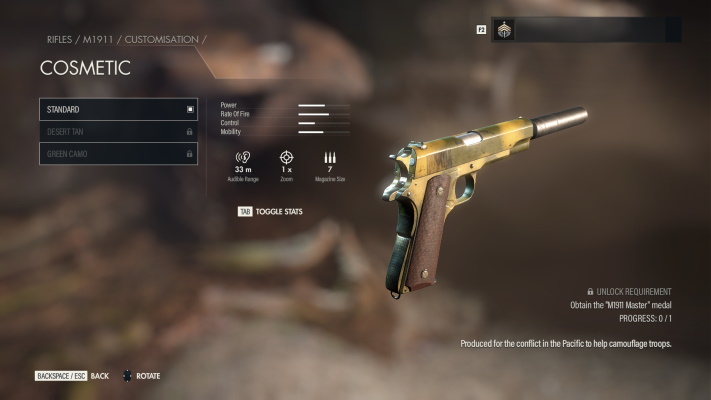
Weapons can be customised in Sniper Elite 5, and this adds an additional dimension to gameplay. The player character can carry several different weapons at a time – as well as grenades, binoculars, health packs, and the like – and each main weapon can be customised and upgraded. Not all upgrades are available from the start, needing to be unlocked as the campaign progresses.

It can be fun in any game to customise a weapon and get it working exactly the way you want it to! Sniper Elite 5 offers a lot of options in this regard, and balancing the trade-offs between a more powerful but slower and louder weapon versus a quick and nimble one with a shorter range and less power is all part of the immersion and the experience. It’s possible to customise the player character’s weapon differently for different targets and different missions, and when combined with a variety of different weapons to choose from, this is another way in which Sniper Elite 5 makes the experience feel different each time. Cosmetic changes to weapons also show up in third-person mode when walking around, and I always appreciate details like that!

Customising a sidearm.

So I think that’s about all I have to say about Sniper Elite 5 at this stage. I may come back for an additional write-up/review once I’ve beaten the main campaign, but I’m not sure about that yet so don’t hold your breath! For now, suffice to say that I’m glad I stepped outside of my usual gaming niches to try something a little different. Stealth and sniping have never been my favourite aspects of action or shooter games, but Sniper Elite 5 manages to implement them in a fun way. Coming from me, that’s a pretty big compliment.

I’m not sure how I’d feel if I paid full price for Sniper Elite 5 on one of the new consoles, especially given that its graphics and visuals are definitely last-gen by today’s standards. But considering I was able to get the game on release day (and even pre-load it) via Xbox Game Pass for PC, I honestly can’t complain.

So watch out, Nazis! Sniper Dennis is coming to town!

Sniper Elite 5 is out now for PC, PlayStation 4, PlayStation 5, Xbox One, and Xbox Series S/X. Sniper Elite 5 is also available on PC and Xbox platforms via the Xbox Game Pass subscription service. Sniper Elite 5 was developed, published by, and is the copyright of Rebellion Developments. This article contains the thoughts and opinions of one person only and is not intended to cause any offence.

Microsoft buys Activision Blizzard

Well that certainly came out of nowhere! Microsoft has opened its wallet once again, this time buying up massive video games publisher Activision Blizzard for a whopping $69 billion. Nice.

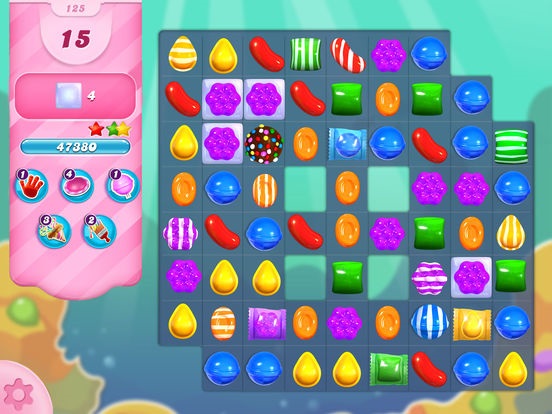
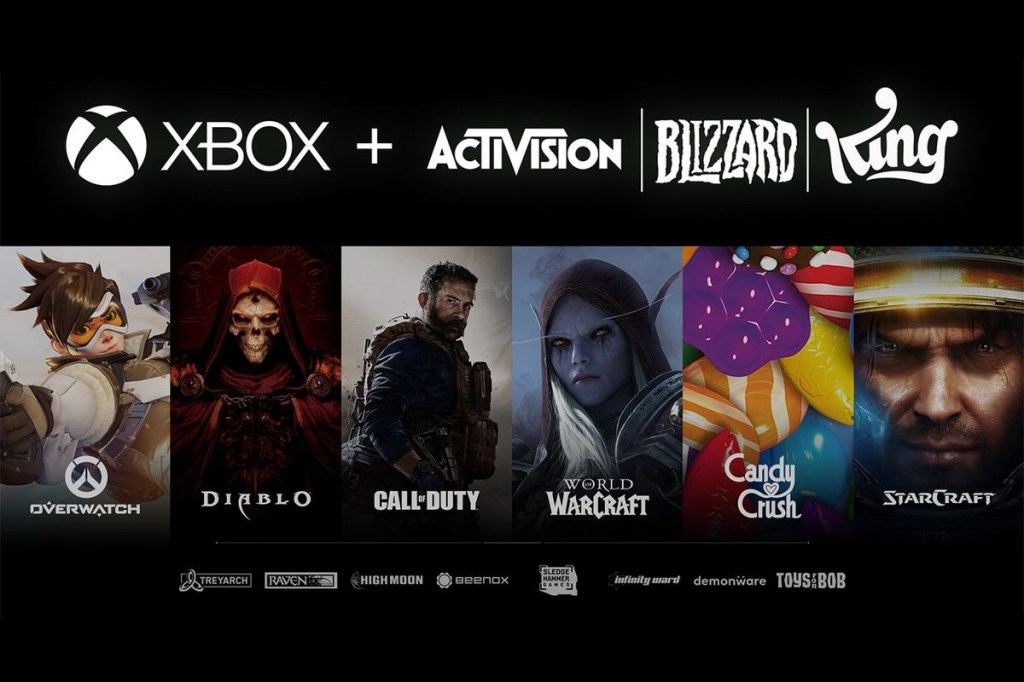
After receiving criticism during the previous console generation for the lack of exclusive games on its Xbox One system, Microsoft has stepped up in a big way in the last few years. Early moves brought on board companies like Obsidian and Rare, and then last year came another shock announcement: the acquisition of ZeniMax – the parent company of Bethesda. All of those laid the groundwork for something big, and Microsoft has now added Activision Blizzard to its lineup, bringing on board hugely popular games and franchises like Call of Duty, Overwatch, World of Warcraft, and even popular mobile game Candy Crush.

Microsoft will soon own Candy Crush!

At almost ten times the price of its Bethesda purchase, Microsoft clearly has big plans for Activision Blizzard and its games. Even by the standards of other corporate takeovers, $69 billion is a lot of money – an almost unfathomable amount. As Microsoft looks to expand its Xbox and PC gaming platforms, though, it makes a lot of sense to bring on board a company like Activision Blizzard.

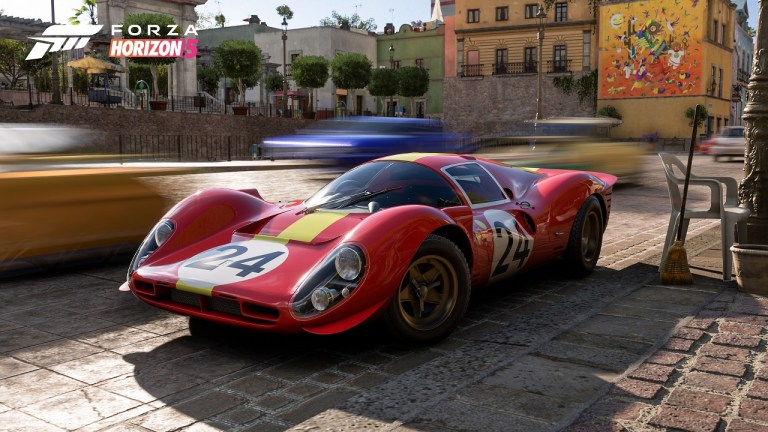
Keep in mind that Microsoft is currently pushing hard to take gaming as a whole in a new direction, pioneering a subscription model based on the likes of Netflix – indeed, Game Pass was originally pitched as the video game equivalent of Netflix. Though on the surface the company seems to be taking a two-pronged approach, with its Xbox home console family and PC gaming being separate, in many ways that isn’t really the case any more. Microsoft’s goal is to bring these two platforms as close together as possible, offering most games to players regardless of their chosen platform. One need only look to two of the biggest releases of the past year as an example: both Halo Infinite and Forza Horizon 5 came to both Xbox and PC, despite originally being franchises that were exclusive to consoles.

Forza Horizon 5 was a massive title for both Xbox and PC – and came to Game Pass on release day.

Let’s step back for a moment. My initial reaction to this news was disbelief! But after double-checking my sources and confirming that this was, in fact, not some kind of elaborate prank, my next thoughts were of the Activision Blizzard scandal, and how from Microsoft’s point of view this may not have been the best time to announce this acquisition.

There’s no denying that Activision Blizzard is a tainted brand in the eyes of many players, with the severity of the sexual abuse scandal cutting through to make the news in mainstream outlets when it broke last year. Perhaps somewhat counter-intuitively, the scandal is part of the reason why Microsoft may have felt that the timing was right – Activision Blizzard shares had lost basically a third of their value over the last few months (down from almost $100 per share to below $65 prior to the acquisition announcement). Microsoft arguably made a savvy deal in some respects.

Activision Blizzard is a company embroiled in scandal right now.

There also seems to be a sense from at least some quarters of the gaming press and gaming community that Microsoft is “swooping in” to save Activision Blizzard from the scandal, perhaps even preserving the jobs of some employees or protecting games and franchises from cancellation. I didn’t really expect this reaction, and while it’s safe to say there’s been plenty of criticism to balance out some of the positivity, overall the mood of players seems to be more in favour of this acquisition than opposed to it.

We should talk about exclusivity before we go any further. Despite the hopeful – almost desperate – claims being made in some quarters, Microsoft isn’t going to publish Activision Blizzard titles on PlayStation forever. Once the deal has gone through and existing contracts have been fulfilled, expect to see all of Activision Blizzard’s new titles and big franchises become Xbox, PC, and Game Pass exclusives.

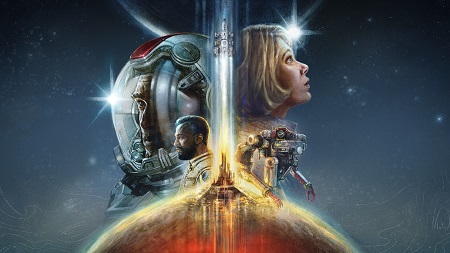
Starfield is a highly-anticipated Bethesda title – and it will be an Xbox and PC exclusive following Microsoft’s acquisition of Bethesda.

This is exactly what happened with Bethesda. Some players clung to the argument that Microsoft somehow wouldn’t want to limit the sales of some of these games to Xbox and PC players only, with some even going so far as to claim that we were witnessing the “death of console exclusives.” That hasn’t happened (to put it mildly) and we’re now expecting massive games like Starfield to become Xbox, PC, and Game Pass exclusives.

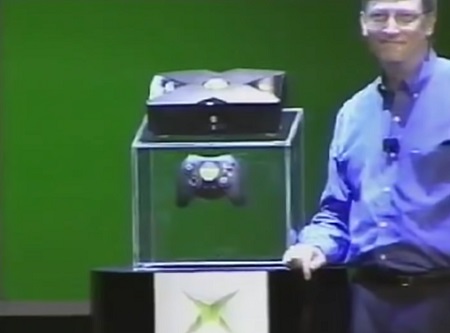
When Microsoft first jumped into the home console market in 2001 with the original Xbox, a lot of games industry critics and commentators argued that the company would open its wallet and spend, spend, spend in order to compete with the likes of Sega, Nintendo, and Sony. Microsoft certainly made some sound investments in games early on, but it’s really taken almost twenty years for some of those concerns to be borne out – and by now, the gaming landscape has so thoroughly shifted that it doesn’t feel like a bad thing any more.

It’s been more than two decades since Microsoft jumped into the home console market.

When Microsoft announced the acquisitions of the likes of Oblivion, Rare, and even Bethesda, there was still a sense that the games industry was pursuing its longstanding business model: develop games, release them, sell them, turn a profit, repeat. But now I believe we’re actually in the midst of a major realignment in the way the entire games industry operates – a realignment that’s shaping up to be as disruptive as Netflix’s emergence as a streaming powerhouse in the early 2010s.

Microsoft isn’t making all of these big purchases just to make games and sell them individually. That approach will remain for the foreseeable future, of course, but it isn’t the company’s primary objective. In my view, this is all about Game Pass – Microsoft’s subscription service. Microsoft has seen how successful the subscription model has been for the likes of Netflix – but more importantly for the likes of Disney with Disney+.

Disney+ is both an inspiration and a warning for Microsoft and Game Pass.

As streaming has become bigger and bigger in the film and television sphere, more companies have tried to set up their own competing platforms. In doing so, they pulled their titles from Netflix – something we saw very recently with Star Trek: Discovery, for example, which will now be exclusively available on Paramount+. Microsoft is not content to simply license titles from other companies – like Activision Blizzard – because they fear that a day is coming soon when other companies try to become direct competitors with their own platforms – muscling in on what Microsoft sees as its turf. If Sony gets its act together and finally manages to launch a Game Pass competitor on its PlayStation consoles, Microsoft will be in an out-and-out scrap, and pre-empting that fight is what acquisitions like this one are all about.

If Netflix had had the foresight to use a portion of the money it had been making in the early 2010s to buy up film studios or television production companies, it would have lost far fewer titles over the last few years, and wouldn’t have needed to pivot so heavily into creating its own content from scratch. I think that the Activision Blizzard deal is one way for Microsoft to shore up its own subscription service ahead of a potential repeat of the “streaming wars” in the video game realm.

The official announcement image.

So it isn’t just about “more games for Game Pass” – this deal is about Microsoft’s vision for the future of gaming as a medium, and also their concerns about other companies trying to elbow their way in and become serious competitors. Spending $69 billion may be a huge financial hit up front, but if it pays off it will mean that Game Pass will remain competitive and profitable for years – or even decades – to come. That’s the attitude that I see through this move.

And I don’t believe for a moment that Microsoft is done. Activision Blizzard may be the company’s biggest acquisition to date, but it won’t be the last. When the deal is done and has officially gone through – something that most likely won’t happen for at least twelve months – expect to see Microsoft lining up its next big purchase, and it could be yet another games industry heavyweight. There have been rumours in the past that Microsoft had considered making a move for Electronic Arts, for example… so watch this space!

Could another big purchase be on the cards in the next couple of years?

As a player, these are exciting times – but also turbulent times. I increasingly feel that it’s hardly worth purchasing brand-new games, because several massive titles that I’ve spent money on have ended up coming to Game Pass. In the last few days the Hitman trilogy has arrived on the platform, Doom Eternal landed on Game Pass last year, and even Mass Effect: Legendary Edition is now on the platform less than a year after its release. What’s the point in buying any new games any more? Let’s just wait and it seems Microsoft will eventually bring them to Game Pass!

This is, of course, an attitude Microsoft wants to foster. If Game Pass is an appealing prospect, players will stop buying games. Once they’re “locked in” to the Game Pass ecosystem, Microsoft thinks it’s got them for the long haul. This is how Netflix, Disney+, and other streaming platforms view their audiences, too: once someone has been hooked in, they tend to stay hooked in. That’s why they put the majority of their time and energy into recruiting new subscribers rather than ensuring current subscribers stay signed up.

This is all about Game Pass.

So it’s an interesting moment in gaming, and one that has the potential to herald an entirely new chapter in the medium’s history. People who decry the death of buying individual titles increasingly feel like they’re on the losing side; relics of an era that’s rapidly drawing to a close. Subscriptions have basically become the norm in film and television, with sales of DVDs, Blu-rays, and the like in what seems to be terminal decline. Television viewership, along with cable and satellite subscriptions, are likewise declining.

And who really feels that the death of broadcast television is something to mourn? Subscription platforms offered viewers a better deal – so they snapped it up. If Game Pass can do the same for gaming, more and more players will jump on board.

The Call of Duty series will soon join Game Pass.

Speaking for myself, I’ve been a subscriber to the PC version of Game Pass for almost a year-and-a-half. In that time, my subscription has cost me £8 per month ($10 in the US, I think). Call it eighteen months, and that’s £144 – or roughly the same amount of money as three brand-new full-price video games. In that time I’ve played more than three games, meaning Game Pass feels like a pretty good deal. If Microsoft continues to splash its cash on the likes of Activision Blizzard, bringing even more titles to the platform without asking me to pay substantially more for my subscription, then as a consumer I gotta say it’s worth it.

One corporate acquisition on its own does not irreversibly shift the gaming landscape. But we’re on a trajectory now that I believe will see gaming move away from the old way of doing business into a new era where subscriptions will be a dominant force. There will be advantages and disadvantages to this, but I don’t see it slowing down. As the likes of Sony and even Nintendo try to compete with Game Pass, if anything we’re likely to see this trend speed up.

Watch this space – because this certainly won’t be Microsoft’s last big move.

All titles mentioned above are the copyright of their respective studio, developer, and/or publisher. Some promotional screenshots courtesy of IGDB. This article contains the thoughts and opinions of one person only and is not intended to cause any offence.