

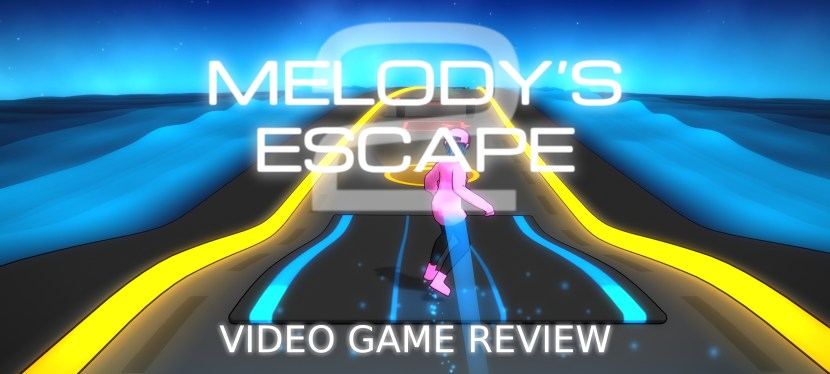
Over the past few days, I’ve been having a lot of fun with a game I didn’t even know existed until recently: Melody’s Escape 2. Long story short, I was looking at a bunch of different rhythm games and music visualisers; something that would work with the MP3s that I’ve accumulated over the past quarter of a century or so. And, especially after having a blast with the music-themed game Mixtape a few weeks back, I was on the lookout for something to make my music… a bit more interactive.
If you owned an original Xbox back in the day, you might remember ripping music CDs to the console’s internal hard drive – a console with a hard disk was unique at the time – and then listening to music while playing your favourite games. Some titles, like the Xbox releases of Grand Theft Auto III and its sequels, even had dedicated in-game ways to incorporate your own music into the experience. I’d love to see something like that in, say, Cyberpunk 2077 or the upcoming Grand Theft Auto VI, by the way!
But we’re already veering off-topic, aren’t we?
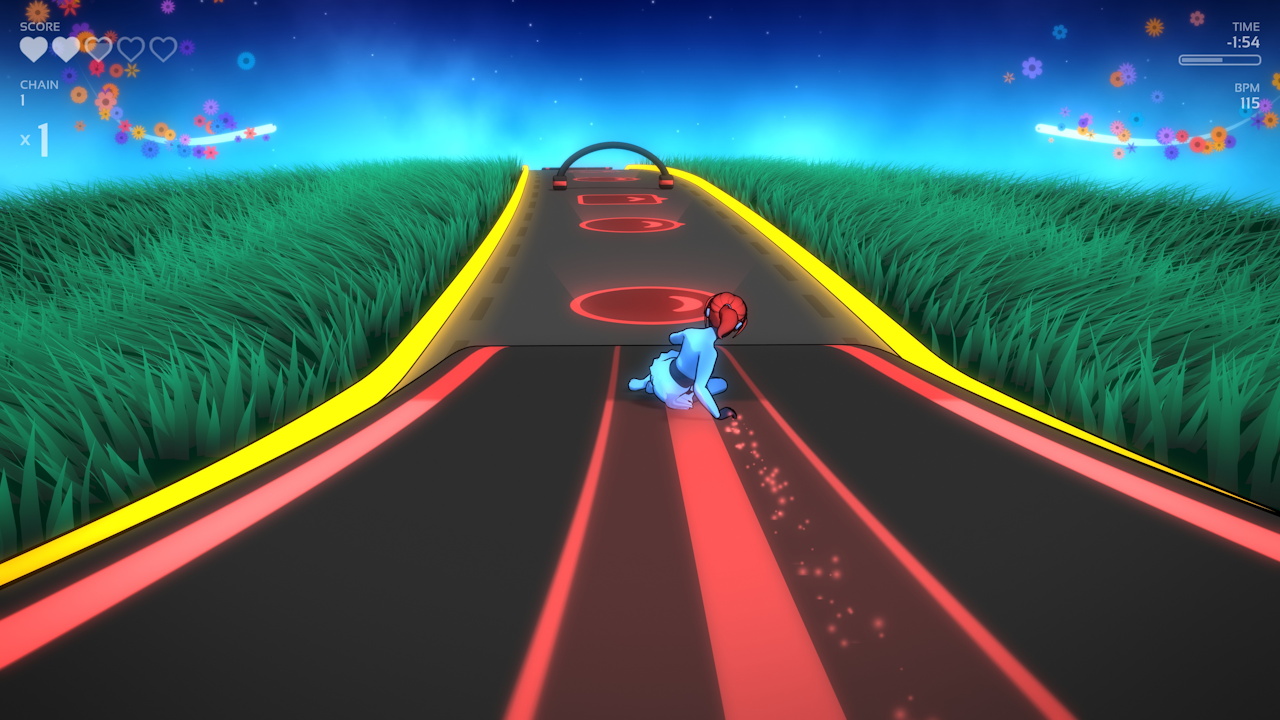
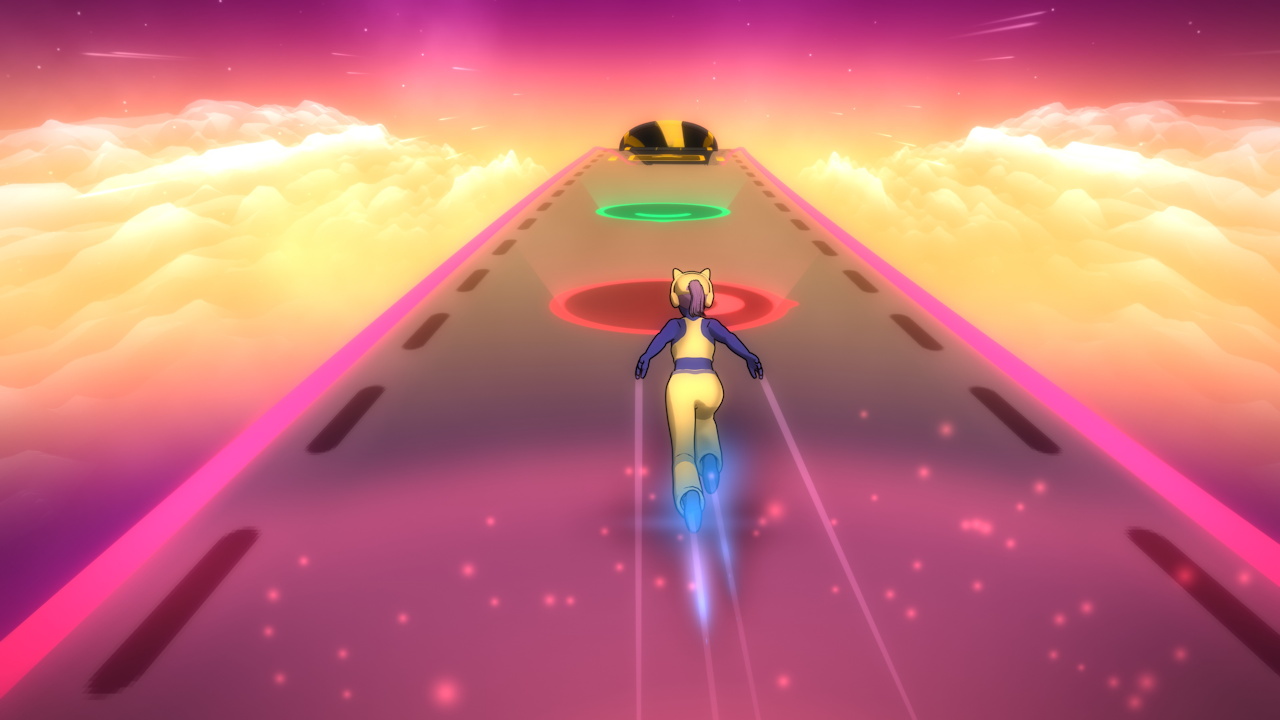
Melody’s Escape 2 is a pretty basic game, I guess. Visually, you have a single character who’s pretty much the definition of a blank slate, made up of little more than a few slabs of colour. And all you really do is press one of four buttons on cue – think Shenmue’s QTEs, but lasting the length of an entire song, and you’ve got the concept. But there’s something mesmerising about the game, and about experiencing my favourite songs in this different way that I just… well, I can’t put it down!
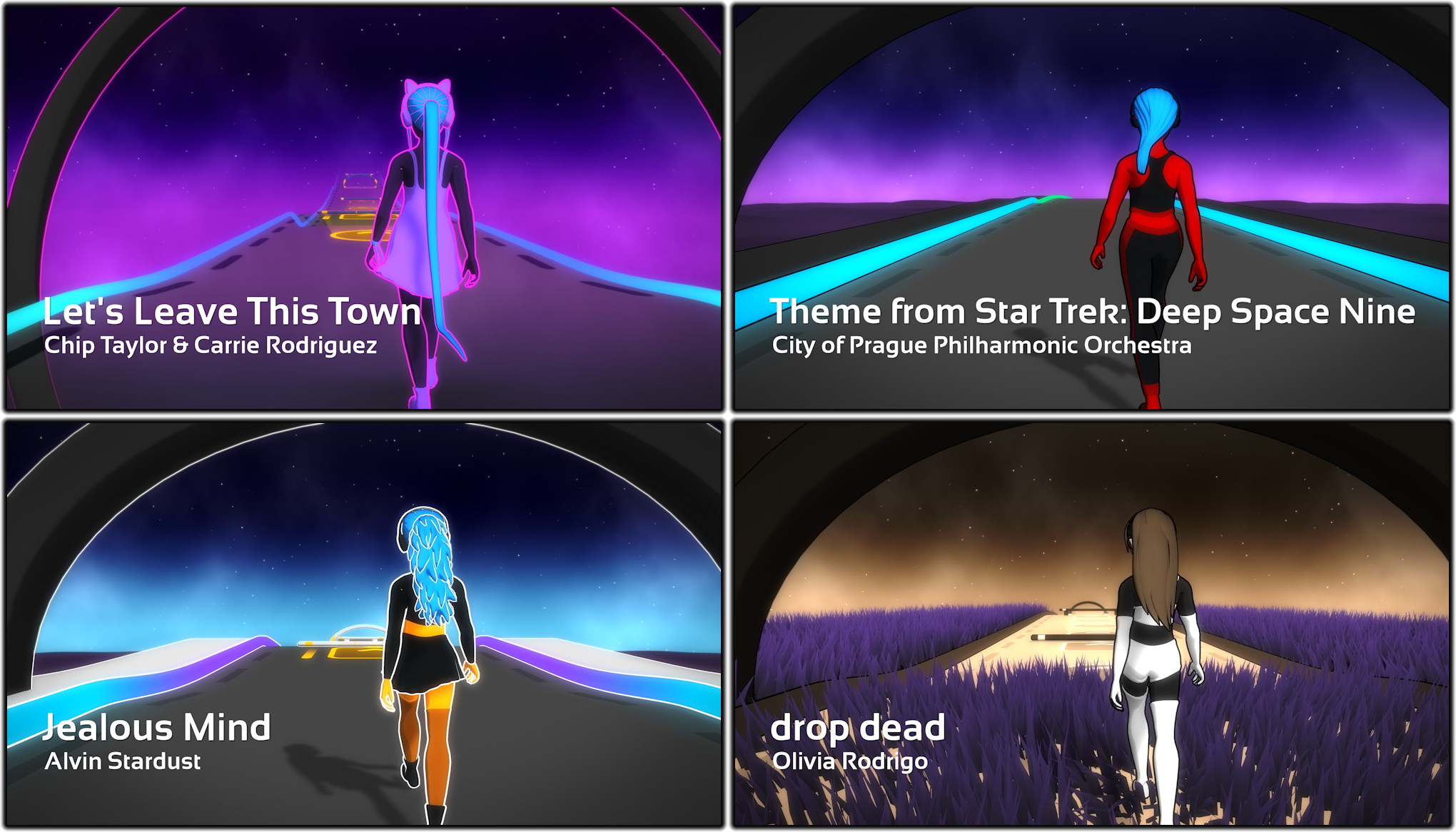
While admittedly quite simple, the game’s environments are visually beautiful. The sky is my favourite; there’s something almost ethereal or otherworldly about running through the clouds, but the grass and ocean are pretty, too. And Melody herself (I’m assuming that’s the name of the “character” in the game, anyway) has a surprising amount of personality, despite her basic, faceless design.

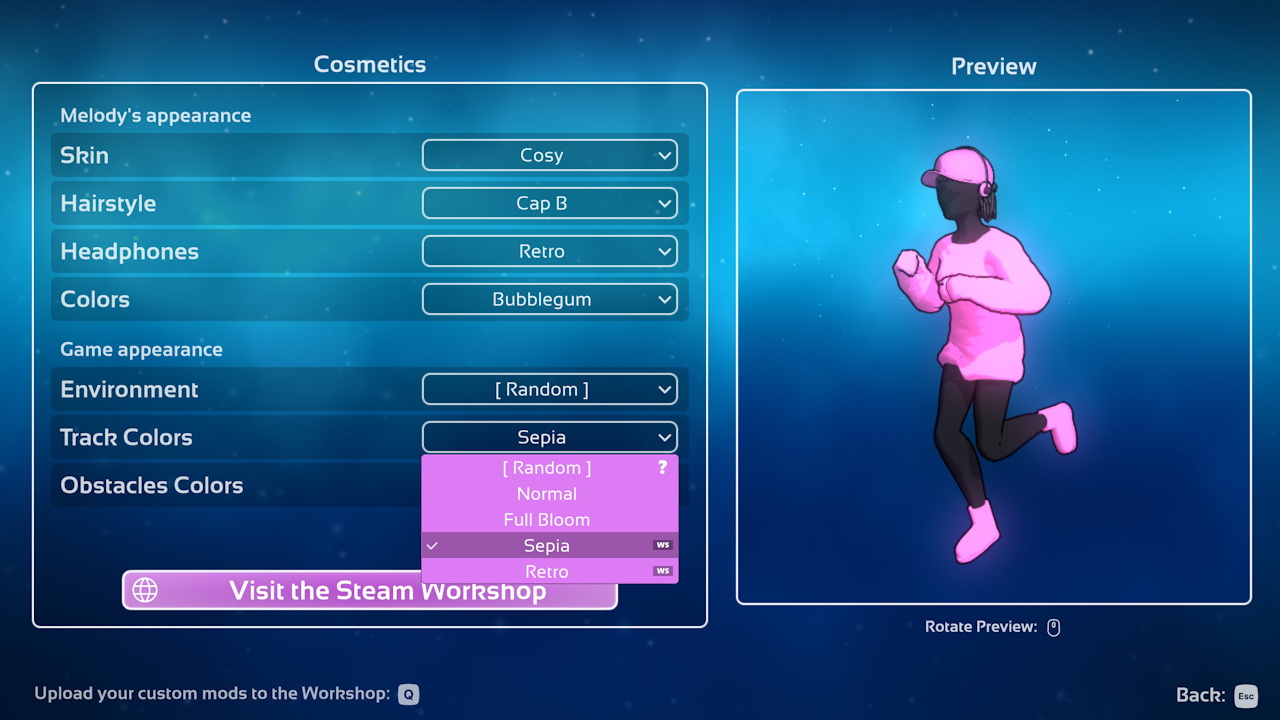
I love a game with customisation options, so being able to choose Melody’s hairstyle, outfit, and colour scheme – and change them at will, too – is a bit of fun. And I like that there are free downloads via the Steam Workshop to add new and different ones, too. Sure, there’s not a *ton* of customisation, but it seems like Melody’s Escape 2 has a community willing to dedicate time to adding more cosmetic content, and there’s a very detailed and well-written modding guide from the developer.
And yes: that’s “developer,” in the singular form, because – just like another game I’ve covered, Banished – Melody’s Escape 2 is made entirely by one individual! Belgian developer Loïc Dansart is the man behind Icetesy, and is responsible for both Melody’s Escape 2 and its predecessor from a few years ago. I love indie games, and I’m *always* stunned to see what one single dedicated developer is capable of creating.
The same thing that appealed to me all those years ago – when I ripped some of my favourite CDs to my Xbox or ported my MP3 files into The Sims – is exactly what Melody’s Escape 2 gives me. Being able to rock out to my own music, or kick back with a slower-paced track, but via the medium of interactive entertainment. I guess that’s also what some folks liked about games like Guitar Hero; that sense that you’re not just a passive listener, but somehow participating in the music.
As someone who’s disabled and doesn’t get out much, least of all to something like a music concert or a nightclub, that’s not a feeling I get very often! I’m not particularly musical; a few piano lessons as a kid and an abortive attempt to learn to play the guitar are about all I can claim in that regard – as well as a D grade in my Music GCSE! But I’ve always found music to be incredibly powerful and emotive, and the right song still has the power to take me away – perhaps to a fantasy, or to a memory long buried.
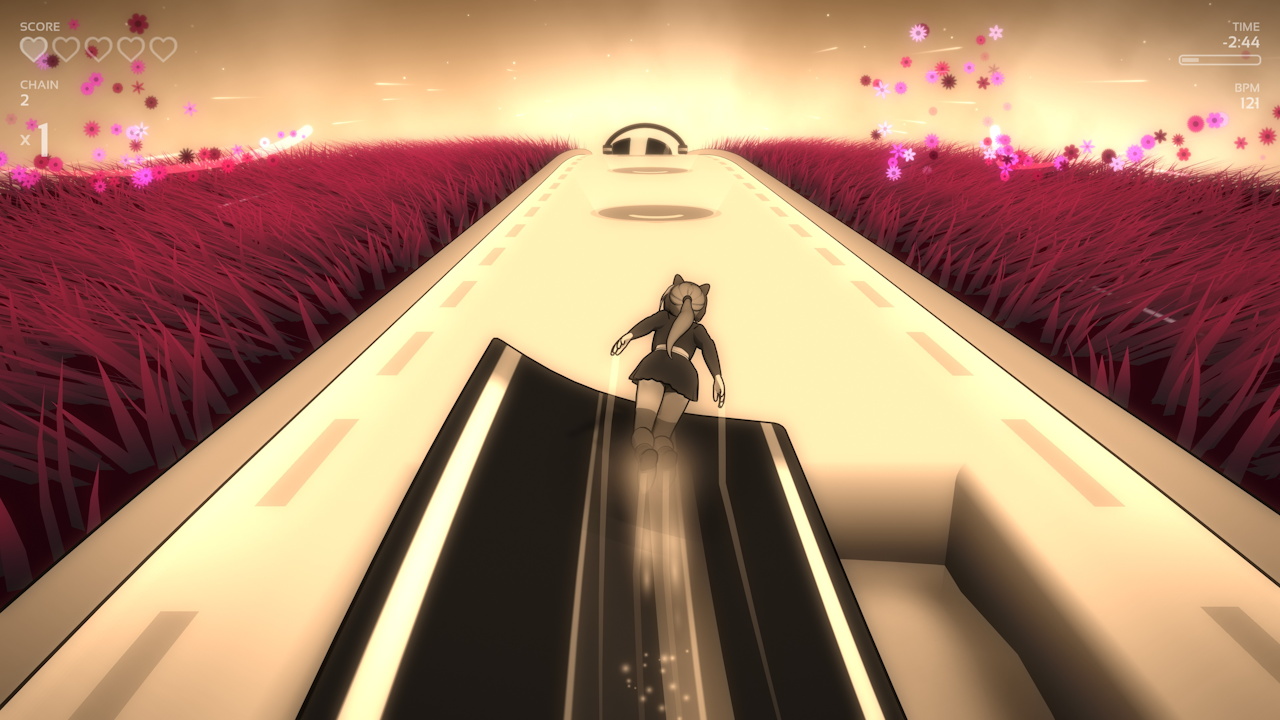
I guess you could make the argument that games like Melody’s Escape 2 – and yes, there are other titles offering comparable experiences – are designed for people who don’t have the attention span to just sit and listen! That these games are made for ADHD sufferers who need to be constantly stimulated. But… that’s not how it feels to me, anyway. And even if that were true, well… if someone struggling with a mental health condition or who can’t concentrate now has a way to help them enjoy music, why should that be a bad thing?
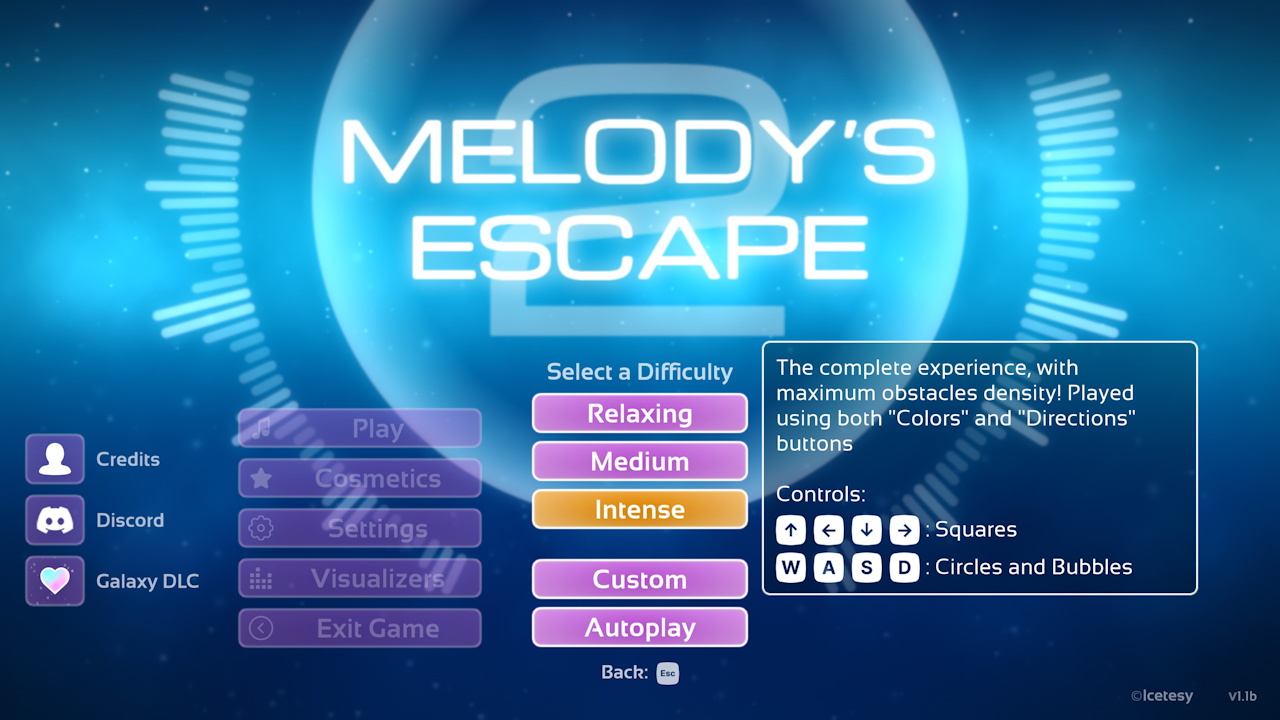
Melody’s Escape 2 also offers a challenge for people who want to “git gud” in the form of an “Intense” mode. That basically amounts to more buttons to press more quickly, and – as someone with arthritis – it’s something I haven’t even tried because I *know* I’ll be atrocious at it! But it’s worth being aware of that if a challenge is what you’re after, I guess. There’s a custom difficulty setting, too, for folks who really want to tweak the experience.
I have quite an eclectic taste in music, so I tried out a bunch of different tracks in Melody’s Escape 2. In terms of gameplay, I found that tracks with a strong, consistent bassline or drumbeat were easier to play than tracks which had bigger variations in tempo, long instrumental solos, or that jump around a lot. However, Melody’s Escape 2 isn’t limited to a single genre, or even up-tempo songs; I had just as much fun with slower songs as I did faster ones, and even instrumental tracks work well. So if you think the game wouldn’t work just because you don’t like heavy metal or trance-pop… don’t let that stop you!
I guess poor Melody – who’s modelled after a young, fit woman going for a run – probably wasn’t wild about some of my song choices! I mean, the last time I found a playlist I liked online, it was called something like “Grandad Rock.” Rude. But like I said, there’s something fun and relaxing about experiencing my favourite songs in this new way, so Melody’s stuck with me for the foreseeable future!
This isn’t my usual kind of game. But at the same time… I like finding these “cozy” experiences, and for me, that’s exactly what Melody’s Escape 2 is. It’s been great fun to run along these little obstacle courses with Melody, trying to hit the buttons in time to the beat of some of my personal favourite songs. I like that I can choose literally any song, and I’m not limited by a game’s soundtrack or a publisher’s licensing deals. And experiencing music in this more interactive way is just… soothing.
Melody’s Escape 2 also has a couple of visualiser modes – one where the game literally plays itself in time to any song of your choosing, and another that seems to work a bit like the old Windows Media Player skins from years gone by. I haven’t played around with those very much, yet, but it’s nice to have further options should I ever need a break from the obstacle course-QTE game!
So that’s all for today. I’ve been having a lot of fun with this unexpected little title, and I just wanted to share my thoughts. If you like rhythm games, music games, or just want a new way to experience your favourite songs, it’s a title I’d happily recommend. The only caveat is that you have to own your own music; you can’t stream from sources like Spotify or YouTube directly into the game. But if, like me, you still haven’t made the switch to streaming, or you’ve accumulated a back catalogue of MP3s over the years… Melody’s Escape 2 gives you a new way to experience those songs.
I hope this has been interesting. Melody’s Escape 2 is something a bit different for me – but at the same time, it reminds me a lot of playing games on my PC with custom soundtracks or ripping CDs to my old Xbox console. That desire to bring my own music into my favourite games has been present for a long time, I guess, and just being able to listen to music in a different, calming, yet more interactive setting is a lot of fun.
Thanks for reading… and happy gaming, friends!
Melody’s Escape 2 is out now for PC. Melody’s Escape 2 is the copyright of developer/publisher Icetesy. This review contains the thoughts and opinions of one person only and is not intended to cause any offence.

