Quite possibly my biggest pet peeve when reading or listening to reviews and critical opinion is when a critic asserts that a film, video game, or television series that they personally dislike is “objectively bad”. This is something I’ve seen both amateurs and professionals do, and it absolutely needs to stop. It’s the single fastest way a commentator can invalidate their own argument and credentials, and it’s got to a point where it’s been proclaimed so often that any time I see or hear the phrase “objectively bad”, I stop reading or listening. Any critic making such a statement has lost my respect and lost the argument.
To briefly define the terms, “objective” refers to something definite and factual, whereas “subjective” refers to an opinion or personal taste. Specifically, the word “objective” – and its adverb “objectively” – should be used to describe only those things which are not influenced by one’s own opinion or personal taste.
The creative arts – including cinema, television, and gaming – are by their very nature subjective. Storytelling and narrative decision-making in particular are incredibly subjective, perhaps being second only to individual musical taste. Every single aspect of a film, television series, or game – from its narrative to its aesthetic to its editing – is 100% subjective, and anyone who tries to claim otherwise doesn’t understand the meaning of these terms. There are certainly established ways of doing things, but refusing to follow these routes is not only not “objectively bad”, it’s the only way there can ever be innovation. Even in a title which is universally panned, there is still a huge amount of subjectivity – this is why some poorly-received films go on to be cult classics, and why there’s a market for re-releases of B-movies like Return of the Killer Tomatoes.
George Clooney starred in this film early in his career. I’m not making that up.
Even on the more technical side of filmmaking, an aspect one person may find annoying – like incredibly fast-paced editing – is someone else’s idea of a stroke of brilliance. Setting aside those few video games that are released with so many glitches that they’re unplayable, the same is true there too. I remember reading a novel a few years ago called Cold Mountain – since made into a film – which had a really annoying writing style. There were no speech marks used to indicate dialogue, and the author appeared to be aware of precisely zero synonyms for the word “said”, using it over and over again for almost every line where a character spoke. I found these things to be incredibly dumb and gimmicky, yet when I spoke to a friend who’d recommended me the book, she thought it was masterful; a postmodern way to write.
While I’m sure people have been misusing “objectively” for years, where it came to prominence for me was in the discourse surrounding the 2017 film Star Wars Episode VIII: The Last Jedi. Many Star Wars fans disliked the film for a number of reasons, and while I personally enjoyed it, by and large I can understand the criticisms many folks had. Some decisions taken by Rian Johnson and others at Lucasfilm seem to have been almost designed to be controversial – and anything like that will always result in split opinions. But nothing in The Last Jedi was “objectively bad”, as many critics claimed. Whether someone liked or hated things like Luke Skywalker’s characterisation, the Admiral Holdo and Poe confrontation, the side-mission to Canto Bight, Snoke’s fate, or the hyperspace ramming manoeuvre, none of them can be said to be “objectively bad” storytelling decisions. Even if a significant part of the film’s audience felt some or all of those points failed, that’s still a subjective opinion on the part of those individuals. Picking on a single narrative element in a story – such as the way Luke’s character was handled – and deeming it “objectively bad” not only is incorrect, but it undermines one’s own argument and makes having a rational conversation on the topic impossible.
Even the most controversial parts of The Last Jedi were not “objectively bad”.
I don’t want to turn this essay into a critique or defence of The Last Jedi, because it’s hardly the only title in recent years that has seen “objective” bandied about and used incorrectly by critics. While I liked The Last Jedi overall, that isn’t the reason for my saying it can’t be called “objectively bad”. There are titles I personally didn’t like, even projects I felt completely failed, that I would make the same case for. Game of Thrones’ eighth season was not “objectively bad”. Nor was The Last of Us Part II, despite my saying recently that 3/10 seemed like a fair score for that game. Not even The Rise of Skywalker, which had myriad problems with its story as well as its pacing, could be described as being “objectively bad”. I greatly dislike or had serious issue with all three of these titles, but I could never say that about them because there simply is no such thing as an “objectively bad” narrative. They all have major issues and failings in my opinion – an opinion shared by many other people in some cases, but a subjective opinion nevertheless.
What a critic is trying to do by clumsily using the word “objective” is to shut down dissenting opinions. By asserting that their belief is “objective” and thus purely factual, they’re saying that no other opinions on the topic can exist, and that anyone who tries to make a counter-argument is automatically wrong with any points they make being invalid. This isn’t how criticism and discourse are meant to work. Setting aside the fact that the word is being used incorrectly, the implication is that the person making such an assertion is closed-minded. It’s a consequence in part of social media bubbles and YouTube channels feeding the same opinions to people repeatedly.
YouTube critics aren’t the only ones who make this mistake, but it’s something I hear frequently on that platform.
In the aftermath of The Last Jedi, this was taken to extremes by some of the film’s detractors. While some of these people would begin a discussion by saying something generic like “I respect your opinion”, often what would come next is plenty of evidence to the contrary. It wasn’t good enough for them that most folks they spoke to didn’t like the film, they wanted everyone to hate it just as passionately as they did, and any contrary opinion was taken as a personal attack. The reality is that there will always be a range of opinions on practically any film, game, or television series, and trying to convince oneself that everyone needs to share the same opinion will not lead anywhere positive.
The conversation around The Last Jedi became so aggressive, unpleasant, and toxic that I stopped engaging with the film’s critics. It was clear to me that most of them weren’t interested in a conversation nor in hearing any other opinion besides a differently-worded version of their own. Some of these folks seemed to be tying their whole identity to being anti-Disney or anti-Star Wars, and any difference of opinion was perceived as a challenge to their newfound sense of self. That appears to be at least part of the reason why we started to see the phrase “objectively bad” crop up more and more often in relation to that film.
Luke Skywalker’s characterisation in The Last Jedi may have been controversial and disappointing to some fans, but nothing about it was “objectively bad” – or “objectively” anything at all.
Calling something “objectively bad” – or indeed “objectively” anything else – has a finality to it. It seeks to shut down the debate and block off any chance of someone offering a different opinion. But it simply isn’t correct, and by taking even small steps to broaden one’s understanding of a work of fiction, it’s easily possible to see that there are a range of opinions. Some critical works may even cause a rethink, reframing the discussion or bringing up a point others have failed to mention. Even if these don’t cause anyone to change their mind, they are at the very least evidence that a title is not “objectively bad”.
In most of the titles mentioned above, there were choices made by the creators and storytellers that I wouldn’t have made. These choices made the stories less enjoyable – or completely unenjoyable – for many people. Whether we’re talking about cinema, television, or video games, stories can be poorly-written, and indeed the whole point of media criticism is to point that out. But even the most well-read academic or the most prolific storyteller is simply expressing their own opinion when they make such a point. If you’ve ever taken a creative writing class or subjected your fan-fiction to internet critique, you’ll know that. Criticism is an expression of one’s own thoughts and opinions on a subject. By the very nature of the medium, criticism is subjective, not objective.
I did not enjoy The Last of Us Part II, and criticised some of its storytelling choices. But I would never be so arrogant as to say my opinion is a fact and that the game is “objectively bad”.
Some people may be misusing a term that they don’t understand, in which case further education is needed. But unfortunately, many critics who are fully aware of the difference between subjective and objective use the wrong word on purpose. Occasionally it may be little more than hyperbole, but even then this kind of exaggeration does nothing to elevate the discussion around entertainment and media. Often it’s a cynical attempt to shut down debate; to attempt to discredit dissenting opinions by stating one’s own as cold, hard fact. I find this incredibly offputting, and the inclusion of the phrase “objectively bad” – unless clearly sarcastic or meant as a joke – is enough for me to click off and read or listen to something else.
There are some aspects of life which can be black-and-white, and where it makes sense to describe something in such clear-cut terms. But entertainment isn’t one of them, and never can be. Its very nature means that there will invariably be a range of opinions, and if we haven’t found any differing points of view, that in itself is a great argument to get out of whatever social media bubble we find ourselves in and seek them out. At the very least, let’s endeavour to stop calling films, games, and television shows we don’t like “objectively bad”. They aren’t – we just didn’t like them.
All properties mentioned above are the copyright of their respective studio, publisher, distributor, broadcaster, etc. This article contains the thoughts and opinions of one person only and is not intended to cause any offence.
Spoiler Warning: There will be spoilers ahead for Star Wars Jedi: Fallen Order and for other Star Wars titles, including the films.
Star Wars Jedi: Fallen Order was released in November last year, the first single-player, story-focused Star Wars game on a major platform since 2010’s The Force Unleashed II. While 2018’s much-criticised Battlefront II actually had a creditable single-player campaign, that game was primarily a multiplayer title, so Jedi: Fallen Order is a rare gem in the current Star Wars lineup. Many Star Wars fans had been asking for a title like this for years, and criticism of Electronic Arts’ handling of the brand they’re licensing from Disney had been building in part due to the lack of single-player titles.
This article is going to be the first in a series charting my playthrough of Jedi: Fallen Order in close to real-time – by which I mean that I’ll write up each section of the game or each play session as I go, rather than offer a review of the whole game at the end. From my point of view, writing this way is a bit of an experiment; a blend between my usual reviews and YouTube-inspired gameplay videos. If it doesn’t work, I guess I won’t keep it up! But if this style proves popular with my readers – and enjoyable to write – perhaps I’ll look at writing up other games in a similar format. At this point I don’t know how many articles will be in this series, nor how long it will take me to complete Jedi: Fallen Order.
Jedi: Fallen Order protagonist Cal Kestis.
I had to postpone playing this game as my computer hadn’t been working right. PC, if you recall, is my main gaming platform these days. I picked up Jedi: Fallen Order on sale a few weeks ago, snapping up a 30% discount. But of course this year’s Steam Summer Sale offered a bigger 50% discount! Sigh.
The Steam version of Jedi: Fallen Order requires a connection to EA’s Origin system, which is a bit of a pain. The initial start-up of the game takes some time: connecting to Steam, updating Steam, updating Jedi: Fallen Order, connecting to Origin, updating Origin, patching Jedi: Fallen Order within Origin… does anyone else miss the days of jamming a cartridge into a SNES and the game just starting? I know I do! But me showing my age aside, when Jedi: Fallen Order booted up, I encountered a simple, easy-to-navigate menu with a few different video and audio settings. Interestingly, Jedi: Fallen Order strongly recommends the use of a control pad, not keyboard and mouse, even when playing on PC. That’s fine for me as a gamepad is my preferred way to play action-adventure titles, but I thought it worth noting. I also adjusted a few of the settings – making sure in-game subtitles were on, as well as increasing the size of in-game text and subtitles. I wasn’t sure at first if doing so would result in comically huge text, but I’m glad I chose to make the text bigger as it would have been harder to read otherwise.
Unlike many games which commence with a long opening cut-scene, Jedi: Fallen Order dropped me right into the story mere seconds after it began. A very short scene introduces protagonist Cal Kestis, who is living on the planet of Bracca. Bracca is a strangely atmospheric place, and Cal lives and works in a ship-breaking yard. Whether the entire planet is just used for this purpose (Star Wars loves its monothematic planets, after all) is unclear. Nevertheless, the rain-soaked planet covered in decaying, broken starships feels like the perfect place for someone to disappear to if they wanted to remain anonymous!
The ship-breaking yard on Bracca.
The first level of the game took Cal and I through the junkyard, learning the basics of the game’s running, jumping, and climbing mechanics, as well as showing off the setting. There were a few neat lines of dialogue between non-player characters as Cal darted about the junkyard, but mostly this part of the game’s opening act was combat-free and straightforward.
I don’t guarantee it’ll be combat-free at all difficulty levels though (but that’s probably something I should Google). I usually opt to play games on their easiest difficulty setting. As many of you know if you’re regular readers, my health is complicated. Some of my issues can make gaming at a high difficulty too hard for me, especially in games which need fast reflexes and quick reactions. I’m happy to play a turn-based game like Civilization VI at a higher difficulty level for the strategic challenge, but generally speaking I come to a story-focused game like Jedi: Fallen Order to – surprisingly enough – enjoy the story. Cranking up the difficulty would have made for a more frustrating and less enjoyable experience, and that’s the last thing I want. Some reviewers made note of the game’s difficulty upon release, with it even being compared to the Dark Souls series. I haven’t played those games – on purpose, because again that sounds like an impossibly frustrating experience for me! But I was a little put off by the perceived high difficulty – until learning that a “Story Mode” exists, which turns everything down and makes the game easier to play. That’s the mode I chose to play on, and everything in this write-up will be based on that.
Jedi: Fallen Order drew comparisons to the Dark Souls series upon release.
As Cal and his friend Prauf reach their destination, they encounter a rusted Jedi starfighter – it looked to be the design Obi-Wan or Anakin used during the prequel films. Prauf says very pointedly that he doesn’t believe all Jedi could be traitors, referring to Order 66 which saw the Jedi rounded up and killed. I liked the way the game took this short sequence to establish Prauf as someone at least slightly sympathetic to the Jedi before everything else happened – it made his later actions more understandable and sympathetic.
After an accident which sees Cal and Prauf fall – in a fairly neat sliding section which required Cal to slide from side-to-side and dodge obstacles – Prauf is left hanging on the edge of the broken ship. It seemed obvious that Cal would have to use the Force to save him, and I was right – Prauf falls and Cal uses the Force to slow him down, saving his life. Prauf immediately realises what’s happened, and after a short cut-scene in which Cal flies a small craft to safety – which could have made for a fun sequence to play through instead – the two are safely on the ground and headed home.
After a short conversation on the train, Cal falls asleep. When he wakes up, Prauf is missing. And I’m sure some people will say this was obvious as a dream sequence, but I sure as heck didn’t realise it! Cal walks along the train looking for Prauf, when he comes across a locked door. After a few attempts to enter, I turned Cal around to go back the way he’d come, only for the train to vanish – replaced with a Death Star-esque corridor! I was stunned; the transition from one environment to the next was absolutely seamless, and the whole effect was very surreal. I’m sure this worked better because they’re both small, narrow corridors. But even so it was fantastic to play through and a genuine surprise.
This moment was a perfectly-executed shock that made me jump!
After briefly exploring the corridor, and following an R2D2-type droid, Cal sees his former Jedi Master in the dream, and is alerted to the fact that all is not well. As he awakens, the train jolts to a halt. I loved this sequence, it was by far my favourite part of this introductory section of the game. The fact that it wasn’t obviously a dream made the Imperial/Death Star corridor appearing from nowhere a real shock, and seeing Cal’s Jedi Master was great – he’s a character I hope we get to know more about as the game goes on.
The editing and pacing of some recent Star Wars projects has been poor. And this next part of Jedi: Fallen Order unfortunately didn’t do a great job of conveying the passage of time. We saw Cal and Prauf escape the broken ship in the junkyard mere moments ago, and the scene on the train seems to be taking place immediately afterwards. At most, an hour or so has passed. Yet in that time the Empire has been alerted to Cal’s Force use (somehow) and not only dispatched Stormtroopers to intercept his train, but top-of-the-line Jedi hunters as well.
A Stormtrooper on Cal’s train.
In Star Wars, travel between planets hasn’t always been consistent. But in most cases it isn’t instantaneous, as the scenes on the Millennium Falcon in A New Hope conveyed perfectly. Is it the case that the Inquisitors/Sisters happened to be on Bracca already? Maybe – if that’s what happened perhaps it’ll be confirmed later and seal this minor plot hole. But as it is, taking the sequence on its own it seemed as though the Imperials got to Cal almost impossibly fast.
A group of junkyard workers from the train are lined up by the Sisters and Stormtroopers, and the Second Sister promises to execute them all if the Jedi they’re hunting doesn’t step forward. Prauf steps forward and beings to speak about the injustices the Empire has forced on the people of Bracca – only to be cut down in short order by the Second Sister. Prauf fills a role that vaguely reminded me of a character from Knights of the Old Republic called Trask Ulgo – a character who is similarly killed saving the protagonist during that game’s opening mission. While I’m sure this wasn’t intentional, having consistent threads running through the franchise is always a neat thing!
RIP Prauf.
Speculation time! I wonder if we’ll learn that the Empire is using some kind of scanner or sensor that’s able to detect Force powers. While the junkyard wasn’t deserted, it wasn’t exactly crowded either, and it seemed as though Prauf was the only one who knew about Cal’s one very brief moment of Force use. There certainly weren’t any obvious witnesses, so for me this definitely raises the question of how the Empire came to know about Cal – and how they were able to know so soon after what he did. At the very beginning of the game, an Imperial Probe Droid (the kind seen in The Empire Strikes Back) flitted across the screen. Could these droids be scanning for Force-users?
After Cal attempts to engage the Second Sister in a lightsaber duel, he ends up falling onto a moving train, and this marks Jedi: Fallen Order’s first proper gameplay sequence. Cal is armed with a lightsaber, and makes short work of the various Stormtroopers in his path. The game did a great job introducing me to the various combat moves at Cal’s disposal. There’s the standard attack, there’s blocking and parrying, and of course Cal can use his lightsaber to bounce blaster shots back at the Stormtroopers. All of these are intuitive and fun to perform, and within moments I was chopping and blasting my way through the train full of Stormtroopers.
Uncharted 2, anyone?
Some kind of ship attacks the train, but before Cal can be killed or injured another ship takes it down – the woman aboard offers to help, but Cal can’t jump to her ship from the moving train. Eventually, after an exciting and occasionally tense sequence, Cal is face-to-face with the Second Sister in another duel. This time I got to fight, and while the Second Sister is clearly invincible in this duel – as I assume she’s a key part of the plot later on – it was so much fun to block and dodge and swing Cal’s lightsaber at her!
The ship from earlier returns, and Cal is rescued by the woman and her pilot: the two are named Cere Junda and Greez Dritus. The Second Sister attempts to bring down their ship, but the two of them manage to shake her off and escape Bracca, jumping to hyperspace. Cal is suspicious of his rescuers, initially thinking they may be trying to cash in on an outstanding Imperial bounty for ex-Jedi.
The Second Sister on Bracca.
The journey from Bracca to Cal’s next destination takes some time – re-emphasising my point about pacing earlier – and he’s able to rest a little aboard the ship. I enjoyed the introduction to Cere, who describes herself as an ex-Jedi attempting to put the Jedi Order back together. How exactly one becomes an ex-Jedi, and whether she will be able to use the Force (it doesn’t seem so) or train Cal is unclear, but I like her character.
Cal is revealed to have a special Force sensitivity which means he can touch an item and sometimes is able to sense part of its history – in the example from the cut-scene, he touches an instrument and is able to play a tune on it. I’m sure this power will come in handy later in the game for uncovering some mystery or other, and establishing its existence at this early stage was great – it’ll avoid feeling like a deus ex machina later. And as a Force power that we haven’t seen before, I liked it. It’s suitably magical and mysterious in a way that fits with what we’d expect the Force to be able to do. It’s not overpowered, it’s not even something that could be weaponised, and is thus a neat feature of the game that – so far at least – seems to work well.
Cal and Cere talk after escaping Bracca.
The ship travels to the planet of Bogano, where Cere has been working on rebuilding the Jedi Order. There’s a mysterious vault which requires the Force to access, which is why she’s brought Cal along.
Cere leaves Cal to it when they reach Bogano, telling him to make his way to the vault. Apparently there’s someone else on Bogano who Cal needs to talk to; who this mysterious character is, as well as what’s in the vault isn’t clear at this stage. In a sequence reminiscent of a Tomb Raider game, Cal begins to explore the area surrounding the vault on Bogano.
This area is a fairly typical early-game stage, with some aggressive but easily-defeated monster opponents. This series of articles will probably reference Knights of the Old Republic more than once or twice, because those two games on the original Xbox were among my favourites! But here on Bogano, I got a distinct Dantooine vibe. That planet was playable in both Knights of the Old Republic games and was a similar sunlight, grassy world with monsters to fight.
Cal after arriving on Bogano.
During the exploration of the ruins/abandoned residence on Bogano, Cal encounters a droid. This cute little animal-esque droid is called BD-1, and will join Cal for the rest of the game. If you’re a regular, you’ll know I’m a sucker for cute critters, and BD-1 definitely falls into that category! His (or her) introduction, where Cal patches up a damaged foot, was absolutely adorable, and I’m already in love with BD-1.
Exploring Bogano will lead to several interesting discoveries, including a workbench where Cal can modify his lightsaber. Judging from the number of greyed-out options, there are plenty of customisation elements to uncover! Having got the special or deluxe version of Jedi: Fallen Order I had a couple of different options already, including a really cool orange tone for Cal’s lightsaber. In Knights of the Old Republic II, the orange coloured blade was really hard to get, so having it right off the bat here feels great, and I like that there are a range of aesthetic options. BD-1 also found Cal a different-coloured poncho to wear – and I love that the game refers to Cal’s outfit as a poncho in all the various menus and in-game text!
BD-1 and Cal meet.
After Tomb-Raidering my way across the first part of Bogano, killing a few monsters, changing up Cal’s lightsaber, and dressing him in a shiny new poncho, I was ready to take a break.
Jedi: Fallen Order has started incredibly strongly. The story that’s been set up is interesting and gripping, and I really want to find out what’s in the vault, as well as who the Second Sister is. Cere tantalisingly mentioned she knew Cal’s former Jedi Master, and I hope we’ll see some exploration of that relationship too.
Both Bracca and Bogano are interesting planets to have visited, and as far as I can tell, both are unique to Jedi: Fallen Order. In a franchise that can overplay the nostalgia card, changing things up and doing something different is always appreciated. While both settings felt unmistakably “Star Wars”, they are also different to anything seen in the main films, and I think that’s great.
Come back next time and we’ll explore some more of Bogano – maybe we’ll even get into that mysterious vault!
Star Wars Jedi: Fallen Order is out now on PC, Xbox One, and PlayStation 4. Star Wars Jedi: Fallen Order is the copyright of Respawn Entertainment and Electronic Arts. The Star Wars franchise is the copyright of Lucasfilm and Disney. This article contains the thoughts and opinions of one person only and is not intended to cause any offence.
With the Xbox Series X and PlayStation 5 set to launch in just a few months, I thought it would be interesting to look back on the current offerings from Microsoft and Sony and see which was better – subjectively speaking, of course. This has been the second console generation with what I called a “two-plus-one” set of home consoles: Xbox and PlayStation fishing in the same pond, and Nintendo doing its own thing off to one side. This began last generation, when Nintendo stopped competing directly with Xbox and PlayStation and began to reposition itself as a family-friendly, casual-gamer brand. As Nintendo’s consoles have been different, gimmicky, and have a focus on unusual and unique ways to play, I’m setting them aside and just looking a Xbox and PlayStation in this article.
Sorry, Wii U. We’re just looking at Xbox and Playstation this time!
Although exact sales numbers have been hard to come by, PlayStation has been by far the biggest seller this generation. The various PlayStation 4 versions – including the PlayStation 4 Pro – have easily outsold the Xbox One by two-to-one or more, and it isn’t unfair to say they’ve been absolutely dominant. The previous cycle – where the Xbox 360 faced down the PlayStation 3 – couldn’t have been more different. Xbox was dominant then, and it just goes to show how quickly things can change in a fast-moving industry, not to mention how a poor launch can scupper a console’s chances.
The Xbox One’s launch in 2013 could hardly have gone worse for Microsoft. The biggest problem was the always-online nature of the console, which was incredibly controversial and offputting for many gamers. It wasn’t simply a case of always needing to be connected to the internet – which for many people even today is difficult in many regions – but that basic things like lending a game to a friend was incredibly complicated. The initial suggestion was that the Xbox One would need to register every game a player used, and it was unclear at first if two people who each had a separate Xbox account on a single shared console would need two separate copies of the game in order to play. Microsoft talked about a system where players could nominate someone from their friend list to share the disc with, but this raised the spectre of Xbox gamers being unable to trade in old games. The whole thing was a horrible mess, and Sony made a funny video in response, pretending to show in detail how game-sharing would work on PlayStation 4: one person hands the disc to another, and that was the end of the video.
Sony was easily able to capitalise on the Xbox One’s poor decisions prior to launch.
As an aside, most of the big games companies have been looking for ways undermine game trade-ins for a long time. When a shop like Game in the UK or Gamestop in the US buys and then re-sells a title, none of that money goes back to games companies, and they have long felt that the practice cuts into their sales and profits. With physical game shops almost certainly on the way out as gaming moves to an all-digital future, they won’t have that problem any more. For people on low incomes, including younger people, being able to buy games more cheaply second-hand can be a lifeline, and even if most of us are okay with the switch to digital games, a lot of people are going to lose out. But we’ve drifted off-topic!
The Xbox One was initially bundled with the now-abandoned Kinect device, and those first Xbox One consoles required Kinect to be connected at all times. Not only did this have the effect of raising the price of the Xbox One – $499 in the US or £429 in the UK – but there were also pretty serious privacy concerns, especially from some parents’ groups. The Kinect had a front-facing camera, and some people were uncomfortable at the idea of an always-connected, always-online camera in their living room 24/7.
The price issue was huge, though. By tying itself to Kinect – and refusing to release a no-Kinect option – the Xbox One’s price was inflated. The PlayStation 4 was able to come in a hundred dollars cheaper and massively undercut Microsoft – in a similar way to what the Xbox 360 did to the PlayStation 3 in the previous generation. The PlayStation 4 was initially priced at $399 in the US and £349 in the UK; a pretty substantial saving.
Xbox One launched with a mandatory Kinect accessory (above) which made it much more expensive.
Microsoft did later backtrack on some of the internet requirements, but even at launch the Xbox One still required a one-time internet connection in order to complete its setup procedure. It was a climbdown from the always-online requirement, but Microsoft still managed to force internet connectivity in there somehow!
I’ve been lucky this generation to have played on both the Xbox One and the PlayStation 4. I even bought an Xbox One at launch – despite the issues mentioned above. However, I didn’t have a particularly good time with the machine. While I did have a few games- including at least one exclusive, Ryse: Son of Rome – the console ended up getting used more for watching DVDs and streaming. And I guess that sums up Xbox this generation in a way, as Microsoft aimed to make the console less of a gaming powerhouse and more of an all-in-one multimedia centre.
The lack of decent exclusives has harmed Xbox immeasurably this generation. A number of PlayStation 4 exclusives are regarded among the best games of the last few years: titles like God of War, Uncharted 4, Marvel’s Spider-Man, Horizon Zero Dawn, The Last Guardian, Bloodborne, and even remasters like The Last of Us, Shadow of the Colossus, and Uncharted 1-3. Xbox simply has very little in response to these outstanding games. The few Xbox exclusives that there have been this generation – and there haven’t been many memorable ones – were average at best. Titles like Sea of Thieves and even the venerable Halo series didn’t come close to accomplishing for the system what Sony’s lineup did for the PlayStation 4.
PlayStation 4 has outsold Xbox One massively.
Before this console generation kicked off in 2013, I’d only played a handful of games on any PlayStation system. Throughout the life of PlayStation as a brand, I’d always had a different console. When the first PlayStation debuted I had a Nintendo 64. When the PlayStation 2 was out in the early 2000s I had a Sega Dreamcast and then an original Xbox. And in the PlayStation 3 days I was an Xbox 360 and Wii owner. It was only when I really wanted to play The Last of Us in 2013 that I treated myself to a PlayStation 3 – the first console in the PlayStation family that I ever owned. I only played a handful of PlayStation 3 games, though, because the current generation of consoles launched a few months later.
Nowadays my primary gaming platform is PC, and that’s been the case for a while actually. Digital distribution via platforms like Steam and the Epic Games Store is just so convenient, and while it’s possible to buy console games as a download too, I like having a powerful, customisable machine that isn’t just useful for gaming. But a couple of years ago I picked up a PlayStation 4, hoping to play some of its tantalising lineup of exclusives. While in terms of the way the consoles work and the graphics put out the PlayStation 4 and Xbox One are almost inseparable, in terms of gaming experiences I enjoyed what PlayStation had to offer way more. I no longer own my Xbox One, having given it away several years ago.
Though I’m not a VR gamer, it’s worth adding that PlayStation tried very hard to make virtual reality mainstream this generation. The PlayStation 4’s VR kit is by far the most successful VR platform at the moment, and has helped take what was a niche idea much further than anyone thought possible.
Both in terms of my personal experience with these two consoles, as well as in terms of objective sales data, the PlayStation 4 has been by far the better and more successful offering this generation. And as I mentioned a few days ago, with Xbox looking set to repeat some key mistakes this time around, especially in terms of exclusive games, I don’t see that changing when the next generation of consoles launch either.
The Xbox brand is the copyright of Microsoft, and the PlayStation brand is the copyright of Sony. This article contains the thoughts and opinions of one person only and is not intended to cause any offence.
There are plenty of projects in recent years that I took issue with. When passions run high, it’s natural to want to find an outlet for whatever anger or frustration we might have about a film, game, or television series. Just in the last few weeks I’ve looked at three big titles that I felt didn’t work for one reason or another – Game of Thrones Season 8, The Rise of Skywalker, and The Last of Us Part II.
All of these titles, and many more besides, have something in common: fans have set up online petitions to erase, edit, or rewrite them to fit what they think should have happened. Some of these petitions can get tens or even hundreds of thousands of signatures on websites like change.org – but what’s the point? Even if a petition got a million signatures, does anyone seriously think that Disney and Lucasfilm are going to say “oh okay then, I guess we’d better remake The Rise of Skywalker”?
The Last of Us Part II is the latest in a long line of titles to receive a petition demanding changes or cancellation.
Fan petitions can be a legitimate way to protest a decision in an entertainment product that you don’t like, and in that sense they arguably serve a purpose. I can understand the desire to make one’s voice heard – my website, after all, serves a similar purpose for me. Did anyone at Lucasfilm or Disney read my tear-down of The Rise of Skywalker? Doubtful. Even if they did, would it make one iota of difference? Absolutely not. But that doesn’t stop me writing. I’ve always loved to write, and I run this website just for fun.
As long as we remember to treat fan petitions in the same way as we might treat a YouTube comment or scathing Twitter post – i.e. by not expecting anything to come of it – perhaps it’s a harmless phenomenon. I think it’s comparable in that respect to review-bombing (the practice of leaving large numbers of negative reviews on sites like Metacritic and Rotten Tomatoes). As fans and members of the audience, we want to make our voices heard, especially when we feel a title has been disappointing. And similarly to review-bombing, seeing that hundreds or thousands of people share your opinion can be a good feeling. The desire to complain is as old as humanity itself; one of the oldest extant examples of writing is a complaint about poor-quality copper from ancient Sumeria! So it shouldn’t be a surprise that people in 2020 are using the internet to make their voices heard and to take complaints directly to those behind the shows, games, or films that they feel didn’t succeed.
The issue can be that some people take petitions very seriously. They consider their opinion to be the only one that’s acceptable and valid, and will attack anyone who disagrees, often viciously and offensively. In the aftermath of 2017’s The Last Jedi this happened a lot – many of the film’s detractors insisted it was “objectively bad”, as if that were the only opinion and the end of the discussion. The Last Jedi was not objectively bad – they just didn’t like it. In their subjective opinion. Nor can The Rise of Skywalker or The Last of Us Part II be said to be “objectively” bad. Storytelling is always going to be subjective, and there will be a range of opinions from the overwhelmingly positive to the horribly negative depending on the individual.
Lucasfilm and Disney aren’t remaking The Last Jedi.
Some of this comes with age – as you get older, you meet more people and get to see firsthand a variety of opinions on every topic. Getting out of a bubble is important – if you only ever talk to like-minded people and never try to get an opposing viewpoint or broaden your understanding of a topic, you’ll never have a chance to grow. This doesn’t just apply to entertainment, but to everything else in life too. Social media platforms like Facebook, YouTube, Twitter, and the like can amplify these bubbles – creating groups and networks where only one side of an argument is discussed and where only one opinion is acceptable. Often, at least in the context of entertainment, this is a negative, critical opinion, but not always.
Companies care about their bottom line. In practically every franchise, hardcore fans are a tiny fraction of the overall audience, and as such, companies can flat-out say that they don’t care what you think. At the end of the day, if their product is making money and has been successful, the opinion of a tiny number of people who disliked it or who felt its narrative choices were wrong does not matter to them in the slightest. And often, what you’ll find is that controversy can be turned into a selling point. A fan petition gets more people to hear about the title in question, and some of them will go on to pick it up to see what all the fuss is about – resulting in more sales, not fewer.
William Shatner once told Star Trek fans to “get a life!” Luckily this was a joke, but it illustrates how entertainment companies can view their franchises’ biggest fans.
I don’t sign petitions on entertainment topics as a rule. I have, very occasionally, lent my name to petitions on other issues when I felt strongly about something, but never on an entertainment subject. Before I founded the website I would usually just keep my opinions to myself or perhaps discuss things with friends, but of course nowadays I have this outlet! However, I don’t want to say you shouldn’t sign a petition if you feel you want to and that it warrants your time and attention. Just don’t expect a response, and especially don’t expect your petition to accomplish its goal of having that episode or film you hate struck from canon.
There are some very specific cases where fan feedback in a more general sense has led to changes. The one that springs to mind is Mass Effect 3 in 2012. After releasing to huge controversy for its pick-a-colour ending, EA and Bioware released a free piece of downloadable content – the Extended Cut – which provided some more dialogue, expanded some cut-scenes, gave more explanation to some story points, and generally padded the ending a little. This wasn’t in response to a single petition – though there was a popular one at the time – but rather it was a response to broader feedback from reviewers and fans that was practically universal. The changes they made through the Extended Cut didn’t fundamentally change the game – or even really address the basic issues people were complaining about – but at least fans felt that their feedback had accomplished something.
The Extended Cut of Mass Effect 3 was initially offered as free DLC and is an example of feedback resulting in a response.
Overall, though, one success story does not count as proof of concept. Fan petitions are ignored by big companies, and often mocked online as people ask: “do those whiny fans really think their petition is going to make a difference?”
Partly the reason why is that a petition is just a collection of names – in online petitions, often patently fake names like “Deez Nuts” or “Anony Mouse”. It takes almost no effort to lend one’s name – fake or real – to such a petition; most participants must merely write two words and then click or tap off the petition. When I see critical comments on social media, while many of them can suffer from poor spelling and grammar and be silly, nitpicky, or even rude, at least the individual writing the comment has made a basic attempt to string more than two words together to make their point or express their dislike. In that sense, fan petitions rank even lower than social media comments or short posts on Twitter. If they take so little effort, it makes sense why they’re so easily dismissed, and why it takes an exceptional case of negative feedback – which may or may not include petitions – to convince any big company to make even minor concessions, such as in the case of Mass Effect 3.
I’m not in the business of telling people what to do. And if you want to create a petition or sign a petition calling on a company to change or cancel a film, series, game, or episode, that’s your call. Nor am I saying that petitions in general are a bad idea – in the sphere of politics and when dealing with other issues out there in the real world, a well-constructed petition on a specific issue can be effective. They just tend not to be when it comes to entertainment companies. At the end of the day, most people don’t take things like Star Wars or Star Trek as seriously as we do.
A photo I took at Star Trek: The Experience in the UK. Most viewers aren’t super-fans and don’t attend events or attractions like this. Photo Credit: Trekking with Dennis
The desire to express how one feels about something is natural and a fundamental part of the human condition. But there are better ways to go about it than signing a fan petition that will invariably fail to accomplish anything. Letter-writing may be a lost art, but I think many people will find that actually writing out their thoughts and opinions will not only be cathartic but can also be an enjoyable experience. Whether they choose to write directly to the company in question or do what I do and publish reviews and criticism in a publicly-accessible forum is a personal choice – some folks on the more introverted side of the spectrum may find the former is preferable, for example. I’d recommend giving it a try, in any case. Not least because I love stumbling across new blogs and critics to read!
In the days of the internet and social media, it’s easier than ever for fans to critique their favourite franchises, and storytelling decisions in particular. It’s also easier than ever to get sucked into social media bubbles where everyone is expressing differently-worded forms of the same opinion, and to make the mistake of thinking that opinion is objective truth or the only valid position to take. From the point of view of companies, while some feedback can be valuable, and while they undoubtedly take notice of the rare cases of overwhelming backlash online, if at the end of the day their film, game, or series is popular and profitable, they don’t really care. And they care even less about fan petitions. Sorry.
All films, games, and television series mentioned above are the copyright of their respective studio, distributor, network, developer, publisher, broadcaster, and/or corporation. This article contains the thoughts and opinions of one person only and is not intended to cause any offence.
As I hinted at last time, video game prices may be going up when the next generation of home consoles launch later this year. Currently, brand-new video games cost $59.99 in the USA and £49.99-£54.99 in the UK, but this could rise significantly – potentially hitting $69.99 in the US, with a comparable rise in the UK to £59.99-£64.99. If prices go up in one market, it seems a sure thing they’ll rise elsewhere as well, so we mustn’t be fooled into thinking this is a US-only issue.
It’s felt for a while as though games companies were playing a long game of “chicken” when it comes to being the first to announce a price hike. No company wanted the criticism that would inevitably come with going first, but 2K Games could wait no longer and announced that the price for the Xbox Series X and PlayStation 5 versions of their basketball game NBA 2K21 would be $69.99 in the United States. Now that the proverbial dam has a crack, I expect the whole thing to come crashing down as other major publishers follow suit. While at time of writing only NBA 2K21 is priced this way, it really feels like an inevitability that many other next-gen titles will join it.
NBA 2K21 is the first game to announce a significant price hike for next-generation consoles. More will surely follow.
Video game prices have been static for years. Prices rose when the PlayStation 3 and Xbox 360 were launched, but since then there hasn’t been any change – at least not to the price of the basic version of games. In 2005-06, downloadable content and in-game microtransactions were rare – DLC primarily consisted of large-scale expansion packs, and microtransactions, where they existed at all, were mostly just in massively-multiplayer online games. The gaming landscape has changed significantly since, and many games today – even those that retail for the full-price of $59.99 or £54.99 – still have in-game marketplaces, in-game currencies, microtransactions, single-use items for purchase, lootboxes, and myriad other ways to vacuum up cash from players. Many of these systems debuted in mobile games and free-to-play titles, but they have become commonplace in full-priced games too. So while it’s true that the surface price for video games hasn’t changed in almost 15 years, in order to get a complete game it often costs far more than that initial offering.
Some games take this to extremes. I’ve written before about Civilization VI, a turn-based strategy game for PC that I greatly enjoy. The base game costs £49.99 when not on sale, but in order to buy the complete game including all of its DLC packs – some of which consist of only a single new faction and a small number of missions – costs a whopping £144.91 if you were to buy it on PC without any discounts. And that’s not even the worst example: Europa Universalis IV, another strategy title, would cost over £300 to purchase the full game plus all of its DLC. This issue isn’t unique to strategy games either: Assassin’s Creed Odyssey costs over £95 to buy its “Ultimate” edition, Shadow of the Tomb Raider costs over £80 for its “Definitive” edition, and the “Ultimate” edition of FIFA 21 can currently be pre-ordered for the limited-time special offer price of £89.99. So it’s definitely the case that the “basic” price of video games may have been static, but buying a complete game has cost well over $59.99 or £54.99 for years.
Strategy game Europa Universalis IV costs over £300 including all of its DLC packs.
If you looked at my article about this year’s Steam Summer Sale you’ll recall that I said sales like that make PC gaming much more affordable. And that is true – aside from Animal Crossing: New Horizons and The Last of Us Part II, I haven’t paid full-price for a video game in a long time. It’s only on rare occasions, where a title is an immediate must-buy for me, that I’m willing to consider paying full price. But on consoles in particular, where sales like those on PC are less frequent and less generous, many people are stuck paying full price or close to it for most games they purchase. A £10 increase on a £54.99 title represents a price hike of 18%; a $10 rise on a $59.99 title is similar at over 16%.
If it were a black-and-white choice between paying a higher price for a complete experience versus having to buy DLC and navigate various editions, I think many gamers would be okay with the price rise. It would streamline the buying process, it would mean any game purchased would be complete without needing to buy expensive add-ons down the line, and it would be generally seen as an improvement. But no one is seriously entertaining the possibility of that being the case. The basic price of games will rise, and if we’re incredibly lucky, the prices of DLC packs and special editions will just stay the same. Those things won’t disappear because prices go up. In fact, what seems more likely to happen is that some games will hike up the prices of DLC and in-game content as well.
Gaming looks set to become a more expensive hobby going into 2021.
I’m not unsympathetic to companies who put up their prices after keeping them the same for well over a decade. But video gaming as a hobby has been growing steadily for years, and with it, the profits of games companies have grown too. While the new console generation may seem like good cover for a price hike and even a good excuse, there’s no actual reason for it. Developing a game for the Xbox Series X and PlayStation 5 doesn’t cost substantially more than developing a game for the Xbox One and PlayStation 4, and when games already bring in money by the bucketload it’s hard to justify a price hike.
After the financial crash of 2007-08, it took a long time for the economy to recover. In the UK, it’s only in the last couple of years or so that austerity policies had begun to be relaxed. The coronavirus pandemic has had a massive impact on the economy all over the world, and some economists are suggesting the longer-term effects will make 2008 look like a walk in the park. Even if that’s an exaggeration, many people are not in a good financial situation at the moment, which makes it an even worse time for an arbitrary and unnecessary price rise.
However, all that being said, if the big companies of the games industry go ahead with plans to raise prices on next-generation titles, there really isn’t much we can do about it. Some have suggested boycotting games using that price, but very few online-organised gamer boycotts have ever accomplished anything. If 2K Games uses this pricing model for its other titles and other big companies follow suit, practically all new games released for the Xbox Series X and PlayStation 5 will be in that $69.99 and £64.99 price bracket. People who bought new consoles will have no choice but to buy games at that price if they want to have anything to play, and with sports games like NBA 2K21 in particular being exclusive licensed titles, it isn’t possible to shop around or go elsewhere. If you want a licensed basketball game with your favourite team and players on your new console, it’s NBA 2K21 or nothing. We need only take a cursory glance at history to see how any company that has a monopoly can get away with charging whatever it wants for that product.
The PlayStation 5 will see higher prices for games than the current-gen PlayStation 4.
As the games industry marches ever closer to an all-digital future, that extra £10 or $10 per title will all go straight back to the company. Physical game shops – like Game here in the UK or Gamestop in North America – have been on incredibly shaky ground for years; if the coronavirus pandemic and months of closure hasn’t killed them off they won’t last much longer. With no need to share the extra money their games bring in with shops – as well as needing to produce an ever-decreasing number of physical copies of games anyway – companies look set to enjoy a significant increase in profits on a per-unit basis. If games were profitable at $59.99 or £54.99, they’re now raking in potentially 16-18% more revenue – and that’s all pure profit.
It’s true that a significant amount of money earned by big games companies is re-invested in making new games, and we shouldn’t ignore that as it potentially means bigger budgets for some titles – hopefully leading to better and more polished experiences. But a lot of that money goes to shareholders and investors, as well as to highly-paid CEOs and managers. Raising prices for consumers at a time of international crisis to reward a tiny number of shareholders, investors, and corporate leaders is pretty unfair.
At the end of the day, across-the-board price hikes are going to happen. 2K may have gone first, but sooner or later others will follow. Maybe the backlash – though it seems fairly muted right now – will be offputting in 2020 given all the issues in the global economy, meaning some companies hold off. But even if they wait until 2021 or 2022, the days where games cost $59.99 or £54.99 are numbered.
All titles mentioned above are the copyright of their respective studio and/or publisher. This article contains the thoughts and opinions of one person only and is not intended to cause any offence.
This column touches on the sensitive topic of gambling addiction and may be uncomfortable for some readers.
A few days ago, the British House of Lords (the upper chamber of the UK Parliament; roughly equivalent to the US Senate) asked the British government to urgently intervene and regulate lootboxes. The House of Lords Gambling Committee, which is responsible for advising on gambling legislation in the UK, has recommended that lootboxes – in-game mechanics which dish out random rewards in exchange for money – be regulated under the Gambling Act.
I touched on this topic while writing a column on video game addiction a few weeks ago. Not every case where an individual has developed gaming disorder is related to lootboxes and randomised rewards, but the two are more closely tied together than many people realise. For example, I’ve heard anecdotally from some gamers who had been treated for gambling addiction in the past, for whom games had become an escape. The introduction of lootboxes made some games inaccessible to those people, as the lootboxes were triggering the same feelings that they used to get from gambling.
The UK House of Lords.
Some journalists and critics have long argued against lootboxes for this very reason. For several years, the issue didn’t receive much attention. But in the aftermath of the controversy surrounding Star Wars Battlefront II in 2018, lootboxes hit the mainstream media in a big way. Efforts to bring in regulation kicked off in jurisdictions from Hawaii to Belgium and beyond, and it’s around this time that the UK government began to investigate the practice, culminating in the House of Lords Gambling Committee making this recommendation.
I mentioned Belgium, and the small European nation is one of only a handful where lootboxes are strictly regulated. Several EA Sports titles – most prominently the FIFA series of football games – were impacted by this, and had to make changes in order to remain on sale in Belgium, cutting out their paid-for lootboxes. With no disrespect meant to Belgium, a small country with a small population doesn’t really effect a big company’s bottom line in a major way. While EA and others protested the decision, they were able to absorb and essentially ignore its impact, and continue to sell lootboxes in other juriscictions. What is needed is an international approach.
A bigger country like the UK will be far more noticeable, if indeed strict regulation of the practice is brought in. But even so, if it’s profitable to sell these in-game items elsewhere and games can be easily adapted to strip them out for the UK market, companies will almost certainly continue to sell lootboxes in other countries for as long as they can.
Belgium was one of the first countries in the world to take a hard line on lootboxes. Photo Credit: fdecomite on Flickr via Wikimedia Commons
Much of the controversy and argument surrounding lootboxes is whether they should technically qualify as “gambling”. What is the definition of the word? Is the fact that we’re dealing with digital items relevant? If the items can’t be re-sold, do they have any “real-world value”? All of these questions and more are part of the discussion, and there are arguments on both sides. However, in a lot of cases, in-game items obtained via lootboxes can indeed be re-sold, either through a game’s own in-game marketplace or through third-party websites often termed the “grey market”. This does vary depending on the game, but it’s not right to say that the practice of re-selling in-game items doesn’t exist anywhere.
The basic way lootboxes operate is like this: players either purchase a lootbox directly, with their local currency via a credit or debit card, or they must first purchase some form of in-game currency which is pegged to their local currency at a set rate. The lootbox then randomly decides what item is contained within by a complicated algorithm. Some of the rarest and most valuable in-game items can have incredibly small chances to be obtained – in some cases far below 1%. Many items come in sets, with players who aim to complete a set having to purchase tens or even hundreds of lootboxes to unlock everything. Furthermore, many items are only available for a limited period of time, with the clear intention of driving lootbox sales before the time is up.
The legal loophole here, as mentioned above, is that because the items are deemed to have no “real-world value” – because they’re simply in-game items – the process of spending money to gain a random item isn’t “technically gambling”. What the House of Lords Gambling Committee is saying is that this loophole can be closed – today, in theory – without making any major changes to the law. They have essentially said that lootboxes can be regulated in the same manner as other “games of chance”, and because they look and feel like gambling, and trigger the same feelings in players, they should be treated as such.
Lootboxes should be categorised alongside other “games of chance”, according to the House of Lords Gambling Committee.
It’s worth pointing out that the work of the House of Lords Gambling Committee wasn’t focused solely on lootboxes and was in fact a broader report looking at the state of gambling in the UK as a whole. Another issue related to video games that was touched on was the issue of gambling in e-sports. This really does seem like a case where big games companies want to have their cake and eat it too. On the one hand they’ll argue to players and governments that nothing they do is even close to gambling. On the other hand they’ll get in bed with gambling websites and betting shops, bragging to them about how much money e-sports gambling can bring in. Surely they can’t have it both ways!
Because video gaming always has been a child-friendly hobby, with many games deliberately aimed at under-18s and/or being rated by the industry’s own ratings body as being suitable for children, this report focuses in part on children. Children having access to games with in-game lootboxes has been a problem in some way or other for years – every few weeks another case will hit the news where a child spent an insane sum of money on something like FIFA Ultimate Team or even Overwatch. Many of these games are designed to present lootboxes in a visually appealing way, often with any mention of money in small print or hidden behind the wall of in-game currencies, further detaching players from how much they’re spending. In a world where more and more transactions take place digitally, and where money is little more than numbers on a screen, it can be very easy to overspend, even for adults.
Some of the games industry’s defenders will say that it’s the responsibility of parents and caregivers to supervise children and ensure they don’t overspend or have issues with lootboxes. But this in itself is a tacit admission that such games and such in-game marketplaces are unsuitable for children. How can a game possibly be rated for ages 3+ or 7+ if a significant part of it is not suitable for children? Think about it like this – if a film received a U rating (suitable for all audiences) but contained a ten-minute graphic sex scene, I think most people would agree that even if the other hour-and-a-half of the film was 100% child-friendly, the fact that one significant part of it is not should mean the film as a whole is considered unsuitable and should receive an appropriate rating. In short, if your game requires constant parental supervision due to the potential for children to gamble with their parents’ credit cards, the game as a whole is not suitable for children.
Are games with lootboxes really suitable for ages 3+?
The games industry and their self-regulatory body PEGI disagrees. While they have recently relented and agreed to put warning labels on general microtransactions, the fundamental point that in-game gambling is not suitable for kids is something they haven’t been able to address. And this is part of a broader point – self-regulation in the games industry doesn’t work, as indeed it doesn’t work in any other industry. The reason laws exist regulating, for example, tobacco sales is because the tobacco industry proved unwilling and unable to self-regulate and work to keep cigarettes away from children. Video games are in a similar position, and when an industry is unregulated – as games essentially are – sooner or later governments have to step in.
After much debate, PEGI did eventually agree to warn gamers of microtransactions – not even lootboxes specifically – by affixing a warning label to titles that contain them. However, this was still too much for some games companies, who began to evade even this tiny step toward regulation. By releasing a game without lootboxes, then implementing them later via a patch or update, not only could games bypass the PEGI rules during their crucial first days and weeks on sale, but reviews – which typically mention in-game lootboxes and other microtransactions – would completely omit them. It was sneaky and duplicitous, and proof that some games companies are willing to go to comical lengths to avoid even the smallest amount of regulation and criticism.
PEGI’s “in-game purchases” warning label.
As more and more games are purchased digitally, warning labels on boxes are far less important anyway. Fewer people than ever even see the warnings, and while technically PEGI age ratings are legally enforceable – though they only have been in the UK since 2012 – in practice it’s very uncommon for anyone to be prosecuted for selling a game to someone under the PEGI-recommended age, at least here in the UK. And again, to reemphasise the point, as gaming as a whole moves ever-closer to an all-digital future, where games are bought from home via the internet, there’s no one to prosecute for selling a game to someone underage anyway.
Because of the failure of self-regulation, and the insistence of big games companies on pushing further and further toward in-game economies based on gambling, regulation has seemed an inevitability for some time. Star Wars Battlefront II may have been the proverbial straw that broke the camel’s back, but if that game hadn’t come along, sooner or later another title would’ve and we’d be in the same situation. Those of us who follow video gaming more closely have known for a long time that lootboxes are gambling. They behave like gambling, even the games they’re in treat them like gambling, and it was only a matter of time before governments did too.
While I for one welcome this tentative step to regulating lootboxes – if indeed the UK government goes ahead and implements the recommendation – what is really needed is comprehensive regulation of video games in general. An independent body – not PEGI, which is merely an arm of big games companies – needs to have the authority to regulate games properly. And if games companies attempt to get around restrictions – such as by cutting out lootboxes and implementing them post-release via an update – they need to be punished. This needs to be the first step toward proper regulation of games companies and the games industry, to ensure that when lootboxes are regulated out of existence they can’t simply start up an equally harmful practice.
2018’s Star Wars Battlefront II brought the issue of lootboxes to a head.
Lootboxes are more than a mere annoyance. People have seen their lives ruined, with debts incurred to the tune of thousands or even tens of thousands of pounds. Video game companies like to brag to investors about so-called “whales” – an industry term for the small percentage of players who spend a lot of money on in-game purchases. This derogatory, dehumanising term exposes what they really think of their players: not even human beings any more, we’re animals to be exploited. They won’t stop trying to wring every last penny out of their players until they are forced to – which is why I hope that this recommendation is implemented swiftly and in full, putting a stop to companies preying on vulnerable people.
To paraphrase something I said when discussing video game addiction, it isn’t enough to say “well I don’t have a problem with gambling, so it must be fine”. That is a blinkered and selfish way to look at the topic. For many people, including many children and parents, lootboxes are a real menace, and often the consequences are seen far too late when money has already been lost. If you personally don’t buy lootboxes – as I don’t myself – then that’s great. Good for you. But the practice is harmful to many gamers, and there can be no denying that the implementation of lootboxes makes many games worse. In order to make lootboxes appealing, in-game content which could be acquired through normal gameplay – as games of the past offered – has to be cut and hidden behind a paywall and randomised rewards. These are designed to look exciting and to give players a feeling comparable to playing a slot machine or a game in a casino. Winning may feel good – but it often costs a lot of money to buy enough lootboxes in order to “win”. The only real winners are the games companies themselves.
Lootboxes make games less enjoyable.
Because in many cases in-game items can be resold – if not within the game itself then almost certainly via the online “grey market” – the last technical defence of lootboxes falls away. There is something of “real-world value” contained within each lootbox; if there wasn’t, no one would be buying them. The practice is gambling, it’s just taken time for governments to catch up to the reality of the situation. That’s understandable in a way – technology moves fast, after all – but it’s a great argument for setting up proper, independent regulation of video games to ensure that this is the last time they’re able to get away with something like this.
With video games being more profitable than ever – and with prices for games set to rise next generation (check back for my thoughts on that in the coming days) – there’s no excuse for lootboxes. They aren’t necessary to help make games more cost-efficient. Gaming as a hobby continues to grow, and with that growth companies can sell more and more copies of games and bring in ever-increasing amounts of cash. Lootboxes are nothing more than exploitative in-game gambling, and it’s high time we got rid of them permanently.
It took a long time to get here. It’s a story of failed self-regulation, corporate greed, and attempts to suppress valid criticism. I truly hope that now a major investigation has taken place, regulation will follow.
The House of Lords Gambling Committee report referenced in this article may be found by following this link (warning: leads to an external site): House of Lords Gambling Committee. Header image courtesy of the user Tristan Surtel on Wikimedia Commons. This article contains the thoughts and opinions of one person only and is not intended to cause any offence.
The Star Trek franchise seems to have drawn the short straw when it comes to successful video game adaptations, especially when compared to Star Wars. I can think of several good Star Trek games – my personal favourite is the Doom-esque Star Trek: Generations adaptation, which even today is one of my all-time favourite games – but I think I’m almost the only person who bought a copy. Even websites specialising in so-called abandonware don’t seem to know about that one! Other decent Star Trek games – such as Deep Space Nine: The Fallen, the Elite Force titles, and the Armada games – all performed adequately, but none really made a huge impression or hooked in new fans.
The 2010s offered very little by way of new Star Trek games. There was, of course, Star Trek Online – but as someone who generally dislikes massively-multiplayer titles I didn’t have a particularly good time with it. I’m glad it was a success and I hope it brought in some new fans, but that style of game simply isn’t my cup of tea. The only other game I’d played in the last few years was the bug-riddled mess that was 2013’s Star Trek. I persevered as long as I could with that title, but a few hours in I got to a point where a glitch prevented me from advancing any further.
Star Trek: Voyager – Elite Force is one of the better Star Trek games.
The only other significant title released in the last few years was Star Trek: Bridge Crew – not to be confused with an earlier title, Star Trek: Bridge Commander. Released in 2017, Bridge Crew was a VR-only title, and as I don’t game in VR I never bothered to check in with it again. But apparently I should’ve, because a few months after it was released Bridge Crew got an update allowing for non-VR gameplay, something I only noticed when the title cropped up among my recommended titles during the ongoing Steam Summer Sale. Well I was dumbfounded! How could I have missed this? It was an immediate buy, as Bridge Crew must be one of only a handful of Star Trek games post-1990 that I haven’t played for myself!
I’m sure I’ve talked about this before, but aren’t modern games a chore to get running? After opening Steam and then selecting Bridge Crew, the game wanted to install a patch. Then it had to connect to Ubisoft’s Uplay service, which also required a separate patch, and just getting the game to open took several minutes. Not a problem unique to Bridge Crew by any means, but always bothersome!
Recognise this planet?
I think that the game’s opening sequence is different because I also bought The Next Generation DLC, but it was really quite cool to sit through a fairly accurate recreation of The Next Generation’s title sequence. The graphics, while not exactly cutting-edge elsewhere in Bridge Crew, did a great job bringing to life some of the planets and other space phenomena that should be familiar to any fan of The Next Generation, and I appreciated the effort that must’ve gone into it.
My first thought upon seeing that Bridge Crew had a non-VR mode – aside from “I must buy this game immediately” – was wondering how well it would port from VR to non-VR. As I’ve said on a number of occasions, my ability and desire to sit down and play games has waned a lot over the last decade or so, and I’ve heard bad things about some VR titles not playing at all well without a VR headset and controller.
The basic gameplay screen – as seen in the tutorial mission.
Bridge Crew is, as far I can tell, the first game I’ve played that started life in VR. I wasn’t sure what to expect, and the controls certainly take a little bit of getting used to. I played with an Xbox One control pad, as I do for most games, but I believe mouse and keyboard is an option on PC as well.
In order to better explain the control scheme, we need to talk about what Bridge Crew is and what it isn’t. Your character can occupy one of four bridge stations: the engineering station, the helm, the tactical station, and the captain’s chair. Regardless of which you choose, your character is static; they sit (or stand) at their console and don’t move from their position. This isn’t a criticism at all, it’s part of how the game was designed. Each of the control pad’s two analogue sticks move one of your character’s hands, and the triggers are used to select an option on the console or to perform an action. For example, at the engineering station it’s possible to allocate the ship’s power to different systems, at the helm to plot a course and engage engines, and at tactical to pick a target and fire weapons.
This control scheme obviously works better in VR, where a player might be holding two motion-sensitive controllers and could look and move more quickly to select the various options. There’s probably also a greater degree of fine control over certain options – like acceleration and deceleration when in the helmsman position. However, after a bit of practice and more than a few cock-ups I think I’m getting the hang of it.
Customising your character also serves as a basic introduction to the game’s controls.
The game is also designed to be played with friends. Each of the four roles can be occupied by another player, which should – in theory, at least – speed things up when engaging in the game’s various missions. It is possible to play without anyone else – as Billy-no-mates here can attest – but as with VR, the game has really been designed to work best when four players are working together in co-op.
There’s something undeniably cool for a Trekkie to sit in the captain’s chair of a starship – even it it’s just virtually. And I was surprised at the level of detail involved in using some of the game’s systems, all of which are lifted from Star Trek films and television shows. Courses must be plotted and laid in, then the ship manoeuvred by the helmsman to align with the course. Power must be distributed between systems like shields and engines by the engineer, and in battle, the tactical officer must choose targets and fire weapons. Performing each of these tasks – while fairly simplistic in line with the game’s control scheme – actually feels like working on a starship.
The helm aboard the USS Enterprise from The Original Series.
Perhaps it’s because many of the actions are mundane – like moving a dial or slider to adjust power or change the ship’s trajectory – that the feeling of “realism” exists in Bridge Crew. There are three starships that the game recreates: one based on the Kelvin-timeline films (which is the game’s main setting), as well as the USS Enterprise from The Original Series, and The Next Generation’s Enterprise-D. Gameplay is similar on each vessel, but the different aesthetics are great, and both Enterprises are faithfully recreated. The gameplay itself may get repetitive over time, but at the moment I’m still having lots of fun with it.
I have encountered one glitch – a visual bug where, for some reason, much of the bridge disappeared. This happened when the ship sustained heavy damage; I haven’t played far enough into the game and its various missions to know whether this will be a reoccurring problem or not, but I thought it worth mentioning here.
A graphical glitch I encountered while playing Star Trek: Bridge Crew.
I’m going to spend some more time with Bridge Crew over the upcoming days and weeks. I absolutely adore its faithful recreation of the bridge of the Enterprise-D from the DLC, and sitting in the captain’s chair on that bridge is a longstanding fantasy of mine! I’ve been lucky to sit in a recreation of The Original Series’ bridge twice – the first time in 1996, when Star Trek: The Exhibition came to the UK, and for a second time two decades later in 2016 at another event with the same title in Blackpool, also in the UK. Despite the same name, these two events were completely different. I’ve never been able to take Captain Picard’s seat on the bridge of the Enterprise-D, though, and with The Next Generation being my introduction to the franchise, and the series that first hooked me in, I’ve always wanted to have that experience. Bridge Crew got me as close to that as I’m likely to get any time soon, so for that alone I really appreciate what it has to offer.
Commanding the Enterprise-D from the captain’s chair has long been a fantasy of mine!
It’s a shame I missed Bridge Crew first time around. But it’s nice to have a new Star Trek game to get stuck into. I’m always hopeful that the franchise will produce a fun game, and while Bridge Crew has its limitations, and is really designed to be played in a specific way, it still seems like a lot of fun right now.
When I’ve spent some more time with the game I’ll check back in, but I wanted to say something about it while it’s still on sale – 50% off on the Steam version on PC – in case anyone else who missed out wanted a chance to pick it up.
Star Trek: Bridge Crew is available now on PC and PlayStation 4. Star Trek: Bridge Crew is the copyright of Red Storm Entertainment and Ubisoft. The Star Trek franchise is the copyright of ViacomCBS. This article contains the thoughts and opinions of one person only and is not intended to cause any offence.
I was very fortunate in mid-2013 to attend a press event for the Wii U game Mario Kart 8. Well before the full game would launch in 2014 I got a brief opportunity to get my hands on the latest edition of Nintendo’s genre-defining kart racer, which scored me pretty significant bragging rights at the company I was working with at the time! The game blew me away with its improved visuals while retaining the exact same feel of playing a Mario Kart game that had been present in every iteration since Super Mario Kart on the SNES. Super Mario Kart, by the way, is one of two racing games I owned back in the SNES days – the other being Nigel Mansell’s World Championship Racing. I wonder if anyone besides me (and presumably Nigel Mansell) remembers that one!
So I’ve been a Mario Kart fan since the series debuted, and in that time I think I’ve played every iteration of the series. I didn’t own a GameCube in the early 2000s, but I played Mario Kart: Double Dash with friends when I was at university. I think that’s the only title in the series that I didn’t own at one point.
Box art for Mario Kart Wii.
Nintendo usually releases one Mario Kart game per console, and with Mario Kart 8 Deluxe on the Switch at the moment – where it’s been one of the console’s best-sellers since it launched – perhaps there won’t be a Mario Kart 9 any time soon. But Mario Kart 8 Deluxe is really just a port of the Wii U game; it isn’t a title unique to the Switch. That provides us a tentative glimmer of hope that Mario Kart 9 may still be coming sometime soon!
Recent Mario Kart games have recreated tracks from older entries, changing and upscaling them to fit the new game’s theme. With that in mind, here are some of my favourite racetracks from past games that would be amazing to see return whenever Mario Kart 9 comes around.
Number 1: Kalimari Desert (Mario Kart 64)
Mario Kart 64 might just be my favourite game in the series. It had an amazing set of tracks, including the definitive version of Rainbow Road. But we’ll come to that in a moment! Kalimari Desert is a western-themed track, and while its skewed oval shape is pretty basic, it features a train constantly going around on its own railroad – which can be used as a shortcut if you’re willing to take a chance!
I like the aesthetic of the American west. The desert, the mesas, the cacti; it’s all here in Kalimari Desert. The track has been recreated twice already: in Mario Kart 7 on the Nintendo 3DS, and again in Mario Kart Tour.
Number 2: Vanilla Lake 2 (Super Mario Kart)
The Mario Kart series has some great snow or ice themed tracks. The first tracks to have this kind of wintry theme were the two Vanilla Lake tracks in Super Mario Kart. Vanilla Lake 2 isn’t an easy track in its original incarnation, with lots of obstacles and no clear racing line. It’s easy to fall into the large central lake with its jagged and uneven edge, and because of its basic square shape, Vanilla Lake 2 can be deceptively simple to new players.
The track was recreated once, but hasn’t been used since Mario Kart: Super Circuit on the Game Boy Advance.
Number 3: Wuhu Island Loop/Wuhu Loop (Mario Kart 7)
Beginning in Mario Kart 7, a handful of tracks were longer than others, and instead of racing three laps, players race from a start line to a finish line. For the purposes of the game, tracks like Wuhu Island Loop are still split into three sections – the sections replacing laps. Mario Kart 7 is a game I had a ton of fun with, and Wuhu Island Loop is one of its better offerings.
When I worked in a large office in the early 2010s, several colleagues and I would sometimes get together and use the 3DS’ wireless networking function to play Mario Kart 7 during breaks and downtime. It really was a blast!
Number 4: DK’s Snowboard Cross/DK Summit (Mario Kart Wii)
Another snow-themed track here, but this one is based on a winter sports resort. Toward the end of the track is a really fun section based on a snowboard half-pipe, complete with snowboarding characters and patches of deep snow to avoid! It’s brilliantly done, and while it isn’t the easiest track it’s a ton of fun.
DK’s Snowboard Cross (a.k.a. DK Summit in North America; Nintendo seem to love arbitrarily changing names!) has only been seen in Mario Kart Wii, which I think makes it overdue for a return!
Number 5: Rainbow Road (Mario Kart 64)
As I mentioned above, Mario Kart 64 truly has the definitive version of Rainbow Road. Everything about the track is perfect: its complicated layout, the clever placement of obstacles, and the starry, atmospheric background featuring characters from the Mario series lit up as neon signs. The music that accompanies the track is phenomenal too, making the whole experience strangely nostalgic.
Rainbow Road has been recently recreated for Mario Kart 8, but for some reason Nintendo cut it short and players only get to enjoy one lap instead of three. The original Nintendo 64 version remains the best, and I’d love to see it return in its true form!
Number 6: Animal Crossing (Mario Kart 8 DLC/Mario Kart 8 Deluxe)
With Animal Crossing: New Horizons performing so well and becoming one of the Switch’s top-selling titles, I have no doubt that Nintendo will reference it in some way if there is to be a Mario Kart 9 this generation. However, the Animal Crossing track featured on Mario Kart 8 (originally as DLC on the Wii U) was based on Animal Crossing: New Leaf. It’s a very sweet track that really captures the essence of the sleepy Animal Crossing village perfectly.
Like the Animal Crossing village it’s based on, the track has four seasonal variations and looks different in each. It’s random which one will be chosen every time a player selects the course, which adds another small element of fun!
Number 7: Mushroom Bridge (Mario Kart: Double Dash)
Having not been a GameCube owner (I had an Xbox instead in those days) I’m less familiar with Mario Kart: Double Dash than other entries in the series. However, one track I loved to play with friends was Mushroom Bridge. Toad’s Turnpike on the Nintendo 64 introduced traffic as moving obstacles to race around, and Mushroom Bridge is in a similar vein.
Because the other vehicles on the track are moving, it can be difficult to predict where they’re going, adding an element of complexity to the race. And it’s great fun to sabotage an opponent, sending them careening into traffic!
Number 8: Toad Harbour (Mario Kart 8)
At the press event I mentioned at the beginning of the article, Toad Harbour was the track I got to play for myself. I believe there was one other track available, as well as one battle course – but I can’t remember what those were! Toad Harbour was a great choice to show off the Wii U’s greatly-improved graphics – the course is bright and sunlit, and there’s plenty of detail in its San Francisco-esque scenery.
If Mario Kart 9 opts to drop the anti-gravity racing that premiered in Mario Kart 8, Toad Harbour could be a great choice to adapt as its one anti-gravity section is optional.
Number 9: Bowser Castle 3 (Super Mario Kart)
Super Mario Kart had some very fun and interesting tracks, despite the limitations of the SNES. Bowser Castle 3 (which I always thought was called Bowser‘s Castle 3, with an -s) snakes around like a normal racetrack for the most part, but then there comes a point with the track splitting in two. The jumps lead to a number of smaller islands in the lava, and there are several possible routes across, adding an extra element to what was already a fun track.
The music for Super Mario Kart’s Bowser Castle tracks was also great! The track hasn’t been seen since Mario Kart: Super Circuit, so it’s a great candidate to bring back.
Number 10: Lakeside Park (Mario Kart: Super Circuit)
Lakeside Park is a pretty clever track. The first lap is normal, set in a jungle beside a lake. The intimidating-looking volcanoes seem like just a part of the background… until lap 2, when the sky goes dark and the volcanoes erupt! Chunks of lava then rain down the track, peppering it with additional obstacles.
Considering this was a Game Boy Advance title, there are some pretty clever things going on in Lakeside Park. The track would make a wonderful addition to Mario Kart 9.
Number 11: Peach Beach (Mario Kart: Double Dash)
When my friends and I used to play Peach Beach, we rather immaturely called it the “cock-and-balls” track… because c’mon, what else could that giant rock formation possibly look like? It’s even vaguely flesh-coloured. I’ve known many animators and developers having once worked in the games industry, and I guarantee that was done on purpose.
But we’re off-topic! Peach Beach is a fun track with some interesting obstacles and different terrains to get stuck into, and although it reappeared on the Wii I’d love to see it back again.
Number 12: Shroom Ridge (Mario Kart DS)
Another track featuring traffic, similar to Mushroom Bridge above, Shroom Ridge was one of my favourites from Mario Kart DS. Weaving in and out of oncoming traffic is difficult to master, so I think this track would be perfect for a more challenging grand prix.
It’s also one of the few Mario Kart DS tracks that hasn’t been seen since that game debuted in 2005, making it due for a comeback!
Number 13: Maple Treeway (Mario Kart Wii)
Maple Treeway is a beautifully atmospheric track with an autumnal setting. It has a fantastic musical accompaniment too, and a couple of more challenging parts. There’s nothing too tricky, however, and I just adore the setting, the music, and the whole layout of the track. It’s easily one of my favourites from Mario Kart Wii.
Mario Kart 7 brought back Maple Treeway on the 3DS, but I’d still like to see it return one more time – upscaled in full HD!
Number 14: DK’s Jungle Parkway (Mario Kart 64)
DK’s Jungle Parkway was a clever track when it debuted on the Nintendo 64 – straying off its fairly narrow track onto the grass verge would result in being hit with objects from the jungle background, further slowing you down! This feature meant it was a challenge to avoid oversteering and understeering to stay on the track – and meant it could be a lot of fun to push an opponent off!
DK’s Jungle Parkway reappeared on the Wii, but that version made a couple of changes (the objects no longer hit you when not on the track, and the big jump across the river forces you to go straight instead of taking a chance and cutting the corner) which I feel took away its uniqueness. I’d love to see it back with those features included!
Number 15: Daisy Circuit (Mario Kart Wii)
A nice, straightforward track that takes players through a town at sunrise (or sunset), Daisy Circuit is a sweet little track set to another great piece of music. There are no major obstacles to speak of, though there are two sections in the middle where a fountain and statue must be circumnavigated. It’s a nice, easy track that someone brand-new to Mario Kart could pick up and have fun with.
Daisy Circuit hasn’t been reused since it was first seen in Mario Kart Wii, which is a great reason to bring it back for Mario Kart 9!
Number 16: Shy Guy Bazaar (Mario Kart 7)
The Mario Kart series has a few recurring settings for its tracks, so it’s great when we get something genuinely different. Shy Guy Bazaar has a definite Arabian theme – almost like something from Aladdin – which is a great spin on the typical desert-themed tracks of other Mario Kart titles.
There are some unique obstacles, and the track has some narrow and wide sections, allowing for varied race strategies. It was one of my favourites from Mario Kart 7 – but I always felt it was underappreciated!
Number 17: Wild Woods (Mario Kart 8 DLC/Mario Kart 8 Deluxe)
Another track that was initially available as DLC on the Wii U, Wild Woods is a ton of fun. As I mentioned above, many Mario Kart tracks follow one of a limited number of themes; Wild Woods is something altogether different with its “deep, dark woods” setting – which is reminiscent of some old levels from the Donkey Kong Country series.
Tracks from Mario Kart 8 seem like they’d be well-suited to be brought into Mario Kart 9, and I’d love to see Wild Woods back.
Number 18: Mushroom Gorge (Mario Kart Wii)
Mushroom Gorge is a gorge-ous track. See what I did there? With both an outside section and a section in a cave, there was already a lot of fun to be had, but Mushroom Gorge also introduces giant mushrooms to bounce on – getting the speed and angle right for your bounce is incredibly important, lest you fall into a bottomless pit and have to be rescued!
The track did make a reappearance on the 3DS, but its fun and unique bouncy gameplay would be great to bring back for Mario Kart 9 too.
Number 19: Choco Mountain (Mario Kart 64)
Choco Mountain in Mario Kart 64, as well as the earlier Choco Island tracks in Super Mario Kart, always seemed to be ignored by players in favour of other tracks. I’m not sure if it’s because of the fairly bland all-brown colour scheme, but that’s one possibility. It’s a shame, because Choco Mountain in particular is a clever track with some difficult sections and unpredictable obstacles.
Choco Mountain was seen in Mario Kart DS as well, but I think it’s a candidate to get an HD makeover for Mario Kart 9!
Number 20: Sunshine Airport (Mario Kart 8)
One of the tracks used to market Mario Kart 8, Sunshine Airport has a lot to offer. Mario Kart 7 had introduced gliding, allowing players to soar through the air, and Sunshine Airport takes that theme and runs with it. The airport setting has some unique obstacles, and as somewhere completely different to race around, it’s lots of fun.
I particularly like the aircraft that sometimes pass you while racing, even though I’m always worried that they’re going to crash into me!
So that’s it. A handful of Mario Kart tracks from past entries in the series that I feel would be great to see given an overhaul and an update for Mario Kart 9. This article shouldn’t be interpreted as me having any “insider information” from Nintendo that a new game is in the works! Just to be clear: I have no idea if Mario Kart 9 is in development, or if it will be released on the Switch. It’s possible that Nintendo may not release another entry in this fantastic series until they launch their next console – whenever that could be! However, I think there is reason to be hopeful of a new Mario Kart title. As I mentioned, Mario Kart 8 Deluxe is just a port of the Wii U game, and aside from collating the main game and its two DLC packs, doesn’t really offer anything substantially new. Secondly, Nintendo has seemed more open to changing things up this generation, particularly where sequels to its most successful titles are concerned: The Legend of Zelda: Breath of the Wild is getting a direct sequel, for example.
As long as Dry Bones – the best character in the whole Mario Kart series – is playable in Mario Kart 9, I’ll be satisfied with whichever tracks Nintendo decides to bring back!
The Mario Kart series – including all games mentioned above, as well as all individual racetracks, characters, and other properties – is the copyright of Nintendo. Screenshots courtesy of the Super Mario Wiki. They are used under the principle of Fair Dealing. For further information, see my copyright policy. This article contains the thoughts and opinions of one person only and is not intended to cause any offence.
Spoiler Warning: Though there are no major spoilers, minor spoilers may be present for some of the entries listed.
The end of June is the halfway point of the year, and it’s a nice opportunity to take stock for a few minutes. This isn’t going to be a major recap of what’s come before (I’ll save that for my “end-of-year” article in December) but I thought it could be fun to talk about some of the things I’m looking forward to in the next six months.
I don’t really enjoy the summer season. The weather is too hot (yes, even in the UK it gets hot sometimes), there are annoying insects buzzing around all the time, and the sun rises at an obscene hour. Seriously, it gets light here by 4 o’clock! The summer months are also when television schedules tend to be lighter, as more folks concentrate on their summer holidays. The standard “television season” runs from September to April or May, and while of course there are still lots of things to watch at this time of year, there tends to be less of interest to me. The decline of traditional broadcast television as we enter an age of on-demand streaming has lessened the impact of this, however, which is fantastic!
Summer – wonderfully represented by this stock photo – can honestly just piss off. It’s the worst season of the year.
The biggest story of 2020 is of course the coronavirus pandemic. This has massively disrupted production and release schedules across the entertainment industry, and what should have been a big summer season for films is practically nonexistent right now. Even the Olympic Games, which were to take place in Tokyo, and the Euro 2020 football tournament have been postponed until next year, both of which would have been big events to enjoy this summer.
So under the circumstances, what am I most looking forward to? It has to be Star Trek, of course! You probably already knew that. Star Trek: Discovery’s third season is due out any time now, and I’m still hopeful that we’ll see Lower Decks debut before the end of the year as well, per the original plan. I’m really interested – and a little nervous – to see what kind of story Discovery will tell having left its 23rd Century setting behind. I’ve already taken a look at the trailer for the upcoming season, and you can find my thoughts on it by clicking or tapping here. I really expected that we’d have seen a tentative release date – or even just a release window – when Star Trek: Picard was on the air, as using that show to plug Discovery would’ve made sense. The latest news seems to be that post-production work is practically finished; I’m anticipating a release date any day now.
Star Trek: Discovery will be back any time now… I hope!
We should also be seeing the fifth season of The Expanse before the end of the year, and perhaps a second season of Netflix’s The Witcher series. The Expanse is an absolutely fantastic near-future sci-fi show, and if you haven’t seen it yet I honestly cannot recommend it enough. After an extensive fan campaign to save the show from cancellation, Amazon bought the rights and it’s currently available on Amazon Prime Video – which is where you can also watch the first season of Star Trek: Picard if you haven’t already.
The fourth season of Rick & Morty wrapped up only a few weeks ago, having been split into two blocks of five episodes. It had debuted back in November last year, and while I’d be surprised to see the fifth season show up so soon after the fourth – especially given the series is notorious for its long waits between seasons – I can’t help but be a little hopeful that Season 5 could follow Season 4’s model and kick off in the run-up to Christmas.
The Terror – a horror anthology series – had a great first season and an okay second season, and while there hasn’t been any official confirmation yet, it would be great to see Season 3 some time this year too. The Terror made great use of two historical settings; another mini-series coming out in August with an historical basis is The Good Lord Bird. This will follow a fictionalised portrayal of real-life abolitionist John Brown in the years immediately prior to the American Civil War. As a history buff, I’m hyped for that!
Ethan Hawke will star in The Good Lord Bird.
The 1932 novel Brave New World is being adapted as a series, and will star Alden Ehrenreich (of Solo: A Star Wars Story fame). Not to be confused with Strange New Worlds, the upcoming Star Trek series, this is one that I’m tentatively adding to my watchlist when it debuts in July. Also coming in July is Intelligence, a sitcom set at GCHQ – the UK’s cyber-security headquarters and starring David Schwimmer.
July is a big month, as it could additionally see the Disney+ original Phineas and Ferb the Movie: Candace Against the Universe. The exact release date hasn’t been revealed yet, which leads me to think it may have been delayed. Regardless, I’m a huge fan of Phineas and Ferb so I’m looking forward to it! Although several characters from the animated show have popped up in Milo Murphy’s Law, this will be the first proper reunion since 2015. Could a fifth season be on the cards if this one-off special is successful?
Phineas and Ferb the Movie: Candace Against the Universe will debut on Disney+ sometime soon.
Changing genres – and tones – entirely, American Crime Story: Impeachment has nothing to do with the current occupant of the White House, but will instead focus on the impeachment of Bill Clinton. The first season of this anthology series back in 2016 looked at the trial of OJ Simpson, and I’m curious to see its dramatic take on the Clinton scandal. On CBS All Access – the new digital home of Star Trek in the USA – a new adaptation of Stephen King’s The Stand is scheduled to premiere. I put the first adaptation (from the 1990s) on my tongue-in-cheek list of things to watch while self-isolating, as it’s set in the aftermath of a plague. I’m curious to see how this new adaptation will unfold.
Speaking of plagues, The Walking Dead is getting a second spin-off. While I no longer follow the main series, as I feel it became repetitive and uninteresting somewhere around its fourth or fifth season, the new spin-off titled The Walking Dead: World Beyond promises to take a different look at the apocalypse. Fear the Walking Dead told a story set during the first days of the zombie apocalypse – something arguably missing from the original show – and World Beyond plans to look at the world more than a decade later, focusing on a new cast of younger characters. I’m curious, at least, to see what the producers have in store.
The Walking Dead: World Beyond will pick up the story more than a decade into the zombie apocalypse.
In film, there’s slim pickings at the moment. With cinemas tentatively set to reopen over the summer, at least here in the UK, things could pick up – but I think we need to be prepared for further delays and disruption if the pandemic situation changes. That being said, there are some films due out in the next few months as things begin to get back to normal. The King’s Man is the third entry in the Kingsman series of action-comedies, and has the potential to be a fun romp when it’s released in September. I enjoyed the first entry in the series as a send-up of Bond-esque films.
That leads us neatly to No Time To Die, which is set to wrap up the Daniel Craig era of James Bond films. Postponed from its original April slot, the film won’t release until November (which means I won’t get to see it until 2021). I’m expecting it to be an explosive finale – leading to a soft reboot of the 007 franchise in the coming years.
No Time To Die will be Daniel Craig’s last film in the role of the famous spy.
Bill and Ted Face the Music is the third entry in the series that helped make Keanu Reeves a household name. This one strikes me as an odd choice; the previous Bill and Ted films were very much of their time – the late ’80s/early ’90s. Returning to the franchise almost thirty years later is a bold move – will it pay off?
Starring Russell Crowe, Unhinged is billed as a thriller about a woman being stalked after a road rage incident. It has the potential to be interesting when it’s released in August. An adaptation of Agatha Christie’s Death on the Nile, a follow-up to the successful 2017 adaptation of Murder on the Orient Express, is set for release in October. Though I’m not a big fan of horror in general, Antebellum looks potentially interesting, at least in its premise – a modern-day black woman is sent back in time to be a slave in the American south.
Disney is releasing another live-action remake of one of their classics: this time it’s Mulan, which is scheduled to arrive in late July; the film will feature Rosalind Chao of Star Trek fame in a co-starring role. The original Mulan was great, but I haven’t really felt any of the live-action remakes that I’ve seen so far have lived up to their source material. Hopefully Mulan can buck the trend!
Mulan will star Liu Yifei in the title role.
Another remake of Dune will be released in cinemas in December, and this time there will be an all-star cast including Oscar Isaac, Javier Bardem, Jason Momoa, Josh Brolin, and Stellan Skarsgård. I’m half-curious, half-nervous about this one. The novel Dune has been notoriously difficult to adapt, and the 2020 version aims to be the first part of a duology – the second part of which, I fear, may never see the light of day if the first part isn’t well-received.
The video game industry is already gearing up for the release of the next generation of home consoles. The Xbox Series X and the PlayStation 5 are set to launch in time for the holidays – probably in mid/late November. Along with the new consoles will be a slew of launch titles and exclusives – PlayStation seems to have the upper hand in that department.
The Xbox Series X (pictured) and PlayStation 5 are coming later this year.
Cyberpunk 2077 will be a huge title when it releases in November. From famed developer CD Projekt Red, this game has been on a lot of folks’ radars since it was announced way back in 2013. After being delayed twice already, and with the new console generation looming, the pressure is on to meet this latest release date.
Rocket Arena, which was announced during June’s EA Play presentation, looks like a fun multiplayer title in the vein of Overwatch. EA Play also showed off the trailer for Star Wars: Squadrons, which is set to release in October. A Star Wars game all about piloting X-Wings and TIE Fighters has been something people have been asking for for ages – older titles like Rogue Squadron were great, and this looks to be a modern incarnation of titles like that. Also coming in the Star Wars franchise is Lego Star Wars: The Skywalker Saga.
Promotional artwork for Star Wars: Squadrons.
As a history buff, and a fan of strategy games, I’m interested to see what A Total War Saga: Troy brings to the table. The Total War series has been running for a long time, and I remember fondly its earlier iterations like Shogun: Total War and Medieval: Total War – the latter of which must’ve been one of my most-played games of the early-2000s!
Ghost of Tsushima could well fill the role for the PlayStation 4 that The Last of Us did for the PlayStation 3: being the console’s swansong and ending the generation on a high. A third-person action-adventure following a samurai as he battles the Mongols, this game has been looking amazing in pre-release marketing.
There’s still the possibility that Watch Dogs Legion and the remake of Star Wars Episode I Racer will be out before the end of the year. And there will be new entries in EA Sports’ annual franchise games, such as FIFA 21. I will be curious to see how, if at all, the sports games address the massive disruption to this most recent season in their career modes and commentaries. Having not picked up a FIFA title since FIFA 18, I had been considering FIFA 21 – it’s hard to justify buying new iterations annually, but after a three-year gap I should hope to find improved gameplay!
Placeholder image for FIFA 21.
There will be a weird Marvel’s Avengers game – weird because the developers didn’t get the rights or licenses to make their characters look like the actors from the Marvel Cinematic Universe, despite the game seeming to make use of an otherwise similar aesthetic. Hopefully that won’t be too jarring! Twin Mirror and Tell Me Why are also scheduled for release this year, and are from the team behind Life is Strange and Vampyr. And finally, a second remake of Tony Hawk’s Pro Skater 1 & 2 is due out in October. Unlike the version currently available, which took the older titles of the Dreamcast era and upscaled them, the new game bills itself as a full-on remake.
So that’s it. Well, that isn’t necessarily it, but that’s all I could think of that I’m looking forward to between now and Christmas based on what’s been announced (and what we can guess or assume is coming). Hopefully there will be a few surprises in there too.
If I had to pick a number one right now, it would be Star Trek: Discovery’s third season. But there are plenty of other things to look forward to!
All titles and properties listed above are the copyright of their respective studio, distributor, broadcaster, developer, publisher, or company. This article contains the thoughts and opinions of one person only and is not intended to cause any offence.
Update: The Steam Summer Sale has now ended. All prices listed below will no longer be accurate. Check back in December for a rundown of some of the best Holiday Sale deals.
Spoiler Warning: I’ve tried not to include major spoilers for any of these games, but minor spoilers may still be present.
It’s that wonderful time of year again! No, not Christmas – though we are halfway there, as yesterday marked half-Christmas – it’s Steam Summer Sale time, which means there are going to be some spectacular deals for PC gamers. Sales like these make PC as a platform much more competitive compared to consoles. It’s true that there are sales on console games too, and of course console games on disc are much more easily traded in and resold, but no sale on other platforms can match the sheer number of deals available on PC.
Some titles can be reduced by as much as 90% – and from time to time there are full games available for free too. Even though getting started with a gaming PC – especially a higher-end one – can be more expensive than a console, these sales go a long way to making up for it.
Let’s do some quick maths! If a games console costs £400, and on average each game costs £40 (newer games will cost £55, older ones might be reduced so let’s average it out at £40) then by the time you’ve bought ten games you’ve spent £800 in total. But you could buy a decent gaming PC for £700, and with the deals available in sales you could easily pick up ten games – or more – with your leftover cash. And your investment will only get better over time. A console player with a library of 50 games will have spent £2,000 on games alone at an average cost of £40 each. A Steam library with 50 titles almost certainly won’t cost you anywhere close to that!
Okay, enough maths. Let’s get into the list!
These are titles I personally like and would recommend; this is not a comprehensive list of everything on sale. Some titles may have been mentioned on my previous PC gaming sale list in December (but don’t read that one, it’s out of date now and the prices will be wrong). The list is in no particular order.
All prices are correct in the UK at time of publication. Prices and discounts may vary by location and are subject to change. The Steam Summer Sale ends on the 9th of July at 6pm UK time.
Number 1: Max Payne (65% off, £2.09)
Max Payne, which was a game I first played on the original Xbox circa 2001-02, is a phenomenal game. Bringing The Matrix’s “bullet time” to video gaming for the first time, its third-person shooter gameplay was unique and innovative. Even though the features which I was blown away by at the time have been reused many times since, at its core Max Payne is still an engrossing crime/noir story that’s absolutely worth experiencing.
The blend of gameplay with graphic novel-style cutscenes adds to the dark, true-crime feel of Max Payne’s world.
Number 2: Vampyr (70% off, £13.49)
A game set in the midst of a pandemic seems particularly timely at the moment! Vampyr uses the 1918-19 Spanish flu as its backdrop, focusing on a doctor in a great rendition of early-20th Century London. Praise was heaped on Vampyr for its soundtrack and the main thrust of its gameplay.
The team behind the amazing Life is Strange put the title together, and Vampyr gives players a lot of choice about how to proceed through the game.
The Assassin’s Creed franchise, which kicked off in 2007, almost burnt itself out by the mid-2010s. Publisher Ubisoft pushed for more and more titles to be released – more than one a year at one point, and the result was that the quality dropped and the franchise almost died. Origins rebooted Assassin’s Creed and introduced a number of customisation options and roleplaying game elements, something Odyssey refined a couple of years later. The result was two of the best games in the whole series.
Both games have a free “Discovery Tour” DLC, which is a non-violent walk through some of the real-world history of the games’ ancient Egypt and ancient Greece settings.
Considering Doom Eternal only released three months ago, and is arguably a contender for game of the year, its 50% discount is huge! In 2016, Doom rebooted the long-running franchise, returning the series to its action roots and away from the horror vibe of Doom 3. This worked phenomenally well, and Doom Eternal honed that formula still further.
Both games also have great soundtracks that perfectly fit the tone and setting. Above all, Doom and Doom Eternal are just good solid fun.
Number 5: Terraria (50% off, £3.49)
Terraria is 2D Minecraft. That’s basically its selling point, yet the game is so much more than that. Earlier this year, Terraria received what was billed as its final update, as the team behind it are moving onto other projects. In the nine years since it was released it’s been updated a number of times, bringing new elements to the game. There are some great boss battles which are difficult and require a lot of strategy and skill. And it’s a great game to play with a friend.
I had a lot of fun playing Terraria in co-op, and though it’s designed to play great as a single-player title, that was where I had the most fun.
Number 6: Sid Meier’s Civilization VI (75% off, £12.49)
I’ve sunk countless hours into Civilization VI since its 2016 launch, and this digital board game has never been dull. While I’m not wild about its business model, as there are now a large number of DLC packs, the base game is still really enjoyable for fans of turn-based strategy.
I picked Civilization VI as one of my top ten games of the last decade, and for good reason!
Number 7: Shenmue I & II (75% off, £6.24)
I’ll probably be recommending the first two Shenmue games to everyone I meet for as long as I live! The first entry in the series was the first game I played that really showed me what gaming as a medium was truly capable of. Telling a slow-burning story of revenge that would be at home as a big-budget series or film, Shenmue created a genuinely realistic world, pioneering the “open-world” concept before anyone else. It was unlike anything I’d ever played before, and its story holds up today.
Some aspects of these games haven’t aged well, particularly the controls used for fighting. But if you get lost in the story, as I did, you won’t care.
Number 8: Plague Inc: Evolved (60% off, £4.79)
I first played Plague Inc. on iOS, and it’s rare that a mobile game like this can be successfully ported to PC. There are a few examples, of course, but it’s an uncommon success story. Plague Inc: Evolved is very similar in terms of gameplay to the original mobile title: you play as a disease trying to wipe out humanity. Timely, I know. The graphics got a boost and there are a wider variety of options in the current PC version.
Plague Inc. was on my tongue-in-cheek list of inappropriate things to watch and play while self-isolating a few weeks ago.
Number 9: No Man’s Sky (50% off, £19.99)
No Man’s Sky is an interesting title. Widely criticised on its 2016 release for failing to deliver on a number of promised gameplay elements, in the years since Hello Games have put in a lot of hard graft to rehabilitate its image. In 2020, after a number of free updates and patches, No Man’s Sky finally delivers on those initial promises, and I had a lot of fun with its sci-fi setting and exploration gameplay.
Some people have been put off ever buying No Man’s Sky because of the controversy. If you feel strongly about it that’s absolutely fair enough – but you will be missing out on a fun experience.
Number 10: Ori and the Blind Forest (75% off, £3.74) & Ori and the Will of the Wisps (20% off, £19.99)
I’ve been partway through an article on these two amazing games for a while, but I keep getting sidetracked. Hopefully I’ll finish it before too long! Both Ori and the Blind Forest and Ori and the Will of the Wisps are beautiful games – both visually and in terms of their stories. The games both 2D platformers in that niche genre often referred to as “metroidvania”.
Both titles are considered masterpieces, and I honestly can’t recommend them highly enough.
Number 11: Jade Empire: Special Edition (75% off, £3.74)
Bioware is better-known today for games like Mass Effect and Anthem, but in 2005 they released Jade Empire, a role-playing game set in a fictional world based on ancient China. Hot off the heels of their success with Knights of the Old Republic, the game uses a very similar format as players build up a party of characters and go off on an adventure. I had a great time with Jade Empire back on the original Xbox – where it was a console exclusive – and recently replayed it on PC.
I’ve long considered Jade Empire an underrated gem, and if you like Bioware’s older titles from the 2000s, you’ll definitely have a great time here.
Number 12: Grand Theft Auto V (50% off, £12.49)
Grand Theft Auto V is a juggernaut – having premiered on the Xbox 360 and PlayStation 3, it’s set to be ported once again to the Xbox Series X and PlayStation 5. Not many games have such longevity, and the amazing thing is that in the seven years since its release, it’s hardly ever dropped out of sales charts across all platforms. The reason for this success is of course its multiplayer mode, but there’s a great single-player campaign too. If you’ve somehow avoided it until now, it could be a great time to pick it up!
The familiar open-world Grand Theft Auto gameplay is still present, but the open world of Los Santos feels like a genuinely lived-in city. There are also some great voice acting performances from the trio of main characters.
Number 13: The Elder Scrolls III: Morrowind (70% off, £3.89) & The Elder Scrolls IV: Oblivion (70% off, £3.89)
I remember reading about Morrowind in a gaming magazine (remember those?) in 2002. I thought it sounded absolutely fantastic, and when I picked it up for the original Xbox I wasn’t disappointed. Morrowind is such a full game – even now, almost two decades on, there are quests I’ve never completed and factions I’ve never joined. Oblivion is a half-step between Morrowind and Skyrim, and while it’s been a while since I played it – and I’ve only played it once – it was definitely a fun experience at the time.
Oblivion also features Sir Patrick Stewart in a voice role, and though his character isn’t present through the whole game, having his voice definitely adds to the experience!
Number 14: The Deus Ex Collection (88% off, £7.79)
2003’s Deus Ex Invisible War was my first foray into the series. I went back and played the first game in this first-person action/adventure series afterwards, as I fell in love with its dystopian future setting. Human Revolution came in 2011 and dragged me right back into that world, and Mankind Divided – which is a direct sequel to Human Revolution – rounds out this bundle of four games.
Even if you skip the older titles, definitely give the two most recent ones a try. They’re great first-person stealth/action games, and there’s a surprising amount of customisation.
Number 15: Murdered: Soul Suspect (90% off, £1.59)
I like games with a novel or interesting premise, and Murdered: Soul Suspect definitely has that to offer! A police detective is murdered – don’t worry, that isn’t a spoiler, it’s practically the first thing that happens in the game! The twist is that this is the playable character, who returns as a ghost to solve his own murder! As a mystery game, once you’ve solved the case there isn’t much replayability, but for this price it’s definitely worth one go around.
Murdered: Soul Suspect is underrated, at least in my opinion. It isn’t particularly long, which is one reason why it may have underperformed when it was released in 2014.
Number 16: Planet Coaster (75% off, £7.49)
I loved games like Rollercoaster Tycoon and Theme Park back in the day. After a number of years where the theme park management sim didn’t really receive any new titles to speak of, Planet Coaster reinvigorated the genre. There are a wealth of options for your theme park – which can be almost overwhelming at first – resulting in a game with limitless customisation potential.
Even without any of the game’s DLC packs, there’s still a heck of a lot to have fun with here.
Number 17: Mirror’s Edge (90% off, £1.79)
Mirror’s Edge is one of those titles that has been heavily discounted for several years now. I don’t really understand why – it’s a great-looking game that plays really well, and its parkour-based running and jumping gameplay is uncommon if not wholly unique. From that point of view, I bet it’s something you won’t have experienced before – reason enough to pick it up for less than the price of a pint!
EA’s recent deal with Valve to bring their games back to Steam means the sequel, Mirror’s Edge Catalyst, is also available.
Number 18: Titanfall 2 (67% off, £8.24)
Big caveat here: I haven’t played Titanfall 2 yet. However, it’s widely regarded as a phenomenal game, but was released in a very competitive window for first-person shooters, with EA pitting it against two big annual releases from Battlefield and Call of Duty. As a result it underperformed in the sales department. Titanfall 2 is another game which benefits from EA’s recent move to bring their back catalogue to Steam.
This is a game I’ve had on my wishlist for a while, and I was pleased to be able to pick it up at the discounted price!
Number 19: Sonic Mania (66% off, £5.09)
Originally a fan project, Sonic Mania is a beautiful old-school 2D Sonic game that you would think had been lifted straight from the Sega Mega Drive! The story behind the game’s development is sweet – a group of dedicated fans put together a rough cut which they showed off to Sega, who snapped it up and commissioned them to expand and polish it for the mass market.
Sonic Mania is a labour of love by genuine fans of the series. Too few games nowadays can say that.
Number 20: Garfield Kart: Furious Racing (60% off, £5.19)
I love funny, silly racing games like Garfield Kart or Meow Motors. If you don’t have a Nintendo Switch but are missing being able to play Mario Kart, this could be a fun alternative! It’s a comparable experience to Nintendo’s kart-racer: a fun, arcade racing game that’s easy to get started with.
Additionally, if you’re a fan of the Garfield comic strop (I was only dimly aware of it) you’ll find many familiar faces.
Number 21: Total War: Medieval II (75% off, £4.99)
The first game in the Total War series I played was its first entry, Shogun: Total War. The follow-up to that game was Medieval: Total War, and I wouldn’t like to guess how many hours I lost playing that game in the early/mid-2000s! Medieval II updates the game using a more modern engine, and brings a lot to the table. A title that mixes grand strategy with real-time battles is, for many strategy fans, the best of both worlds.
While a lot of people will recommend the Total War: Warhammer games, I think the franchise works best with real history, and the medieval period is just perfect for this kind of game.
Number 22: Banished (66% off, £5.09)
I’ve talked about this great city-builder a few times here on the website. It’s absolutely fantastic, and the fact that this complicated game was developed by just one individual is still shocking to me! Banished is in that sweet spot when it comes to open-ended games: easy to pick up but hard to master.
The game starts with a small number of settlers, and players must build up a town, gathering and storing enough resources for everyone. Getting the right balance is what the game is all about!
Number 23: Red Faction (75% off, £1.24)
2001’s Red Faction pioneered destructible environments in games. Using rockets and other explosives, it was possible to blow holes in walls or floors, create foxholes and craters, and generally use the levels themselves to gain the upper hand. I didn’t own the game at the time, but a friend did and we spent hours in multiplayer trying to outsmart each other with traps and hidey-holes! If you can think of any modern game that allows for such environmental mayhem, chances are it owes a lot to the trail blazed by Red Faction.
For me, this one’s on the list as a nostalgia trip and a bit of a guilty pleasure. But Red Faction does have a fun campaign, and if you can look past the outdated visuals I think you’ll have a fun time.
Number 24: Fallout 4: Game of the Year Edition (70% off, £11.99)
My first experience with the Fallout franchise was 2008’s Fallout 3. Fallout 4 is more of the same, as Bethesda brought development back in-house after outsourcing Fallout: New Vegas. There are a range of ways to play and plenty of customisation options, and the base-building element which was new to Fallout 4 is a ton of fun and could be a whole game by itself. It’s kind of a post-apocalyptic version of the house-building seen in The Sims!
The Game of the Year edition includes both main DLC packs, each of which expand the story and provide new areas to explore.
Number 25: Portal 2 (80% off, £1.43)
There really isn’t anything quite like the Portal series on the market. A mix of puzzle game, 3D platformer, and first-person action game, Portal 2 builds on its predecessor and gives players a truly unique experience that can be difficult to put into words. There’s a horror element to the game too – nothing scary, but definitely unsettling, especially if you pay attention to the dialogue!
Setting aside the “can’t count to three” jokes, it would be great if Valve could revisit this series one day. It’s been almost ten years since Portal 2 was released, and while it still holds up today, I’d love to see a new game using this formula.
So that’s it. Some great deals in the Steam Summer Sale.
If you were to buy every single entry on this list, it would cost you £228.20 – for 33 games (including the Deus Ex bundle). That averages out at £6.92 per game or thereabouts. Considering some of the titles were only released in the last few months, I think that represents outstanding value. To reiterate what I said at the beginning, these sales give PC an edge over consoles, despite consoles being cheaper initially. Something to consider as we await the PlayStation 5 and Xbox Series X, eh?
I hope this was interesting and informative, and may have given you some inspiration for titles to take a look at as we enter the summer season. At a time where some form of lockdown or quarantine is still in place in a lot of areas around the world, having something to do to kill time is more important than ever. Gaming can be great for that.
All of the games on this list are available for purchase on Steam at time of writing (26th June 2020). Prices were correct at time of writing. The Steam Summer Sale ends on the 9th of July 2020. Prices may vary by region and are subject to change at any time. All of the games on this list are the copyright of their respective studio, developer, and/or publisher. All screenshots and artwork courtesy of press kits on IGDB. This article contains the thoughts and opinions of one person only and is not intended to cause any offence.
Spoiler Warning: There will be spoilers ahead for The Last of Us and The Last of Us Part II.
The Last of Us was one of my favourite games of the 2010s. I’m not a fan of horror in general, but its fungus-apocalypse setting was something unique in a zombie genre that was overrun by samey titles. Most importantly, The Last of Us was an engrossing story set in a world populated by characters who felt real. The story was what made The Last of Us worth playing; its third-person cover-based shooting/stealth gameplay was nothing new or innovative, and although its graphics were good even on the PlayStation 3, very few titles are interesting for visuals alone.
The story is where The Last of Us Part II fell down. There is currently a huge disconnect – as there often is nowadays – between the game’s audience and professional critics. Critic reviews have been overwhelmingly positive, giving the game 8/10, 9/10, or even 10/10 perfect scores. While it’s harder to aggregate non-critic viewpoints, Metacritic currently has the game at around a 3/10 – which is in line with reviews I’ve read on blogs and seen from non-professionals.
We could talk all day about how critic reviews are often unrepresentative of “normal” people’s experiences in entertainment – there are countless examples across film, games, and television to back that up. I also don’t want to accuse anyone of writing paid reviews; the practice does exist even in professional criticism just as it does in amateur criticism – an issue I’ve tackled previously. But in the case of The Last of Us Part II, there is simply no evidence that any individual publication accepted money for positive remarks so I will not be touching that with a barge pole.
Ellie, as seen in an early trailer for The Last of Us Part II.
The way I see it, critics and the game’s wider audience are looking at The Last of Us Part II from different angles: critics are looking at every aspect of the game, where fans are focusing on the story. The technical aspects of the game are fine. Its third-person cover-based stealth/action gameplay is an improvement on its predecessor, which it really ought to be coming seven years and a whole generation later. The game’s visuals have received much praise, and there can be no denying that environments and character models are graphically impressive – again, though, this is something we should be expecting in 2020. “Good graphics” or “nice scenery” can hardly be called features pioneered by or unique to The Last of Us Part II.
There’s an interesting comparison that comes to mind: The Rise of Skywalker. I reviewed this film a few weeks ago, and there are some similarities that are worth taking note of. The Rise of Skywalker – much like The Last of Us Part II – is visually impressive. Its special effects, CGI, costumes, etc. were all fantastic. And in both cases, no one can really fault the quality of acting performances, nor of much of the behind-the-scenes work. The editing in The Rise of Skywalker was certainly a problem, but beyond that, both projects are technically sound – but with stories that their audiences felt were crap.
At the end of the day, most people don’t pick up a game or watch a blockbuster film for the technical expertise of those behind it. If a studio is pumping huge sums of money into a project, those things are expected to be present. The Last of Us Part II should be a game that plays well, looks good, and has no major bugs or glitches. That’s the bare minimum for a game in 2020 to be considered adequate. Audiences come to The Last of Us Part II or a film like The Rise of Skywalker purely to be entertained and enthralled by a story, and if the story is deemed to be a failure, then no amount of technical perfection can salvage the project.
In The Rise of Skywalker’s case, the poor editing and pacing meant that even technical “perfection” wasn’t present, but even if The Last of Us Part II can be said to have hit every standard for being a great game from a gameplay point of view, a poor story can still make it a thoroughly unenjoyable experience. Anecdotally, I’ve heard from players who literally put the controller down and stopped playing, turned off by the game’s narrative decisions. If a game’s story is so poor the game itself is unfinishable, it’s definitely a bad game.
The Rise of Skywalker was a visually impressive film let down by a truly crap story.
I don’t like to say “I told you so”, but as soon as it was announced that The Last of Us was going to receive a sequel I felt it wasn’t a good idea. The first game was so good and the story so wonderfully engaging that almost anything that came next would struggle to live up to the expectations fans would have. And narratively speaking, Joel and Ellie’s road trip across a hauntingly beautiful post-apocalyptic United States was a complete story. The two characters even reached their “happily ever after” moment at the end of the game; any sequel using the same characters would have to get around that somehow. This isn’t a problem unique to The Last of Us, and it’s something that many sequels struggle with.
I would have argued, if I had been in the room, that if there was a need to make a second game at all it should have left Joel and Ellie behind and looked at some other aspect of the interesting fungus apocalypse setting. Perhaps a prequel focusing on the immediate aftermath as civilisation is in the throes of collapse – that premise worked well for Fear the Walking Dead. Joel and Ellie could have cameos, but from my point of view I regarded their story as complete.
There’s an expectation in 2020 that every successful project shouldn’t just be a standalone work – it needs to be expanded into a franchise. Partly this is a corporate decision, as companies see already-successful brands as easy money when compared to the risk of investing in a wholly new setting. And partly there is an artistic or creative element – there were those at studio Naughty Dog who felt there was a second story worth telling.
In a way, storytelling is subjective. Different people enjoy different kinds of stories, and what one person considers a clever narrative or an interesting plot twist may be considered an appalling betrayal by someone else. I often point to Luke Skywalker’s character in the film The Last Jedi when discussing this. Many fans felt that Luke considering an attack on young Ben Solo, and the subsequent depression he fell into after his Jedi temple was destroyed was out of character and the worst part of the film. I personally felt it worked well and showed, among other things, how anyone can find themselves battling depression.
However, there are fundamental narrative structures which have existed, in some form, for practically as long as there have been stories. Messing with these too much can lead to the whole narrative unravelling, and in my opinion, The Last of Us Part II suffers from this exact problem.
A promotional screenshot for The Last of Us Part II.
The first narrative point that The Last of Us Part II misunderstands and thus gets wrong is that stories need heroes and villains. Joel, the protagonist of the first game, is an antihero, not just for the violent life he led but for the decision he makes to save Ellie instead of potentially allowing the Fireflies to explore a cure based on her natural immunity to the fungal disease that triggered the collapse of civilisation. But even antiheroes are heroes – Joel may be deeply flawed, but as the character we played as and followed for the entire first game, it’s his story we relate to and sympathise with, not some new character.
When Joel was killed in The Last of Us Part II, in some ways it felt like an inevitability. He’d led a violent life since the apocalypse and had made many enemies, so his chances of living to a ripe old age were definitely lower than most people’s! But instead of the game turning into purely a tale of revenge, with Ellie setting out to bring Joel’s murderers to justice, The Last of Us Part II forces players to take on the role of Joel’s killer, and to experience much of the game from her perspective.
This narrative decision undermines the basic structure of fiction – that there needs to be a clear protagonist and antagonist. The Last of Us Part II ends up with a convoluted and terribly confused story as a result of failing to follow this most basic of storytelling rules. As the audience, we’ve been invested in Joel and his story. We’re on his side, despite everything he’s done. Joel was our hero – and yet we’re asked to take on the role of his murderer. This character is our villain, or at least should be. Of course it’s true in the real world that every story and every fight has two sides, and in many cases, both participants are equally in the wrong. But this is fiction – we have a protagonist we root for and an antagonist we don’t. If this had been Abby’s story from the beginning, killing Joel would feel fantastically satisfying. But it wasn’t her story.
The Last of Us Part II at key points looks like it’s going to be a story about bringing Joel’s murderer to justice; this is Ellie’s quest in the sections of the game where she’s the playable character. Yet when that storyline should have reached its climax and Joel’s death should have been avenged, Ellie lets Abby flee. This moment, for many players who made it as far as the end, completely ruined whatever remained of the story.
A story that aims to be about justice – which, in a post-apocalyptic world, has been reduced to the old adage of “an eye for an eye” – needs to conclude with justice being done, somehow, in order to feel satisfying and conclusive. Even if Ellie had been killed at the end of her quest, if Abby had died it would have at least felt like a concluded story. The Last of Us Part II set itself up as this kind of narrative, so when it fails in the final act to deliver on that narrative, everything else in the story up to that point feels like a waste of time. And when the story was weak and so fundamentally flawed to begin with, that’s something many fans found to be unforgivable.
Ellie was the focus of The Last of Us Part II’s marketing campaign, not the new character of Abby.
As we’ve recently noted with Game of Thrones, sometimes trying to be clever and subversive leads to a story falling apart. There is a reason why stories have always had clear protagonists and antagonists; heroes and villains. There is also a reason why a story about bringing a murderer to justice needs to conclude with that justice being dispensed. The Last of Us Part II pulled at these fundamentals of storytelling, thinking itself clever and innovative. Instead, the story came apart at the seams. Nothing could compensate for that in a game that was all about story – not visual effects, not acting, not gameplay.
Does The Last of Us Part II deserve to be scored 3/10? That was the question I asked at the beginning of this piece. And the answer will depend on what you think is important in a game like this: is it the narrative? Or is it good enough for a game to look good and play well?
There is no denying that The Last of Us Part II is technically good. A lot of skill went into every aspect of its creation. But for me personally, I come to a game like this for its storyline. If the story fails, the game fails; they are inextricably tied together. So yes, 3/10 seems like a fair score for a title like that. It accounts for the fact that the gameplay is technically sound, preventing it from being awarded 0/10, while acknowledging that the game’s raison d’être – its story – is a complete failure.
The Last of Us Part II is available now for PlayStation 4 only. The game is the copyright of Naughty Dog and Sony. All images courtesy of The Last of Us Part II press kit on IGDB. This article contains the thoughts and opinions of one person only and is not intended to cause any offence.
The coronavirus pandemic has caused many events to be delayed or cancelled. One of the biggest casualties in the gaming world was E3 – the Electronic Entertainment Expo – which is held annually in California. E3 has been where big companies would make their biggest announcements: consoles from the Sega Saturn to the Xbox One, and so many games, from GoldenEye to the still-unreleased Elder Scrolls VI, all debuted at the event. It has been the biggest and most significant event on the calendar for games companies for years. But is it on the way out? If it does return next year as promised, what will the impact of its absence be in the longer-term?
There have been rumours for a few months now that a remaster of the Mass Effect trilogy is in the works – and I was at least a little disappointed that last night’s EA Play didn’t include it. But setting that aside, the presentation was a huge success – and crucially, for the vast majority of its audience watching at home, was no worse for not being part of a massively expensive event like E3.
Nintendo pioneered the “direct-to-consumer” digital marketing years ago with its Nintendo Direct presentations, and no longer attends the main E3 event. Sony has followed suit, and didn’t attend last year’s E3 either. Both companies have been successful with the kind of presentations we saw from EA last night.
Nintendo Direct broadcasts have been very successful.
If you’re a regular reader you may recall that I used to work for a large games company. I wrote marketing material and website content for them for several years, and in that capacity I attended two iterations of Gamescom – Europe’s answer to E3, held annually in Cologne, Germany. These events are big, hot, overcrowded, and something the vast majority of a company’s audience will never be able to attend in person. The two Gamescom fairs I attended were interesting, but overall I found them to be uncomfortable experiences. While working took up most of my time, I was able to slip away a few times to visit other companies’ stalls and see a few speeches and bigger events, and that was vaguely interesting. When I look back on those experiences I guess I can say I’m glad that I had the opportunity to attend, but on the whole it’s a far more comfortable experience to watch the events on a live stream from home.
And this is what companies like EA are, I suspect, beginning to realise. Why go to all the expense of building a big stage, renting a building, flying out hundreds of people to Los Angeles or Cologne – which must cost tens or hundreds of thousands of dollars on top of producing the marketing material to be shown off – when a smaller-scale presentation like this can be taken care of in-house? What benefit does E3 or Gamescom offer any more that an event like EA Play doesn’t? It’s working just great for Nintendo, doing it this way, so why not for other companies too?
Gamescom is Europe’s biggest gaming event – but is it necessary for companies like EA any more? Photo Credit: Sergey Galyonkin
Presentations like EA Play feel like a natural progression in the way big games publishers interact with their audiences. E3 made sense when it debuted in 1994, as it brought together different games companies and journalists – and there was no way to directly market their products in the way that social media and live-streaming allows. But an event like that feels kind of dated in 2020, and the benefits of attending the event are only seen by a tiny fraction of the company’s audience who are able to be there in person. It might make those people feel great – as well as showing off to journalists (who are themselves increasingly seeming like dinosaurs in a digital/social media age) – but doesn’t actually do anything for the majority of people who will watch from home.
In fact, the dangers of a live presentation before a large audience are great, especially when compared to the safety of a pre-recorded presentation. There are many instances at such events where things went horribly awry: the notorious “Mr Caffeine” at Ubisoft’s E3 2011 conference, for example, or the moment at Blizzard’s 2018 convention where an underwhelmed audience member asked – in front of the whole world – if crappy mobile game Diablo Immortal was “an out of season April Fools’ joke”. Yep, live events can go very wrong indeed – another great reason to avoid them.
Blizzard’s Diablo Immortal event in 2018 went so badly that it became an internet meme. Photo Credit: imgflip.com
At the end of the day, most people want to get some information about the latest games from their favourite developers and maybe see a few trailers showing off those games actually being played. They aren’t interested in hours of fluff, and as they can’t attend the event in person, they don’t get to wander around checking out different booths or conferences, nor picking up the freebies handed out by interns and volunteers. The audience wants to see gameplay and get key facts like release dates, system requirements, and the like. This information is able to be much more easily and concisely communicated in a pre-recorded presentation like EA Play.
I enjoyed last night’s EA Play far more than I’ve enjoyed any recent E3 or Gamescom event. It ran through a number of games, some of which I had never heard of but are now on my watchlist, and it dropped a great new trailer for Star Wars: Squadrons, which is a game I’m looking forward to. By trimming the fat that would usually be part of a live event, like transitions between trailers and live moments, changing presenters, inevitable glitches, and so on, EA Play was great to watch. I really feel that these kind of presentations are going to be much more important in future, and events like E3 and Gamescom will decline. I don’t expect either of them to disappear entirely, at least not imminently, but as companies realise that not only does switching to this kind of broadcast have less risk and is probably more enjoyable for most viewers, but will also save them a lot of money, it’s a no-brainer to skip the big conferences and communicate directly with fans.
CEO of Electronic Arts Andrew Wilson speaks at the beginning of last night’s EA Play presentation.
Aside from the lack of news about Mass Effect – which I’m still holding out hope is in the works – EA Play was a great success. And if their marketing team has been able to get the word out so thoroughly that even someone like me knew in advance that the event was coming up, that should confirm the power of social media as a marketing tool. One of E3 and Gamescom’s big selling points has always been that they’re huge events that pull in audiences – but if a company like EA can manage to drum up support to get hundreds of thousands of people watching their presentation live, with over half a million more (at time of writing) watching the event after its initial broadcast, that argument is no longer valid.
Presentations like EA Play are going to become the norm across the industry sooner or later. Whether that will be to everyone’s advantage – or whether it will consolidate the power of the existing big publishers and companies, further pushing out smaller ones and making it harder for anyone new to get started – is unclear, and those are valid concerns. But EA will find that this summer has been a success despite the lack of E3. Will they return next year, or simply opt for another presentation like this one?
All games mentioned above are the copyright of their respective developers and/or publishers. This article contains the thoughts and opinions of one person only and is not intended to cause any offence.
I’ve sunk over 120 hours into Animal Crossing: New Horizons at time of writing, making it my most-played game of 2020 so far, even eclipsing Age of Empires II: Definitive Edition on PC. For a game to have well over 100 hours of playtime and enjoyment is no mean feat, especially for someone like myself – as I’ve written about a number of times here on the website, I find my ability and desire to sit down and play games has waned a lot over the last decade or so. And even with such a large amount of time spent on the game, I haven’t unlocked or accomplished everything; not even close. I am, however, at a point where I feel like I’ve achieved as much as I reasonably can with my current Animal Crossing: New Horizons save file, and as such I feel able to finally put pen to paper and review the game.
First thing’s first: there’s a debate among fans of the Animal Crossing series surrounding whether or not to “time travel” – that is, to deliberately change the in-game time and date to skip over waiting for things to happen, allowing multiple in-game days to be played without those days being tied to real time. I understand both sides of the argument, and as it’s a single-player title, I don’t really think it matters at the end of the day. My personal preference is for not time-travelling, so my island was built up in real time. For the purposes of a review, I think that’s probably a good thing as it means that I’ve played the game “as intended”. It’s taken me two months of regularly playing the game to get my island to this point.
New Horizons gives players a deserted island to tame.
I very rarely buy games when they’re first released. Waiting even six months can often mean a sale or price reduction, and it’s unusual for me to be so keen on a game that I’m willing to shell out £50-55 within days of its release. Yet that’s what I did for Animal Crossing: New Horizons. The previous entry in the Animal Crossing series was released for the Nintendo 3DS in 2013, and that game – Animal Crossing: New Leaf – is up there with Mario Kart 7 as one of my favourite 3DS titles. Even earlier this year, seven years on from its release, I was still playing New Leaf. There aren’t many other games from seven years ago that I’m still playing!
New Leaf had been my introduction to the Animal Crossing series, and as it was a game I enjoyed so much, there will inevitably be comparisons to New Horizons – not all of them favourable.
For practically any other game, 100+ hours of enjoyment would be a great accomplishment. Just in the last few months we’ve seen brand new full-priced titles which only offer campaigns that last five or six hours, so for my money there’s no question that New Horizons offers good value. As I’ve written previously, the length of time I can expect to enjoy a title can be a factor in deciding whether to buy it or not, especially when we’re talking about a commitment of £50-55. In addition, those hours have been spread out over more than two months, with something to do in the game practically every day. That is not a small accomplishment, and there’s simply no way I could possibly argue that I haven’t got my money’s worth from New Horizons!
But the Animal Crossing series has always been somewhat of an outlier in this regard. It’s a series which is deliberately slow-paced and that encourages players to take their time. 100+ hours as a fan of the series and as someone who generally enjoys this kind of gameplay should be a given, and while I don’t have the numbers to back this up, I must’ve spent at least a thousand hours playing New Leaf – if not more.
What I question with New Horizons – at least at time of writing – is whether there’s any real longevity beyond that first 100+ hours in the same way there was for New Leaf. One of the biggest draws for New Leaf, and the primary reason I was still going back to it even seven years on from its 2013 release, is that there were great options for multiplayer. The Nintendo 3DS did not charge for multiplayer, either locally or online, and as a result anyone with a copy of New Leaf could participate. The Switch does charge for this feature – Nintendo introduced Switch Online a year or so after the console launched, even going so far as gating off titles like Mario Kart, which had previously offered free online multiplayer, behind a paywall. That automatically segregates players into those who can play online and those who can’t, and not all of my friends have shelled out for Switch Online.
Promo artwork for New Horizons.
This ties into a much broader point, but for those players who have paid for online multiplayer, there is far less to do than there was in New Leaf. One of New Leaf’s biggest features for multiplayer was the “Tropical Island”: a separate area of the game which offered timed cooperative and competitive mini-games. Some of these mini-games were based on New Leaf’s normal gameplay, like fishing or popping balloons, but others weren’t. There were fun games like matching fossils or playing hide-and-seek with some of the game’s anthropomorphic animals, and as silly as these mini-games may sound, they provided hours of entertainment. All of these mini-games are absent in New Horizons, and they aren’t the only feature from New Leaf to have disappeared with no replacement.
Without structured mini-games to play, there isn’t actually much on offer in terms of a multiplayer experience. Players can, of course, exchange furniture and different types of fruit, as well as talk to the animal residents of their friends’ islands and see what the islands look like, but beyond that there isn’t anything to do together. Players can of course try to make their own fun, and in a way that’s part of the Animal Crossing experience. But I can see no reason to remove what was a much-enjoyed feature of New Leaf. Speaking purely anecdotally, everyone I played New Leaf with over the last seven years enjoyed these mini-games, and visiting the Tropical Island together was basically all we did when playing multiplayer. With the mini-games gone, and with nothing substantial to replace them, it’s hard to justify buying a Switch Online subscription purely for New Horizons; the novelty will wear off fast, even for someone with dozens of friends who all play the game too.
I question the longevity of New Horizons as a fun multiplayer experience.
I mentioned that missing features was a bigger point than just multiplayer, and the Tropical Island with its mini-games isn’t the only feature missing that had been present in New Leaf. There are fewer kinds of fruit trees in New Horizons – six (including the coconut palm tree) as opposed to twelve in New Leaf. This is something I genuinely don’t understand. All fruit behaves in the same way – three of them grow on a tree, they can be planted to grow new trees, eaten, given away, or sold. All it would take to add the missing six fruit types (or to add brand-new ones) would be an image and a single word of text. This would have practically no impact on the game’s file size, nor complicate matters in any way. Yet there’s less fruit types available than in the previous game.
That should make collecting all six types of fruit easier, but it doesn’t. A player’s island has one type of “native” fruit when they arrive, and it’s possible to acquire the coconut palm and one other type of non-native fruit through normal gameplay. But that’s it. If you want the other three types, the only option is to shell out for Switch Online and get them from someone else. These not-so-subtle pushes from Nintendo to get players to pick up the bad value paid online service are not appreciated; there should be a way to get everything the game has to offer through regular single-player gameplay. While it doesn’t actually matter in terms of the way the game plays (all non-native fruit is worth the same amount of Bells to sell and otherwise behaves identically) for completionists or for players who want a particular aesthetic to their island, it should be something they can accomplish in-game.
Another big missing feature is diving. In New Leaf, players could acquire a wetsuit which would allow them to swim in the sea off the beach of their town (or on the Tropical Island). When swimming in the sea, players would be able to dive underwater, and there were a number of underwater critters that could be caught in addition to the standard fish. All of this is missing from New Horizons.
To compensate, New Horizons does introduce some new features. The first is crafting – something which seems like a natural fit for both the Animal Crossing series and this title’s “deserted island” theme. The second is terraforming, allowing players to shape the island’s cliffs and waterways. Let’s look at these in turn.
The crafting mechanic is fun, but it isn’t without its problems. This will vary from player to player, but I only found myself crafting a handful of furniture items: chairs, tables, and the like. Most of the furniture I used in my house and around the island were bought from the shop, and the reason is that these items were – in my subjective opinion – better-looking and more interesting. A handful of interesting items could be crafted, like a brick pizza oven for example, but most of what was available didn’t look as good as what could be acquired by other means. This kind of rendered a large portion of the crafting mechanic invalid for me, as not much would have changed if I had picked up those few items from the shop.
Crafting has pros and cons in New Horizons for me.
Crafting also requires crafting ingredients such as wood, clay, and iron. These can be found on a player’s island – but are not exactly in abundance. This was far more noticeable early in my playthrough, where finding a single iron nugget or piece of clay was important for crafting projects. And I have to say… that was kind of annoying and frustrating. For example, iron nuggets and clay can be acquired only by hitting rocks. Every island has six rocks, five of which dish out crafting ingredients and one of which dishes out money. When you’ve tapped your five available rocks, if you’re still missing a vital ingredient you only have two options: spend 2,000 Nook Miles (a form of in-game currency) on a ticket to a random island which you hope has more rocks to hit, or wait till the next day. There were many occasions, especially early in the game, where getting 2,000 Nook Miles was out of reach, and the only choice was to wait.
While we’re on the subject of things that are frustrating, New Horizons introduces that dreaded feature: item durability. After a few uses, tools break and have to be replaced. They can be replaced by crafting new ones or by buying new ones, but the way this is implemented is just plain annoying. Aside from Minecraft, I can’t recall a single game where items that regularly broke was fun or anything more than padding to make the game seem like it has more going on. Item durability in New Horizons simply is not fun and makes the game frustrating to play. Even the supposedly more durable tools that can be acquired later in a playthrough don’t last all that long, and if you’re faced with a big task – like chopping down dozens of trees or digging up a lot of flowers – be prepared to run back-and-forth to your crafting table. Tools also don’t provide any indication of how close they are to breaking – something which would at least allow for some forward planning.
The way tools are crafted is annoying, too, and demonstrates one of the disappointments of New Horizons’ crafting mechanic. There are two categories of tool: “flimsy” tools and just regular ones. In order to craft a normal tool – an axe, fishing rod, or shovel, for example – players must first craft the “flimsy” version. And there’s no way to skip the silly little animation that plays during the crafting process, meaning it’s a chore to craft practically anything, and a double-chore to craft regular tools. Fishing bait is another example of why this is annoying: this one-time-use item, which you may need to use a lot of if you’re trying to catch a specific fish or lots of fish, can only be crafted one at a time, with the dumb animation playing every single time. At the very least it should be possible – assuming the player has the required ingredients – to craft the standard version of tools without having to sit through two identical crafting animations every time. If tools were more durable this would be less noticeable, but because of the aforementioned irritating item durability, you’ll be crafting tools almost every day if you play for more than a few minutes. And that’s not to mention how annoying it is to be part-way through a task only to have to stop and build a new tool.
I ended up setting up a dozen or so crafting tables around my island so that there was always one nearby, but even then I found this aspect of the game to be annoying, verging on insufferable. I welcome the idea of crafting for decorative items and the like, but tied to these tools which don’t last very long and are annoying to craft it’s downright irksome. New Horizons is just the latest in a long line of titles that have tried and failed to imitate this feature from Minecraft, and I wish they hadn’t bothered. No other title has got it right, and it just isn’t fun.
The second major new feature New Horizons introduces is the ability to make changes to the physical landscape of a player’s island – terraforming. Both cliffs and rivers can be built and destroyed, and this does offer a significant amount of customisation. Cliffs are new in themselves to the Animal Crossing series, and they do add a new level – pun intended – to the landscape of the player’s island. I’ve seen online players who rearranged their entire island to look completely different, sinking hundreds of hours into the terraforming feature alone. My own experience of it was that it was interesting, but after I’d spent a little time getting my island into the form I wanted, the feature wasn’t revisited. There are also limitations to what it can do – for example, it can’t be used to change the island’s beaches in any way, nor where the river mouths are.
A beach in New Horizons.
Players are also able to lay down paths – officially, this time, and not just by dropping custom designs on the ground! – and move the island’s buildings. The latter feature is something that’s genuinely great, as it means the player can have control over where every island resident builds their house, as well as the locations of the museum and shops. The island’s town hall – renamed Resident Services for New Horizons – can’t be moved, though, and I don’t really see why not. As with terraforming, this particular feature was something I didn’t get a lot of use out of – after putting most buildings where I wanted them in the first place, there wasn’t a great deal of need to move everything around. However, in both cases, players who are more imaginative than I am may find themselves using those mechanics more often!
The ability to place most items outdoors also opens up a huge amount of customisation potential for the island. Players can create all kinds of themed areas, and there really are a huge number of furniture items to collect. One area I created was a kind of outdoor diner, placing a number of food-themed items as well as tables and chairs in one part of the island. With such a huge number of items, players could create almost anything from a sci-fi themed area to a Japanese zen garden. The only downside is that most items can’t be interacted with, and those that can only have a single short animation. If you’re happy to just decorate and enjoy the aesthetic that’s no problem, and it’s part of the Animal Crossing experience. But it can be disappointing to spend a lot of your hard-earned Bells on an item, or a long time scavenging for crafting ingredients, to find that it doesn’t do anything at all. For example, there’s a playground ride than can’t be sat on or ridden, a football that can’t be kicked around, a pool table that doesn’t do anything at all when interacted with, and many more besides. Some items do something, though: musical instruments all play a tune, seats can be sat on, and the aforementioned food items mostly have some kind of animation attached so that when interacted with they change their appearance at least.
Most in-game items are bought and sold with Bells – the currency of the world of Animal Crossing that has been present since the first entry in the series. A handful of others are only available for New Horizons’ second in-game currency, Nook Miles. I have a love-hate relationship with this second currency. Firstly, I do appreciate that the way Nook Miles are earned. Performing mundane in-game tasks, like plucking weeds, watering flowers, talking to islanders, etc. all yield Nook Miles, and this gives players an incentive to do these things even after the novelty of doing them for their own sake has worn off. But when it comes to spending earned Nook Miles, after a certain point there really wasn’t much I wanted to get. The roster of items and crafting recipes available for purchase with Nook Miles never changes, and there are only a handful of each. Otherwise, Nook Miles can be exchanged for terraforming options – including the ability to move water and cliffs, as mentioned above – and for Nook Miles Tickets.
The terraforming options, while individually expensive, are one-off purchases, and as I’ve already covered, after I’d used them a few times I was kind of done with that aspect of the game. The Nook Miles Tickets allow players to travel to a “mystery island”, where they will have the chance to gather crafting ingredients, pick up fruit and flowers, and occasionally meet potential new island residents, among other things. I know a lot of people have been having fun with the Nook Miles Tickets, but I honestly found that this aspect of the game gets old fast. 2,000 Nook Miles are required per ticket, and each ticket is only valid for one trip. But the so-called unique mystery islands, which in-game dialogue makes a big deal about how the pilot destroys the route map after each trip, are actually very samey. There are about ten islands – with several being very common and a few being incredibly rare, with a less than 1% chance to visit them on any given trip. After you’ve been to one of the “common” island types a couple of times you quickly realise it’s laid out identically to the last time you visited, with every tree and rock and pond in the same spot. In a pinch, to gather missing crafting ingredients for example, the mystery islands can be useful. But they aren’t particularly fun, and it can be frustrating to save up 2,000 Nook Miles for a ticket only to land on an island you’ve already been to or to not land on a specific island that you were hoping to – especially after arriving at the same mystery island three times in a row! On several occasions I set out in search of something specific – like extra wood, extra clay, extra iron, etc. – only to be annoyed to land on an island that had none of what I was looking for.
Chopping trees in New Horizons.
One feature of the Animal Crossing series is the placeholder icons used to represent different items – tools all look like a red toolbox, fossils all look like an ammonite, furniture items look like a leaf, etc. This made sense in past games, as I’m sure the older systems were much more limited in what they could display. But New Horizons is a Switch title, and some of those limitations should no longer be present. At the very least I’d have liked to see individual icons for each tool or category of tool, as well as seeing each individual item of furniture in my inventory. Having to sort through a dozen or more identical leaves to find one specific item gets old fast. This is one quality-of-life improvement that the upgrade to the Switch allowed, but for some reason Nintendo didn’t take advantage of it.
From the point of view of aesthetic and graphics, while we’re on the subject, New Horizons looks great. Even on a large 4K television it looks really good, and while I have seen a few minor graphical issues – fish often appear to have stray pixels when being caught, for example – none really spoilt my enjoyment of the game. New Horizons retains the Animal Crossing aesthetic, but upgrades and upscales it for the new console. In that sense it’s hardly innovative – trees, buildings, animals, players, icons, etc. all look the same as they have in previous games. But there’s nothing wrong with that necessarily.
In-game dialogue… this is a tricky one. The anthropomorphic animals which populate a player’s island have personality types, and each personality type has a set of dialogue. However, there don’t seem to be very many personality types: my island had three animals who all liked to talk about working out and hitting the gym (I called them the “gym bros”). Because the dialogue for each personality type is identical, if you’re unfortunate as I was to get three or more of the same type, conversations with the island animals gets pretty repetitive. And that’s not to mention that a number of in-game events, including pretty common ones, don’t have any variety at all in terms of dialogue. For example, if a player walks into an islander’s home while they’re crafting an item, the same line of dialogue always appears. At first it’s not noticeable, but after a few days of playing I started to see more and more lines of dialogue that I’d already seen. It was compounded by having multiple islanders of the same personality type in one case, but even with the others I quickly found what they had to say repetitive.
Isabelle, who along with Tom Nook is one of the series’ main characters, is also incredibly repetitive in her “morning announcements”. Every time a new day begins, Isabelle will pop up and is supposed to let players know what, if anything, is happening that day. But there are two problems: the first is that she doesn’t actually inform players of what’s happening. Most days there will be something going on or a special character visiting, but Isabelle doesn’t inform players of that. And on days when there’s “no news”, she has only a handful of different things to say – and again, these get old fast. It would be better to just have her say in one line “there is no news” and skip the silly repetition.
Isabelle’s morning announcements are a wasted opportunity to keep players informed of goings-on.
While we’re talking about announcements, I was convinced for a long time that my island’s in-game noticeboard was glitched. After a couple of notices appeared there on my first day of playing, nothing else happened for the longest time afterwards – literally several weeks – despite many significant events going on. In New Leaf, the noticeboard would inform players of things like a bridge being built or a fishing competition, as well as a new resident moving in or someone moving out. My noticeboard, at time of writing, still has those two day-one posts, one post about an islander’s birthday, and one post about the shop being closed for renovation. And that’s all it has after two months. Between this and Isabelle’s morning announcements, I feel like something isn’t working right. I have no doubt I’ve missed goings-on as a result of the game not keeping me informed.
I have written about this previously, but it’s worth reiterating that the “one island per console” limitation is just an all-around shitty business practice. It’s anti-consumer, designed to use pester power to force families to purchase more than one Switch or buy the inevitable “second island DLC” whenever that may come. There is no technical limitation for New Horizons that means there can only be one primary save file, so it is purely a business decision. In households where more than one person wants to play the game, one player will get to be the “main” player, able to make all the decisions about the island and play the game to the fullest, and the others will be secondary players, unable to properly enjoy the game or take advantage of its features. That is unfair, it is anti-consumer, and Nintendo should fix it now and fix it for free.
Winter time in New Horizons.
After two months and over 120 hours, I’ve kind of hit the wall with Animal Crossing: New Horizons. I’ve collected as many items as I can be bothered to, I’ve reshaped the island as much as I wanted to, I’ve talked to the islanders as many times as I could, and now I’m ready to take a break. I might delete my data and start a new file, either now or in a few weeks. There is definitely more to New Horizons than I’ve seen, but almost all of that is just fluff. It’s different clothing or different items of furniture. I’ve played and “completed” the bulk of the game. After 120+ hours, that’s fair enough, right? Ordinarily I’d say heck yes, because I can hardly think of any other single-player games that I’d spend so much time with. But when I compare New Horizons to New Leaf, a game that I played way more and for way longer, I feel at least a little disappointed. New Leaf seemed to offer more to do when the shine of playing a new game wore off, and it certainly offered significantly more in terms of playing with friends.
Do I recommend Animal Crossing: New Horizons? It’s hard not to, really. The game is a lot of fun, despite some frustrating elements, and as a slow-paced game that can be played very casually for just a few minutes a day, there’s almost nothing else like it on the market. It’s cute and unique, and if you already own a Switch and have been considering it, I’d say go for it. Despite my criticisms, I wouldn’t have sunk so many hours into this game if I wasn’t enjoying myself at least most of the time! I do feel, however, that many early reviews glossed over some of the game’s limitations and issues. In a way that’s understandable, as some of them only manifest dozens of hours into a playthrough.
New Horizons makes a few changes to the successful Animal Crossing formula. Some of these changes worked perfectly, but others didn’t quite stick the landing. I miss New Leaf’s mini-games, without which I feel New Horizons’ longevity as a title to enjoy with friends is severely curtailed. I was still playing New Leaf earlier this year, seven years on from its release. Will I still be playing New Horizons after such a long time? If I’m still alive and kicking in 2027, remind me to come back and tell you.
Animal Crossing: New Horizons is available now for Nintendo Switch. The Animal Crossing series is the copyright of Nintendo. All artwork courtesy of the Animal Crossing: New Horizons press kit on IGDB. This article contains the thoughts and opinions of one person only and is not intended to cause any offence.
Xbox undoubtedly lost the current console generation. Sales estimates put the PlayStation 4 at more than double the sales of the Xbox One, which is a bit of a surprise coming on the back of the Xbox 360’s dominance in the previous cycle. Aside from an incredibly rocky launch, where the Xbox One’s online-only model, inability to share or trade-in games, and forcing the console to be bundled with the Kinect were all criticised, Xbox One’s biggest problem through the whole generation has been a lack of exclusive games.
Just off the top of my head I can name a number of PlayStation 4 exclusives, many of which were well-received are considered among the best titles of the generation: there’s God of War, Uncharted 4, Spider-Man, and Horizon Zero Dawn, as well as remasters of titles like The Last of Us and Uncharted 1-3. What does Xbox have in response? The Halo series, but with the recent release of those titles on PC, only Halo 5 remains a true exclusive. Other Xbox One titles, like the Forza series, Sunset Overdrive, and Sea of Thieves were also released for PC. That doesn’t have to be a problem, but not having any exclusive titles robs a console of one of its major selling points. The fact that Xbox’s lineup of titles have been generally thought of as average rather than great definitely didn’t help, and Xbox One has been an underwhelming console ever since it launched in 2013.
The PlayStation 5 family of devices, which were shown off yesterday.
I didn’t see anything in yesterday’s PlayStation 5 reveal presentation that blew me away. As I wrote previously when looking at Microsoft’s Xbox Series X gameplay trailer, the biggest selling-point for new consoles since at least the era of the Xbox 360 and PlayStation 3 has been graphics. And none of the titles on show either for Xbox Series X or PlayStation 5 look significantly better than what’s currently on offer. As a result, in order to stand out in a difficult market, the consoles are going to really have to push their exclusive titles, and this is where PlayStation 5 has the upper hand.
The issues Xbox has had this generation are not going away. In fact, they’re compounded by the strange decision to make all Xbox Series X titles also available on the Xbox One for at least the next couple of years. This means that any new Xbox title is constrained by the system specifications of 2013’s Xbox One and will need to remain compatible with that device. So far it seems like PlayStation has avoided this pitfall, but even so I wasn’t exactly on the edge of my seat thinking how amazing PlayStation 5’s graphics were.
Games in 2020 look great. PC games can run in 4K resolution with high frame rates, and even the oldest versions of the current crop of consoles manage to output decent-looking titles. The Nintendo Switch, despite its small form factor, can run games like The Witcher 3, and even titles like Animal Crossing: New Horizons look great on that system. PlayStation and Xbox have long billed themselves as the “hardcore gamer” brands, and they’ve both put a big focus on graphics and how games look. While it seems that the reaction to the PlayStation 5 announcement is generally positive, I’m disappointed that neither brand is really doing anything different.
The new PlayStation 5 controller – the DualSense.
The PlayStation 5 and Xbox Series X – which has a truly awful name – feel like minor iterations of what we already have. There will be some quality-of-life improvements for sure: better battery life in the control pad, faster loading times as a result of using SSDs instead of hard drives, a better rumble/vibration feature in the control pad, etc. But beyond these small things, there are no new genres being pioneered as there had been in the past. There are no new ways to play – both systems have control pads scarcely any different to current generation controllers. The graphics on display look great, but graphics already looked great and I didn’t see anything in the PlayStation 5 or Xbox presentations that wouldn’t feel right at home in the current generation. In short, is there really much point to a new generation of consoles in 2020?
If the new consoles can’t do anything fundamentally different or transform players’ experiences in new ways, there’s definitely an argument to be made that it would be better to continue with the current consoles, even though they’re into their seventh year of life. Nintendo at least offers innovation – the Wii introduced motion controls, and the Switch is a hybrid between a handheld system and a home console. Xbox and PlayStation are really just offering more of the same.
In this environment, what will matter is exclusive titles. Whichever brand is perceived as having the best exclusives and the most exclusives will benefit, because when the graphics look samey, when the consoles look samey, and when it’s hard to really upsell a small difference in loading times or longer batter life, exclusive titles are what players will be focusing on. While PlayStation 4 won the argument this time around, any time a new console generation kicks off it’s a case of the slate being wiped clean. It should be up for grabs, and both companies should be going for it. But they aren’t.
Horizon Forbidden West will be a sequel to 2017’s Horizon Zero Dawn.
PlayStation 4 will pass the baton of varied and great exclusive titles to PlayStation 5, as they demonstrated last night. Spider-Man: Miles Morales, Project Athia, Returnal, Sackboy: A Big Adventure, Destruction All-Stars, and Horizon Forbidden West, as well as a remaster of Demon’s Souls makes for an impressive-looking lineup. None of the titles blew me away in terms of their graphics, but they all look like they have the potential to be great games. And this matters! Exclusive titles are going to be a huge selling point this generation, and if Xbox Series X doesn’t offer many, and only has multiplatform titles like Assassin’s Creed or FIFA, it’s hard to justify picking up that console instead of a PlayStation 5, which offers those same titles plus a bunch of exciting exclusives.
PlayStation is playing essentially the same hand that it has since 2013. Why mix it up too much if it works, right? Xbox looks set to stumble into the same trap it did this generation too.
All that’s left now is for both companies to sort out their price structures – and to make sure that the coronavirus pandemic won’t disrupt their launches. If I were advising Microsoft, I’d suggest the best chance they have right now is to try and undercut the PlayStation 5 in a big way. If Xbox Series X could manage to be £100 or more cheaper, it suddenly seems like a better option, even if its exclusive lineup is lacklustre. But we’ll have to wait and see.
All brands and properties mentioned above belong to their respective owners. The Xbox Series X and PlayStation 5 are scheduled to release by the end of this year (2020). This article contains the thoughts and opinions of one person only and is not intended to cause any offence.
This column deals with the sensitive topic of addiction, and may be uncomfortable for some readers.
In 2018 the World Health Organisation surprised and upset a number of fans of video games when it formally designated “gaming disorder” as a distinct clinical condition. The reaction was, sadly, predictable, and boiled down to some variant of the following argument: “I’m not addicted to video games! Therefore video games can’t possibly be addictive!” Many commentators and outlets that focus on video gaming piled on with complaints and criticism, and the result is that the subject is still controversial even today, almost two years on from the WHO’s initial decision.
I’m not a doctor or psychologist, but I wanted to take a moment to defend the decision to categorise gaming disorder/video game addiction as a separate condition, because I feel that too many people who don’t really understand the topic had a knee-jerk reaction to attack it. To them it felt like an attack on their hobby, and perhaps what we can gleam from that is that the messaging surrounding the decision could have been better and clearer.
Firstly, the commentators who criticised the decision, even those who work for major publications, are universally not medical professionals. Their knowledge of the subject is limited at best, nonexistent at worst, and quite frankly having a bunch of uninformed people criticising doctors for a medical decision is comparable to conspiracy theories like the anti-vaccine movement or the Earth being flat. The people who made the decision to categorise video game addiction in this way are qualified to do so, and they will have made their decision on the basis of investigations and evidence, all of which has been peer-reviewed. The people who took offence to the decision simply aren’t on that level.
The biggest problem some people seemed to have is that the decision felt like an attack on gaming as a hobby. Many people have long derided games, dismissing them as children’s toys and even blaming gaming for criminal and violent acts, so I can understand why, to some people, this felt like just another attack in a long line. But it isn’t, because the designation of gaming disorder in no way says that all video games are a problem or that all gamers are addicts. The classification of alcoholism as a disease doesn’t mean that the vast majority of drinkers are alcoholics; no sensible person would even dream of making that argument. Alcoholism affects a small minority of drinkers, just as gaming disorder affects a small minority of gamers. And no one is trying to say otherwise.
Something that can become a problem for one person isn’t going to be a problem for everyone. Many gamers – by far the majority – play games in a sensible and responsible way, enjoying their hobby without allowing it to dominate their life. But some people will take it too far, and will allow it to take over, perhaps as an expression of other mental health issues but perhaps simply because they allowed it to get out of hand.
Choosing to classify gaming disorder as a separate and distinct condition means that more studies can be performed in the field, more information disseminated to psychiatrists and other healthcare professionals, and the result of these things is that for those people who do suffer, better help, and help more tailored to their specific problem, will be available. This can only be a good thing, as it will mean more people will have access to specialist help.
In order to meet the criteria for an individual to even be suspected of having gaming disorder, there’s actually quite a high bar. The most important factor is that their gaming is having a detrimental effect on their life. This could manifest in many ways, which will vary from person to person.
When I was a student at university many years ago, I witnessed gaming disorder firsthand. I was living in a rented apartment which I shared with just one other person, and this person (who will of course remain nameless) became addicted to video games. The individual in question was, like me, an exchange student, which is how we met and how we came to share an apartment. He had friends back home who he liked to play games with, and this was around the time that online gaming was just taking off. He would spend endless hours playing an online game, often late into the night, and over the span of a few weeks it began to have a huge impact on his life. He stopped attending classes, which saw him end up in a mess of trouble with the university as he failed every class that semester. His parents found out, which caused personal problems for him with his family, and his failure to pay rent – despite promising me he’d paid his share – almost wound up getting the pair of us evicted. This was in addition to the weight he lost from not eating properly, the destroyed social relationships with other exchange students at the university, and the missed opportunities to have the once-in-a-lifetime experience of living in another country. Ever since then I’ve used his story as a warning, because his addiction to gaming had serious and lasting consequences.
There is a happy ending to this individual’s story, however, and that is that he did eventually get his life back on track and scale down his gaming. When we parted ways we didn’t keep in touch, so I can’t be certain he’s still living his best life, but as of the last time we were together it definitely seemed that he was moving in the right direction. It took an intervention from his family – who flew halfway around the world to see him after he failed all of his classes – and a twice-weekly therapy appointment to get him to that point, though.
Any time someone tells me that they know loads of people who play games who aren’t addicted, I tell them the story of my ex-roommate, and make the same point: “just because it hasn’t happened to you or someone you care about doesn’t mean it hasn’t happened to anyone.”
I hope that nobody tries to use the designation of gaming disorder to attack what is for most people a fun and innocent hobby. That would be counterproductive, and would lead to people who genuinely have issues with gaming addiction finding it harder to get help. But so far, that doesn’t seem to have happened. The designation is just that: a clinical classification designed to help that small minority of people who have a problem.
It’s worth noting that some games, especially in recent years, have gone out of their way to introduce potentially addictive elements to their gameplay. In particular we can look at lootboxes and randomised rewards, which in many games are little more than gambling – often using real-world money. There are frequent news stories, some of which end up in the mainstream media, of individuals who end up spending hundreds or thousands of pounds on these in-game “micro” transactions. In one case last year here in the UK, a child inadvertently spent his parents’ entire monthly wages in a game.
Putting a warning label of some kind on games that have in-game “micro” transactions is definitely a good idea, but in an era where physical sales of games in boxes (where such a label would be affixed) are in terminal decline, that probably won’t be good enough. And as I noted from my former roommate’s experience, which came long before such in-game transactions were commonplace, gaming addiction doesn’t always manifest with titles that have such systems in place.
We also have to be careful how we use the terminology of addiction – and of mental health in general, but that’s a separate point. When reading reviews of new titles, I often see the word “addictive” thrown around as if it were a positive thing: “this new game is incredibly addictive!” That kind of normalisation and misuse of the term can be problematic, as affected people may simply brush off their addiction by thinking that’s how everyone plays the game. I feel that writers have a certain responsibility to try to avoid this kind of language. Presenting addictiveness as a positive aspect could indirectly contribute to real harm. I’m sure I’ve made this mistake myself on occasion, but it’s something I hope to avoid in future.
Gaming addiction, like other addictions, is a complex problem that is not easily solved. It’s no easier for someone suffering from some form of gaming disorder to “just turn off the console” than it is for an alcoholic to “just stop drinking vodka”. The temptation is always present and it can be overwhelming. Anyone suggesting that it’s a simple case of “just stopping”, as if it were that easy, doesn’t know what they’re talking about. Again, it comes back to the point I made earlier: just because it might that easy for you doesn’t mean it is that easy for everybody. One person’s subjective experience is not a complete worldview; many people find it impossible to break the cycle of addiction without help. This classification has the potential to make more specialised help available, which is the primary reason I support it.
So that’s my take on the subject. Gaming can be addictive, and for a small number of people, that addiction can cause real harm and create lasting problems for themselves and their families. Recognising this reality is a good first step if it means more research can be conducted into the subject as that will hopefully lead to better and more effective treatments for people whose gaming addiction requires outside intervention. I’ve seen firsthand how this can happen, and I have absolutely no time for the argument that goes: “well I don’t have a problem with gaming addiction, so it must be fine for everyone!” That is a blinkered and selfish way to look at the subject.
For anyone reading this who thinks they may be affected by gaming disorder or video game addiction, I’ve prepared a quick checklist of questions you can ask yourself. If you find yourself answering “yes” to any of the points below, I would suggest you reach out to someone who can help – talking to a friend, family member, or someone you trust could be a great first step, and of course professional medical help is always available.
Question #1: Do you find yourself thinking about video games all the time, and planning ways to get back to your game as quickly as possible if interrupted?
Question #2: Have you missed important events – such as work, school, meetings, or other appointments – because you couldn’t tear yourself away from gaming?
Question #3: Do you find yourself unhappy, depressed, angry, or irritated while not gaming? And/or would you say that your happiness is inextricably tied to gaming?
Question #4: Have you ever lied about how much time you spend gaming to cover it up? And/or do you break rules or limits set by others on how much time you may spend gaming?
Question #5: Have you tried to spend less time gaming but failed?
Question #6: Do your friends, family members, or people close to you ever tell you that you spend too much time gaming? And/or do you feel that you have neglected your relationship(s) as a result of gaming?
Question #7: Do you forget to eat or skip meals because of gaming? Do you skip showering or fail to take care of basic hygiene and grooming because of gaming?
While not everyone who answers “yes” to the above questions will be an addict, these points do indicate that something may be amiss with your relationship with gaming.
At the end of the day, if you’re happy with your life and gaming is a hobby, that’s okay. If it isn’t causing any harm to yourself or other people, there is no problem. But for some people gaming can get to a point where it stops being a harmless bit of fun and becomes something more sinister: an addiction. Missing important events, skipping school, neglecting friends, skipping meals, skipping showers, etc. are all points which can indicate an individual’s relationship with gaming is becoming unhealthy, and if you recognise these signs in yourself, I encourage you to reach out and get help.
Yes, gaming disorder or gaming addiction is a real phenomenon. The World Health Organisation did not invent it, all they have done is classify it and formally recognise what many people have known for a long time – that it is real. Far from being an attack on gaming as a hobby, this should be seen as a positive thing, as it has the potential to help affected individuals get better and more appropriate help.
This article contains the thoughts and opinions of one person only and is not intended to cause any offence.
In the absence of any news at all about the PlayStation 5, Xbox has had the floor to itself when it comes to marketing for their next-generation console, the awfully-named Xbox Series X. They announced the console back in December, and its design, controller, and even its specifications have all been shown off. The next thing Microsoft had to do was show off gameplay, which they finally did in a trailer which was released alongside a scaled-down promotional event.
The trailer has not been well-received, with its like-to-dislike ratio on YouTube skewing very negative, and I think that there are a couple of reasons for this.
The first is that the trailer promised “gameplay”, and much of what was shown was not actual gameplay, but concepts and “in-engine footage”, which is industry code for pre-rendered visuals. There can be a world of difference from CGI created using a game’s engine and how a game actually looks when being played – something gamers are ever more aware of in an age of shady marketing.
Promo image of the Xbox Series X.
So for Xbox gamers who wanted to see how good games might actually look on the Xbox Series X, the trailer didn’t deliver, at least for a significant amount of its runtime. But there is another issue, a bigger issue which speaks not just to Microsoft’s current strategy but to the pace of development in the games industry overall.
Games on a current-gen console can look pretty good. Even titles that are five or six years old can still look absolutely amazing – many people cite The Witcher 3 from 2015 or 2018’s Red Dead Redemption II as being among the most beautiful games ever made, and I’d add into the mix titles like Project Cars, which was released in 2015, as being another example of a game that is still visually stunning. These titles and others were, as all big-budget titles have been this console generation, limited by the available hardware – in Microsoft’s case, the Xbox One, which was released in 2013. Any game had to be able to run on 2013 hardware efficiently, otherwise it wouldn’t be able to be sold. So all of the titles mentioned had that limitation and still managed to look fantastic.
I was struck when writing an article earlier this week by two screenshots. The screenshots were from games released only a decade apart, both in the same franchise, and the difference in what was capable is truly remarkable. The first screenshot was taken from Super Star Wars: The Empire Strikes Back on the SNES, a game from 1993. The second was from Knights of the Old Republic, a 2003 title for the Xbox and PC. See the difference for yourself below:
Super Star Wars: The Empire Strikes Back (1993) and Star Wars: Knights of the Old Republic (2003). The games were released a decade apart, and the difference between them is massive.
What’s immediately apparent is how far games had come in such a short span of time. Not just the visuals, though that’s a huge part of it. But Super Star Wars was 2D, with no voices and only text. It was a fun game, but it was just a game. And this is partly my own bias showing, as Knights of the Old Republic is one of my favourite games of all time, but that game feels cinematic; it’s a beautiful 3D world which the player can explore, fully voiced by some pretty great actors, and it drags the player into the story in a way the older title just… didn’t. In short, it was leaps and bounds ahead of Super Star Wars and came a mere ten years later. Many of today’s games – even the big-budget, AAA titles – could have been made ten years ago and wouldn’t feel terribly out of place.
The change from the Xbox 360 and PlayStation 3 to the Xbox One and PlayStation 4 was probably the smallest ever, especially in graphical terms. To stick with Microsoft, as they’re the subject of this piece, games produced in the latter part of the Xbox 360’s life, like Mass Effect 2, for example, still hold up today as being perfectly acceptable in terms of how they look. In fact, if Mass Effect 2 were released today, I’d be perfectly happy with a game that looked like that even in 2020 – and herein lies Microsoft’s challenge, and the groundwork for their undoing.
For a variety of reasons, the pace of advancement in computing has slowed. Where processor speeds rocketed up through the 1980s, 90s, and early 2000s, the rate of change has slowed. Modern CPUs and GPUs are still better and offer more by way of performance than their predecessors, but the change is less noticeable with each iteration than it used to be. There’s also the general lack of a major new feature or way of playing compared to the introduction of 3D worlds, or even the creation of new genres which means that a new generation of consoles in 2020 lacks a “killer app” – something brand-new that the current generation can’t offer.
In Microsoft’s case this is compounded by a strange decision to make all Xbox Series X titles also available on the current Xbox One during the new console’s first couple of years of life. To reiterate the point I made earlier, every single title is thus limited by the system specifications of 2013’s Xbox One. In order to remain compatible with that console, a game is constrained in what it can do and how far it can push boundaries.
The Xbox Series X controller is practically identical to the Xbox One controller – which was itself very similar to the Xbox 360 controller.
That combination of factors has come together to make the Xbox Series X an underwhelming prospect. In addition, many of the games scheduled to launch alongside the console are from franchises that have been around for a long time. Halo, Assassin’s Creed, Forza, and many others are all game series that that players are familiar with, and that combination – the similar visuals and the familiar games – makes the Xbox Series X feel like nothing new. And with all of its titles supposedly available on Xbox One, I’m left wondering – as many people seem to be – just why anyone would bother buying an Xbox Series X, especially at launch.
The new console offers a barebones upgrade in terms of graphics, which is even less noticeable compared to the Xbox One X, and no unique titles or ways to play. That just doesn’t seem like good value – or offer any value at all. About the only thing that the Xbox Series X claims to offer that’s new is the ability to output 8K visuals – but there are very few 8K screens right now, and no games that run natively in 8K. While that might be great future-proofing, as of right now it represents a big dose of nothing.
The only other changes and improvements on offer are minor quality-of-life things: the battery life of the control pad, the reduced loading times thanks to switching from a hard drive to a solid-state drive, and perhaps a shinier interface are really all the Xbox Series X has to offer. In a previous console generation, if you were to stack up a Nintendo 64 against a Nintendo GameCube, or a Sega Saturn against a Dreamcast the differences are immediate and obvious. Nothing in Xbox’s “gameplay reveal trailer” looked any different to what’s already available, and while we don’t yet have the console in our hands to confirm this, I would bet good money that an awful lot of consumers would genuinely struggle to tell the difference between an Xbox One X and an Xbox Series X version of the same game. I will be really interested to see a side-by-side, frame-by-frame comparison when the new console launches!
There’s nothing inherently wrong with this image of Dirt 5, but if you told me it was an Xbox One title instead of something meant to show off the Xbox Series X I’d believe you.
I really do sympathise with Xbox fans who feel let down. And in a way, even though this console generation has dragged on to become one of the longest, if there really isn’t much to gain from creating new consoles, there’s an argument to be made that companies should wait and continue to make the most of what’s already available; trying to force what looks to be a pretty minor upgrade onto gamers seems, at least on the surface, to be rather anti-consumer. I’d wager that’s the main reason why a lot of people came away from Microsoft’s trailer unsatisfied: none of the titles on offer or the graphics shown off feel better than what’s already available – or even any different – and the end result is that people feel as though they’re being asked to buy a very similar product to what they already have to access these samey titles.
Nintendo realised a long time ago that the value of a new console is tied to innovation and doing things differently. By focusing less on graphics and raw power, two of Nintendo’s three most recent consoles (the Wii U being an exception) have been wildly successful by offering players something genuinely different to what was already on offer. Xbox doesn’t do that, and when all the Xbox Series X has to offer is an increase in power and graphical fidelity, it’s no longer good enough for its games to look “great”; they need to look significantly better than those titles that are already available. The verdict from the trailer is that they simply don’t.
The Xbox Series X and Xbox One are the copyright of Microsoft. The Xbox Series X is due for release before the end of 2020. This article contains the thoughts and opinions of one person only and is not intended to cause any offence.
I’m an avid collector of free games on PC. I browse the listings on various digital storefronts and almost any time I see a title being offered for free I snap it up. Many of them have been crap – or at least not my idea of fun – but in amongst the advertisements and first attempts and games of yesteryear there are some real gems. One I picked up recently on Steam falls into that category.
Mýrdalssandur, Iceland is the name of the title, and it really isn’t a “game” as much as it is a tech demo, showing off what Unreal Engine 4 is capable of. Even on my ageing PC this interactive walking simulator looks absolutely incredible, and some of the screenshots and footage I’ve seen captured on far better rigs than mine are unbelievable.
Screenshots honestly don’t do Mýrdalssandur, Iceland justice.
The term “photorealistic” comes to mind, and while it is still possible to tell you’re playing a game, the level of detail, even when zooming in to look at small objects, is phenomenal. One thing that has surprised me over the last decade or so – really emphasised by the success of titles like Minecraft – is how there has been a movement among a significant portion of game developers and publishers away from ever-better and more realistic graphics. The jump in quality from titles of the 16-bit era, which is when I first got into gaming in my youth, to the 3D worlds that came later was massive, and graphics continued to improve over the years, pushing ever closer to photorealism.
Shenmue was the first game I can remember playing that genuinely felt cinematic, and small details like individual fingers on the hands of main character Ryo that moved independently were a huge part of how that game felt. Returning to Shenmue today shows it has actually aged rather poorly, even compared to some other titles of its era, but to me at the time it represented a huge leap forward in what games were capable of. Minecraft, as I mentioned above, took me by surprise in how popular it became partly because I felt that its pixel graphic style was simply out-of-date and that would be offputting to a gaming audience who had, until that point, generally favoured the march toward photorealism.
At least partly inspired by Minecraft’s success, there have been hundreds of titles released over the last decade or so that emulate the graphical style of older eras. Partly this is because such games are cheaper and easier to make – there are tools on Steam, for example, to let budding developers make their own titles in that style that are very inexpensive. A single person in 2020 can make a 2D pixel graphics platformer in a weekend that would’ve taken an entire team of developers months in the 1980s or 1990s. The entire “indie” genre – or a large part of it, anyway – is made up of titles like this, inspired by the likes of Terraria, The Binding of Isaac, and Stardew Valley. The graphical style is from another era, but people do still love those games and there’s a huge market for them.
Promo image for Minecraft, a game which doesn’t care at all about graphics! Picture Credit: IGDB
In some respects, the growing market for titles that don’t try to do anything graphically new has probably slowed down the advancement toward photorealism exemplified by Mýrdalssandur, Iceland. But generally, games in that style are their own genre doing their own thing off to one side. Some modern games, especially the titles which make the most money for their companies, do try to look as realistic as possible, though. Franchises like FIFA and Madden in the sports genre, and big-budget releases like Call of Duty use the best graphics engines available to their development teams to try to look better with each iteration, even if they don’t really push the boat out. Almost the entire racing genre – especially those titles that feature real-world cars and are closer to simulators than arcade-style racing – always manage to look great.
Consoles, and the fact that there have been such long console generations in recent years, are definitely a contributing factor to the slower pace of graphical improvement. The Xbox One and PlayStation 4, to use the current lineup, were both released in 2013 – using components available at that time. Every aspect of their hardware is based on technology that is now seven years old, and even at the time of release they were still outmatched by high-end PCs using more expensive components. Every major title released this console generation has been constrained by that technological ceiling: games have to be able to function properly on an Xbox One or PlayStation 4 from 2013, despite the fact that technology has moved on since then. Were it not for that requirement, more games could push graphical boundaries and look even better. I know that’s straying into “PC Master Race” territory, but it’s not untrue to say it.
Seriously… try the experience for yourself to get the full effect.
To get back on topic, Mýrdalssandur, Iceland looks stunning. A casual glance at the screen and you’d think you were looking at a photo or video. The imagery would fit right in with CGI created for the big screen – and looks a heck of a lot better than many of the CGI environments present in films from just a few years ago. My PC has certainly never run a title that looks this good, and I’m amazed to see what my graphics card and older processor can still manage.
If the title is still free on Steam when you’re reading this, I highly recommend checking it out. You won’t want to spend hours playing in this empty world – there isn’t anything to actually do, after all – but as an example of what graphics can be I think it’s well worth a look.
Mýrdalssandur, Iceland is available on Steam, and was free to download and keep at the time this article was written. Mýrdalssandur, Iceland is the copyright of Caves RD, and Unreal Engine 4 is the copyright of Epic Games. This article contains the thoughts and opinions of one person only and is not intended to cause any offence.
Spoiler Warning: Not only will we go over some of the alleged leaks from The Last Of Us Part II, but there will be spoilers for the first game’s ending too.
Once upon a time I worked in the video games field. I mostly did website content and marketing for a big company (that shall remain nameless) but I got to know a number of people in the industry – at the company I worked for, at other companies in the city, and even in games journalism.
The leaked cut-scenes for The Last Of Us Part II seem to have come from Naughty Dog’s QA department – or perhaps an outsourced QA tester. QA, if you’re unfamiliar with the term, stands for “quality assurance”, and these are basically product testers, people who play through a game to find bugs and glitches so that the developers don’t have to. In my own experience I did some work with the QA team, but it was primarily proofreading and copyediting for in-game text – both tasks that could be given to a QA department depending on the structure of a company.
The company I worked for was, on the surface, ferocious about information security. Non-disclosure agreements were signed, and one clause in my contract was that I couldn’t undertake similar work for a “rival” company for at least 12 months after leaving the company I worked for – all under the threat of being sued or even arrested. But in practice, it wouldn’t have been hard to leak information. In my role, for example, I would take screenshots or use screenshots and videos taken by others on a regular basis to form part of the company’s marketing material. These images and videos would be unencrypted, with no identifiable information contained within the file. I was often working with games that hadn’t even been announced, yet it would have been incredibly easy to copy them onto a floppy disk (sorry, am I showing my age?) or USB drive, or email them to myself or someone else. Considering how many people worked in the office I was in, it’s a wonder leaks like this don’t happen more often, even in normal times.
And these are not normal times. With “non-essential” jobs all but shut down, practically every large games company around the world has shuttered its offices and asked members of staff to work from home. This can include QA testers. If it was easy to record and copy information, including images and videos, while working in a busy office, doing so from home would be a piece of cake – and I would speculate that that is precisely what happened.
A nefarious leaker has spoilt the plot of The Last Of Us Part II! Photo Credit: Unsplash
The motivation for anyone to leak significant information about an entertainment product escapes me somewhat, I must admit. Some people have guessed that it was someone “disgruntled” within the company who was using the leaks to make a point. But my guess is that most of these people do it for attention. Seeing articles (like this one, ironically) and knowing they alone caused all the fuss is surely at least part of what motivates leakers.
The Last Of Us was released in 2013, and ended somewhat ambiguously. It was one of my favourite games of the last generation, and one of the things I liked about it is that it was a self-contained story. Of course the world the game created had scope to tell many other stories, and in a way I’m not surprised to see another entry in the series, but as a one-off game it felt like lightning in a bottle – something not easily recaptured. I was sceptical of the idea of a sequel from the beginning, just as I would be if a sequel were announced for a film like Sam Mendes’ 1917. Why? Because it was a single story. It doesn’t need further explanation, yet in the current era of sequels and franchises, almost every successful entertainment product comes under pressure to follow suit and churn out something else.
Regardless, The Last Of Us Part II has been made, and is, by all accounts, practically complete. The pandemic has delayed its release, as it has for many other titles, unfortunately, but work on the game is largely done.
The question of “what comes after an ending?” is one that sequels struggle with all the time. Look at the direct-to-video Disney sequels like The Little Mermaid II or Pocahontas II for how a sequel can be difficult to handle. The fundamental issue is that a story like The Last Of Us is complete. The ending may have been ambiguous, and it was certainly an emotional gut-punch, but it was an ending. It was even a semi-happy one, at least from Joel’s point of view. The point isn’t that nothing was ever going to happen to these characters afterwards, because if we got lost in that world and it felt real then of course we would want them to go on and live their lives. Instead, the point is that we didn’t need to see it, because our interaction with Joel and Ellie was purely their road trip across America in the first game. That was their story; that was the only part we needed to see. While you could absolutely argue that there’s scope to take another look at The Last Of Us’ fungus-apocalypse setting, if it were up to me I’d have left Joel and Ellie out of it – or included little more than a cameo appearance from them.
An atmospheric promo image for The Last Of Us.
Now we’re getting into spoiler territory, so I’m giving you one last chance to jump ship.
Not only does Ellie seem to find out that Joel lied to her about the operation and what happened to the Fireflies, but Joel himself is killed. To repeat what I said a moment ago, I’m not sure I wanted to see this next chapter. I was quite content to leave Joel and Ellie in the hills approaching their new home, to conclude their journey as they become as close as family; as Ellie finds the caregiver she never had and Joel finds someone to care about after losing his daughter. Those character moments defined The Last Of Us for me, and over the course of a game I’ve replayed several times, the coming together of the two central characters is what made it a fantastic story.
Killing off one of them – or both, if you believe some of the less-reputable rumours out there – is just not what I’d have chosen. And I know, reading spoilers out of context can be a bad thing, because a story is about more than just one single plot point. But if you’re a regular reader you’ll know that I’ve just been through something similar with The Rise of Skywalker – the latest Star Wars film. Because I can’t go to the cinema I’d read a synopsis of the plot long before I saw the film, and I was thoroughly unimpressed with what I’d read. On the day I was finally able to sit down and watch it I still thought that there was a glimmer of hope – but it was not to be, and The Rise of Skywalker was an utterly crap film. In short, my gut feelings about story points tend to be right more often than not. And when it comes to what I’ve seen and read about The Last Of Us Part II, I’m expecting a let-down.
I’m strongly of the opinion that some stories are one-offs. They don’t need sequels or to be spun out into bigger franchises; they accomplished what they needed to in a single story. Other games have fallen victim to this – the Mass Effect trilogy was a single, complete story, yet a desire on the part of EA and Bioware to revisit its world led to the disappointment that was Mass Effect: Andromeda. The first Mass Effect warranted a sequel – the Reapers were still out there, even though their vanguard had been defeated. But Mass Effect 3 was a final and definitive end, even if you got the “extra-good” ending. Mass Effect: Andromeda didn’t need to be made, because sometimes complete stories are best left alone.
Promo image for The Last Of Us Part II.
While I’m hopeful that any game I’m somewhat anticipating will be good, the big spoilers and leaks that I’ve seen for The Last Of Us Part II serve only to reinforce my opinion that there was no need to make a sequel, or at least not one that brought back the same characters. And while it is absolutely true – as I’ve argued myself in the past – that the sequel doesn’t “ruin” or in any way change the original game, which will still exist and can be revisited to my heart’s content, I still feel disappointed in what I’ve read.
A game like The Last Of Us was purely a story – one for which the term “cinematic” was practically invented. The gameplay was secondary to the story, and in that sense it’s a title that I would be just as happy to watch as I was to play. Those kind of games are rare, but they’re fantastic when their developers get it right. That’s why The Last Of Us was one of my picks for the top ten games of the last decade – you can find the full list by clicking or tapping here. While I have no doubt that Naughty Dog will make a success of the gameplay of The Last Of Us Part II, and that the game will be polished and free of the kind of glitches and bugs that plagued titles like Mass Effect: Andromeda, if the story isn’t up to scratch none of that will matter. For gamers who just want any old action-shooter, maybe it’ll be fine. But for someone interested in the story it won’t be a success. It will simply be another example of why tacking on a sequel to an already-complete story can be an impossible task.
The Last Of Us and The Last Of Us Part II are the copyright of Naughty Dog and/or Sony Interactive Entertainment. Promotional images courtesy of IGDB. This article contains the thoughts and opinions of one person only and is not intended to cause any offence.
Barring a major shift in circumstances, which we may yet see if the coronavirus pandemic isn’t sorted out in the next few months, Xbox and PlayStation plan to launch new consoles before Christmas. They will replace this generation’s Xbox One and PlayStation 4, which were released in 2013, and will join the Nintendo Switch to form the “big three” gaming platforms heading into 2021 and beyond.
When I’m in a gaming mood I’m primarily a PC player. I find PC to be a more versatile platform, and the abundance of digital shops on PC means that sales and discounts are aplenty, which I absolutely feel makes PC an appealing choice even if the up-front costs can be higher than a console. But that’s a whole different article!
When Google Stadia launched towards the end of last year, I felt it had the potential to be disruptive to the gaming market in all kinds of good ways. To understand why, we need to step back in time.
The Xbox Series X was unveiled late last year.
For a brief moment just after the millennium, there were four companies in the home console market, and they were, broadly speaking, all trying to appeal to the same core audience of gamers. There was Sega, with the Dreamcast, Sony, with its PlayStation brand, Nintendo, and Microsoft, which launched its first Xbox console in 2001. This moment wasn’t to last, of course, as the Dreamcast would prove a failure forcing Sega out of the market altogether. Nintendo’s GameCube was also not a resounding success, and the lessons the company learned led to the creation of the Wii in 2006, and from that point on, Nintendo has been fishing in a different pond to the other two console brands.
So since the mid-2000s, when Nintendo decided to go in a completely different direction with the Wii, Xbox and PlayStation have been the two main brands in direct competition. Nintendo’s current offering, the Switch, is a very different platform from anything Microsoft and Sony have, being half-handheld and half-console, and has a very different hardware setup. As a result, many gamers (myself included) will have a primary platform for playing most games and a Nintendo for playing their titles. I’m currently in the early stages of building my island in Animal Crossing: New Horizons so stay tuned for my thoughts on that at some point!
The two main competitors, PlayStation and Xbox, have taken very different routes since 2013, and the console market is in danger, I feel, of becoming a monopoly. It needs something major to shake things up – hence my excitement at Stadia potentially doing so. Microsoft’s Xbox brand has been focused on being a “multimedia” brand instead of purely gaming, and its output reflects that. Microsoft has also seen a steady growth in the PC gaming market and has chosen to release some previously exclusive titles on PC as well – the most significant being Halo: The Master Chief Collection, which is as close as Xbox has to a signature franchise. Only Halo 5 remains a console exclusive right now, and I have to say it feels like only a matter of time before that, too, is ported to PC. Microsoft have been working hard to turn the Xbox One into a multimedia centre – something people could have in their living rooms to watch television, use streaming services, and even do things like make video calls.
As a result of Xbox’s foray into the PC space and using their platform to promote things like video streaming as much as gaming, PlayStation has been the dominant force in this console generation. They’ve offered many more exclusive titles, and the PlayStation 4 has outsold the Xbox One by at least two-to-one, perhaps even more. While Xbox as a brand is still healthy and commercially viable, it doesn’t leave the overall state of the market feeling especially great, as competition between the two companies is necessary to keep quality high and for developers to keep pushing the boundaries.
The DualSense controller is all we’ve seen of the PlayStation 5 so far.
Google Stadia is clearly not going to be the disruptive force I hoped for, at least not any time soon. Its minuscule userbase and tiny library of games has seen to that, though I hope Google will continue development as the core technology is interesting at least. And as far as I know, no one else is planning to get in on the home console market right now. There have been past attempts, like the Ouya and other android-based consoles, but none have been particularly successful. It took a company with the clout and financial resources of Microsoft in 2001 to break into the market for the first time as a newcomer, and if Google is unable to successfully enter the gaming space I can see that failure being offputting for anyone considering investing significant money into a new home console.
So we’re left with a two-plus-one situation in the home console space. PlayStation versus Xbox, with Nintendo off to one side largely doing its own thing. Both the Xbox Series X and PlayStation 5 will be comparable in terms of their internal hardware, especially as both seem to be using AMD’s Zen chips and incorporating ray-tracing graphics, so the choice between systems will be more about marketing than technology. Xbox has already signalled that their multimedia and PC plans will continue into the new generation, and it was even suggested at one stage late last year that every Xbox Series X game will also be available on Xbox One for the first year or two of the new console’s life. This combination will, I feel, give the PlayStation 5 a distinct advantage.
So where do I stand? I’ll be honest, I don’t really have a dog in this fight any more. As someone who plays primarily on PC it’s less important to me. Later in the generation, when prices start to come down, I can perhaps see myself picking up a console, but it would only be if there was some must-play exclusive that didn’t make it to PC. And of the two, PlayStation seems most likely to offer something along those lines so it’s not impossible I’d pick up a PlayStation 5 in the next few years. It certainly won’t be at or near launch, though.
However, I’ve never really been a big PlayStation gamer. In the generations after the first PlayStation launched I owned a Nintendo 64, a Dreamcast, an Xbox, and then an Xbox 360. It wasn’t until much later when I picked up a second-hand PlayStation 3. By then I was less into gaming and I’ve only played a handful of PlayStation 3 and 4 titles over the last few years. This is purely subjective, but as someone who likes to play some games with a controller instead of keyboard and mouse, I find Xbox controllers more comfortable to use. The original Xbox controller from 2001 – known as the “duke” – is actually one of my favourites, despite the justifiable criticism it received at the time for its large size!
The Xbox Series X and PlayStation 5 will join the Nintendo Switch in the home console market.
Looking in from the outside as someone who has no plans to purchase either of the new consoles imminently, what I hope is that both are successful for their parent companies and that both are going to be great platforms for gaming. I’d like to see a bigger stride this console generation than the last, particularly where graphics are concerned, but it seems unlikely. Many PlayStation 4 and Xbox One titles don’t look much different from games released in the latter part of the previous generation, and gameplay and graphics in general have not advanced nearly as far over the last few years as they had in previous generations. Earlier console generations brought huge advancements over their predecessors. The Nintendo 64, for example, was an incredibly powerful machine compared to the Super Nintendo, which was itself streets ahead of the earlier NES. I remember in the late 1990s and early 2000s when there was talk of genuine photorealism by 2010, 2015, or 2020. While some projects can come close to that, we aren’t there in a general sense. And to make a long story short, the fact that the next generation of consoles will be a progression or iteration on what is already available in terms of graphics and gameplay makes them less exciting to me personally.
What we will see are smaller quality-of-life improvements. Things like longer battery life in wireless peripherals like controllers, as well as a move from hard discs to solid-state drives will give console gamers something to appreciate. There might also be things like faster download speeds, quicker installation from optical discs – which are still going to be present – and support for 4K resolution and video playback. With most new televisions being 4K that makes a lot of sense.
Overall, the biggest issue that is currently facing Xbox and PlayStation is the pandemic. Both in terms of disruption to their manufacturing and logistics and the wider economic impact on consumer spending, the launches scheduled for later this year may yet be delayed, and if they aren’t, sales may not initially be as strong as they were in 2013 or 2005/06. The consoles themselves will be of some interest, but what I’m most interested to see is how new games plan to take advantage of some of the new hardware capabilities. Pushing the boundaries and creating games that are bigger, better, and more visually impressive than ever is something I’ll always be interested to see, even though I don’t really mind which brand or company “wins”.
All brands mentioned above are the copyright of their respective parent companies. This article contains the thoughts and opinions of one person only and is not intended to cause any offence.
Resident Evil 3 is the latest game to release to mixed reviews, with one source of criticism being the game’s length. It’s primarily a single-player experience, but the main campaign takes less than six hours to finish. Any time a video game receives criticism for its length the same group of people come out, proclaiming that “it doesn’t matter how long it is as long as it’s good!” The discussion around some titles thus descends into arguments between people who feel that there is such a thing as “too short” and people who feel that length makes no difference.
I can summarise my position on the issue quite succinctly: I don’t care how long a game is, provided it is priced accordingly. Article over, stay tuned for more – wait, it isn’t over? Hmm.
Let’s take a step back and look at why game length does actually matter. The way I usually explain it is like this: most people have a budget for gaming, and if there are two games for the same price, one which lasts three hours and another which lasts sixty, then one title is clearly better value than another. Next, if someone can only afford one new game a month or every few months, then they are absolutely right to consider how long the experience they are paying for will last. If a game is over in an afternoon and it’ll be weeks or months before they can get another one, that’s absolutely a fair consideration. This applies to many people, but folks on fixed or low incomes will feel this even more acutely.
Resident Evil 3 (2020) has released to mixed reviews.
Different games appeal to different people. So a game like Overwatch could be argued to have hundreds of hours of potential gameplay – it’s a multiplayer shooter, and there’s no campaign to beat. Players can play as many matches as they like. But for someone who dislikes multiplayer games, Overwatch would be a waste of money because they wouldn’t enjoy the experience. Thus it doesn’t really fit the model outlined above, and I’d say for the most part, multiplayer-only games don’t really fit in the same way. When I talk about game length I’m primarily considering single-player experiences.
There are also questions regarding at what point one considers a game to be “complete”, and again this will vary from person to person. Someone may consider a title finished if they beat the main campaign once, others may want to play it twice. Some people might want to unlock achievements or trophies, and still others may be completionists who want to unlock everything, explore every area, and discover every hidden item. So a game which may have a six-hour campaign on the surface can potentially be a thirty-hour experience for some people – and the question of value will depend on how a person chooses to play their games and enjoy their experiences.
A game like Lego Star Wars: The Complete Saga has a number of levels to complete across its story mode, but it also offers great replay value by having a large roster of unlockable characters, many of whom can do different things on those same levels. There are also tons of hidden collectables and coins across every level, such that the game has – for some gamers, at least – many more hours of enjoyment than just the “basic” story.
So where does this leave Resident Evil 3? The problem with it, and why I feel it’s been criticised in this area, is that it’s a full-price game – that is, it retails for £50-55 ($60 USD). That’s the same price as Red Dead Redemption 2, which offers a story roughly fifty hours long. And it’s more than twice the price of the recently-released Ori and the Will of the Wisps, which offers a story that’s around eight to ten hours long.
Some people are already uncomfortable by the comparisons, getting ready to bash their keyboards in anger and say that “length doesn’t matter!” But it does to a lot of gamers, especially at this price point. It’s not a question of raw length. A game can be short yet still feel like an enjoyable and worthwhile experience. Short games are not inherently bad games, and I don’t think anyone’s trying to say that they are. I’m certainly not making that case. But if a game is primarily a single-player experience, as Resident Evil 3 is, it needs to factor its length into its price in order for people to feel that they got a good deal and weren’t ripped off. If I paid £55 for a game and it lasted less than six hours, I’d be disappointed, especially considering that there are better options out there for me to have spent my money on.
Ori and the Will of the Wisps is a short game that has received critical acclaim.
Ori and the Will of the Wisps never pretends to be a long game. The first entry in its series, Ori and the Blind Forest, was even shorter, and both are considered amazing games. Stay tuned, by the way, for my own thoughts on Ori and the Blind Forest, as I have an article in the pipeline about it. But the producers behind the Ori series recognise that its comparatively short length means it needs to be priced accordingly, and they factored that in when the games were released. If they’d both been full-price titles they wouldn’t have been so well-received, and at the very least, their reviews would have come with caveats.
By comparison, The Order: 1886 was roundly criticised upon release for being too short for its price. This PlayStation 4 exclusive was one that many people were anticipating, but upon release it ended up being a disappointment. Many reviews at the time made note of the game’s length, and while it wasn’t the only source of criticism, the fact that it was a full-priced game that lasted around five hours was something that left many players and reviewers feeling let down and ripped off.
This principle is something which can apply to other forms of entertainment as well. If you’ve been a reader since last year, you may remember my top ten television series of the 2010s – you can find the list by clicking or tapping here. In that list, I explained why I preferred Elementary to Sherlock – two television shows about Sherlock Holmes in a modern-day setting. Sherlock has thirteen episodes, Elementary has 154. That isn’t the only consideration, but if there’s more to enjoy I’ll always want more of it. While not all of Elementary’s episodes were good, enough were to make it a more rounded, enjoyable experience. And not every Sherlock episode was good either, especially in its fourth “season”.
To my mind, Resident Evil 3 should fall into the same bracket as the Ori series mentioned above. If it were priced at, say, £30 instead of £55, people wouldn’t be giving it a hard time over its length – because it would be priced somewhat more fairly. And to return to my explanation as to why, the hypothetical low-income or budget gamer could pick up Resident Evil 3 and still have money left over for something else to play when they’d beaten it.
2015’s The Order: 1886 was criticised for its length.
Length is inherently tied to the value of a game, and while it isn’t the only determining factor in making purchase decisions and review scores, it is undeniably a factor for many people. If someone is in a position where they can waste all the money in the world on the latest games because they can afford it, well good for them. But many people can’t, and therefore how long they’ll be able to enjoy a purchased game is important – even more so in the days of digital distribution, as there’s no chance of trading in completed titles.
Quantity over quality is not a sound argument. But that isn’t the argument that I’m making, nor is anyone who criticised Resident Evil 3 or any other game that seems too short. What I’m saying is that length is tied to value, especially at higher prices and when considering people on lower incomes who can’t afford to get every new title that they might want to.
While I haven’t played Resident Evil 3 for myself, it serves as a good example – the latest in a long line – of why games publishers need to consider adjusting their pricing to fit a game’s length and value. By charging full price for a short game, people will feel that the money they invested was not worth it, which will hurt the game’s reputation and ultimately result in fewer sales. There is a balance which publishers need to hit, and in the case of Resident Evil 3 it seems that, at least for some gamers, they missed the mark.
All titles mentioned above are the copyright of their respective studio, developer, and/or publisher. Images courtesy of Press Kits sourced via IGDB. This article contains the thoughts and opinions of one person only and is not intended to cause any offence.
Nintendo’s biggest Switch release of the last few months is arguably Animal Crossing: New Horizons. If you aren’t familiar with the series, it can be hard to do it justice in words. As briefly as possible, it’s a very slow-paced, cartoon-styled “life-simulator”, where players spend their days (which play out in real-time) fishing, catching insects, buying and selling clothes and home decor, and just relaxing in a cute little village populated by anthropomorphic animals. See, I told you it was hard to explain.
After Animal Crossing: New Leaf in 2013 introduced a number of new features, many were wondering if New Horizons could top it. And now that reviews are in following the game’s release last week, the answer seems to be a solid “yes”. Animal Crossing: New Horizons has received praise across the board for almost every aspect of its design and gameplay, and many players who have picked up the game have been loving it.
But Animal Crossing: New Horizons has a flaw, and it’s an intentional flaw. An incredibly basic feature has been cut out, a feature which has been present in countless games going back to at least the 1990s: the ability to have more than one save file. That limits players to one save file per console.
Multiple save games were an option in 1994’s Donkey Kong Country – which was also published by Nintendo.
What this means in practice is that when the first player has played Animal Crossing: New Horizons and created their island, no other players can make their own island. They can create a character, but their character has to share the first player’s island. Not only does this mean that one player can mess things up for another – even unintentionally – but it also means that everyone aside from the “main” first player are “secondary” players, and they have fewer options for things to do during their time on the island. Basically, one player gets to set up the island how they want, and the others don’t.
This is not an oversight. Nor is it caused by some “technological limitation” in the capabilities of the Nintendo Switch. Save files in any game are minuscule compared to the size of the game’s own files, and the Switch is actually capable of supporting far more demanding games than Animal Crossing: New Horizons. So if it wasn’t a mistake, and it wasn’t mandated by technical issues, why is New Horizons lacking a basic game feature that has been present since before many players were even born? Obviously the reason is money.
We need only look to Animal Crossing: Pocket Camp – an Android and iOS game from a couple of years ago – for how Nintendo was content to shamelessly exploit the worst aspects of pay-to-play “micro” transactions in the Animal Crossing series. The lessons they learned there seem to have carried over to New Horizons. In fact I wouldn’t be surprised at all to learn that New Horizons’ in-game currencies – called Bells and Nook Miles – would be made available to purchase with real-world money one day. But only after all of the reviews have been written and they don’t need to put a warning label on the box, of course.
There’s only one reason why a games company would remove long-established features from a new game: they want to sell it as downloadable content later. This happened most egregiously with Electronic Arts’ The Sims series. The Sims 4 cut out many basic features that had been present in earlier titles – like the ability to build swimming pools – only to sell them later as DLC. It’s clear that Animal Crossing: New Horizons is taking a similar approach, so be on the lookout for a “second island” DLC some time soon. It’ll probably cost £10 or more.
Many games publishers have spent much of the last console generation pushing the boundaries of what they could get away with in terms of “micro” transactions and DLC. A lot of today’s biggest titles take their cues from mobile games and free-to-play games like Fortnite in terms of how they’re set up to make money after launch. Just because Nintendo is a family-friendly company doesn’t mean they get a free pass where other companies draw criticism. In fact, specifically because they’re a family-friendly company, and a game like Animal Crossing: New Horizons is marketed at children as much as adults, do they need greater scrutiny and to have their greedy, scummy, money-grubbing policies and practices called out.
Promo screenshot for Animal Crossing: New Horizons.
Nintendo hopes that families with more than one person who might want to play Animal Crossing: New Horizons will have to either face interminable arguments about who harvested all the fruit, who sold what precious item, or who messed up who’s in-game garden, etc. or buy this DLC when they release it. I’m sure they’d also love parents to consider getting each of their squabbling kids their own Nintendo Switch – but obviously most families couldn’t afford that.
The sad thing is that this game should be incredibly fun. It should be something kids and adults can enjoy – together or separately. Nintendo has built up a lot of goodwill with families because of their lighter, cuter titles that aren’t focused on violence and gore or aggressive online multiplayer. But their recent moves to chasing the worst video game industry trends when it comes to nickel-and-diming players should be called out – and many players have taken to Metacritic and elsewhere to express their frustration.
If you’re considering picking up Animal Crossing: New Horizons, be aware of the game’s artificial limitation. It may not seem like a big deal, but it has the potential to cause problems, especially between siblings. When we were kids, my sister and I would get into arguments over the dumbest things sometimes; I can easily see New Horizons being the cause of many arguments in a household with several players and one Switch. In fact, it’s arguably been designed that way to try to drive sales of consoles and the inevitable DLC.
Nintendo: fix this. Fix it now, and fix it for free. It’s an incredibly basic feature, and stripping it out won’t make you any money or win you any fans. It’s patently obvious that the only reason for this is greed. As companies like Bioware and Bethesda have found out to their cost in recent years, players will only tolerate so much. And as Electronic Arts have discovered, a company’s reputation can end up in the gutter thanks to treating their customers this way. It’s shady and scummy, and the Animal Crossing series deserves better.
Oh and the first Animal Crossing game on the GameCube in 2001? That had multiple save files.
The Animal Crossing series is the copyright of Nintendo. This article contains the thoughts and opinions of one person only and is not intended to cause any offence.
This post was inspired by an article I read a little while ago which detailed some of the financial issues facing GameStop. Here in the UK we don’t have the chain GameStop, at least not in a big way. But many of the same issues apply to shops here in the UK – as indeed they apply to those around the world.
When I was younger – and much more into video gaming – there were a number of different gaming shops on the high street. Even in the relatively small towns near where I grew up, there could be two or even three such outlets. The ones I remember most prominently are of course Game – the biggest, and the only one still around as far as I know – Electronics Boutique, Virgin Games, and Gamestation. Shops like Woolworths, HMV, Dixons, and Virgin Megastores also had prominent video games sections – so it could be worth shopping around for the best deals!
HMV was one of the places to get games… “back in the day!”
There were three pretty great things about this from my point of view as a kid/teenager looking to get SNES, Nintendo 64, Dreamcast, and finally Xbox games. Those were the consoles I had in my youth, by the way. The first awesome thing was that I could choose what to spend my hard-earned(!) pocket money on for myself. If I wanted a newer, more expensive title I’d have to save up for it, perhaps even forgoing trips to the cinema or other social activities, or simply wait longer. Or I could try my luck on a cheaper title – and then end up bringing it back a week or two later to trade it in, which was the second benefit of the abundance of specialist gaming shops. Finally, I could try to get games that weren’t suitable for someone my age!
The concern I have as shops like Game here in the UK, and Gamestop in the US and elsewhere, continue their decline is that for children and young people in particular – as well as people on a lower or fixed income, as I am myself – the relationship they have with gaming as a hobby is going to become more difficult.
A Nintendo 64 with some games. I had one in the late 1990s. Picture credit: Andrea Vail on Flickr.
Video gaming as a medium is increasingly digital. More and more transactions are taking place in online storefronts, with titles being downloaded with no need for a disc or cartridge. Increasingly, games require large patches or updates after release, so even buying a disc can still mean an internet connection is required. And often – especially in the PC gaming space – buying a “physical copy” just means you receive a box with a download code in it. Why bother at that point, right?
For young people, the transformative years between the ages of, say, nine or ten and thirteen or fourteen are where a lot of important skills are learned and honed. Money management is one of them. For someone too young to have their own bank account or debit card, how are they supposed to learn the value of saving up, of pocket money, etc. when the only way to buy a game – if that’s their hobby – is to get mum and dad to do it with their credit card? Not understanding the value of money leads to some kids ending up spending insane amounts of money on in-game microtransactions – they simply lack any concept of money as to them it’s simply numbers on a screen. And yes of course there are still plenty of things in the real world for young people to spend money on, but for someone in the position I was in at that time of my life, where gaming is their primary hobby, there are fewer such opportunities and I think it will have an impact.
The lack of trade-in opportunities will also change the way people on a lower income – including young people but also folks with disabilities like myself – engage with gaming. A game ceases to be an asset – something with resale value – if you only own it digitally and can’t transfer that ownership to someone else. It means people will need to be much more careful when making purchases – because a game is now a permanent fixture in a Steam library or on a console hard-drive.
Steam (and other digital shops) have changed the hobby.
All this is to say that I’m confident that businesses like GameStop and Game will not survive the decade. And unfortunately, many people will be the worse for their demise, even if they don’t realise it yet.
Physical shops of all kinds find it very difficult to compete in a world where the likes of Amazon exist, able to deliver anything to your door within 24 hours. The high street in the UK has been in trouble for some time, and many smaller towns – again, like those in the area where I live – have high streets which are full of charity shops, betting shops, takeaways, and not much else any more. As more and more commerce goes online, high street shops find it hard to compete. If that’s the case for physical items, a product like a video game which can be entirely digital is even more susceptible to the world of ecommerce.
From the point of view of game publishers it makes a lot of sense. They need to spend less and less money on discs, boxes, printed labels, and shipping, and they no longer need to split the cost of a game with whatever shop it was sold in as well as the platform it’s being played on. Console manufacturers can take a bigger cut of game sales as they each now have their own, exclusive, digital shop. And increasingly we’ve seen publishers like Ubisoft, Epic Games, Electronic Arts, and of course Valve running their own digital shops for PC gamers. Valve, who once made such titles as Half Life and the Left 4 Dead series, are now essentially a company who run a digital shop. They do have a couple of multiplayer-only games, but the vast majority of their income nowadays comes from Steam, the biggest digital shop on PC.
Epic Games is another major digital shop.
As the current generation of consoles winds down, there had been speculation that next-gen consoles – currently slated for release later this year – may not even have disc drives any more, and that all games would be fully digital. It does look as though Microsoft at least has pulled back from that, offering at least one model of the poorly-named Xbox Series X with a disc drive. There was a certain amount of annoyance from gamers at the prospect of all-digital consoles, but compared with the backlash Microsoft received in 2013 with its always-online Xbox One it was much more muted. This upcoming console generation looks certain to be the last where physical game discs are commonplace.
Not that there will be anywhere left to buy them in another seven or eight years, at least not in person. A few years ago, post-release patches or fixes for games were uncommon, often reserved for fixing major bugs or for delivering major updates and expansion packs. But nowadays, almost every game seems to launch with a major patch on day one, with multiple patches and on-the-fly fixes rolled out for weeks or months after release. Thus, buying a game on a disc, even if it’s a single-player title, does not mean there’s no need for downloading. Indeed, for the last few years in the run up to Christmas there’s been advice even in mainstream news outlets telling parents to quietly set up a new console or game and download all its updates so that their kids aren’t stuck waiting for hours on Christmas morning before they can play with their new games. In this environment, where downloading patches and updates is a necessity in any online title and something that will improve even fully single-player experiences, there’s even less incentive to buy a game on disc.
A closed Game shop in the UK.
Gamers themselves are becoming increasingly comfortable with buying games digitally, because despite some of the drawbacks mentioned above, there are some distinct advantages. Firstly, there’s no need to go anywhere. Instead of waiting in a queue in some shop at midnight or at 7 o’clock in the morning to pick up the game the moment it’s available, you can set your PC or console to download it the second it’s officially launched. Secondly, even with a slow internet connection like mine, games are downloaded in a matter of hours or overnight – a day at the most. There’s simply less effort required.
Epic Games was criticised when its PC storefront went live for being rather barebones and lacking in features, as was Google Stadia when that launched last year, but generally speaking most digital shops are good. They’re well-designed and laid out, it’s easy to both find a specific title and browse a wide array of titles, and they often have features like wishlists to save titles for later, as well as customisation options for a player’s profile.
One of the biggest factors has to be sales. Steam sales have become legendary in the industry, with the two biggest ones in the summer and around the holidays getting a lot of attention. Many PC games, even those only a few weeks out from their release, can be picked up at a significant discount – and many older titles can be 90% off or more. Some shops even offer free titles – Epic Games and EA’s Origin both have done this in the past. While PC gaming may be more expensive up front than buying a console, these kind of sales can make it a worthwhile investment.
Steam sales have become legendary among PC gamers… and with good reason!
There are also services like Xbox GamePass – Microsoft’s subscription service that aims to be the “Netflix of games”. All of those titles are digitally downloaded, with no need to visit a shop, and they’re all available for a monthly subscription fee instead of needing to buy them individually. While it remains to be seen just how popular this kind of subscription model will be with a wider audience, it’s already built up a substantial userbase. If someone asked me what the cheapest way to get into current-gen gaming is, an Xbox One S or preowned Xbox One and a subscription to GamePass is genuinely hard to beat for the sheer number of titles it provides.
Mobile phones, often derided by self-proclaimed “hardcore” gamers, are a legitimate gaming platform in themselves right now. Many iOS and Android games can be just as imaginative and interesting as games on other platforms – and they are all bought via Apple’s App Store or Google’s Play Store. The fastest-growing gaming market over the last few years has been on smartphones, and that market is wholly digital and always has been, further pushing people to accept digital distribution when it comes to games.
So where does all of this leave shops like Game and GameStop? Unfortunately the answer is that they’re on a path to bankruptcy and closure – it’s just a case of how long they can string it out. Some shops in larger cities may be saved by converting to selling gaming merchandise like action figures and t-shirts, but in smaller towns there simply won’t be a big enough audience to make that model sustainable, and many outlets will close.
The future for establishments like these, especially in smaller towns, seems bleak.
For some people who may have been interested to work a job tangentially related to their favourite hobby, it’s going to be a shame that those opportunities won’t exist in future. And for current employees of these chains, it will be difficult to have to look for a new job in what is not an easy job market. However, if I knew anyone working for one of these companies, my advice would be “get out now.” By taking the initiative and looking for another line of work before the proverbial shit hits the fan, they would be in a much better position.
There are still some investors who can’t see the writing on the wall. And they may be able to be convinced to pump money into struggling chains to keep them afloat, but eventually I’m afraid the end will come. Some shops will continue to trade in retro games, but as the games industry continues its rush to make all of its new titles digital-only, there just isn’t a place on the high street for these shops any more. There will be consequences, and we may see some brands do better than others as a result. But there is only one direction of travel, and the destination is locked in. Just like video rental giant Blockbuster lost out to Netflix and on-demand streaming, game shops are set to all but disappear as we enter a fully-digital age for the industry.
All brands, shops, etc. mentioned above may be trademarked and are owned by their respective companies, corporations, etc. This article contains the thoughts and opinions of one person only and is not intended to cause any offence.
For the last couple of weeks or more, the blog has been almost entirely dedicated to Star Trek: Picard. I didn’t plan it that way, but with Picard being the one series in the last few years that I’ve been most excited for, that was all I wanted to write about! However, this isn’t supposed to be only a Star Trek blog and I do like to write about other topics. Having said what I wanted to say about the series premiere, I’ve got a window of opportunity before the second episode is released on Friday to change lanes.
In the late 1990s, the original Age of Empires was the first real-time strategy game I played on PC. I later picked up its expansion – The Rise of Rome – and also jumped into a few other RTS titles that were popular in that era, including Command and Conquer, Red Alert, and of course the Star Trek Armada titles.
A couple of years later, Age of Empires II was released, and I picked that up as part of a pack that also included its expansion, The Conquerors. It quickly became one of my most-played games of the early 2000s, and I would play via LAN with friends as often as I could as well as taking on the AI. Those LAN games were great – though a pain in the backside to organise if memory serves! But I’m sure part of that is the rose tint of nostalgia as I look back on my teenage years and young adulthood.
Age of Empires II was re-released in 2013, along with a new expansion pack, titled the HD Edition. I did pick it up shortly thereafter when it was on sale, but for a number of reasons I never really got around to doing much with it. It simply sat, as many games do, in my Steam library. With the success of the HD Edition, Microsoft announced plans to fully remaster the original Age of Empires, and though it seemed to take forever, it was eventually released last year – and I had a lot of fun getting back into the game that started my interest in strategy games.
A scout explores the area early in the game. The black area is unexplored – covered by the “fog of war”.
It took a little longer for Age of Empires II: Definitive Edition to be released, but it finally came out towards the end of last year, and I picked it up around New Year, inspired by the enjoyment I’d garnered from the other title in the series.
I’ve mentioned before that my ability and desire to indulge in long gaming sessions has waned as my health has worsened and as I’ve got older. There are a number of titles since really the mid-late 2000s that I just haven’t got around to playing, despite their concepts sounding interesting. My most-played game of the last couple of years at least is Civilization VI, which I like because it’s turn-based. Success in such games has less to do with reflexes and speed and more to do with overall strategy, plus if I need to take a break I’m not going to return to the screen to find my empire overrun!
Because the Age of Empires series is real-time strategy, I wasn’t sure at first how well I’d be able to handle it. I didn’t want to waste my money – even though the games are only £15 each – on something that I would struggle to play and not really enjoy, but after I got on alright with the first game I was happy to try the second as well. I will have dabbled in Age of Empires II since the mid-2000s; I mentioned the HD Edition and I’m sure I will have played a handful of matches before setting it to one side. But this month, January 2020, has been my first real dive back in. Since picking up the game at the beginning of the month I’ve sunk close to 20 hours into it. Maybe that doesn’t sound like a lot to some people, but that’s getting close to one full day just in one month!
Remasters of games can be jarring, I think, especially when the look is dramatically overhauled. I never played the original Resident Evil 2 (I didn’t have a PlayStation back in those days) but I gather that its 2019 remaster essentially makes it a wholly new experience. I’m not sure how I’d feel about that, really, if I were a fan. But for Age of Empires II, the look and feel of the game has been retained. The graphics are massively updated, of course, but the game feels exactly the same as it did when I was a regular player back in the early 2000s.
Because it had been such a long time since I’d played, I wasn’t sure what to expect going in. Once I’d downloaded the game, I had the annoying experience – all too common in the present day – of having to download a multi-gigabyte patch to be able to play in the highest resolution. That was frustrating, but when it was finally all set up I ran through the loading cinematic and got to the main menu. And it was very similar to how I remembered it – with a few additions for the modern day, like being able to watch live streams.
The early stages of a random map game – the castle is there to keep the player’s king safe.
It’s possible that I played the campaign missions – linear stories with specific objectives – some time when I was first into Age of Empires II. But I much preferred the “random map” games – where you start with a handful of villagers and have to gather resources, build up your empire, and take out other players. Each of the civilisations in the game plays slightly differently – some may favour naval strategies, others may be more about siege warfare, etc. – and the expansion packs have added several new ones since the last time I played, which was nice.
There’s a game mode called “regicide”, where each civilisation gets a king. It’s still a random map game, but the king – as in chess – is the key unit, and if he dies that player is eliminated. This is my preferred game mode, because having the whole game hinge on a single unit adds something to it – and makes it far less frustrating when defeating an opponent only for them to have hidden one random unit or building far away from their base!
That was my favourite game mode when I first played, too, so naturally I wanted to see if it was as good as I remembered. And it was great fun, establishing my little town, building up defences, and slowly making sure I had enough troops and siege weapons to begin my attack! It took a few games before I truly got back into the swing of it, but by now it feels like I never stopped playing – despite what must be a fifteen-year hiatus by now!
It’s always nice to rediscover something. I felt the same way when I replayed Shenmue I & II when that was released in 2018, because nostalgia can be a powerful thing. That’s why shows like Star Trek: Picard exist, at the end of the day – to play on people’s nostalgia because there’s money to be made. And there’s nothing wrong with a film, series, or game using nostalgia as a key selling point – so long as it’s done right. And Age of Empires II: Definitive Edition absolutely does it right.
I’ve been having great fun re-learning how to play; everything from the best locations for buildings and farms to the best way to structure an attacking army has all been enjoyable. The expression “just like riding a bike” means that you never really forget a skill, and after finding my feet again in the first few games I played, I found myself playing the way I did when I had the original game – the same town layout, the same organisation, the same battle tactics. It really felt like picking up the same game – even though it has been massively improved.
Graphics are of course a huge part of that. Where there were once simple 2D sprites, Definitive Edition has each individual unit fully rendered in 3D. Buildings collapse into a pile of rubble in real-time instead of just disintegrating, and the game manages the really impressive feat of simultaneously retaining its original art style while massively updating it.
Trebuchets firing on a castle.
But some of the biggest improvements are in AI. Units are less likely to get lost or end up stuck in a part of the map you never intended to send them to. Villagers are much better at being efficient in their resource gathering. It’s possible to leave farms permanently set to be rebuilt when they expire – gosh it was annoying to have to always go back and manually queue that up every few minutes in the older version! And AI players now play fair – no more cheating and granting themselves extra units or extra resources. They play to win, too, and with much better tactical awareness than in the past. Even for someone who plays on easy mode, that’s still noticeable and AI opponents can still be challenging.
Overall I’ve had a lot of fun rediscovering this classic real-time strategy game. It’s been a fun way to spend some time, and I’m sure I’ll play more in the coming weeks – if for no other reason than to try to collect more Steam achievements!
Age of Empires II: Definitive Edition is available now on Steam and the Microsoft Store on PC. Age of Empires II: Definitive Edition is the copyright of Forgotten Empires and Xbox Game Studios. This article contains the thoughts and opinions of one person only and is not intended to cause any offence.
Cyberpunk 2077 is going to be the latest release from popular games developer CD Projekt Red. The studio is famous for The Witcher games series – The Witcher 3 in particular was one of the most highly-rated single-player games of the last decade. And I still haven’t got around to playing it, but that’s another story!
For a number of reasons, Cyberpunk 2077 has been on my radar as a game I’m looking forward to, and one of several recent and upcoming titles for which I’m currently in the process of upgrading/rebuilding my PC. It had been due for release in April, but that has now been pushed back to mid-September – a delay of around five months.
This got me thinking about what some of the pros and cons are when delaying a game.
Promo artwork for the delayed Cyberpunk 2077.
The biggest drawback should be obvious, and is especially relevant for a studio which only releases a small number of titles. It is of course money – is there enough in the coffers to keep the lights on and work continuing until the game can be released? Will additional sources of finance be required? Etc. For a large company with a turnover in the hundreds of millions or more, a delay can usually be absorbed – even if it’s done so grudgingly. But for a small company that may only put out one game at a time, several years apart, there’s a legitimate question of how sustainable delays can be, especially long delays of six months, a year, or longer.
For some companies, this can mean there’s an absolute limit. If funding dries up on a particular date, their title absolutely has to be on shelves on or before that date otherwise they may well go out of business. And that means that even with the best intentions, if a project suffers complications there can be a stark choice between releasing it in the state it’s in or not releasing it at all.
For a small company, or even a large company that’s been struggling, this might be understandable. But what we’ve seen happen on too many occasions recently is big companies forcing games out to meet arbitrary deadlines – like the end of the financial year – when there was no real need to do so. And the end result in many cases has been a seriously underwhelming title that never got off the ground because of its state at launch. The few days before and after a game’s release date are crucial – this is when reviewers get their hands on copies and the first player feedback comes in.
Mass Effect: Andromeda launched to mass ridicule for its graphical glitches in particular.
Two of BioWare’s recent titles spring to mind as examples – Mass Effect: Andromeda and Anthem. Both were pushed out too early, unfinished, unpolished, and suffering from too many bugs and glitches, and as a result, both titles failed to achieve either review score targets or sales targets. Mass Effect: Andromeda saw all its post-launch DLC – which would have added to its story – cancelled, and the entire franchise was put on hiatus. Anthem, planned as a “ten year” live service, saw its roadmap scrapped. While Anthem is limping on, it doesn’t seem long for this world and I doubt any major updates are coming as its remaining players jump ship to other, newer titles.
And there are plenty of other examples of games being forced out the door too soon by greedy publishers. The Assassin’s Creed series almost fell apart after attempts to launch more than one title per year in the mid-2010s led to several of them being essentially unplayable on launch due to the severity of bugs and graphical glitches. And Fallout 76 – which made my list of the most disappointing titles of the last decade – was also inexplicably launched before the game was in a basically playable state. The 2013 Star Trek video game was so buggy when it was released – timed to tie in with Star Trek Into Darkness – that JJ Abrams went on record saying that it hurt that film’s reception. And having played that game for myself, I can attest to how bad of an experience it was.
Spock on a promo screenshot for 2013’s Star Trek.
This problem even goes all the way back to the early days of video gaming. 1982’s E.T. the Extra-Terrestrial was so bad it was one of the causes of the 1983 video game “crash” in North America, and hundreds of thousands of unsold copies ended up being famously buried in a New Mexico landfill. That game was put together in a mere five weeks in order to cash in on the film’s popularity as the Christmas season approached.
In all of the above cases – and countless more – extra development time would have resulted in an improved game at the very least. Maybe some of these failures could have even become good games, the kind people are excited to go back and play even years later. But because decisions were taken by business executives who needed to tick boxes and conform to arbitrary deadlines, the end result was failure.
Screenshot of the infamous 1982 game E.T. the Extra-Terrestrial.
There’s a famous quotation from Nintendo’s Shigeru Miyamoto – “a delayed game is eventually good, a bad game is bad forever.” And that couldn’t be more true. If a project needs more time, then I’m firmly in the camp that says give it the time it needs. Unless it’s completely impossible, it’s always going to be better to be late than bad.
A bad game – which reviewers and early adopters will pick up on immediately – is going to get bad reviews and bad feedback. In the days of YouTube, Twitch, and other social media, gamers will know right away – and even on launch day people could be put off picking up a copy if reviews are bad. A game plagued by glitches, bugs, and other issues is always going to sell fewer copies than a game that works as intended if for no other reason than review scores and word-of-mouth.
Some particularly bad games can even lead to studio closures or franchises being shut down.
There’s always a butting of heads when the artistic side of game development meets the business reality. And in every case, there’s a point at which development becomes too costly to ever realistically hope to make its money back. We could do a whole article on how Star Citizen has blitzed through more than $100m in crowdfunding money and is still nowhere near release, even after close to a decade in development. So there does come a point, somewhere, at which a decision has to be made about release, and from a business point of view it’s possible to understand why – at least in some cases.
So where does this leave CD Projekt Red, whose delay prompted this article? They’re going to be fine, of course, and the extra development time should mean Cyberpunk 2077 ends up being a better and more polished game at the end of the day.
Most players recognise that simple fact, and the response from the community when any game is delayed is almost always overwhelmingly positive. Gamers have been here too many times before, and practically everyone who’s been playing for a while will have been burned at least once by a disappointing title that was forced to release too early. The vast majority of gamers, while they may be disappointed on a personal level, understand the logic and reasoning behind delays. It’s better for a studio to take its time and launch a good game, after all.
2015’s The Witcher 3 was delayed, only to receive universal acclaim when it finally released.
Some titles end up being delayed for years, only to release to critical acclaim. And at the end of the day, that’s far better than hitting some arbitrary launch date, receiving justifiably bad reviews, and being a failure. CD Projekt Red’s last title, The Witcher 3, was delayed, and many people regard that game as one of the finest of the last decade.
I’m happy to wait longer for any game I’m looking forward to if it means the experience will be better for it.
All titles mentioned above are the copyright of their respective studios, developers, and/or publishers. Screenshots and artwork are all taken from IGDB press kits. This article contains the thoughts and opinions of one person only and is not intended to cause any offence.
Important: The 2019-20 Winter/Holiday Sales have now ended; prices listed below will no longer be accurate.
It’s the time of year where the main digital shops for PC games have big sales, and there are some great deals in there that are worth checking out.
Despite costing more up-front than a console – significantly more, depending on what kind of specs you go for – using a PC as your primary gaming platform can save money in the long run when you take into account sales like these. If you’re willing to wait a little and not jump on a brand new title on release day, within a year you’ll almost certainly find it discounted.
That’s not to say PC is necessarily the best option for budget gaming, but it is worth considering that many titles can be bought at a significant discount this time of year. If I were giving advice on the absolute best budget setup, I’d have to say that an Xbox One S with Xbox’s GamePass service is hard to beat. GamePass is a subscription service (think Netflix, but for games) and with the lower entry price of the Xbox One S you can be set up and playing a bunch of titles pretty quickly – assuming you have a good internet connection. But we’re getting off the subject.
I’ve had a look at the big sales over the last couple of days, and I’ve picked a few titles that are worth grabbing for the discounted price.
Disclaimer: discounts and prices are in GBP and may vary depending on where you are in the world. Prices are correct at time of writing; sales end at the beginning of January. The list is in no particular order.
Spoiler Warning: Though I’ve tried not to spoil the plots of titles listed below, minor spoilers may be present.
Number 1: Mass Effect 2 (Origin) £4.49, plus £8.79 for all DLC
Promo screenshot for Mass Effect 2 featuring Jacob, Tali, and Commander Shepard.
I named Mass Effect 2 as my number one game of the decade a little while ago, and I absolutely stand by that. The game tells a story that would be at home as a big-budget television show or series of films, as Commander Shepard must put together a crew for a dangerous mission to stop an alien race abducting human colonists.
It’s a much more streamlined version of the first game in the series, with fewer weapon and ammo options cluttering up your inventory. The third-person shooting mechanics are great, and the addition of biotic and technical powers adds an extra dimension to combat.
For a game that is basically ten years old by now, it still holds up remarkably well from a graphical point of view. For £4.49 it’s well worth a punt, though if you want the complete story – including the mission which bridges the gap between this title and its (somewhat disappointing) sequel, you’ll have to get the DLC pack as well.
Number 2: Fallout 3: Game of the Year Edition (Steam, £4.49)
Promo screenshot of Fallout 3.
Considering that for £4.49 you’re getting the entire main game of Fallout 3 plus five DLC packs, there’s a lot of content here.
Taking place in a post-apocalyptic Washington DC, Fallout 3 dumps players in a large open world. There is a main quest to follow, but there are also dozens of side-quests and other factions and NPCs to meet and engage with. There’s also a “karma” system – with points awarded for bad and good behaviour respectively. Doing bad things to people will result in negative karma and vice versa – these can affect gameplay.
With a ton of ways to play thanks to character creation and levelling-up systems allowing you a huge range of customisation options, Fallout 3 is a steal at this price and if you really get sucked into its world, will give you hours and hours of entertainment.
I’d absolutely recommend Fallout 3 over Fallout 4. But whatever you do, don’t buy the catastrophe that is Fallout 76.
Number 3: The Epic Games Store – Free £10/$10 voucher
This isn’t a single game, but the Epic Game Store is currently offering a free voucher to spend on games over £14.99. I know that the Epic Games Store has been controversial in PC gaming circles because of its aggressive policy of paying for exclusive titles, but they’re currently offering a £10 voucher to anyone who’s signed up.
The voucher is valid until May next year, and can be used on most games priced over £14.99, which includes titles that are currently on sale. It isn’t valid on pre-orders or in-game content, but if you figure a title has been discounted by £10, and you can save another £10 thanks to the voucher, it stacks up to be a pretty good deal.
I have heard that the discount is also available in Euros and US Dollars, but you’ll have to confirm on the Epic Games Store website that the deal is available in your region.
Number 4: Age of Empires: Definitive Edition (Steam, £3.75)
A comparison of the changes fromthe original version to the Definitive Edition.
Age of Empires came out in 1997, and was the first real-time strategy game that I played on PC. Microsoft spent a long time reworking this classic of the genre for modern PCs, and though the wait seemed to last forever, the end result was worth it.
Though many people prefer Age of Empires II, I’ve always had a special respect for what the original game did – for both my own PC gaming experience and for the genre as a whole. And the opportunity to dive back in when the Definitive Edition was released was too tempting to pass up.
You start with a Stone Age tribe of humans and have to build a town, while managing such resources as food, wood, stone, and gold. And in addition, you have an array of combat units to fight off other players (either AI or real people if you feel up to that). Battles can be intense in Age of Empires: Definitive Edition, and with the number of units you can have in any one game being raised from the original 50 all the way up to 250 this time around, be prepared for some truly epic fights.
There are campaigns as well if you want more of a story, but I’ve always preferred to set up random matches against AI opponents.
Number 5: Banished (Steam, £5.09)
A town in Banished on this promo screenshot.
Another title from my top games of the decade, Banished is a town building and management game.
If you can imagine Age of Empires without the fighting, you’re close to understanding what Banished is about. Players start with a small number of citizens and a stockpile of resources, and must work to keep citizens fed, clothed, healthy, and happy. Striking the balance is harder than it sounds, and gathering all of the necessary resources to build all the different buildings needed takes time.
Different factors affect how well citizens will perform – if they lack suitable clothing they’ll need to spend more time keeping warm, or if they weren’t educated at your town’s school house they will work less efficiently.
Considering the entire game was built by just one single person, Banished is an amazingly detailed experience, one that’s very easy to get stuck into and lose hours playing.
Number 6: Lego Star Wars: The Complete Saga (Origin, £5.11)
A few of Lego Star Wars: The Complete Saga‘s huge roster of characters.
When it was released in 2007, Lego Star Wars: The Complete Saga contained levels set across all six Star War films. Obviously since then we’ve seen the Star Wars universe expand, but that doesn’t mean that this incredibly fun game is not worth taking a look at, especially when it’s on sale.
If you’ve never played any of the Lego games, they take whatever their setting is and make it incredibly fun. This is a very polished game, and has literally hundreds of collectables and unlockables hidden throughout its numerous levels. Every major and minor Star Wars character from the first six films makes an appearance – and when unlocked, almost all are playable.
Going back to a previously-beaten level with a different set of characters might unlock new areas or allow access to previously-off limits collectables, and finding every single hidden Lego kit and collecting every single coin to 100% complete Lego Star Wars is a heck of a task. For such a low price there’s a lot to do here, and while it isn’t a game that takes itself seriously in any way, it’s great fun and well worth a look. I’ve even played this with people who aren’t Star Wars fans and they all had a great time.
Number 7: The Witcher 3: Game of the Year Edition (GOG, £10.49)
Promo screenshot for The Witcher 3.
Big disclaimer: I haven’t played this game for myself. But The Witcher 3 is held up by many gamers as one of the best single-player experiences ever created, and with the Game of the Year Edition at 70% off, giving you the main game and both of its expansions, I’d say the reviews alone make it worth a look if you’re like me and haven’t got around to playing yet.
Excitement for the series is sky-high at the moment, thanks to Netflix’s The Witcher series getting rave reviews and being picked up for a second season. So maybe this could be a good time to finally jump into this world.
Number 8: Project CARS (Steam, £5.84)
A race in Project CARS.
For some reason, racing games over the last few years have all ended up looking absolutely stunning, and Project CARS is no exception. For a game that’s approaching its fifth anniversary it looks incredible, and even if it were released today it would still be a great-looking title.
But there’s more to a game than graphics, and luckily Project CARS has a lot to offer for racing fans. There are 65 cars in the base game, with others available as DLC – and the DLC packs are also on offer at the moment. Each car can be tuned to fit the way you want to race, and there’s both a career mode as well as the freedom to set up individual races.
Number 9: Star Wars Jedi: Fallen Order (Steam, Origin, and Epic Games Store, £45.64)
Main character Cal Kestis in a promo image for Star Wars Jedi: Fallen Order.
Another big disclaimer: I haven’t played this game yet. But Star Wars Jedi: Fallen Order is a return to single-player gaming for the Star Wars franchise, and by all accounts it’s a great game. Some reviewers have criticised the difficulty – even comparing it to Dark Souls – but there is a “story mode” which supposedly reduces this significantly.
This isn’t going to be a game like Knights of the Old Republic, because it’s not a role-playing game in the same way as those classic titles. It’s more in the vein of an adventure title like the Uncharted series, but with a Star Was setting.
When you factor in that the £10 voucher will actually let you nab this for £35.64, this might be a title worth picking up over on the Epic Games Store, and considering it’s only been out for a month or so, the 17% discount seems generous.
Number 10: Star Wars: Knights of the Old Republic series (Steam, £5.01 or Origin, £4.74)
A battle taking place in this Star Wars: Knights of the Old Republic II promo screenshot.
I mentioned the Knights of the Old Republic games in the entry above, and at £5 or less for both games, that’s a pretty great deal in my opinion. I played both titles on the original Xbox when they were new, and they’re absolutely incredible.
Taking a setting several thousand years prior to the events of the main Star Wars films, Bioware gave themselves an almost blank canvas to tell a really exciting story of a war between Sith and Jedi. And you actually get to choose whether to stay with the Light Side or allow your character to succumb to the Dark – with different outcomes in both games depending on which path you choose to follow.
Some people will tell you that Knights of the Old Republic II is the better title, but both are incredibly strong stories, wholly single-player, and a lot of fun to spend hours with. The non-linear nature of the story, as well as a number of optional side-quests, and of course the differing Light Side and Dark Side paths, combine to make both titles very replayable.
Number 11: The Monkey Island Collection (Steam, £7.64)
Promo screenshot for Monkey Island 2.
A series whose first two titles date back to the days of MS-DOS, Monkey Island is a hilarious pirate-themed point-and-click adventure. The first two titles – The Secret of Monkey Island and Monkey Island 2: LeChuck’s Revenge – have been remastered with voice acting and up-to-date graphics in this collection.
The series follows the story of wannabe pirate Guybrush Threepwood, as he blunders his way across the Caribbean. I don’t want to spoil any of the jokes, but the series has an incredible sense of humour.
These games require a lot of puzzling and thinking, figuring out which objects in your inventory could be combined or used to interact with the environment. There are walkthroughs online, though, so if you get stuck help is available.
And the third game, The Curse of Monkey Island, has one of my all-time favourite NPCs: Murray the talking skull.
Number 12: Sleeping Dogs: Definitive Edition (Steam, £2.39)
Promo screenshot for Sleeping Dogs: Definitive Edition.
In a strange way, the manner in which Sleeping Dogs: Definitive Edition portrayed Hong Kong felt familiar to me – I’d played Shenmue II years previously, and despite never having set foot in the city, playing Sleeping Dogs felt like a strange homecoming of sorts.
The game takes the Grand Theft Auto playbook and completely changes it up – firstly by switching the setting from America to Hong Kong, and secondly by making the player character an undercover police officer instead of a criminal.
There’s a hugely detailed story to get stuck into, and an exciting open world that genuinely feels lived-in. I have no idea why the game is so heavily discounted, but for less than the price of a drink you’ll get hours of fun, both from the main game and its DLC packs.
Number 13:Euro Truck Simulator 2 or American Truck Simulator (Steam, £3.74)
The view from your cab in this promo screenshot of American Truck Simulator.
If you’re looking for a slower-paced experience, something to do while you listen to your favourite tunes, or you’re just a big fan of trucking, one or both of these titles might appeal to you.
The Truck Simulator games put you in the boots of a truck driver, giving you journeys across either Europe or the United States to complete in exchange for cash you can use to buy new vehicles and upgrade your fleet. Business management is part of the simulation, but at its core it’s primarily a driving game.
This isn’t like a Grand Theft Auto or Crazy Taxi title where you’re rushing around, not caring about damage to your vehicle or the environment. Collisions will cost money, and the point of the game isn’t to kill and destroy, it’s to relax and enjoy the beautiful environments. American Truck Simulator is my favourite of the two, simply because of the scenery, but both games are strangely compelling, and if you need to unwind or just have time to waste, you could do a lot worse.
Number 14: The Outer Worlds (Epic Games Store, £37.49)
Promo screenshot for The Outer Worlds.
Another title that comes with the “I haven’t played it yet” disclaimer, but The Outer Worlds received stellar reviews from critics. Coming from Obsidian Entertainment – the team behind games like Knights of the Old Republic II and Fallout: New Vegas – this wholly original title takes players to a distant outer space colony where corporations are in charge.
The environments look amazing, and from what I hear the story is an exciting one. Another game that might be worth spending that £10 voucher on, The Outer Worlds has been on my radar for a while, and I can’t wait to see what it has in store.
Number 15: The Elder Scrolls III: Morrowind – Game of the Year Edition (Steam and GOG, £3.89)
The town of Seyda Neen in a screenshot for The Elder Scrolls III: Morrowind.
Another of my all-time favourite games, The Elder Scrolls III: Morrowind represented a massive jump in both quality and scale over its two predecessors, and really set the stage for future Bethesda titles – including Skyrim and the Fallout series. The roots of what would become Skyrim are here on full display, and while the game’s lack of voice acting and heavy reliance on text may be offputting for some, it is an incredibly detailed experience.
The Elder Scrolls III: Morrowind actually offers a lot more than its sequels, Oblivion and Skyrim, in some respects. There are more weapon types – including throwing knives and spears – and more factions to join – including three great houses. Considering this game was first released in 2002, it was incredibly ambitious, and the open world it created, while imperfect and dated by today’s standards, was a monumental achievement.
Hundreds of hours of gameplay await if you really get stuck in, and because of the huge number of factions it isn’t possible to complete every single quest and side-quest in one playthrough – so there’s always a reason to come back. I bought the game when it first came out on the original Xbox, and in 17 years I still haven’t completed 100% of the game. There really is just that much to do here.
Honourable mentions:
It isn’t possible to detail every single game that’s currently on sale, such is the scope of Steam and other shops. But I found a few more that would be just as worthy of an entry on the list above:
The Elder Scrolls IV: Oblivion (Steam, £3.89) – If Morrowind‘s reliance on text isn’t your thing, Oblivion is fully voice-acted and is a great entry in the series in its own right. Two Point Hospital (Steam, £8.49) – A spiritual successor to classic title Theme Hospital, this game is a hospital management title with a real sense of humour. Steel Division: Normandy ’44 (Steam, £11.89) – A realistic WWII real-time strategy title with a detailed and exciting single-player campaign. Control (Epic Games Store, £32.15) – Another contender for your £10 voucher, Control is a supernatural third-person adventure. The Sims 4 (Origin, £8.74) – It can be hard to recommend The Sims when considering the price of all of the various expansions, but at this discounted price it could be worth it if you want to try the most up-to-date edition of the classic life simulator. Shenmue I & II (Steam, £8.49) – Absolutely among my all-time favourite games, Shenmue tells a slow-burning, cinematic story of revenge, set in a wonderfully realistic open world. Resident Evil 2 Remake (Steam, £14.84) – Considering this is one of the best games of the year and only came out in January, this horror title’s 67% discount is huge. Star Wars Battlefront II (Origin, £19.99) – Though incredibly controversial upon release for its microtransactions, Battlefront II has a solid single-player campaign, which has been updated with a free expansion, and the story it told was worth the asking price. Ace Combat 7: Skies Unknown (Steam, £24.99) – A fun, arcade-style air combat game with an interesting story. Rise of Nations: Extended Edition (Steam, £3.74) – Similar in some ways to Age of Empires, this game is a fun RTS title that takes you through almost all of human history right up to the present.
So that’s it.
A few titles I found that are worth considering before the sale ends at the beginning of next month. I reckon if you bought all fifteen entries on the list, you’d have spent £143.58 (assuming using the £10 Epic Games Store voucher) and that works out at less than £10 a game – including two brand new, expensive titles. Excluding Jedi: Fallen Order and The Outer Worlds, you’d spend £70.45 and have a huge library of games to play heading into 2020.
These sales are part of what gives PC gaming an edge over consoles, and even if you just want one or two new titles to play, there are some great discounts on plenty of games across every genre.
I hope this has been helpful for some of you. Remember that sales are currently taking place on GOG, Origin, the Epic Games Store, and Steam – and a number of titles are available in multiple shops so it’s worth shopping around to make absolutely sure you’re getting the best discount.
All titles listed above are the copyright of their respective studio, developer and/or publisher. Prices listed are for the UK versions only and were correct as of 22/12/2019. Sales end at the beginning of January – though it’s possible some discounts may end sooner. This article contains the thoughts and opinions of one person only and is not intended to cause any offence.
Spoiler Warning: There will be spoilers ahead for the films, games, and television series listed below. If you don’t want to be spoiled, skip ahead to the next entry.
I initially thought about doing another top ten list for games, films, and television series that left me disappointed or underwhelmed in the 2010s, but the truth is that I don’t think I could reasonably find ten of each that I was genuinely disappointed by. There have been a few, but not enough to fill three full lists. So I’ve condensed what I had into one piece.
“Disappointment” is a very broad term when it comes to entertainment. For example, a television series I really enjoyed this decade was Terra Nova (it was in the “honourable mentions” section of my list of top ten television series), but despite it being a wonderful show, it was cancelled after one season with a story that hadn’t concluded. That’s a disappointment, undoubtedly. And of course there are films, games, and series that were just outright bad. I can be pretty brutal when it comes to switching off something I’m not enjoying – if it doesn’t seem like it’s improving or will improve, I’ll happily switch to something else. Life’s too short, after all, for bad entertainment.
That said, here are a few titles that, for a variety of reasons, I found to be disappointing in the 2010s. Please keep in mind that, as with previous lists, this is 100% subjective. This in my own opinion, and if you like any or all of these titles, that’s okay. You like what you like and I like what I like – and that’s great!
Film #1: Guardians of the Galaxy (2014)
Promo poster for Marvel’s Guardians of the Galaxy.
You may remember from my comments on the list of top ten films that I’m not a Marvel fan, all things considered. I’m not a fan of superheroes, nor of comic books; I just never have been and even as a kid I didn’t read comics – my reading preference was for novels and books. Despite this, by 2014 I had managed to watch (most) of the Marvel Cinematic Universe films – albeit grudgingly in some cases – and I’d even started watching Agents of S.H.I.E.L.D. which was at the time a solid television series.
But then along came Guardians of the Galaxy. I found this film to be an absolute bore from start to finish. The comedy fell flat, the characters were either stupidly uninteresting or childish caricatures who couldn’t stop making (bad) jokes for even ten seconds. But worst of all was the plot. I just couldn’t find a way to care even the tiniest amount about the alien races I’d never seen on a planet I’d never heard of (and can’t even remember the name of) when it was under threat. There were no stakes and thus, no drama. At least in a film like The Avengers, it was New York and Earth that were attacked. In that case I knew the stakes – even if I found the film to be a bland, over-the-top action flick on par with something like Transformers. But Guardians of the Galaxy just failed across the board – uninteresting characters, meaningless aliens, and a threat to an unknown, insignificant planet about which I simply did not care.
On that final point, the film failed to communicate the stakes and get me invested in its world. A lot of sci fi and fantasy stories take place in worlds away from Earth. In The Lord of the Rings, Middle-Earth is threatened – yet I didn’t sit in the cinema thinking “who cares?” the way I did in Guardians of the Galaxy – because Peter Jackson’s films hooked me in and got me invested in its characters and its world. Likewise inthe Star Trek franchise – the destruction of Vulcan in 2009’s Star Trek reboot had emotional weight because the film (and the franchise overall) had successfully got the audience invested in its world. This is the failure of Guardians of the Galaxy for me – it just couldn’t make me give a damn what happened. In most of the other Marvel films I’ve seen, I at least worked up enough investment in the films and their setting to want to see it through to the end. But by the end of Guardians of the Galaxy, I was done with Marvel. I skipped a lot of the next films in the series, and when I saw some of the Guardians characters pop up in Avengers: Endgame this year I let out a sigh of disappointment that I had to put up with their crap again. Just a disappointing, uninspiring, boring film that thinks itself to be far funnier and cleverer than it actually is.
Film #2: Interstellar (2014)
Interstellar poster featuring Matthew McConaughey.
Interstellar reminded me exactly why I don’t like time travel stories. It basically takes everything that I find stupid and uninteresting about time travel and combines them into one slog of a film. It rightly received praise upon release for its visuals, including a stunning depiction of a black hole, but that aside there’s not much I enjoyed here, despite the hype.
Sometimes sci fi can be too science-heavy, with not enough attention paid to the “fiction” element – you know, the part which makes stories interesting. Interstellar falls into that trap at points, spending too much time explaining the relationship between gravity, speed, and the passage of time. And when it finally does get away from real-world science into a story, the plot is exceptionally convoluted, even for a time travel film, and it ties itself in knots in the second half basically creating a time loop – a form of paradox which just irks me.
It’s exceptionally hard to do time travel well, precisely for the reasons Interstellar shows. It’s too easy to write yourself into a corner, creating a scenario which is impossible to understand, let alone explain and communicate to your audience. And that just completely takes me out of it and ruins any enjoyment I might have otherwise got from the cast, who overall give good performances – just with a crap script.
Some people have told me I need to rewatch Interstellar four or five times in order to “get it” – as if that’s somehow a point in its favour. If a film is so bad that I barely made it through to the end the first time, I promise you I’m not going back for more. And if the only way your film is any good is on its fifth viewing, then I’m sorry but you made a crap film. And Interstellar, despite its star cast and great visual effects, is absolutely a crap film.
Film #3: Into The Woods (2014)
Poster for Into The Woods.
Musicals aren’t usually my thing. They can work – especially in animation – but most of the time, the cast randomly breaking into song midway through a scene is something I find incredibly jarring. It takes me out of whatever I’m watching, ruining any suspension of disbelief. On the stage or in animation I’m always aware that I’m watching something fictional, but with today’s exceptional visual effects, as well as great costuming and set design, there’s a much greater sense of immersion than in previous decades – and that’s partly what makes the random songs in any musical so offputting, I think.
But anyway, that’s a more general point. Into The Woods features some truly crap songs – sung badly by actors and actresses who aren’t natural singers. So at the numerous points where the film is interrupted by song, the songs aren’t even good or enjoyable to listen to. It also fails as a fantasy film, plagued by over-the-top hammy acting of the kind usually seen in pantomime. In fact, if it were a pantomime, Into The Woods might’ve been alright.
But as with a lot of modern films, Into The Woods wants to make a point. Something about how actions have consequences, maybe? I was so bored by the end I’m not even sure if that’s what it wanted to say. It also tries to satirise the fantasy genre and criticise fairy tales, but instead of gentle parody and laughing with its targets, it comes across as mean-spirited and laughing at them – and at the people who enjoy those genres.
There might’ve been the kernel of an interesting concept buried somewhere in the pre-production of Into The Woods, but it never made it to screen. And the bad acting, bad singing, and overall bad intentions as well as the aggressive, mean nature of the film made it a truly unenjoyable experience.
Film #4: Star Wars: The Force Awakens (2015)
The poster for The Force Awakens.
I actually really love this film. And I love its sequel, The Last Jedi, despite what many people have said about it. They are both great films – taken as standalone pieces. As two parts of a greater whole, however, they aren’t anywhere near as good.
The shift in tone from The Force Awakens to The Last Jedi is noticeable, and the reason why is that Disney and Lucasfilm decided that the way the sequel trilogy would be produced is that each writer and director would be given essentially free rein to tell whatever story they wanted. To me, that’s an absolutely absurd and inexplicable decision from a group of accomplished filmmakers. On what planet is that how storytelling works? If you’re creating a trilogy of films you need one writing team to tell a single, cohesive story – one story, told in three parts. Let alone that this trilogy is actually parts seven, eight, and nine to an already-existing series – and that that series happens to be one of the most important works of the genre. I just cannot fathom how this decision came to be made. It doesn’t make sense – and the result is a jarring tonal shift from one film to the next, epitomised by the scene at the very beginning of The Last Jedi where Luke Skywalker throws his lightsaber away.
As a standalone piece, The Force Awakens is a clone of A New Hope (aka Star Wars, the 1977 film). And on first viewing, I thought that was exactly what I wanted – especially after the disappointment of the prequels ten years previously. A return to what made Star Wars great was fantastic – but on looking at it again it’s clear that JJ Abrams crossed that invisible line which divides nostalgic throwbacks from outright copying. The strange thing is that two years previously, while working on Star Trek Into Darkness, Abrams had managed to pay homage to Star Trek II: The Wrath of Khan without falling into that trap. If he could do it there, how did he manage to go too far here?
One final point, the concept of “Luke Skywalker is missing”, which The Force Awakens sets up and uses as the driving force for much of its narrative was, in retrospect, a bad decision. Killing off Han Solo meant that fans of the original films never got to see any on-screen interaction between Han, Luke, and Leia – the trio of characters at the core of those films. As a sequel to a trilogy of films so reliant upon those three characters, I have to say I feel that was a big mistake. Carrie Fisher’s untimely death in 2016, as well as the supposed death of Luke Skywalker in The Last Jedi also means that we got very little Luke and Leia interaction on screen either. While I, like most Star Wars fans, left the cinema thrilled with what The Force Awakens did, looking back at it there are a number of issues which I’d say make it a disappointment.
Its sequel, while divisive, was much better and tried to take the franchise to different places. It was, however, constrained to a great extent by the concept of Luke Skywalker being missing, isolating himself on this small island. From that foundation, there weren’t many places to take the character and the story, and that contributes to the sense that The Force Awakens didn’t set up a strong narrative for the trilogy. But again, that failure is on the head of the producers, and their decision to allow the story to be split up. If one team of writers had worked from day one to tell a single story across three films, instead of three one-shots, the trilogy would arguably have been much better. The Rise of Skywalker – set to conclude the “Skywalker saga” – is to be released soon, and that could go a long way toward redeeming the series if it’s good enough. We’ll have to wait and see.
Television series #1: Game of Thrones’ eighth season (2019)
Teaser poster for Game of Thrones’ eighth and final season.
This really boils down to the first three episodes of the season. After that it did improve, though the disappointment of what happened in those first episodes wasn’t wiped away by what came after.
Inthe premiere episode of Game of Thrones way back in 2011, the White Walkers are shown for the first time, and throughout the entire seven seasons leading to this point, the overall message of the show was that the politics and infighting may be interesting, but something far greater and more dangerous lies beyond The Wall and is coming – and it won’t care who’s in charge. In the background, behind all the wars and all the politics, slowly building up over seven seasons was The Night King and his army of the dead. Finally, at the end of season seven, he brings part of The Wall crashing down and is able to lead his army south – atop an undead dragon, no less.
As the eighth season begins, many of the main characters have arrived at Winterfell, and the first couple of episodes lead up to a climactic battle in the third episode – where The Night King finally unleashes his army and all of his firepower upon our heroes. This is the moment the entire show feels like it’s been building up to… and then, just like that, he’s dead at the end of it.
The Night King, built up over seven seasons as the greatest threat our characters have ever faced, doesn’t even last one episode south of The Wall and is killed in his first battle against any significant opposing army. To me, that’s an unforgivable storytelling mistake. Game of Thrones is rightly held up as one of the all-time great works of television, and is a seminal event in this decade’s storytelling, but this one moment, and the episodes preceding it when looking back in hindsight, threatens to undo all of that. It taints Game of Thrones with just how badly it was done.
I won’t go over all of it here – because I plan to do a full article or even a series on this topic – but Game of Thrones deserved a better final season than it got. Luckily, the remaining episodes were largely good and did go some way to saving the season, but even so it remains a disappointment and the way that The Night King didn’t even bring his “long night” for a single day, let alone years, is incredibly disappointing.
Television series #2: House of Cards’ sixth season (2018)
Robin Wright on a promo poster for the sixth season of House of Cards.
House of Cards – a remake of a British series of the same name from the 1990s – is an incredibly important television series. While not on par with something like Game of Thrones, perhaps, it is nevertheless the show that pioneered Netflix’s original programming, and that was the first significant show to premiere all the episodes of its season in a single day. Other Netflix shows owe their existence to House of Cards, and Netflix’s decision to diversify into original programming – as opposed to merely licensing other peoples’ properties – is what will allow it to survive as we enter the “streaming wars”.
In 2017, Kevin Spacey, who played devious mastermind Frank Underwood in House of Cards, was accused of a number of serious sexual offences. His response to the allegations was widely criticised, and as a result he became persona non grata overnight, even being digitally erased from the film All the Money in the World. As the sixth season of House of Cards was in early production, Netflix quickly announced he’d be dropped from that too, and production was restarted without him.
As happens in a lot of cases when a main character leaves a series, the way in which he was written out (he died off-screen) was ham-fisted and just poor overall. For a main character to just be dumped never sits well, but in a story so focused on a single character like House of Cards, where Frank Underwood is so central to everything that happened, there’s basically no point in carrying on without him.
At the end of season five, Frank had resigned as President amidst a scandal (of his own making), thus arguably completing the “rise and fall” narrative of House of Cards. With Spacey embroiled in scandal there was no way Netflix could continue to work with him, so the decision should have been to pull the plug and end the series. The sixth season was just an unnecessary disappointment. This isn’t, by the way, a criticism of Robin Wright, who did an admirable job stepping into the role of protagonist/anti-hero that Spacey had occupied. It’s simply the fact that the series was never her character’s story, and jettisoning its main lead while production was underway and a deadline was coming up meant that the sixth season had to be rapidly adjusted to fit the new circumstances. And unfortunately, it came up short.
Television series #3: The Walking Dead (2010-Present)
Promo poster for The Walking Dead featuring Andrew Lincoln.
Even speaking as someone who isn’t a huge fan of horror, the first couple of seasons of AMC’s zombie show were decent. Playing more on the post-apocalyptic setting than the zombies themselves, the earlier episodes of The Walking Dead had some great character moments and performances by the cast. But as time has passed, the series has completely run out of ideas.
Rick Grimes and his ever-changing group of survivors seem to stumble from bad situation to bad situation, and in recent years all of those bad situations have been essentially the same thing. When the zombies lost their fear factor a couple of seasons in, writers began looking for new threats for the group to deal with. And since then, every season has followed basically the same pattern – Rick and his group arrive in an area, other human survivors decide they don’t like Rick and his group, the two groups fight, and then that’s it. Roll on the next group of human survivors with an inexplicable and poorly-written anti-Rick agenda. The Governor came first, so he gets somewhat of a pass. But after him came the Terminus cannibals, then Negan, and it’s just become so boring and repetitive that I tuned out.
Fear The Walking Dead – a spin-off of the main show – is actually much better. It’s taken a look at the immediate aftermath of the zombie virus in a way that The Walking Dead didn’t, and thus its post-apocalyptic setting, while the same as that featured in the main series, feels like it has more of a foundation to build upon.
Any villain or enemy can be overused or overexposed. And when they are, when the protagonists have defeated them so many times, they lose their fear factor. And even though The Walking Dead was up there with Game of Thrones in pioneering the “disposable” cast (i.e. main cast members could be killed off at any time and you couldn’t be sure who’d survive), by this point in the show as it passes its tenth season, the vast majority of the original cast have gone, and the few survivors who are left from earlier seasons don’t feel like they’re in danger. Add to that that the new characters are less interesting and less well-known to the audience and the show has become boring. Some series have a natural lifespan – and The Walking Dead should’ve ended after perhaps four seasons or so.
Television series #4: Doctor Who (2005-Present)
Peter Capaldi and Jenna Coleman on a promo poster for Doctor Who.
There have been some great Doctor Who stories this decade – The Day of the Doctor is brilliant, for example. But unfortunately, after Matt Smith left the role in the 2013 Christmas Special, things went downhill fast.
Peter Capaldi is exactly how I’d imagine The Doctor if someone just described the character to me. He has a certain quality, perhaps best described as “gravitas” or “weight”, allowing him to seamlessly and successfully step into the role of this ancient, time-travelling alien. Which is something that previous Doctor Who actors of the relaunched series arguably lacked.
Sadly, though, Capaldi just had nothing to work with. For the entire three seasons he was in the role, the writing and stories were just bad. They started bad and even managed to get worse over time, as the team being the series simply ran out of ideas. Modern Doctor Who has suffered from an overuse of three key villains – the Daleks most notably, but also the Cybermen and Weeping Angels. All of these adversaries were great in their initial appearances in 2005, 2006, and even up to the end of the last decade. But by the time Peter Capaldi took over they were played out. And the stories featuring new opponents for The Doctor simply didn’t get off the ground.
Clara, who had been the companion to the previous Doctor, was written out of the show in a bad way, and Maisie Williams of Game of Thrones fame is introduced as an incredibly annoying immortal character. The only decent companion of this era, Bill (played by Pearl Mackie) only lasted a single season and was treated as a complete afterthought in most of her stories – and also came to a stupidly annoying end.
I struggled on through Capaldi’s reign as The Doctor, waiting for the writing to improve so the show could finally shine, but unfortunately it never happened, and his departure was thus the last time I bothered watching. Doctor Who needs a root-and-branch overhaul, and since that seems impossible right now, it would be better to put it back on hiatus for a while. Perhaps we can come back to it in a few years when someone has a genuinely good idea for its revival.
Video game #1: Fallout 76 (2018)
Fallout 76 box art.
What’s at the core of a great story? Whether we’re talking about a film, a television series, or a video game, characters are at the heart of any story. And the Fallout series, from its inception in the 1990s through the three more recent titles, have been story-focused games. So why, then, did Bethesda choose to release Fallout 76 – an online game where there are no non-player characters?
Forget about the bugs for a moment. Fallout 76 was riddled with glitches and graphical errors, but if, underneath all of that, there had been a story worth telling, a lot of that could have been and would have been forgiven. But there wasn’t, and the fact that Fallout 76 is essentially a big, empty world has meant that the issues which are present seem all the more egregious. I’m honestly not sure what the point of this game was. Aside from walking around to look at the decently pretty – if somewhat last-gen – environment, and fighting off a few monsters, there’s literally nothing to do.
I’m not a multiplayer gamer; I don’t enjoy playing online with strangers. But I fully understand that a lot of people do, and that this game was aimed at them. But even if that was the objective, it’s completely failed. The lack of story meant that even players who teamed up to tackle Fallout 76‘s environment together would be bored pretty quickly, and the shoddy gunplay – which Fallout’s signature VATS system concealed so well in Fallout 3, New Vegas, and Fallout 4 – means that it’s worthless as a multiplayer player-versus-player shooter like Call of Duty. So honestly, what was the point of this game? It’s been nothing but a massive PR own goal from Bethesda, and their damaged brand will take a long time to recover. If their next title isn’t absolutely fantastic, they’ll be in a mess of trouble.
Video game #2: Mass Effect 3 (2012)
Female of Commander Shepard on the alternate box art for Mass Effect 3.
I picked Mass Effect 2 for my game of the decade – spoiler warning for that list. But its sequel struggled to conclude the trilogy in a satisfactory way. Mass Effect 3 told what should’ve been the most interesting part of the story. After Shepard is introduced to the idea of The Reapers – space-dwelling robot aliens who want to rid the galaxy of all intelligent life – in the first game, and the second game uncovers another part of their plan, this game features the actual war against The Reapers – and players have to fight battles and bring the galaxy together to defeat them.
On paper, it sounds like the best part. But, coming out only two years after Mass Effect 2, Mass Effect 3 was rushed. Gameplay remains solid, though not notably improved from its predecessor, and there are none of the bugs and graphical issues which would plague Mass Effect: Andromeda. But as the story ramps up, it’s clear that developers Bioware simply ran out of time to pull everything together.
It isn’t just the “pick a colour” ending – though that is a significant disappointment in itself – but the fact that choices made throughout the game, and indeed in the previous two games, not only don’t matter but aren’t even given lip service as Mass Effect 3 enters its final climactic fight.
To give an example, if players have followed a specific path across all three titles, it’s possible to save both the Geth species and the Quarian species when it seems like it should only be possible to save one or the other. This is an incredible moment in the game, and it feels like having both powerful fleets on your side will make a difference when you reach Earth – where The Reapers have massed their forces. But it doesn’t – literally the only difference comes in the cut-scene immediately after arriving at Earth, where the different fleets check in to confirm they’ve all arrived. Two seconds of dialogue reveals that you have both the Geth and Quarians on your side… then that’s it. And there are dozens of other instances throughout the final third of the game where an extra few months of development time would’ve allowed for a much more satisfying way of recognising the player’s choices.
In a series where players were promised that “every choice matters”, it turned out by the end of Mass Effect 3 that that simply wasn’t the case. And while the game is solid overall, it’s a poor relation to its predecessor.
Video game #3: Shenmue III (2019)
Ryo Hazuki and Shenua on Shenmue III‘s box art.
I’ve already written an article detailing at length my problems with Shenmue III, but suffice to say it’s absolutely one of the biggest let-downs for me personally.
As a big fan of the first two Shenmue games, back when I had a Dreamcast, I was absolutely thrilled to hear that series creator Yu Suzuki had managed to buy the rights to the legendary series with a view to finally making a sequel. Eighteen years have passed since I left protagonist Ryo in a cave in China, and I was really looking forward to learning what happened next after that cliffhanger, as well as finally seeing the story brought to an end.
But Shenmue III doesn’t bring the story to an end – thanks to an absolutely inexplicable decision not to make cuts to the bloated story of the series. Yu Suzuki genuinely thinks he can get lightning to strike twice and that he’ll somehow get the money together to make Shenmue IV – and presumably V and VI as well? Fat chance.
His studio had been given a once-in-a-lifetime opportunity by a dedicated group of fans to conclude the story, and they blew it. The Shenmue series was as dead as it was possible to be, and Sega was only willing to part with the rights because they knew that it would never make them any money. As great as Shenmue was, it was a colossal failure, and Shenmue II managed to retain less than 10% of its fans from the first game, resulting in a massive drop in sales from one title to the next. By every conceivable metric, the games failed. And despite that, a small, vocal group of fans managed to stump up over $7,000,000 – some individuals contributing thousands of dollars.
I don’t claim to speak for all of them, but the one thing I expected from Shenmue III – in fact, the only thing I expected from it – is that it would finally complete the story. And if Yu Suzuki couldn’t find a way to cut it down to fit into one game, someone needed to be brought in to swing that axe and make those cuts. As a result of this, I haven’t even bought the game. And I won’t, because what’s the point? Get drawn back into that world, only to be left on another unresolved cliffhanger? No thank you.
So that’s it.
A few titles across entertainment that I found to be disappointing or underwhelming this decade. If your favourite is on the list, well I’m sorry. But we all have our own preferences and tastes. These are just my opinions, and are wholly subjective.
The 2010s have, overall, been a wonderful decade for entertainment. TV shows are better than ever, often with cinema-quality acting and visuals, video games continue to get bigger and better, and at the box office there have been some incredible films. But there are always going to be misses to go along with the hits, and this list just runs through a few that didn’t work – at least for me.
All titles listed above are copyright of their respective studio, developer, producer, and/or distributor. This article contains the thoughts and opinions of one person only and is not intended to cause any offence.
At last night’s Game Awards, Phil Spencer, the head of Microsoft’s Xbox brand, made the surprise announcement of their next-generation console. That the console exists wasn’t the surprise, of course; we’ve known another Xbox would come out next year for quite a while. But it was a shock to me to see it unveiled at the Game Awards.
I don’t mean to be too disrespectful, but the Game Awards are very much a second-tier event in the industry, definitely not on par with E3, and probably behind Europe’s biggest event Gamescom when it comes to the gaming calendar. While the event is somewhat unique – though practically every outlet and organisation in games media makes a list of their favourite titles of the year – it just isn’t quite on the same level as some others. Which makes it an unusual choice of venue to premiere a new console. Just in terms of raw numbers, the audience for the Game Awards is much lower than for something like E3, and with it being so close to Christmas a lot of people who don’t follow the games industry religiously have tuned out.
Promo image for the Xbox Series X.
That’s not to say that unveiling the console at a big event like E3 would be the best idea, with so many other news stories coming out of that event you might be headline news for a day, only to be overshadowed the next day by another announcement. These kind of announcements are best suited to a dedicated event, where the brand can control all aspects of the presentation. At least in my opinion (as someone who did work for a time in games marketing, I should add) that seems like the best route to go down for something this significant.
As a result of announcing the device here, the immediate reaction hasn’t been one of triumph for the Xbox brand. Instead it’s been confused. At first I wasn’t sure whether the Xbox Series X was a new console, another Xbox One variant, or a different device entirely. And a significant part of that is down to the choice of name – one which is, frankly, crap.
Xbox has struggled with names since its second generation. And it was an understandably difficult conundrum for the brand to overcome. In 2005, the original Xbox came to the end of its life and was phased out. PlayStation, having launched its brand a whole generation ahead of Xbox, was already onto the PlayStation 2 – so logically, their next console would be the PlayStation 3. From Xbox’s point of view, having the Xbox 2 compete with the PlayStation 3 wouldn’t work. In the opinion of marketing professionals, they would surely have argued that running a “2” console against a “3” would look like it was a step behind, and would cost them sales, especially among consumers who didn’t know much about gaming. So the decision was made to name the new console something with a 3 – to match PlayStation 3. And as Xbox 360 essentially won that generation’s console war, it seems like it wasn’t a terrible name after all.
The Xbox Series X control pad.
But after Xbox 360 came Xbox One, though that console’s rough launch can’t really be attributed to its odd name. Midway through this generation we’ve also seen the Xbox One S and the Xbox One X – one a lower end system, one a more advanced system. Not that you’d know the difference from the names. Xbox One X is already a complicated name, with no simple short form way to say it. PS3, PS4, PS5; those short nicknames just work well and roll off the tongue. XBX doesn’t, not that anyone’s ever called it that.
And so after the Xbox One X, we arrive at the Xbox Series X. I fear it risks making the mistake Nintendo made with the Wii and Wii U – those consoles’ names were so similar that a lot of people were confused as to what exactly a Wii U was. Was it a tablet? An accessory for the Wii? A handheld? That confusion among consumers – especially casual consumers who aren’t hardcore gamers and who don’t follow any gaming news – hurt Nintendo and contributed to Wii U’s underperformance. And Xbox Series X just sounds so similar to Xbox One X and Xbox One S that I fear they haven’t learned from Nintendo’s issues in 2012/13.
If I already own – or have just recently bought – an Xbox One X or Xbox One S, if I’ve even heard of Xbox Series X I’m going to be seriously wondering whether it’s something I need to buy. Is it a new console? Is it just another variant of what I’ve already got? A lot of people won’t know – and won’t take the time to find out, especially if PlayStation 5 comes in with slick marketing. Now that’s clearly a brand new console, and even if I’m not normally a PlayStation consumer I still know – instantly – that it’s their next generation machine.
The Xbox Series X box.
I think Xbox had a couple of good naming options – one was simple: Xbox. Just plain Xbox. Everyone would know what it is, and that would be that. Alternatively, the name I really thought they would’ve gone with was Xbox Five. Why five, if it’s only the fourth generation Xbox? Because you’d number them like this: 1) Original Xbox, 2) Xbox 360, 3) Xbox One, 4) Xbox One X, 5) Xbox Five. Then they’d have the Xbox Five up against the PlayStation 5. There’d be no confusion as consumers would know both consoles represented the same generation.
Even while writing this article I had to go back and double-check that Xbox Series X was definitely, 100%, their next-generation offering. The confusing name is a potential problem – one that the brand is all too familiar with. Time will tell whether the choice of name will be damaging, and to be fair to Xbox they have a solid ten or eleven months to get the word out and get Xbox Series X firmly locked into the minds of consumers. But even if they can overcome the confusion with their current-gen offerings, let’s be honest – the name is still crap.
Xbox, Xbox Series X, Xbox One X, and other consoles mentioned above are the copyright of Microsoft. This article contains the thoughts and opinions of one person only and is not intended to cause any offence.
Post edited (to correct an image alignment error) 23rd Nov. 2020.
Spoiler Warning: There may be spoilers ahead for the story-focused titles on this list. If you don’t want to see spoilers for a game you haven’t yet played, feel free to skip that entry and move on to the next.
As the decade draws to a close, I’ve taken a look back at some of my favourite television series and films of the 2010s. Now it’s the turn of video games, and it’s been a good decade for the medium overall.
I used to work in the games industry, writing marketing blurb and website content for a large games company, so I might look at things slightly differently than the average gamer. I’ve also found that, due to a combination of my health worsening and just getting older, my ability and desire to sit down and play games isn’t the same as it used to be ten years ago. As a result, there are some titles which people hold up as being absolutely fantastic that I just haven’t played this decade – including games like Red Dead Redemption II, The Witcher 3, and God of War. That they aren’t included on this list doesn’t mean they aren’t great games, it’s simply that they aren’t titles I have any personal experience with.
With the rise of on-demand streaming for films and television, it’s safe to say that in most cases, most people can watch any film or TV series that they want to. There are even, shall we say, ways to get around pesky restrictions for those who sail the high seas. Ahoy, mateys. So in that sense, TV and film is one platform that everyone with a screen can access. Not so for games, where different titles are released on different systems – some being exclusive to just one. A person’s preference for games is therefore going to be tied to the platform they use to play and the titles that system has available. My primary gaming machine is PC, but I’ve been lucky this decade to play on a variety of others.
Let’s look back briefly at the systems we’ve seen this decade. Obviously PC has been there for the whole decade, chugging away in the background. In 2010, the main consoles that were available were the Wii, Xbox 360, and PlayStation 3. These consoles were into the latter half of their life by this point, having been released in 2005 and 2006. In 2012, Nintendo launched the Wii U, which didn’t sell particularly well, and in 2013 Xbox One and PlayStation 4 were released. Following the failure of the Wii U, the Switch came out in 2017, and these three consoles are the primary ones in use today. The 2010s also saw the mass adoption of smartphones, which are a legitimate gaming platform in themselves, and finally just a few weeks ago, Google jumped into the gaming market with its streaming service called Stadia. There were also a couple of handhelds, the Nintendo 3DS and the PlayStation Vita.
As I said for the previous lists I’ve made, everything here is wholly subjective. These aren’t games I’m saying are “objectively the best”, they’re simply the titles I personally found to be the most interesting, entertaining, or memorable over the last ten years. And aside from my number one pick, which is my favourite game of the decade, the rest of the list could really be in almost any order. So with that out of the way, let’s jump in.
Number 10: Minecraft (Multiplatform, 2011)
Promo artwork for Minecraft.
I came to Minecraft quite early in its life, when it was still in beta. I was with a partner at the time who had got into it through watching YouTube videos of playthroughs and wanted me to try it out. The early versions of the game lacked a lot of features that are available currently. When I first played, there was no Creative Mode option, no villager NPCs, no End portal, and a lot of other elements. But it was nevertheless a fun game, and one that was great to play together with other people.
Minecraft took me by surprise by blowing up the way it did. I didn’t expect this scruffy little game, with its incredibly outdated pixel graphics and that seemed to be all about building mud huts and chopping trees, to become a global gaming phenomenon. Shows what I know, eh?
The core appeal of Minecraft is that in its randomly-generated world, players can basically do anything they want. People have done everything from using Creative Mode to make incredibly detailed artwork to redstone-powered in-game computer systemswhich actually work. Schools have even started using Minecraft as an educational tool, teaching kids how to interact with and use computers. And Minecraft is everywhere, on every platform and system from consoles to phones to PC and even the Raspberry Pi mini computer. And it’s picked up a worldwide fanbase that must number in the hundreds of millions.
The combination of exploration, collecting resources, building, and fighting monsters has been incredibly alluring, and while Minecraft may seem simple on the surface, there’s so much to do that it’s easy to lose many, many hours in its simple, pixelated world. I’ve had great fun taking an empty world and building castles, digging huge caverns and tunnels, travelling to different realms, and fighting off some of Minecraft’s iconic creatures. And compared to a lot of players, I’ve barely scratched the surface.
The PC version of Minecraft has also benefited from a very active modding community, with some incredible mods that completely change the game. One such mod is even credited (at least by some people) with spawning the battle royale genre that has taken the gaming world by storm in the last three or four years.
All in all, Minecraft is a rare, genre-defining title and its success has been imitated by many other games – so much so that “Minecraft clone” is a legitimate game genre in itself at this point – but never bettered. That it still has such an active playerbase over eight years after its official release is testament to its place in the history of gaming.
Number 9: The FIFA series (Multiplatform, annual releases)
Promotional screenshot for FIFA 18.
In 2010, I picked up the World Cup edition of FIFA. I’d played several FIFA titles in the 1990s – FIFA ’97 on PC, World Cup ’98 and FIFA 99 on the Nintendo 64 – but I hadn’t touched the franchise since the turn of the millennium. It had changed hugely in that time – not just graphically, but the AI too.
Though it’s probably fair to say that FIFA games this decade haven’t made such groundbreaking changes as they did in the previous one, for me as someone coming back after such a long hiatus, I was absolutely struck by how much better World Cup 2010 was than the titles I remembered from years prior. While FIFA games absolutely can be enjoyed in single-player, where I had the most fun was playing against friends one-on-one.
I’m not a big online gamer, but if I have two control pads and someone to play with on the couch, FIFA is definitely one of my go-to series for a fun time – assuming, of course, that the other person is a football fan. For non-fans, there’s obviously much less enjoyment to be had.
The most recent edition of FIFA I played was FIFA 18, which has some minor improvements over games earlier in the decade, but nothing that I’d say that majorly changed the game experience. What I find the most fun isn’t playing as my favourite team with my favourite players, but picking a less-known team in a different league, building a team of players, and challenging for the league title or a cup. FIFA is a surprisingly adaptable series in that respect – there are a lot of options and ways to play. Depending on how long or short you want matches to be, and how much input you want to have in the management of your team, you can spend either hours in the backroom playing with different tactical choices and player options, or just blitz through a campaign of short matches all the way to the end of the season and the cup final. There’s something for everyone – or at least, for every football fan.
There are some absolutely legitimate criticisms of the FIFA series for the way it charges players for random in-game content in its Ultimate Team mode, and the way that recent iterations of the game – especially on platforms like Nintendo Switch – haven’t really brought any new gameplay to the table for a full-priced title, and I don’t want to ignore those. But for me personally, as someone who doesn’t play online and doesn’t buy in-game items, FIFA is a lot of fun and offers a lot of content for people who enjoy football. And the massive improvements made since I first played it in the 1990s are still impressive, even if the pace and scale of gameplay and graphical improvements has fallen away in recent years.
Number 8: Shenmue I & II (PC and PlayStation 4, 2018)
Ryo Hazuki (left) faces down an opponent in this promo screenshot from Shenmue I & II.
I was a huge Shenmue fan when I had a Dreamcast, so when this remaster was announced I was incredibly excited to jump back into that world. It’s a little bit of a stretch to call this a remaster, though, as while the game is upscaled to fit modern widescreen displays, and there were some minor changes to controls to better suit modern control pads, the games are essentially identical to their respective 1999 and 2001 releases – including, so I hear, some of the same bugs and glitches as were present two decades ago. Though I did encounter a few bugs in my playthrough (the same cutscene repeating, getting stuck in the environment, etc.) I can’t say for sure whether those are bugs which were carried over from the original versions or not.
Though Shenmue I & II haven’t really aged all that well from a gameplay perspective, it was absolutely a nostalgic treat to be able to replay these classic games I enjoyed years ago. And the first game in particular was a landmark in the history of gaming – for me personally as well as the industry. Prior to playing Shenmue, most of my gaming experiences had been in flat, 2D worlds. The few 3D titles I’d seen or played had been games like Super Mario 64 – which is a great game in its own right, but not what you’d call cinematic. Shenmue completely changed the way I viewed games; no longer just digital toys, they could tell stories that would be just as at home on television or in the cinema. I love that about games, and my favourite titles ever since have been ones that told great, immersive stories. The chance to recapture some of the way that felt was too tempting to pass up, so I couldn’t wait to replay Shenmue.
Shenmue I & II was a return to a game world I hadn’t visited since the early 2000s when I traded in my Dreamcast for an Xbox when that console failed, and as a piece of nostalgia, getting to enjoy these titles again was wonderful. Shenmue is a series all about telling one story, and the unique world it created – with characters and businesses operating on a day-night schedule, variable weather conditions, and the freedom to ditch the main quest and just explore the environment or play games in the arcade – was groundbreaking for its time and still something special today.
In an article earlier this month, I wrote how I was very disappointed that Shenmue III won’t be completing Ryo’s story, despite having what is almost certainly a once-in-a-lifetime opportunity to do so. I still haven’t bought that game, and I’m not sure whether I want to until I know whether there will be a sequel – or any other conclusion to the story. But that disappointment hasn’t detracted (much) from my enjoyment of this rerelease of the first two titles.
Number 7: Mario Kart 7 (Nintendo 3DS, 2011) & Mario Kart 8 (Wii U, 2014; Switch, 2017)
Being able to race underwater was new in Mario Kart 7.
Ever since I played Super Mario Kart on the SNES in the mid-1990s I’ve been a fan of Nintendo’s fun and silly racing series. Both of the main entries this decade – 2011’s Mario Kart 7 and 2014’s Mario Kart 8 – have been absolutely amazing. The less said about Nintendo’s money-grabbing mobile version the better, though. I got to play Mario Kart 8 months before release at a press event, and I was in awe of the game’s hugely improved graphics. For a while it seemed like the Wii U tanking would mean fewer people would get to play this great entry in the series, but Nintendo repackaged the game for Switch in 2017 – where I’m not ashamed to say I bought it for the second time.
A racing sim this ain’t, so leave your $500 sim cockpit at home, and pick up a controller (or a pair of Switch joy-cons) because Mario Kart is pure arcade racing goodness. When I was working in a big office, a group of colleagues and I would regularly play Mario Kart 7 via the Nintendo 3DS’ Download Play feature, and those races could get very competitive! Mario Kart 8 is also a great multiplayer game, and on one occasion I had a birthday tournament with some friends. As a split-screen game, it’s absolutely perfect. Its simple controls mean anyone can jump in and play, with races being easily accessible to a newcomer – even someone new to gaming.
My favourite character is Dry Bones – the skeleton version of Koopa Troopa – so I was pleased to see him (or her, I suppose) return for the Switch version of Mario Kart 8. It’s always nice to be able to play as your favourite – and I’d been playing as Dry Bones since Mario Kart Wii. The expanded roster of characters this time around should give players plenty of choice, as will the variety of customisation options for karts. Putting together the best kart – with a combination of body, wheels, and glider – to win races has become an important strategic element of the game!
At the end of the day, Mario Kart 7 and Mario Kart 8 are just good, solid fun. With Nintendo’s typical high quality, these really are games anyone of any age can have a fantastic time with. Whether you want to kill five minutes with a single race, or spend hours trying to unlock all the characters and vehicle options, there’s something for everyone to do in this fun, casual title.
Number 6: The Last Of Us (PlayStation 3 and PlayStation 4, 2013)
Ellie and Joel in an atmospheric piece of promotional artwork for The Last Of Us.
The Last Of Us was the PlayStation 3’s swansong – one of its final titles that really showed off what the system was capable of. In 2013 the games industry was gearing up for new consoles, but famed studio Naughty Dog had one last hurrah for the departing generation, and released what is arguably the PlayStation 3’s finest game.
Set in a post-apocalyptic environment where most of humanity has fallen victim to a fungal infection that turns people into zombies, The Last Of Us is really a character-driven story, a road trip game where main characters Joel and Ellie cross a hauntingly beautiful rendition of an overgrown, largely deserted United States. There’s a variety of enviroments, from crumbling cities to open areas of countryside, and to call the world “atmospheric” wouldn’t do it justice.
Joel is the game’s main protagonist, and while players get a turn playing as Ellie, The Last Of Us is really Joel’s story. The ending is gut-wrenching, and whether or not you agree with Joel’s decision to save Ellie’s life – and in so doing, rob humanity of the chance to cure the cordyceps disease – it’s an incredibly powerful ending. I’m not sure whether the game really needs a sequel; you can’t usually get lighting to strike twice. But regardless, a sequel is due out next year and I’ll be interested – if cautiously so – to see where it takes these incredible characters.
The best post-apocalyptic fiction, whether in the format of a game, book, film, or television series, takes relatable, down-to-earth characters and throws impossibly difficult situations at them. For me, The Last Of Us is right up there with films like I Am Legend and TV shows like The Last Ship as a standout piece of work in the post-apocalyptic genre. By focusing so much on two characters, their journey, and their growth, the game takes everything great about storytelling and makes it an interactive experience. The best games, at least in my opinion, are the ones that manage to do this. And The Last Of Us is absolutely among the best games of the decade for that very reason.
Number 5: Banished (PC, 2014)
An example of a town players can build in this Banished promo screenshot.
Banished is a complicated town-building and management game. Players take control of a group of citizens who are starting a new life after being banished from their society. Aside from planning and building the town, it’s important to manage resources like food, clothing, firewood, tools, medicine, and citizens’ happiness, and getting the balance right between all of these elements is incredibly tricky to master even after hours of trial and error.
The amazing thing about Banished, considering how much there is to do, is that it was all created and programmed by one person. Every aspect of the game was designed and put together by just one guy, and that’s just incredible to me. There have occasionally been other indie titles with just one creator, but none have come close to being on par with Banished. This game would still have made this list even if it had been the work of a team of developers or a whole studio, but considering only one person worked on it, I’m speechless, truly.
The world that players’ citizens inhabit is randomly generated each time, meaning no two towns will be alike. While it’s relatively easy to get started, scavenging available above-ground resources, in order to maintain a town that will be viable for 50+ years of in-game time, it’s important to put sustainability at the heart of playing the game. Forests can be replanted, but if players clear the map from end to end it’s easy to run out of other resources like iron or stone. And striking the right balance to keep everyone in town fed, clothed, equipped, healthy, and happy is a task that is difficult to get the hang of, and one that varies with each map and each playthrough, giving Banished almost unlimited replayability for people who really get into it.
Number 4: Super Mario Odyssey (Switch, 2017)
Cappy and Mario in New Donk City in a promo image for Super Mario Odyssey.
For a few years in the 2010s, it seemed as though Nintendo was only interested in 2D Mario games, titles which imitated the character’s NES and SNES heyday but with up-to-date graphics. Those 2D platformers were okay, but Super Mario Odyssey is on a whole other level.
Playing out like a massively expanded version of classic 3D platformer Super Mario 64 – complete with a version of that game’s iconic castle – Odyssey takes Mario on an incredible journey all across the Mushroom Kingdom and beyond. There’s plenty of nostalgia here for returning fans, including throwbacks to previous titles in the franchise, but there’s also loads to do for new players, and you don’t have to be a Mario fan to have an amazing experience.
For what is I believe the first time, it’s possible to customise Mario’s outfit. This simple change alone provides tons of fun, and an additional incentive to collect all the hidden coins throughout Odyssey‘s expansive levels. I’m a big fan of character outfits and customisation, and being able to style Mario in such a wide range of outfits was great fun.
There’s a range of different environments in Odyssey, with no two levels being alike. From a cityscape to a dark forest all the way to the moon, there’s a lot to see and do. The game revolves around collecting moons – which replace the power stars from Mario 64 – and while a couple of hundred is enough to unlock all the levels and defeat Bowser, there are literally hundreds more available. 100% completion of the game is possible, but difficult – and requires a heck of a lot of time. This is a title to come back to over and over, and an undoubted classic of the genre and the generation.
Number 3: Grand Theft Auto V (Multiplatform, 2013)
Promo artwork for Grand Theft Auto V featuring protagonists Michael, Franklin, and Trevor.
For a lot of people, Grand Theft Auto V will be the game of the decade, and understandably so. Rockstar’s most recent entry into its action/crime franchise is a juggernaut – regularly appearing in top ten sales charts and on Steam as one of the most played games even six years after its initial release.
The main reason Grand Theft Auto V has been so successful is its online mode – though as a predominantly single-player gamer this isn’t a mode I’m familiar with. Instead, what I like about this game is its single-player campaign. The characters are great to interact with, and watching them team up and work together is more rewarding because players get to spend time with each of them. In previous Grand Theft Auto titles, players took control of a single protagonist. And while there’s nothing wrong with that, Grand Theft Auto V‘s approach, having multiple protagonists, has arguably led to more immersion and the feeling that missions have higher stakes. Watching two or three characters you’ve played as interacting with each other is a very different experience than watching a sole protagonist interact with NPCs. There’s a personal connection that exists between player and character – one which Grand Theft Auto V uses to great effect.
While the story is a fun, over-the-top parody of America as it was in the early 2010s, where Grand Theft Auto V really shines is in letting players loose in a huge open world. Half of the fun of any Grand Theft Auto title is in taking time off from story missions and roaming around, blasting the soundtrack from the radio of your stolen car, and just soaking up the atmosphere of the world that has been painstakingly created. And that’s just as true here as it was in Grand Theft Auto III, which was the first title in the series I played back on the original Xbox, or in Grand Theft Auto: San Andreas, which first featured the city of Los Santos.
Los Santos is a parody of Los Angeles, and the city is created in absolutely amazing detail. Even more than six years after release, this open world’s scale is impressive and it looks great to boot. There’s a lot to do even when not taking part in a mission, far too many side activities to list here, and it’s quite easy to see how people have sunk thousands of hours into this game. Grand Theft Auto V is a title which has lasted from the end of the last console generation right through the current one, and I wouldn’t be surprised in the slightest to see it ported to next year’s PlayStation 5 and next-gen Xbox. How will Rockstar possibly be able to follow its success? I wrote an article about that.
Number 2: Civilization VI (PC, 2016)
Promo screenshot of Civilization VI.
Civilization VI might be the game I’ve spent the most time with this decade. It’s certainly my most-played game of the last three years, that’s for sure. It’s a game that hooks you in and keeps you coming back for more.
My first experiences with PC strategy games back in the 1990s were real-time strategy games like Age of Empires and Command and Conquer. Early games in the Civilization franchise didn’t really appeal to me because they were slower and, in my opinion at the time, less exciting as a result. So when Civilization VI came out in 2016, I wasn’t particularly interested at first. But after reading some very positive reviews online I decided to give it a try – and I’m so glad I did.
Playing out like a digital board game rather than a video game, Civilization VI lets you build cities, colonise the world, and defeat your opponents through a variety of victory conditions: cultural, domination, religious, scientific, or simply by having the highest score at the end of an arbitrary time limit or turn limit. Each of these victory conditions requires a different play style to achieve, and which one seems best to pursue can change depending on the outcome of wars and diplomacy with other factions in the game.
Despite some glitches here and there, including one introduced by an update at one point, the AI in the game is very good and plays to win. On harder difficulty settings, you’re in for a real fight! There are also some great custom scenarios – shorter games with different factions and specific victory conditions. I also had great fun trying to unlock various Steam achievements – some of which required oddly specific circumstances like capturing an oil well in the final turn of a game, or building districts in a city in a specific pattern. Achieving some of the more obscure ones – especially ones that hardly anyone else had – became a fun game in itself for me.
The game takes players from the stone age through to the near future (as of the most recent expansion pack) and various technologies can be unlocked along the way, improving your cities, units, and abilities. There are plenty of civilisations to choose from, with the number almost doubling thanks to several expansion packs. Unfortunately, the price for the game plus all its current expansions can be a bit steep – but it is on sale on Steam from time to time, so it’s worth keeping an eye out for those sales to get the game at a discount.
Civilization VI converted me from a real-time strategy fan to someone who appreciates a slower turn-based game. And I’ve spent hundreds of hours in this game, customising everything I could (I like to give my cities names) and having a whale of a time. The randomly-generated maps, and the fact that there are far too many civilisations and leaders to play against in a single match, means that Civilization VI has huge replayability potential once you get stuck in. And I really, really did get stuck in for a while there.
Honourable Mentions:
For every title on the list above, there was at least one other I could’ve picked. It really has been a great decade for games, and with more people than ever now owning a console and playing games regularly, things can only get better as the 2020s roll around. Just before I crown my favourite game of the decade, here are a few titles which almost made this list (and one bonus subscription service – let’s look at that first!)
Xbox GamePass (Xbox One and PC, 2017) – GamePass aims to be the “Netflix of video games”, and that’s exactly what it is. A huge number of titles can be played for a single subscription fee, and I’d absolutely recommend it to anyone on a budget. An Xbox One S with a GamePass subscription (and an internet connection) is enough to get you stuck into this generation’s games without spending a huge amount of money up front.
Star Trek Online (PC, 2010; Xbox One and PlayStation 4, 2016) – It wouldn’t be one of my lists without a Star Trek title, and Star Trek Online is a lot of fun – provided you can tolerate playing with thousands of other people. I can’t, but that doesn’t mean I don’t recognise it’s a good game. Fortnite (Multiplatform, 2017) – As a title that has brought millions of new people into the hobby, and changed the way companies approach charging for games, Fortnite is a landmark in this decade’s gaming landscape. Plague Inc. (iOS and Android, 2012) – I didn’t expect to find a mobile game so genuinely different and interesting, but this fun strategy title – in which you play as a virus trying to wipe out humankind – is just that. Victoria II (PC, 2010) – A massively in-depth grand strategy game that must take years to master, set during the 19th Century. Notable for allowing players to play as literally any country in the world – and expand to colonise and conquer it. Planet Coaster (PC, 2016) – A spiritual successor to the classic Rollercoaster Tycoon series, this surprisingly detailed theme park builder is difficult, but a ton of fun. Meow Motors (Multiplatform, 2018) – It’s basically Mario Kart with cats. What’s not to love about that? Star Wars Jedi: Fallen Order (PC, Playstation 4, and Xbox One, 2019) – I can’t rank this game because I haven’t been able to play it yet, but everything I’ve read sounds amazing and I can’t wait to jump back in to a galaxy far, far away. The Elder Scrolls V: Skyrim (Multiplatform, 2011) – I’d been an Elder Scrolls fan since Morrowind, and Skyrim did not disappoint – a massive open world, tons of NPCs, several factions, and hundreds of missions and quests to get stuck into. Deus Ex: Human Revolution (PC, PlayStation 3, and Xbox 360, 2011) – Another franchise I’d long been a fan of, Human Revolution is a well-built prequel with fun gunplay and interesting ways to genetically and technologically modify your human character. Halo: Reach (Xbox 360, 2010; Xbox One and PC, 2019) – It’s funny to be ending the decade replaying a game from the very start, but Halo: Reach is a fantastic story-driven FPS and was original developer Bungie’s final entry in the Halo series.
Number 1: Mass Effect 2 (PC, Xbox 360, and PlayStation 3, 2010)
Jacob, Tali, and Commander Shepard in a promo screenshot for Mass Effect 2.
What can I say about Mass Effect 2 other than “wow”? This game’s incredible story of a no-hope mission to stop nefarious aliens from abducting human colonies is without equal in gaming, and would be at home in any big budget television series or film franchise.
I came late to the Mass Effect party, only playing the first game in the series several years after its 2007 release. I must confess that I wasn’t impressed at first. Mass Effect 1 struck me as a poor rip-off of Star Wars: Knights of the Old Republic; a generic clone of Star Wars from a studio that didn’t have the license any more. But after running out of things to play, I gave the first Mass Effect 1 a second chance, and second time around it hooked me into its world. By then, Mass Effect 2 was due for release and I picked up a copy on launch day. To say I was blown away would be an understatement – the game is such a massive improvement on its predecessor.
Gameplay is fantastic, a cover-based third-person shooter with a few different weapons to choose from and a variety of powers, including technological and the fantasy-based biotics (which I felt on my initial look at Mass Effect 1 was a poor clone of the Force from Star Wars). There are numerous planets to explore, and players get their own ship to command. Planets and missions don’t have to be done in the same order every time, giving some variety to additional playthroughs.
But what really shines in Mass Effect 2 are the characters and the story. Essentially, Mass Effect 2 is a team-up story: players must recruit the best team possible for an incredibly dangerous mission into uncharted space. Each team member needs to be recruited, then have their loyalty to you and the cause cemented by completing an additional optional mission, usually to resolve part of their backstory. Once these missions are complete, and the Normandy (the player’s ship) has been suitably upgraded, it’s time to take the fight to the evil Collectors (revealed to be pawns of the series’ main antagonists the Reapers).
The final mission of the game – dubbed the “suicide mission” – is one of the most intense sequences I’ve played in any game. The characters we’ve spent so long with can die, permanently, if the mission doesn’t go exactly right. First-time players will probably need a walkthrough to complete this final mission successfully. It’s an incredibly powerful story, with consequences for the final part of the trilogy (which came out two years later).
Mass Effect 2 also included some great expansion packs, adding additional story content which paved the way for Mass Effect 3 nicely. These expansions were well worth the money, and added hours of extra gameplay to what was already not a short game.
Being able to play the game as a nice guy or evil badass, as well as deciding who to recruit, whether to bother with their loyalty missions, and whether to try to keep everyone alive or make sacrifices in the endgame all combine to make Mass Effect 2 a game well worth revisiting. I must’ve played all the way through half a dozen times. That doesn’t sound like a lot, but it’s a long game!
The Mass Effect series was also unique, at least at the time, for letting players choose to play as a male or female Commander Shepard. Both options were fully-voiced, meaning there’s even more reason to come back to the game after beating it the first time.
Mass Effect worked so well as a trilogy, despite its controversial and somewhat lazy ending, but the standout part has to be Mass Effect 2. It built on the universe its predecessor created, streamlining the gameplay to really shine a spotlight on its amazing story. Mass Effect 3 would round out the trilogy, and unfortunately since then, the franchise hasn’t been able to recapture the magic of its second instalment. This is definitely a series worthy of a next-gen remaster, and I wouldn’t be at all surprised to see that some time in the 2020s.
When it came to choosing one title to top this list, Mass Effect 2 was the first one that came to mind. And when I stacked it up against other games, even ones I’d played a great deal more of, Mass Effect 2‘s amazing story won out, and I’m happy to crown it my game of the decade.
So that’s it.
Those are the games I personally had the most fun with over the last ten years. If your favourites didn’t make the list, please keep in mind that there are a lot of recent games that, despite wanting to, I just haven’t got around to playing yet. And as I said at the start, this whole thing is entirely subjective. It’s been a wonderful decade for games, one which has seen the medium grow beyond all recognition. Thanks to the almost universal adoption of smartphones, and the ease of smartphone gaming, millions of people who wouldn’t have ever called themselves “gamers” are getting into the hobby for the first time. And blockbuster titles like Minecraft and Fortnite have done wonders for the industry.
There have been some drawbacks and issues – loot boxes and random in-game monetisation is, despite what companies claim, akin to gambling, and I fear that some young people are going to have issues as a result of that in future. We need to keep a weather eye on some of these companies, and be unafraid to call them out when they misbehave.
But overall, the 2010s will be remembered as a decade which, though it didn’t see such a radical improvement in graphics or available computing power as the 1990s or 2000s, took gaming as a medium forward, pushing the boundaries and finally breaking into the mainstream as a legitimate entertainment form. Gaming is no longer looked down on by the majority as a nerdy hobby for sweaty teenagers. More and more people have become gamers themselves, and the decade has rewarded them with some absolutely incredible titles, both in terms of single-player story experiences and online multiplayer titles.
All of the games listed above are the copyright of their respective developers and publishers. All screenshots and promotional artwork were taken from IGDB. This article contains the thoughts and opinions of one person only and is not intended to cause any offence.
The Elder Scrolls: Legends, a fairly uninspired digital card game from Bethesda, has become the latest in a long line of live service games not to deliver its promised content. The reason is simple: maths. The numbers didn’t add up for Bethesda to make continued development worthwhile, either because the game had already slipped into loss-making territory, or the scant money it was making wasn’t enough. So after two-and-a-half years, new development has been shuttered, and while the developers promise to continue “maintenance” support, in reality the game is brain-dead and on life support. It’s only a matter of time before it’s shut down altogether, and while Legends does have a single-player mode which I’d hope would be able to continue to be played, a lot of live service games don’t. When the servers are switched off, that’s it. Curtains. It doesn’t matter how much money you might’ve put into the title.
At this point I’d hope more and more gamers are becoming aware of this phenomenon. It isn’t an isolated issue; time and again a live service title will launch – often in a half-finished state – with promises of huge amounts of additional content to come. Often termed a “roadmap”, far too frequently these promises don’t come to fruition.
In most cases good intentions are there in the beginning. Nobody makes a bad game on purpose, and developers do genuinely intend to release the additional content when the game is launched. In that sense, strictly speaking these aren’t scams or deliberate false advertising. But it’s a hard pill to swallow nevertheless for a player who purchased a game like 2014’s first-person shooter Destiny, which promised to be a “ten year” experience. Destiny received its final update barely two-and-a-half years later, with a full sequel released a few months after that – as another full-priced game. And think also of Anthem, Bioware’s live service which launched only in March 2019 – only to have its roadmap cancelled after a single update.
In many cases, there is good reason from the point of view of games companies to discontinue support and move developers over to new projects. At the end of the day, no company can survive long term running a loss-making project, and there comes a point for a live service where the number of players – or rather, the number of players spending money – is simply not high enough to be sustainable. In cases like Anthem perhaps it’s the case that the number of players (and the amount of money coming in) actually never hit that mark.
A significant part of the problem is the way these games are planned and developed in the first place. Releasing what is essentially an unfinished title, with the promise of future updates and content to pad it out, can lead to live services feeling underwhelming when they first release. But this is a flawed strategy – interest in any game peaks in the days immediately before and after its release, so if it’s incomplete, riddled with glitches and bugs, and is overall a mediocre experience, that’s the narrative of the game in the minds of players everywhere, and that’s also what critics (and players) will be saying when they write their reviews. A bad launch can doom a project before it even has a chance to get going.
Surely it would make more sense to ensure that a live service is released with more than just a moderate amount of content. How much exactly is required will vary from genre to genre and title to title, but a couple of recent examples jump to mind. Fallout 76 released with no non-player characters to interact with. In a franchise which has always been strongly story-driven, this was surely a huge mistake. The result was a large, empty world, and besides wandering around it to see the locations and fight a few monsters, there wasn’t actually anything worthwhile to do. If the game had launched with significantly more going on, some of its other issues – notably the glitches and graphical errors – would have been less noticeable and the game would surely have got a better reception.
The 2015 iteration of Star Wars: Battlefront also suffered from the problem of missing content, compounded in its case by charging what was seen as excessive amounts of money for that missing content when it did finally release months later.
The fundamental problem is the “release now, fix later” business model. In most cases, a majority of players will not be willing to stick around long enough if the game feels lightweight and incomplete. And the reason for that is simple – there are other, better games available to play right now, games which aren’t short on content and which don’t have the same problems. Most games, with very few exceptions, have a short lifespan. If you consider all of the titles that released in the first half of the 2010s, how many are still being played in significant numbers today? In terms of live services, I can think of Grand Theft Auto V, Diablo III, and Rocket League. Maybe you can think of one or two more, but out of all the games that came out in those years, only an absolutely minuscule percentage are still being played in significant numbers to be sustainable and to warrant continued developer support. In short, the odds are against any game, no matter how great it seems, to survive beyond a couple of years. Only the truly exceptional, genre-defining titles make it. And most live services, especially ones which launch incomplete and broken, were never going to be anywhere close to that level.
When I see a game launch in an incomplete state, my first reaction isn’t to buy it, wait for it to get better, and keep playing. The promise of future content means nothing if the game isn’t good enough now. My reaction is to stay away, and wait to see whether things improve. And judging by a lot of reviews for these types of live services, a lot of people feel the same way – or wish they hadn’t spent their money too soon. The “wait-and-see” approach, which is a natural consumer response to any incomplete product that promises future improvements, is fatal to many live services. They become caught in a spiral: a bad launch leads to low player numbers, low player numbers leads to less income, less income means the company decides to cancel future updates, and the cancellation of updates leads consumers who were in “wait-and-see” mode to not bother with the title and go elsewhere.
In many industries – perhaps all – companies, driven by the desire to make as much money as possible for as little effort and expense as possible, see a successful product and try to copy its formula. This is what’s happened with live services. Once a few had been successful, games publishers decided to try to emulate that style of game and by doing so, hoped to reap the same rewards as Epic Games had with Fortnite or Rockstar had with Grand Theft Auto V. The fact that such titles are once-in-a-generation success stories didn’t matter to executives who thought only of the financial gains and nothing of the games or their players.
While it does vary from player to player, most people like at least some variety in their games, just as most people like some variety in their entertainment in general and in other aspects of their life. The number of players content to only play a single title for a decade must be small compared to the overall number of gamers across every platform. While it’s true some titles like Starcraft II or World of Warcraft manage to have active playerbases years after release, with some dedicated players sinking tens of thousands of hours into those games, the reality is most players have a library of titles, and are frequently looking for a new experience. After beating the campaign of a game like Destiny or Anthem, most folks will move on and look for the next adventure – and if the game isn’t all that good, the chances of them returning are slim, even with online multiplayer and expansion packs to try to lure them back.
So in addition to all the problems of releasing half-baked products, putting off players and causing many to avoid jumping in at launch, the very concept of a live service that lasts for years has a natural ceiling – a cap on the maximum number of players who would even hypothetically be interested to keep playing for such an extended period of time. Even the best title which could draw in players and convince them to ditch other games has, therefore, a natural limit of players who’d be interested to keep coming back. And in many cases, the sheer amount of money it costs to keep development going at this level, with updates, patches, and large expansions will simply never be cost-effective when considering the maximum number of players the game is ever likely to get. So if a studio sets itself up for future development expecting Grand Theft Auto V levels of income, but launched to average reviews in an incomplete state, the playerbase will simply never exist for that to be sustainable.
The reality is that many live service titles were never going to succeed. From the very moment the concept sprang into the head of an executive, it was a losing proposition. And to the credit of developers – who are usually not involved in the decision-making process – they do a valiant job under often difficult circumstances to get a title ready and keep it operational. But if the concept is bad, if the player numbers simply do not exist to justify the cost, and the game is pushed out before its ready, there’s nothing they can do. Even the most talented gamemakers can’t fix an unfixable mess, and that’s what many of these live service titles are – unfixable messes built on a flawed idea that was dreamt up by managers and executives who don’t understand the industry they’re supposed to be experts in.
I have to be honest and say that by the end of 2019, if someone chooses to buy into a game on the promises of marketing which speaks of “roadmaps”, “ten year plans”, and “improvements to come”, my sympathy for that person when the title shuts down a year later is limited – or nonexistent. There have been enough titles like this by now from almost every major games publisher in the industry that people should know better. A game – any game, regardless of promises – shouldn’t be treated as an investment to sink huge sums of money into, but a temporary product to be enjoyed while it lasts. While it may seem sad to think of games as disposable, that’s the way publishers treat them, and to avoid disappointment it’s the way we need to start thinking too. At this point I’m incredibly wary of putting any money into in-game content, as I simply don’t know how long that game and that content will be accessible. If someone has money to burn and they don’t mind losing it, that’s fine, but I don’t have that luxury and nor do many others.
There’s an old Latin expression – caveat emptor. It means “buyer beware”, and that basically sums up how I feel about live services. There is a chance – a very, very strong chance based on recent experience – that the title will not last as long as it says it will, and will not release all of the patches, updates, fixes, and expansions that it promises to. As I said before, this isn’t deliberate and it isn’t a scam, but it is the reality of most live services. And any player buying into such a service needs to be aware of that up front, and know that disappointment is coming down the line. If, armed with that knowledge, they still decide to proceed, that’s their call. But I’m afraid that they don’t get to turn around and whine when it all goes belly up, because we’ve all been down this road enough times to know that that’s where it was going.
Let’s all treat live services the way publishers do – as disposable, temporary products. If you want to spend your money on a game you won’t be able to play in future, and on in-game items that you’ll never see again when the game shuts its servers, that’s your call. But at least be informed of that decision, and be aware that there are many other titles, both single-player and multiplayer, which don’t jerk you around and waste your time and money. Maybe, just maybe, if we all bought those kind of games and left live services alone, nobody would have to suffer the money loss and disappointment that comes from their practically-inevitable demise.
All games and franchises mentioned in the article above are the copyright of their respective parent companies. This article contains the thoughts and opinions of one person only and is not intended to cause any offence.
Grand Theft Auto V came out in September 2013 on PS3 and Xbox 360. It has since been released on current consoles as well as PC, and it would be an understatement to say it’s made developers Rockstar a metric fuckton of money. For a six-year-old game to continually be among the most-played games and in the sales charts across all three platforms is no mean feat, and repeating GTA 5’s success will be a challenge like no other.
So how to go about it?
There’s been a lot of speculation going back several years about what form a future Grand Theft Auto title should take. I don’t have any sources, this is just my opinion. So take everything from this point with a grain of salt.
The formula for GTA 5’s success was based on its online mode, and that’s been where the real money has come from for Rockstar. Online has kept people interested and returning, and most importantly, spending money on in-game cash and items. But Grand Theft Auto games weren’t built on multiplayer, and even in the case of GTA 5, it wasn’t what hooked people in in the first place. The core of any GTA game has, and always should be, a great story. It wasn’t until Grand Theft Auto: San Andreas that the series even featured a multiplayer mode, albeit a very limited one which was a bit of fun but nowhere near the scale of GTA 5.
The story for any GTA game needs several key elements to come together: character, location, era, and destination. Each element influences the others, as characters become defined by the era and location they reside in, and the destination they strive to reach changes depending on who they are and where they came from.
The setting and era need to be nailed down first. GTA 5 has done exceptionally well with a modern setting (or modern-ish now, given the game is into its seventh year of life). But previous entries in the franchise have used the recent past – the 1960s, 1980s, and 1990s. It would be tempting to suggest that an historical setting, even a recent decade, would cause the game to find more of a niche audience, as players who want their games firmly rooted in the modern day might drop out. But the success of Red Dead Redemption II, while admittedly not on the same scale as GTA 5, should show that historical settings can play very well when there’s an interesting world with lots to do and some great characters.
There’s a lot of nostalgia flying around at the moment – especially for the 1980s and 1990s – and Rockstar could absolutely tap into that. Doing so would not only open up the game to the significant market which exists right now for a nostalgic setting, but would ensure GTA 6 would stand apart from its predecessor and not look like simply an updated version of what people have already been playing for the last few years.
Differentiating itself from GTA 5 will be a big task, and the physical location will be a part of that too. I’ve heard “rumours” (which, let’s be honest, are 99.9% bullshit) that there might be a return to Vice City on the cards. But to me that doesn’t make a lot of sense. Vice City is Rockstar’s version of Miami, where Los Santos (the setting for GTA 5) is their version of Los Angeles. But LA and Miami are both cities on the coast, with beaches, in a sunny, tropical part of the country. The look and feel of those cities is different, but not radically so. Not as different as, say, New York or Chicago would be. Given that Rockstar’s New York analogue, Liberty City, was the setting for GTA 4 I think that’s an unlikely candidate. I’d be wary of another tropical setting if the game is to truly step out of GTA 5’s shadow.
Practically everyone speculating on GTA 6’s location has been looking at past settings, thinking Rockstar might take the series back to one of its prior locations. But games should, where possible, try to push forward, and the United States is far bigger than California, Miami, and New York. It would be great to see a Midwestern city like Chicago or Minneapolis parodied in the next game, or a version of a city with history like Philadelphia or Boston. A city based on Washington DC could be a great choice too. It could even go to one of the big Southern metropolises like Atlanta, but I think after a game set in the balmy, sunlit California (sorry, I mean San Andreas) it would be interesting to have an autumn or winter setting somewhere to the north, where players could see snow.
A setting based on Detroit, for example, could highlight the decline in former industrial areas of America. And with Detroit having major crime and gang problems in the real world, it would be an interesting setting. A Washington DC analogue could focus more on decadence, elitism, and political corruption. And a setting with a Chicago theme could tackle the Mafia and organised crime. There are dozens of potential US cities which could serve as settings that would be different from what’s come before, but not so different as to be offputting to fans.
Leaving the United States entirely isn’t something I think would do well. GTA is, in a peculiar way, a distinctly American entity, not least with its huge emphasis on firearms. Placing the next title in Europe or South America might seem interesting, but I think it would lose too much of what makes a game “Grand Theft Auto” – as opposed to a generic action-shooter. Watch Dogs Legion (due out sometime before April 2021) is supposed to be set in London, so if Rockstar released GTA 6 any time around or shortly after that, it would draw immediate comparisons – and perhaps some criticism – if it were to use the same or a similar setting. Certainly since GTA 3 in 2001, the series has so wonderfully parodied the United States that leaving that behind entirely seems unthinkable.
But perhaps a split setting or a dual setting could work. In a way, San Andreas tried to accomplish this with its three cities. There were missions which took players from one city to another – across what was for the time an absolutely huge map – but generally, most missions took place within one city. In GTA 6, there could be two major locations – one in the United States which would serve as the player’s home base, and another in Europe, Asia, or South America which the player could visit for part of the game. Attempting something like this, and particularly finding a way to transition smoothly between two large open environments, would be ambitious, but it should be something next-gen hardware could handle.
While a split setting might work well from a story perspective, one thing players have enjoyed about GTA 5’s online mode is that there was one map, one open world, which everyone was traversing. If GTA 6 has two separate – albeit linked – locations, that potentially raises challenges when it comes to the online mode, and while these challenges could be overcome, anything which risks narrowing or splitting the playerbase ultimately carries a risk of reducing the mega-bucks Rockstar has been making.
Personally, I really liked GTA 5’s three-protagonist approach. Being able to switch between characters on the fly was great, and the interaction between the characters gave the story more depth than it would’ve had if we were just seeing the others as NPCs. So it would be great if GTA 6 could retain that idea, at least in some form. Certainly two playable characters could work, and it would potentially allow for co-op play. And yes, making one of the protagonists a woman, or giving players the ability to choose their character’s gender à la Mass Effect, would be a nice touch. I guess that’s not essential, but there’s no reason not to.
Finally, the character’s destination comes into frame. What’s their story arc going to be? Where are they going to end up at the end of the campaign? In past games we’ve seen players building a criminal empire of sorts, buying up business interests, earning more and more money, and essentially becoming the kingpin of their virtual city. There’s no need to stray too far from that formula, but some changes again to help the game stand out from its illustrious predecessor would be good. San Andreas dealt with street gangs, GTA 4 saw players tackle Russian/Eastern European organised crime, and GTA 5 most recently saw heists and corruption. Other entries in the series also saw heavier involvement of the Mafia. Organised crime is a theme running through GTA, but so is corruption. In a Washington DC-themed city, players could deal with corrupt politicians and a corrupt government, and that could be a fascinating parody of our current times. There could also be an exploration of drug cartels, or of Asian organised crime syndicates. In short, there’s a lot of organisations the game could explore without retreading too much old ground.
Here’s the thing: there’s no conclusion to this article. Until the game is officially announced and we know the rough outline of its setting and protagonist, there’s not much more to say except to fantasise about my “perfect” GTA game. The map should be big, but not so big it becomes a chore to drive from place to place. It should be diverse, with a city but also rural areas to give some variety. I’d really like to see a brand new setting, one that GTA hasn’t explored before. A Washington DC-themed city would be my first choice if I had to pick, but there are so many great options for cities to parody across the United States that almost any could be exciting. Time period-wise, I think the 1970s, 80s, or 90s would work well – it would be modern enough that players wouldn’t feel overwhelmed, but distinct enough to ensure the game wouldn’t be viewed as just a copy or iteration of its predecessor. But at the end of the day, if the writing is good, if the story is engaging, and the vehicles and guns are fun to play with, the game will be great.
From a purely financial point of view, I think an awful lot of people who enjoyed GTA 5 are going to jump into its sequel just to see what it’s like – and to get something new after a long time playing in the same sandbox. In that sense, almost anything Rockstar produces should be profitable. It would be up to them to turn that around and reproduce what GTA 5 managed, but I think with careful management of GTA 6’s online mode, that’s certainly a likely prospect.
Whenever it comes out, I’ll definitely jump in and see what they have in store!
Grand Theft Auto V is available on PC, Xbox One, and PlayStation 4. All Grand Theft Auto titles are the copyright of Rockstar Games and Take Two Interactive. This article contains the thoughts and opinions of one person only and is not intended to cause any offence.
I was a huge Shenmue fan back in the Dreamcast days. I played both the first and second instalments many times over, and I loved the modern, real-world setting, and the cinematic storytelling. Before I played Shenmue, my experience with video games was limited mostly to 2D titles on the SNES and Sega Mega Drive, and while I had played 3D games before on the Nintendo 64, most of those were titles like Super Mario 64 or Donkey Kong 64, neither of which you’d describe as particularly story-driven, cinematic, or realistic. My favourite N64 games, by the way, outside of Super Mario 64, were probably Star Wars: Shadows of the Empire and Jet Force Gemini, both of which managed to have decent stories. But I digress.
Shenmue represented a colossal leap in gaming for me, showing me that video games were more than just digital toys and could tell stories that would be equally at home on the big or small screen. And Shenmue was a genuinely groundbreaking game in many ways. Its large world, with short transitions between areas, was as close as it was possible to get to an open world in 1999. Characters felt real, they had jobs, they had schedules, their place of work was open during some hours of the day and closed in others. Almost every shop and restaurant in the game was accessible, even if many of them played little or no role in the main story. It was possible to spend hours and hours just walking around town, soaking up the atmosphere, talking to people, and yes, playing mini-games. To call the mini-games “mini” is a bit of a stretch, because contained within Shenmue were two full games of the 1980s – Space Harrier and Hang On – as well as a darts game and two QTE games. This alone was enough to draw me in. I spent hours playing Space Harrier and Hang On, first at the in-game arcade, and later when I realised it was possible to win copies of the games to play at main character Ryo’s home (on an anachronistic Sega Saturn), I tried to do that too.
Key art for Shenmue.
While we’re talking about QTEs or quick-time events, Shenmue was the game that invented them. While QTEs get somewhat of a bad rap nowadays, thanks I’m sure to their misuse and overuse in other titles, in Shenmue they added a sense of tension and drama to what would’ve otherwise been a simple cut scene. Shenmue had even found a way to make its cut scenes interactive, and again that was a huge deal in 1999 and one I really came to enjoy. It kept the gameplay going during those moments. Sure, there were still cut scenes (a large number of them) but the QTE sequences were something new and exciting, and because you had mere seconds to respond, added a great deal of tension to the sequences in which they appeared.
Shenmue described its world in the manual as F.R.E.E – “Full Reactive Eyes Entertainment”. For some reason I still remember that two decades later! It was the term for describing an open world before anyone had invented the name “open world”. And though Shenmue‘s world may seem small in comparison to some titles today, it really did let you do a lot.
Concept art of Ryo.
It’s easy to understate nowadays just how much the game fitted into its four Dreamcast GD-ROM discs: there was walking/exploration, fighting, QTEs, driving (both a forklift and motorcycle), examining both the environment and objects in first-person, mini-games and arcade games, fully-voiced characters, a day/night cycle, randomised weather patters (and day-accurate weather for that region of Japan based on real-world weather data) which included snow, rain, overcast, and sun, and other elements which I’m sure I’m forgetting.
For its day, Shenmue was incredibly ambitious, and while the finished product might not appeal to everyone (I’ve heard some describe its slow pace as “boring”) it blended together all of those elements successfully into a single experience that really felt like a real, lived-in world. No other game before had come anywhere close to this, and I was awed by what I was playing.
A guard at the harbour.
Some aspects of Shenmue and Shenmue II have not aged well, and it’s worth admitting that up front. The controls for the fighting sequences are essentially taken straight from the 2D beat-em-ups of the early- and mid-90s, complete with complicated multi-button combos, and don’t translate well to a fully 3D game. I would often find Ryo flailing around, swinging kicks and punches at mid-air because an opponent had moved to one side or the other. And the lack of a difficulty option is noticeable nowadays, especially speaking as someone with health issues who usually will play games on whatever the easiest setting is!
The controls, even on last year’s remaster, are clunky and awkward by today’s standards. I lost count of the number of times Ryo would get stuck halfway up a staircase because there was no fine control, or how he would find it difficult at times to successfully navigate a doorway. Much of the recorded audio in the first game is also of relatively poor quality, and on a decent set of speakers or a soundbar today sounds like listening to an amateur YouTuber who’s just upgraded to their first $15 microphone.
Ryo Hazuki.
But despite these criticisms, when I replayed the games last year, for the first time in well over a decade, nostalgia hit and I was really enjoying myself again.
So why haven’t I bought Shenmue III now that it’s finally out?
It’s been eighteen years since I left Ryo in a cave in China, and as a huge fan of the first two games, I should’ve been first in line on day one to pick up the third title and resolve that cliffhanger. But I wasn’t. Shenmue III has been out for a few weeks now, and I still haven’t picked it up either on PC (my primary gaming platform) or PS4. As the third part of a game which was all about a single story, Shenmue III was unlikely to pull in a lot of new players, which means it really needed older fans of the games, or people who’d become fans by playing last year’s rereleases, to step up and buy in. And while early sales put Shenmue III somewhere in the top ten PS4 titles in its launch week, it doesn’t seem to have sold like hotcakes.
This is where I left Ryo’s story all the way back in 2001.
That matters because if the game doesn’t sell enough copies for the likes of Sony and Epic Games (both of whom pumped money into the title well above its $7m that it earned from Kickstarter) how will it get a sequel? But wait, isn’t Shenmue III the sequel I’ve been waiting eighteen years for? Nope. Because it doesn’t conclude Ryo’s story.
I genuinely don’t understand how Yu Suzuki and company could have made such a monumentally bad decision. Shenmue as a series was as dead as dead could be. And it died because it was a failure. It managed to have a very vocal fanbase, but that fanbase was tiny. Only around 100,000 people bought Shenmue II in 2001, a drop-off of more than 90% from the 1.2 million players who bought the first game. And Shenmue lost an insane amount of money for its companies. The reason Sega was totally happy to part with the rights to the franchise in 2013/14 is because they knew then that it would never make them any money. So when Shenmue fans raised a whopping $7 million in 2014 to make a third instalment, Yu Suzuki and his team should’ve recognised what a miracle that was. Finally, after all these years, the story could be complete.
Shenmue III was backed by thousands of fans on Kickstarter.
But Shenmue‘s story, which had been planned out in 1999, was supposed to take place over multiple games, five, six, perhaps even seven titles being necessary to complete all sixteen “chapters”. The first game, by the way, contained only the first chapter, with chapter two taking place between games in comic book form, and three, four, and five encompassing the second game. So on the one hand, Ys Net – Yu Suzuki’s studio responsible for making the third game – had raised $7m to make another game, while on the other hand still having perhaps ten or eleven chapters remaining.
The sensible thing to do would’ve been to make cuts. Whole sections of the story could’ve been cut out, or alternatively released as novels or comics. And Shenmue III, so eagerly awaited by fans, could’ve rounded out the story and given Ryo the conclusion we’ve all been waiting for. It didn’t have to be a perfect ending by any means, but it did have to be an ending, because the chances of getting lightning to strike twice and being able to make another Shenmue game after this one were always slim to nonexistent.
And that was before Ys Net managed to upset many of their core fans with delays and the now-infamous Epic Store exclusivity deal on PC.
Ryo driving a forklift in a promotional screenshot.
When that news broke last year, that Shenmue III wouldn’t complete the story, I was gobsmacked. I’d never imagined that they’d make such a horrible decision, and while I’d avoided donating to the project when it was seeking crowdfunding (as I do on principle for every project – I just don’t have the money to waste) I was certainly planning to pick up a copy when it released. But upon learning that the story wouldn’t draw to a close, I became increasingly sceptical of Shenmue III. For me, the worst possible outcome would be getting drawn back into that world, only to be left on another cliffhanger like I was in 2001. With slim prospects of a sequel any time soon, that would be like reopening an old wound.
And under those circumstances, it might be better to wait and see whether a sequel can be developed before deciding. At the end of the day, I don’t want to waste my time on another incomplete game. And you can bet your boots if Shenmue III doesn’t get a sequel, in another fifteen years there won’t be anyone around willing to stump up crowdfunding cash to try. It’s now or never.
Ryo with Santa Claus in Dobuita.
If Yu Suzuki couldn’t bring himself to make significant cuts and changes to the story to get it to fit into a single release, someone else needed to be brought in to make those changes for him. Realistically, this was probably Shenmue‘s only chance to conclude its story and Ys Net blew it.
As a fan from the Dreamcast era, I’d rather leave Shenmue there, an incomplete masterpiece, sadly unfinished, rather than drag it into the modern era where it would become a still-unfinished game and a colossal disappointment. I hate becoming jaded, bitter, and negative about a series I used to really love. But I just can’t understand the decision-making that led to this. And I’m so very disappointed that still, eighteen years on, Ryo’s story is unfinished. They had a golden opportunity – handed to them by the fans – and they didn’t take it. If Shenmue III is disappointing for any reason, it’s that. And I honestly don’t know whether I want to bother with it again, because right now Shenmue IV seems like a very unlikely prospect. It’s disappointing to have waited so long only to get another unfinished story.
Sorry Ryo, but I think you’re on your own.
Shenmue III is out now on PC and PlayStation 4. Shenmue I & II are available on PC, Xbox One, and PlayStation 4 as a single title. All copyrights are owned by Ys Net, Sega, Epic Games, DeepSilver, and Sony. This article contains the thoughts and opinions of one person only and is not intended to cause any offence.
Article edited in November 2024 for formatting and to add images. Some images courtesy of Shenmue Dojo and IGDB.


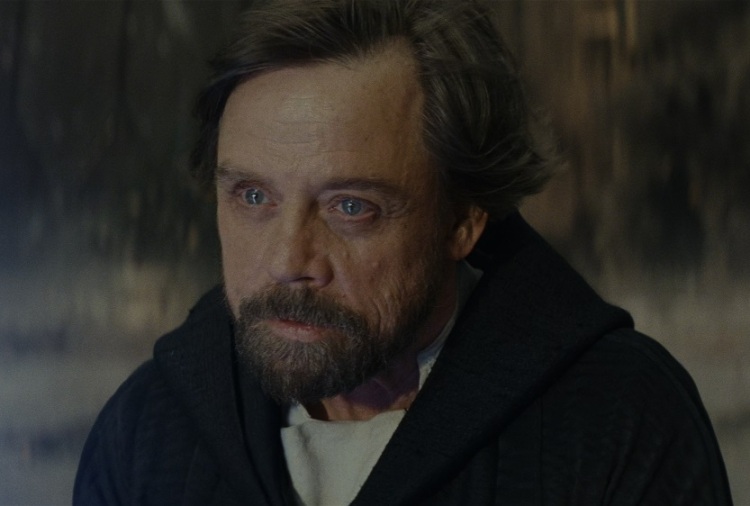
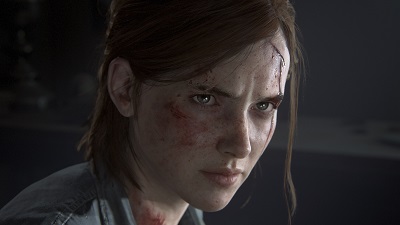
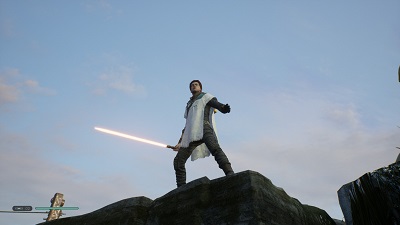
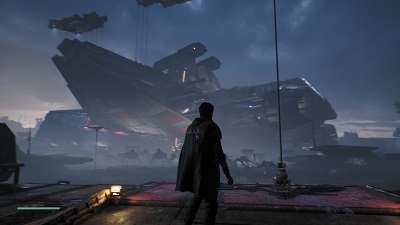

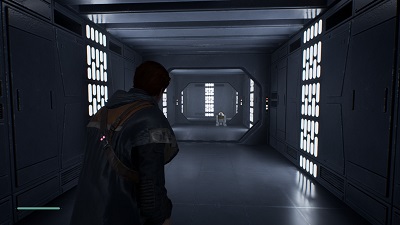
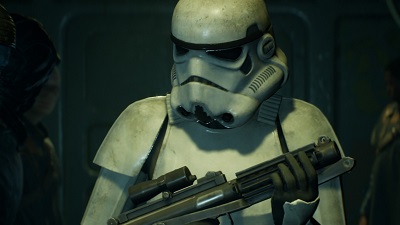
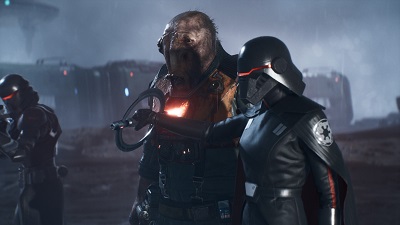
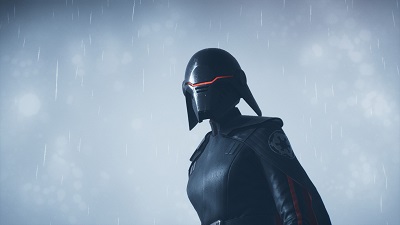
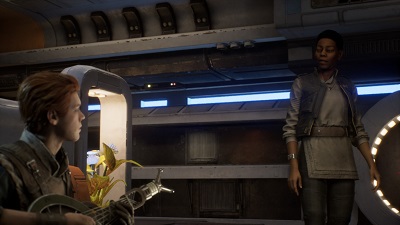
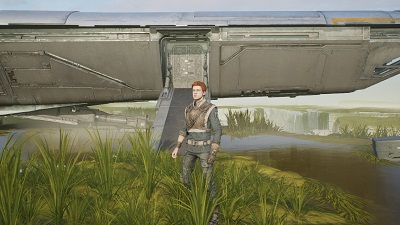
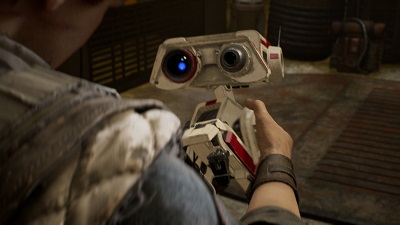
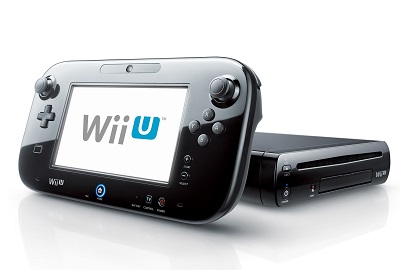

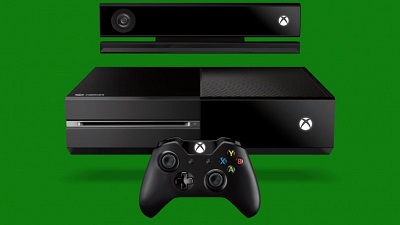
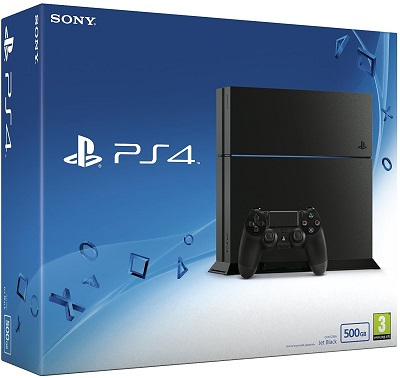
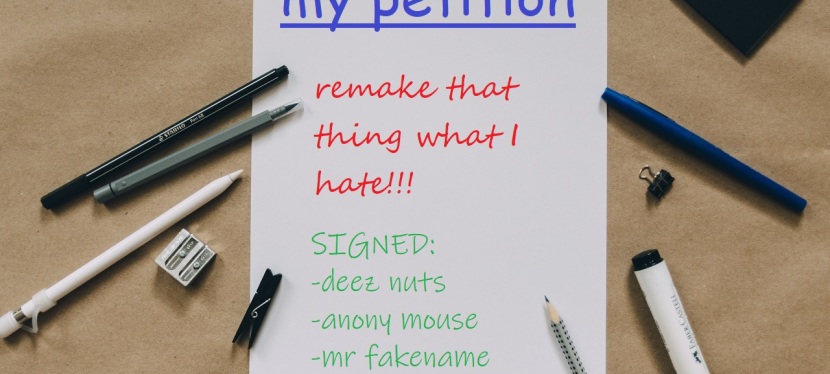
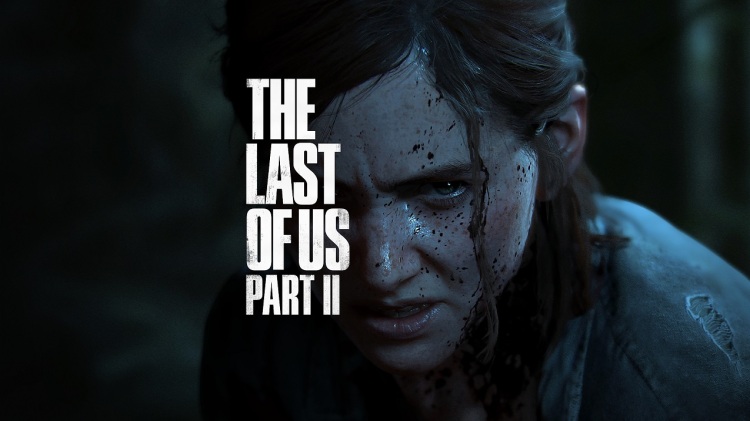
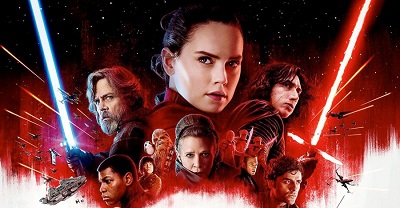
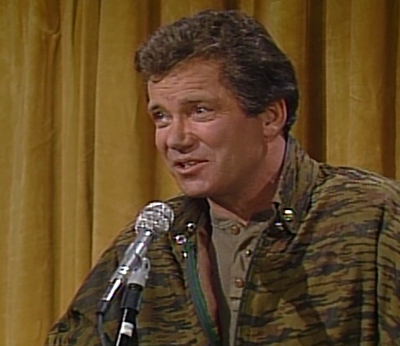
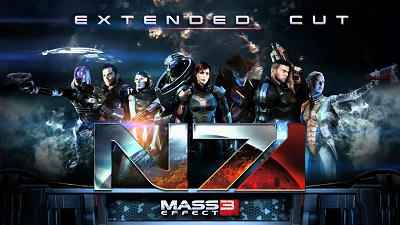
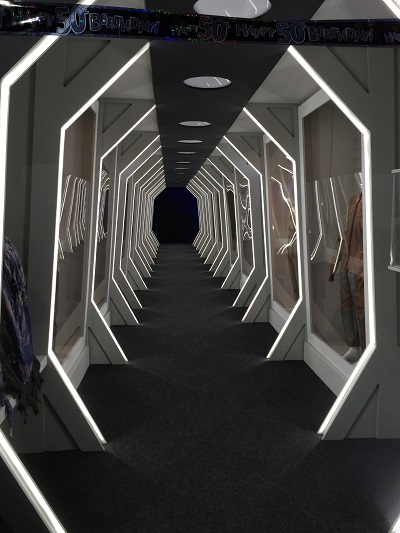
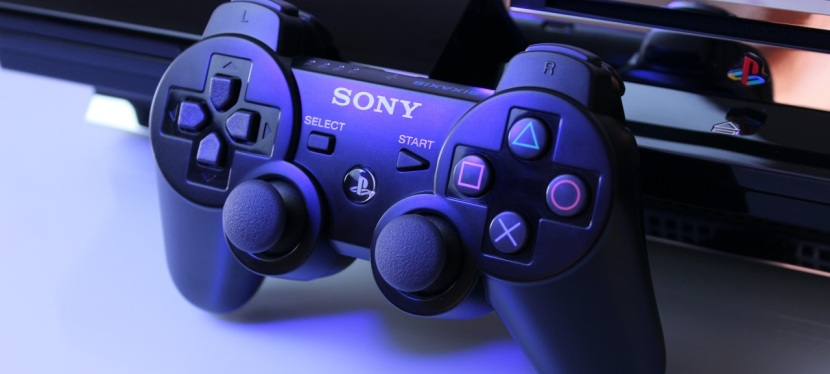
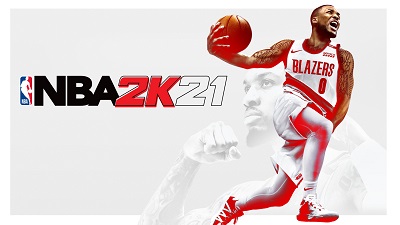
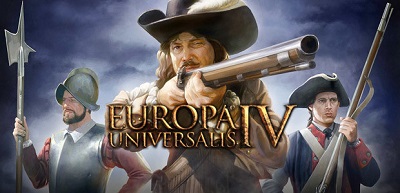

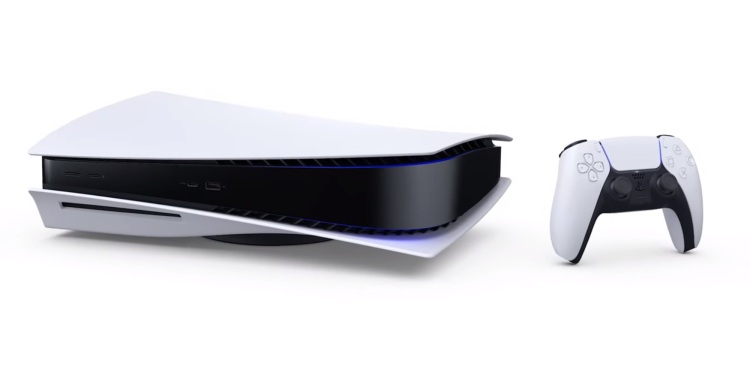
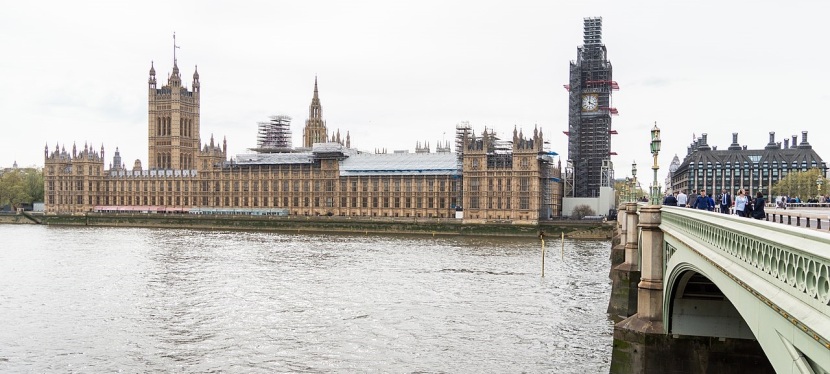


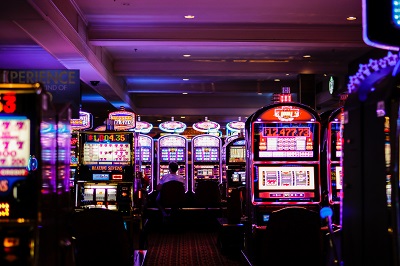


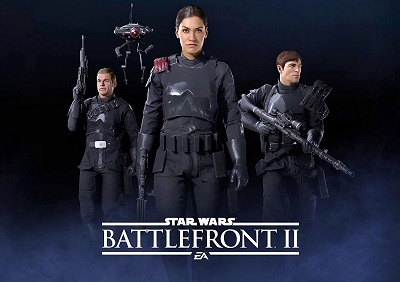
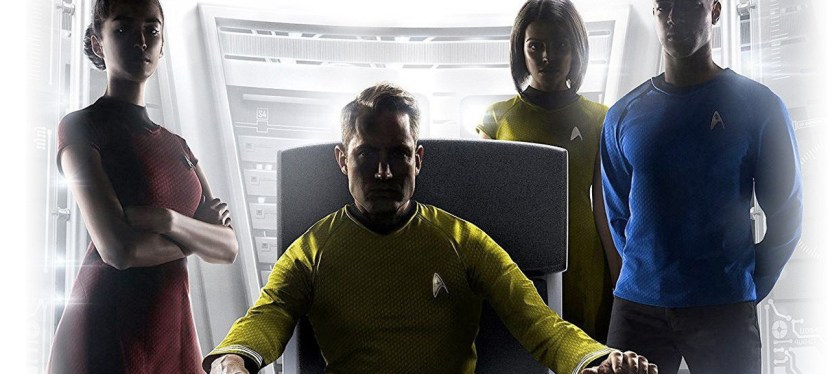
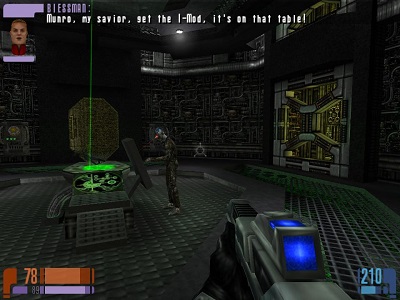
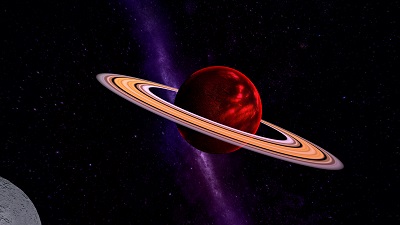
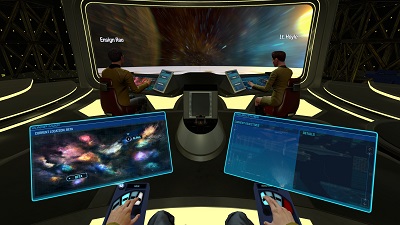
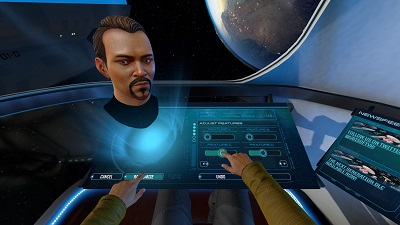
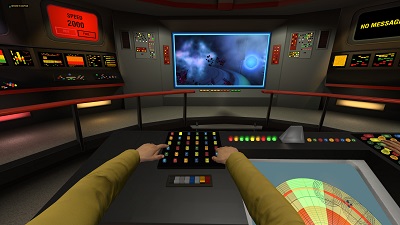
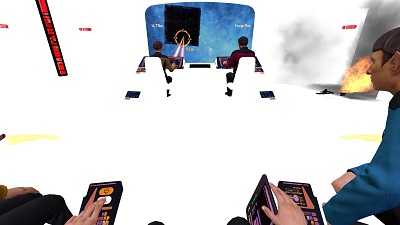








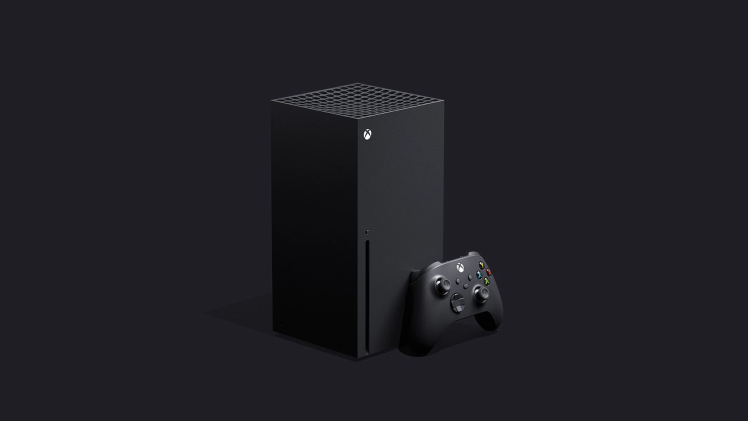

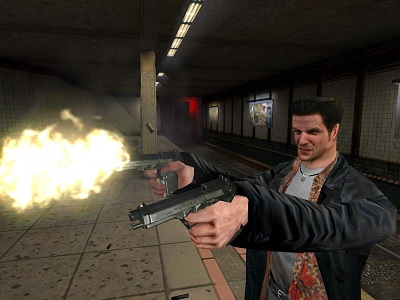


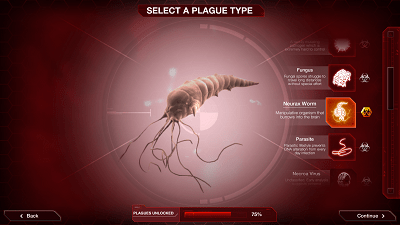

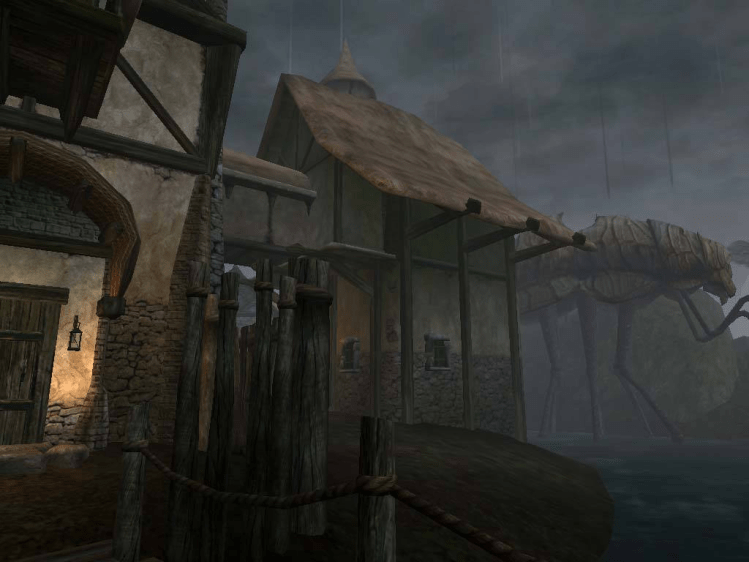
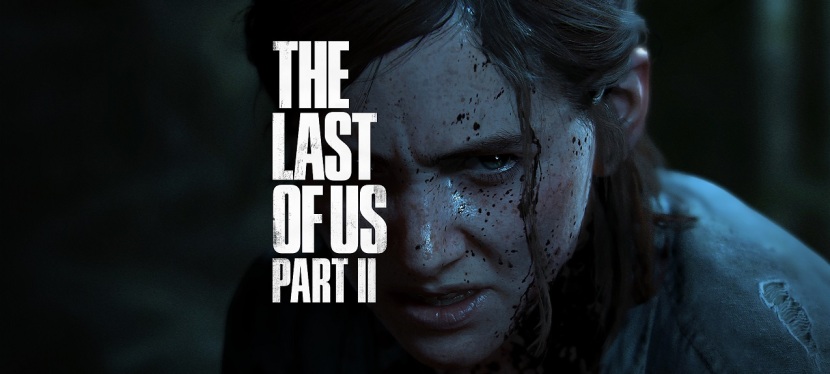


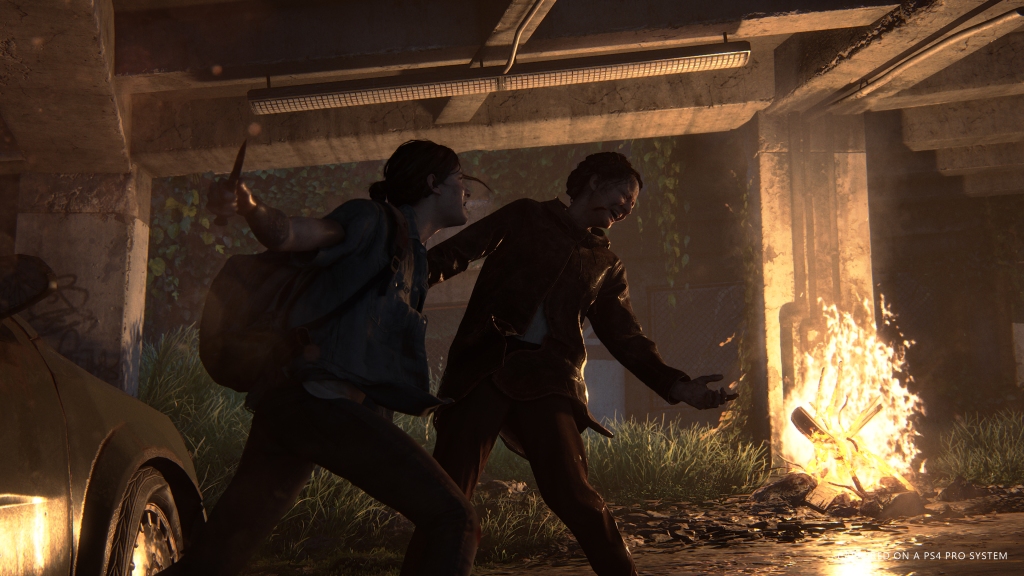


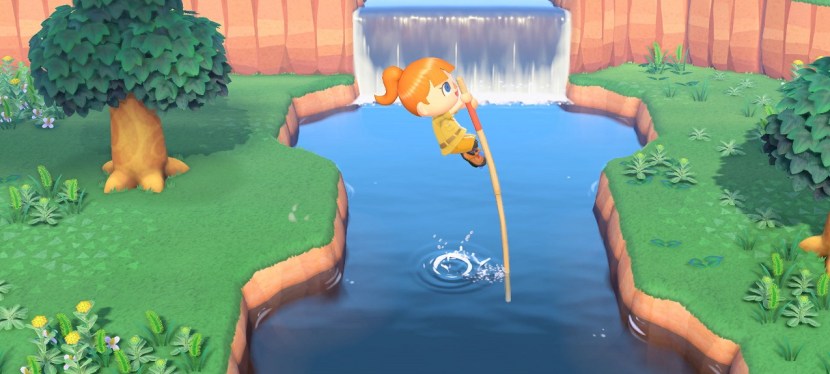
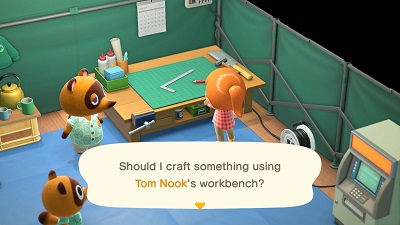
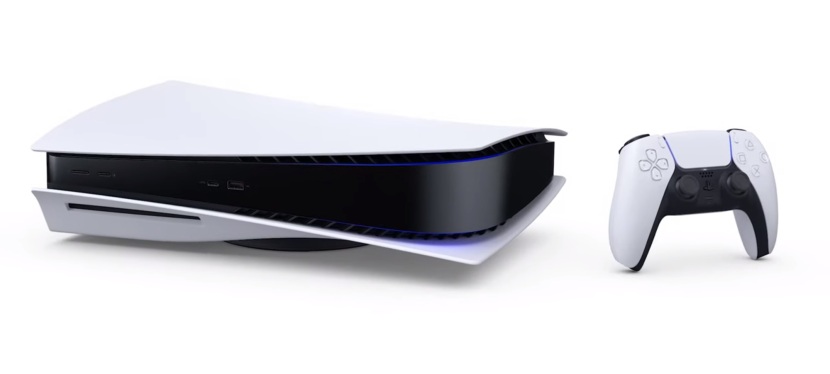
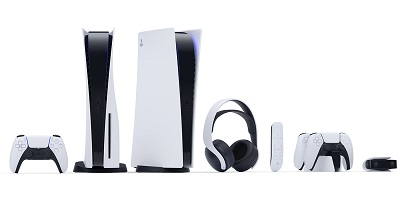

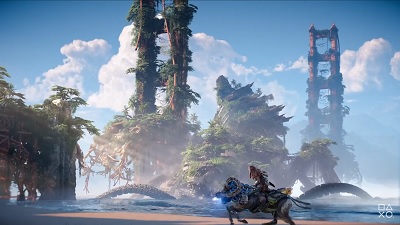
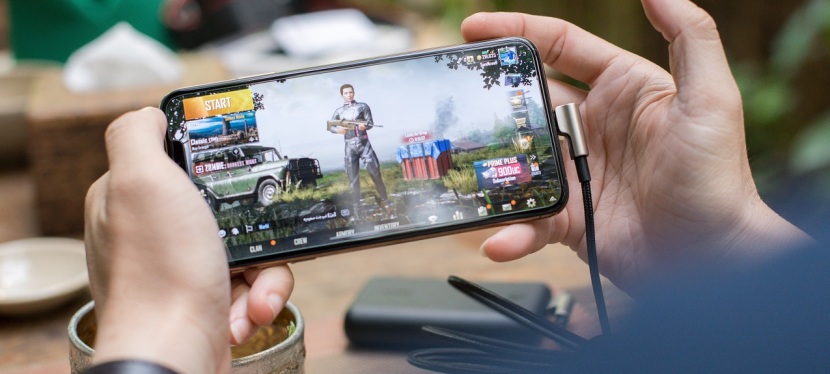
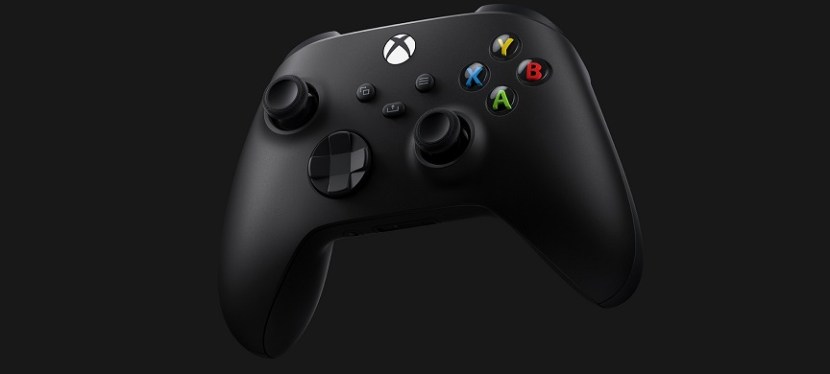

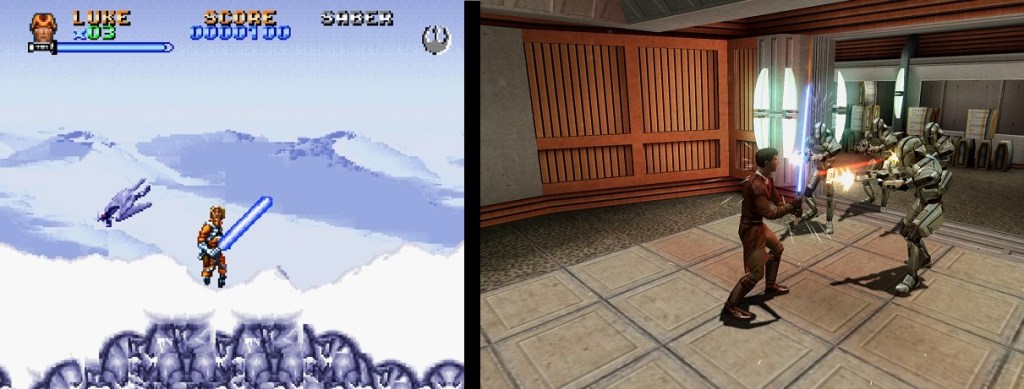

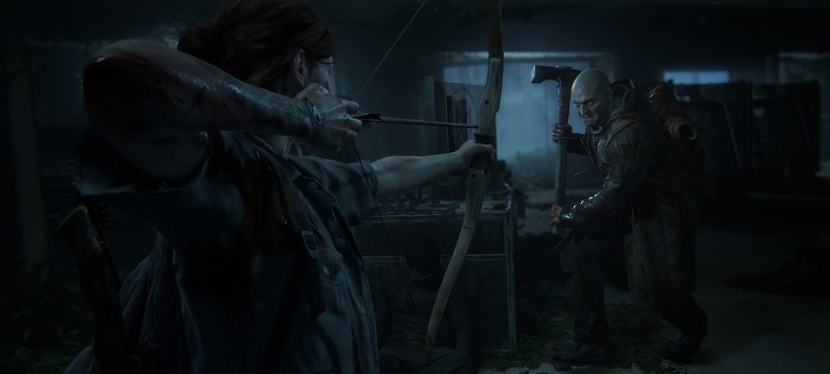

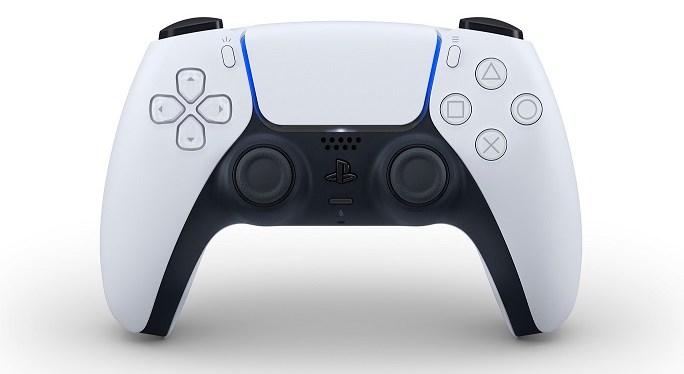
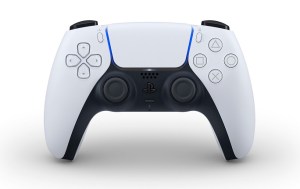
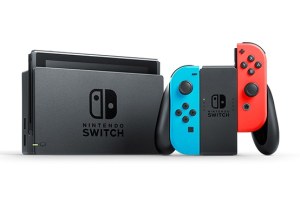
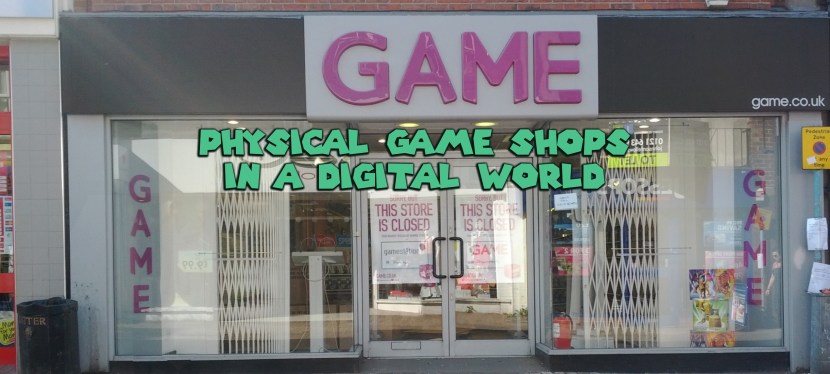
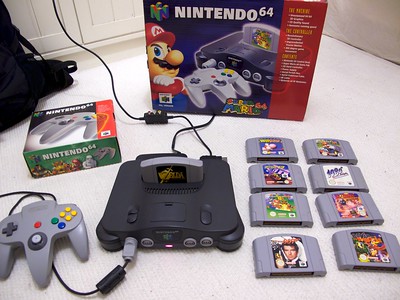
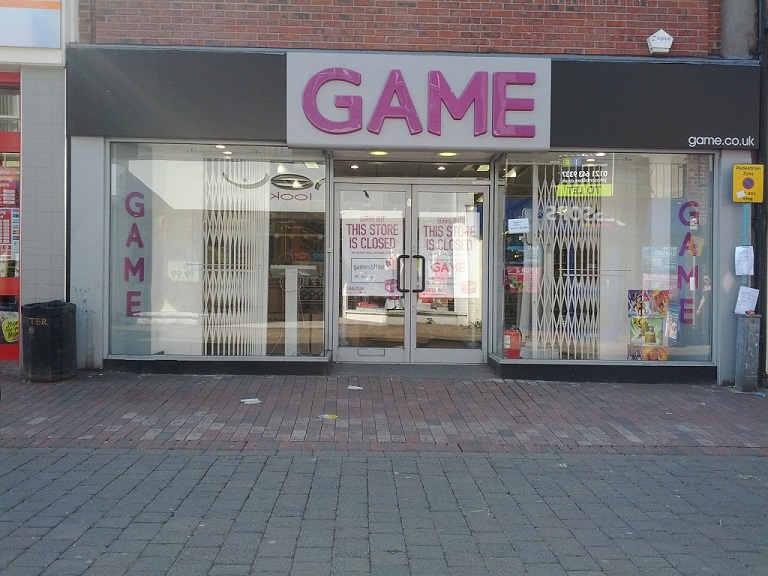

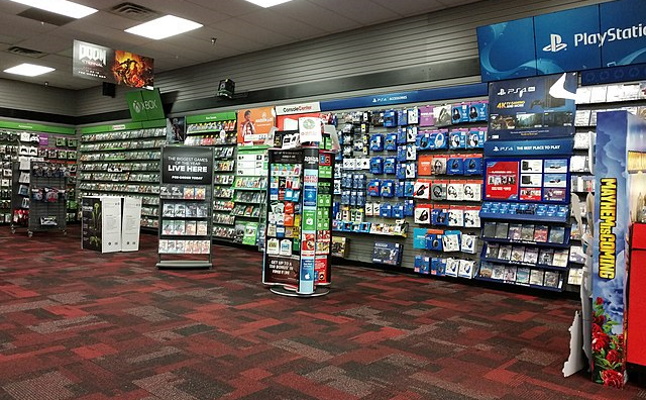
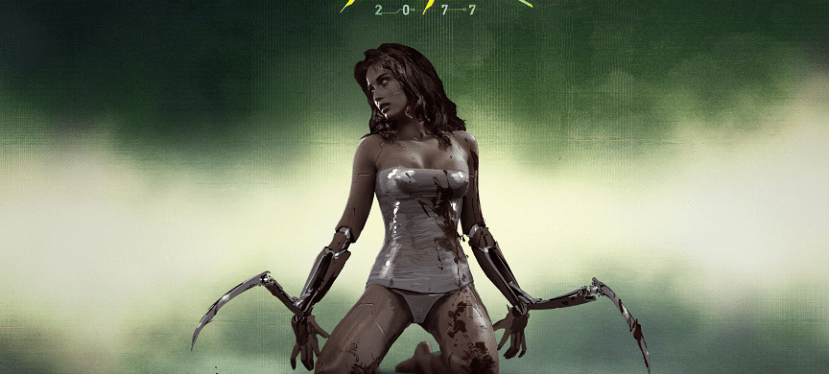

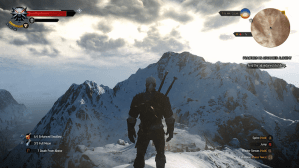

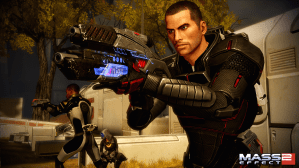

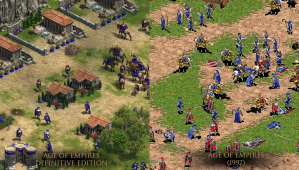
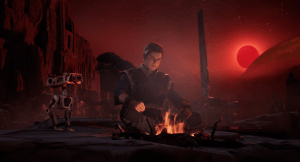
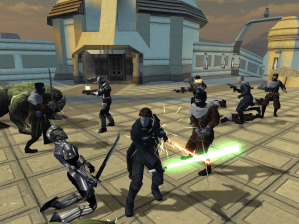

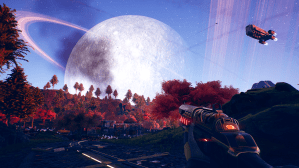
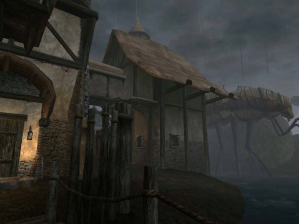

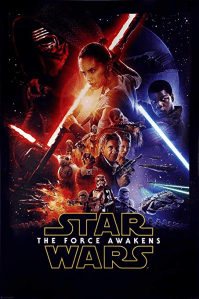
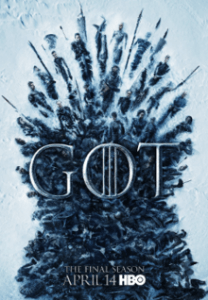
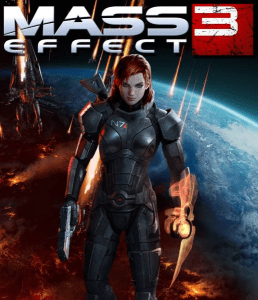
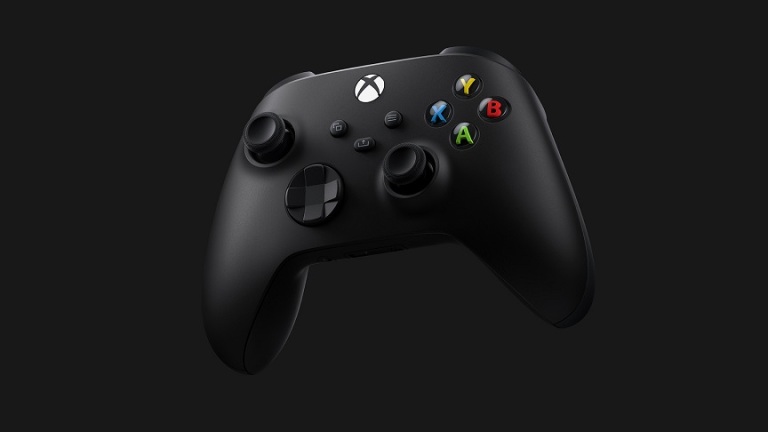
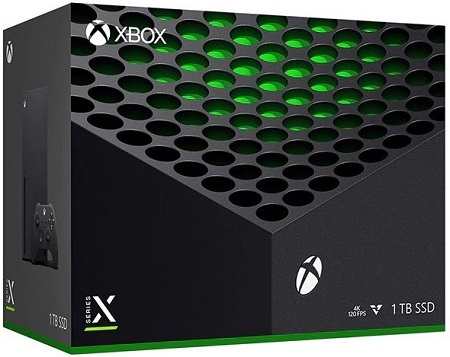


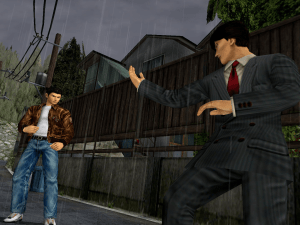
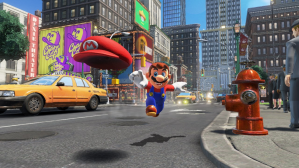
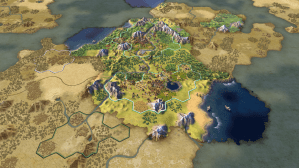


 Trekking with Dennis