The Rings of Power Season 2: Thoughts, Hopes, and Fears

A "spoiler alert" graphic.

Spoiler Warning: Spoilers are present for The Rings of Power Season 1 and the trailer for Season 2.

I was one of the folks back in 2022 who generally enjoyed The Lord of the Rings: The Rings of Power. I think I even named it my favourite series of the year – despite there being plenty of competition for that award! But I also noted some weaknesses, both narratively and on the production side of things, and at the end of the day, I felt there was still work to do for the series to justify its frankly insane billion-dollar price tag.

That’s where I start as I look ahead to The Rings of Power’s upcoming second season. But there are a few other considerations before we dive head-first into the meat of the recent teaser trailer and begin to wonder about storylines and set-piece battles! In this piece today, I want to consider The Rings of Power Season 2 not only as a standalone work, but also as one piece of an expanding “Tolkien-verse,” which will soon include an animated film, a new film based around Gollum, and another currently-untitled film.
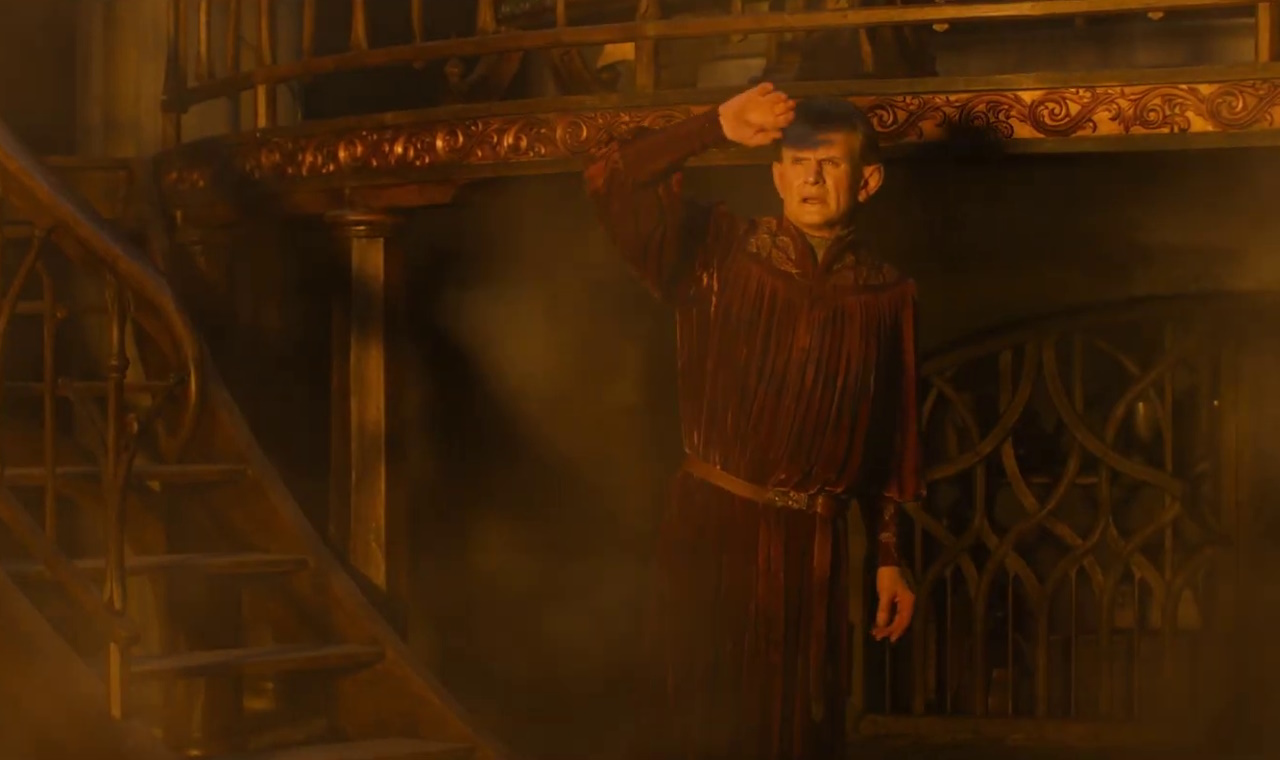
Still frame from The Rings of Power Season 2 trailer showing Celebrimbor.
What will The Rings of Power Season 2 look like?

The Rings of Power was not well-received in its first season, and Season 2 has the difficult tasks of winning back viewers who were left disappointed, convincing those who drifted away to give it a second chance, and also bringing on board new viewers who either missed out last time or weren’t even convinced to press play. None of that will be easy, and while behind-the-scenes changes could’ve provided The Rings of Power with a soft reboot of sorts… none of that was readily apparent to me in the recent teaser trailer. If viewers want simply “more of The Rings of Power,” then that’s good news. But if the show, as has been reported, lost two-thirds of its audience over the course of a truncated first season… I don’t see how “more of the same” will be of any help.

I’ve discussed this before – thanks to another Amazon Prime Video series, by coincidence – but the huge gap of two years in between such short seasons of television is something that The Rings of Power could’ve done without. I was a fan of Season 1, as previously stated, but even I’m having a hard time recalling the details of what happened last time, as well as the names of characters, where everyone ended up, and just the overall state of Middle-earth as the credits rolled. This isn’t a problem unique to Amazon by any means, as it’s something many streaming productions have struggled with. But it simply must be a priority to ensure that Season 3 is produced much more quickly. Were there problems beyond Amazon’s control this time? Sure: pandemic restrictions in New Zealand and a strike by writers and actors surely had parts to play. But waiting two full years for eight episodes of television is unacceptable – and it will cause actual harm to The Rings of Power as it tries to pick up where it left off.
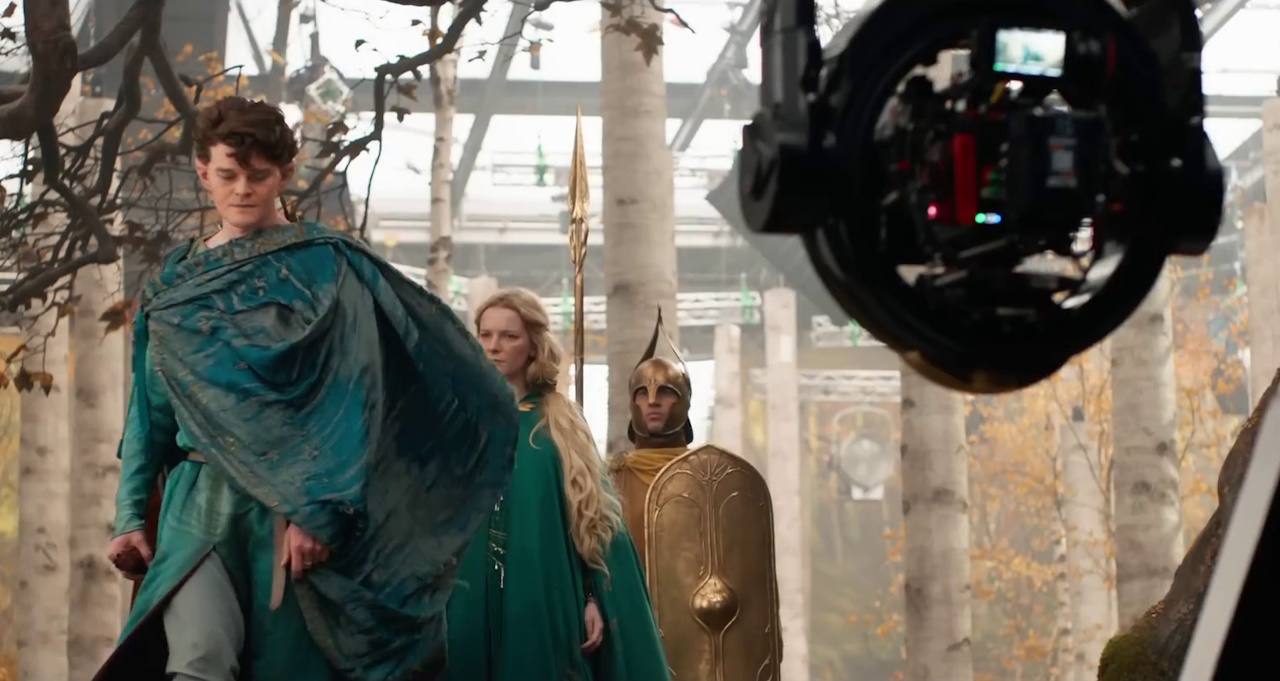
Still frame from The Rings of Power Season 2 first look video showing Elrond and Galadriel.
A glimpse behind-the-scenes…

Let’s talk briefly about where The Rings of Power might fit in an expanding streaming television marketplace. When the series was commissioned, Game of Thrones was approaching the end of its run, and Amazon may have expected – wrongly – that its series would have the high-budget high fantasy space all to itself, at least on the small screen. That hasn’t happened, with Netflix’s The Witcher, HBO’s spin-off House of the Dragon, and several others offering something similar. And now, following the passing of Christopher Tolkien – who had guarded his father’s estate quite vociferously – there are even other competing works being produced out of JRR Tolkien’s stories.

The Lord of the Rings: The War of the Rohirrim is an animated film that’s currently set to premiere later this year, and just last week we got the announcement from Warner Bros. of two new live-action films: one focusing on Gollum, to be directed by Andy Serkis, and another untitled film. Both will be produced by Peter Jackson, who directed The Lord of the Rings and The Hobbit trilogies.
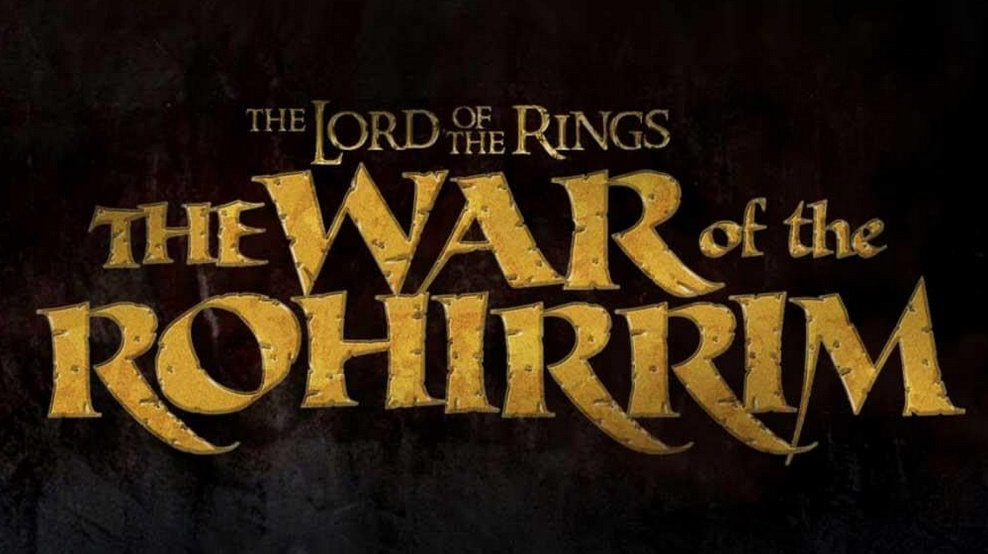
Promo graphic for The Lord of the Rings: The War of the Rohirrim (2024).
The Rings of Power isn’t the only production based on Tolkien’s Middle-earth that will premiere this year…

Not only does The Rings of Power not have the high fantasy space to itself, but it’s also in direct competition with other works set in Middle-earth thanks to these new films. If Season 3 is slow to enter production and targets a 2026 release date, it could come up against Serkis and Jackson’s Gollum film. While I’m somewhat sceptical of a film focusing so heavily on Gollum – particularly in light of the disappointment of the Gollum video game last year – bringing back Peter Jackson and Andy Serkis is sure to pique the curiosity of fans of The Lord of the Rings trilogy. It’s certainly got me interested!

None of this is to say that The Rings of Power can’t peacefully co-exist with all of these productions – in Middle-earth and beyond. There’s a market for fantasy on television, and most of the projects we’ve been talking about have their own weaknesses, too. But what it does do is muddy the waters, meaning it’s going to be tough for The Rings of Power to truly stand out.
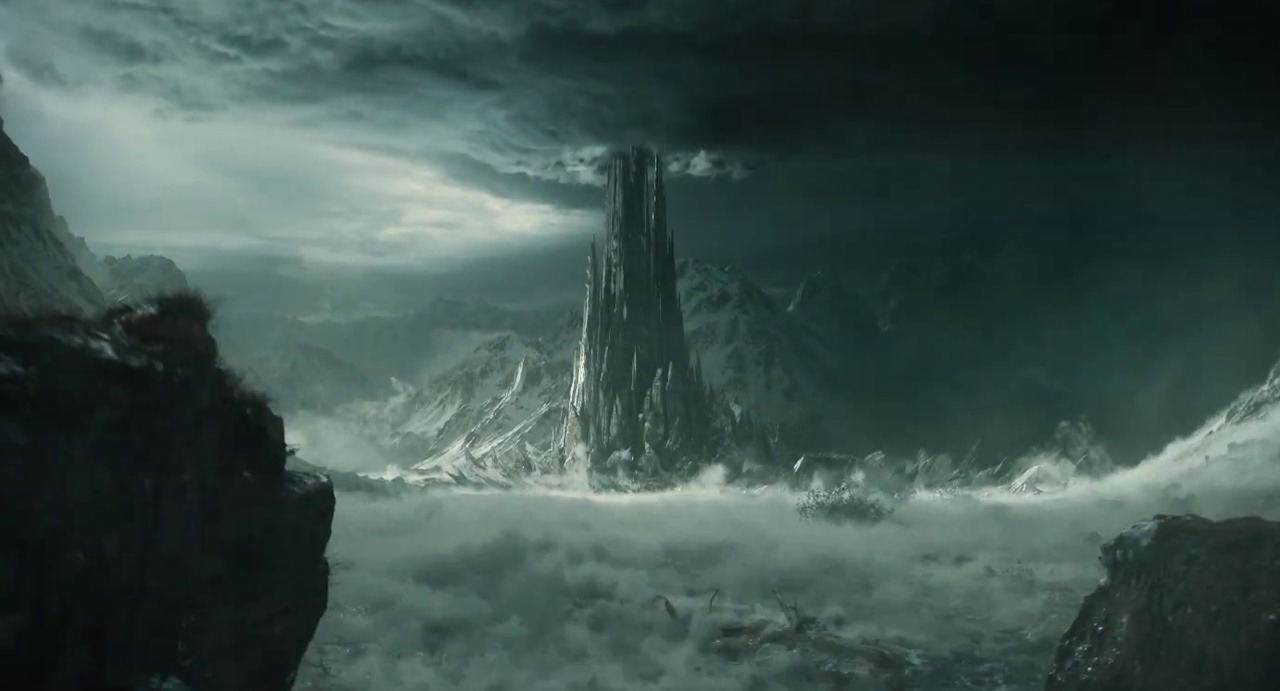
Still frame from The Rings of Power Season 2 trailer showing an imposing tower.
Is this going to be Sauron’s fortress?

When Amazon was negotiating with the Tolkien estate prior to The Rings of Power being commissioned, I can’t help but feel that the wrong decisions were taken. Although this may be controversial, in my view it would’ve been better to re-tell the story of The Lord of the Rings instead of trying to create a prequel from the book’s appendices. Re-making such a popular story less than twenty years after the films had been produced would have drawn a lot of criticism – but The Rings of Power caught that anyway, and at least if the series had been re-telling The Lord of the Rings, the story itself would’ve been built on firmer foundations.

That’s all for the birds now, of course, but as new Middle-earth films are being created, set in and around the time of The Lord of the Rings, I don’t think that the comparison they present is a favourable one for The Rings of Power. Ask 100 Lord of the Rings fans whether they’re more excited for the next season of this series or War of the Rohirrim and the Gollum film… and I think you and I both have a good idea about which way that survey would go!
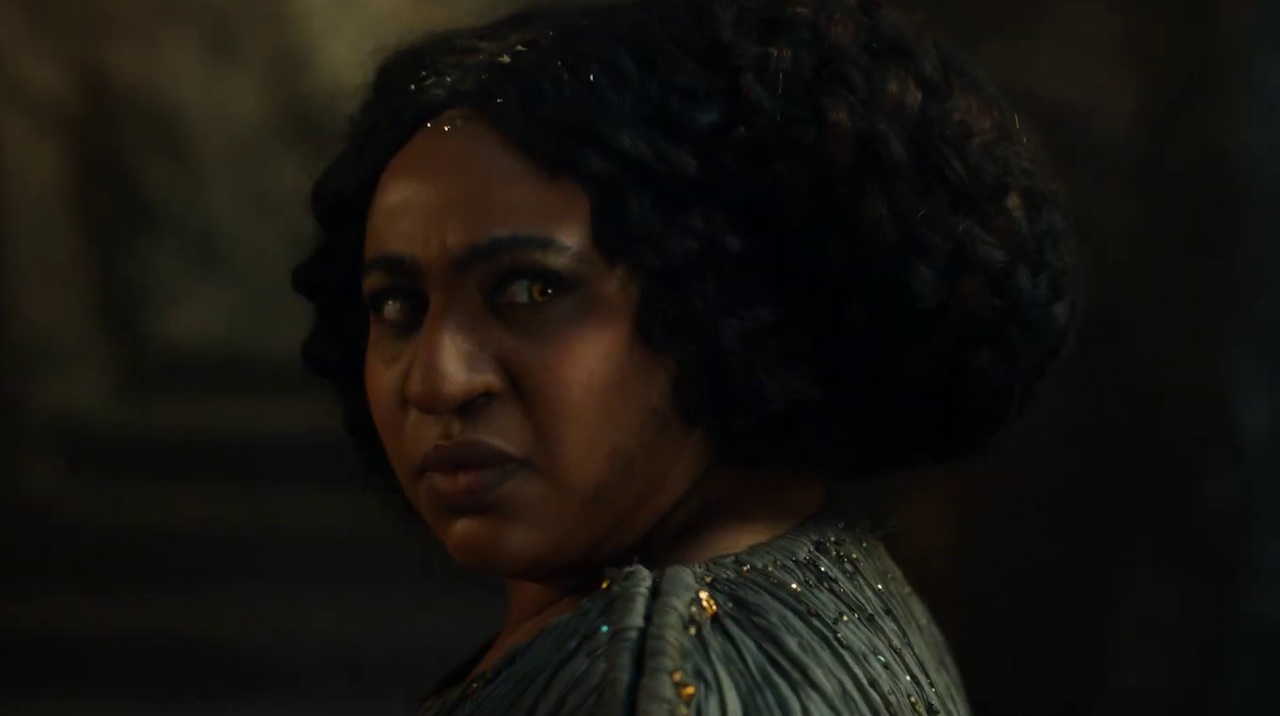
Still frame from The Rings of Power Season 2 trailer showing Princess Disa.
Princess Disa in the Season 2 trailer.

I’ve had a little time to sit with the trailer for The Rings of Power Season 2, and I’ve given it a couple of re-watches to see if I missed anything interesting. We’ll set aside concerns about the long wait, other fantasy shows, and Amazon’s management of the project and take a look at the trailer now. As always, I encourage you to watch the trailer for yourself if you can – it’s available on YouTube at time of writing, and I assume it’ll be somewhere on Amazon Prime Video, too. I’ll drop a link to the trailer at the bottom of this article.

My two biggest takeaways from the trailer are as follows: first, “more of the same.” In terms of costumes, characters, and visual effects, The Rings of Power Season 2 looks remarkably similar to Season 1 – or at least to my two-year-old recollections of Season 1! As discussed above, I think that in itself could be a serious hurdle for a series whose first season was not especially well-received. This trailer is going to be most folks’ first look at The Rings of Power in close to two years, and if that’s the main impression most people get… I’m not sure that bodes well for bringing back wayward viewers.
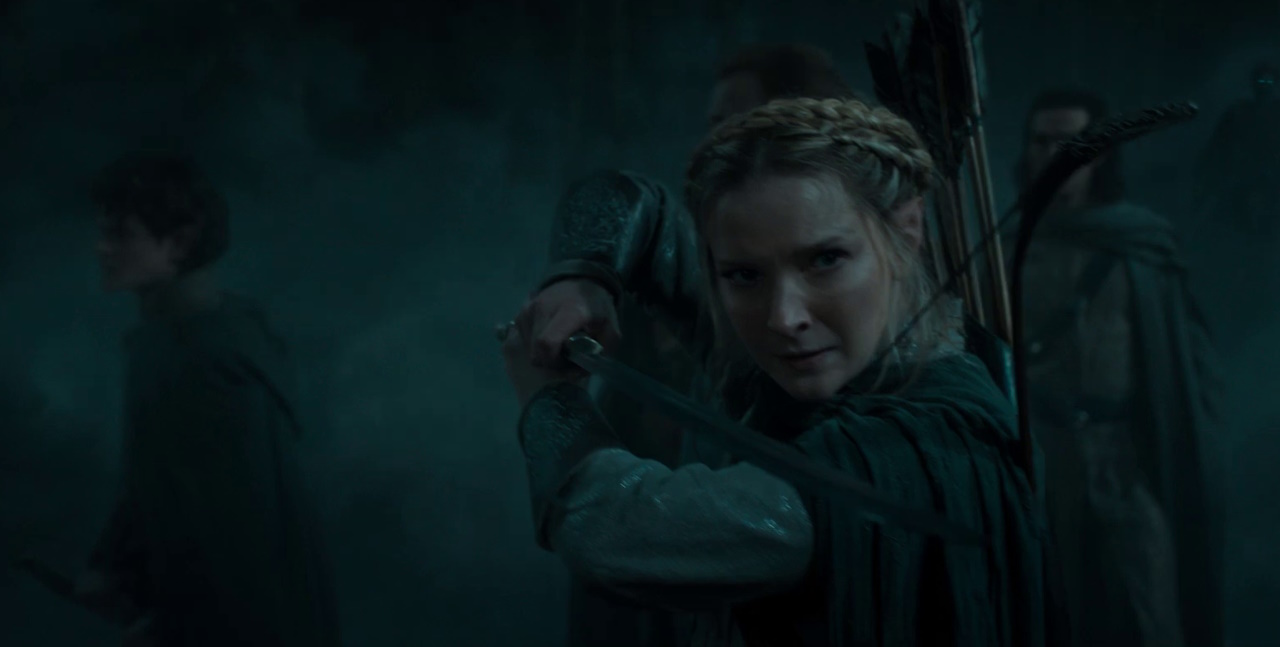
Still frame from The Rings of Power Season 2 trailer showing Galadriel with a group of elves.
Galadriel and the elves appear to be caught in an ambush.

Secondly, I was struck by the absence of several key characters from Season 1 – characters that we know to be returning in some capacity this time around. Their absences could be hiding spoilers, they could be held in reserve for a future trailer, or the post-production work on those scenes and sequences could be unfinished. But I also wonder whether the proto-Hobbit Harfoots and the humans of the Southlands may be taking on less of a prominent role this time around.

We did get a very brief glimpse of the Stranger – the wizard character whom many are assuming to be Gandalf – seemingly performing some kind of magical spell. I’ve had a theory for a while that the Stranger may, in fact, turn out to be another wizard like Saruman; this would be a different outcome to what many viewers seem to be expecting! But the Stranger was barely glimpsed in this trailer, which could also suggest that his role is going to be less significant this time around. I’m not always in favour of writers and artists making big changes to their work based on complaints, but the Harfoot-Stranger storyline was probably not the most well-received in Season 1, so scaling it back could make sense… if indeed that’s what’s happened.
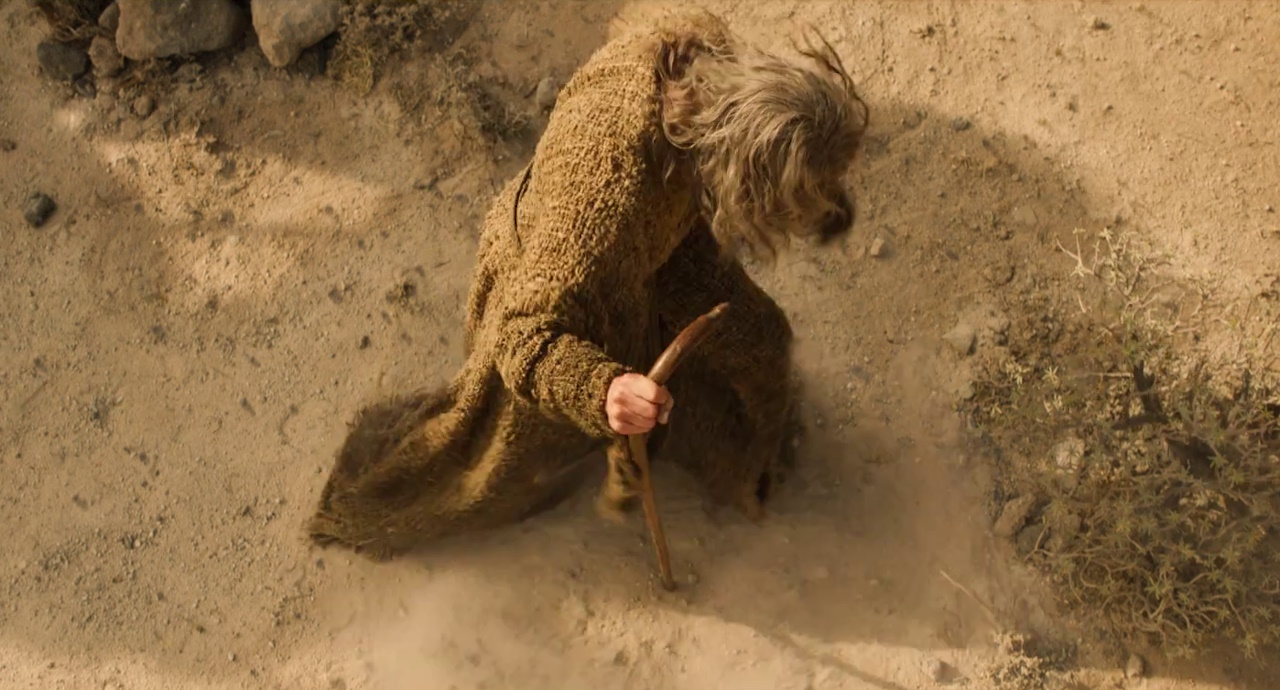
Still frame from The Rings of Power Season 2 trailer showing the Stranger.
I almost missed this clip in my first viewing of the trailer!

The Dwarves and Elves both seem to be aware of Sauron’s rise, and we saw several clips that could all be from the same battle – or that could be from different fights spread across multiple episodes. One clip appeared to show siege weapons being deployed against a city. Battles in Middle-earth have usually been fun to see on screen – though the titular Battle of the Five Armies in the final part of The Hobbit trilogy was, I would argue, over-stretched and a bit of a mess in terms of some of its CGI. But after Season 1 had ended without a full “battle episode,” it could be fun to have something like that this time around.

We saw most of the main characters, but one character pairing that was missing from the trailer was that of Elrond and the Dwarf prince Durin. These two characters were great together in Season 1, and their dynamic did a lot to bring some of the otherwise heavy stories down to earth. While it’ll be great to see different character groupings in Season 2, and to give the likes of Elrond and Galadriel more screen time together, I hope that doesn’t come at the expense of the wonderful “bromance” between Elrond and Durin that was built up in Season 1.
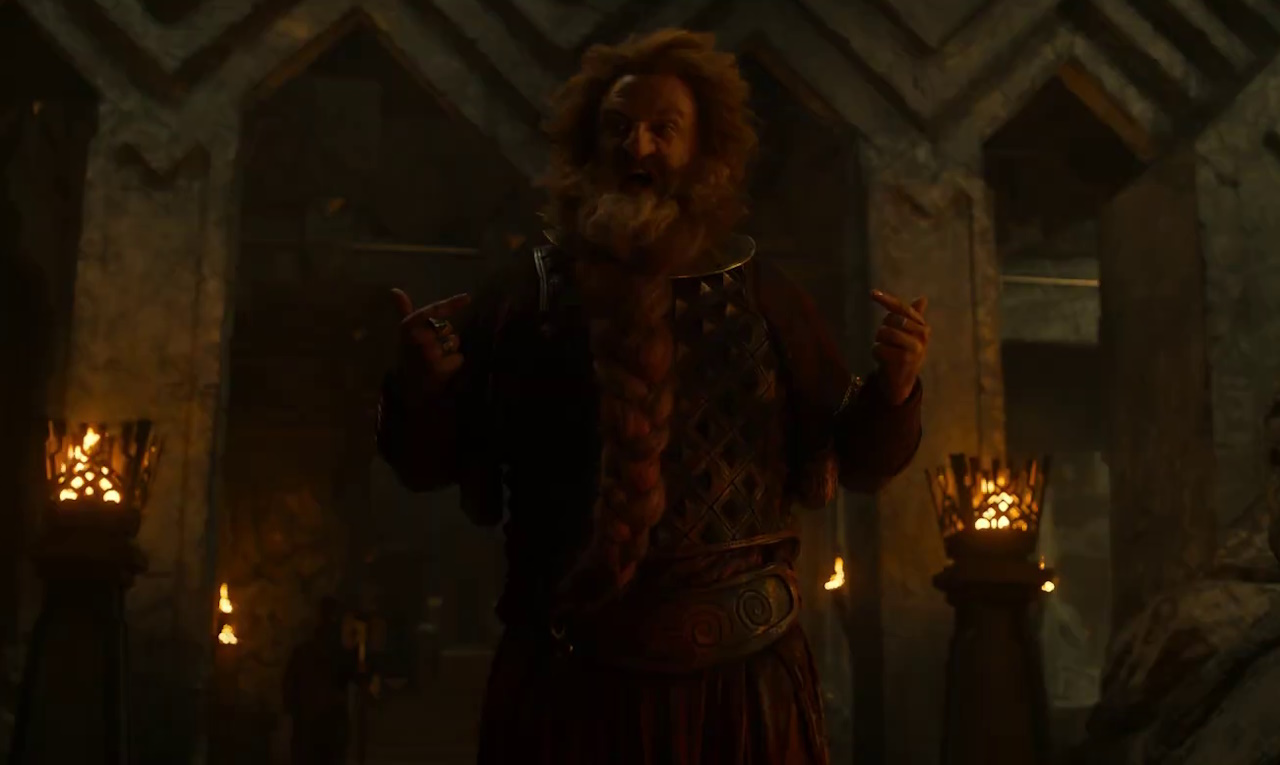
Still frame from The Rings of Power Season 2 trailer showing Durin.
The relationship between Durin and Elrond was one of the best parts of Season 1.

Season 1 hinted at the fate of Numenor and its people – destruction by a massive tidal wave/flood. Whether that will actually happen in Season 2 wasn’t clear, but with the action potentially returning to the island after Numenor’s excursion to the mainland, I think it has to be a possibility! I didn’t see a lot of Numenor in the trailer, but there did seem to be one interesting clip involving a character I didn’t recognise disembarking from a large Eagle. Does that mean that Tolkien’s somewhat notorious Eagles will be in play in Season 2? That could certainly shake things up!

I can’t help but wonder whether the scene showing what we assume to be Sauron meeting the ring-maker Celebrimbor is actually a flashback. In Tolkien’s original works – which The Rings of Power has diverged from already, I should note – it was Sauron who taught the Elves how to make magical rings, so showing this as a flashback could work. I wouldn’t say I’m 100% convinced of that, but it’s certainly an interesting possibility, and a way to bring the series more in line with The Silmarillion and Tolkien’s own stories.
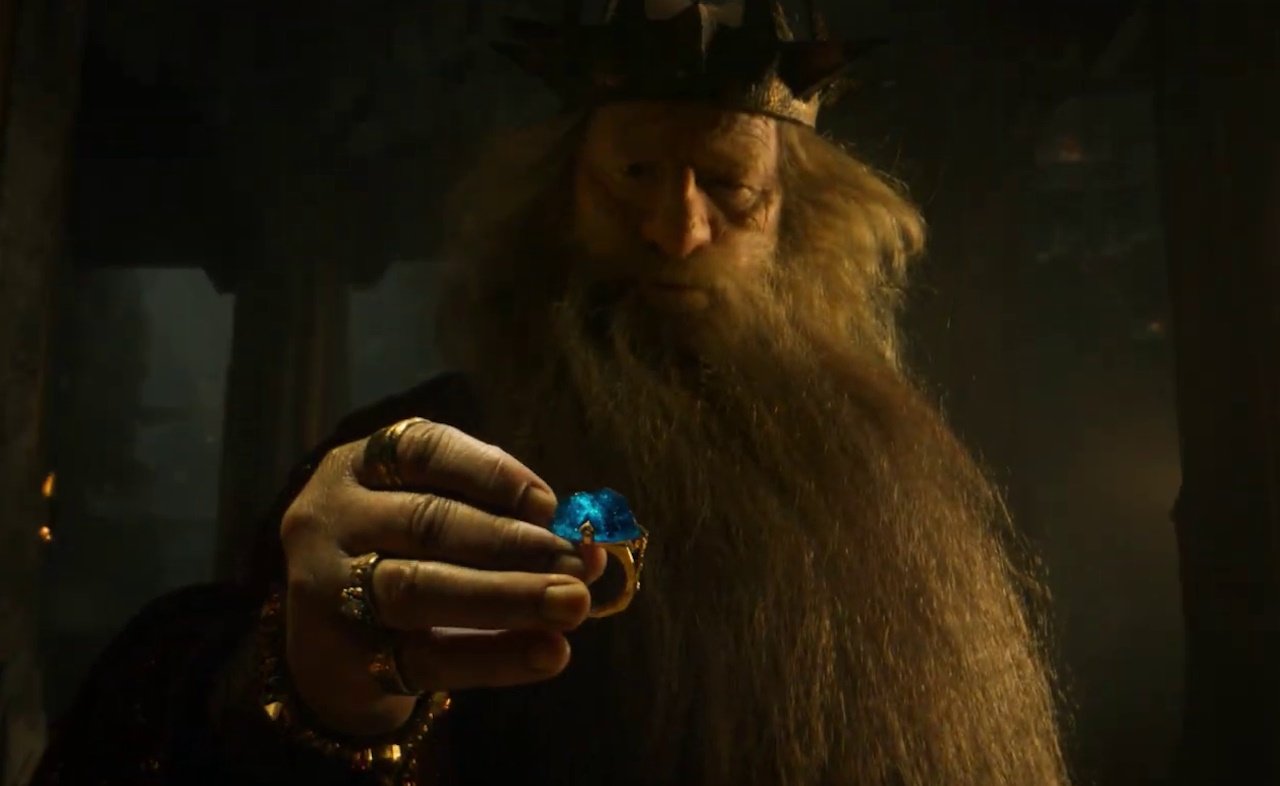
Still frame from The Rings of Power Season 2 trailer showing King Durin holding a ring.
“Seven for the Dwarf-Lords in their halls of stone…”

There were two creatures/monsters that I didn’t recognise: one that seemed to be comprised of wriggling worms or tentacles and another that resides under the sea. Both of these could be great fun as threats/antagonists, and I look forward to seeing what the series will do with them. In terms of visuals, both looked great – and while they’re CGI creations, they were well-integrated with the sets and characters around them. When looking at video that has been compressed for YouTube, it isn’t always easy to tell how good or bad a CGI moment might look – but these seem to be on the right track, at least.

Although we couldn’t see what caused it, some disaster appears to befall the Dwarves at their underground home, with damage raining down on a Dwarven bridge. The theme of this season could be the tearing down of the existing power structures in Middle-earth, with our main characters needing to leap into action to save what they can and prepare to rebuild what’s going to be lost.

Still frame from The Rings of Power Season 2 trailer showing an army on horseback.
Charge!

The soundtrack to the trailer seemed to be solid. Music in Season 1 was generally pretty good – and the song This Wandering Day in particular was exceptional. With composer Bear McCreary returning to compose the soundtrack this time, I think we can expect more decent music. Visually, as noted I didn’t really feel that any of the CGI/VFX were sub-par. Nothing really leapt out at me as being visually stunning or groundbreaking – but again, a short trailer made for YouTube won’t necessarily give you that!

So that’s my look ahead to The Rings of Power Season 2, which will be on our screens at the end of August. Although it feels like spring has only just sprung, August and September will be upon us before we know it – so there really isn’t that long to wait! I’m debating whether or not to re-watch Season 1 before Season 2 gets here just so I’m caught up and ready to go. When the season arrives, I’ll do my best to share my thoughts and opinions here on the website, so I hope you’ll join me for that.

Despite some issues, I’ll end by saying that I’m generally looking forward to the return of The Rings of Power, and I’m crossing my fingers that the series can build upon the genuine successes of its first season. There should be opportunities to learn from what worked and what didn’t last time around, and perhaps to hone and refine things a little. That’s not really the impression I got from the way the trailer was cut… but here’s hoping!


You can watch The Rings of Power Season 2 trailer on YouTube by clicking or tapping here.

The Lord of the Rings: The Rings of Power Season 2 will premiere on the 29th of August 2024 on Amazon Prime Video. Season 1 is available to stream now and is also available on DVD. The Lord of the Rings: The Rings of Power is the copyright of Amazon Prime Video/Amazon Studios and New Line Cinema. This article contains the thoughts and opinions of one person only and is not intended to cause any offence.

The Rings of Power: first impressions

Spoiler Warning: There are spoilers ahead for The Lord of the Rings: The Rings of Power. Spoilers are also present for The Lord of the Rings, The Hobbit, The Silmarillion, and other J.R.R. Tolkien works.

The Rings of Power – or to give it its full, clumsy title: The Lord of the Rings: The Rings of Power – got underway yesterday on Amazon Prime Video. As one of the shows I’d been most interested in all year, I tuned in almost as soon as the opening pair of episodes were available, curious to see what Amazon’s sky-high budget and years of planning could bring to the high fantasy genre.

For me, and doubtless for many other viewers as well, The Rings of Power simply cannot escape three massive sets of expectations. Firstly, the show has a legacy to live up to in the form of The Lord of the Rings film trilogy. Secondly, as the first-ever “billion dollar” television show, The Rings of Power must demonstrate an ability to go above and beyond pretty much anything else present on the small screen. And finally, there are inevitable comparisons with the show that set the bar for multi-season serialised high fantasy television shows: Game of Thrones. I think it isn’t unfair to say that there hasn’t been a television project in a generation that finds itself under so much pressure to deliver.

Galadriel and Gil-Galad on a promotional poster for The Rings of Power.

As we discussed back in February when I previewed the series, some viewers have taken to pre-judging The Rings of Power. Partly there seems to be a bloody-mindedness in hoping that Amazon would fail, and there were definitely racially-motivated criticisms of some of the casting choices – something that’s been incredibly disappointing to see. But there are also some genuine concerns: could the series possibly live up to the legacies of one of the most successful film trilogies and one of the most influential television shows of the past twenty years? How would it fit in with the “established lore” of Tolkien’s Middle-earth? And more fundamentally, is there even a story here that’s worth telling?

Some folks seem to have arrived at their answers to these questions already, deciding that The Rings of Power is going to be irredeemably awful and taking to social media at every opportunity to denounce it to anyone who’d listen. In the past couple of days the show has even been subjected to a degree of review-bombing. But speaking for myself, I wanted to see The Rings of Power before rushing to judgement. While two episodes of an eight-episode season aren’t enough to paint a full picture, I feel like I can at least share my first impressions of the series with you today.

The Rings of Power has finally arrived.

I liked The Rings of Power. The acting performances were solid, the visual effects were competent, its aesthetic style harkened back to The Lord of the Rings films, and when the story got going it held my attention well enough that two episodes passed by in what felt like a matter of moments. As the credits rolled on the second episode, Adrift, I felt myself curiously interested to see what happens next.

The two-part premiere did a decent job at introducing us to what seems to be the primary characters whose stories The Rings of Power intends to follow. One of my criticisms of Game of Thrones back in 2011 was actually how dense its first few episodes felt; had I not binge-watched Season 1 I may actually have stopped watching the series, as keeping track of so many characters and storylines was pretty confusing. In that sense, The Rings of Power did a good job not to overwhelm viewers with too much all at once.

Lenny Henry as Sadoc, one of the Harfoots.

So I felt that The Rings of Power got off to a good start – but perhaps not a spectacular one. After two episodes, the show feels like it’s trying to play it safe; I didn’t note much by way of risk-taking that could take a decent, competent series and elevate it to the kind of phenomenon that The Lord of the Rings films or Game of Thrones became. By sticking relatively close to the visual style established by The Lord of the Rings, for example, The Rings of Power has tried to both find a ready-made identity and pluck at the nostalgic strings that its producers hope will bring in viewers in droves. But by re-using this aesthetic style, The Rings of Power has surrendered its opportunity to construct its own identity.

It’s also worth talking about the story framework that we saw in the premiere. The trope of a hero who finds evidence of an impending threat or disaster, only to be ignored by their superiors, may have been brand-new when Tolkien was writing in the first half of the twentieth century, but it doesn’t exactly make for a groundbreaking or unique story in 2022. Yet this is the outline of both Galadriel’s story with the Elves and, to an extent, Bronwyn’s story in the Southlands. A common trope like this doesn’t necessarily make for the strongest introduction to a new story.

Galadriel found herself opposed by Elrond and other Elves, despite presenting them with evidence of Sauron’s survival.

Though The Rings of Power did a solid job at introducing us to its main characters, there were definitely moments where I felt some background knowledge of Tolkien’s works was something that the series expected from its audience. These mainly concerned elements of backstory – who the villainous Morgoth is, what a Silmaril is, the relationship between factions like the Elves, Men, and Dwarves, and how Sauron fits into the story of a conflict between the peoples of Middle-earth and Morgoth. A very brief sequence at the beginning glossed over some of these points, but not in sufficient depth that a newcomer to the world of Middle-earth would find them easily understandable.

In terms of laying out the world of The Rings of Power, though, I felt that the series did a good job. After two episodes I feel that I understand who lives where, where locations are in relation to one another, and the layout of the world and the primary locations we’ve visited so far. The relatively simple construction of a map, shown on screen for no more than a few seconds at a time, actually ended up being a very effective tool for communicating these things, and I felt it worked well. The seamless transition from the map to the sea at one point was also a neat effect.

The inclusion of a map was a simple but effective visual tool.

Sticking with visual effects, there weren’t many in the first two episodes that I felt were sub-par. There were a few moments where the blending of real actors and sets with CGI backgrounds wasn’t entirely perfect, but those issues can be noticeable even in big-budget productions, and none of those handful of moments really pulled me out of the immersion. I’d particularly call attention to the “falling star” seen in A Shadow of the Past as one of the better CGI creations; it really managed to feel like a meteor of some kind was hurtling toward Middle-earth.

If I were to nitpick, I’d say that perhaps the physical fake snow used in the first part of A Shadow of the Past wasn’t particularly impressive, managing to have the same flat, non-reflective look of similar set dressings that have been in use for decades. The CGI snow used elsewhere in these sequences looked decent, but when Galadriel and her team were seen up close, there was a noticeable difference in texture. Otherwise, physical props and costumes used throughout the first pair of episodes were solid.

A closer look at the fake snow used in the season premiere.

One of the most interesting props is the darkly enchanted sword hilt that Theo uncovered. It’s fascinating from a story point of view, of course, and may well belong to Sauron or one of his most-important minions. But it manages to look fantastic on screen, too – a dark, intimidating design that seems to harken back to the image of Sauron in full armour from The Lord of the Rings films.

Speaking of harkening back to The Lord of the Rings: surely I’m not the only one who noticed that Halbrand actor Charlie Vickers was doing an almost over-the-top impersonation of Viggo Mortensen’s Aragorn as he made his first appearance! The way his hair was styled, the way he held himself, and even the way he opened his mouth all felt like they had been carefully choreographed to mimic that iconic portrayal. Halbrand is not a canonical character from Tolkien’s works, and the aforementioned mimicry could be a deliberate red herring, but part of me thinks we’re going to learn that this character has some kind of connection to Aragorn in the episodes ahead!

Halbrand channelling his inner Aragorn…

Some of the battle and post-battle scenes early in the season premiere carried a very strong First World War influence, and I have to assume that was done deliberately. Tolkien was himself a veteran of that conflict, and its influence can be felt in the massive scale of the wars and battles that he created for The Lord of the Rings in particular. This level of destruction, with battlefields reduced to mud, trees stripped of all of their branches, and huge piles of bodies, also succeeded at communicating the scale of the Elves’ conflict against Morgoth and Sauron in a relatively short sequence that didn’t have time to go into a lot of detail, so as an effect it worked well.

Even a century on from the First World War, the way its battlefields looked is still seared into the minds of many people here in the west, and The Rings of Power took advantage of this to use a familiar visual cue to communicate, in a short sequence, just how destructive and devastating this war was as it set the stage for the story to follow.

Galadriel stands on a battlefield that feels reminiscent of the First World War.

A good television soundtrack is unobtrusive. It subtly tells audiences what emotional state certain characters are in, whether danger is just around the corner, or fills an otherwise-awkward gap during silent moments. While a theme tune can become iconic, the soundtrack of episodes themselves should be a relatively toned-down affair. The Rings of Power didn’t get this right, in my view, bringing an incredibly dominating soundtrack that, at several critically-important moments, seemed to hit levels rarely seen outside of soap operas.

The old-fashioned, heavy soundtrack came booming in during several crucial scenes, drawing attention away from the characters and the action instead of backing it up. This is obviously the opposite of what a good soundtrack should be doing, and there are criticisms of both the composition and the sound mixing in both of the first two episodes that I really shouldn’t be needing to make. When we’re at this level, these are some of the basic competencies that a television production should be pulling off flawlessly without even thinking.

One of the moments between Bronwyn and Arondir had music that was, for me at least, too heavy and intrusive.

I’m not a Tolkien super-fan, so I can’t be sure whether some of the dialogue in The Rings of Power has been lifted directly from works like The Silmarillion. But what I would say is that much of the language used in the first two episodes, particularly in scenes featuring the Elves, was very flowery and old-fashioned, as if it had been written decades ago. That was almost certainly intentional, perhaps to tie in with Tolkien’s own writing style or perhaps to give The Rings of Power a “classiness” or even just to distinguish it from other modern shows. However, the effectiveness of this kind of flowery, old-fashioned language is very much a subjective thing, and how well it will work isn’t exactly clear at this early stage.

Some of the lines of dialogue in the first two episodes felt scripted and clumsy – partly as a result of this choice of language – and while I didn’t feel knocked out of my immersion once I got used to it, it was definitely something that took a little getting used to. In any work of fantasy, actors have to work hard to make strange and unusual words and phrases seem normal, but that really isn’t the issue in this case. I can easily accept conversations about warp cores in Star Trek or dragons in Game of Thrones, but here in The Rings of Power, choices as far back as the scriptwriting stage made otherwise innocuous or basic conversations feel almost stilted, as if the production itself, despite its modern visual style and impressive CGI work, was from a much earlier era. For some fans, that’ll make The Rings of Power feel even better. For others… I think it has the potential to detract from the story.

There were several clunky or unnatural-sounding lines of dialogue in the opening two episodes.

As I said, though, once my ears had acclimatised to this way of speaking I didn’t feel it was horribly awkward – but it’s worth noting that, at least for me, it was something that took some getting used to before I could fully immerse myself in Middle-earth. Perhaps I should’ve re-watched The Lord of the Rings before watching The Rings of Power, because now I can’t really remember whether this issue of flowery, old-fashioned language was present to the same degree. I don’t remember it ever being a problem, and I regard that trilogy as one of the best ever brought to screen. But it would be interesting to take a look and compare!

So let’s talk story. Although I find myself curiously interested to see where The Rings of Power goes next and how it will weave its disparate narrative threads together, I don’t feel absolutely gripped by the story after the first two episodes. I’m not desperately awaiting next Friday in the way I can be for new episodes of Star Trek, or in the way I was for Game of Thrones or even shows like Lost.

The Elves of Lindon.

I think partly this is because of the “prequel problem” that I’ve talked about here on the website on more than one occasion. In short, we know where these characters will go and what the ultimate outcome of this story will be. There’s no real sense that Galadriel will ever be in serious danger – because we know she survives for another four thousand years after the events of The Rings of Power. While the series is doing its own thing to an extent by introducing new characters and telling its own story, it’s also billing itself as being firmly set in the world of The Lord of the Rings – heck, that’s the first part of the show’s title. So given that we know the story of The Lord of the Rings and how characters like Elrond, Galadriel, and Sauron fit into it, it’s difficult for The Rings of Power to really reach out and grab me in the same way as a new story with an unknown outcome could.

When we look at The Silmarillion and other Middle-earth books set millennia before The Lord of the Rings, one of the key points is that the characters involved don’t know who Sauron is, whether he’s still around, whether he can come back, etc. But as the audience watching The Rings of Power, we know how this ends: Sauron returns, raises an army, and it takes an alliance of Men, Elves, and Dwarves to defeat him on the slopes of Mount Doom – as seen in the introduction to the film version of The Fellowship of the Ring. Knowing what’s coming robs a story like this of at least some of the tension and excitement, and while it can still be fun to see how the characters arrive at their ending points, we know the destination.

Sauron’s presence looms large over the story.

Even someone like me – and I’m no super-fan of Tolkien by any stretch – knows the basic outline of the story of Sauron’s rise and fall in this era, and just like other famous prequels have struggled to keep up the tension and excitement, I feel that the same issue is already hampering The Rings of Power – at least to an extent. The fates of characters like Nori, Bronwyn, Arondir, and Halbrand are definitely up in the air and ripe for exploration, and I’m absolutely interested to see what comes next for them. But characters like Galadriel, Elrond, Celebrimbor, Durin, and Gil-Galad have their futures written.

Overall, though, the first pair of episodes did a good job at setting up this idea of a slowly-awakening evil; a gathering storm. We saw the slow build-up to the discovery of Sauron’s survival through Galadriel’s eyes, then saw how the Southlands are slowly being corrupted and attacked by Orcs in the stories of Bronwyn and Arondir. The proto-Hobbit Harfoots also had comments to make on the unusual goings-on in Middle-earth, and of course were present for the “falling star” that brought a character currently known as the Stranger into the story. The idea that the world is on the edge of some drastic changes, and that the ruling Elves are oblivious or perhaps wilfully blind to these problems was well-established and conveyed through these different storylines. The latter part – leaders ignoring or trying to downplay serious problems – feels rather timely at the moment, too!

The “shooting star.”

I definitely felt Galadriel’s frustration at being dismissed by Elrond and Gil-Galad, and I think that’s a testament to some strong performances from Morfydd Clark, Robert Aramayo, and Benjamin Walker. Though I called this setup a trope earlier, there’s no denying that it works in this context. The aloof presentation of the High Elves gives their leaders an arrogance that absolutely succeeded at getting me firmly on Galadriel’s side. While again this isn’t something that can be said to be unique to The Rings of Power (look at how the Vulcans are portrayed in Star Trek: Enterprise, for instance) it was pitch-perfect in the way it was deployed.

The sequences at sea with Galadriel, Halbrand, and (briefly) Halbrand’s companions were among the best in the premiere. I’m not certain how or where this was filmed, but the water was so incredibly realistic, managing to look like deep ocean instead of a shallow sea or pool – and this one visual cue did so much to ramp up the tension as the duo survived an attack by a sea monster. The dark water felt dangerous, not only because of what it was hiding but because deep water like that is usually only seen far from land. Look at how films like The Bounty use this same deep water effect to signal how isolated and far from safety characters are; The Rings of Power really did a great job here.

Galadriel and Halbarad’s raft.

And these scenes with Halbrand and Galadriel also took the story in somewhat of a different direction. Galadriel’s choice to swim back to Middle-earth could have been a simple one, perhaps even one that was resolved off-screen, but putting her in this “shipwrecked” situation was a definite change of pace for a character who had been on a mission.

The Harfoots’ camp recaptured at least some of the idealised, pastoral feel of the Shire in The Hobbit and The Lord of the Rings. Showing how the Harfoots live in a temporary camp, migrating with the seasons, was a neat addition that made it feel even older, somehow – like some depictions of Native Americans prior to European colonisation.

The Harfoots’ encampment.

Within that framework we got the traditionalist Harfoots to contrast with the more adventurous Nori; her story was set up well enough by leading some of the camp’s children to a berry bush, but I didn’t feel that the danger posed by a wolf was properly paid off – though I suppose it’s something that could be revisited in later episodes, the wolf’s presence was very brief and although it did feel like a threat to the diminutive Harfoots, it seemed to be rushed past and quickly forgotten by a story that had other priorities.

Nori’s relationship with the Stranger is still something that The Rings of Power is building up – beautifully, in my view. Her care for this mysterious giant who fell from the sky humanises her and takes her from being a somewhat rebellious child to someone that I’m sure we’ll be able to get behind as the story progresses. Although I’m sure there’s a lot of speculation as to the identity of the Stranger, I felt that the impact crater and fire seemed to resemble an eye – and a flaming eye definitely carries with it memories of a certain Dark Lord!

Am I overreaching, or does this look like “a lidless eye wreathed in flame” to you?

Of all the settings we’ve seen so far in The Rings of Power, none felt quite so familiar as the Dwarves’ mountain home of Khazad-dûm. We’d spent a lot of time with Dwarven mines in The Lord of the Rings and particularly in The Hobbit trilogy, and The Rings of Power seems to borrow heavily from those projects in practically every way. From the design of the Dwarves themselves all the way to the aesthetic of their subterranean kingdom, The Rings of Power really succeeded at recapturing how the Dwarves have been presented in the past.

It was also in Khazad-dûm that I felt The Rings of Power beginning some of its more delicate and character-driven storylines. Stories focusing on Arondir and Galadriel feel epic in scale because of their focus on this growing darkness and the impact it will have on Middle-earth, but the conflict between Elrond and Prince Durin brought The Rings of Power back down to an understandable level. Durin was upset that Elrond, a long-lived Elf, had simply disappeared from his life for such a long time – and it took Elrond a moment to fully grasp that. For me at least, this became one of the best and certainly most-relatable storylines in the opening pair of episodes.

Elrond and Durin’s falling-out went a long way to bringing the story of The Rings of Power down to a relatable level.

The Rings of Power is off to a good start – but not a great one. Visually, the series is well-made. It borrows from The Lord of the Rings in many ways, but it also incorporates new design elements that help it feel distinct; part of the same world, but not a carbon copy of what came before. There were definitely some issues with the soundtrack and sound mixing that shouldn’t be present in a series that aims to compete at this level, and that’s something I hope can be addressed promptly. There have been some wonderful moments of characterisation that really pulled me in… and a handful of others that weren’t quite reaching that same high bar. Overall, I’d say that the series has left a good first impression and I’m happy to return to it next week to pick up the story. But I’m unlikely to be spending much time between now and then speculating, theory-crafting, or even really just thinking about The Rings of Power very much.

Am I nitpicking too much or being too harsh on The Rings of Power? Well, that’s up to you to decide. But what I will say is this: The Rings of Power is the most expensive television series ever created, and that brings with it expectations in terms of quality that basic competence doesn’t cover. Moreover, as much as I want to judge The Rings of Power entirely on its own merits, by very deliberately leaning into The Lord of the Rings films, the show has invited comparisons to that trilogy – and other works in the high fantasy genre.

What’s going to happen next in The Rings of Power?

I’m glad that I gave The Rings of Power a fair shake and didn’t make a snap judgement. Although I can understand a certain amount of schadenfreude at wanting to see a massive corporation like Amazon meet with financial and critical failure, speaking for myself what I really want to see is another success in the high fantasy genre. I don’t want The Rings of Power to be disappointing – I want it to be entertaining! The first episodes, while they had some issues that I’ve tried to elaborate on, broadly speaking managed to entertain me, and I came away from them feeling satisfied with what I’d seen.

I’m hopeful that The Rings of Power now has a foundation upon which to build a successful series. With five seasons having been planned – and potentially somewhat of a soft reboot coming in Season 2 thanks to a change in filming locations – there’s a long story to get stuck into, one that, like Game of Thrones before it, will unfold over the next few years. There’s time for some of the production’s weaker elements to be addressed, even if it doesn’t happen this season. Whether The Rings of Power will still be talked about in the same breath as Game of Thrones and The Lord of the Rings by future audiences… well, that’s still an open question. But it feels as though all of the elements exist for this series to reach those high bars. I genuinely hope that it will.

The Lord of the Rings: The Rings of Power is available to stream now on Amazon Prime Video. The Lord of the Rings: The Rings of Power is the copyright of Amazon Studios, New Line Cinema, and Amazon. The Lord of the Rings, The Silmarillion, and other works mentioned above are the copyright of the Tolkien Estate. This article contains the thoughts and opinions of one person only and is not intended to cause any offence.