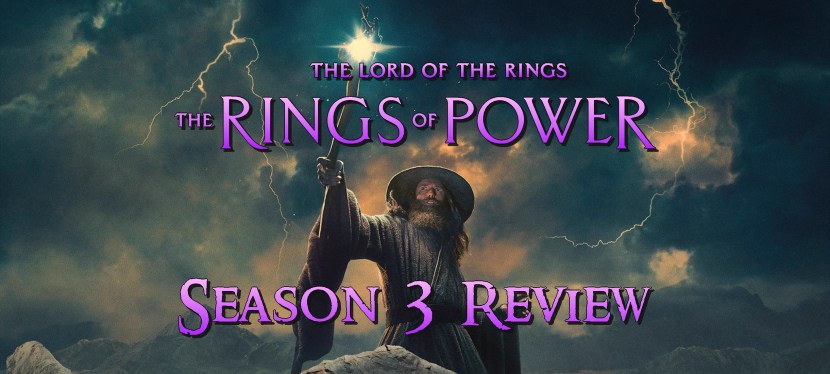
The Rings of Power: Season 3 Review

A Phineas and Ferb-themed spoiler warning.

Spoiler Warning: There are spoilers ahead for The Lord of the Rings: The Rings of Power Seasons 1-3. Spoilers are also present for The Hobbit and The Lord of the Rings.

As I sat down to watch the first episode of Amazon’s The Rings of Power, I was hit with one overwhelming thought: “Who the hell are any of these characters?”

This is not an issue that’s unique to Amazon – and, to be fair, once I got back into the show, I found that I had at least *some* recollection of most of the principals – but longer and longer waits in between ever-shorter seasons of television are really having a detrimental impact on my ability to follow along with what’s supposed to be a single, ongoing story. Maybe that’s a “me” problem; my mental health isn’t great, and with that comes a fairly weak memory. But even so… I really hope this trend that we’ve seen over the last few years will begin to reverse. If we have to wait another two or three years for the fourth season of The Rings of Power – which was recently greenlit at time of writing – then I’ll probably have to spend at least the first episode, if not the first two, just finding my feet all over again!
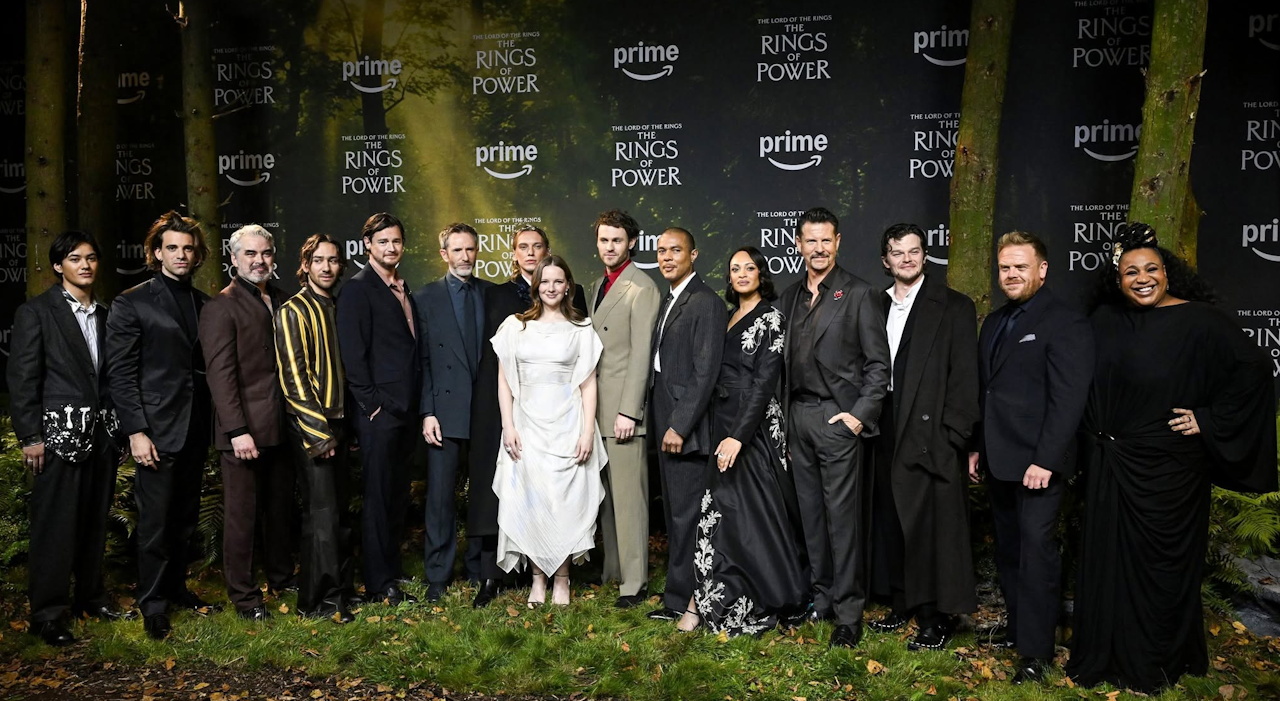
Cast of The Rings of Power S3 at the premiere
Members of the cast at the Season 3 premiere.
Photo: Amazon Prime Video

The Rings of Power was a controversial series from the jump, and – as I also said in my review of Season 2 a couple of years ago – nothing will have changed after this latest outing on that front. The story continues to unfold, most of the same characters remain in place, and the pacing, writing, and visual style haven’t shifted in a noticeable way, at least not for me. I saw nothing in these new episodes that will have convinced critics of The Rings of Power to give it a second chance, or ways for the series to win back lapsed viewers. If you enjoyed what The Rings of Power did in Seasons 1 and 2, that’s fine – this was a continuation of the same story told in basically the same way. But if you hated it and wanted to see big changes… then you didn’t get that, and I can appreciate some Tolkien fans, Game of Thrones fans, and other fans of fantasy being disappointed in that.

For me… I find myself in the middle.

I was never a “hater” of The Rings of Power, but I also didn’t feel – in Season 1 or 2 – that the show was living up to its potential. This was – at the time it premiered, at least – the most expensive streaming/television series… *ever*. And in terms of writing, visual effects, acting, editing, characterisation, narrative depth, and more, The Rings of Power never managed to justify that. I hoped for better from Season 3.
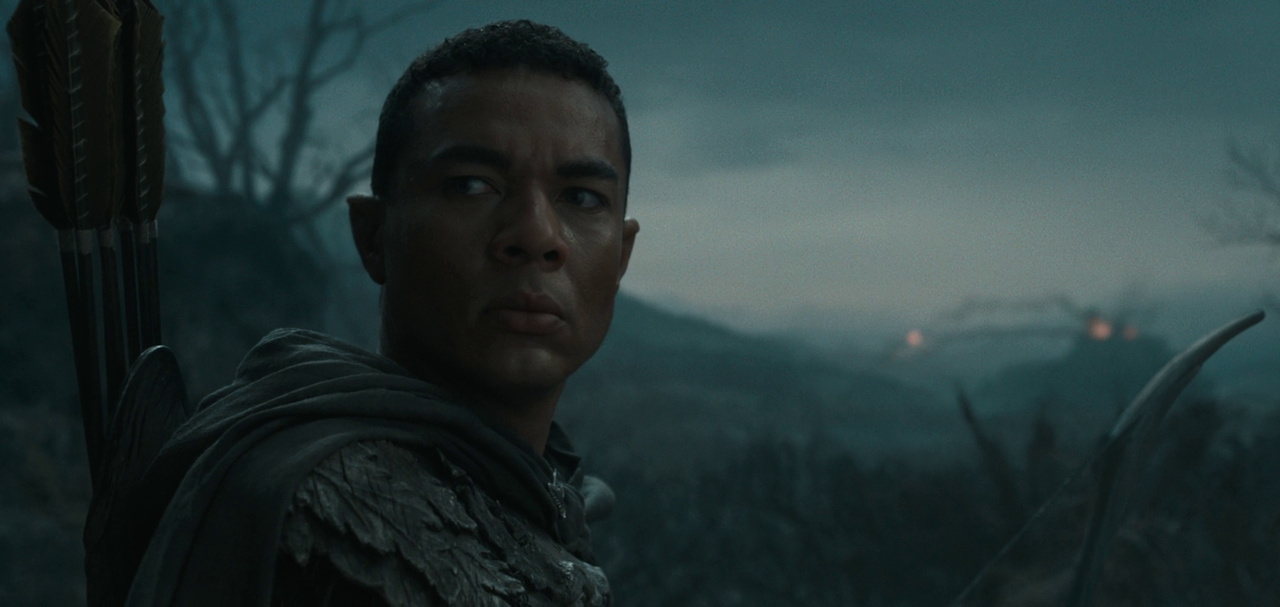
Still frame from The Rings of Power S3 showing Arondir with a bow
Has The Rings of Power finally justified its budget?

I think it’s absolutely fair to take into account the amount of money a project cost when assessing its strengths and weaknesses. There are fantasy projects on far lower budgets that do some or all of what The Rings of Power has attempted, and when a series is *so* phenomenally expensive, things like visual effects really have no excuse for being anything other than perfect. Maybe you think it’s unfair to pick on a show’s budget as a point of potential criticism; that the only thing we should consider is whether or not we enjoyed what was on offer, on the whole. And that’s a fair stance to take – but given the corporation involved and the money involved, I can’t really do that. So while I can say I liked parts of The Rings of Power’s third season, I’m still hit with that sense that it isn’t as good as it can or should be.

There are some very real successes that Season 3 delivered. I liked, for example, that there was a bit more nuance in some of the show’s intrigue; that not *every* character was a pure paragon of virtue or irredeemable monster, and that some “good” characters had to make moral compromises in order to achieve greater objectives. That’s something The Rings of Power had been lacking, and it was much appreciated. I also felt one of its core themes – that of war, and how war irrevocably changes people – was handled pretty well, particularly with Celeborn and Galadriel. Given Tolkien’s own experiences in the First World War, incorporating that idea into the series was a good one.
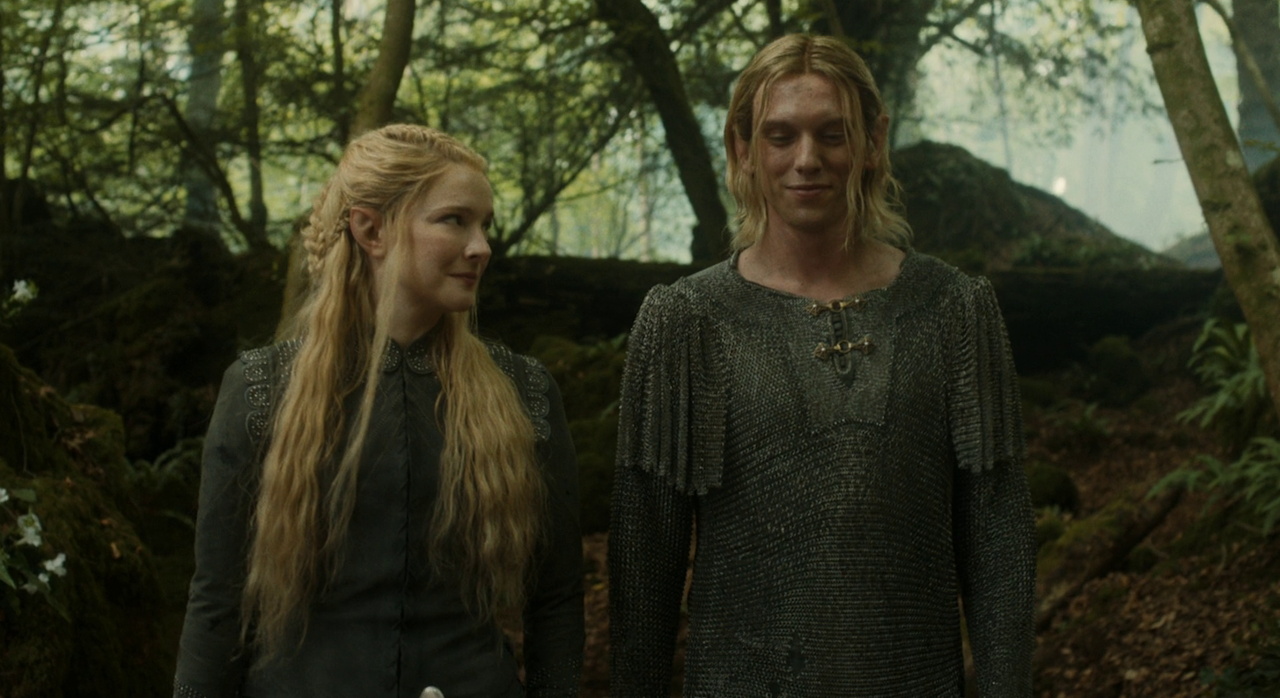
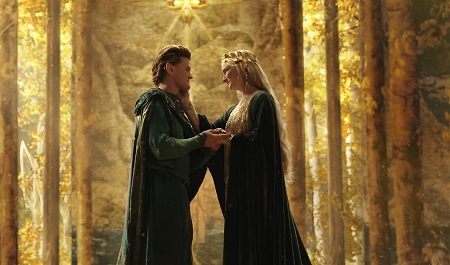
Still frame from The Rings of Power S3 showing Galadriel and Celeborn
At the core of Galadriel and Celeborn’s story was war, and how war changes people.

However, there are also some disappointments and let-downs. The Rings of Power continues to rely on some *atrocious* narrative contrivances. These paper-thin foundations make whole story arcs feel incredibly weak and easily toppled, which speaks to both the risks of this kind of “not-an-adaptation,” and also the quality of the show’s writing and overall creative direction. There’s also a ton of awful, almost soap opera-level interpersonal conflict and relationship drama that just didn’t benefit the series in any way. And finally, too many “big, shocking moments” were incredibly pedestrian and easy to predict. I think The Rings of Power managed to surprise me precisely once in all of Season 3.

A mixed bag, then.

I am not a stickler for the minutiae of canon nor for the intricate details of Tolkien’s legendarium. However, I still find it odd that Amazon would pay such an inordinate amount of money for the rights to adapt parts of Tolkien’s world… only to make massive changes and additions to that world that were never part of the source material. These changes go beyond what’s necessary to adapt works of literature for the screen, and some of them come across as little more than the cheapest of nostalgia plays; as if The Rings of Power is cloyingly trying to say “remember how good The Lord of the Rings movies were?”
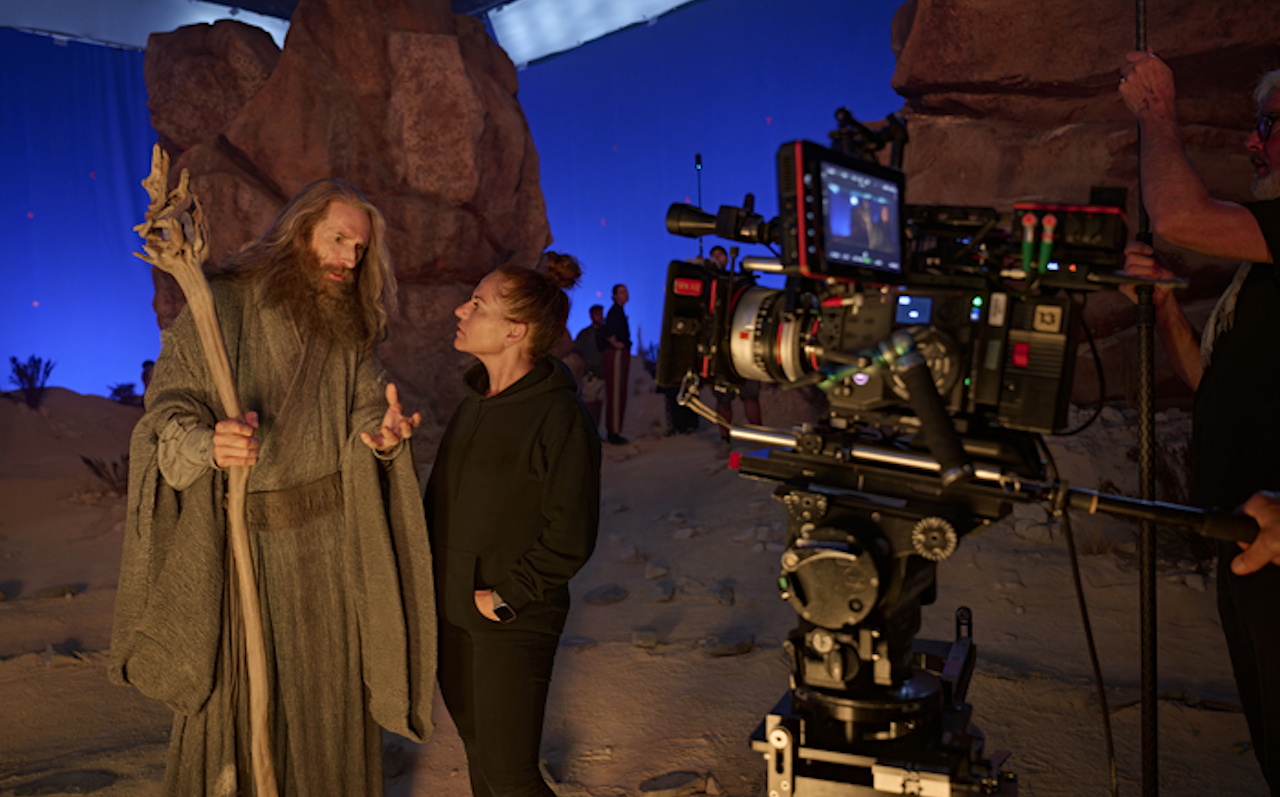
Behind-the-scenes photo from The Rings of Power S3 showing Gandalf
Daniel Weyman and director Sanaa Hamri on set.
Photo: Amazon Prime Video

On that note, Season 3 of The Rings of Power went out of its way to recreate or reimagine some very famous and well-remembered scenes, shots, and moments from those earlier films. If this had been a one-off, it would’ve already been weirdly noticeable, but it happened repeatedly throughout the season – and no, you won’t convince me that any of these moments are coincidences! They’re deliberate attempts to recreate the feeling viewers had upon watching The Lord of the Rings trilogy in the cinema a quarter of a century ago… and for me, at least, not one of them succeeded.

The problem with copying something is that it never results in anything *better* than the original. At best, it’ll be pretty much the same – but still tainted by the lack of originality and the knowledge that someone else did it first. And at worst – as I’d argue happened in The Rings of Power – these moments come across as pathetic and desperate attempts to both play the nostalgia card and rope the series to its illustrious forebear.
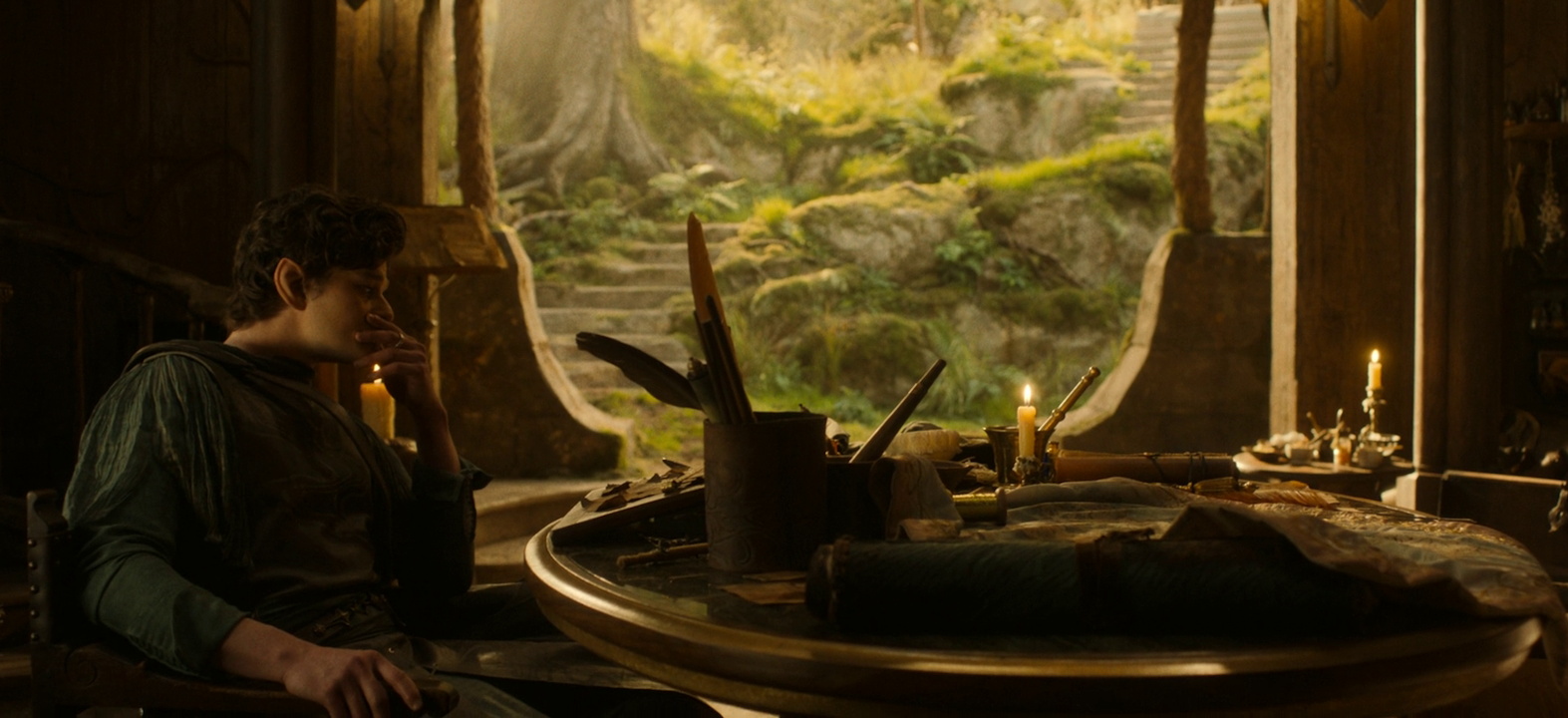
Still frame from The Rings of Power S3 showing Elrond at a table
Elrond in the season premiere.

I’ll go over a few of the moments, scenes, and shots in question.

Galadriel, Arondir, and Marnûkh hiding from the Nazgûl under a log is obviously a direct copy of Frodo and the Hobbits doing the same thing in The Fellowship of the Ring. Sauron standing on the balcony of his tower, flanked by Theo, the Nazgûl, and Pallondo imitated the shot of Saruman on the balcony of Isengard in The Two Towers. Galadriel holding Theo’s Ring by its chain copied the way Frodo held his at the Cracks of Doom in The Return of the King.

Arondir leading Marnûkh on a chain mimicked Frodo and Sam leading Gollum that way – even down to the Orc’s cowering movements and Arondir’s occasional tugs on his cuffs. Gandalf discovering and wearing Tom Bombadil’s hat harkens back to dozens of scenes in The Lord of the Rings, but especially his first meeting with Frodo in The Fellowship of the Ring. A close-up shot of Ar-Pharazôn’s mouth while he dined with Gil-Galad and Elrond was a like-for-like copy of the (in)famous shot of Denethor in The Return of the King. And the entire fight between Gandalf and Pallando – with Gandalf tossed around and pinned to the ceiling – was essentially a total copy of Gandalf’s duel with Saruman in The Fellowship of the Ring… even down to Pallando repeating Saruman’s line, “the hour is late,” as Gandalf arrived.
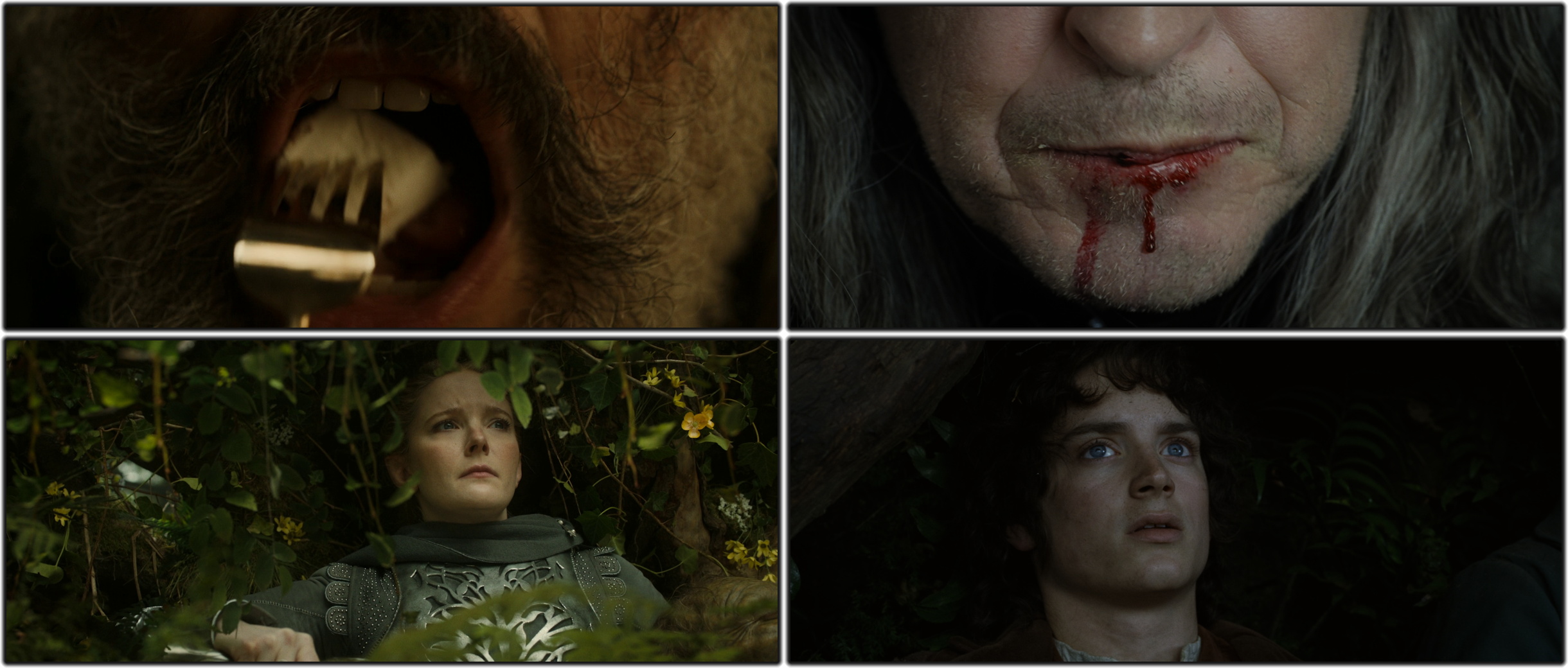
Comparison still frames from The Rings of Power and The Lord of the Rings trilogy
Above: Close-ups of Ar-Pharazôn and Denethor eating.
Below: Galadriel and Frodo hiding from a Nazgûl.

Taking inspiration is one thing, and a series pitching itself as a prequel *should* feel like it fits in with the world of those later films. But this shot-for-shot, frame-for-frame copying is, for me, a bridge too far. It doesn’t come across as respectful homage, nor does it seem like a genuine, well-intentioned attempt to tie the world of Middle-earth together. Instead, moments like this come across as overplaying the nostalgia card. I rolled my eyes at almost all of the moments in question, because The Rings of Power feels so… small. It makes the show seem like a pathetic mimic, a pale imitation of something so much better and more original than it could ever be. And far from making me feel like The Rings of Power is *as good* as The Lord of the Rings trilogy… it makes me think I’d rather be watching those films instead.

These side-by-side comparisons are useful for me, as a critic, because I think they serve as the greatest possible visual metaphor for everything The Rings of Power gets wrong. The series wants so desperately to evoke memories of The Lord of the Rings trilogy, but its creative team apparently has no idea why those scenes and moments worked as well as they did, or why those films are held in such high esteem. It’s an attempt to wrap this new offering in the cloak of nostalgia and hope that that’ll make up for contrivances and weaknesses elswhere in the story. And it doesn’t.
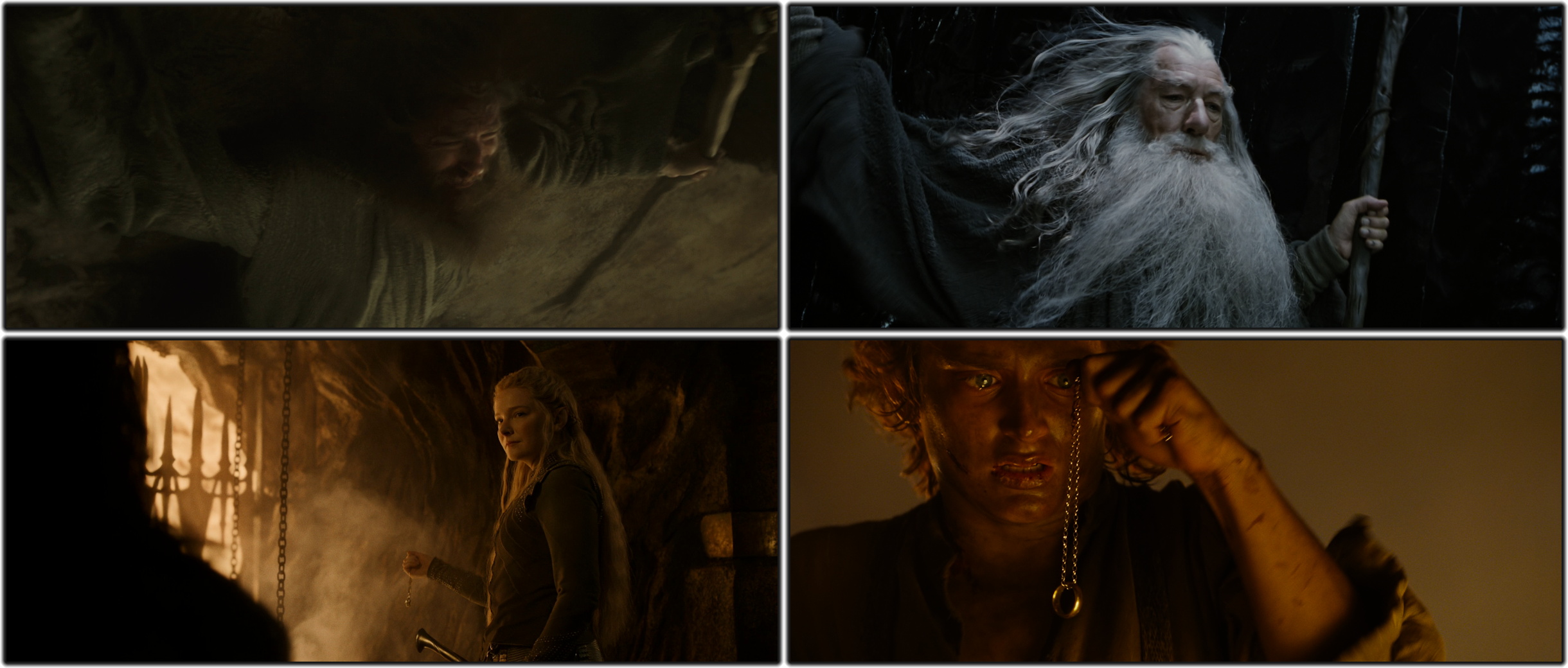
Comparison still frames from The Rings of Power and The Lord of the Rings trilogy
Above: Gandalf getting tossed around in two different duels.
Below: Galadriel and Frodo holding a Ring of Power on a chain.

The story of Sauron’s rise, the creation of the One Ring, and the war that eventually stopped him could be worth exploring through the medium of television. But that story is an original one, independent of The Lord of the Rings – and it shouldn’t feel so utterly dependent on it. This flagrant copying seems to speak to a lack of confidence – or a lack of skill – on the part of this new creative team; that they can’t create something on their own, so they have no choice but to go back to The Lord of the Rings and try to cherry-pick moments from the cinematic adaptation and clumsily recreate them.

As I said above: copying *never* leads to something better. And in this case… The Rings of Power is genuinely made worse by trying to recreate these scenes, shots, and moments. There are ways to tell this story without relying on such cheap tricks, and I doubt it’ll convince *anyone* who was on the fence that this is a series worth sticking with, or that this new adventure lives up to the magic of The Lord of the Rings trilogy. So… why bother? Why couldn’t this creative team tell this new story in their own way? Perhaps it’s something that came from the corporate side; studio meddling is nothing new. But I can’t help but feel that these decisions are, at least in part, a sign of weakness and overdependence on the part of the show’s creators. The pressure of such a huge budget and such a well-known IP seems to be weighing on them, and the only way they seem to know how to respond is by trying to literally recreate The Lord of the Rings trilogy clip by clip, shot by shot, and frame by frame… instead of having the boldness to try their own thing.

That’s kinda sad, to be blunt about it.
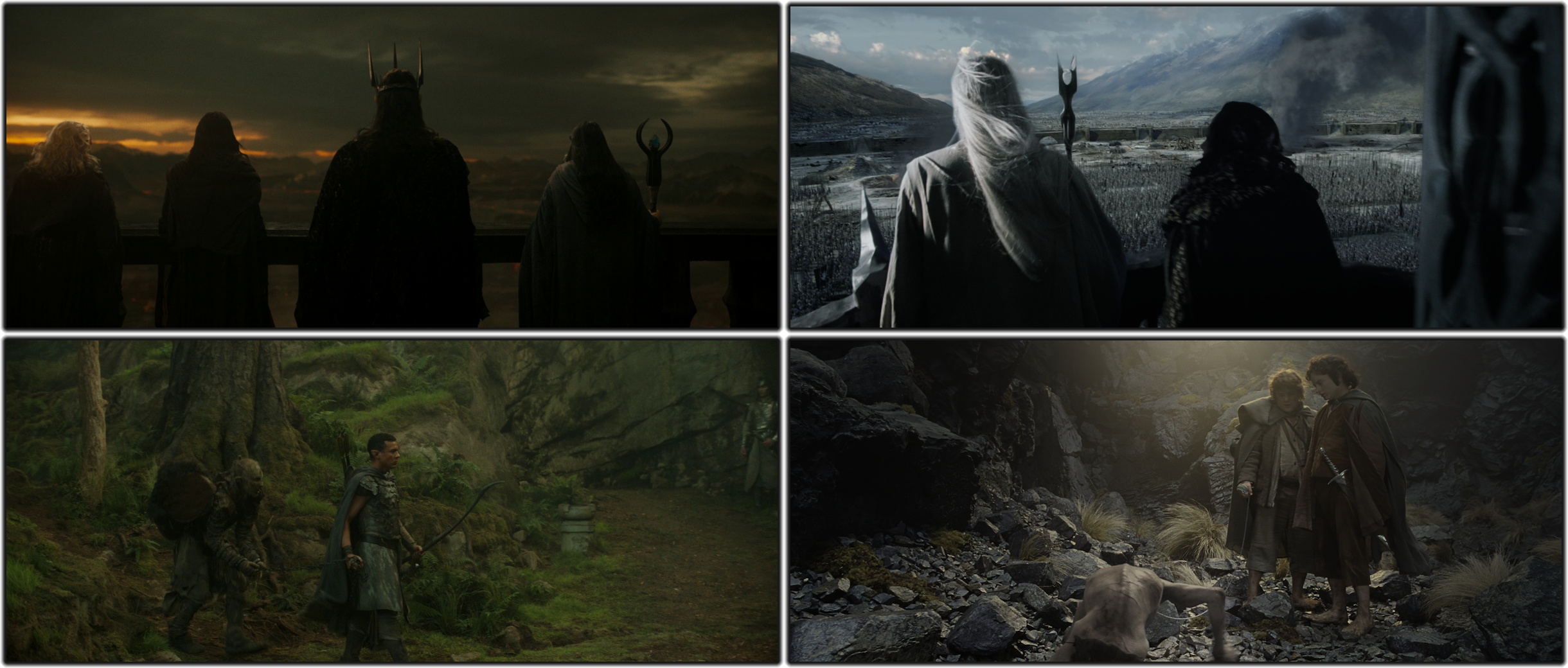
Comparison still frames from The Rings of Power and The Lord of the Rings trilogy
Above: Sauron and Saruman overseeing their armies from their balconies.
Below: Arondir leads a captured Orc, Sam leads a captured Gollum.

Despite not being a lore obsessive, there are a few changes to the source material that I find… odd. I said in my review of Season 2 that Tom Bombadil playing such a large role in taking the fight to Sauron was at odds with what we know of him from the books, and that continued this time. Tom Bombadil literally infiltrated the Dark Wizard’s palace in disguise alongside Gandalf… something that just doesn’t track with his character at all. And while I can give credit to The Rings of Power for picking up Tom Bombadil from the books (as the trilogy of films left him out), the choices made for his character really don’t track.

I did like, however, that Tom Bombadil’s role this time was smaller, and that, after his first appearance, he (mostly) left things to Gandalf. From a purely mechanical perspective, Gandalf’s story worked better because he had someone to talk to, at points, and bounce ideas around with – but I still don’t think that that person *had* to be Tom Bombadil.
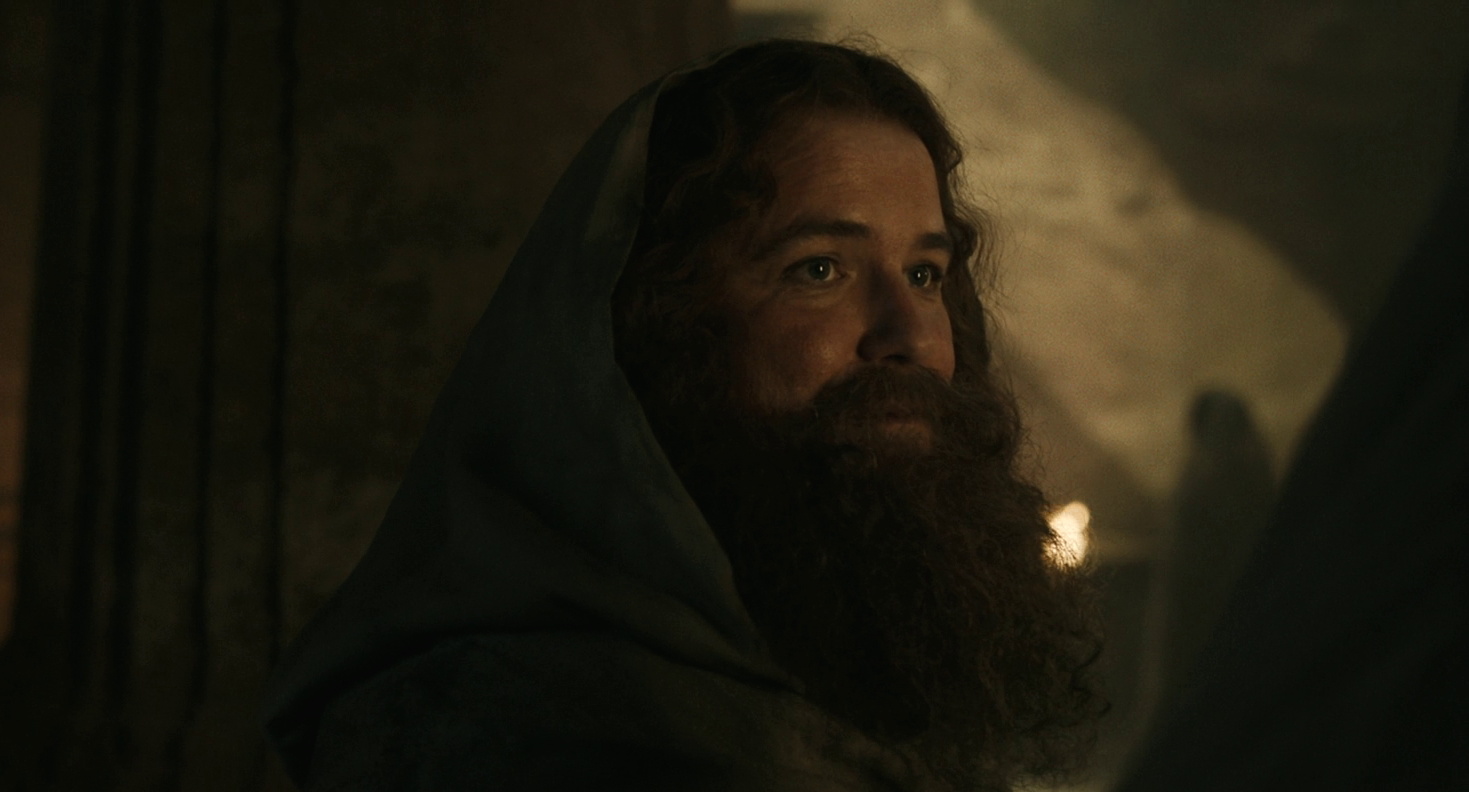
Still frame from The Rings of Power S3 showing Tom Bombadil
Tom Bombadil snuck into Pallando’s palace with Gandalf.

Where were the Harfoots (or Harfeet?) The proto-Hobbits had been a big part of Seasons 1 and 2, but were entirely absent this time, save for a small dream/illusion in the season finale. Nori and/or Poppy could’ve made for fun inclusions – and could’ve replaced the lore-inaccurate Tom Bombadil as characters for Gandalf to talk with.

I feel that audience reactions to the Harfoots – particularly in Season 1 – led to their absence this time around. And I’ve been critical of some elements of the Harfoot storyline myself; choosing to butcher the song This Wandering Day last season was a really ham-fisted mistake, for example. Reacting to feedback from your audience is to be commended, in some ways… but at the same time, if the Harfoots were meant to be a bigger part of this story, or if the earlier stories of Nori, Poppy, and co. were meant to be paid off later on, sticking with something – or tweaking and adapting, rather than completely removing – would’ve been the way to go. I can’t help but think that the Harfoots – Nori, at least – should’ve been part of Gandalf’s storyline in some way, and their absence just feels odd, particularly considering how prominent some Harfoot characters had been in Seasons 1 and 2.
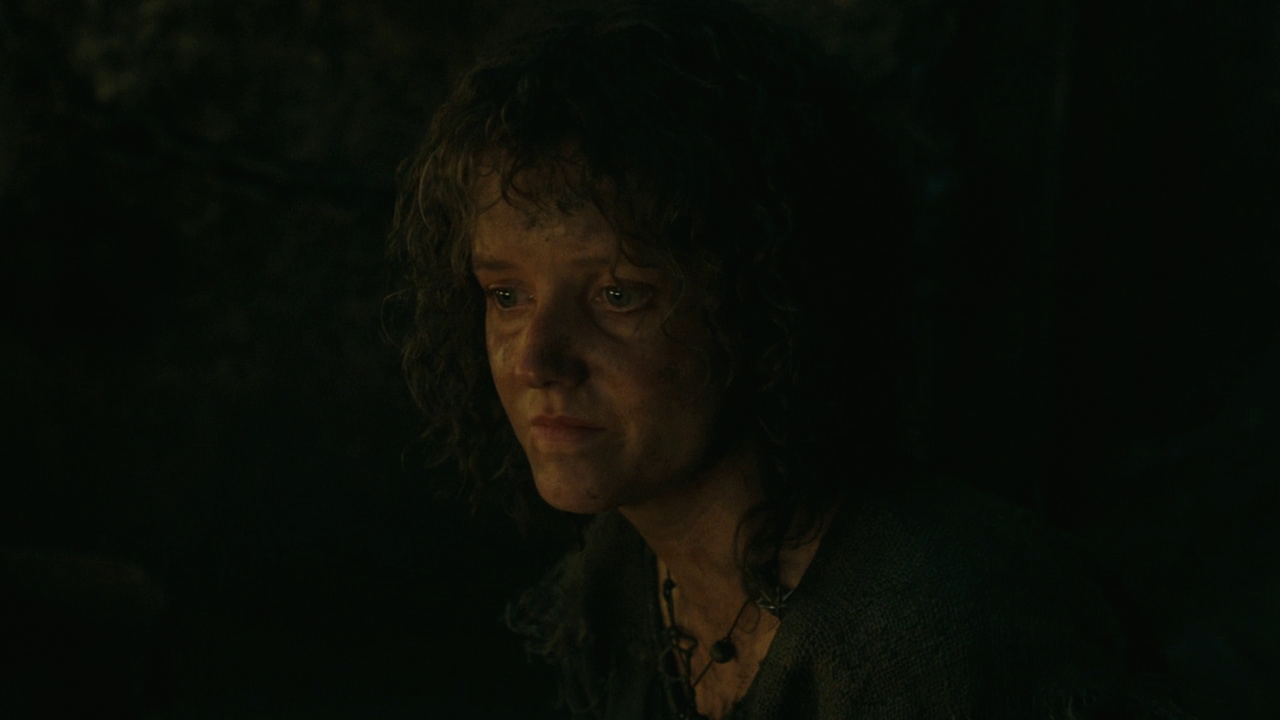
Still frame from The Rings of Power S3 showing an illusory Nori
Where were the Harfoots this time?

Sticking with Gandalf, I’m still disappointed that The Rings of Power decided to include him instead of another magic-user or wizard. Very little that Gandalf says or does in The Rings of Power feels unique to the Gandalf we’re familiar with, and that’s because he’s not actually a part of this story in the source material. It’d have been more interesting, in my view, if this character – “The Stranger” from Season 1 – had instead been revealed to be Saruman; setting him up as a hero before his fall might’ve been a fun and unexpected way to take this side of the story.

Gandalf’s arc this time felt… derivative. Not only was his run-in with Pallando (and later, the Nazgûl) a straight-up copy of his conflict with Saruman, but much of his storyline of helping to redeem Pallando for his past misdeeds just… didn’t stick the landing for me. It was full of tropes, contrivances, and narratively weak moments, and I’d honestly rather have spent that time with Gandalf just kicking back in Tom Bombadil’s hut or smoking leaf with the Harfoots compared with what we got!
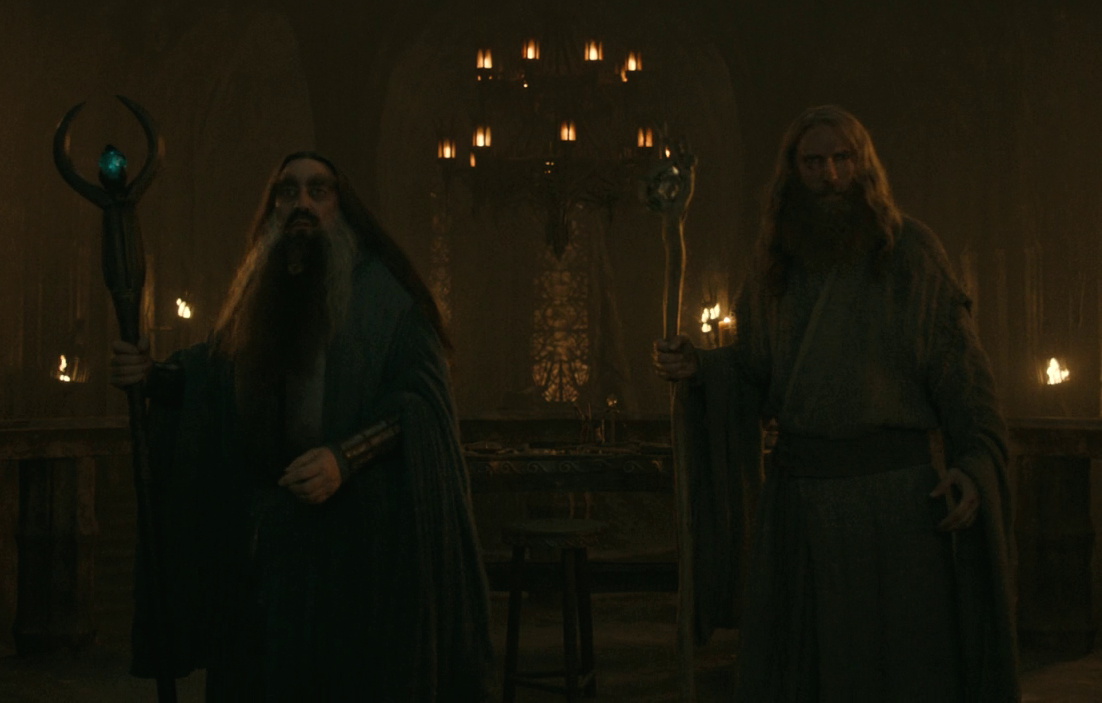
Still frame from The Rings of Power S3 showing Pallando and Gandalf
Pallando and Gandalf.

That isn’t to take away from Ciarán Hinds’ excellent performance as Pallando; he was one of the highlights of the season for me, as he stepped up and took on a larger role. But Pallando’s story was so weak most of the time that even a stellar performance from a phenomenal actor couldn’t make up for it, unfortunately, and this boring, clichéd redemption arc played out with absolutely no fanfare until its final scene.

It wasn’t even made clear what was happening to Pallando. He seemed to have basically come to the same conclusion as Saruman in The Lord of the Rings: that Sauron is undefeatable, and it’s better to collaborate and work with him than to try to oppose him. He’s Pétainesque, in that sense. But then later, after being given a Ring and then having it forcibly removed by Gandalf, Pallando just seems to snap out of it – as if it were meant to be the Ring, and the Ring alone, that had held him in its sway. This contrivance meant that the very crux of Pallando’s arc, as well as Gandalf’s story this season, came across as nothing but a narratively weak contrivance. Why did Pallando decide to submit to Sauron in the first place? Just because. And why did he snap out of it after Gandalf took his Ring away – less than five minutes after he put it on in the first place? Also just because. See what I mean? It’s a weak, contrived story point – and one that takes a lot away from what could’ve been a creative redemption arc.
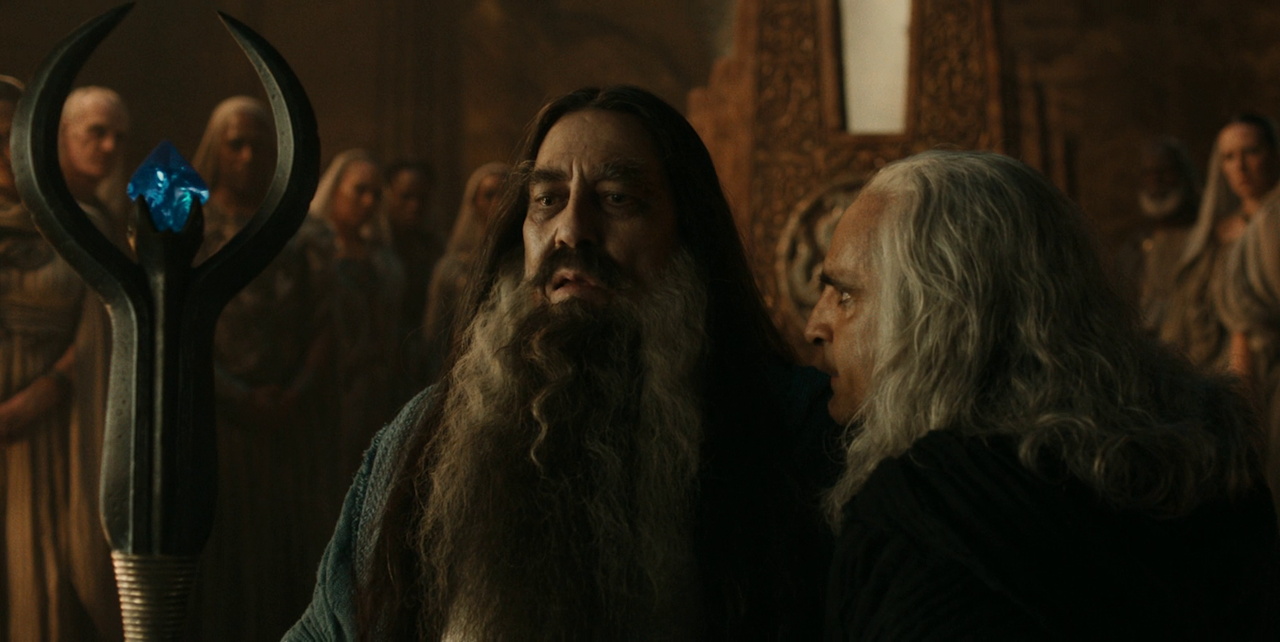
Still frame from The Rings of Power S3 showing Pallando and a Nazgul
Why did Pallando abandon his mission, and why did he come back to it?

I will say that I’m glad that Pallando didn’t turn out to literally be Saruman; The Rings of Power, for all of its flaws and repetitiveness, at least had the good sense to avoid that death trap! But unfortunately, despite loving the actor and the performance, Pallando and Gandalf got a particularly weak storyline, and one that ended in unspectacular fashion.

I have two last things to add regarding this side of the story.

One: Gandalf and Sauron are, canonically, both Maiar: immortal spirits. But it was certainly *implied* in The Lord of the Rings that, if they had ever met, it was aeons ago, and they had no real personal connection. Gandalf wanted to stop Sauron, but Sauron didn’t know or care about Gandalf at all. Yet The Rings of Power shows them meeting – and even depicts Sauron addressing Gandalf as “Gandalf,” his Middle-earth name. Gandalf’s Maiar name is “Olórin;” surely that’d be the name Sauron would know, if at all.
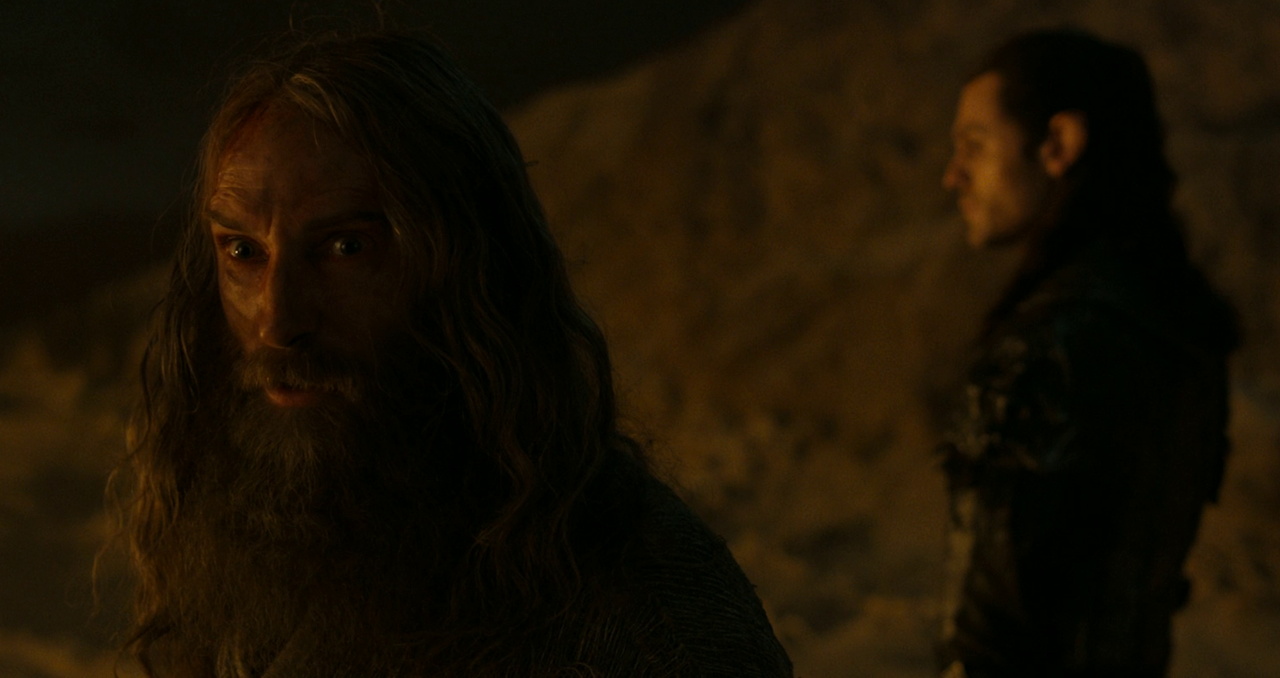
Still frame from The Rings of Power S3 showing Gandalf and Sauron
Gandalf and Sauron.

But setting that nitpick aside… did Sauron and Gandalf need to meet face-to-face? Did we need to see Sauron pressuring Gandalf to bend the knee, submit to him, and agree to wear a Ring? What does it add to this story – this *prequel* – that Gandalf was briefly imprisoned by Sauron and had to resist his illusions and whatever temptations he might’ve felt for the Rings?

Perhaps this will get a narrative payoff in later seasons of The Rings of Power, but even if it does… what do we gain from that? Sauron’s fall is going to come at the hands of Elves, Men, and Dwarves – and specifically Isildur (unless The Rings of Power decides to change that, I guess). So we won’t get to see Gandalf deliver the killing blow, snatch the Ring from Sauron’s hand, or anything like that. And, if we’re viewing The Rings of Power as a direct prequel to either the books or the films, I just don’t see what this one-on-one gets us. It’s two familiar characters being squashed together… like a kid might do if they were playing with their action figures. But narratively? Again, it was weak.
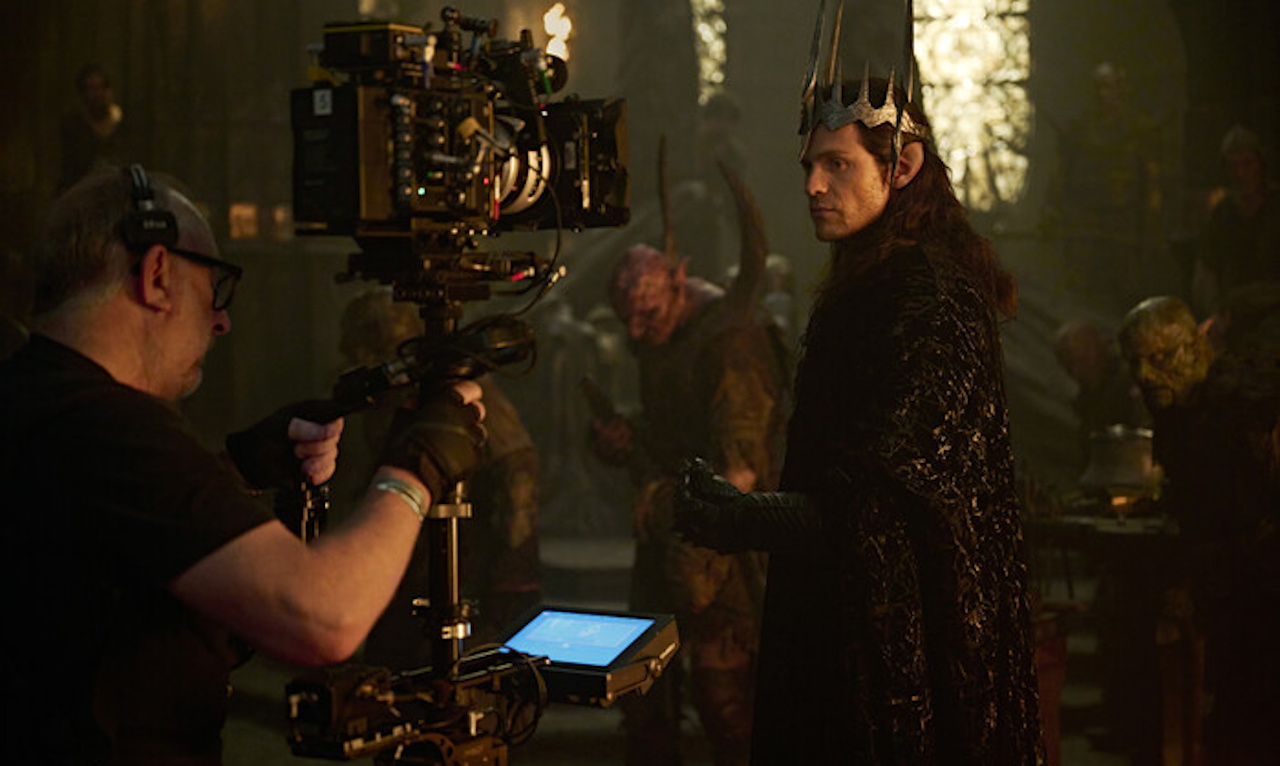
Behind the scenes photo from The Rings of Power S3 showing Sauron
Behind-the-scenes with Sauron.

In Season 1, the Dwarves in Khazad-dûm were one of the best parts of The Rings of Power. Durin’s bromance with Elrond was adorable, and one of the strongest character relationships in the series. But aside from a couple of brief moments, we didn’t get Durin and Elrond together this time – again – and, unfortunately, what replaced their fun dynamic was genuinely poor. The “intrigue” – and I use that term loosely – in Khazad-dûm was definitely one of the least-interesting parts of the entire season.

Firstly, Thráin actor Eddie Marsan (who’s English) attempts a Scottish accent… and fails *miserably*. For a show with the budget of The Rings of Power, that comically poor accent is utterly unacceptable; someone get the man a voice coach, or something, because the way Thráin spoke practically every line was laughably bad and a major detriment to what was supposed to be a serious character.
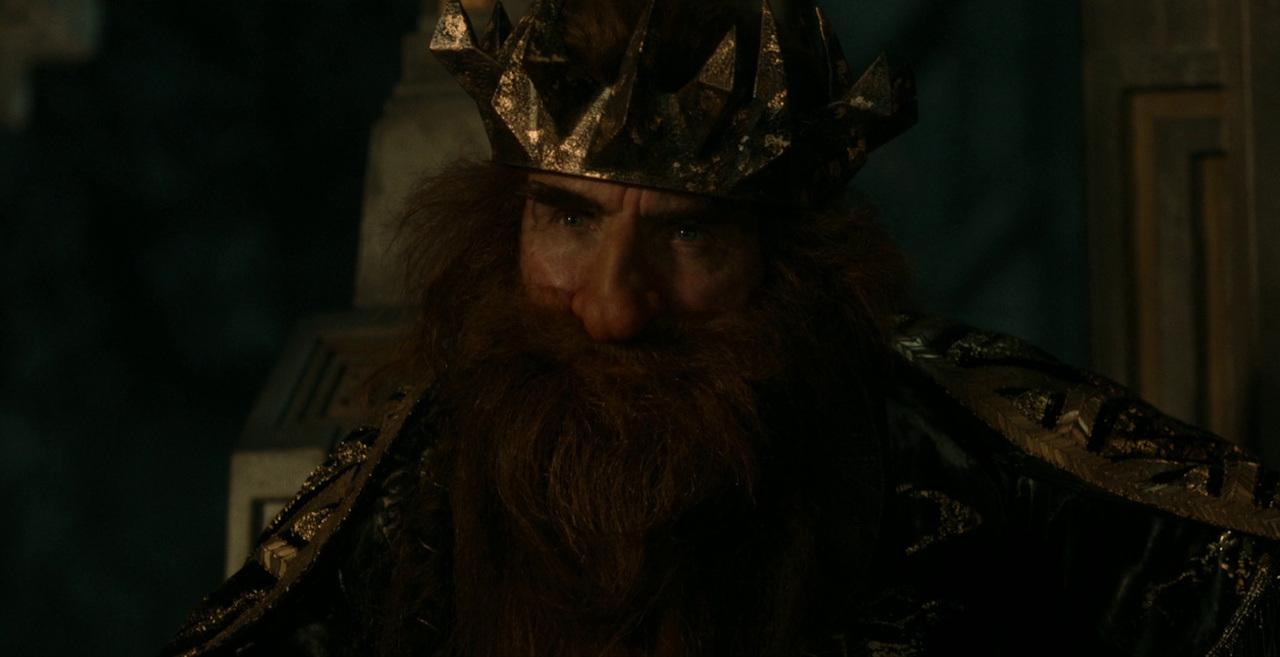
Still frame from The Rings of Power S3 showing Thrain wearing the crown
King Thráin.

However, it gets worse. The soap opera “love triangle” between Disa, Thráin, and Durin simply has no place in a story like this. It’s cheap, low-brow, bottom-of-the-barrel storytelling that was clearly designed to plug (several) narrative holes and weaknesses in Khazad-dûm, and a way to attempt to force Durin and family out of the mountain so they can be in place for something else to happen next time. It didn’t work, it was annoying to sit through, I rolled my eyes almost every time Thráin and Disa spoke, and… I just hated the way this went.

High fantasy can include character moments, romance, love, and betrayal. I’m not saying it can’t. But the way this aspect of the Khazad-dûm story came across was poor, and having enjoyed the Dwarves so much in Season 1 especially, I just feel their story deserved better. The focus on the love triangle also meant that the Dwarves’ story felt like it was spinning its wheels a lot; Thráin’s quest to take the Rings from Durin didn’t take much time at all, and even all of the palace intrigue and questions about which of the brothers should’ve sat on the throne took a back seat to this far less interesting… fluff. It was a disappointment all around, and even a great performance from Sophia Nomvete as Disa wasn’t enough to carry it.
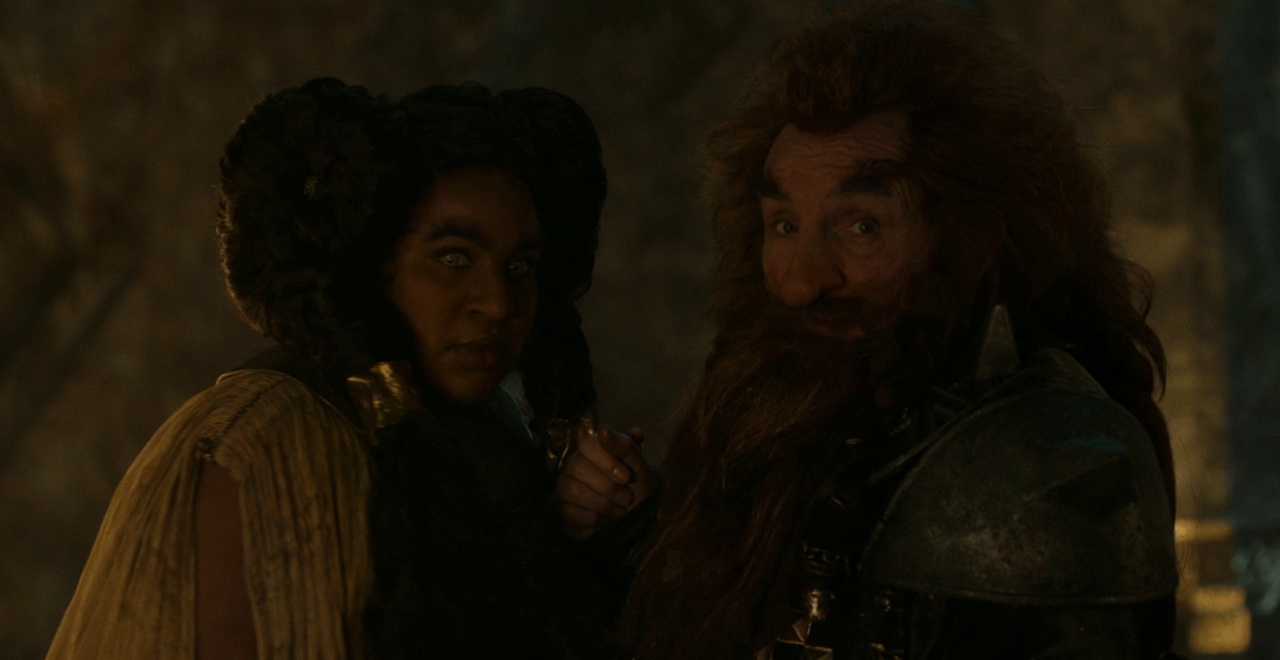
Still frame from The Rings of Power S3 showing Disa and Thrain
Caught!

Though it’s clearly drawing inspiration from the likes of Game of Thrones, I can appreciate The Rings of Power’s attempt to add some nuance and some shades of grey to Tolkien’s world. Intrigue in both Khazad-dûm and Númenor was part of that; characters had to decide how to balance their needs and wants against the backdrop of events beyond their control, and having to choose to work with unpalatable people – as both the Elves and Míriel did with Ar-Pharazôn – added an additional layer to these stories.

There *was* a pathway for the Dwarves’ story to do the same, with Thráin on the one side arguing in favour of appeasement and Durin pushing back… but it would’ve needed to be handled with a lot more care. There were the barest bones of that concept in Khazad-dûm this season, but Thráin mostly came off as a greedy and self-interested character, rather than someone who genuinely believed that aligning his people with Sauron was the only way to keep them safe. It’s the difference between black-and-white storytelling and those shades of grey; if Khazad-dûm had been less focused on love triangles and gossip, and more focused on character development, palace intrigue, and the difficulties of decision-making at a time of war, this side of the story would’ve been infinitely better.

There’s still no saving Thráin’s accent, though. Ouch.
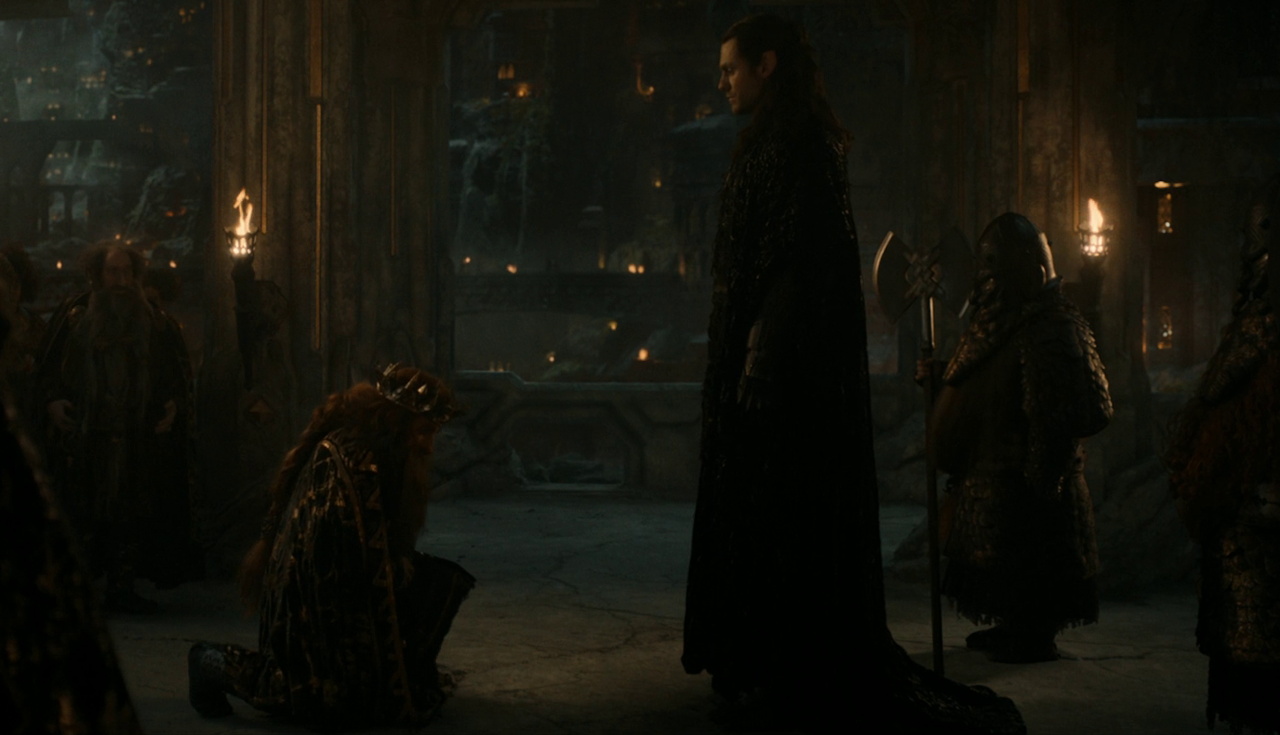
Still frame from The Rings of Power S3 showing Thrain and Sauron
Bending the knee.

Where this idea of nuance and intrigue worked far better was in Númenor. Ar-Pharazôn had been pretty flat and one-dimensional in Seasons 1 and 2, and even at the start of this season, I felt he was going to be little more than a generic “evil-for-the-sake-of-it” baddie. His desire to go to Middle-earth seemed to come from nowhere, but it was given depth as he spoke of his quest for personal glory and to “slay a god.” What really worked, though, was how both the Elves and former queen Míriel came to work *with* Ar-Pharazôn, despite their enmity towards him.

The added complication of going to war alongside an ally with whom you have an imperfect and complicated relationship added a lot to the final couple of episodes of the season, and it was also an interesting way to resolve the Númenorean civil war arc. Again, though, the way this storyline ran and ran, then seemed to come to a fairly quick (and somewhat out of left-field) ending… well, I can see why it might feel like the series was dragging things out.
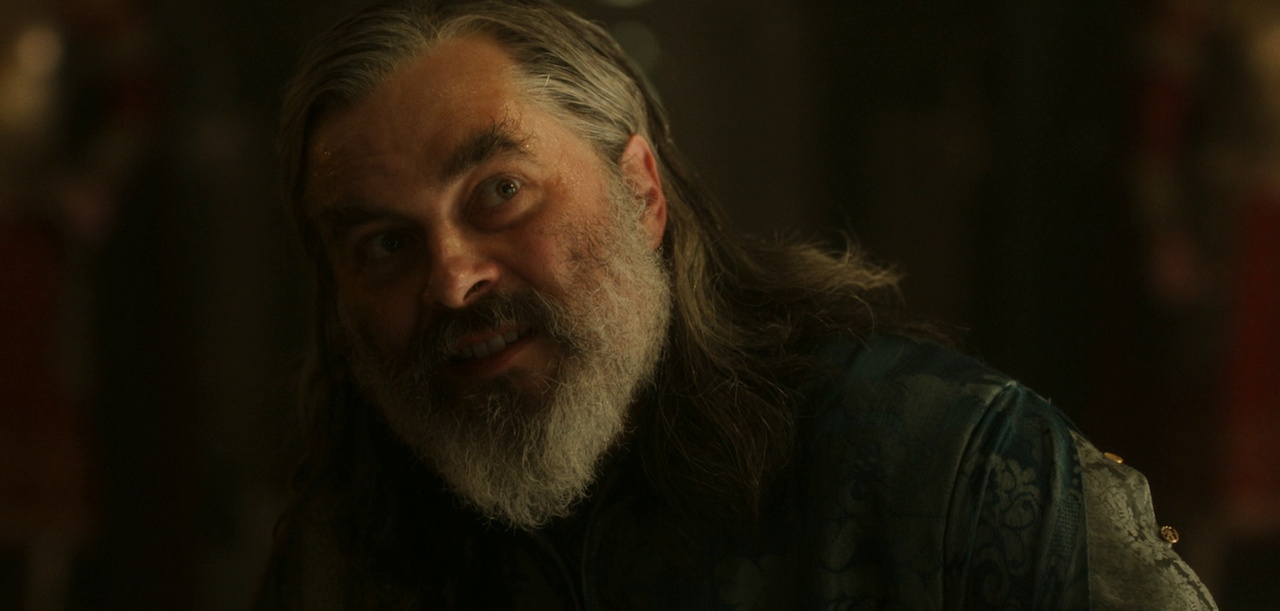
Still frame from The Rings of Power S3 showing Ar-Pharazon
Ar-Pharazôn.

Númenor is also where we’ll start with our list of contrivances!

Eärien jumping to her death was *supposed* to be a shocking moment. She was revealed as the spy inside Ar-Pharazôn’s palace, cornered, and then… instead of being detained, or instead of literally *anyone* stopping her, she was just allowed to walk away and leap from the balcony.

Galadriel and Celeborn have one *massive* contrivance apiece, either one of which on its own would’ve been immersion-breaking, but both together are just dire. Galadriel falling out of the tree in the woods, when being pursued by Orcs, set up Celeborn’s recapture. But worse, the Orcs didn’t spot her unconscious body despite being mere centimetres away from it! And then later, Celeborn explained the exact detail that Sauron was missing from the ring-making process while still in the dungeon. The last one made me roll my eyes so far back in my head that I almost went blind; it was so painfully obvious what was happening – that the character he was speaking with *was* Sauron – that I almost don’t know what to say.
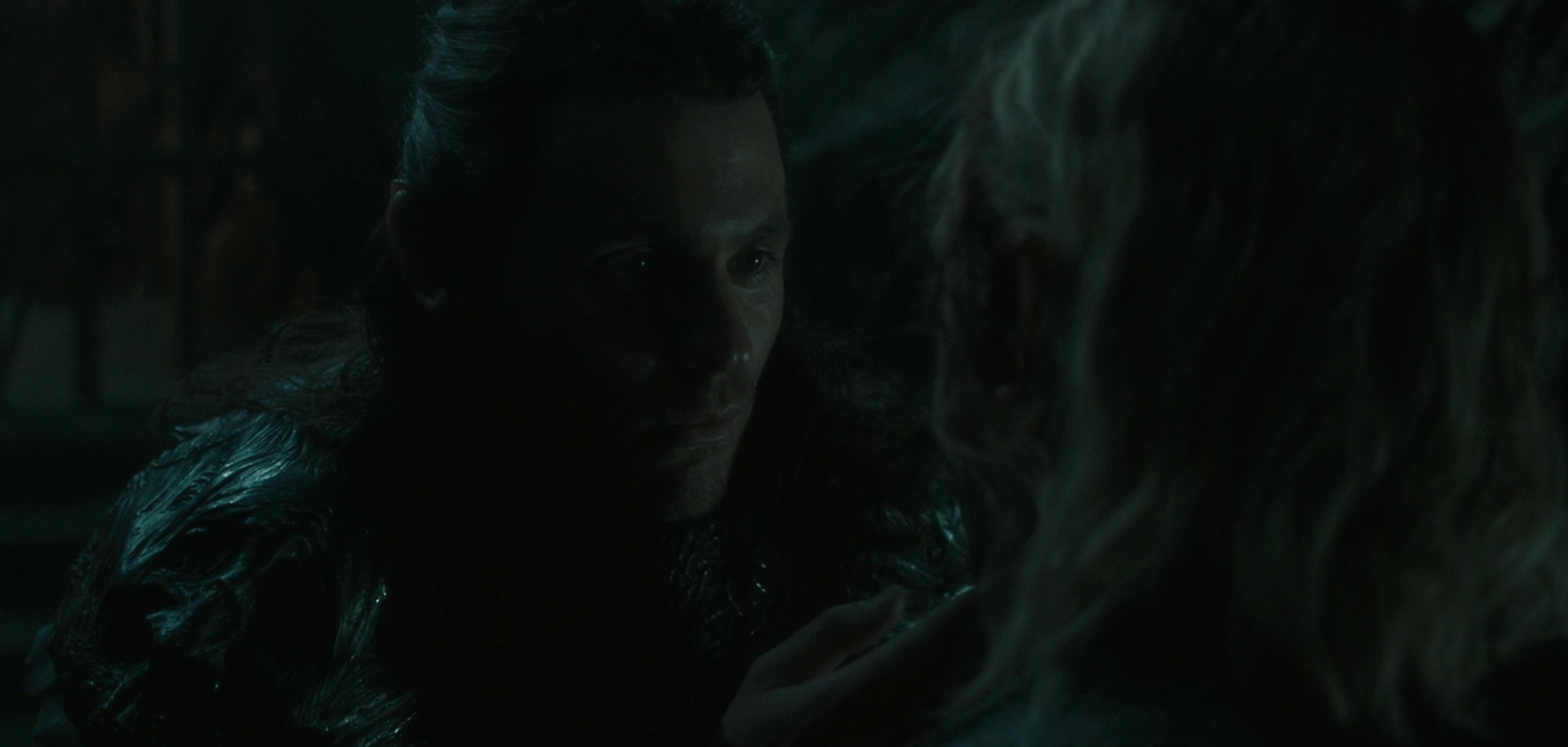
Still frame from The Rings of Power S3 showing Sauron and Celeborn
You saw this coming, too, right?

Then, on top of that, Celeborn and Galadriel are part of the *next* big contrivance: literally abandoning young Theo at the top of Sauron’s tower instead of escaping together. This set the stage for Theo reclaiming his Ring – a story point I actually approve of, by the way – but the way it came about was just poor.

And finally, the last of the major contrivances (for now) is that Sauron seems to have been unaware that Theo even removed his Ring in the first place. Given the power of the Rings, and that we saw Sauron use it to compel Theo to kill Arondir, how is it possible he wouldn’t have known that Theo removed it?
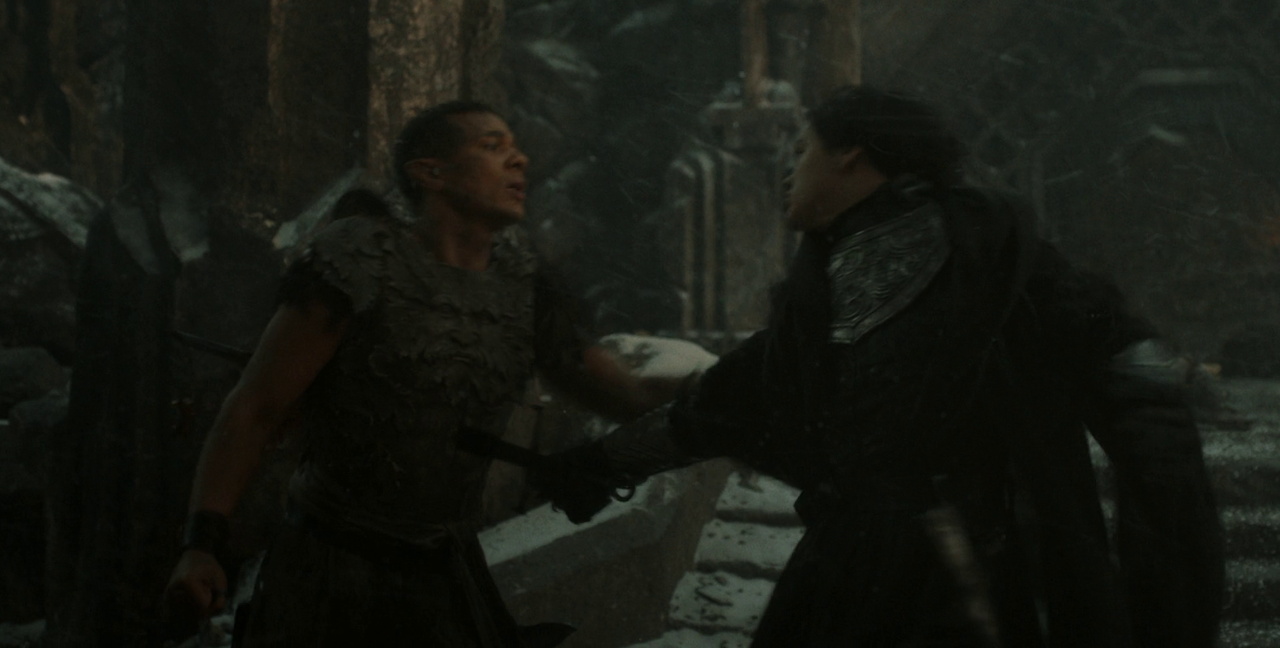
Still frame from The Rings of Power S3 showing Arondir's death
The death of Arondir.

Since this list of contrivances has led us to the Elves, we’ll continue there.

Galadriel reuniting with Celeborn had potential as a story point, and the theme of war changing people – and making the plans they might’ve had for a more artistic and peaceful life fall away – was an interesting one, and something worth exploring. But, as with the Dwarves above, this quickly descended into pretty basic “relationship angst” from both of them, and neither Galadriel nor Celeborn really moved beyond that.

It was worth taking a diversion to explore how both of them have been changed by their experiences, and to say that reuniting after a long time apart – and after many new experiences – might not go as smoothly as either of them would’ve hoped. But it feels like weak character writing from the show’s creative team to drag this storyline down into such… teen drama territory. Galadriel and Celeborn, on the eve of what could’ve been the climactic battle of the war, had to both be counselled by their friends not about war, Sauron, torture, Rings, or any of their other experiences… but about their relationship. And I just found it to be – yet again – weak storytelling.
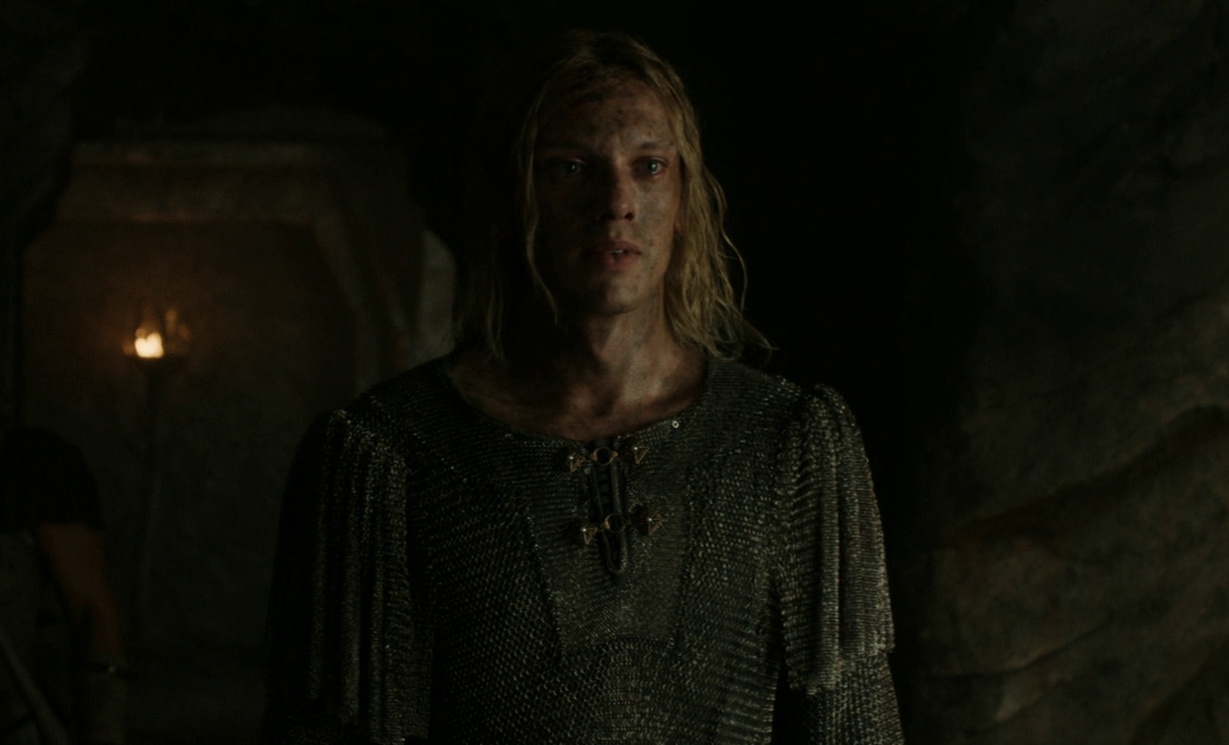
Still frame from The Rings of Power S3 showing Celeborn
Celeborn sees Galadriel again for the first time in centuries.

Theo’s storyline reads like an analogy for addiction, and it was handled pretty well overall – despite the contrivance we discussed near the end. His obsession with the Ring, after being given it, was played believably by Tyroe Muhafidin, and I really did feel convinced that Theo was *craving* the Ring in much the same way as Gollum did in The Lord of the Rings trilogy.

I admire The Rings of Power’s approach to Theo’s arc. Not only is it an interesting allegory for the real-world issue of addiction, but the decision to have Theo “fall off the wagon,” so to speak, and reclaim his Ring was probably the best-executed twist in the season. Rather than the black-and-white, good-versus-evil storytelling that we’ve been used to in The Rings of Power, here’s a rare example of a good character truly succumbing to Sauron’s will and *not* being immediately redeemed or walking away. It’s more of that nuance that can be lacking elsewhere in the series.
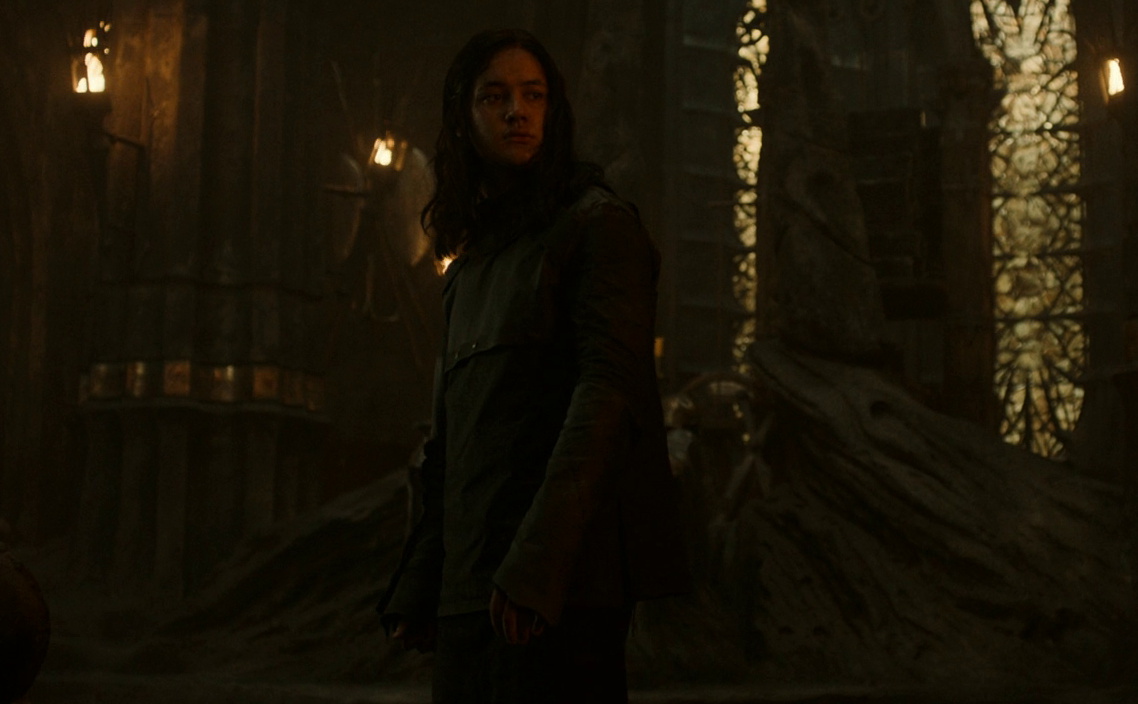
Still frame from The Rings of Power S3 showing Theo
Theo’s story added much-needed complexity to The Rings of Power.

In The Two Towers, Aragorn makes a joke to Éowyn about Dwarf women being bearded. But the reason that throwaway line was funny in the film is because… well, it isn’t supposed to be true, is it? We don’t see any female Dwarves in the books or the films, but I always interpreted that line as Aragorn making a silly joke at Gimli and the Dwarves’ expense… not some, like, integral piece of canon. So it was silly, I felt, that we’re seeing bearded Dwarf women in The Rings of Power.

Even if Dwarf women are meant to have beards “in canon,” I come back to something I’ve been saying throughout this review: this is a prequel. And what do we gain or add to The Lord of the Rings by saying that Dwarf women are capable of growing beards? If anything, it makes Aragorn’s joke kind of silly, because he’s now just… accurately describing Dwarves, instead of making light of Gimli’s words. And maybe I’m wrong and maybe bearded Dwarves are a huge part of Tolkien’s legendarium… but I never interpreted it that way. Is it a huge deal compared to other issues in The Rings of Power? No. But I thought it was worth mentioning.
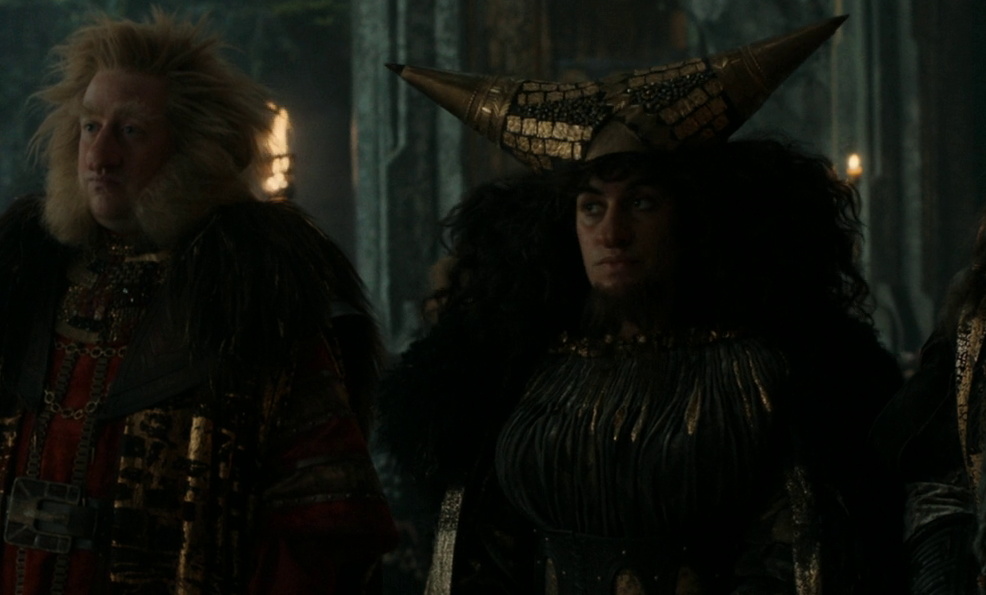
Still frame from The Rings of Power S3 showing a bearded dwarf
A beardless male Dwarf and a bearded female Dwarf.

Visually, I felt there were still a few misfires from this massively expensive series.

Elrond and Gil-Galad’s scenes on the boat to and from Númenor couldn’t’ve been more obviously green-screened. It honestly looked like a low-budget ’90s drama with how poorly the green screen and backdrop were integrated. As I said above, I give The Rings of Power almost no leeway with things like this because of its sky-high budget; the boat scenes were so bad they were genuinely distracting.

Elrond also got a second sequence with some sub-par VFX: when we flashed back to him and his apparent identical twin, Elros. For decades, films and TV shows have been able to splice frames together to make it look like an actor is talking to their doppelgänger, and for decades, those scenes have been pretty static to accommodate the way they needed to be filmed. But surely a series with The Rings of Power’s budget could’ve done more to make the Elros and Elrond flashbacks a bit more dynamic. Shooting over the shoulder of a stand-in is a tired trick of the trade, and flat, unmoving scenes when both characters are “together” are another. It was boring, and it could’ve been so much better.
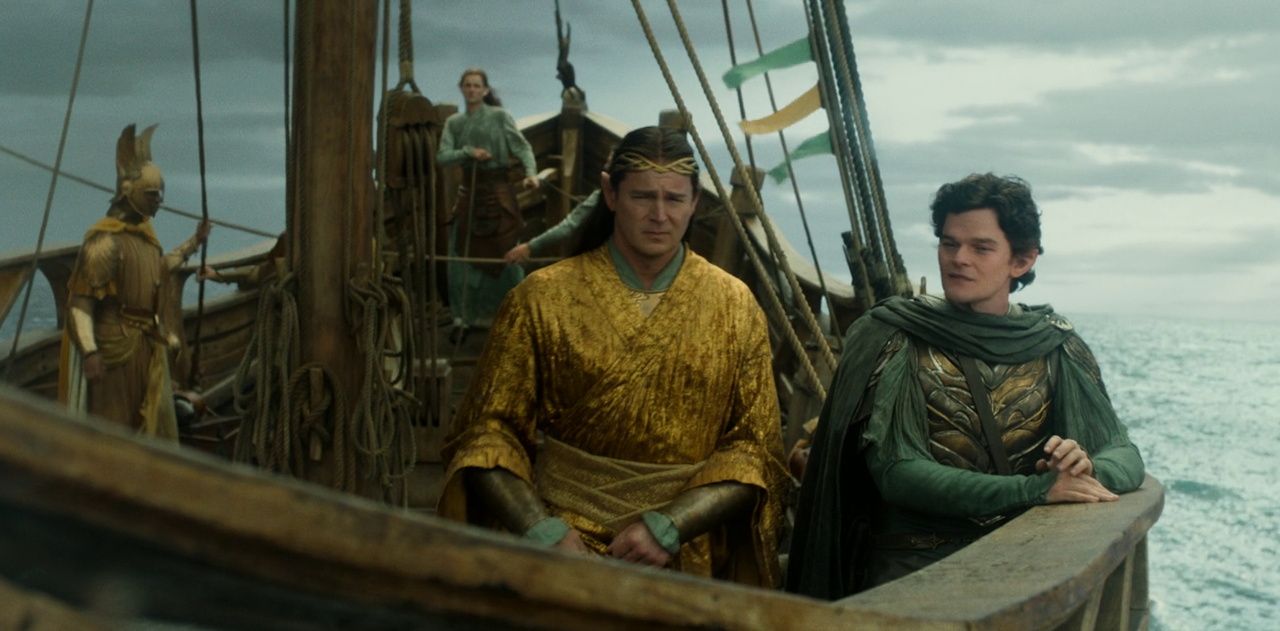
Still frame from The Rings of Power S3 showing Gil-Galad and Elrond on a boat
Can you see the green screen?

A couple of other green-screen misses come to mind. Gandalf’s fight against the possessed mammoth/elephant creature is one – especially the climax of that confrontation. And the tail end of Sauron’s extended sequence inside of Mount Doom is another. Most of the Sauron stuff inside the volcano was actually really strong, but there were a few moments right at the end where it looked like just an actor silhouetted against a lava-covered screen rather than a character in a three-dimensional space.

Having covered everything I *didn’t* like, let’s finish up with a few more positives.

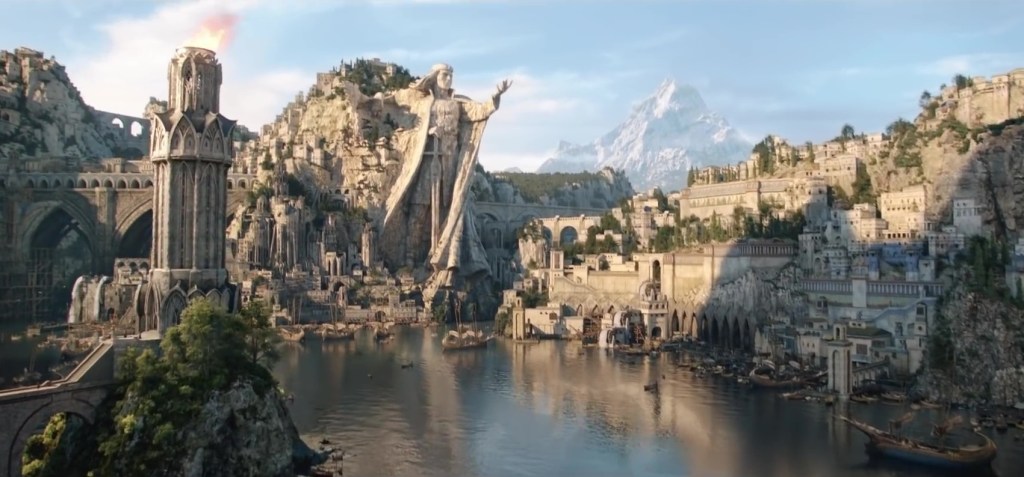
Most of the rest of the show’s visuals were great. I particularly enjoy the way Númenor looks; the Carthage or Bronze Age-Mediterranean inspiration in the civilisation’s architecture, clothing, and more just… they’re a fun addition to the medieval fantasy world of Middle-earth. The Rings themselves all look pretty good, too, and I could buy into them as being powerful objects, particularly thanks to some great accompanying sound design. The inaudible whispers as the Rings come into focus really help sell the illusion that people are being drawn to them – and that resisting their influence takes a lot of willpower.
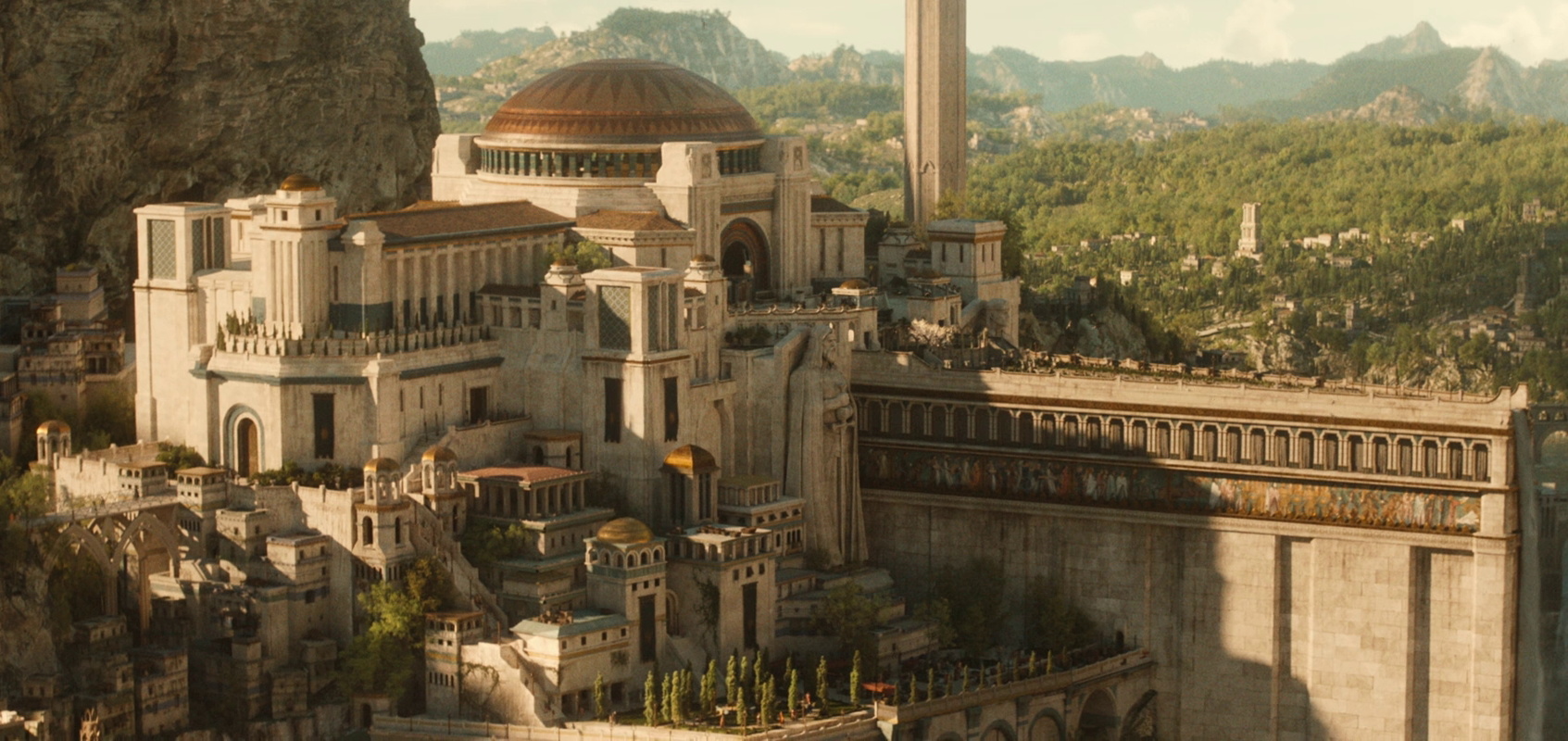
Still frame from The Rings of Power S3 showing Numenor
An establishing shot of Númenor.

Despite its flaws and weaknesses, I’m always a sucker for a redemption story, so Gandalf helping Pallando to remember why he came to Middle-earth and snap out of whatever had caused him to lose faith still hit some of the right emotional beats for me. As mentioned, Ciarán Hinds excelled in that role, and was a wonderful foil for Daniel Weyman’s Gandalf.

Charlie Vickers is absolutely delicious to watch as Sauron, dominating the scenes he’s part of (even if some of the writing and storytelling on his side of the story still needs work!) His scenes talking to the illusory Celebrimbor were particularly fun, and the way he commanded Theo to kill Arondir was a genuinely shocking moment – the impact of which was enhanced by the cold brutality that Vickers gave to Sauron in that moment.
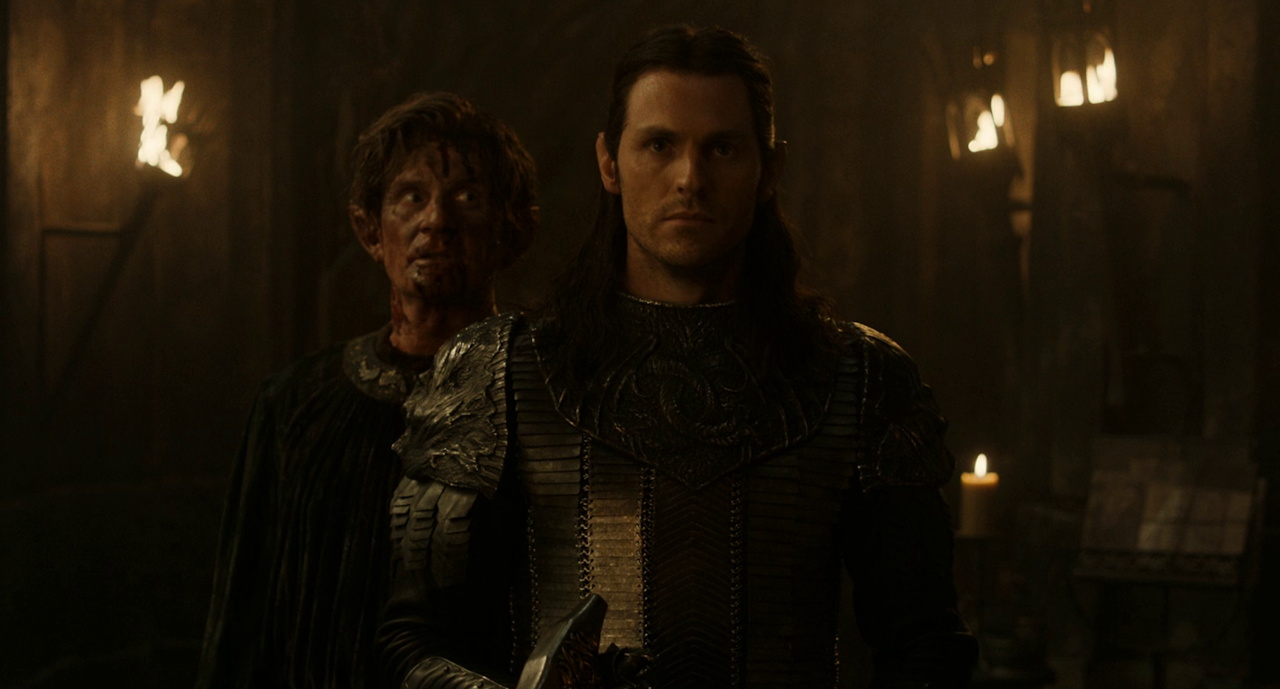
Still frame from The Rings of Power S3 showing Sauron with an illusory Celebrimbor
Charlie Vickers excelled as Sauron this time.

Despite killing off a few named characters in Seasons 1 and 2 – Bronwyn, Adar, Celebrimbor, Saddoc, and a couple of others – I would’ve said that “plot armour” has been a bit of a weakness for the series. So to kill off characters like Eärien and Arondir this time – the latter of whom had been set up as a pretty major character thus far – stuck the landing and felt pretty shocking. Pallando’s death wasn’t as much of a surprise – in fact, that whole sequence was kind of a cliché – but I can still appreciate that the series went there.

Speaking of… can’t Pallando just come back to life in a slightly different colour, as Gandalf did? I jest.

The prosthetics – particularly for the orcs, as their design is more complex, but also for Elves, Dwarves, Sauron, and others – continue to be impressive and immersive. Seeing a large number of Orcs on screen at once – in an army, a dungeon, Sauron’s chambers, and so forth – is always a great visual, and The Rings of Power has done well with physical props and prosthetics in general. In terms of art design, I’ve already praised the way Númenor looks, and while Mordor is a bit more “generic fantasy villain” with its dark tones and bright orange lava, the way that fire and lava look in the show is pretty good on the whole, and I like the way Mordor comes across.
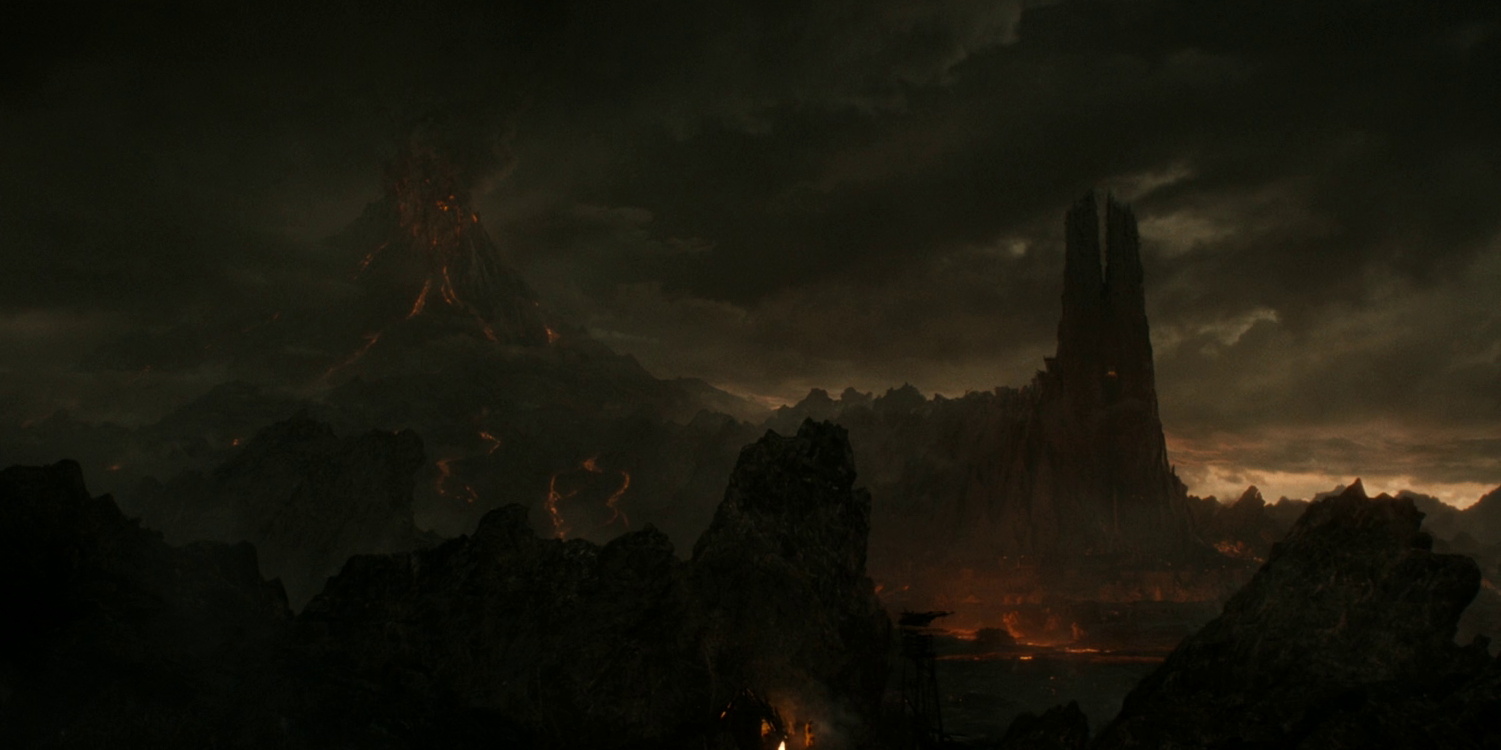
Still frame from The Rings of Power S3 showing Mordor
Mordor.

The Rings of Power also earns praise for the way it treats the Orcs. Rather than one-dimensional fantasy villains, or mere cannon fodder for Sauron’s armies, some Orcs – particularly in Season 1 – came across as almost being… sympathetic.

That continued in Season 3 with Marnûkh: one of the rare Orcs to get a name. Marnûkh had his own reasons for wanting to abandon Sauron and take him down; his loyalty to Adar, and his genuine belief in Adar’s promises to give the Orcs a homeland of their own, were his driving force. There was still villainy to Marnûkh; despite switching sides, he still had an unpleasant side, and sparred with Arondir in particular. But it’s interesting, if nothing else, to see at least some Orcs in a different light. The Rings of Power wasn’t trying to do a “both sides have good and bad people” fence-sitting kind of thing! But it’s a continuation of the way the series has dealt with the theme of war to show that there can be more to the “enemy” than just pure villainy.
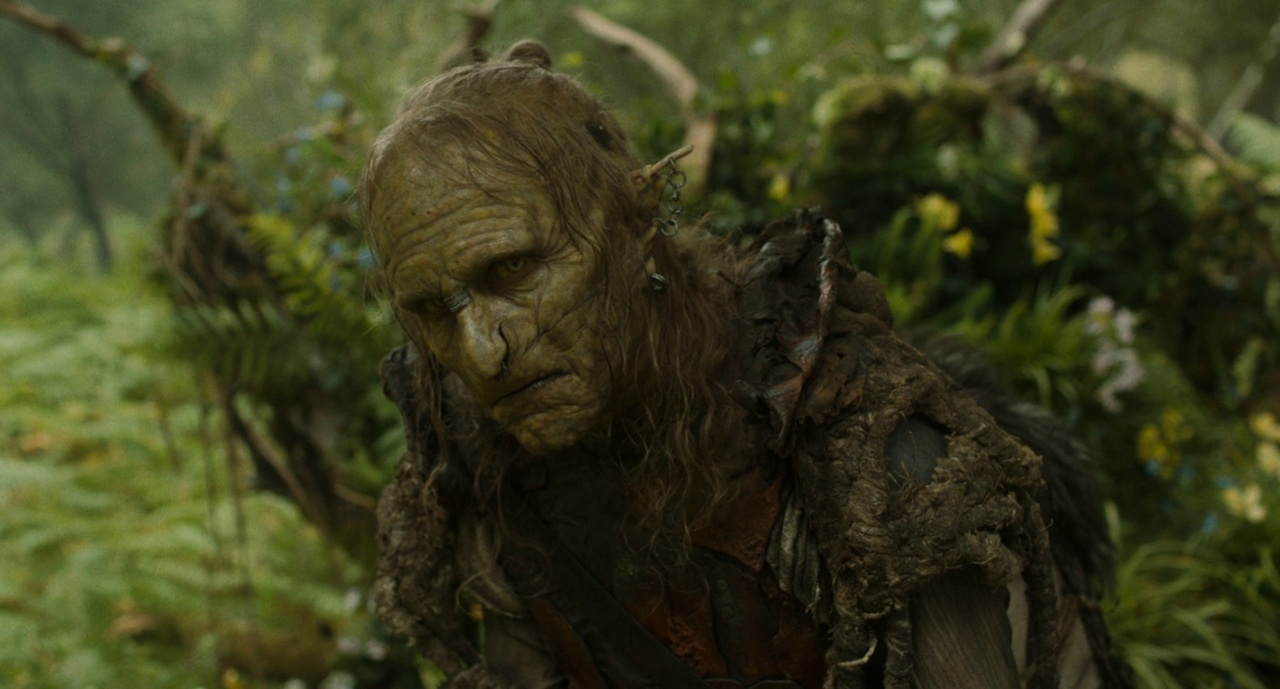
Still frame from The Rings of Power S3 showing Marnukh the orc
Marnûkh the Orc.

Some individual performances have been great, even if they weren’t necessarily part of the strongest storylines. I’ve already mentioned Ciarán Hinds, Charlie Vickers, Tyroe Muhafidin, and Sophia Nomvete, but I’d also highlight Daniel Weyman as Gandalf, Robert Aramayo as Elrond, Lloyd Owen as Elendil, Trystan Gravelle as Ar-Pharazôn, and Will Keen as Belzagar as being particularly praiseworthy.

My number one rule for music and sound design in any film or TV show is “do no harm;” i.e. the music shouldn’t get in the way of what’s happening on screen, and sound effects should line up with what’s unfolding. The Rings of Power clears this (admittedly low) bar with ease, but whereas Season 1 brought a wonderful a capella song in This Wandering Day, there was nothing at that level this time around.

I would’ve called the cinematography great, but I think the deliberate copying of shots from The Lord of the Rings trilogy drags it down a lot. Outside of those moments, yeah – The Rings of Power uses its camera really well. But all of that blatant copying really soils it for me.
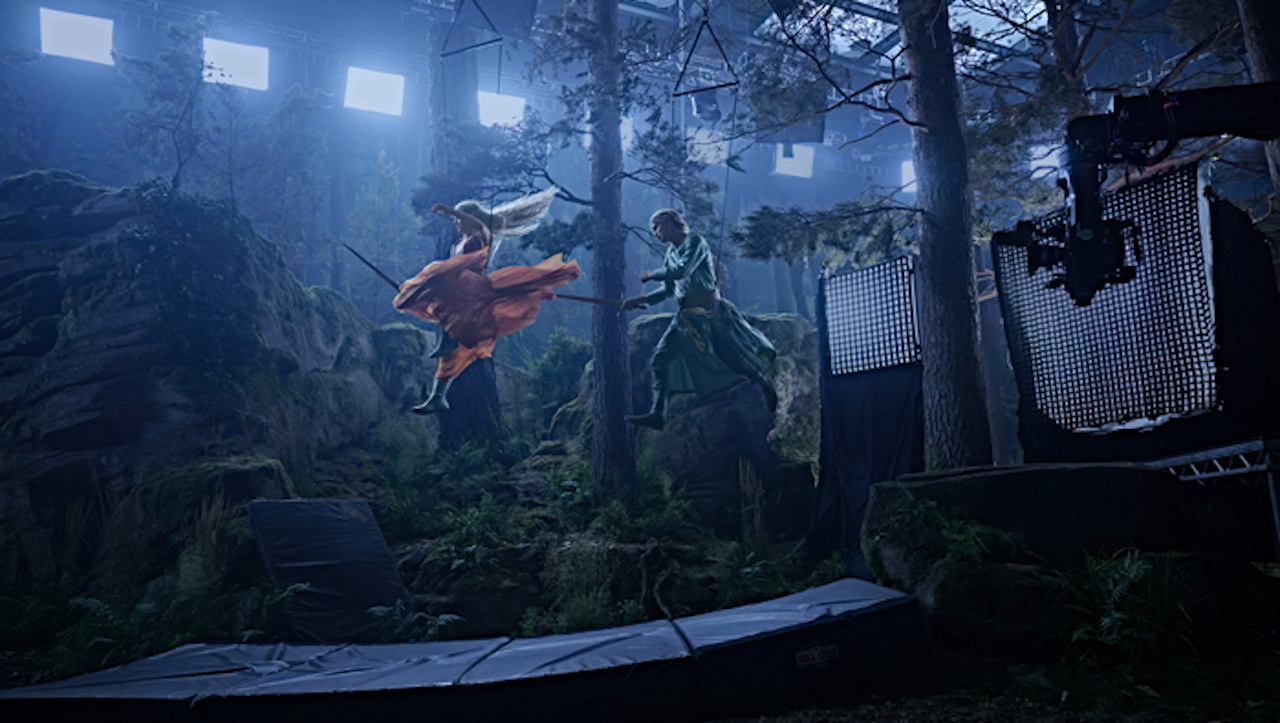
Behind the scenes photo from The Rings of Power S3 showing Elves
Behind-the-scenes snap of one of The Rings of Power’s more creative visual sequences.
Photo: Amazon Prime Video

So I think that was everything I had in my notes.

The Rings of Power has now set the stage for the next phase of the war against Sauron, moving characters into place for more conflict and confrontation. I’ve picked on some storytelling decisions and narrative directions that I felt didn’t work or didn’t stick the landing, but what I will say is that The Rings of Power managed to hold my attention, and at no point across the eight episodes did I consider switching it off. I can be pretty brutal when it comes to abandoning any piece of media that I’m not at least somewhat enjoying, so there are obviously parts of The Rings of Power that remain compelling enough to keep me coming back.

However… we’re now past the halfway point of The Rings of Power’s five-season run (per initial reports after its announcement), and I’m still struggling to justify its place in the world of Middle-earth. Did The Lord of the Rings need a prequel like this? And did Amazon need to deviate so much from the lore of Tolkien’s world and the source material upon which it’s based?
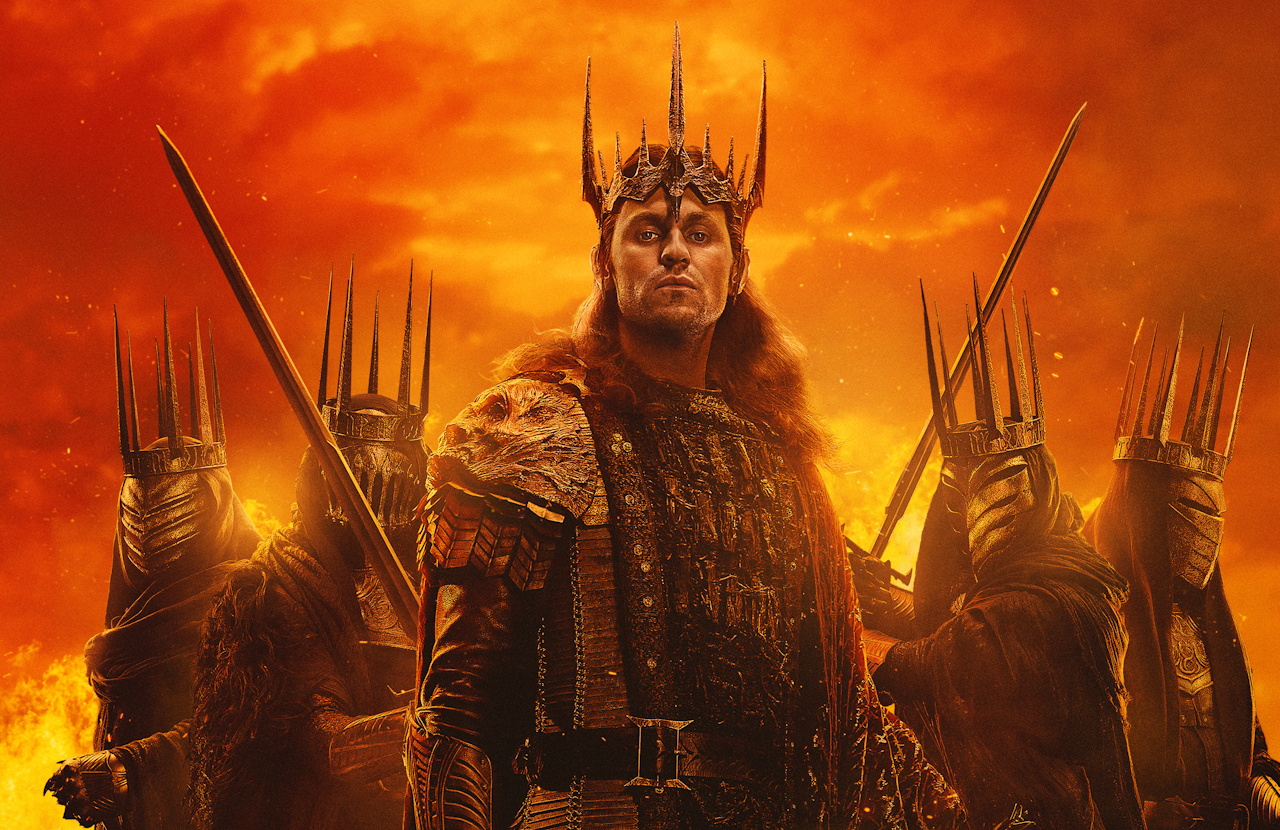
(Cropped) promo poster for The Rings of Power S3
Sauron and the Nazgûl on a promotional poster.

At the end of my review of Season 2, I said it would be up to future seasons to build upon the foundations that the first two seasons had worked to establish. Season 3, for me, didn’t really do that in a convincing way, and while there are things to enjoy… this was really the final opportunity The Rings of Power could conceivably have to make good on its core ideas and really explain to its (remaining) audience why the story of Sauron’s creation of the One Ring and the war to defeat him was worth telling. The show is telling it anyway – but I’m still not convinced it’s necessary.

The Rings of Power was hampered, for me, by taking such a long break in between seasons. Two-plus years is a long time to wait for eight episodes of television, and I found that many of the minor and secondary characters had entirely vanished from my memory. I hope that Season 4 can be ready more quickly, but I doubt it.
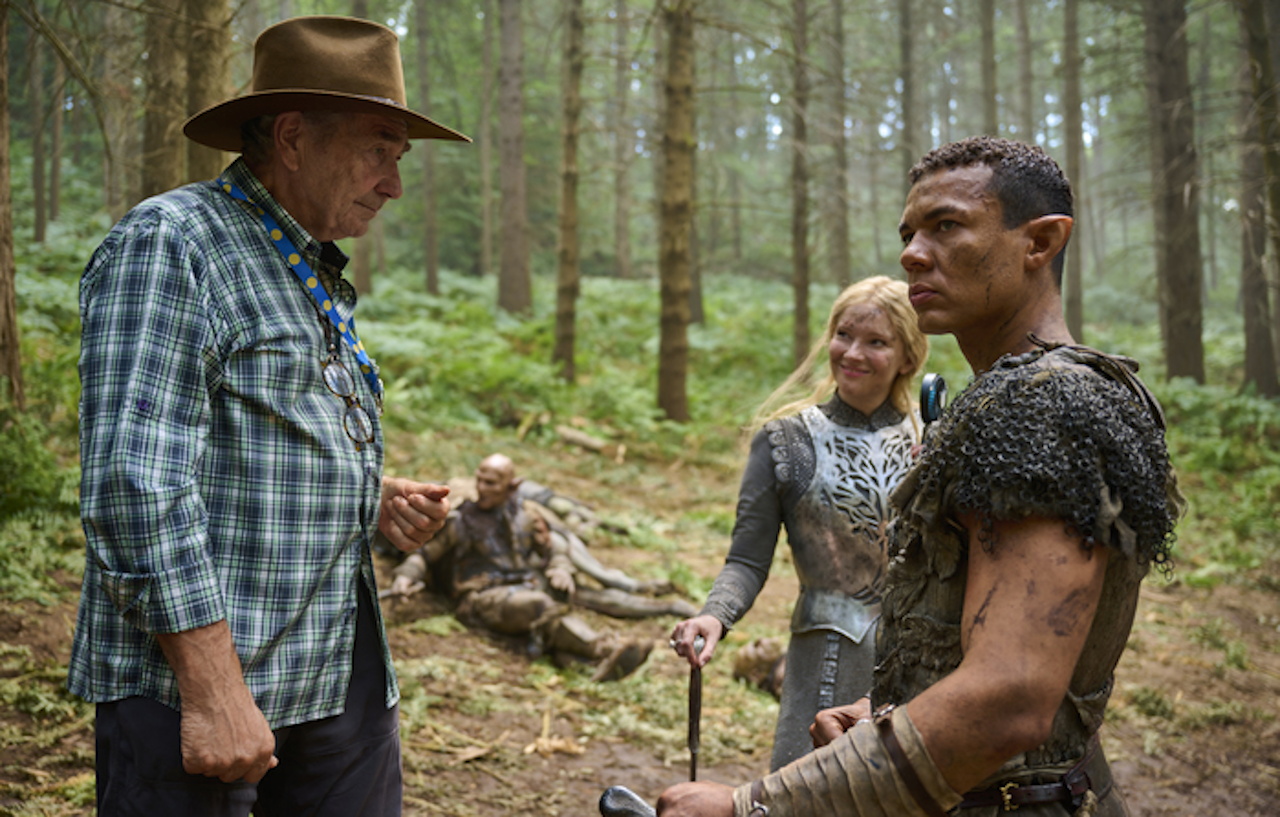
Behind the scenes photo from The Rings of Power S3 showing Galadriel and Arondir
On set with Galadriel and Arondir.
Photo: Amazon Prime Video

So that’s all for today. If you made it to the end, thank you for reading. I hope my review has been of interest! And if you missed it, you can find my review of Season 2 by clicking or tapping here.

Between now and the end of the year, I have a couple more films and TV shows that I’d like to get around to watching and reviewing, so I hope you’ll stay tuned for that! And if you’d like to see whether or not The Rings of Power will win a coveted Trekking with Dennis End-of-Year Award, please join me again at the end of December. I’ll be dishing out some made-up trophies and imaginary statuettes to some of my favourite entertainment experiences of 2026.

I hope to see you soon!


The Lord of the Rings: The Rings of Power is available to stream now on Amazon Prime Video in the United Kingdom and around the world. Seasons 1 and 2 are also available on DVD and Blu-ray. The Lord of the Rings: The Rings of Power is the copyright of Amazon MGM Studios, New Line Cinema, and/or the Tolkien Estate. This review contains the thoughts and opinions of one person only and is not intended to cause any offence.

The Rings of Power: first impressions

Spoiler Warning: There are spoilers ahead for The Lord of the Rings: The Rings of Power. Spoilers are also present for The Lord of the Rings, The Hobbit, The Silmarillion, and other J.R.R. Tolkien works.

The Rings of Power – or to give it its full, clumsy title: The Lord of the Rings: The Rings of Power – got underway yesterday on Amazon Prime Video. As one of the shows I’d been most interested in all year, I tuned in almost as soon as the opening pair of episodes were available, curious to see what Amazon’s sky-high budget and years of planning could bring to the high fantasy genre.

For me, and doubtless for many other viewers as well, The Rings of Power simply cannot escape three massive sets of expectations. Firstly, the show has a legacy to live up to in the form of The Lord of the Rings film trilogy. Secondly, as the first-ever “billion dollar” television show, The Rings of Power must demonstrate an ability to go above and beyond pretty much anything else present on the small screen. And finally, there are inevitable comparisons with the show that set the bar for multi-season serialised high fantasy television shows: Game of Thrones. I think it isn’t unfair to say that there hasn’t been a television project in a generation that finds itself under so much pressure to deliver.

Galadriel and Gil-Galad on a promotional poster for The Rings of Power.

As we discussed back in February when I previewed the series, some viewers have taken to pre-judging The Rings of Power. Partly there seems to be a bloody-mindedness in hoping that Amazon would fail, and there were definitely racially-motivated criticisms of some of the casting choices – something that’s been incredibly disappointing to see. But there are also some genuine concerns: could the series possibly live up to the legacies of one of the most successful film trilogies and one of the most influential television shows of the past twenty years? How would it fit in with the “established lore” of Tolkien’s Middle-earth? And more fundamentally, is there even a story here that’s worth telling?

Some folks seem to have arrived at their answers to these questions already, deciding that The Rings of Power is going to be irredeemably awful and taking to social media at every opportunity to denounce it to anyone who’d listen. In the past couple of days the show has even been subjected to a degree of review-bombing. But speaking for myself, I wanted to see The Rings of Power before rushing to judgement. While two episodes of an eight-episode season aren’t enough to paint a full picture, I feel like I can at least share my first impressions of the series with you today.

The Rings of Power has finally arrived.

I liked The Rings of Power. The acting performances were solid, the visual effects were competent, its aesthetic style harkened back to The Lord of the Rings films, and when the story got going it held my attention well enough that two episodes passed by in what felt like a matter of moments. As the credits rolled on the second episode, Adrift, I felt myself curiously interested to see what happens next.

The two-part premiere did a decent job at introducing us to what seems to be the primary characters whose stories The Rings of Power intends to follow. One of my criticisms of Game of Thrones back in 2011 was actually how dense its first few episodes felt; had I not binge-watched Season 1 I may actually have stopped watching the series, as keeping track of so many characters and storylines was pretty confusing. In that sense, The Rings of Power did a good job not to overwhelm viewers with too much all at once.

Lenny Henry as Sadoc, one of the Harfoots.

So I felt that The Rings of Power got off to a good start – but perhaps not a spectacular one. After two episodes, the show feels like it’s trying to play it safe; I didn’t note much by way of risk-taking that could take a decent, competent series and elevate it to the kind of phenomenon that The Lord of the Rings films or Game of Thrones became. By sticking relatively close to the visual style established by The Lord of the Rings, for example, The Rings of Power has tried to both find a ready-made identity and pluck at the nostalgic strings that its producers hope will bring in viewers in droves. But by re-using this aesthetic style, The Rings of Power has surrendered its opportunity to construct its own identity.

It’s also worth talking about the story framework that we saw in the premiere. The trope of a hero who finds evidence of an impending threat or disaster, only to be ignored by their superiors, may have been brand-new when Tolkien was writing in the first half of the twentieth century, but it doesn’t exactly make for a groundbreaking or unique story in 2022. Yet this is the outline of both Galadriel’s story with the Elves and, to an extent, Bronwyn’s story in the Southlands. A common trope like this doesn’t necessarily make for the strongest introduction to a new story.

Galadriel found herself opposed by Elrond and other Elves, despite presenting them with evidence of Sauron’s survival.

Though The Rings of Power did a solid job at introducing us to its main characters, there were definitely moments where I felt some background knowledge of Tolkien’s works was something that the series expected from its audience. These mainly concerned elements of backstory – who the villainous Morgoth is, what a Silmaril is, the relationship between factions like the Elves, Men, and Dwarves, and how Sauron fits into the story of a conflict between the peoples of Middle-earth and Morgoth. A very brief sequence at the beginning glossed over some of these points, but not in sufficient depth that a newcomer to the world of Middle-earth would find them easily understandable.

In terms of laying out the world of The Rings of Power, though, I felt that the series did a good job. After two episodes I feel that I understand who lives where, where locations are in relation to one another, and the layout of the world and the primary locations we’ve visited so far. The relatively simple construction of a map, shown on screen for no more than a few seconds at a time, actually ended up being a very effective tool for communicating these things, and I felt it worked well. The seamless transition from the map to the sea at one point was also a neat effect.

The inclusion of a map was a simple but effective visual tool.

Sticking with visual effects, there weren’t many in the first two episodes that I felt were sub-par. There were a few moments where the blending of real actors and sets with CGI backgrounds wasn’t entirely perfect, but those issues can be noticeable even in big-budget productions, and none of those handful of moments really pulled me out of the immersion. I’d particularly call attention to the “falling star” seen in A Shadow of the Past as one of the better CGI creations; it really managed to feel like a meteor of some kind was hurtling toward Middle-earth.

If I were to nitpick, I’d say that perhaps the physical fake snow used in the first part of A Shadow of the Past wasn’t particularly impressive, managing to have the same flat, non-reflective look of similar set dressings that have been in use for decades. The CGI snow used elsewhere in these sequences looked decent, but when Galadriel and her team were seen up close, there was a noticeable difference in texture. Otherwise, physical props and costumes used throughout the first pair of episodes were solid.

A closer look at the fake snow used in the season premiere.

One of the most interesting props is the darkly enchanted sword hilt that Theo uncovered. It’s fascinating from a story point of view, of course, and may well belong to Sauron or one of his most-important minions. But it manages to look fantastic on screen, too – a dark, intimidating design that seems to harken back to the image of Sauron in full armour from The Lord of the Rings films.

Speaking of harkening back to The Lord of the Rings: surely I’m not the only one who noticed that Halbrand actor Charlie Vickers was doing an almost over-the-top impersonation of Viggo Mortensen’s Aragorn as he made his first appearance! The way his hair was styled, the way he held himself, and even the way he opened his mouth all felt like they had been carefully choreographed to mimic that iconic portrayal. Halbrand is not a canonical character from Tolkien’s works, and the aforementioned mimicry could be a deliberate red herring, but part of me thinks we’re going to learn that this character has some kind of connection to Aragorn in the episodes ahead!

Halbrand channelling his inner Aragorn…

Some of the battle and post-battle scenes early in the season premiere carried a very strong First World War influence, and I have to assume that was done deliberately. Tolkien was himself a veteran of that conflict, and its influence can be felt in the massive scale of the wars and battles that he created for The Lord of the Rings in particular. This level of destruction, with battlefields reduced to mud, trees stripped of all of their branches, and huge piles of bodies, also succeeded at communicating the scale of the Elves’ conflict against Morgoth and Sauron in a relatively short sequence that didn’t have time to go into a lot of detail, so as an effect it worked well.

Even a century on from the First World War, the way its battlefields looked is still seared into the minds of many people here in the west, and The Rings of Power took advantage of this to use a familiar visual cue to communicate, in a short sequence, just how destructive and devastating this war was as it set the stage for the story to follow.

Galadriel stands on a battlefield that feels reminiscent of the First World War.

A good television soundtrack is unobtrusive. It subtly tells audiences what emotional state certain characters are in, whether danger is just around the corner, or fills an otherwise-awkward gap during silent moments. While a theme tune can become iconic, the soundtrack of episodes themselves should be a relatively toned-down affair. The Rings of Power didn’t get this right, in my view, bringing an incredibly dominating soundtrack that, at several critically-important moments, seemed to hit levels rarely seen outside of soap operas.

The old-fashioned, heavy soundtrack came booming in during several crucial scenes, drawing attention away from the characters and the action instead of backing it up. This is obviously the opposite of what a good soundtrack should be doing, and there are criticisms of both the composition and the sound mixing in both of the first two episodes that I really shouldn’t be needing to make. When we’re at this level, these are some of the basic competencies that a television production should be pulling off flawlessly without even thinking.

One of the moments between Bronwyn and Arondir had music that was, for me at least, too heavy and intrusive.

I’m not a Tolkien super-fan, so I can’t be sure whether some of the dialogue in The Rings of Power has been lifted directly from works like The Silmarillion. But what I would say is that much of the language used in the first two episodes, particularly in scenes featuring the Elves, was very flowery and old-fashioned, as if it had been written decades ago. That was almost certainly intentional, perhaps to tie in with Tolkien’s own writing style or perhaps to give The Rings of Power a “classiness” or even just to distinguish it from other modern shows. However, the effectiveness of this kind of flowery, old-fashioned language is very much a subjective thing, and how well it will work isn’t exactly clear at this early stage.

Some of the lines of dialogue in the first two episodes felt scripted and clumsy – partly as a result of this choice of language – and while I didn’t feel knocked out of my immersion once I got used to it, it was definitely something that took a little getting used to. In any work of fantasy, actors have to work hard to make strange and unusual words and phrases seem normal, but that really isn’t the issue in this case. I can easily accept conversations about warp cores in Star Trek or dragons in Game of Thrones, but here in The Rings of Power, choices as far back as the scriptwriting stage made otherwise innocuous or basic conversations feel almost stilted, as if the production itself, despite its modern visual style and impressive CGI work, was from a much earlier era. For some fans, that’ll make The Rings of Power feel even better. For others… I think it has the potential to detract from the story.

There were several clunky or unnatural-sounding lines of dialogue in the opening two episodes.

As I said, though, once my ears had acclimatised to this way of speaking I didn’t feel it was horribly awkward – but it’s worth noting that, at least for me, it was something that took some getting used to before I could fully immerse myself in Middle-earth. Perhaps I should’ve re-watched The Lord of the Rings before watching The Rings of Power, because now I can’t really remember whether this issue of flowery, old-fashioned language was present to the same degree. I don’t remember it ever being a problem, and I regard that trilogy as one of the best ever brought to screen. But it would be interesting to take a look and compare!

So let’s talk story. Although I find myself curiously interested to see where The Rings of Power goes next and how it will weave its disparate narrative threads together, I don’t feel absolutely gripped by the story after the first two episodes. I’m not desperately awaiting next Friday in the way I can be for new episodes of Star Trek, or in the way I was for Game of Thrones or even shows like Lost.

The Elves of Lindon.

I think partly this is because of the “prequel problem” that I’ve talked about here on the website on more than one occasion. In short, we know where these characters will go and what the ultimate outcome of this story will be. There’s no real sense that Galadriel will ever be in serious danger – because we know she survives for another four thousand years after the events of The Rings of Power. While the series is doing its own thing to an extent by introducing new characters and telling its own story, it’s also billing itself as being firmly set in the world of The Lord of the Rings – heck, that’s the first part of the show’s title. So given that we know the story of The Lord of the Rings and how characters like Elrond, Galadriel, and Sauron fit into it, it’s difficult for The Rings of Power to really reach out and grab me in the same way as a new story with an unknown outcome could.

When we look at The Silmarillion and other Middle-earth books set millennia before The Lord of the Rings, one of the key points is that the characters involved don’t know who Sauron is, whether he’s still around, whether he can come back, etc. But as the audience watching The Rings of Power, we know how this ends: Sauron returns, raises an army, and it takes an alliance of Men, Elves, and Dwarves to defeat him on the slopes of Mount Doom – as seen in the introduction to the film version of The Fellowship of the Ring. Knowing what’s coming robs a story like this of at least some of the tension and excitement, and while it can still be fun to see how the characters arrive at their ending points, we know the destination.

Sauron’s presence looms large over the story.

Even someone like me – and I’m no super-fan of Tolkien by any stretch – knows the basic outline of the story of Sauron’s rise and fall in this era, and just like other famous prequels have struggled to keep up the tension and excitement, I feel that the same issue is already hampering The Rings of Power – at least to an extent. The fates of characters like Nori, Bronwyn, Arondir, and Halbrand are definitely up in the air and ripe for exploration, and I’m absolutely interested to see what comes next for them. But characters like Galadriel, Elrond, Celebrimbor, Durin, and Gil-Galad have their futures written.

Overall, though, the first pair of episodes did a good job at setting up this idea of a slowly-awakening evil; a gathering storm. We saw the slow build-up to the discovery of Sauron’s survival through Galadriel’s eyes, then saw how the Southlands are slowly being corrupted and attacked by Orcs in the stories of Bronwyn and Arondir. The proto-Hobbit Harfoots also had comments to make on the unusual goings-on in Middle-earth, and of course were present for the “falling star” that brought a character currently known as the Stranger into the story. The idea that the world is on the edge of some drastic changes, and that the ruling Elves are oblivious or perhaps wilfully blind to these problems was well-established and conveyed through these different storylines. The latter part – leaders ignoring or trying to downplay serious problems – feels rather timely at the moment, too!

The “shooting star.”

I definitely felt Galadriel’s frustration at being dismissed by Elrond and Gil-Galad, and I think that’s a testament to some strong performances from Morfydd Clark, Robert Aramayo, and Benjamin Walker. Though I called this setup a trope earlier, there’s no denying that it works in this context. The aloof presentation of the High Elves gives their leaders an arrogance that absolutely succeeded at getting me firmly on Galadriel’s side. While again this isn’t something that can be said to be unique to The Rings of Power (look at how the Vulcans are portrayed in Star Trek: Enterprise, for instance) it was pitch-perfect in the way it was deployed.

The sequences at sea with Galadriel, Halbrand, and (briefly) Halbrand’s companions were among the best in the premiere. I’m not certain how or where this was filmed, but the water was so incredibly realistic, managing to look like deep ocean instead of a shallow sea or pool – and this one visual cue did so much to ramp up the tension as the duo survived an attack by a sea monster. The dark water felt dangerous, not only because of what it was hiding but because deep water like that is usually only seen far from land. Look at how films like The Bounty use this same deep water effect to signal how isolated and far from safety characters are; The Rings of Power really did a great job here.

Galadriel and Halbarad’s raft.

And these scenes with Halbrand and Galadriel also took the story in somewhat of a different direction. Galadriel’s choice to swim back to Middle-earth could have been a simple one, perhaps even one that was resolved off-screen, but putting her in this “shipwrecked” situation was a definite change of pace for a character who had been on a mission.

The Harfoots’ camp recaptured at least some of the idealised, pastoral feel of the Shire in The Hobbit and The Lord of the Rings. Showing how the Harfoots live in a temporary camp, migrating with the seasons, was a neat addition that made it feel even older, somehow – like some depictions of Native Americans prior to European colonisation.

The Harfoots’ encampment.

Within that framework we got the traditionalist Harfoots to contrast with the more adventurous Nori; her story was set up well enough by leading some of the camp’s children to a berry bush, but I didn’t feel that the danger posed by a wolf was properly paid off – though I suppose it’s something that could be revisited in later episodes, the wolf’s presence was very brief and although it did feel like a threat to the diminutive Harfoots, it seemed to be rushed past and quickly forgotten by a story that had other priorities.

Nori’s relationship with the Stranger is still something that The Rings of Power is building up – beautifully, in my view. Her care for this mysterious giant who fell from the sky humanises her and takes her from being a somewhat rebellious child to someone that I’m sure we’ll be able to get behind as the story progresses. Although I’m sure there’s a lot of speculation as to the identity of the Stranger, I felt that the impact crater and fire seemed to resemble an eye – and a flaming eye definitely carries with it memories of a certain Dark Lord!

Am I overreaching, or does this look like “a lidless eye wreathed in flame” to you?

Of all the settings we’ve seen so far in The Rings of Power, none felt quite so familiar as the Dwarves’ mountain home of Khazad-dûm. We’d spent a lot of time with Dwarven mines in The Lord of the Rings and particularly in The Hobbit trilogy, and The Rings of Power seems to borrow heavily from those projects in practically every way. From the design of the Dwarves themselves all the way to the aesthetic of their subterranean kingdom, The Rings of Power really succeeded at recapturing how the Dwarves have been presented in the past.

It was also in Khazad-dûm that I felt The Rings of Power beginning some of its more delicate and character-driven storylines. Stories focusing on Arondir and Galadriel feel epic in scale because of their focus on this growing darkness and the impact it will have on Middle-earth, but the conflict between Elrond and Prince Durin brought The Rings of Power back down to an understandable level. Durin was upset that Elrond, a long-lived Elf, had simply disappeared from his life for such a long time – and it took Elrond a moment to fully grasp that. For me at least, this became one of the best and certainly most-relatable storylines in the opening pair of episodes.

Elrond and Durin’s falling-out went a long way to bringing the story of The Rings of Power down to a relatable level.

The Rings of Power is off to a good start – but not a great one. Visually, the series is well-made. It borrows from The Lord of the Rings in many ways, but it also incorporates new design elements that help it feel distinct; part of the same world, but not a carbon copy of what came before. There were definitely some issues with the soundtrack and sound mixing that shouldn’t be present in a series that aims to compete at this level, and that’s something I hope can be addressed promptly. There have been some wonderful moments of characterisation that really pulled me in… and a handful of others that weren’t quite reaching that same high bar. Overall, I’d say that the series has left a good first impression and I’m happy to return to it next week to pick up the story. But I’m unlikely to be spending much time between now and then speculating, theory-crafting, or even really just thinking about The Rings of Power very much.

Am I nitpicking too much or being too harsh on The Rings of Power? Well, that’s up to you to decide. But what I will say is this: The Rings of Power is the most expensive television series ever created, and that brings with it expectations in terms of quality that basic competence doesn’t cover. Moreover, as much as I want to judge The Rings of Power entirely on its own merits, by very deliberately leaning into The Lord of the Rings films, the show has invited comparisons to that trilogy – and other works in the high fantasy genre.

What’s going to happen next in The Rings of Power?

I’m glad that I gave The Rings of Power a fair shake and didn’t make a snap judgement. Although I can understand a certain amount of schadenfreude at wanting to see a massive corporation like Amazon meet with financial and critical failure, speaking for myself what I really want to see is another success in the high fantasy genre. I don’t want The Rings of Power to be disappointing – I want it to be entertaining! The first episodes, while they had some issues that I’ve tried to elaborate on, broadly speaking managed to entertain me, and I came away from them feeling satisfied with what I’d seen.

I’m hopeful that The Rings of Power now has a foundation upon which to build a successful series. With five seasons having been planned – and potentially somewhat of a soft reboot coming in Season 2 thanks to a change in filming locations – there’s a long story to get stuck into, one that, like Game of Thrones before it, will unfold over the next few years. There’s time for some of the production’s weaker elements to be addressed, even if it doesn’t happen this season. Whether The Rings of Power will still be talked about in the same breath as Game of Thrones and The Lord of the Rings by future audiences… well, that’s still an open question. But it feels as though all of the elements exist for this series to reach those high bars. I genuinely hope that it will.

The Lord of the Rings: The Rings of Power is available to stream now on Amazon Prime Video. The Lord of the Rings: The Rings of Power is the copyright of Amazon Studios, New Line Cinema, and Amazon. The Lord of the Rings, The Silmarillion, and other works mentioned above are the copyright of the Tolkien Estate. This article contains the thoughts and opinions of one person only and is not intended to cause any offence.

Looking ahead to The Rings of Power

Spoiler Warning: There are minor spoilers ahead for The Lord of the Rings films and for The Lord of the Rings: The Rings of Power.

It’s been several years since Amazon announced that it had purchased the rights to make a television series based on J.R.R. Tolkien’s work. In that time, the corporation has kept a tight lid on the show’s progress, and very little news has trickled out. However, with the series aiming to premiere later this year, Amazon has kick-started the marketing push! After the show’s actual name was finally revealed a couple of weeks ago, we got a few different poster designs, and then a few images featuring some of the cast, before the first official teaser trailer made its debut a few days ago.

Today I thought it could be interesting to look at what’s been revealed and teased so far, and see what we might be able to gleam about The Lord of the Rings: The Rings of Power. This is going to be the most expensive television series ever created, and was greenlit out of the gate for five seasons. Intended to be Amazon’s answer to Game of Thrones, the show aims to build on the renewed success that the high fantasy genre has been experiencing. Based on Amazon’s financial commitment we should be in for a series with high production values and great visuals – one which can push boundaries and set a new high bar for television in general. That might sound like I’m asking for too much, but with a billion dollars on the line and competitors like Disney doing some incredible things with visual effects on streaming shows like The Book of Boba Fett, anything less would be underwhelming in the extreme.

Morfydd Clark as Galadriel in a promotional image.

First up, let’s talk about the title. I’m sorry, but The Lord of the Rings: The Rings of Power is an incredibly clunky, unwieldy title for a television series. In its short form, I guess we’ll be referring to the series as The Rings of Power, which is better! But the first thing that struck me was that it wasn’t a particularly inspired or original title. It frames the new series entirely around the rings Sauron had made for the Elves, Dwarves, and Men of Middle-earth, and that seems to take the series back to the familiar story that we’ve already seen play out.

Rather than this prequel using Tolkien’s work as a base for building its own story, the title seems to suggest that we’re really going to be seeing earlier chapters in the story we already know. There was scope, when stepping back literally thousands of years, to do something different. Early rumours suggested that the series might look at the rise and fall of Númenor, one of the kingdoms of Middle-earth that was extinct by the time of The Lord of the Rings, and while Númenor’s story may indeed play a role, the title of the series now suggests that we’re really going to be focusing more on Sauron and his rise to power.

Is this Númenor?

Such a focus makes The Rings of Power more of a direct prequel to the events of The Lord of the Rings and less of an expansion of Middle-earth and Tolkien’s work on the small screen. That isn’t to say it will be bad as a result – but The Rings of Power will be confronted by the typical “prequel problem” that many such productions face: namely, we already know how this story ends. We’ve already seen what is arguably the more interesting part… so just convincing people to stick around and see what came before is automatically a challenge for The Rings of Power to surmount, one that wouldn’t have been present if the series had been structured differently.

Over the past few years since Amazon announced this project, I’ve heard a lot of people saying that the corporation shouldn’t be using the placeholder title “The Lord of the Rings on Prime” because the new series isn’t going to be about The Lord of the Rings. But it now seems that it actually is going to be all about the One Ring, Sauron, and his rise and fall. I’m not the only one who had been expecting the series to go in a different direction, and I think that the decision to stick closer to the established, familiar story represents a lack of boldness on Amazon’s part. Having spent all of this money for the rights to Middle-earth, there may have been a fear that steering away from established characters and storylines would be detrimental to the show’s prospects.

The character of Bronwyn – a healer and single mother, played by Nazanin Boniadi – was created for The Rings of Power.

On the flip side, I’ve heard fears from some fans that The Rings of Power will stray too far from Tolkien’s stories, so I guess there’s no way to satisfy everyone! For those folks, though, I would suggest that the title of the series, and the fact that characters like Elrond, Galadriel, and others will play significant roles means that it can’t be diverting too far away from storylines we might be familiar with.

It’s been a long time since I read The Hobbit or The Lord of the Rings, and I don’t claim to be a Tolkien super-fan who knows all of the ins and outs of Middle-earth and the stories set there. So from my point of view, if the show’s central story arcs are engaging and exciting, they can dip in and out of the so-called “established canon” of Tolkien’s world at will. The same applied in some respects to Game of Thrones, a series which moved progressively further away from its source material season by season. If the stories continue to be well-written and entertaining, and the world populated by fun characters, that’s going to go a long way to making up for any deviations from the stories Tolkien wrote.

Charging horses seen in the teaser trailer.

In terms of the look of The Rings of Power, there’s definitely a heavy influence from the Peter Jackson films. I noted in the poster of King Durin in particular that the Dwarves seem to be modelled on those we remember from The Lord of the Rings and The Hobbit trilogies. In other areas, The Rings of Power has seemed to move away and begin to chart its own course, but this will likely be a balancing act that the series will need to keep up for its entire five seasons. New showrunners, designers, and other creatives will always want to stamp their mark on their creation, but if Amazon is banking on fans of The Lord of the Rings films turning up in droves – and nostalgia for those films being a driving force – then it makes sense to expect to see many familiar visual elements.

There will be a marked change after Season 1, though, with production moving from New Zealand to the UK. New Zealand has become practically synonymous with Middle-earth for many folks because of The Lord of the Rings being produced there, and the country has even traded on that, using Middle-earth to bring in tourism. Unfortunately it’s the fault of the pandemic that production had to be moved, but we won’t see the consequences of that – in either a positive or negative sense – until next year. It’s possible, in my view, that if Season 1 is deemed underwhelming the second season could be a soft reboot, changing up the look and feel of the series. Time will tell!

Robert Aramayo as Elrond and Morfydd Clark as Galadriel.

The trailer itself was action-packed and looks exciting. We saw different races (Men, Dwarves, and Elves) featured, as well as a few magical creatures and CGI monsters that I confess I’m not familiar with. But the whole thing was well constructed and cut together, and I think it showed off a diversity of characters and locations without revealing too many spoilers or too much about the potential storylines. It was a tease to get viewers interested, and I think it largely succeeded in that regard.

I noted what could be either a sinking ship or, perhaps, the sinking/destruction of the island of Númenor among the clips in the trailer, something that was also shown off in one of the behind-the-scenes photos. There was also what appeared to be a large battle taking place; this can’t be the climactic battle between Sauron and the Last Alliance, surely, because it was that battle that led to Sauron’s defeat and the loss of the One Ring. So I assume that this battle is taking place somewhere else between different groups of forces.

A battle scene from the teaser trailer.

There is definitely a contingent of people who want to see The Rings of Power fail, either because they dislike Amazon in a general sense, or because they see The Rings of Power as moving too far away from their understanding of Tolkien’s works. Personally, I don’t think it’s fair to pre-judge the series at this stage, with a one-minute-long teaser and a handful of photos being all we’ve seen, and I’d encourage everyone to try to lower the temperature in some of these discussions. There’s definitely a racial edge to some of the attacks I’ve seen thrown at The Rings of Power, with some so-called “fans” decrying the inclusion of non-white performers.

Because of Amazon’s status as one of the biggest companies in the world, I guess I can understand the bloody-mindedness of wanting to see it fail – even though it isn’t a sentiment I share. But to have decided already, months before the premiere, that The Rings of Power is somehow going to be unenjoyable – particularly if one of the primary reasons for thinking that way is because non-white actors are in it – seems utterly ridiculous to me. For some of these so-called “fans” to be actively willing the series to fail because it isn’t as white as they wish it would be is just pathetic.

The Rings of Power is coming soon.

As a fan of fantasy, and as someone who has enjoyed Tolkien’s work since I first read The Hobbit before I was ten years old, I want to enjoy The Rings of Power and for it to be an enjoyable and entertaining ride. Some of Amazon’s past productions in the sci-fi and fantasy genres – like The Expanse and The Wheel of Time – have been great, and while this project is certainly bigger and more ambitious, and thus has farther to fall if it doesn’t work, the potential exists for a fantasy series that could be on par with, or even eclipse, those early seasons of Game of Thrones. Amazon certainly has precedent and knows how to make some excellent television shows.

But I will judge the series on its merits when it’s here, and if I review it either as a whole season or as individual episodes I’ll be sure to give my honest thoughts and opinions at the time. I’m not a cheerleader for Amazon, but I’m certainly not going to go on the attack this early on. In my view, the trailer and photos show promise. Everything from costumes and set design to CGI work looked impressive, and The Rings of Power should be on course to make good use of its high budget in that regard. Whether the show’s writing, pacing, editing, acting performances, and the like are up to scratch… the jury is still out and we won’t know until September! But anyone pre-judging the series this early is, in my view, misguided.

The Lord of the Rings: The Rings of Power will premiere on Amazon Prime Video in September. The Lord of the Rings: The Rings of Power is the copyright of Amazon, and The Lord of the Rings, Middle-earth, and other properties are the copyright of the Tolkien Estate. This article contains the thoughts and opinions of one person only and is not intended to cause any offence.

We’re halfway through 2021!

It’s the last day of June, and as we bid goodbye to the month we also mark the halfway point of 2021. I think that makes it a good opportunity to take stock and look ahead to the entertainment experiences that lie before us between now and Christmas.

Pandemic-related disruptions continue across the entertainment industry, but after more than a year of evolving working practices due to coronavirus, I think it’s not unfair to say that many more projects have managed to enter or remain in production over the last few months than were able to at this point last year. This bodes well for upcoming titles across film, television, and video games, and today I’m going to pick out a small selection of each that I’m looking forward to before the end of the year.

Television:

It’s probably television that has the most to offer – at least for me personally – in the second half of 2021. There are several big shows coming up that I can’t wait to get stuck into, and I’m sure you can probably guess what some of them are!

Number 1: Star Trek: Discovery Season 4

Discovery’s third season was an entertaining ride, and succeeded at establishing the 32nd Century and the Federation’s place in it. In the aftermath of the Burn – the galaxy-wide catastrophe which devastated known space – and the shortage of dilithium, Season 4 will hopefully see the crew beginning to pick up the pieces.

The trailer for Season 4, which was shown off in April as part of Star Trek’s First Contact Day digital event, also showed Captain Burnham and the crew facing off against a “gravitational anomaly” which seemed to be wreaking havoc with the ship and the Federation at large. What is the “gravitational anomaly?” I don’t know – though I have a few theories! We’ll find out more when Discovery Season 4 premieres on Paramount+ (and on Netflix internationally) in the autumn.

Number 2: Star Trek: Lower Decks Season 2

After a hilarious first season, Lower Decks is returning to our screens in August – and this time Star Trek fans the world over should be able to watch the show together. Season 1 had the difficult task of taking Star Trek into the realm of animated comedy for the first time. Having proven to be a success with that concept, Season 2 can let its hair down and really double down on what fans loved last year.

There are a couple of lingering storylines left over from the Season 1 finale that I’m genuinely interested in seeing resolved. But beyond that, I can’t wait for more wacky Star Trek-themed hijinks with Mariner, Boimler, Rutherford, and Tendi! Luckily we won’t have to wait too long for this one; Lower Decks Season 2 will debut on Paramount+ (and on Amazon Prime Video internationally) on the 12th of August – barely six weeks away!

Number 3: Star Trek: Prodigy

This one has to be tentative. Upcoming children’s show Star Trek: Prodigy has been suggested for a 2021 broadcast, but with no date confirmed as of yet, and with the aforementioned Lower Decks and Discovery taking up the Star Trek broadcast slots for much of the rest of the year, I don’t know where ViacomCBS plans to fit Prodigy in.

Despite that, as we continue to learn more details about the series, it sounds genuinely interesting and looks set to be a lot of fun. The best kids’ shows manage to have something to offer adults as well, and I hope Prodigy can manage to do that while retaining an atmosphere that’s fun for children. Out of all the recent Star Trek projects, Prodigy feels like it has the most potential to introduce the franchise to a new generation of fans. There’s currently no date on the calendar, so watch this space.

Number 4: Rick & Morty Season 5

We’ve already had two episodes of the fifth season of Rick & Morty, but there are eight more to come over the next few weeks! The trademark brand of wacky, non-sequitur humour that the show is known for is still present, and it continues to be a barrel of laughs! Rick & Morty paved the way in some respects for Star Trek: Lower Decks, and there are similarities between the two shows in terms of sense of humour and animation style.

Rick & Morty’s largely episodic nature keeps the show fresh, and while there are some jokes and storylines that perhaps take things too far, on the whole the show has largely avoided the trap of going over-the-top or falling into being offensive for the sake of it. You know the formula and main characters by now, and Season 5 seems like it’s shaping up to offer more of the same – and that’s a compliment. Rick & Morty Season 5 is ongoing on Adult Swim in the United States (and on E4 in the UK).

Number 5: Foundation

Isaac Asimov’s genre-defining epic is being adapted for the small screen by Apple, and it will star Jared Harris. Harris was fantastic in Chernobyl and also put in a stellar performance in The Terror, so I can’t wait to see what he’ll bring to the role of Hari Seldon. Foundation is an incredibly ambitious project; the seven-book series spans hundreds of years of galactic history and deals with some very deep and complex themes.

Apple TV+ is very much a second-tier streaming service. This is its first big push to change that; Apple’s first real foray into big-budget scripted television. I hope the company can use its phenomenal financial resources to do justice to one of the seminal works of science fiction.

Number 6: Dexter

I watched several seasons of Dexter in the mid/late-2000s, but eventually the series started to feel repetitive so I switched off. I’m curious, however, to see what the passage of time will do for the show and its titular anti-hero when it returns in what has been variously billed as both a “reboot” and a “continuation” depending on who you ask! The concept of Dexter was interesting when it kicked off in 2006, and hopefully the new season can recapture the magic of those early years of the show.

The idea of a show about a serial killer where the killer is known to us as the audience, and not only that but is the protagonist was genuinely different. Dexter’s work with the forensic team was a big part of what gave the show its unique mix of police/detective series along with gritty, violent drama, and I’ll be curious to see where the new season has taken the character – as that will be the key to its success.

Number 7: The Dropout

If you aren’t familiar with the story of Elizabeth Holmes and Theranos, it’s one that’s simultaneously riveting and frightening. Holmes and her startup Theranos promised to revolutionise the way blood testing works, enabling people to take blood tests without needing to visit a doctor and in a less-painful way. But it was a fraud: the technology didn’t work and Holmes and her team covered it up.

There have been several great documentaries and news broadcasts going into detail on the Theranos case, and with Holmes and others still awaiting trial it remains unresolved. This adaptation of an ABC News podcast will be the first dramatisation of the events of the Theranos scam, and despite some production setbacks it looks like it has the potential to be truly interesting when its broadcast on Hulu (and on Disney+ internationally) before the end of the year.

Number 8: Amazon’s Lord of the Rings series (full title unknown)

I’m beginning to wonder if we’ll see the first season of this incredibly expensive television show this year. With half the year gone, there hasn’t been much news about Amazon’s Game of Thrones-killer. That aside, a return to Middle-earth sounds incredible, and by taking the action away from most of the characters we’re familiar with from the films, hopefully what will result will be a genuinely different experience that doesn’t try to mimic the films too heavily.

Amazon has thrown cinema-level money at its Lord of the Rings adaptation, so I’m expecting to see something incredibly impressive for that investment.

Number 9: The Witcher Season 2

I’ve never played The Witcher 3 or any of the other games in the series. But the first season of Netflix’s adaptation of the original novels was great, and it’s always nice to see a high-budget fantasy project make it to screen! The first season debuted in late 2019, and I had half-hoped to see Season 2 before now. It’s still possible it won’t happen before the end of the year, but a recent teaser from Netflix suggests that Season 2 is in post-production and progressing nicely.

After such a long break, I feel like I should probably re-watch Season 1 before sitting down to see any new episodes! Henry Cavill will reprise his role as Geralt, and all being well Season 2 will be just as good as Season 1.

Number 10: Tokyo Vice

This true-crime series is based on the memoir of an American journalist, Jake Adelstein, who spent several years in Tokyo. In short, he documented a lot of police corruption during his tenure as a newspaper reporter in the 1990s, and given HBO’s pedigree at making high-budget series, I think there’s a lot of potential here.

Speaking as a westerner, Japan can be somewhat of a mystery. Romanticised by some, ignored by others, the truth is that many folks who’ve never set foot in Japan don’t know the first thing about Japanese life – and Tokyo Vice may just blow the lid off the seedier underbelly of Japan’s capital city in a big way. I’m calling it right now: this show could be 2021’s Chernobyl.

Film:

An increasing number of films are coming straight to streaming platforms – or being released digitally at the same time as heading to the box office. This is great news for me personally, as I’m not able to go to the cinema in person. There are some interesting titles coming up in the second half of the year.

Number 1: Jungle Cruise

In 2003 I felt that making a film based on the Disneyland/Disney World ride Pirates of the Caribbean was a stupid idea. Shows what I know, eh? Pirates of the Caribbean was great fun, so I’m hopeful that Disney’s latest ride adaptation will be as well. The Jungle Cruise ride takes theme park guests on a riverboat through – you guessed it – a jungle!

Hopefully the excitement that the ride offers will translate well to the screen. Parts of the trailer looked very CGI-heavy, and I hope that won’t be too offputting or problematic. Otherwise all I can really say is I’m looking forward to seeing what the film has to offer.

Number 2: Free Guy

Ryan Reynolds stars as a video game character who becomes sentient. I don’t know what else to say other than that sounds like a hilarious premise, one well-suited to Reynolds’ comedic style.

Video games have been the subject of many different films over the years, both as plot points and as direct video game adaptations. But no film so far has taken this approach; Free Guy looks set to be a unique experience when it arrives on the 13th of August.

Number 3: No Time To Die

This is the third or fourth time I’ve put No Time To Die on a list of “upcoming” titles. But this time it really is going to be released! Right?! Delayed by almost two years at this point, Daniel Craig’s final outing as 007 looks set to be an explosive and action-packed experience, and hopefully will bring down the curtain on his tenure in the role in suitable fashion.

The film will feature Academy Award-winner Rami Malek as its main villain, and I’m very interested to see what he’ll bring to the table. All being well, No Time To Die will be released at the end of September – and I’m curious to see whether it’ll be released on Amazon Prime Video as well, following Amazon’s acquisition of MGM.

Number 4: Encanto

We don’t know too much right now about Disney’s next big animated film. It’s set in Colombia, so there’ll be a Latin/South American feel. The film will focus on a girl who’s the only one in her family unable to use magic. I think we can expect an uplifting story of someone learning to be themselves and discover their own talents!

Lin-Manuel Miranda, who composed the soundtrack to 2016’s Moana (as well as Hamilton, In The Heights, and many others) is collaborating with Disney for a second time on the soundtrack to Encanto. That alone makes the film very exciting and worth checking out. Currently Disney aims to release Encanto in cinemas with no word on a Disney+ premiere.

Number 5: The Green Knight

I’ve long had an interest in the legends of King Arthur, and this film adaptation of one of the lesser-known Arthurian works looks set to be interesting at the very least. I got almost a horror or supernatural vibe from the trailer for The Green Knight, and while I’m not a big horror fan personally, I think the film has potential.

I’m not familiar with the director or most of the cast, so I can’t comment on the film’s pedigree. But with a decent budget and solid source material, this could be an interesting one to watch when it arrives at the end of July.

Number 6: Space Jam: A New Legacy

I don’t think I’ve re-watched the original Space Jam since it was released in 1996. But despite that, the idea of a sequel to the fun basketball-meets-Looney Tunes flick seems like it’ll be a lot of fun! Starring Star Trek: Discovery’s Sonequa Martin-Green alongside basketball legend LeBron James, the film looks set to follow a similar formula to its famous ’90s predecessor.

Nostalgia is a big deal in entertainment at the moment, so I’m not surprised to see ’90s hits like Space Jam being brought back. Hopefully A New Legacy can live up to the original film when it’s released in just a couple of weeks’ time.

Number 7: Dune

As with Foundation above, Dune is an adaptation of an absolutely iconic work of science-fiction. Frank Herbert’s 1965 novel has been notoriously difficult to bring to the screen, and while this version is the first part of a duology, in many respects the complicated story might be better served as a television series than in the cinema.

Despite that, however, I’m looking forward to Dune’s November premiere. A huge budget, visual effects that look outstanding, and a star-studded cast will hopefully all come together to make this latest adaptation a success.

Number 8: Top Gun: Maverick

It’s been a long time since I saw Top Gun, the film which propelled Tom Cruise to superstardom. To produce a sequel 35 years after the original film is, in some respects, a risk. But as already mentioned, nostalgia is a huge driving force in the modern entertainment industry, and with Cruise stepping back into the shoes of fighter pilot Pete “Maverick” Mitchell, there’s already been a huge amount of interest.

Top Gun: Maverick will come to Paramount+ shortly after its theatrical release, which will hopefully give the streaming platform – Star Trek’s digital home – a nice boost.

Number 9: The Matrix 4

Although The Matrix 4 remains on the schedule for 2021, with so little information about the production – not even a name – I think we have to call this one tentative. 2003’s Reloaded and Revolutions seemed to bring the story to a pretty definitive end, so I’ll be interested to see where a new instalment takes the sci-fi/action series.

Most of the original cast are reprising their roles, and Lana Wachowski is set to direct. After the Wachowskis came out as transgender and completed their transitions, many critics have re-evaluated The Matrix and its “red pill, blue pill” analogy through the lens of trans experiences. As someone who’s recently been exploring my own gender identity, I’ll be very curious to see what the fourth film in the series has to say about the subject.

Number 10: Resident Evil: Welcome to Raccoon City

The Resident Evil film series, which ran from 2002 to 2016, is a rare example of a successful video game adaptation on the big screen. Following 2016’s The Final Chapter, Welcome to Raccoon City aims to reboot the film franchise, and bring it closer in line with the video games that originally inspired it.

The video game Resident Evil 2 was recently remade, and that game’s success may have inspired some of the choices made for the film, including the decision to incorporate several major characters from the video game series. Even though horror isn’t really my thing, the Resident Evil films always managed to be the right mix of frightening and action-packed, and I’m hopeful for something similar from this reboot.

Video Games:

Some folks felt that this year’s E3 was a disappointment because of how many games have been pushed back to 2022. That’s another consequence of the pandemic, unfortunately! But there are still a number of exciting games coming before the end of the year.

Number 1: Kena: Bridge of Spirits

Kena: Bridge of Spirits has been on my radar for a while. Its Disney-inspired art style looks utterly adorable, and I can’t wait to give the game a try. There’s always room for this kind of single-player action-adventure title, and the premise of being a “spirit guide” who helps the newly-deceased sounds unique and fun.

I’m hopeful that developers Ember Lab, working on their first game after transitioning from digital animation, will succeed at creating an enjoyable, perhaps somewhat different experience.

Number 2: Bear and Breakfast

One of the indie highlights of E3 in my opinion, the adorable-looking, vaguely Stardew Valley-esque Bear and Breakfast is scheduled to launch before the end of the year. The premise, in case you didn’t get it, is that you run a bed & breakfast in a forest, and you’re a bear. What’s not to love about that?!

The game’s cartoony visual style looks cute, the premise sounds unique and just the right kind of silly, and I’m just really looking forward to giving Bear and Breakfast a shot.

Number 3: The Lord of the Rings: Gollum

This one has to be tentative, as there’s been very little movement on the game all year. Its absence at E3 was noticeable, and we may learn that it’s going to be delayed until next year. However, Gollum is a very interesting project. What could a game where this vile, villainous character is the star possibly have to offer? There have been antiheroes in gaming before, but few characters are as repulsive as Gollum!

And I think that’s what’s so fascinating about this title. Taking on the role of Gollum, and experiencing an adventure in Middle-earth from his perspective is almost certainly going to make for a game that’s one-of-a-kind.

Number 4: Mario Party: Superstars

Though its price seems rather steep, Mario Party: Superstars is bringing back classic boards and mini-games from the original Nintendo 64 Mario Party games. I had great fun with the first Mario Party in particular, and being able to play remastered versions sounds like a blast of nostalgia and potentially a lot of fun.

I can’t escape the feeling that Superstars might’ve been better value were it half the price, or an expansion pack for Super Mario Party instead of being a full-price standalone title. But despite that, it sounds like fun.

Number 5: Halo Infinite

After a disappointing trailer last year, Halo Infinite was delayed and reworked, ultimately meaning it didn’t launch alongside the Xbox Series X last November. Following a year-long delay, the game is now set to launch in time for Christmas, alongside a free multiplayer mode.

Since Halo Infinite will be coming to Game Pass I daresay I’ll give it a go when it comes out. After a six-year gap – the longest in the history of the series – fans will be clamouring for more from the Master Chief, as well as looking to see whether 343 Industries have finally managed to get the elusive Halo formula right. With a television series also in the works, Microsoft is investing heavily in the Halo brand.

Number 6: Age of Empires IV

Sticking with Microsoft, the next big brand they’re bringing back is Age of Empires! After the first three games were successfully remade over the last few years, the launch of Age of Empires IV is the series’ real test. Can Xbox Game Studios craft a title that successfully brings the classic real-time strategy series firmly into the modern day?

Age of Empires II: Definitive Edition in particular has built up a solid fanbase, with plenty of folks playing the game competitively online. A lot of them will be interested to try Age of Empires IV, so the game has the potential to be a success. The original Age of Empires was my first real introduction to the world of real-time strategy, so I’m rooting for the success of the latest entry in the series.

Number 7: Lego Star Wars: The Skywalker Saga

This is another one we’ll have to call tentative. There’s been radio silence from Traveller’s Tales and Warner Bros. since the game was delayed back in April – having already been delayed twice previously. However, I’m still hopeful that we’ll see it before the end of the year – it would be a great stocking stuffer were it to launch in time for Christmas!

2006’s Lego Star Wars: The Complete Saga was absolutely brilliant; a comedic, light-hearted take on Star Wars. I’m hoping this new game can live up to that legacy and bring a dose of fun to Star Wars. Maybe it’ll even make the dire Rise of Skywalker bearable!

Number 8: Road 96

I can’t actually remember where I first saw indie title Road 96. But the idea sounds great: a procedurally-generated game in which your character has to escape from a dangerous country. Some of the landscapes shown off in the trailer looked similar to the American Southwest, and I love the visual style.

Road 96 promises “thousands” of routes and non-player characters to interact with, and it sounds like this could be a game with a huge amount of replay value. I’m looking forward to trying it out for myself.

Number 9: Shredders

There have been some classic snowboarding games in years past: 1080° Snowboarding on the Nintendo 64 and SSX Tricky on the Xbox/PlayStation 2, just to give two examples. Shredders, which was announced at E3, looks like it’ll pick up the baton and offer a fun snowboarding experience.
Any game set in a wintry environment has to get its snow texture just right, and it looks as though Shredders has – at least based on pre-release trailers. I’m hopeful for a fun time when this lands on Game Pass in the run-up to Christmas.

Number 10: Forza Horizon 5

Forza Horizon 4 was great fun, and I’m hoping for more of the same from its sequel. The semi-arcade racing hops across the Atlantic to Mexico for this iteration, with promises of more cars, a bigger map, and diverse environments to race through. All of that sounds great!

Racing games often manage to look visually stunning, and Forza Horizon 5 is no exception. The game looks fantastic, and if it plays well too it could be a huge time-sink heading into the autumn!

So that’s it!

We’ve looked at ten television shows, films, and video games that I think will be fun as we cross into the second half of 2021. Summer is always my least-favourite season, with early sunrises making it harder to sleep than usual, annoying insects buzzing around, and heatwaves that make me wish I could afford air conditioning! But there are plenty of things to look forward to even as we roll through my least-favourite part of the year.

Star Trek: Discovery Season 4 has to be my highlight; if I could only choose one thing to be excited about it would be that! But Tokyo Vice is incredibly interesting too, a series which I think could blow up and become the next Chernobyl. Film-wise, Encanto looks great; any project with a soundtrack by Lin-Manuel Miranda is worth paying attention to! Dune I’m hopeful for, and The Green Knight could sneak in and become something more than I’m expecting. Kena: Bridge of Spirits is such an interesting and cute-looking video game, and a rare new IP in an entertainment landscape where sequels and franchises dominate.
2021 still has a lot left to offer, even though we’re already halfway through! I hope you found something here to get excited about – or maybe something you hadn’t heard of that you can add to your list.

All titles listed above are the copyright of their respective owner, studio, developer, broadcaster, distributor, publisher, etc. Some promotional video game screenshots courtesy of IGDB. This article contains the thoughts and opinions of one person only and is not intended to cause any offence.