
Spoiler Warning: Beware of spoilers for the prologue to 1666: Amsterdam.
Isn’t it great that free demos are coming back in such a big way? Demo versions of games used to be ubiquitous; you’d even get free demo discs with certain gaming magazines back in the 1990s and 2000s! Having recently tried the demo version of Star Trek: Outposts Unknown, I’ve just finished playing my way through the “prologue” to the upcoming horror-fantasy game 1666: Amsterdam.
And you know what? I had fun.
Horror isn’t usually “my thing,” which is something I’ve said many times here on the website! But horror and horror-adjacent titles can still be enjoyable for me if they’re done well (and they aren’t overly reliant on cheap jumpscares or excessive gore). Despite mages and wizards being stock fantasy characters – especially in the realm of video games – witches haven’t been quite so common, if you stop to think about it. So a game that dips its toes in the world of European witchcraft seemed… interesting.
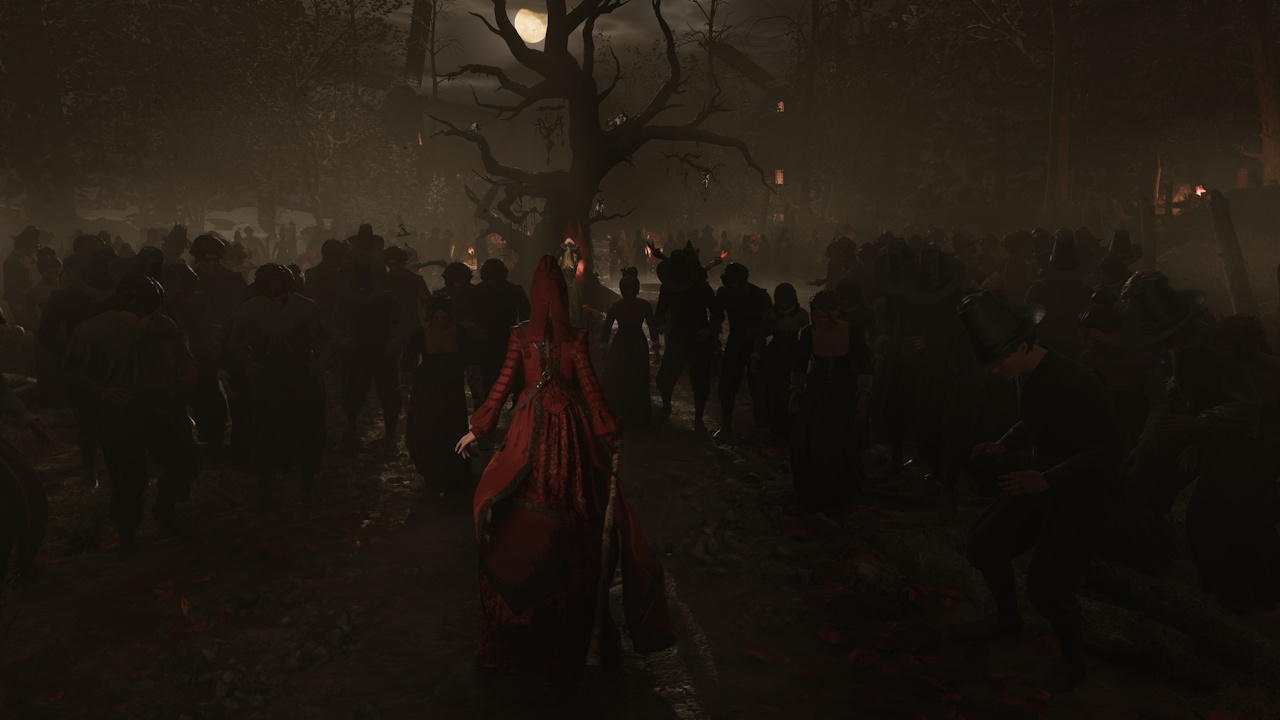
I’m always going to have my curiosity piqued by titles that look to offer some kind of different experience; something I haven’t necessarily played before. And while, in strict gameplay terms, 1666: Amsterdam didn’t feel all that special, its narrative – and its time-bending story involving a secret witchy cult – definitely fits the bill!
Obviously, gameplay matters in a video game. And we’ll get into a couple of specific gameplay gripes in a moment – because 1666: Amsterdam’s prologue has definitely highlighted a couple of areas where improvement is needed! But, broadly speaking, I come to a title like this to be engaged by a strong narrative, and the fact that, even after barely half an hour of gameplay, I feel compelled to return to this world and uncover the next chapters of the story? That’s a good sign!
Let’s get the negatives out of the way first.
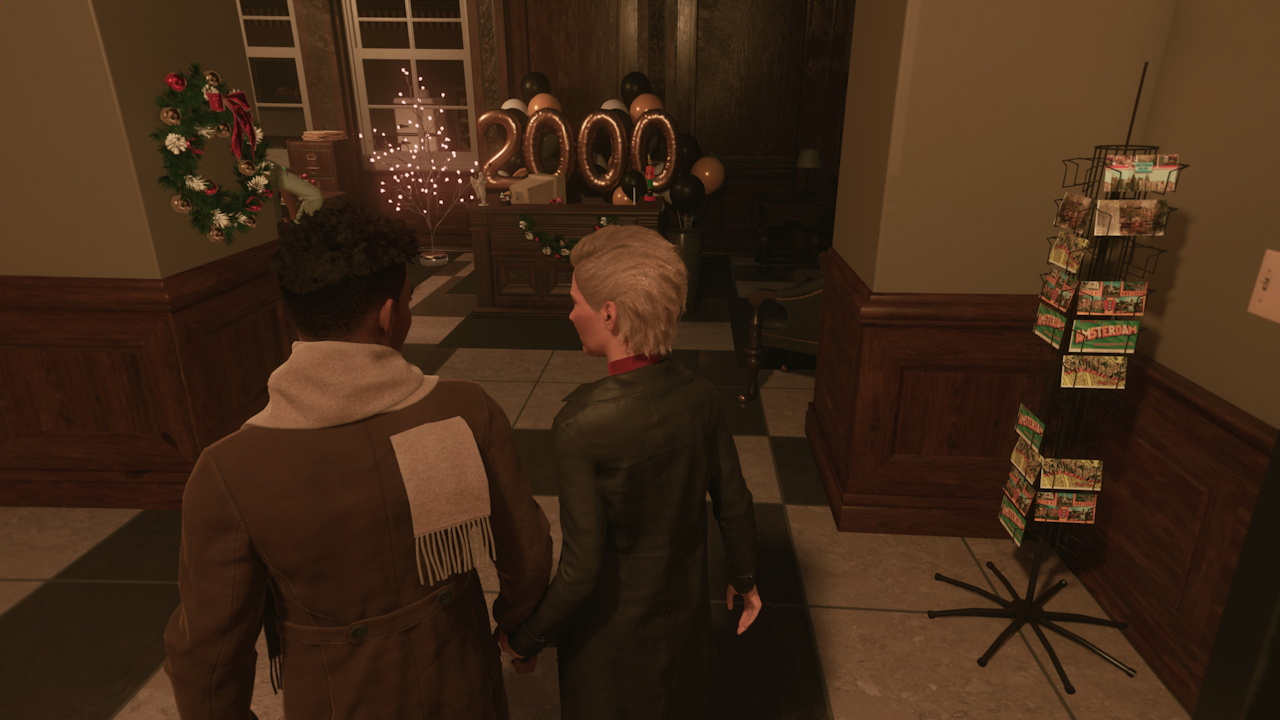
There were a couple of moments in the prologue where I felt some refinement to the controls was needed. On a couple of occasions, you’re steering two people at once – one supposedly following another, and then later, a couple holding hands. Although an interesting riff on the “follow the NPC” idea *in theory*, I just wasn’t wild about how this worked in practice. Having to steer two characters through some occasionally narrow doorways or staircases using just one control stick just… I dunno. If it’s a small part of the game, I guess I could overlook it. But it felt clumsy, and I wasn’t sold on this method of circumventing the old “follow this important character” cliché.
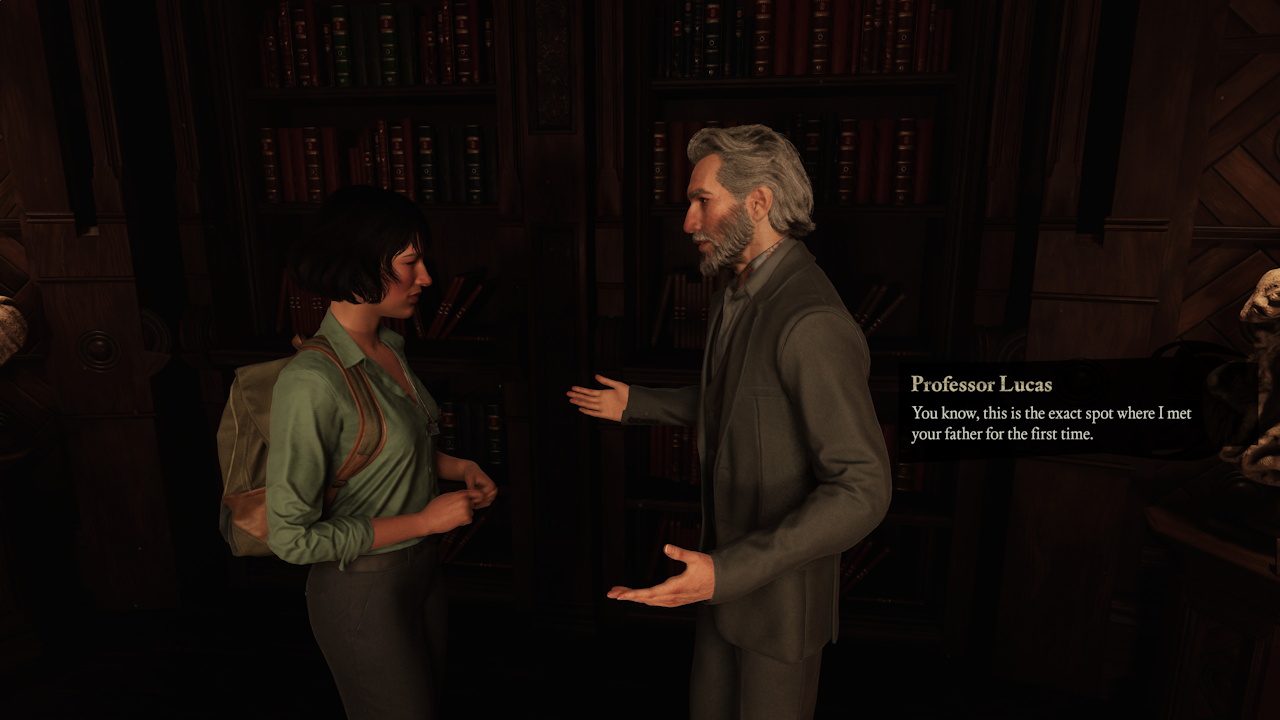
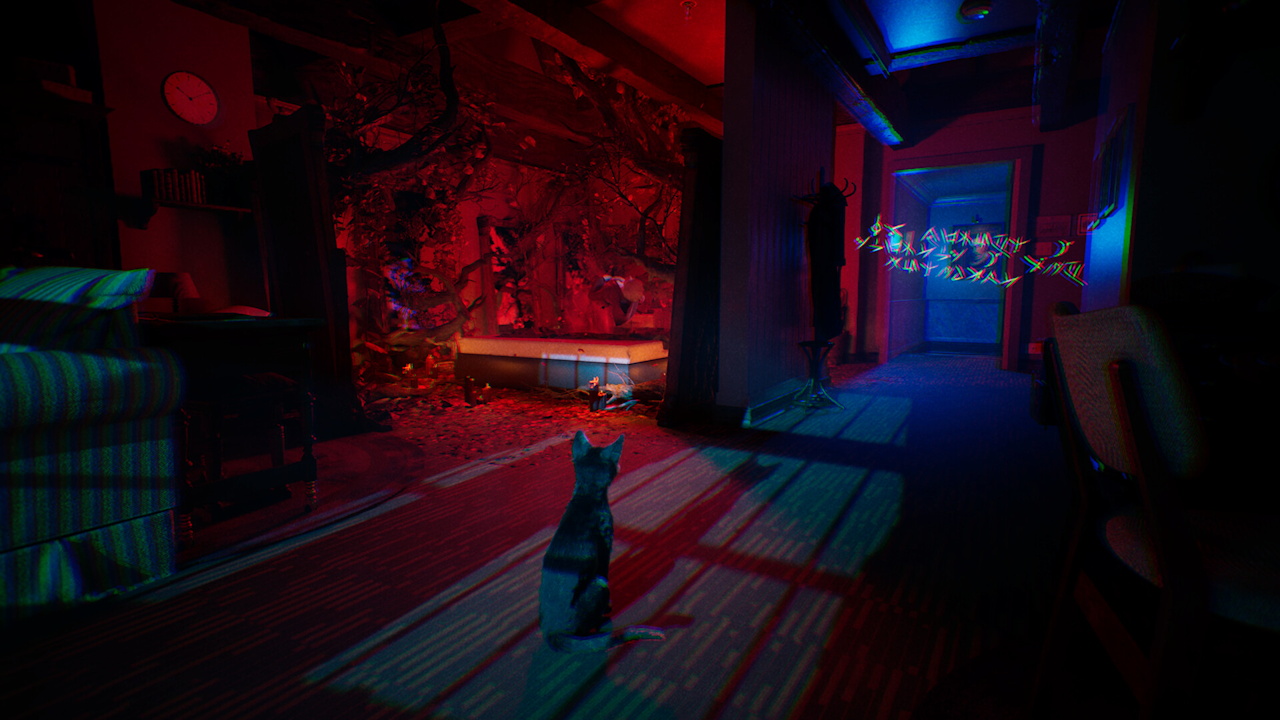
Secondly, there were two moments where button-prompts either didn’t appear at all or didn’t appear in time. The first “puzzle” – if we can call it that – in the prologue involved finding a specific book on a specific shelf, but even after locating the correct shelf, the prompt to search for the book didn’t appear at first, leaving me wandering aimlessly around the library wondering what I’d done wrong. Secondly, in the section where you play as a cat, my cat-character got stuck on a log, unable to jump down for a minute, because the button prompted me to jump onto a log… but the prompt to jump down again didn’t appear.
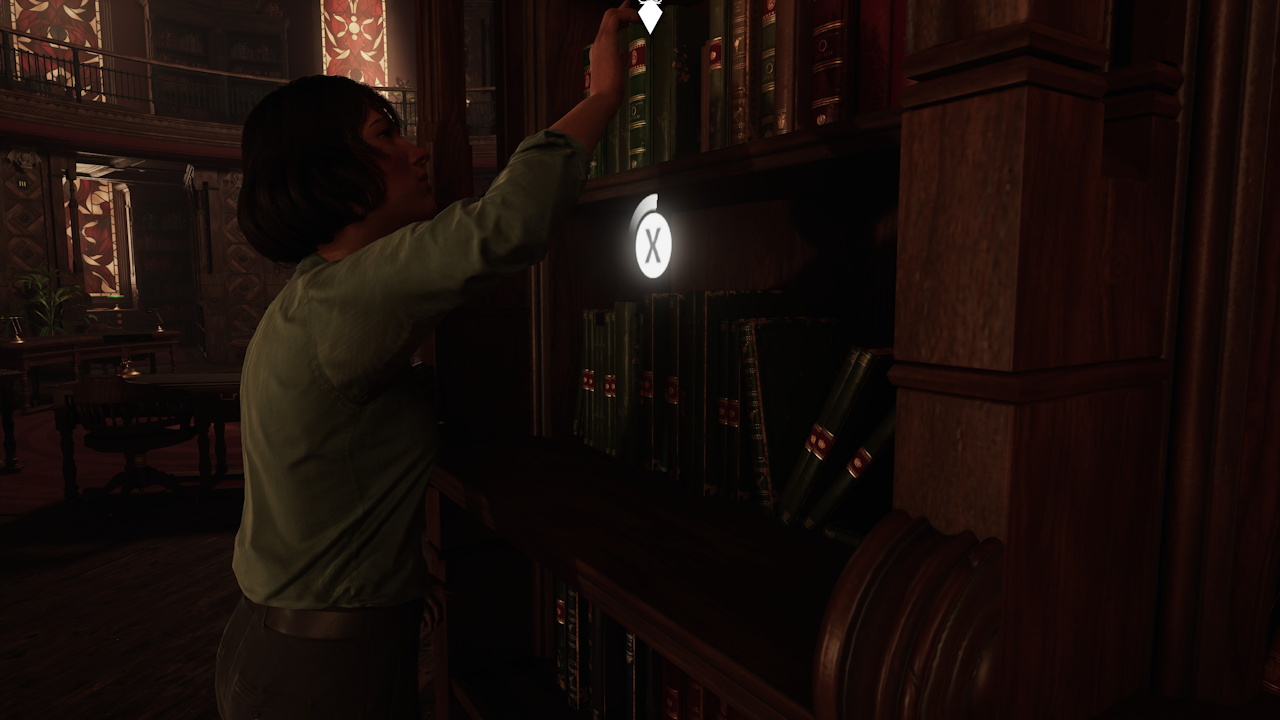
As I said in my last look at a demo version, this is a game’s chance to make a *good* first impression! Bugs are to be expected in a game which is still being developed, and I understand that game development isn’t easy. Feedback from players can also be important. But a demo version should be polished… and the level of polish, at a couple of points, was imperfect.
That being said, nothing I encountered prevented me from progressing to the end of the prologue, for which I’m glad!
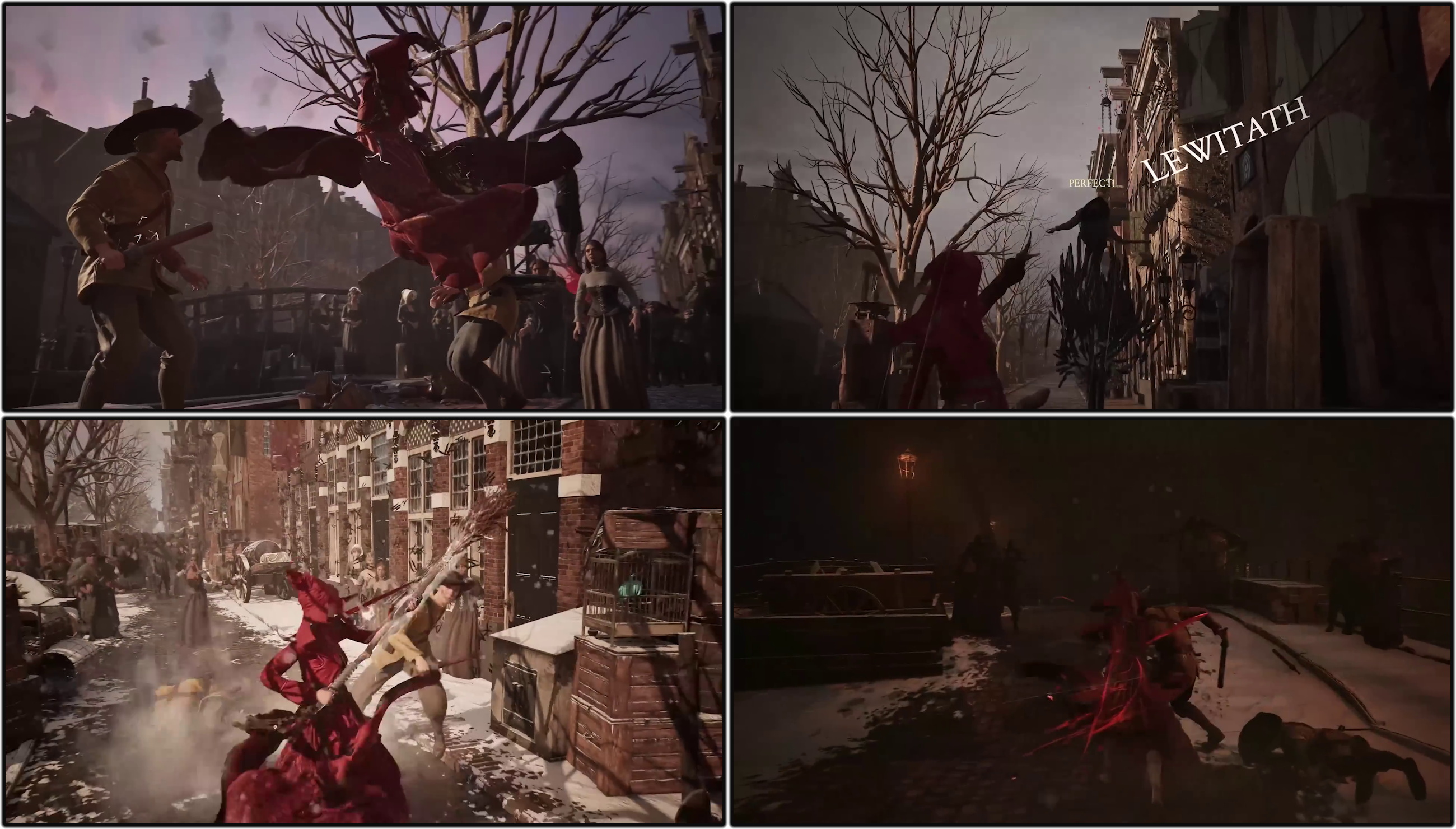
There was no combat in the demo, so I can’t say whether 1666: Amsterdam’s combat encounters will be fun, but from what I’ve managed to glean from the short teaser at the end of the prologue, it looks comparable to something like last year’s South of Midnight – third-person combat with some magical witchy powers in the mix. Combat may not be the biggest part of the game, with puzzles, exploration, and advancing the story clearly having big roles to play, too, but as long as combat is competent, I’ll be satisfied.
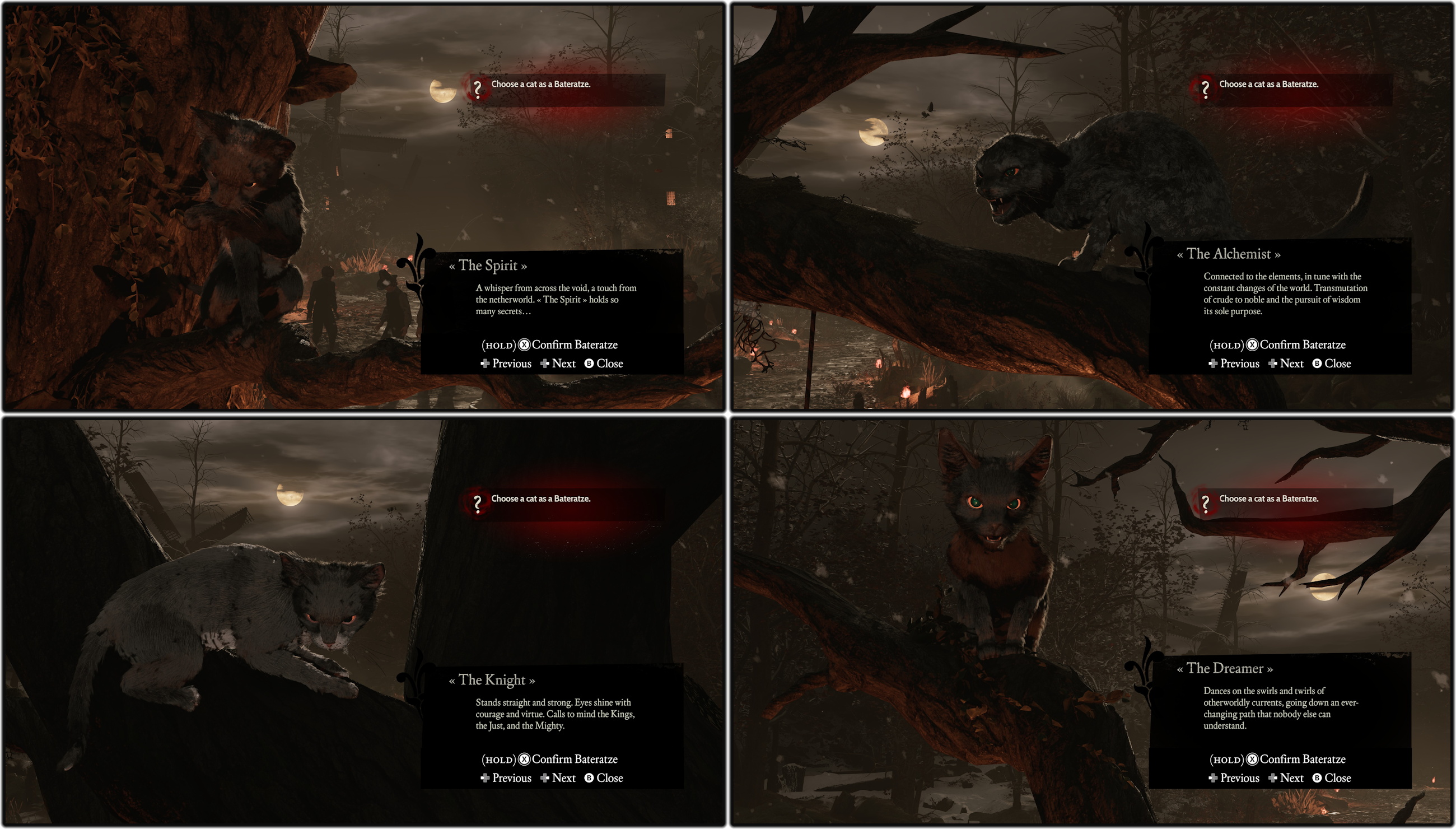
I love games where you get to play as a cute kitty cat – two of my favourite titles of the last few years have been Stray and Little Kitty, Big City! And black cats are absolutely adorable; my own cat has black fur. Despite what people say about bad luck or evil spirits or whatever nonsense… black cats are cute! So any game that gives me a black cat – either as a companion or, as in this case, as a playable secondary character – I’m gonna be happy.
Choosing which “personality” the cat will have was also an interesting element to the game, and while it didn’t mean much in terms of the demo, I expect it’ll matter a lot more in the full version of 1666: Amsterdam. There seemed to be half a dozen or so cats to choose from, and the little descriptions they were given hinted at different abilities. There might be some different lines of dialogue, or even completely different side-missions, as a result of these choices.
I don’t know, at this stage, whether a game like 1666: Amsterdam will have a lot of replayability. Some games offer branching narratives, or gamplay that’s so varied that coming back to it can feel like a completely new experience. Others are much more linear. If I had to guess, I’d say 1666: Amsterdam will probably have quite a linear narrative, but that there may be ways to shake up the combat or puzzle-solving, depending on certain choices. I don’t object to that at all – I love a good linear title. Indika, which doesn’t feel a million miles away from 1666: Amsterdam, as they’re both third-person, horror-adjacent historical titles with female protagonists, is one of my favourite games of 2024, for instance.
Time travel can be difficult to get right in any work of fiction, and having two (or perhaps three) time periods on the go simultaneously can feel confusing. For my money, though, the prologue to 1666: Amsterdam seems to have done this side of its story quite well. It was actually quite nostalgic to step back to Millennium Eve and see all the decorations; I’m not sure if that moment has ever been recreated in a video game like this. Certainly not one I’ve ever played! But it did make me feel oh so old to see one of the game’s playable characters – a woman in her mid-twenties – who was presumably born *after* the turn of the millennium!
The story of a “Collector” intrigues me. And I think it’s a testament to the strong storytelling present in the prologue that I really want to learn more about this world and unfold this story. That’s what a demo version for a game like this is supposed to do, I suppose! But it definitely roped me in, and I can feel my interest for the game starting to build. When it releases in full – potentially sometime next year – I’ll definitely be checking it out.
The studio behind 1666: Amsterdam is Panache Digital Games, who you might be familiar with from 2020’s Ancestors: The Humankind Odyssey. I didn’t play that game, which received mixed reviews upon release, but it was another game with a unique concept, I guess. Patrice Désilets, who was the creative director behind Prince of Persia: The Sands of Time and the first two games in the Assassin’s Creed series, is the head of Panache Digital Games. With Assassin’s Creed supposedly also working on a witch-themed title (Hexe), comparisons may be inevitable when the two games launch!
1666: Amsterdam seems to be getting an “early access” launch later this year. But that’s not something that I usually dabble with, so I expect I’ll be waiting for the game’s full release before I jump in. Still, the prologue was interesting – and from the point of view of getting me hyped up for the title, a definite success!
I hope this has been interesting.
I like to check out demo versions when they become available, and a title like 1666: Amsterdam definitely feels like something a bit different right now. There are a couple of places where some additional polish is needed, but the game’s story feels genuinely compelling, and I really can’t wait to see it unfold. When 1666: Amsterdam gets a full release – which may be next year – I hope you’ll join me for a review.
1666: Amsterdam will launch in early access on PC in late 2026. A full release date and console launches have not yet been announced. A demo version, titled 1666: Amsterdam (Prologue) is available now on PC. 1666: Amsterdam is the copyright of Panache Digital Games. This article contains the thoughts and opinions of one person only and is not intended to cause any offence.