Spoiler Warning: Beware of minor spoilers for some of the films on this list.
I love Christmas – it’s the most wonderful time of the year, don’t you know! And there are some absolutely phenomenal Christmas films that are on everyone’s must-watch list every single year. You know the ones: films that we’ve watched at this time of year for almost as long as we can remember; films that have come to define every aspect of the word “Christmas.”
And I thought it could be fun to take a look at five of them and explain why they’re not really Christmas films!
That’s right, it’s time for a little bit of festive controversy as I pick out five “Christmas” films that aren’t really Christmas films! Instead, I would argue that these films are in other genres entirely, or are only tangentially related to Christmas either by being set at that time of year or even just by association.
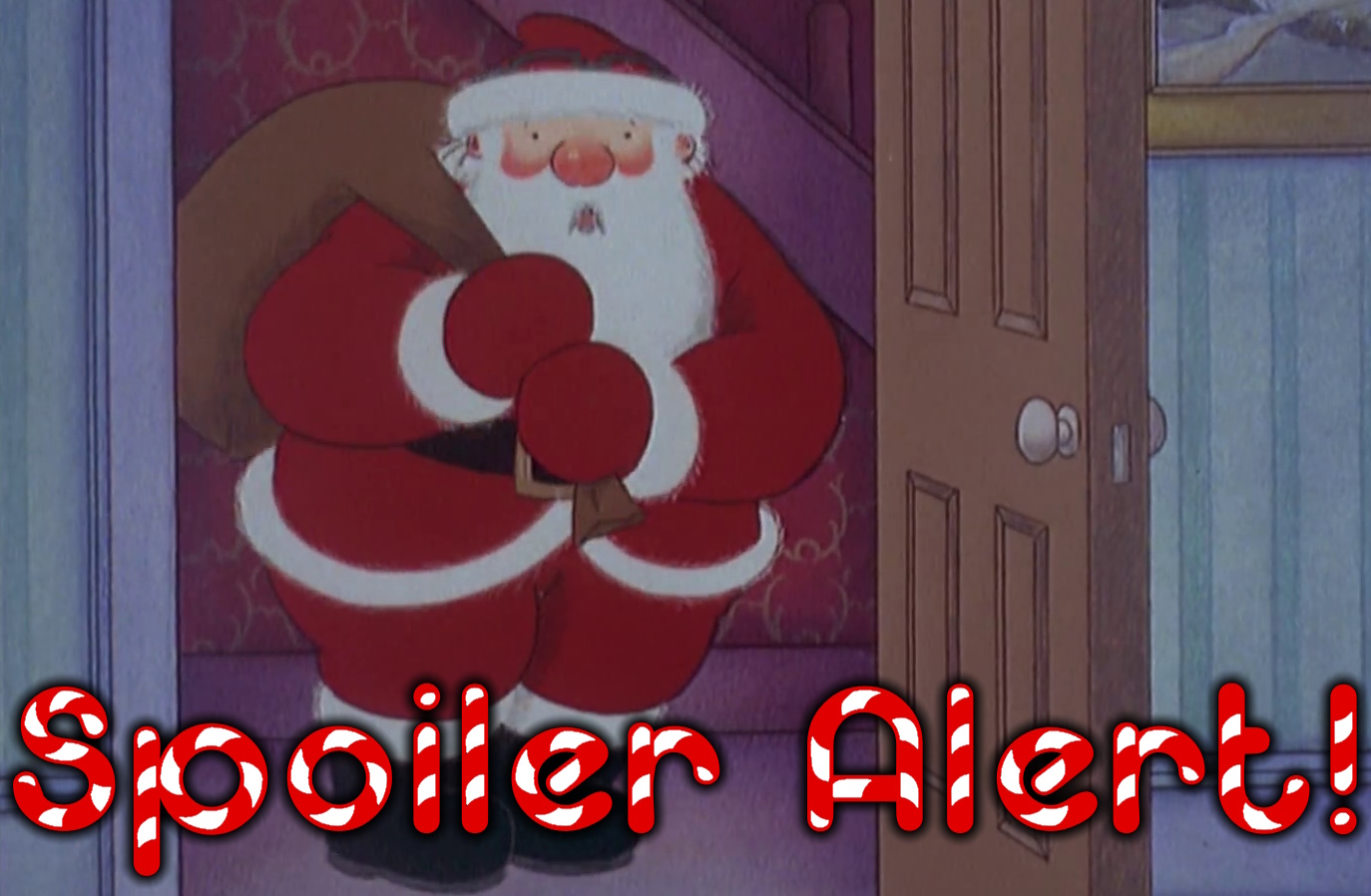
Father Christmas is indisputably a Christmas film – which is why it won’t be on the list below!
Before we get into the list, an important caveat: this is just for fun! I don’t think the debate around what is or isn’t a “Christmas” film is something that needs to be taken seriously at all, and I’m making this list with tongue firmly embedded in cheek. It’s also one person’s entirely subjective opinion – so please try not to get too upset if I call out your favourite Christmas film!
I enjoy all of the films on this list, and regularly watch them at this time of year. But for reasons I’ll try my best to explain, I don’t necessarily consider them to be true “Christmas” films in every sense of the phrase. Definitions of what constitutes a Christmas film may vary – and it might be enough to say that a film set at Christmas, released at Christmas, or that has developed an association with Christmas over the years counts. But I’m going to argue that those reasons are not enough – for a film to truly be a Christmas film its plot has to be directly tied up with Christmas!
So let’s jump into the list, shall we?
Film #1: The Nightmare Before Christmas (1993)
Jack Skellington.
Wait, this film literally has the word “Christmas” in its name! Not only that, but it sees protagonist Jack Skellington take the reins of Santa’s sleigh on Christmas Eve… so how can it possibly not be a Christmas film? Well, that’s simple: it’s a Halloween film best enjoyed in the autumn.
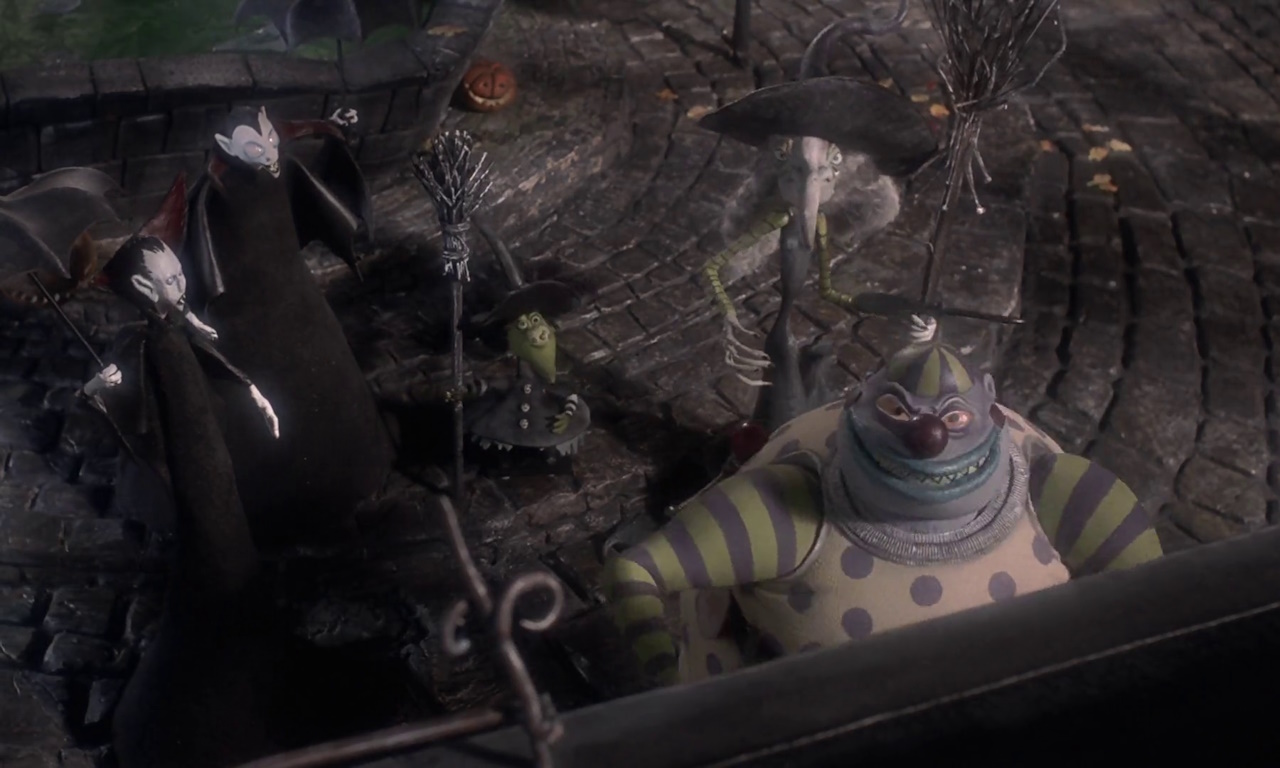
Most of the action in The Nightmare Before Christmas takes place in Halloween Town, and practically all of the principal characters are Halloween Town residents who are inspired by the monsters and ghouls of horror fiction and folklore. Although the plot touches on Christmas and sees characters visit Christmas Town, those scenes and sequences are told from the point of view of the denizens of Halloween Town – and their take on Christmas is very much a spooky one!
The film is largely told from the perspective of Halloween Town residents.
For that reason, The Nightmare Before Christmas is a great film to watch in between Halloween and Christmas – say, in the middle of November! But as Christmas gets closer, we should really be leaving Halloween behind to focus on what lies ahead. For me, The Nightmare Before Christmas is too strongly rooted in Halloween, and decked out with the trappings of that holiday, to truly be considered a Christmas film.
That being said, I love how the film shows Halloween Town characters discovering Christmas for the first time, and how they work to save Christmas – after putting it in danger! There are some fun moments amidst the frights and scares… but it’s still very much a film that’s best enjoyed before Christmas time fully arrives!
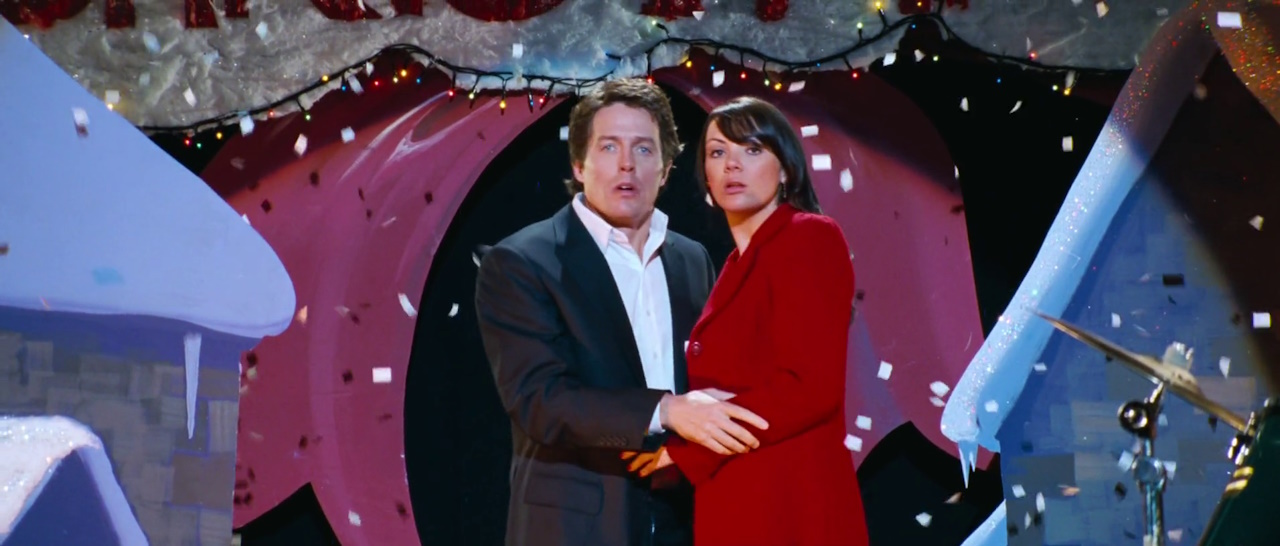
Film #2: Love Actually (2003)
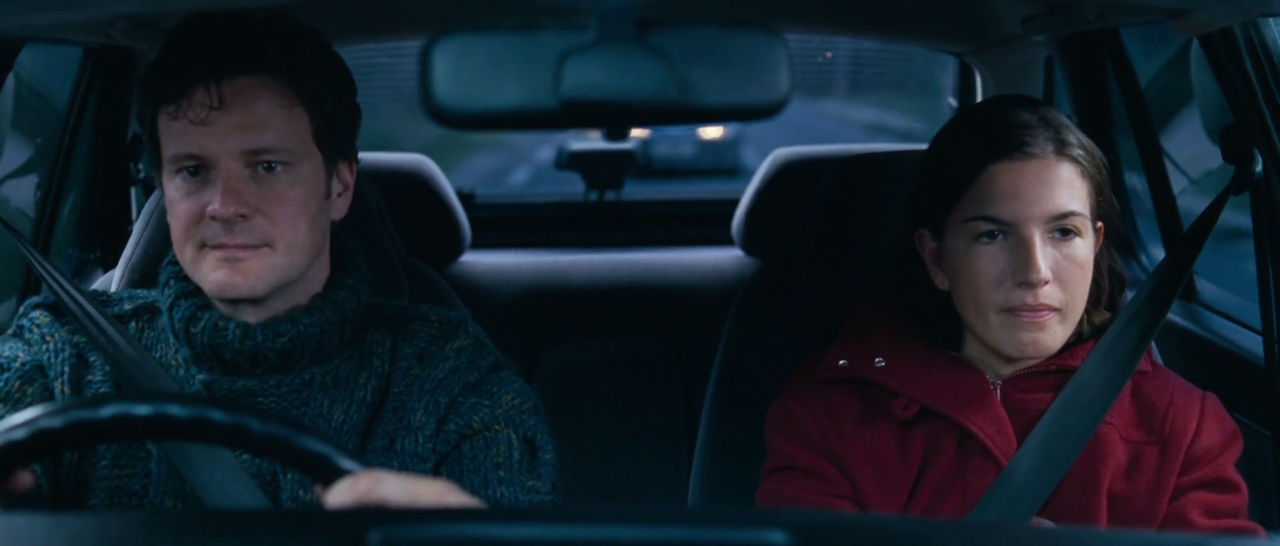
Lost in translation lovebirds!
This is simple: Love Actually is a film set at Christmas, not a Christmas film. Are we clear on that? Good! Wait, what do you mean I have to fill three-and-a-half more paragraphs? D’oh!
As stated, Love Actually may be set at Christmas, but setting alone does not – in my view – make for a Christmas film! Many of this romantic comedy’s storylines have nothing whatsoever to do with Christmas, and the simple fact that they play out in front of an occasionally festive backdrop doesn’t magically make the entire film a Christmas film!
It’s the Prime Minister!
Because of Love Actually’s narrative structure, some of its storylines and characters arguably have more to do with Christmas than others. Billy Mack, for instance, is desperately chasing the Christmas number one single, and the kids are taking part in a school’s nativity play. But other characters really don’t do anything Christmassy at all during their time on screen, with their stories taking them in different directions.
I enjoyed Love Actually when it was released – and to think it’s celebrating its twentieth anniversary this year makes me feel old! But I must confess that I was surprised to see it hailed as a “Christmas” film in the years after its release. To me, it has much more in common with writer Richard Curtis’ other rom-coms like Four Weddings and a Funeral and Notting Hill than it does with bona fide Christmas films.
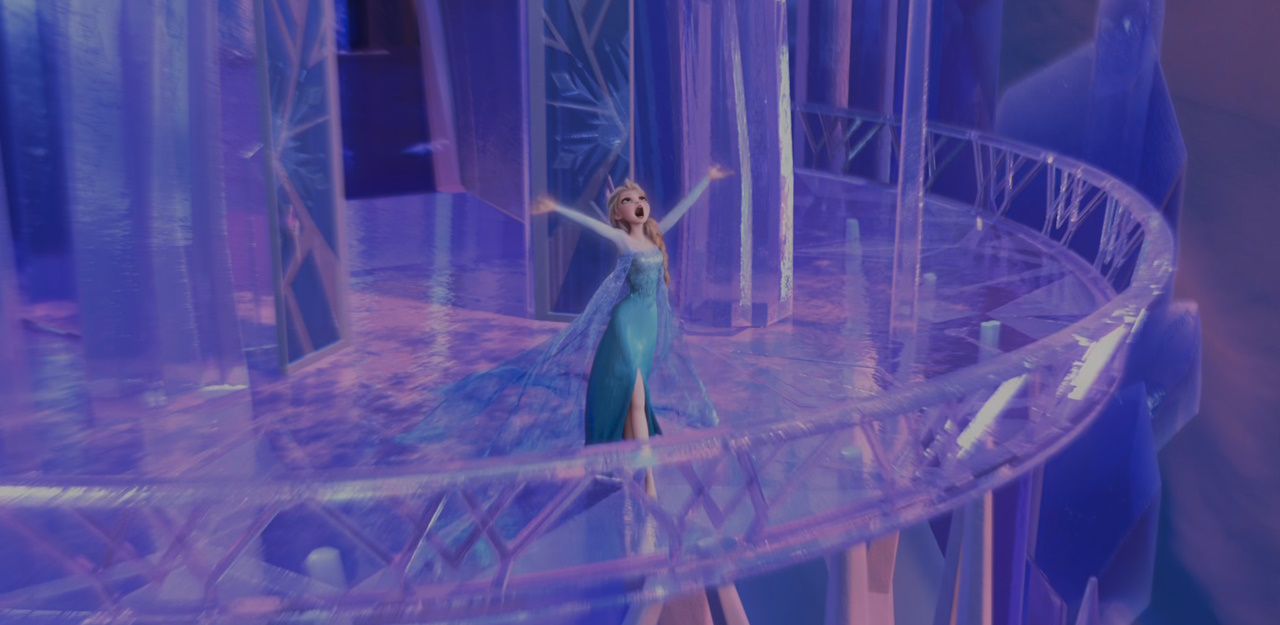
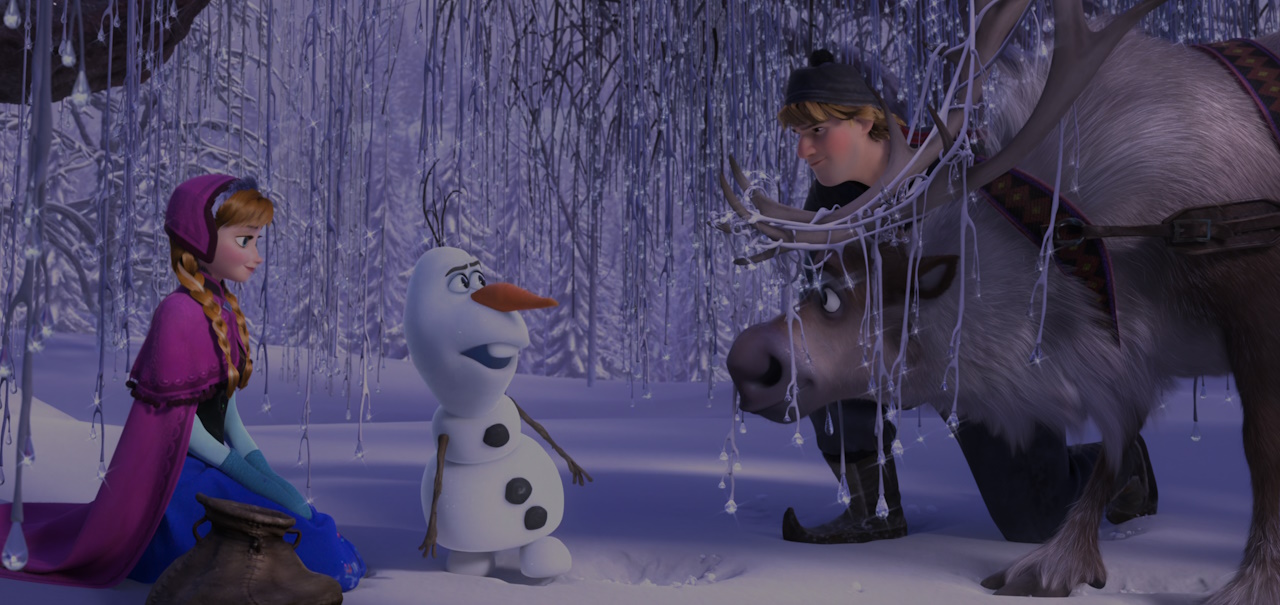
Film #3: Frozen (2013)
Let It Go!
Frozen just isn’t a Christmas film, okay? It’s set in the middle of summer! And the princesses of the magical kingdom of Arendelle may not even celebrate Christmas for all we know; the holiday isn’t mentioned once!
A lot of people seem to associate Frozen with Christmas for two reasons: it was originally released shortly before Christmas, and it’s full of ice and snow thanks to Elsa’s magical powers. But there’s more to a Christmas film than a magical blizzard – and while Frozen may have a cute winter aesthetic going for it, as well as some well-animated snow, that’s not enough to make me believe it’s truly a Christmas film. And I say that with sincere apologies to everyone under the age of ten!
Snow and ice do not automatically make a film Christmassy.
The story of Frozen is set in the summer time; it’s only Elsa’s magic that causes Arendelle to freeze over. And the snow and ice is presented as a genuine danger to the kingdom’s inhabitants – hardly the carefree presentation of a white Christmas that we’d expect to see in a proper Christmas film! Many films use ice, snow, and blizzards to great effect – but we don’t call all of them “Christmas” films, and with good reason!
As more of the kids who grew up watching Frozen come of age, I expect its status as a “Christmas” film will only be further cemented. We’ve already seen songs like Do You Want To Build A Snowman showing up on Christmas compilation albums and playlists… so this idea of Frozen as a Christmas film clearly isn’t going away any time soon.
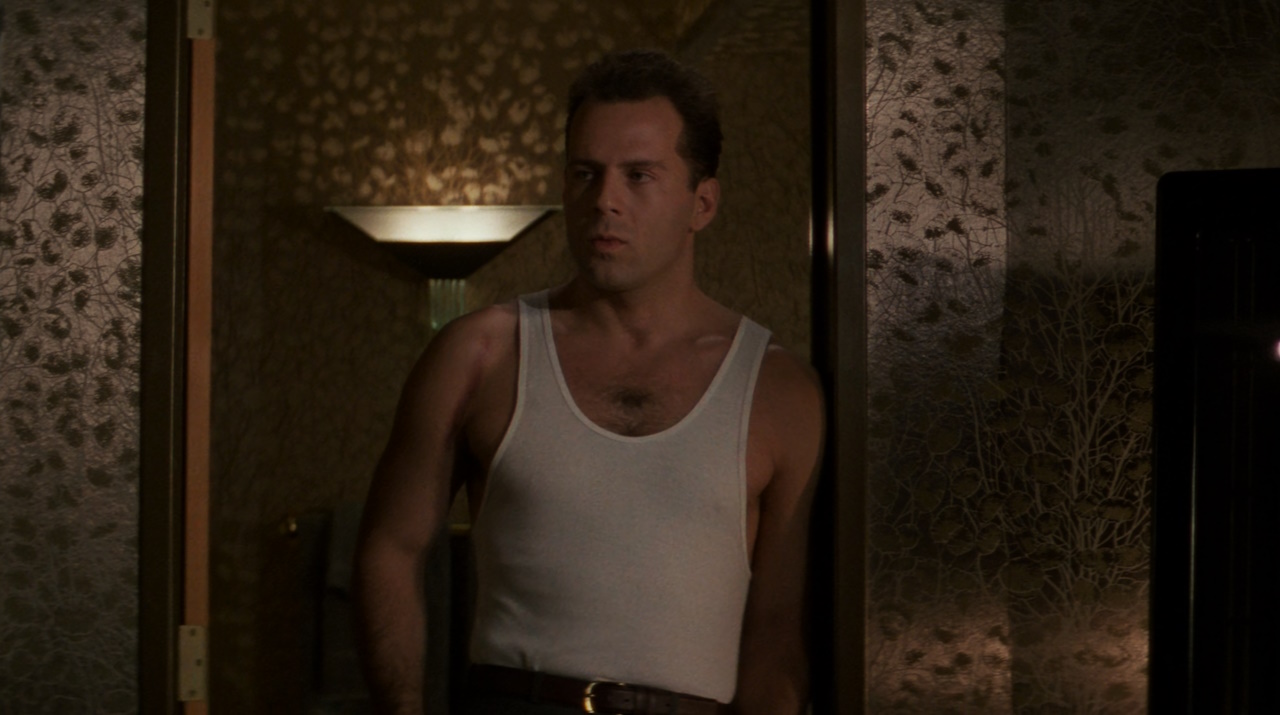
Film #4: Die Hard (1988)
John McClane is fed up with this debate!
Uh oh, now we’re really getting into some controversial territory! Look, here’s the way I see it: I don’t dispute that Die Hard is set at Christmas and has some of the visual and musical trappings of the holiday season. That’s indisputable. But Die Hard is an action film set at Christmas time – not a Christmas film.
A couple of years ago, I saw somewhere online a homemade Christmas ornament featuring protagonist John McClane crawling through the ventilation ducts at Nakatomi Plaza. That was creative and cute – but the action movie trope of sneaking around in a crawlspace isn’t exactly something that screams “Christmas” to me!
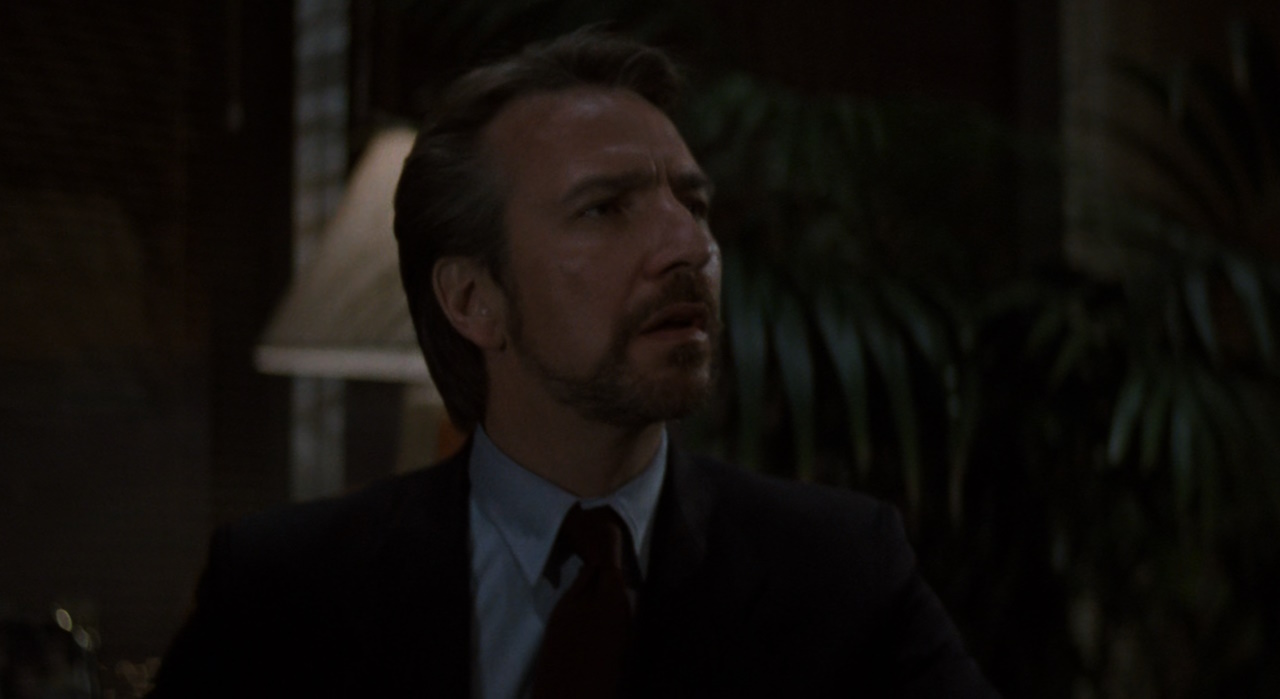
Alan Rickman as terrorist leader Hans Gruber.
One of the best tests of whether something can truly be considered a Christmas film is this: can you comfortably watch it outside of the Christmas season? I’d have no issue watching Die Hard in the middle of summer – because its plot doesn’t hinge on Christmas, its characters aren’t interested in Christmas, and fundamentally, nothing about the film would change if its office Christmas party was instead a birthday party or a Fourth of July celebration.
And that’s the key to understanding Die Hard’s place on this list. It’s an action film with a few incidental Christmas trappings, and it’s been hyped up by fans as a “Christmas” film on the internet in recent years – but it isn’t. Being set at Christmas does not automatically make for a Christmas film!
Film #5: Trading Places (1983)
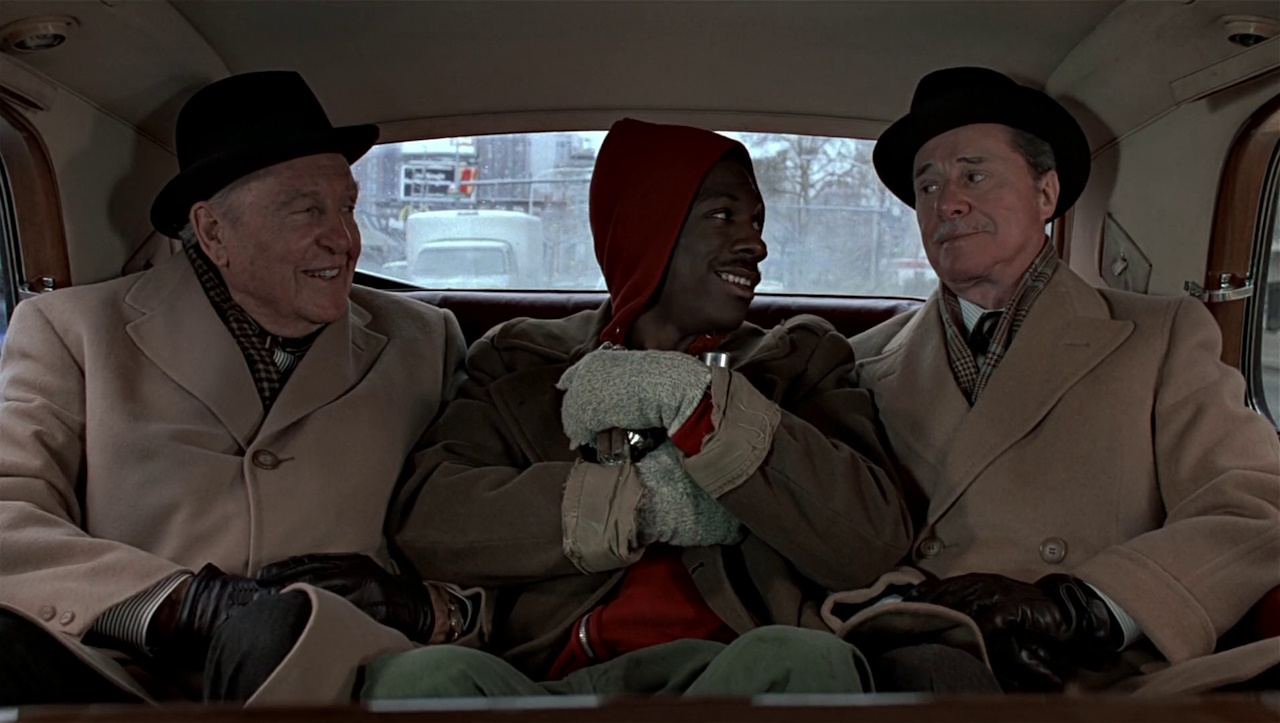
An ’80s Christmas classic – but rightly so?
I’ve only seen the comedy film Trading Places a couple of times; I think it’s more popular in the United States than it is over here. But it’s a film that’s often discussed in a Christmas context – and seems to be on many people’s list of Christmas favourites!
As with Die Hard above, though, Trading Places is definitely a film set at Christmas time… but that doesn’t necessarily make it a true Christmas film. It’s a comedy, it’s a wacky adventure, and it’s a film that calls out and criticises racism as well as the weird excesses of wealth and capitalism. And those are all good things; Trading Places is funny! But again, that doesn’t make it a Christmas film.
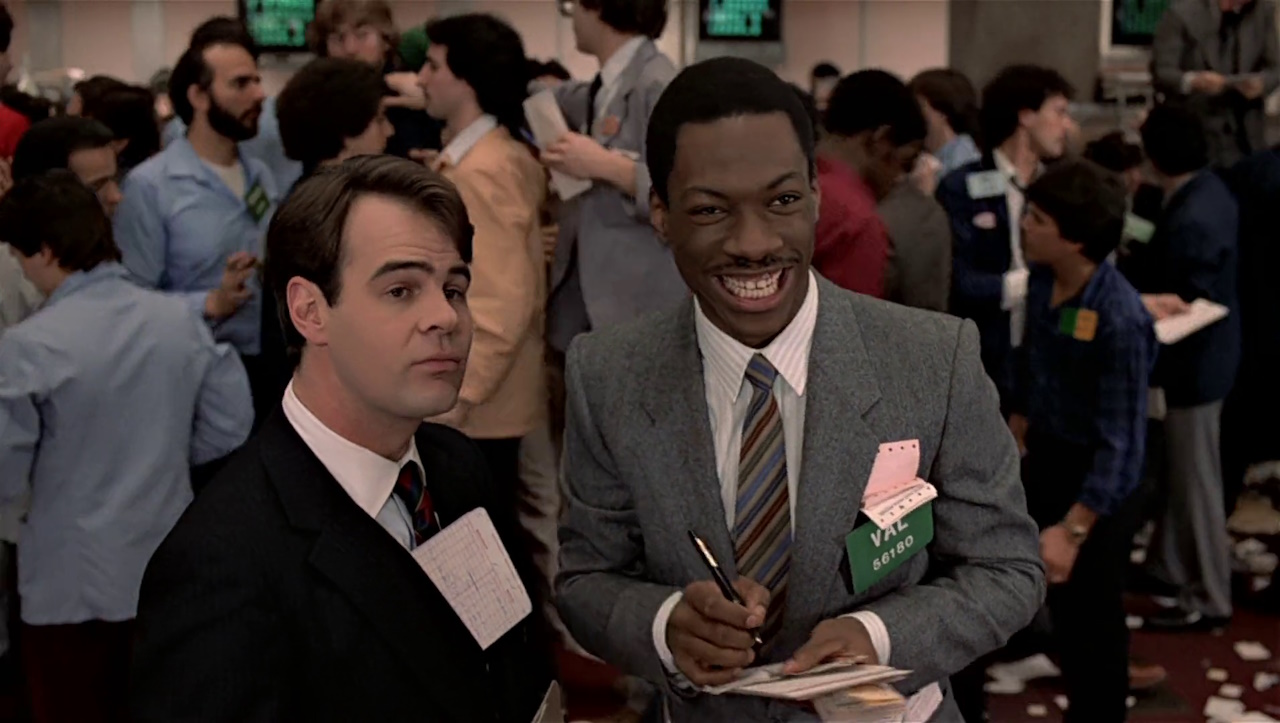
A happy ending!
The Christmas setting and the film’s annual airings on television in December have combined to make it a film that a lot of folks associate with the holidays. If you grew up watching Trading Places every year, there’s no doubt it’s become a part of your household’s festive tradition! We all have our own little Christmas traditions that we stick to – and that’s totally okay.
But for me, Trading Places is another film that can really be watched and enjoyed at any time of year. Nothing in its story is exclusive to the festive period – and that’s actually a good thing! It means Trading Places is a film that can be enjoyed on its own merit year-round.
So that’s it!
A festive cat!
We’ve picked out five not-really-Christmas films! But I can already think of several more… so come back next December to see which other so-called “Christmas” films are going to be targeted!
As I said at the beginning, I hope you’ve taken this list in the spirit of festive fun. It’s meant to be a bit of silliness as the big day approaches – and while I will make the case for all five of these films not really being 100% Christmassy, I’m not about to die on that hill – or get into a massive argument about it!
So I hope this has brought you a bit of light-hearted festive cheer as Christmas draws nearer. The big day will be upon us before we realise it! I have a couple of other festive ideas that may (or may not) make their way onto the website before then, so please stay tuned! And Merry Christmas!
All of the films discussed above are the copyright of their respective studio, distributor, company, etc. This article contains the thoughts and opinions of one person only and is not intended to cause any offence.
Spoiler Warning: There are spoilers ahead for Star Trek: Discovery Seasons 1-3, Star Trek: Picard, and for other iterations of the franchise.
For the second week in a row, there was a last-minute change in the title of an episode. Previously known as The Good of the People, this week’s episode was retitled There Is A Tide… which is a line from Shakespeare. It’s been a long time since I studied the great bard, but this line is taken from a longer passage in Julius Caesar in which the character Brutus speaks of missed opportunities and the need to seize the “high tide” of life; acting when the moment presents itself or missing out and never achieving greatness. Epic stuff, right?
Last week Su’kal left me with mixed feelings, and I said that we needed to see its storylines play out to their conclusion before delivering final judgement. Despite that, I was critical of the technobabble explanation given for the Burn, as well as how easily Discovery was captured by Osyraa. I felt the final act of the season risked becoming formulaic, and its storyline may have been telegraphed ahead of time.
I wasn’t completely sold on Su’kal last week.
There Is A Tide was an action-packed thrill ride from start to finish, with some gut-wrenching choices for Burnham and Book as well as some desperately-needed development for the villainous Osyraa. I’m not 100% sure all of it made perfect in-universe sense; why, after all, would Osyraa take hostages if she sought an armistice? But aside from that, it was a thoroughly enjoyable episode.
What it lacked, though, was any advancement of last week’s primary story: Su’kal, the Burn, and those left behind in the nebula. With only one episode left, we need to have those storylines wrapped up in addition to the Emerald Chain-Federation conflict as well as seeing our crew retake the ship. Or do we? Could Discovery be setting up a big season-ending cliffhanger? Right now that feels like a real possibility. Beginning with The Next Generation’s Season 3 finale, The Best of Both Worlds, Star Trek has seen fourteen seasons end in such fashion – including Season 2 of Discovery.
Aurellio and Osyraa.
As great as There Is A Tide was, it’s worth acknowledging the absence of any advancement of the Su’kal-Saru-Verubin Nebula story. It absolutely could be because there’s a feature-length episode or cliffhanger to come next week, but if that doesn’t happen I’m concerned that There Is A Tide has left the season finale with a huge amount of narrative to get through. I criticised the two-part finale of Star Trek: Picard for rushing too much and skipping over potentially interesting story threads, and I really hope Discovery won’t have the same issue.
There Is A Tide sidesteps the Burn altogether. While the event was discussed – notably by Osyraa and Admiral Vance – the Burn once again was not centre-stage. If there is to be any hope of a proper resolution to what has been the biggest mystery of the season beyond the couple of lines of technobabble we got last week, next week’s episode has a lot of work to do. And that really summarises my concern: taken as a standalone piece, There Is A Tide was non-stop excitement, action-packed, and fantastic… but by the end of its forty-six minutes, there remains a lot of work to do in terms of narrative.
Burnham led an action-packed story in There Is A Tide…
So that’s enough about what may or may not happen in terms of the narrative structure next week. Let’s get into what There Is A Tide did right. First up, Osyraa. In her two appearances thus far, Osyraa has been flat, one-dimensional, and boring. Worse, she appeared to go from an easily-defeated cardboard cut-out adversary to a completely overpowered supervillain in between her two appearances. I didn’t find her compelling or even interesting; with no motivation beyond “I’m evil and I like it” she was just as bad as – if not worse than – Mirror Georgiou.
There Is A Tide changed that. Though some issues with Osyraa remain, the episode expanded on her character in a huge way, giving her a lot to do and showing off some genuine complexity and nuance. I’m not fully sold on her plan – which seems to have been to capture Discovery and use the ship and crew as leverage to force the Federation into… an alliance? But the way she went about it, both on the ship and at Federation HQ in her meeting with Vance provided some sorely-needed interest to her character.
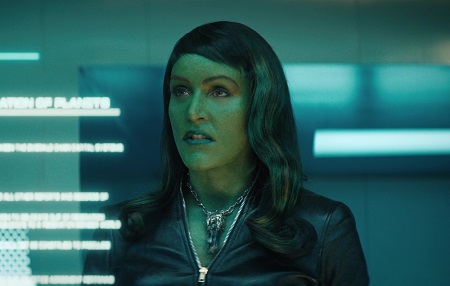
Osyraa finally got some character development.
We knew from Ryn a few episodes back that the Emerald Chain was running out of dilithium, and it’s this shortage that forced Osyraa to the negotiating table. While we don’t see the precise nature of her proposals, Admiral Vance considered it impressive that she was willing to offer such terms. Her motivation for doing so is, as the episode’s original title suggests, “for the good of the people.” Osyraa’s plan seemed to offer a trading arrangement and non-aggression pact with the Federation, and she made reference to one former Federation outpost that has already been trading with the Emerald Chain.
There are a couple of points from Admiral Vance’s response to consider, and both have to do with putting principles ahead of being practical. Burnham, as we’ve seen through her actions this season, is very much someone who will work around regulations and rules where necessary to get the right outcome – the ends justify the means. Vance, on the other hand, keeps his principles even if it means problems for himself and the Federation. Firstly he scuppers the deal by adding a requirement he knew Osyraa could not agree to – her standing trial for what he regards as her crimes. But secondly, and perhaps most interestingly, he allowed Osyraa to leave.
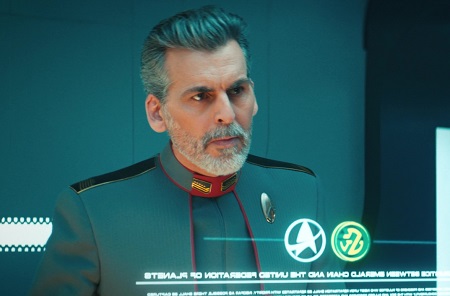
Admiral Vance rejected Osyraa’s proposal.
Organisations like the Emerald Chain – at least, the way it has been presented thus far – are often cults of personality, where a strong leader has all the power and influence. As we have seen many times both in history and fiction, the removal, arrest, or even embarrassment of such a leader can bring down their entire organisation. And so it is with Osyraa. If Vance had arrested her, detained her aboard Federation HQ, her underlings wouldn’t know what to do. It would have given him leverage to negotiate the release of Discovery and the crew, and it wouldn’t have done any harm to Federation-Chain relations given that the treaty was already a non-starter.
But I’m not criticising his decision as a narrative point. I think what we have with Vance is a contrast, not only to Burnham but to the way Saru was acting last time – both are impulsive, emotional, and bending the rules. Vance is steadfast – the Federation’s ideals and principles are not to be compromised, even if that means making life harder for himself and the Federation. While Burnham’s storyline in There Is A Tide is far more exciting, I would argue that Admiral Vance is the one who best embodies what Starfleet and the Federation are all about.
The negotiations were short.
At the end of the day, isn’t that what the story of Season 3 has tried to be about? Rediscovering Starfleet’s values and placing them front-and-centre. That’s what Saru has tried to do with Earth, Trill, Ni’Var, Kweijan and so on. It seems at least plausible that these forces may come to the Federation’s aid if there’s a battle or war – like the Kelpiens and Klingons did against Control at the climactic fight in Season 2. If they do show up, it will be because they were inspired by Saru, Vance, and the principles they stick to.
On the other hand, as Burnham and other main characters have shown throughout Discovery’s run, rigid adherence to rules and principles isn’t always the right way to go. Compromise is sometimes needed – and Vance bottled a chance to do so. There’s a real-world message here, one which is a little odd given the polarising times we live through: moral absolutism is okay. Recent political events have reminded us of the need for compromise and to find ways to bridge the gap, yet Discovery seems to be saying that it’s fine to stick to idealism even if that means division and fighting continue.
Vance offered Osyraa terms that he knew she could never agree to.
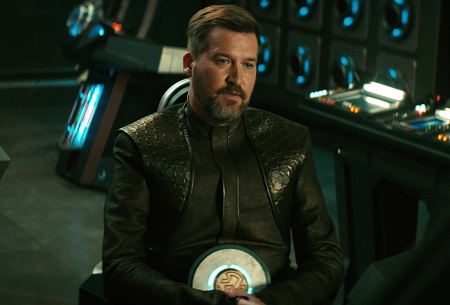
Perhaps that’s enough politics for now! One character I loved in There Is A Tide was Aurellio, a man with a fittingly Shakespearean name! When it was announced before the beginning of the season that Kenneth Mitchell, who had played Kol in Season 1, Tenavik in Season 2, and a couple of other characters both in Discovery and Lower Decks, would be returning, I wasn’t sure how it would work. Mitchell has recently been diagnosed with ALS (motor neurone disease). There was no way for the series to ignore that – Mitchell uses a wheelchair now – but I was hopeful to see a character and storyline that treated disability respectfully. As you may recall if you’re a regular reader, I’m disabled myself.
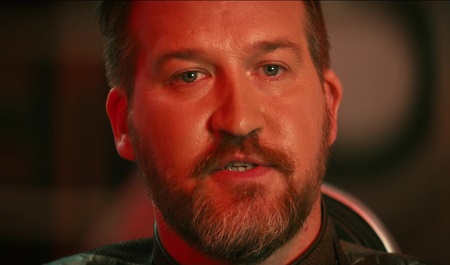
I adored Aurellio, and Mitchell’s performance in the role. The way the series incorporated his standing-wheelchair was tasteful and sweet, and Aurellio being disabled was neither ignored nor tokenistic. The fact that Aurellio has – as he puts it – “a genetic defect” was not the only aspect to his character, who comes across as a scientist or technocrat who is unaware of the extent of the criminality and depravity of the organisation he works for. Shielded from the day-to-day running of the Emerald Chain, Aurellio is – perhaps wilfully but perhaps not – able to concentrate solely on his work.
Aurellio was a wonderful new character and a great addition to the season’s story.
Though this will not sound like a compliment, I regard Aurellio as being Albert Speer – or at least, the public persona claimed by Speer after 1945. There are people like Aurellio even in the worst organisations and regimes – blind to the worst aspects, focused only on their own small work. Often in these stories, a character like this will step up once their eyes are opened to what’s going on beyond the confines of their laboratory – and perhaps that’s something we’ll see next time or in a future story. I’ll save discussions of Aurellio’s possible future for my theory post.
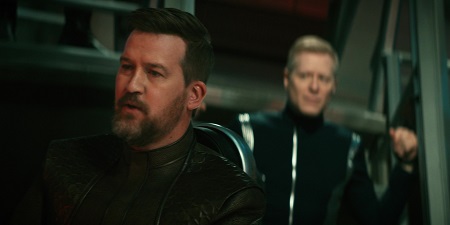
Aurellio was tasked with working on the Spore Drive – though it remains unclear how the Emerald Chain came to know as much about it as they do. To that end he was teamed up with Stamets, and their tête-à-tête in Engineering was fascinating to watch; both Mitchell and Anthony Rapp put in outstanding performances during this sequence.
The conversation Stamets and Aurellio had was riveting to watch.
The plan Aurellio had to try to recreate the DNA of the tardigrade seems to have merit – or at least no less merit than any other technobabble in Star Trek. Perhaps with Stamets’ support it could be taken more seriously both by Starfleet and the Emerald Chain. Stamets objected, saying he believes it is not possible and that the tardigrades are extinct – but neither of those claims are supported by on-screen evidence. We’ve seen tardigrades referenced as recently as December 2019 in the Short Treks episode Ephraim and Dot. The nature of that story’s relationship to canon is not clear – but tardigrades are still alive and kicking within the Star Trek mythos, at least.
Earlier in the season Tilly was said to be working on a plan for a non-human navigator to replace Stamets; this is something that, while never followed up on, would have allowed the Spore Drive to perhaps be rolled out to other vessels. It’s understandable why Stamets wouldn’t want to discuss any of this with Aurellio – but we’ve seen in the past that he’s very happy to talk about his creation with other scientists.
Will Aurellio’s plan work?
Besides the plot-heavy conversation about the Spore Drive, two things stuck with me from the Aurellio-Stamets conversation. First was that Aurellio mentioned several times that he’s in a relationship and has children. Stamets figures out he’s in a relationship with “an Orion” – it’s not unreasonable to assume that this person could be Osyraa herself, but we’ll save that for my theory post! Next was that Stamets claimed to have a child of his own. Since, as far as we know, Stamets and Culber do not have any children, this appears to be a reference to Adira, which was incredibly sweet. There has been a parental vibe between Stamets and Adira for much of the season, so for Stamets to say it aloud here was wonderful.
This would go on to be at the heart of the Stamets-Burnham argument later on, with Stamets arguing for a return to the Verubin Nebula to save Culber and Adira, but Burnham insisting he needs to get off the ship to prevent Osyraa using him to take Discovery away from Federation HQ. Rapp put in his best performance of the season so far in There Is A Tide, especially as he desperately argued with Burnham to remain aboard the ship.
Burnham ejected Stamets from Discovery.
That scene was truly heartbreaking. Of all the moments in There Is A Tide, the sequence between Burnham and Stamets was perhaps the shortest, which is a shame; it could certainly have been expanded by a couple of minutes. But a lot was packed into their time together, as Burnham rendered Aurellio and a guard unconscious in order to get Stamets off the ship. She knew that by doing so she was endangering Saru, Culber, and Adira, but when faced with the prospect of Osyraa and the Emerald Chain keeping control of the ship she evidently deemed the sacrifice worth it.
Stamets’ protests as Burnham prepared to eject him from the ship grew more and more desperate, until in his final moments he seemed resigned; cursing her for what she was doing. Anthony Rapp ran the gauntlet of emotions in his scenes this week, and after Stamets hasn’t has that much to do across the season, it was wonderful to see him put in such an outstanding performance.
Stamets argued with Burnham about rescuing Culber and Adira.
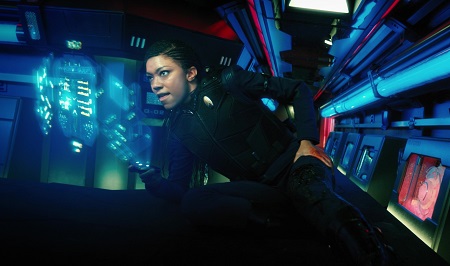
So we come to Burnham. This review is surely not going to be the first time you’ve heard this, but her story this week was basically Star Trek’s answer to ’80s action film (whose Christmassy status is debated) Die Hard! Crawling around in the Jeffries tubes and conversing with Zareh on the radio was clearly inspired by Bruce Willis’ character of John McClane, who spends much of Die Hard similarly sneaking around and conversing with his adversary by walkie-talkie. The Star Trek franchise has had many action-packed stories and moments over the years, but Burnham’s entire storyline this week has to be one of the best.
As I’d been predicting since his first appearance, Zareh was back. His return makes it feel as though the story of the season is beginning to come full-circle: we started with the revelation of the Burn and the initial conflicts with Emerald Chain couriers, and we’re ending with the Chain and the resolution to the Burn. Zareh bookends the season in a way, and I like that. It gives something more to the story than in Burnham was just facing off against a new unknown goon. The only drawback is that Zareh didn’t get to see Georgiou or Saru – the two characters who wronged him worse than Tilly.
Zareh made his return in There Is A Tide.
At the beginning of Burnham’s story we saw her and Book navigating a “transwarp tunnel.” Whether this is part of the Borg network or not is unclear – as is the fate of the Borg, come to that. It was convenient that this network leads right to Federation HQ, but I suppose we can forgive such contrivances within the story! Book’s ship crash-landing was a more explosive and dramatic version of the shuttle crash in Star Trek V: The Final Frontier. There was also a callback to Voyager, where Borg drones were ejected into space in a manner similar to Burnham kicking one of Zareh’s henchmen out into the vacuum of space. I appreciate that there are these little thematic, visual, or narrative nods within Discovery, even when the show isn’t overtly trying to relive Star Trek’s greatest hits.
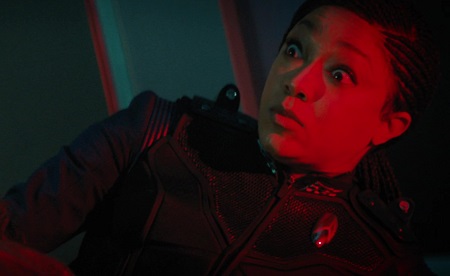
It was horribly unfortunate for Burnham that, in her first encounter with one of Zareh’s men, she got stabbed. And my gosh that stab was absolutely brutal! Discovery has been much more gory and visceral with some of its depictions of injuries when compared with past iterations of Star Trek, and this was certainly one of the most visually brutal. The camera work and direction showed just how painful Burnham’s wound must’ve been for her, and the follow-up as she cauterised the wound with a phaser was equally gruesome. Wonder why she didn’t use a medical kit? Compared with the dodgy CGI involved in Mirror Burnham’s death a couple of episodes back, this injury was so much better from a visual standpoint, and worked perfectly within the story.
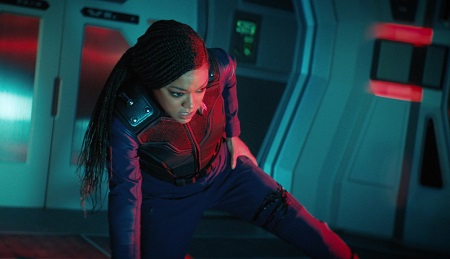
Burnham suffered a major injury while battling the Emerald Chain.
The injury likewise harkens back to Die Hard, as John McClane suffers injuries to his feet from walking on broken glass in that film. Both characters – Burnham and McClane – were left hobbling by their respective wounds, trailing blood as they crawled and snuck around. I have to assume these Die Hard throwbacks were deliberate on the part of director and Star Trek legend Jonathan Frakes. It’s by no means a carbon copy of that film, but anyone who’d seen Die Hard would struggle to miss the similarities!
Burnham succeeds in her initial objective – to free Stamets and smuggle him off the ship. However, the task of retaking the ship and defeating Osyraa and Zareh is pushed back to next week. Burnham got the bulk of the action this week, but she wasn’t the only one who got exciting scenes. Tilly and the secondary characters from the bridge managed to escape their confinement and defeat their guards, and the morse code tapping was another reference to The Final Frontier – and not to mention a very clever way to outwit the henchmen guarding them!
Burnham in a Jeffries tube.
Ryn, who was initially with the group of bridge officers, lost his life by Osyraa’s hand. This might be the moment that pushes Aurellio to potentially switch sides, or at least to stand up to Osyraa – but we’ll save that for my theory post! I was genuinely shocked by his death, and for a split-second it seemed as if Book, who was also present, was going to be the one Osyraa killed. After he and Burnham confessed their love for one another earlier in the episode, it would have been a tragic end to their relationship. I’m hopeful that Book will survive the season, giving Burnham some stability and emotional guidance going forward.
The final revelation of the episode was the Sphere data had transferred itself into at least three DOT robots. These cute little droids had been part of the show all season long, seen in the background or making repairs to the ship, and I’m glad they get a moment to be front-and-centre. I absolutely need a plush DOT though, so Star Trek merchandising team take note!
The DOT 23s are adorable and I love them.
Tilly didn’t allow the loss of the ship while under her care to compromise her, and she led the remaining crew in a creditable fashion as they escaped and linked up with the DOTs. I felt sure that the Sphere data would find a way to help, and this seems to be the method it has chosen. Seeing the cute little robots address Tilly as “captain” was a strangely emotional moment, and came just after Detmer, Rhys, Bryce, and Owosekun had all pledged to follow her. The crew sticking together – joined by the DOTs – was a hopeful note to end the episode on.
So that was There Is A Tide… which is the penultimate episode of the season. It was absolutely fantastic, with complex themes, great performances, and plenty of action as the season approaches its climax. My only real points of criticism come from what wasn’t present – most notably the action in the Verubin Nebula – and whether there might be a little too much left to get through if the season finale is to wrap everything up neatly. Beyond that, however, I can hardly find a single fault.
Tilly is ready to retake the ship!
Osyraa got the expansion her character has needed since she was introduced, which was fantastic. Vance got to show off his negotiating skills. Tilly remained steadfast in command despite her “bruised ego” after losing the ship. Aurellio was a wonderful new character with depth. Anthony Rapp put in the performance of the season as the emotionally crippled Stamets. And Burnham got her very own Die Hard story, an action-packed adventure as she tried to save the ship from Osyraa and Zareh. There was so much going on in There Is A Tide, and all of it was wonderful.
This episode may be the high point of the season so far – an award I would have previously given to Far From Home. Jonathan Frakes never fails to deliver when he’s in the director’s chair, and this was a fantastic, well-written episode that allowed him to shine. There are a lot of open questions as of the end of the episode; hopefully the season finale can either provide satisfactory answers or set up Season 4 to bring about a resolution. I cannot wait for the end of the season – but it will be a bittersweet moment as it will bring an end to 23 straight weeks of Star Trek which began back in August!
I hope you had as much of an enjoyable time with There Is A Tide as I did! Come back next week for my breakdown of the season finale, and stay tuned for much more Star Trek here on the website as we head into 2021.
Star Trek: Discovery is available to stream on CBS All Access in the United States, and on Netflix in the United Kingdom and elsewhere. The Star Trek franchise – including Discovery and all other properties mentioned above – is the copyright of ViacomCBS. This article contains the thoughts and opinions of one person only and is not intended to cause any offence.













 Trekking with Dennis