

Spoiler Alert: There are spoilers ahead for The Lord of the Rings: The Rings of Power Seasons 1 and 2. Spoilers are also present for The Lord of the Rings novels/film trilogy and other works by J.R.R. Tolkien.
In 2022, I was one of the people who generally enjoyed The Rings of Power’s first season. I didn’t think it was perfect, and I wrote at the time that the series still had work to do to justify its ridiculously high budget. But a return to the world of Middle-earth – a fantasy realm I’ve adored since I first read The Hobbit as a geeky little kid back in the ’80s – was incredibly welcome. While there were some stumbling blocks in Season 1, there were enough positives for me to be excited to see where Season 2 might go.
Let’s clear something up: despite what you may have read in some online tabloid rags, The Rings of Power isn’t going to be cancelled. Amazon is committed to a five-season run – I believe that was actually one of the stipulations the corporation agreed to when dealing with the Tolkien Estate – and even though there has been some criticism of Season 2 (as there was with Season 1), The Rings of Power isn’t going away any time soon. I don’t believe that the argument “trust me, it gets good later on” is particularly convincing… but there are still, in my view, reasons to be positive as the series continues its run and its various storylines unfurl.
I’d like to start this review by talking about some of the dialogue in The Rings of Power’s second season. There seems to be an effort on the part of the show’s writers to use a deliberately archaic style of language – presumably as an attempt to emulate Tolkien’s writing style. Some of the choices of words, the order of words in sentences, and the length of some lines of dialogue all feel like they’re from the first half of the 20th Century… and that gives The Rings of Power an almost anachronistic feel at points. Surrounded by modern CGI and in full 4K, characters are speaking like they’re in a film or play from the 1920s or 1930s. Maybe there’s a bit of a disconnect there, and perhaps if I were to be critical I’d say that some of the writers may be leaning into this style a bit too much – at least for my taste.
Particularly with Elvish characters – Gil-Galad, Elrond, Galadriel, Celebrimbor, and others – there are a lot of rolled R sounds and other “accent” attempts, and again I feel this may have been overdone. I don’t remember these “Elvish accents” getting in the way so much in Season 1, but it’s possible I just overlooked it last time or it wasn’t as present. This time around, though, it was a bit too much; it felt rather like when you hear a native English speaker randomly use the Spanish or French pronunciation of a word in the middle of a sentence. It was distracting and offputting, and once I noticed it I found that I kept noticing it every time these characters would speak.
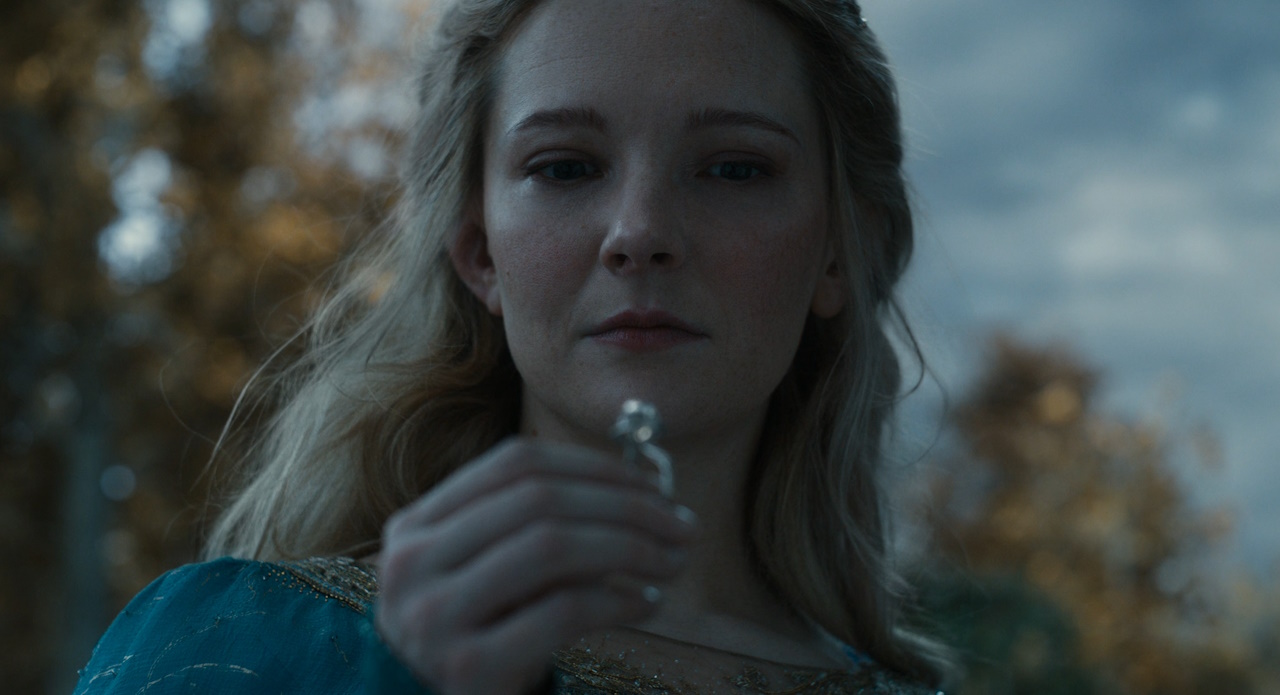
The Rings of Power is telling a complex set of intertwined stories focusing on different groups of characters. Care has to be taken to ensure that these stories don’t feel constructed and artificial… and for me, parts of Season 2 missed the mark. Several characters – Galadriel, Adar, and Sauron most notably – seemed to zip around the story at the behest of a team of TV writers rather than in ways that felt natural, and especially by the latter part of the season, this sense of an artifically-constructed narrative had begun to set in.
Partly this is because the abilities and motivations of these characters weren’t always made clear ahead of time. Sometimes it seemed as if a character was doing something “just because,” or had discovered a new ability, power, or desire out of thin air. The titular rings had an effect on a few characters, changing their motivations and actions (again to suit the plot), but that isn’t really what I mean. Those changes for Gil-Galad, Galadriel, and King Durin are built into the story; Adar’s decision to take his army north – and his ability to do so apparently unseen – didn’t really track, at least not for me.
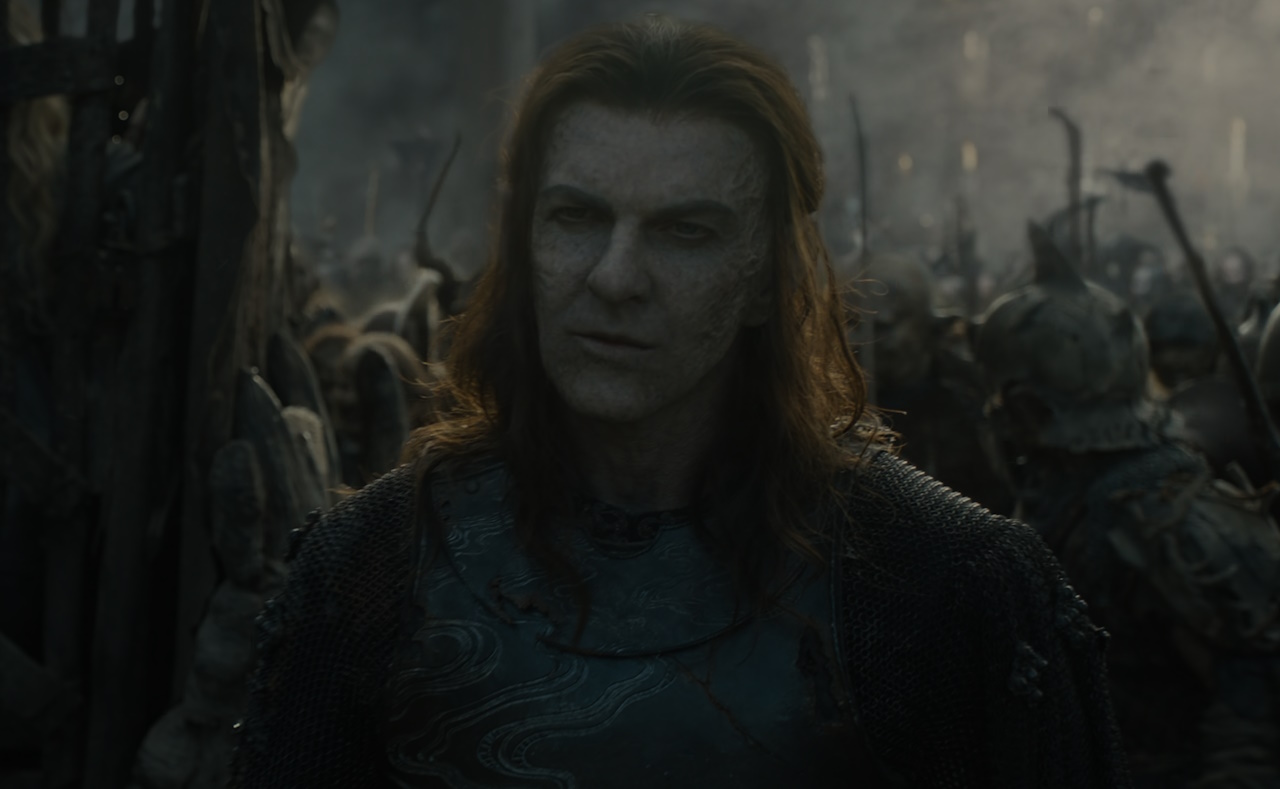
That being said, Adar may be my favourite character in Season 2. His core desire to keep his people safe and free was understandable, even if the way in which he went about achieving that objective was questionable and seemed to move along at a far too rapid and convenient pace. Adar – whose actor was replaced in between Seasons 1 and 2 – isn’t played like a typical villain, and in a world where most of the heroes are paragons of virtue and the villains wicked and corrupt, those nuances made him – at least for me – one of the most interesting characters in the story.
Here’s something that confused me in Season 2. Maybe I’ve missed something, because lest we forget it’s been two full years since the first season of this show, but… don’t Orcs hate sunlight? Wasn’t a huge part of the plot of Season 1 that Adar and the Orcs wanted to trigger the eruption of Mount Doom so the sunlight would be blocked out and they could live happily? Isn’t that why they lived in tunnels and moved by moonlight?
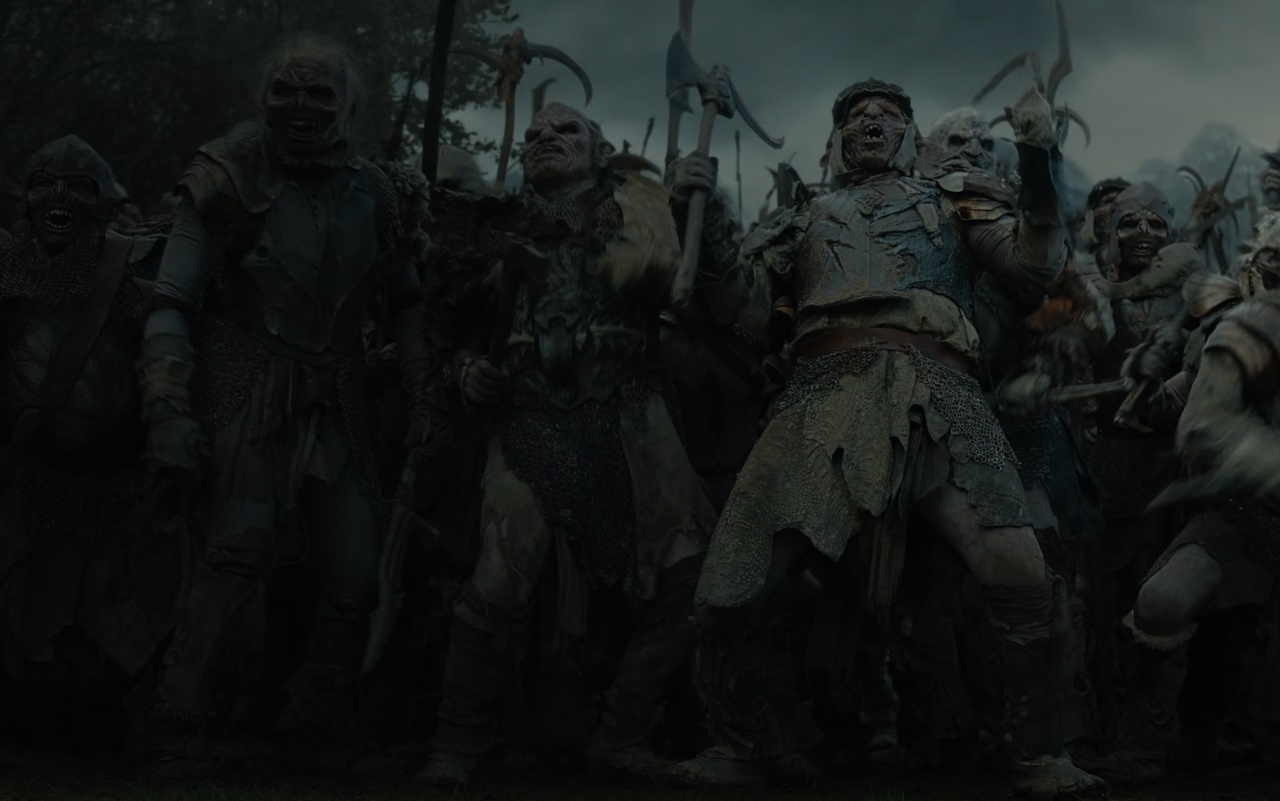
The Rings of Power seems to have discarded this idea to fit the plot, with Orcs marching happily in the sun, fighting battles in the daylight, and making camp out in the open. Yet this was not only a fundamental building-block of the Orcs from Tolkien’s original work, but also a key part of what happened just a few episodes ago in Season 1. To make such an arbitrary change with no explanation and no apparent on-screen acknowledgement, even… I don’t know. I didn’t like it.
Although the show is a prequel, parts of The Rings of Power feel much more like the middle chapter of a story. Many characters reference unseen events, like the reign of Morgoth and an earlier conflict against Sauron, with some of these things becoming key narrative elements or character motivations. Celebrimbor, for instance, being driven to create a legacy that could rival the creations of Fëanor, is a huge part of how Sauron was able to manipulate him. But with so few flashbacks and so little background provided within the show itself, there were moments across all eight episodes where I felt I was watching a sequel without having seen the original. Many other stories play out this way, with the events we follow in the main narrative being influenced by things in the past, or with characters who have motivations linked to their backstories. But… to be blunt, a lot of those do a better job of explaining their backgrounds and characters. We didn’t need a full flashback episode to the First Age with young Sauron, young Celebrimbor, Morgoth, and so on. But we did need to get more context for some of these storylines as they unfolded, with more background provided to better explain what was going on. This was an element of the season that was lacking.

Sauron’s plan this season was difficult to follow, convoluted, and seemingly counter-productive to his own goals in places. He simultaneously wanted to craft the Rings of Power in Eregion, skilfully manipulating Celebrimbor to this end. But he also wanted to seize control of Adar’s legions of Orcs – and the way in which he went about the latter threw the former into jeopardy from his perspective. I will caveat this by noting that Sauron did say, toward the end of the season, that he doesn’t know everything and can’t predict all outcomes… but even so. Both the ring-crafting and the siege of Eregion were by his design, and yet they worked almost completely at cross-purposes.
I have to be honest about this next point, and it is admittedly not the biggest because it concerns a single line of dialogue… but I hated hearing Celebrimbor call Sauron “Lord of the Rings.” It was just so on-the-nose and kitschy, and while I get the intention behind it and the twisted interpretation of those words, it really didn’t work for me and made me roll my eyes. It’s such a shame, too, as it came at the end of Celebrimbor’s otherwise excellent redemption arc.
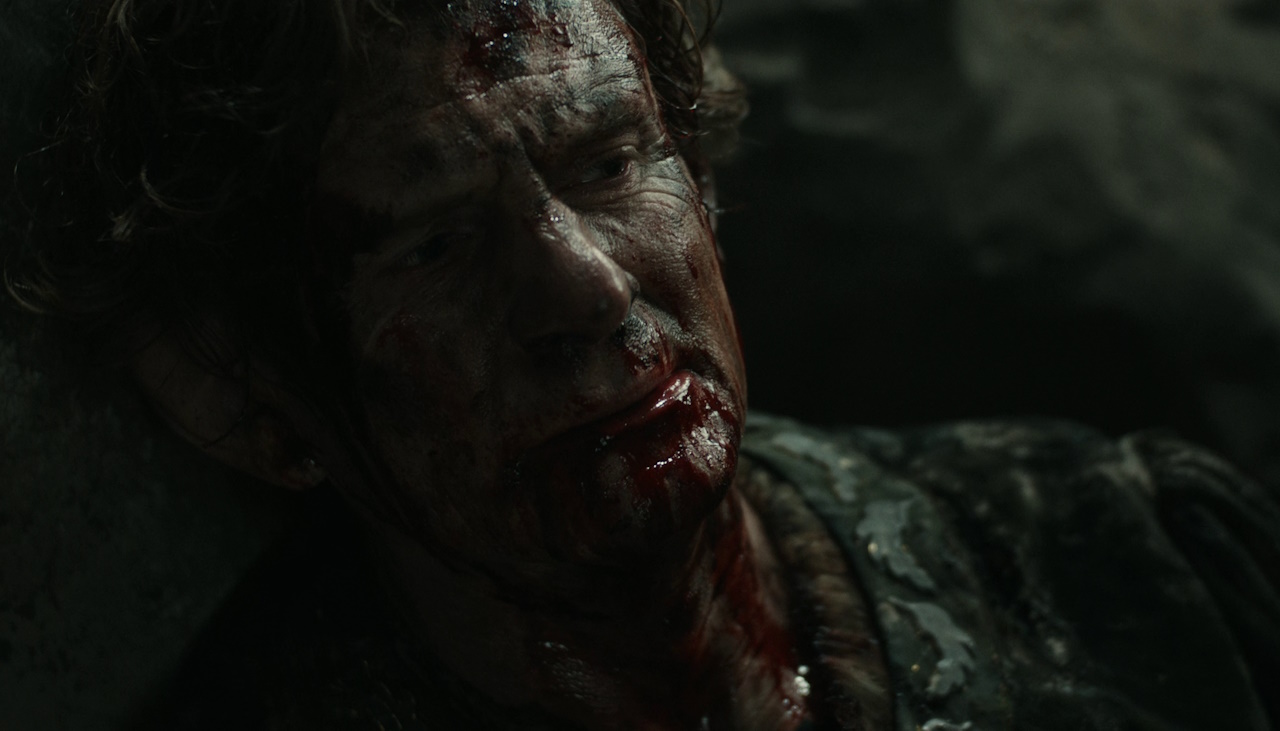
Sauron seemed to manipulate Celebrimbor with ease in the first part of the season, and I wasn’t wild about that. A bit more resistance from Celebrimbor, perhaps, or a more serious demonstration of Sauron’s power earlier might’ve eased that. But his storyline after regaining his senses went a long way to redeeming that side of the story, and I enjoyed seeing him reclaiming his position and trying to get the rings he had made as far away from Sauron as possible. I’m a sucker for a good redemption arc and a tale of sacrifice, and Celebrimbor’s delivered in the final couple of episodes of the season.
Let’s talk about a pet theory of mine that Season 2 demolished. We’d been following “the Stranger” and his proto-Hobbit friends, and although there were plenty of hints that this character was Gandalf, I wasn’t entirely convinced of that. It seemedalmost too obvious, and I wondered whether The Rings of Power might’ve tried to pull off a bit of a twist by making this character another wizard: Radagast, perhaps, but more likely Saruman. Knowing what we know of Saruman’s future, I felt that could be interesting.
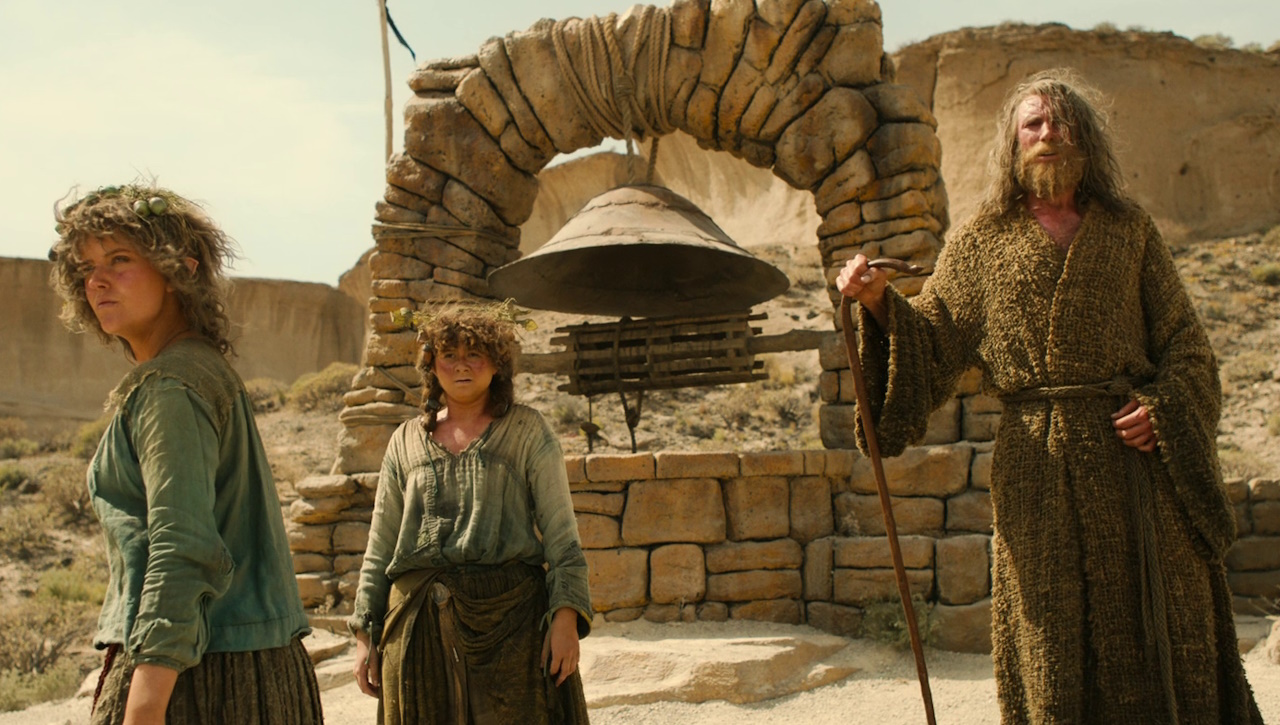
Instead, The Rings of Power was incredibly pedestrian, dropping obvious hints that led to an obvious conclusion. I’m not disappointed that my personal Saruman theory didn’t pan out, but I am a bit disappointed that the writing on this side of the show continues to be so… basic. Why bother “covering up” the identity of a character if everything they say and do makes it obvious who they are? And come to that… why bother going through this “amnesia” storyline at all? Why couldn’t Gandalf have emerged knowing his name but needing to discover his purpose? It just fell a bit flat for me.
I was excited to see Tom Bombadil in live-action for the first time, and the performance was spot-on. Rory Kinnear put in a spectacular performance to bring this enigmatic character to life, and everything from the costume to the accent to the design of his home was perfect. This version of Tom Bombadil is exactly how I pictured the character in my mind all those years ago.
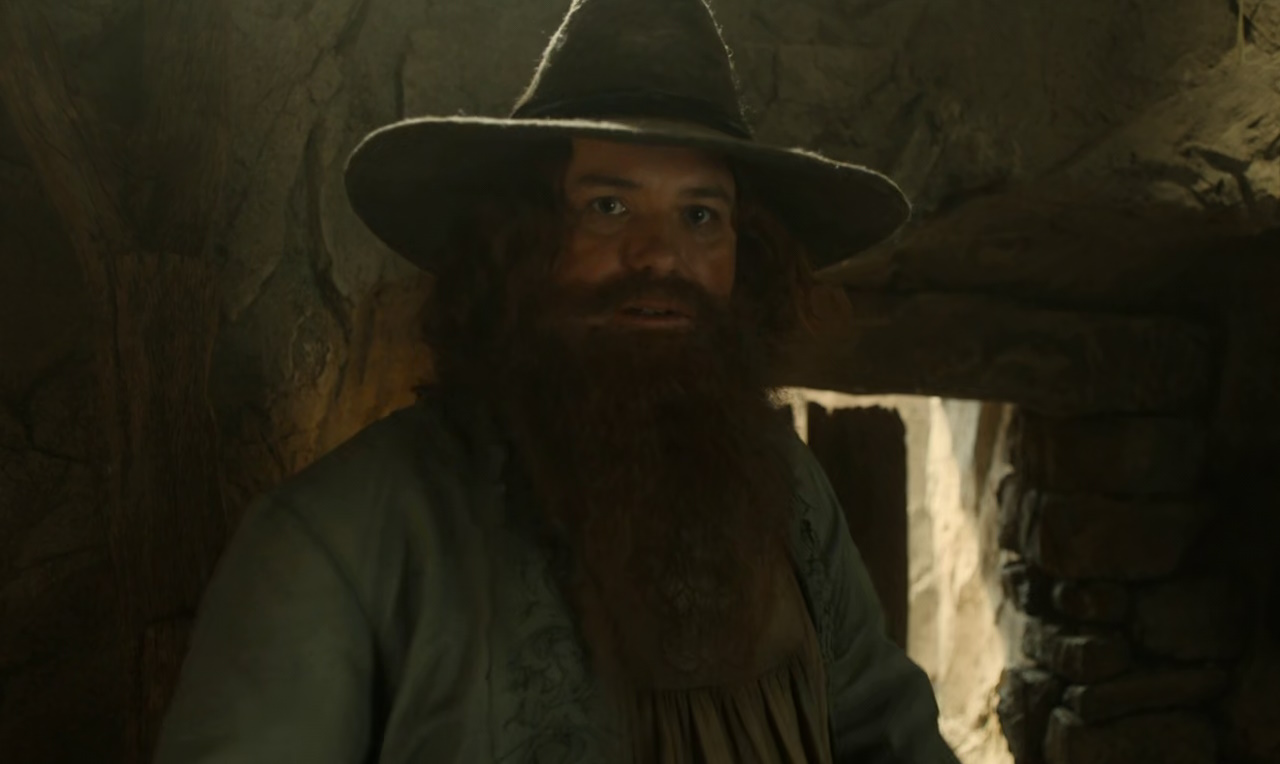
But – and you knew there was a “but” coming after all of that – what on Middle-earth is Tom Bombadil doing getting so involved in the plot? The whole point of the character, at least from what I recall of reading The Lord of the Rings a long time ago, was that he was ancient and powerful – but completely indifferent to the Ring, the quest against Sauron, and so on. Gandalf and Elrond felt that he’d just forget about the One Ring if it was left in his care, and that if Sauron were to win and conquer Middle-earth, Tom Bombadil wouldn’t come to their aid, nor even understand the nature of their quest.
It was pretty jarring, then, to see Tom Bombadil so engaged in the world and so helpful to both Gandalf and the Dark Wizard. Characters like this have to be used carefully because of the extent of their powers, and while I’ll entertain the idea that “TV show Tom” and “book Tom” are different characters who may have different origins and abilities… this was one area where I felt the decision to diverge so extensively from the source material was particularly notable and perhaps ill-advised. Tom Bombadil is a character who could easily be written into a corner, I fear.
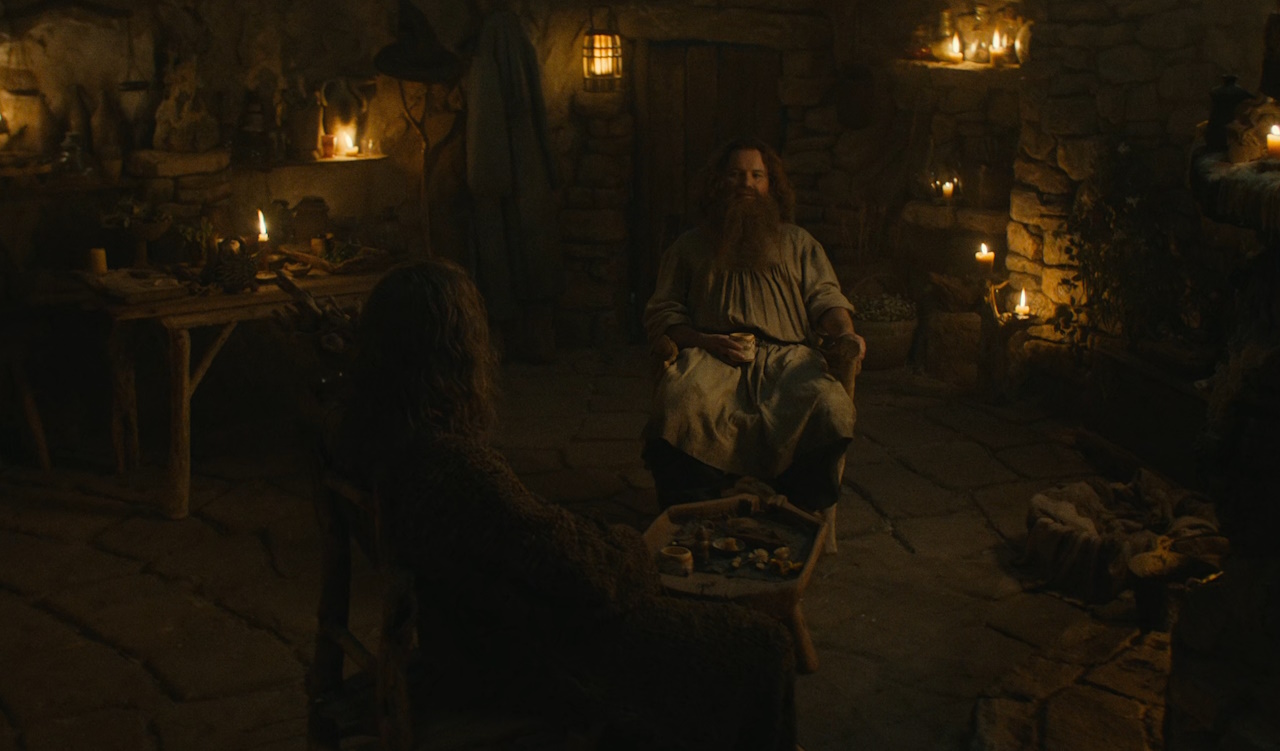
With The Rings of Power being, as we discussed, so pedestrian and boring with its character identities, I have to assume that the Dark Wizard we met is Saruman. I hope not, though, because much of the power in the reveal of Saruman’s betrayal in The Lord of the Rings comes from his status as the leader of the wizards and the head of the White Council. Gandalf doesn’t realise the extent to which Saruman has fallen under the corruption of the power of the One Ring until it’s too late – the whole point of his character is that he’s a good wizard gone bad.
We simply shouldn’t be seeing Saruman talking about “taking over” Middle-earth after Sauron’s defeat in this era. There was always an arrogance or smugness to Saruman; a flaw in his character that Sauron could later exploit. But it shouldn’t be so readily apparent so early on, and working on the assumption that the Dark Wizard and Saruman are one and the same, I didn’t like his presentation for that reason. If, however, The Rings of Power is willing to switch things up and offer a different explanation for this character’s background and identity, I think some of that criticism can be rescinded.
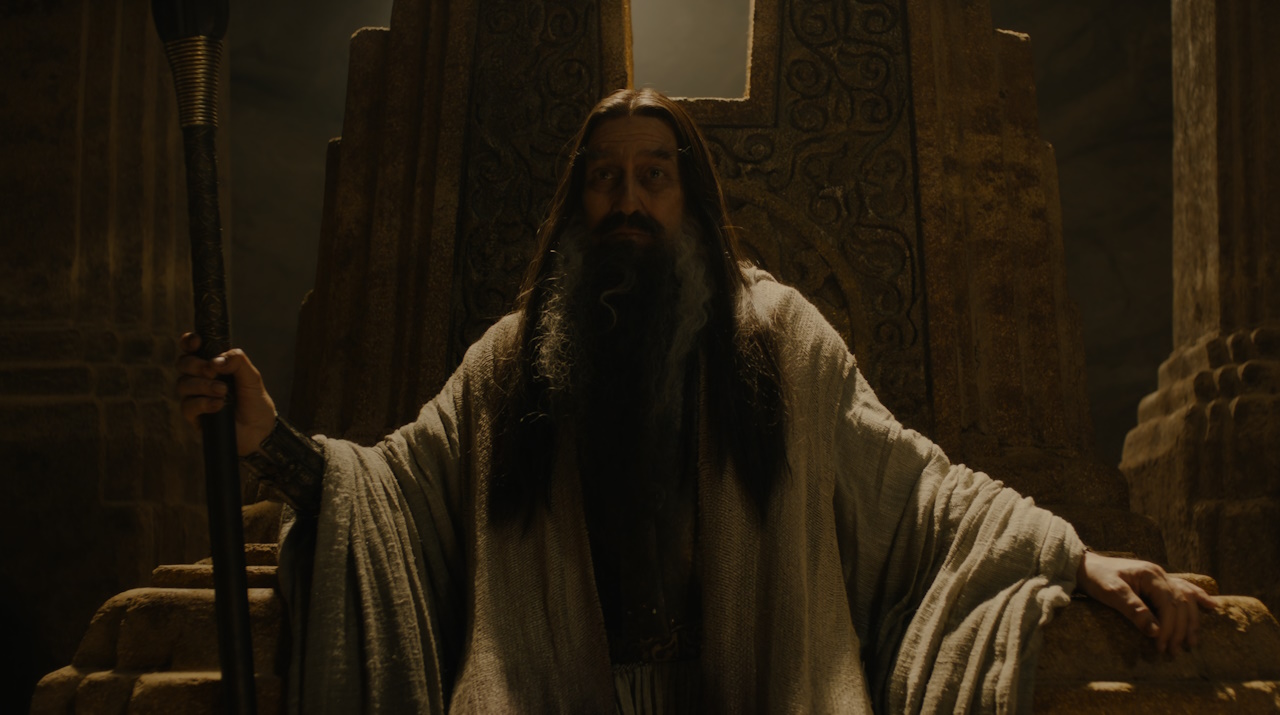
Visually, The Rings of Power continues to be an impressive series. Because of my crappy internet connection, I struggled to watch every episode in 4K on Amazon, but when I could get full 4K working, there’s no denying that everything from physical props and makeup to animation and CGI all looked fantastic. The series is deliberately leaning into the aesthetic of Peter Jackson’s films, and I noted that in particular with the likes of the Adar’s troll and the Ents – the designs of both wouldn’t have seemed out-of-place in The Lord of the Rings and The Hobbit.
There was one oddity in set design, and it happened in Eregion. In short, the area just outside of Celebrimbor’s tower, when viewed from the side facing away from the tower, had the feel of an enclosed stage – something you might see in a theatre. When characters would enter and exit from one side or the other, I got the feel of watching a stage play rather than that I was looking at a real physical space. Galadriel, for instance, seemed to enter from “off-stage” at one particularly important moment in the penultimate episode, and that feeling rather took the shine off things.
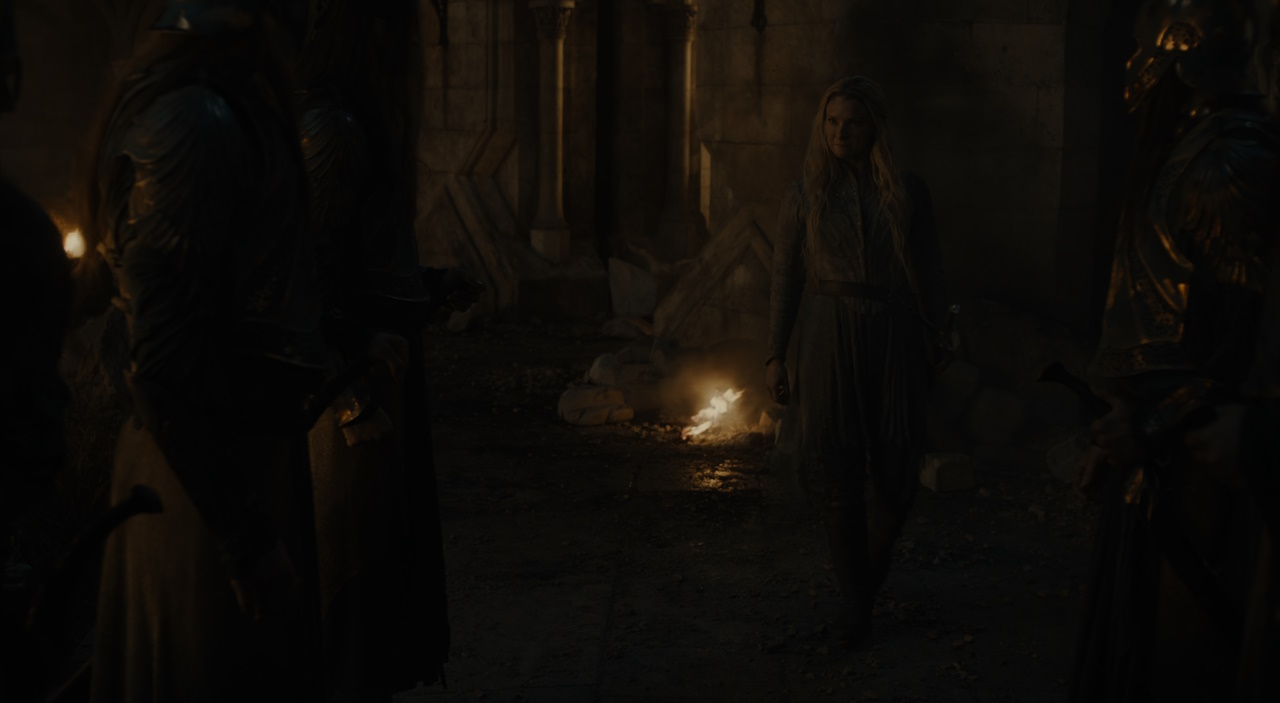
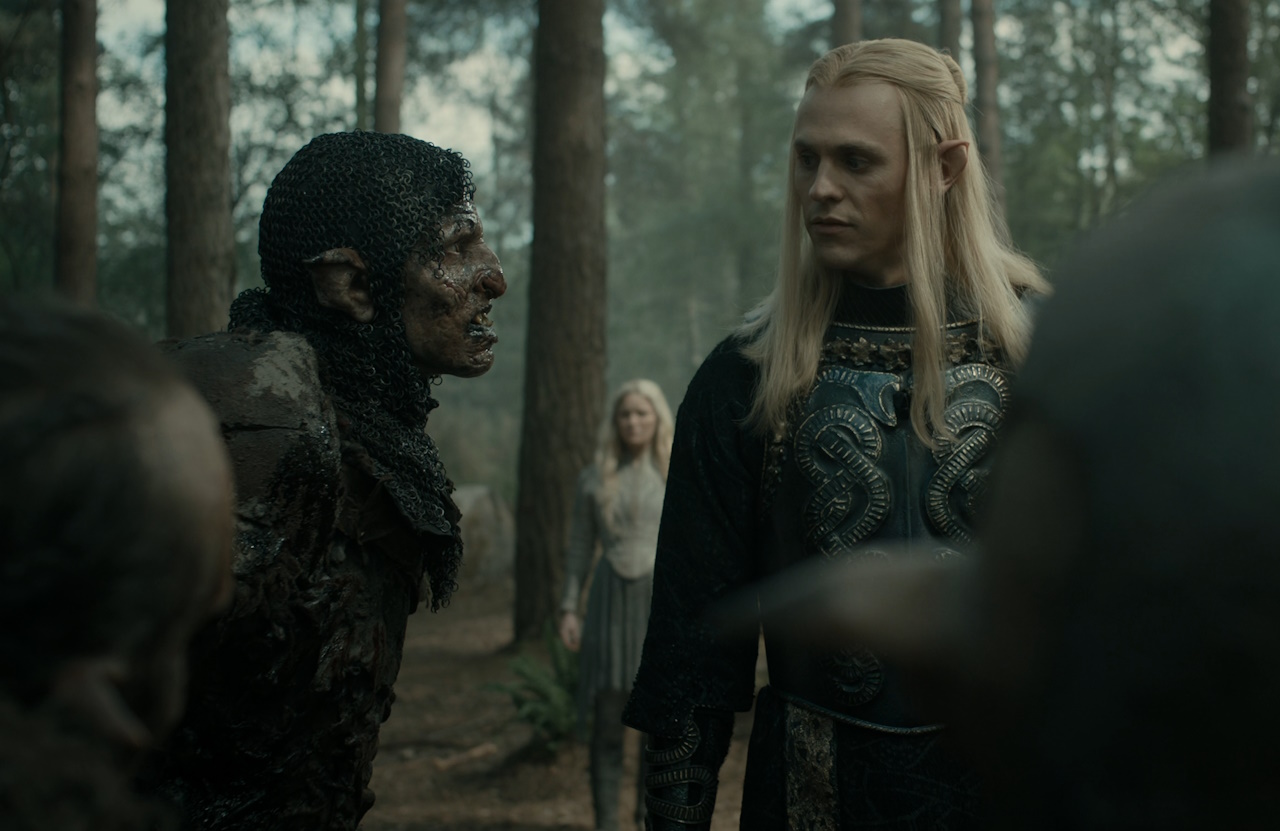
Speaking of oddities with Galadriel: in the season finale, after she had been captured by Orcs and taken to Adar, there was an especially strange moment. This ties into what I was talking about before with The Rings of Power not really explaining enough about some of its characters or their abilities, because after Sauron arrived, Galadriel seemed to just… stand there. She was standing in the background as Adar and Sauron had their confrontation, as if she was just waiting for her cue to rejoin the scene. It was really quite weird to see her just standing idly in the background as Sauron revealed his sway over the Orcs, and the strangeness of the moment detracted from what should’ve been Adar’s emotional and impactful death scene.
We know that Sauron has powers over Elves, Orcs, and others, as he demonstrated when he forced Celebrimbor’s guards to all stab one another. But it wasn’t clear in that scene whether he was “commanding” Galadriel to be held in place or if she was supposed to be stunned or in shock. At several points in the sequence, Galadriel was visible over Sauron’s shoulder or in the background… but rather than feeling like Sauron had her trapped or that she was in shock, it just felt like a poorly-constructed scene, one in which she was waiting for her cue so she could rejoin the action. Having those sequences staged that way was a strange decision.
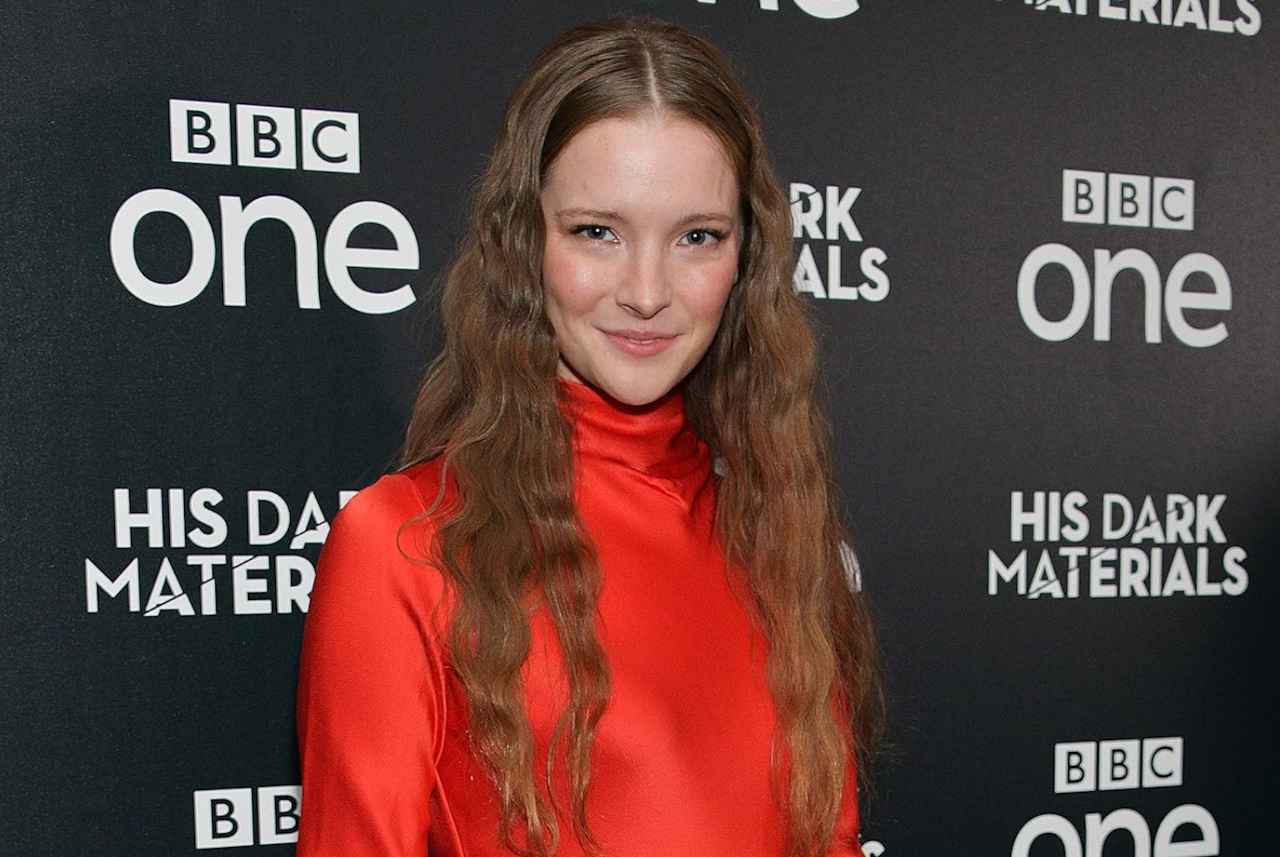
Morfydd Clark, who plays Galadriel, did as well as she could, I suspect, with the material she had. But Galadriel remains a difficult protagonist to root for, sometimes. The establishing episode of the series a couple of years ago portrayed her as single-minded and arrogant, and when we know how dangerous the titular Rings of Power are, her insistence on using and wearing her ring in Season 2 took on an uncomfortable dimension. Elrond came across as the voice of reason in those moments, especially in the first couple of episodes, and again I was reminded of those moments in Season 1 where Galadriel came across as being unreasonable.
I’m also not feeling Galadriel’s on-screen chemistry with either Elrond or Sauron. These are her two most significant partners, and both feel pretty flat. With Sauron, her anger and hatred should be coming to the fore much more, especially upon coming face-to-face with him. And with Elrond, I just don’t feel much of their friendship (or former friendship) from either of them through their performances or the script. Elrond is being played quite stoically, almost like a Star Trek Vulcan, and I guess that makes it harder to build up a warm relationship in some ways. But when I see Elrond with Durin, the difference is night and day. I adore Elrond and Durin as a pair, and their bromance was one of the absolute highlights of Season 1. But with Galadriel… they feel more like work colleagues than anything else.
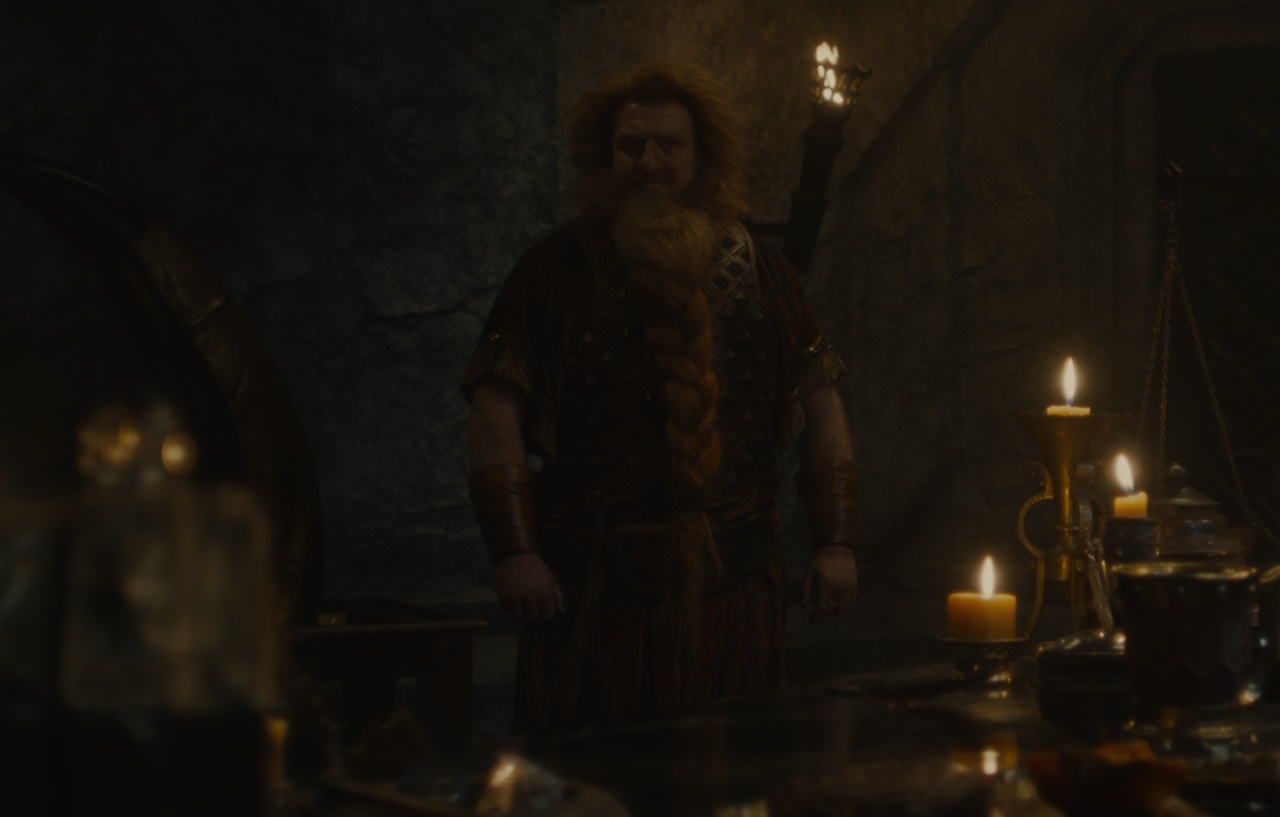
I wish we’d got more of Durin and Elrond this season. Hopefully the stage has been set for more between them next time, particularly with Durin rising to assume the throne and resolving the internal ring-related conflict in the Dwarven kingdom. But with only a couple of short moments between them across this entire season… it was an absence that I definitely felt, particularly as less-impressive character pairs and groups came to the fore.
That being said, Durin’s story in Khazad-dûm was still enjoyable. We got more “politicking” this time, with Durin and Disa having to negotiate the king’s court after falling out of favour, as well as stirring up an army to aid the Elves later in the season. Spending more time in Khazad-dûm and getting to know some of these secondary characters a bit more was genuinely fun, and the Dwarves never cease to be entertaining.
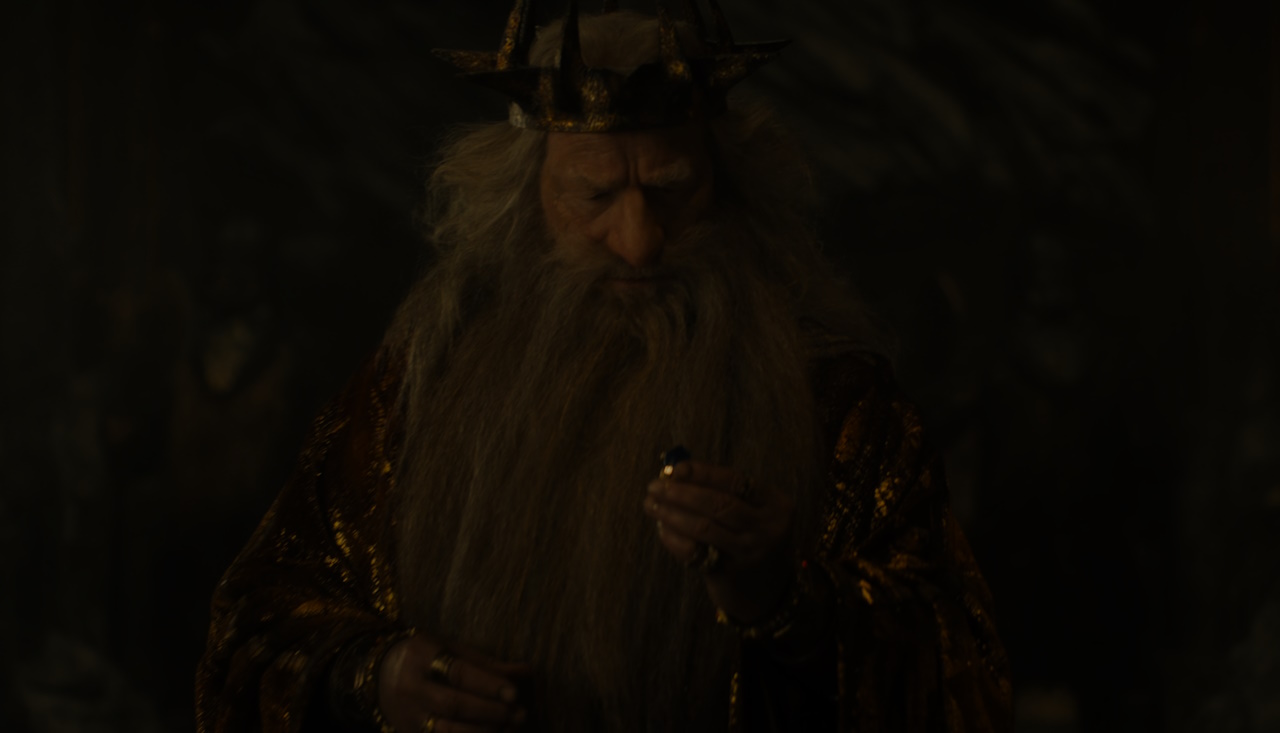
King Durin – not to be confused with Prince Durin – was an interesting character, and his final act of sacrifice managed to hit the right emotional moments after he’d fallen under the ring’s spell for much of the season. I’m not sure what to make of the Balrog beneath Khazad-dûm, though. I mean, it doesn’t seem like it would be difficult for it to escape now that the Dwarves have opened up a pathway to its chamber, even if part of the tunnel has caved in.
We talked earlier about Sauron’s various schemes seeming to work against one another, and his delivery of Rings of Power to the Dwarf-Lords is another good example. Exacerbating the Dwarves’ natural greed and desire for resources very quickly poisoned the mind of King Durin, but this in turn sabotaged Sauron’s ring-making as the Dwarves refused to send more of the magical mineral mithril to Eregion. Again, Sauron’s line of “not knowing everything” is relevant… but if he created the rings with this goal in mind, shouldn’t it have been predictable? Or if the point of the rings is to give him power over the minds of the wearers, shouldn’t he have been able to force Durin to give him the mithril? Maybe I’m nitpicking and overthinking, but it feels like a bit of a contrivance to get to Sauron putting his own blood or essence into the ring-making process.
The same could also be said of Celebrimbor’s sudden inability to make more rings. Having worked on the three Elven rings, Celebrimbor quite quickly moved on to make rings for Dwarves under the tutelage of “Annatar,” but when the plot needed him to slow down, he suddenly lost confidence and found his abilities diminished. Was this Sauron’s influence? If so… again, it seems counterproductive to Sauron’s goals. And if it wasn’t due to Sauron poisoning his mind, why did Celebrimbor suddenly find the process difficult when it had been so easy days or weeks earlier?
The political intrigue in Númenor was interesting at first, but I’m afraid it became a bit repetitive as the season wore on. The following pattern seemed to repeat several times: Elendil would be in trouble, Queen or ex-Queen Miriel would order him to abandon her, and then he’d defy her orders. He’d get in trouble, she’d be brought in, and the cycle repeated.
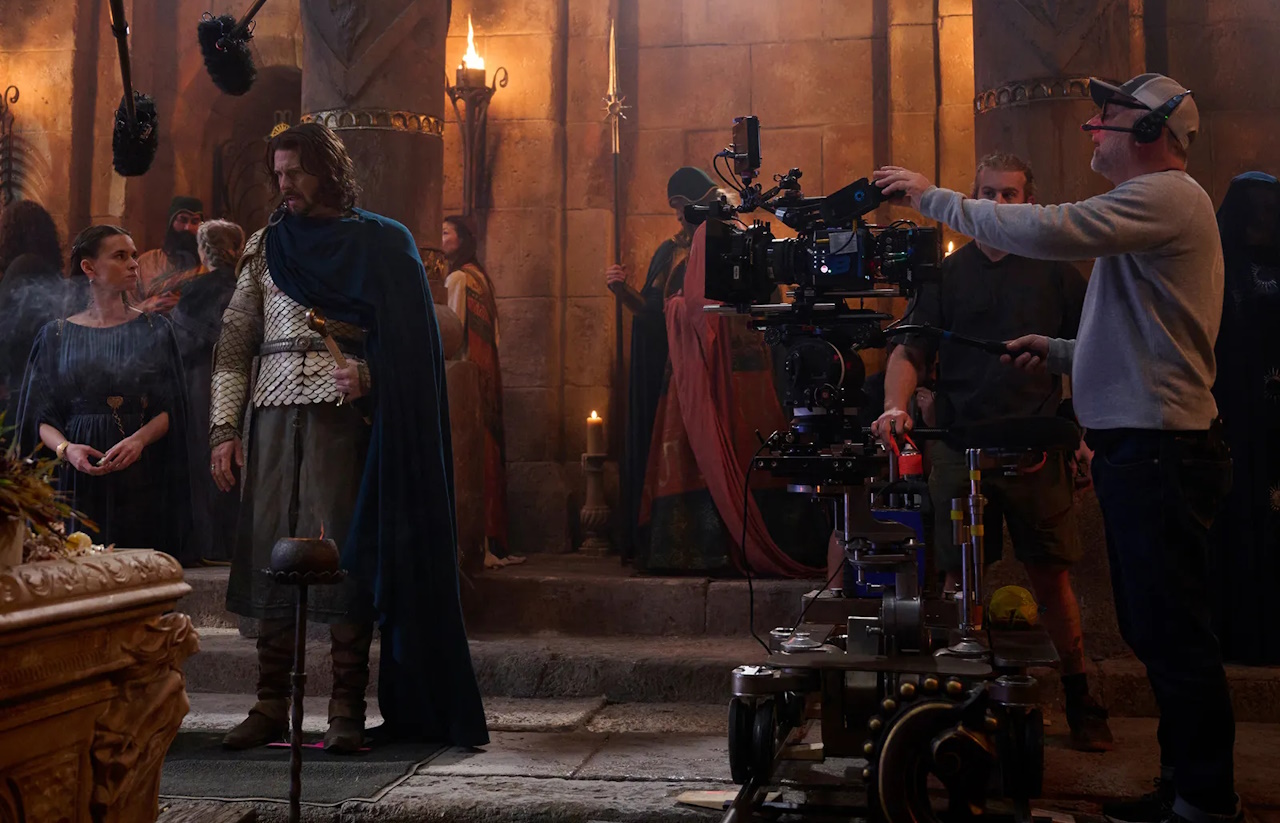
I liked the idea of the Númenoreans being angry with their ruler after the disastrous expedition to Middle-earth, and that there might be scheming politicians working behind her back to seize power and dethrone Miriel. That concept sounds much better on paper, however, than it came across in the show. Ar-Pharazôn and his son are leaning into the “evil for the sake of it” presentation that just doesn’t come across as all that interesting, and having been upstaged and humiliated by Elendil and Miriel several times… well, it’s obvious he won’t last very long.
The arrival of an Eagle at the Númenorean coronation was neat, though, and I liked the inclusion of this enigmatic race. Pharazôn and his supporters jumping on the idea of the Eagle’s arrival as signifying support for him instead of Miriel was also well done in that scene, and parts of this story hit at least some of the right notes. It just feels like something that needs a bit more time dedicated to it, as Ar-Pharazôn’s ascent to the throne played out pretty quickly across a few scenes. When you compare his scheming to someone like Littlefinger or Varys in Game of Thrones… well, you can see why it’s an unfavourable comparison for The Rings of Power.
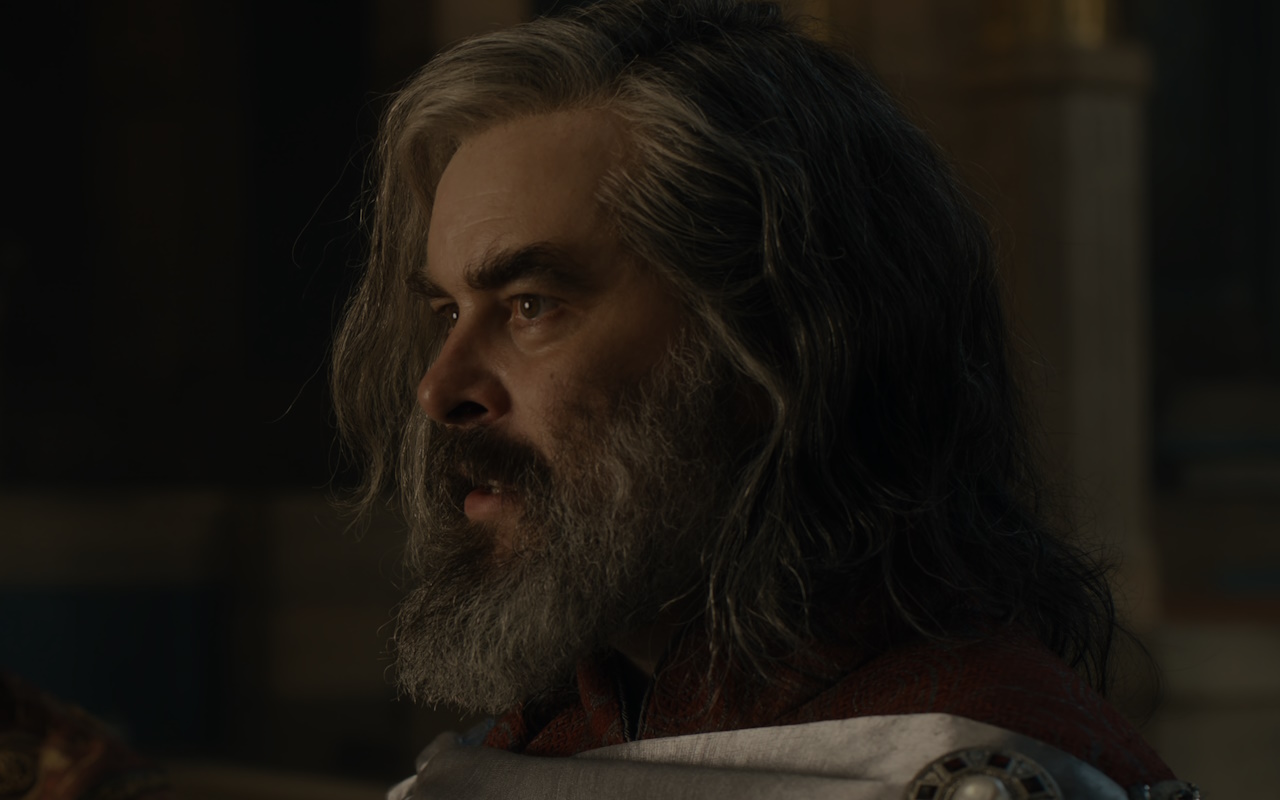
In terms of music, I enjoyed what was on offer in The Rings of Power. My first rule for any film or TV show’s soundtrack is that it should “do no harm;” i.e. not get in the way of or detract from the action on screen. That may be a low bar in some ways, but you’d be surprised how often even big-budget productions trip over it! Composer Bear McCreary did a great job with the score and soundtrack to The Rings of Power, and this might be one of the show’s strongest and best individual elements. Regardless of one’s opinion of the show overall, there’s no doubt in my mind that its soundtrack is fantastic.
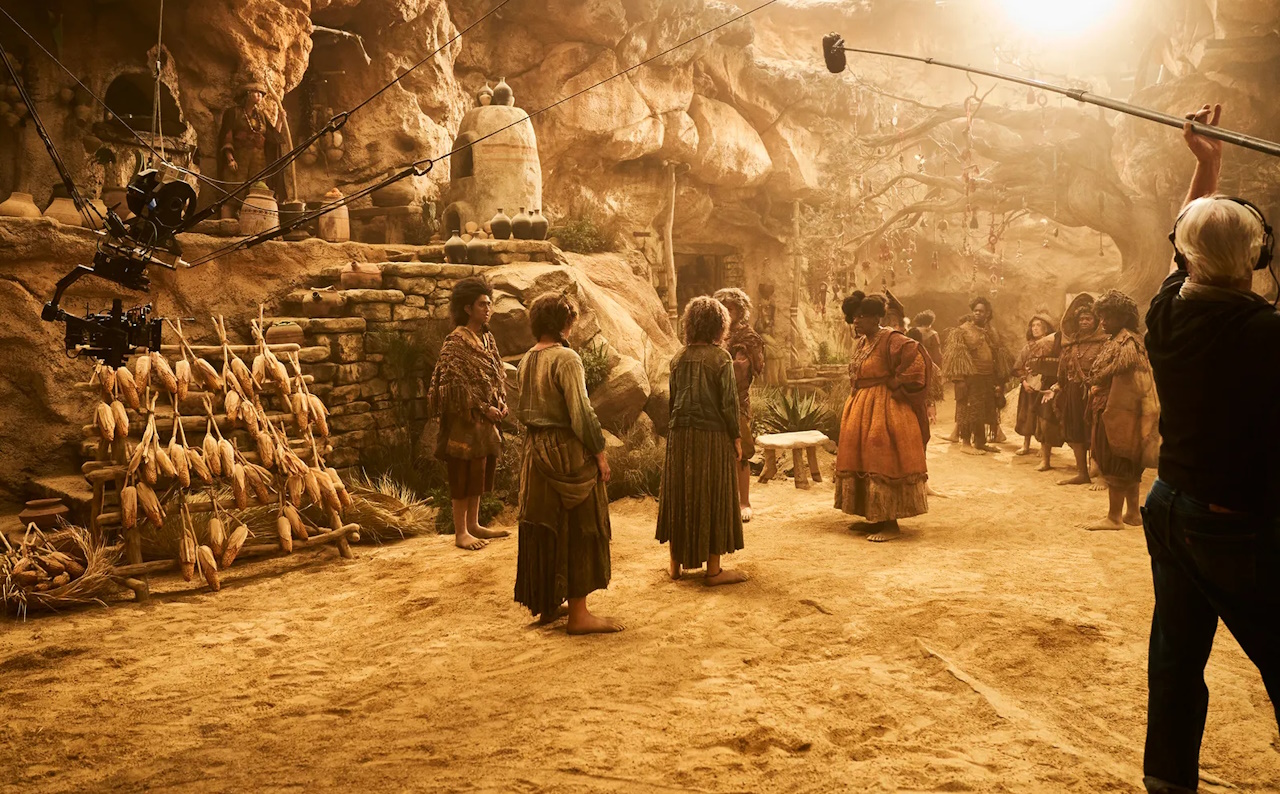
Sticking with the music, there was one thing that I didn’t like – and it’s nothing to do with composition, it’s about story. One of the best parts of Season 1 was the song This Wandering Day, a hauntingly beautiful, folk-style, acapella composition. In Season 2, part of the plot saw Nori, Poppy, and the Stranger dissecting its lyrics, finding that they had a literal meaning that helped them navigate the way to Rûhn. I just wasn’t wild about this idea, as taking a beautiful song and hacking it apart, breaking down its lyrics to find, of all things, directions… it took away from the original sequence in which the song was featured. It didn’t feel necessary, as their getting lost was a pretty minor bump in the road compared to what was to come. I could’ve happily skipped this idea and those extra couple of minutes with the Stoors or learning a bit more about the Dark Wizard.
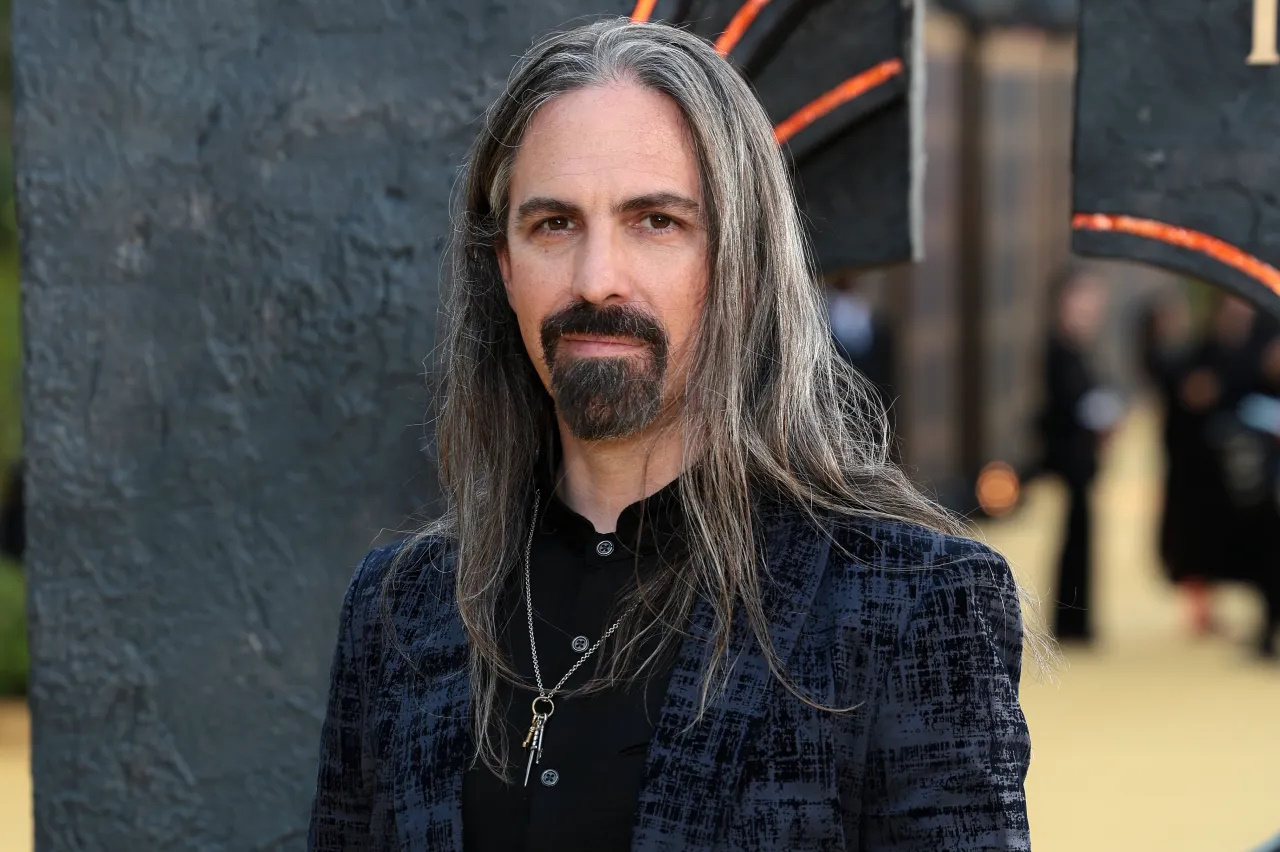
More could’ve been done with the Southlanders as they made their escape from Mordor, eventually settling in an abandoned Númenorean outpost. I feel like we didn’t really get to spend enough time with Theo and his villagers, especially given the prominence of the Southlands in Season 1. Theo’s story was okay, and he got an arc of sorts as he wrangled with his feelings toward Arondir, as well as befriending Isildur. But I could’ve spent a bit more time with some of these characters, several of whose names I can’t even recall.
Arondir had some great moments this season, particularly as he dealt with the Ents and saved Isildur from some kind of worm-monster that could’ve come straight out of Dune! His scenes with Theo also packed a punch; the two have good chemistry together, and I hope we haven’t seen the last of either Theo as a new village healer or his relationship with Arondir.
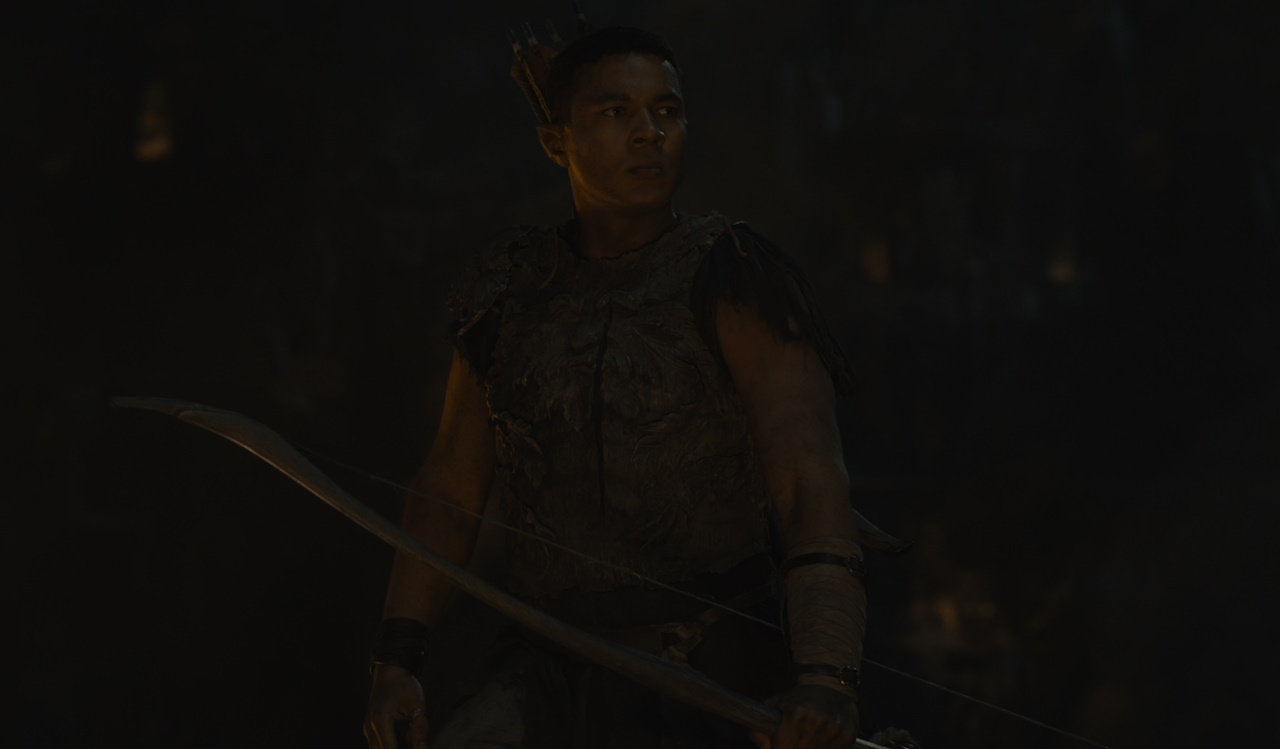
However, Arondir seemed to die while fighting Adar, being hit multiple times and falling to the ground. At the very least, he seemed to suffer serious injury – but this was forgotten the next time he appeared on screen, and he was back to his usual self. I don’t know what happened here, exactly – and I’m pleased Arondir lives to fight another day, don’t get me wrong – but having built up to his conflict with Adar across several episodes, the way it was immediately ignored didn’t feel great. Maybe two different writers had different ideas for where to take the character?
I’m a romantic – or I can be, under the right circumstances! So I don’t begrudge the writers giving young Isildur a romantic interest in the form of the Southlander Estrid. However, the way this unfolded wasn’t really to my taste, with Estrid betraying Isildur, reconciling, revealing she has a partner already, potentially abandoning him for Isildur, and then being blocked at the last minute. It was just a bit too much soap opera drama for me, and while I liked other parts of both Estrid and Isildur’s individual story arcs, their romantic side fell wide of the mark.

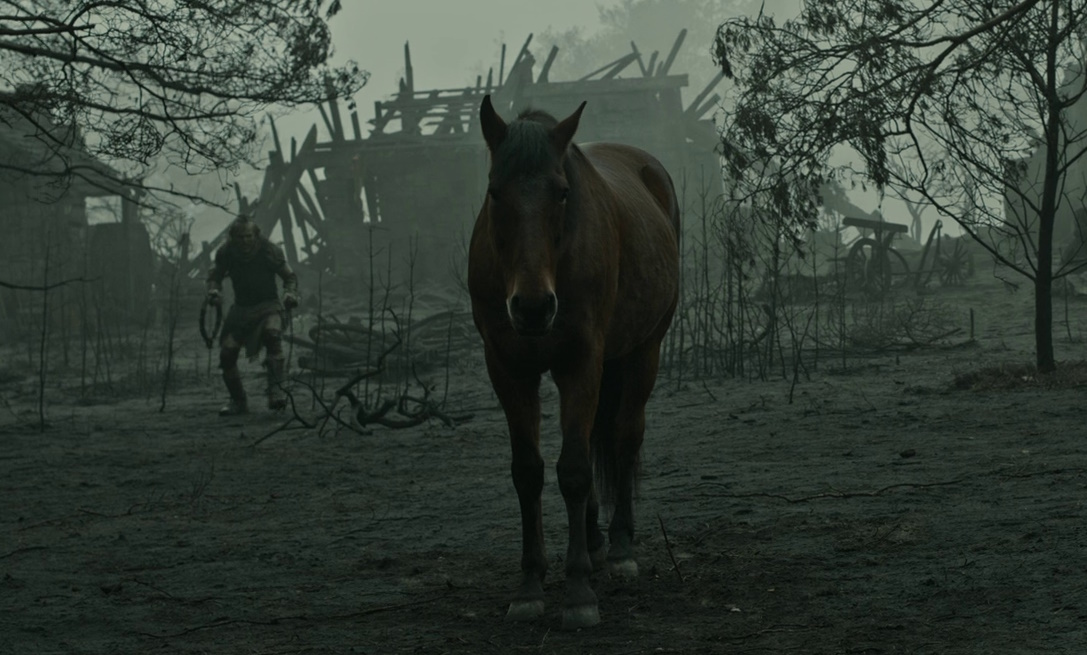
One of my favourite parts of the season was Isildur’s horse Berek being let loose to track him down. I adore stories about animals and when Berek was in danger in the spiders’ cavern it was one of the few moments in the entire season where I was genuinely on the edge of my seat! Whoever trained the horse did an excellent job, and the music and cinematography in this sequence kept it tense and emotional all the way through. When Berek was later captured, I was champing at the bit for Isildur and Estrid to rescue him, and Ar-Pharazôn’s son threatening him was the icing on the cake of that character’s evil-ness!
From one powerful and emotional horse story to one that fell flat. I’m a sucker for animals in fiction as we just discussed – I even cried about a digital horse when playing Red Dead Redemption II. So the scene where Elrond’s horse was killed should have hit me… but it really didn’t. Unlike with Berek and Isildur, I felt no real bond between Elrond and his nameless horse, and even a brief scene with Elrond apparently saying goodbye didn’t really make up for that. Isildur and Berek had love for one another; Elrond seemed, for much of the show up to that point, to see his horse as a tool, a vehicle to get from one place to another. And that made what should’ve been a powerful moment for his character fail to stick the landing.
So I think that’s everything I have from my notes.
It can be hard to judge middle seasons of a television show. How we feel about The Rings of Power Season 2 will be coloured not only by our opinions of Season 1, but also in time, whether Seasons 3, 4, and beyond successfully build to a satisfying narrative climax. I think this season moved things along in that regard, unfolding more of its storylines – though some were a bit too obvious and pedestrian, unfortunately. It also feels like a series doubling-down – for viewers who hated Season 1 and most of what it tried to do, I don’t see Season 2 “redeeming” The Rings of Power or responding in a concerted way to the criticisms hurled at it a couple of years ago.
For me, though, I generally had a good time. There were moments that missed the mark, storylines I was less interested in, and a couple of character pairs or groups that seem to be lacking in chemistry, but I can’t deny that I enjoyed much of what transpired on screen. The Rings of Power was exciting, tense, dramatic, and where it wanted to be, occasionally brutal and comedic. Taken on its own merit, I think it’s a decent fantasy show and I’m happy to see it continue.
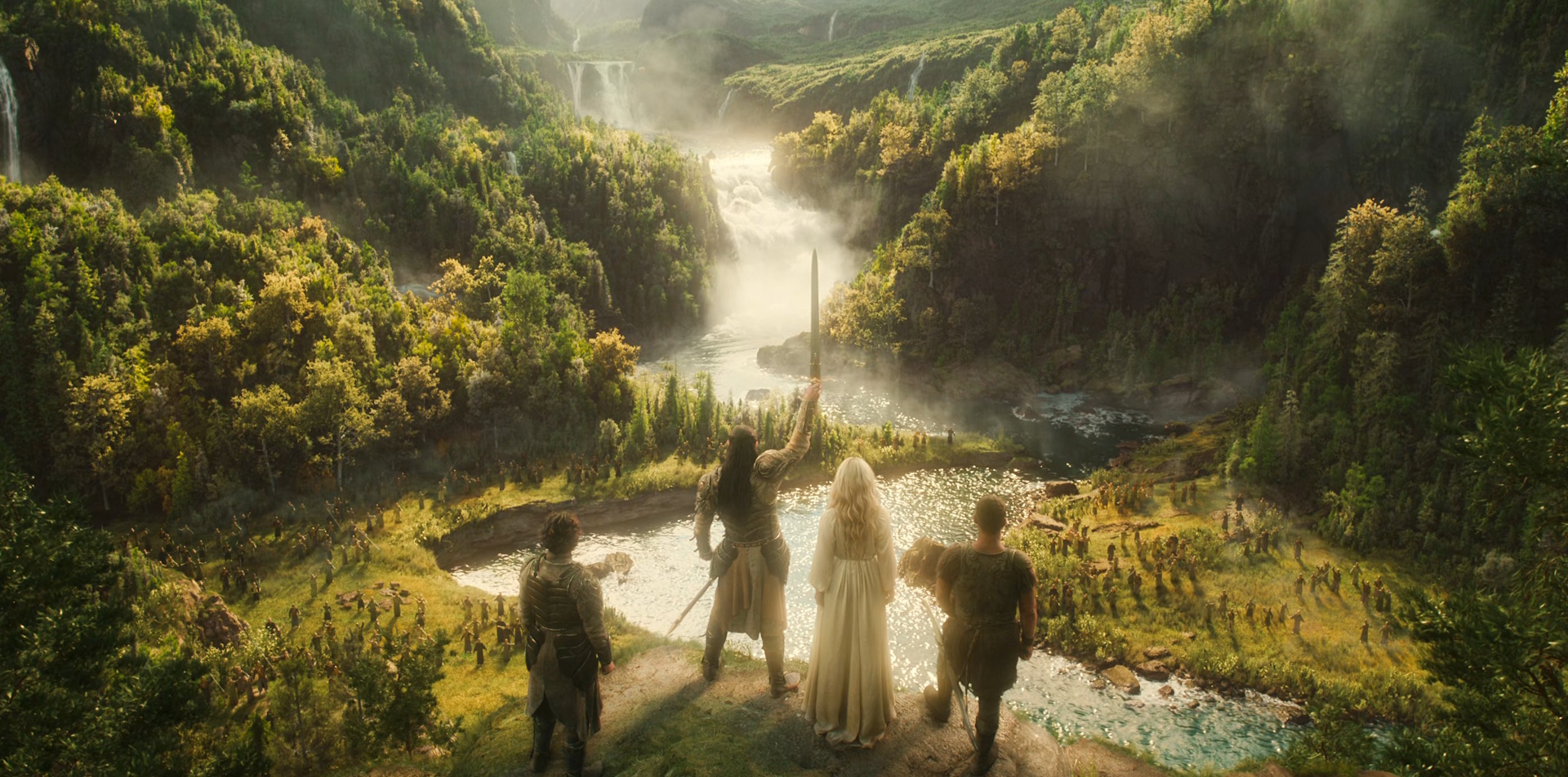
Whether The Rings of Power lives up to the film adaptation of The Lord of the Rings or stands as a true successor to a series like Game of Thrones, though… I think the jury is out on that. It takes time for any series with an expansive cast of characters and intertwined, serialised storylines to find its feet, but The Rings of Power should now be in that position. It will fall to Seasons 3, 4, and 5 to do something great with the foundations that have been established here. Does that mean the series has finally justified its sky-high budget? Again, I think we have to wait and see.
Speaking of waiting and seeing: I can’t wait two full years for another eight episodes of television. Long wait times in between short seasons is a problem streaming shows on various platforms are suffering from, and I hope that now Amazon has gotten two seasons’ worth of experience with The Rings of Power, production on Season 3 can ramp up quickly. If the series really will go to five seasons and it’s gonna be a two-year wait for each one, we won’t be seeing the finale until at least 2030. I might not live that long – though, touch wood, I certainly hope I will(!) – so Amazon really needs to pull out all the stops to get future seasons into production much more quickly. I felt my enjoyment of Season 2 was hampered, in places, by forgetting who a character was or what happened to them two years ago. A recap certainly helped, but getting the next season ready faster will help a lot more.
So I hope this has been interesting! I’ll always be happy to spend more time in Tolkien’s Middle-earth, and while The Rings of Power may have some flaws and some storylines that I find less interesting, I’m still happy to go back to it and I enjoyed much of what was on offer in Season 2. Roll on Season 3 – and the next phase of Sauron’s plot!
The Lord of the Rings: The Rings of Power is available to stream now on Amazon Prime Video in the United Kingdom and around the world. Season 1 is also available on DVD and Blu-ray. The Lord of the Rings: The Rings of Power is the copyright of Amazon MGM Studios, New Line Cinema, and/or the Tolkien Estate. This review contains the thoughts and opinions of one person only and is not intended to cause any offence.


 Trekking with Dennis