Thoughts on the Doctor in Starfleet Academy

A Star Trek-themed spoiler warning.

Spoiler Warning: There are spoilers ahead for Star Trek: Starfleet Academy Season 1. Spoilers are also present for the following Star Trek productions: The Next Generation, Deep Space Nine, Voyager, Discovery, and Prodigy.

I’d like to focus on one individual storyline from Starfleet Academy’s first season today – specifically from the episode The Life of the Stars. This was only one part of the episode, so if you want to get my thoughts on other aspects of The Life of the Stars, I have a brief review in my Starfleet Academy Season 1 episodes piece – click or tap here to check it out. And if you want to see what I thought of Starfleet Academy’s first season as a whole, check out my full review by clicking or tapping here.

We’re going to get into some serious spoiler territory today, so if you ignored my little spoiler warning above, consider this your last chance to nope out before I talk about storylines impacting not only Starfleet Academy, but also Voyager, Prodigy, and other parts of the Star Trek franchise, too.
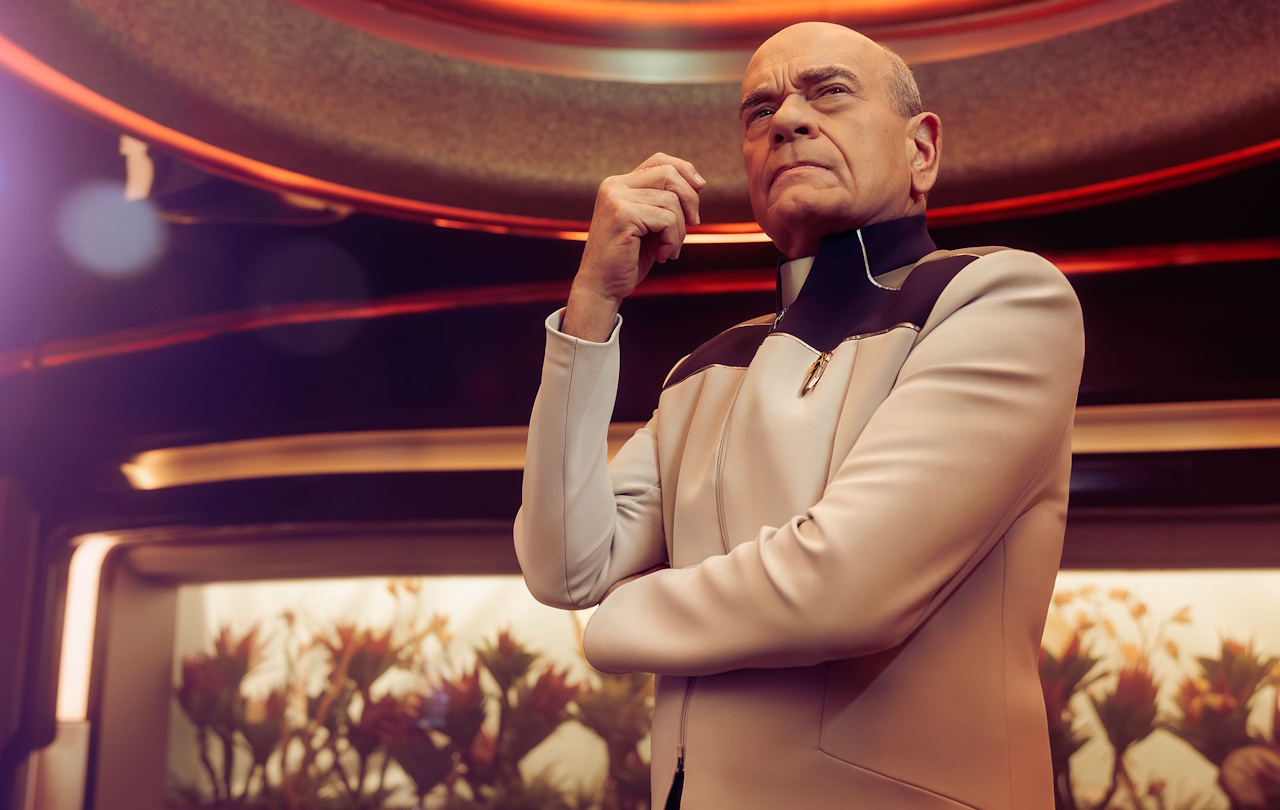
Promo photo for Starfleet Academy S1 showing the Doctor
Promo photo of the Doctor released ahead of Season 1’s premiere.

Today, we’re going to focus on the Doctor: Voyager’s Emergency Medical Hologram. The Doctor was a surprising inclusion in Starfleet Academy’s cast when the announcement was made a couple of years ago, but I genuinely thought it was a fun idea. I’d speculated for a long time that the Doctor – or perhaps a backup copy of him – could have survived to the 32nd Century, but we didn’t get to see him in Discovery. A teaching role sounded perfect for a being who’s now more than 800 years old; Robert Picardo, who plays the character, described this version of the Doctor as being akin to Yoda over in the Star Wars franchise! I thought that sounded like an apt comparison.

The Doctor appeared in almost all of Starfleet Academy’s episodes this season, but his role in The Life of the Stars was by far the biggest. This storyline explored the Doctor’s history, his family, his memories, and why he struggled to make a genuine connection with Sam – Starfleet Academy’s holographic cadet.

And… I really didn’t like what this storyline had to say, unfortunately.
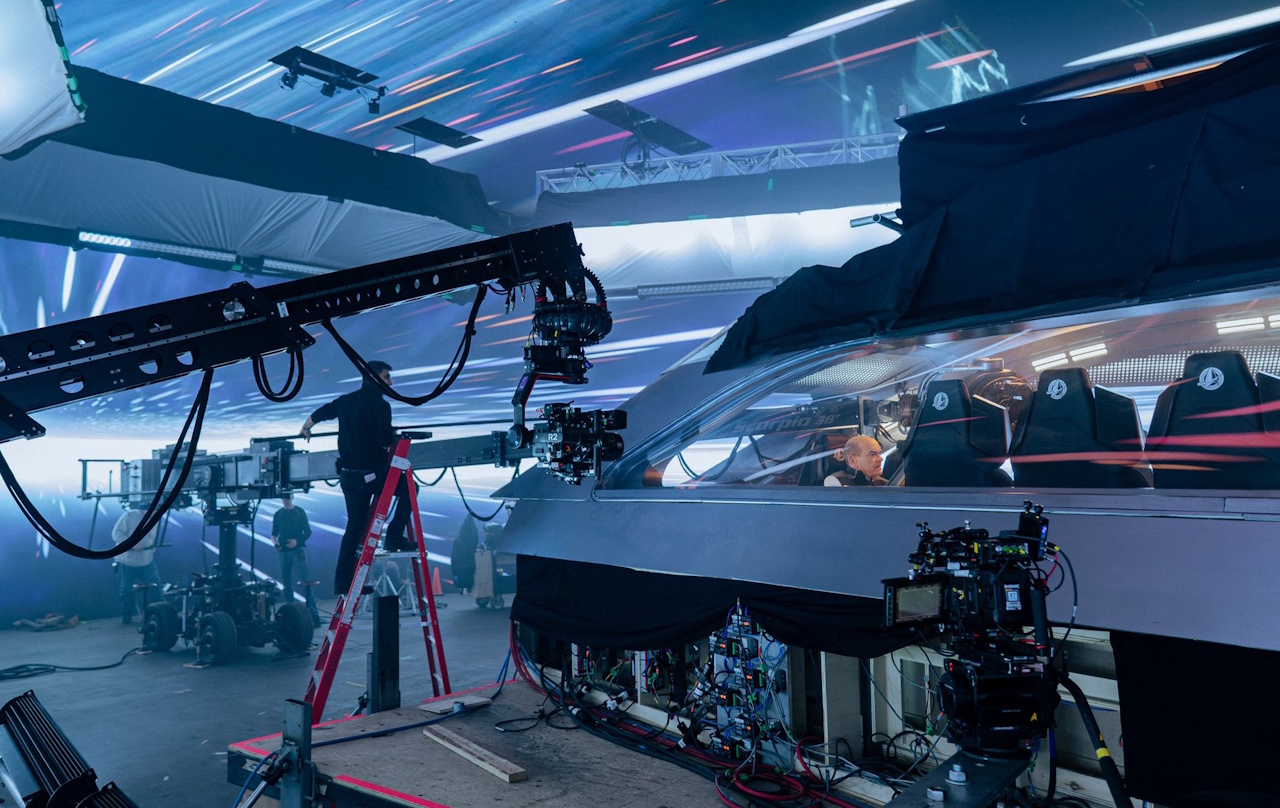
Behind-the-scenes photo from Star Trek SFA S1 showing the shuttle set
Behind-the-scenes during production on The Life of the Stars.

Before we go any further, let me give my usual caveat: everything we’re discussing today is the *subjective, not objective* opinion of just one old Trekkie. If you disagree with me about the Doctor (or any other element of Starfleet Academy), if you think I’ve totally got the wrong end of the stick, or if our views don’t align… that’s okay. There’s enough room in the Star Trek fan community for differences of opinion and respectful disagreement, and I share my thoughts with you in that spirit. I’m not trying to say “I’m right and that’s that;” I’m well aware that other Trekkies may completely disagree – and that’s totally fine.

There are always going to be a range of opinions on works of art and media in general, and just because I personally didn’t like what this storyline had to say doesn’t mean other people won’t find it interesting or entertaining. The story was clearly written this way for a reason, so at least *someone* out there must’ve thought it was a good idea!

Photo from the Star Trek SFA finale screening showing the main cast and showrunners
Robert Picardo (second-left), with several co-stars and the executive producers of Starfleet Academy in March 2026.

Finally, this is my second time criticising the way in which Starfleet Academy handled the legacy of a character from The Next Generation era. The show only did two storylines which really focused in on legacy characters, so for me to come away feeling that *both of them* weren’t enjoyable and I didn’t like what they said… that’s pretty disappointing, to be honest. It’ll go down as a real black mark against Starfleet Academy, at least in my book.

Starfleet Academy, in my view, already had several challenges to overcome: its teen/young adult focus, its serialised storytelling, its unimpressive villain, and the simple fact that it’s the sixth new Star Trek series to come along in just nine years. Solid, well-written, enjoyable callbacks to Deep Space Nine and Voyager could’ve done a lot to boost the show’s prospects, at least for an old Trekkie like myself, and could’ve made it more entertaining and just more memorable. I didn’t want to be in this position of having to criticise two of the storylines that *should*, in a sense, have been just the kind of thing I’d have wanted or hoped to see in a series like this. But… here we are.

If you want to check out what I thought of Starfleet Academy’s connection to Captain Sisko and DS9, by the way, you can find that article by clicking or tapping here.
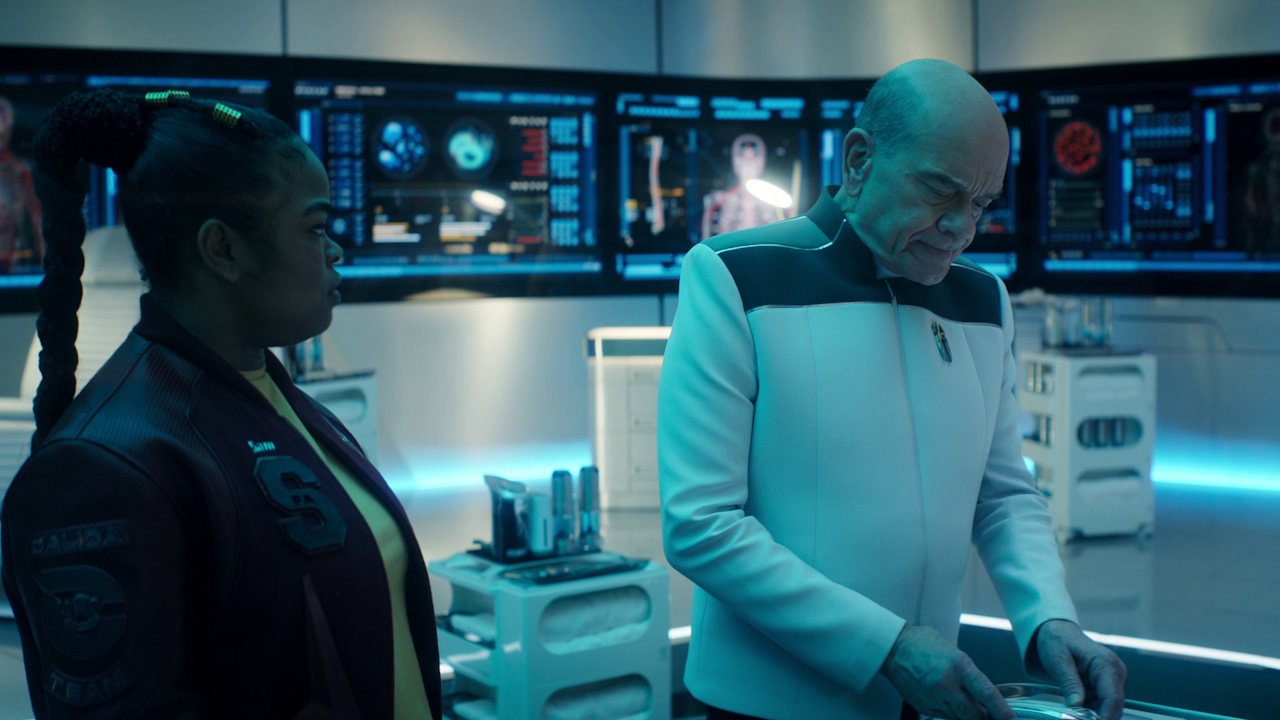
Still frame from Star Trek SFA 1x05 showing Sam and the Doctor
Series Acclimation Mil was also an episode I did not enjoy…

Alright, now that that’s out of the way, let’s set the scene. Cadet Sam – short for Series Acclimation Mil – is only a few days old, but she’s been programmed by her holographic race to have the maturity and appearance of an Academy-aged individual. The Life of the Stars follows on from Sam’s role in the episode Series Acclimation Mil, in which we learned why her people wanted to create her and send her to the Academy in the first place.

Sam had been injured (or “damaged,” I guess) a couple of episodes earlier in Come, Let’s Away, and her injuries progressed to such an extent that the Doctor couldn’t find a treatment. The Doctor and Captain Ake agreed to take Sam back to her homeworld, Kasq, where there was hope that Sam could be repaired. There were stakes not only for Sam herself, but also for Kasq’s potential to come out of isolation and to spend more time with organic life-forms. Sam’s mission, at the end of the day, was to better understand organic life and convey that understanding to her makers.
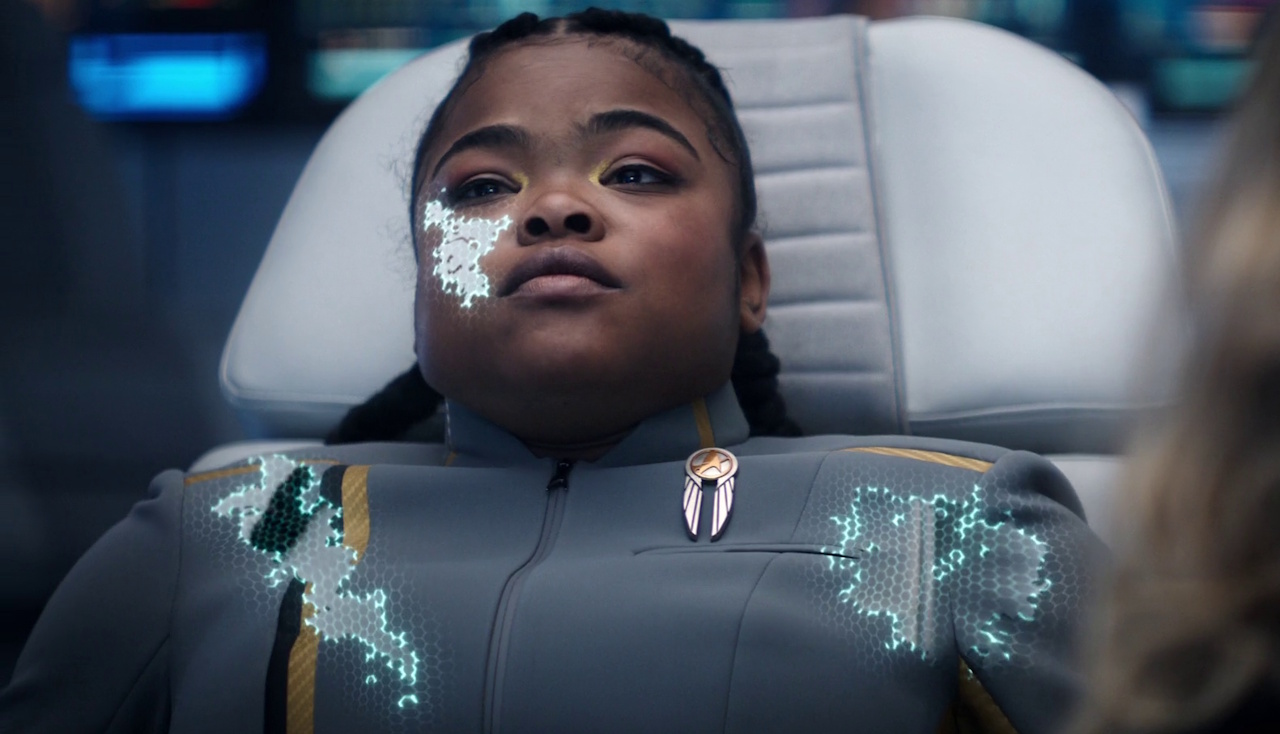
Still frame from Star Trek SFA 1x08 showing Sam
Sam’s injury.

And then we come to the Doctor.

The Doctor had been quite standoffish with Sam when they first met, back in the series premiere. When Sam tried to bring up the Doctor’s past life – the crews of the USS Voyager and Protostar – he quite quickly shut her down. I speculated that the Doctor could be struggling with having lived such a long life, and having seen potentially many generations of organic friends live and die. I said that, while I was glad the Doctor didn’t overwhelm Starfleet Academy in the show’s premiere, I was curious to see if that angle would be explored further.

The Life of the Stars was that explanation – after a fashion. It turns out that the Doctor was, as I theorised, struggling with life and loss… but not in the way I’d have thought or expected. Rather than mourning his friends from the USS Voyager or the cadets of the Protostar, the Doctor had, instead, spent close to eight centuries grieving for his holographic family from the Voyager Season 3 episode Real Life.
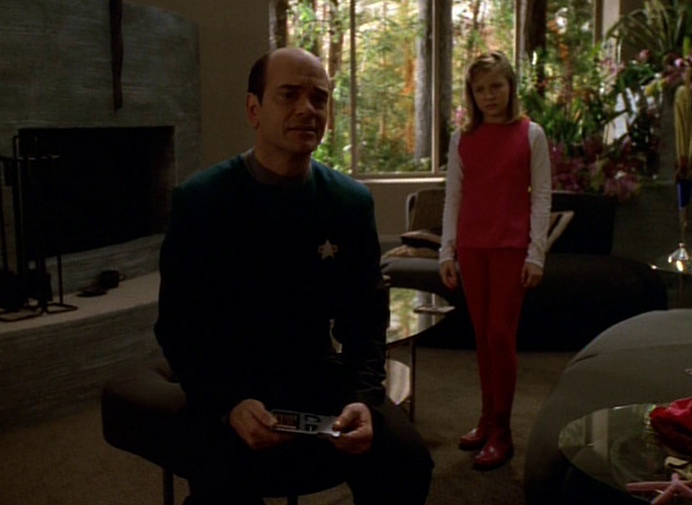
Still frame from Star Trek Voyager Real Life showing the Doctor and Belle
The Doctor with Belle, his holographic daughter, in Real Life.

According to The Life of the Stars, it wasn’t Janeway or Seven of Nine that the Doctor missed and lamented outliving. It wasn’t lil’ Harry Kim, the fresh-faced ensign who was one of the first people the Doctor ever met. Nor was it Dal, Gwyndala, or Rok-Tahk, the young kids he came to know – and perhaps the first cadets he ever really “mentored.” The Doctor, according to this story, loved none of them as much as his holographic family from Real Life, and it was the simulated “death” of his holographic daughter in particular that caused him to become withdrawn and unwilling to risk loving anyone ever again.

What the actual fuck?

Let’s talk about holograms, as defined by Star Trek – and specifically, what their capabilities were in the 24th Century. The Next Generation was the first series to introduce holograms, and according to that show, as well as to Deep Space Nine and Voyager, practically all holograms at that time *were not sentient*. They’re characters in a story, computer programmes, pieces of code. Their lack of sentience is such an important point that holograms which become genuinely self-aware were almost always treated as unique, special, or even dangerous, in some cases.
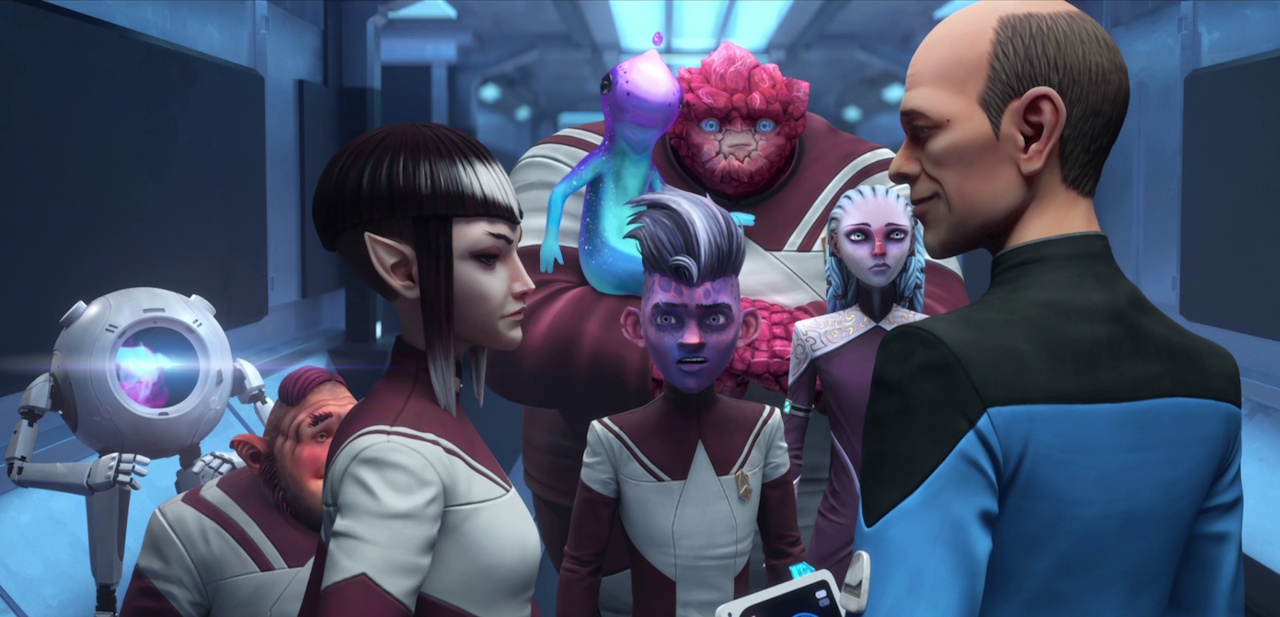
Still frame from Star Trek Prodigy 1x06 showing the Doctor and the cadets
The Doctor with the cadets in Prodigy Season 2.

The first sentient hologram we met in Star Trek was Professor Moriarty, in Elementary, Dear Data. He was inadvertently created by the Enterprise-D’s computer following a misunderstanding, and seemed – at that time, anyway – to be the only sentient holoprogramme in existence. The next self-aware hologram is arguably the EMH programme – i.e. the Doctor’s original programme. And then we come to the likes of Vic Fontaine. But in between we saw countless examples of holograms that were basically – to use some modern lingo – akin to video game NPCs.

This is how we get away with stories like Hollow Pursuits, which saw Barclay recreating members of the Enterprise-D crew on the holodeck as part of his escapist power fantasy. Or the countless references to holosuites at Quark’s being used for… adult activities. Or holograms created entirely for the purposes of being killed in training simulations. The list goes on.
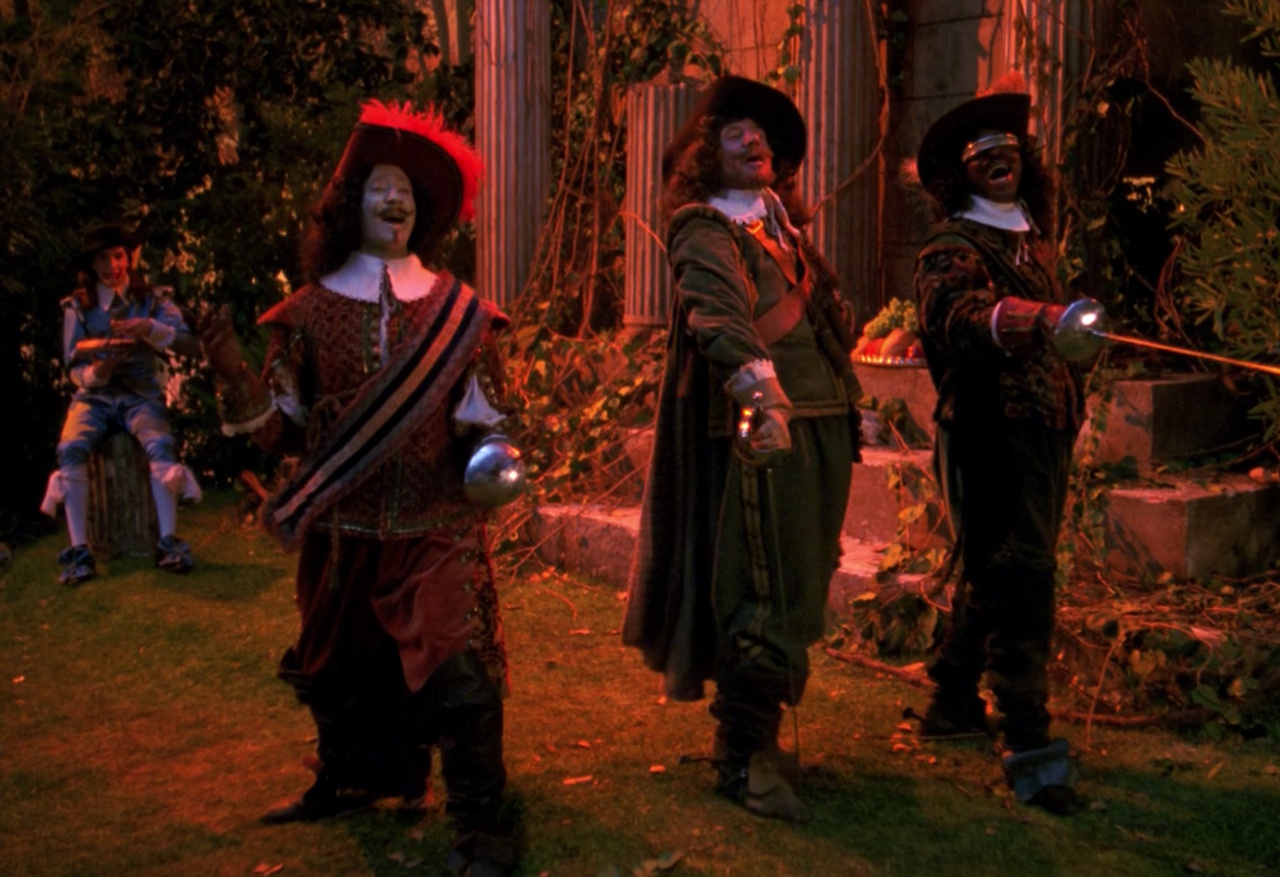
Are these holograms “alive,” too?

What The Life of the Stars is effectively saying, in my opinion, is that the Doctor spent hundreds of years of his life refusing to get too close to anyone ever again because… he had a particularly emotional reaction to a character from a video game. It would be like if you or I refused to get married or have kids because “this one time, my family in The Sims all died, and it made me really sad… I don’t think I could put myself through that again.” Do you get my point? These holograms are, according to everything we know about Star Trek, holodecks, and the 24th Century, not sentient, not self-aware, and not… alive. At least, not by any conventional definition.

I don’t want to downplay the power of entertainment to evoke strong emotions. Heck, I run a website all about films, games, TV shows, and the Star Trek franchise. I can’t even count the number of incredible titles – interactive and non-interactive – that have given me “the feels.” Just the other day, I talked about the intense bittersweet feelings of nostalgia that I got from a single twenty-minute episode of an anime. So I’m not calling out Starfleet Academy because the writers wanted to show the Doctor having a reaction to a holoprogramme that he participated in. If that was the intention of the story, and if it was handled differently, I might’ve been willing to praise an interesting take on the power of interactive media. But that wasn’t the intention, and it’s not the way it comes across.
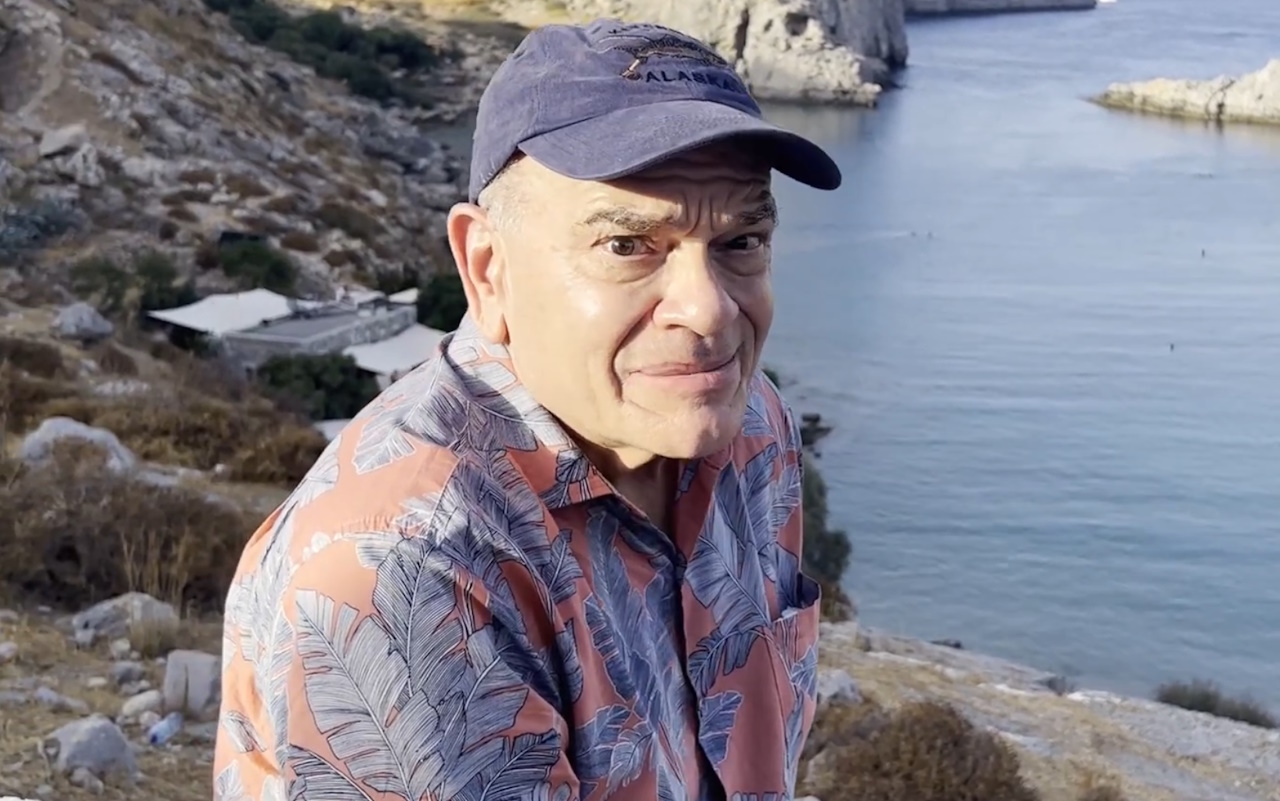
Still frame of Robert Picardo (Star Trek) from YouTube
Robert Picardo, who plays the Doctor.

I’m afraid I have to come to the conclusion that one of the episode’s writers (two writers are credited, but Starfleet Academy also had a writers’ room, I believe) just didn’t understand how holograms worked in past iterations of Star Trek. They looked at their character, Sam, and they looked at the Doctor – two sentient, self-aware, alive holograms – and concluded that *all* holograms must be like that. Even though, during TNG, DS9, and Voyager, sentience was the exception, not the norm. And the result is a massively confused storyline that seriously harms the Doctor’s characterisation.

The sad thing is that this exact same storyline, had it adopted one of two possible changes, could have been one of the best of the entire season. In a season which, in my view, was drowned out by a silly, hammy villain and a little too much teen/young adult drama, a story about an older man coming to terms with loss, grief, and what it means to outlive the people you love… that could’ve been incredibly powerful. I’ve lost people close to me – friends as well as close family – and getting a storyline that touched on that, on what it means to be the one left behind… I really think there’s a lot of potential there, and the Doctor’s unique status and age presented a golden opportunity.

But Starfleet Academy’s writers pissed it away on a story they clearly thought was clever… but that completely misunderstands a very basic piece of the franchise’s history.
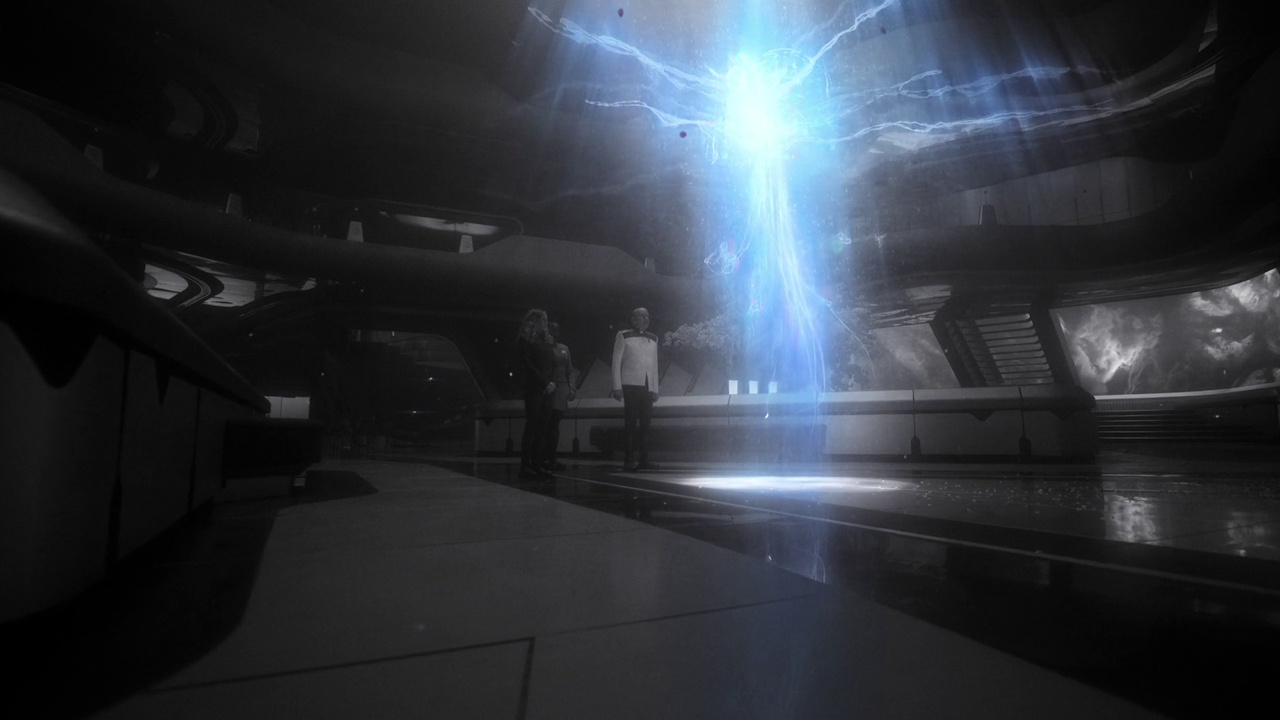
Still frame from Star Trek SFA 1x08 showing Kasq
The Doctor, along with Sam and Captain Ake, arrives at Kasq.

I am not, despite how parts of this piece may be coming across, a stickler for “the tiniest minutiae of canon.” If holograms were relatively new to Star Trek, or if Real Life had been one of the only episodes in The Next Generation era to feature holograms, I’d have been willing to accept this as a bit of a retcon; a change, but one that could lead somewhere narratively interesting. But I believe that there are a few fundamental building blocks to writing a coherent story in a long-running franchise, and one of those is basic internal consistency. It’s been established on dozens, or perhaps even hundreds, of occasions across TNG, DS9, Voyager and beyond that most holograms – like those in Real Life – are not alive and are not sentient. So new writers have to be bound by that; making an arbitrary change to it this late in the game is not something I can accept.

The consequences of such a change ricochet across the entire 24th Century, if that’s the case. It makes B’Elanna into a murderer, first and foremost, since she reprogrammed the Doctor’s idealistic family life in such a way that his daughter died. It makes a lot of other characters into killers, into sex pests, and more… and while I really like the idea of using the holodeck as a way to critique things like fantasising excessively, relying too much on the computer, or – in the modern day – as an analogy for A.I. chat bots, perhaps… that isn’t how this story was intended, and it doesn’t come across that way, either.
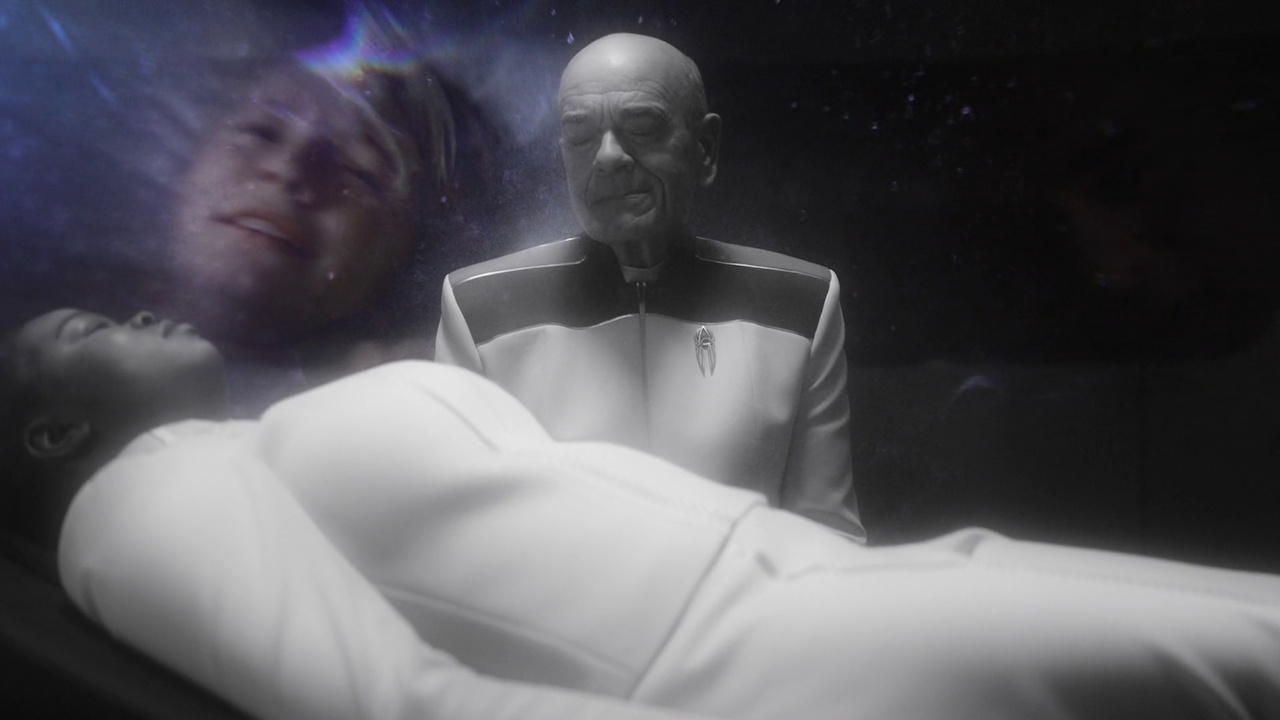
Still frame from Star Trek SFA 1x08 showing the Doctor, Sam, and memories
The Doctor remembers his holographic daughter.

There were, as I mentioned, two ways to salvage this story, so let’s go over them in turn.

Firstly, rather than going back to Real Life and Voyager, The Life of the Stars could’ve simply introduced new holographic characters to fill that role. Let’s say that, sometime in the 25th Century, the Doctor settled down with his holographic husband or wife. But, because of some technobabble, his partner or one of his holographic offspring ended up being damaged beyond repair and couldn’t be reset or saved. This could even be tied to the Burn – the massive, galaxy-altering event that underpins Starfleet Academy’s 32nd Century setting.

That gets us to the exact same narrative place, but in a way that makes it clear that the Doctor is grieving someone who was actually alive to begin with. It wouldn’t have the same connection to Voyager, but I mean… is Real Life an especially memorable episode for a lot of folks? I don’t think that one random deep cut to a single episode would’ve been as effective as the writers hoped, even without this glaring narrative fault.
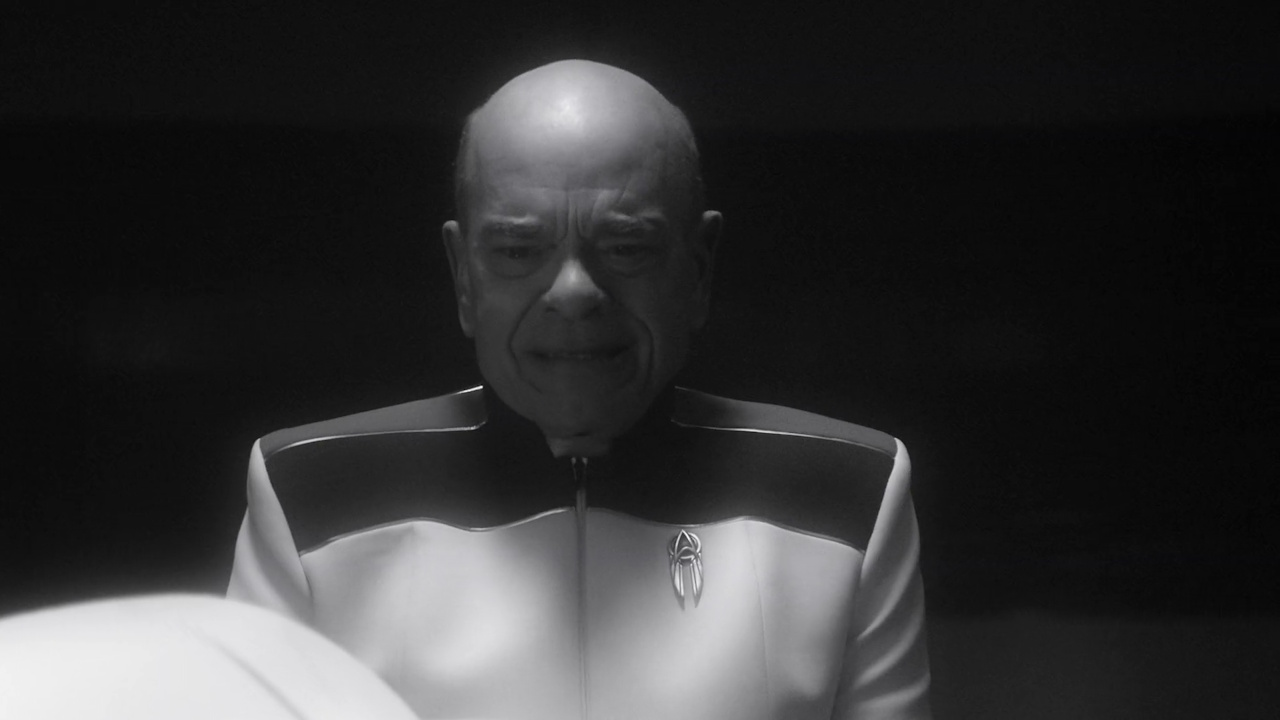
Still frame from Star Trek SFA 1x08 showing the Doctor getting emotional
The Doctor gets emotional.

Secondly, there’s the more obvious solution: the Doctor finds it difficult to accept friendships of any kind because of the toll outliving so many friends has taken on him.

This kind of story could see the Doctor lamenting the deaths of people like Chakotay, Harry Kim, or Seven of Nine. It might’ve even been possible to bring back one of those characters for a brief scene – perhaps their funeral or even their deathbed. The Doctor gained sentience and self-awareness around these people; they were the first friends he ever knew, and they had his back on multiple occasions when he was in jeopardy, when he was distressed, or just when he needed to talk. Seeing him grieve for Captain Janeway or Tuvok, remarking that it’s a terrible tragedy to outlive all of one’s friends… that could’ve been incredibly powerful.

And then, to hammer it home, the Doctor would explain that this didn’t just happen once… but over and over again. Generations of organic friends came and went, and he remembers – and mourns – all of them. But after the Burn, perhaps the Doctor felt he’d lost too much, and for his own mental health and wellbeing he needed to start keeping things professional. He keeps Sam (and others) at arm’s length not because he misses his video game family from one random episode… but because he’s grieving the loss of countless friends across eight centuries.
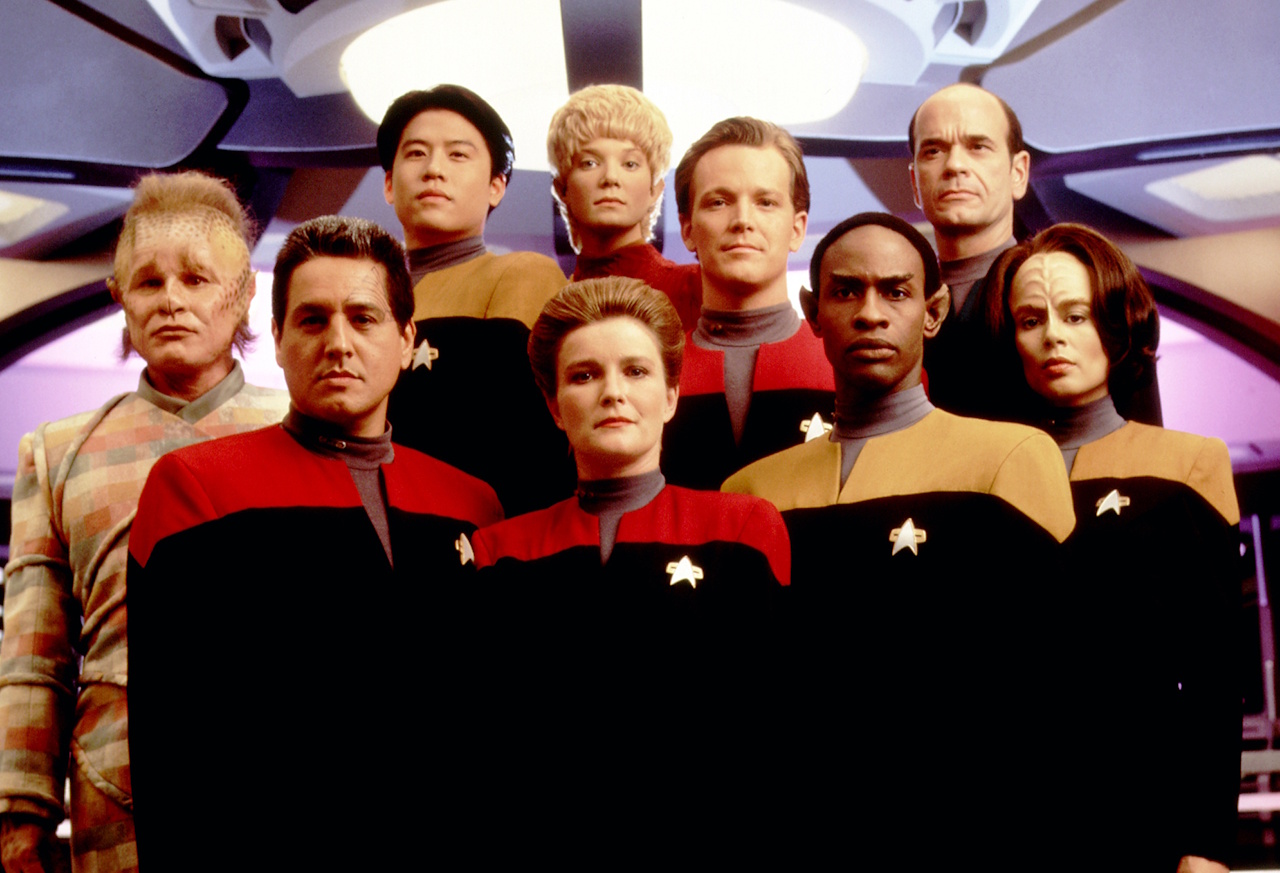
Promo photo for Star Trek Voyager showing the main cast
The Doctor’s sense of loss and grief could’ve connected back to Voyager in another way.

Maybe the writers thought that was “too obvious,” and wanted to be a bit subversive. Unless we get them on the record, I guess we’ll never know for sure. But I think that kind of story would’ve got the Doctor to the same place with the same mindset, ready to have that experience on Kasq with Sam, but in a much more powerful, emotional, and enjoyable way – and a way that makes narrative sense based on our understanding of holograms in past iterations of Star Trek.

As I’ve said before on quite a few occasions with modern Star Trek: it isn’t that the core idea was bad, but the way it was executed just… fucked it up. A story about the Doctor coming to terms with grief and having to make the incredibly brave decision to put his heart on the line one more time to save the life of a child? That’s powerful stuff. But because of the way it was handled, and the decision to make the root cause of his grief these one-dimensional characters from the 24th Century equivalent of a video game? It ruined it, and it turned what should’ve been one of the best storylines of the entire season into one of the worst.
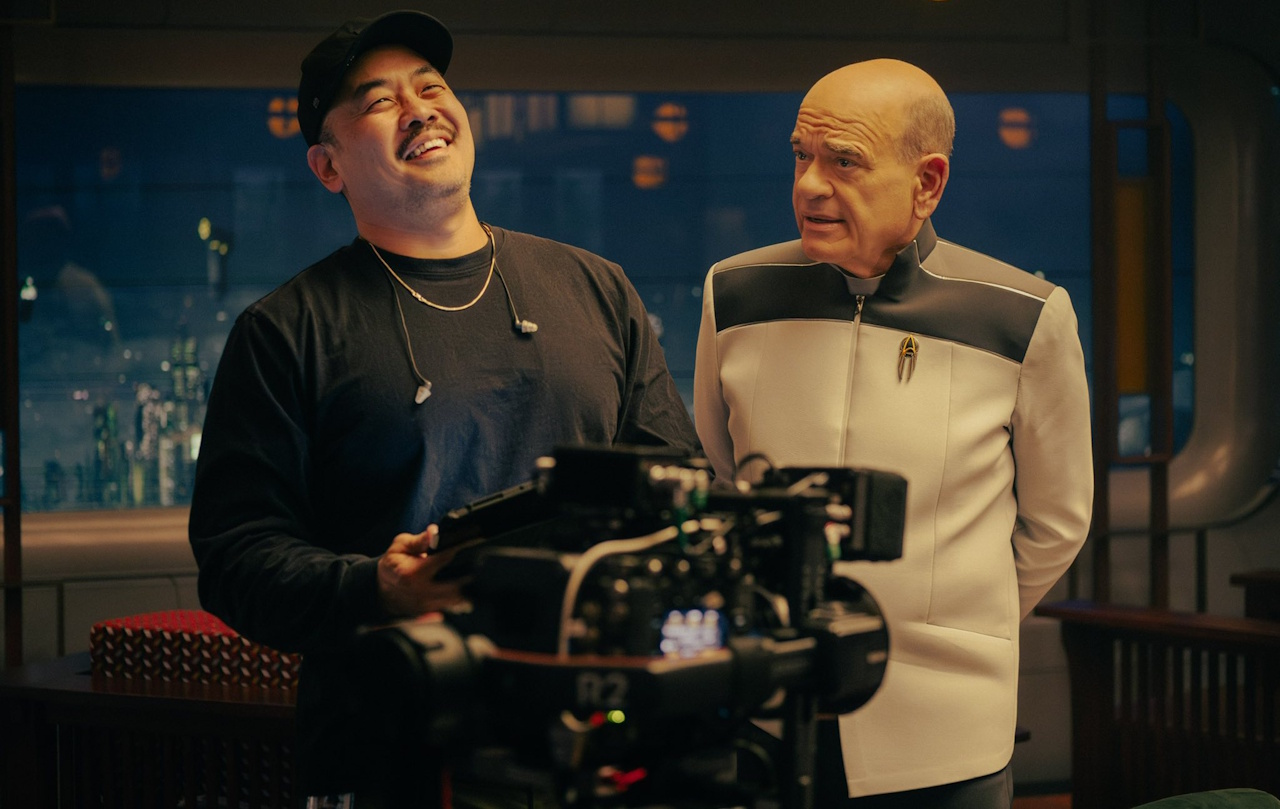
Behind-the-scenes photo from Starfleet Academy S01 showing Larry Teng and Robert Picardo
Robert Picardo (right) with director Larry Teng on the set of Series Acclimation Mil earlier in the season.

I was excited when Robert Picardo announced that the Doctor was coming back. And I wondered what might lie in store – this is a character I first fell in love with some thirty years ago, so to see him back in a totally different century for a new adventure… I was on board! I just wish that the end result hadn’t misunderstood something so basic about Star Trek, and that the Doctor’s one real moment in the spotlight could’ve been stronger and more enjoyable. When I can see not one but *two* clear and obvious narrative pathways that could’ve made it happen… it’s an unforgivable mistake, in my view.

Starfleet Academy, as I said in my review, wasn’t really “my thing.” But if there was one storyline that could’ve been more my speed, or that might’ve had something to say that resonated with me, it was this one. And I think that’s why I feel this disappointment all the more – it’s not just what it says about the Doctor, and how he apparently spent centuries sulking over the equivalent of his save file in The Sims. It isn’t even what it says about B’Elanna or other characters who used or reprogrammed holograms for selfish reasons across the TNG era. It’s because it feels like, after Starfleet Academy had already messed up its Sisko story, this was really one of the only storylines I might’ve found relatable or enjoyable. But because the writers – again, in my opinion – didn’t understand or didn’t know enough about holograms… it comes across as completely missing the point, and missing the point so severely that it harms my opinion of the Doctor himself.
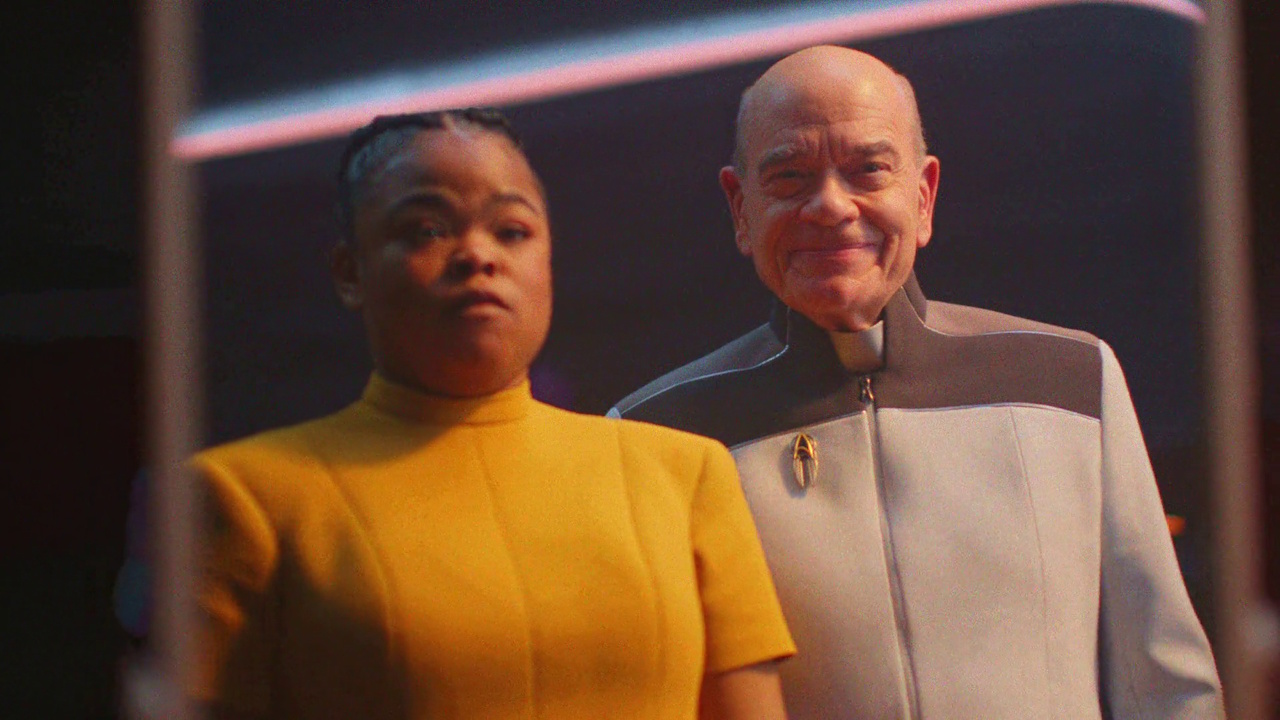
Sam with the Doctor during her second life.

So there we go. That’s my take on the Doctor’s role in The Life of the Stars and what this new information says about his character.

I would say, to the story’s credit, that there were some creative ideas. Kasq existing in a different “plane of existence” felt like a bit of a cop-out; a way to ensure the Doctor and Sam wouldn’t need to take too long to re-grow and get back to normal. But the visuals of Kasq were creative, I liked the ultimate explanation for Sam’s breakdown being mental, rather than physical, and the episode’s attempted message about looking after one’s mental health is arguably executed far better than in comparable stories in Discovery or Picard. So it isn’t that the episode as a whole as no merit; this side of the story, though, completely failed for me.

I hope this has been interesting, and I hope I didn’t come across as too harsh or aggressive. Star Trek is something I’m passionate about and have been for a long time, and as someone who watched and enjoyed Voyager during its original run, bringing the Doctor back felt like a great idea in this latest adventure. I just wish it had been handled better, and that a different reason for the Doctor’s grief and reluctance to help could’ve been written. We came close – *this close* – to one of the best parts of the entire season.
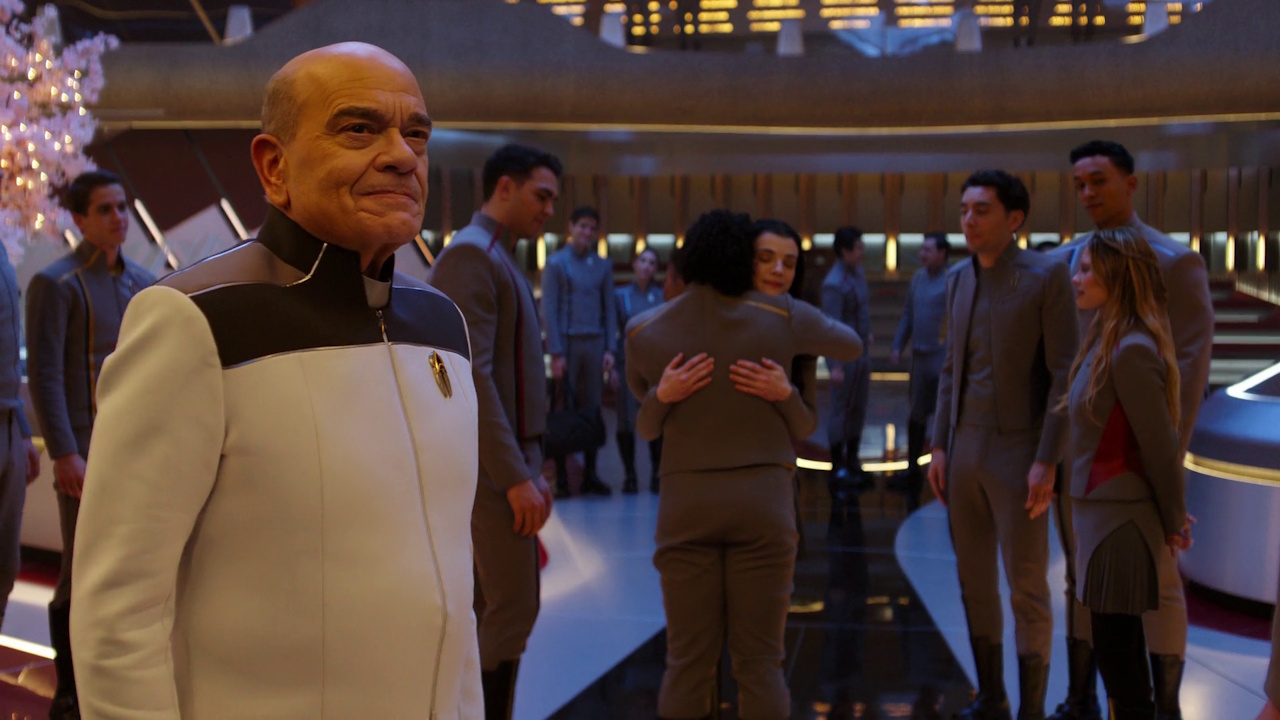
Still frame from Star Trek SFA 1x08 showing the Doctor and the cadets
The Doctor and the cadets at the end of the episode.

Thanks for reading. Despite my feelings about Starfleet Academy as a whole, and this storyline, I can tell you that I genuinely gave the series a fair shake. I always expected it wouldn’t be my favourite part of the franchise – the whole teen/young adult focus, of course, but also the serialised story and the villain with an over-the-top magical macguffin all saw to that. But despite that, I really tried to let Starfleet Academy speak for itself, and to go into the show with an open mind.

This essay concludes my coverage of Starfleet Academy for the foreseeable future. Obviously, if we get major news about Season 2, a third season renewal, or any kind of teasers, clips, or trailers, I’ll do my best to cover that here on the website. But for now… that’s all. I’ve finally said all I wanted to say about the show’s first season.

If you missed them, please check out my reviews of the two-part premiere, the first season as a whole, and episodes 3-10. You can find them by clicking or tapping those links. And as the 60th anniversary year rolls along, I’ll have more to say about Star Trek, so be sure to check back from time to time. Thanks again for reading, and Live Long and Prosper, friends!


Star Trek: Starfleet Academy is available to stream now on Paramount+ in countries and territories where the service is available. The Star Trek franchise – including Starfleet Academy and everything else discussed above – remains the copyright of Paramount/Skydance. This review contains the thoughts and opinions of one person only and is not intended to cause any offence.
Star Trek: Voyager – Thirty Years Later

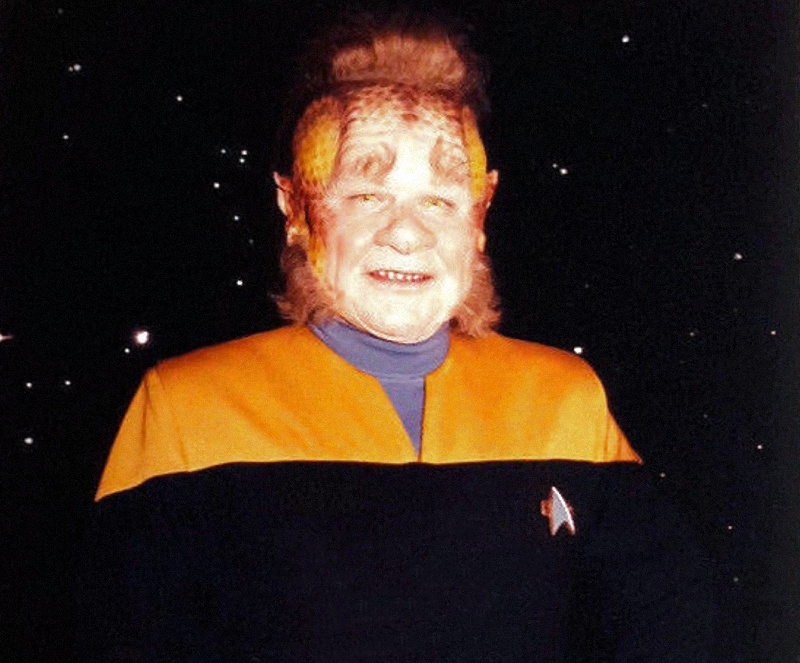
A spoiler warning graphic - featuring Neelix.

Spoiler Warning: There are spoilers ahead for Star Trek: Voyager and Star Trek: Prodigy.

In 1996, the Star Trek: Voyager episode Flashback was broadcast as part of the Star Trek franchise’s thirtieth anniversary celebrations. Today – and I can scarcely believe I’m writing these words – we’re marking Voyager’s own thirtieth anniversary!

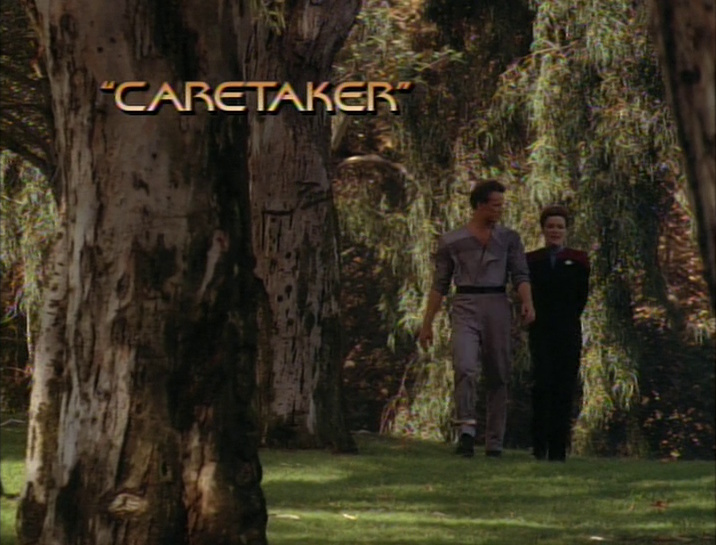
That’s right: it was on the 16th of January 1995 that Caretaker, the premiere episode of Star Trek: Voyager, debuted in the United States. I thought it could be worth taking a few minutes to look back at not only the premiere, but Voyager as a whole – and try to assess its legacy and its place in the history of Star Trek. That’s what we’re going to talk about today, so I hope you’ll join me on a rose-tinted look back at Star Trek’s fourth live-action series!

Still frame from Star Trek: Voyager showing the title "Caretaker" with Captain Janeway and Tom Paris.
Caretaker premiered on this day in 1995.

When Voyager premiered in 1995, the Star Trek franchise was arguably at the absolute peak of its “golden age.” The Next Generation cast had started making feature films, Deep Space Nine was well into its third season, and it felt like Star Trek had well and truly made it; a franchise that was dominating the sci-fi world. I remember at the time hearing some criticism of launching another series, but with The Next Generation having explored strange new worlds in the Alpha and Beta Quadrants, and Deep Space Nine tackling the Gamma Quadrant… I gotta admit that I was excited to see Voyager head to the unexplored and mysterious Delta Quadrant!

Having read a preview of the series (I think in the Radio Times; a UK TV magazine) I was also intrigued by this “one ship, two crews” idea that Voyager seemed to be promoting. Seeing Starfleet officers having to work hand-in-hand with the Maquis seemed like a really interesting concept, and one that could’ve given Voyager a unique selling point and a way to stand out from the pack as Star Trek continued its growth and expansion. I don’t think Voyager’s writers ever really made good on that promise – but more on that in a moment!

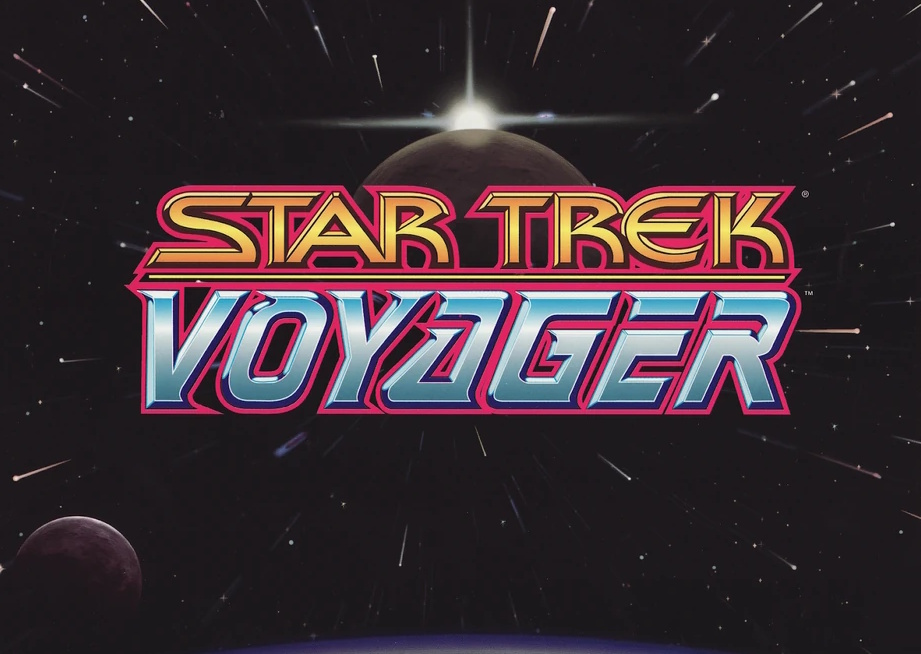
An early mock-up of the Star Trek: Voyager logo before the show premiered.
An early placeholder logo for the show circa 1994.

Stories about long journeys, people from different backgrounds having to work together in common cause, and having a small “island of safety” in a dangerous and unexplored environment are all things I absolutely adore in fiction – so Voyager seemed to be bringing together a bundle of elements that might as well have been tailor-made for me! And across its seven-season run, all of those things came to the fore in different ways. Voyager was a fun series.

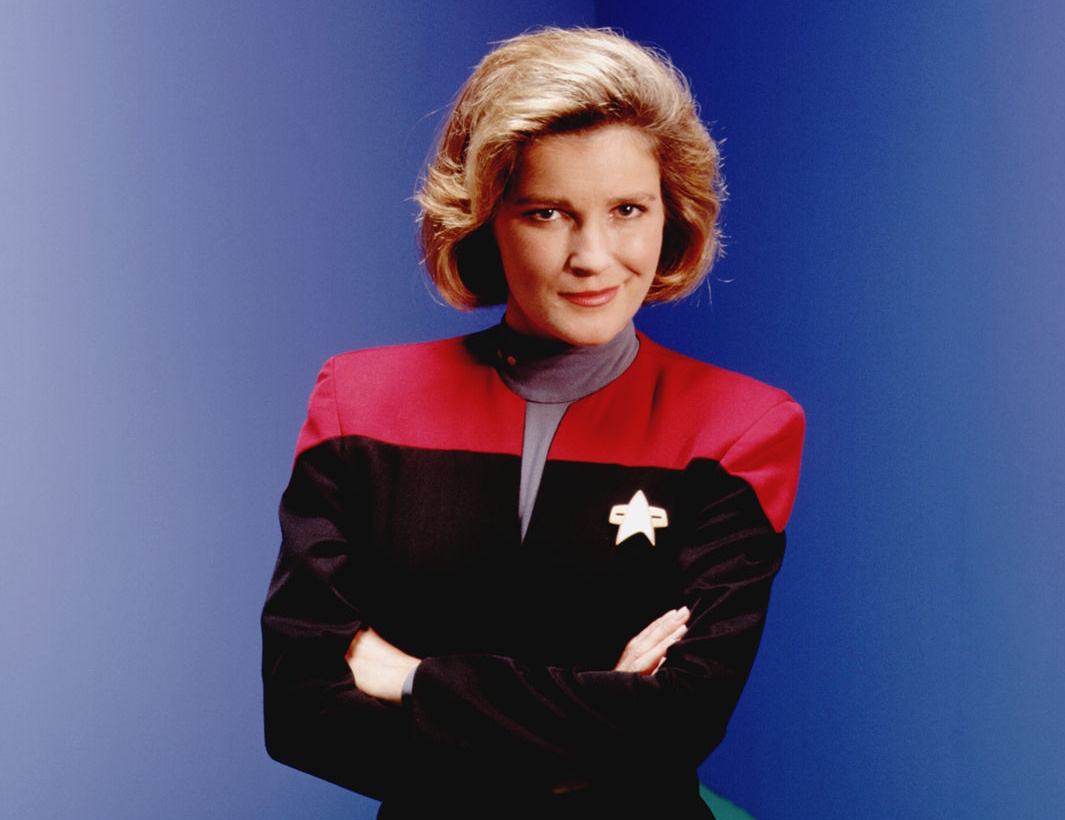
Of course, one of the most-discussed things leading up to Voyager’s premiere was the show’s new captain: Kathryn Janeway, played by Kate Mulgrew, became Star Trek’s first woman captain. I remember this news being received positively at the time, at least in the Star Trek fan groups I was aware of. No one in 1995 knew what the word “woke” would come to mean, so Janeway’s announcement didn’t get the same kind of negative reaction and whining as we might expect in 2025! That’s not to say there wasn’t some degree of pushback, of course. There have always been toxic individuals within the fan community.

Promotional photo of Kate Mulgrew as Captain Janeway.
Captain Kathryn Janeway.

I remember the days leading up to Voyager’s premiere being ones of positivity and anticipation. I was absolutely thrilled at the prospect of Star Trek’s expansion, at getting a new exploration-focused series after The Next Generation’s finale, and at meeting a whole new crew and cast of characters. There was a lot to be excited about as Voyager’s premiere got closer!

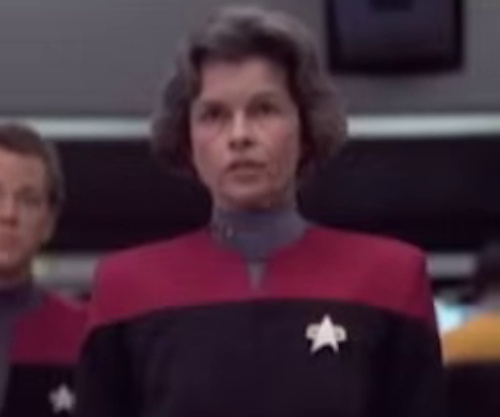
Star Trek: Voyager was almost a very different show, though, and I think it’s worth taking a diversion to acknowledge that. As work began on the series, the question of who should sit in the captain’s chair was perhaps the biggest individual casting decision that befell casting directors Nan Dutton and Kathryn Eisenstein… and they fucked it up. Kate Mulgrew was considered for the role of Janeway, along with several others, but the role was given to Oscar-nominated actress Geneviève Bujold instead.

Still frame from the Star Trek: Voyager DVD special features showing Geneviève Bujold as Nicole Janeway.
What might’ve been…

Bujold was a terrible fit for the role of Janeway – as evidenced by the scenes she shot for Caretaker, which were included as a bonus in Voyager’s DVD box set – and seriously struggled with working on the show. Thankfully, Winrich Kolbe – who directed Caretaker – and executive producer Rick Berman recognised this before it was too late, and Bujold was replaced with Kate Mulgrew after only a couple of days. Still, this near-miss could’ve derailed Voyager before the show had a chance to get started.

As an aside, I don’t think Geneviève Bujold is in any way a bad actress or performer. But the idea to cast a character closer in style and tone to Jean-Luc Picard would’ve been wrong for Voyager, and that’s how I interpret her performance in those few scenes that have been revealed. Voyager needed a dynamic, energetic captain – someone who could make incredibly tough decisions under pressure while retaining the support of her crew. I didn’t see any of that in Bujold’s performance, so replacing her was unquestionably the right call.

Promo photo showing the main cast of Star Trek: Voyager Season 1.
The main cast in Season 1.

Having to re-cast your lead role after filming has already started isn’t a great look for any television series, but Voyager was able to recover. Caretaker kicked off the show in style – and put a very interesting twist on a story premise that we’ve seen before in other episodes of Star Trek.

Several times in The Original Series, The Next Generation, and Deep Space Nine, our crews found themselves apparently stranded – perhaps on an alien planet, or else far away from Federation space. But in all of these, they found their way home again by the time the credits rolled. To me, Voyager always felt like it was taking one of those episodes and asking the obvious question: what if there wasn’t an instant way home? I really loved that idea, even in 1995 it felt subversive and creative; a unique and different take on a Star Trek story concept that we’d seen before.

Still frame from Star Trek: Voyager showing the USS Voyager and the Maquis raider Val Jean in orbit of a planet.
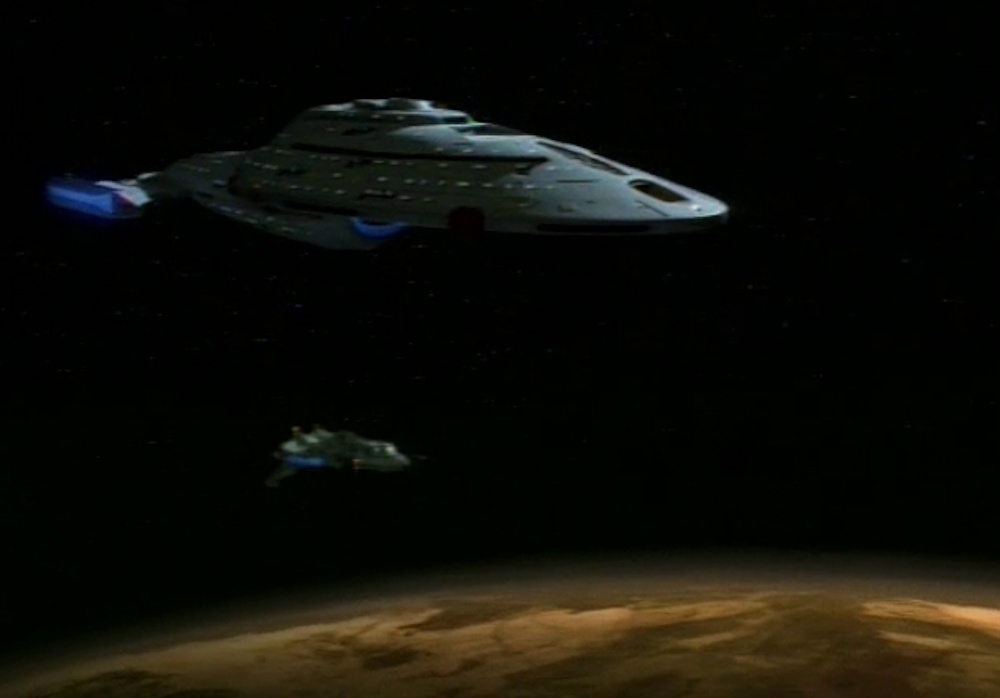
The USS Voyager (and Chakotay’s ship) in orbit of the Ocampa homeworld.

Caretaker was also a fantastic crossover episode, bringing in characters and locations from Deep Space Nine. A couple of years earlier, the two-part episode Birthright had brought The Next Generation to DS9, too – so launching the show in this way felt like a real thread of continuity between all three extant Star Trek projects. Star Trek was doing the whole “shared universe” thing decades before the likes of Marvel!

Quark, Morn, and Gul Evek returned from past iterations of Star Trek, further tying Voyager into the franchise before striking out on its own. These three characters – along with Q – are the only ones to have appeared in all three of The Next Generation-era Star Trek shows, which is a fun little bit of trivia for your next Star Trek quiz night! Having that connection to the rest of the franchise was important, though, and it continued the trend of characters from Star Trek’s past appearing in the premiere of a new series.

Still frame from Star Trek: Voyager showing Morn at Quark's bar.
Morn in Caretaker.

Caretaker gave Captain Janeway a moral dilemma, one that tied into the idea of the Prime Directive and Starfleet’s core mission of peaceful exploration. Janeway ultimately decided to intervene, destroying the Caretaker’s array to prevent it from falling into the hands of the aggressive Kazon – but stranding her ship and crew in the Delta Quadrant in the process. This kicked off a story that would run for seven seasons, blending Star Trek’s normal episodic format with an underlying quest: Voyager’s journey home.

Harry Kim made a fine addition to the crew, and also filled an important role for Voyager in a narrative sense. Kim was always the first character to jump on the idea of finding a shortcut home, and the most eager (of the main characters, at least) to make it back to the Alpha Quadrant. I wouldn’t say it was his sole defining character trait, but it was an important one. Voyager needed at least one character like this to keep the voyage home at the top of the agenda.

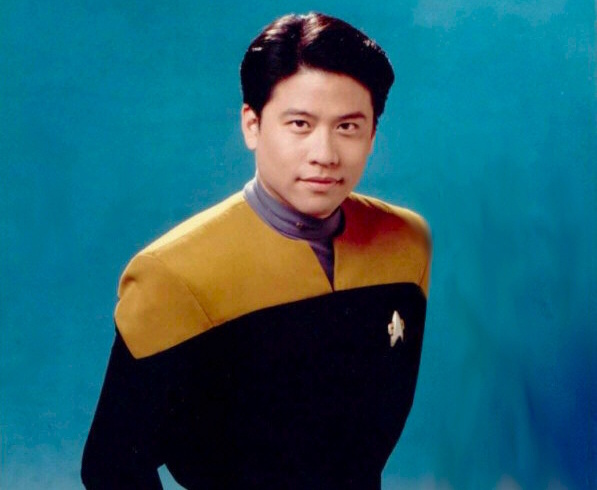
Promotional photo of Garrett Wang as Ensign Harry Kim.
Garrett Wang portrayed Harry Kim in all seven seasons.

More recently, Kim has become best-remembered in the fan community for never receiving a promotion! And I can kind of understand that; particularly as the show wore on and Kim gained more experience, it began to stretch belief to think that he’d remain a mere ensign. Again, though, Voyager was a semi-episodic show, and a show that needed at least one “young and eager” junior officer to fulfil that narrative role and occupy that space.

I was a big fan of Kes in Voyager’s early days; her gentle bedside manner and strong sense of empathy stood in contrast to the brash and often impolite Doctor in scenes set in sickbay. The idea of a short-lived species (Ocampa typically had a lifespan of around nine years) was also a unique one at this point in Star Trek’s history. Kes had close relationships with Neelix, Tom Paris, and of course the Doctor, too, all of which gave her plenty to do.

Promotional photo of Jennifier Lien as Kes.
A promotional photo of Kes.

I was disappointed when I learned that Kes was going to be dropped from Voyager heading into the show’s fourth season, particularly as she’d just begun developing her telepathic powers under the tutelage of Tuvok. I felt there was still more to explore with her character, and it was a shame that she was booted off the show before this potential could really be reached… especially because of who replaced her.

I know I’m in the minority here… but during the back half of Voyager’s run, I came to really dislike Seven of Nine. This character felt so boring and repetitive, but due to her popularity with at least a portion of the show’s audience she was prominently featured in many different episodes from Season 4 onwards. Seven always seemed to learn some lesson in “how to be human” in an episode… only to forget it all a week later and have to re-learn the same stuff over and over again. I really burned out on her character pretty quickly.

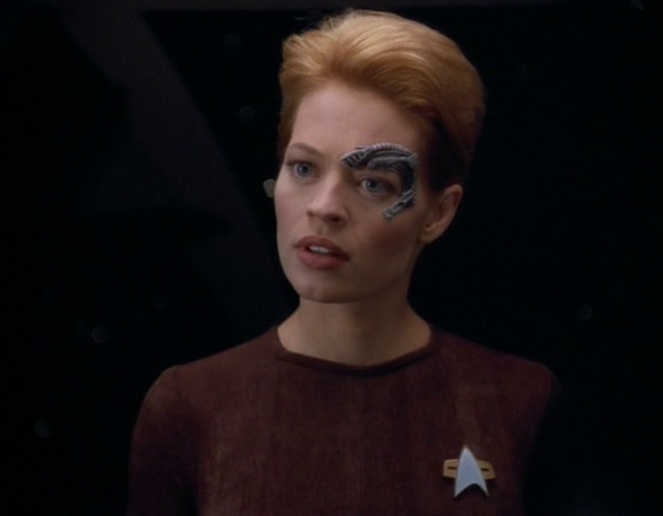
Still frame from Star Trek: Voyager showing Seven of Nine (looking surprised).
Seven of Nine wasn’t my favourite character.

But there’s no denying that Star Trek’s first ex-Borg main character (not counting Picard, of course) shook up Voyager and added something new to the show. Seven’s introduction also kicked off a succession of Borg-centric episodes… which, I’m afraid, were more miss than hit in my opinion, and went a long way to damaging the fear factor that a villain like the Borg needs to have. However, recent Seven of Nine appearances in Star Trek: Picard rehabilitated the character for me, resolved many of the issues I had with her, and generally left me with a much more positive view of Seven as a whole. Here’s hoping she might return one day!

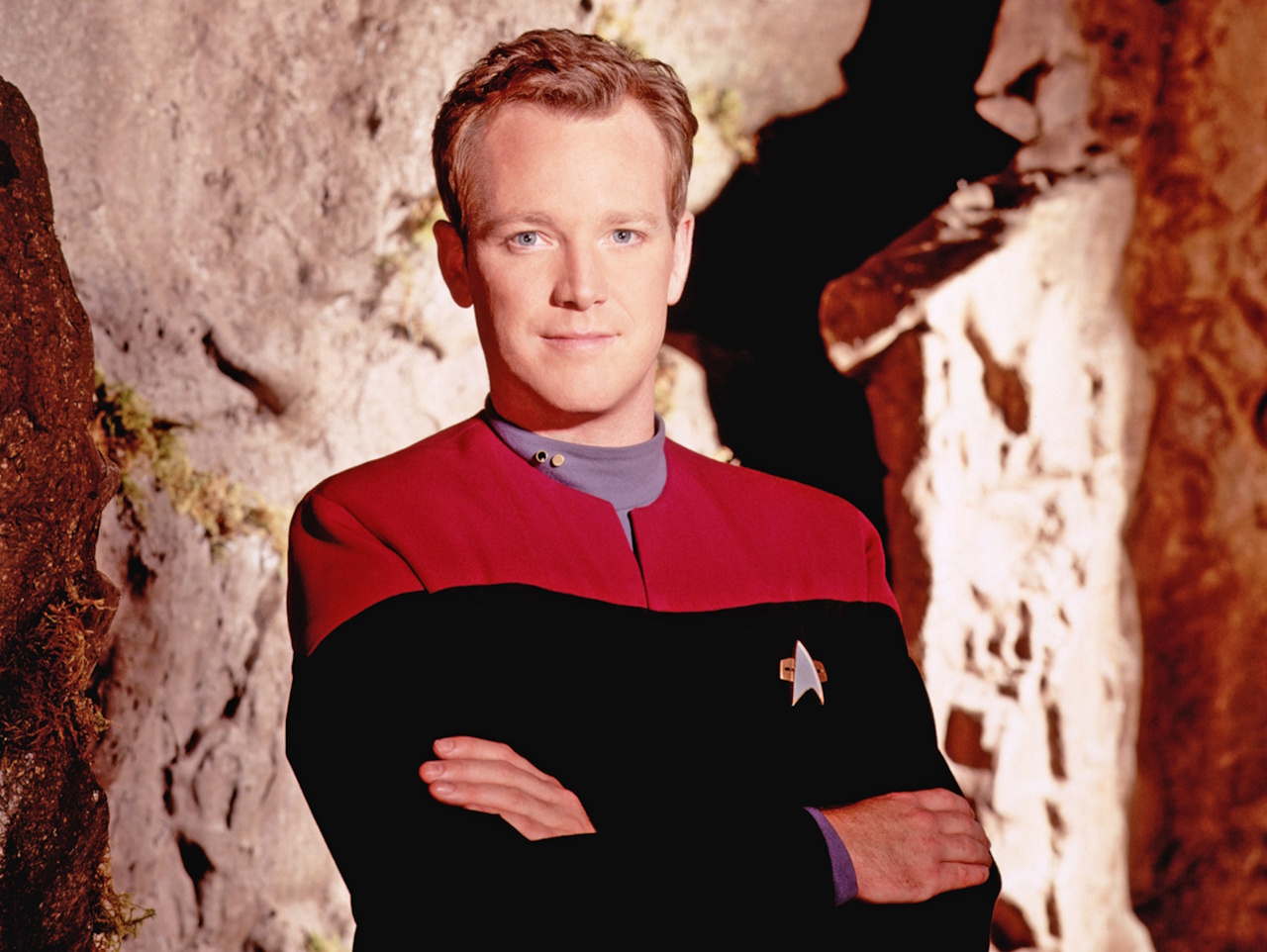
I’ve said this before, but Tom Paris was the Star Trek franchise’s first proper pilot – the first helmsman to really seem like he loved being in the chair. Paris was a fun character – an ex-Maquis and ex-Starfleet officer who seemed to attract the ire of both halves of the combined crew, but came to be seen as a dependable fixture on Voyager’s bridge. Paris’ arc took him from a failure and a criminal to a rehabilitated Starfleet officer and family man, and it was great to see it play out.

Promotional Photo of Robert Duncan McNeill as Tom Paris.
Tom Paris had a great character arc across Voyager’s run.

Paris’ love for the holodeck also led to some fun diversions across Voyager’s run. I was less enthusiastic about the likes of Captain Proton – though it could be fun for an episode or two – but his creations of Sandrine’s bar, the town of Fair Haven, and the Maquis insurrection holo-programmes all led to fun and exciting stories.

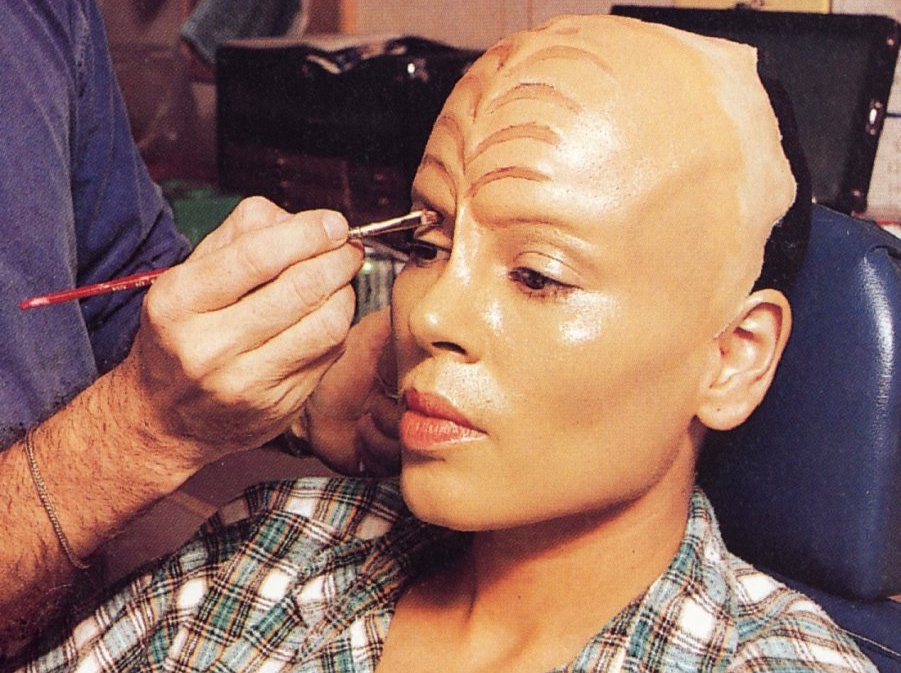
How can we talk about Tom Paris without mentioning B’Elanna Torres? Torres became – at Chakotay’s insistence – Voyager’s chief engineer, and had the challenge of standing out as both the second Maquis main character and (after Worf in The Next Generation) the second character with Klingon heritage. Voyager didn’t always know how to define and handle Torres, with some early episodes presenting her as angry and belligerent… but she soon settled into the role of chief engineer.

Behind-the-scenes photo from Star Trek: Voyager showing Roxann Dawson having her prosthetic makeup applied.
Roxann Dawson in the makeup chair.

B’Elanna, for me, is defined by two key relationships that would develop later in Voyager’s run: her antagonistic stance against Seven of Nine and her relationship and later marriage to Tom Paris. B’Elanna often stood as the voice of reason against Seven’s “Borg-ification” of parts of the ship, but her relationship with Tom went a long way to settling both characters down and giving them purpose. We’d also see several episodes featuring B’Elanna’s Klingon side – and these could be fun changes of direction for a show set thousands of light-years away from Klingon space.

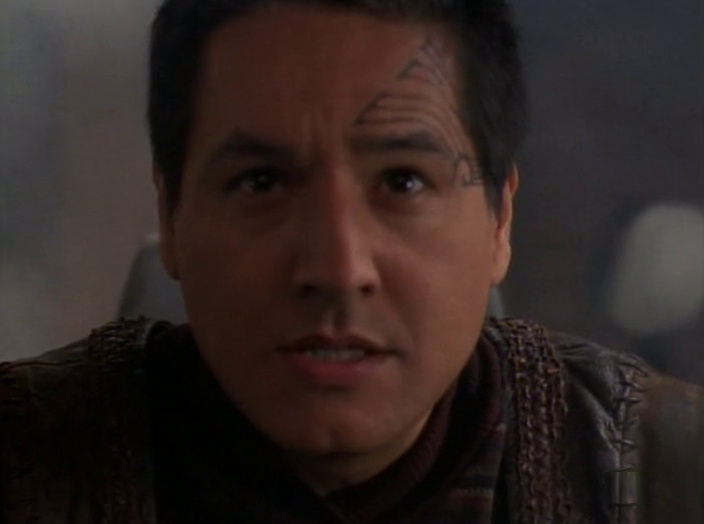
Chakotay feels like the embodiment of Voyager’s missed opportunities. Voyager’s writers never made good on the “one ship, two crews” idea, meaning Chakotay basically became a Starfleet officer and Janeway’s confidante within a couple of episodes, robbing him of more than one potential character arc. His relationships with most of the crew besides Janeway and B’Elanna were never really explored in much depth, and he just feels like… a presence. Chakotay was on the bridge the whole time, but can you think of many episodes where he drove the plot or was otherwise in focus? Because I can’t!

Still frame from Star Trek: Voyager showing Chakotay - the first shot of the series.
Chakotay was the first character we saw at the very beginning of Star Trek: Voyager.

I must get caught up with Prodigy, because Chakotay may get the kind of cathartic redemption arc that we were discussing with Seven of Nine, and that’s something I need to see! And across the show’s seven years, Chakotay did get a few spotlight episodes and storylines – notably exploring his Native American heritage and his relationship with Seska. I just feel there was more that Voyager could have done with this character – he was the first officer, after all, and it would be weird if the likes of Spock, Riker, or Major Kira had been similarly sidelined in their respective shows.

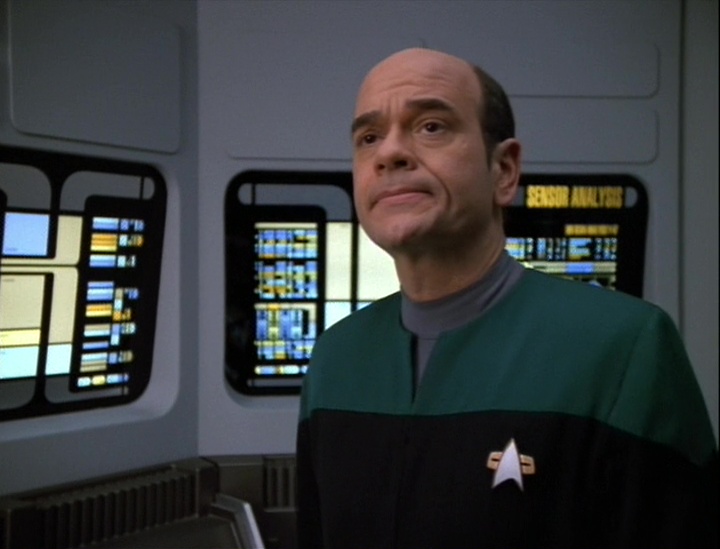
I remember feeling confused on learning that Voyager’s doctor was going to be a hologram! “How could that work?” I remember thinking to myself. “Exceptionally well” seems to be the answer, because Voyager’s Doctor was an incredibly fun character – and one who experienced growth over the course of the series. Starting out as a holo-programme with relatively little personality and no interests, the Doctor changed and evolved over the course of the show, taking on new challenges and new interests, and that was a really fun thing to see play out.

Still frame from Star Trek: Voyager showing the Doctor in sickbay.
The Doctor – the first holographic main character in Star Trek.

When the Doctor got his mobile emitter – a piece of 29th Century technology – in the third season, I was sceptical. But allowing him to leave the confines of sickbay and the holodeck turned out to be a great decision, leading to more involvement from this fun and enjoyable character across the second half of the show’s run. The Doctor could be great comic relief, and actor Robert Picardo has excellent comedic timing, but there’s much more to the character than that. We got some great emotional moments with him, too, such as losing his holographic family or sitting in court arguing for his rights as a sentient life-form.

Speaking of comic relief, we have Neelix! Star Trek shows had had barkeeps before – Guinan in The Next Generation and Quark in Deep Space Nine – but never a cook. Neelix took broad liberties with that role, serving first as a guide to the area around Ocampa, then as a “morale officer” for the ship – while cooking up a selection of interesting dishes to feed a hungry crew! I bought a copy of Ethan Phillips’ Star Trek Cookbook and even tried a few of them for myself… with terrestrial ingredients, of course.

Promotional photo of Ethan Phillips as Neelix (in a Starfleet uniform for some reason).
A promo photo of Neelix… in a Starfleet uniform.

Neelix’s relationship with Kes could feel a little uncomfortable, but fortunately it wasn’t in focus all that much outside of a few early episodes. As Neelix settled in aboard the ship, he became an important character – and would often serve as a bridge between characters who didn’t always get much interaction. His largely one-sided friendship with Tuvok – though often played for laughs – was great to see, too, and showed Neelix’s way of accepting people different from him.

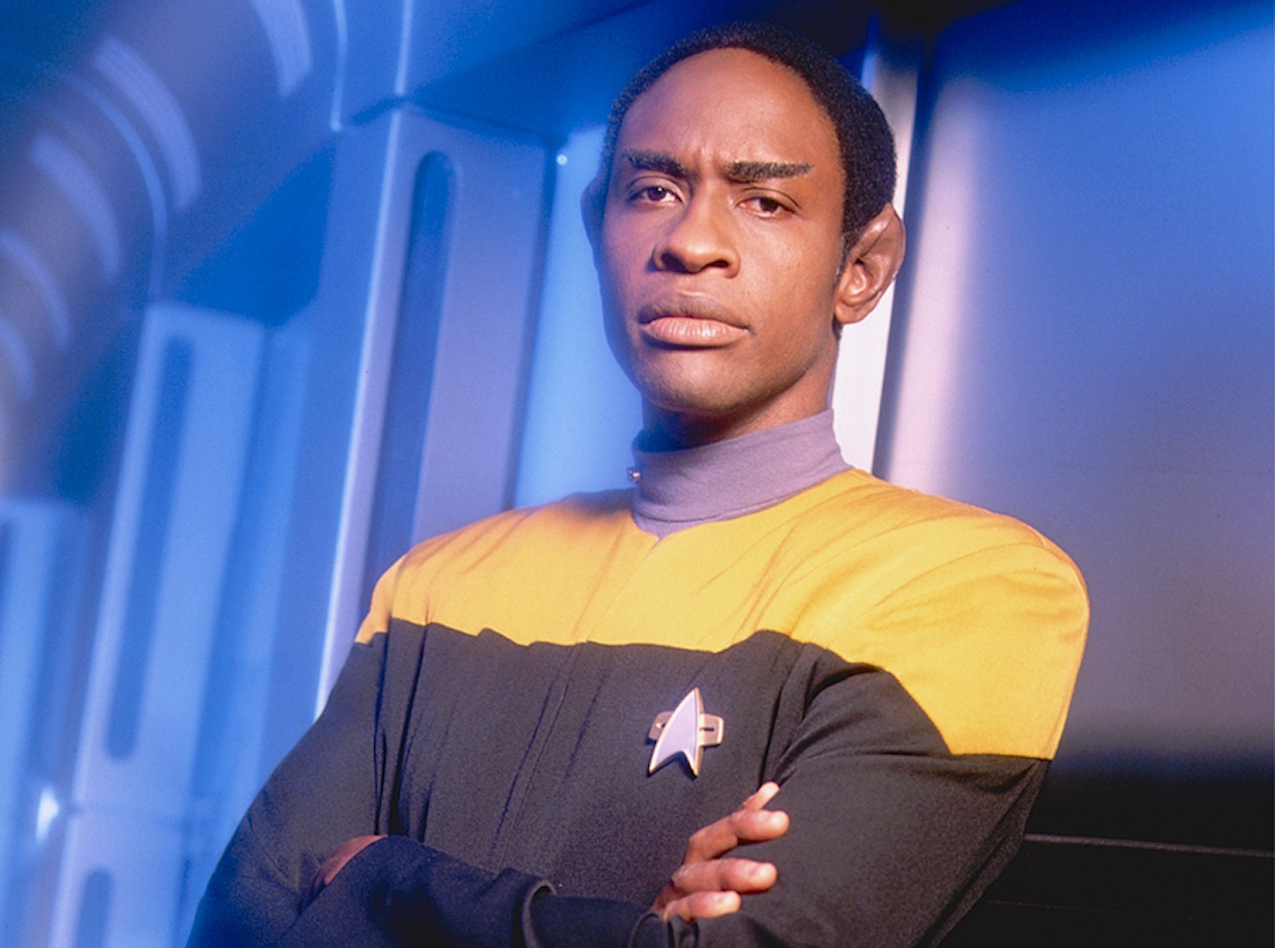
And speaking of Tuvok, Star Trek’s second Vulcan main character made quite an impact! Spock was always going to be a hard act to follow, but taking the calm and logical Tuvok as far away from science and exploration as possible was undeniably the right call. A Vulcan security and tactical officer makes a lot of sense when you stop to think about it – and Tuvok demonstrates exactly why. Calm and stoic under pressure is just what that job requires!

Promotional photo of Tim Russ as Tuvok.
Tuvok.

Tuvok also served as Janeway’s friend and confidante – arguably treading on the toes of the traditional first officer role, in that sense. I wish we’d gotten more of an examination of his relationship with Chakotay, though that’s more from Chakotay’s side, as mentioned above. Tuvok also bridged the gap between The Original Series era and Voyager in the most unexpected of ways – check out the episode Flashback, that I mentioned at the beginning, for more on that!

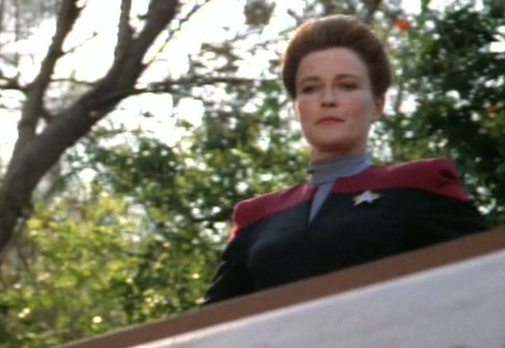
So that leaves us with Captain Janeway. Janeway was the captain that Voyager needed on a quest like this, and she had the strength to guide her crew home. She also had some fun character quirks, like her love of coffee, that kept her feeling grounded and real. The first woman to sit in the captain’s chair for a Star Trek series embodied elements of all three of her predecessors: Kirk’s toughness, Picard’s diplomacy and tact, and Sisko’s dedication to doing the right thing. But she was always her own woman, never feeling overshadowed by any of the captains that had come before.

Still frame from Star Trek: Voyager showing Captain Janeway at the penal colony in the premiere.
Captain Janeway in Caretaker.

As mentioned above, Kate Mulgrew was the perfect choice for this role, and she delivered a masterful performance across all seven seasons of the show. Voyager’s journey home wouldn’t have been the same without her, in fact, and across the show’s run we got several great episodes that shone a spotlight on the captain. Stories pitted her against villains like the Krenim and the Borg Queen, and Janeway always found a way to come out on top!

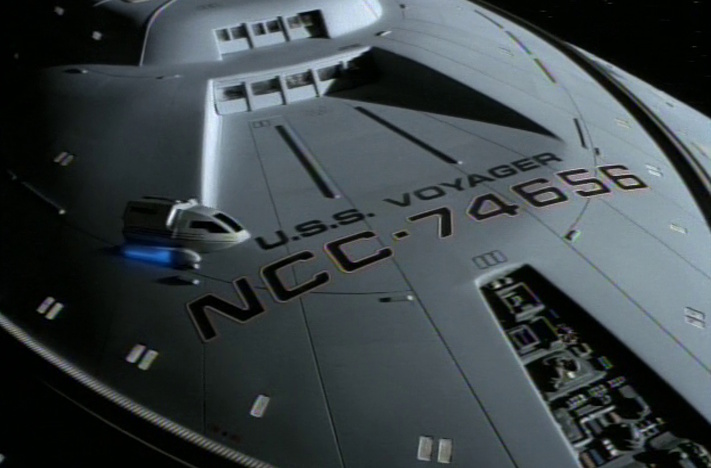
The USS Voyager still feels like a futuristic design to me even thirty years on from its debut! Something about the more angled saucer section makes it feel more modern than the circular hull of Kirk’s Enterprise and the Enterprise-D, and the sleeker lines also scream “speed!” Voyager was a long-range tactical ship made for exploration and combat, and the ship’s design philosophy reflects that. I will never tire of the sequence in Caretaker of Paris being flown in by shuttlecraft, seeing Voyager for the first time.

Still frame from Star Trek: Voyager showing a shuttlecraft flying over Voyager's saucer section.
Our first introduction to this wonderful starship.

On the inside, we got a continuation of the Starfleet aesthetic that debuted in The Motion Picture and has been a mainstay in the franchise since. Voyager’s bridge is larger and wider, though – or at least it feels larger and wider – than anything we’d seen before. This expansive space was the perfect stage for interactions between all of our favourite crew members! Again, the bridge felt more modern than that of the Enterprise-D, while at the same time continuing the design trends that we saw in The Next Generation.

Janeway’s ready-room was an interesting area, giving her a large desk but also a couch that could act as a social space. Engineering had a really neat effect for its warp core, and the expansive entryway was often where intense conversations played out. The Doctor had sickbay as his domain, but he also got an office and a small lab off to one side that were fun inclusions. Voyager also had a shuttlebay, holodecks, crew quarters, corridors, and the mess hall – all of which would get moments where they were in focus!

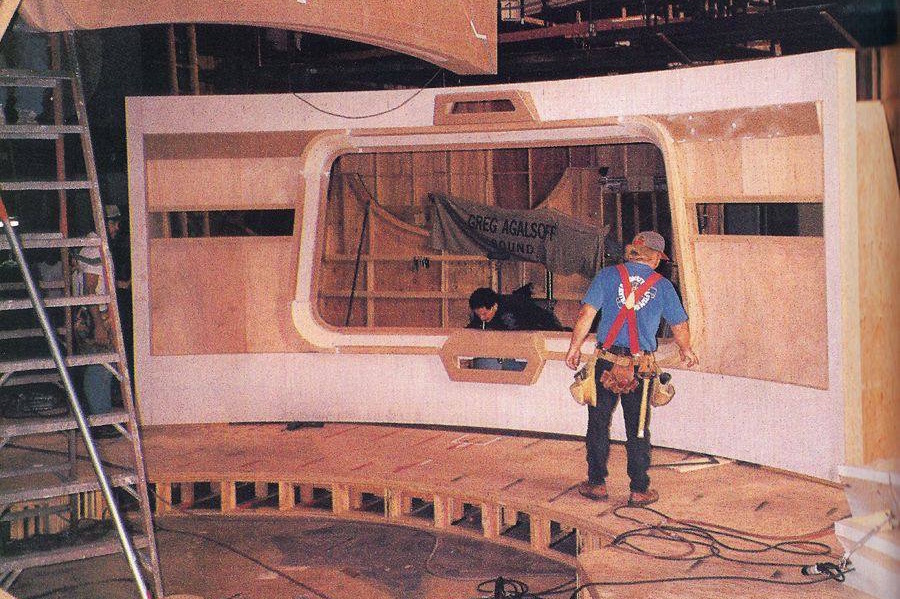
Behind-the-scenes photo from Star Trek: Voyager showing the bridge set under construction.
Voyager’s bridge set under construction circa 1994.
Image Credit: Forgotten Treks/TrekDocs

As an aside, being able to virtually explore Voyager in the game Elite Force was one of my absolute favourite things about that game! In 2000, being able to wander through the bridge, sickbay, and some of the ship’s corridors felt absolutely magical as a Star Trek fan, and while Elite Force wasn’t the only game to offer that experience (the adaptation of Generations had a mission set on the Enterprise-D, and there were probably others around the same time), it was certainly one of the most memorable for me personally.

One thing Voyager didn’t really have was an expansive secondary cast. Deep Space Nine gradually gave more time and attention to characters like Rom and Martok, but Voyager, by and large, kept its focus on its main cast of characters. The Borg children – and Icheb in particular – were really the only ones to break through in more than a handful of episodes, though some, like Seska and The Next Generation’s Reg Barclay, would go on to make multiple appearances. Deep Space Nine showed what Star Trek could do with a wider and more expansive cast… and it’s something the franchise has yet to return to. Voyager had the opportunity to build out some of its secondary characters, but never really went there. I think that’s a bit of a shame – but it is what it is!

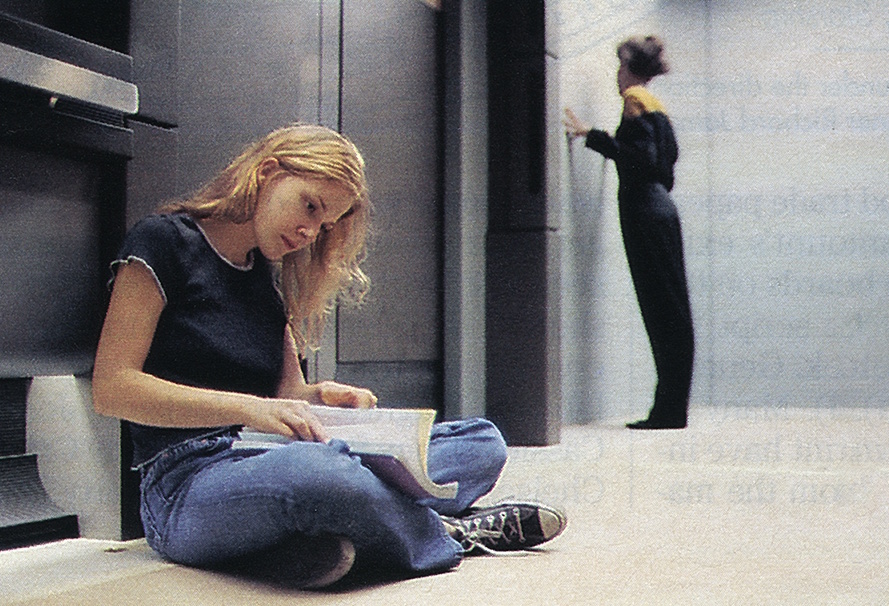
Behind-the-scenes photo from Star Trek: Voyager showing Jennifer Lien reading her script while sat on the floor.
Jennifer Lien (Kes) reading her script on the set of Caretaker.

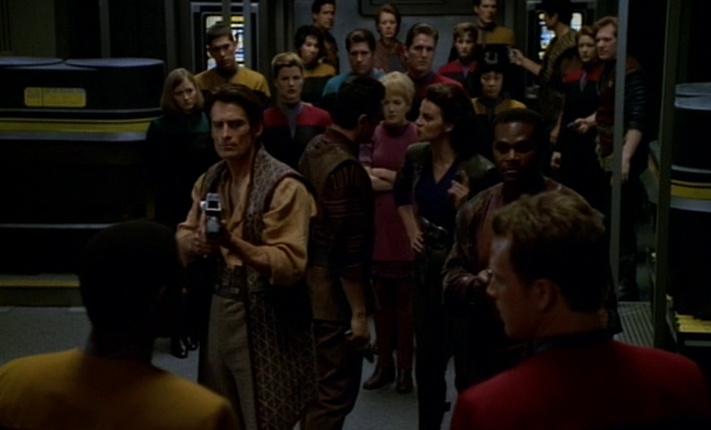
For a variety of reasons, Voyager never really made good on its “one ship, two crews” idea, and by about halfway through Season 1, the main Maquis characters were basically entirely integrated with the Starfleet crew. With the exception of plot-relevant moments, such as stories involving Seska, the fact that almost one-third of Voyager’s complement were Maquis never really came to the fore in a big way, and I think that’s a bit of a missed opportunity.

Don’t get me wrong, a story about people from different backgrounds finding a way to work together for the common good is something I absolutely adore, and there were times where Voyager absolutely nailed that feeling. I guess I’ve just always felt that I would’ve liked to see more tension, scepticism, and disagreement as the two crews began the process of integrating. I never really felt as much of that as I would’ve liked – and that’s perhaps Voyager’s biggest sore spot for me, thirty years on.

Still frame from Star Trek: Voyager showing a Maquis rebellion (on the holodeck!)
Voyager struggled to make good on its “one ship, two crews” premise.

That being said, Voyager was a great show all around, and a welcome addition to Star Trek. With The Next Generation’s crew off making feature films and Deep Space Nine occupying a space station, there was plenty of room for a new series set aboard a starship. Voyager embodied Star Trek’s ethos of peaceful exploration… but set that exploration against a new backdrop of trying, against the odds, to make it home. It was both familiar and different at the same time; a really interesting blend of storytelling styles.

Voyager was also a much more episodic series than Deep Space Nine – despite its voyage home story being omnipresent and frequently referred to. There were plenty of one-off stories featuring a wide range of alien races, factions, and wacky premises. It was a Star Trek series through and through, one that brought a fantastic cast of characters to the table and threw them into plenty of fun, exciting, and occasionally emotional situations.

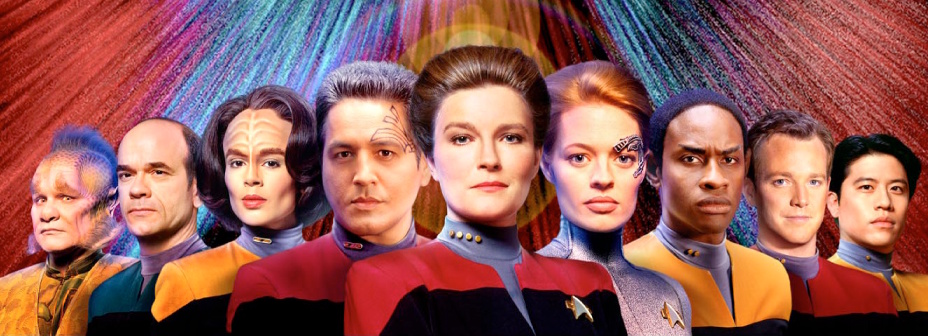
Promotional image of the Star Trek: Voyager cast.
The cast on a promotional poster.

The excitement I felt thirty years ago was more than rewarded! Voyager was an outstanding show, and I got thoroughly invested in the crew and their quest to return to the Alpha Quadrant. There were some episodes that were wide of the mark – as there are bound to be in any show that runs to 168 episodes across seven seasons! But even at its worst, there were things to enjoy, fun lines of dialogue, entertaining character moments, or creative decisions that made Voyager well worth watching for any Trekkie or fan of sci-fi in general.

As the final show of what I consider to be Star Trek’s “golden age,” I’ve long had a soft spot for Voyager. Of course I watched every single episode during the show’s run – I would tune in when they made their debut on terrestrial TV here in the UK, and I very rarely missed a week. I later bought all seven seasons when they were released on DVD and enjoyed the series all over again.

Still frame from Star Trek: Voyager showing the USS Voyager preparing to jump to warp.
The USS Voyager set course for the Alpha Quadrant thirty years ago today.

So I hope this has been an interesting look back! I wanted to do something to acknowledge Voyager’s milestone anniversary, but it’s hard to summarise my thoughts on 168 episodes and seven years’ worth of television in a single article! Stay tuned, though, because I’ll be writing up my thoughts on some of my favourite episodes in the days ahead as we continue to celebrate Voyager’s thirtieth anniversary.

I hope that Paramount and the folks in charge of Star Trek plan to do something to mark this momentous occasion, so I’ll definitely be checking out the official Star Trek website and social media pages over the next couple of days. With Seven of Nine, Janeway, Chakotay, and others all having returned to the Star Trek franchise in the last few years, Voyager’s legacy is very much alive. The documentary To The Journey: Looking Back at Star Trek: Voyager has had its official premieres, too, though I don’t think it’s available to stream just yet. Still, another thing to keep an eye on.

All that remains to say is this: happy thirtieth anniversary, Star Trek: Voyager! Thanks for all the memories.


Star Trek: Voyager is available to stream now on Paramount+ in countries and territories where the platform is available. The series is also available on DVD. The Star Trek franchise – including Voyager and all other properties discussed above – is the copyright of Paramount Global. Some images courtesy of TrekCore and Paramount. This article contains the thoughts and opinions of one person only and is not intended to cause any offence.