28 Years Later: Film Review

The first part of this review is free from major story spoilers. The end of the spoiler-free section is clearly marked.

I know what you’re thinking: Trekking with Dennis reviewing a horror film?! And it isn’t even October! What’s going on?

Well, I’ll let you in on a secret: 28 Days Later is one of my favourite horror films of all-time, and I enjoyed 28 Weeks Later, too. So when Danny Boyle announced there’d finally be a sequel to this genre-redefining zombie story a few years ago, I was immediately interested. Horror may not be my thing a lot of the time, but every now and then I don’t mind a good scare.

This is also my second zombie story in the span of a week! A few days ago, I watched Star Trek: Strange New Worlds’ zombie episode, so after this I think I’m gonna need a bit of a break from zombies for a while.

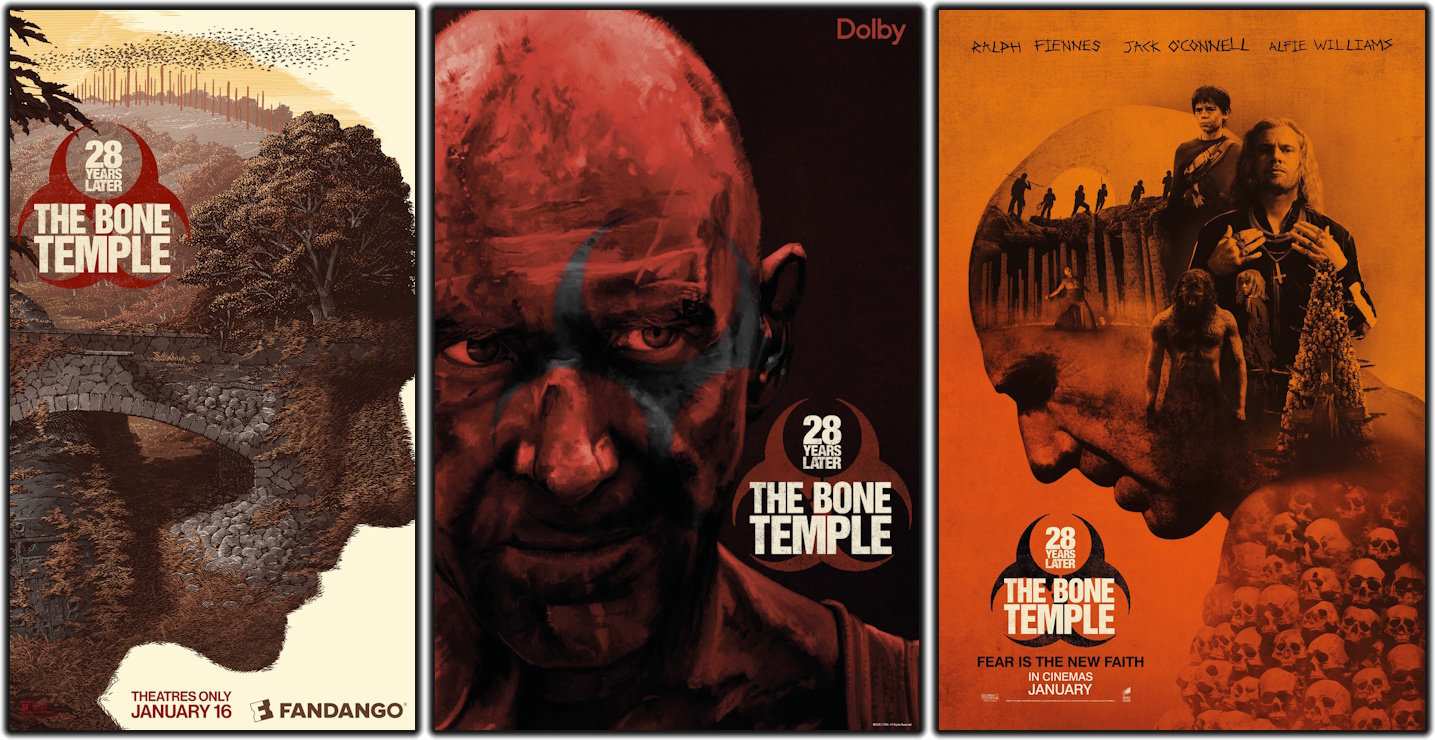
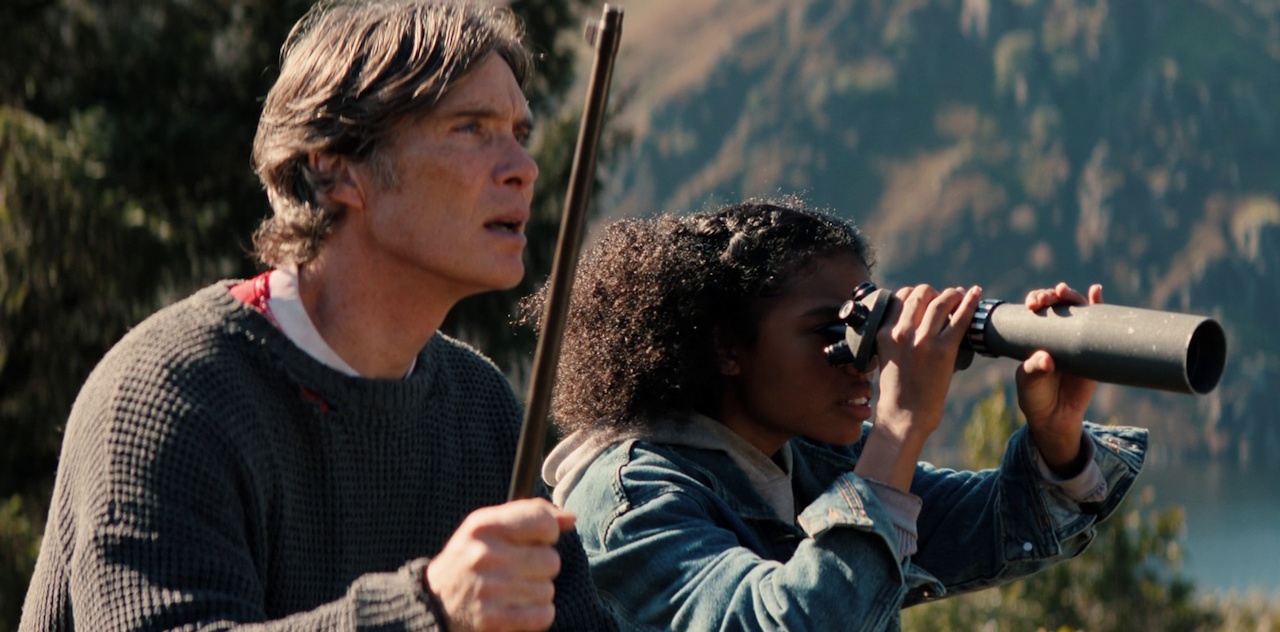
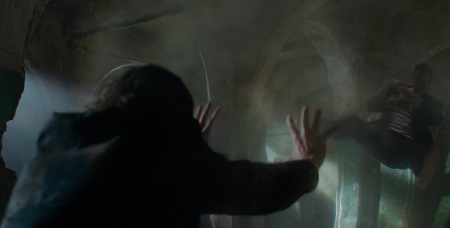
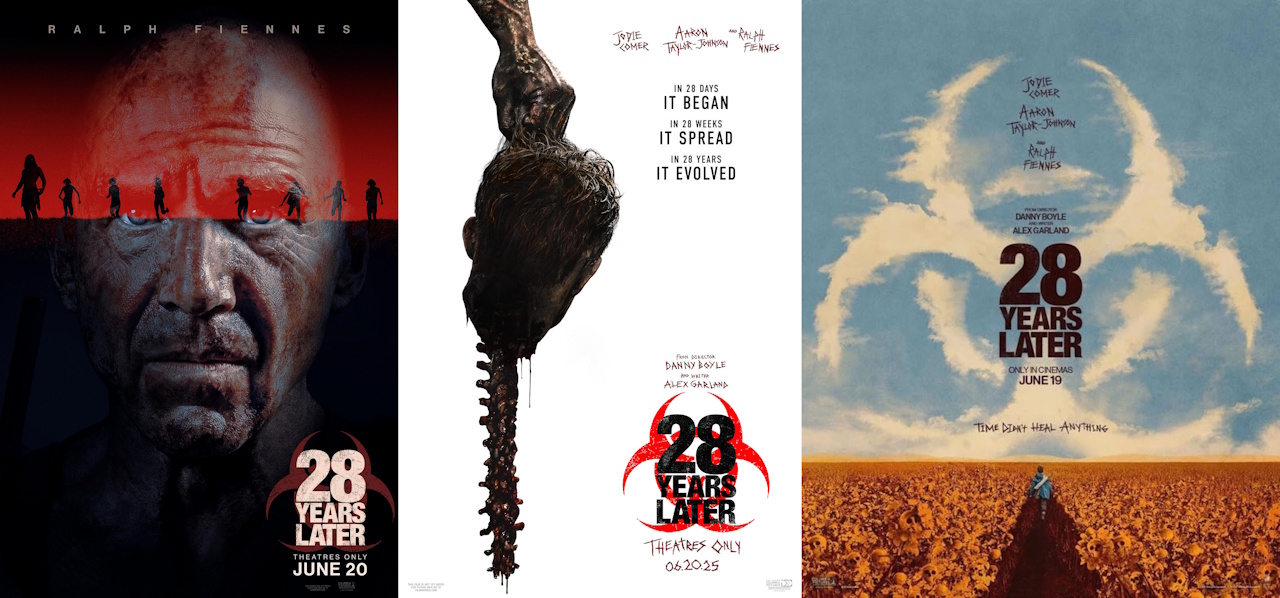
Three promo posters for 28 Years Later.
A trio of posters for the film.

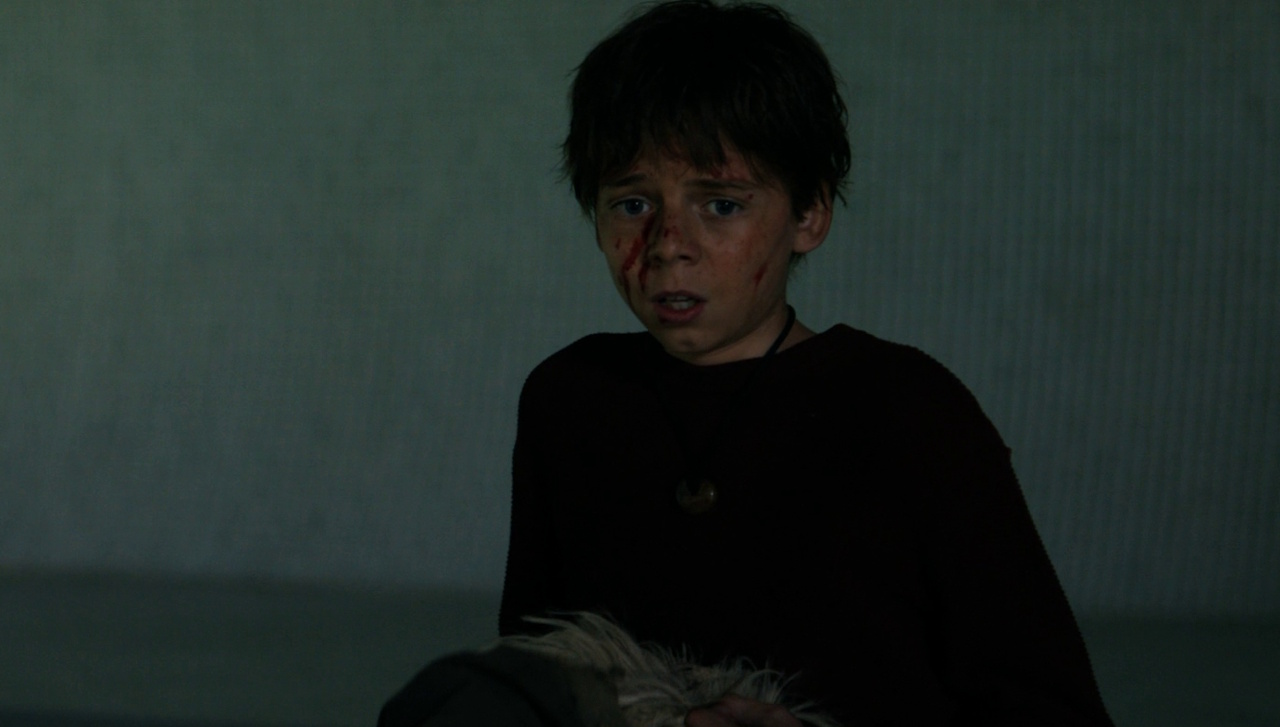
28 Years Later was… interesting. But I’ll be honest: it wasn’t really what I expected. Less a horror film than a coming-of-age family drama with a zombie backdrop, 28 Years Later leaned on its post-apocalyptic setting to tell a story focused on a handful of characters. Spike, the main protagonist, got most of the film’s attention, and that was certainly an interesting – and potentially controversial – choice.

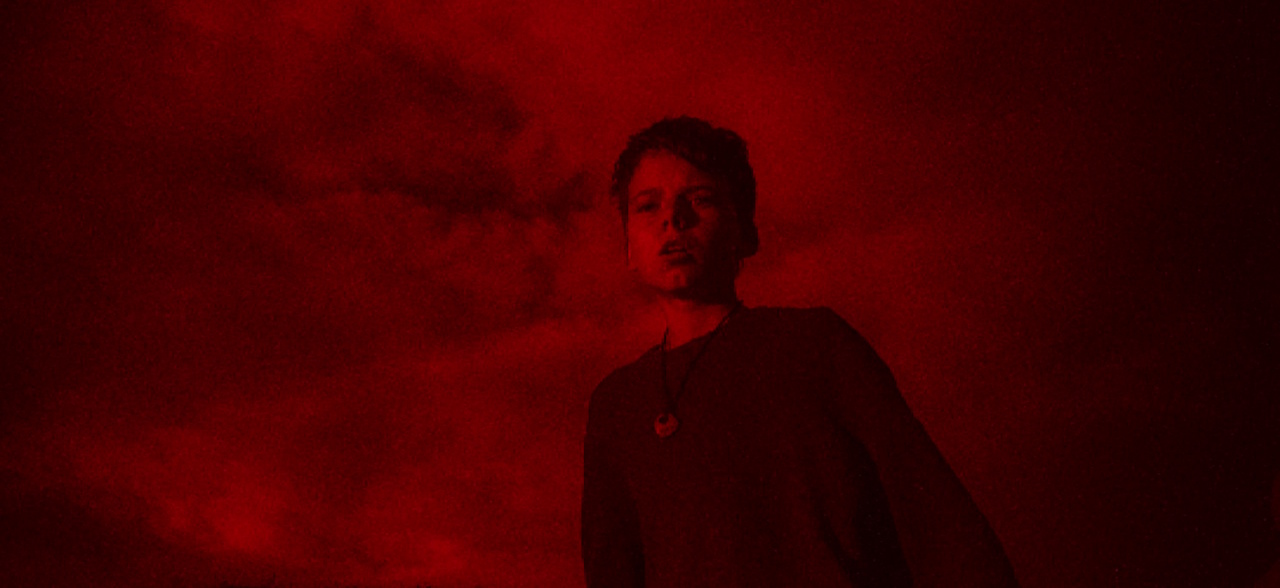
There was some fantastically creative cinematography in 28 Years Later. The film cut sequences from its post-apocalyptic present-day with imagery from war films and historical re-enactments, drawing parallels between those situations. The “Boots” refrain, heard in the trailer, surprised me by being an integral part of the film, not just a marketing stunt, and it was suitably haunting to hear that recitation atop imagery of zombies going feral. 28 Years Later was also creative with its use of colour; blood-red scenes were used for emphasis at key points in the story.

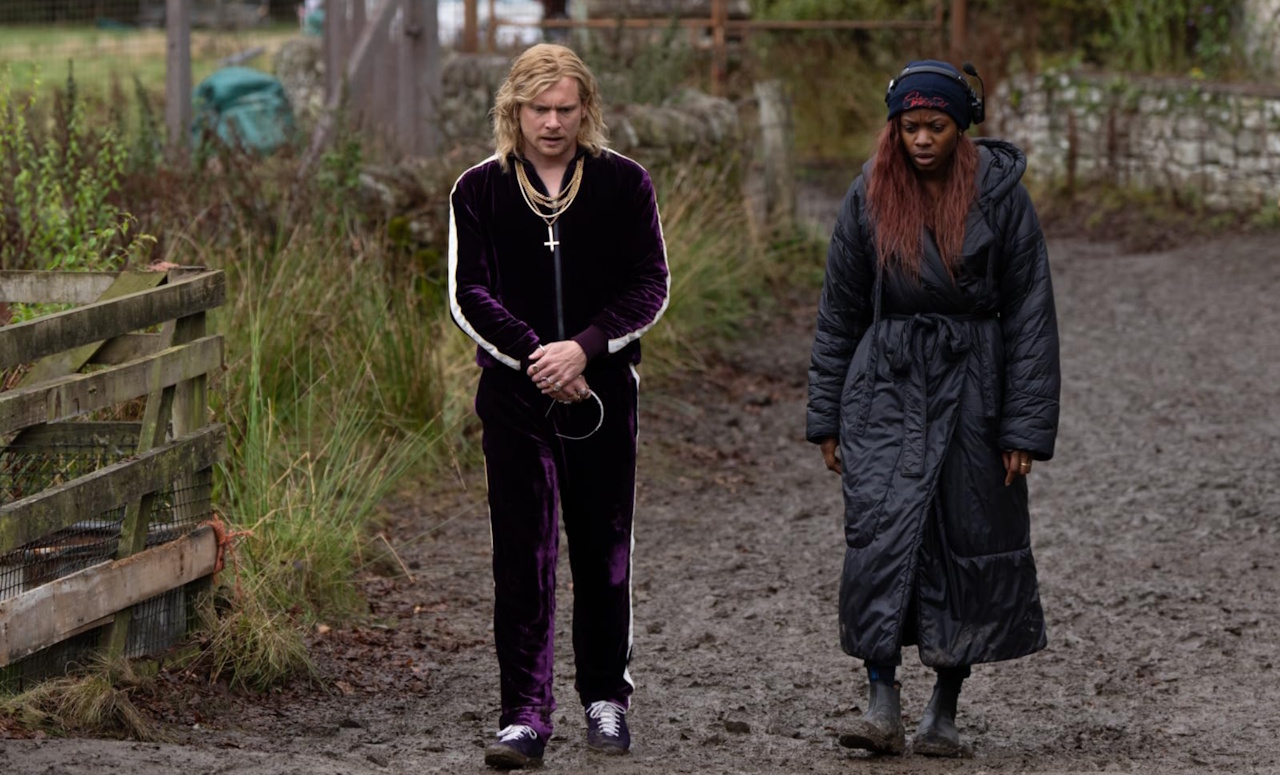
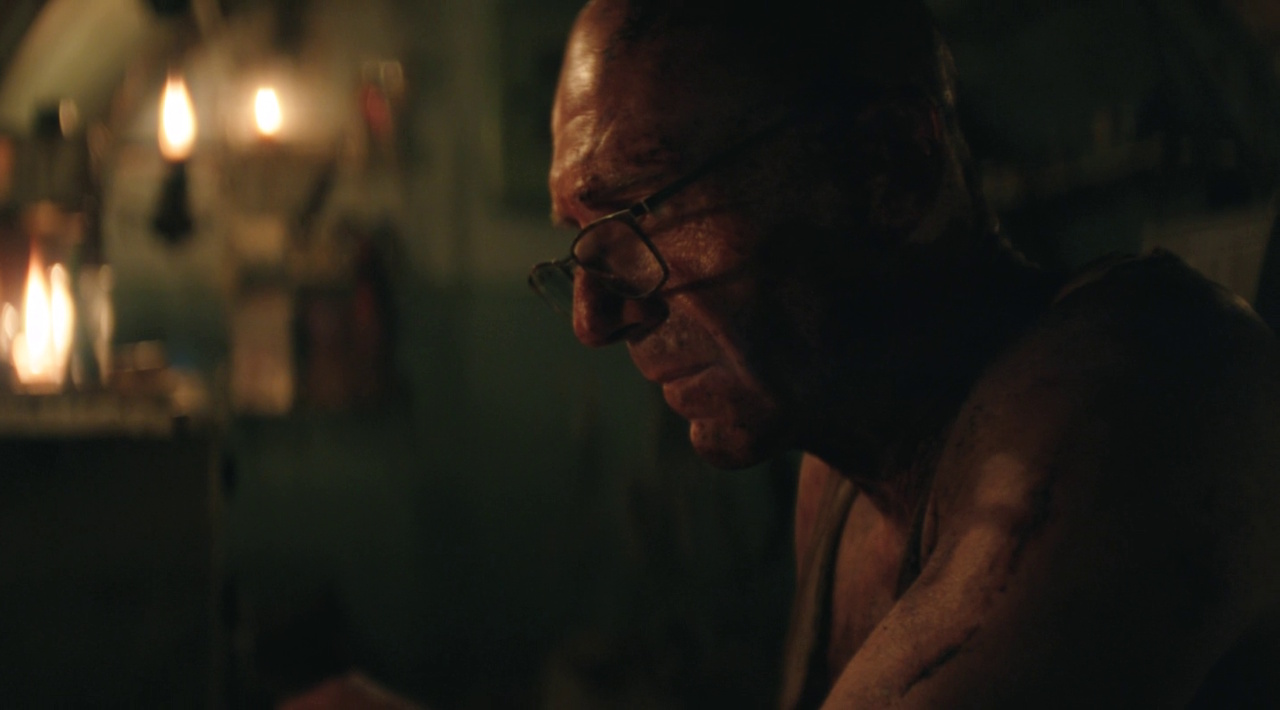
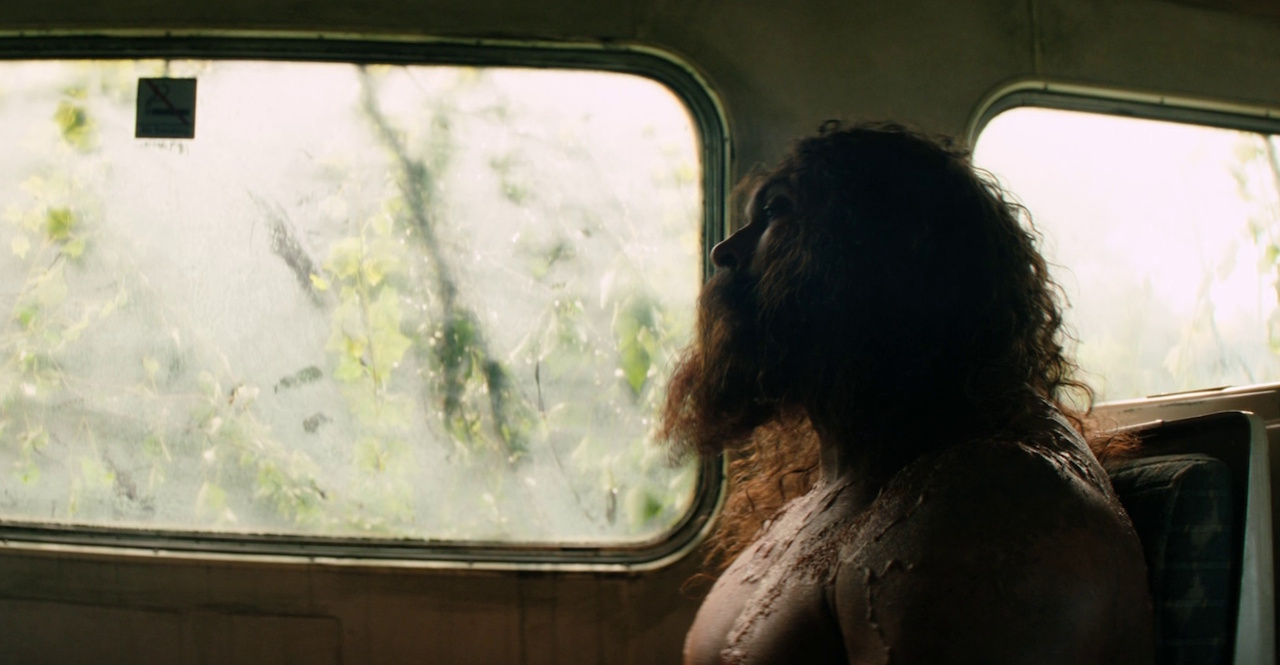
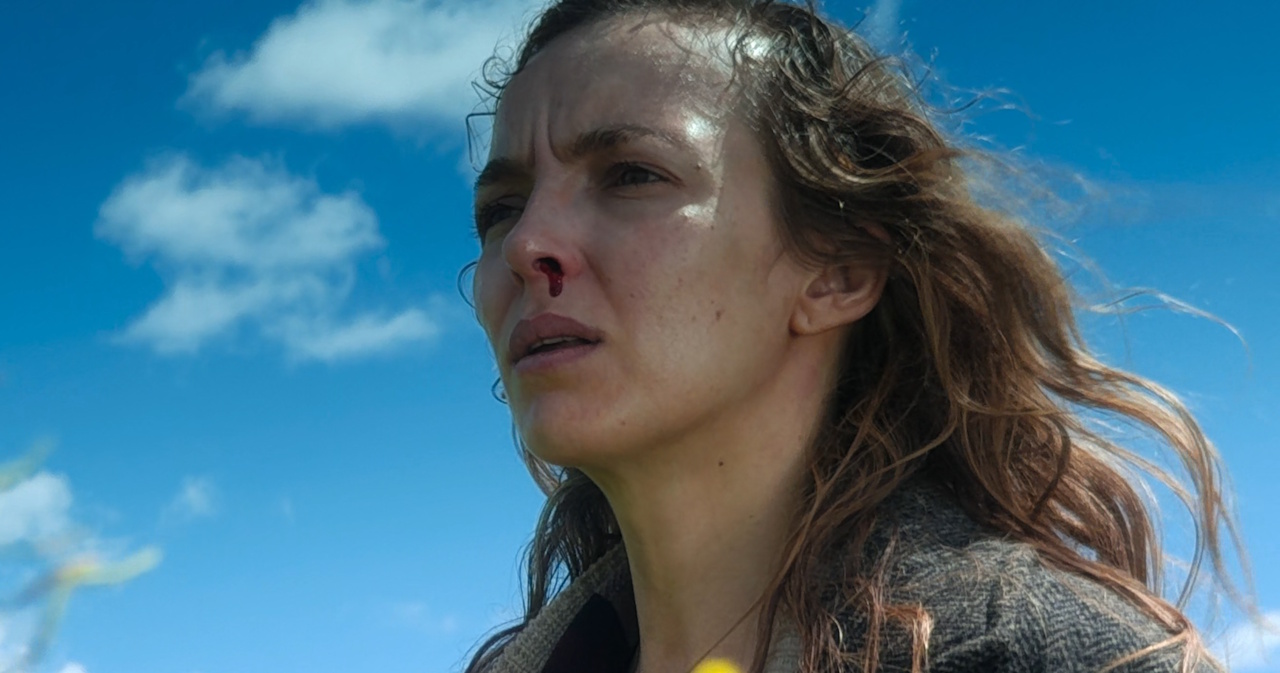
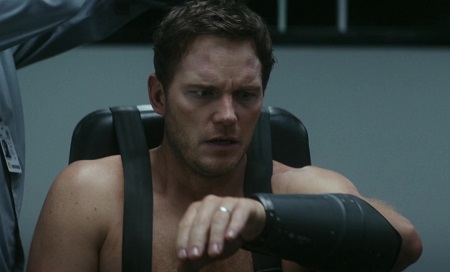
Still frame from 28 Years Later (2025) showing Spike.
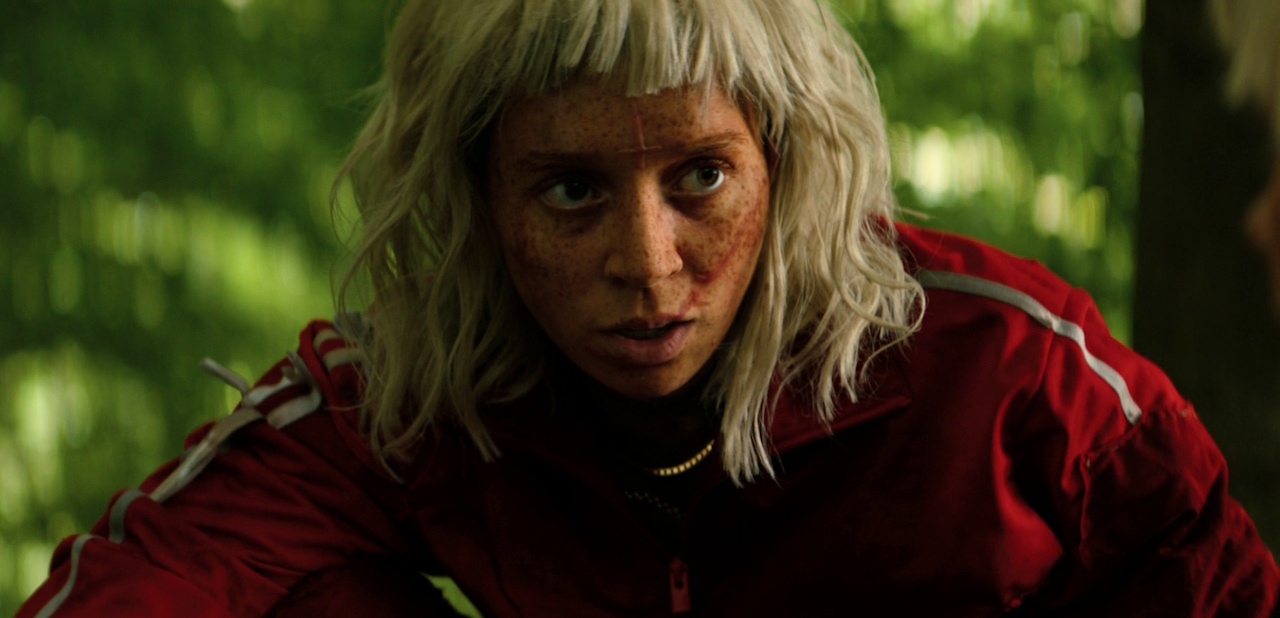
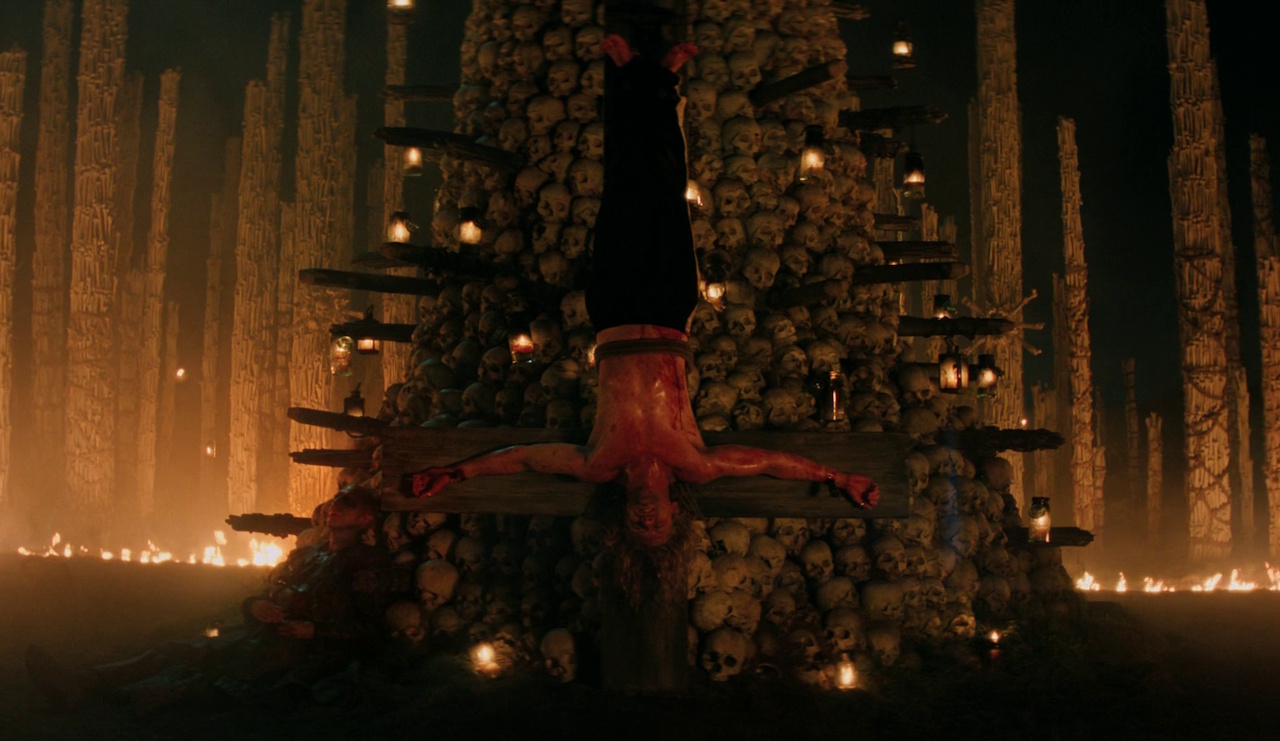
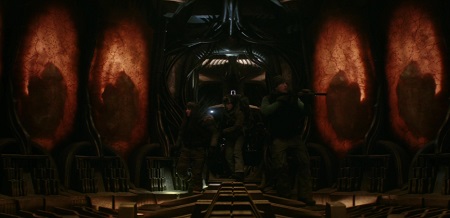
An example of a blood-red sequence.

If you know me, you’ll know I’m a scaredy-cat. And 28 Days Later is up there as one of the most frightening films I’ve seen; its depiction of sprinting infected redefined what zombies could be and made them genuinely terrifying. For me, 28 Years Later just… wasn’t all that scary. It was gruesome when it wanted to be, sure; blood, guts, and other viscera are almost omnipresent in its world. But its jump-scares felt rather predictable – I could sense that something was coming, even when the film wasn’t trying to signal it. And while these sprinting zombies retain some of their fear factor, I suspect that two-plus decades of other horror films – many of which were inspired, directly or indirectly, by Danny Boyle’s work – have kind of… lessened that, a little.

I put off watching 28 Years Later until I felt I was in a good frame of mind for horror… but I really didn’t need to. There were tense moments, without a doubt. And the film is not bereft of new ideas; special categories of infected, who are bigger and stronger than your “standard” sprinting zombies added a new danger. But when I think back to that first viewing of 28 Days Later, and how I could scarcely bring myself to walk into the kitchen the next morning when it was still dark… nothing in this film really came close to recapturing that level of horror.

Behind-the-scenes photo from the set of 28 Years Later.
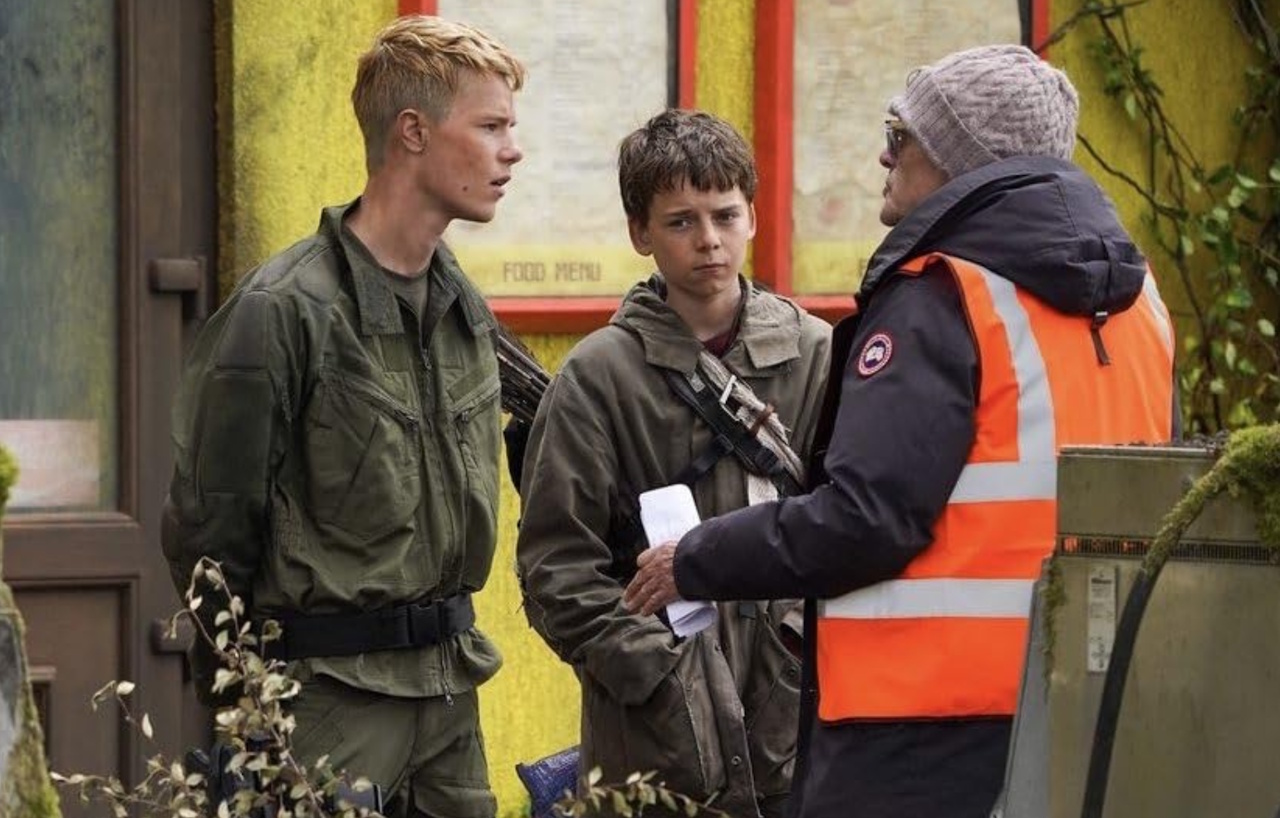
Director Danny Boyle (right) with Edvin Ryding and Alfie Williams on the set of 28 Years Later.
Photo Credit: IMDB

I don’t mind that, by the way. In fact, after the intervening years have not been too kind to my own mental health, I think I prefer a film like this! But I do think it’s worth noting that the belated follow-up to one of the most horrifying depictions of zombies ever brought to screen – and a film that had a massive impact on the zombie genre – wasn’t actually as scary as I expected. And if a big old scaredy-cat like me can make it all the way to the end without wetting their pants, then maybe some folks with a greater appetite for horror than I might even find 28 Years Later to be… tame.

All that being said, this is still a film I’d happily recommend. If you enjoyed 28 Days Later and want to know what happened next, or if you just enjoy a good zombie flick, there’s a lot to appreciate and enjoy. Some of it is a bit more artsy and a bit less gory than some of the more mindless films in the zombie genre, but whether that’s offputting or something to celebrate just boils down to personal taste! Speaking for myself, I think 28 Years Later was about right. It struck a good balance without leaning too much into gory horror, and even though some of its character moments could feel a bit clichéd, I still rooted for young Spike and wanted to see him succeed on his adventure.

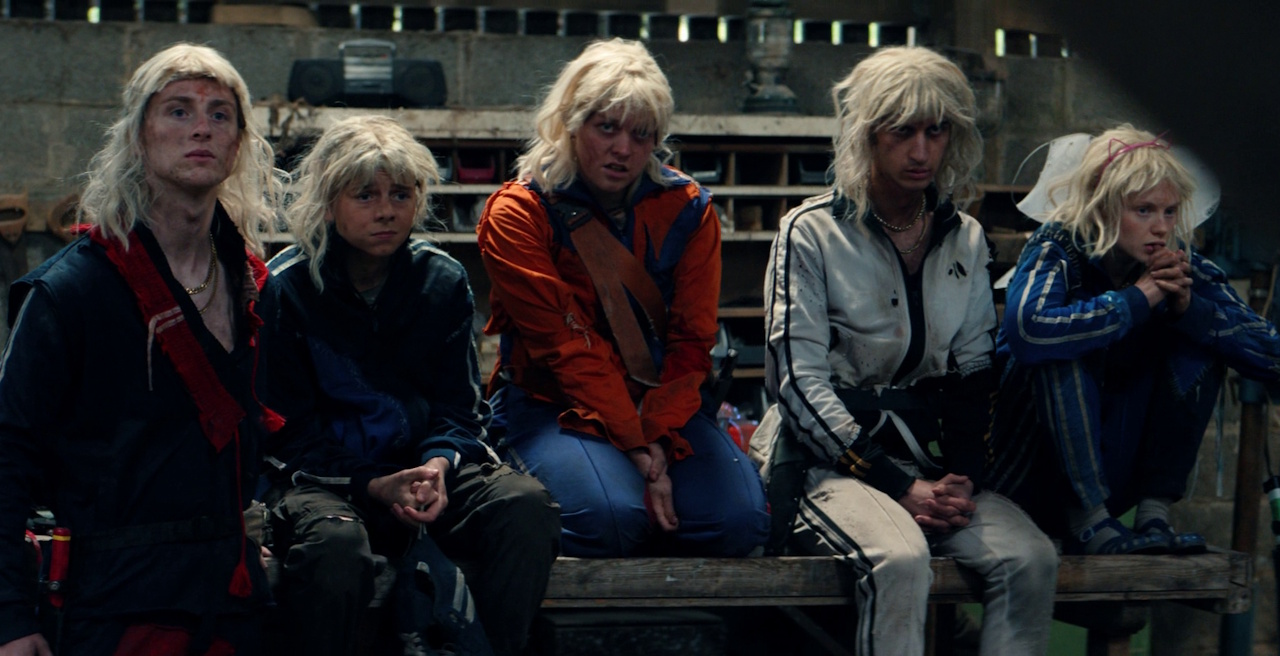
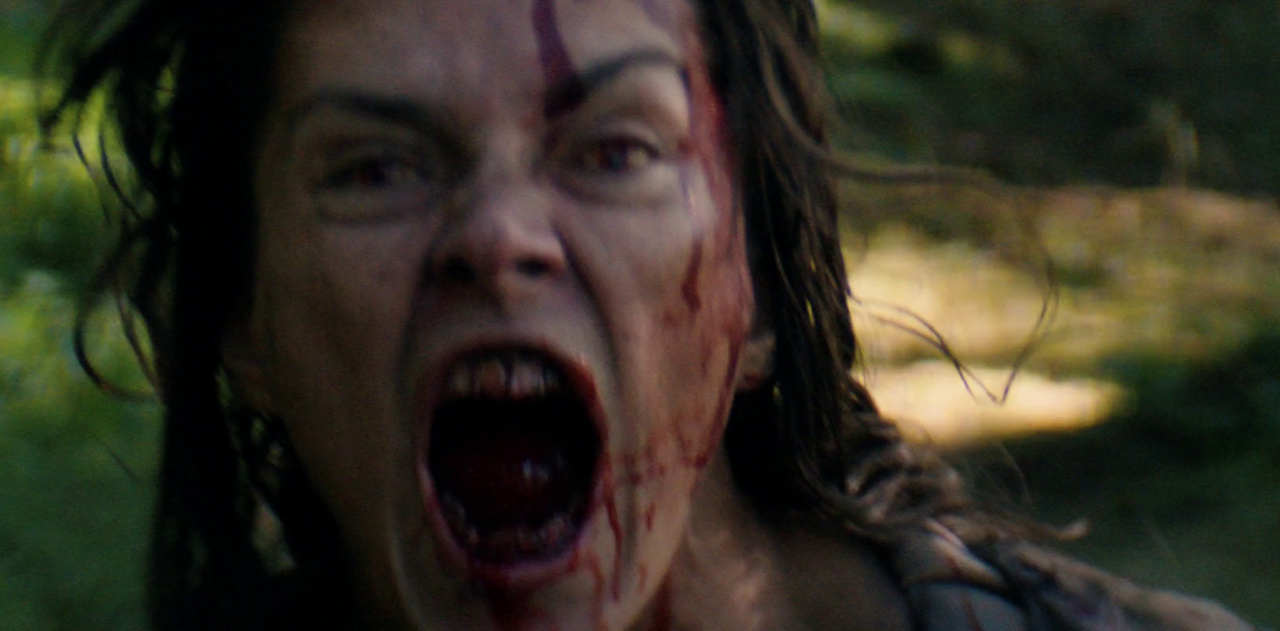
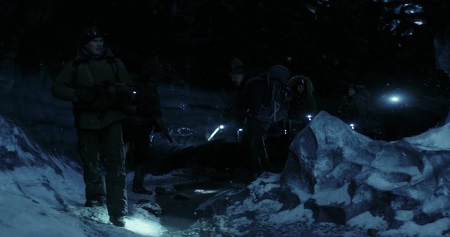
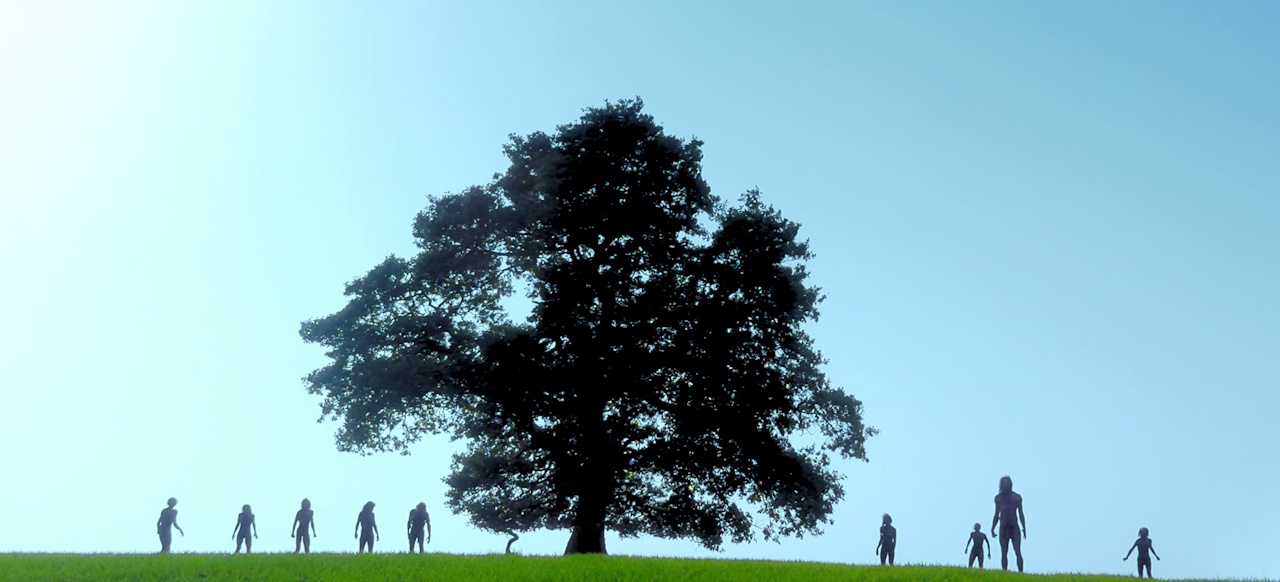
Still frame from 28 Years Later (2025) showing the infected on a hill beside a tree.
The infected are coming!

It was also interesting to catch a glimpse of post-apocalyptic life many years into the rage virus outbreak. Seeing how new communities formed, how people have to find new roles, and how some people just… seem to lose themselves. That was all interesting stuff.

So even if 28 Years Later wasn’t the scare-fest I’d been expecting, I generally enjoyed it for what it was. Up next, we’ll get into the narrative in a bit more detail – so if you don’t want to see spoilers for the film’s plot, this is your opportunity to jump ship! But I hope you’ll come back after you’ve seen 28 Years Later to get my take on the film’s story.

A spoiler warning graphic (from SpongeBob)

This is the end of the spoiler-free section. There are story spoilers for 28 Years Later (as well as 28 Days Later and 28 Weeks Later) from here on out.

I really did not expect 28 Years Later to be a coming-of-age story mixed in with family drama. Spike’s quest to help his mother was relatable and sweet, and all credit to young Alfie Williams, who took on a challenging role and rose to the occasion.

What I’d say, though, is that there were some pretty big clichés on this side of the story. Spike catching his dad cheating on his mum, and their subsequent confrontation… it played out like something from a low-budget soap, not the highly-anticipated sequel to a film that redefined a genre. It wasn’t poor, but it wasn’t great… and I don’t even think it was wholly necessary to jump-start Spike’s quest. His mother’s illness, and the knowledge of a doctor on the mainland, was enough.

Still frame from 28 Years Later (2025) showing the confrontation between Spike and Jamie.
There was a fair amount of personal drama on this side of the story.

I also struggled to buy Spike’s rapid acceptance of his mother’s death. We got a bit of protest as Dr Kelson explained that her condition was terminal, but the film went pretty quickly from that moment to Kelson giving Isla her coup de grace, and Spike just kind of… went with it. Yes, he was drugged in the beginning, but after she died – at Dr Kelson’s hand – he didn’t really react. He placed her bleached skull atop the pile and that was that. On to the next quest – to bring the baby back to the village.

This had been Spike’s driving force for basically the entire film – his mum’s ill, he wants to help. He undertakes a very dangerous and deadly quest to help her, and when she can’t be helped he goes from grief and devastation to acceptance in basically an afternoon. Maybe you could read into that, something about the harsh realities of post-apocalyptic life making people more hardy… but it didn’t come across that way for me. It just felt either rushed or underdeveloped.

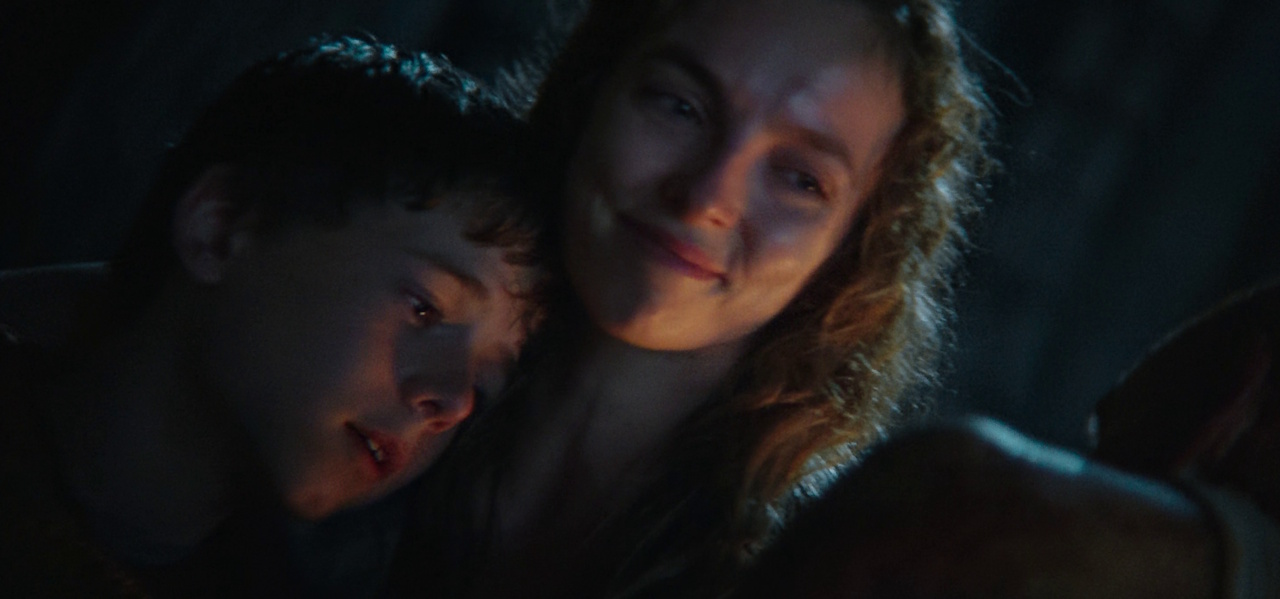
Still frame from 28 Years Later (2025) showing Spike and Isla with Dr Kelson.
Isla’s death was handled pretty quickly, especially for Spike.

Many great horror films use their supernatural settings to take their characters on this kind of journey of growth, and I don’t think 28 Years Later was wrong to want to tell that kind of story. The apocalypse – zombie-related or otherwise – can make a great backdrop for character arcs, personal conflicts, and drama of all kinds. Spike had an understandable motivation, and Dr Kelson also felt like a real person – someone who’s been living in this world, figuring out how to survive for such a long time that he seems “crazy” to outsiders.

But that’s where the real characterisation seemed to stop. Erik, Jamie, the other villagers, and even Isla all felt pretty flat; less fleshed-out people than archetypes or caricatures, serving a narrative function, yes, but often in a shallow or obvious way. If you know me, you’ll know I’m always an advocate for stories that delve into themes of mental health, and Isla’s story in 28 Years Later definitely touched on that. But how she presented during her “episodes” was pretty tropey, and the way she’d snap out of it when the story demanded it – showing lucidity at key moments to have conversations or advance storylines – was pretty basic.

Still frame from 28 Years Later (2025) showing Isla.
Isla.

Can we nitpick? I like to nitpick. How did Dr Kelson – some 28 years after the collapse of civilisation in the UK – manage to maintain a stockpile of medications like morphine and iodine? I mean, he was practically bathing in the stuff, and he’d need to re-apply his iodine defence any time he ventured beyond his skull island home, so… how much iodine must that be after almost thirty years? I think Kelson was probably the film’s second-most-interesting character after Spike… but as I say, I like to nitpick!

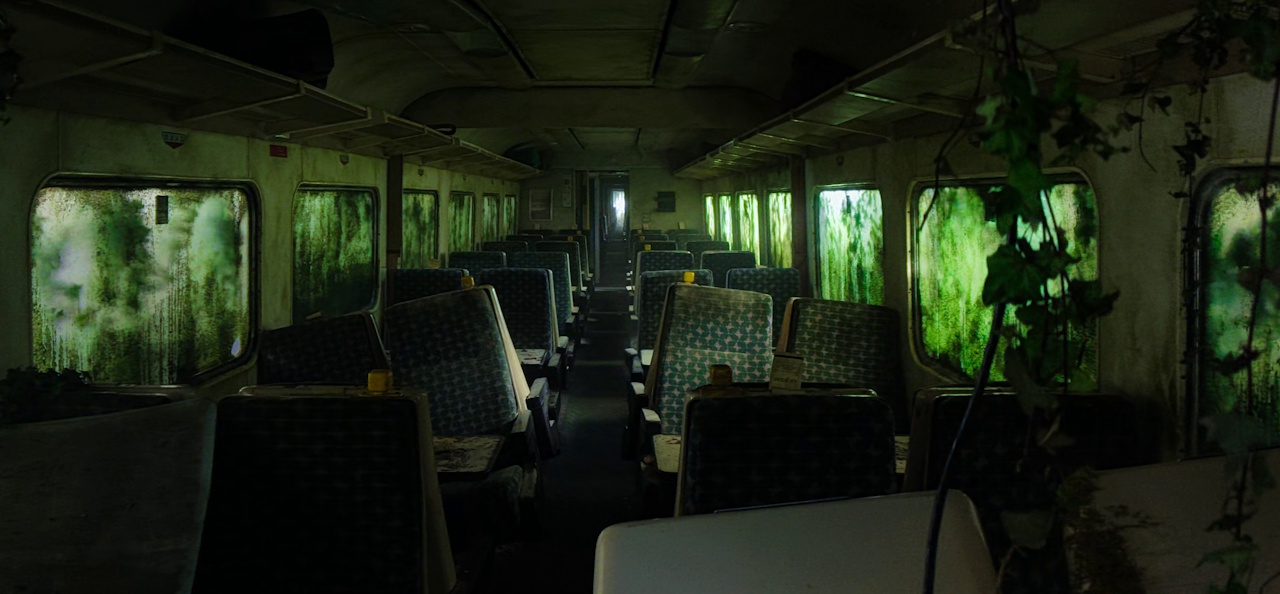
Those questions aside, I really liked 28 Years Later’s take on a post-apocalyptic world. The abandoned train was probably one of my favourite settings – not least because I’m a bit of a train fanatic! But catching glimpses of overgrown towns, the gas-filled petrol station, and decaying buildings and infrastructure was all interesting stuff. It really felt like a world that had been left to decay and collapse for 28 years.

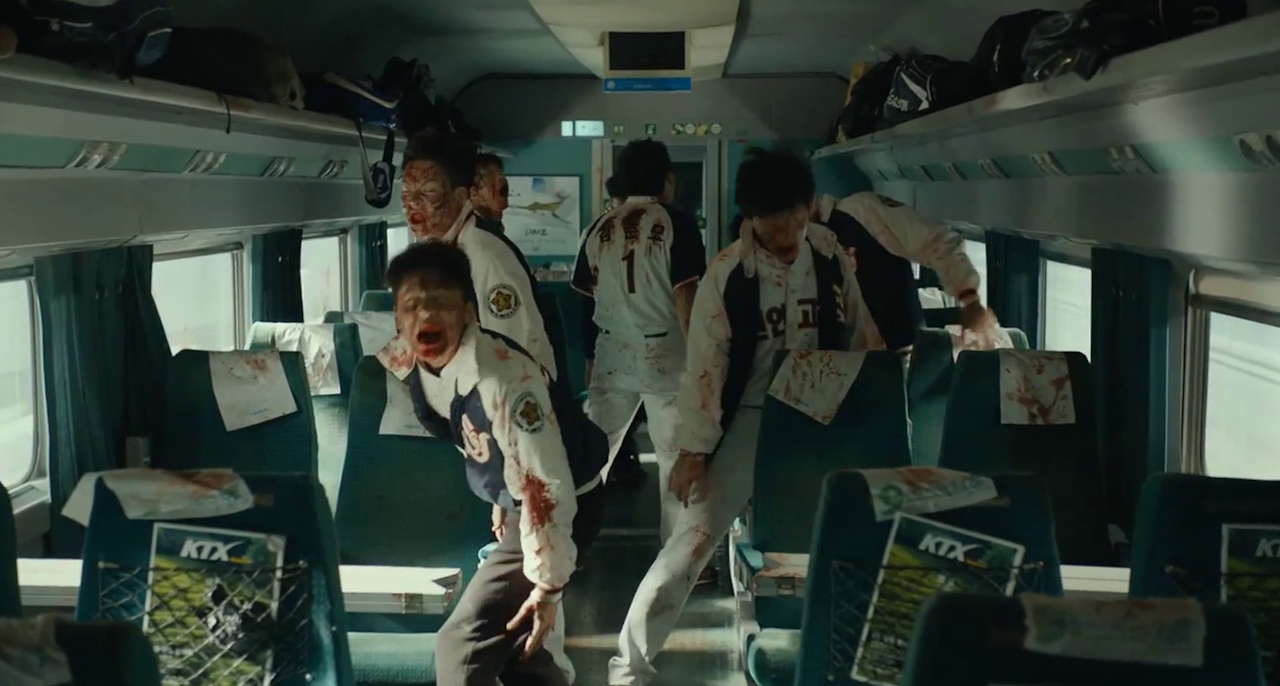
Still frame from 28 Years Later (2025) showing the abandoned train.
The train.

28 Years Later raised several questions that I hope next year’s sequel, The Bone Temple, can answer. How are the infected – which the first two films depicted as dying off en masse after a month or so – still alive in such great numbers this long after the virus broke out? The first two films made it pretty clear that the infected didn’t eat and would just die out, but 28 Years Later establishes that tribes of infected roam around, feeding on wildlife, and apparently breeding with one another, too. It’s a big change from the depiction of the infected in those first films, and it warrants an explanation.

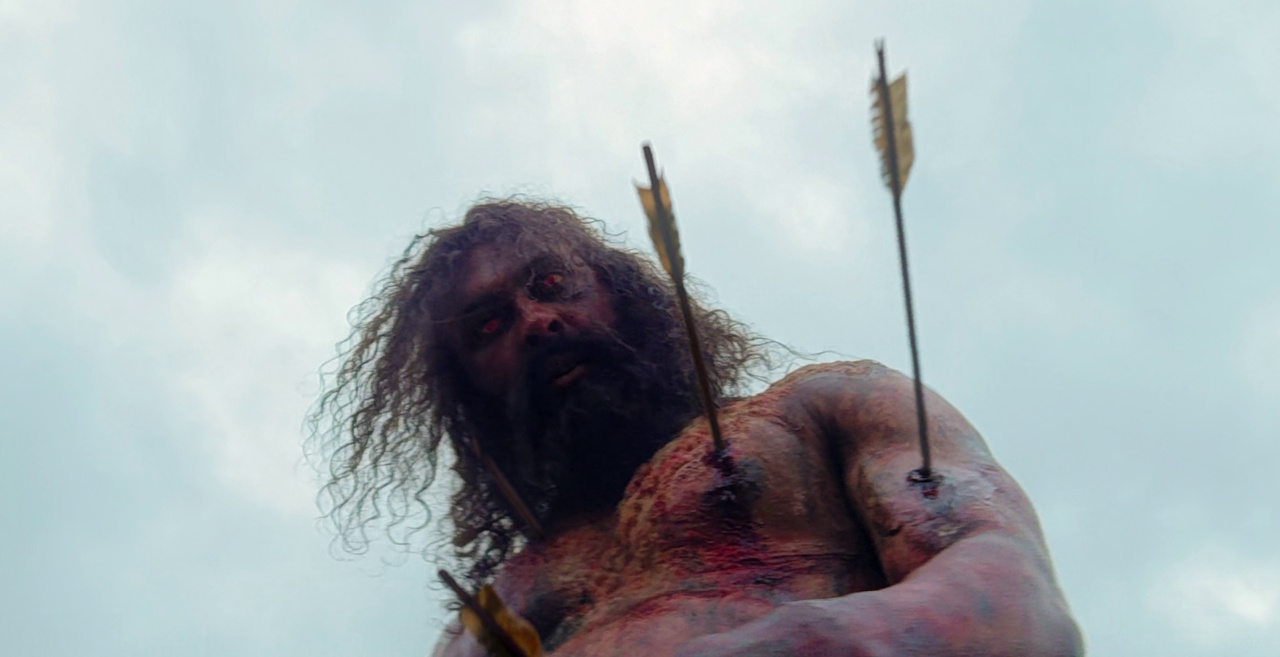
There were echoes of I Am Legend in this presentation of “alpha” infected. The idea that some infected could display greater intelligence, assuming some kind of leadership role in their group, reminded me of that film. It also reminded me of the Resident Evil video games, and how there could be “special” categories of zombies – usually serving as bosses! In that sense, I didn’t feel that the alpha was a particularly original creation, but still – it’s something that should be explained. Assuming, of course, that an explanation has been written.

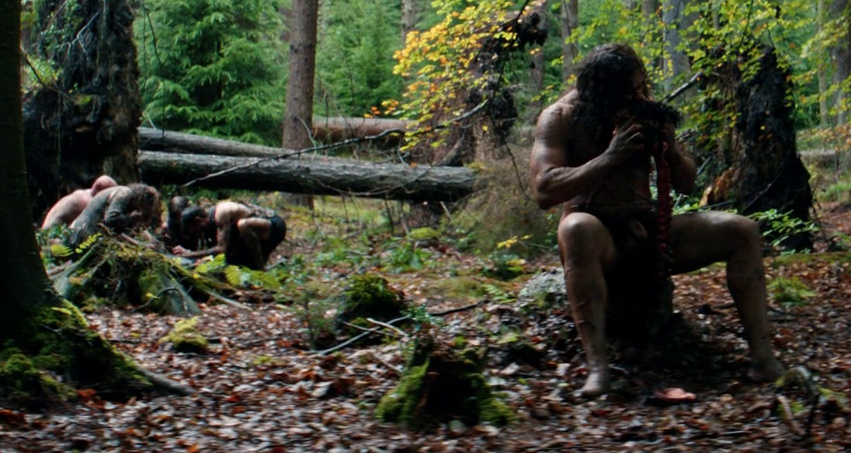
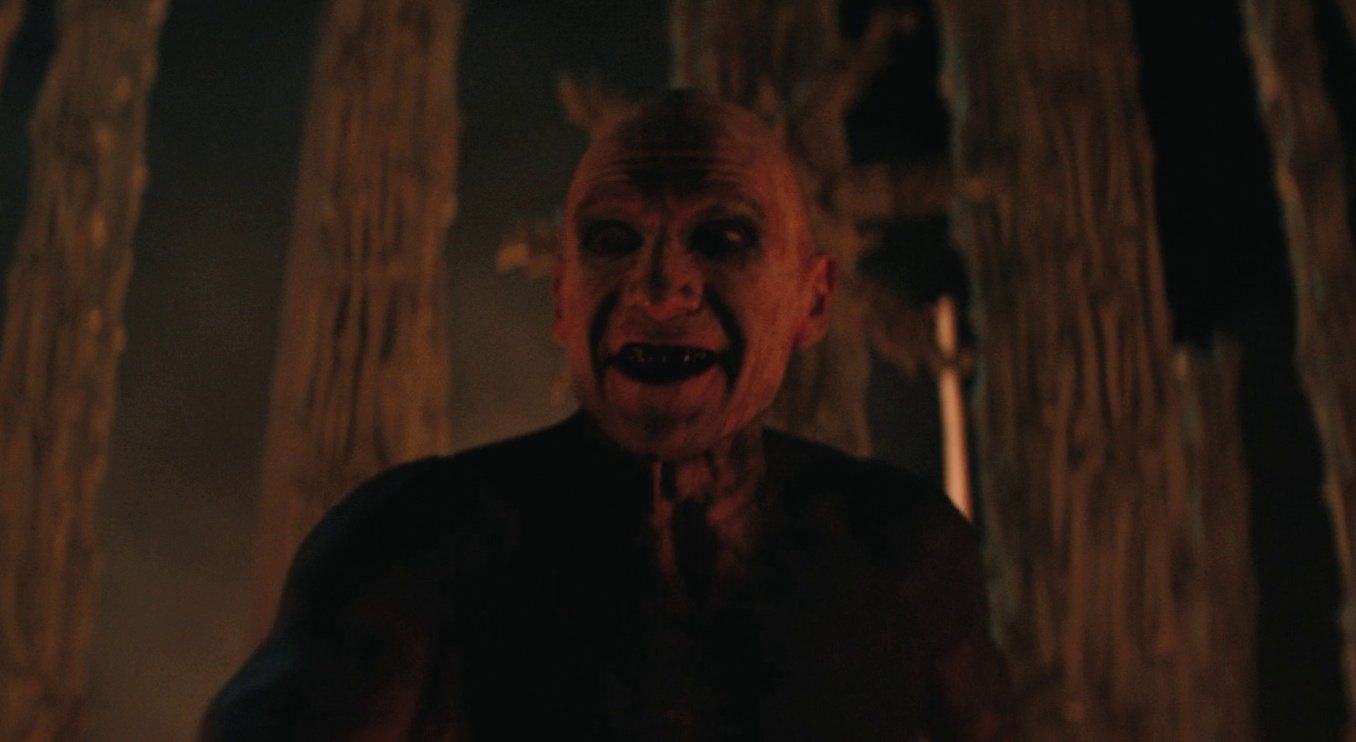
Still frame from 28 Years Later (2025) showing "Samson," one of the alphas.
“Samson,” one of the alpha infected.

What do we make of the “Jimmy Savile” gang? I can’t help but feel that was done purely for shock value; Jimmy Savile being such a thoroughly vile person whose high-profile crimes shocked the entire country. In the film’s universe I guess it makes sense: Savile’s crimes weren’t uncovered until 2011, whereas in the universe of 28 Years Later, society collapsed in 2002. I remember watching Jim’ll Fix It as a kid in the ’80s, and the scale of what went on at the BBC with Savile is… even all these years later, words fail me.

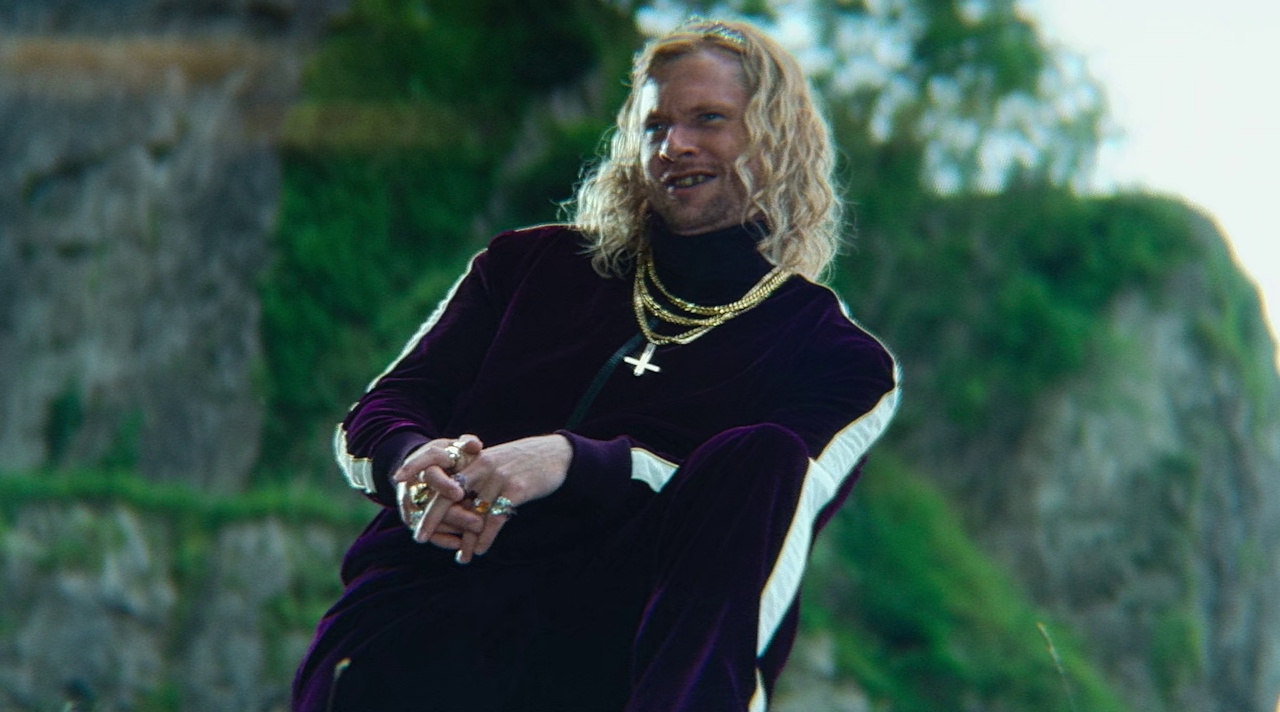
But in the context of 28 Years Later, I hope – truly hope – that there’ll be more to this than just a cheap stunt to end this half of the story. Jimmy – the child from the beginning of the film – seems to have grown up to lead this gang of Savile impersonators… but why? Is it some attempt to cling to part of the world that they lost? Is it just a cult? Whatever it is, I hope there’s more to it than just an attempt to shock and offend, because otherwise it’s in pretty poor taste. I will reserve judgement, though, until I’ve seen The Bone Temple.

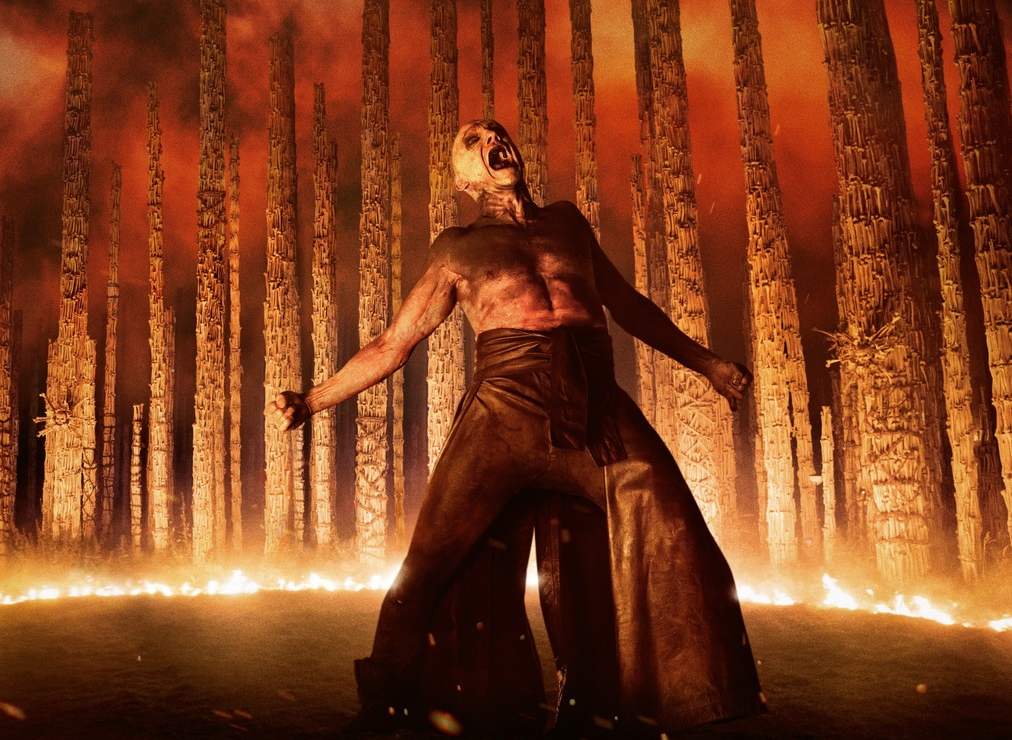
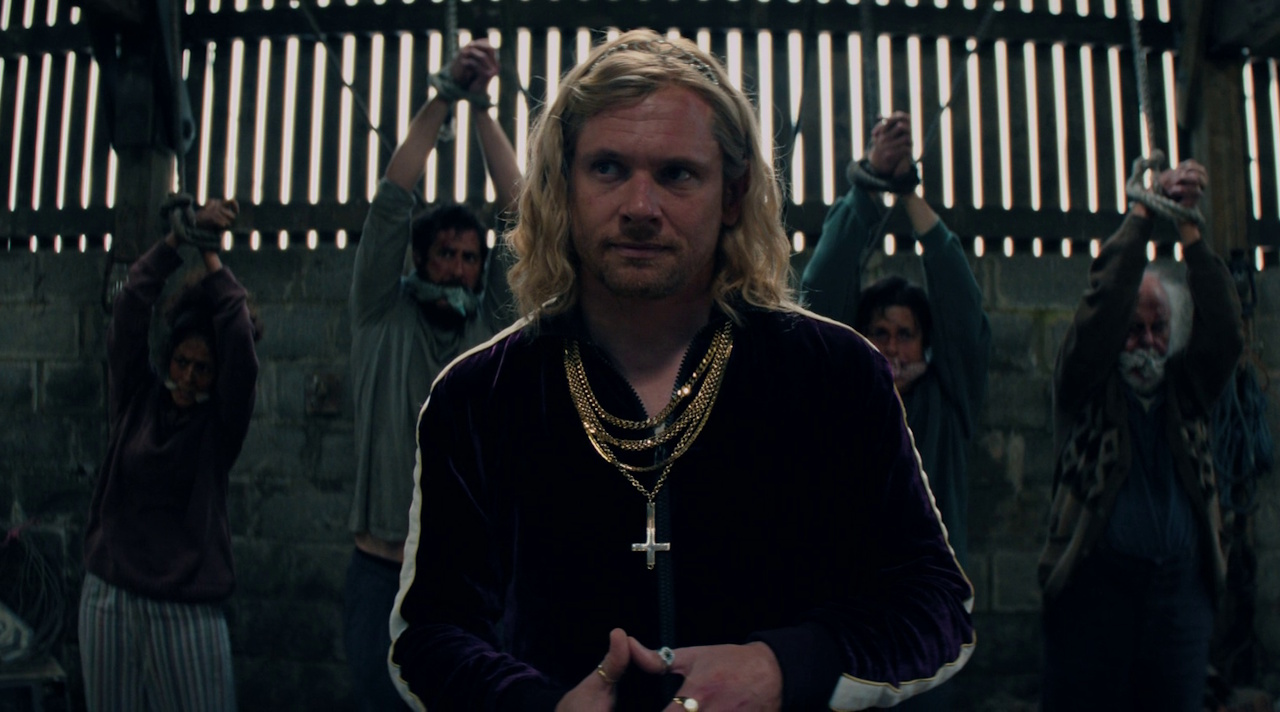
Still frame from 28 Years Later (2025) showing the character Jimmy.
Jimmy.

So I think I’m all zombie-ed out for a while!

I hope this has been interesting. I can’t shake the feeling that a film I’d waited more than twenty years to see wasn’t as impactful as I’d expected, even though it was solid and entertaining in its own way. But I don’t dislike 28 Years Later, and I’d certainly recommend it to fans of the original films, horror fans, and even to folks like myself who aren’t horror aficionados but just want to check out some of 2025’s big releases.

I will await The Bone Temple and the continuation of this story with some trepidation. A good ending could reframe parts of 28 Years Later, making them feel better in hindsight. But equally, a poor ending or a lack of a suitable explanation for some of the film’s narrative beats could make both pictures feel… underwhelming. I guess we’ll see next year.


28 Years Later is available to stream now on Amazon Prime Video, and will be released on DVD, Blu-Ray, and other streaming platforms in the months ahead. 28 Years Later is the copyright of Columbia Pictures and/or Sony Pictures. This review contains the thoughts and opinions of one person only and is not intended to cause any offence.
Civil War: Film Review

The first part of this review is free from major story spoilers. The end of the spoiler-free section is clearly marked.

Civil War is a film I’d been looking forward to in 2024. It seemed like a picture that had the potential to be serious and timely – and perhaps the kind of film that could’ve ended up as a dark horse when awards season rolls around! While I’m not sure that Alex Garland’s tale of a fractured America quite reached that level, it was an interesting watch nevertheless.

War films can often be brutal in their depictions of violence, as can post-apocalyptic fiction. Civil War leaned into both of these genres at different times, using established tropes of both – while occasionally putting its own spin on some of them. By presenting the violent nature of a dystopian world and the harsh realities of war through the lenses of unarmed journalists, Civil War could feel tense, frightening, and dark. Its four principal characters could often feel vulnerable; caught in an environment where survival was the most important thing – but without any kind of weapon save their press badges.

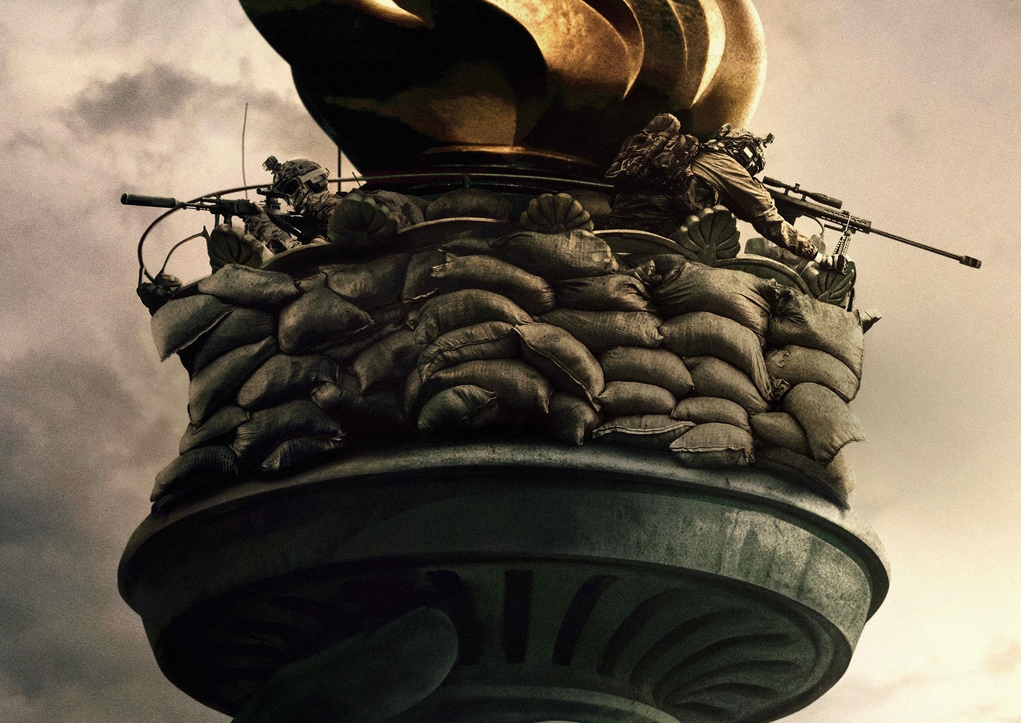
Promotional poster for Civil War (2024).
A cropped poster for Civil War.

Civil War was also a film that didn’t have the political edge that I was expecting. Given the events of the past few years in the United States – deepening political polarisation, the January 6th insurrection, and so on – I was worried that Civil War might come across as preachy; arguing in favour of one party or candidate over another. Instead, the film basically ignored the president, the causes of the war, and even the soldiers fighting in it for the most part, keeping a tight focus on its journalist protagonists. I can see both sides of this argument, and when we get into spoilers we’ll talk a bit more about politics and possible analogies to current events. But for now, suffice to say that the film was far more interested in the journeys of individual characters rather than taking a wider look at societal divisions and the potential causes of a civil war in the United States.

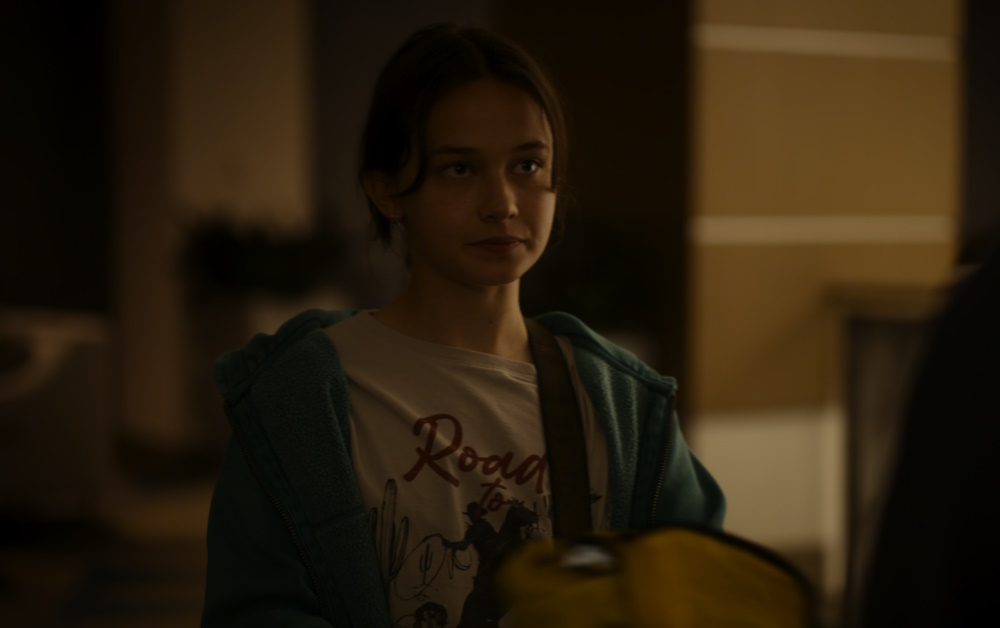
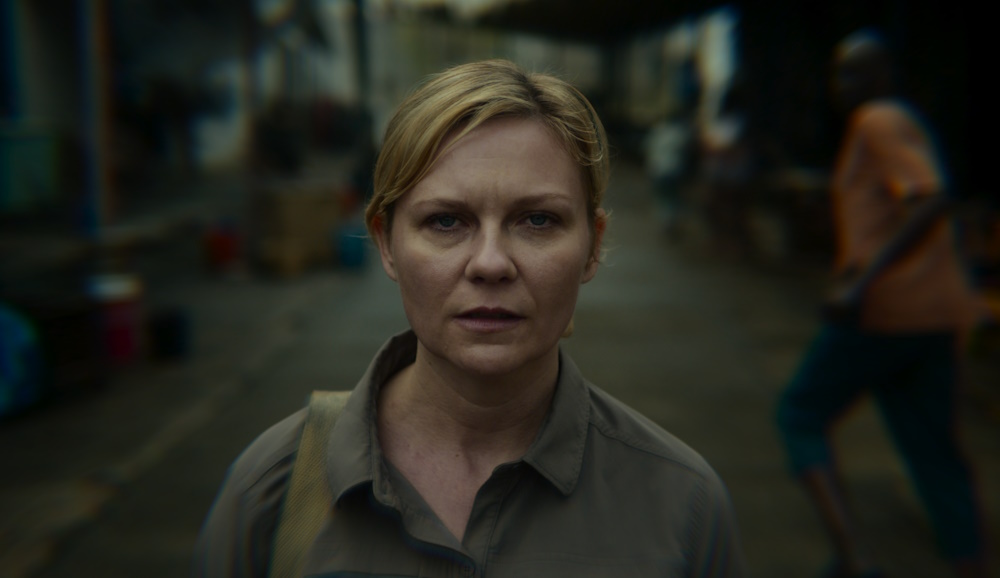
In fact, one character in particular was front-and-centre, even when the story wasn’t being told from her perspective. Golden Globe-nominated actress Cailee Spaeny took on the role of Jessie, a young photographer who tags along with the more experienced journalists in the group. And to me, Civil War feels like her story – a tale of a young person experiencing the brutal realities of a world torn apart by war, losing her naivety or innocence as she journeys deeper into the warzone. The concept of a character’s growth and changes being reflected in a real-world journey from one place to another is something war films like Apocalypse Now have used to great effect. Civil War does something similar as Jessie’s transformation from fresh-faced wannabe to battle-hardened veteran journalist plays out.

Still frame from Civil War (2024) showing the character of Jessie.
Civil War is really Jessie’s story.

Civil War feels like a modern film thanks in part to its soundtrack. Silence is used to great effect at a couple of key moments, but the juxtaposition of upbeat pop tracks with some of the imagery of war – or the eeriness of locales unaffected by the conflict – is something we’ve seen other modern titles do. There’s something unsettling about hearing some of these tracks playing as the film is rolling on – and that was exactly the director’s intention.

So I think that’s all I can say for now without getting into story spoilers. If you haven’t seen the film and don’t want to know what happens – including at the very end – then this is your chance to jump ship! If you’re ready to get into narrative spoilers, though, stick with me and we’ll dissect Civil War in more depth.

A spoiler warning graphic.

This is the end of the spoiler-free section of the review. There are story spoilers from here on out!

First of all, I’m surprised at how little attention Civil War paid to the conflict at its core. Perhaps this is a result of the film’s marketing emphasising the secession of certain states and the fictional backdrop to the war, but I really expected to get a lot more about the different factions involved, some indication of the root cause or causes of these apparently separate breakaway states, and what led to all-out war being declared. There was very little about this in the film itself, yet that side of it was definitely hyped up in pre-release marketing material.

Such a storyline could easily descend into arguments about modern politics, and from that point of view I can see why writer and director Alex Garland may have chosen to side-step the issue. Civil War is ambiguous enough that both sides of the aisle in American politics could project themselves onto the rebels and their opponents onto the seemingly corrupt and unpopular president – and that may have been the intention. However, it also opens up the film to a different kind of criticism – that it isn’t political enough. If there’s a message about the danger of corrupt politicians, or a politician attempting to usurp democracy for their own ends, why not be bold and call them out – if not by name then with a more obvious analogy?

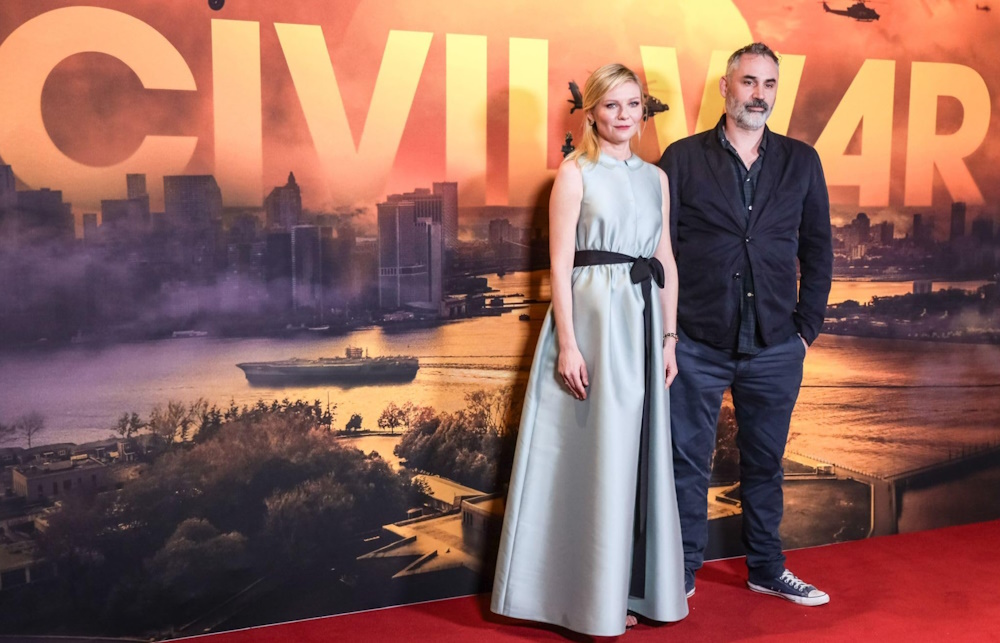
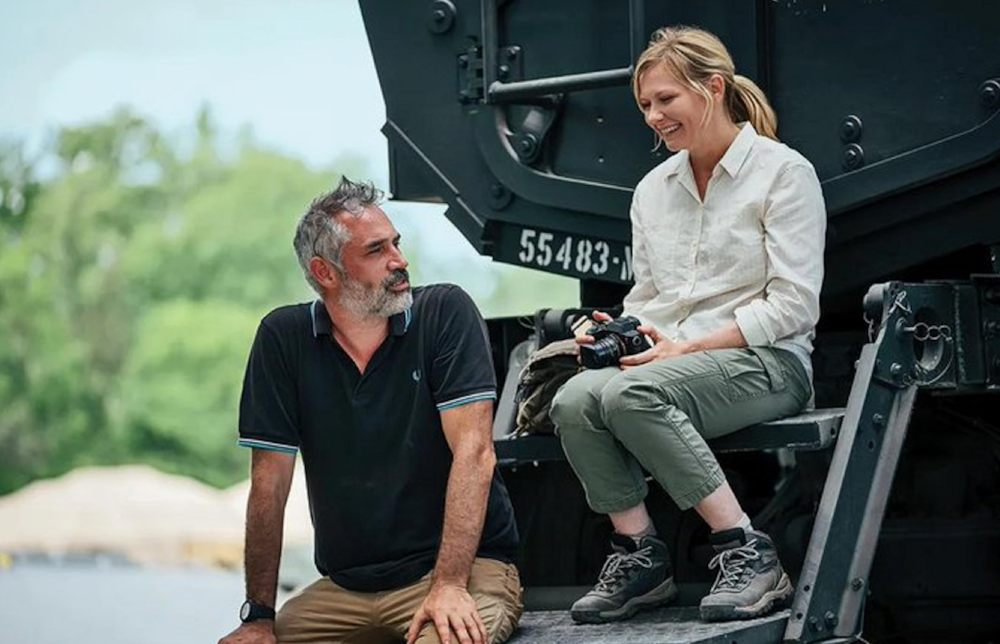
Photo from the premiere of Civil War (2024) showing star Kirsten Dunst and director Alex Garland.
Kirsten Dunst and director Alex Garland at the film’s premiere.
Image Credit: IMDB

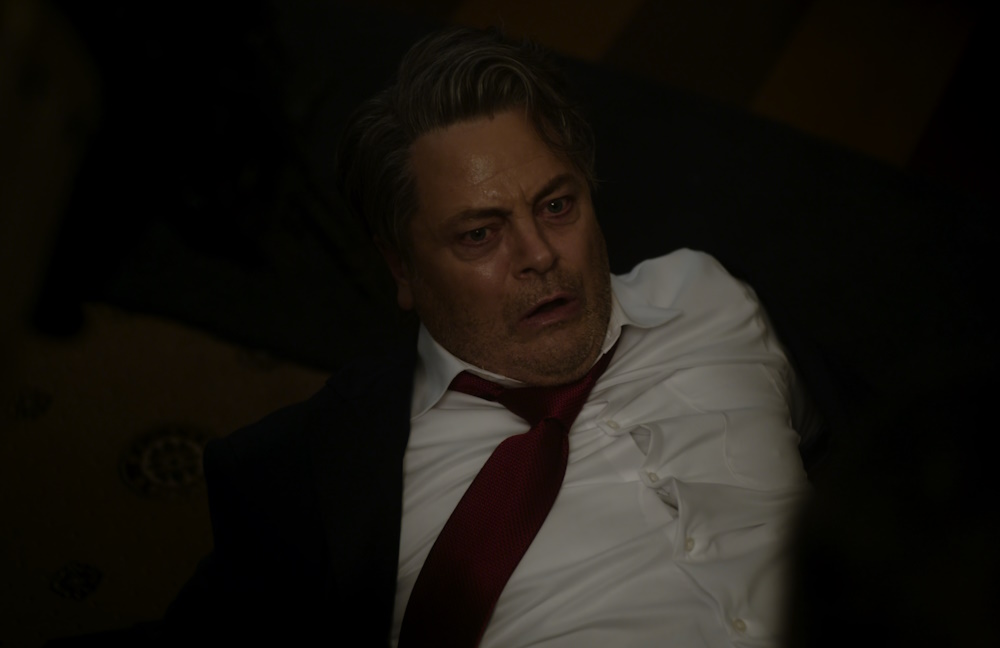
That being said, I personally read Civil War’s president as being based on or inspired by Donald Trump. The brief mention of the president having sought a third term, the way in which he was made up to look – for want of a better term – more orange and with more fake tan, the way he spoke in such exaggerated terms at the beginning of the film, and actor Nick Offerman’s mannerisms all led me to that conclusion. The president was not a major figure in the film, appearing briefly at the beginning and the end only, but he was an important character and seemingly the main cause or at least a major contributor to what had gone wrong in America.

Despite the president’s death at the end of the film not being presented as a particularly heroic moment – from our protagonists’ perspective, at any rate – I can’t help but wonder if there’s a degree of fantasising or wish-casting in the way those final moments unfolded. Some politicians – Trump in particular – evoke incredibly strong feelings, and I daresay that Alex Garland wouldn’t be the first person to fantasise about storming the White House and having him killed.

Still frame from Civil War (2024) showing the deposed President of the United States.
Civil War’s unnamed president at the end of the film.

Let’s stick with this idea of the film as a “fantasy,” because I think the backstory of Civil War speaks to a curiously American kind of narrative. The idea of a “rag-tag” group of rebels being able to take on and defeat the incumbent government is a trope of American filmmaking and American storytelling in general. And it’s easy to see why: the United States was founded in such circumstances, when a group of colonists fought against the biggest and most powerful empire of their time to win their independence. Ever since, this notion of the virtuous rebel fighting against the corrupt establishment has been a core foundation of storytelling in America.

We see this theme in cinema – from the earliest films like 1916’s The Crisis through Star Wars’ Rebel Alliance and beyond, continuing into the present day. The conflict in the background of Civil War is very much in this American tradition of rebellion, and underdogs taking the fight to the powers that be. In the 18th Century that might’ve worked… but it’s a total fantasy in today’s world, where UAVs can drop bombs on even the most well-organised militia at a second’s notice. Civil War tried to sidestep what is a pretty glaring narrative flaw for any story that wishes to appear realistic. It does so by ignoring the buildup to the conflict and its early days, showing only the final, climactic battle as rebel forces storm Washington DC. Does that work? Does that contrivance overcome the inherent impossibility of the film’s premise? I’m not convinced – but I’m also not convinced that it matters all that much in a story that’s primarily about a handful of characters and their response to the war. The war itself is the catalyst, not the focus – if it were, this premise would trip up the story a whole lot more.

Behind-the-scenes photo from Civil War (2024) showing director Alex Garland and star Kirsten Dunst.
Director Alex Garland with Kirsten Dunst in a behind-the-scenes photo.

We talked about Jessie’s journey in the spoiler-free section, and how she changed over the course of the film. Even though Civil War wasn’t always shot from her point of view, I see it as really being her story. The other journalists in the group were more or less fixed characters – they saw horrible things, including the death of their friends – but they didn’t undergo the same transformation as Jessie did. In that sense, Civil War is her story more than anyone else’s.

The character of Lee was interesting – but I would argue that Civil War didn’t give her the in-depth look that it really needed to. Lee’s story seemed to be one of post-traumatic stress, and how a character that everyone thought was emotionless and detached was actually suffering on the inside, but struggling to tell anyone. Her interactions with Jessie came closest to hinting at that, but no one else really picked up on what was going on inside Lee’s mind. As the audience, we got to see it – literally, through the use of some creative camera work and sound design that pulled Lee out of the action at a few key moments, and that used stretched-out colours to symbolise the damage that trauma was doing to her. But the film didn’t really expand upon this; we saw it, but Lee’s travelling companions never did. Right up to the moment of her death, Lee was left alone with her struggle.

Still frame from Civil War (2024) showing the character of Lee during a flashback.
The topic of Lee’s mental health was raised but never really addressed by other characters in the film.

And perhaps that’s part of the point: Lee represents the kind of person Jessie is becoming. Through her, we catch a glimpse of Jessie’s future – one of trauma and silent struggle. She wanted to be a war photographer no matter what, and Lee shows us what Jessie will become at the end of that road.

One thing I didn’t like, speaking of photography, was how Jessie used an old film camera. Film might be the preference of a few hipsters and artists, but in a fast-paced medium like journalism, it really doesn’t have much of a place any more. As Lee remarks to Jessie at one point in Civil War, only one photo out of every few dozen is a keeper – and when a roll of film might let Jessie take 32 photographs… that’s one usable picture per roll. There’s also the process of developing the negatives and so on… and it just felt like an unrealistic and unnecessary inclusion. Civil War itself was shot on digital cameras, which I think is worth noting. If the director had a preference for film or wanted to make a point about film being somehow “better” than digital… well, it starts to look a bit silly. It doesn’t make a lot of sense in-universe for a character intent on becoming a war photographer to rely on film in a world where digital cameras exist, and the story didn’t have much to say about it, either. It’s not like the film-versus-digital debate even really came up, nor served as a metaphor for something else.

Still frame from Civil War (2024) showing Jessie developing photographs.
Jessie used a film camera for seemingly no real reason.

Parts of Civil War felt like a road trip – and indeed the film’s working title was “Road Trip” when it first entered production. We caught little glimpses of the film’s post-apocalyptic-inspired world as our characters drove from place to place, with things like random fires, furniture dragged outdoors, and abandoned vehicles on the highway all having become tropes of post-apocalyptic fiction. Civil War leaned into this with some of its secondary characters – the group at the gas station and the racist soldiers in particular. There was a lawlessness to the world that these characters successfully embodied, and the occasional moments of light-heartedness that Civil War gave to its main characters were ripped away in brutal fashion as the reality of the world they now inhabited hit them.

Even when there were moments of joy, playfulness, or a visit to a town that the war seemed to have passed by, there was still a distinct eerie sensation in the air that things weren’t right and our characters were in danger. Civil War used this quite well, meaning that even when the main characters let their hair down or found themselves relaxed, the feeling of danger was never very far away. Even the moments where nothing bad happened – such as at the refugee encampment or in the quaint little town – that sensation was always present. In a way, parts of Civil War almost developed a psychological horror tone, where the sense of danger never fully let up. Any background character, shopkeeper, driver, soldier, or whoever felt like they could be a potential risk.

Still frame from Civil War (2024) showing a suburban house.
Visiting this town, untouched by the conflict, still felt tense and even a little creepy.

It’s relatively unusual for a film to make photographers and journalists into its protagonists. All four main characters expressed different degrees of detachment from the conflict they were documenting, as if they had no real political leanings or views on the war. There was some initial criticism of the president – particularly from Sammy at the beginning of the film – but the others mostly avoided sharing their thoughts or opinions. We tend to see journalists in this way, as being impartial observers – even though many of them aren’t! But it made for an interesting viewpoint for a war film to take – particularly for a film that, as mentioned above, didn’t really go into much detail about what had happened or why this conflict was raging.

Civil War had some creative cinematography and camera work that leaned into quite an artistic style. Shots would linger over things like a sprinkler spraying water or an empty road, as well as use exaggerated or faded-out colours to depict Lee’s mental state. The camera would also fade to a grainy black-and-white at times, representing the way Jessie’s photographs would look. I liked most of these, and they felt tasteful and creative without being overused. The long shot of Jessie falling into the mass grave was also particularly well done.

Still frame from Civil War (2024) showing abandoned cars on a road.
Abandoned vehicles on the highway.

So that was Civil War. It was an intense, brutal film – but one that didn’t have the political edge I’d been expecting. That made it more interesting in some ways as a work of characterisation and a road trip movie through an interesting series of war-torn environments, but it rendered much of the potential social commentary rather impotent. However, by leaving the causes of its war ambiguous, Civil War allows its audience to reflect on the consequences of such a conflict regardless of who may have been “right,” which is arguably a more important message given the political polarisation that has been present for years in the United States.

For my part, I enjoyed Civil War. It’s rare these days for a film to stick in my mind for hours and days after I’ve watched it, but I found a few of Civil War’s most intense sequences playing in my head on repeat after only watching it a single time.

There were some great acting performances from the entire main cast, special effects that hit the mark and didn’t get in the way, creative cinematography and sound design, and all in all, an interesting narrative that hooked me in and kept me engaged throughout. Definitely one to watch if you haven’t seen it already!


Civil War is available now on video-on-demand on Apple TV and Amazon Prime. Civil War will be available for streaming on Max in September 2024 and may also be released on DVD/Blu-ray at a later date. This review contains the thoughts and opinions of one person only and is not intended to cause any offence.
Film review: The Super Mario Bros. Movie

The first part of this review is free from major spoilers. The end of the spoiler-free section is clearly marked.

Let’s-a go!

It’s time to review The Super Mario Bros. Movie, which has finally made its way to on-demand streaming after wrapping up its exclusive theatrical run. And straight away I can tell you this: I had an absolute blast with Mario, Peach, Luigi, and the rest of the Nintendo gang! The Super Mario Bros. Movie is definitely one of the best non-Disney animated films that I’ve seen in a long time, and it absolutely has to be a contender for the title of best animated picture of the year.

The film puts a twist on the typical story of the Super Mario series, but brings all of the familiar faces that fans of Nintendo’s games would expect. There are so many references, callbacks, and cameos that it’s impossible to count, and speaking as someone who’s followed Nintendo’s games for more than thirty years, I appreciated every single one of them!

I’ve followed Mario for quite some time…

But this isn’t just fan service that only the hardest of hardcore Nintendo lovers can enjoy. The film is accessible to newcomers, too, with a pretty barebones, easy-to-follow story that doesn’t get bogged down. In fact, the story progresses from chapter to chapter with a real light-footedness, with no scene or sequence lingering too long. For kids, and especially for a generation raised on short-form videos and TikToks, I suspect the timing and pacing of the film will be pitch-perfect!

For me… well, I could’ve entertained a story that was at least slightly denser, one that didn’t hop so readily from point to point. There were some moments that felt unearned, perhaps, as Mario seemed to very easily and readily accept his fate in the Mushroom Kingdom, and friendships that appeared to form very quickly. But this is a film for kids – and with a story with such strength and heart, picking on any of these things feels gratuitous and unnecessary.

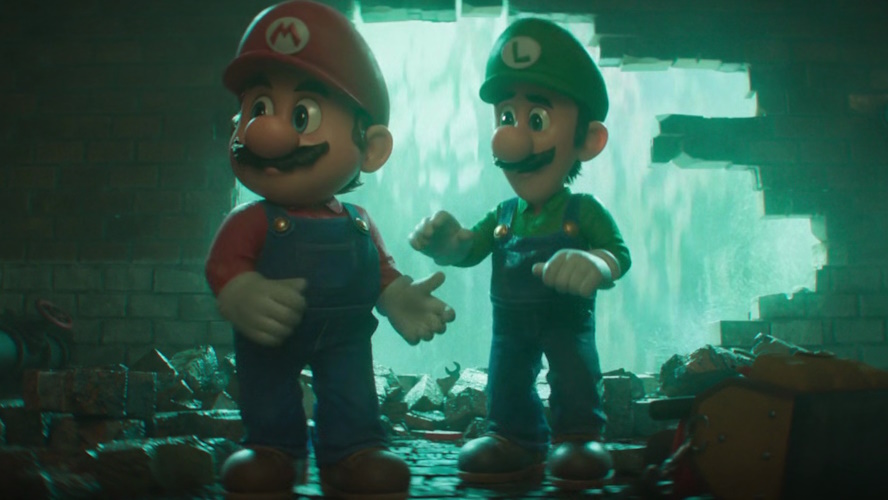
Mario and Luigi.

The Super Mario Bros. Movie accomplished the difficult task of taking elements from the games and making them into something truly worthy of a place on the big screen. The music of the Mario series was reimagined in a style I can only describe as “epic,” with the familiar tunes from the video game series transformed into an heroic score. Visually, the film leaned heavily into the aesthetic of the games – but used its budget to make Mario, Peach, and the Mushroom Kingdom look better than ever.

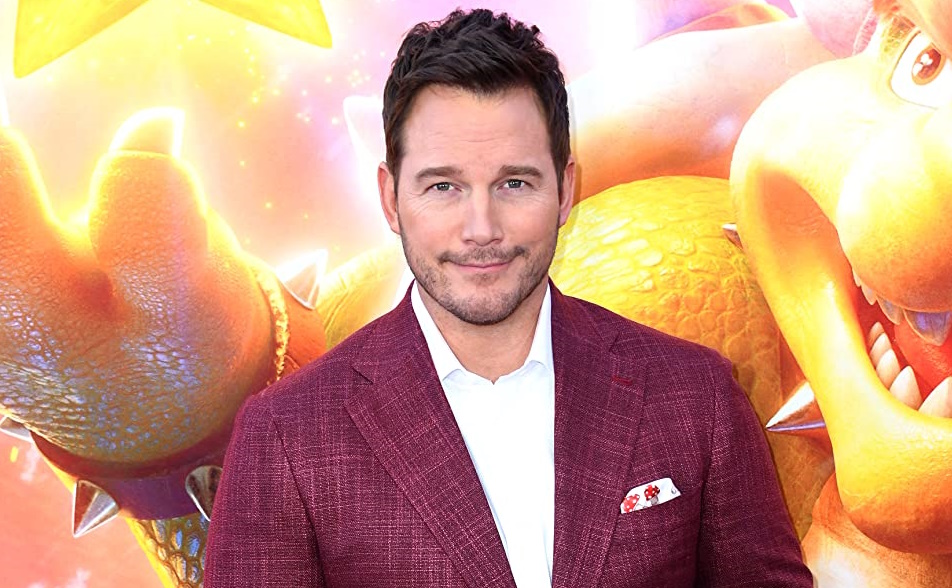
There had been some criticism of the decision to cast Chris Pratt as Mario, but I felt he did a perfectly creditable job in the role. Mario has never needed to be voiced this extensively before, so bringing in an experienced actor – while not necessarily everyone’s first choice – was the right call. The rest of the voice cast likewise put in excellent performances, and their characters came to life as a result.

Mario was voiced by Chris Pratt – pictured here at the film’s premiere.
Image Credit: IMDB

There were a couple of sequences in the first few minutes of the film that I felt might be too scary for very young children – and it’s worth being aware of this if you have very young kids or children who are especially sensitive. These sequences didn’t linger for very long nor have much of an impact on the story overall, but I suspect they may have gone a little too far for at least some children in the audience.

Overall, The Super Mario Bros. Movie is an absolute blast, and one I highly recommend. If you don’t mind spoilers for the admittedly rather formulaic and predictable story, stick around, because we’re going to talk about a few story details up next.

This is the end of the spoiler-free portion of the review! Expect spoilers for The Super Mario Bros. Movie from here on out!

Up first, let’s talk about how The Super Mario Bros. Movie puts a twist on the typical “save the princess” trope. Peach is presented as someone familiar with the world of the Mushroom Kingdom, and thus she has the upper hand over Mario, the newcomer. Through a pretty quick montage, Mario is the one who has to learn the ropes; Peach already knows how the power-ups work and how battles in this universe are fought.

But that means Mario needs someone to save; a reason to set out on this adventure and face off against Bowser. Luigi, who’s the easily-frightened younger brother, is perfect for this role. Mario sets out on a quest not to save a random princess – but to save his brother. It’s a perfectly-executed twist on what is a pretty tired and outdated formula, and it works perfectly.

Princess Peach is so much more than just a damsel in distress this time!

The karting sequence was perhaps my favourite in the entire film! I’ve been a Mario fan for years, sure, but Mario Kart is definitely one of my all-time favourite series. The way it was incorporated into the film was hilarious, and it was a surprisingly tense sequence as Bowser’s troops dropped in uninvited. Many of the items from the Mario Kart games were present – banana skins, shells, bullet bills, and even the dreaded blue shell! It was a fantastic sequence, and Rainbow Road has never looked better or more beautiful!

Although the designs of many of the vehicles were based on the Mario Kart games, there’s potential for a future Mario Kart release to take advantage of some of the new designs created for the film. In fact, the time to cash in on that is now, so Nintendo really ought to consider updating Mario Kart 8 Deluxe with things like Toad’s off-road kart and the Koopas’ combat vehicles. It would even be possible to include one or two of the prominently-featured characters from the film as new characters for the game.

The kart sequence was fantastic!

The world of the Mushroom Kingdom was brought to life through some excellent animation work, and Illumination is to be commended. The cartoony aesthetic of the Mario games was familiar on the big screen – but it looked better than ever. Peach’s castle, first seen in the iconic Super Mario 64, looked fantastic, and the bright, happily-lit Mushroom Kingdom stood in stark contrast to the “dark lands” and Bowser’s castle.

It’s also fair to say that these classic Nintendo characters have literally never looked better, too! There was previously-unseen detail not only in the main characters, but in every minor background character, too. Whether we were looking at Dry Bones, Shy Guys, Toads, Koopa Troopas, Kongs, or anyone else, the animation was fabulous and consistent. There wasn’t a single moment where I felt that the animation work was sub-par or out-of-place.

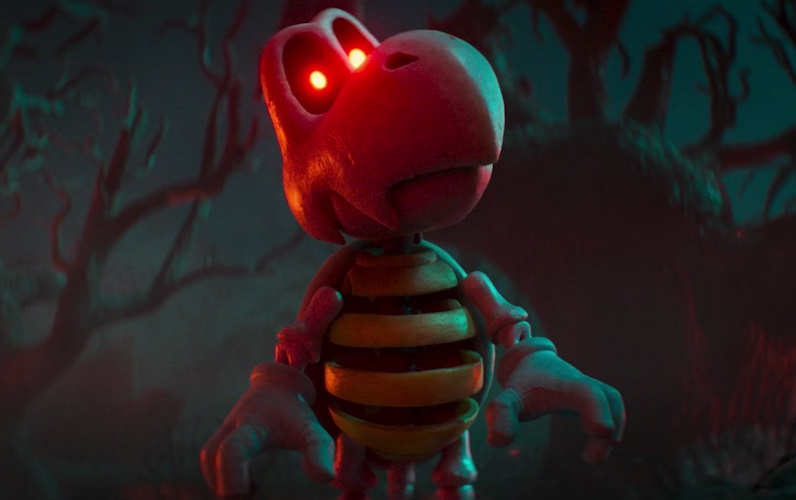
It’s Dry Bones!

To return to the film’s story, one thing I admired was a willingness on the part of Nintendo – a company that hasn’t always shown itself to have a sense of humour about its properties – to recognise the inherent silliness in Bowser’s scheme. Bowser wanted to force Peach to marry him, yet the specifics of how he possibly expected that to work had never been elaborated upon until now. Of course it makes sense that Peach would reject him – and the way in which this was played, with a nod and wink to the audience, was great.

I don’t think it had ever been canonically established where Mario and Luigi hailed from, nor how Peach and the others came to exist in the Mushroom Kingdom. So The Super Mario Bros. Movie had free rein to decide on its characters’ origin stories. Now, I could be wrong about this, as I’m no expert on the minutiae of Nintendo lore, but I’ve always assumed that Mario was Italian – not Italian-American. The decision to give him an Italian-American origin, and in the New York borough of Brooklyn, no less, feels like an oblique homage to 1993’s Super Mario Bros. – the live-action film that did so much to dissuade Nintendo from ever again taking its brands and franchises to the cinema!

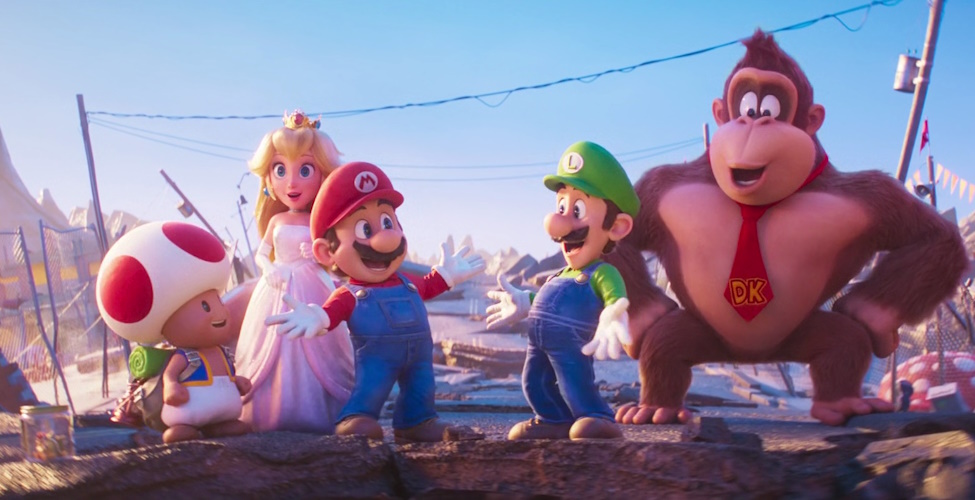
The main characters at the end of the film.

So let’s wrap things up. Who is this film for? While I’d say that Nintendo fans and players will absolutely get more out of The Super Mario Bros. Movie than those unfamiliar with its source material, the easy-to-follow story and fairly basic characters should make it accessible to almost anyone – including the youngest kids. There’s a lot to enjoy here!

That being said, there are a handful of faults that keep The Super Mario Bros. Movie from being the greatest kids’ film I’ve ever seen. Some of its plot points – like the friendship between Mario and Toad, or Peach’s plan to defeat Bowser – were raced past incredibly quickly in a film that didn’t spend more than a couple of minutes on any scene or sequence. I could have happily spent a bit longer watching some of these things play out.

All in all, though, The Super Mario Bros. Movie is one of the better animated releases of recent years. It was a treat to see Mario and the gang taking part in a new kind of adventure, and while I have to hold up my hands and say that 1993’s Super Mario Bros. is one of those “so bad it’s good” films that I consider somewhat of a guilty pleasure, this new animated outing surpasses it in practically every way. If you’re looking for a fun way to spend an hour-and-a-half, and especially if you’ve spent some time with Nintendo and Mario already, it’s very easy to recommend The Super Mario Bros. Movie.

The Super Mario Bros. Movie is available to stream now and will be released on DVD and Blu-ray later in the year. The Super Mario Bros. Movie is the copyright of Nintendo and Illumination. This review contains the thoughts and opinions of one person only and is not intended to cause any offence.
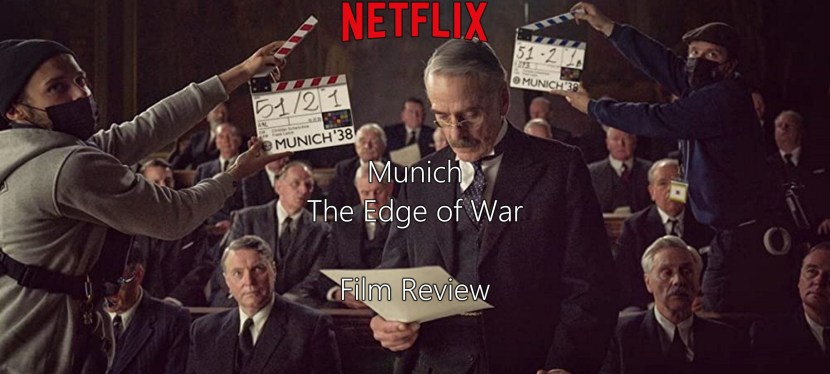
Munich: The Edge of War – film review

Spoiler Warning: There are spoilers ahead for Munich: The Edge of War and the novel upon which it is based.

Munich: The Edge of War had been on my list of things to watch since last year. It was initially expected to come to Netflix in 2021, but that was pushed back to January 2022. The film made its debut on Netflix a few days ago, and as a history buff I was genuinely interested to see what its take would be on one of the most significant events leading to the outbreak of World War II.

Like many Brits of my generation, I have a family connection to the war. My grandfather served in the British army, having volunteered shortly after the official declaration of war in September 1939. He spent almost four years in a prisoner of war camp after being captured, and my grandmother spent most of the war by herself in London – with bombs raining down! So aside from my general interest in all things historical, I really do feel a family tie to the events of this era.

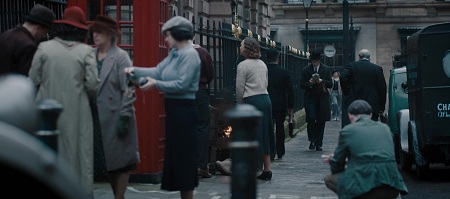
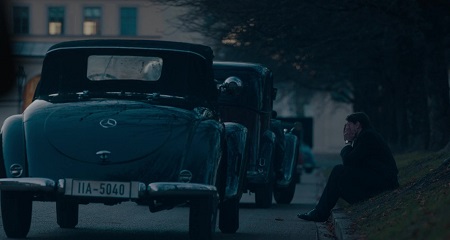
My grandparents would have been familiar with street scenes like this.

Munich: The Edge of War was not what I was expecting. All I really knew about the film before I sat down to watch it was that it intended to depict the events surrounding the 1938 Munich Agreement, with Jeremy Irons playing the role of now-infamous British Prime Minister Neville Chamberlain. But the film used those events as a backdrop rather than the main event, and instead told a fictional story of two junior civil servants, setting up an unexpectedly tense spy thriller with some heavy moments of characterisation and drama.

I’m always a little uncomfortable about fictionalising real-world events. Inserting fictional characters alongside real people – especially people who may still be alive or who may have living relatives – can feel a bit perverse, as if writers and filmmakers are trivialising the stories of actual people, or instilling false narratives for the sake of entertainment. There are many examples of how this can go wrong, and how fictionalised versions of real people can be completely different from how they were in real life.

Academy Award-winner Jeremy Irons took on the role of Neville Chamberlain.

In the case of Munich: The Edge of War, I think the film generally avoided that pitfall. It did so, however, by having a completely different focus than I was expecting – one in which very few real-life individuals played significant roles. Even Chamberlain himself, the portrayal of whom had been a big part of the film’s pre-release marketing, was relegated to a supporting role. Chamberlain only really had one big fictionalised moment; the rest of the time he was playing the role we might’ve been expecting.

I’ve always rated Jeremy Irons highly as an actor. His portrayals in films as diverse as The Lion King and The French Lieutenant’s Woman have been fantastic, and of course he’s an Academy Award winner. He definitely brought a much needed gravitas to the role of Neville Chamberlain, and despite the plot of the film focusing primarily on events elsewhere, Munich: The Edge of War was definitely the better for Irons’ portrayal of one of history’s most interesting and, still, disliked figures.

Prime Minister Chamberlain gives a famous radio address.

Neville Chamberlain and the Munich Agreement depicted in Munich: The Edge of War long ago became bywords for appeasement and foreign policy failures. Contemporary political figures of all stripes are wary of comparisons to Chamberlain, and his name is invoked on both sides of the Atlantic when politicians and leaders try to deal with difficult foreign policy situations.

Some of that criticism is earned, of course. But as with any historical figure, there’s more to Neville Chamberlain than one half-baked narrative, and this is something that, to its credit, Munich: The Edge of War touches on. There hasn’t really been an historical reappraisal of Chamberlain and the overall policy of appeasement, and the film is too short and has too many other balls to juggle to really add much to that conversation anyway. But in its presentation of Chamberlain, we at least catch a glimpse of how the situation might’ve appeared from his perspective.

We all know the history surrounding this moment, but the film showed it in a slightly different light.

Neville Chamberlain became Prime Minister in 1937, more than a year after the event that historians widely agree was the “last best chance” to stop Hitler’s aggressive policies and delay or prevent a war. This was, of course, the reoccupation of the Rheinland by German forces, and it came during the tenure of Prime Minister Stanley Baldwin, who had set the tone of appeasement during much of the preceding couple of years.

Chamberlain’s remark in Munich: The Edge of War about “playing the cards [he] was dealt” can be seen through this lens. In that sense, the film takes more of a pro-Chamberlain view than many others dealing with the same subject matter would; the Munich Agreement is supposed to be the embodiment of the failures of both appeasement in general and Chamberlain personally, yet director Christian Schwochow – and Robert Harris, the author of the novel upon which the film was based – present both sympathetically.

Chamberlain had to play the hand of cards that he had been dealt – that’s one of the messages the film wants to convey.

Munich: The Edge of War chooses to portray the Munich Agreement not as the pinnacle of failure, but as a temporary reprieve, one which was cleverly employed by Chamberlain to stall for time. Chamberlain comes across not as the bumbling idiot of history who couldn’t see Hitler and the Nazis for what they were, but instead as someone with limited options who did the best he could to avoid an immediate conflict that he felt certain would’ve doomed Britain to defeat.

Whether this portrayal is fair or not is left up to the viewer, naturally, but this is the take that the film offers. It’s still possible to sit through the tense moments in the run-up to the treaty being offered while acknowledging the ultimate futility of it all, but doing so requires us to step out of Munich: The Edge of War and consider where the film sits in the history of the real world. Taken solely on its own merits, these moments of tension and drama work – even though some could feel a little forced.

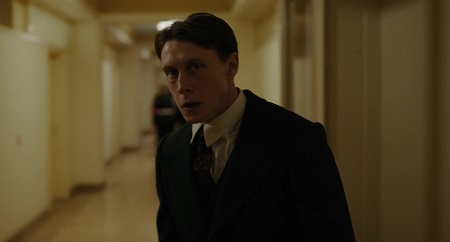
George MacKay as Hugh Legat.

The role of Adolf Hitler is always going to be a challenging one to cast and to play, and it was here that I felt Munich: The Edge of War hit a stumbling block. Ulrich Matthes felt miscast in the role, and while he did his best to play up the sense of Hitler as a menace, the portrayal never quite landed for me. 1938 should see Adolf Hitler at the absolute zenith of his power, yet in Munich: The Edge of War he somehow felt small; the presence he should’ve had came more from the script than the screen presence.

Hitler was also the only character in the film whose costumes seemed ill-fitting. Ulrich Matthes is not especially short, but he does have a rather slender frame, and several of the costumes he wore as Hitler seemed rather too large for him, giving one of history’s worst dictators the appearance of a schoolboy whose parents had bought him a suit he was expected to “grow into.” Combined with a less-than-stellar performance, this robbed the character of much of the gravitas needed to make the moments where he was centre-stage feel like they mattered. Though Hitler got comparatively little screen time, his actions were the driving force behind both halves of the plot, and we as the audience needed to be able to take him seriously enough to make the rest of the film work. As it is, the best I can say is that this key character didn’t quite fall to the level of damaging the rest of the film – but the way he came across on screen did nothing to elevate it.

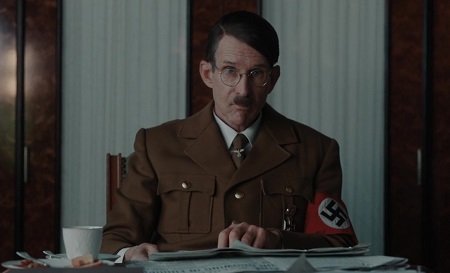
Ulrich Matthes as Adolf Hitler.

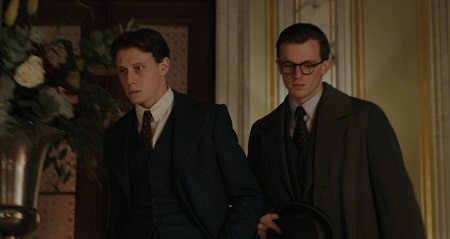
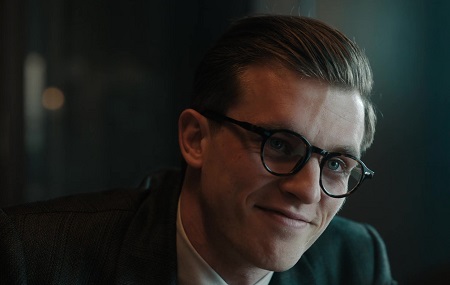
So we come to the junior civil servants, the fictional people upon whose shoulders the real story of Munich: The Edge of War was carried. I really liked the contrast between the two men – Paul von Hartmann, played by Jannis Niewöhner, and Hugh Legat, played by George MacKay. They came from similar worlds, as the scenes showing them together at Oxford University showed, but they ended up on very different philosophical and political paths, largely (but not entirely) due to circumstances beyond their control.

In a sense, the stories of von Hartmann and Legat stand to represent hundreds of thousands of bureaucrats and minor functionaries on both sides of the war – and by extension the millions of enlisted and conscripted men who ultimately fought in the conflict. People from all social classes, all backgrounds, and all walks of life were ripped out of their surroundings and pitted against one another by great powers and by forces beyond their control. Legat and von Hartmann were swept along by circumstances in their home countries, driven apart by fanatical politics, but ultimately came back together to try to do the right thing. Though their stories were fictional, they represent millions of untold stories of real people in similar situations.

The fictional stories of Legat and von Hartmann can be seen as representing millions of real people throughout the war.

Both of the actors put in exceptional performances. I truly bought into von Hartmann’s enthusiastic and impassioned defence of Hitler when he and Legat argued in a flashback sequence. Jannis Niewöhner brought that moment to life, showing the burning passion that many politically active young people have. It was misguided, of course, as von Hartmann would later come to realise, but as a believable performance of a young man in Germany in that time period I thought it was absolutely outstanding.

George MacKay is someone I’m familiar with from the film 1917, and he put in just as complex a performance in Munich: The Edge of War as he had in the title which had won him critical acclaim a couple of years ago. It isn’t fair to compare two different characters, but in this case I definitely felt echoes of William Schofield (his 1917 character) in Hugh Legat. Both men find themselves thrust into difficult and dangerous circumstances for which they are ill-prepared, and both do their best to rise to meet the challenges in front of them.

George MacKay put in a solid performance as a man who finds himself facing an unexpected and difficult task.

Legat and von Hartmann were both granted love interests by Munich: The Edge of War, and here is perhaps where we ran into a fairly typical issue when condensing the story of a novel into the runtime of a single film. Neither Legat’s wife nor the character of Lena, whose injury seems to have been a driving force behind von Hartmann turning against Hitler, felt well-developed. I’d go so far as to call both extraneous to the plot; the minor roles they played didn’t feel necessary to inform either Legat or von Hartmann, and didn’t really serve to accomplish much of anything.

I’d argue that, in a film about Adolf Hitler and the outbreak of World War II, practically no fictional character needs more motivation to stop Hitler than “because it’s Hitler,” and with the revelation of Lena’s attack and disability not coming until the film was practically over and the bulk of the spy thriller plot had concluded, it didn’t really achieve what it intended anyway. It was, at best, background – and there’s nothing wrong with fleshing out characters and giving them family connections or love interests in a general sense. But in Munich: The Edge of War it was, perhaps, an unnecessary inclusion.

Jannis Niewöhner as Paul von Hartmann.

With the exception of the aforementioned costuming problem, I felt that the visual side of Munich: The Edge of War was handled very well. The few uses of visual effects (such as for a steam train) worked as intended, and the exterior and interior sets all succeeded at transporting me to the 1930s. I particularly felt that the main set used for the Munich conference captured the spirit of Nazi architecture well, and felt sufficiently imposing.

Munich: The Edge of War was definitely the better for the inclusion of German alongside English as its spoken languages. Seeing German characters speaking to one another in German adds a sense of realism that’s important to a piece like this, and switching back and forth between the two languages worked well. Having both principal characters being fluent in both languages allowed for them to mix it up, speaking German in some circumstances and English in others.

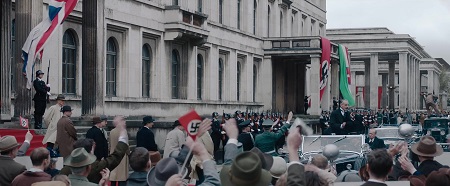
The arrival of the delegations at the conference venue.

To wrap things up, Munich: The Edge of War isn’t going to have the cut-through of a film like 2004’s Downfall. In order to appreciate what it has to offer, I think you really need to have at least a passing interest in the Second World War and the events the film aims to depict. Some historical dramas and thrillers can cross over and find mainstream appeal; I believe that Munich: The Edge of War simply isn’t that kind of film. That isn’t to say it’s bad by any means – I had an enjoyable time with it. It just isn’t quite on the same level as films like Downfall.

I arrived expecting to find a film that focused more on Chamberlain himself, but found instead a perfectly entertaining spy thriller that managed to have a few novelties to offer fans of the genre as a whole. The newness of both spies, the real historical backdrop, and the dual nature of its protagonists makes Munich: The Edge of War stand out somewhat in a genre that can feel repetitive and samey. Those elements carried the film far enough to make it an enjoyable experience.

I’d have liked to have seen more of Jeremy Irons’ portrayal of Chamberlain, as I felt he was somewhat limited in the screen time he had in a film that had another story to tell. Other than that, Munich: The Edge of War was entertaining. It was tense enough and dramatic enough in the right places, told a unique story, and gave us a small but different look at an historical figure that we’ve been told for more than eighty years we should vehemently disapprove of.

Munich: The Edge of War is available to stream now on Netflix. Munich: The Edge of War is the copyright of Netflix and/or Turbine Studios. This article contains the thoughts and opinions of one person only and is not intended to cause any offence.
The Matrix Resurrections – film review

Spoiler Warning: There are spoilers ahead for all four films in The Matrix series.

It had been a while since I watched The Matrix and its sequels. The 1999 original has become somewhat of a sci-fi classic, with several themes and rhetorical devices entering popular culture and our shared lexicon – albeit not always in the ways the filmmakers intended! Phrases like “a glitch in the Matrix” to refer to déjà vu (or anything else that looks or feels odd), and of course the famous blue and red pills as metaphors for comfortable ignorance versus unpleasant truths have taken on lives of their own far beyond The Matrix and its sequels.

Coming almost two decades after The Matrix Reloaded and The Matrix Revolutions, there were questions facing The Matrix Resurrections. Could it live up to its predecessors? Could it recapture the magic of “bullet time” and the blend of metaphor and philosophical themes with sci-fi action? With the story seemingly concluded and several main characters dead, what else was there to explore in this fictional universe? From my point of view as someone who’s been exploring my own gender identity and identifying with The Matrix’s core concept of living a false life, I was very interested to see what the film would have to say about trans and non-binary issues as well.

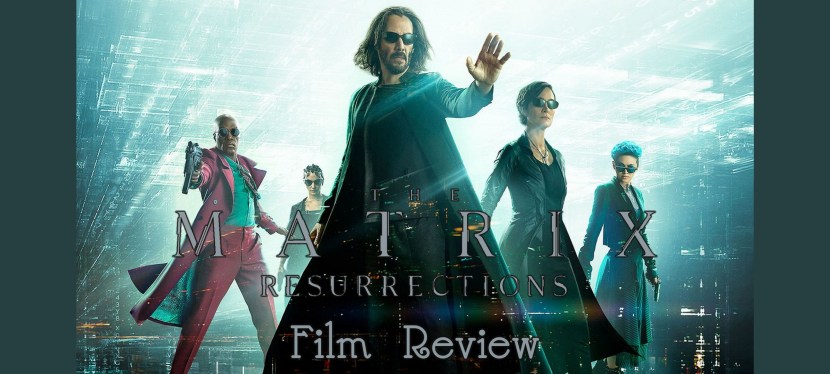
Are you ready to re-enter the Matrix?

From the points of view of visual effects and cinematography, The Matrix Resurrections delivered pretty much everything I could have wanted or expected – but it didn’t really go beyond that. The original film was groundbreaking in 1999 with its incredibly dense yet beautifully-choreographed action sequences and, of course, the pioneering use of the aforementioned “bullet time.” Resurrections brought those same elements back to the table, and I thoroughly enjoyed them all over again. It didn’t feel pioneering or new any more, and perhaps in that sense some of the magic of the original film was missing. But asking every film to do something completely brand-new – especially the fourth film in a series – is probably too much.

Many films – probably most – don’t pioneer brand-new ways of filmmaking or never-before-seen visual styles, and we still enjoy them! So I don’t want to be too harsh on The Matrix Resurrections: it does its action sequences, its “bullet time,” and the rest of its visuals and special effects exceptionally well, far better than many titles released over the past two decades. Lana Wachowski has lost none of her edge as a filmmaker and director, and the way she frames some of the densely-packed action set-pieces, combined with the series’ use of its signature “bullet time” works just as well in Resurrections as it ever did.

Visual effects were great in The Matrix Resurrections.

I don’t know what the reasons are behind the re-casting of characters Agent Smith and Morpheus, so I don’t want to speak out of turn or criticise individual actors, the director, or anyone else involved in the casting. Looking at the way these characters are used in Resurrections itself, though, I can’t shake the feeling that bringing back the original actors would have had far more of an impact. One big part of what makes Resurrections work so well is the on-screen chemistry between Keanu Reeves’ Neo and Carrie-Ann Moss’ Trinity. Morpheus and Agent Smith were big parts of that story too, and the recasting is, at the very least, noticeable. At worst, it feels out-of-place and even detracts, at points, from our big return to this fictional universe.

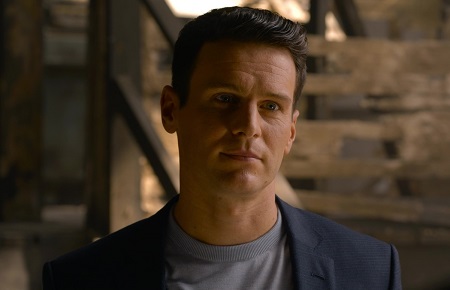
This isn’t a criticism of either Yahya Abdul-Mateen II, who has taken over the role of Morpheus, nor of Jonathan Groff, who took over as Agent Smith. Both characters are different iterations of the characters we met in the original films, and both actors do a wonderful job. It just feels that, in a story that’s partly about the past, breaking away from the past, and how past events in one’s life can cast a shadow, recasting these two key characters took away something valuable.

The re-casting of key characters was noticeable.

Setting aside the story for a moment, let’s talk about The Matrix Resurrections in terms of theme, metaphor, and the film’s philosophy. It was only on re-watching the original films having heard other people talking about its transgender allegory that I really came to understand how well it works. The conclusion of The Matrix Revolutions saw Neo (as The One) bring the Matrix itself to a screeching halt, shattering the false world and liberating himself and those around him. To continue the transgender metaphor, this can be argued to represent a closeted trans person breaking out of either their self-imposed or societally-imposed shell, liberating their true self and being able to live openly as the person they are – and always needed to be.

Resurrections, if it were to continue that allegory, had to find a way around what is a fairly typical issue that many sequels face. I’ve called this the “Disney problem” on more than one occasion, as many Disney films struggle to find a way to make a successful sequel, and it’s summarised thus: what comes after “happily ever after,” and how do you tell that story without tearing down the successes and emotional high points of the original work? The Matrix Revolutions didn’t really leave an opening for a sequel, at least not one featuring Neo and Trinity, so Resurrections had to find a way around this. Both narratively and thematically, the film absolutely nailed it.

Figuring out why Neo was back in the Matrix, and how he’d survived, were hurdles that Resurrections easily overcame.

Yes, there’s sci-fi fun going on. The Machines quite literally resurrected Neo and Trinity, putting them back in their shells and using them to power an new and improved version of the Matrix, one which was better and more efficient at keeping people trapped. But beyond that, there’s also the continuation of this important and inspirational trans journey.

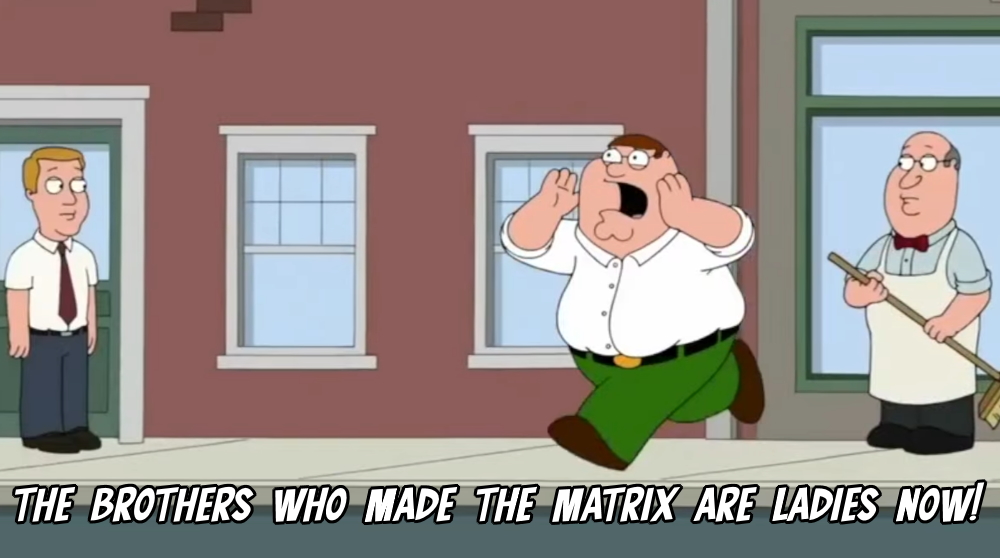
And some people, judging by some incredibly offensive and provocative comments online, have reacted very poorly to that. The usual arguments about “wokeness” have emerged – seemingly directed at the fact that the film has a trans director, even though the film itself contains practically no overt mentions or depictions of any LGBT+ characters. What’s present is there at a thematic level, partly because companies like Warner Bros. want to make stripped-down films that they can sell in markets where homophobia and transphobia are rife. In fact, that was one of the things that I was surprised and perhaps a tad disappointed about with The Matrix Resurrections: although it’s a film with a transgender director and two gay main cast members, there was practically no open mention of LGBT+ issues nor any significant depictions of LGBT+ characters. Despite that, some so-called “critics” seem to only have this to say about The Matrix Resurrections when attacking it online:

(Yes, that’s an actual line from Family Guy…)

The Matrix Resurrections is, if you look at it on the surface, somewhat regressive. It takes Neo back to his closeted status, undoing three films’ worth of progress and a “coming out” analogy that many trans people found to be powerful. But as a standalone piece, the depiction of Neo’s life inside the Matrix at the beginning of Resurrections is so much more powerful and meaningful than it was in any of the original films – or indeed in all three combined.

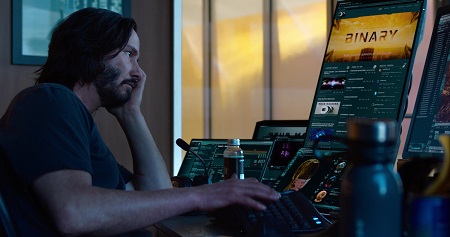
I can barely find words to express how much the depiction of Neo at the beginning of the film resonated with me. Both from the point of view of mental health and as someone who has only recently began to make cracks in my own “shell” as a non-binary person, the way Neo was written and the way he comes across is so much more impactful in Resurrections. His struggles, his dependence on medication, his therapy sessions and questioning who he is and where he fits in this world are all incredibly powerful moments. At several points I had to pause Resurrections to catch my breath or wipe away tears. Seeing Neo in this way felt real – it felt like seeing a reflection of myself through Keanu Reeves’ incredible performance and Lana Wachowski’s beautiful writing and directing.

The blue pills are a returning rhetorical device.

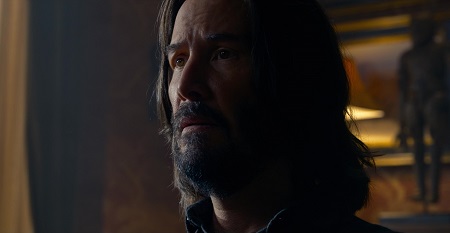
The Matrix in 1999 either didn’t intend to depict this aspect of living a lie in such detail, or else brushed it under the carpet to get to the action. But Resurrections builds up to the action slowly, deliberately spending more time with a trapped Neo, someone who realises something is wrong but who seems desperate to push those feelings down – taking inordinate amounts of blue pills as medication to help with that. One of the early sequences with Neo and his therapist – played in a wonderfully nuanced performance by Neil Patrick Harris – truly embodied the struggle that many gender-nonconforming people go through. Seeing such a powerful depiction of something that I can relate to – because I’ve felt that way too – has been an incredible experience.

I didn’t come to The Matrix Resurrections for mindless action. In one of its more meta, self-aware sequences, the film itself pointed out that mind-numbing action isn’t “on brand” for the series. I’d argue that any adult who’s shown up for Resurrections expecting nothing but sci-fi and action has kind of missed the point: The Matrix as a series has always had a strong philosophical bent to it, one that can be interpreted in as many different ways as there are viewers. For transgender and non-binary people, these aspects of the story come to the fore. For other viewers, though, the film’s messages can be read through a lens of mental health, of escaping an unsatisfying or boring life, of finding a second life through online interaction, anti-capitalism, and many more besides.

I found the film’s depiction of Neo to be very relatable.

An unexpected inclusion in Resurrections was the coming together of liberated humans and machines – now known as synthients. The idea that the conflict between humans and machines wasn’t totally black-and-white, and that some machines could become friends and allies to humans was an interesting one – but one that Resurrections perhaps didn’t take as far as it could’ve. There’s a great kernel of an idea, but in a film that had a lot of other narratives to cram into its two-and-a-half-hour runtime, this rebel machine angle didn’t go as deep as some of the others. The reasons why some machines rebelled, and why those rebels sought out humans as allies, were never fully addressed. Perhaps that’s something a future sequel could pick up, as I feel there’s potential in a storyline about overcoming conflict and learning to let go of hate.

Speaking of sequels and The Matrix as a franchise, the film had some incredibly meta moments of self-reflection. Some of these were played almost for laughs, but others had a distinctly unsettling feel, as if the film was getting inside my head and blurring the lines between reality and fiction – itself a theme present in the film’s opening act. I wasn’t expecting this meta commentary on the nature of sequels, franchises, and the state of the entertainment landscape in 2021 – nor was I expecting a self-referential comment about Warner Bros., the company behind the film. Maybe this is a comparison that no one else will get, but I felt it was the second time this year that I’ve seen this kind of self-referential meta commentary from a Warner Bros. picture; the company did something similar in, of all titles, Space Jam: A New Legacy.

There was a lot of meta commentary about filmmaking and sequels.

One really interesting visual metaphor that the film made use of was the mirror. Mirrors cropped up many times, serving as portals within the Matrix. Again, speaking as someone who is non-binary, I haven’t always liked the reflection in the mirror. The clever use of visual effects to show Neo in particular looking in the mirror and not recognising himself, or seeing flashes of someone else that he didn’t recognise, is something that spoke to me in a way I was not expecting.

When I’ve looked in the mirror, the person looking back hasn’t been the person I want to be; it isn’t a reflection of my true self, the version of me that I want to be. Many people can relate to that in various ways, I have no doubt about that; we all have features or imperfections we’d like to change if we could. Just like with many other themes present in Resurrections and the entire Matrix series, this can be read differently by different viewers. Trans and non-binary viewers, I would suggest from my own experience, will relate very strongly to the way mirrors are used, though. A mirror is supposed to be a totally accurate reflection of oneself – but speaking from experience, a mirror can also be something to be avoided; a harsh reflection of someone we don’t identify with or wish was fundamentally different.

Mirrors became an important visual metaphor throughout the film’s opening act.

Let’s conclude by talking about the film’s actual narrative and story. The reason for Neo and Trinity being back in the Matrix – and the Matrix itself being bigger and more powerful – was kind of technobabbley, but I didn’t hate it. It was a gateway to something significant, and without it the film itself wouldn’t have been possible. I think as a narrative point it does work, but the film was definitely better for not spending too much time trying to over-explain how Neo and Trinity came to be trapped again and what the Analyst’s plans were.

The new character of Bugs was fun; a clever riff on a character concept from previous entries in the series who felt distinct, yet familiar. There was a bit of forced drama in the conflict between Bugs and Niobe – the latter now in command of the new human-synthient settlement of Io. That particular story beat didn’t really go anywhere; Niobe was concerned about the safety of the settlement, yet it never really felt as though it were under threat nor in any danger, despite the plan Bugs, Neo, and Morpheus came up with to rescue Trinity.

I didn’t feel this conflict was the film’s strongest narrative choice.

I liked seeing Agent Smith as a character outside of his usual role. He was definitely still an antagonist, but the addition of the Analyst as the program in control of the Matrix had untethered Smith. His desire to remain free from outside control was understandable at first – but was subsequently traded away for a redux of the Neo-versus-Smith battles from earlier films. It was still neat to see an unexpected team-up, however brief, between Neo and Smith – though I come back to what I said earlier: this would’ve worked a lot better if the original actor had been able to reprise the role.

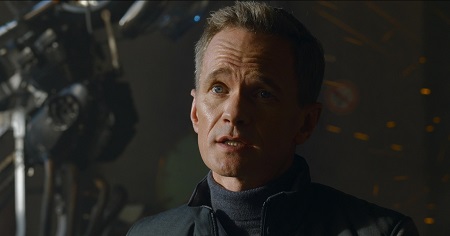
The Analyst was a wonderfully nuanced character, and Neil Patrick Harris put in a great performance. The Analyst had taken over the Matrix, rebuilding it around Neo and Trinity and using their emotional connection to manipulate people and thus make the Matrix even more efficient. This gave the story the necessary explanation to function, and served as a decent motivation for the Analyst’s character.

The Analyst made for a great antagonist.

The synthient Sati – played by Priyanka Chopra Jonas – gave us a lot more information about the synthients, and was the best and most interesting machine portrayal in the film. She also had a connection to the original films, having briefly met Neo years earlier. Her motivation to rebel and to seek to see the Matrix shut down was easily understood: having seen her parents killed, she essentially wanted revenge.

None of these characters – or the other secondary characters – felt flat or uninteresting; I was genuinely curious to learn more about them and the places they occupied in this dystopian world. Each felt distinct, each had a purpose, and they were all written sympathetically. The story was complicated in places, and I think casual viewers or those not up to speed on the events of the original films will struggle in places to follow some of the denser moments which rely on lore and backstory to make sense. But The Matrix Resurrections is a sequel – part four in a series. Even though it’s coming almost two decades later, you can’t expect it to spend all of its runtime re-explaining events from the past!

The film relies on earlier entries in the series to make sense of its storylines.

Resurrections included a fair amount of footage from the original Matrix films, some of which were very brief clips that were only on screen for a second or two. This abrupt editing was a risky choice – it could have felt cheap or even lazy; a direct appeal to fans of the original films. However, I don’t believe this is how it comes across. It continues that feeling of being unsettled, of feeling that there’s another life that one could or should be living. In Neo and Trinity’s cases, these came in the form of memory and flashback – which is where the very literal use of clips from the original films come in. In the case of trans and non-binary people, to continue that theme, these clips could represent the true self that exists outside of the shell, bubble, or closet in which one is trapped.

I found The Matrix Resurrections to be a deeply emotional experience – and a film I’m incredibly grateful to have been able to see. As I continue my own gender identity journey as a non-binary person, films like Resurrections are important and helpful. Seeing moments that I could relate to depicted as visual metaphors in a film laced with analogy and allegory was powerful, but also absolutely fascinating.

Fans of the original films will find something to like – if they’re prepared to give Resurrections a fair shake on its own merits and not get bogged down in arguments about “wokeness” and the like. Though there were things I felt missed the mark, overall I have to say that Resurrections is one of the most complex, raw, and brutally honest films I’ve seen all year. It retains all of the signature elements from the original films, and for people who aren’t interested in a metaphorical or philosophical reading it’s possible to enjoy Resurrections as a work of action-sci-fi. For me, though, the powerful themes resonated with me, and made The Matrix Resurrections a film that was both an entertaining watch and, at times, a deeply emotional and cathartic experience.

The Matrix Resurrections is out now in cinemas and is available to stream on HBO Max. The Matrix Resurrections is the copyright of Village Roadshow Pictures and/or Warner Bros. Pictures. This article contains the thoughts and opinions of one person only and is not intended to cause any offence.

Jungle Cruise – film review

Spoiler Warning: There are spoilers ahead for Jungle Cruise.

Any review of Jungle Cruise on Disney+ needs to take into account the film’s price tag. Right now Jungle Cruise costs £20 in the UK or $30 in the United States to “unlock,” and thus the film’s value will vary from viewer to viewer. For my two cents, unless you’re a huge fan of the original Jungle Cruise ride at the Disney theme parks or a particular fan of either Dwayne Johnson or Emily Blunt, this is probably a film to wait for. In a matter of months, and certainly by Christmas, the film will be added to the regular Disney+ lineup, and though I had a decent enough time with Jungle Cruise, I’m not sure that I necessarily got £20 worth of enjoyment from it. If you’re on the fence, trying to decide whether to pay up or wait, I think this is one you can safely wait for.

That being said, Jungle Cruise was enjoyable. I’ve said this before, but in 2002-03 when Disney was talking about adapting Pirates of the Caribbean into a film, I thought it sounded like an atrocious idea! How could a theme park ride possibly translate to the screen, I wondered? I was wrong about Pirates of the Caribbean: The Curse of the Black Pearl then, and if I had similar doubts about Jungle Cruise eighteen years later then I was wrong again! The film was decent, and paid homage to a classic ride which has been part of Disneyland since the very beginning.

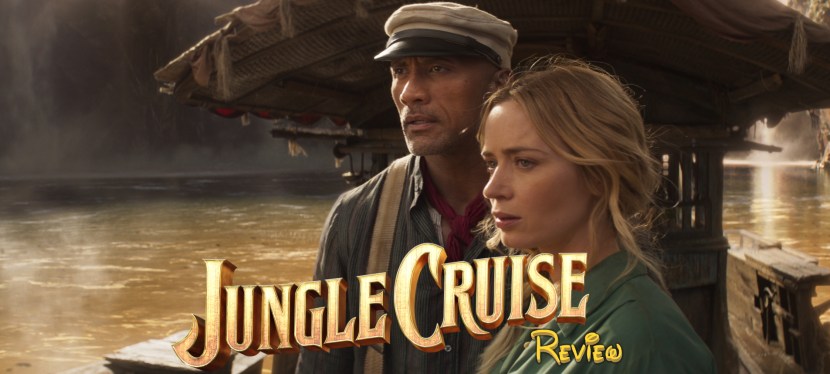
Jungle Cruise poster.

If you’re fortunate enough to have ridden Jungle Cruise, you’ll recall that there is a “story” of sorts to the ride itself. Obviously the film takes liberties with this, chopping and changing things to make the story more suited to the screen rather than a semi-interactive theme park attraction. But I was surprised at just how well Jungle Cruise captured the feel of the original ride, with Dwayne Johnson’s character of Frank taking the role of the Disneyland boat captain from the attraction.

There were nods to other aspects of the ride as well, particularly in the film’s opening act with Frank’s literal jungle cruise entertaining the tourists with the same mixture of dad jokes and props as the ride itself. As the story went on, the film naturally stepped away from being true to the ride to focus on a story that was not dissimilar to the aforementioned Pirates of the Caribbean film, complete with cursed undead sailors, a magical macguffin, and lashings of aquatic adventure.

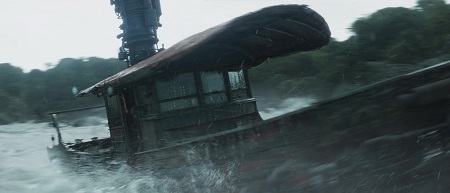
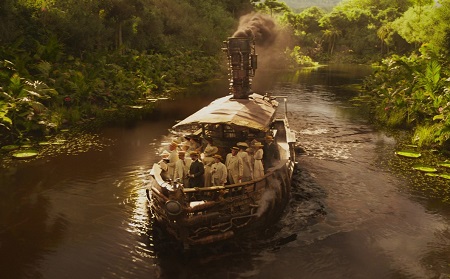
Quila hits the rapids!

There were several surprisingly poignant and emotional moments in Jungle Cruise which I wasn’t expecting. Aside from the typical Disney happily ever after ending (complete with a fake-out sad ending which preceded it) the tastefully handled moment where Jack Whitehall’s character of MacGregor came out to Frank was a very sweet inclusion. Not only did it add personality and dimension to both characters – MacGregor gained a backstory of rejection and further reason to follow Lily, and Frank came across as accepting and kind – but it was a huge step for representation and inclusion. Seeing MacGregor experience rejection yet find acceptance in the most unlikely of places is a powerful message, and the mere act of LGBT+ representation in a blockbuster film is always fantastic to see. Such a message is especially important for younger viewers.

While we’re discussing some of Jungle Cruise’s deeper themes, the film took a dim view of wealth, aristocracy, and closed societies – despite practically all of its main characters being drawn from the upper classes of their day. MacGregor’s unease at having to experience life away from his home comforts was initially played for laughs – though he did become more comfortable with it as the film reached its end. The villain of the piece being a German aristocrat was also a continuation of this theme, as was the initial depiction of Frank as the last independent river boat captain – and the poorest.

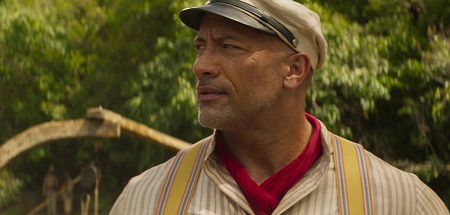
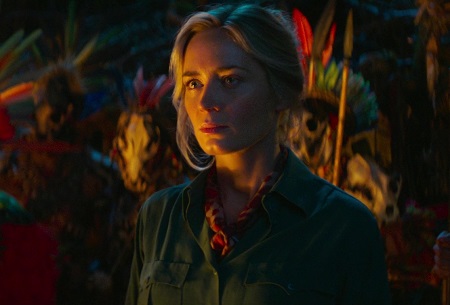
Dwayne Johnson as Frank, the riverboat captain.

Having seen a number of films with British villains over the last few years, the decision to make the German Prince Joachim the main adversary to Frank and Lily was actually a bit of a change. There was a time a few years ago where villains in cinema were often German – or of German extraction. But enough time has passed and enough other villains have come and gone that the return to a German villain didn’t feel like stereotyping or a trope in the way it might’ve done had Jungle Cruise been made in the recent past.

The story itself took a couple of unexpected twists. The revelation that Frank wasn’t who he seemed to be definitely came as a shock – but in a good way! Sometimes twists of this nature can feel rushed or like they jolt the story in an unwanted direction, but learning Frank’s true origin managed to avoid that pitfall. It made his character feel more rounded and gave him motivation. We learn why he wanted to take Lily upriver – and why he was so convinced she wouldn’t succeed in her quest to find the Tears of the Moon.

Lily was seeking the Tears of the Moon.

Frank’s “betrayal” of Lily and MacGregor – which he apparently set up off-screen with Trader Sam and her tribe – was perhaps the weakest moment in the story. It did nothing to endear us to Frank, and while it was arguably in character for him it robbed what was initially set up as a tense moment of practically all of its drama. Though the threat and peril were restored after a brief respite, the way the film handled this moment was poor overall.

Representation of native peoples and their relationship to colonists has come a long way in recent years, and when looking back at past Disney depictions of indigenous peoples – such as in Peter Pan or even the original incarnation of the Jungle Cruise attraction – the way the “headhunter” tribe was presented was an improvement. Considering the tribe played a relatively minor role in the film, what we saw worked well. The depiction retained some of the mystery that westerners have of indigenous peoples – something that the original ride drew on for part of its threat – yet at the same time made at least one key character relatable.

The tribal chief.

Jungle Cruise also didn’t shy away from depicting the brutality of colonisation, showing Conquistadors savagely attacking a tribe of native people even after being offered shelter, food, and medicine. However, the film then immediately strayed into once again mystifying the tribespeople by giving them magical powers seemingly connected to the Tree of Life. Overall, the way Jungle Cruise handled its characters’ interactions with indigenous people was better than in some Disney titles, particularly older ones, but arguably imperfect and verging into some of the tropes commonly associated with such tribes in fiction.

Aside from the opening act, which was set in London, and a few other scenes near the beginning of the piece, Jungle Cruise broadly stayed true to its premise as a film about a voyage on a riverboat. The boat itself had character, being old and beaten-up, and was memorable for the way it looked while again retaining some of the charm of the original Disneyland attraction. Quila (Frank’s boat) was not only the characters’ home and method of transportation, but also played a key role toward the end of the story by blocking the river water and saving Lily and MacGregor. Giving the boat more to do in the story than simply be an ever-present stage for the characters made a huge difference to the film, and made its setting feel meaningful.

Quila – the boat – was almost like an extra character in the film.

Though the Conquistadors wanted to kill Frank – and later Prince Joachim – they seem to have had similar objectives when it comes to acquiring and using the Tears of the Moon, and as a result some of the moments toward the film’s climax felt rather forced. Obviously Lily and MacGregor had an incentive to stop the Prince and his gang of German submariners, as they clearly had nefarious intentions for the magical macguffin. But the Conquistadors had basically the same objective as Frank – to lift their curse – and it felt like there could have been a moment near the end of the film where they had all realised that they didn’t need to fight. In fact I initially wondered if Prince Joachim’s betrayal of the Conquistadors was going to set up precisely that kind of storyline. It feels like a miss that it didn’t, as the film basically ended with the heroes defeating two parties of villains.

There’s always room in fiction for that kind of narrative; not every story has to depict an emotional coming together and teaming up to defeat a worse villain. But the disturbing implication to the way Frank’s story ended is that he simply left the Conquistadors to endure endless torture; they’re unable to die and it didn’t seem as though he took action to lift their curse. Perhaps this is Disney leaving the door open to a sequel?

Did Frank and Lily condemn the Conquistadors to eternal torture?

Speaking of the way the film ended, with Frank and Lily only able to pluck a single petal from the tree, all Lily really got to do was write up her adventure and land herself a job. In the male-dominated world that the film depicted that is unquestionably a victory for her – but her original ambition had been to use the Tears of the Moon to “revolutionise medicine” and save countless lives, not least in the ongoing First World War. It seems as though this ambition was thwarted, yet the film skips over this point.

Jack Whitehall is not someone I would have expected to see in a film like Jungle Cruise, but he put in a creditable performance as MacGregor. His stand-up act often draws on his self-styled “posh” image, and his character felt like an exaggerated version of that in some respects. Emily Blunt was outstanding in the role of Lily, bringing real personality to the character and crafting a heroine that we as the audience wanted to get behind. Dwayne Johnson seemed at first to be playing a fairly typical “Dwayne Johnson” role, but the addition of an unexpected backstory for his character of Frank took the character to a different place and forced him to step out of his comfort zone and play things differently as the film passed the two-thirds mark. Though perhaps it wasn’t an Oscar-worthy performance, I found Frank to be a believable protagonist and someone I wanted to see succeed.

MacGregor and Frank shared a genuinely touching moment in Jungle Cruise that I wasn’t expecting.

Jungle Cruise relied heavily on CGI almost throughout, and not all of the animation work was as realistic as it could’ve been. Recent productions, even on television, have seen some truly outstanding CGI work, and while nothing in Jungle Cruise was awful or even immersion-breaking, there were quite a few elements that didn’t look quite right. At a number of points I felt that some of the CGI had that “too shiny,” plastic look that plagued CGI a few years ago, and I really thought that animation – especially cinematic animation – had begun to move past that particular issue.

I would’ve liked to have seen more physical props and practical effects, and the fact that a large portion of Jungle Cruise was filmed with green screens and other modern tricks wasn’t as well-concealed as it might’ve been. And perhaps this final point on visuals is a bit of a nitpick, but the fact that a number of the so-called “jungle” sequences were filmed not in South America but in Hawai’i was apparent to anyone who knows their flora! Different biomes do look different from one another, and a few scenes in particular which supposedly took place on the banks of the Amazon were very clearly filmed elsewhere. I know that’s a minor point that won’t have bugged many people, but I found it worth noting.

Happily ever after for the main characters!

So that’s about all I have to say, I think. Jungle Cruise certainly compares to the likes of Pirates of the Caribbean and other fantasy-adventure titles. It was fun, emotional at points, and set up its trio of main characters for a story that was easy enough to follow for kids while still having plenty to offer for adults as well. It stands up well against many adventure films, including classics of the genre like Indiana Jones – which Jungle Cruise was clearly channelling at points!

I had an enjoyable time with Jungle Cruise, and it was a fun way to spend a couple of hours. Whether it will be worth the cost of admission on Disney+ is something everyone will have to decide for themselves, but I think it’ll still be an enjoyable watch in a couple of months’ time. Jungle Cruise presented a fun story that drew inspiration from the likes of Pirates of the Caribbean, yet stayed true to its origins as a theme park attraction. It was a fun ride down the river with Frank, Lily, and MacGregor, and I’m sure I’ll have fun watching the film for a second and third time in the future; it’s definitely one to return to when I’m in the mood for adventure!

Jungle Cruise is available to stream now on Disney+ Premier Access (for a fee). Jungle Cruise is the copyright of Walt Disney Pictures and The Walt Disney Company. Some promotional images courtesy of The Walt Disney Company. This article contains the thoughts and opinions of one person only and is not intended to cause any offence.
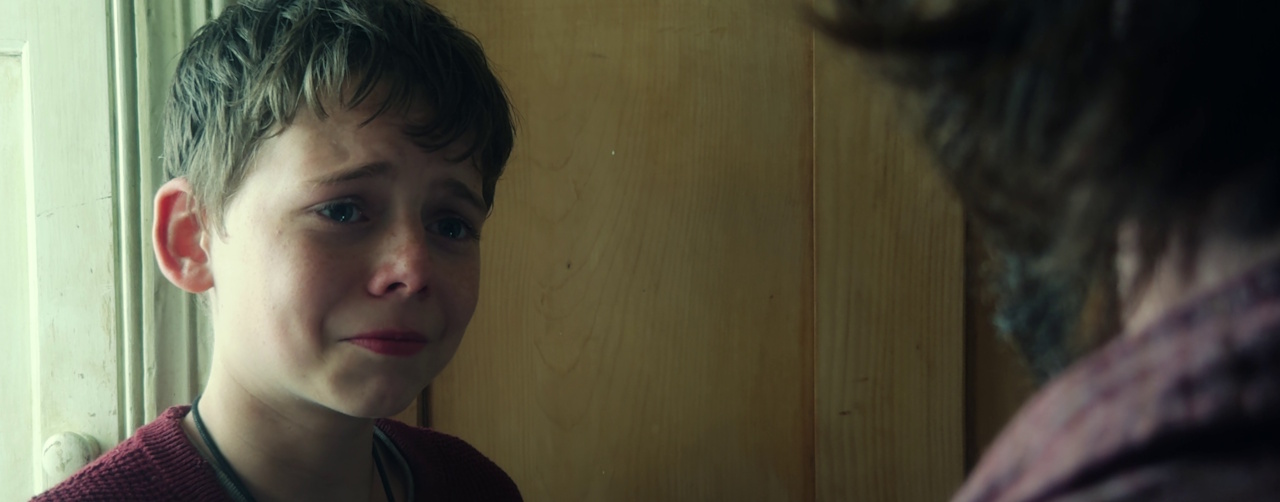
The Tomorrow War – film review

Spoiler Warning: There are spoilers ahead for The Tomorrow War.

Well this is a rarity for me – reviewing a film while it’s still new! I have to hold my hands up and confess that I was completely unaware of The Tomorrow War’s existence until about a week ago when previews started popping up on the Amazon homepage. But after watching the trailer it seemed like the kind of thing I might like, so almost as soon as it was available to watch I gave it a shot.

Though I like sci-fi in all of its forms, time travel stories have never been my favourites. They’re exceptionally difficult to get right, and when they go awry they can lead to narratives which are confusing or just plain annoying. With a title like The Tomorrow War, there was no way this film was going to be about anything other than time travel – and unfortunately it did contain one of the dumb time-loop story elements that I really don’t find enjoyable or satisfying. However, it managed to avoid many of the other pitfalls that time travel stories can succumb to, so it gets credit in that regard.

Publicity image for The Tomorrow War.

Chris Pratt is not a typical action hero, yet following his role in Guardians of the Galaxy he’s been tapped to take on a broader array of action-heavy roles. And as the film’s lead and main character he puts in a creditable performance. There were fewer moments of humour than in some of his other roles, and as an actor with great comedic timing that was a bit of a shame as one of his strongest suits was not put to use. But as an actor, taking on different roles is all part of the job, and Pratt did a solid job as the film’s protagonist. He was emotional at the right moments, strong and gung-ho at others, and fit the bill as The Tomorrow War’s action hero.
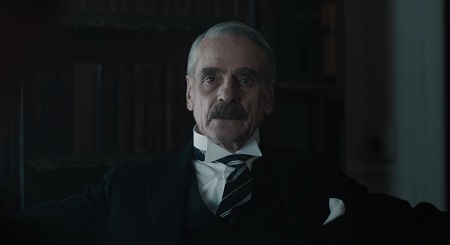
The rest of the cast likewise were competent in their roles and believable. We didn’t really get a broad cast of secondary characters; aside from Dan and Muri, everyone else played a comparatively minor role in the story, limited to a few scenes and generally one or two settings. JK Simmons, Sam Richardson, Edwin Hodge, and Betty Gilpin all played their parts well, with the caveat that their characters were limited by the script to bog-standard supporting roles.

Yvonne Strahovski and Chris Pratt were The Tomorrow War’s leading pair.

Among these characters we have Dan’s father, the conspiracy theorist-veteran-mad scientist, whose seemingly unlimited set of skills allowed Dan and the crew to get to Russia at a key moment later in the film. Other than the personal drama between them, which was performed well, this character was a pretty basic plot device. Dan’s wife, whose name may have been mentioned but I can’t actually remember, was an absolutely run-of-the-mill character type, the spouse of the soldier-hero, and didn’t get much to do beyond tell him she wished he didn’t have to go and greet him when he returned.
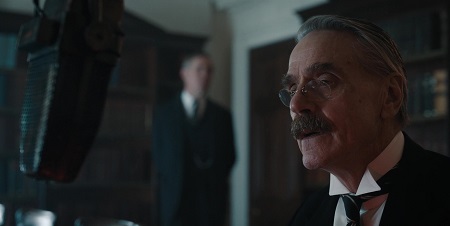
Charlie and Dorian were perhaps the most interesting of the film’s secondary characters, and each brought something different to the table. Charlie was comic relief, but his moments of humour were well-used and injected some light-heartedness into a film that definitely needed it. His moment in the stairwell was hilarious, and went a long way to making the first on-screen introduction of the whitespikes – the film’s alien antagonists – much more memorable. Dorian, the other African-American character, was much more serious, and there’s something relatable in the story of a terminally ill man wanting to choose his own time and method of dying.
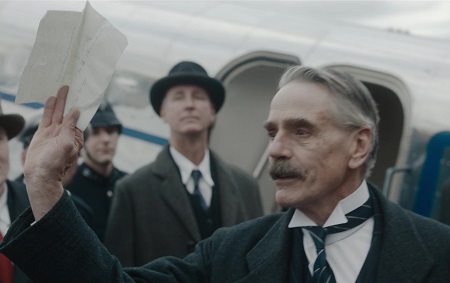
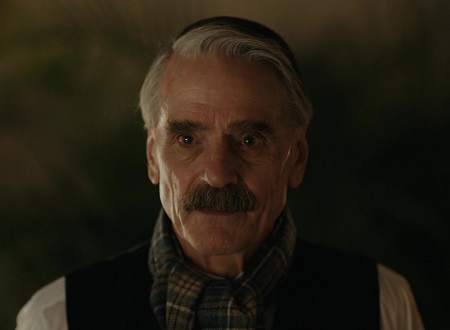
Sam Richardson’s character of Charlie provided The Tomorrow War with just about the right amount of comic relief.

The very intense, loud musical score feels like typical action movie fare – until it comes to moments of near-silence, which are expertly used to create tension at key moments. The soundtrack made neat use of The Waitresses’ 1982 Christmas hit Christmas Wrapping right at the beginning, and I guess we could argue that The Tomorrow War’s Christmas-themed opening qualifies it – along with Die Hard – as a Christmas film! Speaking of the film’s opening moments, was that supposed to be Scotland playing in the World Cup Final?! Someone’s being incredibly optimistic if that’s the case… sorry, Scotland!

Any story about war is going to come with political themes, and The Tomorrow War is no different. In Dan’s draft, for example, we see criticisms of the way the United States handles its own military draft, and in the technology implanted in his arm we see fears about how technology and our personal data are used and tracked.

The dire warnings about Dan’s arm implant/bracer could be taken as a critique of the way data is used today.

The film had one very strange tonal moment. After returning to the present day from his tour of duty, Dan – and by extension the film – treats what happened as a defeat. Despite the fact that he saved the toxin, which was his objective in his final hours in the future, everything in the minutes afterward is set up to feel as though he was too late, or that it didn’t matter with the jump-link being offline. But anyone who’s ever seen a time travel story can tell you that going back in time opens up new possibilities; even Muri knew this, as among her last words to Dan were to “make sure this war never happens.” The only way he could do that was by producing the toxin and using it in the present day (or else storing it in time for the invasion).

This sequence chips away at the film’s premise and exposes one of the major flaws in time travel narratives in general. I can believe, for the sake of the story, that the future scientists were only able to create one functioning wormhole, tethered to their present and our modern day. But it seems as though there were better ways to use it than recruiting everyday people to be footsoldiers – like giving the people of Earth advance warning so they could do everything in their power to prepare for or even prevent the invasion. This is what Dan and his team scramble to do at the film’s climax, but it really does begin to stretch credulity to think that they’re the first and only people to put the pretty basic pieces of this puzzle together and figure out what happened.

A handful of untrained people manage to figure out how to stop the aliens in less than a day when the rest of the world couldn’t in several years? Hmm.

It takes Dan and his wife all of five minutes to figure out that “they were already here” – a theme present in alien invasion stories going all the way back to The War of the Worlds at the end of the 19th Century. You’d have thought that someone else might’ve come to that realisation sooner! The Tomorrow War gives this old premise a modern twist by involving climate change, and we could entertain the argument that the entire film is thus an analogy for the dangers in unchecked and unsolved anthropogenic climate change. In the film’s story, the aliens were buried in Siberian ice, and the melting ice set them free. Out here in the real world, the consequences of man-made climate change may not be quite so gory and extreme, but are nevertheless dangerous.

We can definitely expect to see more of these kinds of climate change stories in future, I think. A Song of Ice and Fire, upon which the television series Game of Thrones was based, is likewise a climate change analogy according to its author, and these kinds of stories can be powerful. I’ve spoken on a number of occasions about how the Star Trek franchise uses its sci-fi lens to look at real-world issues, and while climate change was not exactly front-and-centre in The Tomorrow War, it was present, and the film was better for the inclusion of this theme.

The team inside a glacier.

There were two twists in the narrative of The Tomorrow War, but both were rather pedestrian and easy enough to figure out ahead of time. The first is that the character who speaks to Dan on the radio immediately upon his arrival in the warzone was Muri, and the film didn’t succeed in any way at concealing that. Perhaps it didn’t want to, but the fact that it seemed obvious for much of the preceding twenty minutes made the ultimate reveal of Muri’s identity at the military base far less impactful; we as the audience knew well before Dan did.

The second twist came along like something out of Star Trek – the aliens never meant to invade Earth, and in fact the whitespikes aren’t even the “real” aliens; they’re animals being transported by whoever owned the spaceship. Their feral, animalistic behaviour and seeming lack of weapons, clothing, or a language, as well as their nesting behaviour all spoke to this, and though there was a moment aboard the wrecked alien ship where the team encountered a dead alien pilot that was well-executed, the twist itself seemed apparent well in advance of the characters making that discovery.

I quite enjoyed the reveal that the alien invaders never meant to come to Earth and were essentially just animals – even if it wasn’t exactly well-hidden earlier in the film.

Some action films can go all-in on the guns-blazing killing, and it was a nice change of pace for The Tomorrow War to step back and present a semi-scientific solution to the characters’ alien invasion problem. To continue the climate change analogy from a moment ago, this is the film’s way of saying that science is the key to finding a solution. For a film largely about war, with the word “war” literally in its title, that’s a surprisingly anti-military message!

There were some solid visual effects in The Tomorrow War, and Paramount, Skydance, and Amazon made good use of the film’s $200 million budget in that regard. Any film involving monsters – or aliens, in this case – will fall flat on its face if the creatures are not sufficiently realistic and threatening, and the whitespikes, while not exactly groundbreakingly original in their design, managed to look fantastic on the screen.

One of the whitespikes – the invading aliens.

So I think that’s about all I have to say about The Tomorrow War. It was solid, perfectly entertaining sci-fi fare. The plot was fairly standard-issue for a time travel film, complete with some of the problems that brings, at least from my point of view. But it was well put-together, featured some good performances by its leading duo of Chris Pratt and Yvonne Strahovski, and kept me entertained for a couple of hours.

Given the film’s unexpected Christmas-themed opening, it might be one I return to at that time of year in future! I didn’t really know what to expect, as The Tomorrow War wasn’t even on my radar until very recently, but I’m glad I gave it a shot. It’s a film with some ideas and themes buried beneath its alien invasion storyline, and those themes elevate it to something a little more than just a basic sci-fi action flick. Not every element works, and I would have liked to see better use of perhaps a slightly smaller secondary cast instead of a collection of underused characters who feel more like plot devices than fleshed-out people. But the pair of leads did well and carried the film, and in particular Dan’s motivation to save the world for his daughter’s sake transcended some of the sci-fi waffle and dragged the film’s worse elements over the finish line.

If you’re an Amazon Prime subscriber, The Tomorrow War is already in your library and you might as well give it a shot. Is it the one film that will overwhelm the hardened resistor and finally convince them that they need to sign up for Amazon Prime Video? No. It’s not worth it on its own merit. But it’s enjoyable enough for what it is, and I respect The Tomorrow War for at least trying to be something more than just a basic action sci-fi title, even if it doesn’t completely succeed.

The Tomorrow War is available to stream now on Amazon Prime Video. The Tomorrow War is the copyright of Amazon Studios and Paramount Pictures. This article contains the thoughts and opinions of one person only and is not intended to cause any offence.