Let’s Play… Golf?

In 1997 or 1998, I had a lot of fun playing Actua Golf 2 on my PC. I didn’t have a lot of PC games at the time – my platform of choice in the second half of the ’90s was a Nintendo 64 – but Actua Golf 2 was a game that ran well on a fairly limited computer that was supposed to be used primarily for school work! It’s strange that I would’ve been interested in a game like that, but having played a demo version and with the game not being particularly expensive, I didn’t mind splashing out.

I found Actua Golf 2 to be a fun and surprisingly challenging title. It was more strategic than most sports games and less about hitting fast button combos, and I found that lining up my shots, choosing which club to use, and so on was a blast – certainly way more entertaining than I would’ve expected. There was a thrill to hitting the ball just right after making all of the right choices, and landing it within touching distance of the hole.
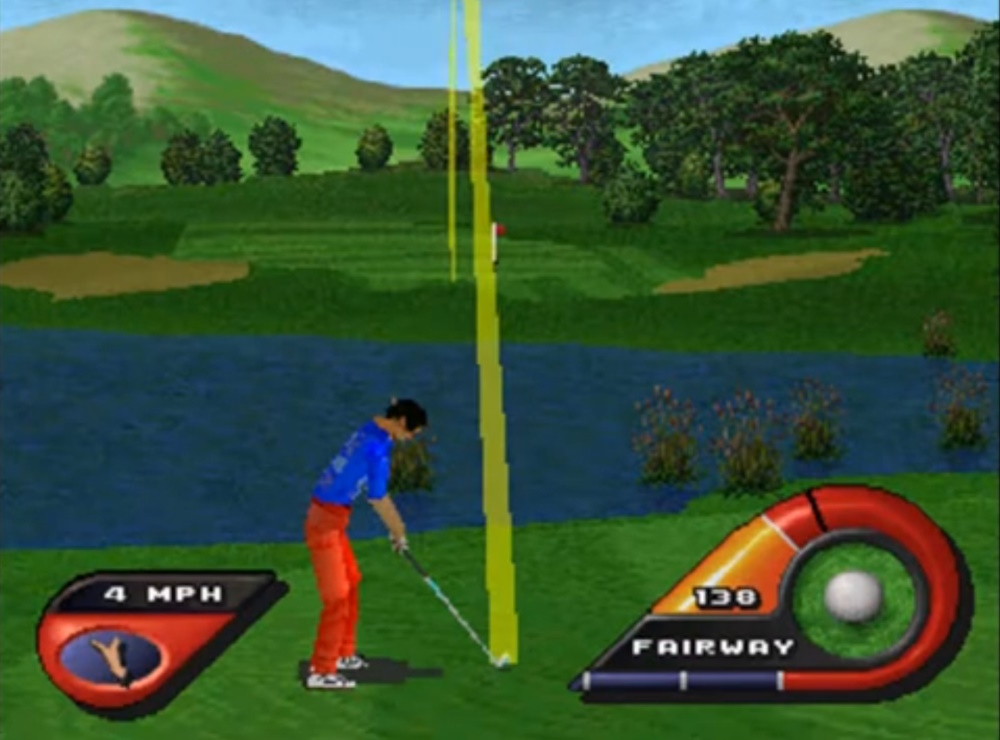
Screenshot of Actua Golf 2 (1997).
Actua Golf 2 was released for PC and PlayStation in 1997.

When the Nintendo Wii came along in 2006, I was on a long waiting list for a console. Even in those days, manufacturers couldn’t keep up with demand! The Wii launched with Wii Sports bundled alongside, and one of the events included was golf. Tennis and bowling were fun too, don’t get me wrong – and maybe one day we’ll have to take a longer look at Wii Sports! But for now, suffice to say that I had a blast playing golf with my little Wiimote, and of the games included in the package, it was by far the most fun to play on my own. Tennis, bowling, and boxing were definitely games that benefited from having a second player!

Wii Sports was obviously a very different kind of experience from Actua Golf 2, with a much more arcadey, casual feel. Using the Wii’s motion controls felt gimmicky at first, I must admit, but even though due to my declining health I could only play while seated, I still had fun with it. Nintendo really nailed the whole “casual game” concept with the Wii, and the nature of golf makes it a great sport to use for a gentler, less intense experience. It still took full advantage of the Wii’s motion control system, but in a completely different way from the tennis or boxing games.
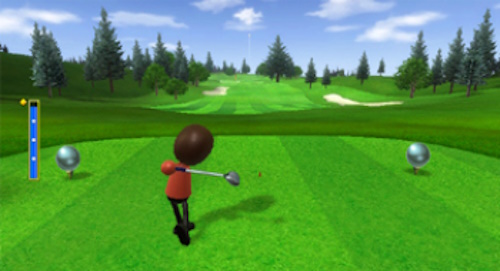
Promo screenshot of Wii Sports (2006).
Wii Sports was a ton of fun!

I’ve never been a particularly sporty person in real life. Even as a kid, when I wasn’t bedevilled by health issues and disability, playing sports wasn’t something that held a great deal of appeal. I played rugby at school – but only when forced to in PE lessons – and as a kid, football was regularly played at one of the clubs I attended. But the rest of the time, I’d have my nose in a book or I’d be doing other things. One kid I knew at school had a dad who played golf regularly, but I never went to the course with them. The closest I’ve ever gotten to playing a real round was when I went to the mini-golf course!

All of this is to say that I have a weird history with golf and golf games! It’s not a sport I care about in the slightest, and if you asked me to explain what the difference is between a wedge and an iron, or who the current champions are on the world tour, I wouldn’t have the faintest idea. But as a casual gamer, and as someone who enjoys slower-paced, “cosy” gaming experiences, I find golf games fit the bill. And that’s how I came to spend much of the first half of 2024 playing EA Sports PGA Tour on my PC.
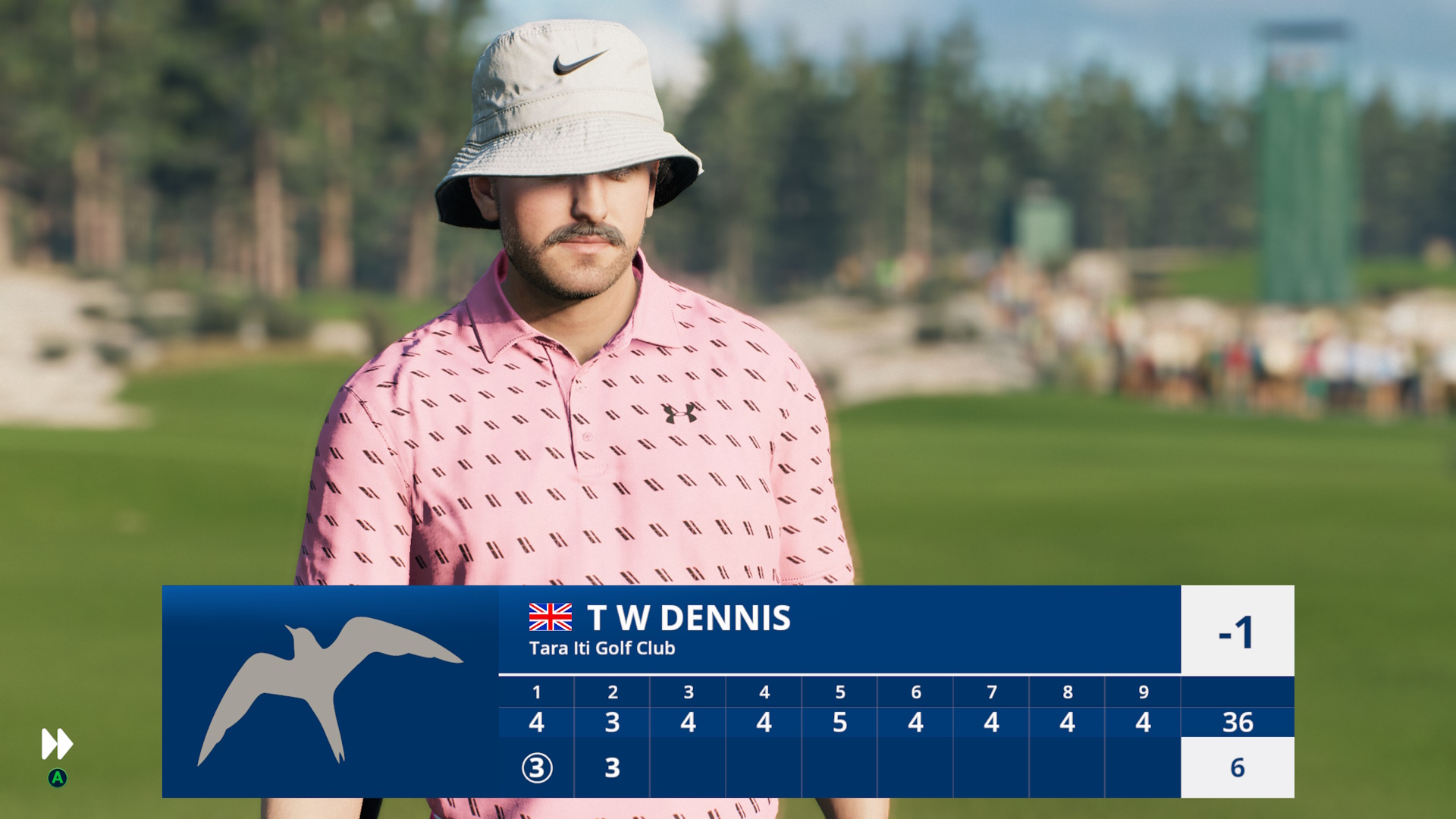
Screenshot of EA Sports PGA Tour (2023) showing a close-up of the player character.
It’s true… I’m a golfer.

I’ve been a subscriber to Microsoft’s PC Game Pass service for a couple of years now, and having that subscription has felt like a pretty good deal most of the time. I got to play games I never would’ve purchased for myself – especially at full-price – thanks to Game Pass, and I’ve even tried out titles that wouldn’t have even been on my radar. Not all of them have been “my thing,” and there have been some disappointments with Game Pass along the way, too. But by and large, I’m someone who’ll speak positively about Game Pass. In my opinion, it’s a great way for players on a budget to get into current-gen gaming.

But I think we’re slightly off-topic!

Microsoft has a deal with Electronic Arts that has brought more than eighty EA games to Game Pass. I don’t think Game Pass gets the most up-to-date versions of all of EA’s sports games – the likes of EA Sports FC and the Madden American football titles don’t seem to join the service on release day. Don’t quote me on that, but I think that’s how it works. Anyway, one of the EA sports games that has recently joined the Game Pass lineup has been the aforementioned EA Sports PGA Tour. And although it had been a while since I last played much simulated golf, I thought I’d give it a whirl.
EA Sports logo.
Microsoft and Electronic Arts have a deal that’s brought a number of EA Sports titles (and other EA games) to Game Pass.

I don’t play a lot of sports games or even really games published by Electronic Arts. And it’s definitely worth taking a detour to talk about just how over-monetised EA’s sports franchises have become. FIFA – or EA Sports FC as it’s now known – has become notorious for its random in-game gambling, and for selling expensive items and in-game “points,” but I confess that I was surprised to see how corrupt PGA Tour is in that regard, too. I’m not an online gamer, but even in PGA Tour’s offline mode, spending in-game currency is required to get all but the most basic golf clubs and outfits for the player character, and there are plenty of “XP boosters” and other single-use items to briefly improve your stats.

An article or essay on the shocking state of microtransactions is long overdue here on the website. But for now, suffice to say that I find these things offensive. A simple piece of clothing like a hat or a pair of shoes, or basic cosmetic equipment like different ball colours or club designs – none of which have any impact on gameplay – are not things that should be locked behind a paywall. In-game currency is “earned” at an impossibly slow rate when playing in single-player mode, and PGA Tour also employs a storefront that only carries a handful of items at a time – presumably to heighten the need for players to pay extra for in-game currency for fear of missing out. These psychological tricks are manipulative and obscene, yet they’ve become so common in modern titles that I doubt any player would even bat an eye at the state of a game like PGA Tour any more.
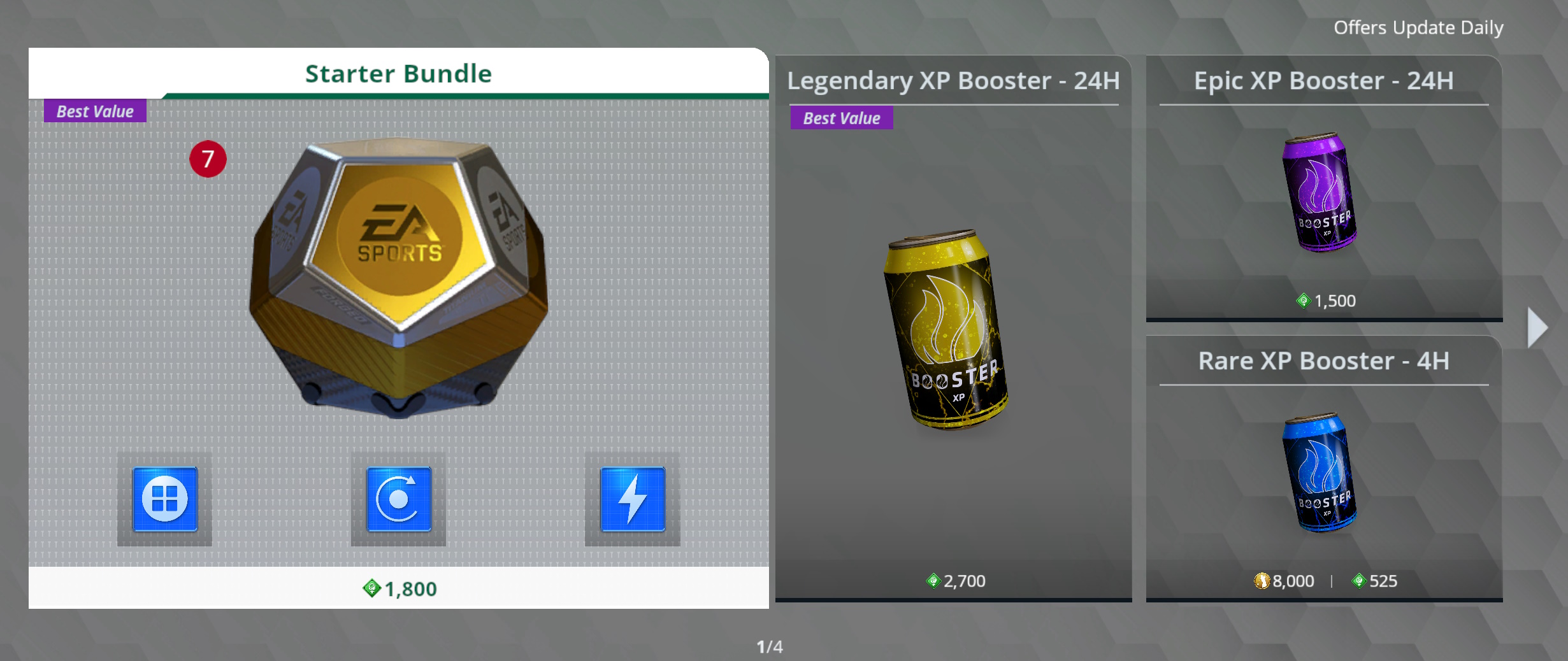
Screenshot of EA Sports PGA Tour (2023) showing the in-game storefront.
Part of the in-game microtransaction shop.

I enjoy a game with good customisation options, and a title like PGA Tour – where you see your character all the time from a third-person perspective – should be one where changing outfits and trying on different shirts, hats, and golf club designs simply adds to the fun. EA has chosen to monetise this as much as possible, providing a meagre selection of basic cosmetics at the start of the game and effectively locking the rest behind an expensive paywall. I get it: this isn’t The Sims or a role-playing game where outfits and costumes are a huge part of gameplay. But the fact that these basic items are unavailable except to players who are either willing to grind through a bunch of deliberately awkward challenges or pay up… it makes me angry, to be honest. And as we’re going to talk about, that’s not what I come to a golf game for!

When the Star Wars Battlefront II debacle exploded a few years ago, I really thought that the industry might be about to turn the page on microtransactions and randomised lootboxes. The backlash to that game was so intense that even governments started getting involved, and it seemed for a brief moment as if genuine change was a possibility. Slowly, though, the greedy corporations at the top of the industry have kept pushing, and microtransactions in games today are at least as bad – and in some cases, are much worse – than they ever were in Battlefront II. For me, PGA Tour is a disappointing example of this – but I’m sure you can think of a great many others.
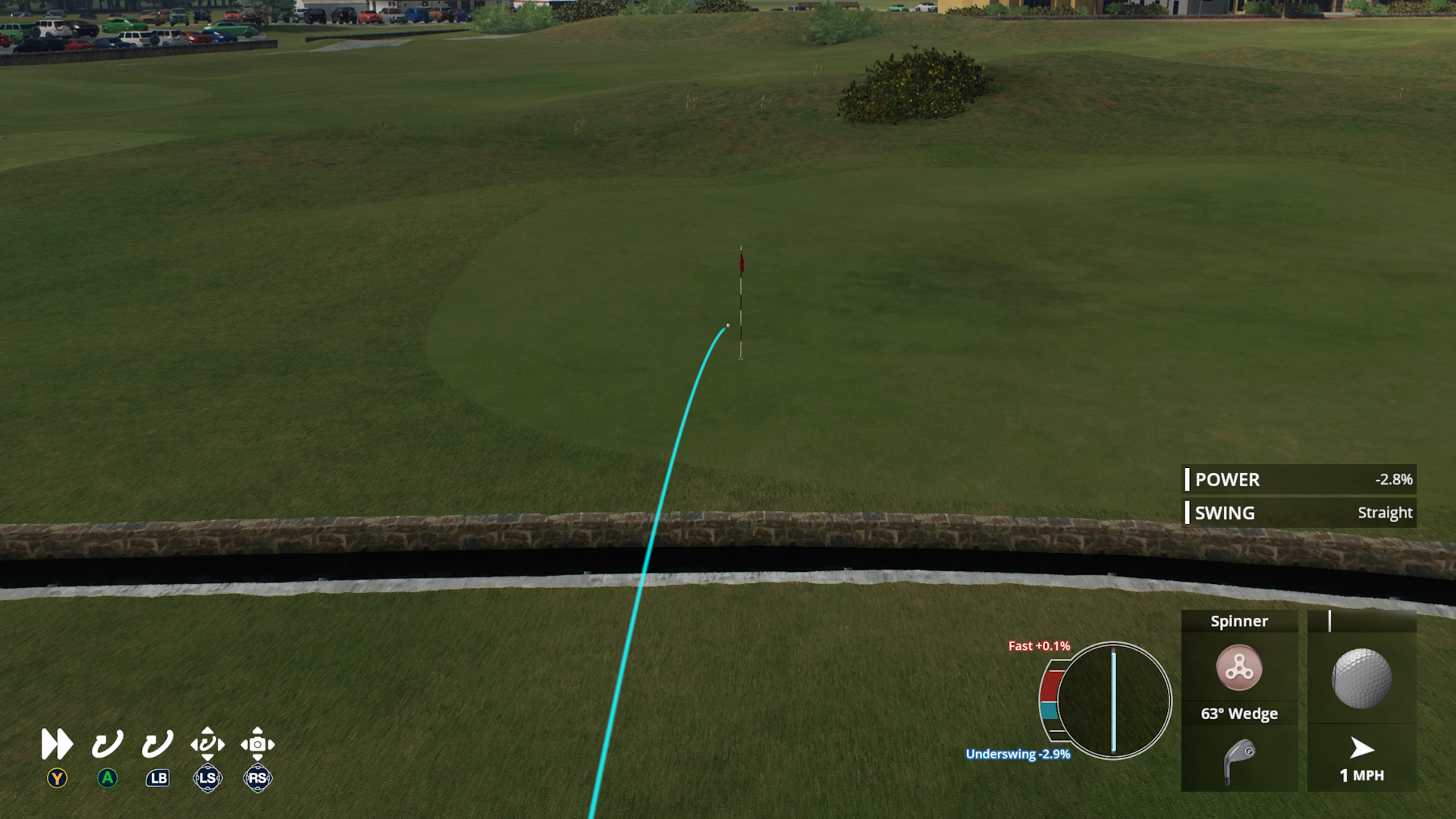
Screenshot of EA Sports PGA Tour (2023) showing a golf ball making its way to the hole.
A golf ball in flight.

However, when I step away from the microtransaction marketplace… I gotta admit that I’m having a lot of fun playing EA Sports PGA Tour. There are some things about the game that I don’t like, sure, but by and large it’s recapturing that feeling that I used to get from Actua Golf 2 almost thirty years ago. It’s gentle, more often than not relaxing, but still a game that poses a challenge and that requires some thinking. Button-mashing won’t get you very far – and that’s something I appreciate!

I’ve mentioned this before here on the website, but I suffer from arthritis that affects my hands and fingers. My dominant hand has been made worse this past year after I suffered several broken bones in a fall, and I find that my ability to make frame-perfect button presses or complicated multi-button combos is greatly diminished. I was never the world’s best gamer by any stretch, but my abilities continue to decline thanks to health-related issues. Faster-paced titles like fighting games or first-person shooters are increasingly difficult!
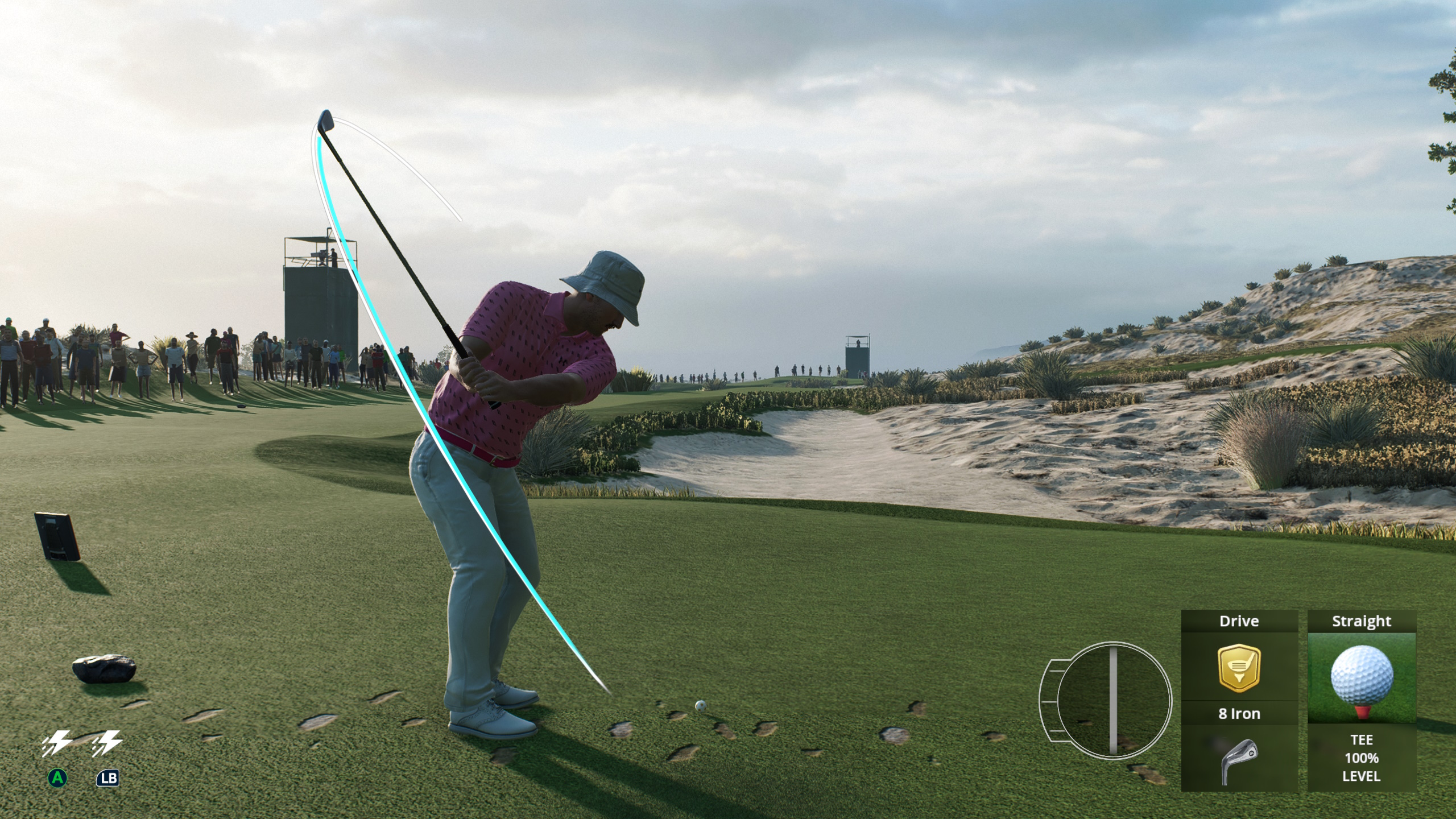
Screenshot of EA Sports PGA Tour (2023) showing a golfer swinging their club.
Swinging the golf club.

One thing I’ve enjoyed about playing PGA Tour is how few buttons I need to press and how I don’t have to continuously grip the control pad. The default control scheme when using a control pad involves pulling back and flicking one of the analogue sticks to swing the club and strike the ball, and I actually really like this method. It feels interactive; like a half-step (or a quarter-step, I guess) between the simple button presses or mouse clicks of older golf games and the full motion controls of the Wii. And most importantly from a selfish point of view: it’s something I can do without pain!

That’s not to say I’m especially good at it; my timing can still absolutely suck! But controlling a golf game this way feels surprisingly intuitive. I know I’m probably a decade late (or more) with this compliment, but I really enjoy what this control scheme has done for what was already a fun experience. After lining up my shot, I like that I can set the controller down and really focus on getting my “swing” just right!
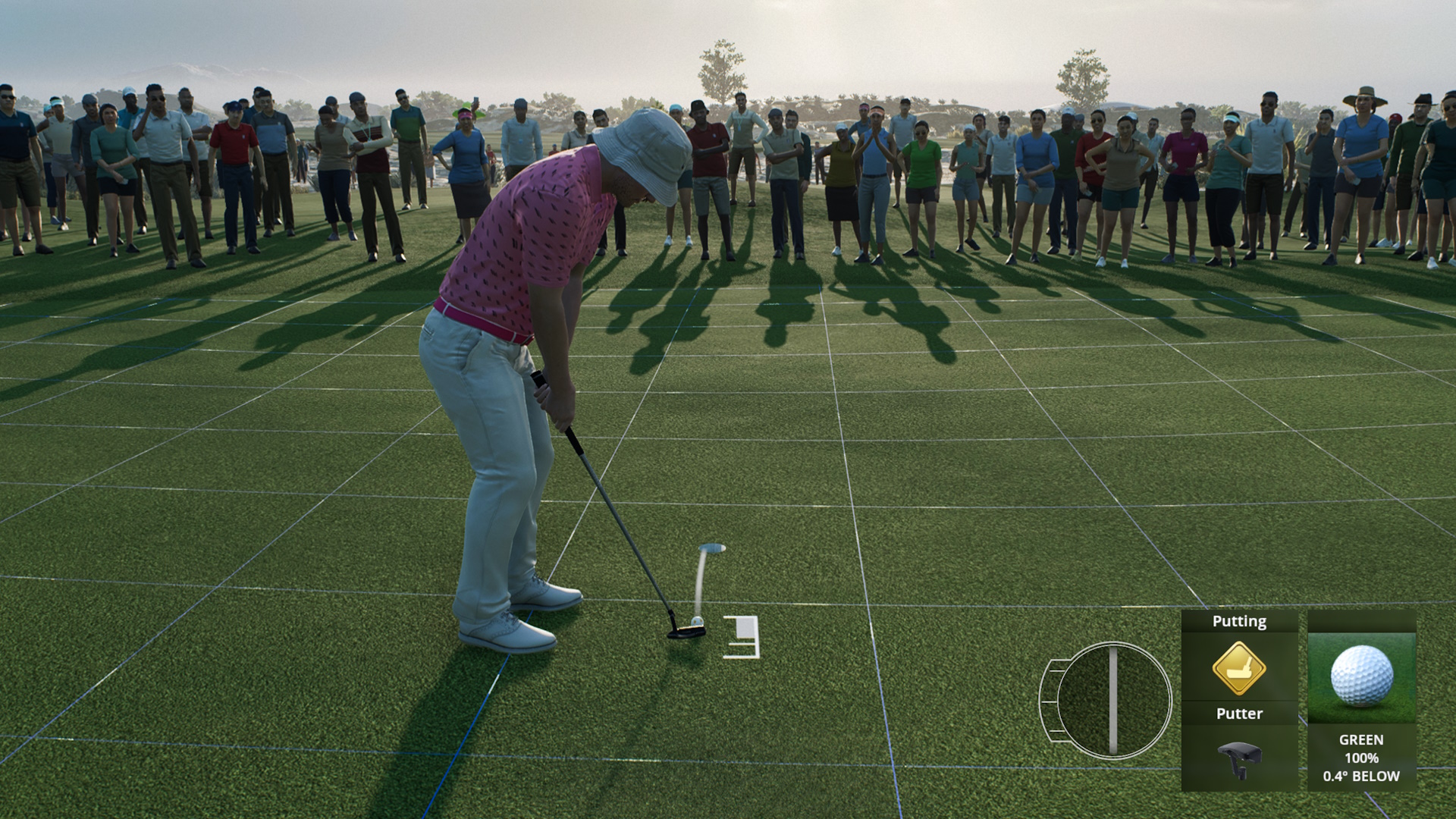
Screenshot of EA Sports PGA Tour (2023) showing a golfer putting.
Putting the ball.

There are a good number of golf courses in PGA Tour, and these range in terms of difficulty. I think there’s perhaps an overabundance of courses in the United States, and this comes at the expense of other parts of the world. There are no courses at all from Asia, Africa, or South/Central America, for instance, and only one each from France, Italy, New Zealand, Canada, and the Dominican Republic. If PGA Tour is still being supported and updated, adding a handful of new courses from different parts of the world would be a nice touch.

There is diversity of environments in the courses on offer, though, with courses built in desert locales, mountains, and on coastlines all being present. And all of them are rendered beautifully.
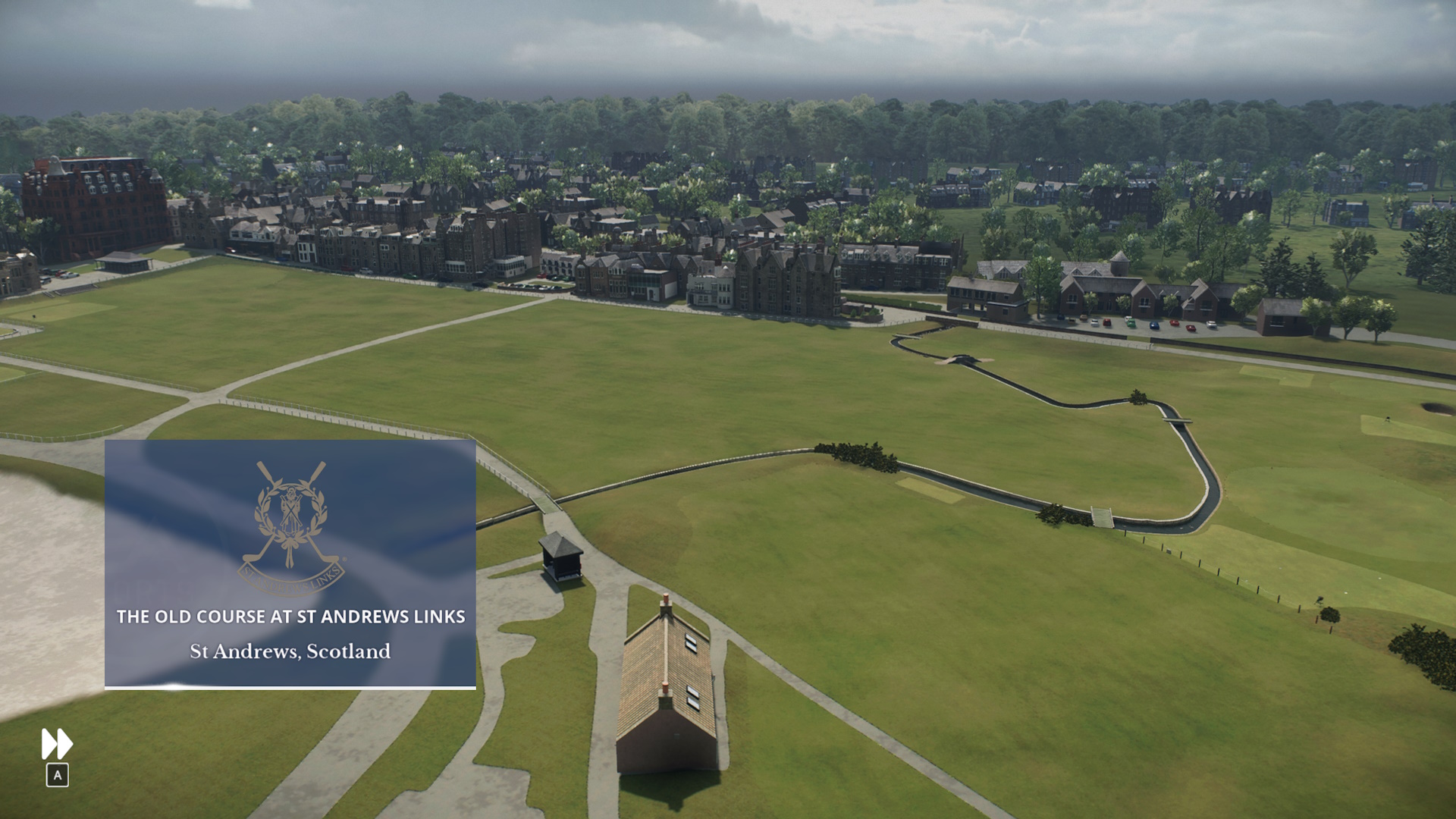
Screenshot of EA Sports PGA Tour (2023) showing a flyover of St. Andrews.
St. Andrews: the home of golf!

PGA Tour is nothing special when it comes to the way human characters look, and facial expressions in particular can be pretty lacklustre. Nothing about the way people look feels current-gen, and some of the crowds can actually feel quite outdated in terms of both appearance and their simplified, copy-and-pasted animations. Player characters look a bit better, but still unspectacular. Compared with what we know is possible on current-gen hardware, there’s a lot of work to do for the next iteration of this series!

But the courses themselves are something else. They look outstanding, with grass, trees, plants, and even water being beautifully recreated. Running on my PC, with an RTX 3070 Ti graphics card, these courses have all looked absolutely fantastic, and sometimes it’s been fun to just watch the flyover of each hole and take in the setting. I’m never gonna get invited to any of these fancy places, so seeing them digitally recreated is the closest I can hope to get! Thankfully, PGA Tour does a good job.

Screenshot of EA Sports PGA Tour (2023) showing a flyover of TCP Scottsdale.
There are some beautiful courses in PGA Tour.

I think the beautiful and realistic courses are another reason why playing PGA Tour has been so relaxing for me over these recent months. Getting lost in a digital setting isn’t always an easy feeling for any game to conjure up, so when a title can bring its environments to life like this… it really is a thing to see. I don’t think we’re at quite the same level of graphical beauty as a title like Kena: Bridge of Spirits or Red Dead Redemption II managed… but it’s not a million miles away.

As with many other sports games, PGA Tour features commentary from real commentators. I confess that I had no idea who any of them were before playing the game, but I daresay folks who regularly watch golf events on television will, and the inclusion of familiar voices in the commentary box will be another fun addition. One thing I’ve enjoyed about the commentary in PGA Tour is how the commentators will share their knowledge of not only each course, but most of the individual holes as well; rather than just commenting on events as they unfold, that little bit of extra information at the beginning is neat.
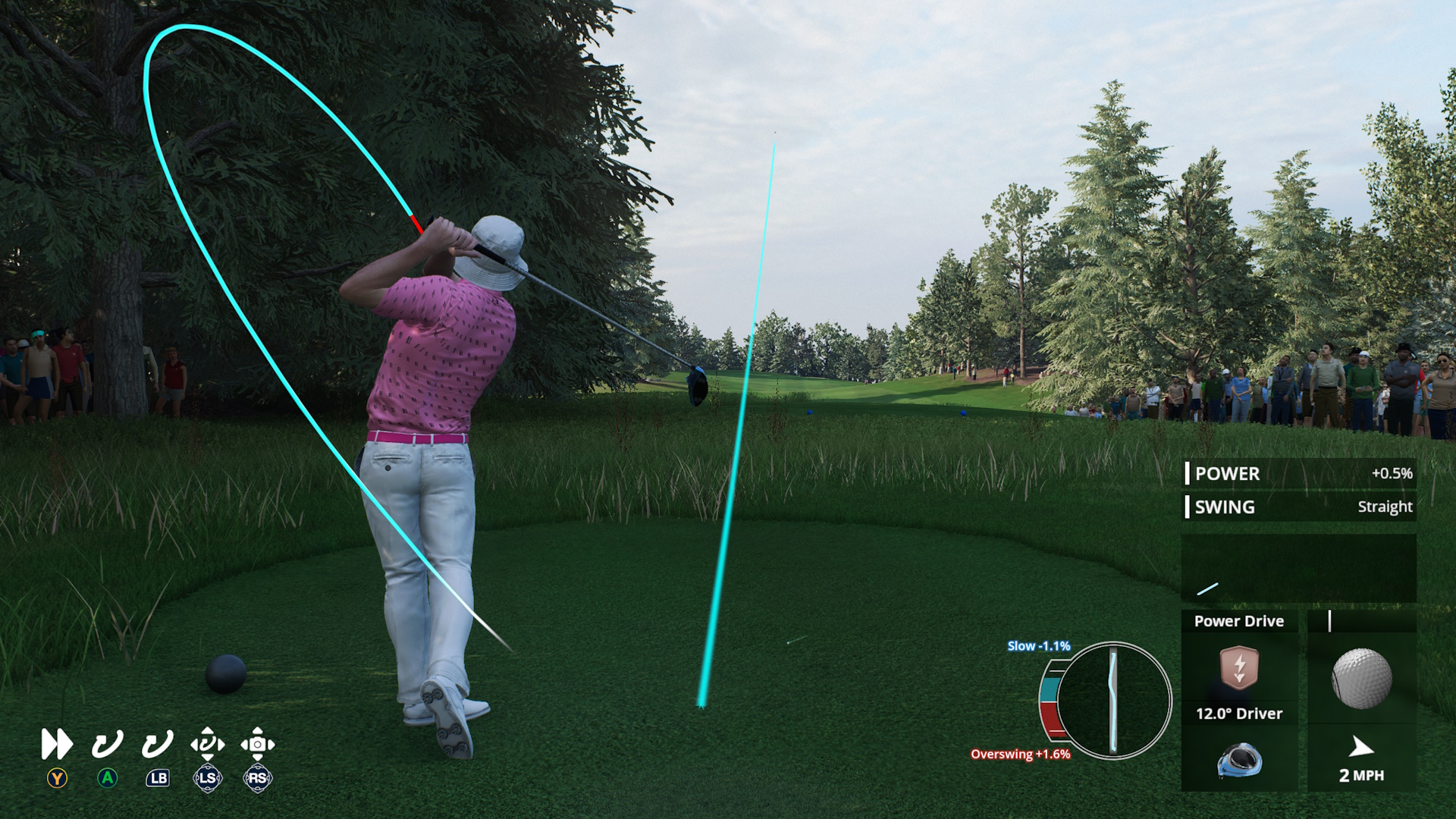
Screenshot of EA Sports PGA Tour (2023) showing a golfer teeing off.
It can be worth listening to what the commentators have to say at the beginning of each hole.

There are places where the commentary is limited, of course – as you’d expect from any sports game, really! I find that I hear a few lines repeated quite often, and in some situations the game only has a single line from the commentators, so there isn’t always a lot of variety. If, like me, you regularly miss your longer putts and end up having to take an extra shot, well… be prepared to hear the commentators take note of that. Over and over again!

Jokes aside, I’ve been having a fun time with PGA Tour. It reminds me of playing Actua Golf 2 way back when, and it’s been both an entertaining challenge and a surprisingly relaxing experience. I would never have chosen to go out and buy a golf game, but when I was browsing Game Pass it leapt out at me, and I’m glad I gave it a whirl. It’s not gonna be anyone’s “game of the year” or anything like that – not unless you’re a hardened golf fanatic! But I’ve sunk quite a few hours into the game by this point, and in spite of some limitations and a downright aggressive in-game storefront, I’ve had fun.


All titles discussed above are the copyright of their respective studio, developer, and/or publisher. Actua Golf 2 and Wii Sports are currently out of print, but second-hand copies are often available for purchase. EA Sports PGA Tour is out now for PC, PlayStation 5, and Xbox Series consoles. This article contains the thoughts and opinions of one person only and is not intended to cause any offence.
Starfield: Further Thoughts

Spoiler Warning: There are spoilers ahead for Starfield’s main quest, including its ending.

I have to confess that I haven’t played a lot more of Starfield since I last shared my thoughts on the game, its flaws, and how Bethesda might want to respond to some of the biggest points of criticism. But as I’ve sat with the game in the month since it released, I’ve found a few more things to say that I didn’t get to mention in either of my two big post-launch pieces about Starfield. It’s these points that we’re going to talk about today – and if you ignored the spoiler warning above, please know that we’re going to discuss the ending of the main quest and Starfield’s New Game Plus mode.

I feel that Skyrim’s unprecedented success changed something at Bethesda. The company ceased viewing its games as individual stories to be created, completed, and published, and instead began seeing all of its projects as ongoing, long-running experiences. Because Skyrim remained popular for years after its release, Bethesda seems to have internalised that and expected it to become the “new normal,” deliberately taking steps to build all future games with that goal in mind. We saw that most obviously with Fallout 76, but I’d argue very strongly that it happened with Starfield as well.

Starfield has landed…

In a recent interview with Insomniac Games (creators of Marvel’s Spider-Man, among other successful projects), Bethesda executive producer Todd Howard said that Starfield was “a good base of a game to build upon,” referencing the company’s plans for future DLC and additional development for years to come. This isn’t the first time we’ve heard of talk of years-long plans for Starfield. In fact, it seems that building a kind of single-player live-service title was one of Bethesda’s main objectives when developing the game.

My question is this: was Starfield screwed over by this idea?

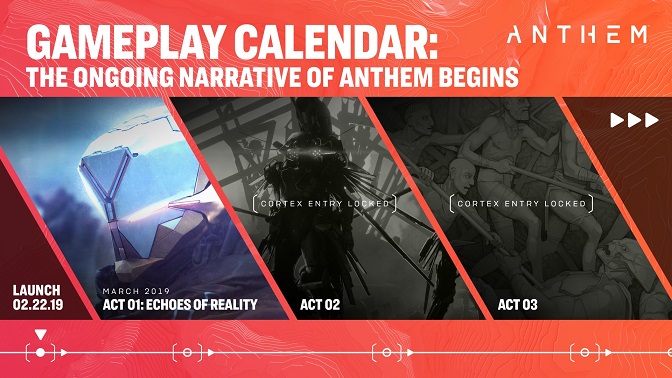
Find me a recent game that billed itself as having a “ten-year plan” or a “five-year roadmap” that actually went the distance. Whether we’re talking about the likes of Anthem, Marvel’s Avengers, or Halo Infinite, many titles have come along promising something like this – only to fail to deliver. Games that genuinely last a decade or more are seldom planned that way; titles like Fortnite, Grand Theft Auto V, or Skyrim are lightning in a bottle. These one-off games succeed for almost unquantifiable reasons – and a massive amount of luck. Corporate planning to replicate that kind of once-in-a-generation level of success has almost never worked. Massive developers like Rockstar have faltered, and even some of the biggest brands and properties on the planet, like Marvel, have been unable to make a “five-year experience” work.

Anthem’s “roadmap” of content that was supposed to be added to the game.

And I can’t help but feel echoes of the likes of Anthem in Starfield. Parts of the game feel barebones and incomplete, as if waiting for future “content drops” and updates to round things out. There are plenty of missions and quests to get stuck into in Starfield, for example, but where are the cosmetics and skins? Why are there so few weapon styles, outfits, skins, and the like? I said when I wrote up my first impressions of Starfield that I was pleased to see the game wasn’t being excessively monetised… but looking at the lack of cosmetic variety and skins, it seems pretty clear that Bethesda plans to add these as paid-for DLC.

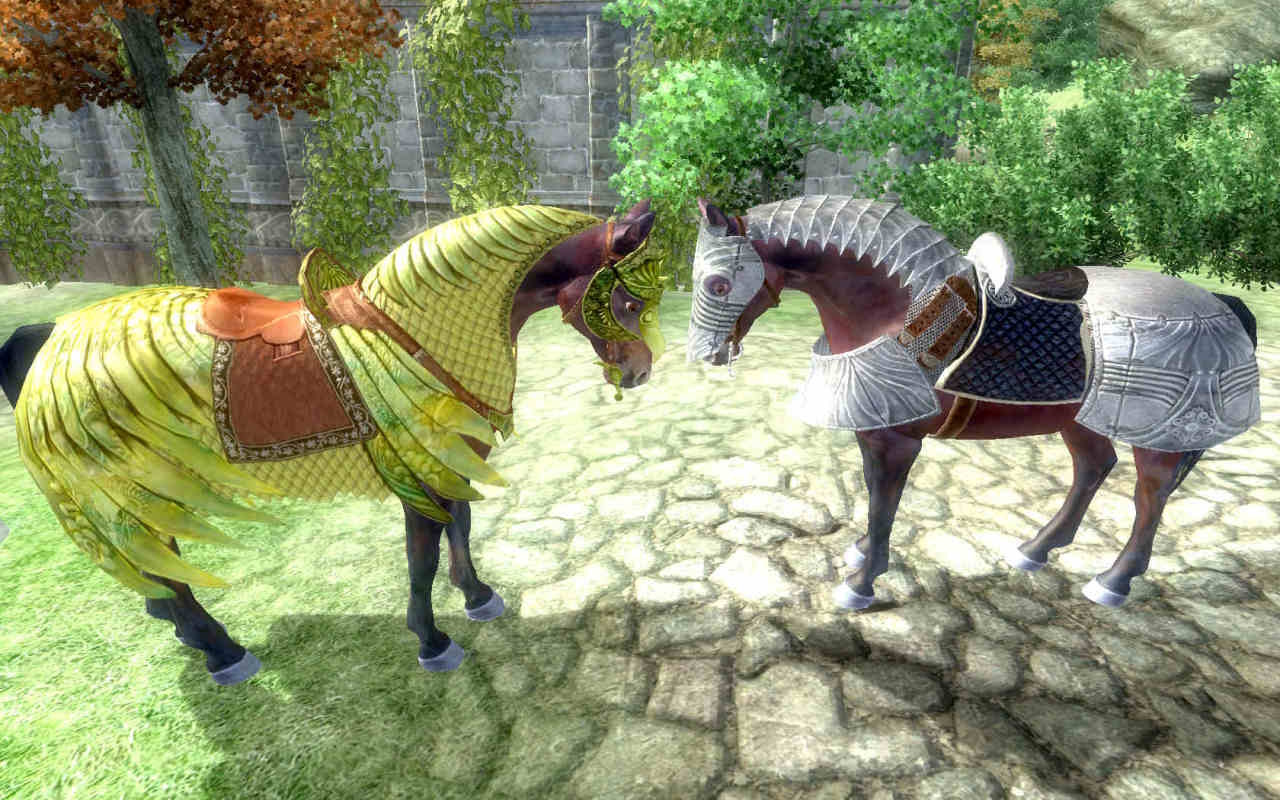
The corporation is no stranger to this. In fact, I’d argue that Bethesda is actually one of the guiltiest parties in the entire games industry when it comes to microtransactions – especially in the single-player space. Oblivion’s infamous horse armour DLC in 2006 was one of the most notorious examples of bad value cosmetic DLC in a single-player game, and one of the first to attract mainstream attention. Other companies saw Bethesda essentially getting away with it, and a truly unfortunate trend accelerated.

Oblivion’s horse armour DLC was released in 2006.

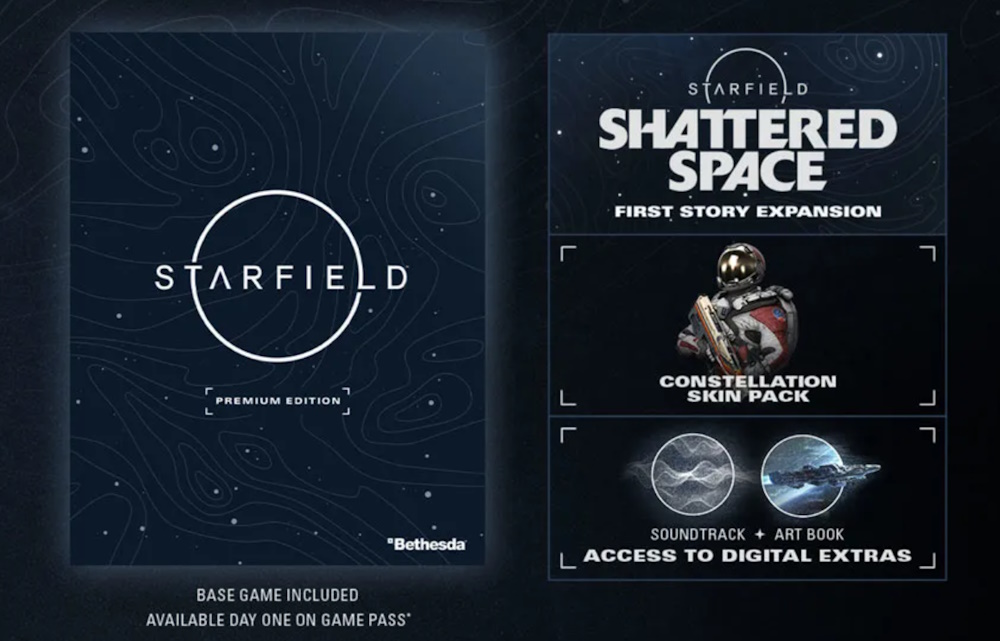
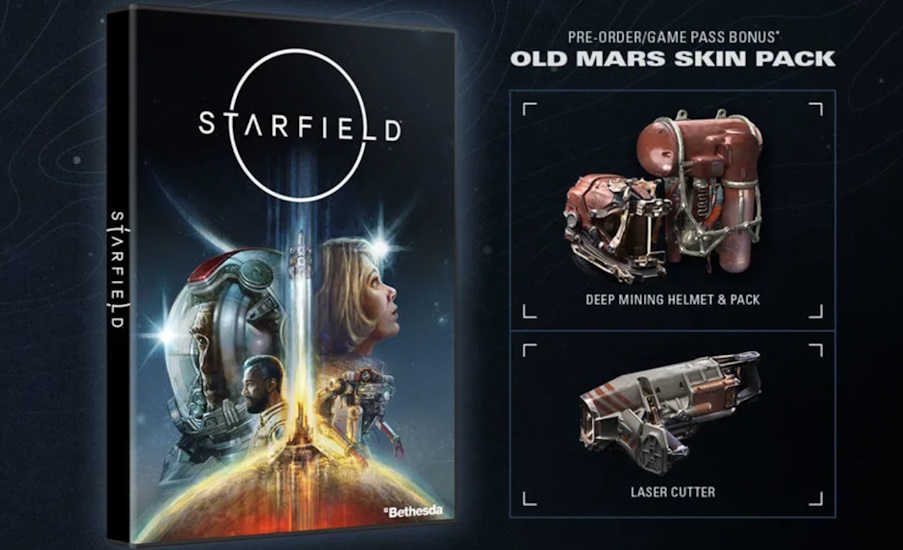
At time of writing in October 2023, the only skins available in the game come from expensive pre-order or premium editions of Starfield. That’s already a red flag, in my opinion, and it seems all but certain that future skins will also only be available as paid add-ons.

Starfield could look very different in six months or a year from now, with in-game purchases that could easily push the cost of the complete game closer to £200. Remember that in order to get the currently available skins, and pre-order Shattered Space, players are already having to fork over £100 to Bethesda for Starfield’s premium edition, so £200 when additional skins and cosmetics have been released doesn’t even seem like a stretch. By the time Bethesda finally stops working on Starfield altogether in the years ahead, the full price of the game plus all of its DLC and additional content could run to far more than that.

Skins are currently available as pre-order and special edition bonuses only.

So I’m rescinding my “doesn’t feel excessively monetised” statement from my earlier piece. Starfield feels like a game that’s being primed for additional monetisation – and rumours of paid mods have not escaped my notice, either. Paid mods will have to be the subject of a longer piece one day – but suffice to say for now that I’m not a supporter of them in any way, shape, or form.

Bethesda took a risk by turning Starfield into a single-player live-service title, and while I will say that the “base” version of the game still has a lot on offer – for people who are still interested in Bethesda games and the way they design their quests – I’m not sure it was the right decision. Building a good game with fun gameplay and an engaging story should have been priority number one – but it feels like both of these things took a back seat. Planning for a decade’s worth of add-ons and extra content became Bethesda’s main ambition. I’m not convinced all of these planned pieces of DLC will see the light of day.

This is where skins will appear – when Bethesda is ready to begin selling them.

When I really dig down, Starfield’s biggest issue for me personally isn’t actually that its gameplay feels outdated and uninspired. It’s that the game’s story just didn’t grab me and the worldbuilding was so bland and uninteresting that I didn’t care to spend any more time in it. The world of Starfield feels small, flat, and boring – and when the gameplay backing it up was lacklustre too, I couldn’t find a way to make progress. I’m someone who’ll happily play through some absolutely bog-standard gameplay if I’m enjoying a story or getting lost in a fictional world, but with Starfield offering neither an entertaining story nor an engaging world… sticking with the game lost its appeal.

I looked up spoilers online to see what happens further along Starfield’s main quest. I was bored to tears playing it, but if it picked up later on I thought I might be able to push through to get to the promised moment where the game would finally “get good.” But what I read actually surprised me – and I ended up feeling glad that I didn’t waste any more hours of my life playing through the story.

One of the artefacts at the heart of the game’s story.

What is one of the most basic pillars of storytelling? Any narrative needs a beginning, a middle, and an end. If a story revolves around a big mystery, solving that mystery is absolutely key to making it feel complete. Starfield’s writers chose to ignore this absolutely fundamental rule of narrative construction, and the result is that the game’s main story seems like it comes to a deeply unsatisfying “end.”

Starfield began by setting up a mystery: what is this artefact? What does it do? And who made it? Then the game introduces us to a team of people dedicated to figuring it all out. There are major structural weaknesses on this side of the story – like what anyone involved in Constellation actually does or has been doing for the past thirty years prior to the player character showing up – but that’s somewhat beside the point. After a series of glorified fetch quests that see us chasing different artefacts across the galaxy, Starfield introduces two antagonists and magical powers that we can learn… but then the story ends without explaining anything about what the artefacts were or who created them.

Starfield’s main story has a deeply unsatisfying ending – and the journey to get there isn’t much fun either.

Failing to solve the key mystery at the heart of the narrative, and refusing to even answer the most basic of questions about that mystery, ignores one of the fundamental tenets of storytelling. It makes the whole story – which then begins again in a weird kind of cyclical manner – feel incomplete and frustrating.

It seems to me that this aspect of the game – starting over by “travelling to an alternate reality” – is nothing more than a narrative gimmick to allow Bethesda to put a New Game Plus mode into Starfield.

And why would Bethesda want to add such a feature? None of the company’s previous titles included New Game Plus, after all. Oh, that’s right: because Starfield was built to be a “ten-year experience” rather than a complete game, and New Game Plus feels like an easy way to keep players engaged for longer.

I couldn’t even get through the game once

So we come full-circle, and I think we can reasonably make the case that Starfield has been harmed in more ways than one by Bethesda’s insistence on planning for the long-term at the expense of the short-term. Maybe Shattered Space, or some additional piece of DLC in the future, will resolve Starfield’s big mystery. And maybe, if that happens, the main story of the game will feel complete and worth experiencing. But if the best possible spin I can put on Starfield is that it’s an incomplete experience that needs additional content to actually feel like its story has a proper ending… that’s not great. It makes it feel no different from dozens of other incomplete live-service games.

I usually avoid live-service titles, and I do so for one basic reason: I don’t like to play an incomplete game. If a film or season of TV ends on a cliffhanger, with promises of a resolution to come next time, that’s one thing. But Starfield isn’t a film or a TV show, it’s a single-player game that shouldn’t depend on future DLC or updates to actually complete its main story.

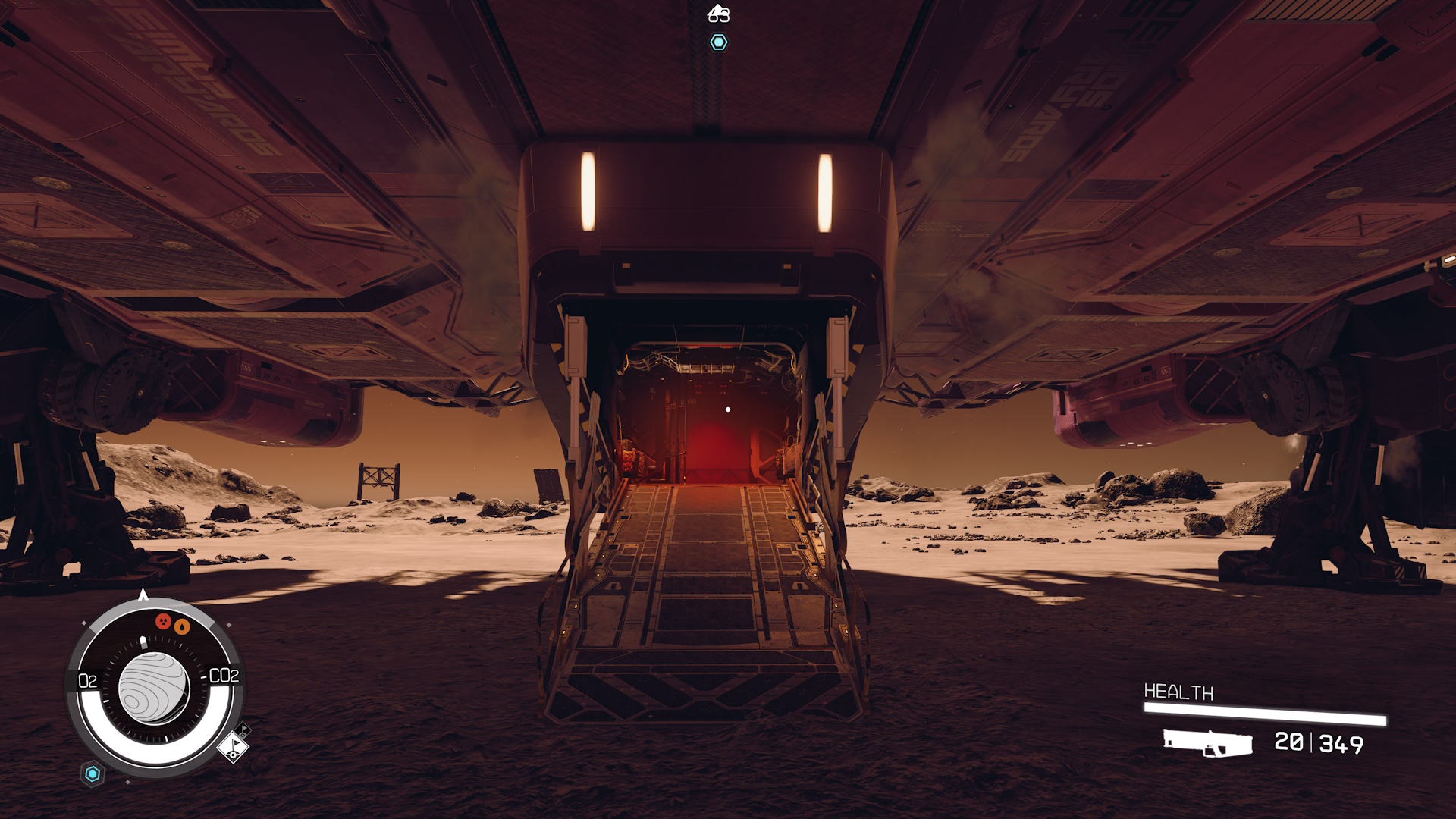
Ready for boarding?

The longer I’ve sat with Starfield, the further the game has slipped down in my estimation. There are unfavourable comparisons with other recent releases that can’t be avoided, but at its core we’re stuck with a game that feels fundamentally incomplete. As Todd Howard himself admitted, Bethesda made a “base experience” that they intend to build on over the next few years – and that they also expect modders to help with. That might’ve been okay were it not for the outdated and buggy gameplay combined with an uninteresting and bland setting.

So like with other live-service titles, maybe Starfield will be worth revisiting after those promised updates, content drops, and DLC packs have been created. Maybe the “ultra deluxe anniversary edition” will be worth playing in 2030 – so if I live that long, maybe I’ll check it out. But I’ve been wasting my time on a game that, for all of its lofty promises, just isn’t what I’d been expecting. As I said last time: part of that is on me for internalising too much of the hype and excitement that built up in the months before Starfield’s launch. But a lot of the blame lies with Bethesda for creating an uninspiring setting, a bland, incomplete story, and for building a game that feels a decade out of date.

You cannot go that way.

Forget about Starfield becoming a “ten-year experience.” Bethesda needed to catch up on at least ten years worth of improvements and changes in game design and development. Those are the ten years that Bethesda should have been focused on. The company should have been looking at what comparable games in the open-world, action-adventure, and role-playing spaces have been doing since Skyrim launched and worked to incorporate some of those elements into Starfield. Instead, Bethesda took the Skyrim formula, cut out content to introduce later by way of paid DLC and add-ons, and planned for a decade’s worth of content for a game that already feels at least ten years out of date.

I wanted to love Starfield. The game’s overall aesthetic and many of its creative choices looked to create exactly the kind of sci-fi setting that appeals most to me. Blending real-world design elements with some of the sci-fi properties that I remember fondly from years past should have been exactly what I was looking for. I was worried that I was too harsh on Starfield and that I’d been treating the game unfairly or unkindly… but the longer I’ve sat with it the more I’ve seen its “ten-year plan” laid bare. I don’t care for live-services, for incomplete experiences, or for badly-written stories with cheap endings. I think I’m done with Starfield for now – though I will give the caveat that the game could be worth picking up again once its planned add-ons have been released.

Starfield is out now for PC and Xbox Series S & X consoles. Starfield is the copyright of Bethesda Game Studios, Bethesda Softworks, Xbox Game Studios, and/or Microsoft. Some promo images and screenshots used above courtesy of Bethesda. This article contains the thoughts and opinions of one person only and is not intended to cause any offence.

Xbox Game Pass: The DLC Problem

If you’re a regular reader, you might know that I’m an Xbox Game Pass subscriber. I play on PC, not on an Xbox console, but Microsoft’s “Netflix of games” has felt like a good value proposition to me over the past couple of years. I’ve been able to play several big games without having to buy them outright, and in addition Game Pass has introduced me to several titles that I’d never have thought to try for myself. Even though I’m not someone who plays video games every day, I still feel that I get good value for money from Game Pass.

You know there’s a “but” coming, though.

But Game Pass has a problem, and it’s one that might prove tricky to unstick. Although the service includes a good range of titles across different genres, and many brand-new ones join the Game Pass lineup on release day, a lot of these games are incomplete. To use a games industry euphemism: these versions are the “base game” – without any DLC being included.

Game Pass includes a lot of games – but many are incomplete.

There are exceptions to this, such as “game of the year” bundles of titles like Skyrim and Fallout 3 that come packaged with their DLC – but these games, when they exist, tend to be older titles, not brand-new ones. And in the case of Skyrim, while the Game Pass version does include DLC, it’s not the most recent “anniversary edition” that comes with additional content and visual improvements. Figuring out which version of a game is which and what add-ons and DLC come with which one can feel like navigating a maze at times!

This recently came up for me with two games: Starfield and Age of Empires II. I was a huge Age of Empires II fan around the turn of the millennium, and I’ve been thrilled with the Definitive Edition remake that was released a couple of years ago. When developers Forgotten Empires and Xbox Game Studios announced that there was going to be a new piece of DLC for Age of Empires II – one that would bring the original civilisations from the first Age of Empires into the new game – I thought it was something worth checking out.

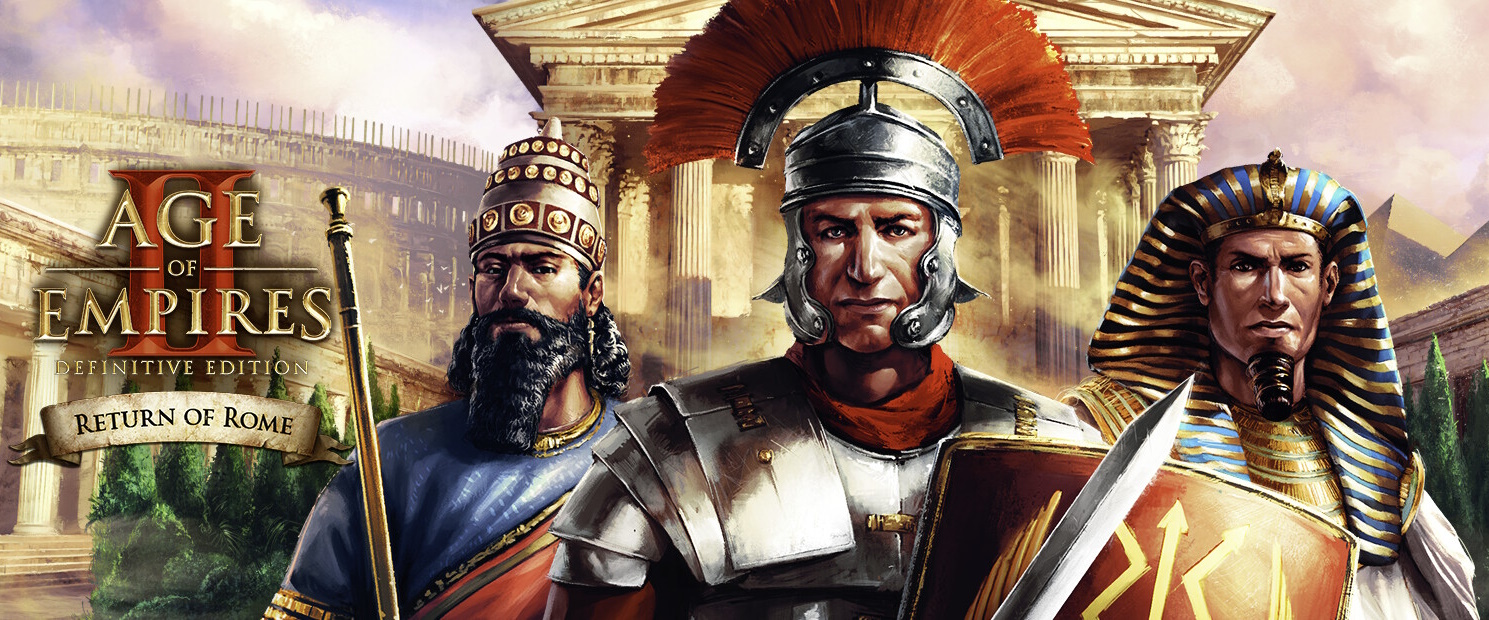
Promo banner for the Return of Rome DLC.

But on Game Pass, the Return of Rome DLC isn’t included along with Age of Empires II. The only way to play it is to buy it – for the not-so-low price of £10. Even with a Game Pass subscription, it would cost a whopping £80 to buy the Age of Empires Collection – a bundle that includes all four games plus their various DLC packs. If I’m paying a subscription fee every month to access this service and these first-party games, that seems ridiculous and excessive.

Starfield, too, has irked me when it comes to DLC on Game Pass. Bethesda’s space-RPG launched on Game Pass not on “day one,” as was promised, but five days later – with those first five days gated off behind a paywall. Five days of so-called “early” access was only available to players who forked over an additional £35 – and I don’t think that should be acceptable. Too many companies have started charging extra to play their games as soon as they become available, using shady manipulative tricks to convince folks to cough up even more money. But paid “early” access will have to be the subject of a longer article in future.

The only way to get access to Starfield’s “story expansion” on Game Pass is to pay extra.

Also included in Starfield’s expensive £35 add-on on Game Pass was the first piece of planned DLC: Shattered Space. This DLC pack isn’t out yet and most likely won’t arrive until sometime next year, but even for Game Pass subscribers, the only way to get it will be to pay up. Shattered Space is described as a “story expansion” for Starfield; a piece of DLC that will add to the story present in the “base” version of the game. I’m beginning to get tired of this – being charged extra on top of a subscription.

The basic problem is this: we all know that most games in 2023 aren’t complete experiences. With a few exceptions, like Baldur’s Gate 3, most games nowadays are deliberately constructed to be incomplete, and to require DLC and “content packs” to make up for these inbuilt, deliberate deficiencies. When Game Pass only allows players access to the “base game,” what that really means is that it’s a service made up entirely of incomplete experiences.

Baldur’s Gate 3 feels like a rare gem in 2023: a game that’s actually complete without expensive add-ons.

Baldur’s Gate 3 is a great game, and I firmly believe it would still be lauded and held in high esteem even if the games industry wasn’t plagued with these problems. But one factor among many in its success, and one of the reasons why it’s being celebrated by players, is that it’s so rare nowadays to see a fully-complete game that doesn’t require expensive DLC or that doesn’t come bundled with an in-game shop and microtransactions. In a broken, greedy, money-grubbing marketplace, games like that stand out.

Incomplete games have become normalised, and that’s been the case for at least a decade. In 2012, Mass Effect 3 was released – and the “base game” had a whole chunk carved out that was sold as day-one DLC: From Ashes. This content, which was developed alongside the “base game” and perfectly integrated into it, was sold separately by EA for an additional fee. Although it remains a particularly egregious example of this phenomenon, it’s far from the only one. Day-one DLC and cut content are everywhere nowadays.

Mass Effect 3 was a pioneer of cutting out content to sell as DLC.

So if it’s increasingly rare that a “base game” can be considered anywhere close to a complete, well-rounded experience, what does that say about a service like Game Pass? To me, Game Pass feels increasingly like those demo discs that used to come stuck to the front of magazines or in cereal boxes in the ’90s. There’s some great stuff there – but if you want to play more than just the “base” version, you’d better be prepared to fork over some additional cash. Maybe £10 for Age of Empires II DLC seems reasonable to you, but £35 for Starfield DLC that might not be released for another twelve months feels like highway robbery.

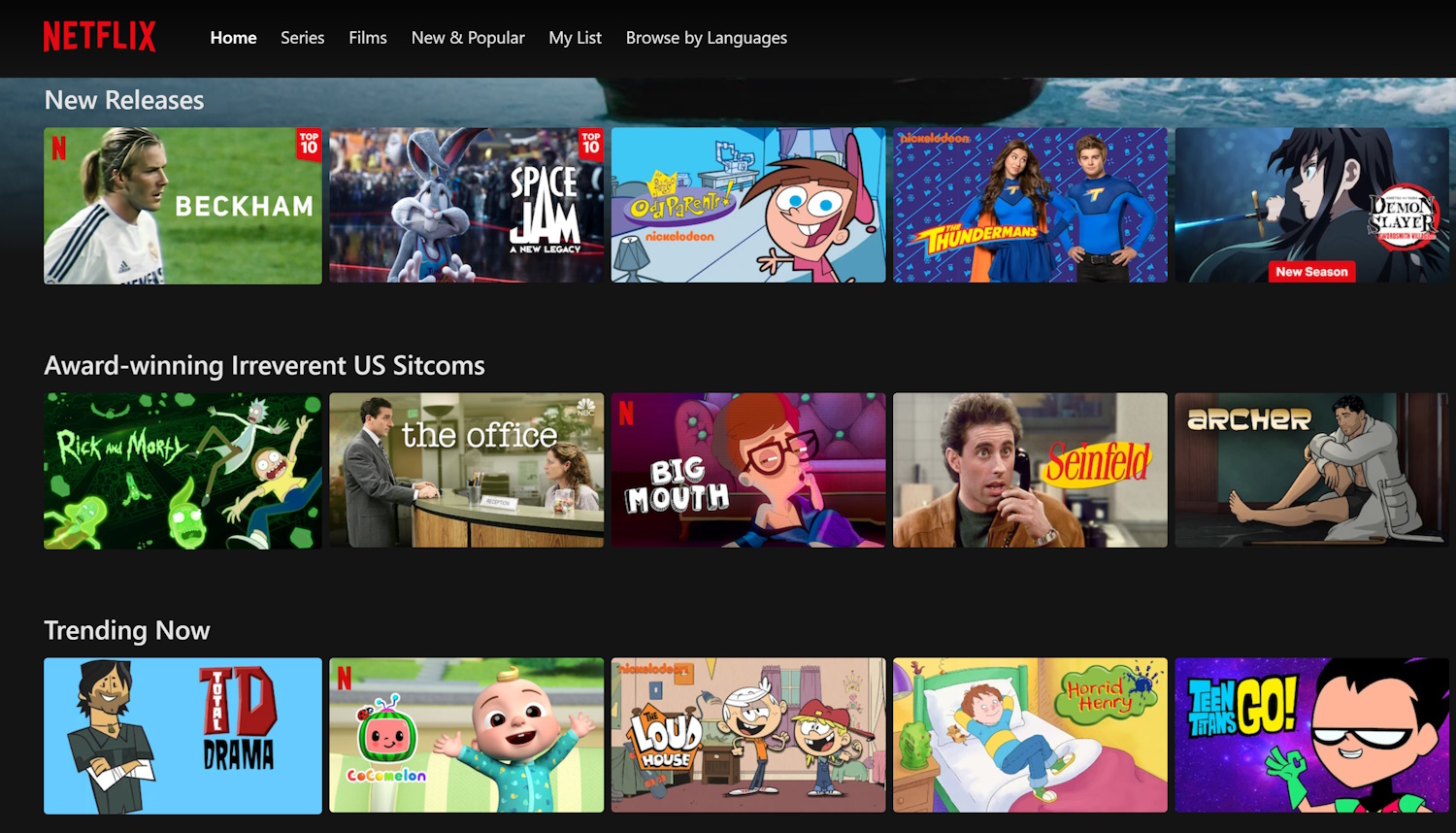
Microsoft wants Game Pass to be “the Netflix of games,” and to transform the way players engage with playing games on its platforms. So let’s take the Netflix analogy as a starting point and consider this question: does Netflix charge extra for additional content?

Microsoft wants to make Game Pass the “Netflix of video games.”

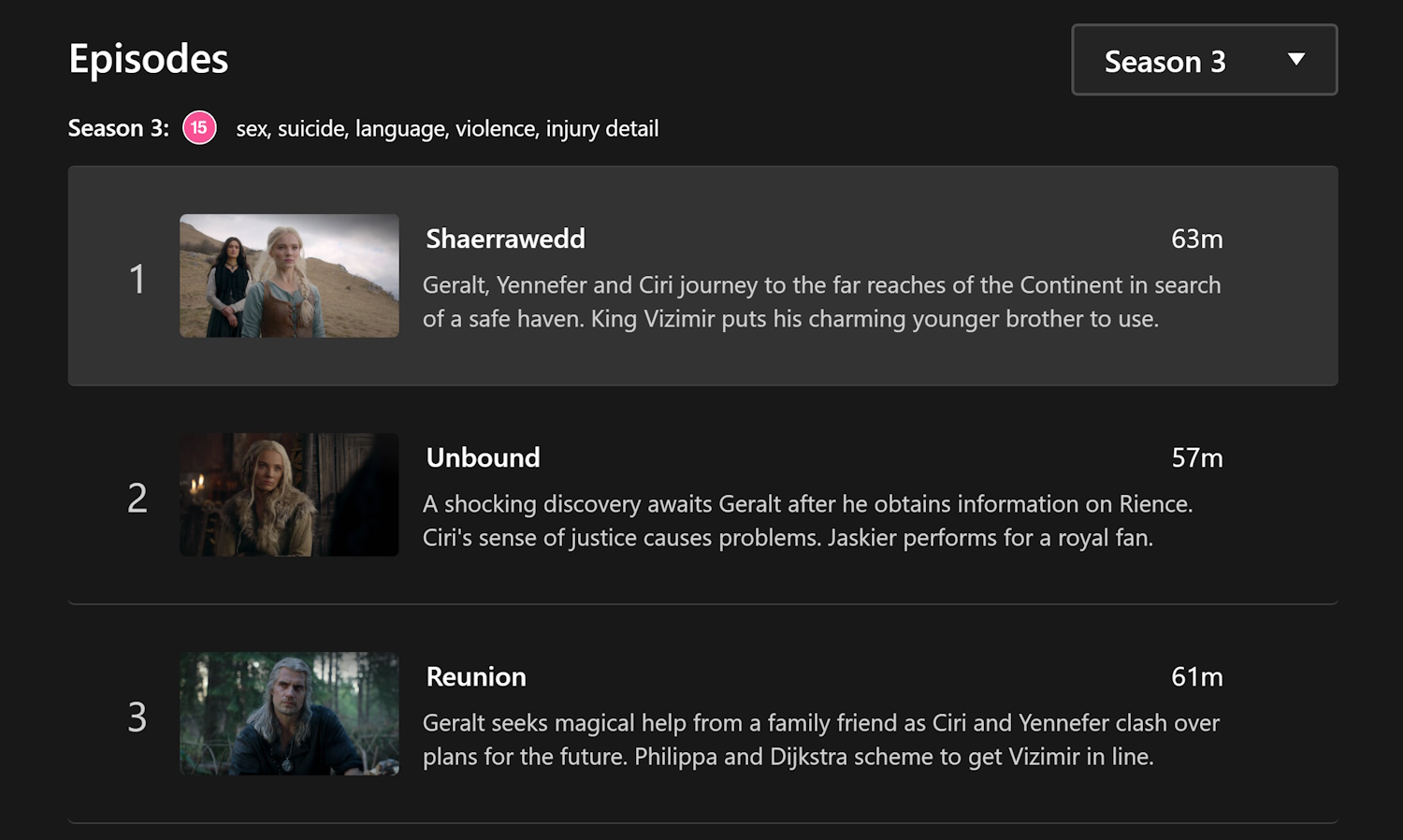
Can you imagine logging into Netflix, excited to watch the second season of your favourite show, only to be told that you need to pay an additional fee? For many games, DLC is the equivalent of “Season 2,” continuing the story, rounding out the experience, and even patching out issues with the game in some cases. No video streaming service could get away with only making Season 1 of a TV series or the first film in a trilogy available to watch, with the rest only accessible for an extra fee. That would be ridiculous.

Having said that, I hope I haven’t given the penny-pinchers at Netflix any ideas!

But you see my point, right? It wouldn’t be possible for a video streaming service to only include some films and episodes in its “base version” and expect to get away with charging extra fees to watch the rest. Customers wouldn’t stand for that – so why does Microsoft think it can get away with doing that on Game Pass?

Imagine if Netflix tried to get away with charging extra to watch the second or third season of a series.

I suppose we should make a distinction between different kinds of DLC, in the interest of fairness. Single-use items in online games, in-game currencies, and maybe even some cosmetic items are the kind of things that could still be charged for separately. I’m not suggesting that Game Pass players should get infinite amounts of these things, especially in competitive online multiplayer games.

But for titles like Starfield with its single-player DLC, and even for Age of Empires II with its new story campaign and factions, I really do believe that these should be included in the cost of Game Pass. What are we paying Microsoft for if all we’re getting are incomplete experiences; games that will become less and less complete over time? The price of Game Pass should go toward the cost of developing DLC for these titles, especially since it’s taken as a monthly charge. There’s no better definition of a “recurring revenue stream” than that.

This is all about money, at the end of the day.

So this was a bit of a rant, but it’s something I’ve been meaning to bring up for some time now. While I don’t think it’s fair to ask for every single title to include all purchasable items as part of Game Pass, I absolutely believe that single-player titles and big expansion packs should be covered. The “base game” hasn’t felt like a full or complete experience for a long time, so when Game Pass only offers that, it feels less like a subscription service and more like an expensive demo disc.

At the very least, I’d like to see Microsoft’s first-party releases bring their major expansion packs and DLC to Game Pass. If I were to fantasize, I’d say that cosmetic items in single-player games, small content packs like cars in racing games or new guns in shooters should also be included as well.

This is something Microsoft will have to deal with sooner or later, because players aren’t going to be pleased if they have to keep forking over additional fees on top of their Game Pass subscription. If I have to pay £35 to get Starfield’s unreleased DLC, why even bother subscribing at that point? I might as well buy the “base game” right now and wait for the DLC to go on sale.

The Game Pass subscription service is available now for players on PC and Xbox game consoles. All titles discussed above are the copyright of their respective developer, publisher, and/or studio. This article contains the thoughts and opinions of one person only and is not intended to cause any offence.
Game Pass means fewer sales? Well, duh.

Microsoft recently talked about the success of its Xbox Game Pass and PC Game Pass subscription services – which between them have somewhere in the region of 30 million subscribers. However, this was accompanied by news from Microsoft that sales on its Xbox platform are down, with some big games not selling as many copies as they might’ve been expected to in years past.

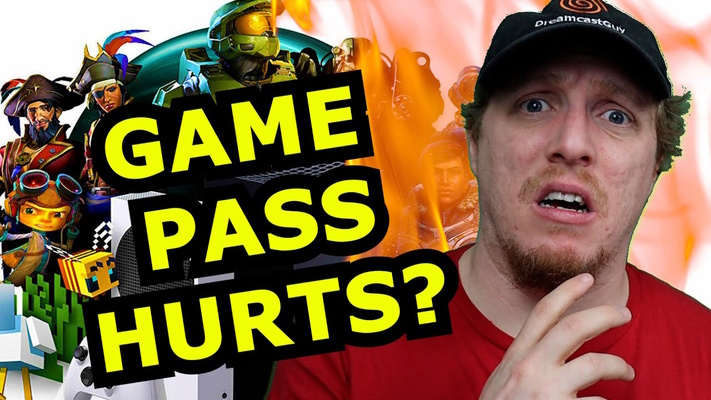
Some outlets and commentators have seized upon this news in a pretty bizarre way, trying to present Game Pass as some kind of “problem” for Xbox and Microsoft, even going so far as to say that Game Pass is “harming” the company. But… Game Pass was designed to lead to fewer sales. It’s something that’s baked into the subscription model. To use a bit of game dev lingo: it’s a feature, not a bug.

An example of the kind of reactions we’re talking about.
Image: DreamcastGuy via YouTube

Saying that Game Pass is “harming” sales of games on PC and Xbox is like saying Netflix is harmful to sales of films on VHS, or that Spotify has led to fewer cassettes being sold. The entire point of creating a subscription is to sign people up for the long-term. There are legitimate questions about the viability of the subscription model in the video gaming space, because it’s new and relatively untested. But to say that it’s “harmful” to game sales is, in my view anyway, entirely missing the point.

Consider what Microsoft’s objective is with Game Pass. They hope to create a “Netflix of video games,” where players sign up and remain subscribed for the long haul, playing the games they want as they become available. It’s intended to work in a similar way to the way subscription services work with other forms of media. By definition, that means fewer physical and digital sales. Microsoft will have known this going in, and fully expected it.

Game Pass is shaking up the industry.

Microsoft sees an opportunity to make the Game Pass model the future of gaming. Rather than buying individual titles, players will pay one monthly fee and have access to a range of titles on either PC, Xbox, or both. With a linked Xbox account also tracking achievements, adding friends, and playing online, the corporation hopes that this will keep players “loyal” to their brand for console generation upon console generation.

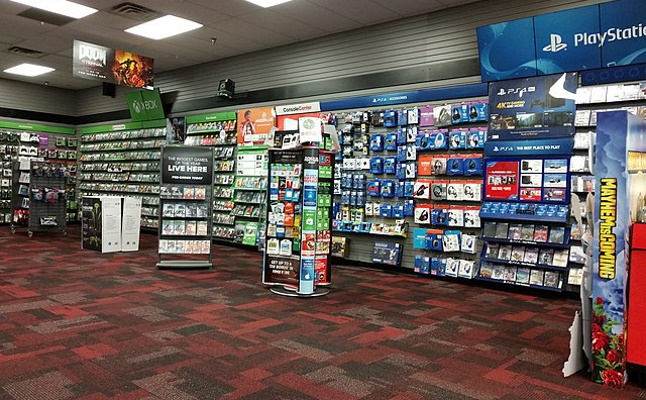
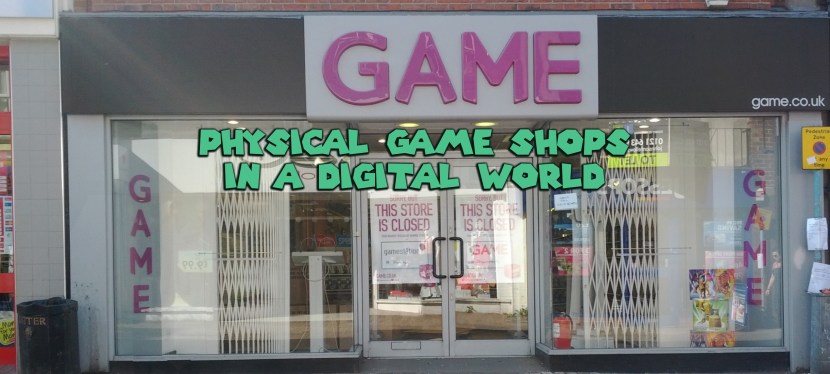
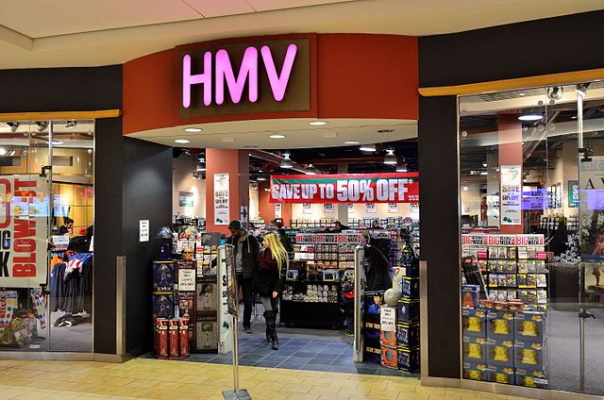
There’s a subset of self-professed “hardcore gamers” who vocally lament the decline of physical media in gaming, and it seems to me that it’s predominantly these folks who are upset by Game Pass as a concept – and they always have been. If I may be so bold: they’re dinosaurs, and the way they like to purchase and own games is on the way out. We’ve talked about this before, but there will come a time – perhaps within just a few years – when there will no longer be anywhere to buy physical copies of games. Certainly in the area where I live, most dedicated gaming shops have already closed their doors.

There are fewer and fewer retailers like this these days.

The industry is moving on because players are moving on. The convenience of digital downloads is, for a clear majority of players, something to be celebrated. It began on PC with the likes of Steam, but now it also includes Game Pass as well as other digital shops. The way most players choose to engage with games companies is changing – and that trend shows no signs of slowing down, let alone reversing.

Maybe Game Pass won’t end up being the subscription service that takes the gaming world by storm. Perhaps some other platform will come along to dethrone it, a service that offers more games at a lower price, or one that can – somehow – be available on multiple platforms. But Game Pass is, at the very least, the canary in the coal mine: a harbinger of what’s to come.

An example of some of the titles available on Game Pass for PC.

When I see folks criticising Game Pass or trying to manufacture stories about how difficult and problematic it is for Microsoft, I feel they’re rather like the old guard of the music industry railing against people taping their favourite songs off the radio, or a DVD retailer trying to fend off the likes of Netflix and Disney+. The way people consume media – all forms of media, gaming included – is changing, and subscriptions are the current direction of travel. That’s not to say it won’t change in the future, but right now, subscriptions are where the entertainment industry is headed.

With the convenience of digital distribution, it’s hard to see a way back. Having tried Game Pass for myself, it already feels like a big ask to go back to paying £50-60 – or more, in some cases – for a single title when there are dozens available on subscription. Even just playing a couple of new games a year is still cheaper on Game Pass than buying them outright. And the more people who sign up, the more that feeling will grow. Rather than whining about Game Pass, other companies need to be taking note.

Game Pass feels like good value right now.

In the television and film space, we’re firmly in the grip of the “streaming wars,” and that has been a double-edged sword for sure. On the one hand, there’s been a glut of amazing, big-budget content as streaming platforms and the corporations backing them up continue to slog it out, competing for every subscriber. But on the other, the industry feels quite anti-consumer, with too many services charging too much money. Not all of the current streaming services will survive the decade, I am as certain of that as I can be!

But gaming has the potential to be different. Unless Microsoft gives its explicit consent, no other streaming service could set up shop on Xbox consoles, nor could anyone but Sony run a subscription for PlayStation titles. The titans of the gaming industry will continue to compete with one another, but the issue of oversaturation of the kind we’re seeing in the film and television space should be avoidable.

Sony is (belatedly) getting started with the subscription model too.

Games companies will have to adapt. Raw sales numbers are already less relevant now that Game Pass is up and running, and they’re going to be of decreasing relevance as time goes on. The way in which developers and publishers measure the success of their titles will have to change as the industry continues this shift – and the companies that get this right will reap the rewards. Those who don’t – or who try to bury their heads in the sand and pretend it’s not happening – will fall by the wayside.

The way I see it, Game Pass is just getting started. 30 million subscribers may seem like a huge number – but it’s a minuscule percentage of the total number of gamers worldwide, so there’s huge potential for growth. There will be competitors that will rise to meet it – but all that will mean is that more players, not fewer, will get roped into long-term subscriptions. We’ve already seen the beginnings of this with Nintendo Switch Online, PlayStation Plus, and even the likes of Apple Arcade on mobile.

Subscriptions like Game Pass could reach huge numbers of people.

It’s mobile phones, more than anything, that I’d argue kicked off this trend. The biggest, fastest-growing gaming platform of the last decade is entirely digital and has been since day one. Players have always accepted digital distribution on their smartphones – because it’s always been the only option. Subscription services are the natural next step – and the only surprising thing, really, is that it’s taken as long as it has for a gaming subscription to become as successful as Game Pass.

The success of Game Pass is not without pitfalls, and as I said the last time we talked about the decline of dedicated gaming shops, it will impact some people more than others. Younger people, people on low incomes (as I am myself), and others will all find that their relationships with gaming as a hobby will change as a result. Not all of these changes will be for the better for everyone, and people who aren’t able to commit to a monthly expense, or who don’t have the means to do so, risk being left behind. But many of those folks are already priced out of the gaming market, especially as companies jack up their prices to unjustifiable levels.

A closed-down games retailer in the UK.

Some of the “hot takes” on Game Pass over the past week or so have taken me by surprise – but in some cases at least, we can look to the “usual suspects” of Sony supporters and die-hard believers in the supremacy of physical media. Stirring up trouble for Game Pass and Microsoft is a hobby for some outlets!

I’m not a defender of Microsoft by any means, and the corporation has made a lot of mistakes. But Game Pass, at least at time of writing in early 2023, feels like a good deal. It has a mix of new games, older titles, and some big releases – like Halo Infinite and Starfield – come to the platform on release day. I’ve discovered games I’d never have thought to try and been able to play games I’d never have purchased entirely because of Game Pass. That undoubtedly means I’m buying fewer brand-new games… but from Microsoft’s perspective, that’s entirely the point.

Microsoft operates the Game Pass subscription service.

We should all be vigilant and not simply accept what these big corporations want to do. They’re trying to corner the market and rope players into long-term subscriptions, and they’re doing so not because they think it’s particularly beneficial to players – that’s merely a coincidence. They’re doing it to maximise profits. Not having to split the proceeds with shops or storefronts is a big part of it, and Microsoft would rather take £7.99 a month, every month, than take a cut of the profits on a single sale that it has to share with other companies.

But if this corporate skullduggery is beneficial to players, why shouldn’t we participate? An Xbox Series S or a pre-owned Xbox One combined with a Game Pass subscription is an easy and relatively affordable way into the gaming hobby – offering players a huge library of titles that would be impossibly expensive for practically all of us if we had to buy each game individually. The disadvantages are the ongoing nature of the subscription and the inevitability of titles disappearing from the service either temporarily or permanently. But them’s the breaks – that’s the nature of subscriptions across the board. And with Microsoft doing all it can to buy up companies, more and more titles will be locked into Game Pass for the long-term.

There are reasons for scepticism, sure. But trying to spin this particular issue as a negative one for Xbox and Microsoft is disingenuous. Game Pass was always going to lead to fewer game sales in the long-run. Far from worrying about this, Microsoft’s executives will be rubbing their hands together gleefully… because right now, their plan is working.

Game Pass is available now for PC, Xbox One, and Xbox Series S/X. Xbox, Game Pass, and other titles discussed above are the copyright of Microsoft; other games and titles may be the copyright of their respective studio, developer, and/or publisher. This article contains the thoughts and opinions of one person only and is not intended to cause any offence.
Halo Infinite: first impressions

Spoiler Warning: There are minor spoilers ahead for Halo Infinite, Halo: The Master Chief Collection, and other iterations of the Halo franchise.

After the longest gap in between games since the franchise began, Halo Infinite was finally released last week. I haven’t yet completed the campaign, but I’ve spent a couple of hours with the game so far – enough time to give you my first impressions and initial thoughts about Halo Infinite.

First up, make sure you choose the right version when you go to download it! I have Game Pass for PC, and on the homepage of the Xbox app there was a big Halo Infinite icon, so I clicked it and it began to download – taking hours on my painfully slow internet connection. When it was done I booted up the game… only to find I couldn’t play the campaign, just the multiplayer! The campaign is a separate download, so I had to wait another few hours for that. Not the best start – and this should really be made clearer on the Xbox app.

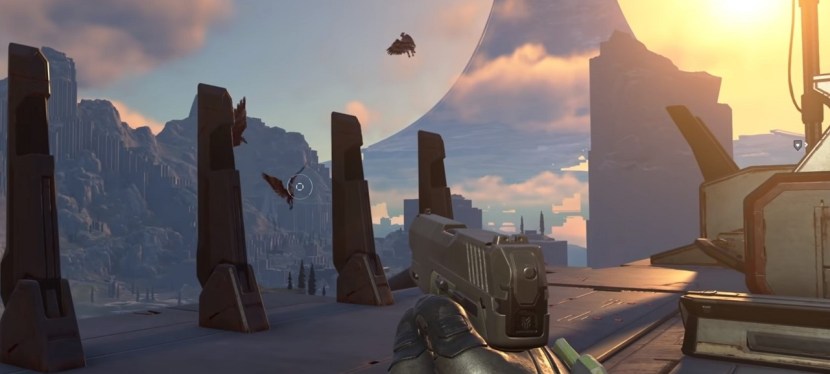
Promo art for Halo Infinite.

When I was able to load the campaign, I immediately encountered an issue with the audio. I usually play games with headphones on, but although my headphones were plugged in there was no audio. After some investigating, the only way I could find to fix it came from someone else who’d had a similar problem and shared their solution on a forum – I had to go into my PC’s sound settings and change my headphone settings. Something uncomplicated but stupidly obscure; how this person figured it out I’ve no idea! It worked fine after that – but again, Halo Infinite made a poor first impression as a result.

The game opens with a cut-scene showing the Master Chief being thrown into space by an alien monster – the leader of a villainous faction called the Banished. This villain, and a couple of other Banished leaders who we’re also introduced to in cut-scenes across the game’s opening act, all feel quite generic. The vocal performances were hammy and over-the-top, and I don’t really get the impression that the leaders of the Banished are anything other than “evil for the sake of it” kind of villains. By default this makes the game less compelling and less interesting!

The game opens with Master Chief getting beaten up by this guy.

I haven’t played Halo 5; it wasn’t included as part of The Master Chief Collection when that was released on PC a couple of years ago, and it hasn’t been released as a standalone title. But the pre-release marketing and chatter about Halo Infinite seemed to indicate that the game was some kind of soft renewal of the franchise and would be a good jumping-on point for players unfamiliar with the world and lore of the Halo series – a series which, lest we forget, has recently passed its twentieth anniversary. Based on my first couple of hours with the game, I have to disagree with that.

Halo Infinite feels like an unapologetic sequel. We don’t find out why the Master Chief happened to be aboard that starship, and pretty quickly as he retrieves not-Cortana from a nearby Halo ring the game seems to reference events that took place in Halo 5 – something about Cortana going rogue and needing to be deleted. At this point I feel pretty lost with the story, with Master Chief blindly shooting his way through waves of enemies without any readily apparent goal or purpose.

I didn’t play Halo 5 so I feel a bit lost with the story.

I took a decade off from the Halo games after Reach, and it was only when I got The Master Chief Collection on PC that I played the fourth game in the series and the ODST spin-off. So I’m not the world’s biggest Halo fan by any stretch, and maybe big fans of the franchise are having a whale of a time – if so, that’s fantastic. I don’t want to detract from anyone’s enjoyment by being an old sourpuss! But Halo Infinite’s story appears to rely heavily on what came before, so for new fans or for folks who’ve been out of the loop, maybe The Master Chief Collection would be a better way to get started.

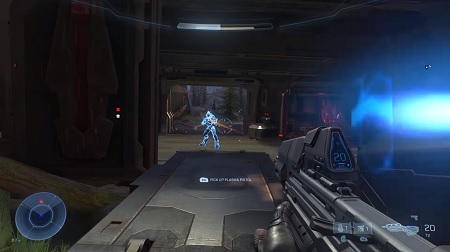
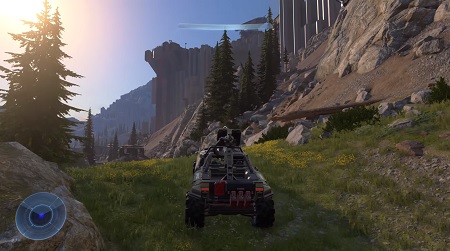
I found a couple of very odd graphical bugs during my relatively short time with the game, too. During the second mission, when Master Chief has arrived at the Halo installation, doorways appeared to glitch out: they’d appear to be solid even after “opening” and it was possible to just clip through what looked like a solid, graphically buggy door. Then shortly after, every alien of a particular kind (I think the Elites) were also completely bugged, and they ended up looking all stretched out and just broken. It’s hard to put into words, so see the screenshots below (click or tap the images for a larger version):

All of this kind of added up to mean that the game left a weaker-than-expected first impression. I’d been excited for Halo Infinite; the prospect of a franchise I remember with fondness from the days of the original Xbox getting a soft renewal and a new coat of paint was something I found genuinely appealing. I want to like Halo Infinite – but the somewhat dense backstory, a villain who feels silly at best, and a handful of bugs and glitches that should really have been fixed before launch have definitely got in the way of that.

So that’s the bad stuff out of the way. But my experience with Halo Infinite so far hasn’t been entirely negative by any stretch. There is definitely a good game at its core, one with some truly exciting and fun sci-fi shooting. The guns that I’ve used so far have been varied, ranging from standard rifles and pistols to Halo staples like the Needler. Halo Infinite’s gunplay is fluid, the environments so far have been well-designed, and were it not for those few bugs and issues that I’ve encountered I’d be giving it a ten out of ten for its gameplay.

Halo Infinite has great gunplay.

As a multiplayer player-versus-player online shooter, which is what many folks come to Halo for, I think that bodes well. I can absolutely see it being a game that keeps players hooked well into 2022 and perhaps even beyond that, as there seem to be teases of a lot more multiplayer content to come. And that’s great… for people who like that kind of game. As someone who came to Halo Infinite for its campaign, I feel underwhelmed more than anything else. Halo Infinite’s campaign isn’t exactly bad, it just isn’t as good or well-written as I’d hoped it would be.

So far, in addition to the Master Chief I’ve met two major characters: a pilot and not-Cortana – an AI named “the Weapon.” Both characters seem interesting, and I’m definitely curious to see how their stories progress as the game goes on. The voice and motion-capture performances for both characters have been great so far, with some of the Weapon’s facial expressions in particular being extraordinarily well-animated. The Halo games have come a long way from their 2001 origins in that respect. Were it not for those graphical bugs I encountered, I’d say Halo Infinite makes the franchise look better than ever.

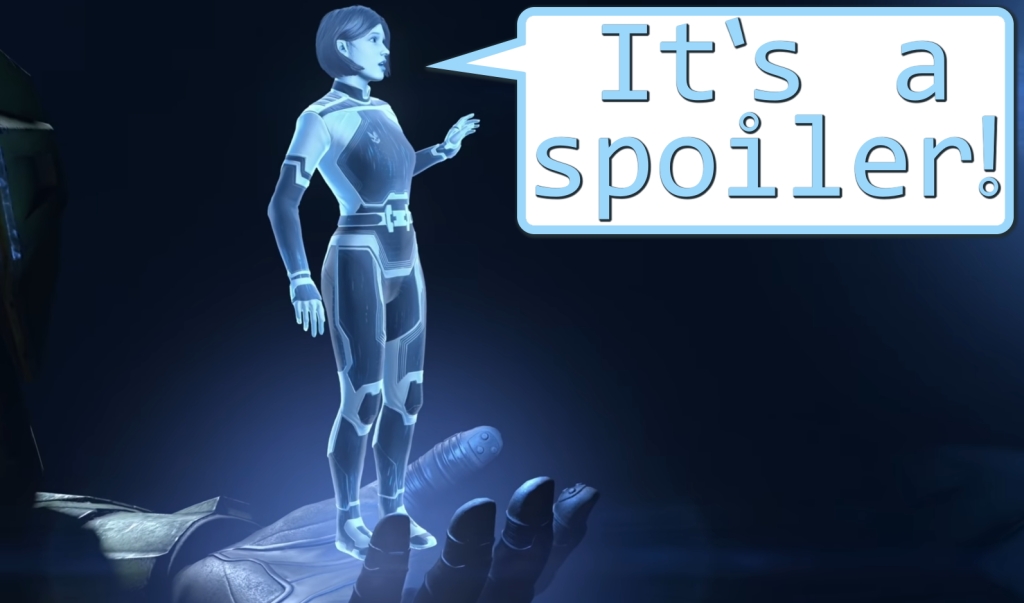
Not-Cortana… a.k.a. the Weapon.

So I guess I need to read a synopsis of Halo 5 or something… get myself caught up with all of the story that I missed (and all the other story that I’ve forgotten about!) Maybe then I’ll have a better time as I progress through the campaign. Halo Infinite has potential, but I guess what I’d say is that I’m glad I picked it up as part of Game Pass; I’d feel far less charitable about its flaws and shortcomings had I paid £55 for it.

If you’re only interested in multiplayer, I think Halo Infinite will be a fine shooter going through 2022. Of this year’s big first-person shooter releases, there’s surely no question that Halo Infinite is the best choice by far. Battlefield 2042 and Call of Duty: Vanguard can’t compete, not by a long-shot. If you’re interested in the campaign, though, I think Halo Infinite isn’t as much of a soft reboot or fresh start as I was expecting – so make sure you’re caught up on what happened in previous games before you jump in.

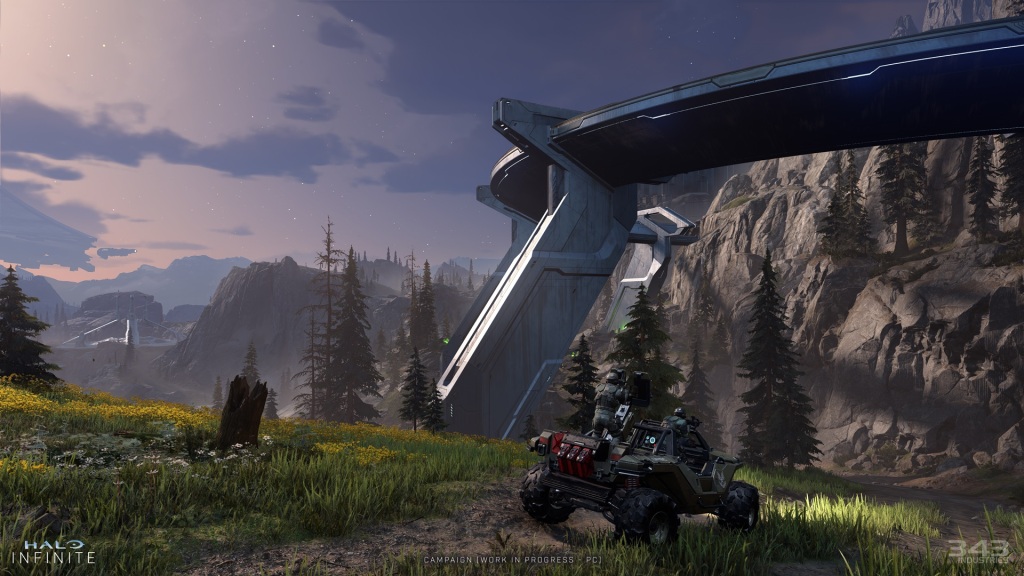
Promo screenshot.

The bugs are disappointing, but so far they haven’t been so overwhelming that I felt the need to quit the game. Hopefully these issues can be patched out in the days ahead. There don’t seem to be as many reports of similar issues affecting the Xbox One or Xbox Series S/X version of the game, which is positive news for those of you using those platforms.

So that’s it, I guess. An unspectacular start, but not a terrible one. Halo Infinite could certainly do a lot worse, and in a first-person shooter market that increasingly only caters to the multiplayer crowd, it’s nice to see that Microsoft and Xbox are sticking with single-player campaigns. It’s also great that Halo Infinite got a simultaneous release on PC, and a day-one launch on Game Pass. Microsoft has become quite a player-friendly company in that regard, and I have to respect that.

If you already have Game Pass, it’s hard not to recommend Halo Infinite – you might as well give it a shot, at least. And its multiplayer mode is currently free-to-play for everyone, Game Pass subscriber or not. For £55/$60 though, the campaign alone might not be worth it. You’re probably better off signing up for Game Pass just for a month, beating the campaign, and then cancelling your subscription!

Halo Infinite is out now for PC, Xbox One, and Xbox Series S/X. Halo Infinite is also available via Xbox Game Pass and Xbox Game Pass for PC. The Halo series – including Halo Infinite – is the copyright of 343 Industries, Xbox Game Studios, and Microsoft. This article contains the thoughts and opinions of one person only and is not intended to cause any offence.
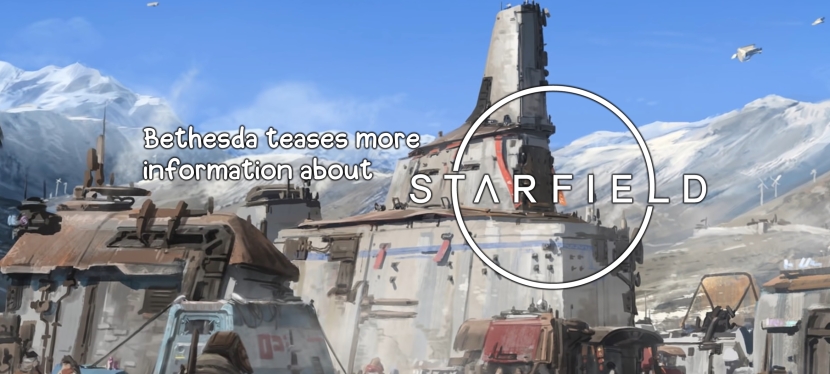
Bethesda teases more information about Starfield

Spoiler Warning: There are spoilers ahead for Starfield.

The in-engine teaser trailer for upcoming space-themed role-playing game Starfield was a bit of a let-down at E3 back in June. There’d been a lot of hype and rumours before the event that something big was coming from Bethesda and that we’d get our first major look at the game, so to only see a highly stylised teaser that might as well have been totally “fake” wasn’t the best. But the company has recently put out three new mini-trailers showing off three of the locations in Starfield, as well as dropping some more tidbits of information about the game, so I thought we could take a look at what’s been revealed and start to get excited!

Remember, though, that too much hype can be a bad thing! Just look at the disastrous Cyberpunk 2077 as a case in point. As fun as some of these bits of Starfield news may seem, it’s worth keeping in mind that we haven’t yet had a real look at the game itself. And as much as I hate to be too negative, Bethesda doesn’t exactly have a good track record in recent years when it comes to big releases. Their overreliance on a massively out-of-date game engine is also a concern. But Starfield is still over a year away, so hopefully there’s enough time to iron out all of the issues!

With that caveat out of the way, let’s take a look at what we’ve learned about Starfield since E3 – with a healthy pinch of speculation and guesswork thrown in for good measure!

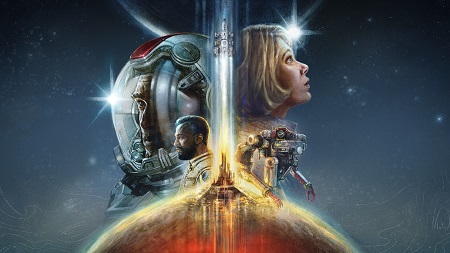
Promotional artwork for Starfield.

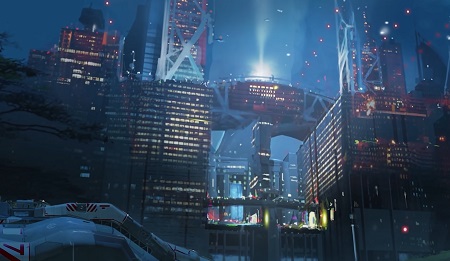
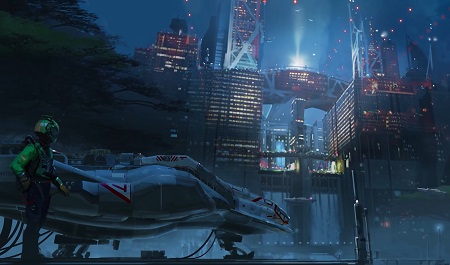
The United Colonies is described as “the most powerful established military and political faction in the game.” Their capital city – or capital planet, not sure how best to describe it! – looks like a futuristic Dubai or New York City; a wealthy, clean megacity. This is the city of New Atlantis, and it’s described as being a “melting pot” of different peoples.

The “melting pot” reference is clearly meant to give the city and the faction an American vibe; the United States often likes to see itself as a mixture of cultures. But it could also mean that the United Colonies is akin to something like Star Trek’s United Federation of Planets – semi-independent cultures and worlds co-existing, perhaps under some looser federal form of government.

Concept art of New Atlantis (with a starship in the foreground).

I could be way off base with this, but it seems like the United Colonies isn’t going to be an evil or villainous faction. I didn’t get the sense that this was something like Star Wars’ Empire or First Order, but the fact that it’s described as being powerful – and with a strong military to boot – could mean that the player character is operating outside of the law, or that large parts of the game take place in areas beyond the United Colonies’ jurisdiction.

There were trees on New Atlantis, so the United Colonies clearly have some respect for greenery and the environment – even if just for aesthetic reasons. This is also something I think we can assume to be positive, as at least New Atlantis doesn’t have that overly industrialised, dystopian feel of some sci-fi megacities.

Concept art of New Atlantis showing a couple of trees!

If I were to hazard a guess I’d say that only parts of New Atlantis will be able to be explored and visited. The teaser image depicted a huge building complex with more buildings and lights in the distance, but it seems like making all of that part of the map might be too difficult to pull off; the last thing any of us want is a bland, mostly empty map that’s superficially large but has nothing going on or no one to interact with (looking at you, Fallout 76). New Atlantis was specifically mentioned in the context of a spaceport, so perhaps the spaceport and surrounding area will be able to be visited.

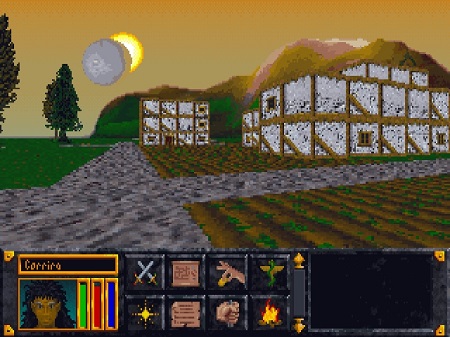
Going all the way back to 1994’s Arena, Bethesda has created contiguous open worlds – that is, game worlds that are one large, single space. There have been examples where smaller areas branched off from the larger game world – such as Morrowind’s expansion pack Tribunal, for example. But by and large we’re talking about single open worlds. Starfield, with different planets to visit and a spaceship being used to travel between them, seems like it will be a game where the game world is broken into smaller chunks. Some of these planets may be quite large, but the concept represents a change from the way Bethesda has worked in the past.

Large open worlds have been a Bethesda hallmark since 1994’s Arena.

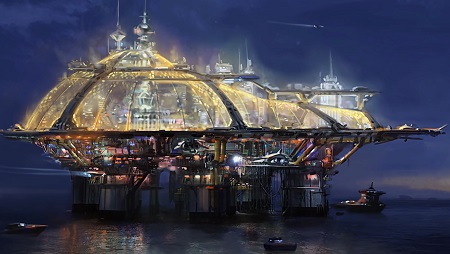
Moving away from the United Colonies brings us to Neon, a watery planet with a facility run by the Xenofresh Corporation. This floating city resembles a large oil rig, and although the upper levels look well-lit and probably quite wealthy, I wonder if the lower levels of the platform might be home to the kind of sci-fi dystopia that didn’t seem to be present on New Atlantis!

The backstory of Neon was interesting – and perhaps the closest we’ve got so far to any “lore” of Starfield. The Xenofresh Corporation established Neon as a fishing platform, but soon stumbled upon a drug called “aurora” that they used to turn Neon into a pleasure city. Neon clearly operates outside of the jurisdiction of the United Colonies, and is the only place where this drug is legal.

Concept art of the floating city of Neon.

Previous Bethesda games allowed players to take drugs and drink alcohol, complete with screen-wobbling consequences! I can’t imagine that the developers would mention this aurora drug at this stage if players weren’t going to be able to try it for themselves in-game, so I think we can be pretty confident that aurora will play some role in the game’s story. Perhaps smuggling it from Neon to planets where it’s illegal will be an option for players to make some extra cash! Neon also gave me vibes of Star Trek: Picard’s Freecloud – a similarly independent, pleasure-centric world.

The final location shown off was Akila. The Freestar Collective, of which Akila is the capital, is described as “a loose confederation of three distinct star systems.” Perhaps I’m reading too much into this, but singling out the word “confederation” could indicate that this faction is villainous or adversarial. The Confederacy or Confederate States was the official name for the pro-slavery southern states that seceded in 1860-61, instigating the American Civil War. We’ve also seen the name “Confederacy” used in Star Wars, where the Confederacy of Independent Systems was the antagonist faction in Attack of the Clones and Revenge of the Sith.

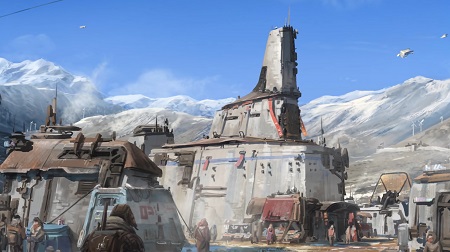
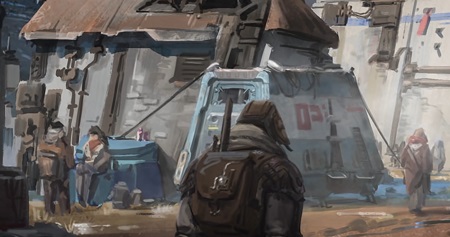
Concept art of Akila, a city in the mountains.

Perhaps I have recent news reports on the brain, but something about the concept art for Akila reminded me of Kabul, the capital city of Afghanistan. The mountainous terrain, smaller buildings, and hooded or cloaked figures all gave me the impression of that kind of settlement. Perhaps a better analogy, though, would be a Wild West frontier town, and this is reinforced by the narrator saying that all of the people in the Freestar Collective place a strong emphasis on personal freedom and liberty. The whole faction seems very libertarian, then!

Akila was definitely the most Star Wars-seeming settlement, and there are several locales from the Star Wars franchise that Bethesda may have used for inspiration here. It was on this planet that we learned about the first confirmed alien enemy – the ashta, described as being a mix between “a wolf and a velociraptor.” Yikes! As above, there’s no way this critter would be mentioned at this stage if it wasn’t going to be something players could interact with, and like other iconic Bethesda open-world monsters like Fallout’s deathclaw or The Elder Scrolls’ slaughterfish, I think this is something we’re going to do battle with!

A closer look at some of the people and buildings in Akila.

So we know of three locations, each of which is controlled by a different faction. Presumably the Freestar Collective has at least two other planets under its control, as the narration specifically mentioned that the faction controls three star systems. Whether all three will be able to be visited or not is not clear, so I guess watch this space!

The Xenofresh Corporation could easily be in control of more worlds or settlements; I got the impression that it was the kind of mega-corporation that we often see in sci-fi, and thus it seems plausible that it controls holdings on other planets as well as its settlement of Neon.

The United Colonies would seem to be the most widespread and populous faction, but if players are potentially operating outside of its jurisdiction we may not get to visit all of the worlds that make up the United Colonies.

Is the United Colonies going to be similar to Star Trek’s Federation?

Then there’s the player’s faction or group – the organisation called Constellation, described as “the last group of space explorers.” The ship shown in the E3 teaser appears to belong to this group, so it’s assumed that the player will have some kind of relationship with them as well. If this faction is interested in exploration, they may not have a large settlement or permanent colony – but that’s pure speculation!

So that’s it for now. Starfield is still on course for a November ’22 release, but it goes without saying that that’s subject to change at any point between now and then. I’m tentatively looking forward to it, and nothing we’ve seen or heard so far has been offputting. If anything, these little teases are intriguing and make me want to learn more about the game, its backstory, and its factions and locales. I’m a little surprised that Bethesda didn’t include some of these details at E3; it would’ve been more impressive to give players a bit more information about the game rather than just sharing that stylised teaser trailer, and none of what’s recently been revealed seems like it couldn’t have been included a couple of months ago. This is all just backstory and concept art – things Bethesda certainly had at the time. But regardless, we’ve got another little tease of Starfield to pore over!

Starfield will be released on the 11th of November 2022 for PC and Xbox Series S/X. Starfield is the copyright of Bethesda Game Studios and Microsoft. Concept art featured above courtesy of Bethesda Game Studios and Microsoft. This article contains the thoughts and opinions of one person only and is not intended to cause any offence.

EA Play joins Game Pass

EA Play is bringing a huge library of new games to Microsoft’s Xbox Game Pass service! Because it’s been overshadowed by Microsoft’s recent acquisition of Bethesda, and the arrival of those games to Game Pass in recent weeks, this news seems to have flown under the radar. I almost missed this altogether, and it was only when I saw it on Twitter (of all places) that I realised what a monumental win this is for Microsoft, Game Pass, and quite frankly for subscribers as well.

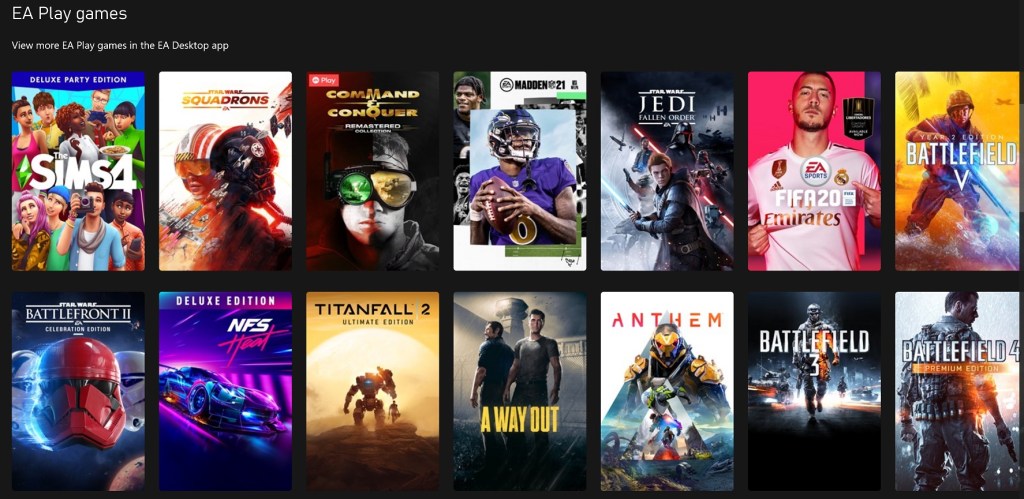
I initially signed up for Game Pass for PC last year in order to play Forza Horizon 4, and it was well worth it! I’ve since played a few other games on there, and it’s easily value for money at £7.99 ($9.99 in the US) per month, in my opinion. One thing is clear, though, and that’s the fact that Microsoft has continued to invest heavily in the service. The addition of Bethesda’s lineup of titles brought the likes of Fallout 4, Skyrim, and Doom Eternal to Game Pass. And now EA Play has brought games like FIFA 21, Titanfall 2, The Sims 4, Star Wars Jedi: Fallen Order, and many others to the service, too. It seems all but certain that the upcoming Mass Effect: Legendary Edition will be available there as well – so maybe I’ll play it after all!

EA Play and Game Pass have struck a deal.

Game Pass has expanded rapidly, and continues to go from strength to strength. Right now, there’s no question that it’s the best way to get into current-gen gaming, and picking up a preowned Xbox One or – when availability improves – an Xbox Series S will mean that a huge library of games is available to even players on a limited budget. For less than the price of a Netflix subscription there are more games than I could play in an entire year, including some absolutely fabulous ones!

The only pang of regret I feel is because I’d bought a few of these games over on Steam! Of course if you’re worried about permanence it’s better to buy than subscribe, because it’s possible that EA Play and/or any of its games will be removed from the service in future. But just like we’ve seen happen with television and films thanks to the rise of streaming, many people are quite okay with that concept. Sure, losing access to a title is disappointing, and when Netflix removes a big name there’s often a minor backlash. But people have generally come to accept the impermanence of films and television shows on streaming platforms – so I daresay that will happen with games as well.

A few of the titles now available.

In the worst case, if a game you adore is removed from Game Pass, you can always buy it elsewhere. It doesn’t have to be the huge drawback that some folks insist it is. We increasingly live in a society of renting: we rent our homes, vehicles, and sometimes even our furnishings. We rent our films, television shows, and music via services like Netflix, Disney+, Amazon Prime, and Spotify. And now, Microsoft is pushing hard to convince people to rent their game libraries too.

Having built up a Steam library over the better part of a decade I’m not willing to part with it, and I still don’t see Game Pass as a full-time substitute for buying games in a general sense. But you know what? I could be in the minority on that very soon. As mentioned, Game Pass now offers a colossal library of titles, and not only Xbox-exclusive games like Halo: The Master Chief Collection and Sea of Thieves. The FIFA series of football (soccer) games are literally the most popular titles around the world, and now the most recent entries are on Game Pass, with this year’s entry almost certain to follow. And huge multiplayer titles like Apex Legends are as well. Heck, you can even play Anthem… though goodness only knows why you’d want to.

Very specific there, EA.

For a player on a limited budget, Game Pass is now my number one recommendation. Whether it’s on PC or console, I honestly can’t recommend anything else. There’s simply no alternative that offers such a variety of major titles for the cost, and even speaking as someone who doesn’t use it as often as I could, it’s 100% worth it. This new addition of EA titles has taken what was already an enticing offer and made it even better.

There are still some issues with the Xbox app on Windows 10, and it doesn’t always work perfectly. But the games it launches do, and whether you’re interested in a strategy title like Age of Empires II: Definitive Edition or a racer like Forza Horizon 4, there are so many games now that it’s worth a try for almost anyone interested in gaming.

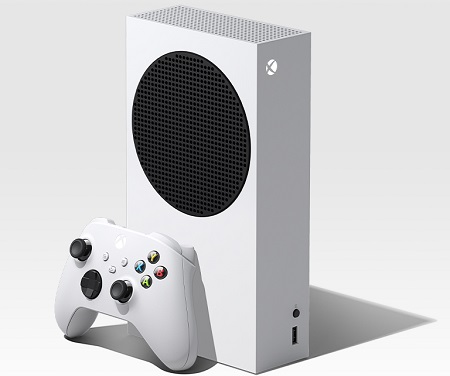
The Xbox Series S with a Game Pass subscription is the most affordable route into this generation – or at least it will be when availability improves!

Microsoft took a risk with Game Pass, banking on players turning away from the model of buying and owning individual titles to rent them via a Netflix-style subscription. As the service continues to grow and expand, both in terms of its library and its playerbase, I think it’s fair to say that the risk is paying off.

So what am I going to play first? That’s a good question! I was tempted by the Mass Effect trilogy, which I otherwise only own on Xbox 360. But with Legendary Edition coming soon I think I’ll wait to see if it comes to Game Pass, which hopefully it will. Titanfall 2 is calling out to me, and despite being a big fan of fantasy I’ve never played the Dragon Age games, so maybe I’ll finally give those a shot. Or maybe I’ll go back and replay Sim City 2000 – there’s nothing like a hit of nostalgia, after all. I feel spoilt for choice!

I might sit down to play some Titanfall 2.

This move makes a lot of sense for both companies. EA’s Origin platform and EA Play have both struggled to bring in huge numbers of players since they launched, and with EA diversifying and bringing many of its titles to Steam, joining in with Game Pass feels like a no-brainer. And from Microsoft’s point of view, anything they can do to increase the appeal of Game Pass shores up the service, and that can only have the effect of bringing in new subscribers as well as convincing existing ones to stick around.

When taken alongside the recent Bethesda acquisition and the launch of the weaker but cheaper Xbox Series S, I have to say that Microsoft is off to a very strong start in this new console generation – far better than I had expected even six months ago.

Xbox Game Pass is available now for PC, Xbox One, and Xbox Series S/X. Prices were correct at time of writing (March 2021). This article contains the thoughts and opinions of one person only and is not intended to cause any offence.
That Microsoft-Bethesda deal came out of nowhere!

I’m a couple of days late on this one, but if you didn’t know already, Microsoft surprised and upended the games industry by announcing a deal to buy ZeniMax Media. ZeniMax is the owner of Bethesda – the company behind such titles as The Elder Scrolls V: Skyrim and Fallout 76. The deal also includes id Software, developers of Doom and Doom Eternal, as well as several other associated companies, including the developers of The Evil Within, The Elder Scrolls Online, and the Wolfenstein series. Wow.

I’ve seen a lot of… interesting commentary to have come out of this acquisition, including people who seem to think this means there can be no more console-exclusive titles ever, and some overly-optimistic PlayStation fans still expecting their favourite Bethesda/ZeniMax titles to come out on that platform. A lot of the details of the deal and its fallout (pun intended) are still under wraps, but I think we can make some reasonable assumptions – and cut through some of the nonsense.

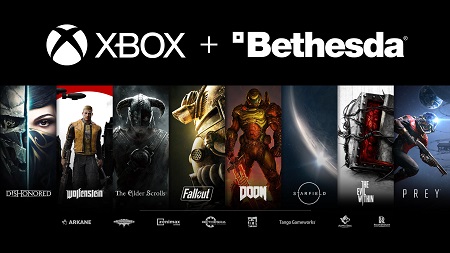
Buying ZeniMax Media gives Microsoft control over all of these game series – and many more.

First off, let’s clear something up. Microsoft wouldn’t spend $7.5 billion on this company and its subsidiaries for no reason. There are unquestionably going to be changes as a result of this deal. There are several ways it could manifest, but if we look to recent history we can pick out a couple of examples. The Outer Worlds was late into its development when Microsoft purchased developer Obsidian. With the game already scheduled for release on PlayStation, Microsoft honoured that commitment and didn’t make any changes. Likewise when they bought Mojang, Minecraft didn’t become an Xbox/PC exclusive. Those games were either already released or releasing imminently, likely with deals and agreements already signed, so Microsoft kept to those agreements.

The titles people seem most concerned about are The Elder Scrolls VI, which was announced a couple of years ago but is still several years away, and the next game in the Fallout series. No announcement has been made of a new Fallout title, but the assumption is that there may be one in pre-production. As someone who worked in the games industry for a time, I really feel that no company in Microsoft’s position spends this much money not to have exclusive titles. Unless this is part of some longer-term strategy to force Sony to bring their exclusive titles to Microsoft’s Xbox and PC platforms – which it almost certainly isn’t – we can say goodbye to the idea of any upcoming games being multiplatform. Despite Microsoft’s statements that they don’t care what platform someone plays on, they obviously do or they wouldn’t be investing so heavily in the Xbox brand and in PC gaming.

When The Elder Scrolls VI is finally ready, it may not come to PlayStation 5.

The Elder Scrolls VI is far enough in the future that I’d argue it won’t affect the purchasing decisions of 99% of gamers in 2020/21. Even hardcore Elder Scrolls fans should feel confident buying a PlayStation 5 if they want to this Christmas, because the next game in the series is years away and there will be time to get a cheaper Xbox Series S later if necessary. But thinking strategically and thinking long-term, the reality is that if players want to guarantee access to upcoming titles in any of these franchises, they’ll need to look at Xbox. That could be in the form of a console or it could mean getting a PC capable of running newer games. Either way, right now there’s no guarantee any of these titles will come to PlayStation – and if I were advising Microsoft, I’d say they’re in a rock solid position to demand compromises from Sony if Sony want to make any of those games and franchises available on their new system.

As we gear up for the launch of the two new systems, it’s hard to see that many people who had been planning to get a PlayStation will be swayed by this move – at least not in the short-term. All titles which have already been released – including the likes of Doom Eternal, Fallout 4, etc. – will still be available on Sony’s systems. On PlayStation 5 specifically, upgraded and/or re-released versions of some games are coming, and backwards compatibility with PlayStation 4 will mean all current-gen titles will run on the new system. Also the upcoming Ghostwire: Tokyo and Deathloop, which have already been announced for PlayStation 5, seem certain to keep their console releases. So anyone looking ahead to the next year or two need not be too concerned. It’s the longer-term prospects that may worry some PlayStation gamers.

Future ZeniMax/Bethesda titles may not come to PlayStation 5.

With this acquisition, Microsoft will be bringing all of Bethesda’s titles – including upcoming releases – to their Game Pass service. I wrote recently that Game Pass is already a pretty great deal, not to mention the cheapest way to get into current- and next-gen gaming. Add Bethesda’s titles into the mix and the value of the service goes up even more.

This is the real genius of the move. Exclusivity will certainly pull in some players, as those unwilling to miss out will have no choice but to buy into the Xbox ecosystem in some form. But Game Pass is Microsoft’s killer app right now; a subscription service offering players hundreds of games for a monthly fee instead of shelling out $70/£65 per title is not only in line with the way people consume other forms of entertainment (like music and television) but also feels like a good value proposition as we enter what could be a long-term spell of economic uncertainty as a result of the coronavirus pandemic.

I’m a subscriber to Game Pass for PC – and it just became a much better deal!

Game Pass is already available on Xbox and PC, and has been steadily growing its subscriber base. It doesn’t have the library that a service like Steam has, but I can absolutely foresee a time in the future – the near future – where Game Pass will be the platform of choice for many players, perhaps with Steam as a backup to buy occasional titles that aren’t available elsewhere. And once someone has signed up for Game Pass, Xbox Live, and started racking up achievements and making friends, they’re hooked into the ecosystem. It isn’t impossible to switch or leave, of course, but Microsoft will make staying as appealing as possible.

As far back as 2000/01 when Microsoft decided to jump head-first into the home console market, commentators were wondering when they’d start throwing their wallet around. A company with the resources of Microsoft is in a unique position to spend, and we’ve seen them do so several times. On the whole, for players mostly interested in single-player titles I can understand why this feels huge. It is. But at the same time, the deal to buy Mojang a few years back was probably more significant!

In summary, this is good news for PC and Xbox players, and anyone who’s a Game Pass subscriber or on the fence about the service. PlayStation players shouldn’t notice any major short-term ramifications, but if you desperately want to play an upcoming game like the sequel to Doom Eternal, Starfield, or The Elder Scrolls VI, I think you’re going to need a PC or an Xbox.

All titles mentioned above are the copyright of their respective studio, developer, and/or publisher. The Xbox brand is the copyright of Microsoft. This article contains the thoughts and opinions of one person only and is not intended to cause any offence.

A low price might be Xbox’s last hope

A couple of days ago, Microsoft showed off another collection of games coming to the Xbox Series X. The console will launch later this year – barring any last-minute delays – and will be facing very stiff competition from Sony’s PlayStation 5. In fact, Xbox seems like it’s repeating some of the same crucial mistakes which left it lagging far behind PlayStation’s sales numbers this generation – and the only way to salvage that, at least in the short term, may be to massively undercut Sony’s new console and sell the Xbox Series X at a very low price.

It wasn’t all doom and gloom from Microsoft’s second attempt at showing off gameplay – I like the look of Avowed, the upcoming game from Obsidian, for example – but generally the reaction to what they showed was muted and underwhelmed. The most stinging criticism was reserved for Halo Infinite, particularly in the graphics department. As I’ve said on a number of occasions, games already look pretty good on current-gen consoles in 2020. And if “better graphics” is basically all a new console has to offer, then those graphics need to be outstanding in order to win people over. Microsoft has shot itself in the foot in that regard by making every Xbox Series X title – including Halo Infinite – also available on Xbox One, at least for the first year or so of the new console’s life. What this means in practice is that any new title is constrained by the system requirements of the original Xbox One – hardware which is now seven years out of date.

Halo Infinite has been criticised for the way it looks.

Many commentators have said that Halo Infinite looks like a current-gen title. But it is a current-gen title – it’s literally going to be released on the Xbox One, which is a current-gen machine. Everything in Halo Infinite from the ground up has had to be built with that limitation in mind. Even being “enhanced” for the Xbox Series X, Halo Infinite could only go so far. And as I said, when graphics already look decent on current-gen consoles, it’s already a difficult task to show off how much better a game could look on a newer device. That’s without deliberately limiting that game by making it compatible with machines that are now seven years old.

The Halo series has been Xbox’s “killer app” since the first days of the original machine in 2001, but its star quality has been in decline since Bungie left the series a decade ago. The generally average-looking graphics that the newest entry in the series offers, combined with its simultaneous release not only on Xbox One but also on PC, will leave many gamers scratching their heads. Why exactly should I buy an Xbox Series X this winter?

The Xbox Series X.

I literally cannot see a reason. Games are what sell consoles – good, pretty, exclusive games. Many of the titles that will be available will be good; Avowed, as mentioned, looks like it has great potential, and I’m also looking forward to Grounded. While some of these games will be designed to take advantage of the Series X’s features to look shinier and prettier, line them up side-by-side with the Xbox One versions – which will look good, as games on that system already do – and if folks struggle to tell the difference, how does Microsoft intend to convince them to spend several hundred pounds (or dollars) on a new system? When none of the games are exclusive and can be played on the older system, if I’m a gamer who already has an Xbox One, what’s the point in upgrading?

In that sense, Microsoft is now having to compete not only with Sony, but the Xbox Series X is competing against the Xbox One – and there’s a clear winner in that regard. Exclusive games can shift millions of systems – I’ve known many people over the years who’ve picked up a console because one game in particular enticed them, and I’ve even been in that position myself. Launching a console with zero exclusive games, and with all of its games also available on the previous generation console seems absolutely bonkers – and I have no doubt Microsoft will see a lacklustre launch for its new system.

The current-gen Xbox One may prove to be the Xbox Series X’s main competitor.

The only possible saving grace at this stage is to massively undercut the PlayStation 5 – if the Xbox Series X can be £100-150 cheaper, suddenly it seems a little more enticing. £100 could score two new launch titles, or almost a year of GamePass, the subscription service which is one of Xbox’s few genuinely appealing offerings. Price can play a role in console launches, and it’s no coincidence that the consoles which had the strongest launches in the last two console generations – the Xbox 360 and the PlayStation 4 – were both the less expensive option compared with their competitors.

I primarily play on PC. In fact one of my projects over the next few months is to make some upgrades to my gaming setup so I can enjoy things like ray-tracing and perhaps even higher frame rates. So I wasn’t going to be a day-one console buyer this generation regardless of how the new lineup looks. But if I were, I can’t see any reason to buy an Xbox Series X at launch. The only thing that might be able to sway me is price, because if I could make such a significant saving that I could get a year’s subscription to GamePass, and thus access a large library of titles from day one, that’s not a bad offering.

Another scene from the Halo Infinite trailer.

Maybe Xbox will surprise me, and it will turn out that this policy of having no exclusive titles will be a masterstroke, bringing more people into the Xbox brand. I’m just having a hard time seeing how it’s supposed to appeal to a gamer looking for a new console – and as someone who owned all three Xbox consoles in the past I want to see them do well. In fact it’s arguably a necessity – if Xbox fails, there’ll be far less competition in the home console market. Monopolies rarely end well for consumers, so it’s in everyone’s best interest to see at least two companies making a go of it.

At the end of the day, I’m simply not convinced that Xbox has the best approach. PlayStation’s offering for the imminent console generation just seems far more appealing, and unless Xbox can find a way to offer their new machine at a much lower price, I’d expect a clear majority of people who plan to get a next-generation console this year will opt for a PlayStation 5. I know I would. And I’ve always been an Xbox guy.

The Xbox Series X and PlayStation 5 are scheduled to launch in time for Christmas 2020. All properties mentioned above are the copyright of their parent companies, studios, developers, publishers, etc. This article contains the thoughts and opinions of one person only and is not intended to cause any offence.

Physical game shops in a digital world

This post was inspired by an article I read a little while ago which detailed some of the financial issues facing GameStop. Here in the UK we don’t have the chain GameStop, at least not in a big way. But many of the same issues apply to shops here in the UK – as indeed they apply to those around the world.

When I was younger – and much more into video gaming – there were a number of different gaming shops on the high street. Even in the relatively small towns near where I grew up, there could be two or even three such outlets. The ones I remember most prominently are of course Game – the biggest, and the only one still around as far as I know – Electronics Boutique, Virgin Games, and Gamestation. Shops like Woolworths, HMV, Dixons, and Virgin Megastores also had prominent video games sections – so it could be worth shopping around for the best deals!

HMV was one of the places to get games… “back in the day!”

There were three pretty great things about this from my point of view as a kid/teenager looking to get SNES, Nintendo 64, Dreamcast, and finally Xbox games. Those were the consoles I had in my youth, by the way. The first awesome thing was that I could choose what to spend my hard-earned(!) pocket money on for myself. If I wanted a newer, more expensive title I’d have to save up for it, perhaps even forgoing trips to the cinema or other social activities, or simply wait longer. Or I could try my luck on a cheaper title – and then end up bringing it back a week or two later to trade it in, which was the second benefit of the abundance of specialist gaming shops. Finally, I could try to get games that weren’t suitable for someone my age!

The concern I have as shops like Game here in the UK, and Gamestop in the US and elsewhere, continue their decline is that for children and young people in particular – as well as people on a lower or fixed income, as I am myself – the relationship they have with gaming as a hobby is going to become more difficult.

A Nintendo 64 with some games. I had one in the late 1990s.
Picture credit: Andrea Vail on Flickr.

Video gaming as a medium is increasingly digital. More and more transactions are taking place in online storefronts, with titles being downloaded with no need for a disc or cartridge. Increasingly, games require large patches or updates after release, so even buying a disc can still mean an internet connection is required. And often – especially in the PC gaming space – buying a “physical copy” just means you receive a box with a download code in it. Why bother at that point, right?

For young people, the transformative years between the ages of, say, nine or ten and thirteen or fourteen are where a lot of important skills are learned and honed. Money management is one of them. For someone too young to have their own bank account or debit card, how are they supposed to learn the value of saving up, of pocket money, etc. when the only way to buy a game – if that’s their hobby – is to get mum and dad to do it with their credit card? Not understanding the value of money leads to some kids ending up spending insane amounts of money on in-game microtransactions – they simply lack any concept of money as to them it’s simply numbers on a screen. And yes of course there are still plenty of things in the real world for young people to spend money on, but for someone in the position I was in at that time of my life, where gaming is their primary hobby, there are fewer such opportunities and I think it will have an impact.

The lack of trade-in opportunities will also change the way people on a lower income – including young people but also folks with disabilities like myself – engage with gaming. A game ceases to be an asset – something with resale value – if you only own it digitally and can’t transfer that ownership to someone else. It means people will need to be much more careful when making purchases – because a game is now a permanent fixture in a Steam library or on a console hard-drive.

Steam (and other digital shops) have changed the hobby.

All this is to say that I’m confident that businesses like GameStop and Game will not survive the decade. And unfortunately, many people will be the worse for their demise, even if they don’t realise it yet.

Physical shops of all kinds find it very difficult to compete in a world where the likes of Amazon exist, able to deliver anything to your door within 24 hours. The high street in the UK has been in trouble for some time, and many smaller towns – again, like those in the area where I live – have high streets which are full of charity shops, betting shops, takeaways, and not much else any more. As more and more commerce goes online, high street shops find it hard to compete. If that’s the case for physical items, a product like a video game which can be entirely digital is even more susceptible to the world of ecommerce.

From the point of view of game publishers it makes a lot of sense. They need to spend less and less money on discs, boxes, printed labels, and shipping, and they no longer need to split the cost of a game with whatever shop it was sold in as well as the platform it’s being played on. Console manufacturers can take a bigger cut of game sales as they each now have their own, exclusive, digital shop. And increasingly we’ve seen publishers like Ubisoft, Epic Games, Electronic Arts, and of course Valve running their own digital shops for PC gamers. Valve, who once made such titles as Half Life and the Left 4 Dead series, are now essentially a company who run a digital shop. They do have a couple of multiplayer-only games, but the vast majority of their income nowadays comes from Steam, the biggest digital shop on PC.

Epic Games is another major digital shop.

As the current generation of consoles winds down, there had been speculation that next-gen consoles – currently slated for release later this year – may not even have disc drives any more, and that all games would be fully digital. It does look as though Microsoft at least has pulled back from that, offering at least one model of the poorly-named Xbox Series X with a disc drive. There was a certain amount of annoyance from gamers at the prospect of all-digital consoles, but compared with the backlash Microsoft received in 2013 with its always-online Xbox One it was much more muted. This upcoming console generation looks certain to be the last where physical game discs are commonplace.

Not that there will be anywhere left to buy them in another seven or eight years, at least not in person. A few years ago, post-release patches or fixes for games were uncommon, often reserved for fixing major bugs or for delivering major updates and expansion packs. But nowadays, almost every game seems to launch with a major patch on day one, with multiple patches and on-the-fly fixes rolled out for weeks or months after release. Thus, buying a game on a disc, even if it’s a single-player title, does not mean there’s no need for downloading. Indeed, for the last few years in the run up to Christmas there’s been advice even in mainstream news outlets telling parents to quietly set up a new console or game and download all its updates so that their kids aren’t stuck waiting for hours on Christmas morning before they can play with their new games. In this environment, where downloading patches and updates is a necessity in any online title and something that will improve even fully single-player experiences, there’s even less incentive to buy a game on disc.

A closed Game shop in the UK.

Gamers themselves are becoming increasingly comfortable with buying games digitally, because despite some of the drawbacks mentioned above, there are some distinct advantages. Firstly, there’s no need to go anywhere. Instead of waiting in a queue in some shop at midnight or at 7 o’clock in the morning to pick up the game the moment it’s available, you can set your PC or console to download it the second it’s officially launched. Secondly, even with a slow internet connection like mine, games are downloaded in a matter of hours or overnight – a day at the most. There’s simply less effort required.

Epic Games was criticised when its PC storefront went live for being rather barebones and lacking in features, as was Google Stadia when that launched last year, but generally speaking most digital shops are good. They’re well-designed and laid out, it’s easy to both find a specific title and browse a wide array of titles, and they often have features like wishlists to save titles for later, as well as customisation options for a player’s profile.

One of the biggest factors has to be sales. Steam sales have become legendary in the industry, with the two biggest ones in the summer and around the holidays getting a lot of attention. Many PC games, even those only a few weeks out from their release, can be picked up at a significant discount – and many older titles can be 90% off or more. Some shops even offer free titles – Epic Games and EA’s Origin both have done this in the past. While PC gaming may be more expensive up front than buying a console, these kind of sales can make it a worthwhile investment.

Steam sales have become legendary among PC gamers… and with good reason!

There are also services like Xbox GamePass – Microsoft’s subscription service that aims to be the “Netflix of games”. All of those titles are digitally downloaded, with no need to visit a shop, and they’re all available for a monthly subscription fee instead of needing to buy them individually. While it remains to be seen just how popular this kind of subscription model will be with a wider audience, it’s already built up a substantial userbase. If someone asked me what the cheapest way to get into current-gen gaming is, an Xbox One S or preowned Xbox One and a subscription to GamePass is genuinely hard to beat for the sheer number of titles it provides.

Mobile phones, often derided by self-proclaimed “hardcore” gamers, are a legitimate gaming platform in themselves right now. Many iOS and Android games can be just as imaginative and interesting as games on other platforms – and they are all bought via Apple’s App Store or Google’s Play Store. The fastest-growing gaming market over the last few years has been on smartphones, and that market is wholly digital and always has been, further pushing people to accept digital distribution when it comes to games.

So where does all of this leave shops like Game and GameStop? Unfortunately the answer is that they’re on a path to bankruptcy and closure – it’s just a case of how long they can string it out. Some shops in larger cities may be saved by converting to selling gaming merchandise like action figures and t-shirts, but in smaller towns there simply won’t be a big enough audience to make that model sustainable, and many outlets will close.

The future for establishments like these, especially in smaller towns, seems bleak.

For some people who may have been interested to work a job tangentially related to their favourite hobby, it’s going to be a shame that those opportunities won’t exist in future. And for current employees of these chains, it will be difficult to have to look for a new job in what is not an easy job market. However, if I knew anyone working for one of these companies, my advice would be “get out now.” By taking the initiative and looking for another line of work before the proverbial shit hits the fan, they would be in a much better position.

There are still some investors who can’t see the writing on the wall. And they may be able to be convinced to pump money into struggling chains to keep them afloat, but eventually I’m afraid the end will come. Some shops will continue to trade in retro games, but as the games industry continues its rush to make all of its new titles digital-only, there just isn’t a place on the high street for these shops any more. There will be consequences, and we may see some brands do better than others as a result. But there is only one direction of travel, and the destination is locked in. Just like video rental giant Blockbuster lost out to Netflix and on-demand streaming, game shops are set to all but disappear as we enter a fully-digital age for the industry.

All brands, shops, etc. mentioned above may be trademarked and are owned by their respective companies, corporations, etc. This article contains the thoughts and opinions of one person only and is not intended to cause any offence.