
Coyote vs. Acme: Film Review

The first part of this review is free from narrative spoilers for Coyote vs. Acme. The end of the spoiler-free section is clearly marked.

When I was a kid, I loved Who Framed Roger Rabbit, and I also enjoyed Space Jam when that arrived a few years later. The whole “cartoons in the real world” thing is just a really fun and creative idea, and both of those films took that premise and told wacky and funny stories with it. So I was looking forward to Coyote vs. Acme based on little more than that fun and familiar concept.

I giggled, chuckled, and laughed pretty much the whole way through Coyote vs. Acme. It’s a truly funny film with plenty of that Looney Tunes wackiness that kids and adults alike have enjoyed for decades – but it’s also a film with heart. Its core story (which we’ll get into in more detail if you stick with me to the spoiler-ific part of the review) had a couple of simple but powerful and timely messages. While its characters could feel pretty basic and tropey, the messages – and crucially, the way in which Coyote vs. Acme delivered those messages – were incredibly well-done.
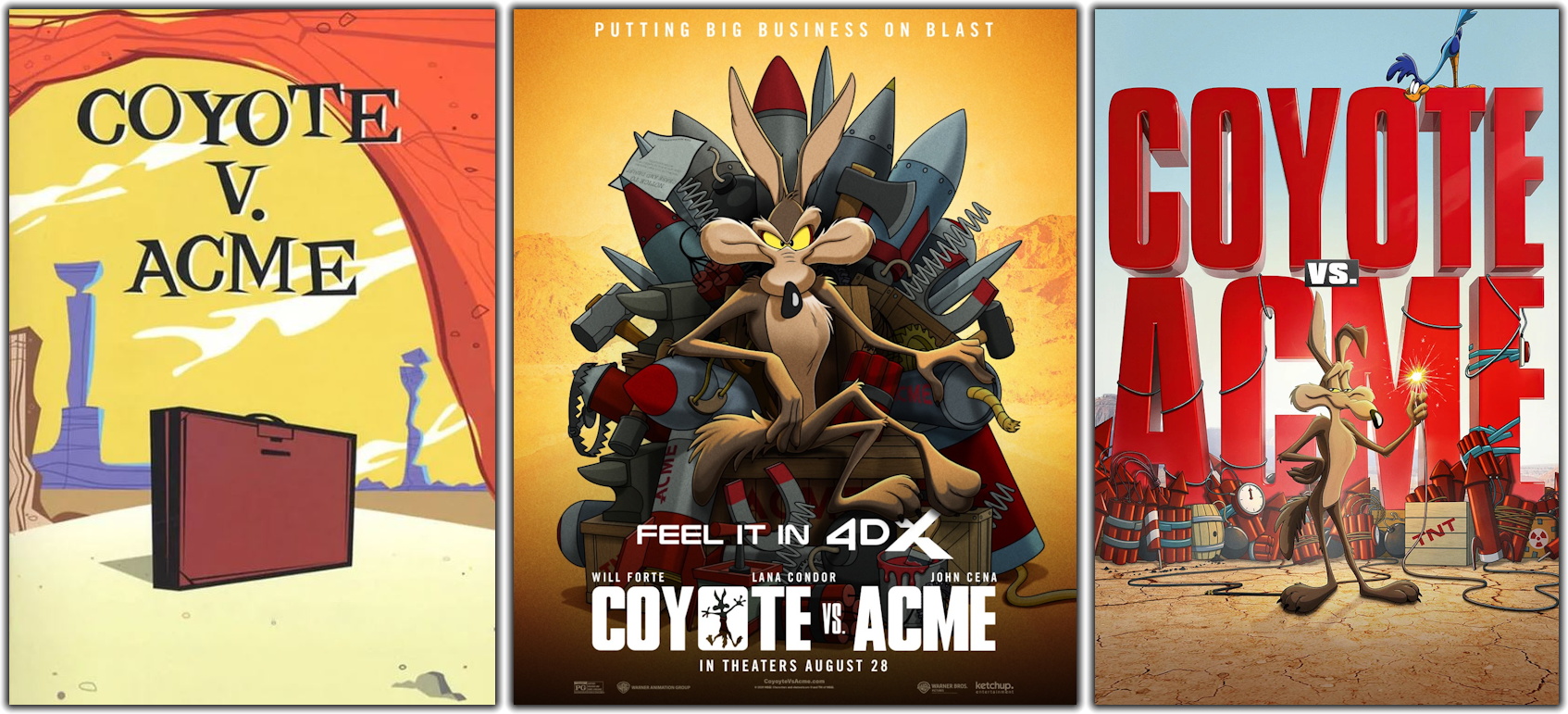
Three promo posters for Coyote vs Acme (2026)
A trio of promotional posters.

I think most folks would be familiar with Wile E. Coyote and the Road Runner from their numerous appearances in Looney Tunes and Merrie Melodies. The characters date back to 1949 – making them almost eighty years old. The core story of the Coyote trying to catch the Road Runner has barely changed, and their cartoon appearances all fall into that same mould.

Just in case you missed all of those cartoons and shorts, though, the only thing you really need to know is that Wile E. Coyote tries – and fails – to catch his nemesis, the Road Runner, using all kinds of wacky, cartoonish schemes and plots. There. That’s all the background you need headed into Coyote vs. Acme!
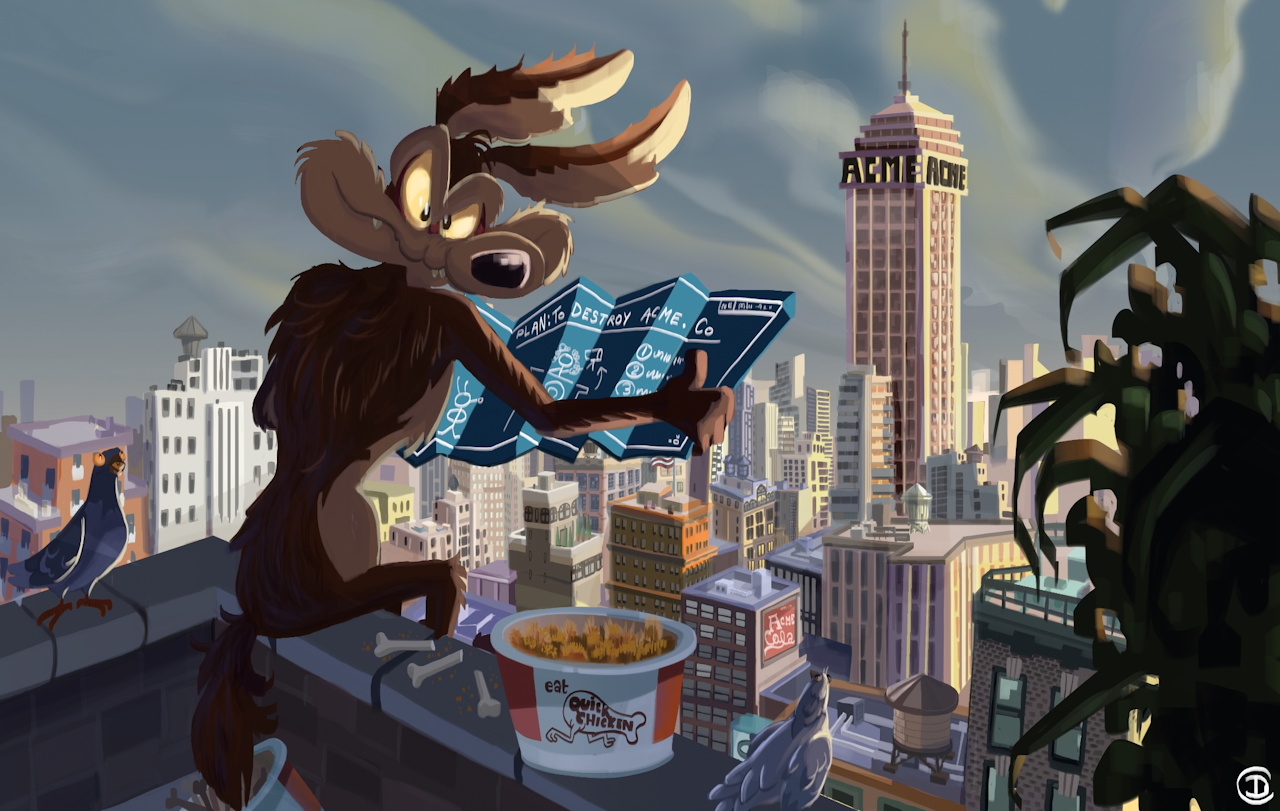
Concept art for Coyote vs Acme (2026)
Wile E. Coyote in concept art for the film.

Coyote vs. Acme almost didn’t make it to release. The film was complete, but was set to be cancelled by the (now defunct) Warner Bros.-Discovery in order to write off its production costs against the corporation’s tax bill. If that sounds like the kind of cartoonishly mean-spirited thing that only the fictional Acme Corporation would ever do… well, think again, because Warner Bros.-Discovery literally did the exact same thing to Batgirl a couple of years earlier.

Thankfully, however, director Dave Green didn’t give up on the film, and Warner Bros.-Discovery was eventually persuaded to find a distributor and release it. Ketchup Entertainment – which tends to distribute smaller, indie titles – picked up the rights, and Coyote vs. Acme made it to the cinema earlier this year. I picked up the film digitally, and for the money I paid, I can say I had a wonderful time with Coyote vs. Acme.
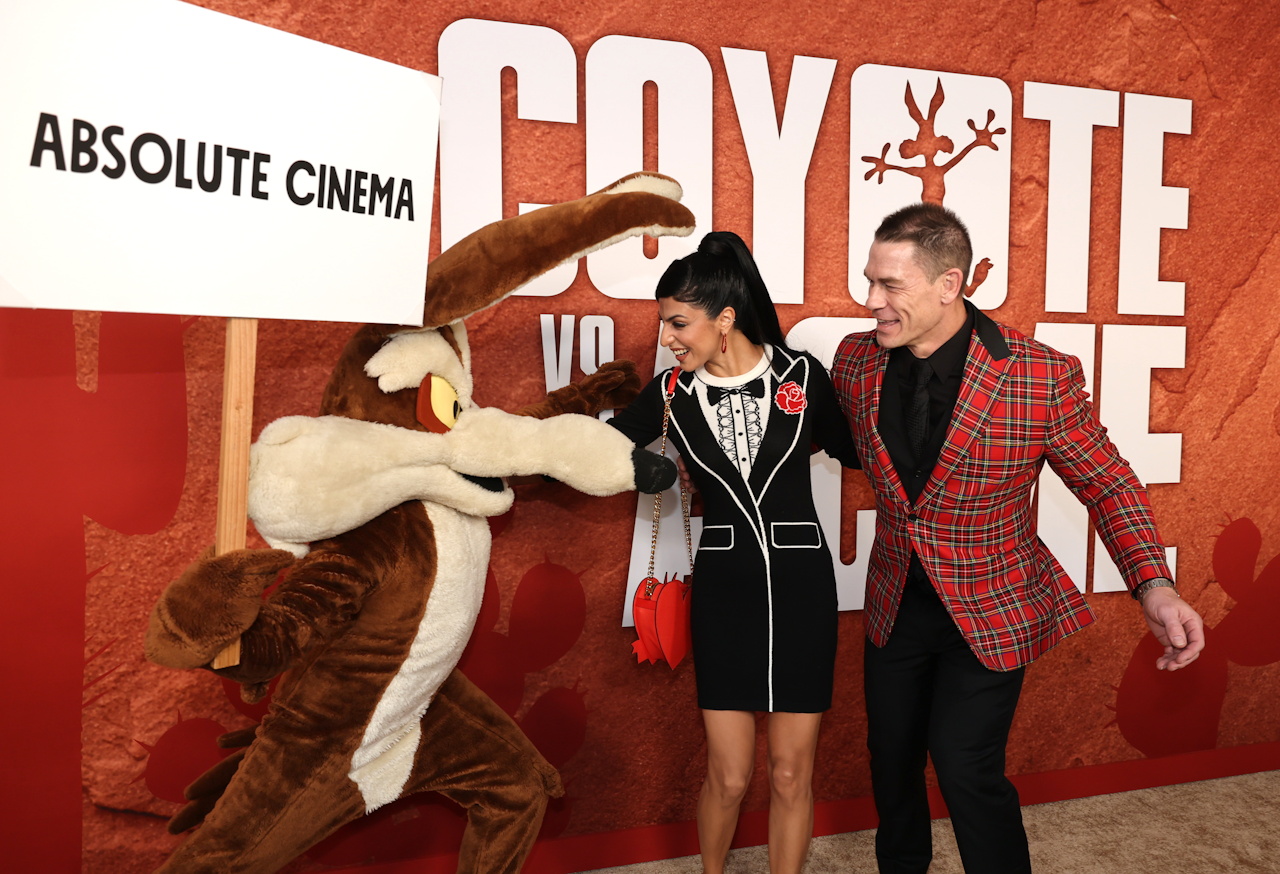
Photo of John Cena at the premiere of Coyote vs Acme (2026)
John Cena (right) at the premiere.

The film has a great mix of humour and heart, with plenty of cartoony silliness being balanced out by just enough relatable character moments to make it feel like it has purpose. And the core themes at the centre of Coyote vs. Acme – while they may admittedly feel a little muddled coming from a massive company – work really well as the premise for a “little guy taking on a massive corporation” kind of story. Wile E. Coyote – the main cartoon protagonist – stays true to his characterisation, too, and even undergoes an arc of his own.

So I’m happy to heartily recommend Coyote vs. Acme to… well, pretty much anyone. If you go into the film expecting arthouse cinema or Oscar-bait, I guess you’d be disappointed. But if you set appropriate expectations for a “Looney Tunes in the real world” story, akin to something like Who Framed Roger Rabbit or Space Jam, there really is a lot to love.

Up next, we’ll talk about some of the characters and plot points in a little more detail. If you want to completely avoid spoilers, I hope you’ll consider bookmarking this review and coming back after you’ve seen the film! If you’ve already watched it – or you don’t care about spoilers – then stick around, and let’s get into the story!

A Spider-Man-themed spoiler warning

Spoiler Warning: There are spoilers for Coyote vs. Acme from here on out.

Where Coyote vs. Acme had a message, it was about the virtues of a “little guy” taking on a big corporation because it’s the right thing to do… and because, left unchecked, corporations will misbehave. This message was interesting and generally well-presented, but as I’ve said before… when you know who created this story, it does kind of blunt the impact of the messaging just a tad. Warner Bros.-Discovery, prior to being absorbed into the ever-growing corporate blob that is Skydance, was hardly a small company, so this anti-corporate angle can just feel a little… fake.

Or it does if, like me, you like to think about things a little too much!

What I liked on this side of the story, though, was how the story reads like an anti-animal testing metaphor. What the Acme Corporation was doing to cartoons – in their view, to make better and safer products for humans – is exactly what many real-world companies and corporations do to animals. Now, I’m not against animal testing in *every* instance; it can be a nuanced subject and it’s way more complex than I have time for in a review of a Looney Tunes film! But the best films don’t just throw their characters into wacky situations – they make a point. And this message about animal testing is there in Coyote vs. Acme if you choose to view the film that way.
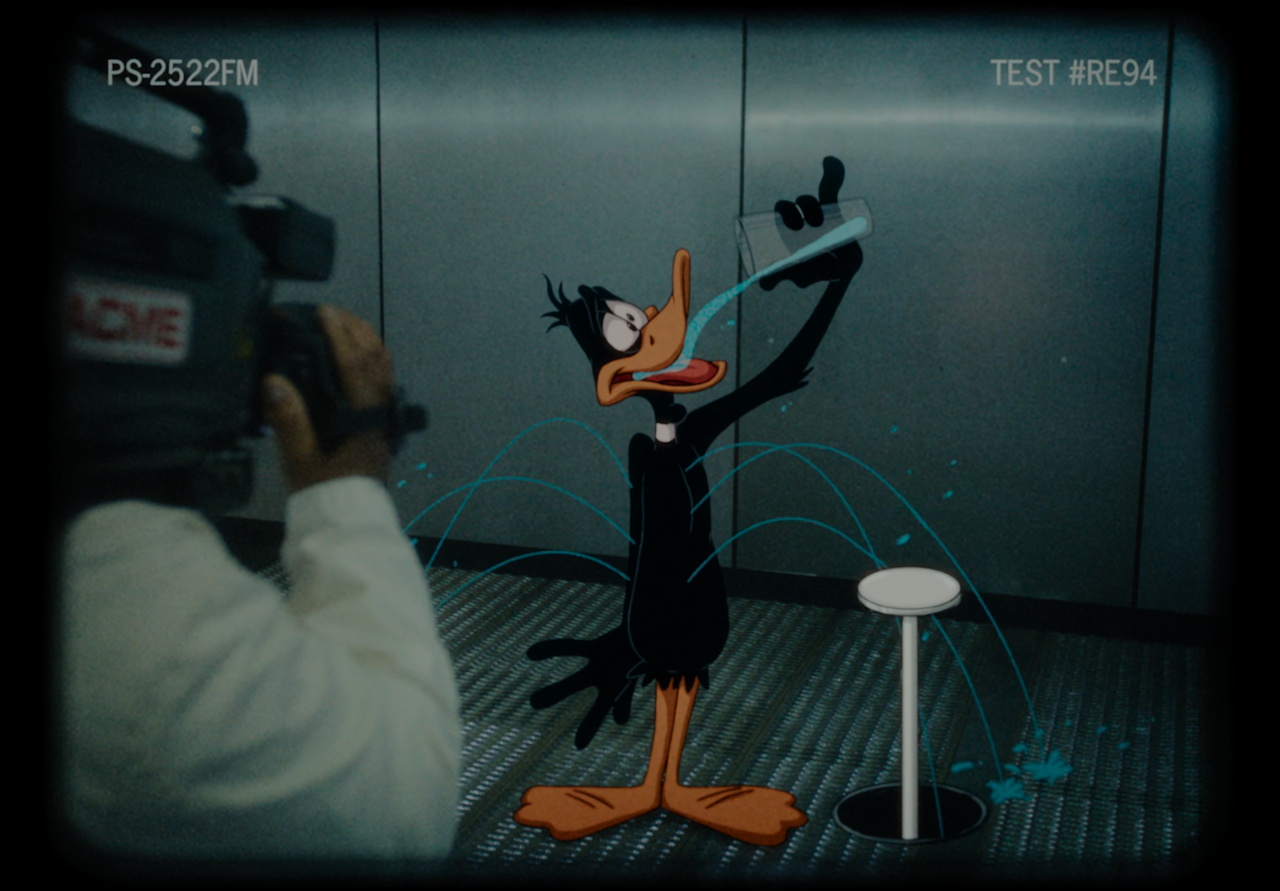
Still frame from Coyote vs Acme (2026) showing Daffy Duck
Acme testing its products on cartoons can be read as a metaphor for real-world animal testing.

The film also makes a point about political corruption, and how some of the biggest companies in the United States – represented by the fictitious Acme – are in bed with politicians. Perhaps I’m feeling this message all the more because of when I watched the film; America’s mid-term elections are literally taking place today, at time of writing. But the way Acme was presented, through its leadership and its legal representatives, definitely had something to say about corruption.

At the end of the film, Acme’s lawyer – played with wonderful villainy by John Cena – even cries out to the politicians that “that’s not what I pay you for!” or words to that effect, and while I guess you could say it’s a sad commentary on the state of things… doing anything to draw attention to how closely politicians and big businesses are aligned is a net positive, at least in my book. Was it the biggest part of the film? No. But was it worth using a film like this to highlight just how corrupt certain politicians can be? Absolutely.
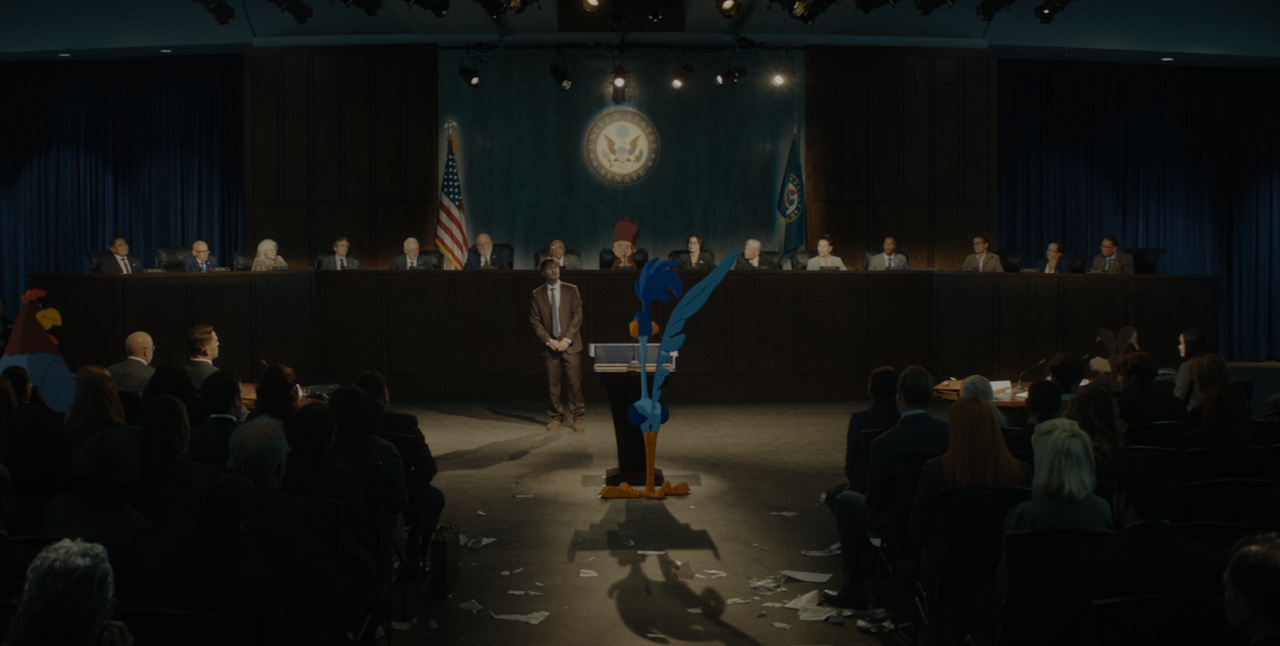
Still frame from Coyote vs Acme (2026) showing the Road Runner at the Senate
Mr Runner goes to Washington…

In terms of characters, there’s nothing really special about Coyote vs. Acme. Kevin – the main lawyer who Wile E. Coyote hires – undergoes an arc across the film as he crosses paths with a former classmate who became more successful, but it’s a pretty basic story that’s been seen before. Wide-eyed intern Paige doesn’t really change in any meaningful way; she starts out with fresh-faced enthusiasm and a desire to change the world… and that’s where she ends up, too.

The Coyote himself, though, does go on a bit of a journey.

I liked the way the film took a character who’s really an antagonist and presented him in a bit of a different way. Wile E. Coyote chooses to take Acme to court not really out of any desire to force the company to apologise nor even to win any compensation… but because it’s his latest scheme to catch the Road Runner. But later, as the film progresses, we see somewhat of an evolution in his character. Not only does he develop a genuine bond and friendship with Kevin, but he comes to respect the place that the Road Runner has in his life, too.
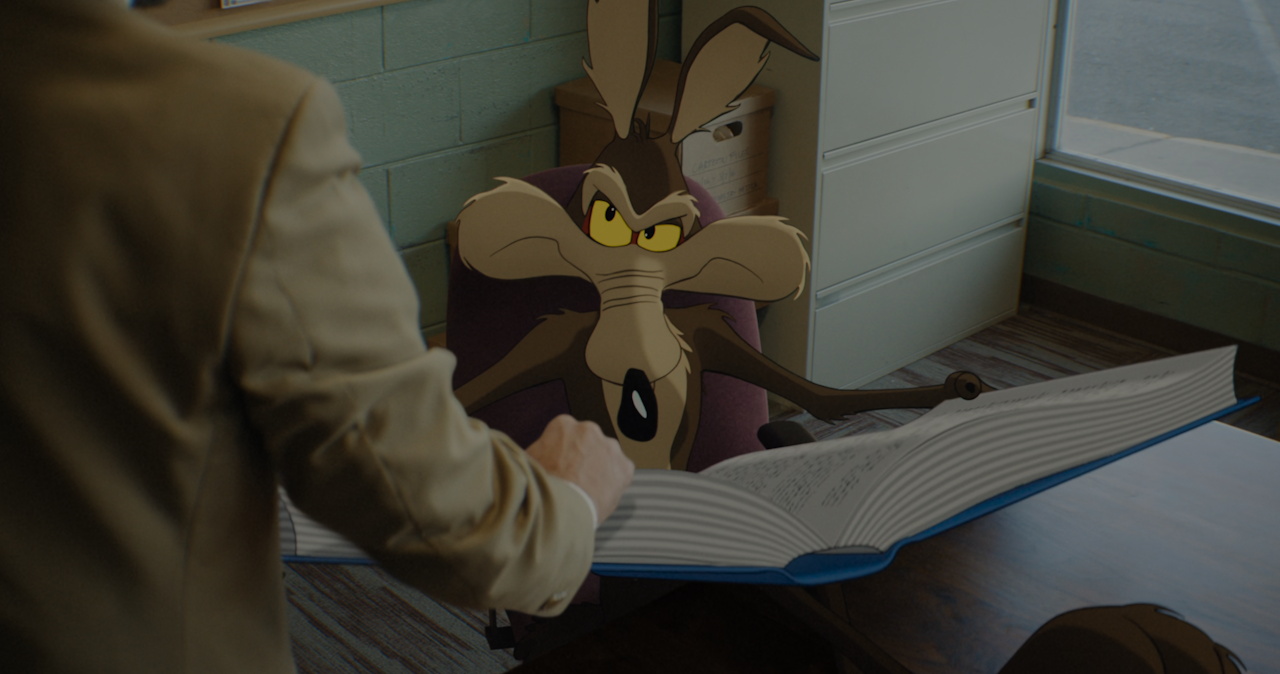
Still frame from Coyote vs Acme (2026) showing Wile E Coyote
Wile E. Coyote.

And all of this is communicated silently – with the occasional handheld sign!

If you’d told me going into Coyote vs. Acme that Wile E. Coyote would get a genuinely relatable and even emotional character arc… I don’t think I’d have believed it. But that really is what the film delivered. At first, he just seemed like the silly cartoon character from those Looney Tunes shorts… but by the time the film reached its emotional climax, I really did find myself invested in his journey. As Kevin shouted at him that he was never going to achieve his only ambition in life, and Wile E. looked up at him, crestfallen… yeah. I felt that! And the Road Runner’s last-second arrival to speak on his friend’s behalf was a genuinely emotional moment that the film built up to and felt like it had earned.

Coyote vs. Acme was creative in the way it used its central character, though. Rather than trying to present Wile E. Coyote as a pure victim, the story made sure to let us know that it was – at least in part – his own desire to catch and cook the Road Runner that was his driving force. I think it would’ve been easy to go all-in on one or the other; to try to depict Wile E. Coyote as either a total victim of Acme or as a ruthless villain and liar. But his story straddled that line well enough – and that meant his growth and emotional journey stuck the landing.
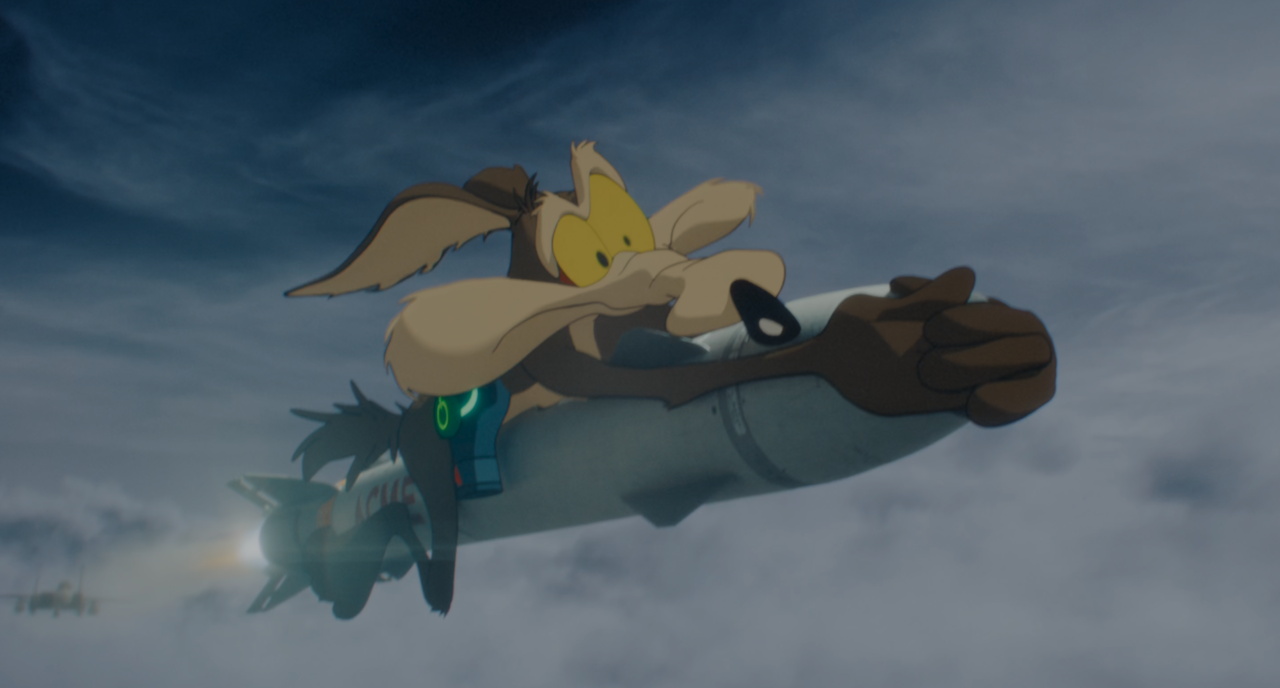
Still frame from Coyote vs Acme (2026) showing Wile E Coyote riding a missile
Riding on a missile!

The intrigue at the Acme Corporation, and the way Kevin, Paige, and Wile E. unravelled it, was in the mould of classic conspiracy-thrillers, and while it was nothing unique or original, I felt it worked well enough. It came across as a fun and light-hearted take on the idea, thanks to the presence of Looney Tunes characters like Bugs Bunny, and this was perhaps the side of the story where the blend of cartoon and live-action worked the best.

Coyote vs. Acme blends this investigation and the subsequent courtroom drama with cartoon wackiness in a truly clever way. A worse film would’ve felt tonally jarring or completely discordant with itself; it’s a testament to the strength of the story – and the film’s sense of humour – that we can suspend our disbelief and accept this mixture of silly and serious. Cars getting squashed with giant cartoon boulders, catapults full of anvils being flung at people, rocket-powered roller skates… I mean, it’s classic Looney Tunes wackiness right next to this courtroom drama about a corporation conducting dangerous experiments and a small law firm at risk of bankruptcy. Yet somehow… it works.
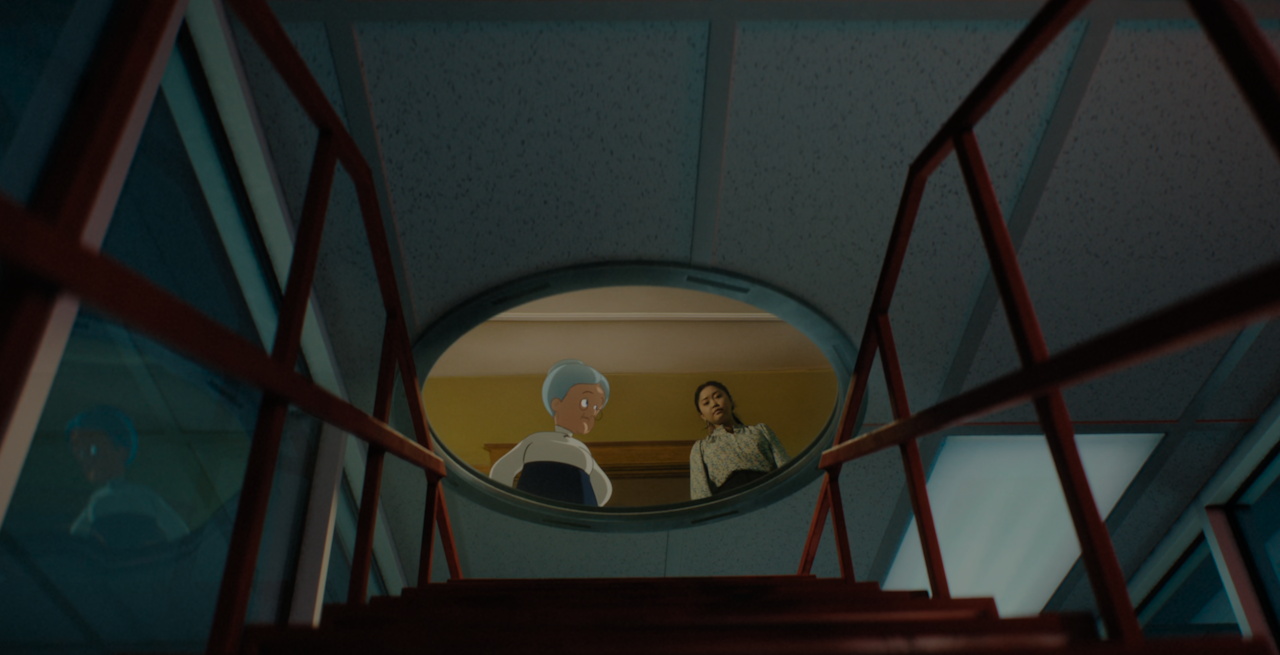
Still frame from Coyote vs Acme (2026) showing Paige and Granny
The investigation continues…

Although the focus remained on Wile E. Coyote, I felt that the film made good use of other Looney Tunes characters. Bugs Bunny got a turn as an informant – and given his scene-stealing abilities and overall popularity, using him sparingly was a good call. Tweety Bird and his owner got a really creative story about being threatened by Acme, with her husband being the scientist who created many of Acme’s products. And Foghorn Leghorn being parachuted in as Acme’s CEO was hilarious, too – the role genuinely seemed to suit him.

It’s also worth noting, sadly, that Coyote vs. Acme is one of the final film roles for the late Eric Bauza, who passed away just last month. Bauza voiced many of the Looney Tunes characters in the film.

John Cena’s villainous lawyer was pretty one-dimensional, but Cena breathed life into him through a delightfully over-the-top performance. There was just enough realism in the way the lawyer came across to get me to buy into his status, his role, and his one-sided feud with Kevin. I haven’t always been a huge John Cena fan when I’ve seen him in other productions, but here, I felt he was well-cast and his character stuck the landing.
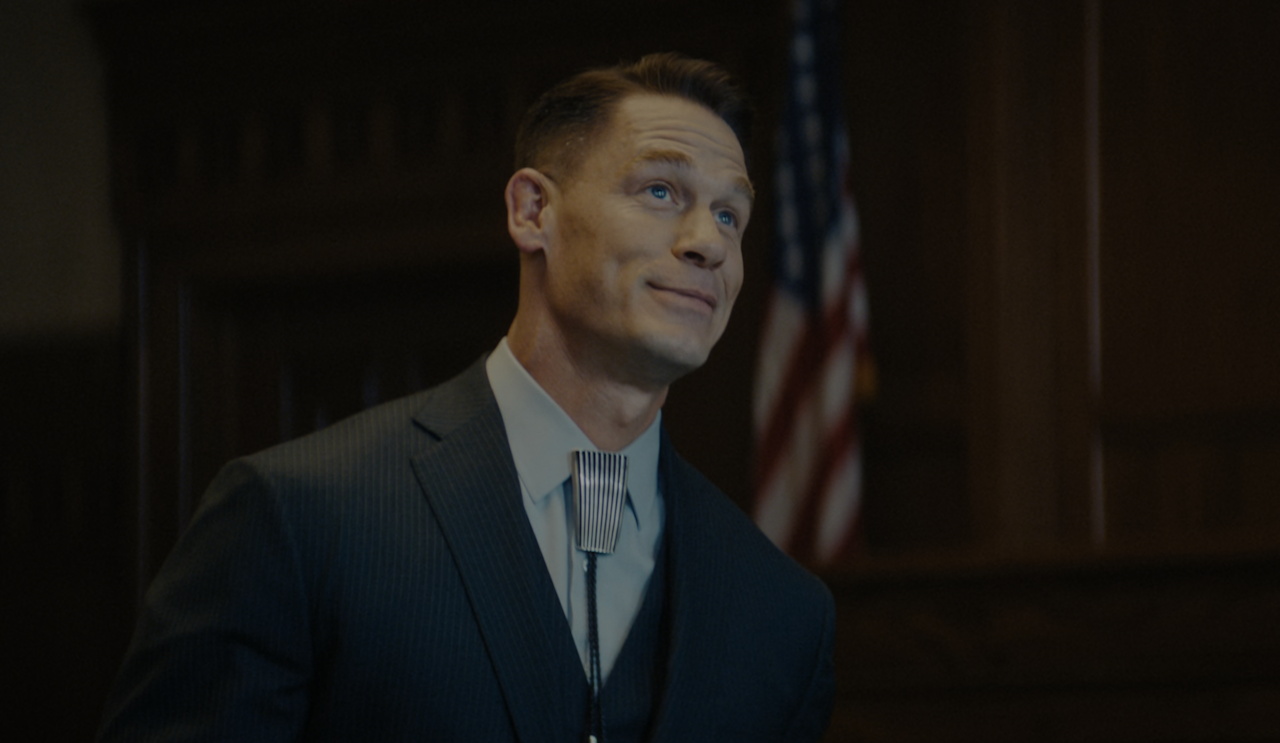
Still frame from Coyote vs Acme (2026) showing Acme's lawyer
John Cena felt well-cast as Acme’s lawyer.

In terms of the film’s visual effects and imagery, I really liked what I saw. Cartoon characters retained their original hand-drawn 2D style, but the 3D models could be filmed from all angles, and the cartoon characters genuinely felt like they could occupy three-dimensional space. There were no obvious visual glitches or issues with human performers interacting with cartoon characters or cartoon objects, and all of the cartoon artefacts created for the film felt like they had sufficient weight and presence to sell the illusion that they were real pieces of this world.

So… I had fun with Coyote vs. Acme, as you can tell!

You have to set appropriate expectations for… well, for any film, really. If you’ve just watched something like The Odyssey and you’re expecting a blockbuster with comparable stakes and storytelling that takes itself completely seriously… this ain’t that. But if you’re down for a fun cartoony romp that has a little more to say than a standard Looney Tunes short, then Coyote vs. Acme excels. It knows exactly what kind of film it wants to be, how it wants to use its core premise and its new and familiar characters, and it goes for it in a way that’s both earnest and just plain *fun*. I think I laughed more watching Coyote vs. Acme than I have with anything else I’ve seen in months – there were so many laugh-out-loud gags and little comedic moments from beginning to end.
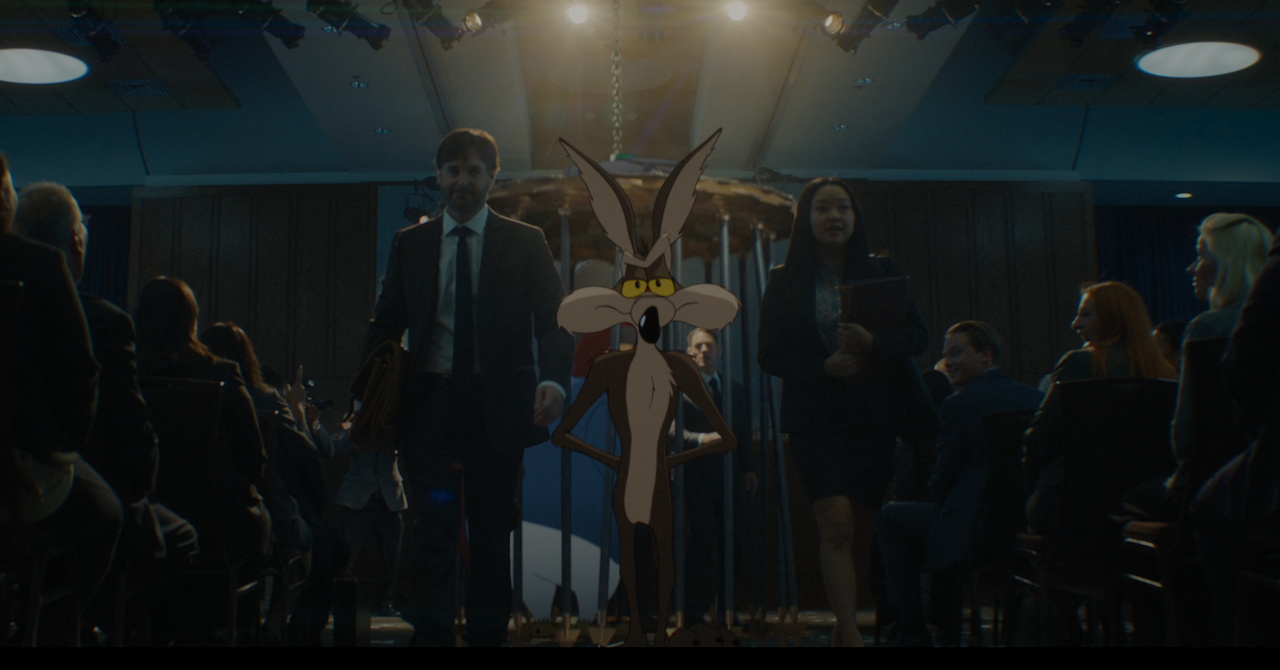
Still frame from Coyote vs Acme (2026) showing Kevin, Paige, and Wile E Coyote
Coyote vs. Acme was good fun.

I was happy to pay a little extra to watch the film digitally, but if you wait just a little longer, it’ll probably come to HBO Max/Max/whatever the streaming service will be called now that it’s owned by Skydance sometime soon. A DVD/Blu-ray release is also planned, so watch this space.

Thanks for joining me for this review. I hope it’s been interesting! I genuinely can’t remember the first time I watched Wile E. Coyote and the Road Runner; like a lot of folks, Looney Tunes, Merrie Melodies, and their characters have been part of my life as a viewer for as long as I’ve been watching films and TV, I guess. But this take on the characters was fun and something a bit different. I’m glad I was able to watch Coyote vs. Acme – and I’m glad that the former Warner Bros.-Discovery corporation was persuaded to let the film see the light of day.


Coyote vs. Acme is available to purchase or rent now via on-demand platforms like Apple TV, Amazon Video, and the Sky Store. Coyote vs. Acme is the copyright of the Skydance Corporation, Warner Bros. Pictures, Warner Bros. Animation, and/or Ketchup Films. This review contains the thoughts and opinions of one person only and is not intended to cause any offence.

Space Jam: A New Legacy – film review

Spoiler Warning: There are spoilers ahead for Space Jam and Space Jam: A New Legacy.

I don’t think I’ve re-watched Space Jam since I saw it at the cinema in 1996… so it’s been a while! But the film is adored by many, and has a following of its own within the broader Looney Tunes fandom. I’m not sure I’d go so far as to call it a classic of the 1990s, but I daresay a lot of self-proclaimed “90s kids” would – even though many of them were born far too late to truly warrant the label. But we’re off-topic already!

The original Space Jam was a unique offering. A blend of live-action and animation, a mixture of comedy and sport, it’s a film that’s hard to define and pigeon-hole, and as a result of its premise – and wacky, child-friendly humour – it’s well-remembered and held in high regard even a quarter of a century later. Going back to that premise for a second time always felt like a risky move for Warner Bros. simply because it can be very difficult to recapture the magic of such a genuinely different, one-of-a-kind title.

Promo poster for Space Jam: A New Legacy featuring the Road Runner.

But this is the reality of modern cinema. In the realm of kids’ films – a genre Space Jam: A New Legacy is surely included in, despite its appeal to the millennial generation – Disney has pushed the boat out ever further with its recent slate of remade classics, and in a broader sense the idea of reboots, soft reboots, and remakes is something practically every major film studio is throwing money at. In a sense, Warner Bros. doesn’t really care whether anyone actually likes Space Jam: A New Legacy, because they know that the name and branding alone will convince many fans of the original to turn up and see it no matter what the critics say. The film is, to use an outdated movie industry term, “bankable.”

I recently had this conversation with a family member who lamented the existence of Steven Spielberg’s remake of West Side Story – which is due out later this year, in case you care. They were despondent at the idea that one of their favourite films of all time was being remade, and I can sympathise. Remakes, by their very nature, are aiming low. They can only ever hope to be considered “just as good” as the original, but never even try to surpass it.

LeBron James in Space Jam: A New Legacy.

But remakes serve a purpose, at least from the point of view of corporations. They’re easy money, because film studios know that millions of fans of West Side Story or Space Jam will turn up for the new version – even if only out of morbid curiosity! There’s also an argument to be made that, in some cases, younger audiences aren’t interested in watching films that they deem to be “too old.” Thus a remake can, from an artistic point of view, be argued to bring a story or a setting to a new generation of prospective fans. Whether that’s the case with Space Jam: A New Legacy is debatable; the film isn’t a straight remake. Nor is it really a sequel, instead I think it’s best described as a riff on the original concept, taking some familiar and some new characters and throwing them into a similar – but not identical – story.

That’s the area that Space Jam: A New Legacy occupies. Not a sequel, not a remake, but a riff. A shaken-up copy made a quarter of a century later with, let’s be honest, business and financial reasons at its core. It’s not an artistic piece; it wasn’t made because its director or writer had a burning passion for the wonderful, underexplored universe of Space Jam. Nor was it made because the original film was desperately crying out for a sequel or an expansion. It was made purely because corporate executives at Warner Bros. were looking through their back catalogue in search of something to monetise, and Space Jam caught someone’s eye. If we were being cruel, we might say that Space Jam: A New Legacy is soulless.

Space Jam: A New Legacy could feel, at times, very corporate.

One of the reasons I was curious to see Space Jam: A New Legacy – beyond the vague interest in a follow-up to a film I remember with fondness from the ’90s – was the involvement of Sonequa Martin-Green. Martin-Green plays Michael Burnham, the main protagonist of Star Trek: Discovery, and like many Trekkies I’m always interested to see other projects involving stars of Star Trek. Though I haven’t always felt that Michael Burnham was the easiest protagonist to root for in the franchise, there’s no denying Martin-Green’s talent and hard work, and just like she excelled in The Walking Dead a few years ago, she put in a great performance in Space Jam: A New Legacy. Though her character played a supporting role, it was still great to see her and her performance elevated the film.

I’ve seen more Space Jam films than I have basketball games. Basketball isn’t a big sport here in the UK, and while I have tried it in PE lessons at school way back when, it isn’t a sport I follow, nor do I know much about it beyond the basic rules. LeBron James is among the few basketball players whose names I’ve heard, but that’s really where my familiarity with the sport ends.

Sonequa Martin-Green as Kamiyah James.

Space Jam: A New Legacy felt, at points, like a love letter to its star, which was a very strange thing to watch. Some films can feel like vanity projects – John Travolta’s Battlefield Earth, Kevin Costner’s The Postman, and even to an extent William Shatner’s Star Trek V: The Final Frontier all cross that invisible line, and Space Jam: A New Legacy comes close. The introduction of Don Cheadle’s Al-G Rhythm is a scene which has him reading aloud a list of James’ accomplishments on and off the court, and the film’s title sequence is likewise a flattering summary of his career. For a film where this man is the star, it makes watching those sequences feel more than a little weird.

I didn’t have high expectations for LeBron James as an actor, and while he won’t be winning an Oscar anytime soon he did, to my surprise, manage to put in a solid performance. His early scenes left me concerned that I’d find him too flat and wooden, as many sports stars and athletes can be when they try acting for the first time, but when the plot got going and he and his son were transported to the Warner 3000 server-world, the quality of the performance definitely improved.

LeBron James finds out that he’s been turned into a cartoon.

While we’re discussing the acting, Don Cheadle was clearly having a great time as Al-G Rhythm, and embraced the opportunity to play a cartoonish, somewhat over-the-top villain for a change! It was fun to see him in the role, and he did a creditable job. Cedric Joe, who took on the challenging role of young Dom James (a character inspired by LeBron’s real-life son) put in a great performance. He was believable as a young man who felt rejected by his father and overshadowed by his legacy, and his struggle to get his dad to “let me be me,” as he put it, was the emotional core of the narrative.

The voice cast who played the Looney Tunes did a good job, but I have to caveat that by saying that none of them really got much material to work with. Most of the ‘Tunes weren’t even secondary characters, but were relegated to background roles. They all got to show off their greatest hits from past Looney Tunes outings, but even the two main players – Bugs and Lola Bunny – didn’t get an awful lot to do for much of the film.

Most of the Tune Squad didn’t have a lot to do.

At the centre of Space Jam: A New Legacy, underneath the cartoon comedy and basketball trappings, was a story that aimed to be uplifting. It was trying to send a message to kids that everyone has different passions and different talents, and not being good at sports doesn’t mean you have no worth. The film also wanted to tell a story to parents about allowing their kids to step out of their shadow and embrace the things they like, to experience different things and figure out their own path. Those messages are important in a film like this, and their inclusion made it feel like Space Jam: A New Legacy had purpose.

However, that purpose was in danger of getting lost in a film that was very commercial. There was a lot of product placement in Space Jam: A New Legacy, including things like E3 (a video game industry event), Red Vines (an American candy), a whole lot of Nike, Mercedes, Dell, Bose, and many, many mentions of Warner Bros. itself. It’s been a long time since I saw a film so heavy on product placement, and there were moments where this marketing ploy felt overwhelming. It adds to the sense I mentioned above that Space Jam: A New Legacy is a corporate product first and an artistic work second.

Space Jam: A New Legacy had a lot of product placement.

I literally cannot fault the visuals and animation work in Space Jam: A New Legacy. For a film to incorporate fully live-action scenes, traditional cartoon animation, 3D computer animation, greenscreen CGI sequences, and even footage from older films is a monumental task, and the animators, CGI artists, and editors did an amazing job not only on the individual segments but at blending it all together. The film’s climax is the basketball game, and this sequence features real actors and CGI creations alongside each other, and it works seamlessly.

Space Jam: A New Legacy is thus a visually impressive film. Not every element is unique or beautiful in its own right, but the technical skill required to bring so many different things into the same project is truly impressive. Aesthetics are a matter of personal taste, and I’m sure some folks will criticise some of the designs used for the characters and settings, but on the whole I felt what was presented on screen looked fantastic, and unlike in many CGI-heavy titles, I honestly couldn’t find fault; there were literally zero moments where the animation work didn’t hit the target it was aiming for. That’s something I find quite amazing.

The film did well to blend so many different elements seamlessly.

There were a lot of callbacks and references to other Warner Bros. properties, including a number of scenes from famous films that the characters were inserted into à la Forrest Gump. This was unexpected, but many of these scenes and cameo appearances were funny and added a lot to the film. Space Jam: A New Legacy has a pretty childish sense of humour, but sometimes that’s perfectly fine, and its comedy generally stuck the landing as far as I’m concerned.

Seeing characters from other franchises, like the Night King from Game of Thrones or the titular characters from Rick and Morty meant that there was something for adults to laugh at too, and though the humour was hardly sophisticated, it was, at points, more than simple cartoon slapstick. Perhaps younger viewers will cringe at things like Porky’s awkward rap battle, but you know what? I’m going to admit right now that I found that whole sequence – and many others – hilarious!

LeBron James and the Tune Squad.

In fact, despite initially having pretty low expectations for the film, there were plenty of enjoyable moments under the corporate fluff, and I found myself chuckling more than I thought. Though the narrative was silly – playing a computerised basketball game in order to win freedom – the basic premise underlying it was a father learning to connect with his son and embrace what makes him special instead of trying to push him in a certain direction. That story shone through the cartoon wackiness at key moments, and was just enough of an emotional force to make Space Jam: A New Legacy a more enjoyable film than I might’ve thought.

Was it the perfect film, or the perfect vehicle for telling this kind of story about bridging the gap and coming to an understanding? Perhaps not. Its commercial aspects certainly detracted from that message at points, which was a shame. Also, in a film which was supposedly half about basketball and half about the Looney Tunes, the cartoon characters themselves didn’t exactly get much time in the spotlight. That was perhaps the biggest let-down for me, as it made the film feel less like “basketball meets Looney Tunes” and more like a LeBron James vehicle with some cartoon trappings.

Despite that, however, I had fun with Space Jam: A New Legacy. It probably wasn’t as good as the original – as films of this nature seldom are – but it was visually impressive, had a narrative that was relatable for kids and for adults, and the quality of the acting performance from its lead took me a little by surprise. All in all, it was a perfectly entertaining way to spend a couple of hours.

Space Jam: A New Legacy is out now in cinemas in the United Kingdom, United States, and certain other countries and territories. Space Jam: A New Legacy is available to stream on HBO Max in the United States, and will come to streaming platforms in other countries and territories at an unspecified later date. This article contains the thoughts and opinions of one person only and is not intended to cause any offence.