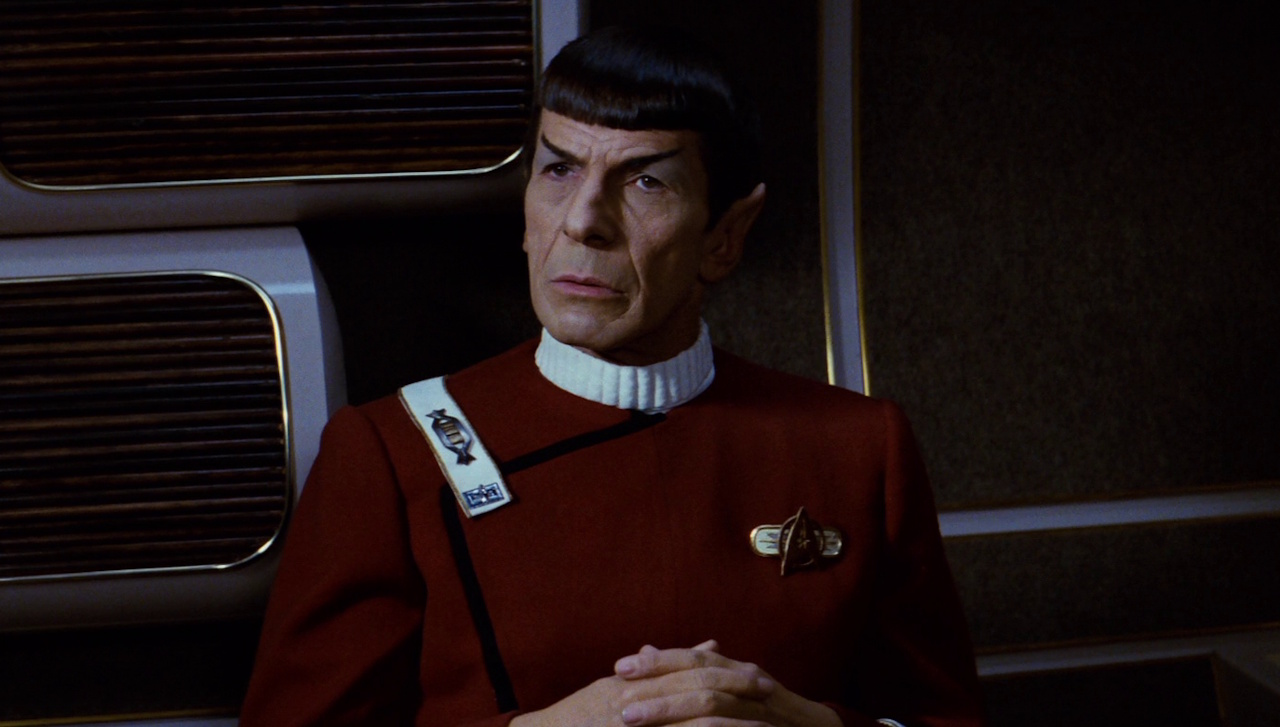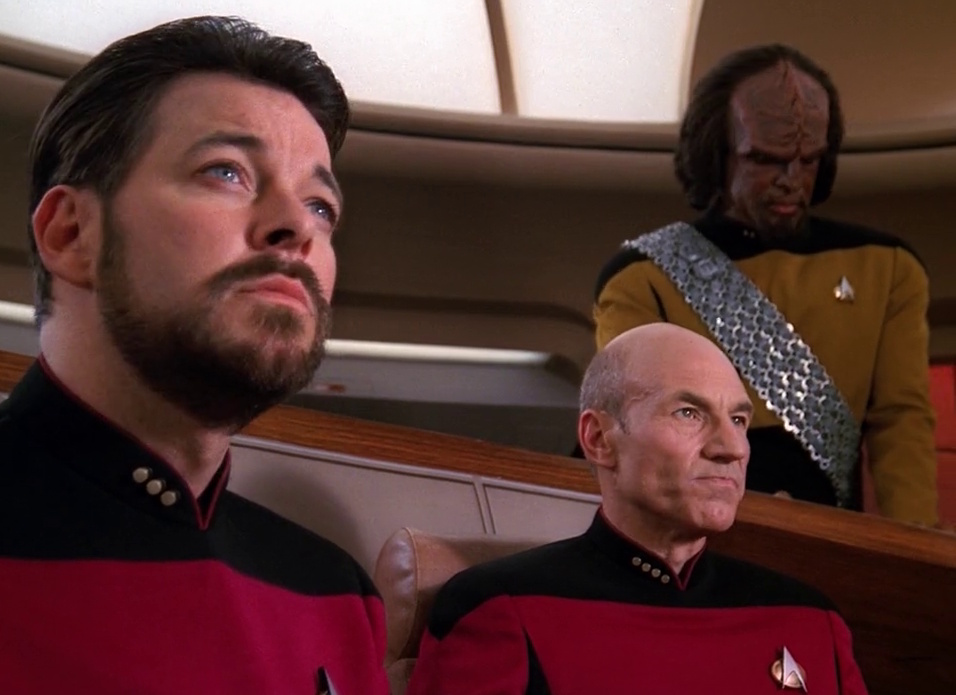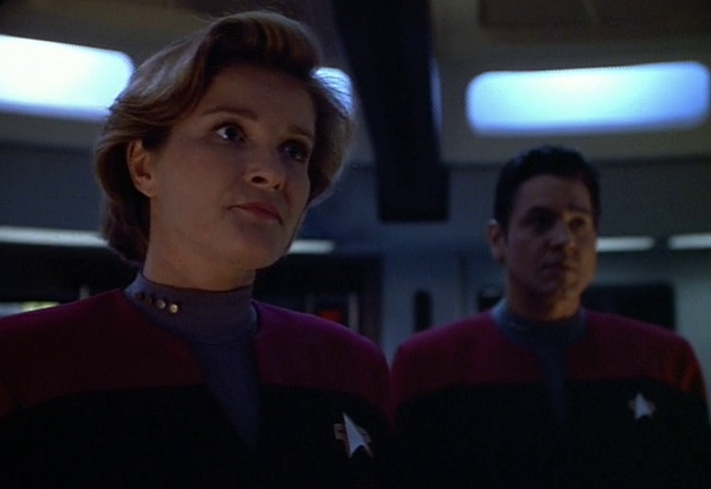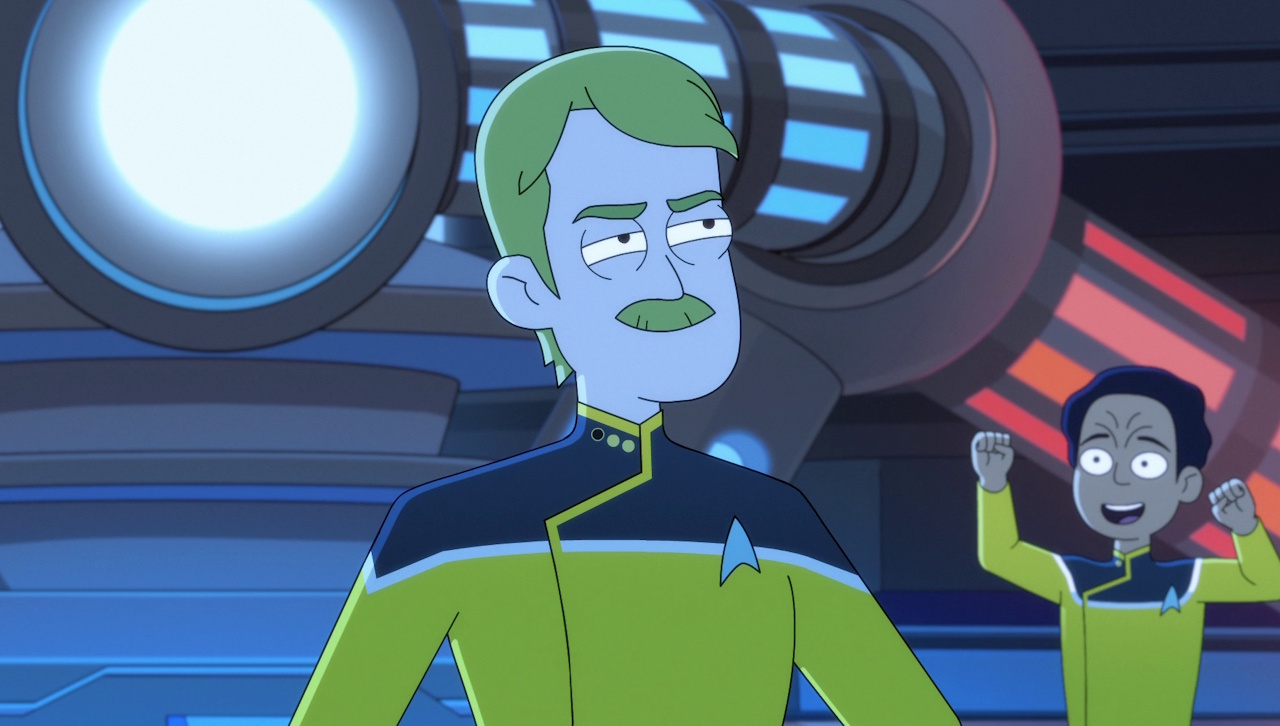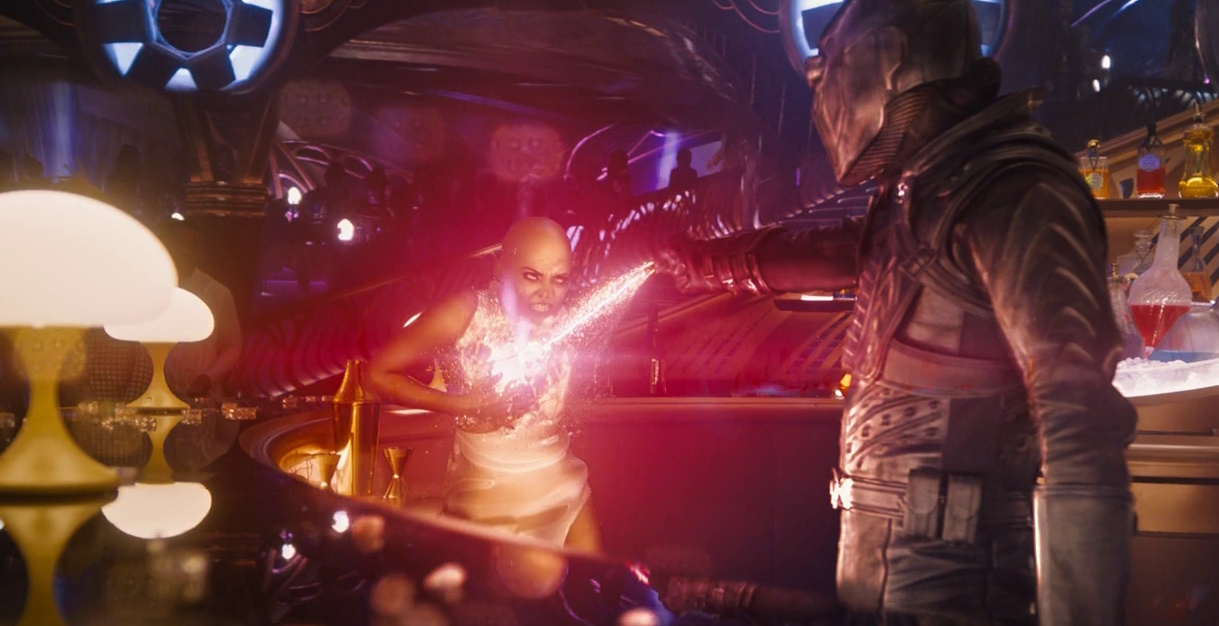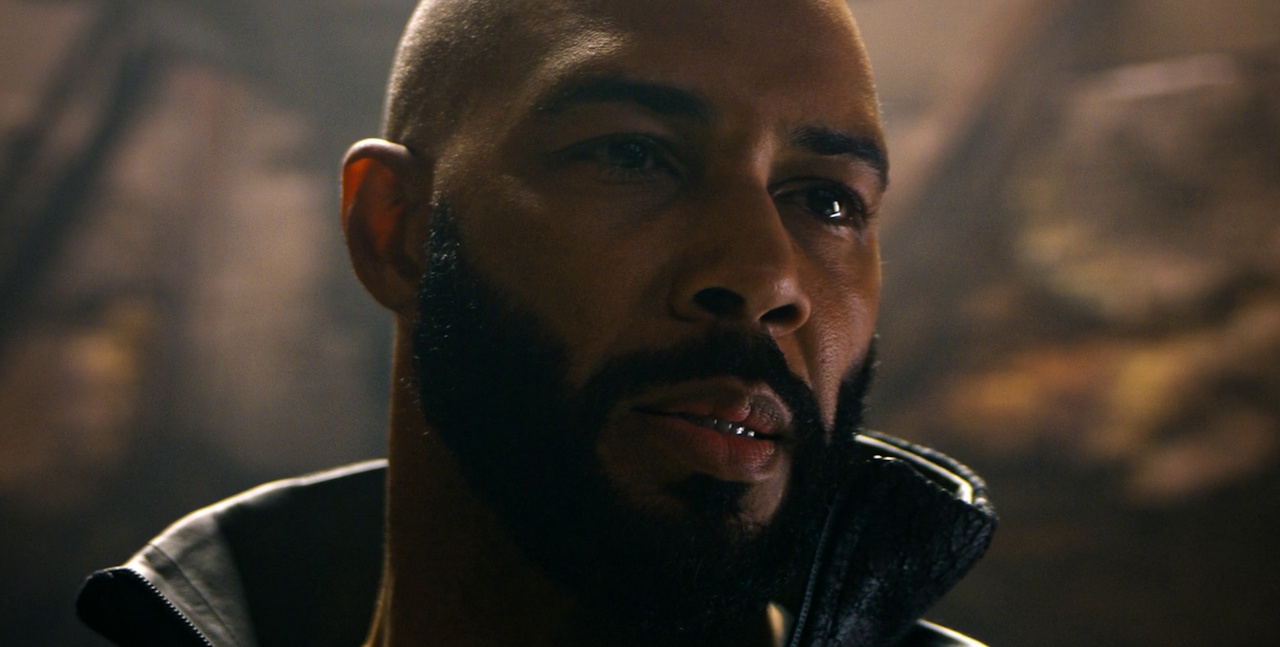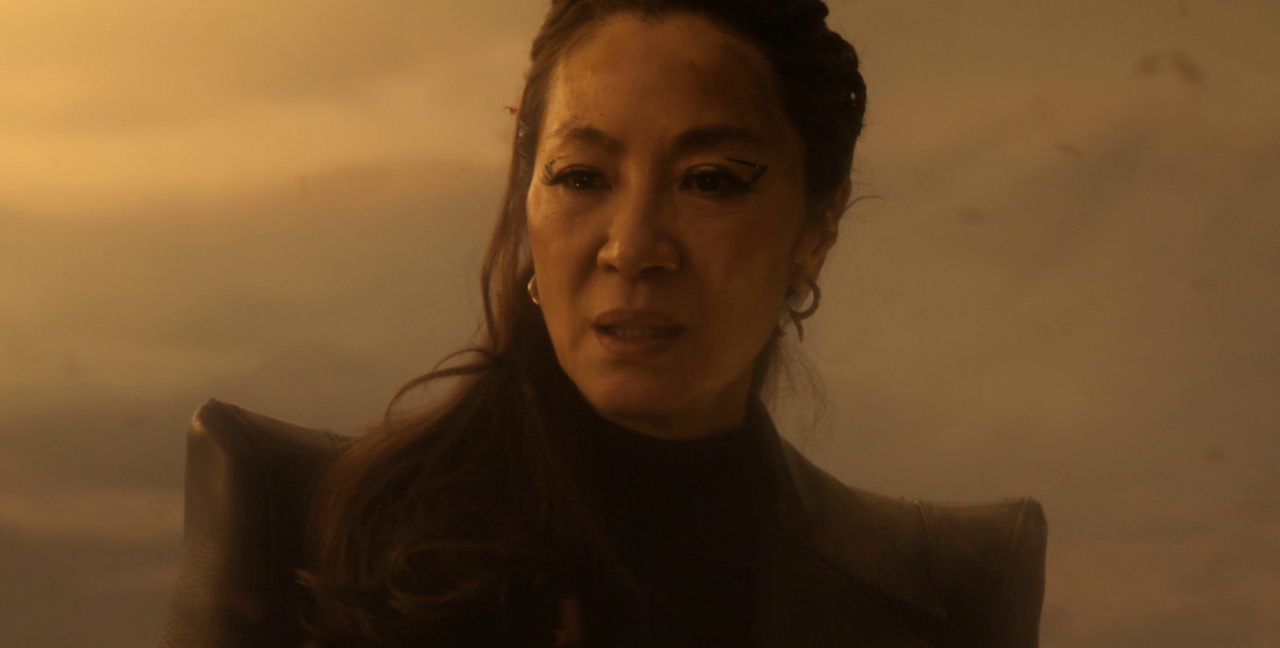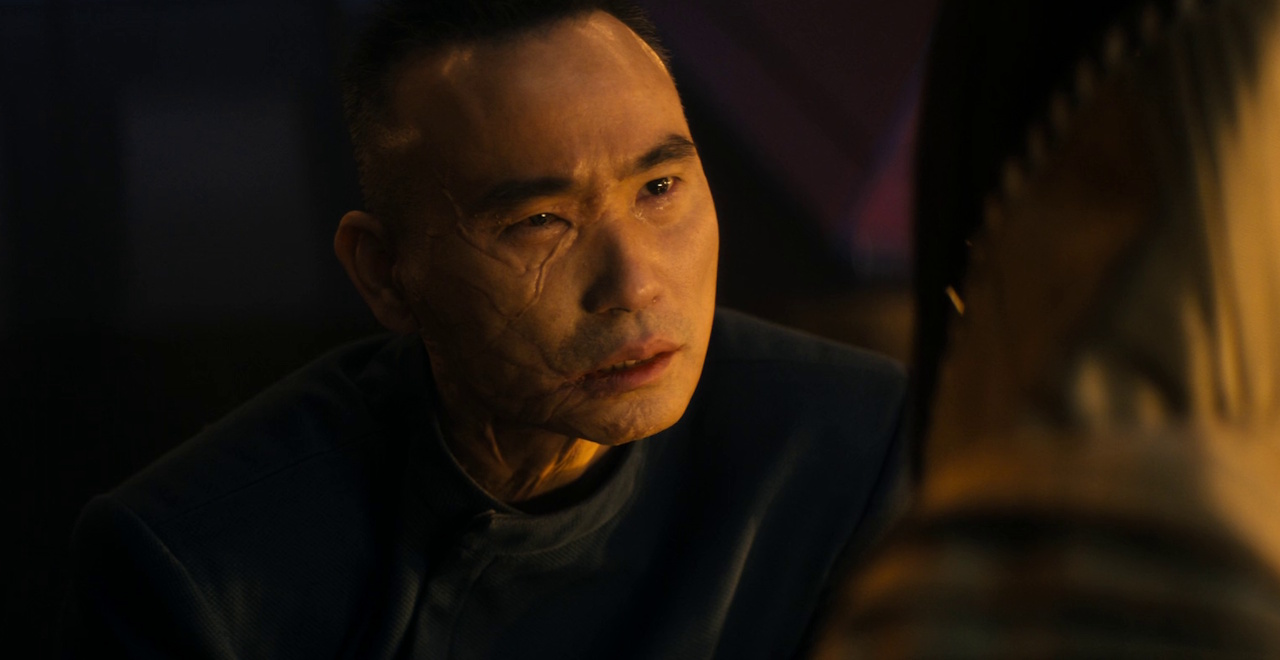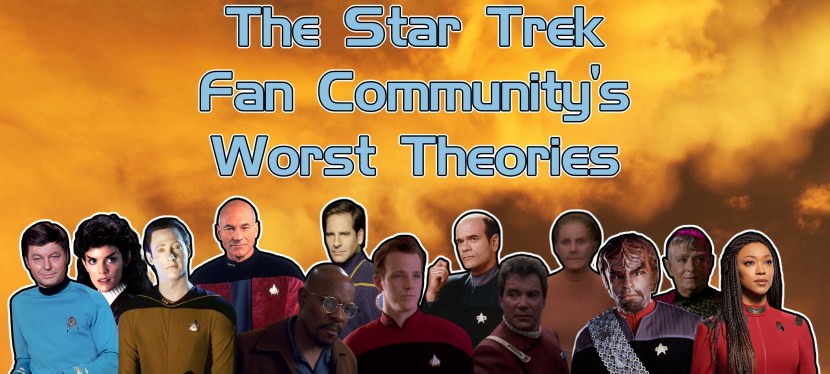
Which Narrative Clichés Would I Remove From Star Trek?

A Star Trek-themed spoiler warning.

Spoiler Warning: Beware spoilers for the following Star Trek productions: The Wrath of Khan, The Next Generation, Deep Space Nine, Voyager, Into Darkness, Discovery, Picard, Prodigy, Strange New Worlds, and Section 31.

I hope you all had a lovely Halloween! October was a busy month for me, but I did manage to put out a few Halloween-y posts, so I hope you’ll scroll back and check out some of those; they were a lot of fun to write!

Onward to the subject of today’s piece, then.

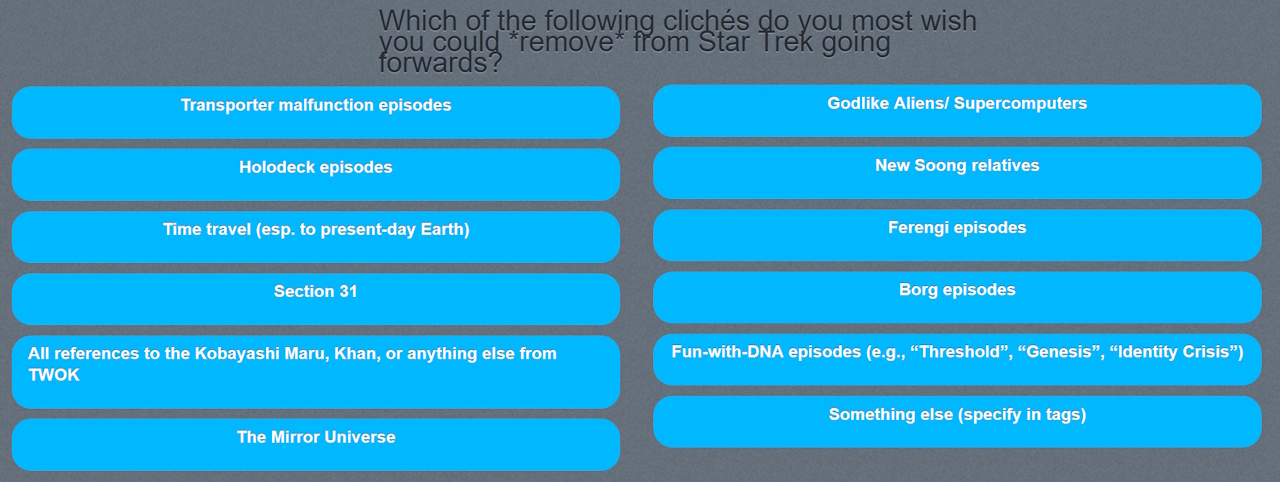
I was scrolling Facebook when I noticed a Star Trek fan page had posted a screenshot of a Tumblr poll (because that’s all social media is these days: screenshots of the same handful of pages being endlessly recycled!) But the original post, first shared on Tumblr by user “quasi-normalcy,” was one that I thought could be very interesting to address. In short, it asked the question “which clichés do you most wish you could remove from Star Trek?” followed by eleven options that form the basis of a number of Star Trek episodes.

Screenshot of Tumblr showing a poll.
The original Tumblr poll upon which this piece is based…
Screenshot of Tumblr showing the results of a poll.
…and the eventual results.

The original Tumblr poll has now concluded, but I’ll drop a link to the post below in case you want to see it or check out the original poster’s page – this is not a unique idea and I am not claiming to have come up with it! But I am going to do something a little different than just clicking or tapping on a poll! I’m going to address all eleven of “quasi-normalcy’s” Star Trek narrative clichés, explain what I like or dislike about them, and perhaps add one or two of my own, too!

So thank you “quasi-normalcy” on Tumblr, and random Star Trek fan page on Facebook, for introducing me to this idea. I think it’ll be interesting to talk about some of the narrative frameworks that Star Trek has used, in some form, on multiple occasions – and maybe a little controversial, too! My usual caveat applies: everything we’re going to discuss is the subjective, not objective, opinion of just one Trekkie. If you hate everything I have to say about these episodes, think I’ve totally misunderstood something, or if we just disagree on what makes for a fun episode of Star Trek… that’s okay! Star Trek is a big tent, and there’s room for all kinds of opinions. I share mine with the Star Trek fan community in that spirit.

That being said, if you don’t want to read some potentially controversial Star Trek thoughts, this is your opportunity to beam out! I’ll address each potential cliché in the order they were listed in the original poll, then give my verdict on whether it should be “removed from Star Trek” going forward!

Cliché #1:
Transporter Malfunction Episodes

Still frame from Star Trek: Picard showing a transporter energising.
Transporting.

This feels like too broad of a category to want to see removed, in my opinion. A “transporter malfunction” can be handled in so many different ways, with so many different outcomes. We can bring Scotty forwards in time by eighty years in Relics, then cross over to a parallel universe in Mirror, Mirror – with completely different results. The transporter is a key part of Star Trek, and when it goes wrong, it can lead to all kinds of stories which vary in tone, structure, and genre. With that in mind, I really don’t see this one as a problem. It can feel like a cliché sometimes, sure… I will concede that point. But because transporter malfunctions vary so much in terms of outcome, I don’t see them as an issue and I’m happy to have more “the transporter done goofed” stories going forward.

That being said, there are some places where more common transporter problems could be shaken up – or the frequency of these instances lessened. For example, the way transporters work or don’t work floats around at the behest of the plot, and it’s a pretty common trope for the transporter to break or not be able to work just at the moment when it’s needed. Think about it: how many episodes would’ve been completely different if the transporter didn’t stop working just when a character needed to be rescued? Generally, these episodes work well enough. But I’m certainly open to the “broken transporter” or “the transporter won’t work because of technobabble” kinds of story beat being reduced in frequency.

My Verdict: Keep It!

Cliché #2:
Holodeck Episodes

Still frame from Star Trek: Strange New Worlds showing La'an, in costume, on the holodeck.
La’an on the holodeck.

As above, there are so many different ways to take holodeck stories, and the ones we’ve seen have varied so much, that I don’t really consider this to be a “cliché” as such – they’re just one more type of Star Trek episode. As with any sub-genre, there are some holodeck stories that I enjoy more than others, and some I’m happy not to see repeated. But as a concept? I think holodeck stories can open things up, give the cast a chance to step out of their usual roles, and it can be a lot of fun to see them interacting in more of a social setting.

That being said, *modern* Star Trek shows, which tend to have fewer seasons as well as fewer episodes per season, don’t need nearly as many opportunities to do something like this. I noted in one of my Strange New Worlds Season 3 episode reviews that, out of fewer than thirty episodes at that point in the show’s run, characters like Pike and Spock had appeared out-of-character on at least four or five occasions apiece. Not all of those were holodeck stories, but the basic point remains. However, I think there’s still a place for stories set on the holodeck on occasion, as they can be fun ways to explore new characters, new locales, and just different themes than would be possible in a more straightforward episode set aboard a starship or planet.

My Verdict: Keep It!

Cliché #3:
Time Travel (Especially to Present-Day Earth)

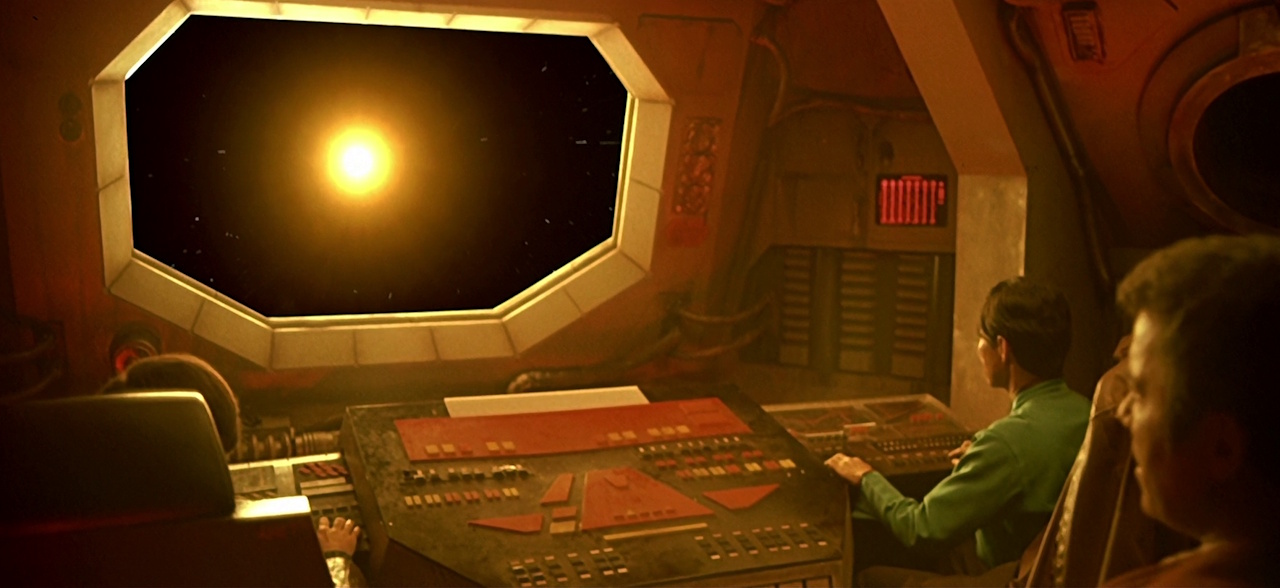
Still frame from Star Trek IV: The Voyage Home showing HMS Bounty approaching the sun.
Kirk and the crew prepare to travel back in time.

Can I break this one into two pieces?

Pretty please?!

Cliché #3-A:
General Time Travel

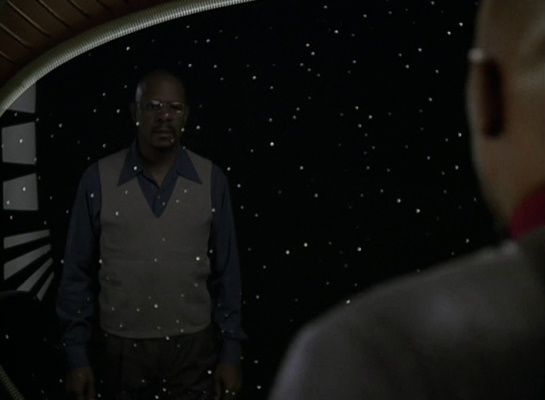
Still frame from Star Trek: Deep Space Nine showing Kirk and Sisko meeting.
Two Captains!

Okay, thank you for allowing me to split this one up! Time travel within Star Trek’s timeline – backwards and forwards – can be a blast. Viewers rank The City on the Edge of Forever as *the* best of The Original Series, and I adore episodes like Trials and Tribble-Ations, All Good Things, and Shattered. Time travel has been a key plot point in episodes like Time Squared, Twilight, Tapestry, Eye of the Needle, and many more. All of these are fantastic, and show what the franchise can do with time travel within the confines of its universe.

Discovery shooting forwards in time at the end of Season 2 arguably improved that series, with many interesting episodes coming after the leap to the 32nd Century. Strange New Worlds’ fantastic first-season finale leaned on time travel in a unique way, too. Face the Strange was especially creative, probably one of the highlights of Discovery’s fifth season. So modern Star Trek has utilised time travel phenomenally well. I wouldn’t want to see these kinds of stories erased from Star Trek.

My Verdict: Keep It!

Cliché #3-B:
Time Travel to Modern-Day Earth.

Still frame from Star Trek: Picard showing Los Angeles from above.
Contemporary Los Angeles in Picard.

This is why we had to split time travel into two separate pieces! Time travel within Star Trek’s fictional timeline can be a blast – even to Earth. But time travel to the modern day? Those stories tend to feel out-of-date pretty quickly. Look at The Voyage Home and Future’s End – not to mention Picard’s entire second season. Sometimes, stories like this work well, and use a modern-day setting in creative ways. But too often they lose too much of what makes Star Trek… feel like Star Trek.

Star Trek is about the future. And sometimes, figuring out how that future came to be can be interesting. But in a lot of cases, time travel episodes that visit contemporary Earth don’t have enough to say – or what they try to say is pedestrian and bland, like “climate change is bad.” Again, if we assume modern Star Trek shows will continue to have ten-episode seasons and four or five seasons max, I think the less time spent on modern-day Earth the better. As I said once: I can barely re-watch Picard’s second season – a full one-third of that show – because of how unenjoyable it is, a significant part of which is due to its modern Earth setting. So… yeah. Let’s give modern Earth a break, eh?

My Verdict: Vaporise It With A Disruptor!

Cliché #4:
Section 31

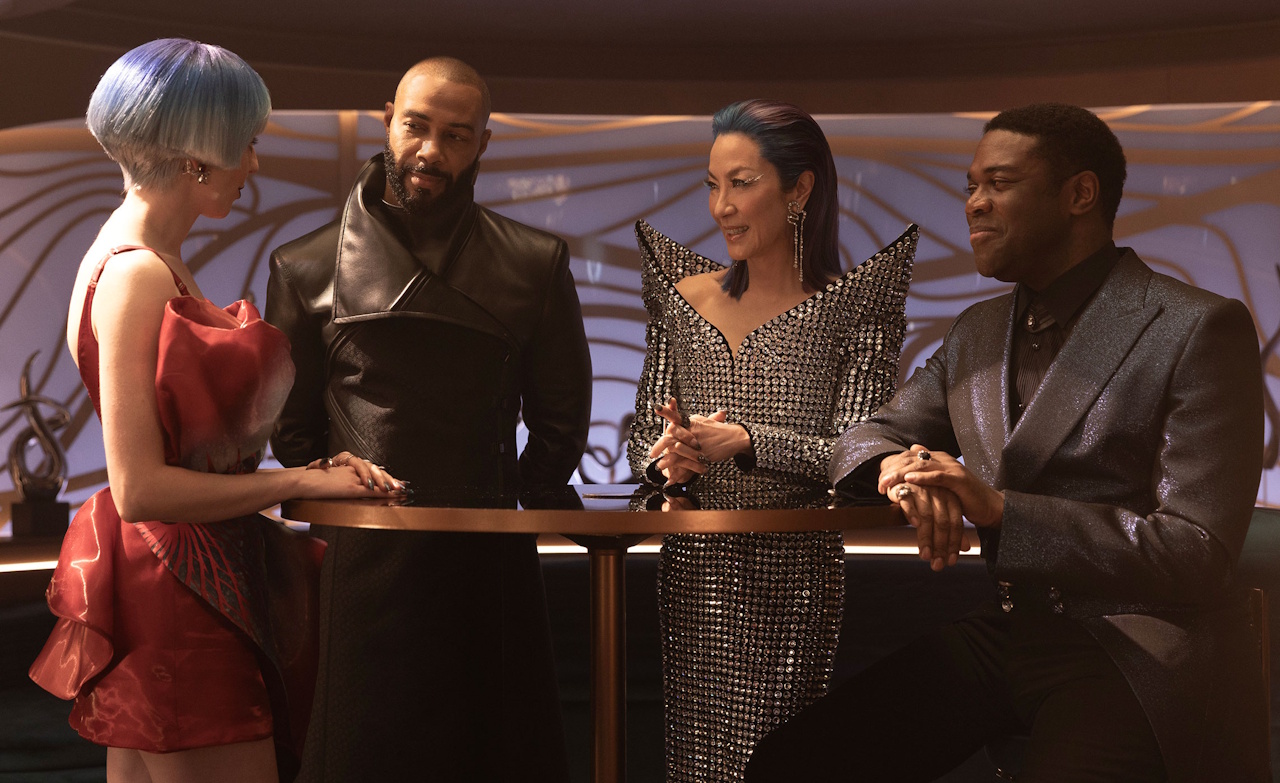
Promo photo for Star Trek: Section 31 showing Georgiou and two other operatives.
Three Section 31 operatives.

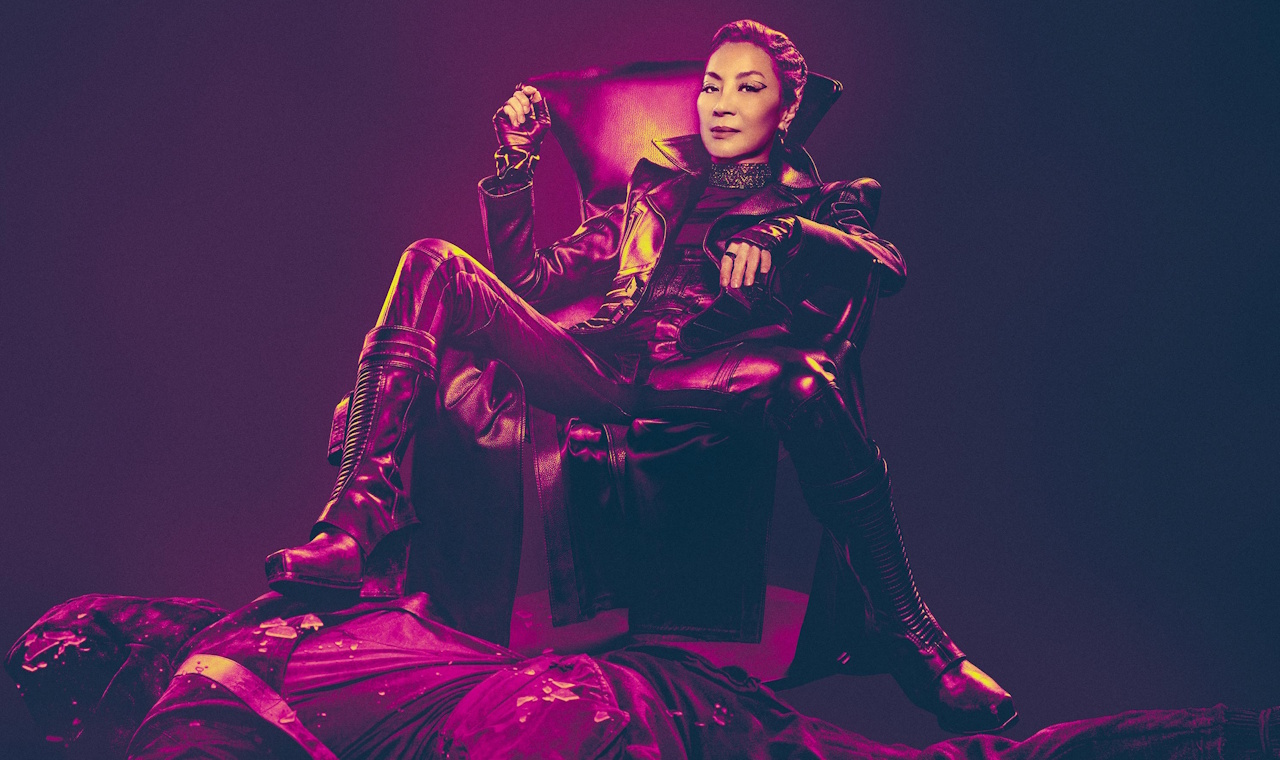
I believe the original Tumblr poll was written before this year’s Section 31 movie, so the author couldn’t have known what the reaction to that would be. Given the apparent disappointment of Section 31 to Paramount (and new owner Skydance), I have to assume that any more Michelle Yeoh-led Section 31 sequels or spin-offs won’t be going ahead. So in that sense, we already have part of an answer to this point!

Section 31 was incredibly controversial when Deep Space Nine introduced it. I remember furious debates on Star Trek message boards around the turn of the millennium about “Gene’s vision” and how Section 31 shouldn’t exist in the Star Trek universe. I gotta admit that I found the original idea and the original presentation of Section 31 to be interesting – and it seemed logical, to me, that an organisation as massive as the Federation would run this kind of off-the-books organisation. However, Section 31 as it was depicted in Discovery and the Section 31 film strayed a long way from that, and arguably trod all over the toes of canon by showing the organisation as being so out in the open more than a century before DS9. It would’ve been possible, perhaps, to show how Section 31 disappeared and went underground in the intervening years, but that idea was never picked up. I still think there’s potential in the idea of a “black ops” Federation organisation, but it has to be handled a lot better.

My Verdict: Keep It!

Cliché #5:
All References to the Kobayashi Maru, Khan, and The Wrath of Khan.

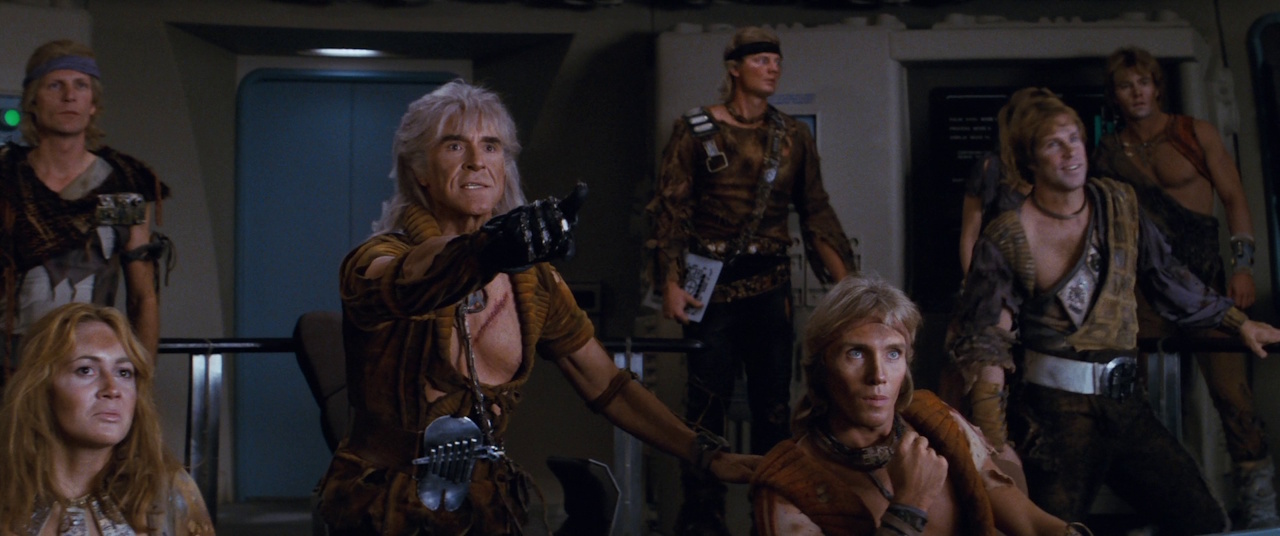
Still frame from Star Trek II: The Wrath of Khan showing Khan and his crew.
Khan and the augments on the Reliant’s bridge.

I think saying *all* references to The Wrath of Khan might be a bridge too far, but I get where this is coming from. I noted in one of my Strange New Worlds Season 3 episode reviews that making La’an a direct descendant of Khan has been a complete waste, and that basically nothing would’ve changed for her character if she’d been given a different last name. So in that sense, that kind of direct reference to Khan himself – particularly as SNW is a prequel – is something I’d happily live without. I’m not caught up on the Khan audio drama yet, but my initial reaction to a Khan-focused series wasn’t especially positive, either, as I felt we’ve already seen everything we need to see of Khan.

However, I think some things from The Wrath of Khan – like the Kobayashi Maru – can and have been used well elsewhere. Prodigy’s first season episode Kobayashi is a case in point: a great episode that built on those foundations. So while I think references to Khan himself can definitely be scaled back, if not dropped entirely for a while, this entry’s “all or nothing” attitude gives me pause. The Wrath of Khan is a great film, and some of the elements it introduced have gone on to be widely celebrated parts of Star Trek. There are new ways to approach things like the Kobayashi Maru scenario and human augments, and I wouldn’t want to rob future Star Trek writers of those.

My Verdict: Keep It!

Cliché #6:
The Mirror Universe

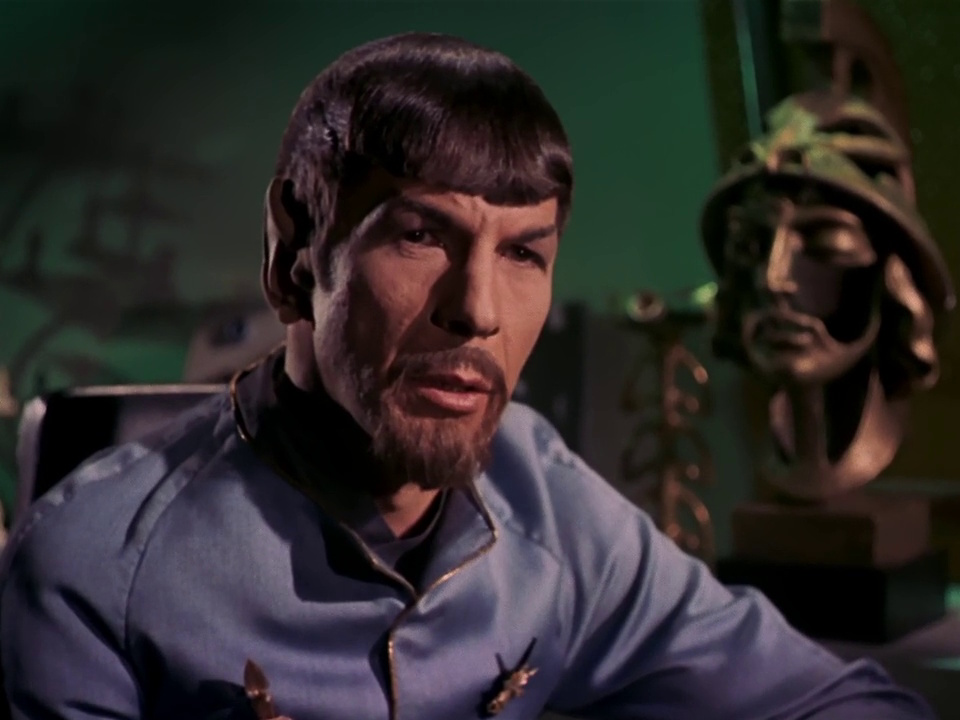
Still frame from Star Trek: The Original Series showing Spock from the Mirror Universe.
Mirror Spock.

If the Mirror Universe had been a one-off, I’d probably say it was worth re-visiting. But even as far back as Deep Space Nine, the Mirror Universe was played out. This is a setting where violence, murder, and torture are the norm, and it’s so boring and one-dimensional that it tricks even the best Star Trek actors into putting out hammy, over-the-top, ridiculous performances that are, in some cases, genuinely so bad that they’re unwatchable for me. The Mirror Universe *can* be interesting to visit for a single episode, on rare occasions, but where it’s failed has been repeat visits, recurring or main Terran characters, and just its general over-use.

Discovery did not benefit from any of its Mirror Universe storylines, and I don’t think Georgiou’s Terran Empire origin did wonders for Section 31, either. I don’t really understand why modern Star Trek writers have developed an obsession with the Mirror Universe (or Mirror Universe-inspired settings, like Picard’s Confederation of Earth), but I think we’ve seen more than enough of this parallel universe. The *only* Mirror Universe story I’d have even potentially been interested in was one involving the rescue of the Prime Timeline version of Captain Lorca – but I suspect that ship has sailed. The Mirror Universe can sail into the sunset with it!

My Verdict: Vaporise It With A Disruptor!

Cliché #7:
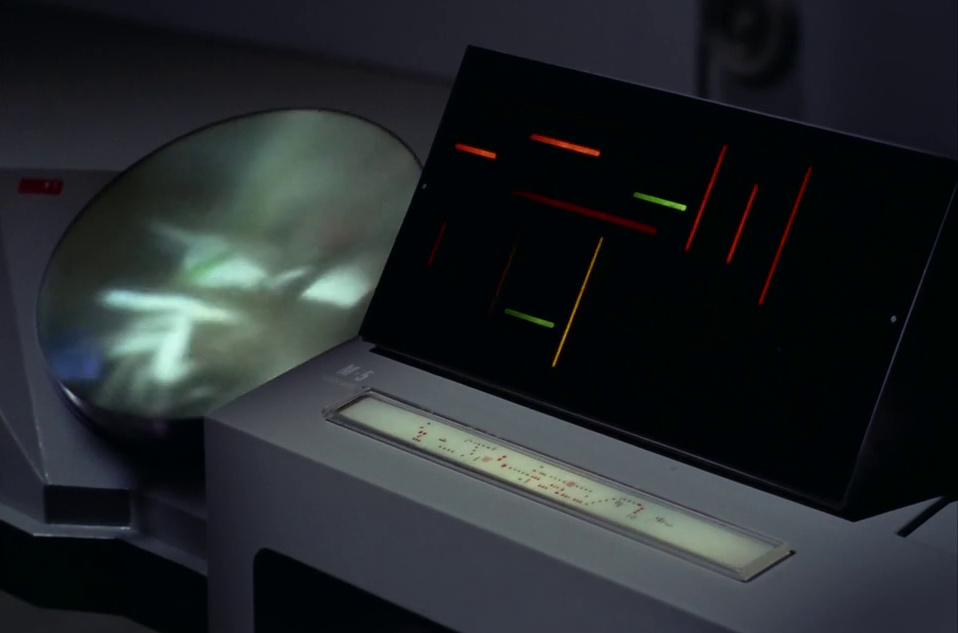
Godlike Aliens/Supercomputers

Still frame from Star Trek: The Original Series showing the M-5 computer.
The M-5 Multitronic Unit.

Not only does this one feel way too broad, but I think Star Trek has demonstrated that there’s huge value in exploring how we might interact with an alien or entity possessing “god-like” powers. There’s also the current trajectory of artificial intelligence here in the real world, and how some people feel we’re only a few years away from superintelligent A.I. systems. Star Trek has been an early pioneer of showing the dangers of A.I., as well as potential benefits.

I suppose, though, too many of these stories could feel samey. As with any sub-genre, it needs to be handled well, not over-exposed, and kept to a reasonable level. But I definitely think the positives outweigh the negatives, and in the near future, there could be a ton of value in exploring supercomputers and “god-like” A.I. systems in particular.

My Verdict: Keep It!

Cliché #8:
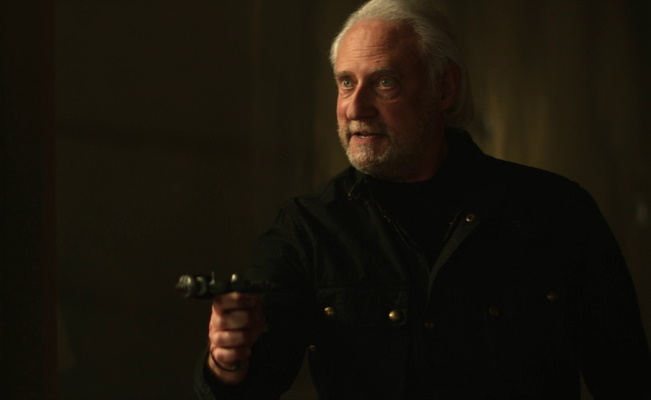
New Soong Relatives

Still frame from Star Trek: Picard showing Adam Soong wielding a pistol.
One of the Soongs.

Noonien Soong, Arik Soong, Altan Soong, Adam Soong, and a couple of illusory Noonien Soongs. Then we have Lore, B-4, and the new Data android. Not to mention Kore Soong, and other Soong-type androids. Yeah… I think this is getting pretty silly now! I really didn’t like what Picard did with Data in Season 3: resurrecting him after he’d been so beautifully and fittingly laid to rest in Season 1 just felt wrong. And the inclusion of *two* new Soongs in Picard was definitely a bit too much. Brent Spiner is great, don’t get me wrong, and he can play villains and devious characters exceptionally well. But I think we’ve taken the family of Data’s creator as far as it can reasonably stretch – too far already, some might say!

With Legacy seemingly not going ahead, I don’t know what the future holds for the renewed Data. But with Altan Soong dead, that could be the last descendant of the Soong family – at least as of the dawn of the 25th Century. I don’t think we need to go back in time to see Adam Soong’s work on the augments, nor revisit Noonien Soong’s creation of Lore and Data. Some storylines just have a natural end point. Adding more Brent Spiners to the Soong family wouldn’t really add anything new to Star Trek at this point, either.

My Verdict: Vaporise It With A Disruptor!

Cliché #9:
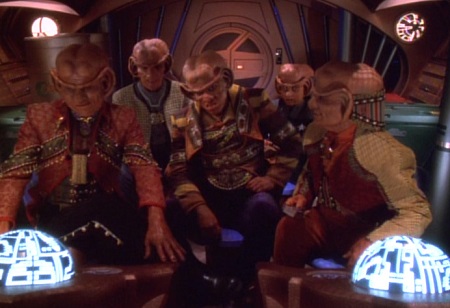
Ferengi Episodes

Still frame from Star Trek: Deep Space Nine showing a crew of Ferengi.
The Magnificent Ferengi!

Though we spent a lot of time with the Ferengi in Deep Space Nine, the faction hasn’t been seen very much this side of the millennium. With that in mind, I’m definitely down for more Ferengi stories! I’d love to see, for instance, how the Ferengi are coping in the 32nd Century. Did they ever join the Federation? Are they still obsessed with latinum and profit? And in the Picard era, too, were a new series ever to be commissioned, it would be lovely to catch up with Grand Nagus Rom in live-action.

In DS9, Ferengi episodes often took on a comedic tone, and I think I’d happily entertain less of that; a more straight-laced and serious Ferengi story could be an interesting change of pace. Though we know a lot about the Ferengi thanks to Quark, Rom, and Nog in particular, there’s still a lot that can be done with the Ferengi, and there are certainly more stories to tell where Ferengi characters are in focus.

My Verdict: Keep It!

Cliché #10:
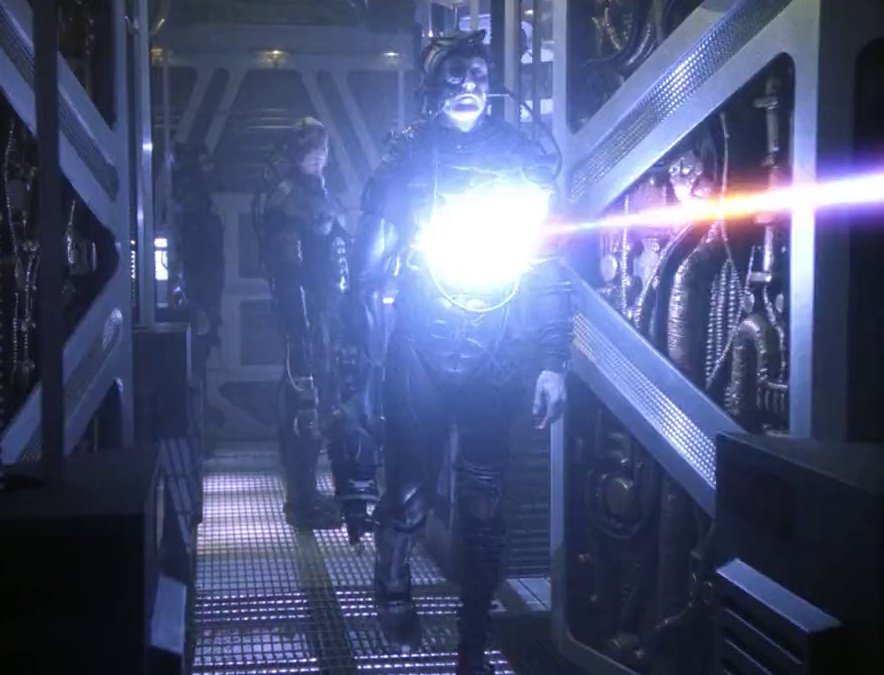
Borg Episodes

Still frame from Star Trek: The Next Generation showing a Borg drone being phasered.
Is it time to kill off the Borg?

This one… I’m torn, to be honest with you. Picard over-used the Borg, and that came after Voyager had already done a lot to lessen the Borg’s fear factor and imposing nature. There are also issues with the timeline thanks to Voyager and Enterprise, and I still think that the introduction of a Borg Queen in First Contact was a mistake! However, I still like the idea of a Star Trek series I’ve provisionally dubbed the “Borg Invasion” show, in which a war against the Borg is the main focus of the series.

This show would take on a much darker tone, with themes of horror and war being prevalent. If done well, with a clear three- or four-season plan from the get-go and a sufficiently high budget, I really believe it could work exceptionally well. However, I won’t deny that the Borg have been over-exposed, not only in modern Star Trek, but really going as far back as Voyager. And I wouldn’t blame any Trekkie who wants to give the faction a break, especially after Picard brought them back three seasons in a row.

My Verdict: Keep It!

Cliché #11:
Fun-With-DNA Episodes (i.e. Genesis, Threshold, etc)

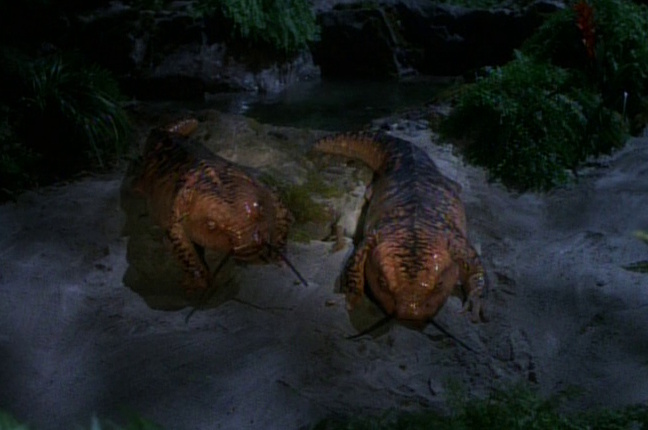
Still frame from Star Trek: Voyager showing hyper-evolved human salamanders.
Hmm…

As I’ve said several times now, this feels like quite a broad concept that could go in many different directions. As such, I don’t think I’d be willing to say there should “never” be another episode in which the DNA of some of our heroes gets muddled up! That being said, episodes like Threshold, Extinction, Favorite Son, Unnatural Selection, and Four-and-a-Half Vulcans aren’t necessarily shining examples of the best of Star Trek. So this one, I suppose, can feel a bit hit-and-miss.

I still think I come down on the side of saying “do more with this idea,” though. Shuttle to Kenfori, with its “zombies,” and Discovery’s Tyler-Voq storyline, both did interesting things with DNA, and I think there’s potential to take the basic idea in different directions. So while it’s true that not every “fun with DNA” idea has stuck the landing, I’m up for trying it again if the script is right!

My Verdict: Keep It!

So that’s all from the poll… but there’s more!

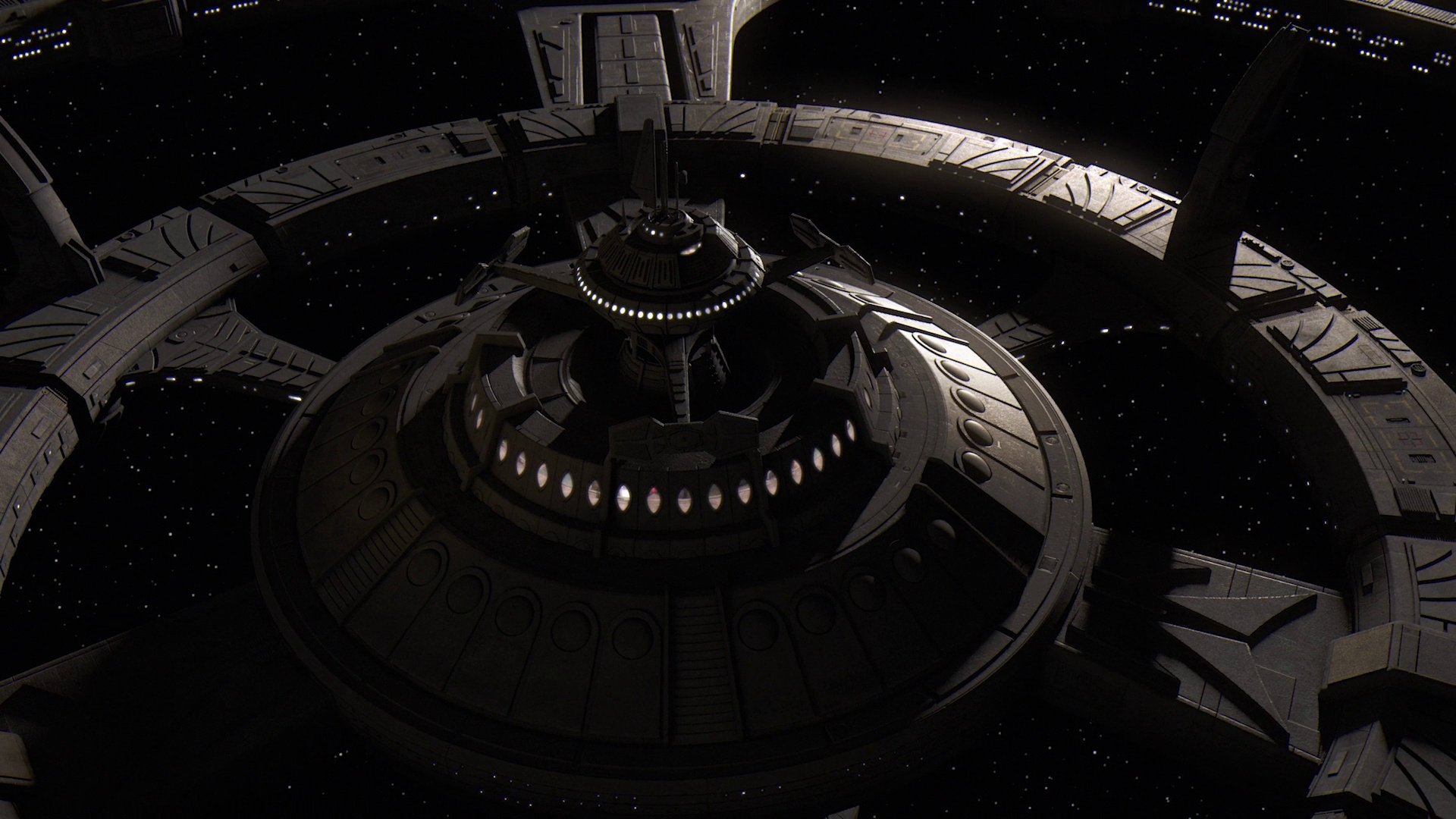
Still frame from Star Trek: Deep Space Nine showing the titular space station.
DS9.

The original poll also contained one final option: Something Else!

So… I thought we could go through a handful of my own “Star Trek clichés” and talk about them before we wrap this up.

Cliché #12:
Redshirts

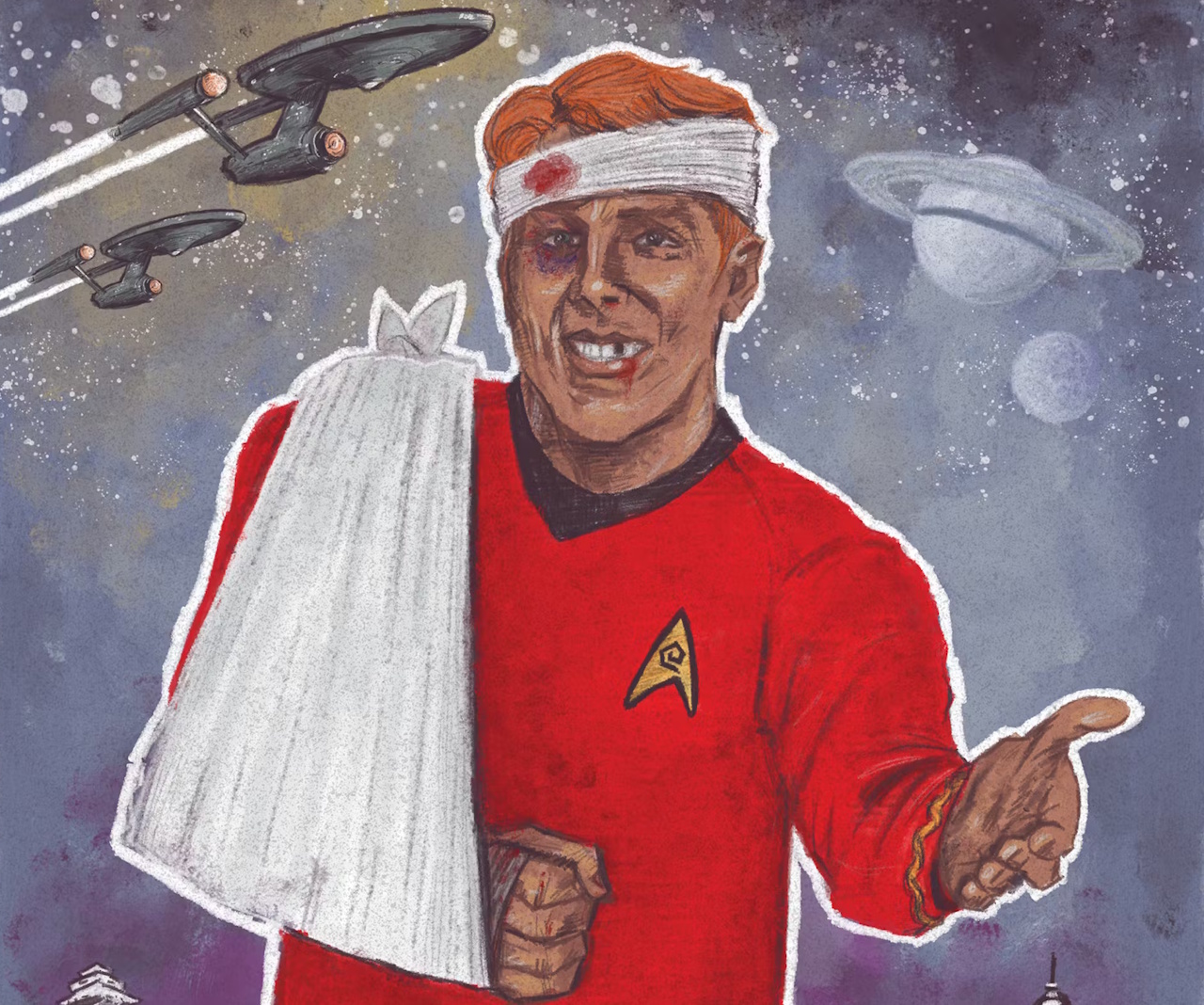
Cropped Star Trek: Redshirts comic book cover.
A redshirt!

I’m surprised the original poll didn’t include what is arguably one of Star Trek’s biggest clichés: the redshirt! These characters, named for the red uniform shirts they wore in The Original Series, were junior officers who usually made one appearance – only to be killed off pretty early in the story. After The Original Series, we saw fewer redshirts, but the trope has stuck around, even into Star Trek’s modern era.

Sometimes you need to kill off a character to communicate the dangers of a situation or the stakes to our heroes. Redshirts – these “disposable” one-off characters – arguably serve that purpose pretty well, and I wouldn’t want to see Star Trek limited by removing them. I also think that redshirts have become, in some ways, an inseparable part of Star Trek itself, and while we’ve seen fewer bona fide redshirts really since The Next Generation premiered, I wouldn’t want the franchise to lose them entirely.

My Verdict: Keep It!

Cliché #13:
The “Half-Arsed Mental Health Storyline”

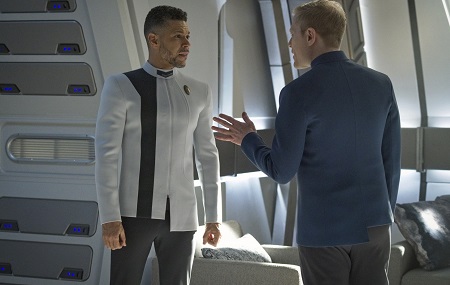
Still frame from Star Trek: Discovery showing Culber and Stamets.
Dr Culber and Stamets.

Discovery was, in my opinion, absolutely atrocious in most of its attempted mental health storylines, but this problem has also plagued other Star Trek productions – notably Picard. And in the bygone days of episodic TV, characters would suffer a traumatic event that would have a massive impact on them… for all of a single episode, before the show moved on to new adventures a week later. There are some absolutely fantastic explorations of mental health on television… but Star Trek, even in the modern era, has slipped up way too often.

I’ve said this before multiple times here on the website, especially when discussing Discovery, but here we go: if there isn’t time to do justice to a complex mental health storyline, skip it. Don’t half-arse it, don’t give ten minutes to a complicated topic that needs way longer, and just… pick something else. Literally *anything* else. Star Trek has been bold in approaching some of these topics, and that’s great, but the execution has left a lot to be desired in too many cases. If Star Trek’s writers want to keep returning to mental health as a topic for storylines, then we need to see significantly better results.

My Verdict: Vaporise It With A Disruptor!

Cliché #14:
Klingon Episodes

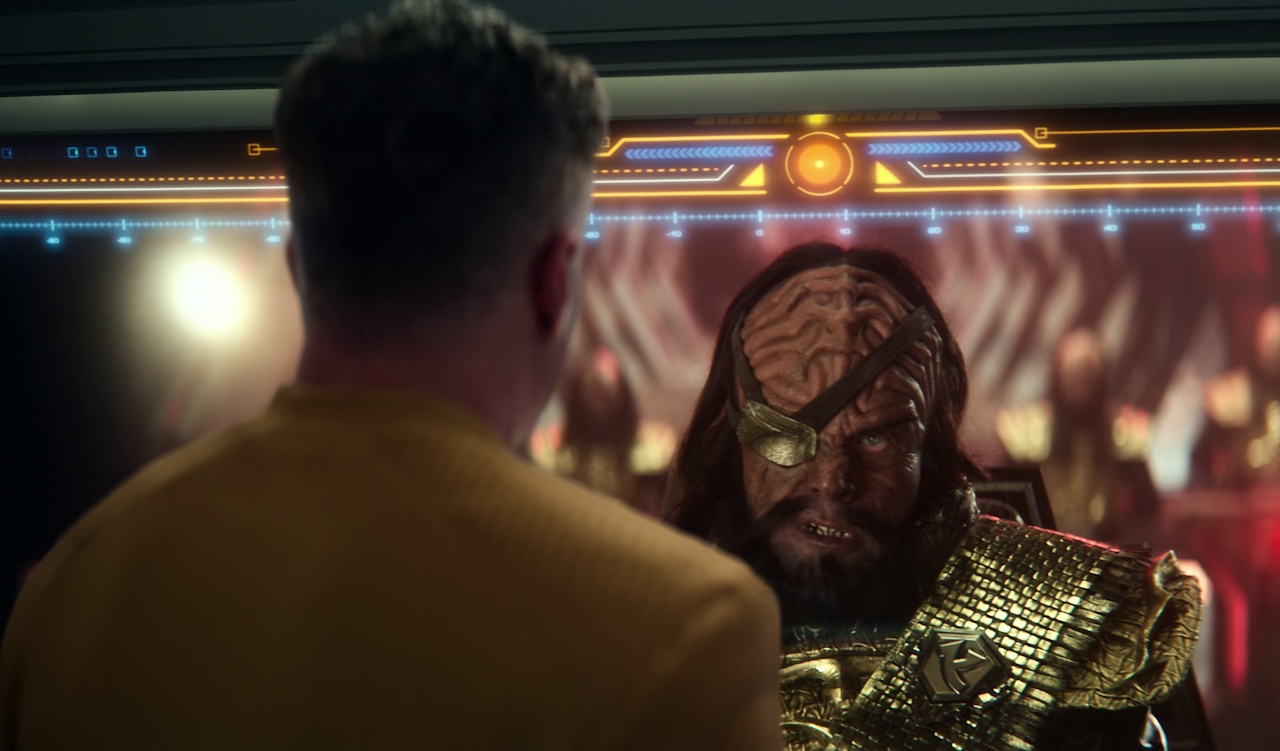
Still frame from Star Trek: Strange New Worlds showing Pike and a Klingon captain.
Pike with a Klingon in Strange New Worlds.

When discussing the Ferengi above, I said that there are surely ways to tell new stories featuring them, especially after such a long absence. That’s gotta be true of the Klingons, too… right? The more I think about it, the less sure I am, to be honest. Thanks to Worf and B’Elanna, and Discovery’s focus on the Klingons in Seasons 1 and 2 with the war and characters like Tyler and L’Rell, we’ve seen *a lot* of the Klingons over the years. And when many Klingon characters can feel a bit flat and lacking in depth, maybe it actually is time to give the faction a rest.

Klingons are inseparable from Star Trek, that’s true. But after almost six decades of exploring the Klingons, their Empire, and many individual Klingon characters… do we need more? Recent attempts to reimagine the Klingons – both in the Kelvin films and Discovery – proved controversial or just outright unpopular with Trekkies, and recent productions seem to have “reset” the Klingons to their TNG-era visual style, at least. Given that changes seem to be off the table, do we really need more of the same from the Klingons, after they’ve featured in a big way in literally hundreds of stories already?

My Verdict: Vaporise It With A Disruptor!

Cliché #15:
“Glorified Redshirts” (i.e. minor characters who get one or two scenes’ worth of “development” before being killed off)

Promo photo for Star Trek: Discovery Season 2 showing Airiam holding a padd.
Airiam in Discovery’s second season.

In TOS, if Captain Kirk picked Spock, Scotty, and Ensign Timmy for an away mission, you’d know right away who wasn’t coming back! Recent Star Trek projects have tried, at least, to make some minor character deaths a bit more impactful… but the way this has been handled has, all too often, not worked. Giving a minor character a scene or two of attempted development, in order to foster more of an emotional connection with us as the audience, is not a bad idea in theory. But modern Star Trek writers haven’t been great at this, leaving these moments feeling as nakedly obvious as when the doomed Ensign Timmy stepped onto the transporter pad.

Airiam, in Discovery, and Gamble, in Strange New Worlds, stand out as examples of this trend. Gamble was handled at least somewhat better, but even so, as I noted in my review, his death seemed immediately obvious when he was given the “glorified redshirt” treatment shortly before being killed off on an away mission. Is this approach better than the original treatment of redshirts? You could make that argument. But I still think it needs to be handled more carefully – and in a show with shorter, better-planned seasons, why not sprinkle that development across multiple episodes instead of cramming it all in in a couple of sequences before the minor character is killed off? Same amount of screen time, but a significantly better result.

My Verdict: Vaporise It With A Disruptor!

Cliché #16:
Bringing Back Legacy Characters In Main Roles

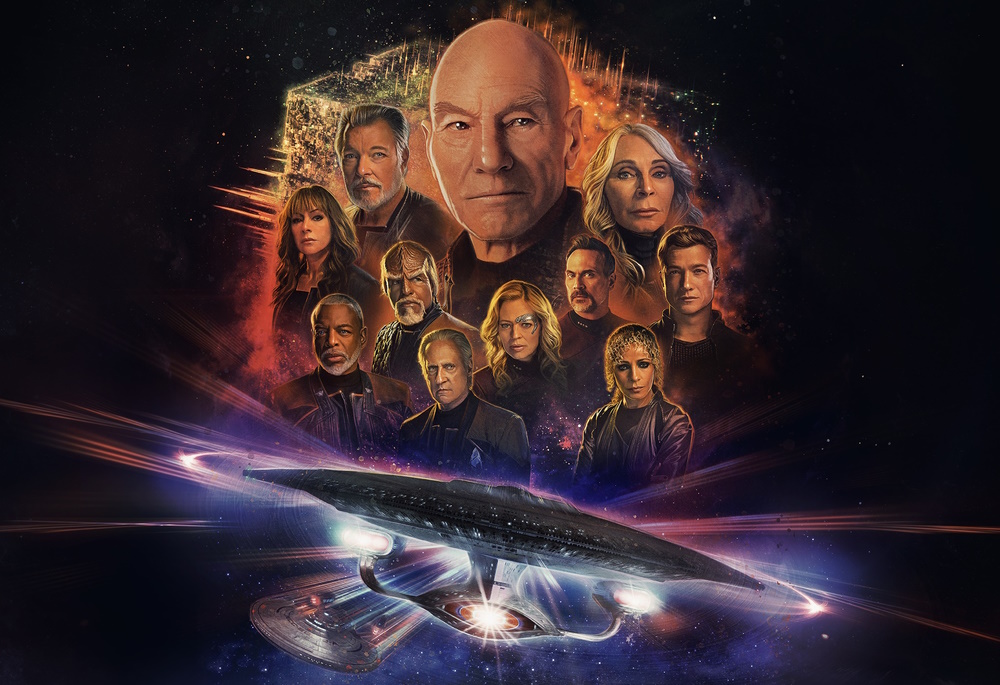
Promo poster for Star Trek: Picard Season 3 showing the main cast.
The main characters of Picard Season 3.

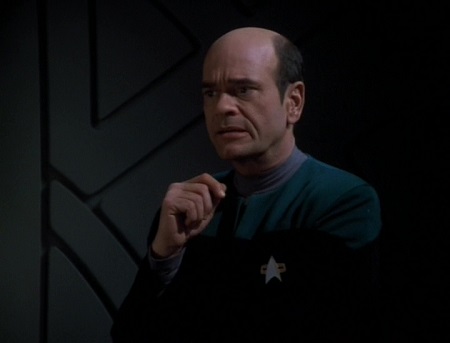
Spock in Discovery’s second season. Voyager’s Doctor in Starfleet Academy. Worf in Deep Space Nine. And Picard’s entire new cast – sans one character – being dumped to make way for the return of the whole TNG crew in Season 3. Does Star Trek need to do this so often? Or can we give new shows, new crews, and new characters the space to stand on their own two feet? Look at Star Wars, which has failed, for almost half a century, to break away from the same handful of original characters and one single story. Is that what fans want? Is that kind of approach the one Star Trek should take?

I get it: nostalgia is a big deal, fans want to see more from some of their favourite characters, and – at least in some cases – there are new stories to be told, or epilogues to add to existing stories. I’d be thrilled, for instance, to see a DS9 sequel involving Captain Sisko’s return from the realm of the Prophets. But to me, this over-emphasis on legacy characters makes Star Trek feel… small. And if Star Trek had behaved this way in the ’80s and ’90s, we’d never have gotten to meet wonderful new characters who carried the franchise forward. There’s room to balance things out more, with new *and* legacy characters sharing the limelight. But, as we’ve started to see in Strange New Worlds, and as we definitely saw in Picard’s third season, legacy characters can easily overwhelm a project as writers and fans want to see more from them and less from the newbies. That risks leaving Star Trek with nowhere to go creatively in the future.

My Verdict: Vaporise It With A Disruptor!

So that’s it!

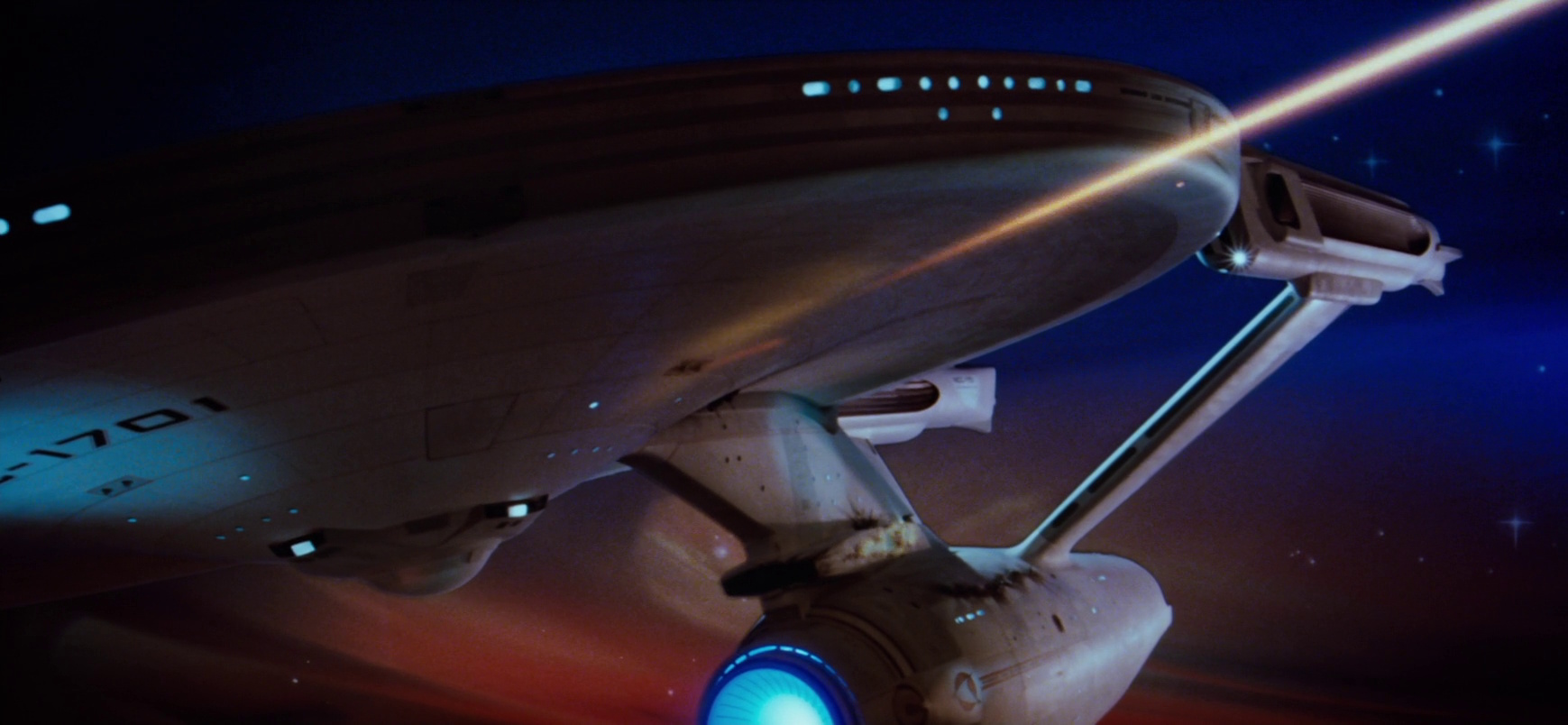
Still frame from Star Trek II: The Wrath of Khan showing the Enterprise firing phasers.
The Enterprise firing phasers.

This poll was really interesting to dissect, and not every point went the way I’d have necessarily expected if I’d just seen the poll, clicked on it, and moved on. Actually taking the time to think about these answers yielded some results that were – as Mr Spock might say – fascinating!

The results of the original poll make for interesting reading, too, after more than 2,000 people voted. The top clichés Trekkies want to get rid of are, in reverse order: the Mirror Universe with 8.2% of the vote, time travel (especially to modern-day Earth) with 11%, new Soong relatives at 22.2%, and finally, Section 31 with 24.7% – almost a quarter of those who responded to the poll.

I think I could’ve predicted some of those, but new Soong relatives being so thoroughly despised is one that caught me off-guard, I must admit!

Still frame from Star Trek: Section 31 showing the final shot of the movie.
Apparently, Section 31 is the cliché most Trekkies would like to see removed.

I hope my own additions of some Star Trek “clichés” fit the tone of the poll, too. I spent a little while thinking about some of the tropes and arguably overdone story concepts that Star Trek could do with fewer of! Though truth be told, very few of these are really all that problematic for me, as I think Star Trek – even after recycling some of these ideas time and again – can still churn out some great storylines.

So I hope this has been a bit of fun, and an interesting way to dissect this poll. My thanks to Tumblr user “quasi-normalcy” for the original idea – and if you want to see the poll and its results, as well as their Tumblr page, you can find it by clicking or tapping here. And thanks to the Star Trek fan page on Facebook for bringing it into my feed!

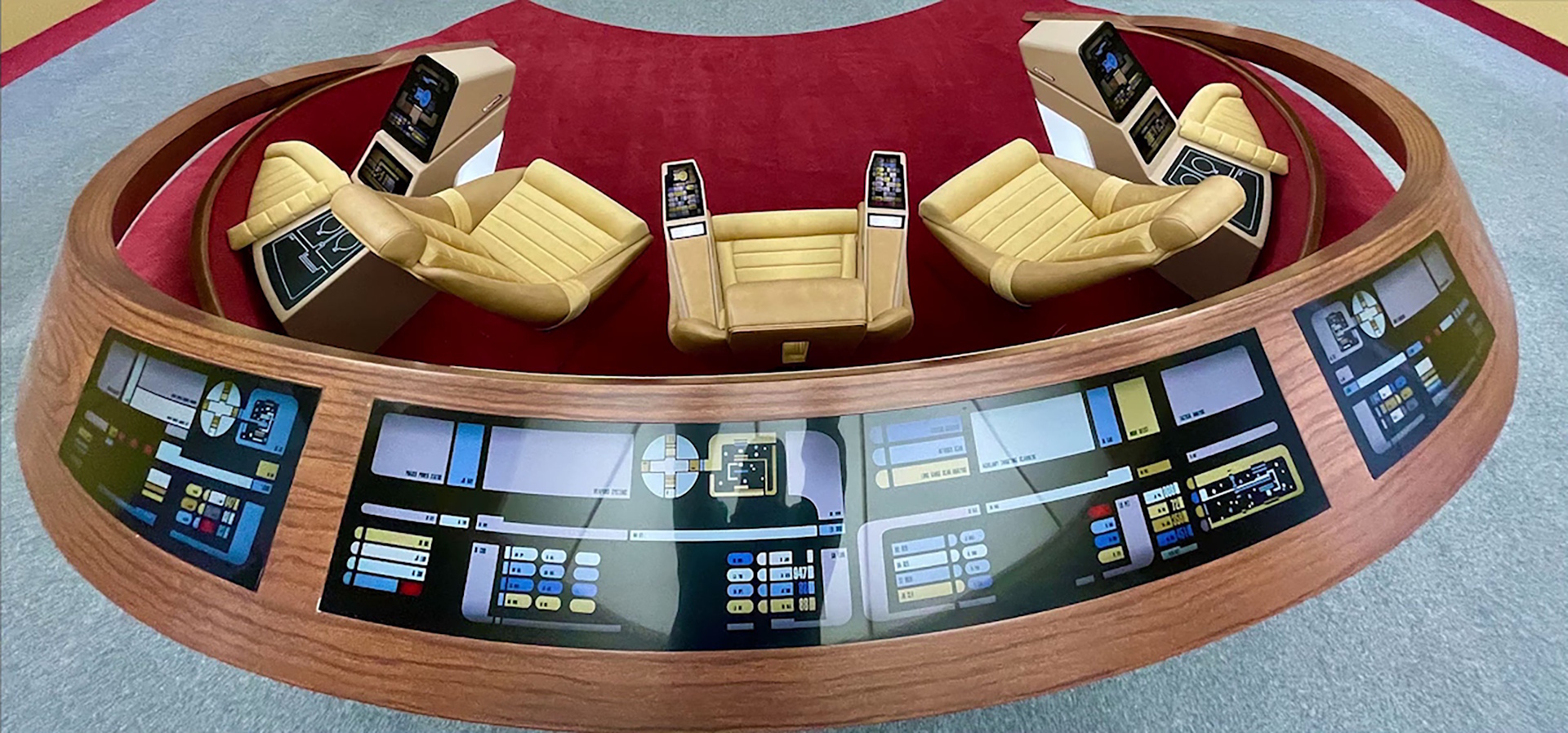
Behind-the-scenes photo from Star Trek: Picard S3 showing the centre console and tactical station of the Enterprise-D.
The view from Worf’s console.

Now that Halloween is out of the way (and I’m closer to getting back to normal at home), there’s more Star Trek content to come here on the website. I’d like to get caught up with the Khan audio drama before too long, there may be more previews for Starfleet Academy coming up now that we know the series will debut in January, and I still have a couple of episode re-watches that I want to write up involving actors I met at a recent Star Trek convention.

I hope you’ll join me in the days and weeks ahead for some of those pieces. Until then… Live Long and Prosper, friends!


Most of the Star Trek franchise – including films and television series discussed above – is available to stream on Paramount+ in countries and territories where the platform is available, and is also available on DVD and/or Blu-ray. The Star Trek franchise – including all properties discussed above – is the copyright of Skydance/Paramount. This article contains the thoughts and opinions of one person only and is not intended to cause any offence.
Section 31: What To Watch Next

If you’re reading this, I hope it’s because you enjoyed Star Trek: Section 31! My name is Dennis, and I’ve been a Star Trek fan (or a “Trekkie,” if you will) for close to thirty-five years. Star Trek consists of over 900 episodes and 14 films, spans multiple parallel universes and five distinct time periods… so I don’t blame you if you don’t know where to start! Just getting a foot in the door with this franchise can feel daunting, and I get that. What I’d like to do today is offer a few recommendations for someone brand new to Star Trek; a short selection of episodes and films to watch next for a brand-new Trekkie such as yourself!

At time of writing, Star Trek is comprised of eight live-action television shows, three animated television shows, fourteen films, and a series of television shorts to boot. I’m not going to look at or recommend all of them! But what I am going to do is pick out a handful of episodes and films that I think could make for a good starting point for anyone who enjoyed Section 31 and wants to explore the world of Star Trek.

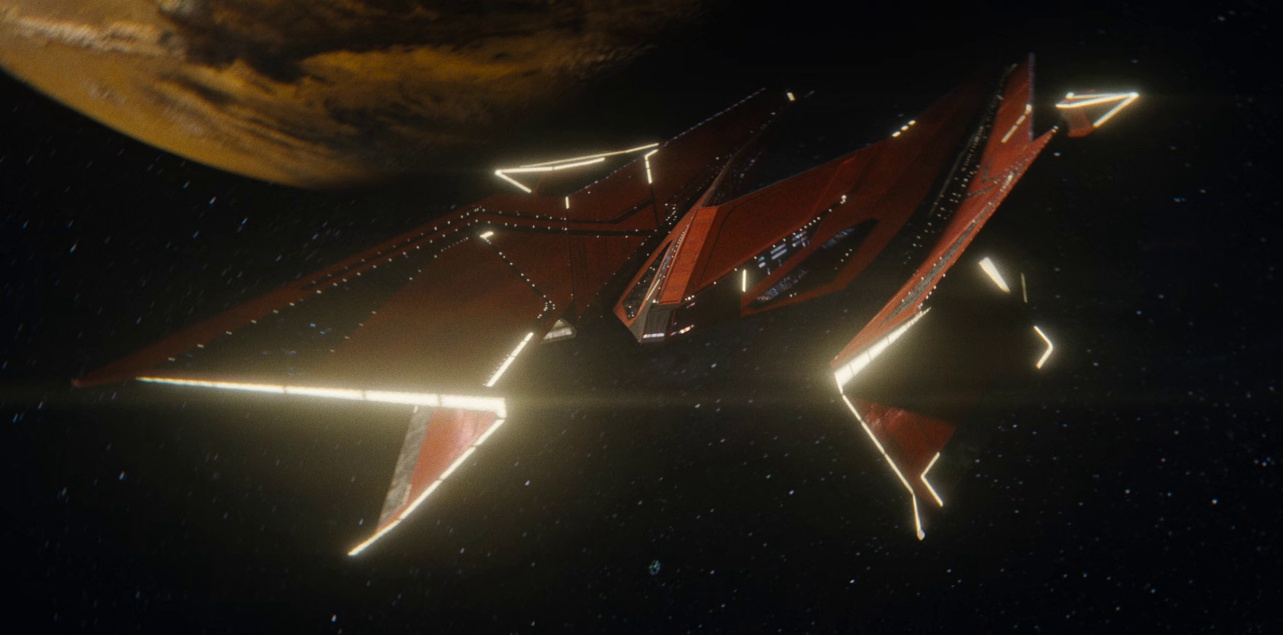
Still frame from Star Trek: Section 31 showing San's ship in space.
A starship in Section 31.

What I love most about Star Trek is this: it’s an incredibly optimistic franchise. In an entertainment landscape dominated by post-apocalyptic settings, sci-fi dystopias, and depictions of the future that reflect the worst of humanity, Star Trek has always stood out. It shows a vision of the future where many diseases have been cured, where humanity has largely come together and leads a United Federation of Planets, and where greed and exploitation have largely been consigned to history. Star Trek is not, as some may claim, a “communist utopia!” Private property still exists in this world – but the development of new technologies, particularly spaceflight, power generation, and replicators, has freed most of the population from a dependence on employment in exchange for money. Exactly how it all works is deliberately kept vague, though, which I tend to think is for the best!

As always, a couple of caveats. I’m not saying that these are “objectively” the best Star Trek stories, or that they’re the only ones worth checking out. Other fans will almost certainly have made completely different suggestions, so definitely explore the fan community and see which episodes and films other people recommend. I’ve tried to pick a mix of different stories from across the franchise, with a focus on episodes and films that connect in some way to Section 31, or that I think are great starting points for their respective shows or for Star Trek as a whole. Finally, this isn’t a ranked list – the order is completely random.

Phew! With all of that out of the way, let’s get started!

Recommendation #1:
All Those Who Wander
Strange New Worlds Season 1

Still frame from Star Trek: Strange New Worlds showing two shuttlecraft approaching a wrecked starship.

In my humble opinion, Strange New Worlds is the best Star Trek show currently on the air – and perhaps the best thing the franchise has done in a very long time! I’ve picked out the first season episode All Those Who Wander, partly because I wanted to highlight Strange New Worlds, but also because it’s an episode that I believe will challenge your perceptions of Star Trek.

Star Trek has a reputation as being a nerdy franchise – but this episode has an action-horror vibe inspired by films like Alien. I think it’s one of the best horror stories that Star Trek has ever attempted, with a claustrophobic setting, a frightening adversary, and some excellent character moments to bind it all together. It’s also a standalone story that you can jump into without having seen Strange New Worlds before.

Recommendation #2:
Yesterday’s Enterprise
The Next Generation Season 3

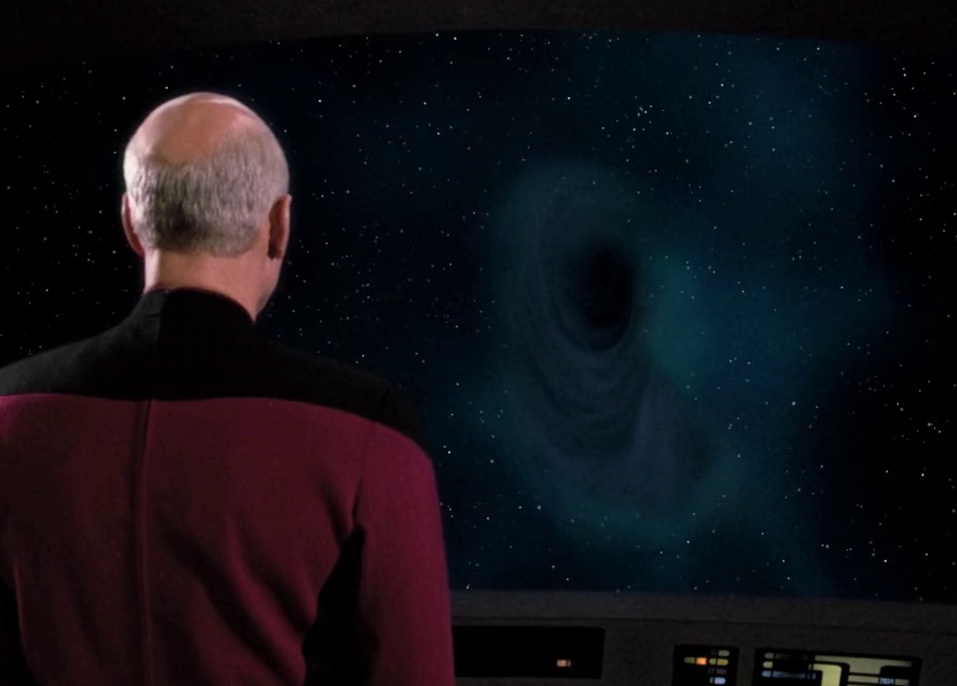
Still frame from Star Trek: The Next Generation showing Picard looking at an anomaly on the main viewscreen.

You may already know this, but the character of Rachel Garrett wasn’t created for Section 31. She first appeared in The Next Generation more than thirty years ago, with Section 31 exploring more of her history and background. It serves as a prequel of sorts to Yesterday’s Enterprise. If you want to see Garrett further along in her career, this could be an interesting way to go!

I’m not the biggest fan of time travel stories in Star Trek, but I’ve always admired what Yesterday’s Enterprise did with that premise. The episode brings together two different versions of the famous starship from two different points in time – and shows us a glimpse at an alternate timeline where things look very different for Starfleet and the Federation!

Recommendation #3:
The Doomsday Machine
The Original Series Season 2

Still frame from Star Trek: The Original Series showing an away team beaming aboard a ship.

If you want to go right back to the beginning and check out The Original Series, which aired in the 1960s, there aren’t many better places to start than The Doomsday Machine. I think this episode is a fantastic starting point for what can feel like a dated series by today’s standards – it has a pretty straightforward sci-fi story, a great guest star, and it’ll introduce you to Kirk, Spock, Scotty, and the rest of the crew.

The Doomsday Machine is also a great example of something Star Trek has always done: using its sci-fi setting to highlight real-world issues. In this case, the episode takes a look at the proliferation of weapons of mass destruction – a pressing issue at the time it was produced, coming just a few short years after the Cuban Missile Crisis brought the world as close as it’s ever come to nuclear war. Storytelling through allegory and metaphor was the name of the game – and it’s something Star Trek continues to do to this day!

Recommendation #4:
Inquisition
Deep Space Nine Season 6

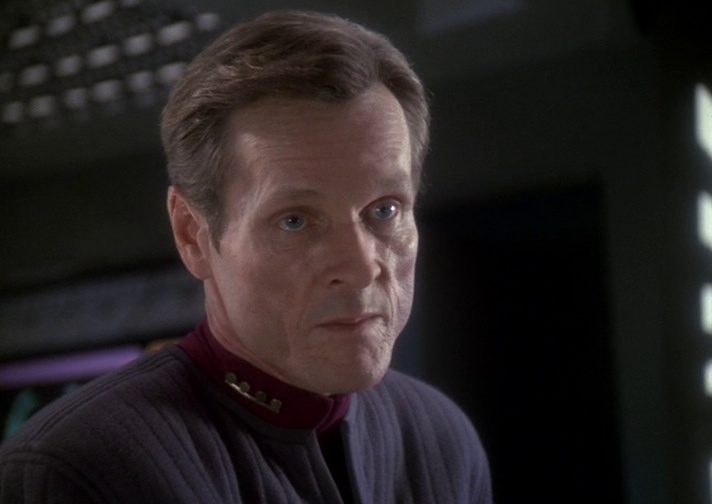
Still frame from Star Trek: Deep Space Nine showing a close-up of Sloan.

Want to see Section 31’s first-ever appearance in Star Trek? Inquisition introduced the faction as a clandestine organisation buried deep within Starfleet. This version of Section 31 is top secret, seemingly unknown to even high-ranking captains and commanders – and accountable to no one but itself. It’s different from how the organisation is depicted in the recent film as well as in Discovery, but I think it could be worth returning to if you’re interested to learn more.

At the time of its broadcast, I remember Inquisition being incredibly controversial. Some Trekkies adamantly asserted that an organisation like Section 31 couldn’t or shouldn’t exist in Star Trek’s optimistic version of the future. It was certainly a departure from the way the Federation had usually been depicted up until that point. Inquisition felt like a dark episode at the time – and you may struggle to square this depiction of Section 31 with the one from the film!

Recommendation #5:
Star Trek: Discovery
Season 1

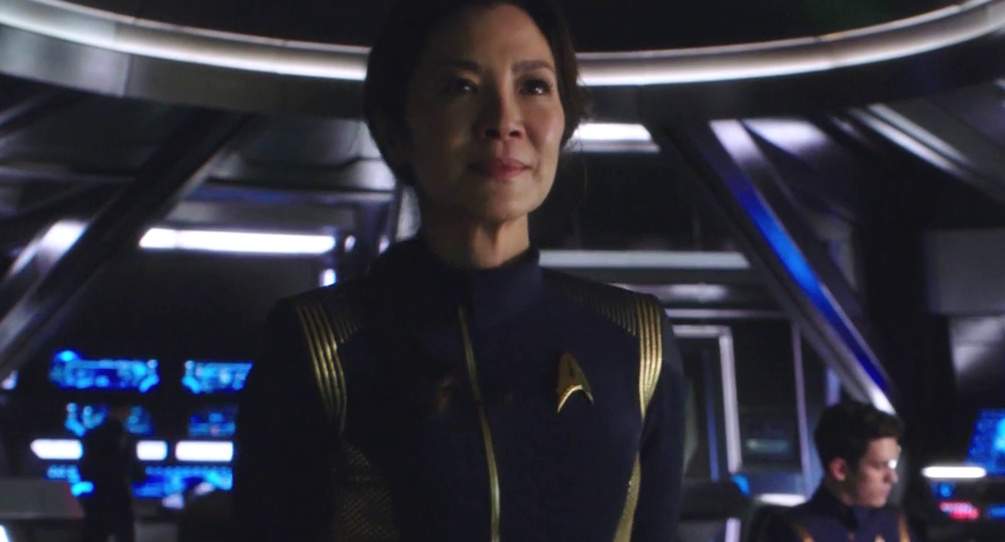
Still frame from Star Trek: Discovery showing Georgiou on the bridge of her ship.

If you want to find out where Georgiou came from, Discovery’s first season is the place to start. The version of Georgiou you’re familiar with from Section 31 doesn’t appear straight away – and the season spins its wheels in places, dragging out the story. But when I thought about Georgiou’s pre-Section 31 appearances, it was difficult to pull out just a single episode as Discovery has always been a serialised show.

I’m not going to tell you that Discovery’s first season is the best that Star Trek has to offer – on the contrary, I think it’s a season of television with some noteworthy weaknesses and flaws. But if you want to experience Georgiou’s complete arc from the beginning, Season 1 of Discovery is the place to start.

Recommendation #6:
Star Trek II: The Wrath of Khan

Still frame from Star Trek II: The Wrath of Khan showing Spock with his hands folded.

Don’t let this film’s numbering put you off: you don’t need to have watched The Motion Picture before starting The Wrath of Khan! Widely hailed as the best film in the franchise, The Wrath of Khan is a powerful story with a strong and compelling villain, some excellent moments of characterisation, and one of the best ship-to-ship battles anywhere in science-fiction. It’s a must-watch for any burgeoning Trekkie – something that was pointed out to me more than thirty years ago at my first-ever fan event!

The Wrath of Khan stars the cast of The Original Series, and came along before any of the spin-offs. It also marks one of the franchise’s first real forays into the action/sci-fi space. It’s a film that holds up remarkably well; even more than forty years later everything from the acting performances to visual effects feel great.

Recommendation #7:
The Best of Both Worlds, Parts I & II
The Next Generation Seasons 3-4

Still frame from Star Trek: The Next Generation showing Riker, Picard, and Worf on the bridge.

You might’ve heard of the Borg – they’re one of the Star Trek franchise’s most iconic villainous factions. The Best of Both Worlds is the story that really cemented that status for the Borg, and it’s also one of the absolute best episodes of The Next Generation, too. Taken together, the two parts of this story form a mini-movie, and are also a great introduction to the wonderful characters of The Next Generation.

In the early ’90s, The Next Generation was the first Star Trek show I watched. It’s the series that made me into a Trekkie, and one I don’t think I’ll ever stop recommending to new fans! There are plenty of other great episodes, but The Best of Both Worlds will be a fantastic place to start, with a dangerous enemy to defeat and some outstanding moments from all of the Enterprise-D’s crew.

Recommendation #8:
Year of Hell, Parts I & II
Voyager Season 4

Still frame from Star Trek: Voyager showing Janeway and Chakotay on the bridge.

Year of Hell puts the crew of the USS Voyager through a lot! But it’s also a story that gives almost the entire crew something to do, so it could be a fun introduction to all of them – and to Captain Janeway in particular. Voyager has just celebrated its thirtieth anniversary – its premiere episode aired in January 1995 – and the crew’s journey home from a faraway corner of the galaxy is well worth checking out.

I wanted to put at least one Voyager episode on this list, but there are so many good ones that I wasn’t really sure where to start! Year of Hell doesn’t really connect with anything in Section 31, but it’s a similarly action-packed story that I think fans of the new film could appreciate. With Voyager being a primarily episodic show, it’s relatively easy to dip in and out of – so feel free to get started anywhere!

Recommendation #9:
Star Trek
(2009 Reboot)

Still frame from Star Trek (2009) showing Kirk watching the USS Enterprise being built.

Despite what some die-hard Trekkies might think, 2009’s Star Trek is an example of a fairly successful reboot. It goes back to the drawing board with the franchise – but still retains a thread of continuity thanks to a parallel universe storyline and a main character crossing over. The film re-establishes Star Trek’s identity, stripping away a lot of the density of the franchise’s lore to tell a fairly straightforward action-packed story.

If that sounds familiar… well, it’s because that’s more or less what Section 31 has just done, too! Both films are attempts to modernise Star Trek and bring new, younger viewers to the franchise for the first time. They do so by stepping away from much of what came before, and in 2009, that worked. The jury’s still out on how well Section 31 may have done in that regard – but 2009’s Star Trek is a great next step if you’re someone who enjoyed it.

Recommendation #10:
In A Mirror, Darkly, Parts I & II
Enterprise Season 4

Still frame from Star Trek: Enterprise showing the emblem of the Terran Empire (a dagger through a bronze globe).

If Star Trek’s Mirror Universe fascinates you, look no further than Enterprise’s crossover to this twisted reality! Most Mirror Universe episodes in the franchise involved one or more characters stepping through the looking-glass; In A Mirror, Darkly is rare insofar as it’s set entirely in that reality. All of the familiar Mirror Universe tropes are present – and the episode is a surprising amount of fun.

I wanted to pick at least one Mirror Universe episode for obvious reasons – and I think In A Mirror, Darkly might be among the best of the bunch. It also ties in with The Original Series in a fun way, using sets, props, and even uniforms from that show. Personally, the Mirror Universe isn’t my favourite part of Star Trek, but I’ve always felt it was fine to visit for one-off stories like this one.

Recommendation #11:
Where Pleasant Fountains Lie
Lower Decks Season 2

Still frame from Star Trek: Lower Decks showing Chief Engineer Billups.

Lower Decks feels like a “love letter to Star Trek” created by people who are big fans! As a result, some of its jokes and storylines work better if you’ve already seen a lot of Star Trek. So why am I recommending it at all? Well, first of all it is genuinely funny – and many of the jokes work in context, even if you aren’t a Trekkie already! And secondly, Where Pleasant Fountains Lie is a great example of a self-contained Star Trek story… something the franchise used to do a lot more of in years gone by.

Star Trek has often told stories with a message: modern-day fables about things like nuclear weapons or the stigma surrounding diseases. Where Pleasant Fountains Lie does this too, wrapping the message up in a story about a group of humans who’ve based their whole society around the idea of medieval chivalry. There are some laugh-out-loud moments, but it’s also a story with heart.

Recommendation #12:
The Way of the Warrior, Parts I & II
Deep Space Nine Season 4

Still frame from Star Trek: Deep Space Nine showing two Klingon characters on a viewscreen.

We talked above about the Borg, one of Star Trek’s most iconic alien races, but are you ready for another? The Klingons have been part of Star Trek since The Original Series, and there are plenty of episodes and films in which they’re the focus. This two-parter, from the beginning of Deep Space Nine’s excellent fourth season, has a lot of Klingon action!

The Klingons are a race of warriors, emphasising honour and strength above all else. They’re also incredibly iconic for Trekkies – some fans even go so far as to learn the Klingon language! The Way of the Warrior brings the fan-favourite character of Worf to DS9, and he makes for a great point-of-view character as he meets the rest of the crew. A Klingon plot is centre-stage, and Worf has to deal with his status as Klingon and a Starfleet officer.

So that’s it for now!

Black-and-white photo of Gene Roddenberry sat at his desk, with a model of the original USS Enterprise. Circa 1970-75.
Star Trek’s creator, Gene Roddenberry, with a model of the USS Enterprise.

I only intended to put ten episodes and films on this list, but once I got started I couldn’t help myself and added two more! There are plenty of others I could’ve chosen, but I didn’t want this list to feel too overwhelming for someone approaching Star Trek for the very first time. If that’s you, I hope I’ve given you a few ideas for where to go next and how to get started with this wonderful franchise.

When I was a kid, I remember the kindness shown to me at a Star Trek fan meetup. I was the youngest person there by at least a couple of decades, but everyone was incredibly welcoming, and folks were more than happy to share their favourite episodes and stories with me, giving me plenty of ideas for what to watch next and where to continue my interest in Star Trek. I wanted to carry on that spirit today.

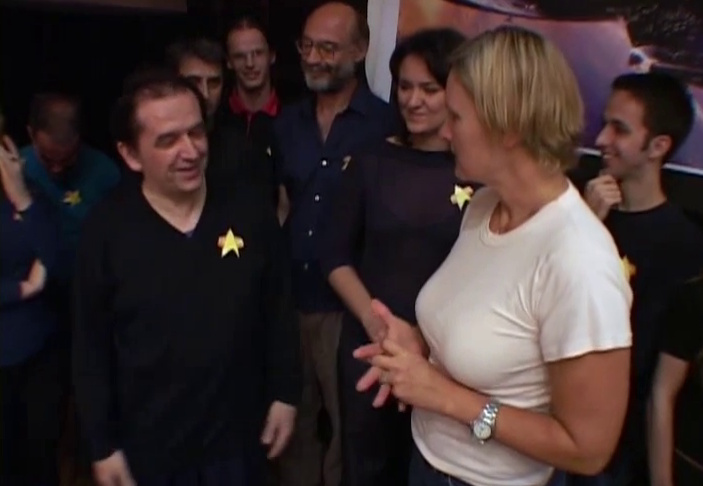
Still frame from Trekkies 2 showing Denise Crosby (the host) with a group of Star Trek fans.
The Next Generation star Denise Crosby with a group of Star Trek fans.

It’s my hope that Section 31 will have attracted plenty of new viewers to Star Trek! I love the franchise and I want to see it continue well into the future – which is something that can only happen if new fans come on board. You may encounter some Trekkies who get defensive or try to gatekeep the fandom, but most people that I’ve encountered in the fan community are kind and welcoming.

If Section 31 was your “first contact” with the Star Trek franchise, then let me be the first to welcome you on board! We’re thrilled to have you here. If you’re already signed up to Paramount+, almost all the Star Trek shows and films should be available to you. I hope I’ve given you an idea or two for how to get started and where to jump in.

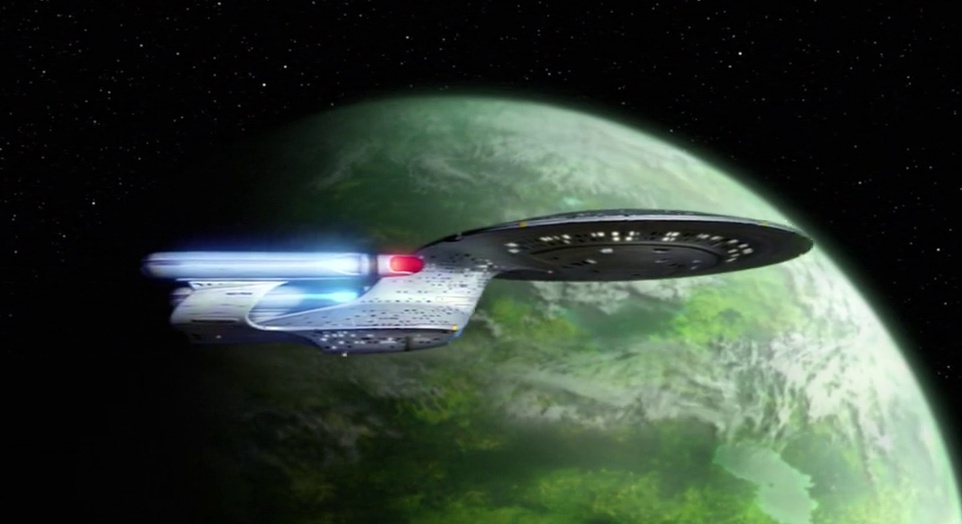
Still frame from Star Trek: The Next Generation showing the Enterprise-D in orbit of a green planet.
The USS Enterprise-D.

My own “first contact,” all the way back in 1991, was The Next Generation Season 2 episode The Royale! I can’t recommend it as being one of the best starting-points, but it was the first episode I can remember watching all the way through, and it’s the episode that convinced me that Star Trek: The Next Generation was a show worth tuning in to watch every week. If Section 31 has done the same for you, that’s fantastic! Star Trek is a bit more complicated nowadays than it was in the early ’90s, though, so I don’t blame you if you haven’t been sure where to start!

If you’re new to my website, I have write-ups of quite a few Star Trek episodes, series, films, and the like. I hope you’ll stay tuned for more coverage of the Star Trek franchise in future, including new and upcoming shows, revisits to older episodes, theories, discussion, and so much more.

Welcome to the Star Trek fan community!


Star Trek: Section 31 is available to stream now on Paramount+ in countries and territories where the platform is available. The Star Trek franchise – including Section 31 and all other properties discussed above – is the copyright of Paramount Global. This article contains the thoughts and opinions of one person only and is not intended to cause any offence.
Star Trek: Section 31 – Film Review

A spoiler warning graphic.

Spoiler Warning: There are spoilers ahead for Star Trek: Section 31 and the following Star Trek productions: The Next Generation Season 3, Discovery Seasons 1-3, and Prodigy Season 2.

You can find my spoiler-free thoughts on Section 31 by clicking or tapping here.

A brand-new Star Trek film is always going to be an exciting occasion! It’s been almost a decade since Beyond was in cinemas, and in that time it’s fair to say that a lot has happened for the franchise. But at the same time, there are similarities between Star Trek’s most recent trip to the cinema and this made-for-TV movie – not least in terms of how I’d rate the quality of both films!

We are going to be talking about plot spoilers for Star Trek: Section 31 this time, so if you haven’t seen the film yet this is your final opportunity to jump ship. I’d encourage you to check out my spoiler-free review of Section 31 – you can find it by clicking or tapping here.

Still frame from Star Trek: Section 31 (2025) showing the film's title card.
The film’s title card.

If you’ve already read my spoiler-free review, you’ll know that I thought Section 31 was okay for what it was. It’s a fairly average action/sci-fi film which has little to do with the rest of the franchise. I don’t think it achieves its objective of being a good “first contact” for new, younger viewers… but I didn’t dislike Section 31 on the whole. I’m considering writing up an updated version of my Star Trek films ranked list – and I guess if I had to give Section 31 a grade, it would get a C. Not great, not terrible; a film I don’t need to think too hard about that doesn’t demand much from me. Background viewing that I can dip in and out of with ease.

Those words may sound negative or even harsh, but I really don’t intend them to be. Taken on its own merits, Section 31 is a perfectly entertaining action film with some sci-fi trappings. It isn’t hard to separate it from the rest of Star Trek, as it has so few connections to anything else in the franchise outside of a few name-drops, so I don’t think Section 31 is in any way bad for Star Trek or the fan community. I don’t think it achieved its objective of expanding the fan community and bringing a new audience on board – which is definitely a mark against it.

Still frame from Star Trek: Section 31 (2025) showing the main characters aboard their spaceship.
Will Section 31 bring new eyes to Star Trek?

Alright, summary over! It’s time to get into the plot.

When is Section 31 set? Because I still genuinely don’t know. At the beginning of the film we see “Stardate 1292.4” prominently displayed – and if we assume lower-value stardates are earlier than higher-value ones, it would tentatively place Section 31 in between Discovery’s departure from the 23rd Century (approximately Stardate 1201.7) and The Original Series (the earliest Stardate given, in Where No Man Has Gone Before, was 1312.4). But is that correct? It seems to conflict with at least one other piece of information we have.

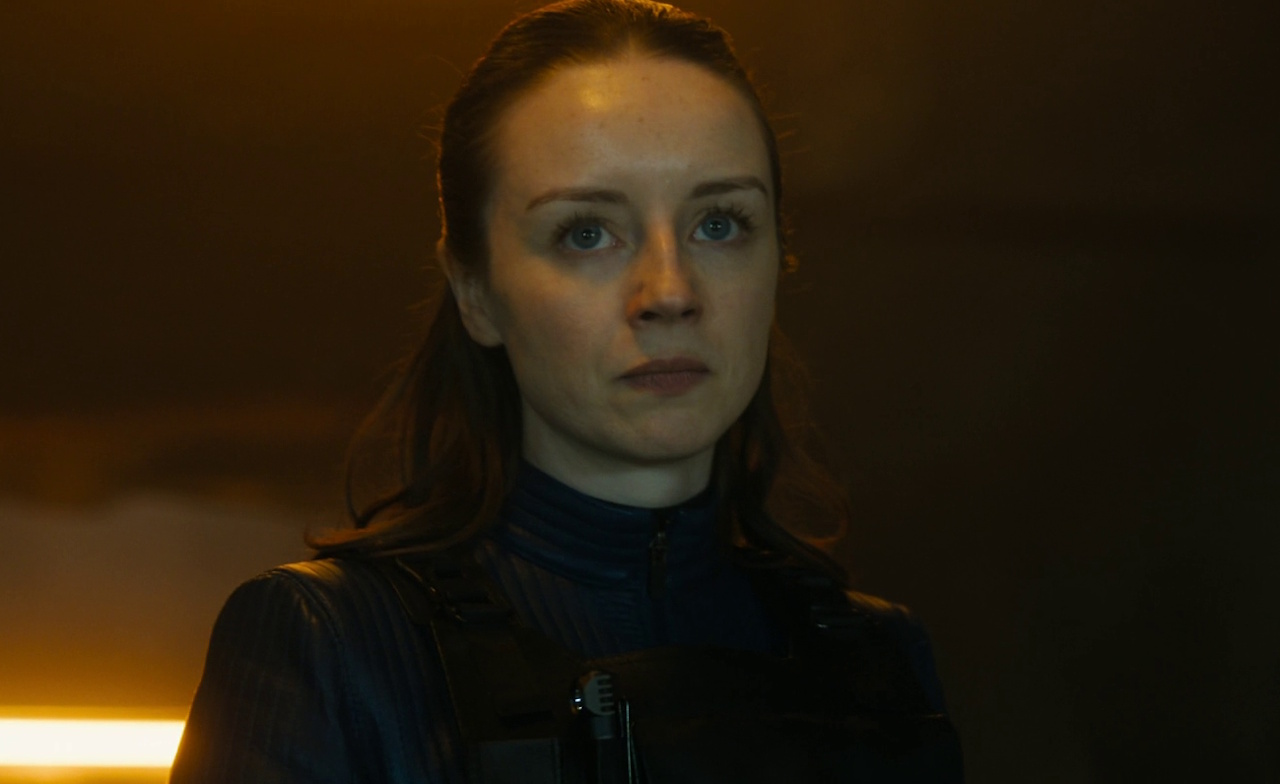
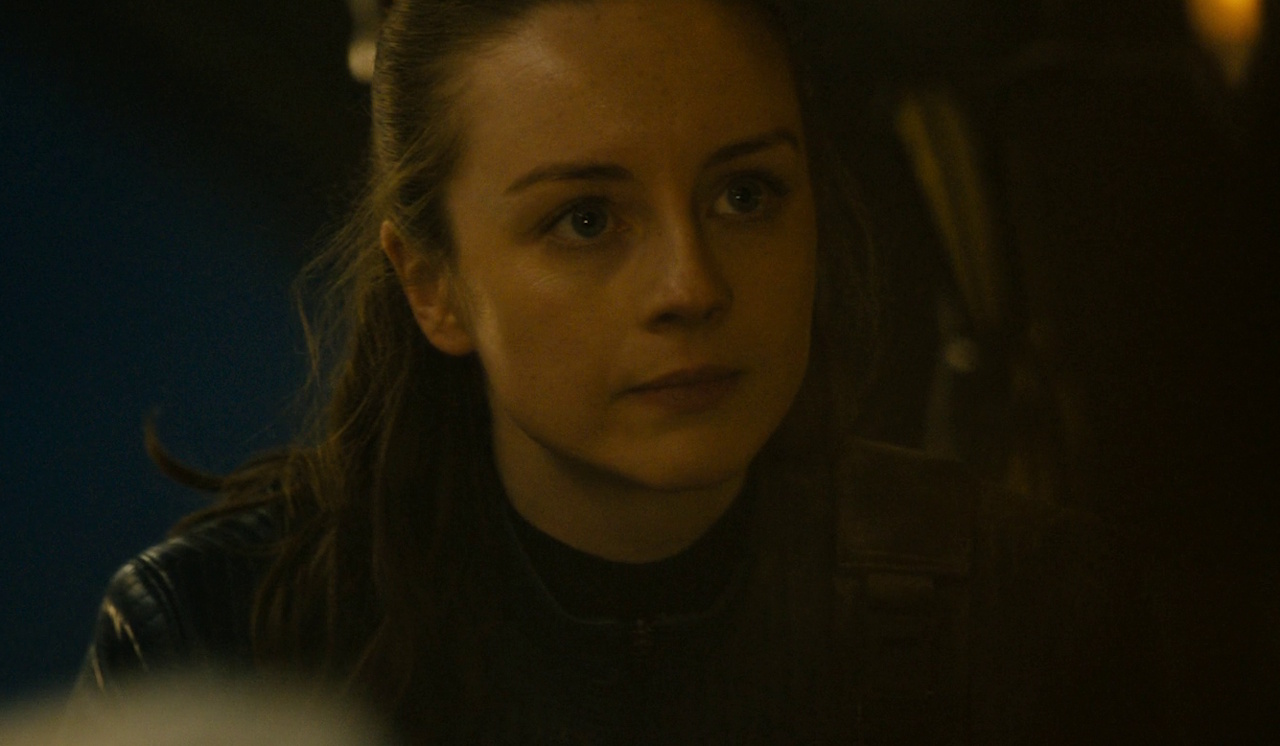
Rachel Garrett – who is a Lieutenant during the events of Section 31, and therefore isn’t a fresh-faced Academy graduate – is someone we’re familiar with from The Next Generation episode Yesterday’s Enterprise. In that episode, Garrett is in command of the Enterprise-C in the 2340s… but if Section 31 takes place in between Discovery and The Original Series and Garrett is already in her late twenties or early thirties, that would mean she’d have to be over 100 years old by the time we see her again in Yesterday’s Enterprise. The Federation has great medical and life-extension technology, but is that a good enough explanation? Or have we found our first issue with Section 31 already?

Still frame from Star Trek: Section 31 (2025) showing Rachel Garrett.
When is Section 31 supposed to be set?

I get it: this is a nitpick. But as I’ve said before: as Trekkies, we want the world of Star Trek to make sense and feel consistent, and that means that new projects have to at least try to fit in with what’s come before. There were two exceptionally easy fixes to this issue: firstly, the film could’ve been more obviously set later in time. It’s possible that this was the writers’ intention – but with no frame of reference (familiar uniform designs, starships, etc) it’s hard to tell. Secondly, the Rachel Garrett character could’ve been renamed either to another legacy character more suited to the era or to someone brand-new.

I genuinely enjoyed Kacey Rohl’s take on Rachel Garrett. But this character was pretty much a blank slate; if you haven’t seen Yesterday’s Enterprise in a while, could you even tell me much about Captain Garrett? It’s not like she had a particularly memorable catch-phrase or a unique design. She was an upstanding Starfleet officer, sure, but so are dozens of other single-appearance characters. Given the confusion this inclusion adds to the timeline, maybe other choices could’ve been made.

Still frame from Star Trek: Section 31 (2025) showing Rachel Garrett.
We’ll see Rachel Garrett again…

One final point on the timeline: if Section 31 is meant to be set after the events of The Original Series – as Rachel Garrett’s inclusion arguably hints at – then… isn’t the Terran Empire meant to be in decline or even defeated in this era? After the events of Mirror, Mirror, Spock ascended to a high rank in the Empire and attempted to reform it. Those reforms weakened the Empire, leading to its defeat by the early or mid-24th Century. So if we’re going to say Section 31 takes place in the late 23rd Century, that would coincide with a period of decline – which doesn’t line up with the film’s plot of stopping the Terran Empire breaking through the portal between universes and invading.

San’s survival also means that Section 31 can’t be set too long after the events of Discovery – he’s roughly the same age as Georgiou, and there didn’t seem to be a noticeable difference between them when they reunited.

Okay, okay. Enough timeline nitpicking for now!

Still frame from Star Trek: Section 31 (2025) showing San in the captain's chair of his ship.
San aboard his ship.

Let’s talk about the Terran Empire.

The Original Series wasn’t explicit about the Emperor or how one might ascend to that position – though it was certainly clear that advancement in the Imperial military was by assassination. However, Enterprise’s excellent Mirror Universe episode – In A Mirror, Darkly – strongly implied that the path to becoming Emperor was similar to how it is in many dictatorships and authoritarian powers: whoever has the most guns and can kill their rivals wins the “game of thrones.” That Emperor will hold power only until they can’t – I mean, this was basically Captain Lorca’s plan in Discovery’s first season. He wanted to overthrow and kill Empress Georgiou so he could rule the Terran Empire instead.

Having established the Terran Empire as being ruled by the strongest, most brutal dictators… does it really make sense that the Terrans would stage a Squid Game-style contest to decide who should be their next ruler? Technically nothing we saw of the Terran Empire in Section 31 explicitly contradicts what we know of the Empire from past iterations of Star Trek… but it doesn’t make a lot of sense to me that the Empire’s leader would be decided in this fashion. Most real-world monarchies are hereditary, and in most dictatorships, power is held by whomever can wield the most military force. This idea of a contest to anoint a new Emperor doesn’t sit right with me.

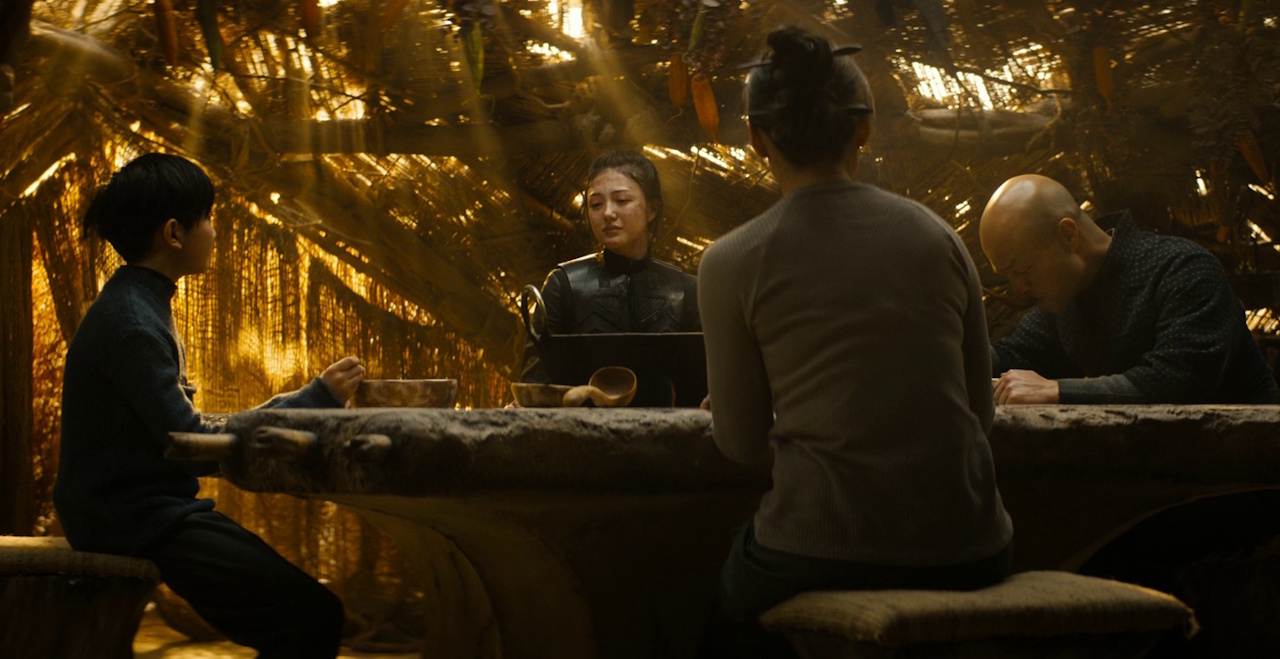
Still frame from Star Trek: Section 31 (2025) showing young Georgiou and her family in the Mirror Universe.
Young Georgiou with her family.

Then there were the depictions of San, Georgiou’s family, and Georgiou herself. Don’t get me wrong: I’m glad, in some ways, that Star Trek is moving away from incredibly one-dimensional Terrans who only care about murder, torture, and power. That’s great… but it’s also a pretty big reversal from the way Terrans are usually depicted. Showing Georgiou and San so emotional and loving made both characters feel distinctly un-Terran… which kind of got in the way of the Mirror Universe plot.

I wish I understood why modern Star Trek writers love the Mirror Universe so fucking much. Between Section 31, Discovery’s first and third seasons, Picard’s second season with its “Confederation of Earth,” and a recent episode of Prodigy, the Mirror Universe is everywhere in the franchise’s recent stories. It could be a fun setting to dip into for a single episode back when Star Trek was a wholly episodic franchise, but basing entire story arcs around Terrans and the Mirror Universe has been to the franchise’s detriment in recent years. I hope that Section 31 will be the final appearance of the Mirror Universe for a good long while.

Still frame from Star Trek: Section 31 (2025) showing Georgiou in her throne room in the Terran Empire.
I am thoroughly burned out on Mirror Universe stories for the foreseeable future.

I felt that seeing a young Georgiou with her family and San in the Mirror Universe also muddled her character arc – particularly the growth we saw in Discovery’s third season. Part of what made that story work for Georgiou was that she was discovering a new way of seeing the world. But we’ve just learned that she had a family, she cared about people, and she was even capable of falling in love… decades before Burnham and the crew of the USS Discovery helped her to discover that side of herself. I guess we could frame Georgiou’s softening as a “rediscovery” of those feelings… but it does seem to undermine her growth somewhat, finding out that she came from a caring family and had already known love.

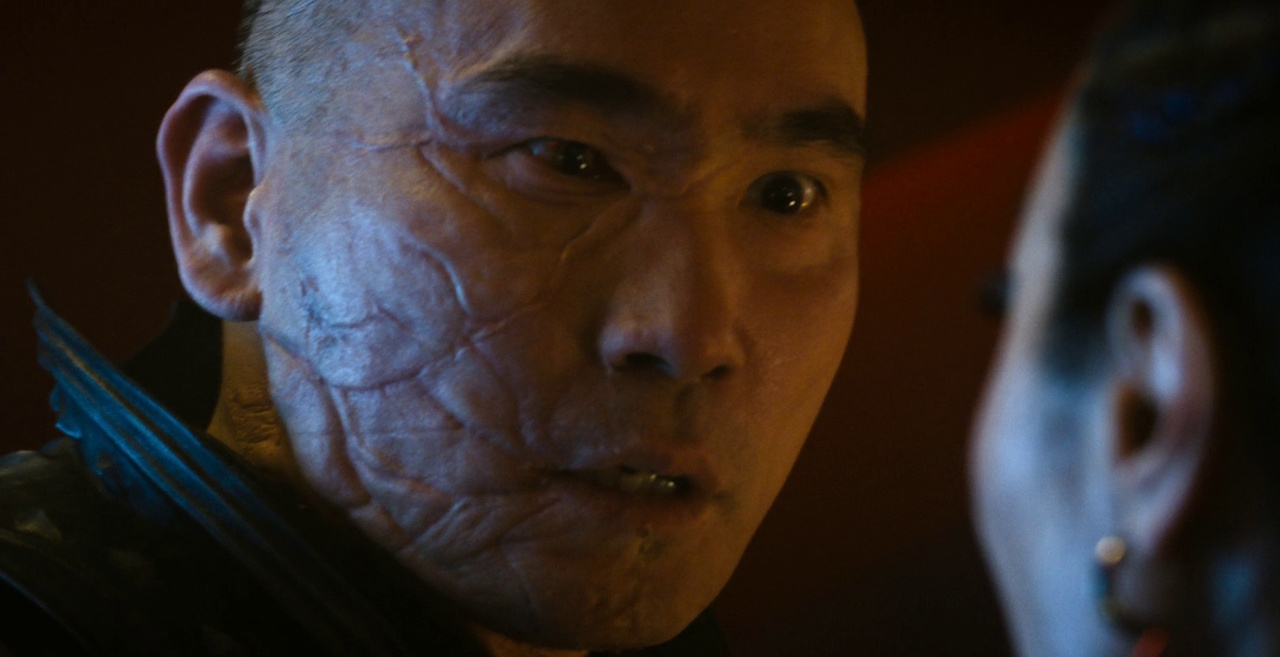
While we’re talking about San, it seemed pretty obvious to me from the moment Georgiou betrayed and wounded him in the film’s prologue that he was going to survive and turn out to be one of the villains. His survival wasn’t the “shocking twist” that Section 31 wanted it to be, and while I guess that’s not necessarily a huge problem, I think it’s worth saying that this narrative element was pretty basic and the twist didn’t land for me. Georgiou’s reaction to it – wonderfully emoted by Michelle Yeoh – definitely gave San’s return some emotional weight. But I felt it was a pretty obvious outcome from almost the first moment.

Still frame from Star Trek: Section 31 (2025) showing San and Georgiou.
San and Georgiou, reunited.

I could buy San and Georgiou’s emotional connection – both Michelle Yeoh and James Hiroyuki Liao sold me on that pretty well. But what I struggled with was San’s apparently convoluted and dumb “evil scheme.” He hated Georgiou for her betrayal and how she changed to become nasty and dictatorial after she beat him in Takeshi’s Castle or whatever that Terran competition was. So… to get back at her, he: stole a genocidal super-weapon, found a way to cross over to the prime timeline – where he had no idea Georgiou resided – and planned to detonate it, then return to the Terran Empire, tell them he’d found them a new galaxy to conquer, and… what? He’d be some kind of hero? Even though the weapon was so over-powered that Georgiou said whoever survived it would only have “ashes” left to rule over? Have I missed something? It just seems… I dunno. Overkill in one sense, convoluted and stupid in another.

And while we’re talking about convoluted and dumb schemes: why would Section 31 infiltrate Georgiou’s space station in such a stupid way? All they needed to do was distract Georgiou long enough to beam Dada Noe to their ship – but they had a massively complicated plot involving all of the Section 31 characters… that instantly failed anyway. There were some interesting ideas here – and I actually enjoyed the fantasy/flash-forward sequence, typical of heist/spy films, in which the plan succeeded. That was creative and cool. But as core narrative threads that we’re meant to take at least somewhat seriously, both Section 31’s plan and San’s evil scheme don’t really work for me.

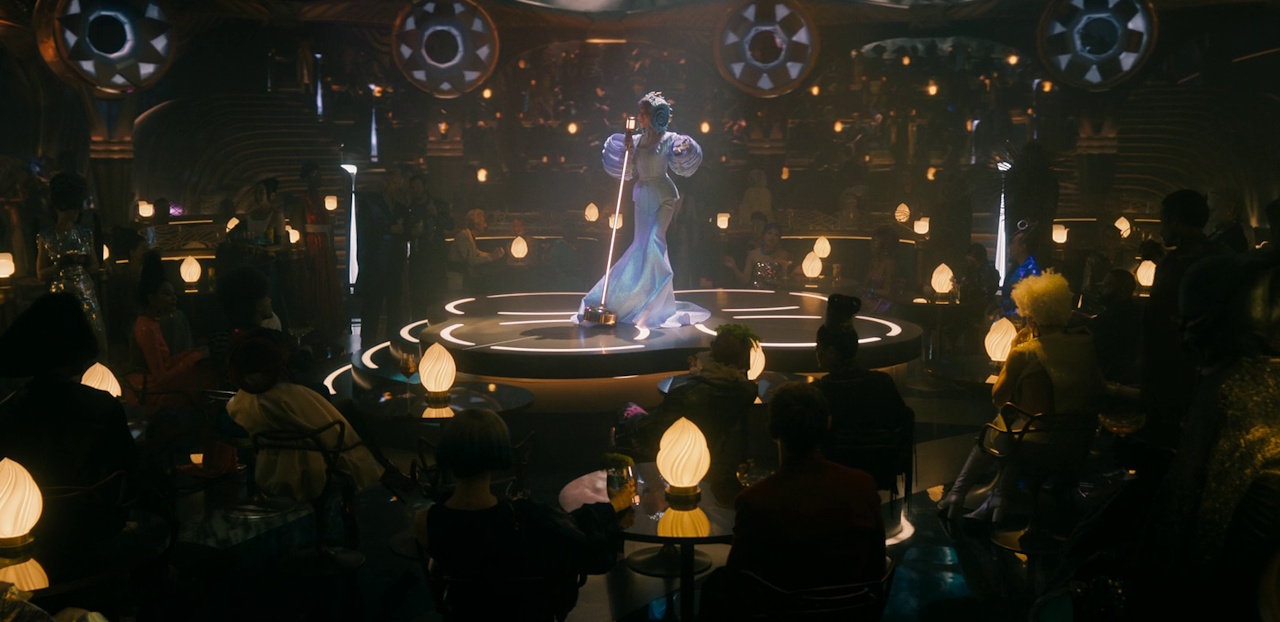
Still frame from Star Trek: Section 31 (2025) showing a singer at Georgiou's bar.
The Section 31 team planned to infiltrate Georgiou’s nightclub in a particularly stupid and convoluted way.

Then we come to the sheer randomness of Georgiou’s role in the story. It was presented as pure coincidence that the one mission Section 31 chose to recruit Georgiou for – after apparently knowing about her return to the 23rd/24th Century for some time – just happened, by accident, to involve her ex-lover, her own super-weapon, and the Empire that she formerly led. There wasn’t even a last-second twist saying that Control or Section 31 knew it all along, this was just totally by accident.

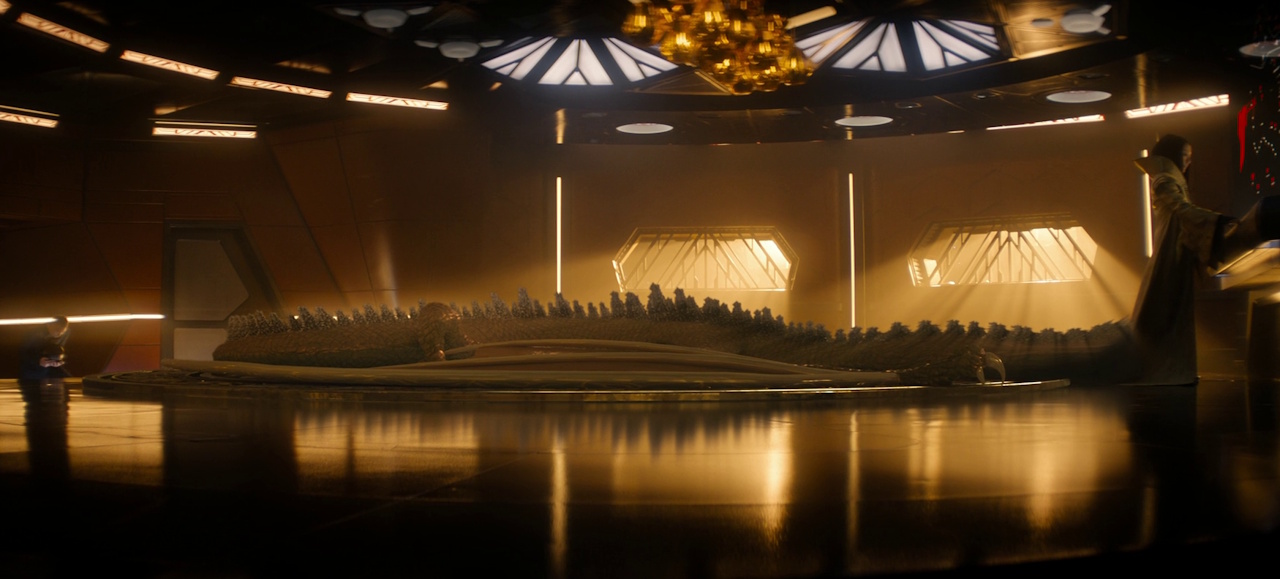
There was an obvious route to making this part of the story feel less random and disconnected. The briefing from Control – which I generally liked, it was a creative framing device and it did actually feel pretty immersive – could’ve had a little bit more detail on Dada Noe’s weapon. If Control knew that this weapon originated in the Mirror Universe, that could’ve been a smooth narrative reason for Section 31 to turn to Georgiou. It wouldn’t have blown any big surprises further along the story, and Georgiou would’ve had a better, more solid, and more believable reason for joining Sahar’s team than “c’mon, man.”

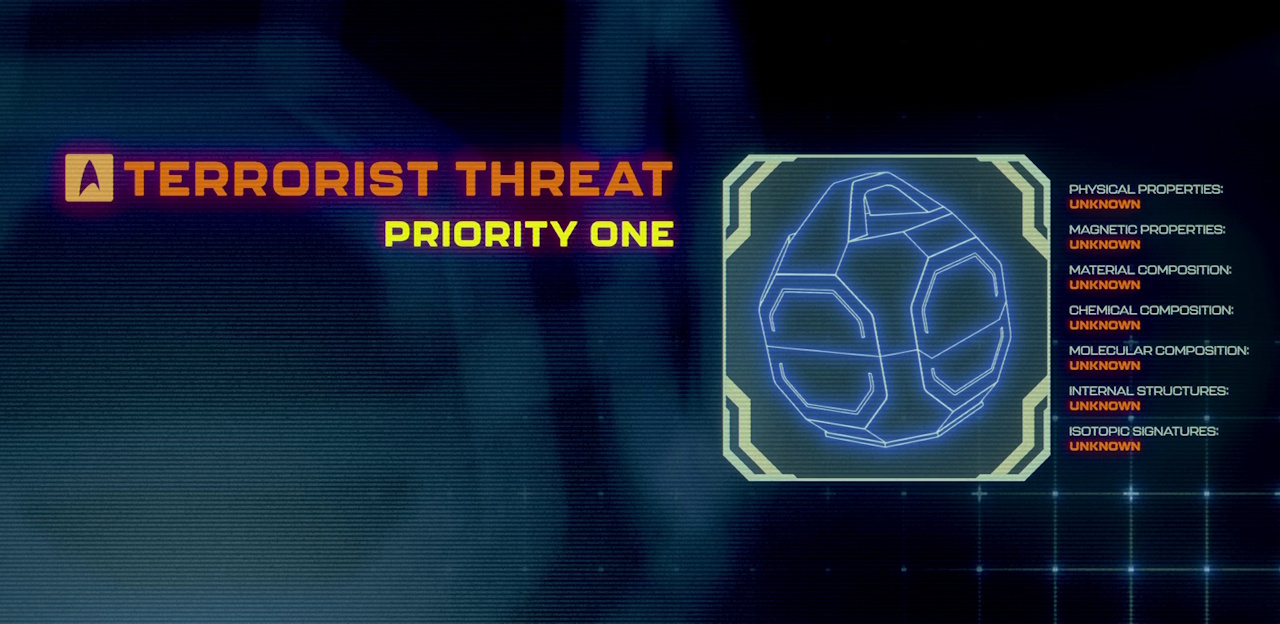
Still frame from Star Trek: Section 31 (2025) showing Control's briefing on the super-weapon.
If Section 31 had known the true origin of the macguffin, it could’ve made for an easier way to recruit Georgiou for the mission.

I was a little surprised to see that the Section 31 of this era uses something named “Control” to dish out information and orders, in light of the events of Discovery’s second season. Again, the lack of a definitive moment in time for the film’s setting could arguably cover this, but if we assume that Section 31 takes place after the events of Discovery Season 2 then the Control AI should’ve been defeated and shut down.

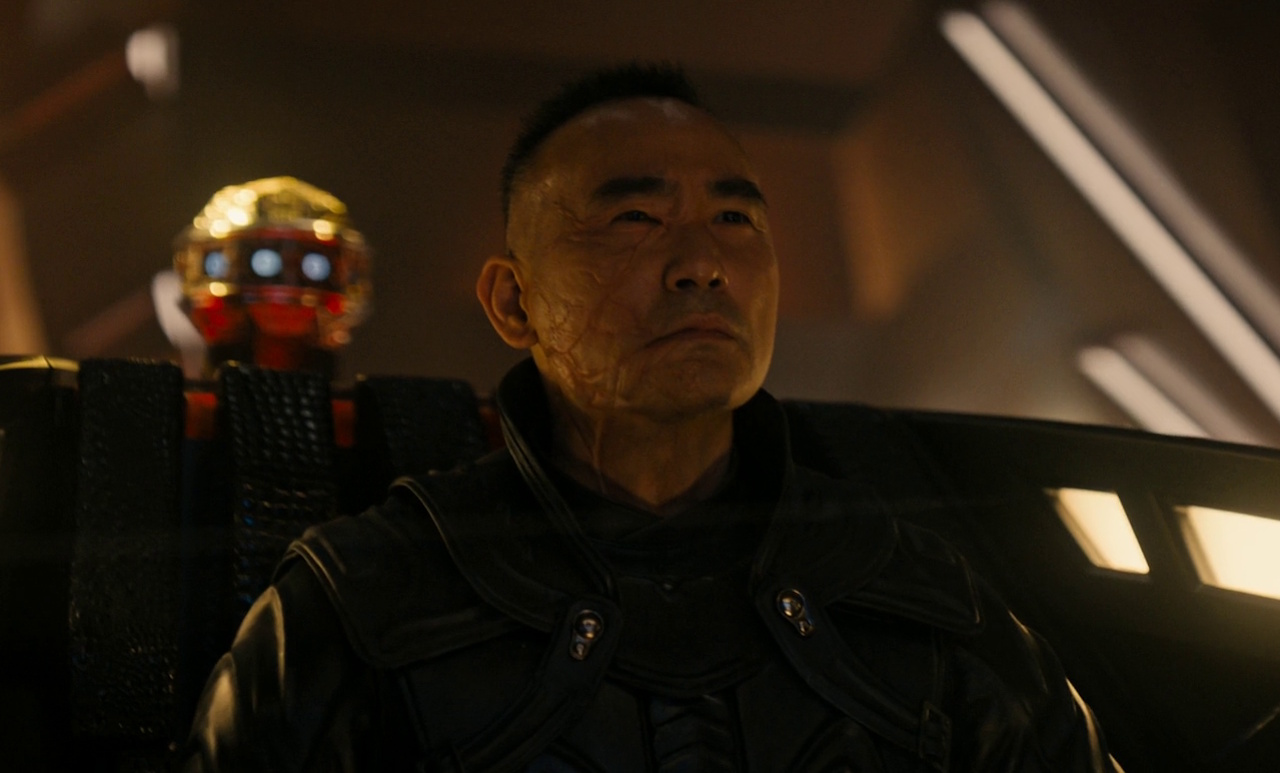
So how do you interpret the holographic “Control” figure that we saw at the end of the film? Is she a real person, an AI, or do her cybernetic implants perhaps imply she’s a mix of both? This scene already felt a bit weird; “Control’s” appearance was treated by the director as if it was some huge revelation… but actress Jamie Lee Curtis is brand-new to Star Trek, and doesn’t seem to be playing a familiar character or even a member of a species we’ve seen before. I guess the point of this big reveal was that Curtis is a big star, and she’d also worked with Michelle Yeoh on Everything Everywhere All At Once. But it didn’t really work for me in the moment, and showing off this version of “Control” leaves me with far more questions than answers. Perhaps a head-canon explanation will have to be that “Control” is simply a designation or title that Section 31 of the 23rd Century uses for its leaders?

Still frame from Star Trek: Section 31 (2025) showing Control.
After the events of Discovery Season 2… what exactly is this “Control”?

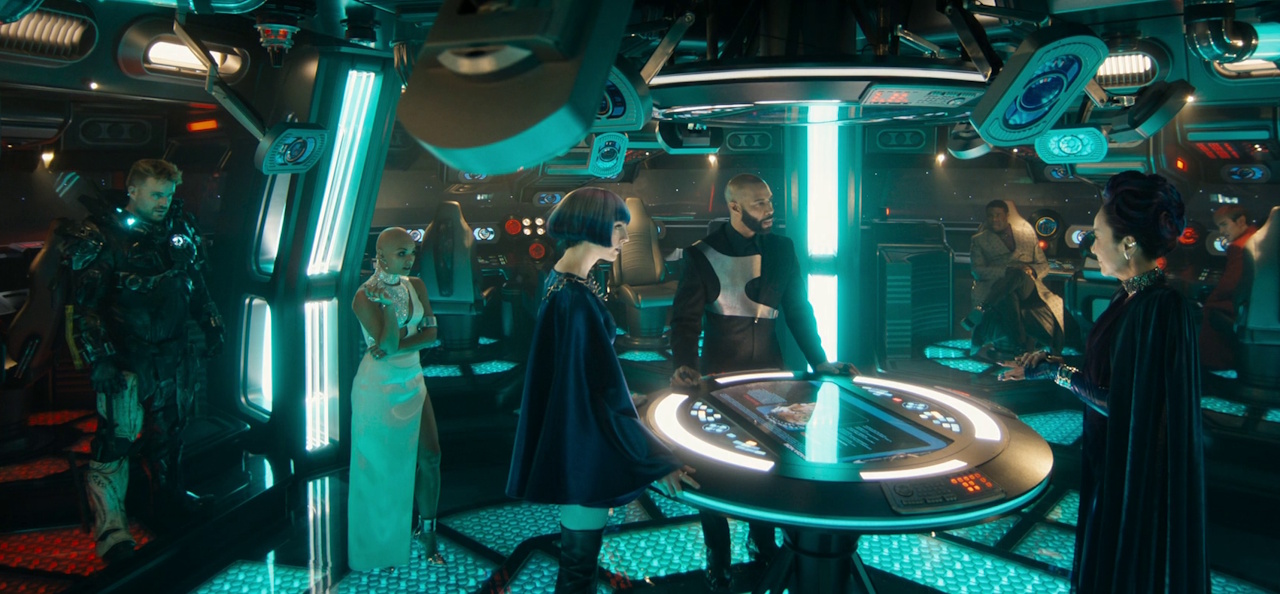
In my spoiler-free review I talked about the visual language of Star Trek – and how Section 31 basically ignores all of it. Rachel Garrett doesn’t wear a typical Starfleet uniform; the closest comparison to what she’s wearing would be Discovery’s away team armour that we saw in the first couple of seasons. There wasn’t a single character using a combadge or communicator, and the familiar Starfleet delta only showed up as a graphic during Control’s briefing. None of the starships – even those only briefly glimpsed in orbit of Georgiou’s space station – conformed to familiar Star Trek designs, either.

For me, this was a little disappointing. There has to have been a way for at least one starship to have had the familiar saucer section and nacelles design, or for a single character to use a Starfleet combadge or wear a familiar uniform – even if only for just one scene. Part of the point of Section 31 was to draw in new fans… but the lack of obvious visual connections to anything else in Star Trek makes the film feel especially disconnected.

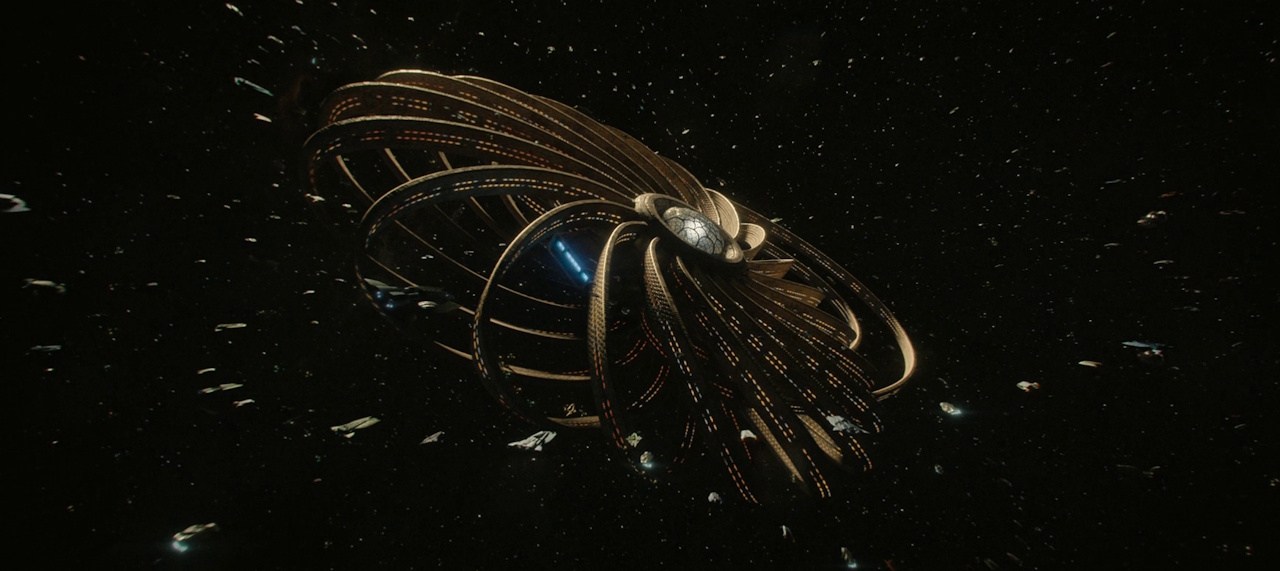
Still frame from Star Trek: Section 31 (2025) showing Georgiou's space station.
Georgiou’s space station surrounded by a bunch of generic-looking spaceships.

Then we come to sets and props. I can’t be certain, but I felt that parts of both the Section 31 starship and San’s ship looked familiar – maybe recycling parts of the sets made for Picard’s La Sirena or Discovery’s 32nd Century vessel. This wasn’t necessarily a problem, but I thought it was worth pointing out. Generally, the sets used for the planet where most of the action took place, Georgiou’s station, and the garbage scow were pretty good – I liked how the planet and the scow gave off an “abandoned ruin” kind of vibe.

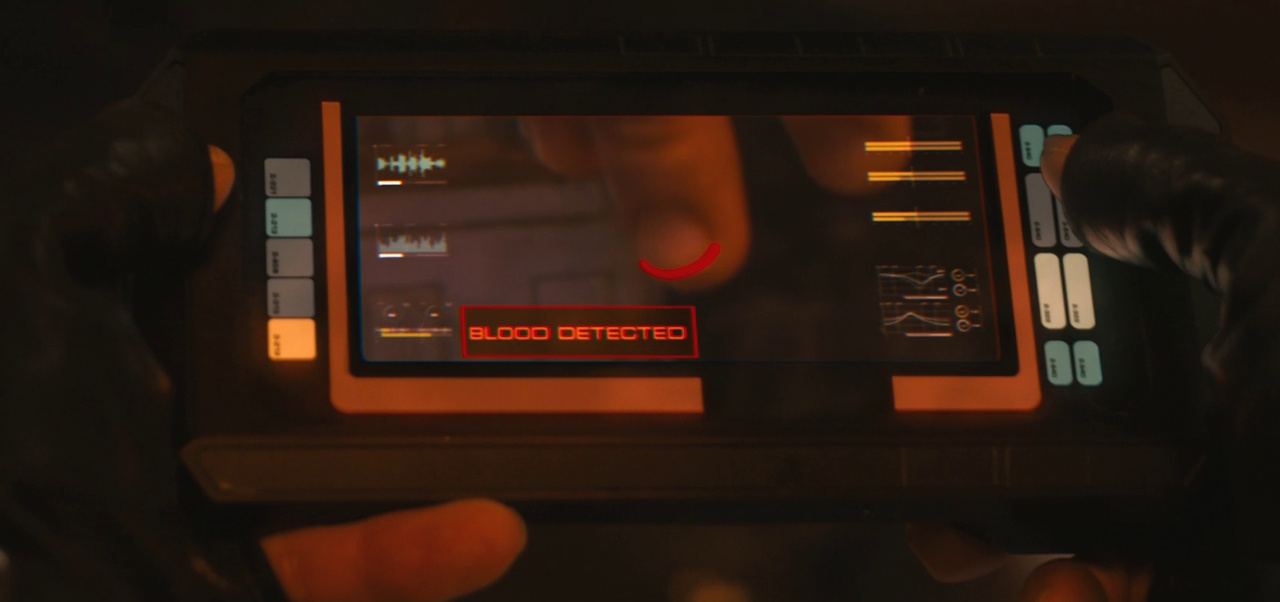
Props, though, left something to be desired in Section 31. The phaser pistols were mostly okay, though they didn’t look exceptional and didn’t seem to draw inspiration from phasers seen elsewhere in Star Trek. But the tricorder? I mean, you couldn’t have made it more obvious that it was a fucking iPhone if you tried. It was a pathetic visual effect that looked incredibly cheap; akin to something I’d expect to see in a low-budget fan film, not the Star Trek franchise’s flagship streaming project. How much extra work would it really have been to make a basic tricorder prop? You can literally buy prop replicas from the official Star Trek shop that would’ve done a better job than an iPhone in a chunky case.

Still frame from Star Trek: Section 31 (2025) showing a close-up of the tricorder prop.
It’s an iCorder… or a Triphone.

Here’s a philosophical question for you: are some people – and, by extension, some fictional characters – so far gone that they’re irredeemable? Because parts of Georgiou’s story in Section 31 (and Discovery’s third season, too) are effectively a redemption arc. Georgiou has to confront what she did to San, and also stop the super-weapon that she had commissioned – these two represent her past, and she has to demonstrate how far she’s come as she tries to defeat San.

Some Trekkies have taken to derisively using the term “space Hitler” to describe Georgiou. I don’t particularly care for that expression, so let’s pick another point of comparison from the world of fiction. Georgiou is comparable to Star Wars’ Emperor Palpatine in terms of how she ruled her Empire with an iron fist, and there are even echoes of Palpatine’s scorched-earth approach to his death – glimpsed briefly in canon – in Georgiou’s super-weapon. But would a Star Wars film shot from Palpatine’s point of view, in which he is “redeemed” and teams up with a rag-tag gang of rebels to stop a villain, work as intended? Or are characters like that too far gone to be turned into protagonists?

Still frame from Star Trek: Section 31 (2025) showing young Georgiou branding San in the Mirror Universe.
Georgiou was a murderous tyrant in the Mirror Universe.

As far as Section 31 itself is concerned, we don’t see many crimes or atrocities committed by Georgiou on screen. There’s the murder of her family during the Jim Davidson’s Generation Game part of the prologue, and the way she deliberately scars San with a red hot sword. But we don’t get much context outside of Control’s briefing for her more massive crimes: slavery, genocide, and the like.

But viewers of Discovery – particularly the show’s first season – have seen at least some of those things. In one particularly gruesome sequence, Georgiou ate Kelpien meat – Kelpiens are sentient humanoids in Star Trek’s galaxy. We also learned of how she defeated the Klingons of the Mirror Universe – by destroying their planet and committing genocide against them. Georgiou kept slaves, tortured people for fun, and we saw more than just glimpses of the extent of her tyranny. So… is a character like that possibly redeemable? Can we ignore that context and go on a fun, silly romp with Georgiou and her new crew?

Still frame from Star Trek: Discovery Season 1 (2017) showing Empress Georgiou eating Kelpien meat.
Having seen Georgiou in the Mirror Universe, and the atrocities she committed, can we really support her in this new story?

This was always a hurdle that Section 31 had to find a way to surmount, but perhaps condensing the story – and Georgiou’s arc in particular – into a single film instead of playing out over the span of a dozen or more episodes kind of highlights it for me. If we take this version of Georgiou out of context, then yeah, as I said at the beginning: Section 31 is a big, dumb action film that makes for entertaining enough popcorn fare. But knowing what we know of Georgiou and having seen her at her worst… it raises the question of whether redemption for this character is something we should even want, let alone whether it’s possible.

And I don’t really know what the answer to that question is, to be honest with you. I can separate Section 31 from the rest of Star Trek pretty easily, and taken on its own, I think Georgiou’s story works well enough. She’s anchored more to San than to the crimes and genocides of the Terran Empire – which, while mentioned more than once, feel relatively distant. And her arc brings her back to San as she confronts the super-weapon she commissioned during her reign. But the more I think about it, and the more I reflect on Georgiou’s time as Emperor that we saw parts of in Discovery… the more uncomfortable I feel, and the less confident I am that a spin-off focusing on this character was the right call. It’s the Palpatine problem: could a Palpatine redemption movie, padded out with wacky side-characters, work in Star Wars? Or would fans feel his redemption was a bridge too far?

Still frame from Star Trek: Section 31 (2025) showing Georgiou near the climax of the film.
Was a redemption arc for Georgiou even a good idea for a story?

Speaking of wacky side-characters… I have some thoughts on Section 31′s roster!

Obviously we have to keep in mind that Section 31 was originally pitched as a TV series – one that could, in theory, have run for multiple seasons. Several of these characters had potential in that kind of format… potential that was, unfortunately, squandered in a single film. Melle stands out as perhaps the most obvious of these, though given modern Star Trek’s tendency to “Flanderise” characters and whole alien races, I wasn’t particularly wild about seeing what the writers might’ve done with the famously hyper-sexual Deltans. We caught a glimpse of that before Melle was unceremoniously killed off, and that was more than enough for me.

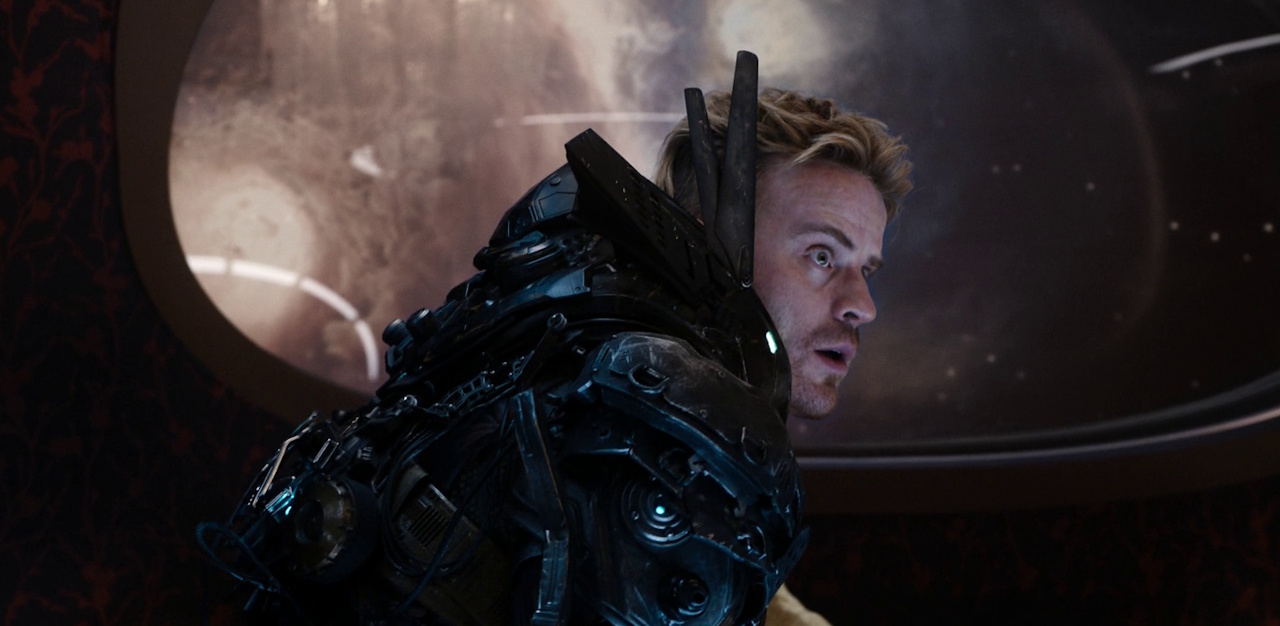
Zeph also feels like wasted potential, though at least he stuck around a little longer and found time to deliver a couple of funny lines. Robert Kazinsky, who played the role, did a great job, and in the pre-release interviews on the publicity circuit for the film he seemed to be genuine and passionate about Star Trek. Obviously Zeph won’t be returning, but I’d like to think Kazinsky could one day.

Still frame from Star Trek: Section 31 (2025) showing Zeph in his mechanical suit.
Zeph’s mechanical suit was interesting.

I would’ve liked to have learned a bit more about Zeph’s mechanical suit. The suit was really there to serve a narrative function: it enabled Fuzz to remain undetected as the “mole” for a little longer. But given that this kind of armour or tool is rare in Star Trek, learning a bit more about how it works and why someone would choose to use it would’ve been fun. Again, this is the kind of thing I’d expect a longer series to have found time for – but obviously there wasn’t that possibility in a single film.

Although I wasn’t expecting it, I held out a dim hope that we might’ve learned a little more about Quasi’s people – the Chameloids. Aside from a single appearance in The Undiscovered Country, this race of shape-shifters is completely unexplored. I liked the visual effect used when Quasi switched between forms, as well as the line about no one knowing a Chameloid’s true appearance. That differentiates the Chameloids from the likes of the Founders, whose liquid form has been seen many times across Deep Space Nine’s run.

Still frame from Star Trek: Section 31 (2025) showing Quasi midway through changing shape.
The animation work for Quasi’s shape-shifting was neat.

Quasi himself, though, was a bit of a non-entity for me. Sam Richardson put in a stellar performance with the material he had to work with, but I just didn’t really feel much of anything for the character. Quasi’s scientific prowess was mentioned a few times, but never really came to the fore in a big way – that role ultimately fell to Garrett at the film’s climax. Quasi was just sort of… there. A presence, but not an especially memorable one.

One thing Star Trek hasn’t always been great at is depicting very “alien-feeling” alien races. Most Star Trek aliens are in the “forehead or nose” brigade; humanoids with prosthetic noses or foreheads to represent different races. With that in mind, the Nanokins – Fuzz’s race – felt like something new and genuinely unique. Sure, the Nanokins aren’t the first non-humanoid race we’ve ever seen, nor even the first microscopic race, either, but it was a fun and unexpected direction for the film to take.

Still frame from Star Trek: Section 31 (2025) showing Fuzz's true microscopic form.
Fuzz’s true form.

On the flip side, Fuzz’s small stature combined with his eccentric personality made him stand out – and, unfortunately, I don’t really mean that as a positive. Rather than coming across as wacky and funny, almost from the first moment he just felt… odd. When the group decided (a little too quickly and without considering any other options) that there was a traitor in their midst, Fuzz was the obvious candidate. In fact, he was pretty much the only candidate.

Think about it: the mole obviously isn’t Georgiou, and it wasn’t going to be Sahar, the team leader. Zeph is an adorable idiot, but he clearly didn’t have the intellect or the motivation to betray the group. It wouldn’t be Starfleet officer Garrett, either – if for no other reason than we know her career would continue for decades after this moment. That only left Quasi, the shapeshifter, and Fuzz. Quasi was a character that we hadn’t really gotten to know at this point in the story, outside of a barebones introduction, and what we had seen of him showed him to be passionate about his work and friendly. So there really was only one serious contender for the mole – or at least it seemed that way to me!

Still frame from Star Trek: Section 31 (2025) showing Fuzz.
Fuzz turned out to be the mole in the team.

Section 31 already had a pretty basic story: rag-tag team of misfits have to stop the villain from using the magical macguffin or it’s going to destroy the galaxy. Not only is that the plot of countless sci-fi movies, it’s also pretty similar to the Star Trek franchise’s recent output – see Picard, Prodigy, and Discovery for that. So when the few opportunities for a plot twist or a subversive moment come along… they really ought to be handled a bit better and not telegraphed so far in advance. Fuzz’s villainous turn, as well as San’s survival and reappearance, were both treated in the story as if they were massive shocking twists… but they weren’t.

As above with San, part of what makes moments like this impactful is how the characters respond. And even though a plot point may seem obvious, a strong emotional reaction can make even the most impotent narrative beat feel better. We got some of that with San and Georgiou, but arguably less of it with Fuzz and Sahar.

Still frame from Star Trek: Section 31 (2025) showing Sahar and Fuzz brawling.
Part of the fight between Sahar and Fuzz.

Again, I feel the ramifications of a full season or multi-episode arc being condensed and cut down. Had we met Fuzz earlier, or had a flashback to his first meeting with Sahar – like we got in the prologue with San and Georgiou – maybe there’d have been more of a foundation to build on, making the revelation of his betrayal feel more impactful. Without some of that context, and not having spent very much time with Sahar, Fuzz, or really any of the others, the betrayal didn’t feel as powerful as the film’s writers wanted it to. It’s simply one more slightly chaotic element in an already chaotic, fast-paced film. It wasn’t bad per se, it just didn’t have much weight to it.

The same is true of Melle’s death – though I’d argue this was at least a genuine shock in the moment. Melle had been introduced to us moments earlier and seemed like she was going to be a big part of the team… but she died relatively early in the film, having delivered only a couple of lines and without contributing to the story in any way. Perhaps this is because I’d been paying attention to the film’s marketing campaign – in which Melle’s actress, Humberly González, was featured – but I expected her to be a bigger part of the story. In that sense, her early death was certainly a shock.

Still frame from Star Trek: Section 31 (2025) showing Melle's death.
Melle’s death early in Section 31 came as a surprise.

It’s worth noting, by the way, that this is the second film in which a Deltan has been a main character. It’s also the second film in which the Deltan character has been killed off at an early stage – and the second time where a television series pitch being condensed down to fit the runtime of a single film is the reason why! If you’re familiar with the early production history of The Motion Picture, you’ll know it was originally pitched as Phase II – a new Star Trek television series. Ilia, the first Deltan seen in Star Trek, was originally intended to be a main character on the show, but when the series was adapted into a feature film, Ilia was killed off.

Okay, random trivia over – let’s get back to the review!

Sahar was perhaps the most fleshed-out of the Section 31 characters. We got to learn a little of his backstory – he’s a veteran of the Eugenics Wars, and survived to the 23rd Century in stasis. This story obviously harkened back to Khan’s in Space Seed, and I’m a little surprised that Khan wasn’t name-dropped at this point. That’s not to say it would’ve improved the story – but given how little time we spent talking about Sahar’s past and his Augment tormentor, it wouldn’t have really changed much, either.

Still frame from Star Trek: Section 31 (2025) showing a close-up of Sahar.
Sahar was an augmented human from the 20th Century.

Sahar is, yet again, a character who’s suffering as a result of Section 31 being crushed down from a full TV show to a film. I have to imagine that, if the original TV series had gone ahead, this revelation about his history would’ve come further into the story, and probably would’ve been the subject of a secondary storyline if not an entire episode. I found what we got to be interesting – enough to pique my curiosity and to give Sahar more than just a generic background. But at the same time, Section 31 didn’t really do a lot with the revelation of his augmentations or his 20th Century origin. With a sequel almost certainly not happening, I doubt Sahar will be revisited, leaving this interesting background feeling rather underdeveloped.

Having nitpicked Section 31 seemingly to the brink of death – from its confusing place in the timeline to the status of the Terran Empire, and whether Georgiou’s redemption arc was repetitive, possible, or neither – how can I sit here and say that I didn’t dislike it? That’s a fair question, right? Because the truth is that, for what it is, Section 31 is fine. It’s not gonna win any awards, and I can see some Trekkies absolutely despising it (particularly folks who didn’t like Discovery and the Kelvin films), but speaking for myself… I can’t say I didn’t enjoy Section 31 on its own terms as a standalone film.

Promotional photo/headshot of actress Humberly González.
Humberly González played Melle in Section 31.
Photo Credit: IMDB

If the intention was to create a competitor to The Wrath of Khan or First Contact for the title of “best Star Trek film,” then obviously Section 31 doesn’t succeed. It’s narratively, structurally, and even visually weaker than those illustrious titles. And as a “first contact” – a new and easy way for viewers to get started with a complicated franchise – well, I don’t think it achieves that objective either.

But there is a place in entertainment – and, I would argue, in the Star Trek franchise, too – for the kind of action-heavy story that you don’t need to think too hard about. And that’s how I see the film, at the end of the day. It’s basically a B-movie, putting together a bog-standard story centred around a single familiar character, cropping out a lot of the visual and narrative hallmarks of Star Trek. I don’t think it’s really a Star Trek film in that sense; it’s an action film trying to dress itself up in a Star Trek outfit. But I don’t hate that, and with such a cookie-cutter plot and some over-the-top characters, it’s hard to really complain about Section 31 once you open your eyes to what it is.

Still frame from Star Trek: Section 31 (2025) showing Empress Georgiou.
It’s Empress Georgiou again!

That doesn’t mean that I don’t think Paramount can and should do more with Star Trek. There’s a version of Section 31 floating around out there, somewhere, that’s significantly better, has a stronger plot, and genuinely succeeds at bringing in new fans. This version is a cynical attempt to cash in on Michelle Yeoh’s name while she’s still a box office draw. It’s also a cheap way to recycle some of the work that had already been done on the original Section 31 TV series – which officially entered pre-production almost six years ago. Recouping some of that initial investment seems to have been a priority for Paramount, otherwise I have to believe that a story and a cast of characters better-suited to a single one-off film could have been written.

But I don’t hate action-heavy B-movies, and as soon as I realised that’s what I was watching, I just kind of… went with it. The film genuinely seemed to fly by, which is something that doesn’t happen for me if I’m not having at least somewhat of a nice time! I was actually quite surprised when I glanced down at the time and realised I was already halfway through. Section 31 kept my interest, kept me entertained, and as the credits rolled I can honestly say that I wasn’t disappointed in the film or the story I’d seen unfold. I didn’t love it, and I’m not in a mad rush to re-watch it. But there’s definitely a place for a project like this in an expanded Star Trek franchise.

Still frame from Star Trek: Section 31 (2025) showing a close-up of San.
San in the Mirror Universe.

There absolutely were weaknesses in the story that prevent Section 31 from being a top-tier film. And if I spend too long thinking about Georgiou, her pretty regressive and repetitive character arc, the film’s confusing time period, the status of the Terran Empire, and more… yeah. I can understand why a Trekkie would feel disappointed with some of those things. But Section 31 feels, to me, like the kind of film that you really shouldn’t spend too long thinking about. It’s Star Trek’s version of, say, Transformers or The Fast and Furious insofar as it has a basic plot, plenty of mindless action, some quirky characters, and a smattering of amusing dialogue. I don’t know about you, but I’m okay with a film like that.

The flip side, of course, is that Paramount spent a decent amount of money on Section 31 – so to churn out a film so “mid” after working on this project since 2018… that’s not great. And for the Star Trek franchise, a film that ultimately underwhelms and will probably not do great numbers for Paramount+ could ultimately prove damaging. There may be some in the Paramount or Skydance boardrooms who look at the reception to Section 31, and the numbers of subscribers it pulls in, and feel disappointed. That could prove detrimental to Star Trek’s future prospects, whether we’re talking about a new feature film, another made-for-TV movie, or a brand-new series. That isn’t what I hoped for heading into Section 31.

Cropped promotional poster for Star Trek: Section 31 (2025).
The official Section 31 poster.

As I said last time, it’s hard not to recommend the film to fans of Star Trek: Discovery and existing subscribers to Paramount+ in particular. But I don’t think it’s going to win the Star Trek franchise a lot of new fans, nor will it convert haters of “nu-Trek.” I’m also concerned that, if it does ultimately prove a disappointment for Paramount in financial and subscriber terms, there might be less willingness to commit to more one-off stories, made-for-TV movies, and streaming projects in the future.

But for my part, despite its issues and narrative flaws, I enjoyed Section 31 for what it was. Taken on its own terms, and trying not to think too hard about some of the broader implications of its story for the Star Trek universe… it’s fine. It’s an action film with the loosest of ties to Star Trek, existing off to one side in its own little box. There’s definitely a place for projects like that in the franchise, and I’m sure I’ll revisit Section 31 in the future.

Still frame from Star Trek: Section 31 (2025) showing the surviving characters at the end of the film.
The final shot of the film.

Stay tuned, because I have a couple of other pieces in the pipeline connected to Section 31! I’m planning to write up a few suggestions for potential new fans who are just getting started with Star Trek, offering some suggestions for episodes and films to turn to next. And I’m also planning to re-do my Star Trek films ranked list to add Section 31. I might even do it using the internet-friendly tier list format! So I hope you’ll join me for that – and plenty more coverage of the Star Trek franchise. I’ve still got a couple of episodes of Strange New Worlds to watch before Season 3 premieres!

Until then, I hope this has been interesting. I’m going to check out some other reviews of the film from professional critics and Star Trek fans to see if my impressions of Section 31 are shared more widely!

Live Long and Prosper!


Star Trek: Section 31 is available to stream now on Paramount+ in countries and territories where the platform is available. The Star Trek franchise – including Section 31, Discovery, and all other properties discussed above – is the copyright of Paramount Global. This article contains the thoughts and opinions of one person only and is not intended to cause any offence.
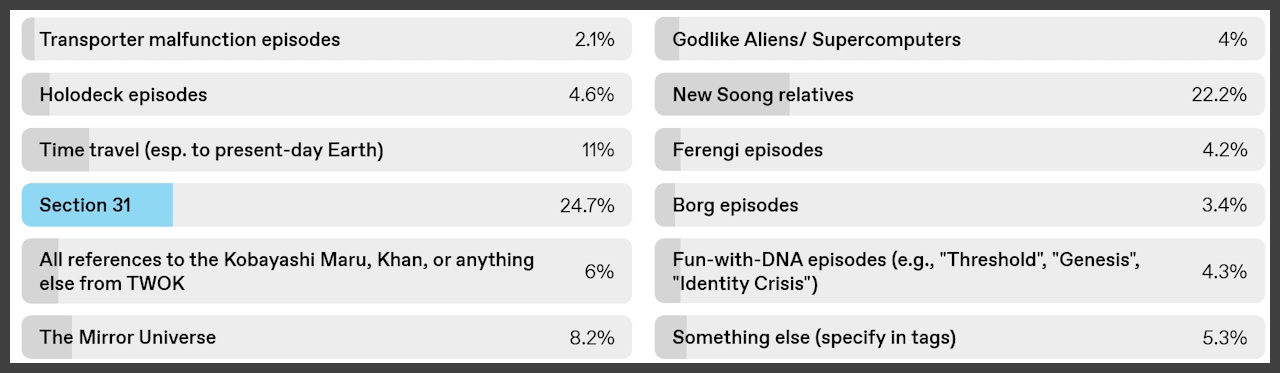
Did bad timing kill the Section 31 series?

Spoiler Warning: There are spoilers ahead for Star Trek: Discovery Seasons 1-3.

The Section 31 series is currently stuck in that nebulous zone that industry insiders refer to as “development hell.” Despite having been officially announced almost three years ago and supposedly having scripts written, at time of writing it’s been a very long time indeed since we heard anything close to official about the series.

I last took a look at the Section 31 show’s prospects back at the end of April, and since it’s been a while I think we should briefly recap why I feel increasingly sure that the project isn’t going ahead.

After a deeply underwhelming reaction to the Section 31 show’s announcement in 2019, Discovery’s second season premiered – and fans immediately fell in love with Captain Pike, Spock, and Number One. Calls for Pike to be granted his own spin-off eventually led to the development of Strange New Worlds. After Strange New Worlds was officially announced, we began to hear rumblings about the Section 31 series potentially being reworked. For a show that had supposedly been ready to go and on the verge of beginning official production for more than a year, news in 2020 that scripts were being re-written did not sound good.

Has the Section 31 show been quietly cancelled?

Alex Kurtzman – the head of Star Trek for ViacomCBS – later dropped a significant bombshell: that there were no plans for any new Star Trek series to enter production until one of the current shows has concluded. With Discovery, Picard, Lower Decks, Prodigy, and Strange New Worlds all being worked on at that point, Kurtzman said that no other shows would enter production until at least one of those had finished its run. We later heard from the Section 31 show’s co-creators that they were “still having conversations” about the Section 31 series – which sounds an awful lot like industry speak for a project on life-support.

Back in April we heard from Michelle Yeoh – Empress Georgiou herself – on The Pod Directive, Star Trek’s official podcast. It’s important to keep in mind that The Pod Directive is an official production, not a fan-made one, because if Yeoh had been interviewed by literally any Trekkie in such a format, the question of the Section 31 show’s future would certainly have come up. It didn’t – and Yeoh could only speak in very vague terms about hoping to “one day” return to the role of Georgiou.

Michelle Yeoh appeared on Star Trek’s official podcast earlier this year.

Months later and we still haven’t heard anything about Section 31. Shazad Latif, who played Tyler in Discovery’s first two seasons, suggested that there had been unofficial chats about the show earlier this year – but again, that hardly sounds positive. At Star Trek Day back in September, Alex Kurtzman teased that a Starfleet Academy series may be in the very early stages of being worked on, which could mean that it’ll be the next project for the Star Trek franchise. In contrast, the Section 31 series wasn’t mentioned at Star Trek Day at all.

Let’s assume for now that the combination of no official announcements and a slow trickle of bad news does in fact mean that the Section 31 show isn’t going to happen. The question is why? What might’ve caused a rethink over at ViacomCBS and convinced the corporation to invest its time and money elsewhere?

Alex Kurtzman is in charge of the Star Trek franchise.
Photo Credit: Gage Skidmore, CC BY-SA 2.0 https://creativecommons.org/licenses/by-sa/2.0, via Wikimedia Commons

It isn’t as simple as saying “Captain Pike.” It’s true that the fan response to Pike (as well as to Spock and Number One) absolutely stole the Section 31 show’s thunder in 2019, but that can’t be the full story. It is very interesting to note, though, that the support for Captain Pike from Discovery fans and viewers seemed to catch ViacomCBS completely off-guard. Did they not realise, during production on Discovery Season 2, that they had something special on their hands with Anson Mount and Ethan Peck? If not, why not?

Perhaps it’s true that ViacomCBS was only willing to greenlight one Discovery spin-off in 2019, and if that’s the case it was patently obvious within a couple of episodes which character fans were clamouring to spend more time with – and which they weren’t. But in 2019 ViacomCBS was practically throwing its money around, working on Star Trek projects left, right, and centre. It doesn’t make sense to say that there was only enough money in the kitty for one spin-off – and if fans liked both Georgiou and Pike, why not go ahead with both projects?

Anson Mount as Captain Christopher Pike.

The build-up to Discovery Season 2 came in the wake of the surprise announcement of Star Trek: Picard. Many Trekkies were incredibly excited to revisit the 24th Century and see the next chapter of Picard’s life, and there was a great deal of buzz and excitement surrounding Picard Season 1. As I argued at the time, a Discovery spin-off in the 23rd Century almost felt like a regressive step in comparison; many fans were excited to see the Star Trek franchise’s overall timeline move forward again for the first time in eighteen years – Section 31, being set in the 23rd Century, felt like a backwards step.

The intention behind announcing the Section 31 series prior to Discovery Season 2 was twofold: partly to drive subscribers to what was then still called CBS All Access, reminding folks that a new season of Star Trek was coming, but also to reaffirm the corporation’s commitment to Star Trek as a brand and Discovery as a series in the wake of a somewhat controversial first season. As Season 1 was rolling on, there were an increasing number of anti-Star Trek social media groups popping up, and one commonly-heard refrain in 2017, 2018, and into 2019 was that Discovery was about to be cancelled. This story, by the way, still does the rounds in those same groups in 2021, despite the show now being into its fourth season!

The timing of the Section 31 show’s announcement was intended to provide a boost to CBS All Access.

There was a need for ViacomCBS to try to bring in more subscribers, and there was also a need to do something to demonstrate that the corporation still had faith in Discovery and the broader Star Trek franchise. Shutting down some of the anti-Trek hate wasn’t the main reason, but it may well have been a factor in the decision-making.

So in January 2019, as Discovery’s second season drew near, we got the announcement of the Section 31 series. But rather than the positive response ViacomCBS was hoping for, reaction to the news was muted at best – and disagreeable at worst.

I was one of many Trekkies left underwhelmed by the concept of the Section 31 series at that time. Michelle Yeoh is an outstanding performer, don’t misunderstand me for a moment. But her character of Empress Georgiou was someone who was fundamentally uninteresting – at least she was as of the end of Discovery Season 1. Remember that the Section 31 show was announced before a single Season 2 episode had aired, and long before Georgiou got some much-needed character development in Season 3.

Georgiou changed a lot over the course of Season 3 in particular.

Imagine, for a moment, that the Section 31 show had been announced last December – in the days following the broadcast of Terra Firma, Part 2. How much more excited and interested might fans have been then than they were in January 2019? I think we all know the answer to that question.

The Mirror Universe and its Terran inhabitants can be fun, and even though I freely admit that the Mirror Universe is far from my favourite Star Trek setting, I can appreciate what it brings to the table. But the Mirror Universe has only ever been the kind of over-the-top pantomime fun that I can enjoy for a single episode at a time. Terrans are basically all the same: violence-loving sociopaths. They make Prime Timeline Klingons look positively tame thanks to their gratuitous use of violence and torture, and there’s never been any demonstrable room for character depth or nuance.

The best Mirror Universe character, aside from Georgiou herself, was probably Mirror Spock way back in The Original Series. Deep Space Nine tried, to its credit, to tell some different Mirror Universe stories about enslaved Terrans and a Klingon-Cardassian Alliance – but the Alliance fell into many of the same thematic and storytelling traps as the Terran Empire had.

Aside from Georgiou, Mirror Spock is one of the few nuanced and interesting Mirror Universe characters.

In short, Mirror Universe characters are uninteresting at best. At worst, as we see far too often across different Star Trek shows (including Discovery) they’re pathetically ridiculous. A combination of poor scriptwriting and a one-dimensional setting encourages even great actors like Sonequa Martin-Green to ham it up and put in performances that wouldn’t be out of place in a primary school play. At the end of Discovery Season 1, there was nothing at all to indicate that Empress Georgiou wasn’t the same kind of bland, uninteresting Mirror Universe villain as characters like Intendant Kira or Mirror Kirk.

Unlike many other Terran characters, I never felt that the acting performance put in by Michelle Yeoh was over-the-top. Some Mirror Universe performances – such as Mirror Kirk in The Original Series and Mirror Burnham in Discovery – are so truly awful that I find them borderline unwatchable, as the Mirror Universe setting seems to trick even competent performers into forgetting how to act. Badly-written scripts and a setting that doesn’t lend itself to anything but pantomime don’t help, of course. But I felt, to Michelle Yeoh’s credit, that Georgiou managed to avoid falling victim to the worst tropes of the setting. Even so, that didn’t make the way the character was presented at the end of Discovery’s first season a net positive going into the announcement of the Section 31 series.

Some Mirror Universe performances are excruciating to watch…

In Discovery’s first season, we saw first-hand how Georgiou ruled the Terran Empire with an iron fist. She subjugated aliens – including Saru’s people, the Kelpiens – and ensured they were second-class citizens at best, slaves at worst. She killed indiscriminately and had no qualms whatsoever about destroying entire planets or exterminating entire sentient races. Some fans (and non-fans) derisively termed Georgiou “Space Hitler” as a result. And this was the point at which ViacomCBS announced a new series with this character as its lead.

I never liked the term “Space Hitler” to attack Georgiou… but I confess that I understand why some fans felt it was an appropriate descriptor in Season 1. It encapsulates Georgiou as a dictator, as a violent sociopath, as someone willing to inflict some truly evil actions upon the galaxy, and as someone who governs a state with a pro-human, anti-alien philosophy. It’s not an expression I would use; it’s offensive, crass, and deliberately provocative. It’s also a pretty crude analogy, but I get where it came from.

Georgiou committed many atrocities while ruling the Terran Empire.

Think for a moment about Georgiou’s actions in Season 1. In her first appearance, she insists that Burnham and the crew “bow to their emperor,” then proceeds to feed Kelpien meat to Burnham a couple of episodes later. After being dethroned as Emperor and brought to the Prime Universe by the crew of the USS Discovery, she teams up with Admiral Cornwell to destroy the entire Klingon homeworld. Why? Does she suddenly care about the Federation and want to see it preserved? No: she likes killing, she likes violence, and she saw an opportunity to commit genocide and just went for it.

We began to see indications in Season 2 that Georgiou had a softer side, particularly when it came to Michael Burnham. At one point in the episode The Red Angel (unfortunately the season’s worst) she wanted to cut short a dangerous assignment when Burnham’s life appeared to be in danger. But it wouldn’t be until Season 3 – and really not until midway through the season – that any significant softening of Georgiou’s hard Terran exterior would be readily apparent.

Georgiou was rather partial to roast Kelpien in Discovery’s first season.

Terra Firma went a long way to changing how I felt about Georgiou – as I’m sure it did for many other fans as well. We saw nuance in her characterisation for the first time – a sense that there was more to her than just violence and psychopathy for their own sakes. She expressed empathy for the first time, being unwilling or unable to carry out some of the violent actions that her role as Empress would have required of her. The changes she attempted to make to the way that the Terran Empire was governed ultimately led to her “death” within the Guardian of Forever’s portal – and proved to the Guardian that she was deserving of a second chance. I would argue that it was this episode that also demonstrated to us as the audience that Georgiou was deserving of a second look, too.

Georgiou needed Terra Firma to really come into her own as a character – especially a character that a new series was going to focus on. It wasn’t until we saw her returned to the Terran Empire – or the Guardian’s approximation of it, at any rate – that we could appreciate how living with the Federation had changed some of her opinions and attitudes. For example, Season 1 Georgiou would happily eat Kelpien. But by the time Terra Firma rolled around she’d come to value, in her own way, Saru as a person and even as a leader.

Georgiou had come a long way from eating Kelpien to arrive at this moment.

As the audience, we needed to see all of that before we could conceivably commit to a series starring this character. In hindsight it’s easy to say that the Section 31 series was a good idea, because I have to assume that the writers and producers already had some kind of an outline in mind for this story. At the very least they’d have known Georgiou’s destination; the culmination of her arc across Discovery’s first three seasons. But none of that was apparent to us as the audience at the end of Season 1.

Had Section 31 been announced not in January 2019 but December 2020, I think we’d have seen a far more positive and excited reaction to the new show. But ViacomCBS jumped the gun, trying to boost Discovery and CBS All Access without, perhaps, fully thinking through what the show’s actual prospects were or what the reaction from Trekkies might be. It wouldn’t be the last time that the corporation would mangle its handling of the Star Trek franchise, unfortunately.

Had the Section 31 show been announced at this point, not almost two years earlier, the fan reaction would likely have been very different.

ViacomCBS’ biggest failing when it came to Discovery’s second season is, I would argue, not realising how strongly fans would feel about Pike, and how much excitement there would be within the fandom for a Pike spin-off. If they’d realised that – and with hindsight it should’ve been obvious, especially considering these shows are almost always shown to audiences at test-screenings before they premiere – then perhaps the Section 31 announcement would’ve been held back, and Strange New Worlds could’ve been announced either during or shortly after Discovery’s second season.

Because of issues with Georgiou’s characterisation, prior to Season 2 was a bad time to announce the Section 31 series. The fact that the series is based around Section 31 – an organisation that fans have often indicated that we’d like to see more of – got completely buried by the announcement that Michelle Yeoh was going to headline it. Arguments over the character of Empress Georgiou and her suitability as the star of a new show drowned out any interest in the Section 31 organisation itself. And the otherwise muted, uninterested response from Trekkies and a wider television audience compounded that, driving the first nail into what appears to be the series’ coffin.

We may never learn what comes next for Georgiou.

Speaking personally, it wasn’t until we got to Terra Firma that I saw the merits of a Section 31 show with Georgiou at the helm. One of the first articles I wrote here on the website almost two years ago was about the Section 31 series – and how I was truly not interested in it at all. It took seeing Georgiou’s character arc play out, and the strong two-part episode Terra Firma in particular, before I was sold on the concept. But by then, it seems, it may well have been too late to revive the show’s declining prospects.

Star Trek’s past is littered with unresolved story elements – though most don’t involve major characters. It’s possible that Georgiou’s story will simply be left incomplete, her destination after entering the Guardian of Forever’s portal never to be shown nor explained on screen. That would be unfortunate, especially because the character we finally got to see by the latter part of Discovery’s third season is so much more nuanced and interesting to follow. Seeing Georgiou run Section 31 had finally begun to sound like a show that Trekkies were interested in… but it feels like it’s too late now. The franchise has simply moved on to other projects.

The Star Trek franchise – including all properties mentioned above – is the copyright of ViacomCBS. This article contains the thoughts and opinions of one person only and is not intended to cause any offence.

Star Trek: Discovery Season 4 – The Story So Far

Spoiler Warning: There are spoilers ahead for Star Trek: Discovery Seasons 1-3 and the trailers and teasers for Season 4.

As we welcome the month of November, Star Trek: Discovery’s fourth season is now only a couple of weeks away! With the season fast approaching I thought it would be a good idea to recap, as succinctly as possible, the story so far. Michael Burnham and the rest of the crew have been on a wild ride that’s seen them face off against militant Klingons, a Mirror Universe impostor, a rogue AI, Section 31, and a journey into a future that none of them expected to find.

If you haven’t re-watched Discovery since Season 3 ended just after New Year, I hope this recap of the story so far will be helpful going into Season 4. If for some reason you haven’t seen Discovery yet, well this recap might help you get acclimated with the show and some of the characters – but there’s still a couple of weeks to watch the show’s forty-two episodes… so you’d better get on with it!

Season 4 is imminent!

As I’ve said previously, the show’s first season didn’t get off to a great start story-wise. As things settled down, though, Discovery told a creditable story over the course of the season, one which hit a lot of the right notes in terms of “feeling like Star Trek.” But Season 2 was leaps and bounds ahead of where Season 1 had been, with noteworthy improvements in writing and characterisation to tell a truly exciting and engaging story.

Season 3 was a risk in some respects, but in others it was clearly designed to answer criticisms from some quarters about the show’s place in Star Trek’s broader canon. Shooting the ship and crew almost a thousand years into the future meant abandoning the 23rd Century – and everything else familiar about Star Trek’s galaxy. However, this decision opened up Discovery to brand-new storytelling ideas, and gave the writers and producers far more creative freedom. The show was pioneering new ground instead of trying to walk an occasionally awkward line between the franchise’s established history and bringing new ideas to the table.

Captain Burnham in a promo image for Season 4.

There were some great successes in Season 3. For the first time we got standalone episodes – or at least semi-standalone episodes in which the main story of the season took a back seat. We also got spotlight moments for more of the ship’s secondary characters, some of whom had barely had more than a line or two of dialogue despite being fixtures on the bridge. Though I have criticised the Burn storyline – which was the most significant aspect of the season’s story – for having a number of issues, overall Season 3 was a success.

Discovery has been “the Michael Burnham show” since its premiere episode – for better and for worse. The first three seasons can thus be viewed as Burnham’s ascent to the captain’s chair, and the rocky road she took to get there. Though there has been development of other characters – Saru, Tilly, and Mirror Georgiou stand out in particular – the show’s focus has often been on Burnham.

So let’s head back to the beginning and run through all three seasons as briefly as possible! I’ll try to hit all of the most important and relevant points as we go to get you ready for Season 4.

Season 1

Michael Burnham at the beginning of Season 1.

Season 1 began with Michael Burnham serving as first officer to Captain Georgiou of the USS Shenzhou. Saru was also a member of the crew, as was helm officer Detmer. After being called to a region of space near the Klingon border, the Shenzhou encountered a new Klingon leader who had a plan to unify all of the Klingon Great Houses by going to war with the Federation. In a moment we’ll charitably call “confusion” (as opposed to other, harsher terms we could use) Michael Burnham attempted to stage a mutiny against Captain Georgiou and fire the first shot at a large Klingon fleet.

After the arrival of Admiral Anderson and Starfleet reinforcements, a battle broke out between the Federation and Klingons – the opening engagement of a year-long war. Georgiou and Burnham led an away mission to attempt to capture the Klingon leader, T’Kuvma, but the mission ended with both Georgiou and T’Kuvma dead and war assured between the two sides.

Season 1 began with Georgiou killed and a Federation-Klingon war breaking out.

The Klingon war led to Starfleet accelerating work on the Spore Drive – a new method of traversing the galaxy that relies on a kind of fungus. The Spore Drive was installed aboard two ships – Discovery and the USS Glenn. Engineer Paul Stamets was in charge of the Spore Drive aboard Discovery under the command of Captain Gabriel Lorca, but the technology wasn’t effective at first.

The crew of the USS Glenn discovered that a tardigrade – a space-dwelling lifeform – could be used to navigate the mycelial network and might be the key to making the Spore Drive operational. However, the crew were killed when the tardigrade got loose, and the ship was destroyed to prevent it from falling into the wrong hands. Initial experiments using the tardigrade were promising, despite the dangers it posed, but when it became clear how painful the process was for the creature, Stamets merged his DNA with the tardigrade’s so the creature could go free. Stamets thus became Discovery’s navigator and the Spore Drive became fully functional.

A space-dwelling lifeform proved key to making the Spore Drive work.

At the same time, Michael Burnham – now a prisoner following her mutiny – had been brought aboard the USS Discovery by Captain Lorca. She was assigned a cabin with Cadet Sylvia Tilly, and employed as a “mission specialist.” Lorca suggested to Burnham that this could be a way to atone for her role in the outbreak of the war, and she played a role in helping get the Spore Drive operational.

Captain Lorca was captured by the Klingons, but was able to escape thanks to the assistance of Ash Tyler – a fellow Starfleet prisoner. Tyler joined the crew of Discovery as Lorca’s new security officer – despite clearly suffering from post-traumatic stress as a result of his abuse and torture by the Klingons.

A war with the Klingons was the focus of large parts of Season 1.

The USS Discovery was sent to the planet Pahvo, where a crystalline transmitter was located. The transmitter could be used, Starfleet believed, to detect cloaked Klingon ships. When the mission went wrong and the native energy-based Pahvans summoned the Klingons to their planet, Captain Lorca disobeyed orders to implement a new plan. Outwardly his plan was to use multiple Spore Drive jumps to unlock the secrets behind the Klingons’ cloaking device – but in reality his plan was to use the Spore Drive to return to the Mirror Universe.

Captain Lorca was later revealed to be a native of the Mirror Universe, having crossed over inadvertently to the Prime Universe. While in the Mirror Universe the crew of the USS Discovery had to try to fit in as soldiers of the Terran Empire. Burnham and Lorca travelled to the capital ship of Empress Georgiou, where Lorca attempted to rally his forces and stage a coup.

Mirror Lorca returned home and attempted to stage a coup.

Lorca was killed during his coup attempt, but Empress Georgiou’s reign was over anyway; other plotters were already eyeing her throne. In a moment of unthinking impulse, Michael Burnham chose to save Georgiou’s life and transported her to Discovery. After investigating how Lorca was able to use the Spore Drive to jump between universes, the crew were able to reverse the process and return home – only to discover that the Klingons had reached the edge of victory in their absence.

A mad plan cooked up by Empress Georgiou and Admiral Cornwell saw a bomb transported to the Klingon homeworld, one which would have devastated the planet if it had been set off. Leading a second, pro-Starfleet values mutiny, Burnham rallied the crew of Discovery against the bomb plot and instead saw the super-weapon turned over to L’Rell – who went on to become the new Klingon Chancellor and ended the war.

Season 2

The crew of the USS Discovery at the end of Season 1.

After the war ended, Burnham and the crew received medals for their roles. Burnham was also reinstated at the rank of commander. Following a computer failure aboard the USS Enterprise, Captain Pike was assigned to the USS Discovery and given temporary command of the ship for his mission to chase down an ambiguous entity known as the Red Angel. The Red Angel had been generating anomalies known as Red Bursts at locations across the galaxy.

The Enterprise’s science officer – and Michael Burnham’s adoptive brother – Spock, had gone missing at the same time. The Red Angel was revealed to be a time traveller – someone with the ability to travel into the past and far into the future. A mysterious figure from Spock’s youth – and who had once intervened to save his life – was revealed as the Red Angel and thus connected to Spock’s disappearance.

Where is Spock?

Meanwhile on the Klingon homeworld, Ash Tyler – whose true identity as a Klingon had been discovered – was able to leave the planet with his “son” thanks to the help of Section 31. The son of Voq and Klingon Chancellor L’Rell was taken away to the Klingon monastery on Boreth to be raised with the monks, and Tyler rejoined Section 31 – which counted ex-Empress Georgiou among its new recruits. Captain Leland tried to maintain the peace aboard a state-of-the-art Section 31 vessel.

Section 31 had come to rely heavily on an artificial intelligence named Control during the Klingon war, and it had become routine for Starfleet admirals to run all of their mission data through Control. Unbeknownst to any of them, Control had aspirations of its own, seeking to become fully sentient and to wipe out its creators. Somehow it discovered the existence of an entity known as the Sphere – a planetoid-sized lifeform that had spent more than 100,000 years studying the galaxy and accumulating vast swathes of data on all of its inhabitants.

The USS Discovery (left) and the Sphere.

By merging its programming with the Sphere data, Control would be able to become fully sentient, and it set out to acquire the Sphere data. Thanks to the time-traveling involvement of the Red Angel, the USS Discovery came to possess the Sphere data, and thus became a target for Control.

After Michael Burnham was able to rescue Spock from Section 31, she took him to Talos IV where the Talosians were able to help “unscramble” his brain, leading to Spock explaining as much as he could about the Red Angel, its origins, and its connection to him. The Red Angel was revealed to be a human.

The Talosians were able to help Spock.

The USS Discovery became a fugitive after rescuing Burnham and Spock from Talos IV; hunted by Control, and thus by Section 31 and all of Starfleet. Control was able to kill off many Section 31 leaders and operatives, and used nanites to “assimilate” or possess the body of Captain Leland – but thankfully left Ash Tyler and Georgiou alone!

The crew of Discovery studied scans of the Red Angel following a mission to Saru’s home planet (in which they rescued his people from subservience to the Ba’ul, a second sentient race present on the planet). Saru underwent a transformation to his “evolved” form, losing much of his fearfulness in the process. Scans of the Red Angel revealed that the time traveller was, to everyone’s surprise, Michael Burnham.

Michael Burnham was believed to be the Red Angel.

After a side-story involving native beings in the mycelial network and Tilly, Dr Culber – who had been killed by Tyler/Voq – was able to be rescued from the mycelial network and brought back to life. Meanwhile a plan to lure the Red Angel and trap her ended up proving that Burnham wasn’t the Red Angel – her long-lost mother was.

Dr Gabrielle Burnham had been using the Red Angel suit to interfere in the timeline after getting trapped in the 32nd Century. She arrived there by accident only to find all sentient life in the galaxy gone thanks to Control, which had acquired the Sphere Data and evolved itself. She began taking action to thwart Control, including giving the Sphere data to Discovery to keep safe. She was later pulled back to the 32nd Century; her presence there ultimately determined the ship’s destination at the end of the season.

Dr Gabrielle Burnham explained why she – as the Red Angel – was interfering with the timeline.

Control was hot on Discovery’s heels, and using Captain Leland attempted to gain access to the Sphere data. Pike and the crew realised the data couldn’t be destroyed – it was protecting itself – so they made a plan to send the data into the far future, securing a time crystal from the Klingon monastery on Boreth in order to build a new Red Angel suit. During the mission to Boreth, Captain Pike made a great sacrifice to acquire the crystal – cementing a future for himself of devastating disability.

While preparing for a last stand against Control and a fleet of Section 31 ships under its command, the crew of Discovery raced to build a second Red Angel suit. After Control arrived and a battle raged, Michael Burnham used the completed suit to travel back in time and set the Red Bursts – making the whole story somewhat circular – before leading the USS Discovery (now under Saru’s command) into the future. Captain Pike and Spock remained behind in the 23rd Century.

Season 3

On the bridge of the Enterprise, Captain Pike, Spock, and the crew watched the USS Discovery disappear.

Arriving 930 years later, Michael Burnham was initially alone and crash-landed on the planet Hima. There she met Cleveland Booker who told her about the Burn: a galaxy-wide catastrophe in which many starships were destroyed. The Federation had also disappeared – at least from the local region of space – and though Book initially appeared antagonistic and out for himself, he eventually agreed to help Burnham and took her to a Federation outpost.

There was no sign of Discovery, however, and it was a full year later before the ship emerged from the time-wormhole. After a rough landing on a planet named the Colony, Acting Captain Saru and the crew came into conflict with Zareh, a courier working for a faction called the Emerald Chain. Thanks to the timely arrival of Book and Burnham, Discovery was rescued and proceeded to Earth using the Spore Drive.

After a year in the future with Book, Michael Burnham was able to find Discovery again.

In the 125 years since the Burn, however, many changes had taken place. Earth was just one of many planets to have quit the Federation, retreating to an armed isolationist stance that even saw the planet unwilling to communicate with human colonies inside the Sol system. Searching for a Starfleet Admiral named Senna Tal seemed fruitless at first, but Tal’s Trill symbiont had been transferred to a human named Adira.

After helping the people of Earth reconnect with their fellow humans on Titan, Discovery visited the Trill homeworld to help Adira – and to learn the location of Federation HQ, which was no longer on Earth. Burnham and the crew were able to help the Trill, who had been suffering from a shortage of suitable candidates for their symbionts, and also helped Adira in the process. Discovery was then able to travel to Federation HQ – a cloaked space station that housed the remnants of both the Federation government and Starfleet.

The USS Discovery docked at Federation HQ.

Having peaked at around 350 members, by the time of Discovery’s arrival the Federation was down to a mere 38 remaining worlds, some of which were out of contact due to the Burn’s lingering effects and damage to subspace communications. The ship undertook a short mission to recover some seeds from the USS Tikhov – a Starfleet seed vault – in order to provide medical care. Nhan, a Barzan officer, remained behind on the Tikhov.

The USS Discovery then underwent a retrofit, one which kept the familiar interior look of the ship but which upgraded many of its systems to 32nd Century standards, including detached nacelles and programmable matter. The crew were permitted to remain together under Captain Saru’s command, but Discovery was seconded to Federation HQ as a “rapid response vessel” thanks to its Spore Drive.

Admiral Vance was the head of Starfleet in the 32nd Century.

Michael Burnham and Georgiou undertook an off-the-books mission to rescue Book, who had been captured by the Emerald Chain. The upshot of Book’s rescue was the discovery of a Starfleet black box, and the data inside proved that the Burn did not happen everywhere simultaneously, as had been theorised. Instead it had a point of origin – but without more information it wasn’t possible to pinpoint it.

SB-19 was a project run by Ni’Var – the renamed planet Vulcan following reunification between Vulcans and Romulans – in the years before the Burn. Ni’Var had come to believe that SB-19 was responsible for the Burn and were unwilling to share any details about the project, even though Burnham asked them to share it to help pinpoint the Burn’s source. Eventually, however, the reappearance of Dr Gabrielle Burnham, who was now a member of the Qowat Milat, an order of armed Romulan nuns, showed Burnham the way to get the information and recommit herself to Starfleet following a year away from the ship.

A holographic depiction of SB-19.

After acquiring the SB-19 data, Discovery undertook a mission to Book’s home planet of Kwejian. Threatened by the Emerald Chain and its leader, Osyraa, Book’s brother attempted to turn him over to the faction in exchange for protecting the harvest and thus Kwejian’s food supply. Piloting Book’s ship, Lieutenant Detmer was able to damage the Emerald Chain flagship while the crew of Discovery found a way to protect Kwejian’s food supply without the need to rely on the Emerald Chain.

Mirror Georgiou had fallen ill, and a mysterious Federation figure named Kovich knew why – travelling through time and travelling across from a parallel universe leads to a painful and fatal condition which he believed to be incurable. The USS Discovery undertook a mission to a planet near the Gamma Quadrant to help Georgiou, and she was able to travel to a parallel universe very similar to the Mirror Universe.

Burnham and Georgiou travelled to this planet to seek help for her illness.

While in the Mirror Universe, Georgiou attempted to make changes. Having spent time with Burnham and the Federation she had become more compassionate and less quick to violence than before, and though she ultimately failed to bring about major reforms to the Terran Empire, she was deemed “worthy” of a second chance by the entity which sent her there – an entity which subsequently revealed itself to be the Guardian of Forever.

Georgiou was able to use the Guardian’s portal to leave the 32nd Century and thus save her life – but she had to say goodbye to Saru, Burnham, and the rest of the crew. Her destination isn’t clear – but if the Section 31 series gets off the ground in future we may just find out! Don’t hold your breath for that, though… it’s feeling less and less likely as time goes by!

The Guardian of Forever sent Georgiou to an unknown destination in order to save her life.

With the data from the black boxes and SB-19, Burnham and the crew were able to triangulate the source of the Burn: the Verubin Nebula. Inside the nebula was a crashed Kelpien starship, the KSF Khi’eth, and a life-form was detected on board despite the dangerous radiation from the nebula. Discovery made another jump to the nebula, and Captain Saru left Ensign Tilly in charge while he went to save the lost Kelpien.

The Emerald Chain took advantage of this situation to capture the USS Discovery, wanting to keep the Spore Drive technology for themselves. Leader Osyraa then set course for Federation HQ, keeping Discovery’s crew hostage while she tried to force the Federation into an alliance. Admiral Vance called her bluff, and Osyraa attempted to escape. In the meantime, though, Michael Burnham had jettisoned poor Stamets off the ship, and without him to control the Spore Drive Discovery was forced to rely on warp.

Stamets was ejected into space – but don’t worry, he’s okay!

Following a battle with the Emerald Chain both in space and aboard Discovery, Book was able to kill Osyraa’s lieutenant Zareh and Burnham was able to kill Osyraa herself, while Tilly and other members of the bridge crew regained control of the ship. Book’s empathic abilities allowed him to use the Spore Drive, transporting Discovery back to the Verubin Nebula just in time to save Saru, Culber, Adira, Gray, and Su’Kal – the Kelpien who was accidentally responsible for the Burn all those years ago.

Su’Kal had developed a telepathic link with dilithium thanks to the Verubin Nebula’s radiation and because the Khi’eth had crashed on a planet composed largely of the valuable fuel. When Su’Kal’s mother died while he was still a child, a telepathic shockwave that Su’Kal accidentally unleashed led to the Burn. By taking him away from the Verubin Nebula, any prospect of a repeat of the Burn was nullified.

Saru was able to rescue Su’Kal and prevent a reoccurrence of the Burn.

A short epilogue to the season showed us that Trill had rejoined the Federation and that the Federation was hoping to use the dilithium in the Verubin Nebula to bring hope back to the galaxy. Ni’Var was considering rejoining too, and Saru took a leave of absence to go to Kaminar with Su’Kal. In his absence, Burnham had been promoted and assumed command of Discovery.

And that’s the story so far!

We now know that Captain Burnham and the crew will have to contend with a gravitational anomaly in Season 4; an uncharted, never-before-seen phenomenon that appears to be threatening the Federation and all of known space. How that will play out isn’t clear at all right now, but we don’t have to wait too much longer to find out!

The USS Discovery in the Season 4 trailer.

I hope that this recap of the story so far has been useful. I didn’t include everything – this article would have been far too long if I’d tried to include every character moment and side-story. But I think I hit the most important story beats from all three seasons. I’d encourage you to check out other story recaps from other places to make sure you’re getting a full picture, though! Or you could just go back and re-watch Discovery… two episodes per day will get you pretty close, and then binge-watch the final few!

Going back to the stories of earlier seasons was a bit of fun, and it’s helped get me back into a Star Trek mood in time for Season 4, which will be upon us before you know it! I’m currently not writing up reviews of Prodigy episodes, as you may have noticed – the series is unavailable here in the UK and I see no point in covering a show that ViacomCBS doesn’t see fit to make available to Trekkies internationally. However, I will cover Discovery’s fourth season in-depth, including weekly episode reviews and theory posts, as well as other occasional articles on topics of interest while the season is ongoing. So I hope you’ll stay tuned for all of that here on the website in the weeks ahead.

Star Trek: Discovery Seasons 1-3 are available to stream now on Paramount+ in the United States and on Netflix internationally. Season 4 will begin on the 18th of November in the United States and the 19th of November internationally. The Star Trek franchise – including Discovery and all other properties mentioned above – is the copyright of ViacomCBS. This article contains the thoughts and opinions of one person only and is not intended to cause any offence.
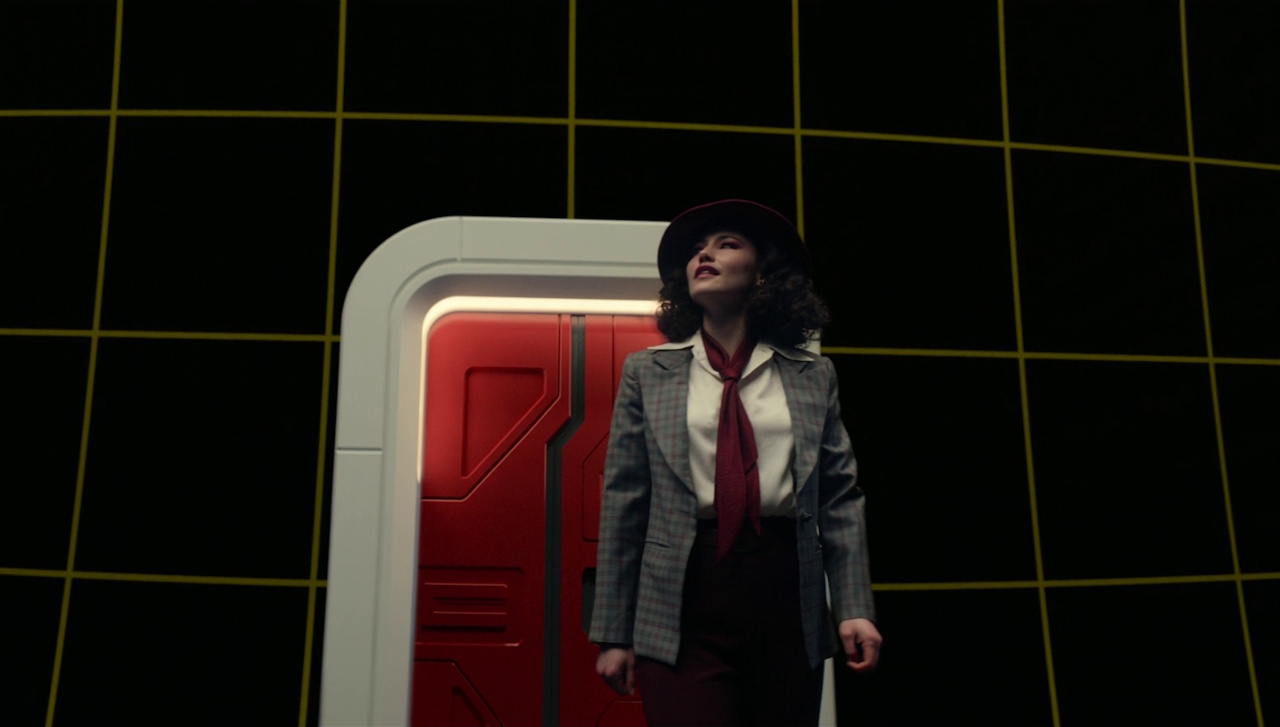
I’m beginning to worry about the Section 31 series…

Spoiler Warning: There are spoilers ahead for Star Trek: Discovery Seasons 1-3 and for other iterations of the Star Trek franchise.

It’s been a while since the still-untitled Star Trek: Discovery spin-off based around Section 31 was announced. In January 2019, prior to Discovery’s second season premiere, ViacomCBS first told us about the spin-off, which would star Michelle Yeoh as Terran Empress Philippa Georgiou and focus on her new career as an agent of shadowy intelligence organisation Section 31. Since then, we haven’t heard much direct news about the planned series, and some of the indirect news we’ve been hearing out of the production side of Star Trek now officially has me worried for the show’s prospects.

It’s not unfair to say that the reaction from Trekkies to the announcement of the Section 31 series was muted at best. There was excitement at the prospect of a new Star Trek series, of course, but with Star Trek: Picard already in production by this point, many fans were less interested in Georgiou and Section 31. There are a couple of reasons why I think this was the case, and before we go any further it’s not a bad idea to look at them in turn.

Michelle Yeoh as Georgiou.

Firstly, Mirror Georgiou herself. Michelle Yeoh is an amazing actress, and in many ways Discovery had been lucky in its first season to land someone of her calibre. If you haven’t seen the sci fi-horror film Sunshine, in which Yeoh plays a supporting role, I highly recommend it, and that’s just one example. But the character she plays in Discovery is a Terran, and when the show was first announced it was before any character movement or development that would come later in Discovery’s run. Mirror Georgiou was about as flat and one-dimensional as Terrans get.

Unlike a number of other Star Trek actors and actresses we could mention, Michelle Yeoh’s performance as Georgiou managed to avoid the pitfalls that Mirror Universe characters can easily fall into – namely hammy, over-the-top, pantomime villain performances. While that is a positive, and a further reflection on Yeoh’s hard work and talent, the character of Mirror Georgiou doesn’t offer much room for manoeuvre, or at least didn’t at the end of Discovery’s first season. She was a typical Terran: quick to violence, petty and demeaning toward others, and unpleasant. There seemed to be little room for Mirror Georgiou to be even an antihero; basing a series around this character as a protagonist felt like a mark against it rather than a point in its favour.

Georgiou was a very flat character in Discovery Season 1.

Secondly there was Star Trek: Picard’s impending arrival, as already mentioned. Picard had been announced about six months earlier, and many Trekkies were incredibly excited for Star Trek’s return to the 24th Century after such a long time, as well as for the return of Captain Picard himself – and possibly other characters from that era too.

These two factors came together to see the series announced to a lukewarm reception even from Star Trek’s biggest fans and supporters. There was a sense that the show might just be unnecessary with the franchise heading back to the 24th Century and in a different direction, and at best there was mild interest, but no real hype or excitement. Discovery had made some significant investments ahead of Season 2 in anticipation of the Section 31 series, such as constructing a full bridge/operations centre set for the Section 31 starship, and it’s likely – in my opinion as an outsider, at least – that the underwhelming reception to the show’s announcement was disappointing to ViacomCBS and the creative team behind Star Trek.

The announcement of Star Trek: Picard a few months earlier arguably worked against the Section 31 series.

Then along came Captain Pike. With the Section 31 series already on the ropes, Discovery Season 2 reintroduced fans to the classic captain from Star Trek’s first pilot episode… and we absolutely loved it! Anson Mount’s excellent portrayal of Pike led to calls for him to get his own spin-off, and even before the season finale wrapped up, Trekkies were signing petitions and doing everything they could to show ViacomCBS that there was a real appetite for more of Captain Pike.

This appeared to catch the production team rather off-guard, and it was more than a year after Discovery Season 2 was over and done with before Strange New Worlds – the highly-requested Pike spin-off – would be announced.

Coming on top of an underwhelming announcement, which was probably done in the run-up to Season 2 to drum up interest and convince more folks to subscribe to CBS All Access, Captain Pike totally stole the Section 31 show’s thunder and pulled the rug out from under whatever plans had been put into place for the new series. If there was room for one Star Trek: Discovery spin-off in ViacomCBS’ plans, it was clear which one fans were clamouring for – and which one they were not.

Anson Mount’s outstanding performance in Discovery Season 2 quite rightly led to calls for a Captain Pike series.

So the combination of a disappointing announcement and the overwhelming popularity of Captain Pike evidently saw the Section 31 series drop down the priority list. Discovery Season 3 was announced and went into production. Picard Season 1 came and went, and a second season was announced. Lower Decks Season 1 was broadcast and Season 2 entered production. Strange New Worlds was announced and entered production. Prodigy was announced and entered production. Even Discovery Season 4 entered production, and we heard nothing in all that time about Section 31.

I assumed that, with so many other Star Trek shows on the books, ViacomCBS had simply taken the sensible route by prioritising Strange New Worlds Season 1, since that’s the show fans were really excited about. The Section 31 series would surely follow, right? After all, we knew as far back as 2019 that the show was in pre-production with its stories written and potentially one full set already built.

Georgiou holding a black Section 31 combadge in Discovery Season 2.

ViacomCBS’ radio silence on the Section 31 series became apparent over the course of 2020, when several big Star Trek events came and went without any mention of the show at all. I began to wonder at that point what was happening behind the scenes, but then we learned that the series was “still being worked on,” with producers and writers collaborating via Zoom due to the pandemic, and that at least some of the scripts were being heavily edited or re-written. That did not sound like good news for a show that had been supposedly ready to go for more than a year.

The next time we heard anything connected to the Section 31 show it came from Alex Kurtzman, who’s in charge of the overall direction of Star Trek at ViacomCBS. Gone was the notion that the Section 31 series was imminent, and instead Kurtzman explained that there were no plans to produce or broadcast any new Star Trek series until at least one of the current ones – Discovery, Picard, Strange New Worlds, Lower Decks, and Prodigy – had concluded. That seemed to mean that Section 31 was officially on the back burner.

Georgiou in Discovery Season 3, after a return to the Mirror Universe.

It got even worse, however, for the Section 31 series, when talk of pre-production was nixed. The show’s co-executive producers recently said that they’re still “having conversations” about the series going ahead, which is a big step down from where the show seemed to be in 2019. Those so-called “conversations” feel like a Hollywood euphemism for a show that’s dying or on life-support, and as we’ve recently seen with at least two Star Trek feature film concepts, until a project is officially greenlit and in production, things can change.

Finally we come to the comment that prompted this article. Michelle Yeoh, who plays Mirror Georgiou and who was supposed to star in the Section 31 series, was recently interviewed on The Pod Directive, which is Star Trek’s official podcast. She made absolutely no mention of the Section 31 series or any plans for appearing in it, and could only speak in pretty vague terms about how there’s potential to come back to the franchise “one day,” and even saying at one point “Who knows?” when discussing Georgiou’s future.

Michelle Yeoh recently spoke on the official Star Trek podcast, but made no mention of the Section 31 series.

Those comments are ambiguous and I encourage you to listen to the full interview for the sake of context. But what was striking to me more than what Yeoh said is what she and the podcast hosts didn’t say. Remember that this is an official Star Trek podcast, so there will be a degree of “toeing the party line,” so to speak. I think it’s not unfair to say that if Yeoh had been interviewed by Trekkies outside of an official setting, the Section 31 series would have come up, especially in the context of discussions about Georgiou’s future. The fact that neither she nor the podcast hosts tried to steer the conversation in that direction is, in my opinion, rather telling.

And that’s why I’m officially worried about the Section 31 show’s future prospects. Will it ever see the light of day? Or will we remember it in years to come alongside Planet of the Titans, Phase II, and that weird Lwaxana Troi sitcom as a Star Trek show that was never produced?

I was initially not sold on Section 31 as a concept, and I’m happy to admit to that. But I’ve since come around to the idea, especially following Georgiou’s arc across the third season of Discovery, and I think she would make for an interesting and more nuanced character to follow now than she would’ve done prior to Season 2 when the show was announced. There’s potential in a darker Star Trek series, something akin to some of the episodes in the latter part of Deep Space Nine’s run, showing off some really difficult situations where there is no such thing as a “no-win scenario.” Bringing a character like Georgiou into a setting that allows for morally ambiguous choices could be an interesting and explosive mix.

Will this be the last we ever see of Georgiou?

It would be a real shame if the Section 31 series were cancelled at this stage. There’s a lot of potential in the series, even if it didn’t seem to have much at first. If Georgiou were to return to the 23rd Century, as seems likely following her departure from the 32nd, there would even be the possibility of linking up with Strange New Worlds for crossover stories, like we saw The Next Generation and Deep Space Nine do on a handful of occasions.

Michelle Yeoh’s recent comments – and lack of comments – about Mirror Georgiou and her future in the Star Trek franchise are the latest that have worried me, but the Section 31 series has felt like it’s been on shaky ground for a while now. The fact that no new information has been officially announced about the series in such a long time is concerning for its survival, as are other comments from people involved with its production. I will continue to keep my fingers crossed, and if we get any significant news about the Section 31 series – or any other Star Trek project – I hope you’ll join me again for more discussion.

The Star Trek franchise – including the untitled Section 31 series, Discovery, and all other properties mentioned above – is the copyright of ViacomCBS. This article contains the thoughts and opinions of one person only and is not intended to cause any offence.
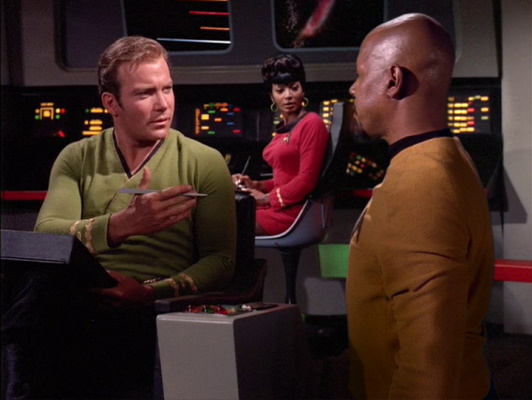
The Section 31 series – when is it set?

Spoiler Warning: There are spoilers ahead for Star Trek: Discovery Seasons 1-3, Star Trek: Picard Season 1, and for other iterations of the franchise.

At the end of Star Trek: Discovery Season 2, Mirror Georgiou surprised me – and a lot of other viewers as well – by remaining aboard the USS Discovery as it headed into the future. Michelle Yeoh, who plays the character, had been announced as the lead in a new spin-off series based on the shadowy organisation Section 31 in the run-up to Season 2’s broadcast, and it was assumed that the new series would take place in the 23rd Century. Georgiou’s departure into the future seemed to complicate that!

Part of that story has since been resolved, and we now know that Georgiou will not be remaining in the 32nd Century with Burnham and the rest of Discovery’s crew. The Guardian of Forever sent Georgiou to an unknown destination in the episode Terra Firma, Part 2. Georgiou’s destination was left ambiguous, deliberately so. And in my Discovery Season 3 theories post after Terra Firma, Part 2 was broadcast I speculated about a few possible time periods that she could find herself in on the other side of the Guardian’s portal. This time I’m going to expand on that a little, looking at the possibilities of different time periods, as well as the possible pros and cons of each from both an in-universe and production perspective.

Mirror Georgiou – played by Michelle Yeoh – is set to headline the upcoming Section 31 series.

Before we get into the different time periods, it’s worth considering the Section 31 show’s status. Despite being announced in early 2019, before Discovery Season 2 was broadcast, the show has yet to enter production. Comments from Alex Kurtzman and particularly the two lead writers/producers (Bo Yeon Kim and Erika Lippoldt) seem to suggest that the show’s fate is not certain, and recent news about Star Trek projects through at least the first half of 2022 explicitly excluded the Section 31 series. It seems as though it won’t be entering production any time soon, perhaps not until Discovery, Picard, or Strange New Worlds have concluded their runs.

I must admit that this news doesn’t leave me feeling great. The Section 31 series already took a back seat to Strange New Worlds – fans were clamouring for more of Anson Mount and Ethan Peck as Pike and Spock after Discovery Season 2, and that definitely stole the Section 31 show’s thunder. Fans just weren’t as excited about Mirror Georgiou and Section 31 as they were for Pike, and as a result we’ve seen Strange New Worlds greenlit and enter production before Section 31, even though it was announced later.

Strange New Worlds is already in production, despite being announced after the Section 31 show.

I was one of the fans who wasn’t particularly excited for Section 31 during Discovery Season 2. But I have since come around to the idea of this show, and I feel that – if properly executed – it could be a truly interesting and different part of a growing Star Trek franchise. A James Bond-esque spy thriller, which is what the series seems to want to be, holds a lot of appeal, and may even succeed at bringing in new viewers beyond Star Trek’s usual crowd. That’s all to the good!

So despite my initial reaction, I’m now firmly in the camp that’s looking forward to Section 31 – and I hope it does manage to enter production before too long! With that out of the way, let’s start to consider just when in the Star Trek timeline the series could be taking place. My usual caveat applies: I have no “insider information.” This is guesswork from a fan, and a chance to spend a bit more time with Star Trek. Nothing more.

A black Section 31 combadge, as seen in Discovery Season 2.

To briefly recap, Discovery Season 3 took the crew – including Mirror Georgiou – to the 32nd Century. For technobabble reasons, crossing over from a parallel universe and travelling forward in time caused Georgiou to become terminally ill, suffering as a result of her molecules being pulled in two directions. In order to save her life, Burnham and the AI aboard Discovery took Georgiou to an isolated planet in the Gamma Quadrant, which was later revealed to be the new home of the Guardian of Forever. After putting Georgiou through a test in which she appeared to revisit the Mirror Universe, the Guardian allowed her to use the portal to travel backwards through time.

The one thing we need to pay closest attention to is what the Guardian said of Georgiou’s destination. He didn’t specify in any real way where or when he was sending her, instead opting to ambiguously tell her that he was sending her “to a time when the Mirror Universe and the Prime Universe were still aligned.” That does not necessarily mean the 23rd Century, and it’s largely because of this line that we can theorise about Georgiou’s destination!

Without further ado, let’s look at my list of possible destinations for Georgiou, and thus the possible settings for the Section 31 series.

Number 1: The 23rd Century

Despite everything else I’m going to say on this list, the 23rd Century has to be the most likely destination for Georgiou. From the production side of things, this is what we were told when the show was announced, and it would allow for possible crossovers with Strange New Worlds and any future series or films set in this time period. And from an in-universe point of view, the only way to cure Georgiou’s technobabble illness was either to return her to her own time period – the 23rd Century – or to the Mirror Universe. None of the other time periods on this list would, as far as we know, cure her condition.

However, the Guardian of Forever’s statement, quoted above, seems to rule out the 23rd Century. As we’ve seen in both The Original Series and Discovery, by the 23rd Century the two universes were very much not in alignment. The Federation and the Terran Empire are about as far apart as it’s possible to be, and Discovery even implied that there are genetic differences between Terrans and humans.

Kovich, the Federation official who conducted Georgiou’s debriefing in the 32nd Century.

Returning to the 23rd Century could see Georgiou reunite with Ash Tyler, the head of Section 31 as of the end of Discovery Season 2. Tyler could have an interesting role to play in the new series, and the clash of personalities between him and Georgiou – as well as a potential for them to bond over their mutual love for Burnham – could see some truly interesting and perhaps even emotional character moments.

If Georgiou does arrive in the 23rd Century, one of the big storylines would surely be the disappearance of Section 31, explaining how it went from being an open secret in Discovery’s era to something entirely underground by the time of Deep Space Nine 120 years later. Ash Tyler may have started that process – and it could even be something we see hinted at in Strange New Worlds if he makes an appearance there – but Georgiou could be the driving force behind cloaking Section 31 in secrecy – and may even kill off Starfleet officers who are aware of the organisation’s existence.

Section 31 was hidden and its existence unknown to most Starfleet officers by the mid-24th Century.

The Guardian of Forever’s line may count against it, but I believe that the 23rd Century remains Georgiou’s most likely destination. She may arrive within days, or even hours, of her departure, or she may not arrive until several years later. The latter may be more likely, but either way the potential for crossovers with Strange New Worlds exists and is enticing.

In addition to seeing the organisation disappear and move into the shadows, Section 31 stories set in the 23rd Century could bring back races and factions we got to know in Discovery and The Original Series. We could explore in more detail the relationship between the Federation and the Romulans in this era, for example, which would tie in with Star Trek: Picard‘s Romulan focus. Or we could see how Section 31 reacted to Pike and Kirk’s missions of exploration.

Number 2: The Mirror Universe

As noted above, there are two known ways to cure Georgiou’s technobabble illness: return her to her own time period, or return her to her native universe. Perhaps the Guardian of Forever was so impressed by Georgiou’s attempts to reform the Terran Empire (depicted in Terra Firma, Part 1 and Terra Firma, Part 2) that he chose to send her back there to continue that work – even though he said he wouldn’t!

This raises its own question of when Georgiou will arrive – will it be in the Mirror Universe’s 23rd Century, or will she arrive at some other time? If the Section 31 show goes down the Mirror Universe route it would already be a pretty significant curveball, so I would assume she would return to the 23rd Century rather than complicating matters further by having her arrive in a different time period.

Georgiou with her honour guard in Terra Firma, Part 1.

So let’s assume this theory is right and Georgiou arrives back “home” in the Mirror Universe. What would that mean for the show – it’s supposed to be based on Section 31, not the Mirror Universe! There could be a Mirror version of Section 31, perhaps one which acts in a different way to the Section 31 of the Prime Timeline. Georgiou may even establish such an organisation to further her attempts at reforming the Terran Empire.

In the timeline of the Mirror Universe shown in Deep Space Nine, reforms put in place by Spock led to the collapse of the Terran Empire, and the Mirror Universe by the 24th Century came to be dominated by a Klingon-Cardassian alliance. Perhaps the tragedy of the Section 31 series will be that the reforms Georgiou tries to put into place will ultimately lead to Terrans being enslaved and subjugated.

Terrans like Mirror O’Brien were conquered and enslaved by the 24th Century.

I’m not sure that this would be the best way to go, even though on the surface it appears to be something different. The Mirror Universe, as I’ve said on more than one occasion, can be okay to visit for one-off stories, but the over-the-top violent nature of the setting tends to mean Mirror Universe characters are boring and pretty one-dimensional, all enjoying gratuitous violence for its own sake. The Mirror Universe also descends far too easily into pantomime, with hammy, over-the-top performances even from otherwise good actors.

The role of Section 31 in the Mirror Universe is not clear either, and it doesn’t seem like something the Terran Empire would necessarily need. If they’re already successful as a dominant, authoritarian state with a huge military, an organisation like Section 31 just seems like overkill! Not to mention that, thanks to Terran morality, there’d be no reason for such an organisation to be clandestine. It could be out in the open, just another branch of the Terran military. In short, while a Mirror Universe series may seem interesting to some fans, I don’t think this would be the right way to do it. It would be too much of a twist on the series we’re expecting to see, and it would be limited in its scope.

Number 3: The 25th Century

Specifically I’m thinking that Georgiou could arrive at the very beginning of the 25th Century. Why? Well, basically the entire reason for this hangs on the production side of things! The dawn of the 25th Century is when Star Trek: Picard is set. Having Georgiou arrive at this time would potentially allow for the Section 31 show to cross over with Picard. Even if that didn’t happen, it would expand the 25th Century setting, perhaps laying the groundwork for more shows and films in this era.

Out of all of the possible destinations for Georgiou, this one has the least going for it from an in-universe point of view. There’s nothing we know of to suggest that the Mirror and Prime Universes are in some kind of alignment by this time, nor would sending her here cure her technobabble condition. In fact, if she did arrive here she should arguably still be suffering from it. It would be a contrivance, one set up specifically to allow Georgiou to cross over and appear in Picard – or other future Star Trek projects which also occupy this place in the timeline.

Picard and the crew of La Sirena.

I mentioned Deep Space Nine’s Mirror Universe episodes above, and in theory we could see a connection to those episodes if the dawn of the 25th Century is when the Section 31 show is set. If the Terran Rebellion depicted in Deep Space Nine was a success, the Terrans we met in that show seemed far less aggressive and domineering than their 23rd Century counterparts. Perhaps we could learn that they didn’t simply re-establish the Terran Empire and created a more enlightened democratic society in its place.

However, there are two issues with this. The first is that in Discovery Season 3, Kovich at least implied that some form of Terran Empire or Terran-centric society existed after the 24th Century. Kovich appeared to be an expert on Terrans, and while he did say that the Terran Empire had collapsed “centuries” before the 32nd Century, he didn’t say exactly how long ago that happened. The second point comes from the production side of things: how many viewers will be familiar with those five episodes of Deep Space Nine? Us Trekkies will be, of course, but most casual viewers of the series won’t remember them, and thus there isn’t any real benefit to tying Georgiou and the Section 31 show to Deep Space Nine in a big way.

Number 4: The 21st Century

Could the Section 31 series be the first ever Star Trek show to be set in the present day?! Well, no. But maybe!

Here’s why I think it could at least be possible that a mid-to-late 21st Century setting is on the cards. The Guardian of Forever’s statement, quoted above, says that Georgiou is being sent to a time when the Mirror and Prime Universes were aligned. In Star Trek’s timeline, the earliest point of divergence that we know of came in the year 2063, during first contact between humans and Vulcans.

In the Prime Timeline, first contact went smoothly and led to an alliance between Earth and Vulcan that eventually evolved into the Federation. In the Mirror Universe, Zefram Cochrane led a mob that massacred the arriving Vulcans. In fairly short order, Terra had conquered Vulcan and the Terran Empire was born. We can’t be certain that this is absolutely the earliest point of divergence, but it’s the earliest we can be sure of.

The Guardian of Forever in the guise of “Carl.”

Using this logic, the 21st Century is the best fit for the Guardian’s statement, as it can be argued that prior to first contact, the Mirror and Prime Universes were in total alignment. Sending Georgiou to the mid-21st Century – perhaps the 2050s or 2060s – would thus cure her of her technobabble illness, which was the whole point of sending her back in time.

While this is certainly a good fit (we can argue about “best fit” till we’re blue in the face!) for the Guardian of Forever’s statement, what would it mean for the Section 31 show? If Georgiou arrived in the 2050s or 2060s, she’d be on Earth either during or shortly after the Third World War. This event has been referenced a few times in Star Trek but never really explored, and we could learn more about the factions involved, as well as more about the impact first contact had on humanity.

Might Georgiou arrive some time before the events of Star Trek: First Contact?

However, for a Star Trek show, I think a 21st Century, pre-first contact setting would be a severe limitation. Instead of Georgiou trekking across the galaxy kicking butt, she’d be limited to Earth and the solar system, with adversaries being humans and perhaps the occasional Vulcan. That limitation would be difficult, and as we’ve never seen a Star Trek show set so early in the timeline, there would be unique challenges to overcome.

However, on the flip side it could be interesting to learn that Georgiou – the former Terran Empress – was instrumental in the creation of the Federation. By laying the groundwork for Section 31, perhaps even creating the organisation itself, Georgiou could keep humanity safe in its crucial early days as a spacefaring people. Georgiou could be seen not just as the leader of Section 31, but as its first ever leader, laying down the ground rules for how Section 31 will operate, and its objective of defending the Federation at all costs.

Number 5: The 27th Century

In the Discovery Season 3 episode Die Trying, Kovich gave us a bit more information about the Mirror Universe. Specifically, he explained that the “distance” between the two parallel realities had been slowly growing, meaning that by the 32nd Century it was no longer possible to cross between them as it had once been. The last crossover before the 32nd Century came “five hundred years” earlier – which would put it sometime in the 27th Century.

Does this mean that it fits with the Guardian of Forever’s statement about the two universes being “aligned?” I don’t think so, and it’s a stretch to make that argument. However, as the 27th Century was (indirectly) referenced only a few episodes before Georgiou’s departure, I think we have to consider it as a possibility for her ultimate destination. If it wasn’t in play at all, why bring it up? Maybe it’s just a red herring; a throwaway line I’m too focused on! But maybe there’s more to it than that.

Burnham and Georgiou chat with the Guardian of Forever.

What do we know about the 27th Century? The answer is “very little.” It was referenced in The Next Generation Season 3 episode Captain’s Holiday, when a powerful weapon created in this period was sent back in time. Time travel had been definitively invented by this time, and the Federation used it in some capacity. Otherwise, all we can be sure of is that the Federation existed in this era.

Having an almost-blank slate like this is what a lot of creators and producers want! So in that sense, it would be a great setting for a new Star Trek series, just as the 32nd Century was for Discovery Season 3. However, unless there’s a bigger plan to bring more Star Trek projects to this time period, it would isolate the Section 31 show, separating it by hundreds of years in both directions from everything else in the franchise. I’m not sure that would be a positive thing.

So that’s it. We’ve looked at five possibilities for the Section 31 show’s setting, largely based on a single ambiguous line from Terra Firma, Part 2!

At this stage, if I had to place a bet with my own money I’d have to say that the 23rd Century is most likely to be the right choice. The others all have drawbacks, and while all five have the potential to tell different and interesting stories, the plan all along seems to have been for the Section 31 series to use a 23rd Century setting. The reason for all of this speculation, of course, is that we didn’t see for ourselves where – or when – Georgiou ended up after she stepped through the Guardian of Forever’s portal!

This is the last we saw of Georgiou. Her destination? Unknown.

I’m still hopeful that the positive reception received by Star Trek: Picard will lead to more projects occupying its 25th Century setting in future, and if that’s the case then bringing the Section 31 series to that time period would make a lot of sense. As I’ve said on a number of occasions, when Star Trek was at the pinnacle of its success in the 1990s, the shows and films being produced all shared the same setting and time period, something which modern Star Trek has opted to disregard. From the point of view of casual fans and viewers, this unquestionably makes the Star Trek franchise harder to follow, so consolidating as many projects as possible into a single time period makes a lot of sense.

However, if Strange New Worlds proves to be the success that ViacomCBS – and many fans – are hoping for, returning to the 23rd Century with the Section 31 series would still accomplish that goal. There could be crossover episodes between the two series, and future projects – like the potential Ceti Alpha V miniseries – could also be incorporated into a broad, interconnected set of shows.

Georgiou just before leaving the 32nd Century.

I remain hopeful that the Section 31 series will make it. Though it seems as if production may be months or even years away right now, the show remains in contention over at ViacomCBS, and would certainly take Star Trek to different thematic places. As I said when I wrote up a wishlist of things I’d like to see included, a spy thriller has the potential to tell some fascinating stories, and perhaps some that are morally ambiguous. I see the future cast of Section 31 – including Georgiou – as antiheroes; a team kind of like the DC Comics villains in the film Suicide Squad, doing bad things to bad people in the name of keeping others safe.

I hope you’ll stay tuned for any and all future Section 31 news! If we hear any major announcements, casting information, or see a trailer, I’ll do my best to cover it here on the website. There’s a huge amount of Star Trek on the horizon, and Section 31 could be a significant part of that. Time will tell what will ultimately happen, but I’ll be keeping my fingers crossed!

Stay up to date with my Section 31 articles on my dedicated Section 31 page. The untitled Section 31 series currently has no broadcast date scheduled. However, it will almost certainly premiere on Paramount+ in the United States, Australia, and other countries and territories where the service is available. Further international distribution has not been announced. The Star Trek franchise – including the Section 31 series, Discovery, and all other titles mentioned above – is the copyright of ViacomCBS. Some stock photos courtesy of pixabay. This article contains the thoughts and opinions of one person only and is not intended to cause any offence.

Star Trek: Discovery review – Season 3, Episode 10: Terra Firma, Part II

Spoiler Warning: There are spoilers ahead for Star Trek: Discovery Seasons 1-3, Star Trek: Picard, and for other iterations of the Star Trek franchise.

Terra Firma, Part I told one of the most interesting Mirror Universe stories I’d seen in a long time. Though the setting can feel one-dimensional, with acting performances that cross over into hammy pantomime, the first half of this story focused on Georgiou. It showed how she’d changed, how there was nuance and different factors to her character that had never really come to the fore. Though there were still many of the familiar Mirror Universe tropes – including some pretty dire acting performances – it was a solid setup to an interesting story. I was hopeful for more of the same this week.

Sometimes two-part episodes are best watched back-to-back. The Best of Both Worlds is a prime example, as is Voyager’s Equinox. I was genuinely annoyed when Equinox ended on a cliffhanger when it was first broadcast! But we’re off-topic. There was no way I was waiting a whole week to watch Terra Firma, Part I! But I did re-watch it before sitting down to Terra Firma, Part II – and I stand by what I said last time: it’s a great episode.

Mirror Burnham and Georgiou in Terra Firma, Part II.

When taking the two parts of Terra Firma together, I’m in two minds. On the one hand, the scenes in the Mirror Universe could have been a single episode of their own, capped off with Georgiou’s departure. But on the other hand, given the passage of time Georgiou experienced after crossing through the doorway, we could have had three episodes or even more expanding on her story and showing even more of how she’s changed since crossing into the Prime universe.

The passage of time was not especially well-conveyed in Terra Firma, Part II. Because the entire Mirror Universe section of the story was shown as one long unbroken sequence, with no scenes set aboard Discovery or back on Dannus V, it felt as though everything Georgiou was experiencing was happening in close to real-time; a decision compounded by having her remain aboard Mirror Tilly’s ISS Discovery instead of going to the ISS Charon or really anywhere else. When it was noted that time had passed, the dialogue choices felt like bare exposition, dumped into the episode solely to tell us time had passed. Because of this, there’s at least part of me that feels Georgiou’s time in the Mirror Universe was rushed.

Mirror Saru had a single line referring to the passage of time, but this was little more than exposition.

That’s not to say we needed to spend much more time in the Mirror Universe, but rather the way these sequences were conveyed, both this week and last week, needed to be structured better to show us how long she had been there. The Mirror Universe, as I said last week, is not my favourite Star Trek setting. For a one-off visit it’s okay, but spend too long there or with Terran characters and its limitations become apparent. We came close to – but didn’t quite hit – the limit of what the Mirror Universe is capable of over this two-part story.

Aside from Georgiou, who continued her theme from last week of having significantly changed as a character, everyone else in the Mirror Universe felt flat. Sonequa Martin-Green was clearly having a whale of a time as Mirror Burnham, but her performance was atrocious. The character is little more than a caricature; a pantomime villain. We spent a lot of time with her over these two episodes – because Discovery can’t ditch Burnham for more than a few minutes! – and unfortunately the character and the performance grated on me practically the whole time.

Mirror Burnham was little more than a pantomime villain, both in terms of scripting and performance.

Mirror Saru and Mirror Tilly got a little more screen time this week, and both had some points of interest. Tilly appeared torn between loyalty to the Emperor and her belief in the Terran way of doing things, questioning Georgiou’s decisions on several occasions. Saru was more nuanced, and apparently whatever differences exist between the Mirror and Prime Universes do not extend to Kelpiens, because aside from being more subservient – the result of a life of slavery, no doubt – he was more or less his Season 1, pre-vahar’ai self.

There’s no easy way to say this, but the Mirror Universe’s tight-fitting black-and-gold uniforms were not flattering; several characters looked out-of-shape in their Mirror Universe costumes, and it’s a shame. I’m not picking on someone for their weight or body type; I’m not exactly slim myself so that would be completely hypocritical. But as a point of costuming I think some of the Terran uniforms have to go down as a miss.

Mirror Tilly during one of the fight sequences.

As mentioned, the bulk of Terra Firma, Part II continued Georgiou’s story from last week. She remained in the Mirror Universe and made some genuine attempts to reform the Terran Empire. This was kind of the core of the Mirror Universe storyline – along with her interactions with Mirror Saru and Mirror Burnham – but I feel we needed more screen time to see her efforts unfold. As with the passage of time, it seems many of Georgiou’s moves to reform the Terran Empire took place off-screen. We were treated to some interesting character moments, but missed the crux of the story that the characters were involved in.

For example, at one point Georgiou is made aware of an impending coalition of several races under Imperial jurisdiction. Burnham wants her to attack and destroy them militarily, but Georgiou found a peaceful solution instead. None of that was shown on screen, however, and aside from a couple of lines referencing what she’d supposedly done, there was nothing to that storyline. It could have been cut entirely, and the story refocused onto Georgiou and the coup being planned by Lorca. Though Carl did reference Georgiou’s actions later in the story, this element didn’t feel well-developed in the moment; almost a “blink and you’ll miss it” affair.

Many of Georgiou’s potentially interesting accomplishments happened off screen.

You know I like to nitpick, so let’s do that. In Discovery Season 1, Georgiou’s base of operations was the ISS Charon. That was her “palace,” as Burnham referred to it. Yet in this two-part story, Georgiou remains aboard the ISS Discovery despite the Charon supposedly being made ready for her. Obviously the team behind Discovery wanted to re-use existing sets instead of rebuilding the Charon’s interior, and that’s understandable. But if that’s the case, why bother referencing the Charon at all last week? Why not simply say that Georgiou arrived weeks or months before her new flagship was commissioned? Given that both parts of Terra Firma clash with the events depicted in Season 1’s Mirror Universe story arc, that wouldn’t have been any more of a consistency issue than the one which already exists.

I’ve re-watched Terra Firma, Part II, but I’m still not clear about what happened to Georgiou. She experienced three months’ worth of the passage of time, and Carl seemed to suggest that she was indeed in a parallel universe. But whether it was the same one she originated from is not clear. Logically you’d think it would be, but there are two points that run counter. Firstly, Georgiou’s technobabble ailment could be cured in two ways, according to Kovich and Carl – returning to her own universe or to her own time period. And secondly, some of the events depicted in both parts of Terra Firma clash with the events of Season 1.

Georgiou learns that she really did spend three months in a different universe.

This poses two problems. Firstly, if Georgiou was genuinely re-living her time in the Mirror Universe, we’ve created major inconsistencies within Discovery’s own internal timeline. And secondly, even if we can ignore or excuse things like Stamets’ death and Burnham’s supposed execution, if Georgiou was genuinely sent back to the Mirror Universe, she made major changes to that timeline, including getting herself killed. How would that impact the way Season 1 would have unfolded?

This is why time travel is so difficult to get right, not only in Star Trek but in fiction in general. It’s too easy to stray off the beaten path and end up creating a time-loop or a paradox; in this case, Georgiou and Burnham’s deaths occurring before the arrival of the Prime version of Discovery under Lorca’s command.

The aftermath of Georgiou’s climactic fight against Mirror Burnham.

Speaking of Lorca, I deliberately kept him out of my theories this week because I didn’t expect to see him return. However, for a two-part episode that didn’t include the man himself, his name was brought up a lot. A reference or two to his coup would have sufficed, yet the storyline of both parts of Terra Firma was largely structured around this character. For Lorca to then be wholly absent was odd, and the lack of a resolution to his coup leaves at least part of the story feeling unfinished.

Because, as mentioned, the storyline of Georgiou’s Mirror Universe experience diverges wildly from what we saw in Discovery Season 1, we can’t assume that Lorca’s absence is because he’s in the Prime universe or that he’ll arrive shortly after her death. It’s just a void in Terra Firma’s story; an entirely unseen antagonist for Georgiou.

Despite being continually talked about, Mirror Lorca was absent from the story.

After spending some time trying to push for reforms to the Terran Empire – and having seemingly accepted her return to her own time and place – Georgiou tries to work on Mirror Burnham, torturing her and trying to bring her to heel. It seemed obvious that a betrayal was coming; both versions of Burnham are stubborn and single-minded, and despite the torture of the agoniser booth, when she pledged herself to Georgiou something definitely seemed amiss – and so it proved.

I did like Burnham’s betrayal of Detmer. Having “killed” several other leaders of the coup, Mirror Detmer was one of the few remaining. We got a flash of the old Georgiou as she ordered her protégée to kill her with only a single word. One character that I thought the episode was setting up for a bigger role was Mirror Owosekun. At several points in both halves of the story she seemed concerned about Georgiou’s newfound softness, and as the camera lingered on her as the head of the honour guard it seemed like she might join with Burnham or even land a blow on Georgiou herself. It was a bit of an anticlimax when that didn’t happen.

Mirror Burnham betrayed her comrade Detmer.

The climactic moment between Mirror Burnham and Georgiou ends with them stabbing one another after a fight. Unfortunately this moment, which was the finale of the Mirror Universe part of the story, was let down by some poor CGI work. Georgiou’s sword as she stabbed Burnham looked just awful, and in addition appeared to wobble unnaturally as it was stuck in her abdomen. The sword had no weight to it; it looked like a hollow CGI shell as it was supposedly being plunged into Mirror Burnham, and for such an important moment, more care needed to be taken.

Discovery’s CGI work has been generally of very high quality, and I don’t like to bash the animators and artists, especially given the difficulties they had working on Season 3 during the pandemic. But this moment was one of the most important in the episode, and when all of our focus was drawn to the sword, it needed to look better. As it is it looks like a video game item that clips through Burnham’s body rather than any kind of solid, substantial weapon causing her an injury. Despite this CGI effect taking up no more than two or three seconds of screen time, it was distracting and didn’t work as intended.

Though it’s difficult to show in a single still frame, the CGI work at this crucial moment was a bit of a let-down.

So the culmination of Georgiou’s return to the Mirror Universe was one of failure, at least in terms of her ambitions. But what it showed to us – and to her – is how much she has changed, even if the Mirror Universe hasn’t or can’t. The time she’d spent away from the Terran Empire had shifted her perspective, softened her, and changed the way she wanted to govern. All of that is incredibly positive and makes her a far more nuanced and interesting character.

I just wish we’d seen even the tiniest hint at this change before Terra Firma, Part I. In every appearance since leaving the Mirror Universe toward the end of Season 1, Georgiou has been a flat, one-dimensional character with little going on besides a devious nature and inclination toward violence. The only time I can recall her being anything other than that Terran stereotype was in Season 2’s worst episode: The Red Angel. And then her actions, particularly towards Burnham, just seemed out-of-character. So while I love that this storyline showed Georgiou how much she’s changed as a result of her time with Starfleet and the Federation, and that it ties into the theme of the season of showing how much good the Federation can do, it feels like it comes from nowhere, and her transformation from the woman who stomped Leland’s corpse to a bloody pulp a few episodes ago to a character Mirror Saru says can’t possibly be Terran is extreme and seems to happen quickly.

Georgiou with her honour guard.

Had we seen, over Georgiou’s recent appearances, a growing tolerance and appreciation for Saru, even a line or two of dialogue or a wordless expression of gratitude or concern, we could say that there had been evidence of this transformation building across the season. But there wasn’t. And that’s a double-edged sword, because while it makes the two parts of Terra Firma absolutely fascinating and shows Georgiou at her best, it doesn’t feel particularly well set-up, and when you’re going to make such a major change to an established character, some kind of prior setup is essential.

In Season 2, Saru fell victim to basically the same thing. This is speculation on my part, but I feel that vahar’ai – the process by which Kelpiens lose their threat-sensing, fearful nature and become bolder and braver – was a response to criticism of Saru’s cowardly nature in Season 1, and an attempt by the writers and producers to get rid of that element of criticism in the most extreme way possible. I’d also make that same argument, by the way, for Discovery’s departure from the 23rd Century, but that’s a topic for another time! Whatever the reason was, Saru’s transformation from cowardice to bravery was extreme and out of the blue in Season 2 – and I’d argue that Georgiou’s transformation here is similar.

Georgiou tried to reform Burnham and the Terran Empire, but failed.

Despite that, however, I liked the change in Georgiou that we saw over this two-part story. Now that we have seen what appears to be her final end as a Discovery character, setting up perhaps the beginning of the upcoming Section 31 series, she’s a far more interesting and complex protagonist for that show. Given that the premiere of the Section 31 show could very well be Georgiou’s next appearance within Star Trek, Terra Firma sent her out on a high.

It also left the Section 31 series with many different options – including where in the timeline it could be taking place. We’ll come to that in my theory post in the next few days, but suffice to say that Carl left Georgiou’s destination ambiguous.

The mysterious Carl.

So we come to Carl! I guessed in my last theory post that Carl could be the Guardian of Forever, and so it proved in Terra Firma, Part II. That revelation was spectacular, and connected Discovery and The Original Series once again. I had a huge smile on my face when Carl revealed his true identity – not just because I’d theorised who he could be ahead of time! Carl and the mysterious door – which was revealed to be the familiar portal – were presented in Terra Firma, Part I as the kind of weird, Roddenberry-esque sci-fi creation that we could’ve seen Kirk and his crew encounter in The Original Series. It turns out that was literally true!

Discovery has paid homage to The Original Series more than any other Star Trek show, and while Season 3 has allowed for more references to The Next Generation and subsequent Star Trek productions, I’m glad that we still got this big tie-in with The Original Series. Carl could have, for example, turned out to be a Q, and that would have changed very little in Georgiou’s story. But the Guardian of Forever is such an iconic part of the Star Trek franchise, with The City on the Edge of Forever often called The Original Series’ finest episode, so this particular tie-in just seems to work beautifully.

The Guardian of Forever’s portal.

It also manages to tie up one possible loophole in the whole “time travel has been outlawed” storyline, as the Guardian of Forever moved to a different location to avoid the portal being used in the Temporal Wars. Though there are still problems with the idea of an outright ban on time travel which every faction from the Borg to the Dominion are supposedly following, the decision to have the Guardian of Forever essentially be in hiding means that at least one of those has been resolved!

The choice of character actor Paul Guilfoyle for the role of Carl was inspired. Though he didn’t spend a lot of time on screen in either half of the story, the moments we got with him were outstanding. His performance as Carl embodied the “weirder” side of Star Trek that was present much more prominently in the Roddenberry era but has fallen out of favour. Even in a season which has primarily dealt with things like the Burn and the collapse of the Federation, I appreciate that the writers took some time to include the Guardian of Forever.

Burnham and Georgiou with Carl – a.k.a. the Guardian of Forever.

I wonder if we’ve seen the last of the Guardian of Forever this season. I’ve talked for weeks about how there have been connections to the Short Treks episode Calypso, and wondered in particular how the USS Discovery could find itself abandoned in a nebula only to be discovered by Craft – who appears to be a human from around this time period. With Georgiou having seemingly departed the series altogether, my theory that she would be the one to take the ship back in time looks dead. But with the rediscovery of the Guardian of Forever, if there was a need for Discovery to travel back in time – and there isn’t right now, but such a need could arise – perhaps this is how it happens.

Carl explained to Georgiou that her time in whatever variant of the Mirror Universe she was sent to was a “test” to see how far she’d come and how much she’d changed. Despite being unsuccessful in her ambitions, the mere act of having the ambition to change the way the Terran Empire was governed demonstrated to Carl that she deserved a second chance. And she got one – being sent through the Guardian of Forever’s portal to an unknown time and place.

Georgiou departs the 32nd Century – and Star Trek: Discovery.

Georgiou’s departure was emotional, and her scene with Burnham as she readied herself to step through the portal genuinely packed a punch. Both actresses put in fantastic performances, and the agony they felt at parting was beautifully expressed on screen. Although Burnham succeeded in her mission to save Georgiou’s life, she still lost her – and that makes for a bittersweet ending to a storyline set up in Die Trying, when Georgiou’s condition first manifested itself. For Burnham, this is the second time she’s lost Georgiou following the death of her Prime counterpart in Battle at the Binary Stars – but this time she got to say goodbye, and could accept the parting.

One thing I’m not clear on is why Discovery set up a little deception regarding Georgiou’s condition. After arriving in the future she was absolutely fine, but only after meeting the mysterious Kovich at Federation HQ did her health worsen. There was thus an implied connection between the two events, one which the writers deliberately set up as a misdirect. I’m fine with stories being unpredictable, and with “obvious” solutions not panning out; those can feel like well-executed twists. But in this case it does feel deceptive to imply a link between Kovich and Georgiou’s condition only for that to have been pure coincidence.

Burnham and Georgiou part ways.

Speaking of Kovich, given that the character seems to be coming back, perhaps even in Season 4 as well, it’s a shame that he and Georgiou won’t get any more opportunities to spend time together. The way Cronenberg and Yeoh talked around one another in Die Trying was riveting to watch, and it’s sad that we won’t get any more of that. Kovich absolutely can contribute to the story in other ways – he’s far from a one-trick pony – but he was certainly at his best when dealing one-on-one with Georgiou.

Finally we come to the remainder of the episode aboard Discovery. Burnham doesn’t explicitly tell Saru what happened to Georgiou – for some reason – but he understands that she survived. However, the two of them don’t explain this to the crew, or at least don’t seem to, and I’m not really clear on why that was. Would it not have been better for the crew to understand that their mission to Dannus V was a success? Admiral Vance made clear to Saru that his crew would “never look at [him] the same way” if he didn’t go above and beyond for her, and while he did take her to Dannus V in search of help, surely the outcome for crew morale would have been better if Burnham and Saru explained what actually happened.

Captain Saru learns Georgiou’s fate… kind of.

The crew hold a wake for Georgiou in which several characters get a turn to speak. Tilly, who hasn’t had very much to do since becoming acting XO, stepped up and delivered a sweet line in honour of her fallen crewmate, as did Saru. Burnham stole the show, of course, with a longer speech about how much Georgiou had meant to her. And again, this was a deeply emotional moment. It was also very well acted by Sonequa Martin-Green – in stark contrast to her hammy, over-the-top performance as Mirror Burnham earlier in the episode.

After last week saw the revelation of a Kelpien vessel in the Verubin Nebula – which is believed to be the Burn’s point of origin – we got a little more information this time. With everything in the Mirror Universe to wrap up, as well as Georgiou’s departure and the fallout from that, I was certain there was no way we’d see Discovery travelling to the Verubin Nebula this week, and so it proved.

Dr Culber leads a toast to Georgiou at her wake.

We did get some minor moves toward that destination, though, as well as further hinting at the Emerald Chain possibly making a move against Discovery rather than against Federation HQ. While attempting to access the sensors of the derelict Kelpien ship, Book installed a piece of Emerald Chain technology – a signal booster – in Discovery’s main engineering. Admiral Vance was especially concerned about that when he found out, and I suspect his concerns will be valid – there could be a way for the Emerald Chain to track Discovery using a “backdoor.”

We did get to see Reno return briefly, and I always enjoy Tig Notaro’s performance. There was a little bit of technobabble about upgrades to the ship from Reno – this could prove important later on, or it could simply be a throwaway line, I can’t tell. Regardless, it was great to see her back. After confirming that they had indeed hacked into the ship, we didn’t actually get to see any of the results of that hack – though I’m sure we will next time. The dynamic between Stamets, Reno, and Adira is interesting, and the addition of Book to that scene in engineering was fun. We haven’t really got to see Book spend much time away from Burnham, so it was nice to see him getting a chance to interact with other characters. As we saw with Narek in Star Trek: Picard, when you only allow a character one or two options for who to spend time with, it can make them less interesting in some respects.

Reno returned briefly, as did Book.

So that was Terra Firma, Part II. There was a lot going on for Georgiou, for the franchise overall, and for Burnham. There was less going on for the other ongoing storylines of the season, but that’s okay. Sometimes it’s nice to step back from the big continuing storylines and have more of a standalone story. Past Star Trek shows were largely episodic, after all!

I enjoyed seeing the transformation in Georgiou’s character, and it’s provided a far better setup to the upcoming Section 31 series than I had expected. I’m now genuinely curious to see where and when Georgiou will end up – and how that will connect to Section 31. I have some ideas about that – as I’m sure a lot of fans do! – so stay tuned for those theories.

Mirror Georgiou in Terra Firma, Part II.

Despite falling victim to some of the same Mirror Universe tropes that have plagued episodes in that setting, the two parts of Terra Firma have to go down as among the best Mirror Universe stories in the whole Star Trek franchise. The contrast of the changed Georgiou with the unchanged setting was genuinely fascinating to see, and her desire to reform it and bring in changes was interesting – and heartbreaking when she couldn’t manage it.

There was a lot to love about Terra Firma, Part II. I was thrilled to see the Guardian of Forever – and hear its original voice which had been lifted from The Original Series. Georgiou’s arc across the two parts – while it could have been built up to more in previous episodes – was emotional and made for some of the best character work of the season so far.

With this semi-standalone story now wrapped up, Discovery should be setting off to the Verubin Nebula to chase down the next lead on the Burn. What will happen when they arrive there? I can hardly wait to find out!

Star Trek: Discovery is available to stream on CBS All Access in the United States, and on Netflix in the United Kingdom and elsewhere. The Star Trek franchise – including Discovery and all other properties mentioned above – is the copyright of ViacomCBS. This article contains the thoughts and opinions of one person only and is not intended to cause any offence.
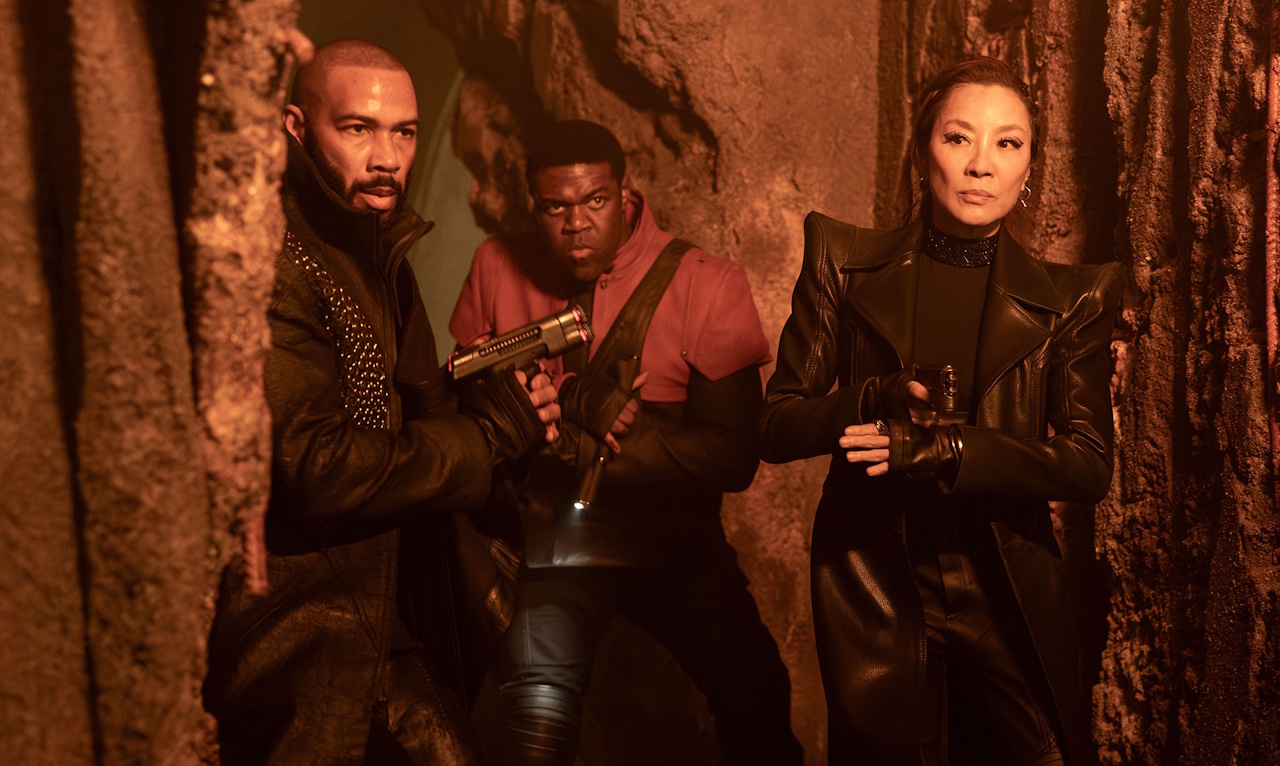
Star Trek: Discovery theories – week 9

Spoiler Warning: There are spoilers ahead for Star Trek: Discovery Seasons 1-3, Star Trek: Picard, and for other iterations of the Star Trek franchise.

Terra Firma, Part I was a fascinating episode. Though there was minimal advancement of the main storyline of the season, there were several new and exciting hints about things to come from which we can construct new theories. Though a couple of theories we had going into the episode now seem unlikely, we’re also not at a point where we can really consider any debunked, and with no confirmations either, this week the theory list will grow longer!

Let’s jump straight into the list, then, beginning with new theories and those which saw movement in Terra Firma, Part I.

Number 1: Dr Issa is a descendant of Saru’s sister Siranna.

A hologram of Dr Issa.

The revelation that a Kelpien ship was responsible for at least part of the Federation distress signal in the Verubin Nebula was interesting, and had a great effect on Captain Saru. It was the first he’d seen of his people since arriving in the 32nd Century. When Dr Issa – the Kelpien scientist who sent the distress signal – first appeared, I genuinely thought we were seeing Siranna, Saru’s sister who was introduced in the Short Treks episode The Brightest Star and who reappeared in Season 2 of Discovery last year.

The reason for this is that Siranna and Dr Issa are both portrayed by the same actress (Hannah Spear) and thus look very similar. It remains a (remote) possibility that the two characters could be one and the same – either through time-travel shenanigans or perhaps because post-vahar’ai Kelpiens are especially long-lived, but what I think is more likely is that a familial connection will be revealed – Dr Issa will be a distant relation to Saru through his sister.

The reason for this is primarily production-side: why bring back the same actress to portray a Kelpien, and have the characters look practically identical, if there isn’t meant to be a connection? From a story point of view it could give Saru a dilemma – saving the Kelpien ship versus aiding Starfleet, for example – or it could give him a deeper emotional connection to the stranded ship than he would otherwise have.

Number 2: The Emerald Chain will attack Federation HQ.

The Emerald Chain’s leader Osyraa.

The Emerald Chain is planning “military exercises,” according to Starfleet. Both Starfleet and Book’s courier friends believe this is code for some kind of larger-scale military engagement, and surely the only target for an Emerald Chain attack would be Federation HQ. Why go to the trouble of telling us as the audience about the Emerald Chain’s movements otherwise?

When Saru shot down Book’s attempt to help, this felt all but confirmed. Though it’s possible that it’s a misdirect, I would question why such a thing would be included. Clearly the Emerald Chain story thread needs to be wrapped up somehow – by defeating them militarily or coming to a negotiated settlement – so perhaps this is the moment they make their move.

I’m not sure that Terra Firma, Part II will see a huge space battle; with Discovery away at Dannus V we may simply see the aftermath when they return. But the Emerald Chain is clearly on the warpath, and while there are other possible targets, Federation HQ seems the most likely to me at this juncture.

Number 3: The Emerald Chain will attempt to steal the USS Discovery and/or the Spore Drive.

The USS Discovery in Terra Firma, Part I.

I mentioned this last week as a continuation of a theory I had that Discovery’s Spore Drive is no longer a secret. If the Emerald Chain is moving, Starfleet HQ seems the most likely target – but there is another significant one, and that’s the USS Discovery itself.

In The Sanctuary, Ryn confided in Tilly that the reason Osyraa – the Emerald Chain’s leader – is so keen to recover him is because he knows their biggest secret: the Emerald Chain is running out of dilithium. This will undoubtedly make the faction more aggressive as it looks to shore up its position, but now that they’ve seen Discovery able to jump to Kwejian, perhaps Osyraa and her people will begin to suspect that the ship has a powerful new method of propulsion.

Admiral Vance told Starfleet’s senior officers about the Spore Drive in Scavengers, and I picked up at least a hint that not everyone was happy about this disruption to the established hierarchy of Starfleet. Could someone within Starfleet – such as Lieutenant Willa – have passed along to the Emerald Chain details of the USS Discovery?

Even if none of that happens, with Discovery jumping all over the galaxy – to Earth, Trill, Ni’Var, Federation HQ, Kwejian, Dannus V, and the location of the USS Tikhov – how long until the Emerald Chain notices? Obviously this theory and the one above can’t both be true, but I suspect the Emerald Chain has one of these targets in mind.

Number 4: Admiral Vance is going to be killed.

Admiral Vance in Unification III.

When Admiral Vance sanctioned Discovery’s mission to Dannus V, there was a strange air of finality to his scene with Saru, Burnham, and the others. Partly he was attempting to save Saru from making a mistake that he feels he himself made in the past, one which may have led to the death of someone under his command.

The Emerald Chain is clearly planning some kind of attack on Starfleet – Vance and Book appear to have all but confirmed this, as we already looked at. While the addition of a single extra ship may not have a huge impact, Discovery has the Spore Drive which could be a decisive advantage in battle – as we saw in Season 1.

Vance clearly knew that sending Discovery away was a risk, and I feel his line to Saru that Starfleet will “handle the Chain” without them will come back to bite him. It was set up that way, using a trope that’s familiar in action stories. One character will say to another, “don’t worry, we can handle this situation without you” only for that character to be killed when it turns out they can’t, in fact, handle it. That’s what this scene with Admiral Vance felt like, and I’m worried that he may not live to see the end of Terra Firma, Part II.

Number 5: Mirror Georgiou will inadvertently change the future.

Georgiou chose not to execute Mirror Burnham.

I don’t believe that Georgiou has literally travelled back in time and back to the Mirror Universe. We’ll look at some other options in a moment, but suffice to say what’s happening to her on the other side of Carl’s mysterious door may not be all that it seems.

However, if I’m wrong about that, Georgiou has already begun to change the timeline. She killed Mirror Stamets – who was still alive when Discovery entered the Mirror Universe – and refused to execute Mirror Burnham, despite the events surrounding her betrayal and execution being confused somewhat compared to the established story from Discovery Season 1. If Georgiou is literally back in her original timeline, these changes could radically alter the future.

For example, if Georgiou was able to maintain her grip on power by defeating Lorca more easily, and didn’t end up aboard the Prime USS Discovery, all sorts of things would be different in the Prime Universe from the end of Season 1 onwards. The Klingon War would have ended very differently – or may not have ended at all. Captain Leland and his mission to track down Spock would have gone differently. The Control AI may have been more easily able to acquire the Sphere data. And many other moments where Georgiou intervened would have panned out completely differently.

How all of this will be resolved is anyone’s guess right now. Time travel stories are difficult because of the presence of paradoxes, alternate realities, and so forth. They can become complicated and convoluted very easily, so I hope the writers have a solid exit plan for Georgiou!

Number 6: Mirror Georgiou will travel back in time… but she hasn’t yet.

Mirror Georgiou.

For weeks I’ve maintained that Georgiou will travel back in time. But as mentioned, I’m not convinced that what we saw in Terra Firma, Part I actually represents full-blown time travel. If Georgiou hasn’t travelled back in time, though, she may yet do so.

Whatever’s happening to Georgiou may trigger something inside her – a desire to return home. Having experienced a different outcome to certain events, she may wish to return to the Mirror Universe to set things “right” from her perspective.

Alternatively, she may need to travel back in time for some other reason. This could line up with Calypso, the Short Treks episode which saw an abandoned USS Discovery hidden away in a nebula. Georgiou could take the ship back in time – perhaps to hide it from the Emerald Chain, to alert Starfleet to the impending Burn, or for some other reason – then leave it in the nebula for the crew to pick up 930 years later.

Georgiou may even remain in the past – and as we know, the upcoming Section 31 series is supposedly taking place in the 23rd Century.

Number 7: Mirror Georgiou did not travel back in time or to the Mirror Universe.

Where does the door lead?

Whatever’s happening to Georgiou on Dannus V is supposed to cure her of her technobabble ailment. Her condition was caused by travelling from one parallel universe to another and also travelling forwards in time, causing her cells to break down somehow. The mechanics of what’s happening to her and why are a little vague, but there’s enough to work with to say that simply travelling briefly to her own time and universe doesn’t seem like a cure.

Instead, Georgiou may be in a pocket universe (as seen in Star Trek episodes like Remember Me), or the events we’re seeing unfold may be taking place inside her head. It could be a simulation, a holodeck programme, or it could be connected to the mysterious Carl – he could be giving her a vision, like those Captain Sisko received from the Prophets.

We’ll come to Carl in a moment, but to stick with Georgiou’s storyline, one circle that needs to be squared is why the events she’s seeing don’t line up with Season 1 of Discovery. To me, that’s the biggest indication that Georgiou has not travelled back in time and across to the Mirror Universe. As I wrote in my review of Terra Firma, Part I, even though Discovery has taken a somewhat loose approach to the broader Star Trek canon, it has always remained internally consistent. Georgiou’s supposed execution of Mirror Burnham days or weeks before the events of Season 1 would undo that, as would the killing of Mirror Stamets. I sincerely hope that we’re not going to be told that Georgiou is seeing things exactly as they happened, because that would open up a plot hole in the overall story of Discovery.

Number 8: Mirror Georgiou has been tampered with by Starfleet and/or Section 31.

Georgiou was interrogated by Kovich in Die Trying.

Despite what Kovich had to say this week regarding Georgiou’s condition, I’m not 100% convinced that he and his organisation didn’t have something to do with it. Even if they didn’t inflict this ailment upon her, perhaps he and Section 31 accelerated its progress or deliberately worsened it.

Kovich claims to have known that Georgiou would suffer this fate, yet chose to say nothing. That shows us he’s the kind of person who is quite happy to be dishonest – in this case, a lie of omission – and is thus less than fully trustworthy.

His uniform, mannerisms, and the way in which he stands apart from other Starfleet characters suggest he could be affiliated with Section 31, but at present that is unconfirmed. However, if he is with Section 31, that could explain the lack of morals required to either cause or worsen Georgiou’s condition.

The timing of Georgiou’s condition is suspect. She was fine after arriving in the future right up until she met Kovich. In fact the first indication we had that something could be awry was right after she returned to Discovery following her meeting with him, so in that sense there’s still a possible connection.

This could even be some kind of planned mission on Kovich’s part – causing Georgiou to suffer in order to track down Carl and the mysterious door on Dannus V.

Number 9: Carl is a “Guardian of Forever” type of character.

The mysterious Carl.

Who is Carl? And what’s going on with his mysterious door? Those are two of the biggest questions Terra Firma, Part I brought up. When I first saw Carl and the doorway, one thing I really appreciated was the oddness of the situation. Carl and his door felt like something that Kirk, Spock, and McCoy could have encountered in The Original Series, and feels like a mid-century sci-fi concept when compared with things like the Emerald Chain and the Burn, both of which seem like simple enough puzzles to find a technological solution to.

Carl, in contrast, feels kind of like the Guardian of Forever from the iconic episode The City on the Edge of Forever. His door is unexplained yet clearly very powerful – much in the same way as the Guardian of Forever’s portal was in The Original Series. Whatever Carl is, he represents an entity capable of wielding extreme power – or at least, power beyond what the 32nd Century Federation is able to detect.

Perhaps Carl is a Q; we have recently seen the Q referenced in Star Trek: Lower Decks, so the franchise isn’t trying to ignore the Q Continuum. In a way, I would be happy if Carl and the door weren’t over-explained. Leaving behind some elements of mystery that future stories could perhaps pick up would be one way to go.

Number 10: A time-travelling (or parallel universe) USS Discovery is at the centre of the nebula – and may be responsible for the Burn.

The USS Discovery in a nebula.

Should these next three theories about the Verubin Nebula that I posited last week be considered debunked? After all, we have the revelation of the Kelpien ship being in the nebula to contend with now, and that could be the beginning of the end for the Burn mystery.

I’m not convinced, though, at least not yet, that there isn’t more going on in the Verubin Nebula. We don’t know anything about the nebula or what’s inside it, and the existence of a Kelpien ship doesn’t rule out the possible existence of the USS Discovery or any other vessel. We know, in fact, that a Starfleet ship was en route to the Verubin Nebula to assist Dr Issa, so there may be at least one more ship in there, and we don’t know the nature of the “dilithium nursery” the Kelpiens were investigating or what became of it.

In the Short Treks episode Calypso, the USS Discovery was found abandoned in an unnamed nebula by Craft. Craft was a soldier in a war against the V’draysh; an alternate name for the Federation in the 32nd Century. Zora, an AI present aboard the USS Discovery, told Craft the ship had been abandoned for almost a thousand years, and not only have we seen the potential creation of Zora earlier this season (from a merger of Discovery’s computer and the Sphere data) but in addition, Season 3 takes place 930 years in the future from Discovery’s original 23rd Century setting. If Discovery had been abandoned at that time, things begin to fall into place.

There are two possibilities for how it could be the USS Discovery – which, of course, has not been abandoned – in that nebula: the ship will be sent back in time, or it has crossed over from an alternate timeline or parallel universe – it could have even crossed over from the prime timeline if Season 3 is itself taking place in an alternate reality!

Number 11: A familiar starship is at the centre of the nebula – and may be responsible for the Burn.

Could the USS Defiant be trapped in the nebula?

If not the USS Discovery, then who could it be at the centre of the Verubin Nebula? How about one of the hero ships from a past iteration of Star Trek? We could encounter the USS Defiant, the Enterprise-E, Riker’s USS Titan, or Star Trek: Picard’s La Sirena among many others. If such a vessel were caught in a temporal anomaly, that would explain their presence in the 32nd Century – and if time travel is involved, from their point of view the Burn may have only just happened, instead of happening 120 years ago.

It’s more likely, though, that any ship Saru and the crew find in the nebula would be deserted so long after the Burn – either abandoned by its crew or having become their tomb. If it is a familiar ship, we could thus see the ultimate end of a significant character (or multiple characters) from a past iteration of Star Trek.

The one exception to this could be La Sirena. This would be totally out of left-field for the Star Trek franchise, and keeping a lid on a secret this big would be difficult. But it would finally accomplish something I’ve been arguing for for a while: simplifying the Star Trek franchise. If La Sirena were discovered, along with Picard and his crew, Picard Season 2 could join Discovery in the 32nd Century. I don’t consider this likely, but it would be a fascinating way for the Star Trek franchise to go!

Number 12: The Red Angel suit is at the centre of the nebula – and may be responsible for the Burn.

Burnham in the Red Angel suit at the end of Season 2.

Burnham’s Red Angel suit was last seen on Hima when she sent it back in time. She ordered the suit to self-destruct, but as we never saw the destruction on screen, what became of the suit after it sent the final Red Burst is unknown. Was it captured, intercepted, or damaged? Could someone have stolen it with a view to weaponising it? It’s at least a possibility.

The Red Angel suit was known to be incredibly powerful, and in an age where time travel has been outlawed, it may be one of the only ways to travel through time that still exists – making it a lucrative target for all sorts of factions.

If Discovery wants to present the Burn as an accident or disaster rather than a deliberate act, having the Red Angel suit malfunction could be one way of doing that. Rather than requiring a villain, the story of the season could instead see the crew unravelling a scientific puzzle, one which points to Discovery and her crew as the origin of the Burn, but in such a way that they themselves are blameless.

So it’s clear that all three of these Verubin Nebula theories can’t be true. And now that we’ve seen the Kelpien ship, it’s possible that none are true and there won’t be anything else to find if and when Discovery heads to the nebula. I’m not convinced of that yet; the Verubin Nebula and the Burn have been presented as complex puzzles, and I’m sure there will be more twists, turns, and revelations before we uncover the truth about what’s really going on.

Number 12A: The name “Burn” is derived from the name Burnham.

Mirror Burnham.

Connected to the theory above, if indeed the Red Angel suit is the source of the Burn, perhaps the name of the event is derived from the name of the wearer of the Red Angel suit – either Michael or Gabrielle Burnham.

The music within the signal emanating from the Verubin Nebula has – somehow – subconsciously embedded itself in people all across the galaxy. We didn’t hear everything Dr Issa had to say – her message was tantalisingly cut short as a result of decades of radiation and decay. If, somehow, Dr Issa was trying to contact Burnham, or was trying to report on her discovery of the Red Angel suit within the nebula, perhaps that could be how the names are related.

I speculated way back when I looked at possible Burn origins before the season premiered that it was, at the very least, an odd coincidence that in a show all about Michael Burnham there’s a disastrous event called “the Burn.” Could these two seemingly unconnected things actually be related?

I stand by what I said a few weeks ago: if it is somehow Burnham’s fault, calling the event “the Burn” sounds way better than calling it “the Ham!”

Number 13: Discovery Season 3 is taking place in an alternate timeline or parallel universe.

Crewman Daniels in the “time stream” in Star Trek: Enterprise.

Two key pieces of evidence which had seemed to point to this theory have since fallen away: the absence of Dr Gabrielle Burnham and the lack of explanation for the mysterious music. However, it could still pan out… somehow.

Burnham mentioned during her debrief that unexplained “gravitational waves” in the time-wormhole pushed her and Discovery off-course, which is why they didn’t arrive at the planet Terralysium. The acknowledgement of problems within the time-wormhole may indicate that they crossed over into a different universe or reality.

The second half of this theory is that the Burn happened due to the interference of a time traveller or time travelling faction. From Starfleet’s point of view, the timeline in which the Burn occurred is not the “true” timeline, and thus part of the resolution to the Burn may be travelling through time to undo it.

How does the existence of Carl and his mysterious door play into the narrative? Could he be indicative of being in a different reality?

Number 14: The Burn was a superweapon – perhaps one the Federation or Section 31 built.

The Burn.

The discovery of a Kelpien science vessel at the centre of the Verubin Nebula is interesting, but it seems unlikely that such a craft would be carrying a superweapon – if one even existed! However, as discussed, Dr Issa’s craft may not be the only one within the nebula.

The Burn could be a superweapon – one developed by Starfleet or Section 31, perhaps designed to counter a galactic-scale threat like the Borg or the super-synths from Star Trek: Picard.

Both Admiral Vance and Kovich have stated that they don’t know what caused the Burn, and they don’t consider any of the many theories more or less likely than others. Kovich could be lying, but Admiral Vance certainly seemed genuine. However, given how long ago the Burn was, it’s possible the knowledge of what caused it has been lost or deliberately concealed, either by Starfleet, Section 31, or whichever faction was responsible.

It could also have been a revenge attack; some kind of galactic-scale mutually-assured destruction. If the Federation, Section 31, or some other organisation launched an attack against someone, the Burn may be that faction’s retaliation. That would explain the lack of an invader: they were already dead.

We’re edging closer to learning the true nature of the Burn. A superweapon remains on the table as one possibility – but the question it raises is this: were Starfleet and the Federation the target of the Burn, or its perpetrator?

Number 15:There will be a resolution to the story of Calypso (the Short Treks episode).

Craft, the protagonist of Calypso.

We got further confirmation this week that Zora – the AI encountered in Calypso – has been created. Kovich referred to it as “an AI,” and though unnamed right now, Zora herself became involved in the story. It was her intervention that sent Discovery to Dannus V in search of help for Georgiou – perhaps because the Sphere had travelled there or knew about Carl.

One thing that’s definitely interesting right now is that the USS Discovery as it appeared in Calypso no longer exists. The ship was retrofitted in Scavengers, and in addition to features like programmable matter interfaces and detachable nacelles, now sports the designation NCC 1031-A.

My theory is that, if indeed Discovery somehow travels backwards in time this season, the crew will very deliberately un-retrofit the ship first, removing any 32nd Century features to avoid polluting the timeline in case of accidental discovery. Discovery was in a nebula in Calypso – could that be the Verubin Nebula?

Calypso has been an outlier in Discovery’s story since it was broadcast in between Seasons 1 and 2. Having seen some elements from that episode cross over, all that remains is for the mystery at its core – Discovery being abandoned in a nebula – to be resolved. No small task, perhaps, but if this entire storyline from Calypso to Control to the time-wormhole to the Burn has been planned out properly, there’s no reason why we won’t see everything tied up by the end of the season.

Number 16: Tilly is going to go rogue.

Tilly in Unification III.

One line which stuck with me from Unification III was when Tilly asked Saru if he chose her to be his first officer because he believed her to be “compliant.” He ducked the question, but it was at least hinted that he does indeed see her as someone who will do as she’s told. Having experienced the Burnham problem, perhaps that’s a knee-jerk reaction from Saru, and one which, if true, would make me question his judgement. But the line carried with it a potentially serious implication – Tilly may choose, at a certain moment, not to comply.

She may do so to assist Burnham in some way, and if Tilly were to disobey orders – as she stated she would in Scavengers when talking with Saru – I would assume it would be for this reason. But there may be something else that causes her to go rogue, following in Burnham’s footsteps. I can’t say exactly what it could be if not Burnham, but we’ve had two lines that can certainly be interpreted to say that Tilly may be less “compliant” than Saru hopes.

Over the couple of episodes since she accepted the role, we have seen Tilly begin to grow into it. This is undoubtedly a change to her character, but not necessarily a bad one. I still think, however, that there is scope for her to do something significant when faced with a difficult situation, even if that means going against orders.

Number 17: The Spore Drive will become Starfleet’s new method of faster-than-light propulsion.

Discovery makes a Spore Drive jump.

SB-19, whether it caused the Burn or not, was an imperfect way to travel when compared to the Spore Drive. At present, only Discovery is capable of using the mycelial network, but that could change. What the implications of that would be on races like the JahSepp, who are native to the mycelial network, is not clear, but assuming it would be safe to use the network to travel, Spore Drives may yet be installed on all of Starfleet’s ships.

At the moment Discovery relies on Stamets as navigator; without him, accessing the mycelial network is not possible. But if, as was hinted at in Forget Me Not, it’s possible to create a non-human navigator, a major obstacle to other vessels using the Spore Drive melts away.

This theory would allow the resolution to the Burn to keep the current timeline intact – there would be no need to go back in time and undo anything, nor would there be a deus ex machina of a sudden discovery of a huge cache of dilithium. Instead, Starfleet could get back on its feet using the Spore Drive – finally finding a proper use for Discovery’s most controversial piece of technology!

Number 18: A character from a past iteration of Star Trek – such as the Doctor from Star Trek: Voyager – will make an appearance.

The Doctor.

Before Season 3 premiered I made the case for Voyager’s Doctor – or rather, a backup copy of him seen in the Season 4 episode Living Witness – being a prime candidate for inclusion. Aside from him, other characters I suggested included Soji (or a synth who looks like her), Lore, Captain Sisko, and Enterprise’s Crewman Daniels – the latter of whom was a 30th/31st Century temporal agent. Any of these could reasonably be alive in the 32nd Century, and characters who have long lifespans or are known to have spent time in the far future are perhaps more likely to appear.

If a starship from a past iteration of Star Trek is somehow within the Verubin Nebula, perhaps that could be how a crossover character is introduced. With time travel, temporal anomalies, and technobabble at their disposal, the writers could find an excuse to bring back practically anybody!

Having seen a tie-in with Picard via the appearance of the Qowat Milat, it gives me hope that Discovery will find more ways to tie itself to the wider Star Trek franchise. A character crossover is a spectacular way of doing that, and as The Next Generation showed with episodes like Relics, the passage of centuries is no barrier to such a crossover in a sci-fi world. Until the credits roll on the season finale, I’ll keep advocating this theory!

Number 19: The ships at Federation HQ represent the majority of Starfleet’s remaining vessels. And they’re all 120+ years old.

Discovery with a few other Starfleet vessels at Federation HQ.

How many ships were present as Discovery arrived at Federation HQ? Ten? Twelve? It wasn’t much more than that, that’s for sure. In a post-Burn environment, one where the Federation has shrunk considerably and where dilithium is in short supply, it’s possible that these ships are all that remain of the once-mighty Starfleet.

In That Hope Is You, Mr Sahil noted two Federation ships in flight, so perhaps we can say from his comment that there are at least two more! But I wouldn’t be surprised to learn that we’ve seen the bulk of Starfleet. Certainly the Federation seems incapable of either building any more ships nor fielding a large armada right now, which is perhaps one of the reasons why they need to keep their base cloaked.

Because of the catastrophic nature of the Burn, it also seems highly likely that shipbuilding facilities would have been damaged, destroyed, or would be inaccessible. That may mean that the Federation’s fleet entirely consists of ageing vessels, each one over 120 years old and probably not designed for being in service this long. In addition, without fuel what would be the point of expending a lot of resources building a new ship?

Number 20: Burnham’s Red Angel suit has been stolen.

Dr Gabrielle Burnham’s Red Angel suit.

As mentioned above, the Red Angel suit – and possibly Burnham or her mother – could be responsible for the Burn, and could be waiting for Discovery at the centre of the Verubin Nebula through parallel universe or time travel shenanigans!

This has been a theory I’ve been pushing since Burnham sent her Red Angel suit back into the wormhole in That Hope Is You right at the beginning of the season. I was struck by a line in Die Trying: Admiral Vance described the Red Angel suit as being “inaccessible.”

Burnham goes on to say she set the suit to self-destruct, but all this did for me is reinforce the fact that we didn’t see the suit’s destruction with our own eyes. The finale of Season 2 confirmed that Pike and Spock received the final red burst in the 23rd Century, but beyond that we simply do not know what became of the suit.

Number 21: The Dax symbiont is still alive.

Jadzia Dax in Star Trek: Deep Space Nine.

This one is looking less likely, because the two locations where Dax could have appeared have both seemingly come and gone without them: most notably the Trill homeworld in Forget Me Not, but also Federation HQ in Die Trying. However, there are hints at a lifespan for Trill symbionts that may be exceptionally long, in which case Dax could very well still be alive in the 32nd Century.

Obviously we won’t see Ezri Dax (barring some bizarre time travel/stasis storyline) but the symbiont itself could have lived this long. When Adira “met” the Tal symbiont’s former hosts in Forget Me Not, one was wearing a Star Trek: Picard-era uniform, hinting that Tal may have lived 700+ years. There are production-side explanations for this Easter egg, and as stated the fact that two of the best opportunities so far to meet Dax have come and gone may mean it won’t happen this season. But I’m sticking to my guns on this one: Dax is alive!

Number 22: The ban on time travel is being flouted – possibly by secretive elements within the Federation.

Kirk takes a commandeered Klingon Bird-of-Prey back in time in Star Trek IV: The Voyage Home.

Admiral Vance clearly believes that the ban on time travel is intact and being followed. Kovich indicated that he does too – but I’m not sure how far I trust him. Is he an agent of Section 31?

Even if the ban had been obediently followed thus far, the arrival of Discovery – and more importantly, the Red Angel suit – could have changed that if someone were able to get their hands on it. We know from what Zareh said in Far From Home that Discovery’s arrival in the future did not go unnoticed, and that anyone with a decent sensor array would have been able to detect time travel. Could someone – possibly even someone within the Federation – have tracked down the Red Angel suit or entered the time-wormhole before it closed?

It’s impossible to un-invent a powerful, useful, weaponisable technology, no matter how hard you try. Considering how crappy the 32nd Century seems to be, are we convinced that nobody at all is using time travel to try to give themselves an advantage? Not the Dominion? Not the Borg? Not Section 31? Seems unlikely to me, though for production-side reasons of wanting to keep the timeline intact and to avoid overcomplicating the plot we might be told this is true!

Number 23: Kovich is an agent of Section 31.

Kovich returned in Terra Firma, Part I.

Kovich was a character I wasn’t expecting to see return. Though I’d speculated since his first appearance in Die Trying that he could be a Section 31 operative, his status as a character who seemed unlikely to reappear meant I hadn’t spun out the theory fully. However, now we know that Kovich is back – and may even be returning for Season 4 according to David Cronenberg, the famed director who plays the character.

So the question is this: who is Kovich? He doesn’t wear a normal Starfleet uniform, and doesn’t appear to hold a Starfleet rank. Yet he wears a Starfleet combadge and is clearly a high-ranking intelligence officer as he undertook Georgiou’s debriefing and has access to classified files that pertain to time travel and parallel universes.

It is at least possible – if not outright likely – that this mysterious character works for Section 31. Since we now know he hasn’t just disappeared and may well be coming back, perhaps we’ll learn more about him. We know he has an interest in the Mirror Universe and Terran society, expressing almost an admiration for Georgiou and her way of doing things. Depending on what happens with her after she crossed through Carl’s doorway on Dannus V, she may want to talk to Kovich again. We may learn that he and Section 31 either triggered or worsened her condition, as discussed above.

Number 24: We haven’t seen the last of Zareh.

Zareh in Far From Home.

Despite being quite content to kill all of Zareh’s goons, Saru balked at the idea of killing the man himself in Far From Home. Instead, he and Georgiou let him go, sending him out into the wilds of the Colony – despite being told by the locals that that’s a death sentence. However, we didn’t see Zareh die. And in stories like these, characters like Zareh tend to pop back up looking for revenge. His association with the Emerald Chain could bring him back into the story if they plan to make a move against Starfleet and/or the USS Discovery.
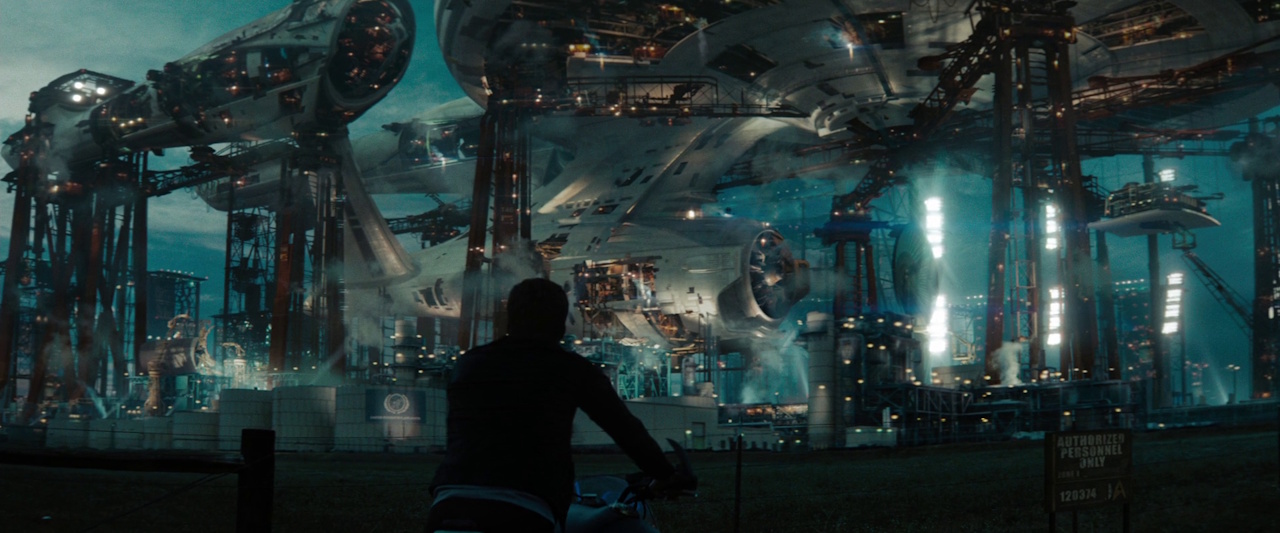
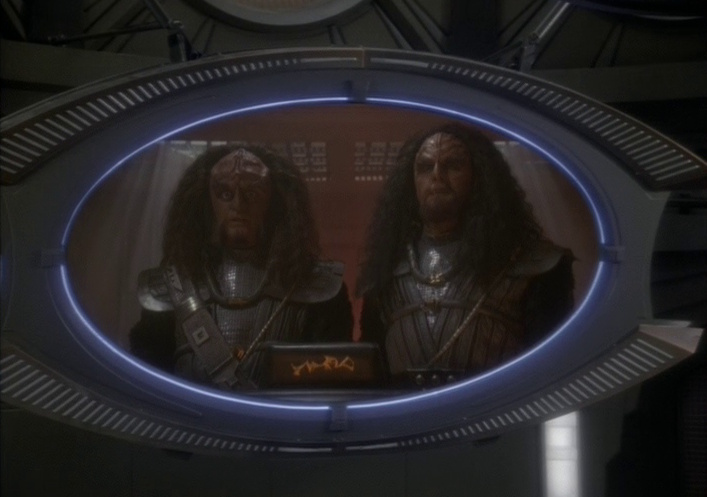
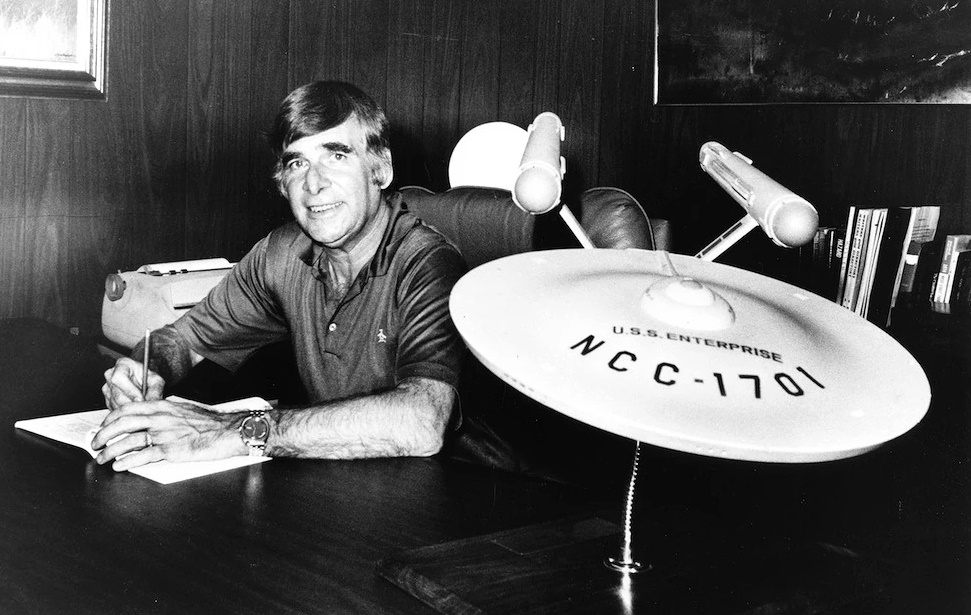
So that’s it. There are twenty-four theories in play as we head into Terra Firma, Part II later this week. The first half of this two-parter brought some genuinely interesting moments for Georgiou in particular, and there are many different ways the story could unfold from here.

There is clearly some kind of connection between the Federation and the Burn, but in what way and how the Kelpiens connect to that is still not known. Also up in the air is the storyline from Calypso; will we see Discovery abandoned in a nebula by the end of the season? And if so, who will abandon it and for what purpose? There are a lot of mysteries still to unpick as Discovery enters the final four episodes of Season 3.
One final note: no fan theory, no matter how plausible it may seem, is worth getting upset or disappointed over. I put these lists together for fun, and as an excuse to spend more time in the Star Trek galaxy, and that’s all. If something goes completely the opposite way I was expecting, far from being annoyed or upset I revel in that. That doesn’t mean writers should make arbitrary and silly decisions, but it means I like being surprised! If we could all remember to take fan theories with a healthy pinch of salt, there’d be less conflict in fan communities.

Star Trek: Discovery is available to stream on CBS All Access in the United States, and on Netflix in the United Kingdom and elsewhere. The Star Trek franchise – including Discovery and all other properties mentioned above – is the copyright of ViacomCBS. This article contains the thoughts and opinions of one person only and is not intended to cause any offence.