Oops, I forgot that Avatar 2 existed…

So, uh… yeah. Avatar 2. Or to give it its proper title Avatar: The Way of Water. It’s a film. It was released almost a year ago. I was planning to write a review of it. And I completely forgot that it existed until a couple of days ago.

The growing Avatar series – which will soon include a big-budget video game adaptation along with two films – has all of the elements of what should be a successful multimedia franchise. The original film was a Best Picture nominee at the Academy Awards, director James Cameron has incredible pedigree as a filmmaker, the world of Avatar is visually gorgeous, a lot of effort has gone into constructing things like a full-blown Na’vi language, and it’s backed up by the almost limitless budget of the Walt Disney Company. So… why is Avatar still so incredibly forgettable?

A promotional poster for Avatar: The Way of Water showing the film's main characters.
I forgot all about Avatar until now…

I didn’t hate or even dislike The Way of Water. For the three-plus hours that it lasted, I had a decent time with the film. It was a swashbuckling sci-fi adventure; a blockbuster worthy of the title that transported me to a faraway planet and a sci-fi future that was entertaining to see. But as the credits rolled I just… switched off. The Way of Water, like its predecessor before it, didn’t leave a lasting impression.

And for a series backed up by Disney’s money, turning a massive profit at the box office, with a new video game adaptation and an expensive theme park attraction… I just don’t get it. Why is Avatar – to use some Gen Z lingo – so “mid?” Why do I find myself caring so little about The Way of Water that I literally forgot it existed? And why isn’t the series making an impact on our collective cultural conversation?

A section of the themed Avatar land at Walt Disney World.
Image Credit: Avatar/Walt Disney World

Although I’m not the most active person online or on social media, I follow a bunch of websites, blogs, and channels that talk about the same kind of things I enjoy discussing here on my website: sci-fi, pop culture, cinema, and geeky entertainment topics. But since The Way of Water was in cinemas, none of them have so much as mentioned the series. If anyone had been talking about it, perhaps I wouldn’t have completely forgotten about Avatar this year.

For a film that made so much money – The Way of Water is currently the third-highest-grossing film of all time, behind only the first Avatar and Avengers Endgame – it’s so strange to be talking about it in this way. A huge audience clearly turned up for The Way of Water… but within weeks it was all but forgotten. I don’t expect to see it winning any of the big awards, which isn’t a slight against it; there’s a lot of competition. But for a film that aims to really kick-start a wider connected universe, I’m just not sure how successful The Way of Water can have been when it’s dropped off the face of the earth so readily.

Director James Cameron with the stars of Avatar: The Way of Water at the film's premiere.
Director James Cameron with the stars of Avatar: The Way of Water at the film’s premiere.

There is absolutely room for a new sci-fi franchise, especially under the Disney umbrella. Marvel and Star Wars are both seeming to stumble and falter, and the MCU is perhaps coming to the end of its life in its current iteration. There’s definitely space for another multimedia “shared universe” to come along. Avatar should be in prime position to occupy that kind of slot… but if it can’t offer something memorable, something for fans and audiences to retain and keep in mind after the credits have rolled, then it won’t even come close. Realistically, Avatar should be challenging Star Wars, Star Trek, DC Comics, and even Marvel in the upper tiers of sci-fi cinema. But right now, it doesn’t feel anywhere close.

Although we can lay part of the blame for this, in theory, on the long gap between the original Avatar and this new sequel – twelve years is a long time to wait, after all – I don’t think that’s a fair explanation. The original Avatar, as I’ve noted in the past, was not an especially memorable film either, and the universe that it attempted to create felt limited to the characters and story that unfolded on screen. I’ve never really gotten the sense from Avatar that there was more to the world of Pandora or to this futuristic depiction of Earth and humanity that I needed to see explored. In fact, I could’ve lived a happy life without ever seeing a single sequel to Avatar – let alone four.

A Na'vi and human character sharing a boat in a still frame from Avatar: The Way of Water.
Boating across Pandora…

So is The Way of Water “unnecessary,” then? That seems a bit harsh! The ending of the first film left the door open to a sequel or spin-off, and it’s worth acknowledging that. But the story was also one that we could’ve considered complete; I never felt that Avatar was crying out for either a direct sequel or for more stories set in this world. “Unnecessary” might be overstating it… but I’d certainly say that I wasn’t champing at the bit for The Way of Water.

All of that could’ve been irrelevant if The Way of Water had been more memorable. I may not have been desperate to see a sequel, but I’m always up for watching a good film, so the “necessity” or otherwise of The Way of Water wouldn’t have mattered if the film itself had something to say. For all of the money invested in it, though, and for all of the technical achievements that James Cameron and his team brought to the table in terms of the way it was created, The Way of Water just didn’t leave a lasting impression. In fact, I don’t feel that the Avatar series or franchise has really made much progress with this instalment – at least in terms of cultural relevance and its potential place in the upper echelons of sci-fi.

A futuristic "rotorwing" helicopter as seen in Avatar: The Way of Water.
A rotorwing aircraft.

And because of that, The Way of Water can feel… forced. If there was no organic groundswell of public opinion craving a sequel – no letter-writing campaign like there had been for Star Trek, no “expanded universe” of comics and novels like Star Wars created, and no real Avatar fan community in general – why was it even made? The very existence of the film – and the upcoming video game adaptation, too – feels very “corporate,” as if a group of executives have decreed that “Avatar is to be the next big thing,” without really understanding what makes a series popular and beloved to begin with – let alone failing to acknowledge that such things can never be manufactured.

For me, The Way of Water sits somewhere alongside films like the original Pirates of the Caribbean or the Indiana Jones trilogy. It was perfectly entertaining popcorn blockbuster fare… but nothing more than that. Unlike with Star Trek, Star Wars, or other top-tier franchises, I don’t have a desire to see more, to explore the universe that the film created, or to really spend much more time in its world. And if that was the ambition behind the Avatar series – to create a succession of one-and-done popcorn action flicks – then I’d say it was doing just fine. But when there’s clearly a corporate aim to push Avatar to something greater… I can’t help but feel that it isn’t meeting its goals, at least not in its current form.

Promotional artwork for Avatar: The Way of Water showing three Na'vi flying over the ocean.
Promo art for The Way of Water.
Image Credit: Avatar on Facebook

Part of the problem is originality. The world of Avatar doesn’t really have anything unique to help it stand out. The blue-skinned Na’vi are the closest it gets, but even then, the CGI-heavy aliens easily blend into a lineup of other humanoid races from other sci-fi properties. The rest of the aesthetic of Avatar is pretty generic, with spaceships, weapons, costumes, and technology that doesn’t really stand out when compared to more successful sci-fi properties.

A lot of Avatar just gets lost in the sci-fi milieu, leaving the franchise unable to differentiate itself from films, TV shows, and even video games in an expanding genre. The time should be right for a new sci-fi series to make a serious push to break into the upper echelons of the genre, thanks to a combination of a renewed interest from big corporations and the fact that some of the biggest names in sci-fi seem to be foundering – if not stalling outright. But the bland, forgettable Avatar isn’t able to make that leap.

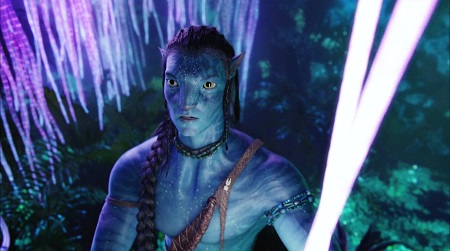
A Na'vi character from Avatar: The Way of Water.
The blue-skinned Na’vi are the Avatar series’ most unique creation.

The original Avatar was criticised in 2009 for telling a story that was unoriginal at best, and the sequel falls into the same narrative traps. Themes of environmentalism and colonialism are presented – but these have been examined before, and examined better, in other pictures and other series that have had more to say. Unoriginality doesn’t have to mean “bad,” not by any means. But if the aesthetic, setting, and narrative premise are all things that audiences have seen before, there’s got to be something more to help it stand out or communicate a message. The Way of Water just doesn’t succeed on that front.

When I first sat down to watch The Way of Water, I expected the film to really make the case for Avatar as a series. I expected a strong narrative, compelling characters, and plenty of adventure… but more than that, I needed to see the film take the world-building from its predecessor and expand upon it, creating something that I’d want to lose myself in. With three more Avatar films and a big-budget video game in production, I needed The Way of Water to not only give me a reason to keep them on my list, but to want to get my hands on them. This film was an opportunity not only to remind me that Avatar exists, but to do what the original wasn’t able to and set the stage for something greater.

Kate Winslet and Sigourney Weaver in a pool during filming on Avatar: The Way of Water.
The Way of Water pioneered underwater motion capture.

Star Wars still has fans turning up for its films and streaming shows even though – let’s be realistic – it hasn’t done anything truly outstanding since 1980. But because Star Wars had that strong beginning, and created an alternate reality that fans wanted to experience more of, audiences still show up forty-five years later. They still go to conventions, dress up like Darth Vader, and pay their subs to Disney+ to watch the latest offerings. For all the money that’s being pumped into it, Avatar still doesn’t feel like a series or a franchise that can attract anything like that kind of support.

So that’s it, I guess. I didn’t dislike The Way of Water; it was a competent film with some clever behind-the-scenes technologies and filmmaking techniques that ended up being a perfectly watchable popcorn adventure flick. But I just can’t reconcile the fact that this franchise has now produced two of the three highest-grossing films of all-time… yet it’s still so utterly forgettable that I literally forgot it even existed for months. And even after returning to The Way of Water to take notes and grab some still frames… nothing about it jumps out at me, nothing about it sticks in my mind, and I genuinely don’t see how Avatar as a series will ever break into the top tier of sci-fi franchises if it keeps this up.

Avatar: The Way of Water is available to stream now on Disney+ and is also available on DVD/Blu-ray. The Avatar series is the copyright of 20th Century Studios and/or the Walt Disney Company. This article contains the thoughts and opinions of one person only and is not intended to cause any offence.

Will the Avatar sequels improve the franchise’s standing?

Spoiler Warning: There are spoilers ahead for Avatar.

James Cameron’s 2009 sci-fi film Avatar never really managed to break into pop culture in quite the way he hoped. It was a huge financial success – in part because folks were curious to see what this new project was all about – but it never really became a top-tier entertainment brand in the way Star Wars or Harry Potter did. In 1977, Star Wars became a phenomenon, and in the years afterwards the film was constantly on fans’ minds. The Empire Strikes Back cemented its place at the pinnacle of the sci-fi genre… even if Return of the Jedi perhaps tarnished its halo a little!

Avatar just isn’t on that level. There was a lot of hype leading up to its release, with a decent (if rather boastful) marketing campaign spearheading 20th Century Fox’s efforts to push Avatar as the “next big thing.” But for a lot of moviegoers, the film was just okay. It wasn’t bad; it was a solid, enjoyable summer blockbuster that went toe-to-toe with the best pictures of 2009 – including the rebooted Star Trek! But after leaving the cinema, I never really got the sense that fans were clamouring for more in the way Trekkies, Potter-heads, and Star Wars fans are for their respective franchises.

Avatar was a successful film – but can it become a successful franchise?

The creation of Pandora – The World of Avatar at Walt Disney World in Florida is a great demonstration of this. The new land attracted attention when it was built, and for months after it opened its rides were queuing out the door! But that happens for almost any new Disney attraction, and when compared to the opening of Star Wars: Galaxy’s Edge in 2019, it pales in comparison. There was huge excitement to be transported to a galaxy far, far away. There was curious interest in Pandora… but that was all.

None of this is to say Avatar was bad. It wasn’t at all, and I thoroughly enjoyed it when I first saw it. But I was never desperate to re-watch it, and my latest revisit to the 2009 film – which may be the third or fourth time I’ve seen it – was prompted by nothing more than boredom. But it also led to this article, so at least I got something out of it!

Pandora – The World of Avatar at Walt Disney World.

This is a much broader point that ties into another piece I’ve been writing, but the difference between a good one-off story and a good story that becomes a larger franchise is world-building. Any film, television show, book, or even video game that hopes to be “the next Star Wars” needs to put time and effort into creating a world that fans want to explore. Star Wars and Star Trek did so, and they did so by showing fans a relatively small piece of what felt like a huge picture. The galaxies depicted in Star Wars and Star Trek are so much bigger than the few characters we met in their original incarnations; it feels like there’s much more to see beyond what was depicted on screen.

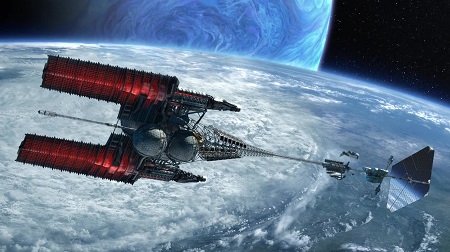
Avatar – and a lot of other wannabe-franchises too – doesn’t have that, at least not yet. Partly that’s because the film doesn’t hint at anything more than what we see – Earth, Pandora… and that’s it. And on Pandora there’s one major human outpost. There are starships flying back and forth, and the glimpses we got of Earth had a futuristic vibe, but the world Avatar created doesn’t feel as though it extends beyond the places we see. There’s no other planets that we could imagine humans or Na’vi colonising one day. There’s no fleets of starships on missions of exploration or fighting battles; the few ships we see just fly between Earth and Pandora.

A starship seen in Avatar.

Pandora itself is absolutely beautiful; a location painstakingly created. And the Na’vi are more than just a simple analogue for Native Americans or other indigenous peoples; Cameron and his team went to great lengths to craft Na’vi culture, even going so far as to write a fully-formed Na’vi language. Those efforts may yet pay off, but they don’t seem to have thus far. Because as interesting as the Na’vi are – and they are undeniably interesting – they’re all there is. One tribe of Na’vi and one human settlement on Pandora, and… what? Nothing else, as far as the film showed us.

There’s a sense of scale missing from Avatar, and its world-building, while wonderfully done, is small. There’s nothing wrong with focusing on one aspect of a story and a few characters – in the first film in a series that kind of needs to happen! But if the aim is to create a series with franchise potential, something to hook fans in and get our imaginations running, that sense of scale and the idea of a greater world beyond what we see on screen is essential. It’s the single most important element in building a larger story – and Avatar didn’t get it right.

So on to the question I posed at in the title of this article: can the planned sequels – of which there are four – improve the franchise’s standing? Can they spin out what was a decent one-off sci-fi blockbuster into something more? Can Avatar make the jump and become “the next Star Wars?”

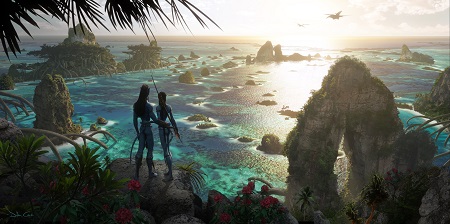
Two Na’vi seen in concept art for the Avatar sequel series.

The length of time between Avatar and its sequels may be an issue. By the time Avatar 2 hits cinemas in December 2022 – assuming it meets its planned release date – thirteen years will have passed since the first title. Given the general apathy and lack of interest in Avatar this long after its premiere, the first part of this sequel series will have to spend at least some of its runtime refreshing audiences on what happened in the first film and what the setting is. When I sat down to re-watch Avatar earlier, I had only a vague recollection of the film, and I daresay a lot of folks will be in the same position.

When The Empire Strikes Back came out, it had been only three years since Star Wars had been in cinemas. And while Star Trek: The Motion Picture was released a decade after The Original Series ended, the only reason the film was made was because there was a growing fanbase who had watched the show when it was rebroadcast and those fans were clamouring for more. Is anyone clamouring for Avatar 2?

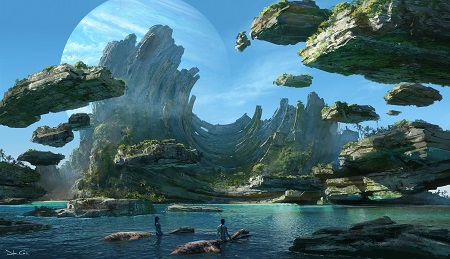
A scene on Pandora from concept art.

Avatar was a welcome addition to the sci-fi genre. Especially as the last decade has been dominated by reboots, adaptations, remakes, and sequels, it was a welcome breath of fresh air, and despite what I’ve said about its world feeling small, there is potential for it to be expanded upon. To say that the Avatar series can never be more than it already is would be ridiculous – there’s only been one film so far, and it was decent. It didn’t blow up the genre or redefine what a film could be in the way its pre-release marketing seemed to suggest, but it was good. I don’t dislike Avatar.

The sequels do have a pretty big job to do, though. The storyline of Avatar was exciting, but it was hardly original. Comparisons have been made to Dances with Wolves and even Disney’s Pocahontas, and while I don’t think it’s fair to call it derivative, it wasn’t a unique narrative by any means. That point of criticism will have to be addressed, and the sequels will have to try harder to be different from a story perspective if they’re to achieve the heights the films are aiming for.

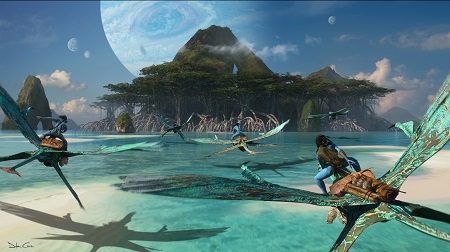
Na’vi fly atop their banshees in more concept art.

The beautiful world-building that worked so well for Pandora and the Na’vi needs to be expanded upon. Perhaps we could see different Na’vi tribes and civilisations on Pandora, or better yet, expand the scope of the setting out into space. Are there other moons or planets in the Pandora system, perhaps? Or is there another human settlement on some nearby world? These are just a couple of ideas for how the Avatar series can build on the successes of the first film to be bigger – to achieve that sense of scale which the best and most successful franchises have.

Avatar was also a film which had contemporary real-world analogies. I noted influences of at least two of America’s recent wars in the depiction of the Marines, scientists, and Na’vi – Vietnam and Iraq. The dense rainforests of Pandora, and the way Jake and others had trouble navigating them, were the film’s answer to the jungles of Vietnam. And references to winning “the hearts and minds” of the locals was a phrase we heard often in relation to the Iraq war during the 2000s – which is when Avatar was in development. The latter of those themes is arguably less relevant in 2021 than it was in 2009, and Avatar 2 will need to adapt to changing times.

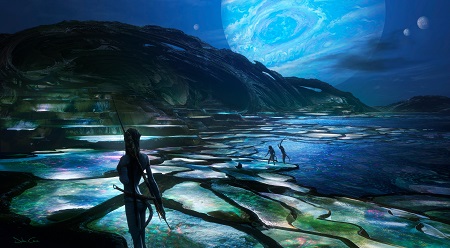
Night time on Pandora in this final piece of concept art.

One improvement we’re sure to see is in CGI and digital animation. Avatar was released at a time when CGI was improving – and was far better than it had been even five or ten years earlier – but there are still some aspects of its visual style that haven’t aged especially well. Some textures have that “too shiny” look that plagued cinematic CGI in the 2000s, and while viewing the film on a cinema or IMAX projector screen dulled the impact of some of that, on a television set in 2021 it’s something you notice. I wouldn’t say Avatar looks dated – but it’s right on the cusp. A film that relies so heavily on computer animation – many of Avatar’s sequences are basically fully-animated – is always going to run that risk, and while it has aged more gracefully than, for example, the Star Wars prequel trilogy, there are still noticeable places where the animation isn’t up to code.

There have been improvements in computer animation since 2009, which should mean Avatar 2 and the rest of the sequel series will be far more visually interesting. Pandora was already beautiful, but if that beauty could be expanded upon I think the sequels could really be something special. Some fans tend to turn up their noses at visuals, but if you think about it, a distinct visual style is another absolutely crucial element to a franchise. Star Trek has combadges, ships with saucer sections, Klingons, and the transporter. Star Wars has white-armoured Stormtroopers, lightsabers, Jabba the Hutt, and X-wings. Avatar introduced us to the blue-skinned Na’vi, but none of its technology, characters, costumes, or locations have become iconic in the same way as the other franchises we’ve mentioned. Part of that is down to the quality of the CGI, but partly it’s the film’s own art style. Avatar 2 could introduce a new design for a starship, character, or even just a costume that will go on to be emblematic of the series – in the way that Boba Fett became a symbol of Star Wars after his debut in The Empire Strikes Back, for example.

So yes, there’s work to do to expand on Pandora and the world Avatar created in 2009. But I’m really interested to see where Avatar 2 will take the story after the conclusion of the first film, and what the other films in the planned sequel series have in store. James Cameron is an amazing director, and having put so much work and effort into the Avatar series, I really hope it will see the kind of success he’s looking for. There’s always room for more sci-fi franchises!

Avatar is out now on Blu-ray and DVD, and may be streamed on Disney+ in the United States, United Kingdom, and other countries and territories. Avatar is the copyright of 20th Century Fox and the Walt Disney Company. Avatar 2 is due for release in December 2022. Logo and official promotional artwork courtesy of avatar.com. Stock photos courtesy of Unsplash. This article contains the thoughts and opinions of one person only and is not intended to cause any offence.