Ten things we learned from Remembrance

Spoiler Warning: There will be spoilers for Star Trek: Picard Season 1, Episode 1: Remembrance. There may also be spoilers for other iterations of the Star Trek franchise, including Short Treks and Discovery.

I know that for the last couple of weeks the blog has been dedicated almost entirely to Star Trek: Picard, but to be fair it’s been my most highly-anticipated series of the last few years! I do have a few non-Picard articles in the pipeline, but before my memories of the episode fade too much, I wanted to go over a few things we learned in Remembrance.

Considering that the episode was our first real look at the 24th Century since 2002 – I’m not counting Children of Mars or the brief scenes in 2009’s Star Trek – there was a lot that longstanding Star Trek fans wanted to know. Remembrance was peppered with enough little hints and pieces of background information to tide us over till next week – but without drowning out the plot in fan-service and nostalgia. Take note, Star Wars!

I have a full review of the episode already published – you can find it by clicking or tapping here. In that article I cover the plot in more detail, as well as giving my thoughts on various elements of the episode. Spoiler alert: I loved it.

Number 1: The “Prime Universe” or “Prime Reality” still exists!
You may recognise this graphic from the official website; it shows the various Star Trek series and their place in the overall timeline of the franchise.
Credit: Star Trek.com

This one should’ve been a given, considering everything we’d been told beforehand. But some “fans” – and I use the term very loosely – have been obsessed in recent years with convoluted “theories” that the Star Trek timeline ended or diverged after Enterprise went off the air.

The basic argument went something like this – the Kelvin-timeline films had a contractual obligation to make everything look 25% different from what had come before, and this carried over into Discovery, meaning the new shows are set in an alternate reality and not the original Star Trek timeline. Obviously that’s completely untrue, and Remembrance confirmed it. This is the original timeline, the one Spock left behind when he travelled to the alternate reality.

Picard has many artifacts in his personal archive from The Next Generation and the TNG-era films, so this is definitely, 100%, the same reality. Picard is the same Picard from TNG – just older. Enterprise, Discovery, The Original Series, Deep Space Nine, and Voyager all took place in this timeline as well, before the events of this episode. Case closed, “theory” debunked. And as we saw dozens of TNG-era objects in Picard’s archive, the “25% different” nonsense is debunked too.

Number 2: The Ready Room – Star Trek’s aftershow – is actually worth watching.
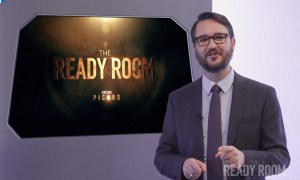
Wil Wheaton now hosts The Ready Room – discussing each episode of Star Trek: Picard after it’s released.
Credit: Star Trek on Facebook

During Discovery’s second season, I only tuned in to The Ready Room a couple of times, and I wasn’t particularly impressed. Airing on Facebook Live after each episode, the show would feature someone involved in the episode’s production and they’d discuss some of the behind-the-scenes goings-on with the host. This time around, the host of The Ready Room is Wil Wheaton – yes, Wesley Crusher himself!

And it’s clear that he’s a fan of Star Trek – a passionate one, too. He talked about Remembrance with such enthusiasm that he was a joy to watch, and the interviews with Hanelle M. Culpepper and Michael Chabon – the director of the episode and the showrunner respectively – were respectful and genuinely interesting.

Personally, I like to keep my in-universe and real-world experiences separate, so watching The Ready Room immediately after the episode isn’t something I want to do… I need to give myself a few hours at least to come back down to Earth! But when I was ready, I gave The Ready Room a chance and I’m glad I did. I look forward to tuning in again next week for another look behind the curtain.

Number 3: The Ferengi Alliance is still around – at least in some form.
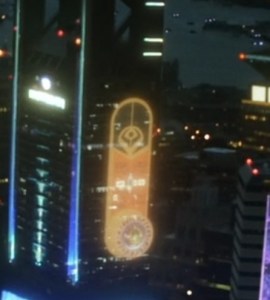
The emblem of the Ferengi Alliance seen in Boston.

This one was a blink-and-you’ll-miss-it “easter egg”, but toward the beginning of the episode during an establishing shot of Boston, the emblem of the Ferengi Alliance can be seen. It’s projected on the side of a Bostonian building right before the scene with Dahj and her boyfriend, but I noticed it immediately.

Towards the end of Deep Space Nine, Grand Nagus Zek had begun implementing reforms to Ferengi society. Women were allowed to fully participate for the first time, and basic state assistance was put in place for financially unsuccessful Ferengi. Rom was chosen to be the next Grand Nagus when Zek stepped down. That’s twenty-five years before Star Trek: Picard’s setting, but it’s interesting to see that the Ferengi Alliance still exists, and is presumably still an independent faction.

Number 4: The attack on Mars was far worse than we realised.
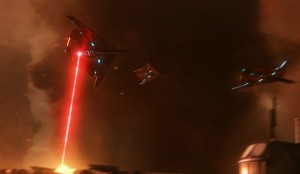
Ships commandeered by rogue synthetics attacked Mars.

In Children of Mars, the attack by the rogue synths looked serious, but its ultimate outcome was unclear as the episode ended when news of the attack was only just breaking. Remembrance takes place over a decade later, and the extent of the damage is now known. Picard lost the entire rescue armada, and over 90,000 people died.

Worse is that Mars, which had been home to Utopia Planitia, is “on fire to this day” – strongly implying that the shipyards couldn’t be rebuilt and that the planet, which we know to have been inhabited, now might be wholly uninhabitable. The loss of the Federation’s most significant shipyard will have had repercussions, and the loss of Mars, Earth’s closest neighbour and one of humanity’s earliest colonisation targets, will have been a psychological blow.

Number 5: The Rogue Synths are no longer active.
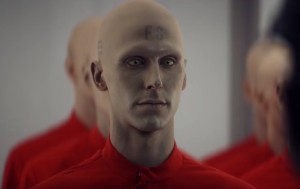
I’m fairly sure that these are either the rogue synths or other androids shut down around the same time.

We speculated a little about who the rogue synths might be in my final article about the factions of Star Trek: Picard. The question of whether they remained an active faction after the attack wasn’t clear then, but the galaxy-wide ban on synthetics makes it clear that the rogue synths are no more.

What became of the individuals who attacked Mars isn’t clear, though. It’s possible that they and their ships were destroyed by Starfleet, but it’s equally possible that they were able to be peacefully shut down and are currently in storage, like the Data-esque characters we saw in the trailer.

However, with the plot of Picard currently fixated on synthetic life, I think that the rogue synths will come back into play somehow. And even if they were all destroyed – or rather, killed – in the aftermath of the Mars attack, I’m confident that by the end of the season we’ll understand what led them to rebel and attack the shipyard.

Number 6: The Romulan situation is bad – but they aren’t completely out of the game.

These Romulans were able to launch an undetected attack very close to the heart of Starfleet.

With Picard’s armada having been destroyed, it’s unclear how many Romulans were saved before the supernova. However, it seems unlikely that the planned 10,000 ships were able to be built elsewhere, and that whatever evacuation could be ultimately cobbled together saved far fewer than the intended 900 million lives.

However, the Romulans remain a force to be reckoned with. Armed Romulan operatives were able to transport to two locations on Earth and attack Federation citizens – all without raising any alarm. One of the attacks took place spitting distance from a Starfleet archive which required Picard’s Admiral-level clearance – and in addition, the Romulans were able to conceal themselves and the target of their attack in such a way that they didn’t even appear on any Starfleet security feeds.

So while it’s clear that the Romulan Star Empire has suffered, their intelligence and military technology is keeping pace with, and arguably outmanoeuvring, that of the Federation. Whether these operatives are the Tal Shiar (the Romulan secret police/intelligence agency) or whether they’re even formally affiliated with the Romulan government is still unknown.

Number 7: Androids are banned.
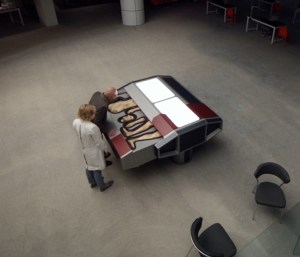
Picard and Dr Jurati examine the disassembled body of B4.

After the attack on Mars, a “galactic treaty” went into effect, prohibiting synthetic life forms such as androids. Picard considers this to be a mistake, even morally wrong, but nevertheless the ban exists, and it appears to be something that all of the Alpha and Beta Quadrants’ major factions have subscribed to.

Describing the ban as “galactic” may suggest that it even extends to factions like the Dominion in the Gamma Quadrant and possibly even Delta Quadrant factions from Voyager, but I think that may be taking the word slightly too literally. For all intents and purposes, though, androids and other synthetic life forms are banned, and presumably any synths that were active at the time of the attack have been rounded up and forcibly shut down – raising some alarming questions about how this was done and whether synthetic life forms had any rights.

What does this mean for self-aware holograms, like The Doctor or Vic Fontaine? It’s unclear whether they were affected by the ban too, as the only hologram we’ve seen thus far was Index – who did not appear to be fully sentient. Index may have given a couple of very subtle hints at sentience, though, or maybe that’s just my interpretation of her movements and expressions.

Number 8: Some people flout the android ban and continue to work.

Dahj’s necklace was a symbol representing a particular method of creating androids.

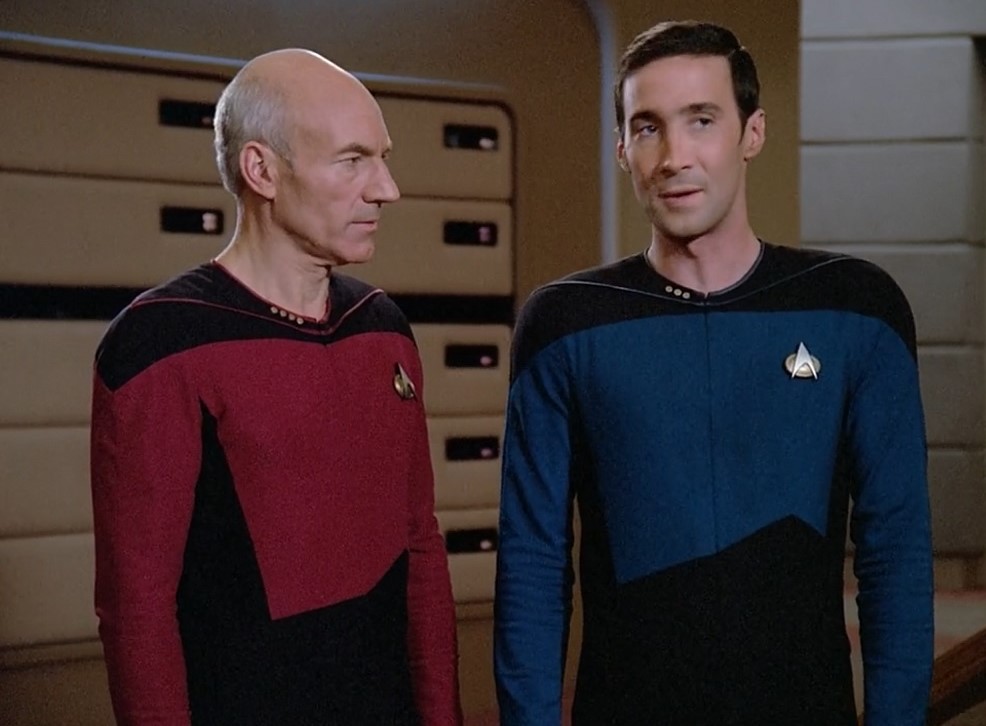
Bruce Maddox, last seen in The Measure Of A Man from the second season of The Next Generation, disappeared in the aftermath of the attack on Mars and the ban on synthetics. A symbol he used to illustrate one of his theories about creating androids was seen on Dahj and Soji’s necklaces – implying that he created them, if indeed they are synthetics.

As with many points above, this raises as many questions as it answers. Was Dr Maddox involved, even inadvertently, in the attack on Mars? What purpose does creating Dahj and Soji serve? Who is supporting his research, and where is it being conducted?

Most significantly, if Dahj appeared to be fully human, how did Maddox manage to pull that off? If synthetic life is banned, and the Federation has sensors capable of detecting synthetics, then Dahj must have either been fully anatomically human, or must have employed some kind of system designed to fake that on all scans. We know Federation sensors in the 24th Century could differentiate Data from a human, so how Dahj and Soji haven’t been detected remains a mystery.

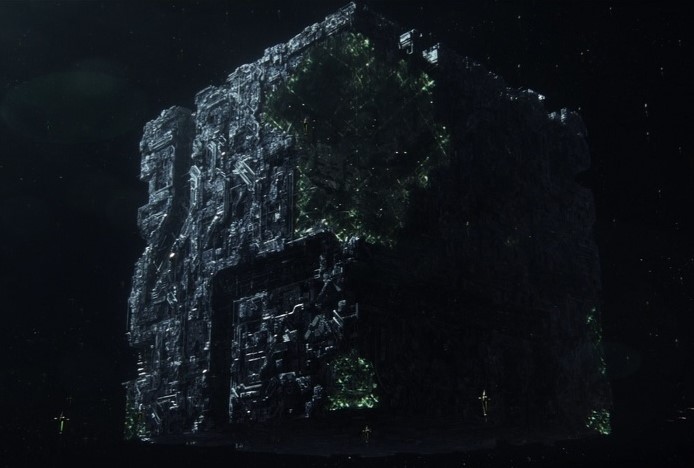
Number 9: There has been Borg activity in the Alpha and/or Beta Quadrants.
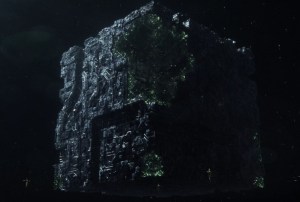
The Romulans have a base aboard a Borg cube.

There had been two Borg incursions into the Alpha and Beta Quadrants that we knew about before Remembrance. The first was in The Best Of Both Worlds from The Next Generation’s third season, where a single Borg cube attacked Earth and destroyed a huge Federation fleet at the Battle of Wolf 359. The second came a few years later when the Borg again sent a single cube to Earth during the events of First Contact. Both cubes were completely destroyed, such that they couldn’t have been reassembled.

The existence of another Borg cube in Romulan-controlled territory strongly suggests another Borg incursion on this side of the galaxy. When this took place and what its objective was isn’t known, but the fact that the Romulans were able to defeat it and still keep the vessel intact must have been a huge coup. The knowledge they could gain about the Borg may have unlocked whole new technologies for them – perhaps even explaining how Romulan operatives were able to conduct covert operations in San Francisco.

Number 10: The Federation pulled the plug on the mission to aid the Romulans.

“We withdrew.” – Picard became very upset when pushed on why he resigned.

Picard as an individual has the loyalty of at least two Romulans – but relations between the Federation as a whole and the remnants of the Romulan Star Empire may be much more frosty. In the aftermath of the attack on Mars, the Federation abandoned the rescue mission and didn’t rebuild the destroyed fleet – presumably forcing Picard to use other means to aid Romulus.

He was clearly successful to an extent – the presence of such loyal Romulan aides confirms this – but he resigned from Starfleet in protest at the decision, perhaps calling their bluff in a last-ditch effort to force his superiors to reconsider.

Picard states that Starfleet “withdrew”, shirking its duties in the aftermath of the supernova – and possibly other significant events. Whether this represents a change in Federation policy to become more insular and/or isolationist isn’t clear, but from Picard’s perspective at the time that was certainly the case.

There are surely going to be consequences as a result of the decision to effectively betray the Romulans after they had been assured of help. The fact that we see Romulan operatives on Earth at least hints at this, but the extent of the relationship will be seen later as the story unfolds.

So that’s it.

A few bits and pieces that we learned from Remembrance, the first episode of Star Trek: Picard. Many of these points lead to more as yet unanswered questions, but a series as carefully constructed as Picard would seem to be would surely not be setting up mysteries it doesn’t intend to resolve. After all, this isn’t a JJ Abrams film!

As I said last time, I felt that Remembrance absolutely knocked it out of the park, and as far as Star Trek premieres go, it’s at least on a par with Emissary, the opening episode of Deep Space Nine.

While it can be nice to binge-watch a whole series at once, I think that weekly instalments like this give us time to digest each episode fully before moving on to the next. And I’m glad that Star Trek hasn’t gone down the route of doing full-season dumps like Netflix does for some of its original programming. Breathing room, especially after an episode as entertaining, exciting, and interesting as Remembrance can be important to us as viewers, and I’m glad that it’s being released this way. It gives me time to ponder some of those questions and speculate wildly about potential plot points!

If the rest of the episodes this season are even close to being as good as Remembrance, we’re in for an amazing couple of months. And I’m even more glad that a second season of Star Trek: Picard has been confirmed – hopefully production will begin shortly so the season can be released in about a year’s time.

Live Long and Prosper!

Remembrance, the first episode of Star Trek: Picard, is available to watch now on CBS All Access in the United States, and on Amazon Prime Video in the United Kingdom and other countries and territories. Star Trek: Picard, and the entire Star Trek franchise, is the copyright of ViacomCBS. This article contains the thoughts and opinions of one person only and is not intended to cause any offence.

Star Trek: Picard review – Season 1, Episode 1: Remembrance

Spoiler Warning: There are spoilers ahead for Star Trek: Picard Season 1, Star Trek: Nemesis, Star Trek: Discovery, and for other iterations of the franchise.

Star Trek: Picard’s opening title.

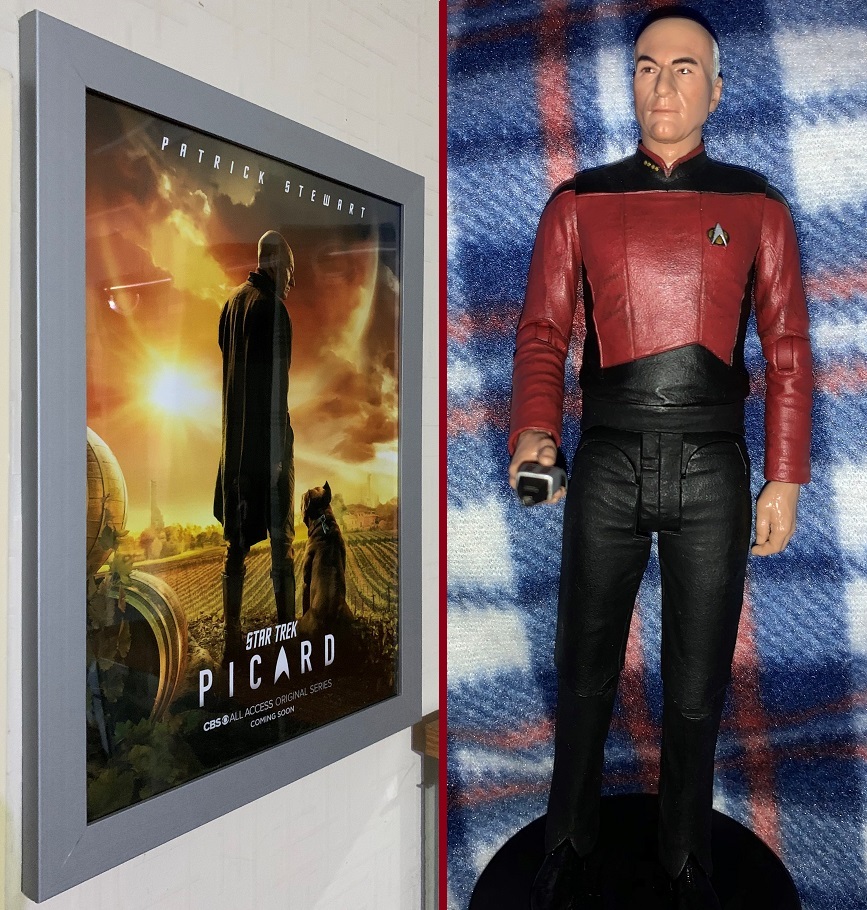
I don’t wear t-shirts very often. That’s just a personal style preference, I guess. But as I waited for Amazon Prime Video to make Star Trek: Picard’s premiere episode available here in the UK, I was wearing my Star Trek: Picard t-shirt which I’d managed to get a few days ago. As I watched the clock tick awfully slowly to the moment I expected the episode to go live, both of the promotional posters for Picard – the vineyard Starfleet logo and the one with Picard and his dog – were hanging framed on my wall. And my Jean-Luc Picard action figure stood proudly in my glass display cabinet. Suffice to say, I’m a fan.

I was a little concerned going into Remembrance, and I haven’t really discussed this on the website before. The director of Picard’s premiere, Hanelle M. Culpepper, had directed what I considered to be Star Trek: Discovery’s worst episode by far – Season 2’s The Red Angel. That episode failed hard, with incredibly cringeworthy attempts at humour, complete mischaracterisations, and the kind of stupid, paradoxical time travel storyline that really just encapsulated why I don’t like time travel as a concept – and was a great example of how it’s hard to get right.

One of my two framed Star Trek: Picard posters, and my Picard action figure. Both are permanent fixtures in my living room!

Some – perhaps even most – iterations of Star Trek have started with premiere episodes that weren’t especially great. In fact the only real exception to this is Deep Space Nine, whose first episode, Emissary, was fantastic. So in addition to my concerns about the director, there was precedent for Star Trek shows to have underwhelming starts. As excited as I was for Picard, there were those two factors gnawing away in the background making me nervous!

Finally, after hitting “refresh” for what must’ve been the hundredth time, Star Trek: Picard Season 1, Episode 1 was there! I was one click of the mouse away from Remembrance, and finally being back with Jean-Luc Picard for the first time in eighteen years – since I saw Star Trek: Nemesis at the cinema with my dad. I was still at university then. A lot has happened in my life since, and as Sir Patrick Stewart has told us in many interviews over the last couple of years, a lot has happened to Picard in that time too. I clicked “play”.

It was a nervous wait on the Amazon Prime Video page, waiting for Star Trek: Picard!

I’ve never been particularly impressed with Amazon Prime Video. When I watch something on Netflix, it’s always in 1080p high definition with no problems. On YouTube, for certain channels I’m able to watch videos in even higher quality – 1440p, a half-step between HD and full 4K. But Amazon Prime Video, at least in my experience, has tended to suffer from dips in quality where a high definition stream will suddenly and unexpectedly drop down to a much lower quality for a time. Obviously this is annoying, but luckily that didn’t happen on this occasion. I am disappointed, however, that Amazon Prime Video didn’t get the Short Treks episode Children of Mars. While I was able to watch it by “other means” – I even reviewed it – I think that it should have been made available to viewers outside the United States, preferably a few days ago prior to the start of the series. But we’re getting off topic again.

Remembrance begins with a dream sequence. We saw clips from this in the trailers – indeed, a significant portion of the content from the trailers was taken from this episode. Set to a forties- or fifties-inspired song, the camera pans over a nebula, and then we see the Enterprise-D, beautifully rendered in CGI. And sat in what I believe is Ten-Forward (though it may have been another observation lounge) are Picard and Data, playing cards. Data is wearing his First Contact-era uniform, which confirms this is a dream and not a flashback as that uniform was never used while the Enterprise-D was in service.

A brand-new CGI recreation of the Enterprise-D.

In the first trailer for Picard, I’d been a little concerned that Brent Spiner looked, to put it bluntly, too old to convincingly play Data. Indeed, Spiner himself said he felt he’d aged out of the role by the mid-2000s – which is why he opted not to appear in Enterprise’s finale These Are The Voyages along with Marina Sirtis and Jonathan Frakes. Whatever makeup and/or digital effects have been applied to him, however, definitely looked better in the finished episode than they did in the trailers, and if we also remember that Data’s scenes are all taking place in Picard’s head, I think the way he looks is fine. It arguably wasn’t on the same level of digital de-ageing that we’ve seen in films like The Irishman or Captain Marvel, but it was good enough here not to be immersion-breaking.

Picard and Data continue their card game, and suddenly the Enterprise is in orbit of Mars. And just as in the Short Treks episode Children of Mars from a couple of weeks ago, the planet comes under violent attack, which finally jolts Picard awake. He opens the curtains and we see Château Picard – the Picard family vineyard in La Barre, France. The action then cuts to Dahj – the new character played by Isa Briones. She’s in her apartment in Boston when she and her boyfriend come under attack by unknown assailants. He is quickly killed, but the attackers place a device on her head and check to see whether or not she has been “activated”. She hasn’t, so they attempt to abduct her, but the violent nature of the attack causes whatever activation they were checking for to occur – and she quickly kills all three of them. For a military-esque team who knew what they were looking for, they went down remarkably easily against their target! But that’s very much a nitpick and not something that in any way hampers the story.

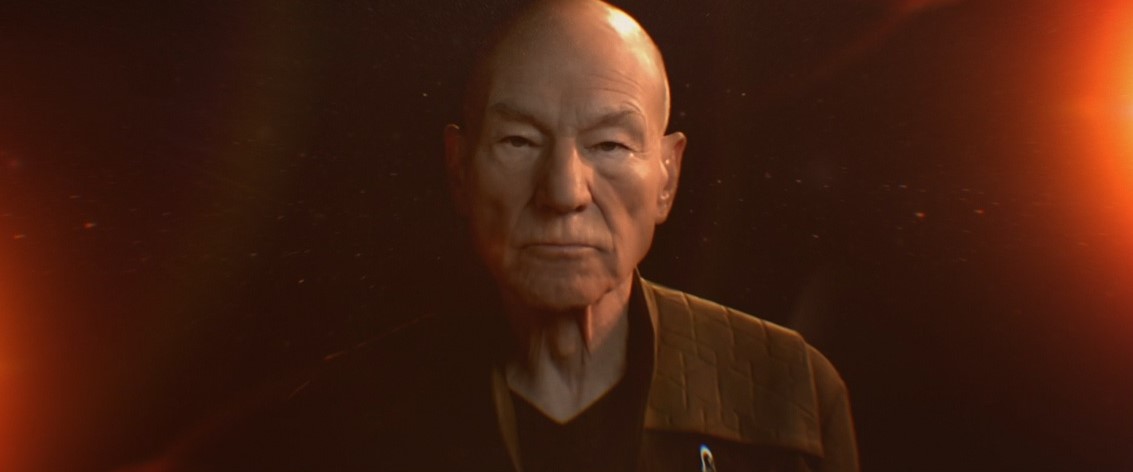
As Dahj mourns her boyfriend, she sees Picard’s face in her mind, and then the title sequence kicks in. The Next Generation had a memorable theme, taken from The Motion Picture a few years earlier, and aside from The Original Series’ theme, that piece of music is arguably the most iconic in the franchise. Picard’s theme is hard to explain in words, as music often is, but the best way I think I can describe it is that it’s somewhere between Discovery’s theme and the themes used on Deep Space Nine and Voyager. It’s slower in tempo and less adventurous in tone than The Next Generation’s theme, perhaps even reminiscent of something from The Lord of the Rings. The title sequence, as Discovery’s also does, runs through a few artistic designs of elements from the series – we see the vineyard, the damaged Borg cube, a planet breaking apart that I assume is Romulus, and what looks like DNA, before the sequence ends with Picard himself facing the camera. Obviously because I haven’t heard the theme more than a handful of times it doesn’t give me the same feelings as I might get from other Star Trek themes, but it is instantly recognisable as part of the show and it’s a perfectly creditable piece of music. The whole opening sequence is great, actually, and I wonder if they’ll do what we’ve seen in Discovery where they occasionally change up elements of the opening sequence to reflect what’s happening in that episode.

Picard at the end of the opening title sequence.

As the titles end we’re back at the vineyard, and Picard is with Number One – his pet dog. We briefly meet two Romulans who seem to be Picard’s assistants, and learn that he’s preparing for an interview to commemorate the tenth anniversary of the Romulan supernova. In the 2009 film Star Trek it’s left unclear which star destroyed Romulus – Spock simply describes it as “nearby”. In this episode we learn that it was in fact the main star in the Romulan system. This closes what has been, for some people anyway, an annoying “plot hole”, as a supernova in one system shouldn’t have been able to travel far enough and fast enough to destroy a planet in another system based on our current understanding of supernovae in science. Hopefully that clears things up for those folks!

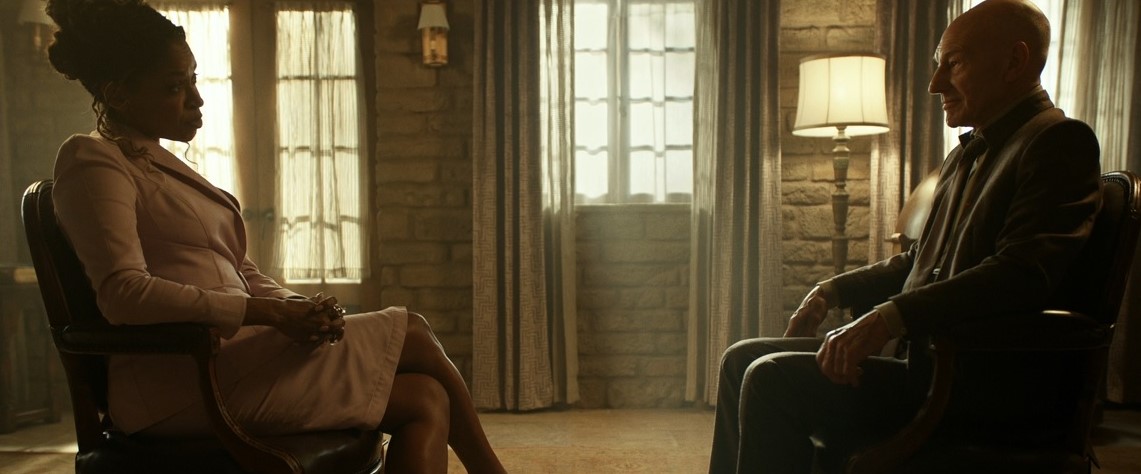
The interview Picard agreed to, however, turns into an ambush, as the interviewer aggressively pushes him on why he wasted resources to help “the Federation’s oldest enemy”, how he feels about “synthetics” like Data, and finally, why he quit Starfleet.

Picard is interviewed by the Federation News Network.

It turns out that the rogue synths, seen attacking Mars in Children of Mars, were in fact androids of Federation origin, though why they went rogue and attacked Mars is still unclear more than a decade later. We also learn more about Picard’s rescue armada – it was planned to be 10,000 ships capable of evacuating 900 million Romulans from their homeworld. Not only was the entire fleet destroyed by the rogue synths, but Mars even more than ten years later remains “on fire” – and presumably uninhabitable.

Sir Patrick Stewart had warned us heading into the new series that Picard may not be the same man we remember, but here in the interview he definitely was. He defiantly states that he left Starfleet because Starfleet tried to call off the rescue after the attack on Mars, something he felt was dishonourable and criminal, and that the lives at stake were simply “lives” – not “Romulan lives” as the interviewer coldly puts it. This reminded me so much of Picard’s staunch defence of Data in The Measure of a Man from The Next Generation’s second season. Picard has always argued in favour of the rights of life forms, and here he defends not only the Romulans but synthetic life too. Though he may have retired, he did so because he felt Starfleet no longer upheld its own ideals. He didn’t run away, and I’d argue that his decision to leave 100% re-emphasises that he is the character we remember. His morality and his code of ethics, at the very least, remain absolutely intact.

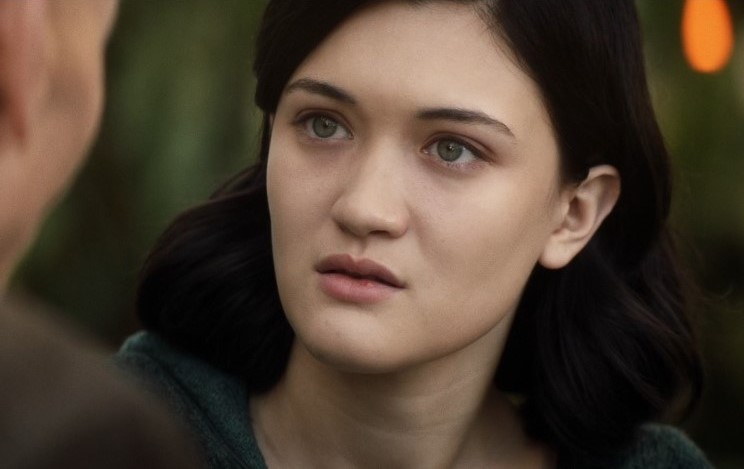
Picard ends the interview, clearly enraged by what he’s heard from the interviewer, and the action then cuts back to Dahj, who sees Picard’s interview on a screen and travels to find him. She’s clearly shaken, and despite the intrusion Picard welcomes her to his home. His Romulan assistants patch up her wound, and she’s invited to spend the night, but not before Picard is able to examine a necklace that she’s wearing. It’s a fairly plain silver necklace with two interlocking rings – I hadn’t actually noticed it until Picard asked for a closer look. Because the necklace was so plain I think this moment, of all the moments in Remembrance, felt forced. I understand it’s important to the plot, but I’m sure with a modicum of effort they could’ve made the necklace a little more visually interesting – as it is it looks like a piece of cheap costume jewellery from Claire’s Accessories! Again, however, this is really just a nitpick, and the necklace is only seen a handful of times across the episode so its appearance doesn’t really matter.

Dahj’s necklace.

Picard dreams again about Data, this time painting a picture – another scene from the trailers. Picard looks at the picture Data is painting – a portrait of a woman – and jolts awake to learn Dahj left in the night. Clearly inspired by the dream, he heads to San Francisco – but not to Starfleet Headquarters. Instead he heads to an archive, which holds (among dozens of TNG-era artifacts) a copy of the painting. In the dream it was incomplete, but the copy at the archive is fully complete and the woman Data painted thirty years ago is revealed to be Dahj.

Meanwhile Dahj is on the run, seemingly in Paris. She contacts her mother, who tells her to go back to Picard – even though Dahj never mentioned him. She then experiences another “activation” and hacks into Starfleet to track Picard down, and the two meet up outside the archive.

Picard thinks that Dahj is a synthetic – an android – and may be Data’s daughter. Data did attempt to create a “child” – Lal – in The Next Generation episode The Offspring. But Dahj is clearly not Lal – and believes herself to be human, perhaps suffering from a mental illness. The two are interrupted when Dahj believes they’re about to come under attack – and she’s proven correct. Another group of masked assailants appears – clearly the same faction as earlier – and they’re revealed to be Romulan. Shortly after the reveal, Dahj is killed. One of the attacking Romulans appears to spit something acidic at her, and his weapon overloads in a huge explosion which renders Picard unconcious. RIP Dahj!

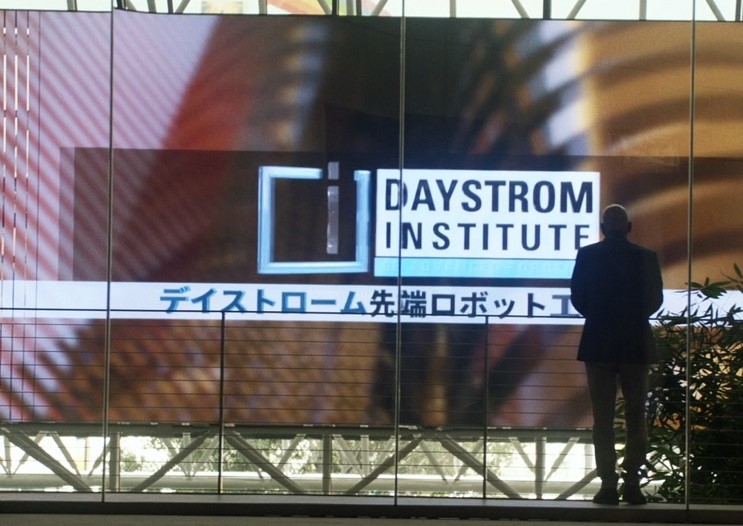
Picard awakens back at the vineyard, and his Romulan assistants tell him that in the footage of the explosion there was no indication of anyone else being present – no masked Romulans, and no Dahj. Picard thinks she may have had some kind of cloaking device, and travels to the Daystrom Institute, which had been conducting research into androids – before such research was outlawed seemingly galaxy-wide.

At the Daystrom Institute. Named for a TOS character, the Institute has been mentioned a number of times in Star Trek.

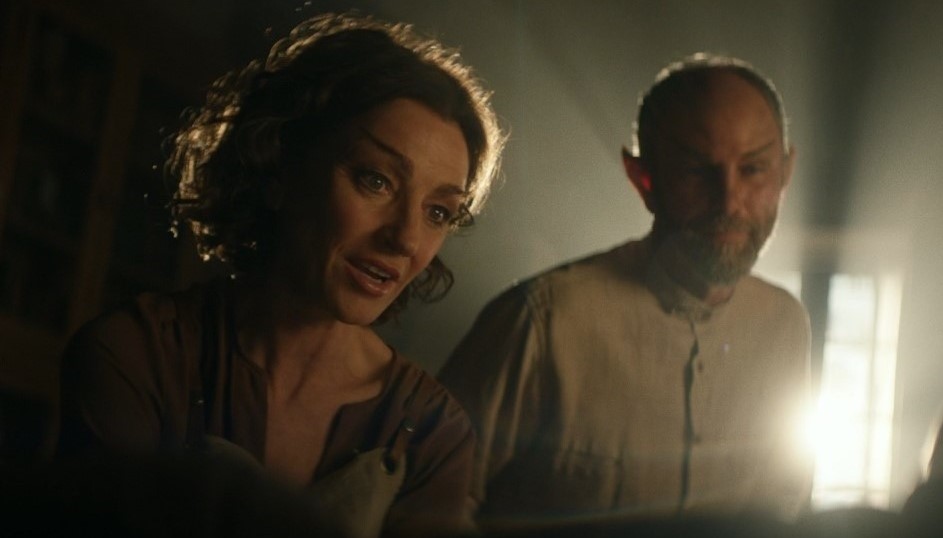
He meets Dr Jurati, played by Alison Pill, and she explains that Bruce Maddox – presumably the same character from The Next Generation episode The Measure Of A Man – had been working on developing sentient androids which appeared to be human. Picard describes Dahj as a “flesh-and-blood” android. Here it’s also disclosed that B4 (from Star Trek: Nemesis) lacked the capability to take on Data’s memories and that despite Data’s attempts to copy his programming to B4, that information has been lost.

The necklace comes back into play – it’s a symbol used by Dr Maddox, which Dr Jurati recognises. And she reveals that, for some reason, part of the creation process for androids like Dahj means they’re made in pairs – so there may be another Dahj, another “daughter” of Data, somewhere out there.

The action then cuts to a Romulan base where we immediately meet Dahj’s twin, wearing the same necklace. She meets a Romulan – Harry Treadaway’s character – and they have a short conversation, before the camera pans out revealing that the Romulan base is aboard the Borg cube we’ve seen in the trailers, and the episode ends.

I feel that the trailers kind of spoilt that moment, because it would’ve been apparent from the decor of the Romulan base that it was inside the Borg cube to anyone who’d seen the trailers, yet the episode itself treated the reveal that the Romulans were on this Borg cube as a pretty big deal. In that sense I think the creative team and the marketing team may have not been working in tandem as well as they should’ve!

The Romulan base is revealed to be a Borg cube – and it looks a little different from the trailers.

Overall I was incredibly impressed with Remembrance. It was a very strong start for the series – setting up enough mystery to drive the plot forward. There were some looks back, and some “easter eggs” for long-time fans, but these complemented the plot rather than interrupting or overwhelming it. The emblem of the Ferengi Alliance pictured for a couple of seconds, the LCARS computer displays at Picard’s home, a TNG-era Batleth in Picard’s archive, the First Contact and TNG uniforms worn briefly in dream sequences, and many others that I’m sure I’m forgetting seasoned the episode with just enough nostalgia to say “hey, you’re definitely watching Star Trek”, but without drowning out the plot or any of the new characters.

Picard always had to find a way to get that balance right, and I think that if the season continues in a similar way to Remembrance, they’ve managed to pull it off.

The Romulans are clearly in a very bad situation. Picard initially intended to save 900 million lives – but after Mars was attacked and his fleet destroyed, it isn’t clear how many he was ultimately able to rescue before the supernova hit. Whether the Borg cube is their headquarters isn’t clear, but it just might be. If that is the case, it raises the question of why they didn’t settle on one of their colonies – the Romulan Star Empire was known to control other worlds and a significant amount of territory.

Picard’s Romulan assistants, Laris and Zhaban. How many other Romulans survived is unknown.

Dahj being killed off was a shock, and it was a story point put in purely for that reason – shock value. Though by the end of the episode it’s revealed she has a “twin”, the character we met who set in motion the events of the series is gone, and – barring any technobabble explanation for how she survived being disintegrated – isn’t coming back. That’s a new one for Star Trek, and it’s something you’d expect to see in a show like Game of Thrones or The Walking Dead. Dahj’s twin looks much more settled than Dahj did, but whether she too is going to be “activated” is unclear.

Indeed, it’s unclear what exactly was “activated” in Dahj. It’s apparently some part of her synthetic programming, something designed to keep her safe, but why it would direct her to the retired Admiral Picard instead of, say, sending her back to Dr Maddox if she got into trouble or came under attack is unclear.

I wonder if we’re going to see Dr Maddox in the flesh later in the series. Brian Brophy – the actor who portrayed Maddox in The Measure Of A Man way back in 1989 – wasn’t mentioned as being in the cast, and according to his IMDB page doesn’t seem to have had many film or television roles since the turn of the millennium. It’s possible, of course, that the character has been recast.

Picard and Bruce Maddox in The Measure Of A Man.

Remembrance played out like a the beginning of a classic adventure story. The protagonist – Picard, in this case – is living a quiet, rural life. His life is disrupted by a mysterious newcomer – Dahj – and he becomes embroiled in the mystery, setting the stage for the adventure to unfold as he chases down the solution.

It also had a very “Star Trek” feel, and moreover, it did feel like a continuation of the Star Trek story as a whole. For all of the high points of Enterprise, Discovery, and the Kelvin-timeline films, what was missing from those stories is a sense that things were moving forward, that the overarching narrative of the entire franchise was progressing. Prequels and mid-quels (or however we’re to describe Discovery) can be great, but pressing forward into the future is what Star Trek has always been about – at least, when it was at its best. Picard feels like a return to that, and a significant part of that is Sir Patrick Stewart’s performance.

I mentioned that he spoke passionately and angrily about helping the Romulans and about the ban on synthetic life, and that was absolutely pure Picard. The man we met in 1987’s Encounter At Farpoint was on full display in that moment, and his willingness to help Dahj, even before he knew who she was, shows he’s the same compassionate person we knew, even despite what happened with Starfleet and the Romulans.

Dahj, coming to terms with the idea of being an android.

There are parallels to Luke Skywalker’s characterisation in The Last Jedi in the sense that both men have left the institutions to which they belonged and from which they seemed inseparable. Both sought solitude and a quiet life – as Picard says, he felt he wasn’t living, merely “waiting to die”. And ultimately, both found a reason to come out of isolation, finding an inspiring cause once again.

So what are the mysteries Picard aims to solve over the rest of Season 1? Part of it surely has to be the reason that the synthetics went rogue and attacked Mars. A cause has never been identified, yet surely we’re on course to learn they were hacked, attacked, reprogrammed, etc. by some nefarious villain. Next is Dr Maddox – is he out there, somewhere? Is he going to feature in later episodes, or will we only know him through Dahj’s twin? What are the Romulans doing on the Borg cube? And how do the ex-Borg Seven of Nine and Hugh fit in to all of this? At this point we have absolutely no idea – and that’s compelling me to come back next time and find out more.

When Discovery premiered, I felt that The Vulcan Hello and Battle At The Binary Stars were not a very strong start, and that’s for a variety of reasons. Remembrance stands in absolute contrast to that, and ranks up there with Deep Space Nine’s Emissary as one of the best premieres in all of Star Trek. It crammed a lot into its 44 minutes without any of it feeling rushed, without any of it feeling overwhelming.

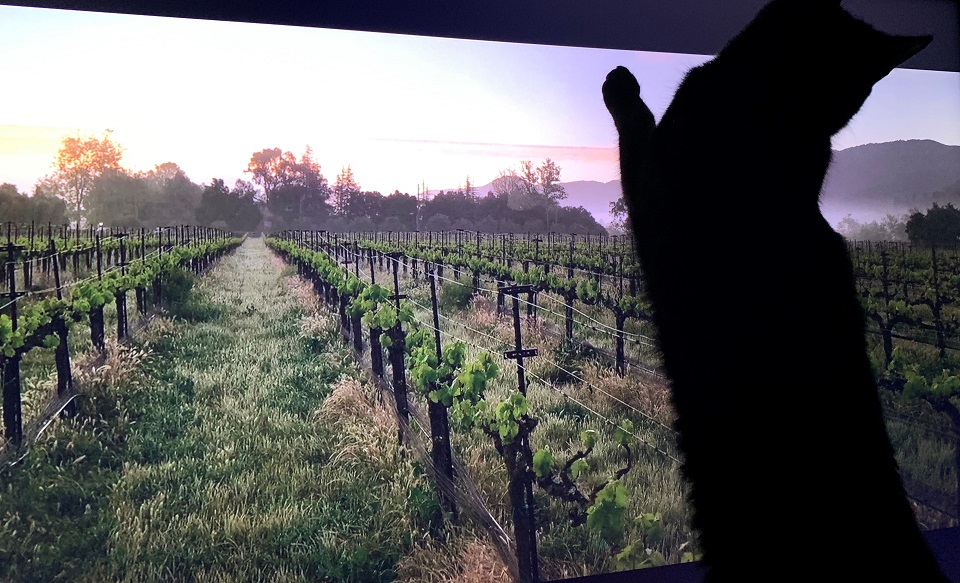
One of my cats interrupts my viewing of Remembrance!

The introduction of the series’ main characters has felt deliberate, and we’ve only met three out of six so far – one only very briefly at the end of the episode. This is incredibly positive – a show that throws a huge cast of characters at you in episode one can be difficult to follow. Picard has clearly had a lot of thought put into every aspect, including the pacing.

Hanelle M. Culpepper, whose work on The Red Angel had me feeling a little nervous as I mentioned, really excelled. Each shot, each camera angle, and the way each scene unfolded all felt meticulously organised and planned. A lot of care was taken with Remembrance to get the look and feel just right, and it shows.

It’s hard to pick out a significant point to criticise, really. I was thoroughly enjoying myself from start to finish, and while I can (and did) find a few very minor nitpicks, taken as a whole, Remembrance was incredible. A worthy successor to The Next Generation, and a fantastic way to rejoin Picard and the Federation in the late 24th Century.

Remembrance, the first episode of Star Trek: Picard, is available to stream now on CBS All Access in the United States and on Amazon Prime Video in the UK and a number of other countries and territories. The Star Trek franchise – including Star Trek: Picard – is the copyright of ViacomCBS. This article contains the thoughts and opinions of one person only and is not intended to cause any offence.