Civilization VII: Further Thoughts

Since writing up my first impressions of Civilization VII a few weeks ago, I’ve continued to play the game. Today, I wanted to cover a few points that I didn’t make in that original piece – which I wrote after about six hours of gameplay – as well as make one amendment to something I feel was unclear last time.

For the record, I still think Civilization VII has a lot of potential. But right now, there are things holding it back – as well as a few bugs and issues that I didn’t notice at first that really need to be patched out as quickly as possible. I’ve kind of hit the wall with Civ VII after about 40 hours of gameplay, and I probably won’t jump back in until the next update. There’s a reason for that, and we’ll begin there.
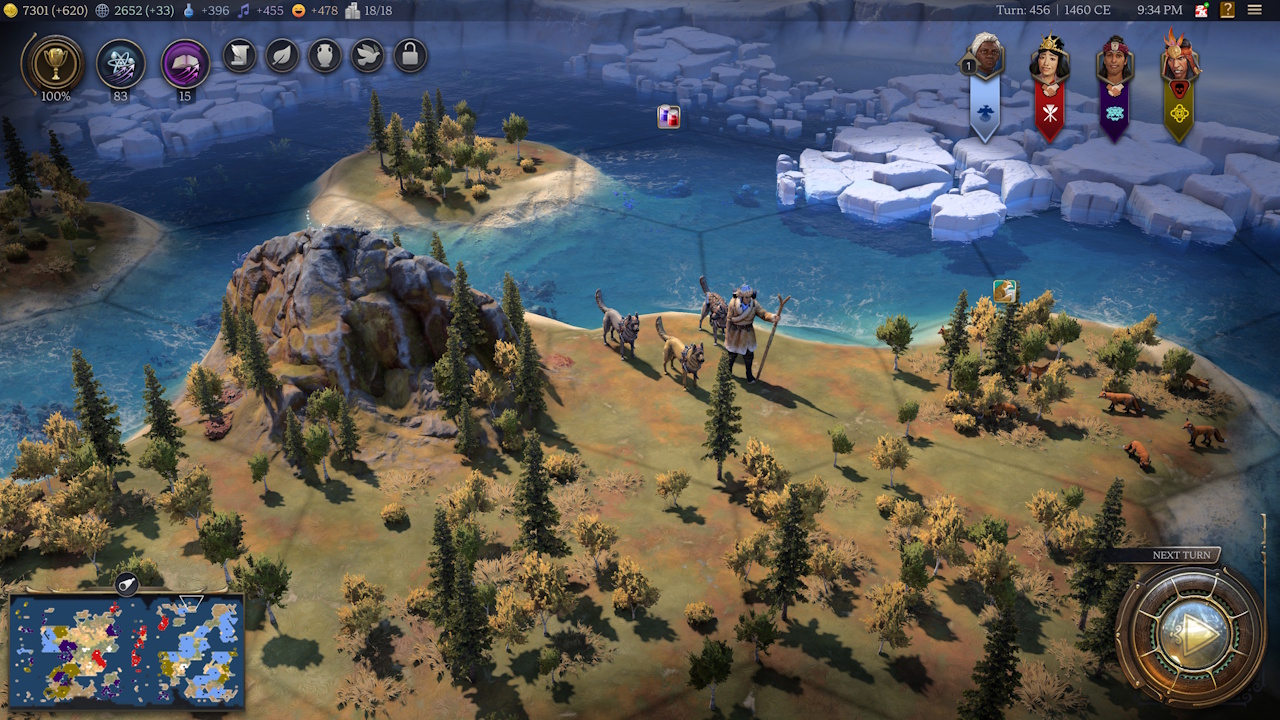
Screenshot of Civilization VII (2025) showing a scout, forests, and ice.
A scout near the edge of the map.

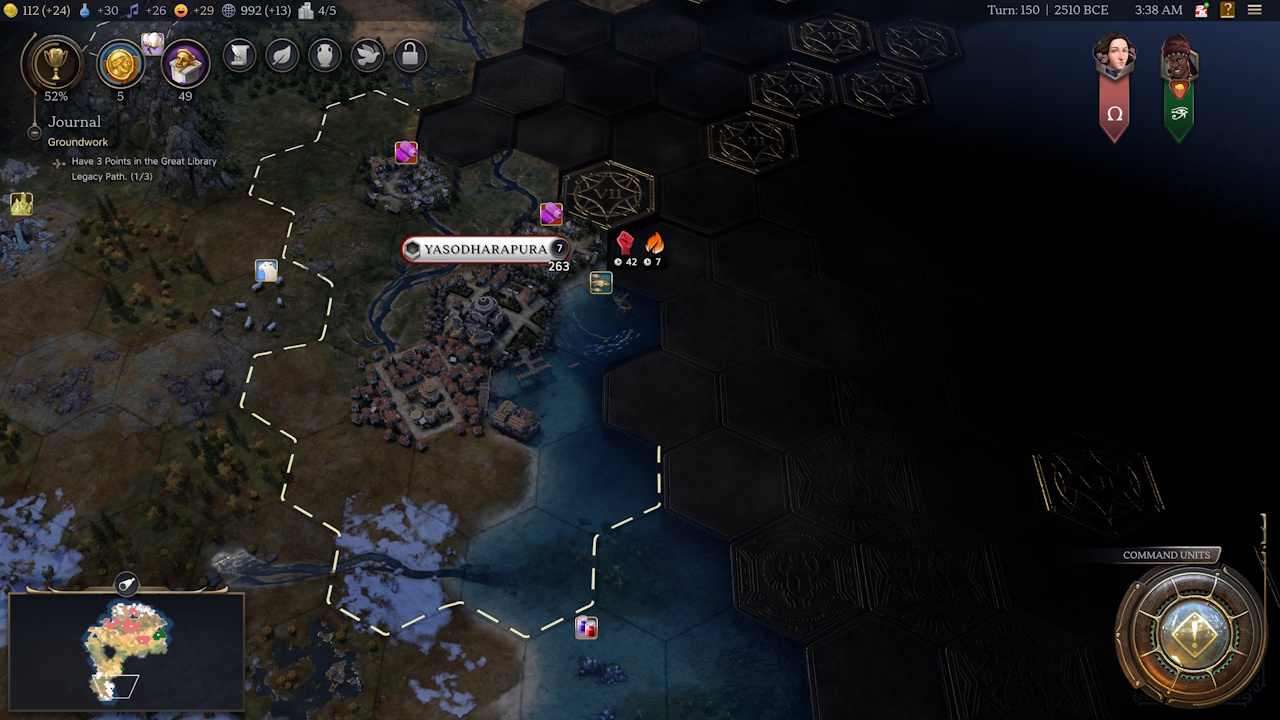
At time of writing, there’s a bug – or at least a major imbalance – that has totally ruined several games for me. In short, either AI civs are underpowered or barbarian city-states are overpowered. In several recent games I’ve played – or rather, attempted to play – this has led to barbarians conquering and defeating AI players before the game can really get going. There’s no way to increase the number of AI players in the game to try to counteract this, and it isn’t something that’s only happening on lower difficulty settings or certain maps, either.

Having barbarians and hostile city-states is great, it adds a whole extra dynamic to gameplay and it makes the very early game feel more tense and dangerous. But these mini-factions have to be balanced better, because they shouldn’t be able to knock out AI civilisations except under rare and unusual circumstances. Making them an obstacle for human players is great – but making them so overpowered that they can kill one, two, or even three civs in the ancient era before the game has a chance to get going… that ruins the game for me. And I’m sure it has for other players, too.
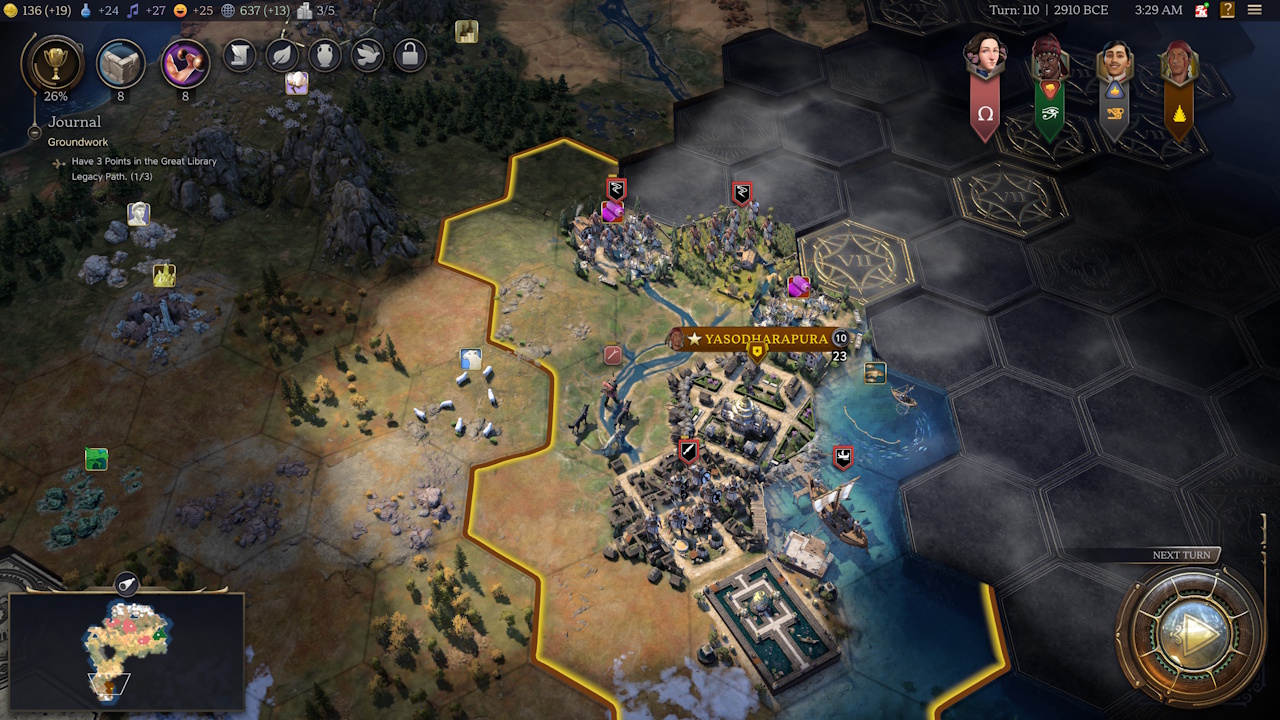
An AI city facing a barbarian raid…
…and the same city a few turns later after being captured.

I’m mostly familiar with Civilization VI. That was the first game in the series I played extensively, so it’s my point of comparison. Barbarian tribes in that game could be aggressive, particularly in the early game. And while I can’t call to mind any specific examples, it must’ve happened at least once that an AI civ was knocked out of the game by a particularly strong barbarian attack. If that did happen, though, it was a rare occurrence no matter what the settings were, and it simply isn’t something that should be happening so often in Civilization VII.

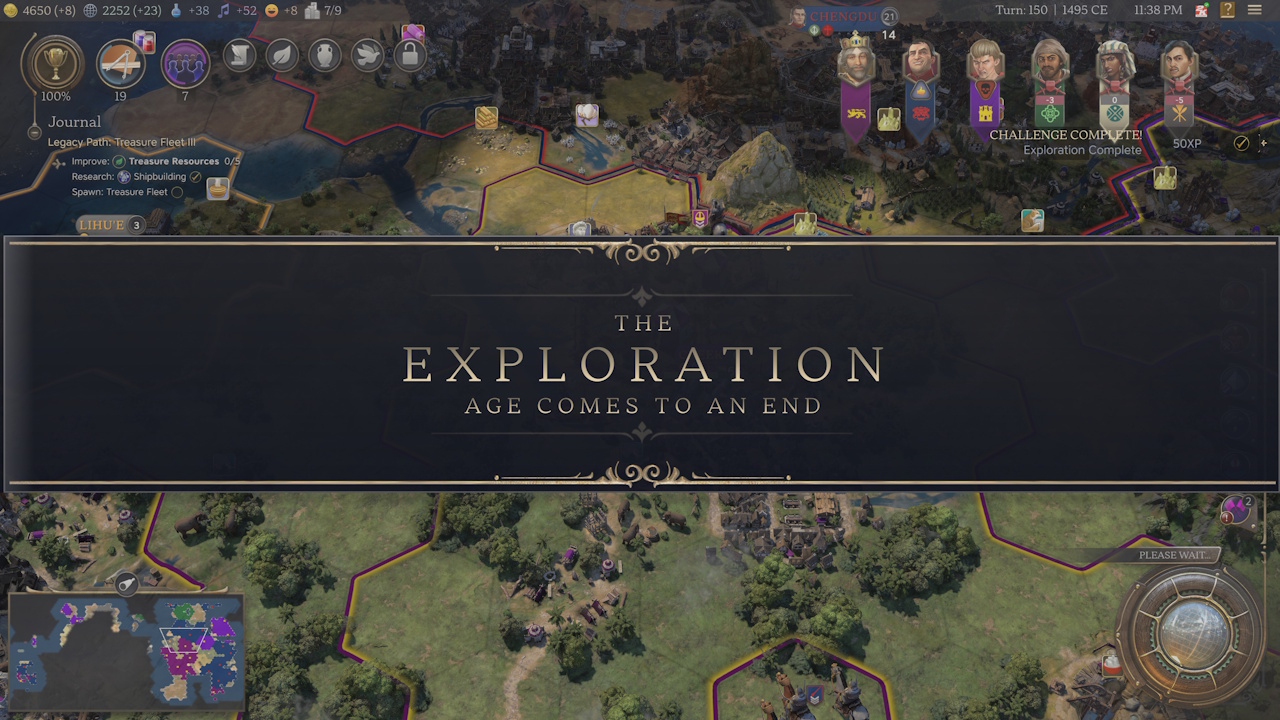
Because of the way Civ VII’s eras work, knocking out an AI player cuts down the amount of time an age lasts. In one recent game, the ancient age seemed to be over in a flash after not one but two AI players were defeated off-screen – presumably by barbarians. The game only has three eras to begin with… so speed-running one of them in this fashion isn’t great.
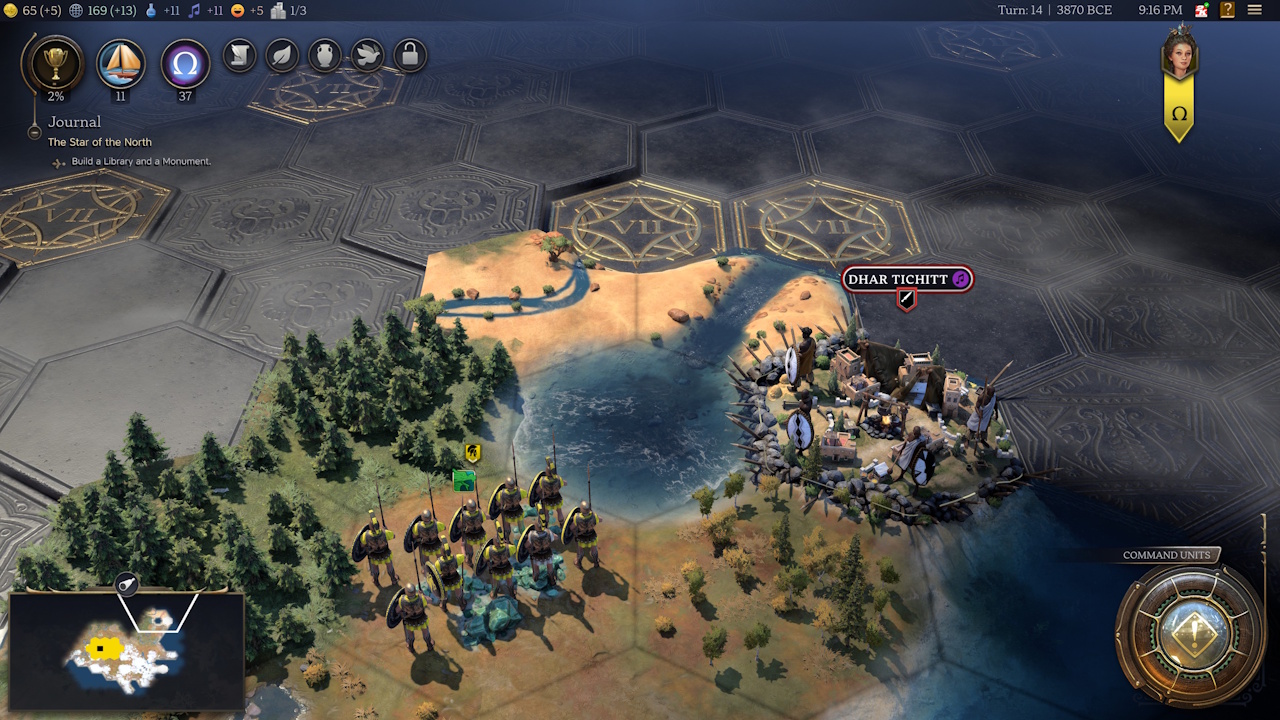
Screenshot of Civilization VII (2025) showing a barbarian camp/village.
A hostile city-state/barbarian village.

That leads into my next point. This is much bigger for Civilization VII and much less easy to fix… but there really aren’t enough ages in the game, and the way they operate as effectively three mini-games in one feels limiting.

I’m an adaptable person, and Civilization VII’s new rules and new gameplay mechanics should be surmountable for me. I’m not lashing out at the game because I “don’t like change,” or I want to keep playing Civ VI. Having played quite a few games now, with different leaders and factions, I’m beginning to get used to most of the changes and differences – but the way eras function is something I’m still struggling with.

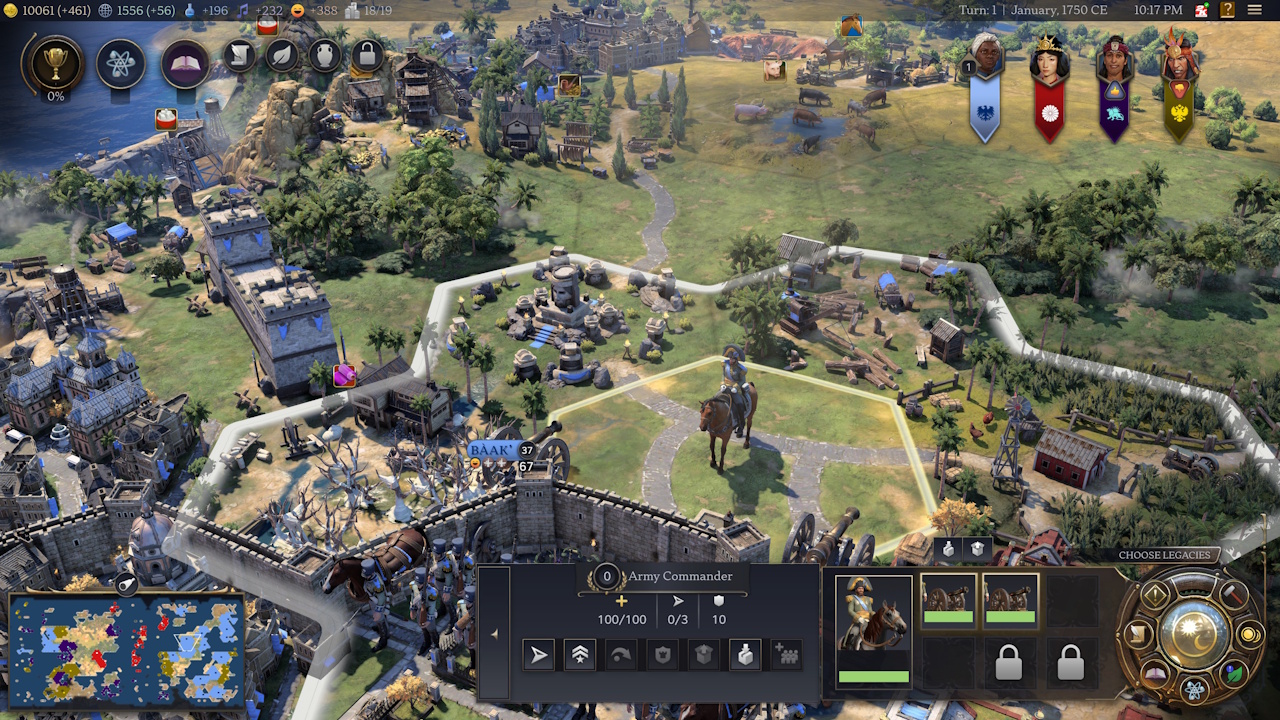
I mentioned in my first impressions that war doesn’t carry over from one era to another – nor do most units. Even units that survive an era transition don’t remain where they had been placed on the map; they’re either grouped together in an army or dropped one by one into cities and towns – which also don’t survive the era transition in their previous form. All cities except for the capital revert to being towns, losing all of the bonuses cities get and forcing you to re-convert them later.
Screenshot of Civilization VII (2025) showing an army commander and a city.
The beginning of a new era removes some units entirely, relocates others, and changes most cities back into towns.

This really limits the way Civilization VII plays. To give one example: if I want to wage war in the ancient era, I basically have to build up my military from turn one and choose the first civ I meet as my target for conquest. There just isn’t enough time – even in a game with the maximum number of turns and eras that are as long as the game allows with its current, very limited options – to do things any other way. However you look at it, this is a limitation on play styles, because I’m forced to do one of two things. Either I have to write off the idea of an early war and conquest of a neighbour – which can be limiting and annoying, as AI civs have a tendency to forward-settle, placing cities right next to mine or even in the middle of my burgeoning empire. Or I have to prepare for war from turn one.

War can be time-consuming in a game like Civilization VII, and if you’re coming up on the end of an era, there’s basically no point in even starting one. The end of an era forces you to make peace with anyone you’re fighting, and it also removes units from the board and repositions others, meaning it isn’t possible to instantly re-start a conflict after the transition. This makes war in the early game much more limited – either you launch an attack as early as possible against whichever unlucky civ you’re right next to, or you’re stuck on the defensive, lacking enough time to build up a sufficiently-sized army to launch a full-scale conquest.
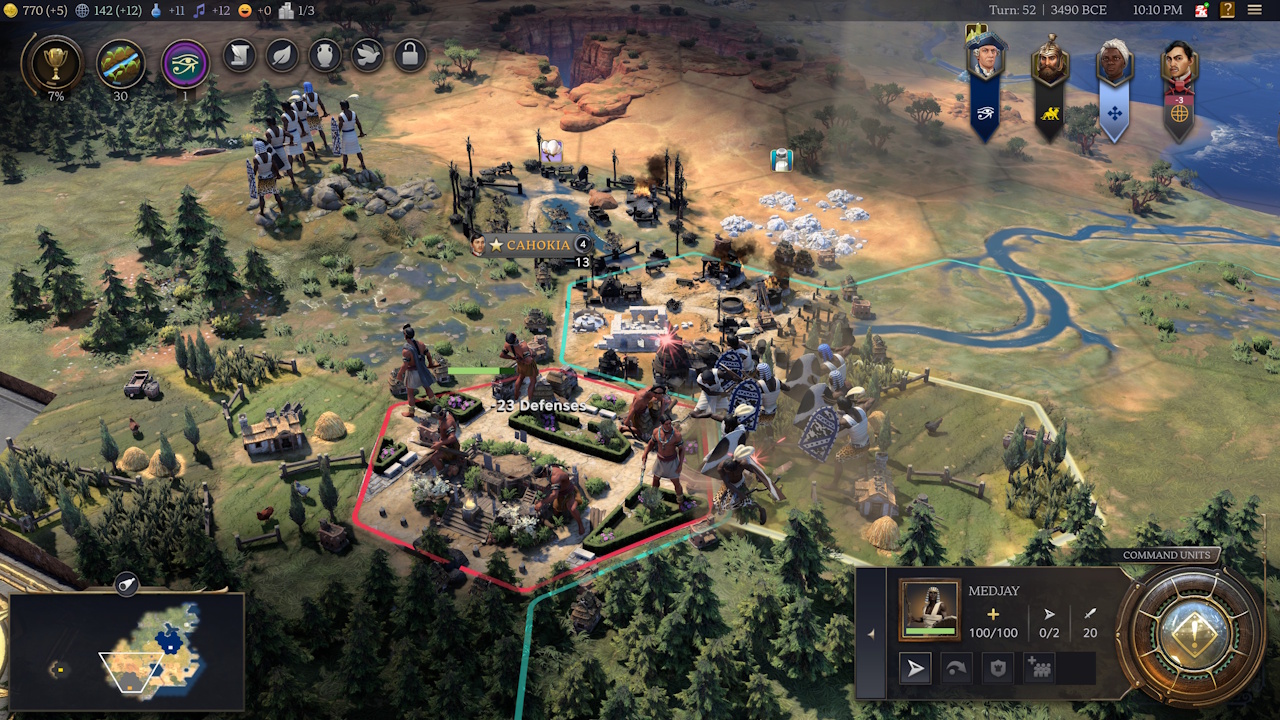
Screenshot of Civilization VII (2025) showing an Egyptian unit attacking a city.
War in the ancient era.

The one thing a 4X strategy game like Civilization VII mustn’t do is limit your options. War, diplomacy, exploration, peace… everything should be on the table, and as the player I should feel in control. Sure, there are gonna be times where I’m under attack and on the defensive. And there should be unpredictable elements in there. But if I know for a fact that there’s basically no point starting a war once the era clock reaches a certain point, or that all I have to do is hold on for a few more turns because a mandatory peace treaty is coming as soon as the era ends… that puts real limits on even defensive wars.

Beyond just war, though, I find the way eras are handled to be pretty limiting. Each faction has unique civics to unlock, for example, but these come at the expense of the regular civics tree, and with one civics tree per era your choice is either fall behind the AI or sacrifice those unique policies and bonuses. In a longer game with one civics tree, it might be easier to catch up – or to race ahead in order to dedicate time later on to unlocking those dedicated civilisation civics. But the eras limit this mechanic in a pretty disappointing way.
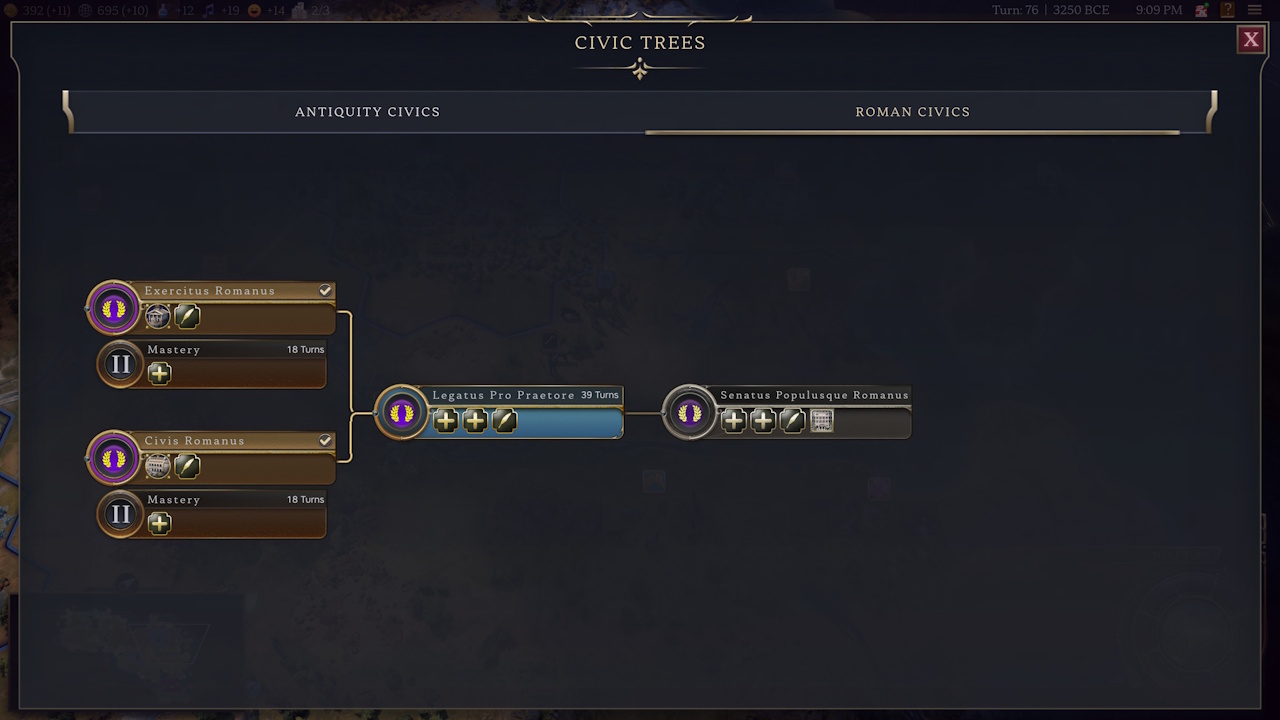
Screenshot of Civilization VII (2025) showing the Roman unique civics tree.
Each faction gets its own unique civics tree.

Eras also limit exploration, and by extension what kinds of maps are available. Because the middle exploration era is entirely focused on colonisation, it’s impossible to speed-run a tech like celestial navigation in order to settle islands or continents that are separated from your starting area by ocean tiles. There are also resources – like cocoa, for instance – that are locked until the exploration era. It isn’t even possible to explore islands and continents elsewhere on the map before the game deems it acceptable.

Again… this is really limiting. I can’t build a ship or a scout and send them off to the far corners of the map; I’m stuck on my starting continent or island until one-third of the game has passed. This, in turn, limits what kind of maps are available – there are no Mediterranean maps, for example, with land surrounding a body of water, or single-continent maps with outlying islands. There are fewer map types and less map variety in order to accommodate this eras system… and for me, the trade-off isn’t close to being worth it.
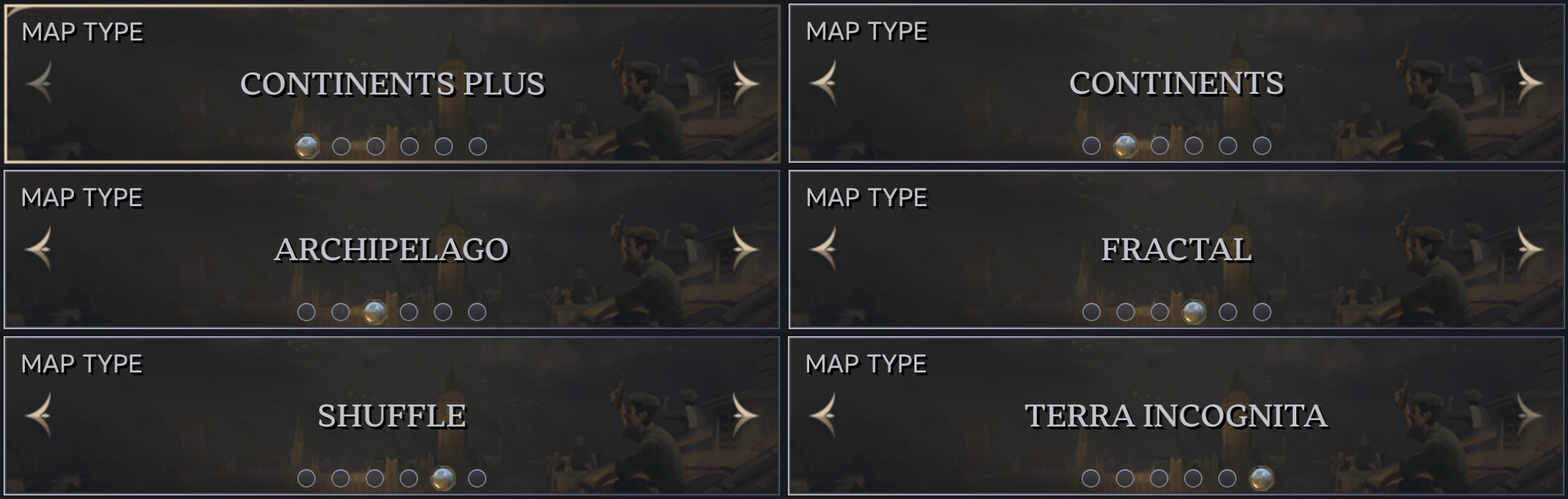
Screenshot of Civilization VII (2025) showing all six map options.
All six of the available map types.

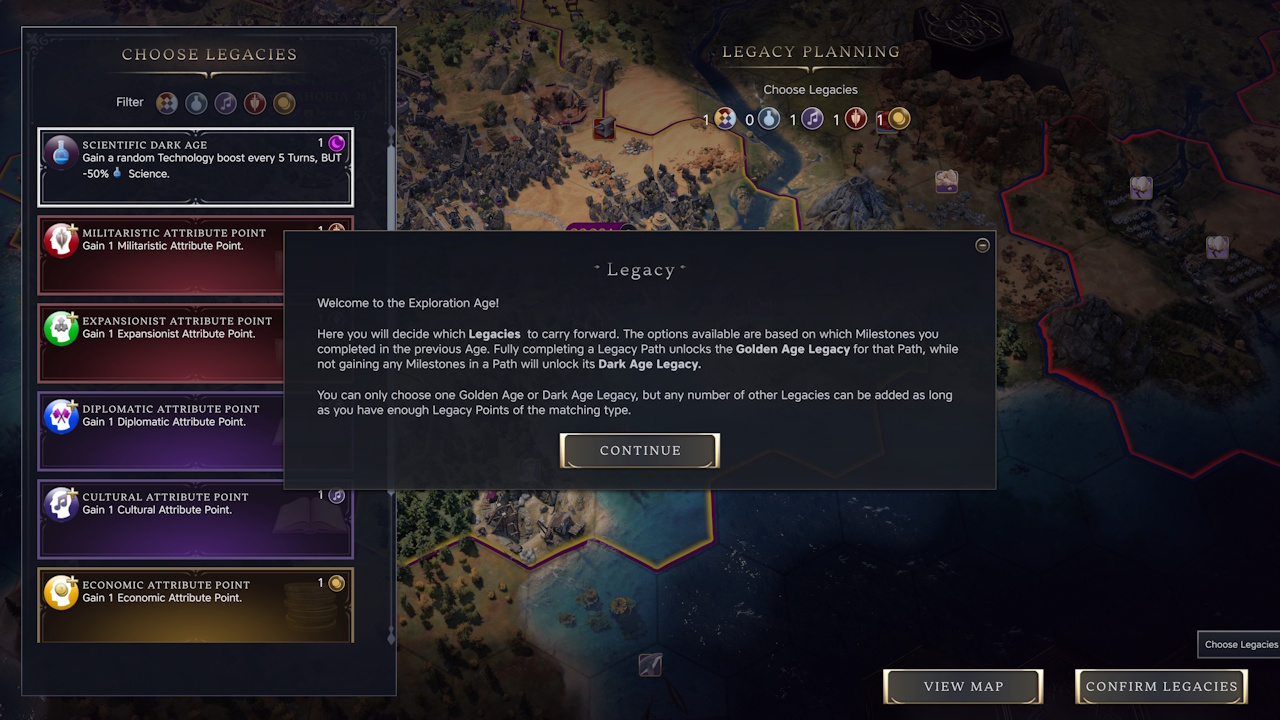
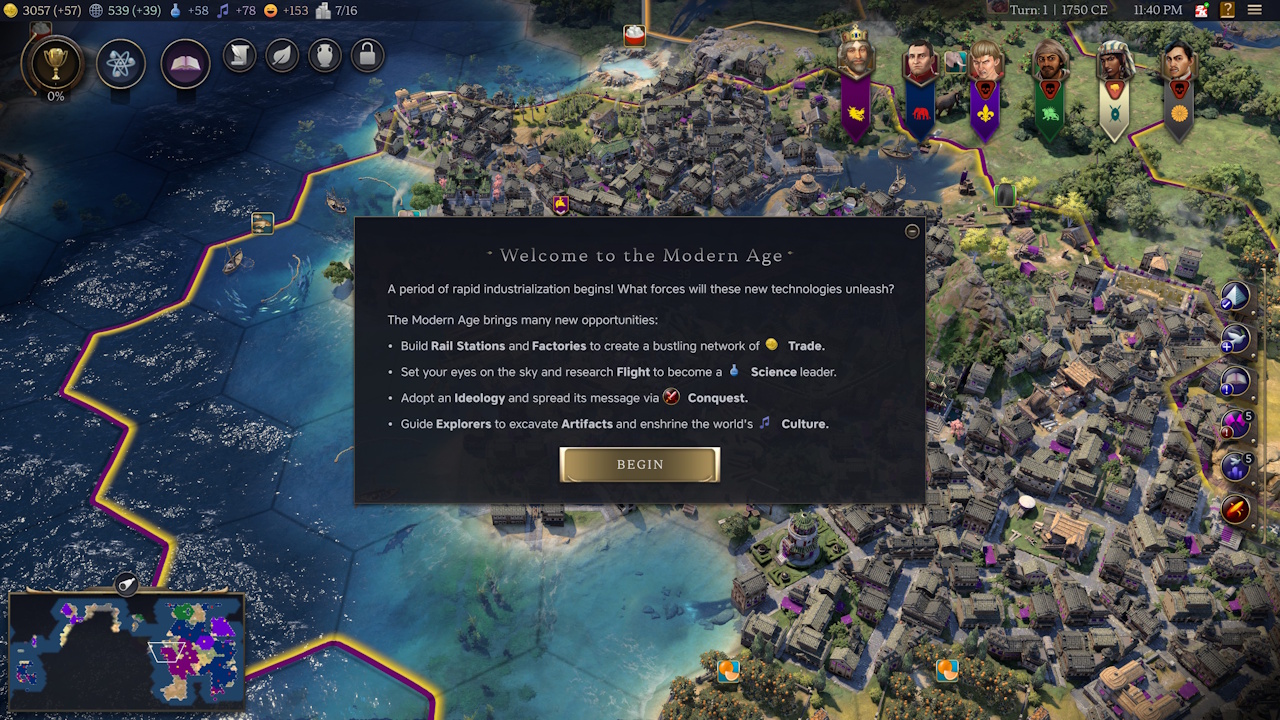
Then we come to era transitions, and choosing new factions. In my first impressions, I noted that most factions are locked until certain gameplay requirements are met to unlock them – and I should clarify that I was referring to this transition between eras. In one case, I had been playing as Isabella and chose Spain for the exploration age. But when the era ended, I literally only had one option for the modern age: Mexico. All of the other modern era civs were locked because I hadn’t, for instance, settled a city on tundra or dug three oil wells. Because these requirements were not communicated well – and were not communicated at all in the preceding era – I had no choice but to finish that game as Mexico.

Obviously I’ve got nothing against playing as Mexico, and I would’ve picked that civ eventually. But why should Civ VII be so restrictive with its faction choices? Even in more recent games where I’m more aware of these limitations and I’ve tried to overcome them, there are always some civs locked when the ancient age transitions to the exploration age, or when the exploration age gives way to the modern age.
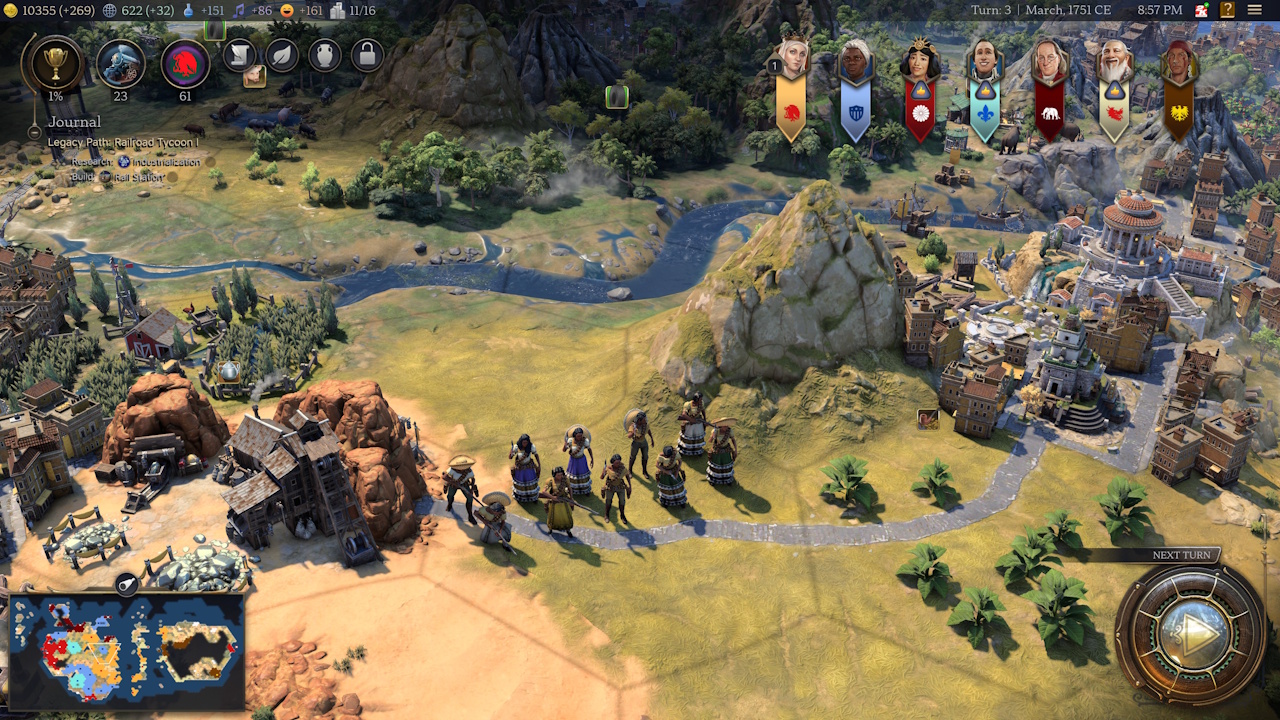
Screenshot of Civilization VII (2025) showing a Soldaderas unit on a road.
Mexico’s unique unit: the Soldaderas.

I can understand the developers wanting to make sure players don’t accidentally shoot themselves in the foot by choosing a civ with bonuses that aren’t applicable or with unique abilities that they’d struggle to take advantage of because of the way earlier era(s) have unfolded. But these restrictions feel way too limiting as they’re currently implemented, and with the whole “choose one civ per era” mechanic being Civilization VII’s biggest new feature, it shouldn’t be so difficult and finicky to work with. This is basically the entire selling-point of the game – so why make it so limited and restrictive?

Part of the appeal of Civilization VII is the idea that I can chart my own unique route through history. I can start as Egypt, then become the Inca, before ending the game as Prussia. If I play as Spain and find I can only transition to become Mexico… that completely robs this aspect of the game of its one unique selling-point, and is yet another limitation on gameplay styles in a game that already has no shortage of those.
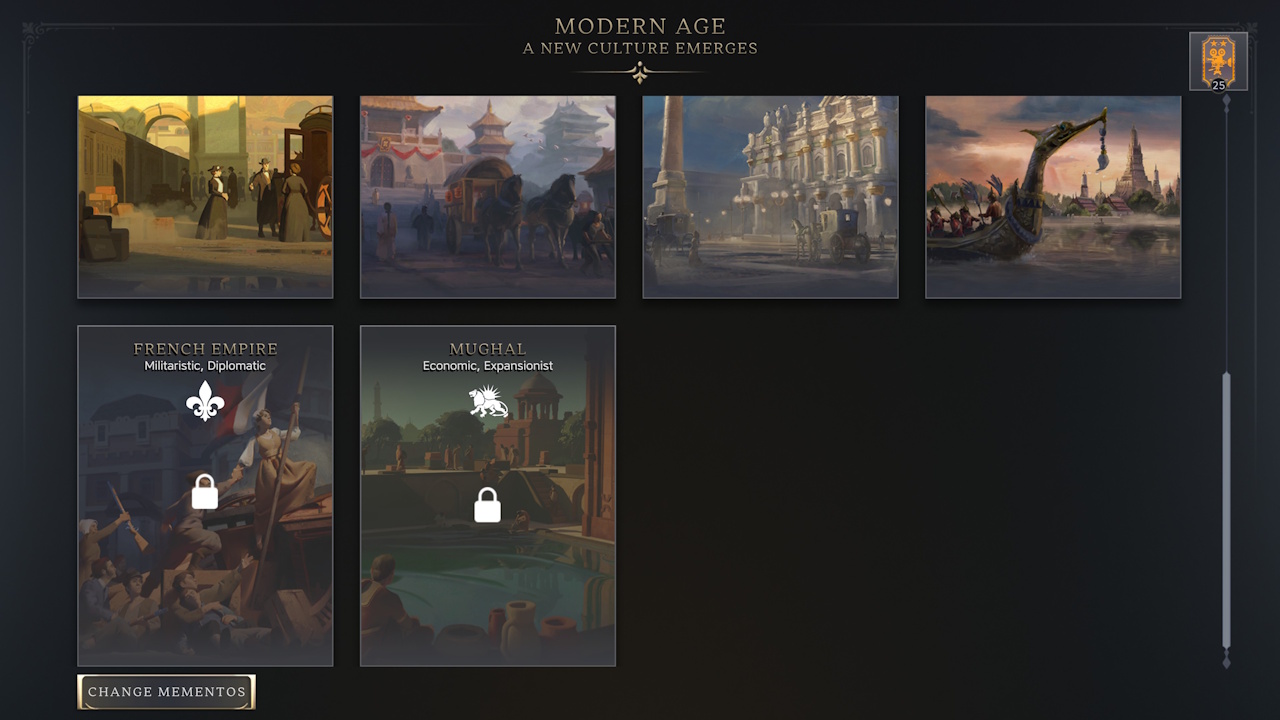
Screenshot of Civilization VII (2025) showing several modern age factions.
In this example, two modern age civs are locked.

I want to be able to choose in what order I move units or set policies. Sometimes, Civilization VII will arbitrarily limit this, forcing me to choose the benefits of a celebration before I can move units. If I’m in the middle of a war or trying to lay siege to a city, I want to focus on that first and foremost! If I select a unit, I shouldn’t be forced to do something else before I can order it to move or attack.

There also seems to be a bug where, after building the Dogo Onsen wonder, every city in my empire gains population (meaning I have to manually grow each city by adding a tile or specialist). This is pretty annoying, especially when you have twenty-plus cities; having to manually click through all of them, adding a tile or specialist, before the game will let you do anything else takes up a lot of time. Hopefully this bug can be fixed in the next update.
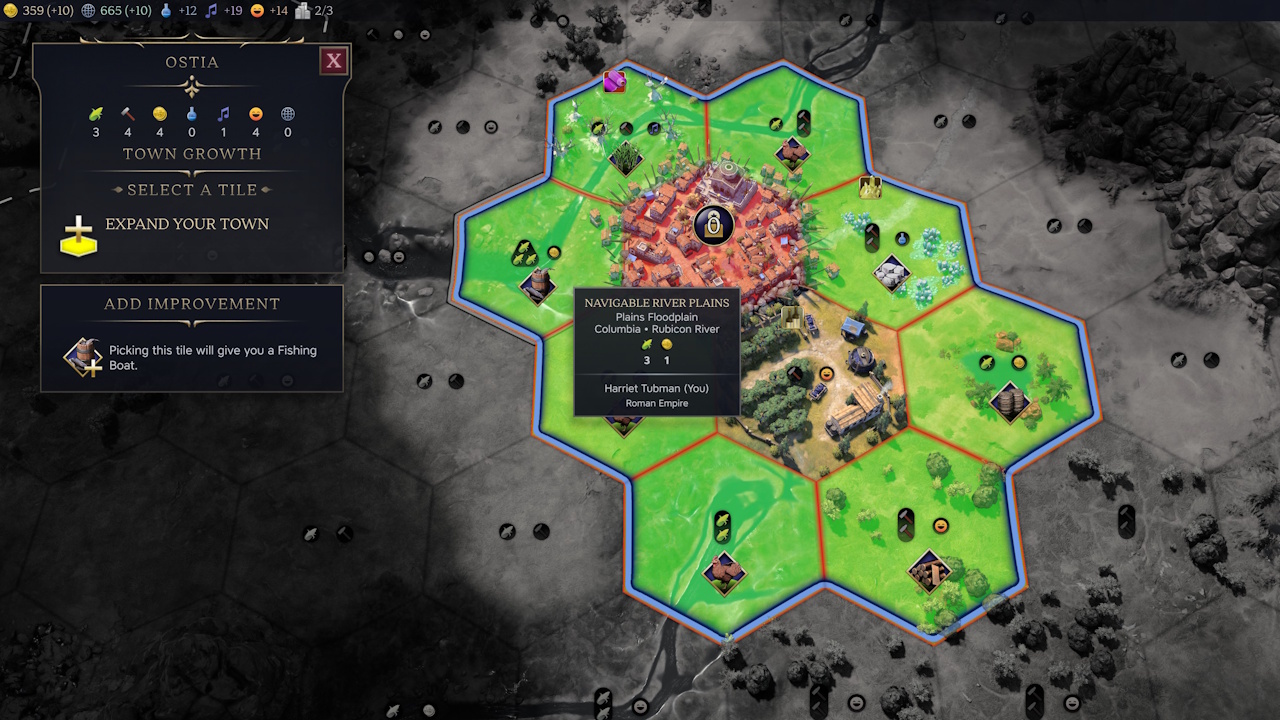
Screenshot of Civilization VII (2025) showing a town being expanded.
Growing a town is fun… growing twenty in a single turn? Less so.

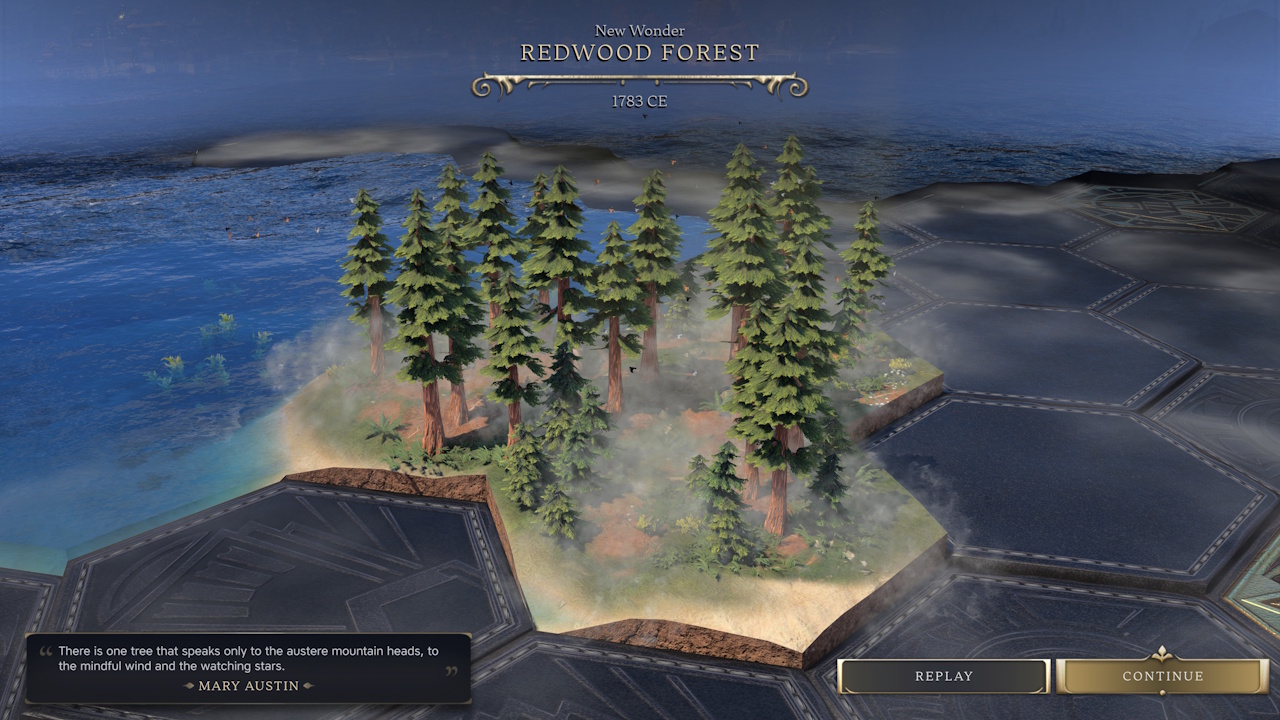
Speaking of bugs, I’m concerned that natural wonders are glitched. In short, every single game I’ve played has had the same three natural wonders: the Grand Canyon, the Redwood Forest, and Zhangjiajie. I’ve seen the Great Barrier Reef once in one other game – and that’s it. There are, according to the Civ Wiki, fourteen others… but I’ve never seen any of them even once, not in any of the games I’ve played. And this isn’t because I always pick the same civ or the same map type: I’ve played most leaders and most civs at least once, and I’ve tried out all of the map types (but not every size of map, to be fair).

So… is this a bug? Or in forty-some hours of gameplay, have I just been randomly unlucky to continually encounter the same three natural wonders every time? There’s something to be said for that level of random chance… so maybe I should buy a lottery ticket this week! Seriously, though, there are already a pretty sparse amount of these natural wonders – way more need to be added. To keep encountering the exact same ones is just boring and repetitive. If this is a bug I hope it’s patched out. If not… what the heck’s going on?
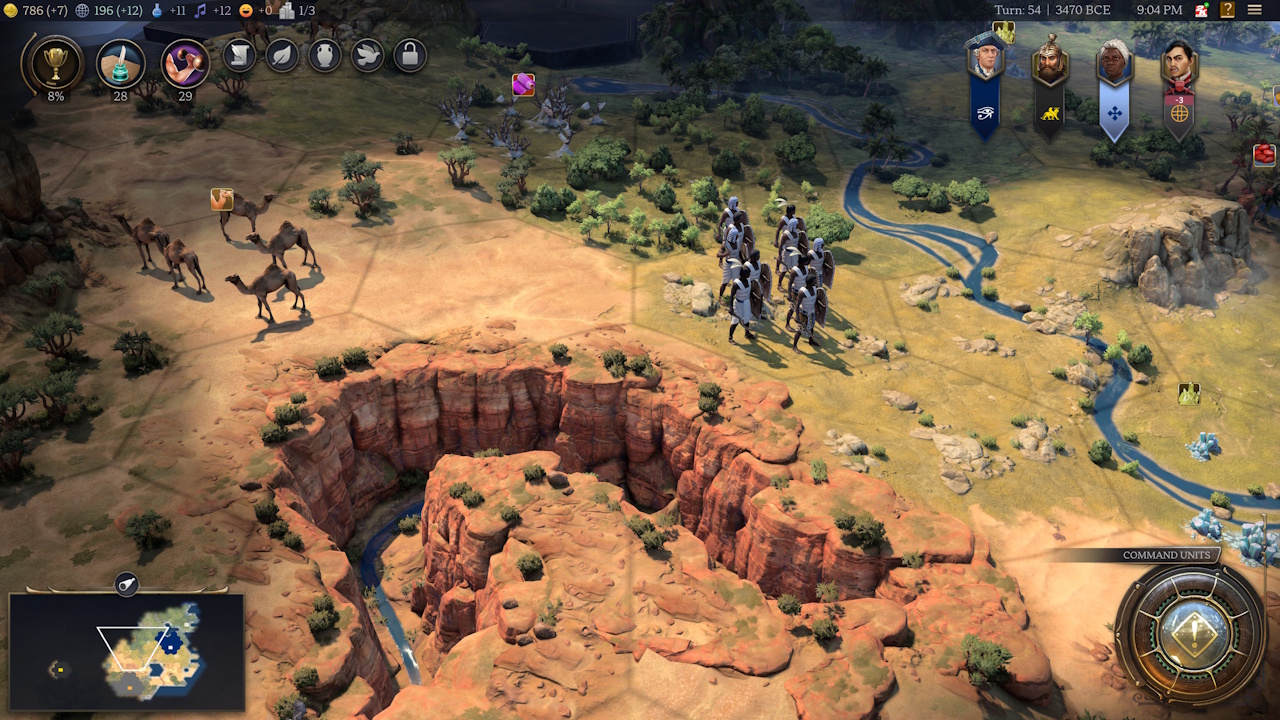
Screenshot of Civilization VII (2025) showing the Grand Canyon natural wonder.
There are more natural wonders… right?

I like the idea of crises. But unfortunately, this is another area where I fear a bug is causing games to feel repetitive and less-interesting – to the point where I’ve started turning off the crisis option when starting a new game. Crisis events throw up a challenge for your civilisation and force you to implement certain policies which have to be accommodated and worked around. But as above, in every single game I’ve played so far, I’ve encountered the exact same crisis in every age every time.

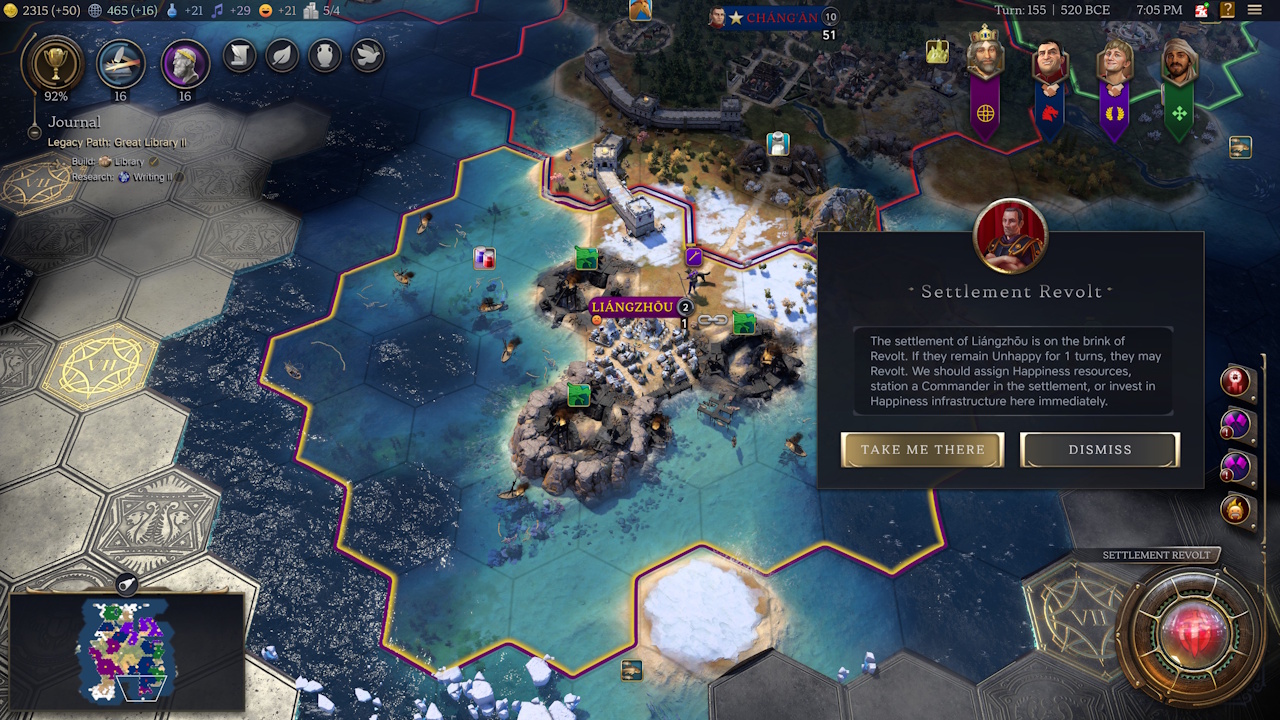
In the ancient age, I’ve only ever gotten the “revolt” crisis, which sees my empire tested by towns and cities losing happiness due to a variety of factors. There’s some potentially-interesting storytelling here, which is neat… but it gets boring game after game. In the exploration era, every game saw my cities laid waste by plagues. Again, this was potentially interesting, but it wore off after the fourth or fifth time I saw it in successive games. Then, when it came to the modern era, I don’t know if there even are any crises to be had – I haven’t encountered any.
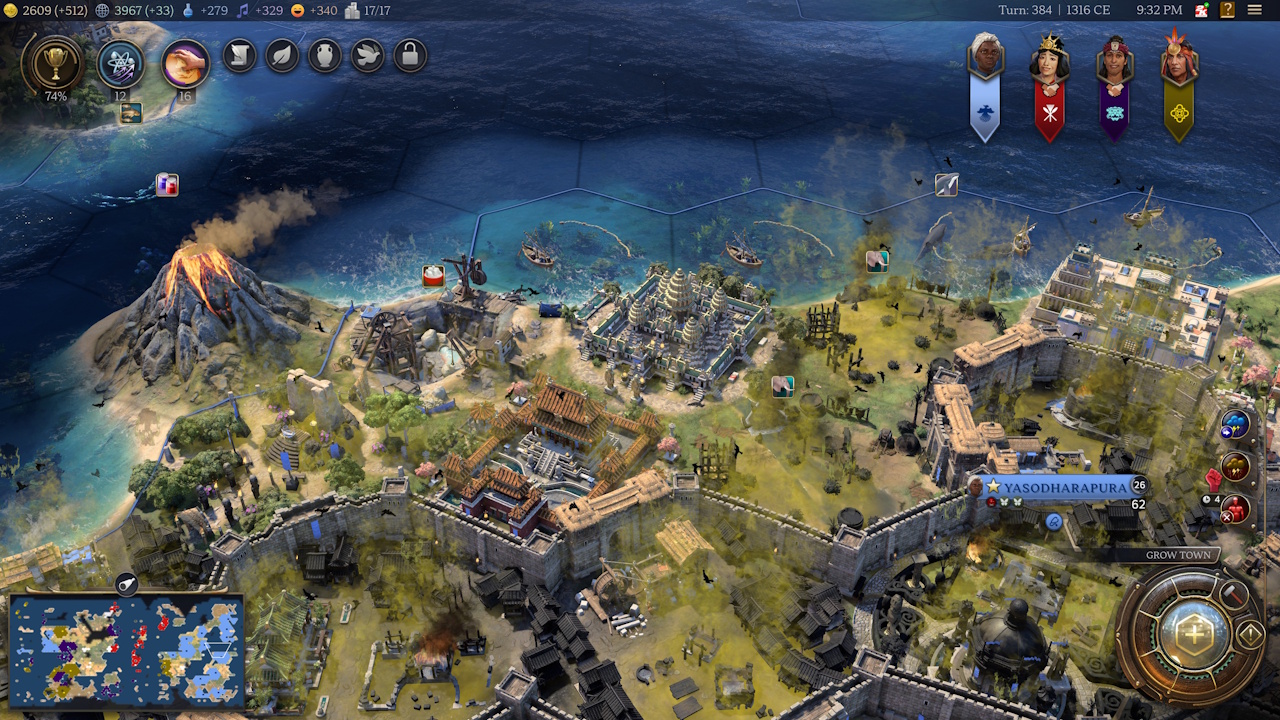
Screenshot of Civilization VII (2025) showing a city suffering from plague.
A city afflicted by plague in the exploration age.

Adding in these kinds of events should be interesting. But if the same ones trigger every single time… is that a bug? I don’t play the game the same way every time, and with different leaders, different civs, and the game set up in totally different ways on different maps, why should I constantly encounter the same crisis events? It’s just another thing that feels, well, limiting. And it got to the point where I decided to just turn off crisis events altogether rather than have yet another instance of the same thing making my game feel repetitive and dull.

Finally, I’d like to talk about Civ VII’s art style – and particularly the way cities look.

I love Civilization VII’s graphics, and going for a more “realistic” look after the stylised and cartoonish Civ VI is a choice that I personally appreciated. It might not be to everyone’s taste, but I felt it was a step up, and I really like the way the game represents water and ships at sea in particular.
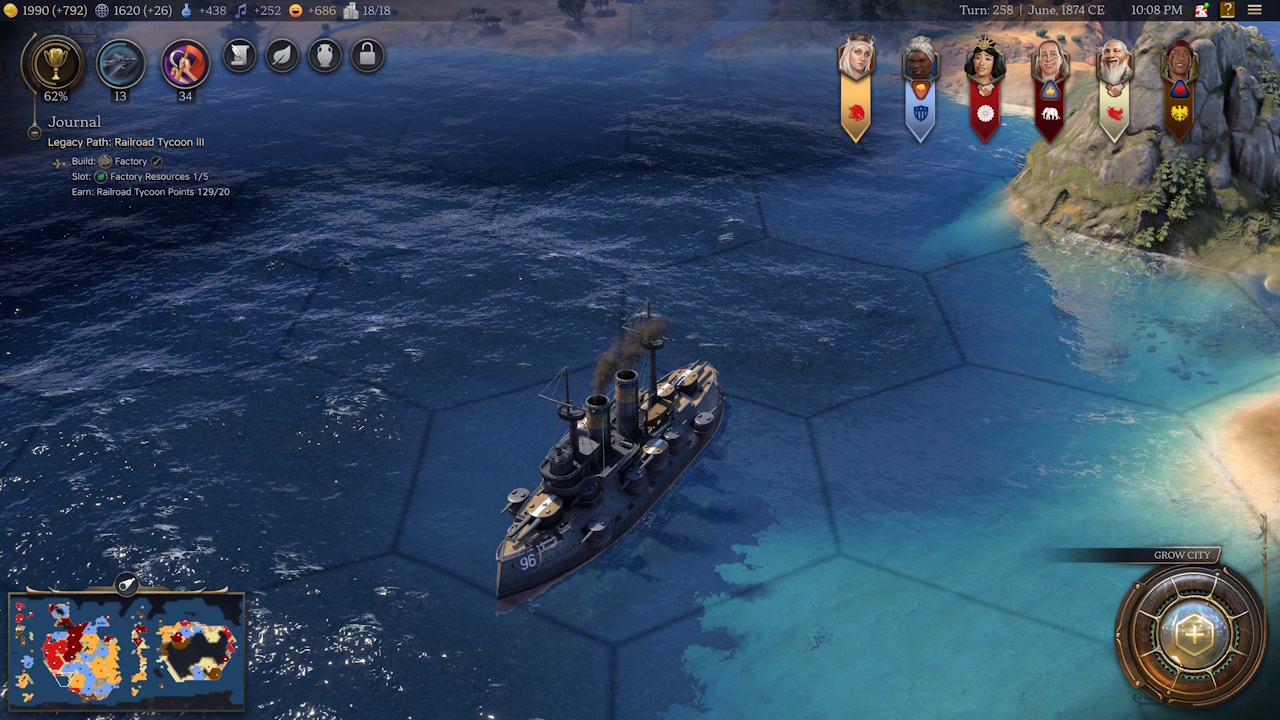
Screenshot of Civilization VII (2025) showing a battleship.
A battleship on the ocean.

However, there’s a problem – and I didn’t really notice it at first. In Civilization VI, it was really easy to tell at a glance which buildings you’d constructed in a city. Campuses and science buildings were blue, for example, and military buildings had red detailing. But in Civ VII, most buildings look very similar to one another, and with no districts or zones that are specific to certain types of building, they can be literally anywhere in a city. This makes it really hard to tell, without zooming in closely or digging through a menu, whether you’ve built all of the libraries and science buildings you wanted to, or whether a city has an important building like a railway station or a market.

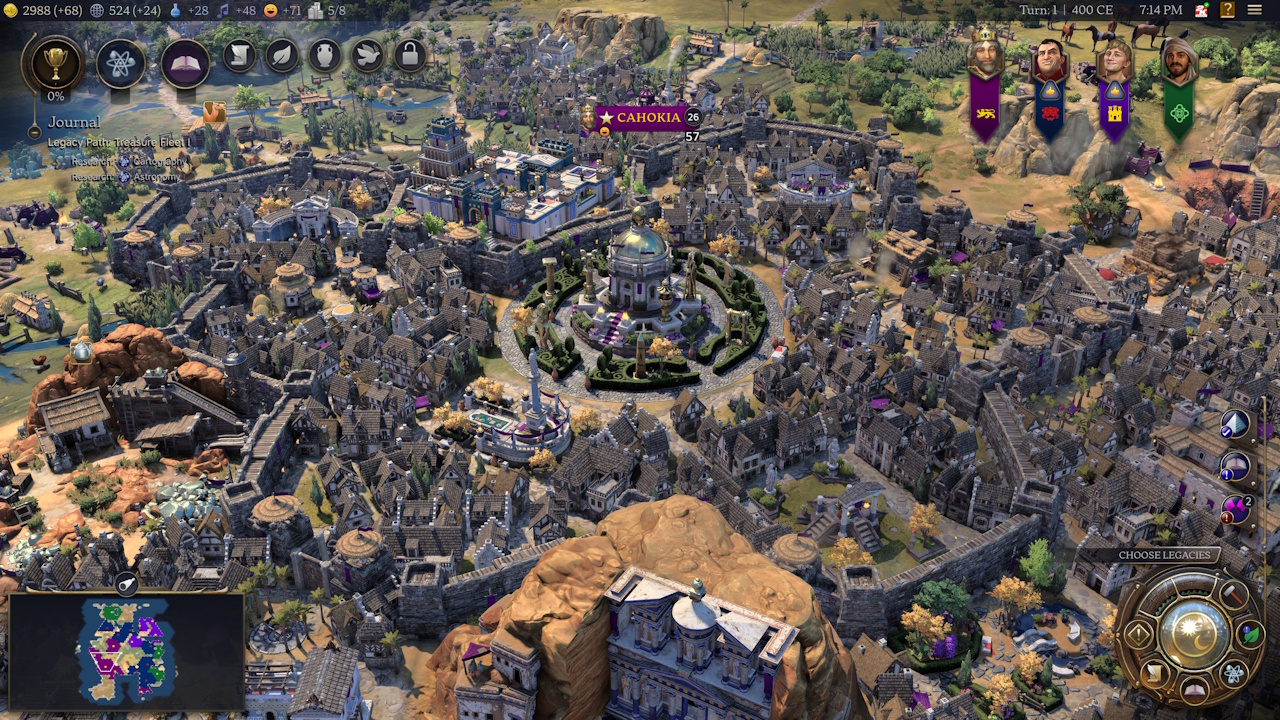
This isn’t insurmountable, as it just takes a bit of checking. But when you have a sprawling empire of twenty-plus cities in the late game, it can be hard to keep track of every building. In order to ensure you’re getting the most out of your settlements and maximising your available yields, you need to be on top of what buildings you have and which ones you need. Being able to see, at a glance, which ones are present in which settlement is useful – and stripping this away to leave very generic-looking buildings and urban districts just gets in the way of that. It might make cities look “more realistic,” but it’s less useful and feels like a bit of a hurdle to smooth gameplay.
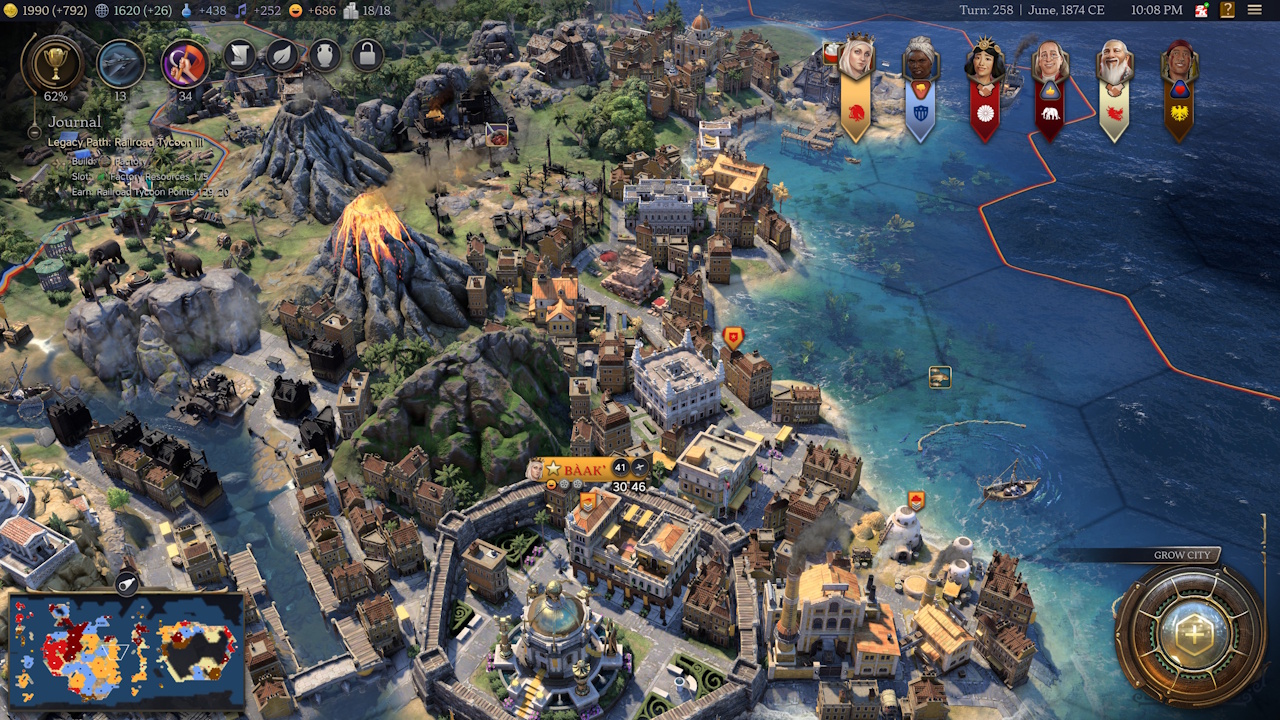
Screenshot of Civilization VII (2025) showing a Mexican city in the modern era.
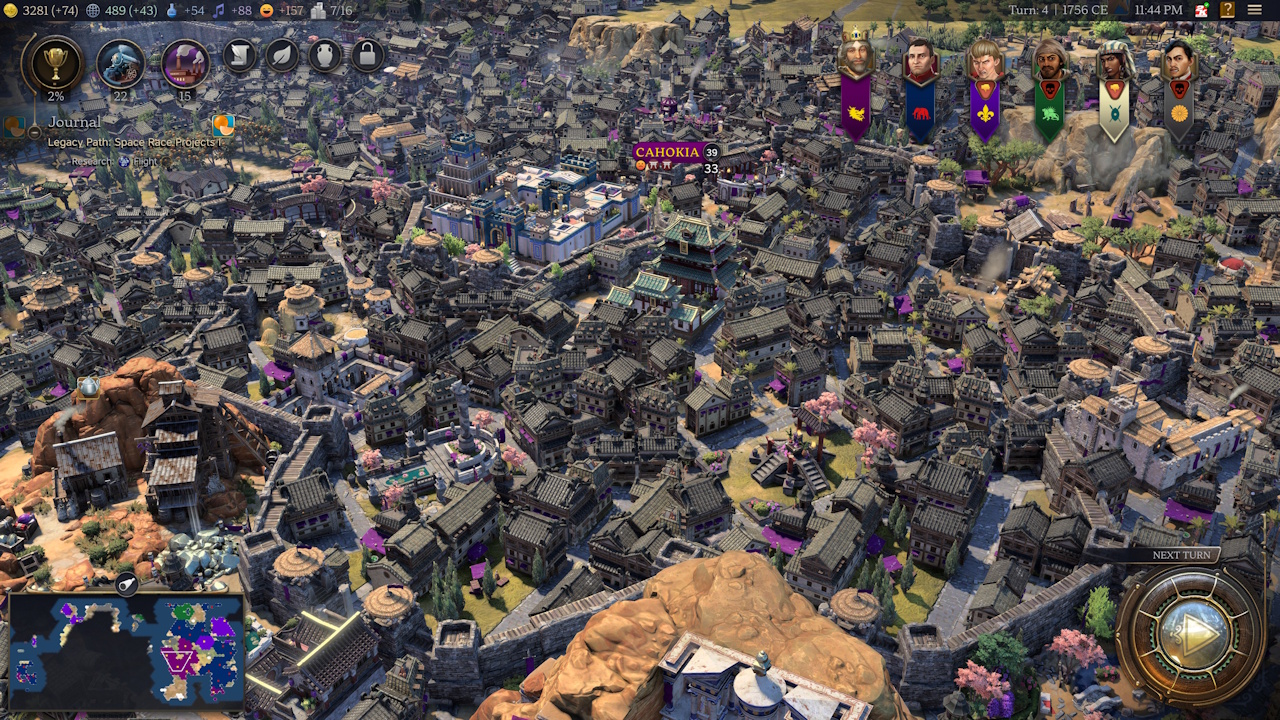
Can you tell at a glance which buildings this city has and where they are?

So after playing a bit more Civ VII (okay, quite a lot more) those are some additional points that I wanted to make. Later in the year, after the game has received more updates, patches, and its first pieces of DLC, I’ll definitely jump back in and see if I want to write an updated review or some additional notes.

I still believe Civ VII is fun – I wouldn’t have played multiple games over forty-plus hours if I wasn’t having a good time most of the time. But there are more limitations than there were in Civilization VI, and the core eras mechanic is one that I feel is doing more to hold the game back than it is to improve it, at least as things sit in March 2025. I’d love to see some bug fixes, changes to the way menus and tech trees are displayed, and perhaps some visual or graphical changes to make certain key buildings more obvious. Those things feel achievable in the short-term, and perhaps updates or expansions could address some of the bigger issues I’ve found.

I hope this has been interesting. I paid a lot of money for Civilization VII, so I definitely want to see the game succeed. I raise these points not out of spite but because I want to see Civ VII improved. There’s a lot of potential in this game… but some of it is being denied or restricted by creative decisions that have limited key aspects of gameplay. There’s plenty of time to make changes and improvements, though, and it’s still early days. I’m hopeful that, in the next few months, things will get noticeably better for Civ VII.


Civilization VII is out now for PC, Mac, Linux, PlayStation 4, PlayStation 5, Nintendo Switch, Xbox One, and Xbox Series S/X consoles. Civilization VII is the copyright of Firaxis and/or Take-Two Interactive. This article contains the thoughts and opinions of one person only and is not intended to cause any offence.
Civilization VII: First Impressions (From a Civ VI Fan)

I did something I never usually do: I pre-ordered a game. Violating yet another of my own game-buying rules, I paid extra for the “founder’s edition,” which – among other things – granted me access to Civilization VII on its actual release date instead of five days later. Do I detest myself for succumbing to that? Just a little. Was it worth the £120 (that I put on the credit card and plan to spread over a few months)? Well… read on to find out, I guess.

This piece is my “first impressions” of Civilization VII, and I suppose I should first define that term so we’re all on the same page! A game as massive and varied as Civilization VII will take days – weeks, even – to fully get a handle on. Having only played the game for around six hours (split into two sessions) and completed a single game, I can’t in good conscience call this a “review.” I’ve had an opportunity to jump in, played around with some of the settings, and completed what was basically a tutorial game. That’s enough to give me a taste of a game this massive, but not enough for an article that I could reasonably title a “review.” So in this piece I’m going to share my immediate thoughts and feelings about the game – and later in the year, perhaps when there have been one or two updates, patches, and pieces of additional content, I’ll return and share some further thoughts.

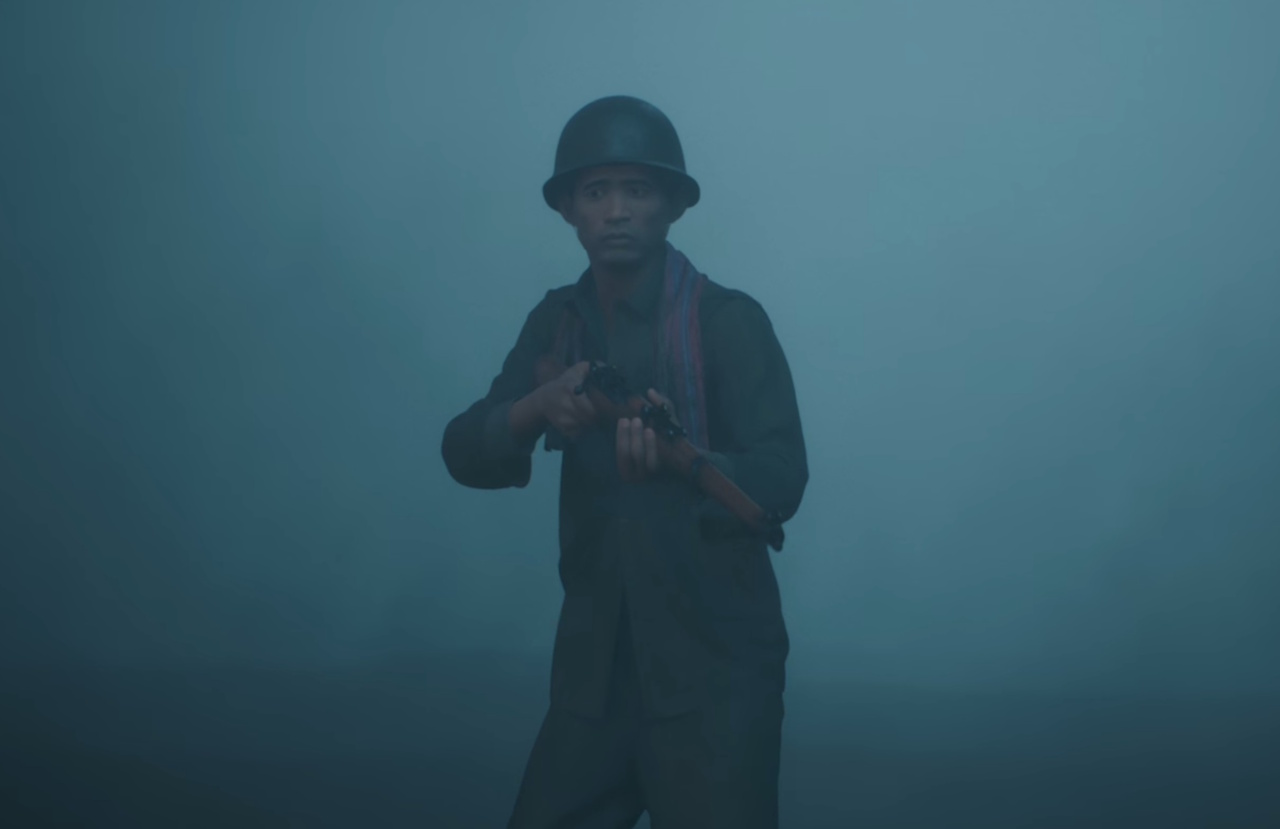
Screenshot of Civilization VII (2025) showing a solider from the opening cinematic.
A solider in the opening cinematic.

If that’s not what you’re looking for, that’s totally okay. I won’t be offended if you jump out and read someone else’s review instead! But if you like the sound of what I’m doing today, I hope you’ll read on.

For some context, I came late to the Civilization series. I think I played either the first game in the series or Civilization II in the mid-1990s, but only briefly on a friend’s computer. When I started getting into strategy games around that time, it was real-time strategy titles like Command and Conquer, Red Alert, and Age of Empires that I enjoyed the most. Turn-based strategy didn’t hold much appeal to me… not until Civilization VI came along twenty years later!

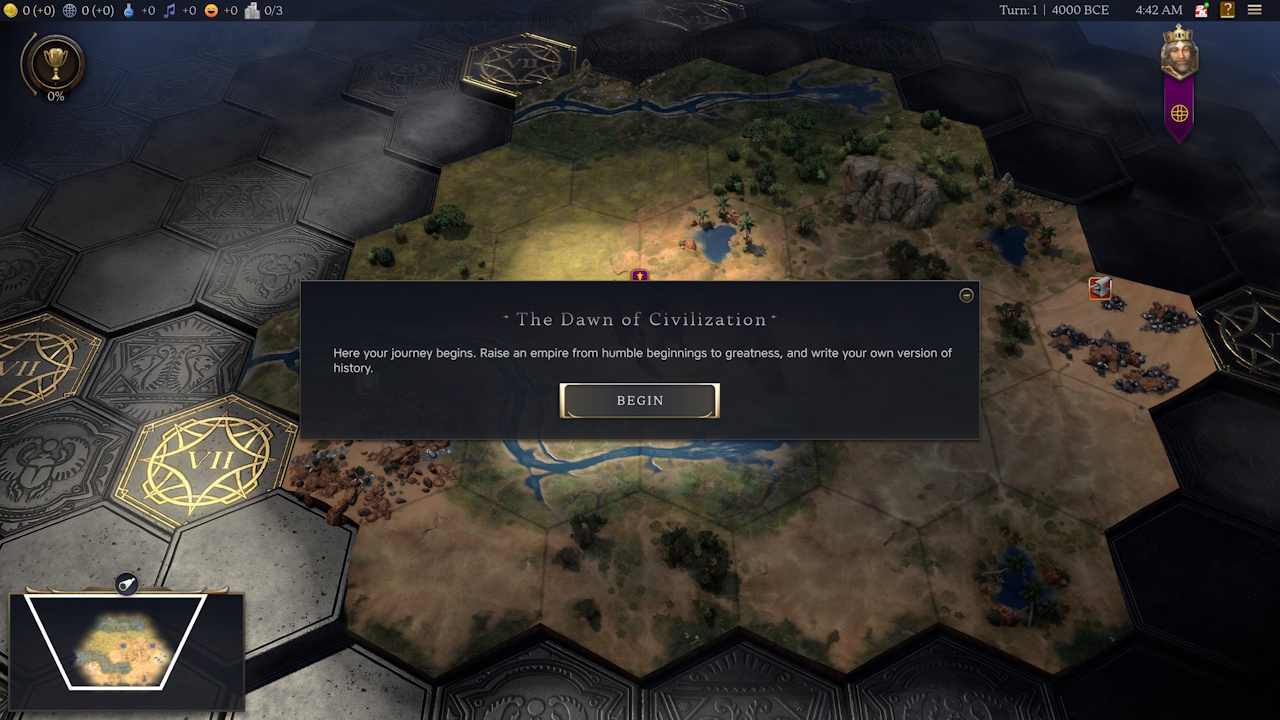
Screenshot of Civilization VII (2025) showing the beginning of a new game.
It’s time for the dawn of Civilization VII!

I’ve sunk well over 1,000 hours into Civilization VI since it launched in 2016, and it quickly became one of my favourite strategy titles of all-time. I’ve bought every single piece of DLC for it, played a bunch of scenarios and special campaigns, and I’ve had an absolute blast. When Civilization VII was announced last year, it shot right to the top of my “must-play” list, leading to me pre-ordering it so I could pre-install it and play it as soon as it was available! There are very, very few games for which I’d break my “never pre-order or pay for expensive premium editions” rules – so I hope Sid Meier, Firaxis, and Take-Two are especially grateful today!

If you just want the headline, I’ll say this: Civilization VII is already a lot of fun, and I only encountered one bug in my first six hours of playing. However, there are missing features that have been part of the series going all the way back, paywalling content at launch – including entire civilizations and leaders – is pretty scummy, and while the base game feels solid… it’s incomplete. There will undoubtedly be DLC packs over the next few months and years that add in a lot of the missing content and features, but all that will do is push up the price of a game that I’ve already paid a lot of money for. If you’re a Civilization VI fan ready to move on to a new challenge, Civilization VII feels like a no-brainer, and just getting started with the game and understanding all of the changes will take time. But if you’re brand-new to the series and looking to get started with a game that’s already complete… pick up the complete edition of Civilization VI when it’s on sale!

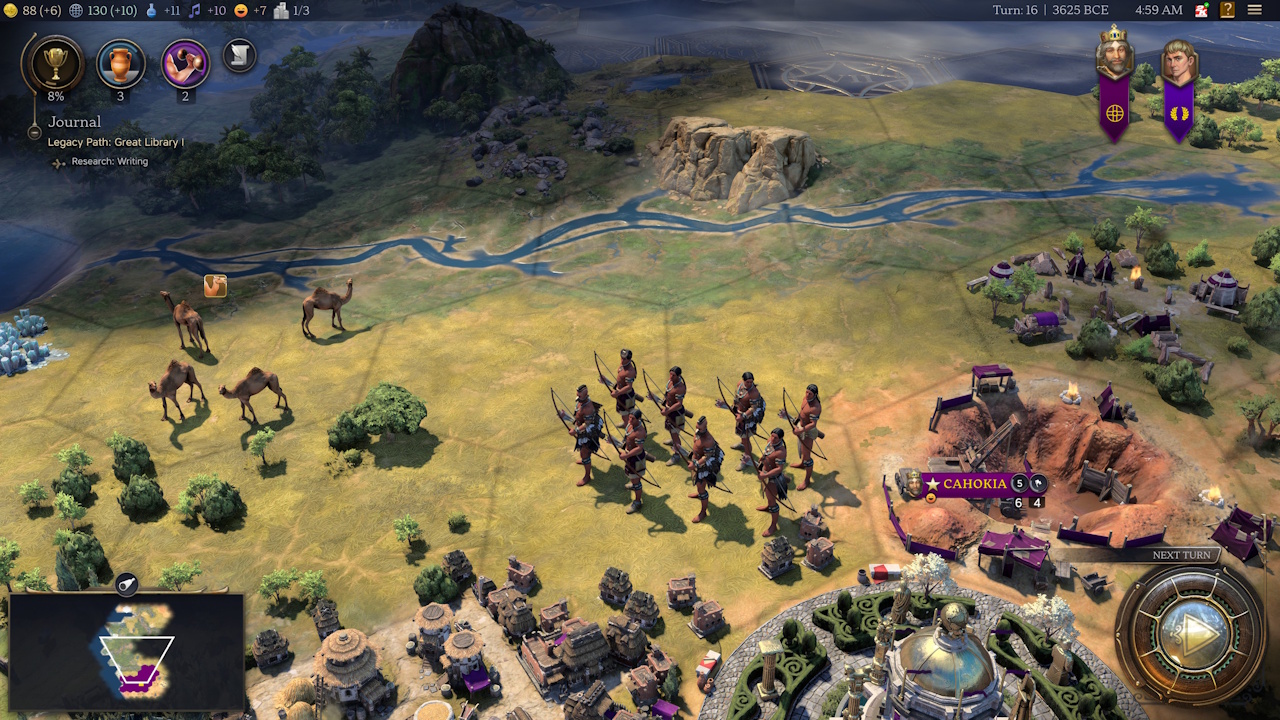
Screenshot of Civilization VII (2025) showing a small settlement and a unit of Mississippian Burning Arrow.
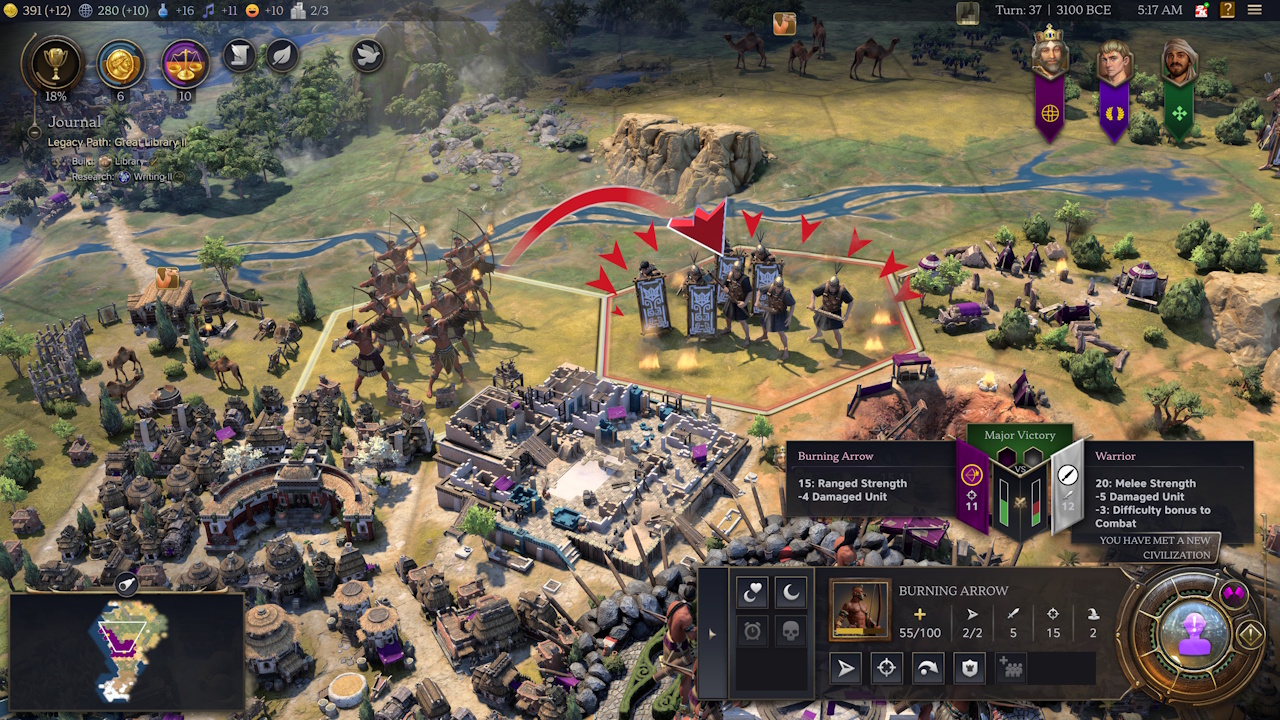
Mississippian archers (their unique unit) next to a city.

Visually, Civilization VII is stunning. I was surprised to see just how graphically impressive the game is considering its relatively small install size (Civilization VII takes up about 15GB of disc space) and that it’s a game that also has to function on the Nintendo Switch. I played the PC version, just so you’re aware of that. Units all have smooth animations for movement and combat, and there’s a ton of variety in the way units and buildings look depending on what era you’re in and which faction you’re playing as. There also seem to be more unique military units – each of the three civs I played as had at least one, which is noticeable coming from Civilization VI.

Environments look stunning, too. Mountains, deserts, and grassland all looked great – but where I was most impressed was in looking at coastal waters, rivers, and forests. These places feel genuinely alive in a way that they just didn’t in Civilization VI, and sending a unit marching into dense jungle or forest had a different feel to it as a result. Water looks great in the game, too, which is something some titles can struggle with. And the addition of navigable rivers adds a whole new challenge to exploration and combat.

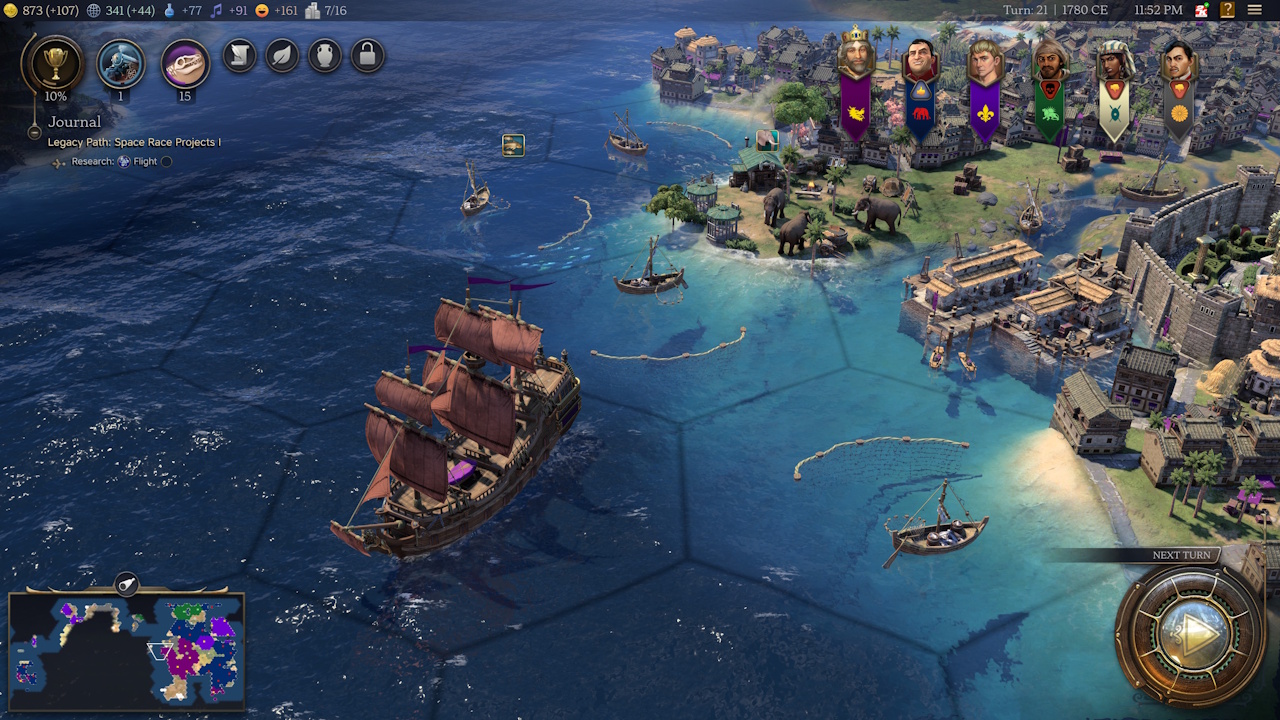
Screenshot of Civilization VII (2025) showing a city, some elephants, and a large ship.
There are some beautiful environments in Civilization VII.

Let’s talk about Civilization VII’s biggest and most-discussed new feature: choosing leaders and factions separately from one another. This was a big part of the game’s marketing and one of the main ways Civilization VII stands apart not only from Civ VI but from other entries in the series, too. This isn’t a totally unique thing to Civilization VII, as choosing a new faction in each era was also a big part of the turn-based strategy game Humankind a couple of years ago – and I think that’s worth keeping in mind. But as to how it works in Civilization VII… I have to admit that I’m still on the fence.

On the surface, picking one leader and then being able to choose up to three different factions (one per age) as the game progresses is interesting. Not only that, but it means the number of potential combinations of leaders + civs is huge! Someone smarter than me will have to crunch the numbers on that, but if we assume new leaders and factions will be added periodically, the sheer variety on offer should mean that games never get old or feel repetitive. But is that really how it’s going to work?

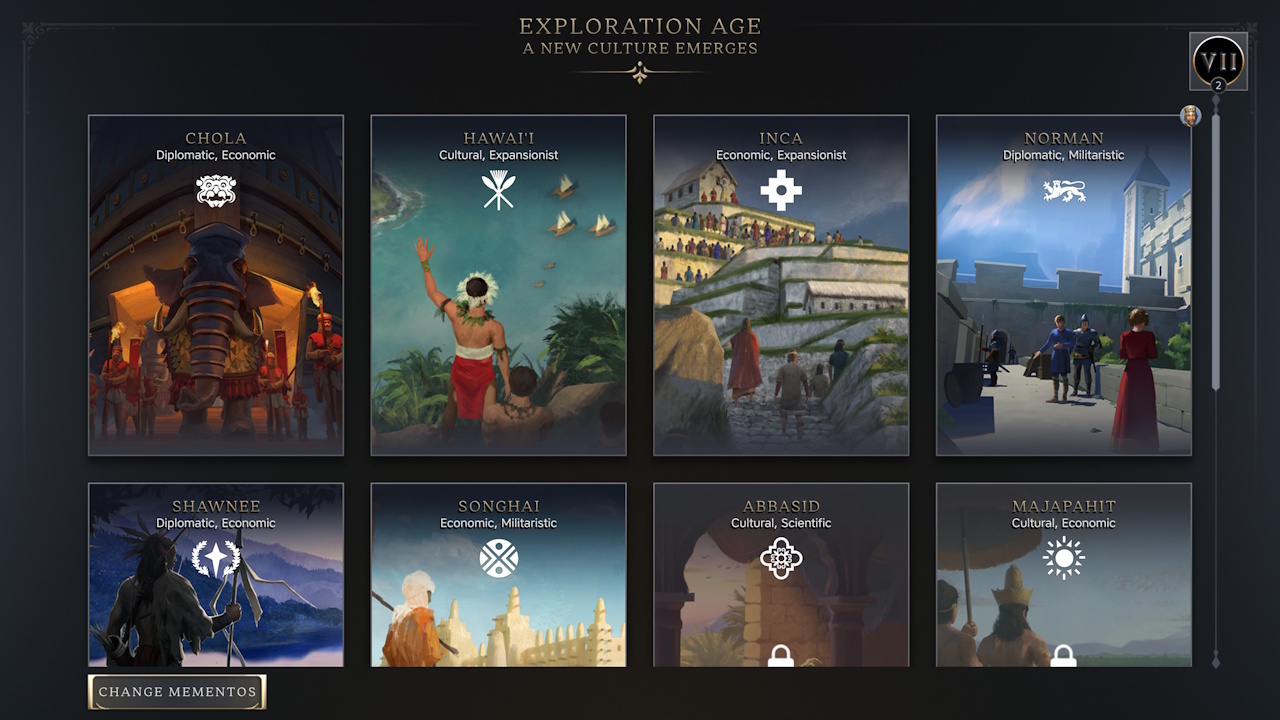
Screenshot of Civilization VII (2025) showing the civ selection screen at the beginning of the Exploration Age.
Choosing a faction one-third of the way through the game!

Two things. Firstly, it seems to me that, in order to make sure every combination of leader + faction is competitive or at least functionally playable, some of the most different – and outstanding – unique features have to be toned down. A faction like Civilization VI’s Polynesians – whose unique traits were that they started with a ship at sea and could navigate ocean tiles from the start of the game – could never work with Civ VII’s random leaders and heavy focus on the middle age being one of maritime exploration.

It’s also clear that the developers want to prevent players from accidentally screwing themselves over by picking a leader whose traits make them somehow incompatible with a particular civilisation, or whose bonuses would be completely useless. As another example from Civilization VI, Canadian leader Wilfrid Laurier is granted bonuses for building on snow and tundra, while the Brazilian civ gets bonuses from rainforest tiles – which don’t spawn anywhere near snow and tundra. In order to avoid these problems and counteract them, Civilization VII’s leader bonuses and civilisation-specific bonuses feel a little bit more restricted. That isn’t to say they’re bad, it’s just they’re arguably toned-down from what they might’ve been if leaders and civs were joined at the hip as in past titles.

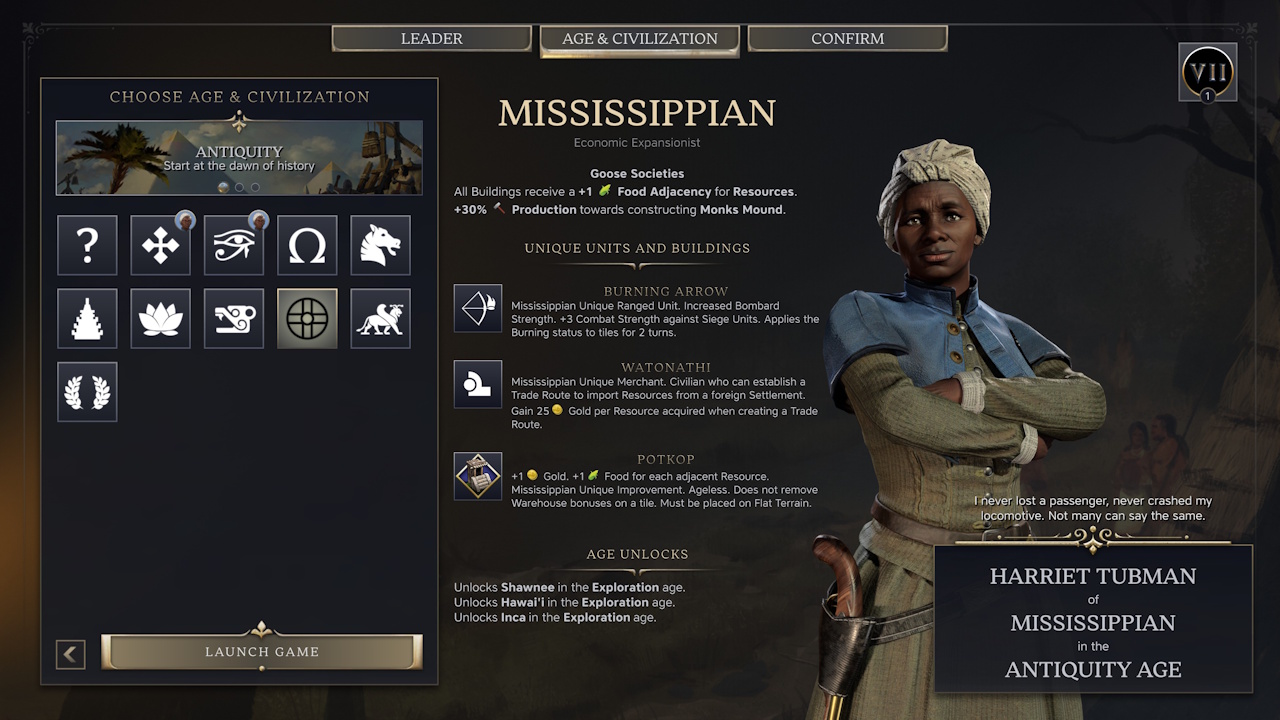
Screenshot of Civilization VII (2025) showing the civ selection screen with a leader already chosen.
Choosing a leader and civ separately is a first for the Civilization series.

This isn’t always a comfortable topic, but the Civilization series – and many other historical and strategy games, too – come in for criticism sometimes for being historically inaccurate or insensitive. Because of the way it breaks leaders and factions apart, it’s possible in Civilization VII for Napoleon to take charge of Egypt or Harriet Tubman to lead Prussia. While Civilization VII veers away from any truly controversial picks (there’s no Hitler or Chairman Mao, for example) some of the combinations are odd at best. The AI, for its part, doesn’t seem to really care which leaders and civs it chooses, so expect some truly random ones if, like me, you mostly play against the computer.

For all the criticism of past Civilization games for being western-centric, not reflecting real history, and so on… at least they could claim to attempt to fictionalise real-world empires and historical factions. This disconnect between leader and civ is going to take some getting used to on my end – which is to be expected, I admit – but something about it also feels a bit… I don’t know. Uncomfortable in a sense, perhaps. Maybe it’s because I was a student of history (it’s the subject I studied at university) but something about breaking leaders and their civs apart is something I don’t feel thrilled about.

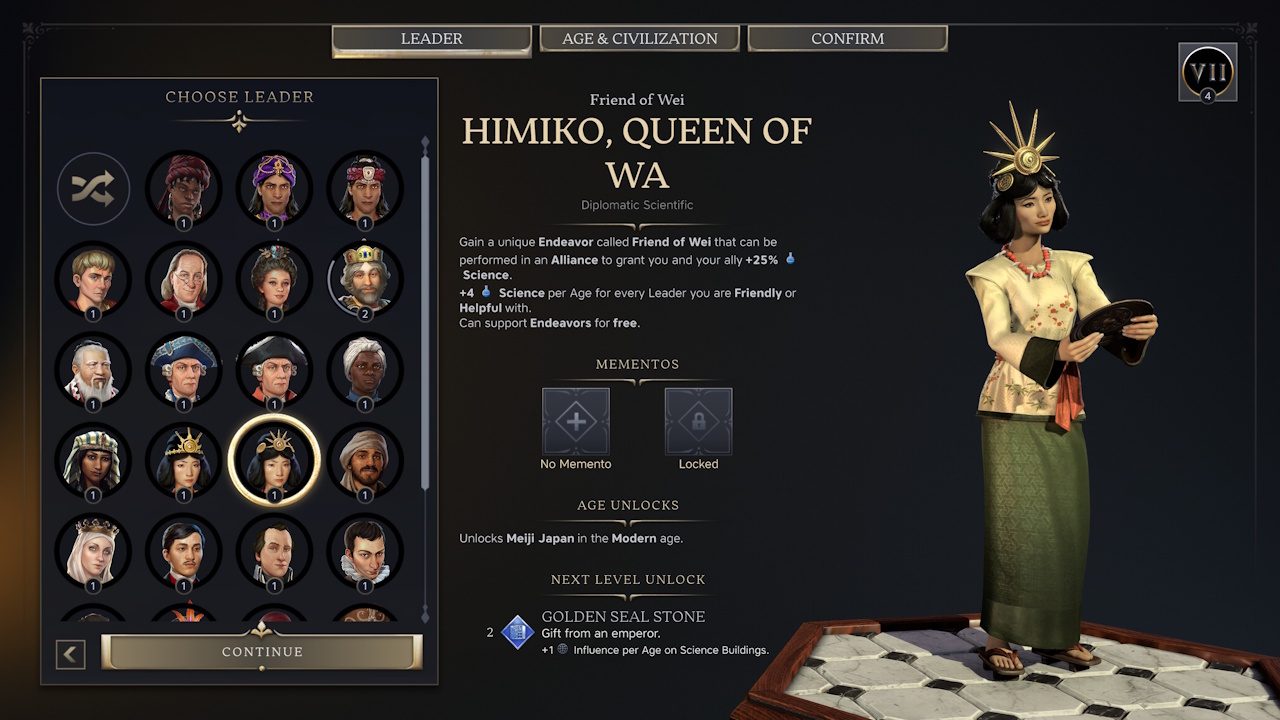
Screenshot of Civilization VII (2025) showing the leader selection screen.
I’m not sold on the separate leaders and civs… not yet, anyway.

Mechanically, this separation also leads to one of Civilization VII’s biggest weaknesses: there are only three eras. In Civ VI, there were eight at launch, with a ninth added later. Not only that, but eras in that game were expanded to add “golden” and “dark” ages, giving new policies and other effects. There are a few “golden” and “dark” age elements in Civilization VII, but they don’t seem anywhere near as impactful. And to be fair, how could they be? If there are only three eras, who wants to spend at least one-third of the game in a dark age with all of the drawbacks that could bring? But to me, that highlights the difference between the two titles… and I’m not sure it’s an improvement.

What arguably is an improvement, though, is that every player in every age should be playing a civ with era-specific advantages. In Civilization VI, if you were playing a faction like Egypt, the majority of your bonuses and your only unique units were only any use in the early game. And if you played Germany or the United States, you’d have to wait until the late game to take advantage of your bonuses and unique advantages… if you could last that long. Civilization VII feels more balanced in that respect, with each civ having bonuses and advantages – based on real history – that make sense and work in their eras.

Screenshot of Civilization VII (2025) showing the beginning of the Age of Exploration screen.
There are fewer eras, but more civs that have relevant bonuses and unique abilities in those eras.

I was a little disappointed to see so few options when starting a new game. There are only a handful of map types – and they’re all pretty basic. As someone who prefers longer, slower games over short, fast-paced ones, there don’t seem to be a lot of options to play on a “massive” map over a longer time frame, which is also a bit of a letdown. Most leaders and factions are also locked until certain gameplay requirements are met to unlock them… which might be fun for you if you like the challenge that comes with unlocking things. For me, I’d usually rather everyone was available to play straight away, with those challenges and unlocks saved for things like achievements.

I’m also disappointed that, for some reason, it isn’t possible to re-name cities and towns. This is something I always like doing in any strategy game, and it was possible in Civ VI so I have no idea why it hasn’t been implemented here. There’s a petition on the Civilization forums to add city re-naming to Civilization VII, so I have to imagine it will be implemented sooner or later, but why couldn’t it be part of the game at launch? That doesn’t make a lot of sense to me.

Screenshot of Civilization VII (2025) showing a city with a wonder and a palace.
Why can’t I rename my cities?!

While we’re nitpicking and talking about relatively small things: why can’t I quit to the desktop from the in-game pause menu? That was possible in Civilization VI, and it’s silly to force me to go back to the menu only to have to quit to the desktop from there. A minor annoyance, sure, but a pretty basic thing to resolve that someone should’ve picked up on before Civilization VII launched!

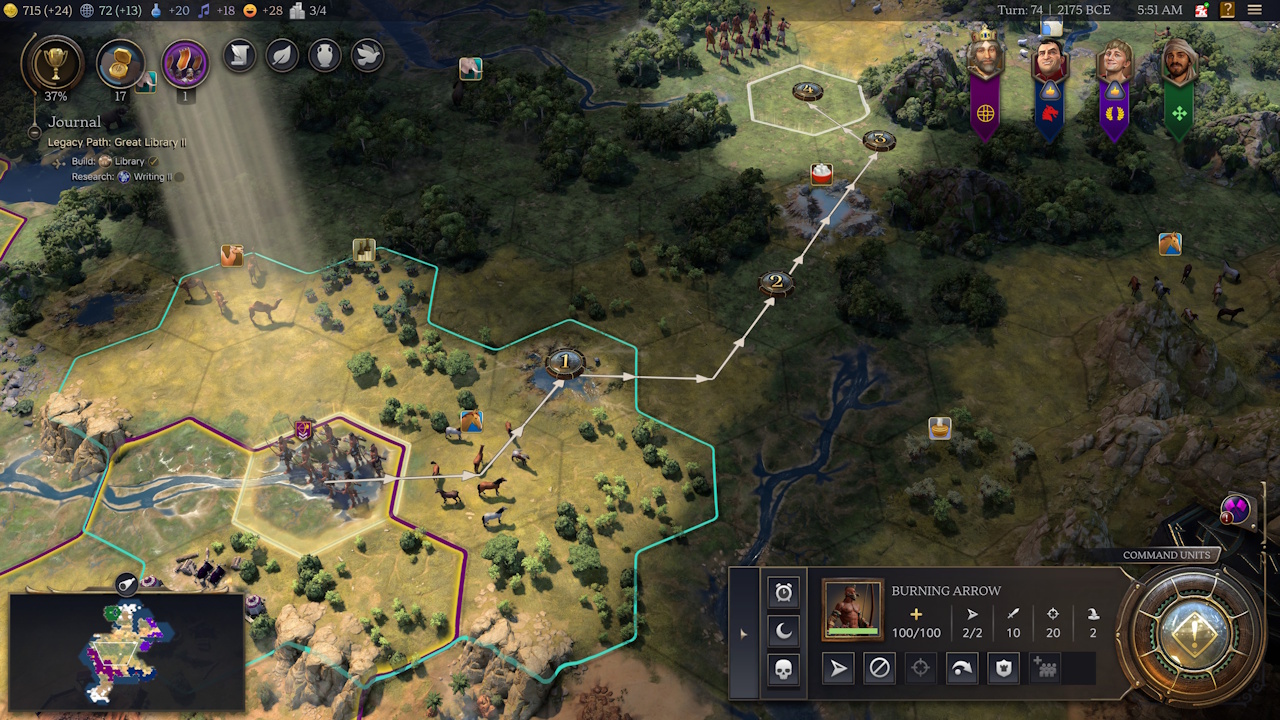
In terms of gameplay, I found some AI units seemed to occasionally take a very circuitous route before attacking, which didn’t really make a lot of sense to me. While standing one tile away, you’d think they’d move to the next tile and attack. Instead, some AI units seemed to walk the longest route around before starting their attacks – and there wasn’t an obvious reason why. As far as I could tell they weren’t doing this to avoid terrain disadvantages or to link up with allied units; it was just a quirk of the game’s pathfinding or AI.

Screenshot of Civilization VII (2025) showing a route being planned out by the game for a unit.
AI pathfinding feels imperfect right now.

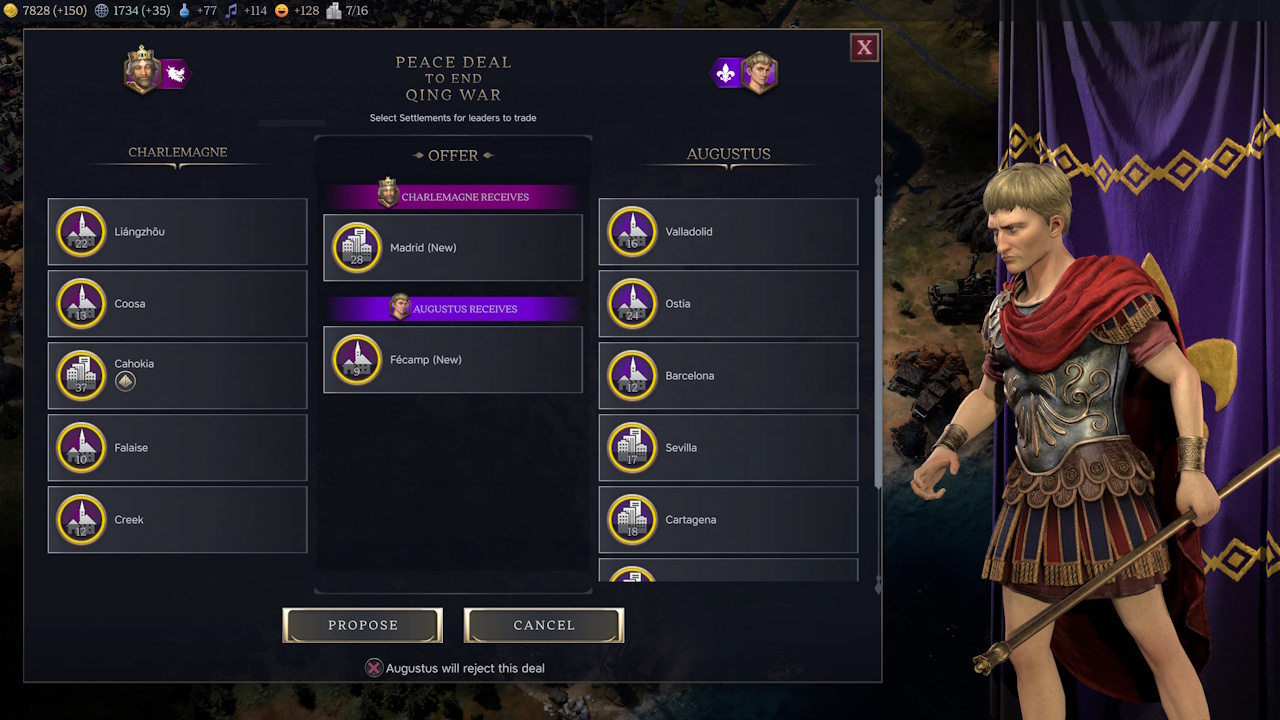
Diplomacy leaves something to be desired, unfortunately. Making friends and alliances with another faction works well enough, and while the system is different from Civilization VI it’s something I daresay I’ll get used to in time! But when a war comes to an end, it’s very odd – and very limiting – that there are so few options for making peace. In Civ VI, to end a war you could offer or demand money, great works, rare resources, and so on. In Civ VII, the only options on the table when trying to end a war are cities – and in some cases, it seems like an enemy won’t accept a peace offer if you refuse to give up a city – even if they haven’t conquered any of your cities or even killed a single unit in combat.

This really limits the way war works, and unless it’s addressed it’s going to be a weight around the game’s neck. There are occasions where, after capturing a city, I’ll want to keep it or sell it back as part of a peace treaty. But that’s far and away not the only way I want to make peace – in fact, in Civ VI cities were usually the bottom of my list when negotiating. The fact that some war-hungry powers won’t make peace very easily makes the game feel unbalanced, and it means war and combat – two of the most important features in a 4X strategy game – are less useful. Starting a war is always going to be a risk, but if I know that making peace is painfully difficult in some cases, it makes me far less interested in even attempting to play the game that way. Again, this is limiting.

Screenshot of Civilization VII (2025) showing the peace treaty screen.
The peace treaty system needs some work.

Weirdly, declarations of war don’t seem to survive the transition from one era to another. In short, if you’re at war with someone when the age ends, you won’t be when the new age begins. Since we were speaking of things that limit the warfare and combat system… that’s another.

Think about it: if you’re running out of time in the ancient or exploration ages, why would you start a war that you’d be unlikely to finish in time? I’m kind of hoping this is a bug or something that will be changed, because automatically ending a war just because the clock rolled over feels like something that really puts the brakes on that side of the game. Eras can be long, sure, but by the time you’ve got research and unit upgrades done, there might not always be time for a full-blown conquest. Now, the flip side is that this adds another level of strategic planning to the game, which some folks might appreciate. But in Civilization VI, if you were at war in one age you’d remain at war when the next one rolled around.

The exploration age ended while I was at war with three civs…
…but we were at peace when the modern age began in the very next turn.

I struggled with cities and towns rebelling – but not in the way you might think! Relatively early in my game, one nearby city rebelled from its founder and asked to join my empire (who wouldn’t want to be part of the great Empire of Dennis, after all?) This city then spent the rest of the game threatening to rebel against me… but without ever doing so. I don’t know why it never went into full-blown revolt; I had a military unit stationed there, but that was all. It became annoying to keep seeing these pop-ups warning me of an imminent rebellion, when no rebellion ever came.

It’s great, though, that cities can revolt if certain conditions are met. I just wish I knew what the conditions were so I could either trigger them in enemies or avoid them in my own settlements! This feels like an evolution of the way it worked in Civ VI, and it’s definitely something I want to dig into more in my next game.

Screenshot of Civilization VII (2025) showing a warning of an imminent revolt in a settlement.
I kept getting this message warning me that a revolt was imminent… but it never came.

Gwendoline Christie has taken over the role of narrator for Civilization VII. She has a wonderful voice, and particularly in the opening cinematic I think she did a good job. But… there… are… some… sentences… that… she… reads… with… a… lot… of… unnecessary… pauses… in… between… words… and… clauses. It’s almost like she’s doing a William Shatner impression – which, unfortunately, I don’t mean as a compliment. She also seems to have a tendency toward over-enunciating certain words, which I definitely picked up on. It’s not the worst thing in the world, sure, and I’ll get used to it. These lines can be skipped, too, with a simple click of the mouse. But I thought it was worth noting.

As in any new game, there are changes to the rules that can feel a little arbitrary. But given enough time, I’ll get used to all of them. I didn’t do spectacularly well in my first game, but I feel like I learned a lot and I’m starting to understand how some of the changes work. Civilization VII feels like a solid start, with plenty to build on in the months and years ahead.

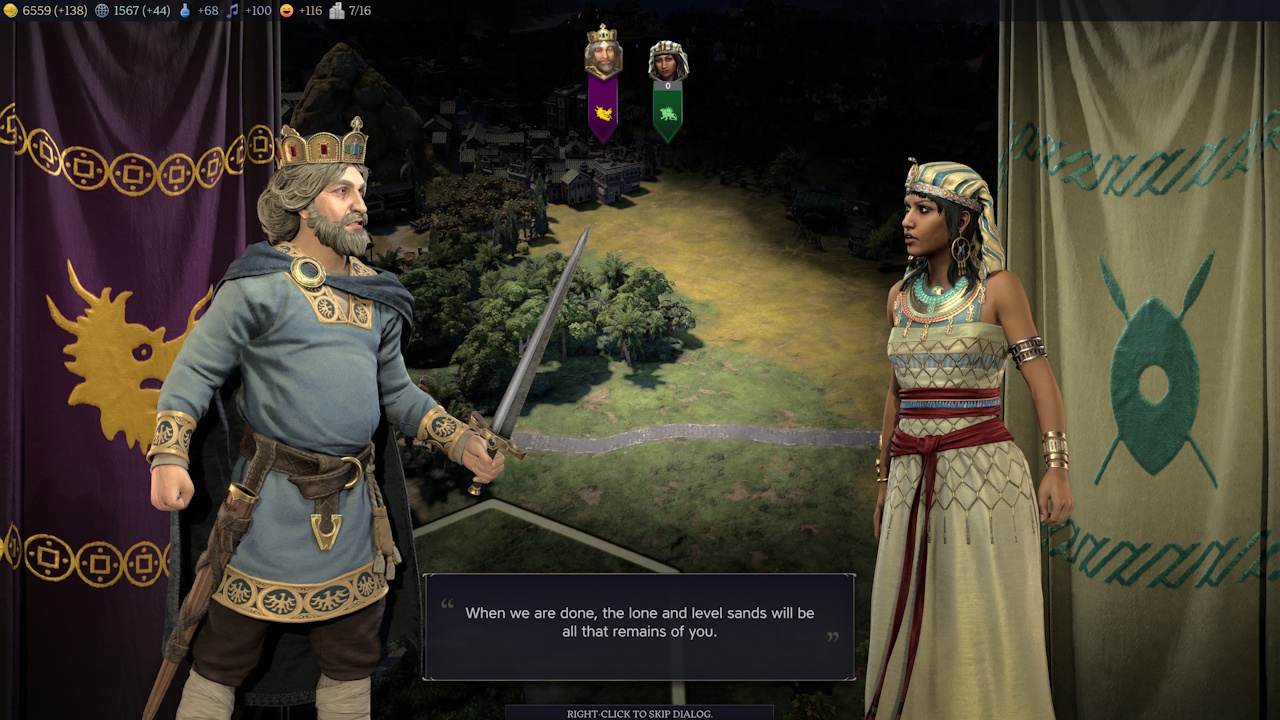
Screenshot of Civilization VII (2025) showing two leaders declaring war.
Charlemagne and Hatshepsut are going to war!

One of the biggest changes for me was the lack of a builder unit. Builders in past Civilization games have played different roles, but I think I’m right in saying they’ve always been present in some form. Civilization VII doesn’t use builders, with buildings and occupied tiles being handled from the city menu. That’s definitely gonna take some getting used to!

Cities being different from towns is also a big change. Towns can’t construct wonders and can only purchase buildings and units with gold, but can also specialise and focus on one thing – food, happiness, gold, etc. – adding more of the chosen resource to your civilisation’s total. Again, this is something I’ll need to spend more time with to really get the hang of, but I think it’s at least an interesting change.

Screenshot of Civilization VII (2025) showing a sprawling city of the Qing Empire.
A large city in the modern age.

Civilization VI introduced several gameplay mechanics revolving around climate change – and these have been removed from Civ VII. I will concede that the implementation of sea level rise and climate mitigation in the previous game was imperfect, but it added a lot to the late game in particular – as well as forcing players to consider how they use resources earlier in the game, too. It made for a lot of calculations like whether I could risk waiting for the technology to do nuclear power and renewables or whether I’d have to industrialise and use coal and oil, then try to clean up the mess later! It was a creative inclusion, and one that I’m sure could’ve been adapted this time.

I wonder if things like climate change and sea levels will be added as DLC somewhere down the line. These mechanics weren’t part of the launch version of Civilization VI, so maybe the plan is to see how they could be implemented once Civ VII gets going. If so, I guess I can get on board with that.

Screenshot of Civilization VII (2025) showing the Redwood Forest natural wonder.
Discovering a natural wonder!

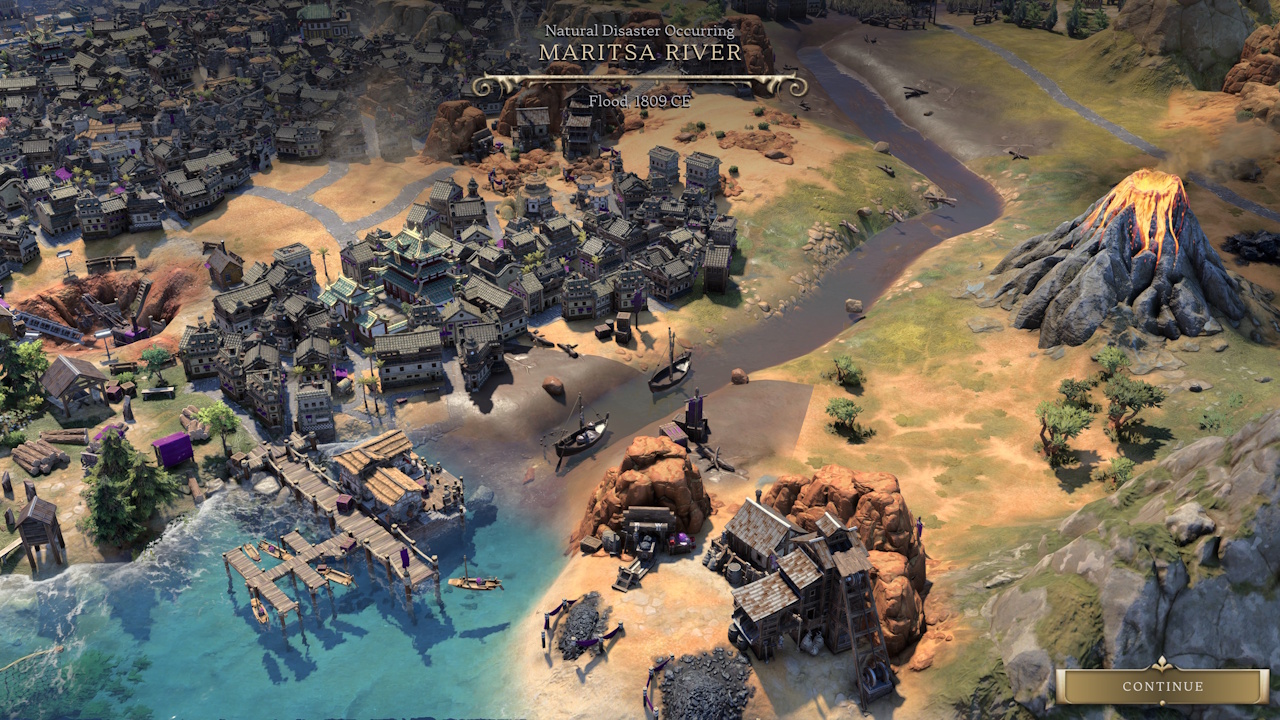
One element from Civ VI that its sequel retains, though, is natural disasters. In my first game I encountered a storm at sea, a blizzard, tornado outbreaks… and so many river floods. Seriously, there’s gotta be a way to tone down the frequency of some of these natural disasters, because when the same river has flooded for the twelfth time in a single playthrough… it starts to get annoying!

There also didn’t seem to be an easy way to ask for aid – in Civ VI, after suffering a natural disaster, players could request help in the form of gold. This added another layer to the game’s diplomacy, but it seems to be absent here. If natural disasters (floods especially) were less frequent, maybe I wouldn’t have even noticed!

Screenshot of Civilization VII (2025) showing a river flooding.
I genuinely lost count of how many times the rivers flooded in just one game.

So I think that’s everything I had in my notes.

Civilization VII has a lot of potential to be a fantastic strategy game, one I can already see myself playing for hour after hour. There are a lot of changes from Civ VI – some of which feel rather arbitrary – and some weaknesses compared to that game, too. For me, I think the biggest weakness right now is that there are only three ages (or eras) to play through. While these are different, and arguably bigger and better than they have been in the past, it makes Civilization VII feel… smaller.

I’m also not fully sold on the separate leader and civ mechanic – at least, not yet. I like that different factions in different eras all feel tailored to those eras, avoiding the problems that could come from playing a civ with bonuses that only worked in one part of a longer game. But in order to keep things relatively fair, I can’t help but feel some of the most unique and interesting leader and civ bonuses and abilities have had to be toned down.

Screenshot of Civilization VII (2025) showing a ranged attack being readied.
Archers preparing a ranged attack.

All that being said, my six hours flew by and I had a lot of fun getting into my first Civilization VII game. I tried my hand at exploration, diplomacy, war, combat, trading, and I even founded my own religion. There are a lot of fun-sounding civs to try out, including plenty that aren’t western or European, which is great to see. And as always, Civilization VII has a fantastic soundtrack!

Visually, the game shines. Animations look great, the landscape looks beautiful, and there are plenty of unique features in every civ in terms of the way units and buildings look. This definitely keeps things interesting and gives the game a ton of variety. I would say that, compared to Civ VI, Civilization VII is leaning more toward “realism” and going for a less cartoonish or board game-inspired look. Whether that’s your preference or not is going to be subject to personal taste!

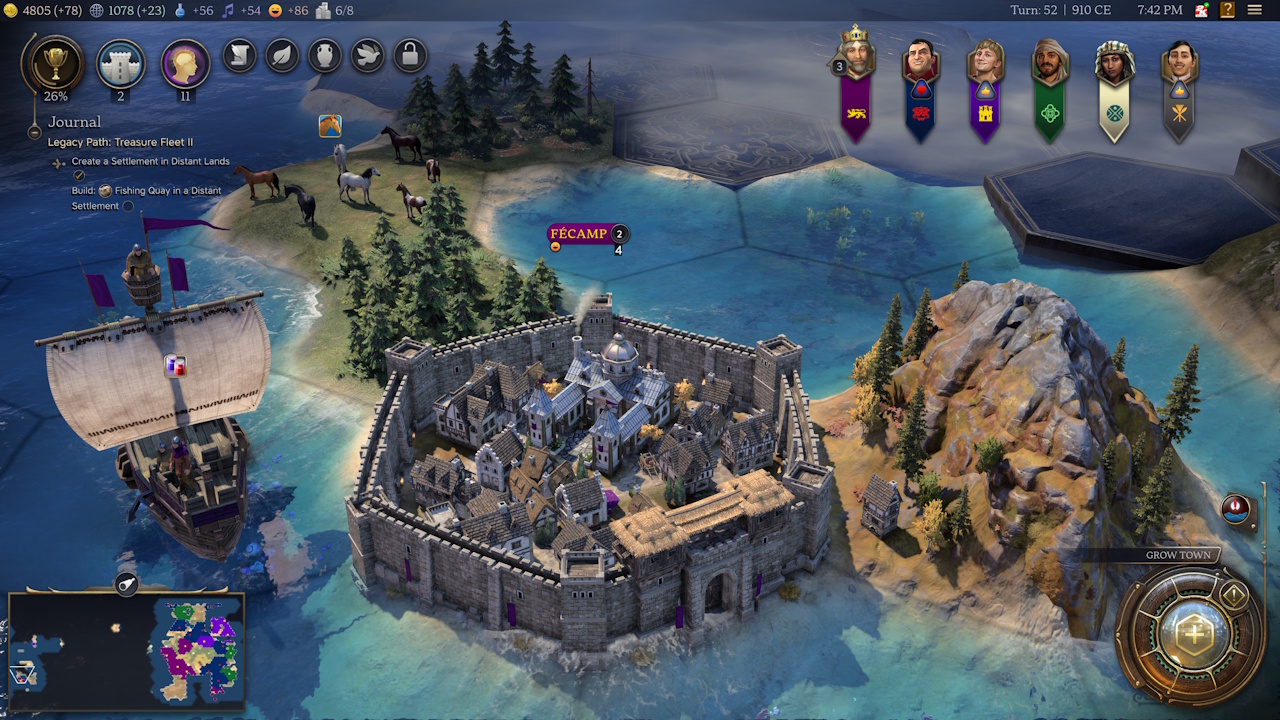
Screenshot of Civilization VII (2025) showing a walled town and a ship.
A walled town.

I hope this has been interesting and informative. I tried to hit all of the big points from my first Civilization VII game so I could share my first impressions fairly, but there’s a lot more to this game that I need to explore. Later in the year, perhaps after some of the first patches, updates, and pieces of DLC have been released, I’ll definitely have more to say.

Now that I’m done writing this… I’m gonna jump back into Civilization VII, pick a new leader, and go around again. And if that isn’t a ringing endorsement (or a desperate cope from someone who spent £120 on this game) then I don’t know what is!

Seriously, though, unless you’re some kind of super-fan… just get the base game. I was silly to reward Firaxis and Take-Two for their shitty business practices, and I’m not pleased with myself for wasting extra money on in-game silliness that I didn’t need.


Civilization VII is out now for PC, Mac, Linux, PlayStation 4, PlayStation 5, Nintendo Switch, Xbox One, and Xbox Series S/X consoles. Civilization VII is the copyright of Firaxis and/or Take-Two Interactive. This article contains the thoughts and opinions of one person only and is not intended to cause any offence.
Ten of my gaming pet peeves

A couple of years ago, I put together two lists of things I really dislike about modern video games – but somehow I’ve managed to find even more! Although there’s lots to enjoy when it comes to the hobby of gaming, there are still plenty of annoyances and dislikes that can detract from even the most pleasant of gaming experiences. So today, I thought it could be a bit of fun to take a look at ten of them!

Several of these points could (and perhaps one day will) be full articles or essays all on their own. Big corporations in the video games industry all too often try to get away with egregiously wrong and even malicious business practices – and we should all do our best to call out misbehaviour. While today’s list is somewhat tongue-in-cheek, there are major issues with the way big corporations in the gaming realm behave… as indeed there are with billion-dollar corporations in every other industry, too.

Gaming is great fun… but it has its annoyances!

That being said, this is supposed to be a bit of fun. And as always, I like to caveat any piece like this by saying that everything we’re going to be talking about is nothing more than one person’s subjective take on the topic! If you disagree with everything I have to say, if you like, enjoy, or don’t care about these issues, or if I miss something that seems like an obvious inclusion to you, please just keep in mind that all of this is just the opinion of one single person! There’s always room for differences of opinion; as gamers we all have different preferences and tolerance levels.

If you’d like to check out my earlier lists of gaming annoyances, you can find the first one by clicking or tapping here, and the follow-up by clicking or tapping here. In some ways, this list is “part three,” so if you like what you see, you might also enjoy those older lists as well!

With all of that out of the way, let’s jump into the list – which is in no particular order.

Number 1:
Motion blur and film grain.

Film grain and motion blur options in Ghostwire Tokyo.

Whenever I boot up a new game, I jump straight into the options menu and disable both motion blur and film grain – settings that are almost always inexplicably enabled by default. Film grain is nothing more than a crappy Snapchat filter; something twelve-year-olds love to play with to make their photos look “retro.” It adds nothing to a game and actively detracts from the graphical fidelity of modern titles.

Motion blur is in the same category. Why would anyone want this motion sickness-inducing setting enabled? It smears and smudges even the best-looking titles for basically no reason at all. Maybe on particularly underpowered systems these settings might hide some graphical jankiness, but on new consoles and even moderately good PCs, they’re unnecessary. They make games look significantly worse – and I can’t understand why anyone would choose to play a title with them enabled.

Number 2:
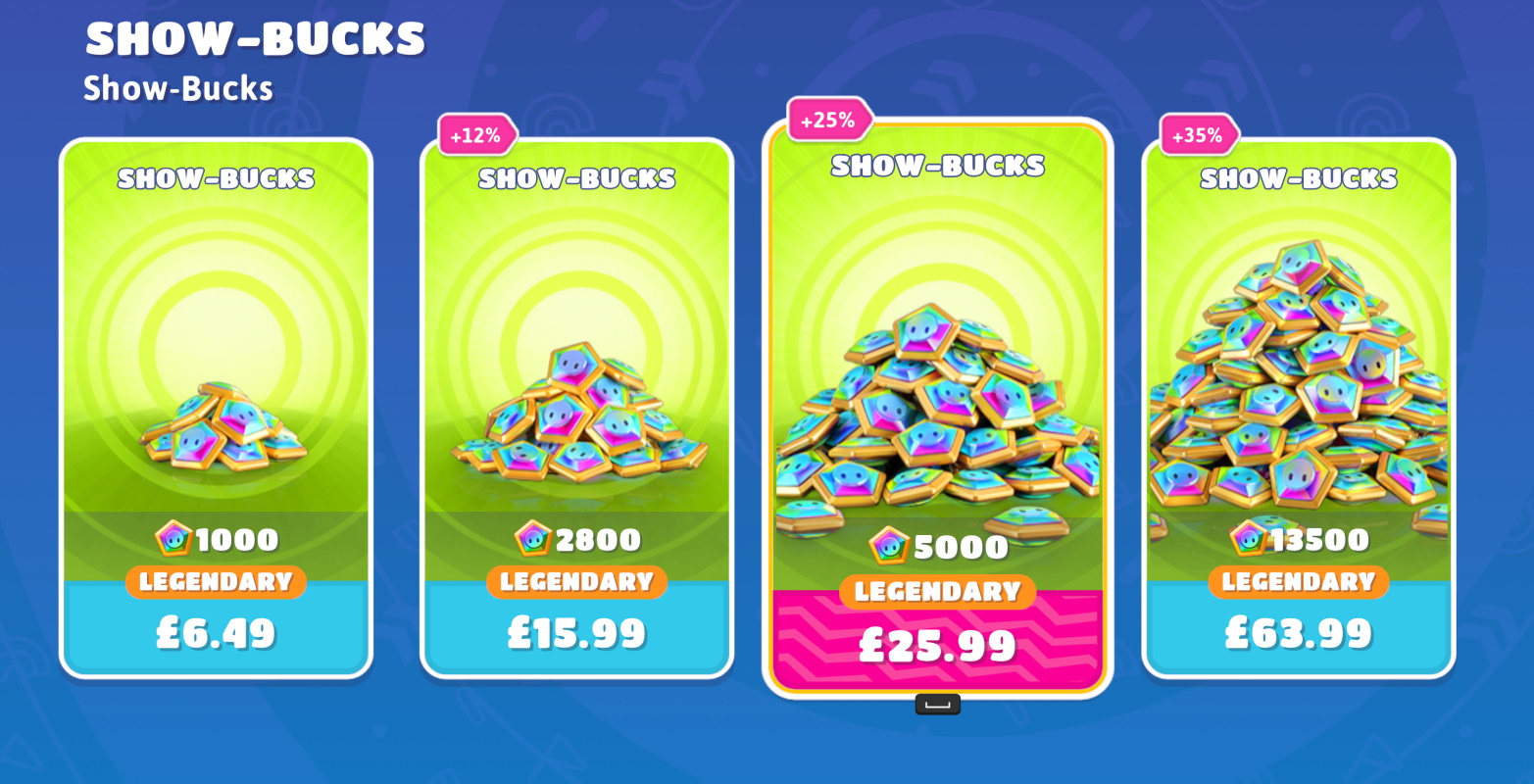
In-game currencies that have deliberately awkward exchange rates.

Show-Bucks bundles in Fall Guys.

In-game currencies are already pretty shady; a psychological manipulation to trick players into spending more real money. But what’s far worse is when in-game currencies are deliberately awkward with their exchange rates. For example, if most items on the storefront cost 200 in-game dollars, but I can only buy in-game dollars in bundles of 250 or 500. If I buy 250 in-game dollars I’ll have a few left over that I can’t spend, and if I buy 500 then I’ll have spent more than I need to.

This is something publishers do deliberately. They know that if you have 50 in-game dollars left over there’ll be a temptation to buy even more to make up the difference, and they know players will be forced to over-spend on currencies that they have no need for. Some of these verge on being scams – but all of them are annoying.

Number 3:
Fully-priced games with microtransactions.

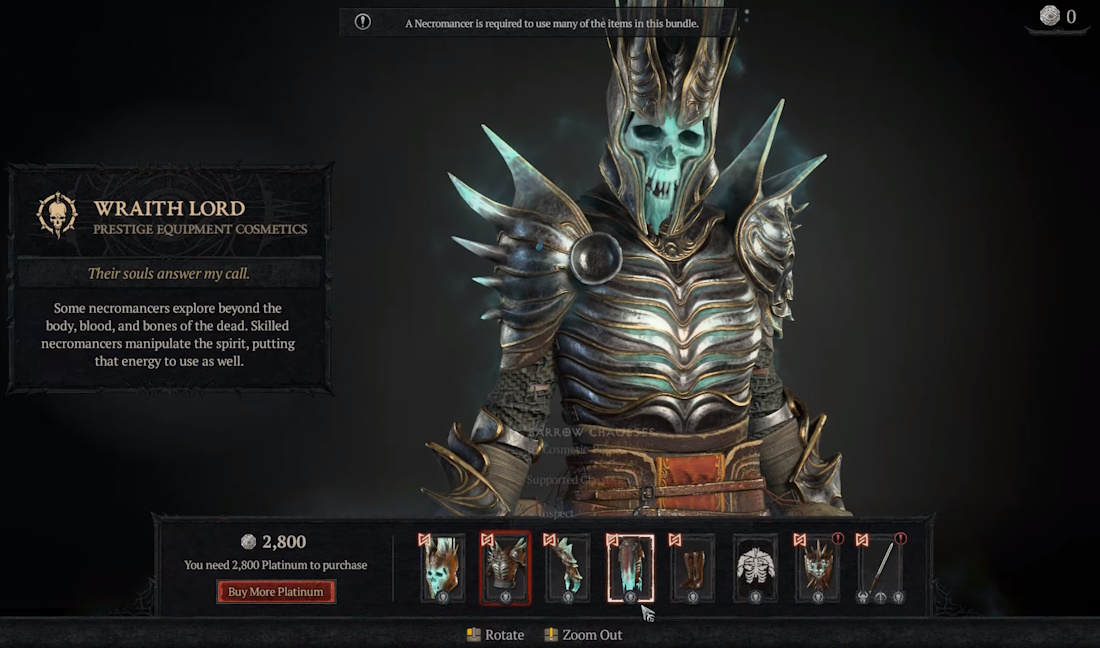
The in-game shop in Diablo IV.

If a game is free – like Fortnite or Fall Guys – then microtransactions feel a lot more reasonable. Offering a game for free to fund it through in-game purchases is a viable business model, and while it needs to be monitored to make sure the in-game prices aren’t unreasonable, it can be an acceptable way for a game to make money. But if a game costs me £65 up-front, there’s no way it should include microtransactions.

We need to differentiate expansion packs from microtransactions, because DLC that massively expands a game and adds new missions and the like is usually acceptable. But if I’ve paid full price for a game, I shouldn’t find an in-game shop offering me new costumes, weapon upgrades, and things like that. Some titles absolutely take the piss with this, too, even including microtransactions in single-player campaigns, or having so many individual items for sale that the true cost of the game – including purchasing all in-game items – can run into four or even five figures.

Number 4:
Patches as big as (or bigger than) the actual game.

No patch should ever need to be this large.

This one kills me because of my slow internet! And it’s come to the fore recently as a number of big releases have been buggy and broken at launch. Jedi: Survivor, for example, has had patches that were as big as the game’s original 120GB download size – meaning a single patch would take me more than a day to download. Surely it must be possible to patch or fix individual files without requiring players to download the entire game all over again – in some cases more than once.

I’m not a developer or technical expert, and I concede that I don’t know enough about this topic on a technical level to be able to say with certainty that it’s something that should never happen. But as a player, I know how damnably annoying it is to press “play” only to be told I need to wait hours and hours for a massive, unwieldy patch. Especially if that patch, when fully downloaded, doesn’t appear to have actually done anything!

Number 5:
Broken PC ports.

This is supposed to be Joel from The Last Of Us Part 1.

As I said when I took a longer look at this topic, I had hoped that broken PC ports were becoming a thing of the past. Not so, however! A number of recent releases – including massive AAA titles – have landed on PC in broken or even outright unplayable states, plagued by issues that are not present on PlayStation or Xbox.

PC is a massive platform, one that shouldn’t be neglected in this way. At the very least, publishers should have the decency to delay a PC port if it’s clearly lagging behind the console versions – but given the resources that many of the games industry’s biggest corporations have at their disposal, I don’t see why we should accept even that. Develop your game properly and don’t try to launch it before it’s ready! I’m not willing to pay for the “privilege” of doing the job of a QA tester.

Number 6:
Recent price hikes.

It must be some kind of visual metaphor…

Inflation and a cost-of-living crisis are really punching all of us in the face right now – so the last thing we need are price hikes from massive corporations. Sony really pissed me off last year when they bragged to their investors about record profits before turning around literally a matter of weeks later and announcing that the price of PlayStation 5 consoles was going to go up. This is unprecedented, as the cost of consoles usually falls as a console generation progresses.

But Sony is far from the only culprit. Nintendo, Xbox, Activision Blizzard, TakeTwo, Electronic Arts and practically every major corporation in the games industry have jacked up their prices over the last few years, raising the basic price of a new game – and that’s before we look at DLC, special editions, and the like. These companies are making record-breaking profits, and yet they use the excuse of “inflation” to rip us off even more. Profiteering wankers.

Number 7:
The “release now, fix later” business model is still here.

The player character falling through the map in Star Wars Jedi: Survivor.

I had hoped that some recent catastrophic game launches would have been the death knell for the “release now, fix later” business model – but alas. Cyberpunk 2077 failed so hard that it got pulled from sale and tanked the share price of CD Projekt Red… but even so, this appalling way of making and launching games has persisted. Just in the first half of 2023 we’ve had titles like Hogwarts Legacy, Redfall, Jedi: Survivor, Forspoken, and The Lord of the Rings: Gollum that arrived broken, buggy, and unplayable.

With every disaster that causes trouble for a corporation, I cross my fingers and hope that lessons will be learned. But it seems as if the “release now, fix later” approach is here to stay. Or at least it will be as long as players keep putting up with it – and even defending it in some cases.

Number 8:
Day-one DLC/paywalled day-one content.

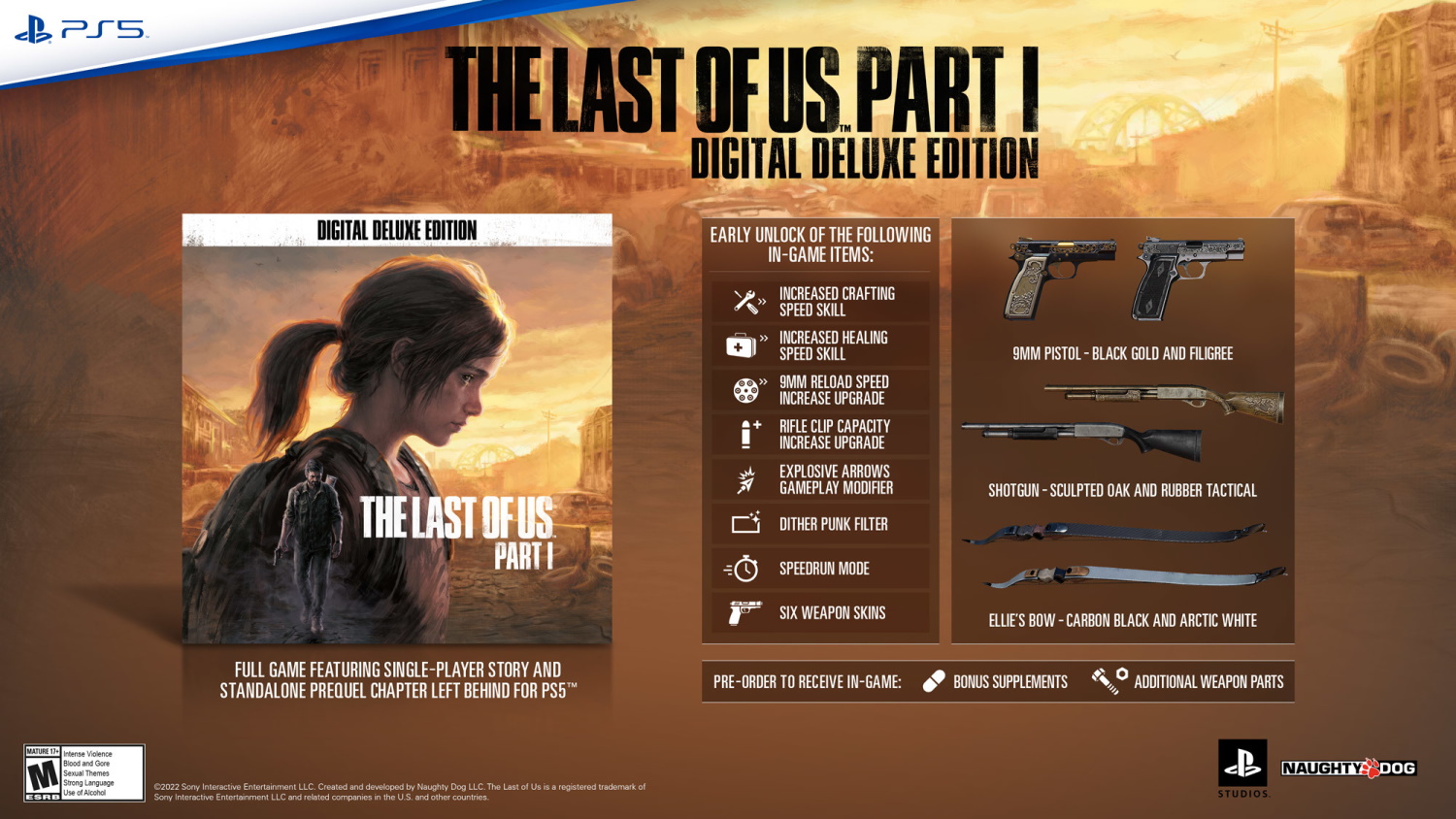
An example of a “digital deluxe edition” and its paywalled content.

It irks me no end when content that was clearly developed at the same time as the “base version” of a game is paywalled off and sold separately for an additional fee. The most egregious example of this that comes to mind is Mass Effect 3′s From Ashes DLC, which was launched alongside the game. This DLC included a character and missions that were completely integrated into the game – yet had been carved out to be sold separately.

This practice continues, unfortunately, and many modern titles release with content paywalled off, even if that content was developed right along with the rest of the game. Sometimes these things are designed to be sold as part of a “special edition,” but that doesn’t excuse it either. Even if all we’re talking about are character skins and cosmetic content, it still feels like those things should be included in the price – especially in single-player titles. Some of this content can be massively overpriced, too, with packs of two or three character skins often retailing for £10 or more.

Number 9:
Platform-exclusive content and missions.

Spider-Man was a PlayStation-only character in Marvel’s Avengers.

Some titles are released with content locked to a single platform. Hogwarts Legacy and Marvel’s Avengers are two examples that come to mind – and in both cases, missions and characters that should have been part of the main game were unavailable to players on PC and Xbox thanks to deals with Sony. While I can understand the incentive to do this… it’s a pretty shit way of making money for a publisher, and a pretty scummy way for a platform to try to attract sales.

Again, this leaves games incomplete, and players who’ve paid full price end up getting a worse experience or an experience with less to do depending on their platform of choice. That’s unfair – and it’s something that shouldn’t be happening.

Number 10:
Pre-orders.

Cartman from South Park said it best:
“You know what you get for pre-ordering a game? A big dick in your mouth.”

Pre-ordering made sense – when games were sold in brick-and-mortar shops on cartridges or discs. You wanted to guarantee your copy of the latest big release, and one way to make sure you’d get the game before it sold out was to pre-order it. But that doesn’t apply any more; not only are more and more games being sold digitally, but even if you’re a console player who wants to get a game on disc, there isn’t the same danger of scarcity that there once was.

With so many games being released broken – or else failing to live up to expectations – pre-ordering in 2023 is nothing short of stupidity, and any player who still does it is an idiot. It actively harms the industry and other players by letting corporations get away with more misbehaviour and nonsense. If we could all be patient and wait a day or two for reviews, fewer games would be able to be launched in unplayable states. Games companies bank on a significant number of players pre-ordering and not cancelling or refunding if things go wrong. It’s free money for them – and utterly unnecessary in an age of digital downloads.

So that’s it!

A PlayStation 5 console.

We’ve gone through ten of my pet peeves when it comes to gaming. I hope this was a bit of fun – and not something to get too upset over!

The gaming landscape has changed massively since I first started playing. Among the earliest titles I can remember trying my hand at are Antarctic Adventure and the Commodore 64 title International Soccer, and the first home console I was able to get was a Super Nintendo. Gaming has grown massively since those days, and the kinds of games that can be created with modern technology, game engines, and artificial intelligence can be truly breathtaking.

But it isn’t all good, and we’ve talked about a few things today that I find irritating or annoying. The continued push from publishers to release games too early and promise patches and fixes is particularly disappointing, and too many publishers and corporations take their greed to unnecessary extremes. But that’s the way the games industry is… and as cathartic as it was to get it off my chest, I don’t see those things disappearing any time soon!

All titles mentioned above are the copyright of their respective developer, studio, and/or publisher. This article contains the thoughts and opinions of one person only and is not intended to cause any offence.
Crowdfunding and pre-ordering are completely different

One method of raising money that some game developers started using in the late 2000s and early 2010s is crowdfunding. Check out popular crowdfunding websites like Kickstarter and Indiegogo and you can find plenty of video game projects on offer, all of which are asking for your money.

In exchange for supporting a project or helping it get started, many crowdfunded games offer players their own copy – which can be a digital download or a physical boxed version depending on the title and the amount of money invested – to be delivered when the game is finally ready. This transactional approach to crowdfunding, combined with prices that are often comparable to the “standard” price of a brand-new game, has led many players to consider crowdfunding as an extended form of pre-ordering.

Logos for Kickstarter and Indiegogo – two of the web’s biggest crowdfunding platforms.

Unfortunately nothing could be further from the truth, and this fundamental misunderstanding has caused an awful lot of disappointment in recent years. It isn’t the fault of individual players, many of whom simply saw an exciting-sounding game and wanted to place their order as early as possible. Instead the fault really lies with the way these crowdfunding platforms and individual developers market their products.


When placing a pre-order for a video game, players are almost always committing their money to a project that is already fully-funded. Perhaps an indie developer has taken out a loan, or maybe we’re talking about a game produced by a larger publisher with the financial resources of their corporation. Regardless, by the time pre-orders go live for practically every title, the game’s development costs are covered and a release is assured. Some games receive delays even after accepting pre-orders, but even then a delay is usually a matter of weeks, months, or a year at the most – and the title is still being worked on.

A visualisation of buying things online…

Pre-orders are purchases – they’re a transaction between the player and the platform, shop, or publisher. As such they’re subject to a range of consumer protection laws, the most significant of which is the right to be refunded. If a pre-ordered game is cancelled, or even if a player changes their mind before release, they can simply contact the retailer or publisher and request a refund without too much hassle.

Crowdfunding, as many players have found to their cost, doesn’t work this way at all. At a fundamental level, crowdfunding is akin to a donation or an investment. As anyone who’s ever played the stock market or cryptocurrency can tell you, the value of investments can change over time, and as the developer or company you’ve donated to takes your money to use in the process of developing their game, there are no guarantees. Caveat emptor indeed.

Buyer beware!

Creating anything is an incredibly difficult and complicated process, and all manner of different unforeseeable situations can adversely impact a project. The current pandemic is an example – many films, television shows, and video games saw their production disrupted by events completely beyond their control. In short, a project may not always go as intended, and even if production goes as smoothly as possible, the end result may be radically different from its creator’s original vision.

For players who’ve donated to a crowdfunding project, this can be incredibly hard to take. They feel they were promised a particular kind of game within a given timeframe, but for any one of a thousand different reasons the game they got doesn’t align with those initial expectations or developer promises. Unfortunately there really isn’t much that can be done about this.

Many people end up angry or upset when a crowdfunded game fails to deliver.

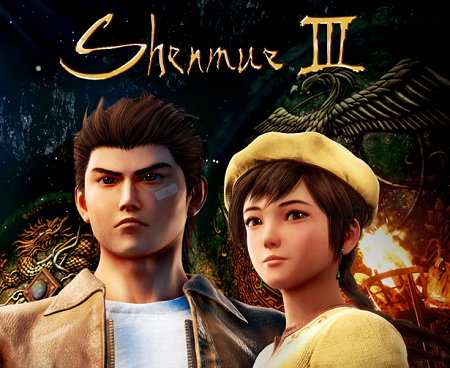
Two examples come to mind of crowdfunding projects that didn’t go to plan. On a personal note I’ve got 2019’s Shenmue III. This title, which dedicated fans of a long-dead pair of games managed to raise an astonishing $7 million to help create, had one job as far as I was concerned: finish the story. Shenmue II had ended on a cliffhanger, and fans wanted to see protagonist Ryo Hazuki bring his quest for revenge to a conclusion. But for reasons I find utterly inexplicable, that didn’t happen. Shenmue III didn’t finish Ryo’s story.

The second example is one of the most egregious crowdfunding disasters of all time: Star Citizen. In development now for over eleven years, the game is nowhere near ready for release. While a small part of the game is available in an early alpha state, developers Cloud Imperium Games have mismanaged the project in truly epic style. With well over $300 million raised – almost all of which has been spent – Star Citizen is a complete disaster, with many of its original backers and fans now calling it a “scam” for the way it took their money.

Logo for the unreleased game Star Citizen.

Shenmue III had specific problems with its story as a result of its creator being unwilling to make cuts to the game’s bloated narrative. Star Citizen is an example of a developer getting completely out of their depth. With the amount of money Cloud Imperium Games raised growing, they felt the need to promise more features for the game. But more features meant more development time, which meant more money was needed to keep the lights on, and in order to raise more money they promised more features… leading to a catastrophic spiral from which the game will never escape. It’s a case of feature creep on an unprecedented scale.

There are plenty of other examples of disappointing crowdfunded games, including titles that ended up baring little resemblance to what had been originally promised and, of course, many games that simply never made it that far, being cancelled or simply vanishing without ever releasing so much as a teaser trailer.

Shenmue III is one of the biggest crowdfunding disappointments to me personally.

These things will always happen. In the games industry there are many examples of titles that entered development but never made it to release, including some whose details have subsequently leaked out – like Star Wars 1313, Rockstar’s Agent, and Prey 2. The key difference with those titles is that they were never being “sold” – players didn’t have to part with their money, meaning the only negative consequence of these cancellations is disappointment. On the rare occasion where a game has been cancelled after pre-orders were available that money is able to be refunded.

Because of the way crowdfunding works, players can be left out of pocket – some to the tune of thousands of pounds or dollars – if a project doesn’t go to plan. And because of the way many crowdfunded titles are marketed, players who believe that they essentially pre-ordered a game or engaged in a transaction are understandably upset. This is why we all need to educate ourselves and understand the fundamental difference between pre-ordering a game and participating in a crowdfunding campaign.

Some people invest vast sums of money in crowdfunding campaigns.

The best way I can explain it is like this:

Pre-ordering means you’re buying a game and engaging in a transaction with a company. They have already committed the financial resources to making the game, and while it can still turn out to be disappointing for all manner of reasons, your money is safe and in almost every case you’ll be able to get a refund.

Pre-ordering is a purchase; the proceeds go to the developer, publisher, and/or shop as proceeds for work already completed.

Crowdfunding is donating to a project. You aren’t purchasing anything – not even if a copy of the game is listed as a “reward” for investing your money. Your money is going to be taken by the developer to be used as part of the game’s creation, not to make a profit on a game they have already committed to making. Because a lot can go wrong or simply change during the creation of a video game, there’s a higher chance that when the game eventually releases it won’t be exactly what you expected – if it even releases at all. In any case your money is almost certainly gone, and unless you can afford to lawyer up or prove that a project was a deliberate scam or con, perpetrated by someone with no intention of creating a video game, you won’t be able to get it back.

Crowdfunding is a donation; the money is a gift which goes directly to the developer so they can fund the game’s creation.

Most projects are not scams – but that doesn’t mean things won’t go awry.

Speaking for myself, I’ve never donated to a crowdfunding campaign. Even when it came to titles like the aforementioned Shenmue III I simply concluded that I don’t have the money to lose. As someone on a low income my budget for video games – and any other entertainment product – is already low, so the idea of investing in the creation of something, no matter how “cool” it might sound, is something I’m unwilling to commit to.

Sadly, some of these failures and disappointments will lead to fewer players being willing to donate their money to crowdfunding campaigns in future. That will have an effect on some smaller independent developers for whom crowdfunding may be the only viable method of fundraising to bring their dream to life. In some cases we can lay the blame at the feet of large companies or wealthy individuals who essentially “abused” the crowdfunding model to create projects they could almost certainly have afforded to fund out of their own pockets. But some of the blame also lies at the feet of developers like Cloud Imperium Games, who have failed to deliver what they promised after more than a decade – while trying to convince players to buy in-game items that can cost upwards of $1,000. The whole thing gives crowdfunding a bad name.

Cloud Imperium Games is the company behind Star Citizen.

Your money is your own, and how you choose to spend it, donate it, or invest it is up to you. I would never tell anyone not to participate in a crowdfunding campaign, because at the end of the day it’s a personal decision. The gambler’s advice is always worth bearing in mind, though: “never invest more than you can afford to lose.” That’s true of poker games and it’s true of crowdfunding too.

I’ve been meaning to write this piece for a while; it was one of the articles I had in mind when I first created this website almost two years ago. Having spoken with several acquaintances who felt “scammed” by a crowdfunding project gone wrong, and seeing many comments and criticisms online of titles like Star Citizen from irate backers who feel – wrongly, I’m afraid – that they had something akin to a purchase guarantee or pre-order, I wanted to add my two cents to the conversation.

It’s my firm view that crowdfunding and pre-ordering are very different things, no matter how a project may be marketed. Some companies and individuals definitely cross a line, or come close to it, with how they talk about their projects and try to convince people to part with their money. But at the end of the day it’s up to us as individuals to make sure we understand what we’re getting into before we make any kind of financial commitment.

All titles mentioned above are the copyright of their respective developer, studio, publisher, etc. Some stock images courtesy of Pixabay. This article contains the thoughts and opinions of one person only and is not intended to cause any offence.