Cancelled Games I Wish We’d Got To Play

The recent cancellations and studio shutdowns in the games industry – and at Xbox in particular – got me thinking. There are a lot of games that just never made it to the launchpad for one reason or another, and some of them sounded genuinely fantastic. Given how poor a lot of corporate decisions are, I don’t buy the argument that “any cancelled game would’ve been bad; that’s why they cancelled it!!1!” – which is something some armchair critics like to say. That seems to be a bit of a “cope;” a way to brush off the cancellation of a title that could’ve been a ton of fun.

So today, we’re going to take a look at ten cancelled games that I really wish had seen the light of day.

You don’t have to tell me, I already know the argument: some of these games might’ve been crap, and maybe there were good reasons behind their cancellations. Noted. Got it. We don’t need to go over that again!

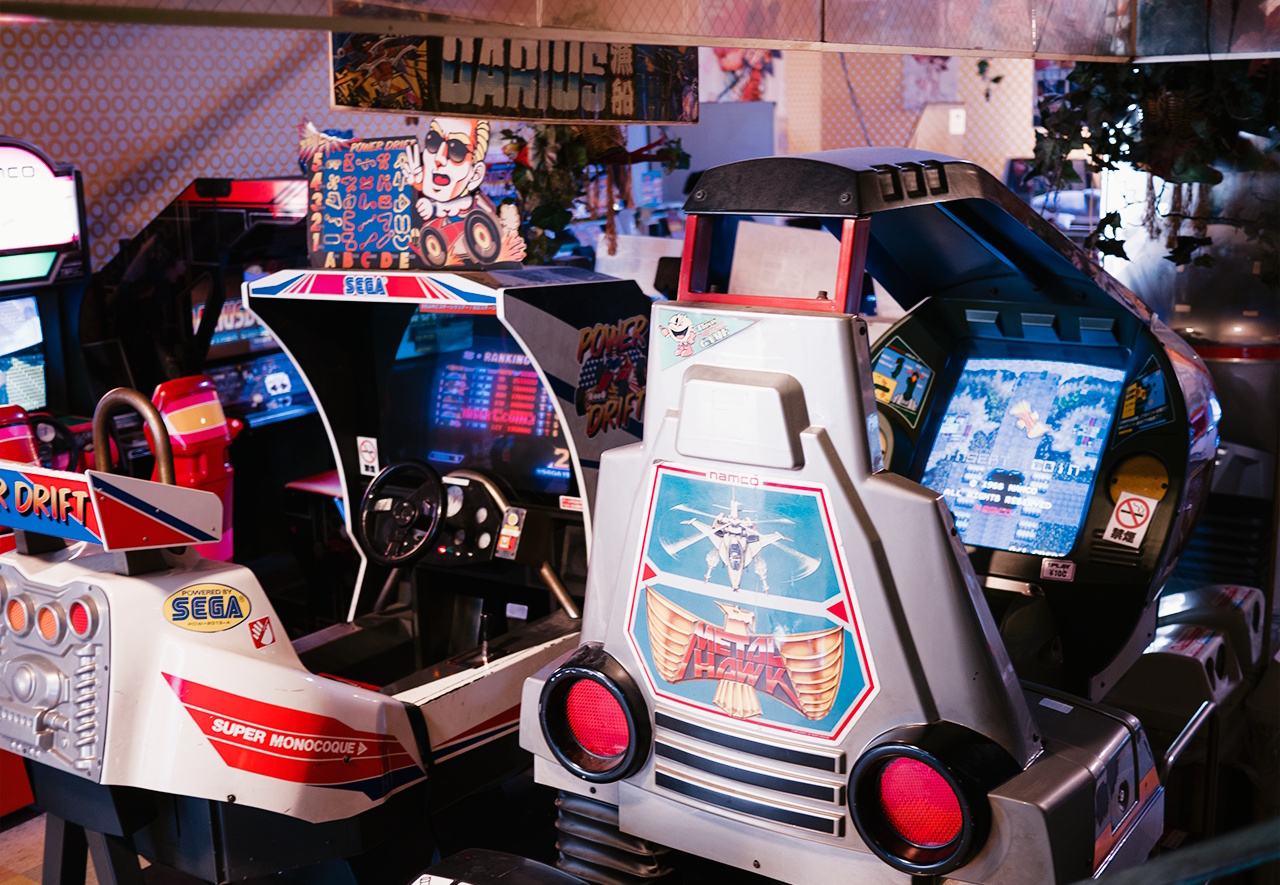
A selection of arcade machines.
Let’s talk about some cancelled games.

If I may suggest the obvious counter-point: some of these games might’ve been good! Some of the titles on this list seem to have been cancelled not for any reasons pertaining to quality, but for financial reasons, changes in priorities, or studios and intellectual property changing hands. Those things have next to nothing to do with the actual game, and while it’s true that not every decent-sounding cancelled game would’ve been great… I still wish we’d been able to see them and judge the finished products for ourselves.

As always, everything we’re gonna talk about is the entirely subjective, not objective opinion of just one person. If I highlight a game you think sounded awful, or ignore a title you think is obvious on a list like this… that’s okay. There ought to be enough room in the gaming community for differences of opinion. The games are listed in no particular order.

With that out of the way, let’s jump into the list.

Cancelled Game #1:
Agent (a.k.a. Rockstar’s Agent)
Early 2010s

Early logo of Rockstar's Agent.
The game’s logo.

Agent was first teased in 2007 by Sony, purportedly as a PlayStation 3 exclusive from Rockstar Games. Further details weren’t announced until 2009, when it emerged that the title would feature a secret agent in a 1970s Cold War setting. Obviously, the first point of comparison was James Bond, and that was more than enough to pique my curiosity! I didn’t own a PlayStation 3 until late in the console’s life, but Agent was perhaps the title I was most interested in after The Last Of Us.

Rockstar went radio-silent on Agent for years after the 2009 announcement. Occasional “leaks” would emerge, but there was nothing concrete. Rockstar’s parent company, Take-Two, renewed the “Agent” trademark twice, and seemed to imply to investors as late as 2013 that the game was still being worked on. However, another 2013 project, Grand Theft Auto V (and its online mode in particular), seems to have redirected Rockstar’s development resources.

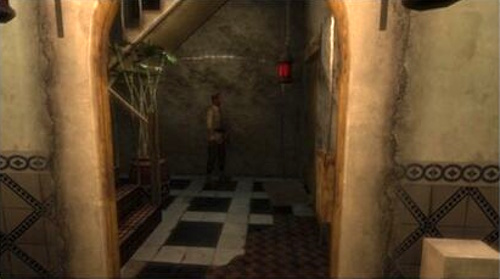
Leaked screenshot of Rockstar's Agent showing a character at the foot of a staircase.
One of the leaked screenshots.

By 2015, the project seems to have been abandoned, and I really do believe that Rockstar’s change of focus to Grand Theft Auto Online is the main culprit. Comments from at least one former Rockstar developer suggest that team members were reassigned from Agent to support Grand Theft Auto V after 2013, with the popular and financially successful online mode clearly being more of a priority for Rockstar and Take-Two.

It wouldn’t be the last project Rockstar would sacrifice at the altar of Grand Theft Auto Online. A single-player expansion was planned but never released, Red Dead Redemption II’s online mode was ignored when it failed to generate the same kind of revenue as GTA’s, and you better believe we’d have seen Grand Theft Auto VI, and perhaps other Rockstar titles – like a sequel to Bully – if the studio hadn’t gone all-in on GTA Online after 2013. Agent seemed like it had the potential to live up to stealth-action titles like GoldenEye and the Hitman series, and its ’70s setting sounded particularly fun.

Cancelled Game #2:
Star Trek: First Contact
1998-ish

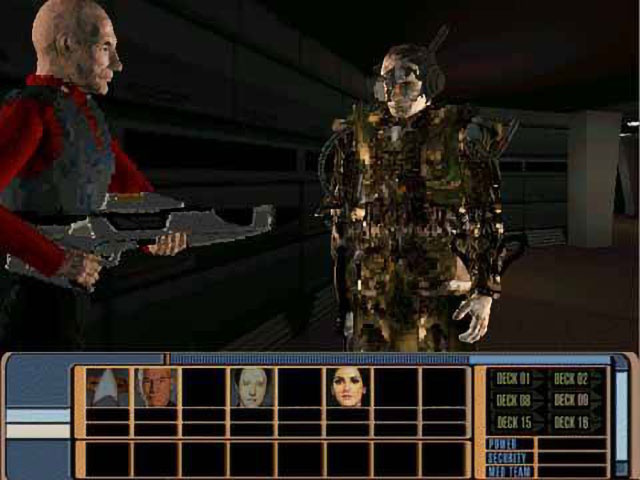
Pre-release screenshot of Star Trek: First Contact showing Picard and a Borg.
A game based on First Contact? Cool!

MicroProse created one of my favourite games ever: 1997’s Star Trek: Generations. Yes, the game is a pretty basic “Doom clone,” and yes it came out three years too late… but it was a ton of fun to play through an expanded version of the Generations story, with little connections to other episodes from The Next Generation. MicroProse had the Star Trek license in the mid-late 1990s, and after releasing Generations in 1997, the studio began work on an adaptation of First Contact.

For an action game or a first-person shooter, you could hardly pick a better Star Trek story than First Contact! Battling the Borg on the lower decks of the Enterprise-E, teaming up with Picard and the crew… it could have been a genuinely fun and exciting Star Trek experience. I doubt First Contact would’ve really crossed over to the mainstream and brought in a bunch of new fans… but you never know. A few years later, Elite Force managed to do just that.

Pre-release screenshot of Star Trek: First Contact showing Data, Worf, and two Borg.
A leaked screenshot of an early build of the game.

MicroProse’s financial problems seem to have impacted its ability to work on this game, though. The studio planned to use the then-new Unreal Engine, which would’ve allowed for better graphics and fully 3D models (Generations used a much older engine designed for DOS games that relied on 2D sprites for the most part). The jump in quality would’ve been noticeable, and First Contact could’ve been a good-looking game by 1998 standards!

A title based on First Contact is still one of my fantasy Star Trek games all these years later. Retaking the lower decks of the Enterprise-E, battling the Borg in close quarters, and perhaps having to rely on hand-to-hand combat and thrown-together weaponry… it just sounds so tense and exciting! It could also be a great horror-tinged game, with the Borg being a genuinely difficult and frightening antagonist. There was a ton of potential here, and it seems as if the game was cancelled through no fault of its own.

Cancelled Game #3:
Super Mario 128
1997-99

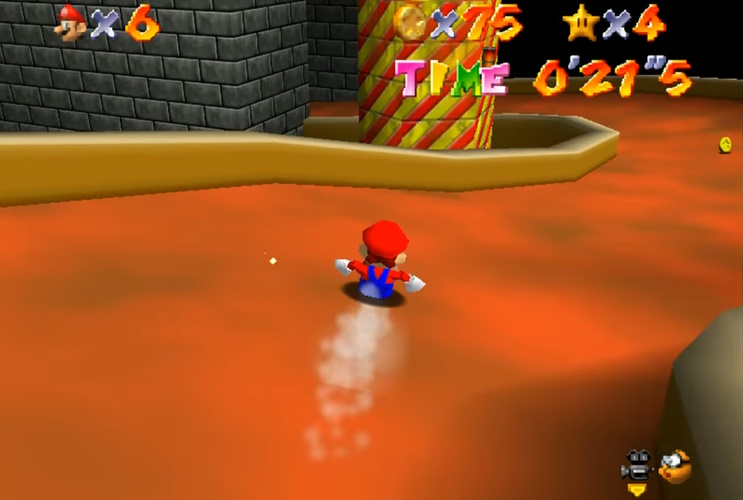
Screenshot of Super Mario 64 showing Mario on the castle's secret slide.
Whee!

A sequel to Super Mario 64 was planned for the Nintendo 64’s disc drive accessory – but the hardware failure led to the game’s cancellation. There’s a bit of confusion surrounding this title, because Super Mario 128 also refers to a completely different project that was in early development for the GameCube! But the 64DD version would have been much closer to Super Mario 64 than Mario Sunshine.

Originally, Super Mario 64 was supposed to include multiplayer, with the second player being able to control Luigi via split-screen gameplay. It sounds like Super Mario 128 was going to pick up this idea, using the 64DD’s more powerful capabilities to include a two-player mode. Luigi was confirmed by developer Shigeru Miyamoto to have been part of the project throughout its development, and rumours have suggested that Peach’s castle from Super Mario 64 would’ve returned as a location.

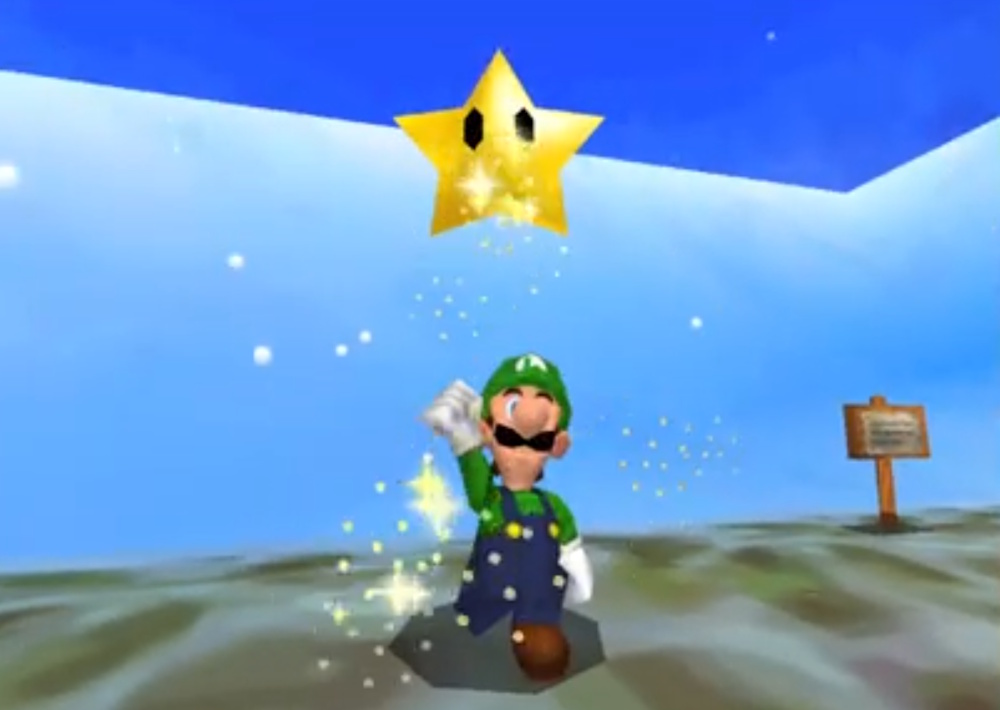
Screenshot of Super Mario 64 DS showing Luigi getting a star.
Luigi would eventually be playable in Super Mario 64 DS.

Another idea that Miyamoto supposedly had for Super Mario 128 was spherical levels or environments. We’d eventually see this idea in Super Mario Galaxy a decade later, but I’ve always wondered what it might’ve looked like if even one level had been like that back in the Nintendo 64 era! A direct sequel to the events of Super Mario 64, perhaps re-using and upgrading some of the same levels and environments just sounds like a lot of fun, and having a two-player couch co-op mode with Luigi and Mario together would have been fantastic.

Ultimately, the failure of the 64DD doomed this version of Super Mario 128. It seems that Nintendo kept the name, for a time, and the project was either switched to the GameCube or a new GameCube project was created with the same name shortly after the turn of the millennium. Elements of Super Mario 128 have appeared in several 3D Mario games over the years, including spherical levels in Galaxy and a return to Peach’s castle in Odyssey.

Cancelled Game #4:
Perfect Dark Reboot
Late 2020s

Logo for the Perfect Dark reboot.
The game’s logo.

After showing off Perfect Dark just a few months ago with an action-packed, exciting trailer… Microsoft and Xbox have now cancelled the project. Not only that, but the studio Xbox had created specifically to build Perfect Dark has been completely shut down and its staff have largely been laid off by Microsoft. This feels like a pretty shocking turn of events, and I think it’s a colossal disappointment that we aren’t going to get the promised Perfect Dark reboot.

Perfect Dark was Rare’s follow-up to the smash hit GoldenEye on the Nintendo 64, taking the same gameplay style but transposing it to a corporate-dystopia futuristic setting. Protagonist Joanna Dark was compelling, and the game was just a ton of fun both in single-player and multiplayer back in the Nintendo 64 days.

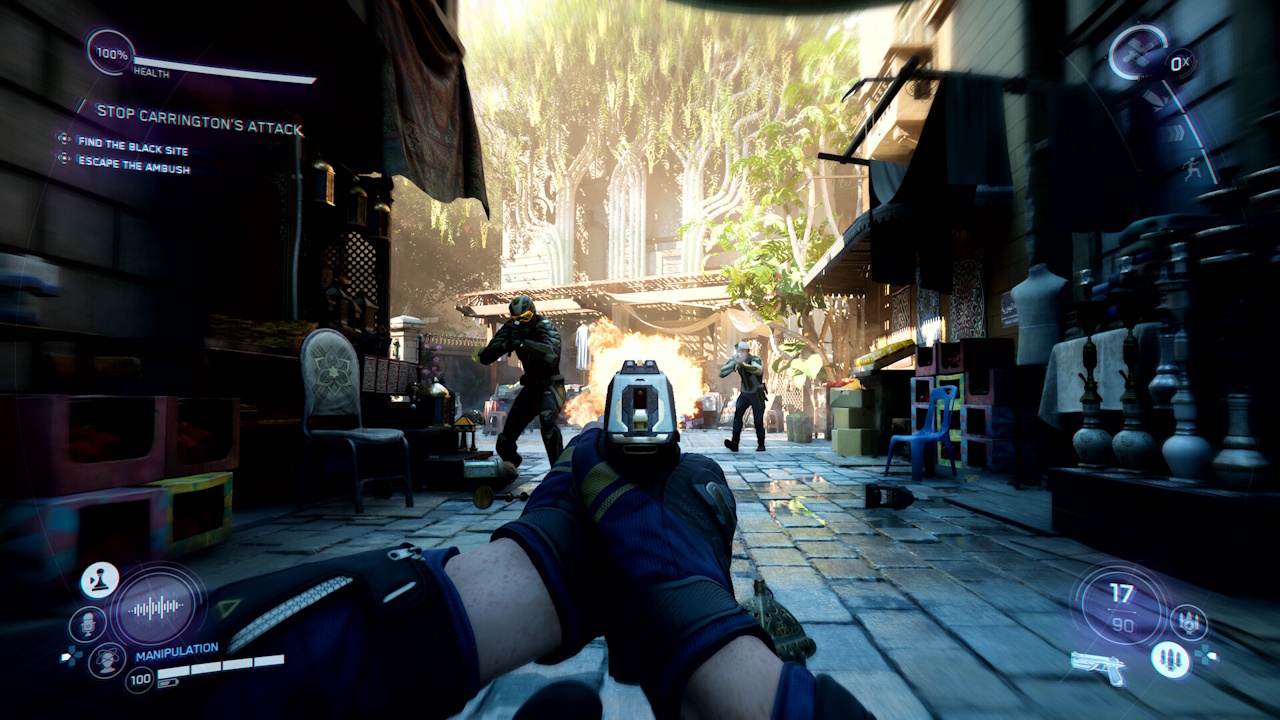
Screenshot of Perfect Dark showing the player character sliding in combat.
A glimpse at the game.

There aren’t that many single-player-focused first-person shooters any more. There’s id’s Doom series, and occasionally a title like Deathloop will come along, but for the most part, modern FPS titles focus almost exclusively on lucrative multiplayer modes that can be monetised to death. Perfect Dark represented something different – a bit “old school,” for want of a better term – in a modern gaming landscape dominated by those kinds of titles. And at a time when Microsoft’s biggest FPS franchise, Halo, has been flailing around, Perfect Dark could’ve been a much-needed boost. Heck, if it was good enough it could’ve even eclipsed Halo, taking Xbox in a different direction.

The gameplay that we saw a few months ago is real – though it was a “vertical slice” of a very incomplete game at the time it was produced. There really did seem to be a lot of potential in a return to this series and this style of first-person shooter. Maybe there were more problems behind-the-scenes than we’ve learned so far, and maybe Perfect Dark was just taking too long to be ready. But it’s a disappointment that we’ll never get to see it for ourselves.

Cancelled Game #5:
TimeSplitters 4
Late 2000s

Pre-release/placeholder logo of TimeSplitters 4.
An early version of the game’s logo.

TimeSplitters 2 is genuinely one of my favourite games of its era. Fun, fast-paced, with a unique story and art style… it was just a blast to play either alone or with friends. A third TimeSplitters game was also well-received – though I didn’t play that one for myself! Developers Free Radical Design announced that a fourth entry in the series was coming, but then they switched to develop the critically-panned Haze.

Haze’s failure seems to be what doomed TimeSplitters 4. Free Radical Design went into administration, and although it was initially announced that TimeSplitters 4 might be able to be saved, it didn’t happen. The studio was shut down, and the TimeSplitters license eventually ended up at Embracer Group after passing through several other hands.

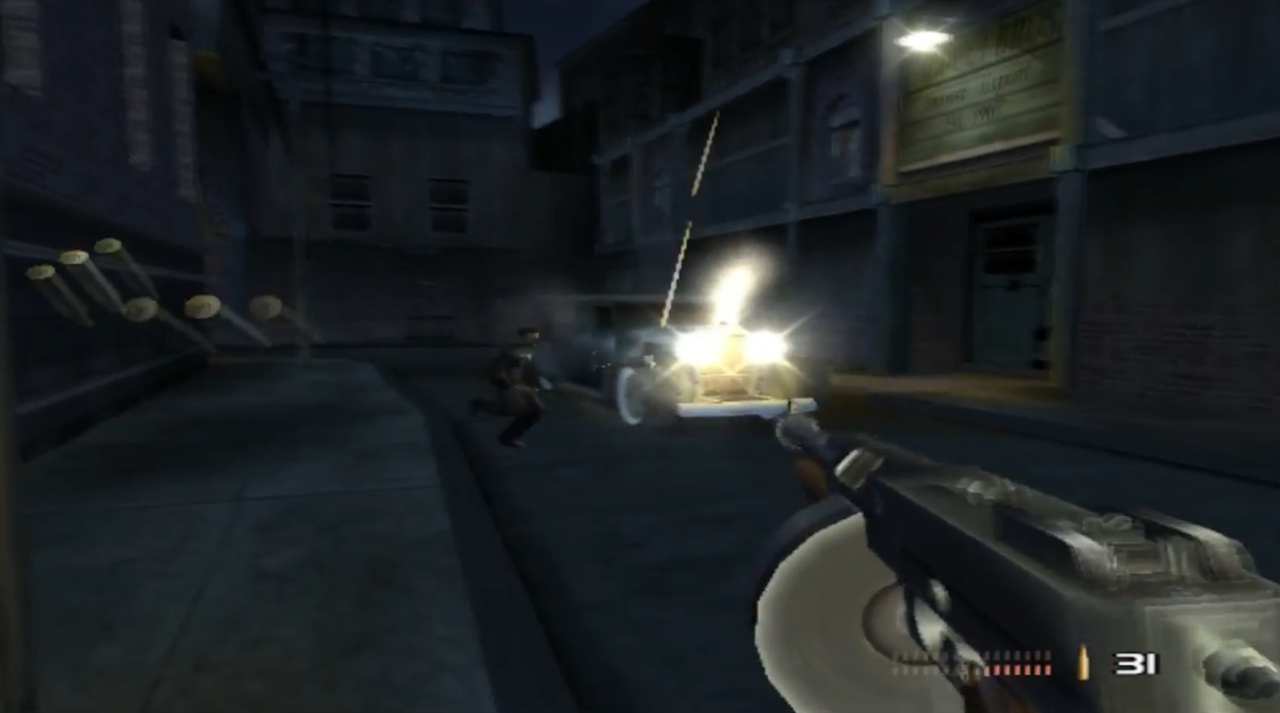
Screenshot of TimeSplitters 2 showing a tommy gun, a car, and the game's 1930s Chicago level.
The Chicago level from TimeSplitters 2.

TimeSplitters’ unique level design – jumping through different time periods and using weapons from those eras – made it something a bit different, and there was something about its fast-paced gameplay, especially in multiplayer, that was just plain fun. I have wonderful memories of playing TimeSplitters 2 on the original Xbox with friends, kicking back after work with a game that was different from anything else on the market and just really entertaining to play. The single-player campaign was great, too.

TimeSplitters 4 feels all the more disappointing because the game seemed, for a brief period in the early 2020s, to be getting a reprieve. However, a second cancellation was confirmed a couple of years ago, with the resurrected Free Radical being shut down for a second time. Again, this seems not to have been the fault of TimeSplitters 4, but rather due to issues within parent company Embracer Group.

Cancelled Game #6:
Shenmue III
2003-ish

Screenshot of an unreleased Shenmue II/Shenmue III environment showing Ryo with a temple.
Is this what Shenmue III would’ve looked like circa 2002?

Before you get angry and start screaming at me that “Shenmue III came out in 2019!!1!” – I know. I’m not talking about that version of the game. What I’m lamenting is that the original Shenmue saga couldn’t be continued on the Dreamcast, and that fans had to wait almost twenty years for a sequel to Shenmue II that wasn’t what it was originally supposed to be. If the Dreamcast had been a success and Shenmue III had been created in the early 2000s, it would have certainly been a different game – and probably a longer one, too.

There were rumours back in the day that Shenmue and Shenmue II could’ve been ported to the PlayStation 2 after the Dreamcast’s demise… and that could’ve also been something that saved the series. I firmly believe that the Shenmue saga is one of the best stories ever told in the medium, and it’s positively criminal that it’s never been concluded. There were chances in the early 2000s to salvage the Shenmue project, but its reputation, high pricetag, and connection to the failed Dreamcast all counted against it… as did the second game’s low sales.

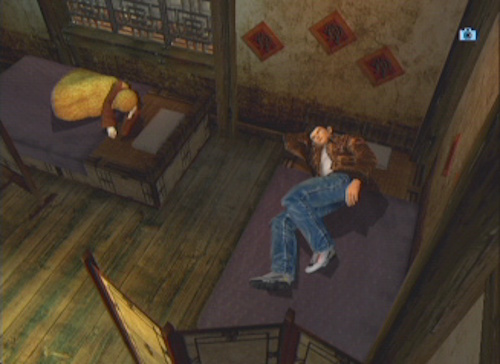
Screenshot of an unreleased Shenmue II scene showing Ryo and Shenhua in bed.
Shenhua and Ryo.

If Shenmue had continued, one way or another, in 2003 instead of 2019, I think we’d have gotten a much larger game for starters. And without the intervening couple of decades, this version of Shenmue III would undoubtedly have been closer to fans’ expectations – and possibly exceeded them. One of the reasons Shenmue III felt disappointing to some fans, in my opinion, is that the 2019 version wasn’t able to take advantage of years’ worth of changes and improvements in game design.

Shenmue III in the early 2000s would’ve also been a stepping-stone – one part of an unfolding story. I can’t speak for every Shenmue fan, but I genuinely expected the crowdfunded 2019 game would conclude the game’s main story. It didn’t – and that alone convinced me not to even buy it at first. But in 2003, that would’ve been a non-issue, so even if the story and settings of Shenmue III had been exactly the same, I believe the game would’ve been far better-received. Unfortunately, Shenmue was a masterpiece that was, in many ways, ahead of its time. Players in the early 2000s weren’t as interested in what the first two games had to offer, and the Dreamcast’s shaky position in a market that was about to be dominated by the PlayStation 2 sealed its fate.

Cancelled Game #7:
Life By You
2024-26

Promo art for Life By You showing the game's box art and logo.
One of the game’s promo images.

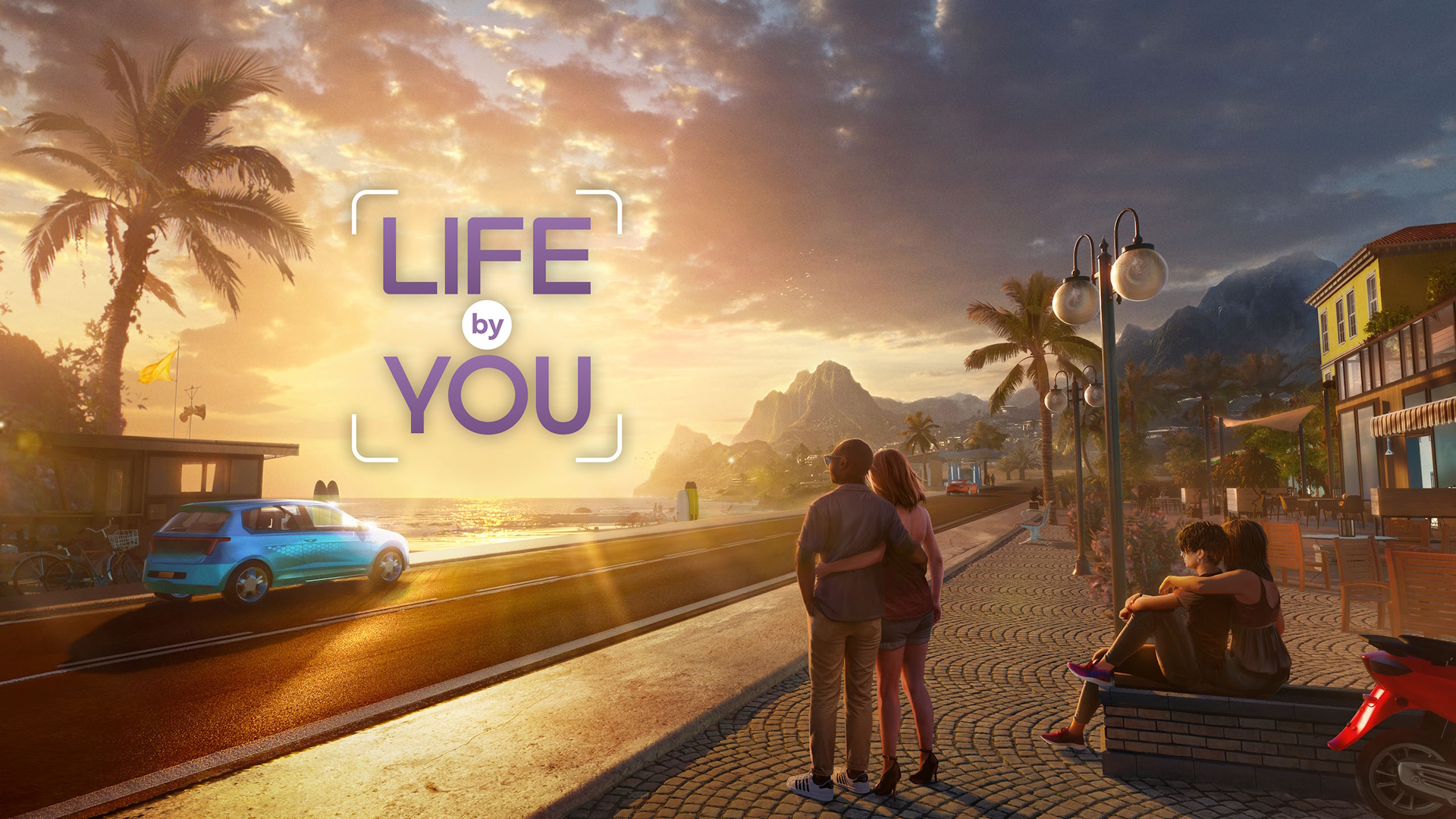
Life By You was one of a handful of Sims-inspired life simulator games that were all in development at the same time in the 2020s. And it was probably the one that appealed the most to me! Electronic Arts has monetised The Sims 4 to death – it costs, at time of writing, more than £1,300 to buy all of the available add-ons and expansions for that game. That’s a consequence of EA having the life-sim genre basically all to itself for years. Titles like Life By You threatened to change that.

I don’t know what Life By You’s monetisation might’ve looked like. Developer and publisher Paradox is not exactly known for being light on the DLC with its grand strategy games, many of which have DLC totals that can run to several hundred pounds. But I think competition in the life-sim genre is a good thing, and as someone who enjoyed The Sims in the early 2000s, I was definitely interested to see what another big studio could’ve done with the same basic gameplay idea.

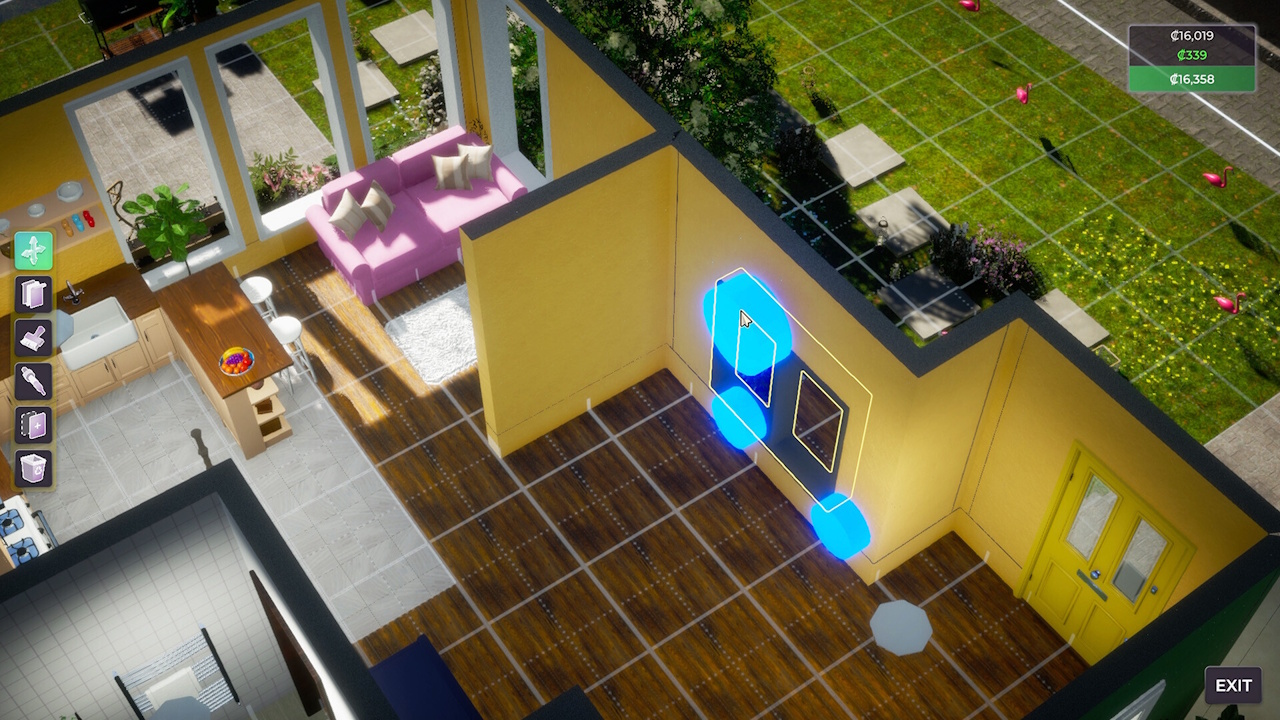
Promo screenshot for Life By You showing the game's build mode.
This looks like it would’ve been the game’s build mode.

inZOI and Paralives are two other new life simulators that are both coming out soon, though I would note that inZOI’s early access seems to have been a little *too* early! But both of those games are by smaller teams – and while there’s nothing wrong in the slightest with smaller studios, new studios, and indie developers, the bigger name behind Life By You was at least part of the draw, in my opinion. I’m still very interested in those other games, and I hope they both give The Sims 4 a run for its money! But if they don’t, or if they aren’t as good as people are hoping, I really think we’ll come to regret the cancellation of Life By You.

We don’t know what happened behind-the-scenes, but Paradox put out a statement saying that “a version we’d be happy with was too far away,” seeming to indicate that development was not progressing at a pace the publishing side of the company was happy with. It’s worth noting that Paradox was able to write off a significant portion of the game’s development costs against its annual income… which may have also been a factor in the game’s cancellation. Paradox also called the game “high risk,” and claimed in a meeting with investors that they’d be less likely to invest in similar titles in the future.

Cancelled Game #8:
Whore of the Orient
2013-16

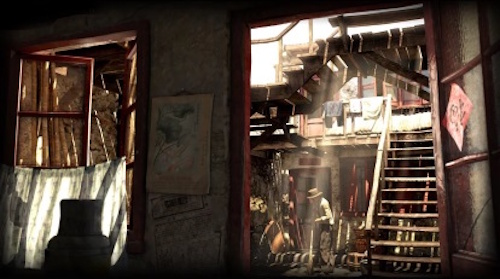
Leaked screenshot of Whore of the Orient showing a man, a staircase, and a window.
The only image of the game that ever leaked.

Let’s get the obvious out of the way: that’s a horrible title for a video game! But setting the title aside, Whore of the Orient sounded genuinely interesting. It was the brainchild of the people behind L.A. Noire, the police investigation game published by Rockstar in 2011. Team Bondi was eventually rolled into a new studio to develop Whore of the Orient, but most of the senior team stayed to work on the project.

Whore of the Orient would’ve made use of the same facial capture technology as L.A. Noire, but targeting a PlayStation 4/Xbox One release, I think we’d have seen some noticeable improvements on that front. The game was to be set in Shanghai in the 1930s, with political intrigue, the rise of communism, and criminal gangs. We don’t know much more about its story, but that premise sounds like something genuinely different, and potentially very engaging.

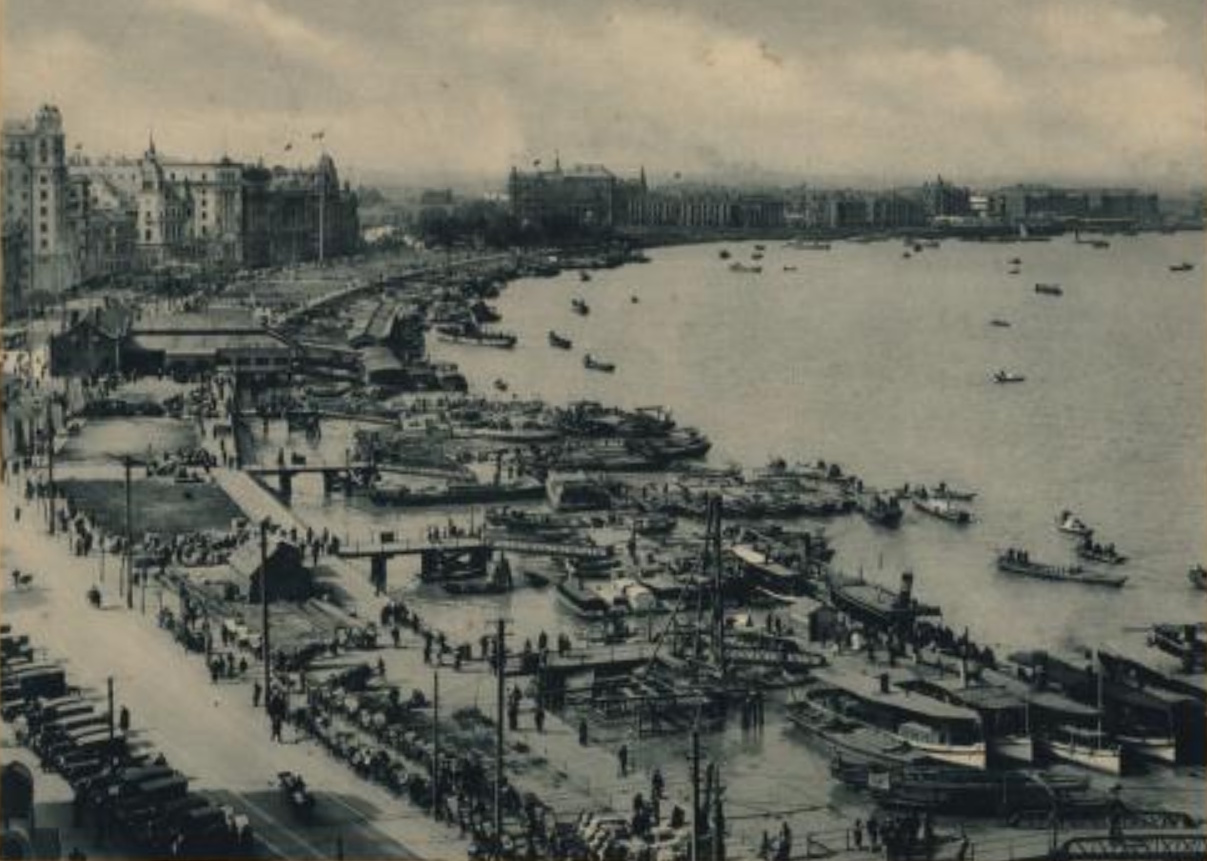
Photograph of Shanghai, circa 1927. Black-and-white image from an elevated position looking down on a waterfront packed with boats.
Whore of the Orient would’ve been set in Shanghai, circa 1930s.
Photo: Shanghai, 1927

We haven’t seen another game quite like L.A. Noire, and I’d have loved to see what the original developers could’ve done with the improved hardware of the PlayStation 4 generation. L.A. Noire hasn’t really aged well, with its facial capture stuff feeling just a bit too janky, but the same technology running on more advanced hardware could’ve really been something special.

As to the story, there aren’t any games I can recall that are set in 1930s China, so that alone would’ve made it stand out. We don’t know why the game was cancelled, only that parent company KMM Interactive pulled the plug sometime between the final update on the project, which was in 2013, and June 2016, when the news was belatedly announced to the public. Perhaps the story never came together, maybe the technology wasn’t working right, or maybe the game got too big and ambitious for its budget. In any case, it’s disappointing that the L.A. Noire folks didn’t get a second chance to tell a different story.

Cancelled Game #9:
Half-Life 2, Episode Three and Half-Life 3
Late 2000s

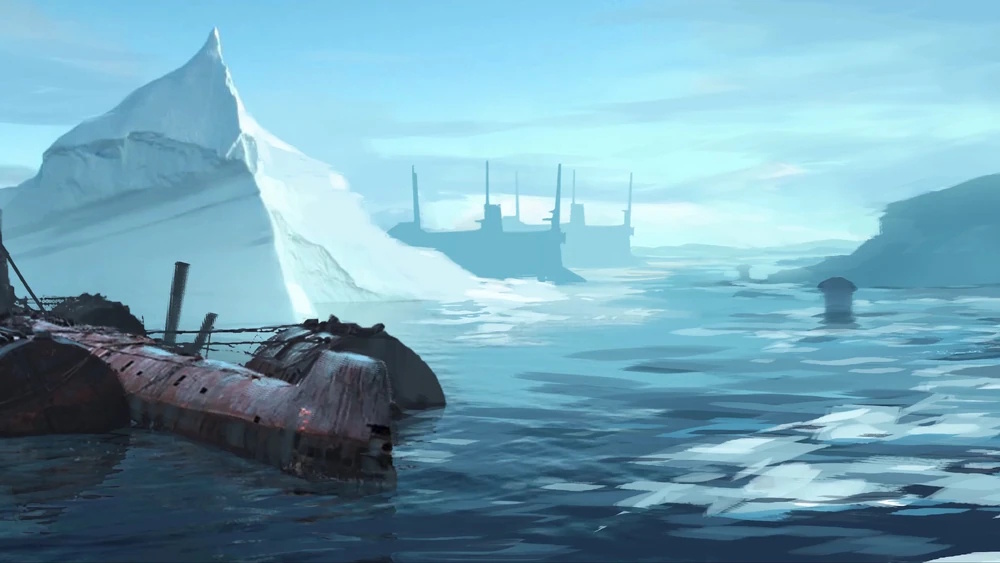
Concept art for Half-Life 2, Episode 3 showing an icy environment and a shipwreck.
Promotional art for Episode Three.

Half-Life 3 has become a meme at this point; the ultimate example of a video game that we’re never gonna play! But there was a time when either Episode Three or a full Half-Life 3 were very much on the agenda. But that was before developers Valve decided to dedicate all of their time to Steam, Dota 2, and the Counter-Strike series. As above with Perfect Dark, there’s a gap in the market for single-player first-person games, and the Half-Life series should be well-positioned to fill it.

Half-Life’s story is incomplete. Worse, it just… ends. There’s no conclusion for any of the characters or storylines, just a big, almost twenty-year-long void. And at this stage, despite occasional rumours… I don’t think the Half-Life series would print money in the way the first two titles did. It’s been too long, a whole new generation of players have come along who don’t even know that Valve used to make games, and quite honestly, I’m sceptical about Valve having the talent to produce a top-tier single-player game after so much time has passed.

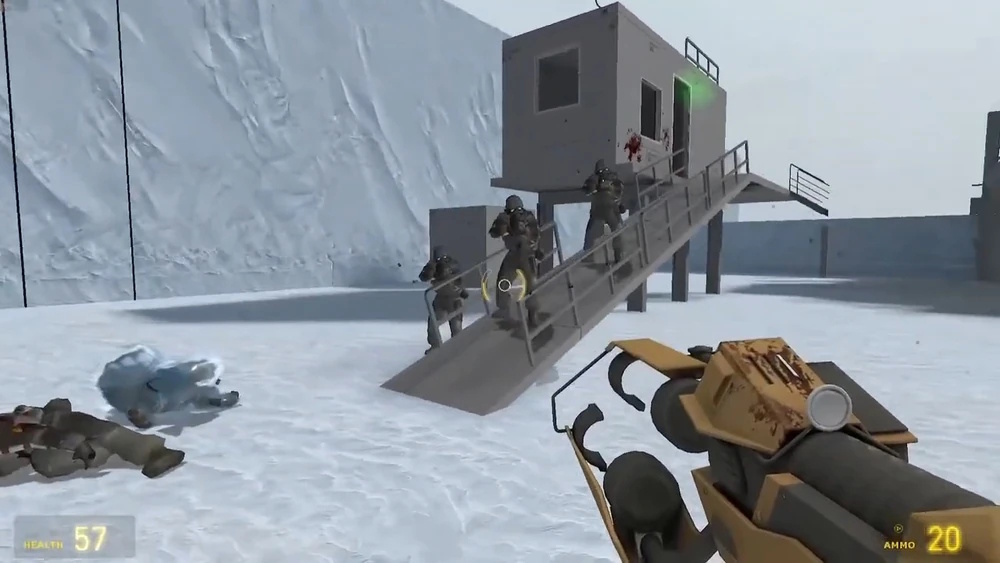
Pre-release screenshot for Half-Life 2, Episode 3 showing a first-person perspective, an icy environment, and several enemies.
A leaked screenshot of an early build of Episode Three.

There was that VR game a couple of years ago, and rumours occasionally fly about a potential new Half-Life title. Valve, unlike many of the other developers on this list, is still around – and still printing money hand over fist thanks to Steam. But the company’s focus has changed, and I don’t think most of the folks there are interested in another entry in the Half-Life series. It’s just sad that such an interesting setting and cast of characters can’t get any kind of conclusion, and it’s frustrating that there’s not really a good reason. If the studio had closed or if the previous entries in the series had flopped… fair enough. But Half-Life is held in high esteem and Valve clearly has the resources to invest. They just never did.

I also think we’re at a point now, for fans of the series, where any new game would struggle to meet expectations. It’s been so long, and Half-Life 3 has seen its status massively inflated, so any announcement would generate insane levels of hype. No game – no matter how good – could realistically reach the heights players would set for a new Half-Life… so maybe it’s better this way?

Cancelled Game #10:
Star Wars: Project Ragtag
Mid-2010s

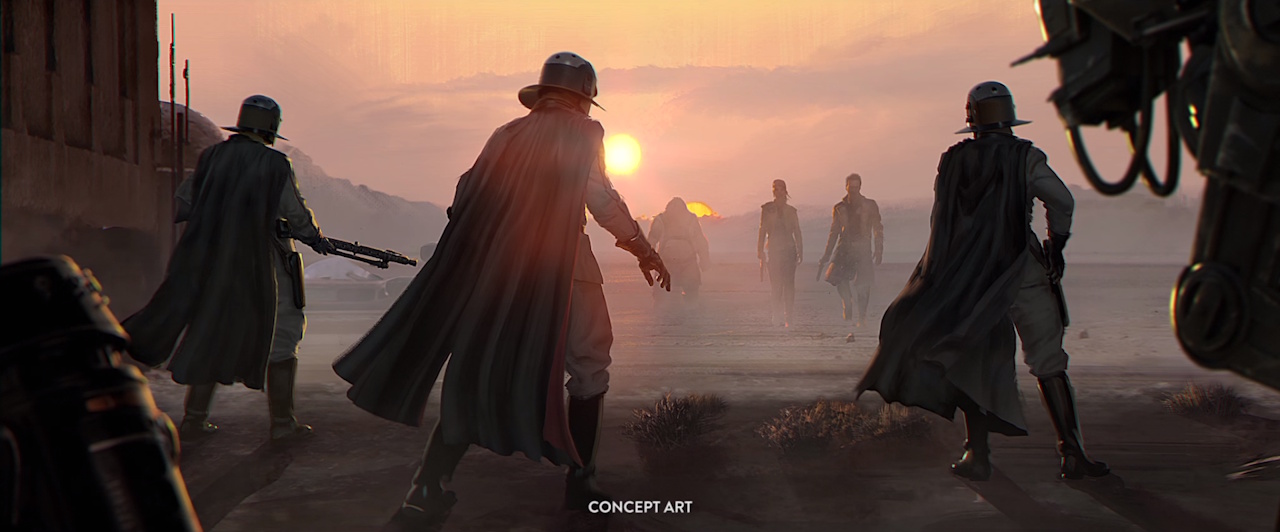
Concept art for Project Ragtag showing several characters.
Concept art for the game.

After the Walt Disney Company acquired LucasFilm in 2012, they also acquired the game studio LucasArts… and promptly shut it down. Disney handed the Star Wars license to Electronic Arts, who commissioned Dead Space developer Visceral Games to create a Star Wars third-person adventure game. Project Ragtag was being helmed by Amy Hennig, who had written and directed the Uncharted trilogy. Everything seemed to be coming together, and a genuinely great Star Wars game was in the offing.

But in 2017, EA didn’t just cancel the game, they closed down Visceral Games as well. According to Hennig, this decision was taken months before the team was made aware of it, and EA apparently planned to re-use some of the work Visceral had done for a rebooted open-world title. That project never saw the light of day, either.

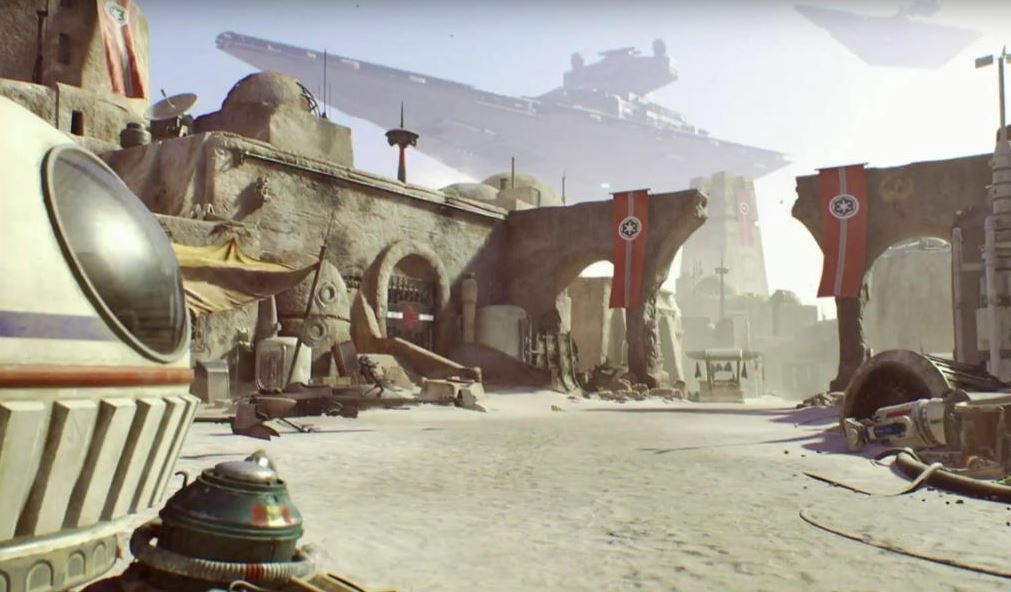
Pre-release screenshot of Project Ragtag showing an empty level.
An early build of an in-game environment.

Project Ragtag was supposedly a “heist game,” being set sometime during the events of the original Star Wars trilogy. Last year’s Star Wars Outlaws sounds kind of similar in theory, and I think that’s a good starting point, at least, when considering what Project Ragtag might’ve felt like to play. I’ve long argued for more stories set in the Star Wars universe that don’t just rely on the Jedi and Sith or on bringing back familiar faces, and I felt Project Ragtag had the potential to be a wonderfully engaging experience.

The director and studio both had pedigree, so there were plenty of reasons to be optimistic. Maybe the game wasn’t coming together… or maybe Electronic Arts was desperate for open-world, always-online multiplayer titles that seemed like better monetisation prospects in the second half of the 2010s. EA would go on to publish Jedi: Fallen Order a few years later, though, so maybe they learned their lesson!

So that’s it.

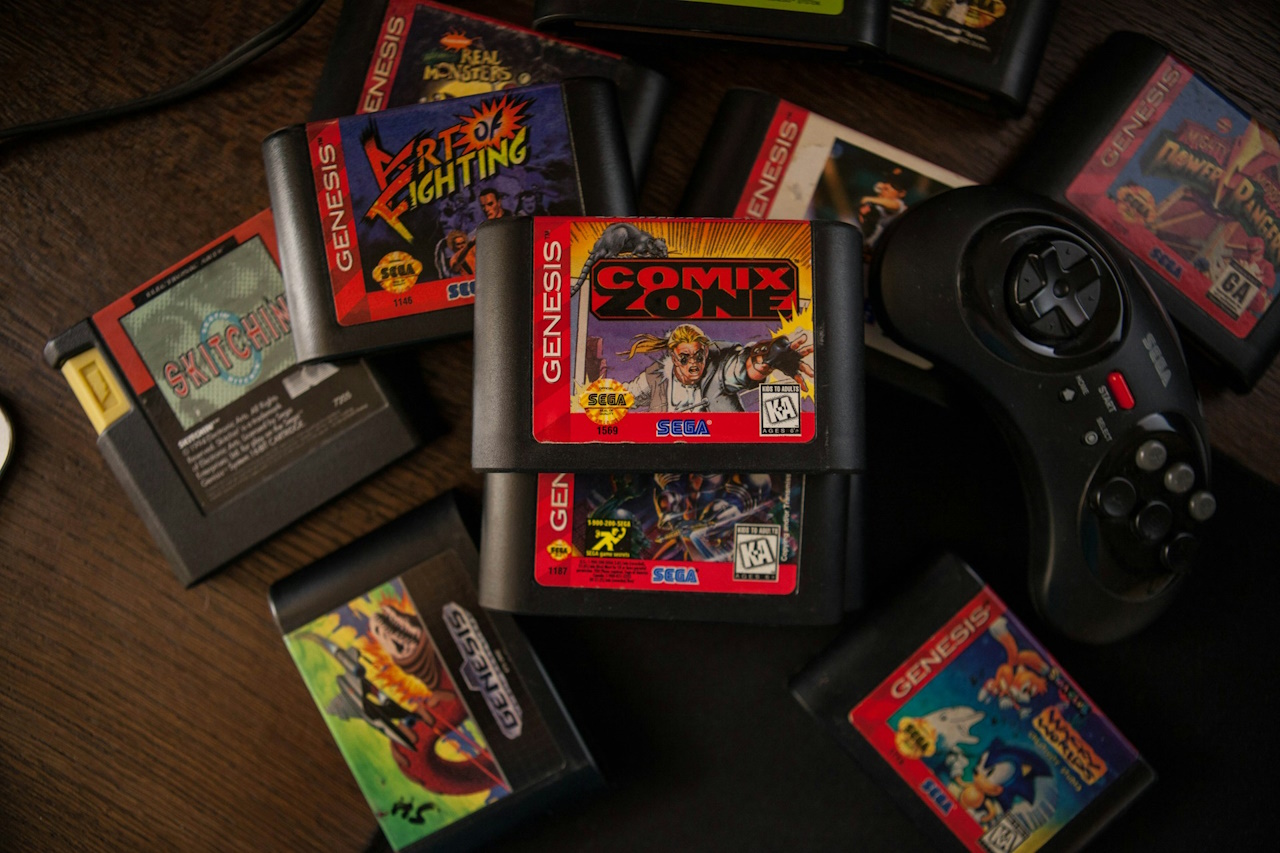
Stock photo of Sega Mega Drive games and a control pad.
A selection of Mega Drive/Genesis games.


We’ve talked about ten cancelled games that I really wish we’d been able to play!

Some of these have been sore spots for decades; others are new, but still sting. Sometimes a game being cancelled does ultimately lead to something better, either because the creative folks move on to different projects, or even because some of the work done on a title can be repurposed. But there’s no point in denying it: a game I’m looking forward to getting cancelled just hurts.

There are a few titles where cancellation feels reasonable under the circumstances or may have been expected. Some games sound too good to be true and may have proven too ambitious, or just didn’t come together in the way their developers hoped. These things happen, and as I’ve said before: game development is not a sure-fire thing. There can be all manner of reasons why a decent-sounding project struggles when the concept comes up against the real world.

Promo photo of a woman working on a computer with two monitors.
Game development is not a straightforward process!

But all of these games sounded good to me, and I regret that they were cancelled before I could try them! As someone who follows the games industry – and who spent a decade working on the inside – I keep up to date with upcoming games, and even allow myself to get excited, sometimes! That inevitably brings with it a degree of disappointment when a title either doesn’t live up to expectations, or doesn’t even make it to release.

I hope this hasn’t been too depressing. And who knows: maybe some of these games will get a reprieve one day. If Age of Empires IV can be developed sixteen years after Age of Empires III, or a new 3D Donkey Kong game can launch in 2025 – more than a quarter of a century after Donkey Kong 64 – then maybe there’s still hope!


All titles listed above may still be in copyright with their respective developer, publisher, and/or studio. Some screenshots and images courtesy of IGDB, DJ Cube, and Shenmue Dojo. This article contains the thoughts and opinions of one person only and is not intended to cause any offence.
Grand Theft Auto VI: The Delay and the Trailer

I was partway through writing this article about the recently-announced delay to Grand Theft Auto VI when Rockstar unexpectedly released the game’s second teaser trailer – so bear with me while I re-write a few sentences and shuffle things around!

The delay to Grand Theft Auto VI is going to be disappointing to a lot of people – but it’s also unquestionably the right call. Developer Rockstar Games is well-known in the industry for its abusive “crunch” practices in the run-up to big launches, so anything that potentially mitigates that and makes the working environment better for people is a hugely positive thing. Given Rockstar and Take-Two’s insane financial resources, and the continued revenue stream from Grand Theft Auto V’s online mode, there’s absolutely no justification for pushing to meet a self-imposed, arbitrary release window. If the game needs more time and more work, then delaying it is the right move.

Grand Theft Auto VI has been delayed to May 2026.

From a gameplay perspective, a delay is the right call, too. Since internet connectivity became commonplace on home consoles in the Xbox 360/PlayStation 3 days, more and more corporations have taken what I call the “release now, fix later” approach to game design – releasing a broken, unfinished game with the promise of patches and updates later to smooth things out. This rarely works as intended, and there are so many examples of games which should’ve been good that ended up being soiled by a poor launch. Even success stories, like Cyberpunk 2077, are still tainted for a lot of players, and will always have a little asterisk next to them explaining that, while the final version of the game may have been great, the launch version was piss-poor.

I don’t have any “insider information” from Take-Two or Rockstar, so I don’t know what might’ve been going on behind the scenes to prompt this delay. There wasn’t even an official release date for Grand Theft Auto VI, just a vague “2025” from the original announcement. As I said at the time, a delay felt like a reasonable prospect, so I’m not particularly surprised by the news. A second delay from spring to autumn 2026 also feels plausible – so watch this space, I guess!

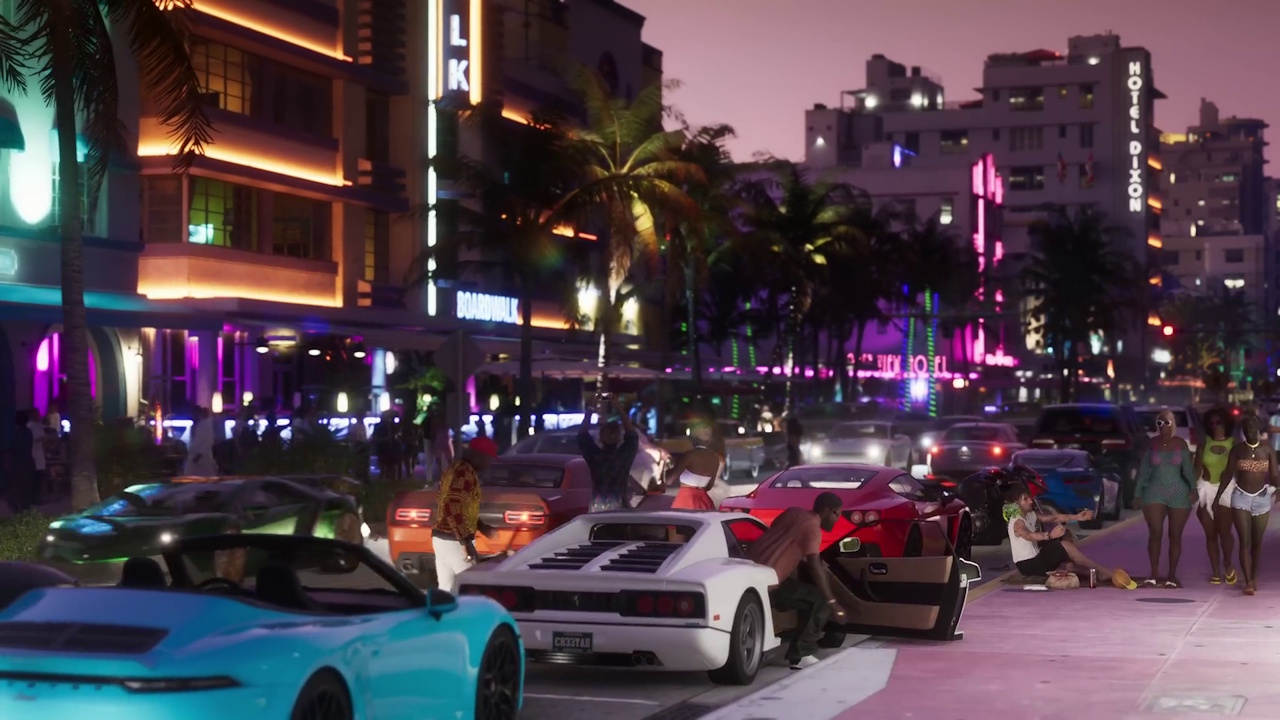
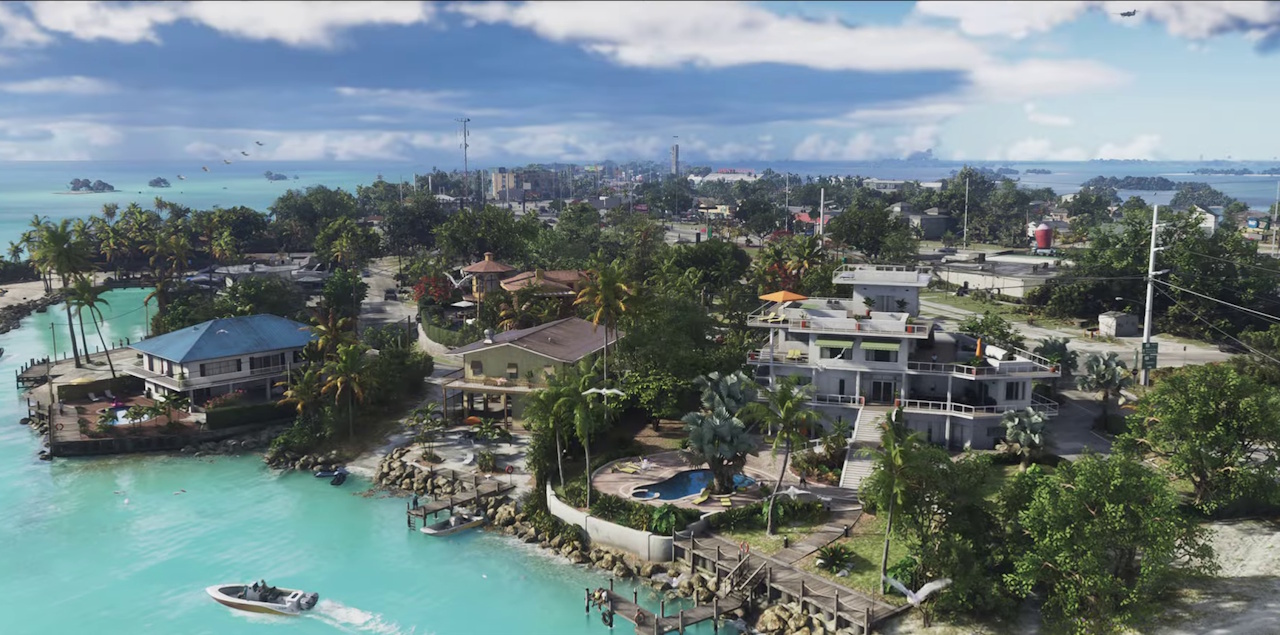
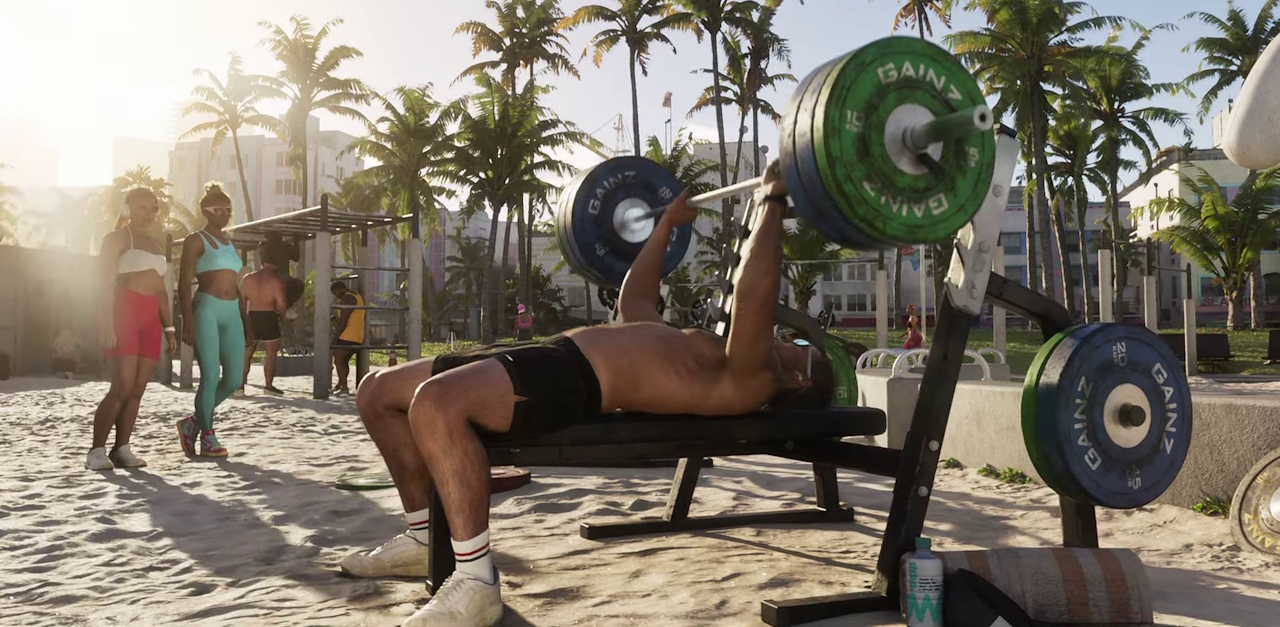
Part of the game’s open world as seen in the recent trailer.

I’ve said it before and I’ll undoubtedly say it again: game delays are a good thing and should be celebrated, not criticised. I get it: it’s never fun when you hear that a game you’re excited about is going to be delayed, but if it means the finished product will be better (and, y’know, actually finished) then it’s going to be worth it. A game as large as Grand Theft Auto VI purports to be will take time for QA testers to work through, and I’m content to give Rockstar and Take-Two additional time to polish the experience and launch a better, more stable, less glitchy game. Even if that means waiting a year or two!

Thankfully, the reaction to delays from most players and fans these days is mature and acknowledges that simple reality. I think all of us have been burned at least once by a buggy, glitch-riddled, clearly unfinished game – and nobody wants to go through that again! There will be some upset players, of course, but I think most folks are mature enough to understand that this news, while it may be disappointing, will ultimately mean the launch version of Grand Theft Auto VI will be more polished and just an all-around better experience.

Hopefully Grand Theft Auto VI’s delay will result in a better finished product.

I do have a couple of things to add about the game, though, particularly now that we’ve seen the second teaser trailer.

Firstly, I’m a little disappointed that we still haven’t actually seen any bona fide gameplay in any of the marketing material that Rockstar and Take-Two have released so far. Both teaser trailers may be comprised of “in-engine footage,” but they show cut-scenes, carefully-curated clips, and content that may have been rendered especially for the game’s marketing. What we haven’t seen is any actual gameplay, and while you might say that’s fair enough if the game is more than a year away from launch, Grand Theft Auto VI was, until a few days ago, on the schedule for this year. I would’ve expected to see some glimpse of its gameplay by now, especially with Rockstar preparing that second trailer.

Any idiot can put together cut-scenes, clips, and pre-rendered artwork and make a compelling trailer. Trust me, I used to work in games marketing, so I know what it takes to showcase even the worst and most uninspired titles! Some absolutely atrocious games look decent in their own marketing material, and it’s a bit of a red flag for a game to have potentially been a few months or even just a few weeks away from launch with no gameplay on show.

Any game can look exciting with a carefully edited trailer comprised of pre-rendered cut-scenes and CGI.

This leads into my next point. I… I don’t feel blown away by anything we’ve seen from Grand Theft Auto VI so far. With the caveat that we still haven’t seen any official gameplay, the pre-rendered footage and cut-scenes that have been shown off just haven’t really stood out to me as being particularly special. There are some fantastic-looking games at the moment, particularly in the third-person action/adventure space, and for a game that Take-Two may genuinely try to sell for $100… I haven’t really seen anything in the Grand Theft Auto VI footage that could come close to justifying that.

That doesn’t mean I think the game “looks bad” or will be unenjoyable. But rather that I’d say it doesn’t look like anything special compared to the current crop of AAA titles on the market. Elden Ring, the remastered version of The Last of Us Part II, Alan Wake II, and even Rockstar’s own Red Dead Redemption II – which is now six-and-a-half years old – don’t feel particularly far behind what I’ve seen of Grand Theft Auto VI. Considering the upcoming game’s price point and all the hype around it, I would’ve expected to see a bit more by now to really sell me on why this’ll be a “once-in-a-generation experience;” the kind of thing I can’t afford to miss out on.

Nothing on show has really blown me away so far.

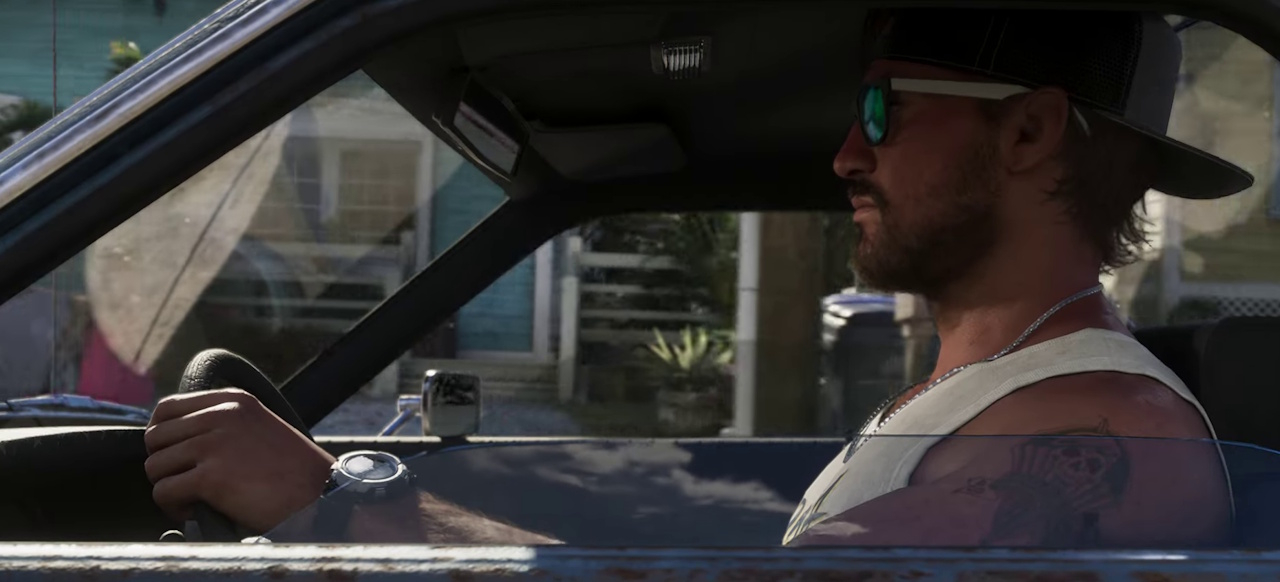
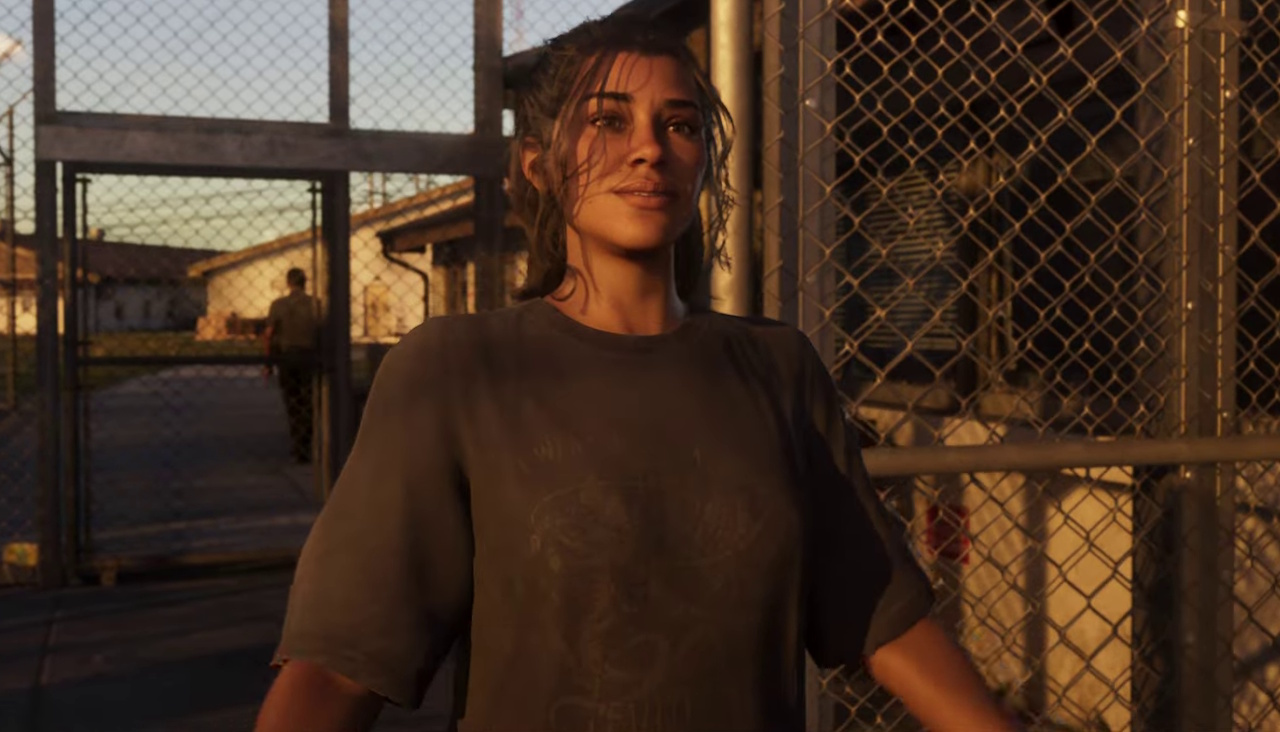
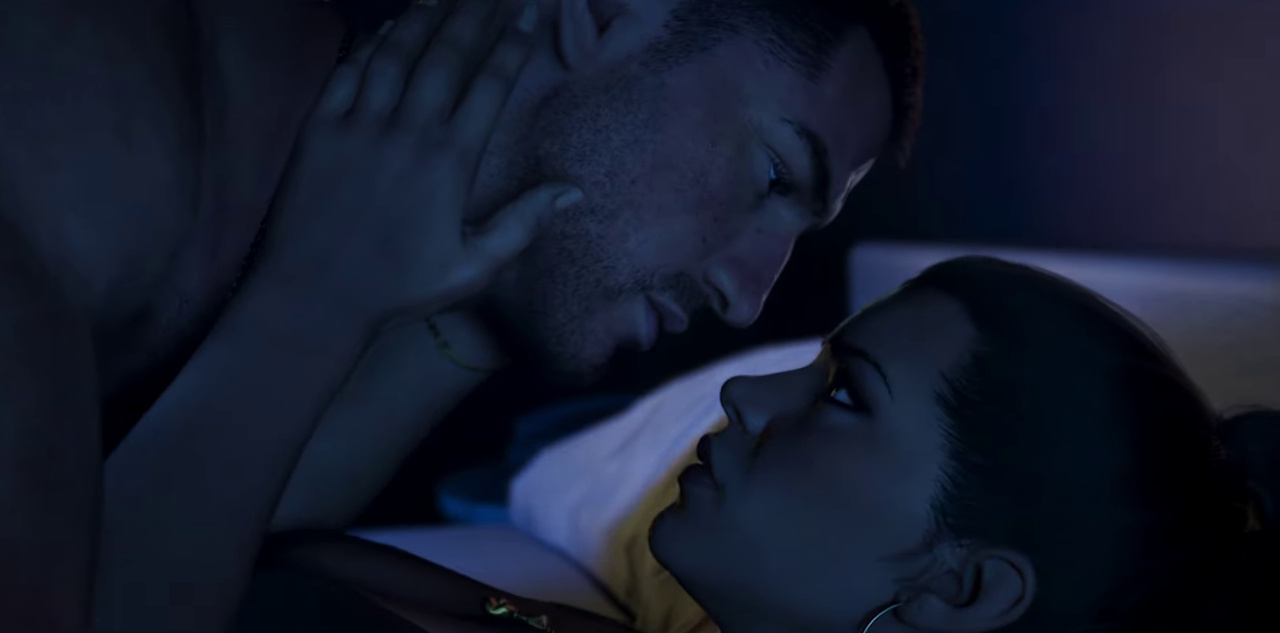
Grand Theft Auto VI looks like it’s going to be an outlaw story; a “modern-day Bonnie and Clyde,” with protagonists Jason and Lucia starting from a low point but taking Vice City by storm. I like that idea in theory, though a narrative can be hard to judge at this distance! But what I really want to see from Grand Theft Auto VI is its world. The characters and the story are incredibly important, of course, but that’s something I’ll discover for myself as I play the game. At this point in the marketing, we need to get a feel for the scale and depth of the world, and start to see what new gameplay features might be included.

Red Dead Redemption II is Rockstar’s magnum opus, and one of the finest games I’ve ever played. But after more than six years – seven going on eight by the time Grand Theft Auto VI actually launches – and an entire console generation, we should be seeing improvements. Grand Theft Auto V was originally released in 2013 on the Xbox 360 and PlayStation 3, and players who skipped Red Dead Redemption II will be expecting much more significant improvements and changes. So far, from a couple of pre-rendered trailers, I’m just not feeling much of that.

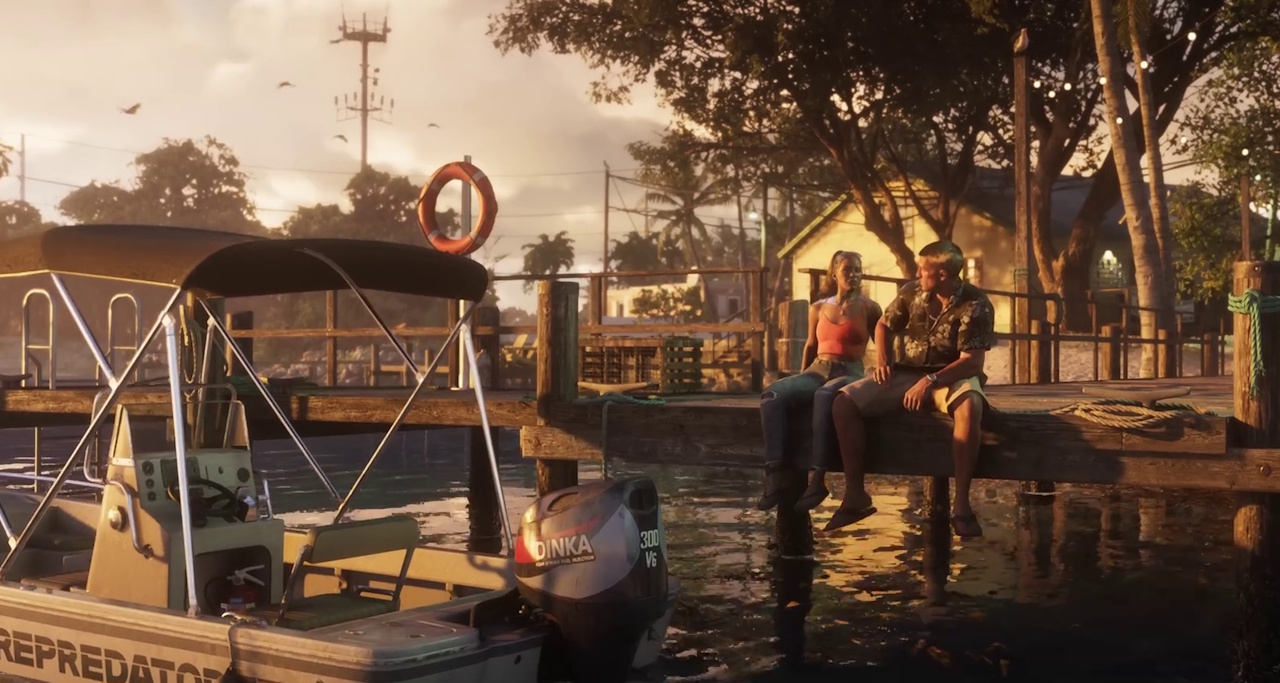
Jason and Lucia – the game’s protagonists.

I don’t doubt that Grand Theft Auto VI will be a good game – but with the level of hype that’s been swirling around the project for over a decade at this point, will it be a great one? Can it possibly live up to these sky high expectations – and its rumoured $2 billion budget? If the game is on par with other open world titles from the last few years, will that be good enough for players who’ve been waiting for it for such a long time? These are the questions that Rockstar and Take-Two will have to answer – and the marketing campaign so far, while it’s admittedly at an early stage, hasn’t exactly dazzled me.

For those inclined to seek out such things, there are leaked videos and images of Grand Theft Auto VI – some dating back several years. I don’t want to judge the game based on leaks; having worked in the games industry in the past, I know the final build of a game can differ substantially from early versions! But the leaks are undeniably part of the conversation – and again… nothing’s really blowing me away. I see what looks to be a solid third-person action/adventure game, similar in tone and style to Grand Theft Auto V thanks to the familiar tropical setting, and… that’s it. Pre-judging a game based on leaks is silly, but what I’ve seen so far reminds me why I thought it would’ve been better for Grand Theft Auto VI to have been set in a different environment and possibly even in an earlier time period, too.

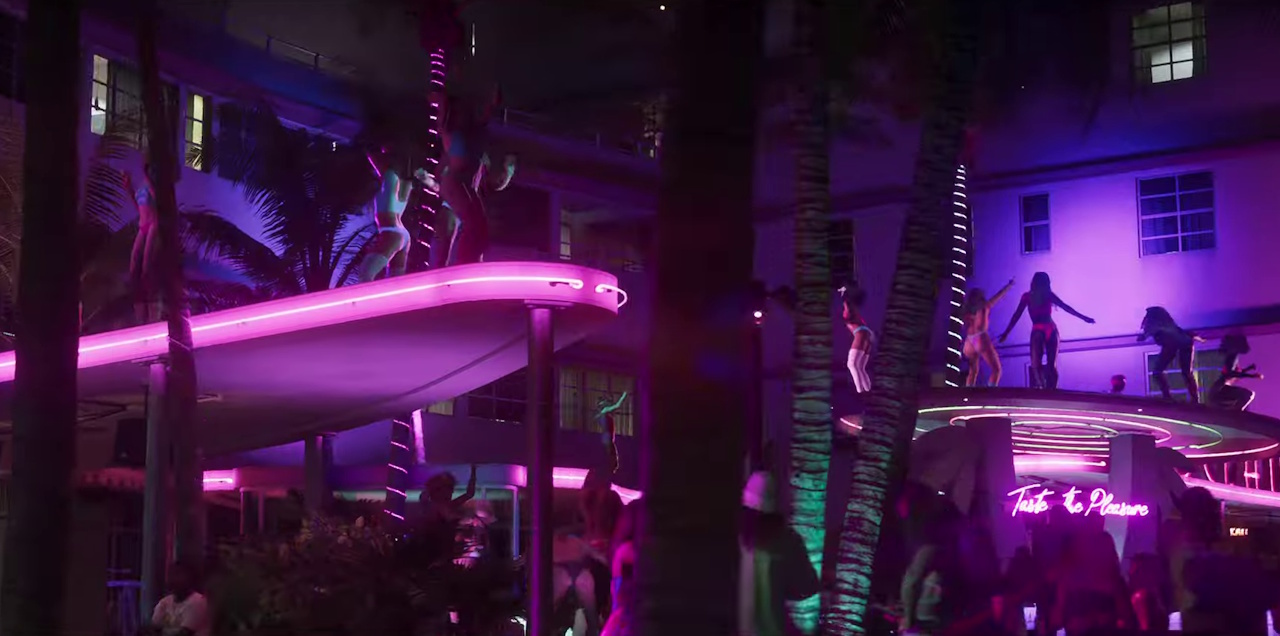
Should Grand Theft Auto VI have been set in a different city without a beach and palm trees?

You might remember me talking about this years ago. Before we had any official news about Grand Theft Auto VI, I said that I feared a modern-day story set in another tropical city by the beach might just be too samey and too familiar, and wouldn’t do much to give players invested in Grand Theft Auto V a reason to switch. Time will tell, of course, but I wonder if part of the reason why I don’t feel so enthused by the recent trailer (and the leaked footage) is because of how samey and familiar parts of it feel.

So that’s it for now. Grand Theft Auto VI has been delayed – and while that isn’t exactly fun, it’s good news in my book. I’d rather play a better, more polished version of the game a year later than a broken, buggy, unfinished version a year early. As to the story, setting, and gameplay, though… I’m not sure. I’m confident the game will be fun, and that could be good enough, I suppose. But for a game which could end up being the most expensive ever, raising the price of AAA games across the board, and after such a long wait in between titles? Rockstar and Take-Two still have work to do to convince me Grand Theft Auto VI will be worth the price of admission.

Oh, and there’s still not gonna be a simultaneous PC release, which is pretty shitty behaviour from Rockstar and Take-Two.


Grand Theft Auto VI is currently in development and is currently targeting a May 2026 release date. Grand Theft Auto VI is the copyright of Rockstar Games and Take-Two Interactive. This article contains the thoughts and opinions of one person only and is not intended to cause any offence.

Grand Theft Auto VI Should Be Free

I recently read an article about the price of the highly-anticipated upcoming video game Grand Theft Auto VI. According to the journalist, a number of analysts and businesspeople in the games industry are “hoping” that Take-Two Interactive and Rockstar will price Grand Theft Auto VI higher than the current $70/£70 that has become standard since 2020. The reason for this is simple: it will open the door for other publishers to follow suit, increasing the prices of games across the board.

To me, that sounds absolutely repulsive. The corporations that make up the games industry have literally never made more profit than they’re making right now. Even expensive failures like Concord last year hardly registered as a blip on the charts; these corporations are making money hand over fist in a way they could’ve only dreamed of a few short years ago.

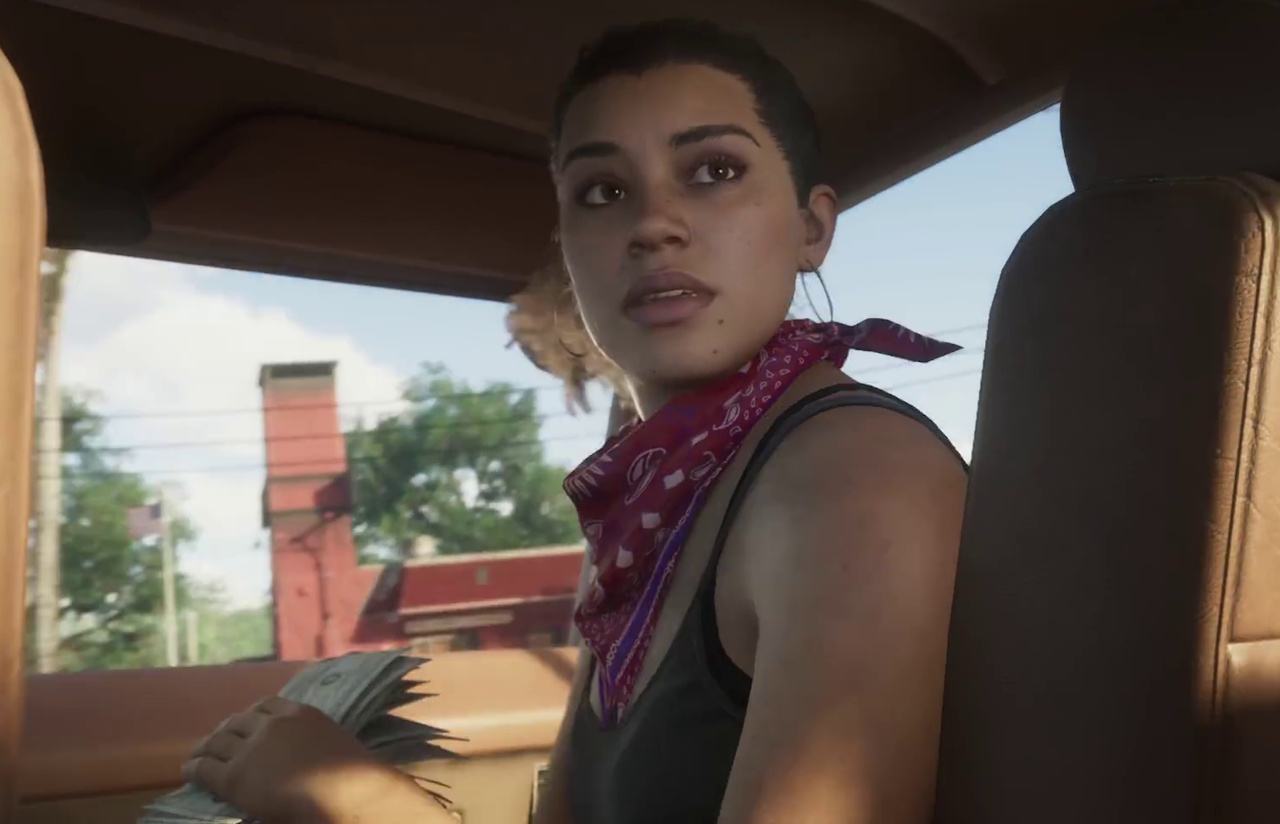
A still frame from the Grand Theft Auto VI trailer showing Lucia holding a wad of cash.
The games industry has never been richer and more profitable.

So today I’d like to propose a counter-argument: Grand Theft Auto VI should be free-to-play for everyone.

First of all, let’s clear up this myth surrounding the so-called standard price of video games. In most cases – and especially for AAA games released through corporate publishers – £70 only gets your foot in the door. The true price of fully feature-complete games has been well above £70 for years, and it’s only getting worse. So-called “premium editions” or “deluxe editions” aren’t giving players something extra, they’re cutting out content that was developed alongside the game, fully-integrated into it, and selling it back to us for a premium fee. Some of these special editions can be well over £100 – so that’s the true price tag of most AAA video games in 2025.

We’ve seen a recent trend in which AAA publishers are adding “early” access into deluxe editions of games, too. Charging players extra to play the game on its real release date instead of up to a week later is pretty shitty when you think about it, and just another way that corporations like Take-Two – and others in the AAA space – exploit their players.

Screenshot of the different editions for NBA 2K25.
Take-Two’s own NBA 2K series comes with “standard” and “all-star” editions, the latter having more content.

Grand Theft Auto VI will have a single-player campaign, and although Take-Two has cheaped out on development, cutting off PC players for some incomprehensible reason, I gotta confess that I’m genuinely looking forward to playing it. The Grand Theft Auto series has usually been good fun, and I’ve been playing since the first title was released in the late ’90s. Remember playing the first Grand Theft Auto with its top-down view? Those were the days, eh?

But let’s be honest: Grand Theft Auto VI is, first and foremost, a multiplayer title. That’s how Rockstar and Take-Two see it, and after the rampant success of Grand Theft Auto V’s online mode, they’re not wrong about that.

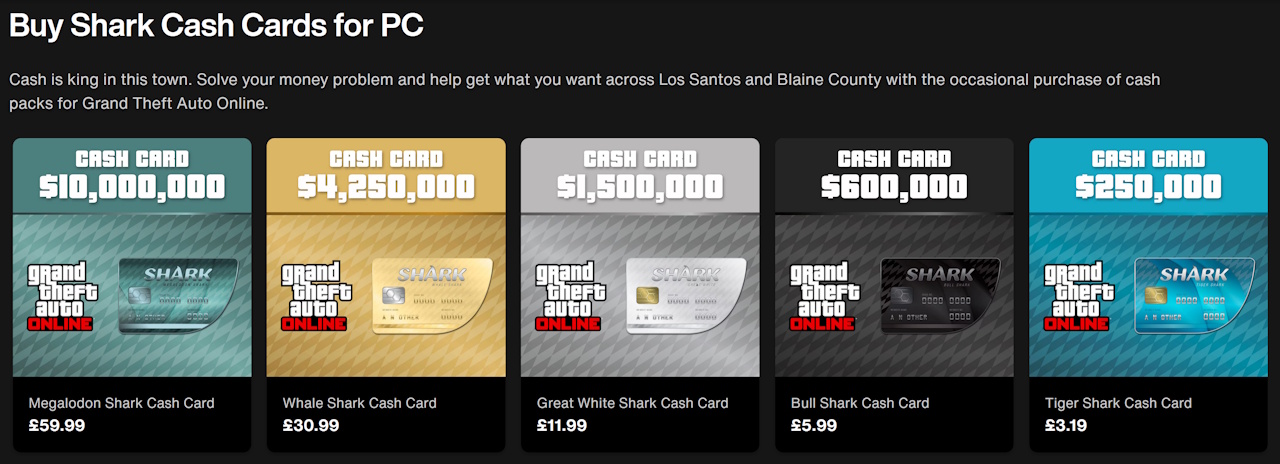
Screenshot of the Rockstar Store showing Grand Theft Auto V "Shark Cards" for sale at different price points.
In-game sales, like these Shark Cards for Grand Theft Auto V, are where Take-Two and Rockstar will make the most money.

Grand Theft Auto V isn’t just any online multiplayer game, though. It’s a game that has been monetised to death, incorporating basically every scummy pay-to-win trend going – and pioneering new ones that other corporations in the games industry have latched onto like parasites. Most games that charge players real money for an in-game currency, skins, cosmetic items, and particularly that charge for gameplay-enhancing vehicles, weapons, and items have something in common: they’re free.

So to reiterate: Grand Theft Auto VI should be free-to-play, and Take-Two should be content with making all of the money in the world from sales of in-game currency and pay-to-win items. Charging even £1 for the game up-front – let alone £90 or £100 as some corporate leaders are soiling themselves in anticipation over – just feels obscene for a game that’s going to be monetised to hell and back.

A still frame from the Grand Theft Auto VI trailer showing a flock of flamingoes.
A flock of flamingoes from the Grand Theft Auto VI trailer.

By including all of these pay-to-win mechanics, Take-Two and Rockstar want to have it all. They want to charge players money up-front, then keep charging them for in-game items, currency, and more. But that isn’t a fair approach – most publishers pick one or the other, and with Grand Theft Auto VI clearly having an online focus, it’s only right that it’s made available for free to everyone who wants to play it.

Do I think that’s a realistic outcome? Well… why not? Corporations are gonna try to grab as much cash as possible, of course, and there will be some desperately disappointed analysts, executives, and investors if Grand Theft Auto VI goes free-to-play from day one. But it would also be a statement; Rockstar and Take-Two could argue that they’re taking a stand and win some free positive PR in the process. Given that the overwhelming bulk of the money Grand Theft Auto V had made (and Grand Theft Auto VI intends to make) comes from in-game transactions anyway, it wouldn’t actually be a huge loss to Take-Two. Grand Theft Auto VI will still be hugely profitable.

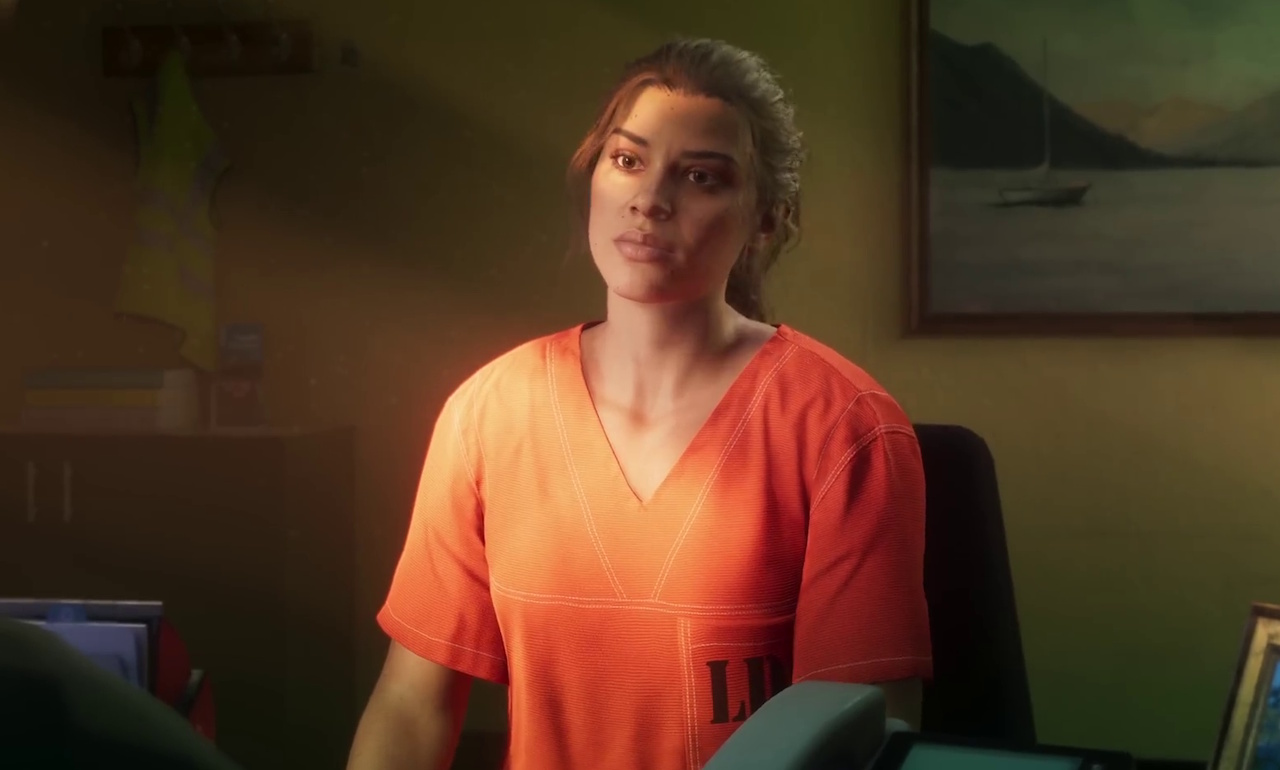
A still frame from the Grand Theft Auto VI trailer showing Lucia wearing an orange prison uniform.
Grand Theft Auto VI should be free.

So that’s my proposal! Forget these desperate attempts to start the base price of the game at £80 or £90 and just go free-to-play. It’s the right thing to do for an online multiplayer game that’s sure to be crammed with pay-to-win mechanics, an in-game currency, and more cosmetic items and skins than you can count. It would also be a wonderful middle finger to corporate leaders, investors, and analysts who are already making more money than they’ve ever made before and are just being greedy. Plus, from Take-Two’s point of view, it would be a marketing and PR masterstroke if handled well.

So go on, Take-Two and Rockstar! It’s the right thing to do, it’s bound to score you plenty of free publicity and positive press, and it would be hilarious to boot. The Grand Theft Auto series has long satirised corporate America, get-rich-quick schemes, and greed… so why not pull the ultimate power move by making the newest entry in the series totally free for everyone to play? I think it’s a fantastic idea!

Will Grand Theft Auto VI really be free-to-play? Maybe we should start a rumour that it will be and see how panicked the games industry and its corporate overlords get!


Grand Theft Auto VI is still in development and is planned to be released on Xbox Series S/X and PlayStation 5 consoles in late 2025. Grand Theft Auto VI is the copyright of Rockstar Games and/or Take-Two Interactive Software. This article contains the thoughts and opinions of one person only and is not intended to cause any offence.



Multiple sources have reported on the “hope” in the games industry for a price hike from Take-Two and Rockstar when Grand Theft Auto VI launches. I’ve linked a handful below.

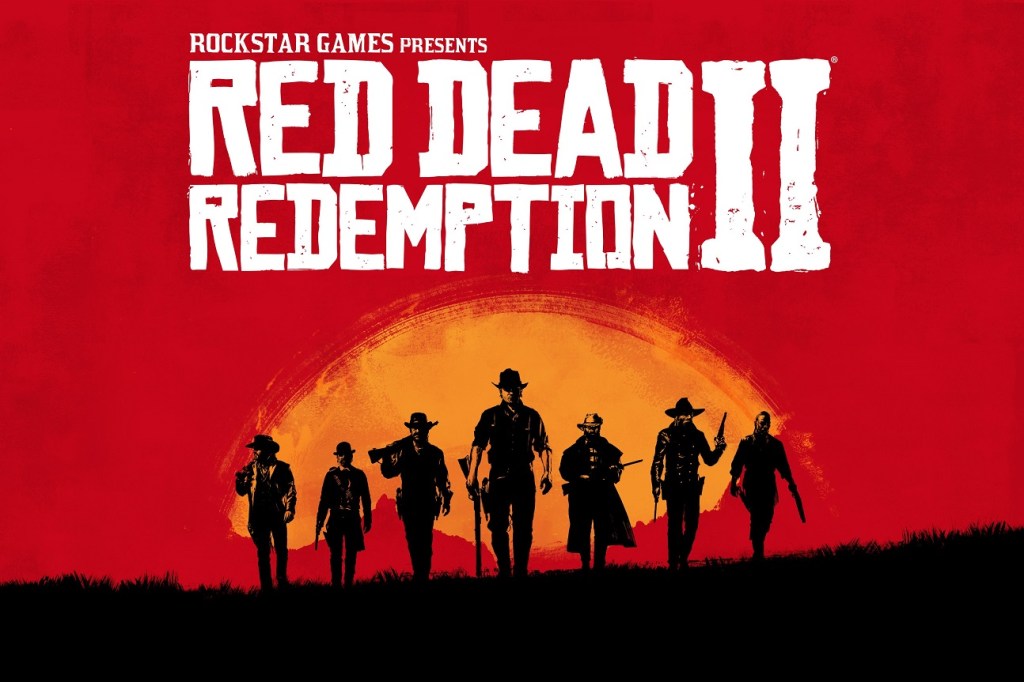
Red Dead Redemption II – First Impressions

Spoiler Warning: There are minor spoilers ahead for the opening act of Red Dead Redemption II.

Red Dead Redemption II has been out for three years now – two years for the PC version – so it’s a bit late to just be getting started with the game! However, if you’re like me and missed it when it was new, maybe you’ll find my first impressions of the game helpful or interesting.

As I said when I included Red Dead Redemption II on my list of some great games I haven’t played, there was nothing about the game that put me off. In fact, Red Dead Redemption II was incredibly appealing to me – I find American history fascinating, particularly in the 19th Century, as it was a field of study while I was at university. Rockstar is also a developer whose titles are usually well-made and fun to play; they basically perfected their open world style with Grand Theft Auto III in 2001 and haven’t looked back. So there was a lot going for Red Dead Redemption II in 2018, but as someone with limited funds for gaming I couldn’t afford it at the time. The game ended up in what I call “the pile” – a long (and growing) list of games that sound great that I just haven’t got around to playing for one reason or another!

I finally got around to playing this game – it’s widely hailed as a masterpiece.

However, Red Dead Redemption II was on sale on Steam at some point in the last few months (I forget exactly when) and I was able to pick it up at a reasonable discount. The game’s massive 119GB file size took an eternity to download on my painfully slow internet connection, but I was able to eventually get the game installed and start playing.

Before we go any further, let’s acknowledge something important that too many fans and players have overlooked: Rockstar’s treatment of some of its employees. Though not at the same level as companies like Activision Blizzard or Ubisoft, both of which have wrangled with major scandals in the past couple of years, Rockstar pushed its staff hard in the run-up to Red Dead Redemption II’s launch. “Crunch” has been a part of game development for years, and when I worked in the video games industry I experienced it firsthand. In Rockstar’s case, “crunch” wasn’t always voluntary and some members of staff and ex-members of staff have gone on record sharing the physical and mental toll it took on them and their colleagues. In short, producing Red Dead Redemption II was difficult and even harmful for some people, and it’s important we acknowledge that and call out Rockstar’s poor working environment.

Is there a visual metaphor here? Surely not…

Setting that aside, let’s talk about Red Dead Redemption II itself. If I were to pick one word to summarise the game from the perspective of a complete newbie it would be “dense.” The game has a huge amount going on, and drops you into a story that’s already ongoing from the very first moment you boot it up. Red Dead Redemption II is a sequel – technically the third entry in its series – so on the surface that seems to make sense. But the game is actually set before the previous entry in the series, despite the confusing numbering!

The opening chapter of the game serves partly as a tutorial and partly as an introduction to the story and characters. As mentioned, though, it really did feel like protagonist Arthur Morgan’s story was already in progress. He and the gang are in the process of escaping a city after a job gone wrong, and maybe players of the first two games in the series know a bit more about what happened and why, but I certainly didn’t! I still don’t, in fact!

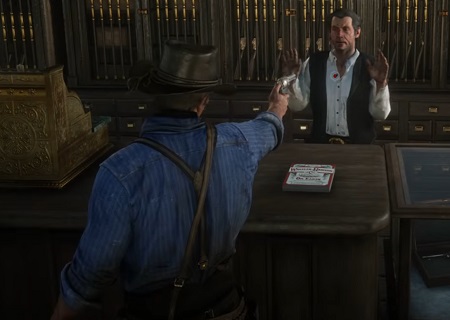
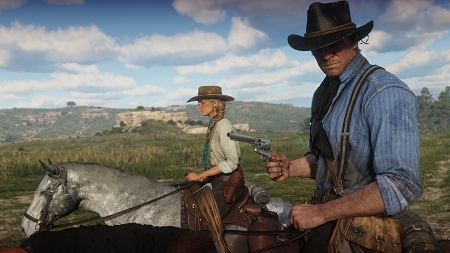
The game’s opening chapter sets up parts of the story and some of the characters, as well as introducing players to some in-game systems.

The opening sequence also gets you acquainted with some of the game’s systems – but by no means all. The signature “dead-eye” mechanic – which works similarly to the VATS system in the newer Fallout games, allowing Arthur to slow time and lock on to specific enemies prior to shooting – was one important gameplay element that the opening act of the game didn’t go into much detail on at all.

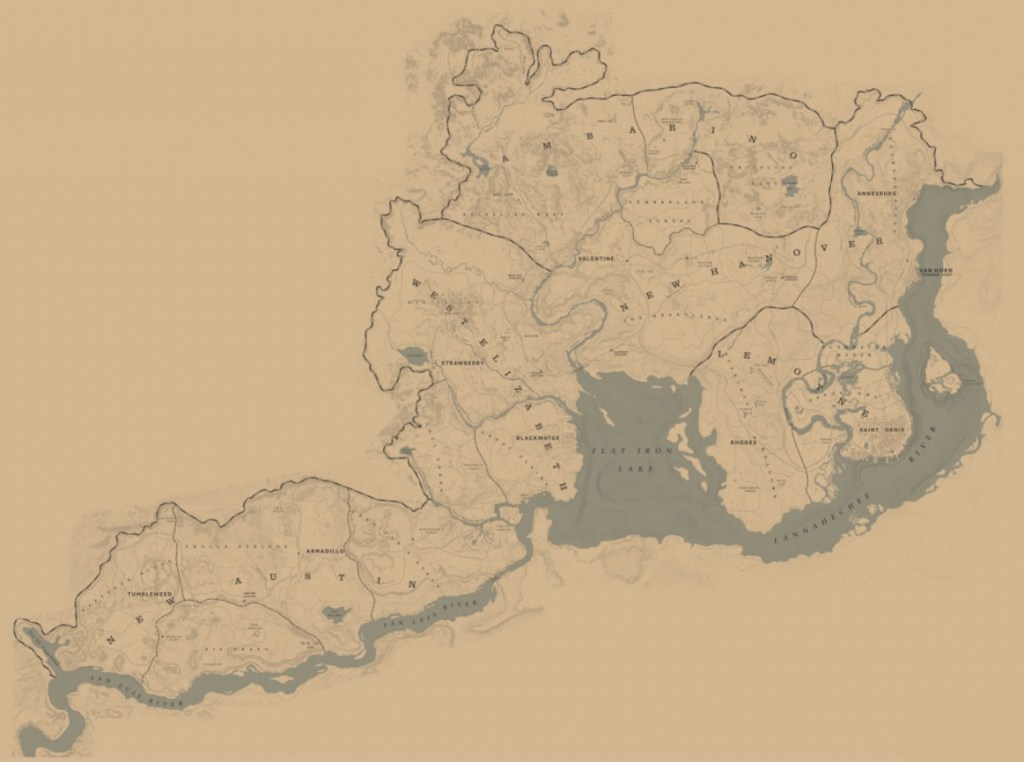
There’s hunting wild animals, combat with guns, unarmed combat, horse riding, horse care, picking plants, doing chores around the camp… and so much more going on in Red Dead Redemption II that it’s difficult to know where to start. The game’s opening act is mostly linear, taking place in a smaller area and with only a handful of missions that Arthur has to undertake in a certain order. But after departing the opening location in the high mountains and making camp, the open world is at Arthur’s feet – and it’s a big one!

Red Dead Redemption II’s game map.

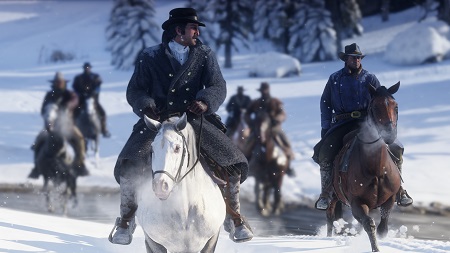
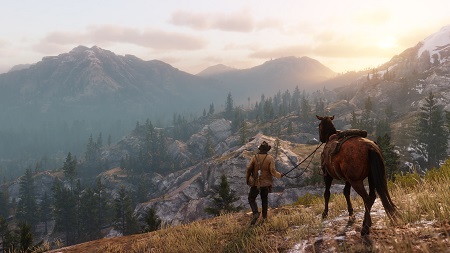
Rockstar has always excelled at world design, but I confess I wasn’t sure how well the open worlds of the Grand Theft Auto series would translate to the 19th Century. The open worlds of games like Grand Theft Auto V were based around large modern cities with roads laid out for traversal by car. The world of the 19th Century was, in many ways, bigger because of how slow travel on foot or by horse and cart was. Red Dead Redemption II’s world captures that feel perfectly, and any doubts I might’ve had about an open world game using this kind of setting melted away faster than the snow in the mountains!

The game’s open world feels authentic. If you’ve ever seen old photographs of America in the late 19th Century, or even modern depictions of the era in television shows like Deadwood, you’ll instantly recognise the look and feel of everything from small farmsteads and frontier towns to the bustling big city with its industrial revolution influence. The visuals and graphics used to bring this world to life are stunning – the game is one of the most realistic-looking I’ve ever played, with moments of genuine beauty as I traversed its open world. I feel Red Dead Redemption II sucking me in because of how impressive its world design is; I want to spend more time in this incredibly real-feeling depiction of a time and place that has long fascinated me.
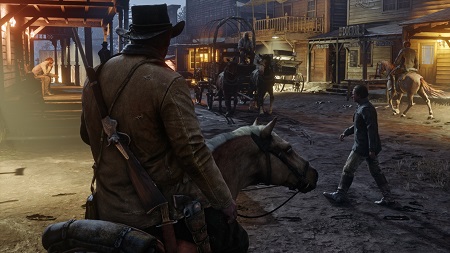
Arthur on horseback in the town of Valentine.
If you’ll forgive a history nerd geeking out about small things for a moment, things like the mud on the main street of the town of Valentine – the first major town Arthur is able to visit – and the wooden boards put down to the side to walk on do so much to capture what it must’ve felt like to actually walk through a town like that. These places were dirty and muddy, just like the game depicts, and even though it might seem like such a small thing it’s actually a huge part of the immersion for me.

The colour palette is likewise exceptionally important when it comes to capturing the look and feel of the time and place that Red Dead Redemption II is set. Most things in this era were made of wood or metal, so seeing Arthur walk over dirty wooden boards or eating stew from a beaten up old metal bowl are again minor details but they add to the immersion. Brighter colours were the preserve of the wealthy, so most townsfolk Arthur encounters are wearing drab colours: browns, tans, creams, and so on.

The game makes excellent use of colour.

Many buildings have a hitching post outside for patrons’ horses – because traveling by horse was the main way folks got around in the 19th Century. Life in those days was very different – and so much worse for practically everyone than it is today! But Red Dead Redemption II gives us a taste of what it might’ve been like thanks to all of these smaller details, and because I’ve had such an interest in the history of America in this era I find it absolutely fascinating.

Countless smaller details come together to present a game world that feels real and lived-in. And that’s before we get into all of the myriad realistic elements that Red Dead Redemption II includes through its gameplay systems. Obviously a lot of games have a day-night cycle, and as far back as Shenmue in 2000 I can remember seeing things like shops closing after dark and NPCs having their own daytime and nighttime routines. But Red Dead Redemption II goes all-in on the realism. Arthur has to eat and sleep. If he gets dirty he has to change his clothes or take a bath. In cold weather he needs appropriate clothing – likewise for hot weather. His horse needs to be cleaned, fed, and taken care of too. So do individual weapons – without proper care they stop working reliably.

Gang leader Dutch van der Linde.

Around the camp Arthur has chores to do. Some of these are basic things like chopping wood – which took me back to my youth as I was often assigned that chore at home in the late summer and autumn months! But it also seems to be largely the responsibility of Arthur to keep the camp supplied and to bring in money – without regular donations of food and other supplies, the camp quickly runs out.

At points I felt like I was playing Barbie Horse Adventures and not an authentic 19th Century outlaw simulator because of how much time I was spending playing with and caring for Arthur’s horse! Brushing the horse, feeding it, giving it pats, calming it if it got scared… horses need a lot of attention in Red Dead Redemption II! Luckily as an animal-lover – both real and virtual – I had a blast doing all of these chores, and even found time for Arthur to befriend several dogs as well!

Arthur with his horse. Horse care is a big part of the game.

On the flip side, Red Dead Redemption II offers a whole lot of animals to hunt. I confess to being squeamish about hunting in person; bird shooting, rabbiting, and even fox hunting all took place in the rural area where I grew up, but even as a kid I was uncomfortable with the idea of killing animals like that. That squeamishness has extended to the virtual world too – I can’t imagine playing a hunting simulator, for example. But Red Dead Redemption II makes hunting feel like a necessary part of Arthur’s life – and there are many in-game reasons to hunt as well, from making money to crafting upgrades.

There’s an in-depth tracking system that the game uses, allowing Arthur to investigate an area using a similar “slow time” animation to the aforementioned “dead-eye” system. After detecting an animal’s track, Arthur can follow it stealthily and then use an appropriate weapon to take the animal down. Some of the animations involved in hunting are very gruesome and gory, particularly when it comes to skinning an animal for its meat and hide. But as we were talking about, these details add realism to the game. Whether you think that’s a good thing in every instance… well, that’s up to you!

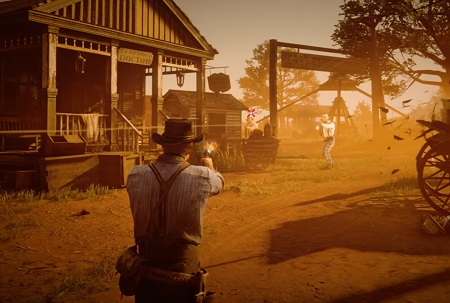
An example of the game’s “dead-eye” system.

Gunplay in Red Dead Redemption II is helped immensely by the dead-eye mechanic. However, even without this the game does offer a degree of lock-on targeting – something I find incredibly helpful. The game doesn’t have difficulty options per se, but there are a few ways to make things slightly easier, such as by making the lock-on targeting easier. Proper difficulty options would definitely be an improvement, though. I haven’t been involved in that many big shootouts yet, but so far I’m impressed with the third-person shooting aspect of the game. It stands up well when compared to many other action-adventure titles.

I find the game’s characters to be compelling. The excellent voice acting and beautiful, realistic animation brings them to life in a way many games simply can’t manage. Though Arthur is the main protagonist, the bond he has with the members of the gang makes each of them feel important to the story and worth helping or protecting.

After almost twelve hours of gameplay (including a short section I had to replay after messing it up) I feel like I haven’t even scratched the surface of Red Dead Redemption II. I’m only at chapter two of the game’s story, I’ve barely seen any of the open world, and I know for a fact that there are still in-game systems that I haven’t even unlocked. Red Dead Redemption II is a long game and an incredibly detailed one. I’m having a lot of fun with it right now, and it’s one of those rare titles that I find myself thinking about even hours after I stop playing. I honestly can’t wait to jump back in and play some more. It was definitely worth the wait!

Red Dead Redemption II is out now for PC, PlayStation 4, PlayStation 5, Xbox One, and Xbox Series S/X. Red Dead Redemption II is the copyright of Rockstar Games and Take-Two Interactive. Some screenshots and promotional artwork courtesy of Rockstar Games and/or IGDB. This article contains the thoughts and opinions of one person only and is not intended to cause any offence.