

Spoiler Warning: Spoilers are present for the following Star Trek productions: The Original Series, The Next Generation, Deep Space Nine, Voyager, and Enterprise.
A couple of months ago, I wrote a piece here on the website in which I looked at the “top five” episodes from each of the first five series… at least, according to the randos who rate episodes over on IMDB! There were some predictable picks… and a few surprises. Seriously, who would’ve expected that Blink of an Eye would be everyone’s favourite Voyager episode? Not me, that’s for sure!
So today, we’re going to do something similar… but with the lowest-rated episodes from those first five Star Trek shows. I think it could be a lot of fun to look at some of the stories that other fans and viewers don’t like, and consider some of the reasons why. I’m bracing myself for a few surprises here, too!
If you missed it, please check out my earlier piece for a look at the “top fives.” You can find it by clicking or tapping here.
My usual caveat applies: everything we’re going to talk about is subjective, not objective. If I dump all over one of your favourite episodes, or talk positively about a story you hate… that’s okay! There’s enough room, and enough maturity, in the Trekkie community for differences of opinion and respectful disagreements that don’t descend into toxicity and argument.
This post, like my earlier one, will cover the first five live-action Star Trek shows: The Original Series, The Next Generation, Deep Space Nine, Voyager, and Enterprise. No Animated Series or films are included. I’ll start with TOS and move forward chronologically; the episodes will be ranked according to their IMDB ratings, from highest to lowest – i.e. beginning with the fifth-worst and finishing on the worst-rated episode for each of the five shows. The IMDB ratings are taken as of September 2025 (and might change over time!)
I’ll discuss what I don’t like (or do like) about each episode, and then I’ll answer a simple question: does it deserve the hate? Or, to put it another way: would I personally rate the episode as being among the worst in the franchise?
Now that all of that’s out of the way, let’s jump into the episodes.
The Original Series Episode #5:
The Omega Glory, Season 2
IMDB Rating: 6.1/10
Gene Roddenberry intended to hold up a mirror to society, using Star Trek episodes as “morality plays” to comment on or critique things out here in the real world. Many of these episodes are wonderful. The Omega Glory is arguably too on-the-nose, though, with its very literal depiction of the aftermath of a Cold War turned hot. Roddenberry himself wrote The Omega Glory, so it’s a bit of a shame to see it rated so lowly by viewers and fans.
There’s a lot of competition in TOS’s second season, and compared to stronger offerings like The Doomsday Machine, Journey To Babel, The Trouble With Tribbles, and The Ultimate Computer, I can see why The Omega Glory struggles to keep up. There’s also, by modern standards, somewhat uncomfortable racial stereotyping – which Roddenberry intended to flip on its head with The Omega Glory’s big revelation – but I’m not sure it works as well as he’d hoped.
Does It Deserve The Hate?
☑️Yes.☑️
The Original Series Episode #4:
Spock’s Brain, Season 3
IMDB Rating: 5.7/10
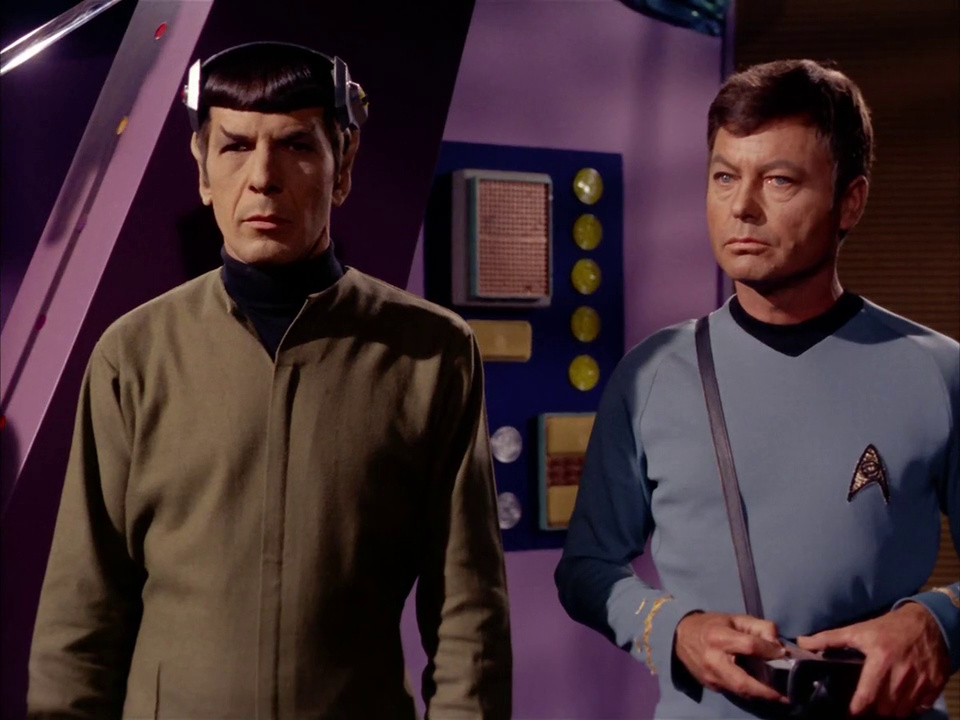
No list of “the worst Star Trek episodes” would be complete without Spock’s Brain. And this is a trend we’re about to see a lot more of; Season 3 of The Original Series is generally considered to have a number of weaker offerings, in part due to the show’s reduced budget. But I’ll be honest: I’ve always found Spock’s Brain to be weirdly fun… in a “so bad it’s almost good” kinda way.
I also think the episode has become iconic, or at least symbolic of a particular moment in the history of Star Trek. This was the first episode of Season 3 – a season that wouldn’t have existed at all without a letter-writing campaign by fans. It’s also a story that showed how far Kirk (and Spock’s other friends) were willing to go to save him when he was in danger. Is it a ridiculously silly premise? Yes. Is it executed perfectly by all involved? No. But do I watch it anyway and smile? Yes!
Does It Deserve The Hate?
⛔No.⛔
The Original Series Episode #3:
The Alternative Factor, Season 1
IMDB Rating: 5.7/10
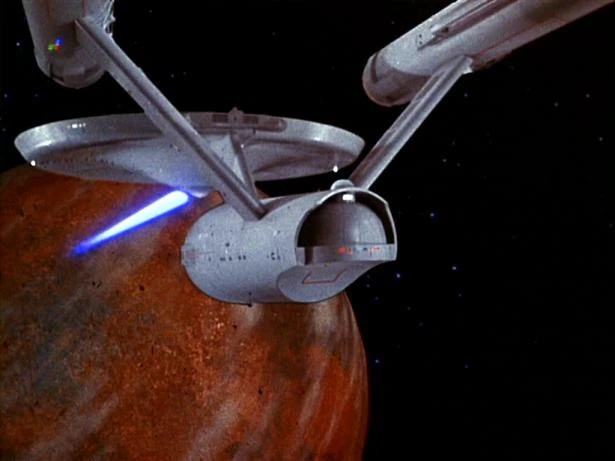
The Alternative Factor is the episode with Lazarus (and Anti-Lazarus, his counterpart from an alternate universe). To be honest, I’d pretty much forgotten about The Alternative Factor; nothing about it leaps out at me as being particularly memorable. “Forgettable” is not synonymous with “terrible,” but I think it’s at least noteworthy that The Alternative Factor just didn’t leave much of an impression on me. None of the special effects or locations stand out, Lazarus and Anti-Lazarus don’t have any unique makeup or prosthetics, and the whole look of the episode is just a bit bland.
In terms of story, The Alternative Factor is small and kind of silly – with Lazarus in particular being quite over-the top – while simultaneously trying to present its core conflict as a multiverse-ending threat. It’s worth noting that there were production issues with The Alternative Factor, including an extensive re-write to remove a romantic sub-plot and the original actor contracted to play Lazarus failing to show up for work when production had already commenced.
Does It Deserve The Hate?
☑️Yes.☑️
The Original Series Episode #2:
The Way To Eden, Season 3
IMDB Rating: 5.4/10
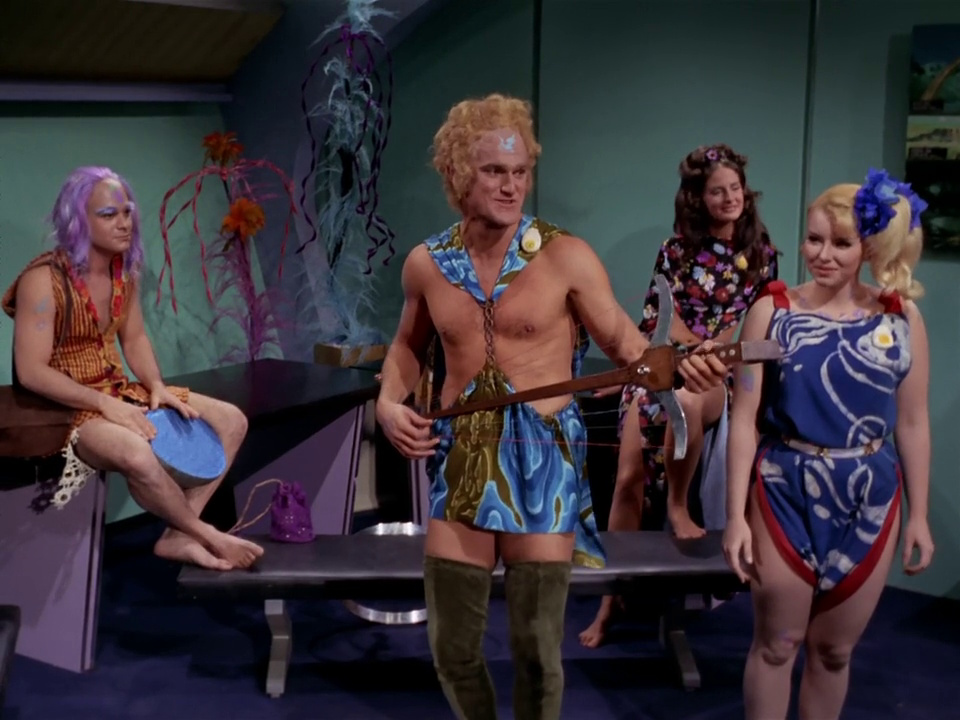
I don’t think The Way To Eden is all that bad, to be honest – especially not for a Season 3 episode which was produced with a lower budget. Maybe there are some issues with the way Chekov is written, but on the whole I really don’t dislike this episode at all. It’s very much a product of its time – the followers of Sevrin are clearly based on the American countercultural movement, which was reaching its peak in 1969 – but so are many Star Trek episodes, and I don’t think that alone should count against it.
It’s also not the only Star Trek story to involve a cult-like group who are seeking paradise (or some other prophecy fulfilment). I actually quite like some of the details in the script – one of the members of the group is the son of an ambassador whose people are negotiating with the Federation, which I feel adds a lot to the broader lore of the Star Trek galaxy. Is The Way To Eden the strongest TOS episode, or a great way to introduce new fans to the franchise? Probably not. But I don’t think it’s atrocious, either.
Does It Deserve The Hate?
⛔No.⛔
The Original Series Episode #1:
And The Children Shall Lead, Season 3
IMDB Rating: 5.2/10
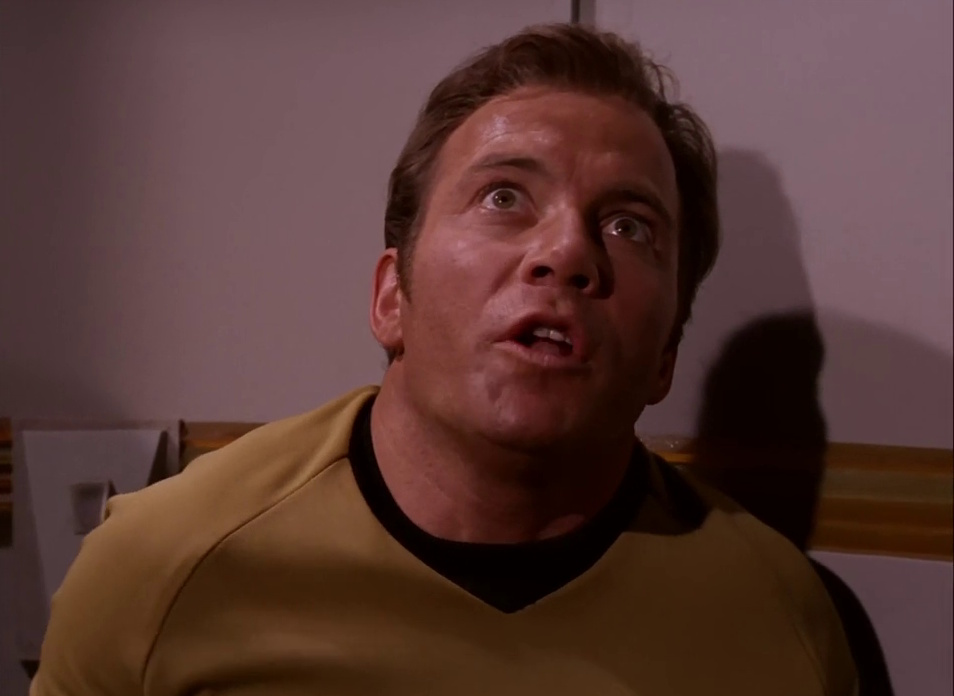
As with The Alternative Factor above, this isn’t an especially memorable episode for me. The core premise of an alien entity manipulating a group of children isn’t necessarily bad, but the execution leaves a lot to be desired. The way the story was resolved, too, leaned on a pretty big cliché, and some less-than-spectacular acting performances.
There were interesting ideas in And The Children Shall Lead, like several members of the crew seeing visual manifestations of their fears. Gorgan’s powers, too, could have been tense and even frightening if handled better. There’s also something distinctly eerie about a child or group of children in this kind of story; that’s why films like The Exorcist work so well. But again, the execution rather than the premise is what lets the episode down.
Does It Deserve The Hate?
☑️Yes.☑️
The Next Generation Episode #5:
Angel One, Season 1
IMDB Rating: 5.7/10
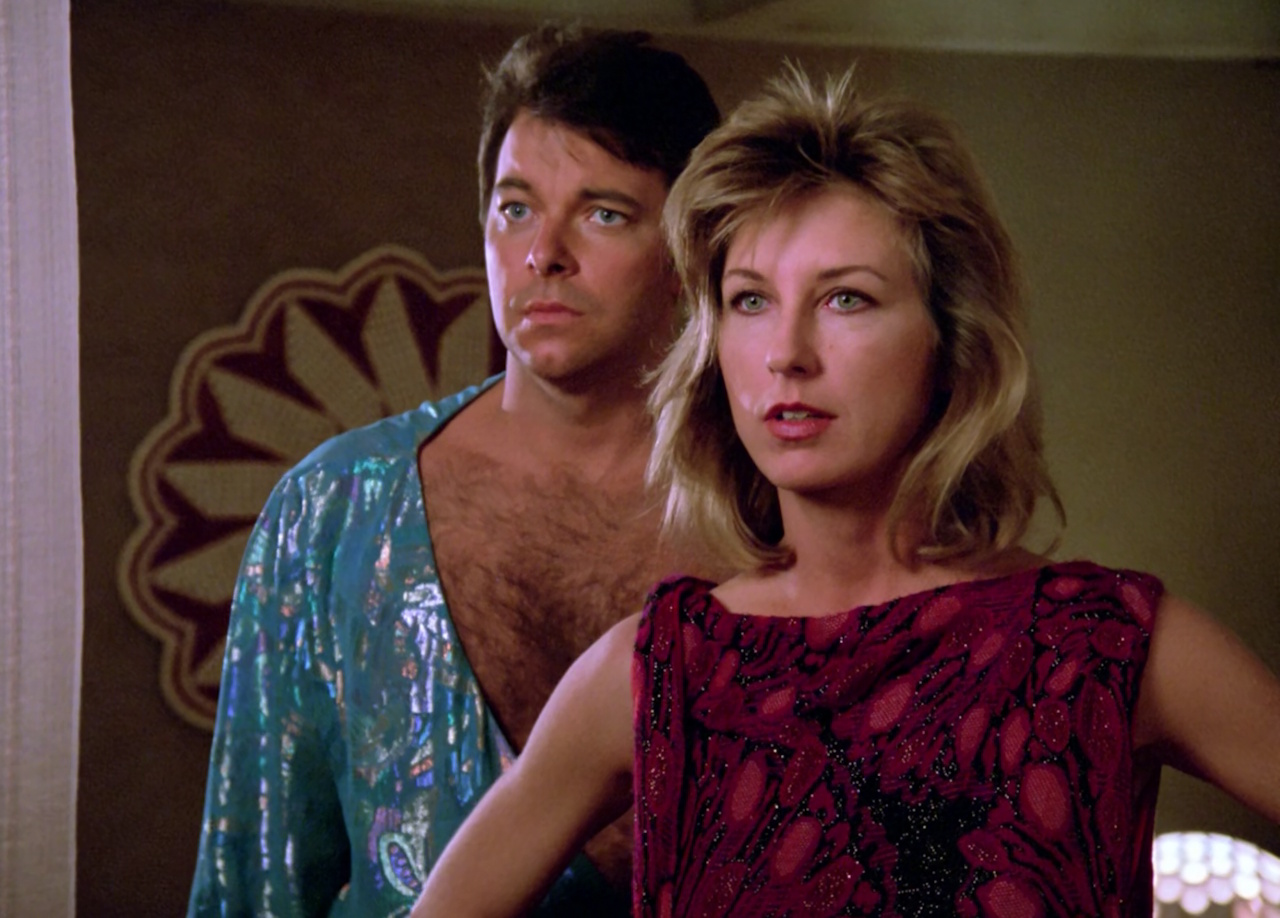
Angel One wanted to be a Roddenberry-style “morality play,” using Star Trek’s sci-fi setting to consider the real-world issues of sexism and a patriarchal society. It did that by turning the tables and depicting a civilisation where women, not men, were the dominant ones. That aim may have been worthwhile or even admirable – but the execution was clumsy, at best. The B-plot, depicting a virus spreading on the Enterprise while the away team was on the planet, wasn’t particularly strong, either – though I enjoy the visual of Data, alone, on the bridge!
Angel One might be best-remembered among Trekkies for some of its costumes! The costumes worn by the male inhabitants of Angel I, as well as by Riker later during the away mission, were typical Season 1 silliness, reminiscent of some of the costumes created twenty years earlier for TOS. And that’s Angel One in a nutshell, really – it’s one of several Season 1 episodes that plays out like an Original Series story.
Does It Deserve The Hate?
⛔No.⛔
The Next Generation Episode #4:
Man of the People, Season 6
IMDB Rating: 5.7/10
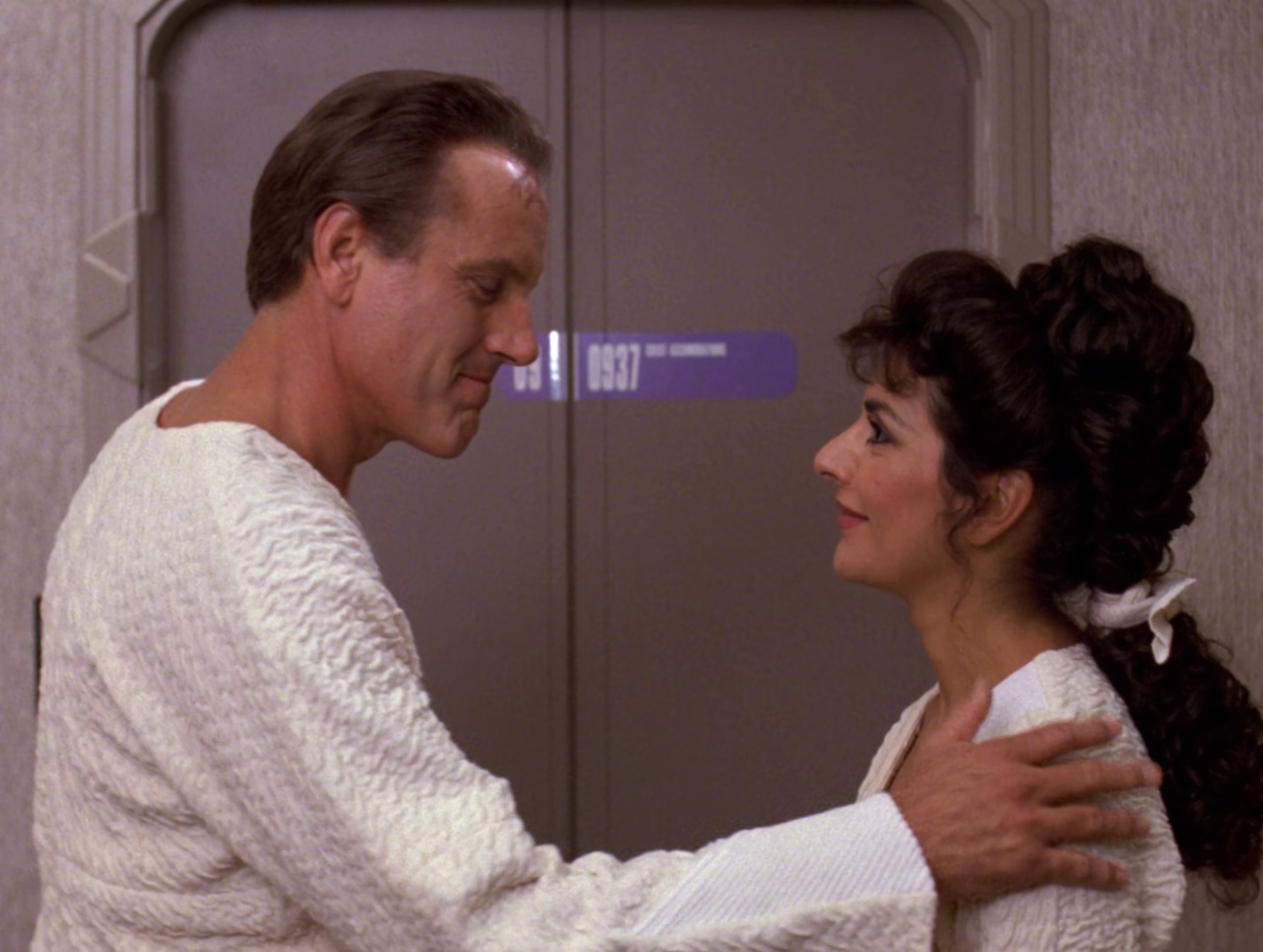
I’ve always felt that Man of the People had an interesting premise. And Star Trek stories have often posed deep moral questions to the audience; in this case, we’re considering whether “the greater good” can be served by a man who harms people around him. There’s a metaphor there, buried in the story, about bad people doing good things, and the age-old question of whether the ends can justify the means when significant harm is being caused.
However… Man of the People doesn’t execute its ideas flawlessly, and the focus on Troi “acting out” earlier in the episode is a bit much for me. Apparently, there were issues on the production side – which led to the script being rushed and the story being bumped up the filming schedule. I daresay that’s noticeable in the finished product.
Does It Deserve The Hate?
☑️Yes.☑️
The Next Generation Episode #3:
Code of Honor, Season 1
IMDB Rating: 5.1/10
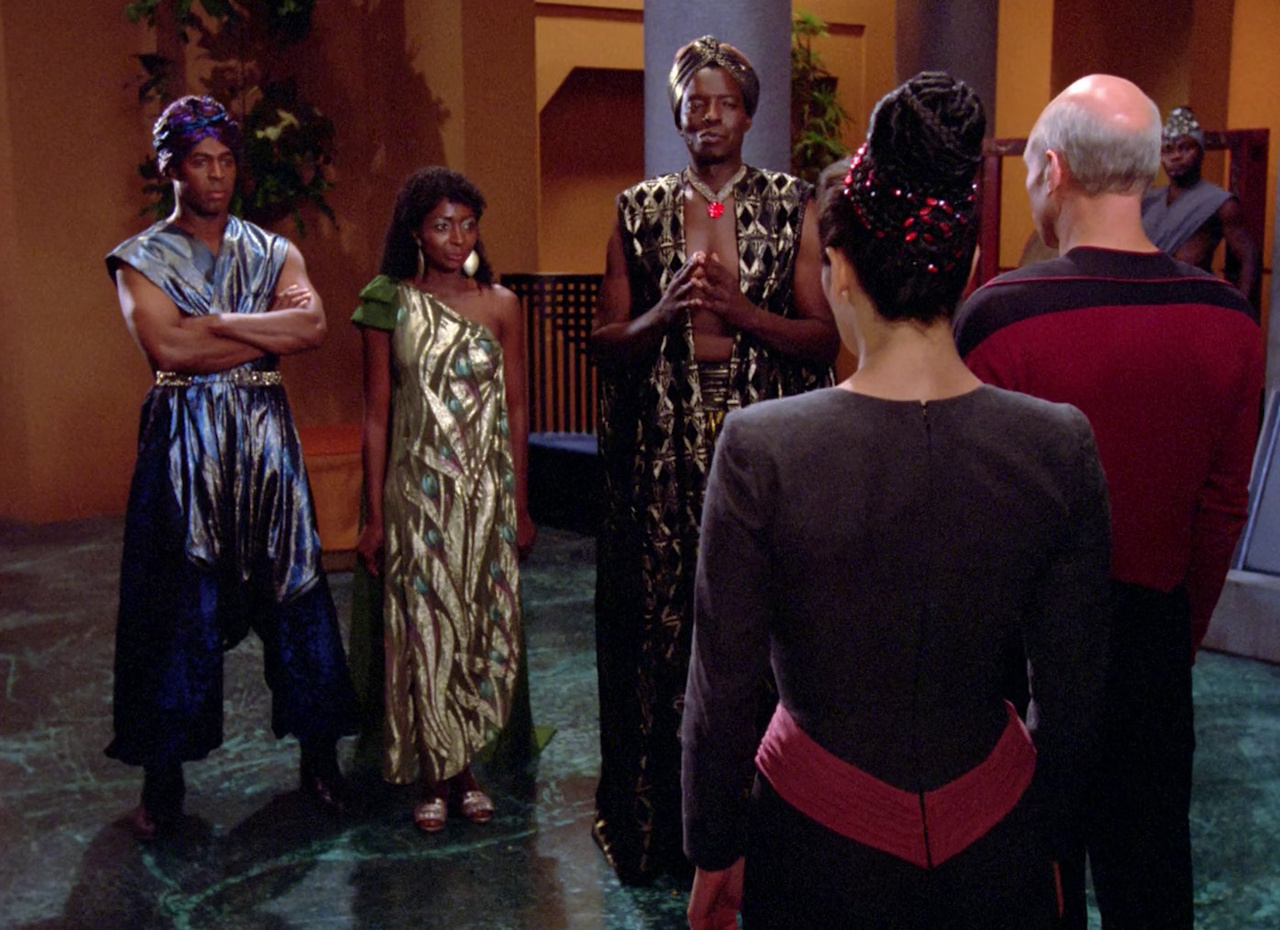
I might’ve ranked this one even lower! Code of Honor is a complete misfire; an episode featuring a civilisation of “African stereotypes in space” that’s so utterly awful it’s hard to know where to start. I’ve said before that the fact that this episode was produced for The Next Generation in the 1980s genuinely boggles my mind, and it’s an example of how, despite Star Trek’s lofty ambitions, the franchise hasn’t always gotten it right.
If I were to find any positive notes in this mess, it would be that Tasha Yar gets something to do, and that the episode is an early example of Captain Picard being willing to go out on a limb for a member of his crew. But those points, unfortunately, are completely lost in an episode swarming with awful production decisions. I can barely even re-watch Code of Honor as a result.
Does It Deserve The Hate?
☑️Yes.☑️
The Next Generation Episode #2:
Sub Rosa, Season 7
IMDB Rating: 4.8/10
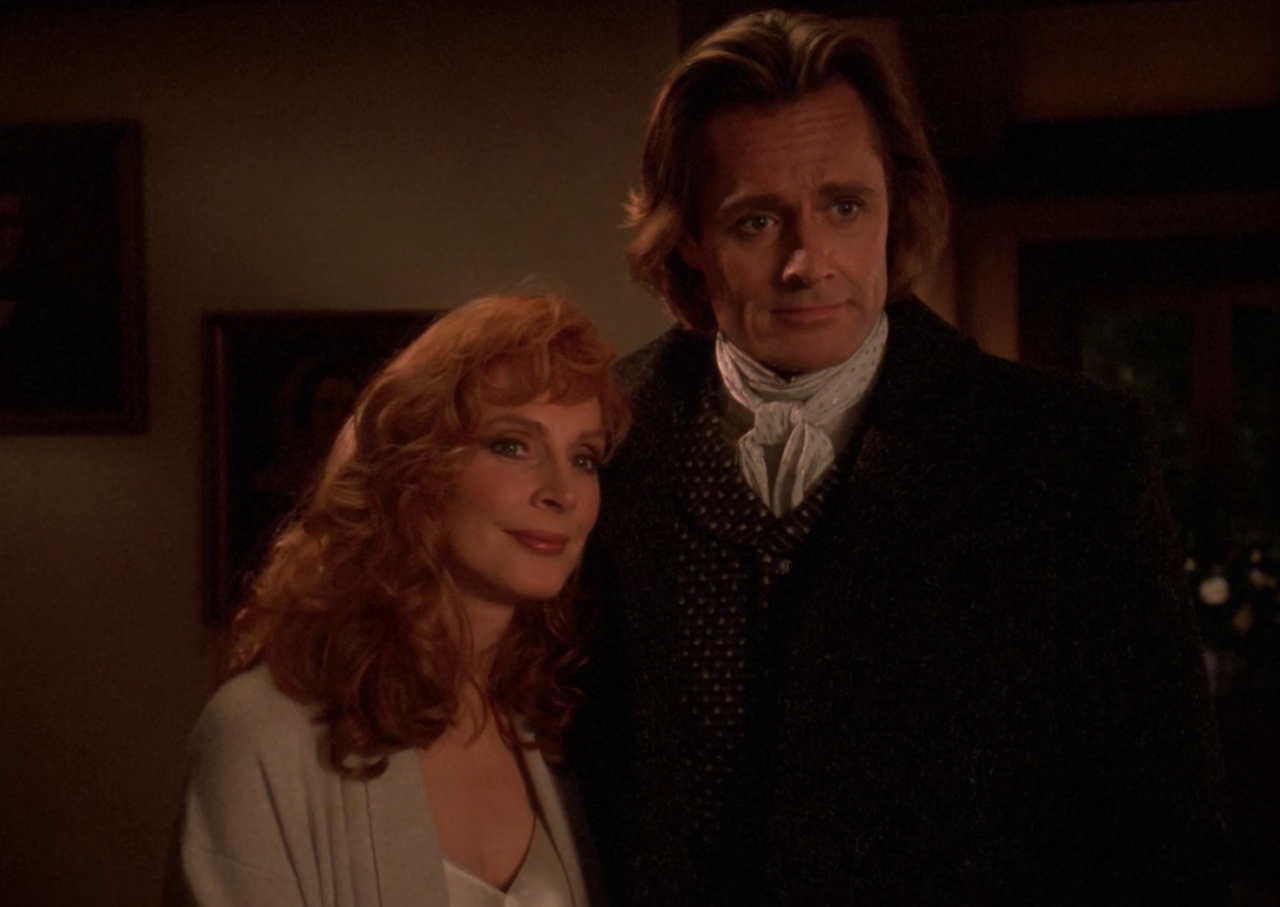
I… I’m sorry, everyone. I’m almost ashamed to admit this… but I actually kinda like Sub Rosa. And, if I may defend its honour for a moment, I’d suggest that the memes that the episode spawned are at least partially to blame for its low rating. Yes, Sub Rosa’s “sex with a ghost” storyline is silly. Got it. Message received! But there’s more to the story than that, and the episode treats Ronin as an alien entity, not as a “spirit.” I also really like the sets used for the Caldos Colony – the place feels very different to almost anywhere else in Star Trek, at least up to this point in the franchise.
Star Trek hasn’t always been great at depicting aliens that feel, well… alien. And if there’s one thing to say about Ronin, it’s that the idea of a non-corporeal parasitic entity is, if nothing else, very alien. Caldos Colony is a fun setting, we got to learn more about Dr Crusher’s early life, and there was a bit of silliness in the story, too. Plus, Star Trek got some great memes out of this one! Honestly, what’s not to love?
Does It Deserve The Hate?
⛔No.⛔
The Next Generation Episode #1:
Shades of Gray, Season 2
IMDB Rating: 3.3/10
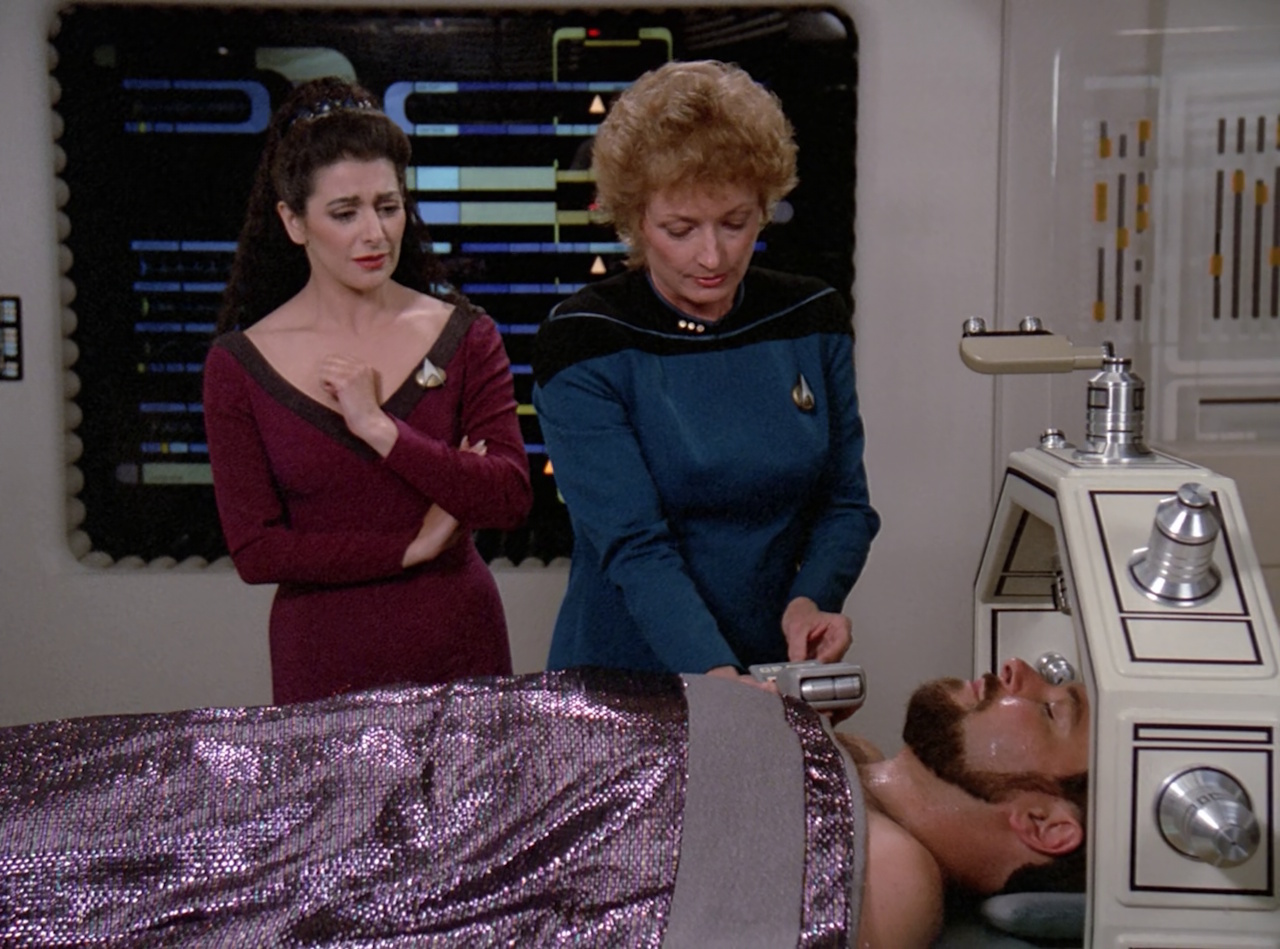
I’m astonished to see Shades of Gray receiving any support whatsoever; this is a rare 1/10 or even a 0/10 episode for me – and for most Trekkies I’ve spoken with, too. It absolutely deserves its place as the worst-rated TNG episode… and I suspect the production team knew that when they put it together. If you’ve been a Trekkie for as long as I have, you know the story by now: production on TNG Season 2 overran both its schedule and budget, and a compromise had to be made late into production. Shades of Gray – a clip show – was the result.
Because television production has changed over the years, I doubt we’ll ever get another episode like Shades of Gray in the Star Trek franchise – and that’s for the best. It’s an especially weak episode, and its only original element – the frame narrative depicting Riker’s injury and illness – does nothing to hold its random assortment of clips together. It was a poor way to say goodbye to Dr Pulaski, too, and a serious disappointment as the show’s otherwise fantastic second season came to an end.
Does It Deserve The Hate?
☑️Yes.☑️
Deep Space Nine Episode #5:
Profit and Lace, Season 6
IMDB Rating: 5.8/10
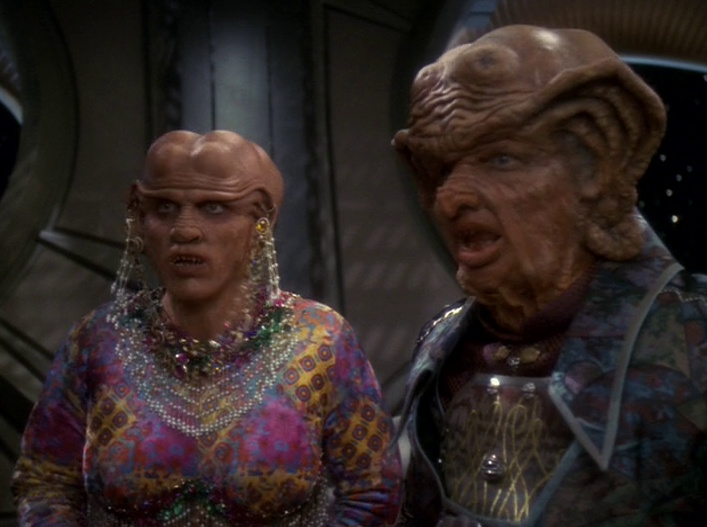
Profit and Lace is DS9′s “trans” episode… kind of. Star Trek has wrangled with questions of gender on many occasions, and even in the ’90s, when the topic of gender and being trans was usually treated just awfully on television, the franchise largely got it right. Quark’s temporary sex change, as it’s presented in this episode, though… I dunno. As an examination of attitudes toward gender, and how females are treated in a society which still sees them as second-class… there were interesting ideas. But the execution of all of it was just flawed.
There’s a tonal clash between the heavier themes, as interpreted by Alexander Siddig (who directed the episode), and the lighter way Profit and Lace was originally written. A different director might’ve taken the episode in much more of a comedic direction – which would’ve suited the way it was written, though it would’ve come at the expense of being just another late ’90s “trans comedy” story. I get what the episode was going for, and I think a more serious approach to the subject matter – both the gender division in Ferengi society and Quark’s “transition” – was the right call. But the script didn’t carry the themes, and what resulted was a bit of a mess.
Does It Deserve The Hate?
☑️Yes.☑️
Deep Space Nine Episode #4:
Resurrection, Season 6
IMDB Rating: 5.7/10
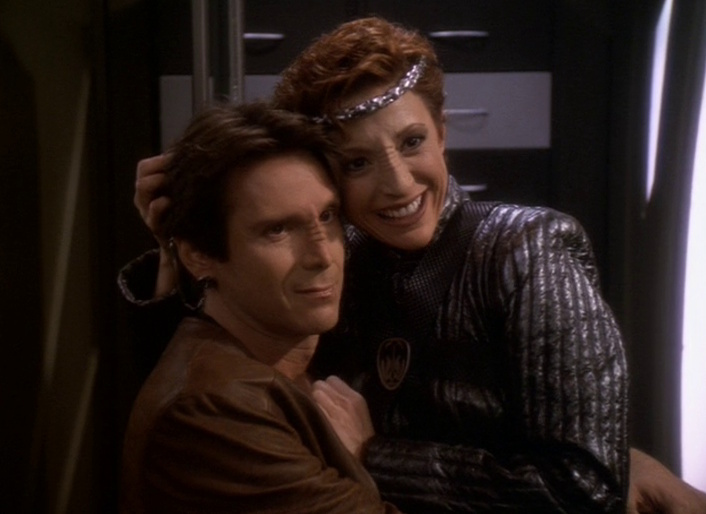
Oof, Season 6 is not doing well in these rankings so far! To be honest, though, I get it when it comes to Resurrection. If you know me, you’ll know I’m not really a fan of the Mirror Universe as a setting; it’s one-note, and has a tendency to trick even competent performers into putting out hammy, over-acted, one-dimensional performances – all of which are on display with Mirror Kira and Mirror Bariel, unfortunately. Prime Kira also seems to act out-of-character, falling so easily for Mirror Bariel so long after the original Bariel’s death.
DS9′s executive producer, Ira Steven Behr, has suggested that Resurrection’s place in the season – coming after the intense opening phase of the Dominion War, Starfleet’s recapturing of the station, and then Worf and Dax’s wedding – contributed to fan dissatisfaction, feeling that “nothing” the show had done immediately after those intense stories would’ve been satisfying. I’m not convinced on that, I’m afraid. Season 6 has some of my favourite DS9 episodes. The likes of Who Mourns for Morn, The Magnificent Ferengi, and One Little Ship are all standalone stories that, had they taken this broadcast slot, wouldn’t have been as poorly-received as this uninspired Mirror Universe story.
Does It Deserve The Hate?
☑️Yes.☑️
Deep Space Nine Episode #3:
The Muse, Season 4
IMDB Rating: 5.6/10
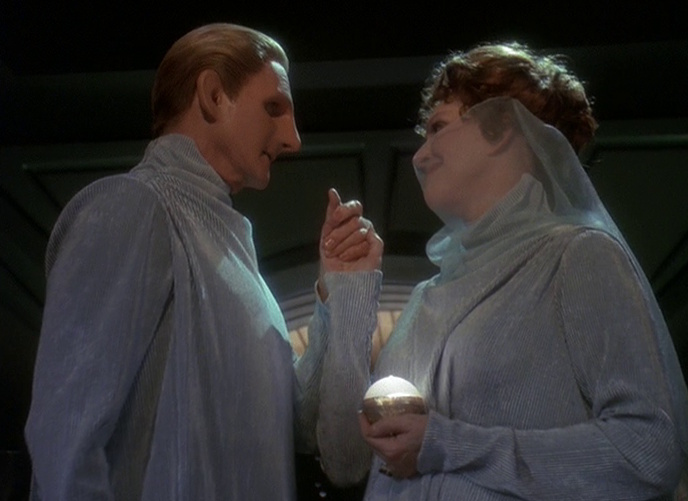
I feel a bit sorry for The Muse! Jake Sisko was too often overlooked in Deep Space Nine, so to rank one of the rare Jake-focused episodes so lowly wouldn’t have been my preference. However, if I may be so bold, it isn’t Jake that’s upset people (mostly). Rather, it’s The Muse’s Lwaxana Troi and Odo B-plot that, I would suggest, is the reason for such a low rating. Lwaxana wasn’t always well-received by Trekkies, despite her illustrious performer, and her relationship with Odo was, to the best of my recollection, never especially popular.
On Jake’s side of the story, I like the idea of a kind of parasitic entity latching onto his creativity. The Muse does a lot to establish Jake’s writing career, and it’s just an interesting idea to see Onaya taking advantage of his talent. There’s a great moment between Jake and Ben toward the end of the episode, something we’d see less and less of as DS9 continued its run. And while this side of the story was imperfect, it was at least a creative idea.
Does It Deserve The Hate?
⛔No.⛔
Deep Space Nine Episode #2:
Meridian, Season 3
IMDB Rating: 5.6/10
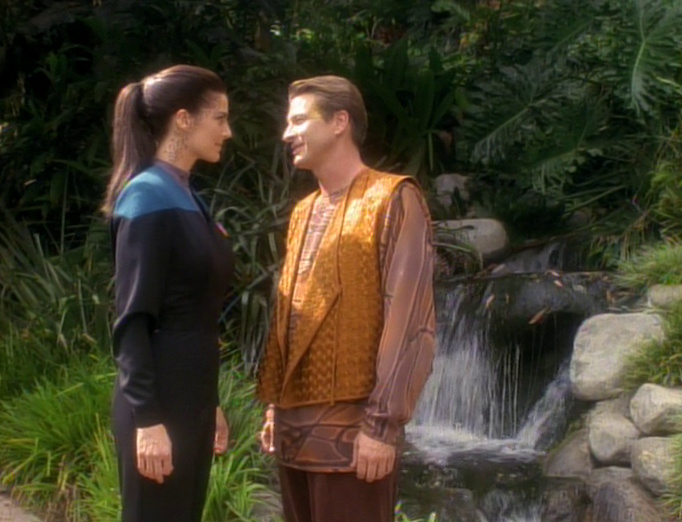
It sounds like Meridian – whose story concept was based on a novel set in Scotland – had a bit of a troubled production. An expensive location shoot for the planet Meridian seems to have led to some scenes being rewritten or cut altogether, which may have affected the finished product. The main gripe folks seem to have, though, is the behaviour of Jadzia Dax. As with Kira in Resurrection, which we discussed above, Dax falls head-over-heels for someone she’s just met – and that leads to her wanting to give up her life on DS9, leave her friends behind, and move to this random planet which can’t exist in normal space.
I would suggest that everyone involved – the entire cast, guest stars, and director Jonathan Frakes – did the best they could with that concept, but it was just a fatally flawed premise to begin with. Meridian has some neat ideas, like the disappearing planet, which feels “very Star Trekky;” i.e. something you wouldn’t see in any other sci-fi universe! But the way it handled Dax was poor, and a B-plot about Quark selling perverted holosuite programmes does nothing to help the episode, either.
Does It Deserve The Hate?
☑️Yes.☑️
Deep Space Nine Episode #1:
Let He Who Is Without Sin…, Season 5
IMDB Rating: 5.5/10
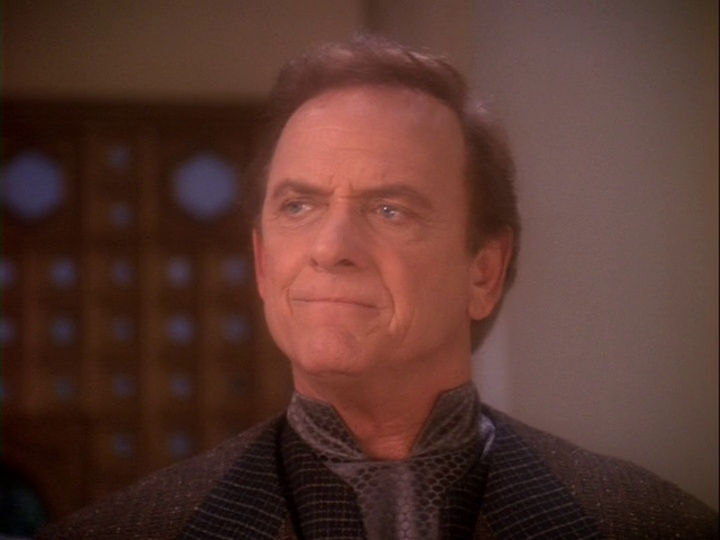
I gotta be honest: I’m surprised to see this as the “most-hated” DS9 episode. I knew Let He Who Is Without Sin wasn’t wildly popular, but I don’t think I expected it to be considered the absolute worst in the series! There are definitely some issues, though. I think it’s universally agreed nowadays that Leeta and Bashir didn’t work as a couple, so that’s part of it. But then there’s how the episode handles Worf – setting him up as the Star Trek equivalent of Mary Whitehouse, crusading against the supposed immorality of the Federation.
I think there was the kernel of an interesting idea here, if Let He Who Is Without Sin had taken it in a different direction. There are folks who live in tourist-focused places who feel the incursion of tourists is detrimental to their communities. And there was also a way to use the New Essentialists to comment on the growing Christian purity movement in the United States, for example. But for a variety of reasons, this isn’t Deep Space Nine’s strongest episode. I don’t think I’d personally say it was the very bottom of the barrel, but I get where much of the dissatisfaction is coming from.
Does It Deserve The Hate?
☑️Yes.☑️
Voyager Episode #5:
Favorite Son, Season 3
IMDB Rating: 6.0/10
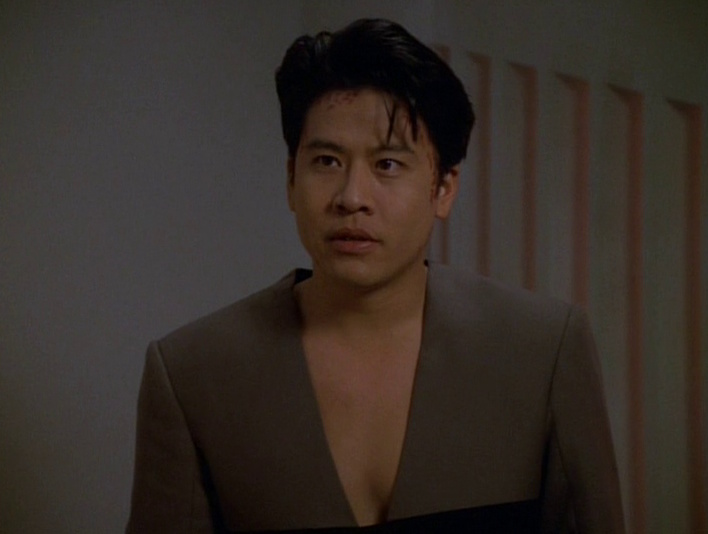
I genuinely had a hard time remembering Favorite Son at first. But it’s the episode where Harry is transformed into a Taresian – a Delta Quadrant species dominated by murderous females. An episode about a female-dominated society ending up as one of the worst-rated in its series? Huh… I’m starting to see a pattern emerging!
I actually quite like both of the core concepts here. An alien race that reproduces by forcibly converting members of other species could make for a genuinely interesting antagonist, and a kind of “praying mantis” alien that murders its mate after intercourse could also be a dangerous threat. Maybe Favorite Son didn’t execute these ideas perfectly, but I’m not sure it warrants a place on this list for that reason alone.
Does It Deserve The Hate?
⛔No.⛔
Voyager Episode #4:
Sacred Ground, Season 3
IMDB Rating: 5.8/10
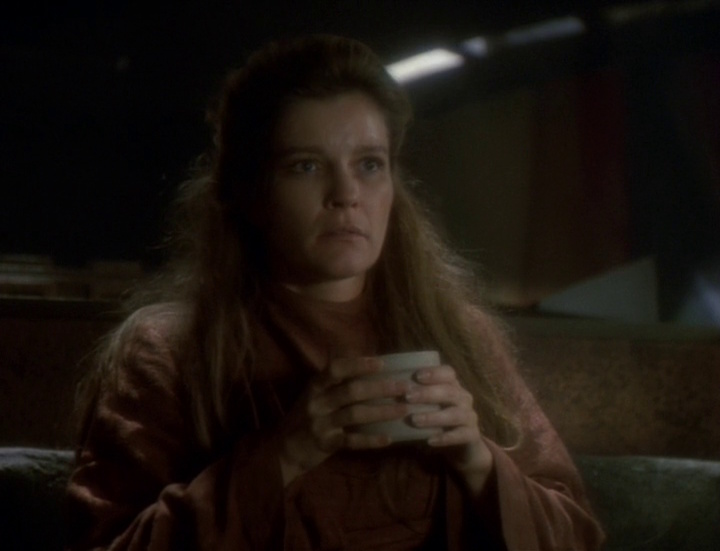
Sacred Ground does something Star Trek has always done – used a sci-fi lens to examine things out here in the real world. The topic in question this time is faith: can the scientifically-minded Captain Janeway be persuaded to take a “leap of faith” in order to save someone she cares about? I really like that idea, and I think Sacred Ground does interesting things with it. Where it was arguably let down was its focus on the Spirits themselves, perhaps, as well as some of Janeway’s tribulations not being visually spectacular.
However, I think the episode works well. It’s coherent, well-directed, and while we can argue whether or not it’s in character for Janeway or whether a Star Trek story should come down on one side or the other of the “science-versus-faith” question, I didn’t feel the way it was handled in the episode was in any way poor. It’s slow-paced, esoteric, and “weird,” for want of a better word – but so is a lot of Star Trek, and that’s why we like it!
Does It Deserve The Hate?
⛔No.⛔
Voyager Episode #3:
Elogium, Season 2
IMDB Rating: 5.8/10
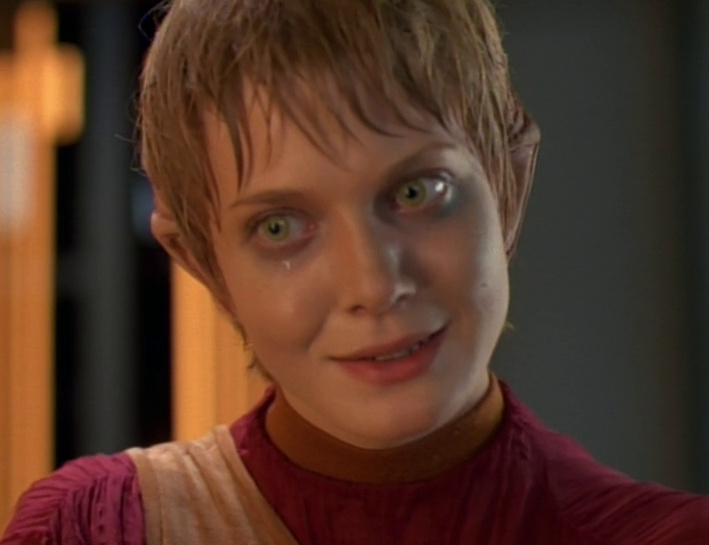
Elogium is a Neelix-Kes relationship story about Kes going through Ocampan “puberty” and deciding whether or not to conceive a child with Neelix. Should I go on, or have I already explained enough about why it absolutely deserves to be ranked so low?! Joking aside, I think I’m not alone in saying that Neelix’s infatuation with Kes was one of the absolute worst elements of Voyager’s first couple of seasons, and if it had been in focus in the way it is in Elogium more often, it would genuinely have ruined his character.
Elogium takes that icky foundation and somehow manages to make it even worse, by suggesting that, prior to this story, Kes wasn’t even fully-developed as an adult! I really struggle to find any redeeming features in this episode – or the wider Neelix and Kes relationship.
Does It Deserve The Hate?
☑️Yes.☑️
Voyager Episode #2:
Threshold, Season 2
IMDB Rating: 5.3/10
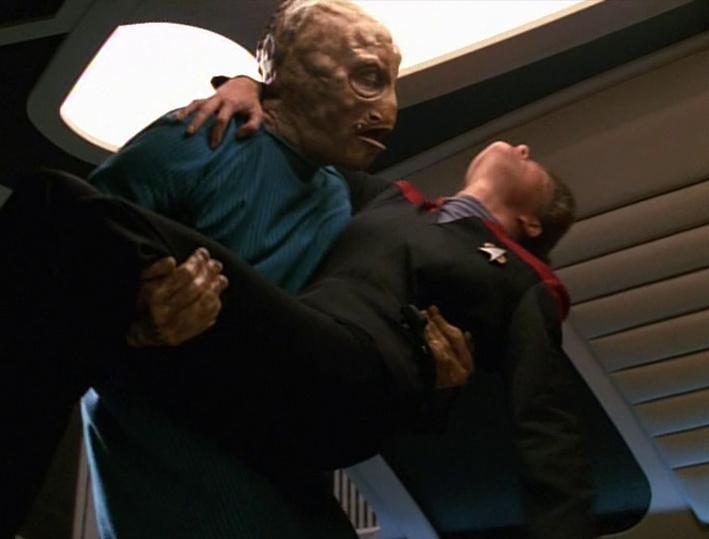
Threshold has basically become a meme in the Star Trek fandom at this point, so I’m not surprised to see it on this list. It’s an undeniably silly idea, even within the confines of Star Trek’s universe – accelerating past Warp 10 causes Paris and Janeway to “hyper-evolve” into a kind of salamander-like lifeform. They then proceed to… mate.
What’s worse, though, and where I’d really take issue with Threshold, is that Chakotay, Tuvok, and the rest of the crew basically infested a random Delta Quadrant planetoid with Paris and Janeway’s mutant offspring. Rather than collecting the salamander babies, they just left them there, presumably contaminating that planet’s entire ecosystem! I don’t like the idea of Warp 10 as this kind of impenetrable barrier, either, and I think Star Trek works best when these things aren’t overexposed in the way warp drive was here.
Does It Deserve The Hate?
☑️Yes.☑️
Voyager Episode #1:
The Fight, Season 5
IMBD Rating: 5.0/10
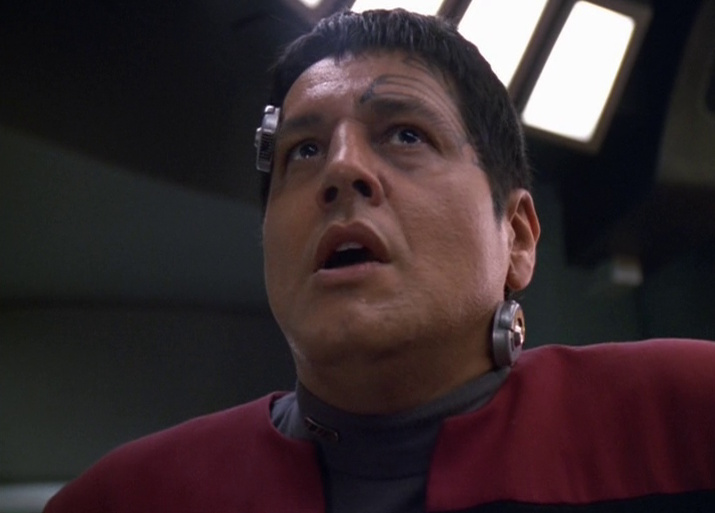
Although I’d never try to argue that The Fight is a shining example of the best of Star Trek, I will defend it to a point. It’s weird, esoteric, and probably a little too confusing, feeling like a fever dream in places. But that’s kind of the point; it’s a story that wants to show a very different kind of alien species and their attempts to communicate. As a concept, these aliens – and their “chaotic space” realm – were not inherently bad, and Star Trek has never shied away from seeking out very different forms of life.
I liked Boothby’s return here, and his connection to Chakotay, which had been explored earlier in the season. I get why this episode feels confusing, and I gotta admit, I can feel that way too when watching it! But I’m not sure it deserves to be called Voyager’s worst, either. Not when the likes of Threshold and Elogium exist!
Does It Deserve The Hate?
⛔No.⛔
Enterprise Episode #5:
Fortunate Son, Season 1
IMDB Rating: 6.5/10
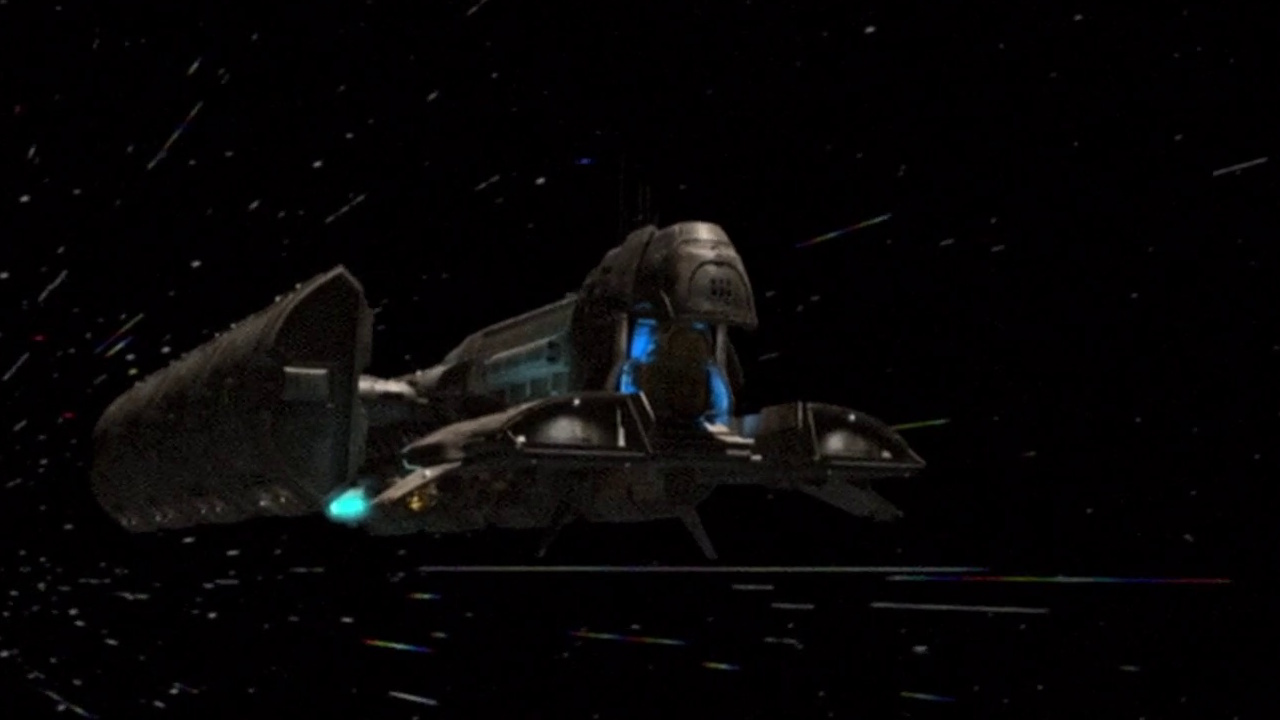
I think Fortunate Son introduced some genuinely interesting lore about pre-Starfleet human spaceflight, and I found that side of the episode to be fascinating. Travis Mayweather comes from a family of spacers – spacefaring humans who transport cargo to and from Earth and human colonies in this pre-Federation era – and getting to meet some of these spacers was a ton of fun. I liked the conflict that Ryan and Mayweather had; Mayweather’s decision to leave his ship and join Starfleet being a sore spot for the spacer.
The Nausicaans made for fun antagonists, too. As a relatively unexplored alien race, I think they were much better here than, say, the Klingons might’ve been. The episode presented a moral conundrum for both Archer and Mayweather, too, and ended on what I felt was the right note. It’s the kind of story that Star Trek productions in the 23rd or 24th Centuries would have struggled with – the ECS Fortunate is explicitly shown to be outside Archer and Enterprise’s jurisdiction.
Does It Deserve The Hate?
⛔No.⛔
Enterprise Episode #4:
Precious Cargo, Season 2
IMDB Rating: 6.4/10
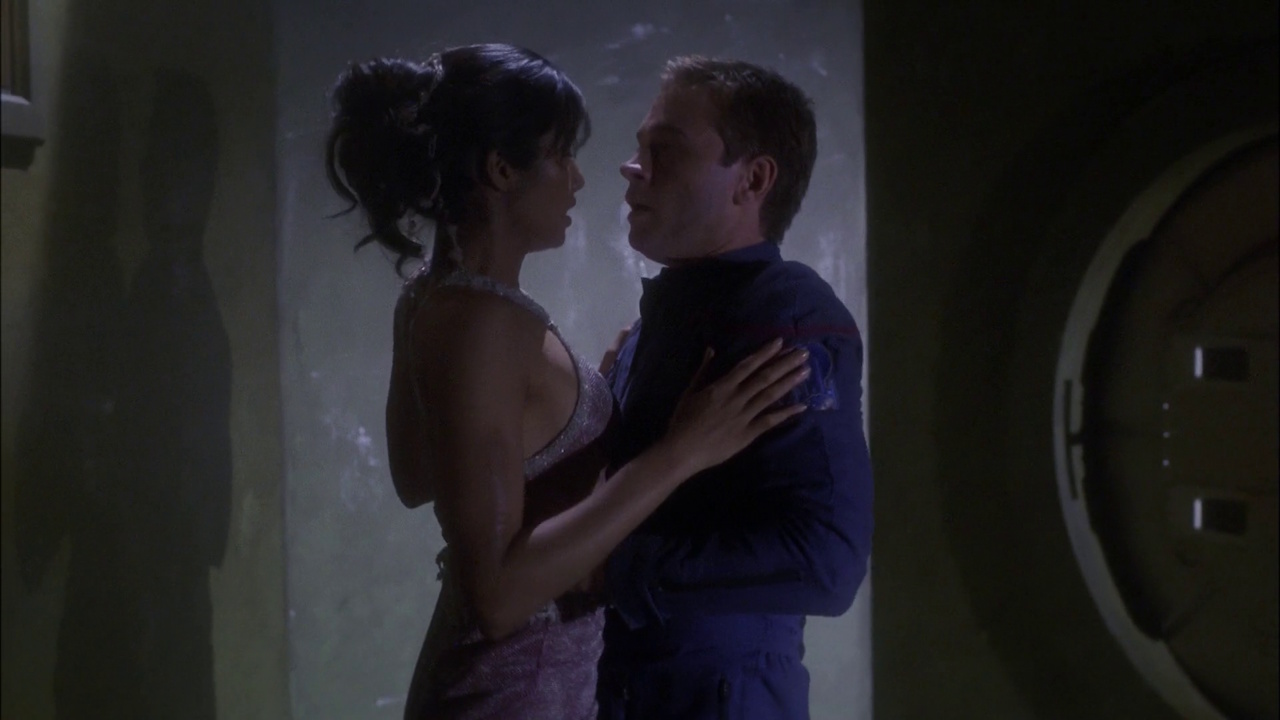
I’ll be honest: I’d forgotten all about Precious Cargo! In theory, the idea of an episode with a strong connection to The Next Generation is not a bad idea, and that premise could have been made to work. However, I think it’s pretty well agreed that there were issues with the story, which probably weren’t helped by last-minute re-writes.
There are worse Star Trek episodes, and worse Enterprise episodes, at least in my opinion. But I will concede that Precious Cargo isn’t a particularly strong – or memorable – instalment, as indicated by the fact that I’d forgotten all about it. There are some things I like, like seeing Archer willing to help out a random ship in distress, but overall, I can see why it’s not held in higher regard.
Does It Deserve The Hate?
☑️Yes.☑️
Enterprise Episode #3:
Daedalus, Season 4
IMDB Rating: 6.2/10
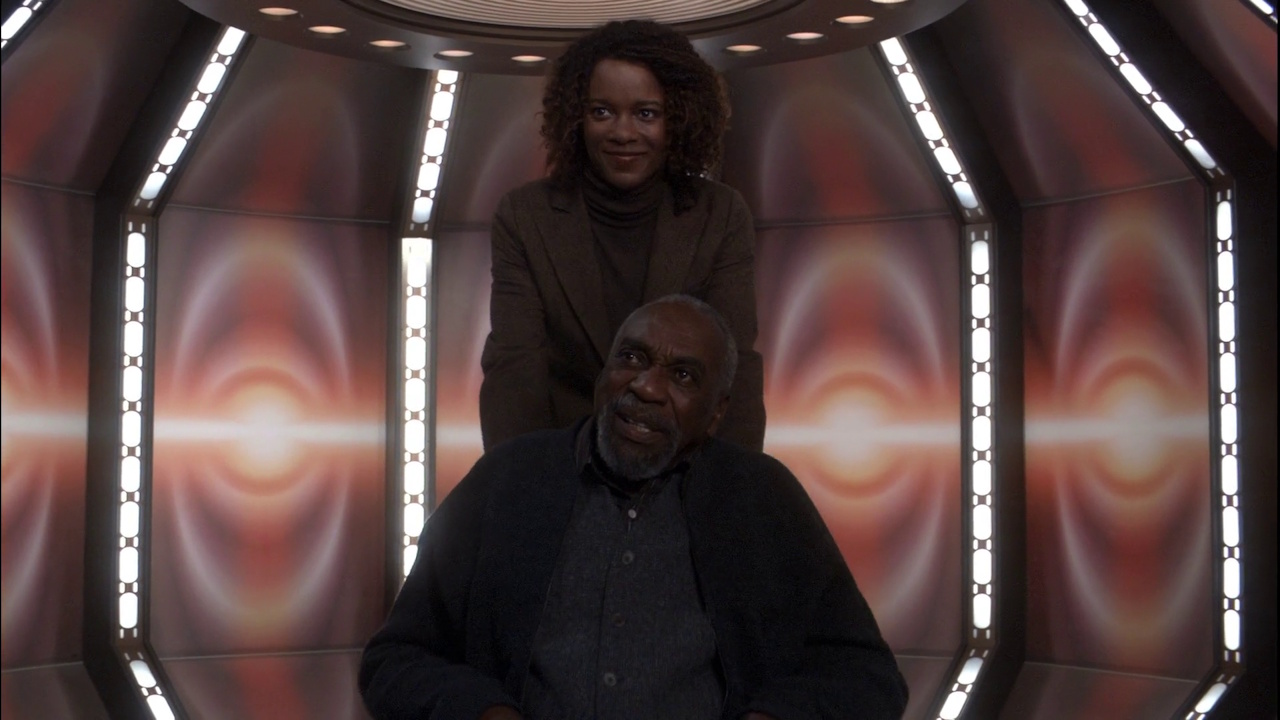
I did not expect to see Daedalus anywhere near this list, to be blunt about it. I genuinely enjoy this episode in its entirety, and I’m honestly struggling to see what it is that folks don’t like. We get to meet the inventor of the transporter, which is one of the really cool things that only a prequel like Enterprise could’ve done, and we get a genuinely interesting character piece that looks at the “burden of genius,” and how an inventor struggled with the idea that he’d peaked too young.
You may have seen me refer to some Star Trek episodes as “the transporter done goofed,” which has become a stock narrative concept in the franchise. But Daedalus takes that idea and really runs with it, digging into the history of the transporter, how it works, how it was originally tested, and how badly wrong it went. The episode has great guest stars, an unnerving “entity” in the form of the corrupted transporter signal, and a fun story for Archer, too. I don’t really get why it’s so disliked.
Does It Deserve The Hate?
⛔No.⛔
Enterprise Episode #2:
Extinction, Season 3
IMDB Rating: 6.0/10
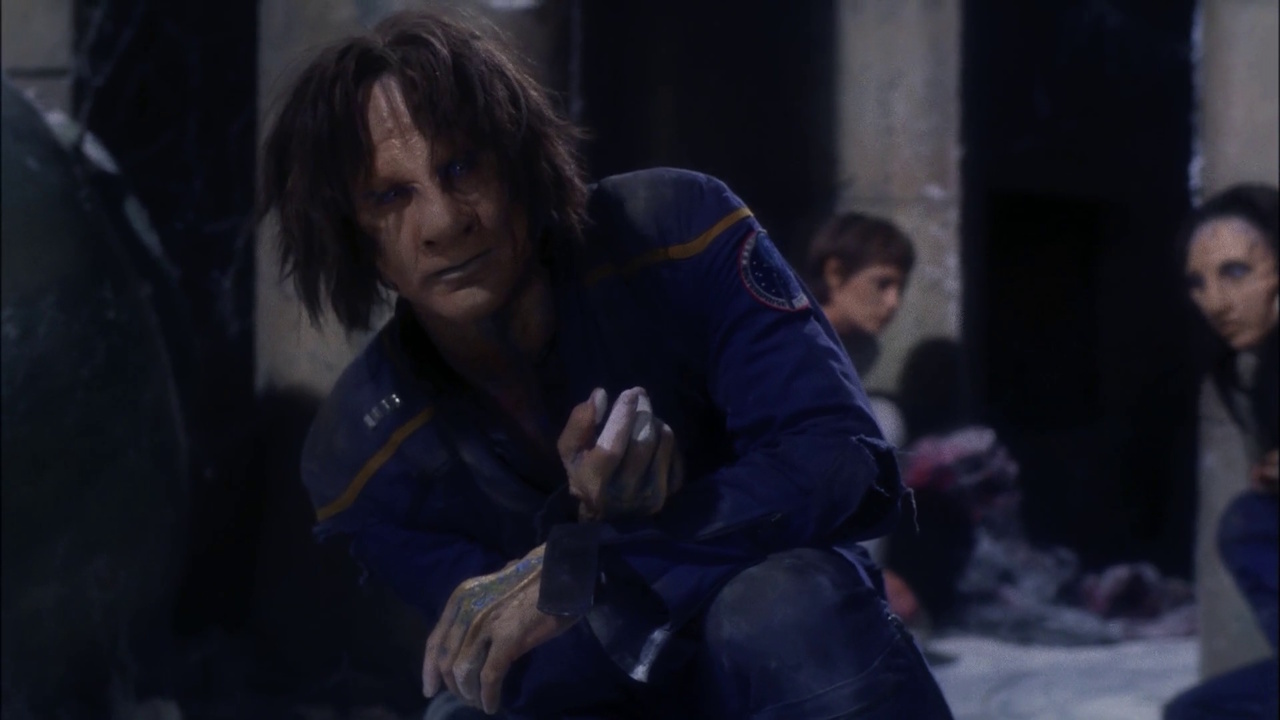
Extinction feels like a cross between TNG’s Genesis and Voyager’s Favorite Son – the latter of which is also on this list! I suspect its biggest problem is its place in the series – coming just three episodes into the season-long “stop the Xindi” storyline. It’s a bit of a diversion, stepping away from that story just as it had begun, really. In that sense, I can understand some of the disappointment fans might’ve had at the time.
Perhaps that sense of repetition from those other Star Trek stories doesn’t help, but I’d argue that Extinction doesn’t really do as well with the core idea as either of those other episodes. There are some creative designs and prosthetics in the story, and it’s fun to see Mayweather taking the captain’s chair. But all in all, it’s just not a very strong or engaging episode.
Does It Deserve The Hate?
☑️Yes.☑️
Enterprise Episode #1:
These Are The Voyages…, Season 4
IMDB Rating: 5.3/10
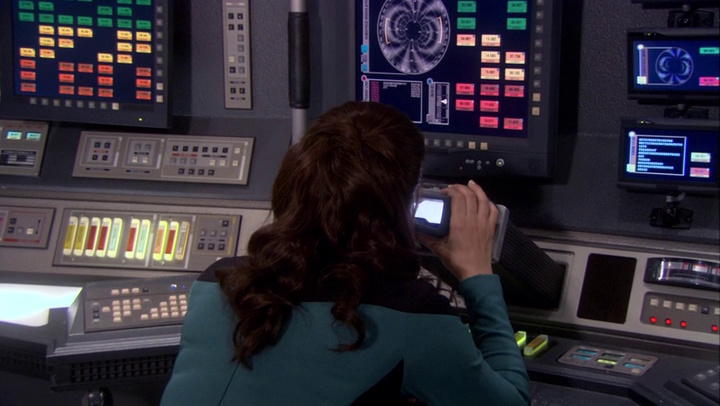
I doubt any of us are surprised to see that These Are The Voyages is considered Enterprise’s worst episode. Originally conceived as a “love letter” to Star Trek fans, the episode just doesn’t work as a series finale, unfortunately. Relegating the entire main cast to the status of holograms aboard the Enterprise-D was such a weak way for fans to part ways with these wonderful characters. Even though the intentions were good… the end result wasn’t.
This episode also caused a lot of controversy for killing off Trip Tucker. There were some interesting elements in the mix: seeing Archer at the founding ceremony of the Federation was creative, and not inherently a bad idea. I like crossovers, and I think a story like These Are The Voyages – putting Enterprise’s crew on the holodeck with this kind of frame narrative – could have worked. Just not as a way to end the entire show – and, for a time, the entire Star Trek franchise.
Does It Deserve The Hate?
☑️Yes.☑️
So that’s it!
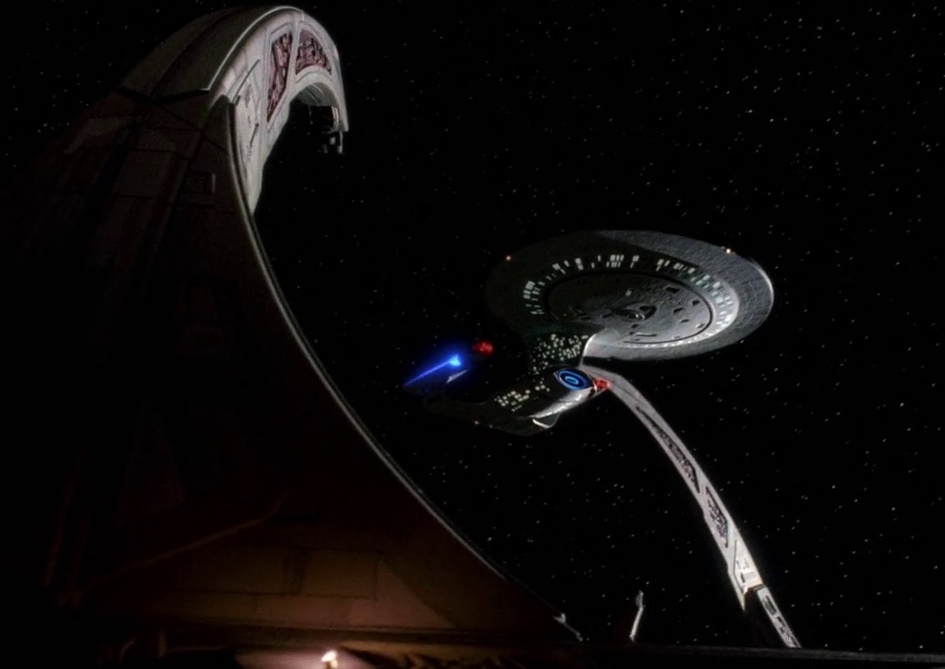
We’ve looked at the top five lowest-rated episodes (or the bottom five, if you prefer) for the first five Star Trek shows. There were a few surprises along the way, but by and large, I think I expected to see most of these episodes rated quite lowly – even if I don’t necessarily agree with all of the criticisms Trekkies have of them!
This piece complements my earlier “top fives” piece, which you can find by clicking or tapping here. I hope you’ll take a look at that one if you missed it earlier in the year; it’s basically the same format, just with the five highest-rated episodes from the first five Star Trek shows.
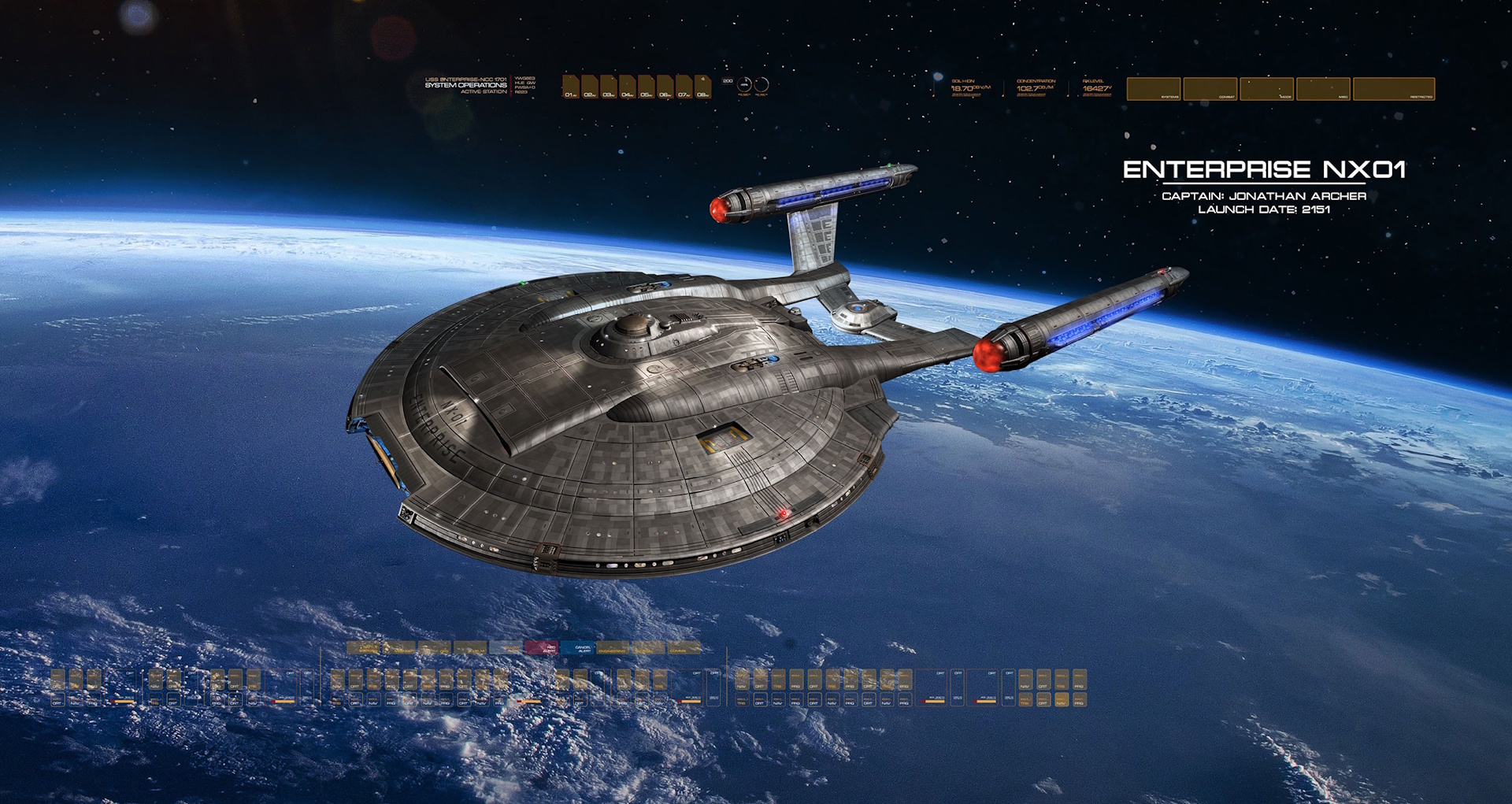
I don’t think any of the modern Star Trek shows have enough episodes to really justify doing the same thing, but in the months ahead I might do something like a top and bottom three episodes from some of the recent productions as a kind of follow-up to this. So if that’s the kind of thing you’re interested in… stay tuned, I guess!
I hope this has been a bit of fun, at any rate. I’d genuinely forgotten all about a couple of these episodes, so it was fun to step back into these shows and watch them for what must be the first time in years. And even when Star Trek’s at its worst… I think we can agree that there are still things to enjoy or view in a positive light. That’s my takeaway from this thought experiment, at any rate!
There’s more Star Trek content on the way here on the website, so I hope you’ll join me again sometime soon. Until then… Live Long and Prosper!
All five Star Trek series discussed above can be streamed on Paramount+ in countries and territories where the platform is available. The Star Trek shows are available to purchase on DVD; The Original Series, The Next Generation, and Enterprise are also on Blu-ray. The Star Trek franchise – including all shows, films, and other properties mentioned above – is the copyright of Paramount Global. Credit to IMDB for the episode ratings, which were accurate at time of publication in September 2025. This article contains the thoughts and opinions of one person only and is not intended to cause any offence.








 Trekking with Dennis