

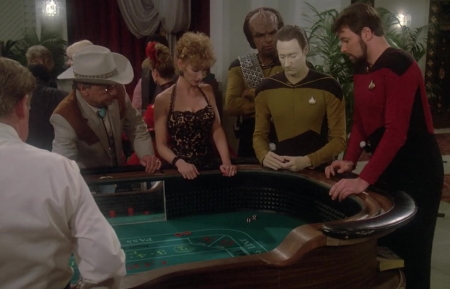
I didn’t realise it until a few weeks ago, but I’ve officially been a Trekkie for more than thirty years. The earliest episode of The Next Generation that I can solidly remember watching was Season 2’s The Royale, which aired here in the UK in June 1991. Although I’m fairly sure that The Royale isn’t the first ever Star Trek episode that I saw, it’s the earliest one that I can remember and thus I can officially date my entry into the fandom to more than three decades ago.
I quickly became enamoured with The Next Generation, tuning in to watch every new episode as they aired, and even renting copies of some of the episodes on video as and when I could find them. In the rural part of the UK where I grew up, there weren’t many other fans of science fiction and fantasy, so being a Trekkie could be lonely. This was years before I got access to the internet, too, so finding fellow Trekkies wasn’t easy.
That being said, there was a sci-fi magazine that I subscribed to for a time, and I think it must’ve been in one of the issues that I found out about a Star Trek fan group that was organising a meet-up. This would’ve been in late 1994 or early 1995, around the time Generations was in cinemas. Because my mother thought I was too young to travel more than two hours by train on my own, she accompanied me – much to my horror – but promised me she’d find other things to do in the city where the meet-up was taking place.
I was nervous as I got ready to attend the meet-up. I’d seen as much of The Next Generation as had been broadcast on terrestrial TV in the UK, and a few other episodes on video, but I’d only seen a handful of episodes of The Original Series and just one of the films (The Search for Spock, weirdly, was my first Star Trek film) so I wasn’t really sure how older fans would react. I felt like a bit of an imposter at first; a newbie barging into an established group.

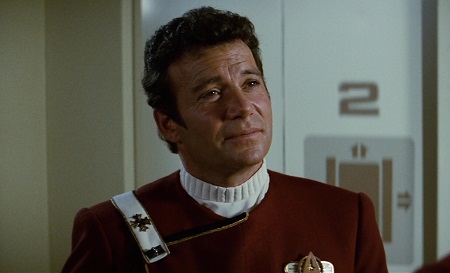
But all of the Trekkies I met were incredibly welcoming. At the meet-up I was the youngest person there by a considerable margin, but everyone was very nice to me and made me feel part of the group. Nobody tried to tell me that I wasn’t a “true fan” of Star Trek because of my limited knowledge of The Original Series, and I had a great time talking to other fans for the first time, seeing different collections of merchandise – some imported from America – and hearing a few people share their experiences of meeting William Shatner or other members of the cast. I left the event having had a great time and feeling excited to continue and expand my fandom. Someone had recommended that I watch The Wrath of Khan, so shortly after I was able to rent the film and see it for myself.
I went back to several meet-ups with this group in the mid/late-1990s, but as I got ready to go to university and started getting online, I sort of drifted away. It was never an official fan club or anything as far as I recall, just a group of Trekkies who’d get together to trade merch and chat once in a while.
Those early fan meet-ups meant a lot to me as I began my journey as a Star Trek fan. The people I talked to were all very welcoming, and they seemed pleased that a younger person was interested enough in Star Trek to associate with their group. I think they recognised, even back then, that a franchise like Star Trek needs new fans – because new fans are the lifeblood of any fan community. Making sure that community is a welcoming place, however people come by it, is incredibly important.
I was quite sensitive as a kid, and if I’d been met with a wall of negativity at that first meet-up, I don’t think I’d have ever gone back. It would almost certainly have put me off Star Trek entirely, as I’d have associated the franchise with unkind, unwelcoming people. I might have never gone back to watch The Original Series, and perhaps I’d have switched off and skipped Deep Space Nine and Voyager when they came along, too. The words people use matter, and how we treat new fans or people on the cusp of joining the fan community is incredibly important.

Meet-ups like the ones I remember still happen within the fan community, but nowadays most people’s first contact with other Trekkies is via the internet and social media. In a way, I’m jealous of that! As a kid I would have loved nothing more than to have found a ready-made Trekkie community that I could share my love of the franchise with any time I wanted to, but I first became a Trekkie years before I got online! I grew up in a rural area, and there just weren’t any other Trekkies in my immediate circle of friends or neighbours – at least none that I knew of at the time.
But social media and the internet have brought with them trolls and unkind people who seem to delight in crapping all over anything that someone else likes. That’s unfortunately true within the Star Trek fan community as well, and there are enough people who are unkind and unpleasant to others online that I fear for anyone just getting started with Star Trek. The community that they encounter on social media is, unfortunately, plagued by a vocal minority of people like that.
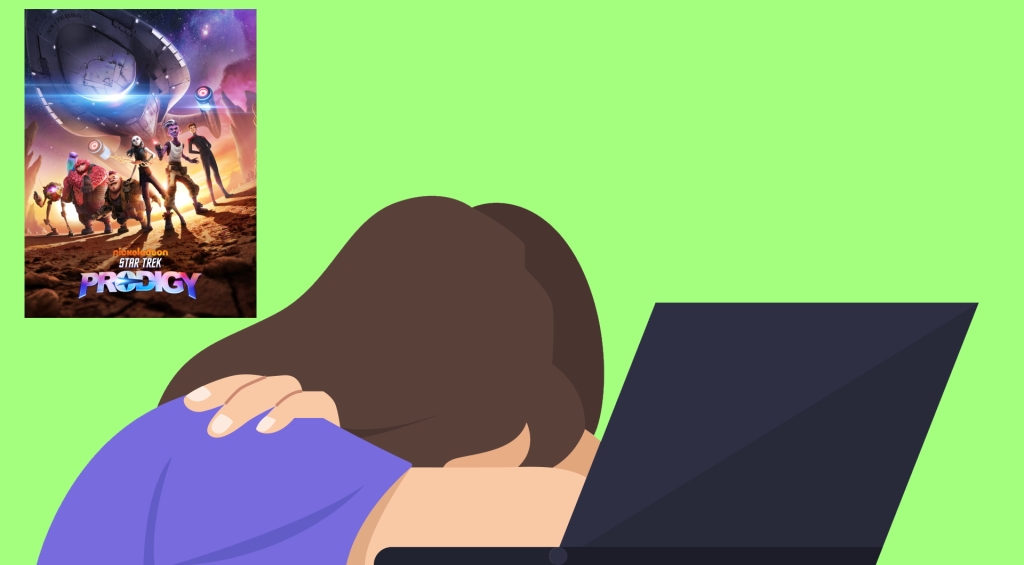
I’m not the most active person on social media. But even I’ve seen the way that some people behave, and how the relative anonymity of the internet and social media seems to amplify some people’s absolute worst qualities and tendencies. Even conversations that start off politely, or questions asked in good faith and with no bad intentions at all, can become toxic incredibly quickly.
I believe that it’s up to all of us to be considerate and thoughtful in our interactions within the fan community. New shows like Discovery and Prodigy are hopefully going to continue to bring on board hordes of brand-new Trekkies, and all of us have a responsibility to ensure that the fan community these folks discover is a kind, welcoming place. Trying to act like gatekeepers by telling new Trekkies that their opinions are invalid because they haven’t seen a particular film or episode, or that the show they like isn’t “real Star Trek,” is going to upset people and make the Star Trek fan community look like an unkind, selfish, closed-off place.
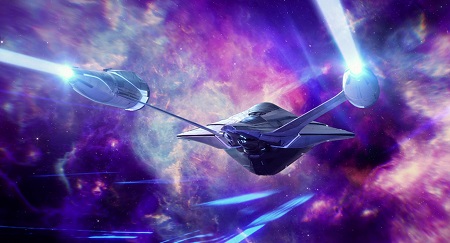
New fans are, as I said earlier, the lifeblood of any fandom. If Star Trek were to remain the sole preserve of fans from the ’60s or the ’90s it wouldn’t last very long at all – and it wouldn’t deserve to. The fan community needs new Trekkies joining in and sharing their excitement for the franchise in order to grow and remain relevant. If we try to shut those people out or tell them they’re only “allowed” to join in once they’ve met a particular threshold then the fan community will stagnate, online fan groups will become unpleasant places, and the resultant decline in online chatter will harm Star Trek and could easily lead to a decline in viewership in general.
There are many fans for whom Star Trek has always been a complete product. There were a lot of arguments in the ’80s and ’90s about how The Next Generation was taking over from The Original Series, whether Deep Space Nine was too dark in tone, and whether the Star Trek franchise needed a prequel – to name just three examples. Star Trek has always been developing and evolving, episode by episode and season by season. But for fans who missed those conversations and didn’t see the slow progress that the franchise made over the span of decades, Star Trek has always existed as a complete product: a DVD box set or a full series on a streaming platform. It seems to me that it’s those folks who are more likely to act as gatekeepers and try to keep new fans who don’t share their opinions out of the fan community.
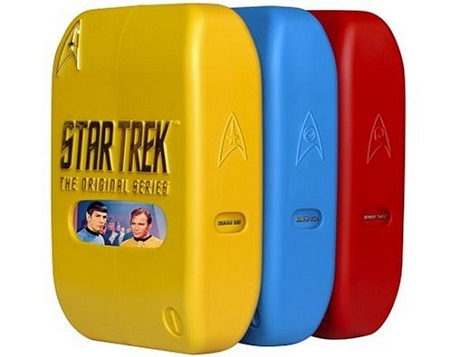
Star Trek has always meant different things to different people. And consequently, fans have always had preferences within the Star Trek franchise about which episodes, films, series, and even characters that they prefer. If someone doesn’t like one part of Star Trek, that’s okay. It doesn’t make them “less” of a Trekkie. And if someone’s new to the franchise and isn’t up to speed on every film or episode, that doesn’t make them “less” of a fan either.
The people who are trying to play gatekeeper need to stop. It doesn’t do anyone any good to try to exclude people – especially new fans – from the Star Trek fan community. Although I’m a fan of Star Trek in its older and newer incarnations, I understand that there are people who don’t like some or all of what Star Trek is currently doing. I was even in a similar position myself once upon a time, as I wasn’t particularly keen on Enterprise when it was announced and only tuned in sporadically during its original broadcast run. But in the early 2000s I would have never dreamed of telling anyone that they weren’t a “real fan” of Star Trek because they liked Enterprise, or because Enterprise was the first Star Trek show they’d ever seen.

The message I have is a simple one, at the end of the day: we all have a responsibility to keep the Star Trek fan community a kind, friendly, and welcoming place.
Fans can be passionate, and the desire to talk about the things we like – and dislike – is a powerful one. Making sure that the Star Trek fan community feels welcoming to newcomers doesn’t mean whitewashing Star Trek and never sharing a critical opinion, but it does mean that criticism needs to be carefully considered and offered in as constructive a manner as possible. ViacomCBS has definitely made mistakes with the Star Trek franchise in recent years, for example, but my criticisms of the corporation or my negative reviews of individual episodes here on the website have never strayed into attacking fellow fans. If you like an episode that I don’t, that’s okay! And I think that’s the attitude that we all need to try to adopt going forward.
A series like Prodigy has the potential to open up the Star Trek fan community, and I wouldn’t be surprised to see an influx of new, younger fans in the months and years ahead. Those of us who’ve been Trekkies for a long time should try, for their sake, to keep conversations and debates civil in tone and to ensure that the fan community is a kind, friendly, and welcoming place. Shutting down or tuning out as much of the toxicity as possible is a big part of that.

I’ve lost count of the number of negative, toxic, and even bigoted and hateful messages and posts that I’ve seen in recent years. Practically all of them appeared not because they were sent directly to me, nor because I sought out those groups or follow individuals who hold those views, but because they were amplified on social media by other folks – often with good intentions – who chose to interact or engage. There’s an expression from the early days of the internet that I think is relevant in a lot of cases: “don’t feed the trolls.”
A lot of the anti-Trek content spewed onto social media by people like that is done for attention, and by engaging with it in a big way it gets amplified, giving the attention-seeking trolls exactly what they want. There are some instances where calling someone out or shutting down someone espousing hurtful, bigoted views is going to be important – but in many cases there’s no need to engage with people who are throwing out hate and toxicity just for the sake of it. Because of the way social media works, with algorithms promoting content that gets the most engagements, doing so often ends up drawing more and more attention to something that really should just be ignored. Most social media platforms offer users the ability to block individuals, groups, or even whole words and phrases – so we should use those tools when necessary.

So I think that’s about all I have to say. I was prompted to write this piece after seeing a lot of chatter on social media about the state of the Star Trek fan community, and with Prodigy now airing and potentially bringing younger fans on board in large numbers, I wanted to give my two cents on why it’s important to make sure the fan community is as welcoming and friendly as possible.
Ever since I attended that first meet-up in 1994 or 1995, I’ve remembered the kindness that I was shown and how I was made to feel welcome as a new fan. I try to keep that spirit going in all of my engagements with the Star Trek fan community, and though there are episodes I dislike and things on the corporate side that I will continue to criticise, in my very limited way I try to make sure that I’m contributing positively to the overall discourse surrounding Star Trek. There’s room for constructive criticism and there’s room for differences of opinion – but there’s no room for toxicity, hate, and bigotry. It’s the responsibility of all of us to do what we can to keep the Star Trek fan community a welcoming place.
The Star Trek franchise – including all series and films mentioned above – is the copyright of ViacomCBS. This article contains the thoughts and opinions of one person only and is not intended to cause any offence.

 Trekking with Dennis